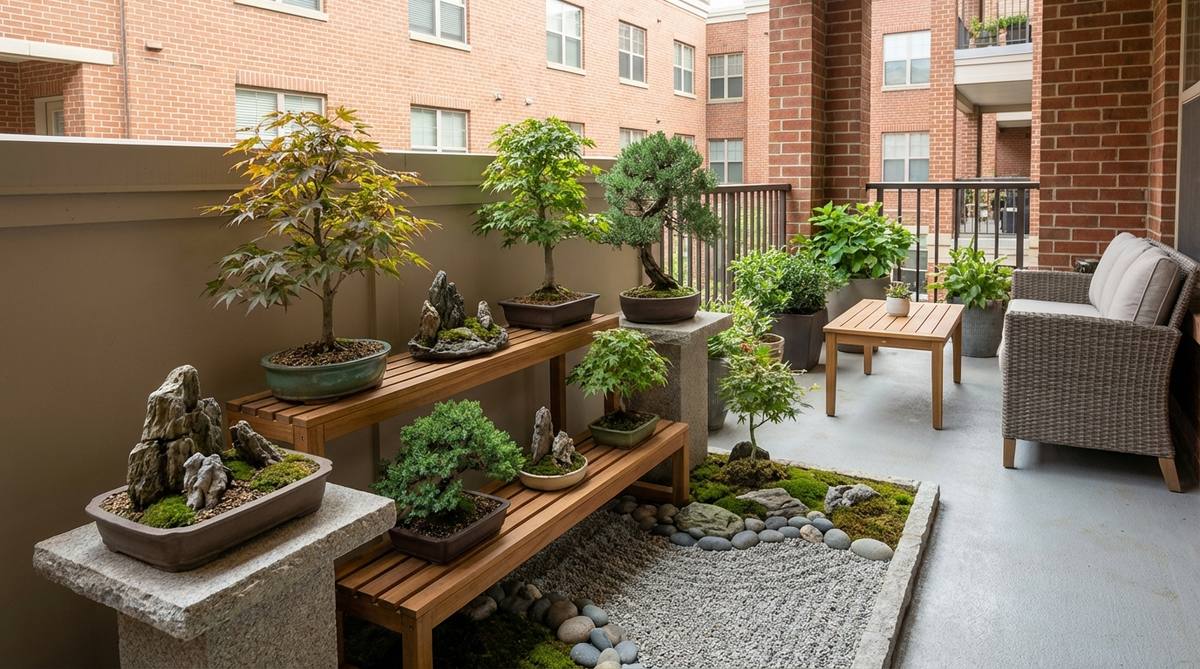
Integrating zen garden bonsai displays into compact living spaces transforms even the smallest apartments into serene retreats. These miniature landscapes combine the meditative qualities of traditional Japanese design with space-efficient arrangements that fit modern urban lifestyles. Fresh Garden Ideas brings you expert-curated displays that merge aesthetic beauty with practical placement strategies for homes of any size.
Design SnapshotKey Principles
- Vertical Integration: Utilize wall-mounted shelves and tiered stands to maximize limited floor space while creating visual depth
- Minimalist Balance: Pair each bonsai with intentional negative space, allowing the tree’s form to command attention without overwhelming compact areas
- Multi-Functional Zones: Position bonsai displays in corners, windowsills, and transitional spaces that serve both decorative and meditative purposes
- Scale Harmony: Select bonsai proportions that complement room dimensions, using smaller specimens for tight quarters and statement pieces for focal points
Traditional Tokonoma-Inspired Displays
These displays draw from Japanese architectural alcoves designed to showcase single art pieces. Designers create focal points using low wooden platforms paired with singular bonsai specimens that anchor entire rooms.
1. Single-Specimen Alcove Display
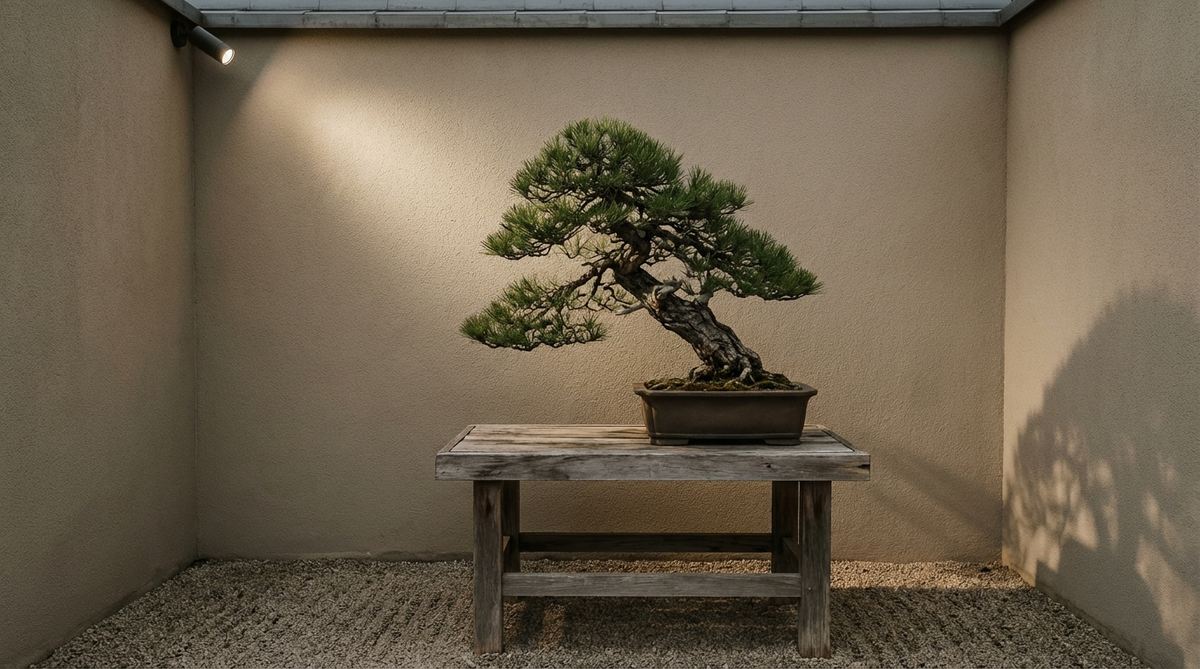
A solitary Japanese Black Pine positioned on a handcrafted wooden stand creates immediate visual impact. The bare wall behind eliminates distractions, directing attention to the bonsai’s sculptural trunk and wind-swept canopy.
Position the display 18-24 inches from the floor for optimal viewing angles. Use directional LED lighting from above to cast dramatic shadows that enhance the tree’s natural character.
This arrangement works particularly well in studio apartments where single statement pieces define entire zones. Rotate the bonsai quarterly to promote even growth while maintaining the display’s freshness.
2. Scroll Painting Bonsai Pairing
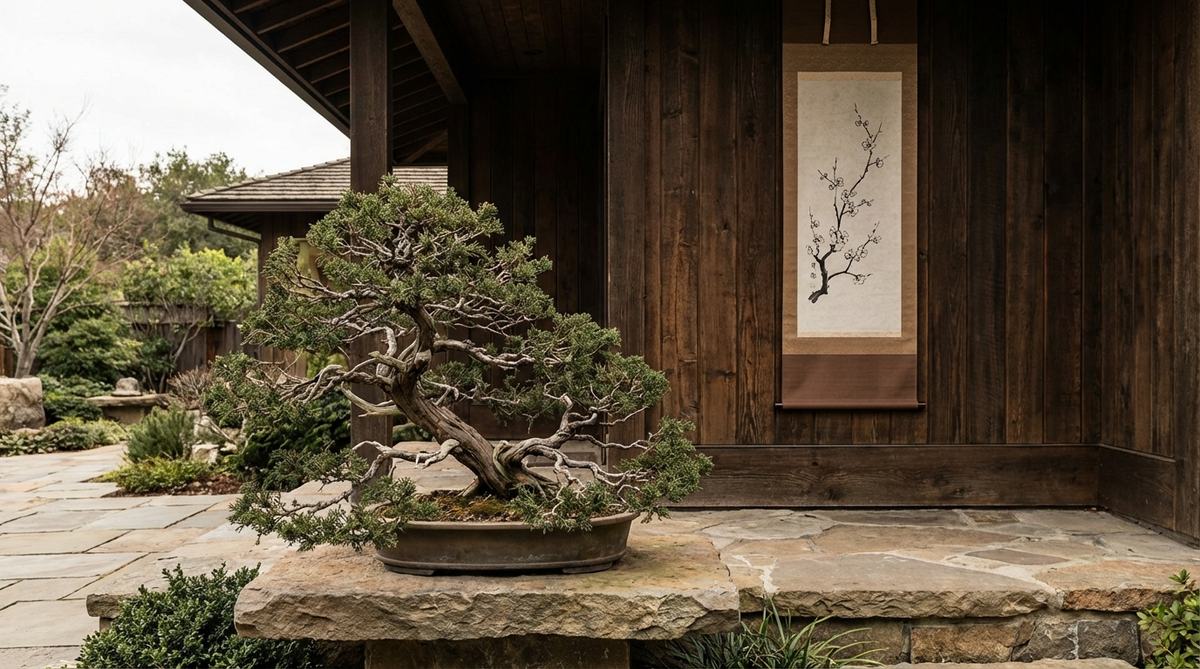
Combine a windswept juniper with a vertical kakejiku scroll featuring complementary seasonal imagery. The upward movement of the scroll balances the horizontal reach of the bonsai’s branches.
Select scrolls depicting minimal landscapes or calligraphy that echo the tree’s growth pattern. Mount the scroll directly above the bonsai platform, leaving 6-8 inches of visual breathing room.
Change scrolls with the seasons to refresh the display without relocating the bonsai. Spring cherry blossom scrolls pair beautifully with evergreen specimens, creating thematic contrast.
3. Low Platform Gravel Surround
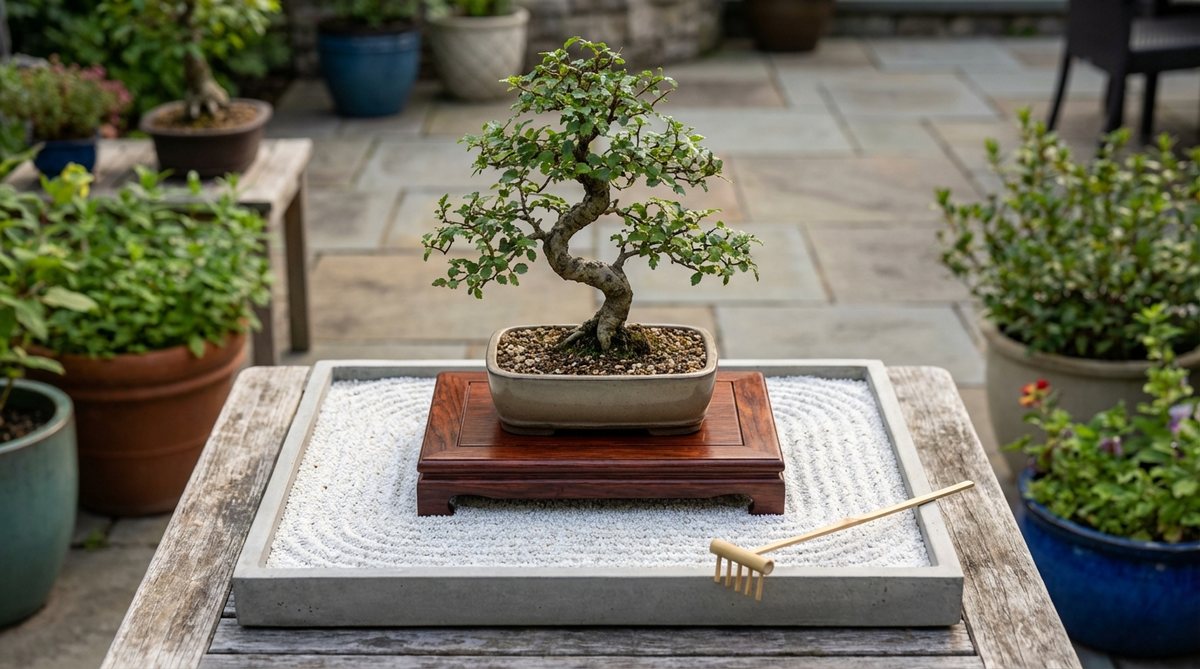
Elevate a Chinese Elm bonsai on a 4-inch rosewood platform surrounded by raked white gravel in a shallow tray. The gravel’s linear patterns radiate from the tree’s base, mimicking ripples in water.
Use a miniature bamboo rake to create fresh patterns weekly as part of meditation practice. The act of raking becomes a mindfulness ritual while maintaining the display’s crisp appearance.
This setup requires only 24 square inches of floor space, ideal for apartment entryways. The gravel also serves a practical purpose by catching falling leaves and maintaining humidity.
4. Stone Accent Trio Composition
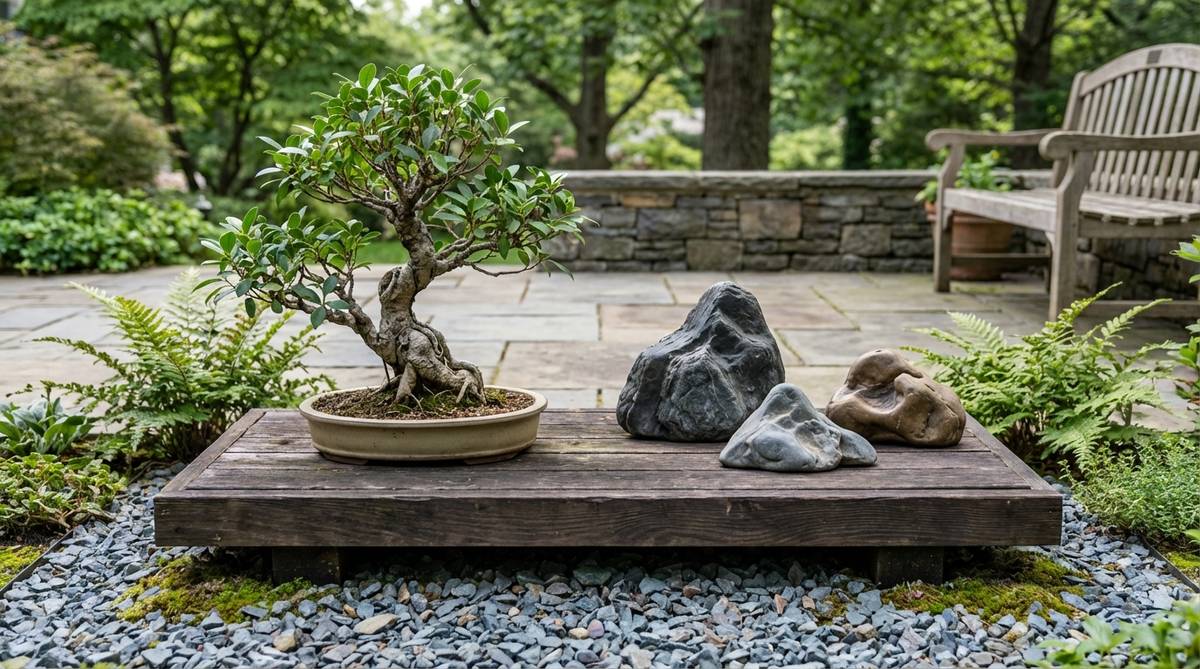
Arrange three suiseki viewing stones alongside a Ficus retusa bonsai on a shared platform. The stones’ organic forms echo the tree’s aerial root structure, creating visual dialogue between elements.
Position the largest stone to the bonsai’s right, with two smaller stones forming an asymmetrical triangle. This follows traditional Japanese odd-number principles that prevent visual stagnation.
Select stones with colors that complement the bonsai’s container—cool grays for blue-glazed pots, warm browns for earthenware. The complete display occupies roughly 18 inches of linear space.
5. Tatami Mat Corner Sanctuary
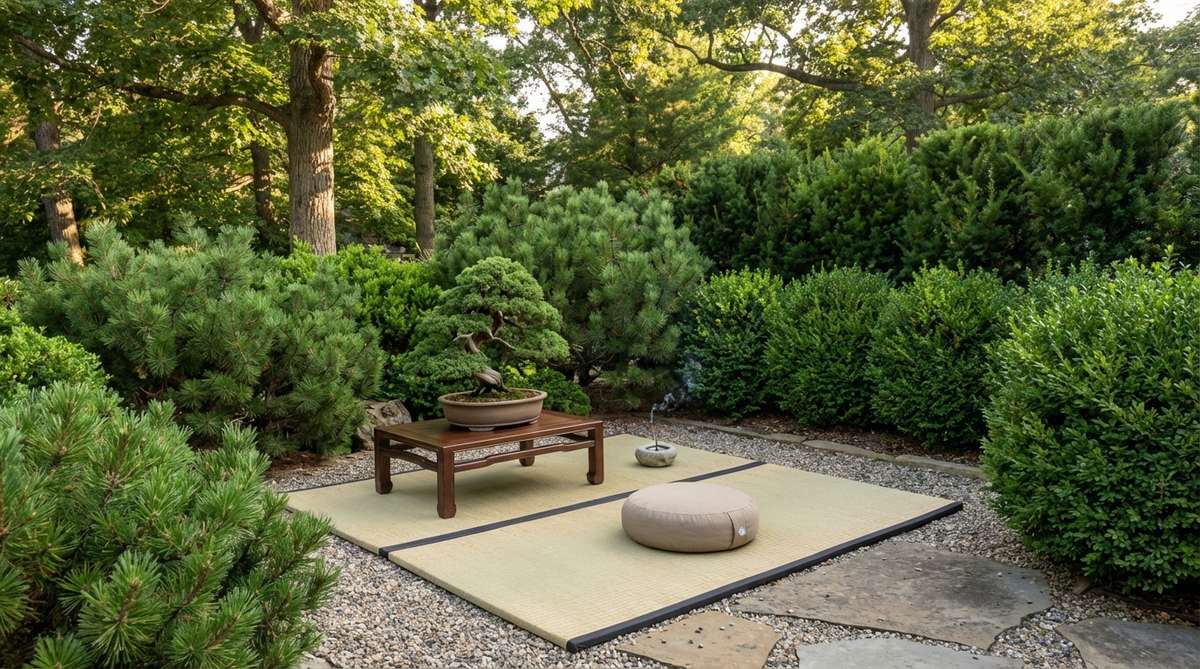
Define a meditation corner using a single tatami mat topped with a low bonsai table. A Shimpaku juniper becomes the centerpiece for seated contemplation, positioned at natural eye level.
Add a small incense holder and meditation cushion to complete the functional space. The bonsai’s evergreen foliage provides year-round consistency, grounding the practice area.
This 3×3 foot arrangement fits unused corners in bedrooms or home offices. The physical boundary of the mat psychologically separates the zone from surrounding clutter.
Vertical Zen Garden Tree Arrangements
Vertical displays maximize compact footprints by stacking multiple zen garden tree specimens at varying heights. These systems create layered compositions that draw the eye upward, making rooms feel more spacious.
6. Wall-Mounted Cascade Shelving
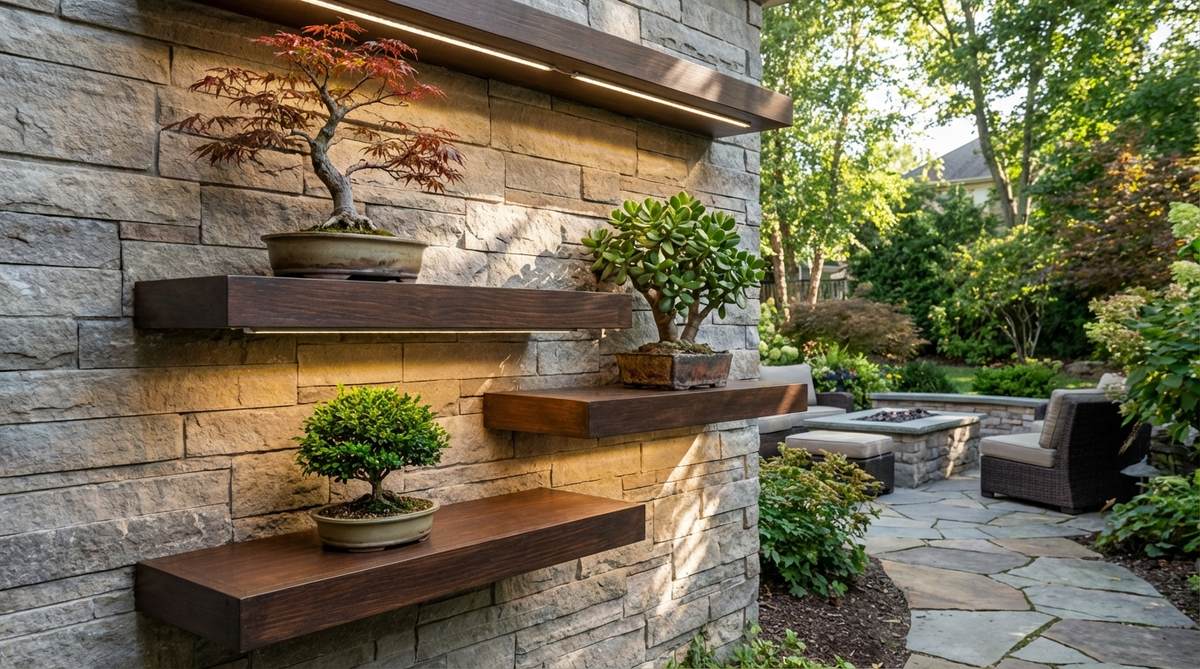
Install three floating shelves in descending stair-step formation, each holding progressively smaller bonsai. The top shelf features a 12-inch Japanese Maple, middle hosts an 8-inch Jade plant, and bottom displays a 5-inch Kingsville Boxwood.
Space shelves 16 inches apart vertically to prevent upper specimens from blocking light to lower plants. Use LED grow strips beneath each shelf to supplement natural illumination.
The entire installation occupies only 6 inches of floor space while providing three distinct focal points. Arrange trees so their canopies create a diagonal flow from upper left to lower right.
7. Bamboo Ladder Display Frame
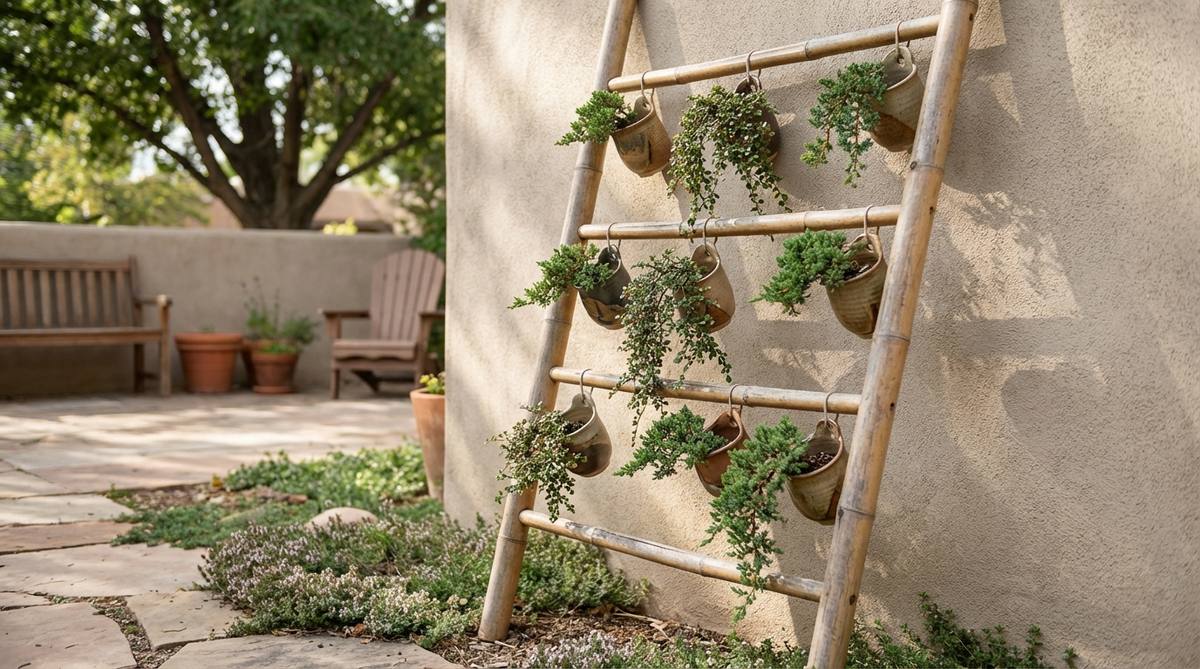
Lean a decorative bamboo ladder against a wall, hanging small bonsai in ceramic wall pockets from each rung. The natural bamboo material reinforces the organic aesthetic while introducing textural variety.
Select cascade-style bonsai like Cotoneaster or Procumbens juniper that drape naturally over container edges. Their downward growth mimics waterfalls, enhancing the vertical movement.
This portable system allows for easy rearrangement and seasonal rotation. The ladder’s footprint measures just 18 inches wide, suitable for narrow hallways or bathroom corners.
8. Tiered Corner Pedestal Tower
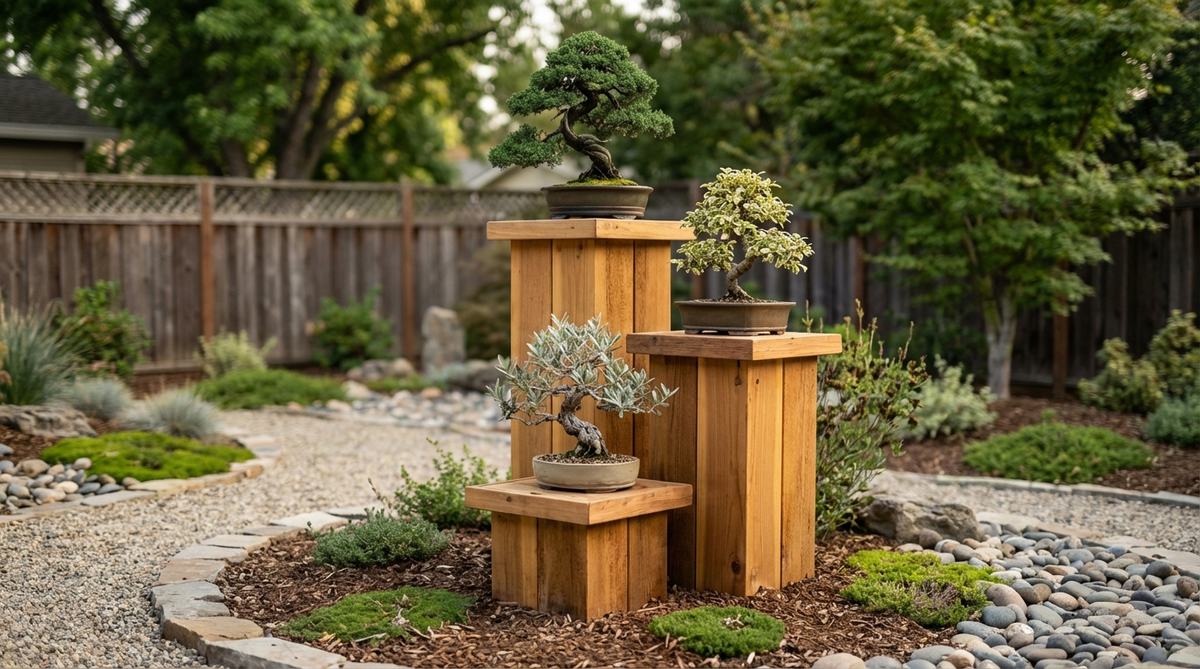
Stack three graduated wooden pedestals in a corner, creating a spiral display with bonsai at each level. The tallest pedestal reaches 36 inches, middle stands at 24 inches, and lowest sits at 12 inches.
Rotate pedestal positions to form a gentle curve that guides viewers around the corner. Plant selection should vary in foliage color—dark green juniper at top, variegated Chinese Elm in middle, silvery Olive at bottom.
The corner placement uses dead space effectively while the varied heights prevent visual monotony. Total floor space consumed is approximately 2 square feet.
9. Hanging Macrame Planters Set
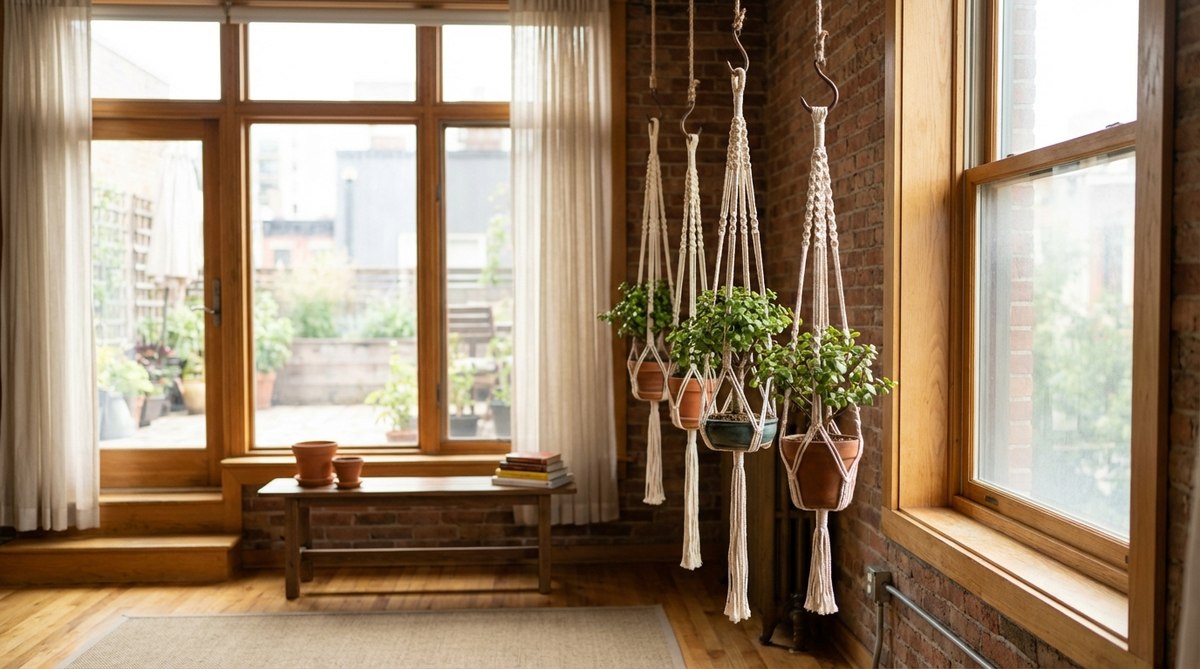
Suspend three small bonsai from ceiling hooks using handwoven macrame hangers at staggered heights. Choose lightweight specimens like Portulacaria afra or dwarf Schefflera suited to hanging culture.
Position hangers near windows where trees receive adequate indirect light. Stagger heights by 8-10 inches to create rhythm without tangling branches.
This zero-footprint solution works exceptionally well in studios and micro-apartments. Water plants using a squeeze bottle to control moisture without creating floor drips.
10. Vertical Garden Wall Panel
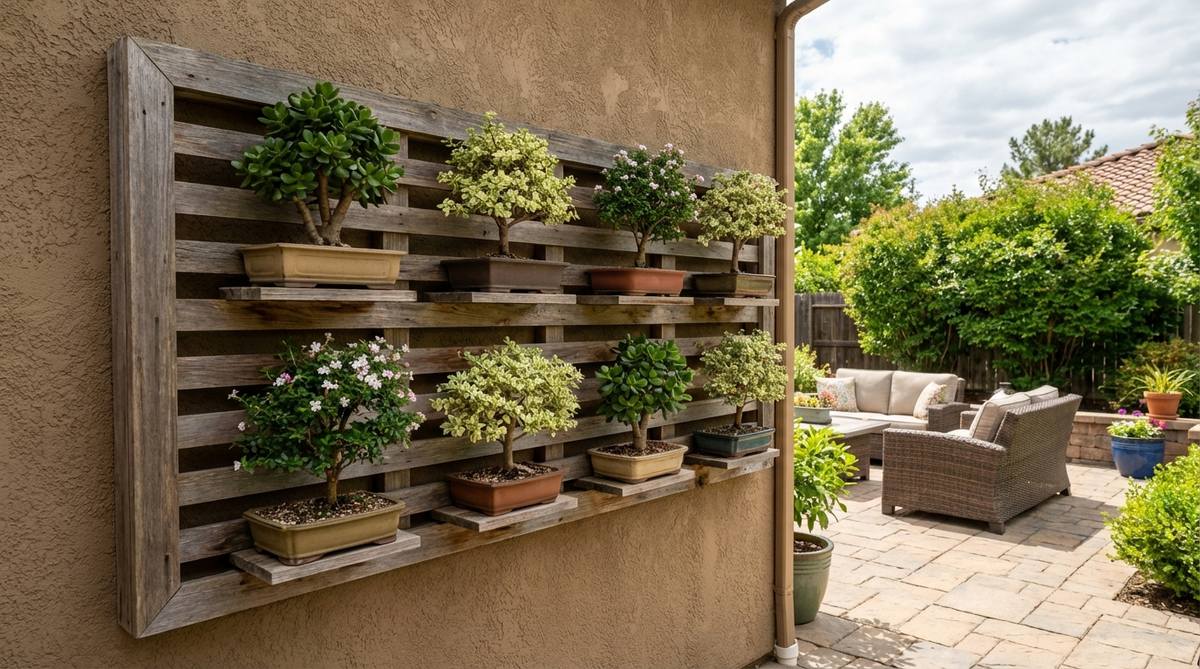
Mount a wooden grid panel system to a wall, inserting shallow bonsai trays into horizontal slots. This living art installation can display 6-8 small specimens within 4 square feet of wall space.
Use drought-tolerant species like Jade and Serissa to minimize watering frequency. The vertical orientation allows for misting without damaging flooring.
Arrange trees to create visual patterns—alternating foliage densities or color gradients from top to bottom. The panel becomes a living sculpture that evolves with seasonal growth.
Windowsill Meditation Corners
Windowsill placements capitalize on natural light while transforming functional ledges into contemplative spaces. These displays pair bonsai with supplementary elements that enhance meditative qualities.
11. Dawn Viewing East Window Setup
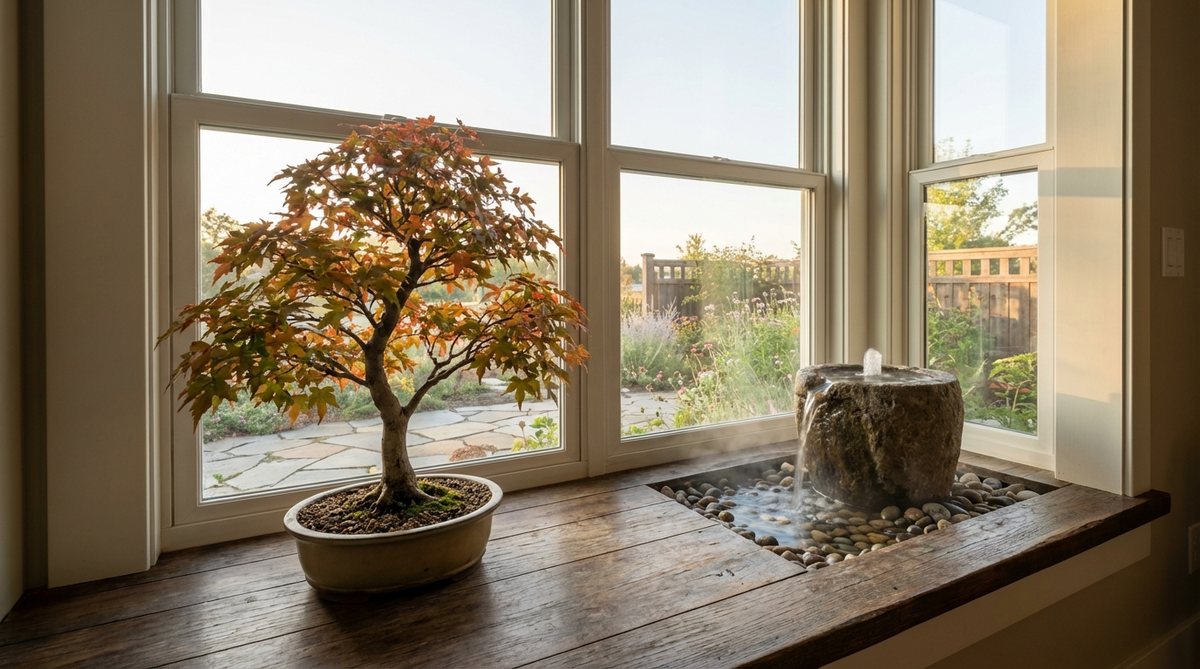
Position a Trident Maple on an east-facing windowsill to capture gentle morning light. The tree’s deciduous nature provides seasonal transformation—spring buds, summer canopy, autumn color, winter silhouette.
Add a small water feature beside the bonsai to introduce gentle sound. The combination of visual growth and auditory flow creates multisensory engagement during morning meditation.
Rotate the bonsai 90 degrees weekly to prevent one-sided growth toward light. The windowsill acts as a natural humidity tray when lined with pebbles and water.
12. Filtered Light Fern Companion Display
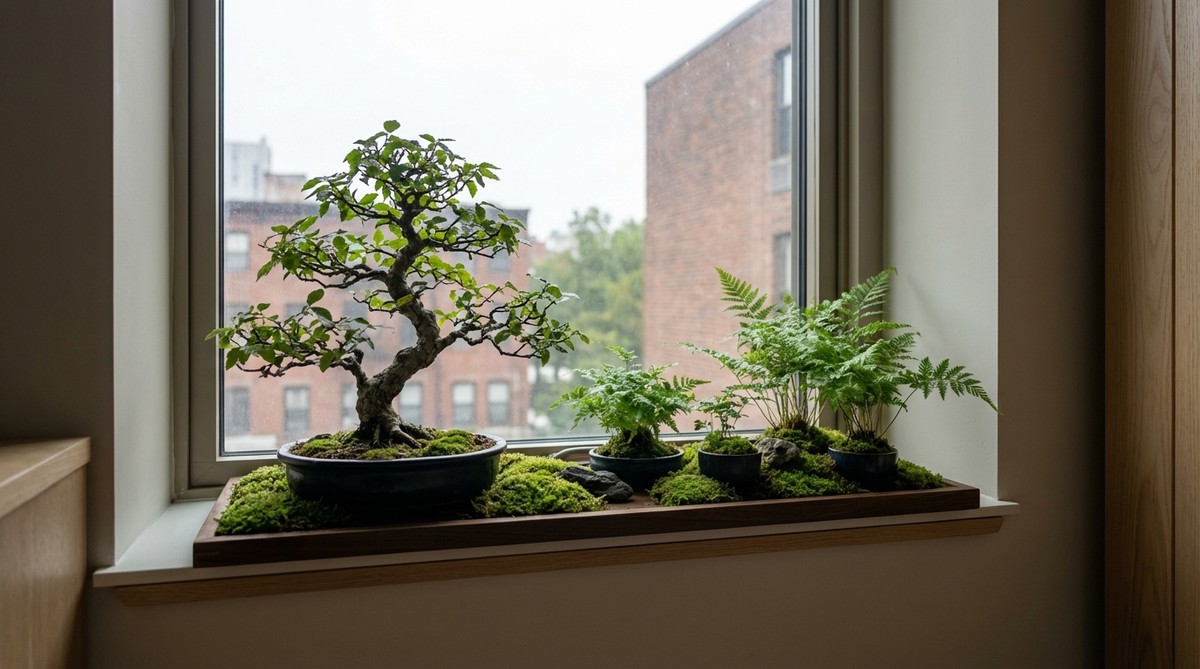
Pair a shade-tolerant Korean Hornbeam bonsai with miniature ferns in a north-facing window. The ferns’ delicate fronds contrast with the bonsai’s structured branching, creating textural interest.
Use a long wooden tray to unify the grouping, filling spaces between pots with preserved moss. The moss retains moisture and softens the display’s overall appearance.
This combination thrives in lower light conditions common to urban apartments with limited sun exposure. The ferns require similar moisture levels to the bonsai, simplifying care routines.
13. Succulent Accent Drought Garden
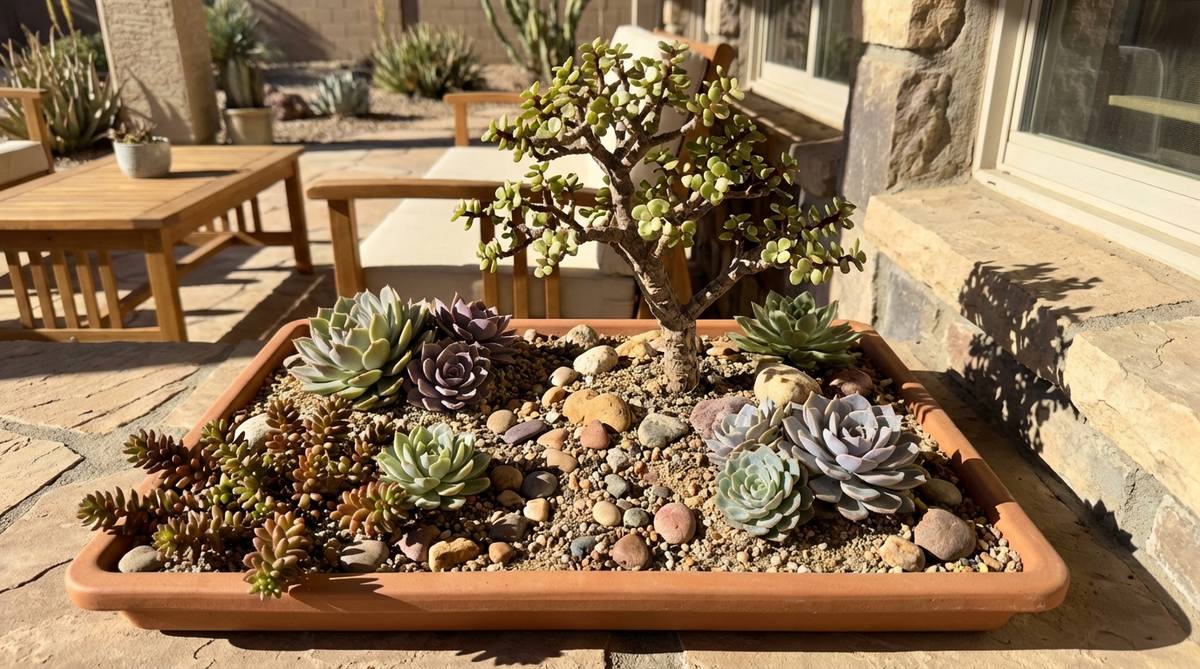
Create a miniature desert landscape by surrounding a Portulacaria afra bonsai with small succulents like Echeveria and Sedum. The shared drought tolerance makes group watering efficient.
Arrange plants in a shallow rectangular tray filled with sandy soil and decorative pebbles. The low water requirements suit forgetful gardeners and frequent travelers.
Place this display in south or west windows where intense afternoon sun promotes compact succulent growth. The heat-loving collection thrives in conditions that challenge most houseplants.
14. Incense Holder Aromatherapy Integration
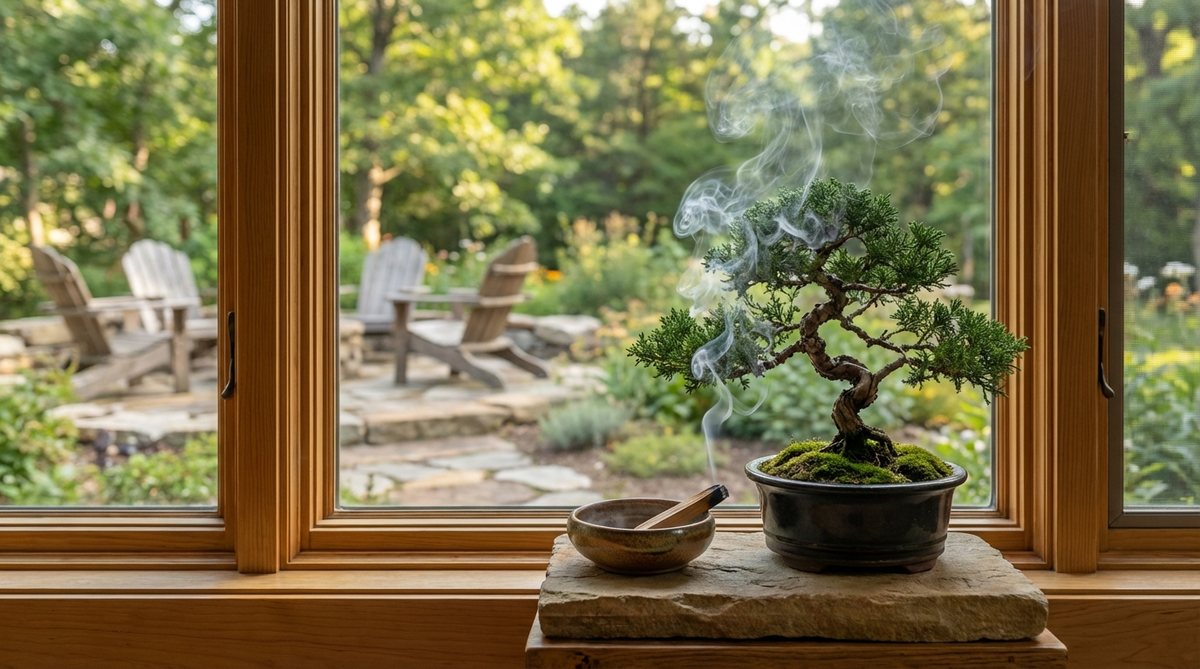
Position a Juniper bonsai beside a ceramic incense holder on a shared windowsill platform. The tree’s natural fragrance blends with sandalwood or cedar incense during meditation sessions.
Select a holder that complements the bonsai’s container in material and color. This creates visual cohesion while serving dual purposes—aesthetic and aromatic.
The rising incense smoke visually enhances the bonsai’s canopy, adding dynamic movement to the static display. Use incense sparingly to avoid overwhelming the tree’s subtle natural scent.
15. Reading Nook Companion Tree
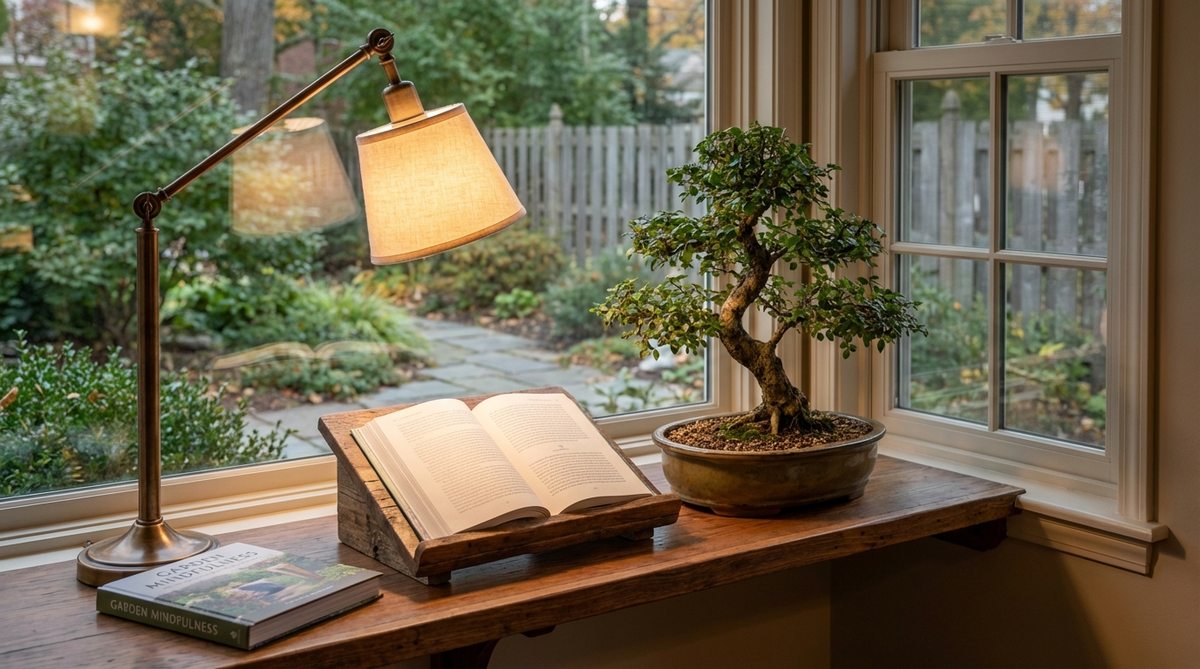
Install a windowsill extension shelf to accommodate both a Chinese Elm bonsai and a small reading lamp. The tree provides a living focal point during reading breaks, reducing eye strain.
Position the lamp to illuminate both book pages and bonsai foliage. Adjust the bonsai’s placement seasonally as sun angles shift throughout the year.
This functional pairing transforms ordinary reading spaces into restorative environments. The bonsai’s presence encourages regular breaks, promoting both eye health and mindfulness.
Multi-Tier Bonsai Staging Systems
Tiered systems organize multiple specimens efficiently while creating exhibition-quality presentations. These structures range from traditional wooden stands to modern metal frameworks.
16. Three-Tier Pyramid Stand
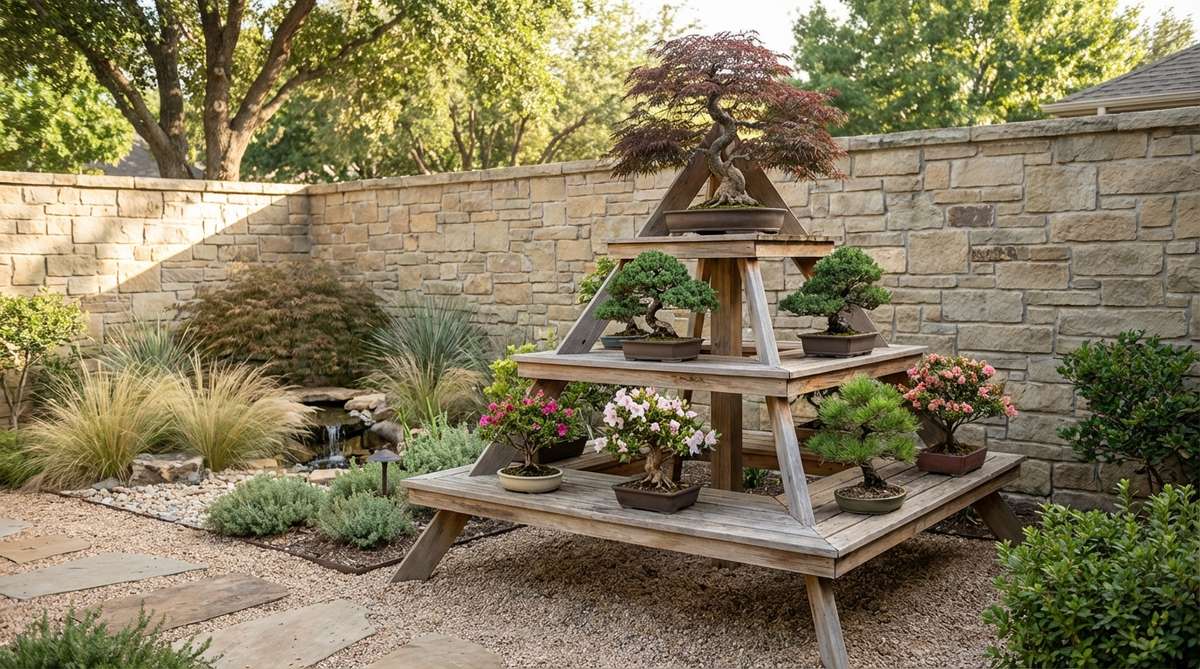
A wooden pyramid stand with descending shelf sizes displays the bonsai collection by height and importance. The apex features your finest specimen, with supporting trees on lower tiers.
Construct or purchase stands with shelves spaced 10-12 inches apart vertically. This spacing accommodates most bonsai canopies while maintaining distinct visual layers.
Position the stand in corners or against walls to maximize viewing angles. The pyramid shape naturally draws eyes upward, creating a sense of aspiration and growth.
17. Industrial Pipe Shelving Unit
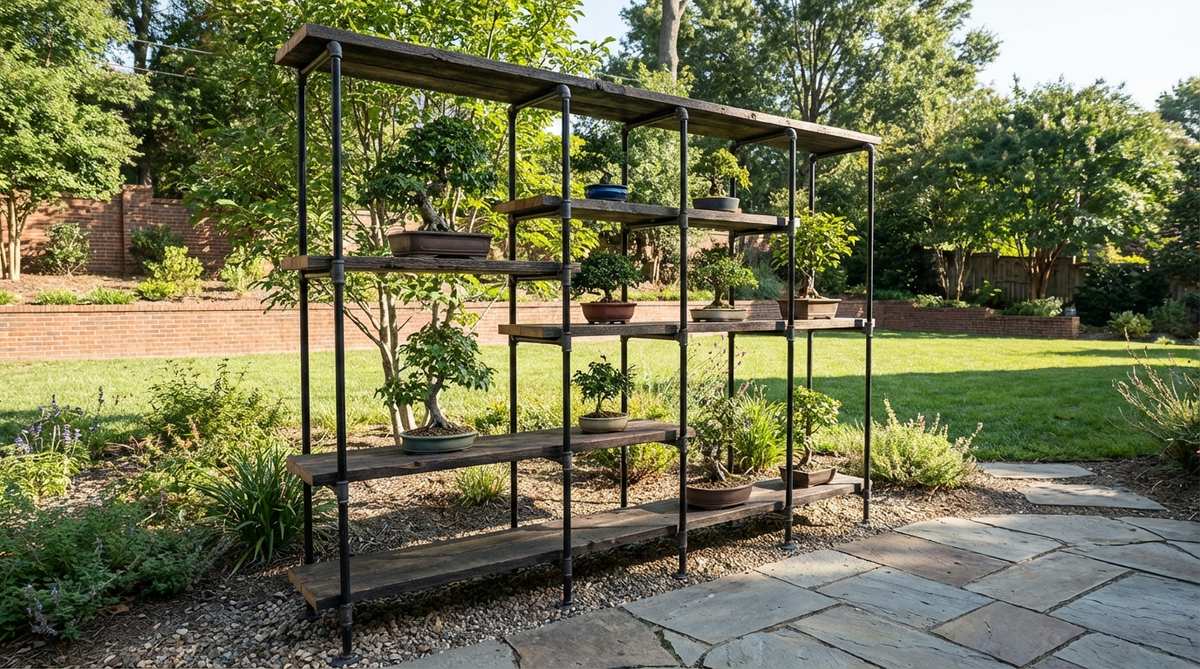
Assemble a modern display using black iron pipes and reclaimed wood planks. The industrial aesthetic contrasts beautifully with organic bonsai forms, creating contemporary edge.
Build 4-5 shelves at irregular intervals to prevent rigid uniformity. Vary shelf depths to accommodate different pot sizes and create visual rhythm.
The open framework allows light to penetrate all levels, crucial for maintaining healthy growth on lower shelves. This DIY option costs significantly less than traditional bonsai furniture.
18. Rotating Lazy Susan Platform
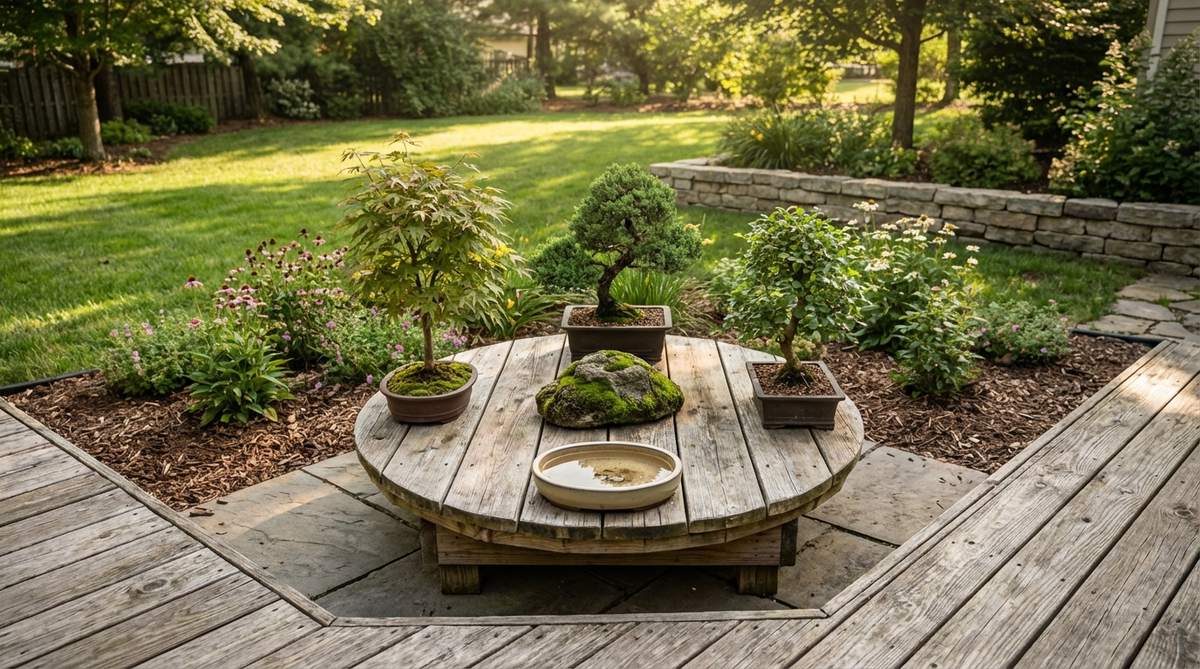
Mount a large lazy Susan turntable on a table or stand, arranging 3-4 small bonsai around its perimeter. The rotating function allows easy viewing from all angles without moving individual trees.
This setup proves particularly valuable for displaying trees in training, where monitoring all sides ensures balanced development. Guests can interact with the display by rotating it themselves.
Place a decorative centerpiece in the turntable’s middle—perhaps a viewing stone or small water basin. The rotation capability makes watering and pruning more ergonomic.
19. Stair-Step Bookcase Conversion
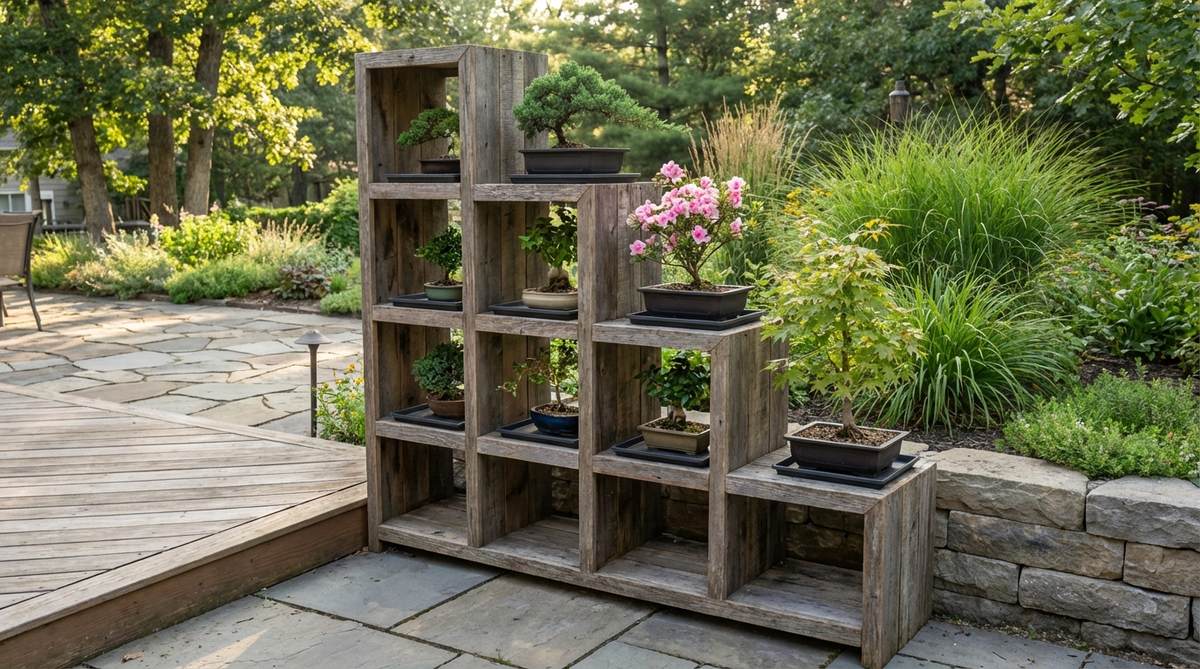
Repurpose a stair-step bookshelf as a bonsai display by dedicating each level to a different specimen. The ascending height naturally showcases trees while providing ample growing room.
Line shelves with waterproof trays to protect wood from moisture damage. Arrange trees so their canopies don’t overlap excessively, ensuring each receives adequate light.
This furniture conversion maximizes existing space without requiring new purchases. The bookshelf’s depth typically accommodates humidity trays and care accessories behind each bonsai.
20. Bamboo Rolling Cart Display
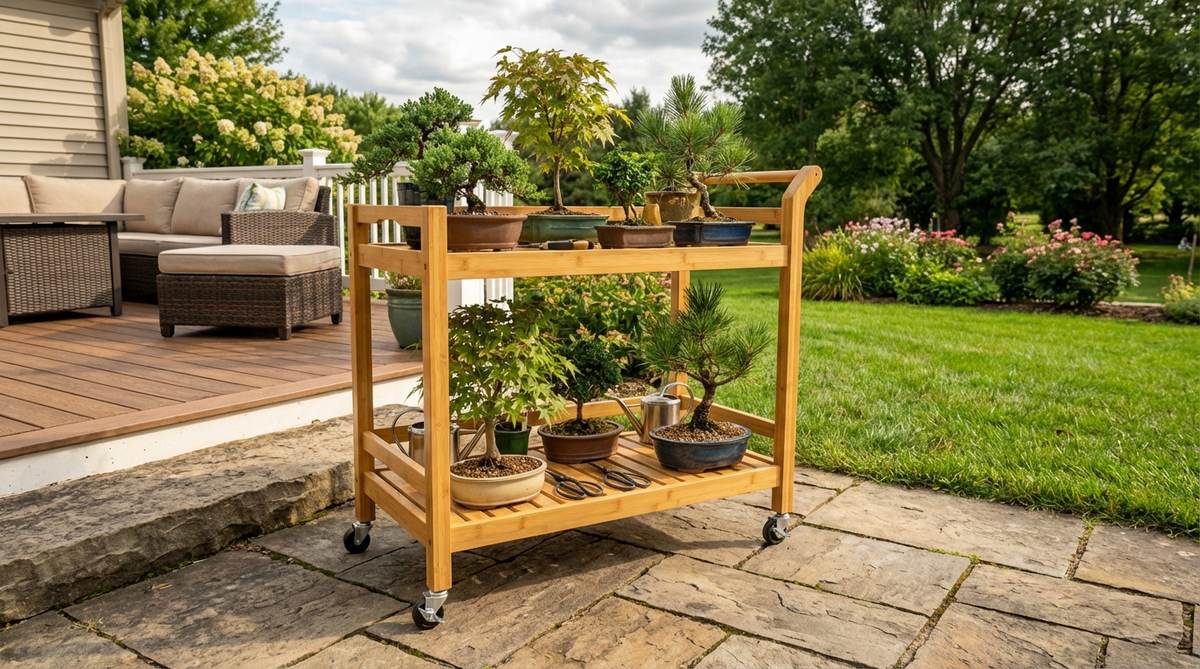
A three-tier rolling cart provides a mobile bonsai station that moves between indoor locations. Transport trees to optimal light throughout the day or roll them outdoors during favorable weather.
The cart’s wheels make seasonal repositioning effortless—move to warmer spots in winter, cooler areas in summer. Store care tools on the bottom tier for convenient access.
This solution suits renters who relocate frequently or homeowners who redesign spaces regularly. The cart’s compact footprint fits through standard doorways and hallways.
21. Wall-Mounted Box Shelves
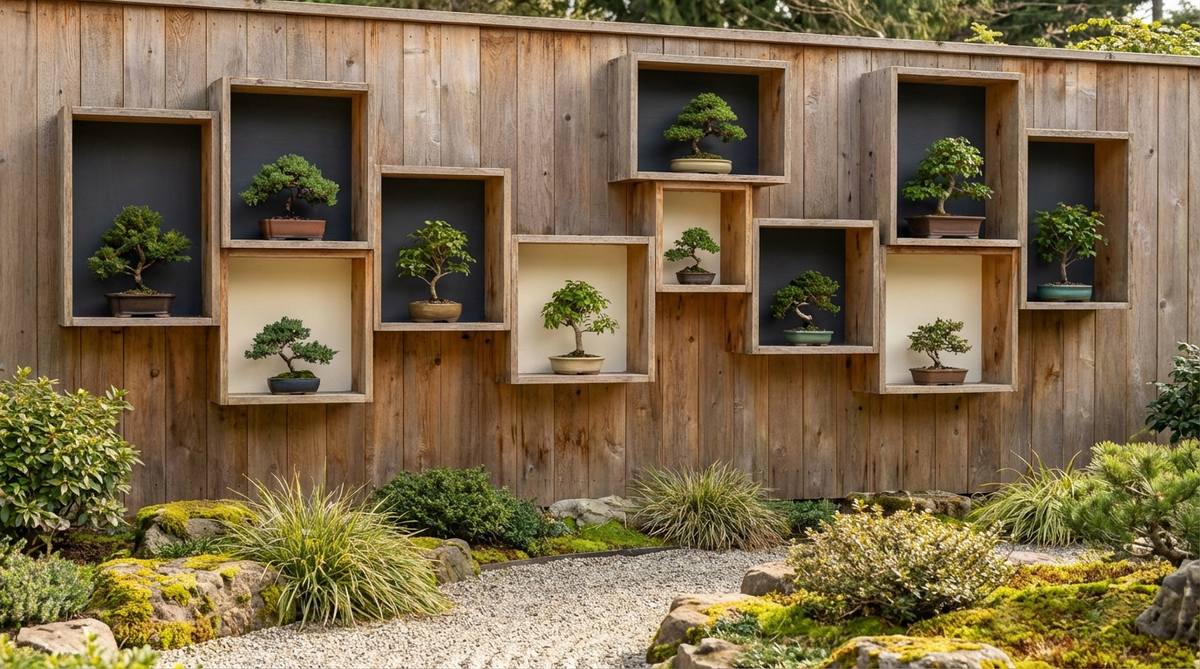
Install decorative wooden box shelves at varying heights, each holding a single small bonsai. The boxes’ enclosed backs create individual frames for each specimen.
Paint box interiors in contrasting colors to make bonsai foliage pop—dark charcoal for light-foliaged trees, cream for dark evergreens. This technique adds depth to the display.
Arrange boxes in asymmetrical clusters rather than rigid grids. The seemingly random placement mimics natural tree distribution in forests, creating organic visual flow.
Minimalist Zen Garden Flowers Accents
Strategic zen garden flowers introduce seasonal color without overwhelming the contemplative atmosphere. These accent plants complement bonsai through scale and restraint.
22. Moss Ball Kokedama Companions
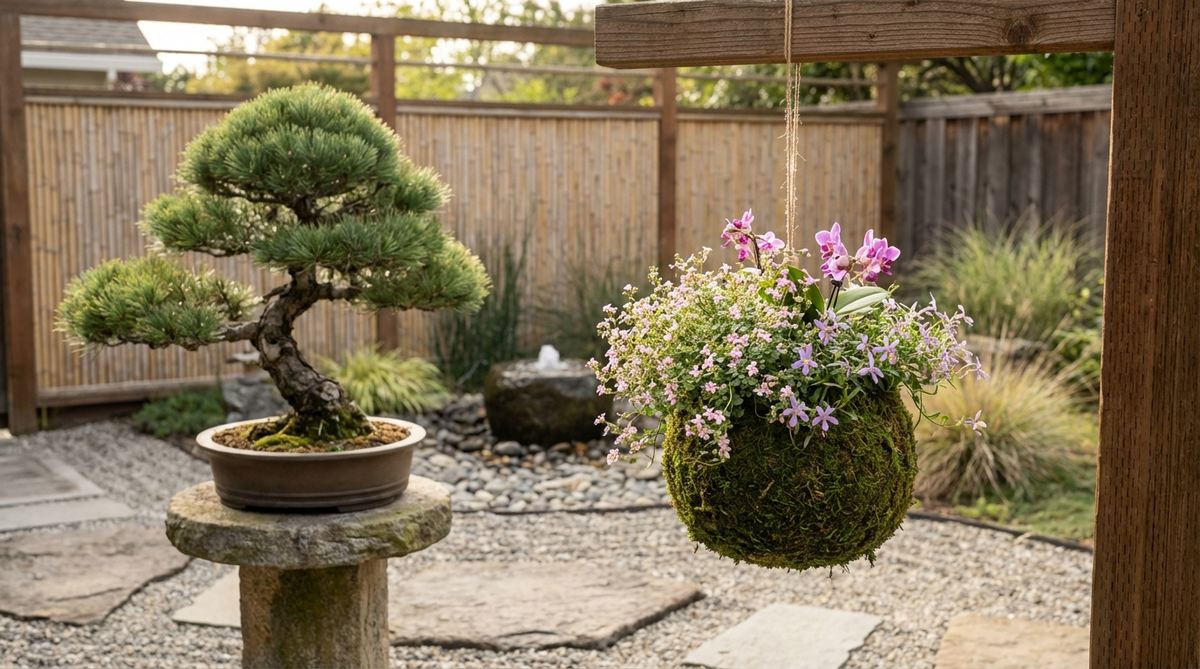
Suspend kokedama moss balls planted with delicate flowering plants like Baby’s Tears near bonsai displays. The spherical forms echo the rounded canopies of well-trimmed bonsai.
Select flowering varieties with small blooms—miniature orchids, Isotoma, or Pratia. The flowers provide subtle pops of color without competing visually with the bonsai’s architectural form.
Hang kokedama at eye level adjacent to shelf-mounted bonsai. The paired display creates visual conversation between elements while maintaining minimalist principles.
23. Azalea Companion Planting
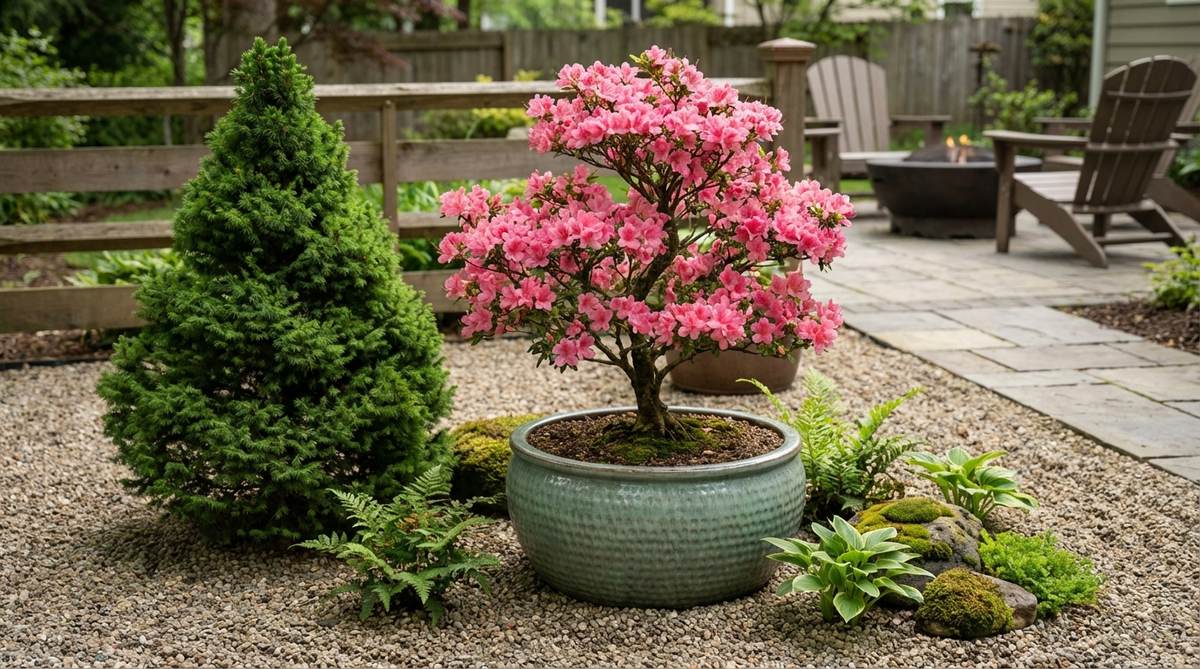
Position a dwarf Azalea bonsai beside an evergreen specimen during spring bloom periods. The Azalea’s vibrant flowers provide temporary color that celebrates seasonal change.
After flowering concludes, rotate the Azalea to a growing area and replace it with another seasonal accent. This rotation strategy maintains year-round interest without permanent clutter.
Choose Azalea varieties with bloom colors that complement your primary bonsai’s container glaze. Pink blooms pair beautifully with celadon pots, white flowers enhance cobalt glazes.
24. Creeping Thyme Ground Cover Tray
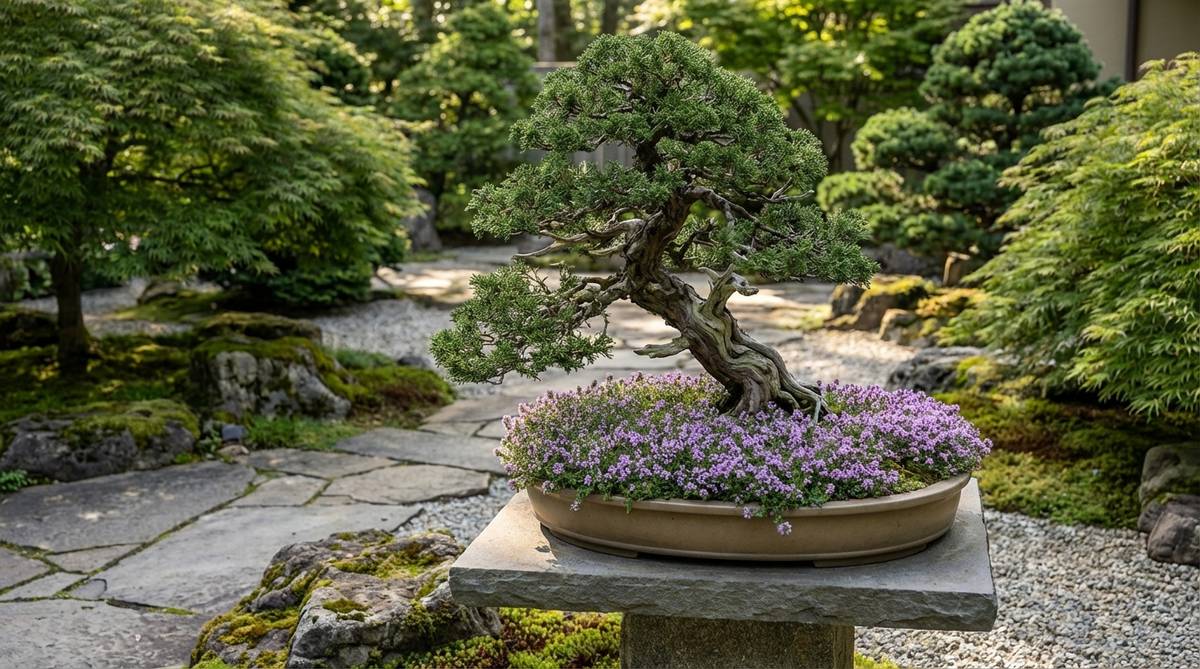
Create a living underplanting by growing creeping Thyme around a bonsai’s base in a wide shallow tray. The Thyme’s tiny purple flowers bloom in spring, carpeting the soil surface.
This technique mimics natural forest floors where trees grow among flowering ground covers. The Thyme’s drought tolerance matches most bonsai watering schedules.
The aromatic foliage releases fragrance when brushed during care routines. Harvest small sprigs for culinary use, connecting the display to functional gardening.
25. Seasonal Bulb Rotation System
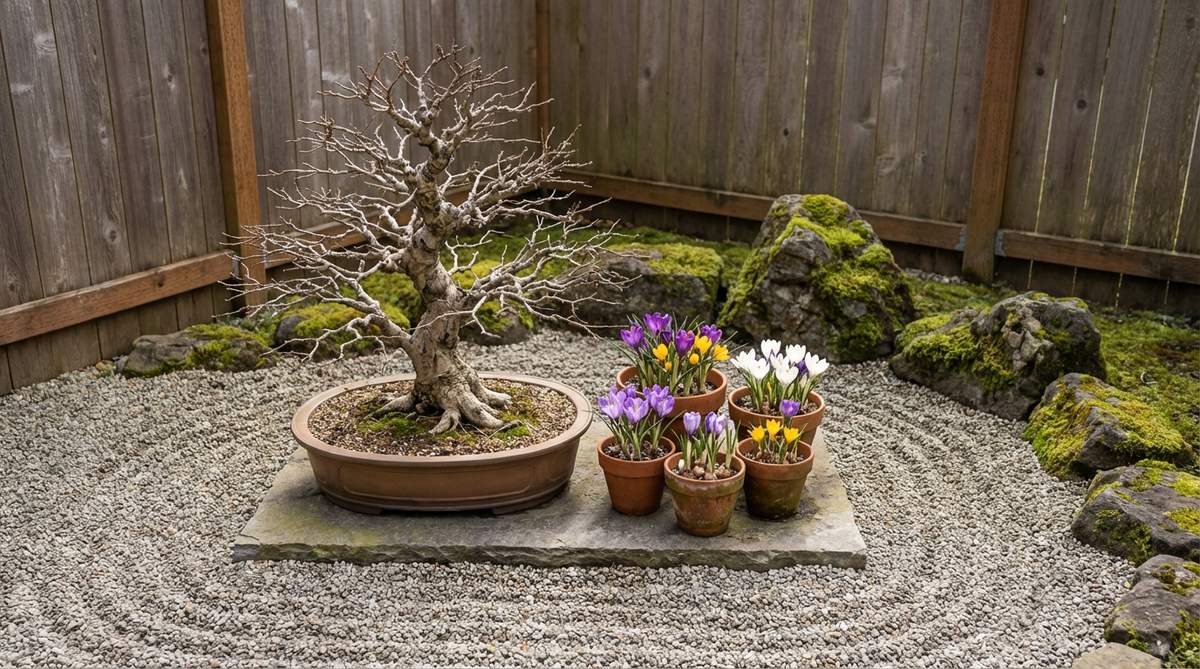
Plant miniature bulbs like Crocus or Muscari in small pots that nestle beside bonsai displays. The spring blooms emerge when most bonsai are still dormant, providing early color.
After flowering, remove spent bulb pots and replace them with summer bloomers like miniature Zinnias. This rotation maintains floral interest across growing seasons.
The temporary nature of bulb displays aligns with Zen principles of impermanence and seasonal awareness. Each rotation becomes a mindful ritual marking time’s passage.
26. Flowering Moss Terrarium Accent
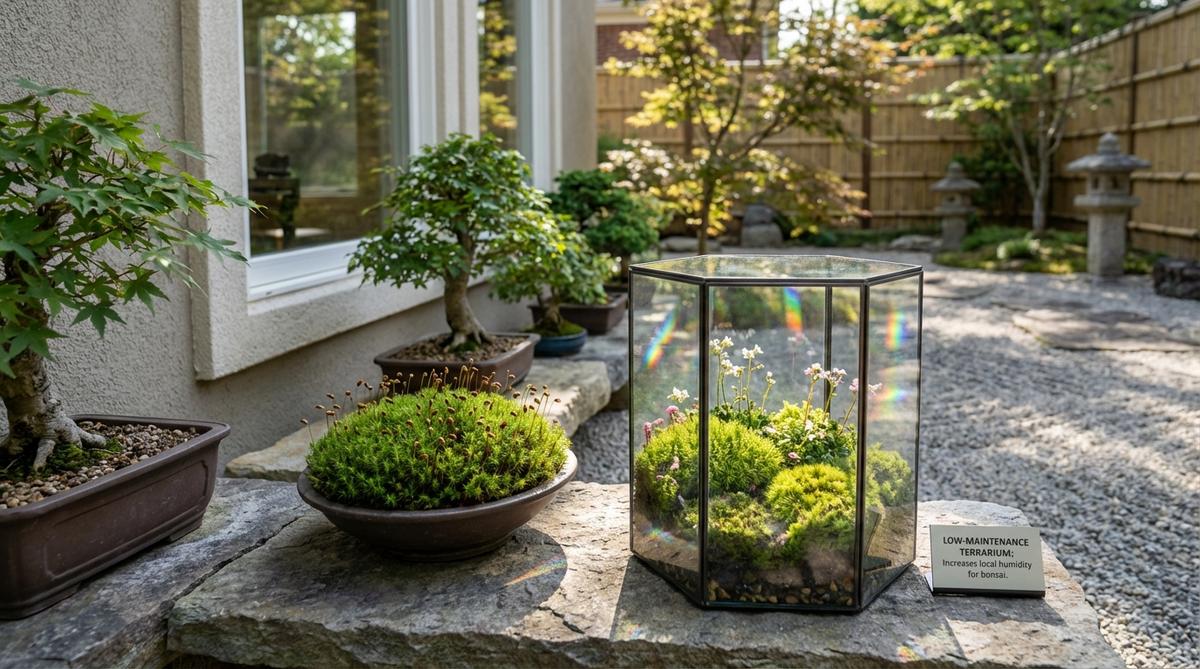
Build a small glass terrarium featuring flowering moss species and place it adjacent to bonsai displays. The enclosed ecosystem requires minimal maintenance while providing delicate blooms.
Select mosses that flower subtly—Hair Cap moss produces small capsules, while Mood moss creates textural interest. The terrarium’s glass walls add reflective quality to the display.
Position terrariums to catch and refract window light, creating prismatic effects. The contained moisture benefits nearby bonsai by increasing local humidity levels.
27. Bonsai Wildflower Meadow Tray
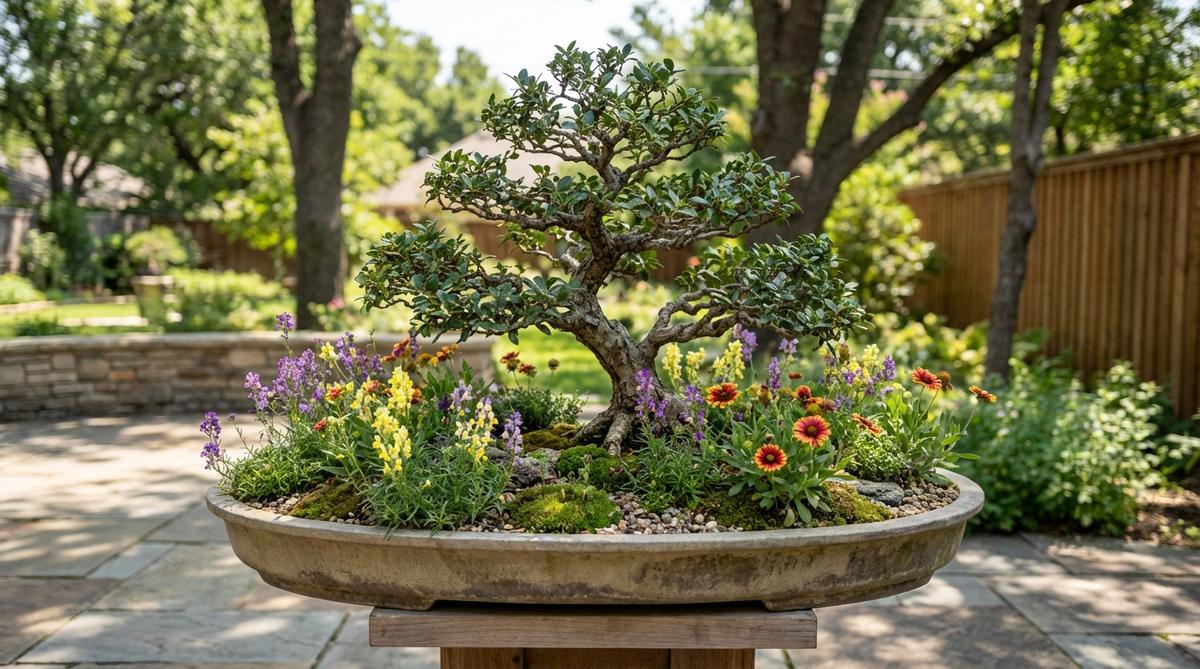
Design a wide tray landscape with a central bonsai surrounded by miniature wildflowers like Linaria or dwarf Gaillardia. The meadow-style planting creates a naturalistic scene.
Maintain flowers at heights below the bonsai’s lowest branches to preserve the tree’s dominance. Deadhead spent blooms regularly to promote continuous flowering.
This composition works particularly well with informal upright or slanting style bonsai. The casual flower placement softens rigid bonsai structures, creating balance between control and wildness.
Container Garden Fusion Displays
These displays integrate bonsai with complementary container plants, creating cohesive small-space gardens. The approach maximizes limited square footage through strategic plant partnerships.
28. Succulent Bonsai Desert Tableau
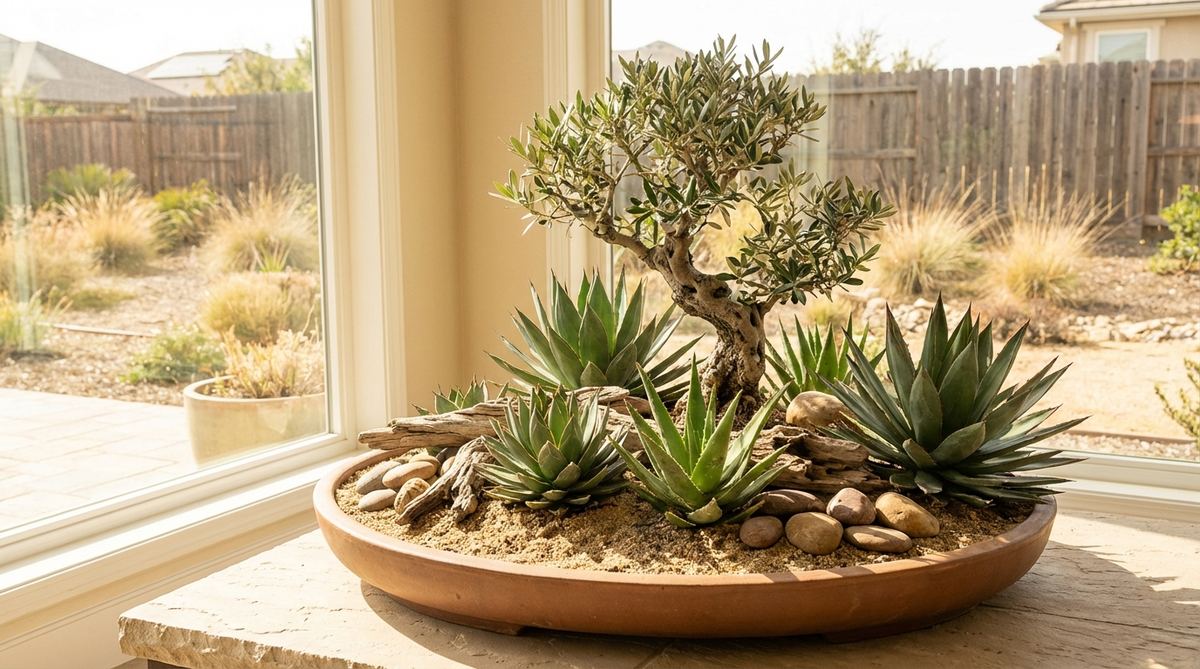
Combine a drought-adapted bonsai like Olive or Pomegranate with sculptural succulents in a unified sandy display. The shared water requirements simplify care while creating xeric beauty.
Use a large, shallow ceramic tray as the foundation, arranging plants to create focal points and negative space. Add decorative rocks and driftwood to enhance the desert aesthetic.
This display thrives in bright, south-facing windows where most houseplants struggle. The low-maintenance nature suits busy professionals seeking greenery without daily care demands.
29. Herb Garden Bonsai Fusion
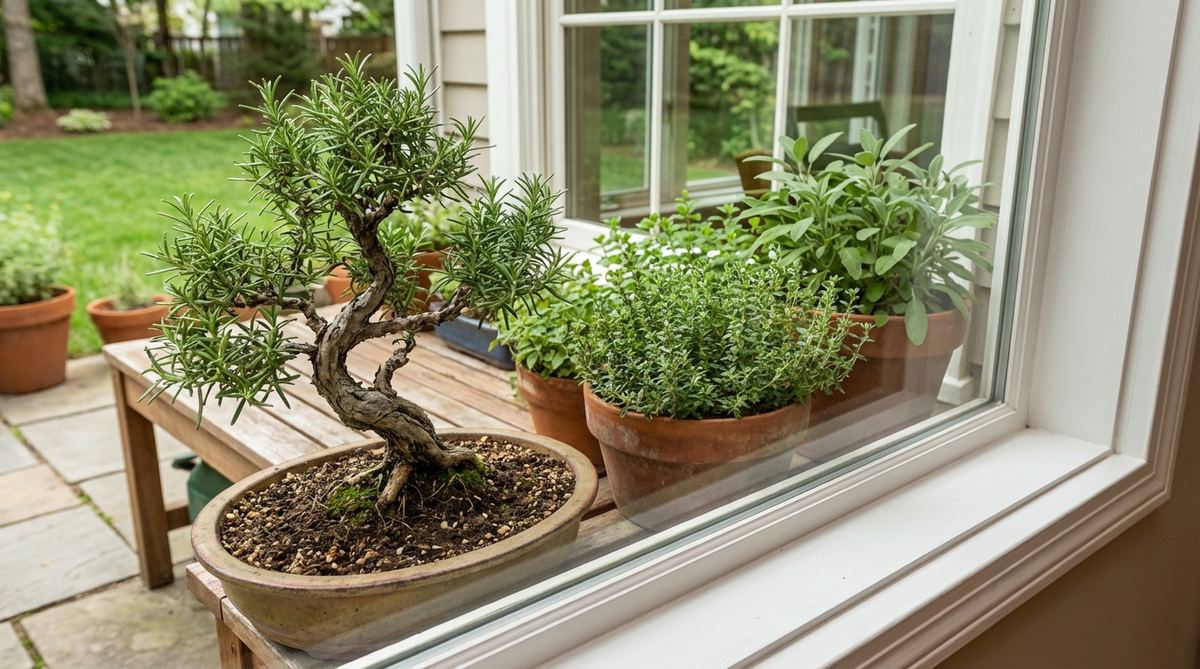
Pair a Rosemary or Bay Laurel bonsai with culinary herbs in adjacent containers. The functional garden provides fresh ingredients while maintaining ornamental appeal.
Select herbs with similar light and water requirements—Thyme, Oregano, and Sage work well with Mediterranean bonsai species. Harvest herbs regularly to promote bushy growth.
Position the grouping near kitchen windows for convenient cooking access. The aromatic foliage enhances cooking spaces with natural fragrance, eliminating artificial air fresheners.
30. Tropical Palm Understory Grouping
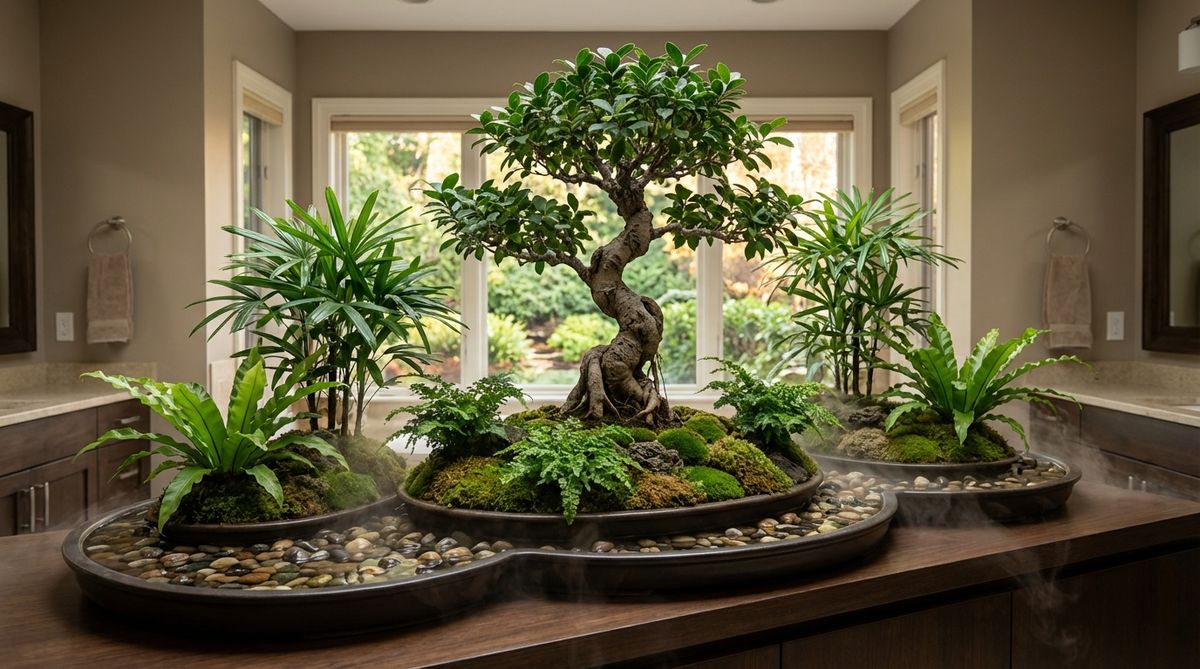
Arrange a Ficus bonsai with dwarf palms and ferns to recreate tropical forest layers. The varied heights and textures mimic natural ecosystem structure.
Use pebble-filled humidity trays beneath all containers to create a microclimate. Group plants closely to share transpiration moisture, benefiting all specimens.
This composition suits bathrooms with natural light, where steam showers increase ambient humidity. The tropical aesthetic transforms utilitarian spaces into spa-like retreats.
31. Alpine Rock Garden Miniature
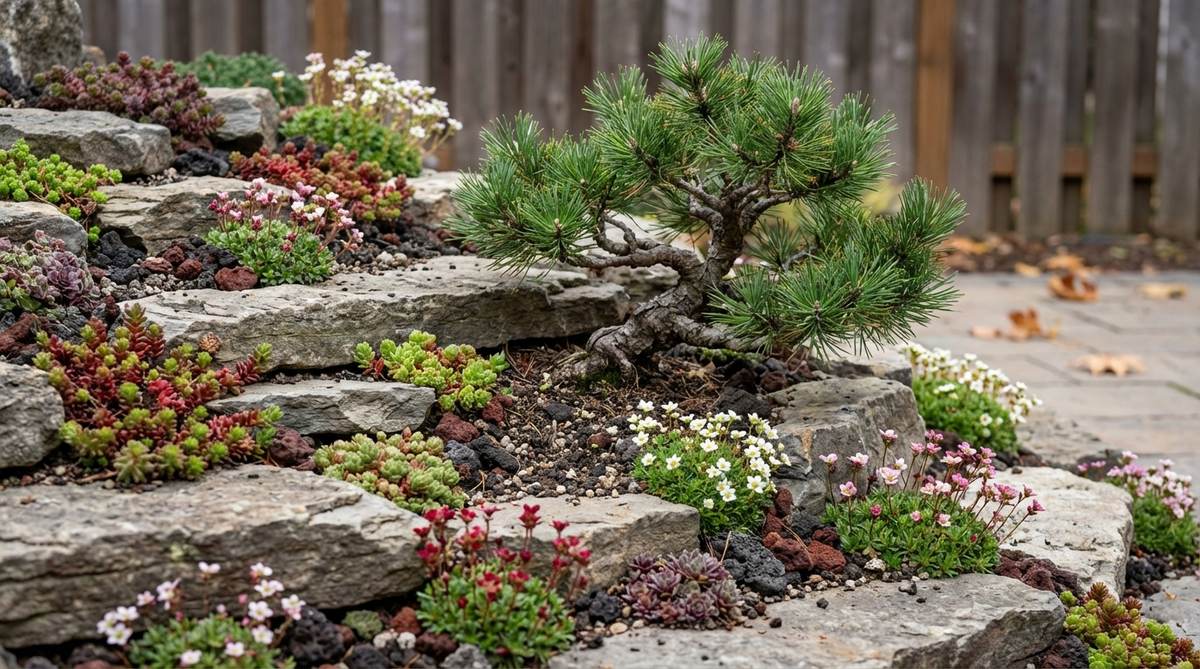
Create a miniature alpine scene using a Mugo Pine bonsai with small sedums and saxifrages. The rock-dwelling plants naturally complement the bonsai’s mountain aesthetic.
Build elevation changes within the container using stone layers, mimicking mountain slopes. Plant alpine species in crevices between rocks for authentic appearance.
This display requires excellent drainage—use pure pumice or volcanic rock as substrate. The cold-hardy nature of alpines allows for outdoor winter display in temperate climates.
32. Aquatic Feature Bonsai Island
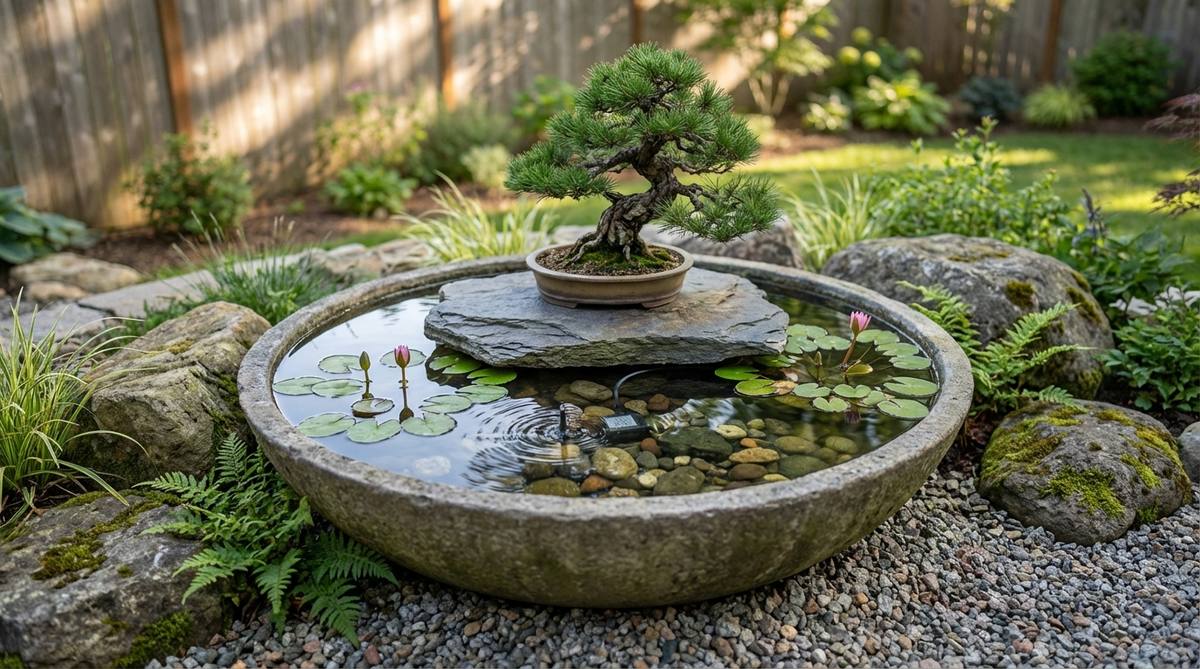
Position a bonsai on a raised platform within a wide water bowl, creating an island effect. Aquatic plants like miniature Water Lilies or Lotus grow in the surrounding water.
The water feature provides humidity regulation while introducing sound and movement. Submerged stones create visual interest beneath the water’s surface.
Maintain water levels below the bonsai’s pot base to prevent root rot. This display combines multiple natural elements—earth, water, and vegetation—in harmonious balance.
Floating Shelf Compositions
Floating shelves provide versatile platforms for bonsai displays without bulky furniture. These installations create clean, modern presentations suited to contemporary interiors.
33. Asymmetrical Cluster Arrangement
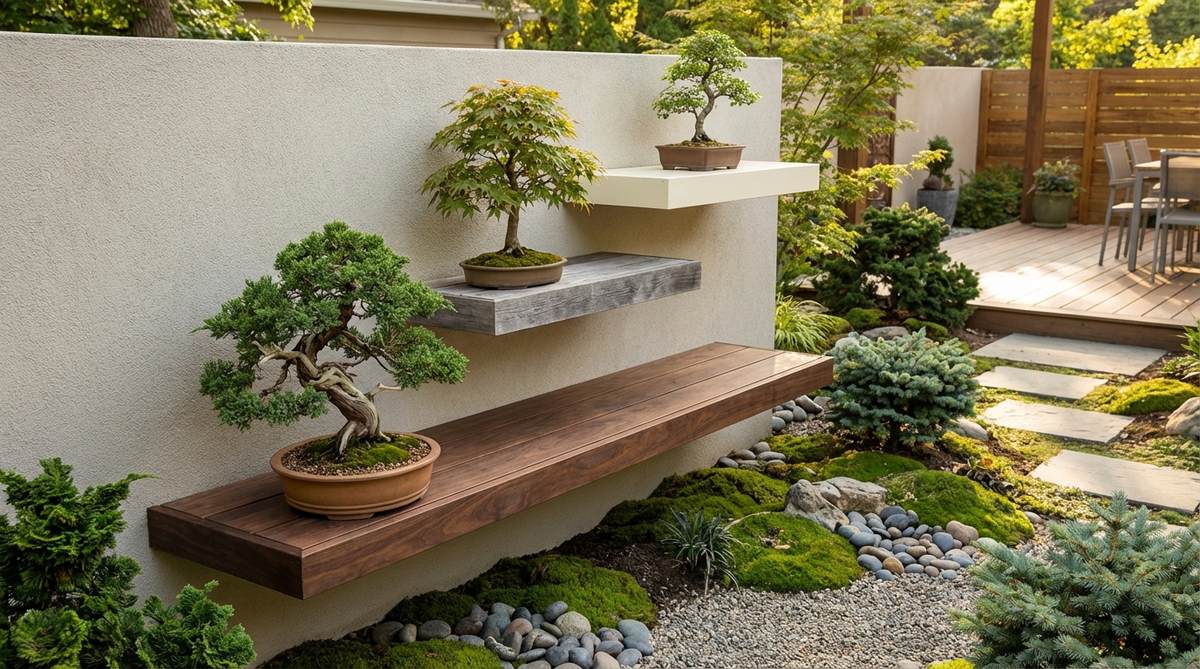
Install three floating shelves of different lengths in an offset pattern. Place the longest shelf lowest, medium length in the middle, and shortest at the top, creating visual ascension.
Display your largest bonsai on the bottom shelf, medium specimen in the middle, and smallest at the top. This arrangement follows natural visual weight distribution principles.
The asymmetry prevents the display from appearing too rigid or formulaic. Vary shelf colors between natural wood and painted finishes for additional visual interest.
34. Gallery Wall Integration
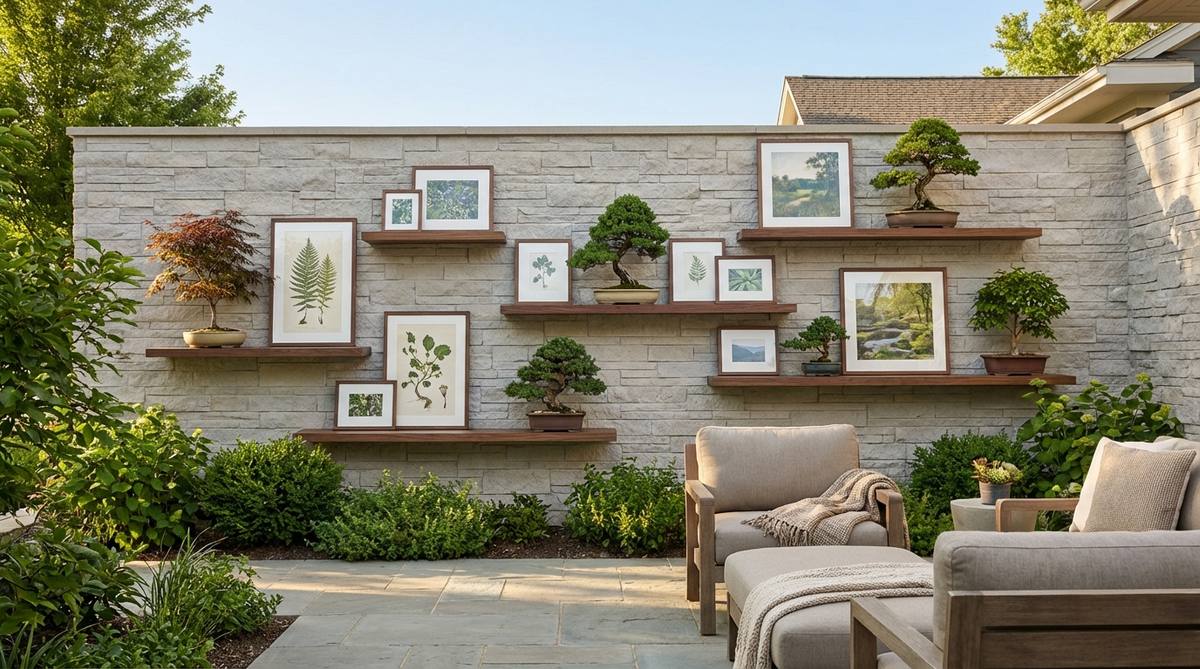
Incorporate floating shelves into existing gallery walls, alternating framed art with living bonsai displays. The three-dimensional trees add depth to flat wall art.
Select frames and shelf finishes in coordinating materials—walnut shelves pair with walnut frames, white lacquered shelves with white mats. This creates unified visual flow.
Position shelves at varying heights to create rhythm rather than rigid horizontal lines. The mixed media approach appeals to modern design sensibilities.
35. Backlit Display Niche
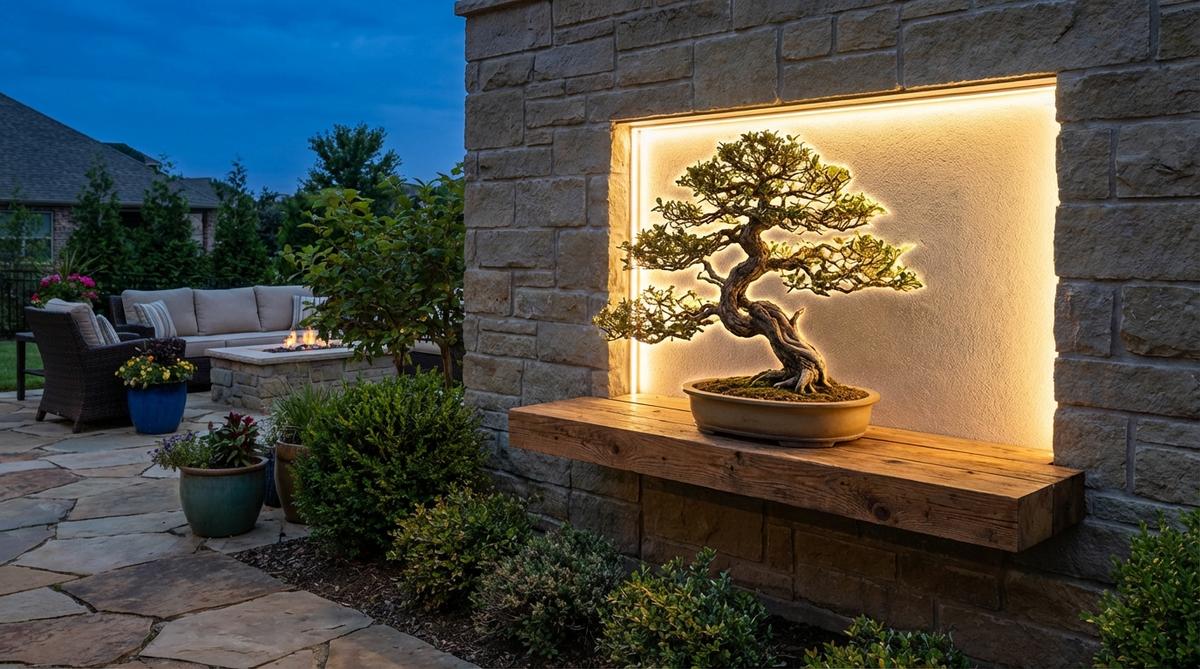
Install LED strip lighting behind floating shelves to create glowing halos around bonsai silhouettes. The backlighting emphasizes branch structures and creates dramatic evening displays.
Use warm white LEDs rather than cool whites to maintain natural ambiance. The indirect lighting prevents harsh shadows while highlighting the bonsai’s form.
This technique transforms bonsai into living sculptures during nighttime hours. The low-heat LED operation won’t damage foliage or dry soil excessively.
36. Corner Wrap Shelf System
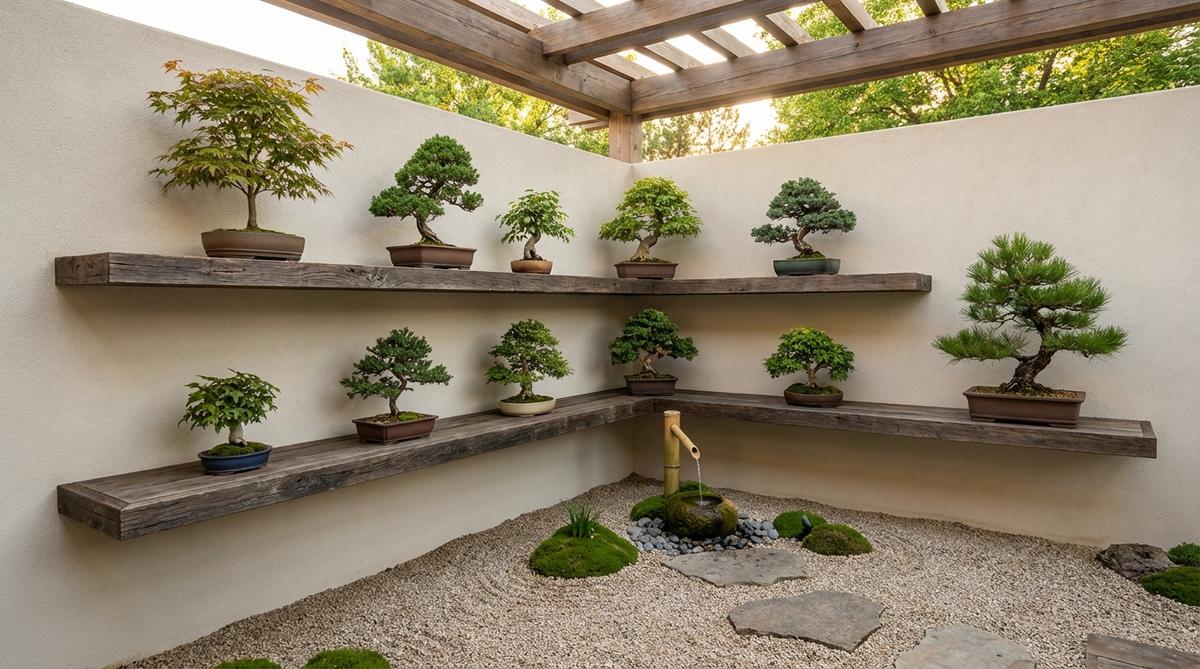
Install floating shelves that wrap around interior corners, utilizing often-wasted space. This creates a continuous display surface that guides viewers around the room.
Arrange bonsai specimens around the corner in descending or ascending height order. The wraparound effect creates a sense of journey and discovery.
Use corner placement for trees in training that require less prominent positions. As they develop, promote them to prime display locations.
37. Minimalist Single Shelf Statement
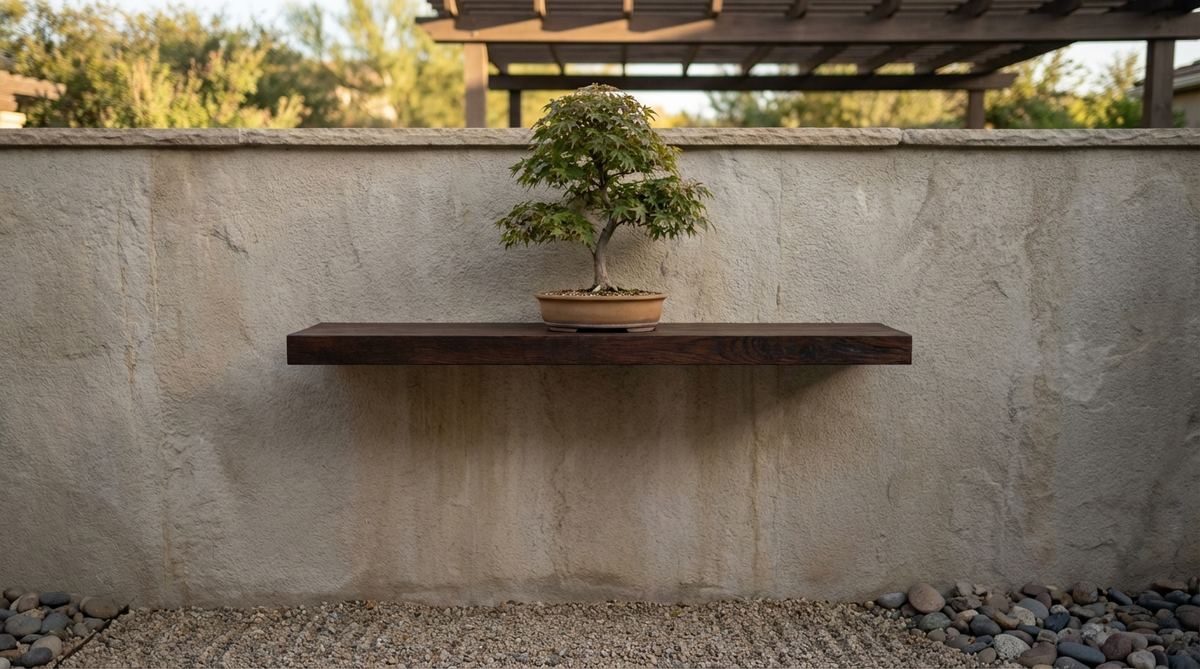
A solitary floating shelf displaying one exceptional bonsai embodies minimalist philosophy. The restraint focuses attention entirely on the tree’s inherent beauty.
Select shelf length to extend 6-8 inches beyond the pot on each side, creating negative space. This breathing room prevents the display from appearing cramped.
Position the shelf at 50 inches from the floor for optimal standing viewing height. The singular focus creates meditative calm in busy, cluttered rooms.
38. Staggered Height Repetition
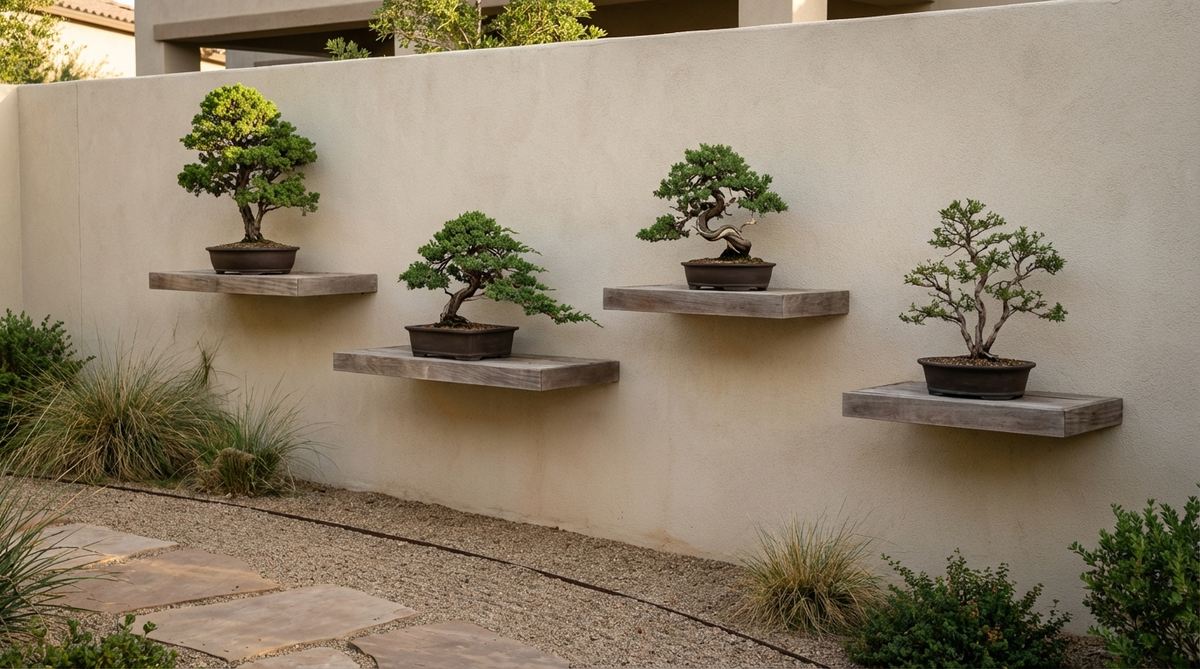
Install identical floating shelves at four different heights along a wall, each separated by 14-16 inches. Display similar-styled bonsai on each shelf to create rhythmic repetition.
Use all Juniper bonsai in different training stages or all deciduous species showing seasonal variation. The consistency creates cohesive visual impact.
This approach works particularly well in hallways or narrow rooms where wall length exceeds width. The vertical emphasis makes spaces feel taller.
39. Weighted Balance Display
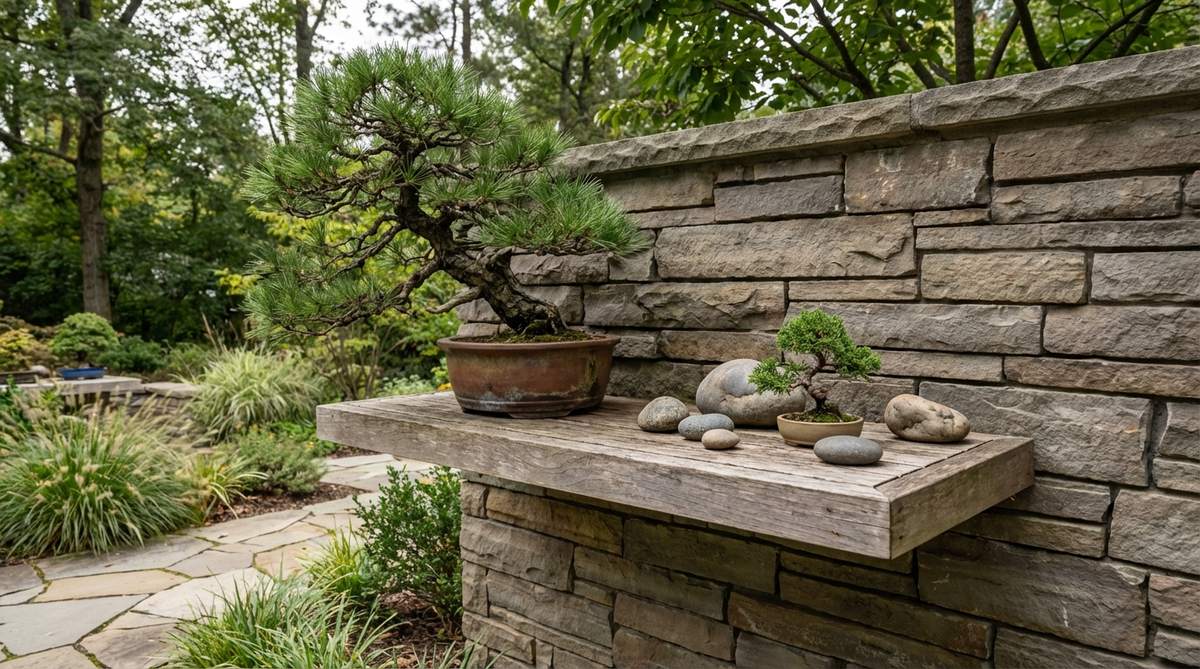
Install a long floating shelf with a large bonsai positioned off-center, balanced by smaller accent elements on the opposite end. This demonstrates dynamic visual equilibrium.
Place a substantial Japanese Black Pine on the left third of the shelf, with viewing stones and a small accent bonsai on the right two-thirds. The asymmetry creates tension and interest.
Adjust element positions until the arrangement feels balanced despite unequal distribution. This technique mirrors natural landscape composition where elements of different visual weights create harmony.
40. Integrated Lighting Shelf
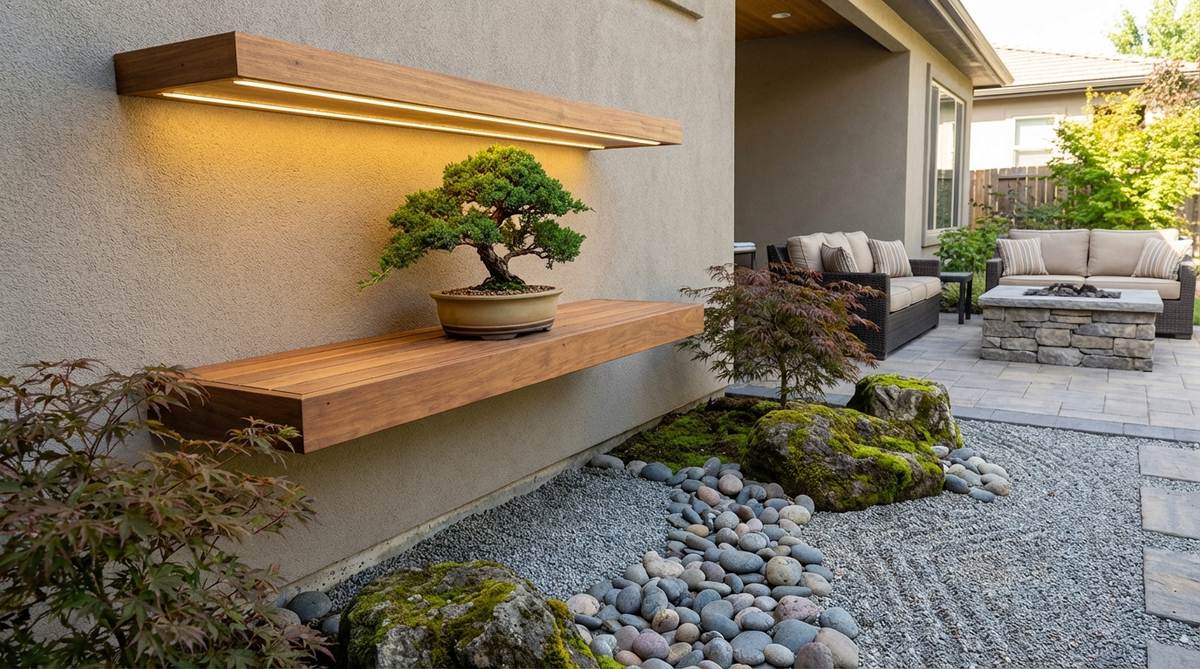
Build or purchase floating shelves with integrated downward-facing grow lights. These functional shelves support bonsai health in low-light rooms while serving as display platforms.
The built-in lighting eliminates clumsy clip lamps or overhead fixtures. Plants receive consistent illumination regardless of window proximity.
Set lights on timers to provide 12-14 hours of daily light. This automation removes guesswork from indoor bonsai care, improving success rates significantly.
41. Material Contrast Shelf
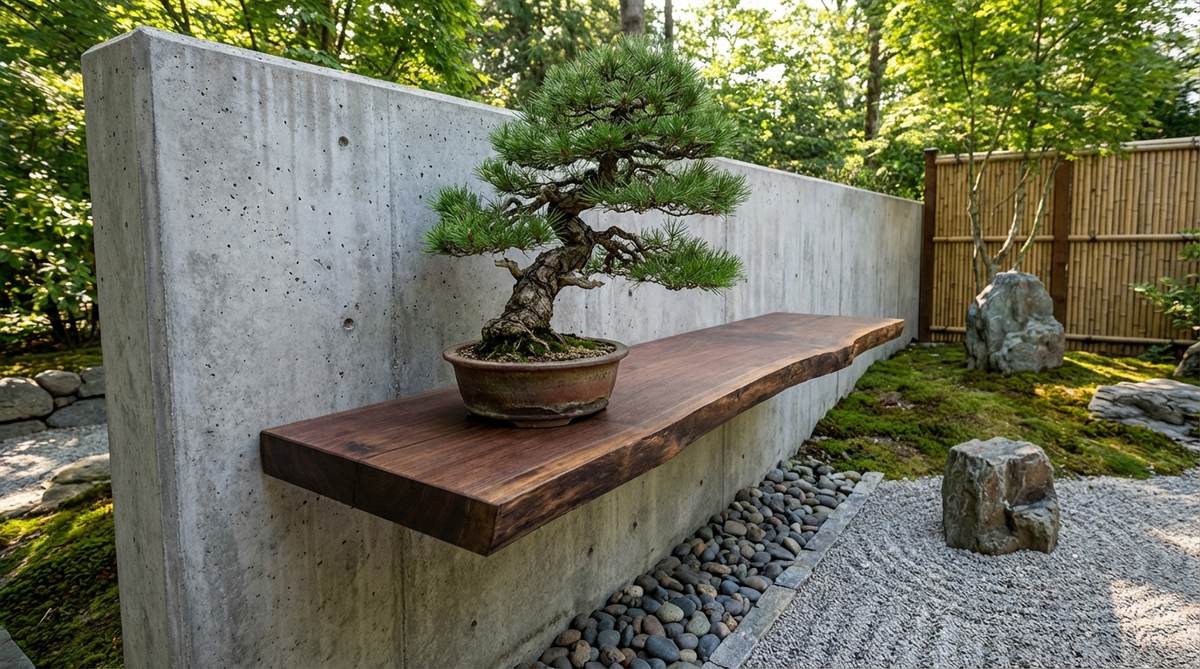
Install floating shelves made from unexpected materials—live-edge wood slabs, polished concrete, or thick glass. The material choice influences the display’s overall character.
Pair rustic live-edge shelves with informal bonsai styles like literati or cascade. Use sleek glass shelves for formal upright specimens in refined pots.
The shelf material becomes part of the artistic statement rather than a neutral platform. This holistic approach elevates the entire display into curated installation art.
42. Seasonal Rotation Shelf Bank
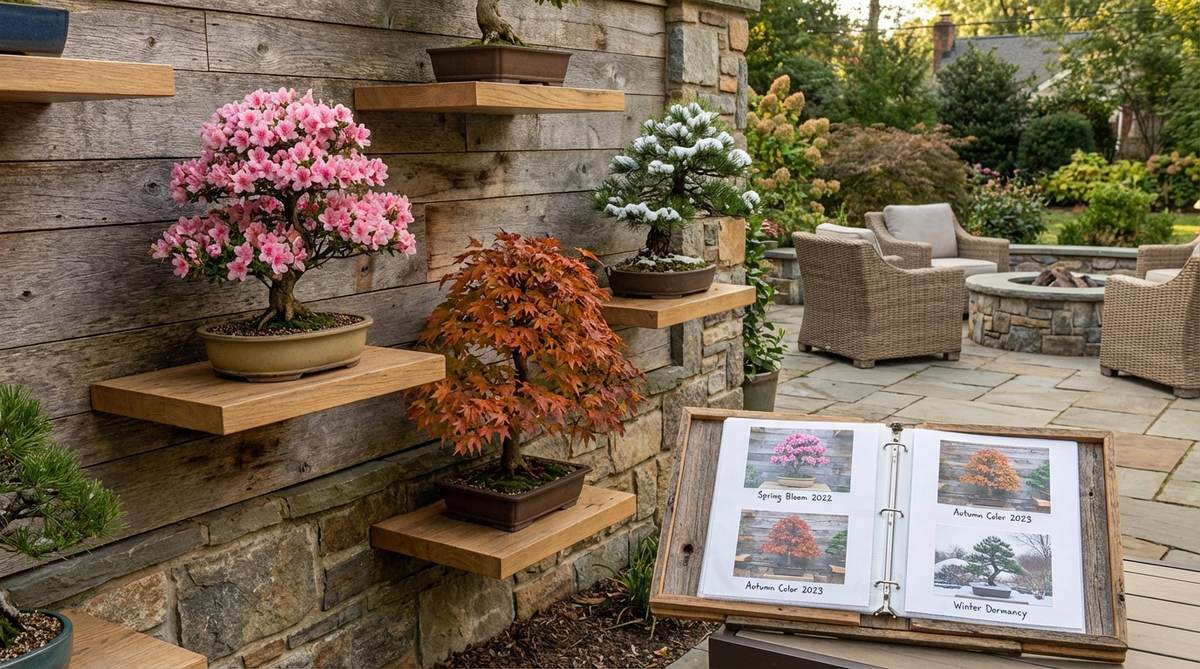
Dedicate a wall of floating shelves to rotating seasonal displays. Feature flowering bonsai during bloom periods, deciduous species during autumn color, and evergreens in winter.
Maintain a growing area elsewhere for off-season specimens. The rotation keeps the display fresh and celebrates each tree’s peak presentation moments.
Document each configuration with photos to track seasonal changes over years. This practice deepens appreciation for subtle annual variations in growth patterns.
Bringing Zen Into Compact Spaces
Implementing zen garden bonsai displays in compact living spaces requires thoughtful planning but delivers profound aesthetic and psychological rewards. These 40+ arrangements demonstrate that spatial constraints need not limit your ability to create tranquil, nature-connected environments. Start with a single well-placed specimen using one of the vertical or shelf-based approaches, then expand your collection as you develop confidence in placement and care. The meditative practice of maintaining these miniature landscapes brings daily mindfulness opportunities while transforming even the smallest apartment into a personal sanctuary.
Frequently Asked Questions
How much space do I need for a zen garden bonsai display?
Minimal space is required for effective zen garden bonsai displays. A single bonsai on a windowsill needs just 12-18 inches of linear space, while vertical arrangements using floating shelves or wall-mounted systems can showcase multiple specimens within 2-4 square feet of wall area. The key is selecting display methods that maximize vertical space rather than consuming valuable floor area, making these arrangements suitable for even studio apartments.
What are the best bonsai species for indoor zen garden displays?
Indoor zen garden displays perform best with species that tolerate lower light and stable temperatures. Ficus retusa, Chinese Elm, Jade plant, and Schefflera arboricola adapt well to interior conditions. For brighter south-facing windows, consider Portulacaria afra or dwarf Pomegranate. These species require less dormancy than traditional outdoor bonsai like Juniper or Pine, making year-round indoor display practical.
How often should I rotate bonsai in my display?
Rotate bonsai 90 degrees weekly if positioned near windows to ensure even light exposure and balanced growth. For display rotation between multiple locations, move trees every 2-3 months to prevent one-sided phototropic development. Seasonal rotations work well for deciduous species, showcasing autumn color in prime viewing locations and moving dormant specimens to growing areas during leafless winter months.
Can I combine zen garden bonsai with flowering plants?
Zen garden bonsai displays benefit from selective flowering plant companions when chosen thoughtfully. Use flowering accents sparingly—small seasonal bulbs, dwarf Azaleas, or miniature orchids—to add color without overwhelming the minimalist aesthetic. Position flowering elements as supporting characters rather than focal points, maintaining the bonsai’s visual dominance. Select flowers with subtle blooms in complementary colors that enhance rather than compete with the bonsai.
What lighting considerations are important for compact bonsai displays?
Natural light remains ideal for bonsai health, but supplemental LED grow lights extend display possibilities to interior rooms without windows. Position grow lights 8-12 inches above bonsai canopies, providing 12-14 hours of daily illumination. Use warm-spectrum LEDs for aesthetic appeal during evening hours while maintaining photosynthetically active wavelengths. Consider backlit shelving systems that combine functional plant lighting with ambient room illumination.
How do I prevent water damage when displaying bonsai on furniture?
Protect furniture by placing waterproof trays beneath all bonsai containers. Use cork mats, felt pads, or ceramic tiles between trays and wood surfaces to prevent moisture rings. Humidity trays filled with pebbles elevate pots above water level while increasing local moisture without soil saturation. Water bonsai over sinks when possible, allowing excess drainage before returning to displays, or use self-watering inserts designed for indoor plant care.