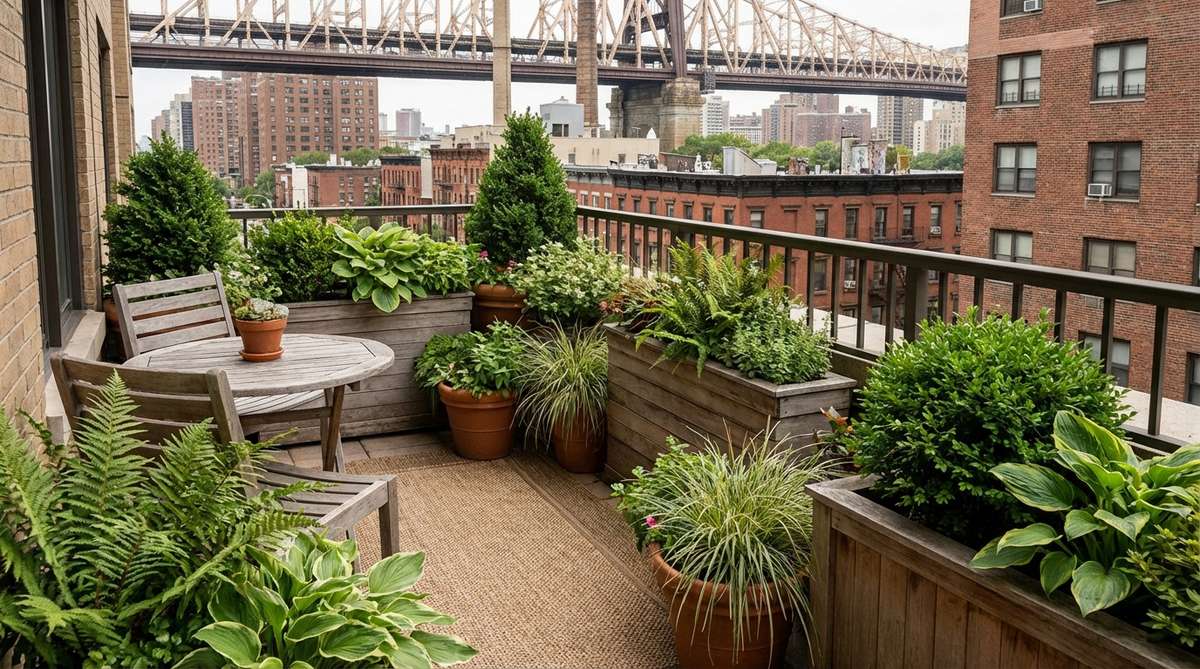
Selecting the right urban balcony plants transforms even the most exposed, shaded spaces into thriving green retreats. City gardeners face unique challenges with wind tunnels between buildings and limited sunlight, yet dozens of resilient species flourish under these conditions. Fresh Garden Ideas brings you expert-curated selections proven to withstand harsh urban environments while delivering beauty and function.
Design SnapshotKey Principles
- Wind Adaptation: Plants with flexible stems, waxy foliage, or compact growth naturally resist gusts without staking
- Shade Tolerance: Low-light specialists thrive with 2-4 hours indirect sun, maintaining color and vigor
- Container Durability: Wide, heavy pots prevent toppling while self-watering reservoirs combat rapid evaporation
- Layered Defense: Screening plants create microclimates, sheltering tender varieties behind tougher specimens
Hardy Shade Perennials for Windy Corners
These workhorses anchor shaded balconies with minimal fuss. Their low centers of gravity and sturdy root systems resist gusts while thriving in indirect light.
1. Hosta Varieties
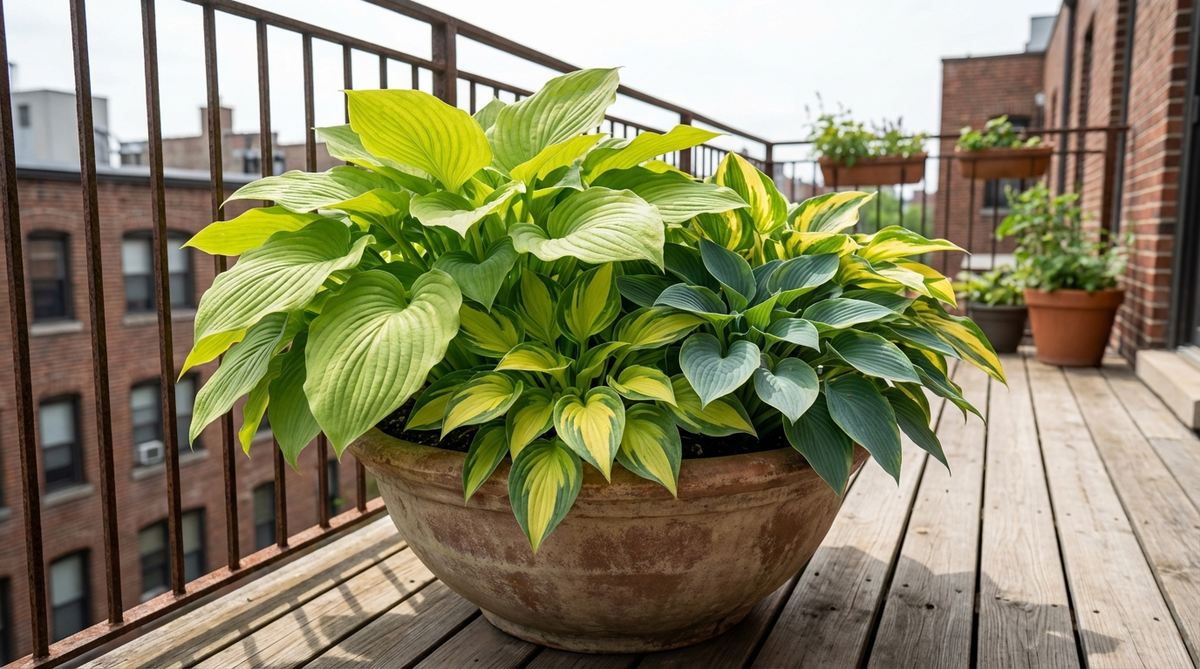
Variegated hosta collections display gold, blue-green, and chartreuse foliage that brightens dim corners. Thick leaves shed wind without tearing, creating layered texture from spring through frost.
Plant multiple sizes in wide ceramic bowls for depth. Water consistently, as shade reduces soil drying but wind increases leaf transpiration.
Slug-resistant varieties like ‘Sum and Substance’ combine durability with bold presence. Pair with low-growing companions to fill container edges.
2. Coral Bells (Heuchera)
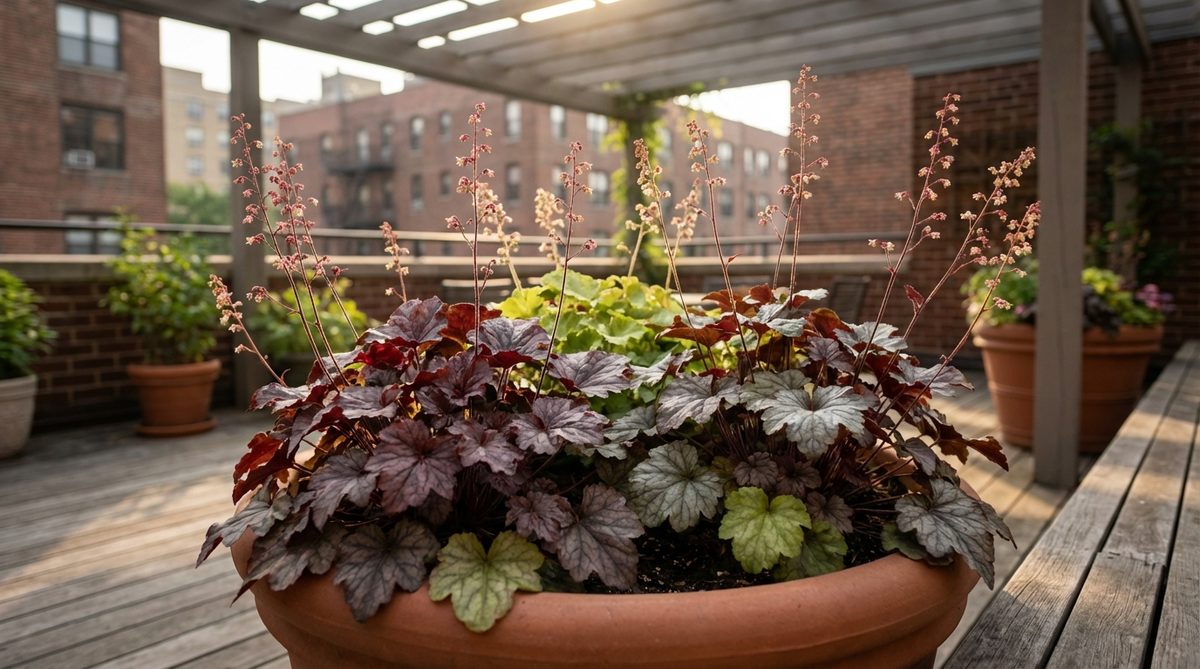
Burgundy, silver, and lime foliage persists year-round in zones 4-9. Ruffled leaves form compact mounds that withstand moderate winds without staking.
Position coral bells in partial shade where morning light enhances metallic leaf tones. Delicate flower stalks emerge in late spring, adding vertical interest without wind vulnerability.
Modern cultivars tolerate container culture better than older varieties. Replace every 3-4 years to maintain vigor.
3. Hellebores (Lenten Rose)
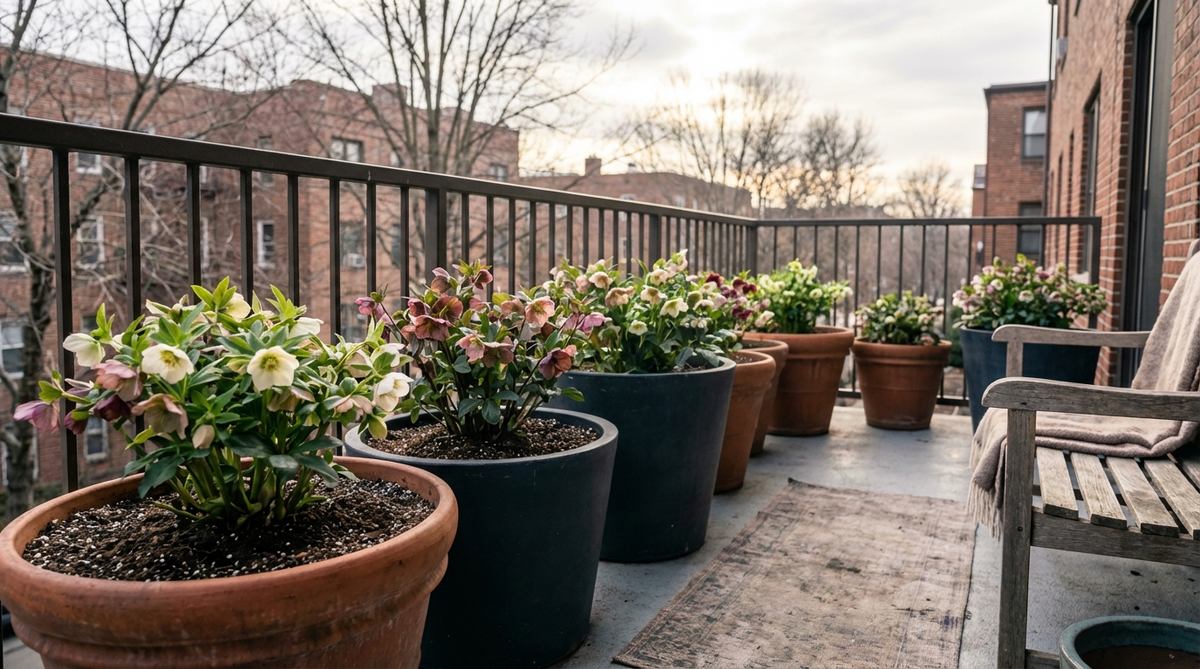
Evergreen hellebores bloom from late winter through early spring when balconies need color most. Nodding cup-shaped flowers in cream, pink, and maroon resist wind damage through downward orientation.
Plant in deep containers with rich, well-draining mix. These shade specialists tolerate neglect once established, requiring only occasional deadheading.
4. Japanese Painted Fern
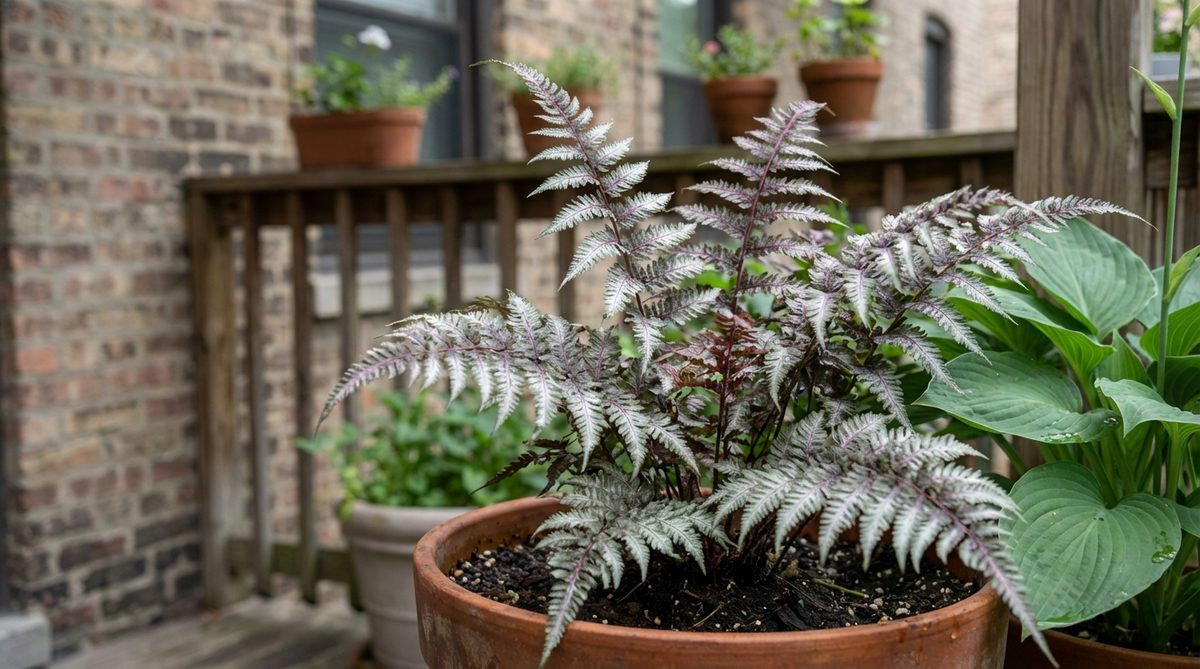
Silver and burgundy fronds bring metallic shimmer to shaded containers. Fine-textured foliage sways gracefully in wind without shredding.
Combine with solid-leaved hostas for contrast. Maintain consistent moisture to prevent frond browning on windy days.
5. Astilbe
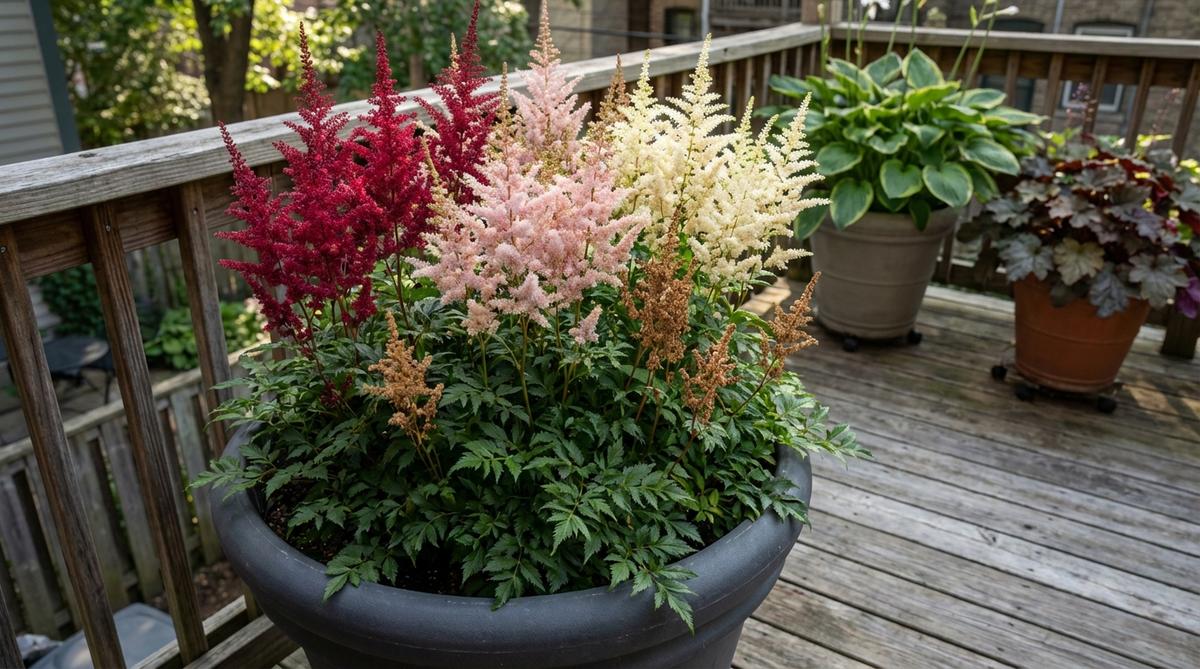
Feathery plumes in pink, white, and red rise above fern-like foliage. These shade lovers tolerate wind exposure when kept moist.
Plant in self-watering containers to meet their moisture needs. Spent flowers provide winter interest if left uncut.
6. Bleeding Heart (Dicentra)
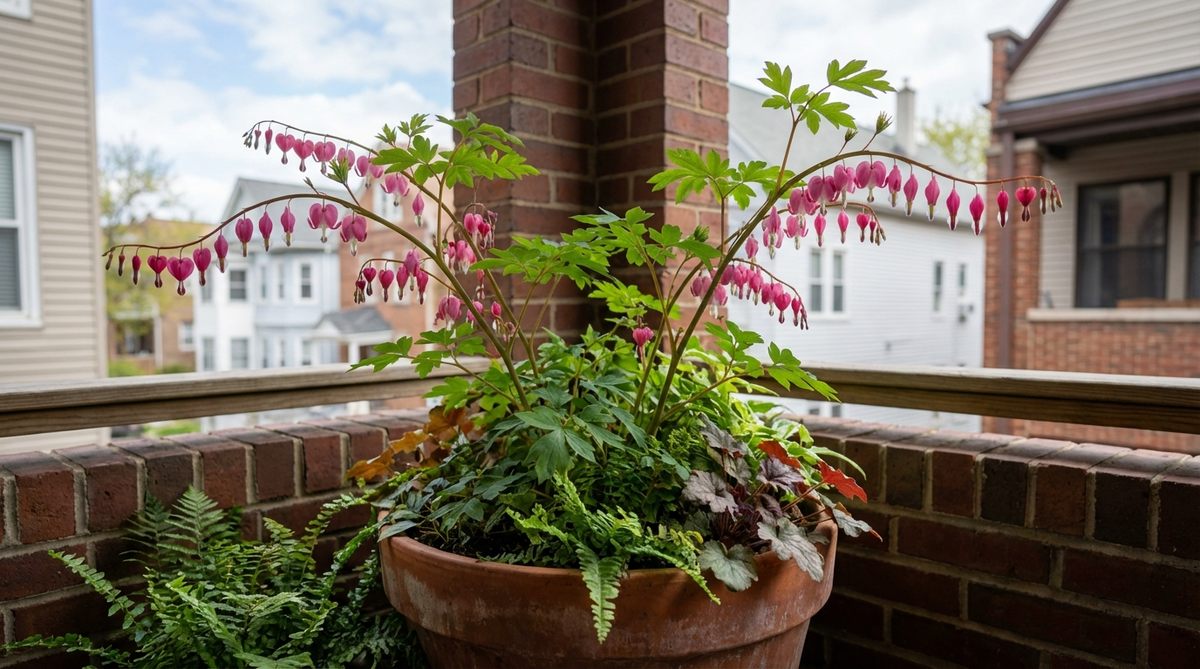
Heart-shaped flowers dangle from arching stems in spring. This classic shade perennial tolerates north-facing exposures with moderate wind.
Foliage may go dormant in summer heat. Underplant with late-season fillers to maintain container appeal.
7. Lungwort (Pulmonaria)
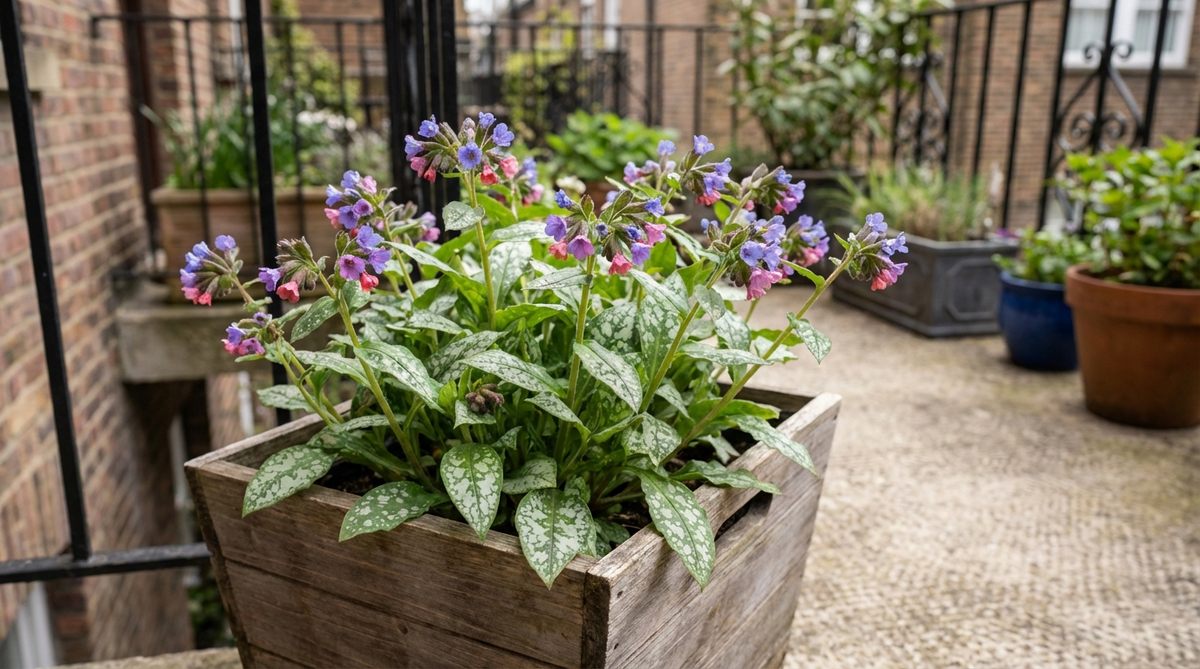
Silver-spotted leaves and early spring blooms thrive in full shade. Ground-hugging growth resists wind while suppressing weeds in larger containers.
Pink buds open to blue flowers, creating two-tone displays. Divide crowded clumps every three years for best performance.
Wind-Proof Ornamental Grasses
Grasses evolved in open prairies where wind is constant. Their flexible stems and deep roots make them ideal for exposed urban balconies, adding movement and texture.
8. Feather Reed Grass (Calamagrostis)
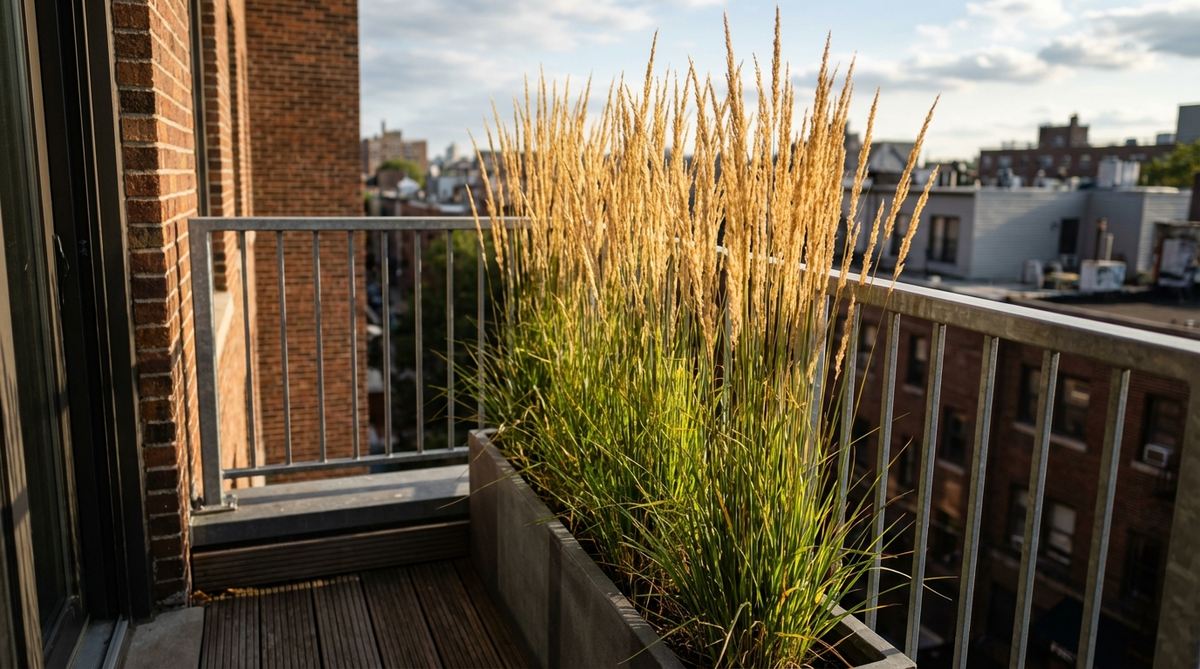
Upright clumps reach 4-5 feet with narrow profiles perfect for tight balconies. Wheat-colored plumes persist through winter, catching light and snow.
Plant in tall, narrow containers against railings. This grass tolerates partial shade and strong gusts without lodging.
9. Blue Fescue (Festuca glauca)
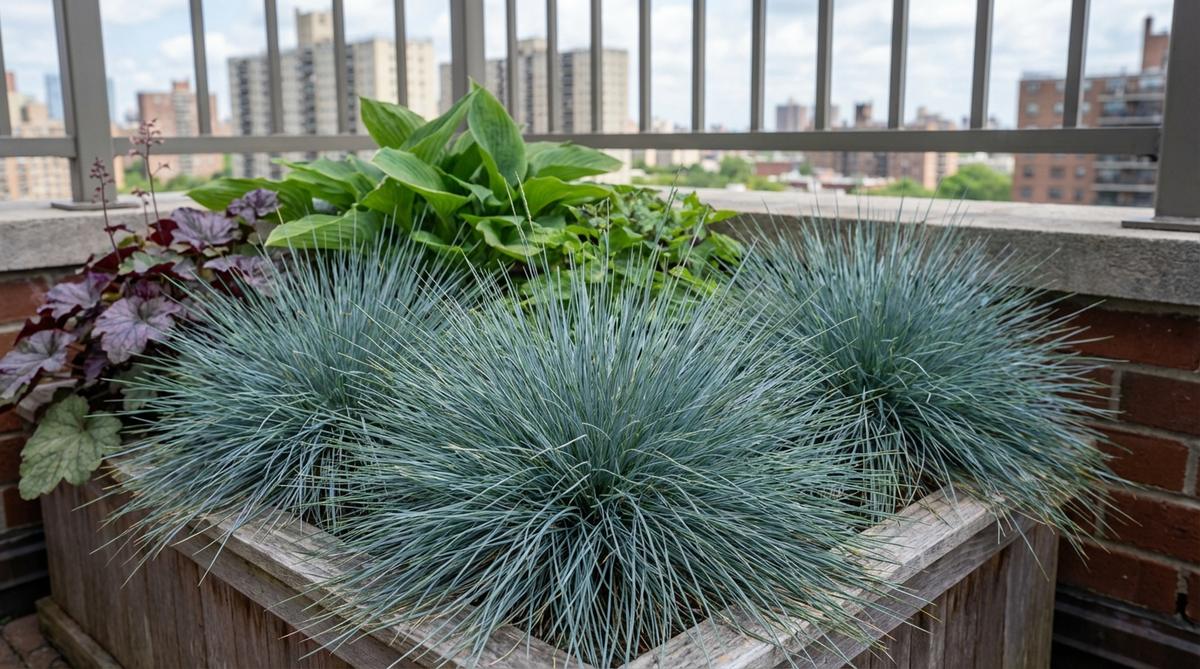
Steel-blue tufts form neat 12-inch domes. Fine texture contrasts with broad-leaved perennials in mixed containers.
Divide every two years to prevent center die-out. Tolerates wind, drought, and partial shade with equal vigor.
10. Japanese Forest Grass (Hakonechloa)
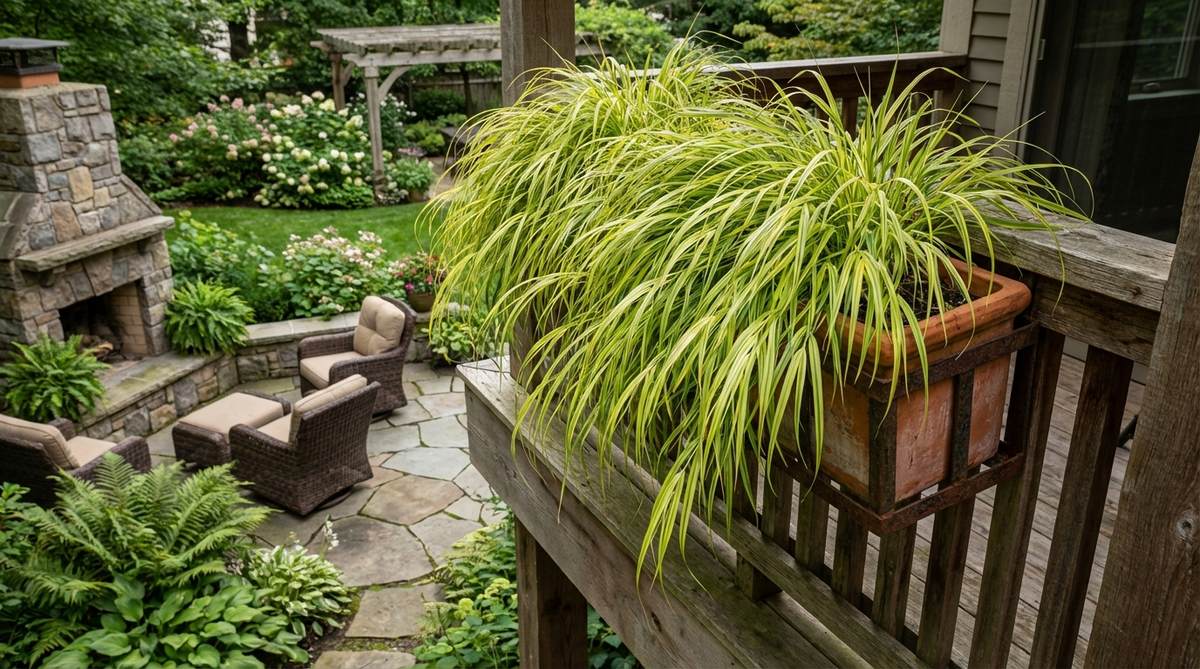
Golden or variegated blades cascade like waterfalls from elevated planters. This shade-loving grass thrives where others fail.
Slow growth makes it ideal for long-term container culture. Wind causes graceful swaying without damage to delicate foliage.
11. Fountain Grass (Pennisetum)
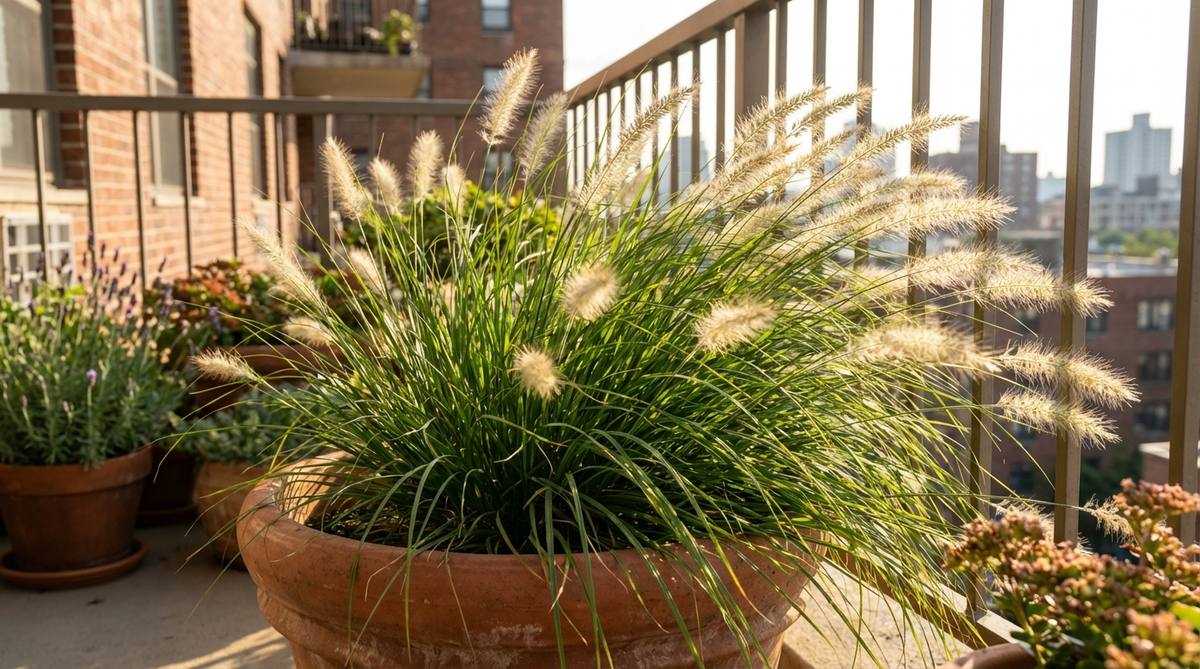
Arching foliage and bottlebrush blooms create fountain effects. Dwarf varieties suit containers while handling wind exposure.
Requires more sun than other grasses on this list. Position in brightest balcony corners for best bloom production.
12. Sedge (Carex)
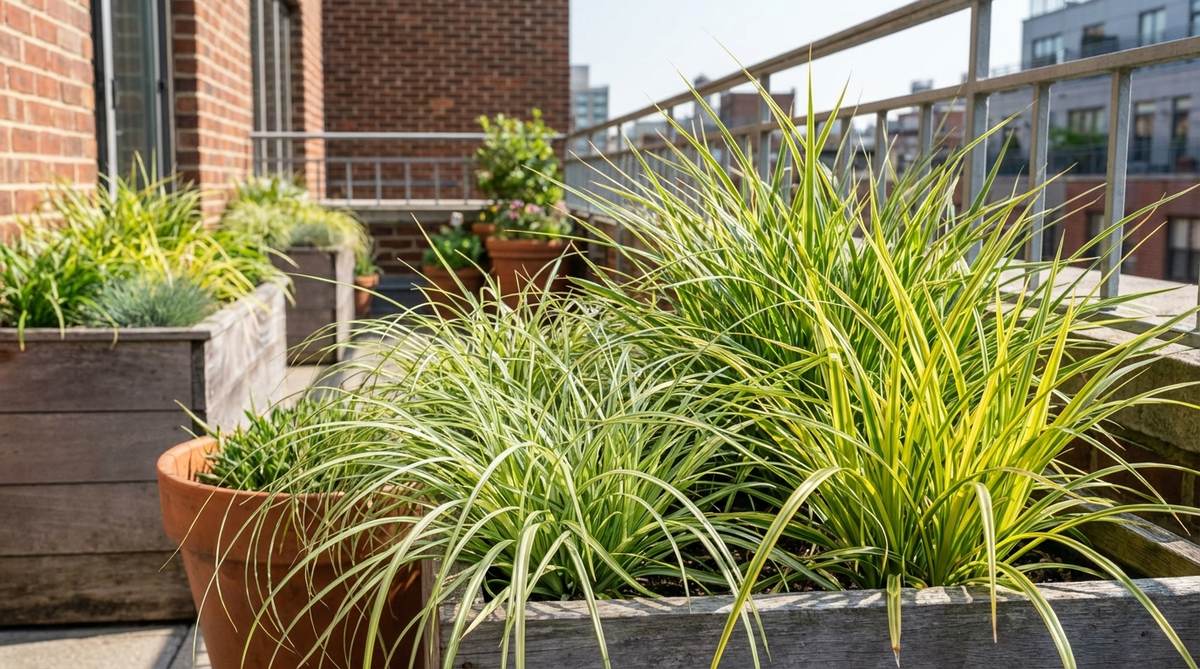
Hundreds of sedge varieties offer options for every light level. ‘Frosted Curls’ brings pale green texture to sun, while ‘Evergold’ brightens dry shade.
These grass-like perennials tolerate wind and neglect. Use as thriller, filler, or spiller depending on variety selection.
Drought-Tough Succulents for Exposed Rails
Wind accelerates moisture loss, but succulents store water in thick leaves. These sculptural plants thrive in exposed conditions with minimal care.
13. Jade Plant (Crassula ovata)
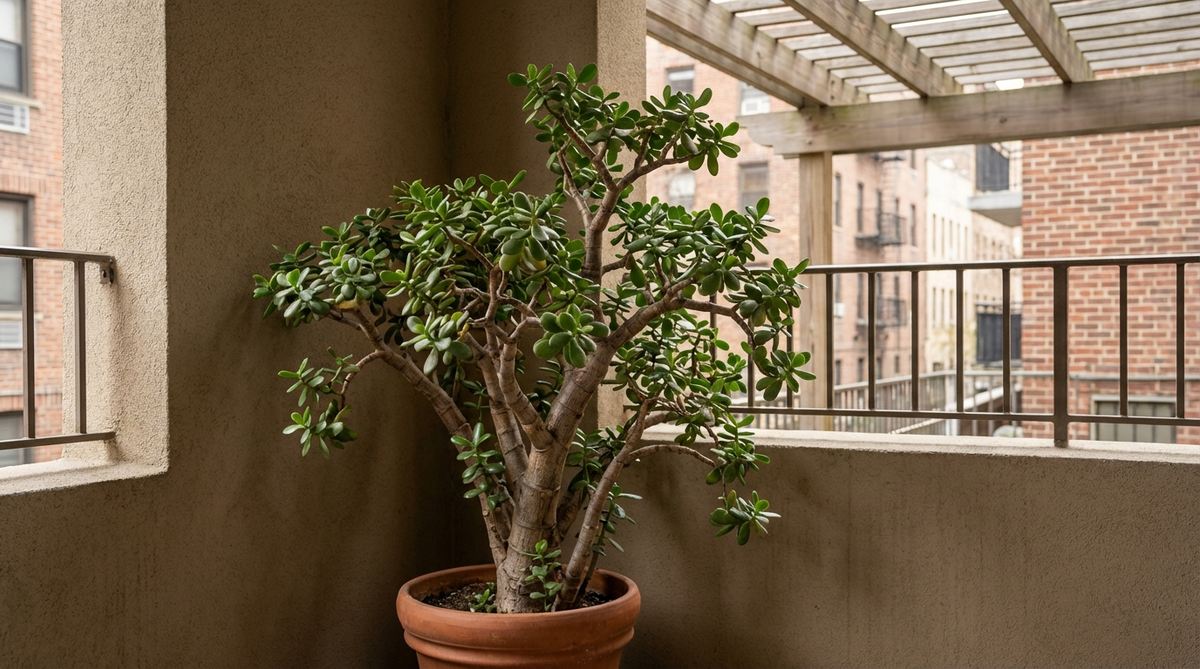
Thick, glossy leaves store moisture for weeks between waterings. Woody stems develop character as plants mature, resembling miniature trees.
Position in bright shade near walls for wind protection. Heavy growth makes jade inherently stable in moderate gusts.
14. Sedum (Stonecrop)
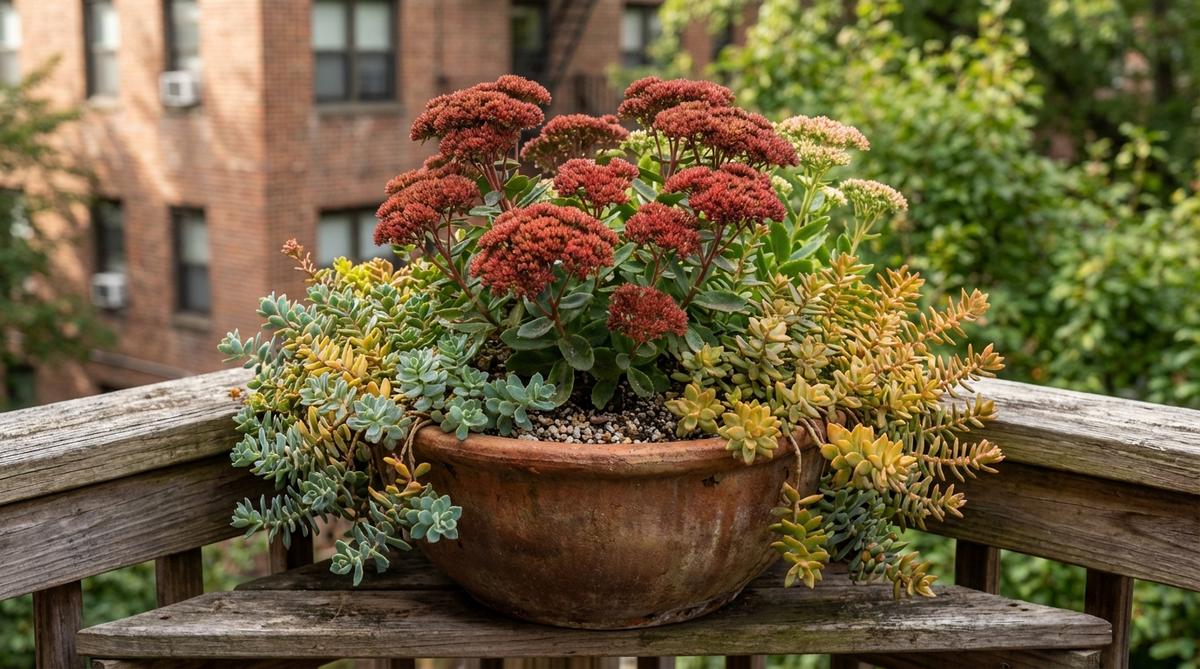
Trailing and upright sedums offer versatility for mixed containers. ‘Autumn Joy’ produces dinner-plate flower heads that dry to rust-red.
Plant in well-draining cactus mix to prevent root rot. Sedums tolerate partial shade, though flowering decreases without adequate light.
15. Echeveria
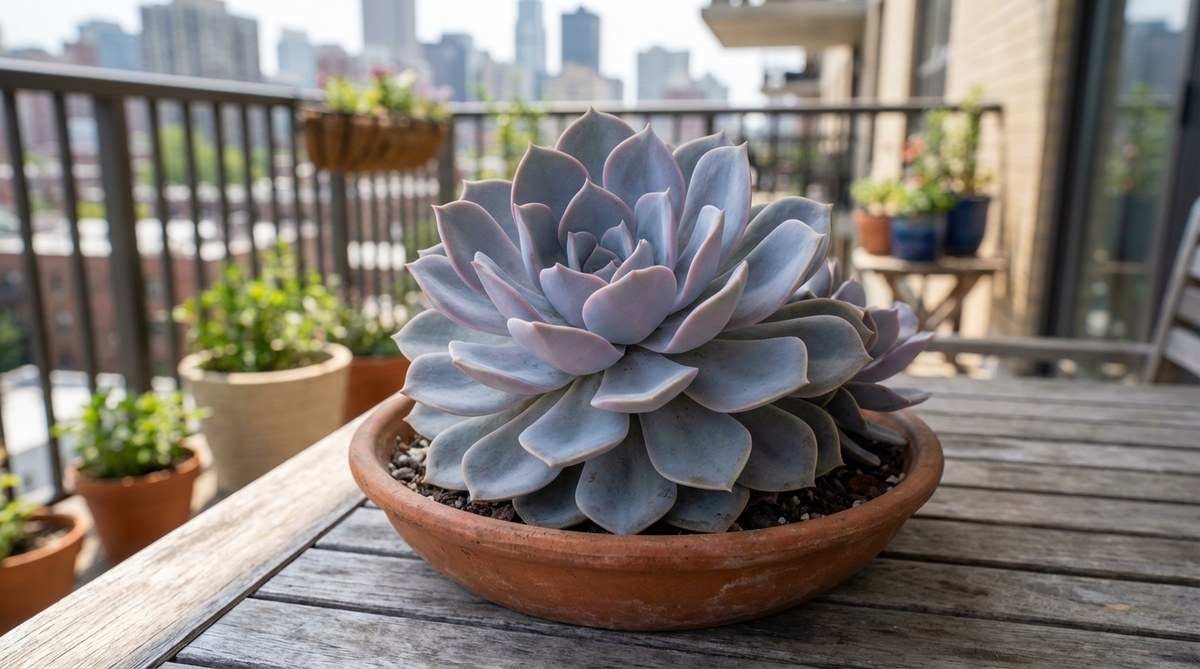
Rosette-forming echeverias display powdery pastels from blue-gray to pink. Low profiles resist wind while creating geometric patterns.
Combine multiple varieties in shallow bowls for living art. Protect from hard frost in colder zones.
16. Aloe Vera
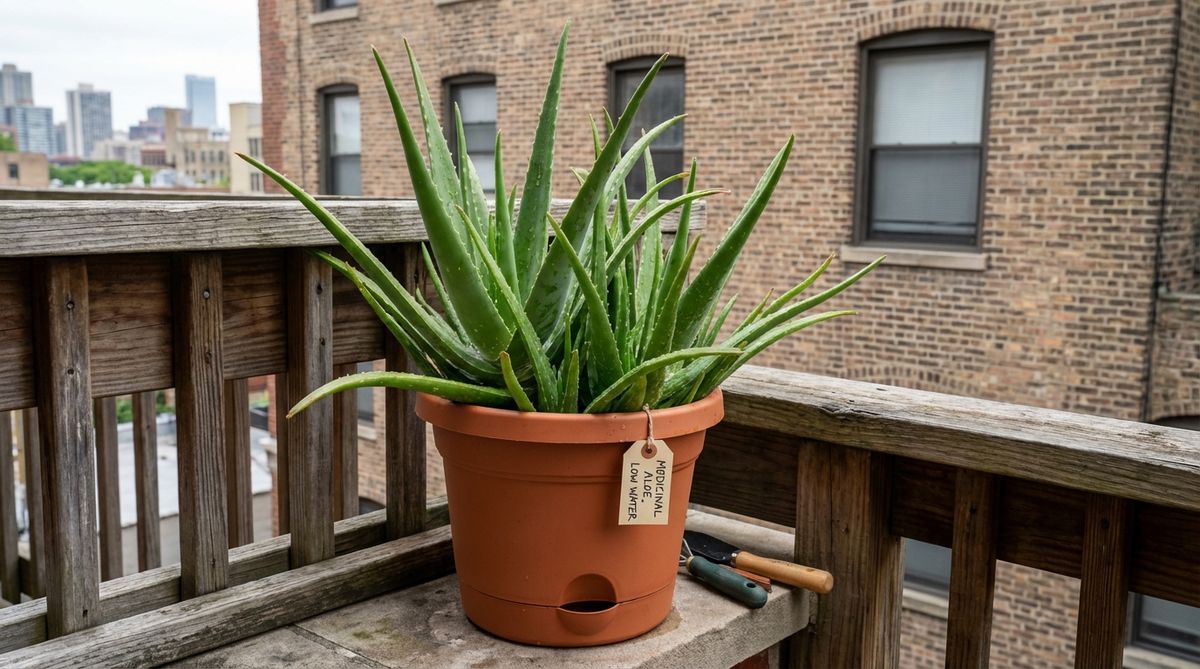
Medicinal aloe produces spiky rosettes that tolerate wind and partial shade. Pups multiply readily, filling containers without replanting.
Use in self-watering pots to maintain consistent moisture. Aloe tolerates neglect but performs best with biweekly watering.
17. Agave
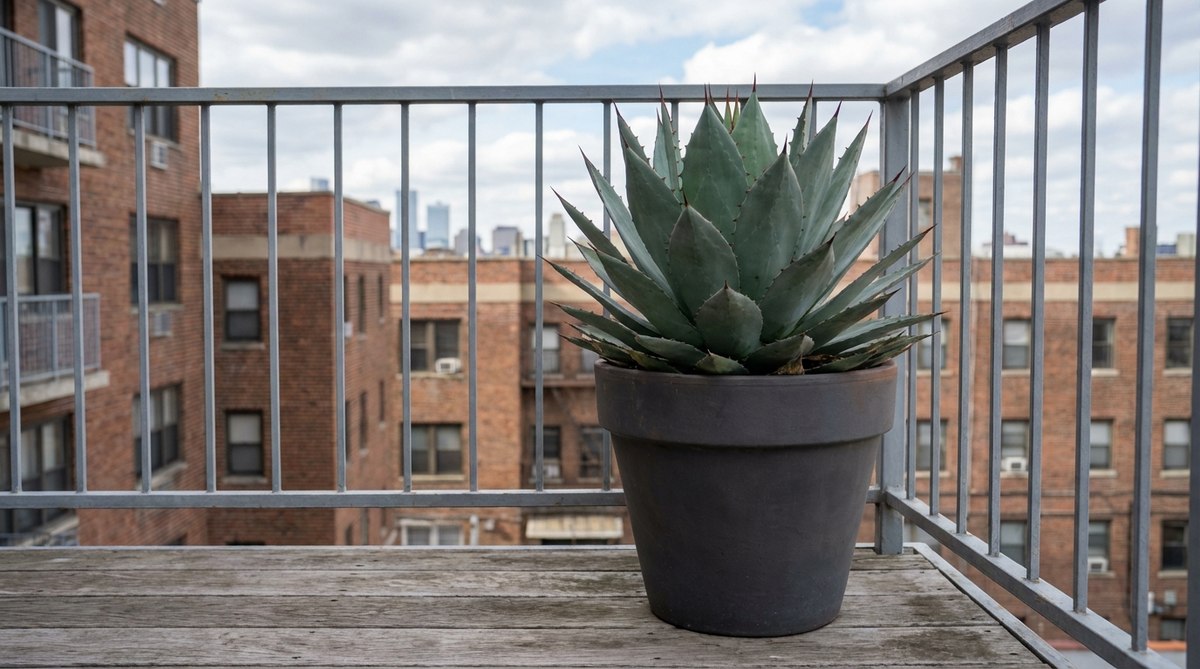
Architectural agaves anchor container displays with bold presence. Compact varieties like ‘Blue Glow’ suit balcony scale.
Sharp leaf tips require careful placement away from traffic areas. These succulents withstand significant wind exposure.
Shade-Flowering Champions
Blooms brighten shaded balconies from spring through frost. These selections deliver color without demanding full sun.
18. Begonias
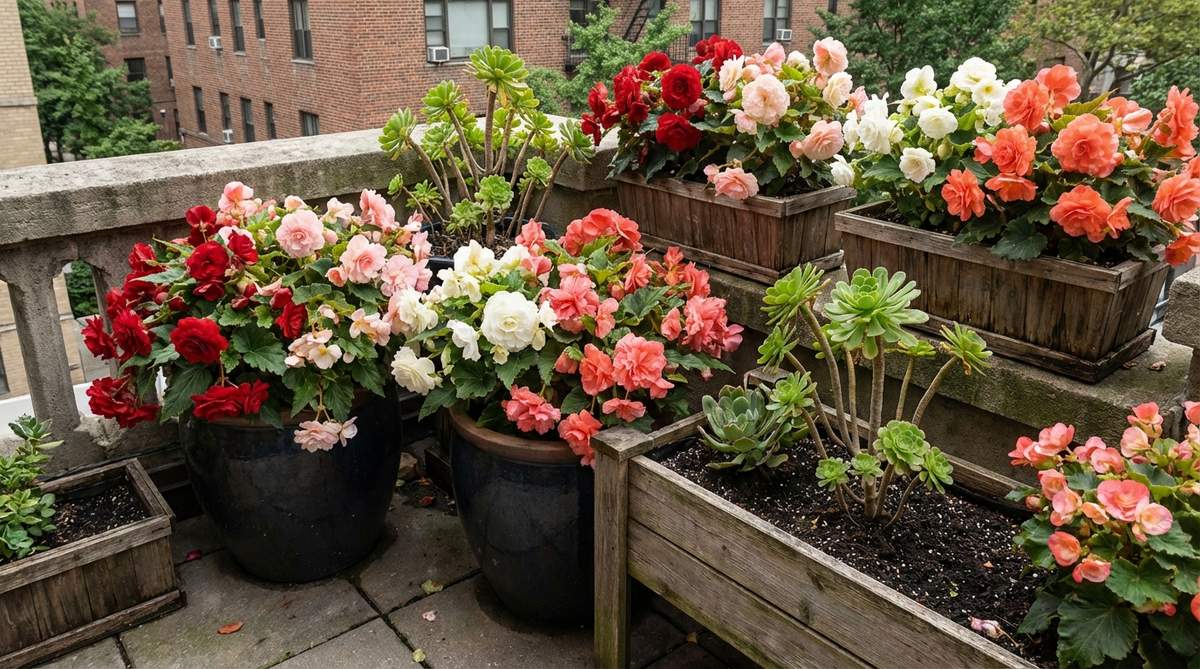
Tuberous and fibrous begonias produce continuous blooms in pink, red, white, and coral. Succulent stems resist wind damage while thriving in low light.
Plant in rich, moisture-retentive soil with excellent drainage. Pinch spent flowers to encourage branching and additional blooms.
Overwinter tubers indoors or treat as annuals. Begonias combine well with ferns and hostas in layered containers.
19. Fuchsia
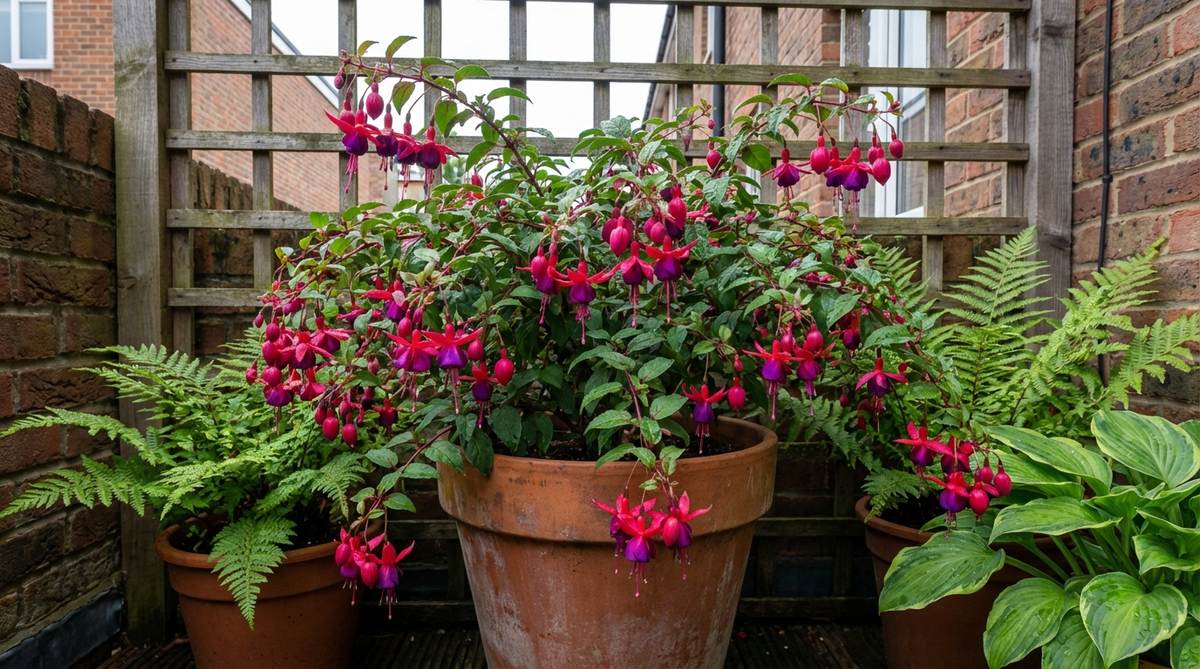
Pendant flowers in bi-colors dangle from arching stems. These shade specialists bloom prolifically when protected from afternoon sun.
Hang fuchsias in sheltered alcoves where wind is moderated. Regular deadheading and feeding extend bloom season through fall.
20. Impatiens (Busy Lizzie)
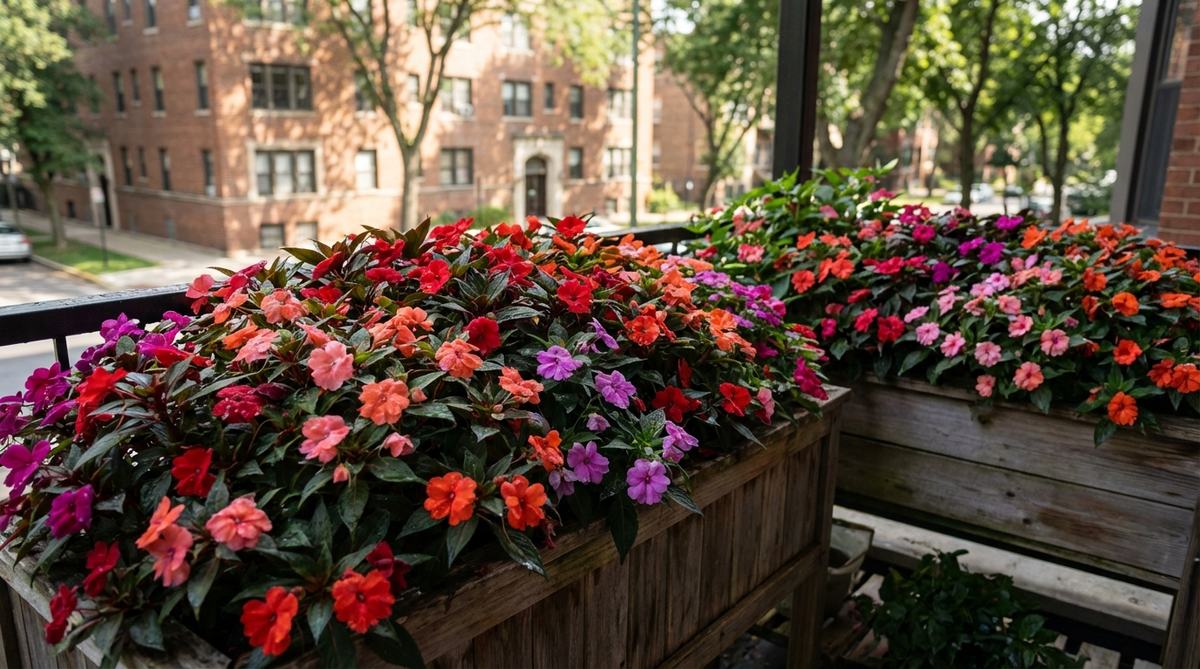
Classic impatiens carpet shaded containers with nonstop color. Modern varieties resist downy mildew that plagued older types.
Plant densely for quick coverage. Impatiens self-clean, eliminating deadheading chores while tolerating moderate wind exposure.
21. Hydrangea
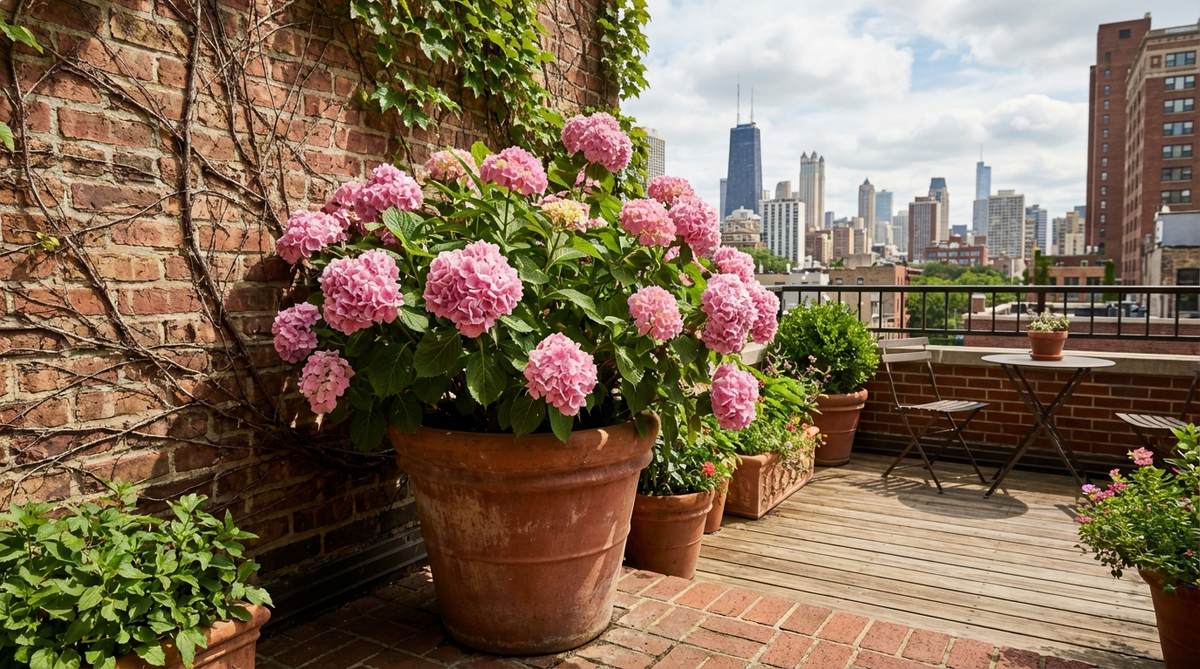
Panicle and bigleaf hydrangeas adapt to container culture in partial shade. Massive blooms shift from cream through pink as seasons progress.
Choose compact varieties like ‘Bobo’ for balcony scale. Wind can damage large blooms, so position plants near walls for protection.
22. Torenia (Wishbone Flower)
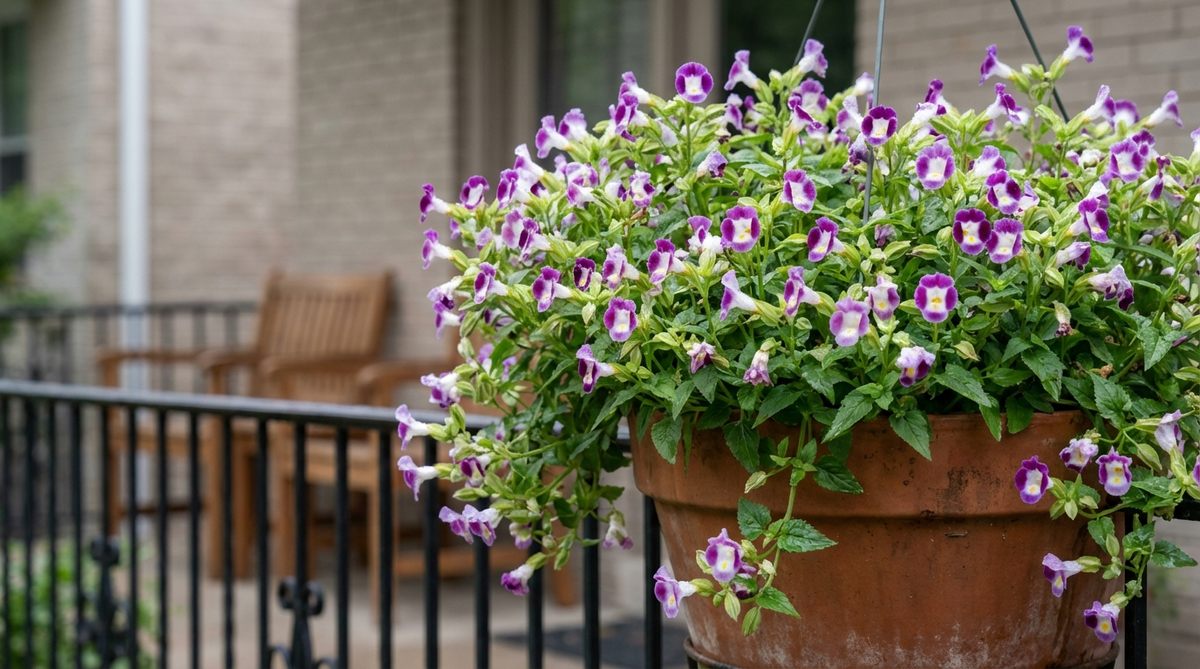
Two-tone flowers resemble tiny snapdragons. Torenia thrives in shade where other annuals languish.
Plant in hanging baskets or edge containers with trailing varieties. Self-cleaning blooms eliminate maintenance while providing season-long color.
Culinary Herbs for Dual Conditions
Mediterranean herbs evolved on windswept coastal cliffs, making them naturally suited to exposed balconies. Many tolerate partial shade while delivering flavor and fragrance.
23. Rosemary
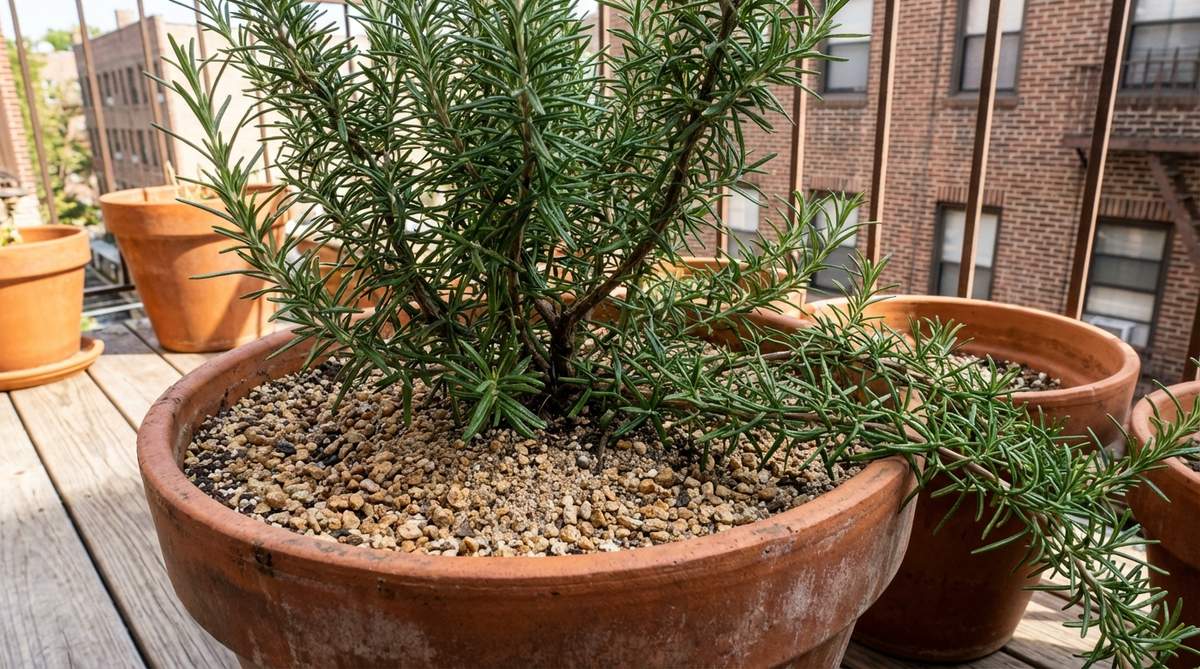
Needle-like leaves withstand wind and drought with equal resilience. Upright varieties provide height, while prostrate types cascade from elevated planters.
Plant in terracotta with gritty, fast-draining mix. Rosemary tolerates partial shade but produces more aromatic oils in brighter locations.
Harvest regularly to encourage bushiness. Woody stems develop character over multiple seasons.
24. Thyme
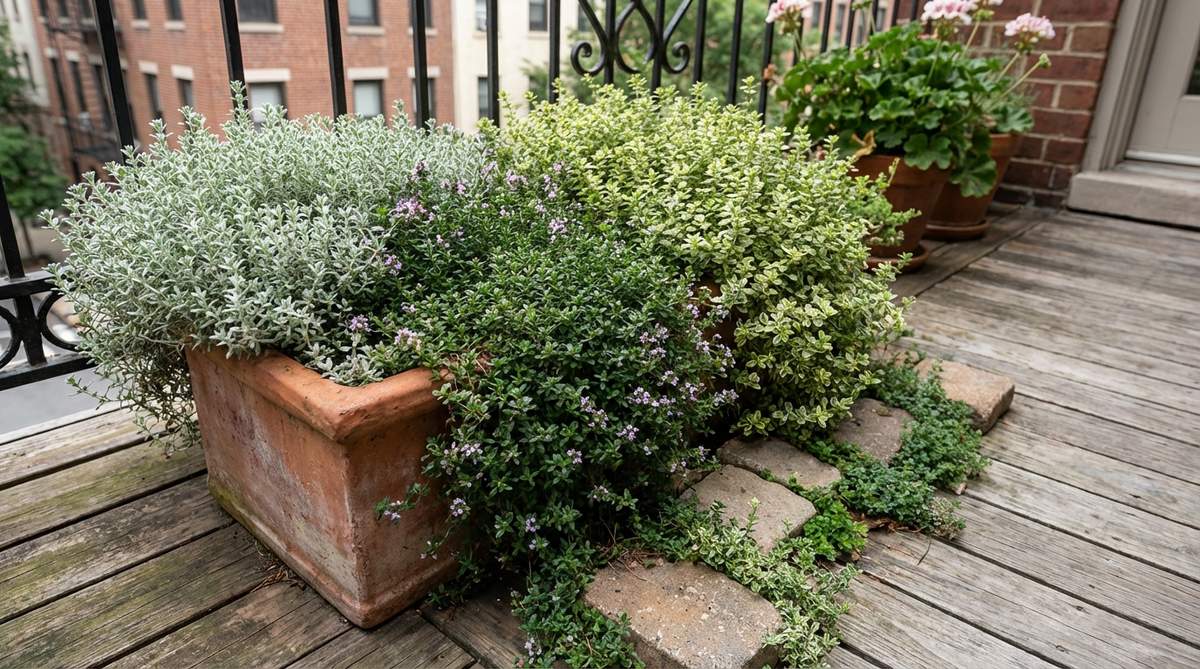
Low-growing thyme carpets container edges with tiny fragrant leaves. This herb tolerates foot traffic, wind, and partial shade.
Combine multiple varieties for textural interest. Lemon, woolly, and creeping thymes offer distinct flavors and appearances.
25. Sage
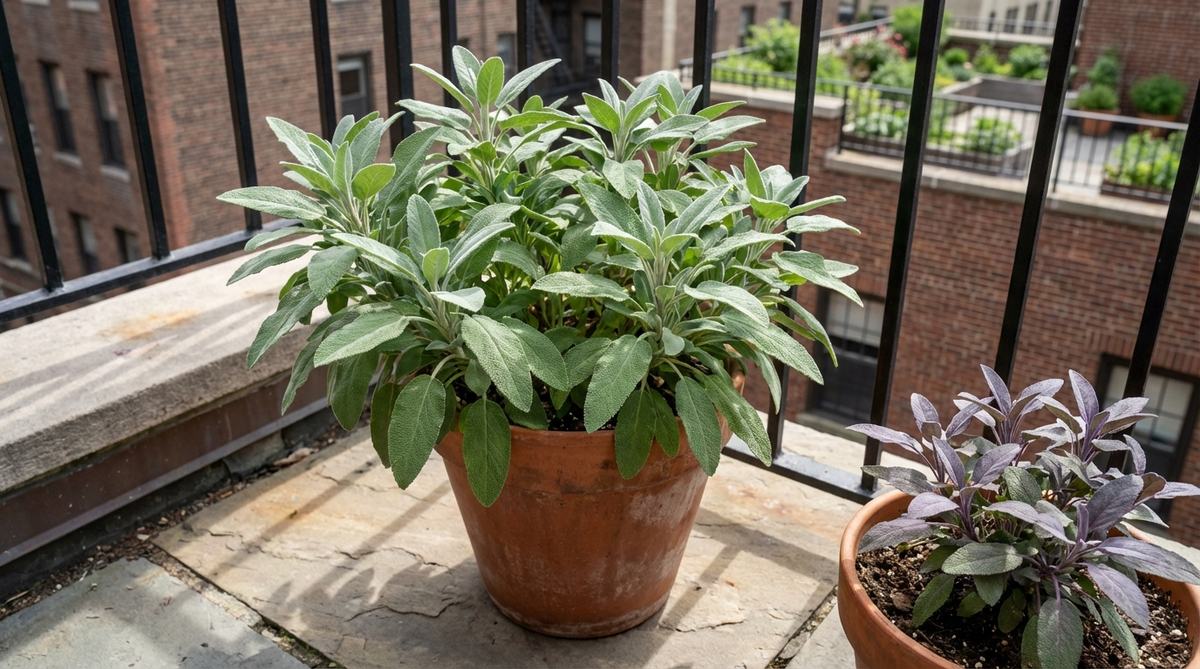
Velvety gray-green leaves bring Mediterranean charm to urban balconies. Sage tolerates wind exposure and partial shade while providing culinary versatility.
Purple and variegated varieties add ornamental value. Trim after flowering to prevent legginess and encourage fresh growth.
26. Oregano
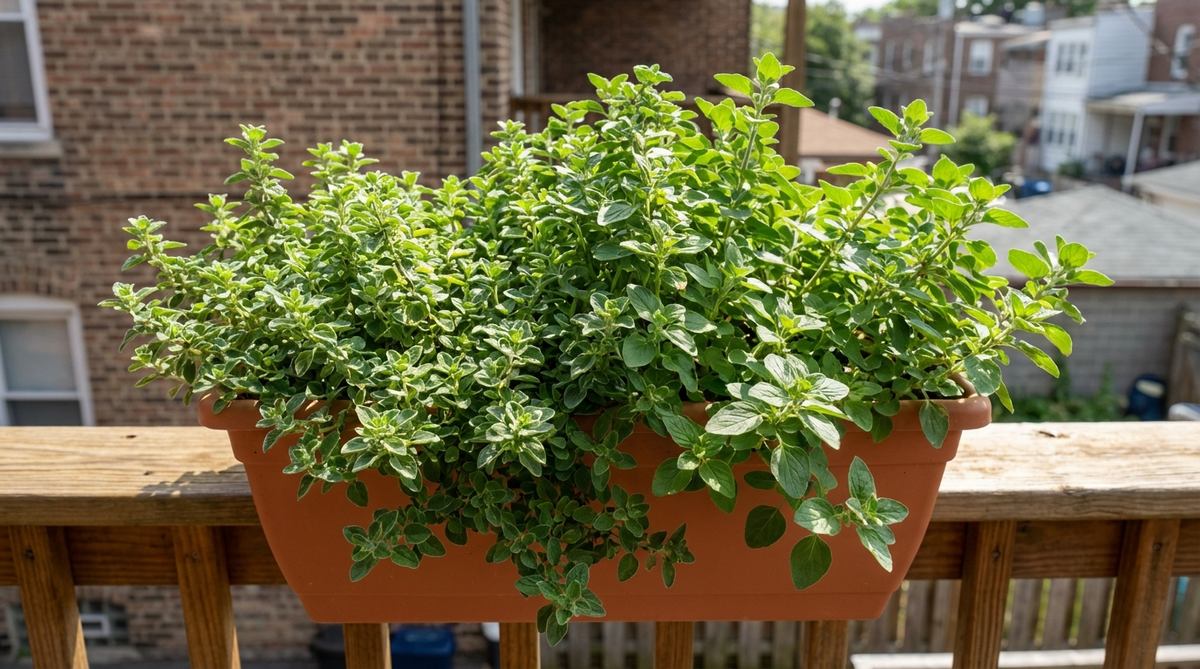
Spreading oregano fills containers quickly with aromatic foliage. This hardy herb tolerates neglect, wind, and varying light conditions.
Greek and Italian varieties offer distinct flavors. Divide vigorous clumps annually to maintain container control.
27. Mint
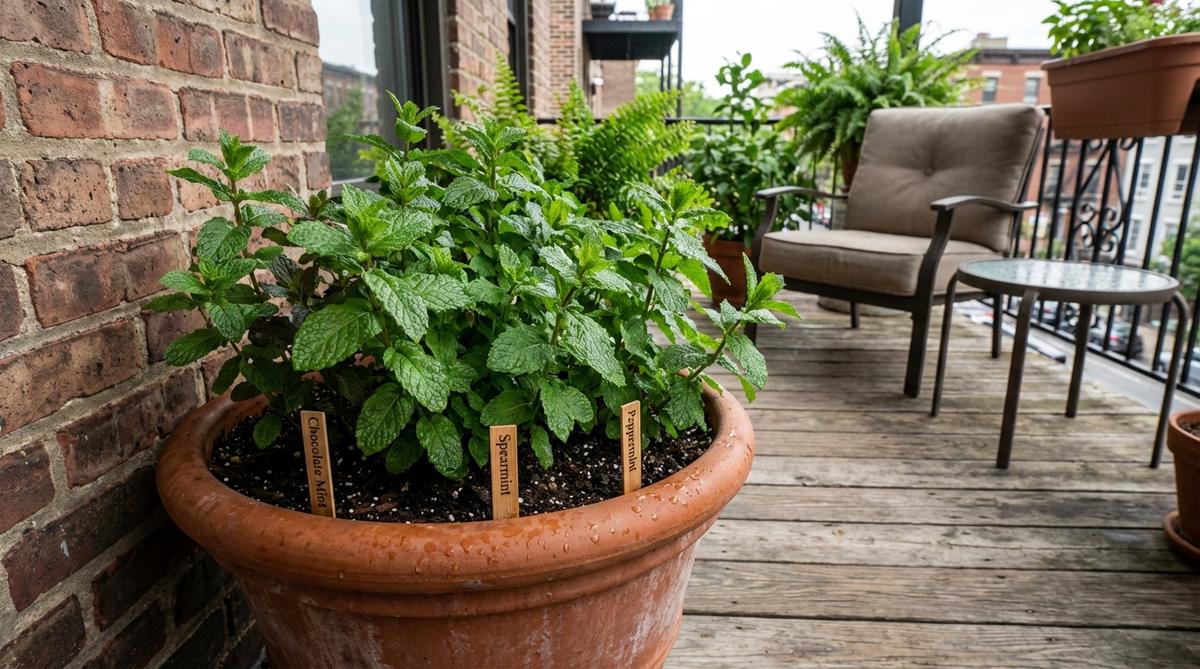
Mint thrives in shaded, moist conditions that challenge other herbs. Invasive roots make container culture ideal for balcony gardening.
Plant in dedicated pots to prevent takeover. Chocolate, spearmint, and peppermint varieties suit different culinary applications.
28. Chives
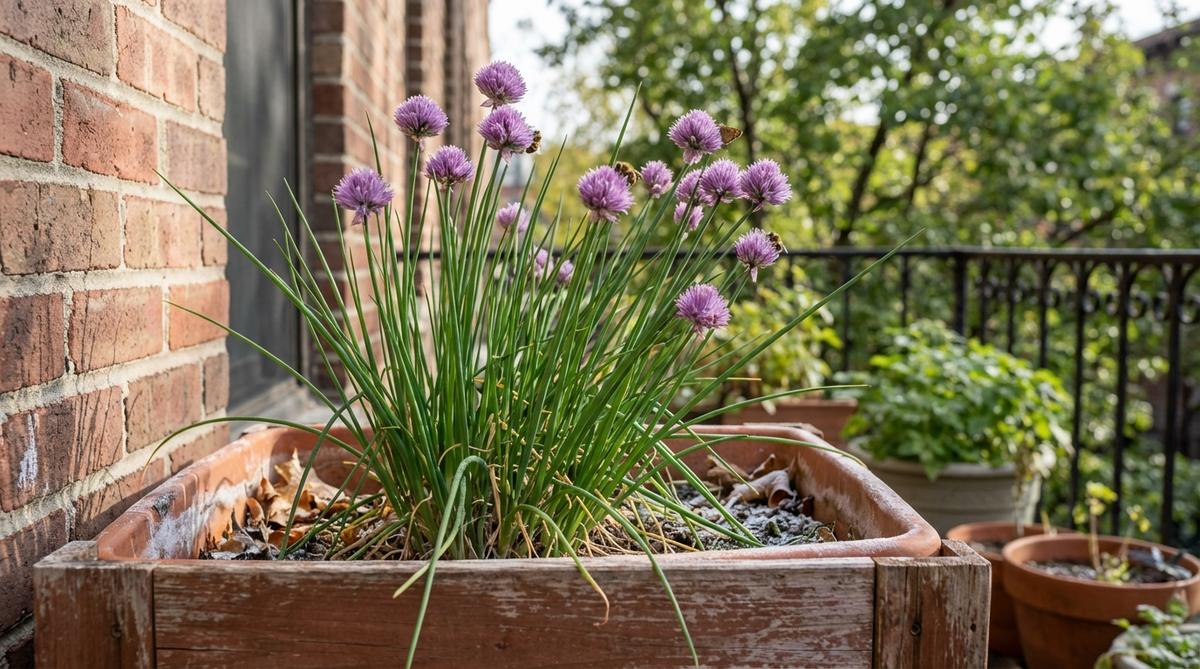
Grass-like chives tolerate shade better than most herbs. Purple pom-pom flowers attract pollinators while providing edible garnish.
Cut foliage frequently to encourage fresh growth. Chives survive winter in containers with minimal protection.
29. Parsley
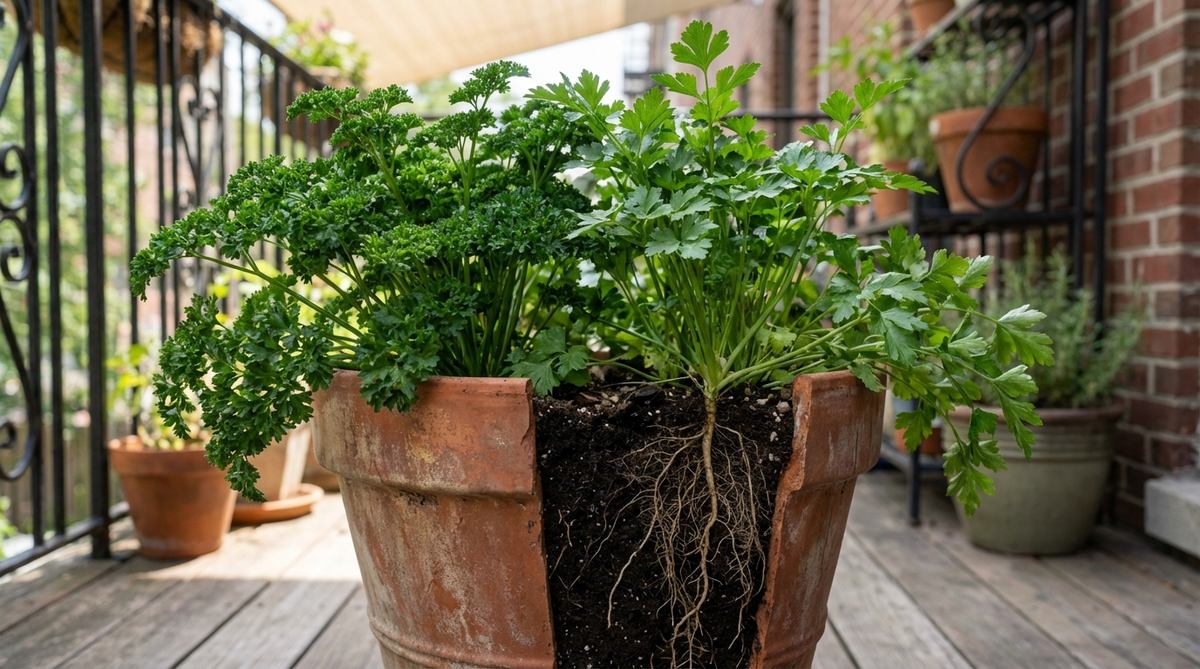
Curly and flat-leaf parsley flourish in partial shade. This biennial herb tolerates wind and cool temperatures that stress tender plants.
Sow fresh seed each spring for continuous harvest. Parsley develops deep taproots, requiring containers at least 12 inches deep.
30. Lavender
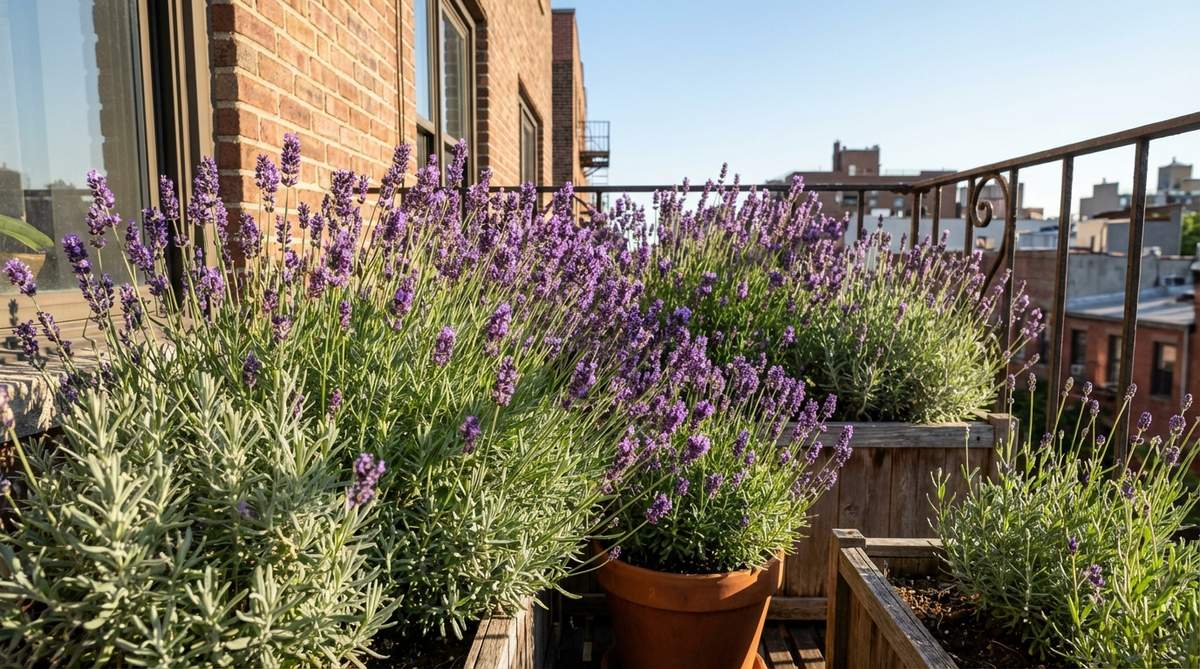
Fragrant lavender spikes and silver foliage define Mediterranean balconies. This herb tolerates wind and drought but requires bright conditions.
Choose English lavender for cold hardiness. Trim spent blooms to encourage reblooming and compact growth.
Evergreen Structure Plants
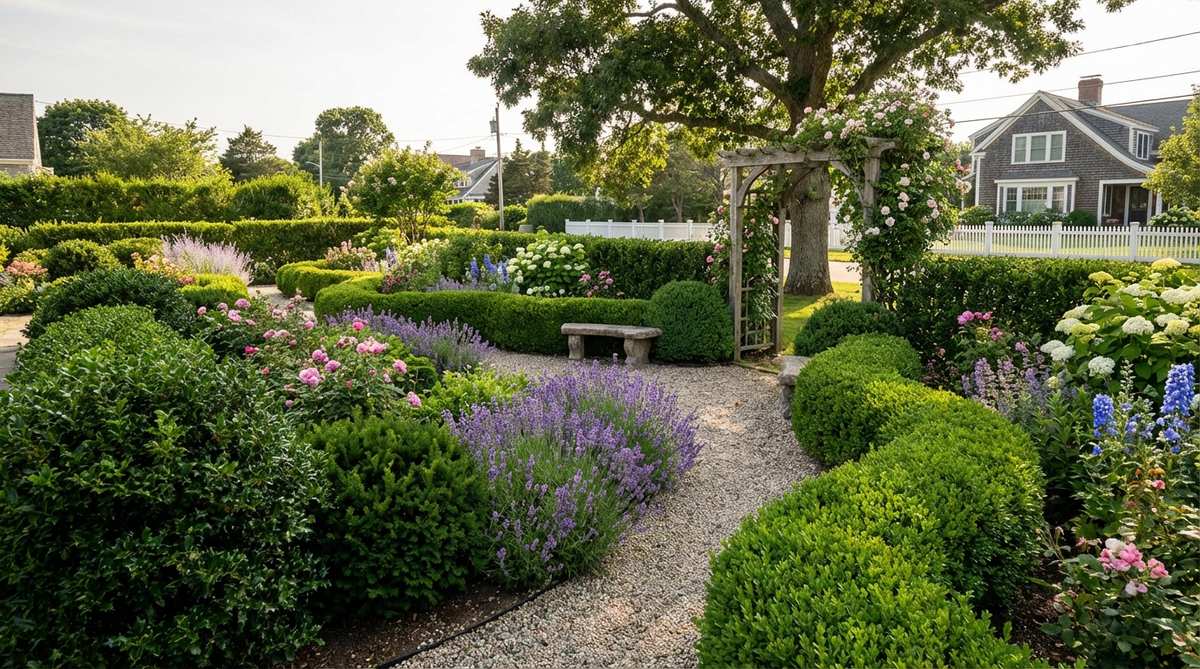
Year-round foliage anchors seasonal displays while providing privacy and windbreaks. These selections maintain interest through winter dormancy.
31. English Ivy (Hedera helix)
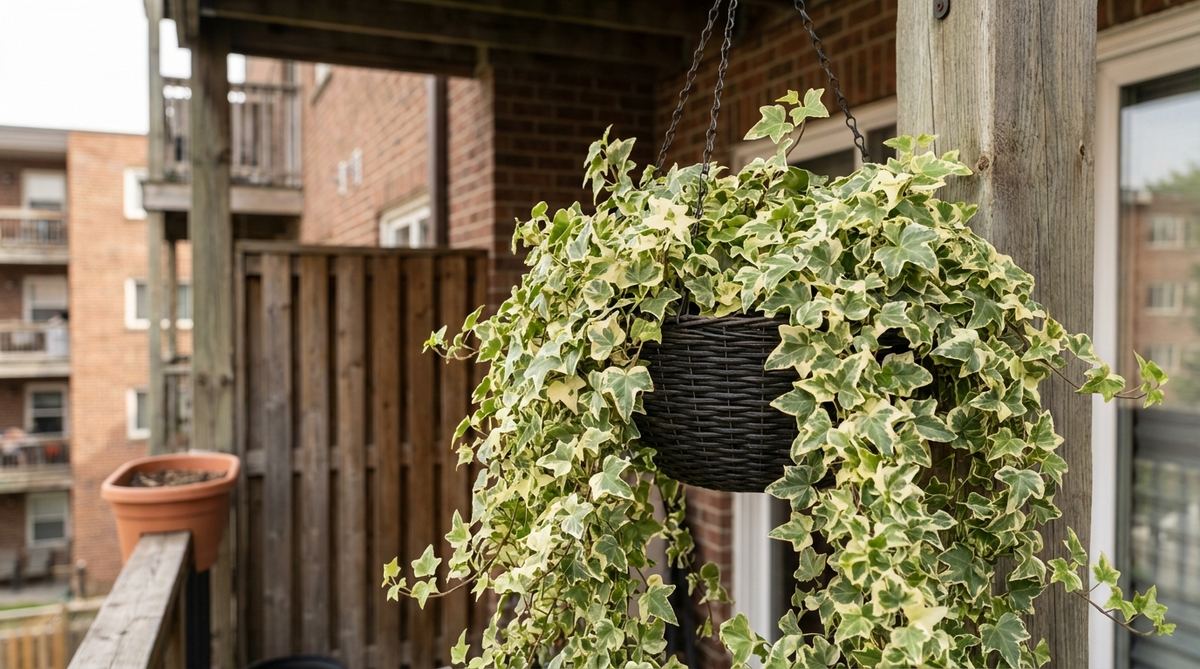
Variegated ivy cascades from hanging baskets or climbs trellises with minimal training. This shade-tolerant evergreen withstands wind through flexible stems.
Choose slow-growing varieties for manageable container culture. Ivy purifies air while creating living privacy screens.
32. Boxwood (Buxus)
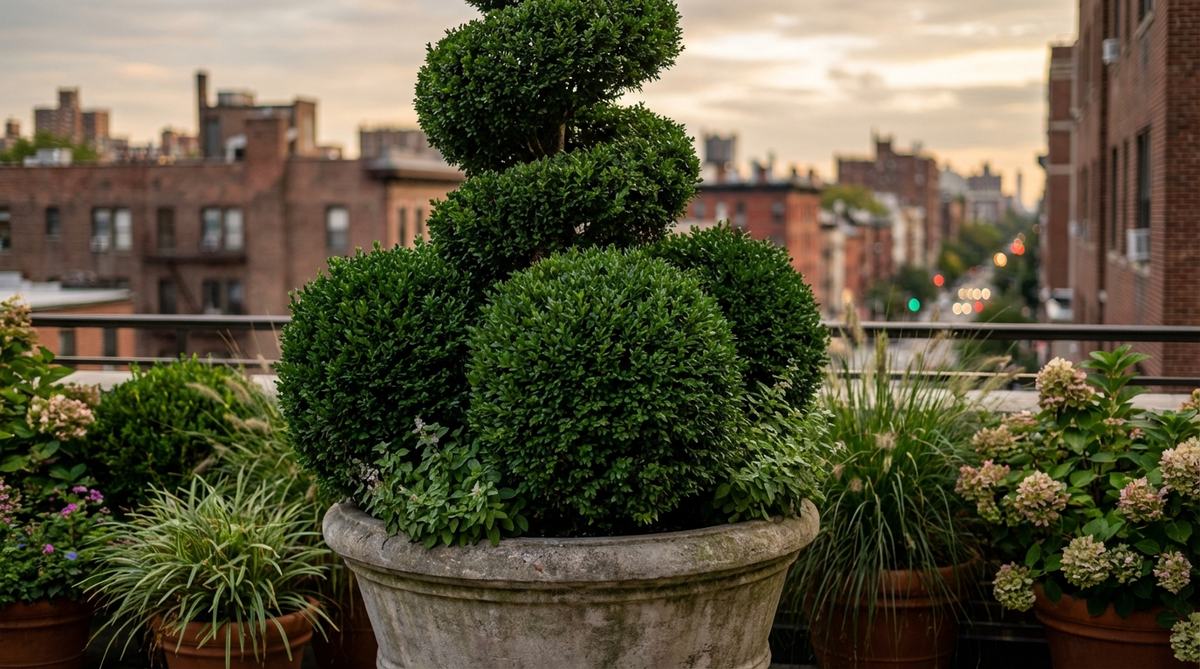
Formal boxwood globes and spirals bring structure to eclectic plantings. Dense evergreen foliage tolerates wind, shade, and shearing.
Plant in large containers with winter protection for roots. Boxwood responds well to topiary training for architectural interest.
33. Bamboo
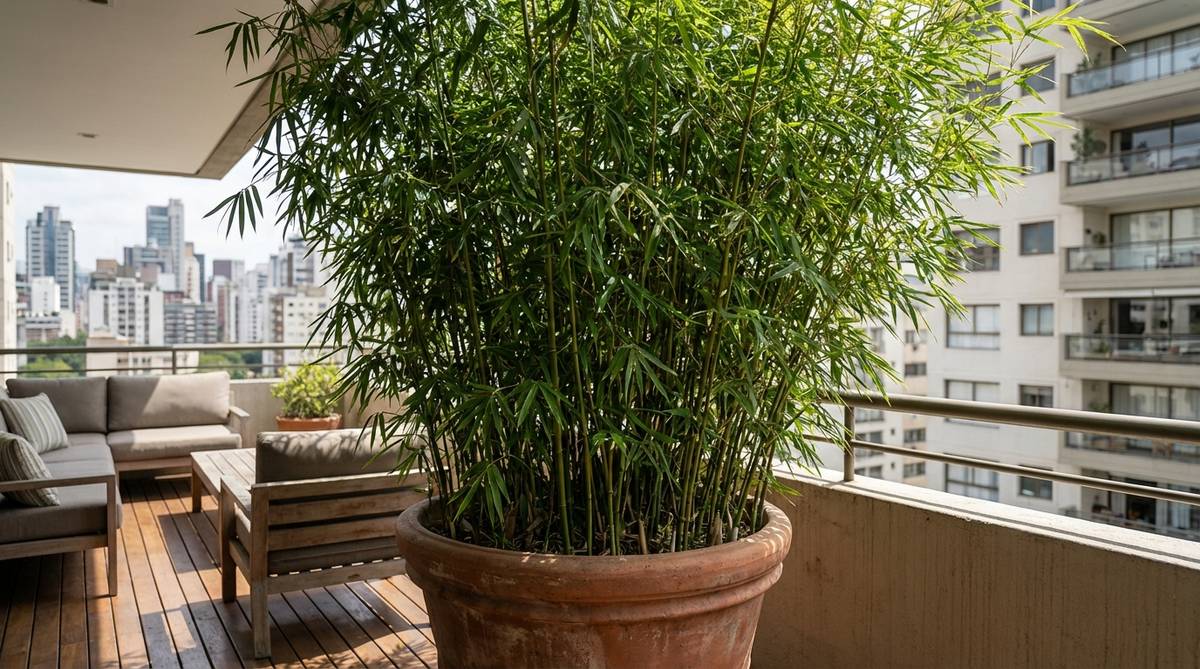
Clumping bamboo varieties create living screens that filter wind while providing privacy. Rustling foliage adds soothing sound to urban environments.
Choose non-invasive species like Fargesia for container culture. Bamboo tolerates shade and wind equally, making it ideal for challenging exposures.
Maintain consistent moisture during establishment. Mature plants withstand dry periods between waterings.
34. Japanese Maple
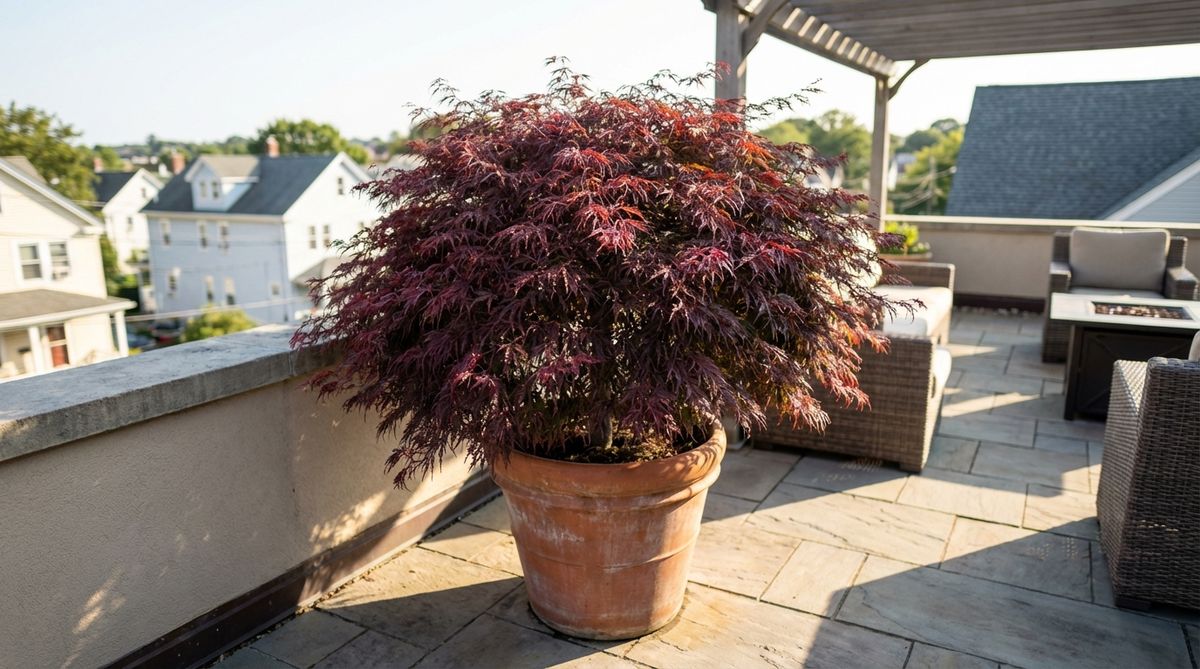
Dwarf Japanese maples bring four-season interest to balcony containers. Lacy foliage in red, purple, or green tolerates partial shade and moderate wind.
Select container-appropriate varieties like ‘Crimson Queen’ or ‘Shaina’. Protect from harsh winter wind to prevent branch dieback.
35. Fatsia Japonica
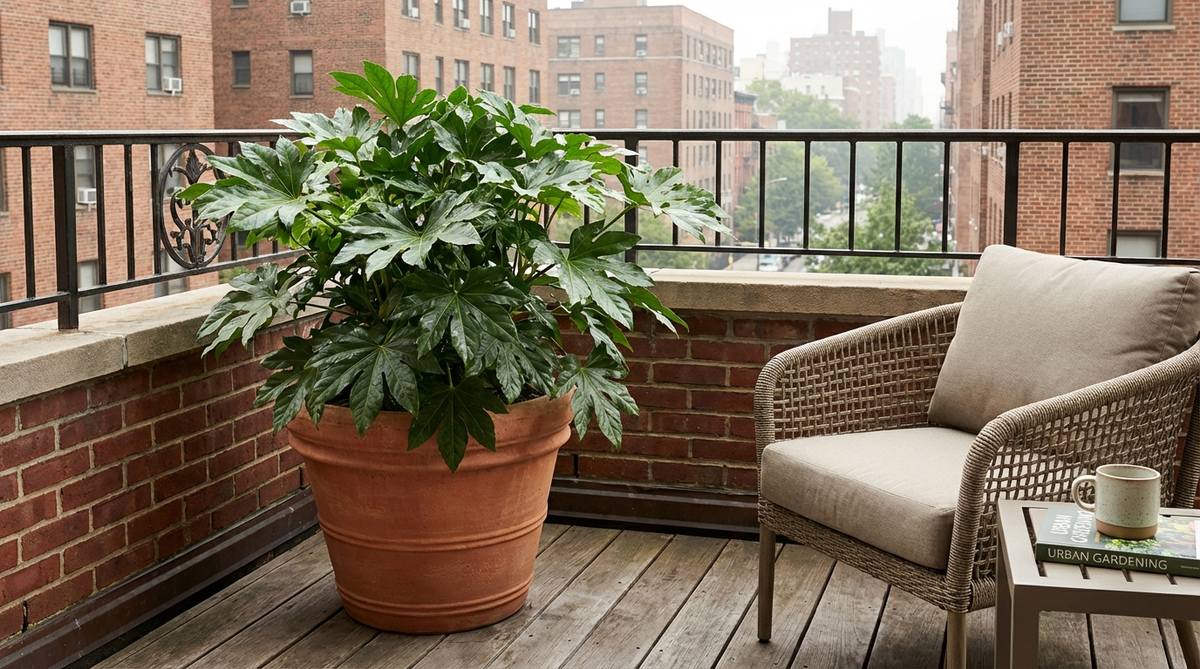
Bold, glossy leaves create tropical effects in shade. This evergreen shrub tolerates wind, pollution, and neglect while maintaining architectural presence.
Plant in large containers with rich, moisture-retentive soil. Fatsia grows slowly, making it suitable for multi-year balcony displays.
Compact Shrubs with Flexible Branches
Shrubs with supple branches bend without breaking in wind. These selections provide substance while tolerating exposed conditions.
36. Heather (Calluna vulgaris)
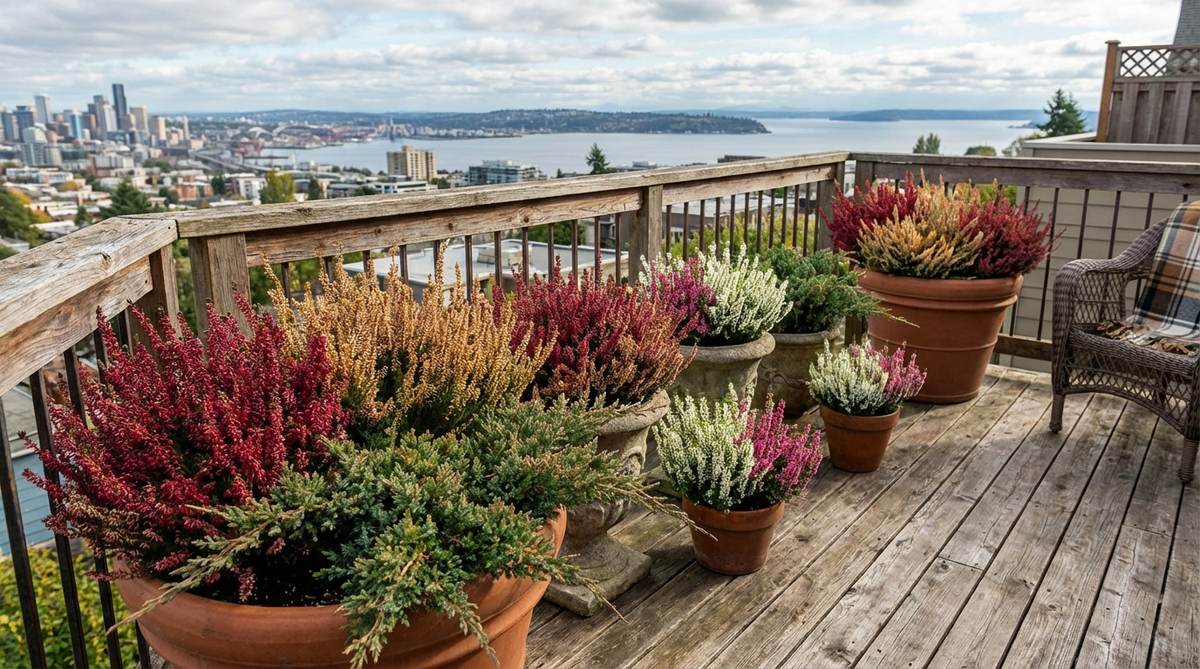
Needle-like foliage in gold, red, and green persists year-round. Heather’s low profile and flexible branches withstand coastal winds.
Plant in acidic, well-draining mix for best performance. Winter and spring-blooming varieties extend seasonal interest.
37. Dwarf Bottlebrush
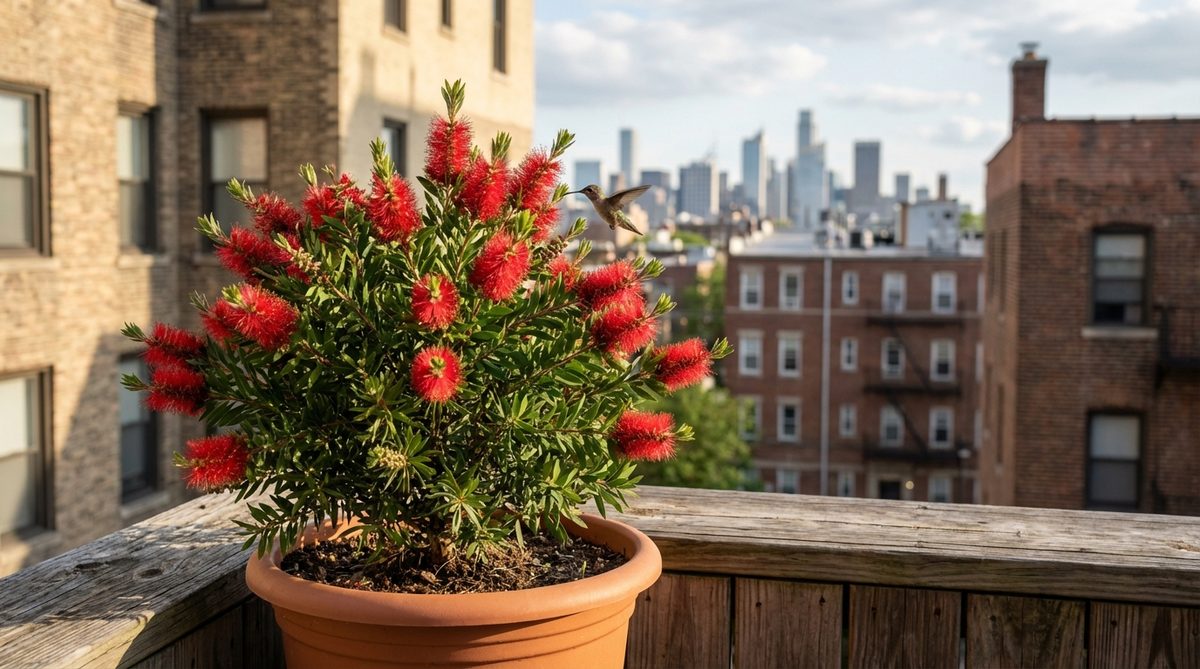
Red bottlebrush blooms attract hummingbirds to urban balconies. Compact varieties tolerate wind through flexible growth habit.
Requires more sun than shade plants but tolerates partial light. Evergreen foliage maintains year-round structure.
38. Japanese Pieris
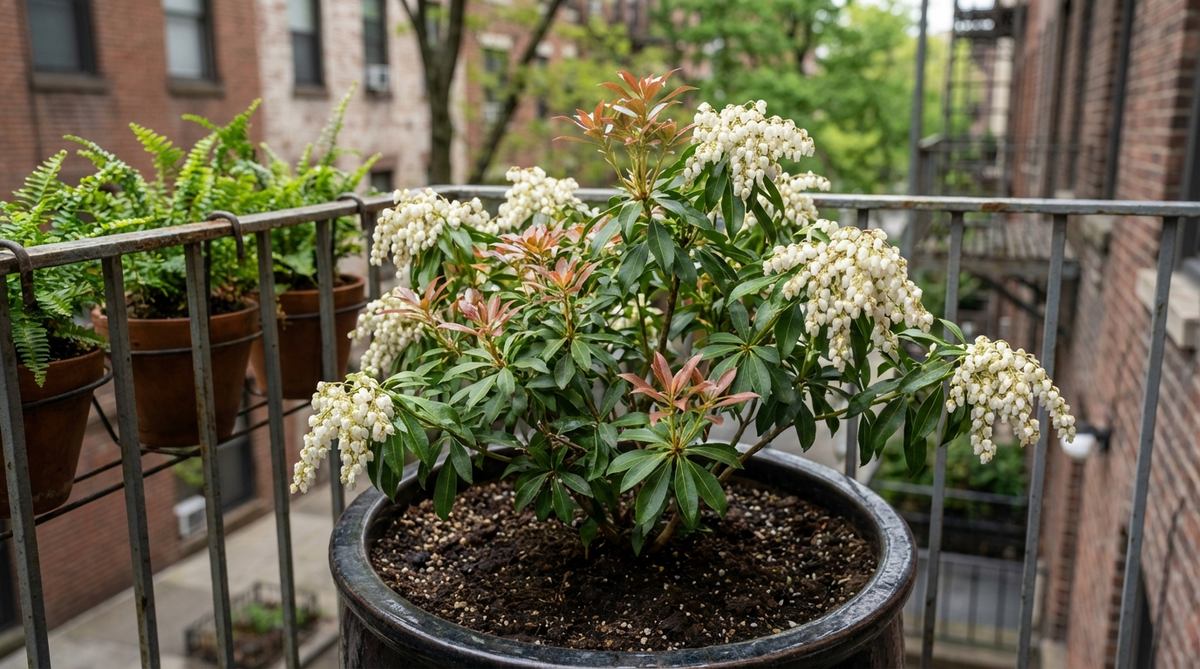
Cascading flower clusters and colorful new growth brighten shaded corners. This broadleaf evergreen tolerates wind and urban pollution.
Plant in acidic soil alongside azaleas and rhododendrons. Compact varieties like ‘Little Heath’ suit container culture.
Conclusion
Challenging balcony conditions become opportunities when you select urban balcony plants adapted to wind and shade. Combine structural evergreens with seasonal bloomers, anchoring displays with grasses and succulents for year-round appeal. Start with a few proven performers from this list, then expand your collection as you learn your balcony’s microclimates and discover which plants thrive in your specific conditions.
Frequently Asked Questions
Can vegetables grow on windy, shaded balconies?
Leafy greens including arugula, kale, lettuce, and mesclun tolerate partial shade and moderate wind. Herbs like parsley, chives, and mint also produce well with 3-4 hours of indirect light. Avoid fruiting crops like tomatoes and peppers which require full sun for production.
How do I prevent pots from tipping over in wind?
Choose wide, heavy containers made from concrete, stone, or thick ceramic rather than tall, narrow designs. Lower the center of gravity by placing heavy rocks in container bottoms before adding soil. Group pots together against walls where wind impact is reduced, and use saucers to add weight and catch water.
What defines shade for balcony plants?
Full shade means less than 2 hours of direct sun daily, while partial shade receives 2-4 hours of morning sun or dappled light throughout the day. Most shade-tolerant plants actually prefer partial shade with some indirect light. North-facing balconies typically provide full shade, while east-facing exposures offer ideal partial shade conditions.
How often should I water plants in windy conditions?
Wind accelerates evaporation, increasing water needs by 30-50% compared to sheltered locations. Check soil daily during hot weather, watering when the top inch feels dry. Self-watering containers with reservoirs maintain consistent moisture while reducing maintenance. Mulch container surfaces with decorative stone to slow evaporation.
Do wind-tolerant plants need staking?
Plants naturally adapted to wind develop strong root systems and flexible stems that rarely require staking. Grasses, succulents, and Mediterranean herbs evolved in exposed habitats and self-support. Avoid leggy annuals and top-heavy plants that need artificial support, focusing instead on compact, sturdy selections from this guide.