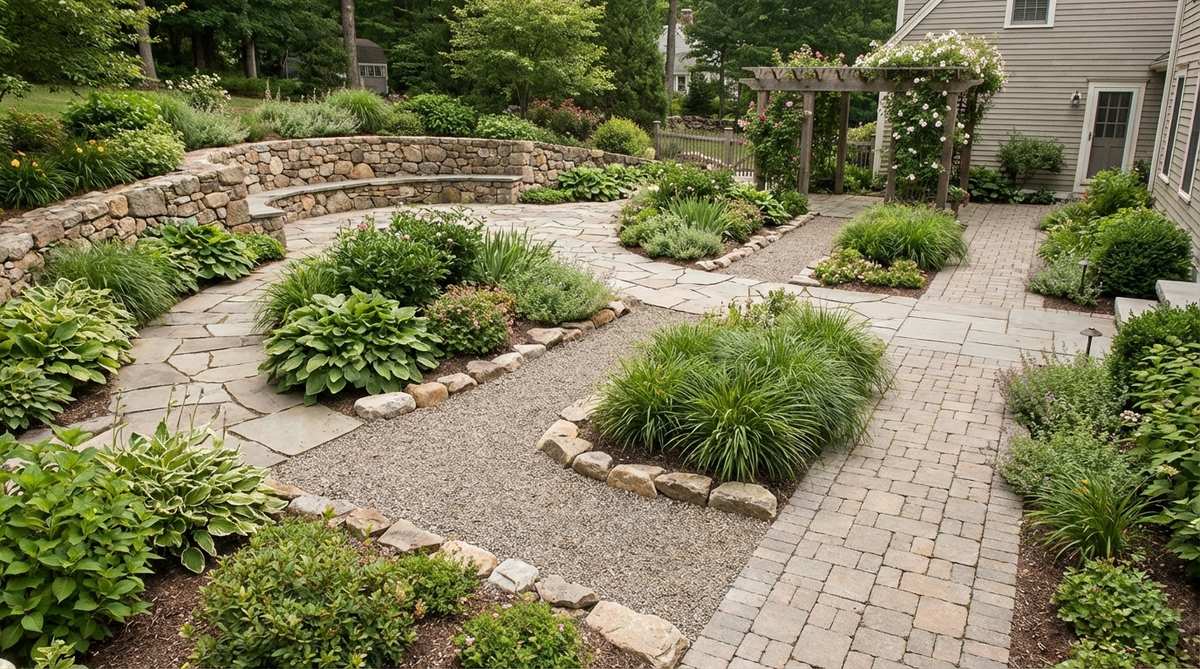
Stone garden paths create lasting beauty and functionality in outdoor spaces, offering countless design possibilities from rustic stepping stones to formal paved walkways. Whether you’re building a simple backyard trail or an elaborate terraced pathway, the right stone layout enhances curb appeal while providing durable navigation through your landscape. Fresh Garden Ideas brings you this comprehensive guide to inspire your next hardscaping project with proven designs that work in American gardens.
Design SnapshotKey Principles
- Material Selection: Choose stone types based on climate, foot traffic, and aesthetic goals—flagstone for rustic charm, bluestone for formal elegance, or granite for maximum durability
- Pattern Psychology: Herringbone and basket weave patterns provide structural strength for high-traffic areas, while irregular layouts create organic, natural-looking trails
- Proper Foundation: Successful installations require 4-6 inches of compacted base material with adequate drainage to prevent settling and frost heave
- Proportional Spacing: Path width should accommodate intended use—24 inches for garden trails, 36-48 inches for main walkways, with stepping stones spaced 18-24 inches apart
Natural Stone Walkways for Organic Garden Flow
Natural stone materials like flagstone, slate, and limestone create pathways that blend seamlessly with planted areas and informal garden designs. These irregular shapes and earthy tones work particularly well in cottage gardens, woodland settings, and landscapes emphasizing native plants.
1. Irregular Flagstone Meandering Path
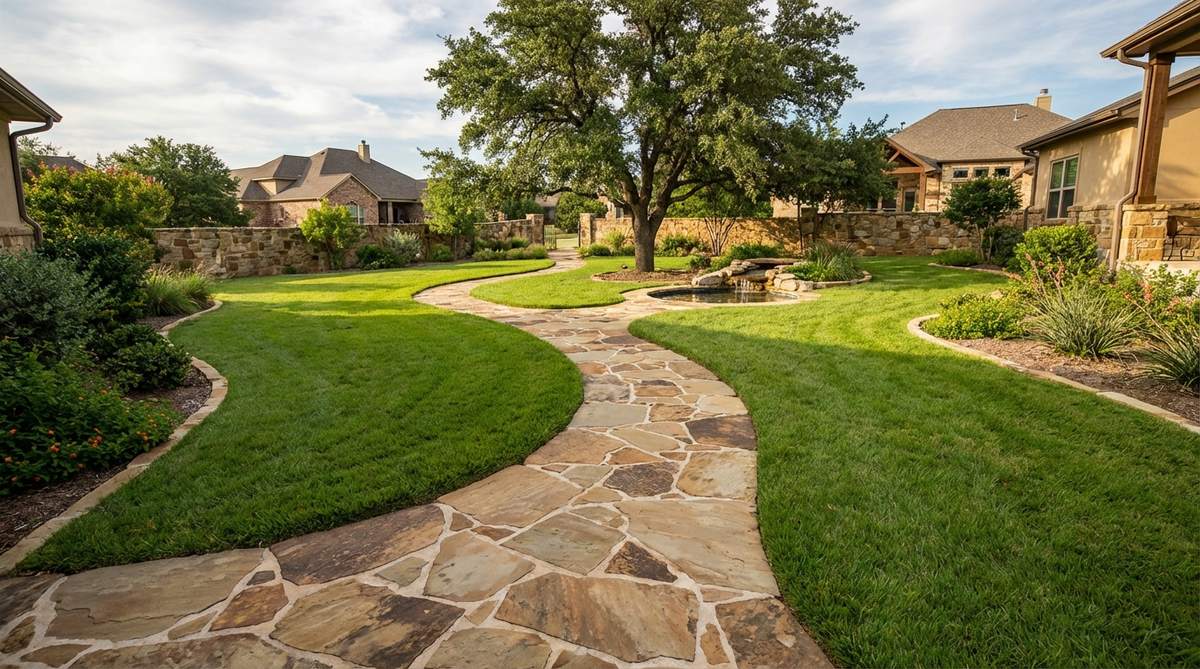
Flagstone pieces in varied sizes create an organic, puzzle-like appearance that invites exploration through garden beds. The natural color variations in sandstone flagstone range from warm buffs to rusty reds, complementing perennial borders and ornamental grasses.
Install flagstone pieces with 1-2 inch gaps filled with decomposed granite or polymeric sand for stability. This allows for natural drainage while maintaining a cohesive surface that handles moderate foot traffic.
The irregular layout reduces material waste since odd-shaped pieces fit together naturally without extensive cutting. Designers recommend this approach for gardens where the journey matters as much as the destination.
2. Dry-Laid Bluestone Informal Trail
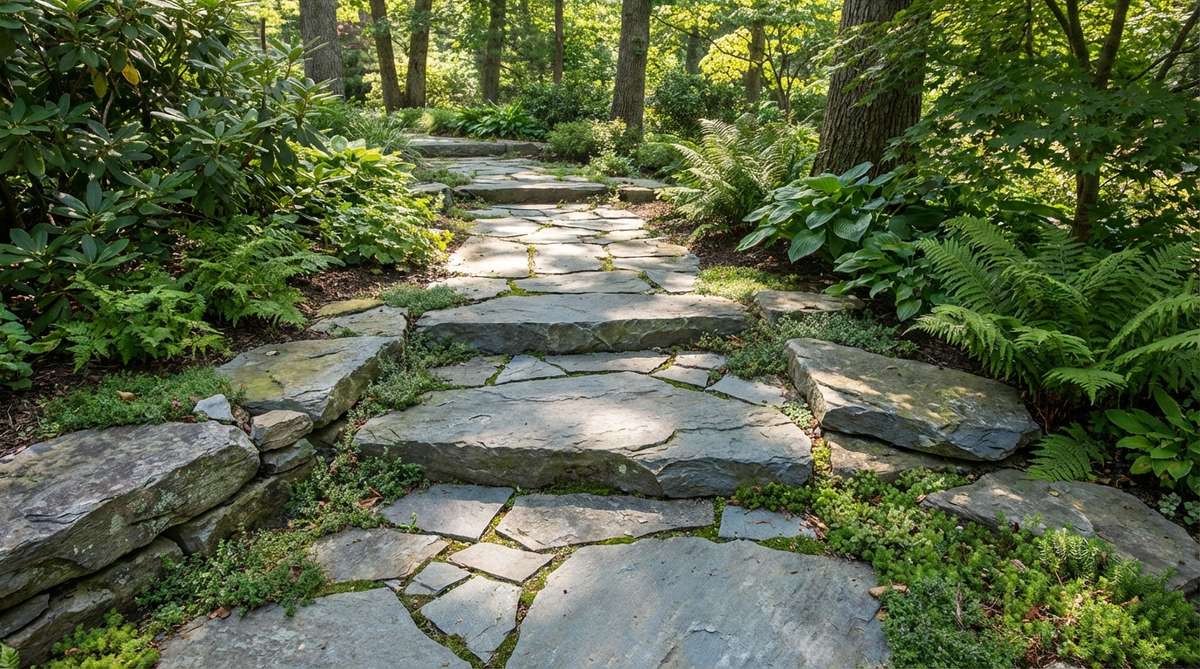
Pennsylvania bluestone in its natural cleft finish offers subtle blue-gray tones that bring cool elegance to garden settings. When laid without mortar in irregular patterns, bluestone creates sophisticated yet approachable pathways.
The thermal properties of bluestone make it comfortable underfoot even in summer heat, unlike darker stone alternatives. Position larger pieces as primary stepping areas with smaller fragments filling gaps.
This layout works exceptionally well in shaded gardens where the stone’s muted palette won’t compete with colorful plantings. Expect a properly installed dry-laid bluestone path to last 30-40 years with minimal maintenance.
3. Slate Ribbons Through Groundcover
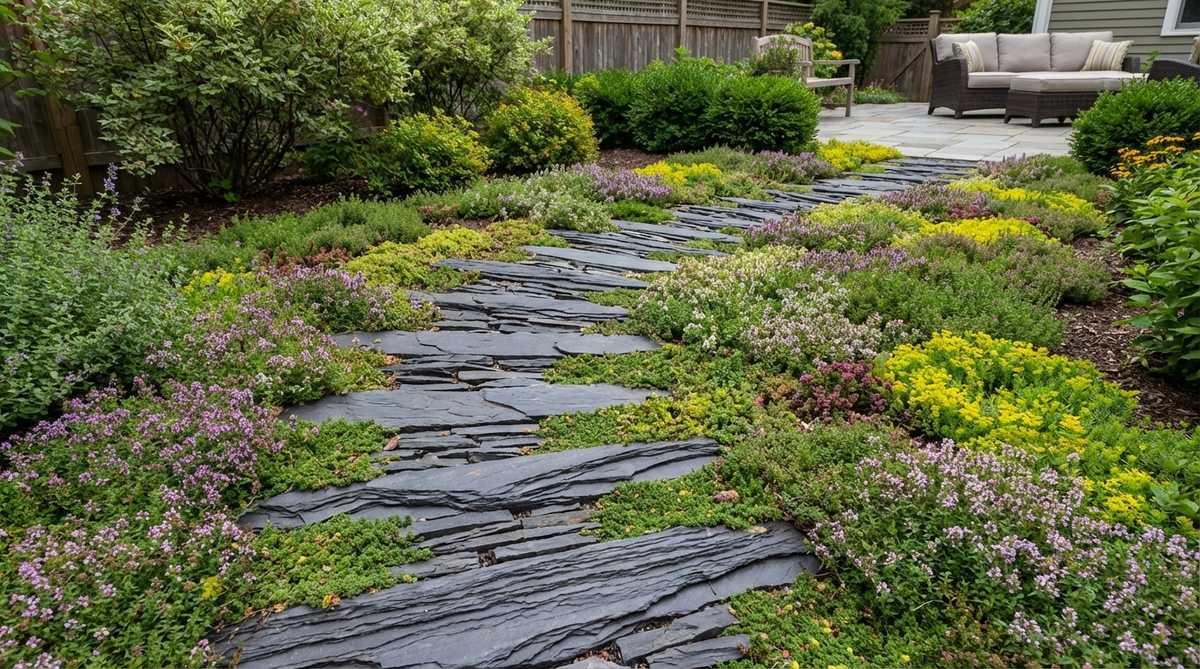
Dark slate pieces create dramatic contrast when threaded through low-growing groundcovers like creeping thyme or sedum. The stone’s natural layering adds textural interest as each piece reveals subtle striations.
Cut slate into 6-8 inch wide strips and position them like ribbons winding through planted areas. The narrow width encourages slower movement and closer observation of surrounding plantings.
Slate’s slip-resistant surface when dry makes it practical for areas with morning dew. Plant aromatic herbs between stones to release fragrance when brushed by passing feet.
4. Limestone Slab Casual Walkway
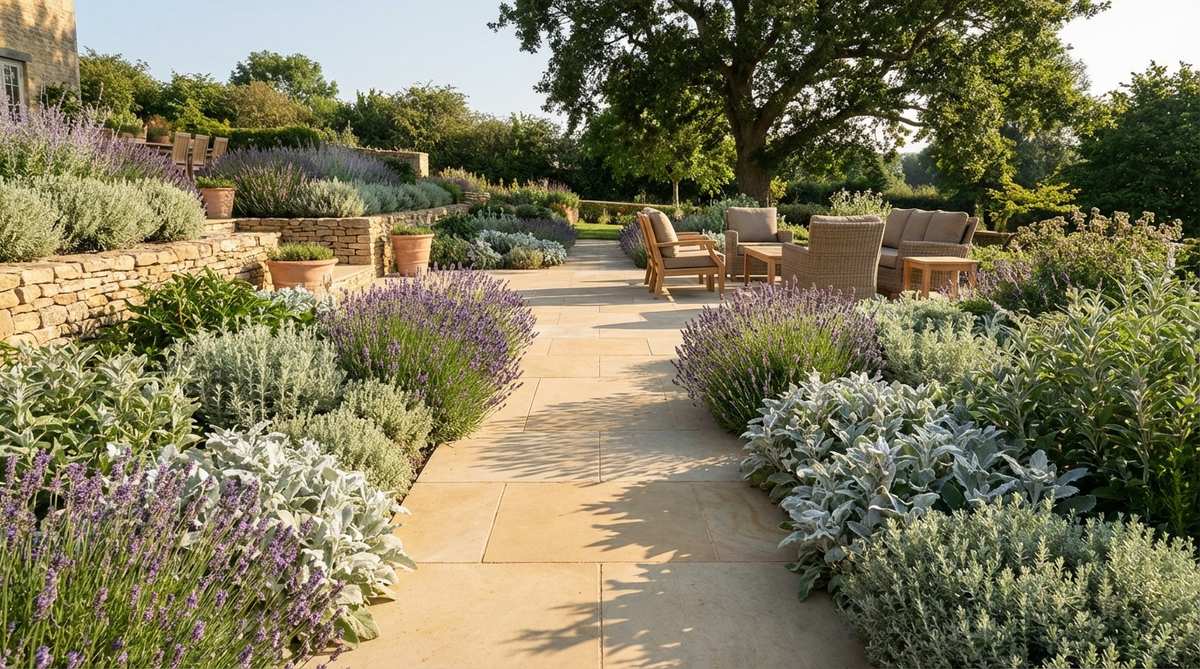
Buff-colored limestone slabs bring warmth and Mediterranean character to garden pathways. The stone’s silky texture develops a subtle patina over time, enhancing its relaxed elegance.
Choose thermal-finished limestone for slip resistance in areas exposed to rain or irrigation. Space large slabs 18-24 inches apart for a leisurely walking pace through ornamental gardens.
Limestone pairs beautifully with silver-foliaged plants and lavender, creating cohesive color schemes. The stone’s alkaline nature benefits lime-loving plants positioned adjacent to the pathway.
5. Sandstone Country Garden Path
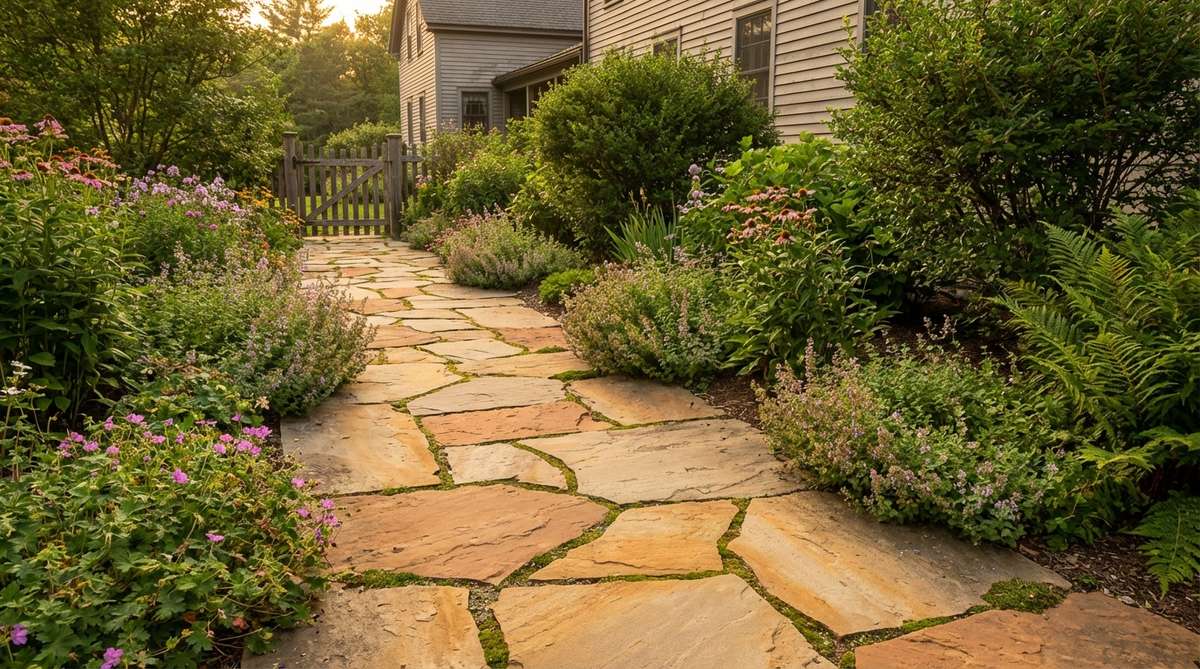
Warm-toned sandstone pieces evoke country cottage aesthetics with their honey and terracotta hues. The stone’s porous nature allows it to blend naturally as moss and lichen gradually colonize the surface.
Layer sandstone pieces in varied thicknesses from 1 to 3 inches for dimensional interest. This creates gentle height variations that feel authentically aged even in new installations.
Sandstone performs best in moderate climates as excessive freeze-thaw cycles can cause spalling. Seal the surface in northern regions to extend longevity while maintaining the natural appearance.
6. Quartzite Sparkling Garden Trail
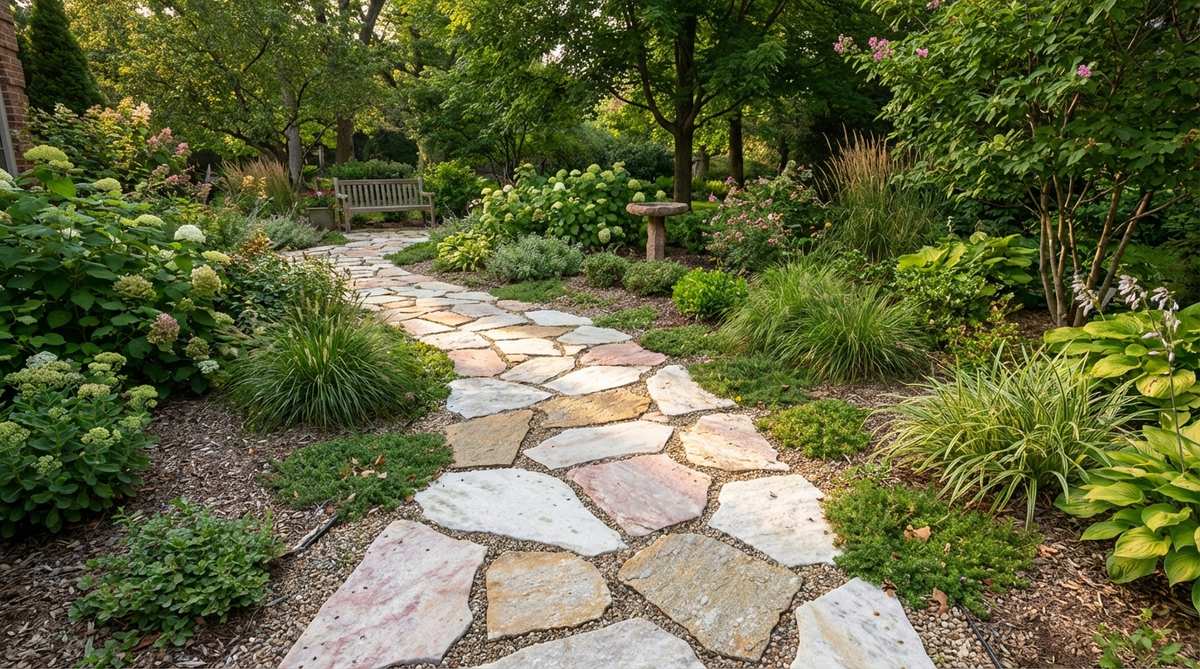
Quartzite’s crystalline structure catches sunlight, creating subtle sparkle along pathways. This extremely hard stone resists weathering better than most alternatives, making it ideal for high-traffic garden routes.
The stone’s natural color range includes white, pink, and gold tones that brighten shaded garden areas. Install larger quartzite slabs for stable footing with smaller pieces as decorative infill.
Quartzite requires minimal maintenance beyond occasional sweeping, as its hardness prevents moss growth better than softer stones. Expect installation costs 20-30% higher than standard flagstone due to cutting difficulty.
Formal Stone Garden Paving with Architectural Precision
Structured paving patterns using cut stone create sophisticated pathways suitable for formal gardens and contemporary landscapes. These geometric layouts require precise installation but deliver timeless elegance and superior load-bearing capacity.
7. Herringbone Bluestone Walkway
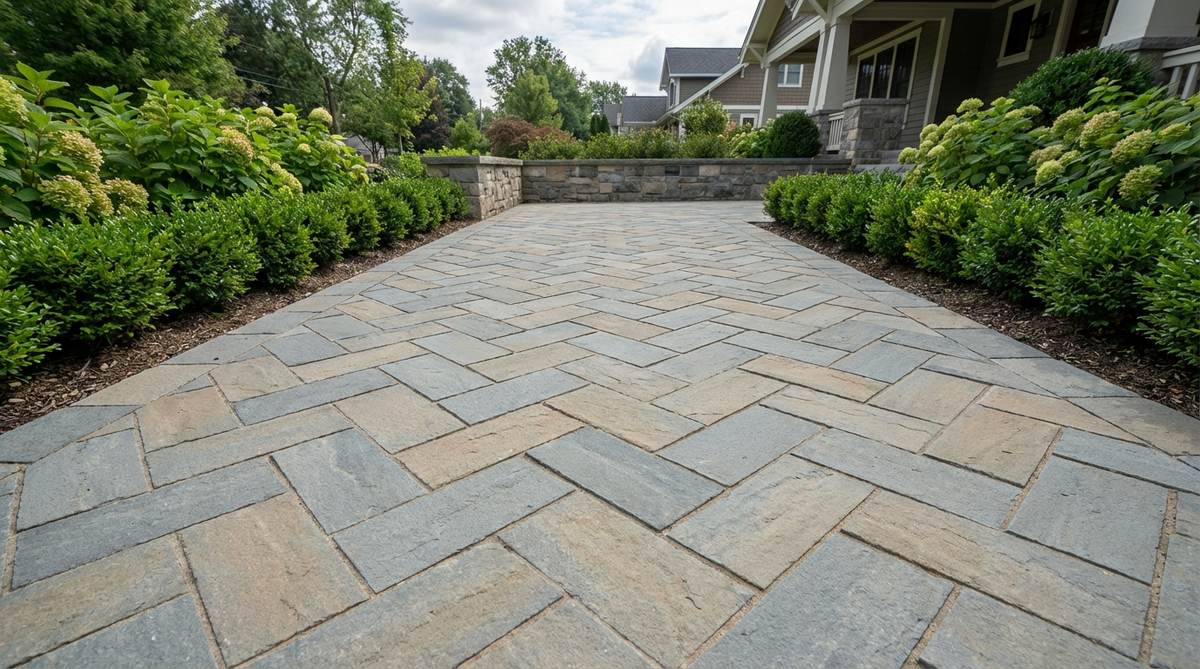
The classic herringbone pattern positions rectangular bluestone pavers at 45-degree angles in a distinctive zigzag arrangement. This interlocking design distributes weight evenly, making it structurally superior for driveways and high-traffic paths.
Use pavers in consistent 6×9 inch or 12×18 inch dimensions to maintain pattern integrity. The angled layout creates visual movement that draws the eye forward along the pathway.
Herringbone installations require 15-20% more cutting at borders compared to simpler patterns but deliver unmatched visual impact. This pattern pairs exceptionally well with traditional architecture and formal garden designs.
8. Basket Weave Sandstone Paving
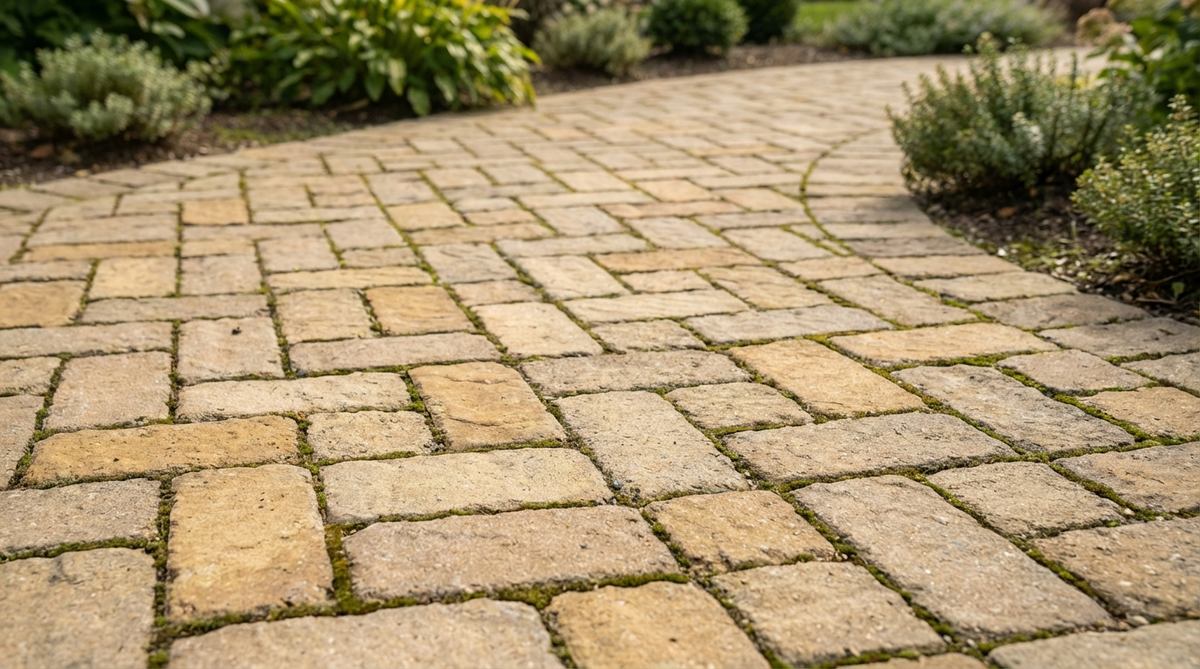
Basket weave patterns alternate horizontal and vertical pairs of rectangular pavers to create a woven textile appearance. This timeless layout works with stone dimensions where length is twice the width.
The perpendicular orientation provides moderate interlocking strength while remaining easier to install than herringbone. Designers recommend basket weave for secondary pathways and patio borders.
This pattern conceals slight variations in paver dimensions better than linear layouts, making it forgiving for DIY installations. Choose contrasting stone colors to emphasize the woven effect or monochromatic tones for subtlety.
9. Running Bond Limestone Path
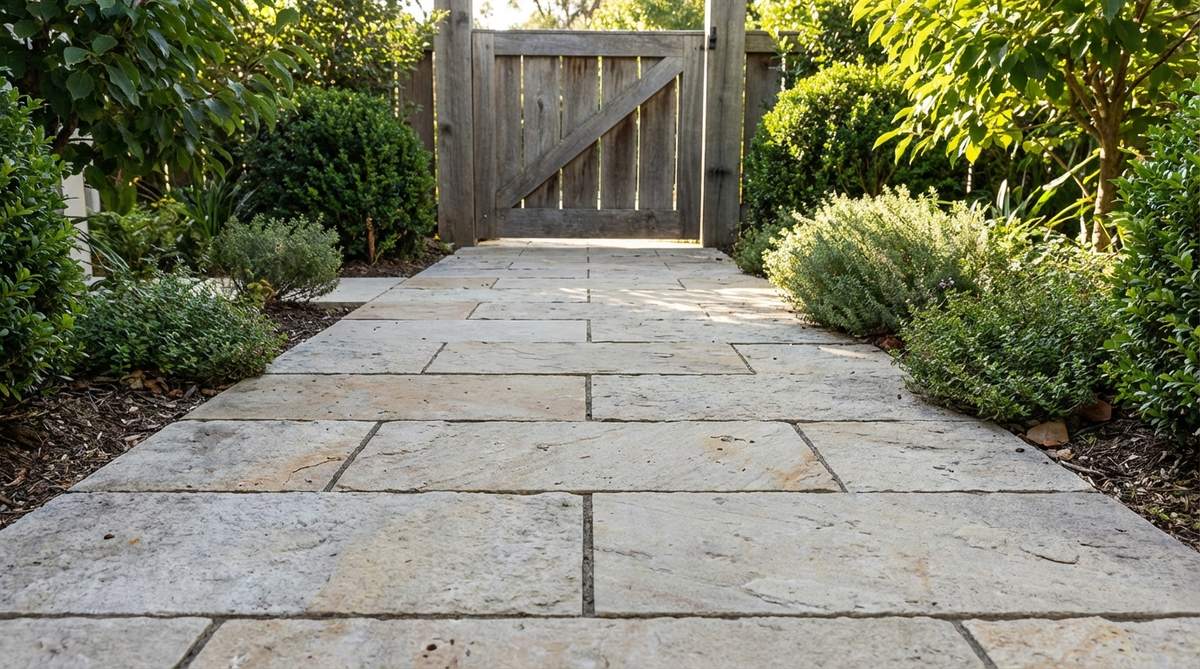
Running bond arranges rectangular pavers in staggered rows similar to brick walls, creating clean horizontal lines. This straightforward pattern elongates narrow pathways and complements modern architectural styles.
Offset each row by half a paver length to achieve the characteristic staggered appearance. The linear flow works particularly well for straight pathways leading to focal points like garden gates or water features.
Running bond allows for efficient installation with minimal waste and straightforward cutting at borders. The pattern’s simplicity lets the stone’s natural beauty take center stage without competing visual elements.
10. Ashlar Pattern Mixed Dimensions
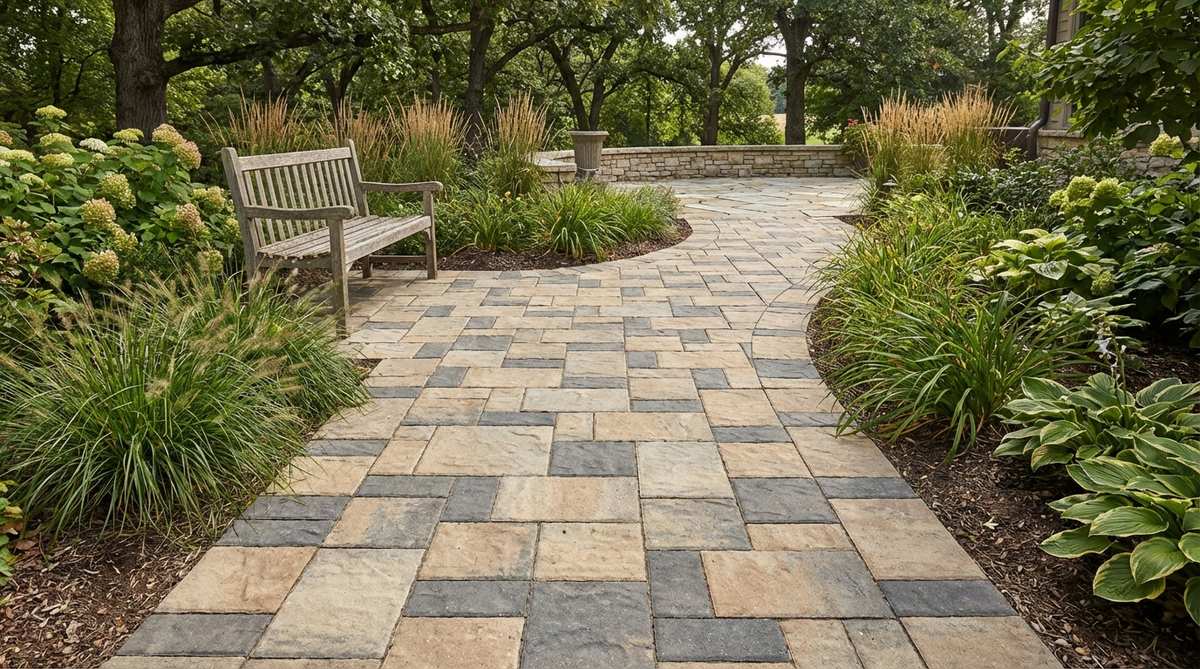
Ashlar patterns combine three or four different paver sizes in a repeating modular arrangement. This sophisticated layout mimics ancient stone flooring while providing contemporary versatility.
The varied dimensions create visual interest without the randomness of irregular flagstone. Manufacturers typically offer ashlar kits with pre-calculated proportions ensuring proper material ratios.
This pattern works beautifully at transitions between different outdoor spaces, such as where a pathway meets a patio. The structured variety suits both traditional and transitional garden styles.
11. Soldier Course Bordered Pathway
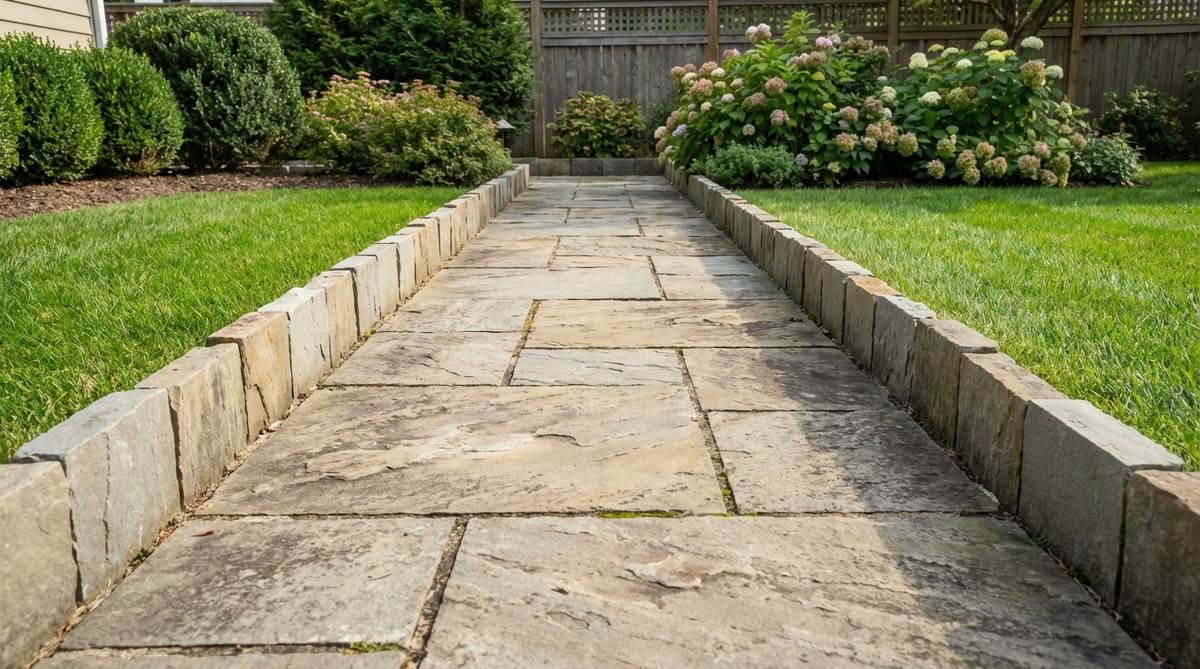
Soldier course borders feature pavers stood on edge perpendicular to the main pathway surface. This creates a distinct frame that defines pathway edges while adding architectural detail.
The vertical orientation increases the apparent thickness of the border, making pathways appear more substantial. Combine soldier course edges with running bond or basket weave field patterns.
This traditional technique works particularly well where pathways meet lawn areas, creating a clean mowing edge. The raised border also helps contain base materials and prevent edge erosion.
12. Pinwheel Pattern Accent Sections
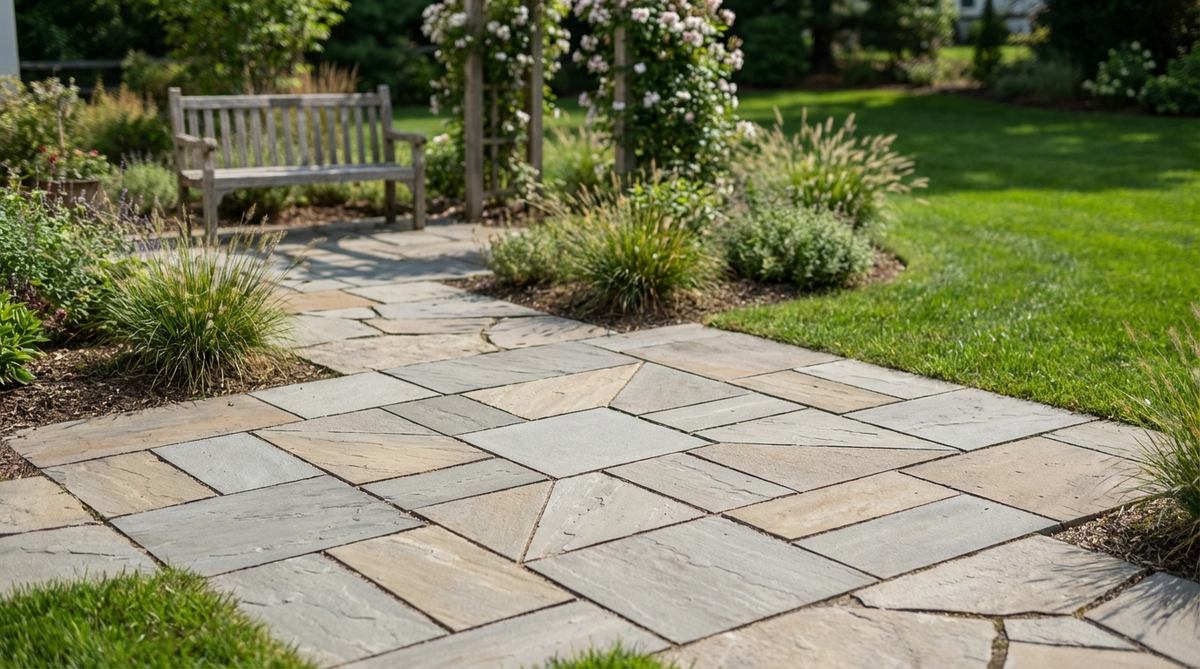
Pinwheel patterns arrange rectangular pavers around square center pieces at consecutive right angles. This creates dynamic focal points when incorporated into longer pathways.
Use pinwheel sections at pathway intersections or as landing areas near benches and arbors. The rotational symmetry naturally draws attention without overwhelming the overall design.
This pattern requires precise cutting and positioning but adds significant visual sophistication. Designers recommend limiting pinwheel accents to 15-20% of total pathway area to maintain balance.
Stepping Stone Garden Paths for Casual Charm
Stepping stone layouts provide informal navigation through gardens while allowing plantings to flow between pathway elements. This approach conserves materials, reduces hardscape footprint, and creates a lighter aesthetic.
13. Large Format Stone Slabs
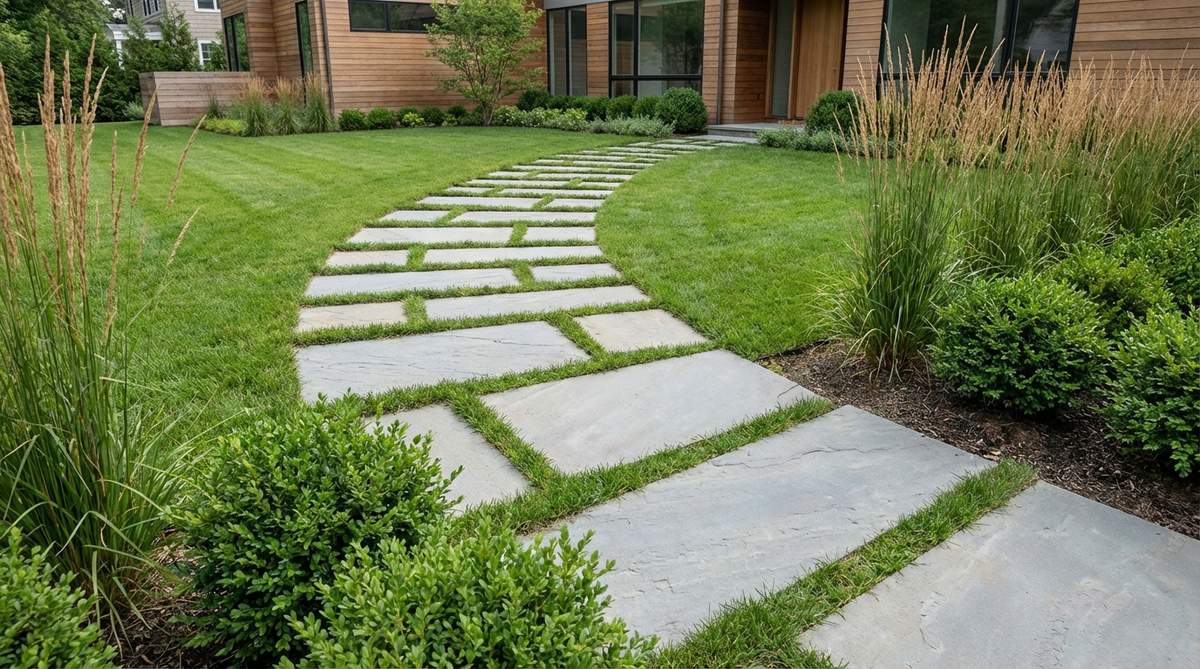
Oversized stone slabs measuring 24-36 inches across create bold contemporary statements. The generous surface area provides stable footing while minimizing the number of individual pieces required.
Space large slabs 6-8 inches apart through lawn areas, allowing grass to grow between for a floating effect. The dramatic scale works particularly well in modern landscapes with minimalist plantings.
These substantial pieces require professional installation equipment for positioning but deliver striking visual impact. Choose stones at least 2 inches thick to prevent cracking under weight and freeze-thaw cycles.
14. Rounded River Rock Stepping Path
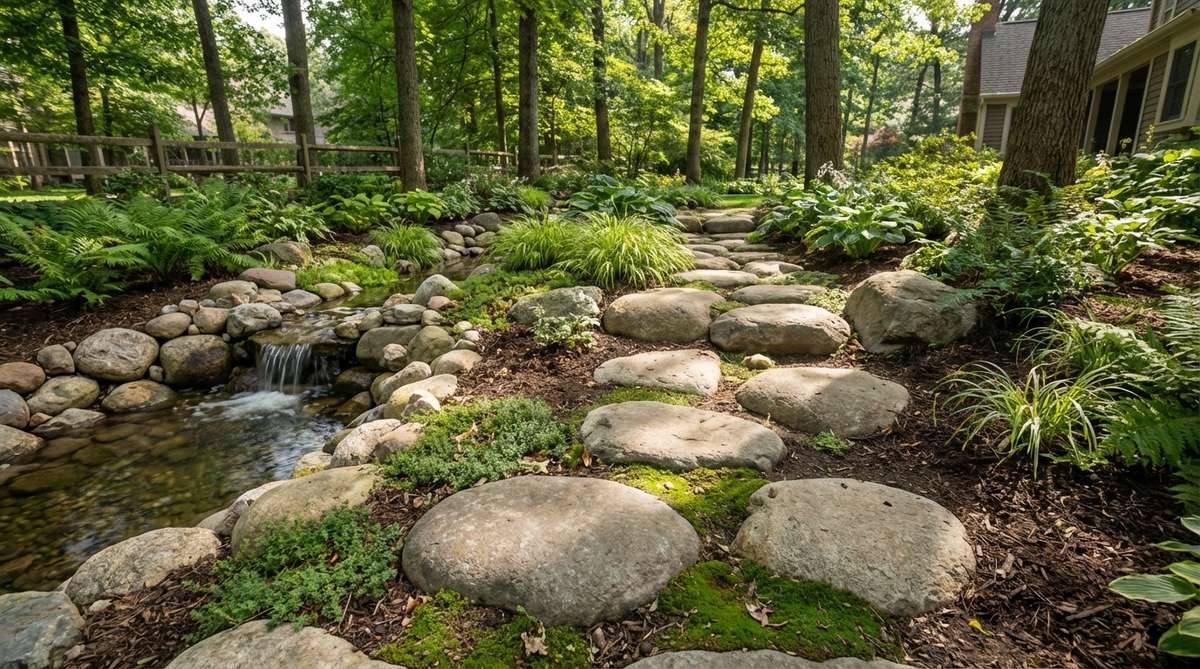
Smooth river boulders in 18-24 inch diameters create organic stepping stones perfect for naturalistic gardens. The rounded forms contrast beautifully with angular plantings and soften hardscape elements.
Position river rocks with their flattest surface upward, partially burying them for stability. The irregular spacing mimics natural stream crossings, adding authenticity to woodland garden themes.
This approach works exceptionally well in rain gardens and near water features where rounded stones reinforce aquatic themes. Choose darker stones to absorb heat in cooler climates or lighter tones for sun-exposed areas.
15. Geometric Cut Stone Stepping Sequence
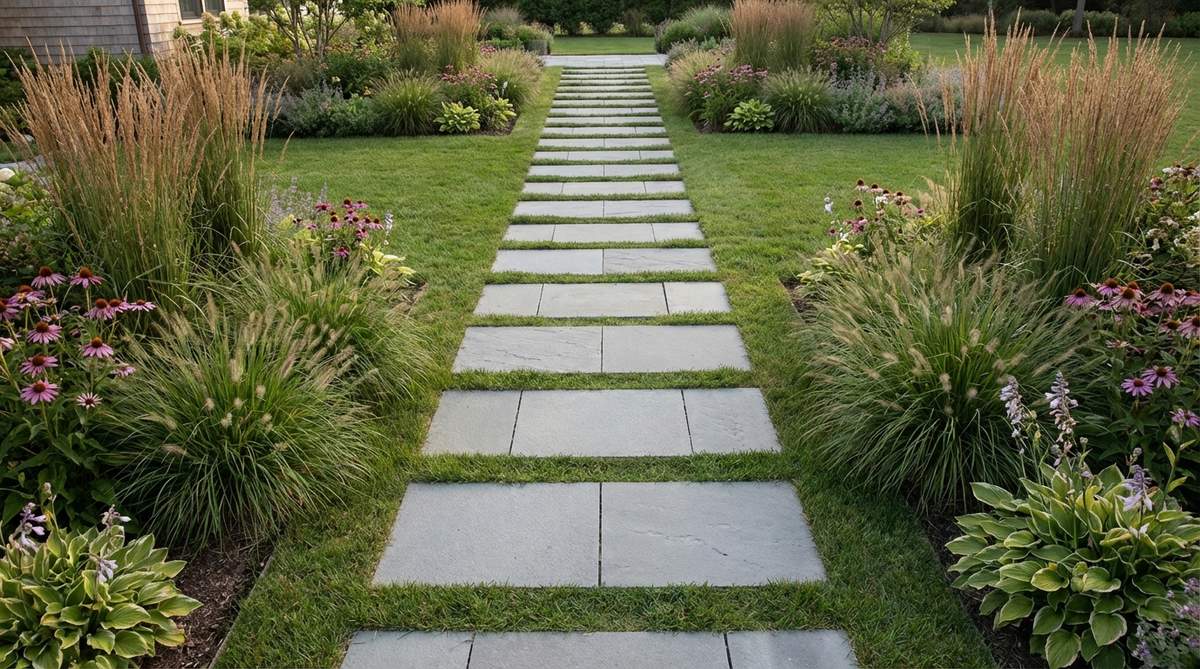
Square or hexagonal cut stones in uniform dimensions create orderly progression through garden spaces. This controlled geometry suits contemporary designs while maintaining the airiness of stepping stone layouts.
Maintain consistent 18-20 inch spacing between geometric stones for comfortable stride length. The regular shapes allow for precise alignment along straight or gently curved routes.
Geometric stepping stones integrate seamlessly with formal garden bed edging and modern plantings. Their clean edges create satisfying contrast against billowing ornamental grasses and loose perennial forms.
16. Slate Tile Floating Sequence
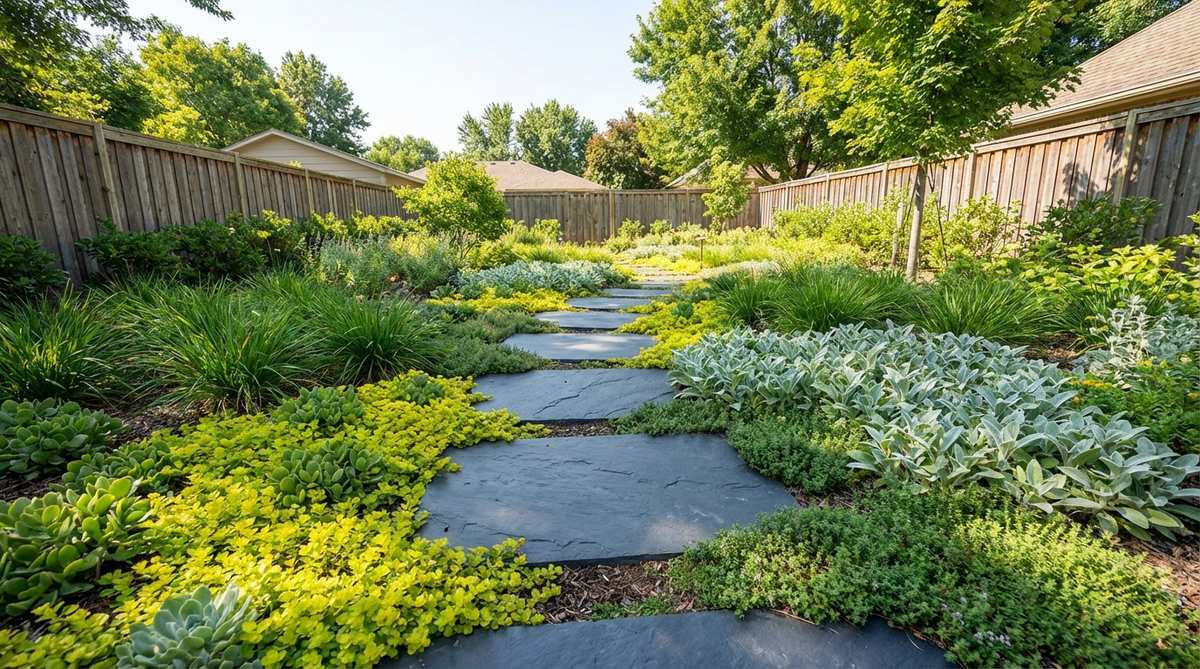
Square slate tiles in 12-16 inch dimensions provide refined stepping stones with contemporary flair. The stone’s natural cleft surface offers texture while split edges maintain organic character.
Arrange slate tiles in a slightly meandering line through groundcover plantings like creeping jenny or baby’s tears. The dark stone color creates dramatic contrast against chartreuse or silver foliage.
Slate’s layered structure means selecting pieces of consistent thickness for level, safe footing. The stone’s density makes it frost-resistant in northern climates where other materials might fail.
17. Mixed Size Flagstone Sequence
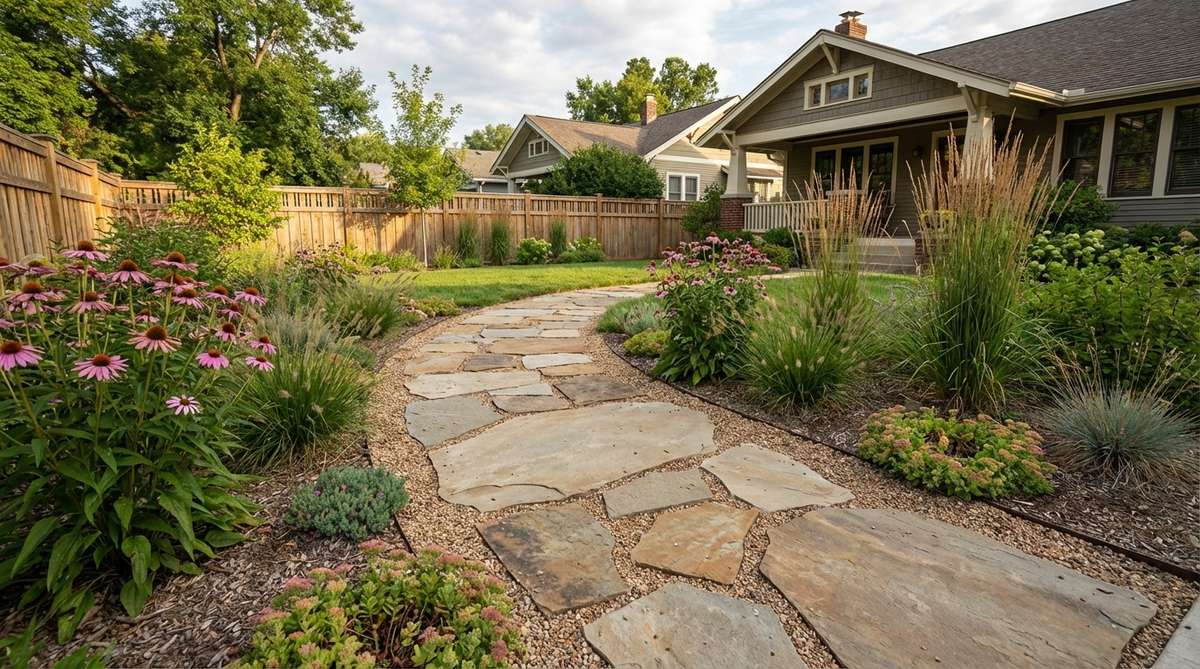
Varying flagstone sizes from 14 to 30 inches creates rhythmic visual interest along stepping stone pathways. This approach mimics the natural occurrence of stone in meadow settings.
Alternate between larger anchor stones and smaller intermediate pieces to create natural gait variation. The size diversity adds playful unpredictability while maintaining functional navigation.
This layout efficiently uses material remnants and reduces costs compared to uniform stone sizes. Position the largest, most stable pieces at pathway beginnings and key turning points.
18. Pennsylvania Bluestone Discs
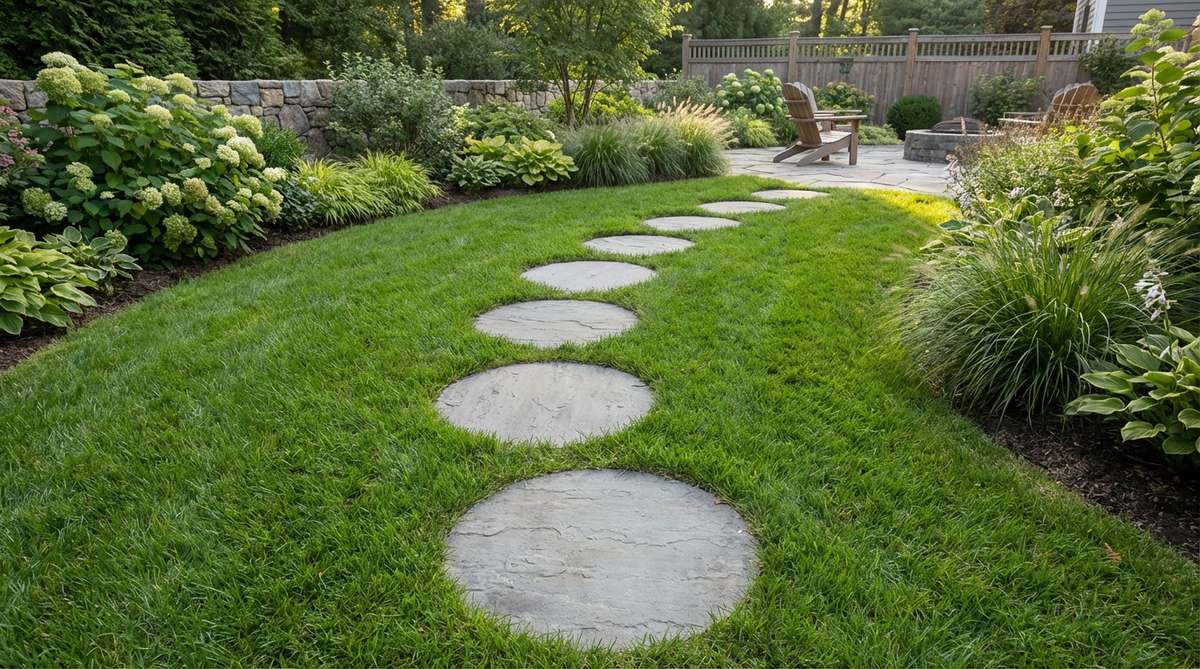
Circular bluestone pieces cut into disc shapes provide distinctive stepping stones with refined character. The round forms soften pathway geometry while maintaining formal material quality.
Uniform disc diameters between 18-24 inches ensure consistent stepping surfaces and simplified installation. The circular shape naturally encourages centered foot placement for safer navigation.
Bluestone discs work beautifully in both traditional and contemporary settings due to their neutral coloring. Space them through pea gravel or decomposed granite for enhanced formal appearance.
Curved and Serpentine Stone Garden Walkway Designs
Curved pathways create visual interest, slow pedestrian movement for garden observation, and make small spaces feel larger through extended routes. These layouts require careful planning but reward with enhanced aesthetics and improved spatial flow.
19. Sweeping S-Curve Flagstone Path
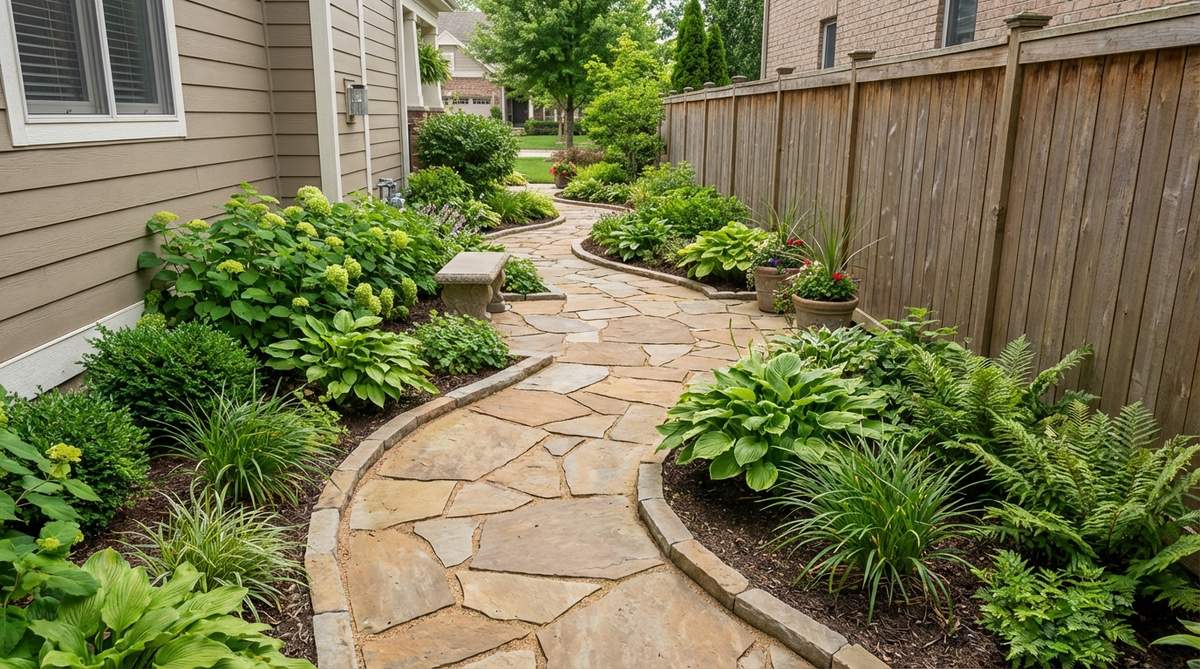
Gentle S-curves guide visitors through garden rooms while creating the illusion of greater depth and mystery. The serpentine form encourages slower walking pace and increased engagement with surrounding plantings.
Use flexible PVC piping or garden hoses to establish smooth curve lines before installation. Border stones require beveled cuts on tighter radius sections to maintain consistent joint spacing.
S-curves work particularly well in narrow side yards where straight paths would emphasize limited width. The lateral movement adds perceived breadth and transforms awkward spaces into garden assets.
20. Kidney-Shaped Perimeter Walkway
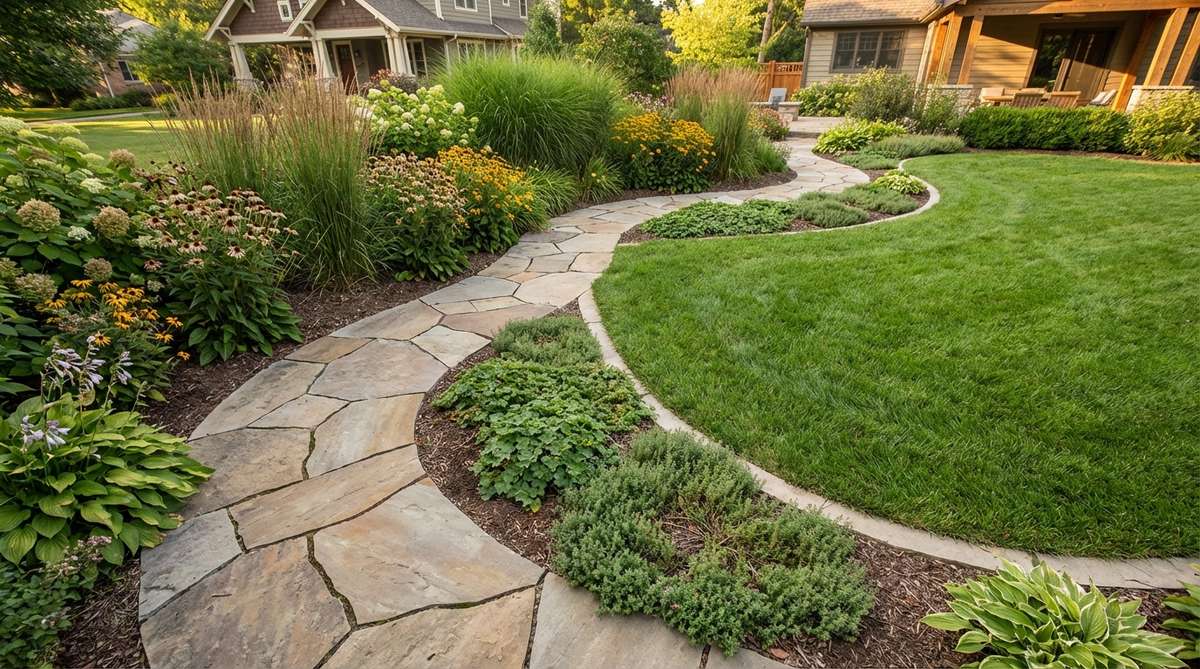
Organic kidney curves create flowing pathways that wrap around planting beds and lawn areas. This layout naturally defines garden spaces without harsh linear divisions.
The continuous curve provides opportunities for varied planting schemes along the pathway’s length. Inner curves showcase taller specimens while outer curves accommodate low sprawling plants.
Use this design to maximize usable lawn area while providing generous planting zones. The curved edges are easier to mow than sharp corners and angles.
21. Meandering Woodland Trail
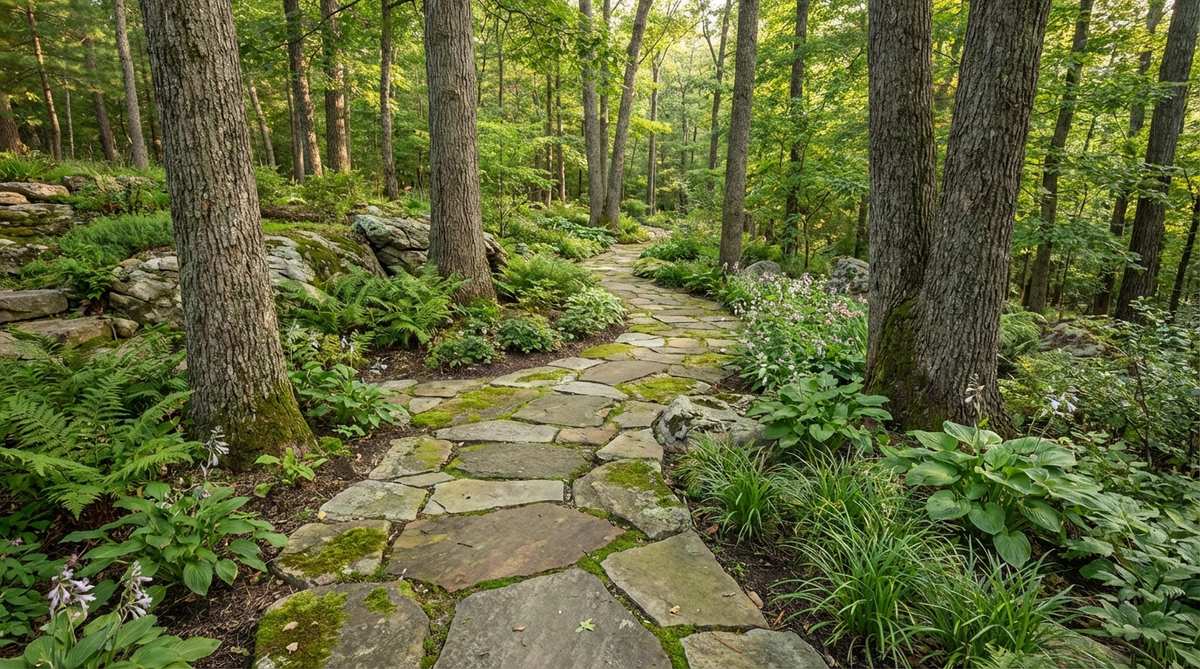
Irregular curves mimicking natural deer trails create authentic woodland garden pathways. The unpredictable route builds anticipation and encourages exploration of garden features.
Allow the pathway to respond to existing trees, boulders, and terrain features rather than imposing geometric logic. This organic approach requires fewer site modifications and preserves natural character.
Woodland meanders work best with irregular flagstone or stepping stones that reinforce the naturalistic aesthetic. Avoid overly manicured edges and allow moss and groundcovers to soften boundaries.
22. Arc Pathway to Focal Point
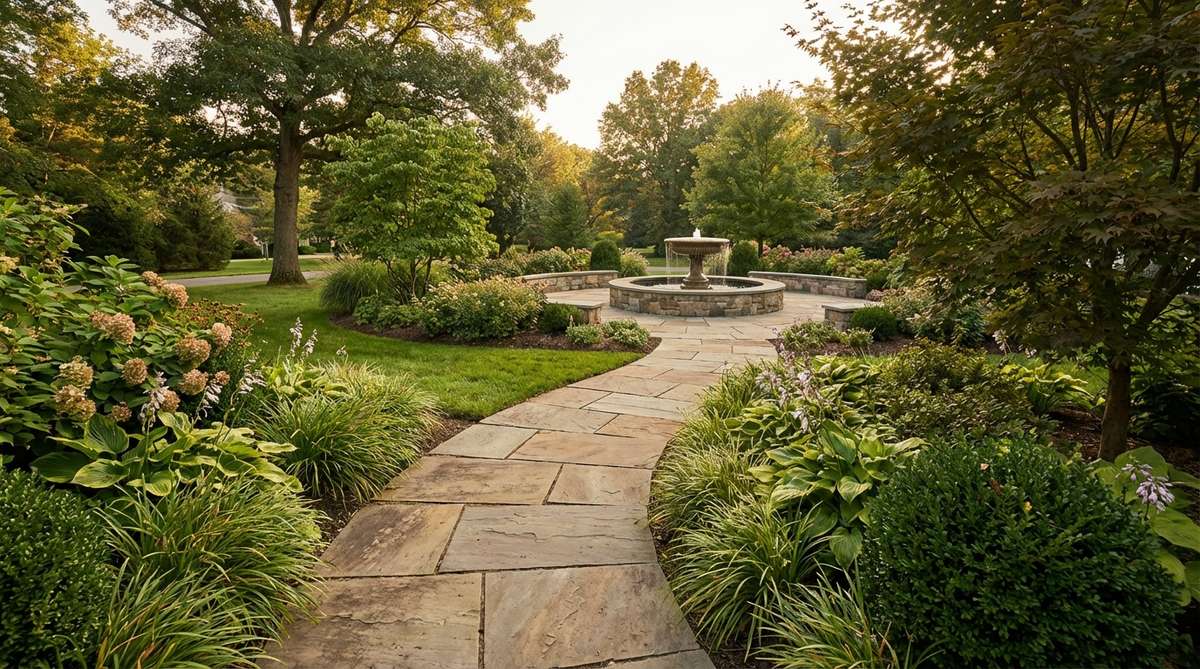
A single graceful arc draws the eye toward garden focal points like fountains, sculptures, or specimen trees. The curved approach creates anticipation and frames the destination beautifully.
Calculate the arc radius to ensure smooth curves without awkward transitions. Professional designers often use stakes and string to establish consistent curvature before installation.
This layout particularly suits rectangular yards where a straight path would divide the space too harshly. The arc softens geometry while maintaining clear directional flow.
23. Spiral Stone Meditation Path
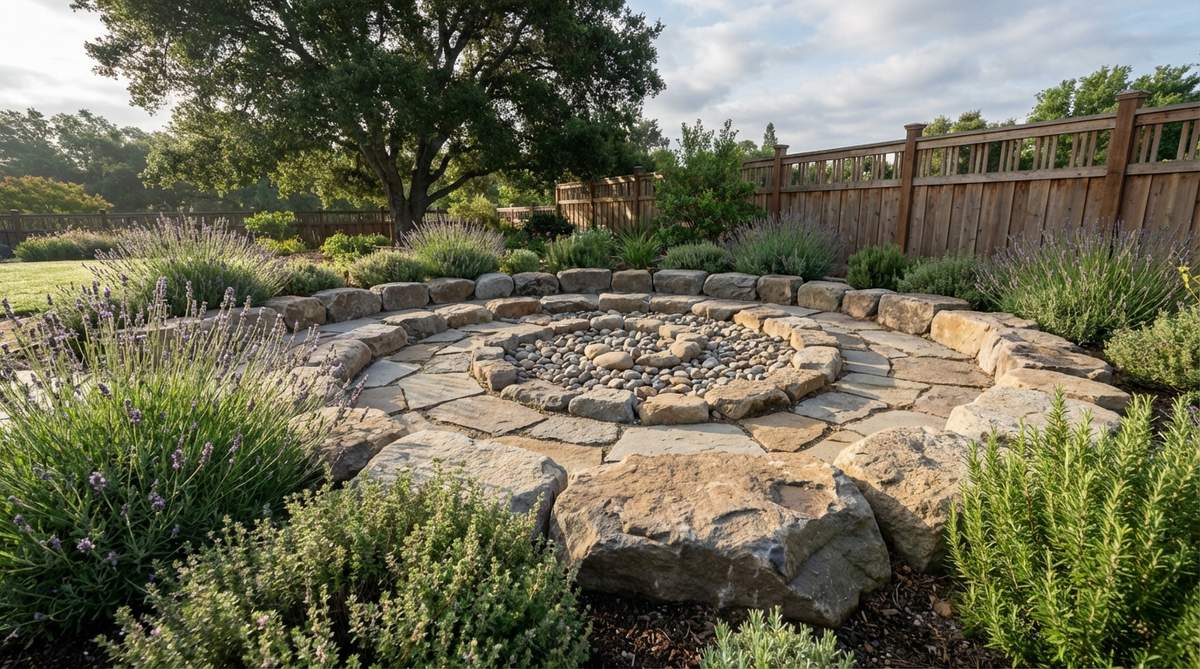
Spiral pathways beginning with larger outer stones and graduating to smaller center pieces create contemplative garden features. This ancient pattern symbolizes journey and reflection.
The inward progression naturally slows movement and encourages mindful walking practices. Position the spiral in quiet garden areas away from activity zones for maximum meditative benefit.
Spiral paths work as both functional walkways and artistic landscape installations. Plant aromatic herbs along the outer edges to enhance the sensory meditation experience.
24. Compound Curve Artistic Walkway
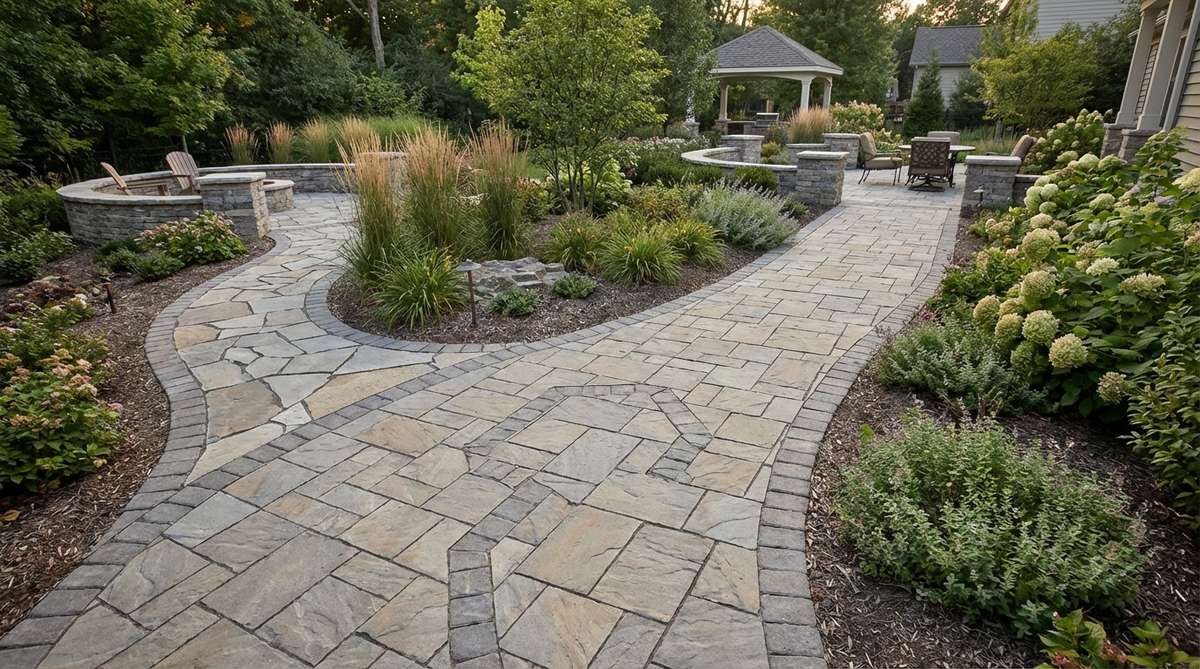
Multiple connected curves flowing in different directions create dynamic, artistic pathways. This sophisticated approach requires professional design skills but delivers gallery-quality landscape features.
Compound curves naturally integrate multiple garden viewing points along a single pathway. Each curve reveals new vistas and maintains visitor interest throughout the journey.
This layout justifies premium stone materials as the complex geometry showcases craftsmanship. Use consistent stone types throughout to unify the intricate pattern.
Stone Garden Steps and Stairs for Elevation Changes
Stone garden stairs transform challenging slopes into accessible, beautiful landscape features while creating distinct outdoor rooms at different elevations. Proper design ensures safety, comfort, and visual integration with surrounding gardens.
25. Natural Boulder Step Sequence
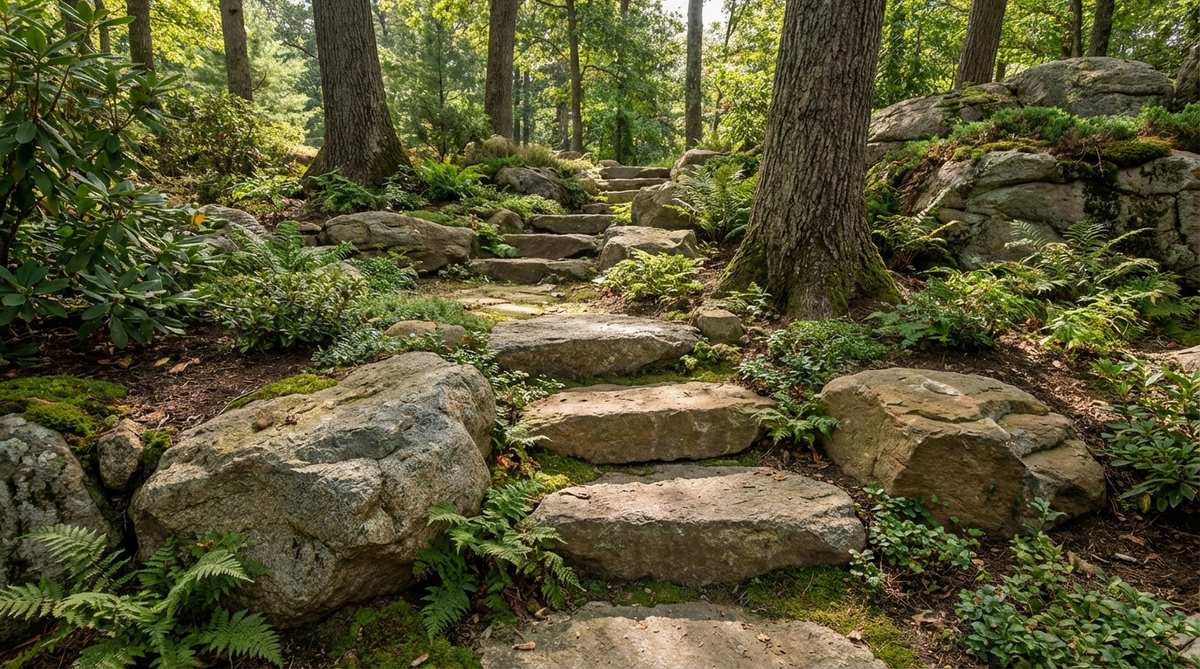
Large boulders partially buried in slopes create informal steps perfect for naturalistic gardens. Each stone should provide at least 14 inches of depth and rise no more than 7 inches to the next level.
Position boulders to create stable, level treads by burying the back portion deeper than the front. The irregular spacing and organic forms blend seamlessly with woodland and native plant gardens.
This approach works particularly well on gradual slopes where formal stairs would appear overdone. Boulder steps require minimal excavation and can wrap around existing trees and rocks.
26. Cut Stone Formal Staircase
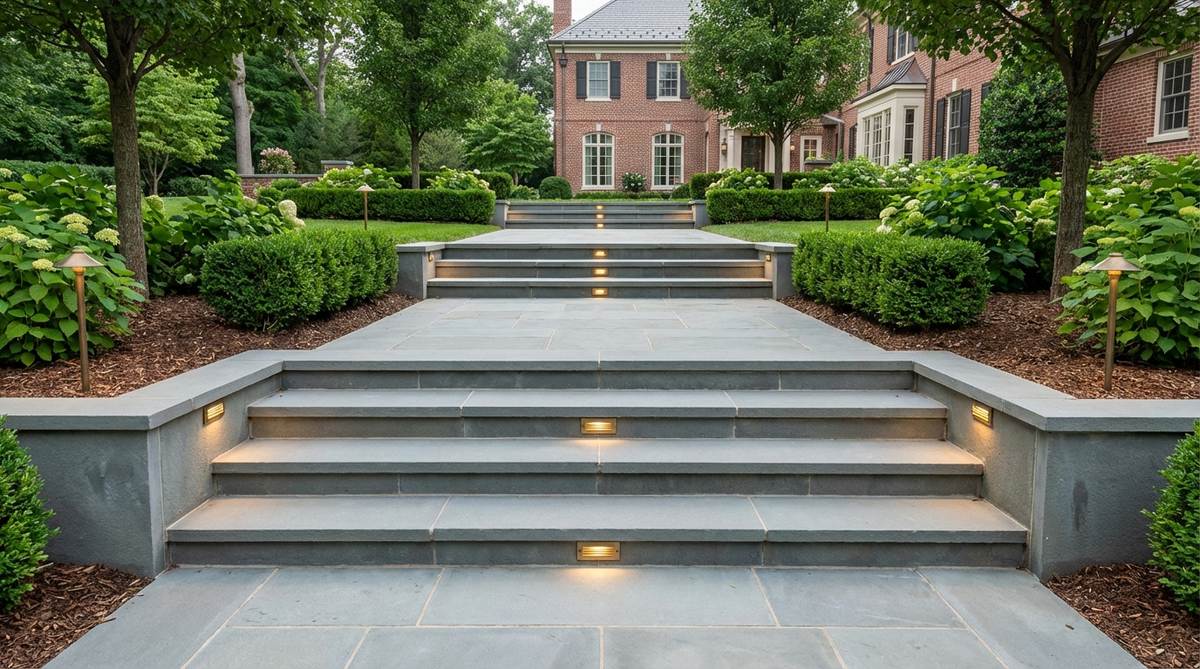
Uniform cut stone treads in bluestone or granite create elegant formal staircases for front entries and main garden routes. Standard 6-inch rise and 14-inch tread dimensions ensure comfortable, safe climbing.
Each tread stone should overhang the riser by 1-2 inches, creating defined shadow lines that enhance three-dimensional appearance. Consistent dimensions throughout the staircase prevent tripping hazards.
Formal stone stairs complement traditional architecture and structured garden designs. Install landscape lighting beneath tread overhangs for dramatic nighttime illumination and safety.
27. Terraced Flagstone Landings
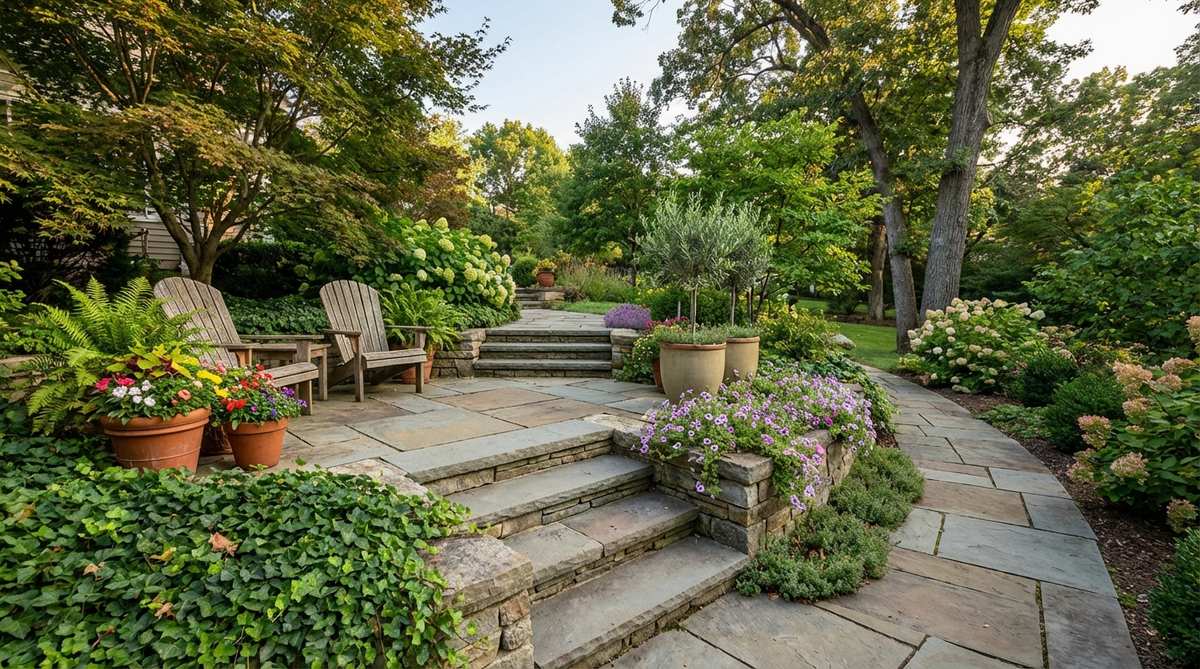
Wide landings every 4-6 steps break up long stair runs while creating opportunities for container displays or seating. These level platforms provide resting points and enhance safety.
Use larger flagstone pieces for landing surfaces to differentiate them from standard treads. The generous platforms become garden destinations rather than mere transitions.
Terraced designs reduce the perceived steepness of slopes and make elevation changes feel less daunting. Plant trailing species at landing edges to soften the hardscape and add vertical interest.
28. Curved Stone Step Integration
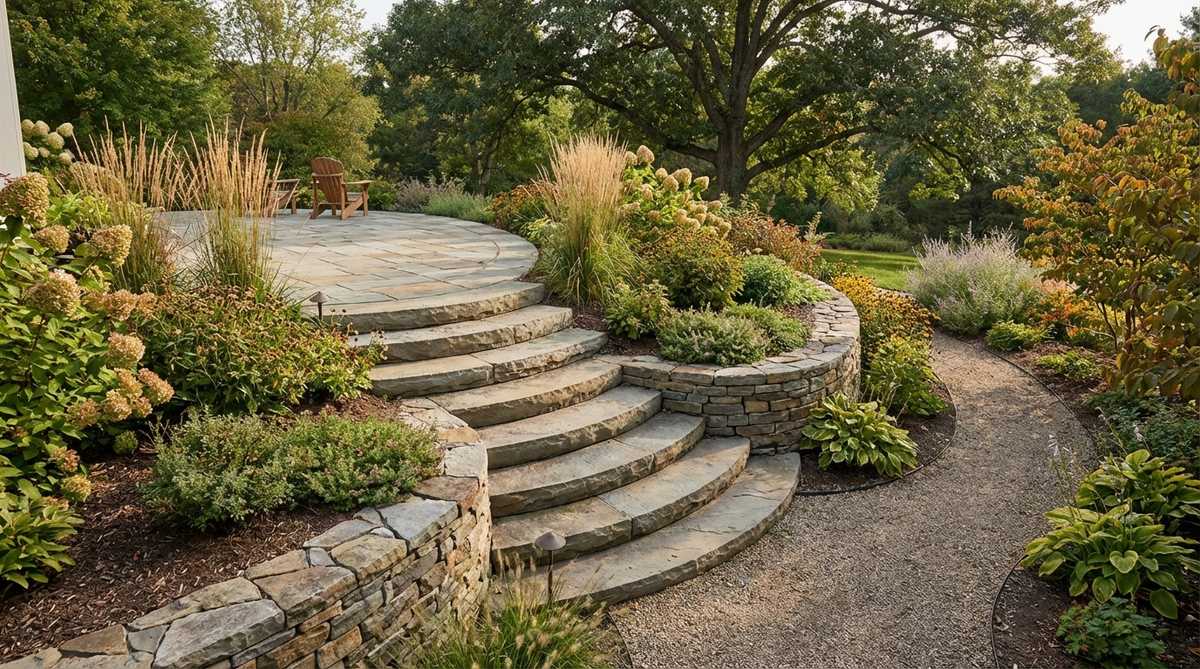
Steps following curved pathways require specialized stone cutting but create sophisticated transitions. The curved treads maintain pathway direction while managing elevation changes smoothly.
Radius-cut treads cost 30-40% more than straight steps but deliver exceptional visual flow. This investment particularly benefits showcase gardens and high-visibility landscapes.
Curved steps work beautifully on slopes adjacent to curved patios or rounded garden beds. The consistent geometry creates cohesive design language throughout the landscape.
29. Stone Slab Wedge Steps
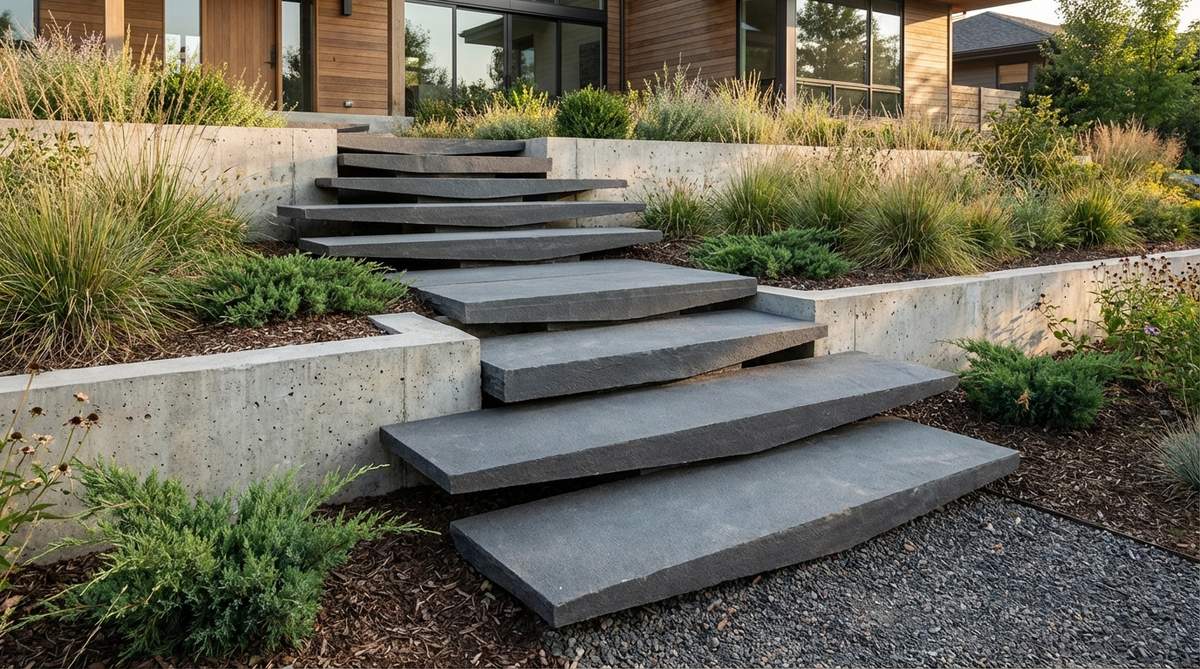
Thick stone slabs cut in wedge profiles create modern, sculptural steps with clean horizontal lines. The substantial material presence makes a bold contemporary statement.
Wedge-cut stones cantilever from retaining walls or embedded supports, appearing to float. This technique requires structural engineering but achieves dramatic minimalist aesthetics.
The horizontal emphasis of wedge steps complements modern architecture with strong linear elements. Use consistent stone type throughout to maintain visual simplicity.
30. Integrated Stone Garden Steps
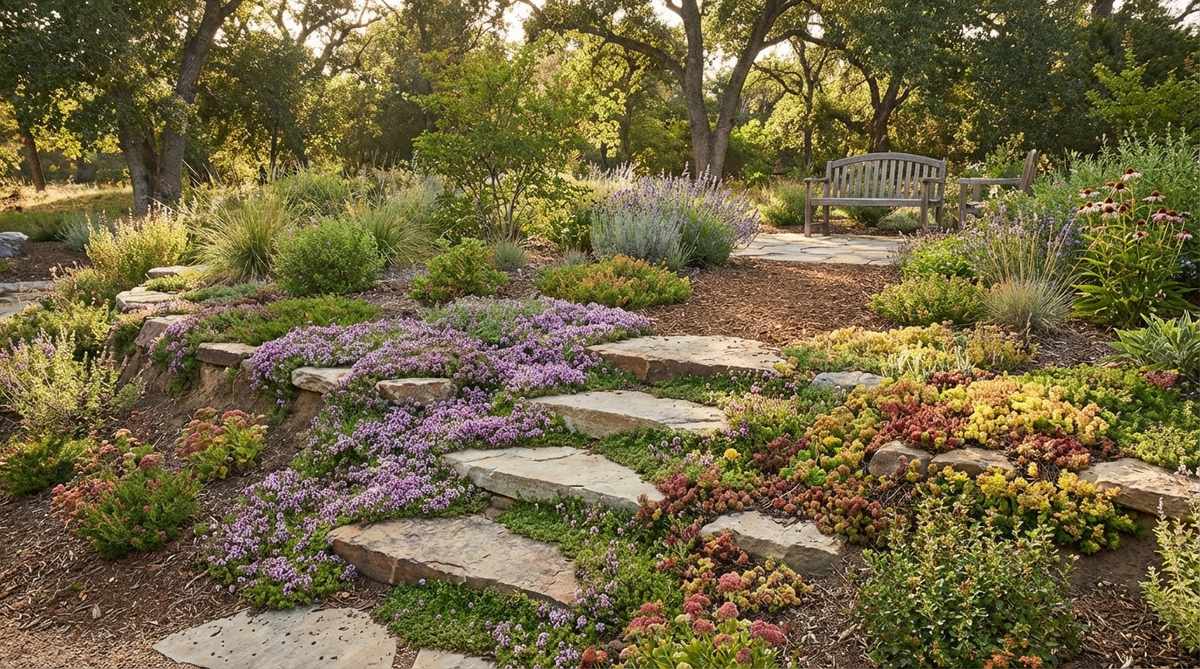
Steps built into planted slopes with vegetation flowing over edges create seamless garden integration. The stonework provides function while plantings dominate the visual experience.
Allow creeping thyme, sedums, or other low groundcovers to colonize step edges and risers. The softened boundaries blur the line between hardscape and planted areas.
This approach suits cottage gardens and informal landscapes where excessive formality would clash with overall design themes. Plan for slightly wider treads to accommodate plant encroachment.
Mixed Material Stone Garden Paths
Combining stone with complementary materials like gravel, brick, or wood creates unique pathways with enhanced texture and visual interest. These hybrid designs often reduce costs while increasing creative possibilities.
31. Stone and Pea Gravel Combination
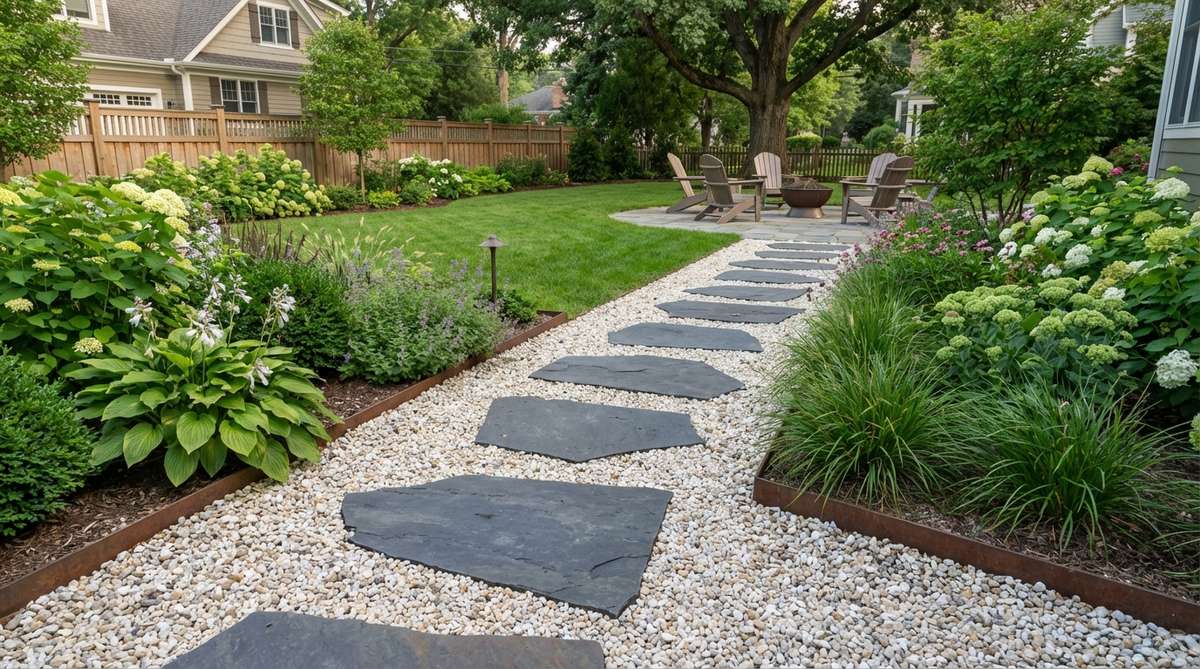
Large stepping stones set in beds of pea gravel create elegant, permeable pathways with excellent drainage. The gravel provides stable walking surfaces between stones while preventing mud.
Choose gravel colors that contrast with stone tones for maximum definition, such as white marble gravel with dark slate stones. The loose material allows easy adjustments and repairs.
This combination costs 40-50% less than solid stone pathways while maintaining upscale appearance. Edge restraints prevent gravel migration into adjacent planting beds.
32. Stone and Brick Border Design
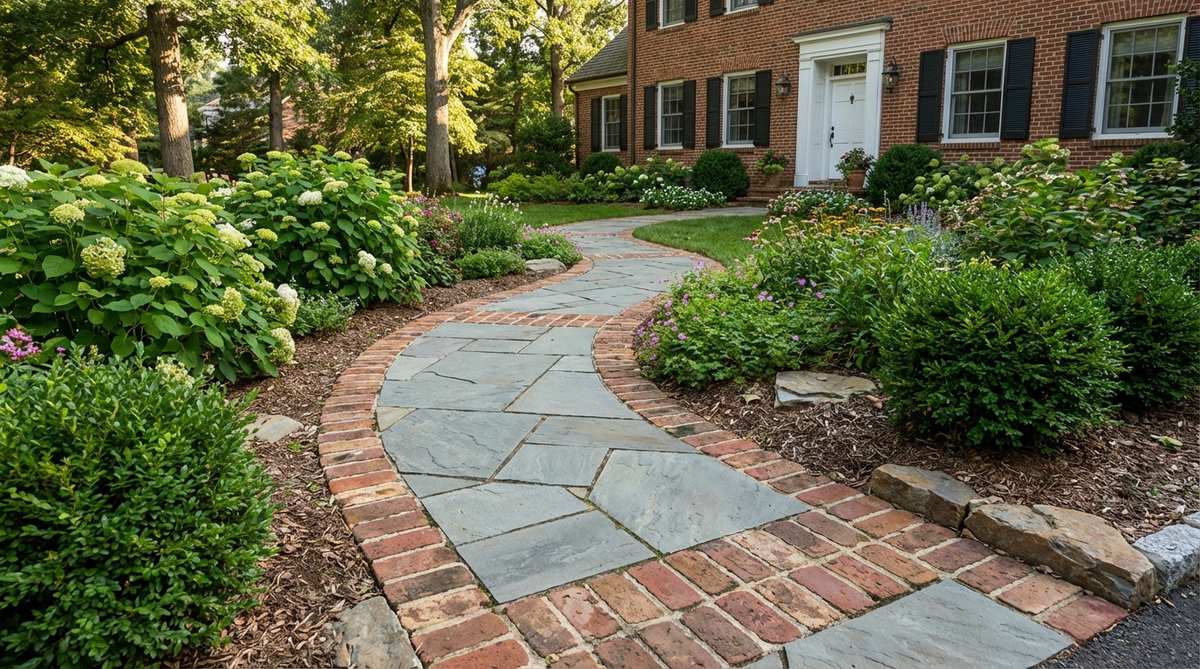
Brick edging framing flagstone or bluestone pathways adds traditional charm and warm color contrast. The modular brick dimensions create geometric precision complementing irregular stone patterns.
Running bond or soldier course brick borders define pathway edges while providing mowing strips. This combination works particularly well in historical or colonial garden settings.
The material pairing allows coordination with brick home facades or existing brick features. Ensure both materials have similar frost resistance in northern climates.
33. Stone Slabs with Wood Decking
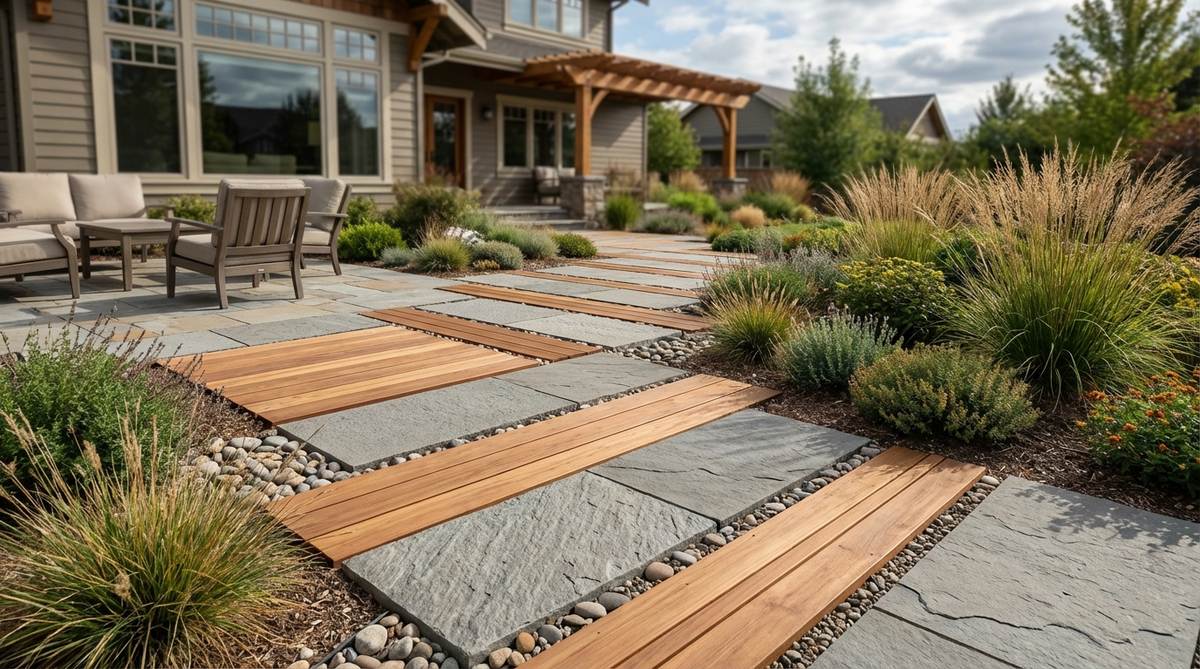
Alternating stone and wood sections create textural rhythm along pathways. This contemporary combination works beautifully in transitional zones between formal patios and natural garden areas.
Use rot-resistant wood species like cedar or ipe that match stone’s longevity expectations. The wood sections provide warmer tones and tactile variety underfoot.
This hybrid approach suits modern landscapes emphasizing material diversity. Maintain gaps between wood and stone for expansion and drainage.
34. Mosaic Pebble and Flagstone
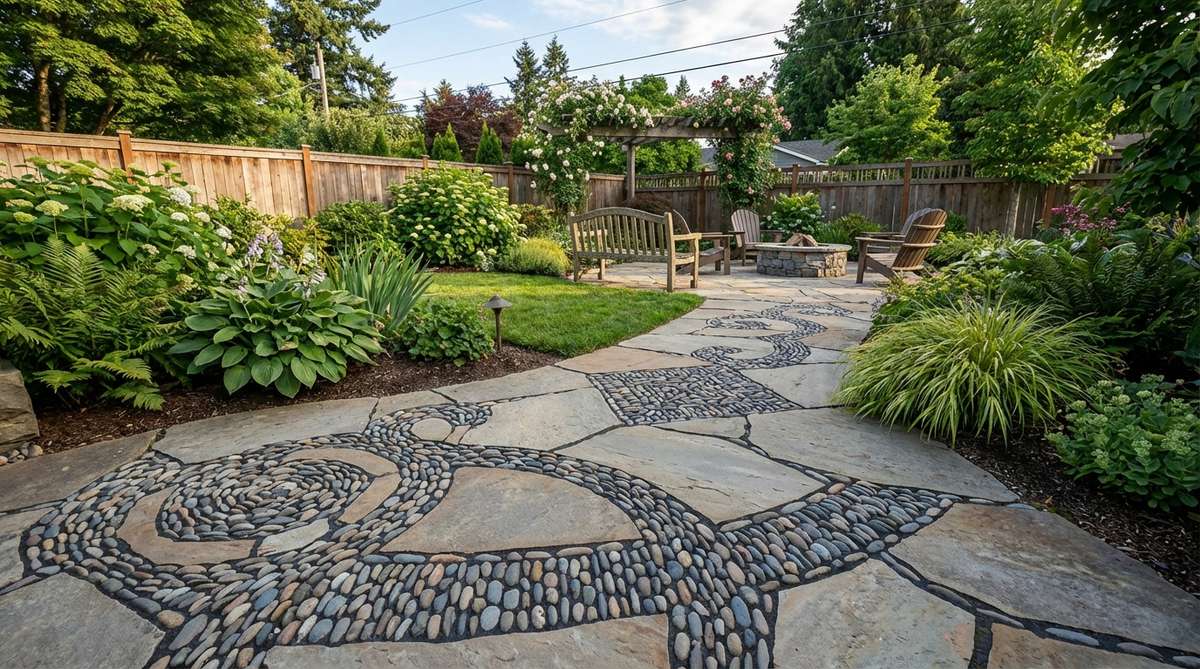
Small river pebbles arranged in decorative patterns between larger flagstone pieces add artistic detail. This labor-intensive technique creates custom pathway artwork.
Set pebbles vertically in mortar or sand to create durable mosaics filling irregular gaps. Geometric or organic designs both work depending on overall garden style.
Pebble mosaics transform utilitarian pathways into landscape focal points worthy of museum gardens. The technique originated in ancient Roman and Asian garden traditions.
35. Decomposed Granite Stone Path
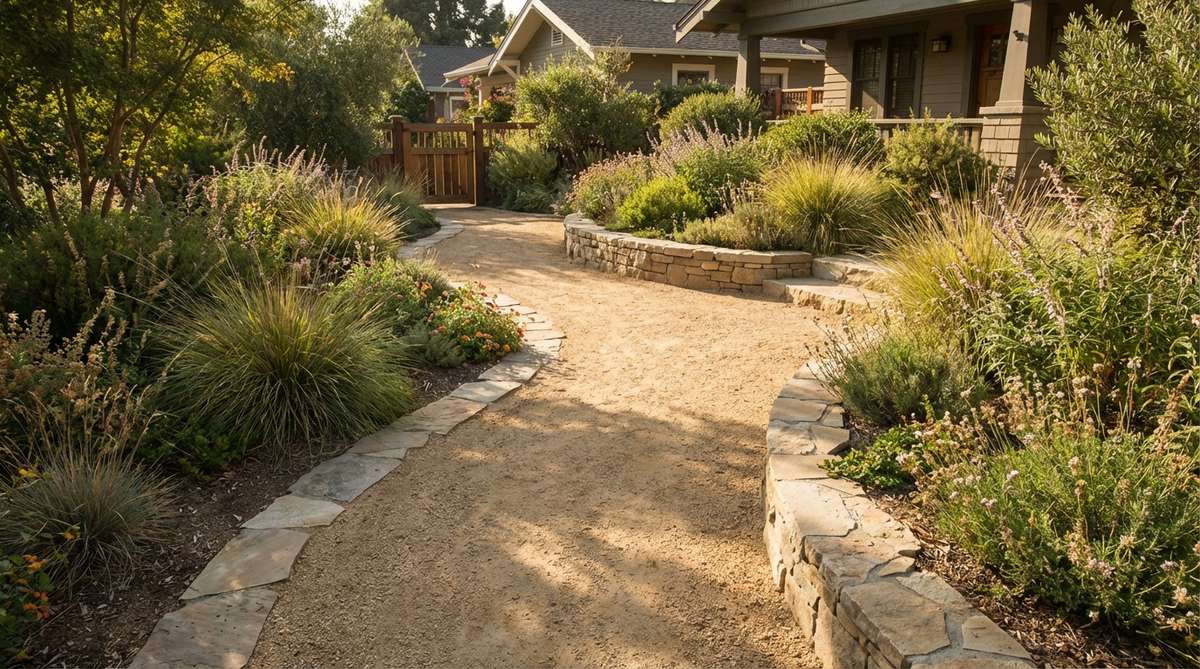
Compacted decomposed granite creates stable surfaces between stone elements with natural, cohesive appearance. The fine granite particles bind when moistened, preventing dust and erosion.
This combination provides ADA-accessible pathways when properly installed and compacted. The neutral earth tones complement all stone types and planting palettes.
Decomposed granite pathways require replenishment every 3-5 years but cost significantly less than solid stone. The material’s permeability benefits adjacent plantings.
36. Stone and Concrete Hybrid
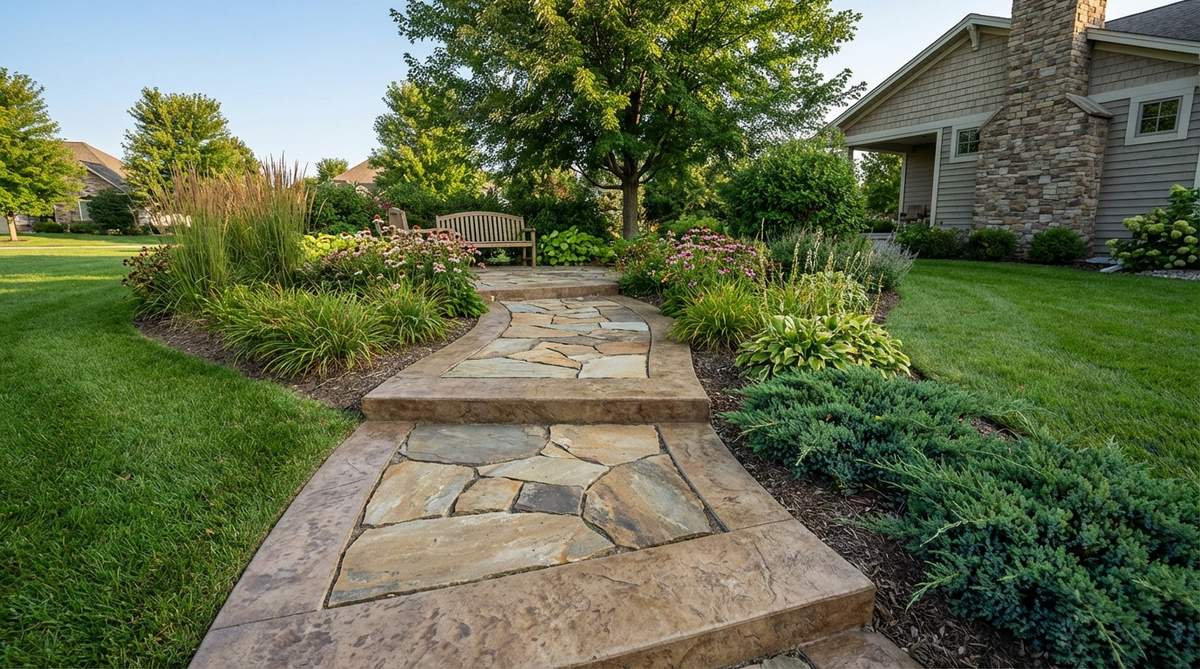
Concrete borders or bands alternating with stone sections provide structural support at reduced cost. The concrete components can receive decorative finishes mimicking stone texture.
Use concrete for pathway areas receiving vehicular weight, reserving natural stone for pedestrian zones. This strategic material placement optimizes both budget and performance.
Modern concrete staining techniques allow color matching with stone elements for visual continuity. The combination delivers 20-30% cost savings versus all-stone construction.
Geometric and Modern Stone Walkway Layouts
Contemporary geometric patterns using cut stone create striking minimalist pathways suited to modern architecture and formal gardens. These designs emphasize clean lines, symmetry, and intentional negative space.
37. Linear Stone Plank Pathway
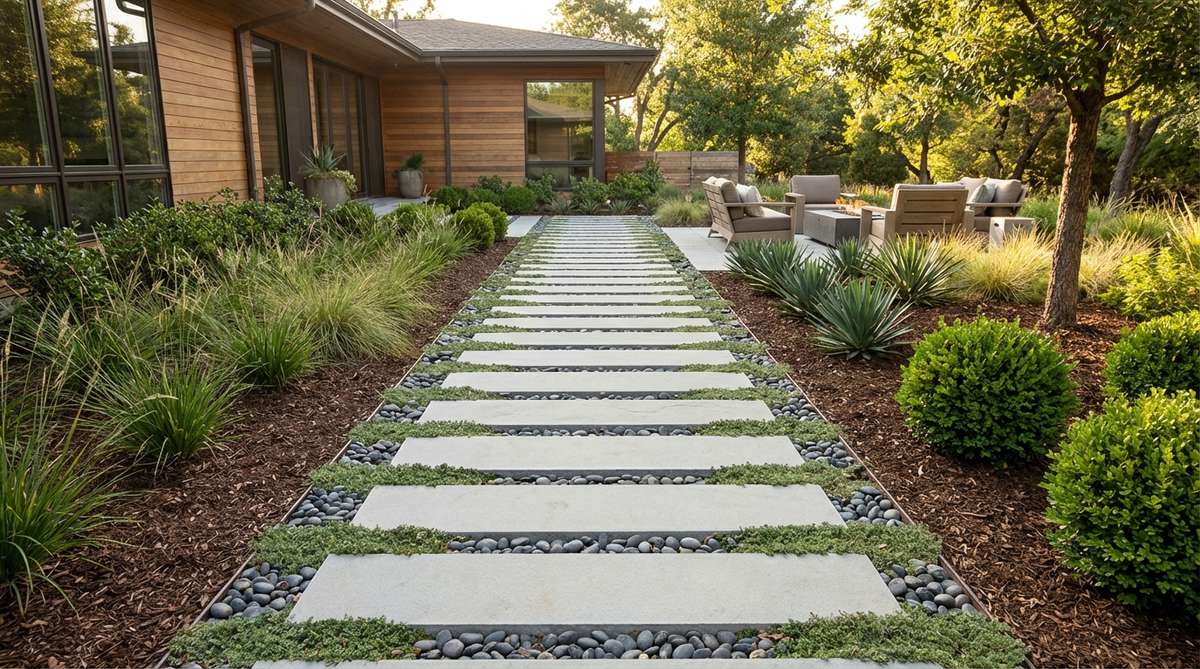
Long rectangular stone planks laid parallel create sleek contemporary walkways with strong directional emphasis. The linear repetition guides movement while creating visual rhythm.
Use stones cut to consistent 6-12 inch widths and 36-48 inch lengths for proportional harmony. The narrow profile suits side yards and connector paths between garden zones.
Linear layouts minimize joint lines perpendicular to traffic flow, creating smooth, uninterrupted surfaces. This design particularly complements modern horizontal-lined architecture.
38. Checkerboard Stone and Grass
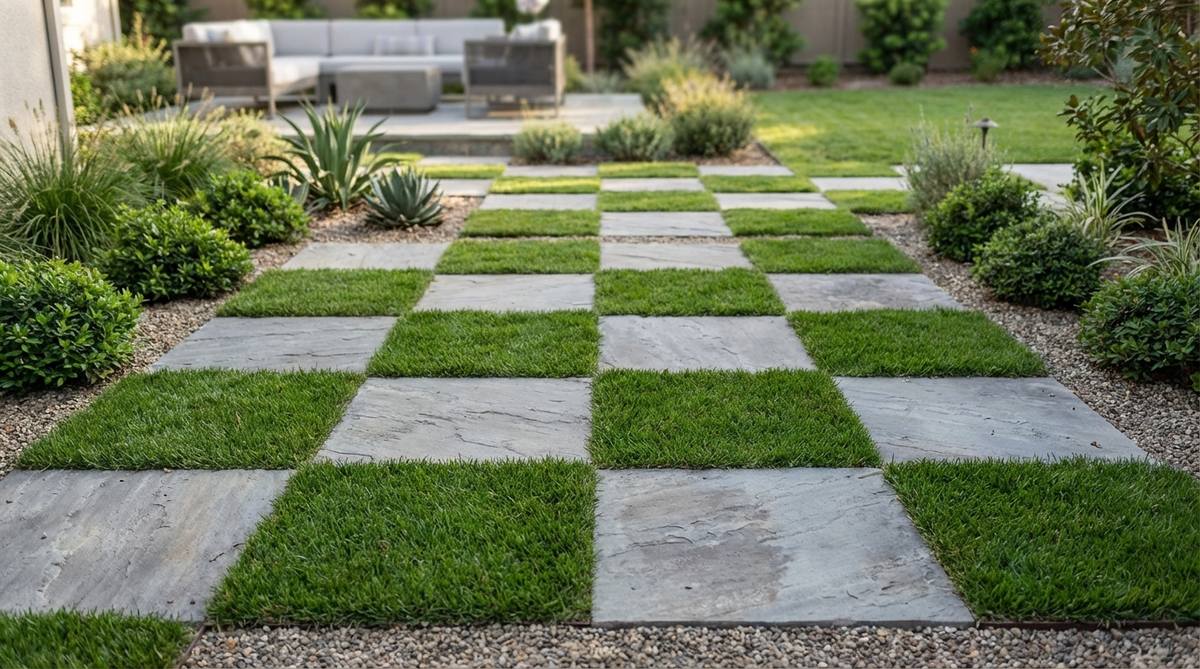
Alternating stone squares and grass panels create bold graphic patterns perfect for contemporary landscapes. The grid geometry provides structure while maintaining significant green space.
Cut stone squares in 18-24 inch dimensions for balanced proportions with grass panels. This layout reduces hardscape coverage by 50% compared to solid stone pathways.
The checkerboard pattern works best in low-traffic areas as grass panels require maintenance. Choose durable turf grass varieties that tolerate moderate foot traffic.
39. Hexagonal Stone Tile Pattern
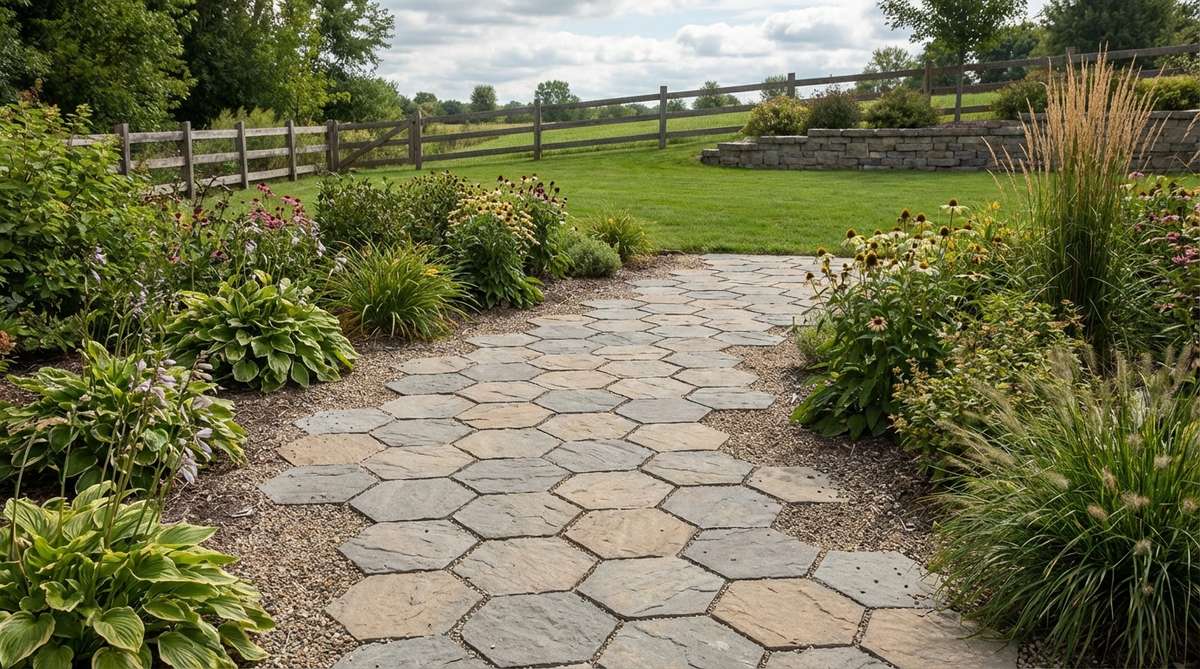
Six-sided stone tiles tessellate into honeycomb patterns offering geometric interest beyond standard rectangular layouts. The hexagonal form distributes weight efficiently while creating organic-feeling geometry.
Uniform hexagon dimensions ensure precise fitting with minimal joint gaps. The pattern works equally well for small intimate paths or large terrace areas.
Hexagonal layouts gained popularity through modernist design movements and remain relevant in contemporary gardens. The angular geometry contrasts beautifully with curved plantings.
40. Staggered Offset Stone Path
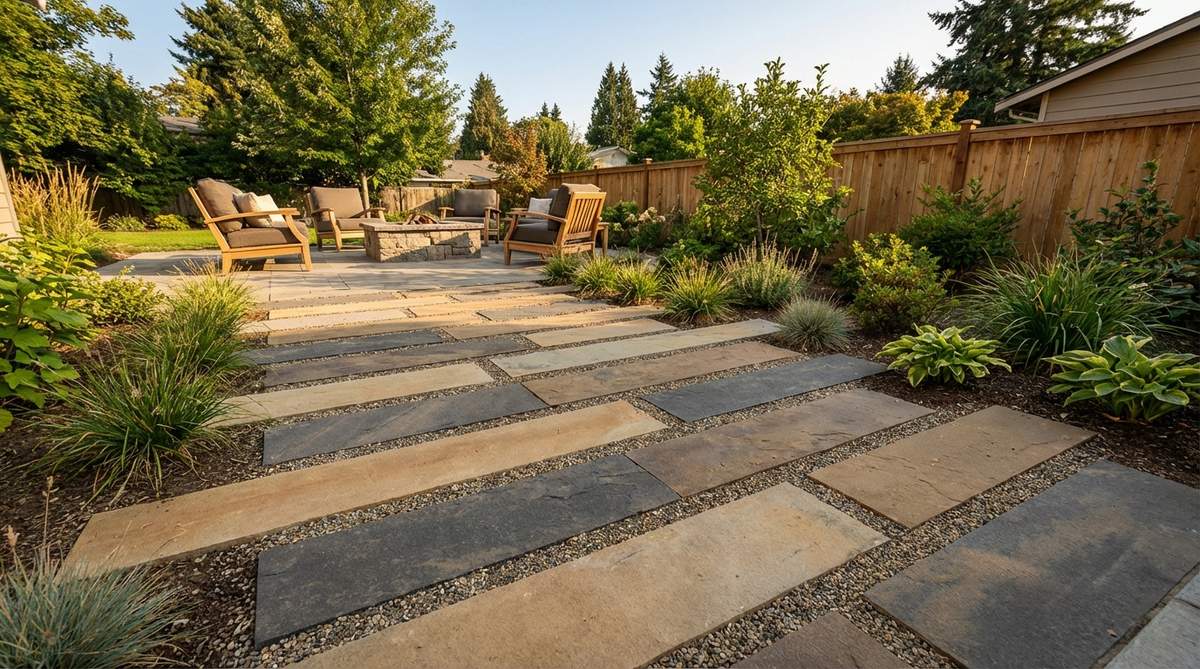
Rectangular stones offset at regular intervals create dynamic patterns with strong horizontal emphasis. This modern interpretation of running bond adds contemporary edge to traditional techniques.
Vary offset distances throughout the pathway to create rhythm and prevent monotony. Consistent stone dimensions ensure the pattern remains readable and intentional.
Staggered layouts work particularly well with materials featuring strong color variation, as the pattern highlights individual stone character. The design suits transitional garden styles bridging traditional and contemporary.
41. Concentric Square Landing
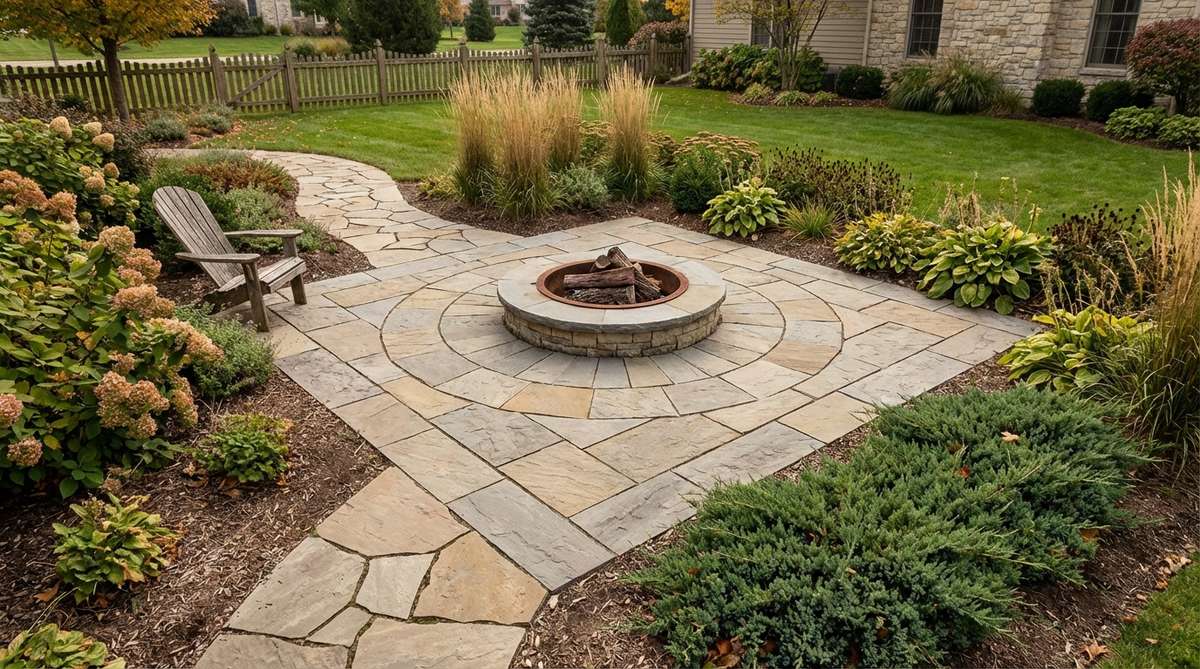
Square stone borders arranged in concentric rings create distinctive landing pads at pathway intersections or termination points. The target-like pattern naturally draws attention and creates destinations.
Use progressively larger stone dimensions from center outward to maintain proportional joint spacing. This technique works beautifully around circular features like fountains or fire pits.
Concentric patterns add architectural interest to otherwise utilitarian pathway junctions. The geometry provides opportunities for creative material mixing with different stone types in each ring.
42. Diagonal Grid Modern Layout
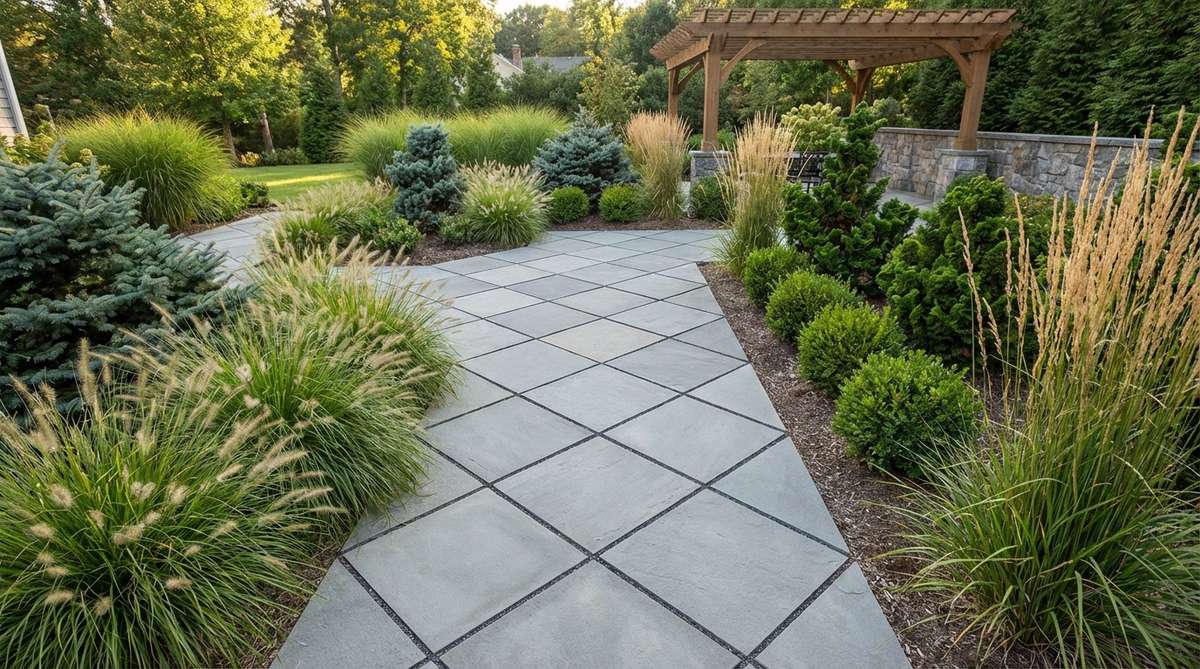
Square stones laid on 45-degree diagonals create diamond-shaped patterns with dynamic visual movement. The angled orientation makes pathways appear wider and adds contemporary sophistication.
This layout requires precise cutting at borders but delivers striking results that justify the additional labor. Use contrasting grout or joint materials to emphasize the geometric pattern.
Diagonal grids work exceptionally well in formal modern gardens with architectural plantings like ornamental grasses and specimen evergreens. The angular geometry echoes contemporary design principles.
Specialty Stone Garden Walkway Features
Unique pathway elements and specialized applications showcase stone’s versatility beyond standard walkway construction. These features add functional benefits and distinctive character to garden designs.
43. Raised Stone Causeway
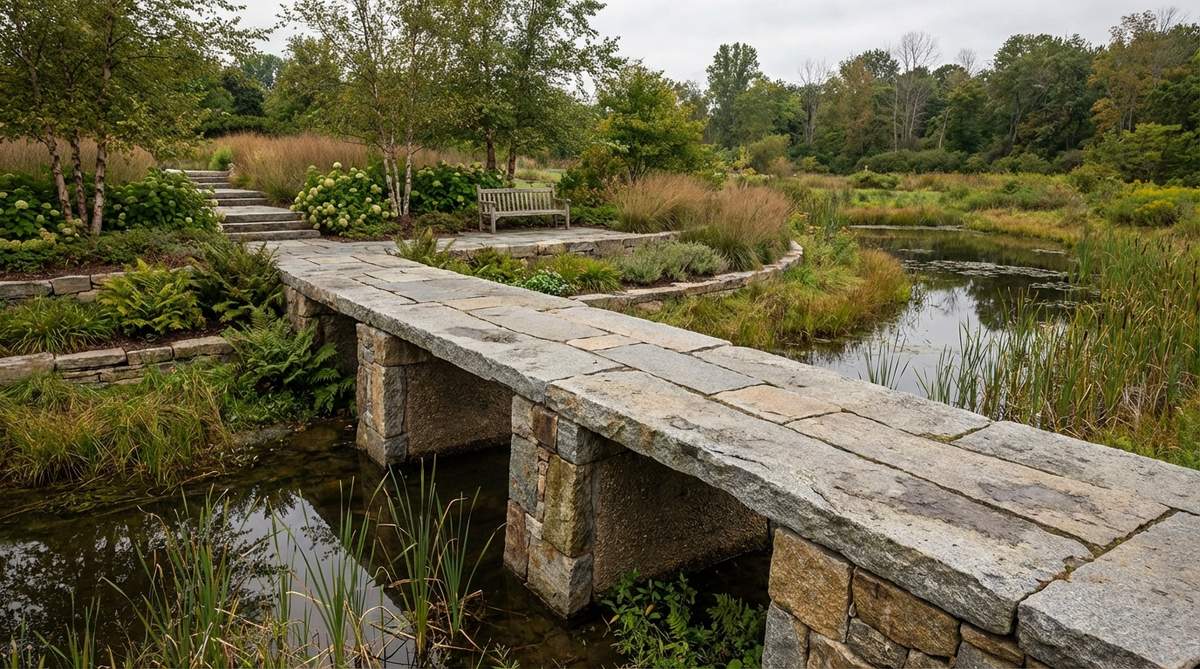
Elevated stone pathways spanning low wet areas or seasonal drainage zones keep feet dry while protecting sensitive ecosystems. The raised profile adds architectural drama and changes garden perspectives.
Construct causeways on compacted gravel piers or concrete footings for stability. The elevated position provides excellent viewing angles for low plantings and water features.
This specialized solution suits properties with poor drainage or intentional rain gardens. The causeway becomes a landscape feature in its own right, especially when planted borders highlight the elevation change.
44. Stone Bridge Crossing
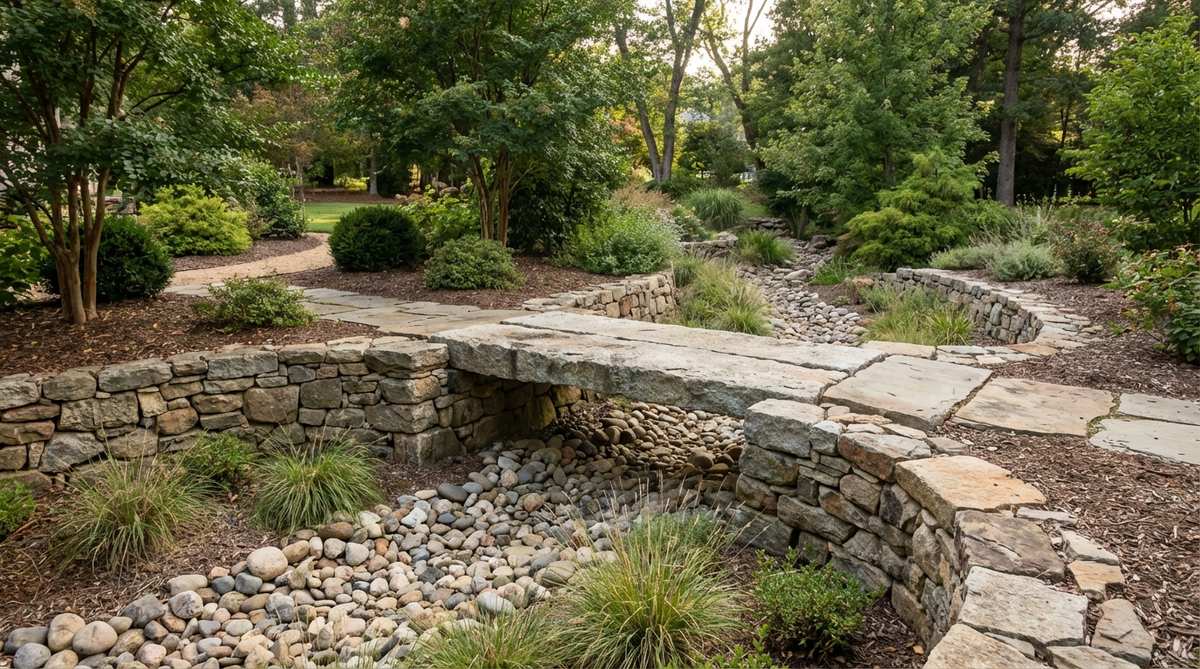
Stone slab bridges over dry creek beds or shallow water features add romantic garden elements. Single large slabs create simple crossings while multi-stone bridges accommodate wider spans.
Ensure bridge stones are at least 4 inches thick to safely span 4-6 foot distances. Abutment construction on both banks must provide stable, level support.
Stone bridges invite exploration and create memorable garden moments. Position them strategically to create the most scenic crossing experiences and viewing opportunities.
45. Illuminated Stone Pathway
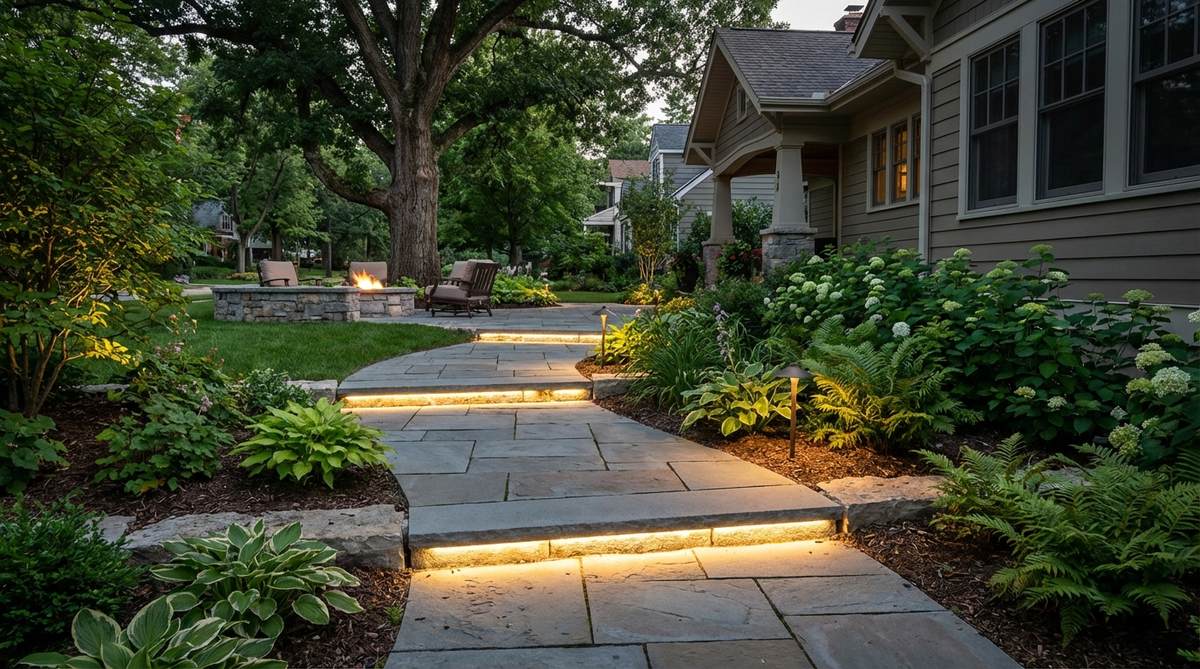
Integrated lighting beneath stone edges or between pavers extends garden enjoyment into evening hours. LED strip lights or small puck fixtures provide safety while highlighting stonework texture.
Install lighting during initial construction for clean, professional results without exposed wires. Low-voltage systems offer safety and energy efficiency for pathway applications.
Strategic lighting transforms pathways into evening focal points and guides safe navigation. Warm white light temperatures enhance natural stone colors better than cool white options.
46. Stone Labyrinth Meditation Space
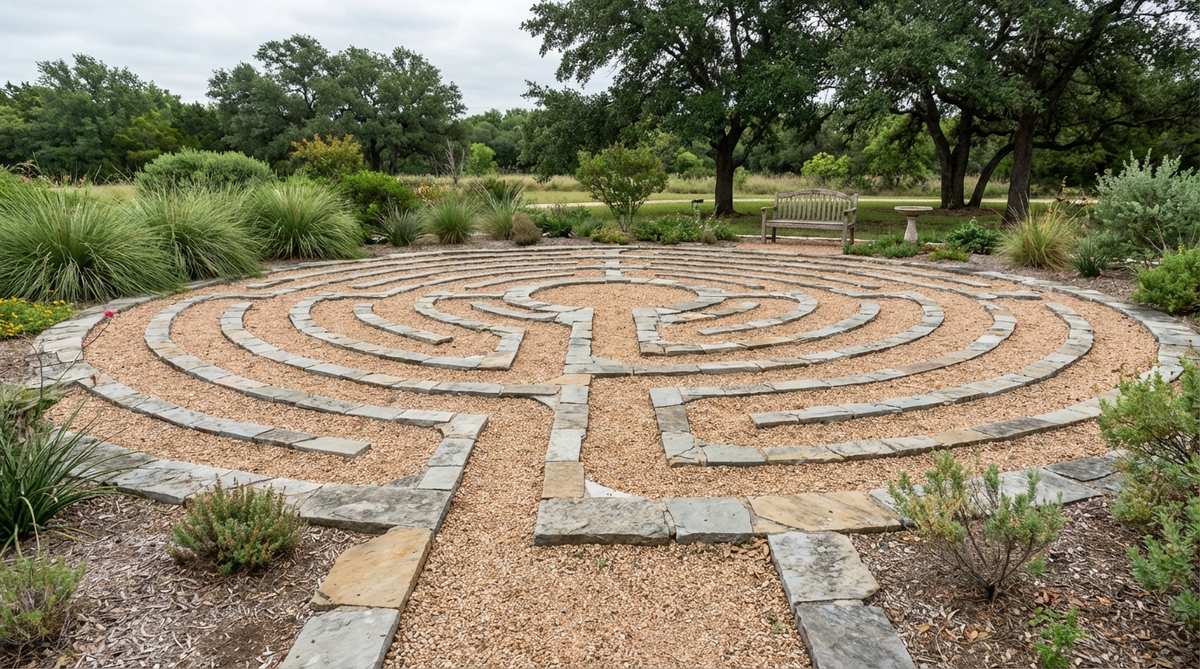
Classical labyrinth patterns created with stone borders and gravel paths provide contemplative walking experiences. The single-path maze design differs from puzzles, offering meditative journey rather than challenge.
Traditional seven-circuit labyrinths require approximately 40-foot diameter clearings, while smaller three-circuit versions fit 20-foot spaces. The ancient pattern brings spiritual dimension to gardens.
Stone-edged labyrinths require significant planning and material but create profound landscape features. Many public gardens and wellness centers incorporate labyrinths as signature elements.
47. Permeable Stone Eco-Pathway
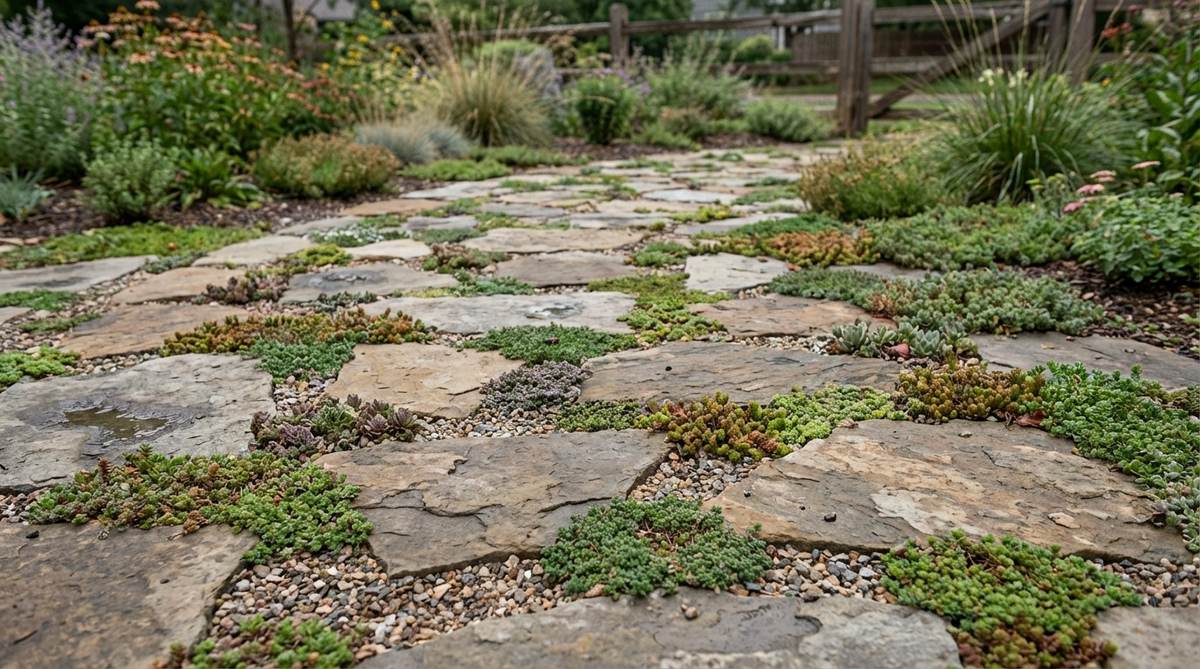
Wide-jointed stone installations allowing rainwater infiltration between pavers support sustainable landscape practices. The gaps accommodate specialized permeable joint fillers or planted groundcovers.
This green infrastructure approach reduces stormwater runoff while maintaining functional pathways. Many municipalities encourage or require permeable paving in new landscape construction.
The environmental benefits combine with aesthetic advantages as plants soften hardscape appearances. Choose drought-tolerant groundcovers for joints to minimize irrigation requirements.
48. Stone Path Edge Border Gardens
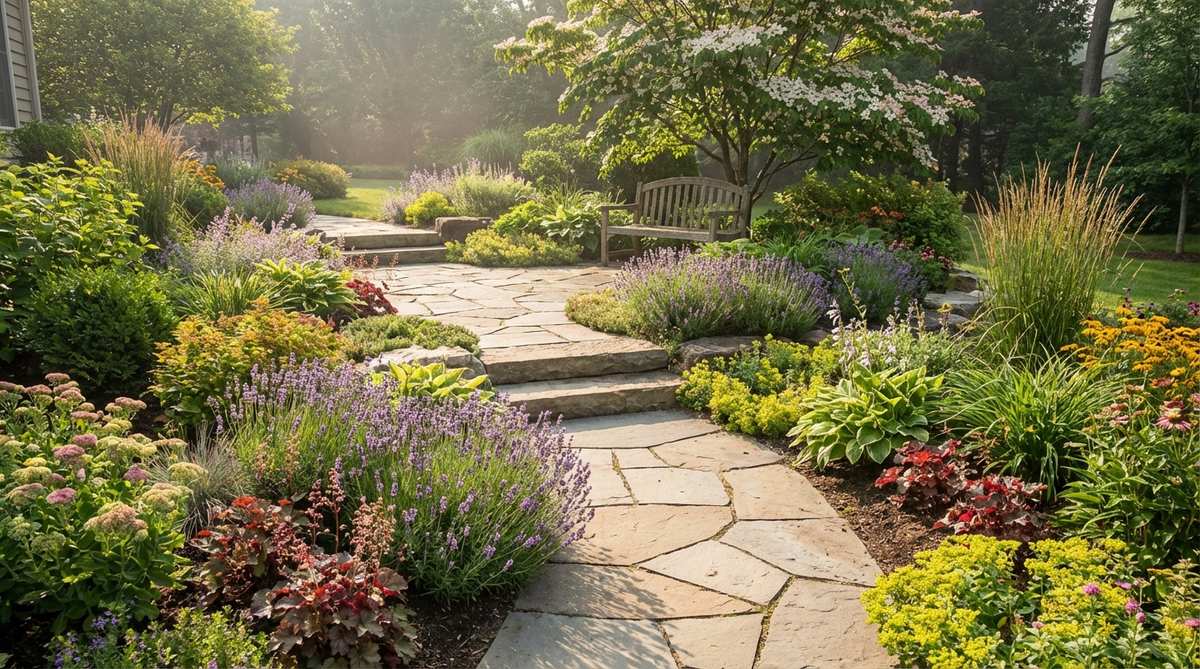
Intentional planting pockets built into pathway edges create continuous border gardens flanking walks. These integrated beds ensure lush plantings frame the stonework throughout the seasons.
Design pathway borders 18-24 inches wide to accommodate layered plantings from groundcovers to medium perennials. The contained soil pockets simplify irrigation and maintenance.
Coordinated border plantings unify pathway and garden as cohesive design elements. Choose fragrant herbs and flowers near pathway edges to engage multiple senses.
49. Tiered Stone Waterfall Path
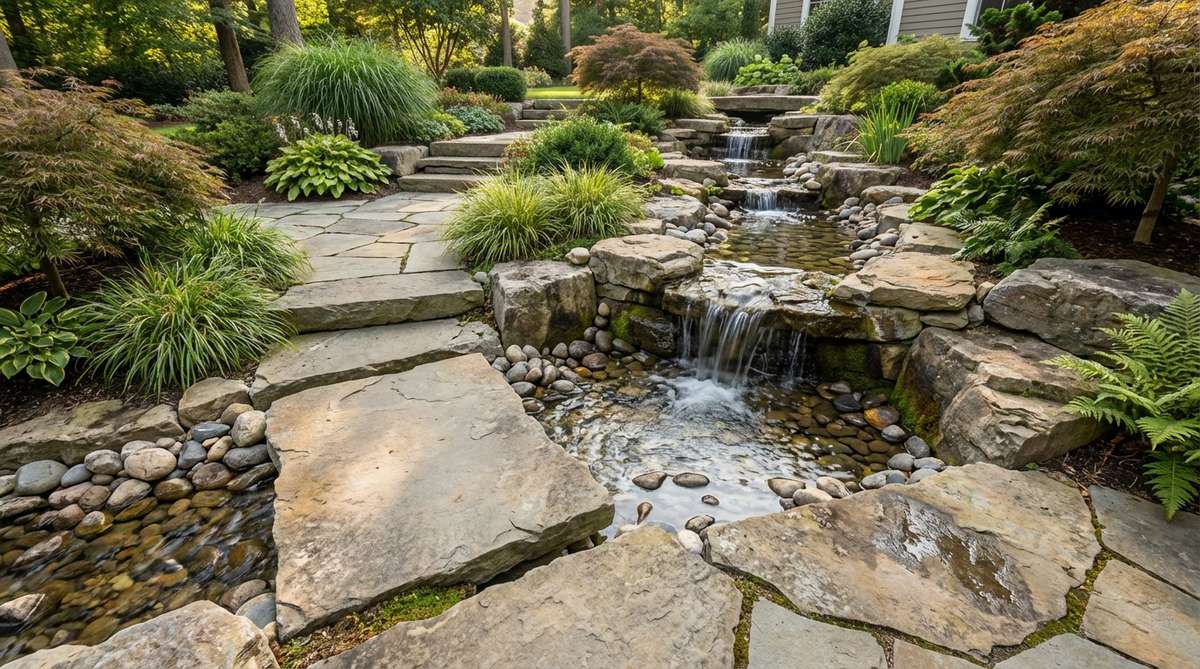
Stone pathways incorporating water features create multi-sensory garden experiences. Stepping stones positioned beside or within shallow water channels add tranquil soundscapes.
The combination requires careful waterproofing and drainage planning but delivers resort-quality landscapes. Recirculating pumps maintain water movement without continuous supply.
This sophisticated approach suits properties with natural water sources or adequate budgets for professional water feature installation. The fusion of stone and water elements references ancient Asian garden traditions.
50. Stone Path Art Installation
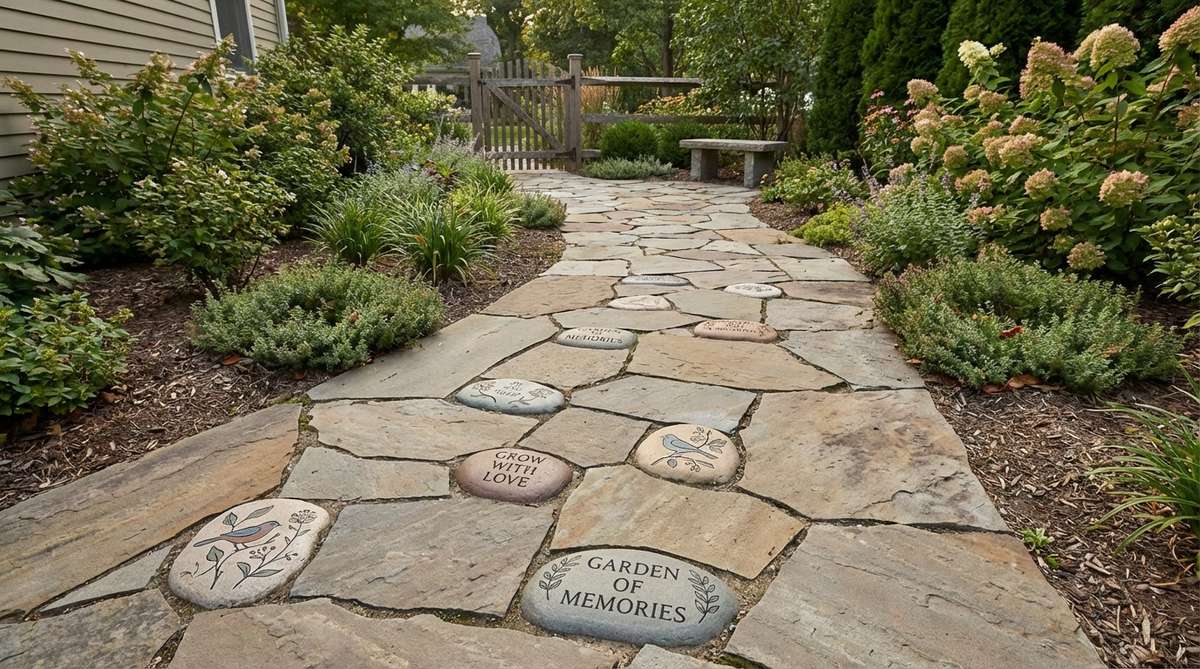
Pathways incorporating engraved, painted, or specially shaped stones become outdoor art galleries. Custom designs might include family names, inspirational quotes, or decorative motifs.
Commission local artisans to create personalized stone elements that reflect homeowner interests and values. These custom touches transform functional pathways into personal expressions.
Art-integrated pathways particularly suit showcase gardens and properties where landscape serves as primary creative outlet. The permanent nature of stone makes it ideal for lasting legacy projects.
51. Heated Stone Walkway Winter
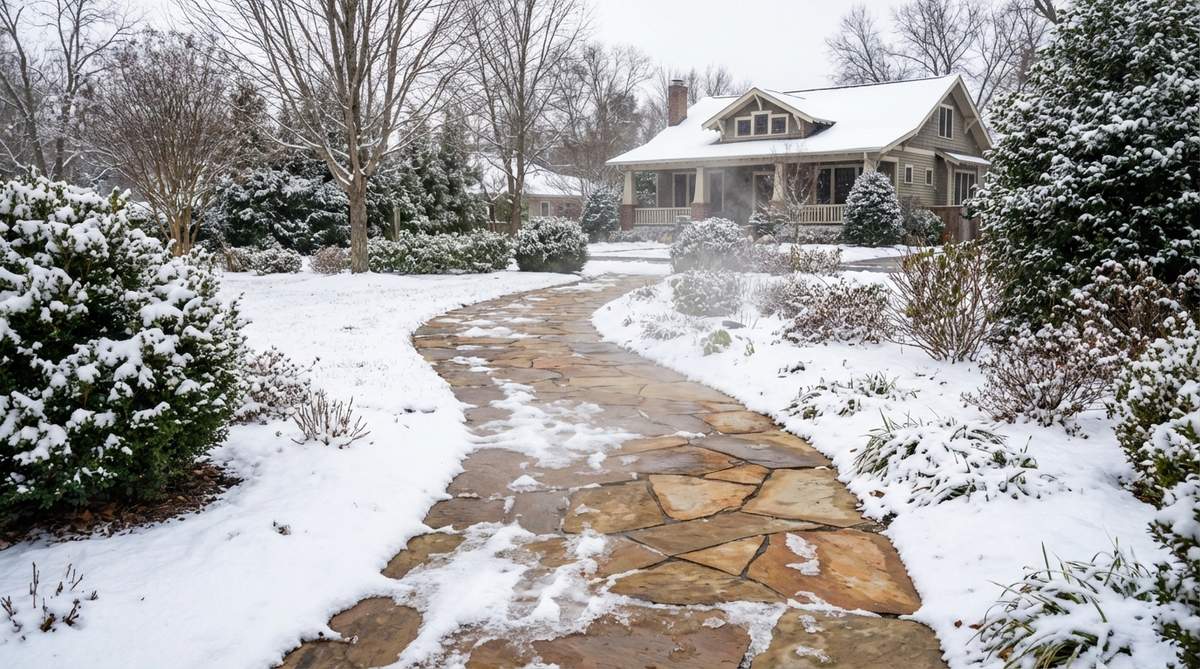
Radiant heat systems installed beneath stone pathways melt snow and ice automatically. This high-end feature provides safe winter access while eliminating snow removal labor.
Electric or hydronic heating systems require professional installation during initial pathway construction. Operating costs depend on climate severity and system efficiency.
Heated pathways particularly benefit northern properties with steep slopes or health-limited homeowners. The technology has become more affordable and energy-efficient in recent years.
52. Stone Path Gathering Circle
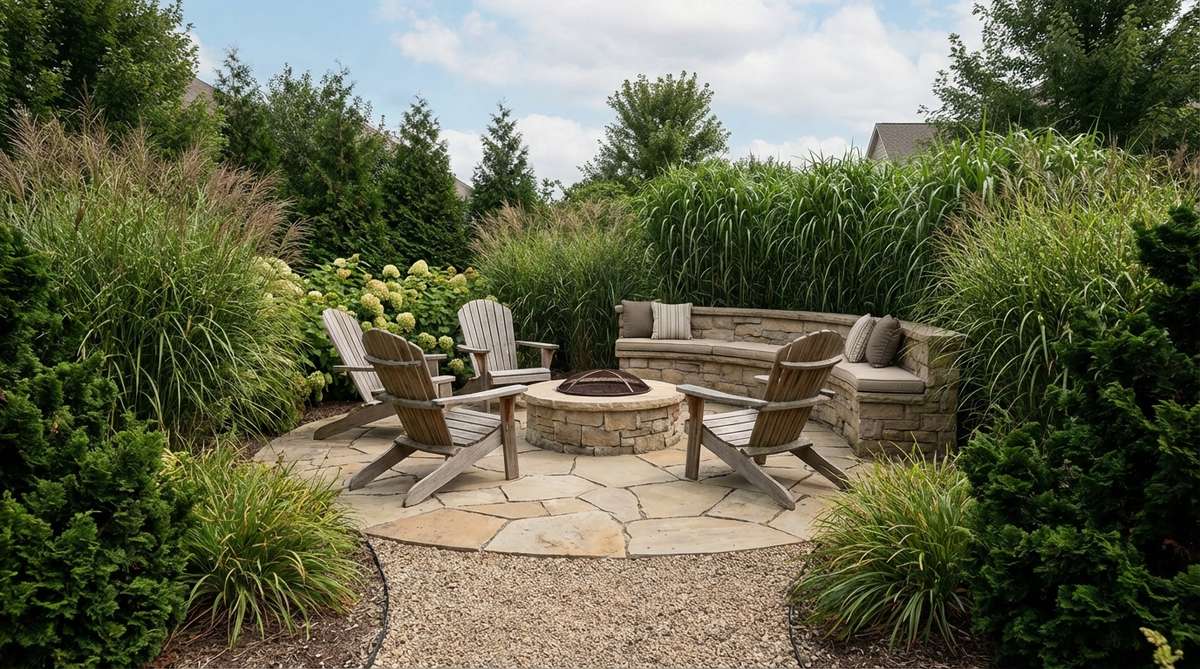
Pathways terminating in circular stone platforms create outdoor gathering spaces for seating and socializing. The destination design encourages garden use beyond simple transit.
Size gathering circles at 12-16 feet diameter to accommodate furniture groupings or standing conversations. The circular form naturally focuses attention inward and creates intimate atmospheres.
This intentional destination planning transforms pathways from connectors to garden features. Surround circles with tall plantings or hedges for privacy and enclosure.
53. Stone Path Arbor Entrance
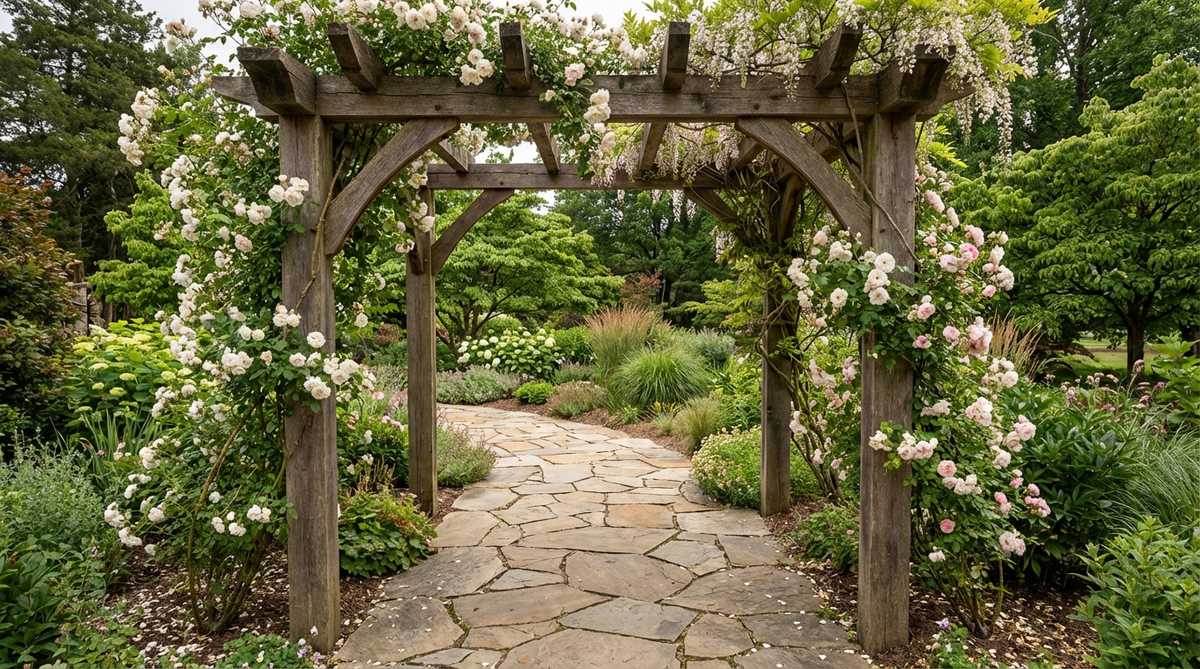
Pathways passing beneath arbors or pergolas create defined entry experiences and vertical garden dimensions. The overhead structure frames views and provides climbing plant support.
Coordinate stone selection with arbor materials and style for cohesive design language. Formal cut stone suits traditional wood arbors while irregular flagstone complements rustic structures.
Arbor entrances signal transitions between garden rooms and build anticipation for what lies ahead. Plant fragrant climbers like roses or wisteria on arbors for sensory enhancement.
Final Thoughts on Stone Garden Paths
Creating beautiful, functional stone garden paths requires thoughtful material selection, appropriate pattern choices, and proper installation techniques tailored to your landscape’s unique conditions. Whether you choose informal stepping stones through perennial borders or formal herringbone paving for main walkways, stone pathways provide lasting value and timeless beauty. Start by assessing your garden’s style, traffic patterns, and budget, then select designs from this collection that resonate with your vision—your perfect pathway awaits, ready to guide visitors through the landscape you’ve created.