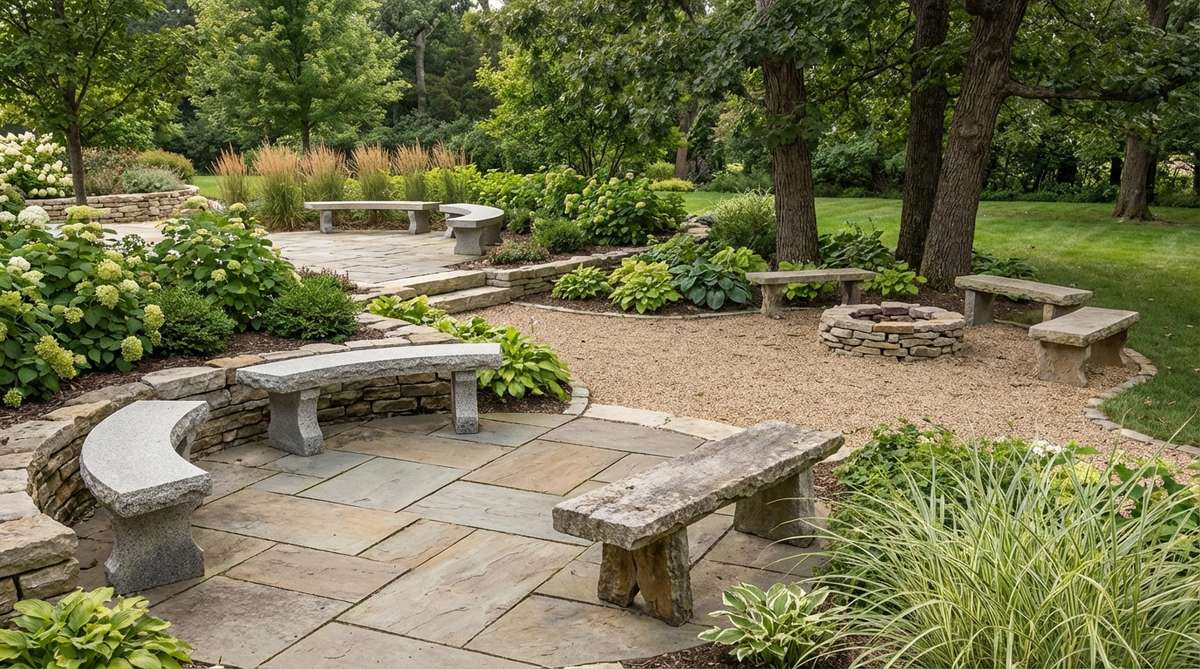
A stone garden bench transforms outdoor spaces with timeless beauty and unmatched durability that lasts for decades. Whether you prefer the refined elegance of carved marble or the rustic charm of boulder seating, these permanent fixtures anchor your landscape with functional artistry. Fresh Garden Ideas presents expert-curated designs that blend material selection, placement strategy, and architectural style to create seating that enhances any garden aesthetic.
Design SnapshotKey Principles
- Material Selection: Choose granite for durability, limestone for warm tones, marble for luxury, or sandstone for rustic appeal based on your climate and design goals
- Weight and Stability: Stone benches resist wind, theft, and displacement while requiring no seasonal storage or maintenance beyond occasional cleaning
- Placement Strategy: Position benches to frame views, create conversation zones, mark garden transitions, or provide contemplative focal points
- Proportional Balance: Match bench scale to surrounding plantings and hardscape elements to achieve visual harmony without overwhelming smaller gardens
Classic Stone Foundations
Traditional stone bench designs draw from centuries of European garden architecture, emphasizing symmetry, proportion, and enduring craftsmanship. These timeless pieces anchor formal gardens, estate walkways, and heritage landscapes with unmistakable permanence.
1. Straight-Backed Granite Bench with Carved Legs
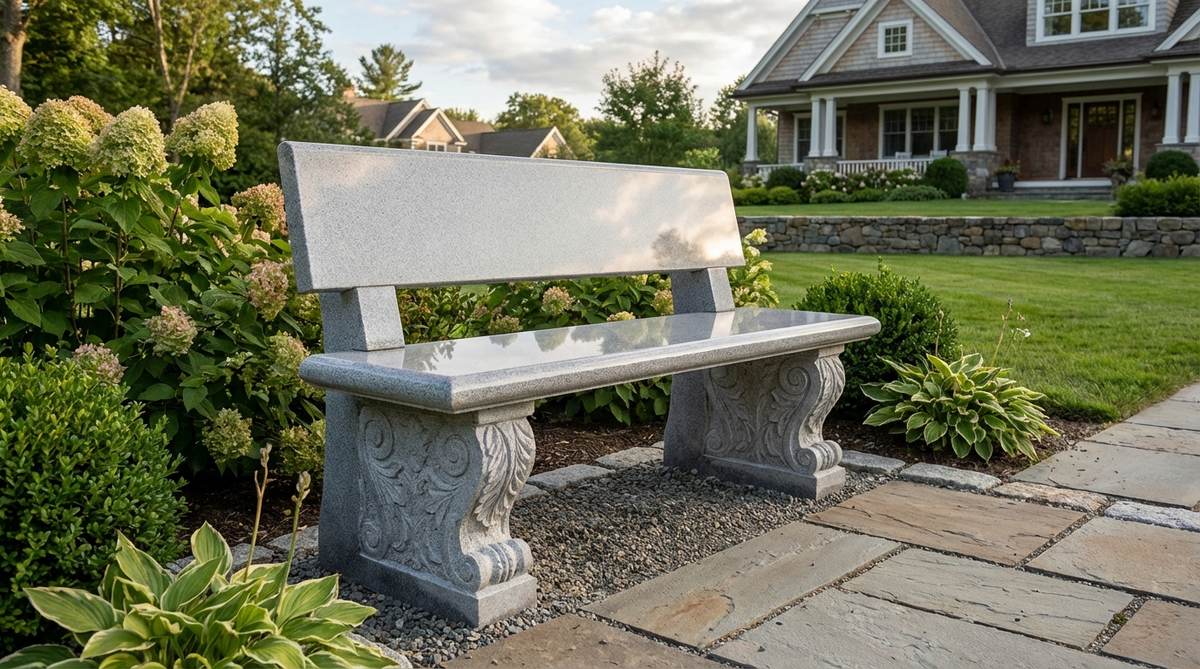
Polished granite slabs rest on intricately carved support columns that feature acanthus leaf motifs or classical scrollwork. The smooth seat surface contrasts beautifully with rough-hewn leg textures.
Position this design along formal pathways or at garden room entrances where its architectural presence reinforces structured layouts. The natural silver-gray coloring of granite weathers gracefully over decades.
Granite’s density provides exceptional scratch resistance and color retention, making it ideal for high-traffic areas where durability outweighs the higher initial investment.
2. Limestone Bench with Mortared Block Construction
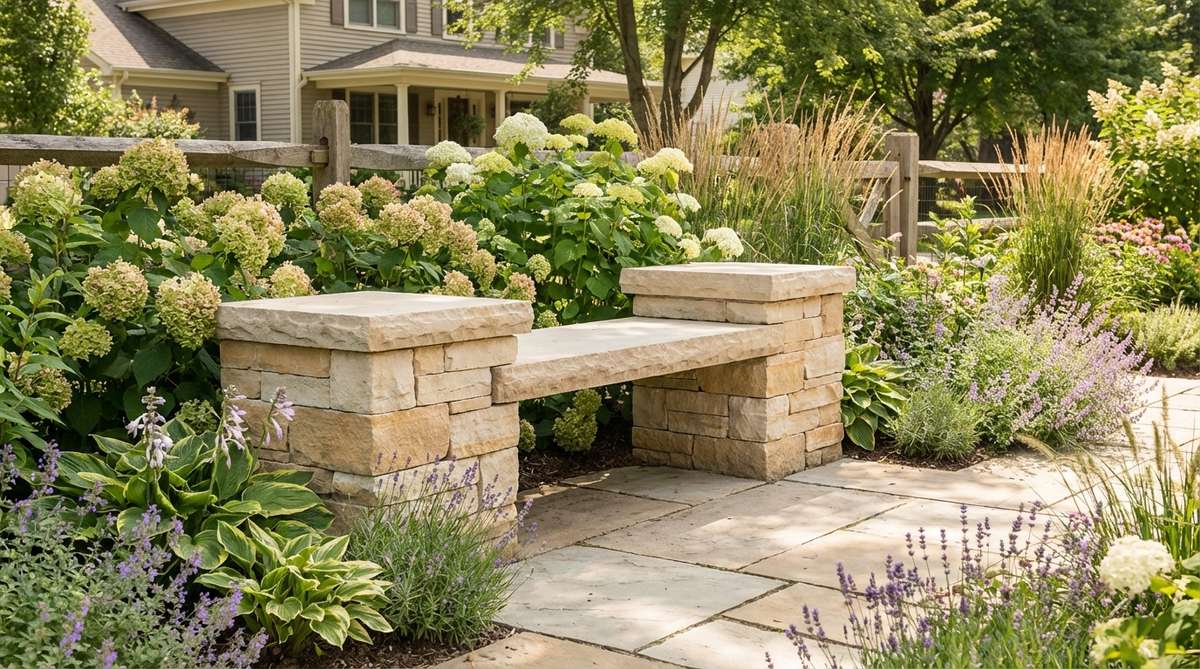
Stacked limestone blocks form sturdy support piers that frame a single continuous seat slab, creating clean horizontal lines. The warm beige and cream tones of limestone blend seamlessly with cottage garden plantings.
This construction method allows for custom width adjustments to fit specific site dimensions. Mortar joints require sealing every 3-5 years to prevent moisture infiltration in freeze-thaw climates.
3. Marble Bench with Ornamental Backrest
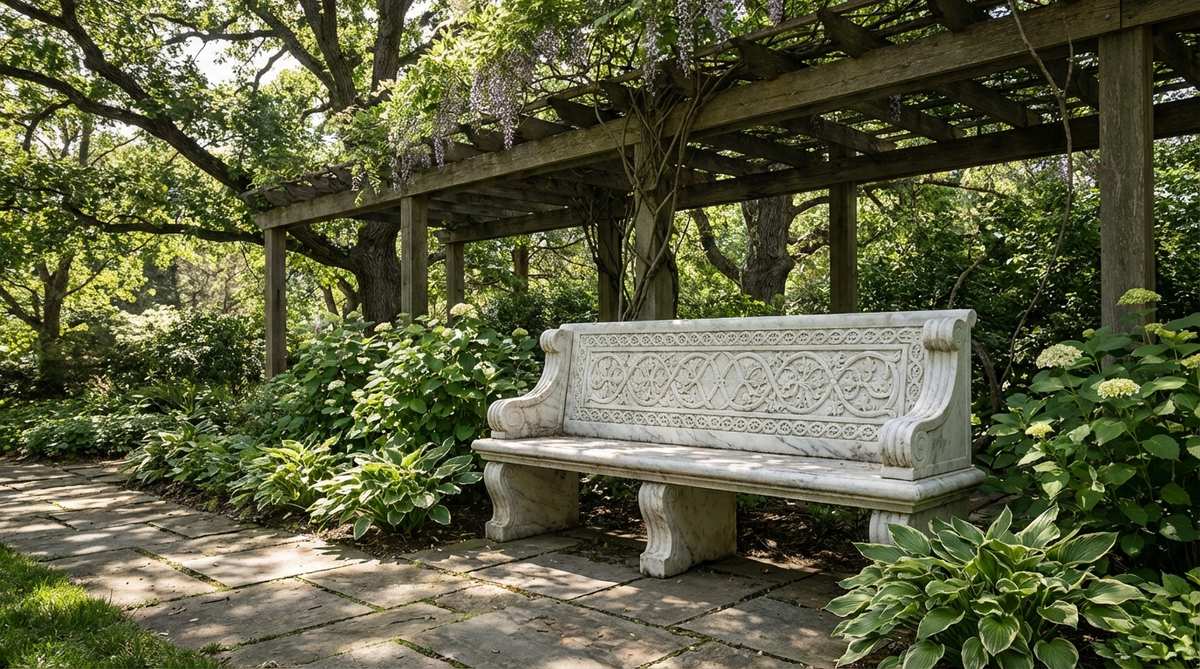
Carved marble backrests feature relief patterns ranging from geometric friezes to naturalistic vine motifs. The luminous white or veined appearance of marble creates striking focal points in shaded garden alcoves.
Marble requires more maintenance than other stone types, needing annual sealing to prevent staining from organic debris and water spots. Reserve this material for protected locations under pergolas or tree canopies.
4. Sandstone Bench with Natural Edge Finish
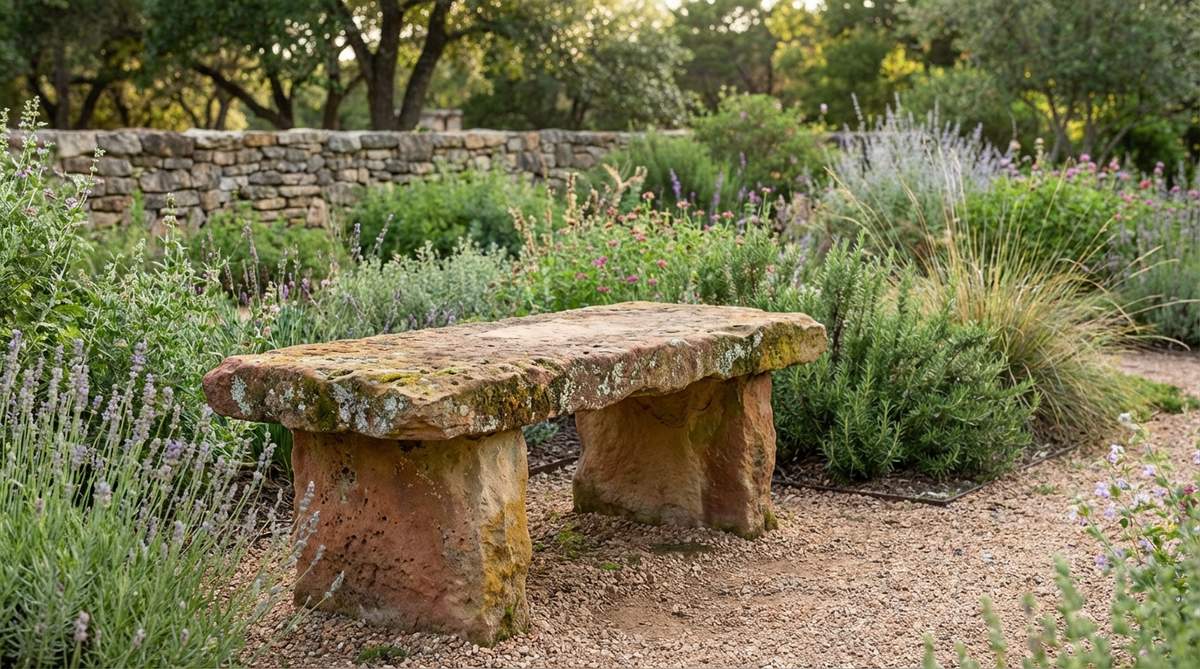
Rustic sandstone benches retain the natural irregular edges of quarried stone, embracing organic imperfection. The earthy red, tan, and ochre hues complement informal cottage gardens and xeriscape designs.
Sandstone’s softer composition allows easier shaping during installation but requires sealing to prevent surface erosion in wet climates. The porous texture develops attractive patina as lichens and moss colonize the surface over time.
5. Backless Slab Bench on Stone Pillars
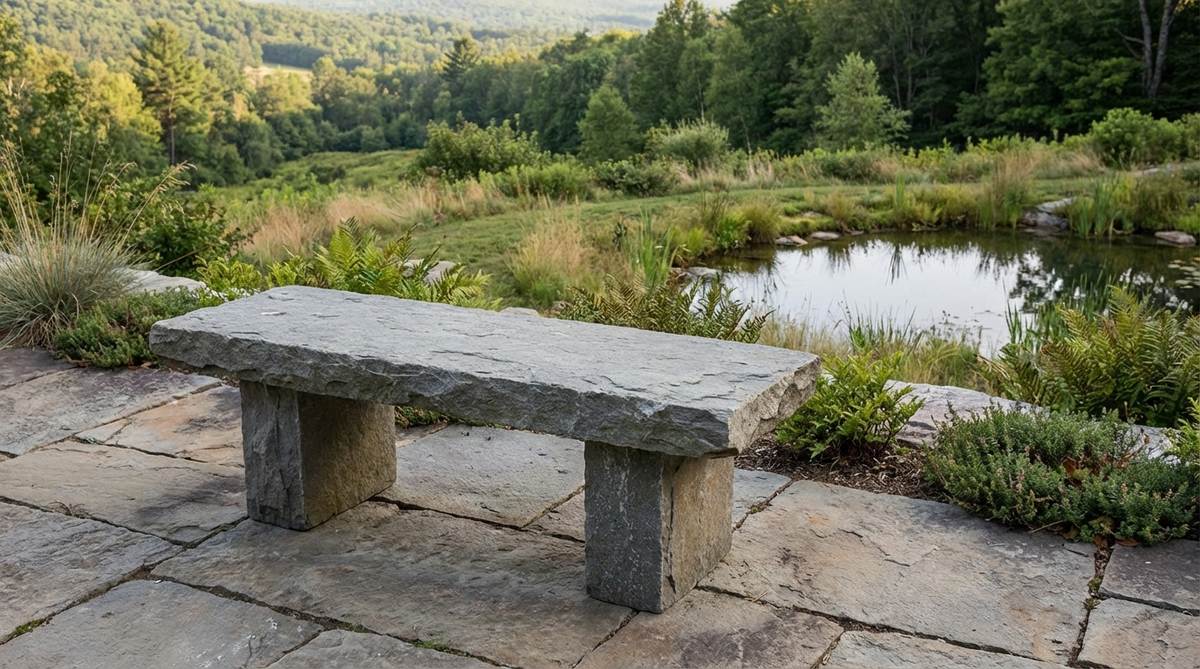
A single thick stone slab balances on two robust pillars, offering minimalist elegance without ornamental embellishment. This design works equally well in contemporary and traditional settings.
The absence of a backrest encourages shorter rest periods while maintaining open sightlines through the garden. Position near overlooks or water features where views take priority over extended comfort.
Modern Minimalist Expressions
Contemporary stone bench designs emphasize geometric precision, material honesty, and spatial economy. These pieces complement architectural gardens, urban courtyards, and modernist landscapes where clean lines define the aesthetic vocabulary.
6. Cantilevered Concrete Bench
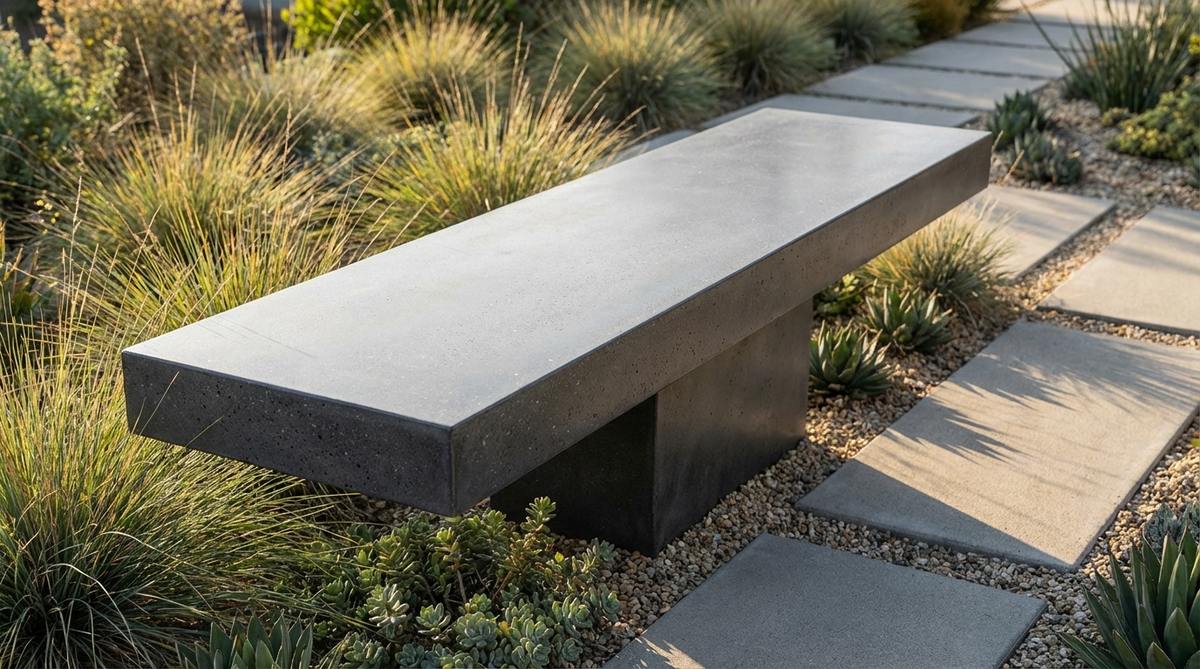
Engineering-grade concrete extends from a single support point to create the illusion of floating seating. The smooth, monolithic surface and sharp edges project industrial sophistication.
Concrete finishes range from polished charcoal to textured aggregate exposures that reveal embedded pebbles. This material offers color customization through integral pigments or acid staining.
Reinforced steel armature within the concrete enables dramatic cantilevers spanning 4-6 feet while maintaining structural integrity under load. The material develops an attractive patina as it ages.
7. Linear Basalt Bench with Honed Surface
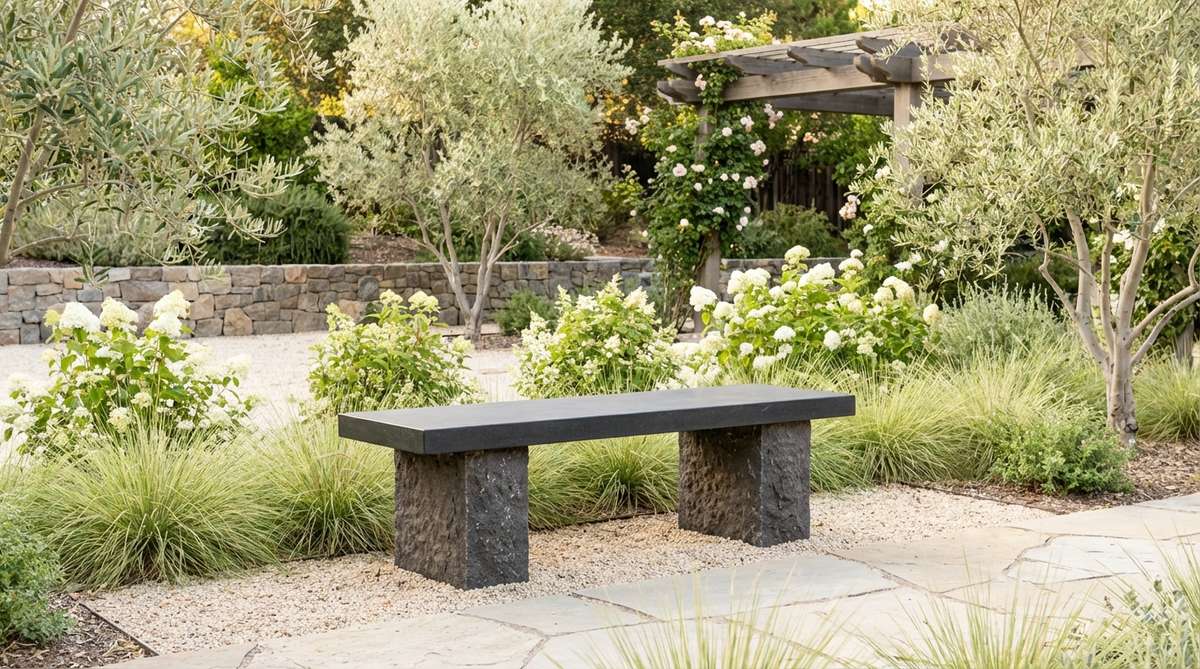
Dark basalt columns create striking visual weight in light-colored gardens. The dense volcanic stone features tight grain structure that polishes to a satin finish.
Basalt’s near-black coloring absorbs solar heat, making these benches ideal for cooler climates where thermal mass extends comfortable outdoor seasons. The stone remains cool to touch in full shade.
8. Geometric Block Bench Assembly
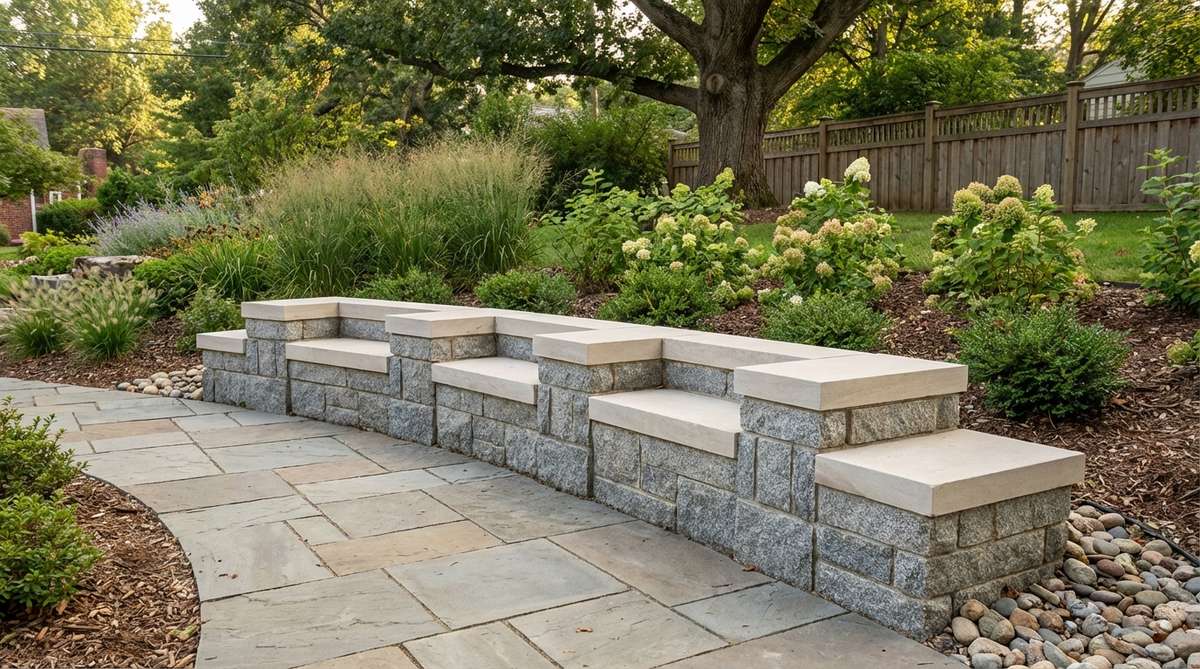
Stacked rectangular stone blocks form modular seating units that rearrange according to seasonal needs or gathering sizes. Each component weighs 50-100 pounds, providing stability without permanent installation.
Uniform block dimensions create repeating patterns that emphasize order and precision. Mix stone types—granite blocks with limestone caps—to introduce subtle material contrast within geometric frameworks.
9. Ultra-Thin Porcelain Slab Bench
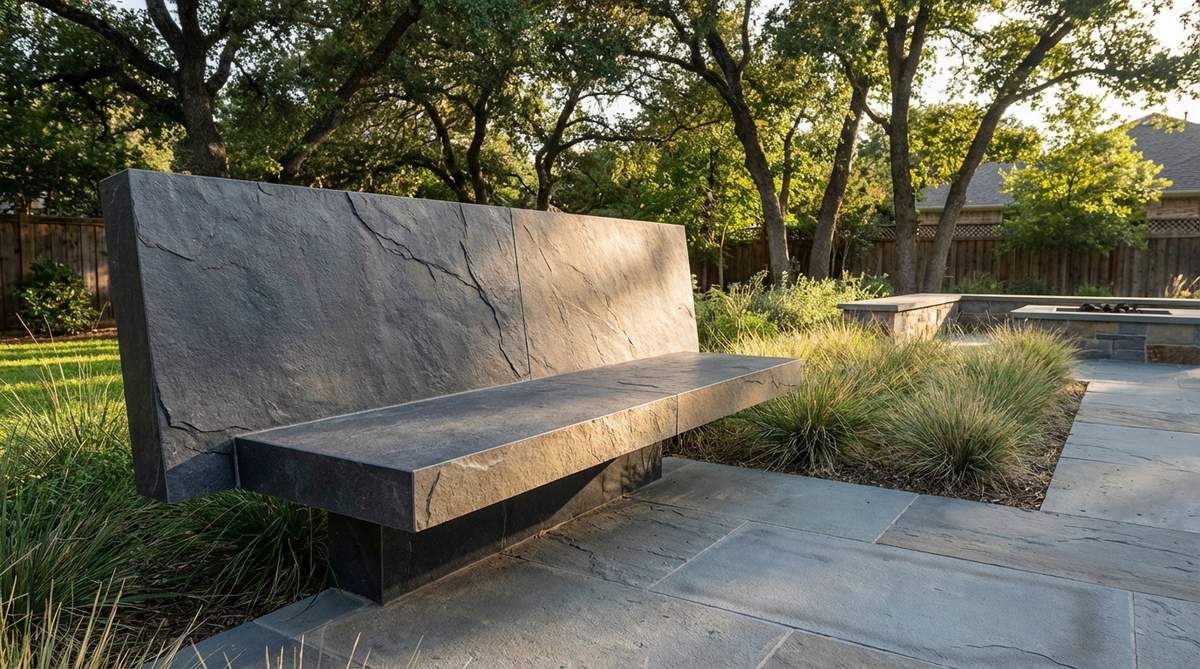
Large-format porcelain panels engineered for outdoor use deliver the appearance of natural stone with reduced weight. These 12mm-thick slabs span metal subframes hidden within the design.
Porcelain’s non-porous surface resists all staining while offering photographic reproductions of marble, granite, or even wood grain textures. The material never requires sealing or specialized maintenance.
10. L-Shaped Corner Stone Bench
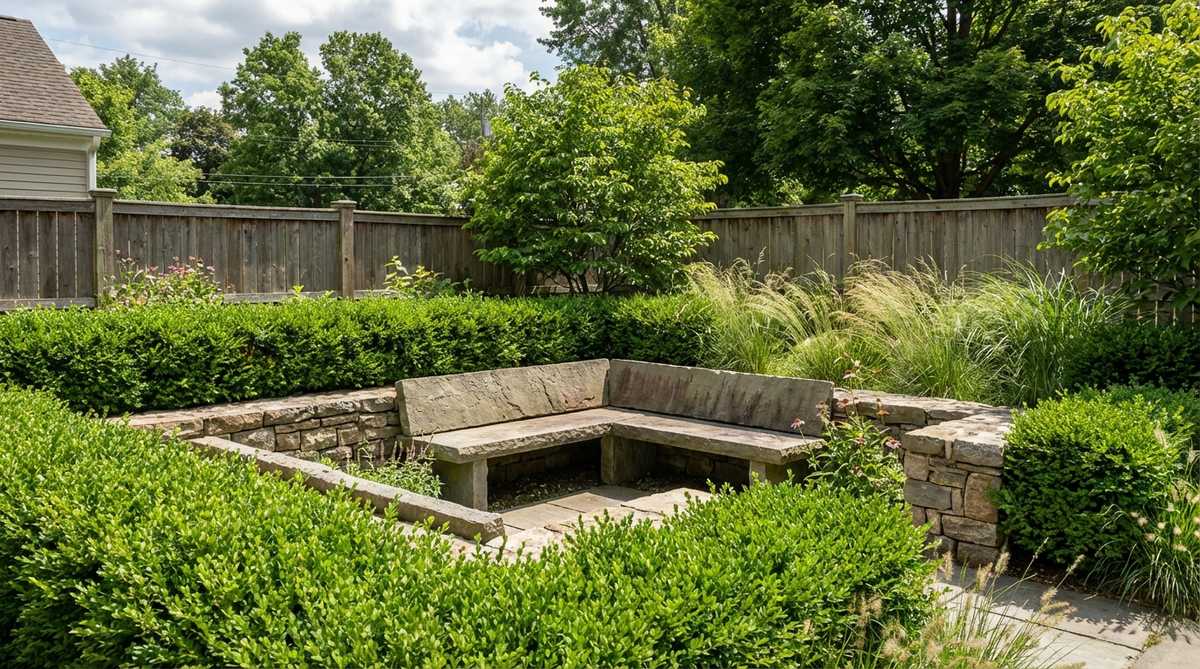
Two perpendicular stone slabs meet at 90-degree angles to define intimate corner zones in small gardens or courtyard settings. This configuration maximizes seating capacity within limited footprints.
L-shaped benches naturally enclose spaces, creating psychological boundaries that enhance privacy. Plant low hedges or ornamental grasses along the open sides to complete the garden room effect.
Curved Conversation Seating
Curved stone benches facilitate social interaction while softening hard-edged landscapes. These designs wrap around focal features, follow organic pathways, or create flowing sculptural elements that draw the eye through outdoor spaces.
11. Semicircular Bench Around Fire Pit
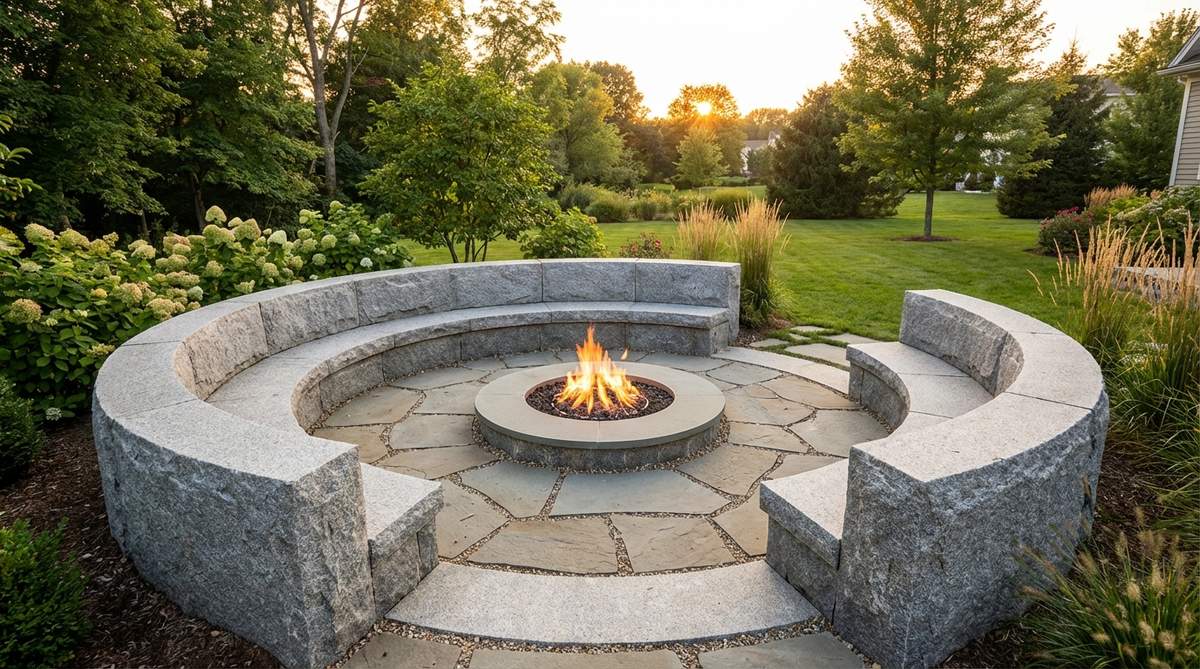
A continuous curved stone bench forms a half-moon embracing a central fire feature, positioning all seated guests at equal distance from the flames. The thermal mass of stone retains warmth long after fires extinguish.
Designers specify non-combustible stone types like granite or basalt within 36 inches of fire pits. Curved seating promotes face-to-face conversation that linear arrangements discourage.
Install drainage beneath curved benches to prevent water pooling within the concave interior space. Gravel or permeable paving between bench and fire pit aids maintenance access.
12. Tree Ring Circular Bench
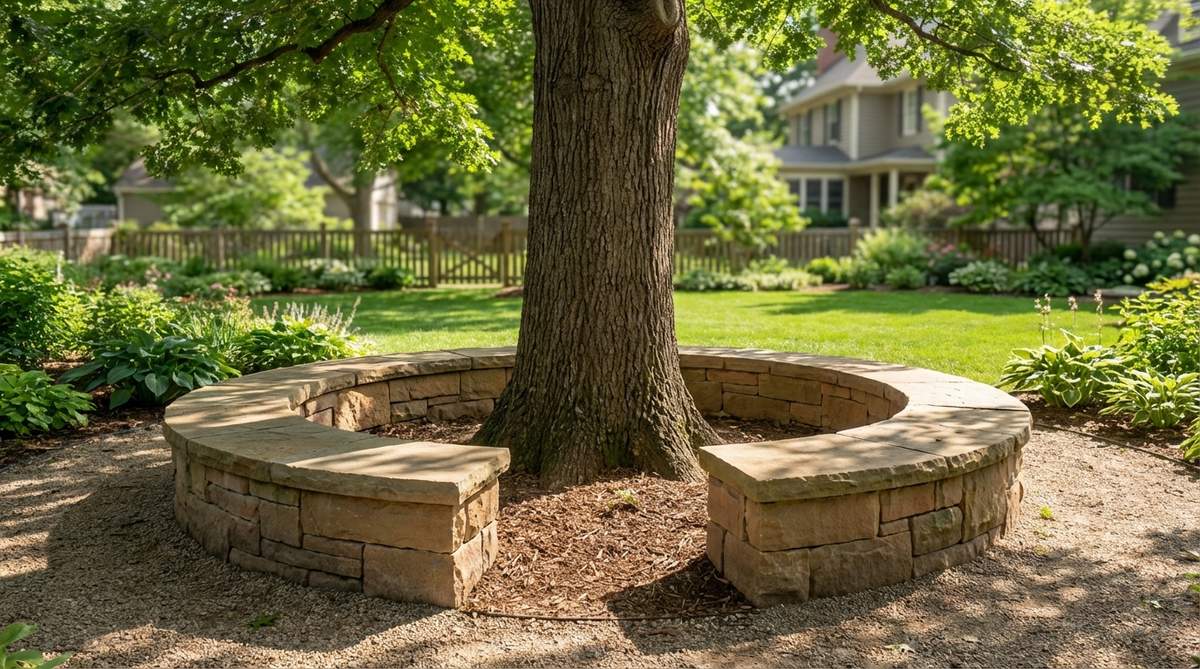
Complete stone circles enclosing mature tree trunks provide 350-degree seating that maximizes shade utilization. Segmented construction allows installation without disturbing root systems.
Leave 12-18 inches between bench interior and trunk to accommodate future growth without structural conflict. The circular form creates democratic seating where no position dominates.
13. Serpentine Wave Bench
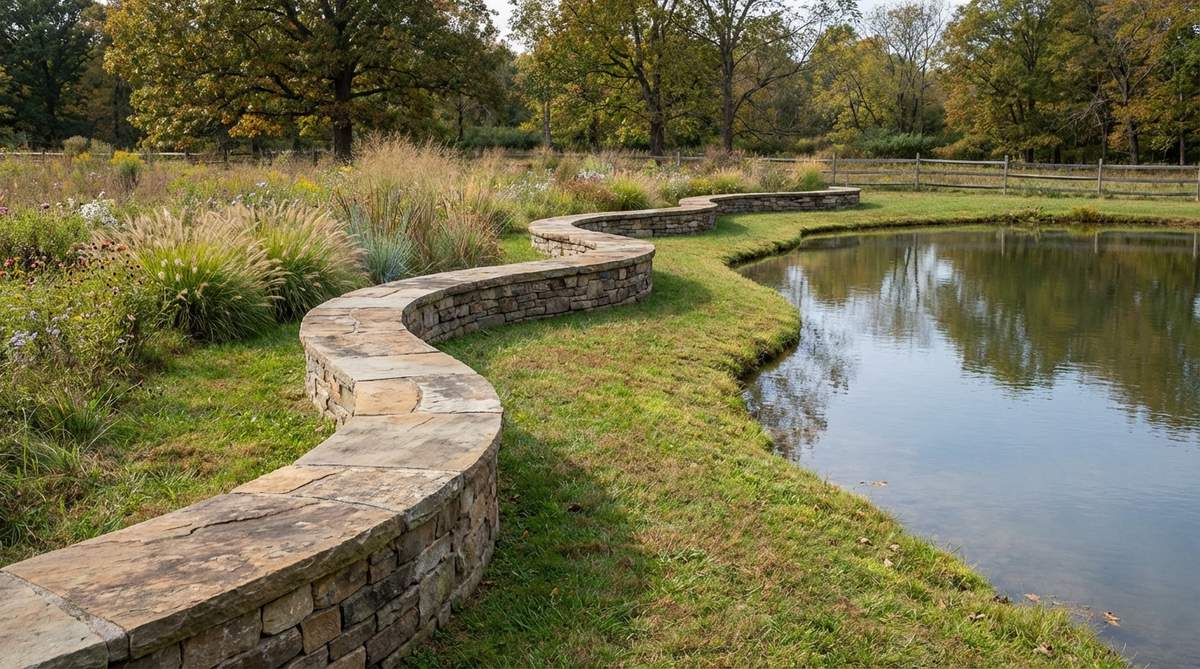
Flowing S-curves carved from single stone slabs or assembled from curved segments create dynamic movement through static gardens. This design mimics natural landforms and water flow patterns.
Serpentine benches function as landscape sculpture that doubles as functional seating. Position along meadow edges or beside ponds where organic forms harmonize with naturalistic plantings.
14. Amphitheater Tiered Stone Seating
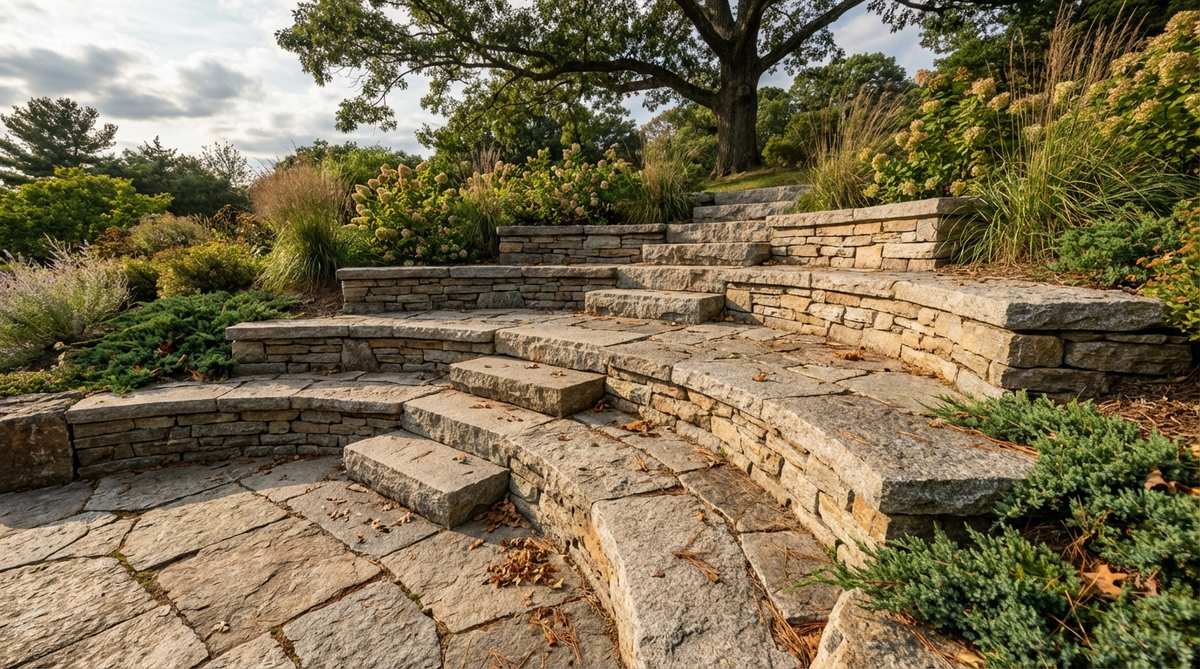
Concentric semicircular tiers carved into hillsides provide graduated seating for outdoor performances or gatherings. Each level increases viewing angles while maintaining intimate scale.
Natural slopes eliminate the need for retaining walls when grades exceed 8-10 percent. Stone treads between tiers serve dual purposes as steps and additional perching spots.
15. Kidney-Shaped Pool Bench
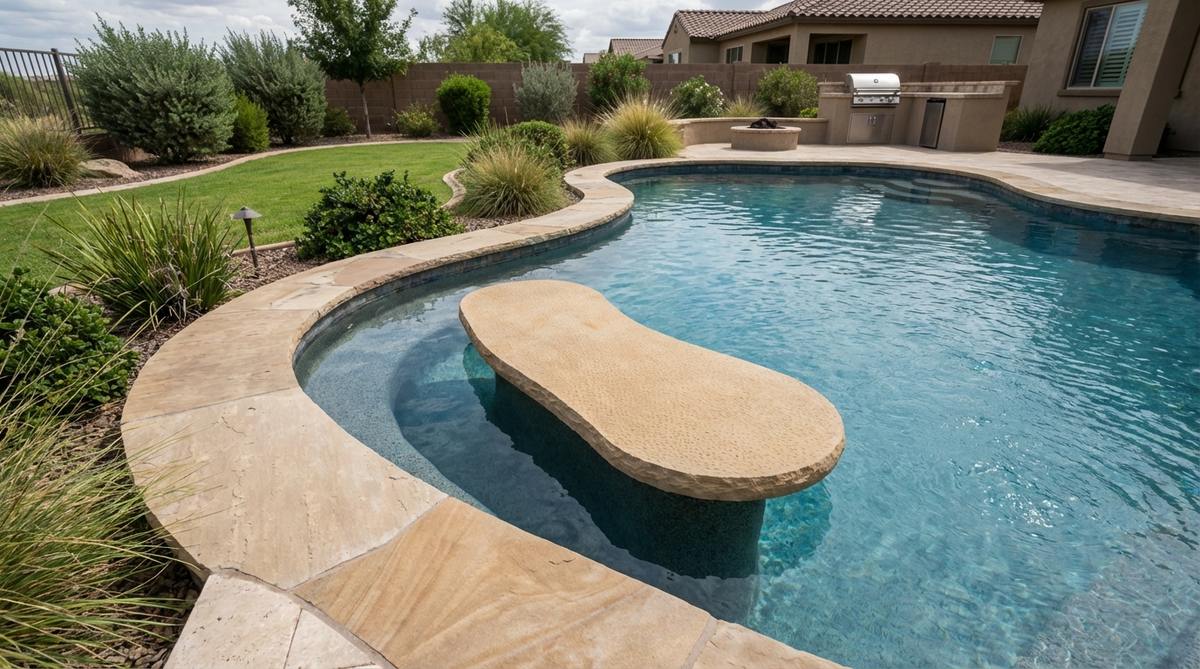
Curved stone benches echo the organic forms of naturalistic pools and ponds, blurring boundaries between hardscape and water features. The stone extends into shallow water for partial submersion.
Submerged bench sections require non-slip honed finishes rather than polished surfaces. Position at pool edges where adults supervise children or where swimmers rest between laps.
Asian & Zen Influences
Japanese and Asian garden traditions emphasize stone’s meditative qualities through careful placement, natural material expression, and asymmetrical balance. These designs create contemplative spaces that encourage mindfulness and connection with seasonal changes.
16. Hand-Carved Boulder Bench
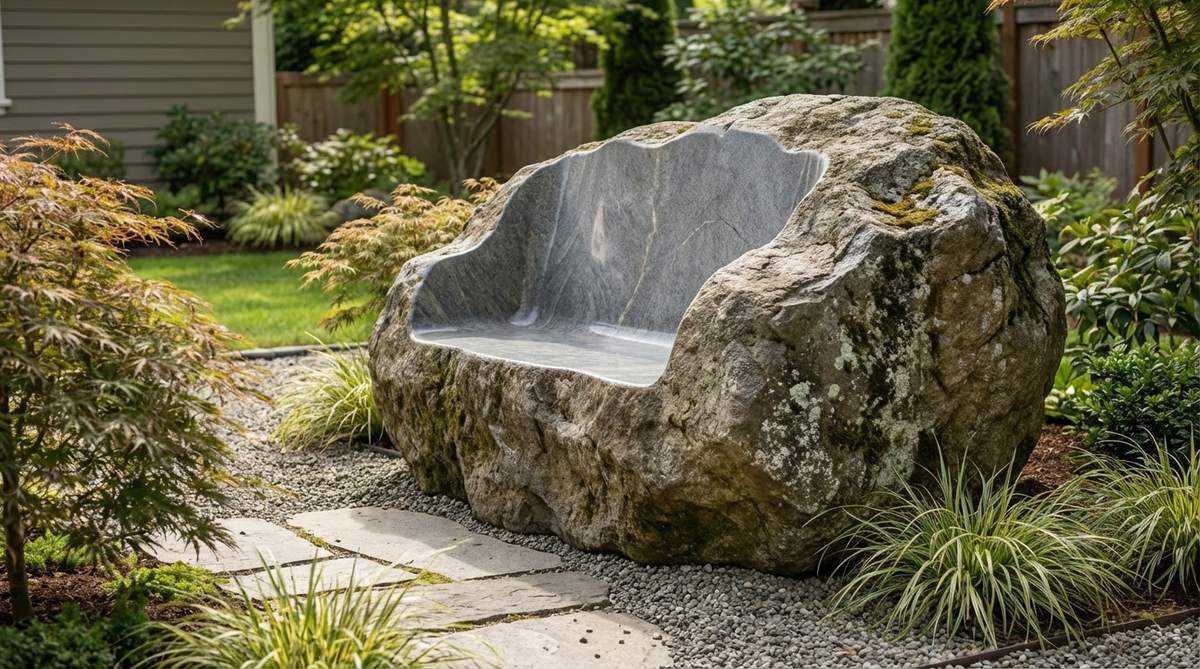
Massive natural boulders receive shallow seat depressions carved by artisans, preserving the stone’s organic exterior while creating functional seating surfaces. Each piece remains utterly unique.
Boulder benches anchor Zen gardens as focal meditation points. Their immense weight—often exceeding 1,000 pounds—requires crane placement during initial installation but never shifts afterward.
The rough exterior contrasts with smooth carved interiors, embodying the Japanese aesthetic principle of wabi-sabi that celebrates imperfection and natural aging.
17. Low Horizontal Viewing Bench
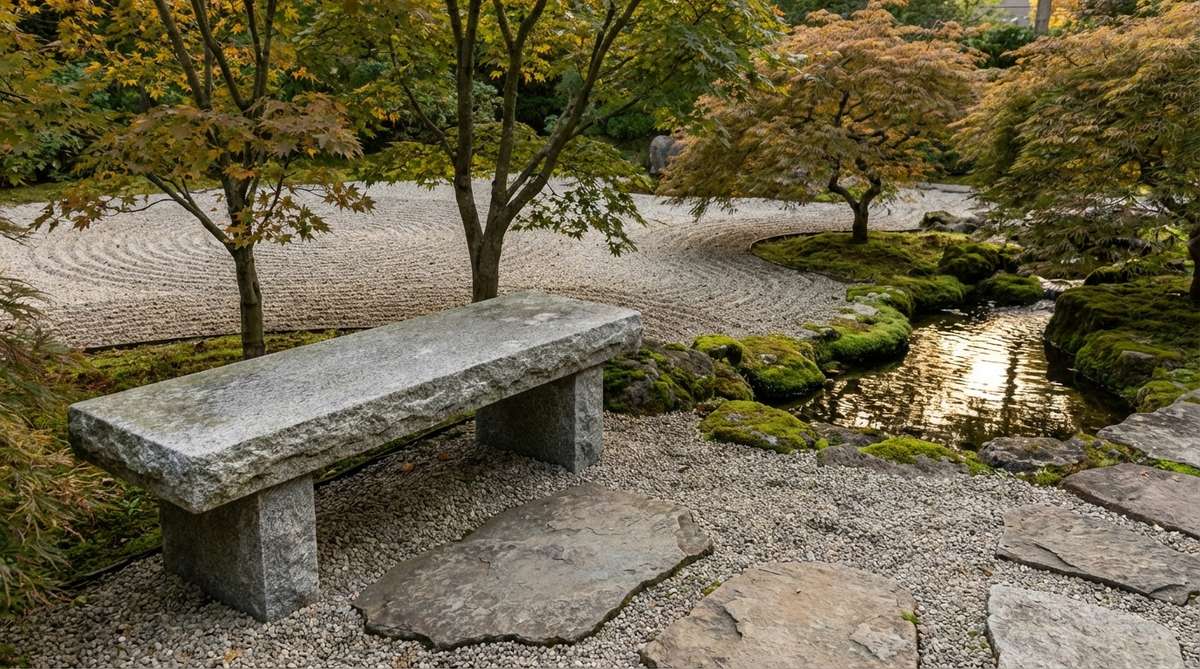
Traditional Japanese viewing benches sit just 12-14 inches high, encouraging contemplative observation of garden compositions from lowered perspectives. The extended horizontal profile emphasizes earth connection.
Position these benches opposite carefully framed views of specimen trees, raked gravel patterns, or water features. The reduced height slows movement and promotes meditative stillness.
18. Natural Stone Slab on River Rocks
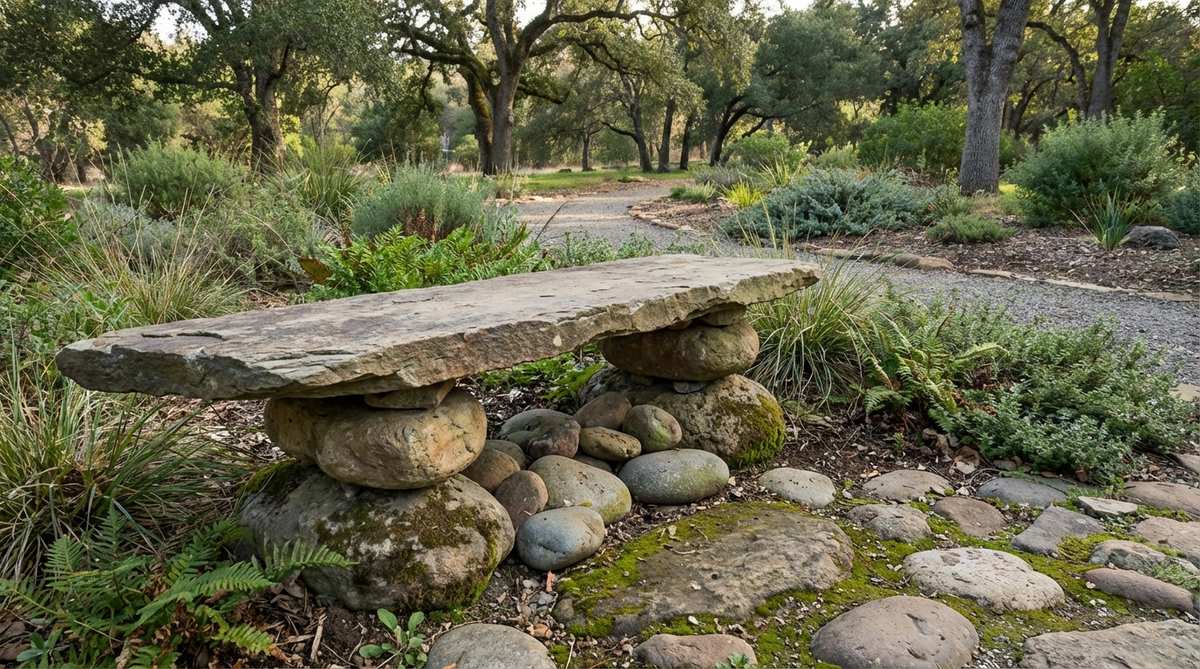
A flat stone seat rests atop rounded river rock foundations that remain visible beneath the slab. This design celebrates natural stone relationships without mortar or cement.
The loose rock base provides subtle movement and settling over time, requiring occasional releveling. This impermanence aligns with Buddhist principles embraced by Japanese garden philosophy.
19. Stepped Stone Bench with Lantern
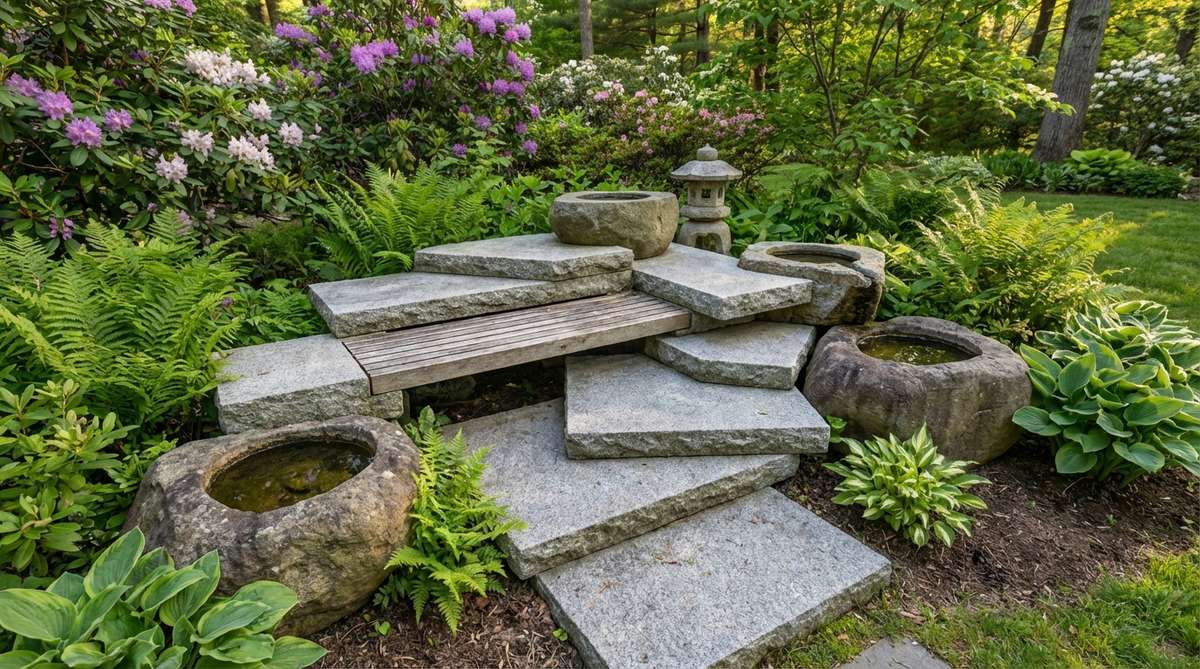
Multi-level stone platforms create seating at varying heights while integrating stone lanterns or water basins into the composition. Each element serves both aesthetic and functional purposes.
Asymmetrical arrangements prevent the rigidity of Western formal design. Odd numbers of elements—three steps, five stones—create visual interest following traditional Japanese design principles.
20. Moss-Covered Meditation Bench
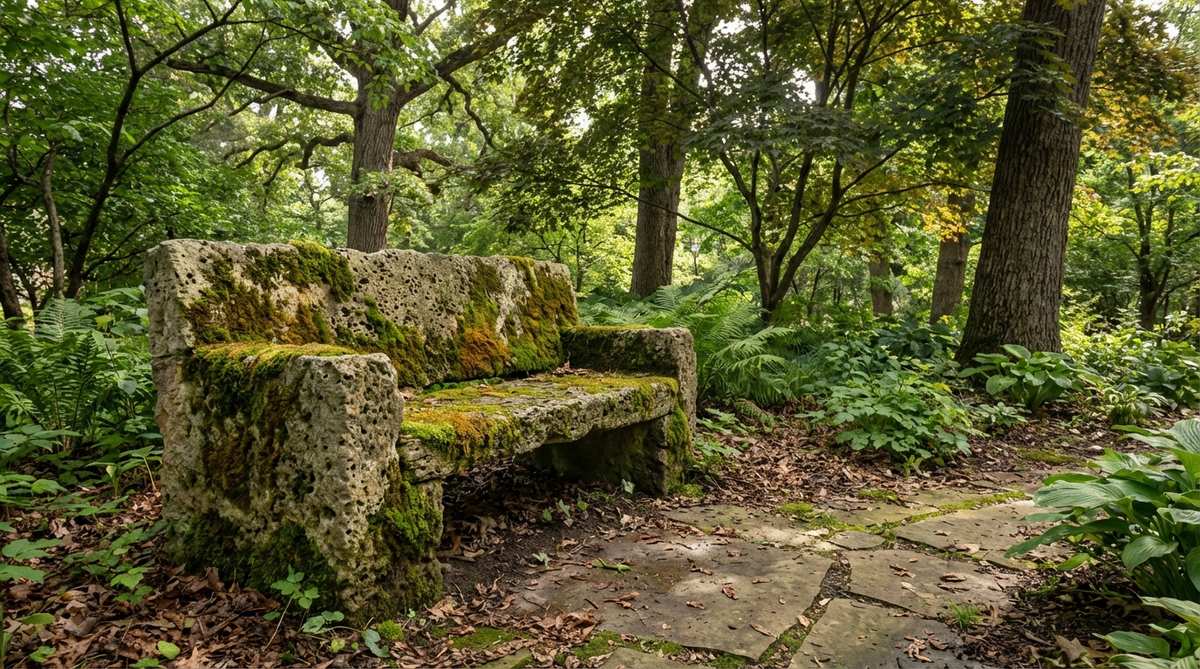
Older stone benches in shaded locations develop natural moss patinas that signal age and continuity. Designers encourage this growth through deliberate placement beneath deciduous canopies.
Moss thrives on porous stones like sandstone and limestone in humid climates with filtered light. The verdant coating softens hard edges while providing tactile interest and seasonal color shifts.
Specialty Architectural Statements
Innovative stone bench designs push material boundaries to create memorable landscape features. These distinctive pieces demonstrate how stone transcends basic seating function to become sculptural art that defines outdoor spaces.
21. Twisted Ribbon Stone Bench
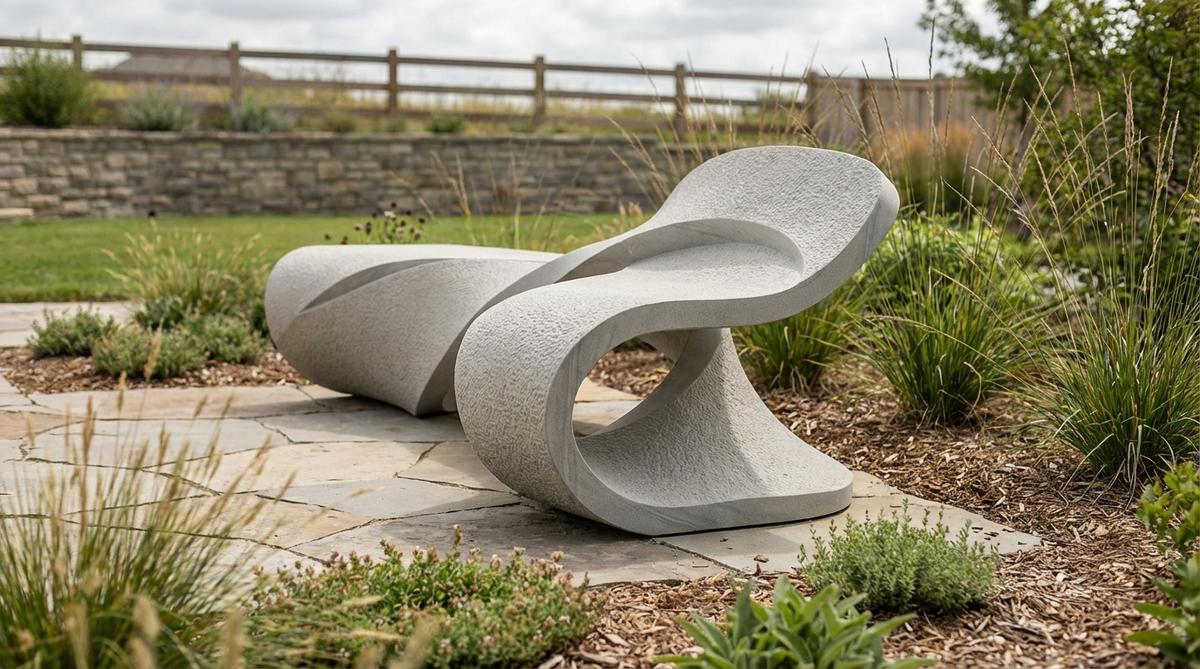
CNC machining and water-jet cutting technologies enable complex curved geometries that appear to twist through space. These sculptural benches challenge perceptions of stone’s static nature.
Engineers calculate load paths through twisted forms to maintain structural integrity despite unconventional shapes. The result combines engineering precision with organic aesthetics that attract attention in minimalist gardens.
Lighter materials like glass-fiber reinforced concrete enable dramatic cantilevers and thin profiles impossible with solid stone. Surface treatments can mimic natural stone textures.
22. Integrated Planter Bench Combo
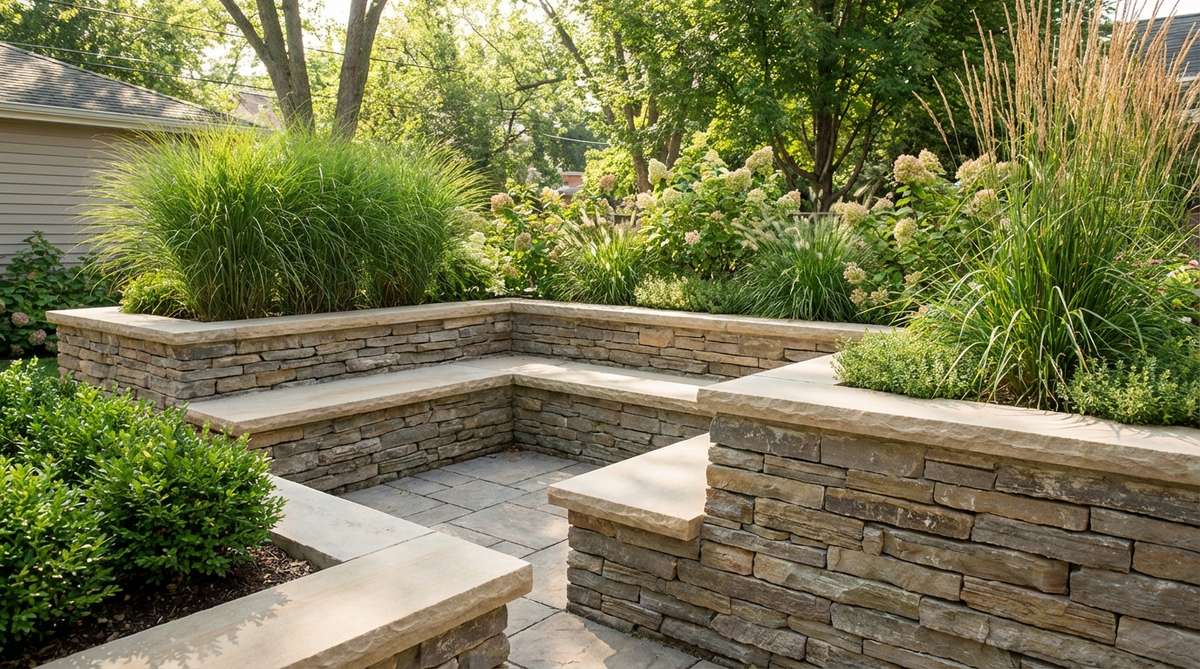
Raised stone planters incorporate built-in seating ledges along their perimeters, combining retaining walls with functional furniture. This dual-purpose design maximizes limited space in urban courtyards.
Planter walls reach 18-22 inches high—optimal bench height—while containing 12-15 inches of soil depth for perennials and shrubs. Cap stones overhang slightly to create comfortable seating edges.
23. Backlit Translucent Stone Bench
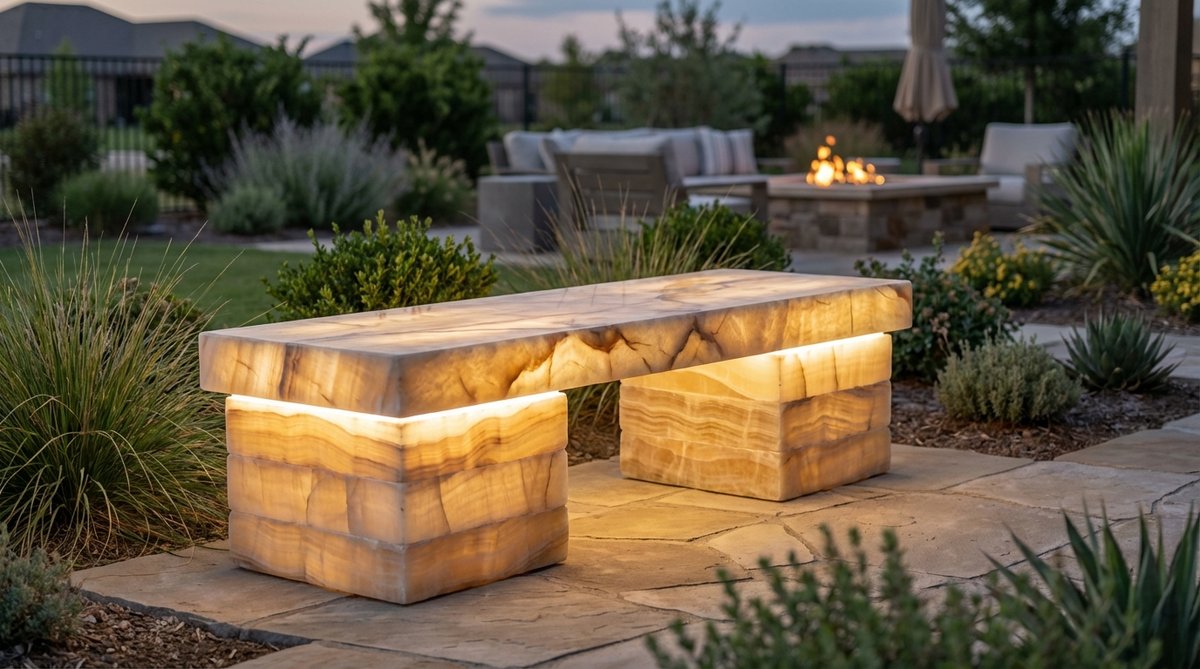
Thin slabs of translucent stone like onyx or alabaster glow when illuminated from beneath by LED strips. This design creates dramatic evening focal points in contemporary landscapes.
The stone’s natural veining becomes visible as light transmits through the material, revealing hidden patterns. Designers reserve this expensive technique for small accent benches rather than full-length seating.
24. Cantilevered Garden Wall Bench
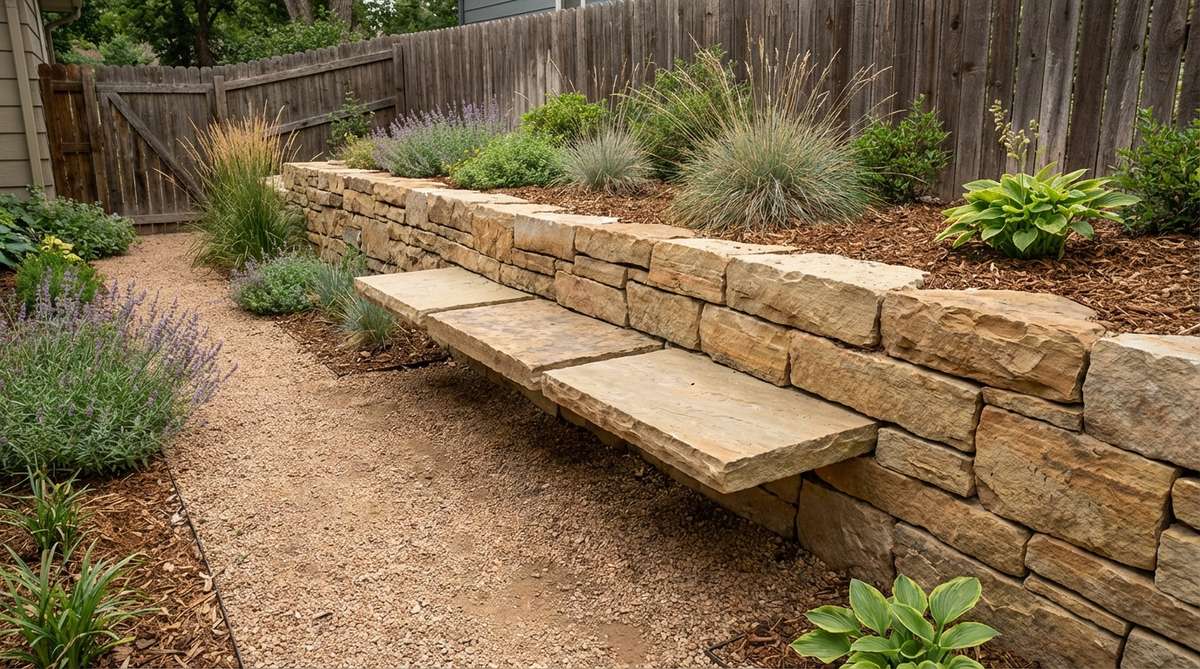
Stone seating slabs project from retaining walls or raised beds, appearing to float without visible support. Concealed steel brackets anchored deep within the wall structure carry the load.
This space-efficient design suits narrow side yards and compact urban gardens where freestanding benches consume excessive floor area. The cantilever creates visual lightness despite stone’s inherent mass.
25. Dry-Stacked Stone Wall Bench
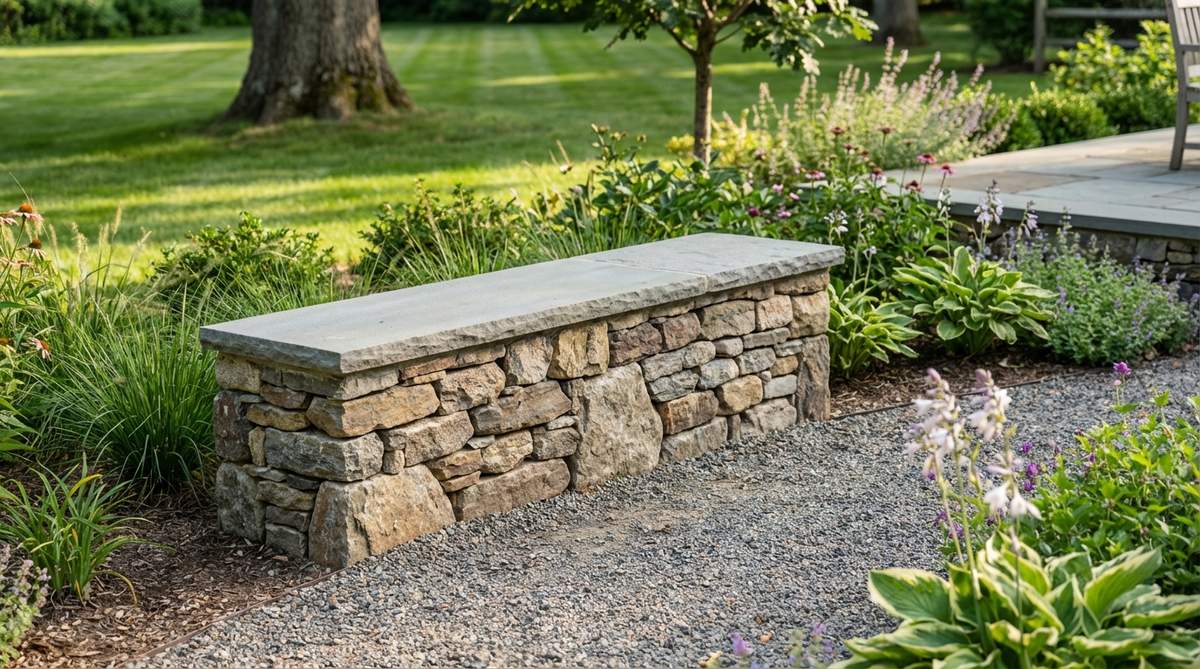
Traditional dry stone walling techniques create functional benches without mortar, relying instead on precise stone fitting and gravitational friction. Gaps between stones provide drainage and habitat for beneficial insects.
Skilled dry stone wallers select and shape individual stones to achieve structural stability through proper weight distribution. Cap stones receive mortaring for seating comfort and surface protection.
26. Inlaid Mosaic Stone Bench
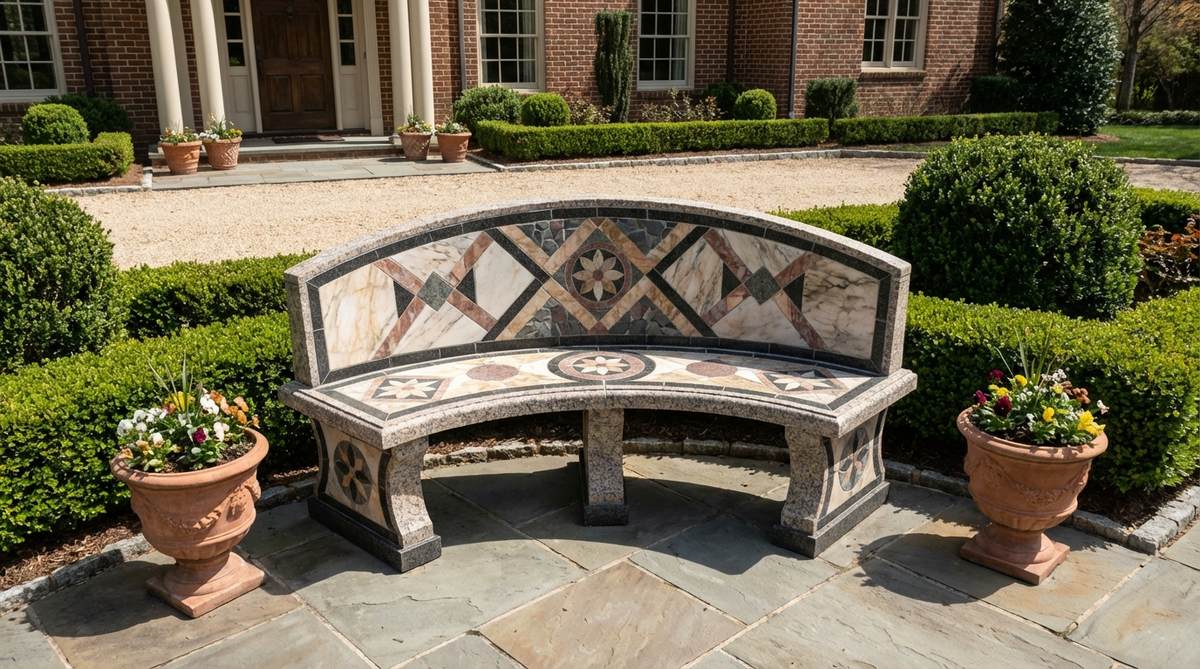
Colored stone fragments arranged in patterns across bench seats transform functional furniture into decorative art. Tesserae from marble, granite, and slate create intricate geometric or naturalistic designs.
Mosaic work requires grouting between stone pieces, demanding skilled craftsmanship to ensure water-resistant joints. This labor-intensive technique suits focal benches in entry gardens or formal courtyards.
27. Megalithic Single-Stone Bench
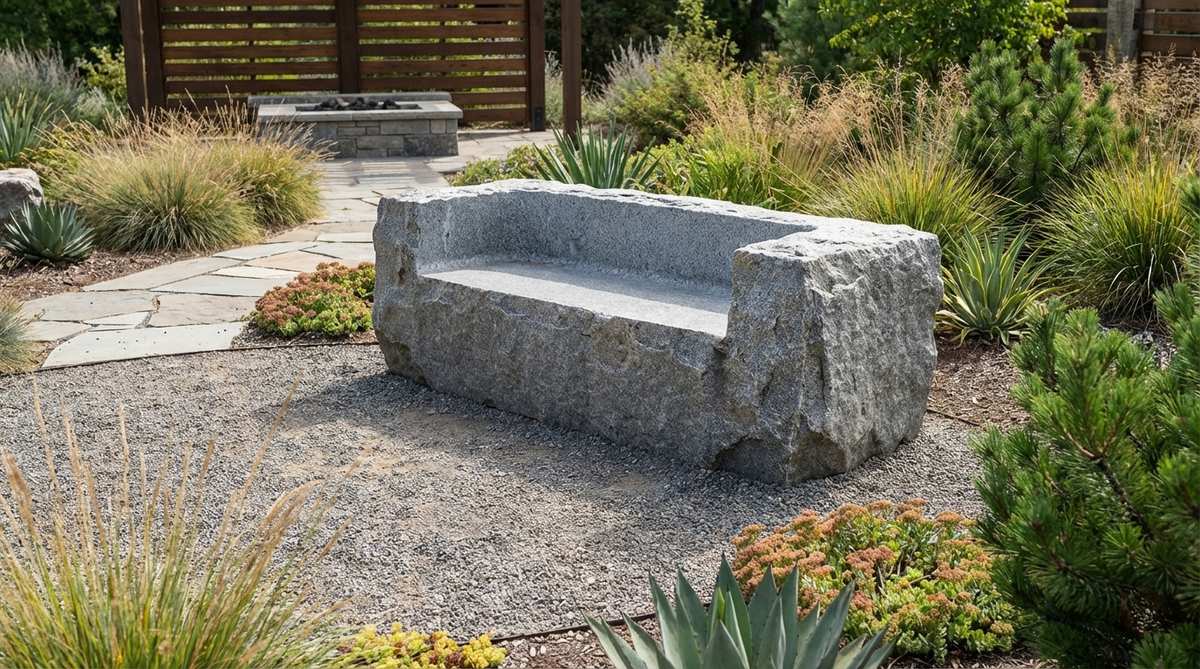
Monolithic benches carved from single massive stones make bold statements about material authenticity and engineering ambition. These pieces celebrate stone in its most elemental form.
Quarries cut these monuments to custom dimensions before transport, as on-site shaping of multi-ton stones proves impractical. The installation requires crane operators and structural engineers to position safely.
Single-stone benches anchor landscapes as permanent landmarks that outlast surrounding plantings by centuries. Their visual weight grounds contemporary gardens that might otherwise feel ephemeral.
Final Considerations
Selecting the right stone garden bench requires balancing aesthetic preferences with practical site conditions, from climate considerations to maintenance commitments. Granite and basalt deliver maximum durability in harsh environments, while limestone and sandstone offer warmth and character that ages gracefully. Consider how each design interacts with existing garden architecture—formal benches complement structured layouts, while organic boulder seating harmonizes with naturalistic plantings. Position benches to capture morning sun or evening shade according to your usage patterns, and remember that stone’s permanence means thoughtful placement decisions reward you for decades. Visit local stone yards to evaluate material options firsthand, feeling textures and observing color variations that photographs cannot convey.
Frequently Asked Questions
What stone type works best for garden benches in cold climates?
Granite and basalt perform best in freeze-thaw cycles due to their low porosity and high density, which prevent water absorption that causes cracking. Dense limestone varieties also withstand cold well when properly sealed, while sandstone and softer limestones require annual sealing and may show surface degradation after 10-15 years in harsh winter regions. Avoid marble in northern climates as its crystalline structure makes it susceptible to frost damage.
How much does a stone garden bench typically weigh?
Most stone benches weigh between 200-800 pounds depending on dimensions and material density, with granite benches at the heavier end and sandstone at the lighter range. A standard 5-foot granite bench typically weighs 400-500 pounds, requiring at least four adults or mechanical equipment for safe positioning. This substantial weight provides theft resistance and wind stability but complicates installation and limits future relocation options.
Do stone benches require ongoing maintenance?
Maintenance demands vary by stone type—granite and basalt need only occasional cleaning with water and mild soap, while limestone, sandstone, and marble benefit from annual sealing to prevent staining and moisture penetration. Remove organic debris regularly to prevent staining from tannins, and avoid pressure washing which can damage softer stones. Most stone benches develop attractive patinas over decades that many homeowners prefer to preserve rather than remove.
Can stone benches be installed on existing patios?
Stone benches can rest on existing concrete or paver patios if the substrate provides adequate support for concentrated weight loads, typically requiring 4-6 inches of compacted base beneath pavers or reinforced concrete slabs. Check that patio edges and central areas can handle 100-150 pounds per square foot without settling. Lighter benches under 300 pounds pose minimal risk, while heavier installations may require structural evaluation and reinforcement.
How do stone bench costs compare to wood or metal alternatives?
Initial costs for stone benches range from $400-3,000 depending on material and craftsmanship, significantly exceeding quality wood benches at $150-500 or metal options at $200-800. However, stone’s 50+ year lifespan with minimal maintenance makes it cost-competitive over time compared to wood benches requiring replacement every 10-15 years or metal furniture needing refinishing every 5-7 years. Factor in the elimination of annual staining, sealing, and weather protection when calculating long-term value.