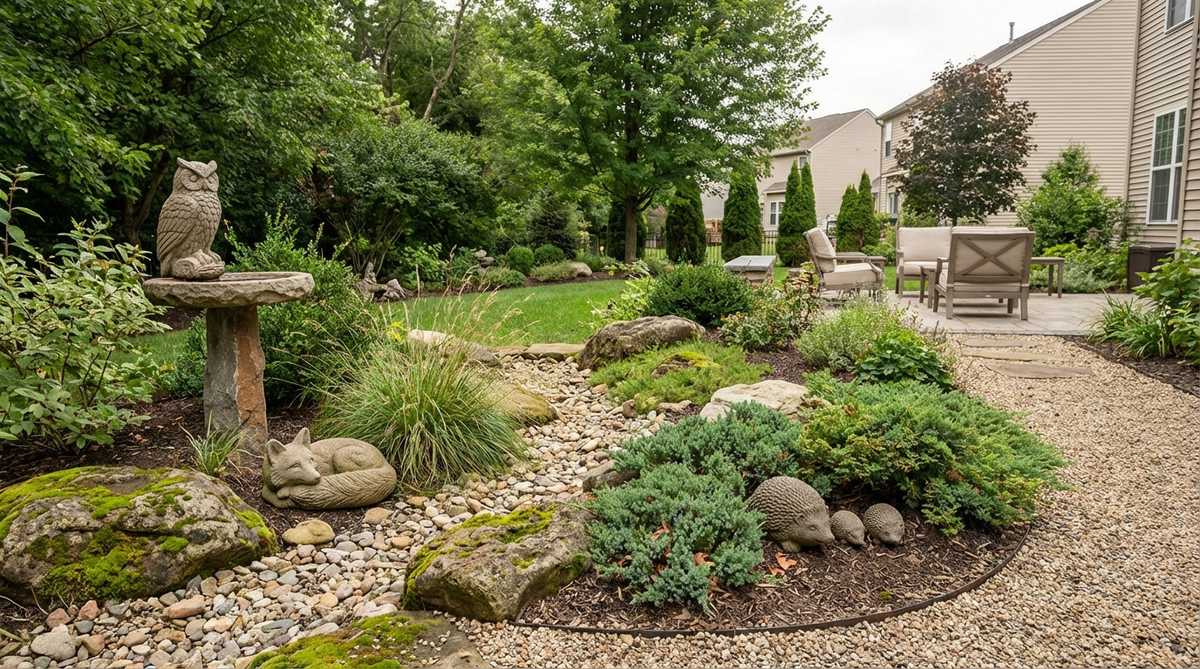
Stone garden animals create authentic connections between cultivated spaces and the natural world, offering year-round visual interest that weathers beautifully over time. Fresh Garden Ideas brings you expert selections that transform ordinary gardens into wildlife-inspired sanctuaries where artistry meets ecology.
Design SnapshotKey Principles
- Material Selection: Natural stone withstands freeze-thaw cycles and develops character through weathering, making it superior to resin alternatives
- Strategic Placement: Position larger sculptures as focal points at vista ends, while smaller pieces create discovery moments along pathways
- Scale Harmony: Match sculpture size to planting scale—oversized pieces overwhelm intimate gardens, while diminutive carvings disappear in expansive lawns
- Ecological Integration: Stone surfaces provide habitat for beneficial lichens and mosses, enhancing biodiversity while blending sculptures naturally into landscapes
Classic Wildlife Favorites
These timeless selections anchor naturalistic gardens with familiar forms that resonate across regional landscapes. Designers favor these pieces for their universal appeal and proven ability to complement diverse planting schemes.
1. Standing Deer with Raised Head
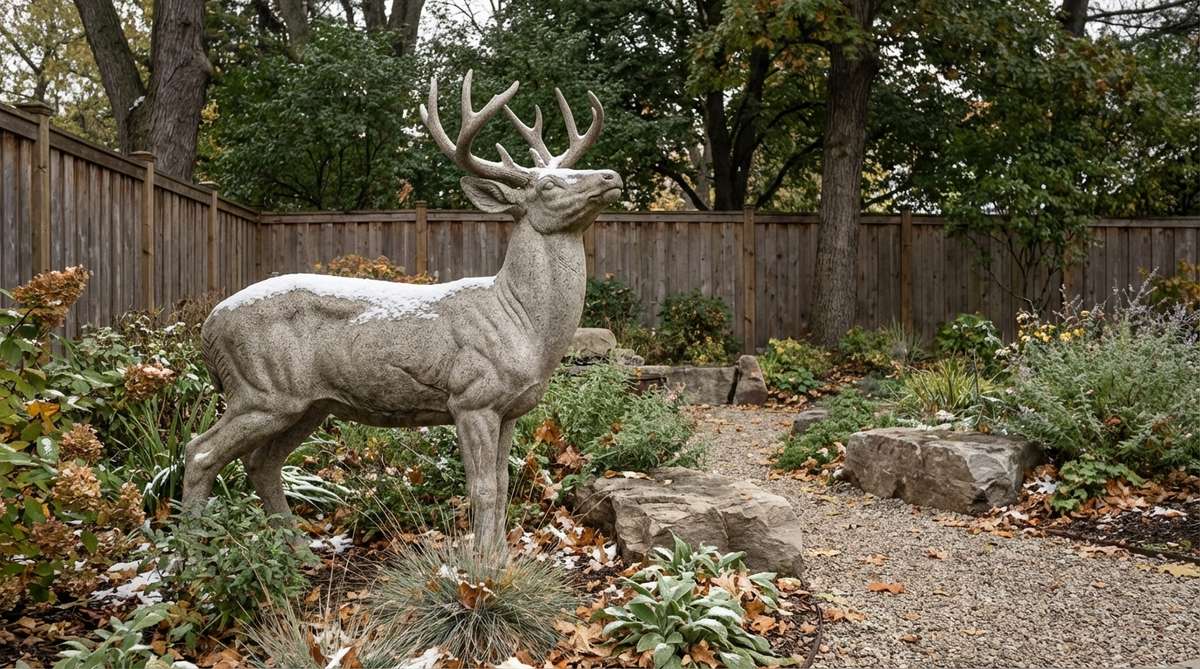
A life-size deer carved from limestone or granite establishes an immediate woodland atmosphere, particularly effective when positioned at the intersection of lawn and native plantings. The alert posture suggests vigilance, drawing the eye upward and creating vertical interest in horizontal landscapes.
Place this sculpture where morning or evening light catches the stone’s texture, enhancing the three-dimensional relief of muscle definition and facial features. Pair with ornamental grasses that move in wind, creating dynamic contrast against the statue’s permanence.
This centerpiece works year-round as snow accumulates on the back and shoulders during winter, while summer gardens benefit from the cool gray tones that balance warm flower colors.
2. Rabbit Family Cluster
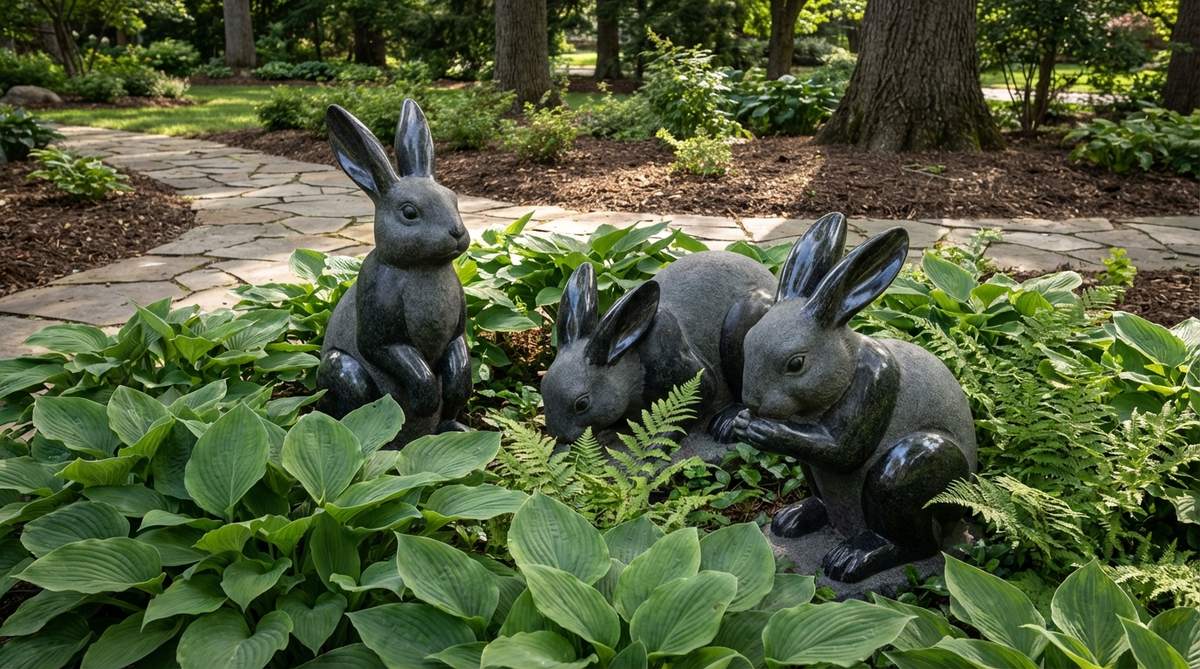
Three to five rabbits in varied poses—sitting upright, grazing, grooming—create narrative moments that invite closer inspection. Charcoal granite captures the compact body mass of cottontails, while polished sections suggest the sheen of healthy fur.
Position these smaller sculptures partially concealed among hostas or ferns, allowing discovery during garden walks rather than immediate visibility from primary viewpoints. The gradual reveal mimics authentic wildlife encounters.
Group placement near vegetable gardens adds ironic charm while the stone’s density prevents wind displacement in exposed locations.
3. Resting Fawn
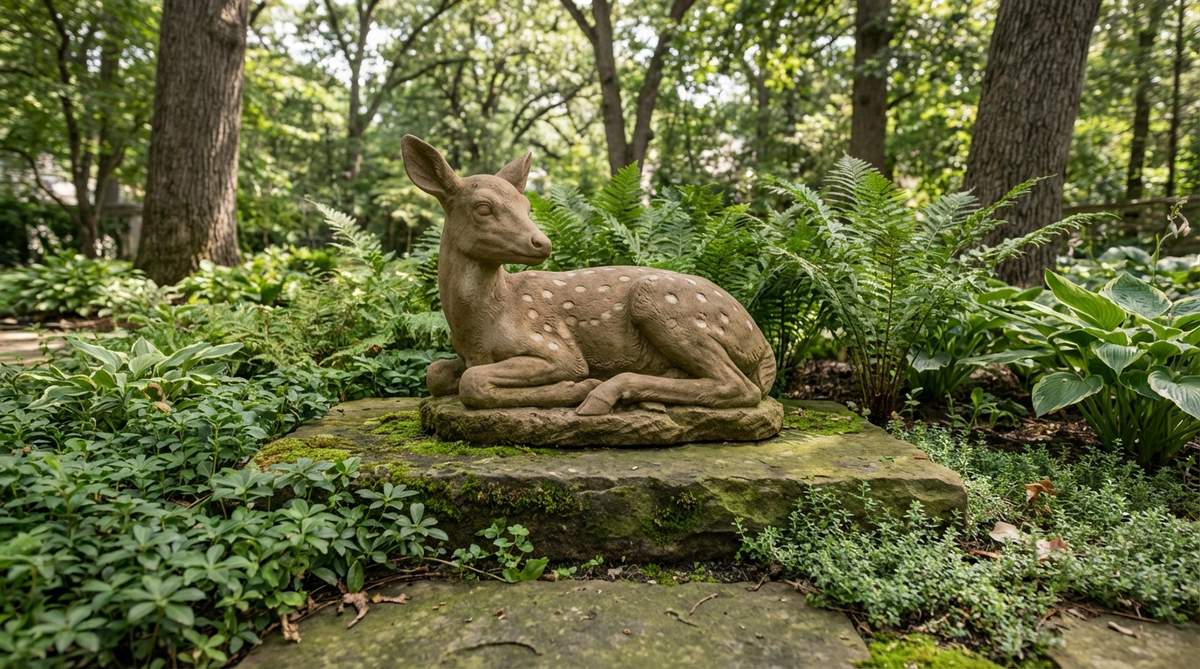
A young deer in repose, legs tucked beneath its body, introduces vulnerability and tenderness to garden compositions. This low-profile sculpture works exceptionally well in dappled shade where spotted coat patterns carved into sandstone become more pronounced as shadows shift.
Install on a slight elevation or moss-covered base to prevent the horizontal form from visually disappearing into groundcovers. The fawn’s scale suits intimate garden rooms and courtyard settings where monumentality would overpower.
4. Fox in Alert Stance
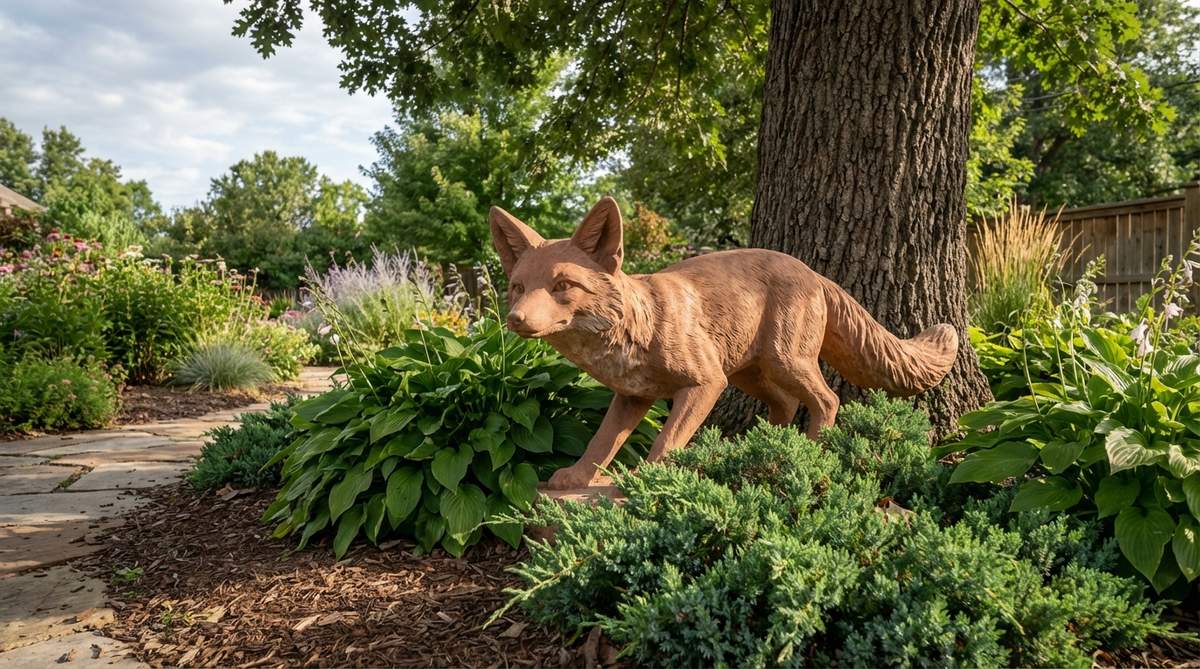
Carved foxes capture intelligent curiosity through angled ears and focused gaze, typically rendered in reddish sandstone that mirrors the animal’s natural coloring. The bushy tail provides sculptural mass that balances the lean body.
Position foxes emerging from shrub borders or peering around tree trunks to leverage their reputation for stealth. This placement strategy creates surprise moments that enliven predictable garden layouts.
The fox’s medium size—larger than rabbits, smaller than deer—offers flexibility for various garden scales and works particularly well in transitional zones between cultivated and wild areas.
Woodland Creatures for Shaded Gardens
Forest-dwelling animals carved in stone bring depth to shaded areas where color often fades. These selections thrive aesthetically in low-light conditions that highlight stone texture over polychrome detail.
5. Perched Owl
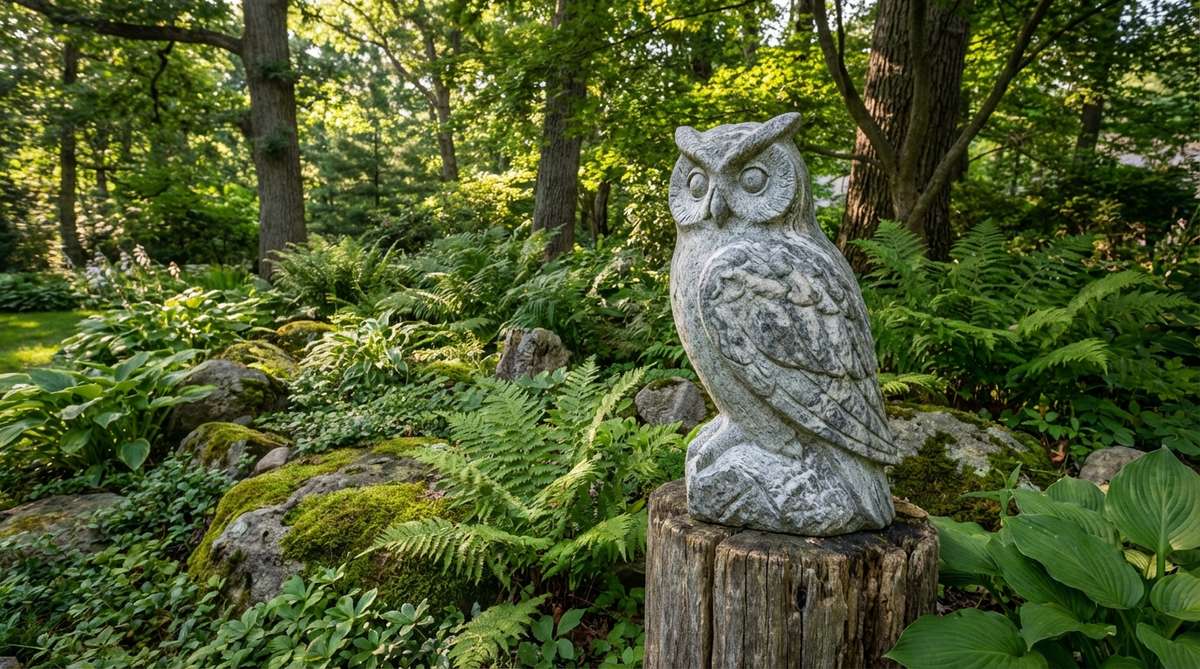
Owls symbolize wisdom and nocturnal mystery, with forward-facing eyes and compact bodies that translate effectively to stone carving. Gray granite varieties emphasize the bird’s cryptic plumage patterns through natural veining.
Mount on weathered stumps, fence posts, or purpose-built pedestals at eye level to maximize the sculpture’s watchful presence. The elevated position mirrors natural roosting behavior while creating vertical punctuation in shade gardens dominated by horizontal ferns and groundcovers.
6. Squirrel with Acorn
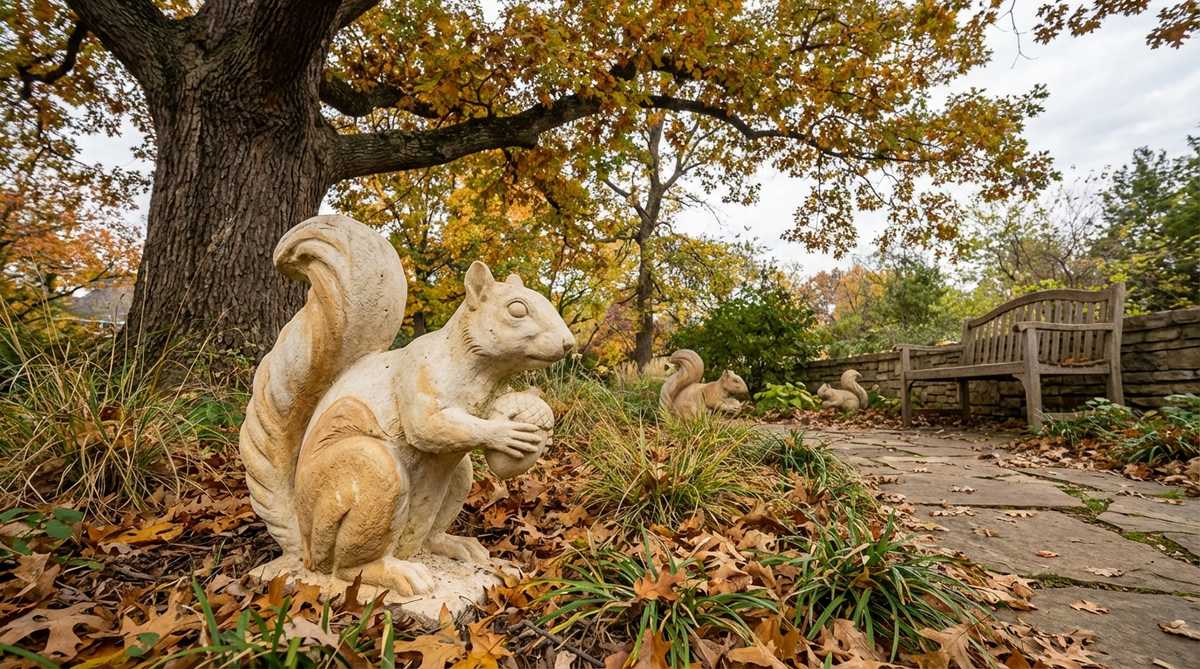
An active squirrel clutching an acorn introduces playful energy and seasonal relevance to autumn gardens. The curved spine and upright tail create dynamic lines that contrast with static plant forms.
Place near oak trees or hickories for thematic coherence, using the sculpture to draw attention to specimen trees that might otherwise go unnoticed. Multiple squirrels at different heights—one on ground, another appearing to climb—suggest movement through three-dimensional space.
Limestone weathers to cream and tan tones that complement fall leaf colors while remaining visible during bare-branch winter months.
7. Hedgehog in Leaves
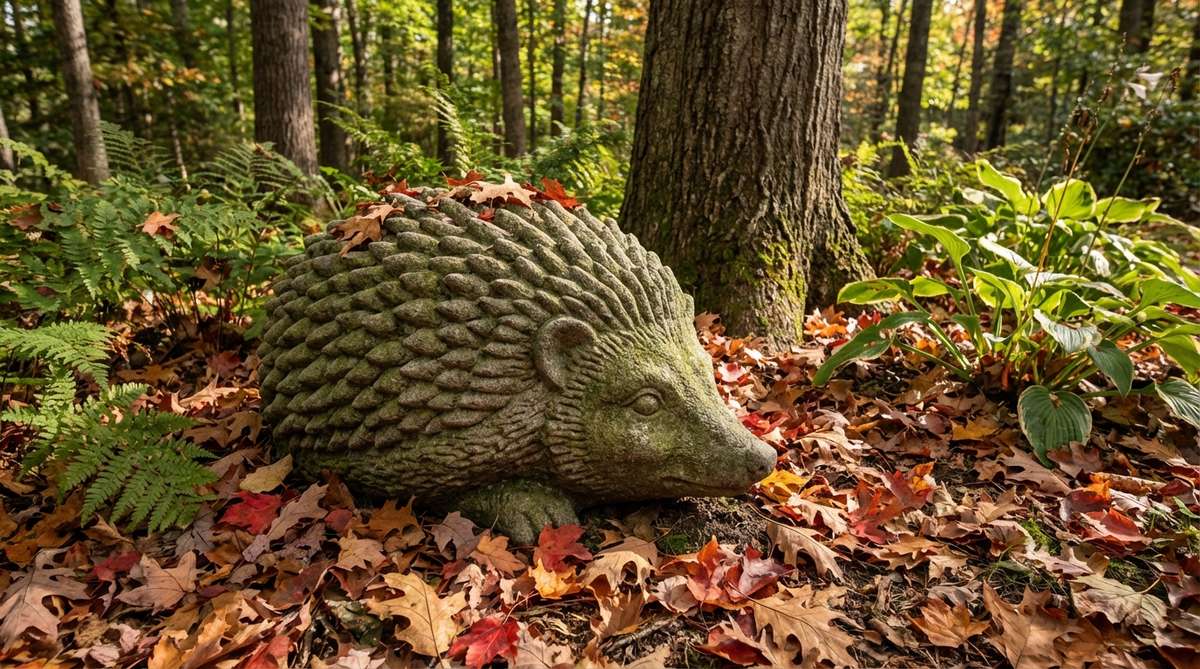
Hedgehogs carved with detailed spines offer textural complexity that rewards close observation. This ground-level sculpture suits woodland garden edges where leaf litter naturally accumulates.
Install among true fallen leaves during autumn for camouflage effects that make the stone carving appear to hibernate authentically. The small scale encourages children’s engagement and provides talking points during garden tours.
8. Badger Emerging from Den
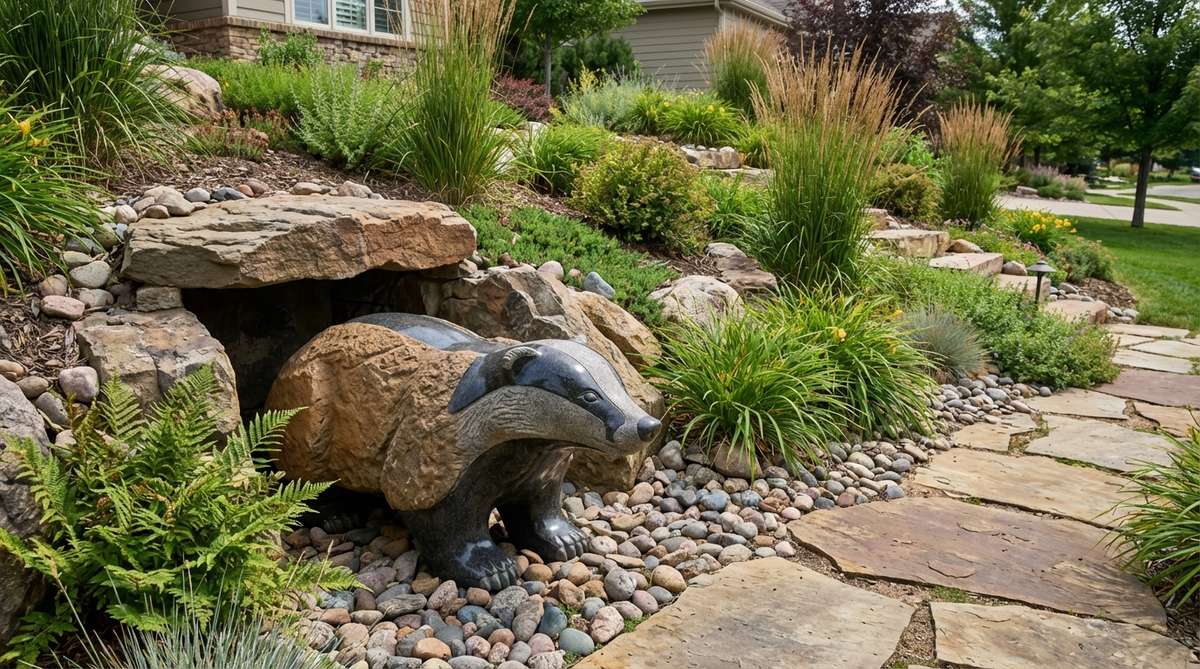
A badger’s stocky build and distinctive facial markings create bold graphic impact. Carvers often use contrasting stone tones or polished black granite to emphasize the characteristic stripe pattern.
Position at the base of slopes or rock gardens where the sculpture appears to emerge from an actual burrow. This contextual placement strengthens the naturalistic illusion and integrates hardscape elements into living landscapes.
Badgers represent nocturnal wildlife often unseen in daylight hours, making the permanent stone presence a tribute to creatures that share garden spaces invisibly.
Aquatic & Pond Animals
Water features gain ecological realism through stone animals that inhabit wetland margins. These sculptures withstand constant moisture and often develop attractive patinas from algae colonization.
9. Heron Fishing Pose
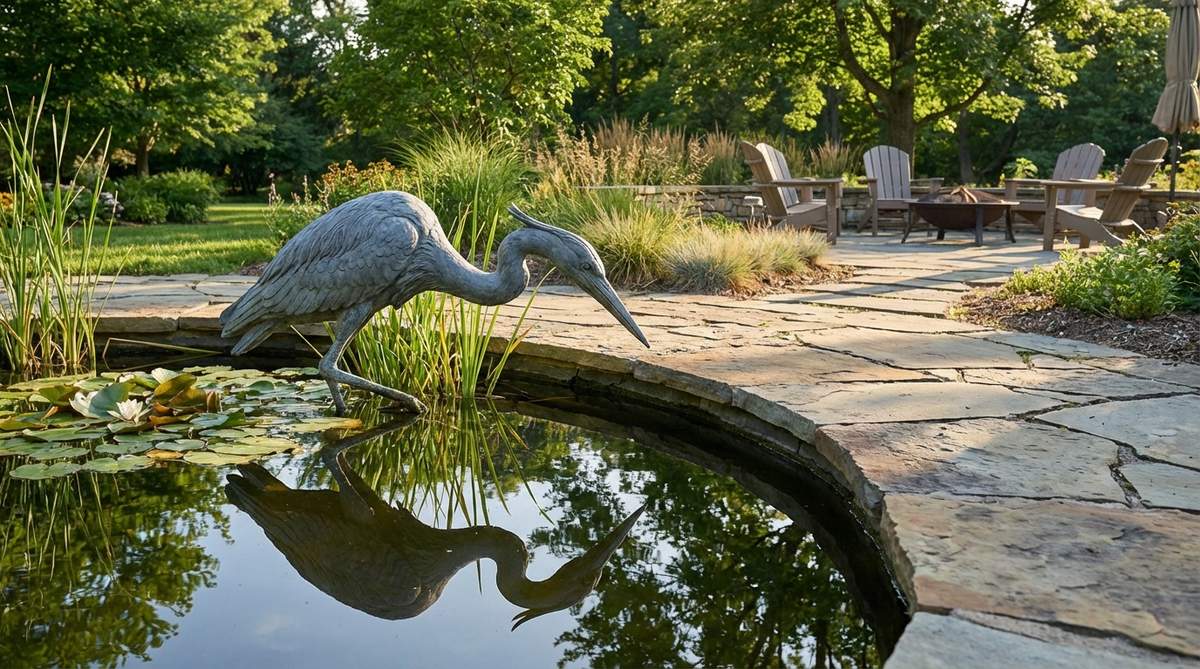
A heron frozen mid-hunt, with long neck extended and sharp beak poised above water, introduces dramatic verticality to pond edges. The bird’s stilted legs and lean body require skilled carving to maintain structural integrity in stone.
Position in shallow water or at the pond margin where real herons would hunt, creating authentic tableaus that blur the line between art and nature. The sculpture’s height—often three to four feet—provides scale appropriate for medium to large water features.
Gray slate or bluestone complements water’s reflective qualities while the statue’s silhouette remains striking against sky backgrounds when viewed across the pond.
10. Turtle on Log
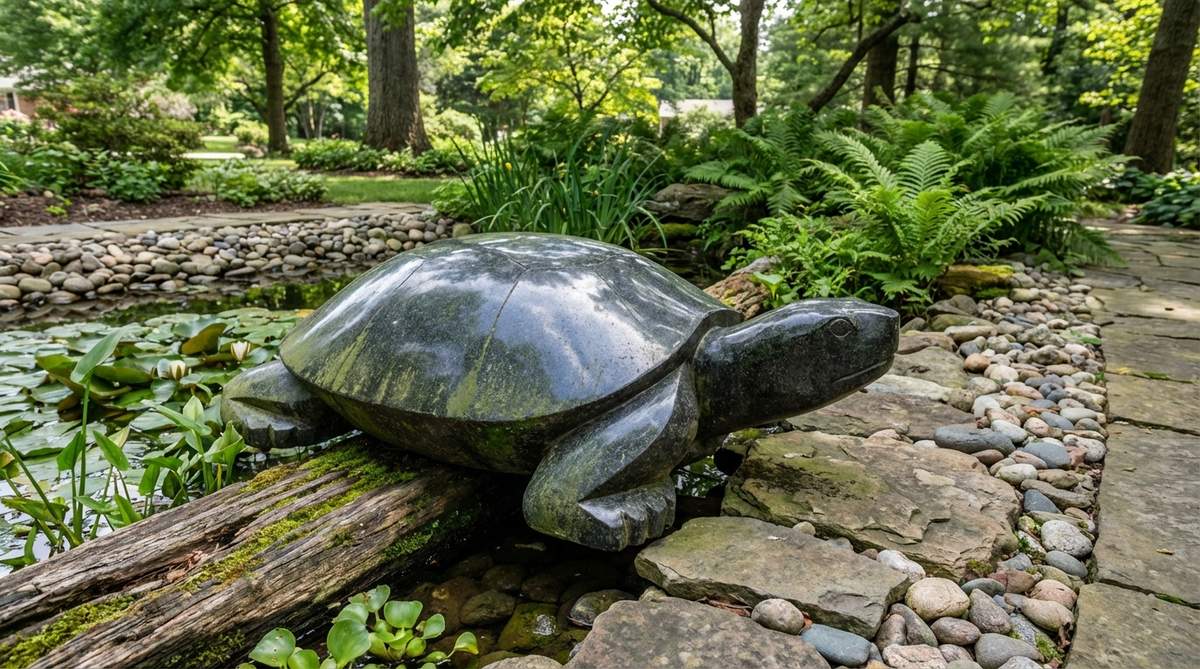
Turtles represent longevity and patience, with domed shells that translate naturally to stone’s geometric simplification. A turtle positioned on a carved log or flat rock suggests basking behavior familiar to pond observers.
Install partially submerged or at the waterline where amphibious nature feels authentic. The horizontal orientation and low profile integrate seamlessly without dominating sightlines across the water feature.
Granite’s durability withstands freeze-thaw cycles in colder climates, while the polished shell surface can develop beneficial algae growth that enhances rather than detracts from appearance.
11. Frog on Lily Pad
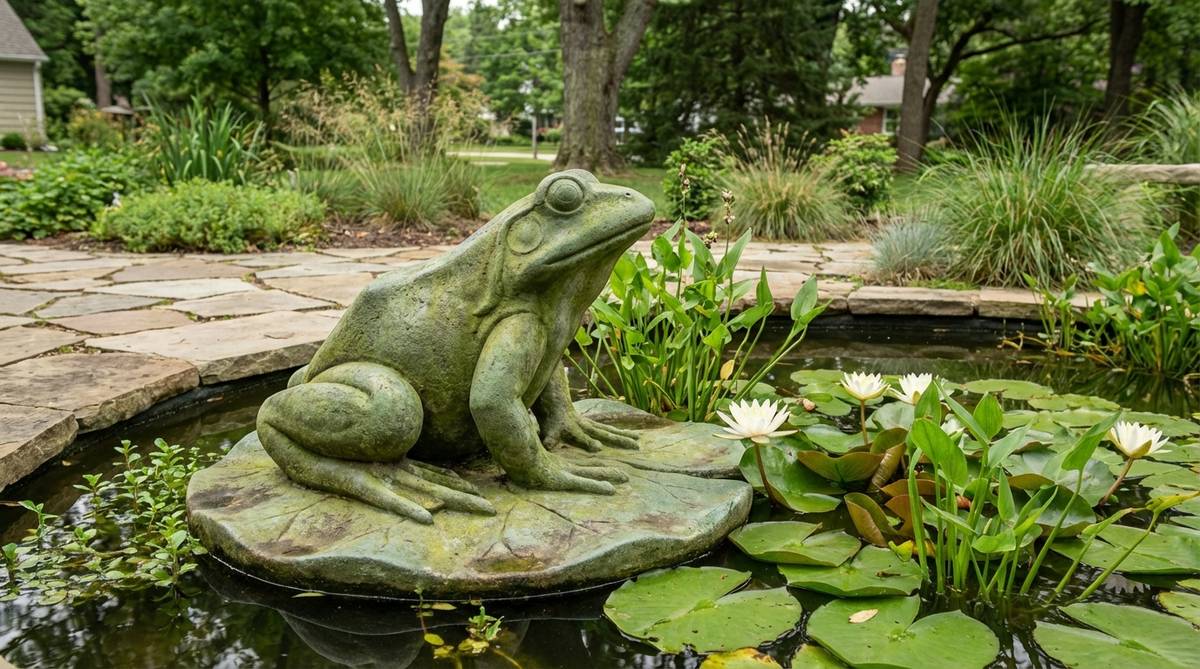
Frogs carved in crouching or jumping poses capture amphibian anatomy’s spring-loaded energy. The combination of frog and lily pad, often carved as a single unit, creates self-contained composition.
Float on actual lily pads during growing season or position on submerged pedestals that make the sculpture appear to rest on the water surface. Multiple frogs at different pond locations suggest a thriving population.
Green-tinted marble or serpentine stone provides color harmony with aquatic plants while maintaining visibility against dark water backgrounds.
12. Koi Fish Fountain
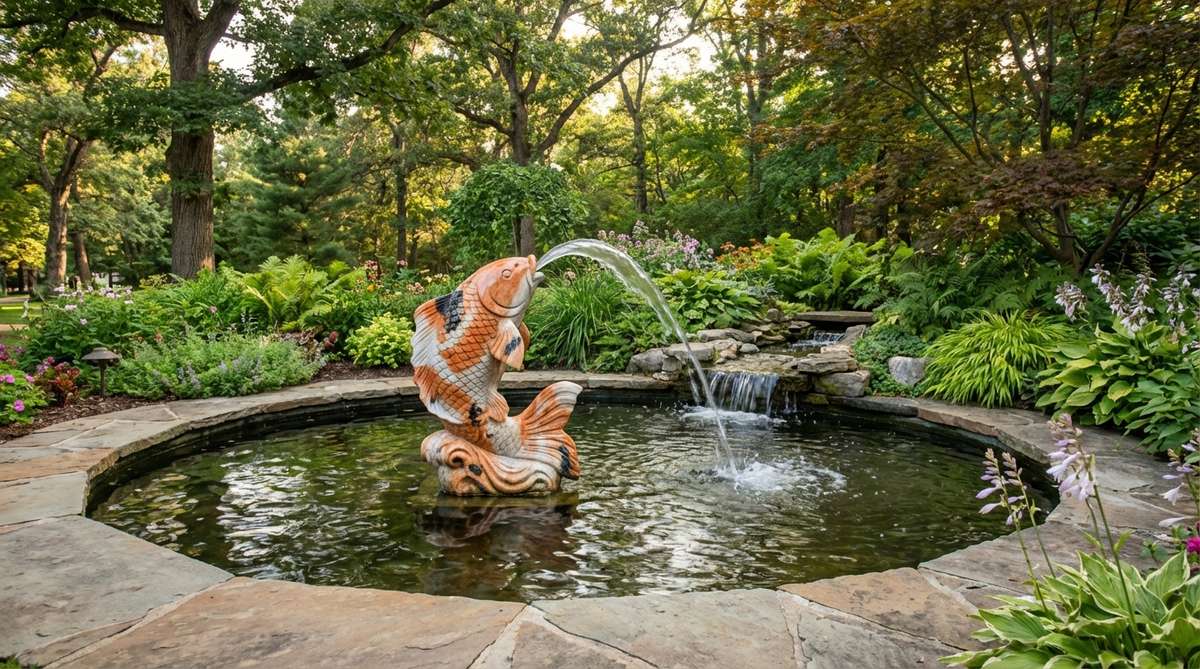
Koi carved with flowing fins and scaled bodies often incorporate fountain mechanisms, with water emerging from mouths. The arched, leaping pose conveys vitality and movement even in static stone.
Install as pond centerpieces or along waterfalls where the carved koi appears to swim upstream. The sound of flowing water adds sensory dimension beyond visual impact.
Polished granite in orange, white, or black tones references actual koi varieties, creating thematic links between stone sculpture and living fish populations.
13. Duck Family Parade
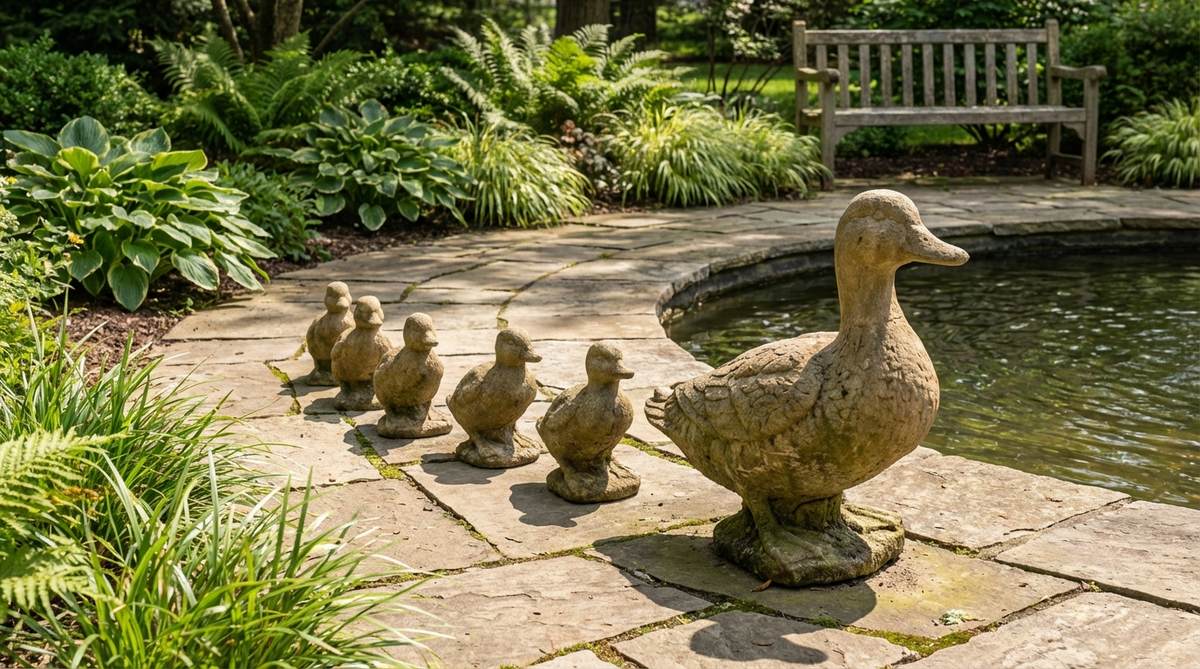
A mother duck followed by ducklings in descending size order creates charming processions along pond perimeters or garden paths. Each duckling’s waddle captured in stone adds personality to the sequence.
Arrange in actual walking formation across lawns leading to water, encouraging visitors to follow the same route. The serialized sculpture transforms functional pathways into narrative experiences.
14. Otter with Fish
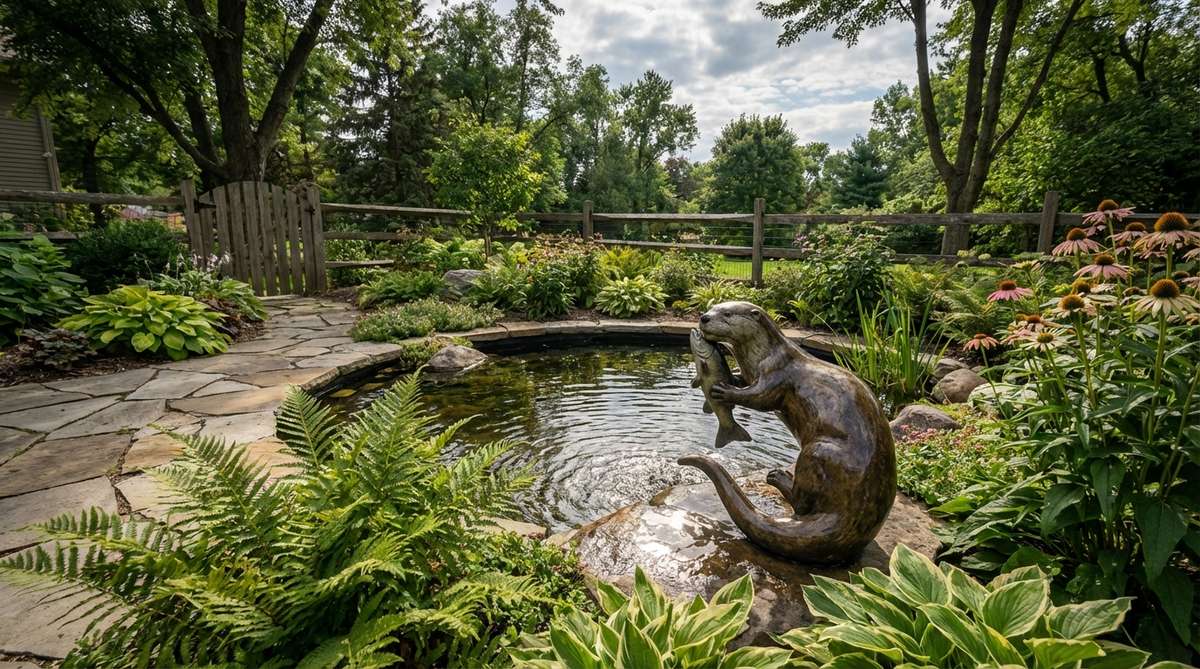
Otters represent playful intelligence, typically carved in dynamic poses with sleek, streamlined bodies. An otter grasping a fish demonstrates the predator-prey relationship central to aquatic ecosystems.
Position on rocks or logs near moving water where otters naturally hunt. The sculpture’s activity level energizes static water gardens and provides educational opportunities about watershed ecology.
River rock or smooth granite mirrors the otter’s wet fur appearance, with polished surfaces catching light like water droplets.
Birds & Winged Creatures
Avian sculptures activate vertical space and suggest movement through spread wings and dynamic postures. Stone’s permanence contrasts poetically with birds’ ephemeral presence in actual gardens.
15. Eagle with Spread Wings
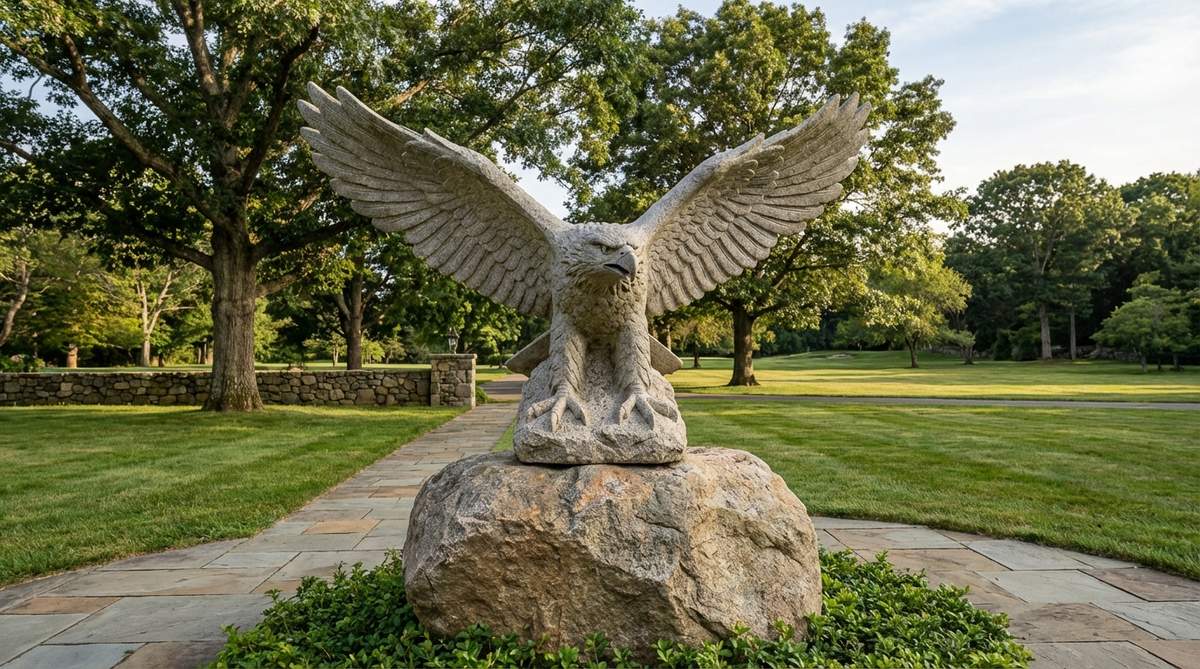
Eagles command attention through powerful wingspans that can extend four to six feet in larger carvings. The raptor’s fierce expression and taloned feet convey strength appropriate for statement pieces.
Mount on tall pedestals, gate pillars, or prominent boulders where the sculpture’s monumentality matches the elevation. Eagles work effectively as property markers or entrance guardians in expansive landscapes.
Weather-resistant granite withstands wind stress on the extended wings, though the dramatic form requires structural assessment to prevent breakage at vulnerable joint points.
16. Songbird on Branch
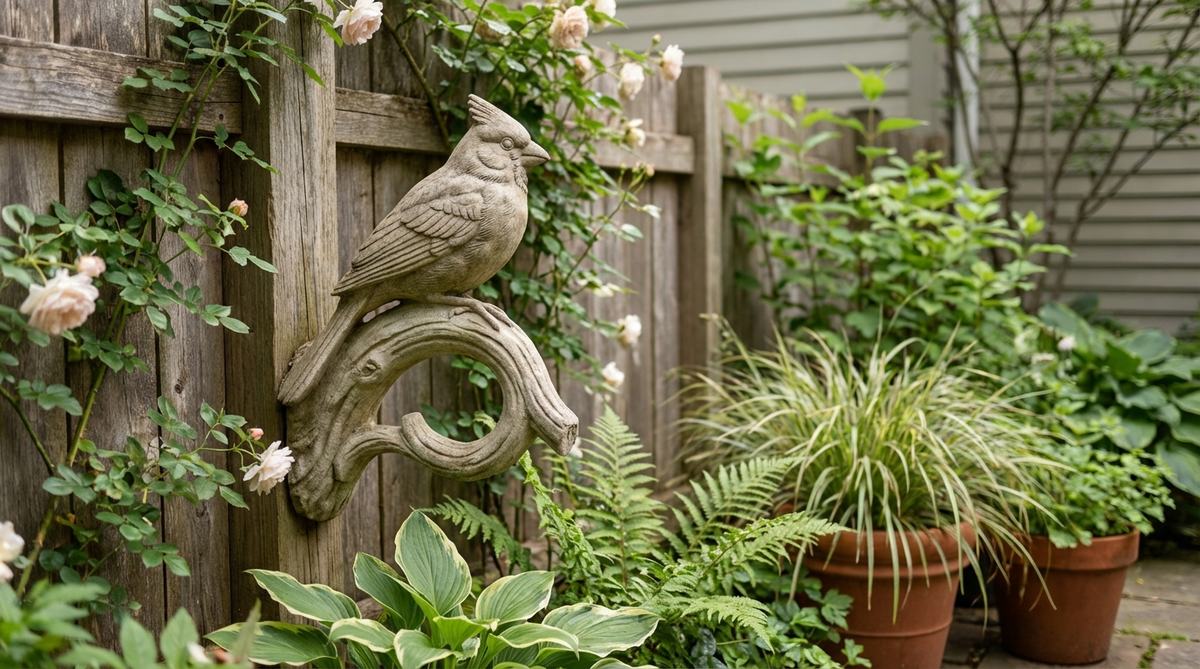
Smaller birds—cardinals, chickadees, robins—perched on carved branches offer intimate detail for close-range viewing. The compact scale suits courtyard gardens and small urban plots.
Nestle among flowering shrubs at eye level where the sculpture’s detail remains visible without requiring bending or crouching. The branch element provides installation flexibility, allowing attachment to fences, trellises, or tree trunks.
Regional bird species carved in local stone creates geographic specificity that resonates with area wildlife populations and supports sense of place.
17. Crane Pair Courtship
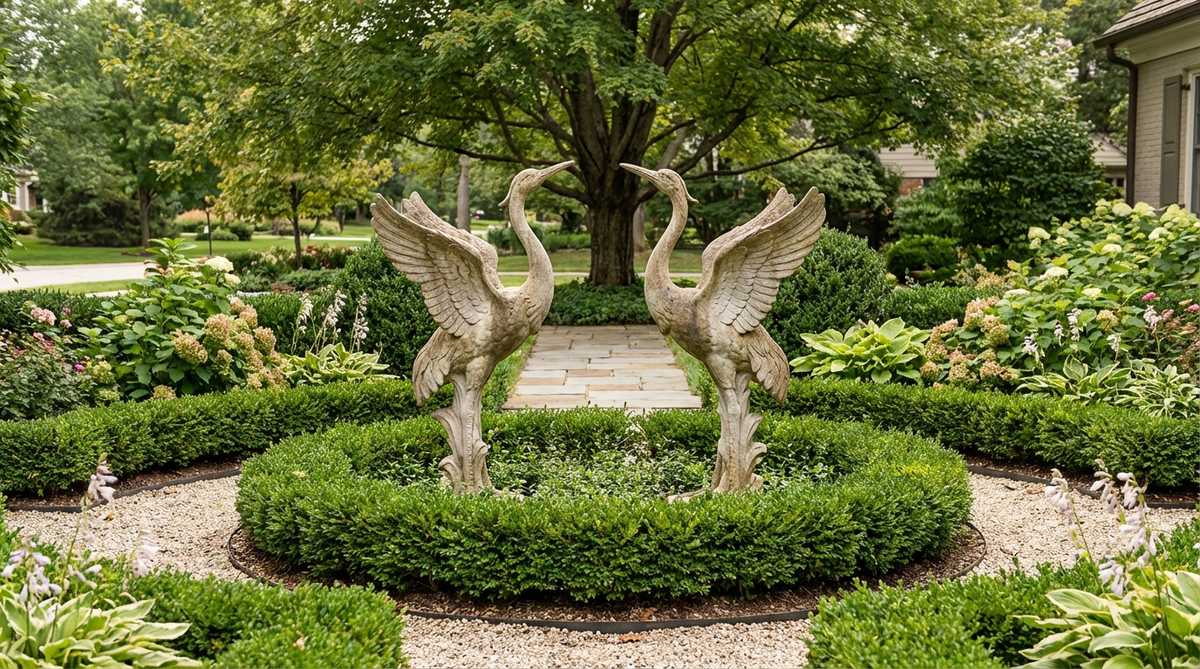
Two cranes facing each other in courtship display—necks arched, wings partially raised—symbolizes partnership and fidelity. The paired composition creates balanced symmetry suitable for formal garden settings.
Center in circular beds or position flanking pathways as living gates visitors pass between. The cranes’ height and elegance complement minimalist designs where each element carries significant visual weight.
18. Roosting Peacock
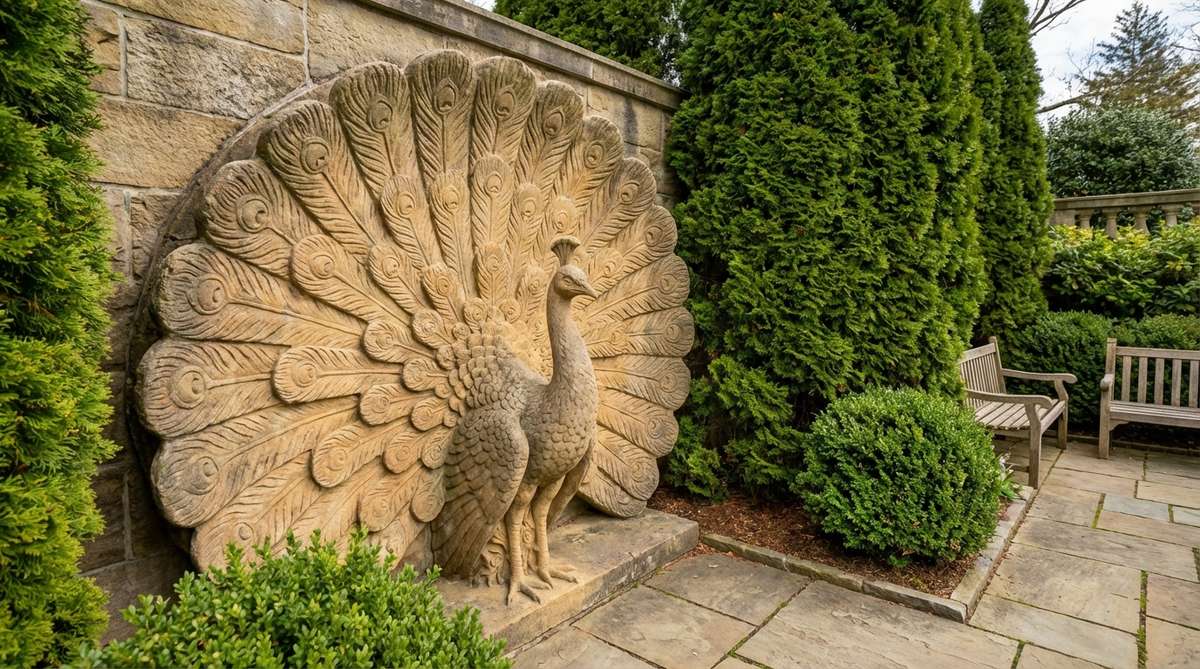
Peacocks carved with elaborate tail feathers demonstrate stone carving’s capacity for ornamental detail. The fan-shaped plumage requires substantial material depth but creates spectacular focal points.
Display against plain backgrounds—stone walls, evergreen hedges—where the intricate carving remains visible without competing visual elements. Peacocks suit formal gardens where exotic opulence aligns with design intent.
Colored marble or granite with natural veining can suggest the iridescent eye spots characteristic of peacock plumage without relying on paint that weathers poorly outdoors.
Exotic & Majestic Animals
Larger-than-life animals from distant ecosystems introduce drama and cultural symbolism. These sculptural investments demand careful siting to maximize impact without overwhelming garden scale.
19. Elephant with Raised Trunk
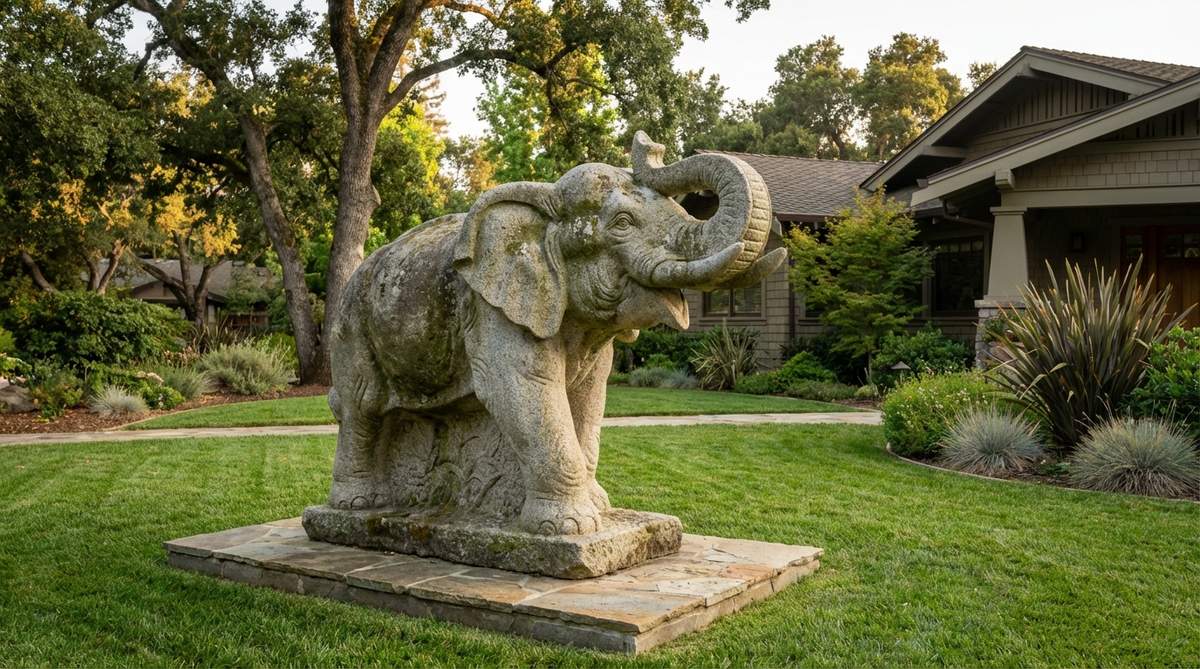
Elephants symbolize wisdom, strength, and prosperity across multiple cultures, with raised trunks specifically signifying good fortune. The massive body mass translates impressively to stone, often requiring multiple-ton blocks.
Position as entrance guardians flanking driveways or as solitary sentinels in lawn centers where viewers can appreciate the sculpture from all angles. Elephants demand substantial clearance—minimum eight feet radius—to prevent cramped appearance.
Granite’s durability supports the structural demands of trunk and legs, while the stone’s heft prevents displacement and vandalism in public-facing installations.
20. Lion Guardian Pair
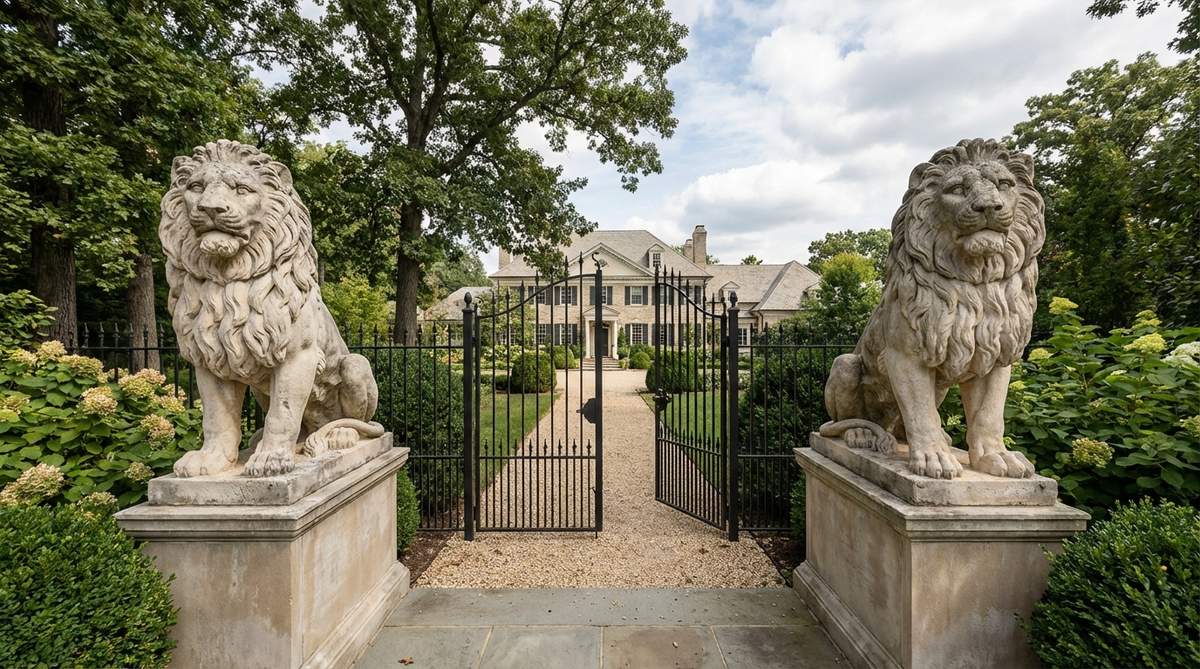
Lions represent courage and nobility, traditionally positioned as protective sentinels at estate entrances. Carved manes require detailed chisel work that showcases artisan skill.
Flank gates, doorways, or stair bases in mirrored pairs that create ceremonial thresholds. The symmetrical arrangement reinforces formal design principles and establishes hierarchy between public and private zones.
Limestone or marble conveys classical elegance appropriate for traditional architecture, while the lions’ imposing presence deters casual trespass psychologically if not physically.
21. Giraffe Reaching Upward
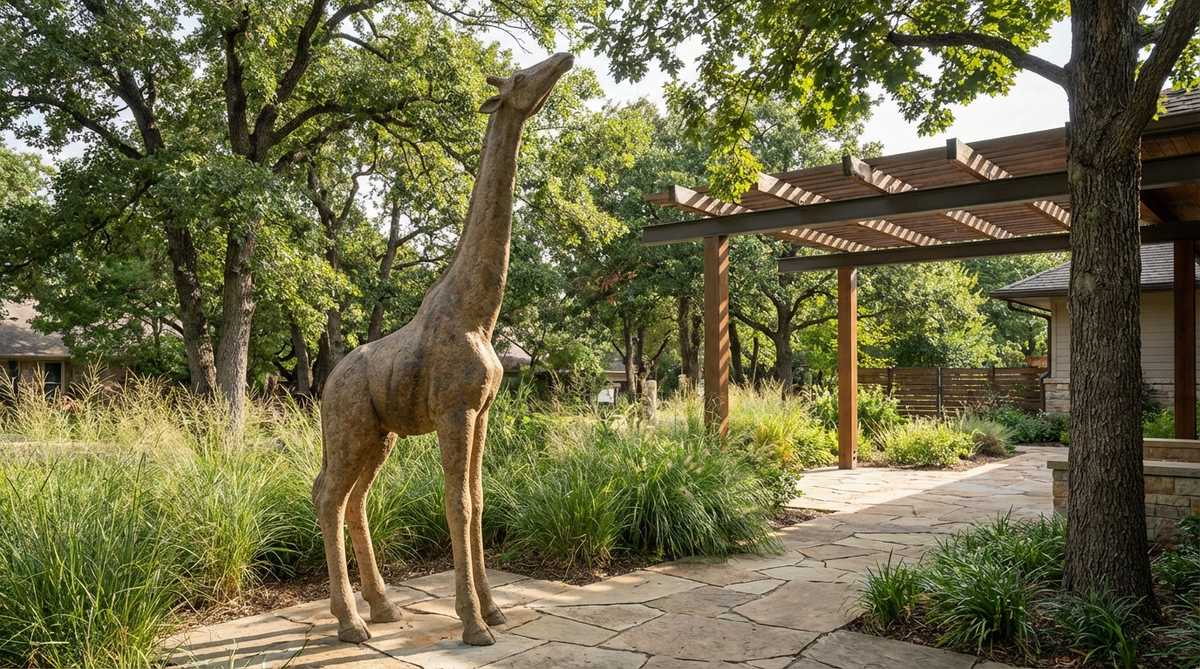
Giraffes carved with necks extended toward foliage demonstrate stone’s ability to capture impossible grace in heavy material. The attenuated proportions create striking vertical elements in flat landscapes.
Place near tall trees or architectural features that provide scale context for the elongated form. Giraffes work effectively in modern gardens where sculptural boldness trumps naturalistic integration.
Structural engineering becomes critical for the extended neck, often requiring internal reinforcement or deliberate carving angles that shift center of gravity over the legs’ support base.
22. Zebra in Motion
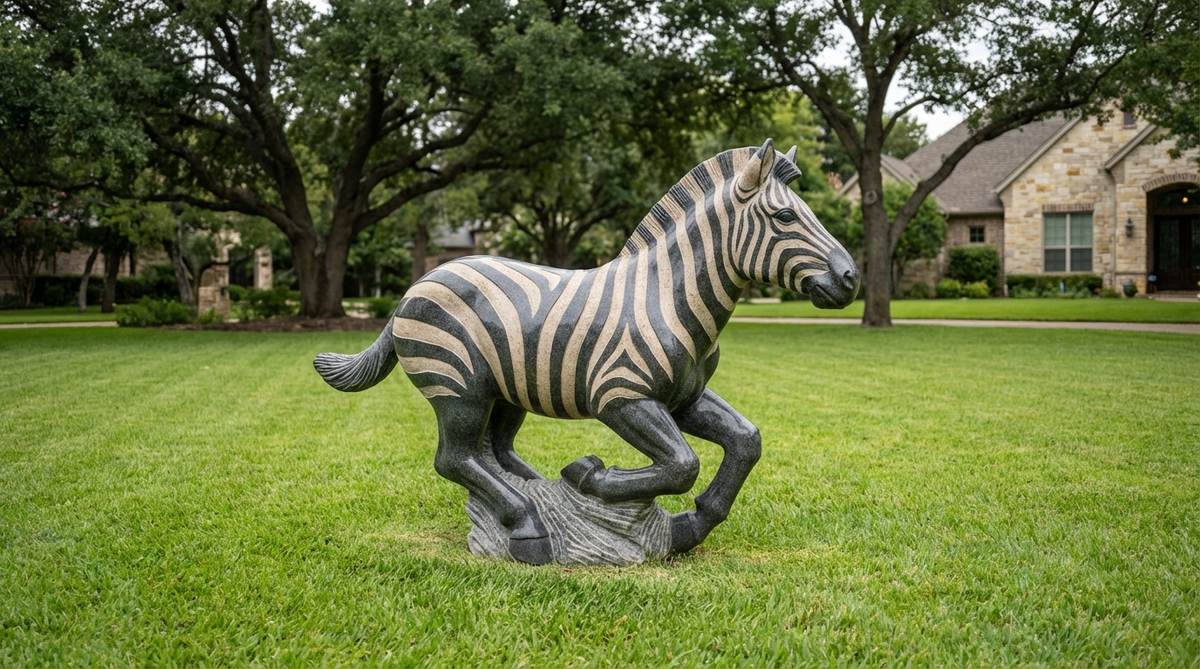
Zebras carved from dual-toned granite—dark stone with polished light veins—use natural material properties to suggest stripe patterns. The horse-like body in mid-stride conveys kinetic energy.
Position in open lawn areas where the sculpture’s movement reads clearly from distance. Zebras suit contemporary landscapes that embrace stylized natural forms over literal wildlife representation.
23. Bear Standing Tall
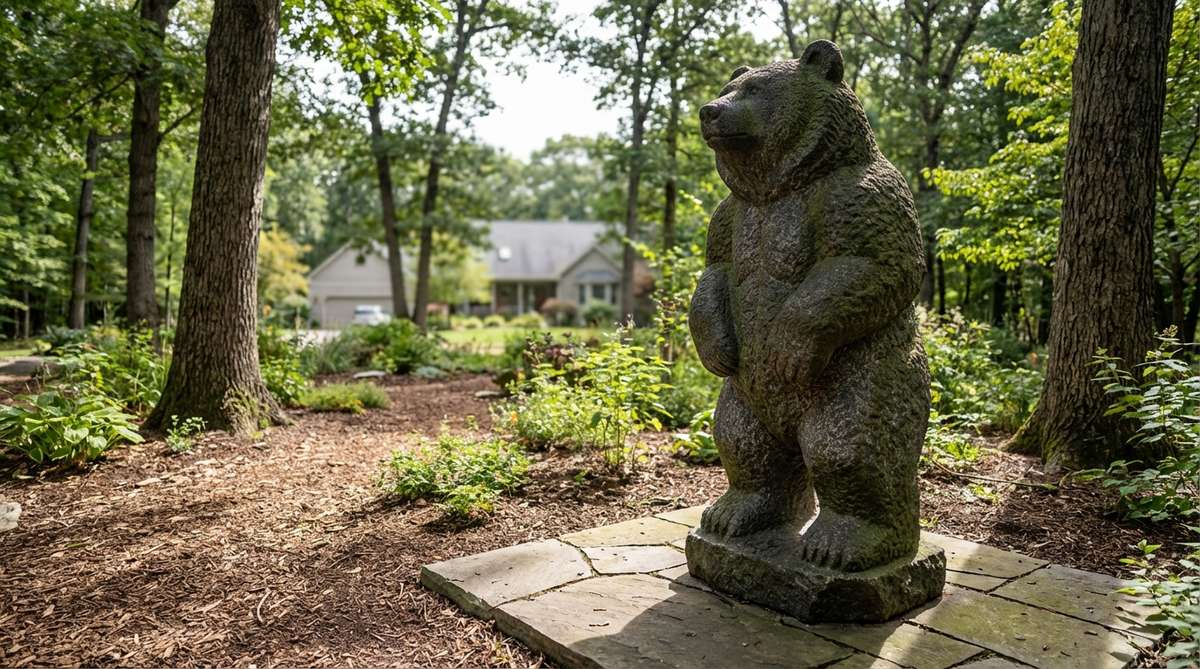
Bears carved in upright posture command presence through sheer size and implied power. The standing position allows full-height carving that can exceed seven feet in ambitious installations.
Install in woodland edges or rustic garden settings where bears feel ecologically plausible. The sculpture’s mass requires stable foundations and careful consideration of sightlines—bears positioned on slopes appear to loom when viewed from below.
Rough-textured granite or basalt suggests fur density while the stone’s dark tones create dramatic silhouettes against sky or light-colored hardscape backgrounds.
Bringing It All Together
Successful integration of stone garden animals depends on matching sculpture scale to garden proportion, selecting materials appropriate for local climate, and positioning pieces where they enhance rather than interrupt natural sightlines. Start with one or two quality carvings positioned as focal points, then expand your collection as the garden matures and reveals opportunities for discovery pieces along pathways. The investment in durable stone sculpture pays dividends across decades as patinas develop and plantings grow to embrace these permanent wildlife tributes, creating gardens that honor both artistic craft and ecological awareness.
Frequently Asked Questions
What type of stone works best for garden animal sculptures?
Granite offers superior durability and weather resistance, withstanding freeze-thaw cycles without cracking, making it ideal for year-round outdoor display. Limestone and sandstone provide softer aesthetics and easier carving detail but require sealing in wet climates. Marble delivers classical elegance but shows weathering more rapidly, becoming most appropriate for covered porches or protected courtyards rather than exposed garden positions.
How do I prevent moss and algae growth on stone animal sculptures?
Many designers embrace moss and lichen colonization as beneficial patina that integrates sculptures naturally into garden ecosystems, requiring no intervention. If removal becomes necessary for visibility or aesthetic preference, gentle brushing with water and soft bristles proves effective without damaging stone surfaces. Avoid pressure washers on detailed carvings and chemical treatments that harm surrounding plants or beneficial organisms. Annual spring cleaning maintains balance between weathered character and excessive overgrowth.
Where should I position stone animal sculptures for maximum impact?
Large sculptures anchor vista endpoints or garden room centers as primary focal points that organize surrounding plantings. Smaller pieces work best partially concealed among shrubs or along path curves, creating discovery moments that reward exploration. Near water features, position aquatic animals at pond margins where they appear habitat-appropriate, while woodland creatures suit shaded areas under tree canopies. Avoid centering sculptures in blank lawns without contextual plantings unless pursuing formal symmetry deliberately.
How much maintenance do stone garden animals require?
Quality stone sculptures demand minimal maintenance beyond seasonal debris removal and occasional gentle washing. Spring cleaning removes winter accumulation, while autumn requires clearing fallen leaves that trap moisture against stone surfaces. Granite and basalt need virtually no treatment, while limestone and sandstone benefit from resealing every three to five years in harsh climates. Inspect bases annually for settling or erosion that might destabilize larger pieces, adding gravel or concrete footings as needed for permanent stability.
Can stone animal sculptures withstand winter weather?
Dense stone types including granite, basalt, and certain marbles tolerate winter conditions excellently when properly installed with drainage beneath bases. Avoid porous stones that absorb water and crack during freeze-thaw cycles unless manufacturer specifications confirm freeze resistance. Position sculptures slightly elevated on gravel pads rather than direct soil contact to prevent moisture wicking. Snow accumulation adds seasonal interest rather than causing damage, though ice buildup in detailed crevices occasionally requires gentle removal to prevent expansion stress in softer stones.