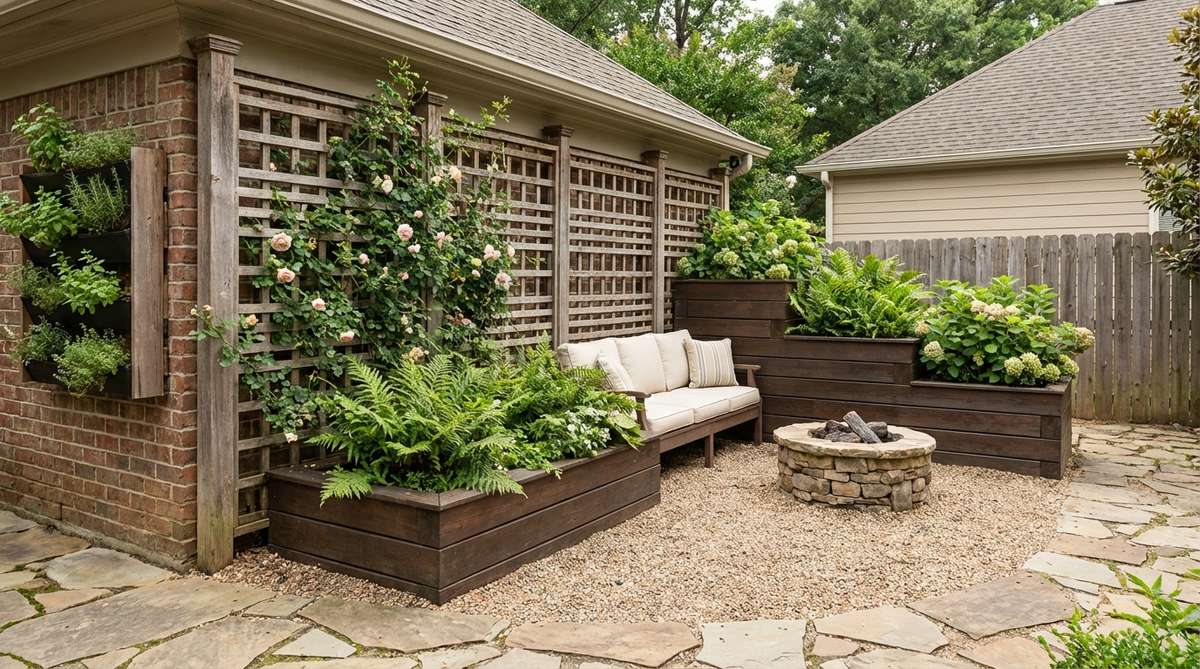
Compact outdoor areas hold untapped potential when configured strategically. Whether you’re working with a narrow side yard, an unused corner, or a small backyard footprint, small garden spaces can deliver impressive visual impact through smart layout choices and vertical thinking. Fresh Garden Ideas brings you tested configurations from landscape architects who specialize in maximizing limited square footage without sacrificing style or function.
Design SnapshotKey Principles
- Vertical Integration: Use walls and fences as growing surfaces to multiply planting area without consuming ground space
- Zone Definition: Divide small areas into distinct functional pockets using level changes, flooring materials, or low dividers
- Multi-Purpose Elements: Select furniture and structures that serve dual roles—storage benches, trellis screens, or edible ornamentals
- Optical Expansion: Apply diagonal lines, reflective surfaces, and “hide-and-reveal” techniques to create perceived depth
Vertical Garden Space Solutions
When ground area reaches its limit, designers shift focus upward. Vertical configurations convert bare walls and fences into productive growing surfaces, multiplying available space by 300% in some applications.
1. Ladder-Style Plant Staging
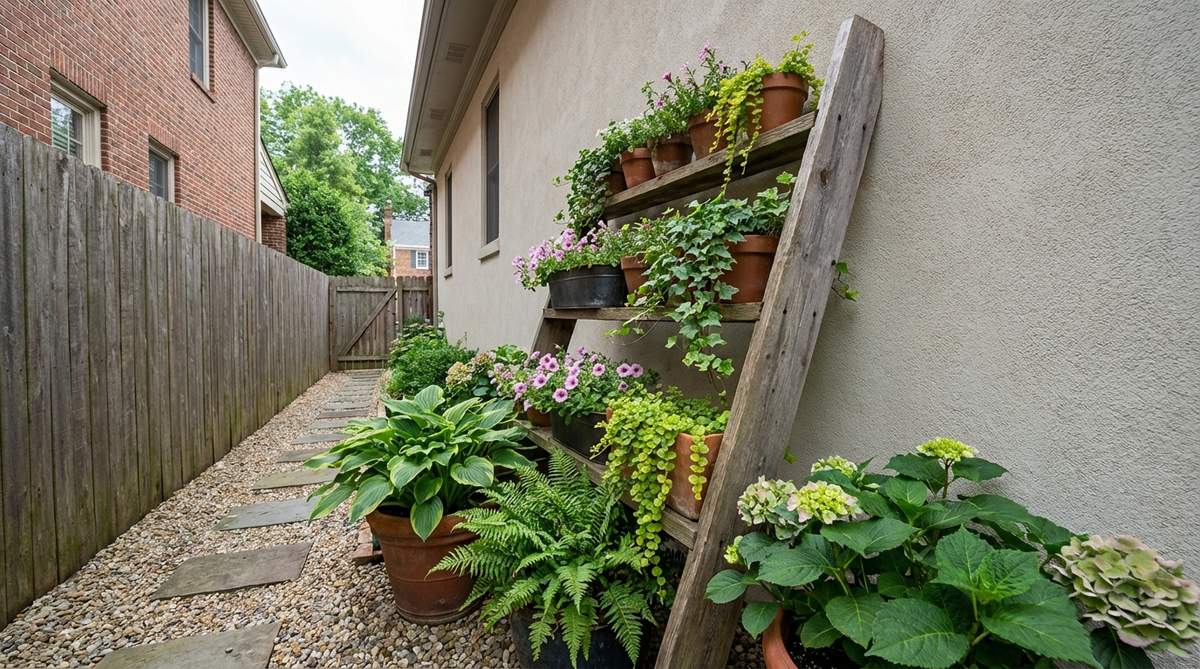
Narrow ladder frames lean against walls or fences, offering multiple tiers for container plants. This configuration works particularly well in side yards where width measures less than four feet.
Position the ladder at a 75-degree angle for stability, then arrange pots in descending size from bottom to top. Larger specimens at ground level anchor the composition while trailing varieties at upper levels soften the silhouette.
Rotation becomes simple when plants occupy individual containers rather than fixed beds. Swap out seasonal displays without disturbing root systems or adjacent plants.
2. Modular Wall Panel Systems
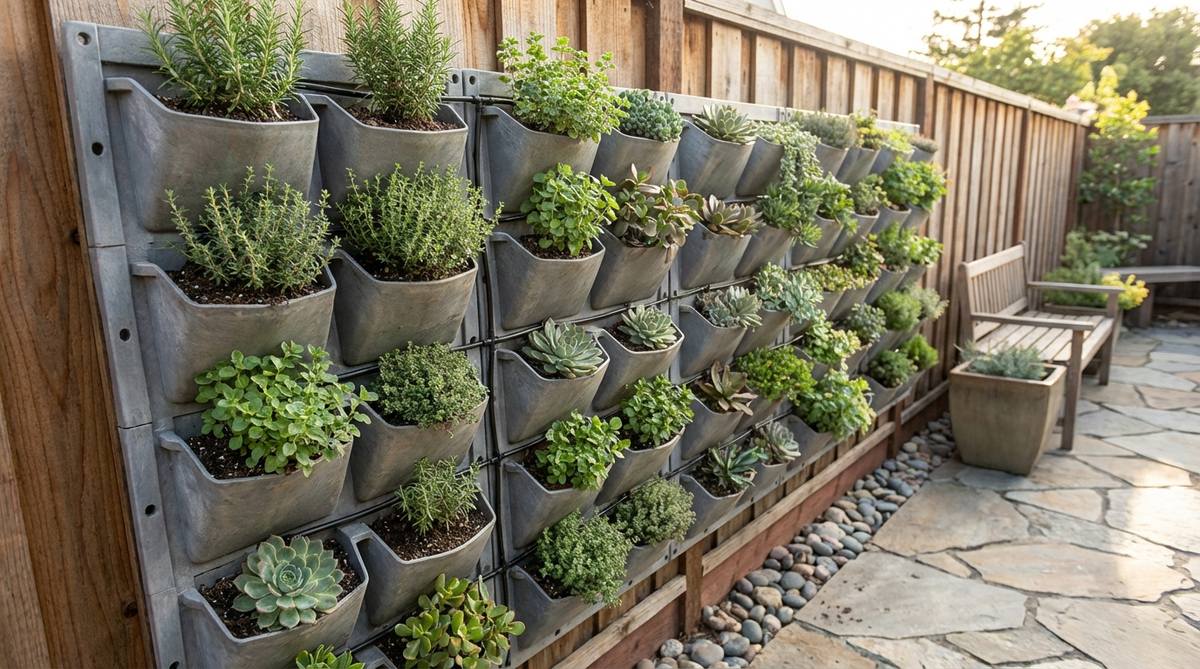
Interlocking plastic or metal panels mount directly to vertical surfaces, each containing individual planting pockets. Designers favor these systems for herb gardens and succulent displays where shallow root depth suffices.
Install panels in grid patterns or staggered arrangements depending on the architectural style of surrounding structures. Built-in irrigation channels distribute water evenly across all pockets from a single top-fill reservoir.
Maintenance drops significantly compared to ground-level beds since weeds cannot establish and pests have limited access points. The elevated position also improves air circulation around foliage.
3. Cable Wire Trellis Grids
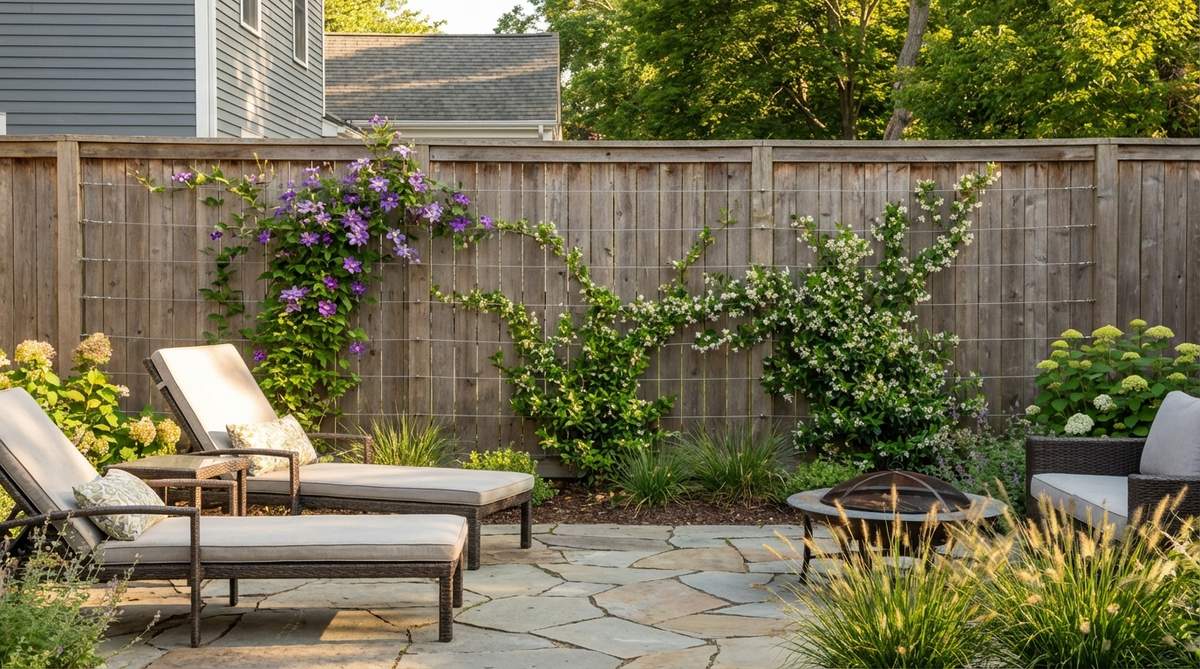
Stainless steel cables stretched horizontally at 12-inch intervals create climbing frameworks for vining plants. This minimalist approach suits modern architectural styles where heavy wooden trellises would feel visually overwhelming.
Secure cables to wall-mounted eye bolts, maintaining constant tension to prevent sagging under plant weight. Clematis, climbing roses, and jasmine all perform well on cable systems.
4. Pocket Planter Installations
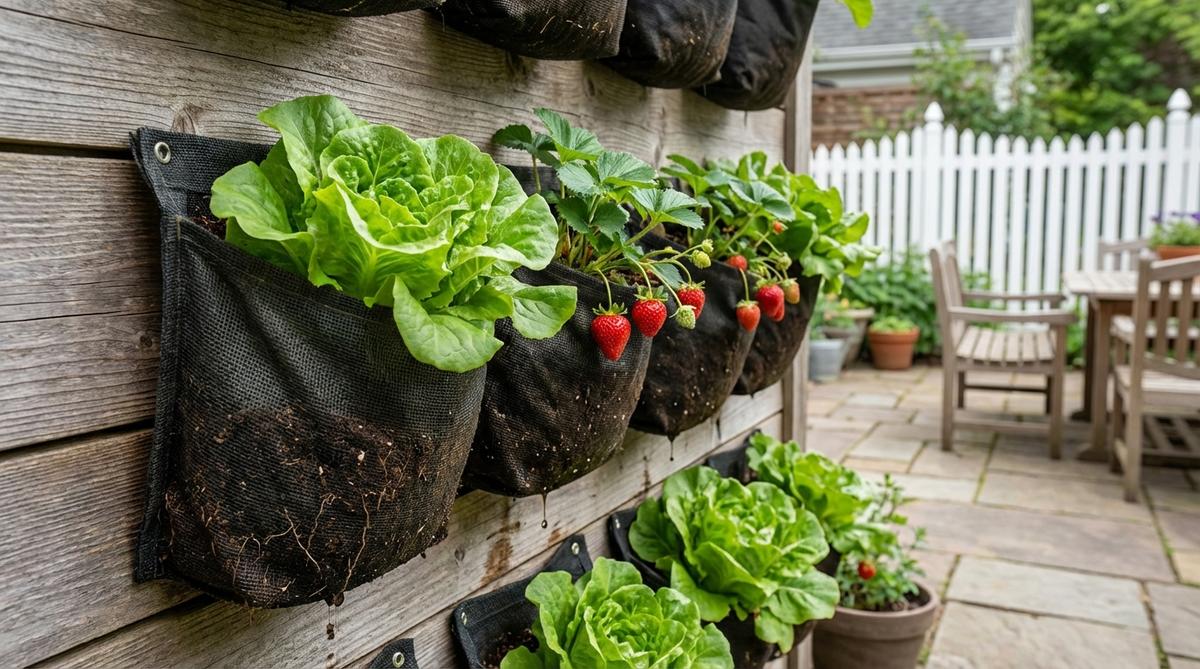
Fabric pouches or rigid pocket systems attach to walls using backing boards. Each pocket holds 1-2 quarts of growing medium, suitable for lettuces, strawberries, and annual flowers.
The flexible fabric allows roots to penetrate freely while excess water drains through material pores. Replace pouches every 2-3 seasons as UV exposure gradually degrades fabric strength.
5. Espalier Fruit Trees
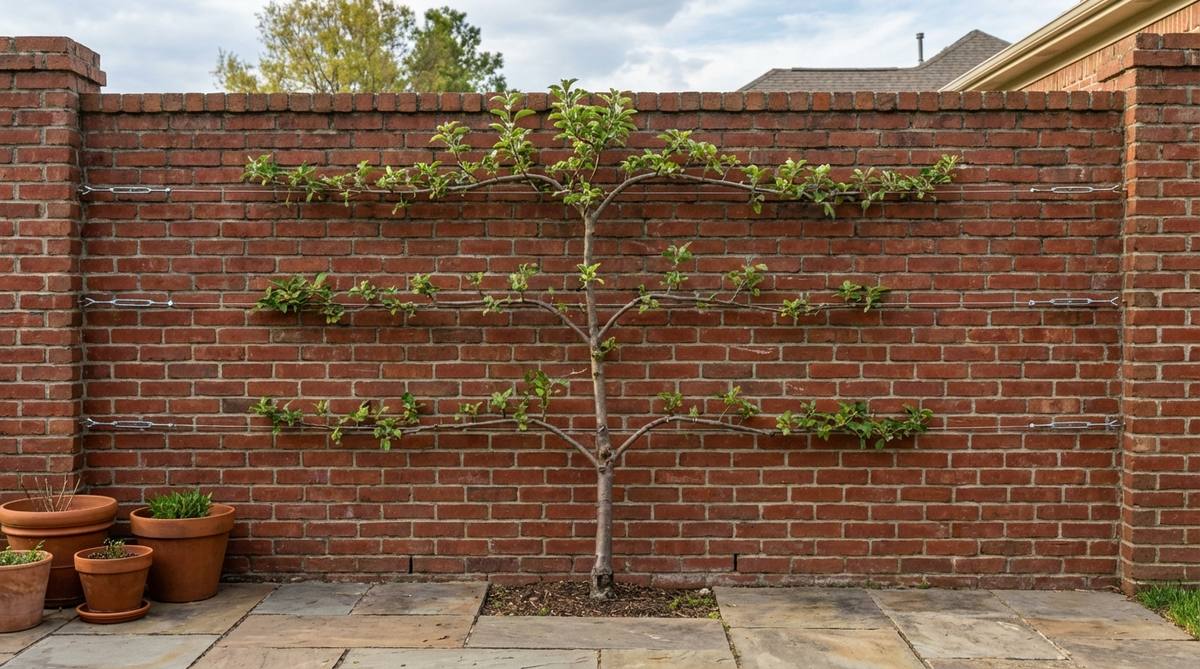
Training fruit trees flat against walls or fences reduces their footprint to 18 inches while maintaining full production capacity. Apple, pear, and fig varieties respond particularly well to espalier techniques.
Begin with young whip-stage trees, bending flexible branches to wire supports as they grow. Prune twice annually to maintain the two-dimensional form and encourage fruiting spur development along horizontal branches.
South-facing walls provide ideal conditions by reflecting additional warmth and light toward ripening fruit. This microclimate often advances harvest dates by 7-10 days compared to free-standing trees.
6. Gutter Garden Channels
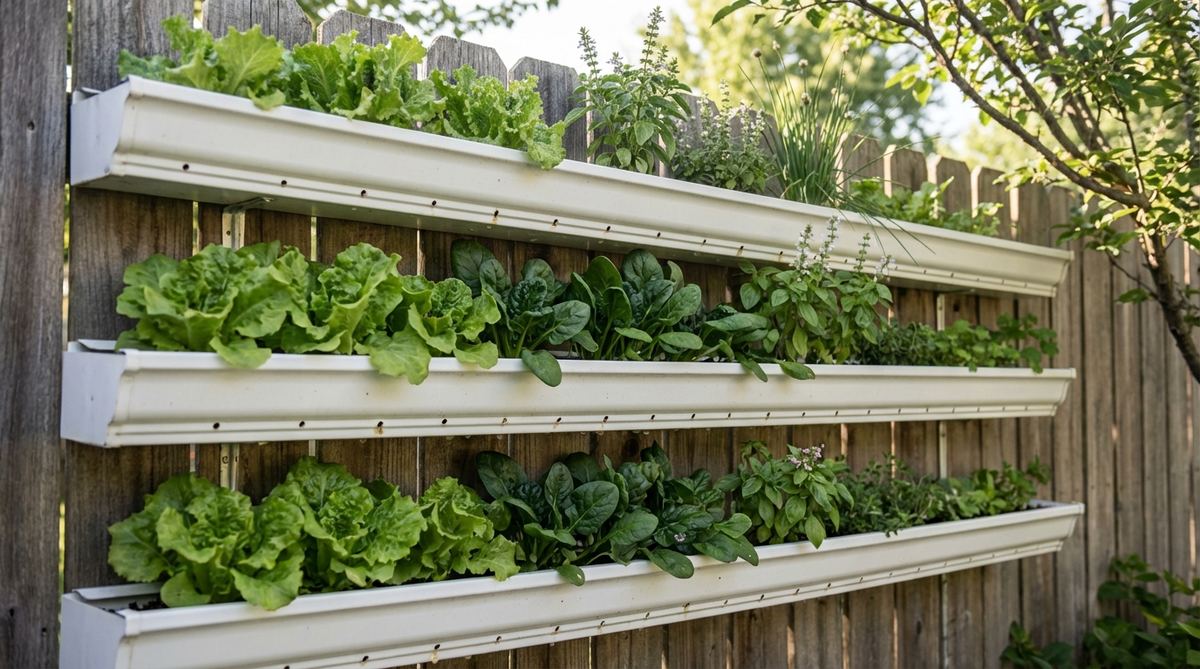
Repurposed vinyl gutters mounted horizontally become shallow growing channels for lettuce, spinach, and herbs. This budget-friendly approach costs roughly 50% less than purpose-built vertical systems.
Drill drainage holes every 8 inches along the gutter bottom, then cap the ends and fill with lightweight potting mix. Mount gutters in stacked rows with 10-12 inches of vertical spacing.
7. Living Wall Felt Pockets
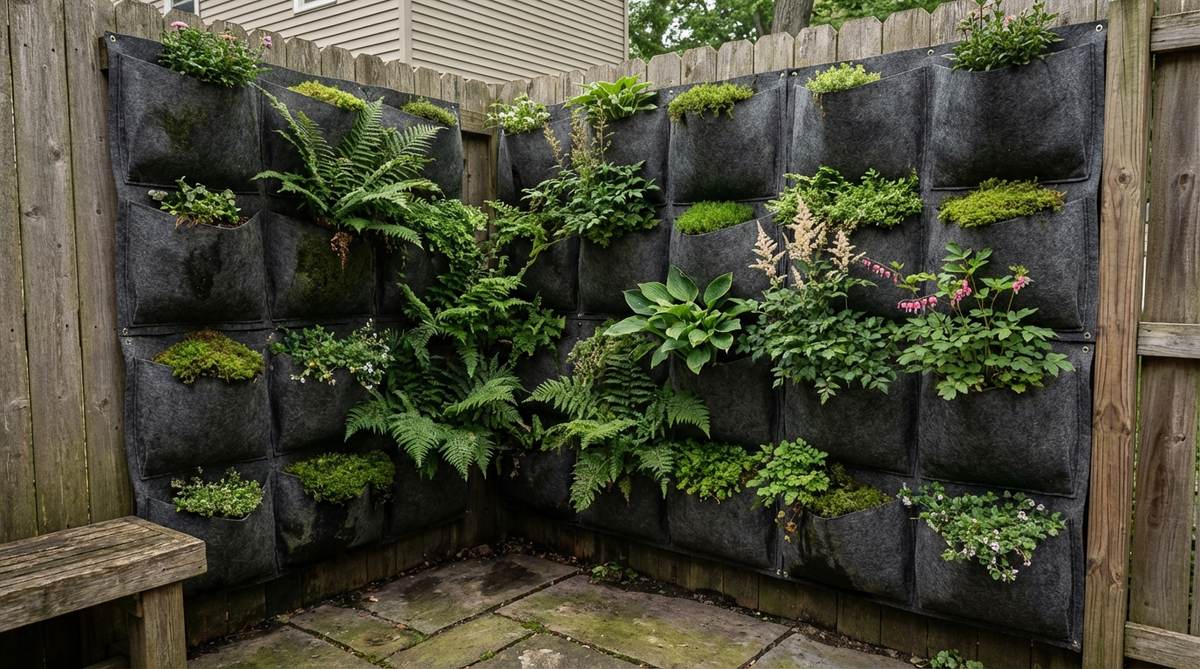
Industrial felt pockets sewn to backing panels create instant vertical gardens when hung like tapestries. The material wicks moisture evenly throughout the profile, reducing irrigation frequency.
This configuration shines in shaded corners where moss, ferns, and shade perennials thrive. The organic texture complements rustic or cottage garden styles better than rigid plastic alternatives.
8. Wooden Pallet Vertical Gardens
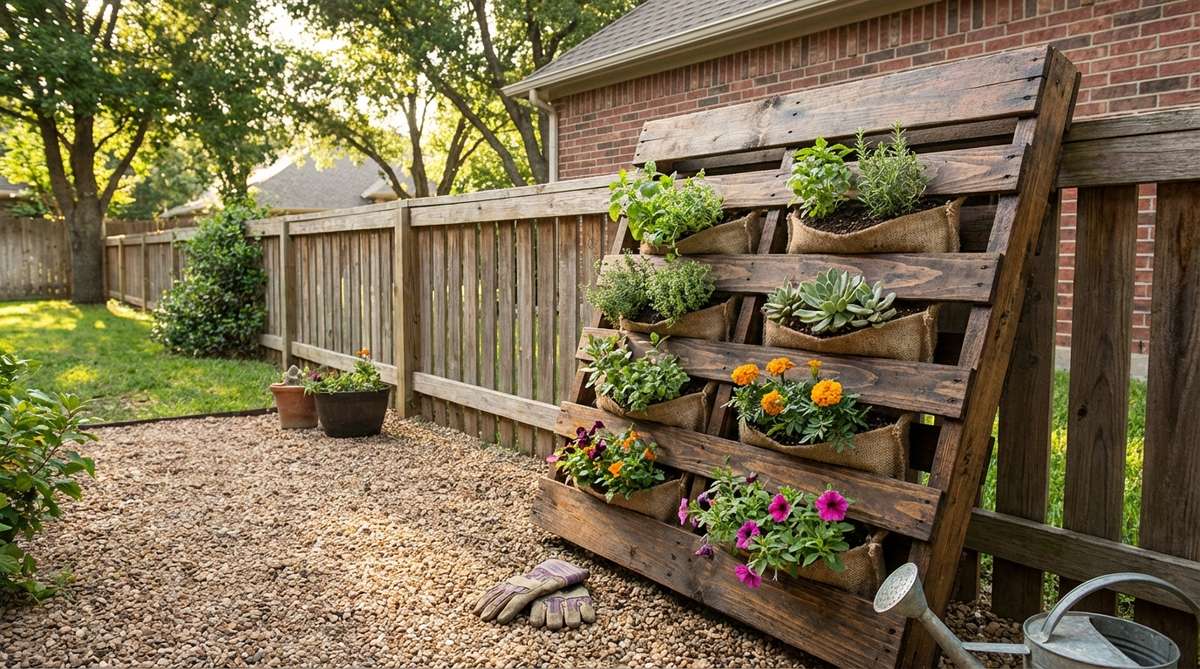
Standard shipping pallets stand vertically after adding landscape fabric backing and filling the gaps with soil. This DIY solution appeals to gardeners who prefer rustic aesthetics and zero-budget projects.
Treat untreated pallets with linseed oil to extend outdoor lifespan to 3-4 seasons. Plant through the slat gaps, allowing roots to establish before standing the pallet upright.
Rotate the pallet 90 degrees every two weeks during the establishment phase so plants adapt to growing at right angles to gravity. After four weeks, the root systems lock into position.
9. Tiered Bamboo Shelving
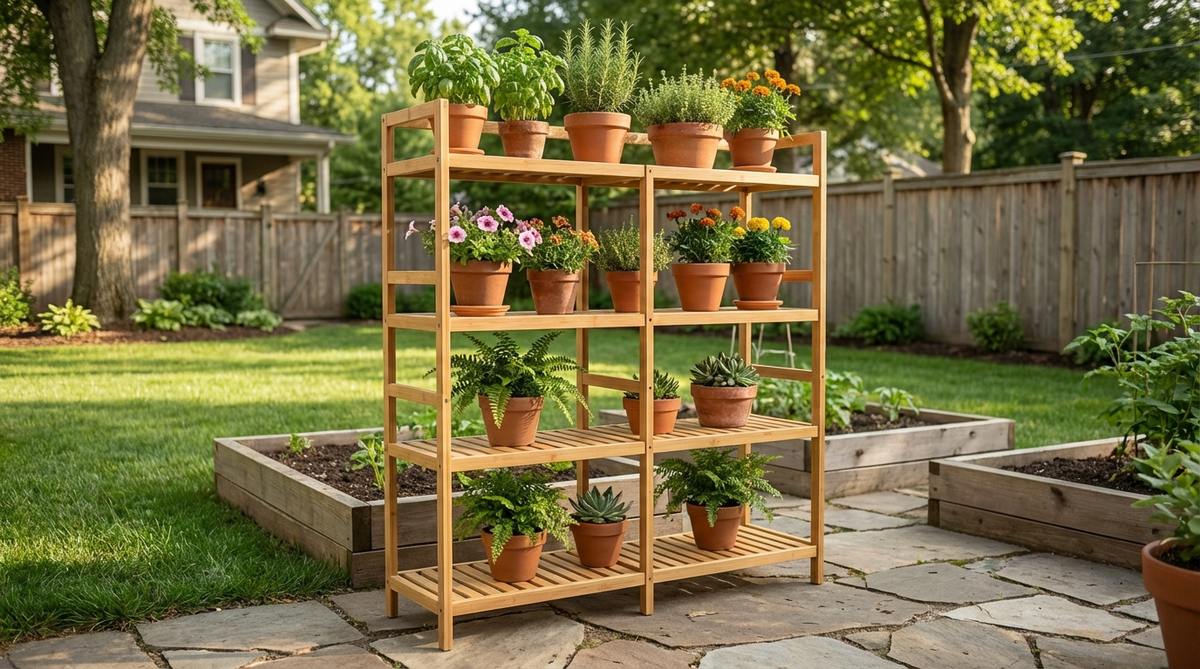
Freestanding bamboo shelving units occupy 2 square feet of ground space while providing 8-10 square feet of display area across multiple levels. Lightweight construction allows repositioning to follow seasonal sun patterns.
Space shelves 8-10 inches apart to accommodate standard nursery pot sizes. Plants on upper tiers receive more direct light, making these positions ideal for sun-loving herbs and flowering annuals.
10. Magnetic Metal Wall Containers
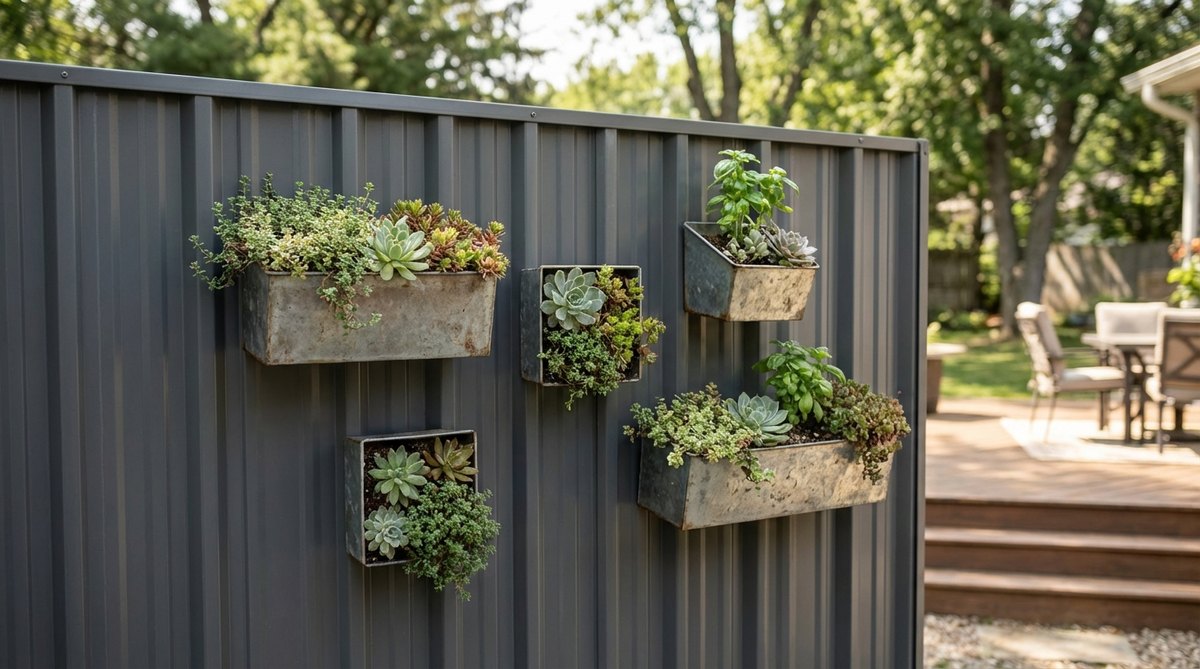
Small magnetic pots attach to steel fences or metal siding panels without drilling or permanent mounting hardware. This rental-friendly option enables instant garden creation on otherwise off-limits surfaces.
The shallow volume restricts plant selection to shallow-rooted varieties like sedums, small succulents, and compact herbs. Group containers in odd-numbered clusters for visual balance.
11. Column Tower Planters
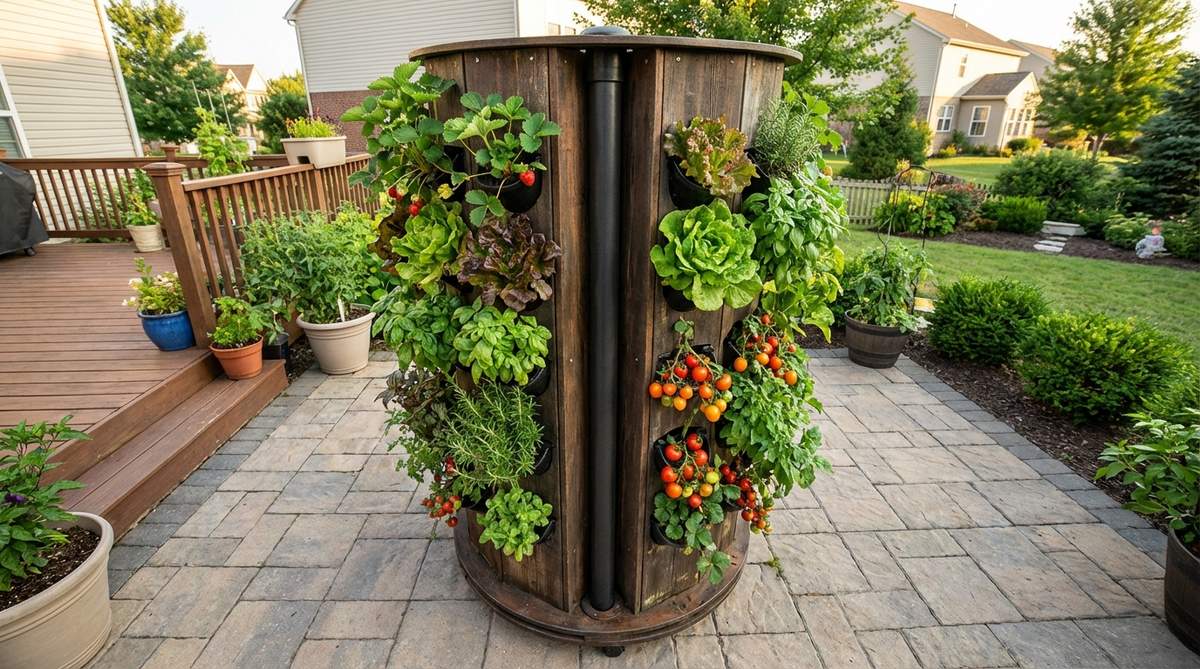
Vertical towers with radial planting openings rotate for even sun exposure. These freestanding structures suit patios and decks where wall mounting proves impractical.
Strawberry towers represent the most common application, but designers now use them for lettuce, herbs, and even compact tomato varieties. The central reservoir distributes water to all levels simultaneously.
Small Garden Corner Ideas That Transform Awkward Angles
Corners present unique challenges due to their convergence of two boundaries, but this geometry also creates opportunities for focal points. Strategic placement of plants, structures, or seating elements transforms these neglected zones into garden highlights.
12. Diagonal Raised Bed
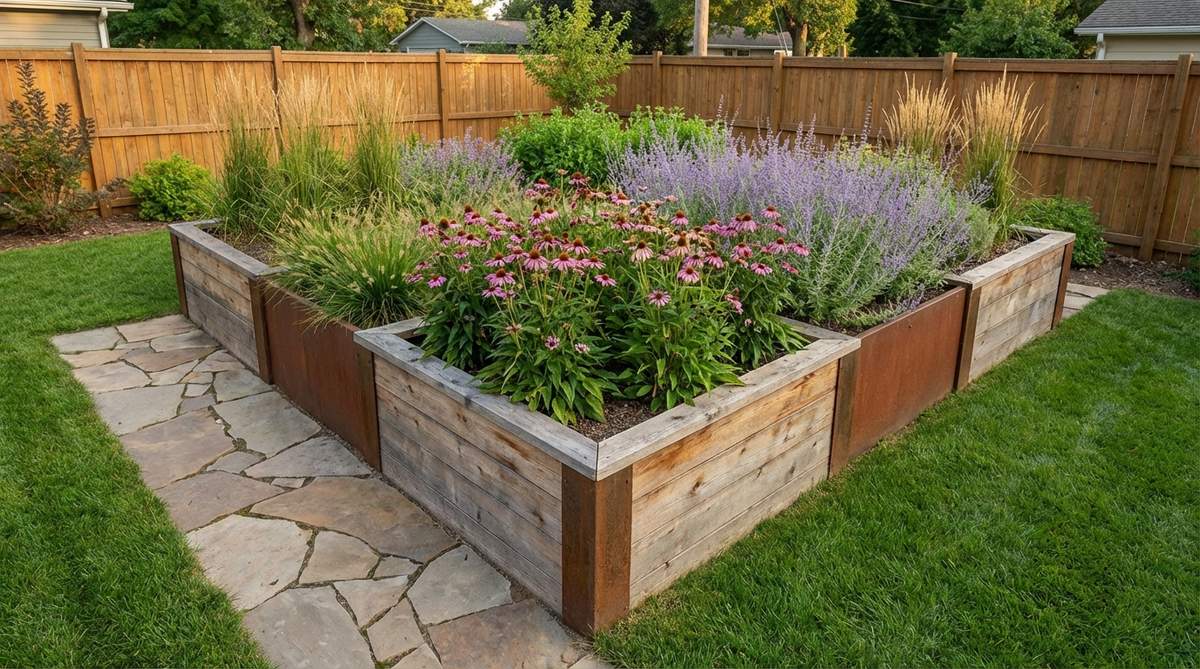
Rather than following the 90-degree corner angle, position a raised bed at 45 degrees to create triangular planting zones on either side. This layout softens the harsh corner geometry while increasing perceived space.
Fill the raised bed with medium-height perennials that won’t block sight lines across the garden. The diagonal orientation naturally draws the eye deeper into the space, creating an illusion of greater depth.
Use matching materials for the raised bed and adjacent paving to maintain visual cohesion. Cedar, composite lumber, or corten steel all weather well in outdoor applications.
13. Corner Water Feature Alcove
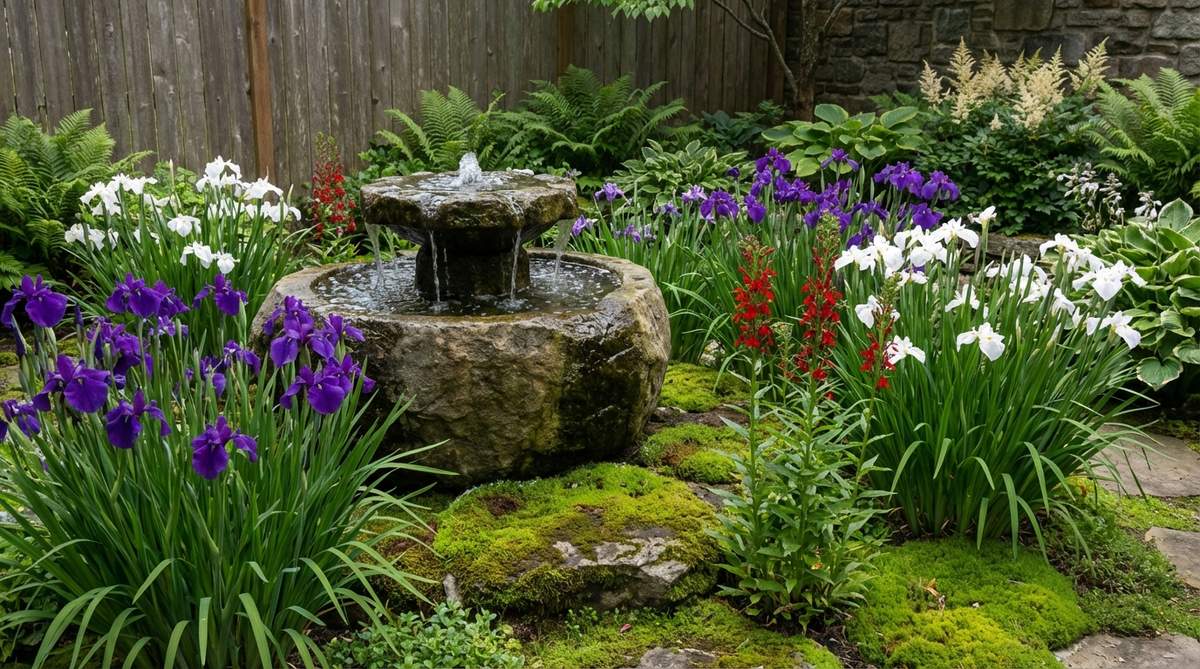
Self-contained fountain units fit neatly into corners, with the sound of moving water masking urban noise pollution. Position the fountain slightly off-center rather than exactly in the corner for more dynamic composition.
Surround the water element with moisture-loving plants like Japanese iris, cardinal flower, or mosses. These plantings reinforce the aquatic theme while concealing the fountain’s mechanical components.
14. L-Shaped Bench with Overhead Pergola
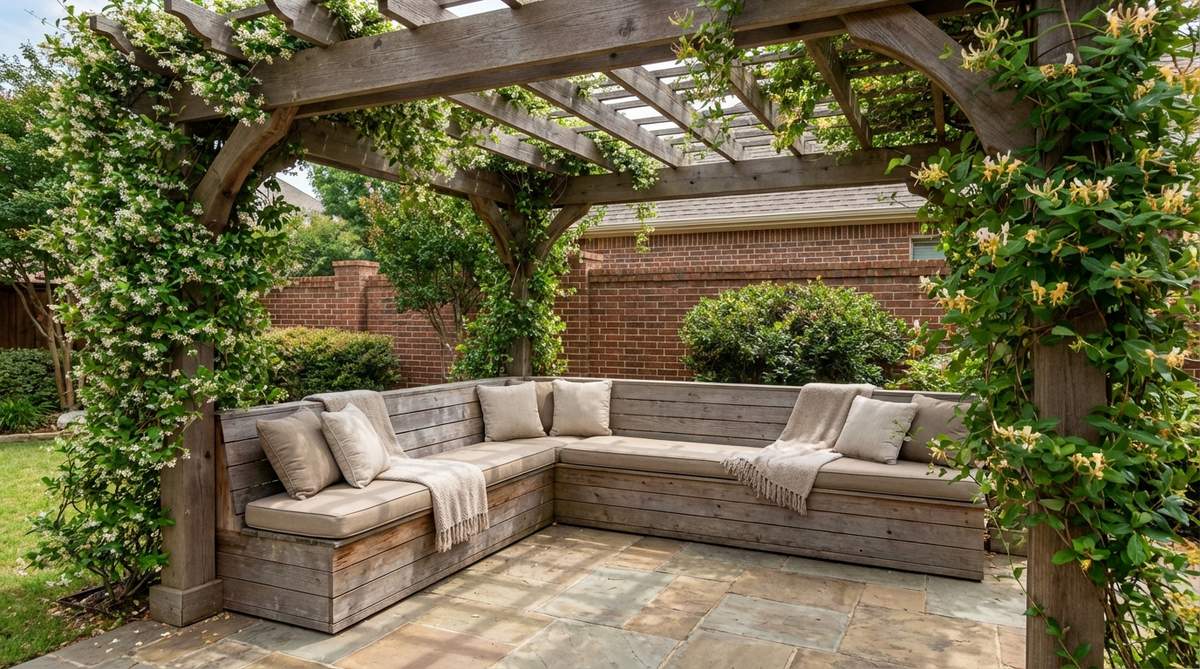
Custom benches following the corner’s L-profile create intimate seating zones that accommodate 3-4 people. Add a corner-mounted pergola above to define the space vertically and support climbing plants.
The enclosed feeling generated by perpendicular walls and overhead structure triggers a psychological sense of protection and privacy. This configuration works especially well in urban gardens where neighboring windows overlook the space.
Train fragrant climbers like jasmine or honeysuckle over the pergola beams. As vines mature, they create a living ceiling that filters harsh afternoon sun while releasing scent at head height.
15. Radial Paving Pattern
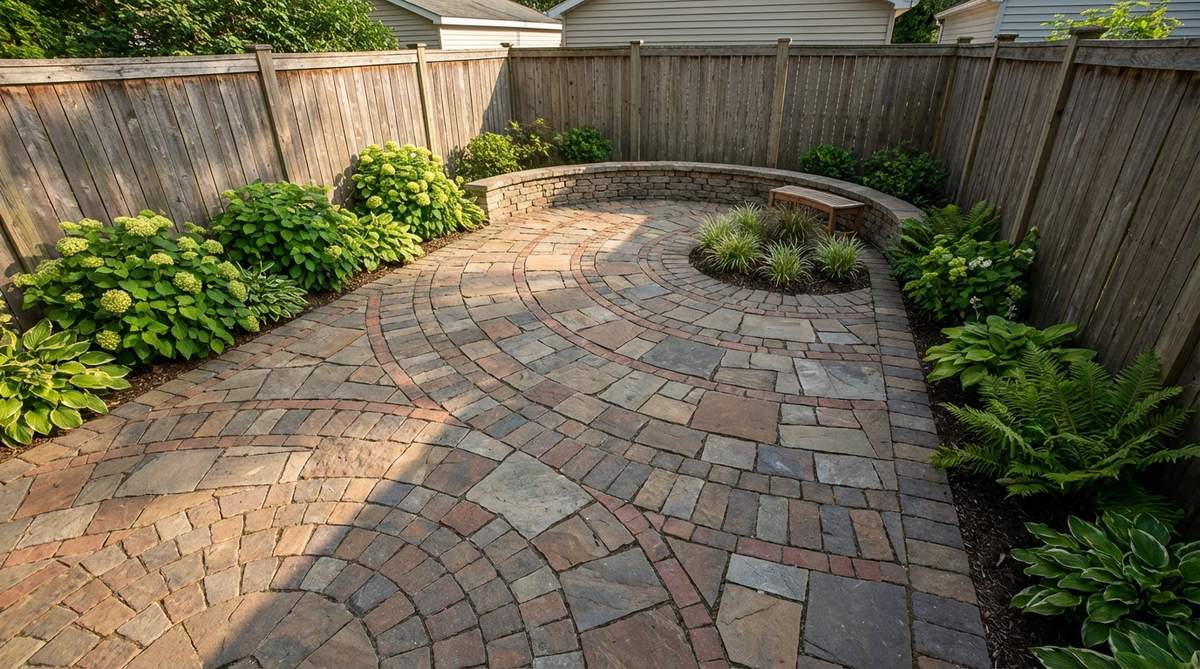
Arrange pavers in a fan pattern emanating from the corner point. This design technique draws attention to the corner as an intentional feature rather than an afterthought.
Mix paver sizes and colors in bands radiating outward to amplify the effect. The curved lines contrast pleasantly with the straight boundaries formed by fences or walls, adding visual dynamism.
16. Stacked Stone Pyramid
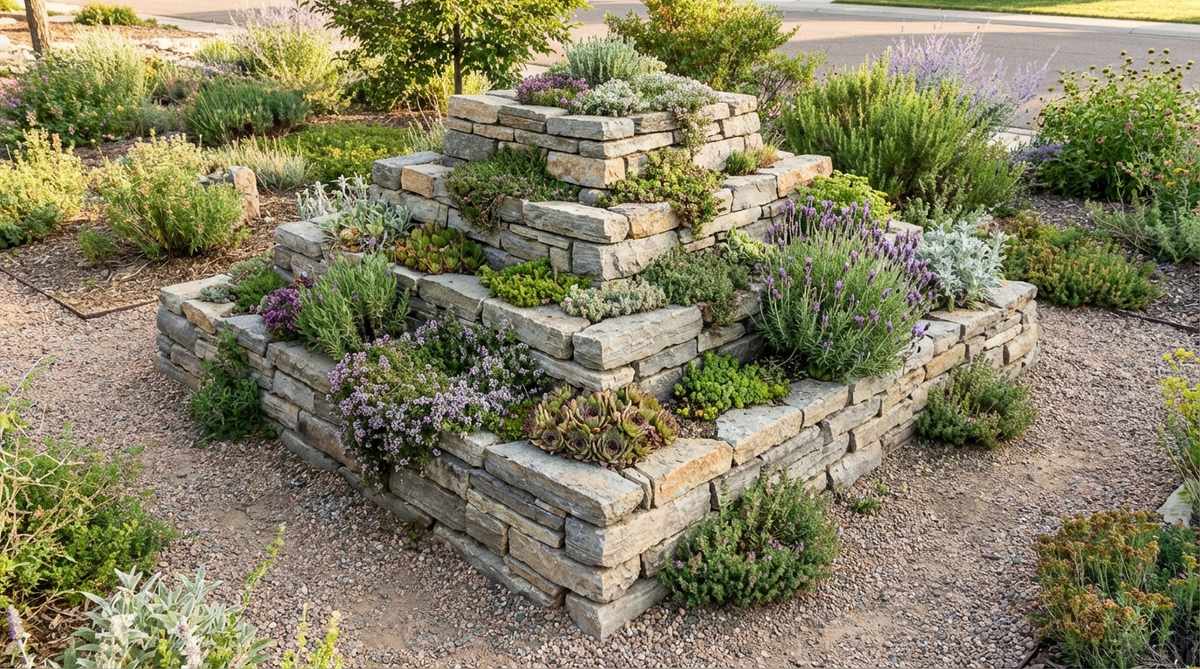
Build a pyramidal stone feature in the corner, filling gaps with alpine plants or sedums. The three-dimensional structure adds height variation to spaces otherwise defined by flat walls.
This configuration drains exceptionally well, making it suitable for Mediterranean or xeric plant palettes. Thyme, lavender, and sempervivum all thrive in the lean, fast-draining conditions.
17. Corner Trellis Archway
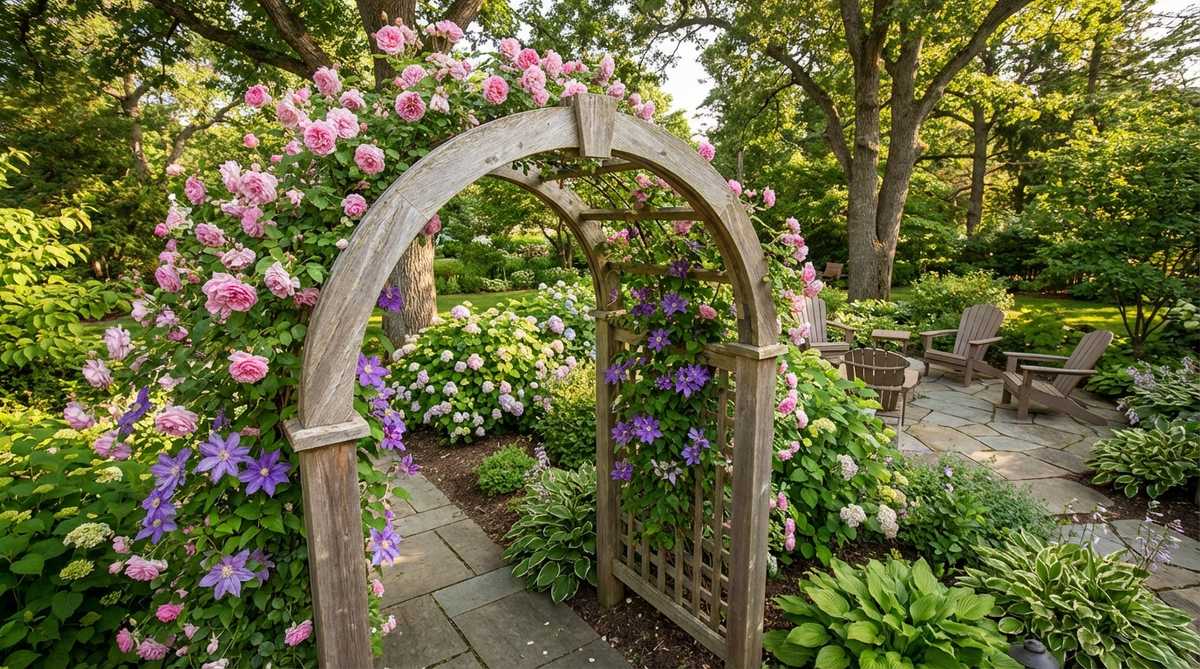
Install an arched trellis spanning the corner diagonally, creating a passage or gateway effect. This moves circulation through the corner rather than around it, engaging the space actively.
Climbing roses, clematis, or wisteria quickly clothe the structure, transforming it into a living architectural element. The arch frames views beyond, encouraging exploration of adjacent garden areas.
18. Gravel Garden Corner
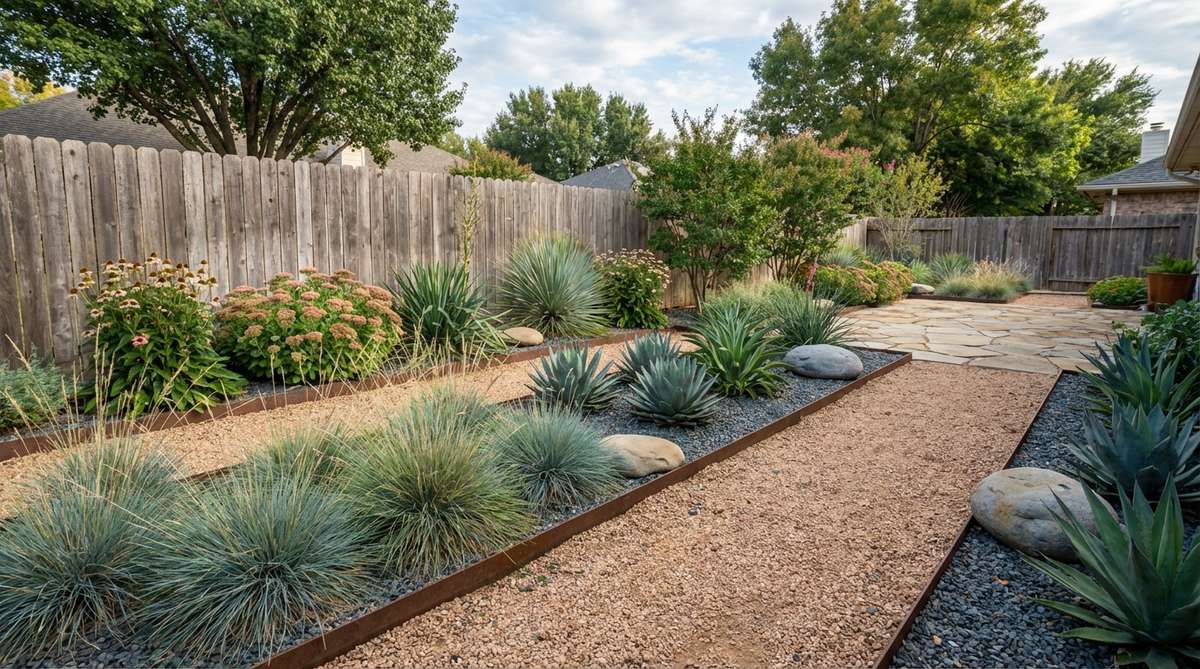
Fill the corner with decorative gravel as a low-maintenance alternative to lawn or traditional planting beds. Set plants in pockets or containers within the gravel field.
This approach reduces watering requirements by 40-50% compared to conventional beds while suppressing weed germination. Ornamental grasses, agaves, and architectural perennials provide striking contrast against neutral gravel tones.
Edge the gravel zone with steel or aluminum strip to prevent migration onto adjacent lawn or paving. Annual top-dressing maintains depth as gravel settles over time.
19. Corner Sculpture Plinth
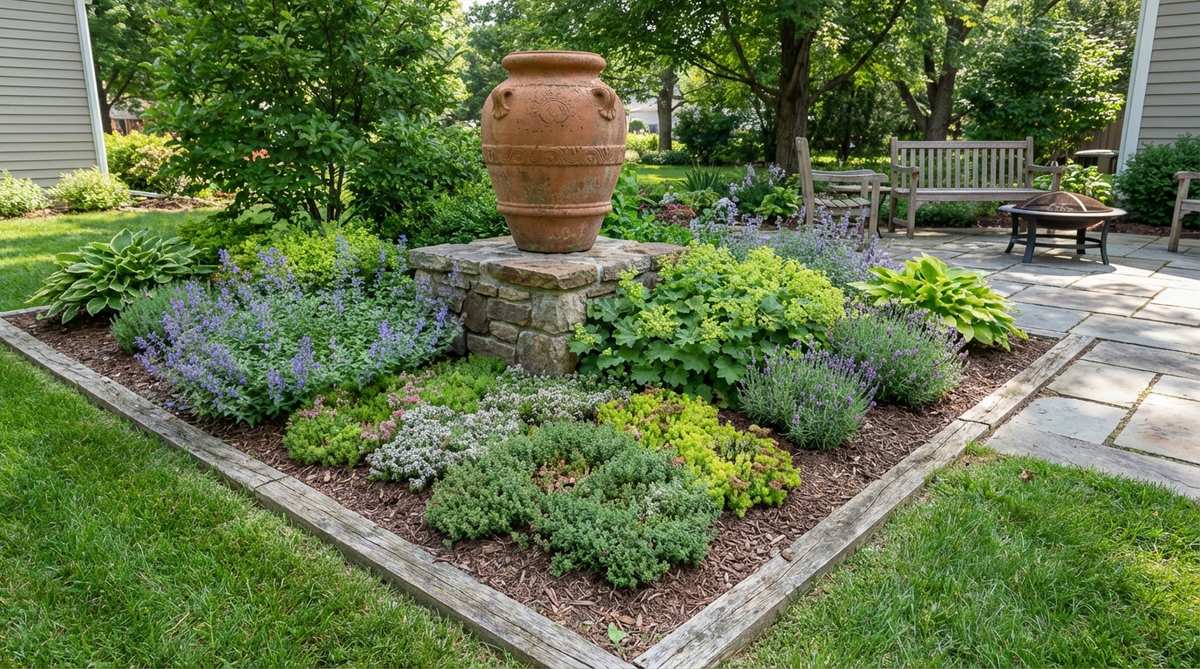
Elevate a focal-point sculpture or large decorative container on a corner plinth. The raised position increases visibility from multiple garden viewpoints.
Surround the base with low groundcovers or spreading perennials that won’t compete visually with the elevated feature. This layering adds depth while keeping attention focused upward.
20. Mirrored Corner Panel
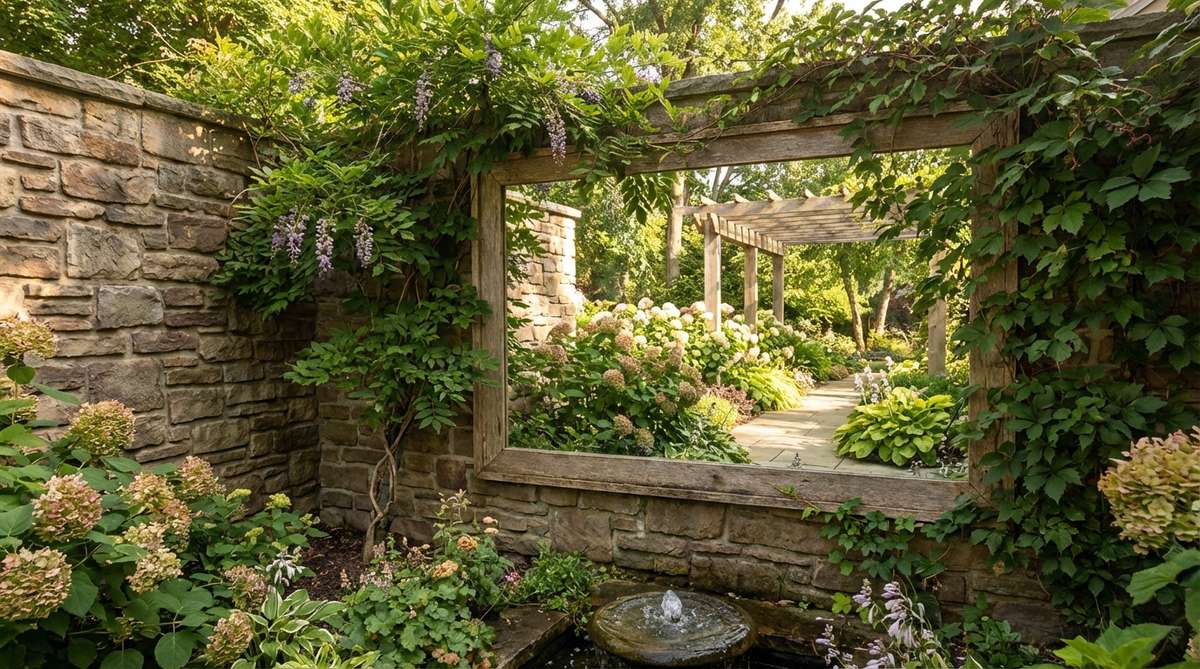
Mount weather-resistant mirror panels on one corner wall to reflect light and create the illusion of extended space. Frame the mirror with climbing plants to integrate it naturally into the garden composition.
Position mirrors to reflect the most attractive garden views rather than showing neighboring properties or utility areas. The reflection effectively doubles the visual impact of prized plantings.
21. Semi-Circular Patio
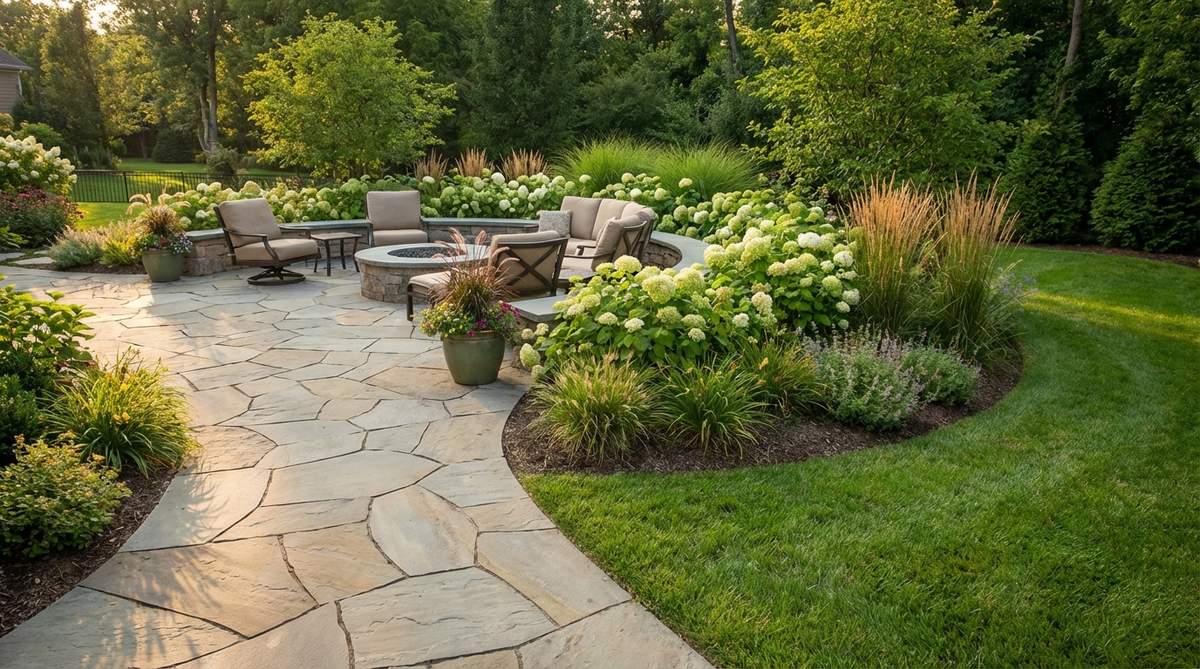
Cut a radius into the corner to create a curved patio space. The rounded form contrasts with rectilinear boundaries, introducing organic geometry that feels more natural and inviting.
This layout increases usable patio square footage by eliminating the dead zone where corner walls meet. Curved edges also facilitate better furniture placement compared to sharp angles.
22. Bamboo Grove Corner
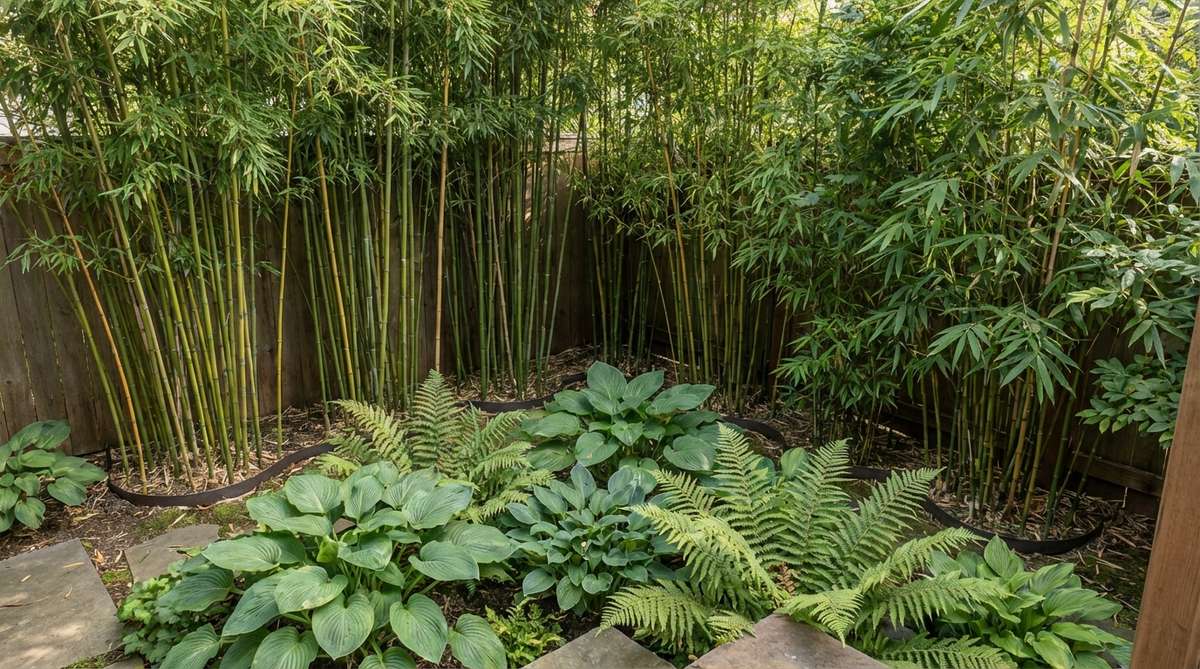
Plant clumping bamboo varieties in the corner to create a vertical screen with Asian-influenced aesthetics. Use rhizome-barrier products to prevent spreading beyond the intended zone.
The bamboo’s upright form emphasizes vertical space while rustling culms add subtle sound texture. Underplant with ferns or hostas to complete the layered canopy structure.
Small Garden Sitting Area Ideas For Relaxation Zones
Functional seating transforms small gardens from purely visual displays into lived-in outdoor rooms. Strategic placement ensures comfortable access while maintaining planting density around the perimeter.
23. Built-In Corner Bench
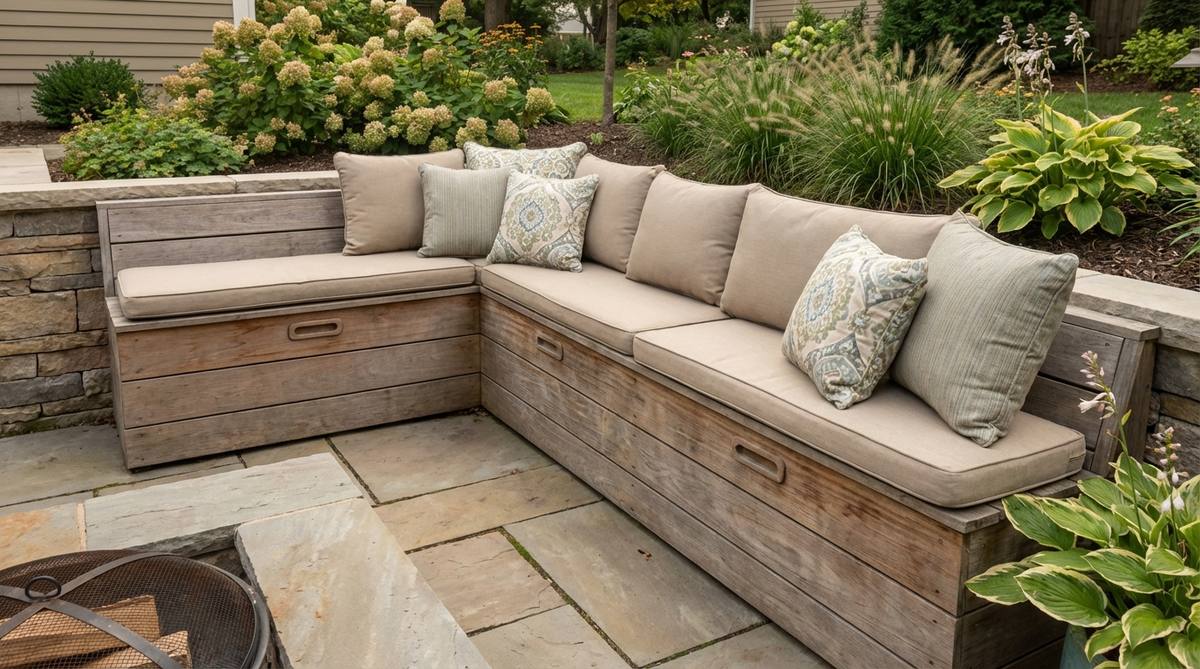
Permanent benches installed along one or two walls consume zero floor space while providing ample seating capacity. Add lift-up seats over storage compartments for garden tools and cushions.
Finish benches in weather-resistant materials like teak, composite decking, or sealed cedar. The horizontal lines created by bench surfaces visually expand narrow spaces.
Position benches 16-18 inches high and 18 inches deep for optimal comfort. Back support should angle 5-10 degrees from vertical to encourage relaxed posture.
24. Bistro Set on Circular Pad
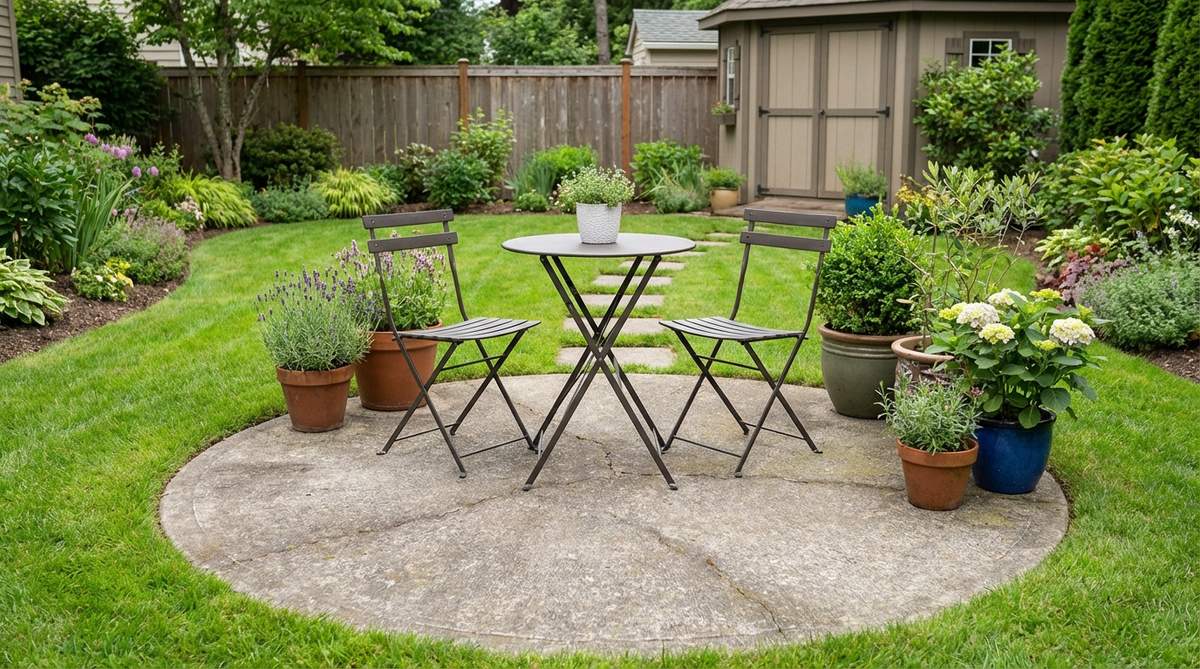
Pour a 4-foot diameter concrete pad or lay circular paving to define a compact dining zone. This dedicated surface prevents furniture legs from sinking into soil or mulch.
Metal bistro sets occupy minimal space while accommodating two people comfortably. Folding versions store flat during winter or when hosting larger gatherings requires flexibility.
25. Hammock Between Posts
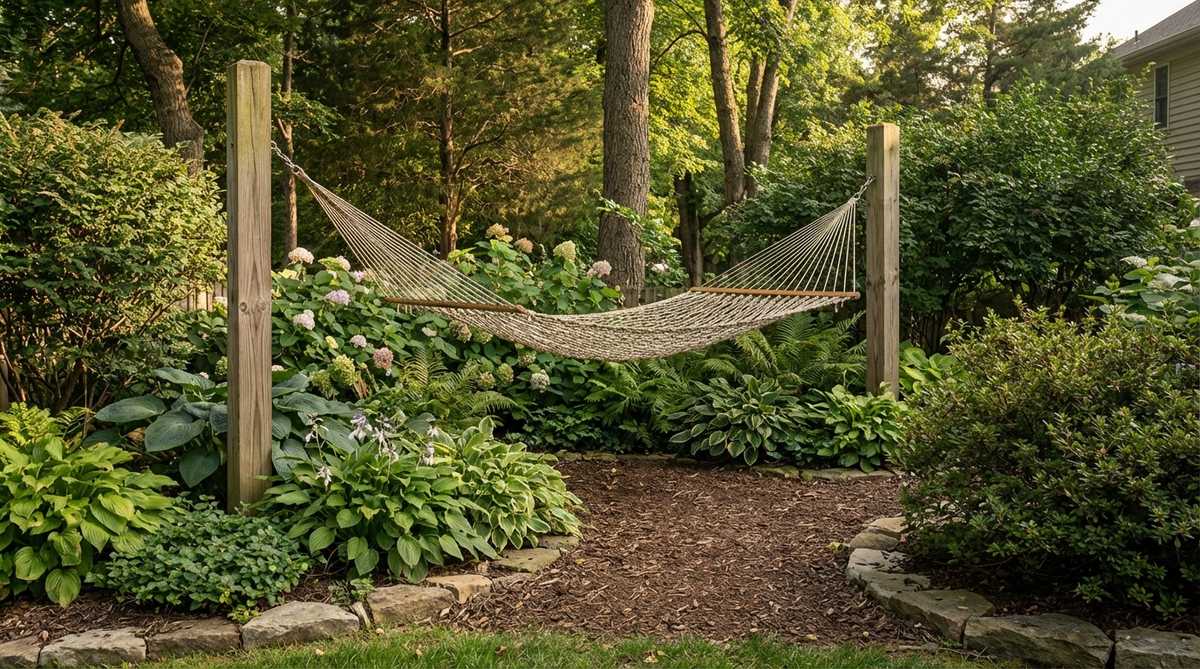
Install two posts 10-12 feet apart to support a hammock or hanging daybed. This suspended seating leaves ground space entirely available for planting beneath.
Select post materials that complement existing garden structures—matching fence posts creates cohesion while contrasting metal or stone makes the feature more prominent. Bury posts 30 inches deep in concrete footings to handle lateral loads safely.
Planted screening on three sides creates an enclosed hammock nook that feels private despite the open design. Fragrant plants like gardenia or daphne enhance the relaxation experience.
26. Window Seat Against Fence
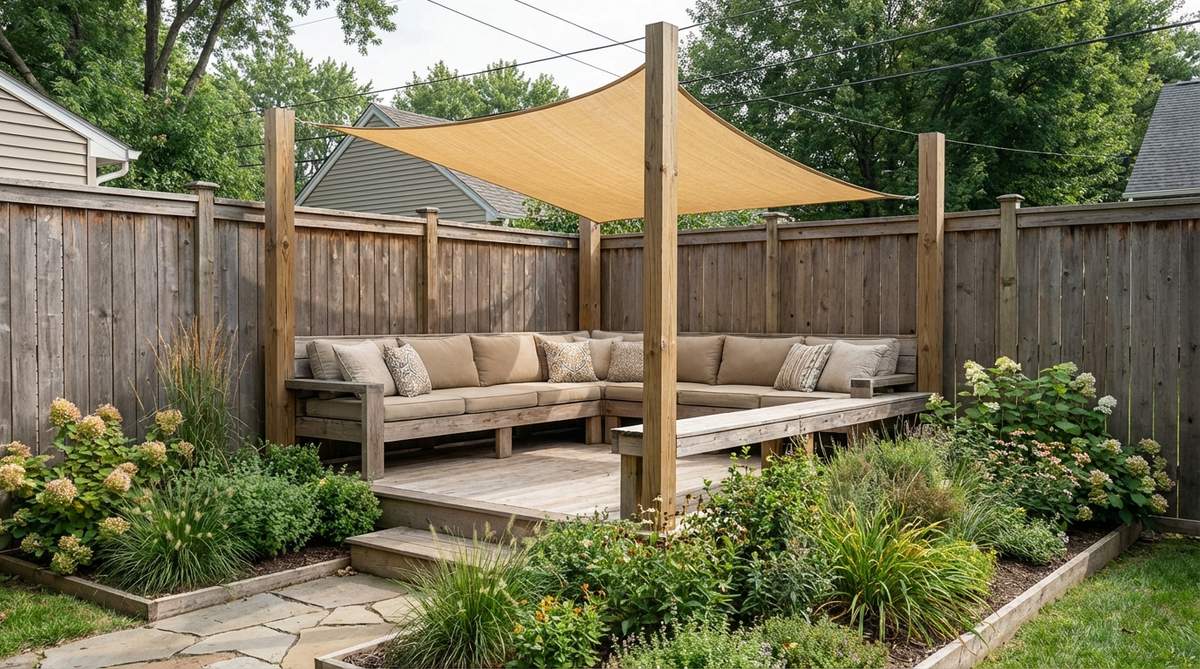
Build a raised platform against the fence line with cushioned seating that functions like an outdoor window seat. The elevated position provides better views over planting beds.
Frame the seat with vertical posts supporting an overhead canopy or simple shade sail. This partial enclosure defines the zone without requiring permanent roof structures.
27. Sunken Fire Pit Seating
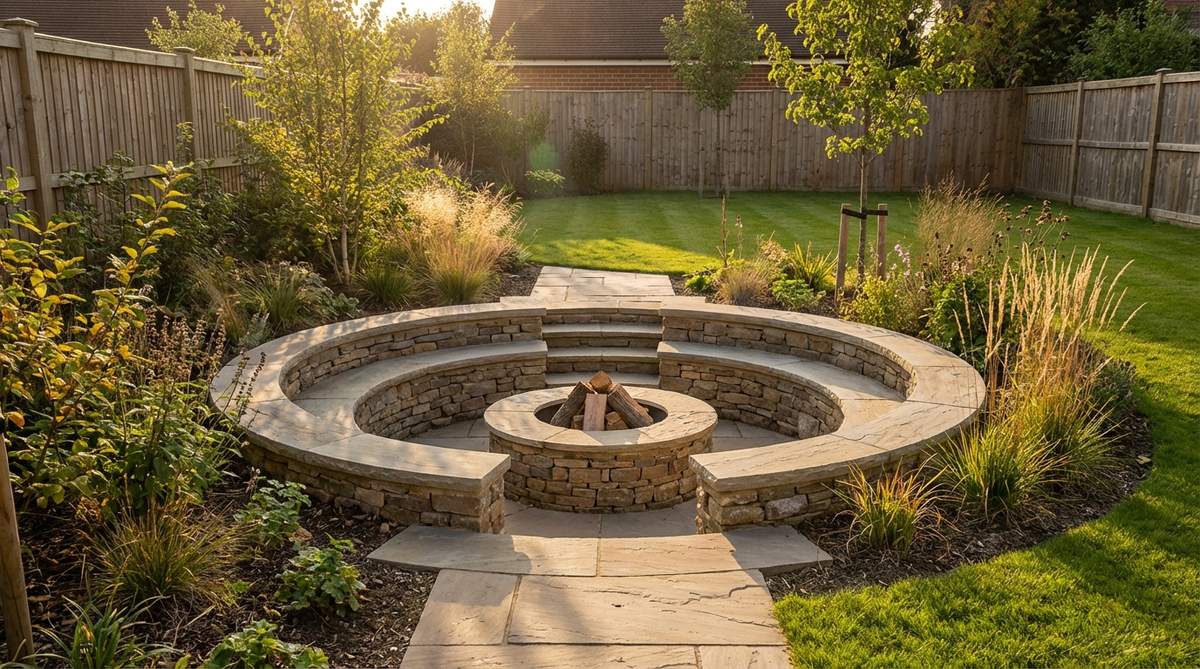
Excavate a 12-18 inch deep circular zone for integrated bench seating around a central fire feature. The lowered floor plane creates definition without vertical barriers that would block sight lines.
This configuration works particularly well in flat gardens where level changes add spatial interest. The sunken position also provides wind protection, extending the season for outdoor entertaining.
Line the excavated area with retaining walls constructed from natural stone or concrete block. Cap walls with smooth coping stones that double as bench surfaces.
28. Swing Seat Pergola
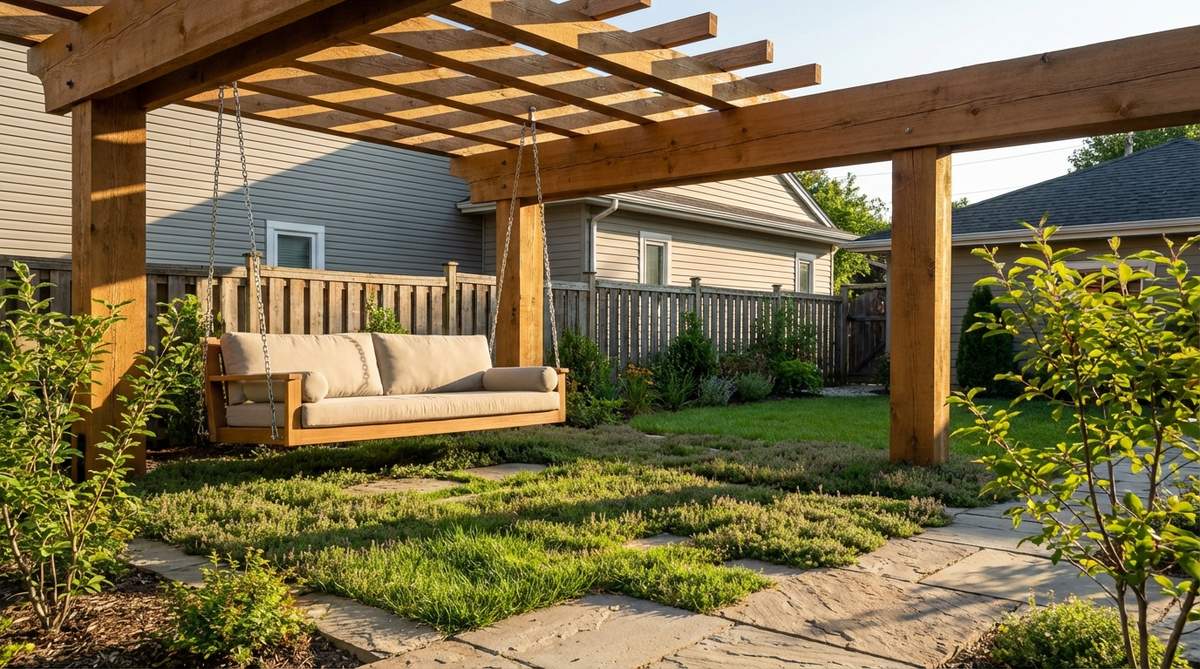
Hang a bench swing from substantial pergola beams to create dynamic seating that appeals to all ages. The gentle motion adds a playful element while maintaining adult-friendly comfort.
Size the pergola to extend 2 feet beyond the swing’s arc on all sides for safe clearance. Plant the pergola base with low-maintenance groundcovers that tolerate foot traffic from users boarding the swing.
29. Deck Box Seating
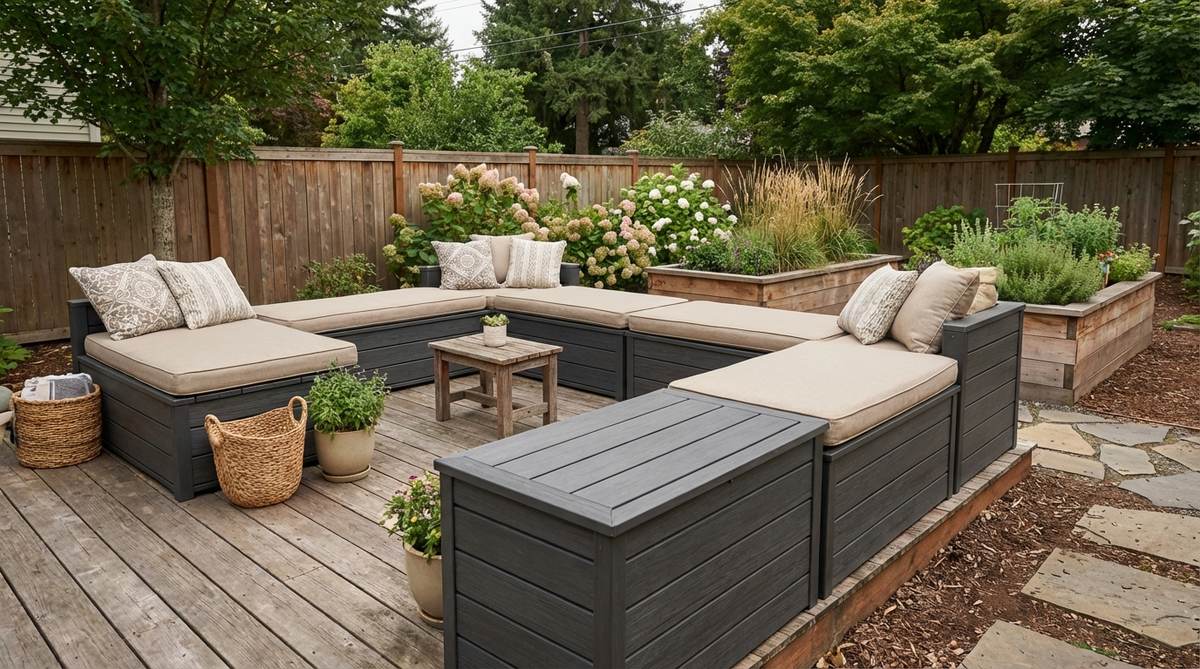
Weatherproof deck boxes with flat lids serve dual purposes as seating and storage. Arrange 2-3 boxes in a conversational grouping, adding cushions for comfort.
These mobile units allow seasonal rearrangement to follow sun patterns or accommodate different activities. Interior storage capacity handles gardening supplies, outdoor toys, or entertaining accessories.
30. Alcove Bench with Arbor
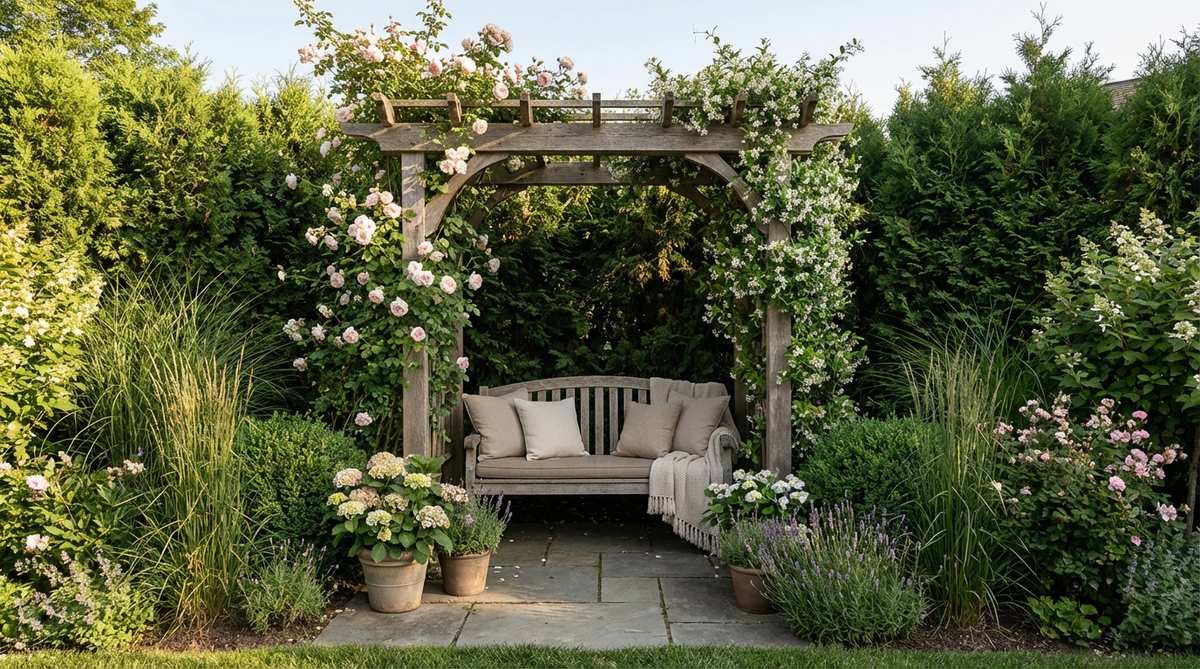
Position a bench in a natural alcove or create one using planted screens on three sides. Add an arbor overhead to frame the space and support climbing plants.
The enclosed three-sided configuration triggers instinctive comfort responses by protecting the occupant’s back and flanks. This psychological effect makes even exposed sites feel secure and private.
Train scented climbers over the arbor to create a sensory-rich environment. Roses, jasmine, or clematis all release fragrance at nose height when seated.
31. Log Round Seating
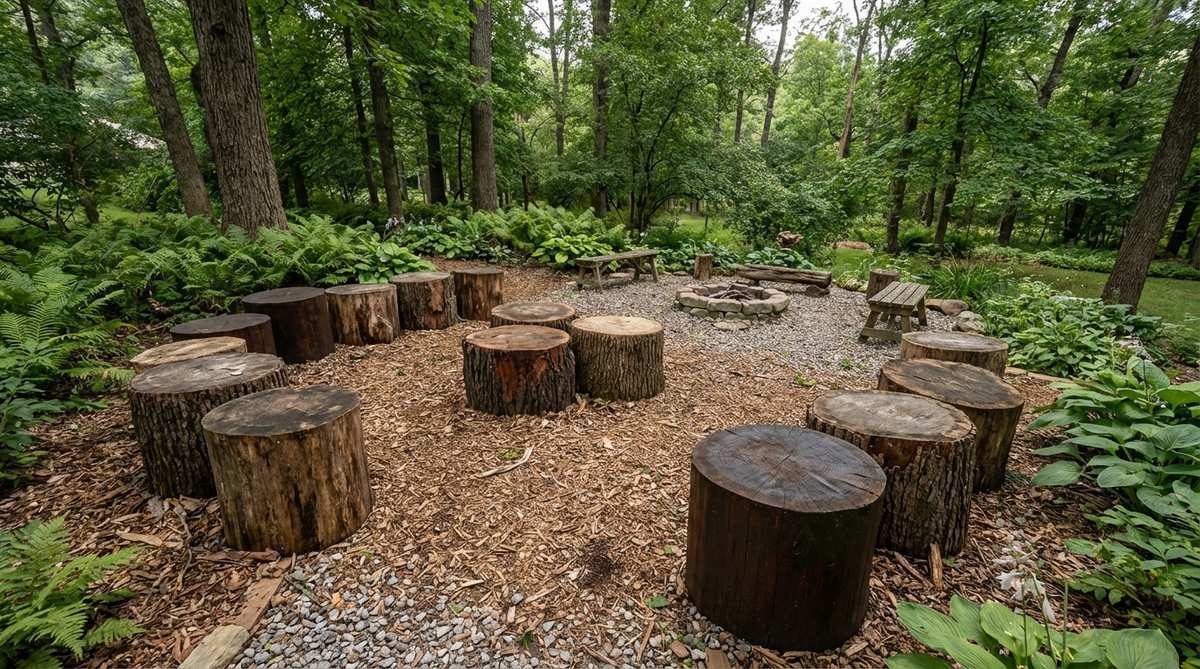
Large diameter log rounds placed vertically become rustic seats or side tables. This approach suits woodland or naturalistic garden styles where formal furniture would feel out of place.
Seal cut surfaces with exterior wood finish to slow decay and prevent insect damage. Arrange rounds in irregular groupings rather than formal rows to maintain the organic aesthetic.
32. Wall-Mounted Fold-Down Table
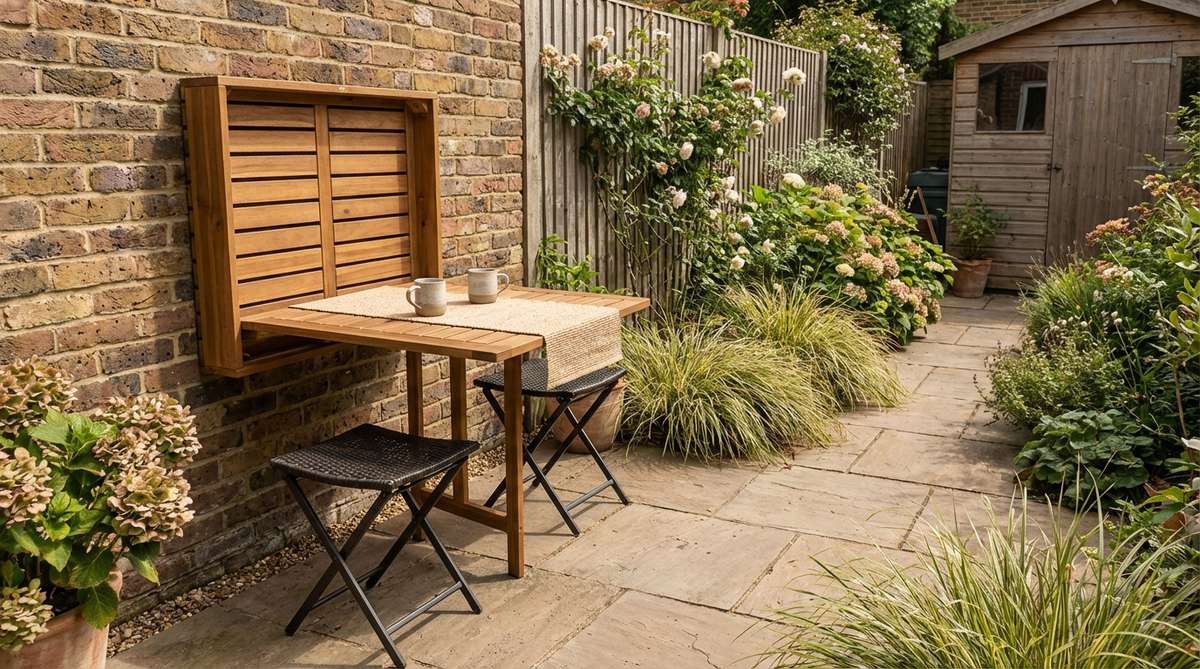
Install a hinged table that folds flat against the fence or wall when not in use. This space-saving solution provides dining or work surfaces without permanent floor commitment.
Add fold-down chairs or use portable stools that stack or hang on wall hooks. The entire dining setup can disappear in 30 seconds, returning the space to circulation or other activities.
Small Garden Area Ideas Using Compartmentalization
Dividing compact spaces into distinct micro-zones creates the illusion of greater area while improving functionality. This technique applies principles from traditional Japanese garden design, where screens and partial barriers guide circulation and discovery.
33. Bento Box Garden
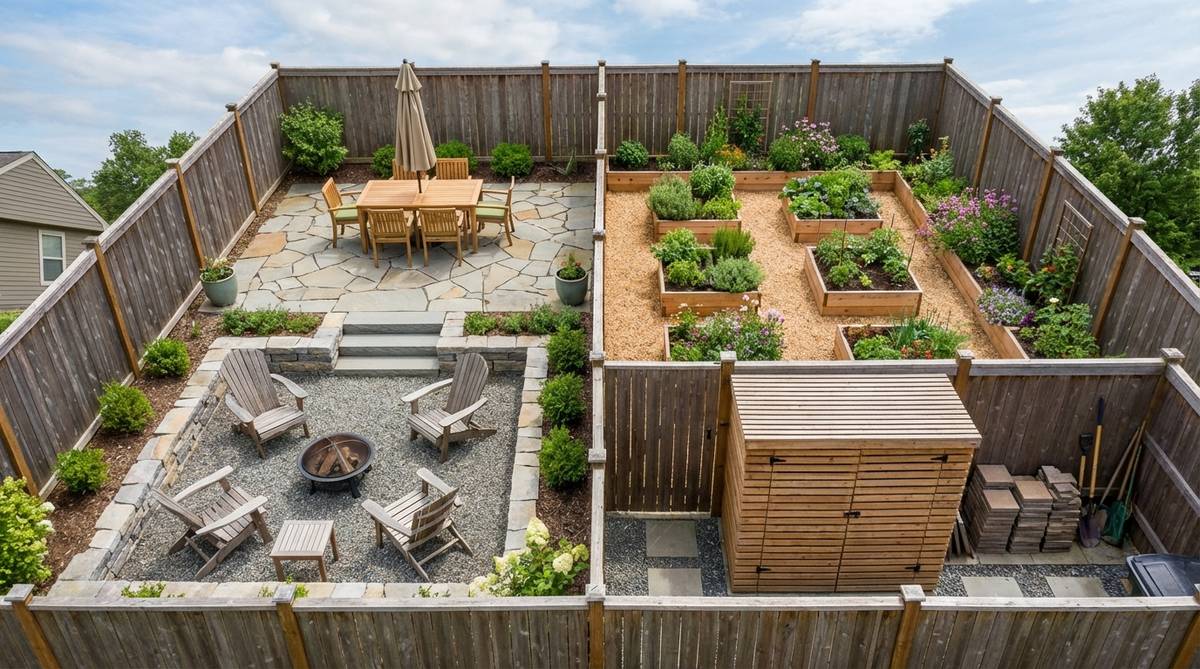
Organize the entire garden into rectangular or square zones, each with specific purposes—dining, growing, relaxing, storage. Use different surface materials to visually separate each compartment.
This approach particularly suits square or rectangular plots under 400 square feet where traditional lawn-and-border layouts feel cramped. Each zone receives appropriate infrastructure without compromise.
Designers often assign 30-40% of space to social functions, 40-50% to planting, and 10-20% to circulation and storage. These ratios adjust based on client priorities.
34. Stepped Level Changes
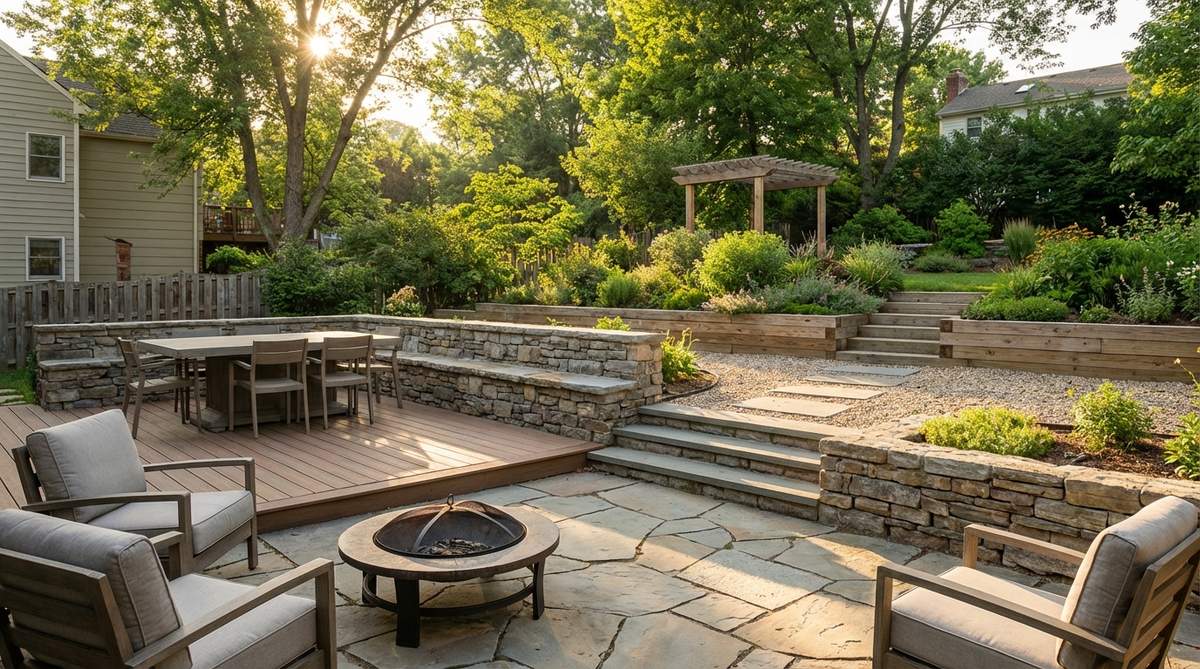
Create multiple levels using low retaining walls or raised platforms even in flat sites. The vertical variation divides space psychologically while adding architectural interest.
A single 8-12 inch level change suffices to signal zone transition. Larger shifts of 18-24 inches create more dramatic separation and can double as informal seating edges.
35. Hedged Compartments
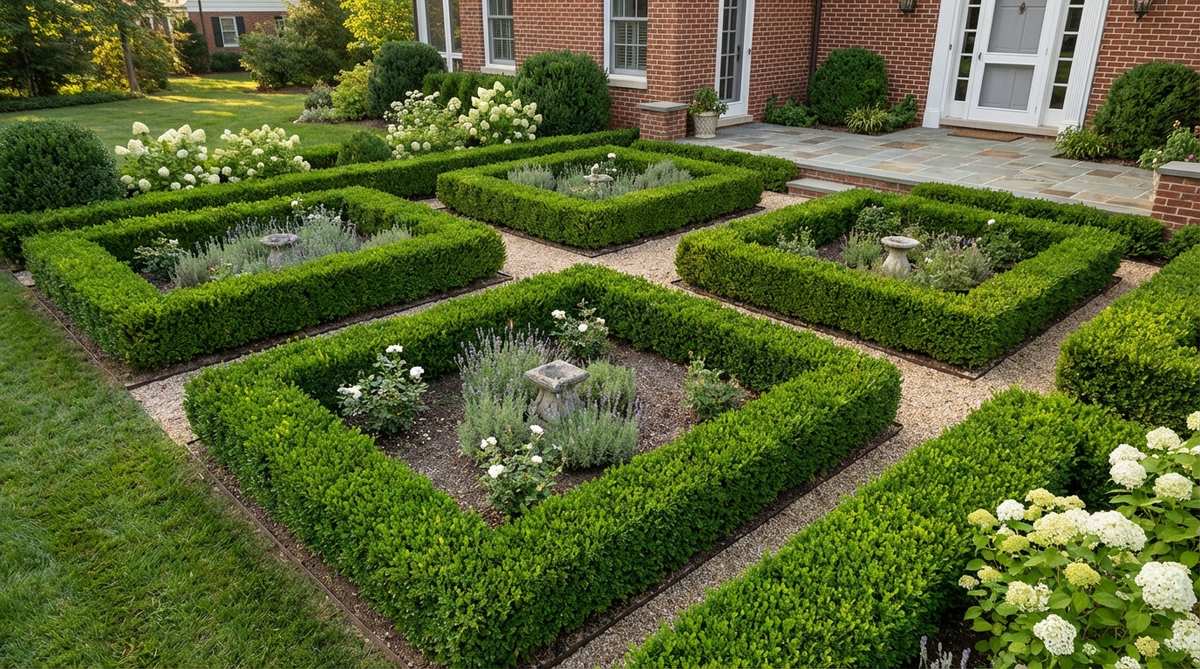
Low boxwood or other compact hedges partition the garden without solid barriers that would create tunnel-vision effects. Maintain hedge height at 18-24 inches to preserve views while defining boundaries.
This layout works particularly well in period properties where formal garden styles align with architectural character. Regular clipping maintains crisp geometry essential to the design.
36. Diagonal Path Division
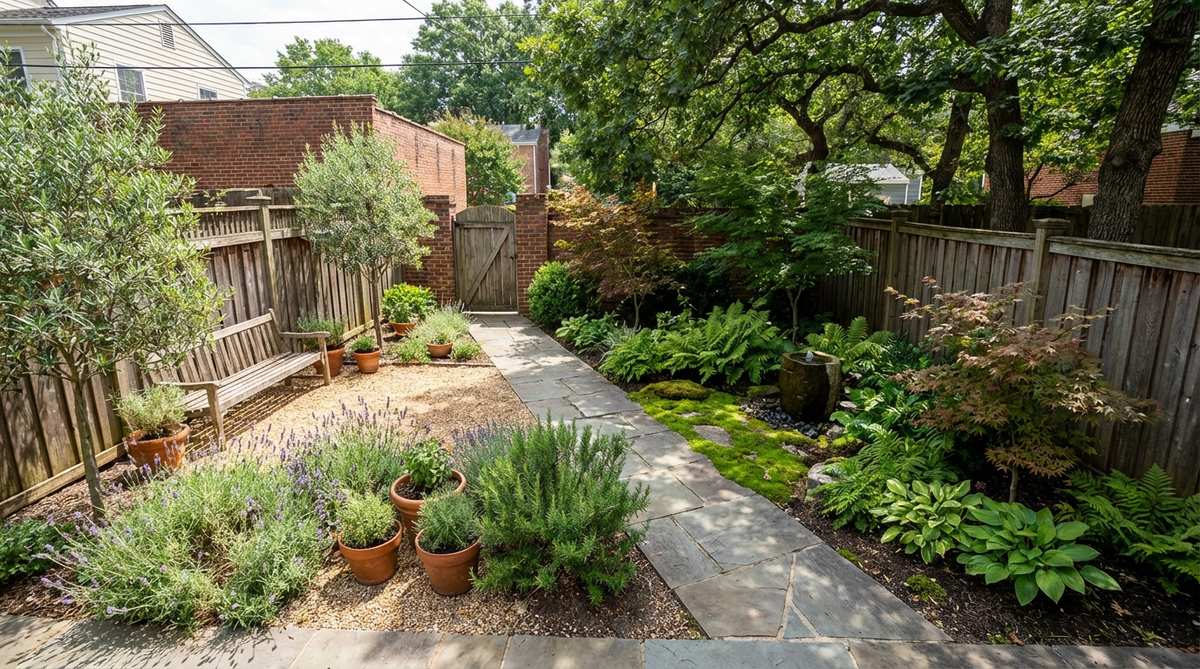
Run the primary path diagonally across the space rather than straight back from the entry point. This creates two asymmetrical triangular zones that feel larger than equal rectangles.
The diagonal also extends the walking distance, increasing perceived garden size. Users experience more garden area despite identical square footage.
Plant the two resulting triangles with contrasting themes—one sunny and Mediterranean, the other shaded and woodland. The diversity adds interest beyond what single-zone designs achieve.
37. Circular Lawn Island
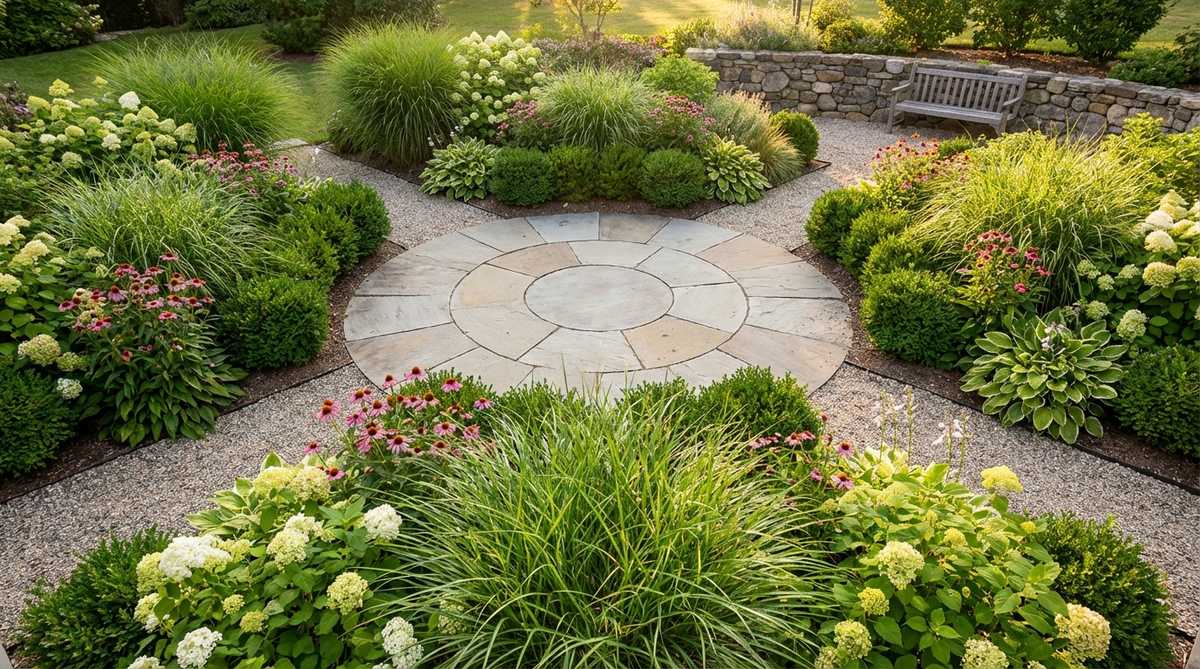
Cut a circular lawn or paved area into the center of the space, surrounding it completely with planted borders. This reverses the typical layout where planting occupies edges only.
The geometry creates 350-degree garden views from any central position. Circulation paths access the center from multiple points, improving traffic flow during gatherings.
38. See-Through Screening
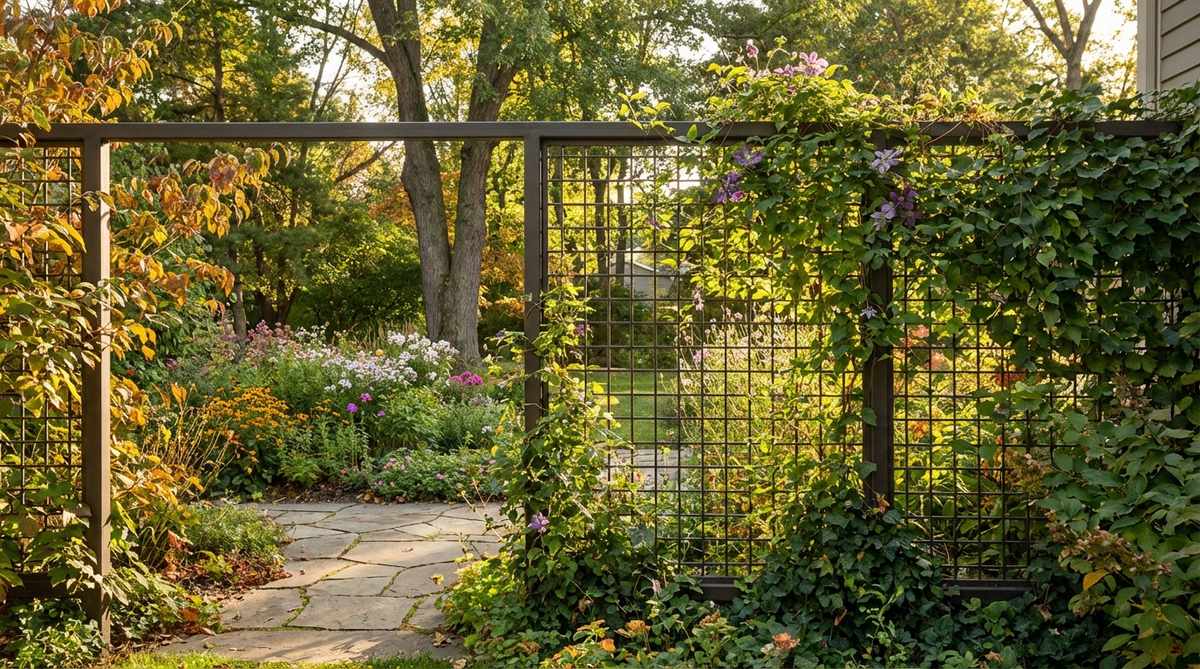
Use open structures like metal grids, laser-cut panels, or widely spaced vertical slats to suggest separation without blocking light or views. These partial screens divide space while maintaining visual connection.
Train climbing plants partially up screens to vary the opacity seasonally. Winter sees more openness while summer provides greater privacy through foliage density.
39. Rug-Defined Zones
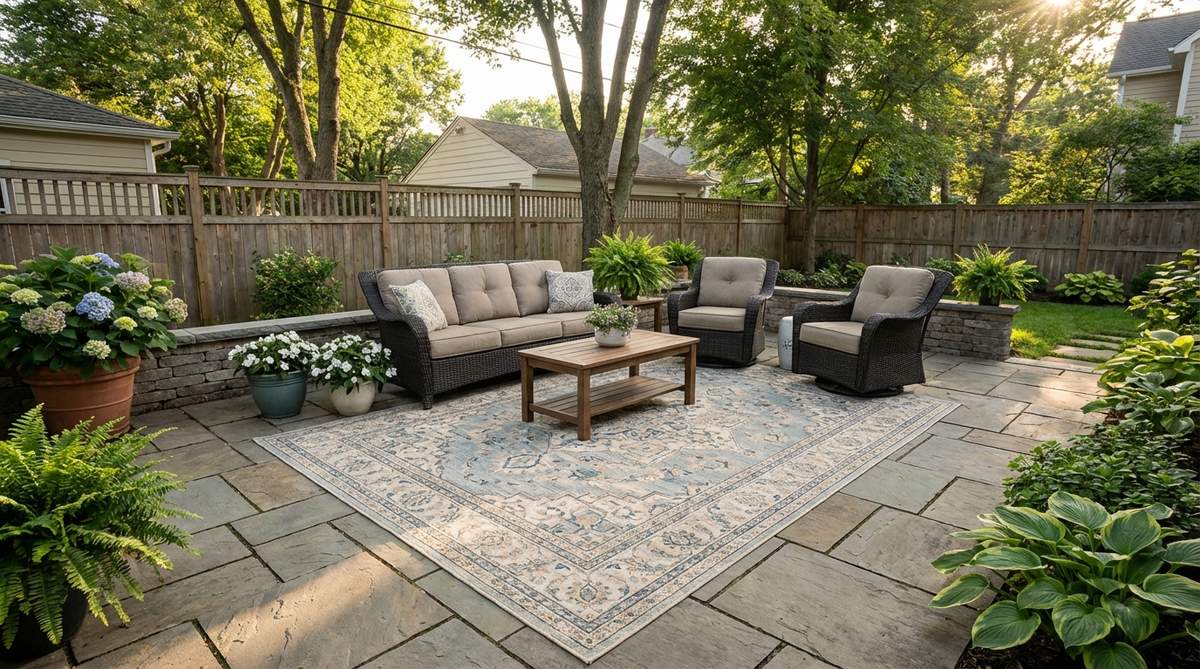
Outdoor rugs placed under furniture groupings define activity zones on larger paved surfaces. This flexible approach allows seasonal reorganization without construction.
Choose rugs 24 inches larger than furniture footprints in all directions so chair legs remain on the rug when pulled out. This prevents tripping hazards and unifies the furniture grouping visually.
40. Pergola Room Overhead
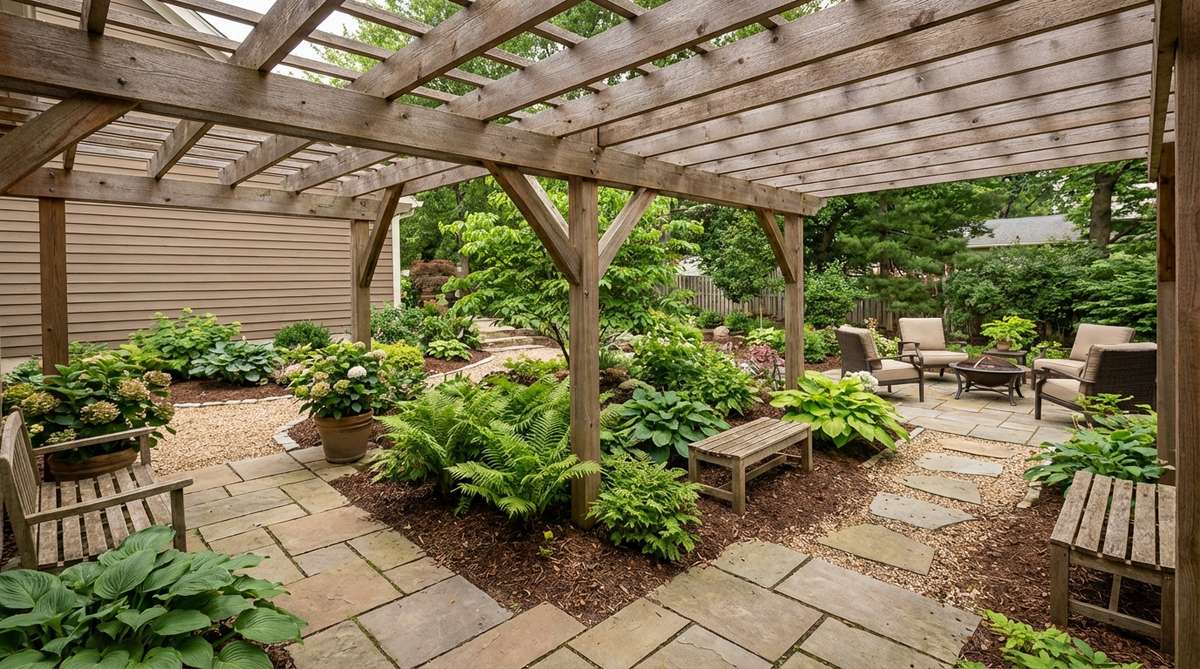
Overhead structures define zones from above rather than through ground-level barriers. This maintains open circulation while clearly identifying activity areas.
The partial shade created by pergola beams also modifies the microclimate beneath, enabling a different plant palette than surrounding full-sun areas. Ferns, hostas, and shade perennials thrive in these protected zones.
41. Contrasting Surface Materials
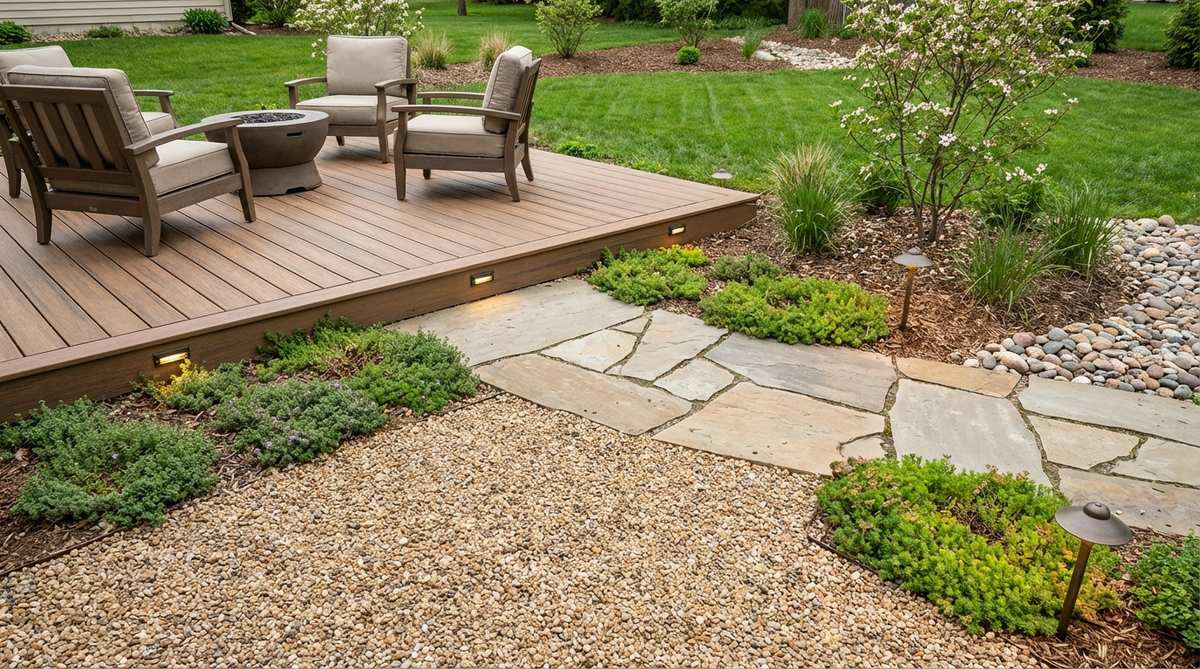
Shift between gravel, pavers, decking, and groundcovers to signal zone changes without physical barriers. The tactile and visual differences guide users intuitively through space.
This technique costs less than installing walls or screens while achieving similar psychological effect. Material transitions also provide natural locations for lighting placement to emphasize separation after dark.
Productive Small Garden Space Ideas
Food production remains achievable even in minimal space through intensive planting strategies and vertical growing systems. Productivity per square foot often exceeds traditional vegetable garden layouts when configurations focus on succession planting and intercropping.
42. Potager Square Beds
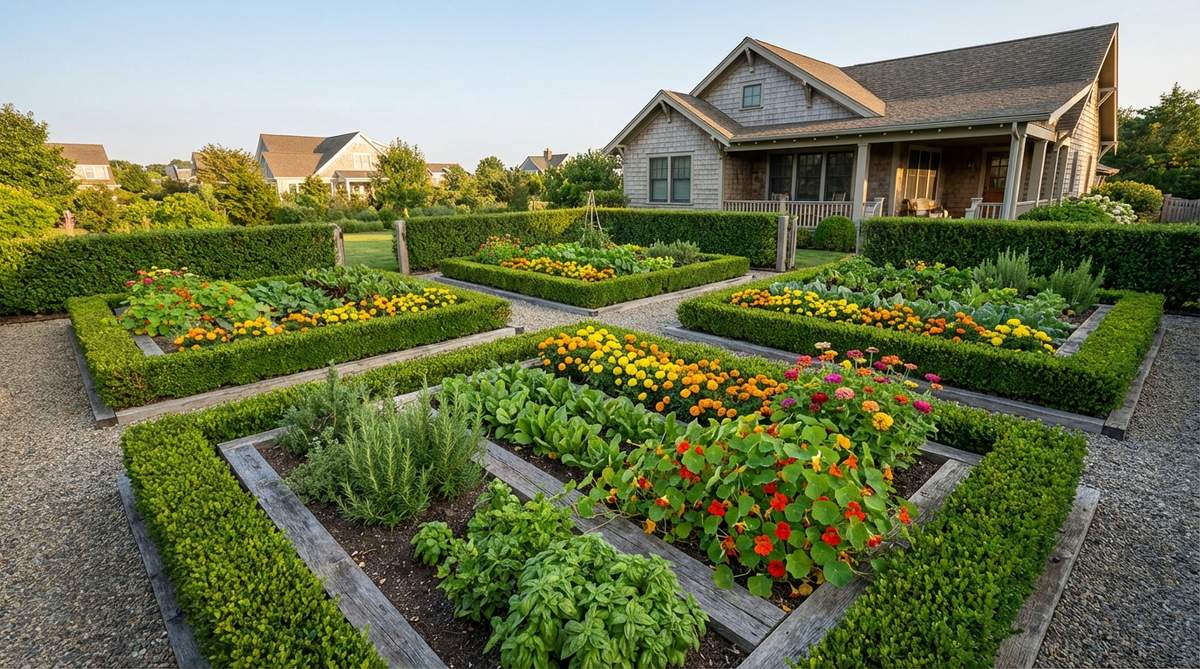
French-style potagers combine vegetables, herbs, and flowers in decorative square or rectangular beds. The ornamental approach integrates food production seamlessly into designed landscapes.
Organize beds in symmetrical patterns with wide paths between for access and visual impact. Edge beds with low hedging or timber frames to emphasize the formal geometry.
Mix edibles with flowering annuals that attract pollinators and beneficial insects. Marigolds, nasturtiums, and zinnias all support vegetable production while contributing color.
43. Raised Bed Intensive Blocks
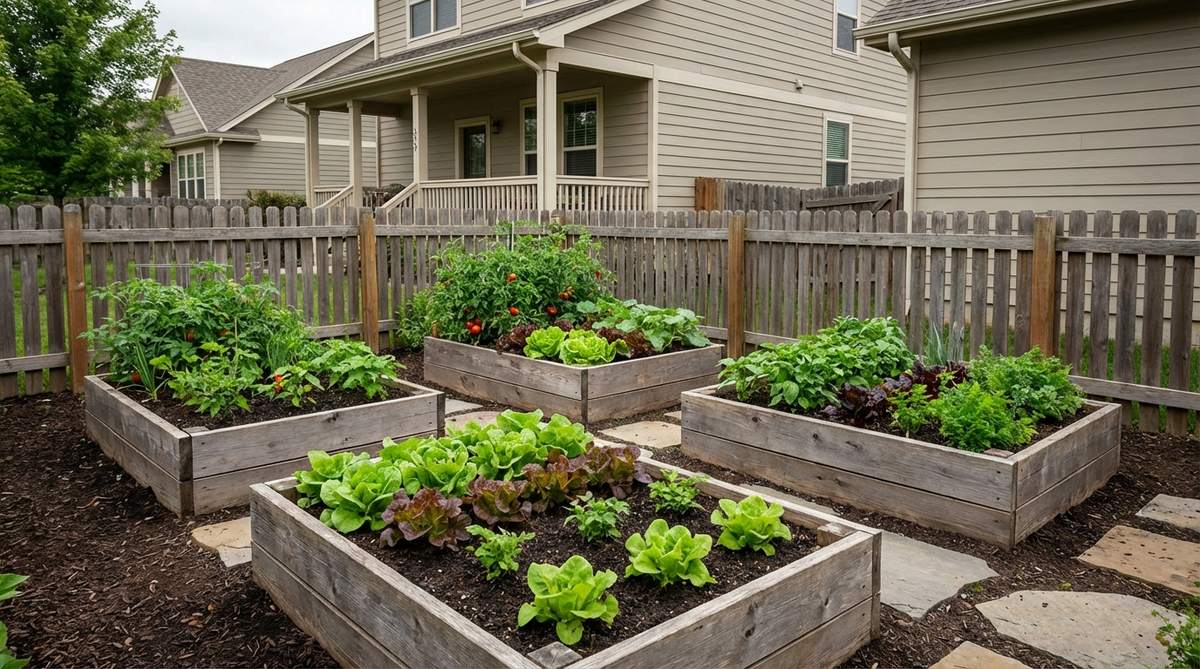
Build raised beds 3-4 feet wide so users can reach the center from either side without stepping on soil. This wide-row intensive method increases planting density by 30-40% compared to traditional row cultivation.
Fill beds with premium soil mix optimized for vegetable production. The controlled growing medium eliminates the variability of native soil while improving drainage and nutrient availability.
44. Vertical Bean Teepees
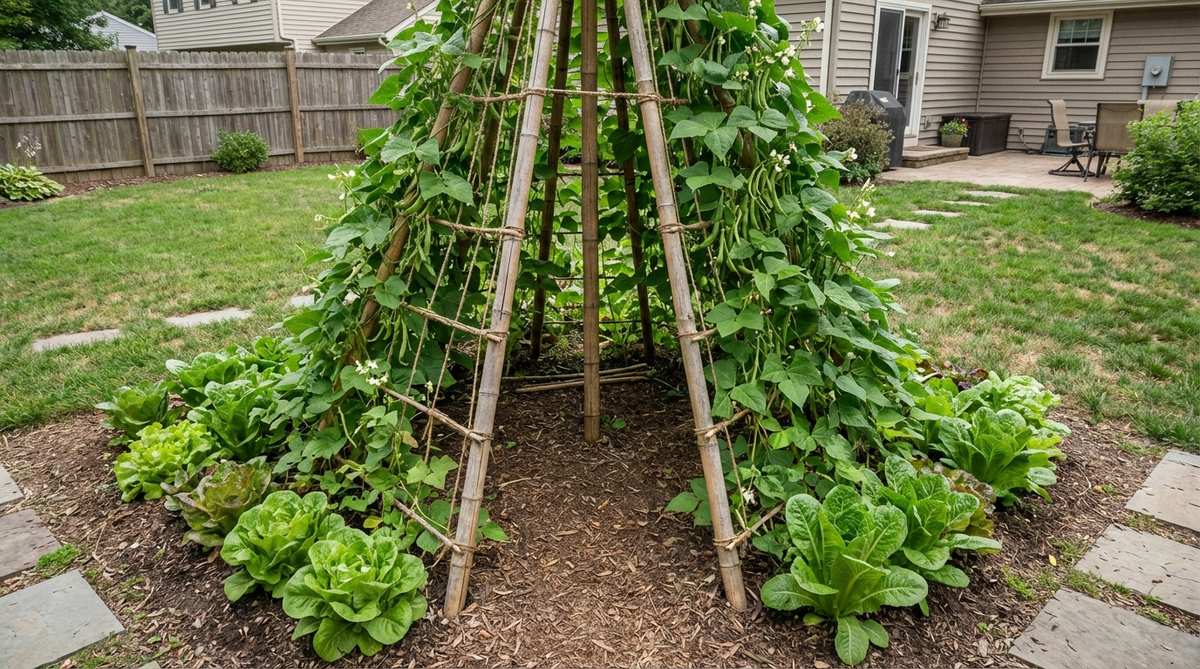
Lash together 6-8 bamboo poles in a conical teepee structure for pole beans or climbing peas. These vertical elements add architectural interest while producing heavy yields from minimal ground space.
Space teepees 4 feet apart in a grid pattern, planting low-growing crops like lettuce or carrots in the shaded areas between structures. This intercropping maximizes space efficiency.
The open interior of each teepee provides access for harvesting. Children particularly enjoy entering the structures, making vegetable gardens more engaging for families.
45. Salad Table Garden
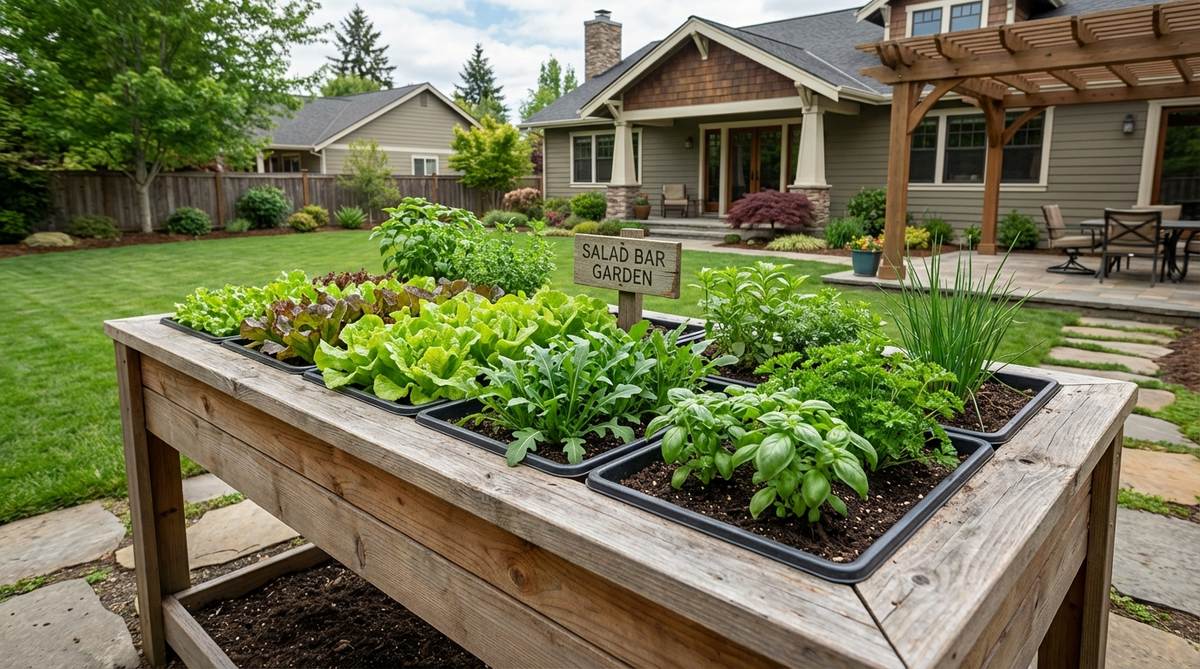
Waist-height tables with 4-6 inch deep growing trays enable accessible gardening for users with mobility limitations. The elevated position also deters ground-dwelling pests.
Plant cut-and-come-again lettuce varieties, arugula, and herbs that tolerate the shallow root depth. Harvest outer leaves continuously rather than pulling entire plants to extend production.
46. Strawberry Pyramid
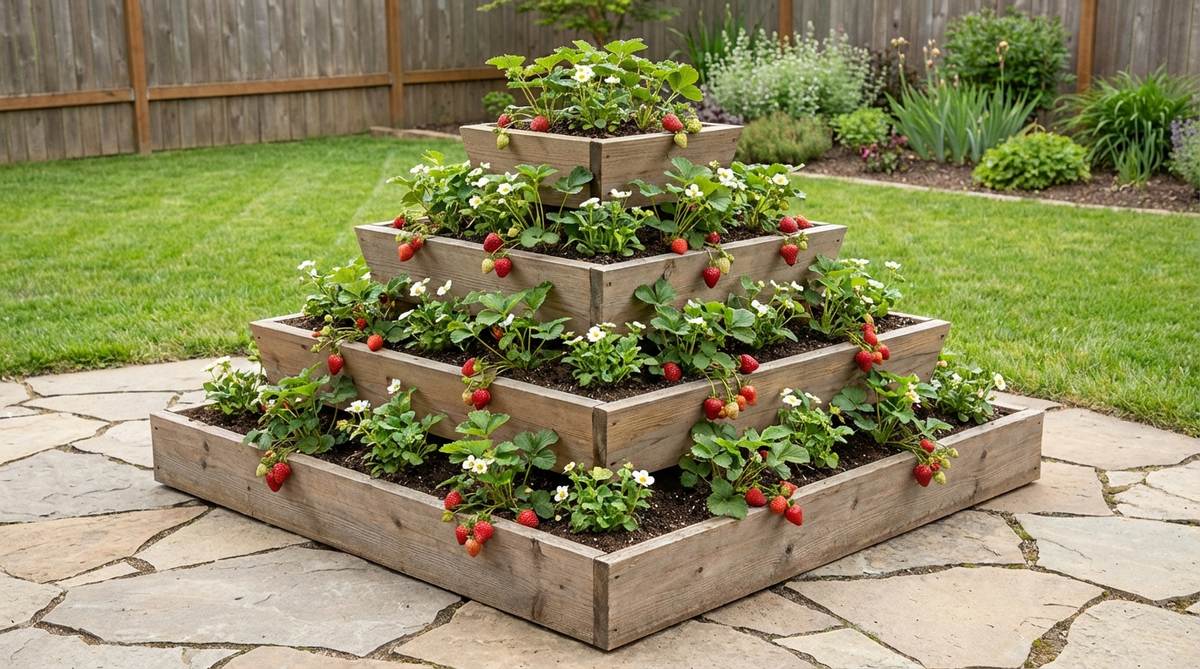
Stacked wooden frames create a stepped pyramid offering multiple planting levels within a 4-foot footprint. Strawberries cascade over the edges, creating an ornamental and productive feature.
The tiered design improves air circulation around plants, reducing fungal disease pressure common in ground-level strawberry beds. Easier harvesting at varying heights reduces back strain.
Rotate the structure 90 degrees monthly to ensure all plants receive equal sun exposure. The freestanding design makes this rotation simple.
47. Herb Spiral
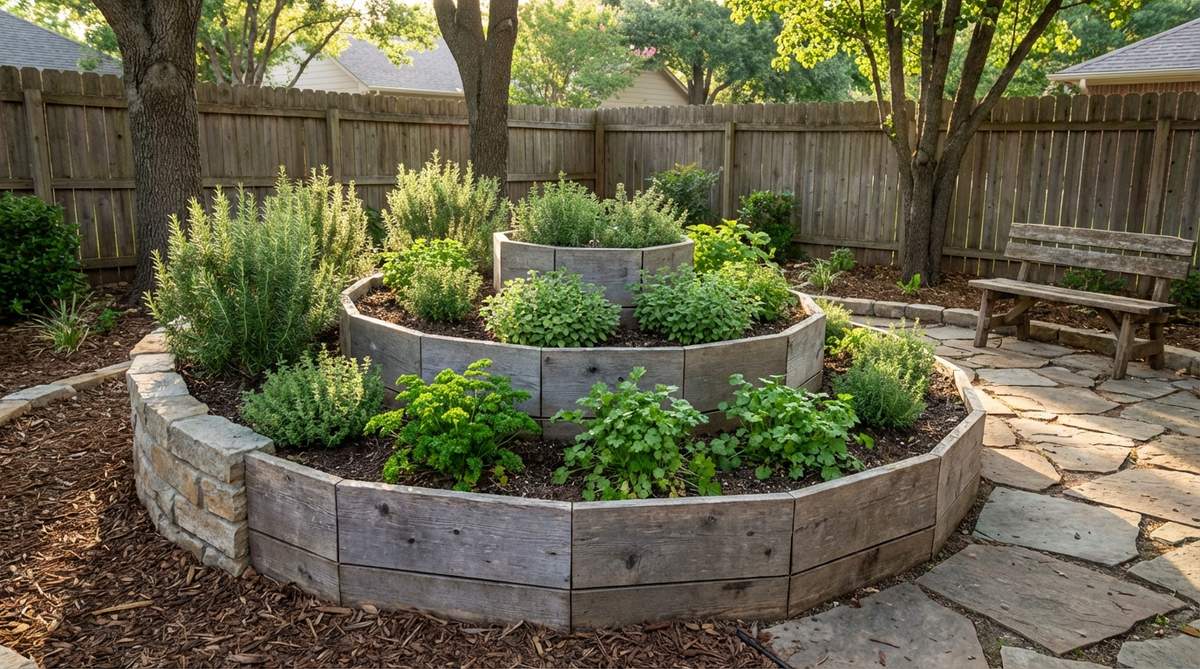
Spiral-shaped raised beds create multiple microclimates in a compact footprint. The top of the spiral receives full sun and drains rapidly, ideal for Mediterranean herbs like rosemary and oregano.
As the spiral descends, conditions become cooler and moister, supporting herbs like parsley and cilantro that prefer those conditions. This single structure accommodates diverse growing requirements.
Build spirals 3-4 feet tall at the peak, using stone or brick to create the raised walls. The spiral form provides approximately 30% more planting surface than a circular bed of equal diameter.
48. Companion-Planted Containers
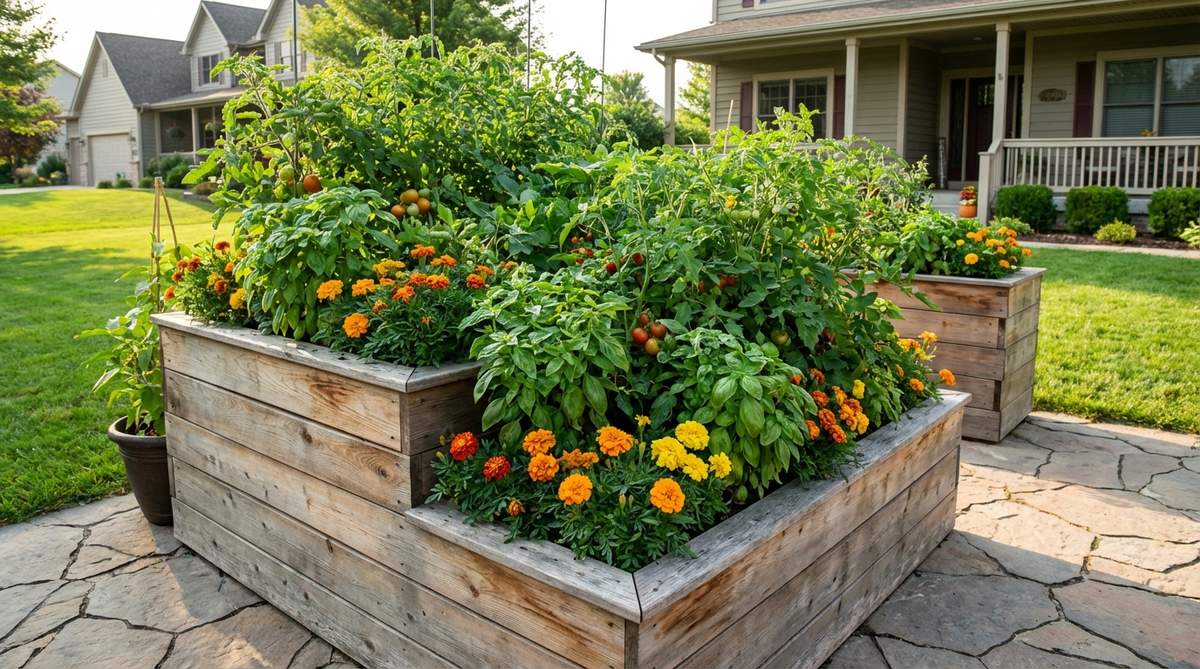
Large containers (15-gallon minimum) support multiple compatible vegetables in single pots. Pair deep-rooted tomatoes with shallow-rooted basil and marigolds to fill all soil zones.
This three-dimensional planting strategy mirrors forest ecosystems where plants occupy different canopy layers. Container gardens can achieve remarkable density when species selection considers root depth and mature size.
49. Trellis Arch for Squash
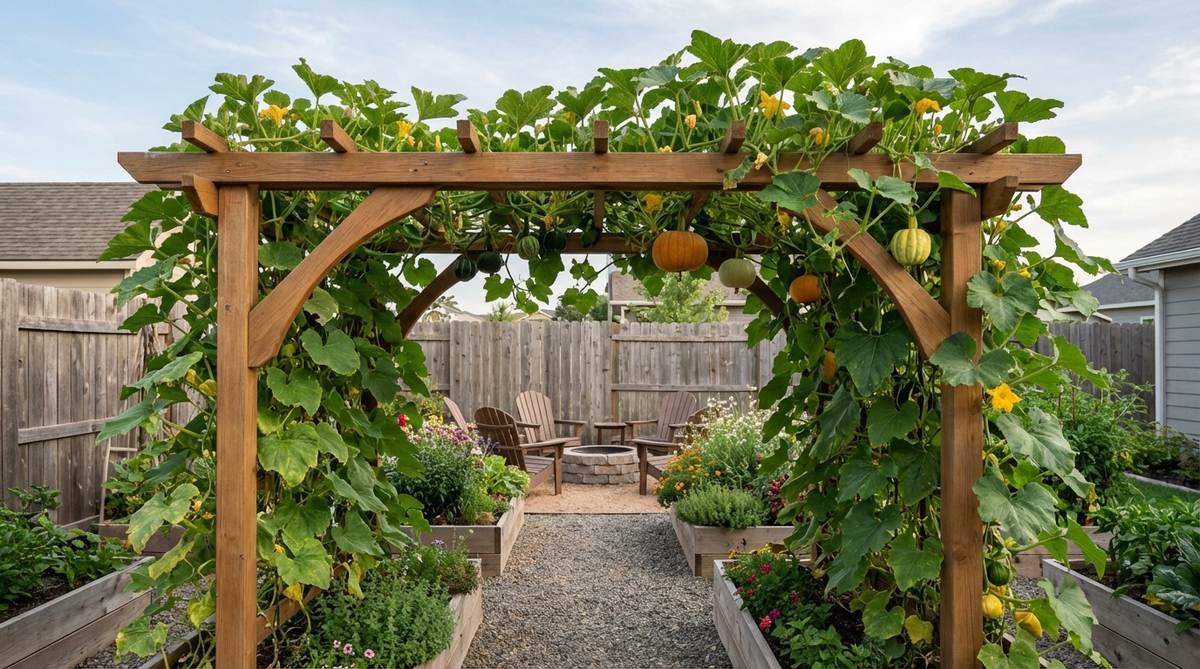
Train vining squash and small pumpkin varieties up and over arched trellises. The vertical growth pattern saves 6-8 feet of ground space per plant while creating living tunnels.
Support developing fruit with fabric slings tied to the trellis framework. Without support, heavy squash can detach prematurely or break vines.
Harvest timing improves when fruit hangs free of soil contact. Air circulation around suspended squash also reduces rot and pest damage.
50. Gutter Lettuce Systems
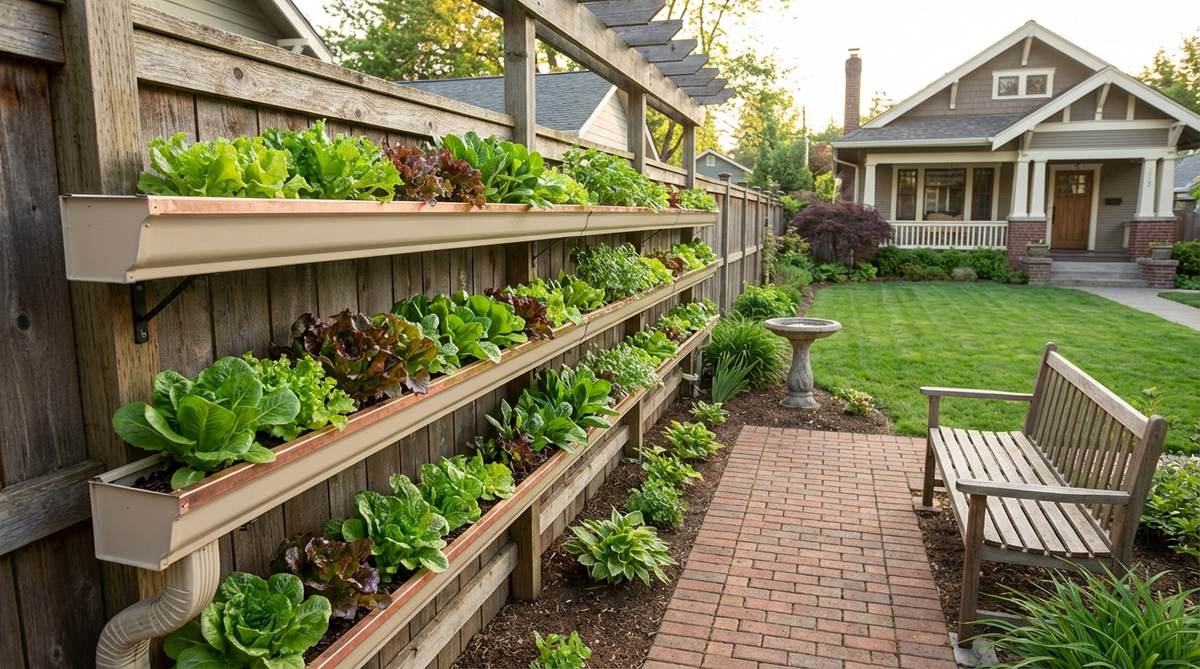
Mount vinyl gutters horizontally on sunny walls for continuous lettuce production. The shallow depth suits lettuce’s shallow root system perfectly.
Plant seeds every two weeks for succession harvesting rather than single large plantings. This spreads harvest over months instead of weeks.
The elevated mounting position deters slugs and snails while bringing harvest to comfortable standing height. No bending or kneeling required.
51. Keyhole Garden Bed
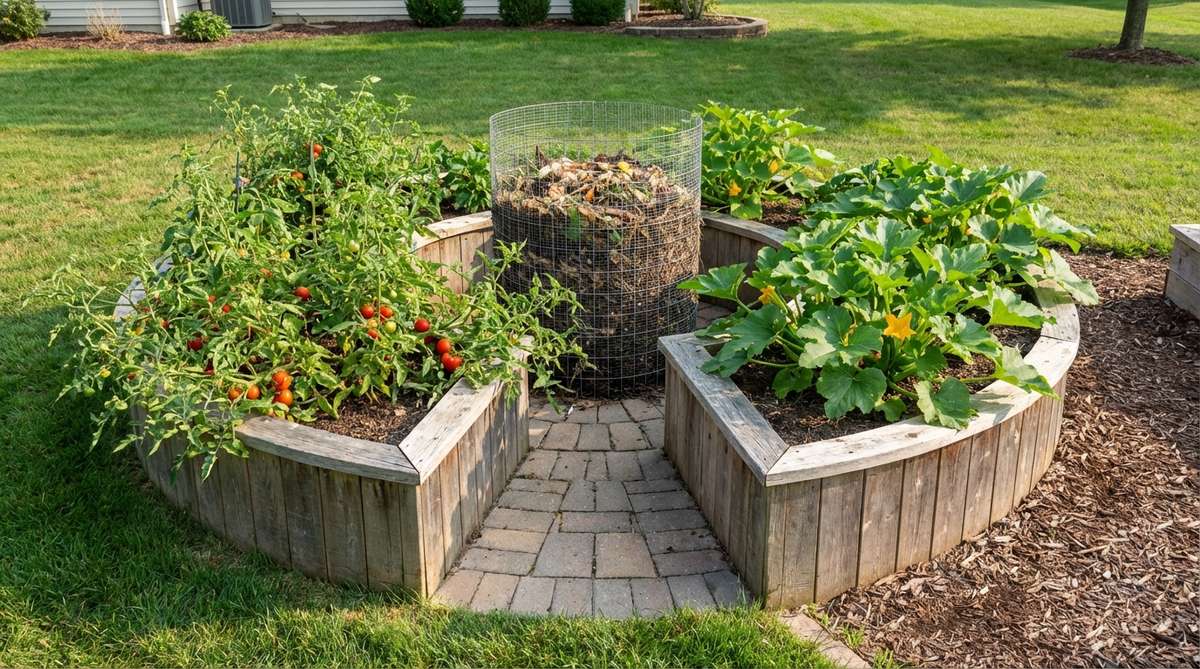
Circular raised beds with a wedge-shaped access path to a central composting basket combine growing space with on-site nutrient production. As compost breaks down, nutrients leach directly into surrounding soil.
The design originated in Africa for food security applications but adapts well to small American gardens. The 6-foot diameter footprint produces enough vegetables for 2-3 people seasonally.
Structural Features For Compact Spaces
Hard landscape elements provide year-round structure that remains visually engaging even when plants enter dormancy. Strategic placement of architectural features guides movement and creates focal points that organize space.
52. Freestanding Privacy Screen
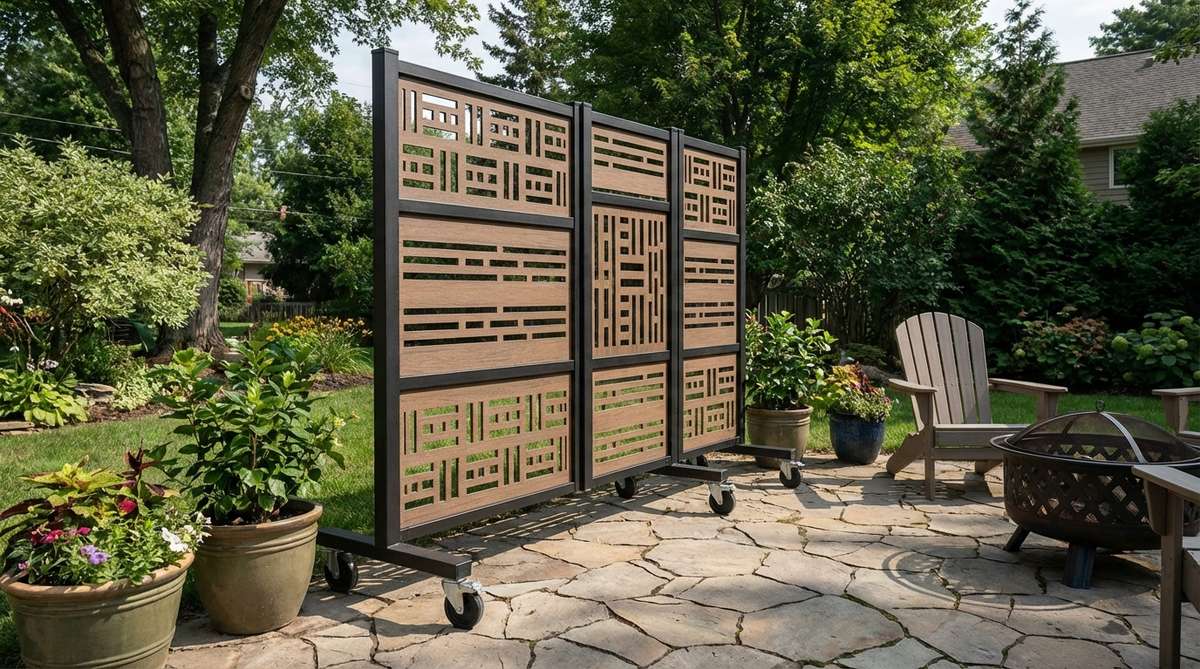
Portable screens made from wood, metal, or composite materials block sight lines without permanent installation. Position screens to obstruct specific views while maintaining openness in other directions.
The freestanding design allows seasonal adjustment as sun angles change or as neighboring properties alter their landscaping. Add casters to bases for completely mobile configurations.
Decorative cutout patterns in solid panels reduce visual weight while maintaining privacy. Laser-cut designs cast interesting shadows that animate the garden as sun angles shift.
53. Raised Pond with Coping
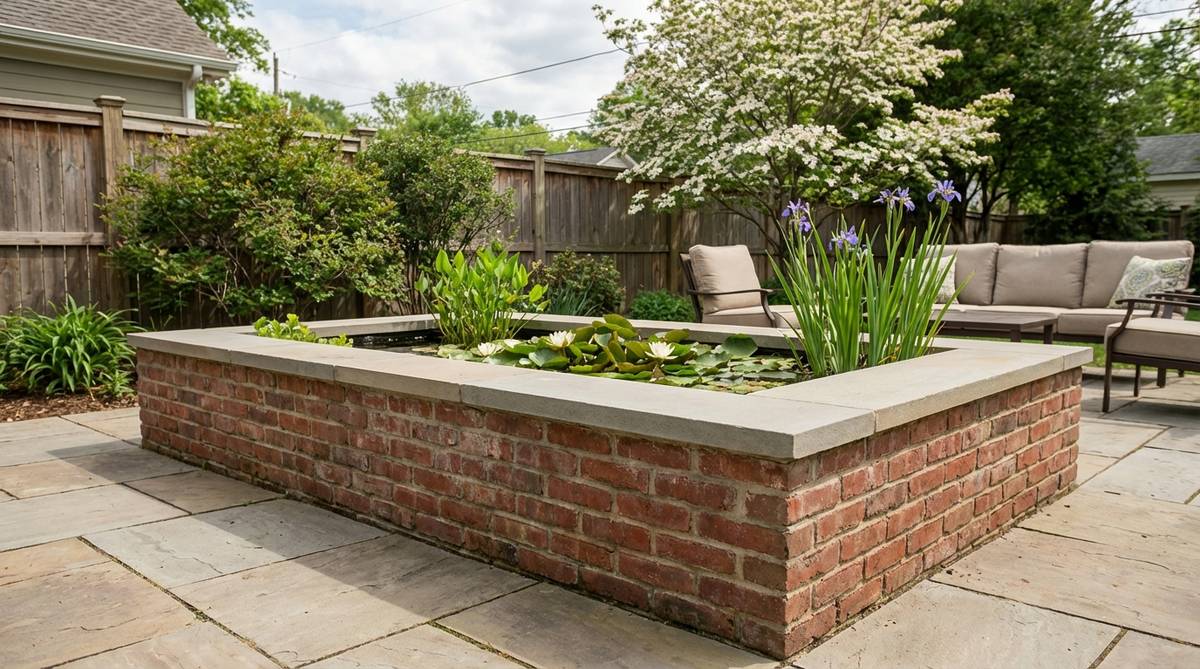
Elevate water features 18-24 inches above ground level using block or brick construction. The raised edge doubles as casual seating and brings aquatic plants closer to eye level.
This configuration suits families with young children better than in-ground ponds since the raised edge provides a physical barrier. Preformed rigid liners simplify installation in raised applications.
54. Gabion Wall Planter
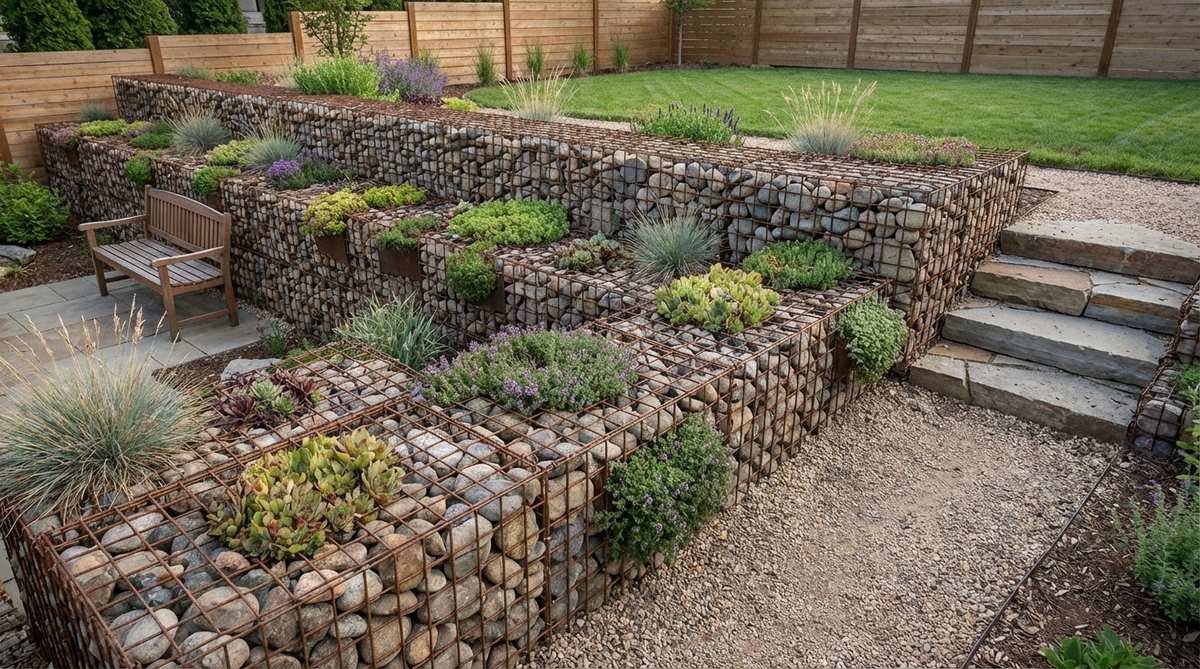
Wire cages filled with stone create textured retaining walls or freestanding planters. Plant directly into gaps between stones or set containers into recessed openings.
The industrial aesthetic suits modern and contemporary landscapes. Gabions also provide excellent drainage for alpine plants and succulents requiring lean, dry conditions.
Stack gabions to create stepped planting zones on sloped sites. Each tier increases usable planting area while managing erosion.
55. Moon Gate Portal
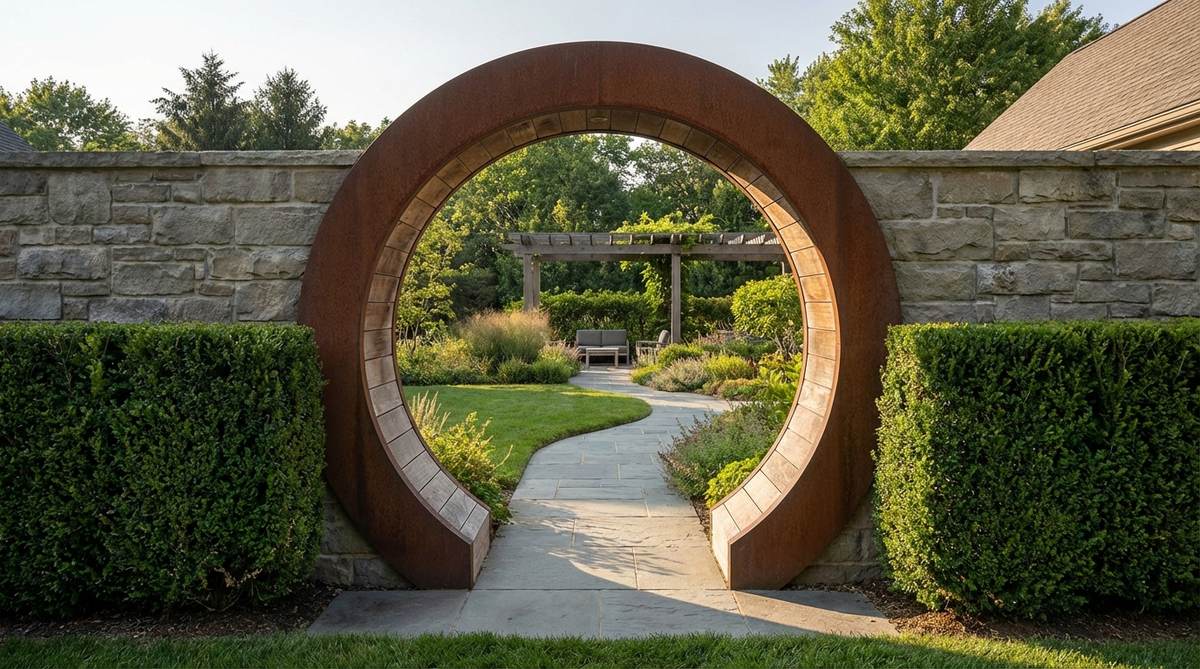
Circular openings in walls or screens create dramatic transitions between garden zones. The round form contrasts with rectilinear boundaries, drawing attention and encouraging passage.
Frame views through the opening carefully, positioning it to showcase a specimen plant, sculpture, or seating area beyond. What lies beyond becomes more intriguing when glimpsed through a portal.
56. Corten Steel Planters
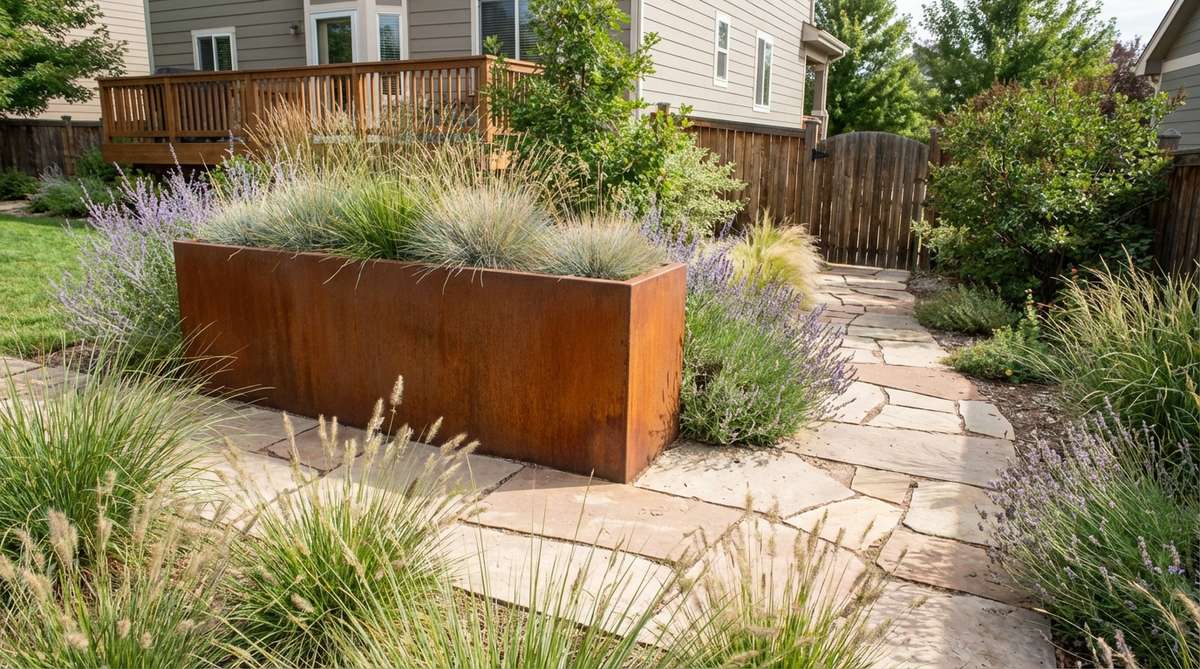
Weathering steel develops a stable rust patina that protects underlying metal from further corrosion. The warm orange-brown tones complement both modern and rustic aesthetics.
Use corten planters as movable focal points or zone dividers. The material’s industrial character provides strong contrast against soft plant textures.
The steel conducts heat efficiently, warming soil earlier in spring. This extends the growing season for warm-season crops and perennials.
57. Timber Pergola Extension
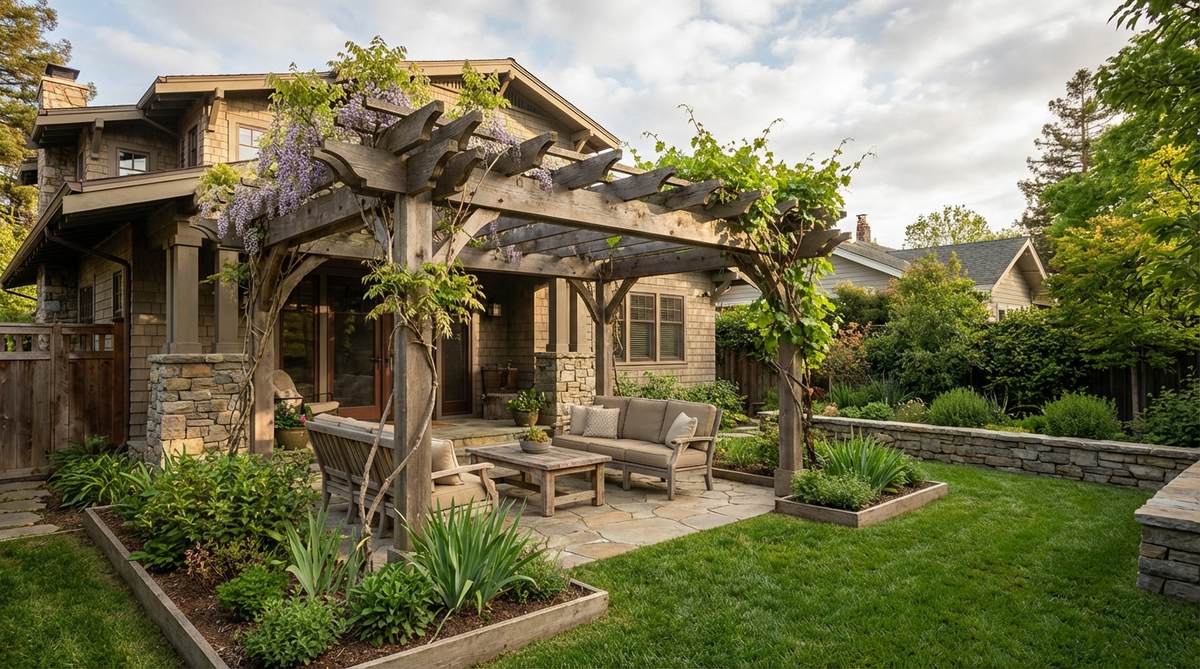
Extend the roofline of adjacent structures with attached pergolas. This creates covered transition zones between indoor and outdoor spaces while adding architectural presence.
The partial overhead structure defines outdoor rooms without requiring full walls. Train deciduous vines over beams for summer shade that yields to winter sun after leaf drop.
58. Architectural Screen Blocks
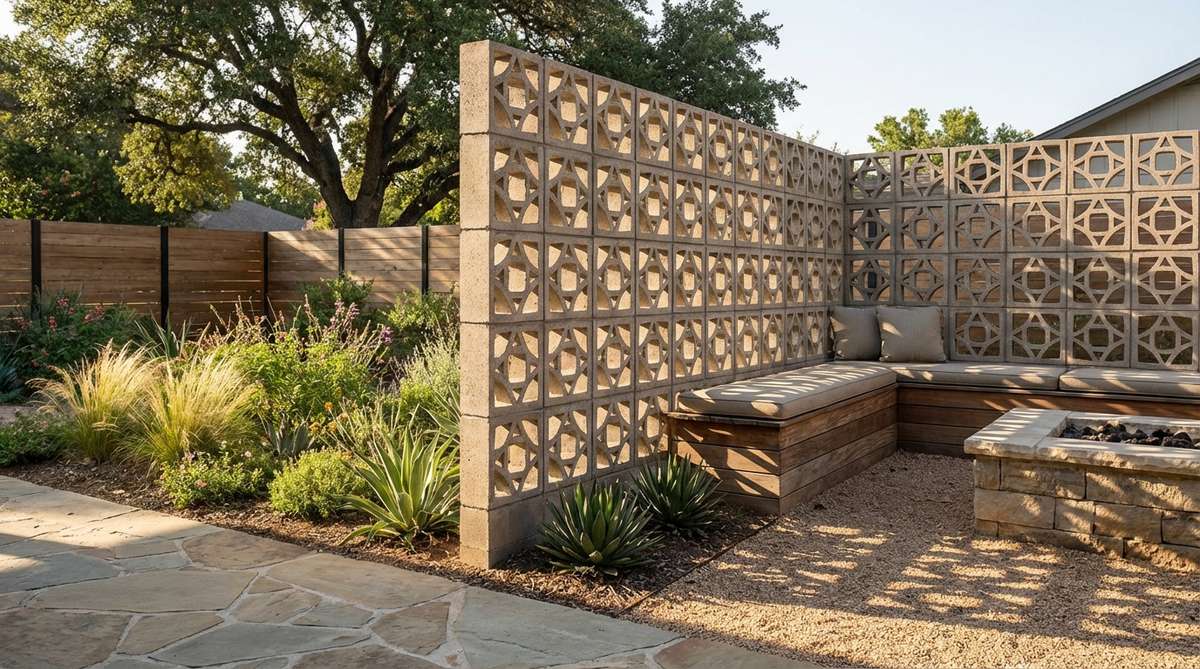
Decorative concrete blocks with geometric patterns build walls that admit light and air while providing privacy. These mid-century elements regain popularity in contemporary designs.
Stack blocks in running bond patterns for structural stability, or set them in steel frames for freestanding screens. The shadows cast through patterns add dynamic visual interest.
59. Boulder Outcropping
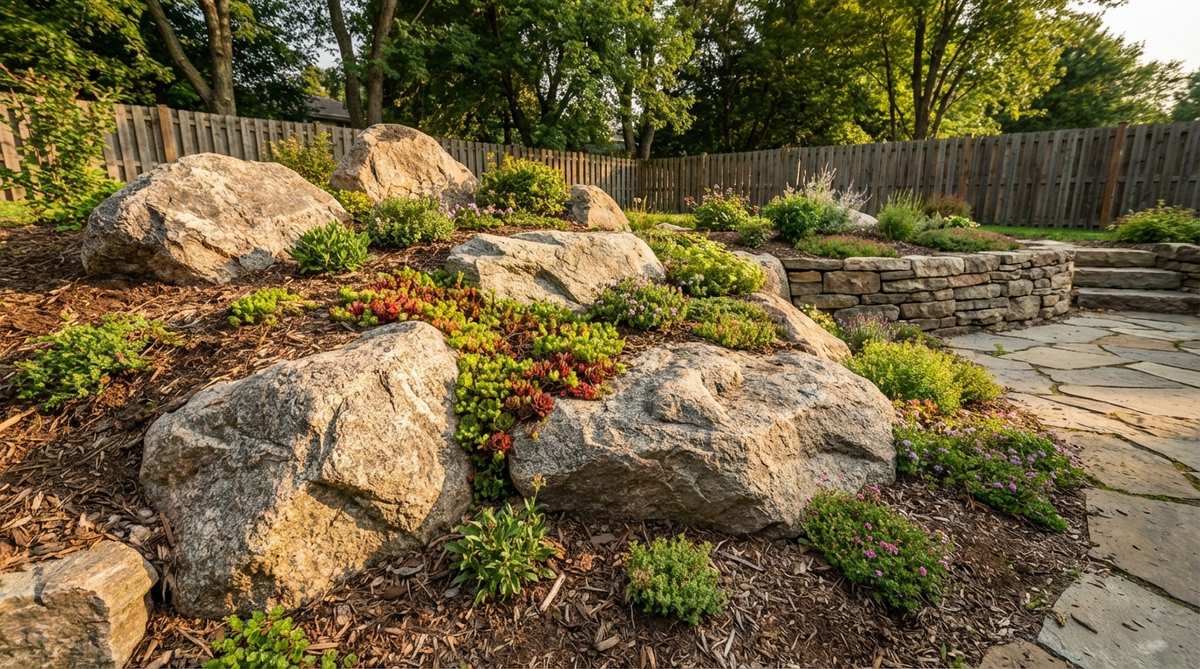
Position large boulders to create naturalistic rock outcroppings that anchor planting schemes. The massive scale provides visual weight that grounds compositions.
Bury boulders one-third to one-half their total mass to achieve a natural appearance. Surface-set boulders read as artificial regardless of stone quality.
Plant crevices between boulders with alpine species, sedums, or native stone-crop varieties. These plantings reinforce the naturalistic aesthetic while softening hard stone surfaces.
Paving And Surface Treatments
Ground plane design dramatically affects spatial perception. Surface material selection influences maintenance requirements, cost, and the overall character of small garden spaces.
50. Rectangular Pavers Laid Horizontally
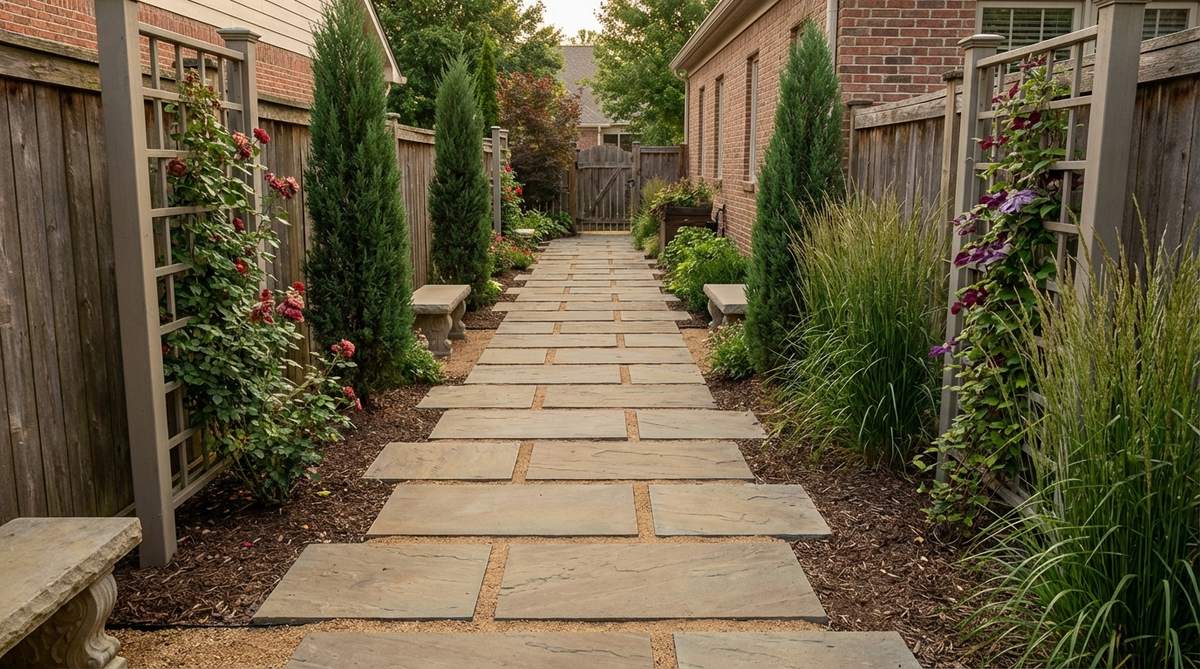
Orient rectangular pavers perpendicular to the primary sight line to create an illusion of width. The eye follows the long axis of pavers, and horizontal placement emphasizes breadth over depth.
This simple trick makes narrow side yards feel more balanced. Combine with vertical planting elements to maintain proportion.
Use consistent joint widths (3/8 to 1/2 inch) and fill with polymeric sand that resists weed germination and insect intrusion.
61. Permeable Gravel Paths
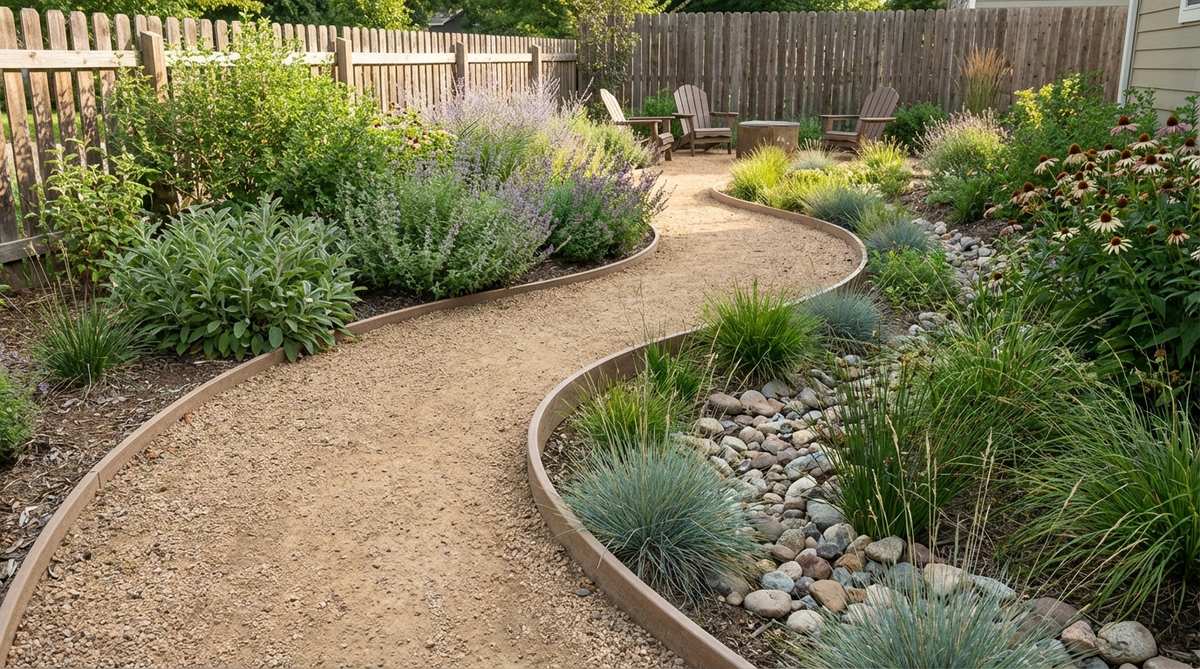
Crushed stone pathways provide informal character while managing stormwater on-site. The permeable surface eliminates runoff issues that plague solid paving.
Edge gravel paths with steel, aluminum, or composite bender board to contain material and maintain clean lines. Without edging, gravel migrates into planting beds and turf areas.
62. Checkerboard Pavers and Groundcover
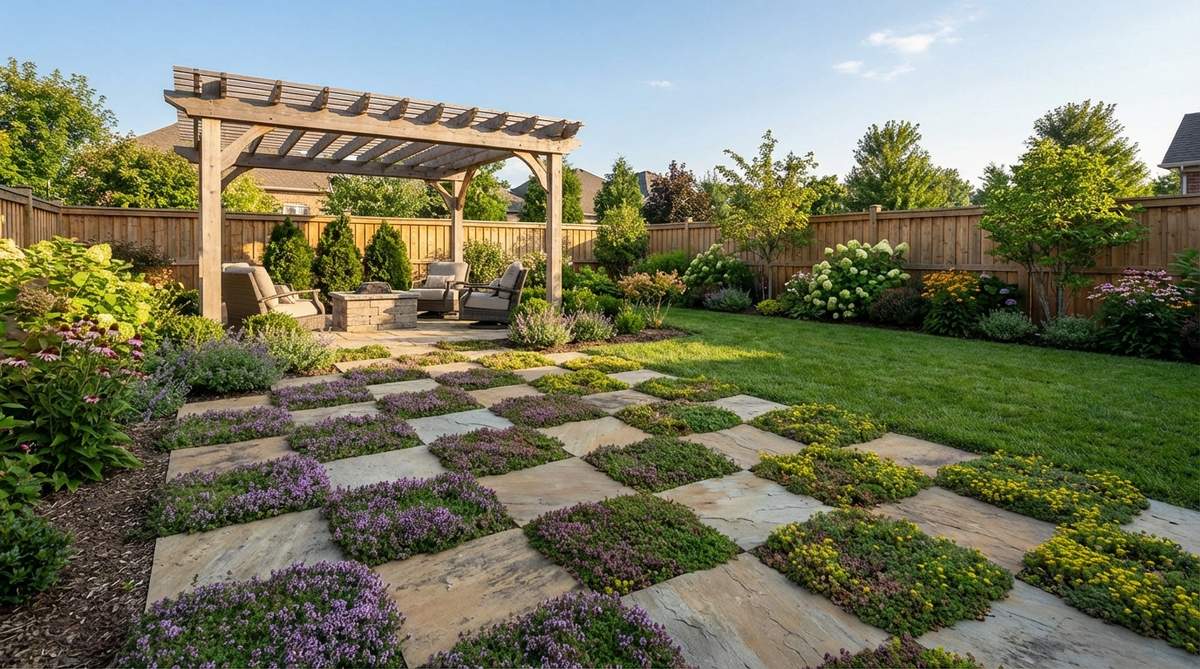
Alternate solid pavers with planted squares of low groundcover or gravel. This pattern reduces the paved area by 50% while maintaining full trafficability.
Choose groundcovers that tolerate foot traffic, such as creeping thyme, sedum, or Irish moss. These plants release fragrance when stepped on, adding sensory dimension.
The mixed surface also reduces heat island effect by allowing soil respiration and transpiration. Temperatures above checkerboard paving run 10-15°F cooler than solid surfaces.
63. Decomposed Granite Patio
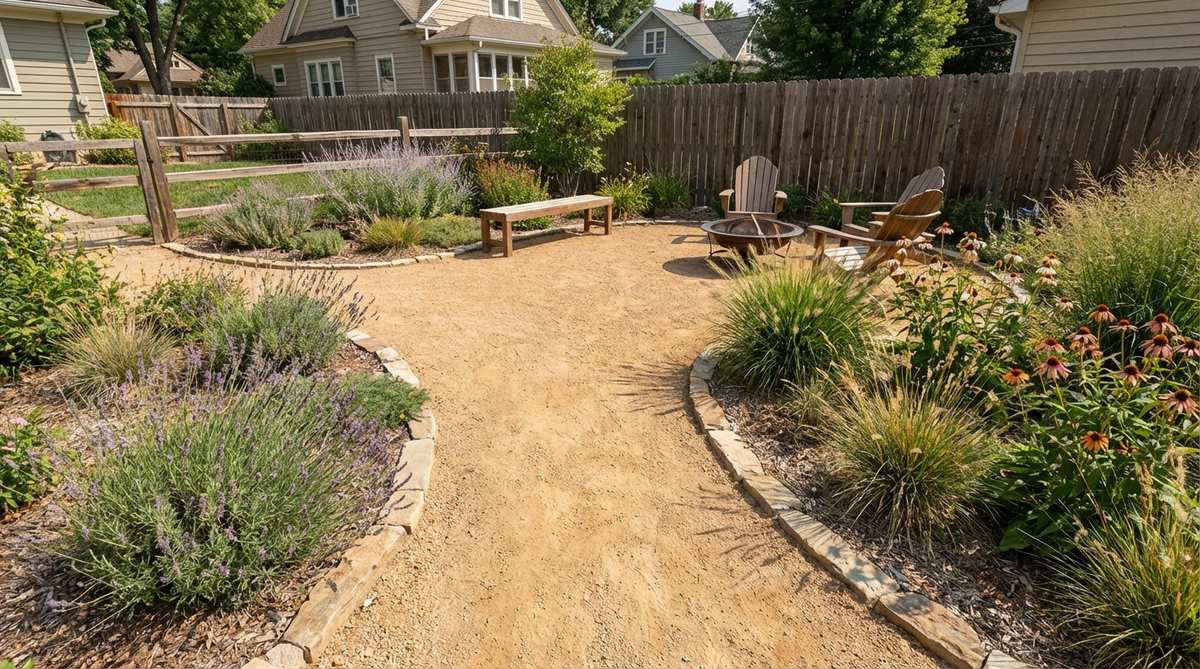
Stabilized decomposed granite creates firm, smooth surfaces with natural coloring ranging from tan to rust-red. The material compacts tightly when properly installed, approaching the firmness of asphalt.
This budget-friendly option costs 40-50% less than pavers or poured concrete while delivering comparable performance. The informal aesthetic suits cottage gardens and naturalistic landscapes.
64. Stepping Stone Pathway
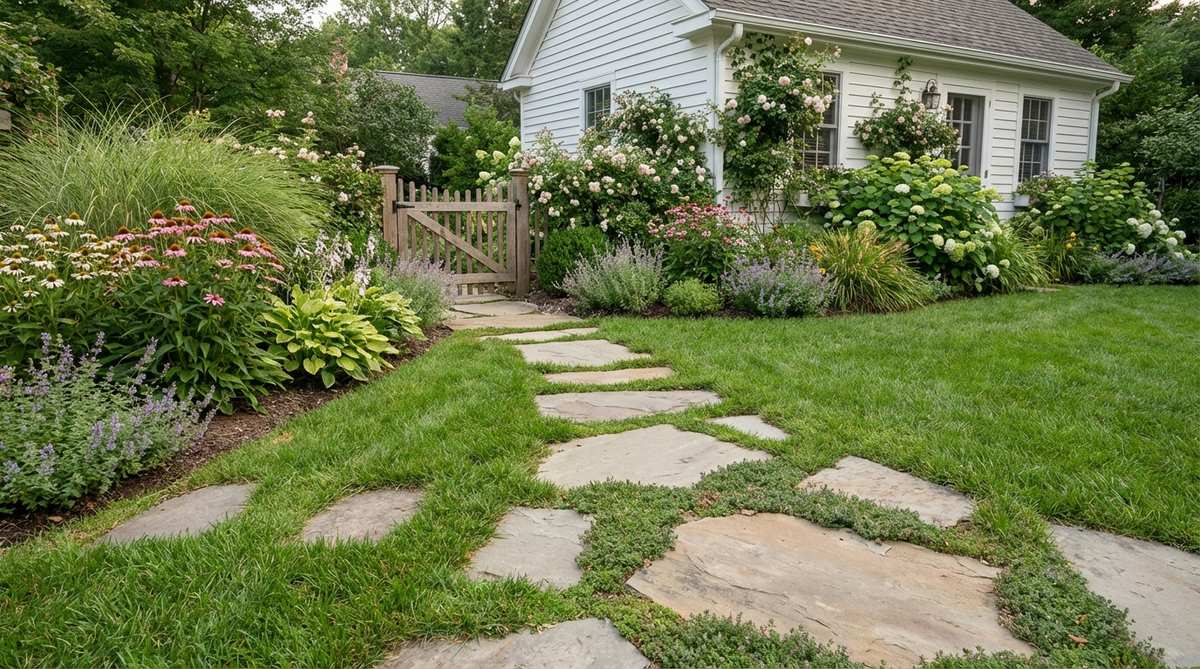
Individual pavers set in turf, groundcover, or mulch create casual paths that guide movement without formal definition. Space stones one comfortable stride apart (24-26 inches center to center).
This approach preserves maximum planting area while providing dry footing during wet weather. The informal character suits cottage gardens better than geometric hardscape.
Mobile And Modular Configurations
Container-based gardens offer flexibility impossible with in-ground plantings. Seasonal rearrangement responds to changing sun patterns, special events, or evolving design preferences.
65. Rolling Planter Boxes
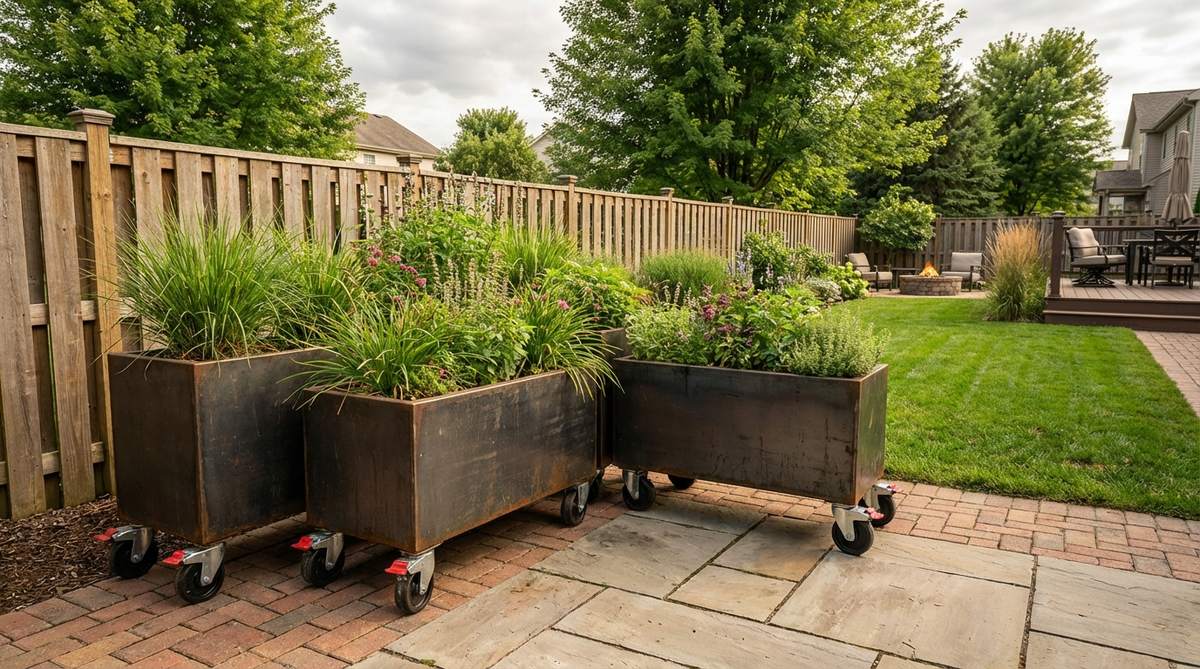
Add heavy-duty casters to large container bottoms for movable garden elements. This mobility proves essential for renters or gardeners who anticipate relocating.
Group containers on casters to create temporary screens or barriers for entertaining. After events, roll planters back to their growing positions.
Locking casters prevent unwanted movement during wind events. Choose rust-proof materials rated for outdoor exposure and weight loads exceeding container totals by 50%.
66. Tiered Pot Displays
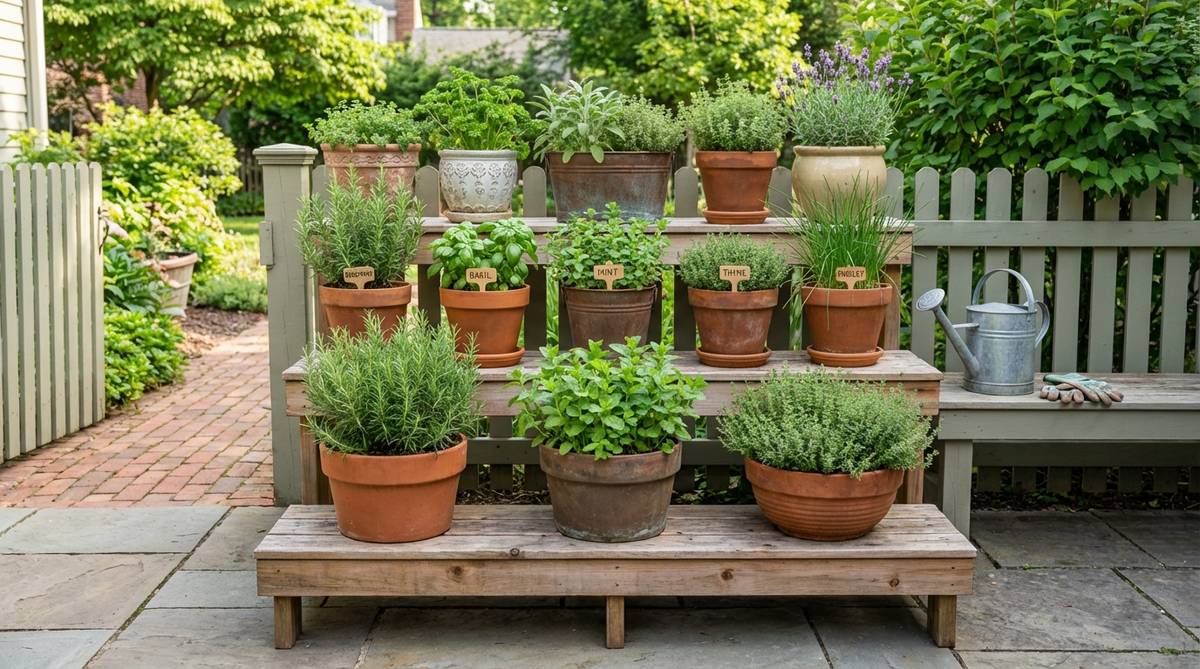
Purpose-built plant stands with multiple levels display more containers in limited footprint. Arrange pots by size and plant height to create balanced compositions.
This configuration works particularly well for herb collections where access to individual plants matters. Users can easily identify and harvest specific varieties.
67. Window Box Arrays
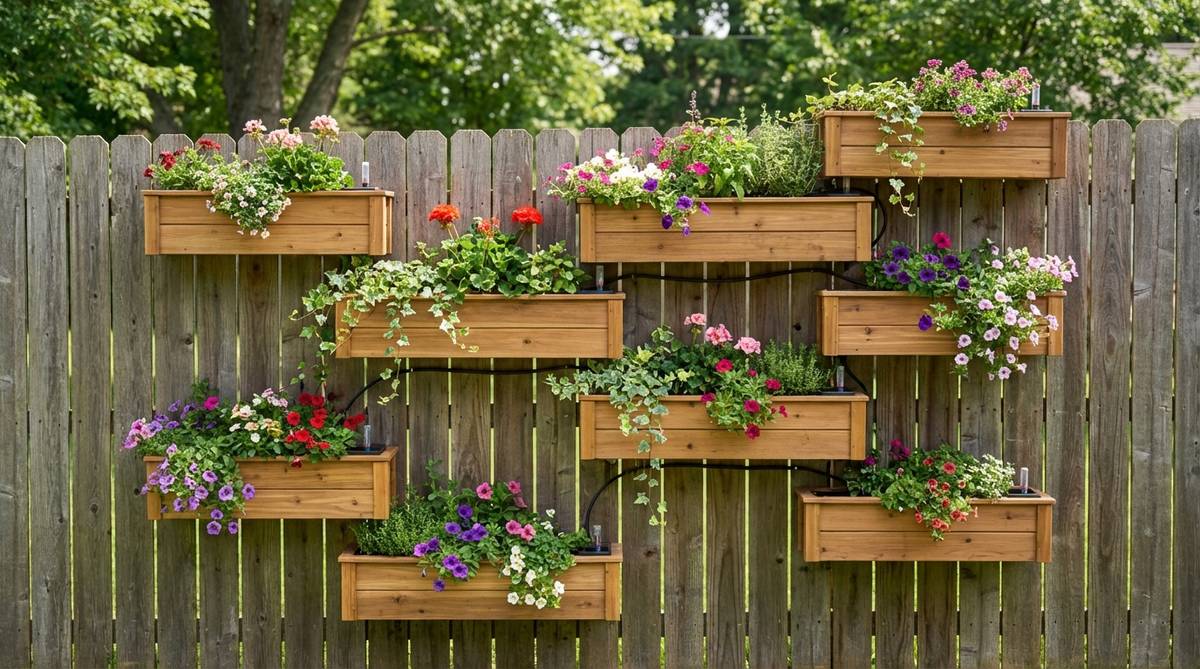
Mount multiple window boxes at varying heights on fences or walls. This creates a stacked container garden without consuming ground space.
Stagger boxes in irregular patterns rather than formal grids for more dynamic compositions. The varied placement also improves light penetration to lower boxes.
Use self-watering window boxes with built-in reservoirs to reduce irrigation frequency. These systems maintain consistent moisture even during summer heat.
68. Grouped Pot Clusters
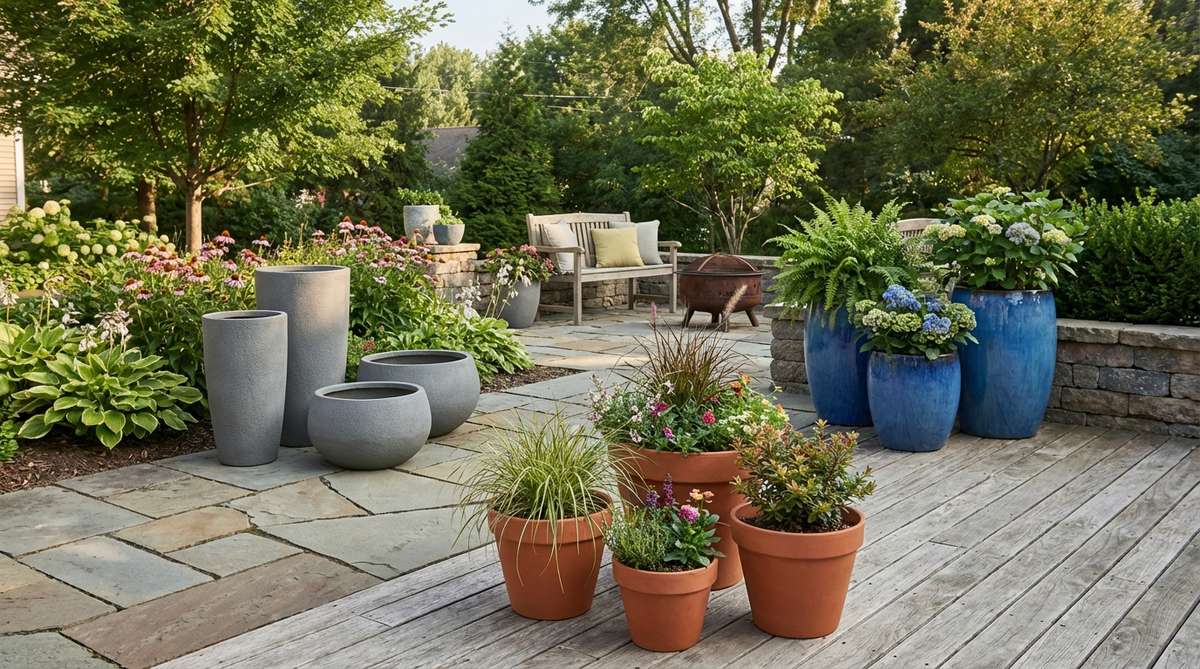
Arrange containers in odd-numbered groupings (3, 5, or 7 pots) varying in height and diameter. This mimics natural plant distributions found in wild landscapes.
Keep all pots within a cluster in the same color family or material type to unify the grouping. Mix glazed ceramic, terracotta, and fiber clay as long as colors coordinate.
Illumination Strategies For Small Garden Areas
Lighting extends garden usability into evening hours while highlighting architectural and botanical features. Strategic fixture placement creates depth and atmosphere in compact spaces.
69. Uplighting Specimen Plants
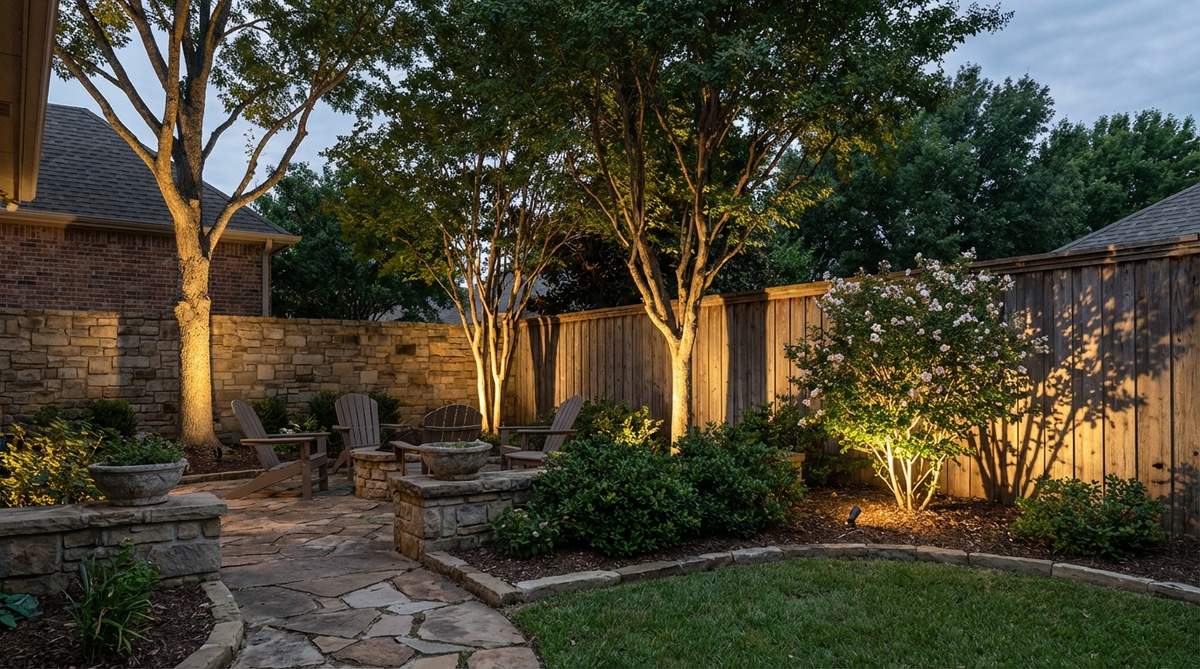
Position LED fixtures at the base of trees or large shrubs to cast dramatic shadows on walls or fences. This technique adds depth perception after dark.
Narrow beam angles (15-25 degrees) create more defined shadows while wide beams (40-50 degrees) produce softer, more diffused effects. Adjust fixture placement and beam spread to achieve desired results.
70. Path Lighting Strips
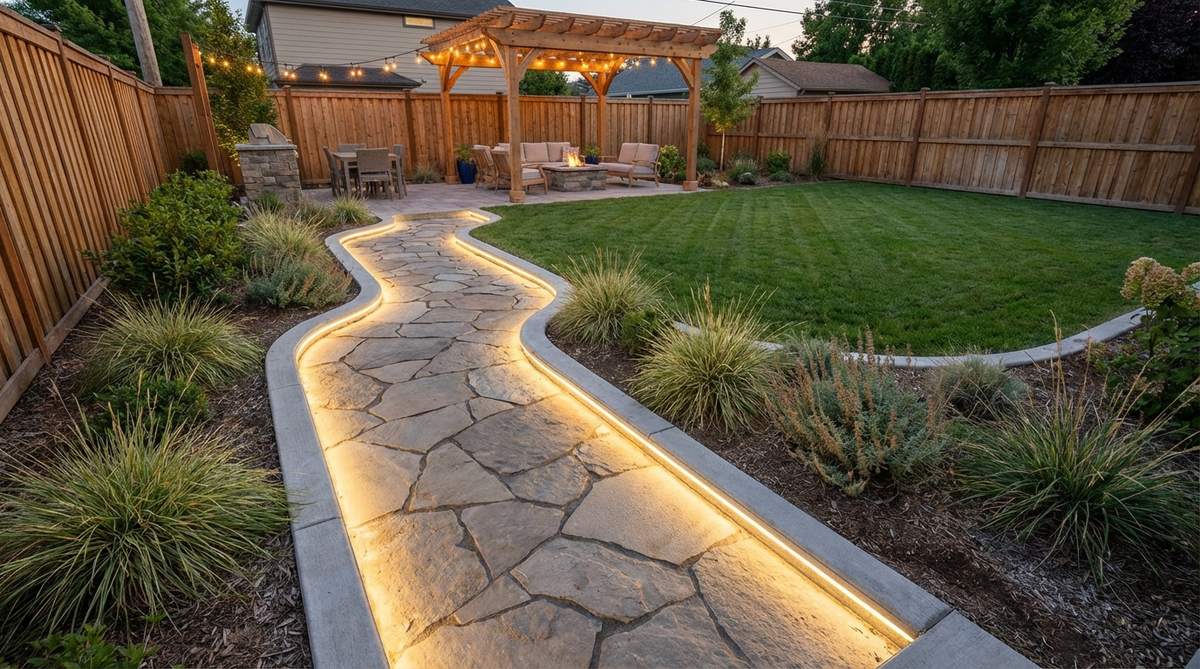
Recessed LED strips installed along path edges or step risers provide safety illumination without cluttering spaces with posts or fixtures. The flush-mount design maintains clean sightlines.
Choose warm color temperatures (2700-3000K) for residential applications. Cooler temperatures feel institutional and reduce evening ambiance.
71. String Light Canopy
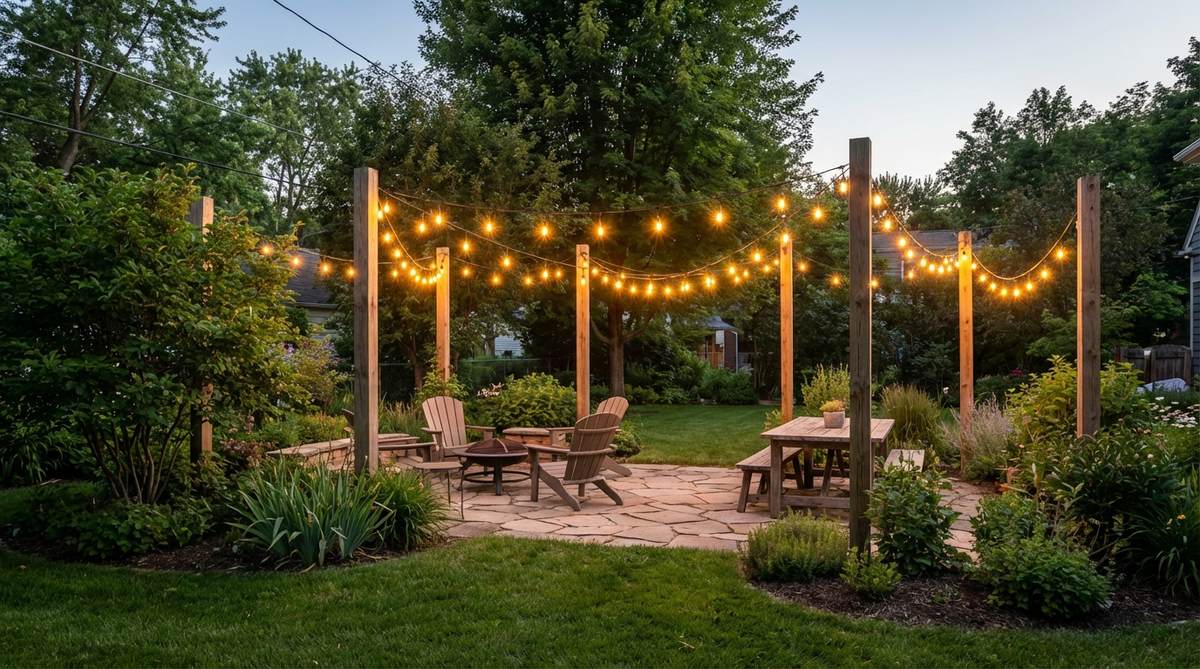
Suspend string lights overhead between posts, trees, or building mounting points. This creates an illuminated ceiling that defines outdoor rooms.
The soft, diffused light from multiple small bulbs produces flattering illumination for gathering spaces. Dimming controls allow adjustment from task lighting to mood lighting.
Use commercial-grade string lights with replaceable bulbs rather than non-serviceable consumer products. The higher initial cost pays dividends through extended lifespan and repair options.
Transforming Limited Space Into Garden Potential
Compact gardens reward strategic planning more than expansive properties where mistakes simply occupy a different corner. Every configuration decision in small garden spaces carries amplified impact, making design fundamentals essential rather than optional. The 50+ ideas presented here demonstrate that square footage limitations need not restrict creative expression or functional capacity. Success hinges on recognizing constraints as design parameters rather than obstacles—vertical surfaces become growing zones, corners transform into destinations, and careful zoning multiplies perceived area. Apply these proven configurations adapted to your specific site conditions, climate zone, and personal priorities. The most effective small gardens embrace their compact nature rather than fighting against it, creating intimate outdoor rooms that larger properties struggle to achieve.