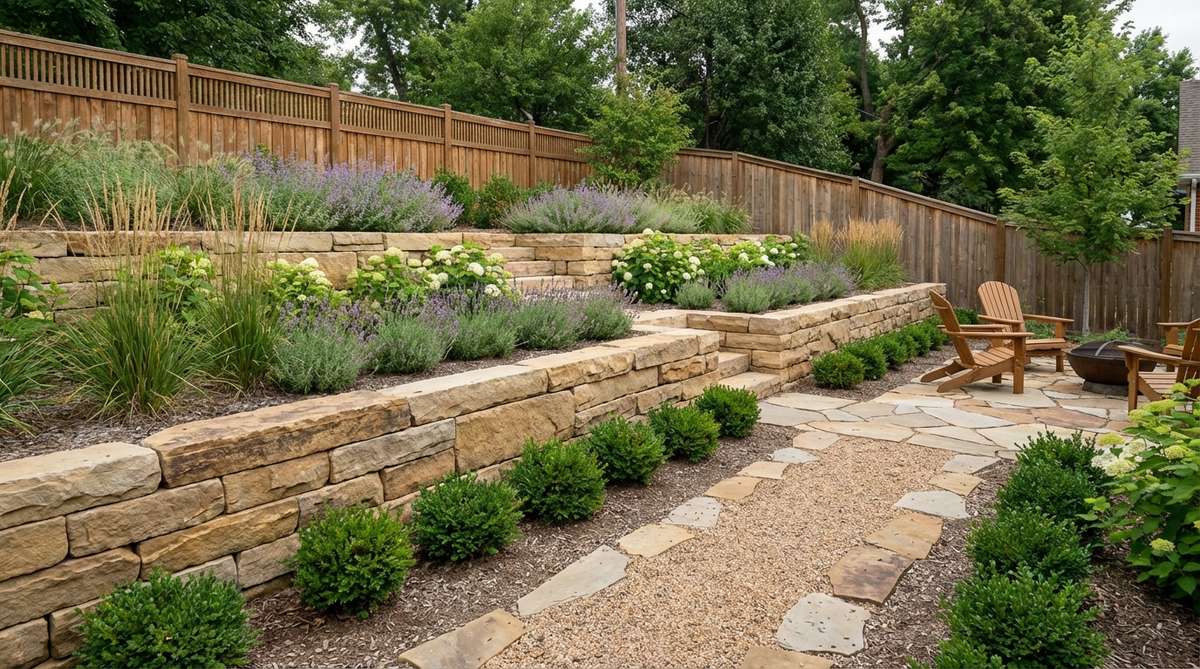
Sloped plots present unique challenges, but a well-designed small garden retaining wall transforms uneven terrain into functional, beautiful outdoor living space. Whether you’re dealing with gentle grades or steep drops, the right wall solution prevents erosion, creates planting areas, and adds architectural interest to your landscape. Fresh Garden Ideas brings you expert-tested solutions that combine structural integrity with design appeal, tailored for small-scale residential gardens across America.
Design SnapshotKey Principles
- Height Matters: Walls under 3 feet typically don’t require engineering permits in most jurisdictions, making them ideal for DIY small garden projects.
- Drainage First: Install perforated drain pipes and gravel backfill behind every retaining wall to prevent water pressure buildup and structural failure.
- Material Selection: Choose materials based on soil type, slope angle, and aesthetic goals—natural stone offers timeless beauty while concrete blocks provide affordable durability.
- Tiered Approach: Multiple shorter walls create more usable planting terraces and reduce structural load compared to one tall barrier.
Natural Stone EleganceTimeless Walls for Slope Control
Natural stone retaining walls offer unmatched durability and visual appeal that ages gracefully over decades. These solutions work particularly well in small gardens where each design element needs to justify its presence through both function and beauty.
1. Dry-Stacked Fieldstone Wall
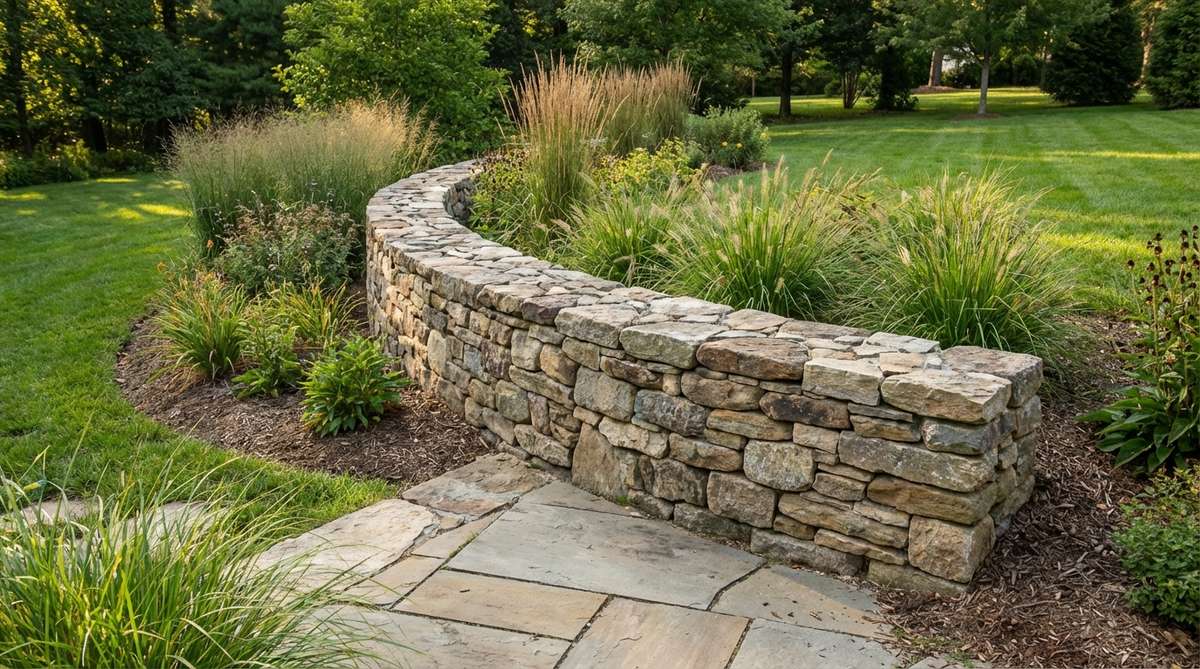
Irregular fieldstone pieces fit together without mortar, creating organic texture that blends seamlessly with natural surroundings. The gaps between stones allow water to drain naturally while providing microhabitats for beneficial garden insects.
Select stones with at least one flat face for the front surface. Place larger, heavier stones at the base and work upward with progressively smaller pieces, tilting each slightly backward for stability.
This method works best for walls under 30 inches tall in small garden applications. The natural drainage eliminates the need for complex pipe systems, reducing installation time and materials cost.
2. Mortared Limestone Terrace
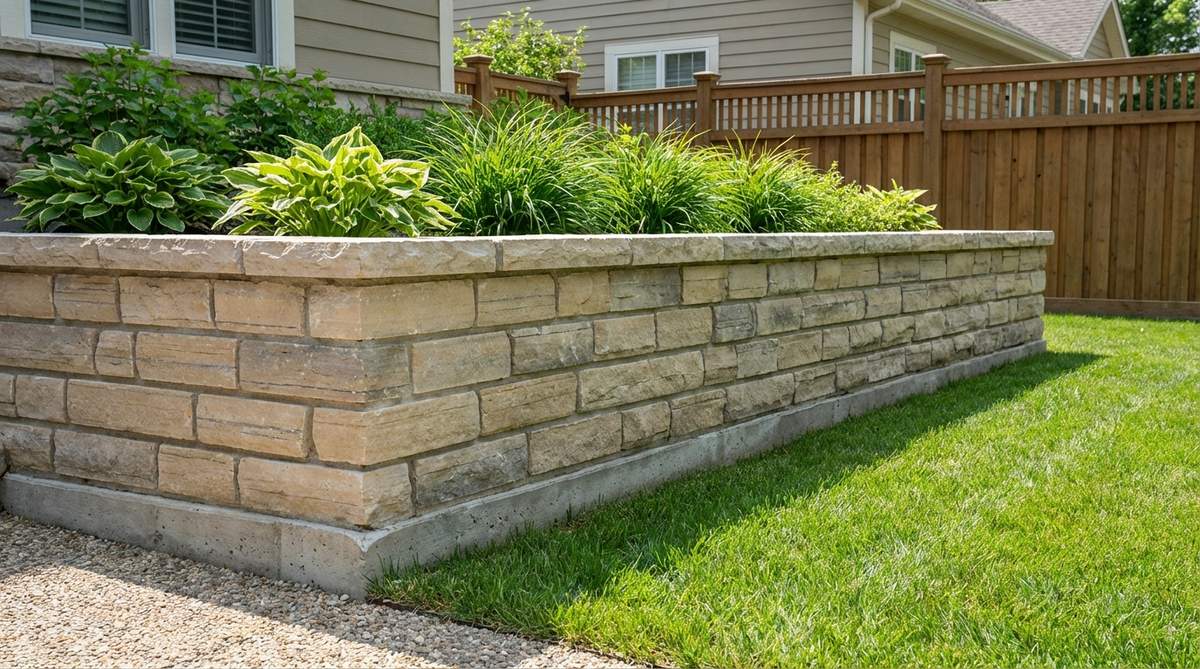
Limestone blocks in warm beige and gray tones create formal structure while maintaining classic appeal. The sedimentary stone cuts cleanly into uniform blocks, simplifying installation for homeowners with basic masonry skills.
Lay a concrete footing below frost line, then build courses with mortar joints. Limestone’s natural porosity helps manage moisture while its density provides excellent compression strength for soil retention.
Expect this solution to last 50-plus years with minimal maintenance. The neutral color palette complements both traditional and contemporary garden styles without overwhelming small spaces.
3. Granite Boulder Retaining System
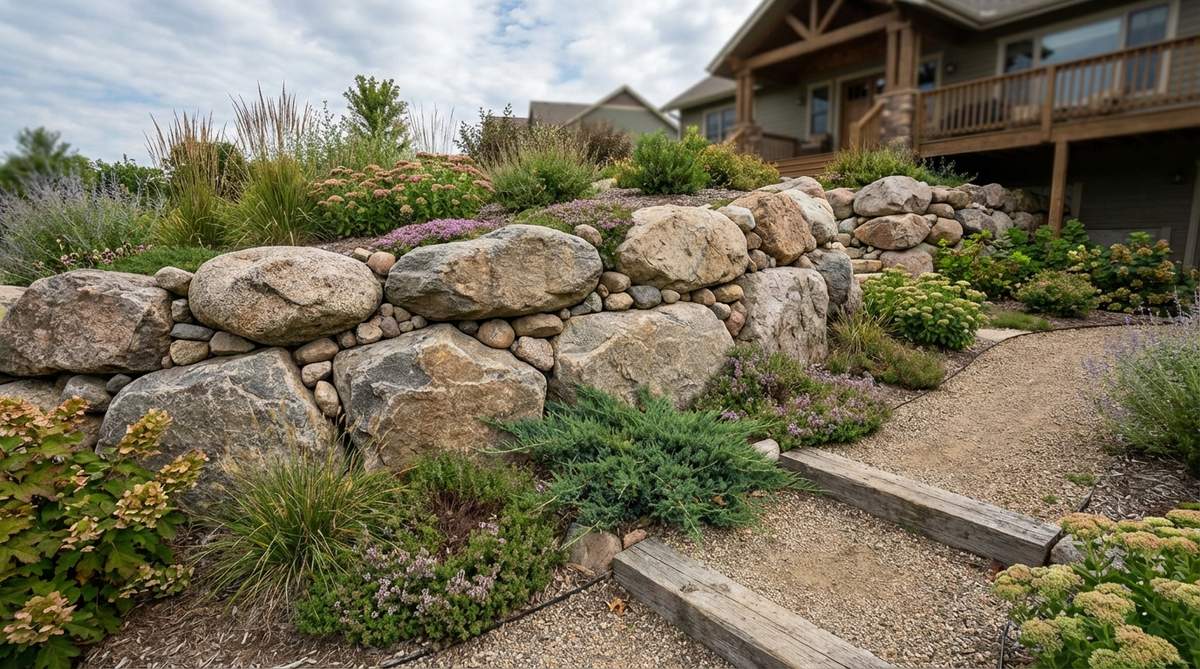
Large granite boulders positioned strategically along slopes create dramatic focal points while stabilizing soil. Each boulder acts as an anchor point, with smaller stones filling gaps to complete the barrier.
Excavate shallow trenches for each boulder, ensuring one-third of the mass sits below grade. Tilt boulders slightly into the slope and backfill with compacted gravel for drainage.
This approach suits informal garden styles and works particularly well on steeper grades where traditional stacked walls might require engineering. Granite’s extreme hardness means virtually zero degradation over time.
4. Sandstone Ledgestone Facing
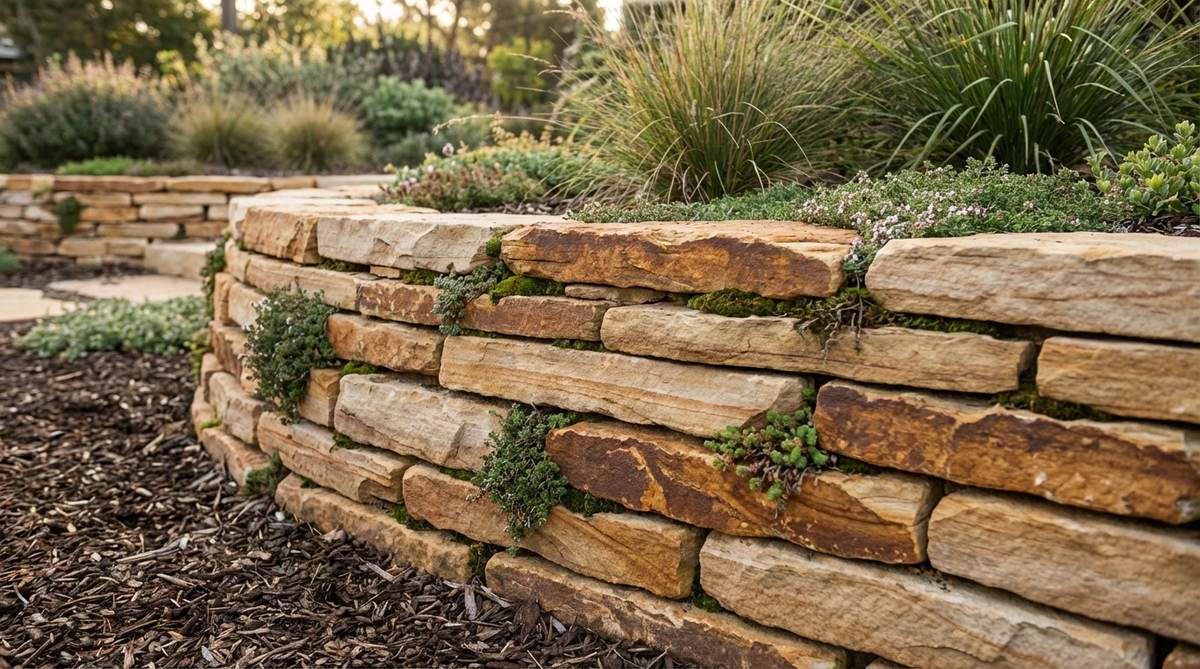
Flat sandstone pieces stack horizontally to create distinct linear patterns that emphasize horizontal lines in narrow garden spaces. The warm earthy tones range from buff to rust, adding color variation throughout the year.
Build a reinforced concrete block core wall, then attach sandstone veneer pieces with masonry adhesive. This hybrid method combines structural reliability with premium aesthetics at moderate cost.
The textured surface catches light beautifully during golden hour. Sandstone’s natural resistance to freeze-thaw cycles makes it ideal for northern climates with harsh winters.
5. River Rock Accent Wall
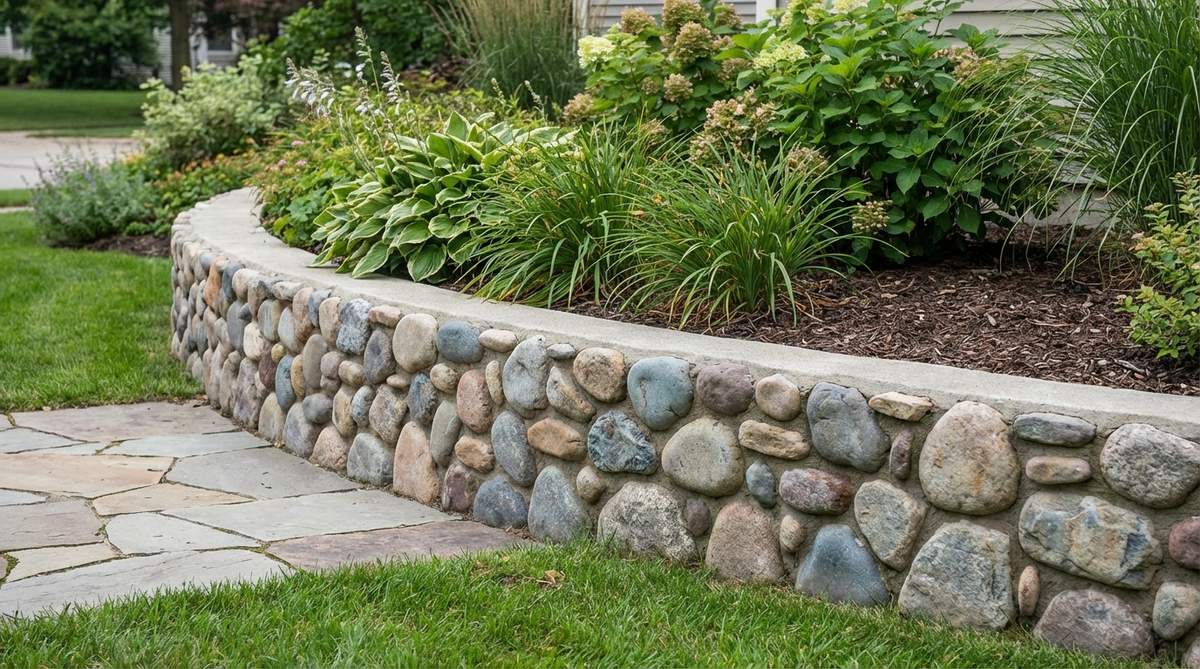
Smooth, rounded river stones set in mortar create soothing texture that references water features and natural stream beds. The varied sizes and subtle color gradations prevent monotony in tight viewing spaces.
Apply stones to a poured concrete or block wall using thinset mortar, working from bottom to top. Select rocks with similar thickness to maintain consistent depth and prevent pieces from protruding awkwardly.
This decorative approach works best for walls under 2 feet where the rock detailing remains visible and accessible for maintenance. Seal the finished surface to prevent moisture infiltration between stones.
Budget-Friendly Timber SolutionsWarm Wood for Small Slopes
Timber retaining walls deliver warmth and natural texture at accessible price points, making them popular choices for DIY small garden projects. Proper treatment and installation techniques extend lifespan significantly in ground-contact applications.
6. Vertical Railway Sleeper Wall
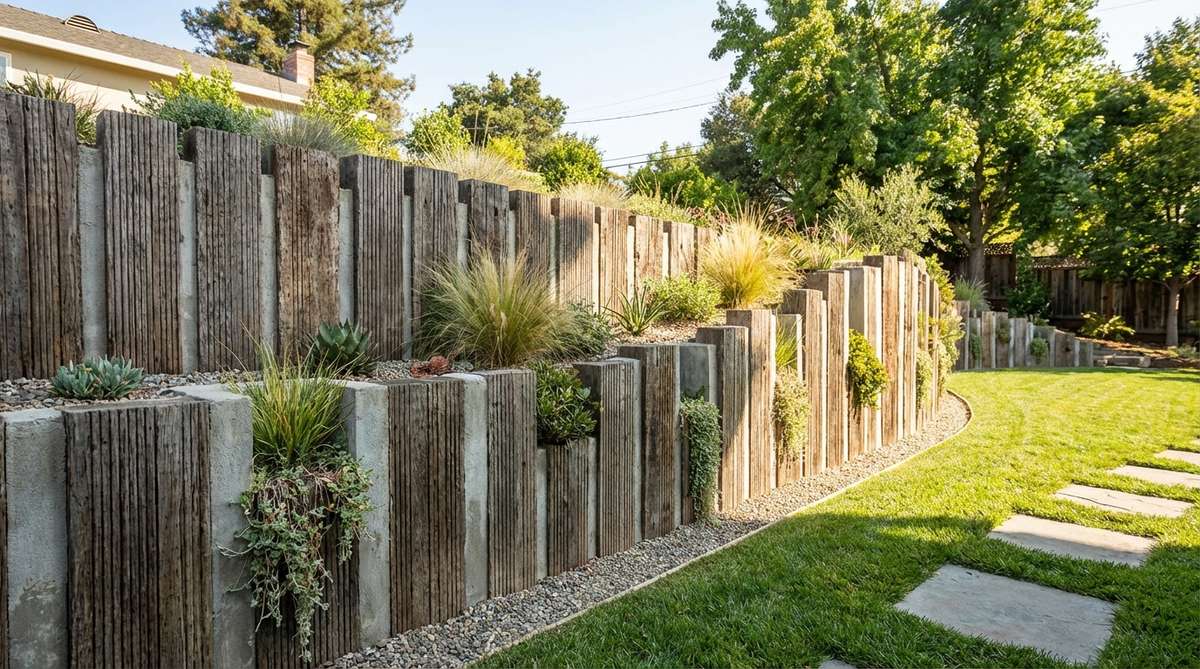
Treated railway sleepers installed vertically create bold linear patterns ideal for contemporary garden designs. Each sleeper acts as an independent post, allowing curves and angles impossible with horizontal stacking methods.
Dig individual holes approximately one-third the sleeper height, set each post in concrete or compacted gravel, then backfill behind the completed fence-like structure. Space sleepers tightly or leave deliberate gaps for planted pockets.
This method suits slopes up to 4 feet with proper bracing. Vertical installation uses fewer sleepers than horizontal stacking, reducing material costs by approximately 30 percent.
7. Horizontal Timber Sleeper Terrace
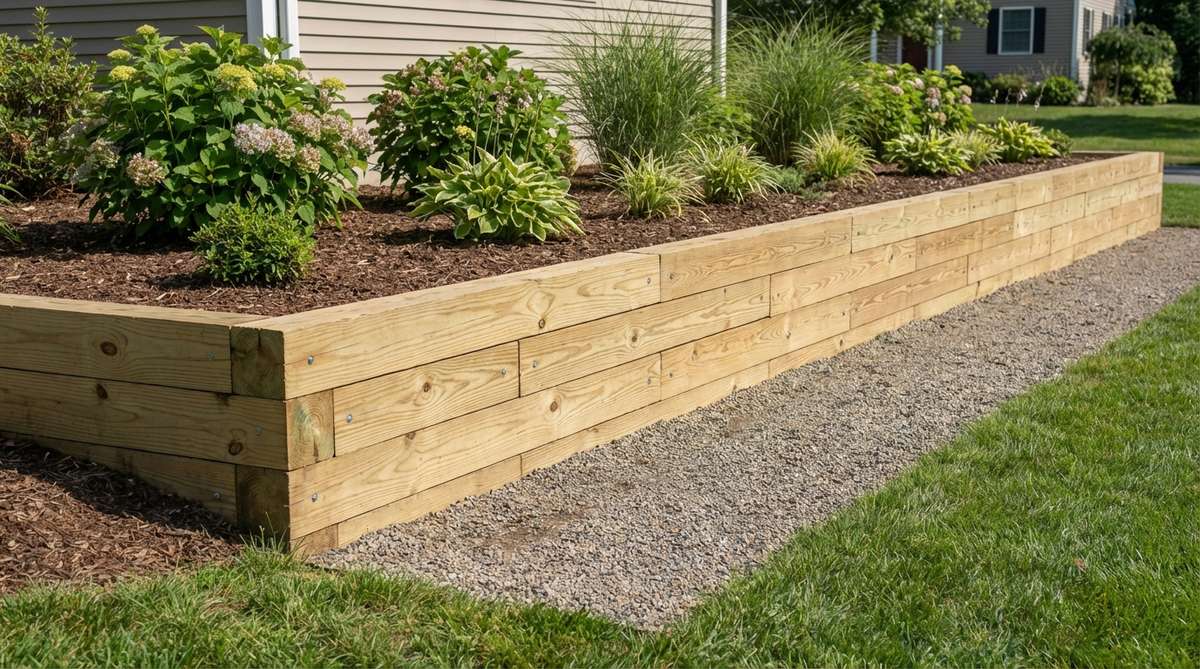
Traditional horizontal stacking creates sturdy walls using gravity and interlocking weight. Treated pine or hardwood sleepers laid flat resist lateral soil pressure through mass rather than deep foundations.
Excavate a level base trench, lay the first course, then stack additional rows with staggered joints like bricklaying. Secure each layer with 150mm timber screws or rebar drilled through multiple courses.
Add vertical support posts behind walls exceeding 3 feet. This technique offers maximum stability for small garden applications and suits rectangular, straight-run designs.
8. Treated Pine Post-and-Board
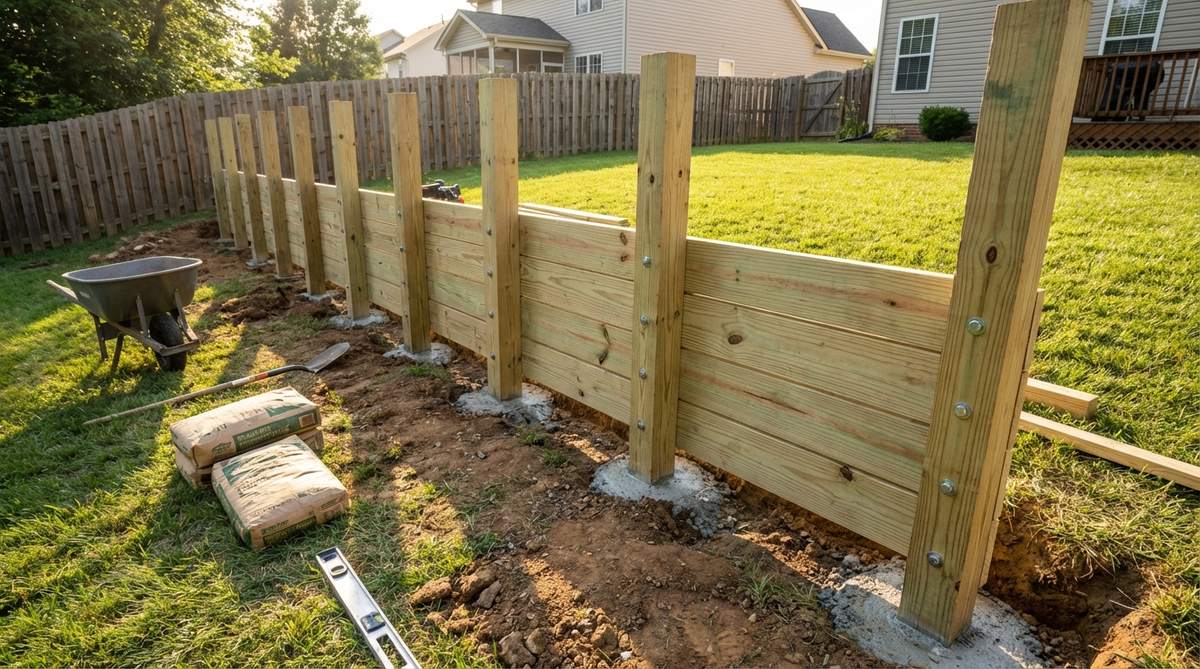
Vertical posts support horizontal boards to create a timber retaining wall resembling sturdy fencing. This modular approach allows easy height adjustment and repairs without rebuilding entire sections.
Set pressure-treated 4×4 or 6×6 posts in concrete footings every 4-6 feet, then attach 2-inch-thick boards horizontally between posts using galvanized bolts. Leave small gaps between boards for drainage.
The accessible construction method suits novice builders tackling their first retaining project. Material costs average $15-35 per square foot installed, making it among the most economical solutions.
9. Reclaimed Wood Pallet Wall
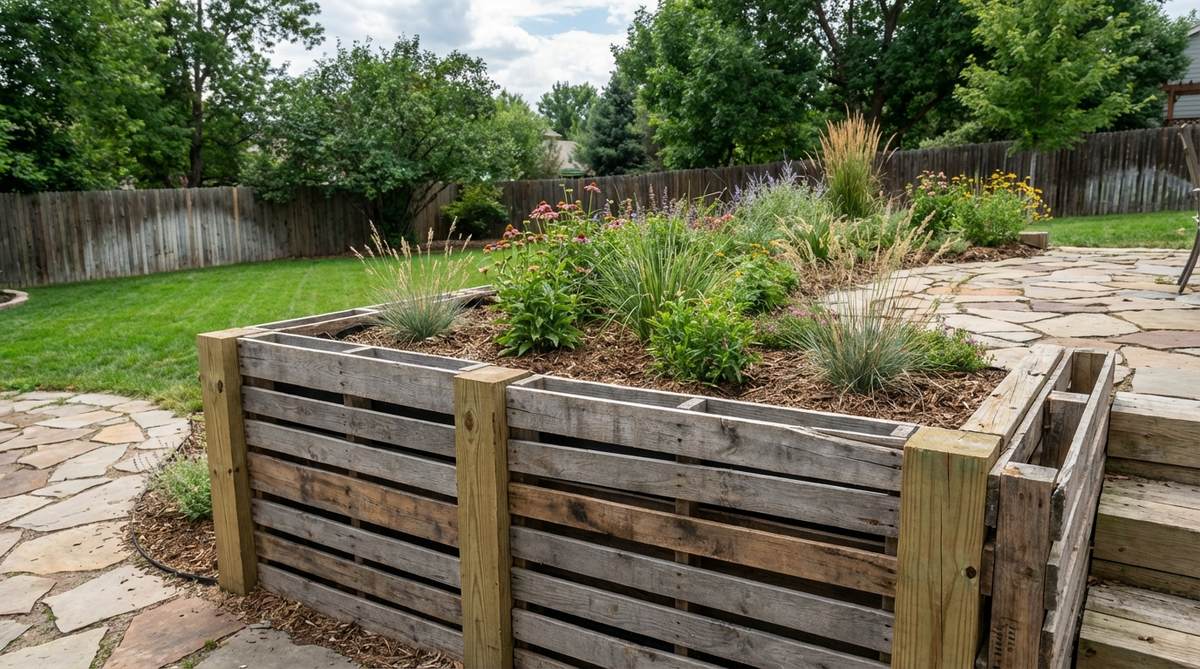
Deconstructed shipping pallets provide free or ultra-low-cost lumber for short retaining walls in casual garden settings. The weathered wood adds instant character and aligns with sustainable design principles.
Remove pallet boards carefully, then reassemble horizontally between treated timber posts. Apply wood preservative to extend lifespan and prevent rapid deterioration in soil contact.
This solution works best for walls under 18 inches supporting decorative planting beds rather than major grade changes. Expect 5-10 year lifespan before replacement becomes necessary.
10. Hardwood Log Retaining Edge
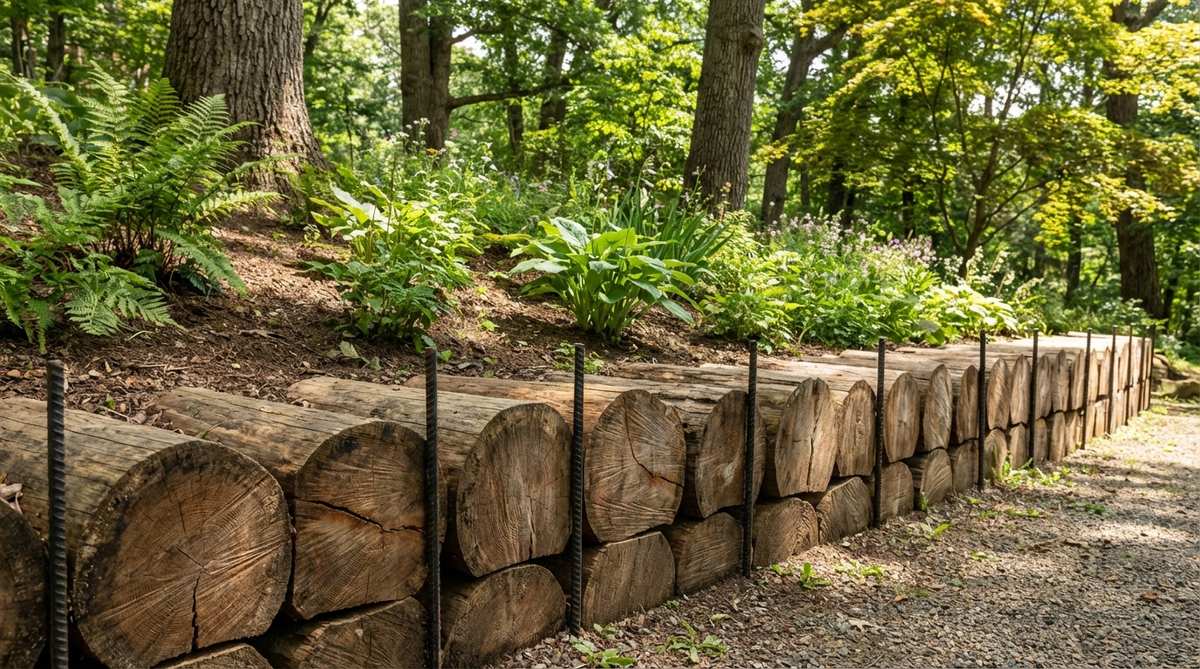
Half-round or quarter-cut hardwood logs create rustic borders perfect for woodland or cottage garden themes. Naturally rot-resistant species like cedar, redwood, or black locust perform well without chemical treatment.
Excavate a shallow trench, position logs with flat side forward, then secure with rebar stakes driven through pre-drilled holes. Backfill and compact soil behind to activate the barrier.
The organic form softens hard landscape lines in small spaces. Logs handle gentle slopes effectively but lack the structural capacity for significant elevation changes.
Modern Concrete SystemsEngineered Durability Meets Design Flexibility
Concrete retaining wall systems offer the longest lifespan and greatest design versatility for small garden applications. Modern manufacturing produces blocks and panels that mimic natural materials while delivering superior structural performance.
11. Interlocking Concrete Block Wall
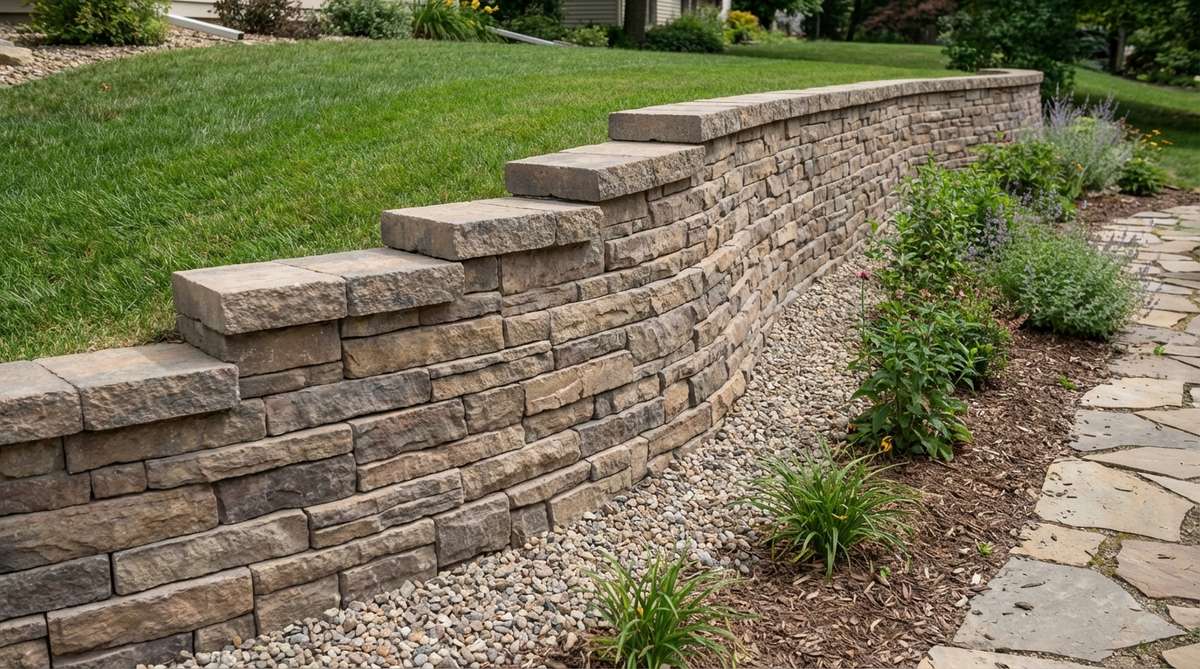
Segmental retaining wall blocks feature interlocking lips that create stable gravity walls without mortar or pins. Manufacturers offer diverse textures mimicking stone, slate, and weathered brick in multiple color families.
Excavate and level a gravel base, install the first course below grade, then stack additional rows with built-in setback. The weight and friction between courses provide structural integrity for walls up to 3-4 feet.
This DIY-friendly system installs quickly and costs $450-700 per square meter. The modular nature allows curves, corners, and integrated steps without custom cutting.
12. Poured Concrete Custom Wall
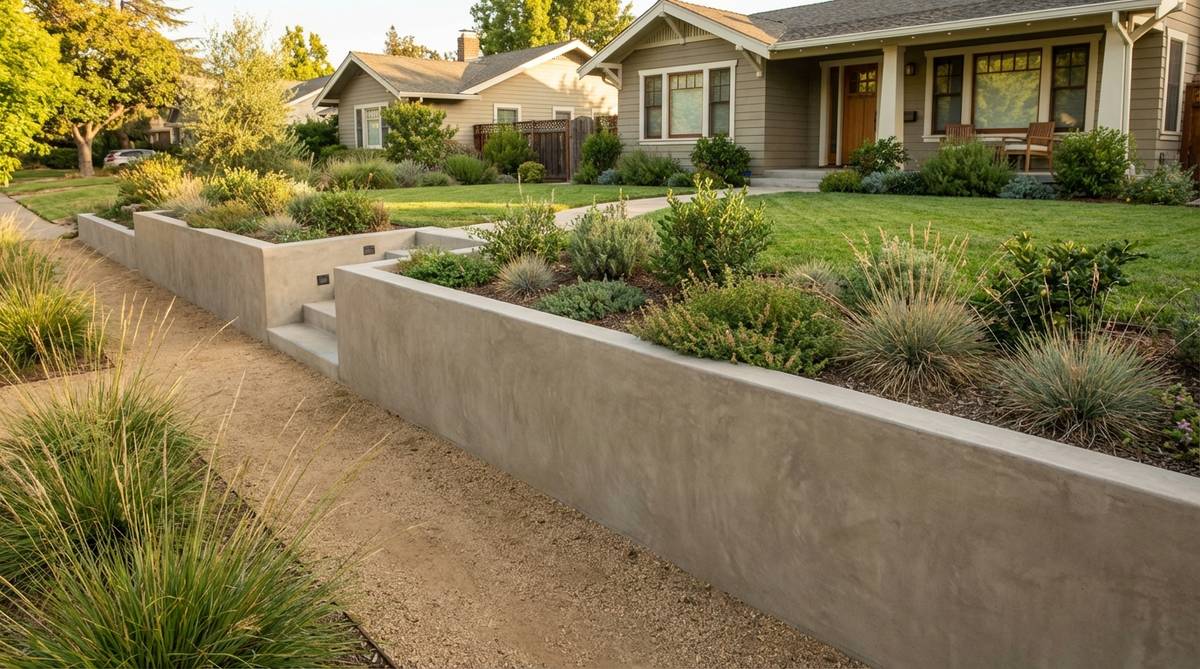
In-place concrete poured into temporary forms creates seamless walls with unlimited shape possibilities. Smooth troweled finishes suit modern aesthetics while textured surfaces add visual interest.
Build wooden forms defining wall dimensions, install reinforcing steel rebar, then pour and vibrate concrete to eliminate voids. Strip forms after curing and apply decorative finishes or integral color as desired.
Although labor-intensive, material costs remain low at approximately $150-300 for small projects. The monolithic structure handles significant loads and lasts 50-plus years with minimal maintenance.
13. Concrete Block with Stucco Finish
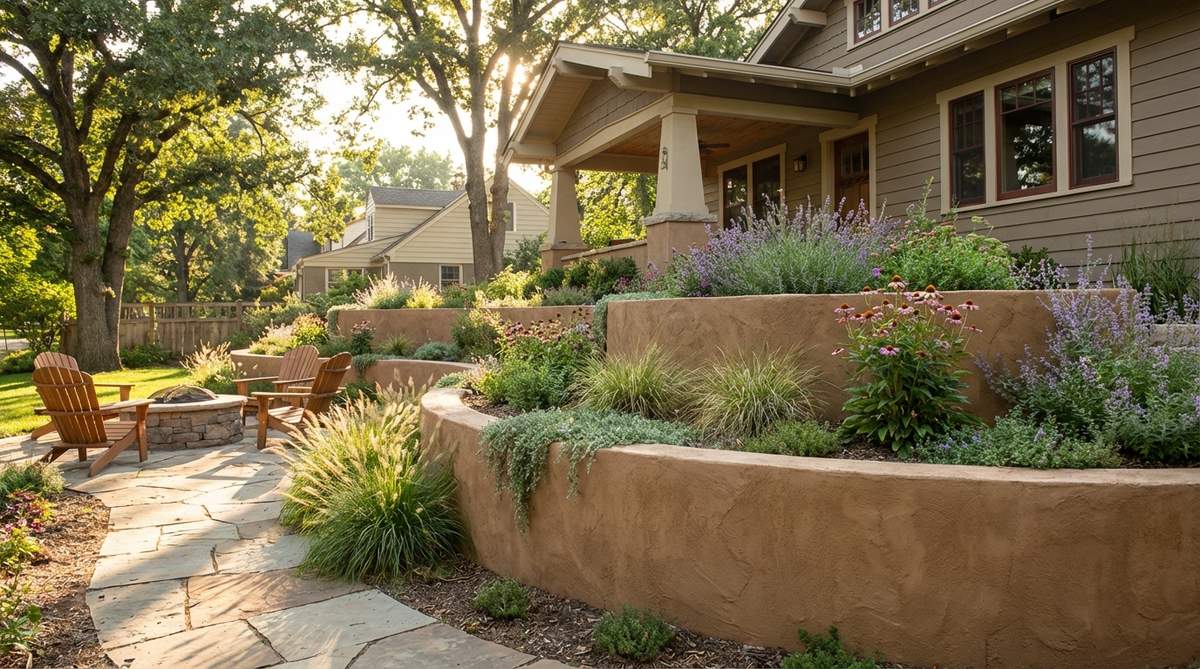
Standard concrete masonry units create affordable structural cores that receive decorative stucco coatings. Pigmented stucco layers transform plain gray blocks into colored architectural elements.
Build the block wall with mortar joints and proper reinforcement, then apply scratch coat, brown coat, and finish coat of stucco. Trowel smooth or create textured patterns matching home architecture.
This approach combines economy with customization. The stucco surface requires periodic resealing but otherwise performs well in most climates for decades.
14. Precast Concrete Panel System
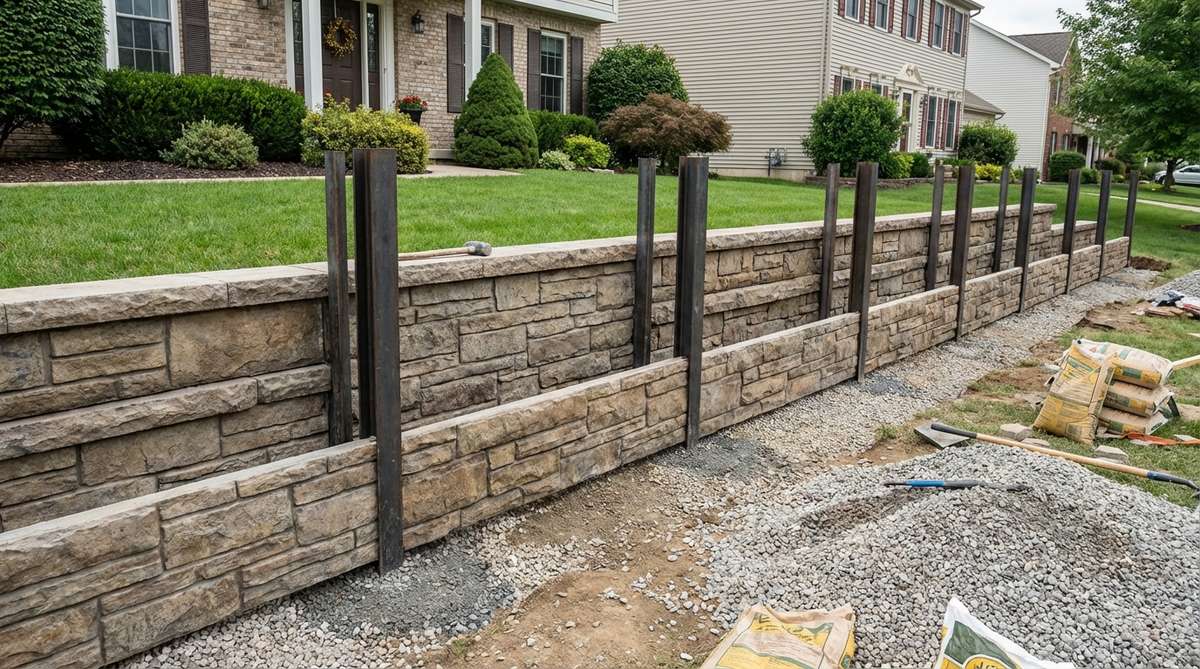
Factory-made concrete panels install rapidly using specialized equipment, creating tall walls in single days rather than weeks. Panels feature realistic stone or wood grain textures molded during manufacturing.
Excavate a compacted gravel base, set vertical posts in concrete, then slide panels between post channels. The engineered system requires professional installation but offers superior strength-to-weight ratios.
While costlier upfront, the speed and finished appearance justify the investment for prominent front-yard applications. Panels span greater heights than modular blocks with less setback requirement.
15. Concrete Block Planter Wall
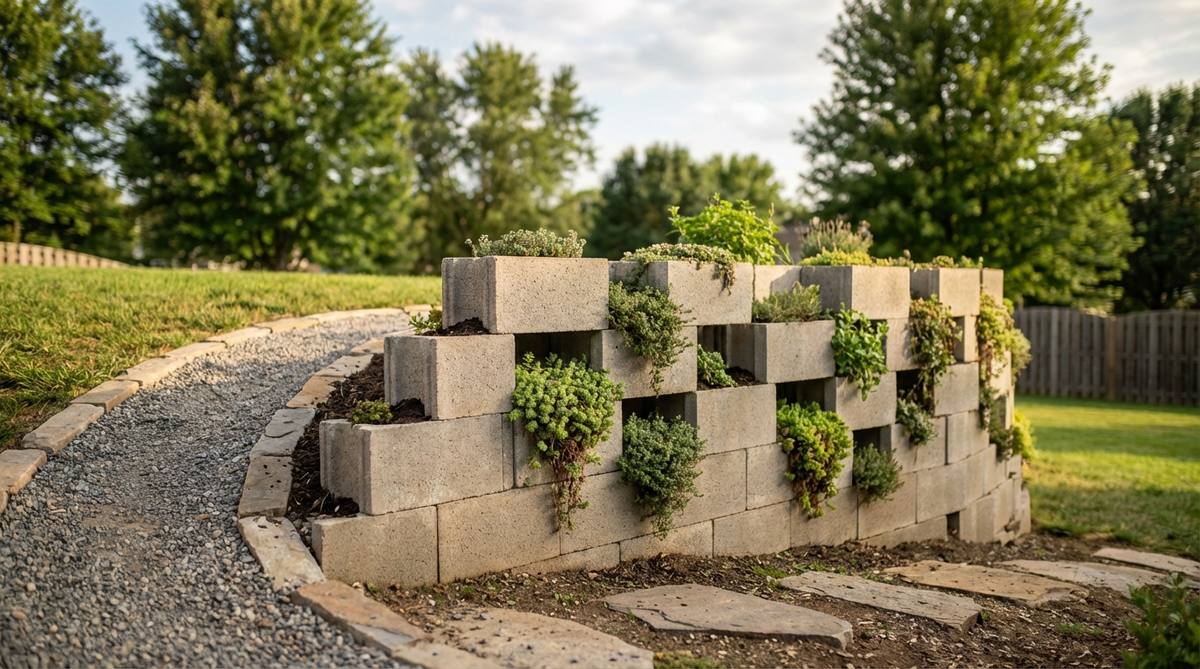
Standard hollow-core concrete blocks positioned with cores facing forward create built-in planting pockets. Trailing plants soften the industrial aesthetic while stabilizing the slope behind.
Stack blocks in running bond pattern, filling select cores with rebar and concrete for structural strength while leaving others open for soil and plants. The weight and reinforcement combine to resist lateral pressure.
This creative reuse of basic materials costs just $3-5 per block. Plant sedums, thyme, or succulents in the pockets to create a living wall effect on a budget.
Eco-Conscious AlternativesSustainable Slope Solutions
Environmentally responsible retaining walls utilize recycled materials, minimize carbon footprint, and support local ecosystems. These solutions appeal to gardeners prioritizing sustainability without sacrificing structural performance.
16. Gabion Wire Basket Wall
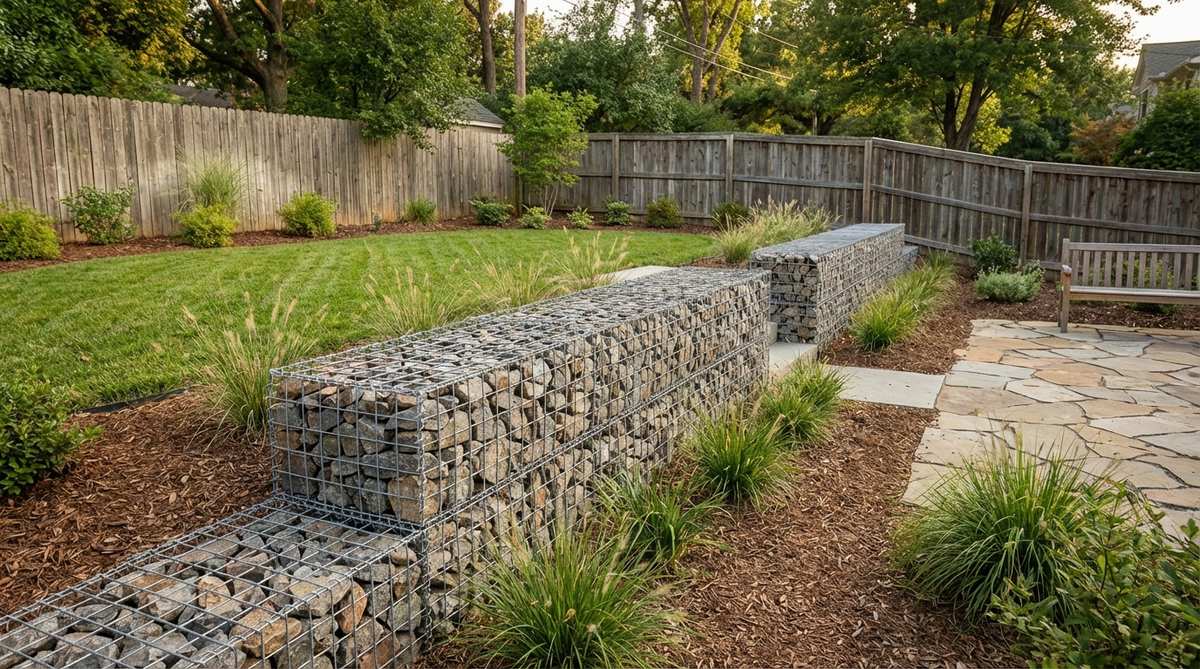
Wire mesh cages filled with rocks, recycled concrete, or mixed rubble create permeable walls with industrial-chic appeal. The modular baskets stack and connect to form walls of varying heights and configurations.
Assemble galvanized wire baskets on-site, position on compacted gravel base, then fill with angular stone or recycled materials. Connect baskets with wire ties and stack with slight backward lean for stability.
Gabions provide excellent drainage, eliminating hydrostatic pressure concerns. Material costs run $25-45 per square foot, with the option to use free salvaged fill reducing expenses significantly.
17. Recycled Concrete Rubble Wall
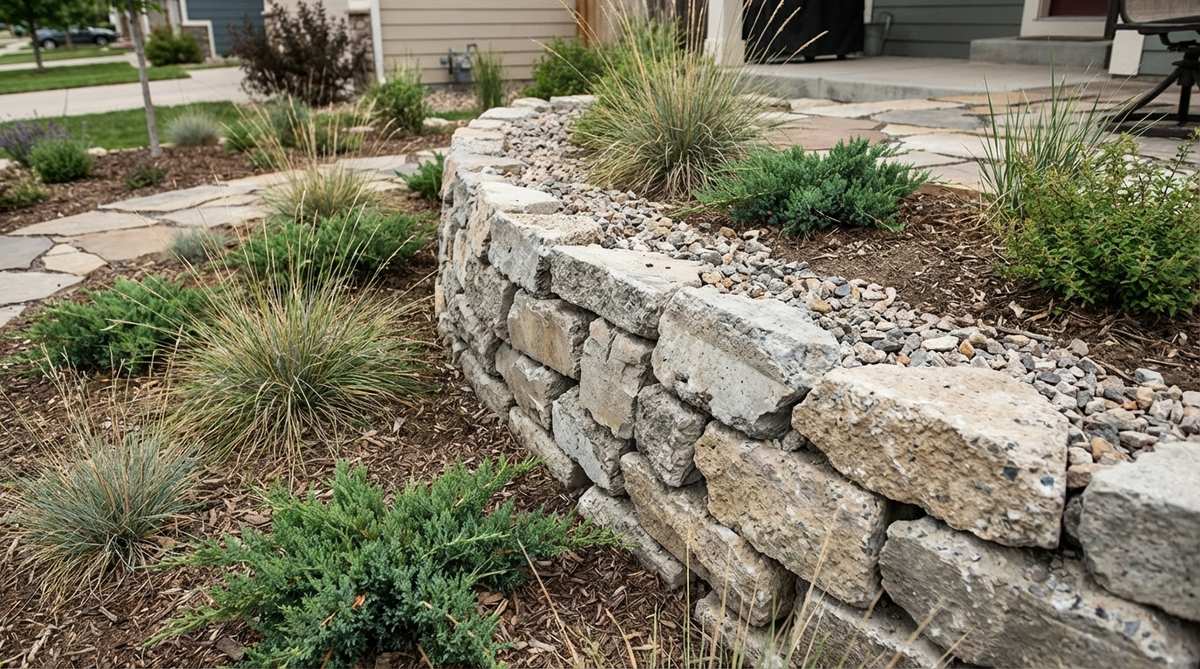
Broken concrete salvaged from demolition projects becomes free or low-cost retaining wall material. The irregular chunks stack like oversized stone, creating textured surfaces with zero carbon footprint from material production.
Sort rubble by size, placing largest pieces as base course. Build upward with progressively smaller chunks, using concrete mortar in joints for walls exceeding 2 feet. Backfill with gravel for drainage.
This approach diverts waste from landfills while creating functional garden infrastructure. The raw aesthetic suits urban and contemporary garden styles particularly well.
18. Recycled Brick Garden Wall
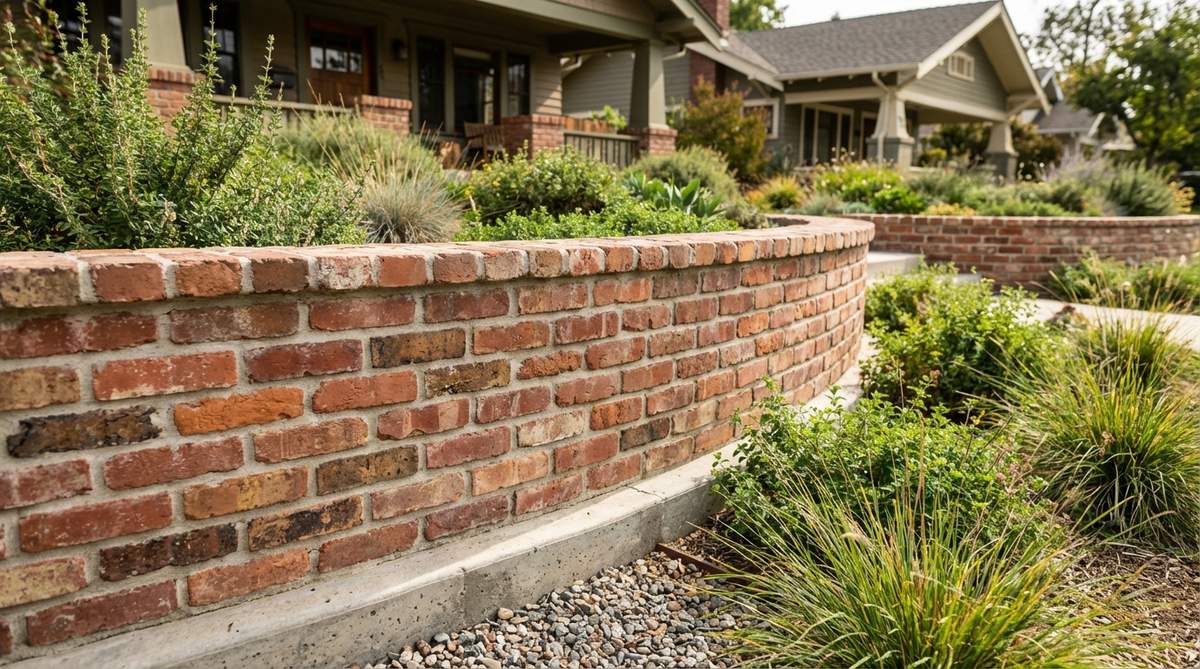
Reclaimed bricks from demolished buildings carry historical character while providing solid masonry performance. Varied colors and weathered patinas add instant age and depth to new garden constructions.
Clean mortar from bricks, then lay in traditional running bond with fresh mortar joints. Install proper footing and drainage as with new brick construction. The traditional material integrates seamlessly with heritage home styles.
Source free bricks through demolition sites or online marketplaces, investing primarily in mortar and labor. The 10-25 year lifespan justifies the effort for gardeners valuing sustainability and character.
19. Geotextile Reinforced Soil Wall
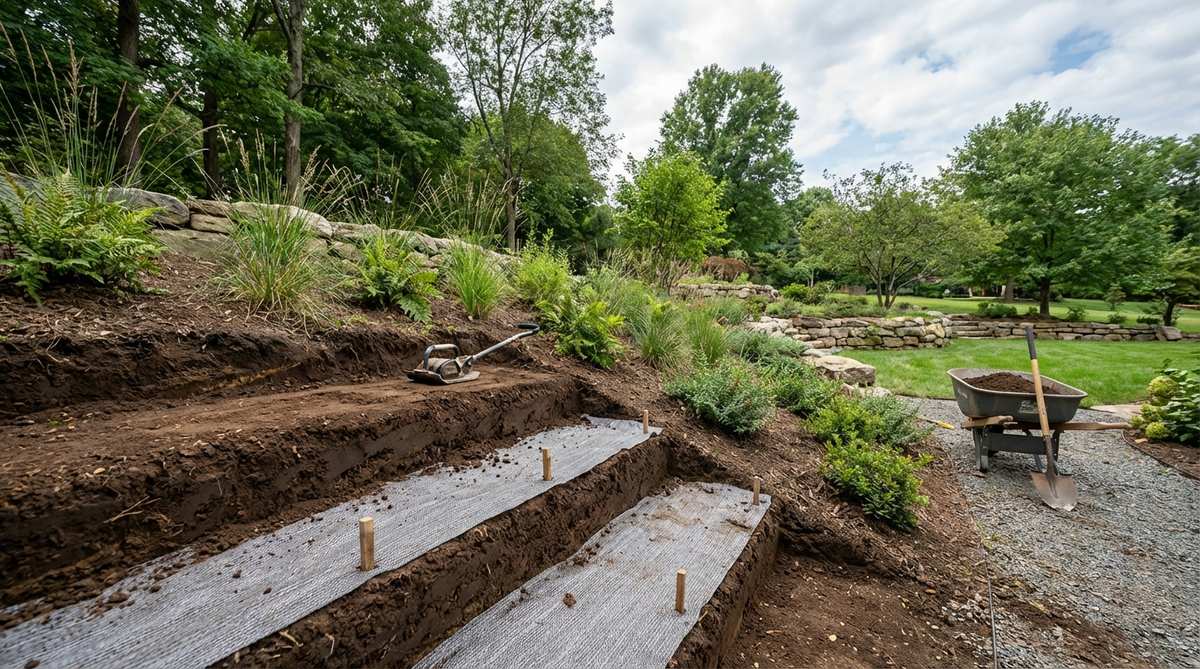
High-strength fabric layers sandwiched between compacted soil courses create stable slopes without rigid materials. The flexible system adjusts to minor ground movement without cracking or failing.
Compact a soil layer, lay geotextile fabric extending back into the slope, fold fabric over the next soil layer, and repeat. Wrap the exposed face or plant with erosion-control vegetation for finished appearance.
This engineering approach suits environmentally sensitive sites where minimal material import is desired. Professional installation ensures proper fabric tensioning and soil compaction for long-term performance.
20. Living Willow Wattle Fence
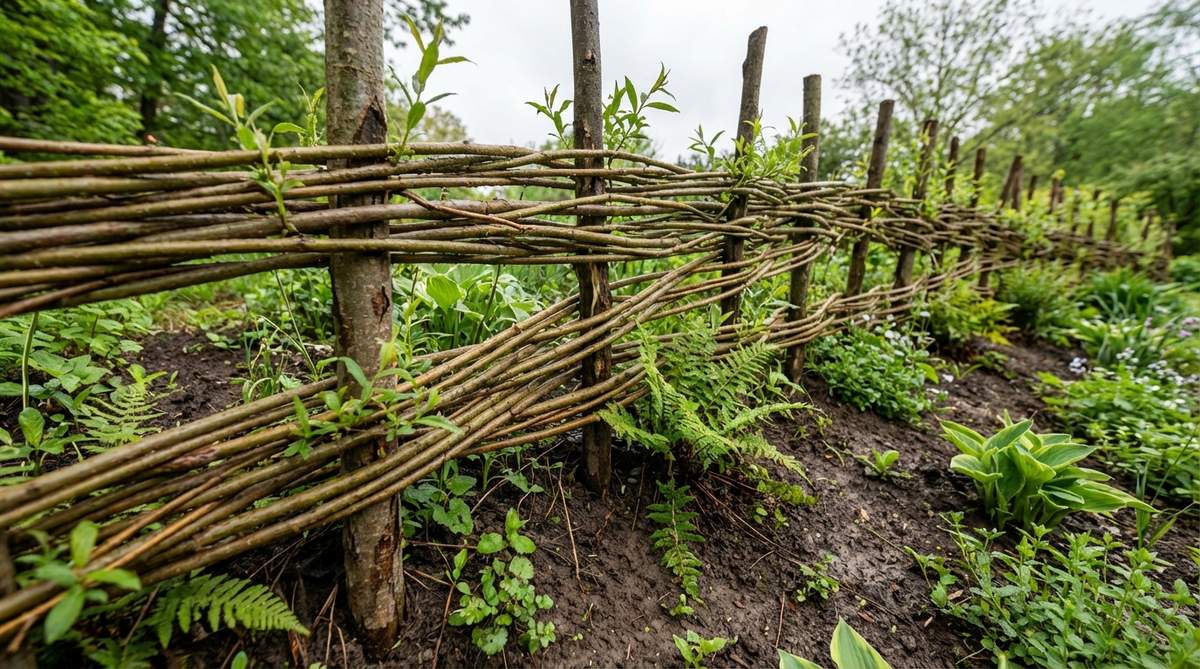
Woven willow branches driven into moist soil often take root, creating a living retaining structure that strengthens over time. The traditional technique combines immediate function with long-term biological reinforcement.
Drive live willow stakes vertically into the slope, then weave flexible willow whips horizontally between stakes. Keep the structure moist during establishment to encourage rooting and sprouting.
This ancient method costs virtually nothing but suits only gentle slopes and moist climates. The organic aesthetic fits cottage gardens and naturalistic landscapes beautifully.
Creative Vertical DesignsSpace-Maximizing Wall Innovations
Small gardens benefit from retaining walls that serve multiple functions beyond simple soil retention. These innovative solutions integrate planting, seating, storage, and visual interest into compact footprints.
21. Modular Living Wall System
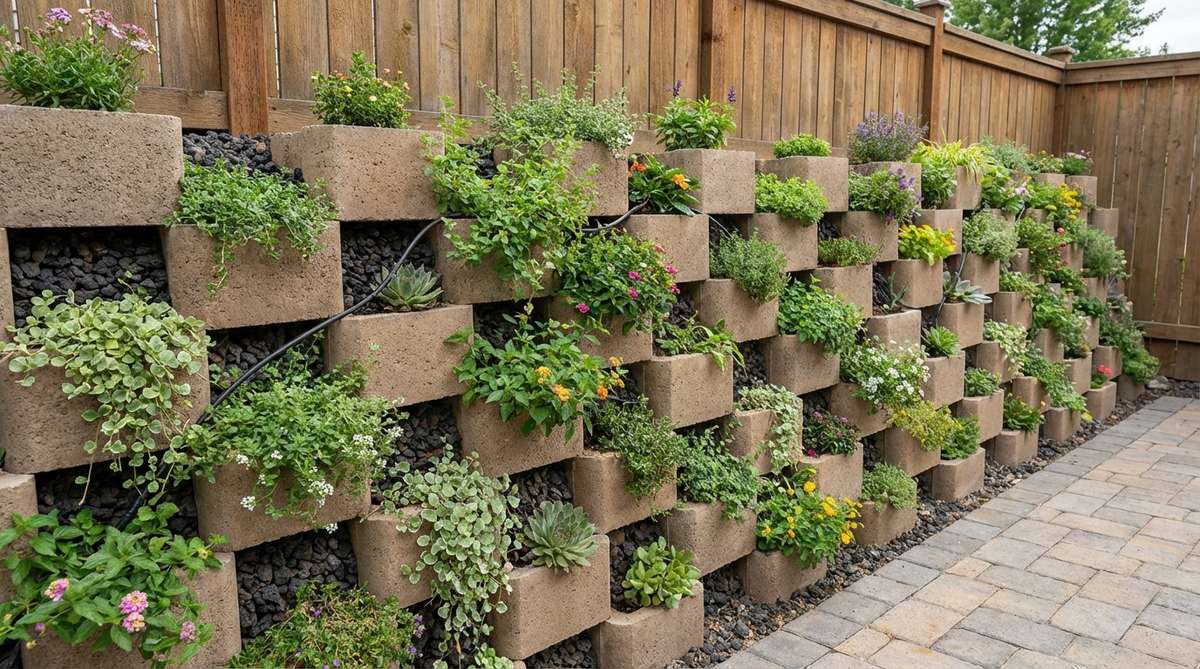
Lightweight plastic or concrete modules interlock to form retaining walls with front-facing planting pockets. Plants root directly into the wall structure, creating vertical gardens that maximize growing space in limited footprints.
Level a compacted base, stack modules with built-in setback, backfill with drainage aggregate, then fill planting pockets with quality potting mix. Install drip irrigation behind the wall to automate watering.
These systems weigh just 2.5 pounds per block, simplifying installation for DIYers. Walls up to 5 feet tall remain stable while supporting dozens of plants in just a few linear feet.
22. Corten Steel Planter Wall
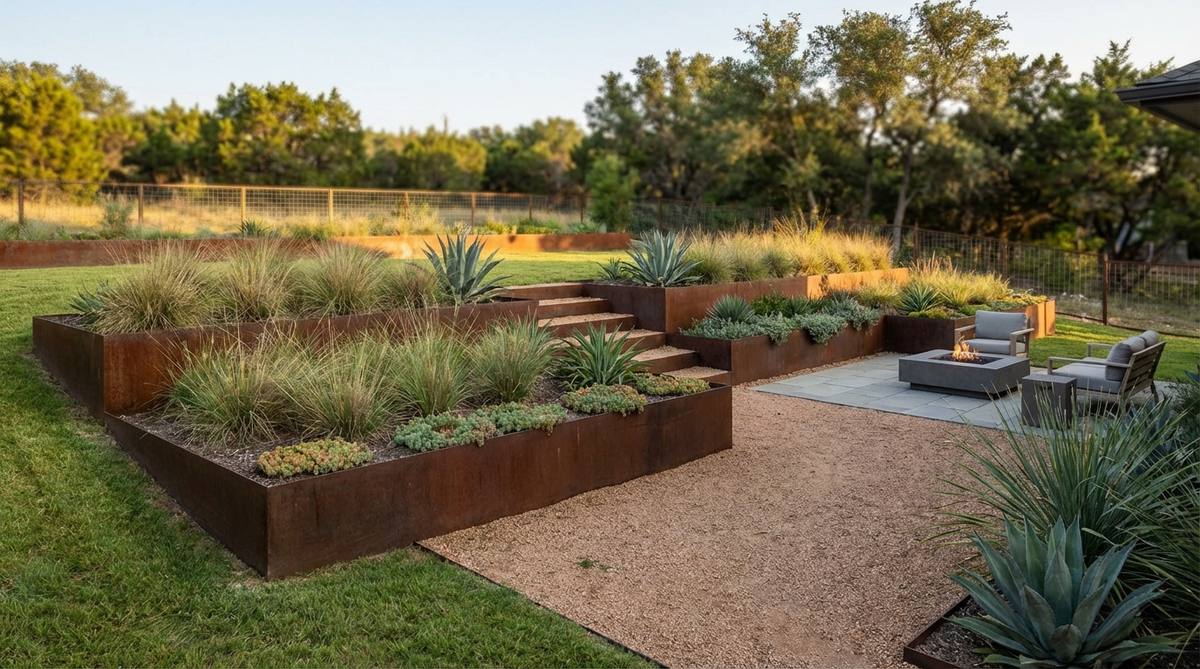
Weathering steel panels develop protective rust patinas that eliminate the need for painting or sealing. The industrial material forms clean geometric shapes perfect for modern small garden designs.
Fabricate or purchase custom steel panels, weld or bolt into frames, then position on concrete footings. The material’s strength allows tall, thin walls that maximize usable garden space behind.
Initial costs run higher than concrete or timber, but the 50-plus-year lifespan with zero maintenance creates long-term value. The warm rust tones complement both evergreen and deciduous plantings.
23. Tiered Wooden Planter Boxes
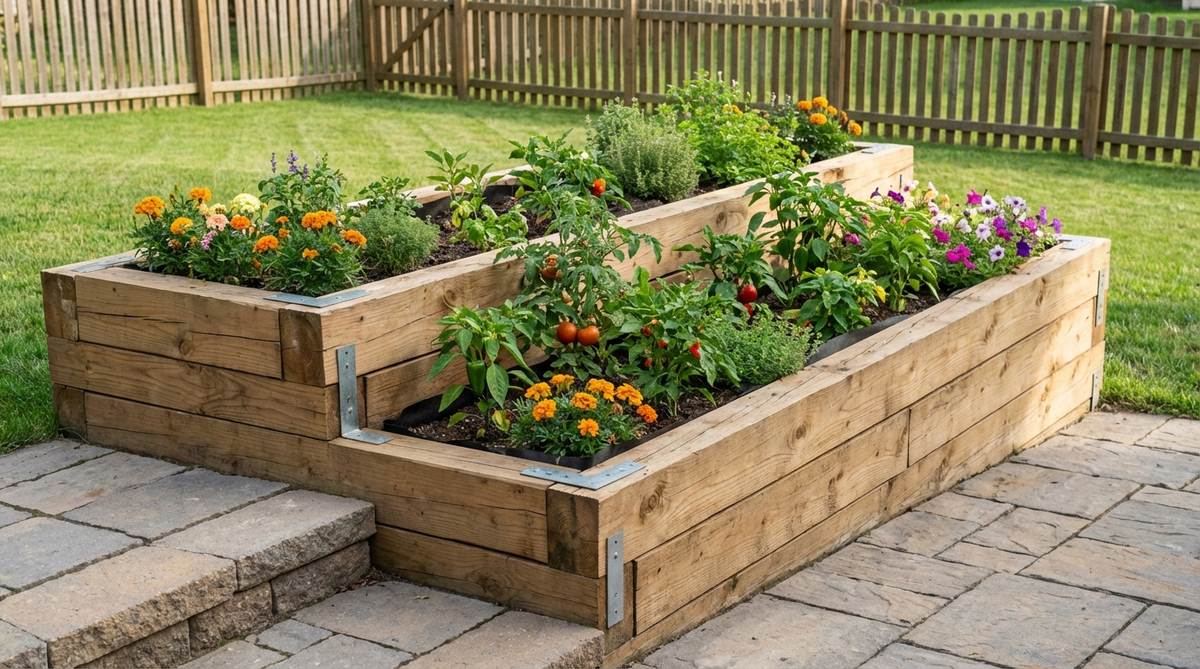
Stacked raised beds built from dimensional lumber create stepped retaining structures that double as accessible planting areas. Each tier catches and holds soil while providing defined growing zones.
Build rectangular planter frames from 2×10 or 2×12 boards, stack with progressively smaller footprints, then backfill with quality garden soil. Secure tiers with corner brackets or steel reinforcing straps.
This approach converts steep slopes into productive growing space for vegetables and flowers. The defined edges simplify maintenance and irrigation compared to sloped planting beds.
24. Stone Veneer Seat Wall
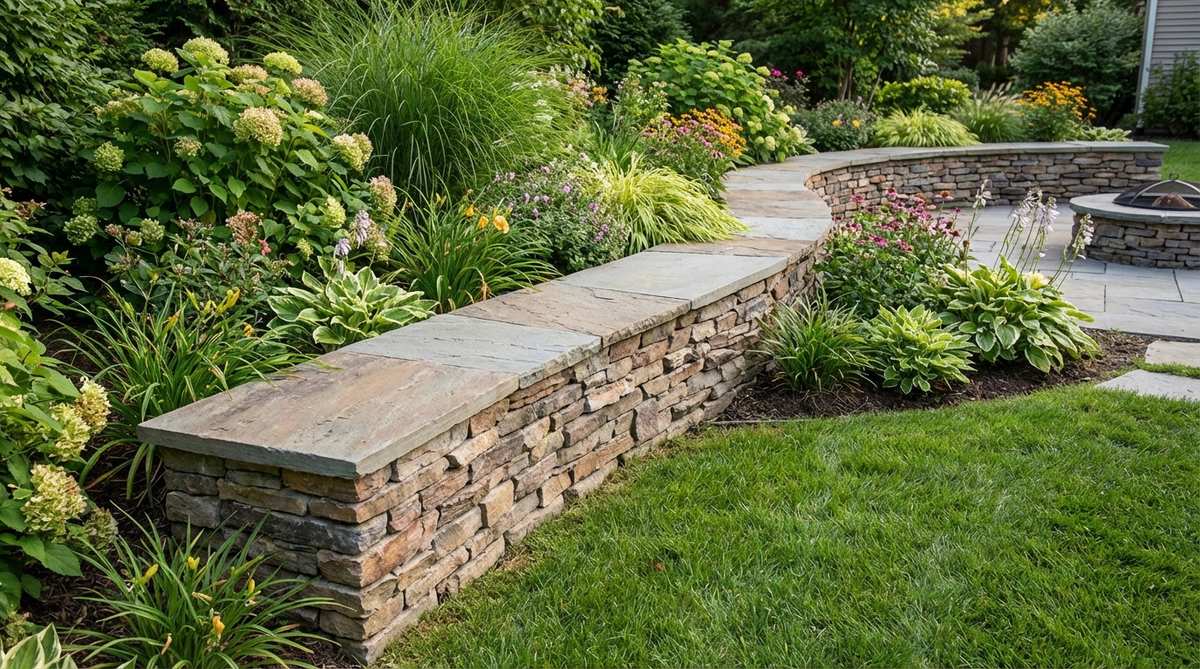
Low retaining walls capped with flat stones serve dual roles as structural elements and casual seating. The 18-24 inch height provides comfortable perching while defining space boundaries.
Build a concrete block core wall, apply natural stone or manufactured veneer to visible faces, then cap with thick bluestone, granite, or concrete pavers. Ensure the cap overhangs slightly to shed water.
Seat walls encourage lingering in the garden while solving slope challenges. They work particularly well flanking patios or defining outdoor rooms in compact yards.
25. Vertical Herb Garden Wall
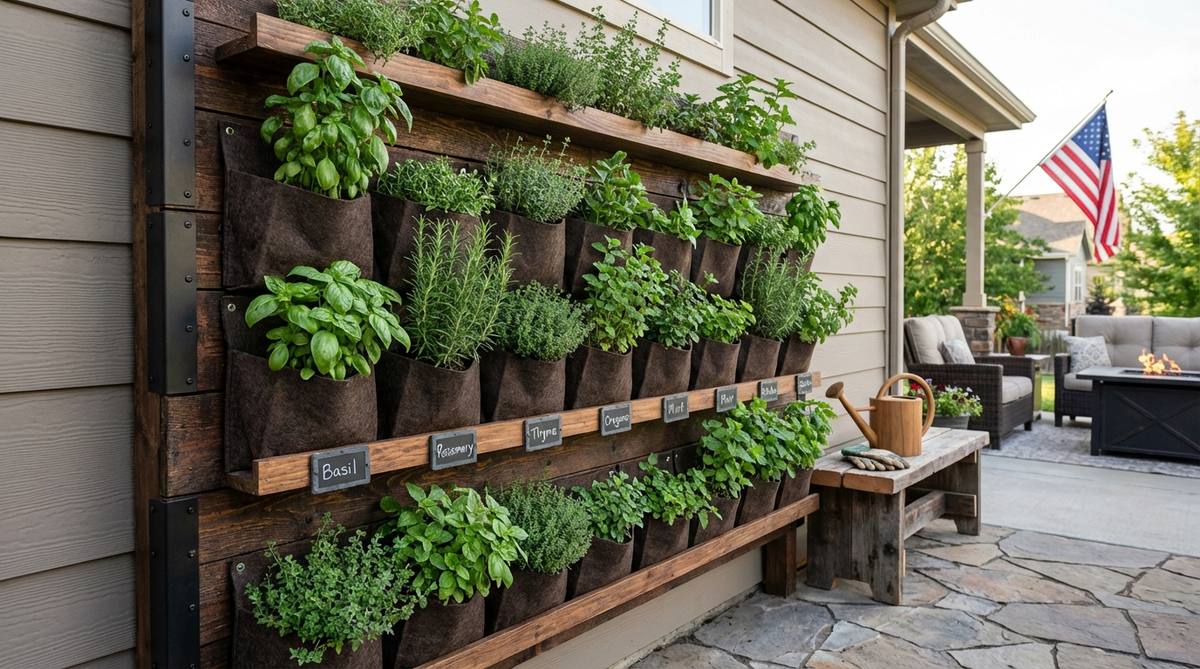
Purpose-built retaining structures incorporate pockets, shelves, or tubes specifically designed for culinary herbs. The vertical orientation brings fragrant plants to nose level while conserving ground space.
Install a basic block or timber retaining wall, then attach wall-mounted planters, horizontal pipes with planting holes, or stacked containers. Ensure each pocket drains freely and receives adequate sun exposure.
Kitchen herbs thrive in the excellent drainage and air circulation vertical walls provide. Harvest becomes easier when plants grow at standing height rather than ground level.
26. Illuminated Glass Block Accent
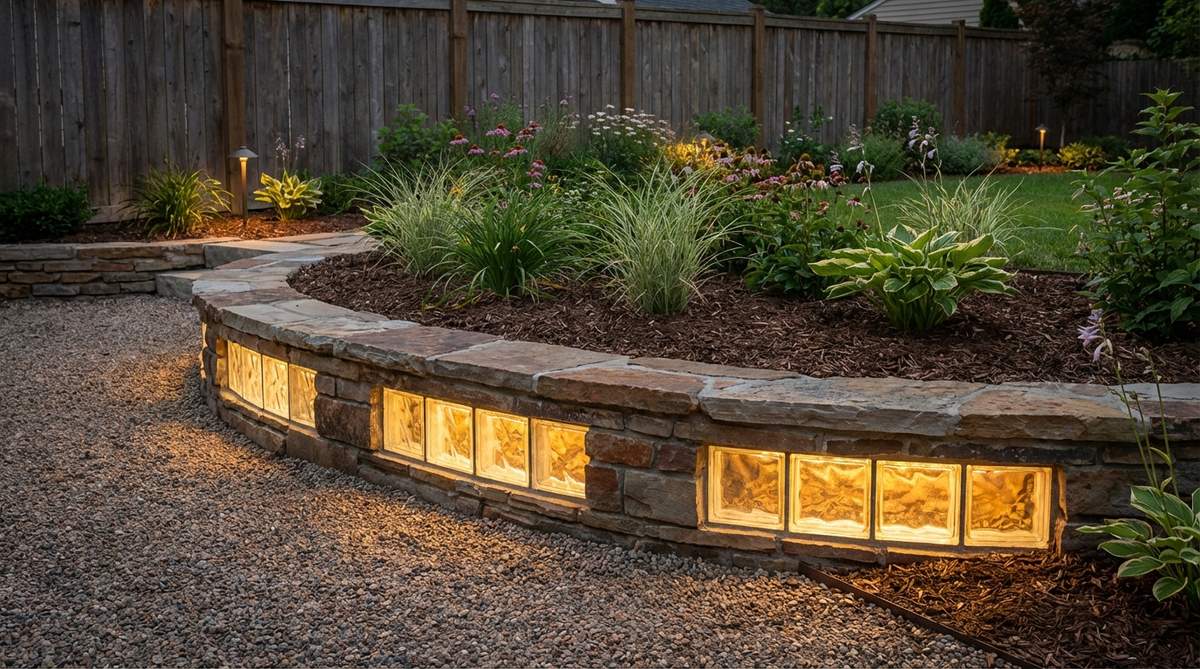
Glass blocks integrated into traditional masonry walls admit light while creating glowing focal points after dark. The translucent material adds contemporary flair to small urban gardens with close viewing distances.
Build a concrete block or brick wall, leaving planned openings for glass blocks. Set glass blocks in mortar like standard units, optionally installing LED strip lights behind for dramatic nighttime effects.
This decorative technique suits low walls under 3 feet where the glass details remain visible. The unique material adds architectural interest in gardens with limited space for large-scale features.
27. Two-Tier Terrace Garden
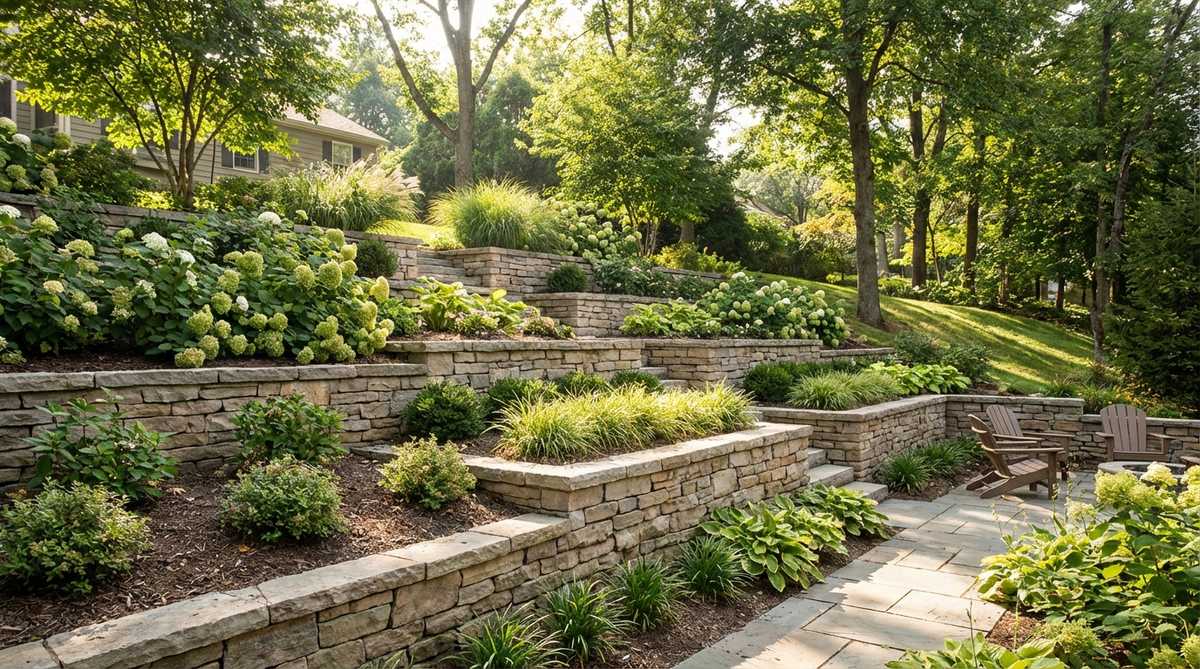
Multiple shorter walls create level planting platforms on slopes too steep for single-wall solutions. Each terrace captures flat growing space while reducing the structural demands on individual walls.
Build the lowest wall first, backfill and compact, then construct the second tier. Space walls to create terraces 3-6 feet deep—enough for meaningful planting while maintaining manageable proportions.
Terracing prevents the tall, expensive walls required for single-tier construction. The stepped profile adds dimension and visual interest while improving soil drainage and root access to oxygen.
Transform Your Sloped Garden Today
Strategic placement of small garden retaining walls converts challenging terrain into layered, functional outdoor spaces that enhance both aesthetics and usability. Begin with accurate site assessment—measure slope angles, identify drainage patterns, and note sun exposure before selecting materials and styles. Start with one well-executed wall to build confidence and skills before tackling larger projects.
Whether you choose the rustic charm of stacked stone, the affordability of timber sleepers, or the longevity of concrete systems, proper installation determines long-term success. Prioritize drainage with gravel backfill and perforated pipe, ensure level base courses, and don’t skip compaction steps. Fresh Garden Ideas encourages you to view your slope not as a problem but as an opportunity to create dynamic, terraced gardens that outperform flat landscapes in visual interest and growing potential.
Frequently Asked Questions
What is the most budget-friendly small garden retaining wall option?
Treated pine timber sleepers and recycled materials like concrete rubble or reclaimed bricks offer the lowest material costs at $15-35 per square foot installed. DIY installation eliminates labor expenses, making these options accessible for most homeowners. Railway sleepers provide excellent value, with vertical installation using fewer materials than horizontal stacking while achieving similar structural performance for walls under 4 feet.
How tall can I build a retaining wall without professional engineering?
Most jurisdictions allow walls under 3-4 feet without engineering stamps or building permits, though local codes vary significantly. Walls exceeding this height typically require structural calculations, proper reinforcement, and professional installation to ensure safety and code compliance. Always consult your local building department before beginning construction, as setback requirements and inspection protocols differ between municipalities.
What drainage requirements do small garden retaining walls need?
Every retaining wall requires drainage to prevent hydrostatic pressure buildup that causes structural failure. Install perforated drain pipe at the base behind the wall, surrounded by 12 inches of clean gravel extending up the back face. Wrap drainage aggregate with landscape fabric to prevent soil migration, and ensure the pipe outlets at a lower elevation to allow gravity drainage of collected water.
Which retaining wall material lasts longest in small gardens?
Natural stone walls built with quality materials and proper technique last 50-100 years or more, offering the longest lifespan of any option. Poured concrete and concrete block systems provide similar durability at lower cost, typically performing well for 50-plus years. Timber solutions have the shortest lifespan at 10-25 years but offer easier installation and lower upfront investment that may justify periodic replacement.
Can I build a curved retaining wall in a small garden?
Curved walls add visual interest but require specific materials and techniques. Interlocking concrete blocks, gabion baskets, and dry-stacked stone adapt well to curves, while poured concrete in flexible forms creates any shape desired. Timber and rigid panels work best for straight runs. Tighter radius curves require smaller individual units or flexible materials to prevent awkward gaps and maintain structural integrity.
What plants grow well in retaining wall pockets?
Drought-tolerant species thrive in the well-drained environment retaining walls provide. Sedums, sempervivums, creeping thyme, and other low-growing succulents establish easily and require minimal care once rooted. For vertical growing spaces, cascading plants like trailing rosemary, creeping Jenny, and alyssum soften hard edges. Choose plants suited to your climate zone and the sun exposure your wall receives throughout the day.