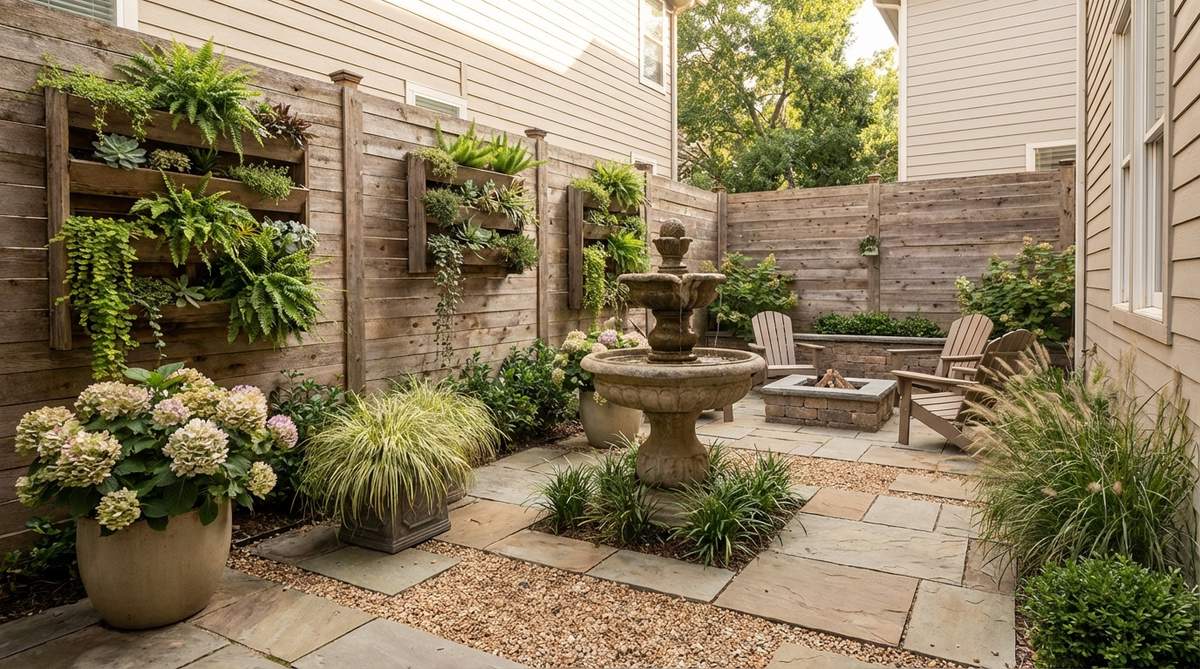
Enclosed courtyards transform limited outdoor space into intimate retreats where privacy meets design innovation. These small garden courtyard ideas address the unique challenges of compact, enclosed areas by maximizing vertical space, layering textures, and creating focal points that draw the eye upward and outward. Fresh Garden Ideas presents strategies used by landscape architects to turn confined spaces into sophisticated outdoor rooms that function as extensions of your home.
Design SnapshotKey Principles
- Vertical Emphasis: Enclosed courtyards benefit from upward growth patterns using climbing plants, wall-mounted planters, and tiered installations that expand perceived boundaries
- Material Cohesion: Limiting your palette to three complementary materials—such as limestone pavers, rendered walls, and natural wood—creates visual continuity in tight quarters
- Layered Privacy: Strategic placement of screens, hedges, and overhead structures provides seclusion without blocking light or creating oppressive enclosure
- Focal Anchoring: A single statement element—water feature, specimen tree, or sculptural seating—organizes the space and prevents visual clutter
Privacy & Enclosure Solutions That Frame Your Retreat
Privacy defines the courtyard experience. Designers combine physical barriers with strategic planting to create seclusion that filters light rather than blocks it entirely, maintaining connection to sky and weather while screening neighboring sightlines.
1. Laser-Cut Metal Privacy Screens
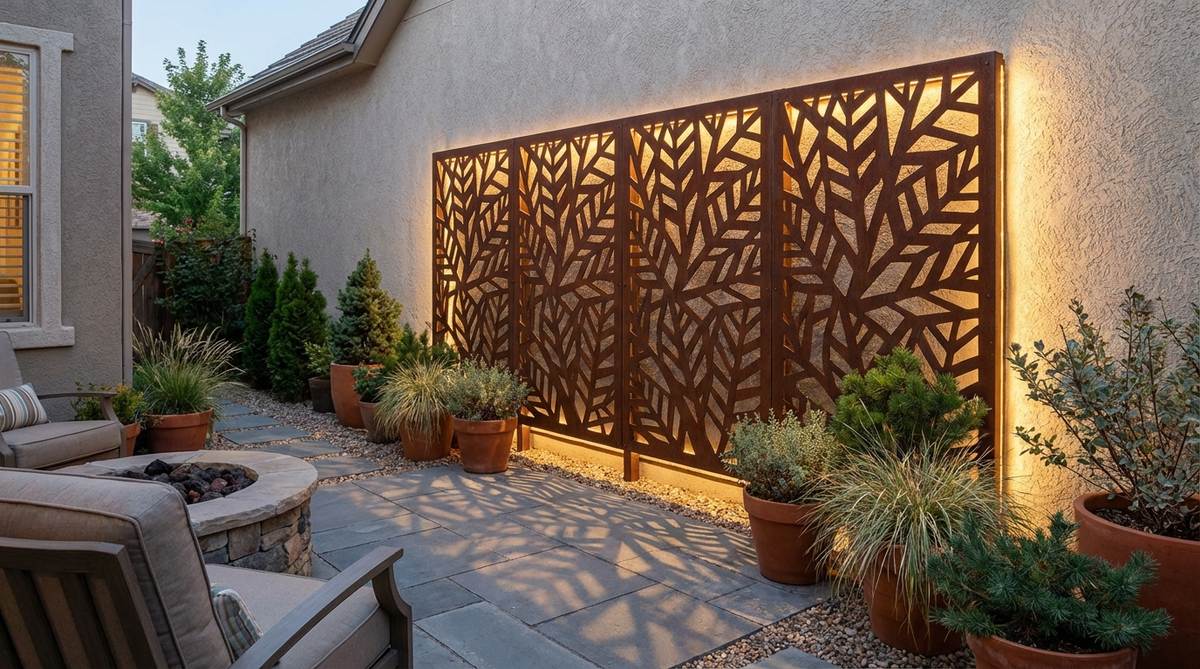
Rust-resistant steel panels with decorative patterns interrupt views while casting intricate shadows across courtyard surfaces. Mount screens several inches from walls with backlighting to emphasize the metalwork’s detail during evening hours.
These modern screens work particularly well in contemporary courtyards where traditional fencing feels too heavy. Position them strategically to block specific sightlines rather than creating complete enclosure.
2. Slatted Wood Pergola Covers
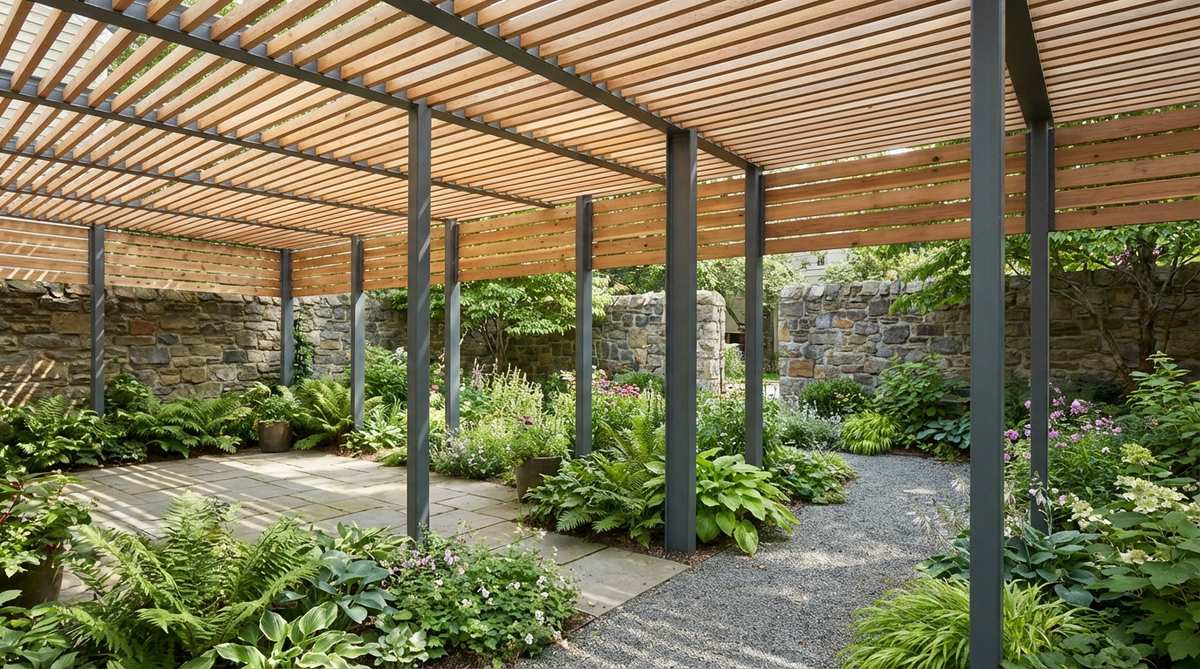
Horizontal wood slats mounted on overhead posts create partial enclosure while maintaining airflow and filtered sunlight. This design interrupts views from upper-story windows without creating tunnel vision at ground level.
Paint steel tubing posts for weather resistance and contrast against natural wood tones. Space slats to balance shade coverage with light penetration for understory plantings.
3. Living Hedge Boundaries
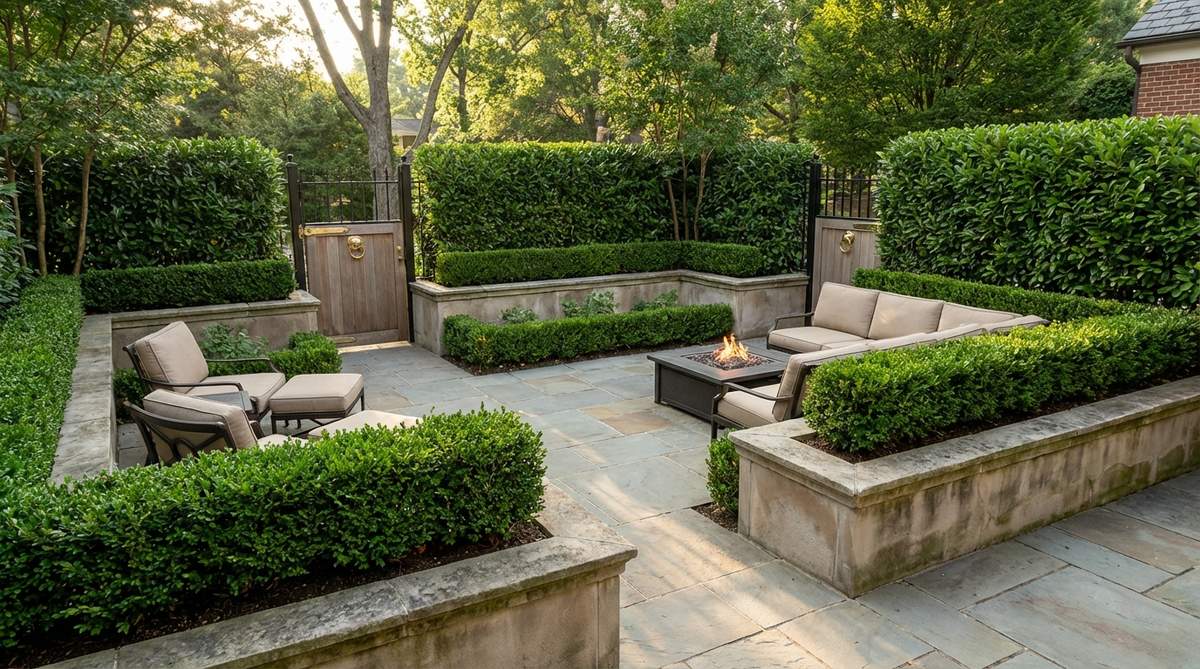
Sound-muffling evergreen hedges establish green walls that absorb noise while providing year-round privacy. Boxwood, privet, or laurel species create dense screening at heights ranging from three to eight feet.
Plant hedges in raised planters along courtyard perimeters to achieve privacy without deep soil excavation. Regular trimming maintains clean lines that complement architectural elements.
4. Freestanding Panel Screens
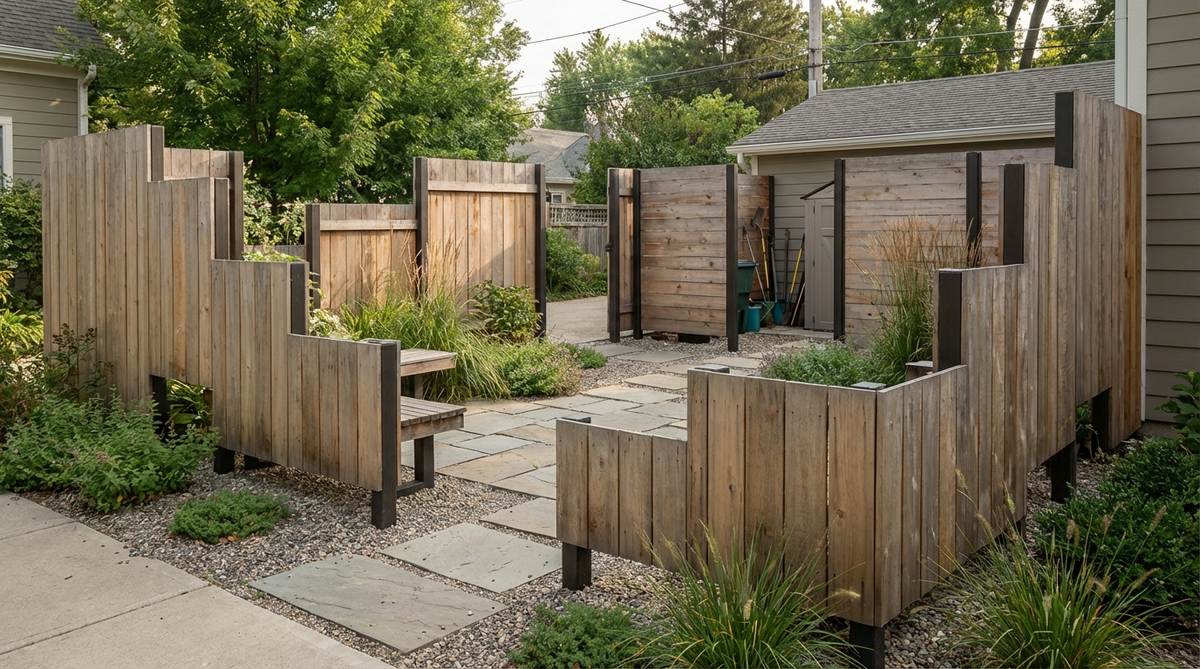
Staggered wooden panels mounted on posts create selective screening that adapts to irregular courtyard shapes. This arrangement allows passage between sections while blocking views from specific directions.
Adjust panel heights to conceal utility areas or create intimate zones within larger courtyards. The freestanding design permits seasonal rearrangement as plantings mature.
5. Translucent Resin Panels
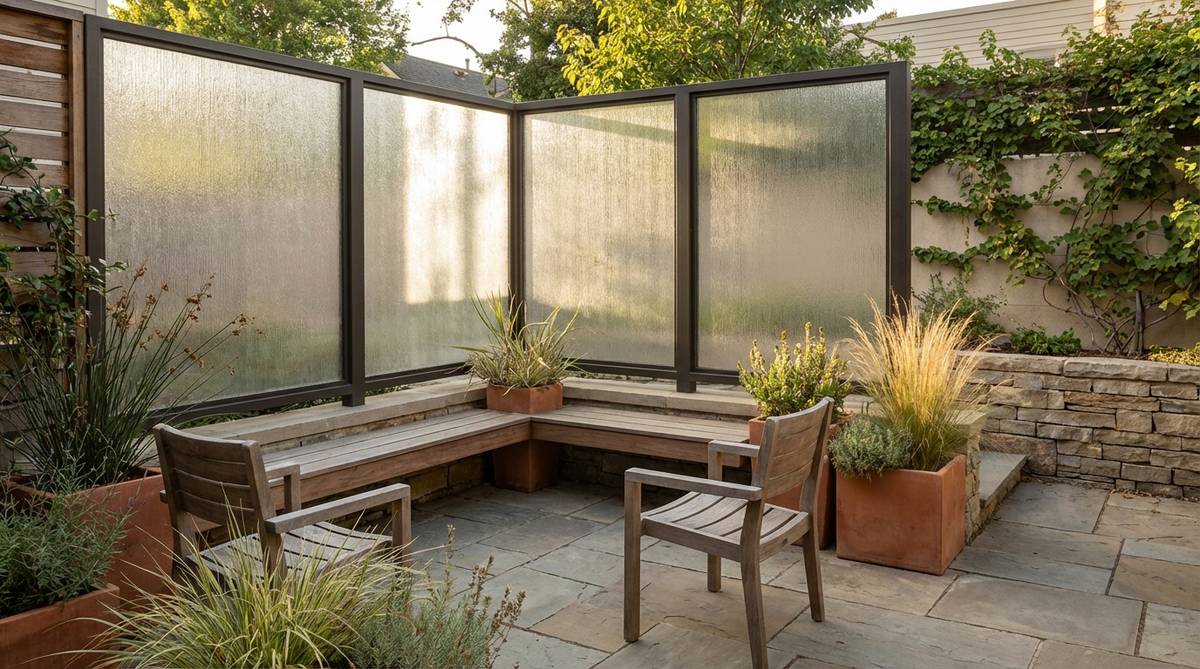
Frosted or textured panels diffuse light while obscuring views, offering privacy without the visual weight of solid barriers. These panels work well in shaded courtyards where maximizing light transmission remains critical.
Frame panels in powder-coated aluminum for durability and clean lines. Install at strategic points where full privacy matters most, such as near seating areas or windows.
6. Screen Planter Combinations
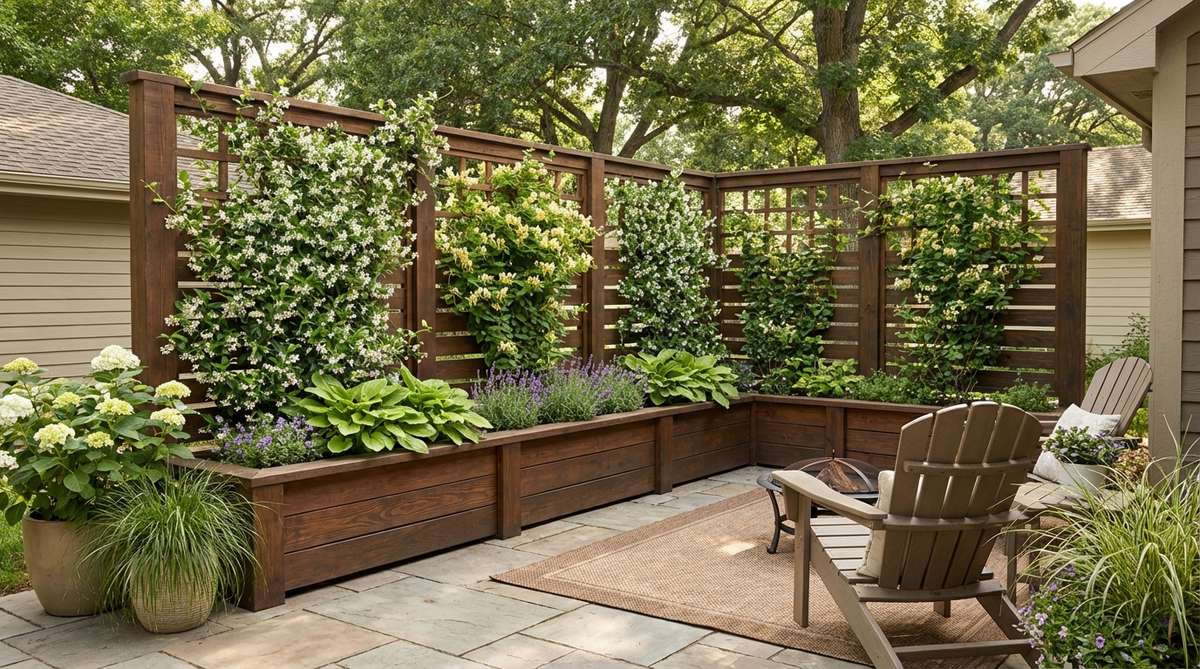
Integrated units combine privacy screening with planting space, establishing vertical barriers while anchoring climbing plants. These dual-function pieces work particularly well in courtyards lacking peripheral planting beds.
Fill planters with fragrant climbers like jasmine or honeysuckle that enhance privacy as they grow. Choose units with built-in trellises to guide plant growth upward rather than outward.
Flooring & Foundation Designs That Define Zones
Ground plane treatments establish circulation patterns and spatial hierarchy in compact courtyards. Material selection affects maintenance requirements, drainage performance, and perceived space dimensions.
7. Pre-Cast Concrete Stepping Stones
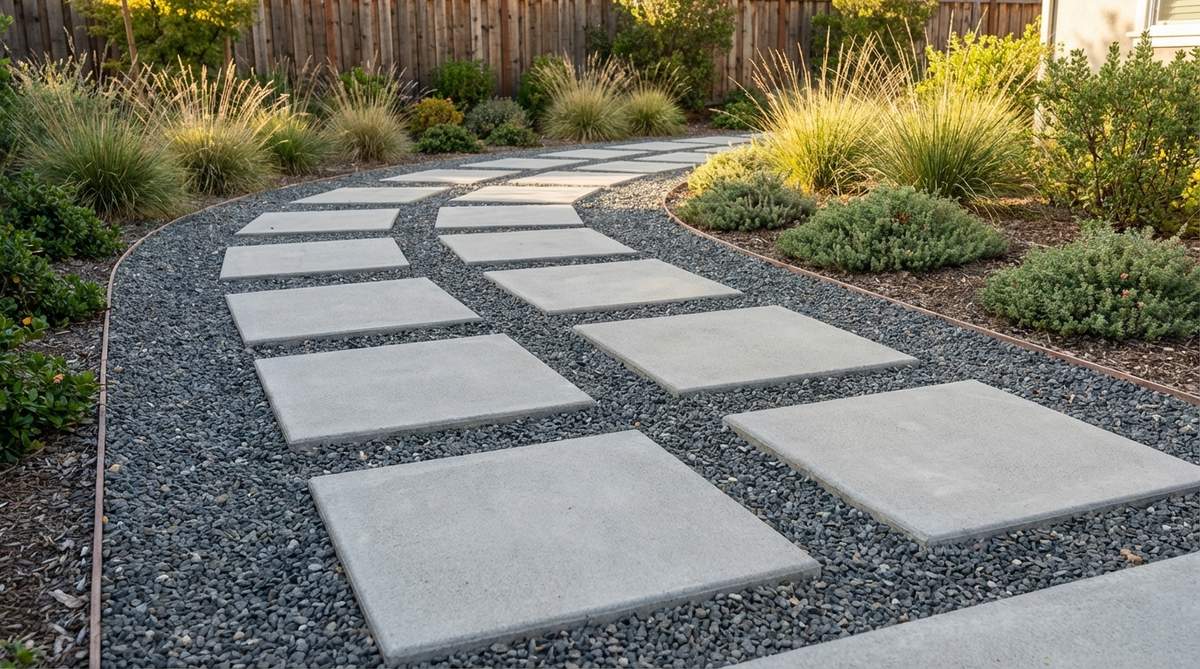
Eighteen-by-eighteen-inch pavers set in crushed gravel create budget-friendly pathways with contemporary appeal. The gravel infill provides drainage while the uniform paver size establishes rhythm and proportion.
Use 3/8-inch gravel for optimal scale between pavers. This size locks together underfoot while maintaining clean lines between stone edges.
8. Limestone Tile Foundation
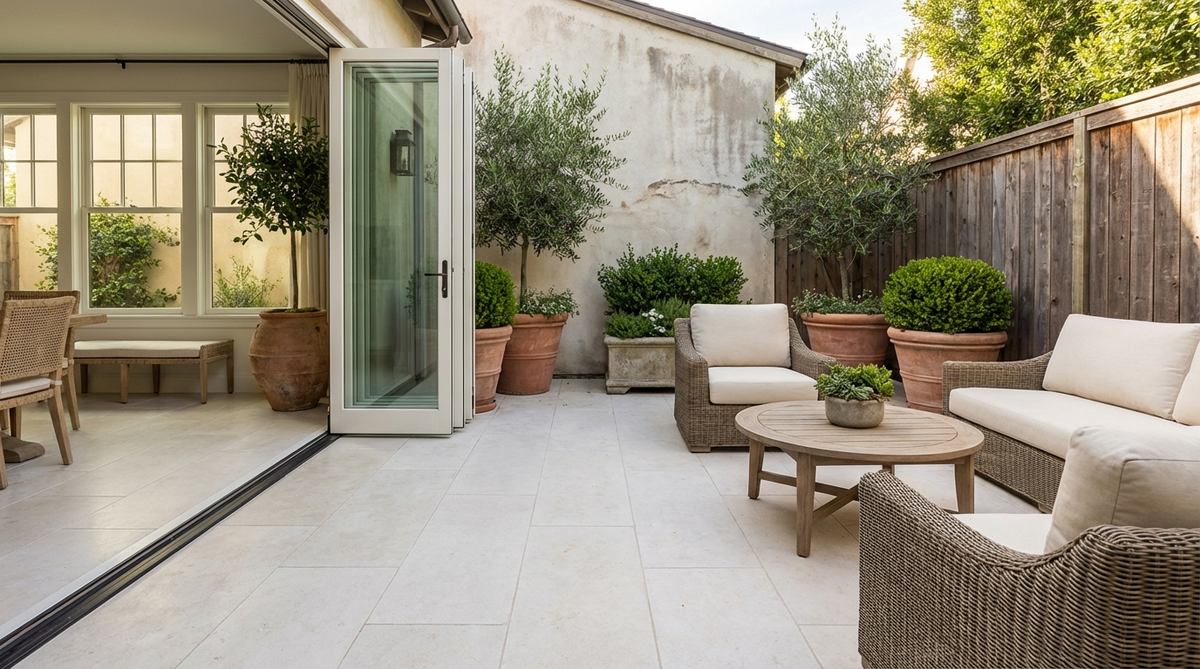
Pale limestone flooring reflects light in shaded courtyards while creating cohesive transitions between indoor and outdoor spaces. The stone’s neutral tone provides a backdrop that highlights container plants and furniture.
Select honed rather than polished finishes to prevent slipping when wet. Large-format tiles minimize grout lines that can collect debris in high-traffic zones.
9. Mixed Gravel Zones
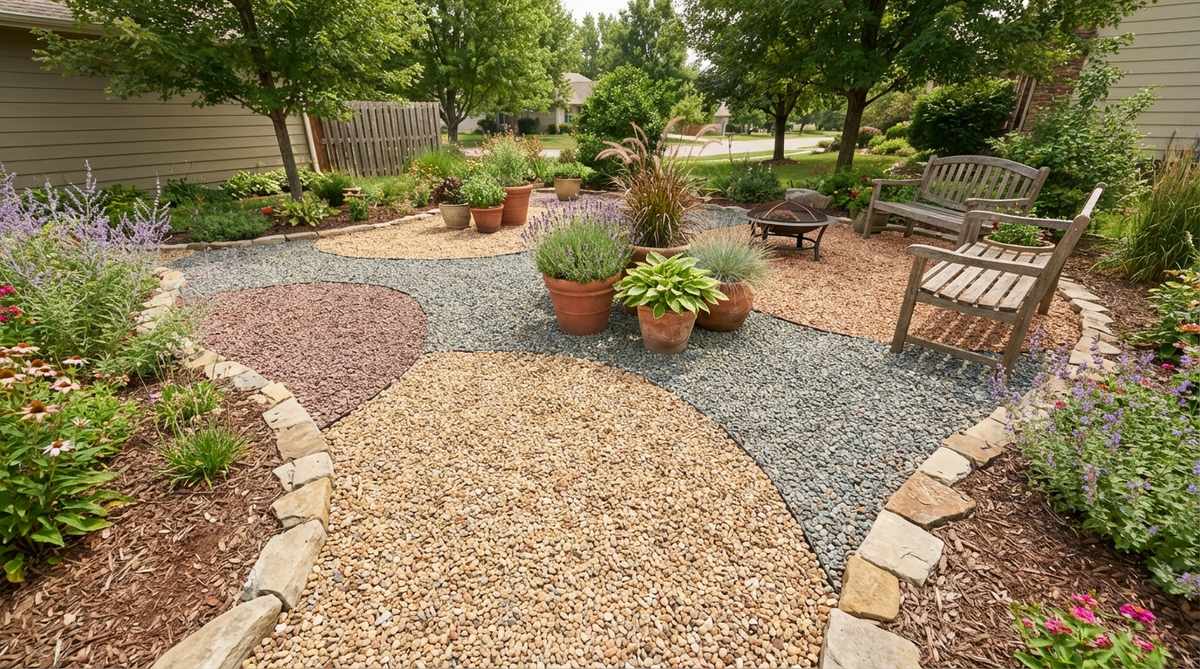
Decorative gravel in varied colors delineates functional areas without hard edges. This loose material adapts to irregular courtyard shapes and provides excellent drainage for potted plant displays.
Install landscape edging to contain gravel and prevent migration into adjacent planting beds. Prepare a compacted base layer with weed membrane before adding decorative top dressing.
Select gravel colors that complement your home’s exterior palette. White marble brightens shaded corners while blue granite adds cool sophistication.
10. Modular Paver System
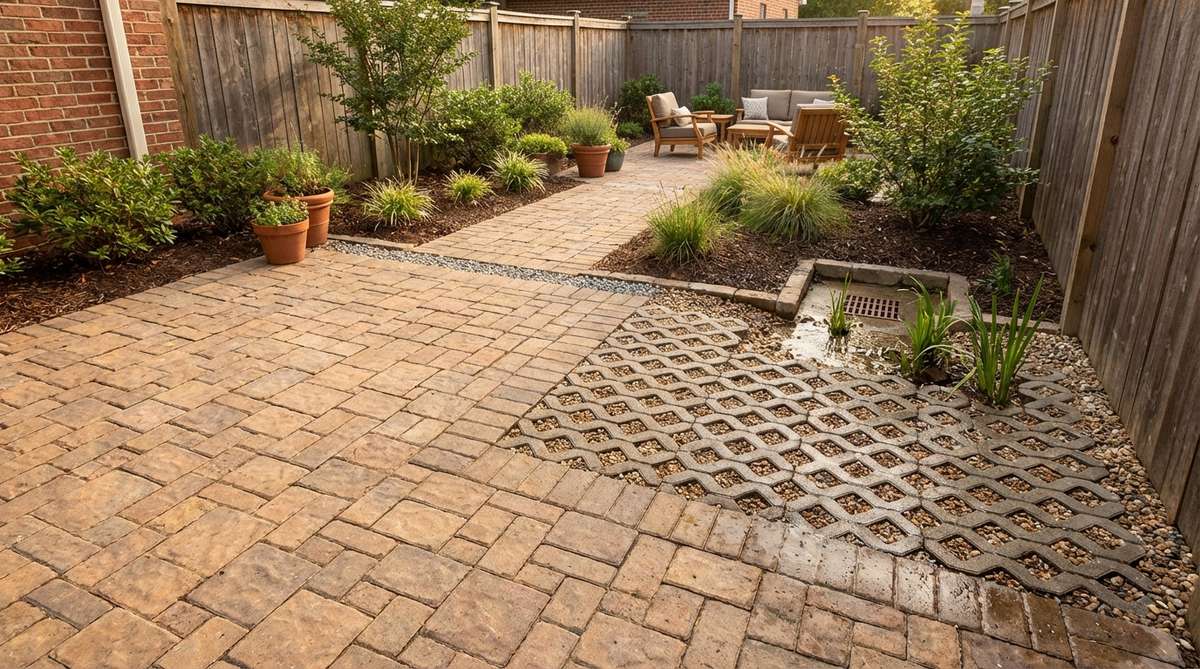
Interlocking pavers in varied patterns create visual interest while maintaining easy installation and future accessibility. These systems accommodate level changes and integrate seamlessly with drainage solutions.
Choose permeable pavers in courtyard areas prone to water accumulation. The open cell structure allows rainfall to percolate rather than pooling on surfaces.
11. Natural Stone Mosaic Insets
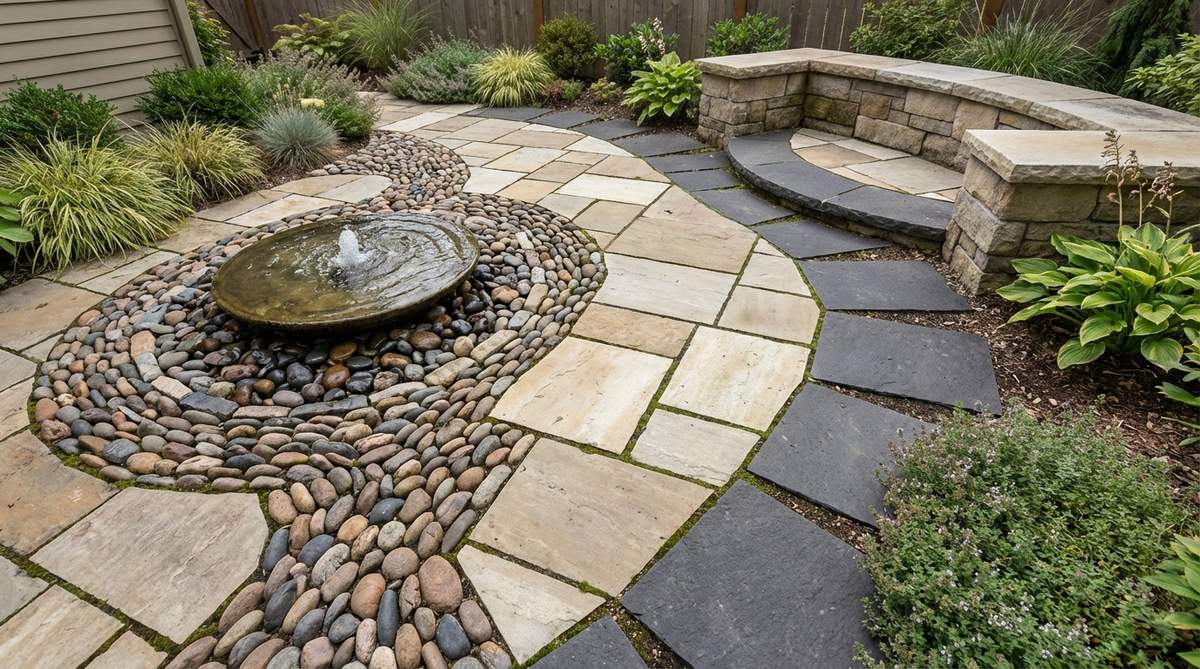
River rock or tumbled stone set in concrete creates textured focal zones that define seating areas or water feature surrounds. The organic shapes contrast effectively with rectangular paving patterns.
Use contrasting stone colors to emphasize specific routes through the courtyard. Dark basalt against pale limestone creates wayfinding without signage.
Vertical Planting Strategies That Maximize Growing Space
Vertical surfaces represent untapped planting area in enclosed courtyards. Wall-mounted systems, climbing supports, and tiered arrangements expand growing capacity without consuming floor space.
12. Modular Wall Planter Grids
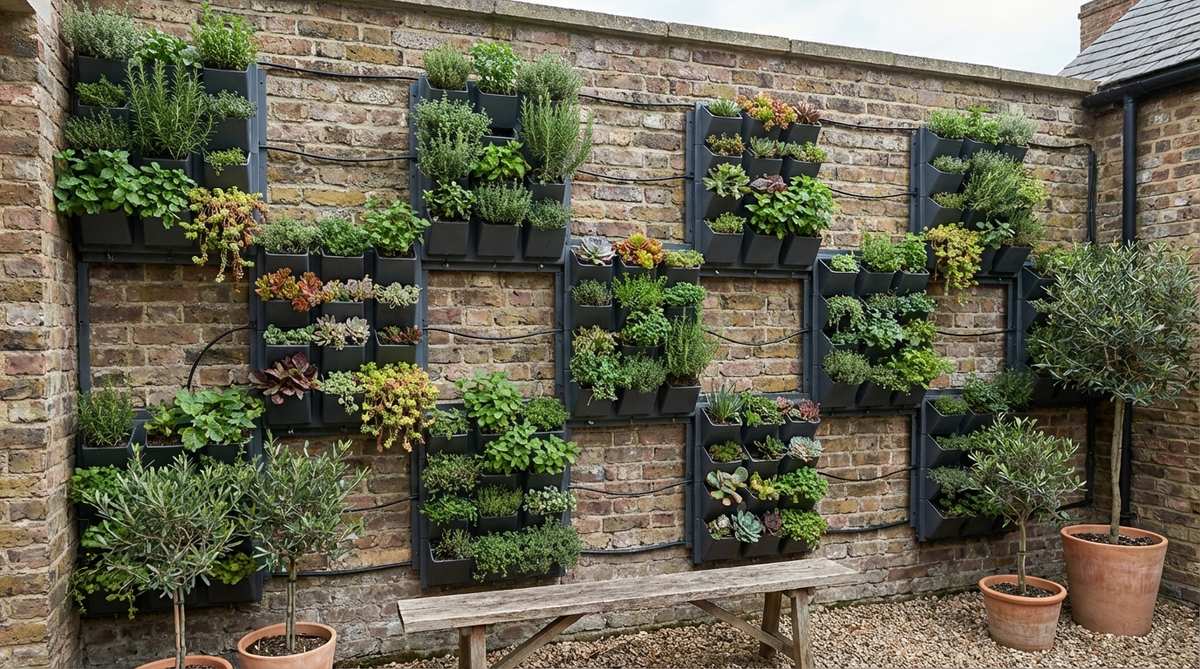
Self-watering containers mounted in grid patterns transform blank walls into living tapestries. These systems support herbs, succulents, or shade-tolerant foliage depending on sun exposure.
Install drip irrigation behind planter panels to automate watering and prevent maintenance neglect. Group plants with similar moisture requirements in vertical columns.
13. Cable-Wire Trellis Systems
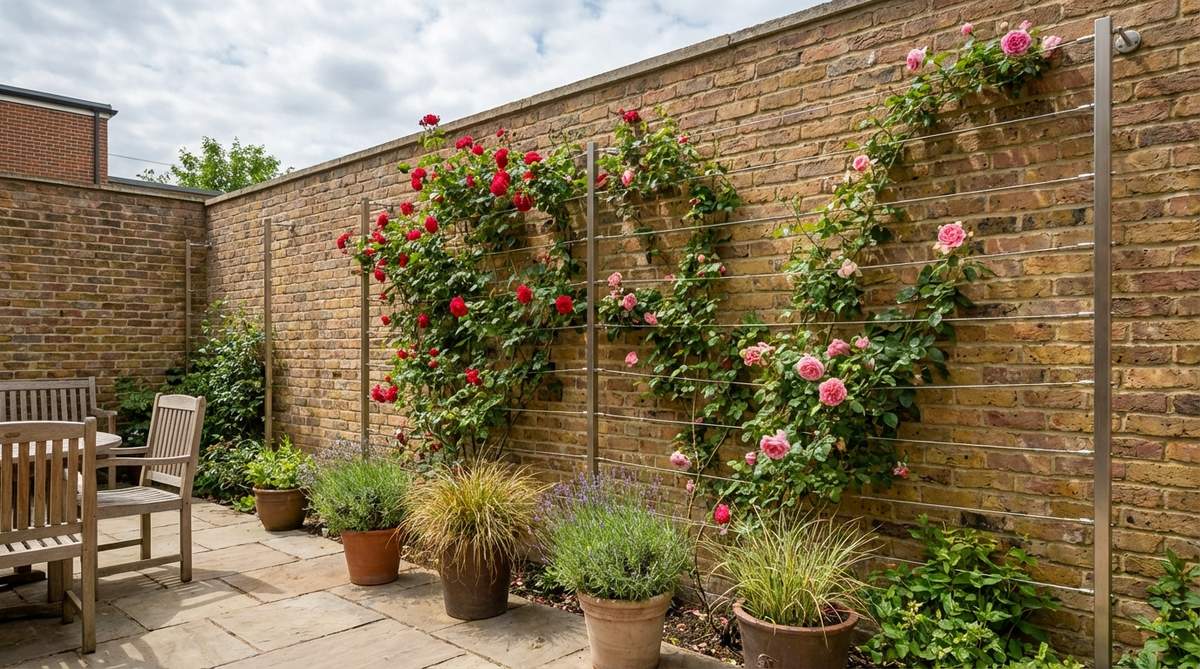
Stainless steel cables stretched horizontally across walls provide minimal supports for climbing roses, clematis, or espaliered fruit trees. The nearly invisible wires keep focus on plant form rather than structure.
Space cables twelve inches apart for optimal coverage. Use turnbuckles at cable ends to maintain tension as plants add weight.
14. Tiered Planter Stairs
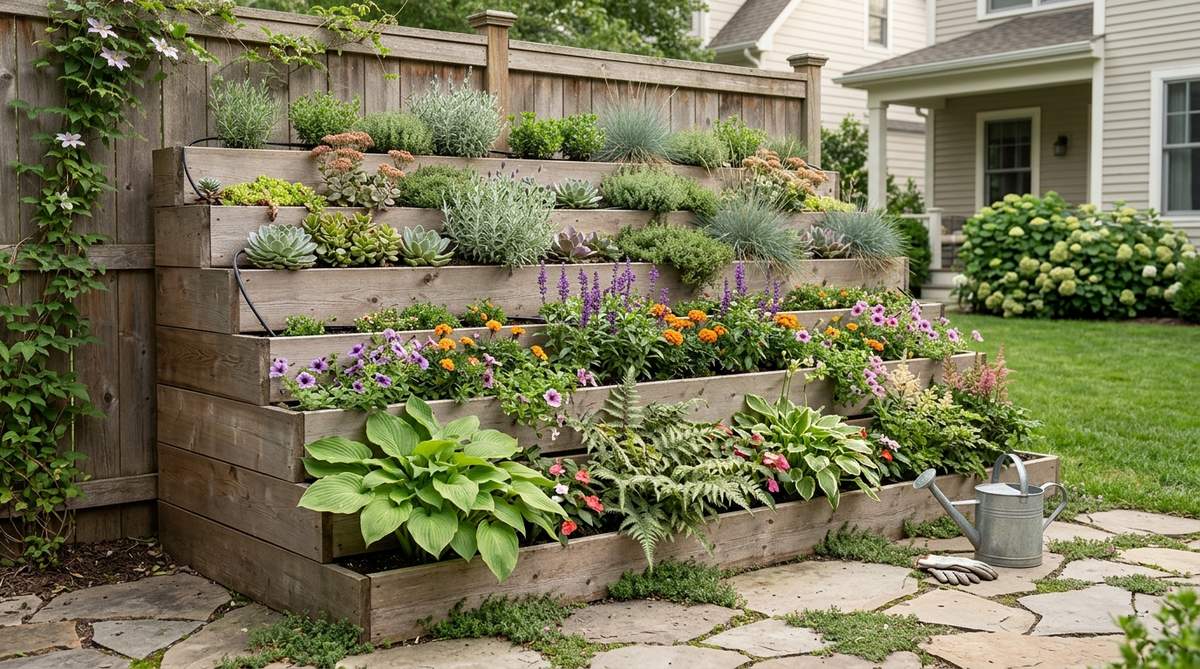
Stepped container arrangements create vertical gardens with individual root zones for each plant. This approach prevents competitive root systems while displaying varied species at multiple heights.
Position drought-tolerant plants on upper tiers where watering proves more challenging. Reserve lower tiers for moisture-loving specimens that benefit from overflow irrigation.
15. Espaliered Citrus Walls
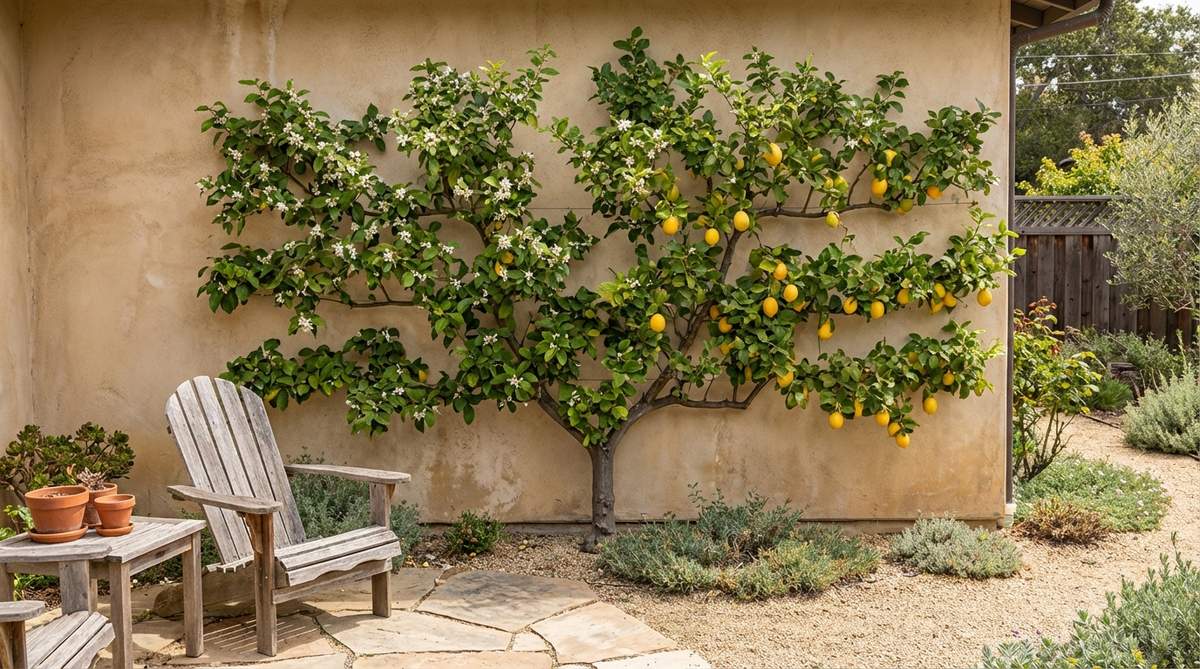
Trained citrus trees grow flat against sunny courtyard walls, producing fruit without consuming valuable floor area. The pruning technique creates living sculpture with seasonal interest from blossoms and fruit.
Choose dwarf citrus varieties suited to containers if wall-mounting proves impractical. Position on south-facing walls in northern climates to maximize heat reflection.
16. Hanging Basket Layers
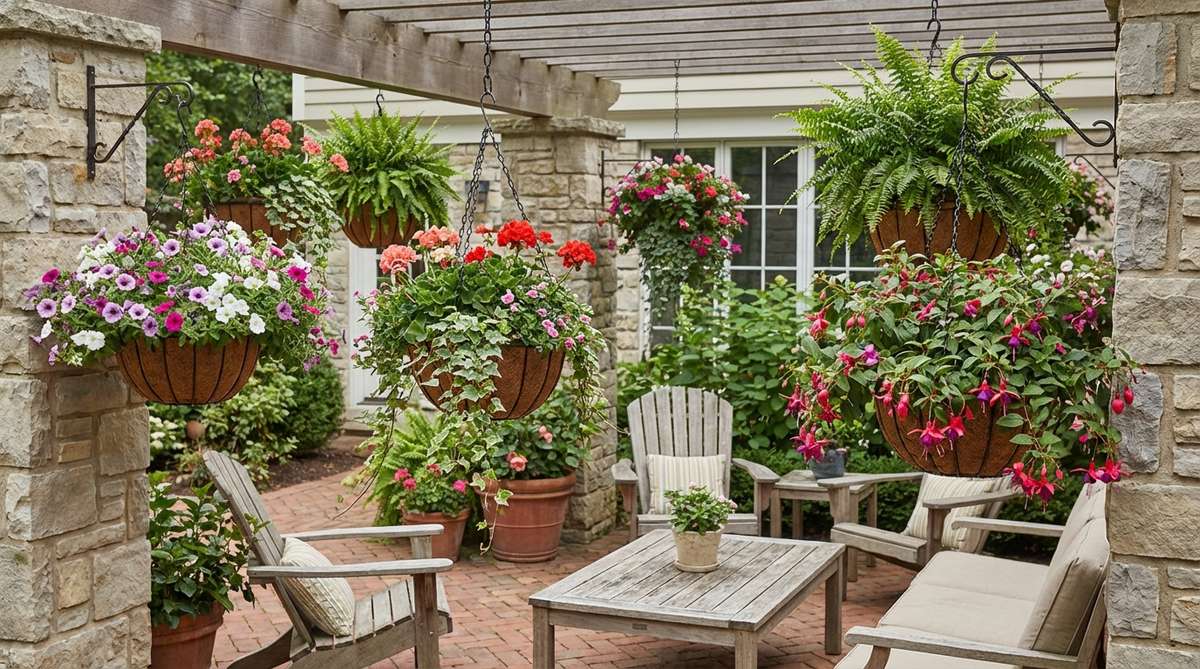
Suspended planters at varied heights create floating gardens that preserve sightlines while adding color overhead. This technique works particularly well above seating areas where fragrance enhances the experience.
Use self-watering baskets to reduce maintenance frequency. Hang from pergola beams or wall-mounted brackets rated for saturated soil weight.
17. Pocket Planter Walls
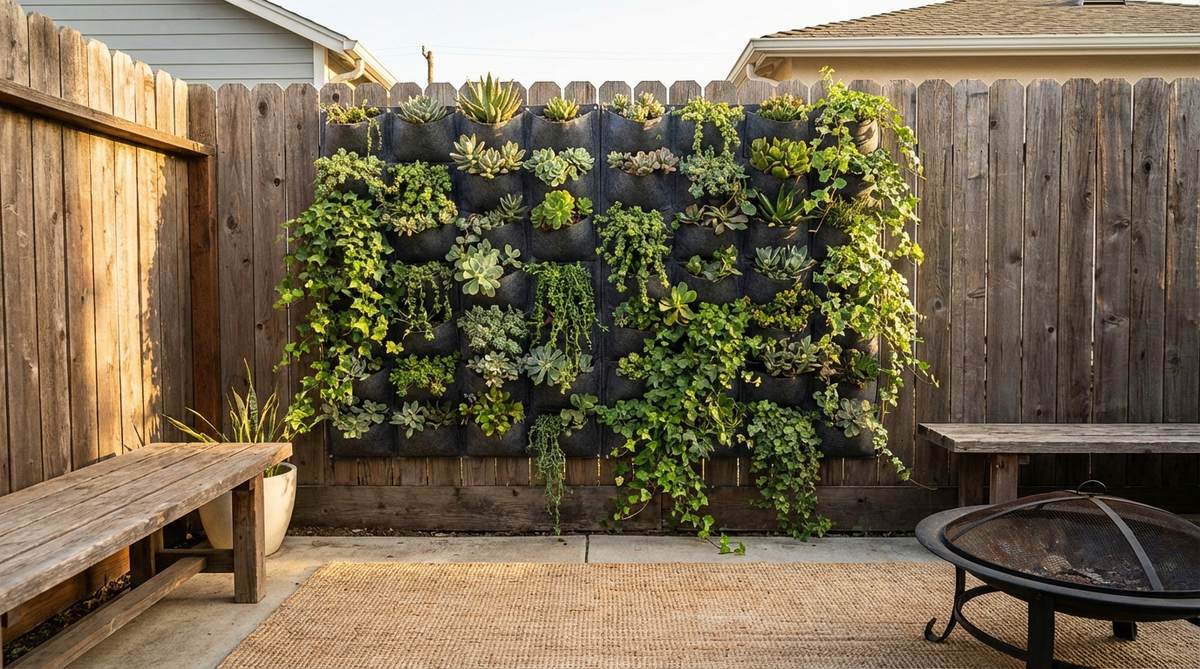
Felt or fabric pockets mounted on frames support shallow-rooted plants like succulents, moss, or trailing ivy. These lightweight systems attach to walls without significant structural modification.
Install on walls that receive filtered light to prevent rapid drying. Water from the top and allow moisture to percolate downward through lower pockets.
Water Features & Focal Points That Anchor Attention
A single compelling element organizes courtyard sight lines and creates gathering focus. Water features add sensory dimension through sound and movement while serving as natural focal points.
18. Floating Bubble Fountain
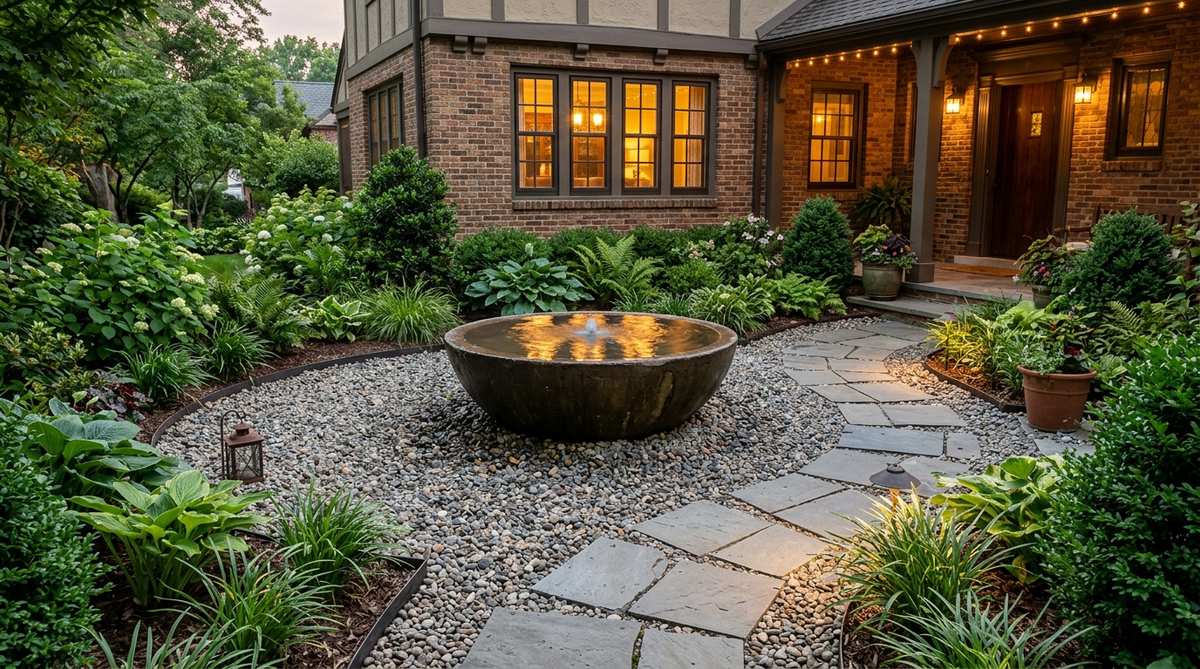
A bowl-style fountain with recessed pump infrastructure appears to float within gravel surrounds. The subtle water movement creates ambient sound without overpowering conversation.
Position the fountain where it reflects light from courtyard windows during evening hours. Conceal electrical lines beneath gravel or stone pathways.
19. Three-Tier Cascade Feature
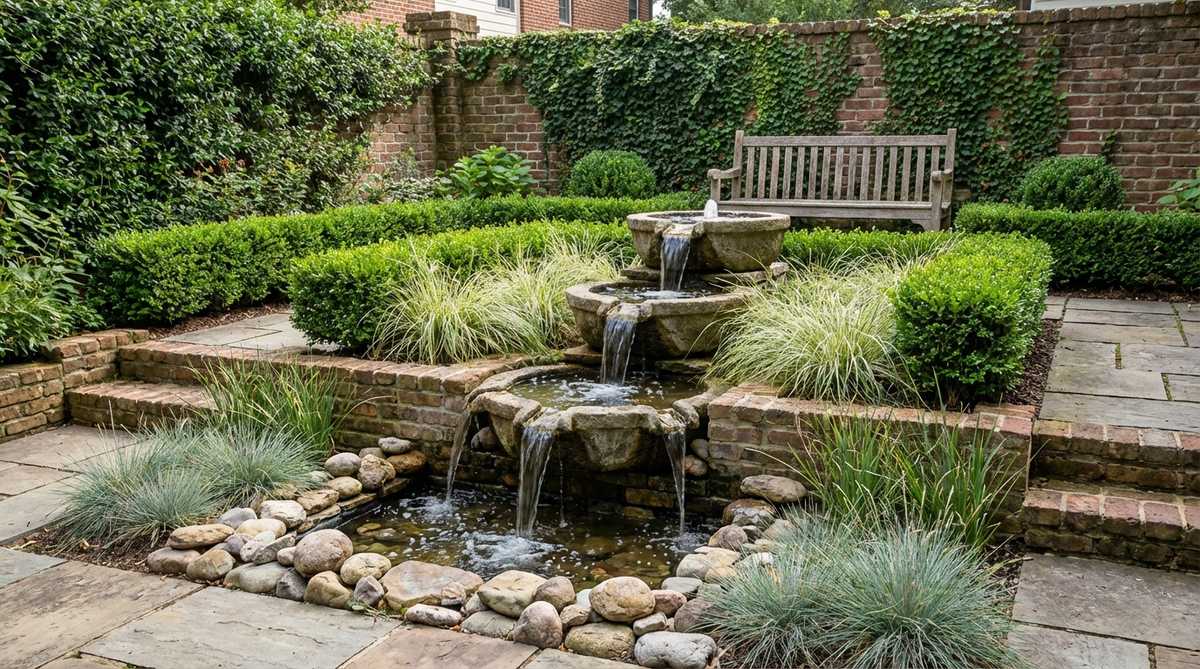
Stacked basins create cascading water that generates soothing sound through multiple spill points. The vertical form suits narrow courtyards where horizontal spread proves impractical.
Surround with low-maintenance plants that echo the fountain’s clean lines. Evergreen boxwood or ornamental grasses complement without competing for attention.
20. Wall-Mounted Water Blade
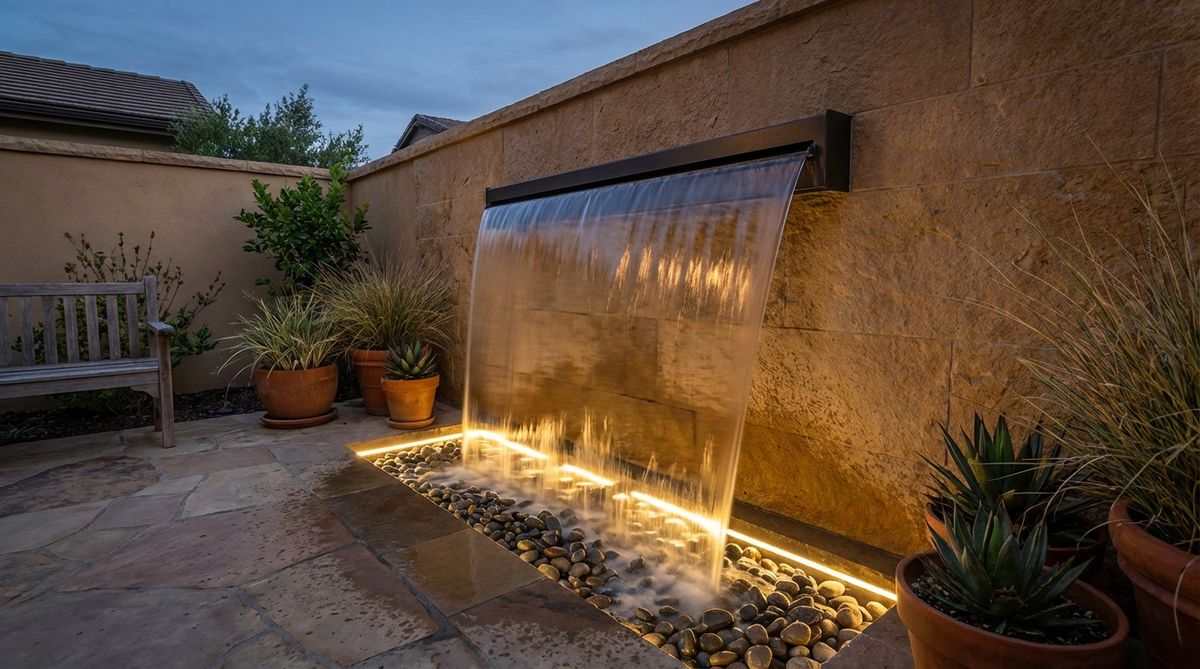
A sheet of water flowing down a vertical surface creates reflective movement against courtyard walls. This space-efficient design delivers water feature impact without floor area consumption.
Install on walls opposite seating areas to create visual focus. Use LED uplighting beneath the water blade to emphasize movement after dark.
21. Specimen Japanese Maple
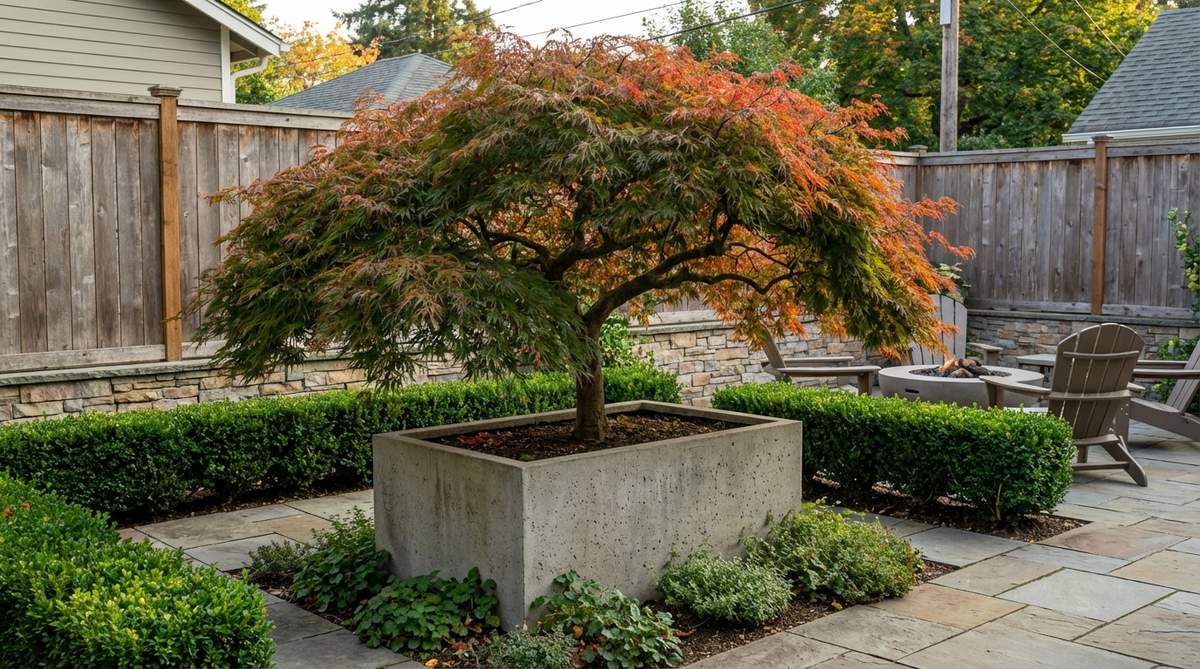
A single architectural tree anchors the courtyard while providing seasonal color through spring emergence, summer canopy, and fall transformation. Japanese maples tolerate container culture and maintain manageable scale.
Plant in oversized containers to support root development and reduce watering frequency. Position where branching structure creates natural ceiling definition.
22. Sphere Fountain Centerpiece
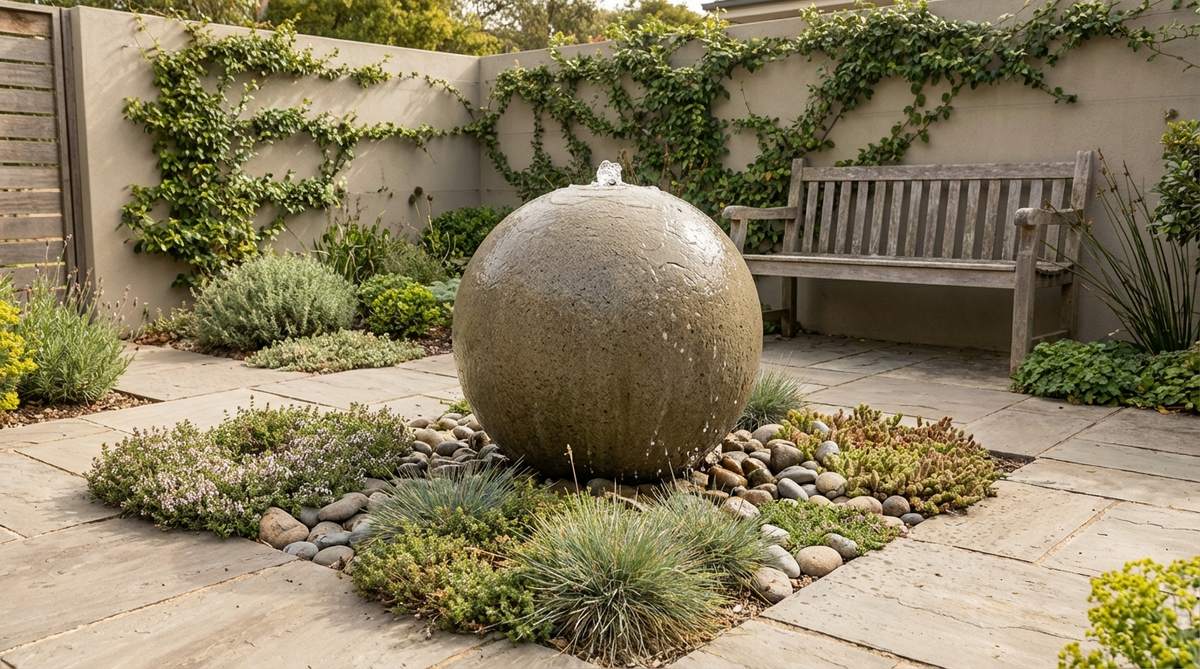
A cast stone sphere with water flowing from its apex creates a sculptural focal point with mesmerizing movement. The geometric form suits contemporary courtyards while the stone texture adds organic warmth.
Surround with low groundcover plants that won’t obscure the sphere’s form. Position in the courtyard center or at pathway intersections to organize circulation.
23. Sculptural Fire Bowl
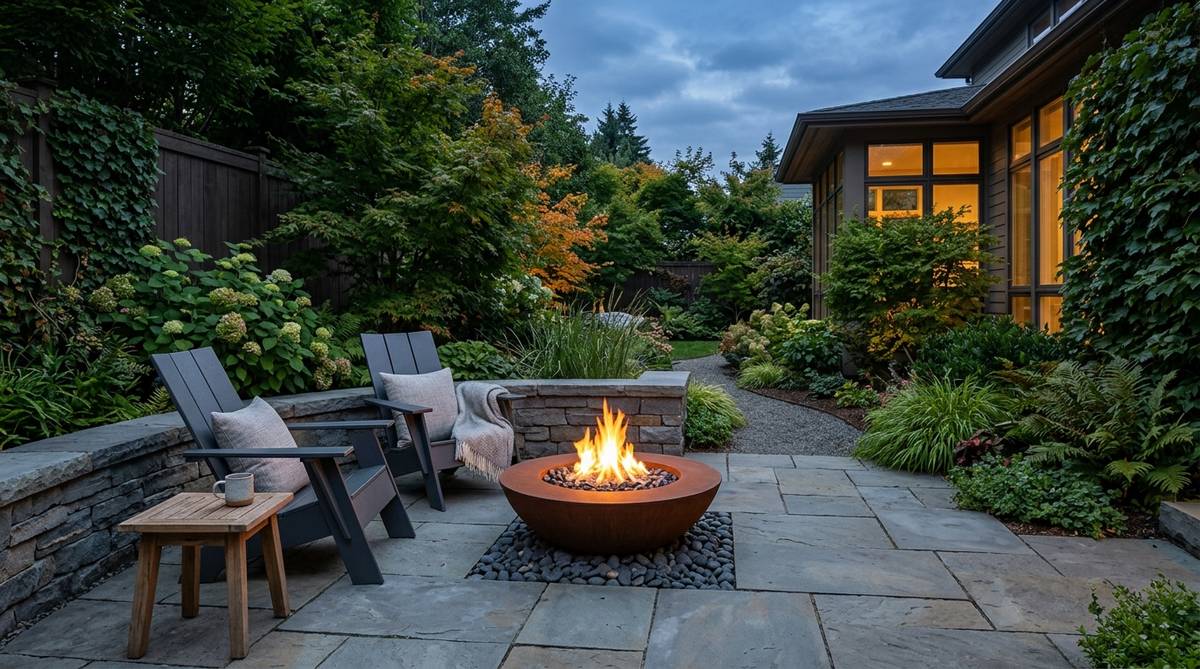
A minimalist fire feature provides warmth and flickering light that extends courtyard use into cooler evenings. The bowl form concentrates flames while containing fuel sources within clean-lined containers.
Choose propane or natural gas models for smoke-free operation in enclosed spaces. Position on non-combustible surfaces with adequate clearance from overhead structures.
Seating & Furniture Arrangements For Outdoor Living
Furniture selection determines how courtyards function as outdoor rooms. Scale pieces appropriately to avoid overcrowding while maintaining comfortable accommodation for typical gatherings.
24. Built-In Bench Seating
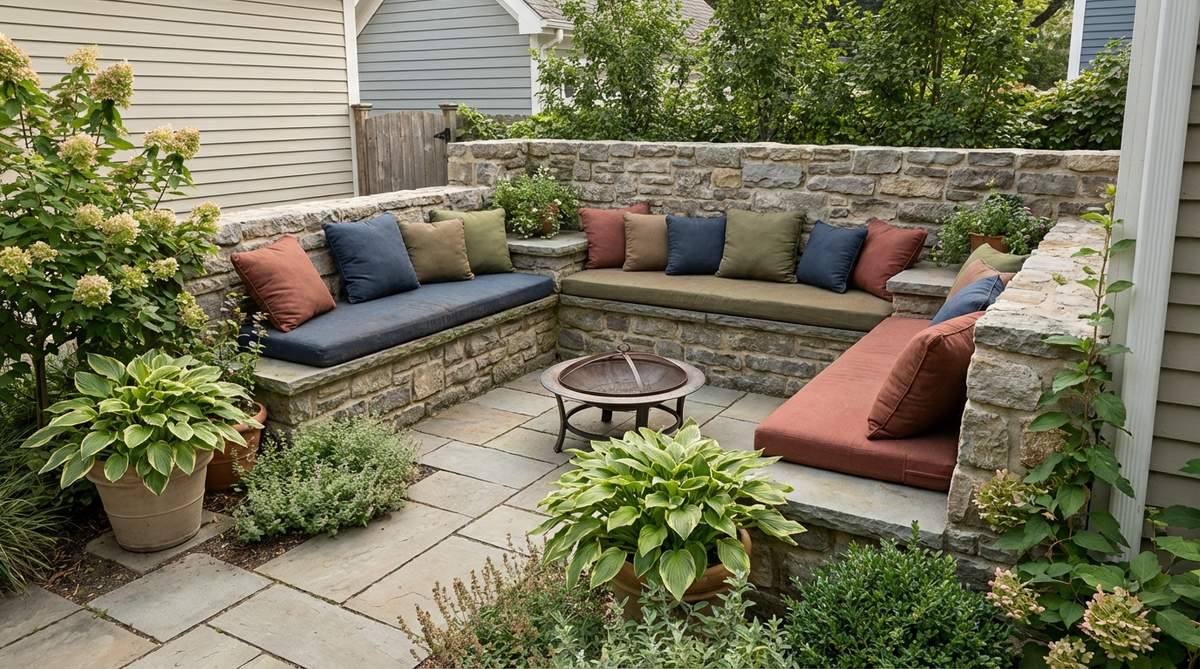
Stone or wood benches integrated into courtyard walls conserve floor space while providing permanent seating capacity. Add cushions to soften stone surfaces and introduce color.
Design bench heights between sixteen and eighteen inches for comfortable seating. Include storage beneath hinged seat tops to house cushions during inclement weather.
25. Corner Sectional Grouping
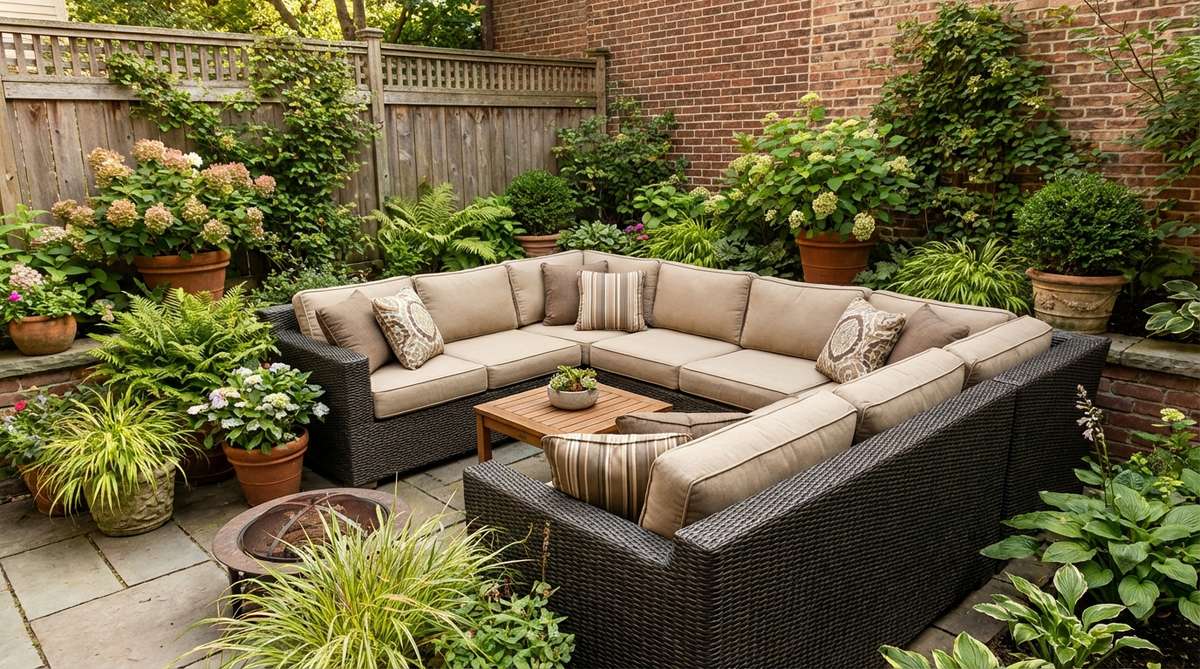
L-shaped seating arrangements maximize capacity in courtyard corners while creating intimate conversation zones. This configuration works particularly well in rectangular courtyards where corners otherwise become dead space.
Choose modular pieces that permit seasonal rearrangement. Weatherproof cushions in neutral tones extend usability while coordinating with changing planting palettes.
26. Bistro Table Pairing
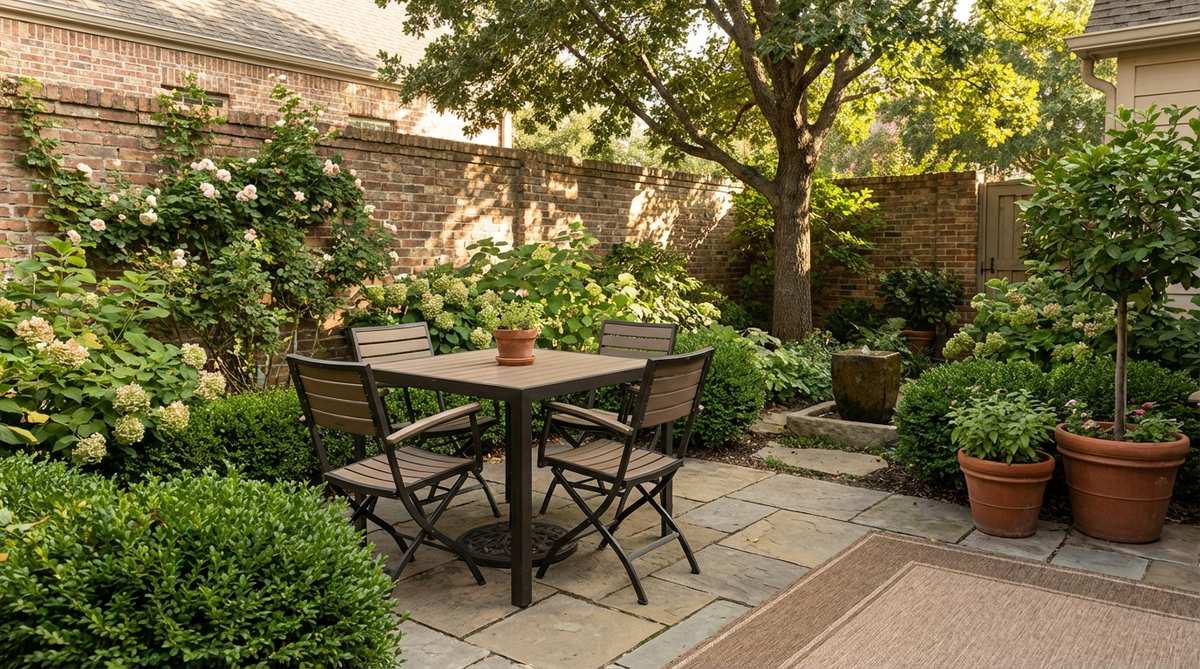
Compact dining sets provide meal service without consuming space needed for circulation. Two to four chairs around thirty-inch tables suit most courtyard scales.
Select folding furniture that stores flat against walls when not in use. Metal frames with slatted tops drain quickly after rain.
27. Oversized Floor Cushions
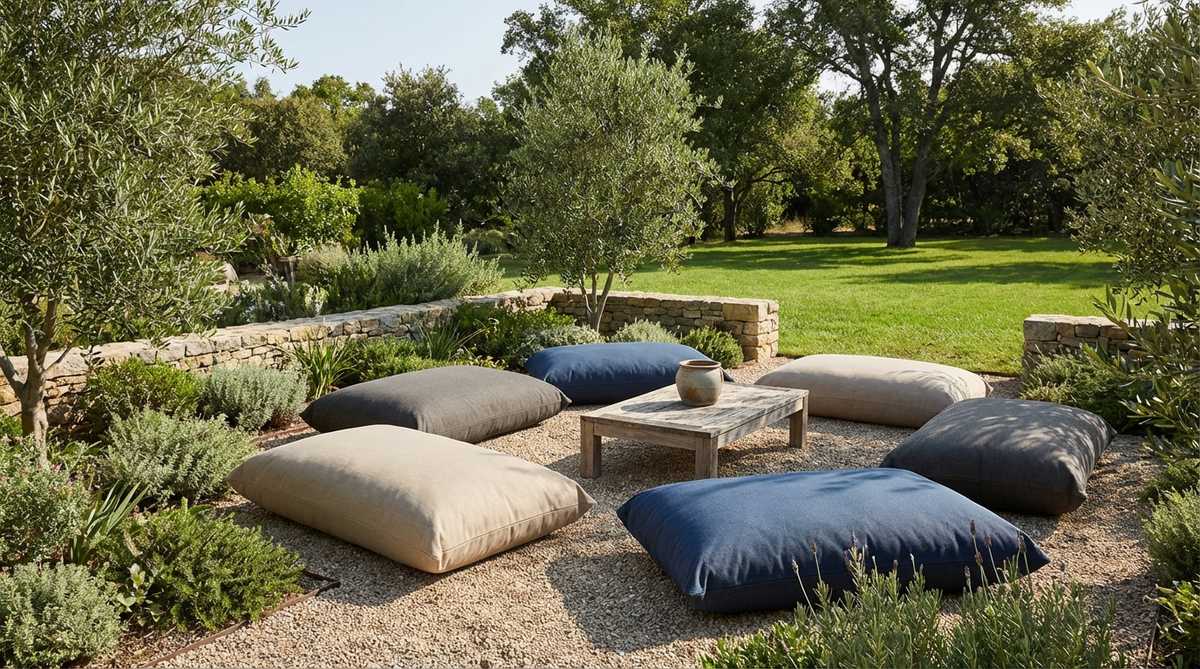
Large weatherproof poufs create flexible seating that shifts according to gathering size. The low profile maintains open sightlines across the courtyard.
Store cushions in deck boxes to prevent weather damage during off-season periods. Choose removable covers for washing.
28. Suspended Swing Seating
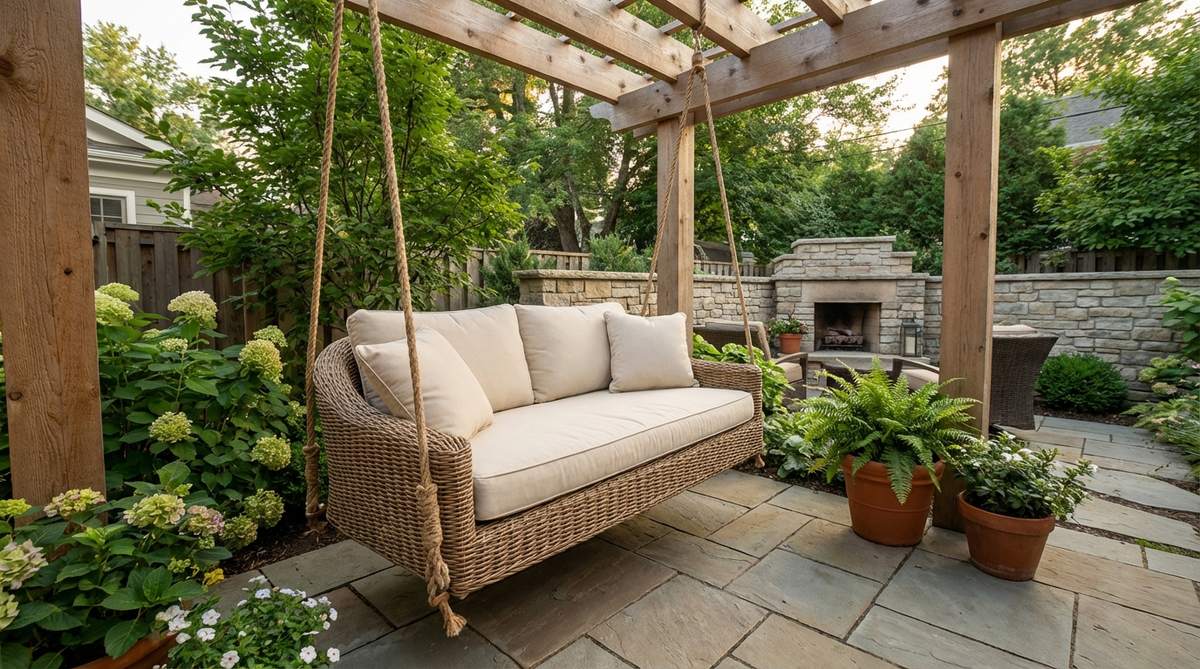
Hanging chairs or bench swings introduce gentle motion that enhances relaxation. Mount from pergola beams or dedicated support posts rated for dynamic loads.
Position swings where clearance permits full range of motion without striking walls or plantings. Add cushions to hardwood seats for extended comfort.
Lighting & Ambiance Techniques For Evening Extension
Illumination transforms courtyards after dark, extending usability while creating dramatic effects impossible during daylight. Layer multiple light sources at varied heights to avoid flat, uniform brightness.
29. LED Pathway Markers
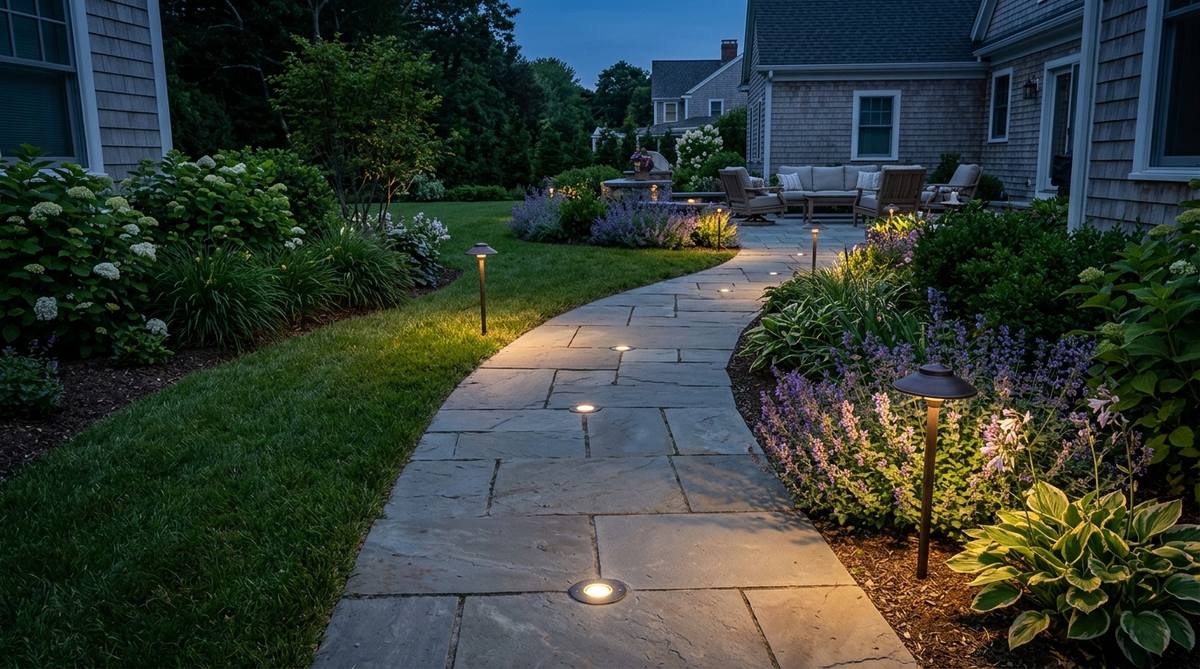
Low-voltage lights set flush with paving or along pathway edges guide movement without glare. Solar-powered versions eliminate wiring complexity in established courtyards.
Space lights every six to eight feet along primary routes. Choose warm color temperatures that complement rather than compete with living plants.
30. Uplighting Specimen Trees
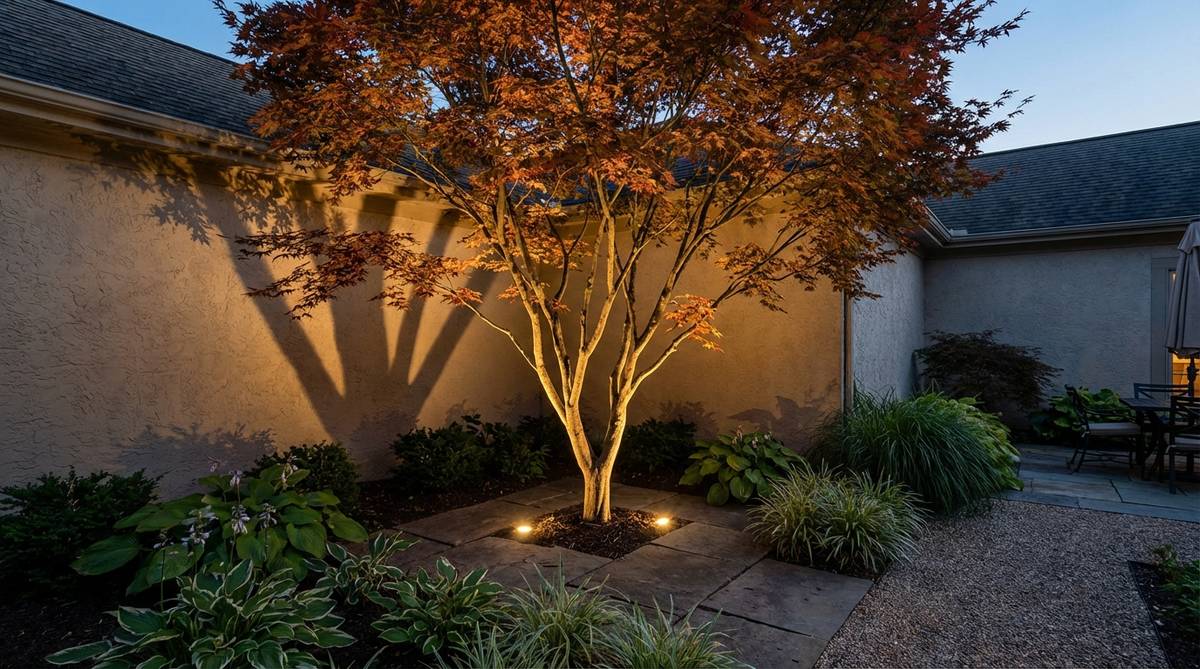
Ground-mounted fixtures positioned at tree bases cast dramatic shadows against courtyard walls while emphasizing branching structure. This technique creates nighttime focal points from daytime plantings.
Use narrow beam angles to minimize light spill into neighboring properties. Adjust fixture positions seasonally as leaf coverage changes shadow patterns.
31. String Light Canopies
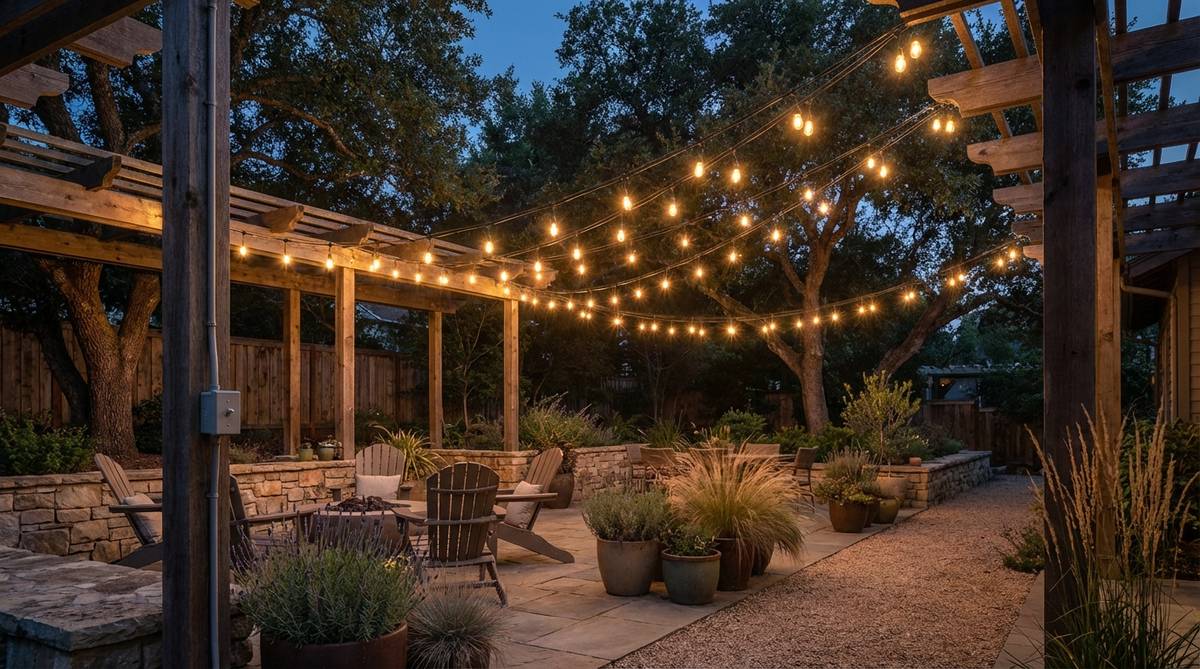
Edison-style bulbs suspended overhead create starfield effects that soften courtyard boundaries. The warm glow encourages evening gatherings without harsh brightness.
String lights in catenary curves between mounting points to create natural drapery. Use dimmer switches to adjust intensity according to activity.
32. Wall Sconce Ambient Lighting
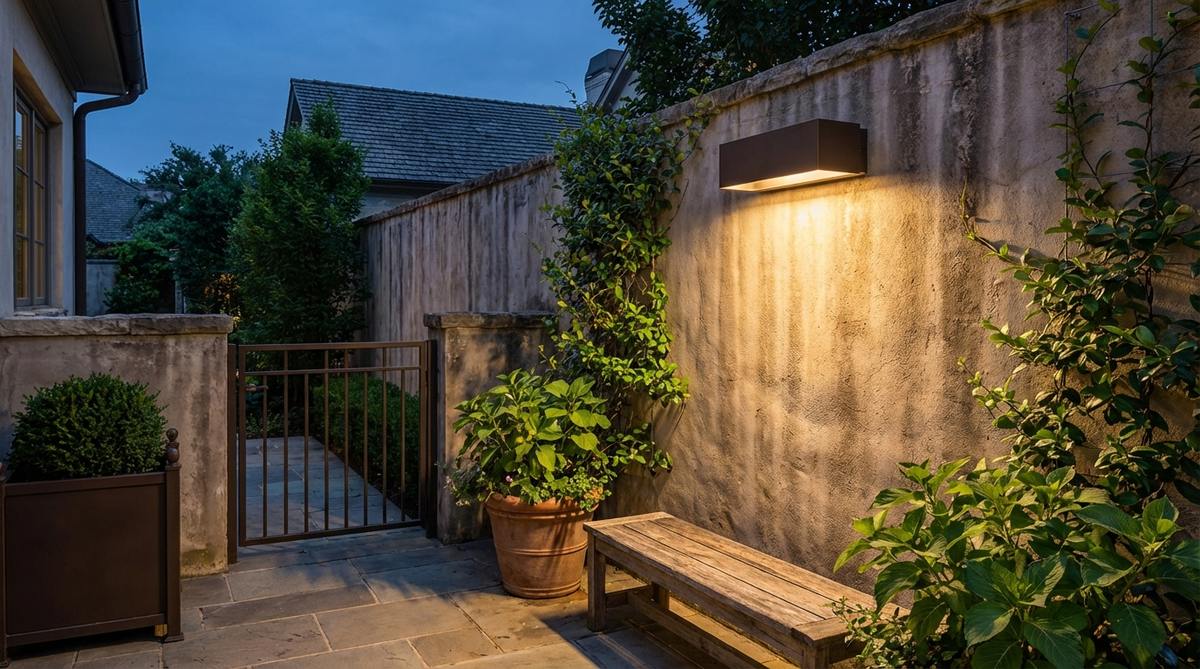
Architectural fixtures mounted on courtyard walls provide indirect illumination that washes vertical surfaces. This approach emphasizes enclosure while avoiding glare.
Select fixtures with downward light distribution to prevent sky glow. Match sconce finishes to other metal elements for visual cohesion.
33. Solar Lantern Accents
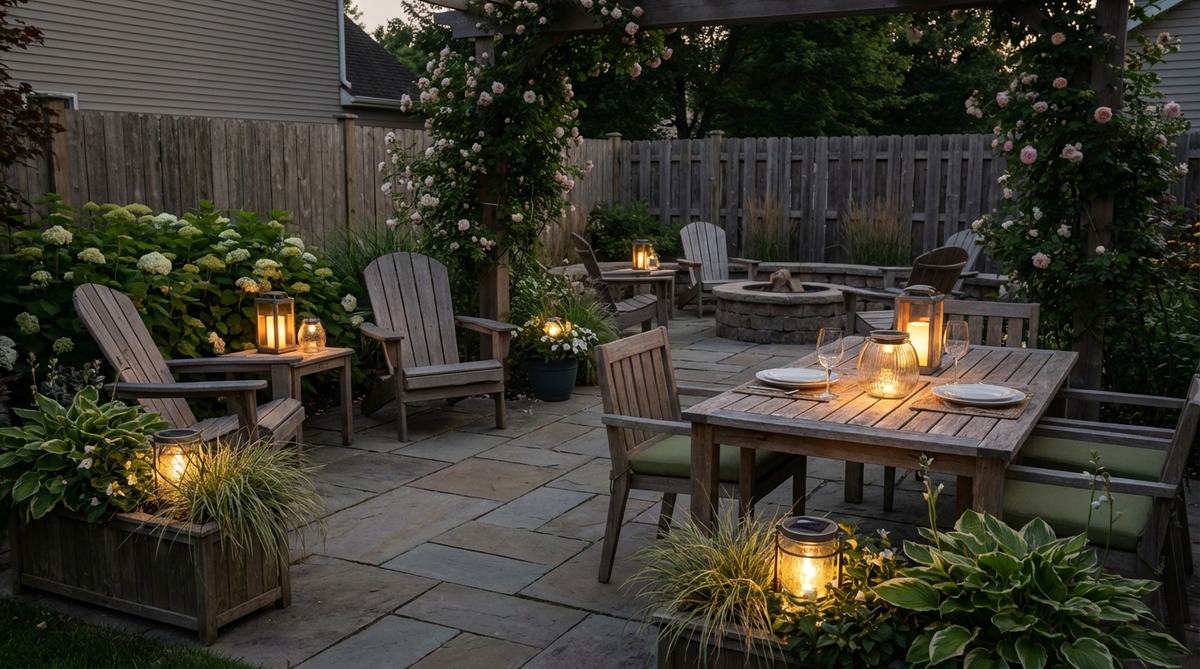
Portable lanterns placed on tables or among plantings add flexible illumination without electrical infrastructure. The soft light creates intimate zones within larger courtyards.
Recharge lanterns in sunny locations during the day before positioning them in shaded evening spots. Choose models with replaceable batteries for longevity.
Style-Specific Courtyard Designs For Cohesive Expression
Distinct design vocabularies create consistent aesthetic experiences. Select style elements that align with architectural context while expressing personal preferences.
34. Zen Minimalist Courtyard
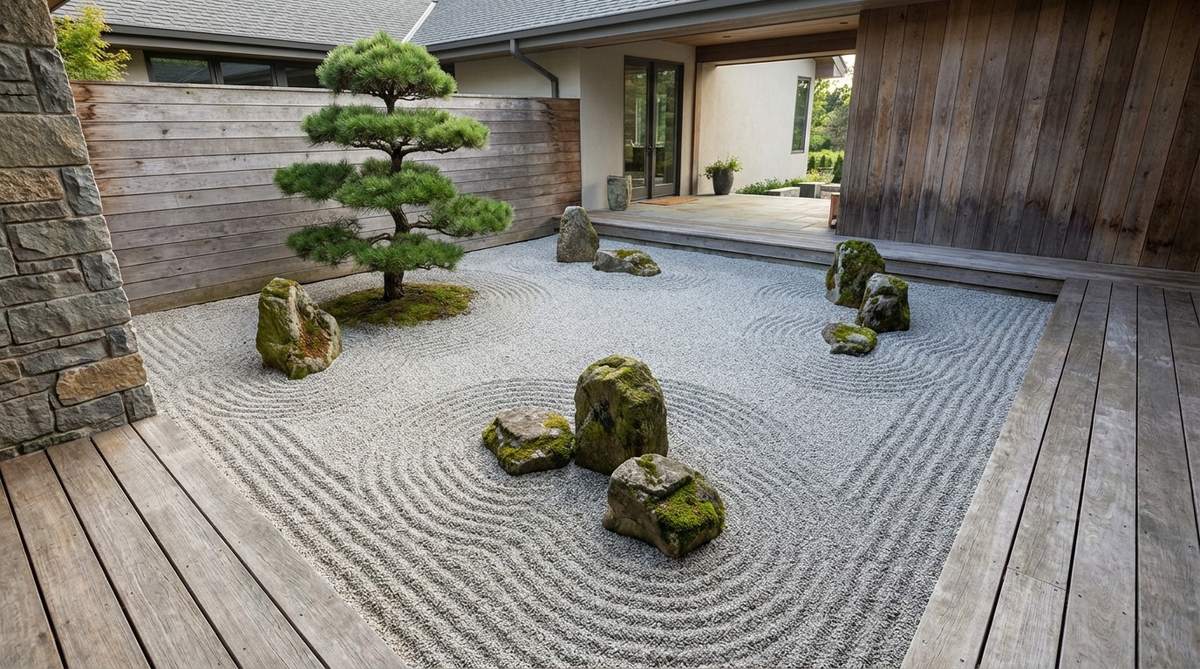
Raked gravel, carefully positioned stones, and limited plant selection create contemplative spaces inspired by Japanese dry gardens. The emphasis on negative space and restrained palette produces calming environments.
Include a single specimen plant such as cloud-pruned pine or bamboo to provide focal interest without visual clutter. Use granite or river stones in odd-numbered groupings according to traditional principles.
35. Mediterranean Terrace Garden
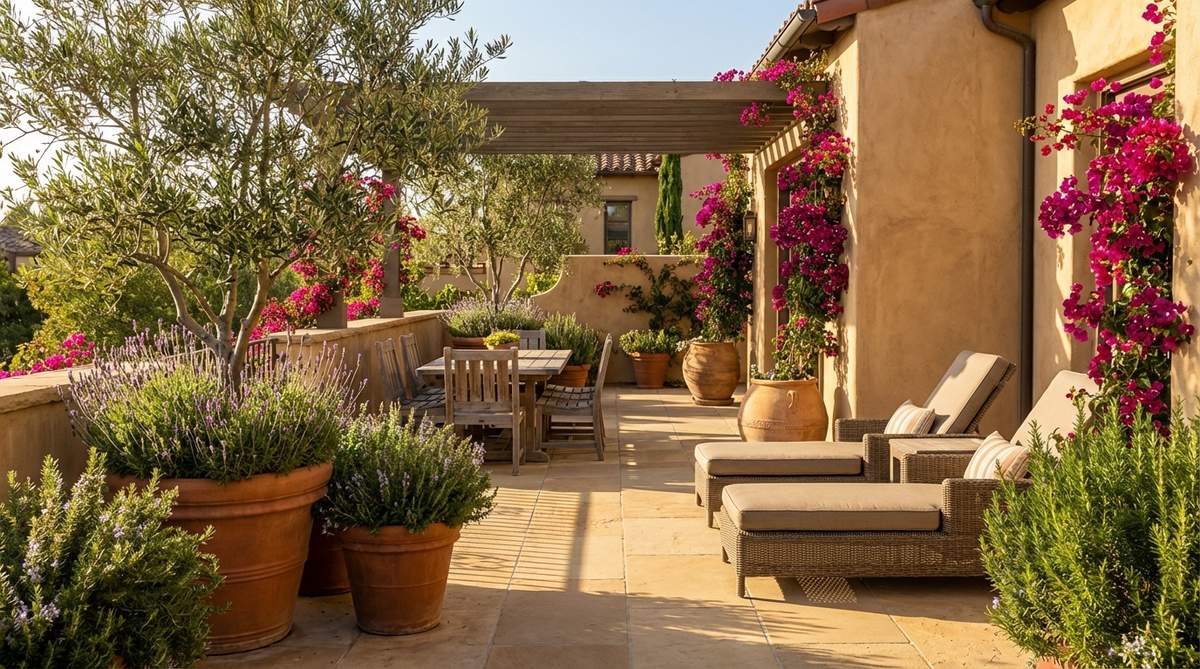
Terra cotta containers, olive trees, and aromatic herbs evoke southern European courtyards. Warm-toned paving and rendered walls in sandy hues complete the sun-soaked aesthetic.
Plant lavender, rosemary, and sage in clusters for fragrance and drought tolerance. Add bougainvillea or climbing roses for color against neutral backgrounds.
36. Modern Architectural Courtyard
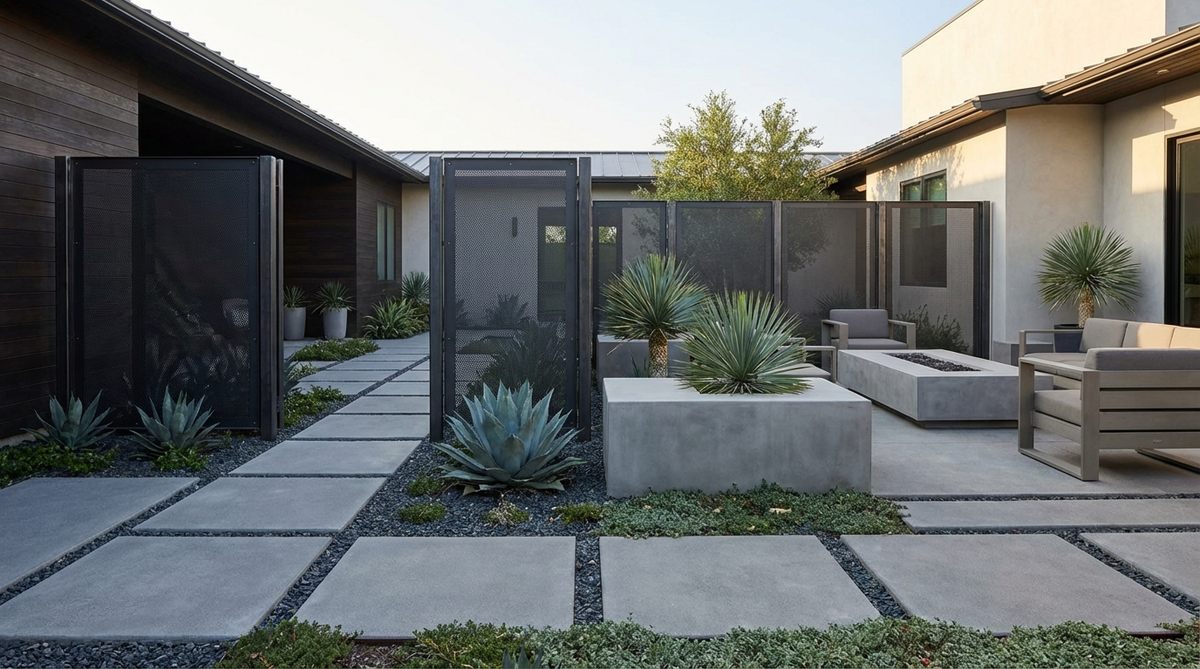
Clean lines, monochromatic palettes, and geometric forms create contemporary outdoor rooms. Large-format pavers, steel-framed screens, and sculptural plants emphasize structure over ornamentation.
Select architectural plants like agave, yucca, or ornamental grasses that reinforce linear design. Use concrete planters in modular sizes to create rhythmic repetition.
37. Cottage Garden Courtyard
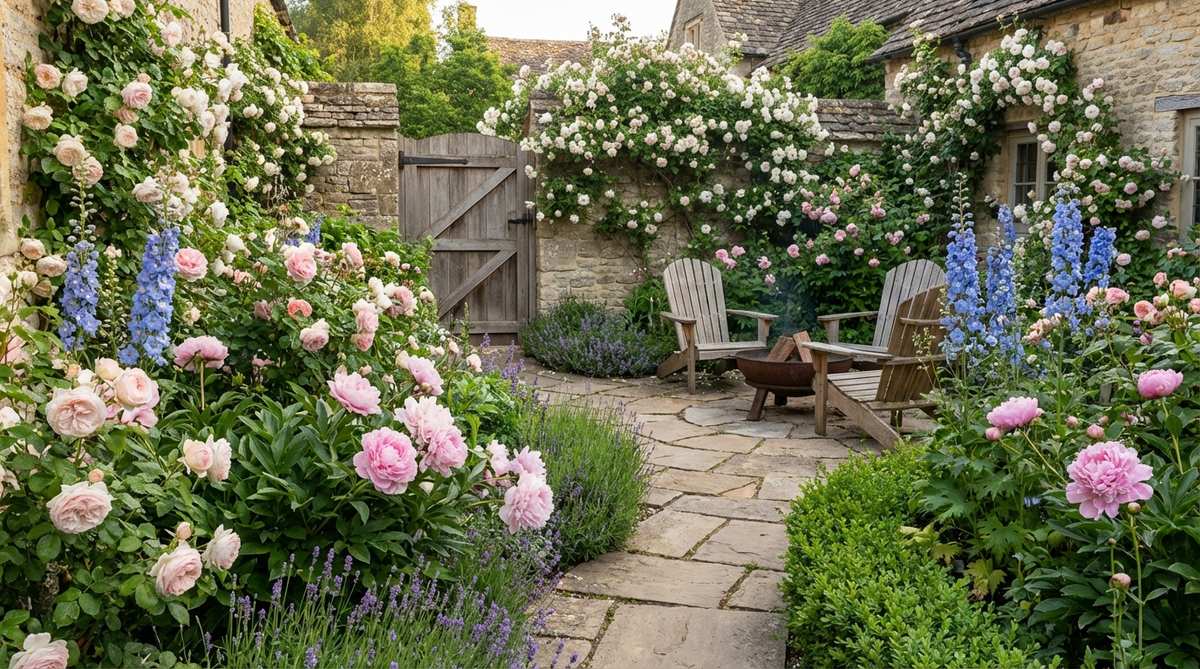
Abundant flowering plants in layered arrangements create romantic spaces with seasonal succession of bloom. This informal approach softens architectural boundaries through planting density.
Combine roses, peonies, and delphiniums with self-seeding annuals that fill gaps naturally. Include climbing varieties on walls and screens to maximize flower coverage.
Transforming Enclosed Spaces Into Personal Sanctuaries
Successful small garden courtyard ideas address spatial constraints through vertical expansion, cohesive material selection, and strategic focal points. These enclosed outdoor rooms function as extensions of interior living space when designed with attention to proportion, privacy, and sensory experience. Begin with a clear functional priority—whether dining, relaxation, or planting—and select elements that support that primary use before adding secondary features. Fresh Garden Ideas encourages you to experiment with one category from this collection, refining the approach before expanding to additional elements as your confidence and courtyard evolve together.
Frequently Asked Questions
What flooring works best for small courtyard gardens?
Gravel, pre-cast concrete pavers, and limestone tiles each offer distinct advantages depending on your budget and maintenance preferences. Gravel provides excellent drainage and adapts to irregular shapes at minimal cost, while pavers create defined surfaces for furniture placement. Limestone reflects light in shaded courtyards while maintaining cool surfaces underfoot. Choose materials that complement your home’s exterior for visual continuity between indoor and outdoor spaces.
How do I add privacy to an enclosed courtyard without blocking light?
Laser-cut metal screens, slatted pergola covers, and translucent resin panels interrupt sightlines while permitting light transmission. Position screens strategically to block specific views rather than creating complete enclosure. Living hedges and climbing plants on cable wire systems provide graduated privacy that increases as vegetation matures, allowing you to balance enclosure with brightness according to seasonal needs.
What plants thrive in shaded courtyard conditions?
Shade-tolerant species including hostas, ferns, coral bells, and astilbe perform well in limited light conditions common to enclosed courtyards. For vertical surfaces, climbing hydrangea and Boston ivy tolerate shade while providing wall coverage. Container gardens permit mobility, allowing you to rotate plants between shaded and sun-exposed areas. Select varieties based on your specific light conditions—dappled shade supports more species than full shade.
How much does a small courtyard transformation typically cost?
Budget transformations using gravel pathways, container plants, and string lighting start around $1,500 to $3,000 for materials. Mid-range projects incorporating custom pavers, built-in seating, and water features range from $5,000 to $15,000. Comprehensive renovations with integrated irrigation, custom screens, and professional installation exceed $20,000 depending on courtyard size and material selections. Prioritize elements that address your primary functional goal before adding secondary features.
Can I install a water feature in a small courtyard?
Compact water features including bubble fountains, wall-mounted water blades, and small tiered designs suit enclosed courtyards where space limitations prevent larger installations. Self-contained models with recirculating pumps require only electrical access, eliminating plumbing complexity. Position features where sound enhances rather than overwhelms conversation—typically eight to fifteen feet from primary seating areas. Water features add humidity that benefits surrounding plants in arid climates.
What lighting techniques work best for evening courtyard use?
Layer multiple light sources including uplighting on specimen plants, pathway markers for circulation, and overhead string lights for ambient illumination. This approach creates dimensional lighting that avoids flat brightness while addressing functional and atmospheric needs. Use warm color temperatures between 2700K and 3000K to complement plant colors and create inviting environments. Solar-powered fixtures eliminate wiring concerns in established courtyards where trenching proves impractical.