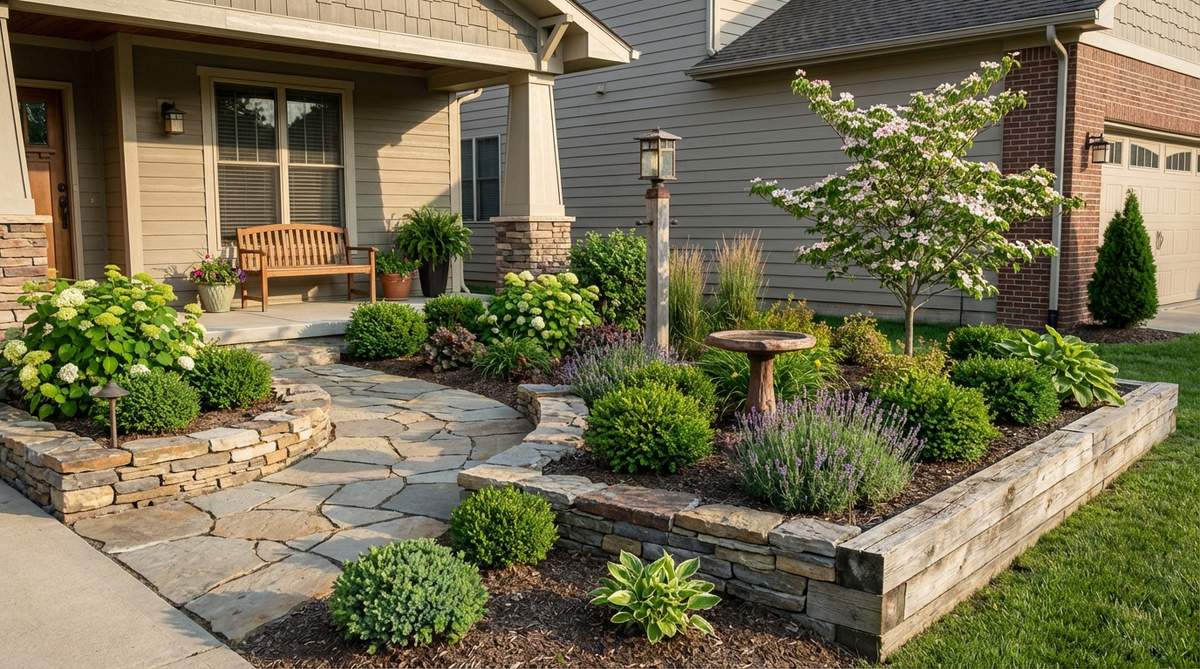
Transforming a compact entryway requires strategic design choices that maximize visual impact within minimal square footage. These small front garden ideas prove that limited space creates opportunity rather than constraint, offering designers and homeowners actionable solutions for elevated curb appeal. Fresh Garden Ideas curates expert-backed strategies that turn modest front yards into memorable outdoor statements.
Design SnapshotKey Principles
- Vertical Thinking: Walls, trellises, and tiered planters multiply growing space without expanding footprints
- Layered Depth: Staggered plant heights and textural contrasts create dimensional interest in shallow beds
- Intentional Pathways: Curved or diagonal hardscaping guides movement while visually expanding perceived area
- Strategic Focal Points: Single statement elements anchor compositions and prevent cluttered aesthetics
Foundation & Entry Designs That Frame Your Home
Foundation plantings establish architectural connection between structure and landscape. Proper scale selection prevents visual overwhelm while delivering continuous interest across seasons.
1. Window Box Accents
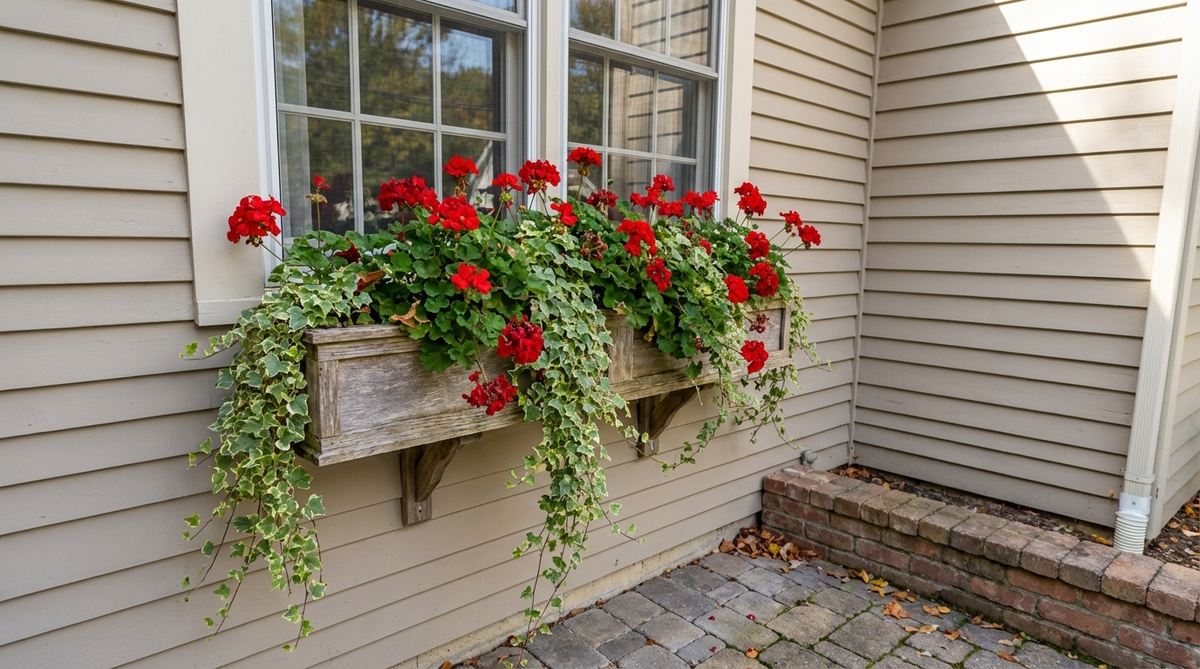
Window boxes elevate facades instantly by adding height-appropriate greenery that draws eyes upward. Coordinate box finishes with trim colors or introduce bold contrasts for personality.
Fill boxes with trailing geraniums, petunias, or ivy that cascade without blocking views. This approach works particularly well on homes with limited ground-level planting space.
Replace plantings seasonally to maintain fresh displays. Spring bulbs transition to summer annuals, then autumn mums for continuous curb appeal.
2. Dwarf Evergreen Foundation Hedge
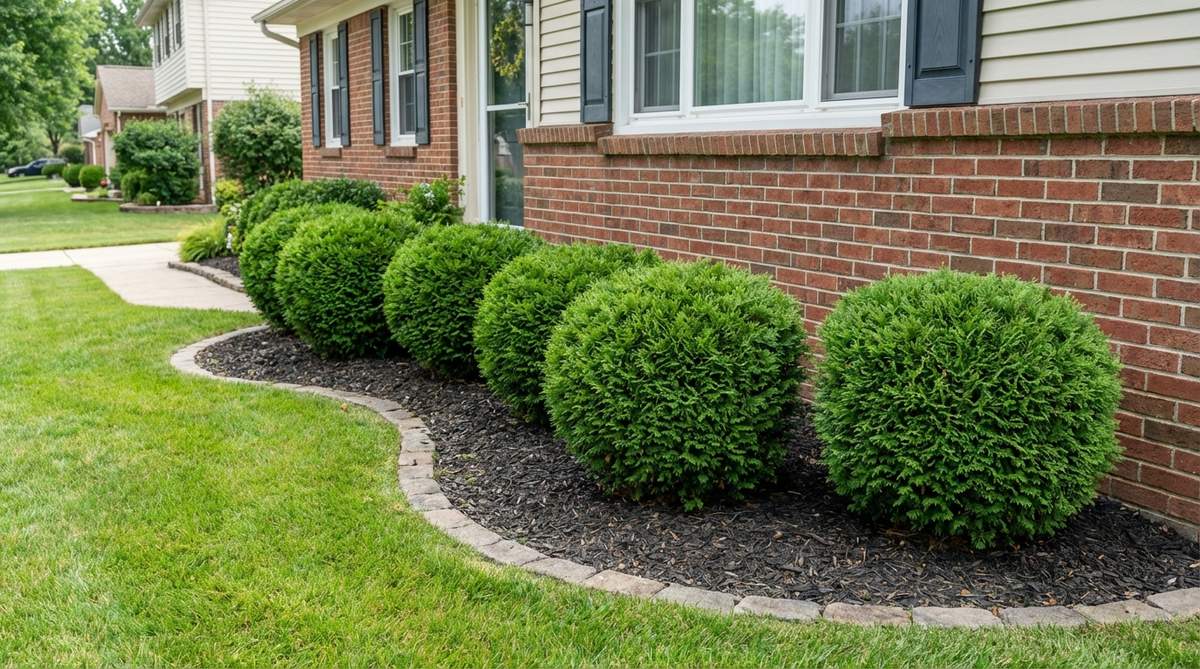
Globe arborvitae or dwarf boxwood creates defined borders without requiring constant pruning. These compact evergreens maintain tidy forms while softening hard building lines.
Plant specimens 18-24 inches from the foundation to allow mature growth without crowding. This spacing ensures adequate air circulation and prevents moisture issues.
Evergreen choices deliver year-round structure when perennials go dormant. Their consistent presence anchors seasonal plantings and provides reliable visual weight.
3. Symmetrical Entry Planters
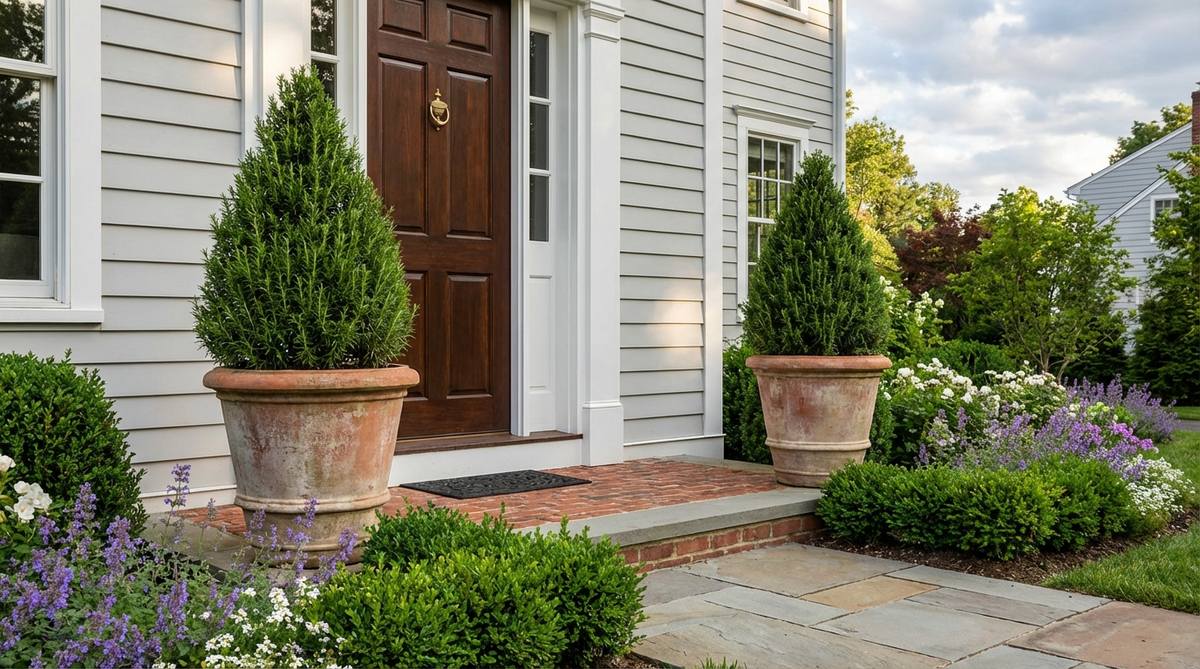
Matching containers flanking doorways create formal balance that enhances architectural presence. Select planters proportional to door scale for harmonious composition.
Fill with identical plantings like topiary rosemary, ornamental grasses, or seasonal annuals. Symmetry communicates intentional design even in the smallest entryways.
Update container plantings quarterly to reflect seasons while maintaining matching forms. This strategy delivers professional polish with minimal ground space investment.
4. Layered Shrub Border
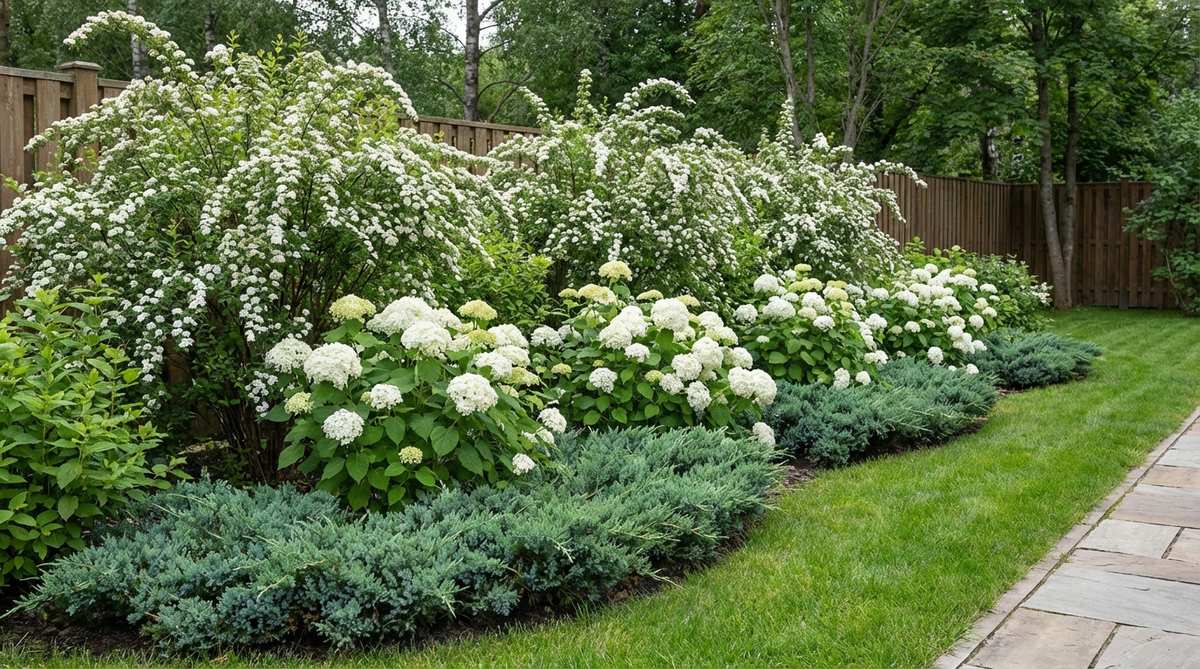
Stagger shrub heights from front to back to build depth in narrow beds. Position low-growing junipers forward, medium hydrangeas mid-layer, and taller spiraea as backdrop.
This tiered approach prevents flat presentations while maximizing plant diversity. Each layer receives appropriate light exposure for optimal health.
Incorporate varied foliage textures and bloom times to extend visual interest. Dense layering also discourages weed establishment naturally.
5. Climbing Rose Trellis Entry
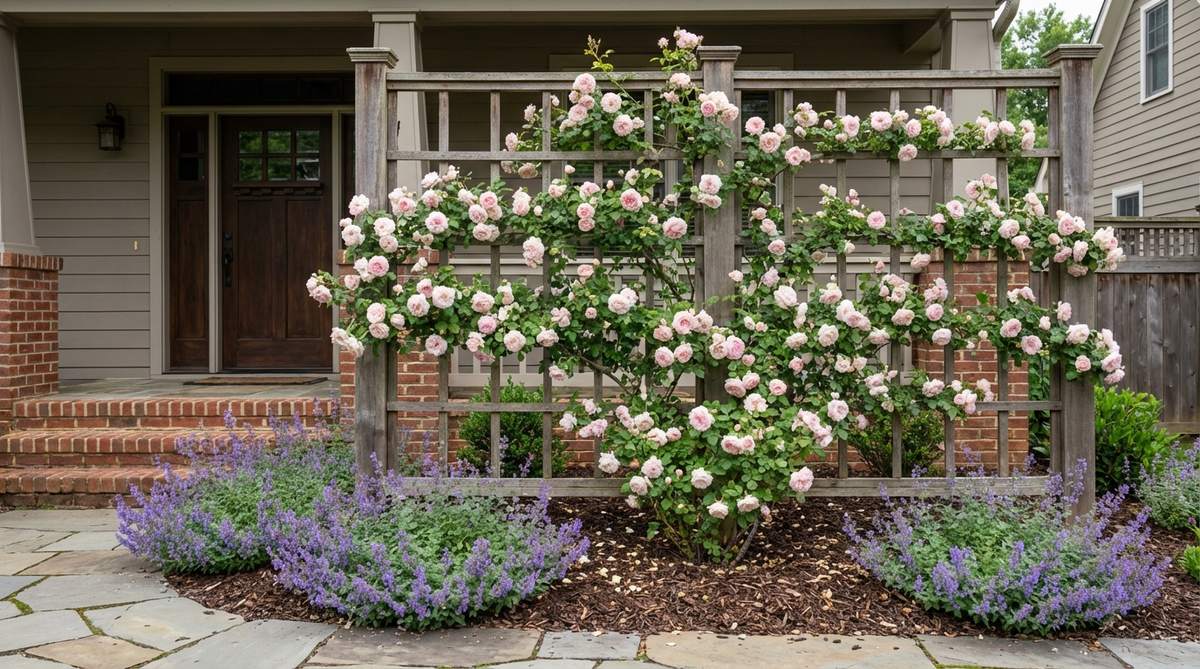
Vertical trellises positioned beside front doors support climbing roses that add romantic elegance. Choose disease-resistant varieties like ‘New Dawn’ for reliable performance.
Train canes horizontally across the trellis to encourage more blooms. This technique maximizes flower production in limited vertical space.
Roses deliver seasonal fragrance that welcomes visitors while occupying minimal footprint. Pair with low-growing companions like catmint for complementary color.
Vertical Solutions For Compact Footprints
Vertical gardening transforms walls, fences, and unused air space into productive growing zones. These techniques deliver maximum plant density without consuming precious ground area in small front yard garden settings.
6. Living Wall Planter System
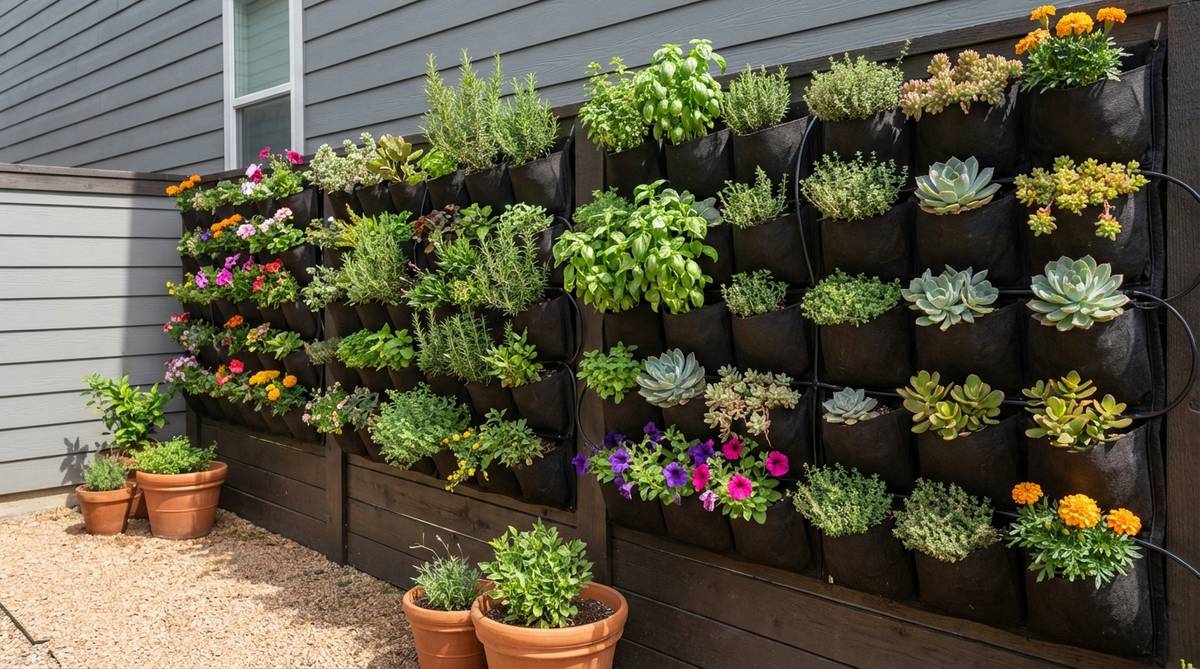
Modular pocket planters mount directly to fences or siding to create lush vertical displays. Select shallow-rooted herbs, succulents, or annuals that thrive in contained environments.
Install systems with integrated irrigation for simplified maintenance. Drip lines ensure consistent moisture distribution across all planting pockets.
Living walls provide instant greenery on blank vertical surfaces. They work exceptionally well in urban settings where ground space remains at premium.
7. Tiered Container Tower
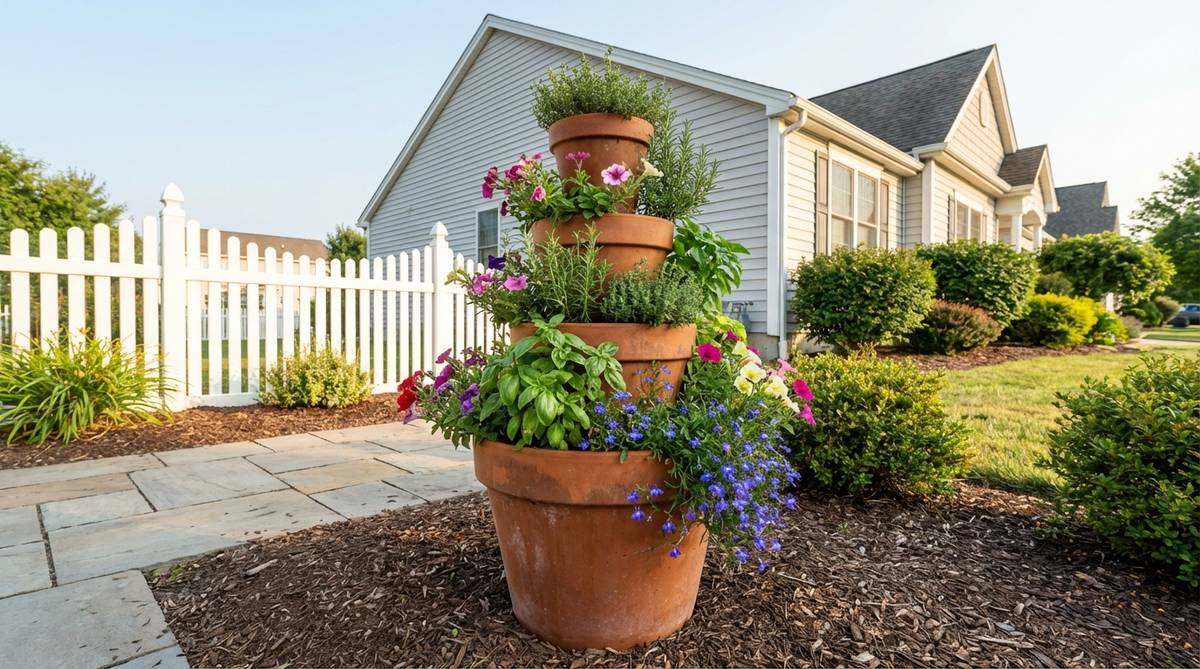
Stack progressively smaller pots on sturdy bases to build upward gardens. This technique suits herbs, strawberries, or cascading flowers like calibrachoa.
Ensure each tier drains properly to prevent waterlogging lower levels. Lightweight potting mixes reduce structural stress while improving root health.
Towers concentrate planting density while remaining mobile for seasonal repositioning. Move displays to optimize sun exposure or refresh entryway arrangements.
8. Espalier Fruit Tree Fence
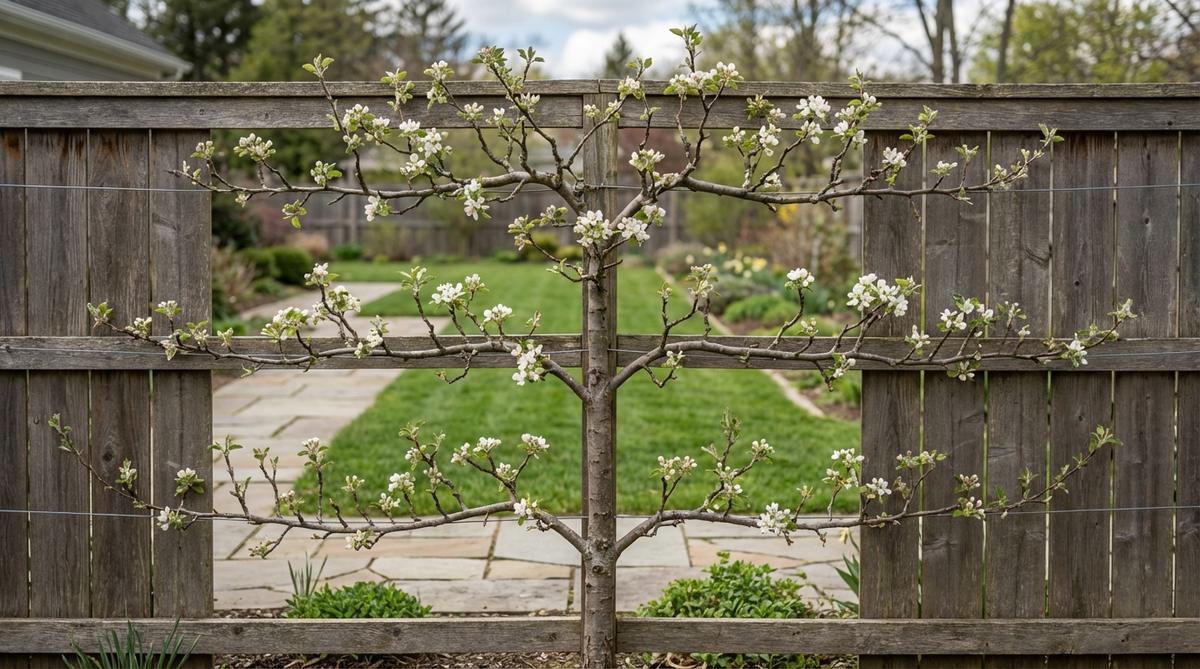
Train dwarf apple or pear trees flat against fence structures using horizontal wire supports. Espalier techniques transform trees into living art while conserving space.
Prune branches to maintain two-dimensional forms that maximize fruit production. This method delivers harvest potential in yards too small for standard orchards.
Espaliered specimens add sophisticated architectural interest to fence lines. Spring blossoms provide seasonal color before fruiting begins.
9. Hanging Basket Collection
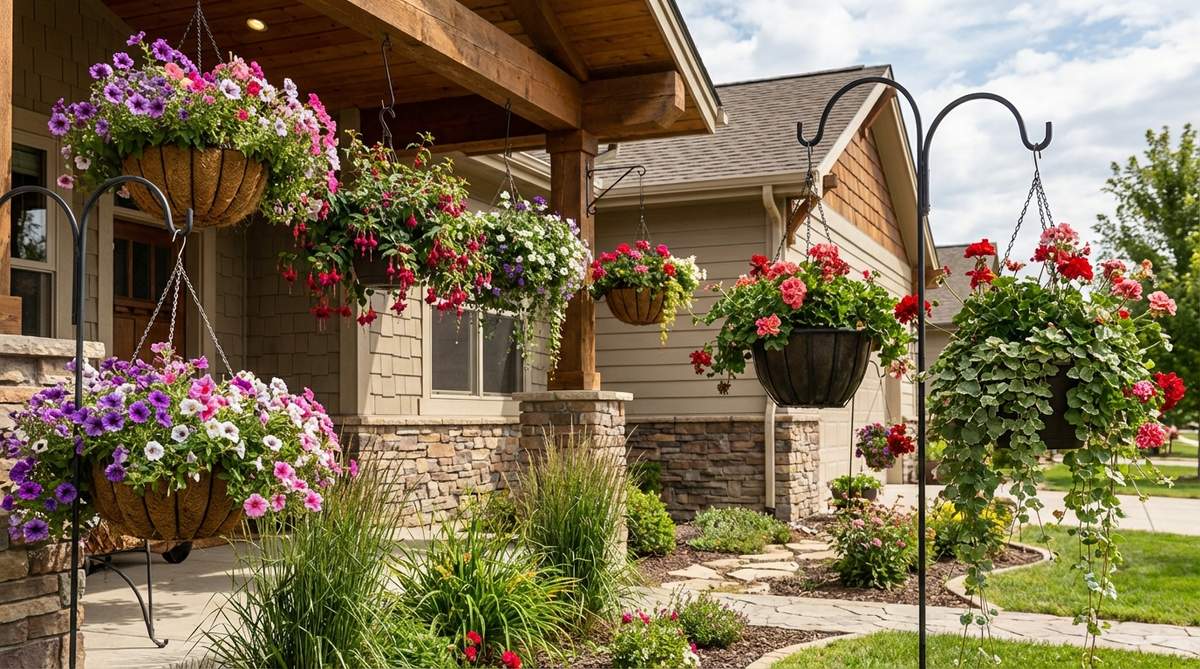
Suspend multiple baskets at varying heights from porch overhangs or shepherd hooks. Create dynamic compositions using trailing petunias, fuchsias, or ivy geraniums.
Stagger basket placement to avoid linear monotony. Varied heights generate visual movement while filling empty overhead zones.
Hanging displays free ground space for additional plantings or pathways. They also elevate color to eye level for immediate impact.
10. Vertical Herb Garden Wall
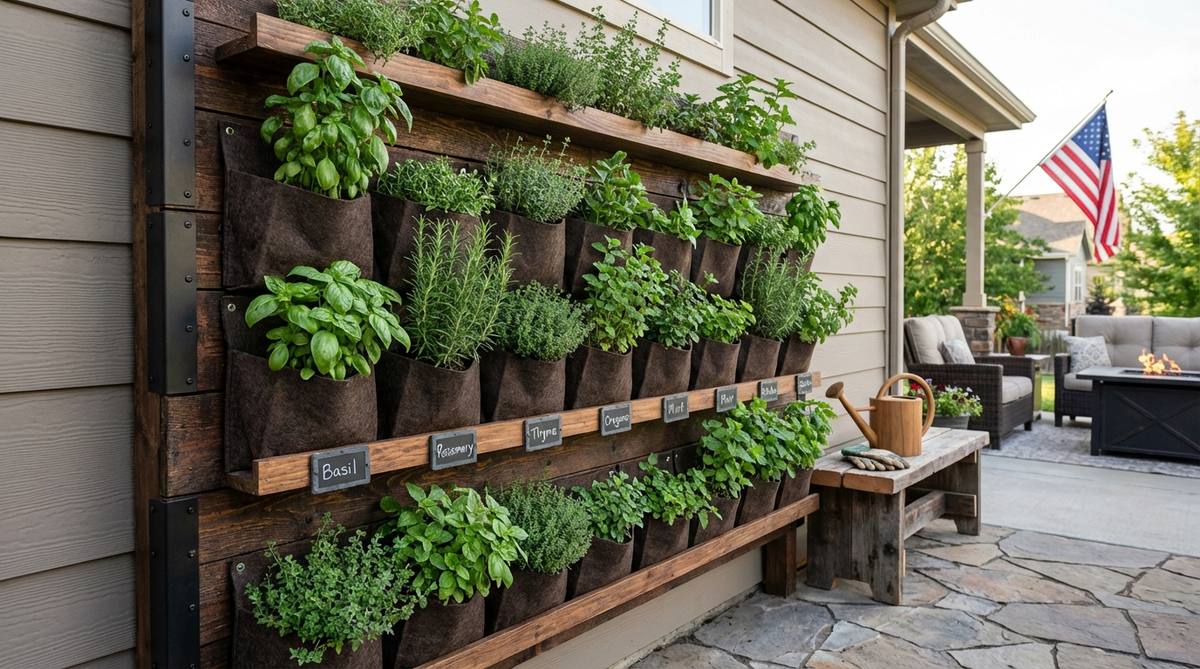
Mount cedar planters or repurposed pallets to create accessible herb displays near kitchens. Plant basil, thyme, oregano, and parsley for culinary convenience.
Position herb walls in full sun locations for optimal growth. Vertical orientation improves air circulation and reduces fungal disease pressure.
Harvest regularly to encourage bushier growth and continuous production. Functional gardens merge practical benefits with ornamental appeal.
Pathway & Hardscape Ideas That Expand Visual Space
Thoughtful hardscaping guides movement while creating illusions of expanded square footage. Material choices and layout patterns significantly influence perceived yard dimensions.
11. Curved Gravel Pathway
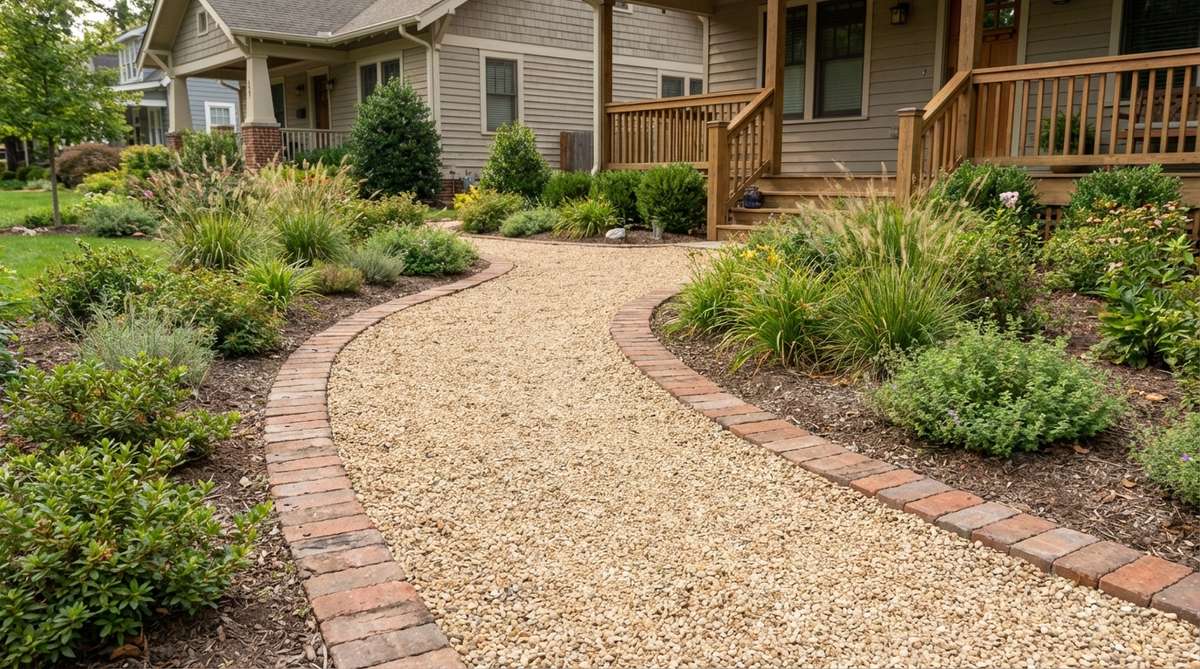
Gently winding gravel paths suggest greater depth than straight walkways. Curves naturally slow foot traffic, encouraging visitors to appreciate surrounding plantings.
Edge pathways with brick or steel borders to contain gravel and define planting zones. Crisp boundaries communicate intentional design even in informal settings.
Gravel offers permeable drainage that benefits plants while reducing runoff. This budget-friendly material installs quickly without specialized equipment.
12. Diagonal Paver Layout
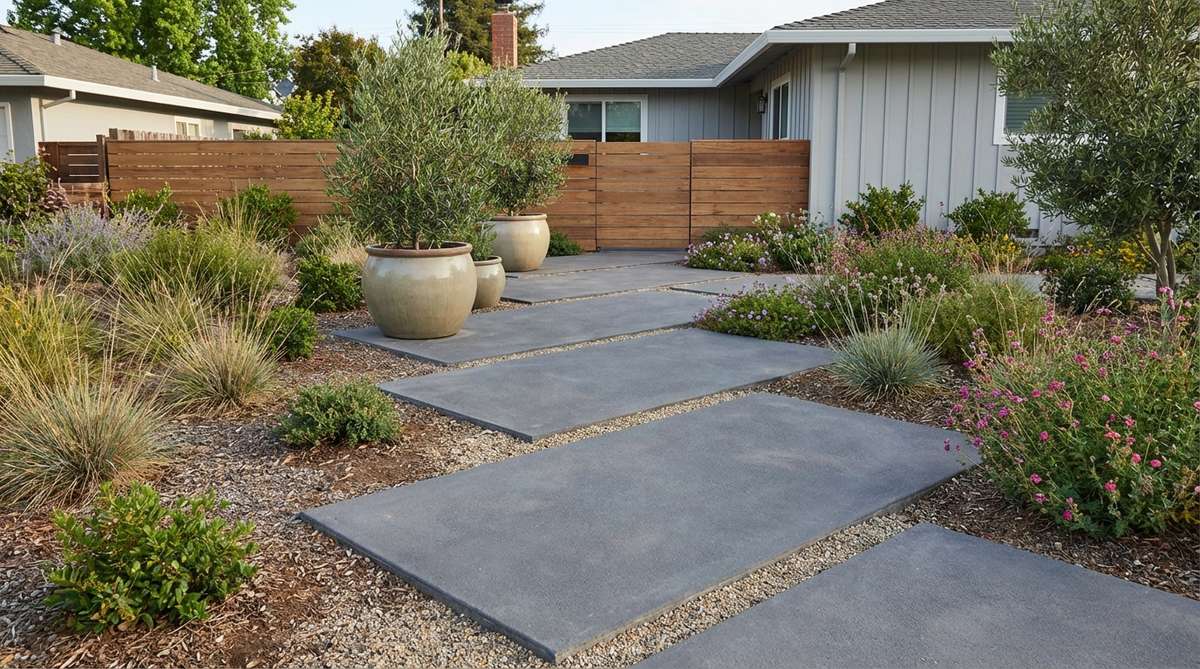
Angle pavers at 45 degrees to building faces to create visual elongation. Diagonal lines trick eyes into perceiving wider expanses.
Use large-format pavers to minimize grout lines that fragment space visually. Fewer interruptions maintain cohesive flow across small areas.
Diagonal patterns add contemporary sophistication to traditional home styles. This simple orientation shift delivers outsized aesthetic impact.
13. Stepping Stone Meadow Path
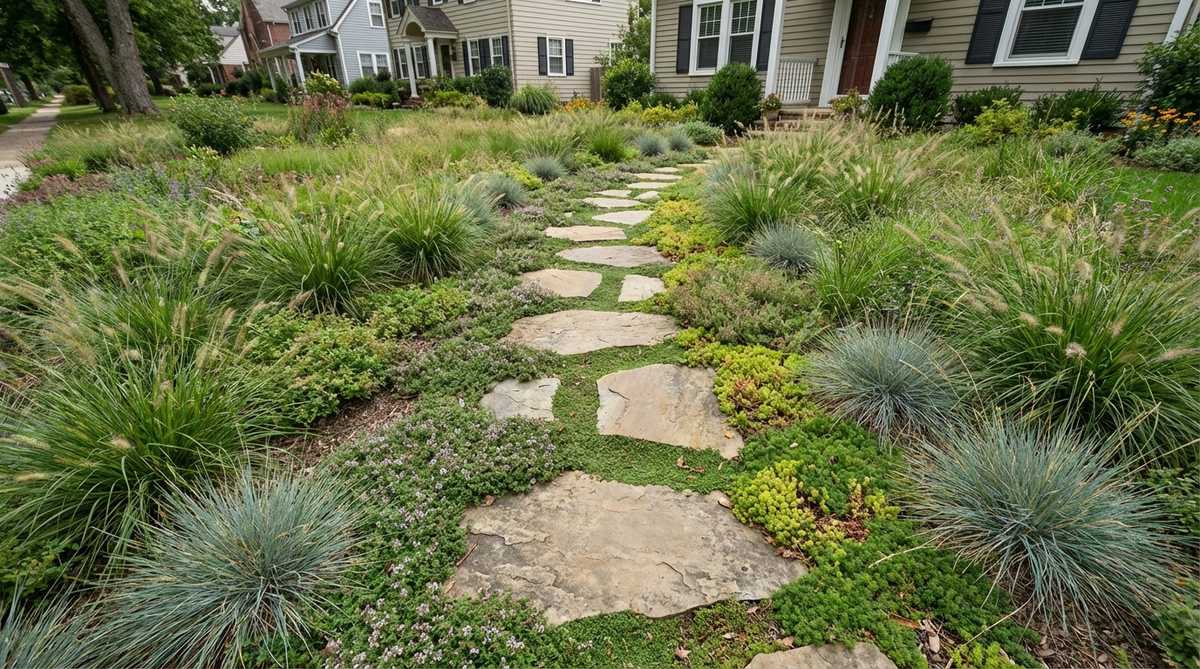
Nestle individual flagstones within low groundcover or ornamental grasses. This naturalistic approach blends hardscape seamlessly into planted areas.
Space stones according to average stride length for comfortable navigation. Irregular placement feels organic while remaining functional.
Meadow paths reduce hardscape dominance in small yards. Living elements between stones soften transitions and support pollinator activity.
14. Brick Herringbone Entry
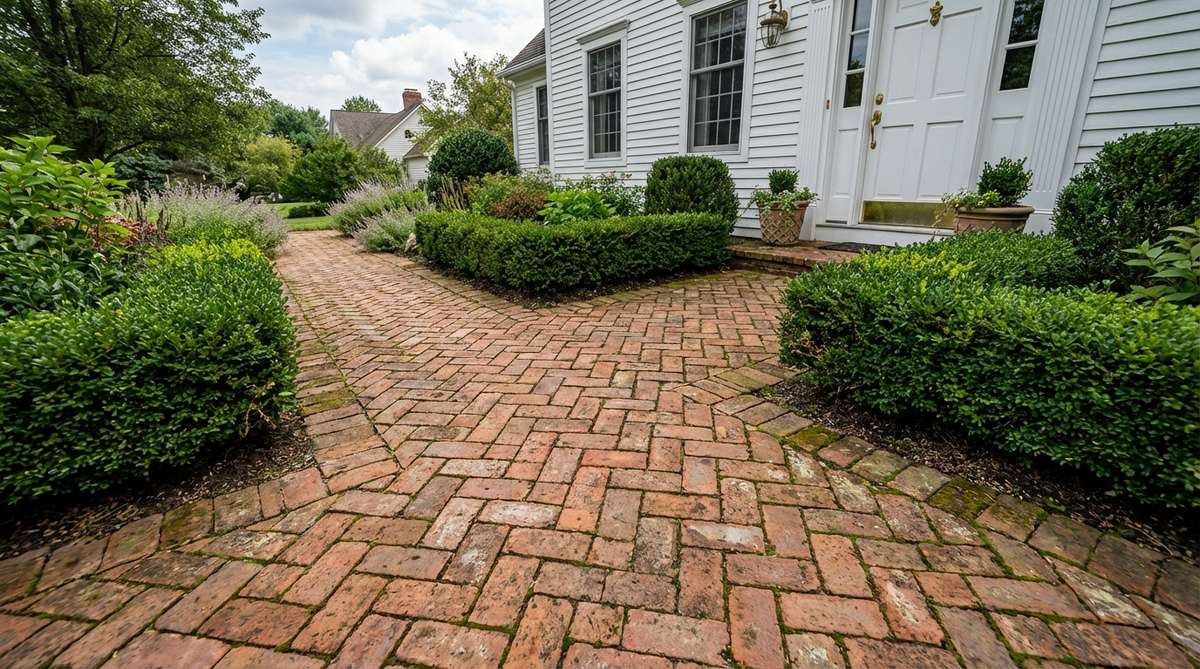
Classic herringbone brick patterns create elegant formality at front entrances. The intricate layout adds texture without requiring additional materials.
Choose clay pavers that develop attractive patina over time. Weathered finishes contribute character that improves with age.
Herringbone patterns provide visual interest in limited footprint entries. The pattern’s complexity draws focus upward toward doorways.
15. Permeable Paver Driveway
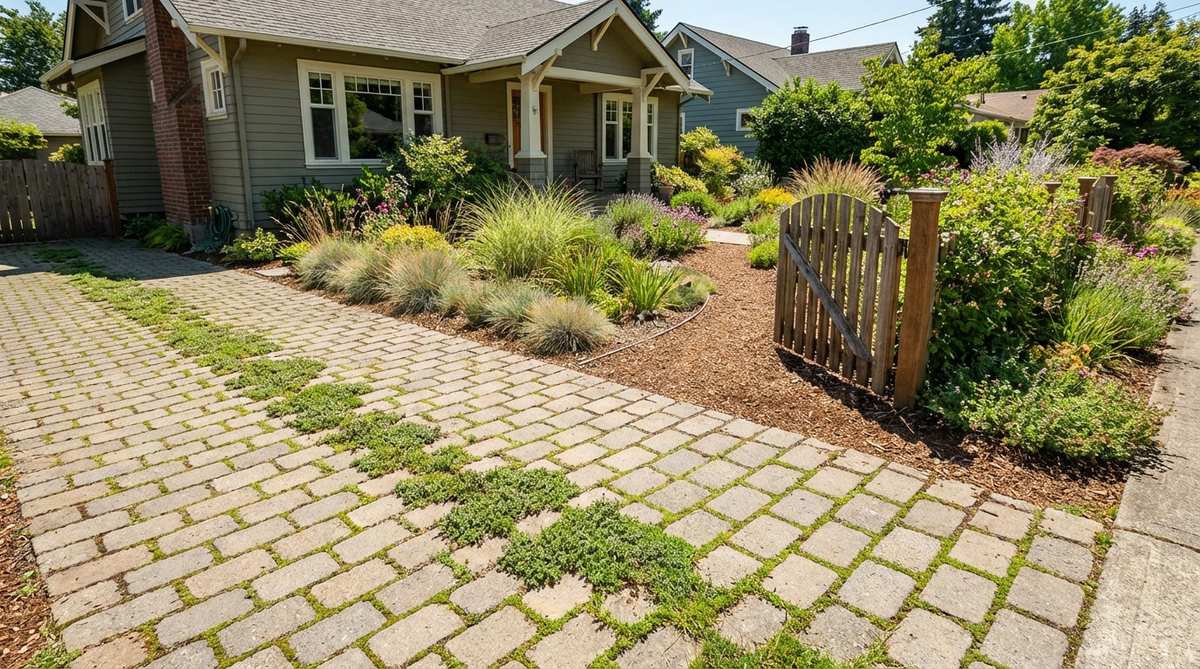
Install permeable pavers with planted joints to balance function and ecology. Grass or creeping thyme between pavers manages stormwater while reducing heat island effects.
This sustainable approach meets municipal drainage requirements increasingly common in urban areas. Living joints also soften industrial aesthetics.
Permeable systems demonstrate environmental stewardship prominently. Front-facing green infrastructure makes values visible to communities.
Low-Maintenance Plantings For Year-Round Appeal
Strategic plant selection minimizes upkeep while ensuring continuous visual interest. Native species and drought-tolerant varieties reduce water, fertilizer, and pest management demands.
16. Succulent Showcase Bed
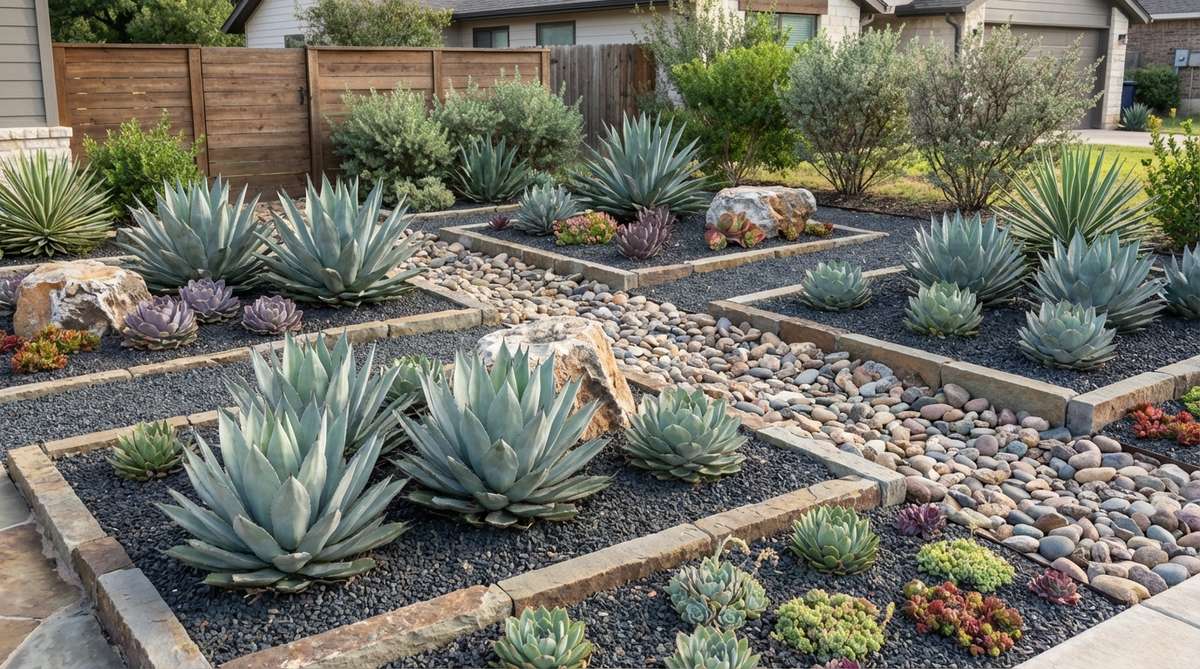
Cluster agave, echeveria, and sedum varieties for sculptural impact requiring minimal irrigation. Succulents thrive in reflected heat near foundations where other plants struggle.
Top dress beds with dark gravel or crushed stone to enhance drainage and suppress weeds. Contrasting mulch highlights architectural plant forms.
Succulent gardens deliver year-round structure with virtually no seasonal maintenance. Their drought tolerance suits water-conscious landscapes perfectly.
17. Ornamental Grass Border
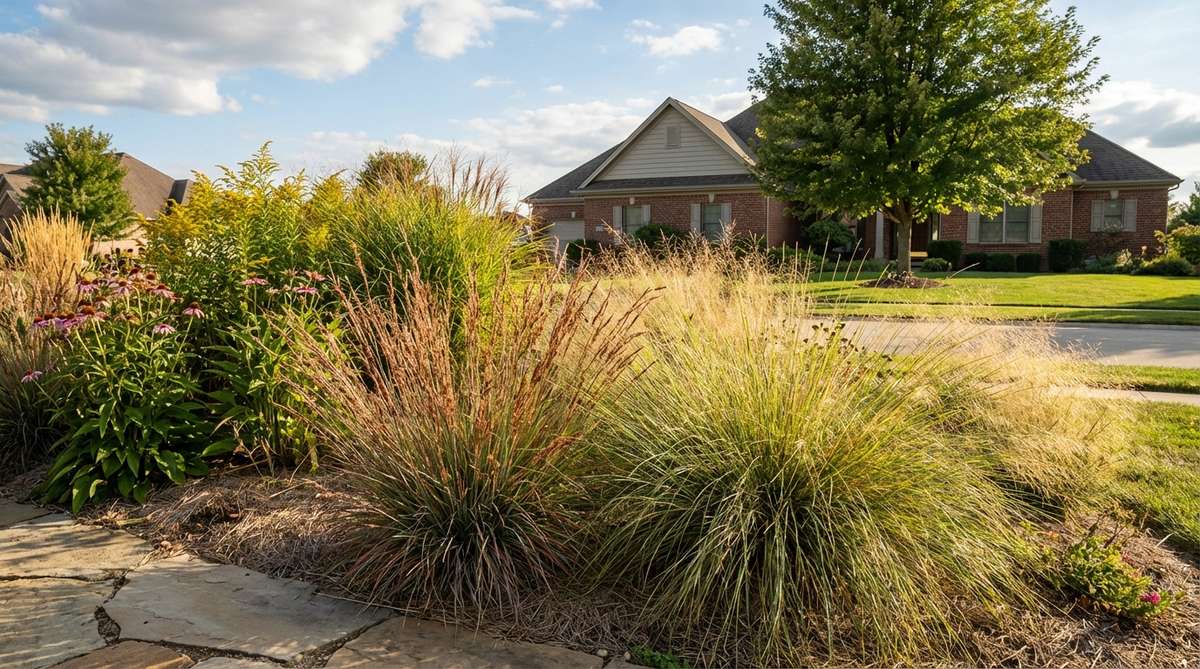
Native grasses like little bluestem or prairie dropseed provide movement and texture through seasons. Fine-textured foliage contrasts beautifully with broadleaf companions.
Grasses require single annual cutback in late winter rather than continuous pruning. This low-input approach suits busy homeowners.
Seed heads persist through winter, feeding birds while adding structural interest. Ornamental grasses excel in full sun exposures common to front yards.
18. Native Wildflower Strip
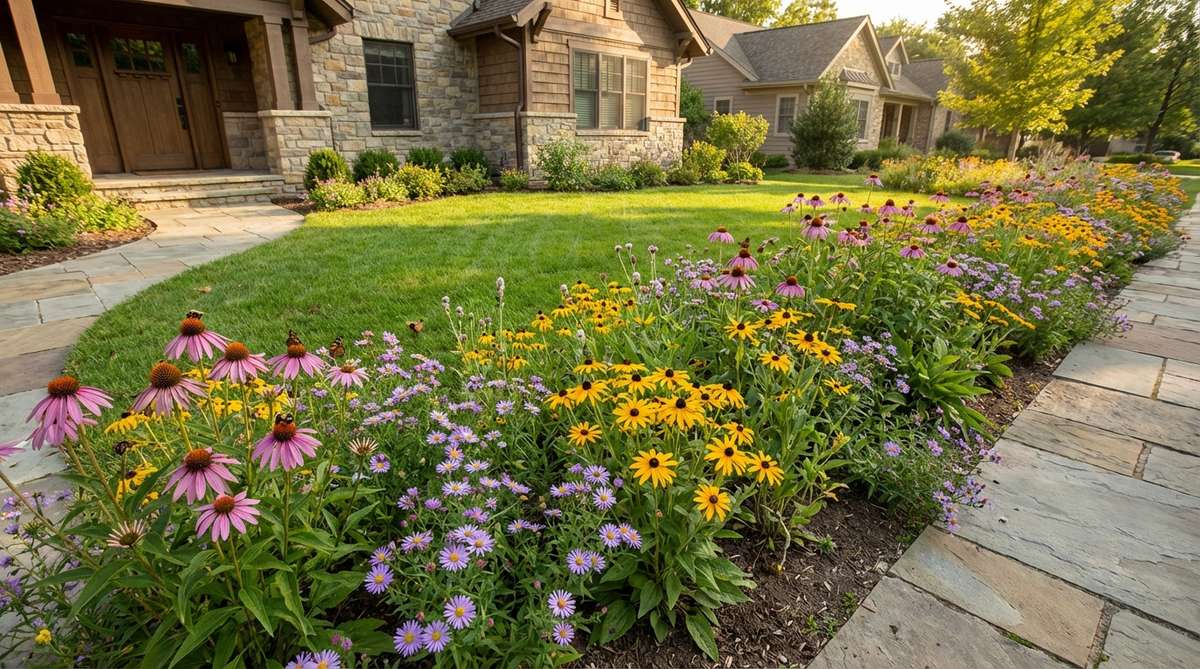
Establish pollinator-friendly wildflower mixes adapted to regional conditions. Native species require no fertilization once established and resist local pests naturally.
Allow plants to self-seed for naturalistic drifts that expand over time. This relaxed aesthetic suits cottage and prairie garden styles.
Wildflower strips support beneficial insects while reducing lawn maintenance zones. They convert high-input grass areas to ecological assets.
19. Evergreen Juniper Groundcover
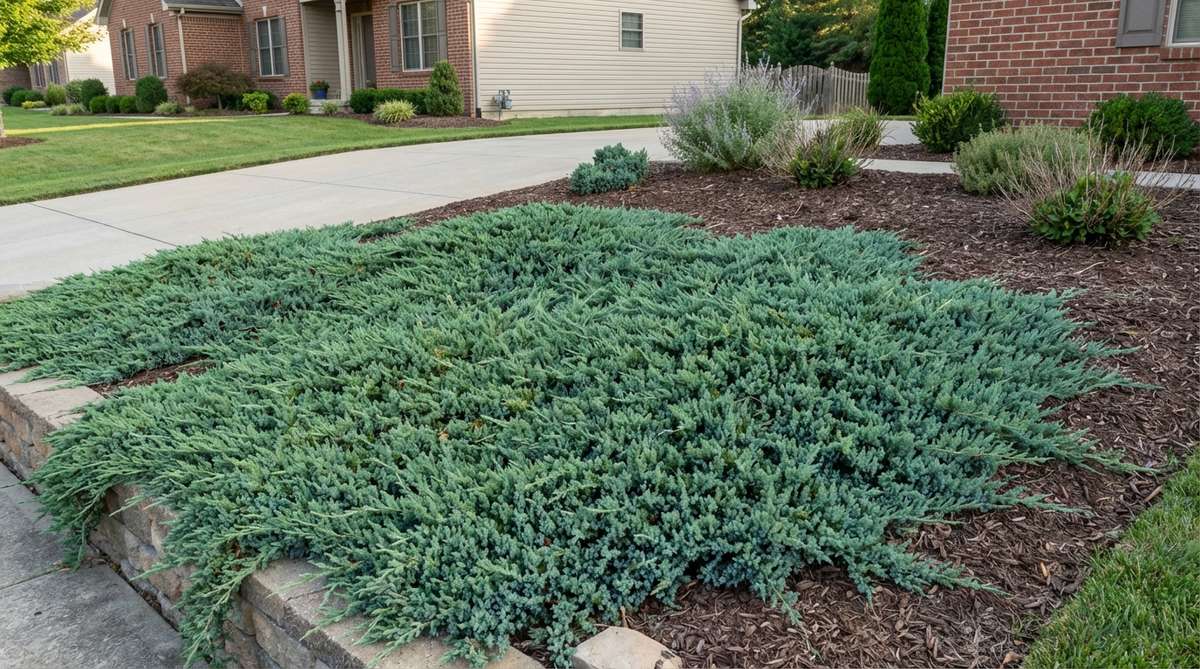
Low-spreading junipers like ‘Blue Rug’ suppress weeds while tolerating poor soils and drought. These tough evergreens thrive in full sun with minimal intervention.
Plant on 3-4 foot centers for complete coverage within two growing seasons. Dense growth eliminates mulching needs long-term.
Juniper groundcovers remain attractive year-round without deadheading or division. Their reliability suits foundation plantings and slope stabilization equally.
20. Compact Rose of Sharon
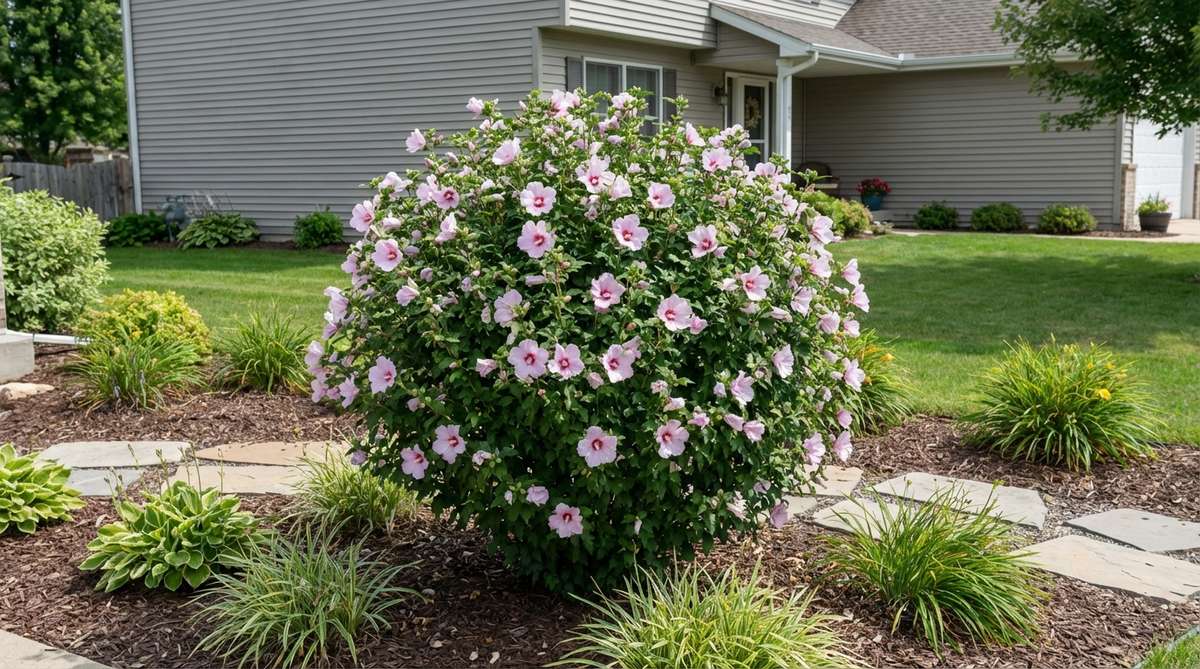
Chiffon series hibiscus shrubs bloom continuously summer through fall without deadheading. These modern cultivars produce few seeds, preventing invasive spread.
Prune minimally or not at all while enjoying months of anemone-form flowers. Low-maintenance blooming shrubs anchor mixed borders effortlessly.
Rose of Sharon tolerates urban pollution and various soil types. This adaptability makes it reliable for challenging front yard conditions.
Budget-Conscious Transformations
High-impact curb appeal doesn’t require extensive investment when leveraging creative materials and strategic focal points. These cost-effective solutions prove that vision matters more than budget.
21. Mulch Bed Refresh
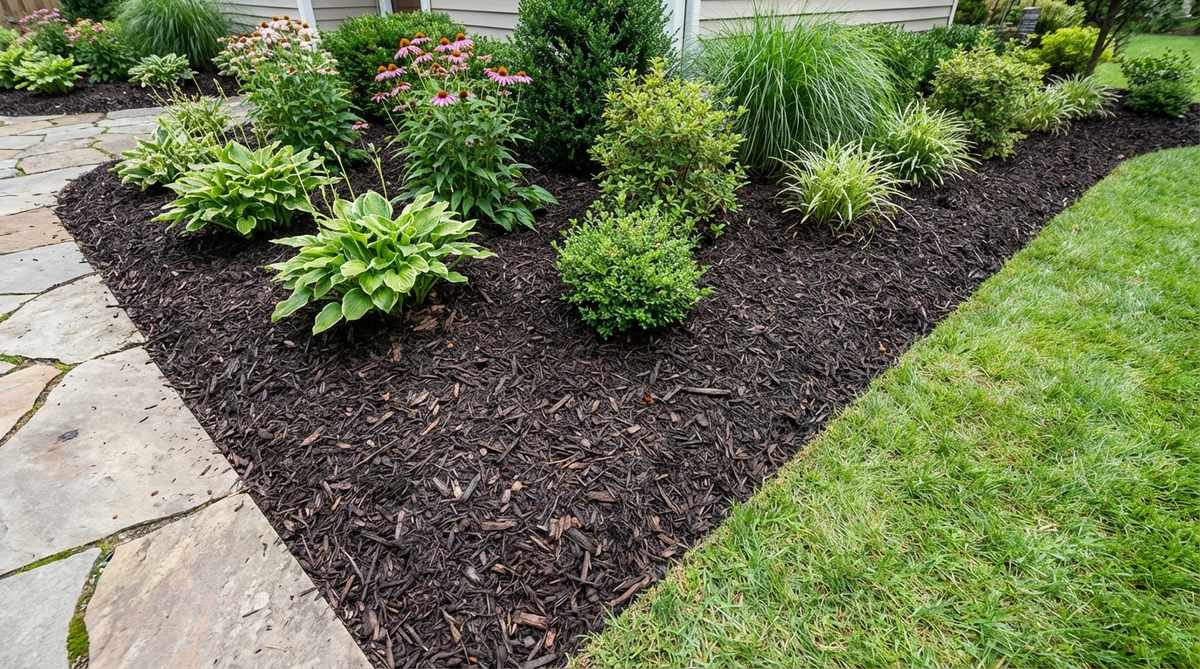
Fresh mulch application instantly revitalizes tired beds while suppressing weeds. Dark mulches make plant colors pop while creating defined boundaries.
Apply 2-3 inch layers annually to maintain soil moisture and moderate temperatures. Quality mulch reduces watering frequency significantly.
This simple upgrade delivers professional polish for minimal expense. Mulch transforms neglected areas into maintained landscapes immediately.
22. Painted Door Focal Point
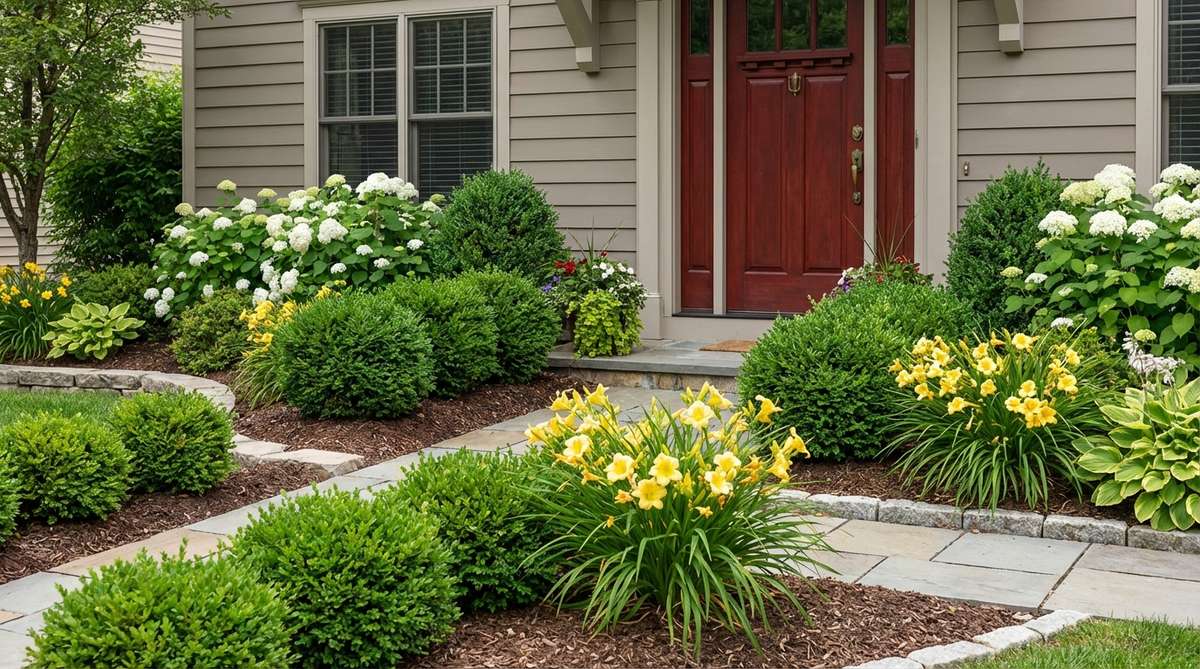
Bold front door colors create instant focal points that organize landscape compositions. Coordinate plantings with door hues for cohesive schemes.
Red doors pair beautifully with green foliage, while navy complements white and yellow flowers. Color strategy ties hardscape to plantings psychologically.
Paint costs little but transforms curb appeal dramatically. This quick update provides maximum impact per dollar invested.
23. DIY Wood Planter Boxes
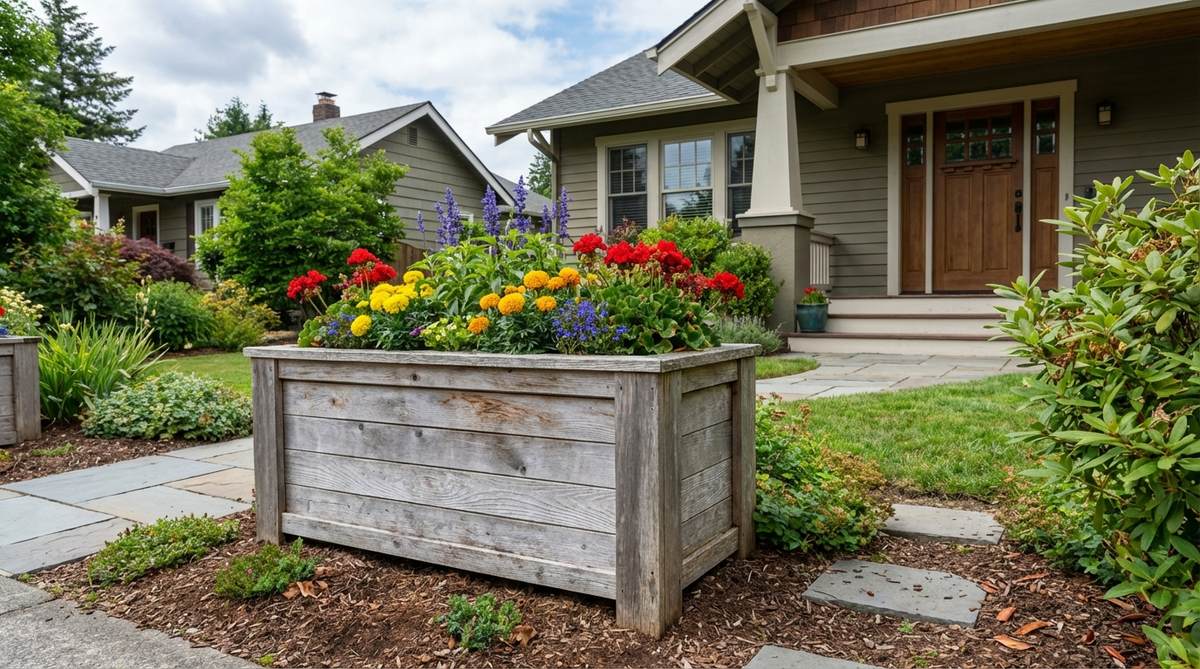
Build simple cedar or pine boxes to create custom planters sized for specific spaces. Untreated wood develops attractive silver patina naturally.
Fill boxes with potting mix and seasonal annuals for flexible color displays. Move boxes to refresh arrangements as needed.
Homemade planters cost fraction of commercial options while offering personalized dimensions. This weekend project elevates entries affordably.
24. Repurposed Stone Edging
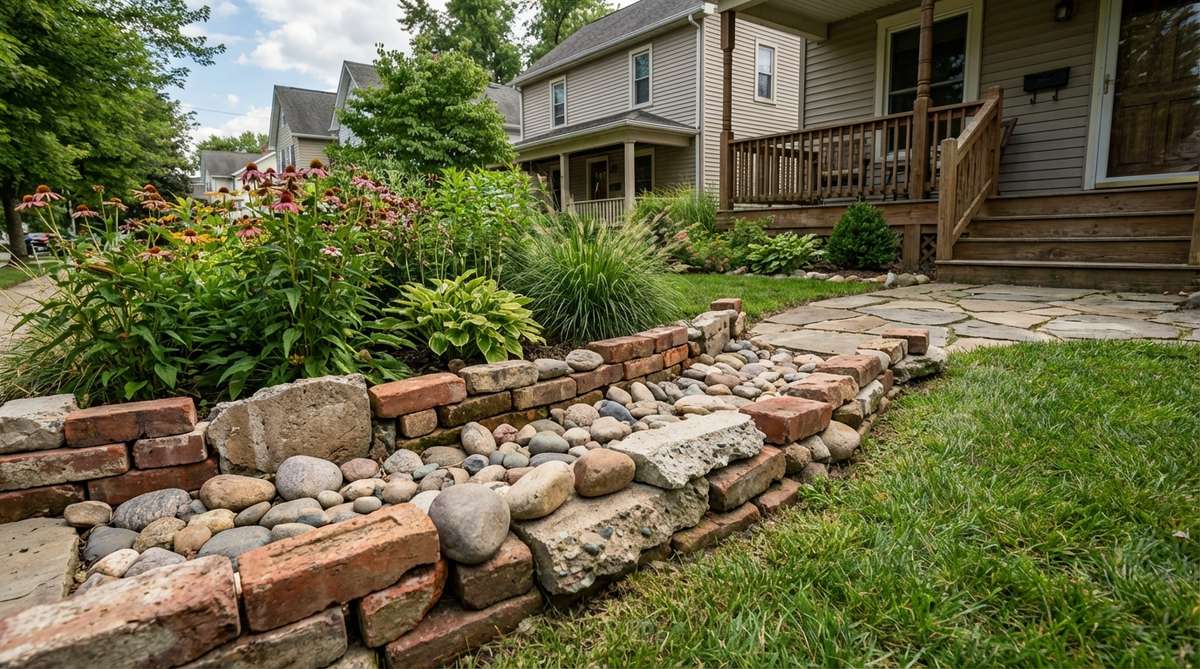
Salvaged bricks, broken concrete, or collected river rocks create rustic bed borders at no cost. Irregular materials add character absent from uniform purchased edging.
Arrange stones in single or double rows to define planting zones clearly. Edging prevents grass encroachment while organizing compositions.
Recycled materials reduce landfill waste while building unique landscape features. Budget constraints inspire creative material sourcing.
25. Seed-Grown Annual Display
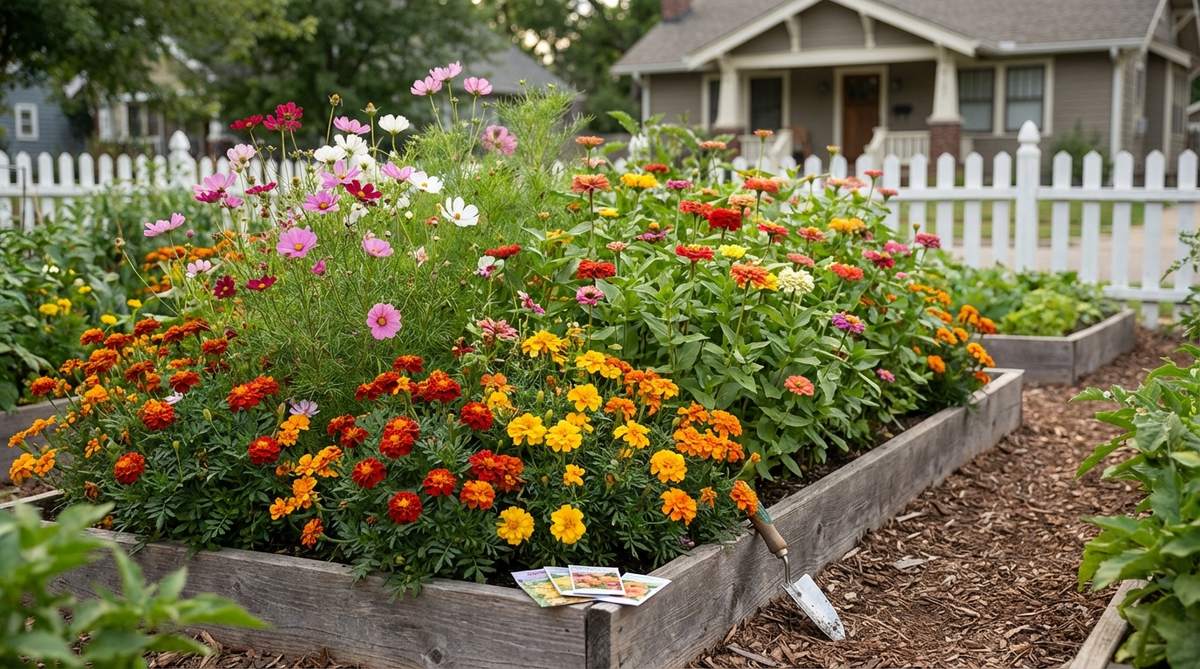
Direct-sow zinnia, cosmos, or marigold seeds for abundant blooms at pennies per plant. Seeds germinate readily in prepared beds without transplant shock.
Succession plant every two weeks for continuous color through frost. This technique extends bloom windows beyond single planting cycles.
Seed packets provide hundreds of plants for single transplant cost. Patient gardeners achieve professional results economically.
Modern Minimalist Approaches
Contemporary design embraces restraint and intentional negative space. Clean lines and limited palettes create sophisticated curb appeal suited to modern architecture.
26. Concrete and Specimen Grass
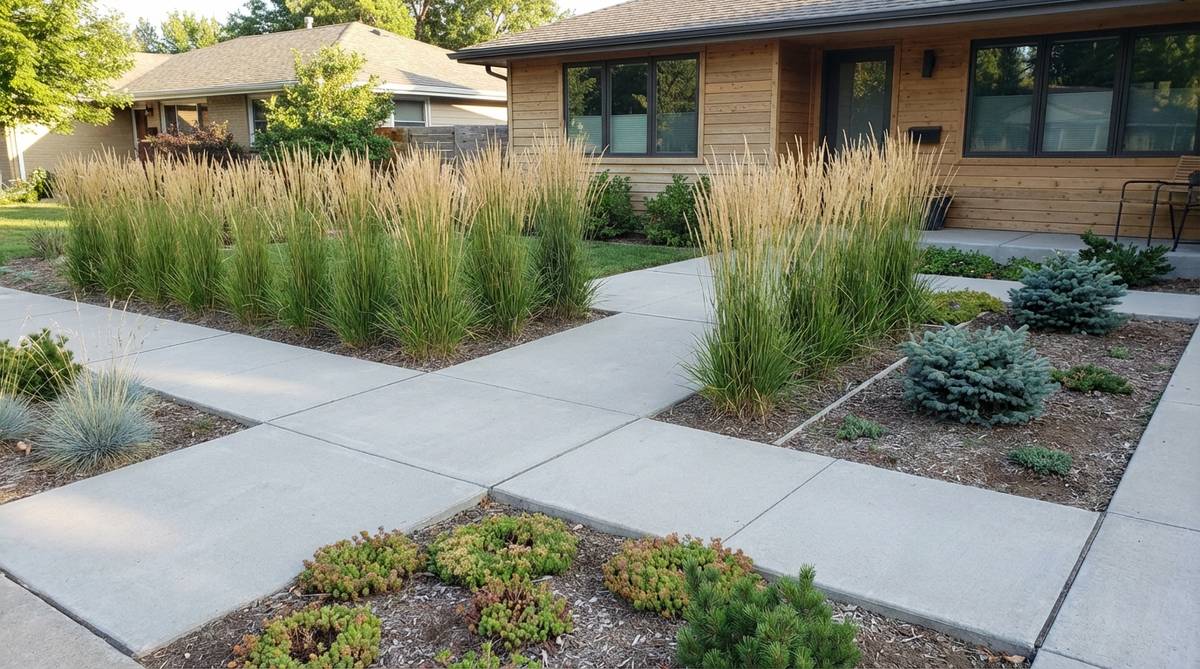
Pour simple concrete walkways bordered by single ornamental grass varieties like ‘Karl Foerster’ feather reed grass. Repetition creates rhythm without complexity.
Leave expanses of smooth concrete unadorned to emphasize clean geometry. Negative space provides visual rest between planted areas.
This minimalist approach suits busy homeowners seeking effortless elegance. Limited plant palette simplifies maintenance dramatically.
27. Monochromatic Green Palette
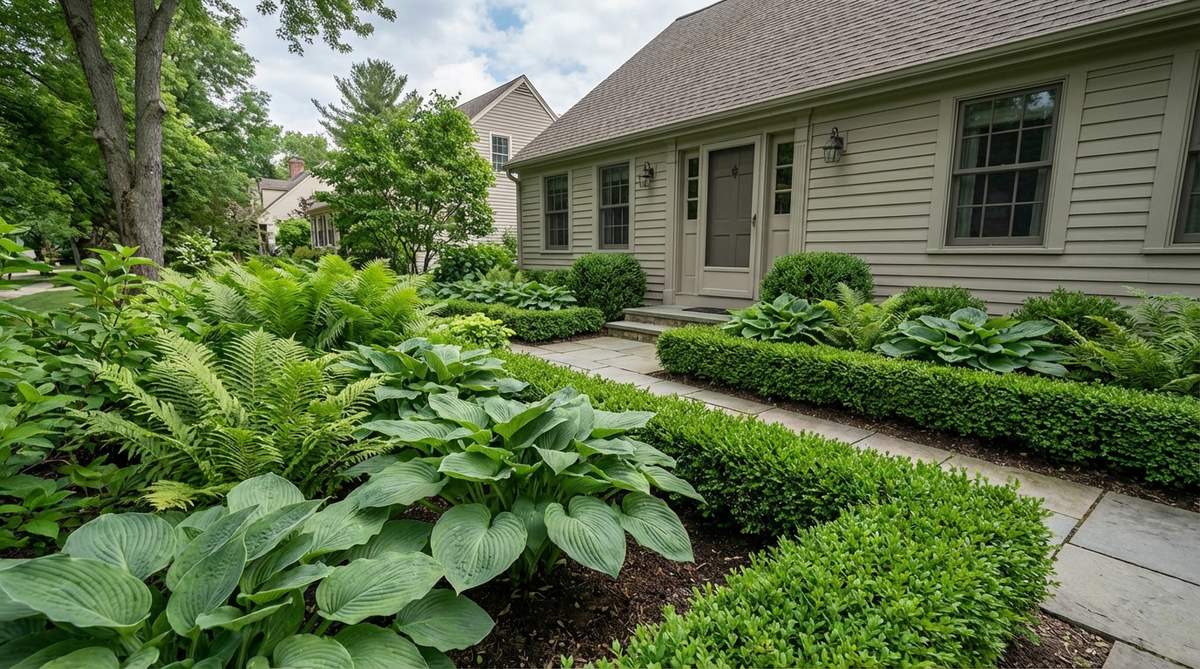
Combine varied green textures without introducing flower color for serene uniformity. Mix ferns, hostas, and boxwoods in single-hue compositions.
Textural variety prevents monotony within restricted color range. Fine, medium, and coarse foliages create depth through contrast.
Green gardens feel sophisticated and timeless. They anchor contemporary homes without competing with architectural statements.
28. Geometric Raised Bed
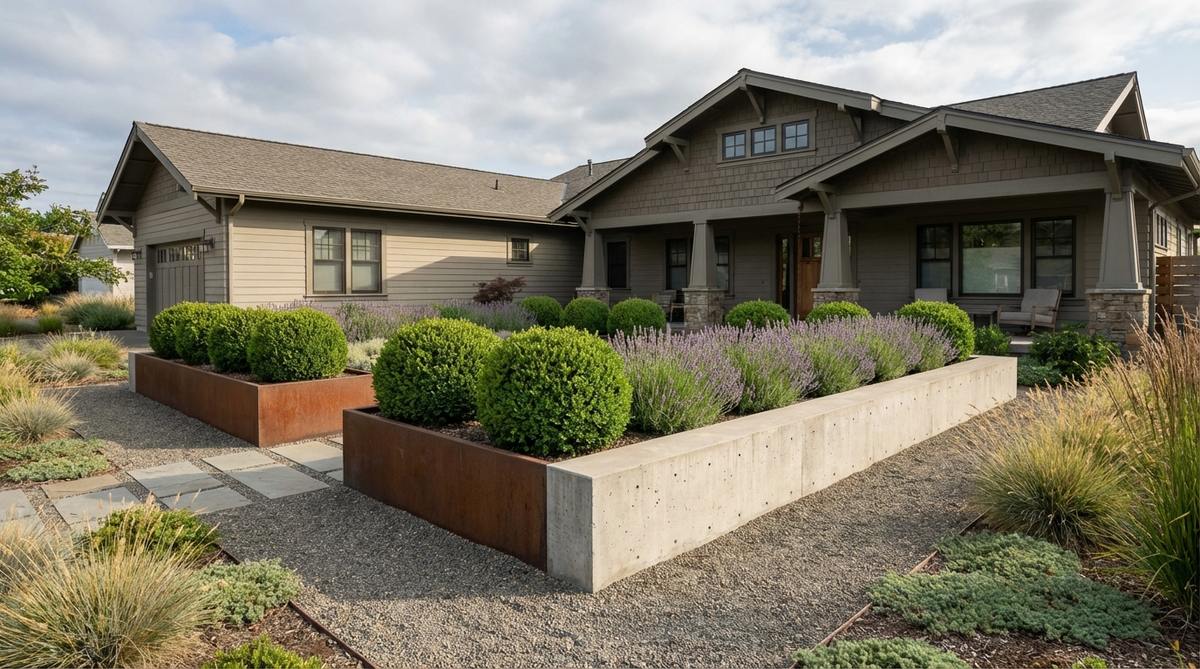
Construct angular raised beds using steel, concrete, or composite materials. Sharp edges and precise corners communicate modern sensibility.
Fill with uniform plantings like clipped boxwood spheres or lavender rows. Geometric forms emphasize design intentionality.
Raised beds add dimension to flat yards while improving drainage. Contemporary materials age gracefully with minimal upkeep.
29. Boulder Accent Grouping
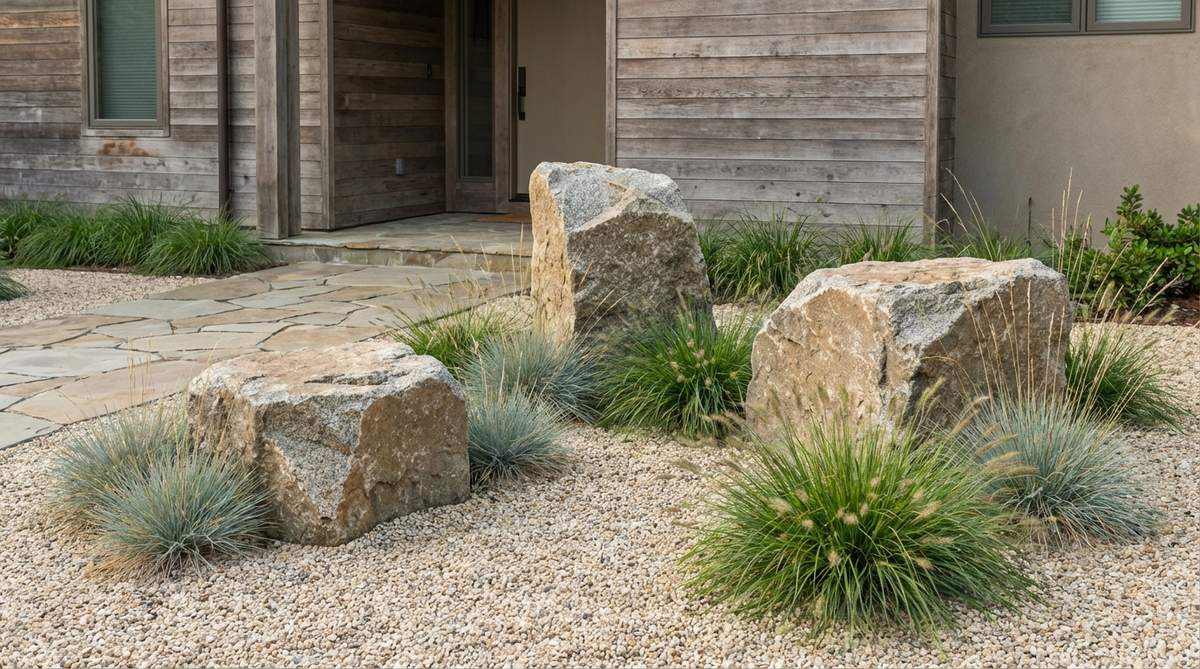
Position three large boulders asymmetrically as sculptural focal points. Natural stone adds permanence and weight to minimalist designs.
Surround stones with fine gravel and select low grasses. Sparse planting emphasizes stone forms rather than competing with them.
Boulder groupings provide year-round structure without seasonal maintenance. Their presence grounds contemporary landscapes authentically.
30. Horizontal Slat Fence Screen
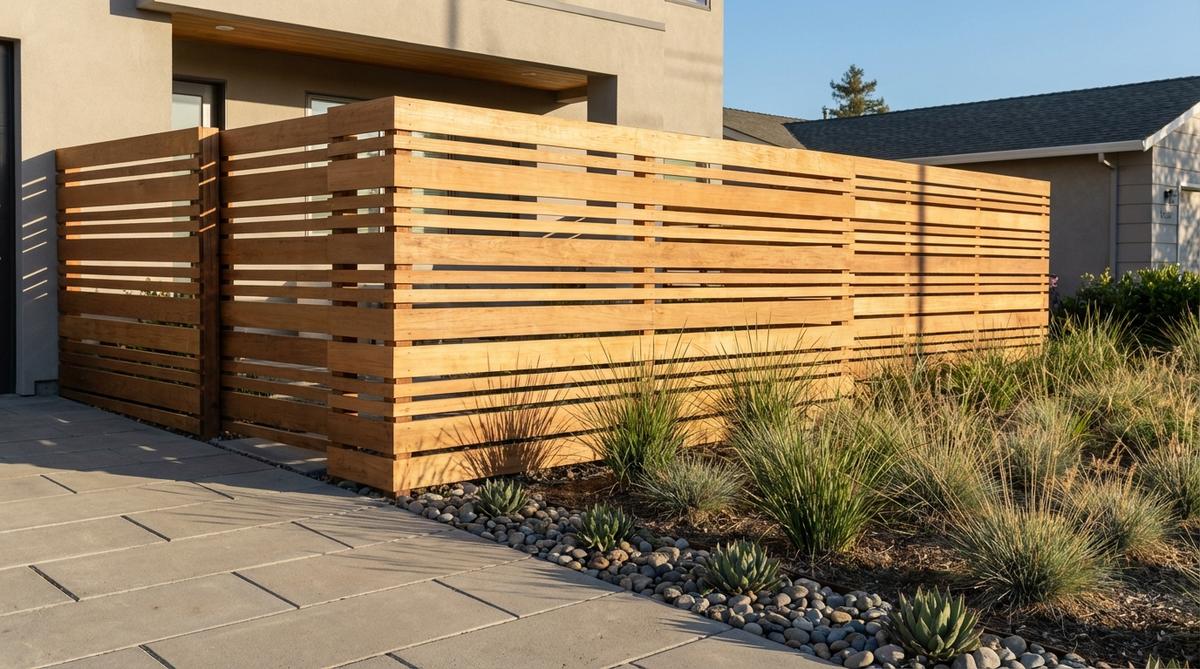
Install modern horizontal fencing with intentional gaps for partial privacy. Cedar or composite slats weather beautifully while defining boundaries.
Alternate slat spacing creates shadow patterns that change throughout day. Dynamic light play adds temporal interest to static structures.
Contemporary fencing frames yards as outdoor rooms. Clean lines complement minimalist plantings perfectly.
Seasonal Color Strategies
Continuous bloom requires planning succession across growing seasons. Strategic combinations ensure front yards never appear dormant or neglected.
31. Spring Bulb Foundation
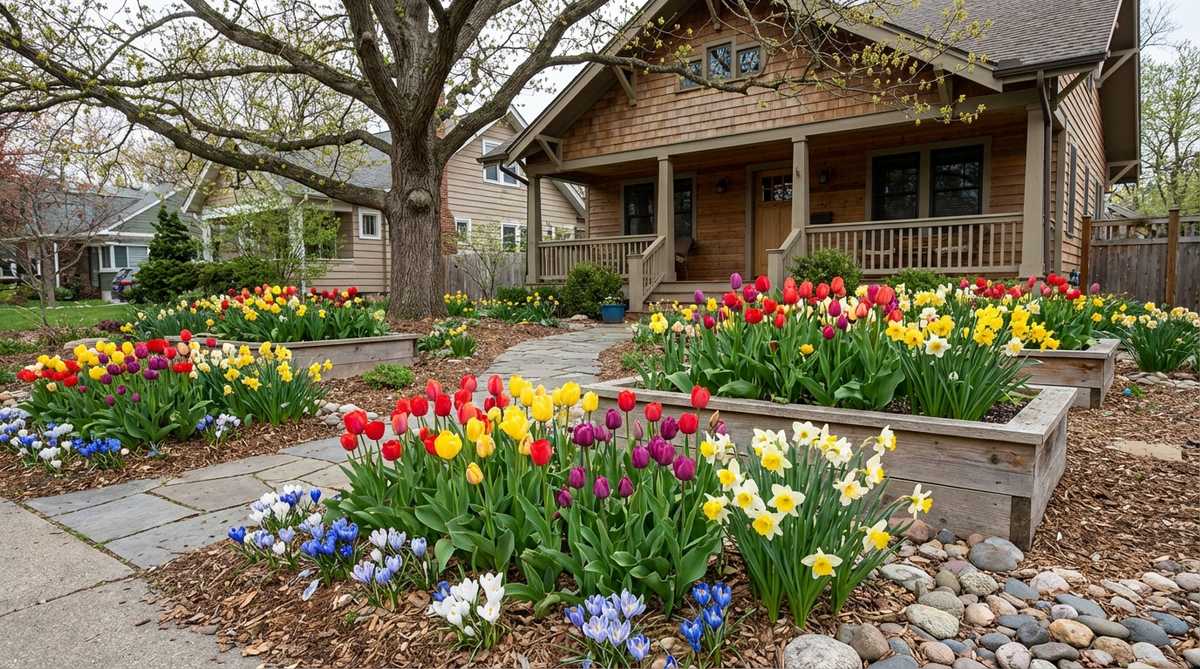
Plant tulips, daffodils, and crocuses in fall for early spring color bursts. Bulbs naturalize over time, expanding displays annually.
Layer bulbs at varying depths to extend bloom sequences. Early, mid, and late varieties provide months of flowers from single planting area.
Spring bulbs emerge when landscapes need color most. Their reliable performance rewards minimal effort.
32. Summer Perennial Backbone
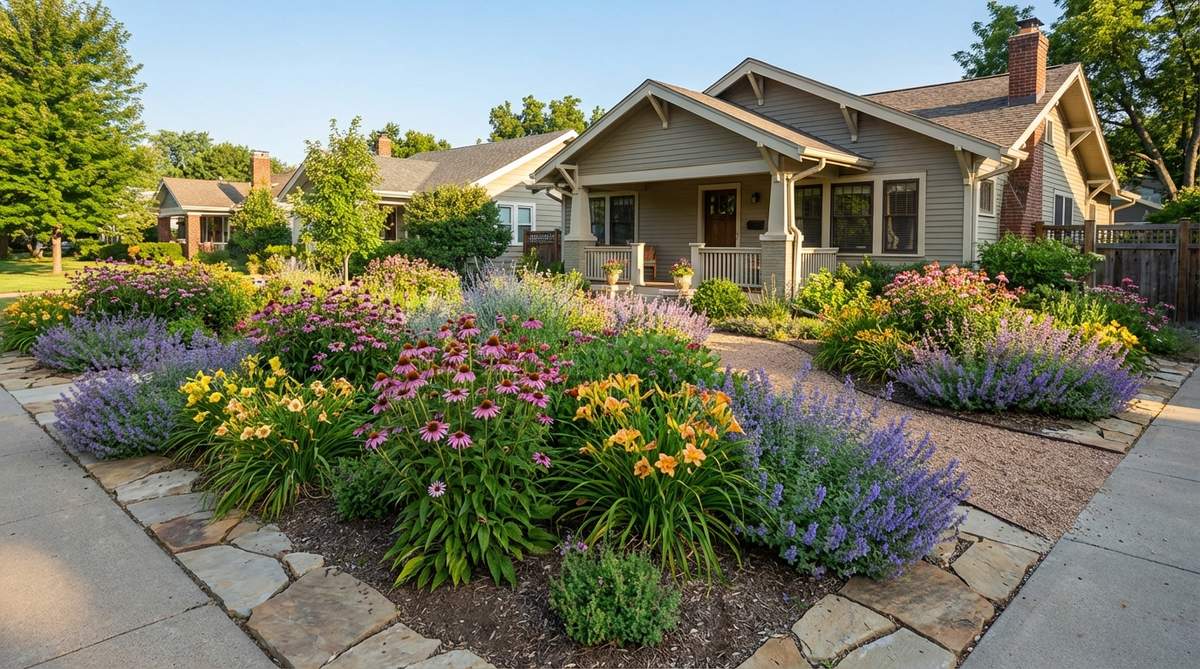
Establish coneflowers, daylilies, and catmint for dependable summer performance. These workhorses bloom for weeks while tolerating heat.
Deadhead spent flowers to encourage additional flushes. Many perennials rebloom when cut back mid-season.
Perennial investments pay dividends for decades. Their longevity makes them foundation of sustainable gardens.
33. Autumn Foliage Transition
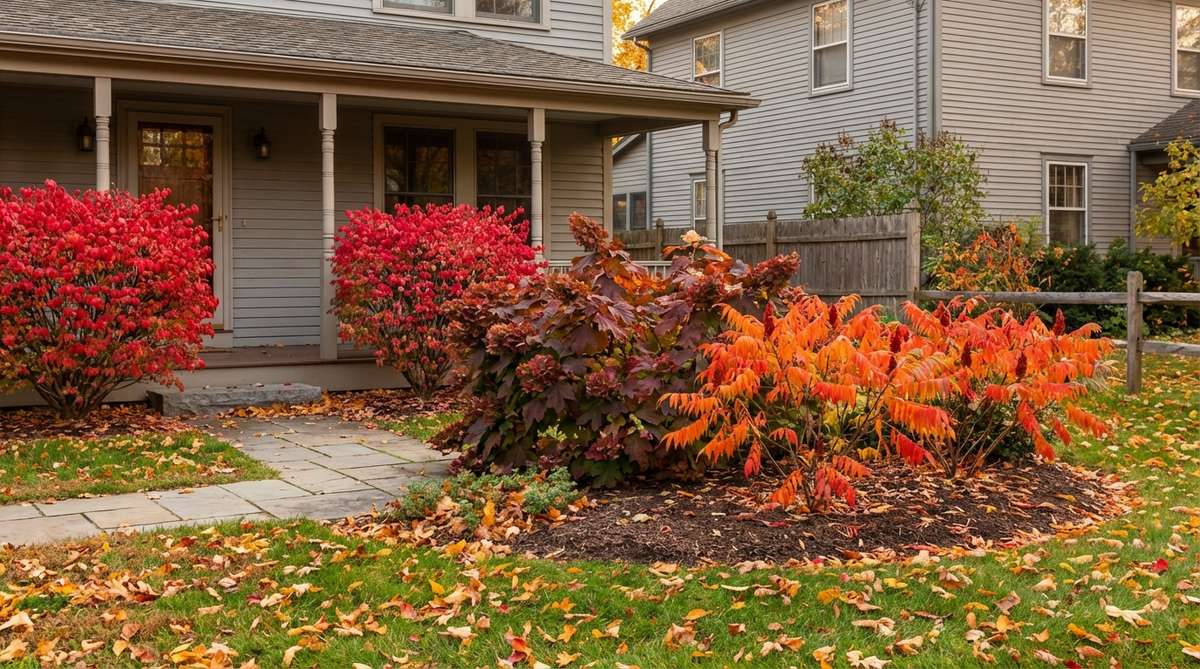
Incorporate burning bush, oakleaf hydrangea, or sumac for fall color transformation. Foliage interest extends seasonal appeal beyond flowers.
Select species with strong autumn performance suited to regional climates. Not all plants color reliably in mild-winter areas.
Fall foliage provides final seasonal crescendo before dormancy. Strategic plant choices ensure year-end impact.
34. Winter Evergreen Structure
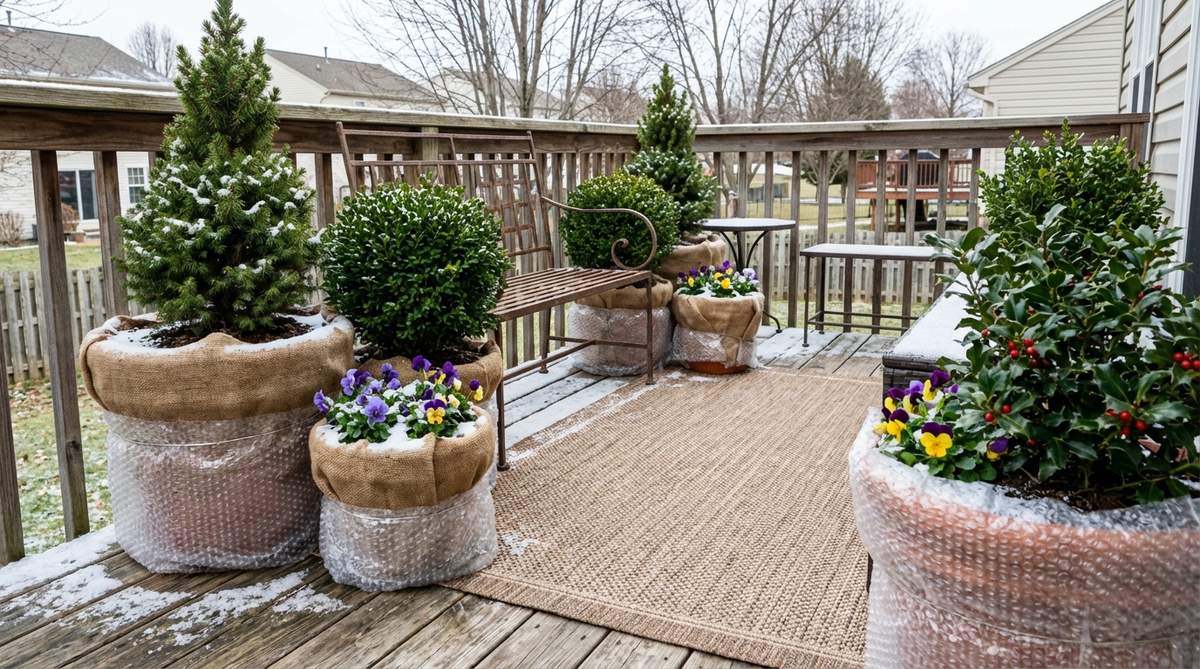
Rely on boxwood, holly, and arborvitae to maintain green presence through dormant months. Evergreens prevent front yards from appearing lifeless.
Add ornamental grasses that persist upright through snow. Their tawny seed heads catch light beautifully in winter sun.
Winter interest often goes neglected in planting plans. Intentional cold-season design demonstrates year-round commitment.
35. Color Rotation Containers
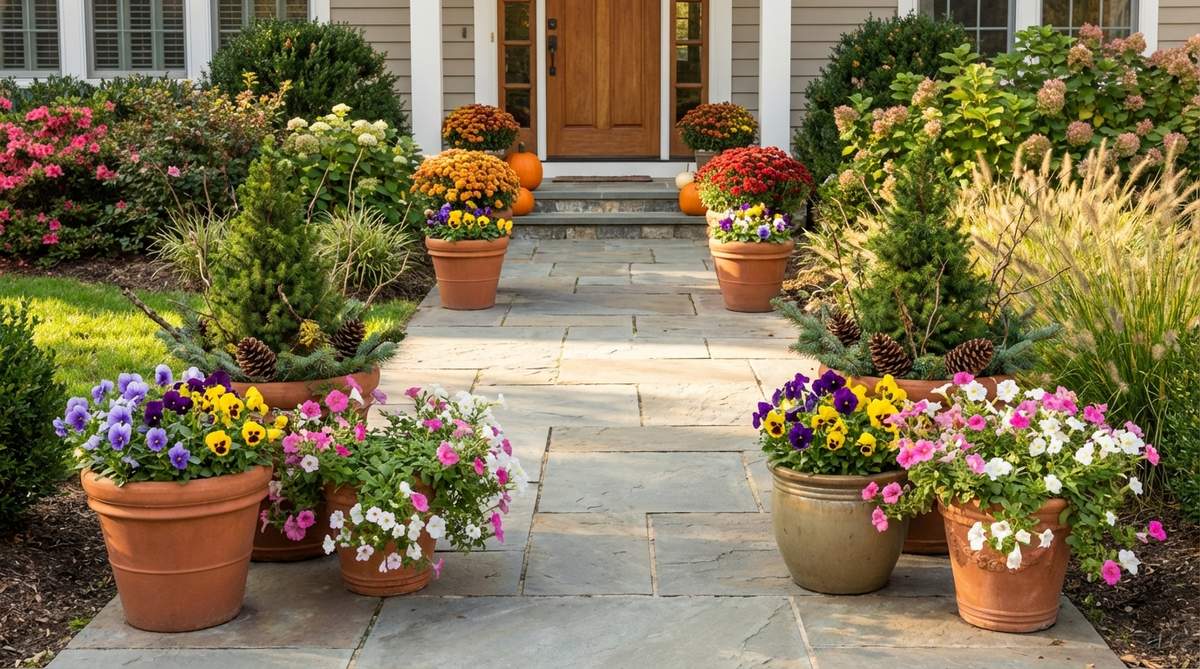
Swap container plantings quarterly to maintain fresh seasonal displays. Spring pansies become summer petunias, then fall mums, and winter evergreens.
Containers allow quick updates without disturbing permanent plantings. This flexibility suits renters or indecisive designers.
Seasonal rotations keep entries feeling current and maintained. Regular changes signal active homeowner engagement.
Lighting & Finishing Touches
Thoughtful details elevate gardens from functional to exceptional. Lighting, edging, and accents demonstrate design sophistication and attention to craft.
36. Solar Pathway Lights
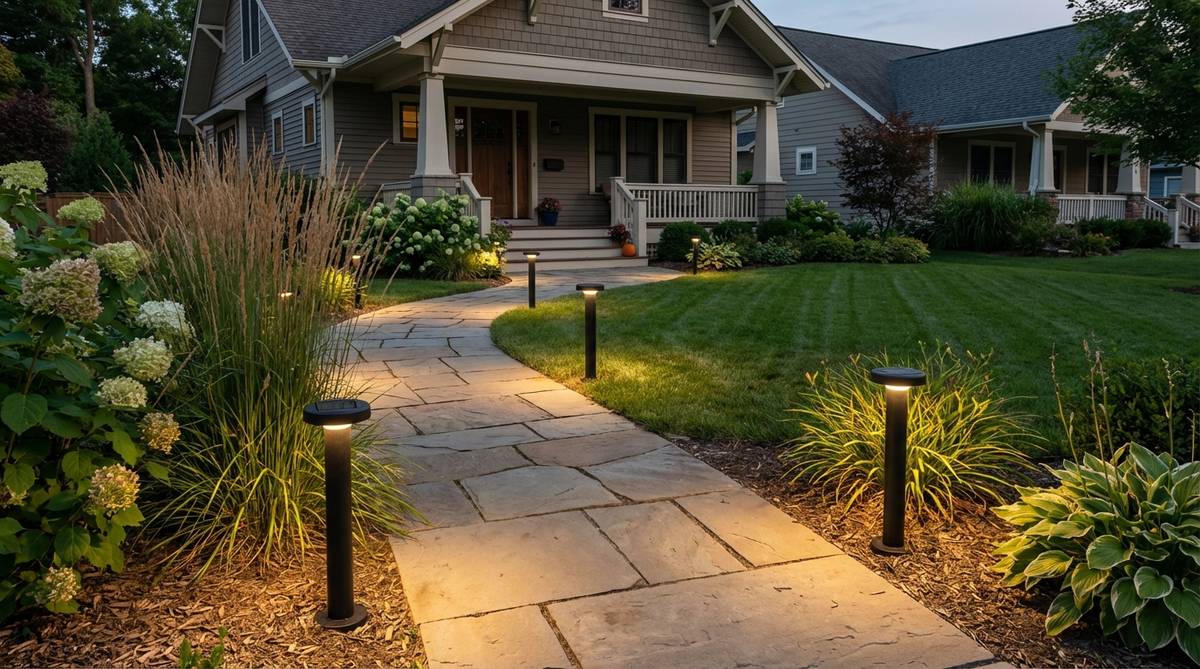
Install solar-powered lights along walkways for safety and ambiance without electrical work. Modern LED fixtures provide surprising illumination.
Space lights every 6-8 feet for consistent coverage. Avoid over-lighting that creates harsh effects instead of gentle guidance.
Solar options eliminate wiring complexity and operating costs. Sustainable lighting enhances curb appeal responsibly.
37. Uplighting Specimen Trees
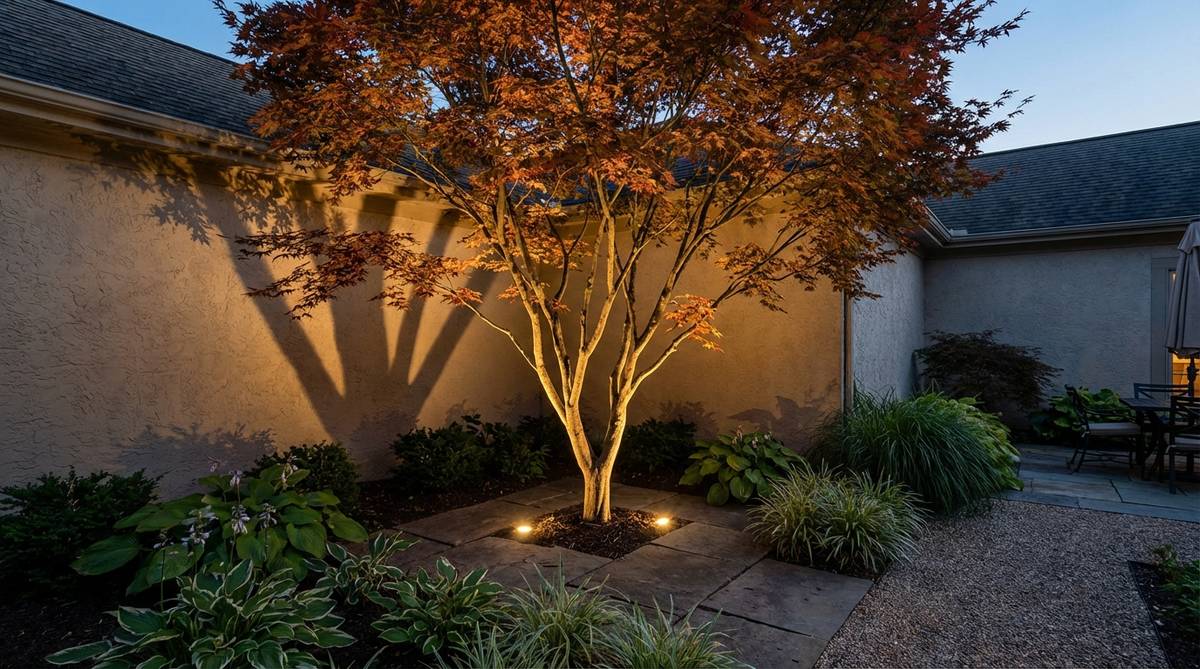
Position ground-level fixtures to wash light up through tree canopies. Dramatic shadows and highlighted forms create nighttime focal points.
Use warm LED bulbs for inviting glow rather than harsh spotlights. Subtle lighting feels sophisticated rather than theatrical.
Tree uplighting extends landscape appreciation into evening hours. Well-lit entries communicate security and welcome simultaneously.
38. Decorative Mailbox Planting
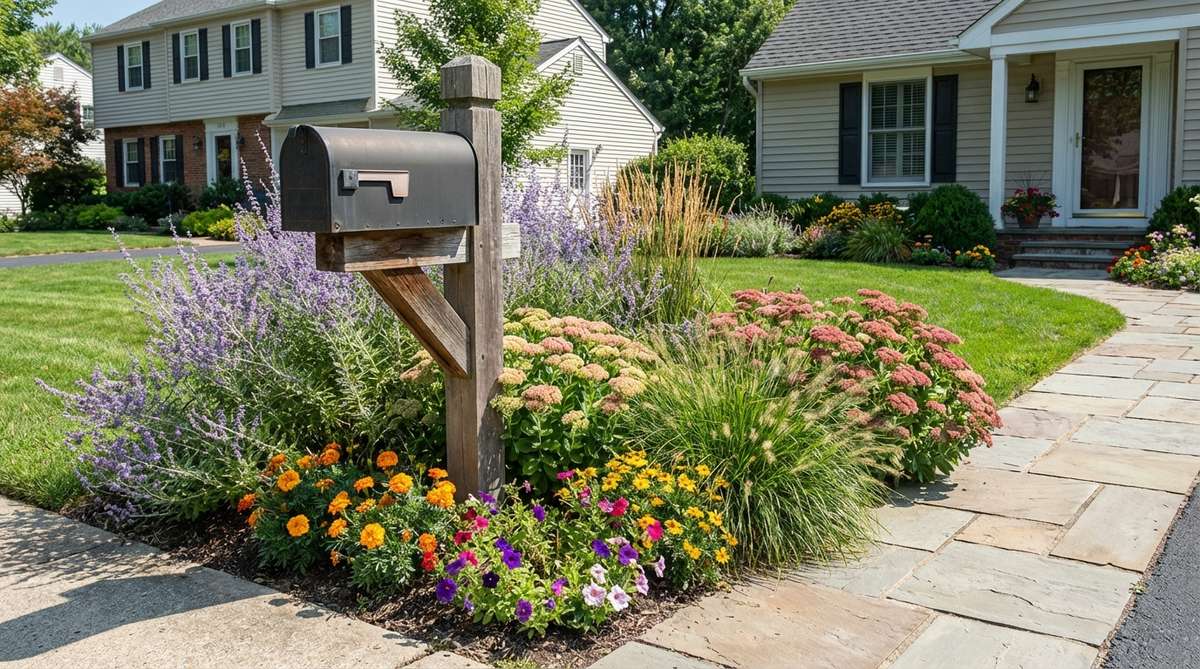
Surround mailbox posts with compact perennials or annual displays. This neglected zone offers prime visibility for creative plantings.
Choose low-maintenance options that tolerate road salt and reflected heat. Mailbox beds endure challenging microclimates.
Coordinated mailbox plantings tie streetside elements into overall design. Cohesive details demonstrate comprehensive vision.
39. House Number Planter Display
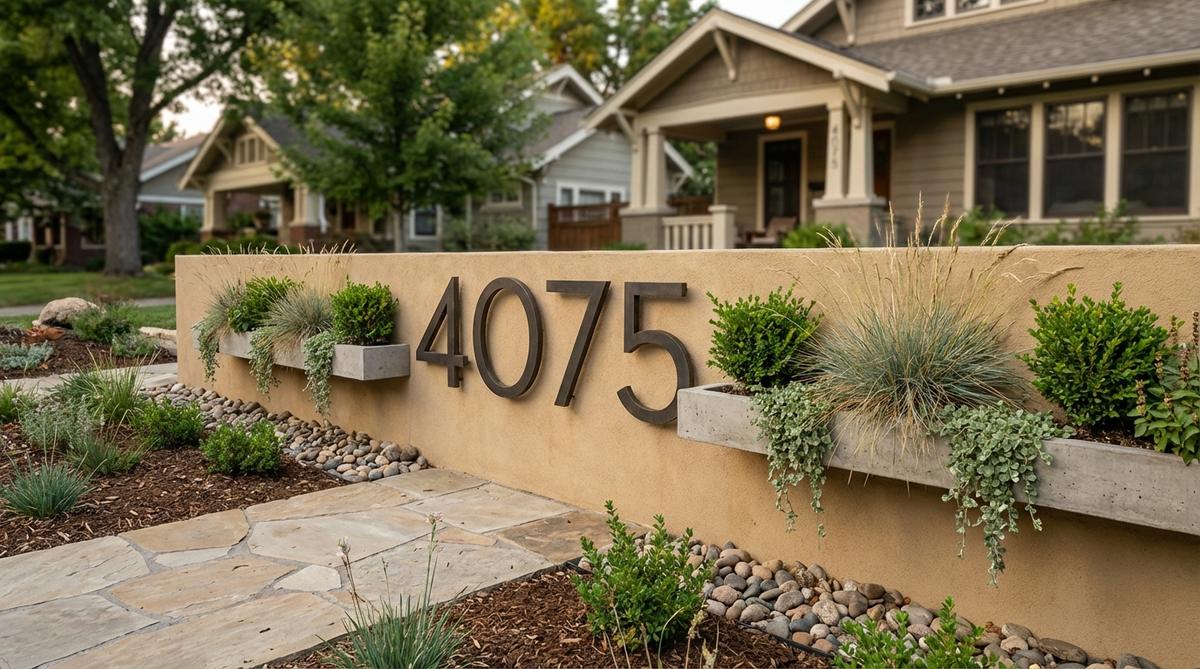
Mount oversized house numbers on walls with flanking narrow planters. Vertical arrangements add functional art to entryways.
Select bold fonts visible from streets for practical identification. Address markers become design features rather than afterthoughts.
Integrated planters soften metal or wood number materials. This fusion blends hardscape with living elements elegantly.
40. Seasonal Wreath Coordination
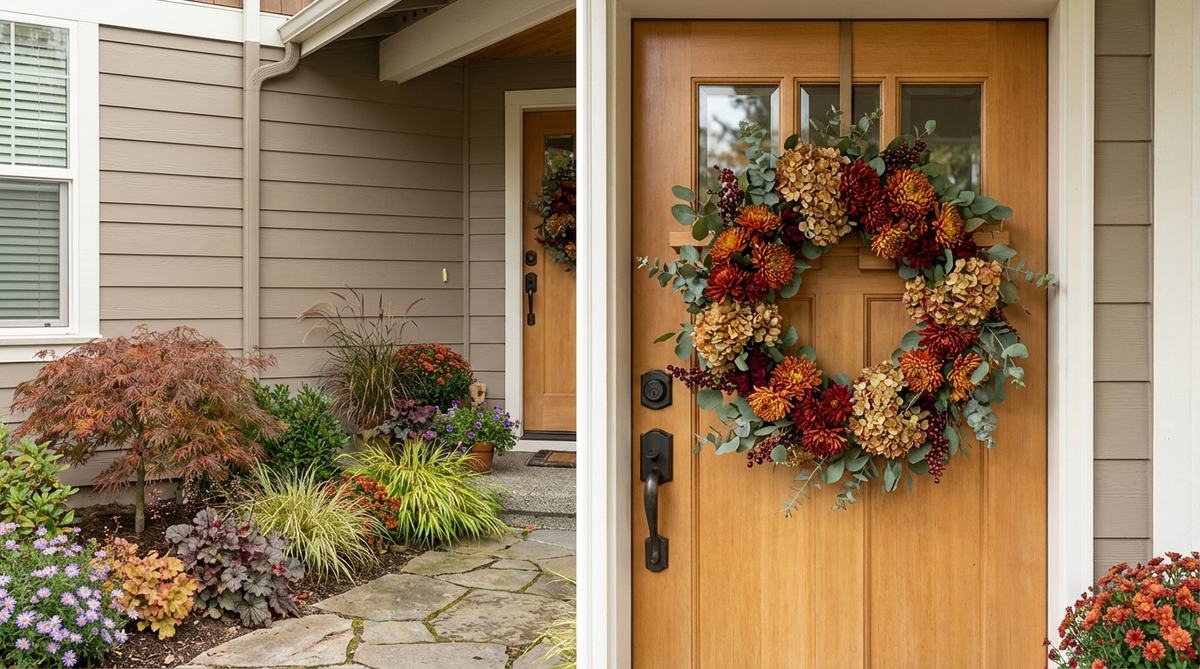
Match door wreaths to landscape plant palettes for unified color stories. Coordinated elements demonstrate intentional seasonal transitions.
Fresh or faux materials work equally well when selected thoughtfully. Wreaths provide vertical color at eye level where impact maximizes.
This simple addition connects architecture to landscape visually. Wreaths complete the curb appeal composition cohesively.
41. Water Feature Accent
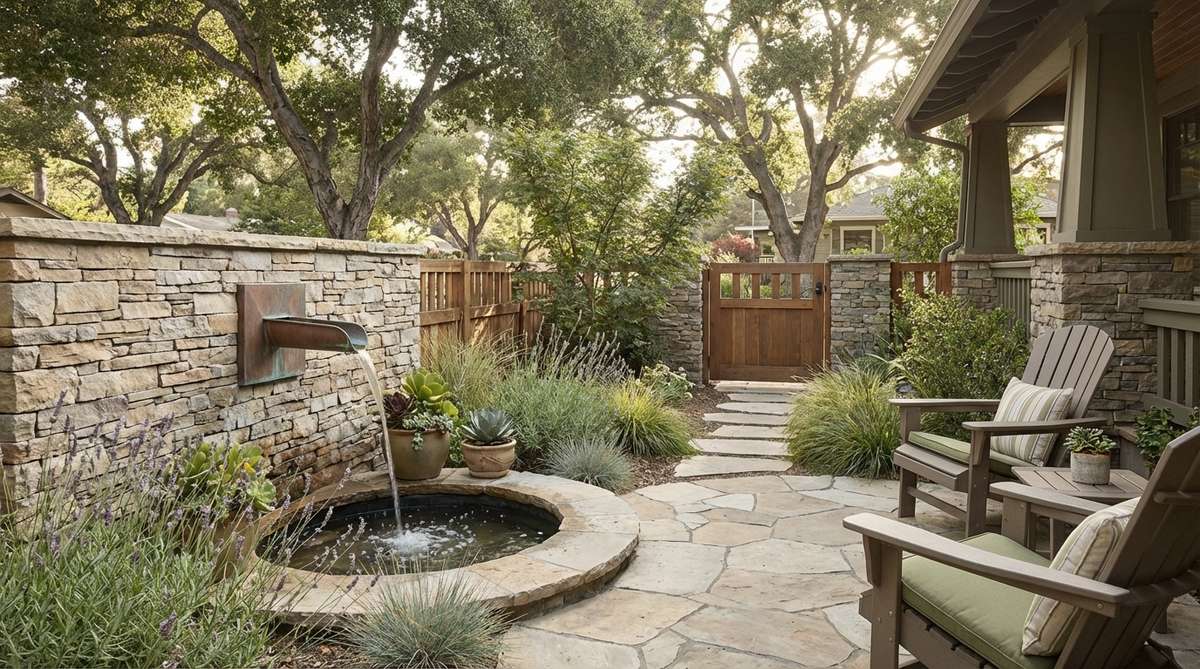
Small fountains or wall-mounted spouts introduce soothing water sounds to front gardens. Moving water creates tranquil sanctuary atmosphere.
Choose compact features scaled appropriately for small yards. Oversized fountains overwhelm limited spaces quickly.
Water elements provide luxury touches that elevate perceived property value. Their presence suggests thoughtful investment in outdoor experience.
42. Decorative Boulder Edging
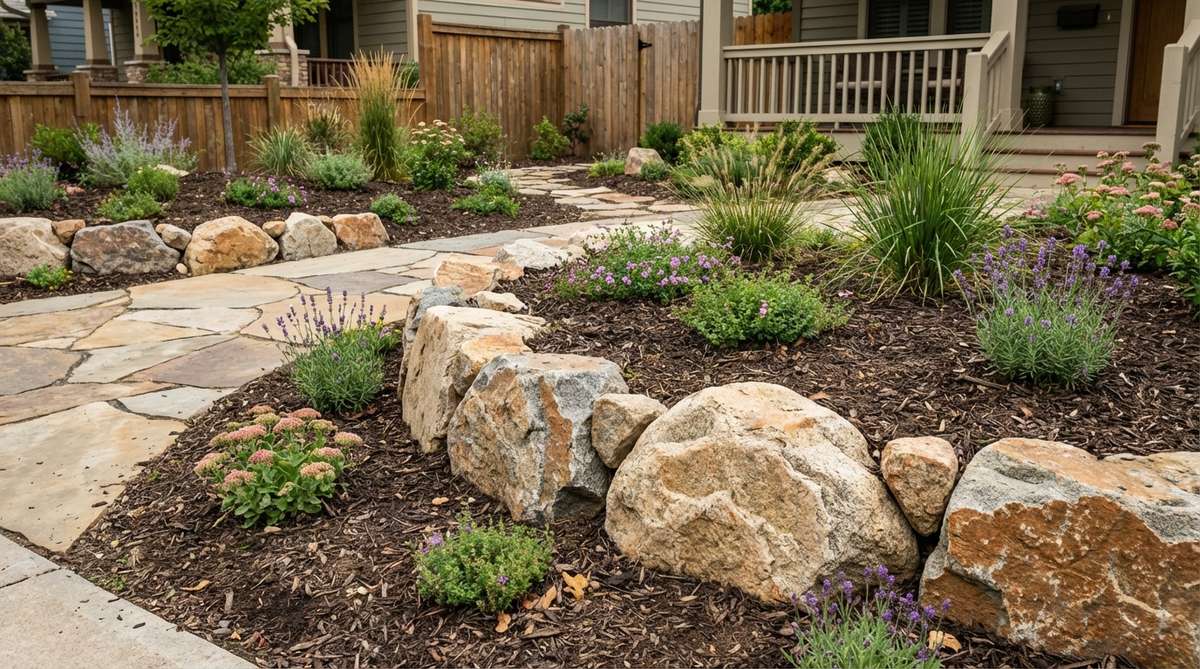
Line pathways or beds with medium-sized natural boulders for organic boundaries. Stone edging lasts indefinitely without replacement.
Select regionally appropriate stone types that feel native to landscapes. Local materials integrate more authentically than imported options.
Boulder edging adds natural texture while preventing soil erosion. Permanent installations reduce long-term maintenance requirements.
Transform Limited Space Into Lasting Impressions
Compact front yards demand thoughtful design rather than extensive square footage to achieve memorable curb appeal. These small front garden ideas demonstrate that strategic plant selection, vertical solutions, and intentional hardscaping maximize impact within constrained footprints. Implement layered plantings, curved pathways, and seasonal color rotations to create welcoming entries that reflect personal style while boosting property value. Start with single focal point improvements and build comprehensive transformations over time as budget and energy allow.
Frequently Asked Questions
What plants work best for small front yard gardens with limited sun?
Shade-tolerant options like hostas, ferns, astilbe, and heuchera thrive in north-facing or tree-shaded front yards. These perennials deliver foliage interest and texture without requiring full sun exposure. Supplement with shade-loving annuals like impatiens or begonias for seasonal color, and use evergreen ferns for year-round structure. Proper plant selection for existing light conditions ensures healthy growth rather than forcing sun-lovers into inappropriate locations.
How can I make a small front garden look bigger?
Create depth perception using curved pathways instead of straight lines, diagonal hardscape patterns, and layered plant heights from front to back. Light-colored flowers and foliage visually recede to suggest greater distance, while mirrors or reflective elements strategically placed create illusion of expanded space. Avoid clutter by selecting single statement focal points rather than multiple competing elements, and use vertical gardening to build upward instead of outward.
What is the lowest maintenance option for small front yard curb appeal?
Native plant gardens require minimal watering, no fertilization, and resist local pests once established, making them the ultimate low-maintenance choice. Alternatively, succulent gardens thrive on neglect in warm climates, while evergreen groundcovers like junipers suppress weeds without seasonal cleanup. Replace high-maintenance lawns with gravel or mulch beds planted with drought-tolerant perennials to eliminate mowing while maintaining attractive appearance year-round.
How much should I budget for a small front yard garden makeover?
Basic DIY transformations using mulch, perennials, and simple edging cost between 500-1500 dollars for typical small front yards. Mid-range projects including professional design, quality plants, and basic hardscaping run 2000-5000 dollars. High-end renovations with custom stonework, mature specimens, irrigation systems, and lighting easily exceed 8000-15000 dollars. Phased implementations allow spreading costs across multiple seasons while building toward comprehensive vision gradually.
When is the best time to start a small front garden project?
Fall planting allows root establishment during mild weather before winter dormancy, giving plants head start for spring growth. Spring installations work well for warm-season annuals and vegetables but require consistent watering through summer heat. Hardscaping projects proceed year-round weather permitting, while major renovations should avoid extreme temperature periods. Plan designs during winter months when garden activity slows, then implement when conditions optimize plant success rates.