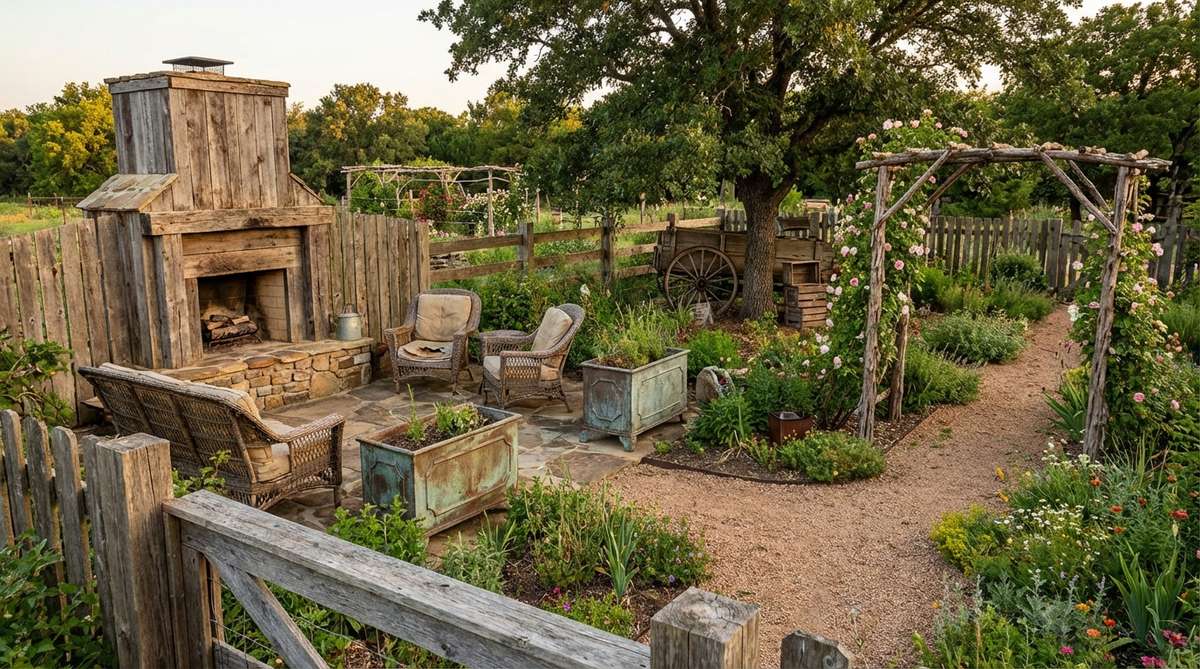
Rustic garden decor transforms outdoor spaces into authentic retreats where natural materials take center stage. This comprehensive collection showcases over 50 settings that celebrate weathered wood, aged metal, and organic textures, drawing inspiration from timeless design principles that Fresh Garden Ideas has championed for creating enduring outdoor environments.
Design SnapshotKey Principles
- Material Authenticity: Natural wood develops character through UV exposure, moisture, and temperature changes
- Patina Development: Aged surfaces range from silver-gray weathered cedar to oxidized copper and rusted iron
- Layered Textures: Combine rough-hewn timber with smooth river stone and weathered metal for depth
- Functional Beauty: Every element serves both practical purpose and visual appeal in the landscape
Weathered Wood Structures & Borders
Natural log borders and timber structures establish the foundation for authentic rustic garden designs. These elements define spaces while allowing wood to age gracefully through exposure to seasonal elements.
1. Natural Log Border Edges
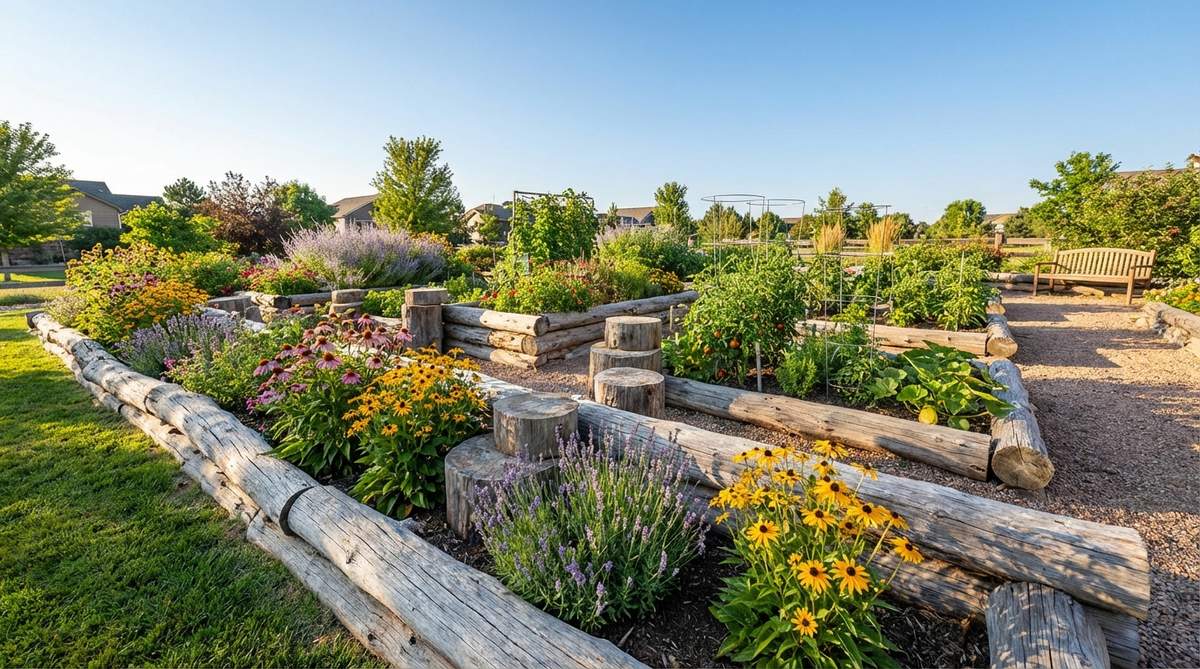
Cut logs of varying diameters create flowing border lines that guide the eye through landscape beds. The organic woodland appeal brings immediate depth to flower beds and vegetable gardens.
Install logs horizontally along garden perimeters, securing them with rebar stakes driven through pre-drilled holes. Stack different sizes to create dynamic height variations that prevent monotonous visual lines.
Raw linseed oil soaks into bare timber, repelling water while encouraging natural silver-gray patina development over successive growing seasons.
2. Split Rail Fence Sections
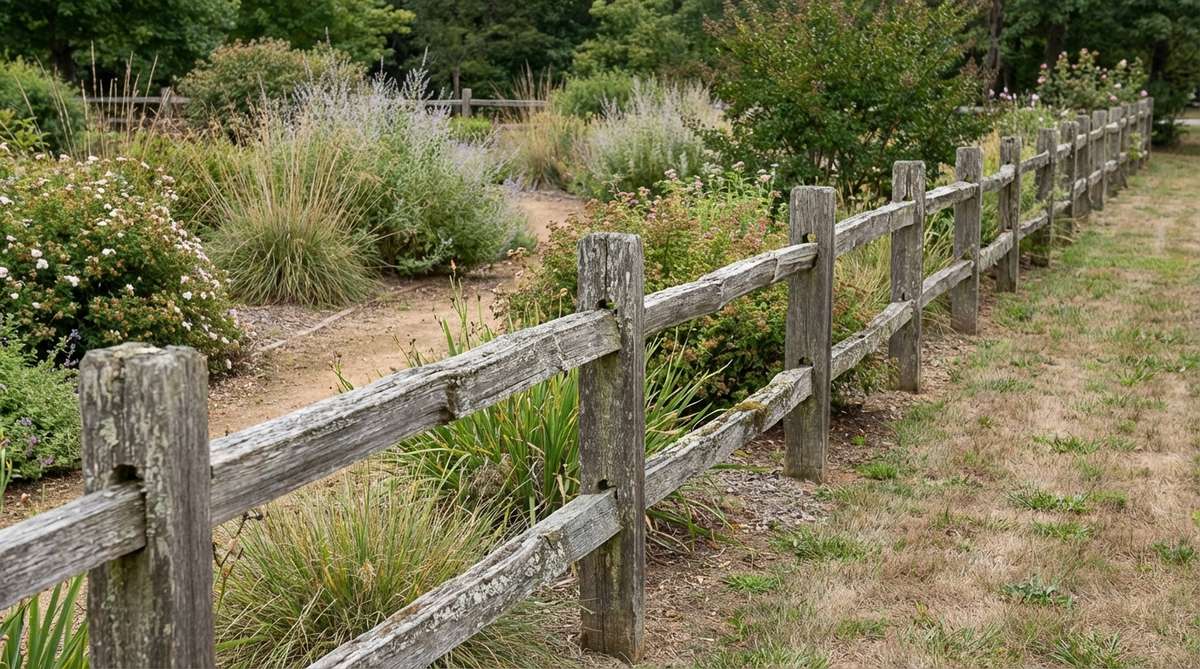
Split cedar rails arranged in traditional post-and-rail configurations define property boundaries without blocking sight lines. Weathered wood develops authentic character as natural oils fade under UV exposure.
Position posts at eight-foot intervals, using mortise joints to secure horizontal rails. Leave wood unsealed to accelerate patina formation through moisture and temperature fluctuation.
3. Reclaimed Barn Wood Edging
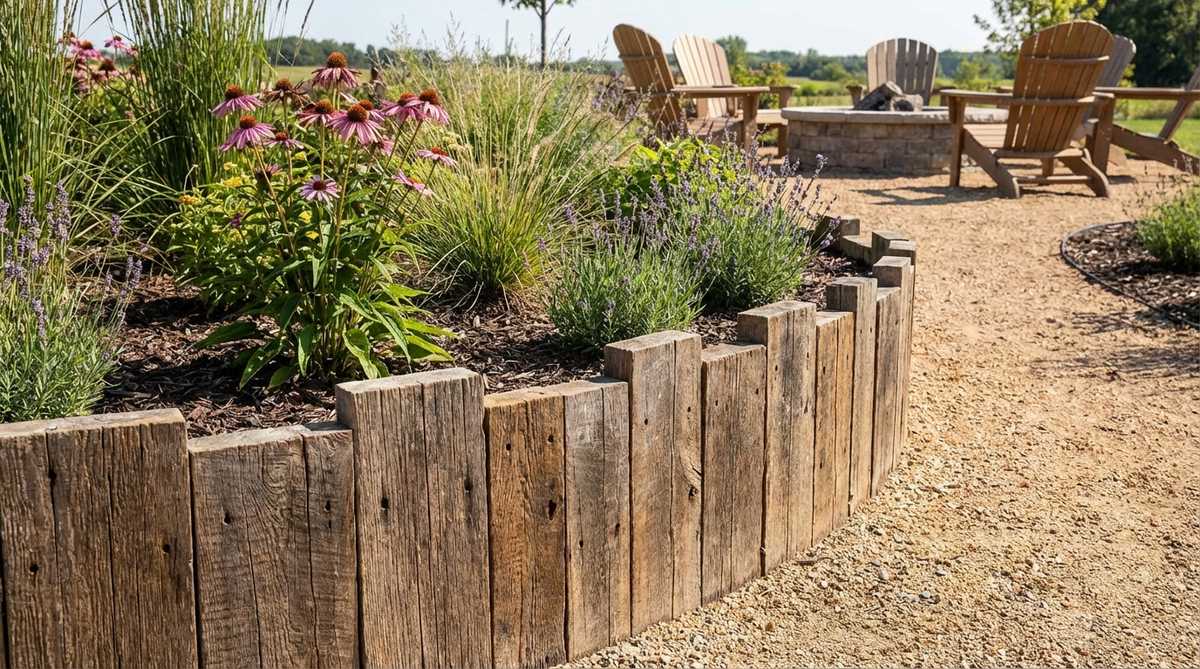
Salvaged barn planks bring immediate age and history to garden borders. The pre-weathered surface showcases nail holes, saw marks, and grain patterns that new lumber cannot replicate.
Stand planks vertically along bed edges, securing them with landscape staples or buried stakes. Mix different wood tones to create visual interest through varied weathering stages.
Pressure-wash both sides before installation to remove loose debris while preserving the aged surface character.
4. Stacked Log Bed Retainers
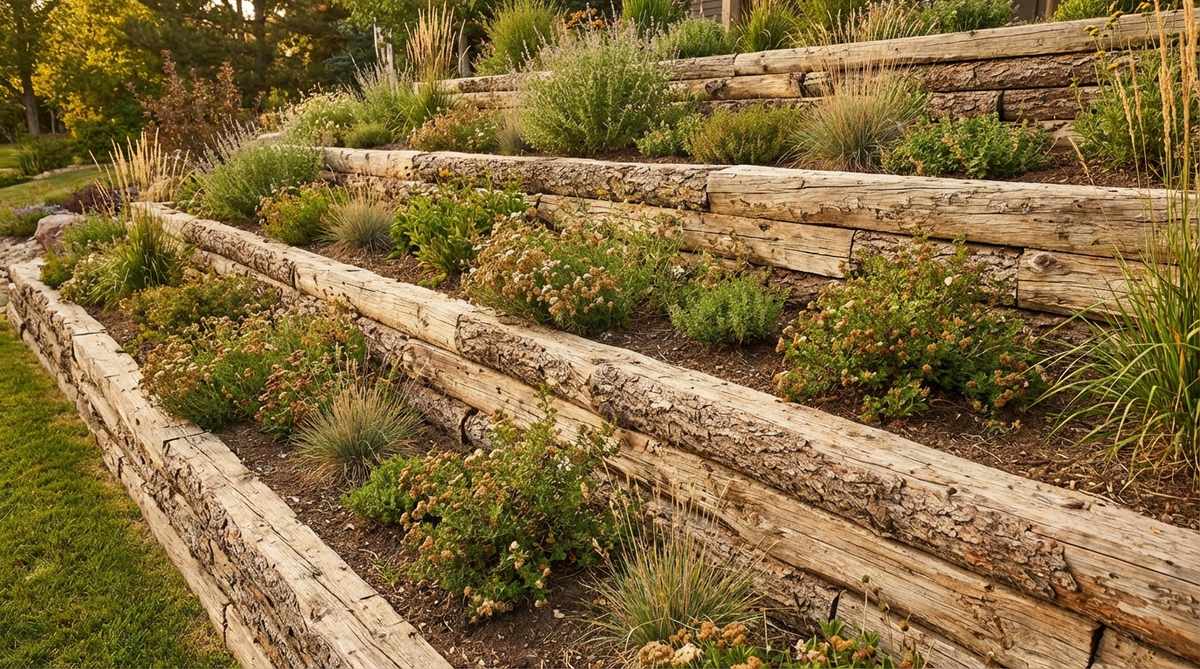
Horizontal logs stacked two or three high contain raised beds while showcasing natural bark texture. This technique works particularly well on slopes where terraced planting areas prevent erosion.
Select logs with 8-12 inch diameters, notching ends where they intersect at corners. Drive rebar through stacked layers to anchor the structure as wood expands and contracts.
5. Rough-Hewn Timber Frames
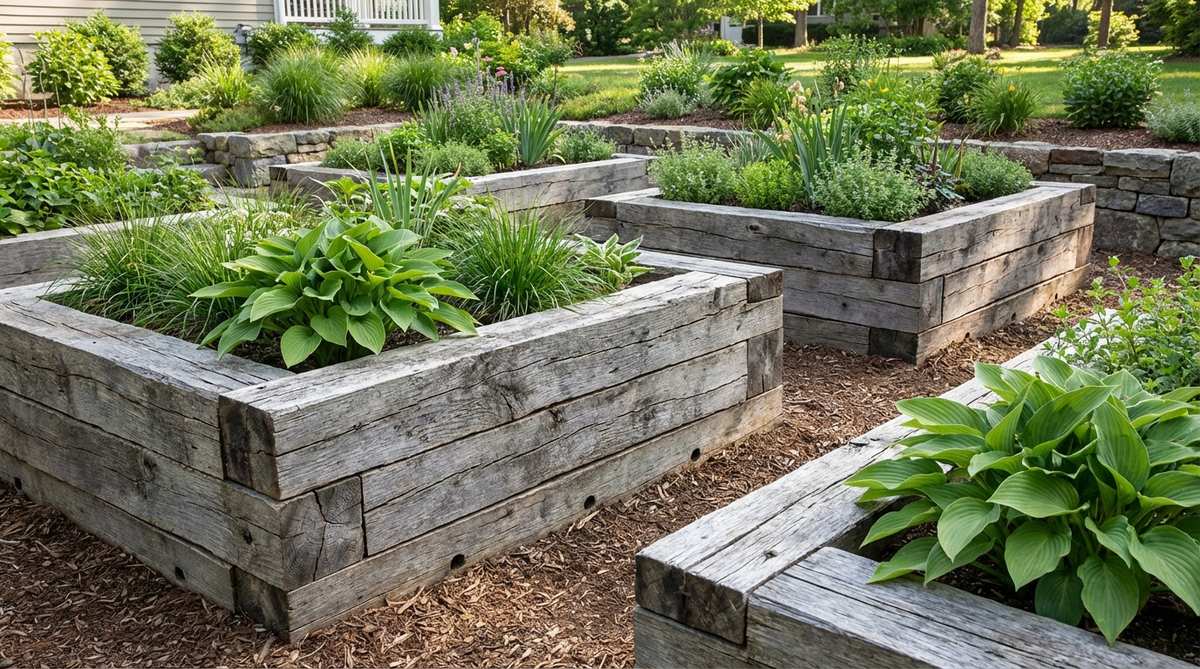
Square-cut timbers with visible adze marks frame garden beds with architectural presence. The rustic surface treatment contrasts beautifully with smooth foliage and refined plantings.
Join corners using half-lap or mortise-and-tenon connections, drilling drainage holes along the bottom timber. Allow untreated wood to weather naturally rather than applying sealants that inhibit patina.
These frames gain structural stability as wood seasons, with checking and cracking adding to the authentic rustic aesthetic.
6. Vertical Pallet Section Dividers
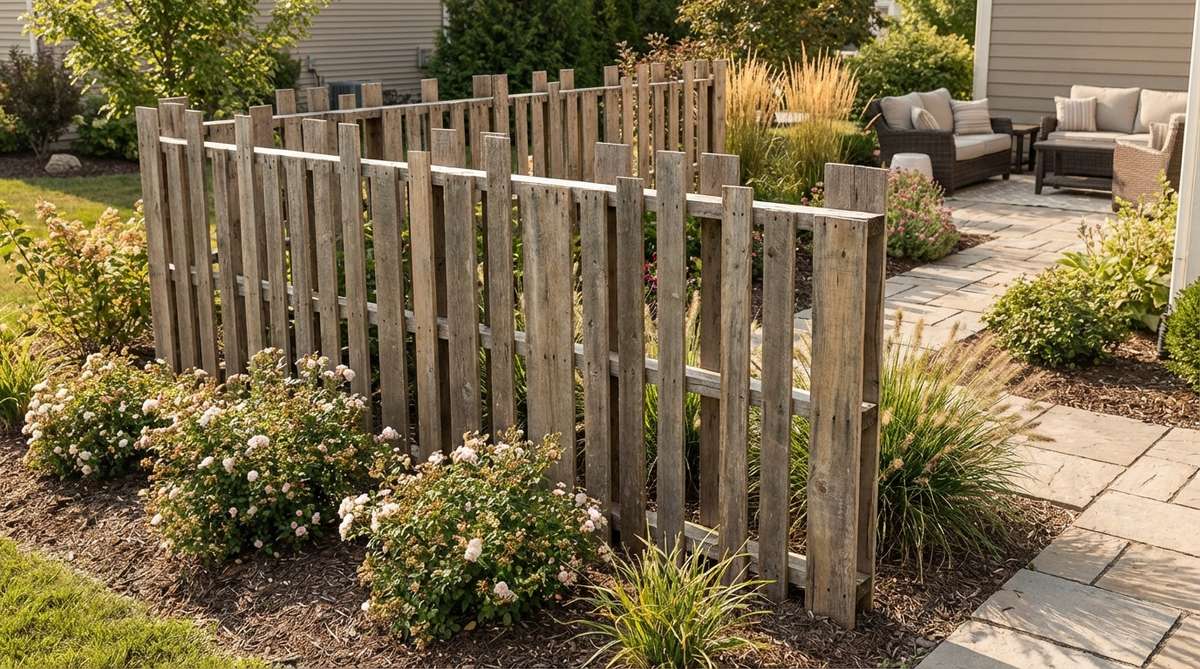
Disassembled pallet boards installed vertically create permeable garden dividers that filter views while maintaining airflow. Random board widths and natural weathering produce organic visual rhythm.
Attach boards to horizontal support rails with varying gaps between planks. Stagger heights across the fence line to avoid rigid uniformity.
7. Driftwood Garden Arch
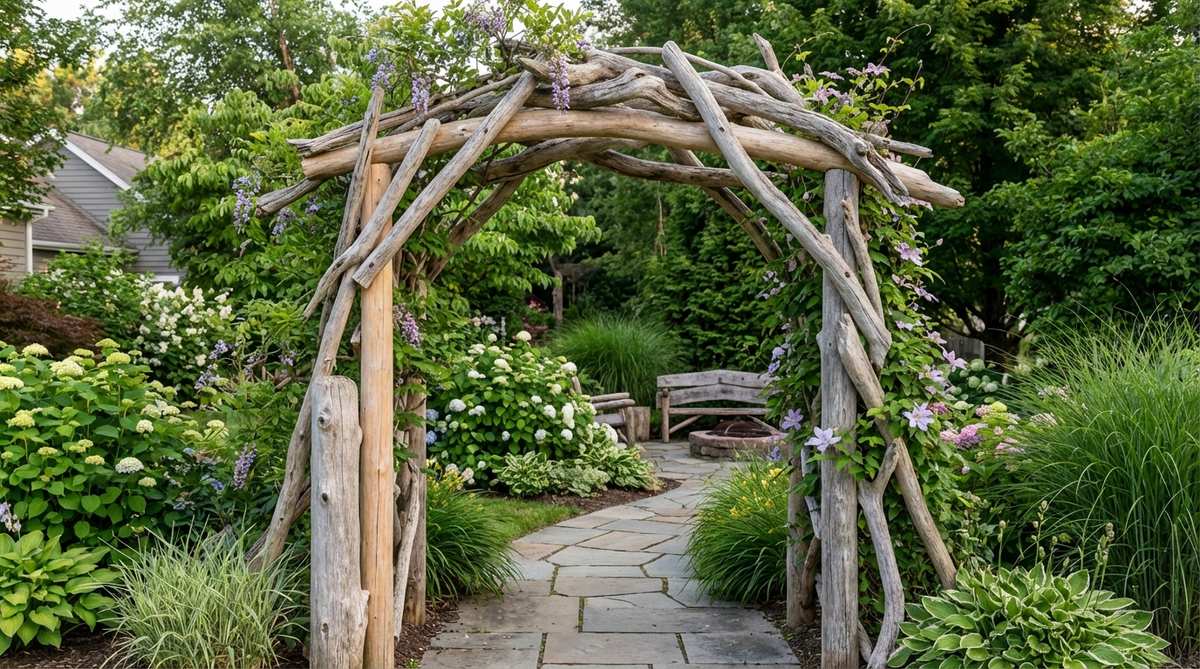
Weathered driftwood pieces assembled into an entrance arch frame garden pathways with sculptural presence. Salt and water exposure create distinctive gray tones and smooth textures impossible to replicate artificially.
Secure major structural pieces with galvanized bolts concealed within the wood, then add smaller branch elements using exterior adhesive. The irregular form serves as both decor and support for climbing vines.
Position arches at transition points between garden rooms to create anticipation and spatial definition along circulation routes.
8. Log Slice Stepping Pathway
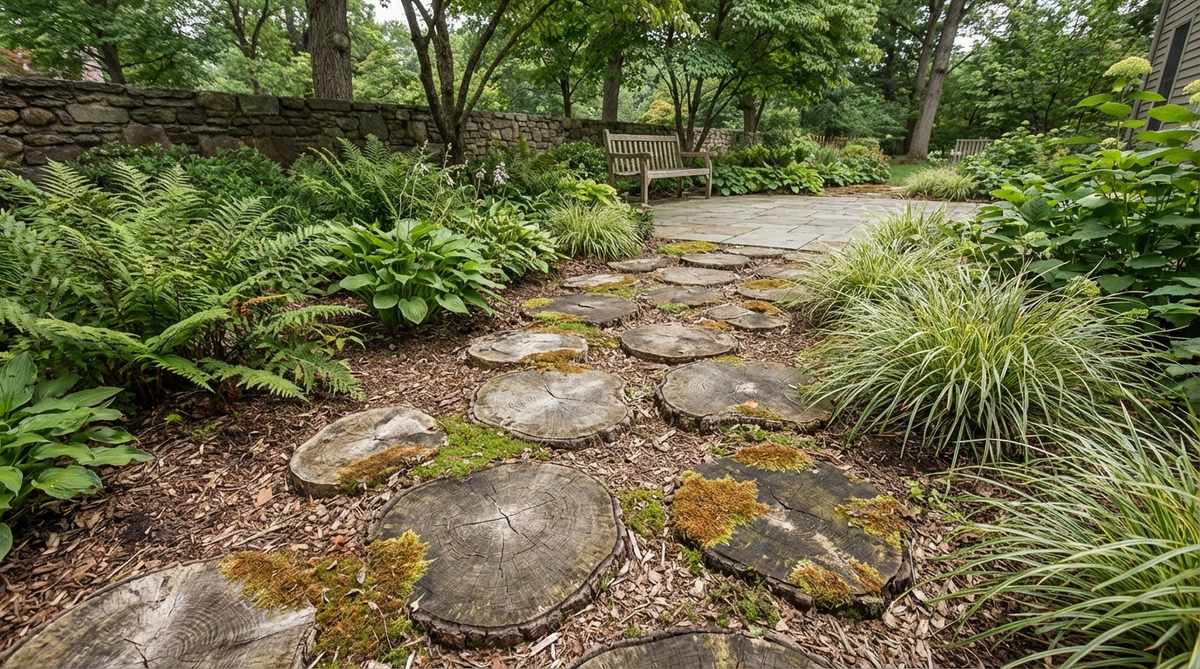
Cross-cut rounds from large diameter logs form rustic stepping stones that reveal growth ring patterns. Each slice develops its own unique patina as moisture content equalizes with surrounding soil.
Cut slices 3-4 inches thick, treating cut surfaces with linseed oil before installation. Set rounds directly on compacted soil or sand base, spacing them at comfortable stride intervals.
Moss naturally colonizes the wood surface over time, enhancing the organic aesthetic and providing slip-resistant texture.
9. Woven Branch Hurdle Fence
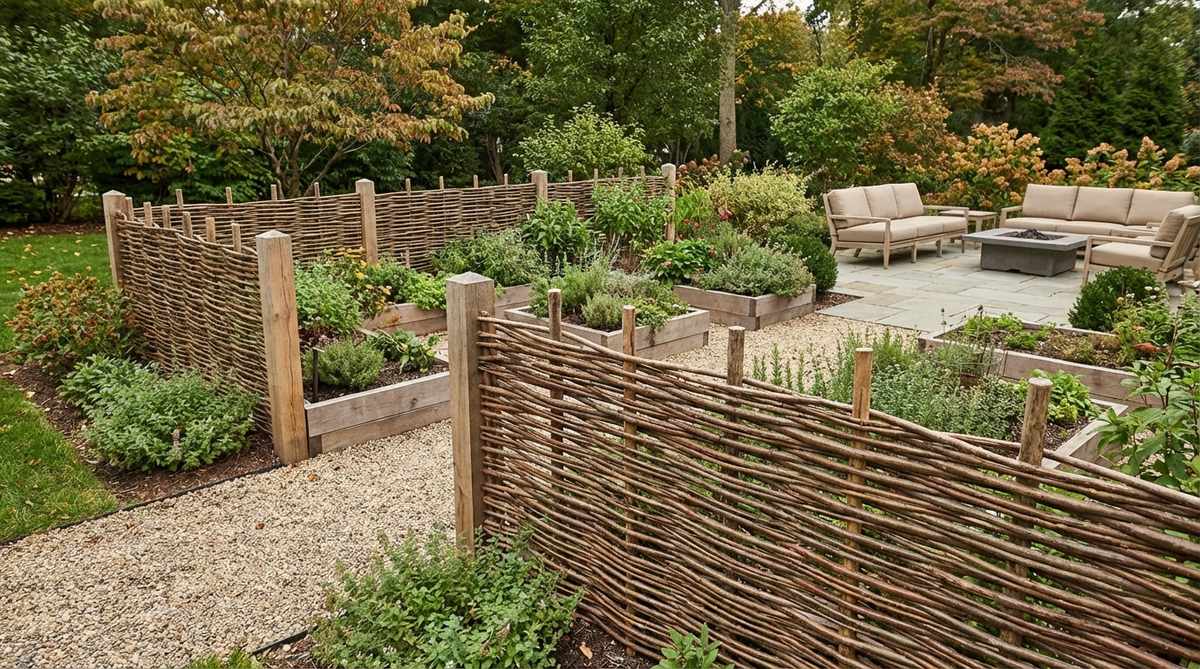
Flexible branches woven between vertical stakes create traditional hurdle fencing with medieval garden character. Willow, hazel, and young saplings work best for this living fence technique.
Drive stakes at 12-inch intervals, then weave green branches in over-under pattern while wood remains pliable. As branches dry and shrink, they lock into place creating durable barriers.
10. Rustic Twig Border Bundles
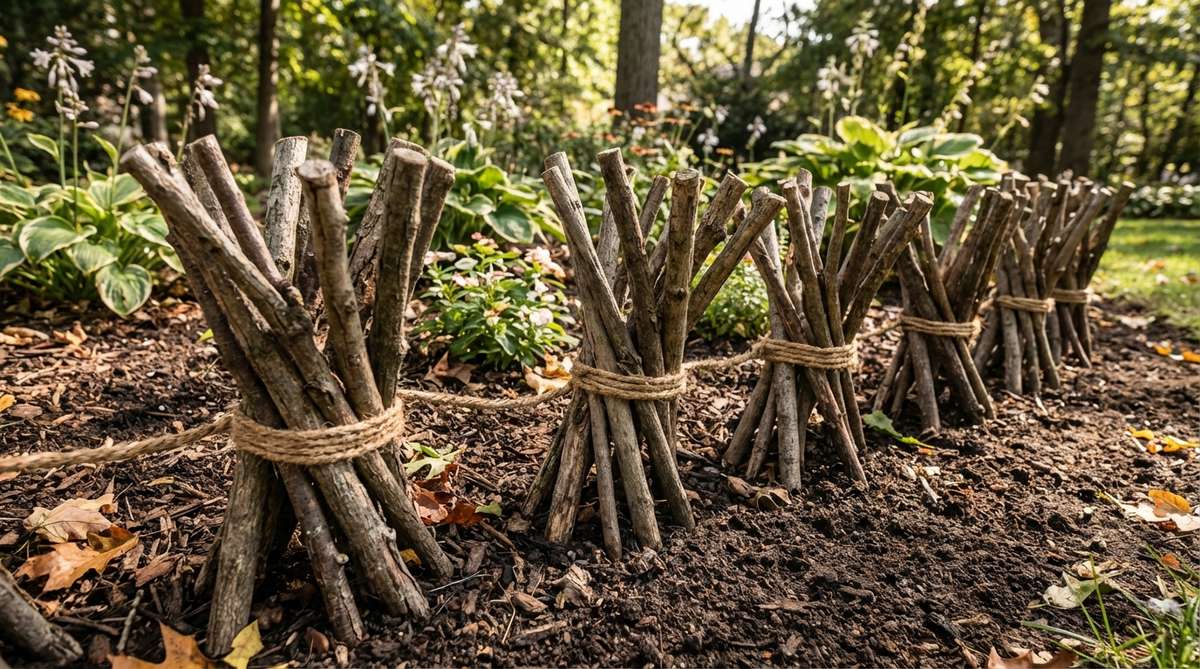
Bundled twigs and small branches tied with natural jute create portable border edging for informal beds. This technique consumes pruning debris while adding texture at ground level.
Gather straight branches 1-2 inches diameter, bundling them in 2-foot sections. Stake bundles vertically or lay them horizontally along bed edges, replacing as needed when wood decomposes.
The organic material slowly breaks down, enriching soil while maintaining the rustic aesthetic through seasonal replacements.
Reclaimed Wood Planters & Containers
Weathered wood planters showcase natural aging processes while providing functional growing space. Cedar, redwood, and reclaimed barn wood offer the most attractive patina development for garden decor rustic applications.
11. Weathered Barn Board Boxes
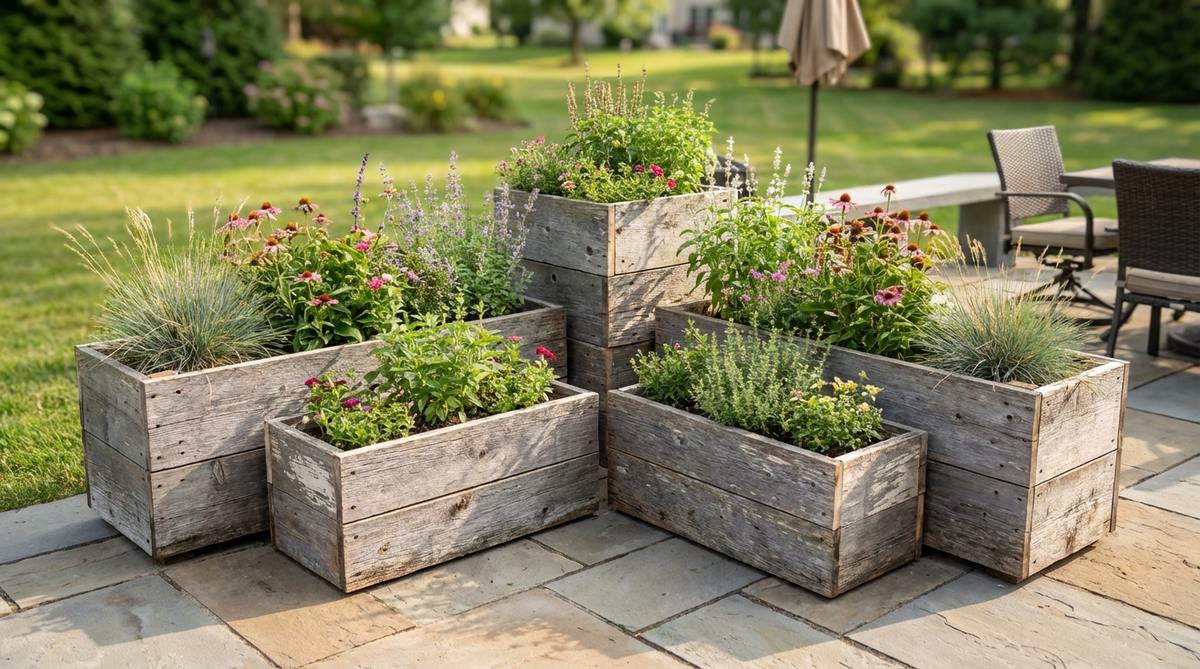
Salvaged barn siding assembled into rectangular planters brings instant age to container gardens. Pre-weathered surfaces display authentic gray tones, nail holes, and paint remnants from previous use.
Construct boxes using pocket screws or exterior adhesive, drilling drainage holes through the bottom boards. Interior surfaces benefit from landscape fabric lining to slow moisture penetration while drainage remains unobstructed.
Mix planters of different sizes and weathering stages to create visually dynamic groupings on patios and deck surfaces.
12. Tree Stump Hollow Planters
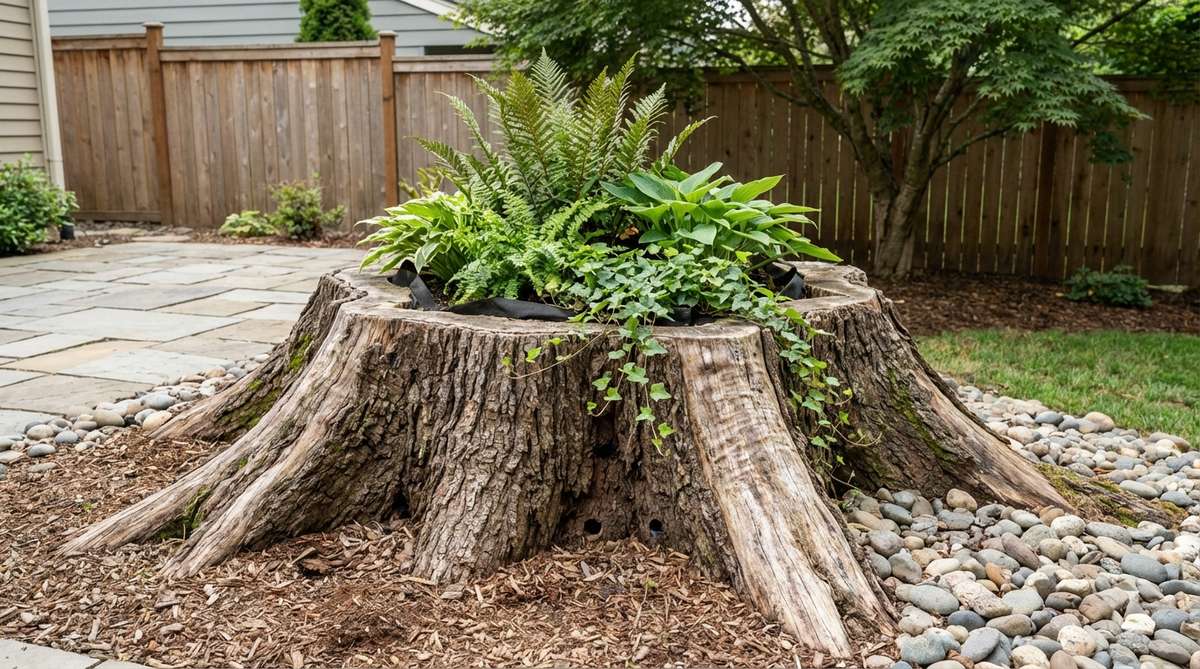
Hollowed tree stumps transform removal necessities into rustic containers with sculptural presence. Natural bark and root flares provide organic form that manufactured planters cannot achieve.
Drill drainage holes through the stump base, then carve or chisel the interior to create planting depth. Line hollows with landscape fabric before adding potting mix to extend the wood’s service life.
13. Reclaimed Crate Herb Boxes
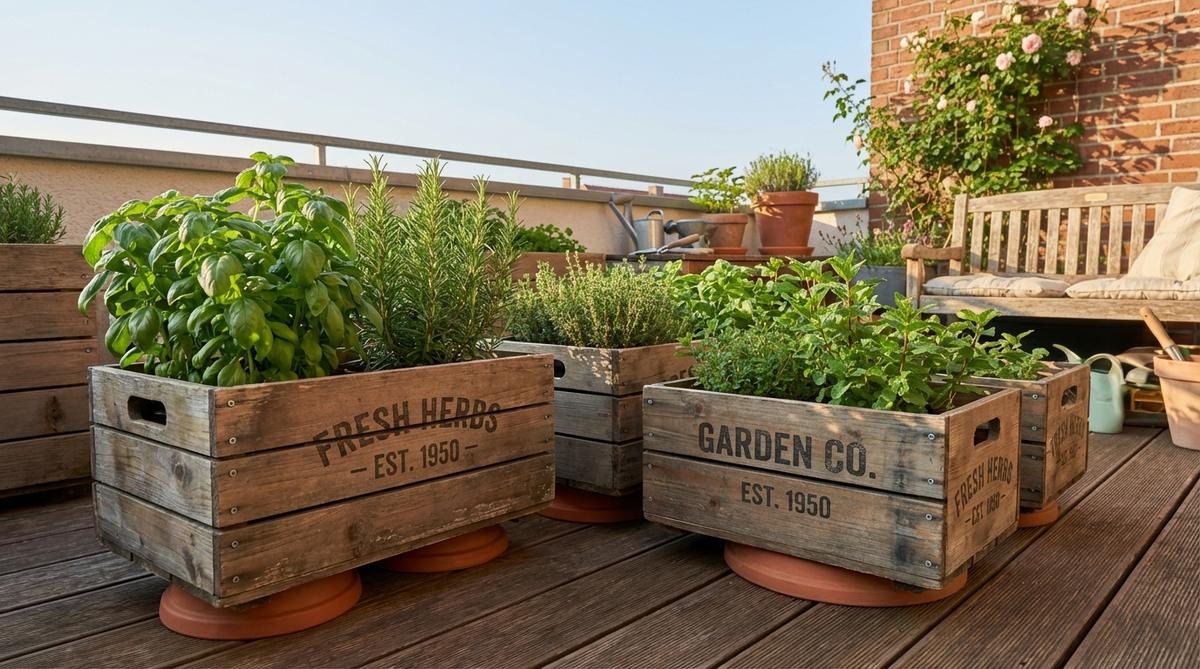
Vintage wooden crates with stamped lettering and worn corners hold culinary herbs near kitchen entrances. The compact size suits balconies and small patios where space limits container options.
Reinforce loose slats with exterior screws before adding drainage holes. Elevate crates on pot feet to prevent ground contact that accelerates wood decay.
Group multiple crates at varying heights to create vertical interest in narrow planting areas.
14. Split Log Trough Planters
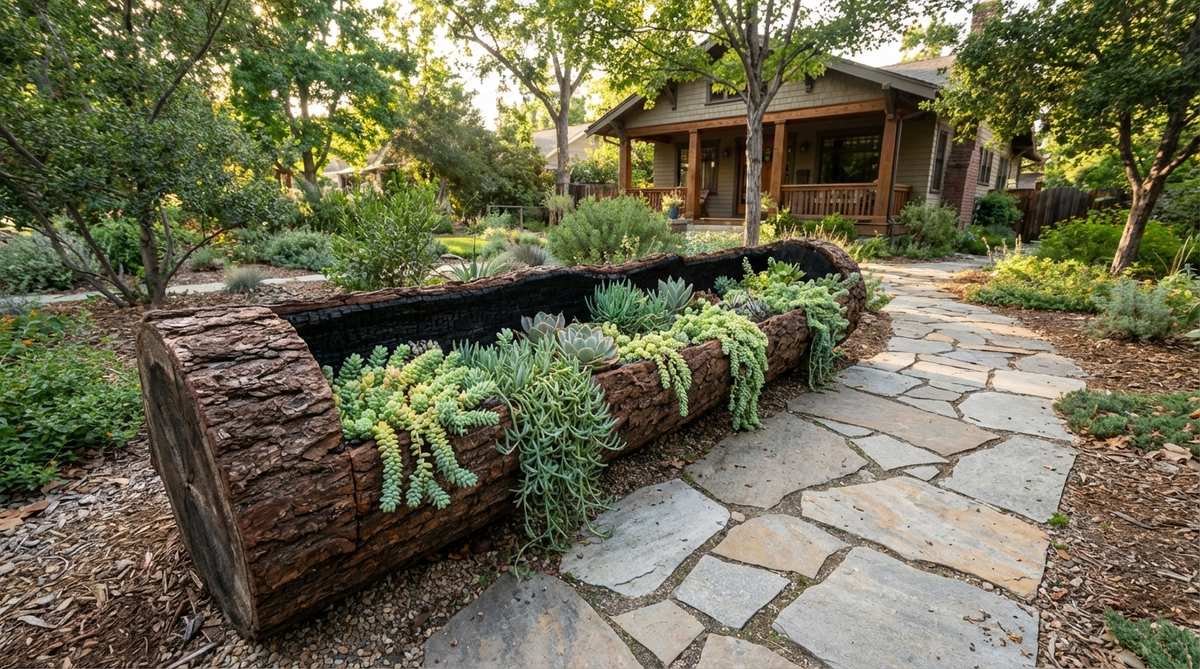
Logs split lengthwise and hollowed create trough-style planters ideal for cascading plants and succulents. Bark remains on the exterior, while smooth-cut interior surfaces hold growing medium.
Chain saw the log lengthwise, then use a spade bit or router to remove interior wood, leaving 2-inch walls. Char the interior with a torch to slow decomposition without affecting the rustic exterior.
Position troughs along pathways or deck railings where trailing plants can soften the edges as they mature.
15. Wine Barrel Half Containers
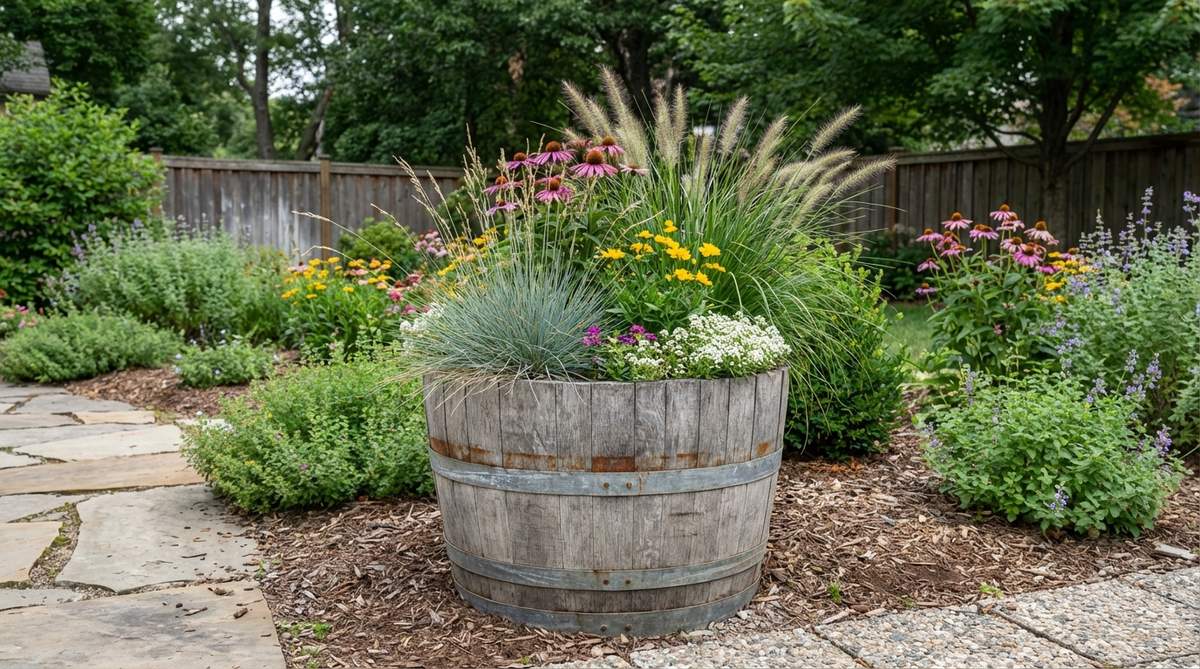
Recycled oak wine barrels sawn in half display metal banding and stave construction that develops rich patina. The generous volume accommodates small trees, ornamental grasses, and mixed seasonal displays.
Ensure adequate drainage by drilling additional holes if needed, as original barrel bottoms may lack sufficient openings. Oak weathers to silver-gray over multiple seasons while iron bands develop surface rust.
16. Pallet Wood Vertical Gardens
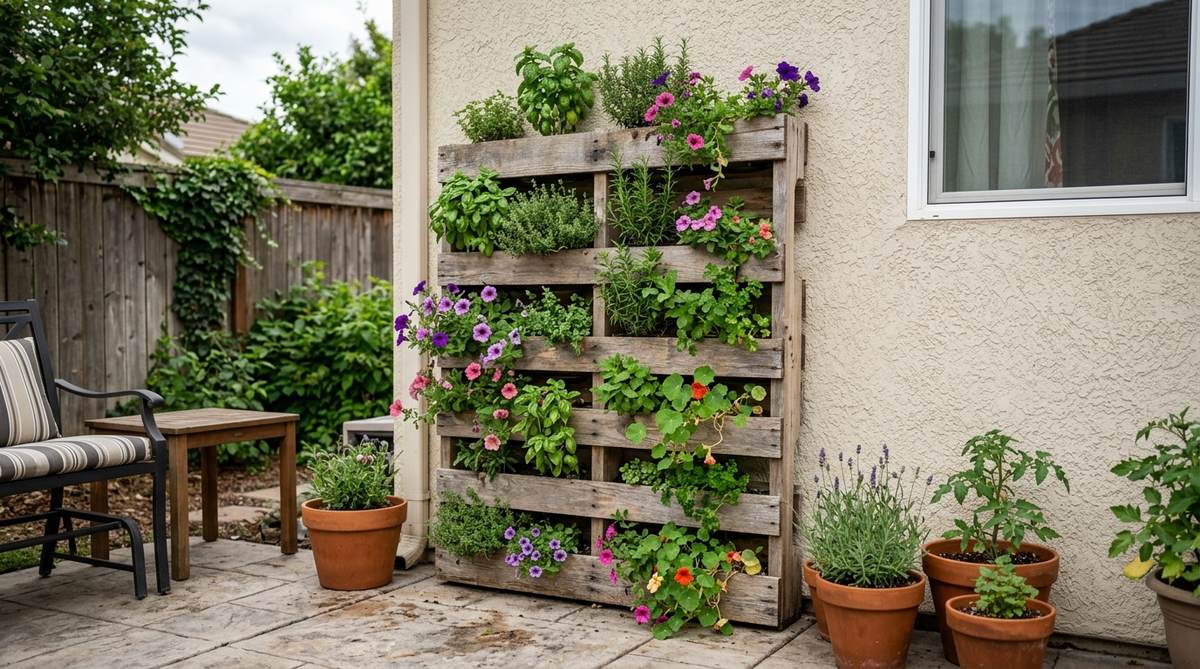
Disassembled pallet boards reconstructed into vertical planting walls maximize space in compact gardens. Horizontal slats create individual pockets for shallow-rooted plants and herbs.
Attach landscape fabric to the back panel to retain soil, then fill spaces between horizontal boards with potting mix. Lean structures at 15-degree angles to prevent soil spillage while improving water retention.
Allow wood to weather naturally, embracing the varied gray tones that develop across different board sections.
17. Rough-Hewn Window Box Planters
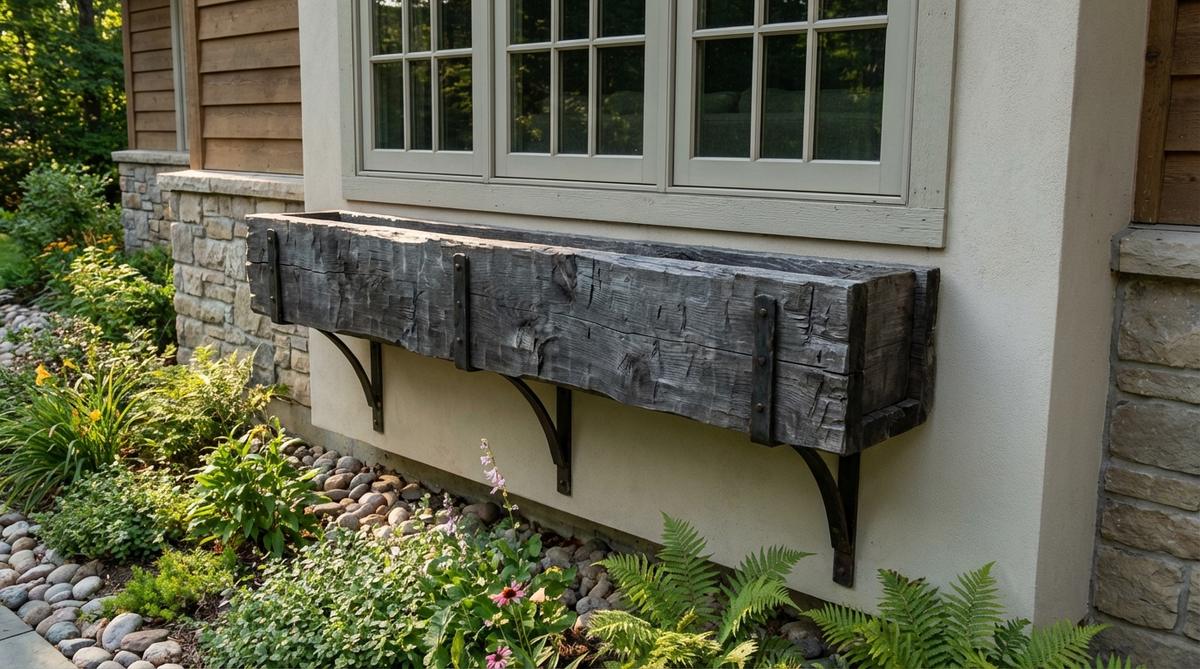
Hand-adzed timber fashioned into window boxes brings textured surfaces beneath window openings. Visible tool marks and irregular surfaces contrast with smooth architectural elements.
Dimension boxes to span window width plus 6-12 inches, mounting them with heavy-duty brackets rated for wet soil weight. Untreated cedar or redwood weathers to attractive gray while resisting decay.
18. Reclaimed Fence Post Towers
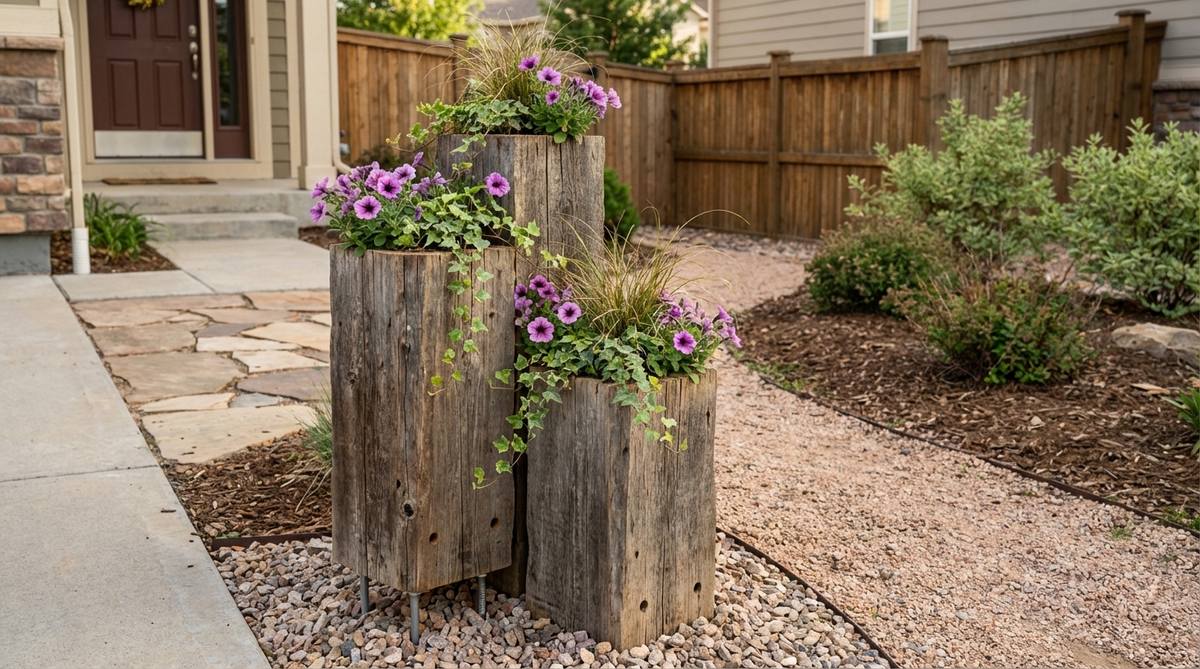
Weathered fence posts standing vertically with hollowed tops create vertical accent planters. The slender profile suits narrow spaces while adding rustic height to flat landscapes.
Drill 4-6 inch deep planting cavities using a spade bit, adding drainage through side holes. Secure posts in gravel-filled holes or mount them to buried anchor stakes.
Cluster three or five posts at varying heights to create focal point groupings near entries or along pathways.
19. Salvaged Drawer Plant Boxes
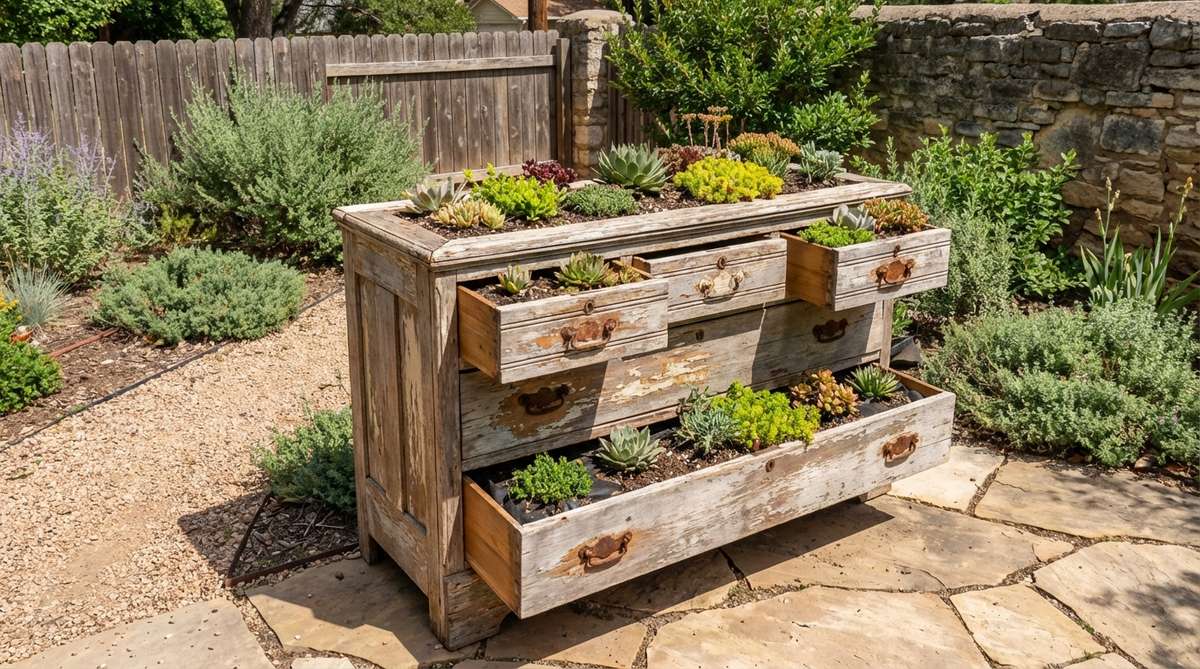
Vintage dresser drawers with worn paint and brass pulls transform into charming portable planters. Built-in handles facilitate seasonal repositioning while dovetail joints showcase quality craftsmanship.
Drill generously through drawer bottoms to ensure drainage, then line interiors with landscape fabric. The shallow depth suits succulents, alpine plants, and compact annuals.
20. Log Round Stacked Towers
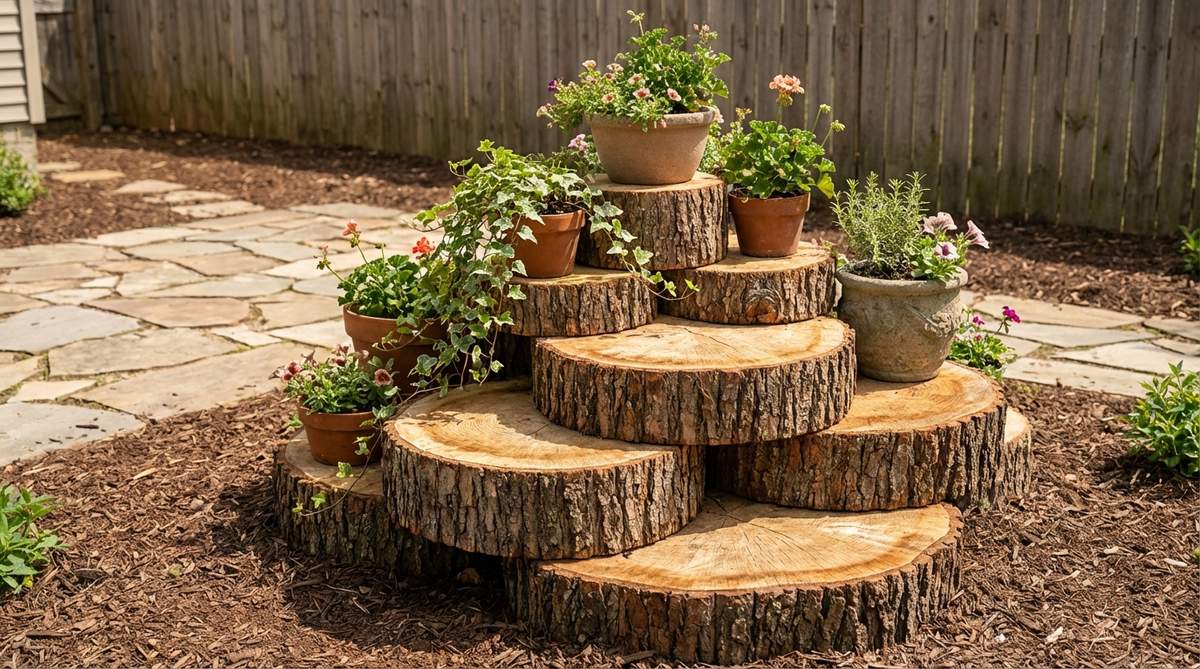
Cross-cut log rounds stacked at varying heights create tiered container displays with strong vertical presence. Each level accommodates pots of decreasing sizes as the tower rises.
Select logs with 16-24 inch diameters for base rounds, decreasing size with each subsequent layer. Secure layers using rebar driven through aligned center holes, adding potted plants rather than direct planting.
The exposed growth rings and bark create natural visual interest while wood grays and checks through seasonal exposure.
Vintage Metal Accents & Aged Finishes
Oxidized metal elements complement weathered wood through contrasting textures and evolved color palettes. Rust patinas, verdigris copper, and aged zinc develop naturally when ferrous and non-ferrous metals interact with moisture and oxygen.
21. Rusted Iron Garden Trellis
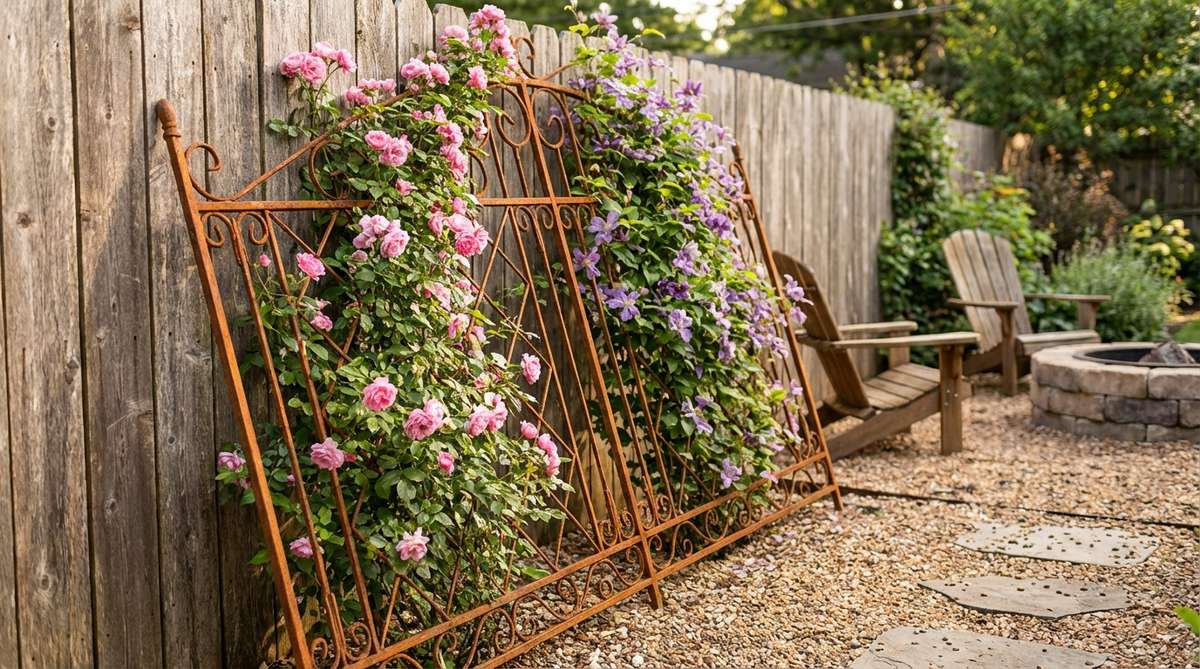
Wrought iron trellises with surface rust provide vertical support while displaying aged industrial character. The orange-brown patina contrasts beautifully with green foliage and flowering vines.
Install metal trellises against weathered wood fences or standalone in beds, allowing rust to develop naturally through rain exposure. Seal advanced rust with clear matte spray if structural integrity becomes compromised.
Climbing roses, clematis, and sweet peas soften the rigid metal framework while rust tones warm the color palette.
22. Copper Patina Garden Sculpture
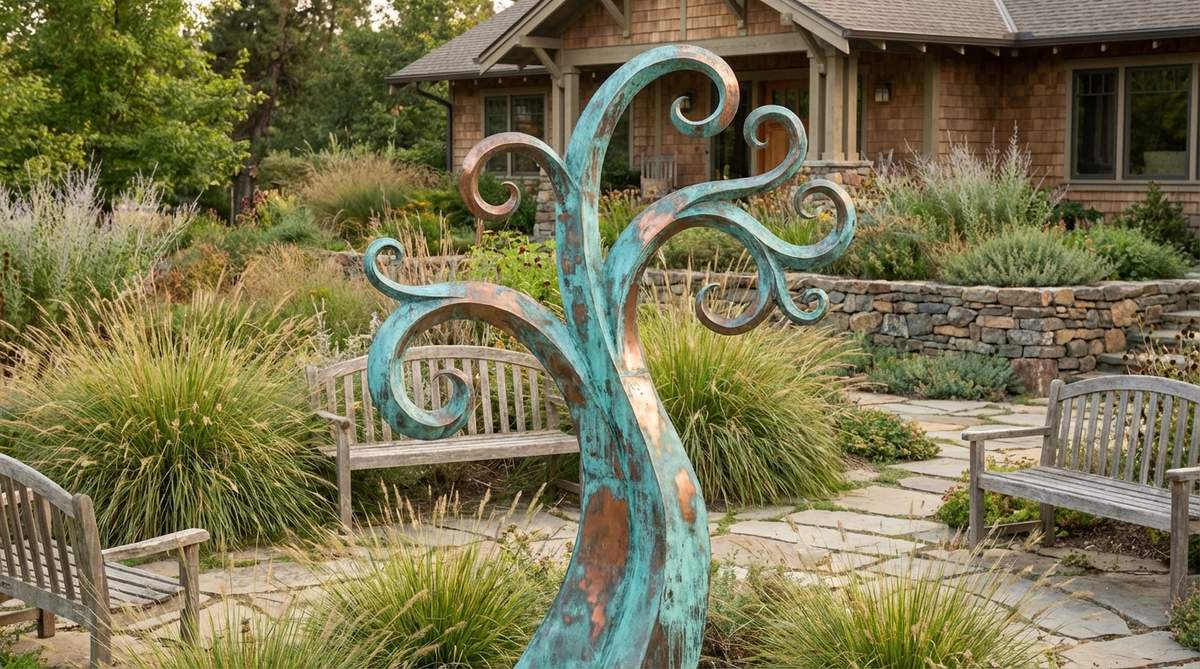
Copper art pieces develop distinctive blue-green verdigris patina through natural oxidation processes. This aged finish adds refined color notes to rustic settings without overwhelming natural wood tones.
Position copper elements where morning dew and rain exposure accelerate patina development. The color evolution from bright copper through bronze to blue-green occurs over 6-24 months depending on climate conditions.
23. Galvanized Bucket Planters
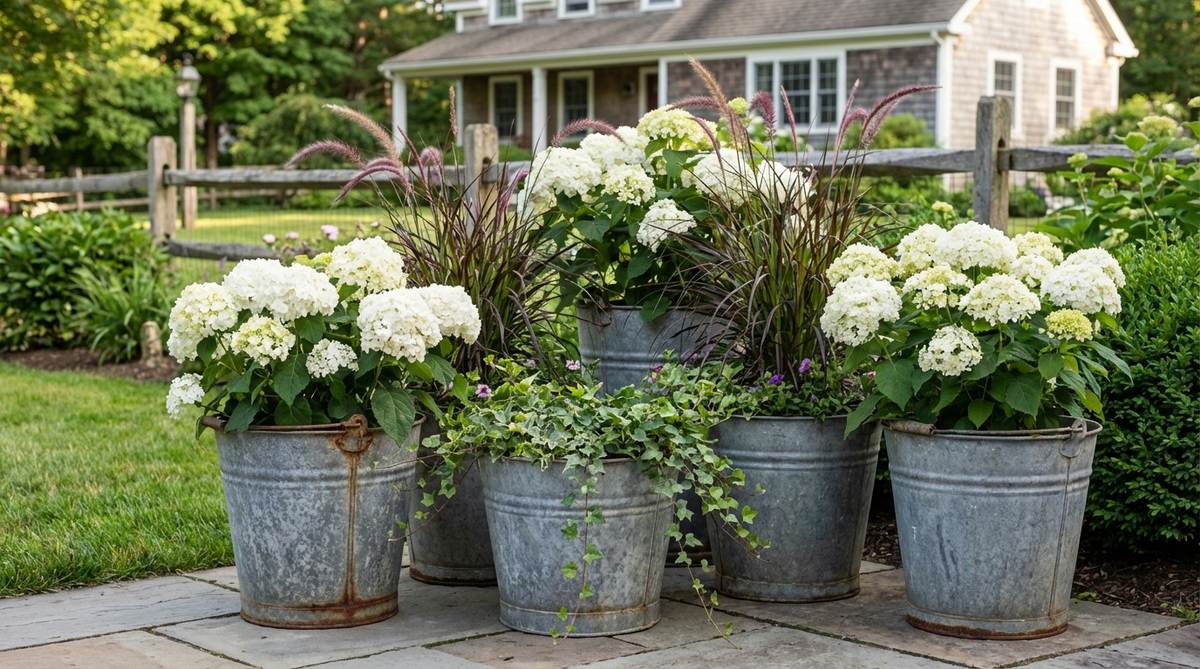
Vintage galvanized buckets with worn zinc coating display mottled gray surfaces and rust spots at seams. These utilitarian containers bring farmhouse character to casual planting schemes.
Drill drainage holes through bucket bottoms using a step bit to prevent cracking. The zinc coating weathers unevenly, creating visual interest as underlying steel develops surface rust in compromised areas.
Group buckets of different sizes and weathering stages to create cohesive container arrangements.
24. Antique Wheelbarrow Display
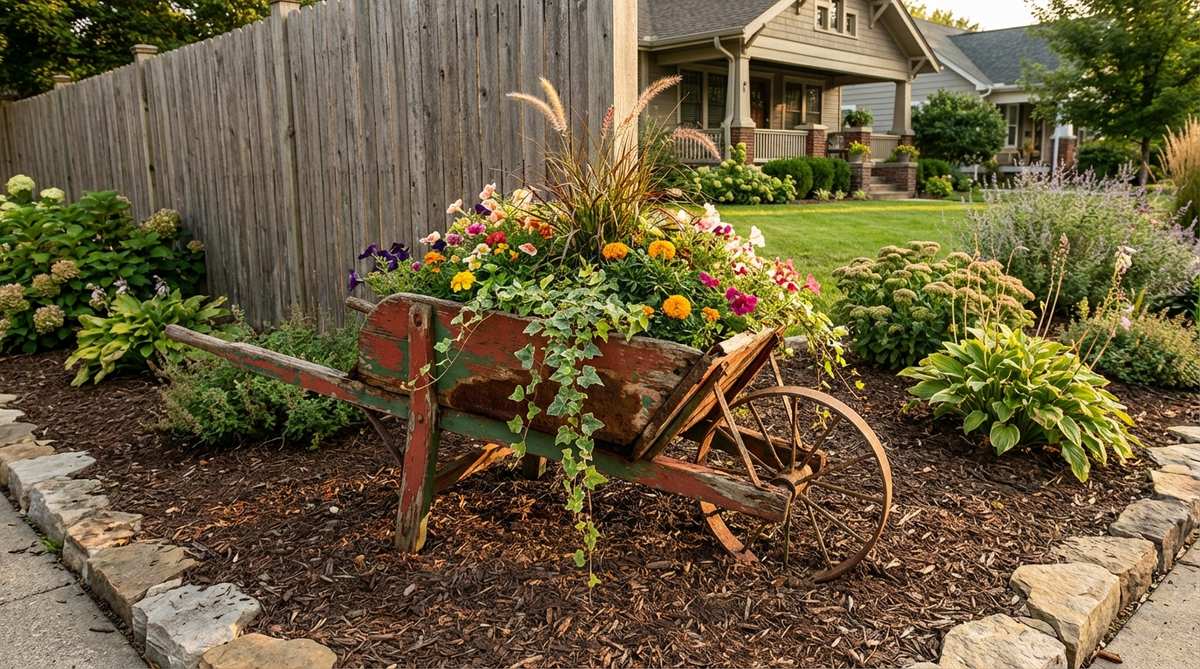
Vintage wheelbarrows with chipped paint and rusted beds become mobile planting displays or garden vignettes. The sloped design provides natural drainage while worn surfaces tell stories of previous use.
Position wheelbarrows as focal points in bed corners or along fence lines, either planting directly or using them to hold potted arrangements. The functional wheels allow seasonal repositioning for sun exposure or design changes.
25. Weathered Metal Watering Cans
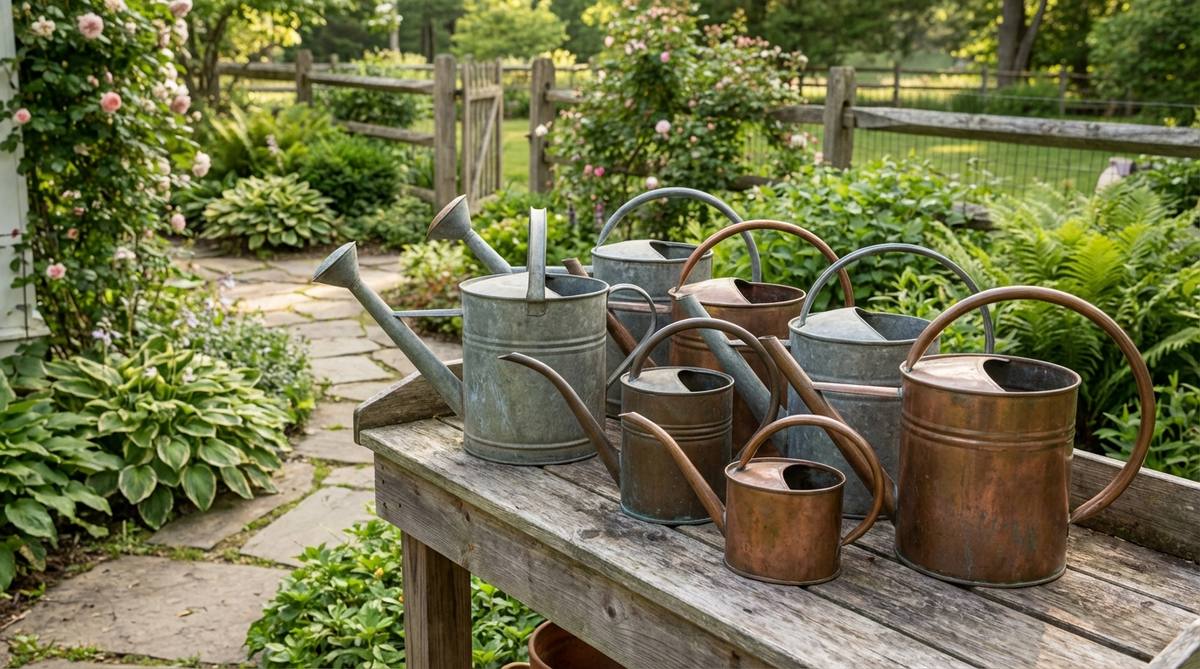
Zinc and copper watering cans with aged patina serve as sculptural accents on potting benches or hung from hooks. The graceful spouts and handles create elegant silhouettes against weathered wood backgrounds.
Display cans in groupings of varying sizes and metal types to showcase different patina colors. Drill small drainage holes if using them as planters to prevent water accumulation.
26. Vintage Tool Wall Art
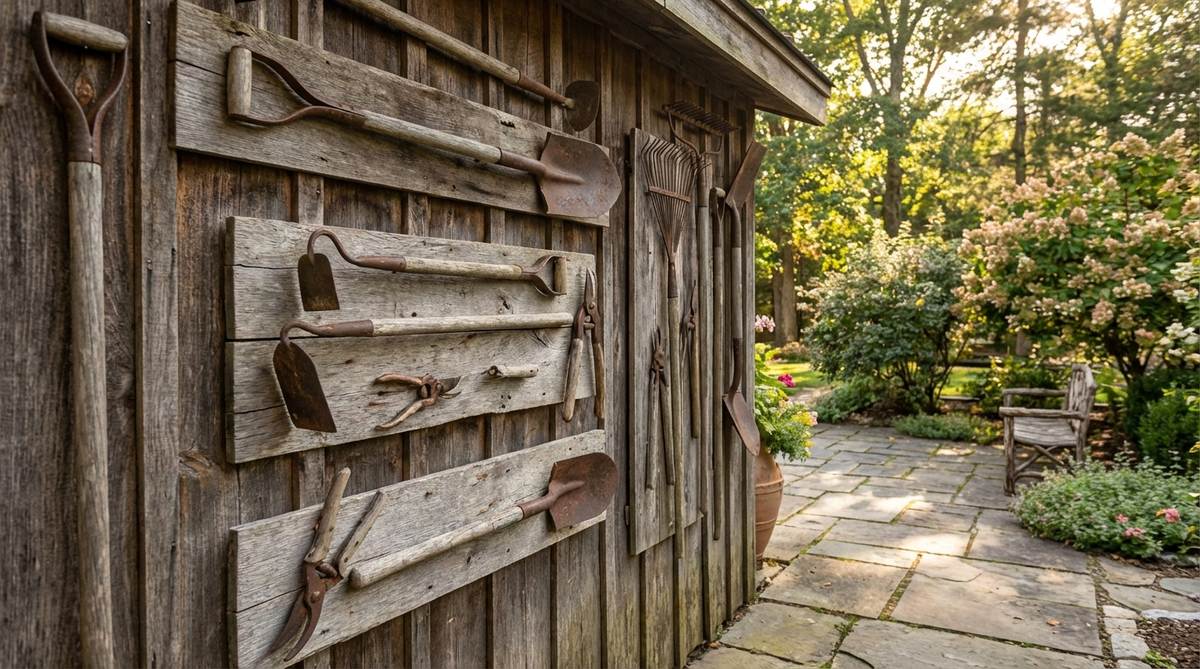
Antique garden tools with wooden handles and rusted metal heads mount on weathered boards as functional art. Spades, hoes, rakes, and pruners create visual rhythm through repeated vertical elements.
Arrange tools by size or type, mounting them to reclaimed boards using simple hooks or wire loops. The combination of aged wood handles and oxidized metal creates cohesive rustic compositions.
Position tool displays in potting sheds, along garage walls, or under covered porches where they remain accessible while contributing to decor.
27. Iron Gate Garden Partition
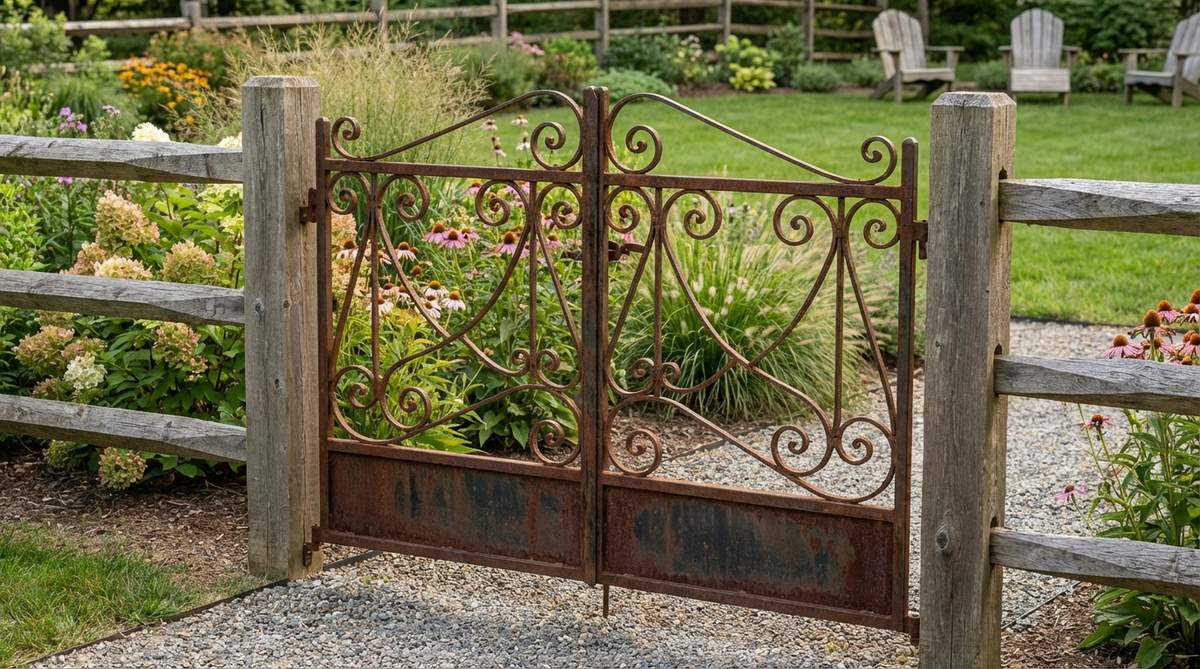
Salvaged wrought iron gates with scrollwork and rust patina divide garden spaces while maintaining visual permeability. The architectural presence adds formal structure to informal rustic plantings.
Install gates between weathered posts or integrate them into split-rail fence sections. Leave rust unsealed to continue natural aging, or stabilize it with penetrating sealers that maintain the aged appearance.
28. Corten Steel Raised Beds
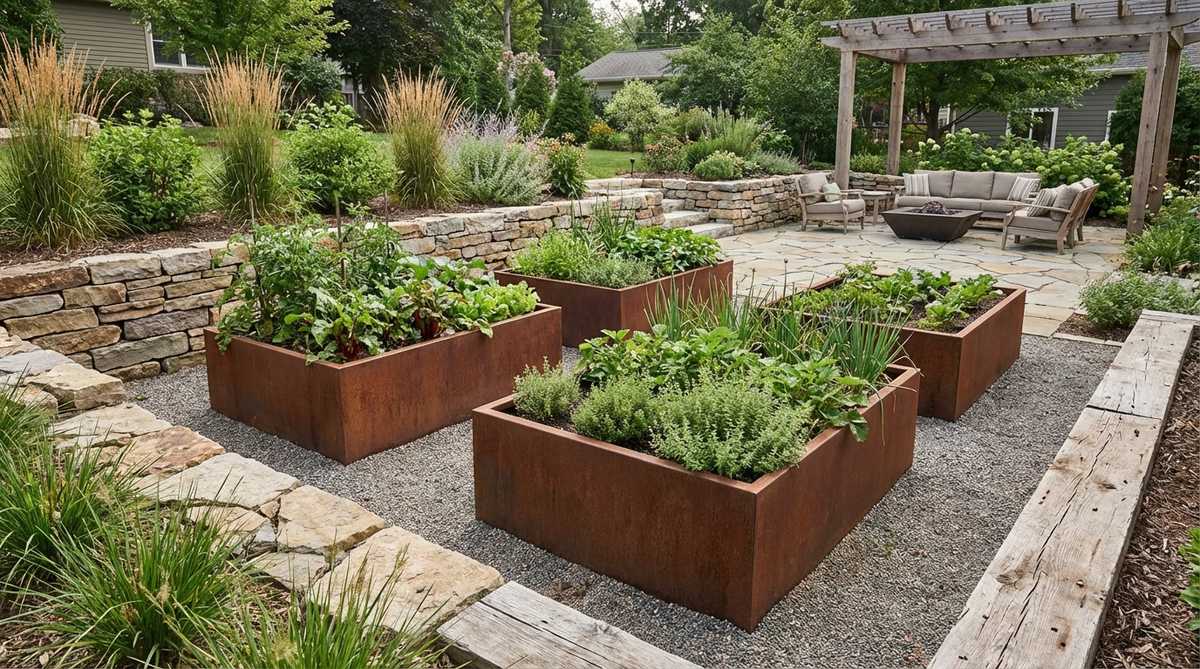
Corten steel panels develop stable rust patina that protects underlying metal from further corrosion. The warm orange-brown surface complements natural wood while providing modern geometric forms.
Bolt panels together using corner brackets, creating rectangular or L-shaped bed configurations. The rust patina stabilizes within weeks of exposure, maintaining consistent color through subsequent seasons.
Corten’s industrial aesthetic works particularly well when juxtaposed with rough-hewn timber and natural stone elements.
29. Aged Zinc Plant Markers
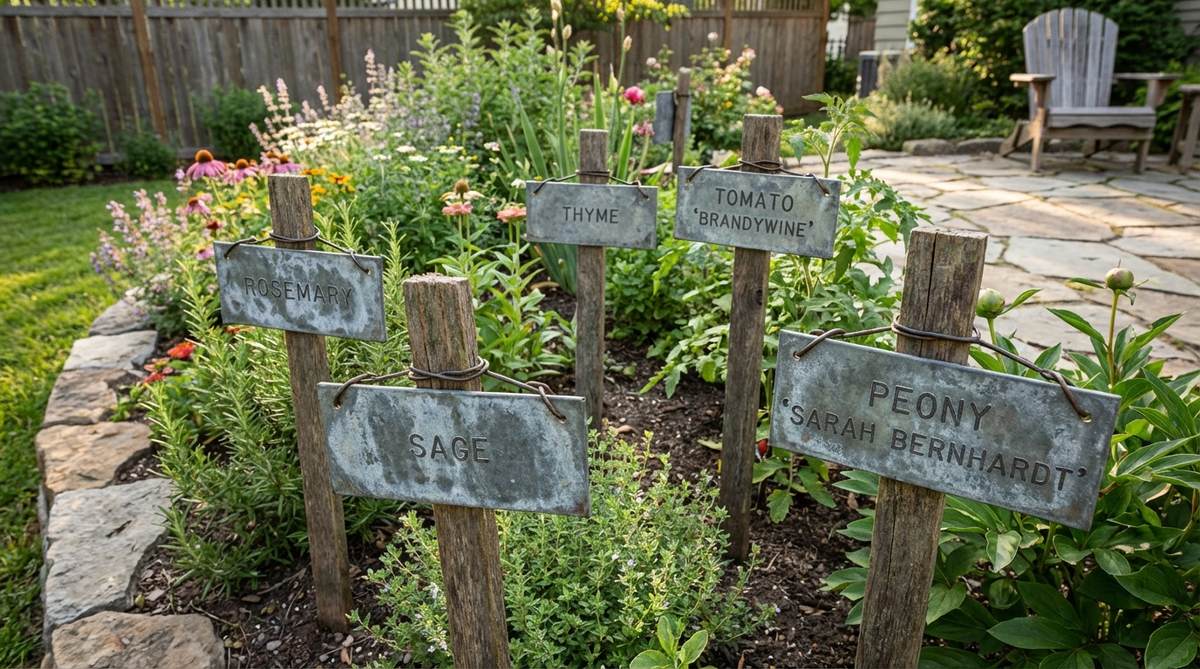
Zinc tags stamped or etched with plant names develop mottled gray patina that weathers more subtly than rusted iron. The neutral tones integrate seamlessly into rustic planting schemes.
Wire markers to stakes or attach them directly to wooden plant labels. Hand-stamp or engrave plant names before installation, as the soft metal accepts impressions readily.
30. Vintage Pulley Hanging Baskets
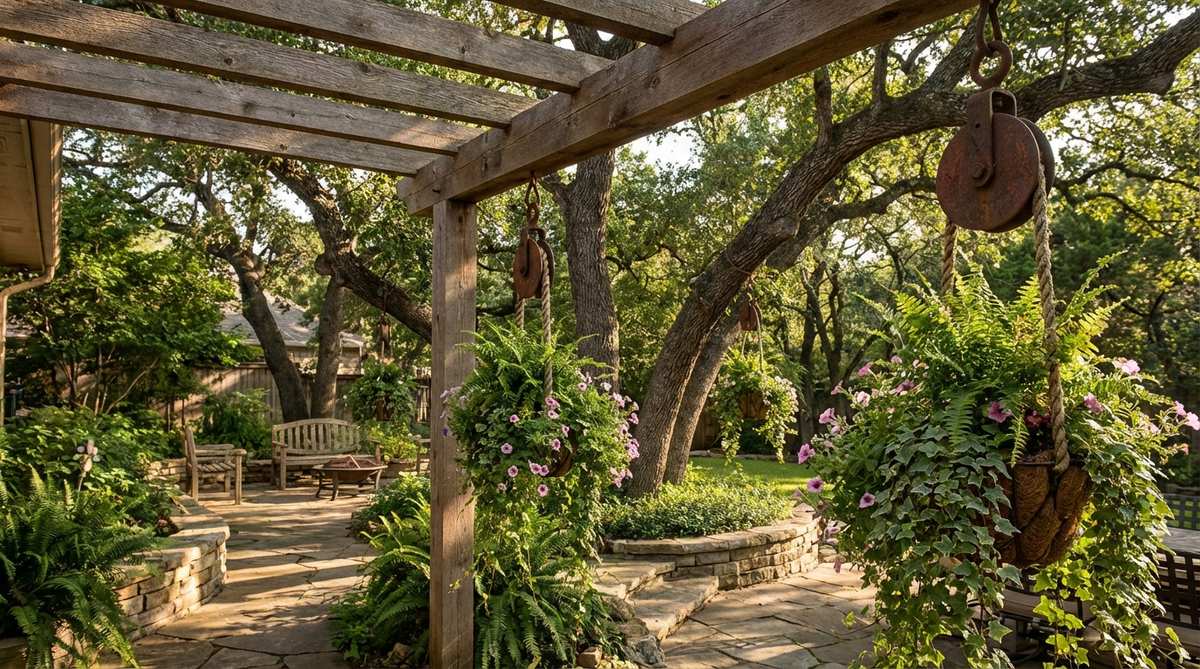
Antique barn pulleys with rope and rusted metal wheels support hanging baskets from pergola beams or tree branches. The mechanical elements add functional sculpture to overhead spaces.
Thread natural fiber rope through pulley wheels, creating adjustable hanging systems that raise or lower baskets for maintenance. The rust and rope textures complement basket materials like coir and woven willow.
Multiple pulleys hung at staggered heights create dynamic vertical garden layers in compact spaces.
Natural Wood Seating Areas
Rustic seating combines function with organic form, using weathered timber and natural materials to create comfortable gathering spaces. These elements anchor garden designs while encouraging extended time outdoors.
31. Split Log Bench Seating
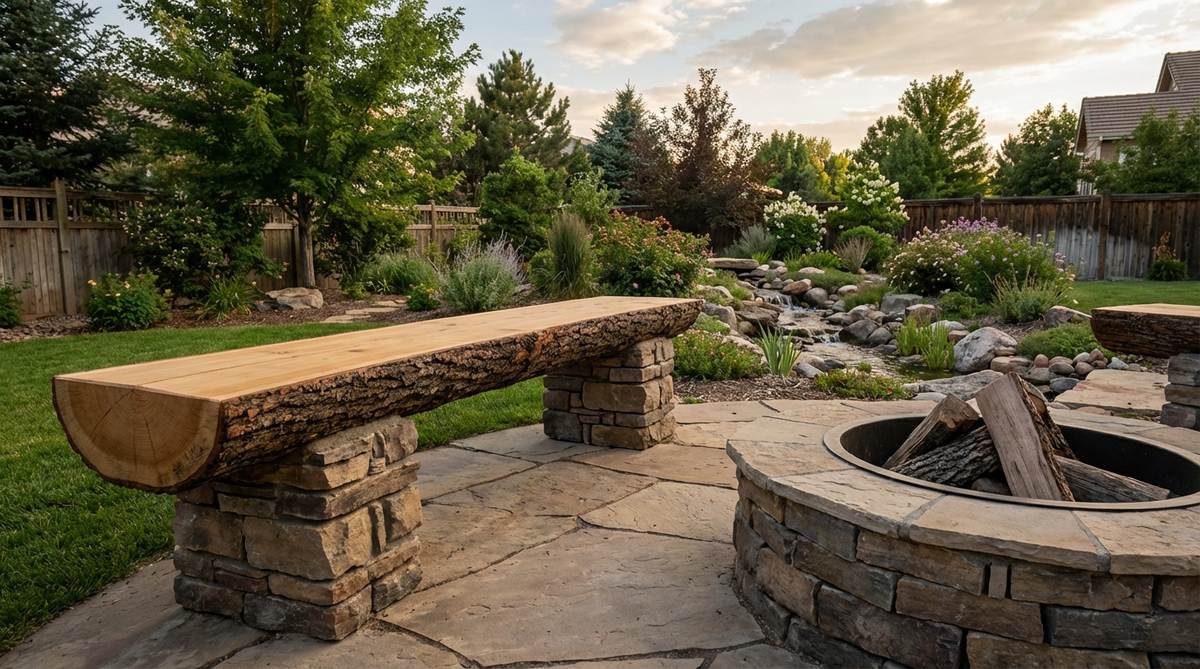
Half-logs mounted on simple supports create primitive benches with immediate rustic character. The flat sawn surface provides seating, while rounded bark exteriors add organic texture.
Mount split logs on stone pillars, log rounds, or timber leg assemblies spaced 6-8 feet apart. Sand the seating surface smooth while leaving bark edges rough for authentic appearance.
Position benches to capture garden views or create conversation areas around fire pits and water features.
32. Driftwood Frame Garden Bench
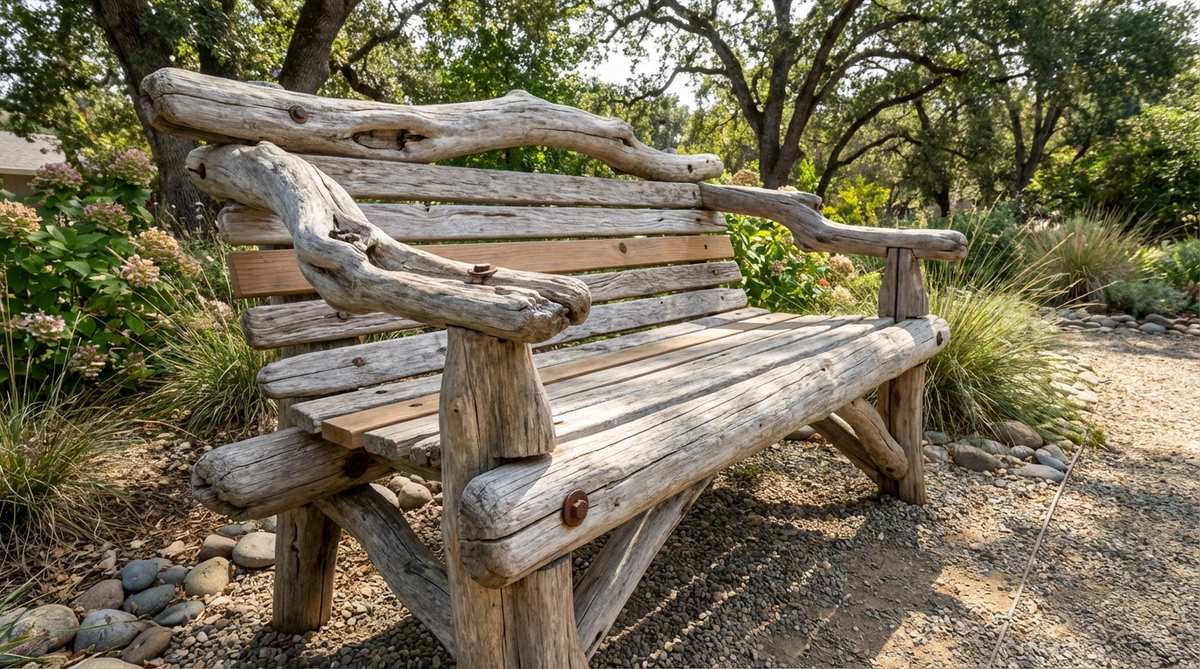
Weathered driftwood assembled into bench frames provides sculptural seating with unique organic forms. Smooth water-worn surfaces require minimal preparation while offering comfortable contact points.
Select substantial pieces for leg and frame members, bolting them together through pre-drilled holes. Add horizontal seat slats from matching driftwood or contrasting smooth lumber.
33. Tree Stump Seating Circles
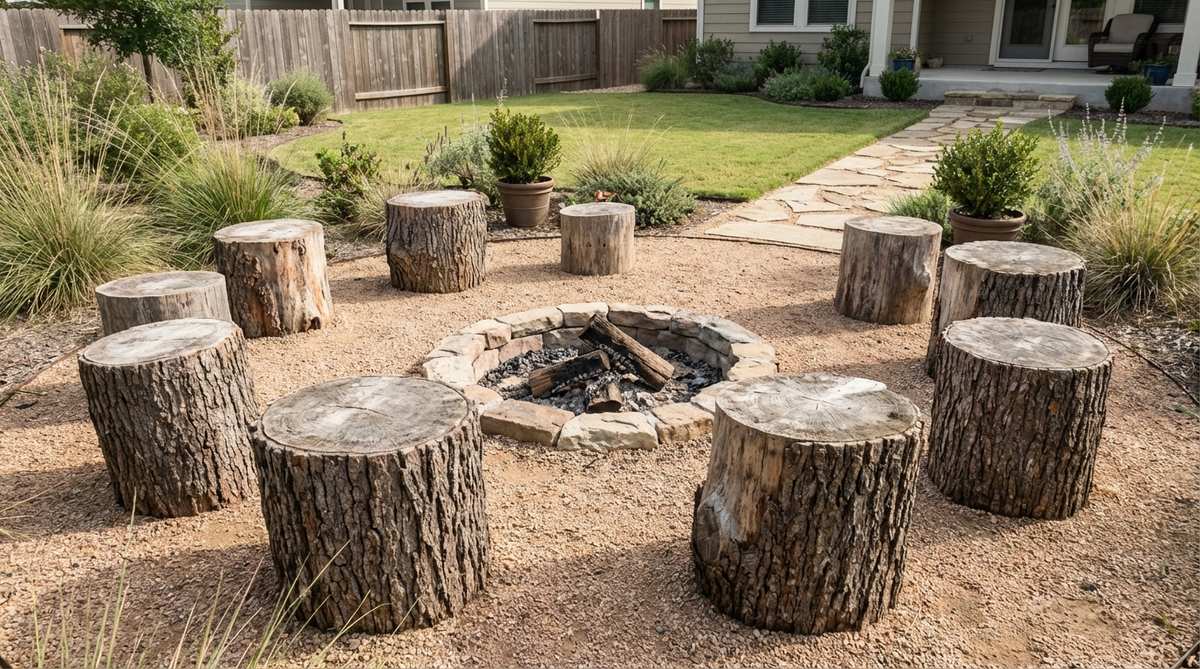
Large diameter stumps arranged in circular patterns create informal seating around fire rings or central garden features. Natural height variations add visual interest while accommodating different user preferences.
Level stumps by excavating or shimming bases, positioning them 18-24 inches apart. Leave bark intact for maximum rustic character, accepting that it will gradually slough off over time.
The radial arrangement encourages social interaction while showcasing individual wood character in each stump.
34. Reclaimed Timber Pergola Bench
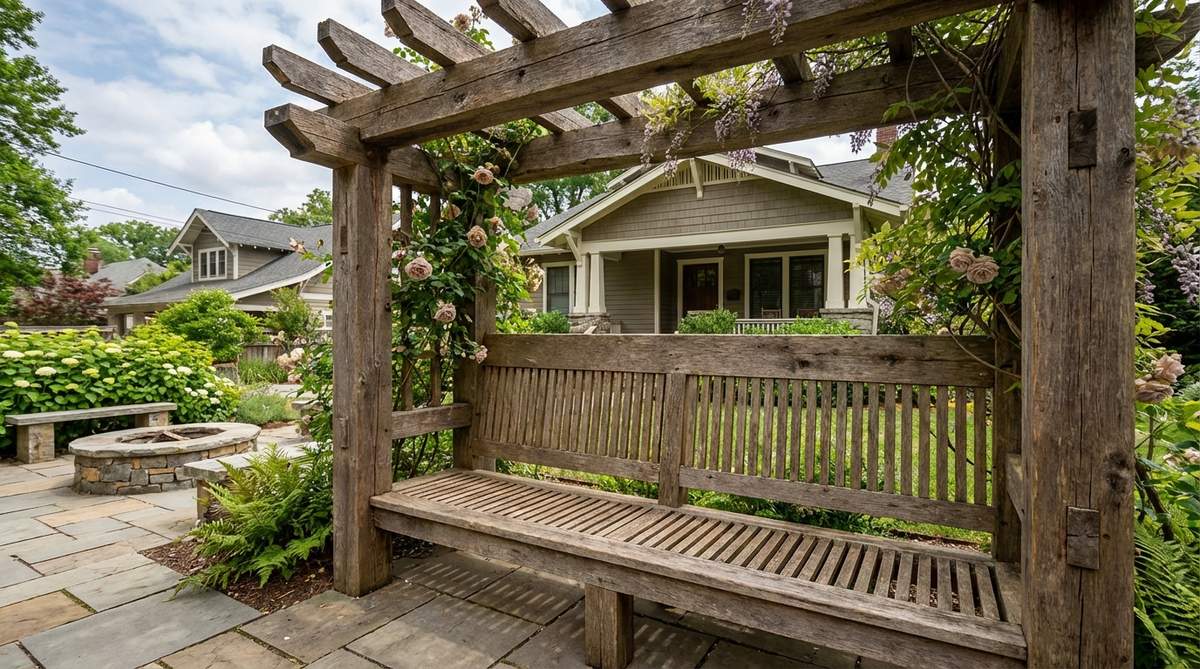
Built-in benches using weathered timbers integrate with pergola posts to create sheltered seating areas. The heavy timber construction provides structural durability while developing rich patina through exposure.
Frame benches between pergola posts using mortise-and-tenon joinery, adding slatted seats and backs. Leave 3/8-inch gaps between slats for drainage and air circulation.
35. Rough-Hewn Table Dining Set
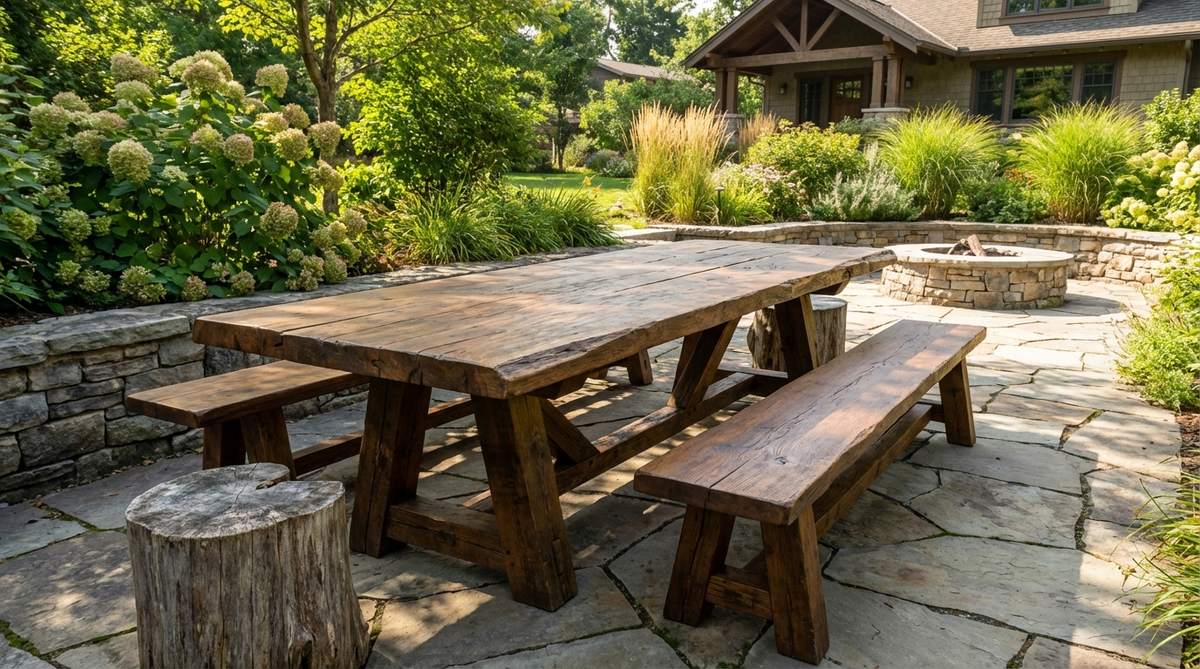
Massive timber tables with adzed surfaces anchor outdoor dining areas with commanding presence. Live-edge slabs showcase natural wood form while providing generous surface area.
Support thick wood slabs on log pedestal bases or heavy timber trestle frames. Apply food-safe oil finishes that penetrate rather than film, allowing continued weathering while protecting against moisture damage.
Pair tables with benches or individual stump seats to maintain cohesive rustic aesthetic throughout the dining area.
36. Woven Willow Chair Frames
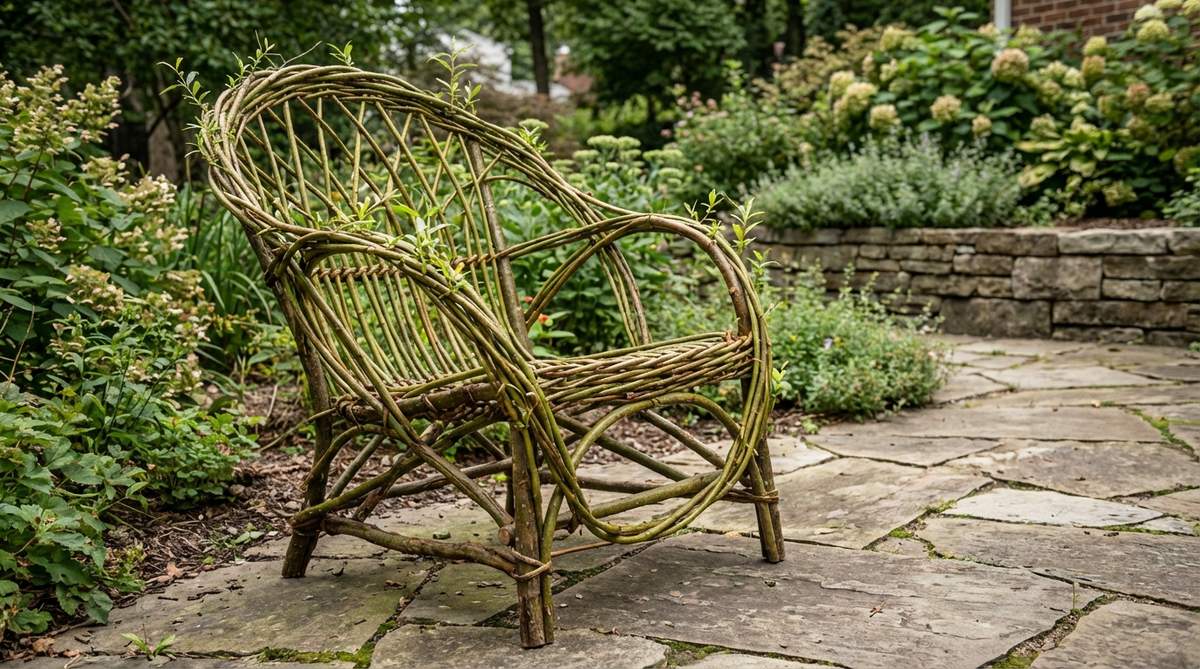
Living willow woven into chair forms provides flexible seating that grows and leafs out seasonally. The organic construction technique creates functional furniture with minimal tools or fasteners.
Plant thick willow rods in chair-shaped patterns, weaving thinner branches between vertical members while green and flexible. Keep roots moist through establishment, allowing chairs to develop into living sculptures.
37. Railroad Tie Stepped Seating
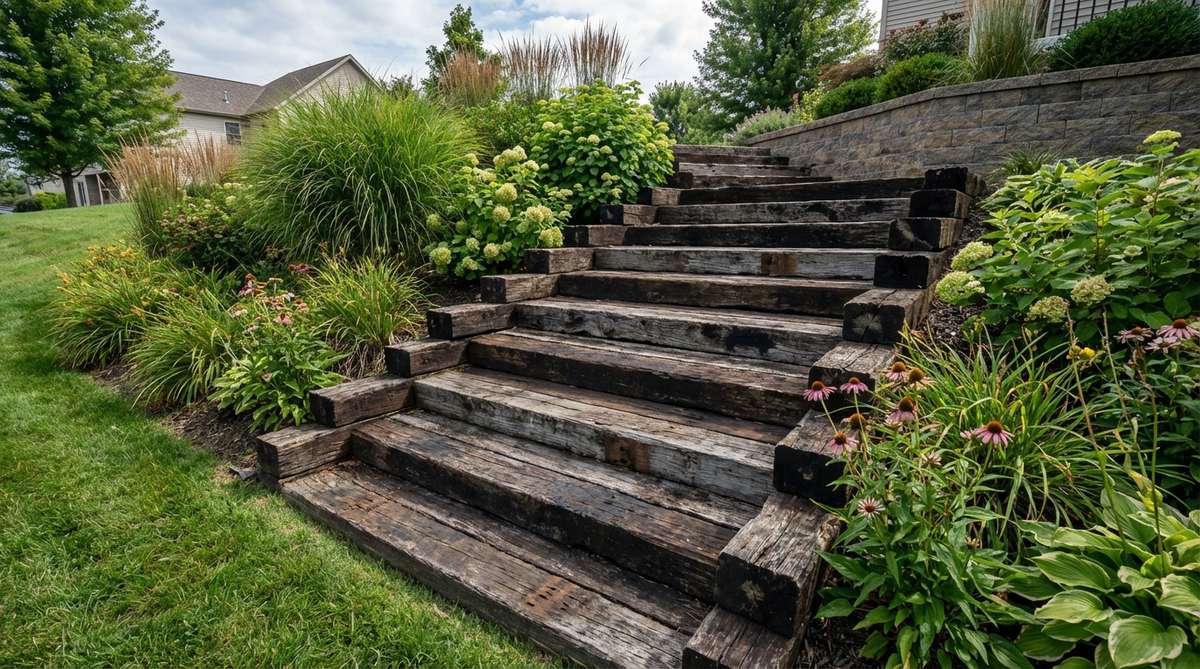
Salvaged railroad ties stacked in stair-step configuration create stadium-style garden seating on slopes. The creosote-preserved wood resists decay while displaying industrial-strength rustic character.
Excavate slope to create level bearing surfaces, anchoring ties with rebar driven through pre-drilled holes. Stack ties to create multiple seating levels with 15-18 inch rise between rows.
The dark weathered appearance contrasts dramatically with surrounding plantings while providing durable long-lasting seating.
38. Plank Bridge Seating Benches
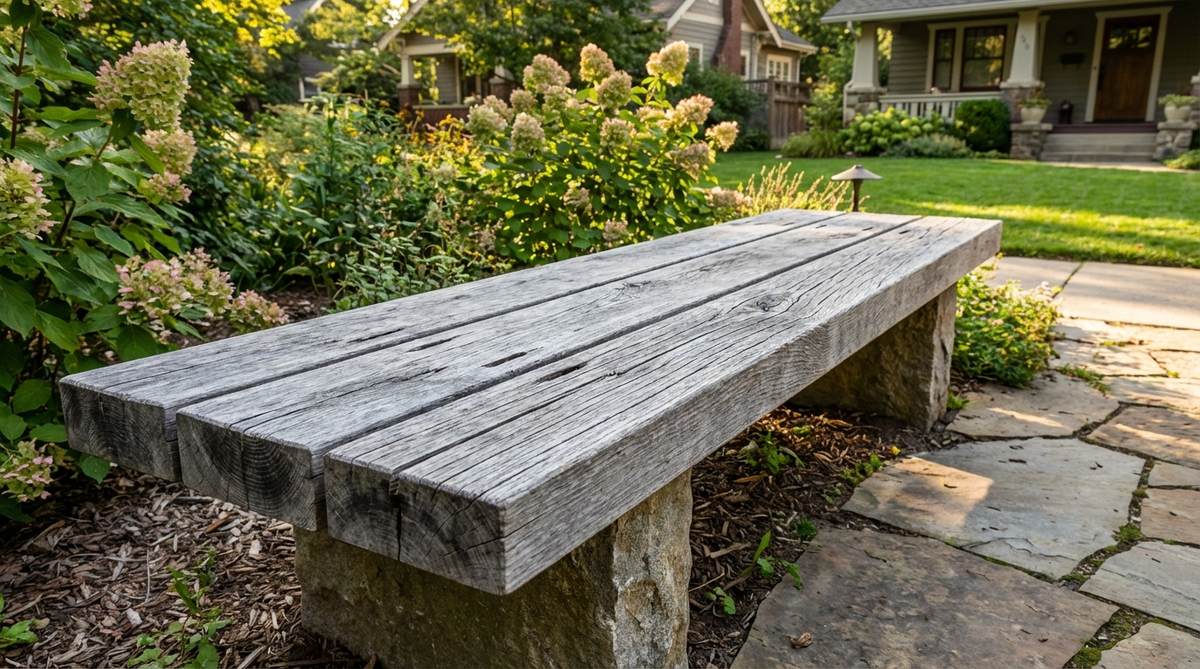
Wide planks spanning between stone or log supports create simple bridge-style benches. Thick dimensional lumber develops attractive grain patterns as it weathers to silver-gray.
Use 3×12 or 4×12 planks for adequate strength across 4-6 foot spans, notching ends where they rest on supports. Drill drainage holes at low points to prevent water pooling.
39. Wagon Wheel Accent Chairs
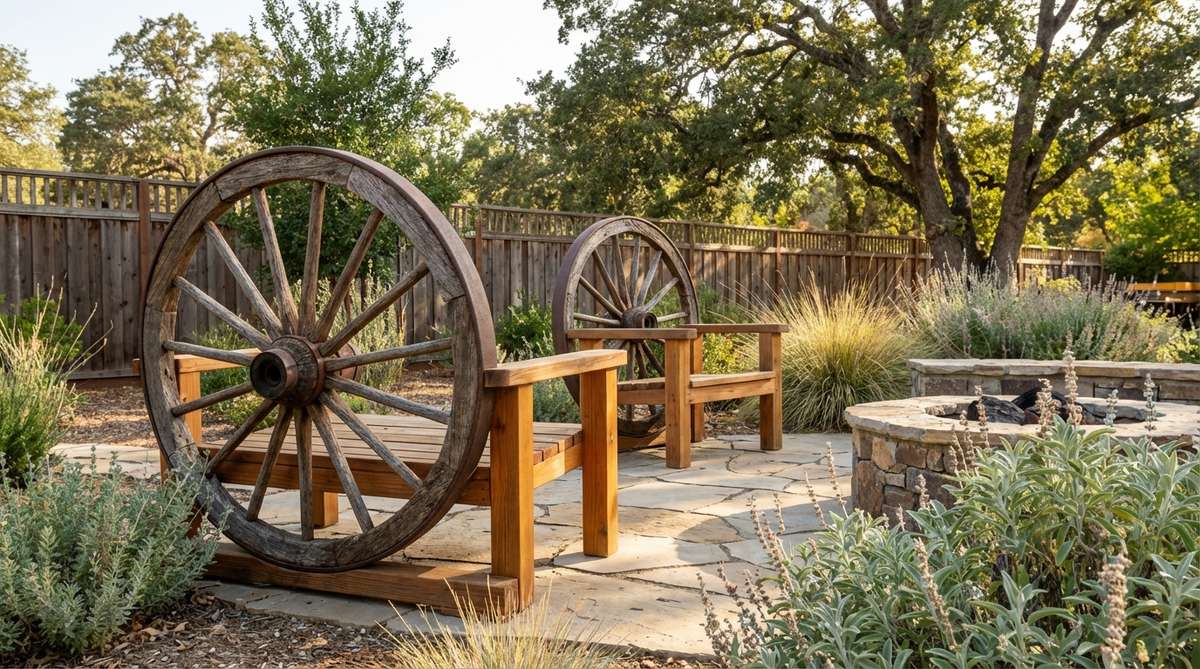
Vintage wagon wheels incorporated into chair backs or arm supports add authentic western rustic character. The spoke patterns create visual interest while weathered wood rims display aged surface texture.
Mount wheels as chair backs, securing them to post frames with lag bolts. Combine wheels with slab seats and branch arms to create cohesive rustic furniture pieces.
40. Log Round Side Tables
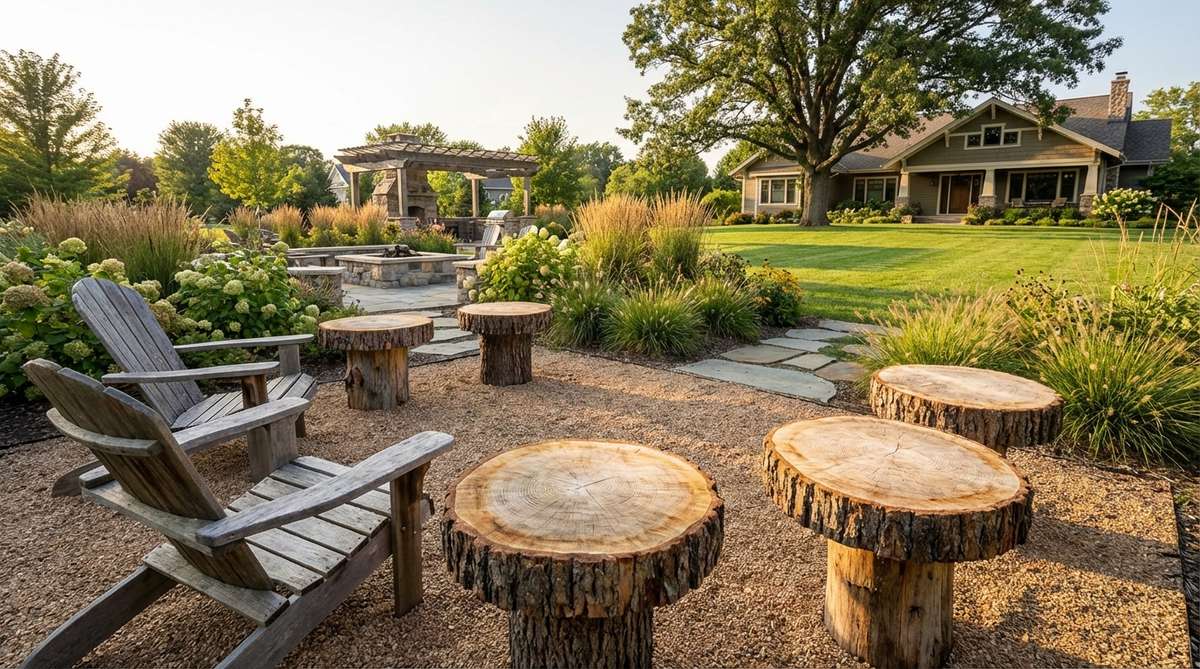
Thick cross-cut rounds provide stable side table surfaces beside seating areas. Natural bark edges and growth ring patterns create organic visual interest without requiring additional finishing.
Select rounds 18-24 inches diameter with relatively flat parallel surfaces. Level them using gravel bases or mount them on short log pedestals for elevated positioning.
Apply penetrating oil finish to minimize checking while allowing the wood to continue natural aging processes.
Architectural Elements & Focal Points
Structural garden features using weathered materials establish visual hierarchy and spatial organization. These anchor elements combine wood, metal, and stone to create enduring focal points throughout the landscape.
41. Timber Frame Arbor Entry
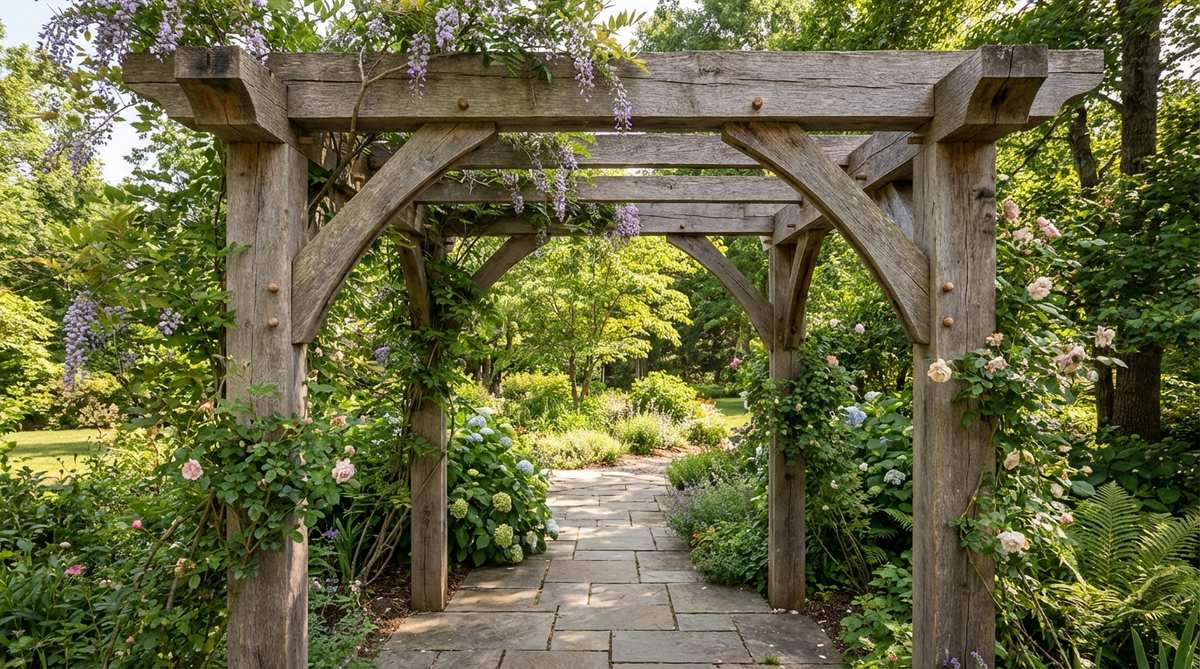
Heavy timber arbors with mortise-and-tenon joinery frame garden entrances with architectural gravitas. Exposed joinery and rough-sawn surfaces showcase traditional craftsmanship while supporting climbing plants.
Set posts in concrete footings below frost line, using 6×6 or larger dimensional lumber. Peg joints with oak dowels visible on the surface to emphasize hand-crafted construction methods.
Allow timber to weather naturally, embracing checking and surface cracks that develop as wood seasons in place.
42. Reclaimed Door Garden Gateway
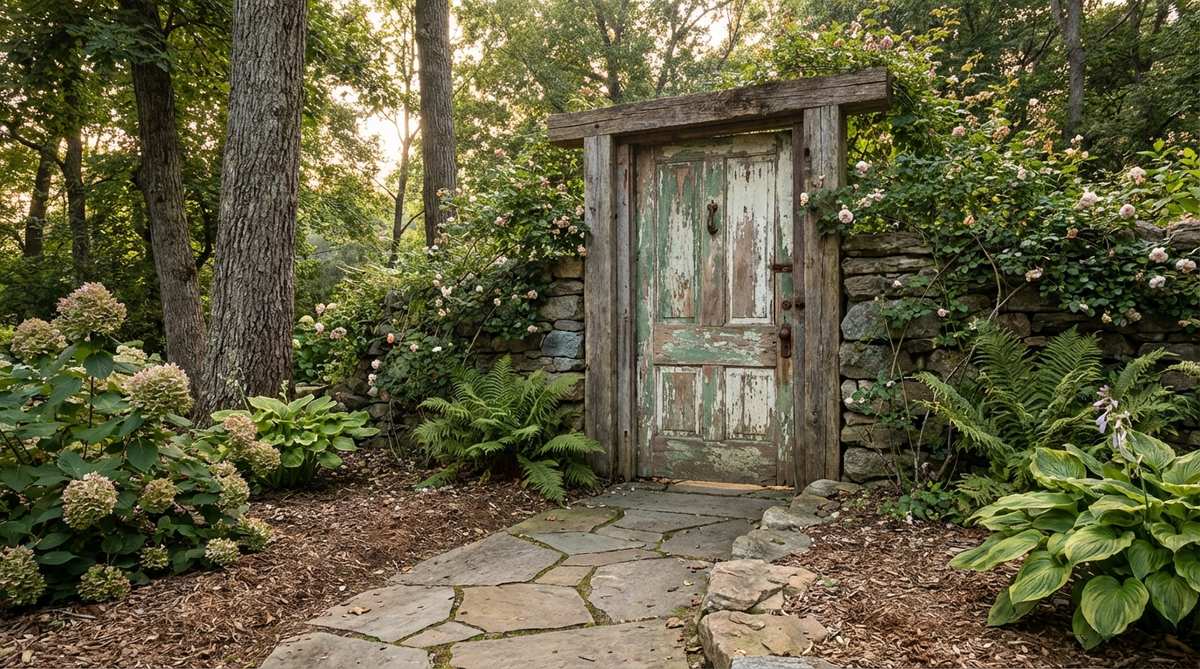
Vintage doors with peeling paint and antique hardware create dramatic garden entrances suggesting hidden spaces beyond. The familiar residential scale makes garden transitions feel intimate and deliberate.
Mount doors in weathered timber frames or between stone pillars, removing bottom panels to allow passage while maintaining visual barrier. Hardware with aged patina enhances authentic period character.
43. Driftwood Sculpture Centerpiece
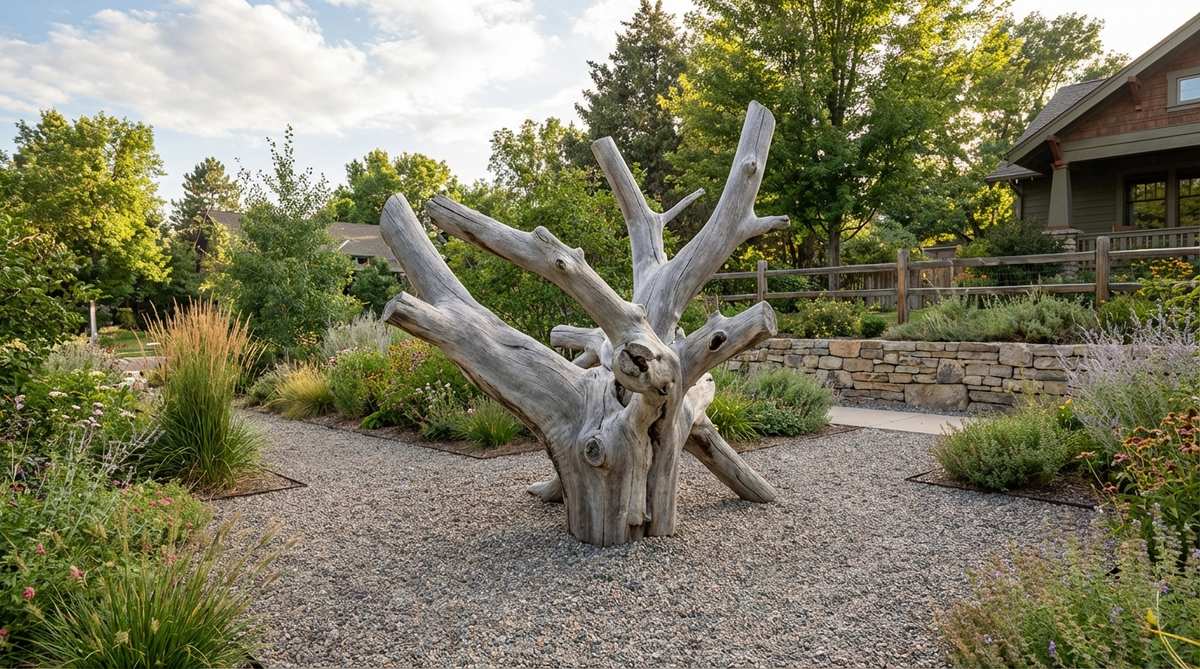
Large driftwood pieces arranged vertically create sculptural focal points with organic abstract forms. Water-smoothed surfaces and bleached gray tones provide neutral elements that complement diverse planting palettes.
Secure major pieces in gravel-filled holes or mount them to buried steel plates using concealed fasteners. Layer additional branches and smaller pieces to build complex compositions.
Position sculptures at garden intersections or bed terminals where they draw the eye and anchor spatial transitions.
44. Weathered Pergola Overhead Structure
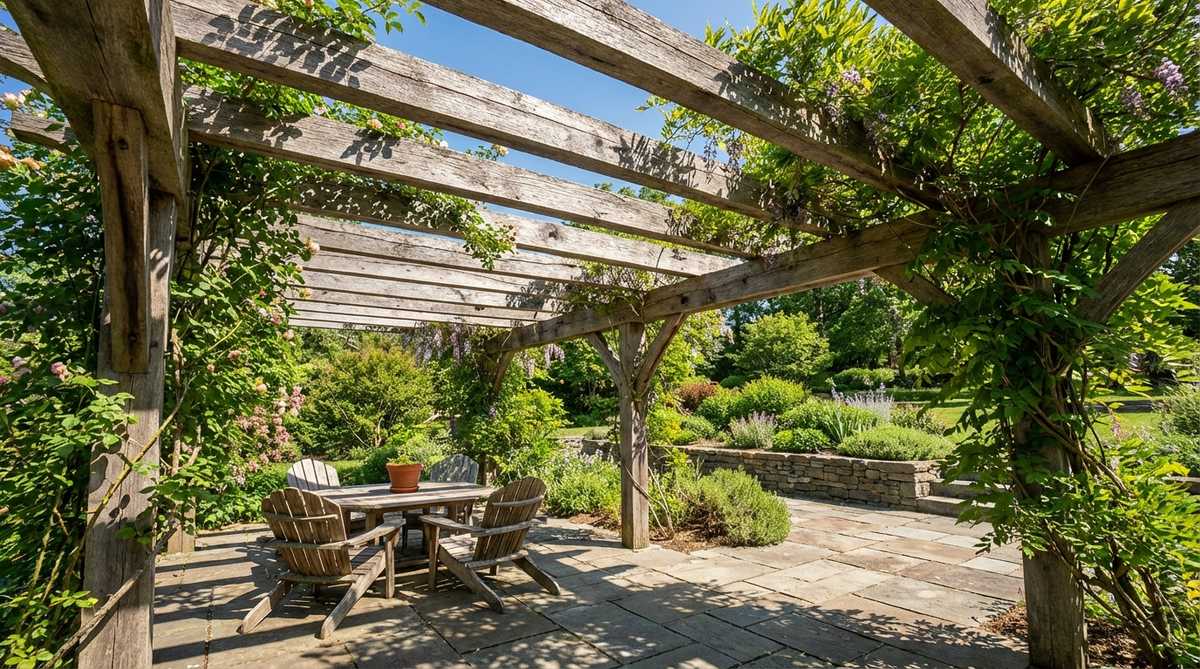
Open-frame pergolas with rough-hewn rafters provide partial shade while supporting vigorous climbing plants. The horizontal timber layers create compelling shadow patterns across underlying paving and plantings.
Space rafters 18-24 inches apart for balanced light filtration, notching them into support beams with simple lap joints. Untreated cedar develops attractive silver patina while naturally resisting decay.
45. Stone and Timber Fire Pit
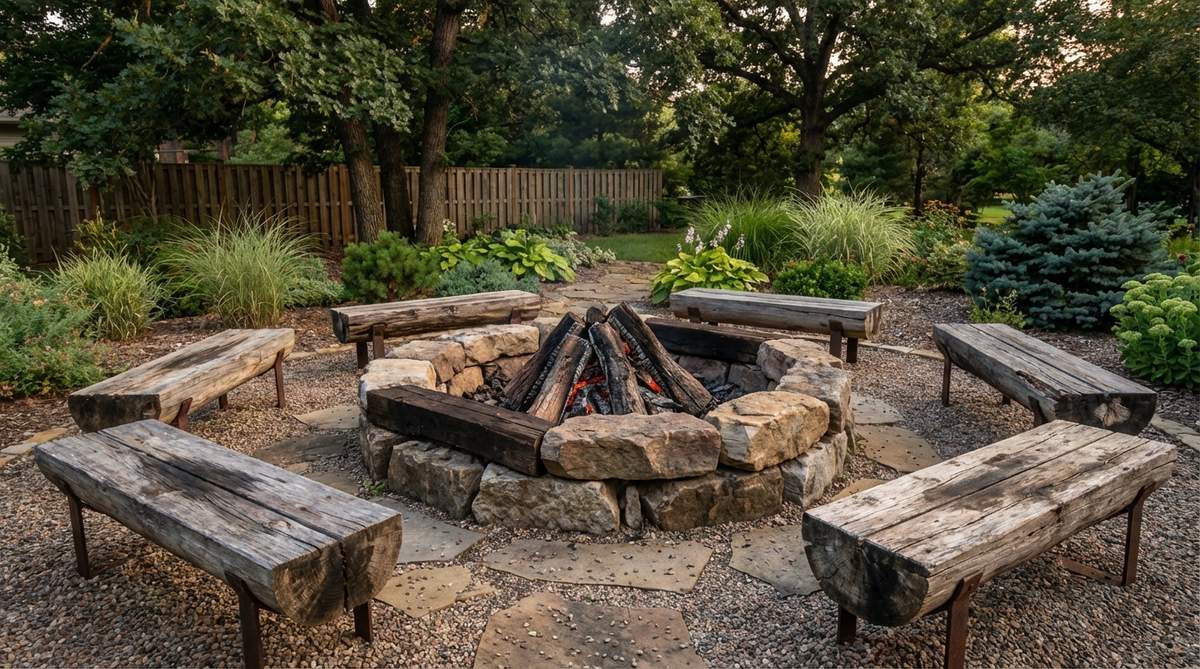
Weathered logs arranged around stone-lined fire pits create cozy gathering spaces with rustic warmth. The combination of materials provides textural contrast while both develop enhanced character through use.
Position split log benches in circular arrangement 6-8 feet from fire ring center. The heat and smoke exposure accelerate wood weathering on fire-facing surfaces while providing comfortable seating distance.
Use larger diameter logs for stability, securing them with buried stakes or gravel bases to prevent shifting.
46. Ladder Trellis Plant Support
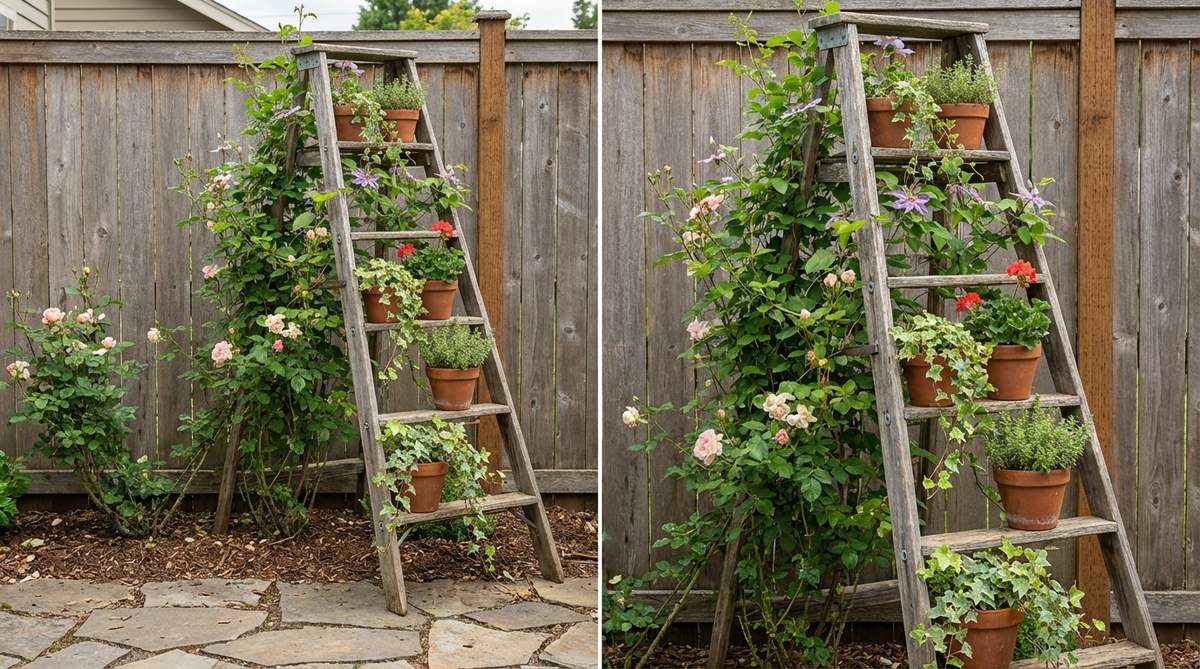
Vintage wooden ladders leaned against walls or fences provide instant vertical growing structure. Weathered rungs display paint chips and age marks while creating regular intervals for plant attachment.
Secure ladder tops to prevent slipping, using wire or hooks to anchor them to wall surfaces. Each rung accommodates potted plants or serves as tie points for climbing vines.
Multiple ladders at varying heights create dynamic vertical garden layers in compact spaces.
47. Wagon Wheel Trellis Focal Point
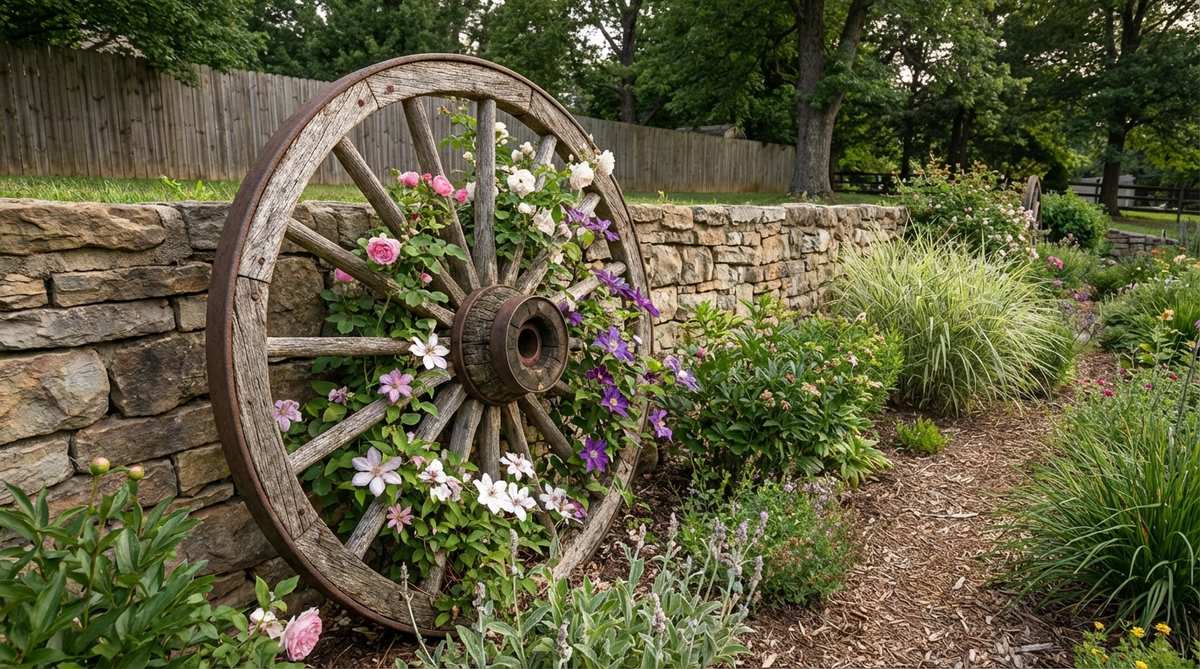
Vintage wagon wheels mounted vertically provide circular trellis forms with spoke patterns that guide plant growth. The radial design creates strong focal points while supporting flowering vines.
Mount wheels to fence surfaces or standalone posts using lag bolts through hub centers. The spoke design offers multiple attachment points as plants mature and require support.
48. Reclaimed Window Frame Mirrors
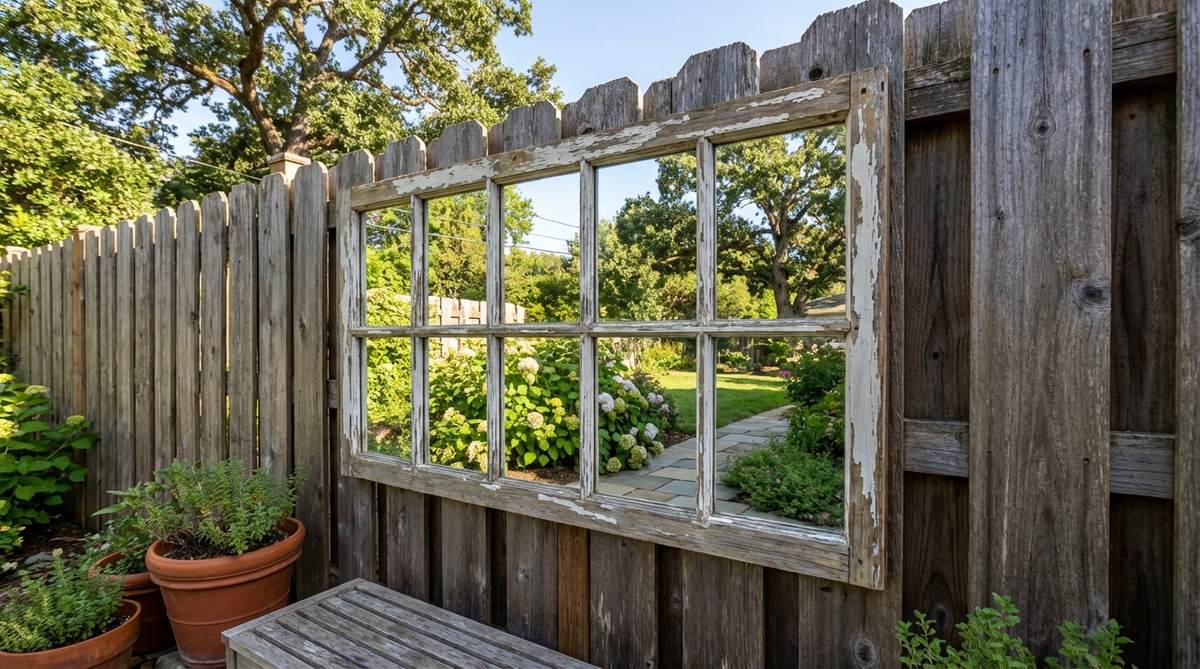
Weathered window sashes with mirror glass replacing original panes reflect light and expand visual space. The familiar architectural form adds vertical interest to fence and wall surfaces.
Install mirrors behind panes, securing frames to weathered board backgrounds. Position frames where they capture garden views or create illusions of depth in confined spaces.
The aged wood frames develop richer patina through continued outdoor exposure while protected mirror surfaces maintain clarity.
49. Barn Beam Mantel Shelf
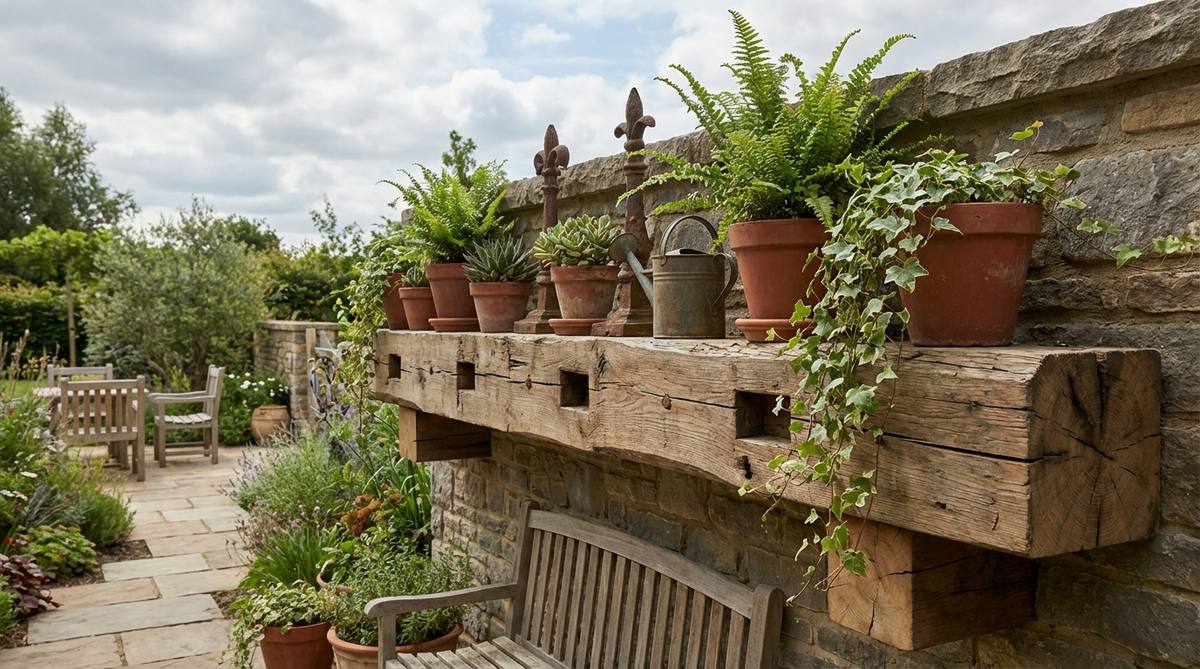
Salvaged barn beams mounted horizontally provide rustic shelving for potted plants and garden ornaments. Heavy timber dimensions support substantial weight while mortise pockets and peg holes reveal previous structural use.
Bracket beams to fence or wall surfaces using concealed steel supports rated for load requirements. The weathered surface requires no additional finishing while providing immediate aged character.
50. Split Rail Pergola Columns
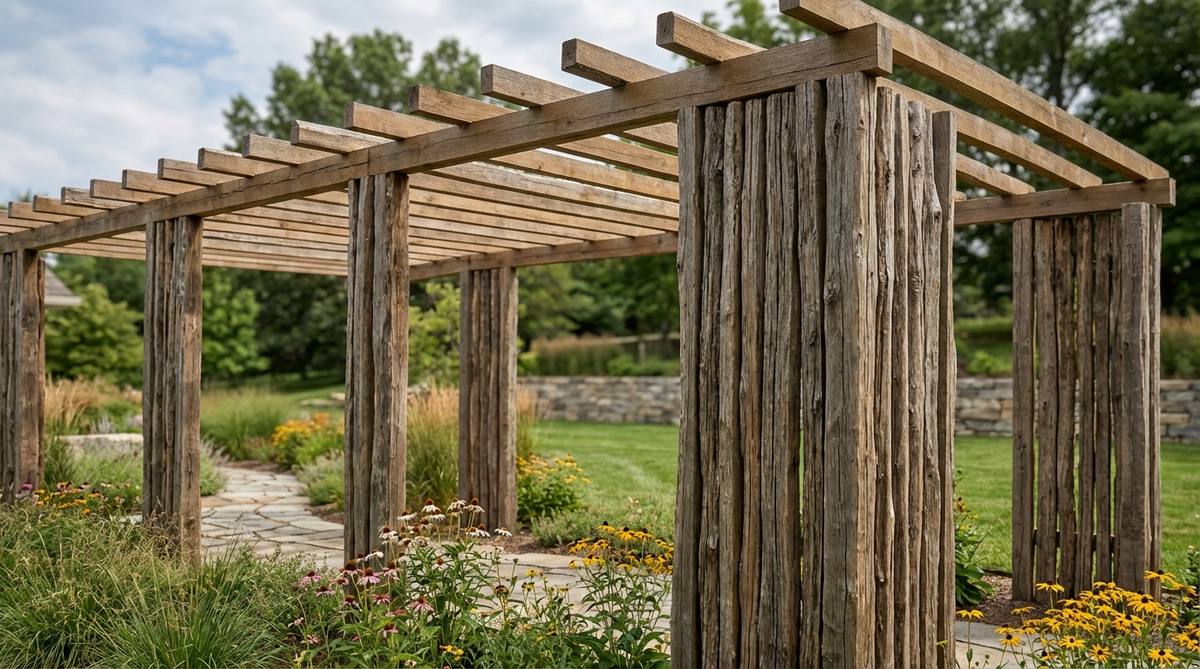
Vertical split rails bundled together create substantial pergola posts with organic texture. The irregular surfaces and varied diameters prevent rigid architectural formality.
Bundle 4-6 rails with galvanized wire or steel bands at top, middle, and bottom positions. Set bundles in concrete footings, allowing individual rails to weather at different rates based on sun exposure.
The vertical grain patterns create visual movement that contrasts with horizontal pergola rafters above.
51. Driftwood Wind Chime Elements
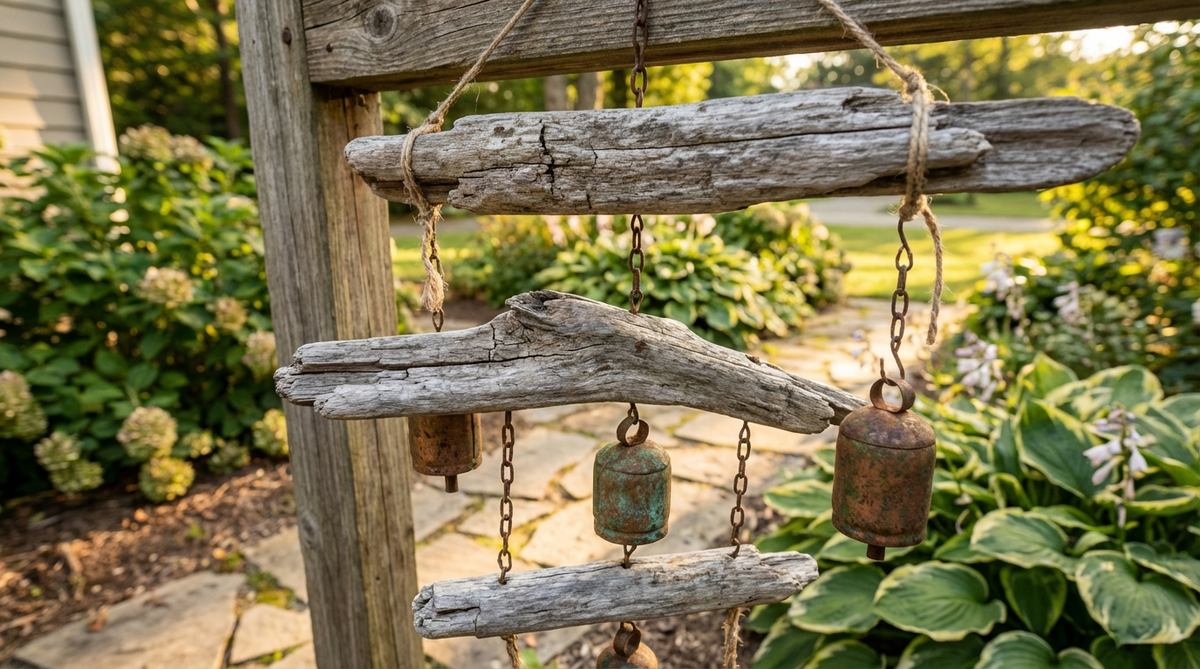
Weathered wood pieces suspended with vintage metal bells create musical garden art. The combination of aged wood tones and oxidized metal produces cohesive rustic compositions.
Drill holes through driftwood branches, threading them on wire or natural fiber cord with spacing bells and metal elements between wood pieces. Suspend assemblies from arbors or tree branches where air movement activates sound.
The gentle wood-on-metal tones provide subtle ambient sound without overwhelming garden tranquility.
52. Natural Wood Potting Bench
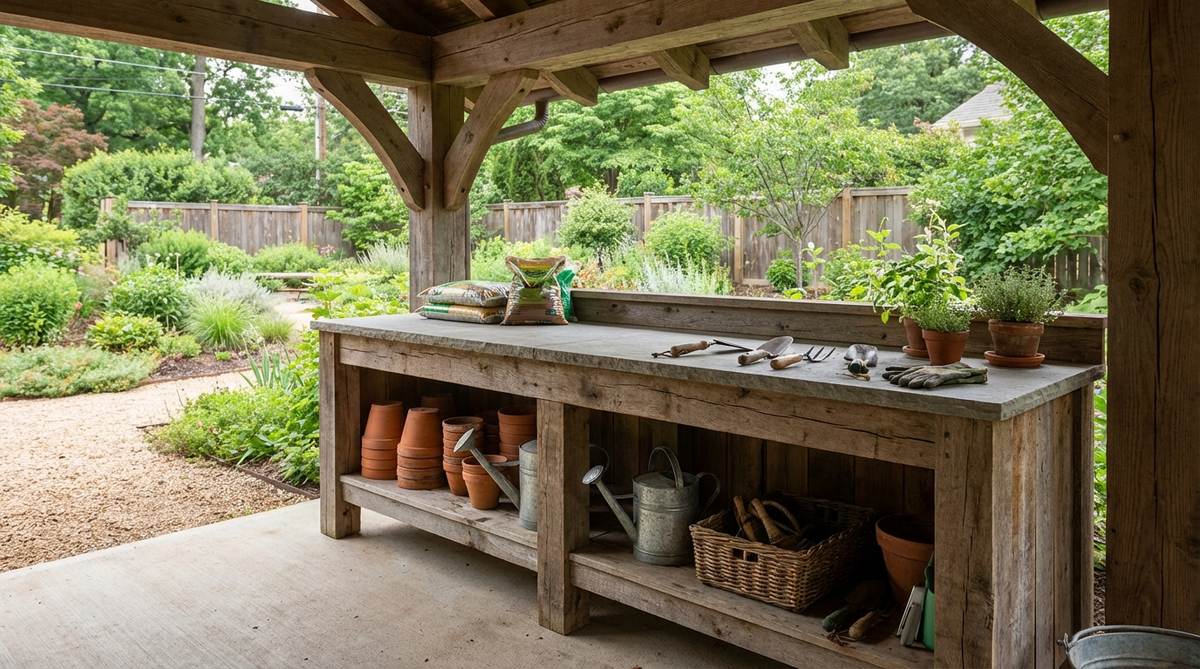
Reclaimed wood combined with stone surfaces creates functional work stations for garden maintenance. Weatherproof work surfaces pair with open shelving to organize tools and supplies.
Frame benches at comfortable working height (36 inches), installing stone or sealed wood top surfaces. Add lower shelves using rough-sawn boards for storing pots and amendments.
Position benches under covered areas to extend wood life while maintaining the rustic aesthetic through natural aging.
53. Branch Bundle Obelisk Towers
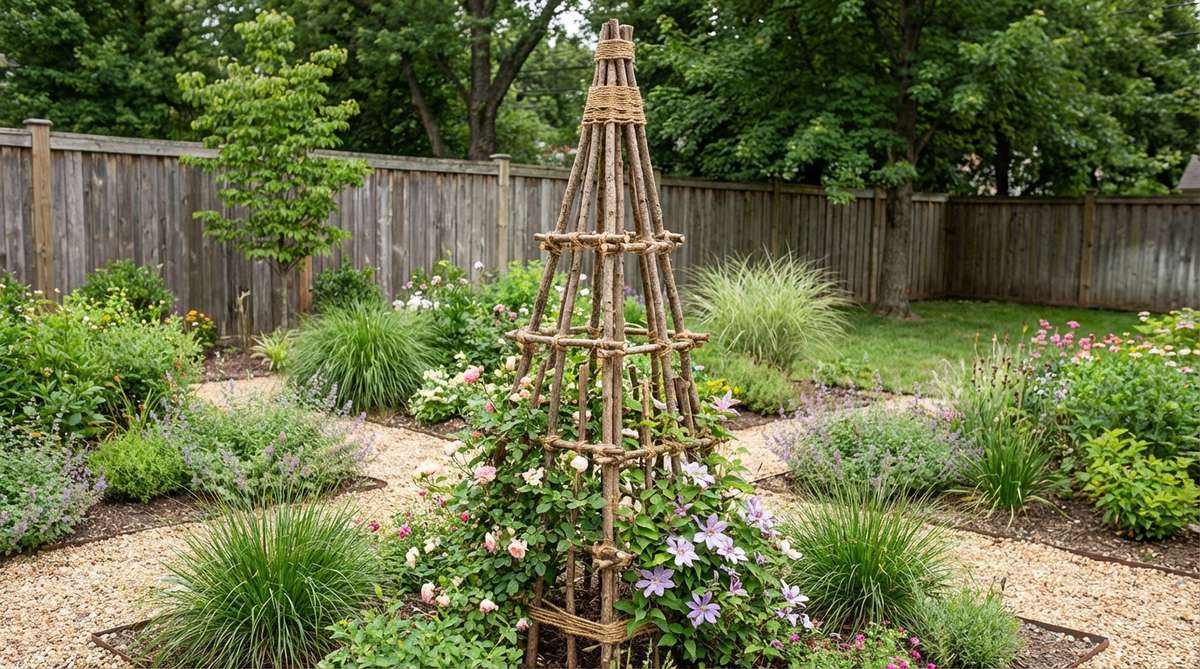
Straight branches bundled into narrow towers provide vertical plant support with natural organic form. The tapered pyramid shape concentrates flowers and foliage at eye level.
Gather 8-12 branches 6-8 feet long, lashing them together at the top while spreading bases into 18-24 inch diameter circles. Wire horizontal crosspieces at intervals to reinforce structure and provide additional tie points.
Position obelisks in beds as structural focal points, planting climbing annuals or perennial vines at the base of each tower.
Bringing Rustic Garden Character Home
These 53 rustic garden decor settings demonstrate how weathered wood and aged patina create outdoor spaces with authentic character and timeless appeal. Designers achieve the most successful results by selecting materials that weather gracefully, combining different textures strategically, and allowing natural aging processes to enhance visual interest over successive seasons. Start with one or two focal elements like a driftwood arch or weathered timber planter, then gradually layer additional components as your garden evolves into a cohesive rustic sanctuary.
Frequently Asked Questions
What types of wood develop the best rustic patina?
Cedar and redwood weather to attractive silver-gray tones while naturally resisting decay. Oak develops rich brown patina with pronounced grain patterns. Reclaimed barn wood and driftwood already possess aged character that continues evolving through exposure. Avoid pressure-treated lumber if seeking natural aging, as chemical preservatives interfere with patina development.
How long does it take for wood to develop weathered patina?
Initial color changes appear within 2-3 months of outdoor exposure as UV rays break down natural oils. Complete silver-gray patina develops over 12-24 months depending on sun exposure intensity, moisture levels, and temperature fluctuations. South-facing surfaces weather faster than shaded areas due to increased UV exposure.
Should I seal weathered wood in garden decor?
Raw linseed oil penetrates wood while repelling water without preventing natural aging. Clear penetrating sealers maintain weathered appearance while slowing decay. Avoid film-forming finishes like polyurethane or varnish that trap moisture and prevent continued patina development. Many designers prefer allowing wood to age completely naturally without any treatment.
How do I accelerate rust patina on metal garden elements?
Spray ferrous metals with vinegar or saltwater solution to encourage rapid oxidation. Commercial rust accelerators produce consistent patina within 24-48 hours. Natural rust development through weather exposure takes several weeks but creates more authentic varied surfaces. Seal advanced rust with clear matte spray to prevent structural compromise while maintaining aged appearance.
Can rustic garden decor work in modern landscape designs?
Weathered wood and aged metal provide textural contrast against clean architectural lines and contemporary plantings. Use rustic elements as carefully placed focal points rather than overwhelming the design. Corten steel raised beds, driftwood sculptures, and simple split-log benches bridge rustic materials with modern geometric forms. The key lies in editing selections rather than combining too many different rustic components.