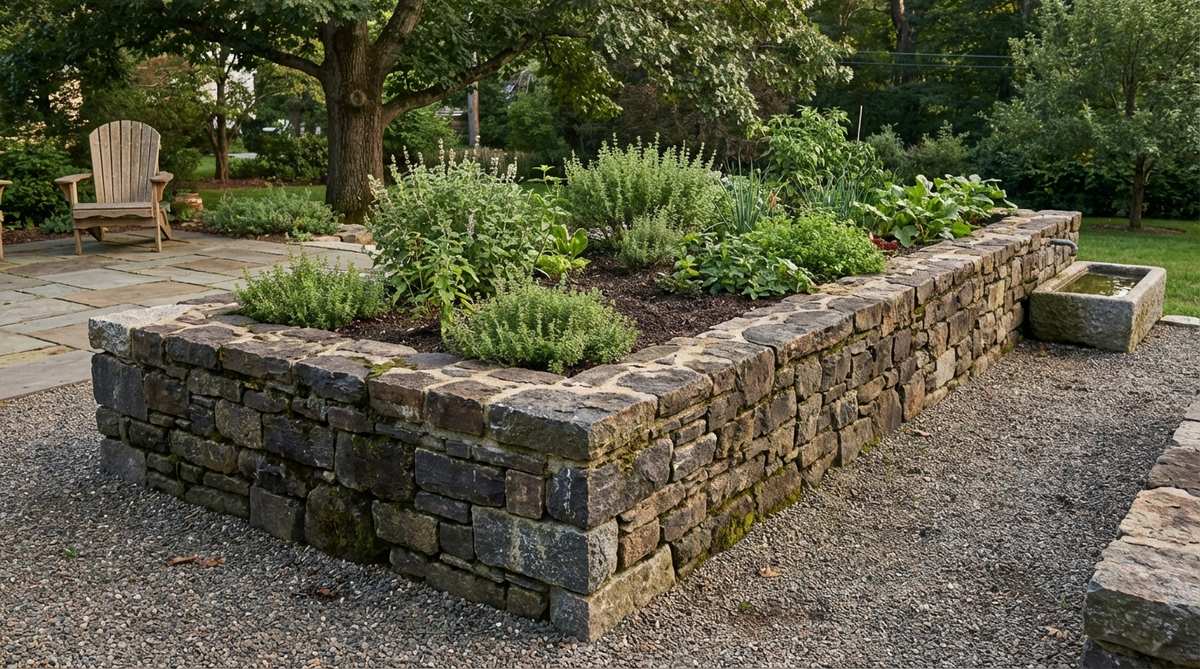
Raised bed garden stone constructions represent the pinnacle of durability in landscape design, with properly built structures lasting 50-100 years or more. Whether you’re planning a formal courtyard garden or a rustic vegetable plot, stone offers unmatched longevity that wood and metal simply cannot match. Fresh Garden Ideas brings you expert-curated construction methods that combine timeless aesthetics with structural integrity for gardens that stand the test of time.
Design SnapshotKey Principles
- Foundation Stability: All stone beds require 4-6 inches of compacted gravel base with 2 inches of leveling sand for long-term structural integrity.
- Drainage Planning: Proper drainage prevents soil saturation and structural failure, particularly critical in mortared constructions.
- Stone Selection: Match stone type to your climate and aesthetic—flagstone for stacked walls, fieldstone for rustic charm, limestone for formal gardens.
- Construction Method: Choose between dry-stacked walls (better drainage, old-world appeal) or mortared construction (maximum stability, clean lines).
Traditional Stone Constructions
Classic stone garden beds draw from centuries-old masonry techniques that have proven their worth in landscapes worldwide. These foundational methods provide the structural knowledge needed for any successful stone raised bed project.
1. Dry-Stacked Fieldstone Walls
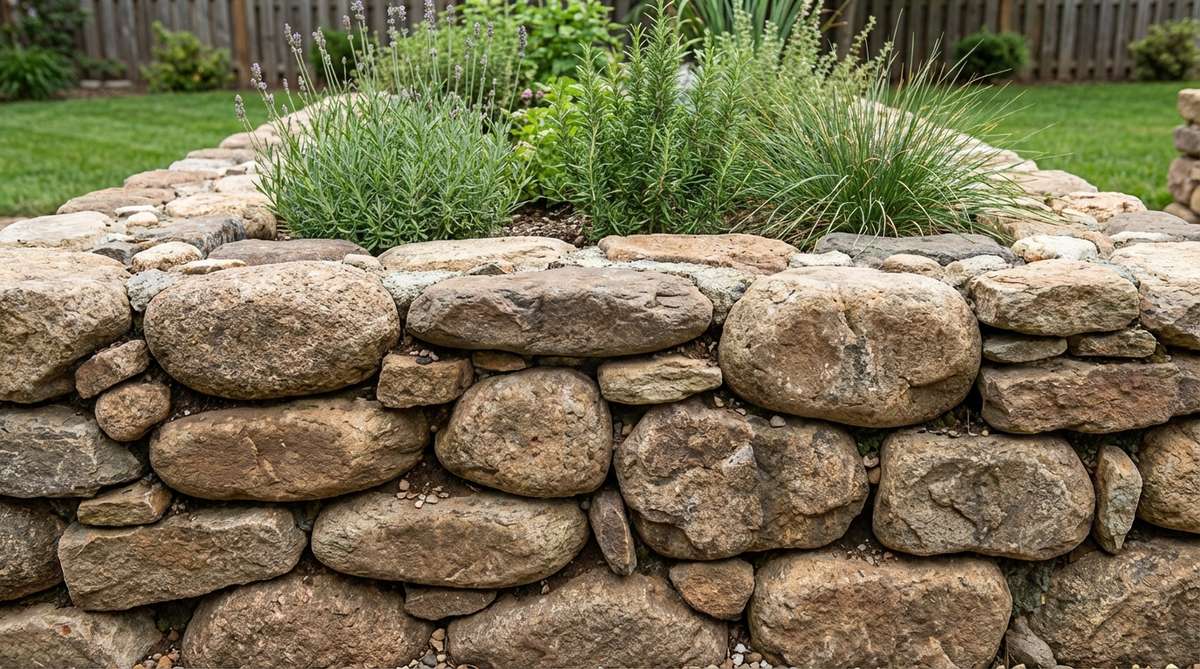
Rounded fieldstones nestle together without mortar, creating walls that breathe and drain naturally. This puzzle-like construction method produces an old-world aesthetic reminiscent of countryside stone fences that have stood for generations.
Each stone must be carefully selected and positioned to interlock with its neighbors. The technique relies on gravity and friction rather than adhesives, allowing slight movement that prevents cracking during freeze-thaw cycles.
Dry-stacking works best for beds 18-24 inches high. Natural drainage channels form between stones, making this construction ideal for moisture-sensitive plants and preventing water accumulation that damages other bed types.
2. Mortared Flagstone Perimeters
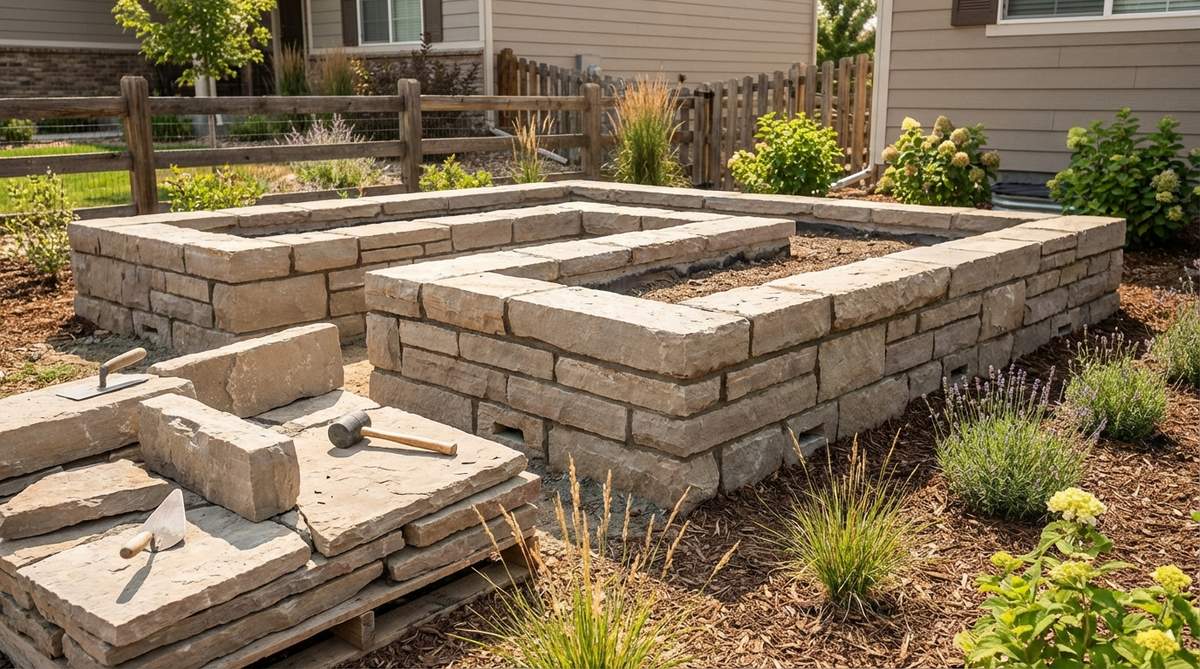
Broad, flat flagstones stacked and cemented create crisp, permanent borders with clean horizontal lines. Mortar joints provide maximum structural stability, allowing taller constructions up to 36 inches without internal bracing.
The construction process involves dry-fitting stones first to establish pattern and fit, then removing sections to apply mortar bed and vertical joints. A rubber mallet taps stones into place, ensuring level courses throughout the build.
Mortared walls require weep holes every 4-6 feet to prevent hydrostatic pressure buildup. These drainage points extend the structure’s lifespan by preventing water from saturating soil against the interior wall surface.
3. Limestone Block Raised Beds
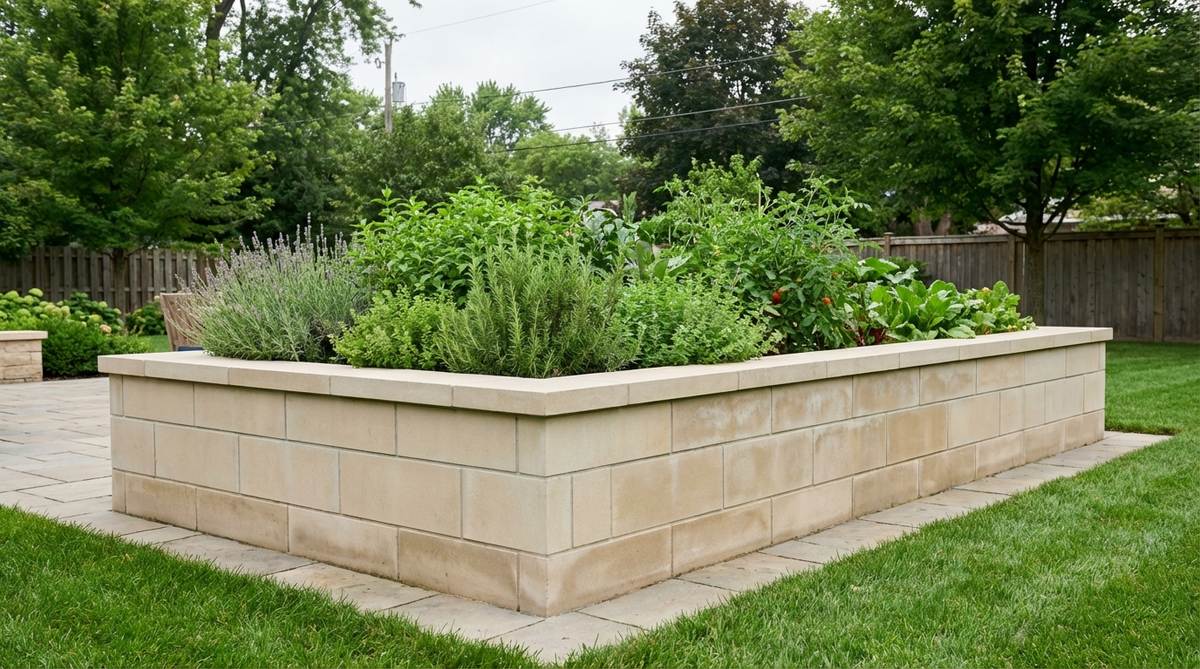
Cut limestone blocks offer light coloring and smooth finishes that complement formal garden designs. The uniform sizing simplifies construction, creating walls with consistent coursing and minimal cutting required.
Limestone’s natural porosity allows subtle moisture exchange while maintaining structural integrity. Blocks stack in running bond pattern with staggered joints, distributing weight evenly across lower courses.
This stone type weathers gracefully, developing patina that softens over time. The light color reflects heat rather than absorbing it, keeping root zones cooler in summer months compared to darker stone alternatives.
4. Granite Retaining Bed Walls
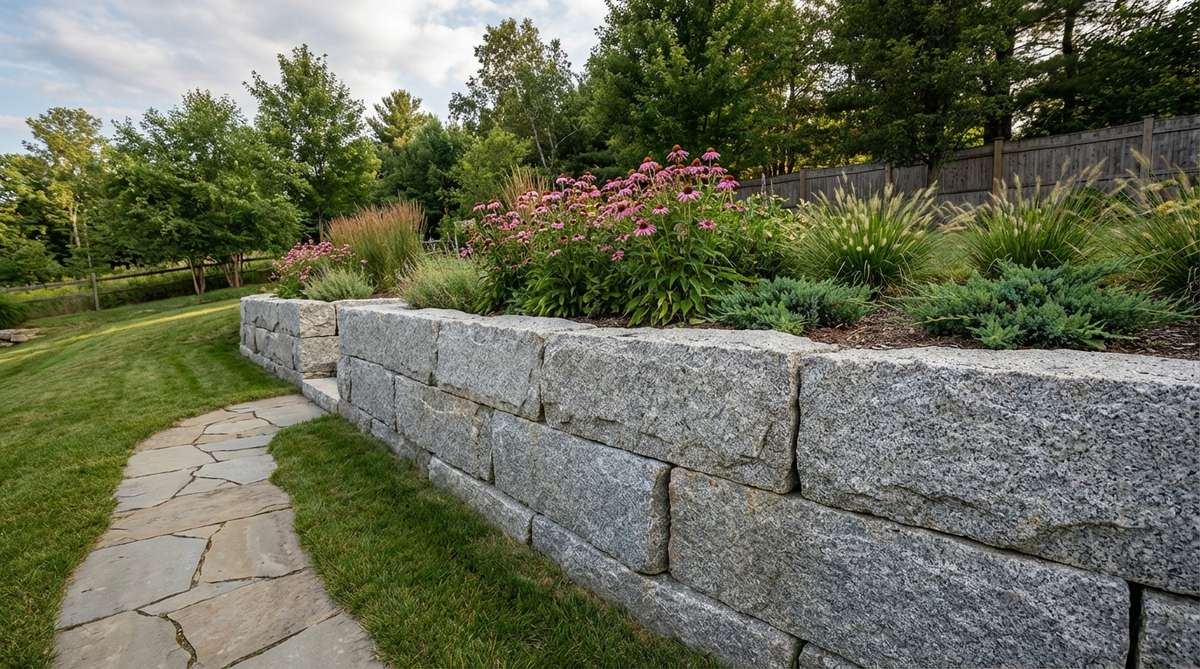
Granite’s exceptional hardness and weather resistance make it ideal for high-traffic areas and extreme climates. Available in colors from speckled gray to pink and black, granite adds bold visual impact to landscape designs.
The density of granite requires professional cutting equipment for custom fitting. However, this toughness translates to structures that resist chipping, cracking, and weathering better than any other natural stone option.
Granite raised beds excel on slopes where retaining wall function matters most. The stone’s weight and strength prevent soil movement even on steep grades, eliminating erosion concerns that plague lighter materials.
5. Slate Tiered Planting Walls
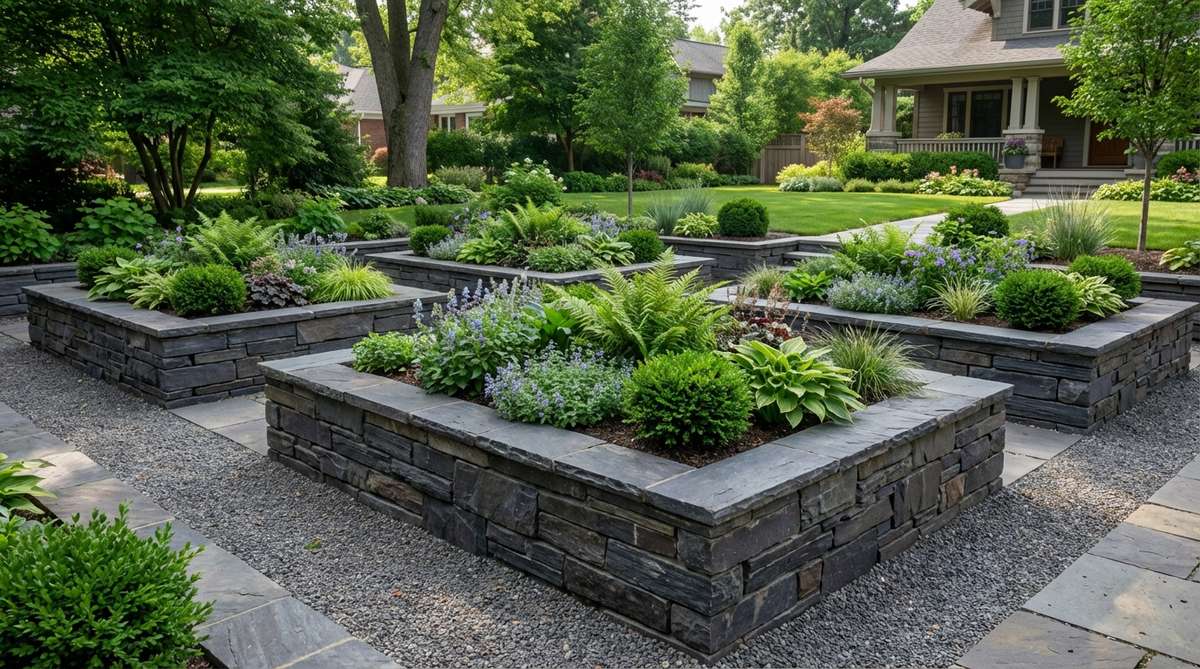
Rich, dark slate tones create refined elegance in compact spaces. The stone’s natural layered structure provides built-in horizontal lines that emphasize the bed’s geometric form.
Slate splits easily along its natural planes, allowing designers to achieve consistent thicknesses without extensive cutting. This characteristic makes it particularly suitable for smaller accent beds and border applications.
The smooth surface resists moss and algae growth better than rougher stones. Slate’s low porosity sheds water quickly, preventing the moisture retention that leads to surface degradation in freeze-prone regions.
6. River Rock Decorative Borders
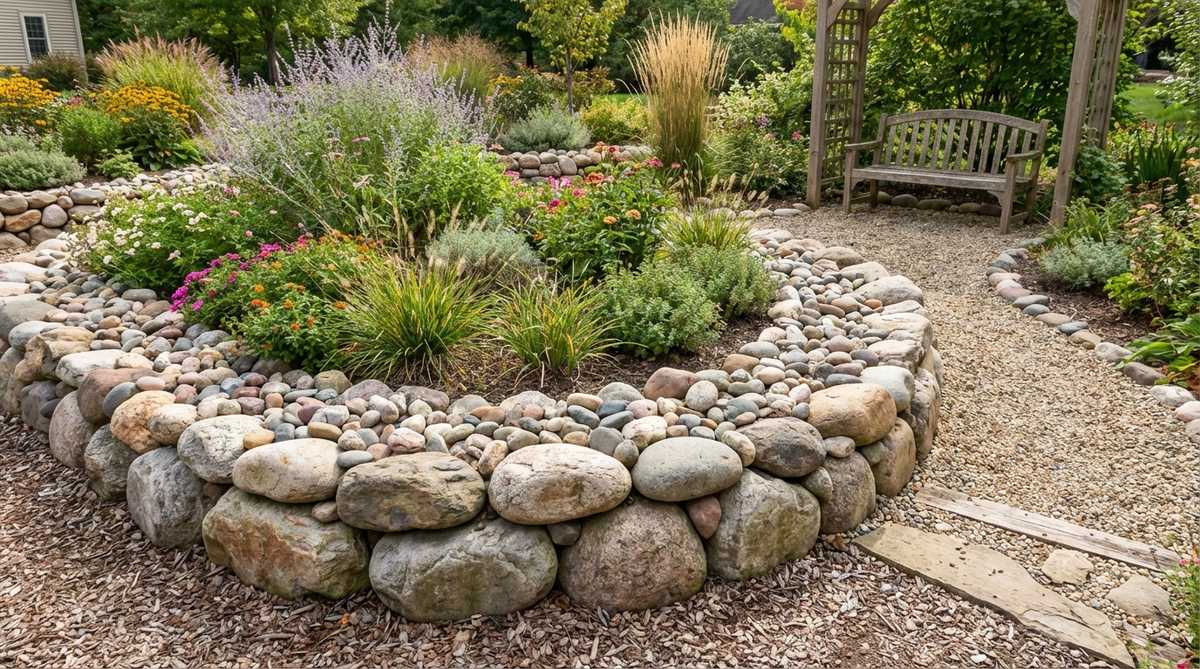
Smooth, rounded river rocks provide softer visual edges compared to angular cut stone. The tumbled appearance brings organic flow to informal garden designs and cottage-style landscapes.
Large river rocks (6-12 inches) work best for structural borders, while smaller sizes serve as decorative top layers. The rounded profile creates slightly less stable walls, limiting practical height to single-course applications.
River rock borders pair exceptionally well with gravel mulch or pebble pathways. The consistent rounded aesthetic ties diverse garden elements together, creating visual continuity throughout the landscape.
Modern Engineered Approaches
Contemporary materials science has produced stone alternatives and composites that deliver authentic appearance with enhanced performance characteristics. These engineered solutions address weight, durability, and installation challenges inherent in natural stone.
7. Polystone Composite Planters
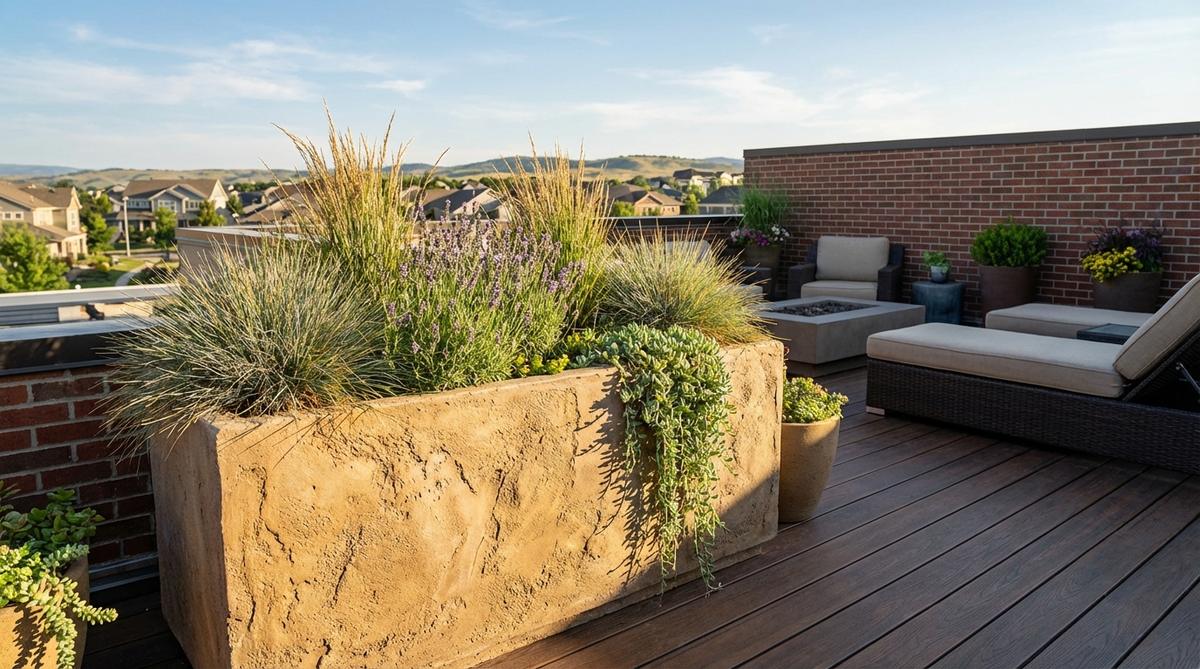
Resin combined with powdered stone creates material as durable as solid stone but significantly lighter. Polystone lacks natural fault lines, making it resistant to chipping and fracturing that affects quarried stone.
The manufacturing process allows precise replication of stone textures and colors. Most observers cannot distinguish high-quality polystone from natural material by visual inspection alone.
Reduced weight simplifies installation and allows placement in locations where solid stone’s mass would be prohibitive. Rooftop gardens, balconies, and second-story applications become viable options with polystone construction.
8. GFRC Concrete Stone Veneer
Glass Fiber Reinforced Concrete provides modern concrete aesthetics with enhanced crack resistance. The fiber reinforcement creates tensile strength that prevents the spider-web cracking common in traditional concrete applications.
GFRC forms thin panels that attach to concrete block or wood frame structures. This veneer approach delivers stone appearance at fraction of the weight and cost of solid stone construction.
The material resists freeze-thaw damage better than traditional concrete. GFRC maintains structural integrity through temperature extremes that cause other concrete products to spall and deteriorate.
9. Terrazzo Speckled Raised Beds
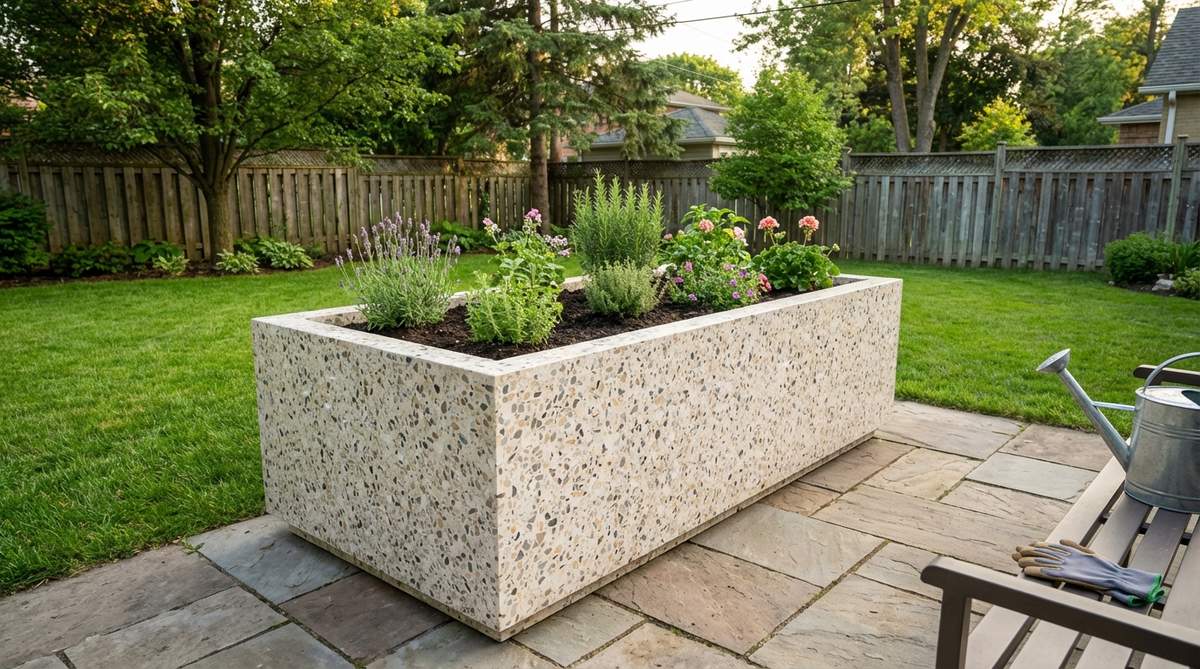
Stone chips suspended in binding agent create unique speckled micro-patterns throughout each planter. No two terrazzo pieces are identical, providing custom appearance without custom pricing.
The composite structure achieves stone toughness while weighing considerably less. Terrazzo planters offer superior frost resistance compared to natural stone, making them reliable choices for harsh winter climates.
The smooth polished surface cleans easily and resists staining. Unlike porous natural stones that absorb spills and develop discoloration, terrazzo maintains its original appearance with minimal maintenance.
10. Fiberstone Reinforced Construction
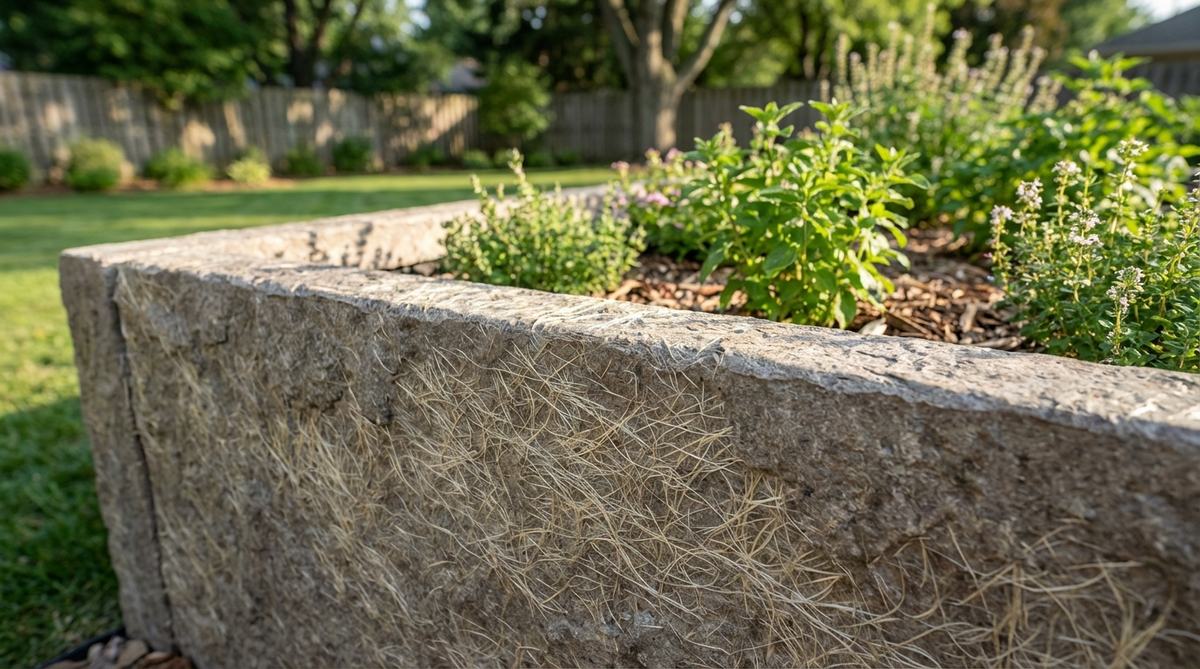
Fiberglass fibers embedded in stone matrix combine natural beauty with modern engineering. The reinforcement prevents catastrophic failure, allowing thinner walls that would crack if built with unreinforced stone.
Manufacturing controls ensure consistent quality without the natural variations that complicate traditional stonework. Builders can predict performance characteristics rather than accounting for unknown flaws in natural material.
Fiberstone weighs approximately 40% less than solid stone equivalents. This reduction expands installation possibilities while maintaining the authentic look that landscape architects prefer for high-end projects.
11. Interlocking Stone Block Systems
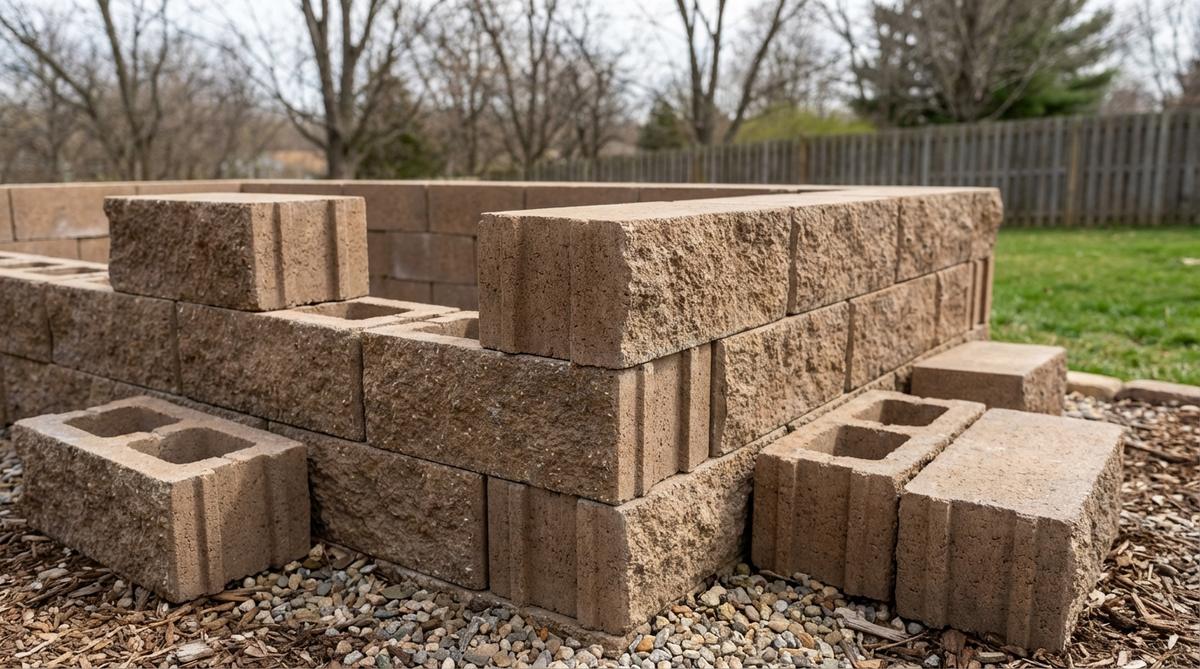
Engineered blocks with built-in connection systems eliminate traditional masonry skills from the construction process. Interlocking lips and channels automatically align courses and prevent shifting.
The precision manufacturing allows novice builders to achieve professional results. Each block fits in predetermined position, removing guesswork and reducing installation time by 50% compared to traditional methods.
Hollow core designs reduce weight while maintaining structural strength. Internal cavities can be filled with rebar and concrete for applications requiring additional engineering, such as tall retaining walls.
Specialty Stone Techniques
Advanced construction methods leverage stone’s unique properties to create functional features beyond basic containment. These techniques demonstrate how skilled craftsmanship transforms raw material into landscape centerpieces.
12. Boulder-Integrated Natural Beds
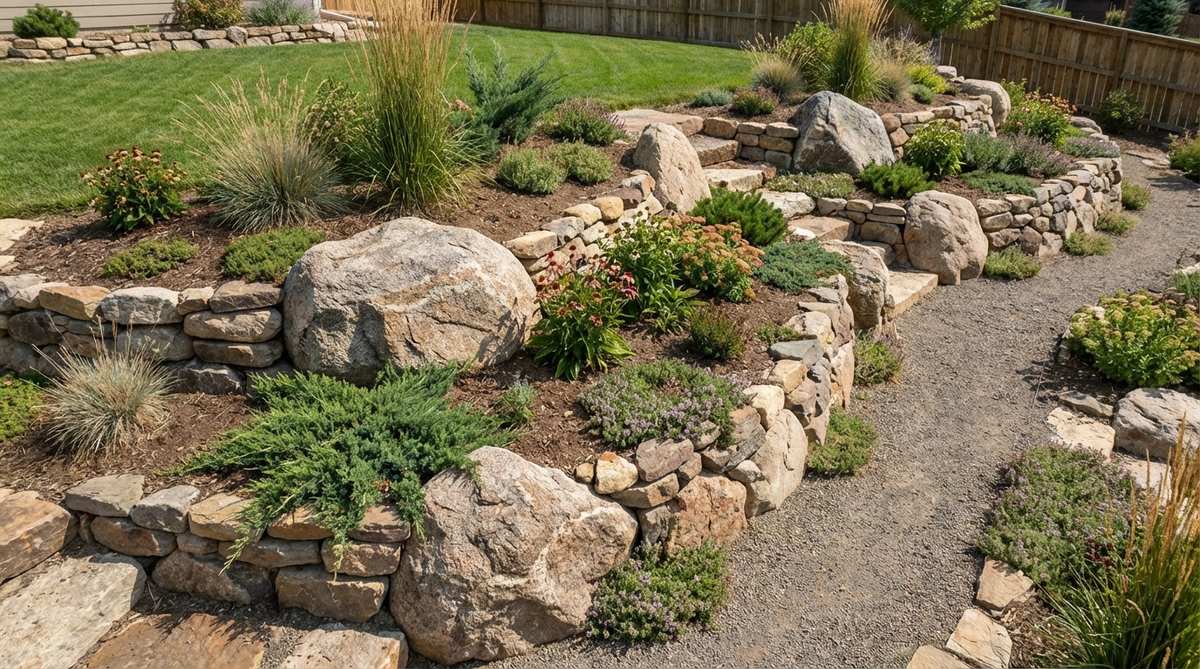
Large boulders (2-4 feet diameter) embedded as structural anchors create wild, naturalistic garden edges. The massive stones serve as visual focal points while providing immovable foundations for surrounding walls.
Construction involves excavating deep pockets for boulders, burying one-third to one-half of their mass below grade. Smaller stones build outward from these anchor points, creating organic transitions that mimic natural rock formations.
This technique excels on slopes where boulder mass prevents downhill creep. The irregular, naturalistic result appears as if the landscape itself formed the garden bed rather than human construction.
13. Gabion Basket Stone Walls
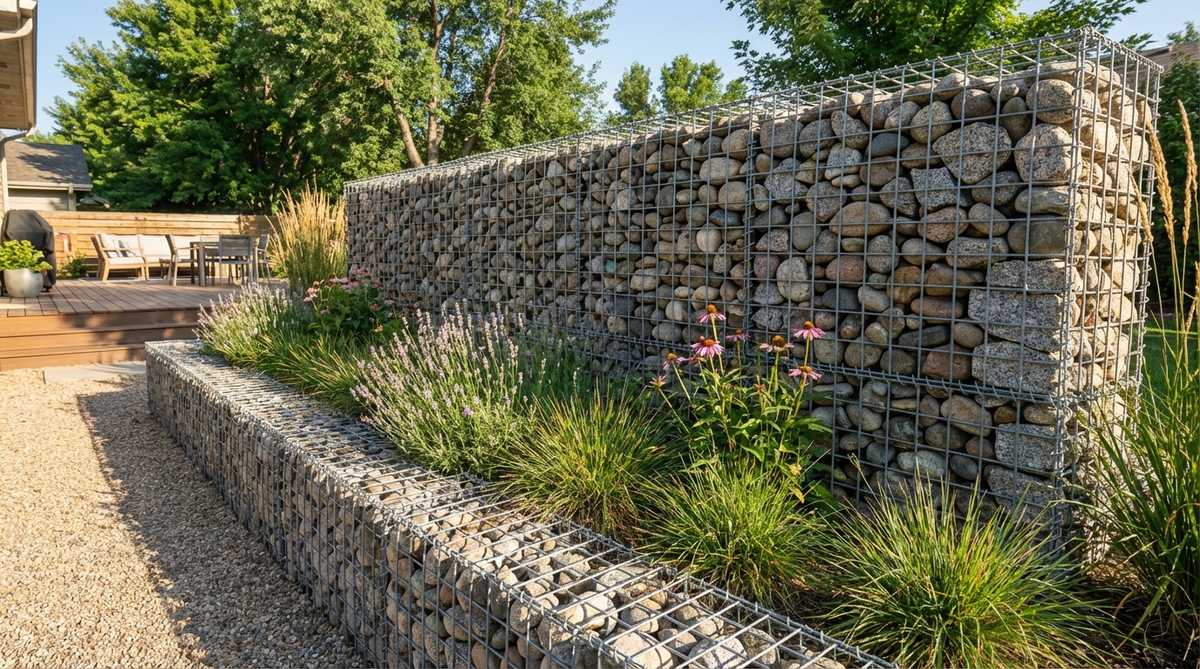
Wire mesh cages filled with stones create industrial-modern aesthetic with exceptional drainage. The open structure allows water and air circulation that solid walls cannot match.
Gabion construction requires no mortar or stone-cutting skills. Workers simply stack cages and fill them with available stone, making this technique viable for large-scale projects with limited masonry expertise.
The wire framework contains stone while allowing independent movement of individual pieces. This flexibility prevents the cracking that affects rigid mortared walls during soil settlement or frost heave.
14. Dry-Laid Pennsylvania Fieldstone
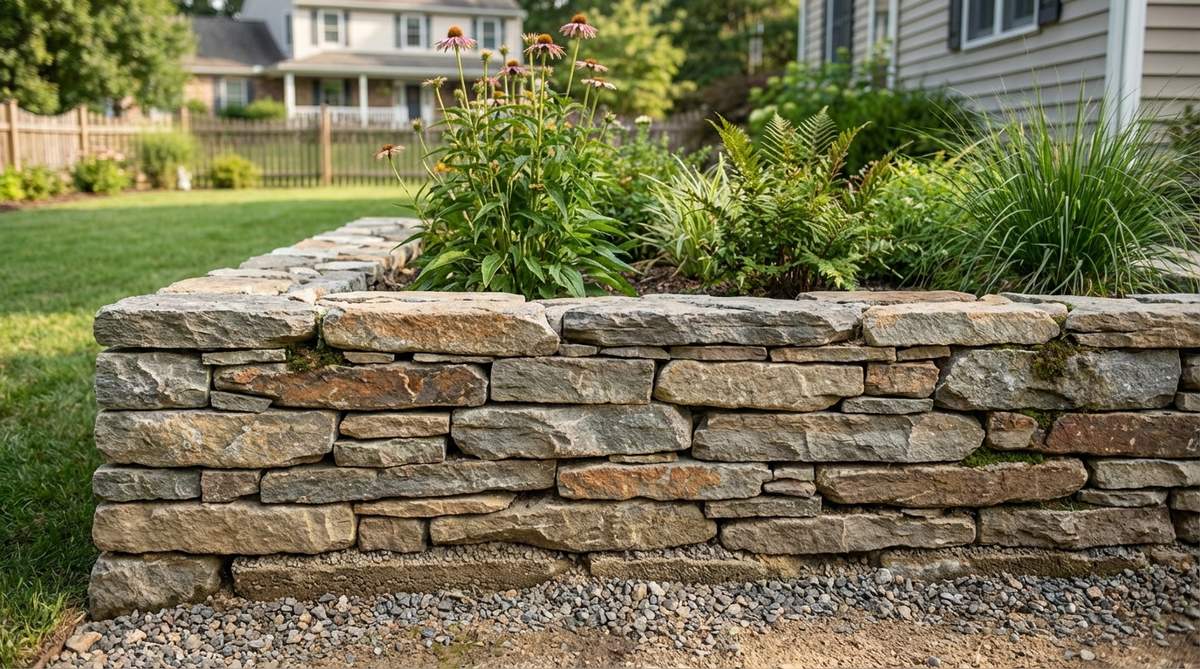
This regional technique uses flat fieldstones laid horizontally on compacted sand and gravel beds. Tightly packed sand between courses holds the design intact without mortar adhesion.
The method creates miniature retaining walls with exceptional drainage characteristics. Water flows freely through the structure rather than building pressure against interior surfaces.
Pennsylvania dry-laid construction requires skill in stone selection and fitting. Each piece must be chosen for size, shape, and angle to create stable courses that resist displacement under soil pressure.
15. Deadman Stone Anchoring
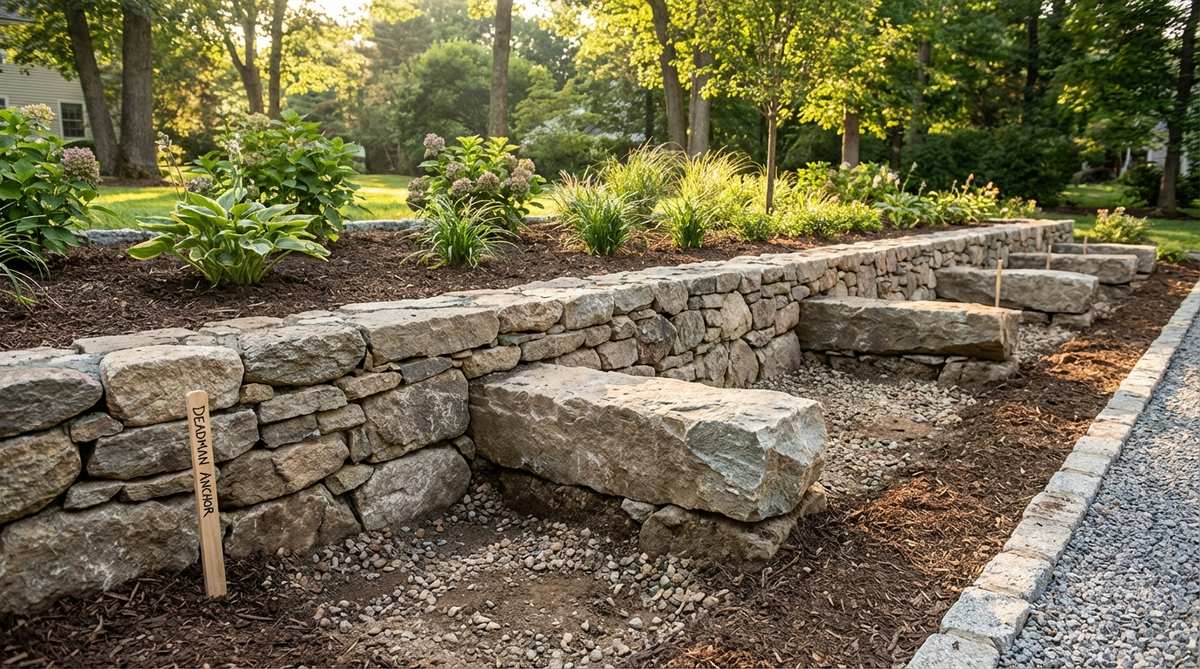
Long stones set perpendicular to the wall face project deep into backfill, anchoring the structure against lateral soil pressure. These “deadman” stones are essential for walls exceeding 24 inches in height.
Installation involves laying horizontal courses normally, then positioning anchor stones every 4-6 feet along the wall length. Backfill buries the projecting portions, creating mechanical locks that prevent wall rotation.
This traditional technique allows dry-stacked walls to achieve heights that would otherwise require mortared construction. The anchors transfer lateral forces deep into the soil mass behind the wall.
16. Rubble Trench Foundation System
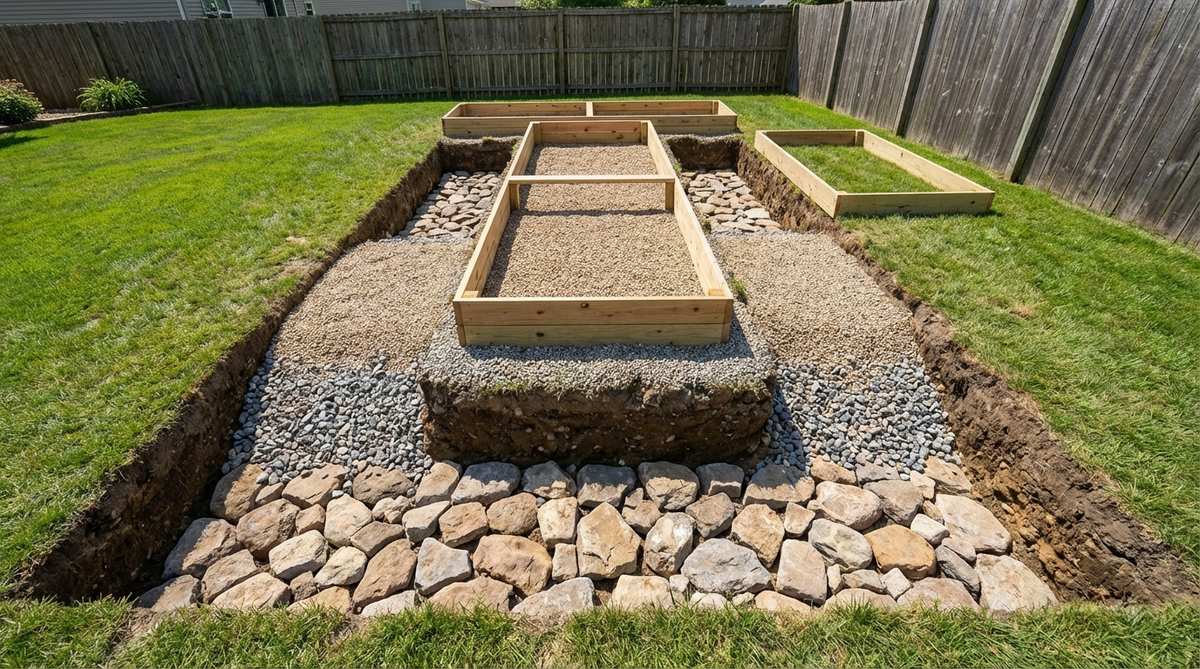
Deep trenches (18-24 inches) filled with graded stone provide superior drainage and frost-resistant foundations. This approach eliminates concrete footings while achieving comparable stability.
The trench bottom receives large stones (4-6 inches), progressing to smaller material (2-3 inches) in middle layers, topped with pea gravel or crusher dust. This gradation creates capillary break that prevents moisture wicking.
Rubble trenches excel in clay soils where water accumulation typically causes frost heave. The stone-filled cavity provides path for water to drain away rather than freezing and expanding beneath the wall.
17. Stone Veneer Facing Systems
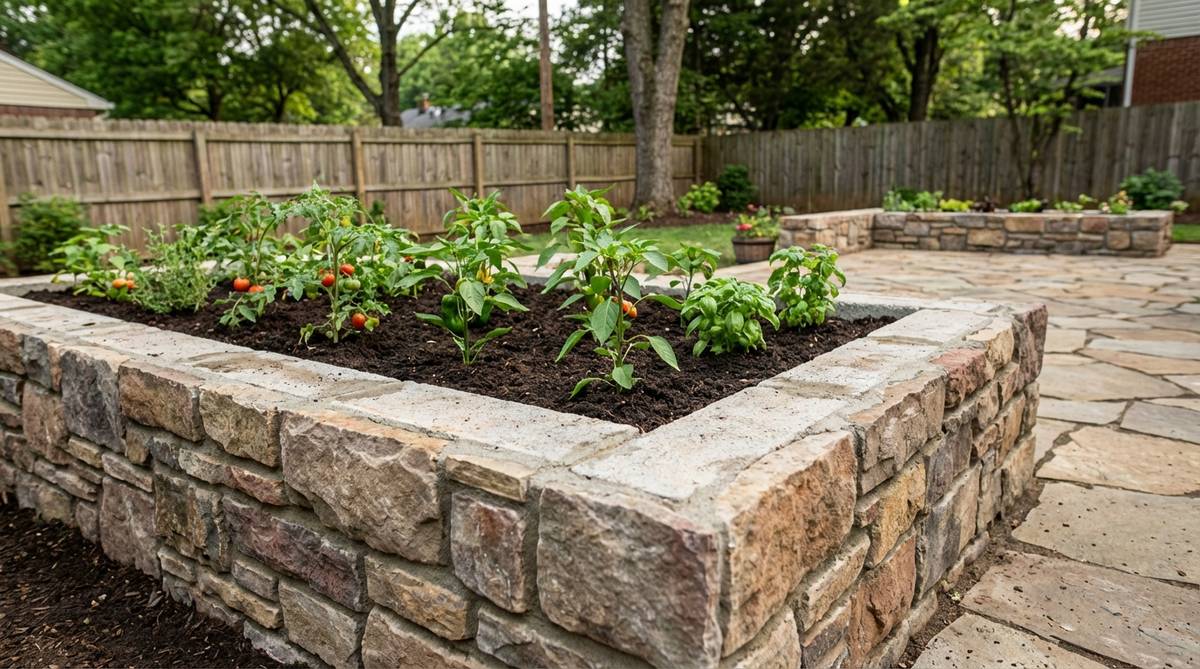
Thin stone slices (1-2 inches thick) adhered to concrete block or poured concrete cores deliver stone appearance without full stone construction. The structural wall provides strength while veneer supplies aesthetics.
This approach reduces material costs by 50-70% compared to solid stone walls. The thin facing requires far less quarried material, lowering both purchase price and transportation expenses.
Installation uses mortar or specialized adhesives to bond veneer to backing wall. The result appears identical to solid stone construction from exterior view while maintaining modern engineering standards internally.
Tiered and Terraced Systems
Vertical dimension transforms flat lots into dynamic landscapes through terraced stone garden beds. These multi-level constructions maximize planting space while creating architectural interest that single-tier beds cannot achieve.
18. Cascading Three-Tier Planters
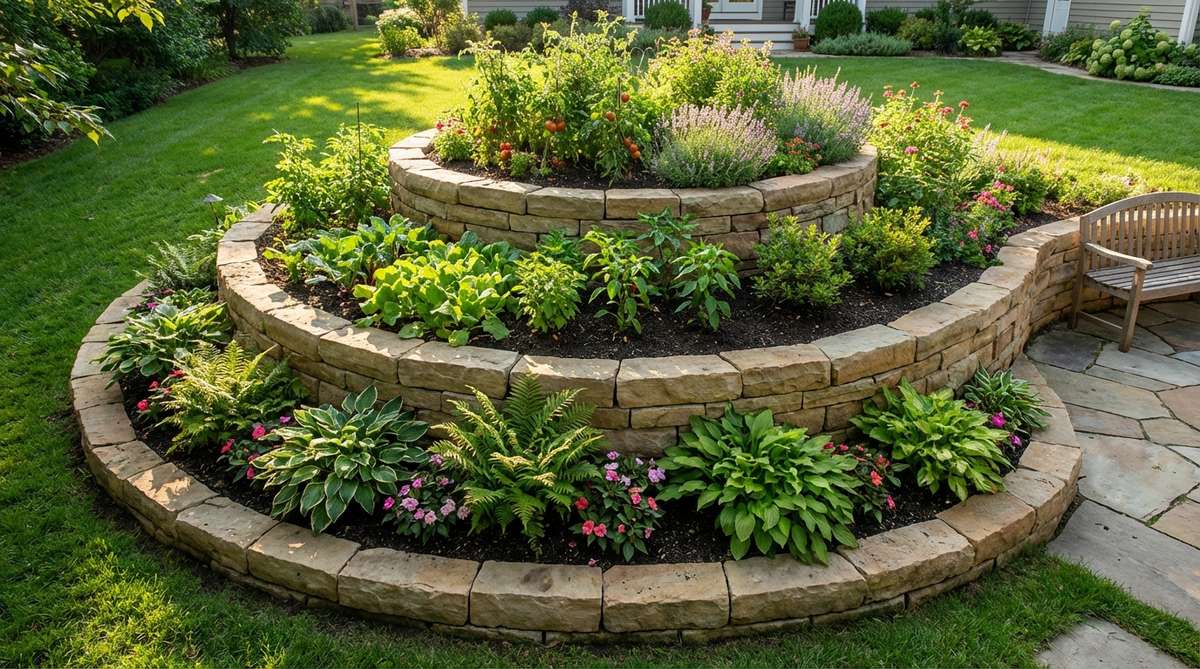
Stacked levels create garden amphitheater effect, with each tier visible from viewing position below. Top tiers receive maximum sunlight for heat-loving plants, while lower levels provide shade-tolerant growing zones.
Each tier functions as independent retaining wall supporting the level above. Construction begins at lowest point, completing first tier before backfilling and building second level, ensuring proper compaction between stages.
Tier heights vary based on planting needs—shallow levels (8-12 inches) for groundcovers and herbs, deeper tiers (18-24 inches) for vegetables and shrubs. This flexibility maximizes usable planting volume across vertical space.
19. Hillside Terraced Vegetable Beds
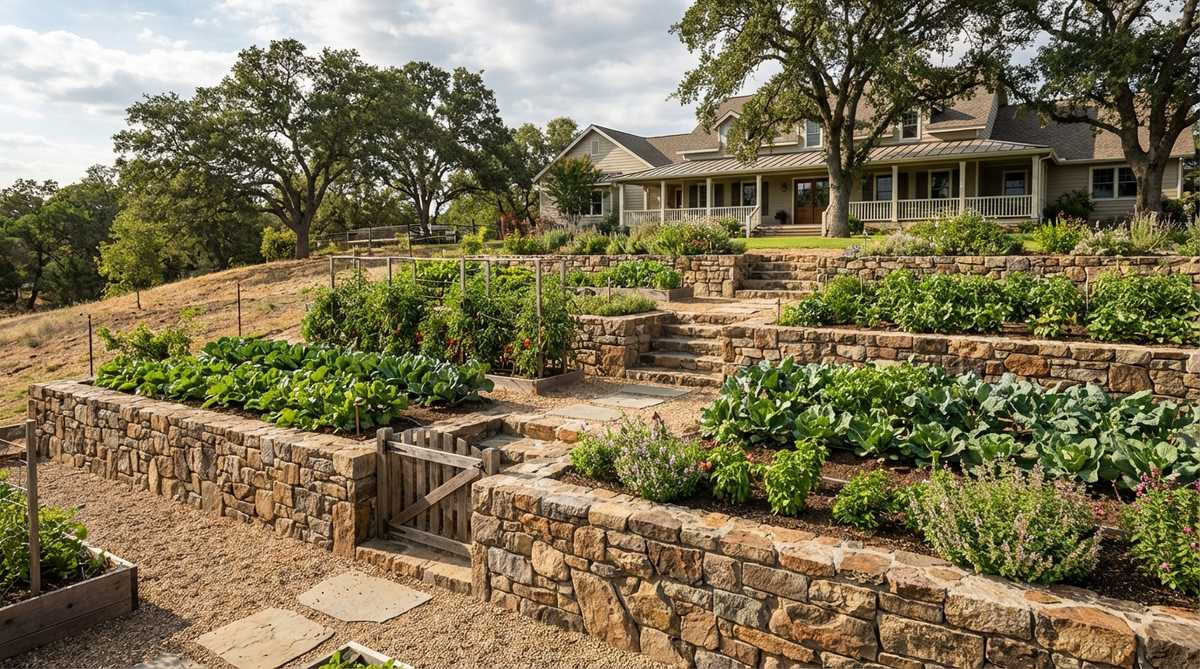
Stone terraces transform unusable slopes into productive growing space. Each level creates flat planting surface while preventing erosion that would otherwise wash soil downhill during rain events.
Terrace walls require careful engineering to handle soil weight and water pressure. Drainage pipes behind each wall collect runoff and direct it to controlled outlets, preventing saturation that causes wall failure.
The terraced design improves accessibility on steep properties. Gardeners work on level surfaces rather than precarious slopes, reducing fatigue and injury risk during planting, weeding, and harvest activities.
20. Stepped Herb Garden Walls
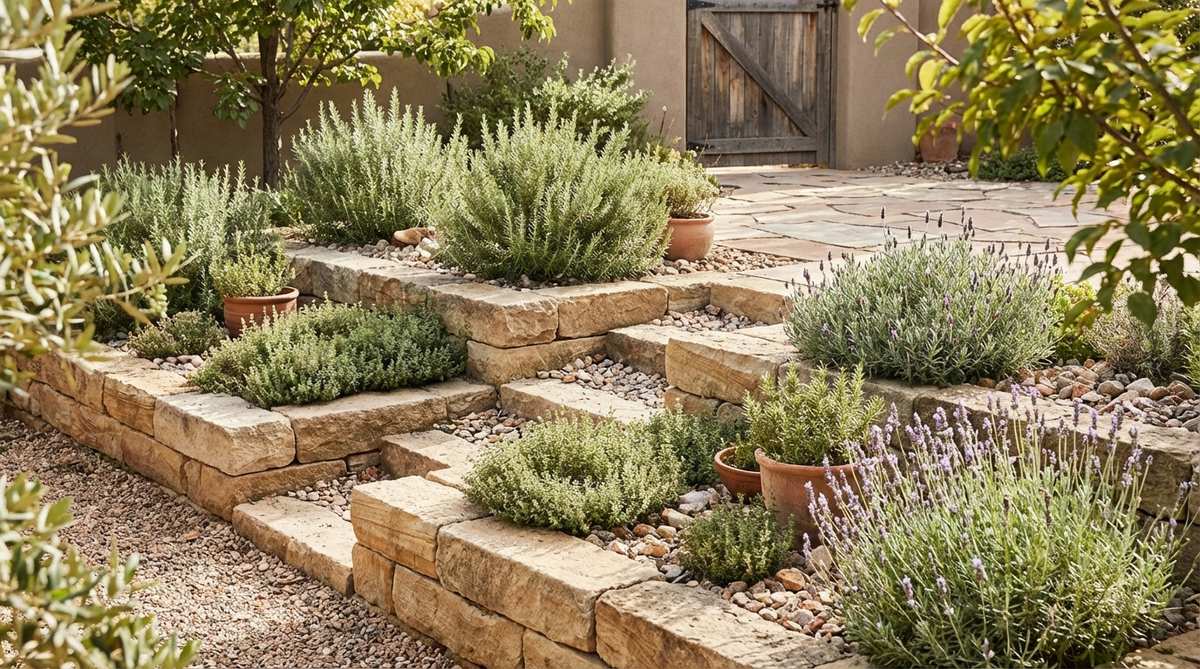
Shallow tiers (6-8 inches deep) create specialized microclimates for Mediterranean herbs. The stone absorbs daytime heat and radiates it overnight, extending growing season for rosemary, thyme, and lavender.
Step construction uses smaller stones than vegetable terraces, creating delicate appearance appropriate for decorative herb gardens. The reduced scale suits courtyard and patio applications where massive walls would overwhelm the space.
Excellent drainage inherent in shallow stone beds prevents the root rot that kills herbs in deeper, moisture-retentive beds. The warm, dry conditions mimic herbs’ native rocky Mediterranean hillsides.
21. Amphitheater Curved Terraces
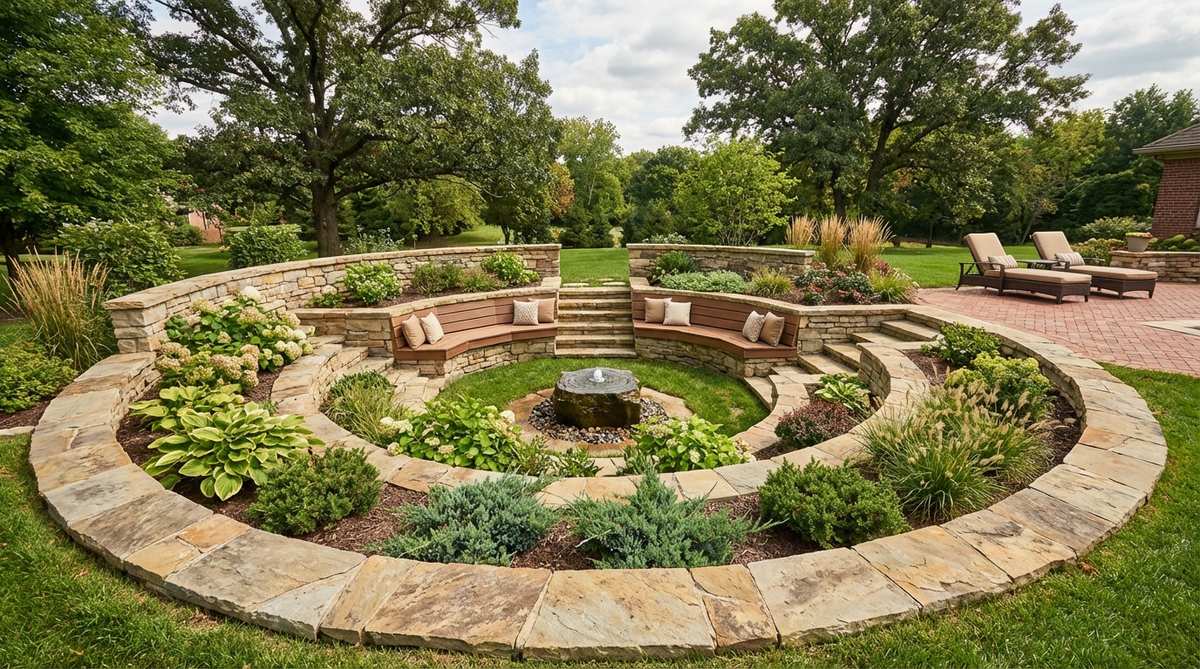
Concentric semi-circular tiers create focal point geometry that draws the eye through the garden. The curved walls soften the geometric severity of straight terraces while maintaining structural efficiency.
Curve construction requires careful planning to maintain consistent radius throughout each tier. String compass method (stake center point with rotating string guide) ensures smooth arcs during layout and excavation.
The amphitheater form concentrates attention on central planting area, making it ideal for specimen plants or water features. Seating incorporated into upper tiers creates outdoor room effect for entertaining spaces.
22. Keyhole Access Terraced Beds
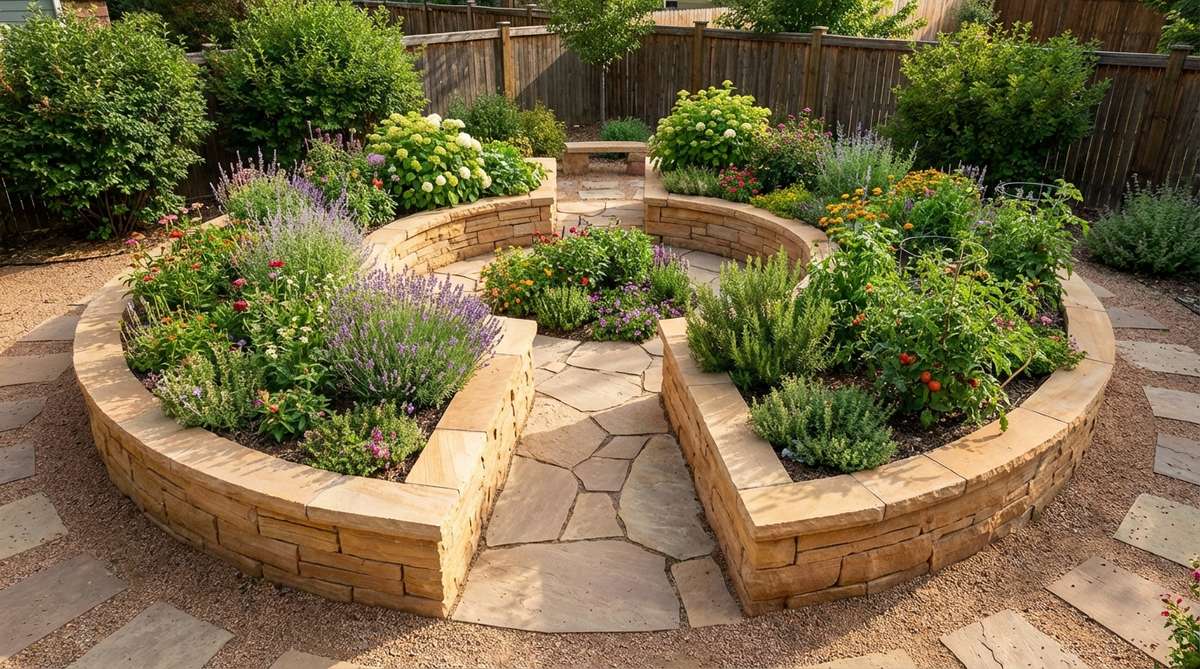
Circular beds with central access paths allow gardeners to reach all planting areas without stepping on soil. The keyhole design maximizes growing space while minimizing compaction from foot traffic.
Stone walls form outer perimeter and path edges, creating distinct circulation and planting zones. The raised construction brings plants closer to working height, reducing back strain during garden maintenance.
This layout excels for elderly or mobility-limited gardeners. The central path provides stable walking surface while stone edges offer hand support when bending to plant or weed beds.
Hybrid Stone Combinations
Mixed-material approaches combine stone’s durability with complementary materials that enhance function or aesthetics. These hybrid constructions demonstrate how thoughtful material pairing creates results superior to single-material designs.
23. Stone and Timber Frame Beds
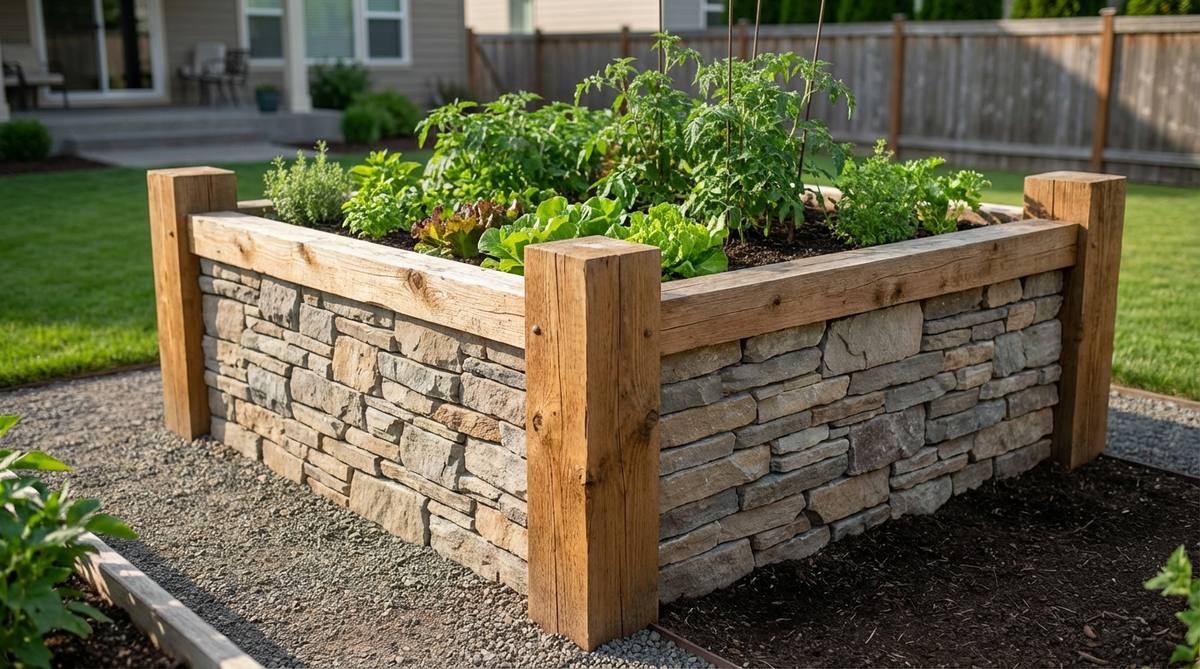
Thick timber posts (6×6 or 8×8) set at corners provide structural framework while stone infill creates decorative faces. The wood handles vertical loads while stone resists lateral soil pressure.
This combination allows taller constructions (36-48 inches) than dry-stone alone could safely achieve. The timber framework provides rigidity that prevents bulging as soil settles and exerts pressure.
Wood-stone hybrids offer cost advantages, using expensive stone only where visible while economical timber provides internal structure. The contrasting materials create visual interest that uniform construction cannot match.
24. Concrete Core Stone Face
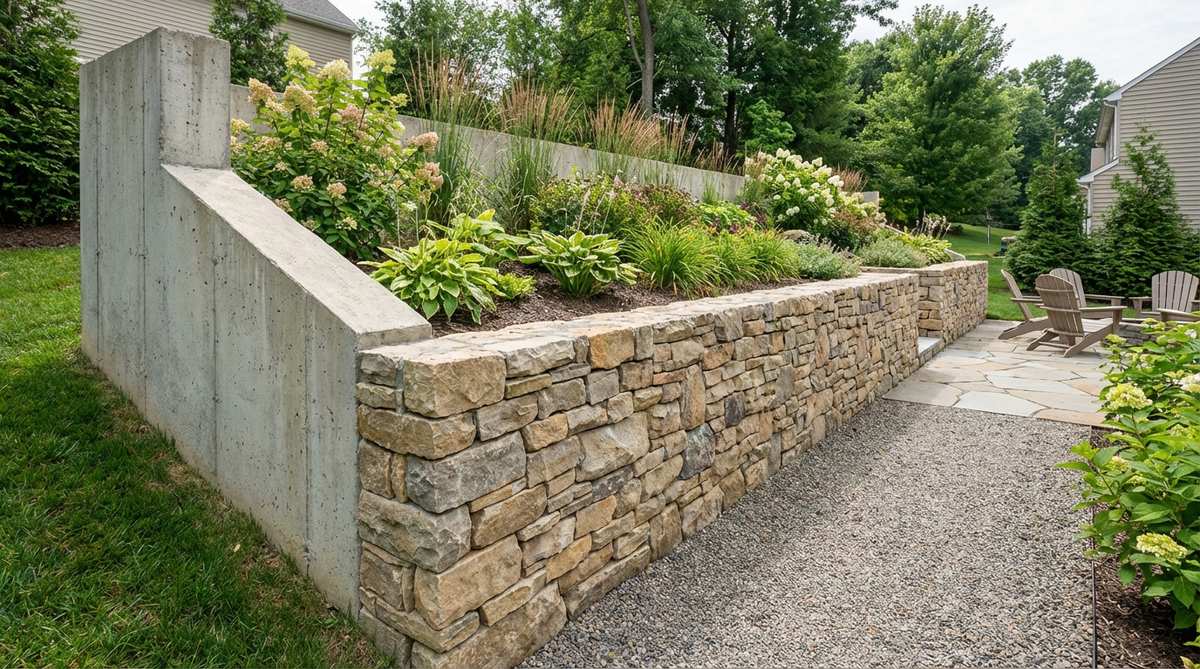
Poured concrete or concrete block cores provide modern engineering strength while stone veneer maintains traditional appearance. This approach meets building codes for tall retaining walls while satisfying aesthetic preferences.
The concrete core includes steel reinforcement and proper drainage systems. Stone facing attaches after structural wall cures, allowing decorative decisions to occur independently from engineering requirements.
Hybrid construction permits heights and loads impossible with stone alone. Commercial projects and tall residential retaining walls use this method to achieve stone appearance with liability-reducing structural certainty.
25. Metal Edge Stone Fill Systems
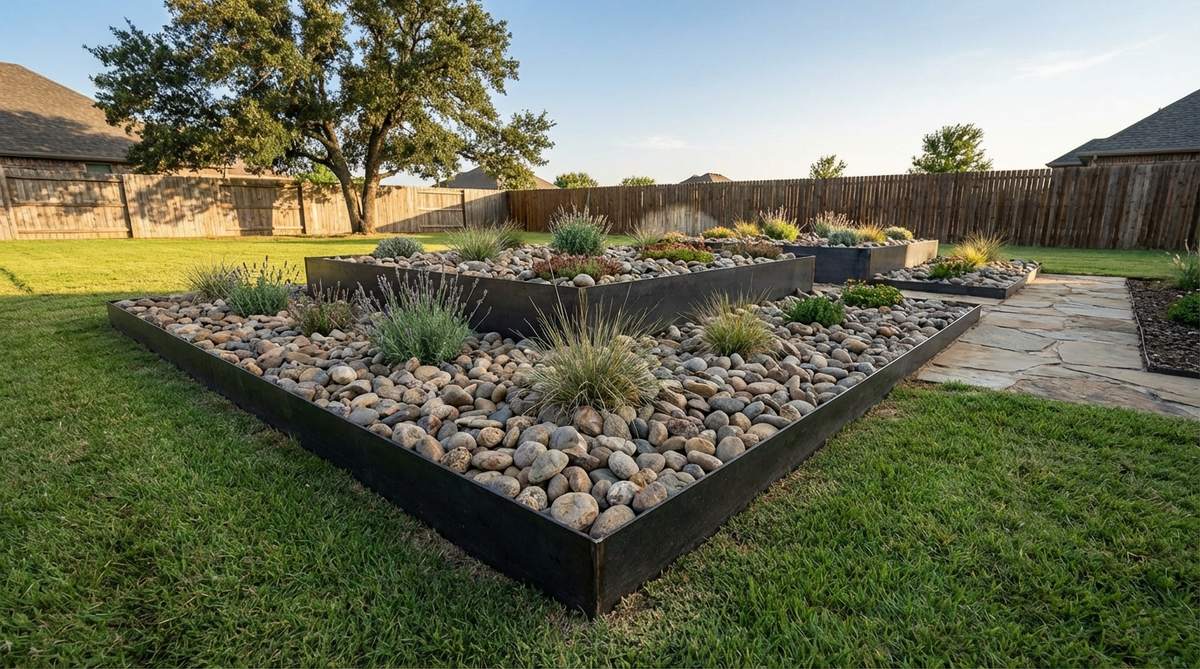
Steel or aluminum edging contains stone fill, combining industrial precision with natural material warmth. The metal edges provide crisp lines while allowing stone texture to dominate visual perception.
This system installs quickly compared to traditional masonry. Metal edges stake into ground, then stone fills the cavity between edging and soil face, requiring no specialized masonry skills.
The metal prevents stone spreading while allowing individual pieces to settle independently. This flexibility accommodates soil movement without the cracking that affects rigid mortared construction.
26. Brick Base Stone Cap Walls
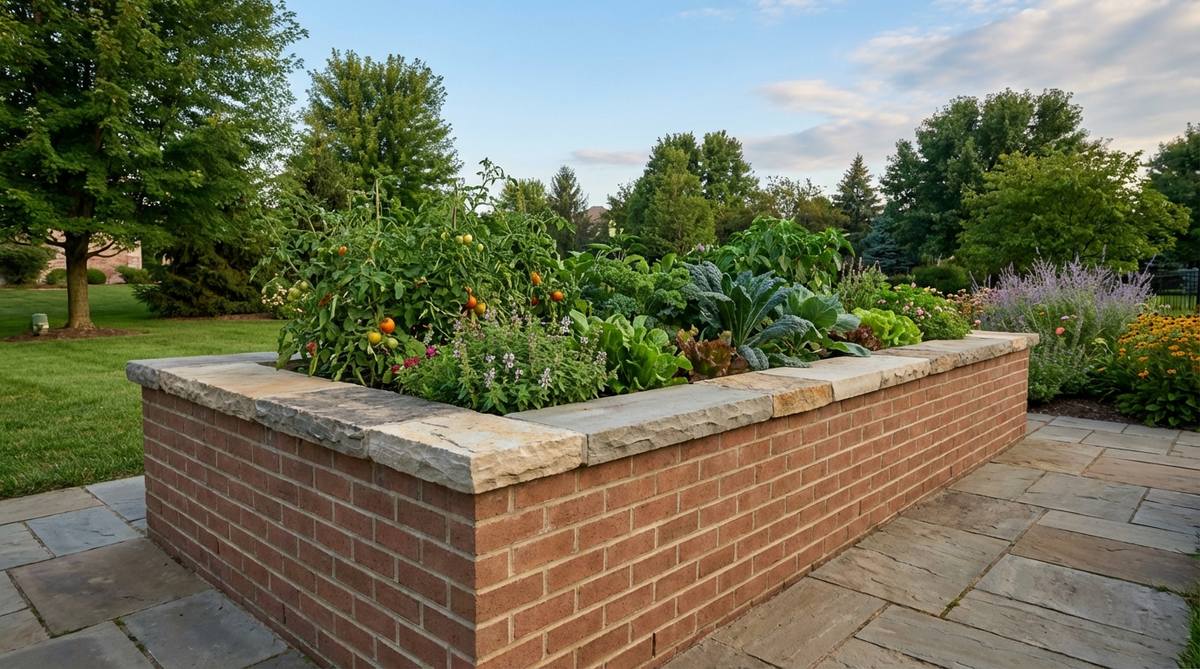
Brick lower courses provide economical height while stone cap creates premium appearance. The brick’s uniform sizing simplifies construction of straight, level walls that stone’s irregularity complicates.
Stone capping typically uses flagstone or cut limestone in large flat pieces. The cap overhang sheds water away from brick faces below, protecting mortar joints from accelerated weathering.
This design concentrates expensive stone where it provides maximum visual impact—at eye level and above. Lower brick courses remain visible but don’t dominate the aesthetic, allowing stone to define the design character.
27. Stone and Planted Wall Pockets
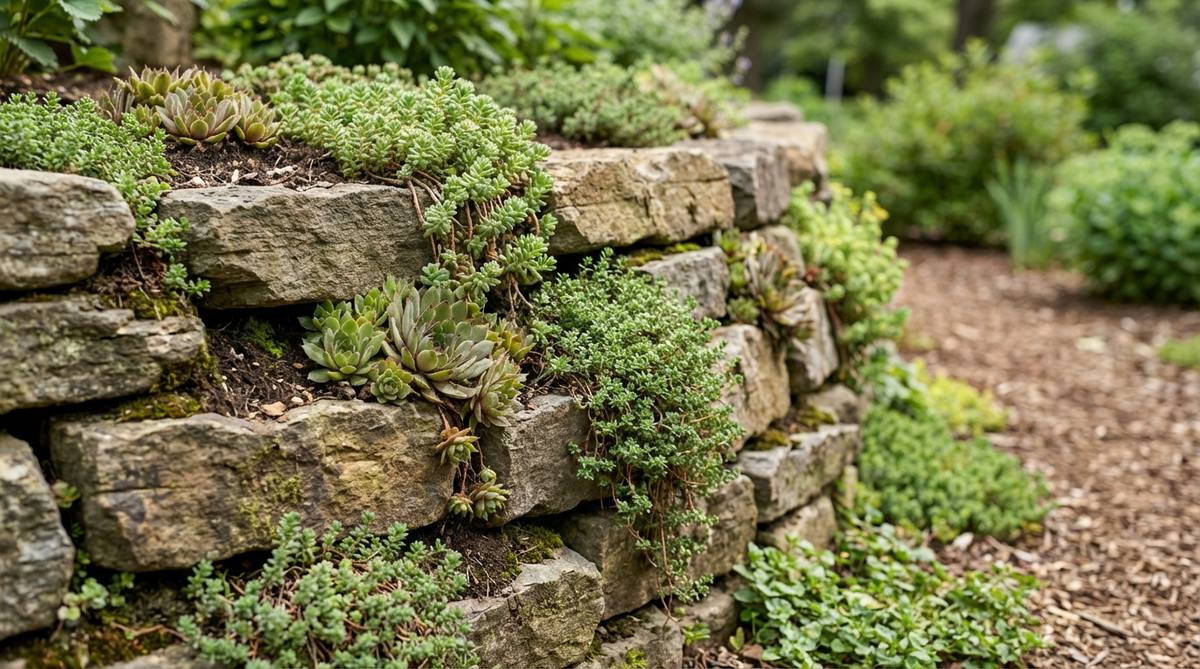
Gaps left between stones create planting pockets for trailing plants and rock garden specimens. The living wall effect softens stone’s hardness while maintaining structural function.
Construction involves building walls with deliberate voids, backfilling these pockets with planting mix as courses rise. Sedums, hens-and-chicks, and creeping thyme establish in minimal soil depths these pockets provide.
Planted walls blur the boundary between structure and garden. As plants mature, they cascade down stone faces, creating tapestry effect that balances built and natural elements.
Decorative Finishing Methods
Surface treatments and detail work elevate functional stone beds into landscape focal points. These finishing techniques demonstrate how craftsmanship transforms basic construction into artistic expression.
28. Fully Dressed Flagstone Caps
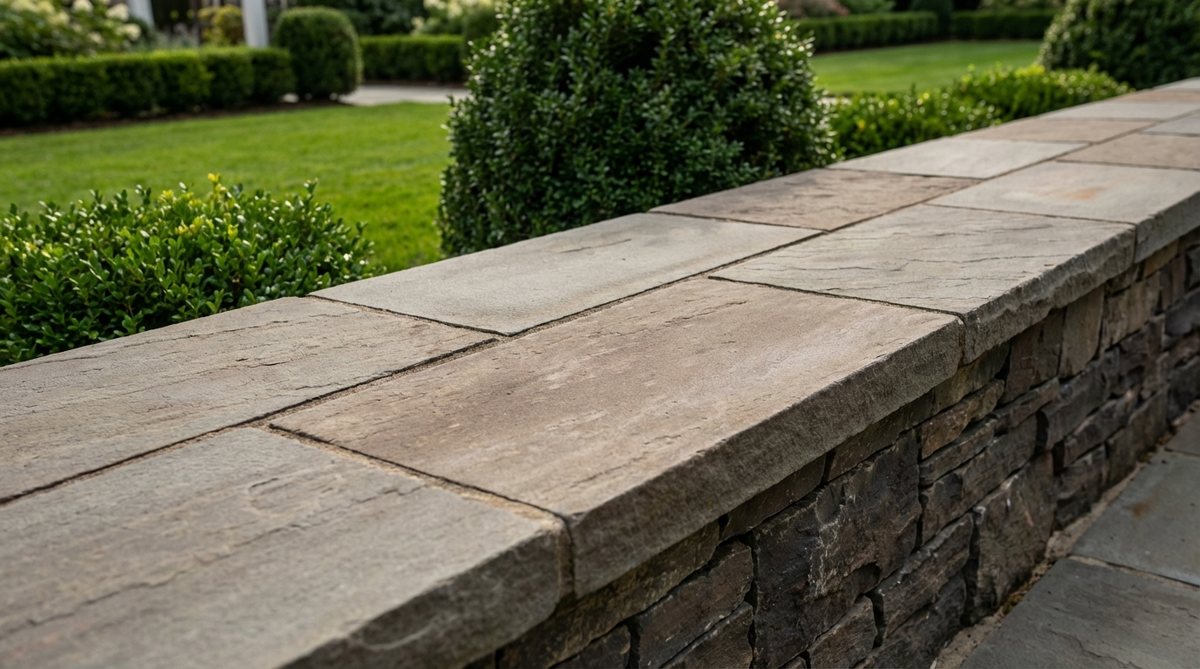
Square or rectangular-cut capstones create formal aesthetic with precise geometry. The uniform sizing allows specific patterns—running bond, stacked, or basket weave—that convey intentional design.
Dressed stone requires professional cutting with diamond blades to achieve clean edges and consistent thickness. The investment in cutting produces refined appearance appropriate for formal gardens and estate landscapes.
Capstones seal the wall top, preventing water infiltration that deteriorates underlying courses. The flat upper surface also provides convenient seating edge or surface for placing tools during garden work.
29. Rough Cut Rustic Finishes
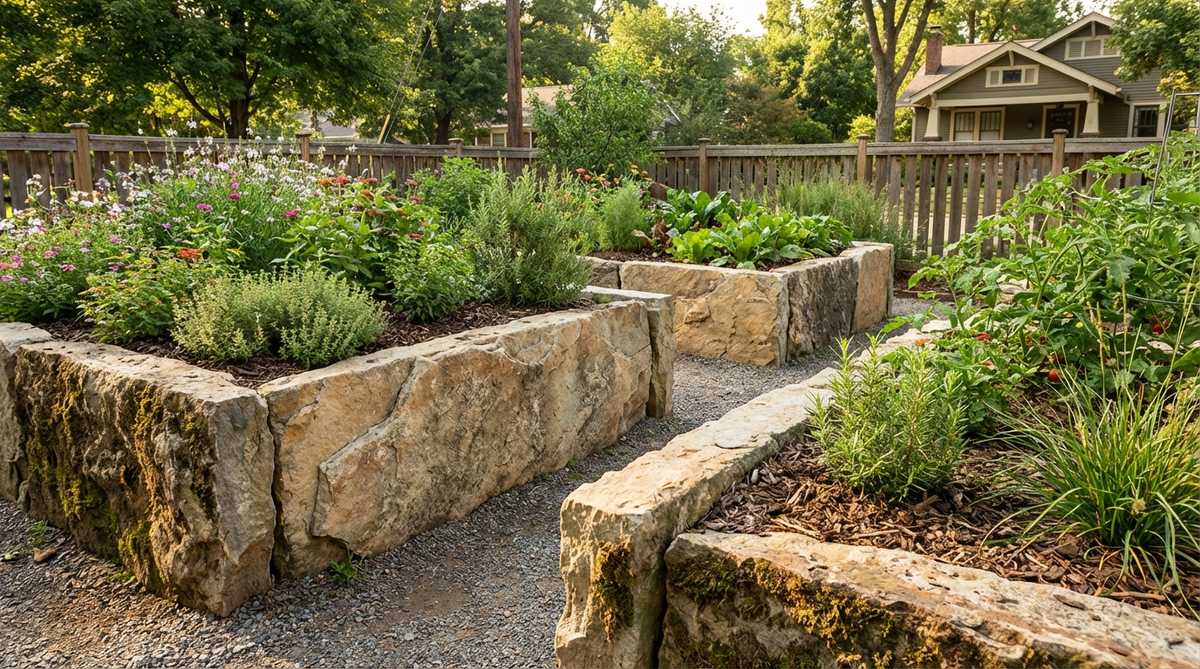
Minimally processed stone with natural edges maintains quarry-fresh appearance. The rough texture and irregular profiles create casual, informal character suited to cottage gardens and naturalistic landscapes.
This approach celebrates stone’s natural state rather than forcing it into geometric conformity. Each piece retains unique character, making the wall feel discovered rather than constructed.
Rough finishes cost less than dressed stone since they require minimal processing. The irregular surfaces also hide minor installation imperfections that would be obvious in precisely cut stonework.
30. Tuckpointing Mortar Detailing
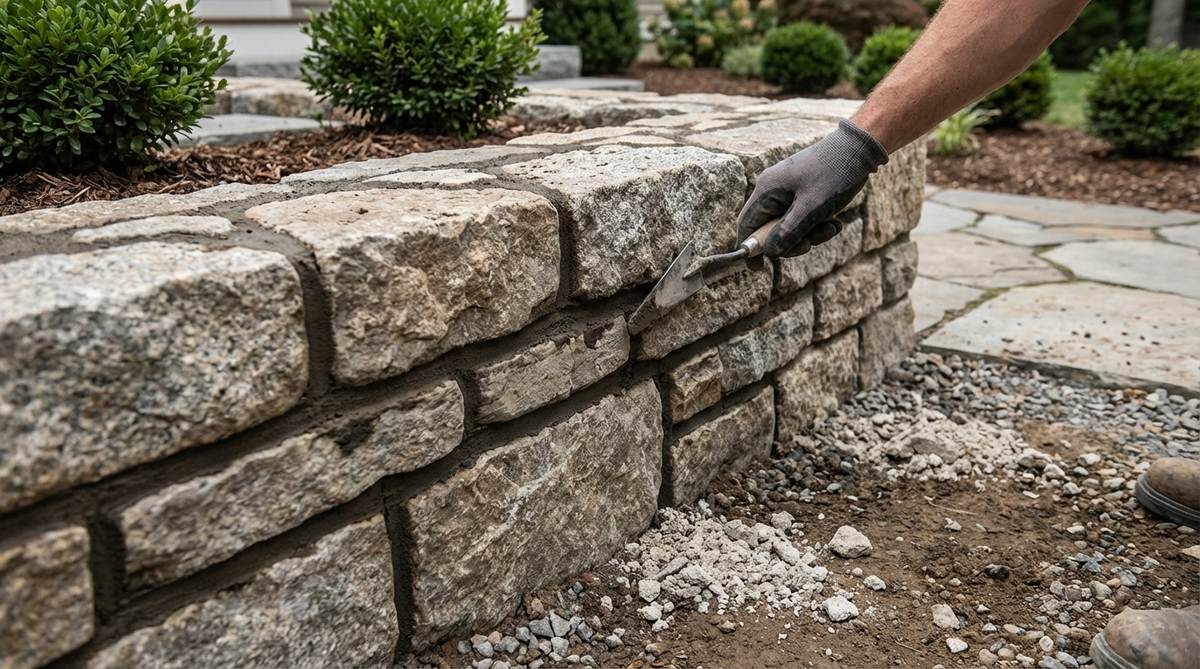
Carefully tooled mortar joints create shadow lines that emphasize individual stones. The process involves raking fresh mortar back from stone faces, then filling with contrasting color or texture.
Proper tuckpointing requires skill and patience, working small sections before mortar sets. The joints must be compressed to prevent water infiltration while achieving consistent depth and profile.
Well-executed tuckpointing transforms ordinary mortared walls into showcase features. The detail work signals quality craftsmanship and enhances the three-dimensional texture that makes stone walls compelling.
31. Mosaic Mixed Stone Patterns
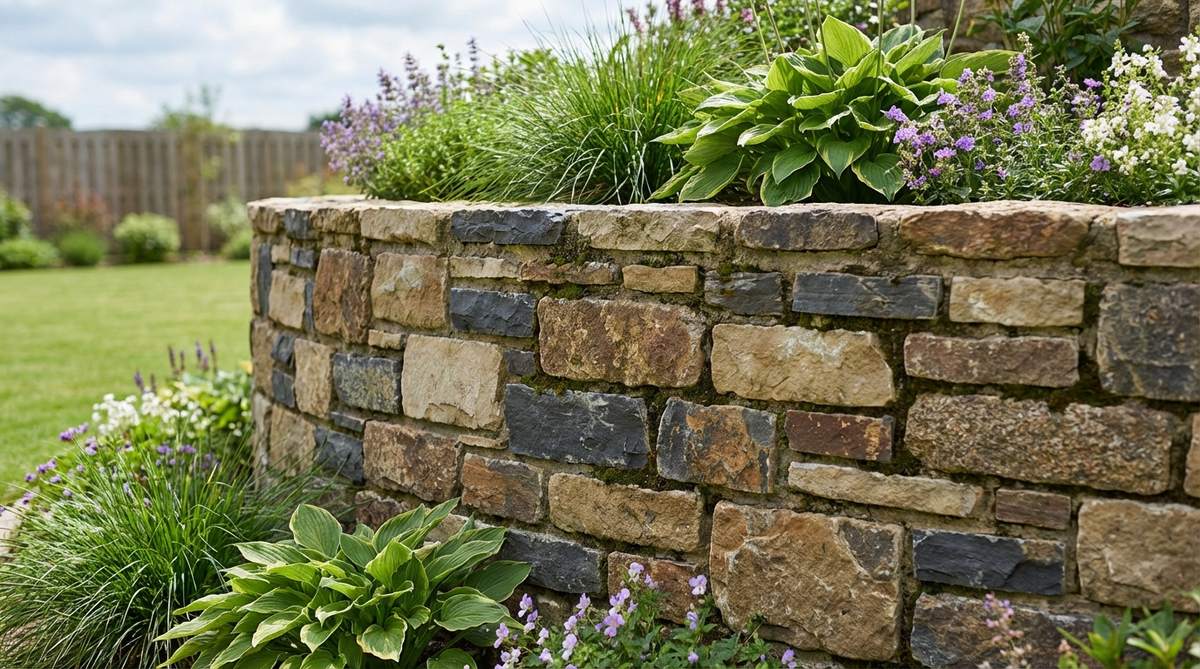
Combining multiple stone types creates color and texture variations impossible with single material. Alternating courses of contrasting stones or creating intentional patterns adds visual complexity to plain walls.
Design planning occurs during stone selection, choosing materials with compatible sizes but distinct appearances. Limestone mixed with slate, or granite accents in fieldstone walls, create striking contrasts.
The mosaic approach allows creative expression while maintaining structural soundness. Each stone type contributes its unique properties—slate’s smooth texture, granite’s color, limestone’s warmth—to the overall composition.
32. Integrated Lighting Systems
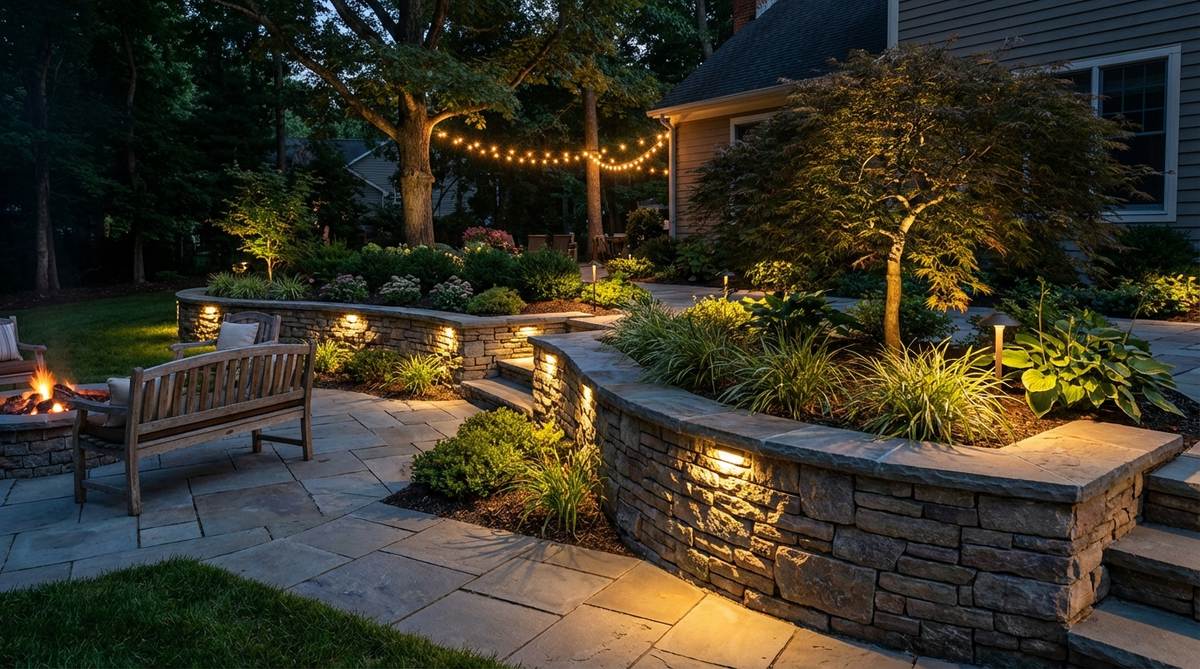
Low-voltage LED fixtures installed in or behind stone walls create dramatic nighttime effects. Light emphasizes stone texture and three-dimensional form while making gardens usable after dark.
Installation requires planning during construction, incorporating conduit and fixture pockets as walls rise. Uplighting from bed level highlights wall faces, while downlighting from caps illuminates planting areas.
The stone’s thermal mass stores daytime heat, creating warm microclimate around evening seating areas. Combined with lighting, this transforms garden beds into outdoor rooms that extend living space beyond the house.
33. Water Feature Integrated Beds
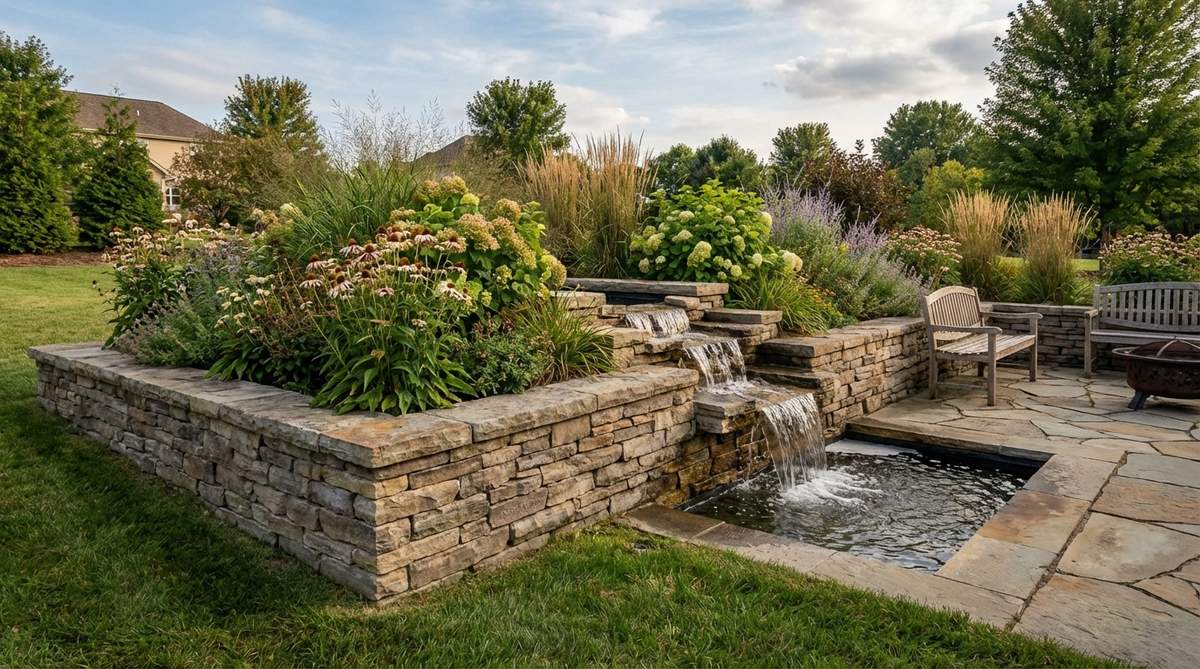
Stone beds built around fountains or pools unify hardscape and water elements. The construction provides structural support for water features while the water animates otherwise static stone walls.
Waterproof membranes behind stone prevent seepage into planting soil. The stone wall serves as decorative face for utilitarian waterproofing, maintaining aesthetic integrity while managing technical requirements.
Moving water adds sound dimension to visual gardens. The combination of living plants, solid stone, and flowing water creates multi-sensory experience that engages visitors beyond simple viewing.
Conclusion
Stone construction delivers unmatched durability and timeless beauty to raised bed garden stone projects that will serve your landscape for generations. From traditional dry-stacked fieldstone to modern engineered composites, the construction methods presented here provide options for every design preference, skill level, and budget. Whether you choose the rustic charm of boulder-integrated beds, the precision of mortared flagstone, or innovative hybrid approaches combining stone with complementary materials, your investment in proper construction techniques ensures structural integrity that wood and metal alternatives simply cannot match. Start your stone garden bed project with careful planning, solid foundation work, and attention to the proven construction principles that have created enduring landscapes throughout history.
Frequently Asked Questions
How long do stone raised garden beds last compared to wood or metal?
Properly constructed stone raised beds last 50-100 years or more, far exceeding wood beds (5-15 years) and metal beds (15-30 years). Stone won’t rot, warp, rust, or degrade, making it the most durable material choice. The initial investment costs more but the lifespan delivers superior long-term value, often outlasting the gardener who builds it.
What’s the difference between dry-stacked and mortared stone beds?
Dry-stacked beds use no mortar, relying on careful stone fitting and gravity for stability. They provide excellent drainage and old-world charm but limit height to 18-24 inches. Mortared construction uses cement between stones for maximum stability, allowing taller walls (36+ inches) with clean, permanent joints. Mortared beds require drainage provisions that dry-stacked walls naturally provide.
Which stone type works best for raised garden beds?
Flagstone excels for stacked walls due to its flat shape, while fieldstone creates rustic charm in dry-stacked construction. Limestone offers formal aesthetics with light coloring, and granite provides maximum durability in harsh climates. The best choice depends on your climate, design style, and budget—all natural stones outlast alternative materials when properly installed.
Do stone raised beds need a foundation?
Yes, all stone beds require proper foundations for long-term stability. Dig trenches 8-12 inches deep, fill with 4-6 inches of compacted gravel, top with 2 inches of leveling sand. This foundation prevents settling, provides drainage, and protects against frost heave in cold climates. Skipping foundation work leads to leaning walls and structural failure within a few years.
Can I build stone raised beds on slopes?
Stone excels on slopes, providing superior erosion control and creating level planting surfaces on unusable grades. Terraced designs with multiple tiers transform steep hillsides into productive gardens. Each tier acts as retaining wall for the level above, requiring proper drainage and anchoring techniques like deadman stones for walls exceeding 24 inches in height.
How much does stone for raised beds cost compared to other materials?
Stone material costs $200-500 per ton depending on type and region, making initial investment 2-4 times higher than wood or metal beds. However, the 50-100 year lifespan means you’ll never rebuild, while wood beds require replacement every decade. Total lifetime cost often favors stone, especially when factoring in reduced maintenance and enhanced property value.