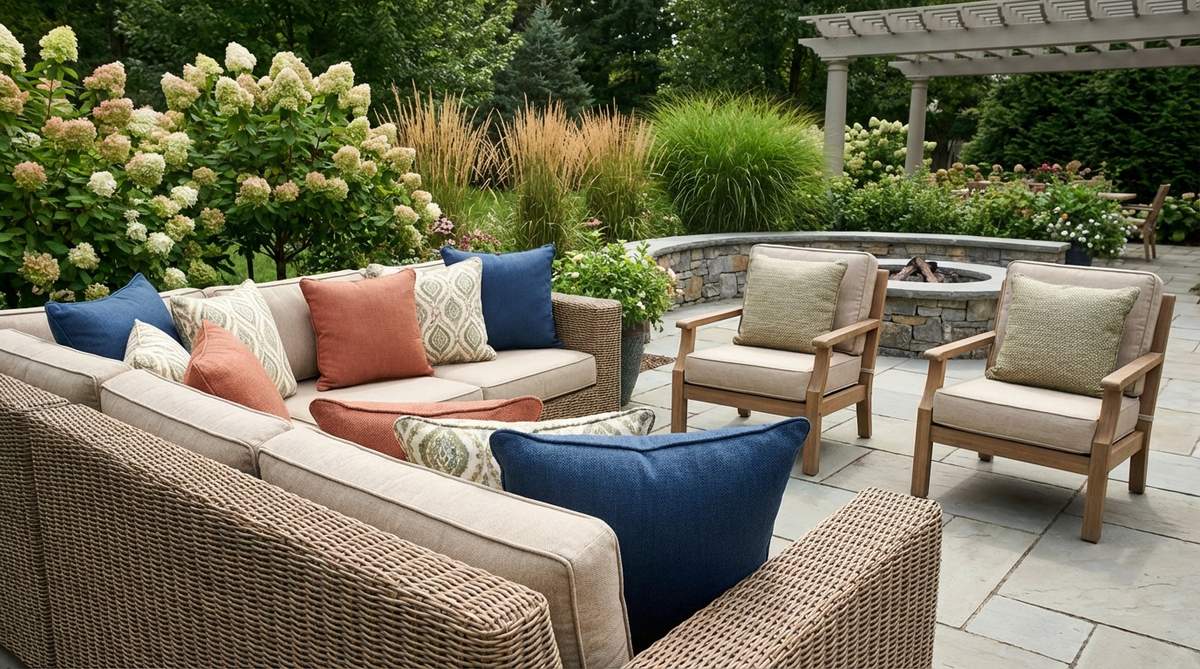
Outdoor decor pillows transform patios from functional spaces into inviting retreats with minimal effort and maximum impact. Designers rely on weather-resistant pillows to introduce color, texture, and comfort to outdoor seating while withstanding sun, moisture, and temperature shifts. Fresh Garden Ideas brings you expert-curated pillow selections that balance durability with style, helping you create an outdoor living space that feels as welcoming as your indoor rooms.
Design SnapshotKey Principles
- Material Priority: Solution-dyed acrylic and polyester fabrics resist fading up to three times longer than standard materials in UV exposure tests
- Layering Strategy: Combine square pillows at outer edges with lumbar and smaller accent pillows toward the center for depth and seating functionality
- Color Balance: Anchor bold patterns with neutral solids to prevent visual overload while maintaining personality
- Shape Variety: Mix standard squares with lumbar, bolster, and round pillows to create dimension and accommodate different seating positions
Bold Pattern Pillows That Command Attention
Pattern-forward pillows anchor outdoor seating arrangements and establish the visual theme for your patio. Designers start with one large-scale pattern per seating area, then layer smaller prints and solids to support it without competition.
1. Geometric Chevron In Navy And White
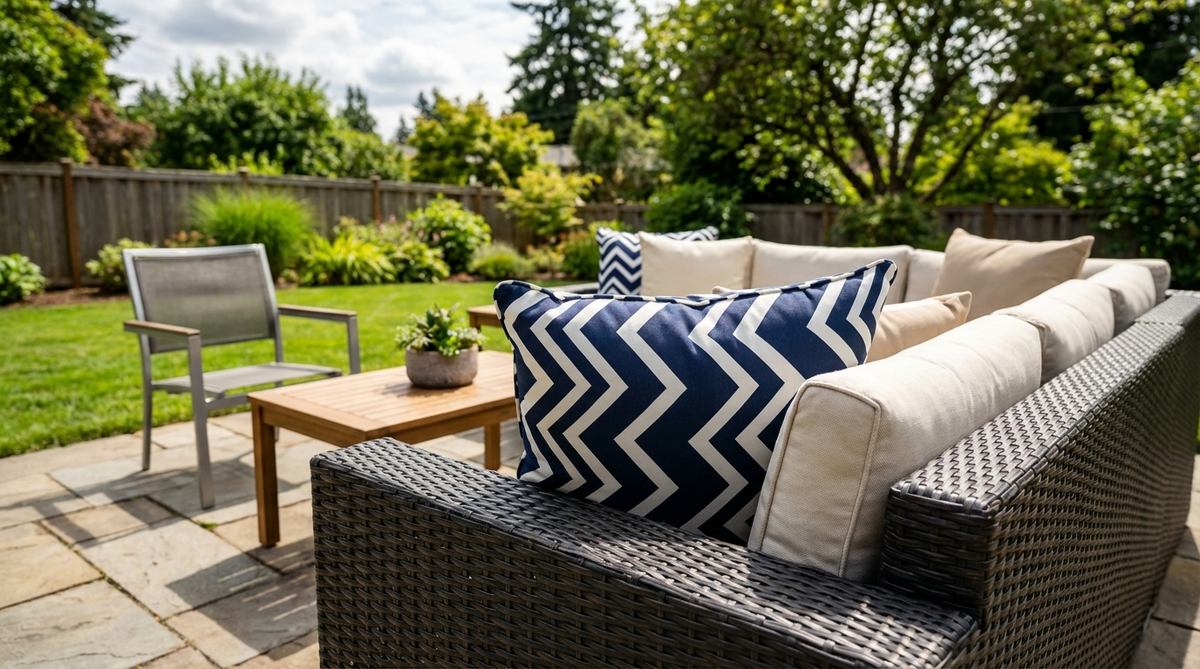
Sharp zigzag patterns in high-contrast navy and white create movement across neutral furniture. This classic geometric works on both modern metal frames and traditional wicker pieces.
The chevron scale matters—wide bands read as contemporary, while narrow repeats feel more traditional. Pair with solid navy lumbar pillows to ground the pattern.
UV-resistant polyester holds the crisp lines through multiple seasons. Position these as the outermost pillows on sectionals for maximum impact.
2. Oversized Botanical Leaf Print
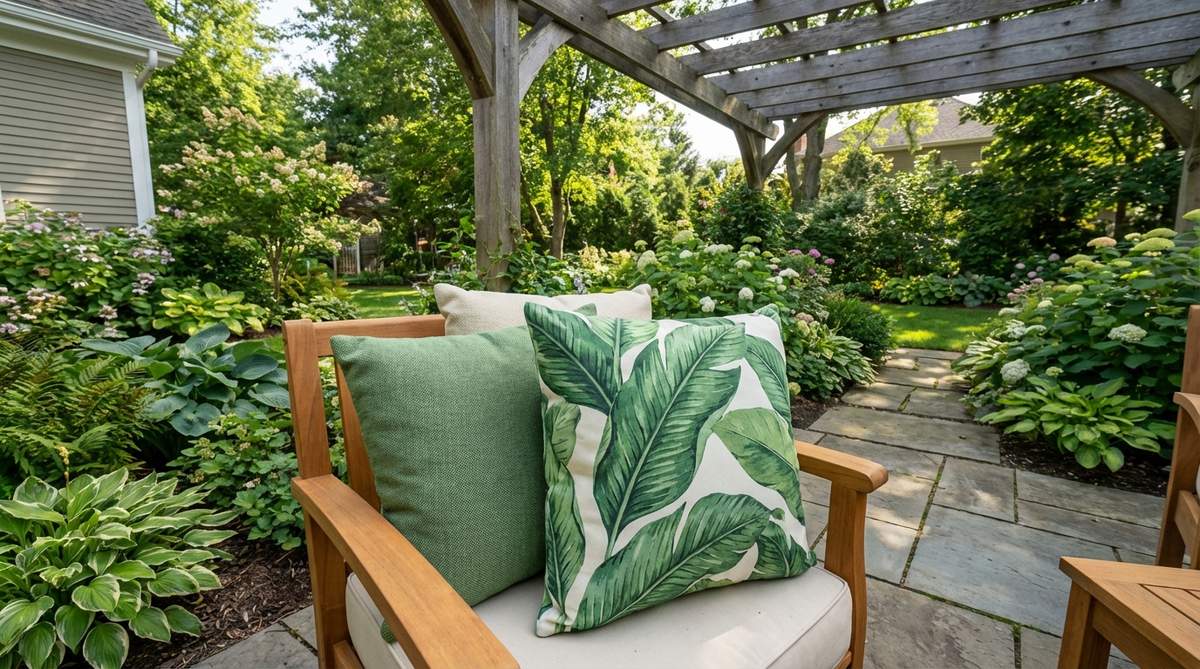
Large-scale palm or monstera leaves printed on weather-resistant fabric bring organic shapes to geometric outdoor furniture. Green tones connect patio furniture to surrounding gardens.
Choose prints where individual leaves span at least 8 inches for proper scale on standard 18-20 inch pillows. Smaller prints lose definition from indoor viewing distances.
Layer with solid green or cream pillows in varying shades to create depth. These work particularly well on wood-toned furniture where the botanical theme reinforces natural materials.
3. Ikat Diamond Patterns
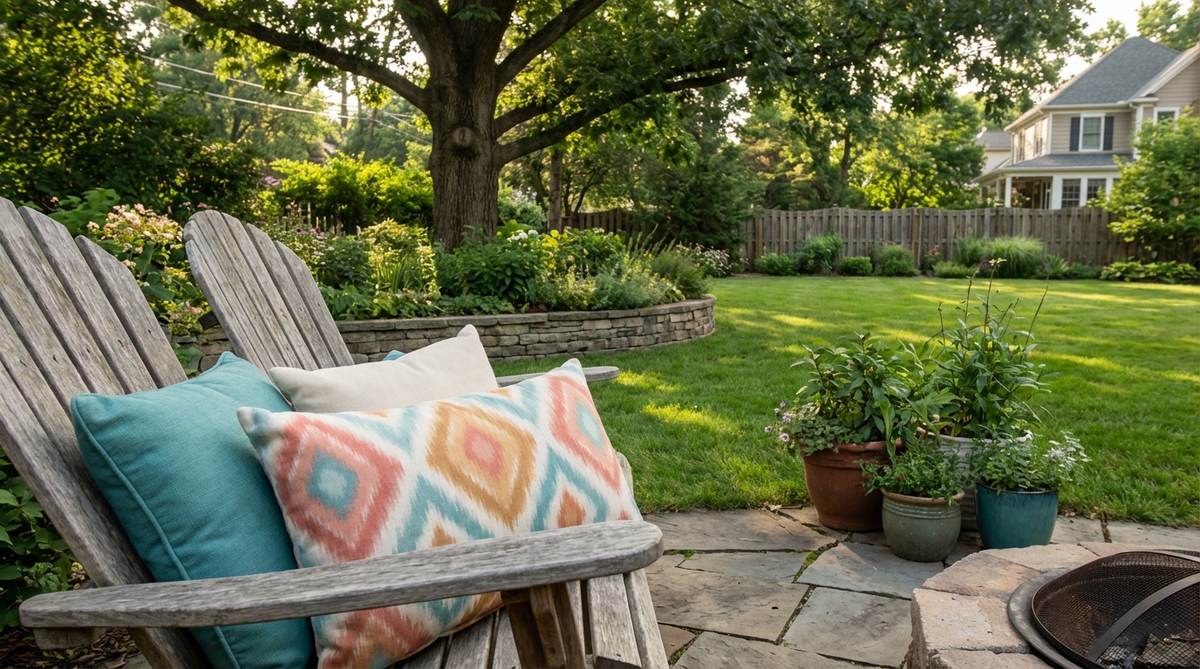
Blurred diamond motifs in coral, turquoise, or amber add global-inspired style with built-in color variation. The ikat technique’s soft edges prevent patterns from feeling too rigid outdoors.
These multi-color designs simplify coordination—pull any hue from the pattern for solid accent pillows. The fuzzy pattern boundaries disguise minor fading better than sharp geometric prints.
4. Classic Cabana Stripes
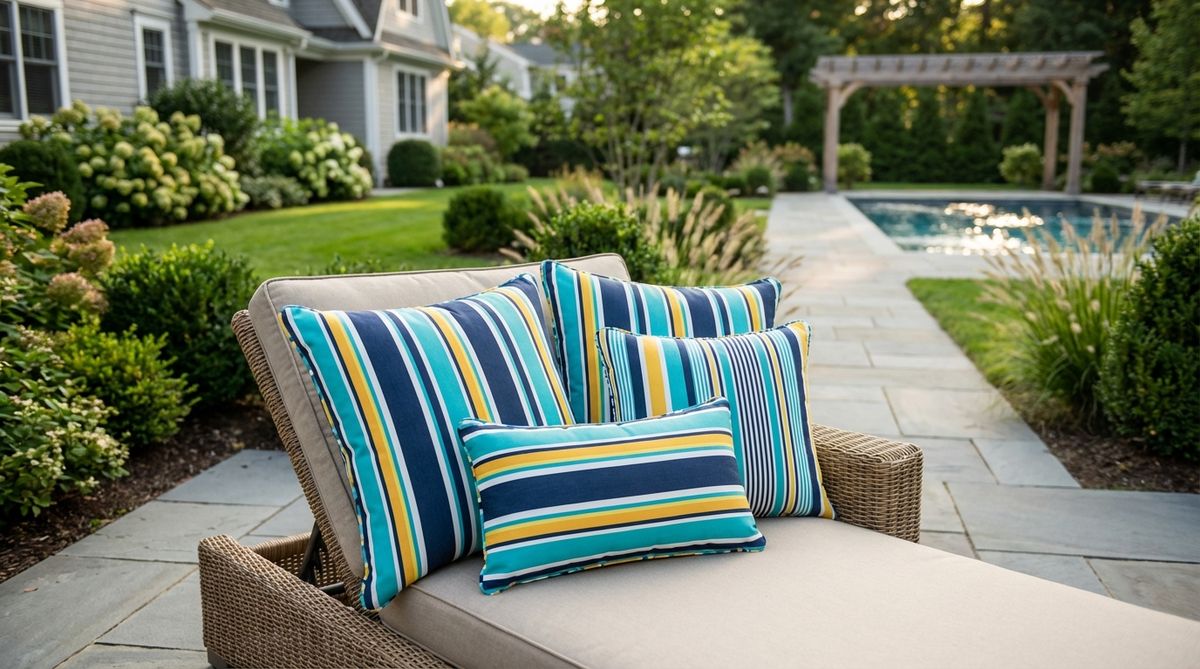
Wide alternating stripes in bold colors evoke poolside resort style. Vertical orientation elongates square pillows, while horizontal stripes widen lumbar shapes.
Sunbrella-grade striped fabrics maintain color saturation even in direct sun. Mix stripe widths—pair thick 3-inch bands with narrow pinstripes for visual interest without pattern clash.
5. Moroccan Tile Motifs
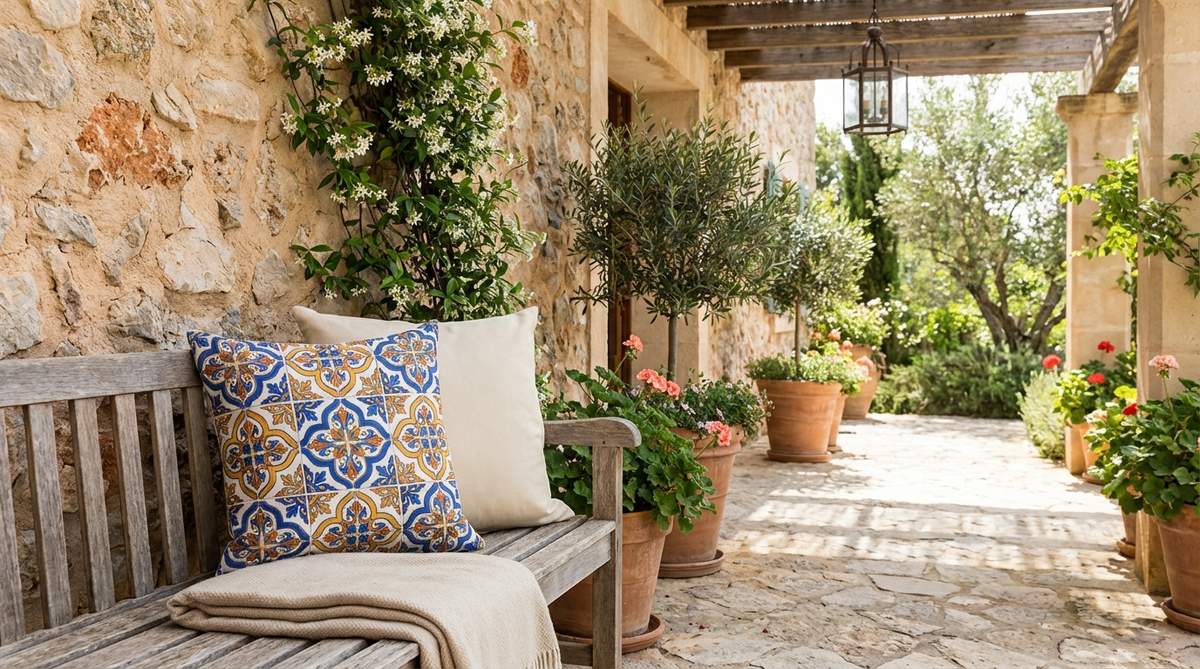
Repeating geometric tile patterns in cobalt, saffron, or terracotta create Mediterranean or Spanish colonial ambiance. The intricate repeats work best as one or two accent pillows rather than full sets.
Pair with solid pillows in the pattern’s darkest color to prevent visual fatigue. These detailed designs suit covered patios where they’re protected from the harshest weather exposure.
6. Abstract Watercolor Washes
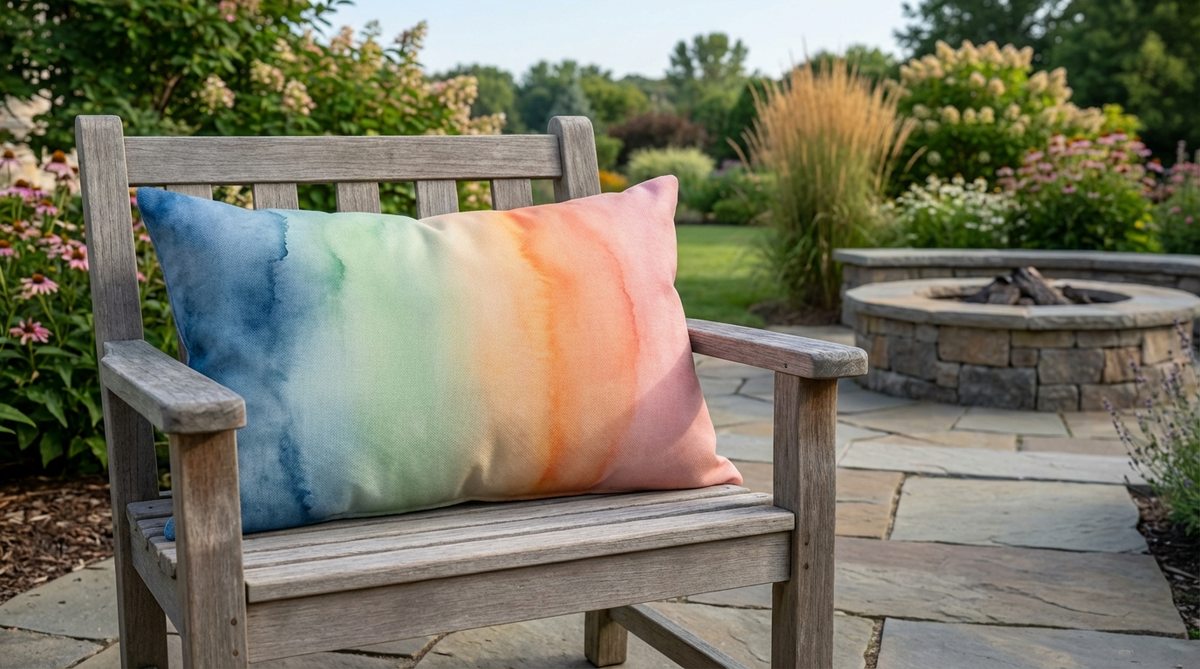
Soft color gradients and painterly effects add artistic sophistication to outdoor spaces. Blue-to-green ombres or sunset-inspired orange-to-pink transitions create calm, gallery-like atmospheres.
Digital printing on outdoor fabric reproduces watercolor textures while maintaining weather resistance. Position these on conversation areas where guests can appreciate the subtle color shifts up close.
Coastal And Tropical Themes For Resort-Style Living
Beach-inspired pillows translate vacation aesthetics to home patios through color palettes and motifs drawn from ocean, sand, and tropical landscapes. These themes work particularly well in poolside settings or waterfront properties.
7. Coral And Teal Pairing
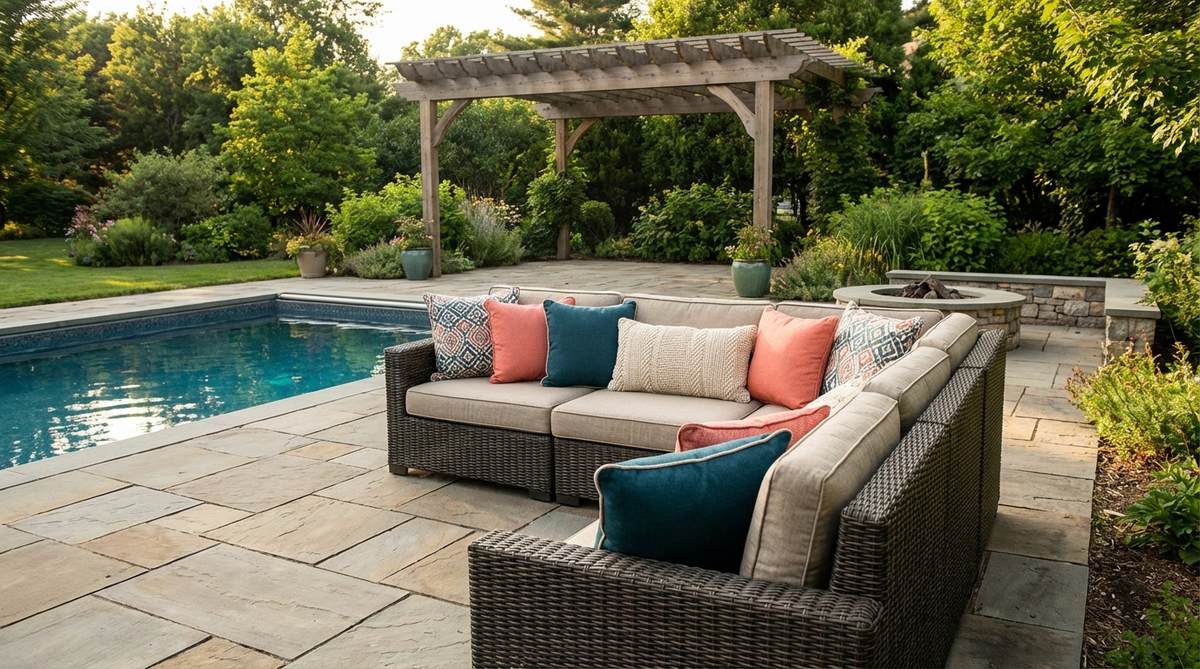
This energizing combination balances warm coral with cool teal for poolside personality. The contrast reads clearly from across yards, making seating areas instantly identifiable.
Use coral as the dominant color (50% of pillows) with teal as the accent (40%) to keep the palette lively without overwhelming. Add one cream pillow per seating section for visual rest.
8. Nautical Navy And White Stripes
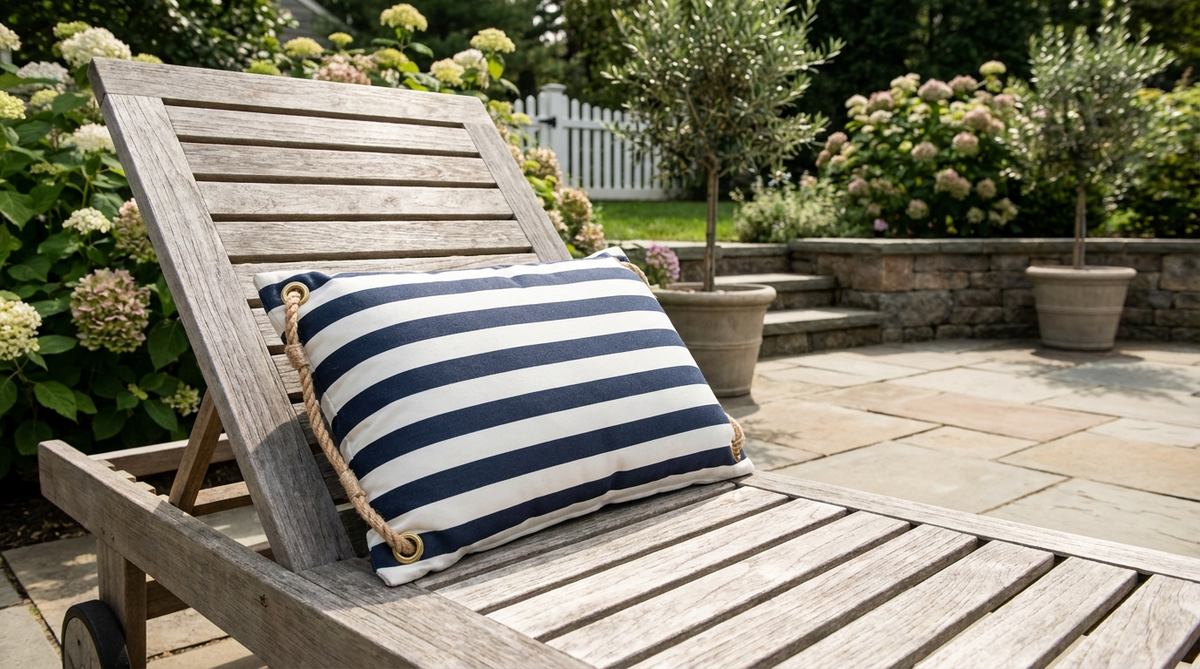
Timeless maritime stripes in navy and crisp white suit coastal properties and lake houses. This high-contrast combination works with any outdoor furniture material from teak to aluminum.
Anchor rope or brass grommets as pillow details reinforce the nautical theme. Mix with solid navy pillows and natural jute textures for a layered coastal look.
9. Tropical Hibiscus And Plumeria Florals
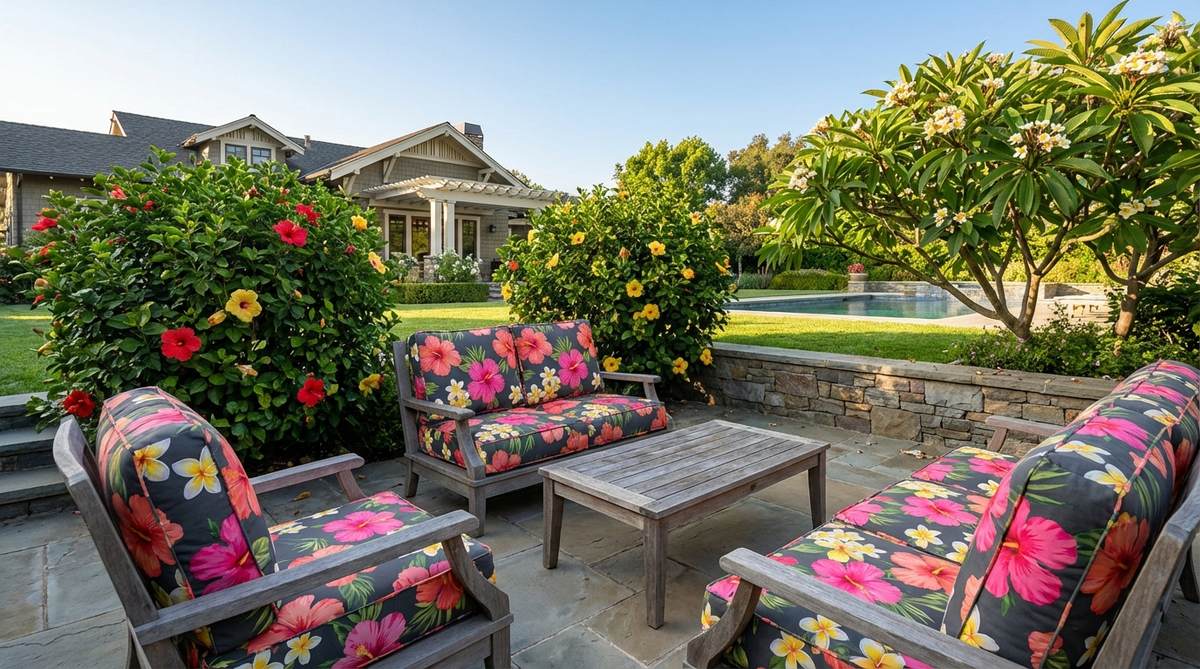
Bold tropical flowers in hot pink, coral, or yellow on navy or charcoal backgrounds create Hawaiian resort vibes. These large-scale florals work best on deep-seated lounge furniture where they won’t be obscured.
Limit tropical florals to 2-3 pillows per area, filling remaining spots with solids pulled from the flower colors. Quick-drying polyester prevents water spots on these detailed prints.
10. Sea Glass Color Palette
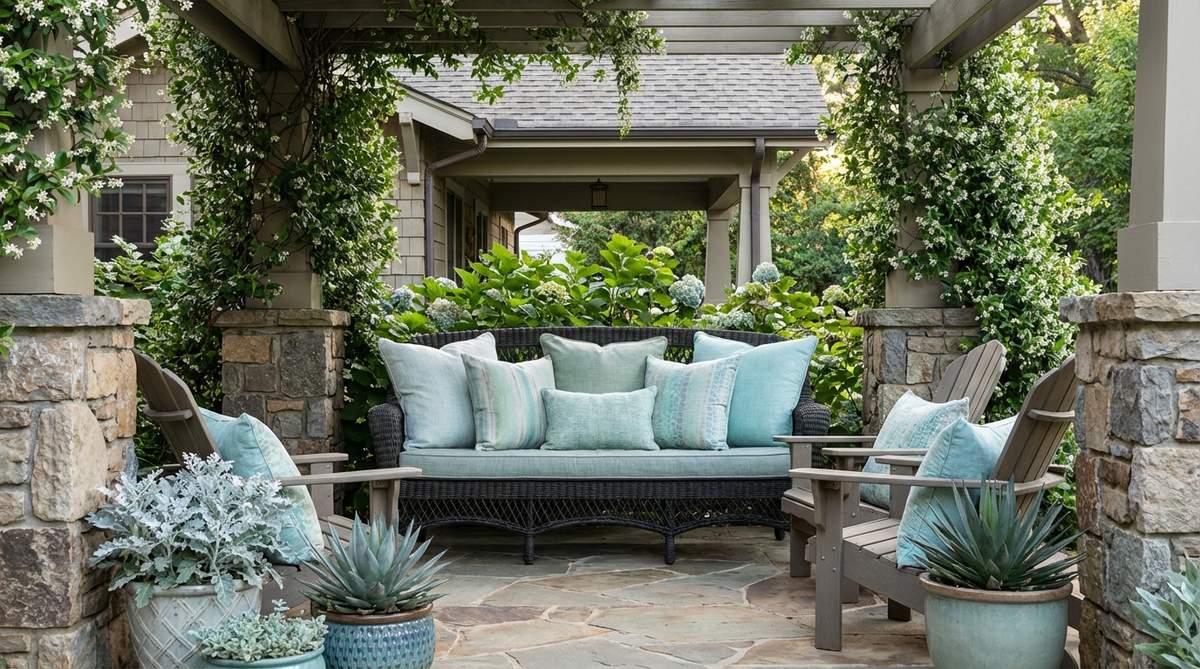
Soft aqua, seafoam, and pale turquoise mimic weathered beach glass for a serene coastal feel. These muted tones suit covered porches and shaded seating areas.
Combine multiple shades within the sea glass family for a tonal look that feels cohesive but not flat. Add texture through linen-look fabrics or subtle tone-on-tone patterns.
11. Palm Frond Jacquard Weave
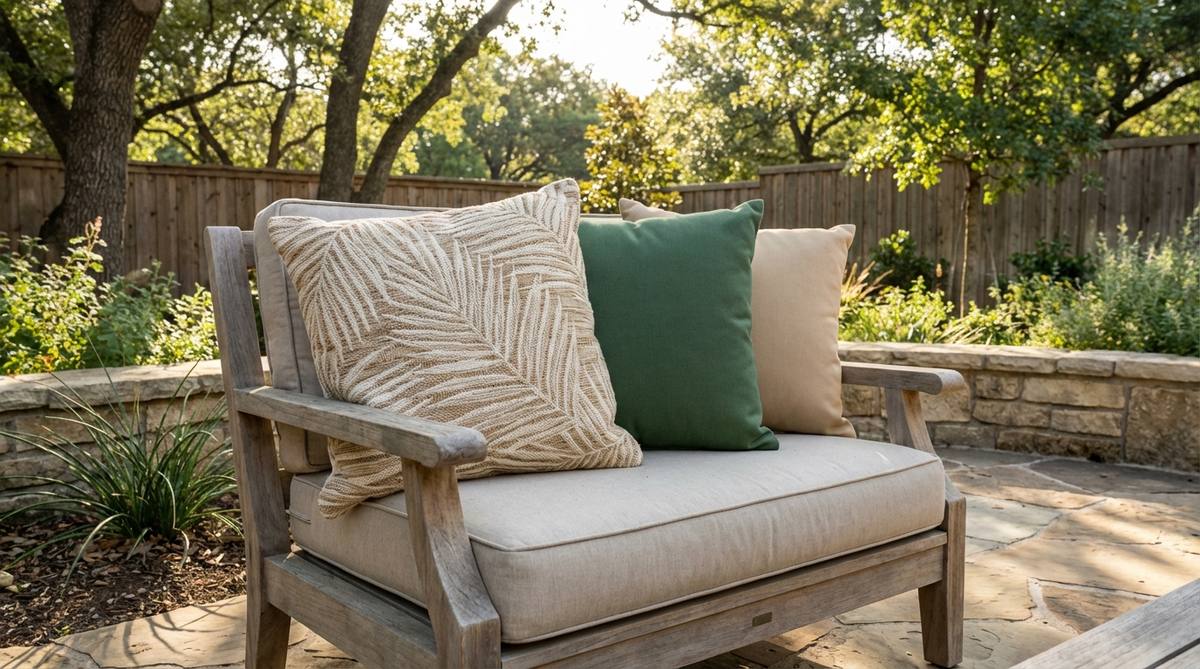
Woven palm patterns create texture and subtle tropical references without cartoon graphics. Jacquard construction adds dimension that flat-printed pillows lack.
These work beautifully on wood furniture where the woven texture complements natural grain. Pair with solid green or sand-colored pillows to highlight the textural element.
Neutral And Textured Foundations
Neutral pillows form the foundation of flexible outdoor color schemes that evolve with seasons. Texture becomes the primary design element when color takes a supporting role.
12. Gray And Cream Layered Tones
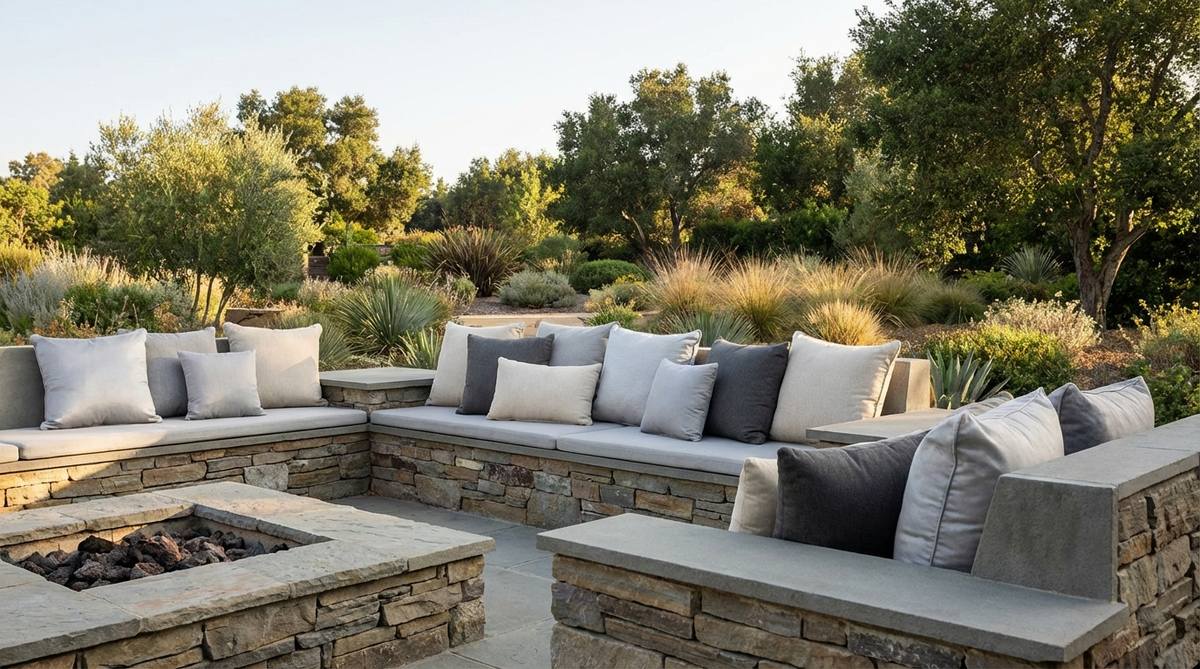
Light gray paired with cream creates sophisticated outdoor rooms that work year-round. This combination suits stone patios and modern furniture particularly well.
Vary the gray depth from pale silver to charcoal across 3-4 pillows for tonal interest. Add cream as a brightening element—roughly one cream pillow for every two gray.
13. Textured Linen-Look Solids
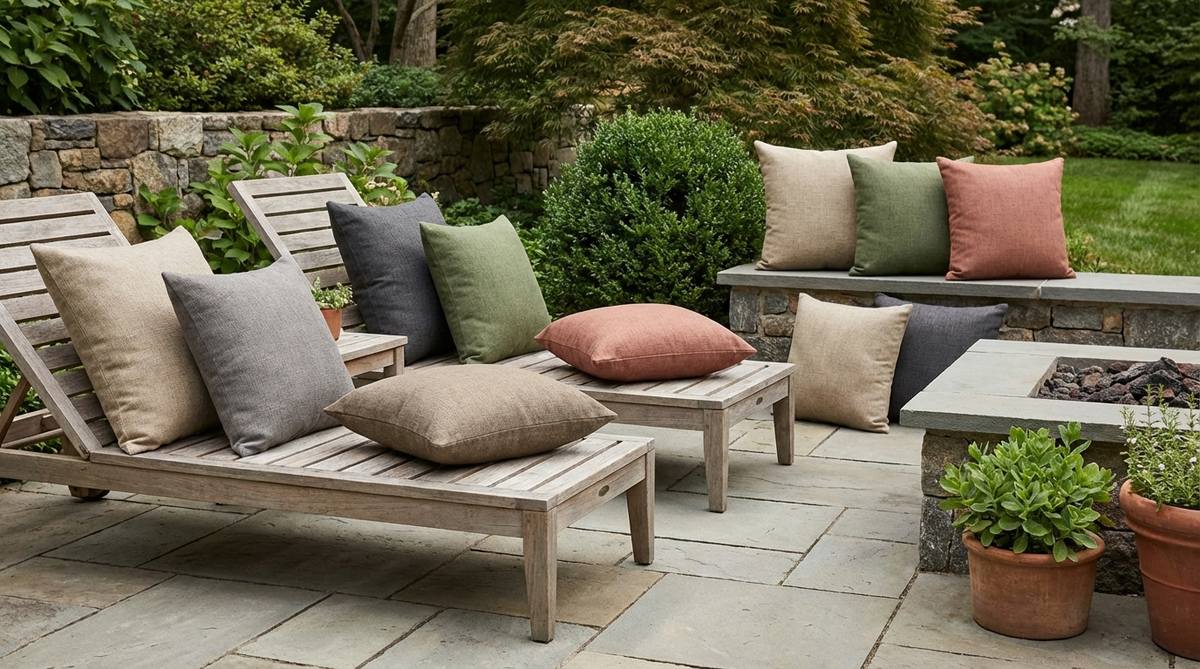
Outdoor fabrics that mimic natural linen texture provide visual interest in solid colors. The irregular weave catches light differently than smooth polyester, adding depth to simple palettes.
These work as versatile base pillows that support any seasonal accent color. The texture reads as organic and expensive while maintaining full weather resistance.
14. Oatmeal With Fringe Detail
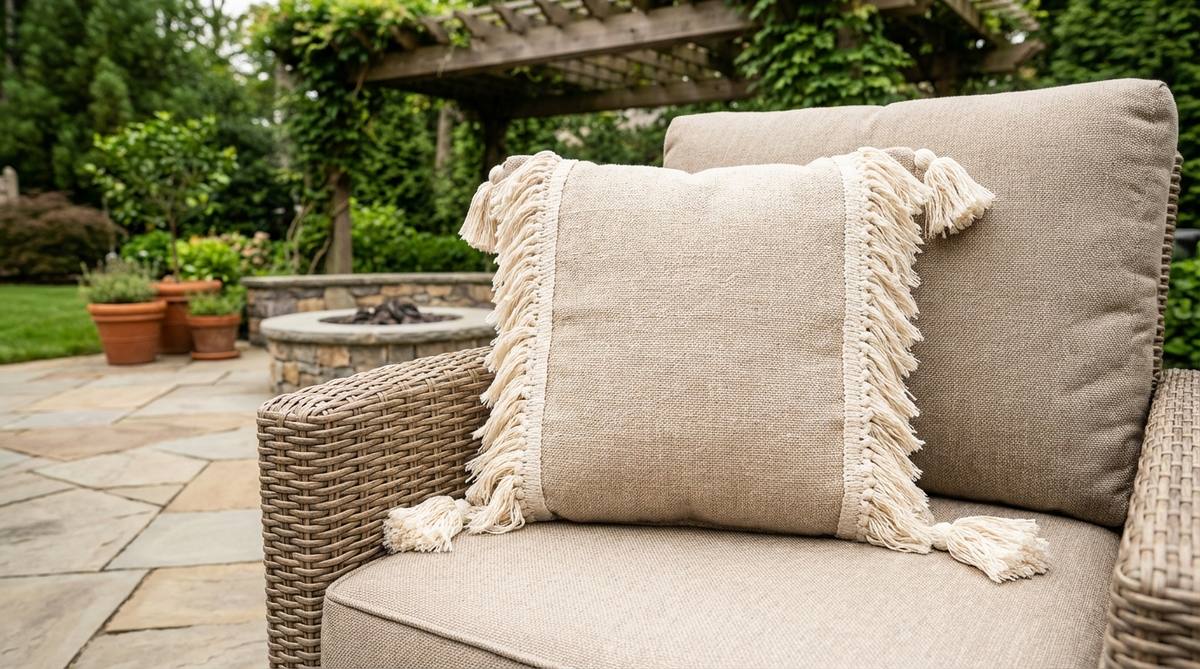
Warm oatmeal tones with decorative fringe or tassel corners add bohemian softness to outdoor spaces. The neutral base accepts any accent color you introduce seasonally.
Fringe details work best on covered patios where they’re protected from constant wind. Polyester fringe dries quickly and resists tangling better than cotton alternatives.
15. Black And White Graphic Contrast
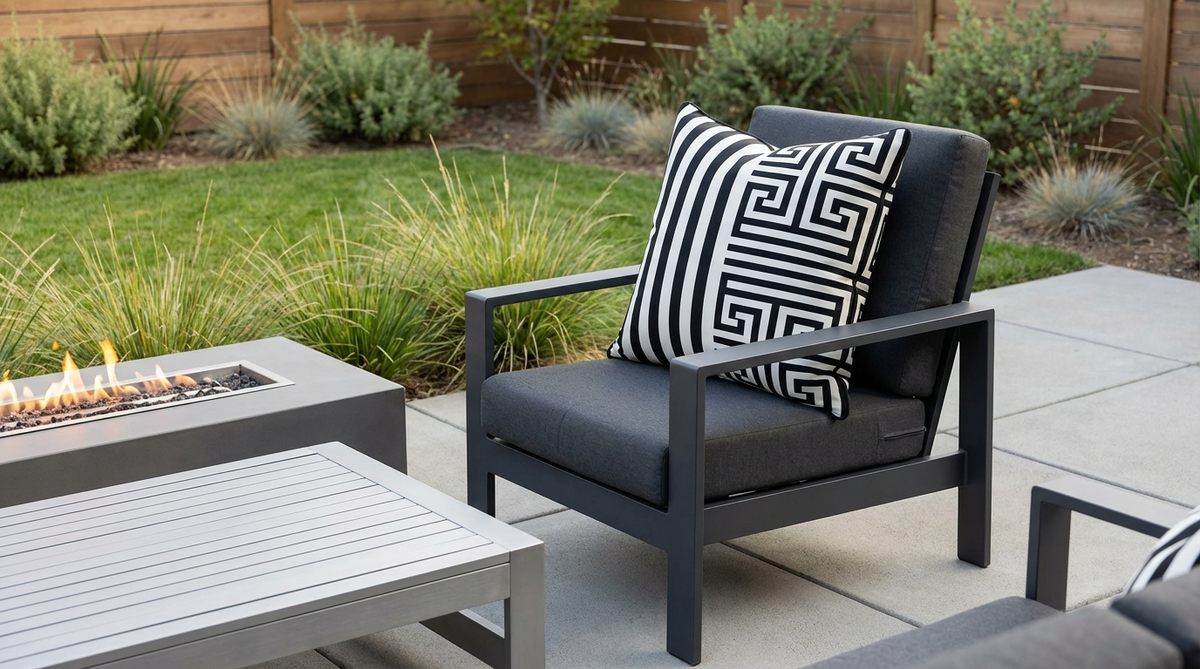
Dramatic black and white combinations create modern sophistication on outdoor furniture. Geometric patterns like Greek key, lattice, or bold stripes work particularly well in this high-contrast pairing.
Balance the strong contrast with one textured neutral pillow per seating area. This palette suits sleek metal furniture and contemporary architectural settings.
16. Taupe With Pom-Pom Trim
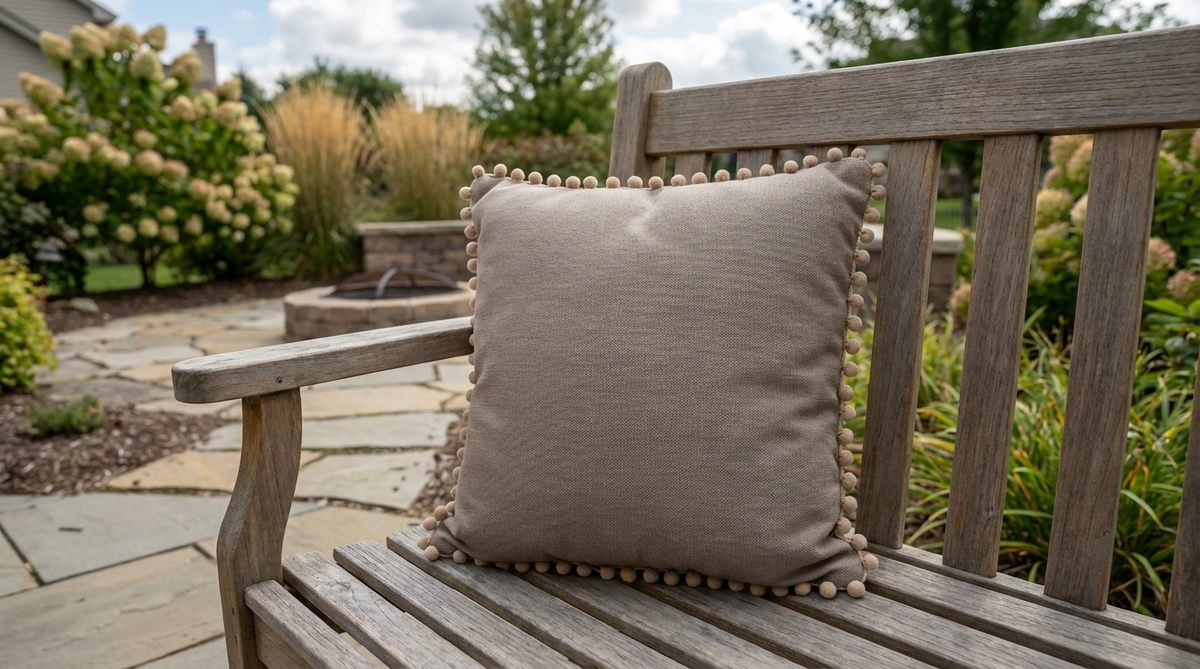
Neutral taupe pillows gain personality through playful pom-pom edging. This detail adds dimension without introducing additional colors to your scheme.
The trim creates subtle movement in breezes while maintaining the pillow’s neutral foundation. These work as transition pieces between bold patterns and solid accents.
Color Combination Strategies
Strategic color pairing transforms generic patio furniture into curated outdoor rooms. Designers use specific ratios and complementary relationships to create harmonious schemes.
17. Mustard And Denim Playful Pairing
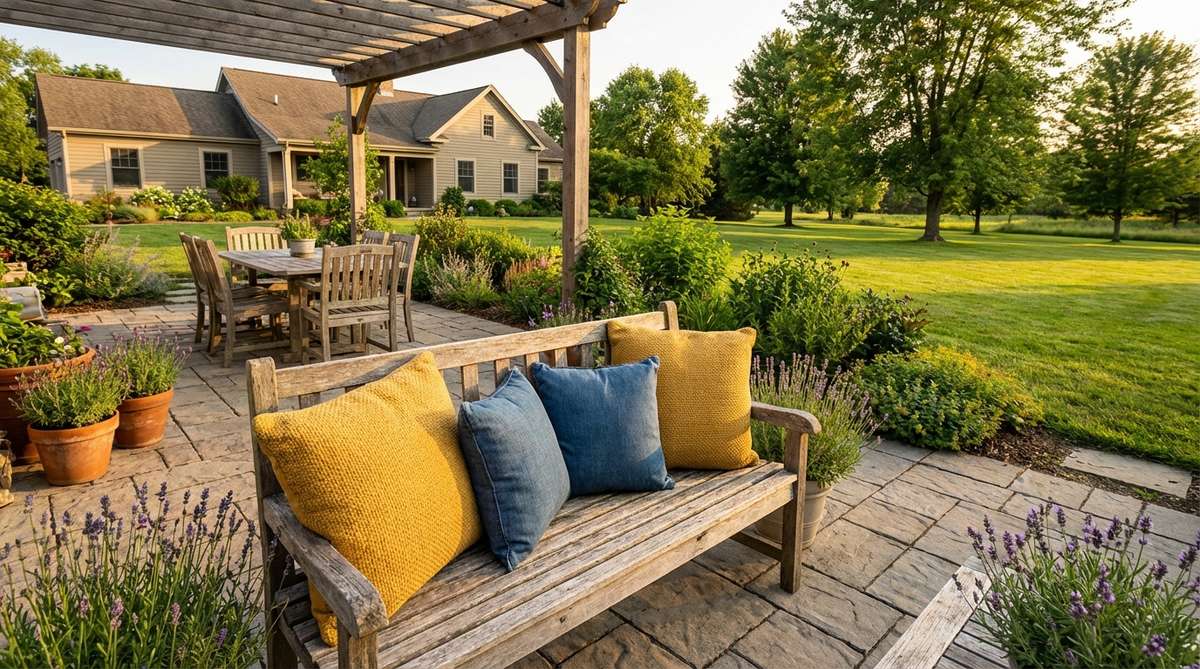
Warm mustard yellow with cool denim blue creates unexpected energy on patios. This combination suits rustic and farmhouse outdoor styles particularly well.
Use mustard sparingly—one accent pillow per three denim pieces—to prevent the yellow from dominating. Add gray as a third neutral to ground the palette.
18. Blush And Sage Soft Sophistication
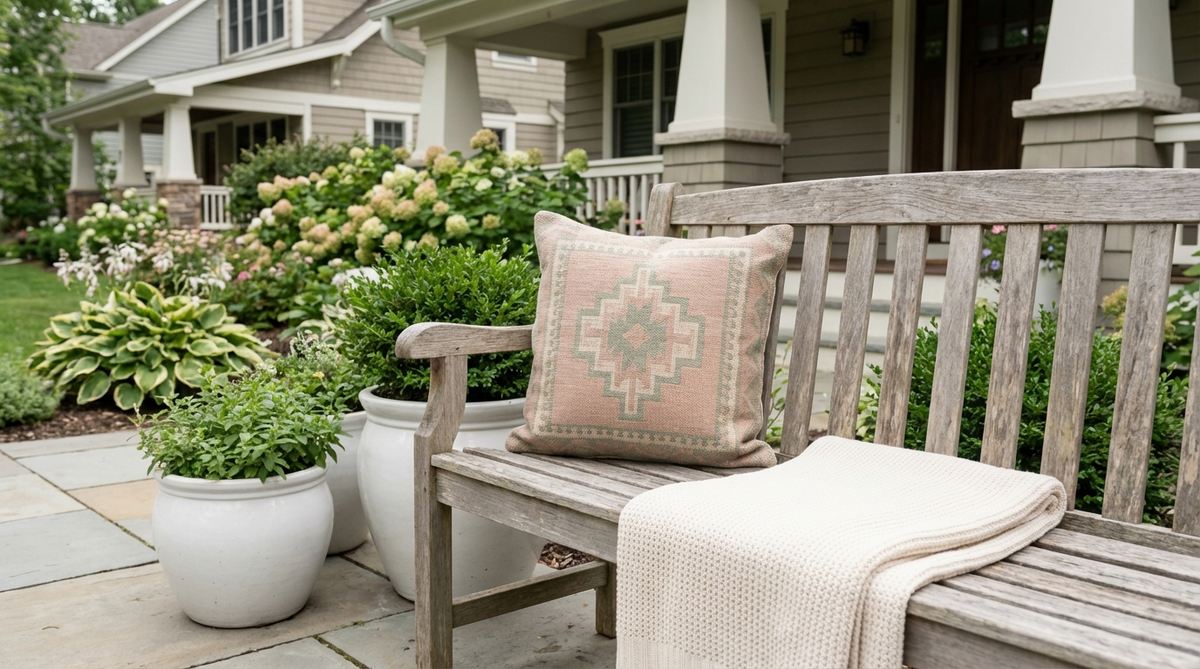
Muted blush pink with soft sage green creates fresh, contemporary outdoor spaces. This pairing works beautifully for spring and summer entertaining areas.
Both colors have low saturation, allowing them to share space equally without competition. Add cream or white as a third element for brightness.
19. Terracotta Olive And Sand
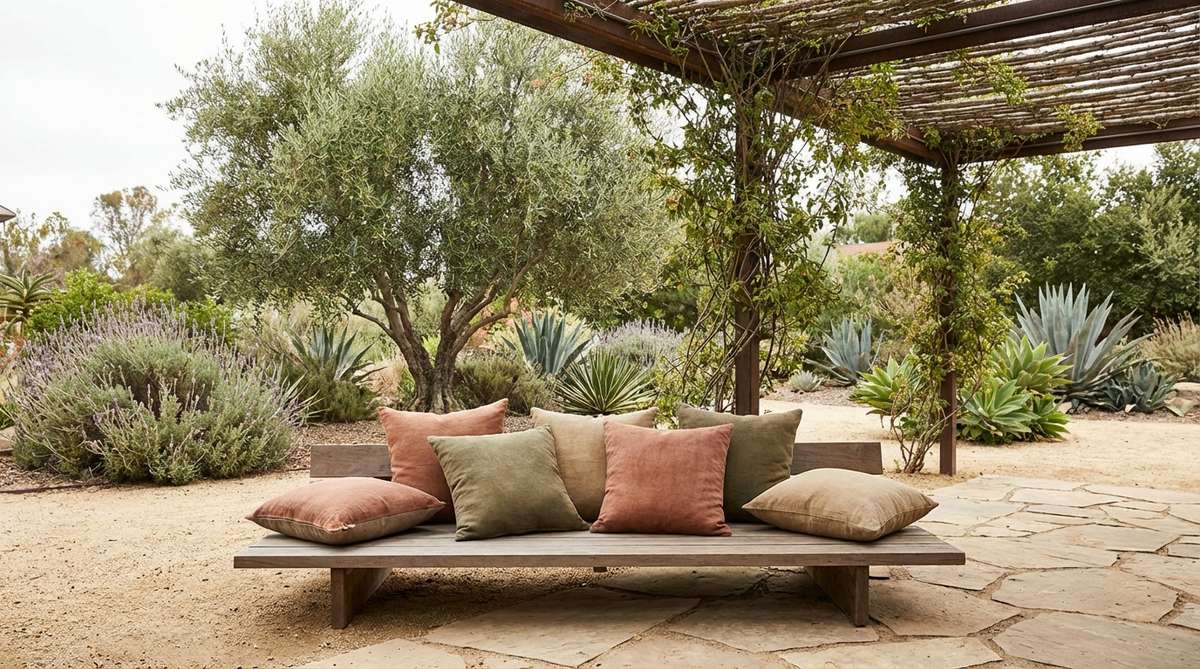
Earth-toned combinations in terracotta, olive, and sand connect outdoor spaces to surrounding landscapes. These colors suit Mediterranean, desert, and natural garden settings.
Distribute the three colors evenly across your pillow collection for a grounded, organic feel. The low contrast creates calm outdoor rooms ideal for relaxation.
20. Citrus Brights Orange Lime Yellow
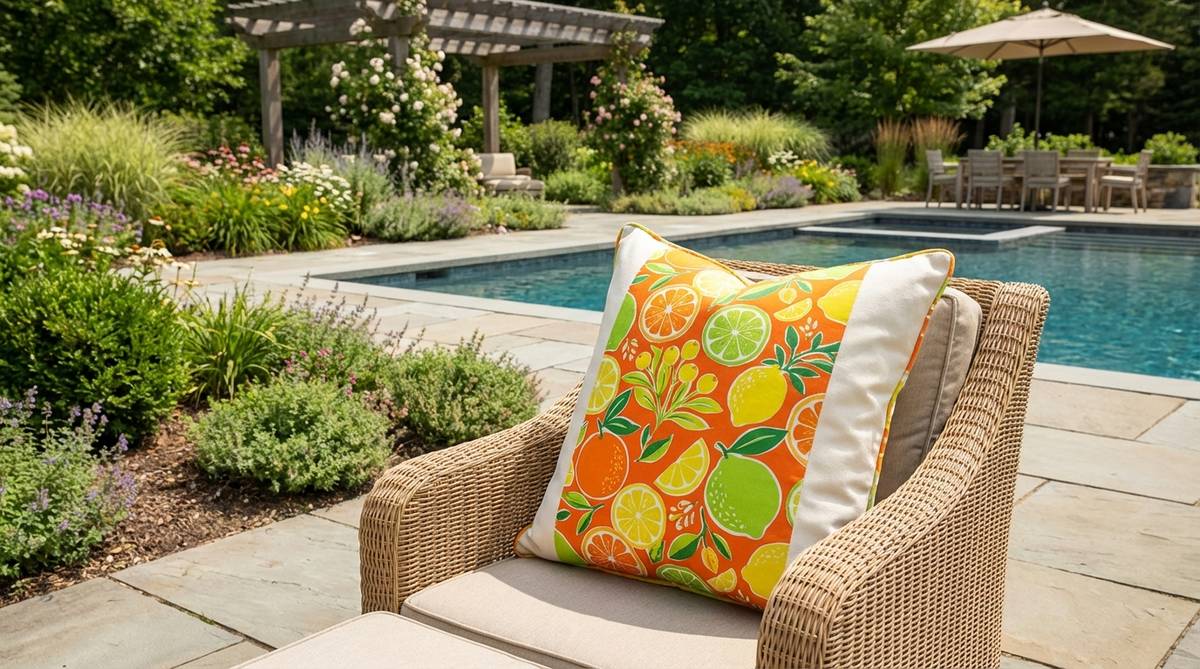
High-energy citrus combinations inject fun into poolside and entertainment areas. Orange, lime green, and bright yellow create summer-focused palettes.
Balance these intense hues with white or cream pillows at a 1:1 ratio to prevent sensory overload. Reserve citrus schemes for recreational spaces rather than quiet relaxation zones.
21. Monochromatic Blue Gradient
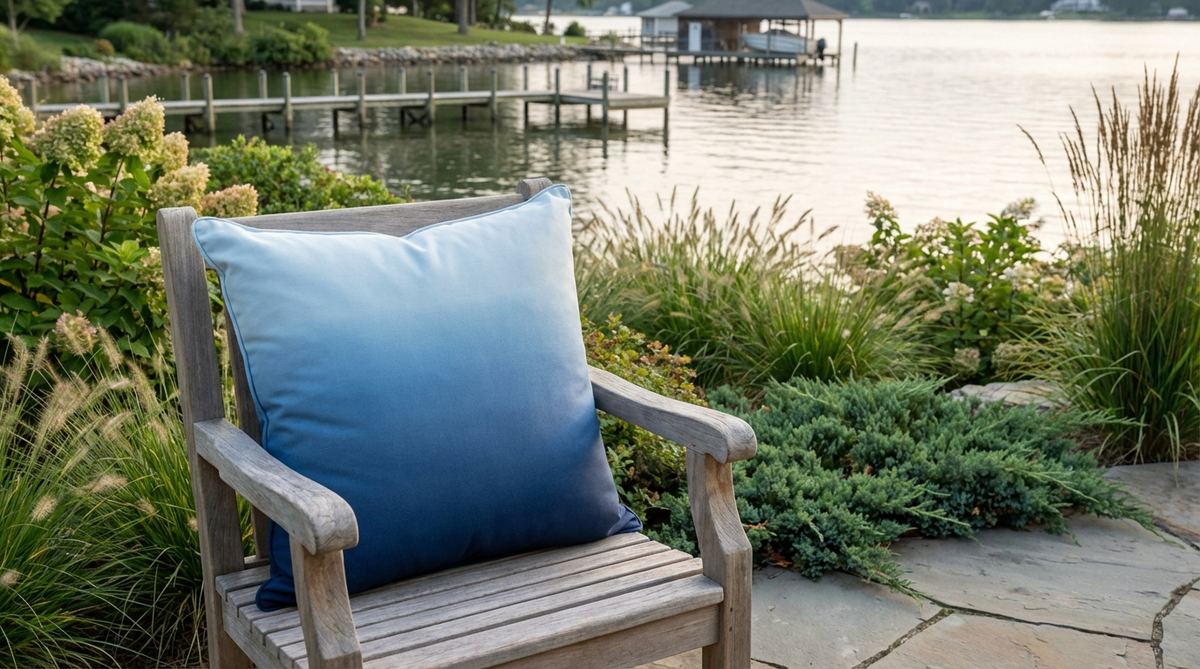
Varying shades of blue from pale sky to deep navy create serene, cohesive outdoor spaces. Monochromatic schemes work particularly well on waterfront properties.
Use at least four different blue values for a true gradient effect. The subtle transitions create sophisticated depth without requiring pattern coordination.
Specialty Shapes And Functional Sizes
Pillow shape affects both aesthetics and comfort. Mixing shapes adds dimension while serving specific ergonomic functions across different seating types.
22. Lumbar Pillows For Back Support
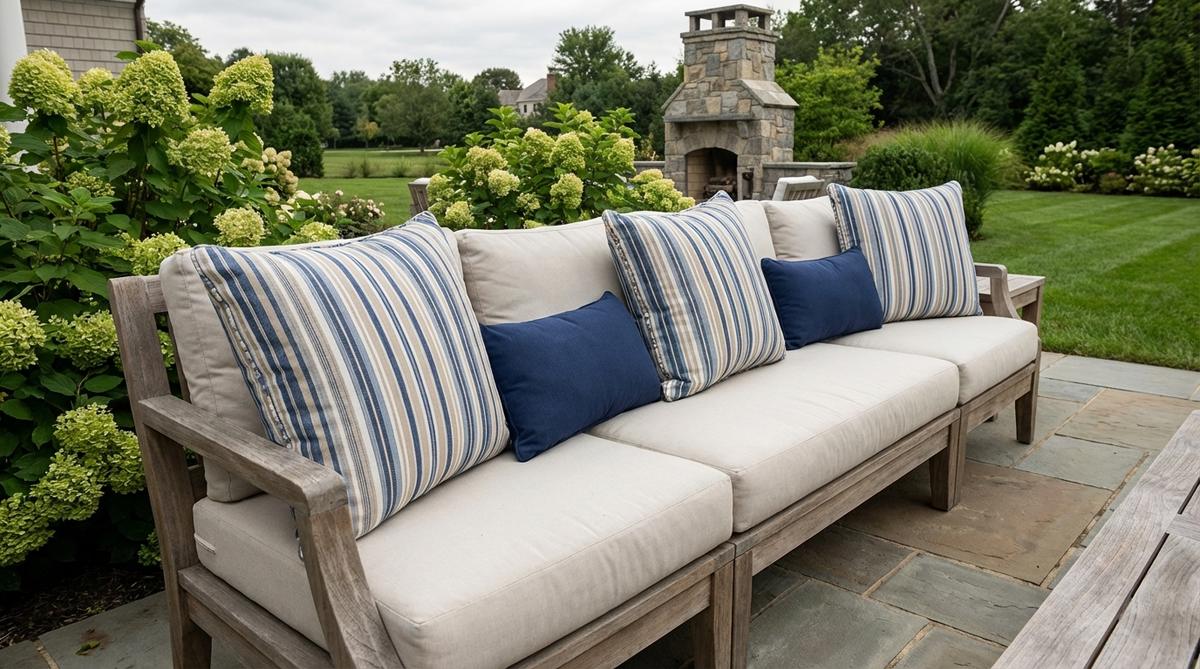
Rectangular lumbar pillows in 12×20 or 14×24 inch dimensions provide targeted lower back support on deep outdoor seating. Position these between square pillows and seat backs.
Lumbar shapes work best in solid colors or simple stripes that complement larger patterned squares. One lumbar per seat provides ergonomic benefit without cluttering the furniture.
23. Oversized 24-Inch Floor Cushions
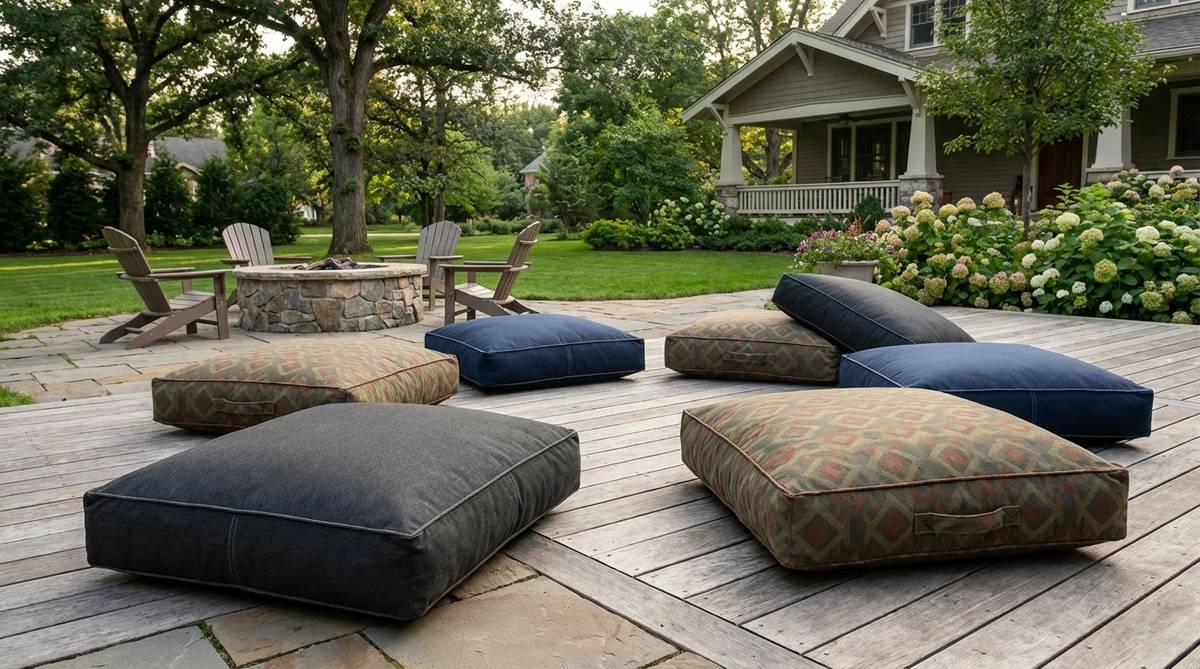
Extra-large square pillows function as portable floor seating for casual gatherings. These work on decks and patios where guests overflow standard furniture.
Choose quick-drying foam fills that recover quickly after use. Darker colors or busy patterns disguise the wear these high-use pillows experience.
24. Round Accent Pillows
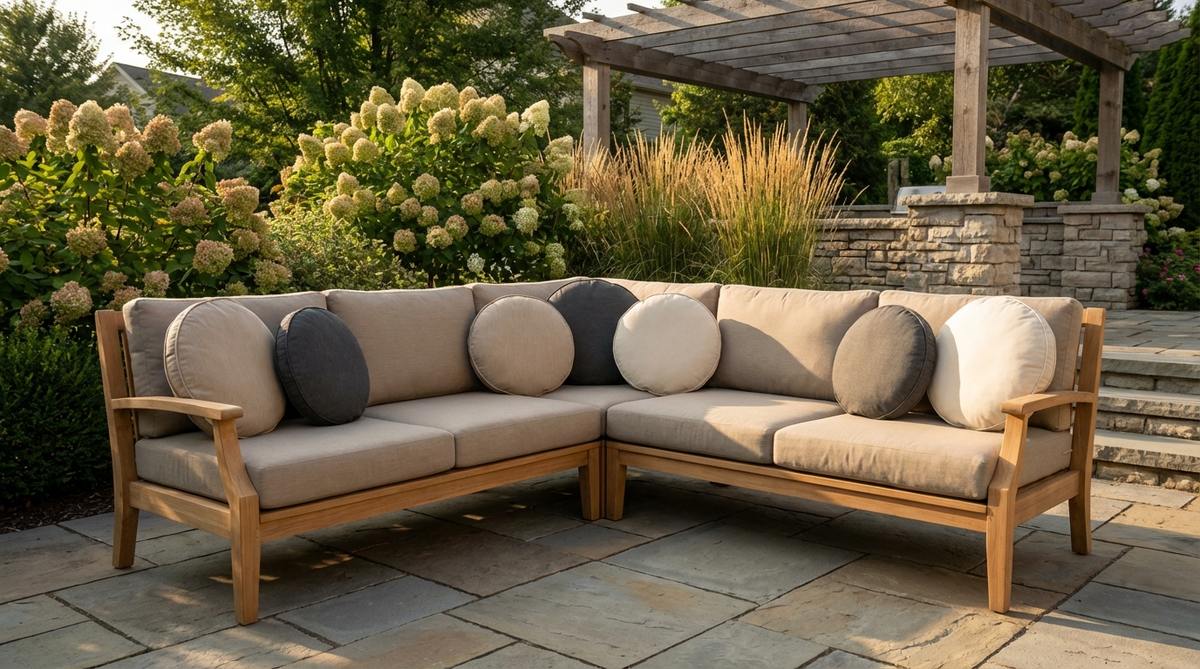
Circular pillows in 16 or 18 inch diameters soften angular furniture arrangements. The unexpected shape draws attention and breaks up repetitive square grids.
Limit round pillows to one per seating area for maximum impact. These work particularly well on corner sectional pieces where they fill awkward angles.
25. Bolster Pillows For Lounge Chairs
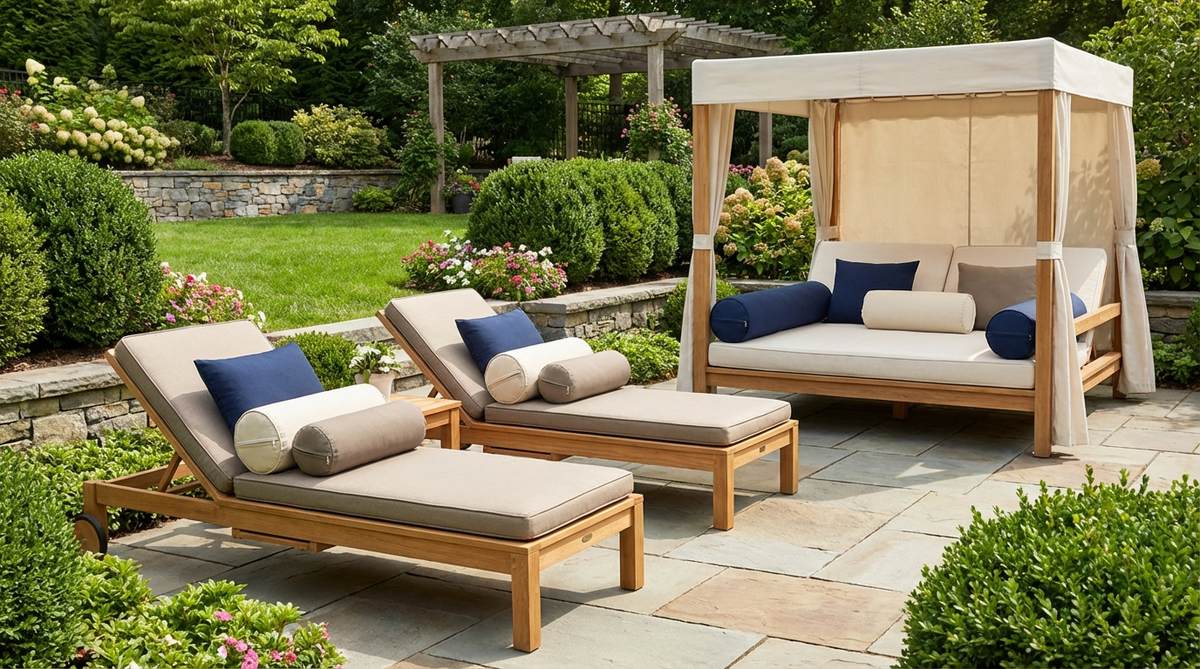
Cylindrical bolsters provide neck and arm support on chaise lounges and daybeds. Standard 8×20 inch bolsters fit most outdoor loungers.
Solid colors in shades that coordinate with your primary pillow scheme work best for these functional pieces. Removable, washable covers are essential for bolsters that contact skin directly.
26. Bench Cushions With Attached Pillows
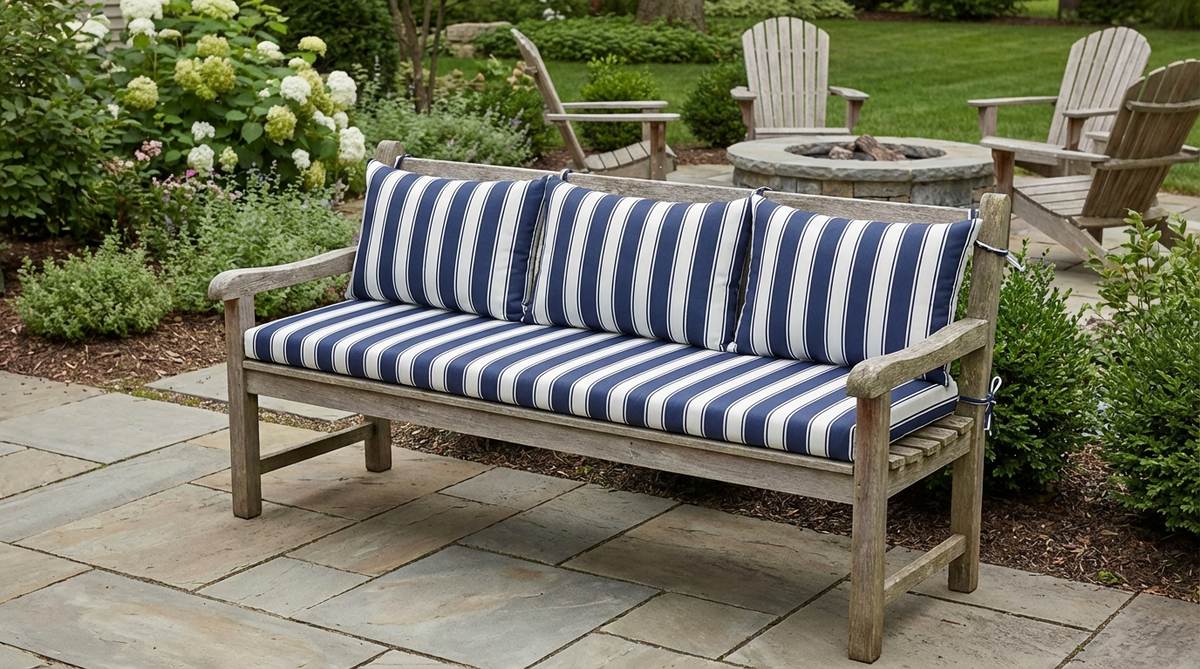
Long bench cushions in 42 or 48 inch lengths transform hard seating into comfortable outdoor dining or conversation spots. Attached back pillows provide complete comfort in one piece.
Look for ties that secure cushions to prevent shifting during use. Solid colors or simple stripes work better than complex patterns on these large surfaces.
Seasonal And Weather-Specific Options
Rotating pillow selections with seasons keeps outdoor spaces feeling current while addressing changing weather demands. Strategic material choices extend usability across conditions.
27. Sunbrella Fade-Resistant Performance
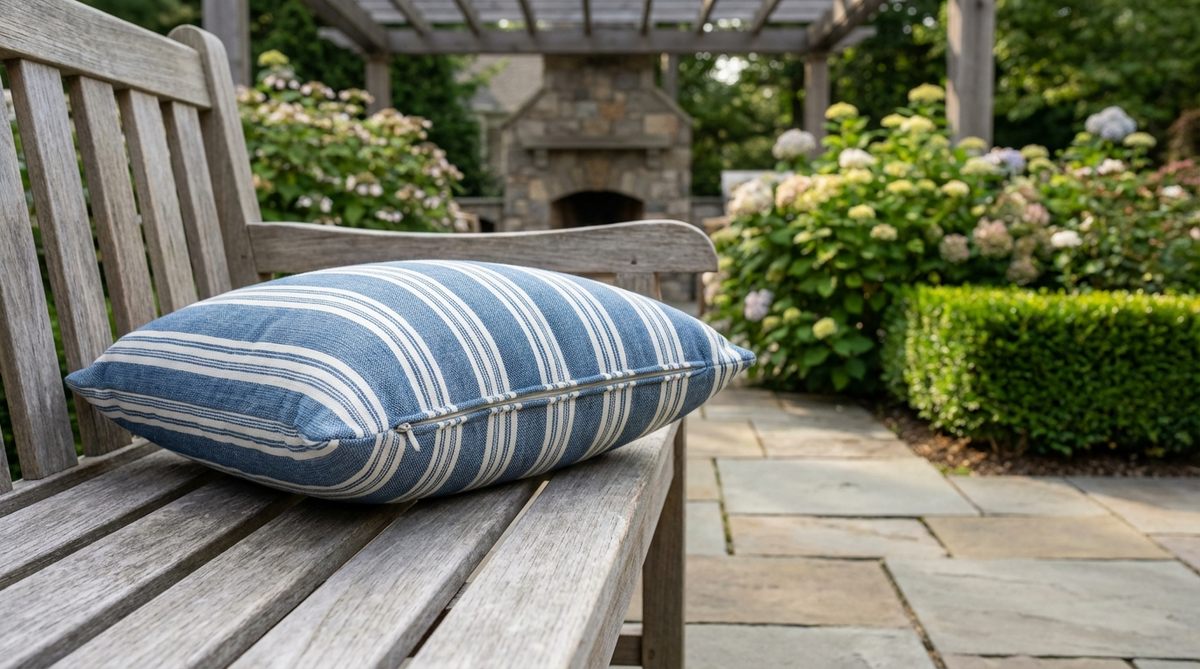
Solution-dyed Sunbrella acrylic resists UV damage three times longer than standard outdoor polyester in testing. Colors remain vibrant through years of direct sun exposure.
The material investment pays off in areas with intense sun or year-round outdoor living. Most Sunbrella pillows feature removable covers with zipper closures for easy maintenance.
28. Waterproof Pillow Covers For Pool Areas
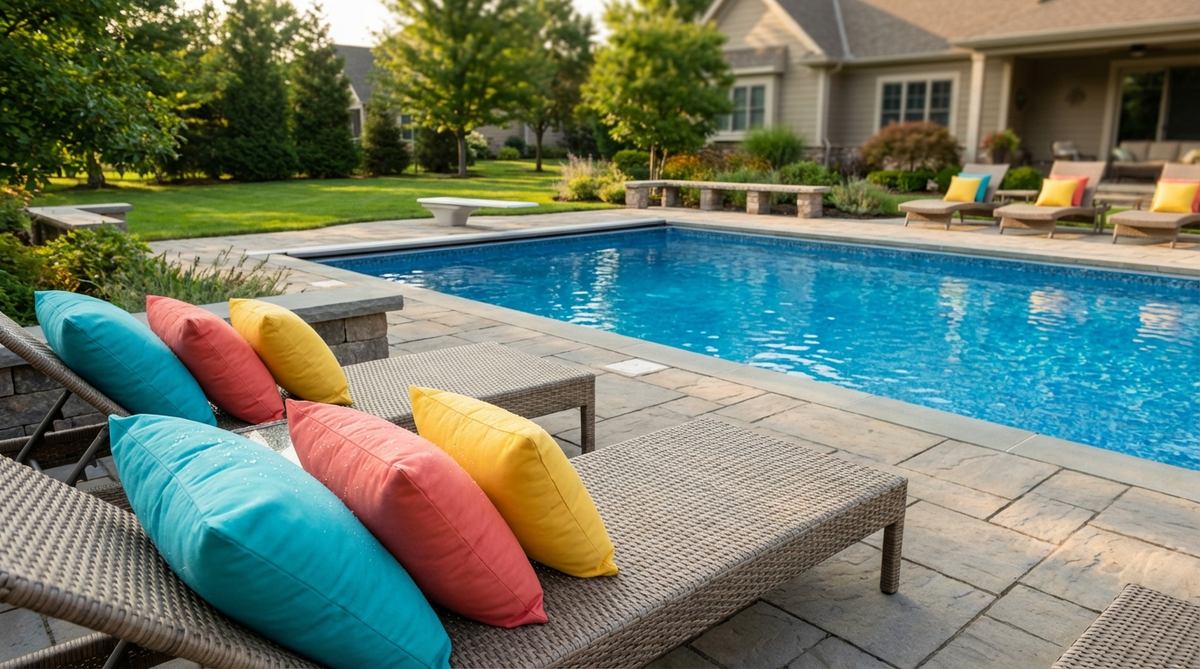
Fully waterproof pillow covers with sealed seams prevent moisture penetration in splash zones. These allow pillows to remain poolside without constant removal.
Quick-dry foam or synthetic down fills shed water rapidly when covers are removed to dry. Bright, chlorine-resistant colors suit poolside applications.
29. Mildew-Resistant Fills
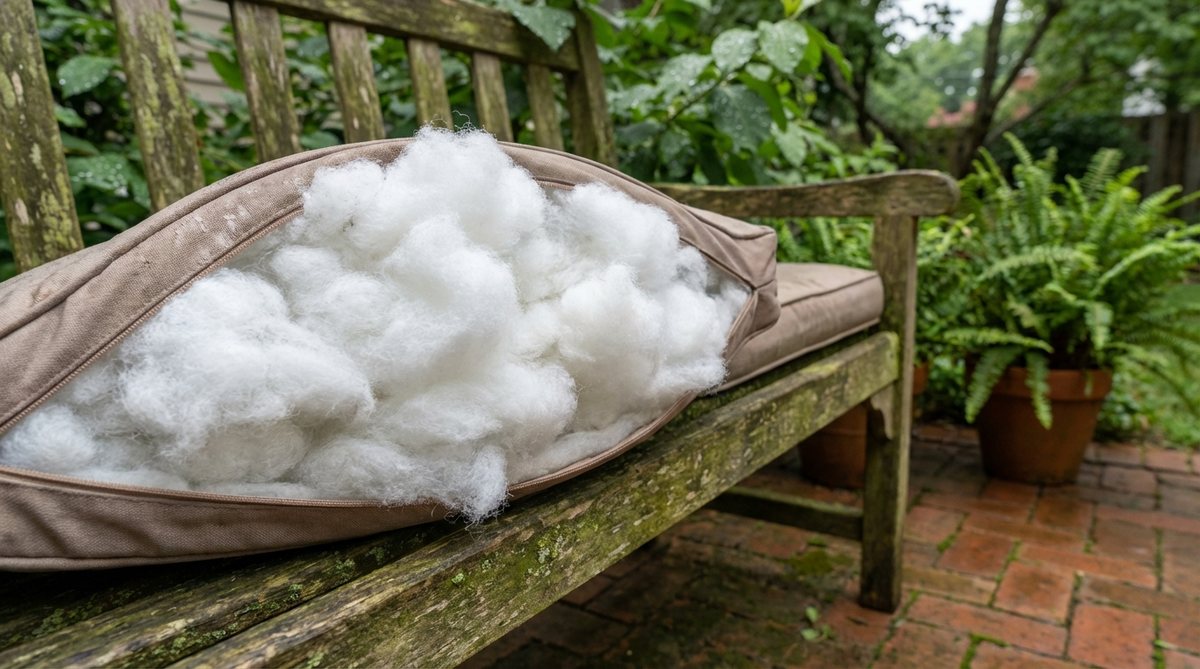
Antimicrobial pillow fills prevent mold and mildew growth in humid climates or shaded areas with limited air circulation. These fills extend pillow life in challenging conditions.
Look for polyester fills treated with antimicrobial agents rather than natural fills that promote organic growth. This technology works invisibly—no special care required.
30. Autumn Warm Tones Transition
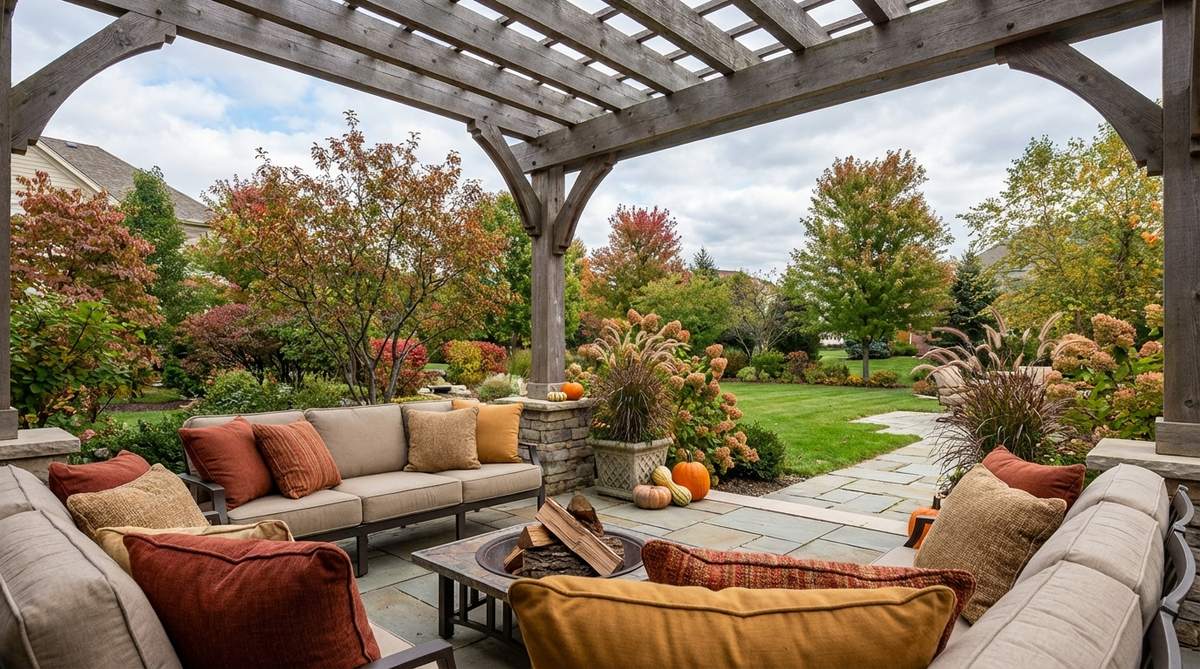
Rust, burnt orange, and deep gold pillows transition outdoor spaces from summer to fall. These warm tones complement changing foliage and cooler weather.
Swap out half your summer pillows in late August to shift the mood gradually. Pair autumn colors with neutral browns and creams from your existing collection.
31. Winter Weather Storage Solutions
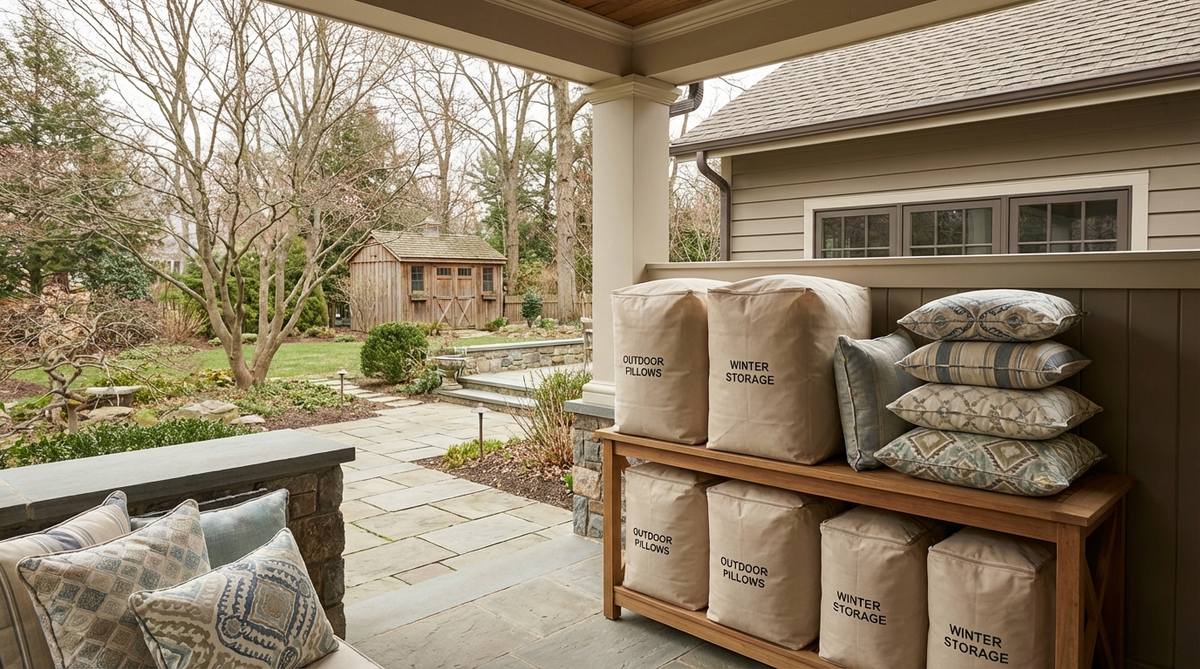
Breathable storage bags protect off-season pillows from moisture and pests better than plastic bins. Proper storage extends pillow life by multiple seasons.
Clean and fully dry pillows before storage to prevent mildew during dormant months. Store in climate-controlled spaces when possible—garages and sheds experience temperature extremes that degrade fabrics over time.
32. Removable Washable Covers
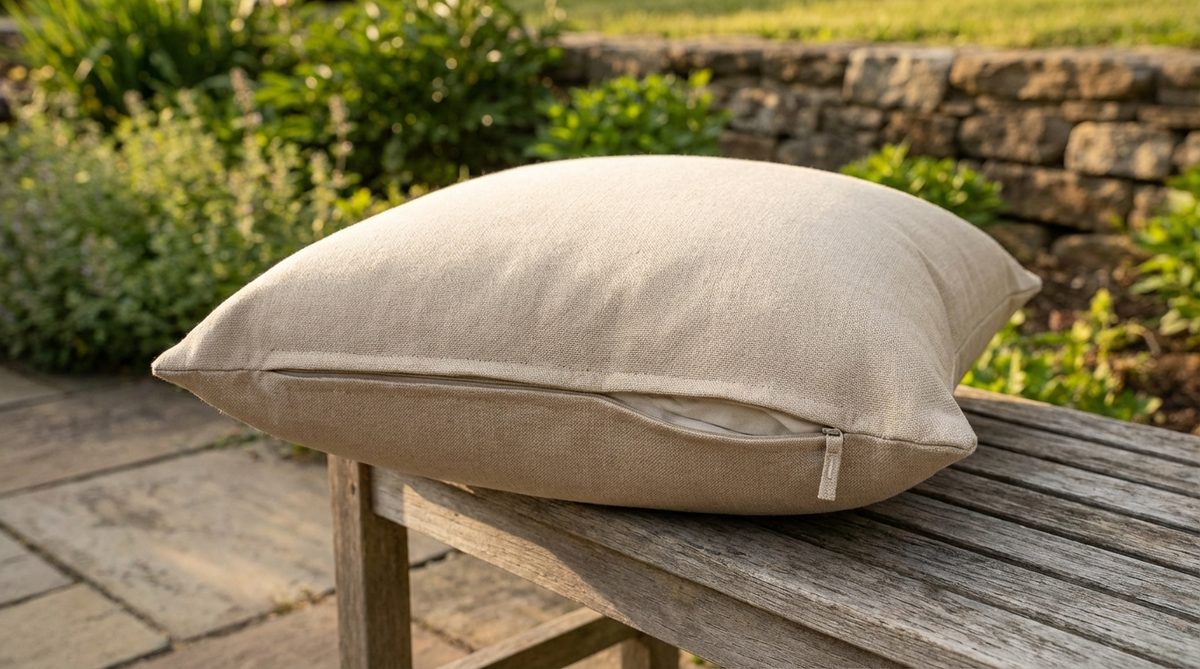
Zippered pillow covers that remove for machine washing maintain freshness throughout active outdoor seasons. Look for covers with hidden zippers that don’t create pressure points.
Wash covers monthly during peak use months, following care tag instructions. Air-dry rather than machine-dry to preserve shape and prevent shrinkage.
Conclusion
Strategic selection of outdoor decor pillows transforms patios into functional, stylish extensions of indoor living spaces. Focus on weather-resistant materials like solution-dyed acrylic, layer multiple shapes and sizes for dimension, and establish clear color relationships through intentional combinations. Rotate seasonal selections to keep spaces feeling fresh while protecting your investment through proper maintenance and storage. Start with 4-6 foundational neutral pillows, then add 2-3 bold pattern or color accents per seating area—this ratio creates visual interest without overwhelming your outdoor rooms.
Frequently Asked Questions
How many outdoor pillows should I put on a standard patio sofa?
Place 5-7 pillows on a three-seat outdoor sofa for balanced comfort and style. Position two larger 20-inch squares at the outer edges, two 18-inch squares or lumbar pillows in the middle positions, and one accent pillow in the center. This arrangement provides back support while leaving adequate seating space.
Can outdoor pillows stay outside in rain?
Weather-resistant outdoor pillows tolerate light rain but perform better with protection during heavy storms. Quick-drying materials like polyester and acrylic shed moisture effectively, but prolonged saturation reduces pillow life. Bring pillows inside during extended wet periods or store under covered areas when not in use.
What is the difference between indoor and outdoor pillow fabric?
Outdoor fabrics undergo UV-resistance treatments, water-repellent finishes, and mildew-prevention processes that indoor fabrics lack. Solution-dyed outdoor materials incorporate color during fiber production rather than surface application, resulting in fade resistance up to three times greater than conventional dyeing. Outdoor fills use synthetic materials that dry quickly rather than natural fibers that retain moisture.
How do I clean outdoor decorative pillows?
Remove covers if possible and machine wash in cold water on gentle cycle with mild detergent. For non-removable covers, spot-clean with a soft brush, mild soap solution, and rinse thoroughly with a hose. Air-dry all outdoor pillows completely before returning to furniture—machine drying can damage weather-resistant treatments and cause shrinkage.
Should outdoor pillows match or coordinate with cushions?
Coordinate rather than match outdoor pillows with seat cushions for visual interest. If cushions are solid colored, pillows can introduce patterns and accent colors. If cushions feature patterns, select pillows in solid colors pulled from the cushion design, plus one coordinating pattern in a different scale. This layered approach creates depth without visual chaos.
What pillow insert size gives the fullest look?
Use inserts 1-2 inches larger than pillow covers for a plump, structured appearance. An 18-inch cover filled with a 20-inch insert creates a full, high-end look, while matching dimensions produce a flatter result. Overstuffing works best with square pillows—lumbar and specialty shapes perform better with exact-match inserts to maintain proper proportions.