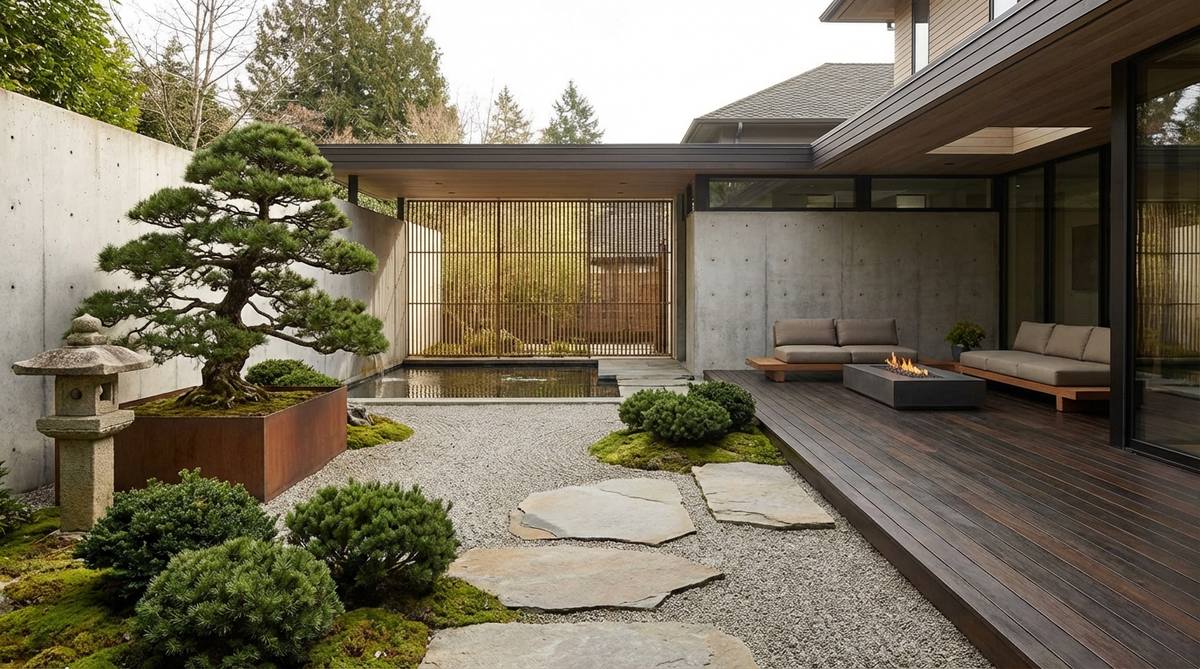
A modern japanese garden bridges centuries-old Zen philosophy with today’s architectural language, creating spaces where minimalist elegance meets functional outdoor living. Fresh Garden Ideas presents over 40 fusion concepts that transform courtyards, patios, and backyards into tranquil sanctuaries using contemporary materials, innovative planting schemes, and timeless Japanese design principles.
Design SnapshotKey Principles
- Kanso (Simplicity): Eliminate clutter to achieve visual clarity and mental calm through minimal, purposeful elements
- Fukinsei (Asymmetry): Embrace natural imbalance over rigid symmetry to create organic, flowing compositions
- Ma (Negative Space): Honor emptiness between elements as essential to harmony, not mere absence
- Shizen (Natural Essence): Arrange components intentionally yet achieve spontaneous, uncontrived appearance
Contemporary Hardscape Foundations
The modern japanese garden begins with its hardscape framework—where traditional stone artistry encounters industrial materials. These foundations establish the visual language and spatial flow that defines contemporary Zen landscapes.
1. Split Granite Pathways With Steel Edging
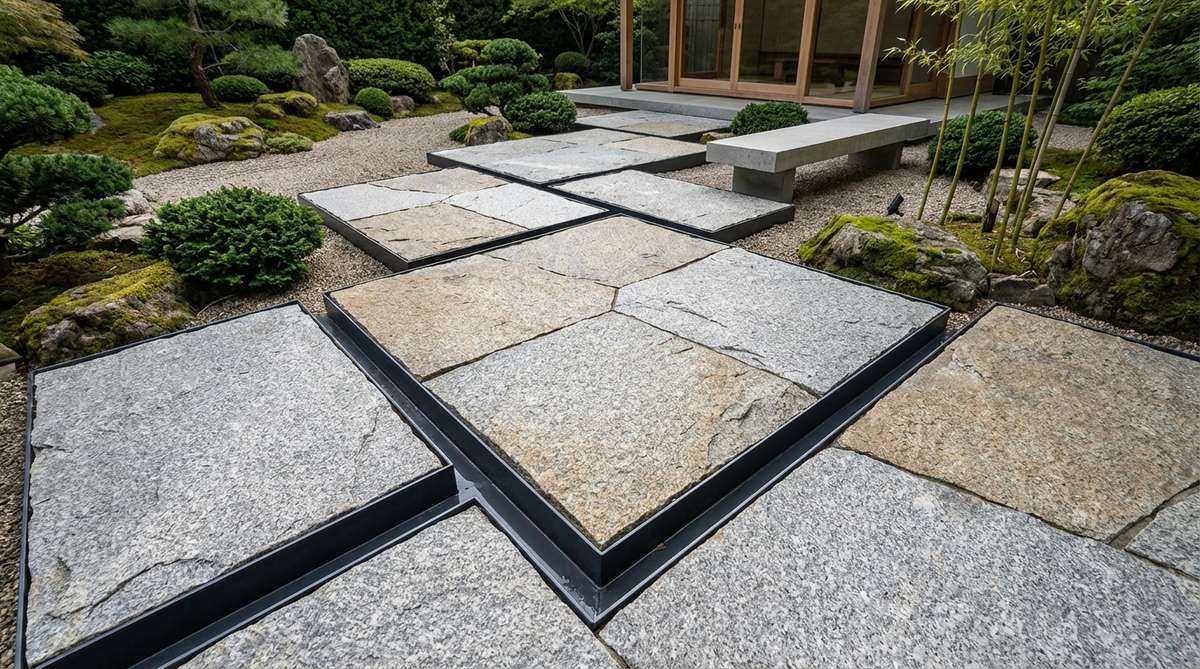
Split granite stones introduce crisp, geometric edges that contrast with traditional river-worn boulders. Their clean cuts reflect modern architecture’s processed materials—glass, concrete, and polished surfaces.
Install split granite slabs in irregular patterns, bordered by powder-coated steel channels. This combination honors traditional stepping stone sequences while delivering the visual strength needed beside contemporary structures.
The intentional splitting process reveals granite’s interior crystalline beauty, creating texture that weathers gracefully yet maintains defined edges for decades.
2. Poured Concrete Pads With Raked Gravel Surrounds
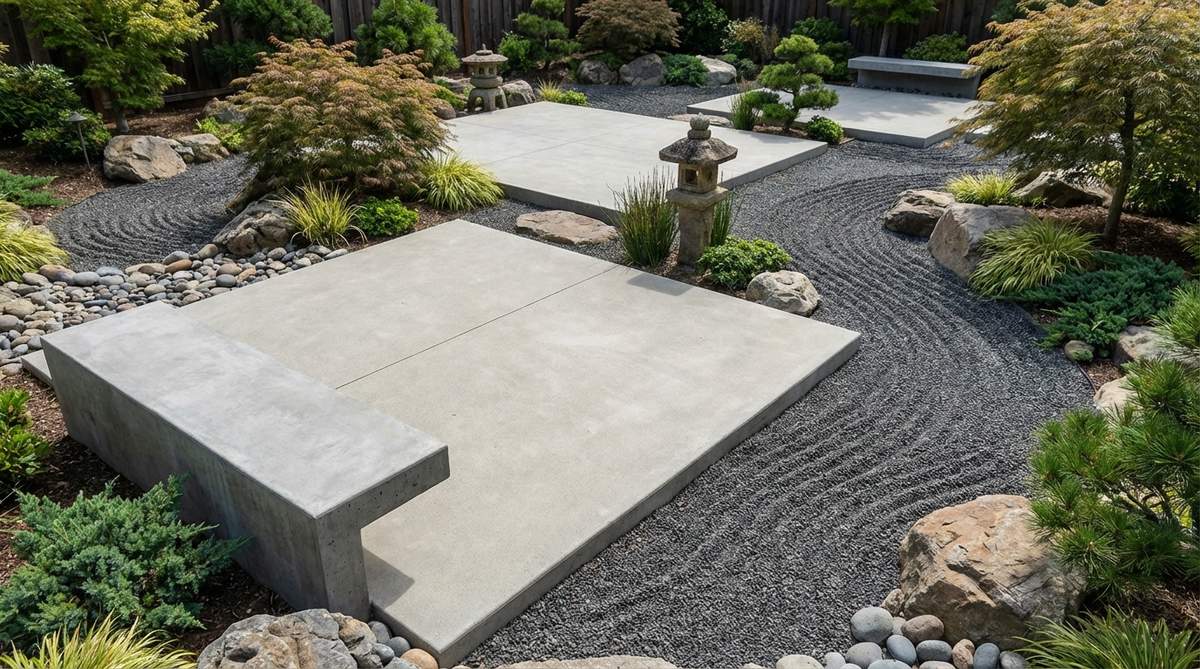
Large-format concrete platforms anchor seating areas while dark pea gravel creates meditative dry-stream illusions around them. The hard geometry of poured concrete provides functional gathering spaces.
Pour concrete in asymmetrical shapes—rectangles at angles to each other—then surround with 3-inch deep gravel beds. Rake patterns weekly to maintain the ripple effect symbolizing water movement.
This approach solves weight constraints for rooftop installations where traditional massive boulders prove impractical.
3. Charcoal Composite Decking Platforms
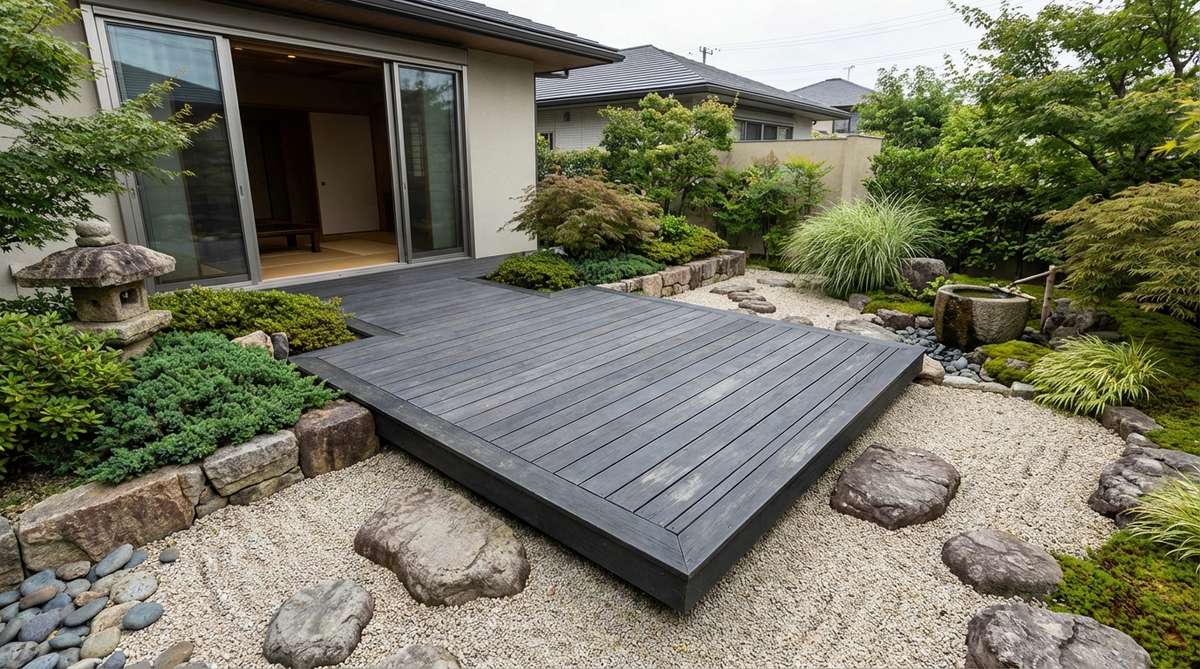
Weather-resistant composite lumber in charcoal tones creates low-maintenance platforms that reference traditional wood walkways. The material withstands moisture exposure while maintaining consistent color.
Build elevated decks that appear to float above gravel fields, connecting indoor living spaces to outdoor Zen zones. The dark finish recedes visually, emphasizing plantings and stone features.
4. Herringbone Wood With Marble Inlay
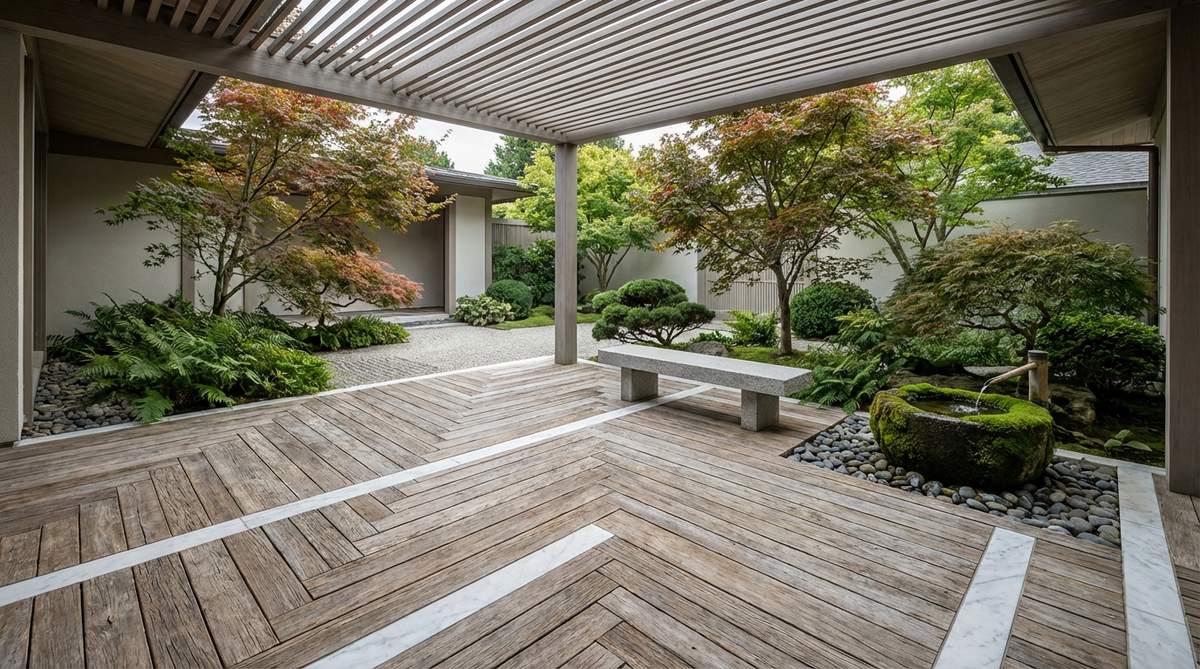
Herringbone-patterned wood planks intersected with white marble strips blend Italian craftsmanship with Japanese restraint. This fusion creates rhythm through repetition while maintaining minimalist color palette.
Execute this in covered courtyard areas where weather protection allows wood-marble combinations. The pattern guides foot traffic while adding subtle sophistication without dominating the composition.
5. Geometrically Arranged Basalt Columns
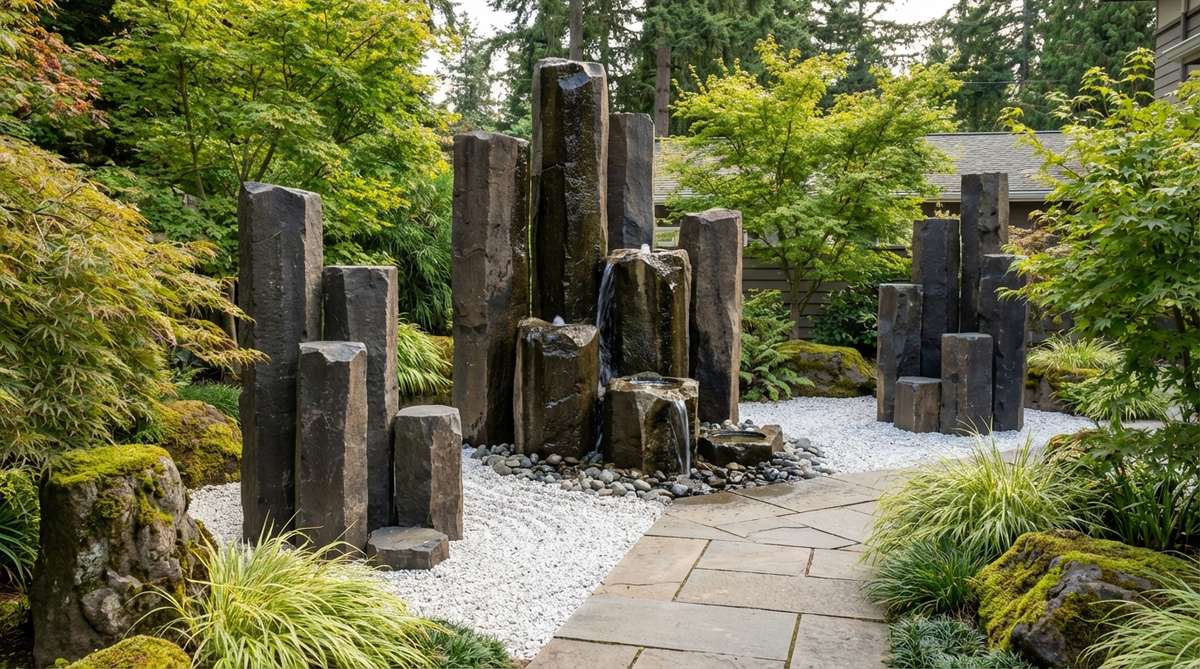
Vertical basalt columns installed in clustered groups create sculptural focal points that echo natural formations. Their dark surface and angular geometry suit modernist aesthetics.
Position columns at varying heights in asymmetric groupings, emerging from beds of contrasting white gravel. Water features cascading down column faces amplify their dramatic presence.
6. Brushed Concrete With Exposed Aggregate
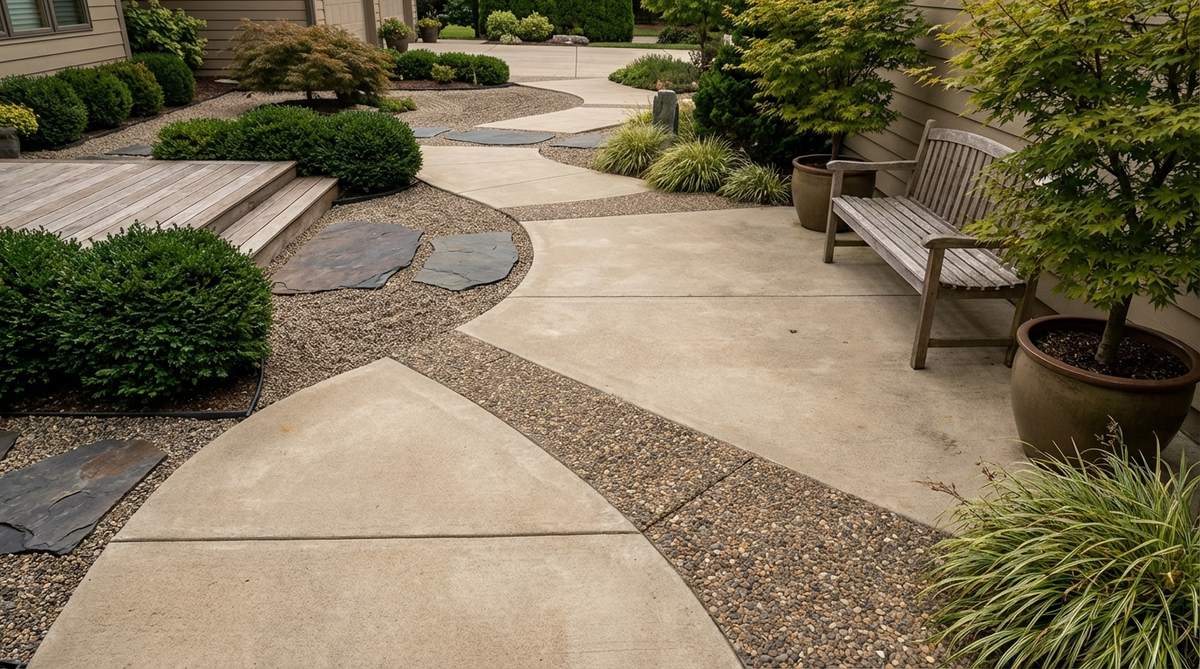
Brushed concrete surfaces revealing embedded pebbles provide textural interest while maintaining clean lines. This finish offers slip resistance for pathways and patios.
Select aggregate colors that harmonize with surrounding stone elements—gray for cool palettes, warm beige for earth-toned gardens. The technique delivers durability contemporary families require.
7. Corten Steel Retaining Walls
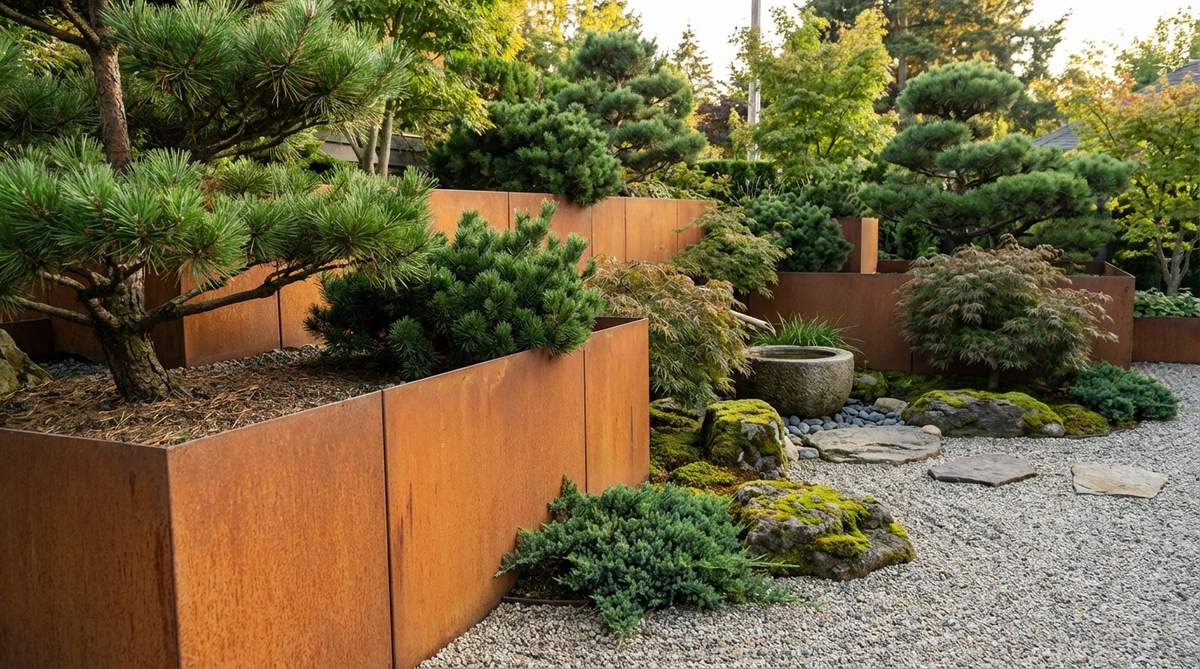
Weathering steel panels develop protective rust patinas that stabilize after initial oxidation. Their warm orange-brown tones complement evergreen plantings beautifully.
Install corten panels as low retaining walls defining elevation changes or as vertical screens creating garden rooms. The material’s industrial origin brings contemporary edge to traditional compositions.
Modern Water Elements With Zen Spirit
Water features remain essential in japanese garden modern interpretations, symbolizing life’s flow and providing acoustic tranquility. Contemporary versions employ innovative engineering and materials while preserving symbolic depth.
8. Linear Water Blade Over Black Pebbles
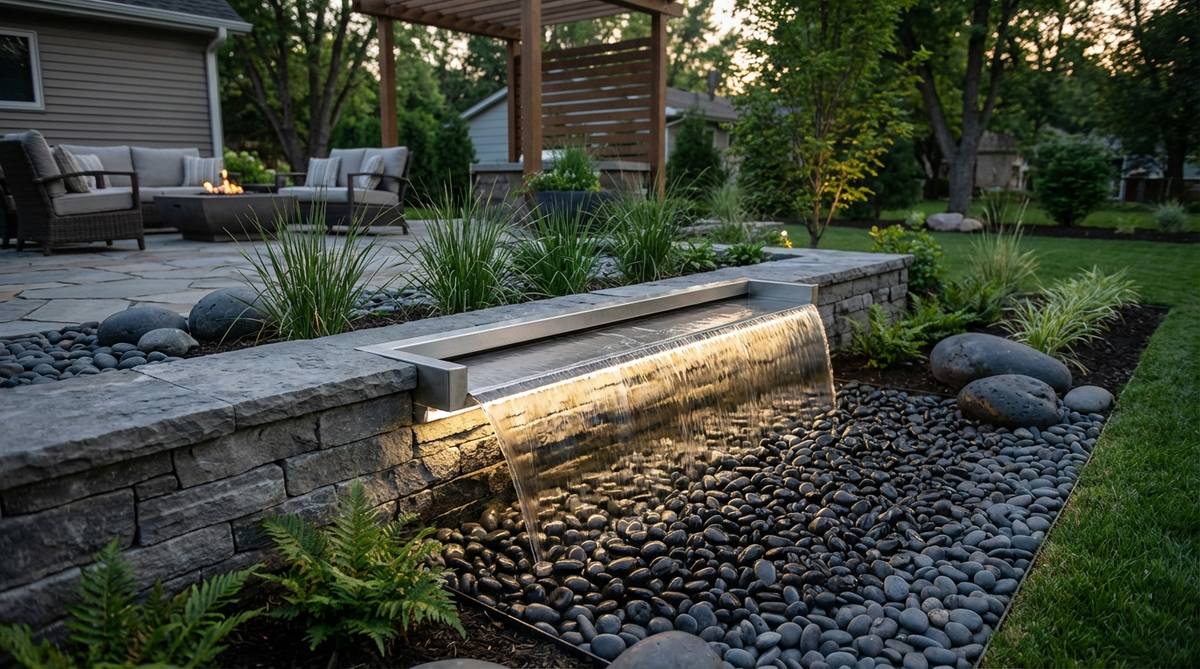
A stainless steel water blade creates a sheet cascade into a concealed reservoir beneath polished black stones. The linear form suits rectilinear architecture while the sound masks urban noise.
Install LED strip lighting beneath the blade to illuminate falling water at night. The reservoir remains hidden, creating the illusion that water vanishes into stone—a modern take on dry-stream beds.
9. Infinity Edge Koi Pond
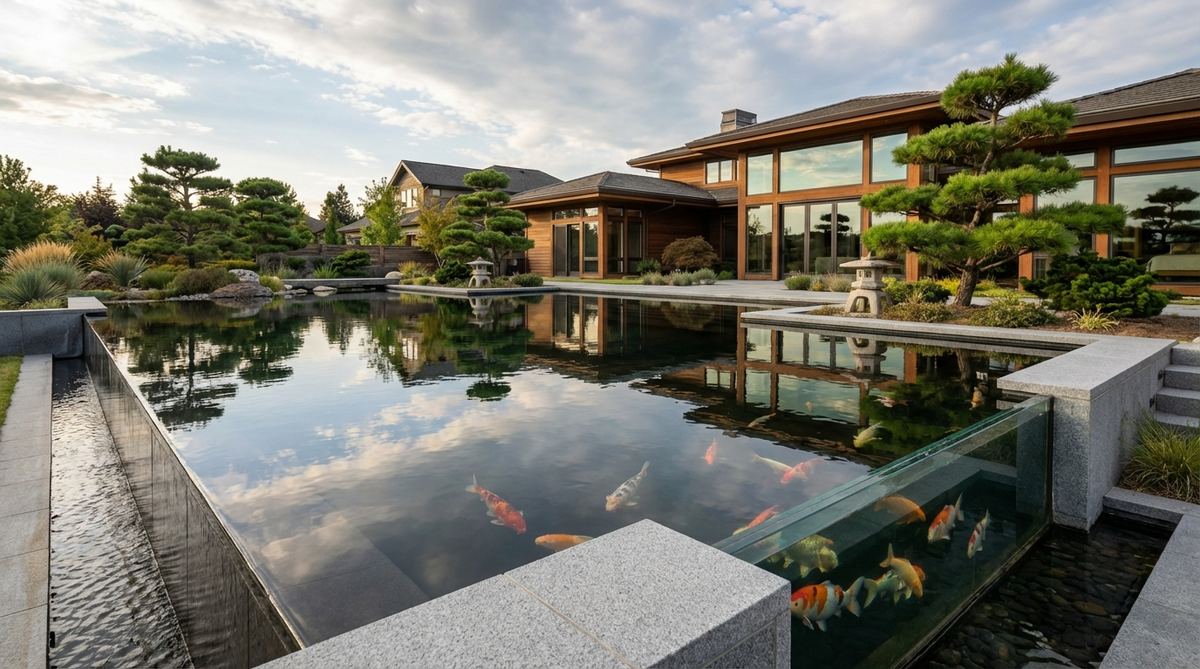
An infinity-edge pond positioned at property boundaries creates mirror-like surfaces reflecting sky and architecture. Koi swimming patterns add living movement to static compositions.
Engineer the overflow edge with precise leveling so water appears to merge with distant horizons. Frame one side with glass panels for underwater viewing—especially engaging for children.
10. Bubbling Boulder With LED Accents
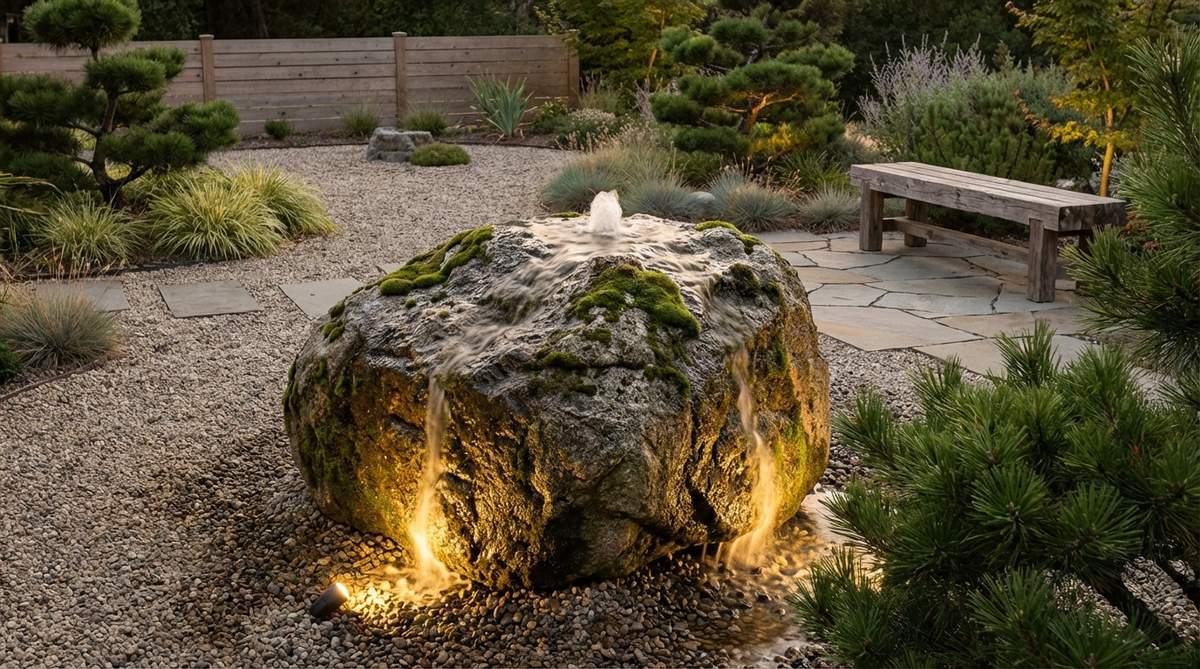
A natural boulder drilled for water emergence becomes a sculptural fountain. LED uplighting transforms it into a glowing focal point after sunset.
Select boulders with interesting textures or mineral veining. Water bubbles from the summit and sheets down all sides, creating soothing ambient sound without splashing.
11. Glass Channel Water Feature
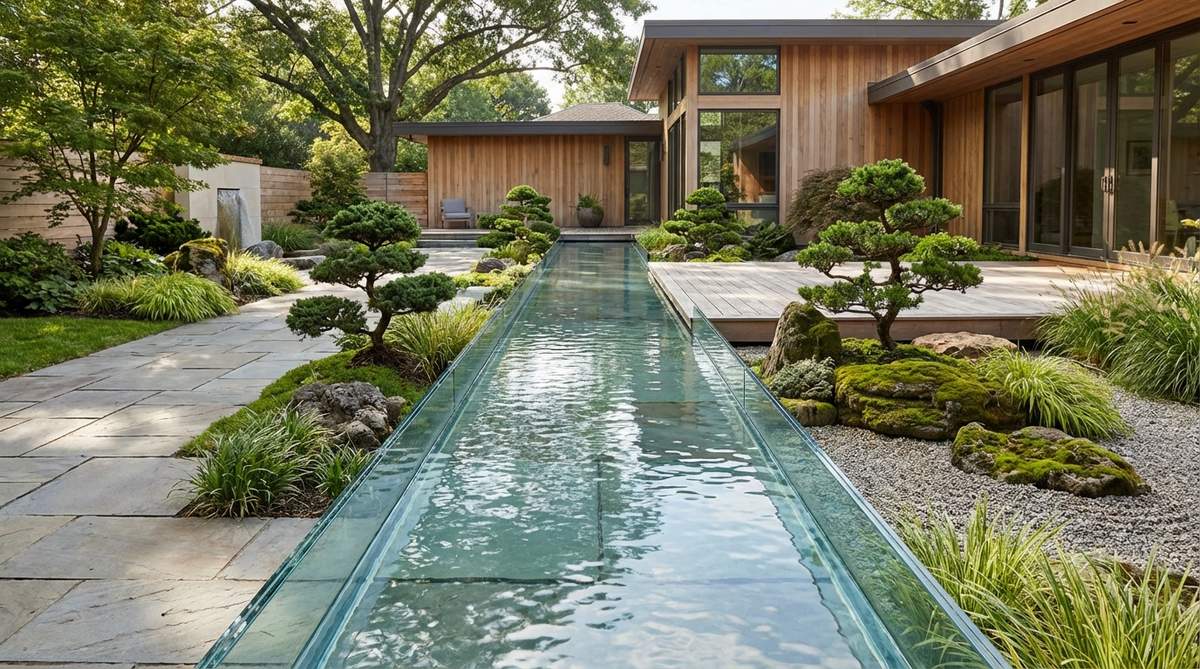
Tempered glass channels allow water to flow through transparent pathways, creating the illusion of suspended streams. This modern interpretation references traditional stream gardens.
Build channels at slight grades so water moves visibly but gently. Position them to bisect pathways, requiring visitors to step over—encouraging mindfulness with each crossing.
12. Rain Chain Collection System
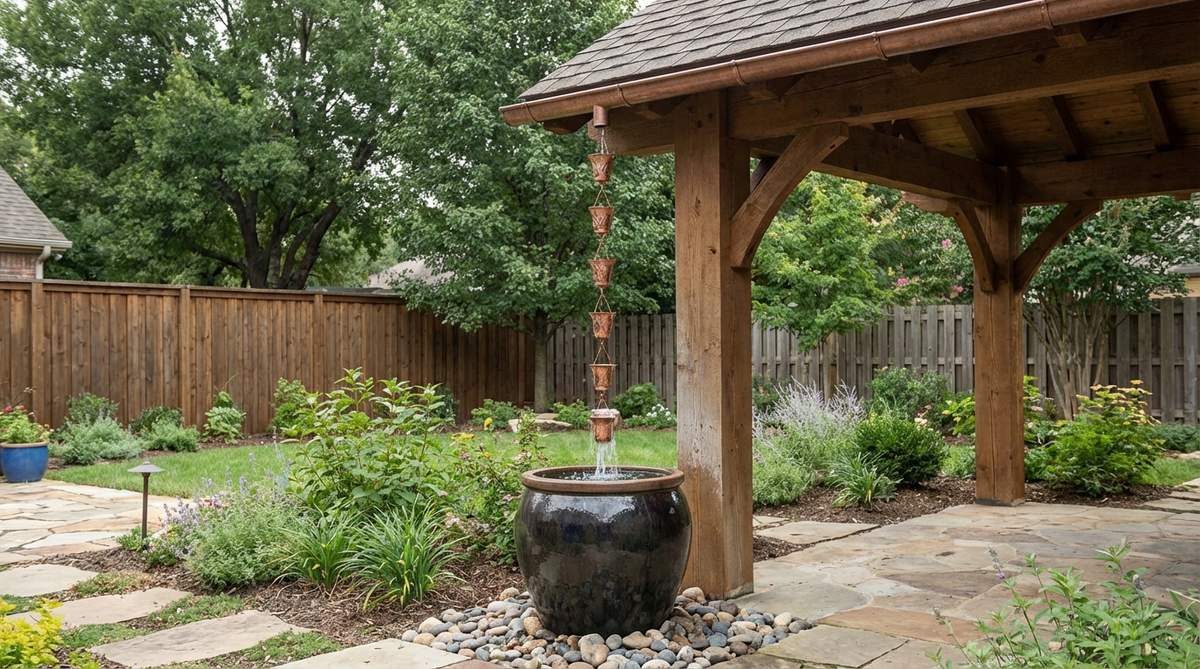
Copper or stainless steel rain chains replace downspouts, transforming roof runoff into visual and audible performances. They connect rooflines to ground-level collection basins.
Anchor chains above large ceramic bowls or stone basins where water collects before soaking into gravel. During storms, chains create dramatic cascades; in drizzle, gentle droplet music.
13. Tiered Spill Fountain With Concrete Basins
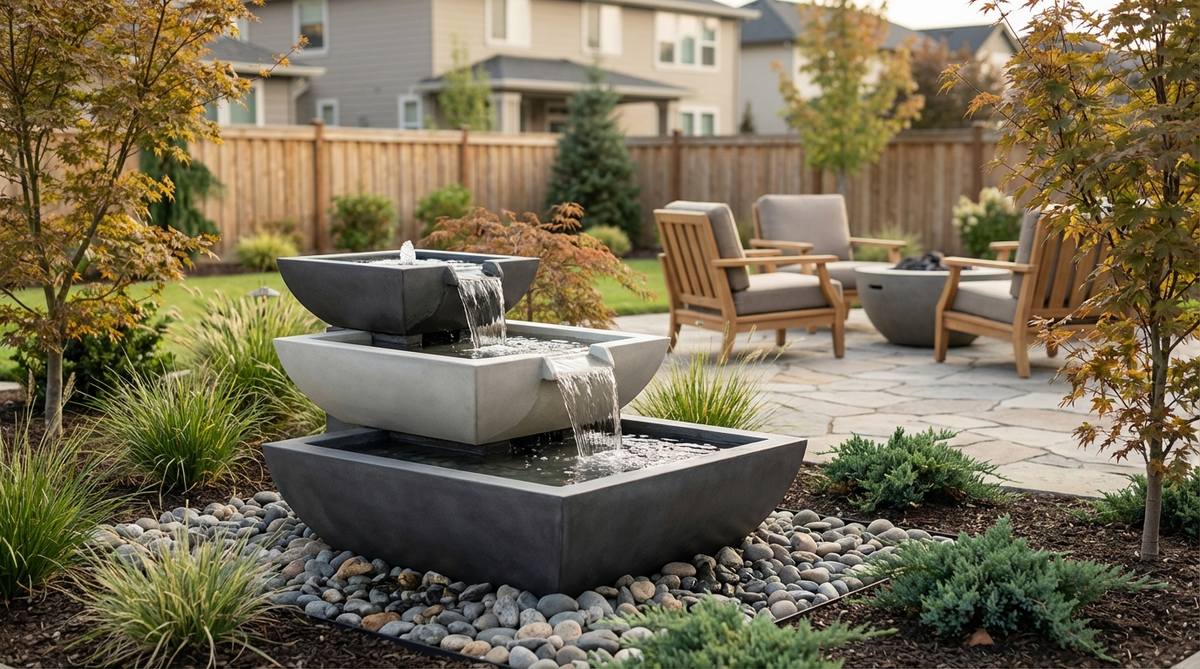
Stacked concrete bowls in graduated sizes create a modernist interpretation of traditional tiered fountains. Water spills from smallest to largest, producing layered acoustics.
Cast basins in geometric shapes—squares, rectangles, or hexagons—rather than traditional rounds. Finish with smooth concrete sealers in charcoal or pale gray.
14. Shallow Reflecting Pool With Stepping Stones
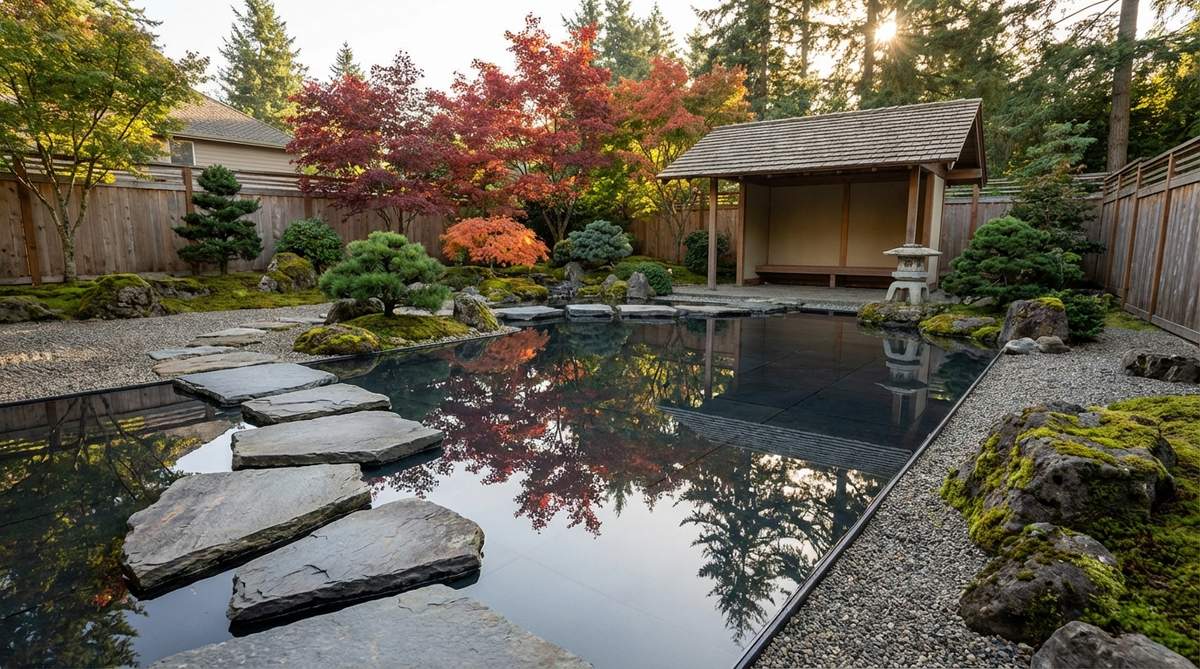
A 4-inch deep pool creates a mirror surface interrupted only by strategically placed stepping stones. The shallow depth remains safe while offering maximum reflective quality.
Position the pool to capture reflections of prized specimens—Japanese maples, specimen evergreens, or architectural elements. Step stones guide visitors across, creating engagement with the water plane.
Minimalist Planting Strategies
Plant selection in modern Japanese gardens prioritizes form, texture, and year-round structure over fleeting color displays. Designers favor restrained palettes where each specimen serves clear purpose.
15. Repeating Boxwood Spheres
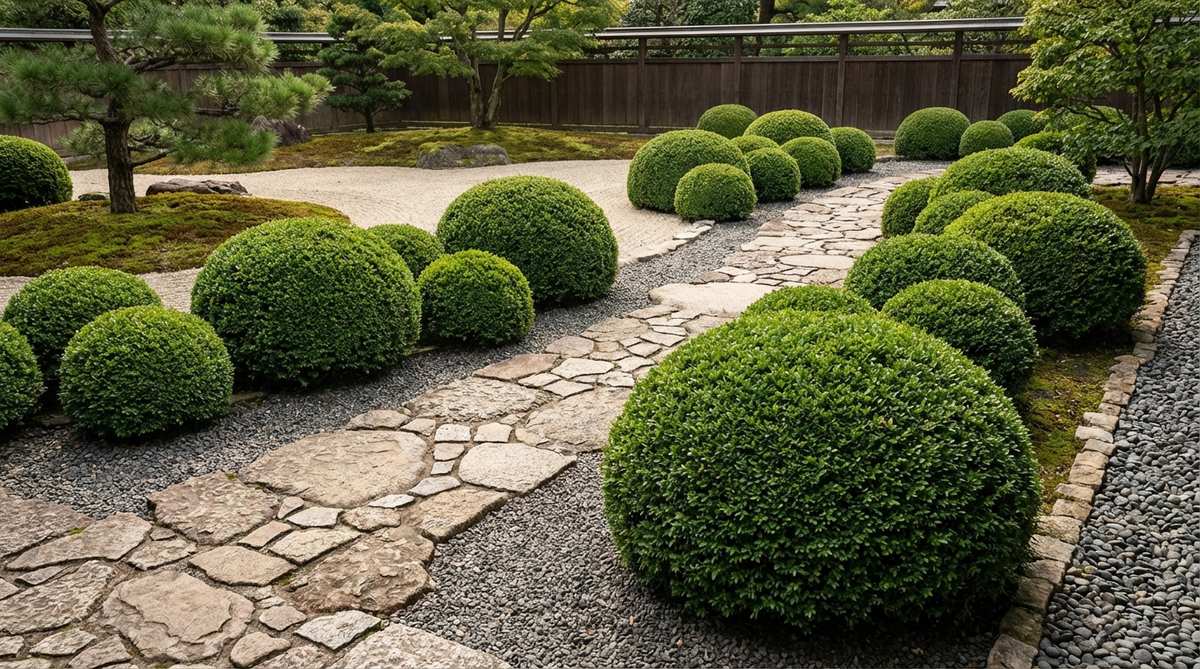
Clipped boxwood globes positioned in rhythmic sequences create visual cadence along pathways or borders. Their uniform geometry contrasts with organic stone and gravel textures.
Space spheres at consistent intervals—every 4 to 6 feet—to establish pattern without crowding. This repetition technique anchors compositions while maintaining simplicity.
Boxwoods require bi-annual shaping to preserve form but otherwise remain low-maintenance evergreens suited to various climates.
16. Mono-Species Ornamental Grass Meadows
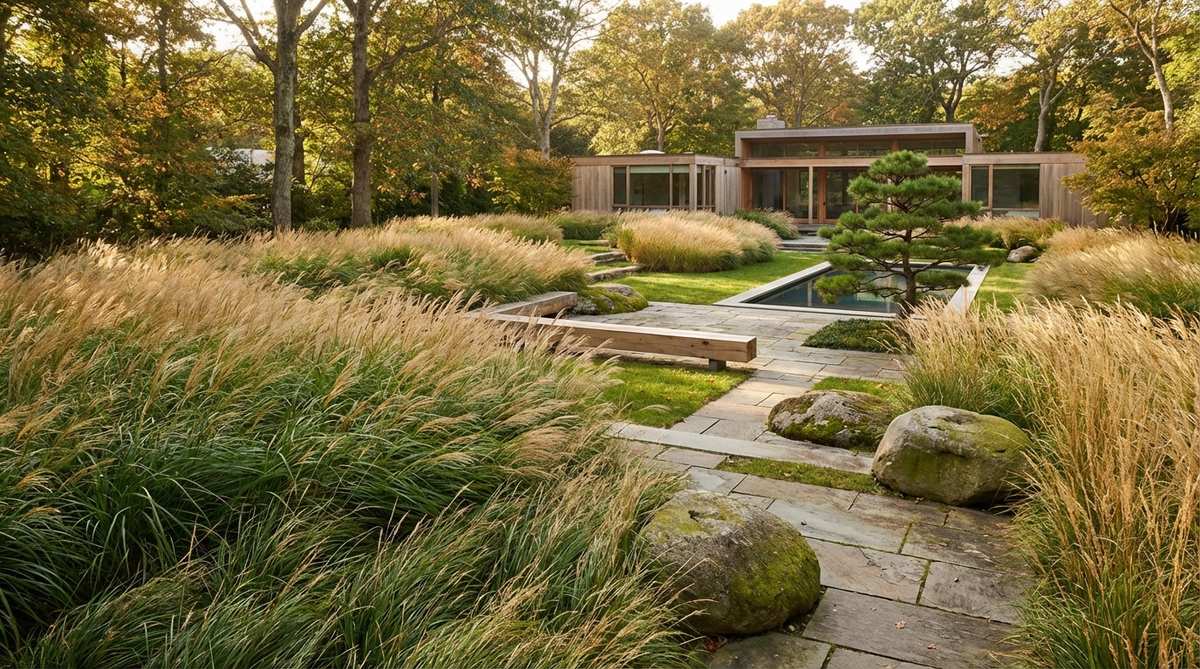
Mass plantings of single grass varieties—Karl Foerster reed grass or Japanese forest grass—create unified visual fields that move with breezes. This mono-culture approach amplifies impact through repetition.
Plant grasses in drifts that curve organically rather than rigid rows. Seasonal shifts from green to golden tan provide natural drama without demanding color-heavy perennials.
17. Cloud-Pruned Pines
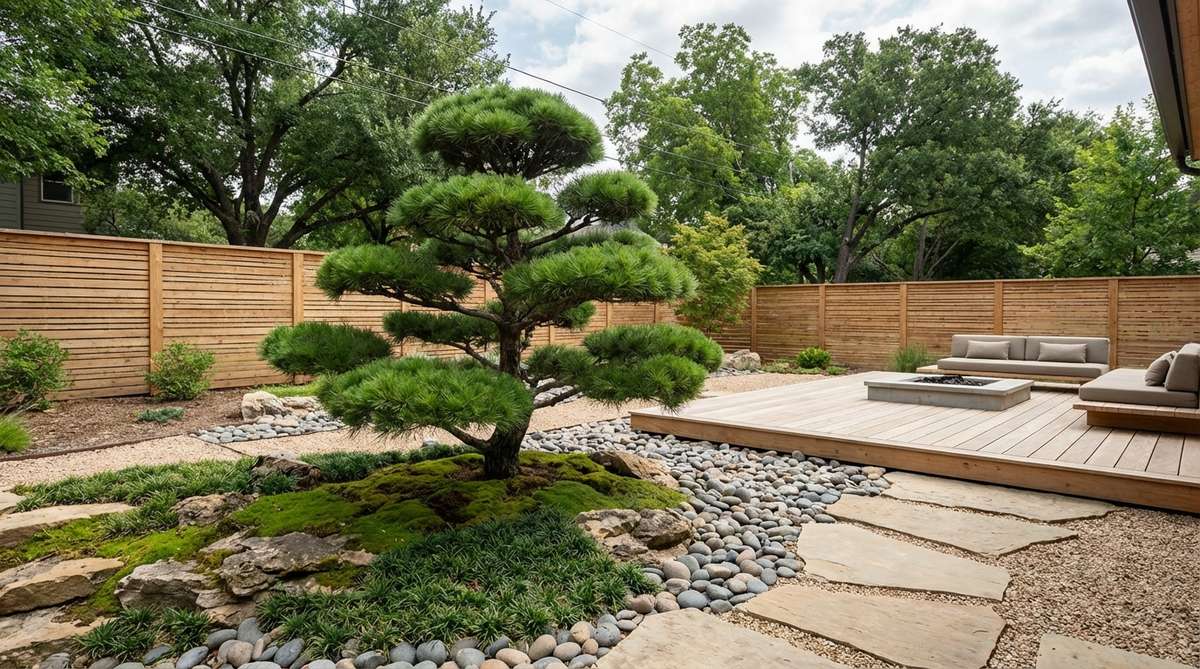
Pinus mugo or Japanese black pines pruned into floating cloud formations become living sculptures. This niwaki technique requires patience but produces iconic silhouettes.
Begin training young pines by removing lower branches and thinning canopy layers into horizontal platforms. Each pruning session refines the cloudlike appearance.
Position cloud pines as specimen focal points where their architectural forms receive prominence against neutral backgrounds.
18. Moss Carpet Groundcover
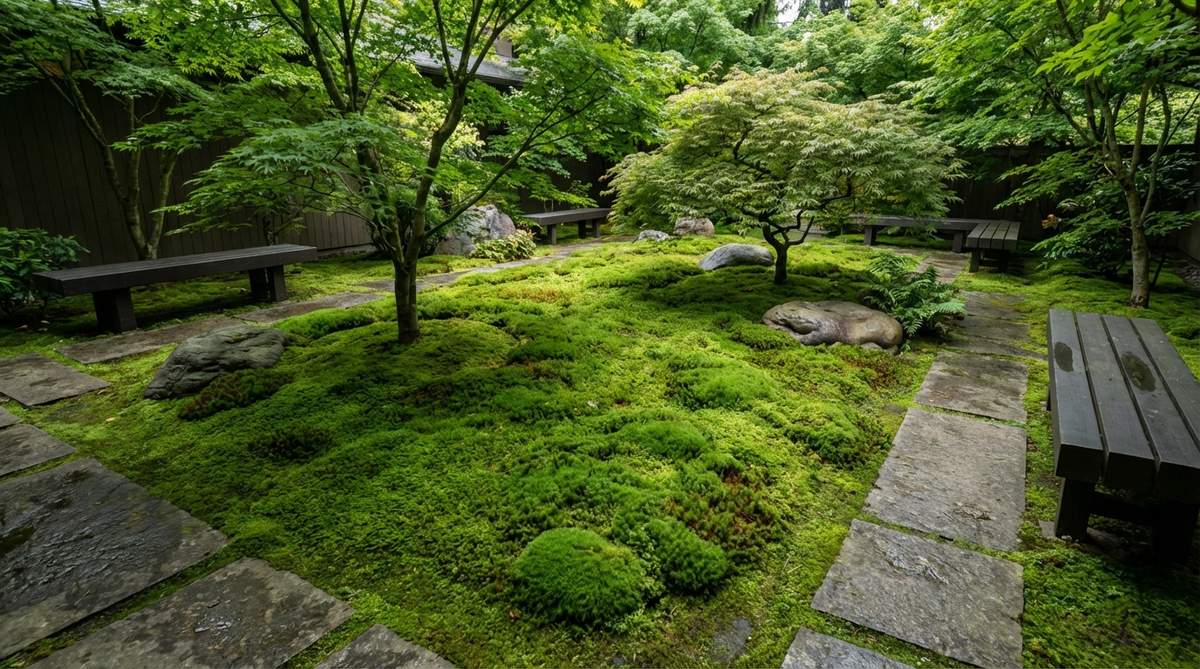
Sheet moss or cushion moss establishes living carpets in shaded courtyard areas, providing lush green without mowing. Moss thrives in damp, low-light conditions unsuitable for lawn grasses.
Prepare sites by removing competing vegetation and creating acidic soil conditions. Mist regularly during establishment, after which moss becomes remarkably resilient.
19. Architectural Bamboo Screens
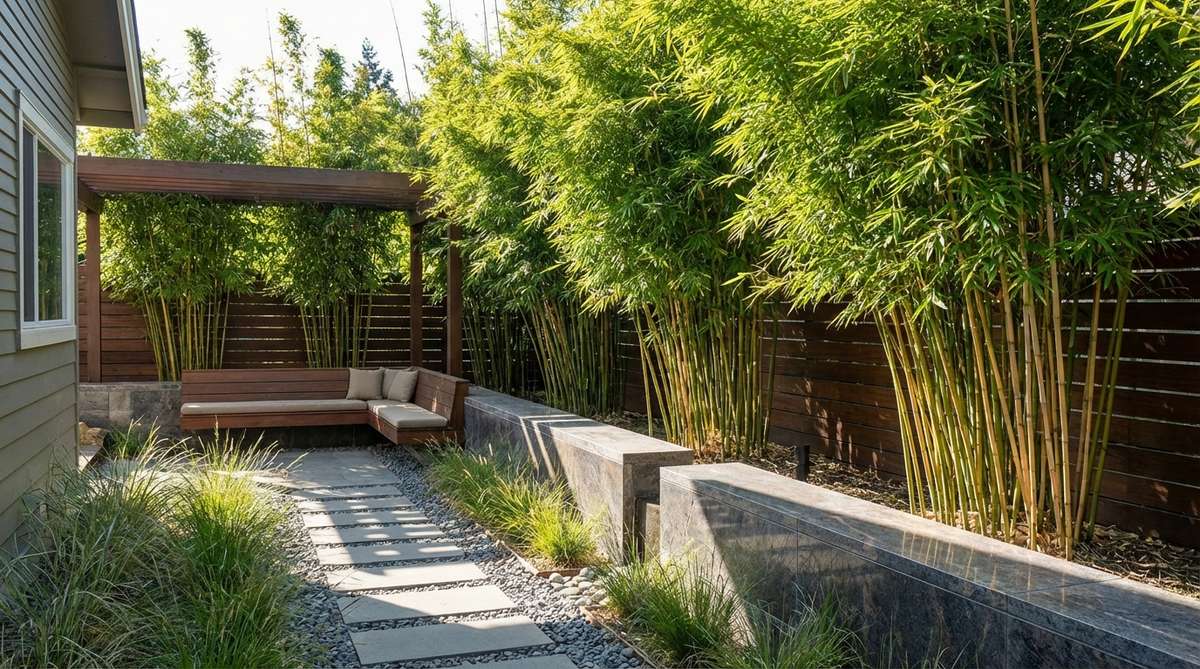
Clumping bamboo varieties (not running types) planted in linear arrangements create living privacy screens. Their vertical culms and rustling foliage add movement and sound.
Select clumping species like Bambusa multiplex to avoid invasive spreading. Contain roots with barriers if any concern exists, though clumpers rarely escape intended zones.
20. Singular Specimen Japanese Maple
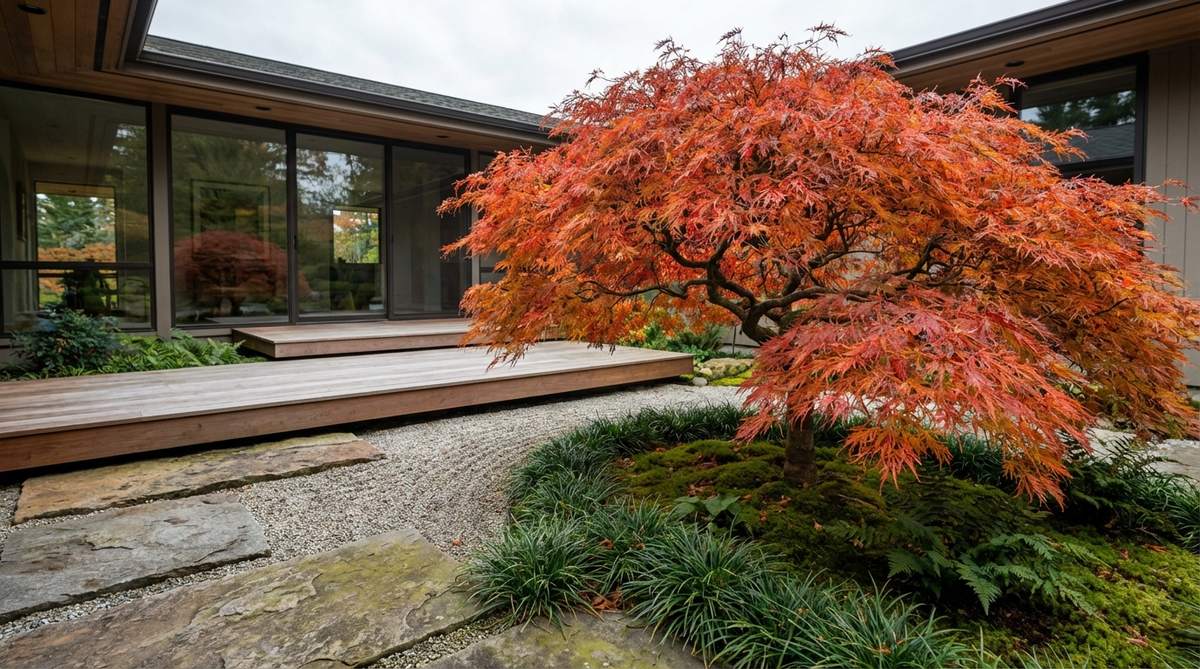
A single exceptional Japanese maple anchors the garden as the primary plant feature. Varieties with dissected foliage or dramatic fall color provide seasonal interest.
Position the maple where its form can be appreciated from multiple vantage points—especially indoor viewing areas. Underplant with simple groundcovers that won’t compete for attention.
21. Linear Bamboo Groves
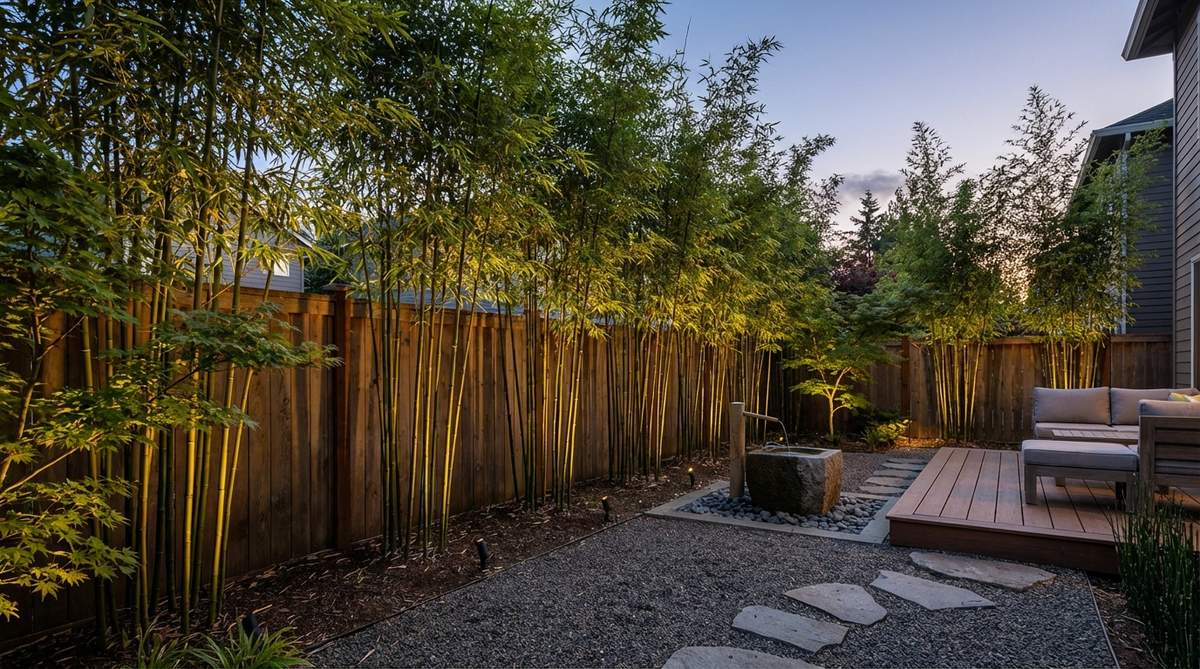
Narrow bamboo groves planted along property lines or beside pathways create vertical emphasis and natural fencing. The upright culms establish rhythm through repetition.
Thin culms annually to maintain visibility through the grove while preserving density. Backlight groves for dramatic evening silhouettes.
Architectural Fusion Structures
Built structures bridge indoors and outdoors, providing shelter and framing views while honoring Japanese aesthetic principles through contemporary construction methods.
22. Steel Pergola With Wisteria Canopy
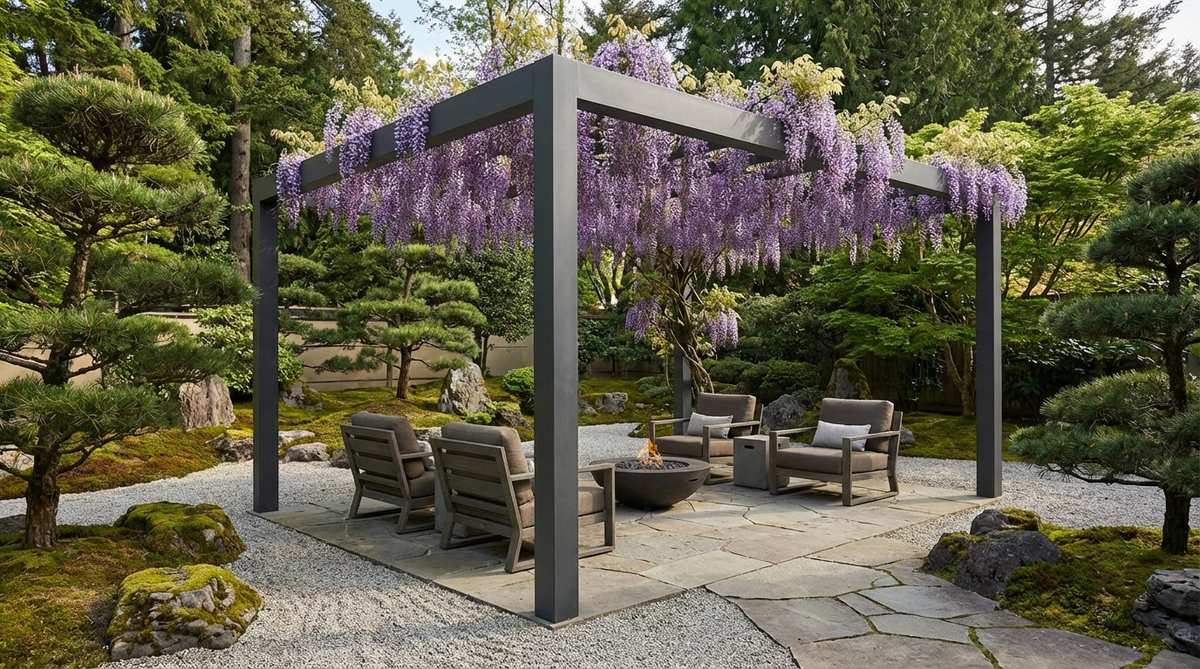
Powder-coated steel beams form minimalist pergola frames that support flowering wisteria vines. The industrial structure contrasts beautifully with organic blooms.
Design pergolas with clean horizontal lines at consistent heights. Train wisteria over summers to create seasonal shade canopies that filter light artfully.
Annual pruning maintains wisteria vigor while preventing overwhelming growth that obscures pergola architecture.
23. Glass-Walled Tea House
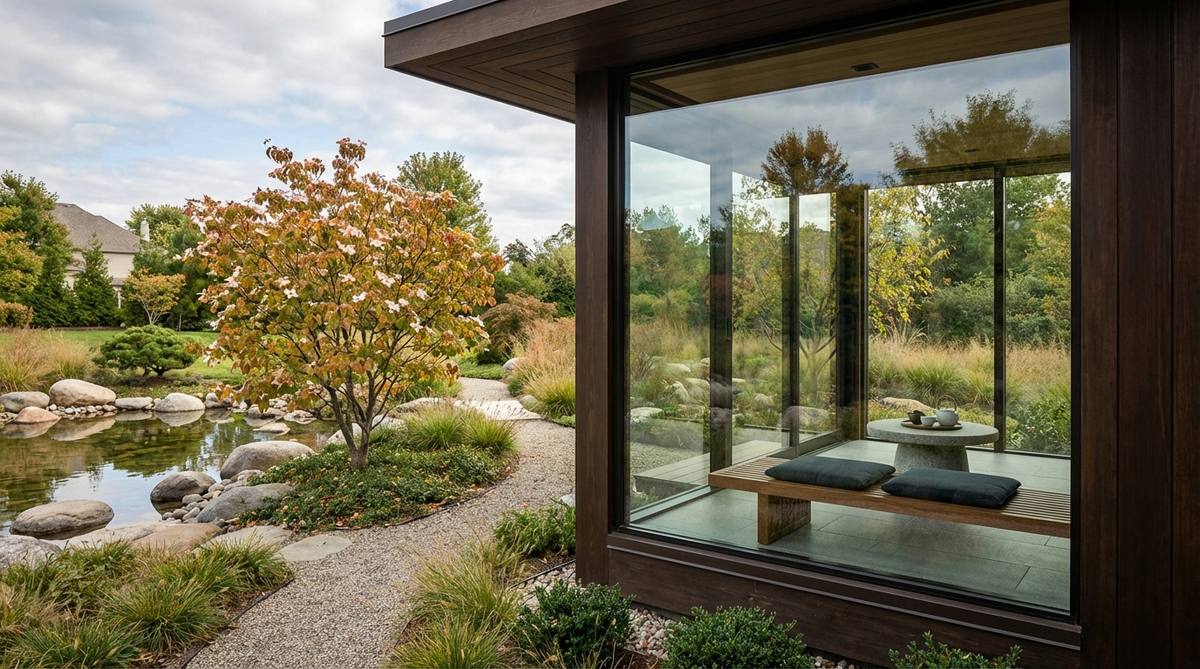
A contemporary tea house featuring floor-to-ceiling glass dissolves boundaries between interior contemplation space and surrounding garden. Minimal framing maximizes transparency.
Position the structure to frame specific garden views—a prized specimen tree, water feature, or stone arrangement. Interior furnishings remain sparselow seating, simple table, subtle lighting.
24. Minimalist Steel Gate Frame
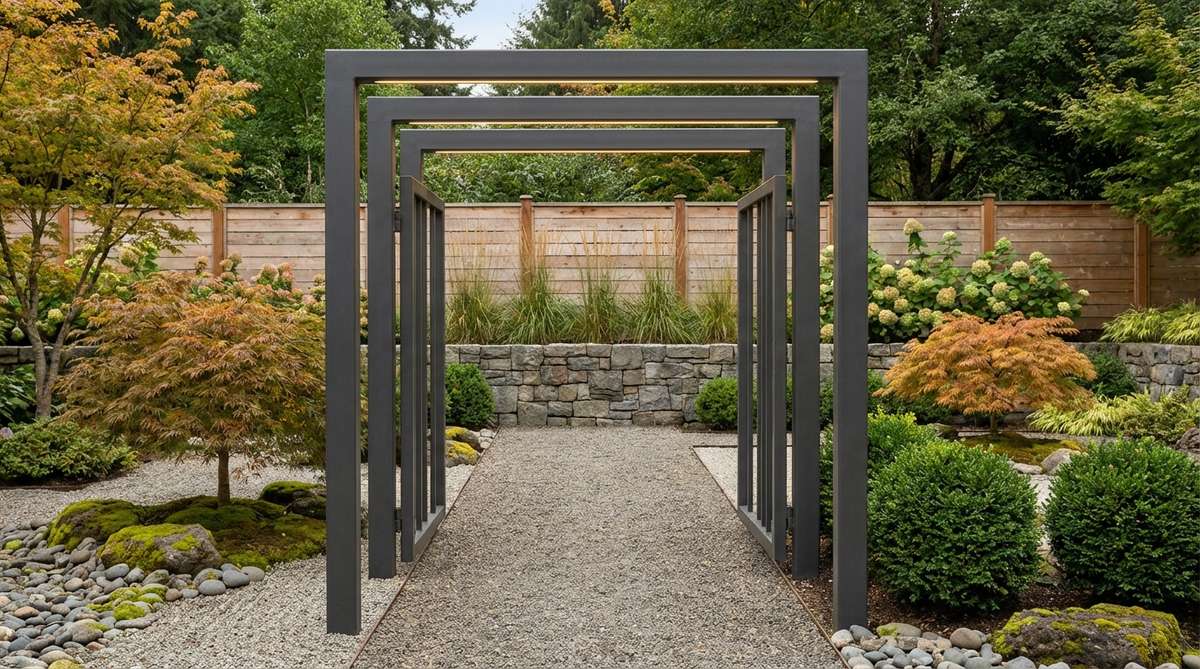
A frameless steel gate structure formed from charcoal-coated square tubing replaces traditional torii gates. The geometric simplicity announces entry while maintaining modern vocabulary.
Fabricate gates in proportions that complement home architecture. Embed LED strip lighting in upper beams for evening illumination without visible fixtures.
25. Floating Deck Over Gravel Sea
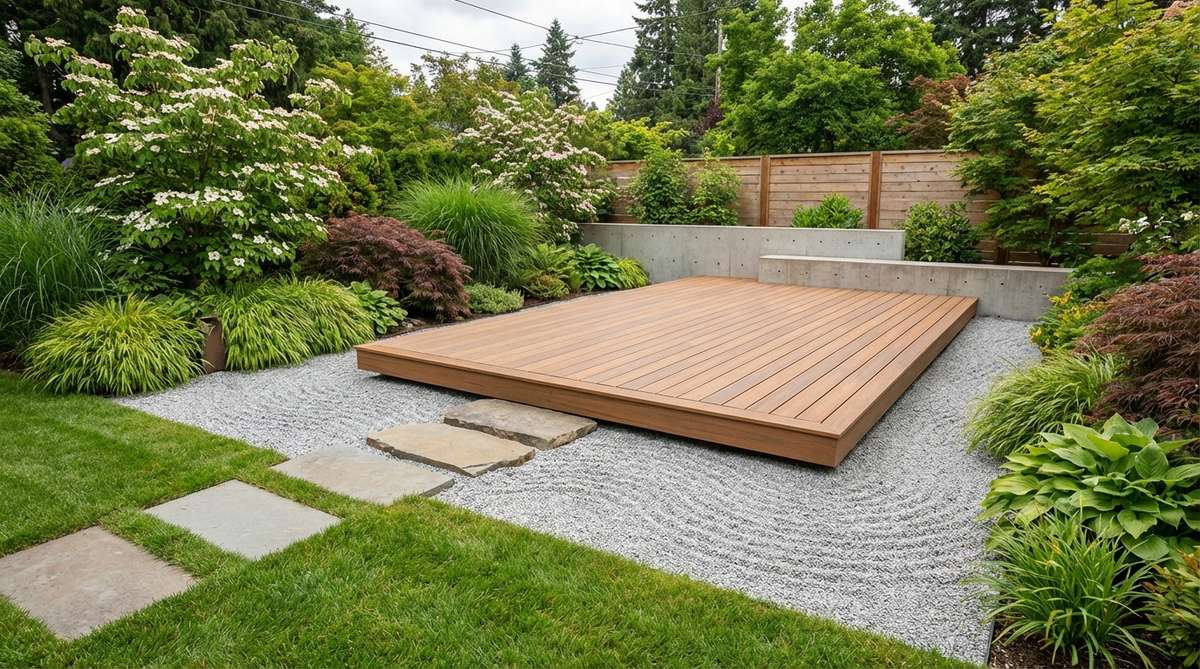
An elevated composite deck appears to hover above raked gravel, supported by concealed piers. This creates the illusion of floating over a symbolic ocean.
Build decks 8-12 inches above gravel level with flush transitions at access points. The gap beneath prevents weed growth while emphasizing the floating effect.
26. Slatted Wood Privacy Fence
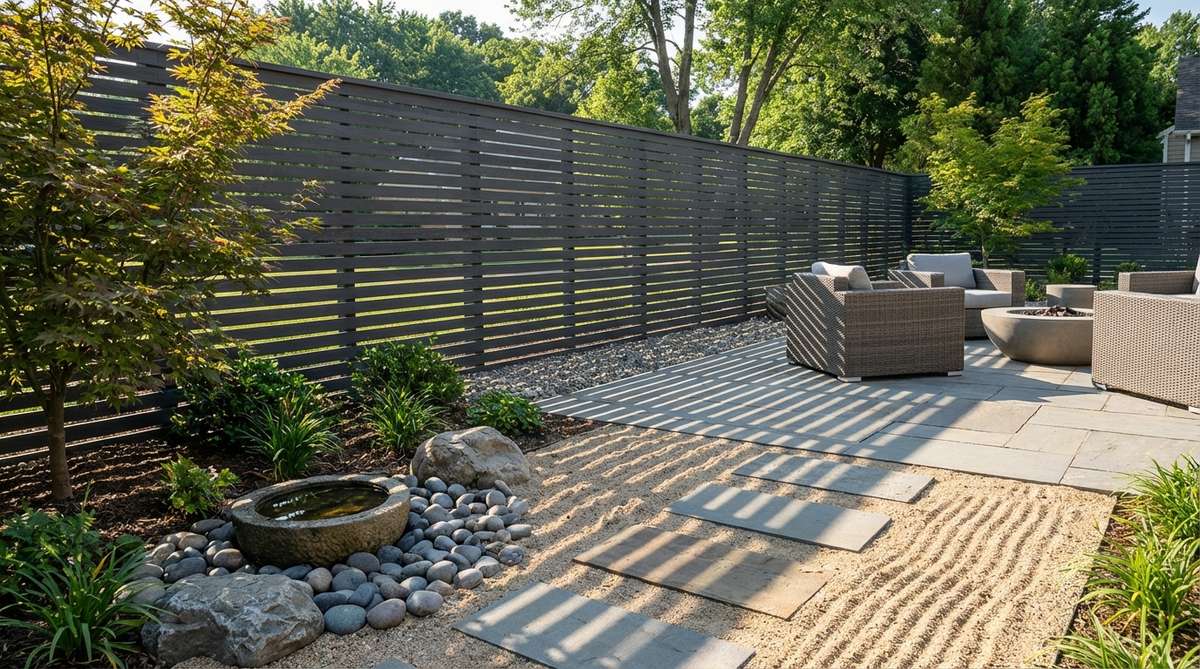
Horizontal cedar slats with 1-inch spacing provide privacy while allowing air circulation and filtered light passage. The contemporary horizontal orientation differs from traditional vertical pickets.
Stain slats in charcoal gray or natural cedar tones. The spacing creates shadow play as sun angles shift throughout the day.
27. Cantilevered Seating Bench
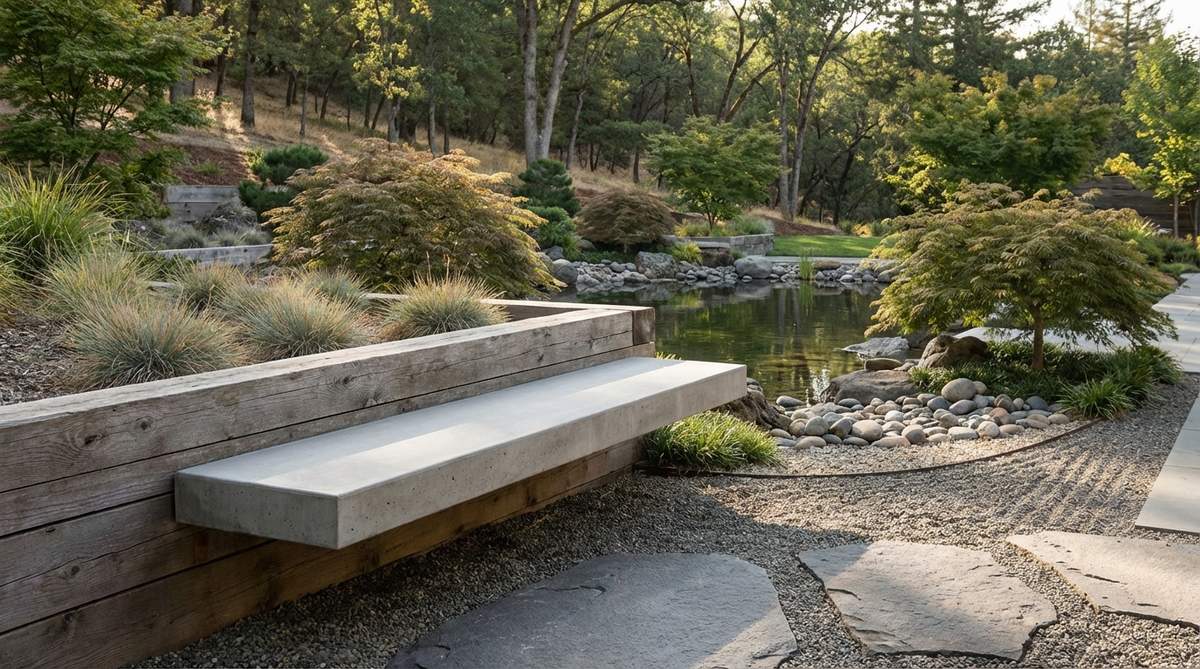
A concrete or wood bench cantilevered from a retaining wall provides seating without visible support legs. The floating appearance maintains clean sightlines across the garden.
Position benches at key viewing locations—facing water features, specimen plantings, or borrowed scenery. Built-in seating eliminates furniture clutter.
Lighting & Ambiance Design
Lighting extends garden usability beyond daylight hours while creating dramatic nocturnal atmospheres. Modern systems offer energy efficiency and precise control unavailable in traditional lantern-based illumination.
28. Uplighting For Specimen Trees
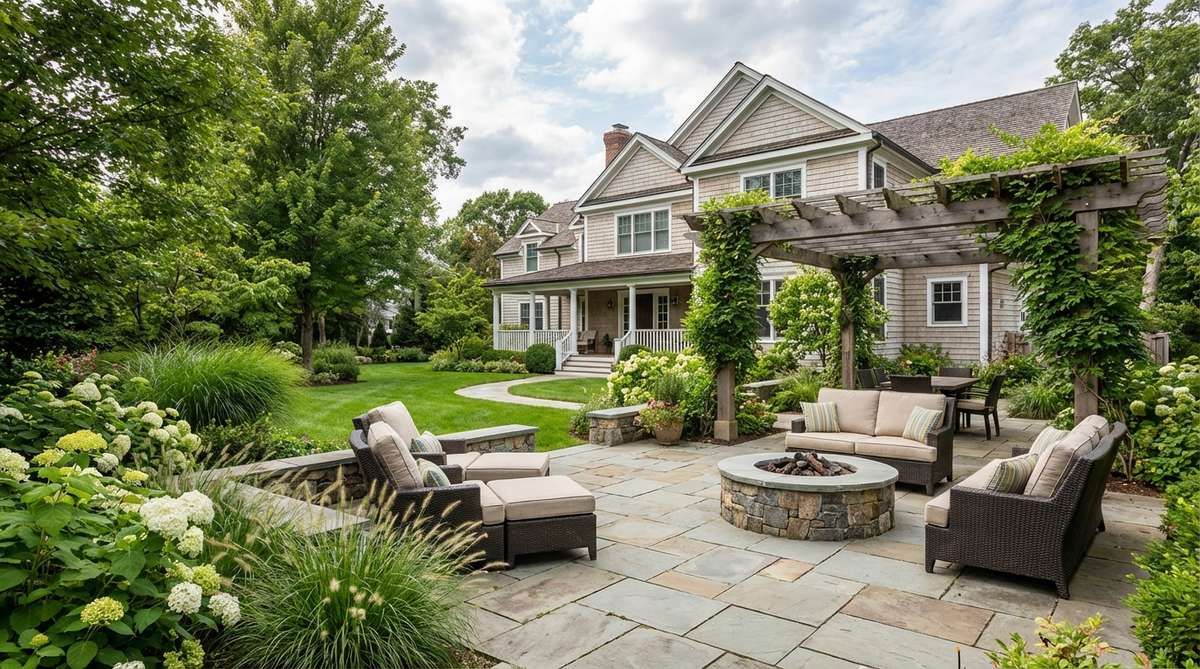
In-ground LED uplights positioned at tree bases cast branches and foliage into dramatic relief against night sky or structures. This technique transforms familiar daytime specimens.
Use narrow beam angles (15-30 degrees) to minimize light pollution while maximizing visual impact. Warm white temperatures (2700-3000K) enhance natural bark and foliage tones.
Uplighting proves particularly effective with cloud-pruned pines and Japanese maples where branch structure becomes shadow art.
29. Path Edge Strip Lighting
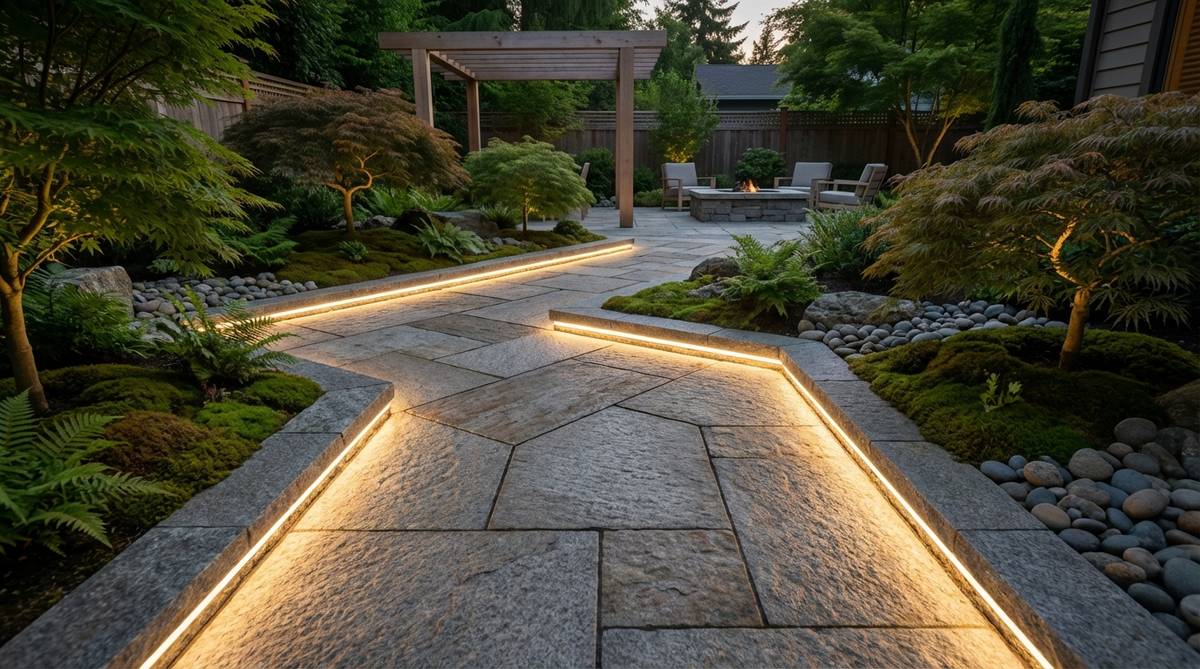
Recessed LED strips along pathway edges provide functional illumination without visible fixtures. The light grazes surfaces horizontally, defining routes subtly.
Install strips in weatherproof channels flush with paving edges. This low-level lighting guides safely without creating glare or upward light waste.
30. Floating Lantern Globes
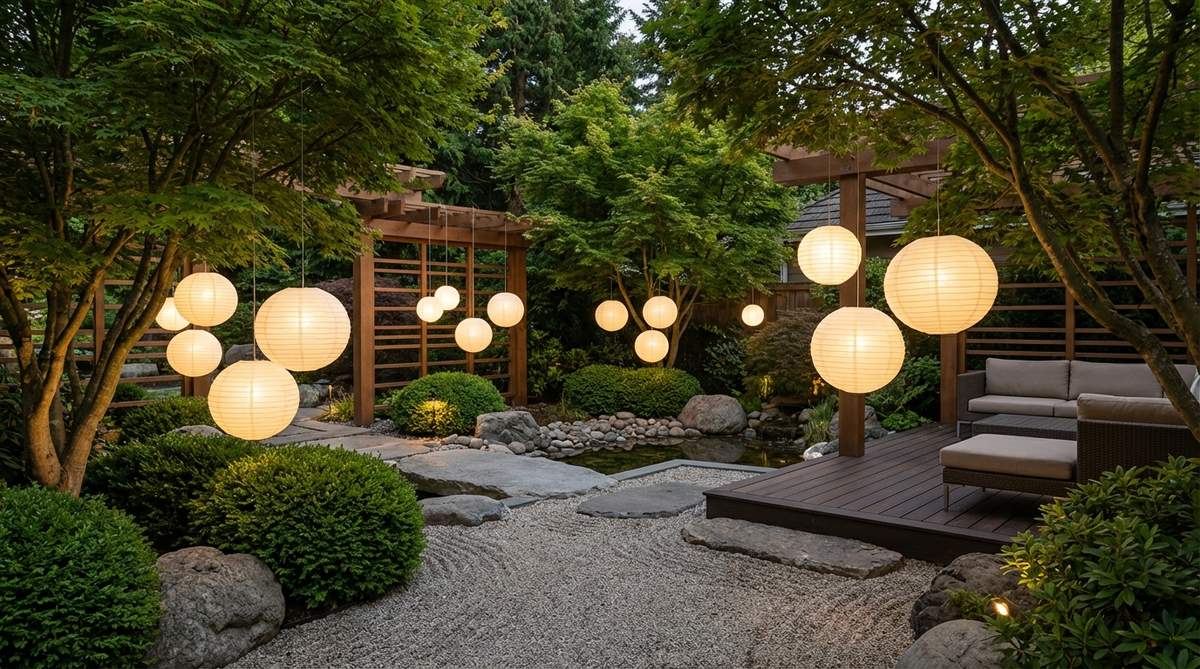
Spherical LED lanterns appearing to float at various heights create magical evening ambiance. Supported by thin cables or rods, fixtures themselves remain minimally visible.
Cluster lanterns in odd-number groupings at staggered heights. Battery-powered versions eliminate visible wiring while offering placement flexibility.
31. Underwater Pond Illumination
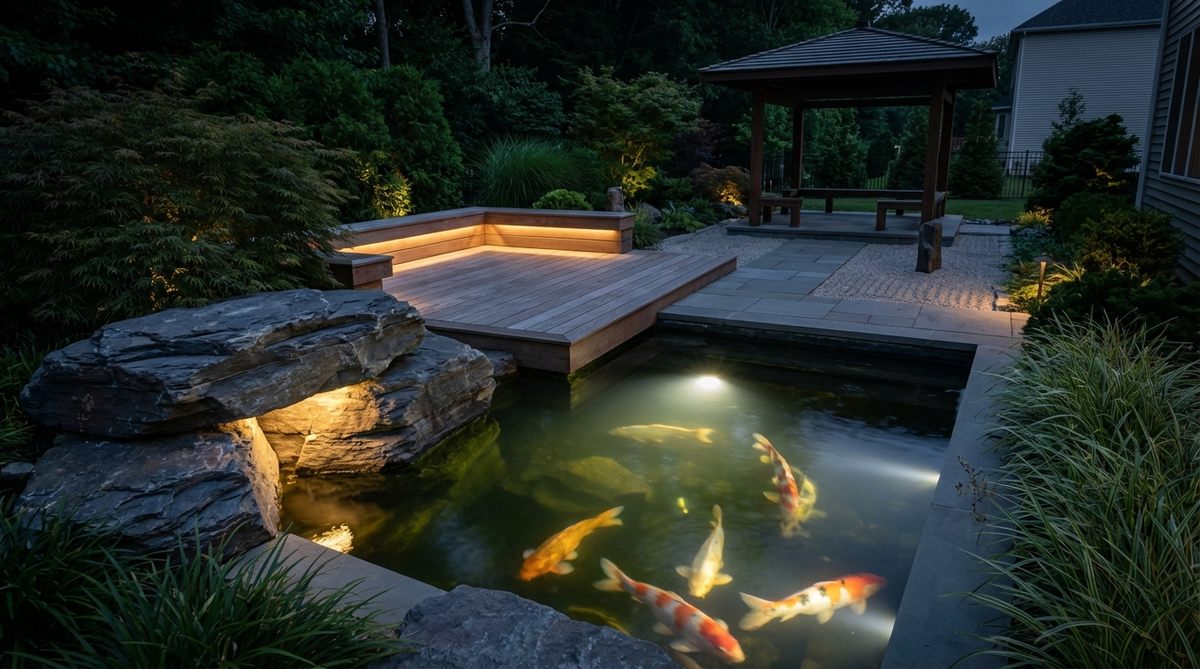
Submersible LED fixtures illuminate water features from within, creating glowing focal points and revealing koi movement after dark.
Position lights to uplight water surfaces from below or sidelight architectural features like stone arrangements. Use dimmers to adjust intensity for different occasions.
32. Backlit Stone Features
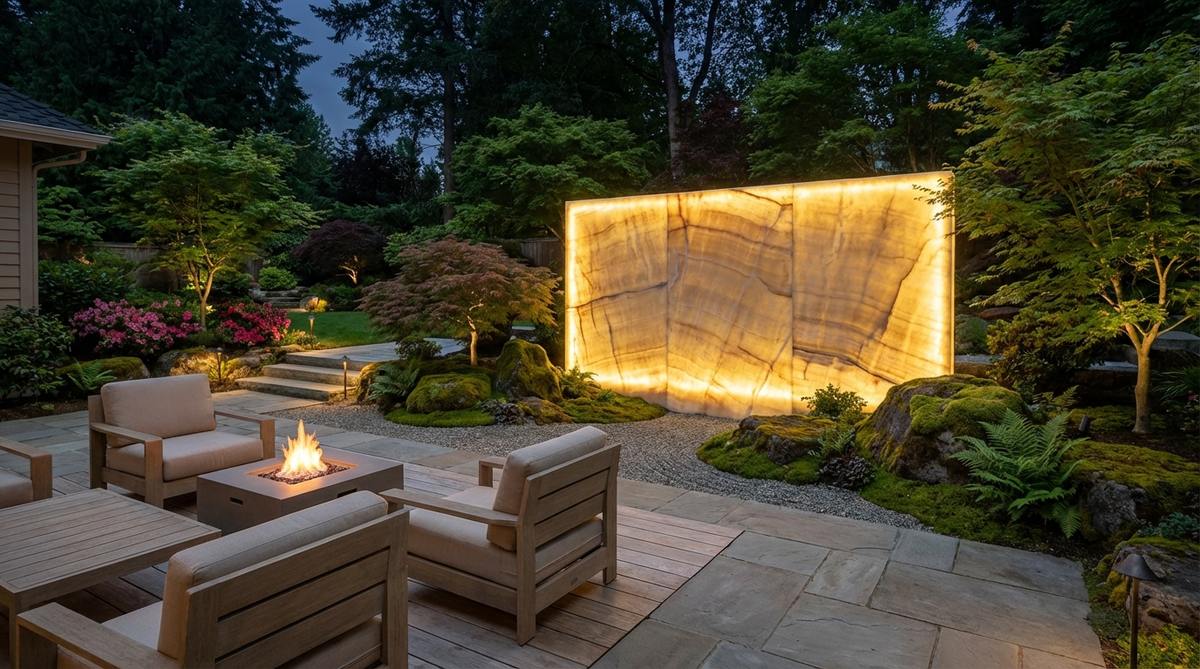
Strategic lighting placed behind translucent stone slabs or feature boulders creates halo effects. Onyx, alabaster, or thin granite slices work particularly well.
This technique adds drama to focal walls or standalone stone features, transforming them into glowing art pieces at night.
Compact Courtyard Solutions
Urban constraints demand space-efficient approaches that deliver maximum impact within minimal footprints. These tsubo-niwa inspired solutions transform tight courtyards into meaningful retreats.
33. Vertical Wall Garden With Zen Base
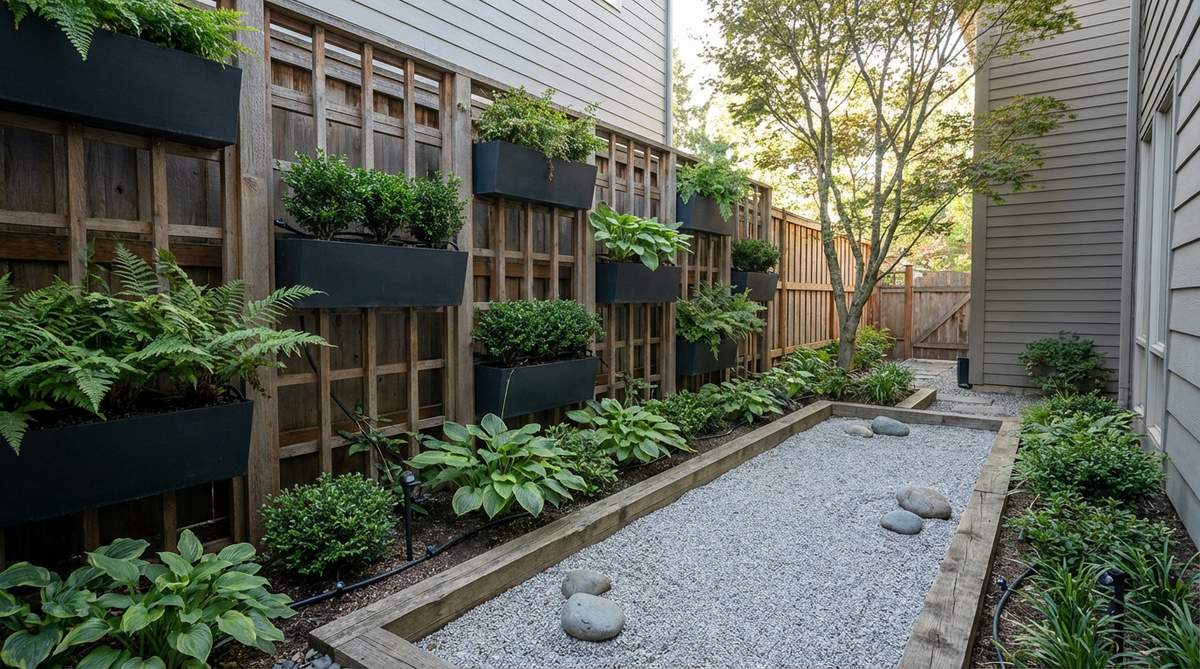
A living wall planted with ferns and evergreens rises above a raked gravel base, maximizing greenery in vertical dimensions. This approach suits narrow side yards.
Install modular wall planters on sturdy frameworks. Select shade-tolerant species suited to vertical orientation and install drip irrigation for sustainable maintenance.
The gravel base at ground level maintains Japanese character while keeping the composition rooted in tradition despite its vertical innovation.
34. Glass Box Miniature Zen Garden
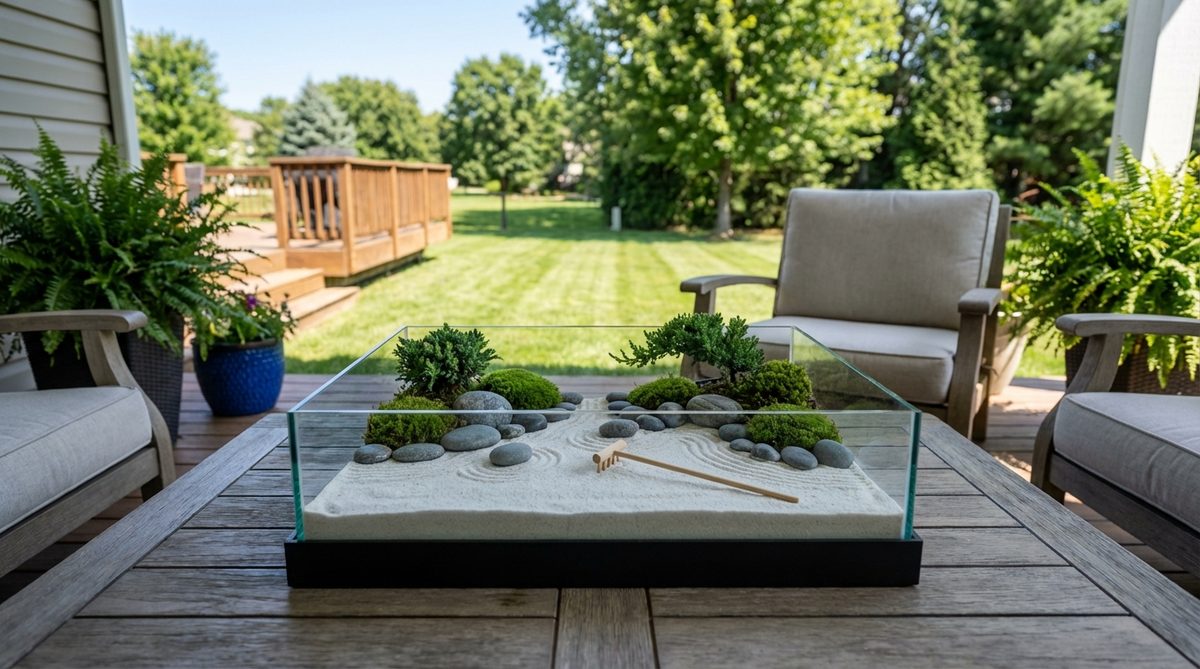
A raised glass-walled planter contains a complete miniature rock garden visible from multiple angles. This tabletop-scale interpretation brings Zen principles to balconies or small patios.
Fill with white sand, miniature stones, and dwarf plants. Provide small rakes for meditative pattern creation—the act of raking becomes a daily mindfulness practice.
35. Under-Stair Courtyard Nook
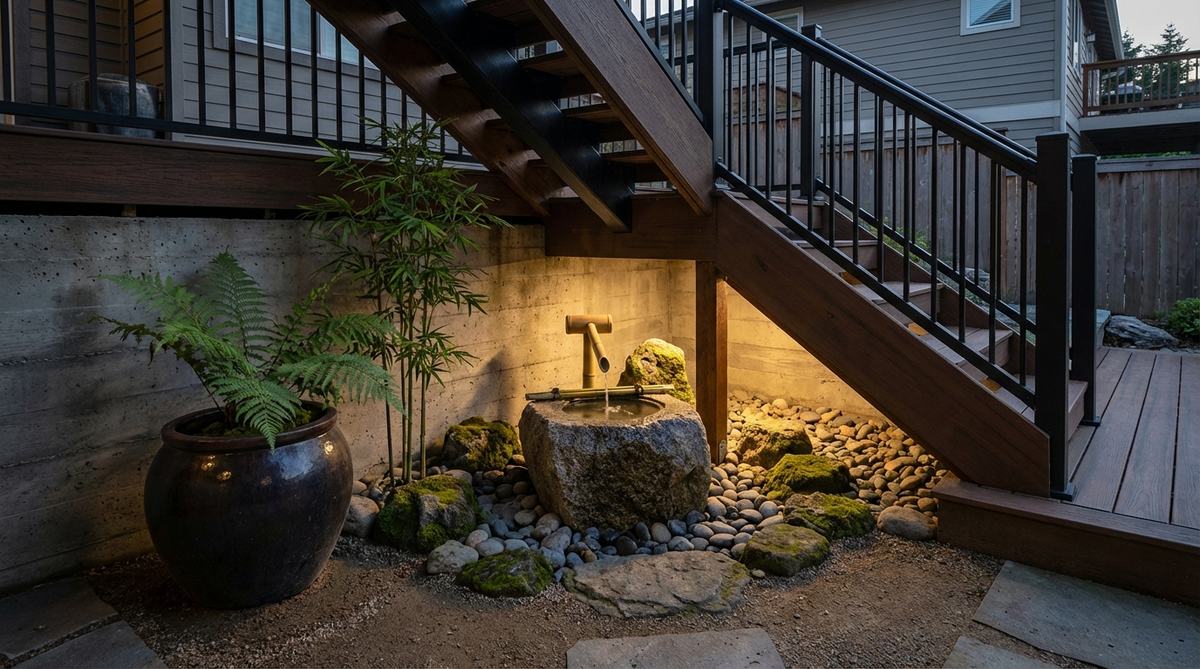
Awkward under-stair spaces transform into contemplative nooks with strategic lighting, a stone water basin, and minimal plantings. Previously wasted space becomes a destination.
Install a wall-mounted bamboo water spout emptying into a stone basin. Add ground-level uplighting and a single specimen fern or bamboo in a ceramic pot.
36. Container Rock Garden Arrangement
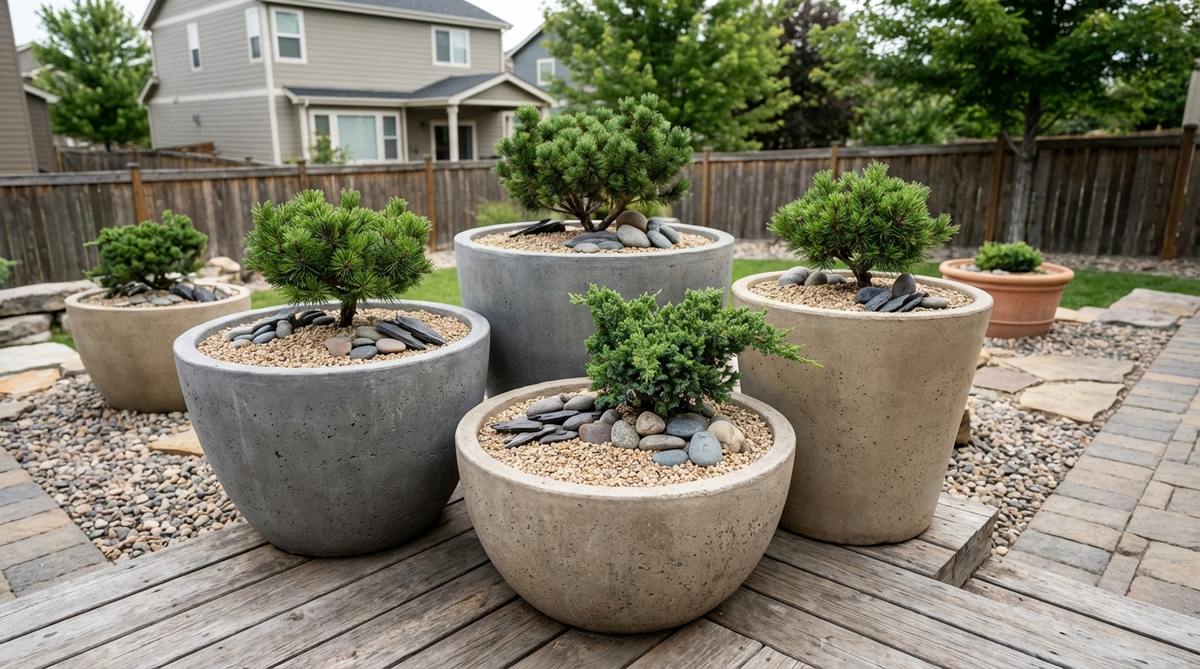
Large-format planters filled with gravel, select stones, and dwarf conifers create portable zen gardens. This flexibility suits renters or those desiring seasonal rearrangement.
Choose containers in neutral tones—concrete, ceramic, or powder-coated metal. Group three to five containers in asymmetric clusters for maximum impact.
37. Window View Miniature Landscape
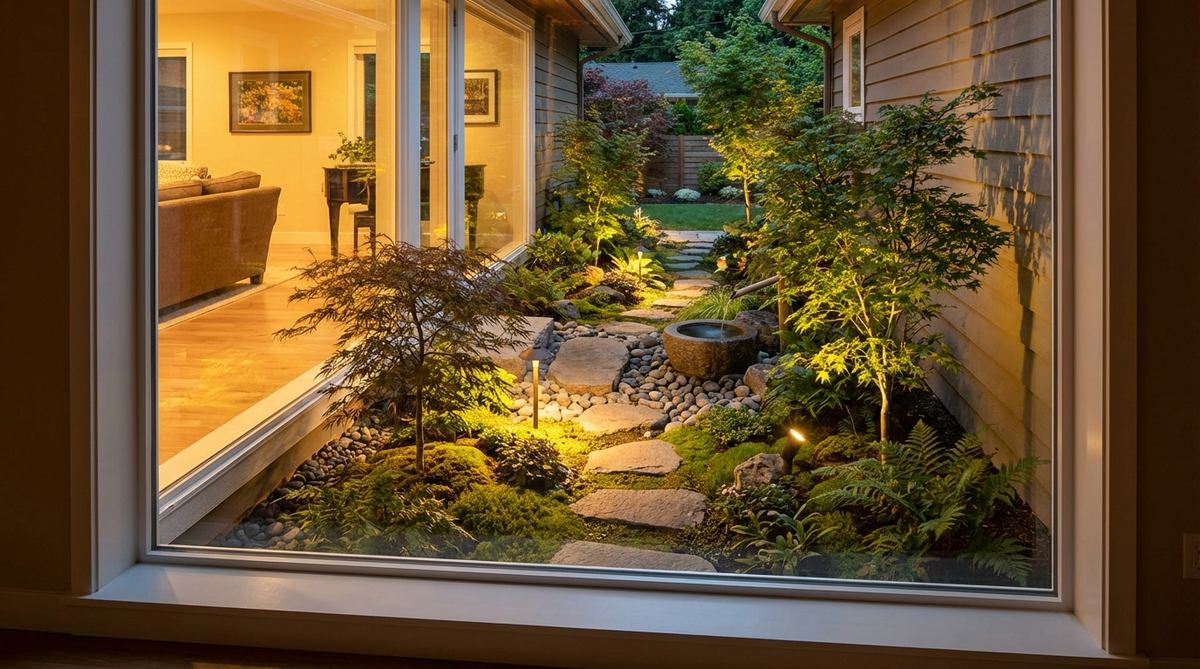
A narrow planting bed positioned directly outside a key window creates a living artwork framed by architecture. Viewers experience the garden primarily from indoor vantage points.
Select plants and stones scaled to viewing distance. Include lighting to extend viewing hours into evening when interior spaces are most occupied.
Material Innovations For Today’s Gardens
Contemporary materials solve practical challenges while offering aesthetic possibilities unavailable to traditional garden makers. Strategic material choices enhance durability, sustainability, and design flexibility.
38. Fiberglass Composite Boulders
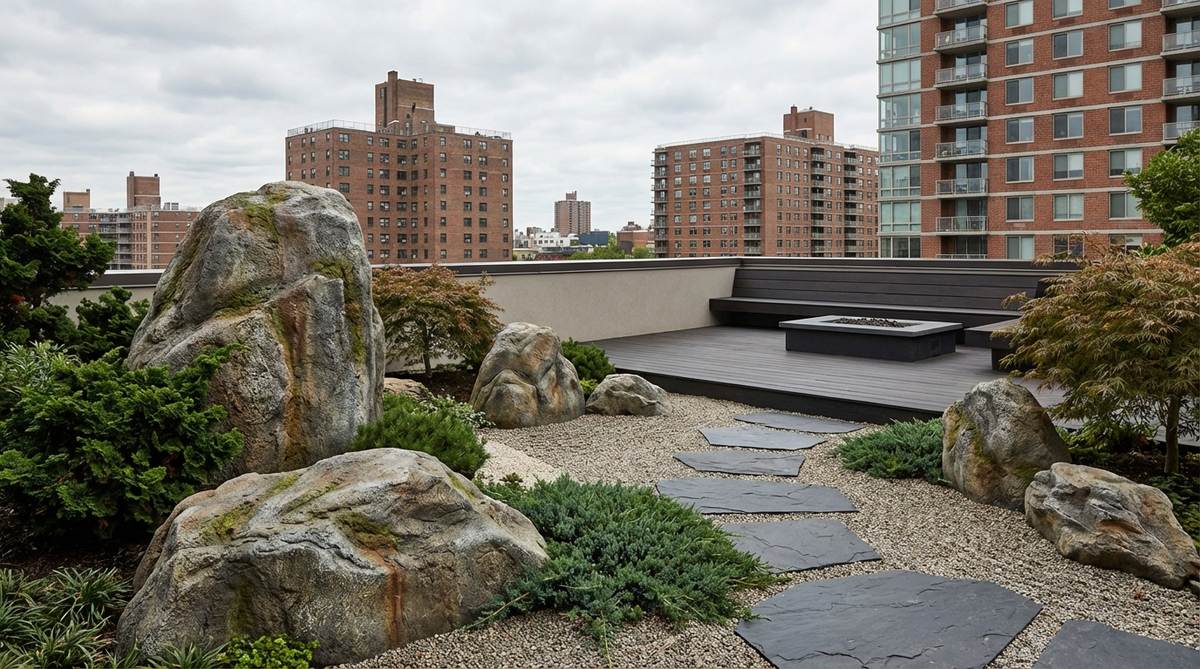
Lightweight fiberglass rocks molded from natural stone originals solve weight restrictions on rooftop installations. They replicate authentic texture and coloring while weighing fractions of real stone.
Deploy composite boulders in elevated gardens where structural load limits prohibit natural stone. Position strategically as focal features where close tactile inspection is unlikely.
Modern composites weather convincingly and support the same plantings as natural stone while enabling previously impossible installations.
39. Porcelain Paver Pathways
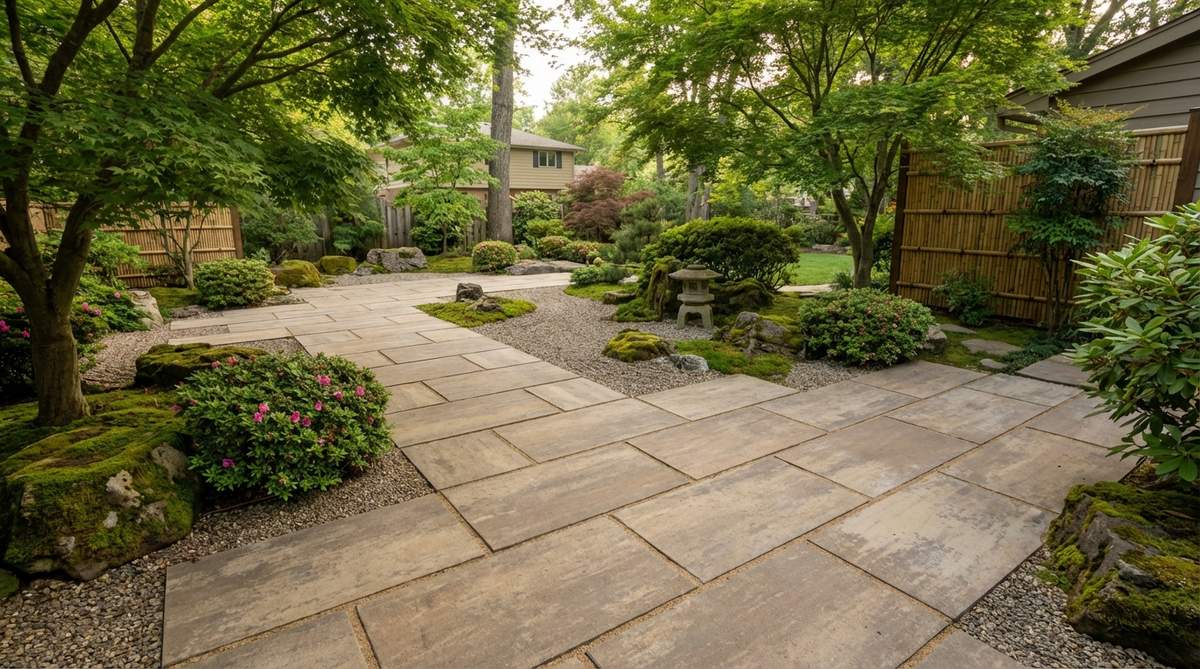
Large-format porcelain tiles in stone-look finishes deliver natural aesthetics with superior stain resistance and durability. They remain cleaner longer than natural materials.
Install pavers over concrete or gravel bases with tight joints. Matte finishes prevent slipping while maintaining elegant appearance through all weather.
40. Recycled Glass Mulch
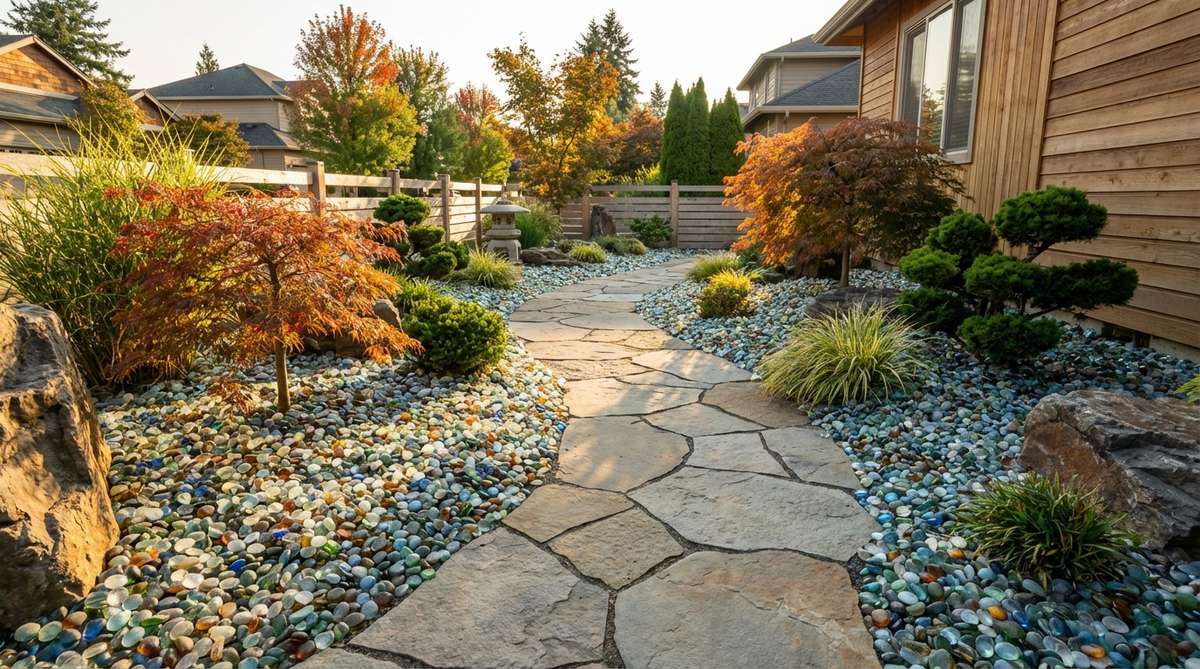
Tumbled glass pebbles in neutral tones create glowing mulch beds that reflect light beautifully. The recycled material offers an eco-conscious alternative to mined stone.
Use as ground cover around specimen plantings or in dry stream beds. Evening lighting transforms glass mulch into luminous rivers defining pathways and beds.
41. Synthetic Moss Panels
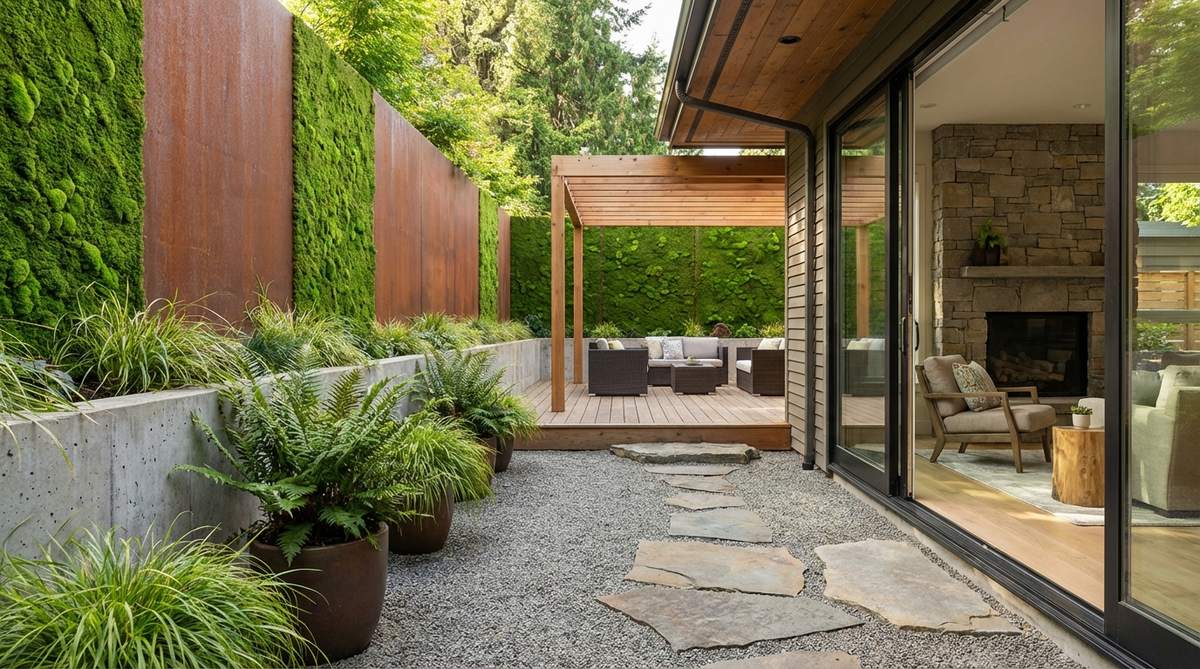
Preserved or high-quality synthetic moss panels maintain verdant appearance without irrigation or light requirements. They suit indoor-outdoor transition zones or challenging microclimates.
Install panels on vertical surfaces where living moss struggles. While not replacing authentic moss experiences, synthetics solve specific design challenges practically.
Seasonal & Sustainable Practices
Authentic Japanese gardens honor seasonal changes and work harmoniously with natural systems. Modern interpretations incorporate ecological awareness and climate-appropriate plant selections.
42. Native Plant Substitutions
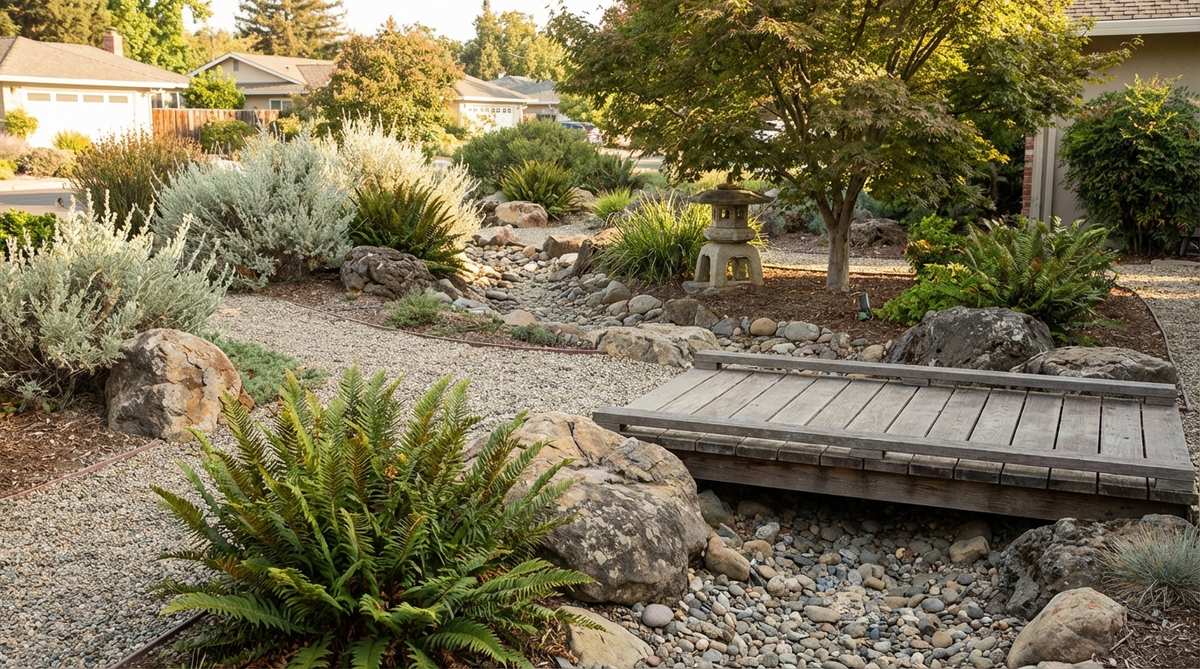
Regionally native species that mimic Japanese garden aesthetics reduce water requirements and support local ecosystems. This adaptation respects both design tradition and environmental responsibility.
Research native alternatives to classic Japanese speciesWestern sword fern instead of Japanese painted fern, California sagebrush replacing traditional azaleas in dry climates.
Native selections establish faster and resist regional pests better than exotic imports while delivering similar visual effects.
43. Rainwater Harvesting Basins
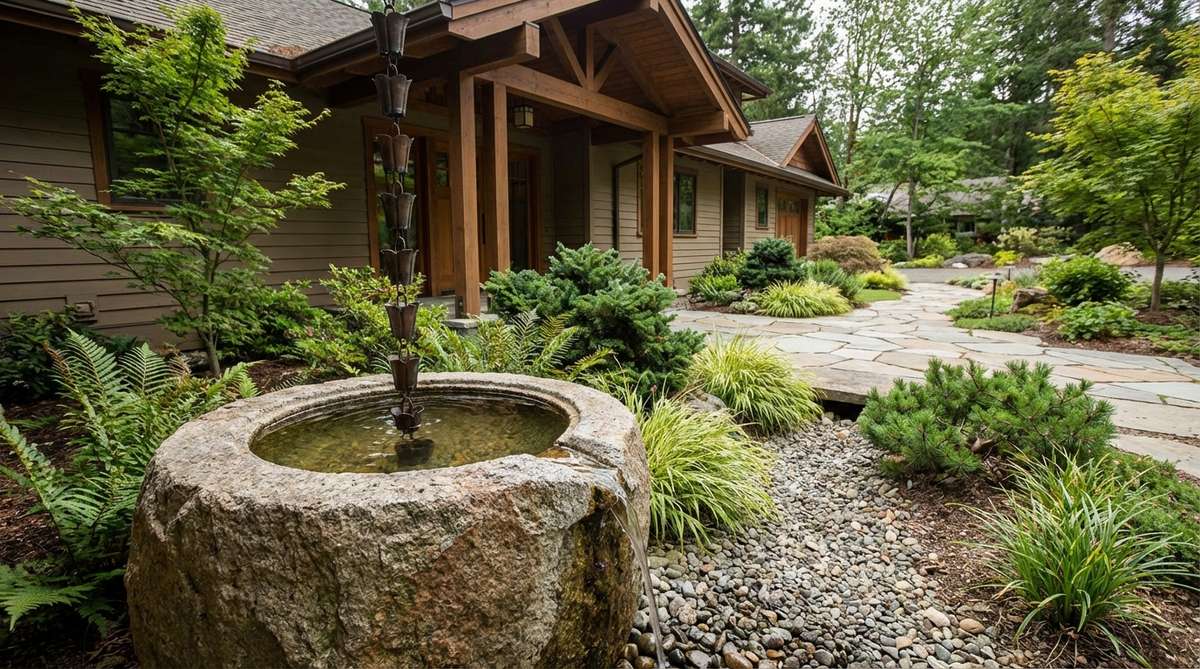
Decorative stone basins collect roof runoff for irrigation use, transforming functional water conservation into garden features. This merges sustainability with aesthetic purpose.
Connect rain chains or downspouts to large ceramic or stone vessels. Overflow directs to planted areas, creating closed-loop water systems that reduce municipal supply dependence.
44. Deciduous Trees For Seasonal Drama
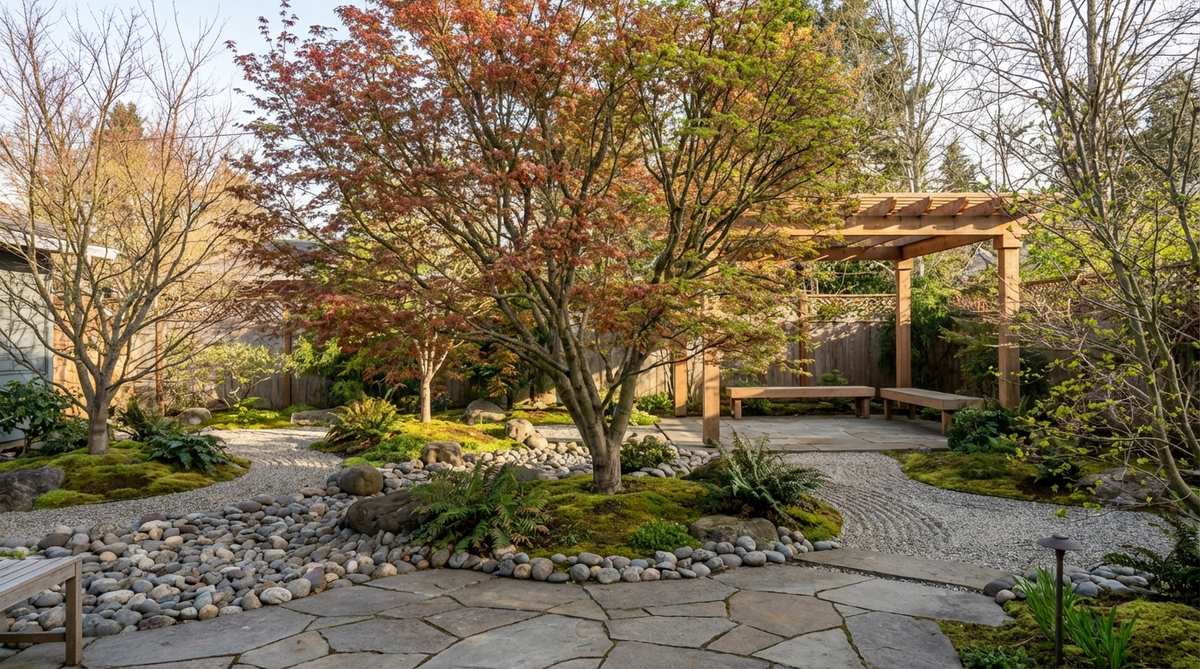
While evergreens dominate traditional designs, incorporating deciduous specimens like Japanese maples celebrates seasonal transformation. Spring emergence, summer shade, fall color, and winter structure each offer distinct beauty.
Position deciduous trees where seasonal changes become focal events—visible from main gathering spaces or framed by windows. Their transformation marks time’s passage mindfully.
45. Permeable Paving Systems
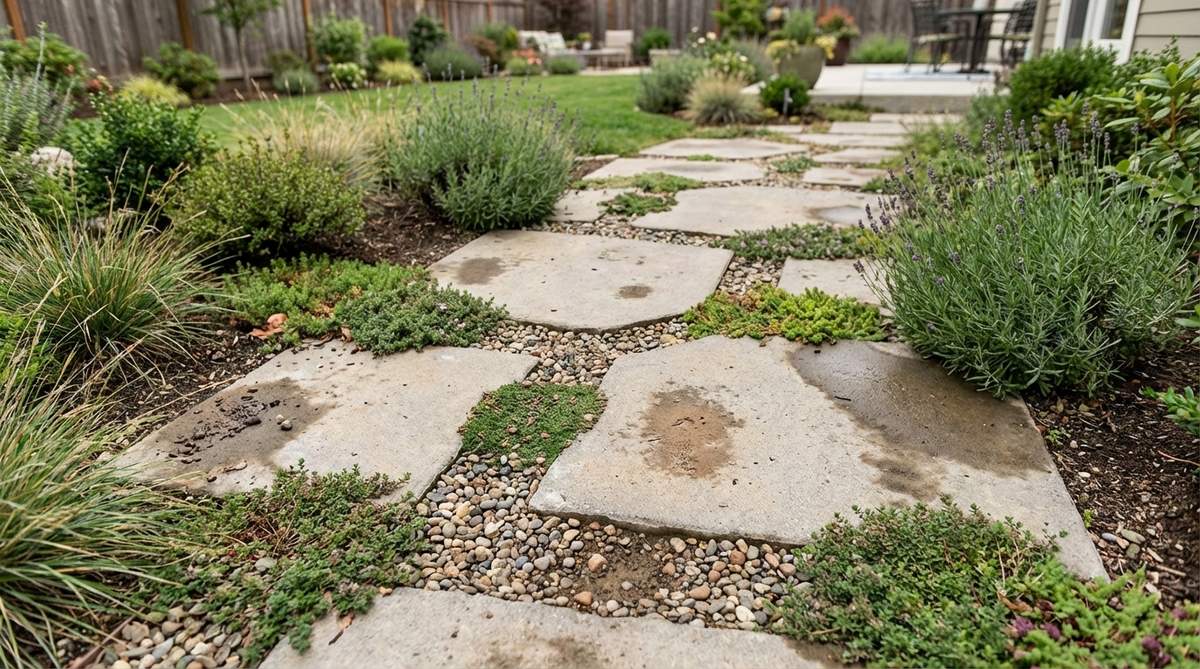
Pavers with wide joints filled with gravel or groundcovers allow stormwater infiltration while providing solid walking surfaces. This reduces runoff and recharges groundwater naturally.
Design pathways with permeable systems that maintain the clean geometry modern Japanese gardens require while functioning as green infrastructure.
Creating Your Modern Japanese Garden
The modern japanese garden represents an evolution, not a departure, from centuries-old principles. By thoughtfully integrating contemporary materials, innovative water features, and climate-appropriate plantings with timeless Zen aesthetics, homeowners create outdoor sanctuaries that serve today’s lifestyles while honoring profound cultural traditions. Fresh Garden Ideas encourages starting with a single element—a raked gravel bed, a specimen tree, or a simple water feature—and developing your garden incrementally, allowing each addition to emerge from careful observation and intention.
Frequently Asked Questions
Can I create a modern Japanese garden in a small urban space?
Absolutely. Tsubo-niwa courtyard gardens originated in confined urban settings and emphasize intentional design over size. Focus on vertical elements like wall gardens or bamboo screens, use lightweight materials for rooftop applications, and select compact plants like dwarf conifers or cloud-pruned specimens. Even a 6-by-8-foot area can incorporate essential elementsraked gravel, a stone arrangement, minimal plantings, and subtle lighting.
What makes a Japanese garden “modern” versus traditional?
Modern interpretations incorporate contemporary materials like steel, glass, and concrete alongside traditional stone and wood. They often feature geometric forms, minimalist color palettes, and sustainable technologies including LED lighting and rainwater harvesting. While honoring core principles like asymmetry and negative space, modern designs adapt to contemporary architecture and lifestyles, creating functional outdoor living spaces rather than purely contemplative viewing gardens.
How much maintenance does a modern Japanese garden require?
Maintenance varies by design complexity. Zen-style rock and gravel gardens require minimal upkeep beyond periodic raking and weed removal. Gardens featuring pruned specimens like cloud pines or clipped boxwoods need seasonal shaping. Water features require pump maintenance and occasional cleaning. Strategic material choices—composite decking, porcelain pavers, and native drought-tolerant plants—significantly reduce long-term maintenance while preserving aesthetic integrity.
What are the essential elements every modern Japanese garden needs?
Every Japanese-inspired garden should incorporate three foundational elementsstone (representing permanence and earth), water (symbolizing life flow, whether actual or represented by raked gravel), and carefully selected plants (providing seasonal interest and natural softness). Beyond these, consider the principle of ma (negative space), asymmetric balance, and a restrained color palette. Modern versions add appropriate contemporary materials and functional features while respecting these core components.
Can modern Japanese gardens work in climates different from Japan?
Japanese garden principles translate successfully across climates through thoughtful plant substitutions and material adaptations. In arid regions, embrace dry garden (karesansui) concepts using drought-tolerant natives resembling traditional species. Cold climates benefit from hardy evergreens and deciduous trees offering strong winter structure. Tropical zones can incorporate bamboo species and shade-loving ferns. The key is honoring design philosophy—simplicity, asymmetry, natural harmony—while selecting regionally appropriate plants and materials that reduce resource inputs.