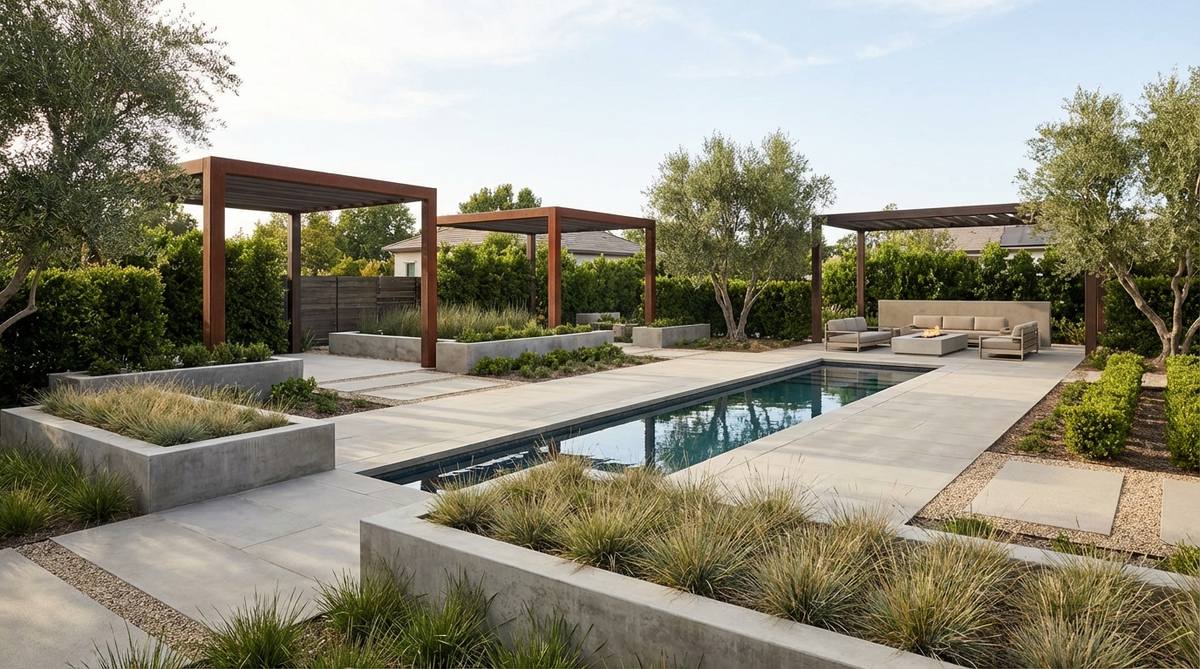
Modern gardens embrace clean lines, intentional design, and architectural precision to create outdoor spaces that feel both serene and sophisticated. This curated collection from Fresh Garden Ideas presents over 65 expert-backed ideas that demonstrate how minimalism and structure transform ordinary yards into striking contemporary landscapes.
Design SnapshotKey Principles
- Geometric Precision: Use straight lines, circles, and angular patterns to create visual clarity and order throughout the landscape
- Material Restraint: Limit your palette to 2-3 primary materials like concrete, steel, and wood for cohesive modern appeal
- Intentional Planting: Select architectural plants with strong forms that serve as living sculptures rather than filler
- Functional Simplicity: Design every element with purpose—each path, edge, and feature should enhance both beauty and usability
Hardscape Foundations That Define Modern Spaces
The hardscape forms the structural backbone of modern garden design, establishing clean lines and functional zones that guide movement and define purpose. Designers prioritize large-format materials and precise installation to achieve the sleek, uncluttered aesthetic that characterizes contemporary landscapes.
1. Poured Concrete Ribbon Edging
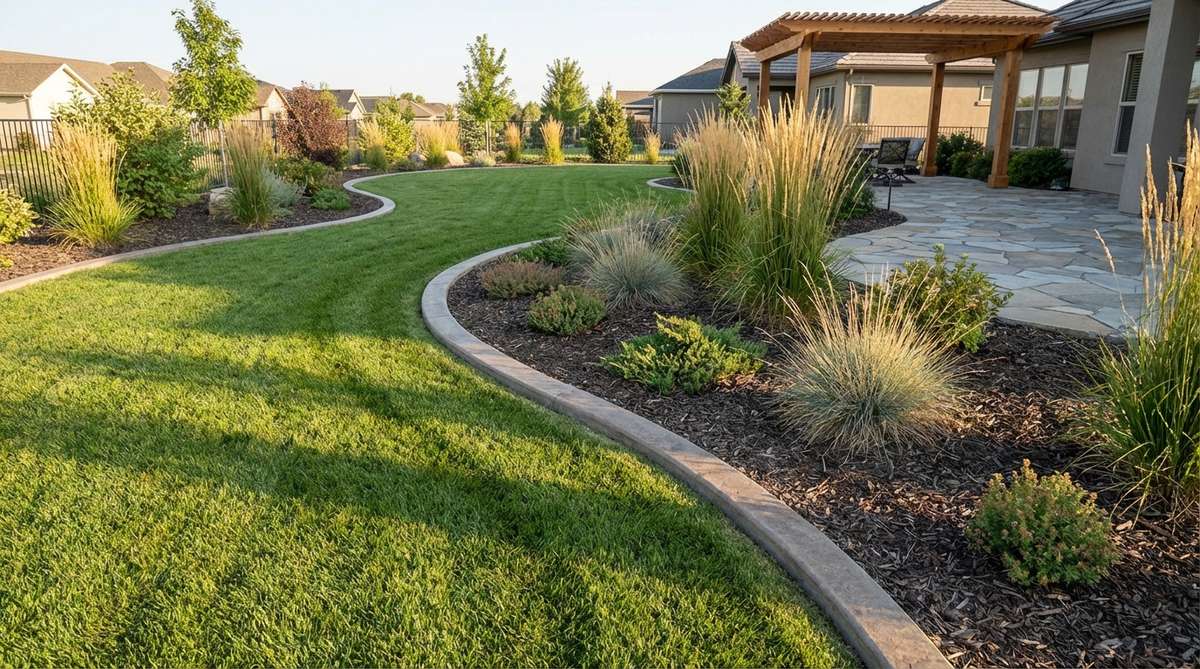
Poured concrete edging creates continuous, flowing borders that define garden beds without harsh visual breaks. The smooth surface and low profile allow lawn equipment to glide over edges while maintaining crisp separation between zones.
This technique works particularly well for curved beds where traditional edging materials would require numerous joints. Install at ground level or slightly raised depending on whether you want definition or actual containment.
Concrete ribbons withstand foot traffic and weather extremes while requiring virtually no maintenance over decades of use.
2. Large-Format Porcelain Pavers
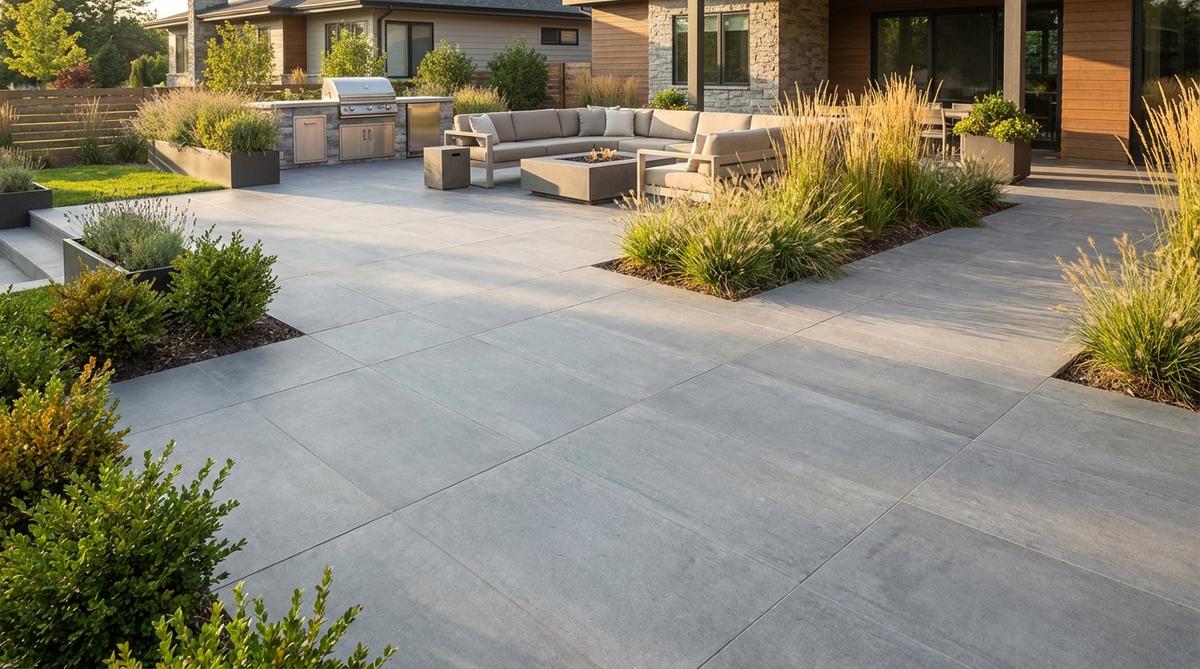
Porcelain slabs measuring 24×48 inches or larger reduce grout lines and create expansive, seamless surfaces. The minimal joint pattern enhances the sense of space in compact areas while providing a sophisticated canvas for furniture and plants.
Choose honed or matte finishes rather than glossy surfaces to prevent glare and improve traction in wet conditions.
Porcelain resists staining, fading, and temperature extremes better than natural stone while offering consistent color and texture across the installation.
3. Polished Concrete Patios
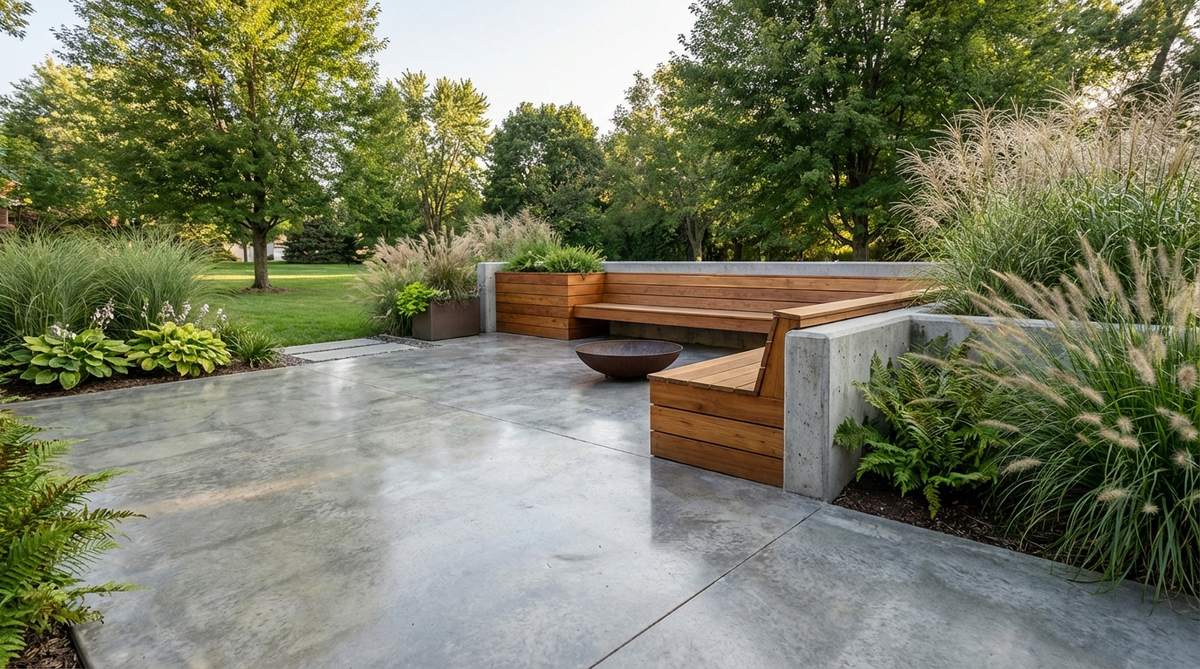
Smooth-finished concrete delivers an industrial-chic aesthetic at a fraction of the cost of imported stone. The monolithic surface reflects light beautifully and pairs exceptionally well with warm wood accents and soft-textured foliage.
Apply integral color during mixing rather than surface stains to ensure consistent hue throughout the slab thickness. Seal with a matte or satin finish to enhance durability without creating a plastic appearance.
4. Geometric Stepping Stone Paths
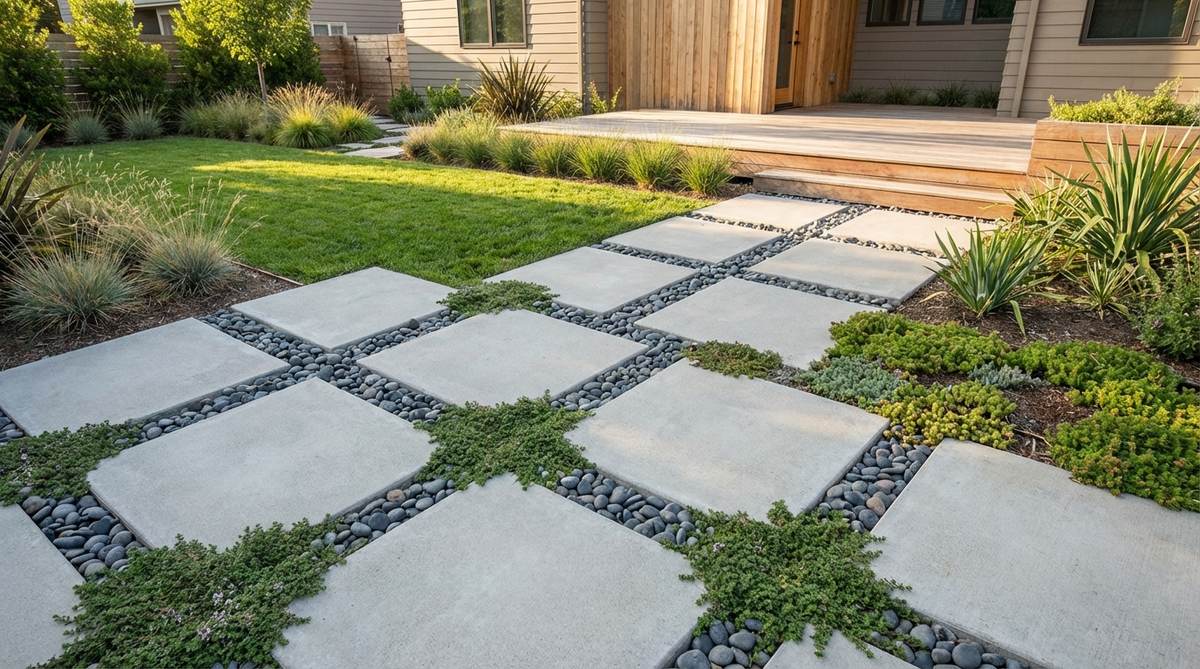
Square or rectangular concrete pavers placed in precise grid patterns create dynamic pathways through planted areas. The negative space between stones allows groundcovers or gravel to soften the geometry while maintaining structure.
Space pavers at comfortable stride intervals—typically 24 inches on center for adult walking patterns. Surround with contrasting materials like dark pebbles or fine gravel to emphasize the geometric form.
5. Steel-Framed Gravel Courts
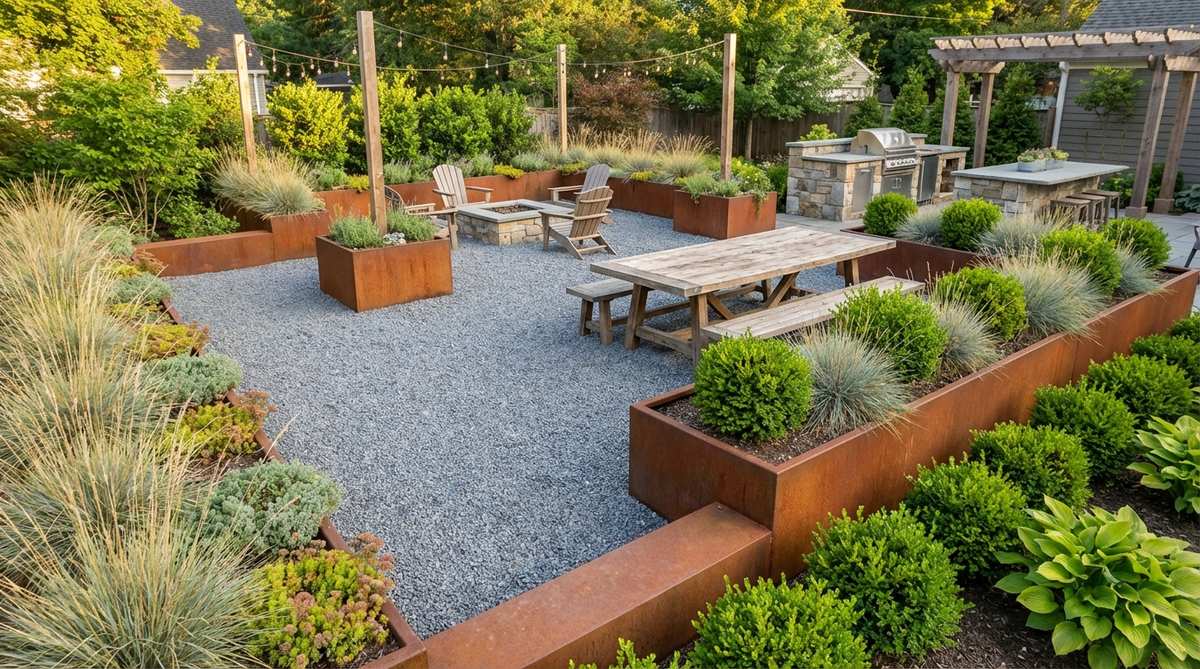
Corten steel edging contains gravel or decomposed granite to form clean-edged outdoor rooms. The warm rust patina of weathered steel provides striking contrast against cool gray stone and vibrant green plantings.
Install edging at least 4 inches deep to prevent gravel migration during heavy rain. The perimeter frame defines space without obstructing sightlines across the garden.
Gravel surfaces drain rapidly and remain comfortable underfoot even in full sun, making them ideal for entertaining areas.
6. Floating Timber Decking
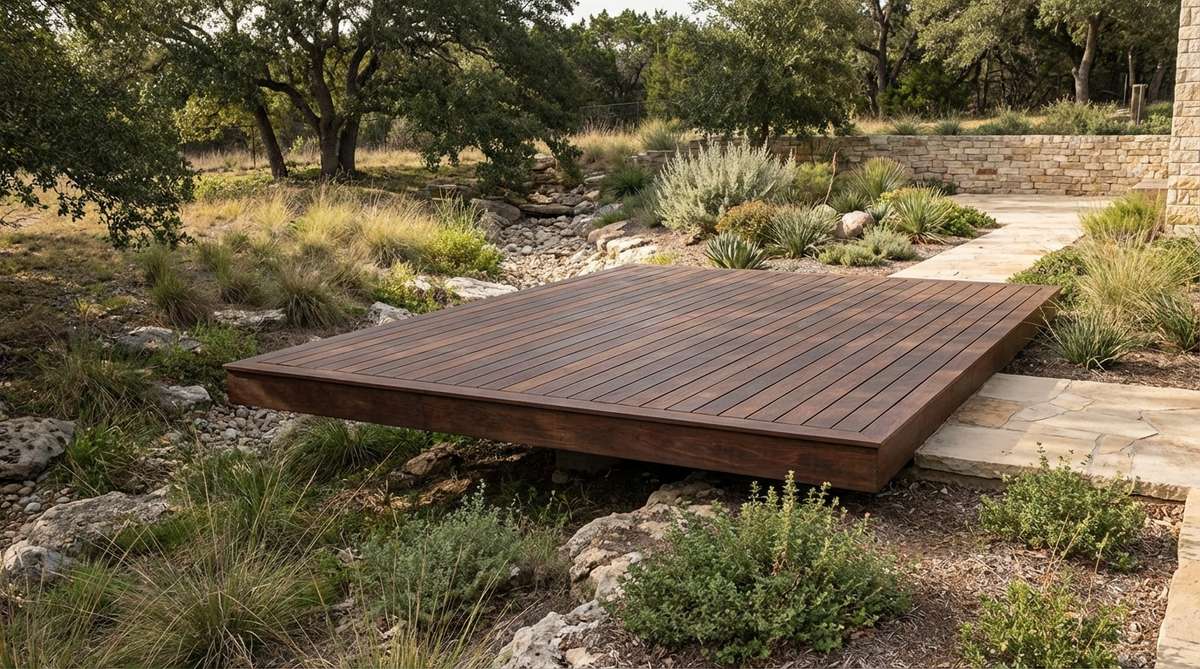
Suspended wood platforms appear to hover above ground when installed on concealed support systems. This technique works beautifully over uneven terrain or to create elevated viewing platforms with minimal visual bulk.
Use hardwoods like ipe or sustainably harvested cedar for dimensional stability and natural weather resistance. Leave narrow gaps between boards for drainage and thermal expansion.
7. Linear Drainage Channels
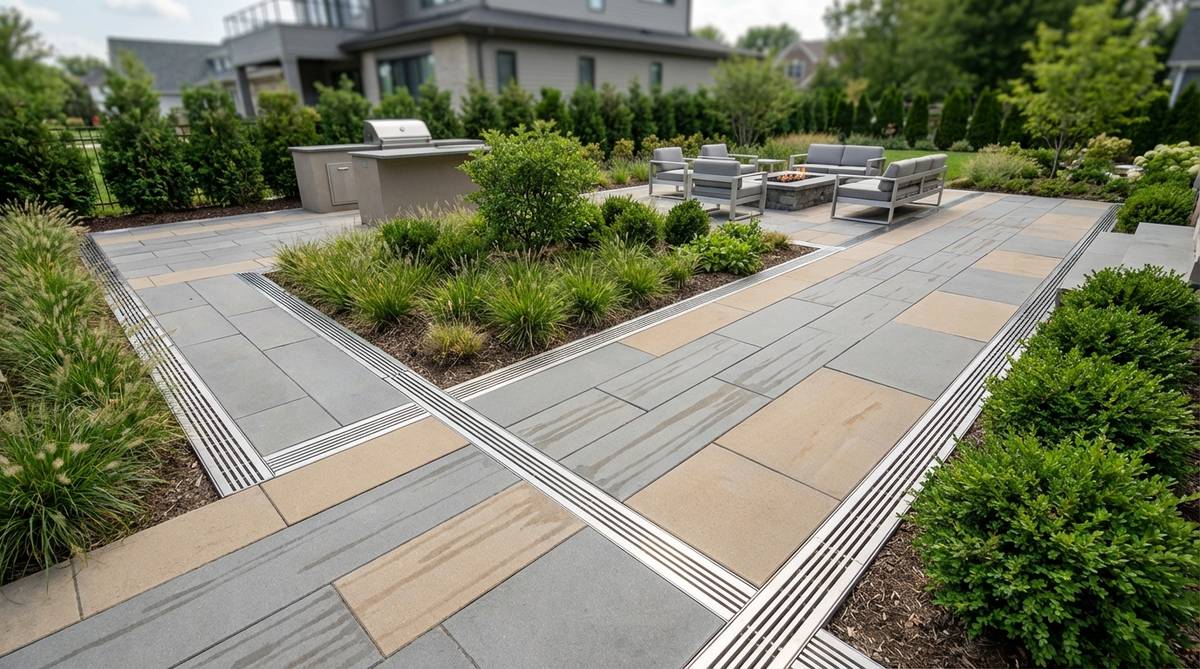
Slot drains integrated into paving create functional water management while reinforcing geometric design language. The narrow channels double as visual elements that draw the eye along pathways or terrace edges.
Position channels perpendicular to prevailing slopes to capture runoff efficiently. Stainless steel or polymer concrete grates provide durability while maintaining clean lines.
8. Terraced Platform Levels
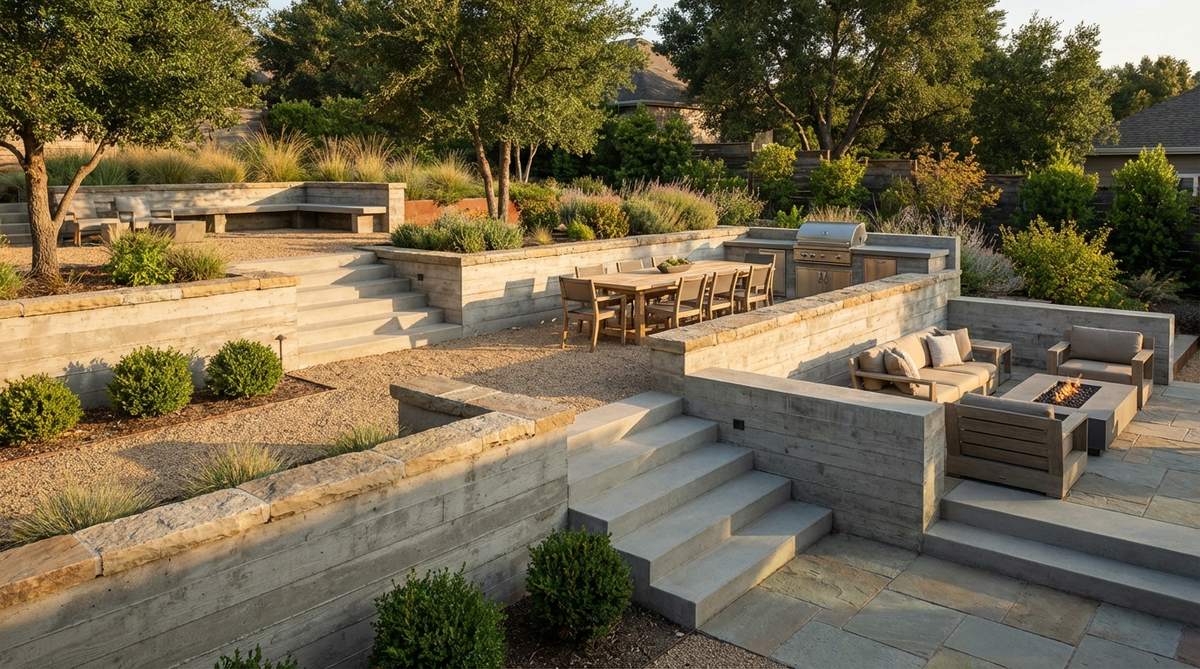
Multiple horizontal planes connected by minimal steps create distinct zones within sloped gardens. Each level serves a specific function—dining, lounging, or planting—while the stepped profile adds architectural drama.
Construct retaining walls from board-formed concrete or steel planking to maintain design consistency across elevations.
Terrace edges become natural seating areas when capped with thick stone or wood to create casual perches.
Geometric Layouts for Visual Impact
Geometry provides the organizing principle for modern garden design, creating visual order through repetition, symmetry, and mathematical precision. Designers employ circles, squares, and angular patterns to structure space and guide circulation.
9. Circular Bosquet Groves
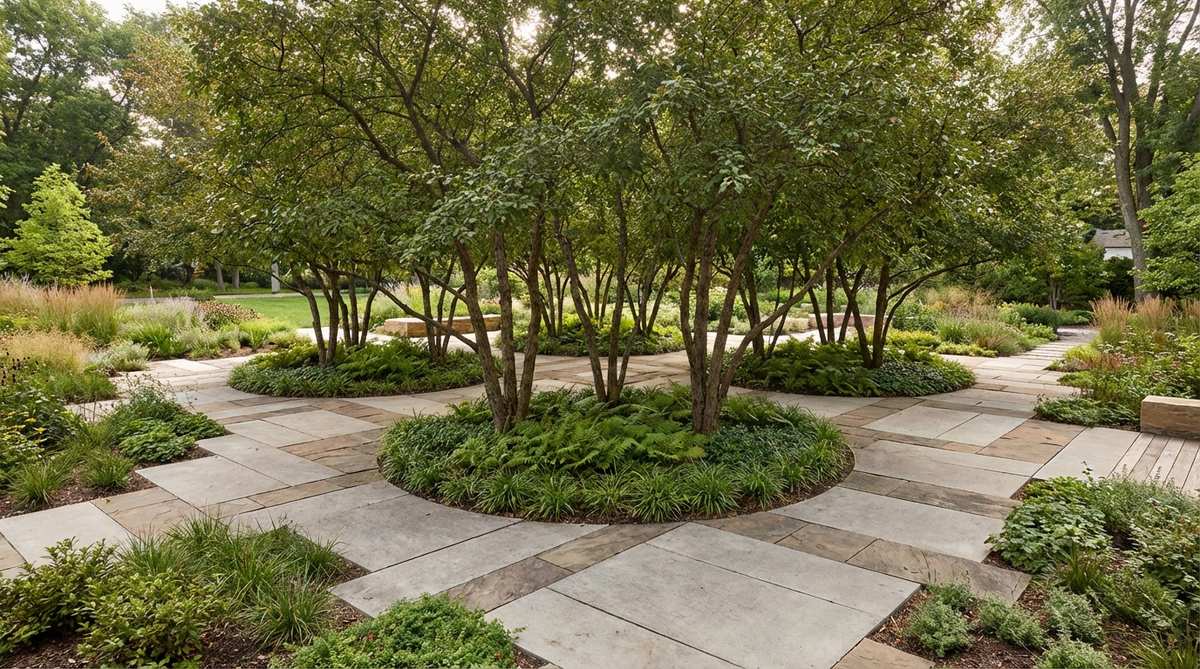
Trees planted in perfect circles create shaded groves that serve as focal points and transitional spaces. The circular form contrasts beautifully with angular paving patterns while providing a sense of enclosure without walls.
Select multi-stem trees like crabapples or birches planted at regular intervals around the circumference. Underplant with low groundcovers to maintain visibility through the grove.
Circular plantings work particularly well as centerpieces that organize the surrounding garden into radiating zones.
10. Radial Bed Arrangements
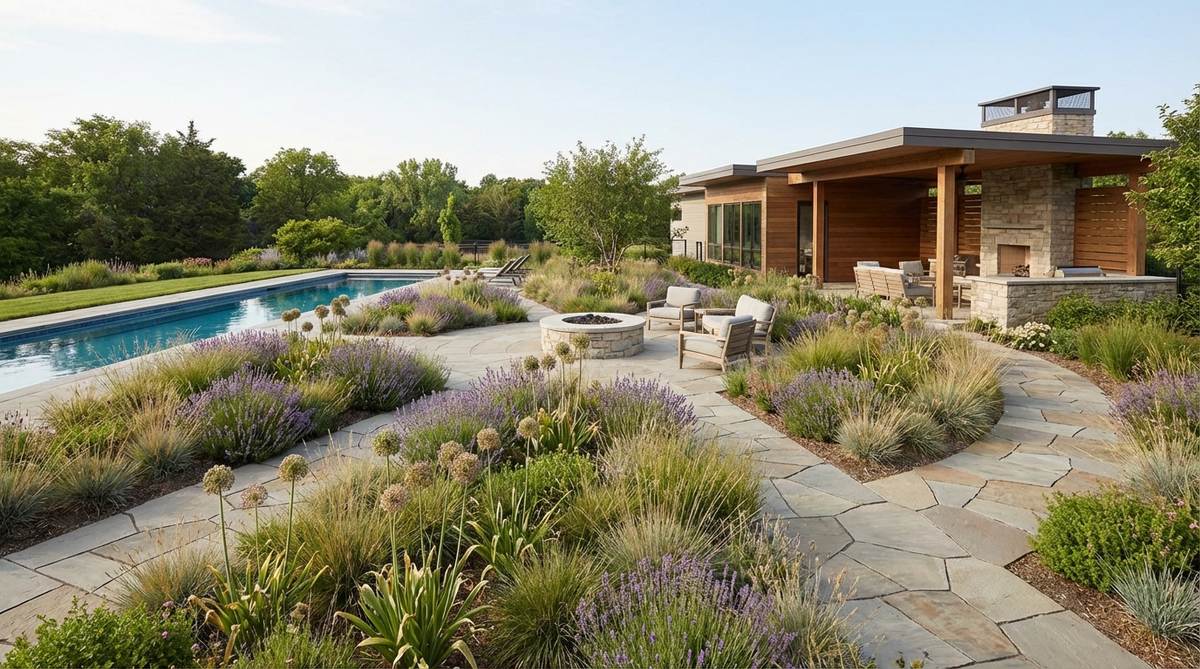
Garden beds positioned along radial lines emanating from a central point create dynamic movement through space. This layout generates interesting viewing angles while maintaining overall symmetry.
Use the radial organizing principle to balance asymmetrical elements like pools or structures positioned off-center within rectangular sites.
11. Zigzag Border Patterns
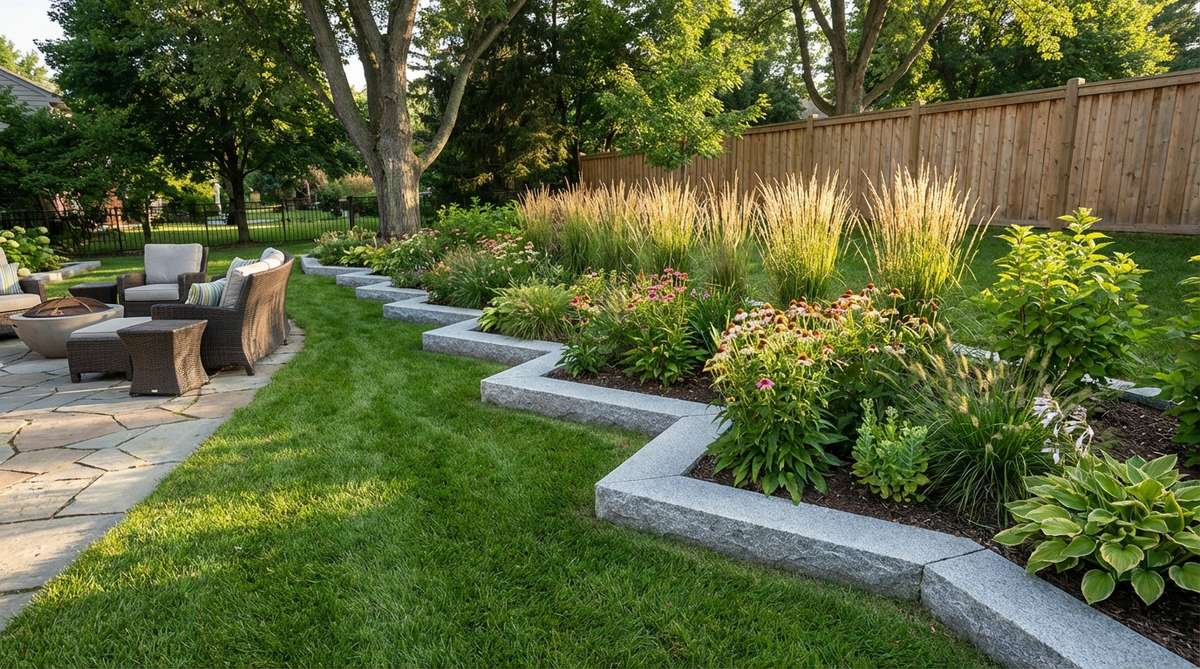
Angular edges formed by alternating straight segments create visual energy and draw attention along garden perimeters. The dynamic pattern propels the eye from one area to another while framing perennial plantings.
Construct zigzag edges from granite, steel, or poured concrete set at consistent angles—typically 30 or 45 degrees for comfortable flow.
This approach works particularly well for long, narrow beds where straight edges would appear monotonous.
12. Rectangular Grid Beds
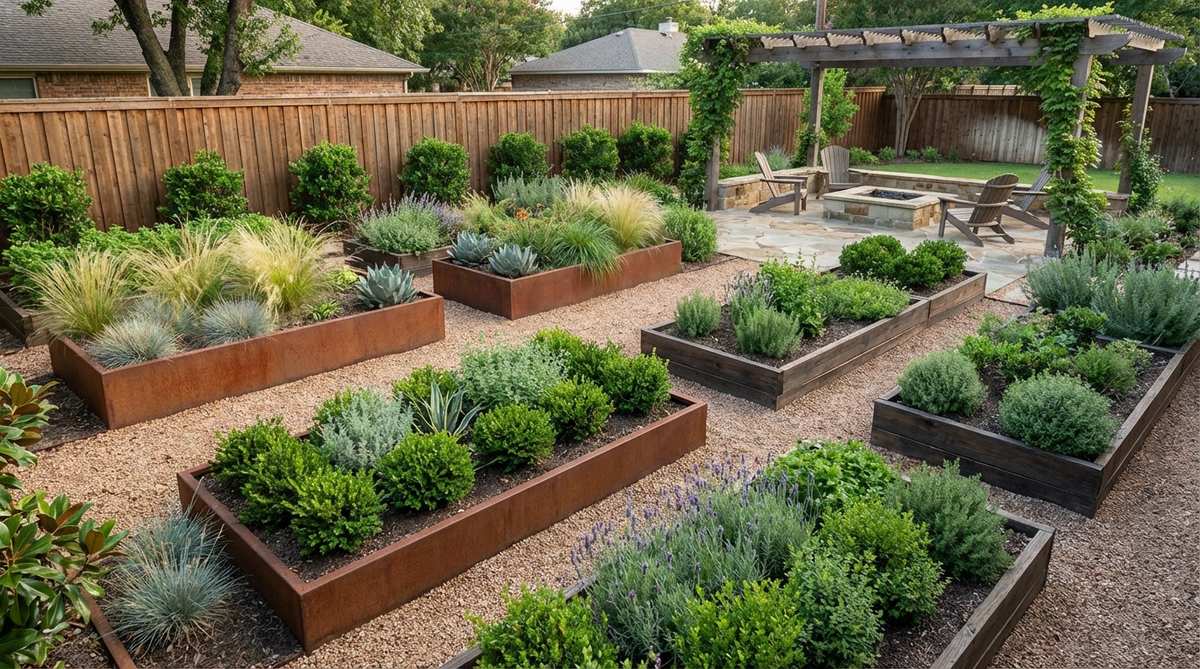
Square or rectangular planting beds arranged in precise grid patterns create modular gardens that feel orderly yet flexible. Each cell can contain different plant palettes while the consistent shape maintains visual unity.
Separate beds with narrow gravel paths or turf strips to define individual modules. The grid system allows easy expansion or modification as your garden evolves.
13. Elliptical Lawn Panels
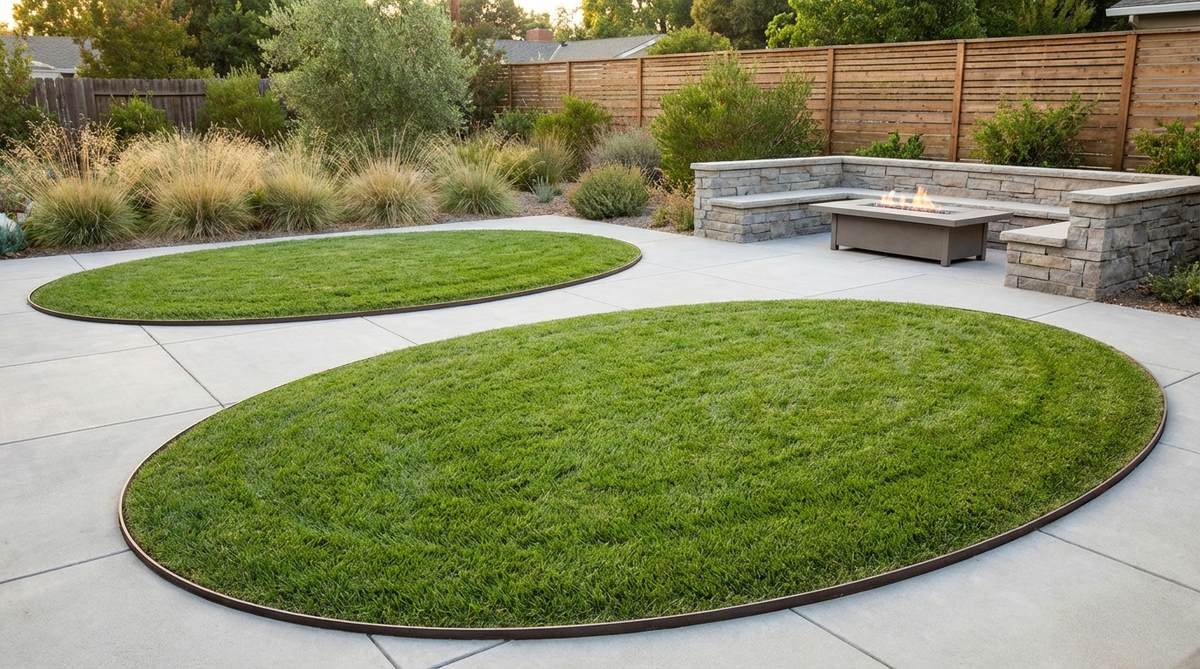
Oval or elliptical turf areas surrounded by paving or gravel create soft focal points within angular gardens. The curved form provides visual relief while maintaining the refined aesthetic of modern design.
Edge ellipses with thin steel or aluminum to achieve crisp transitions between lawn and adjacent surfaces. Mow to the edge for maximum definition.
14. Concentric Ring Plantings
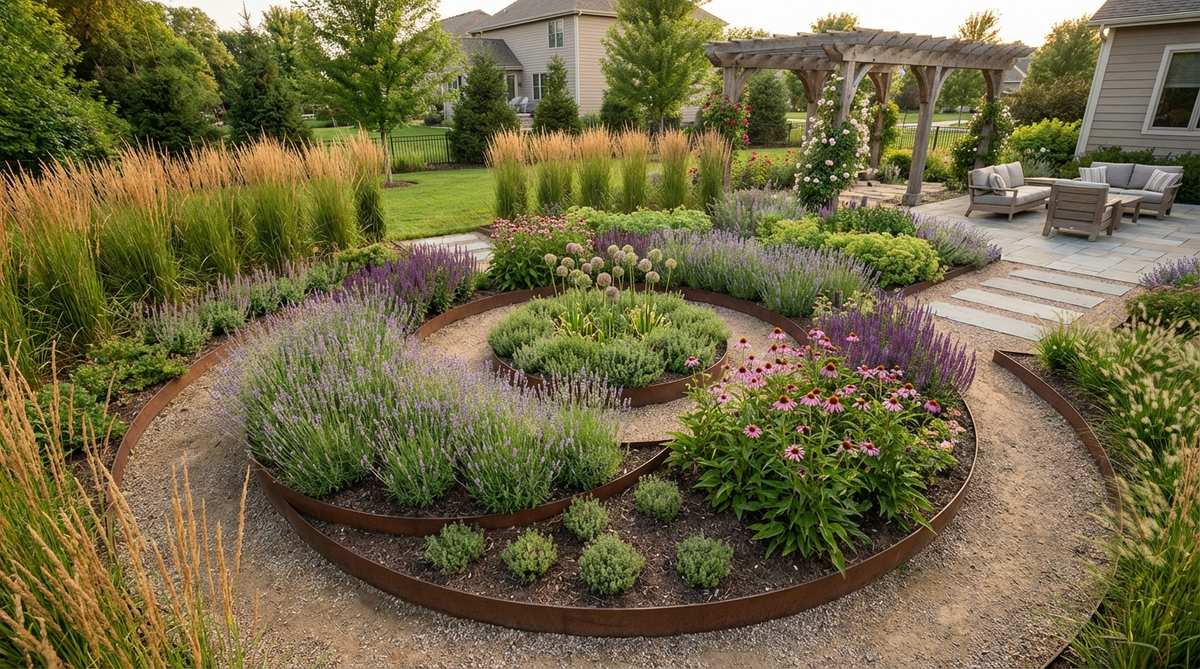
Layered circular beds following the Flower of Life pattern optimize plant spacing while creating mesmerizing visual patterns. Research suggests this arrangement can increase yields by up to 30 percent compared to traditional rows.
Plant taller specimens in outer rings and shorter varieties toward the center to ensure all plants receive adequate light. The circular layout also simplifies irrigation and maintenance access.
15. Asymmetric Balance Compositions
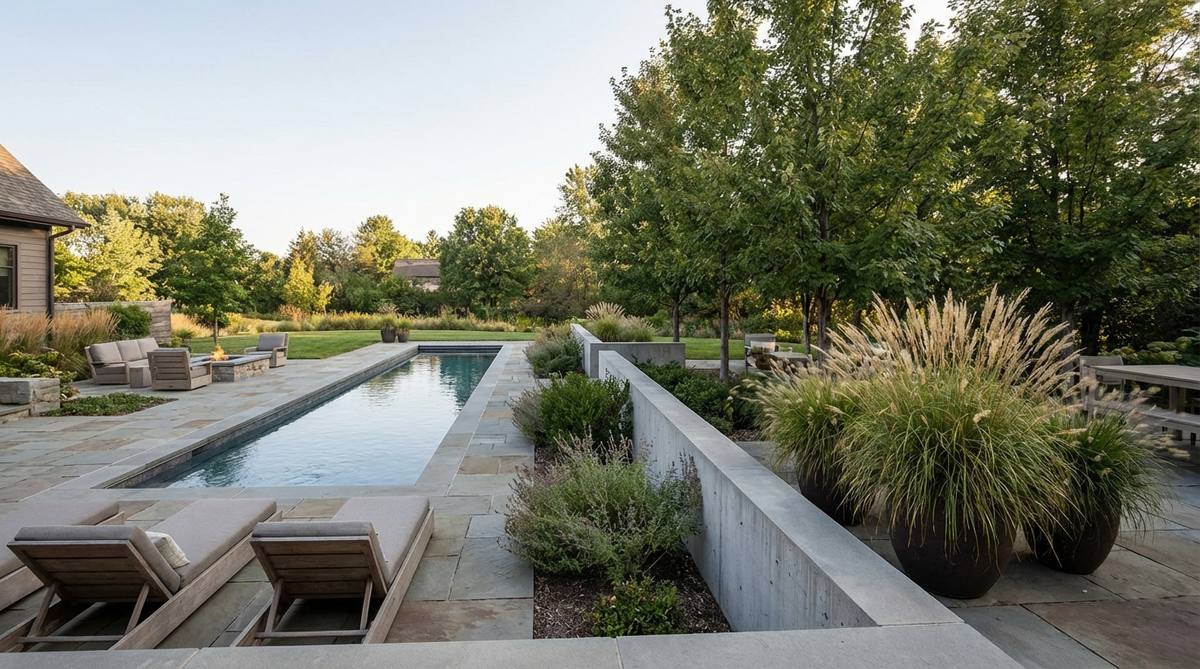
Deliberately offset elements balanced through visual weight rather than mirror symmetry create sophisticated modern layouts. This approach accommodates existing features like pools or mature trees while maintaining design cohesion.
Use the axis of an existing element as a reference line, then position new features at equal visual distances on either side.
16. Fibonacci Spiral Pathways
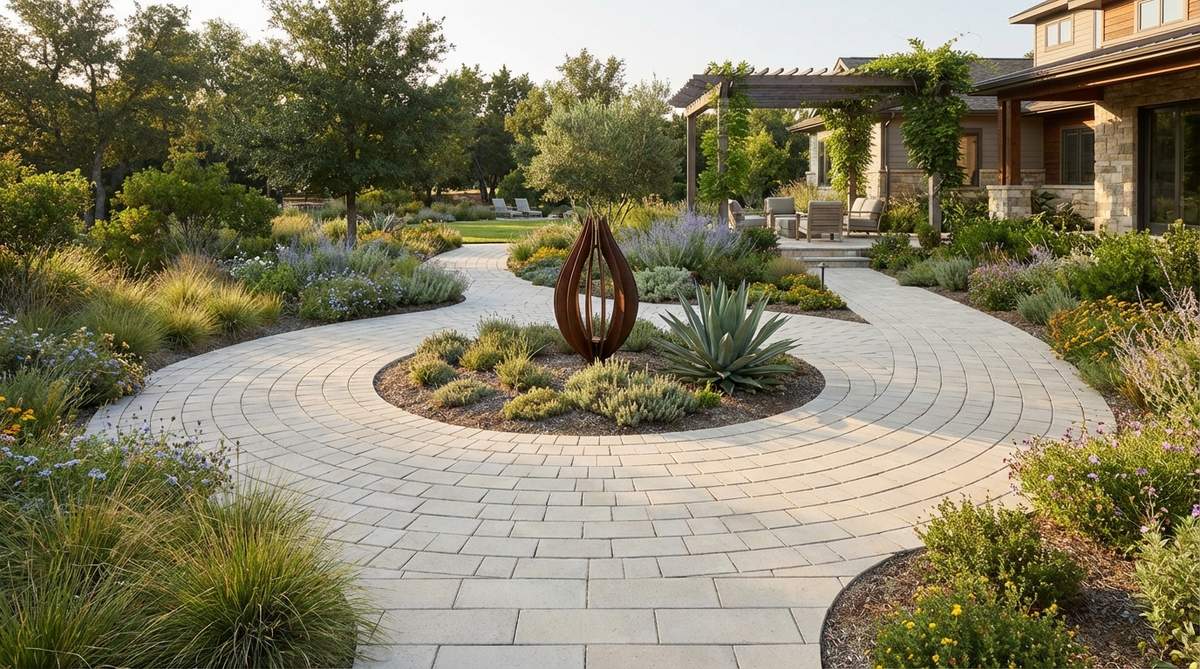
Paths that curve outward at distances following the Fibonacci sequence create naturally comfortable circulation routes. The mathematical progression feels intuitive to navigate while adding subtle sophistication to the design.
Mark the spiral center with a specimen plant or sculpture to anchor the composition and clarify the organizing principle.
Material Selections for Contemporary Appeal
Modern garden design depends on thoughtful material selection to achieve visual consistency and structural durability. Designers limit palettes to two or three complementary materials that provide contrast in texture while maintaining color harmony.
17. Corten Steel Planters
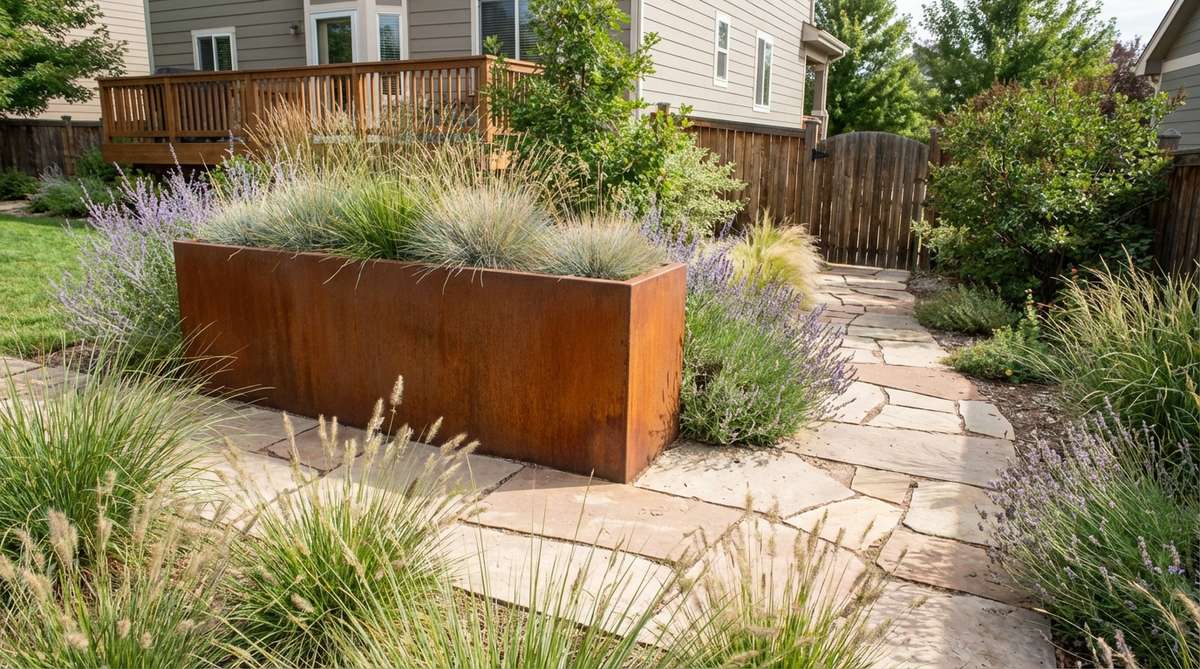
Weathering steel develops a stable rust patina that adds warmth to minimalist gardens without ongoing corrosion. The material’s linear form and rich orange-brown color create bold contrast against concrete and vegetation.
Fabricate planters with welded corners and drainage holes positioned to prevent staining on adjacent surfaces. The thick steel walls provide excellent insulation for plant roots.
Corten works beautifully for raised beds, retaining walls, and freestanding containers ranging from small accents to massive planted screens.
18. Board-Formed Concrete Walls
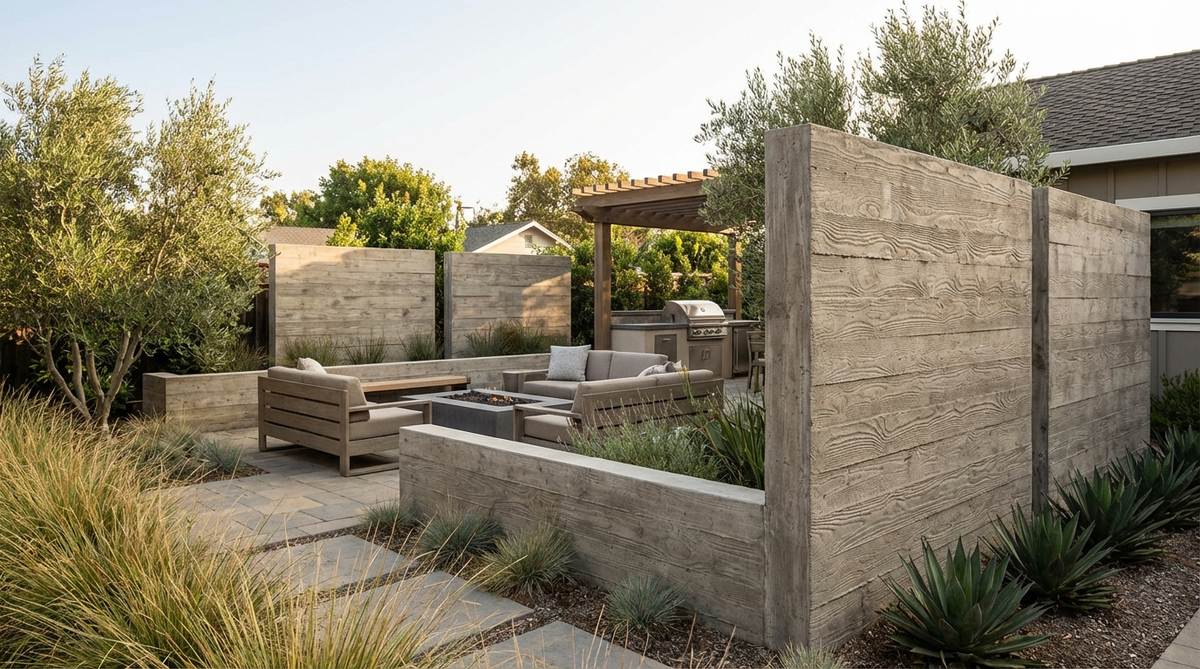
Concrete cast against rough-sawn lumber captures the wood texture while delivering the durability of masonry. The surface pattern adds visual interest to otherwise plain retaining walls or privacy screens.
Use high-quality formwork with consistent board widths to create regular patterns. Leave forms in place for extended curing to achieve deeper texture impressions.
19. Ipe Hardwood Screens
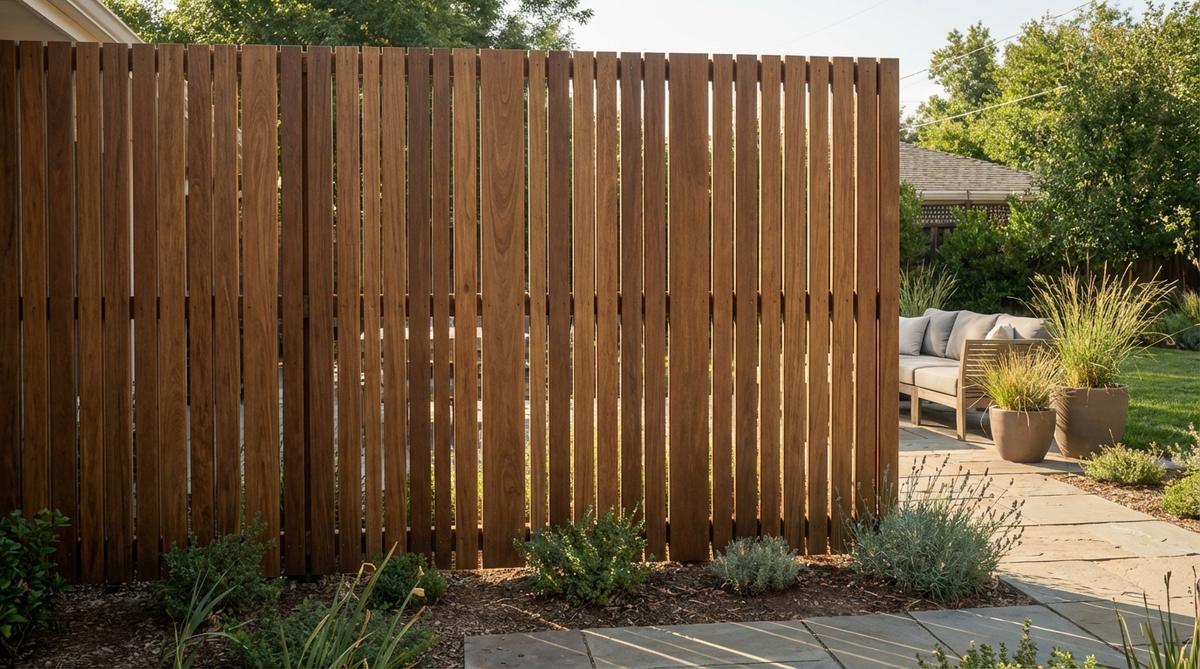
Dense tropical hardwood slats resist decay naturally without chemical treatment, making them ideal for vertical screens and slatted fences. The tight grain and rich brown color age gracefully to silver-gray if left untreated.
Install slats vertically with narrow gaps to provide privacy while allowing air circulation. The linear repetition reinforces modern design language throughout the garden.
20. Crushed Granite Mulch
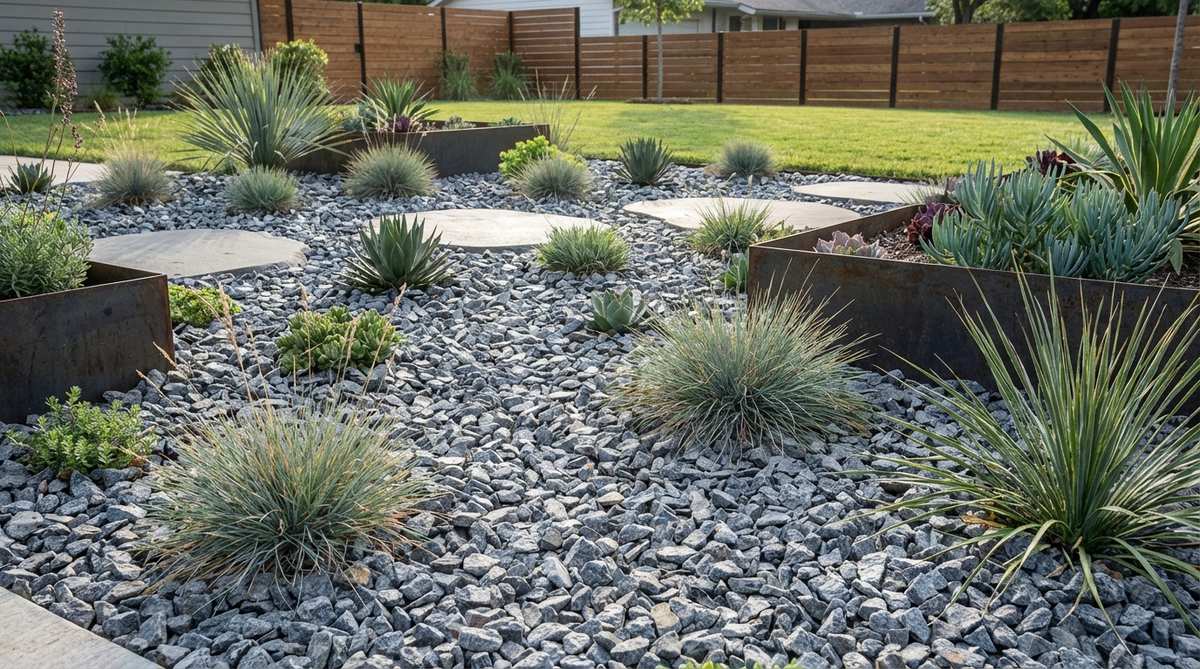
Angular granite chips in neutral gray tones provide a refined alternative to organic mulches in modern beds. The stone reflects light effectively while suppressing weeds and retaining soil moisture.
Choose chips sized between 3/8 and 3/4 inch for comfortable walking and visual texture without excessive coarseness. Rinse stone before installation to remove dust and fines.
21. Glass Panel Windbreaks
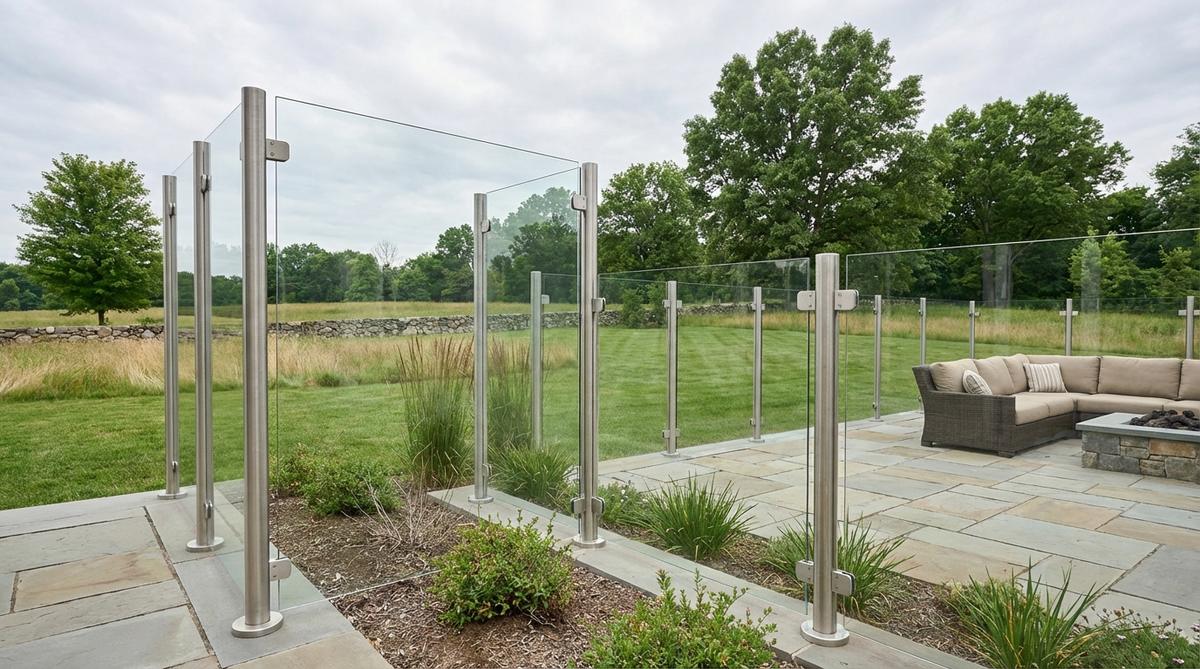
Frameless tempered glass panels mounted in aluminum channels create transparent weather protection without obstructing views. This solution works particularly well on rooftop terraces and exposed hillside sites.
Specify low-iron glass for maximum clarity and minimal green tint. Position panels to deflect prevailing winds while maintaining sightlines to landscape features or distant views.
22. River Pebble Ground Cover
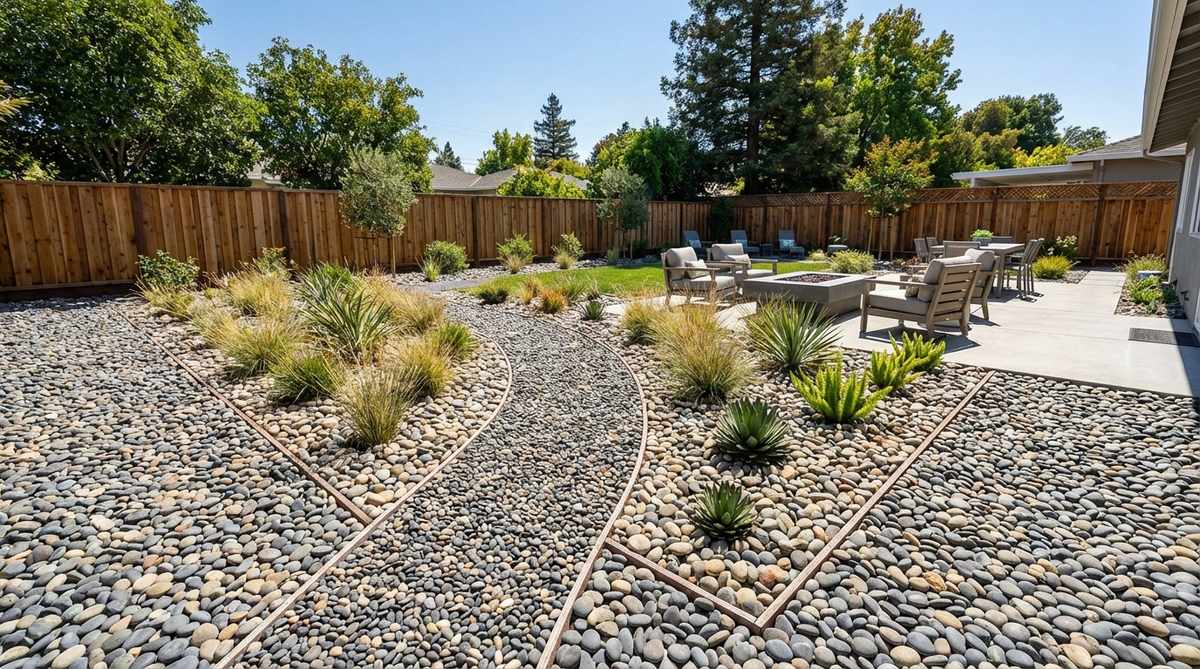
Smooth rounded stones in uniform sizes create comfortable walking surfaces with excellent drainage. The organic shapes soften geometric layouts while maintaining a refined, uncluttered appearance.
Use pebbles sized 1-2 inches in diameter for pedestrian areas and 2-3 inches for planted beds. Dark colors absorb heat, while lighter tones reflect light and remain cooler underfoot.
23. Cement Board Cladding
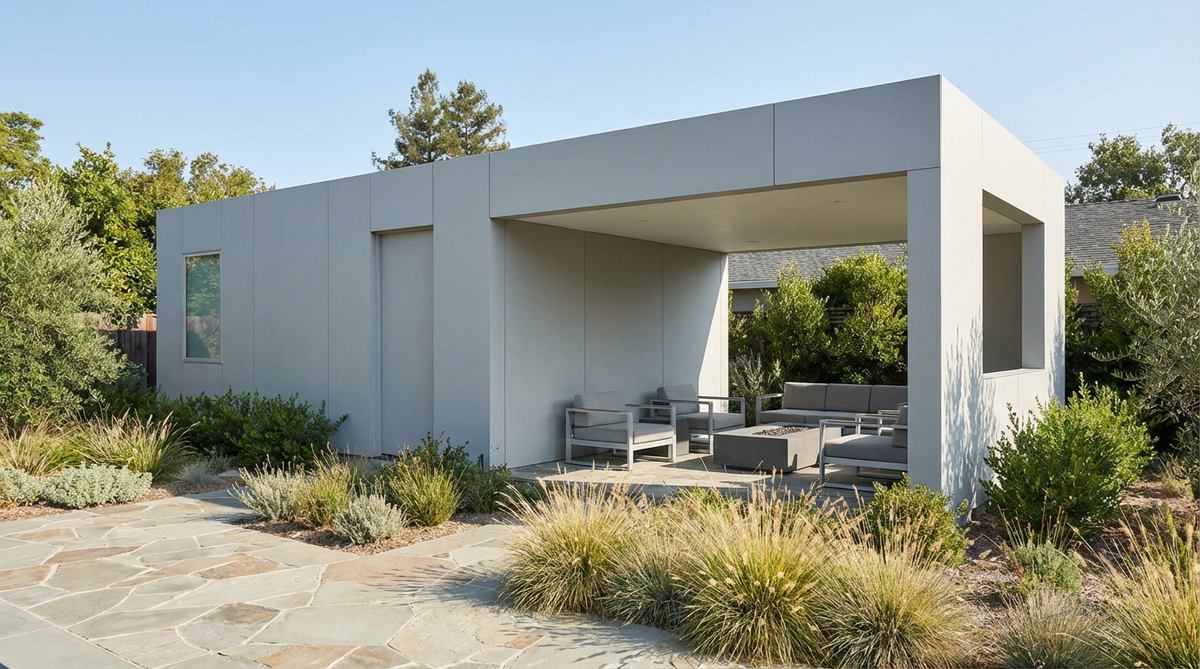
Fiber-cement panels provide smooth, weather-resistant surfaces for garden structures and raised bed facings. The material accepts paint well and resists moisture damage better than traditional wood siding.
Install with concealed fasteners to maintain clean surfaces. Paint in monochromatic tones—white, gray, or black—to reinforce minimalist aesthetics.
24. Rebar Pergola Structures
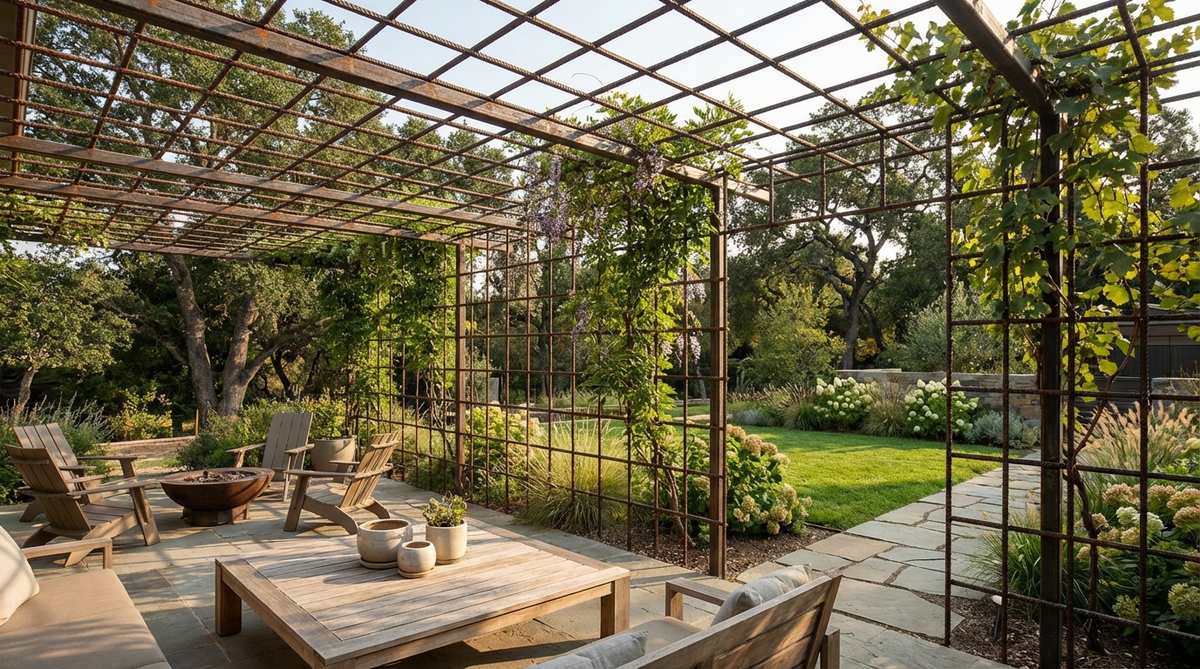
Industrial reinforcing bar welded into overhead grids creates lightweight pergolas with an airy, transparent quality. The slender profile casts delicate shadows while providing minimal support for climbing vines.
Treat rebar with rust-inhibiting primer and paint, or embrace the natural oxidation for a rustic-modern aesthetic. Space bars at 12-18 inch intervals for comfortable shade density.
Architectural Plants as Living Sculpture
Plant selection in modern gardens prioritizes form over flower, with each specimen chosen for its structural contribution to the composition. Designers use plants as three-dimensional elements that define space and provide year-round visual interest.
25. Tree Aloe Vertical Accents
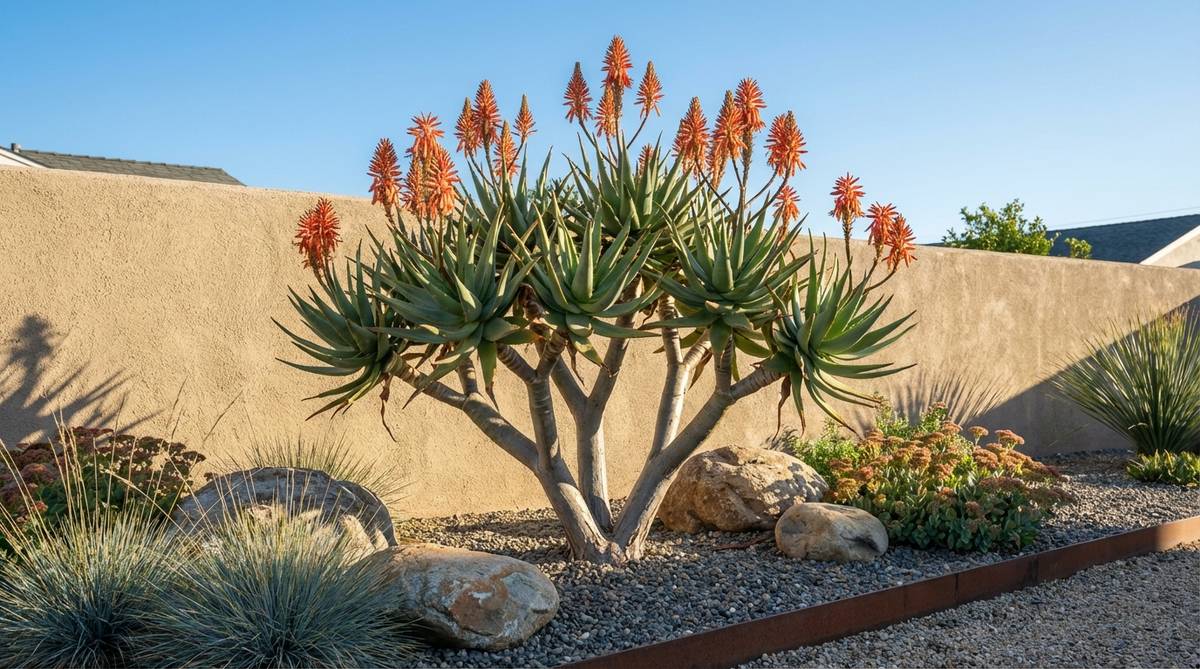
Multi-branched aloes develop striking sculptural forms that command attention in frost-free gardens. The thick, gray-green stems and rosettes of fleshy leaves create bold silhouettes against walls or open sky.
Position tree aloes as focal points in gravel gardens or as corner sentinels flanking entries. These succulents thrive in full sun with minimal water once established.
The coral-orange flower spikes emerge in winter, adding seasonal color without compromising the plant’s architectural integrity.
26. Japanese Maple Canopy Layers
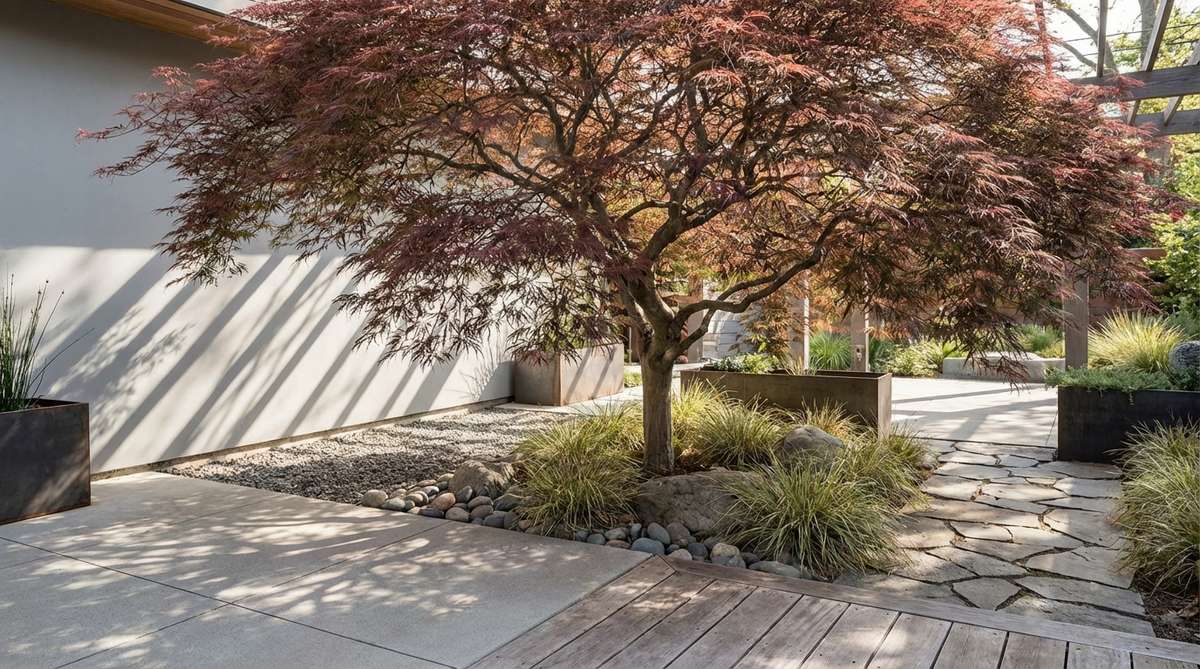
Refined branching structure and delicate foliage make Japanese maples ideal for adding vertical interest without visual heaviness. The layered branch pattern creates beautiful shadow play on adjacent walls and paving.
Select cultivars with restrained growth habits and fine-textured leaves—avoid overly large or coarse varieties that conflict with minimalist design principles.
27. Ornamental Grass Mass Plantings
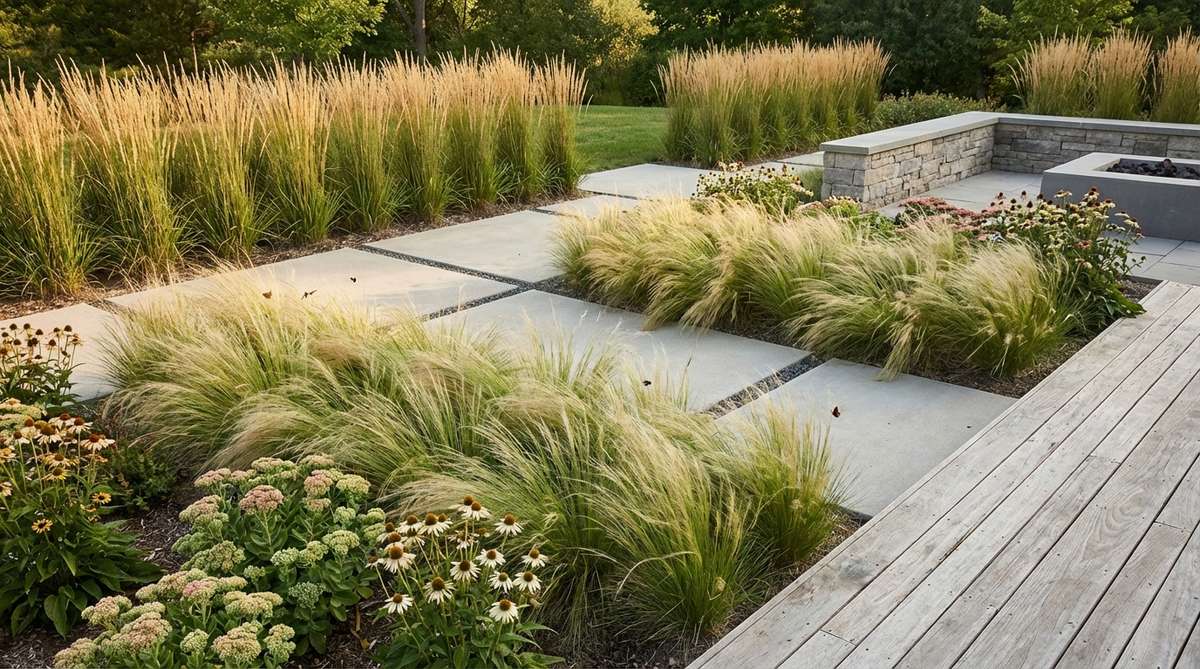
Repeating drifts of a single grass species create rhythmic movement and soft texture within structured layouts. The fine foliage provides contrast to hard surfaces while the consistent repetition maintains visual order.
Choose grasses like Karl Foerster feather reed grass or maiden grass that hold their form through winter. Plant in groups of 5-7 spaced evenly for unified impact.
Grasses require minimal maintenance beyond annual cutback and provide habitat for beneficial insects throughout the growing season.
28. Frangipani Sculptural Branches
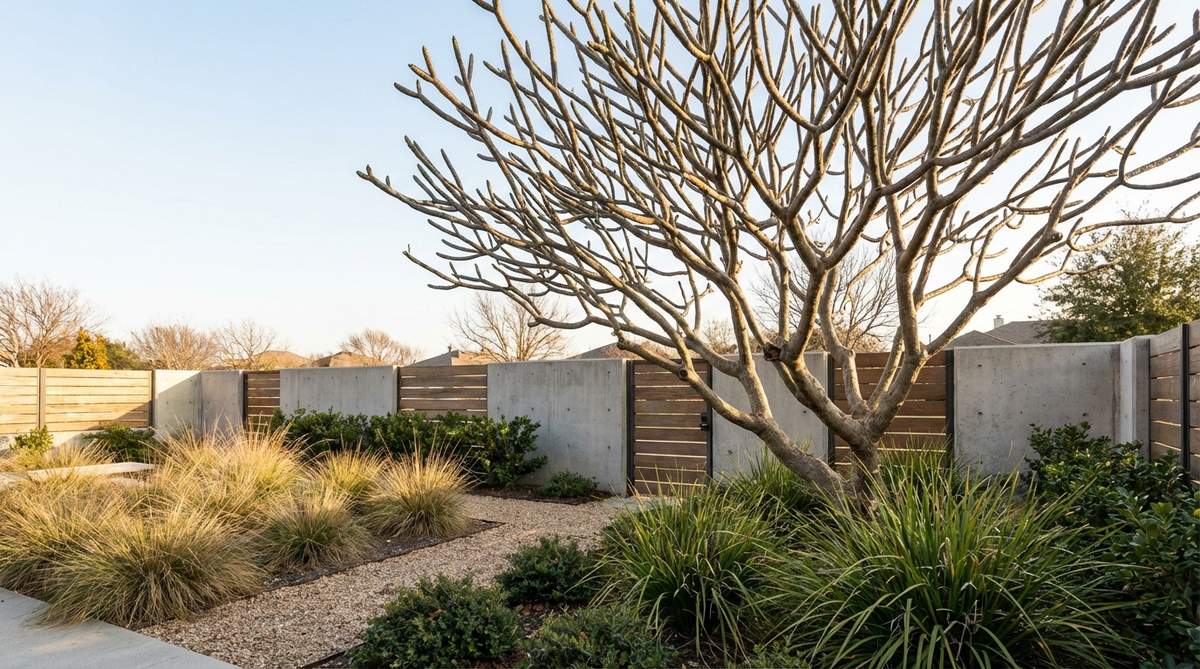
Plumeria trees develop thick, smooth-barked branches that create stunning silhouettes even without foliage. The deciduous nature emphasizes form during winter months, while intensely fragrant flowers provide summer appeal.
Plant frangipanis in frost-free locations with full sun exposure to ensure abundant flowering. The architectural branch structure complements contemporary buildings perfectly.
29. Cabbage Tree Dramatic Focal Points
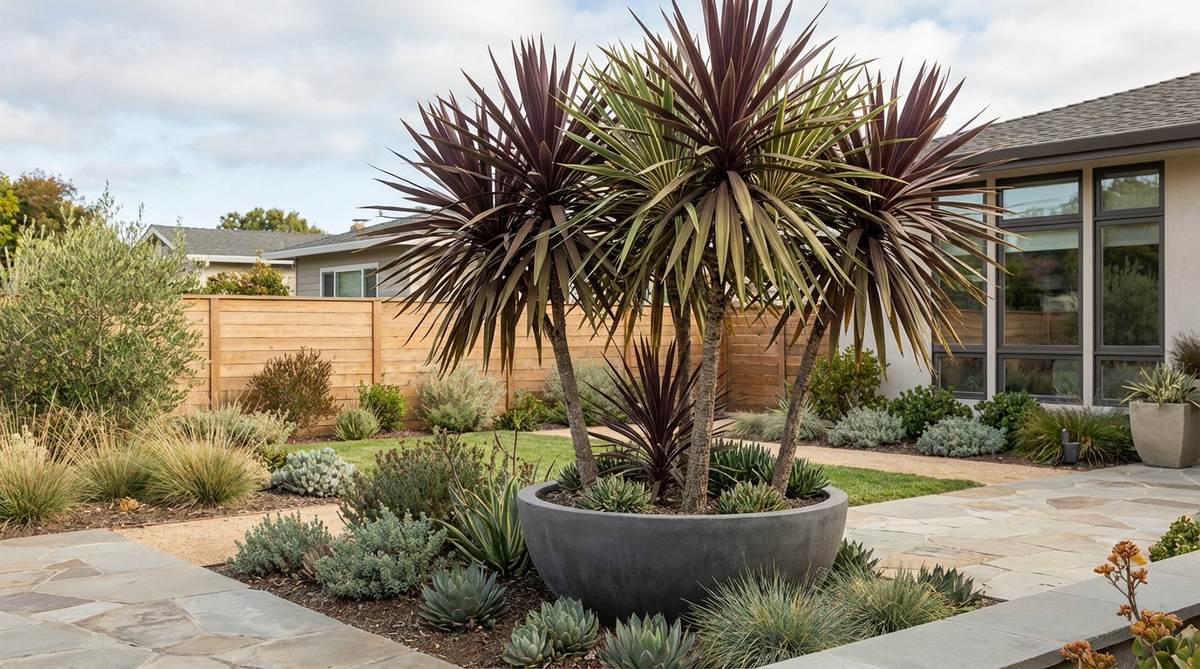
Cordyline australis produces fountain-like foliage clusters atop slender trunks, creating instant tropical drama in minimalist settings. Cultivars range from bright green to deep burgundy and variegated forms.
Use cabbage trees as specimens in large containers or plant directly in open beds for vertical emphasis. The architectural form works beautifully in both coastal and urban gardens.
30. Formal Boxwood Hedges
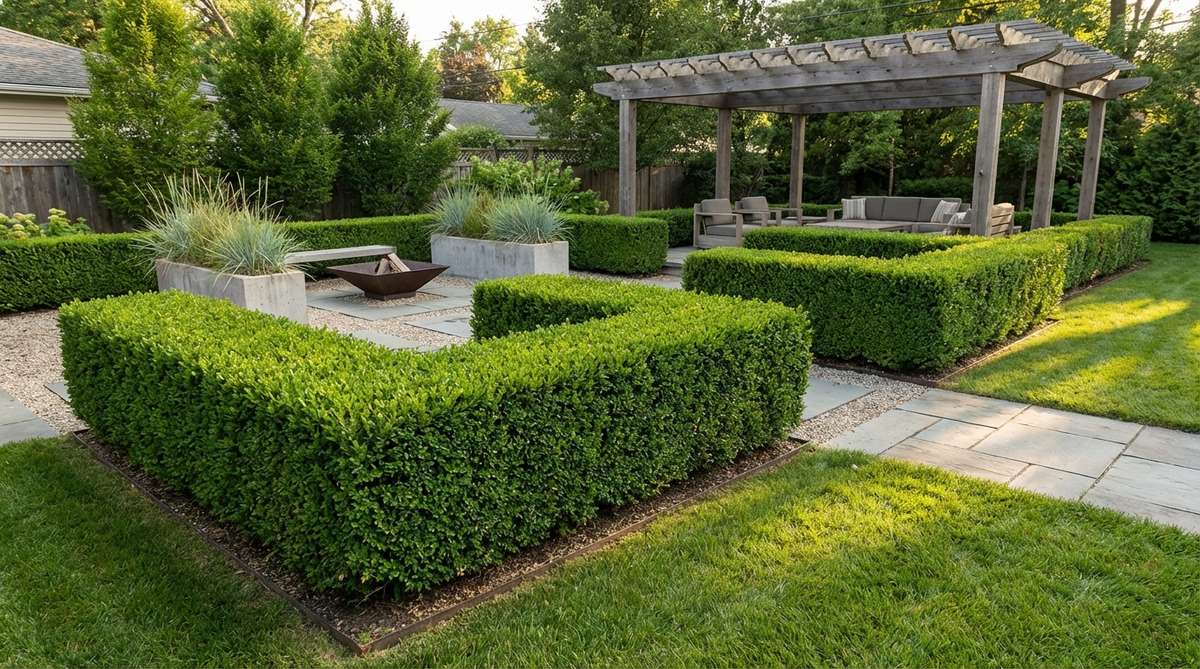
Tightly clipped evergreen hedges define spaces and create green architecture within the garden. The uniform surface and geometric form provide structure without seasonal variation.
Maintain hedges between 18-36 inches tall for comfortable sight lines while establishing clear boundaries. Shear three times annually to preserve crisp edges and dense foliage.
31. Multi-Stem Birch Groves
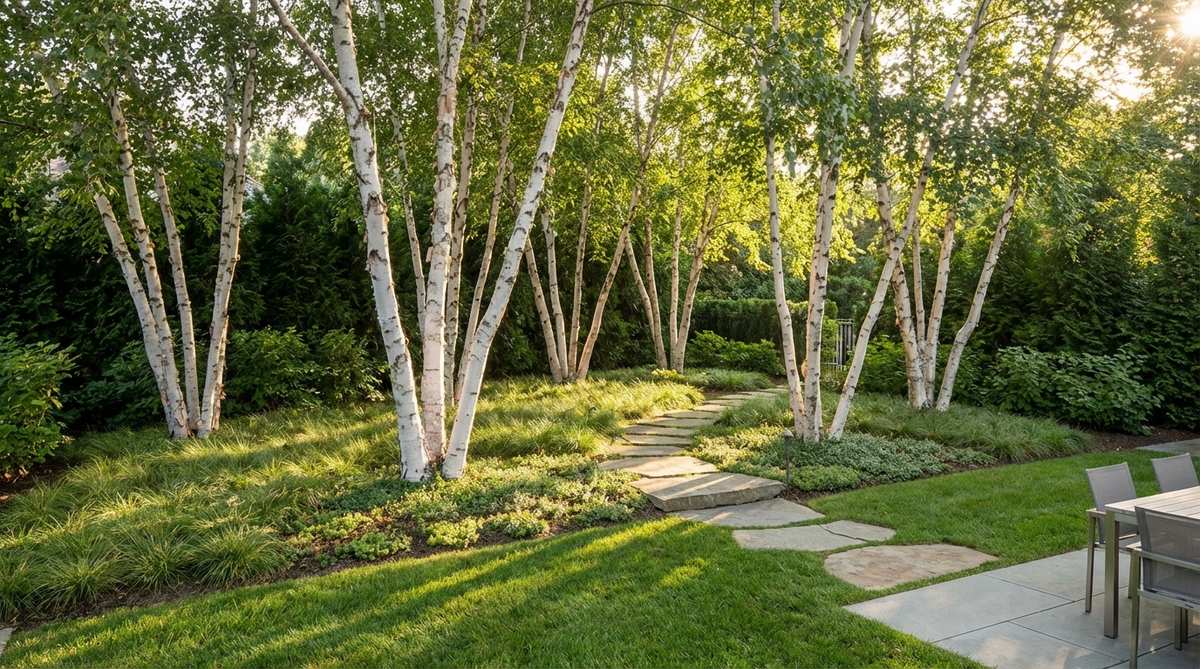
White-barked birches planted in tight clusters create lightweight canopies that filter light beautifully. The pale trunks provide year-round interest and striking contrast against dark evergreen backgrounds.
Select 3-5 stem specimens spaced 4-6 feet apart to form naturalistic groves. Underplant with fine-textured groundcovers rather than competing with heavy perennials.
32. Agave Succulent Specimens
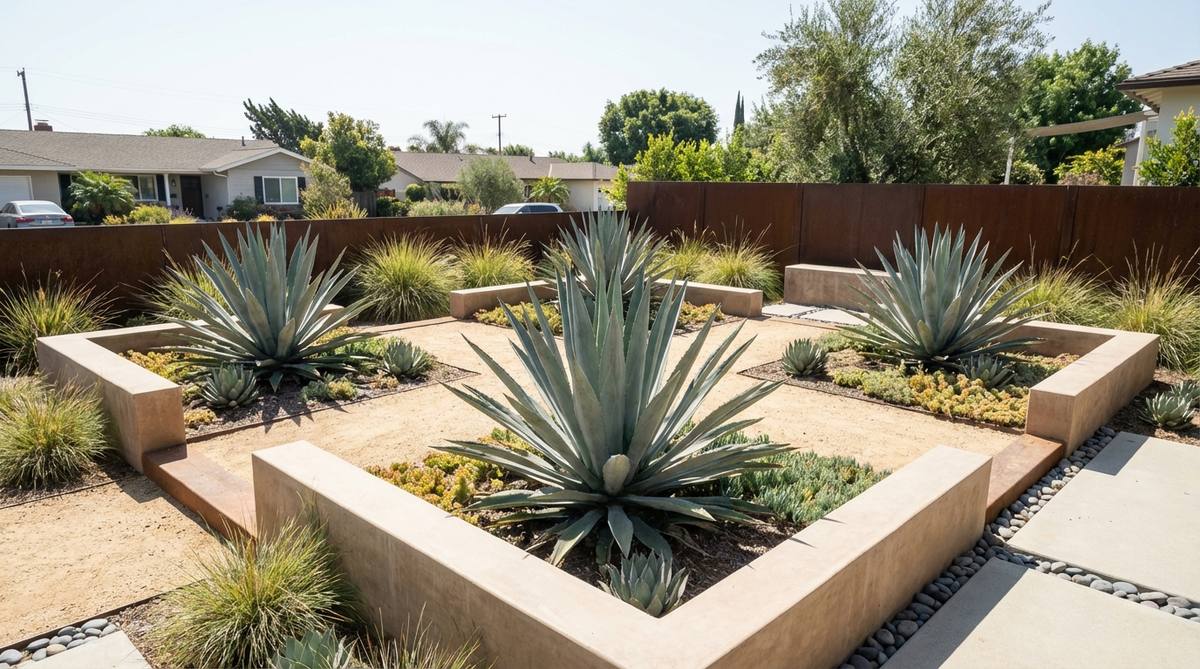
Bold rosettes with sword-shaped leaves create powerful focal points in dry gardens. The geometric symmetry and gray-blue coloration complement concrete and steel materials perfectly.
Position single large agaves in prominent locations rather than massing them. Provide excellent drainage and full sun for optimal form development.
Many agaves tolerate light frost, expanding their geographic range beyond purely tropical zones.
33. Columnar Evergreens
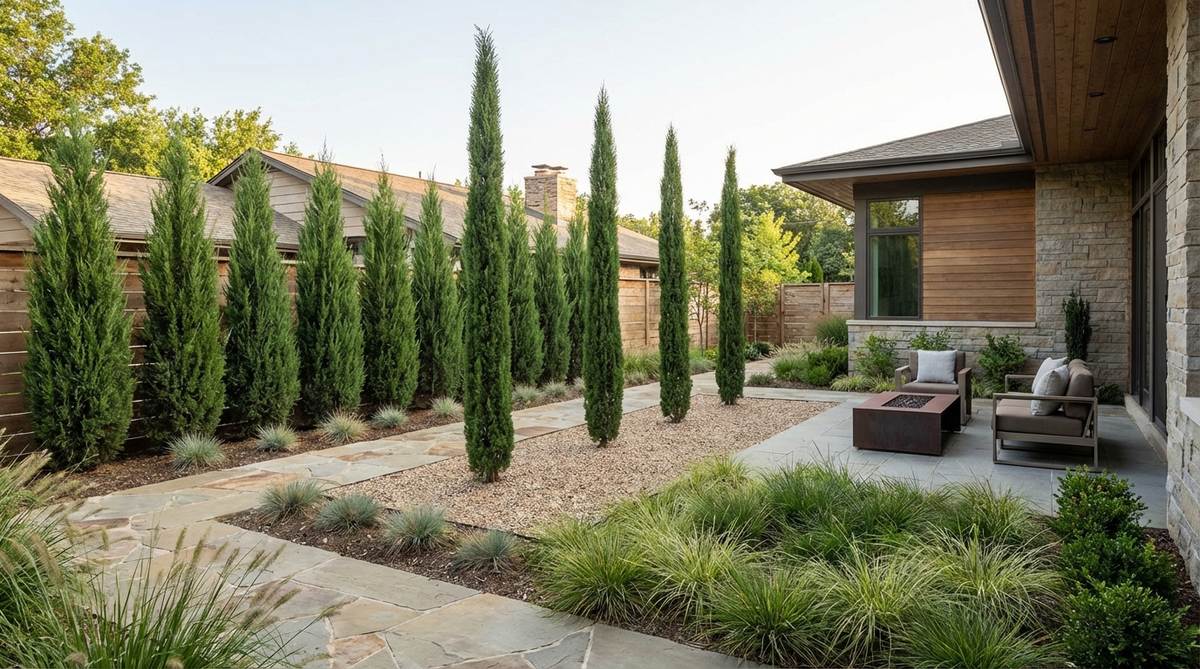
Narrow, upright conifers like Italian cypress or ‘Skyrocket’ juniper add vertical punctuation without consuming horizontal space. The formal shape reinforces architectural geometry throughout the garden.
Plant columnar evergreens singly as exclamation points or in rows to create living walls. Space appropriately based on mature width to prevent eventual crowding.
34. Soft Tree Fern Tropical Layers
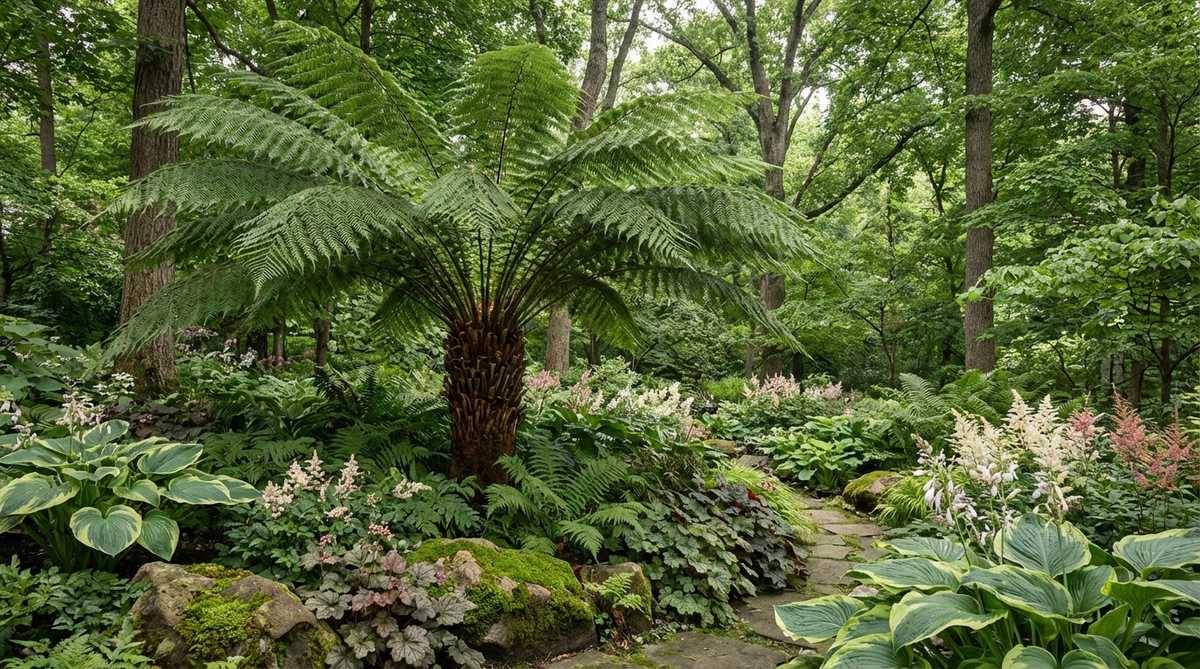
Dicksonia antarctica produces massive arching fronds that create instant jungle atmosphere in shaded gardens. The fibrous trunk and spreading canopy add dramatic height and texture to woodland plantings.
Tree ferns thrive in moisture-rich, sheltered locations with protection from direct sun. Pair with shade-loving perennials for layered, mysterious plantings.
35. Sea Holly Spiky Perennials
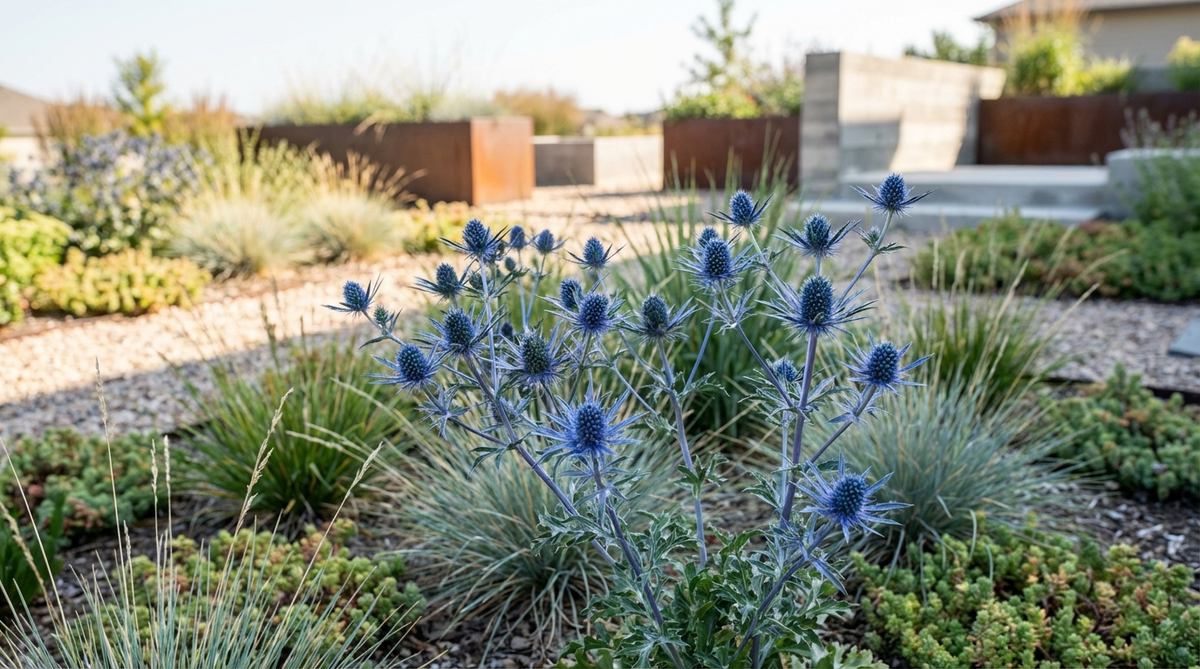
Eryngium produces metallic blue thistle-like flowers on rigid stems that provide architectural detail in sunny borders. The spiky texture and electric coloration create almost otherworldly presence among softer plants.
Sea holly tolerates drought and thrives in contemporary gravel gardens where its unique form receives maximum exposure.
36. Bear’s Breeches Bold Foliage
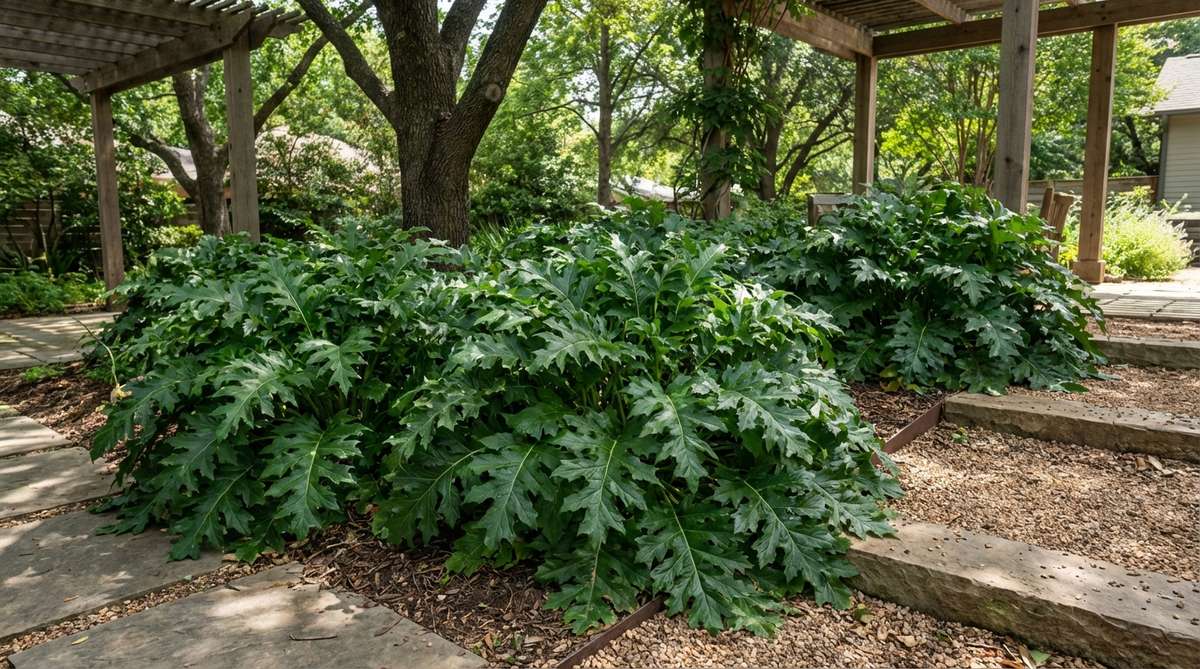
Acanthus produces massive, deeply lobed leaves that form impressive ground-level mounds. The architectural foliage inspired classical Greek and Roman decorative motifs, bringing timeless elegance to modern gardens.
Plant bear’s breeches in partial shade with adequate moisture for optimal leaf size. The tall flower spikes emerge in late spring, adding vertical interest above the foliage mass.
Water Features That Add Tranquility
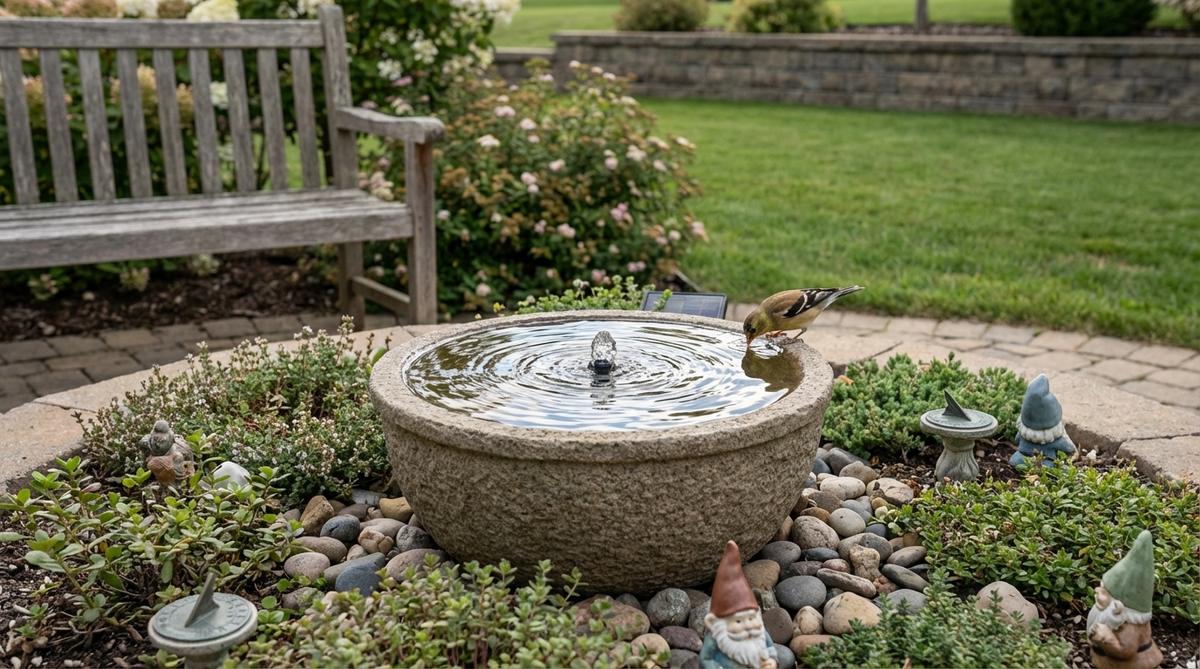
Water elements in modern gardens emphasize stillness and reflection rather than movement and sound. Designers create features with minimal visual complexity that enhance rather than dominate the overall composition.
37. Reflecting Pool Elegance
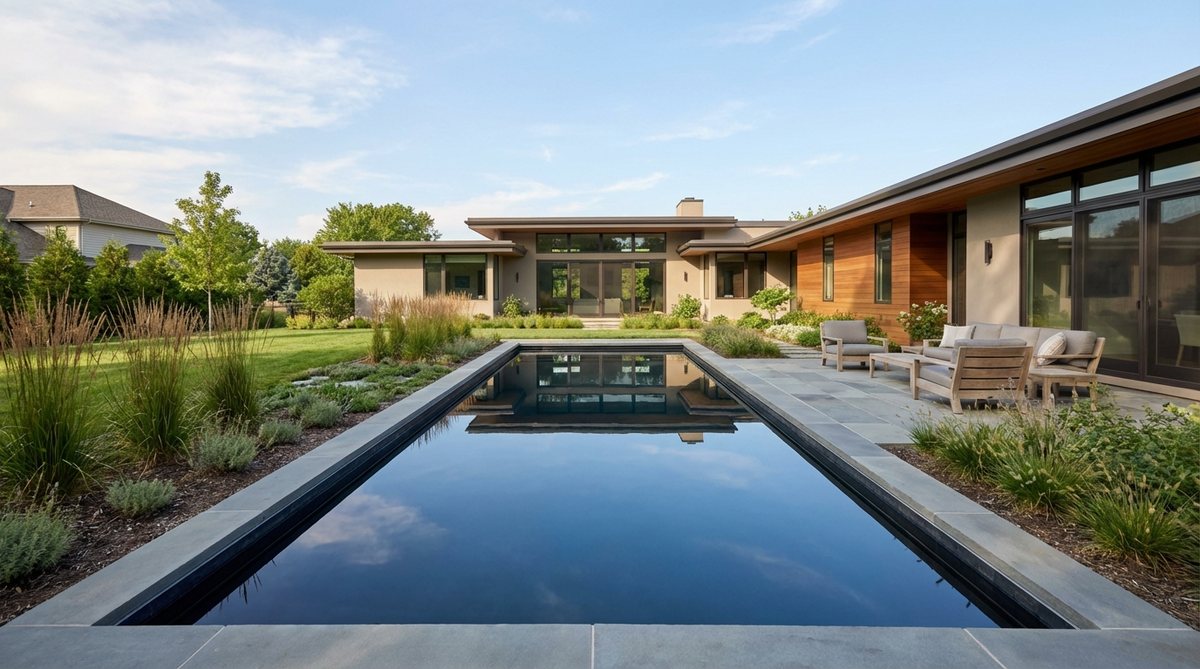
Still water surfaces mirror surrounding architecture and sky, creating meditative focal points that double the visual impact of adjacent plantings. The horizontal plane adds a sense of spaciousness even in confined areas.
Construct pools with dark interiors—black or charcoal liner—to maximize reflectivity and minimize visual depth. Edge with flush coping to create seamless transitions between water and paving.
Position pools to capture morning or evening light when reflections appear most dramatic. Minimal depth of 12-18 inches suffices for visual effect while reducing construction costs.
38. Water Blade Fountains
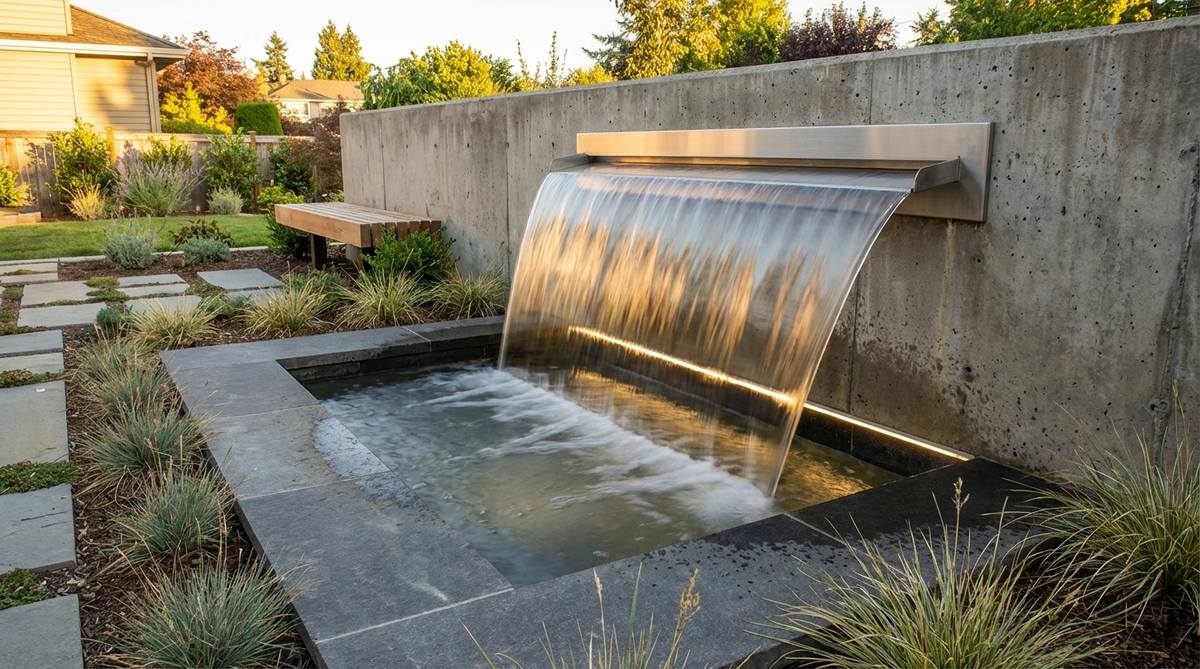
Thin sheets of water flowing from wall-mounted panels create dramatic yet controlled focal points. The glassy surface catches light beautifully while producing gentle ambient sound.
Install blades with LED backlighting for nighttime drama—soft white or warm tones enhance rather than overwhelm the feature. Position over catch basins concealed in paving or planting beds.
39. Floating Stone Fountains
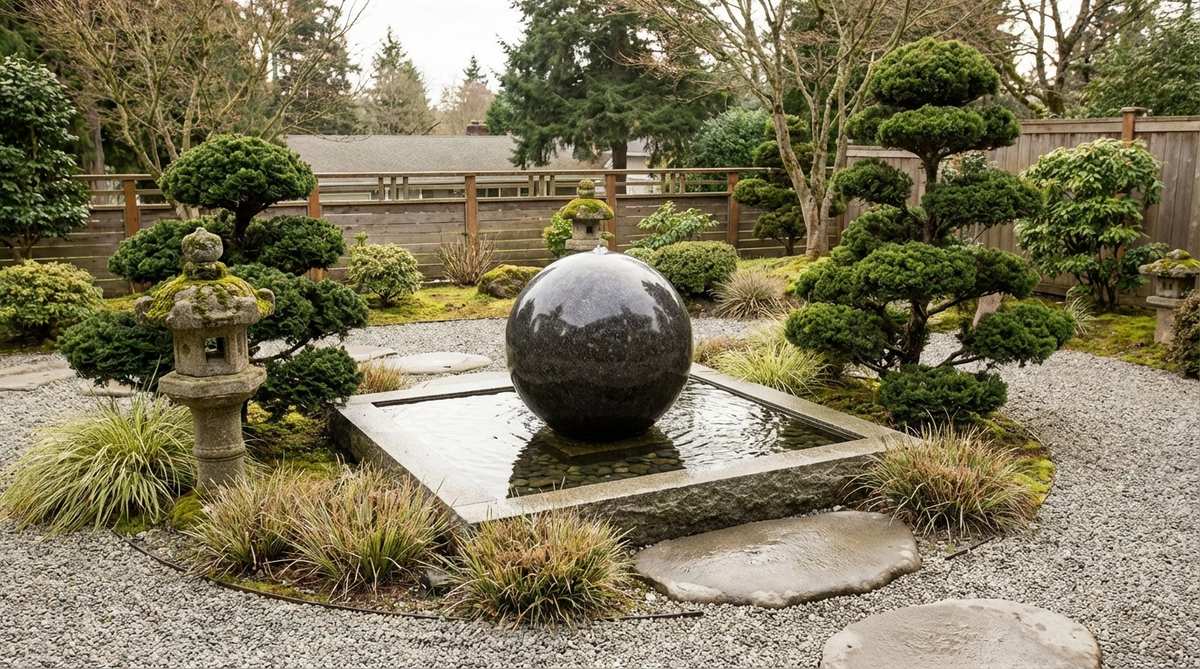
Smooth granite or concrete spheres positioned in shallow basins create effortless focal points with subtle movement. Water flows over the polished surface, adding gentle animation without complexity.
These features work beautifully in Japanese-inspired minimalist gardens paired with gravel pathways and sculptural plantings. The spherical form provides pleasing contrast to angular hardscape elements.
40. Linear Water Channels
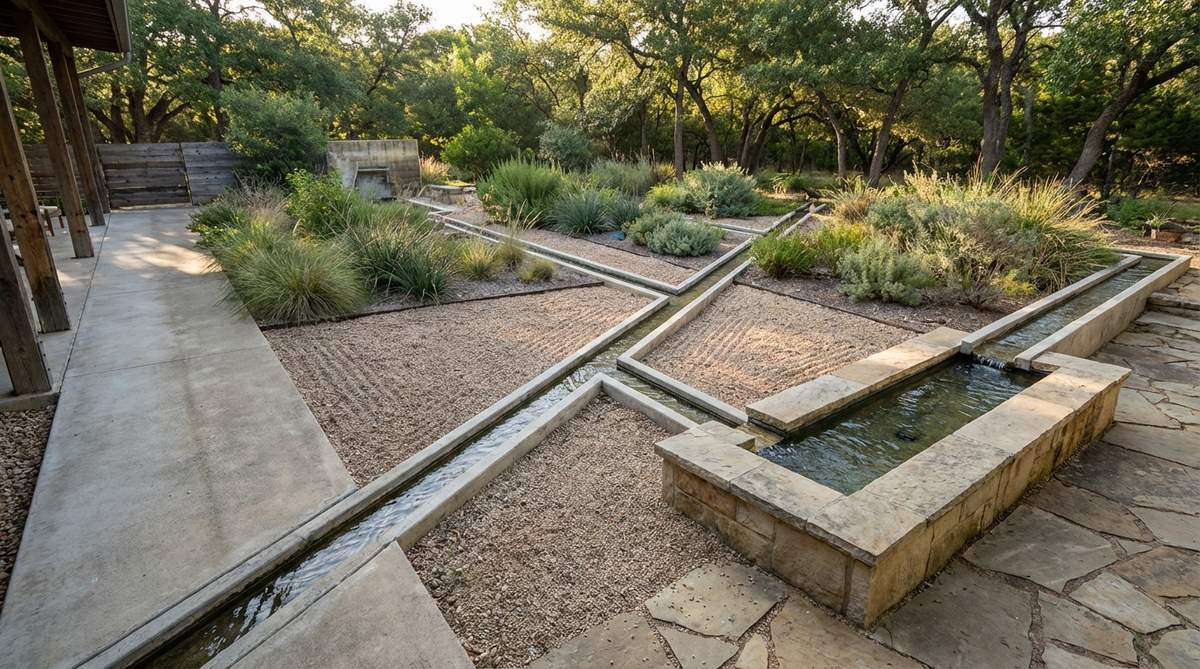
Narrow water rills flowing through paving or between planted beds create dynamic movement along pathways. The geometric form reinforces modern design language while providing cooling effects in hot climates.
Line channels with dark stone or concrete for maximum visual depth. Recirculate water through concealed pumps rather than relying on constant water supply.
41. Infinity Edge Pools
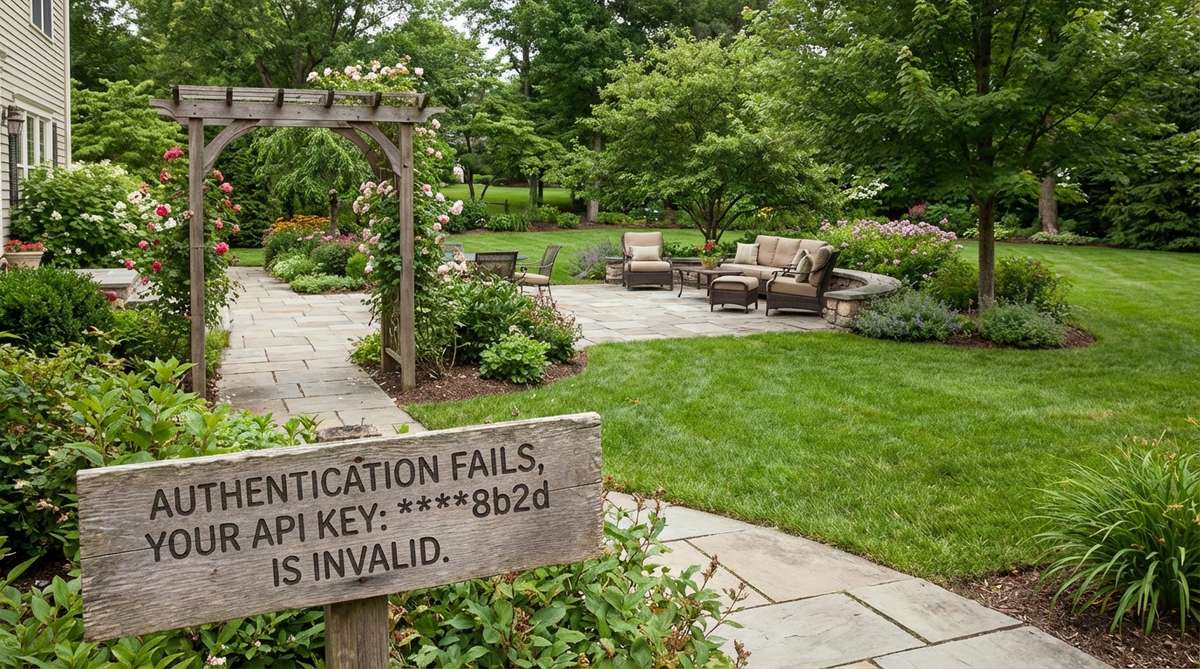
Vanishing edges create the illusion of water extending to the horizon, blurring boundaries between garden and distant views. The level surface emphasizes horizontal planes within the landscape.
Position infinity edges facing primary viewsheds or entertaining areas for maximum impact. The catch basin and recirculation equipment require careful integration into the overall design.
42. Rain Curtain Installations
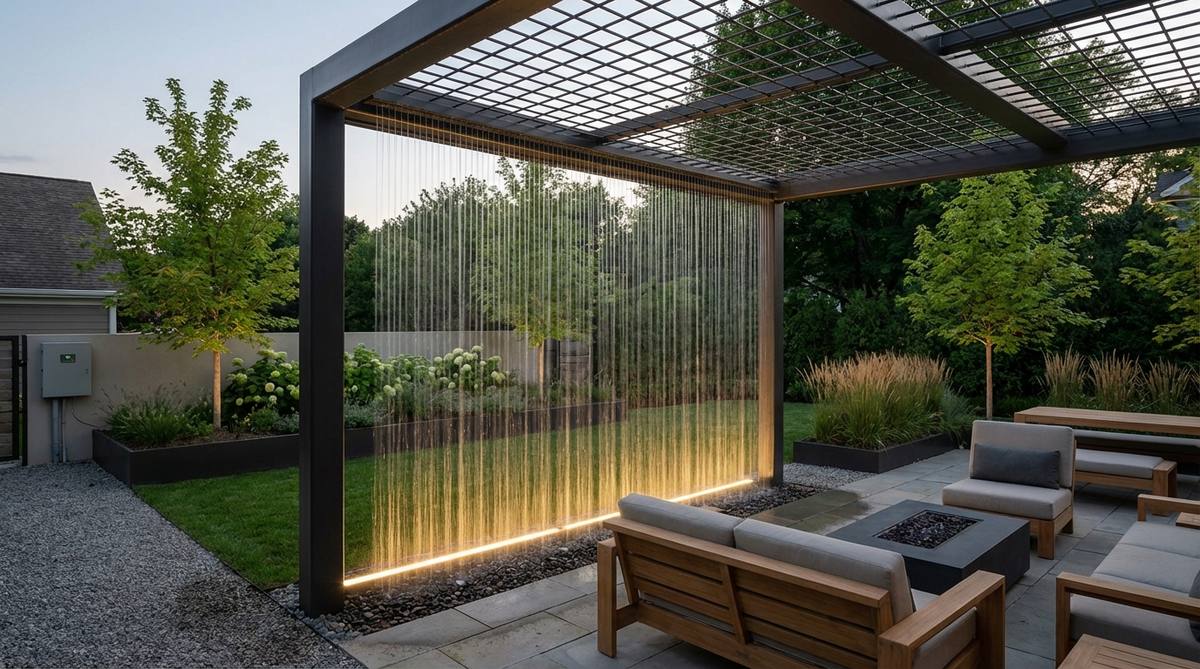
Water descending from overhead grids creates transparent vertical screens that define space without solid barriers. The curtain effect provides privacy and cooling while maintaining visual connectivity across zones.
Install programmable controls to vary flow rates and create changing effects throughout the day. Backlighting transforms rain curtains into luminous features after dark.
43. Scupper Water Walls
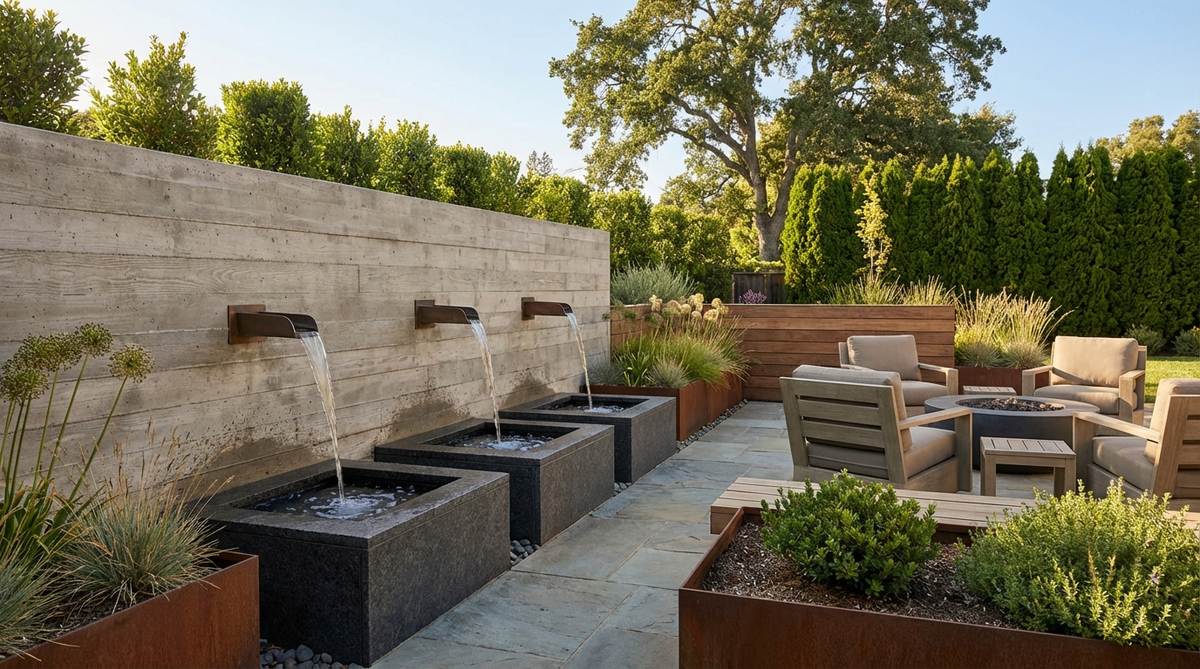
Water flowing from protruding spouts into catch basins creates rhythmic sound and movement against vertical surfaces. Multiple scuppers spaced at regular intervals reinforce geometric design principles.
Use bronze or stainless steel scuppers that develop attractive patina or maintain pristine appearance respectively. Position to avoid splash onto adjacent seating areas.
44. Pond with Bond Pebble Borders
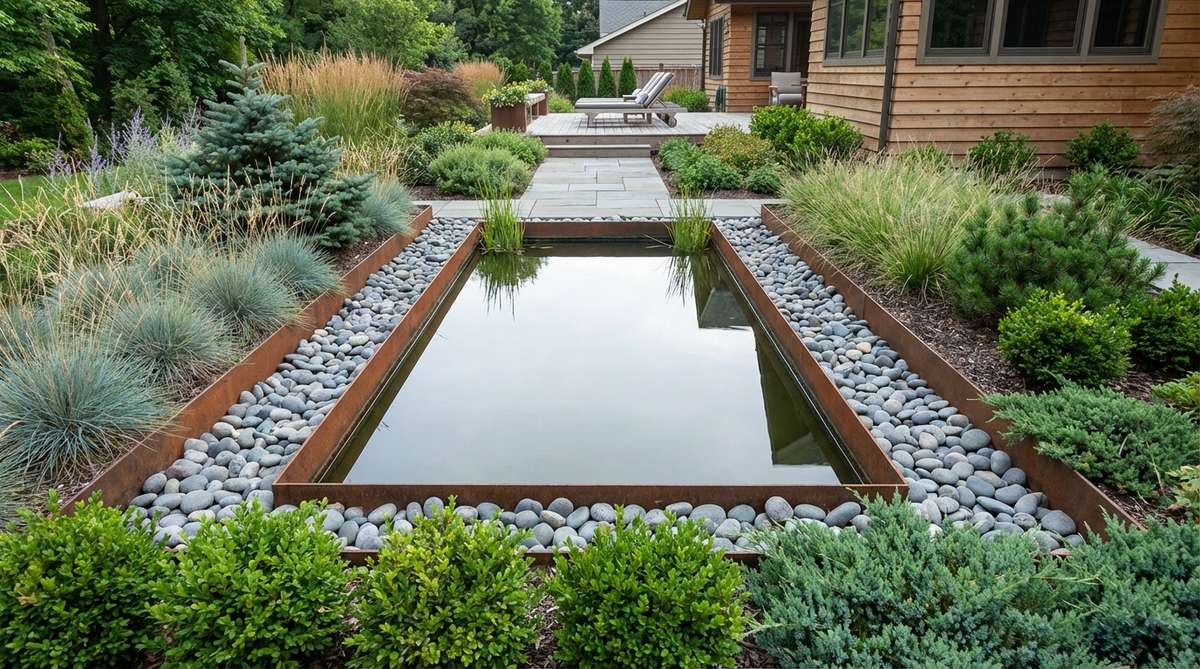
Central ponds surrounded by smooth pebbles create naturalistic focal points within structured gardens. The organic stone texture softens geometric edges while providing excellent drainage zones.
Edge ponds with concrete or steel set flush with pebble surface to prevent stone migration into water. Plant hardy grasses and low shrubs in surrounding borders for year-round interest.
Lighting Design for Dramatic Effect
Strategic illumination transforms modern gardens after dark, revealing architectural forms and creating layered depth through controlled light and shadow. Designers use lighting as a design medium rather than purely functional necessity.
45. LED Uplighting for Specimens
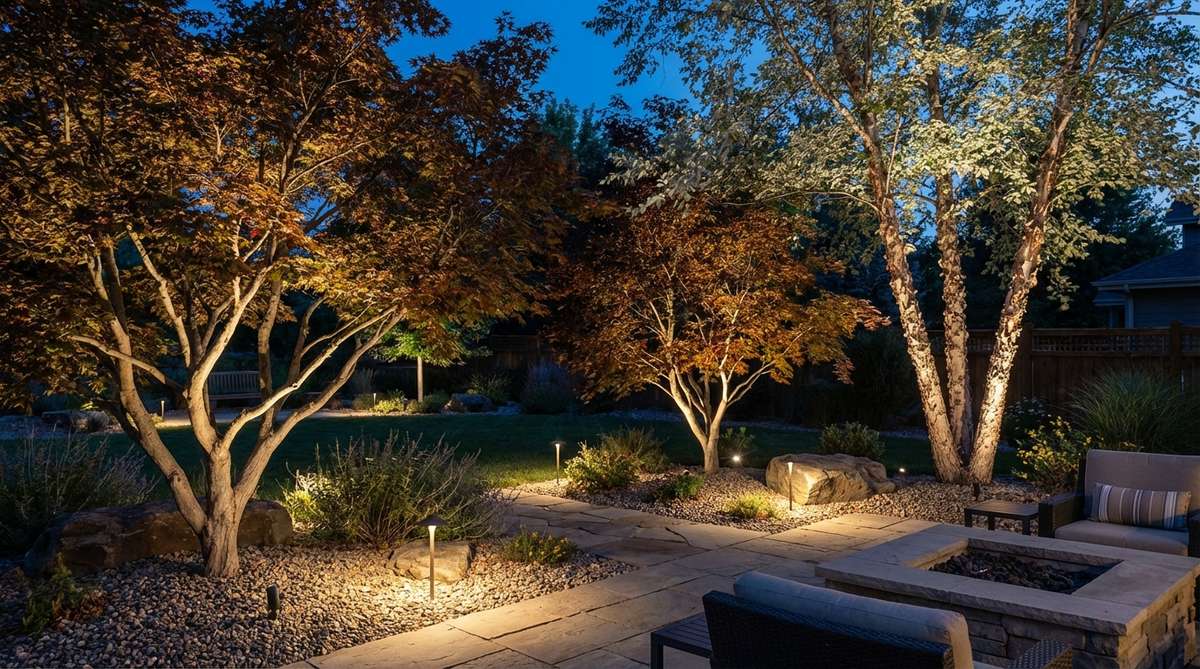
Ground-mounted fixtures aimed upward through tree canopies create dramatic silhouettes and emphasize branching structure. The lighting reveals form invisible during daylight while avoiding light pollution.
Position fixtures 18-24 inches from trunks and aim at 45-degree angles into the canopy. Use warm white LEDs—2700-3000K—for natural appearance without harsh blue tones.
Uplighting works particularly well for multi-stem trees and specimens with distinctive bark or branch patterns like Japanese maples and birches.
46. Recessed Step Lighting
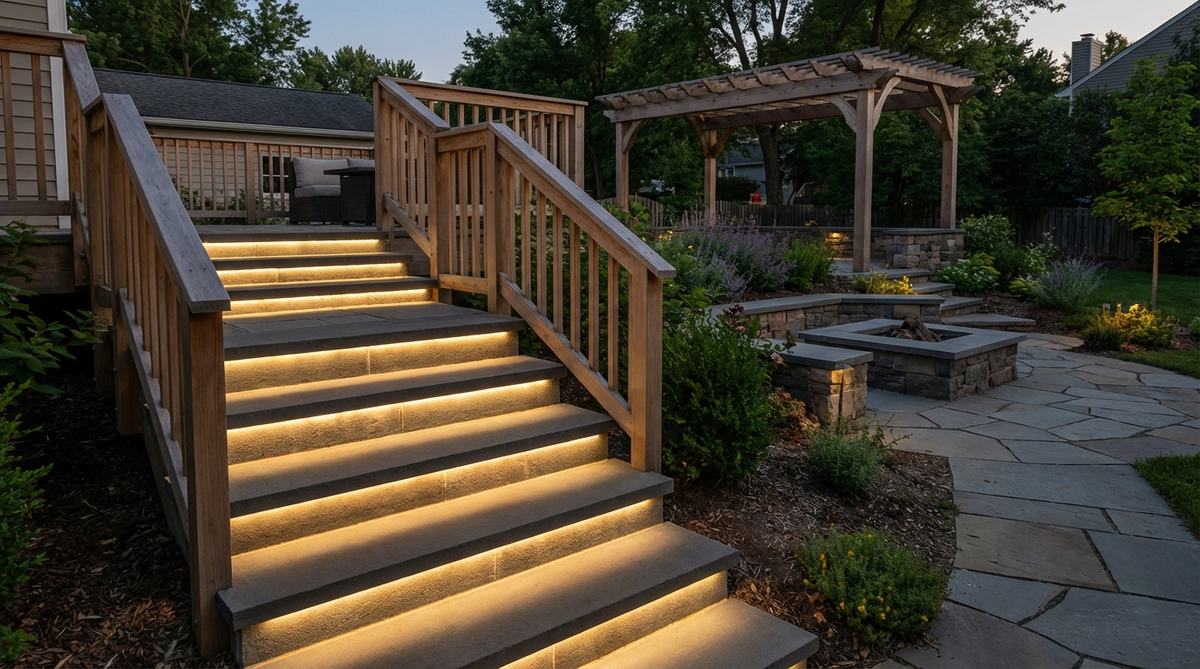
Fixtures integrated into stair risers or treads provide essential safety illumination while creating linear patterns that guide movement through the garden. The low-profile installation maintains clean design lines.
Install LEDs with narrow beam spreads to illuminate walking surfaces without glare. Space fixtures at every other step or continuously based on ambient light conditions.
47. Under-Lit Raised Beds
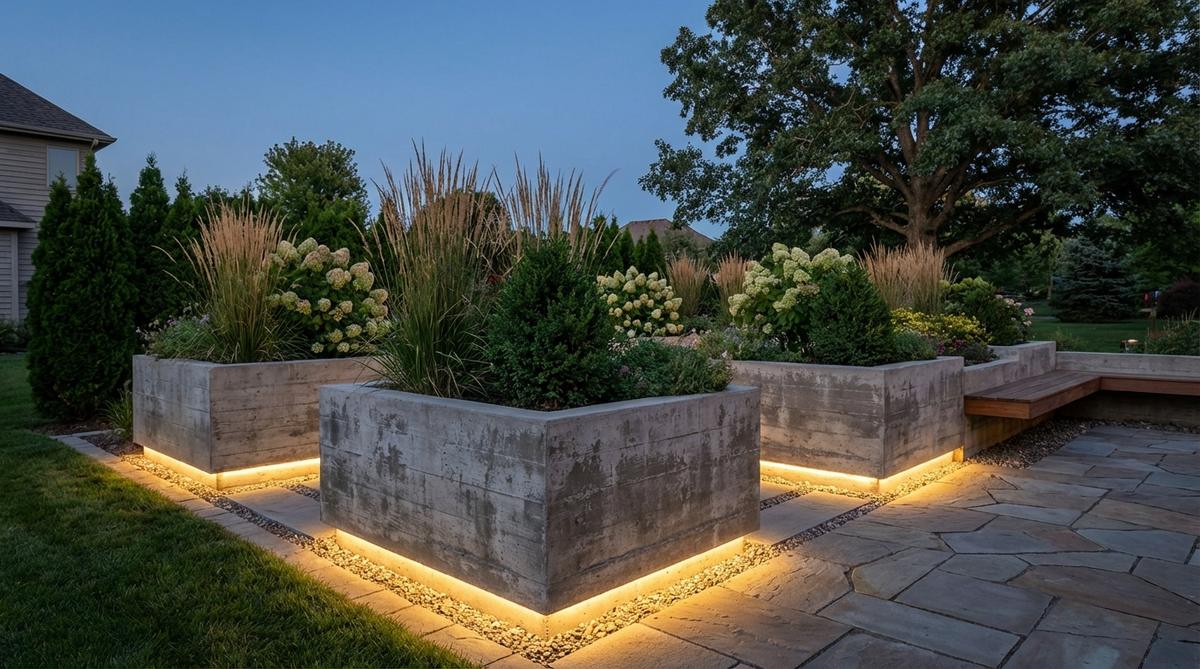
Linear LED strips concealed beneath the bottom edge of raised planters create the illusion of floating masses. The indirect light emphasizes material texture while avoiding glare at eye level.
This technique works beautifully with corten steel or concrete planters where the lighting reveals material quality without competing with plantings above.
48. Path Bollard Markers
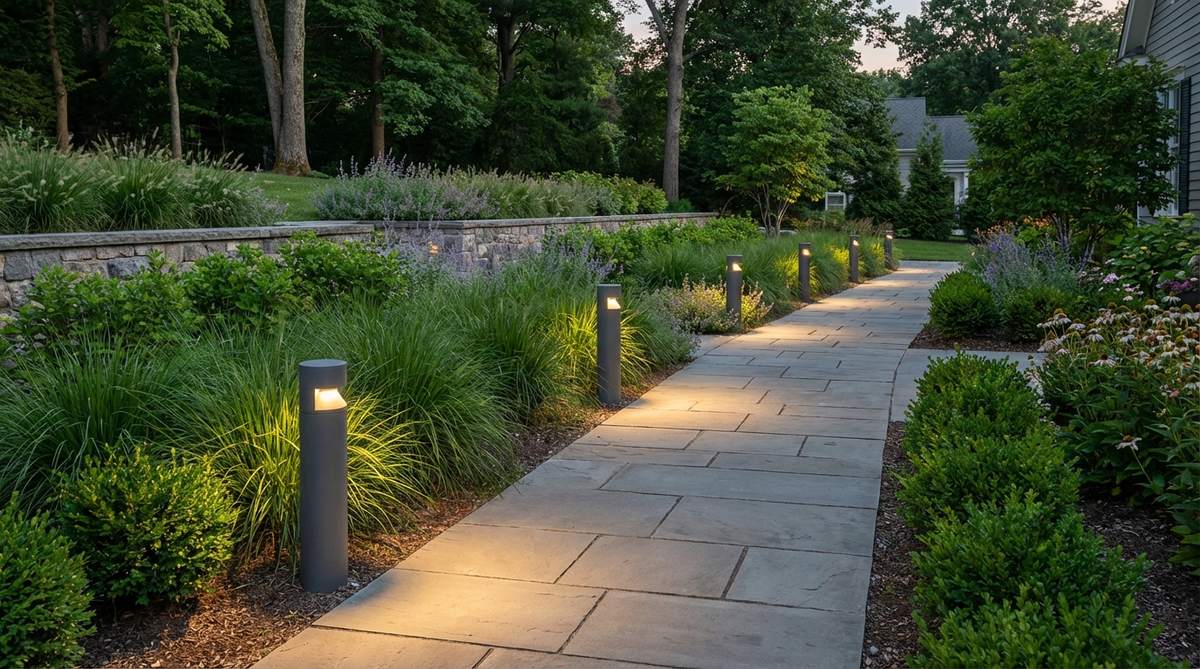
Low cylindrical fixtures spaced at regular intervals define circulation routes while providing downward-directed illumination. The repetitive placement reinforces geometric design principles.
Select bollards 18-24 inches tall to provide adequate light spread without obstructing views. Modern designs in powder-coated aluminum or stainless steel complement contemporary materials.
49. Wall-Washing Techniques
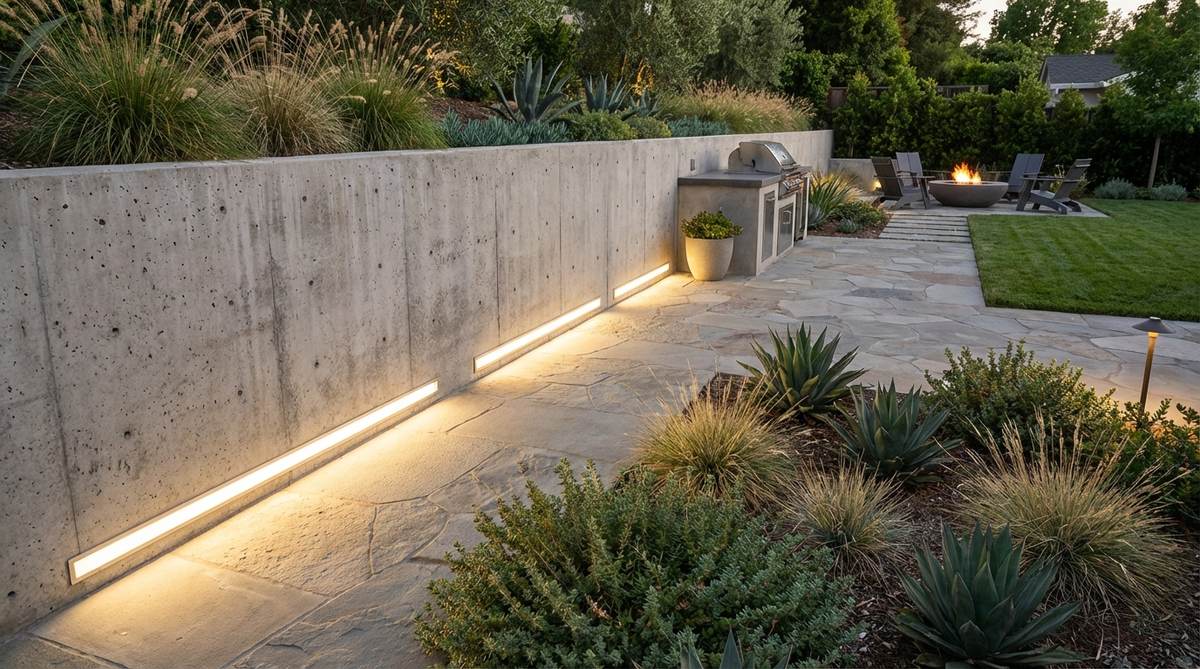
Fixtures positioned to graze vertical surfaces with even light reveal texture and material quality while providing ambient illumination. This technique works particularly well with board-formed concrete or natural stone walls.
Mount linear fixtures at grade level or concealed in adjacent planting beds. Use wide beam spreads to achieve uniform coverage without bright spots or dark zones.
50. Moonlighting Through Canopies
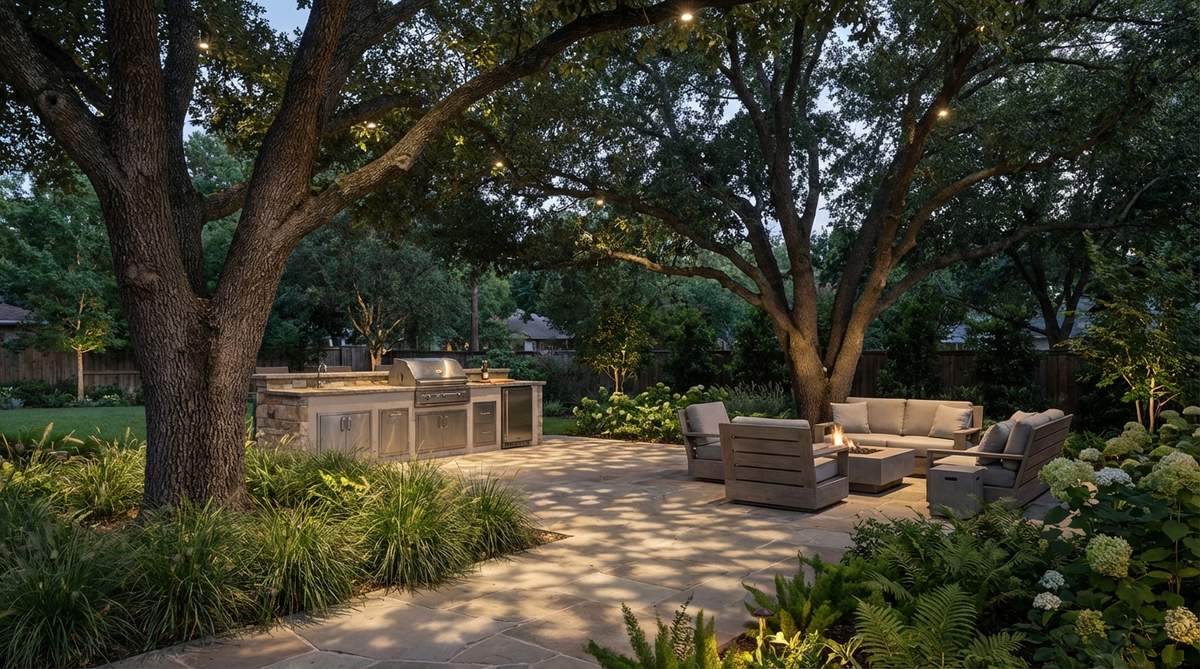
Downlights positioned high in tree branches create dappled patterns that mimic natural moonlight filtering through foliage. This subtle approach provides functional illumination without obvious fixtures.
Install fixtures 15-20 feet above ground and aim downward at 45 degrees. The higher mounting position reduces glare while spreading light across larger areas.
51. Perimeter Accent Lighting
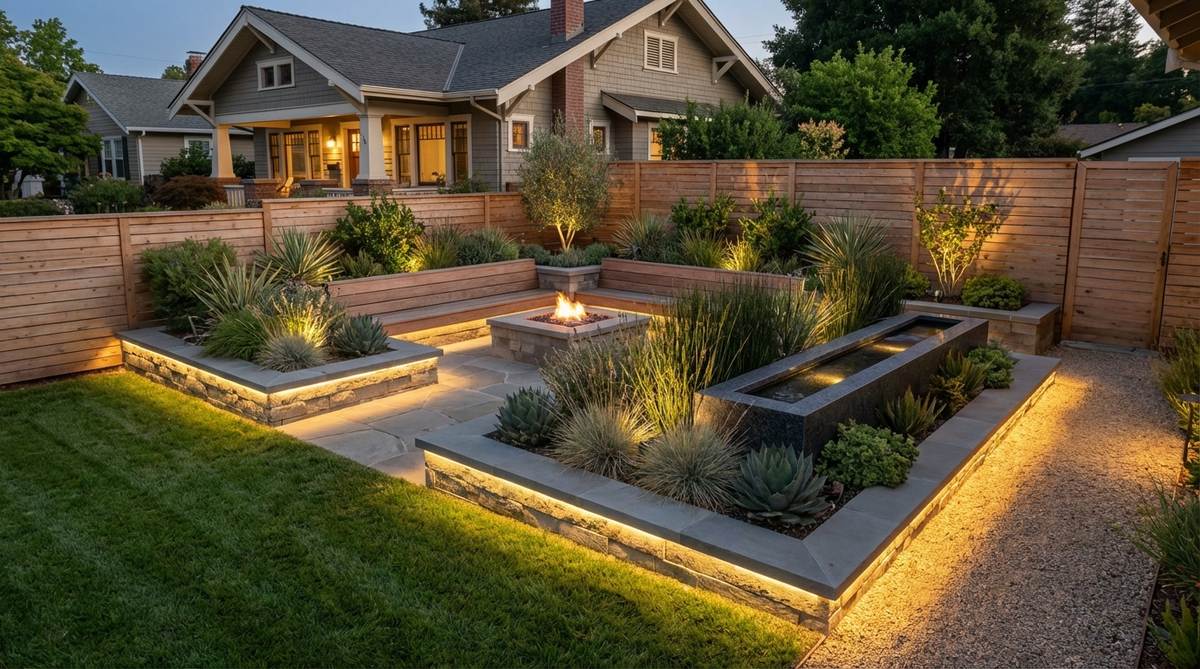
Low-level lights positioned along garden boundaries create glowing edges that define property limits without solid fencing. The linear light pattern emphasizes geometric layouts while enhancing security.
Use directional fixtures aimed into the property rather than outward to avoid disturbing neighbors. Program lighting zones independently for flexible control throughout the evening.
52. Water Feature Illumination
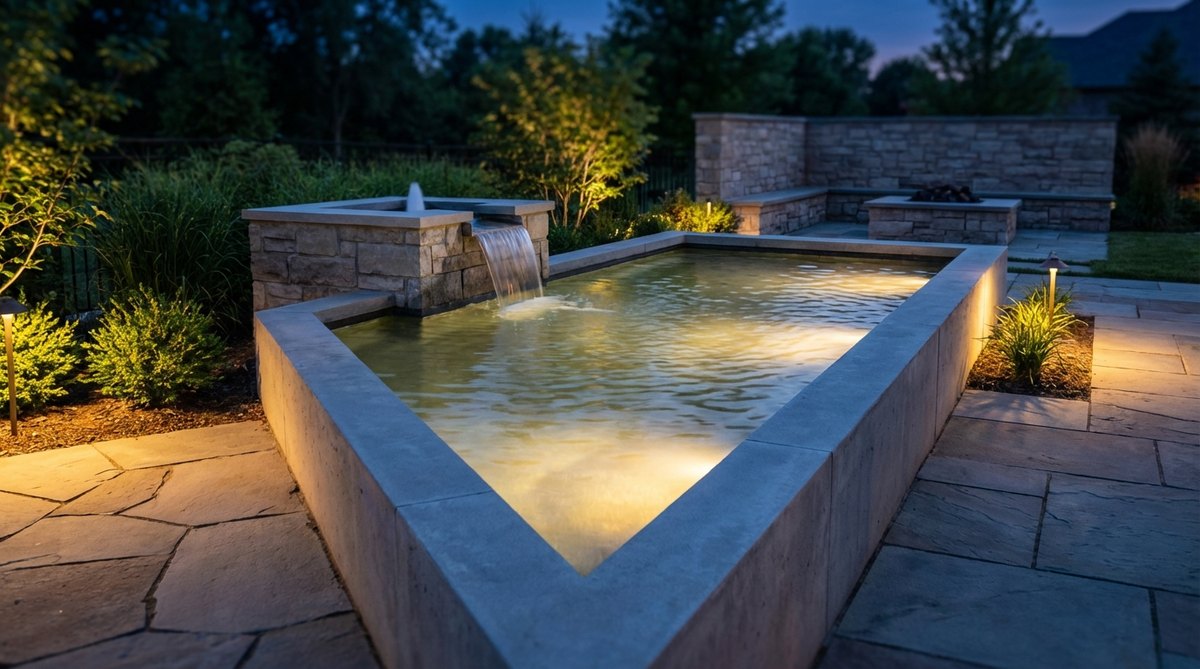
Submersible LEDs or edge-mounted fixtures transform reflecting pools and fountains into luminous focal points after dark. Soft white or warm-toned lighting enhances water without harsh artificial appearance.
Position lights to illuminate falling water or create glowing pools without exposing the fixtures themselves. Avoid excessive brightness that creates glare on water surfaces.
Boundary Treatments with Modern Edge
Property boundaries in contemporary gardens balance privacy needs with design aesthetics through innovative materials and planting strategies. Designers create screens that define territory without creating fortress-like enclosures.
53. Vertical Timber Slat Fencing
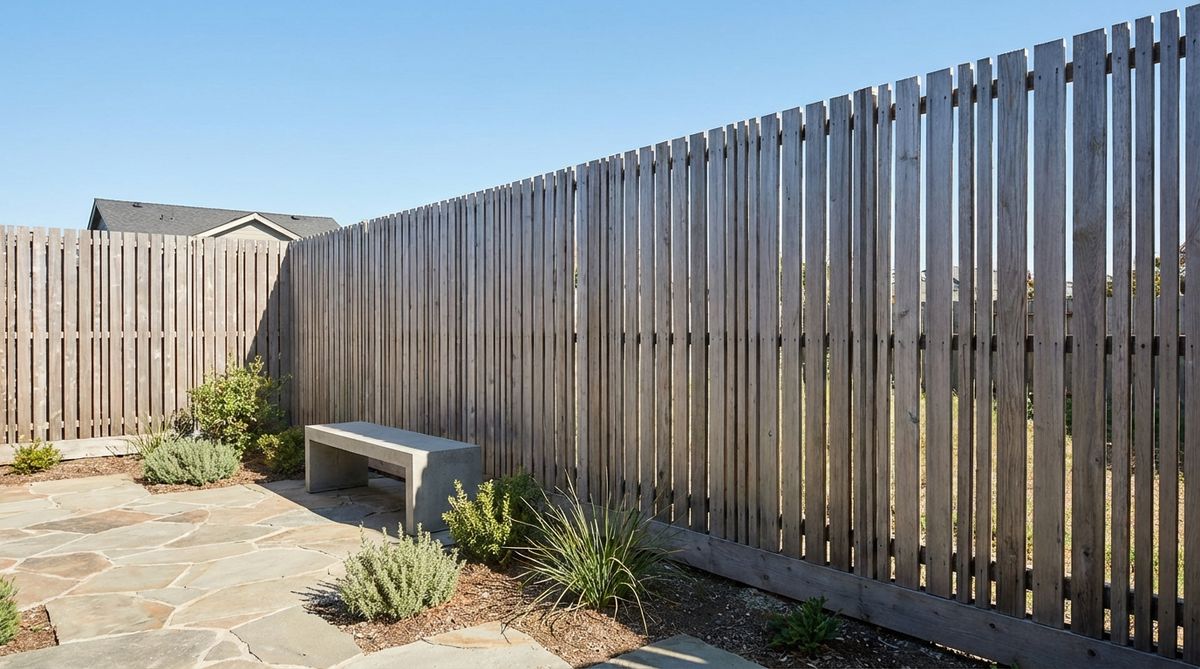
Cedar or ipe boards installed vertically with narrow gaps provide privacy while allowing air circulation and filtered views. The linear repetition creates rhythmic patterns that complement minimalist gardens.
Space slats 1-2 inches apart to maintain privacy when viewed straight-on while revealing glimpses at oblique angles. The vertical orientation emphasizes height and creates an elegant backdrop for plantings.
Finish with natural oils rather than opaque stains to preserve wood grain visibility and weather gracefully to silver-gray patina.
54. Corrugated Metal Screens
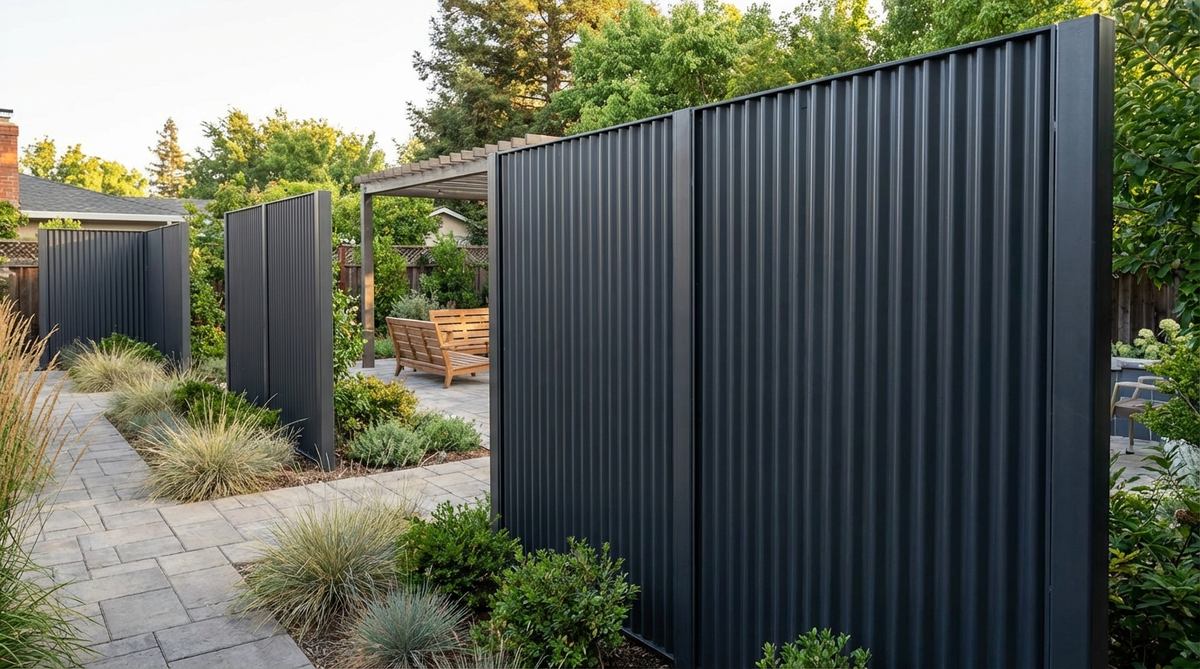
Industrial panel materials create contemporary boundaries at economical cost. The vertical ribbing adds texture and visual interest while the material’s toughness ensures long-term durability.
Paint corrugated panels in dark charcoal or black to recede visually, or embrace the natural galvanized finish for industrial aesthetic. Mount on steel frames with concealed fasteners for clean appearance.
55. Rock Gabion Walls
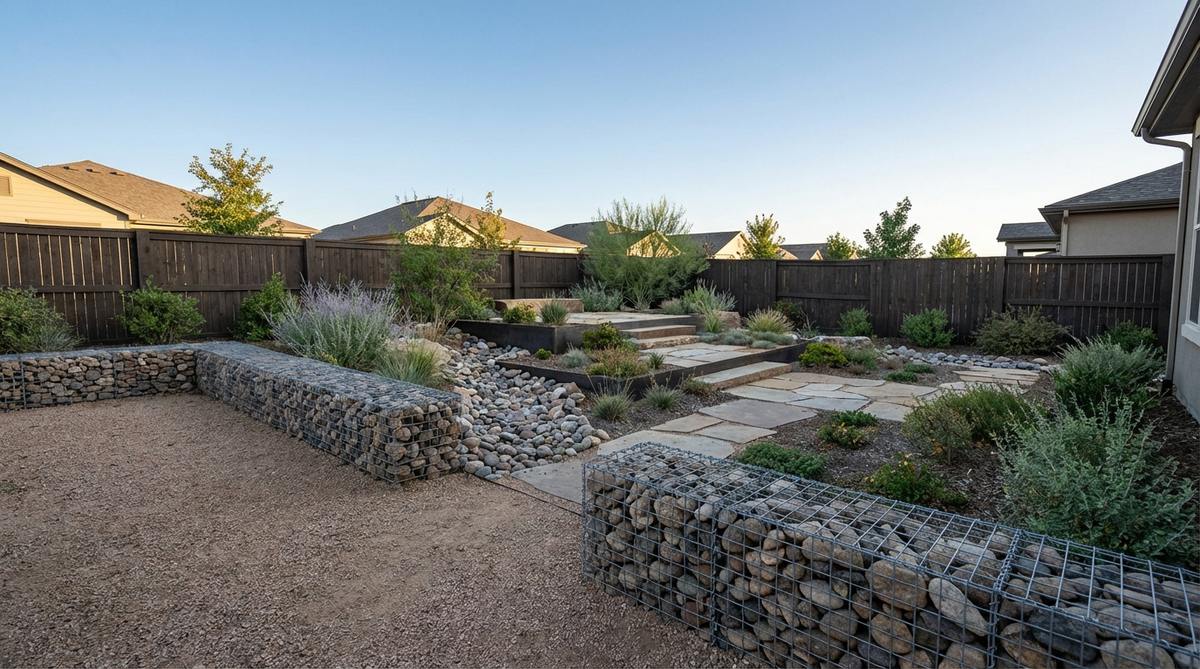
Wire cages filled with local stone create textured walls that blend structural function with visual appeal. The modular construction allows easy installation and interesting geometric compositions.
Fill gabions with uniform-sized stone for consistent appearance or mix sizes for more organic texture. The wire framework nearly disappears once filled, leaving the stone as the dominant visual element.
Gabion walls provide excellent drainage and require no footings on stable soil, making them cost-effective boundary solutions.
56. Living Bamboo Screens
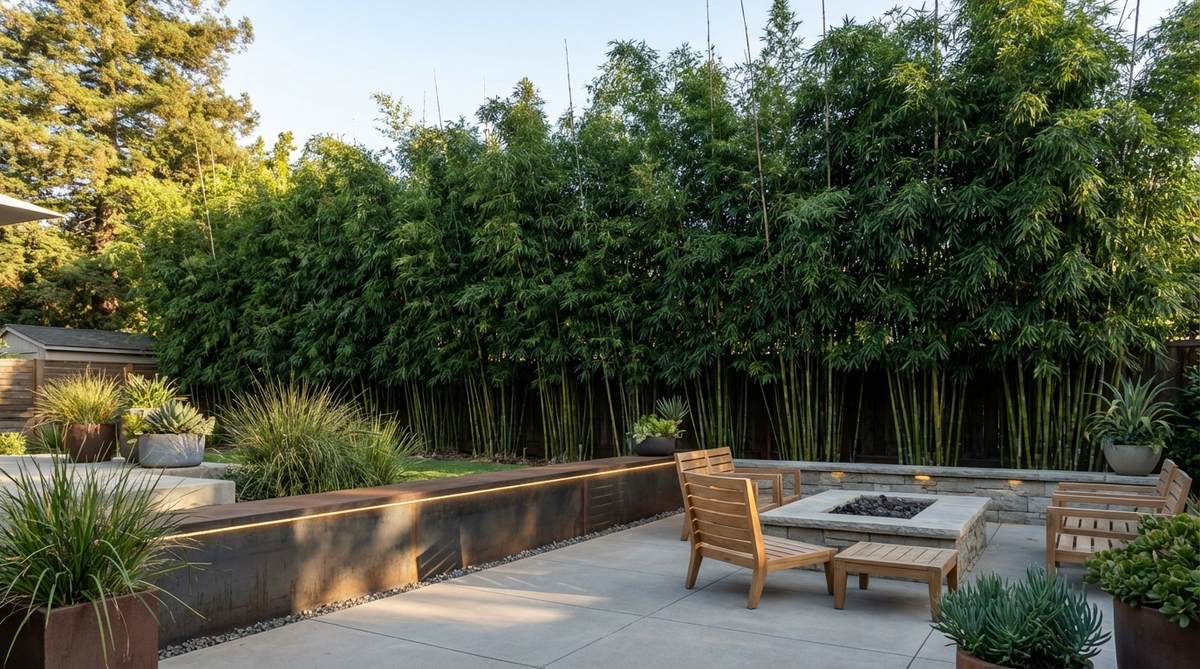
Clumping bamboo varieties create dense evergreen screens that provide year-round privacy and wind protection. The vertical culms and fine-textured foliage complement modern hardscape materials beautifully.
Choose non-invasive clumping species rather than running varieties to maintain control. Plant in linear trenches 18-24 inches wide and mulch heavily to retain moisture.
57. Horizontal Cable Railings
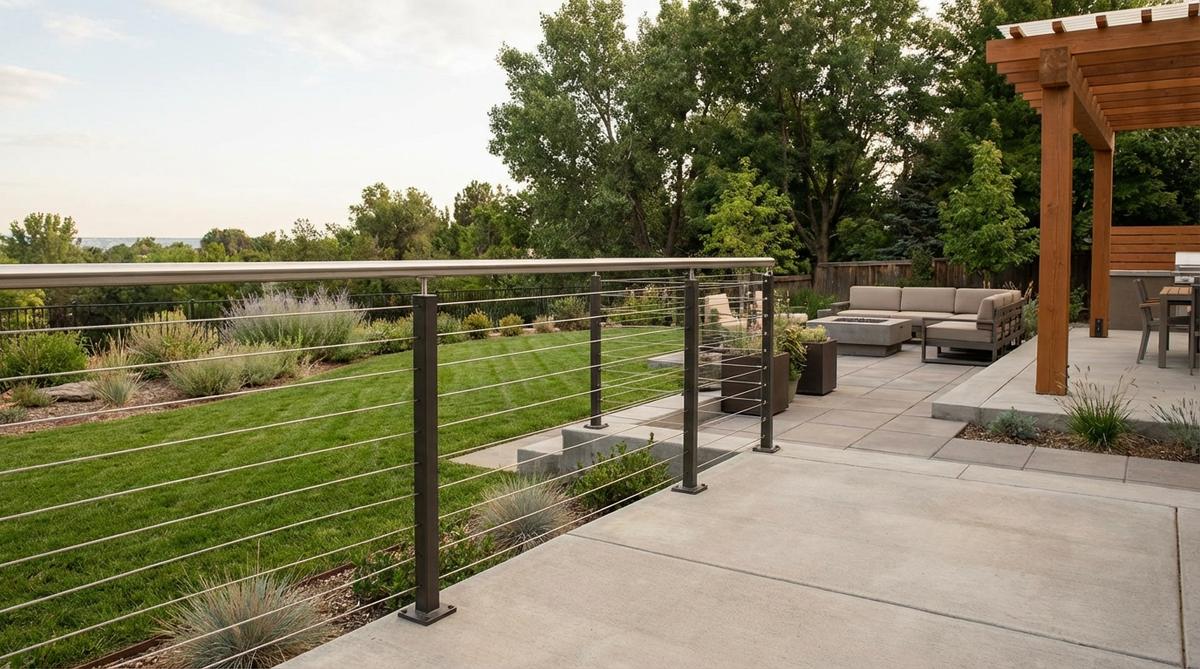
Stainless steel cables tensioned between posts create transparent boundaries that maintain views while providing safety along elevation changes. The minimal profile suits modern aesthetics perfectly.
Space cables 3-4 inches apart to meet building codes while maintaining clean lines. The horizontal orientation emphasizes the garden’s horizontal planes rather than competing with vertical elements.
58. Poured Concrete Privacy Walls
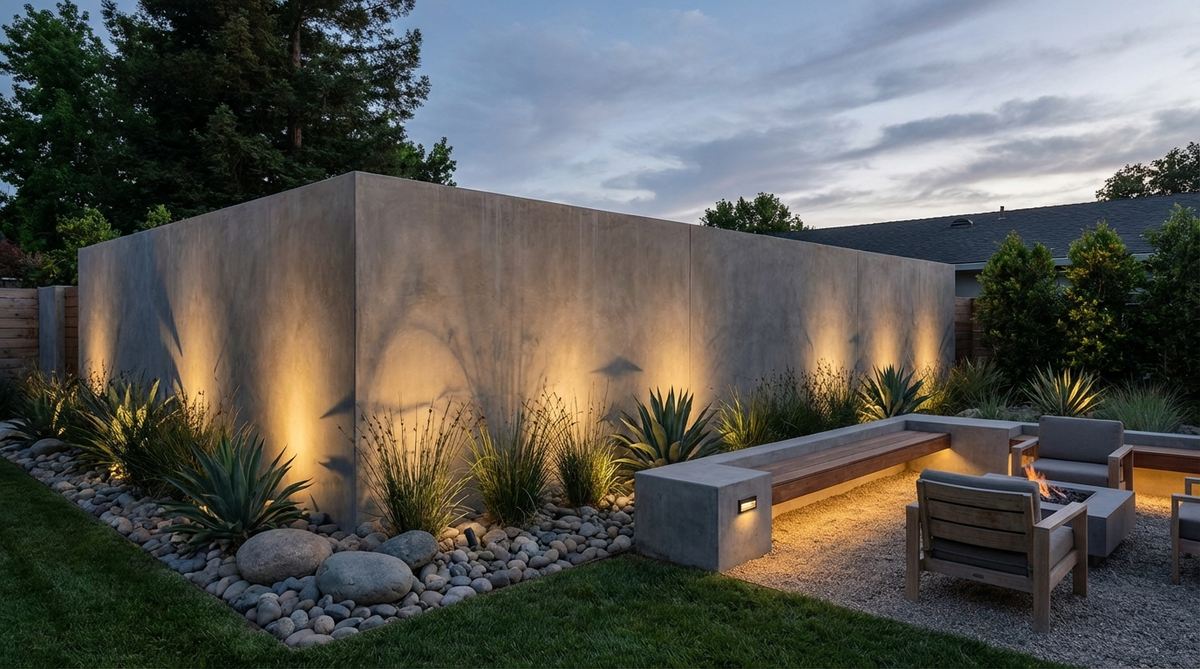
Solid masonry walls create secure enclosures while serving as blank canvases for dramatic lighting effects. The monolithic construction and smooth surfaces embody modernist design principles.
Cast walls in place or use precast panels for faster installation. Vary height along the wall length to create interesting profiles while maintaining privacy where needed.
Apply integral color or stains to modify the gray tone, or embrace the natural concrete appearance as a neutral backdrop.
59. Pleached Hedge Walls
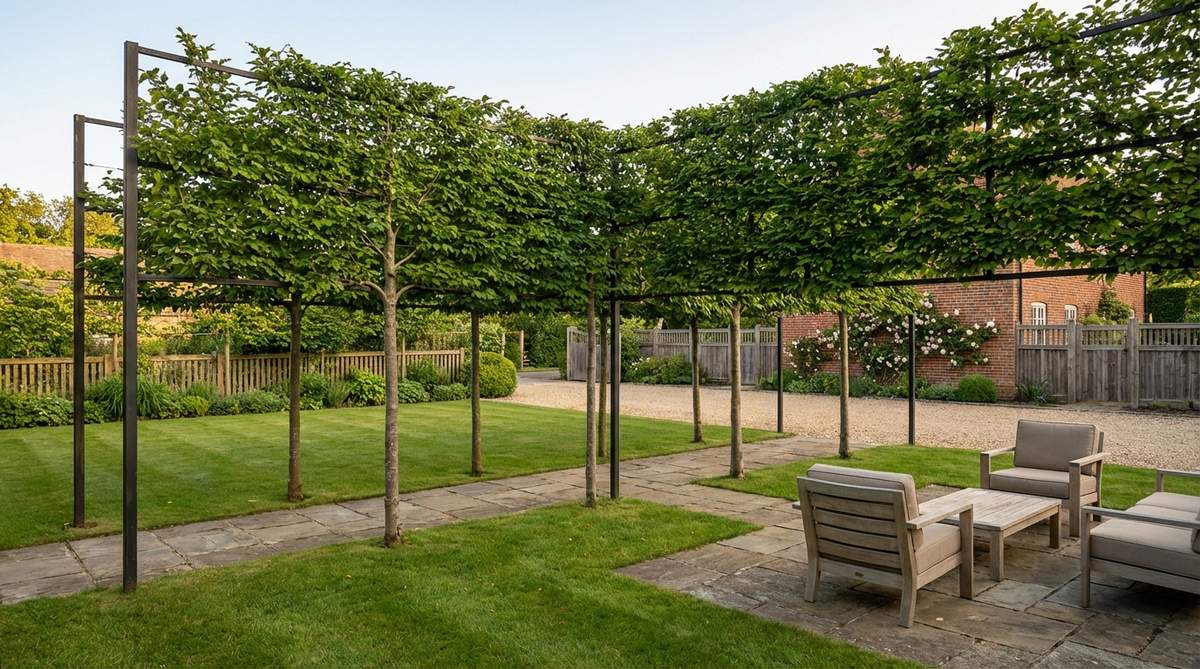
Trees trained with horizontal branches and cleared trunks create formal living walls elevated above ground. The structured form provides screening at sight lines while maintaining open space below.
Select hornbeam, linden, or crabapple varieties and install support frames to train branches horizontally. Annual pruning maintains the geometric form and dense screening effect.
50. Perforated Metal Panels
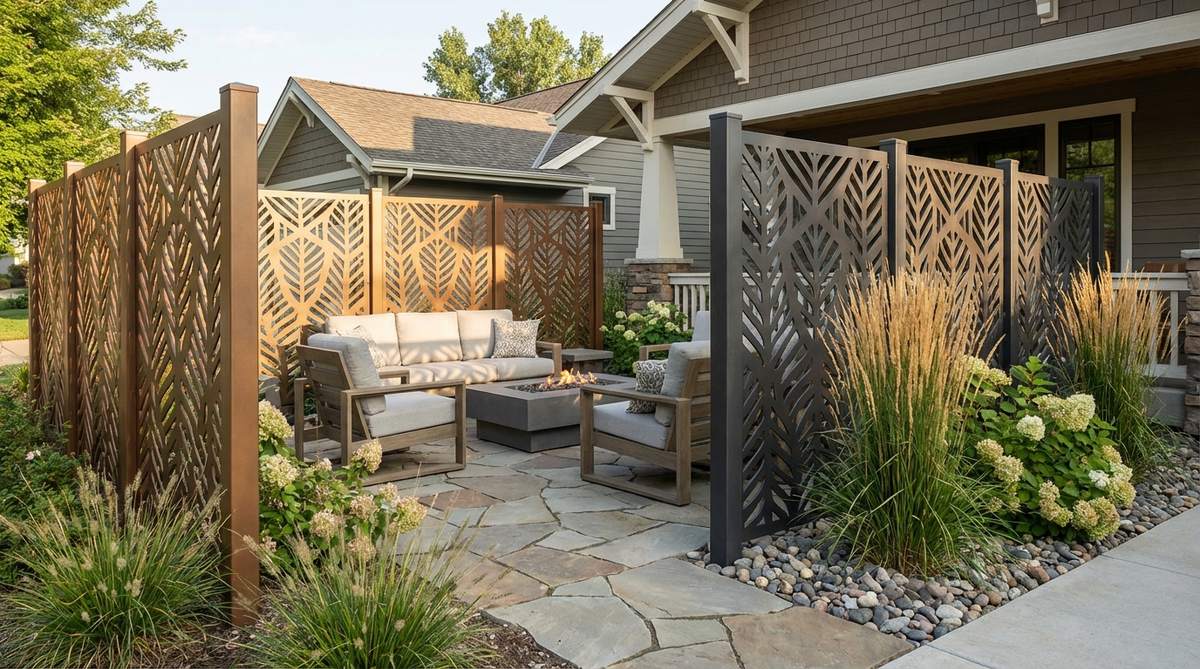
Laser-cut patterns in aluminum or steel sheets create dynamic screens that filter views and light while maintaining transparency. Custom perforation patterns allow personalization while serving functional screening needs.
Mount panels in frames that allow removal for cleaning or replacement. Powder-coat finishes in coordinating colors to integrate with overall garden palette.
Outdoor Living Zones for Function
Modern gardens integrate comfortable outdoor rooms that extend living space beyond the house. Designers create defined zones for dining, lounging, and cooking with the same attention to detail applied to interior spaces.
61. Built-In Concrete Benches
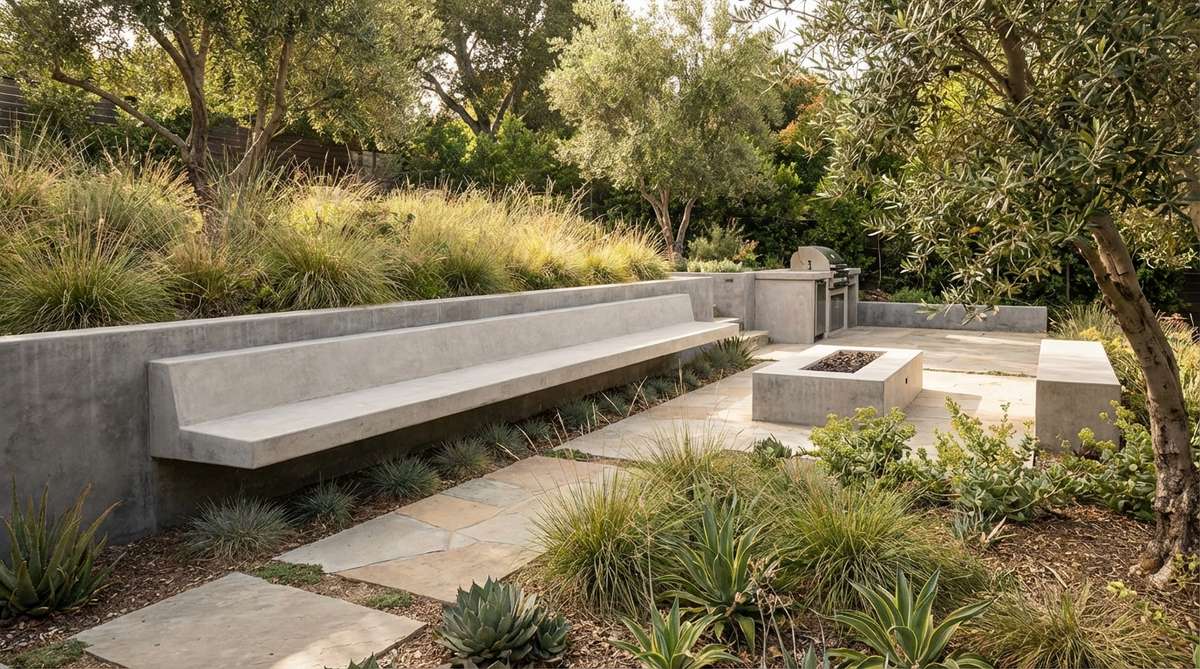
Integral seating cast as part of retaining walls or raised planters provides permanent furniture that reinforces architectural geometry. The monolithic construction eliminates furniture clutter while ensuring adequate seating capacity.
Top concrete benches with wood caps or cushions to improve comfort without compromising the clean design. Position seating to face focal points or capture favorable views.
Built-in seating defines gathering areas without requiring movable furniture that disrupts minimalist aesthetics when not in use.
62. Steel Pergola Dining Zones
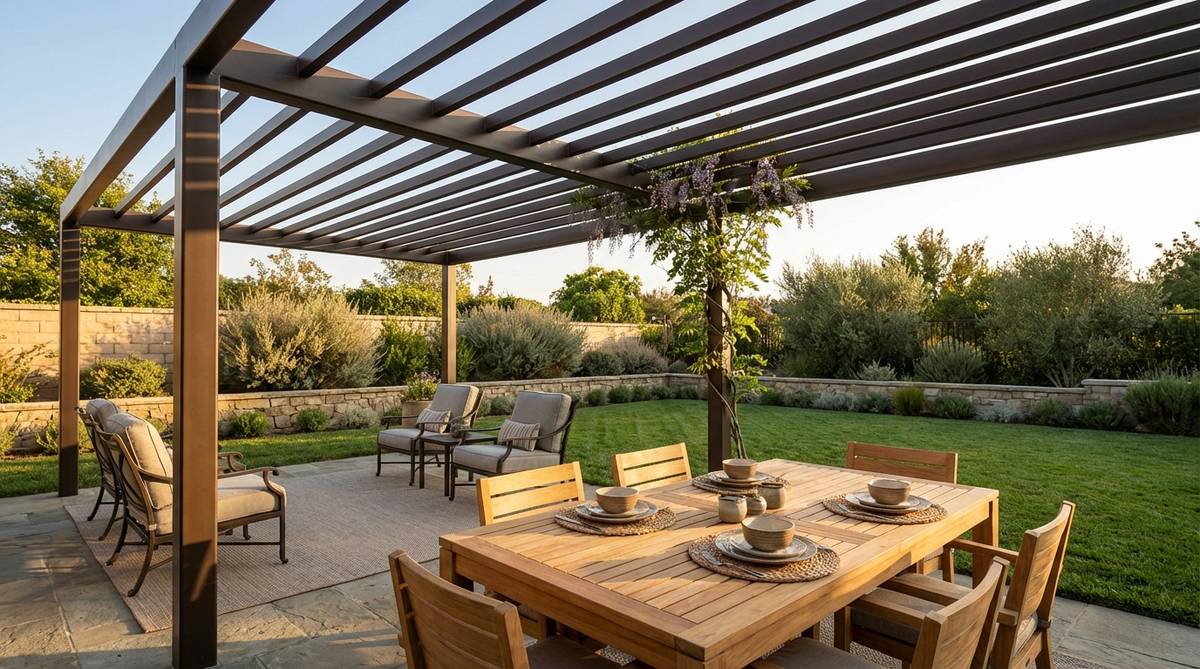
Overhead structures framed in painted steel or powder-coated aluminum define outdoor dining areas while providing partial shade. The slender members cast delicate shadows without overwhelming visual presence.
Space roof beams at 18-24 inch intervals for comfortable shade density. Train vines over the structure for additional coverage or leave open for stargazing while dining.
63. Sunken Fire Pit Courts
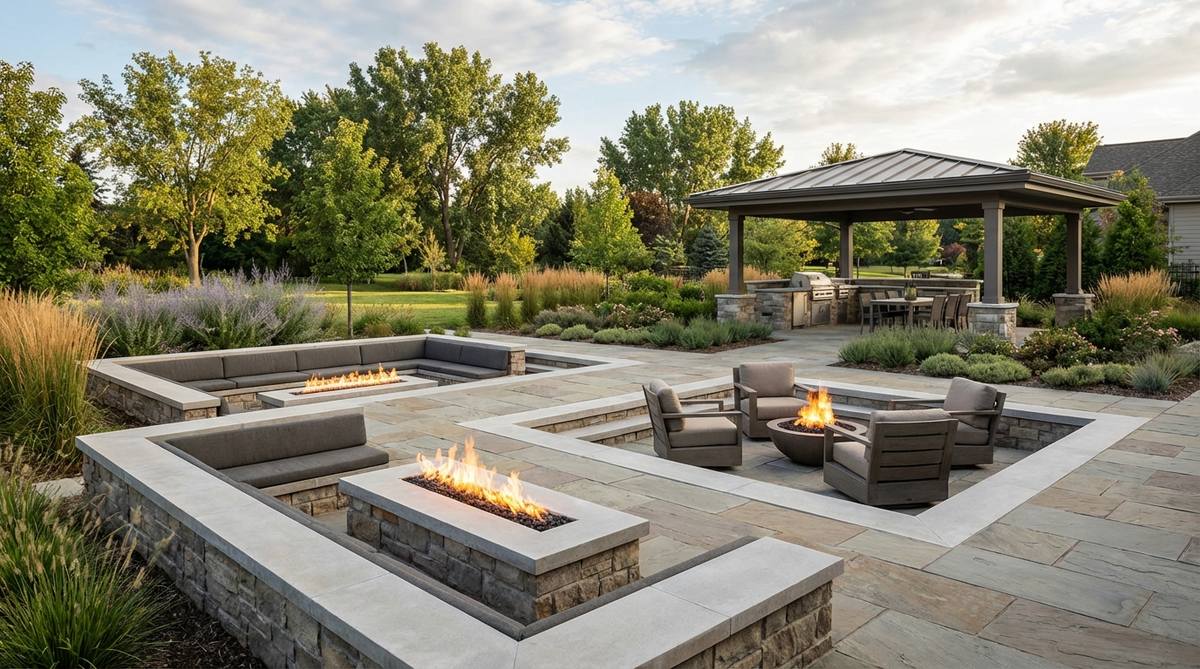
Conversation areas dropped 12-18 inches below grade create intimate gathering spaces with inherent wind protection. The elevation change defines the zone without requiring walls or heavy furniture groupings.
Edge sunken areas with wide coping that provides casual seating around the perimeter. Install gas fire features rather than wood-burning to eliminate ash and simplify operation.
64. Minimalist Outdoor Kitchens
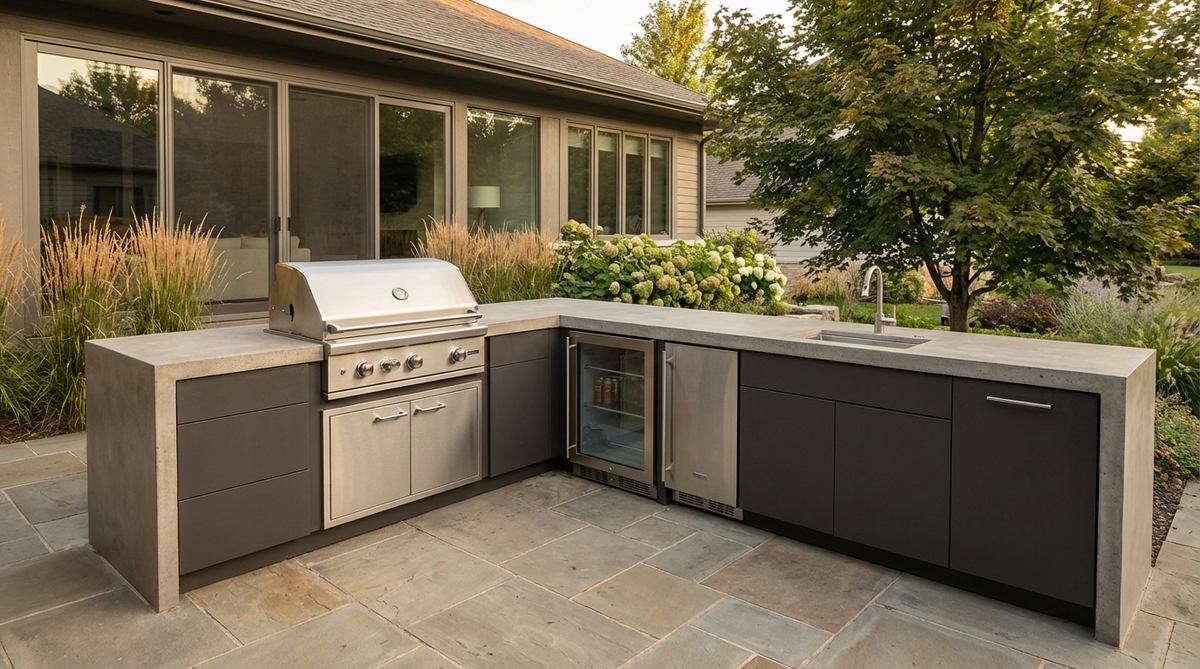
Cooking zones designed as integrated islands rather than elaborate built-in complexes maintain clean lines while providing essential function. Stainless steel appliances and concrete counters reinforce modern material palette.
Include only equipment you will genuinely use—grill, sink, and refrigeration typically suffice. Conceal propane tanks and utilities within base cabinets to maintain streamlined appearance.
65. Cantilevered Shade Structures
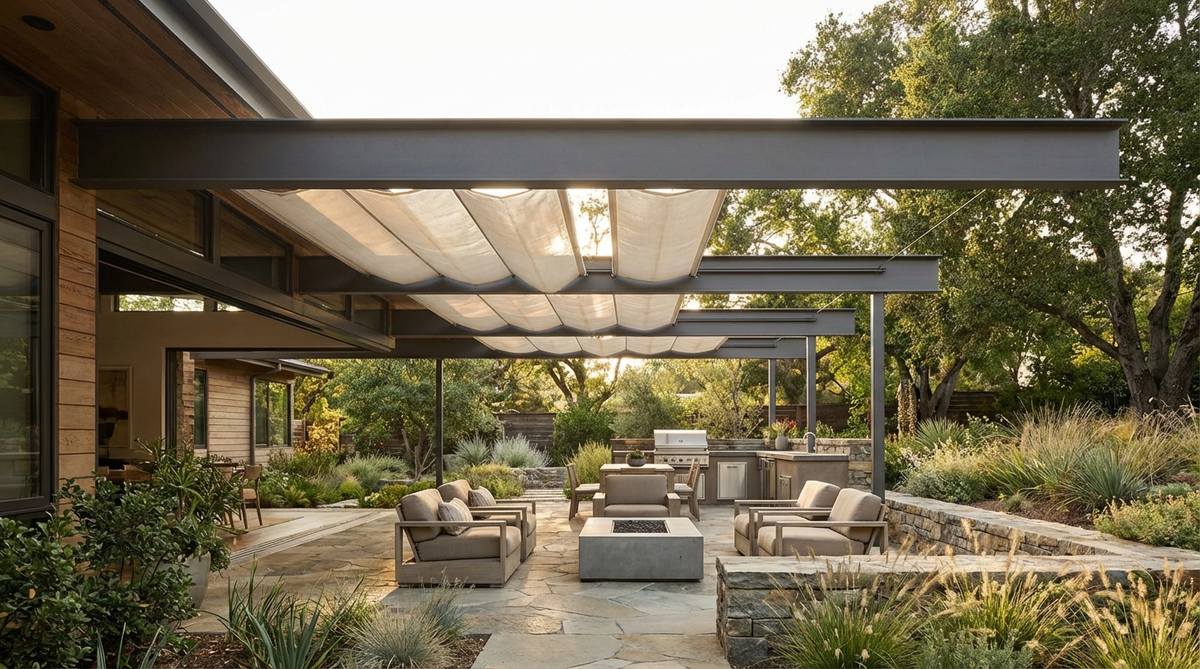
Overhead protection supported by concealed or minimal structure creates floating shelter that emphasizes architectural drama. The clean underside provides unobstructed ceiling plane above seating areas.
Fabric panels stretched in steel frames offer flexibility to adjust shading as needed throughout the day. Retractable systems provide maximum adaptability at increased cost and complexity.
66. Floating Daybed Platforms
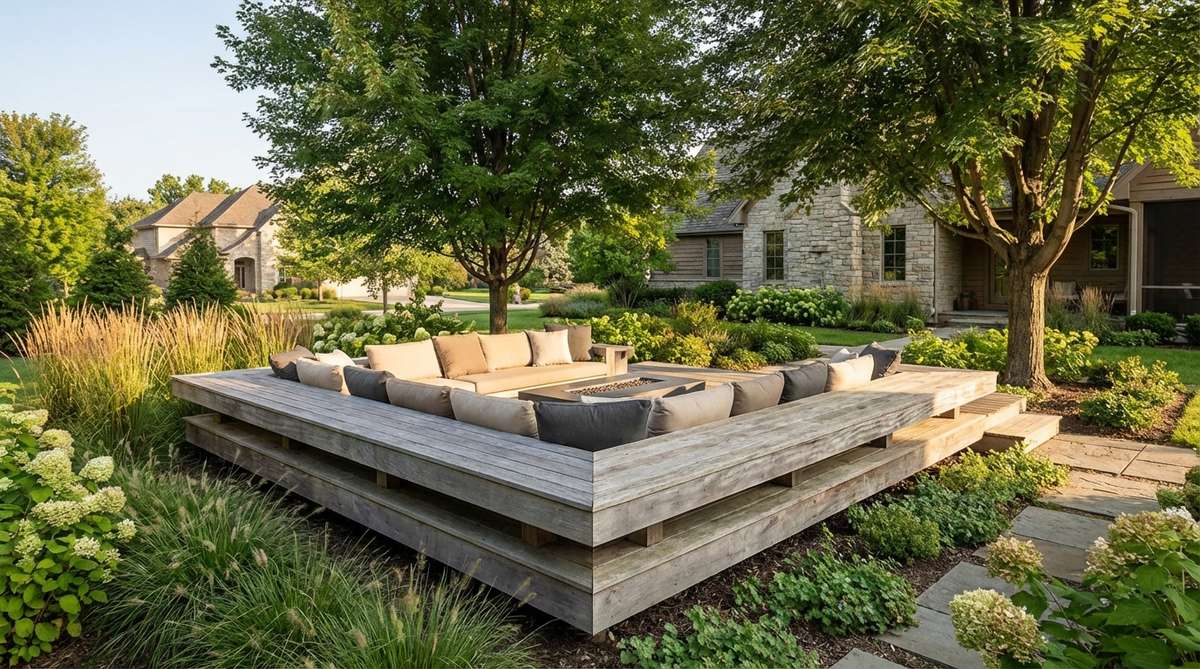
Elevated lounging surfaces mounted on concealed supports create inviting relaxation zones that appear to hover above the garden floor. The suspended form reinforces modern design language while providing comfortable seating.
Outfit platforms with weather-resistant cushions in neutral tones that complement rather than compete with surrounding plantings. Position to capture afternoon shade or evening views.
67. Modular Seating Systems
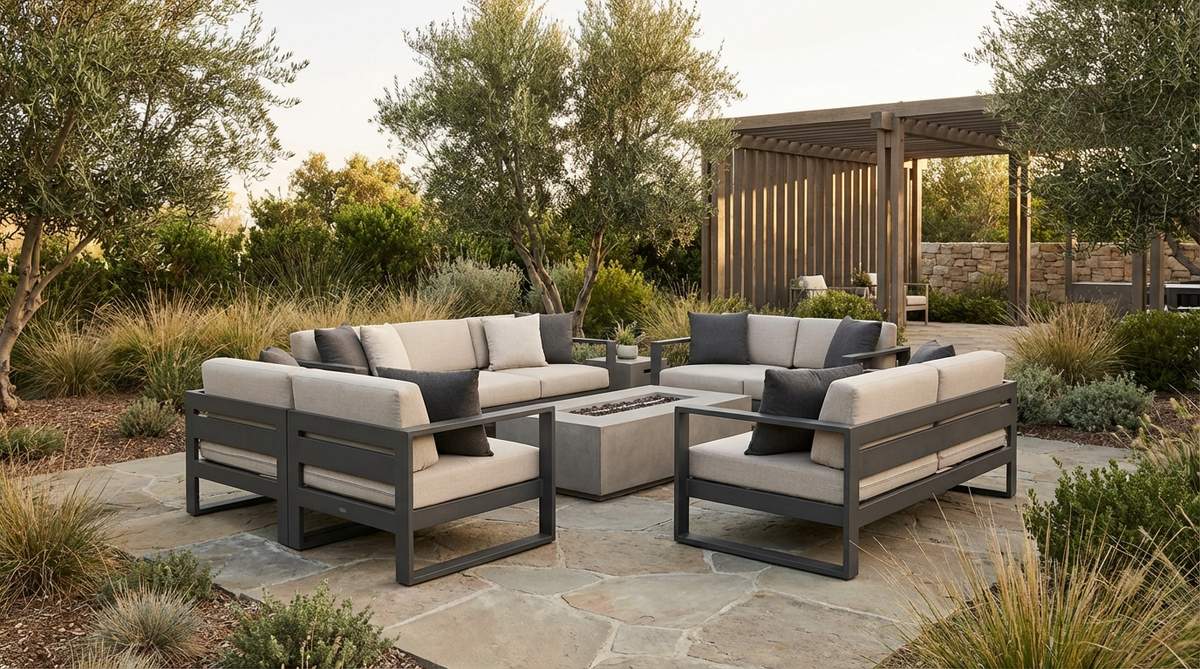
Contemporary outdoor furniture in powder-coated aluminum or weather-resistant resin allows flexible arrangement while maintaining design consistency. Modular pieces reconfigure for different occasions without requiring furniture storage.
Select furniture with clean profiles and minimal ornamentation that complements architectural elements. Coordinate cushion colors with material palette—typically grays, whites, or earth tones.
Color Palettes for Minimalist Gardens
Restrained color schemes maintain visual calm and allow architectural forms to dominate the composition. Designers limit palettes to create cohesive environments where every hue serves a specific purpose.
68. Monochrome Material Palette
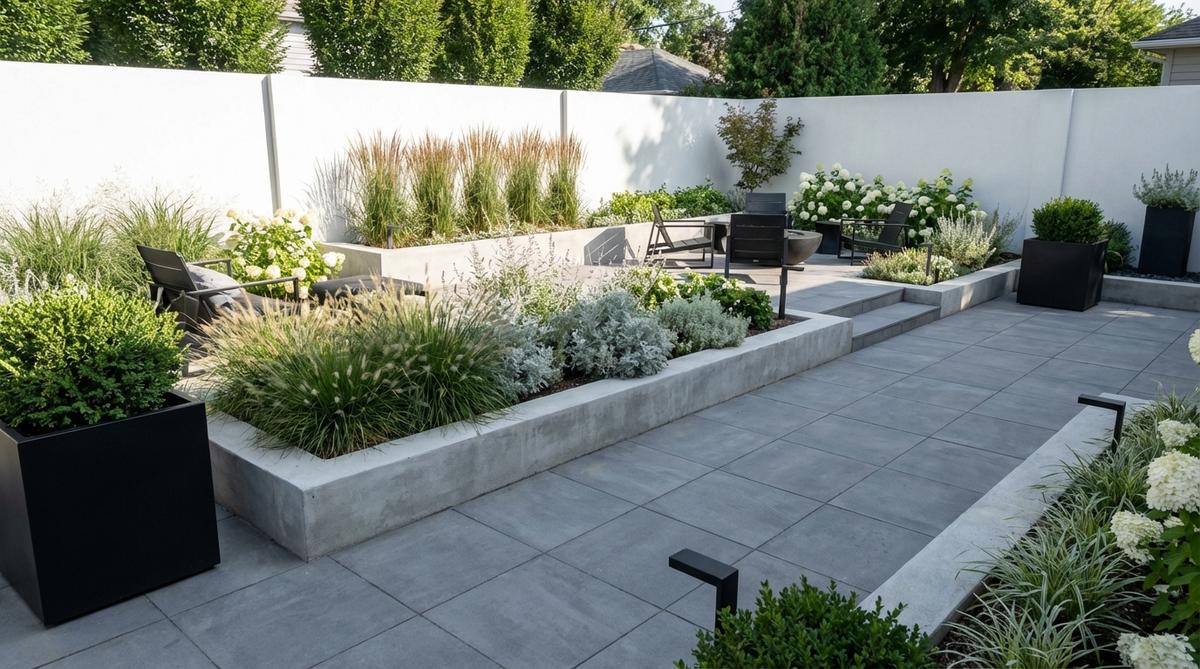
White, gray, and black surfaces create sophisticated neutral backgrounds that emphasize plant forms and seasonal changes. The limited color range unifies disparate materials while maintaining visual interest through texture variation.
Use white for vertical surfaces to reflect light and create spaciousness. Reserve black for accents like planters and furniture to provide visual weight without heaviness.
Gray tones in paving and walls serve as neutral intermediaries that bridge white and black elements while receding visually to foreground plantings.
69. Warm Minimalism with Timber
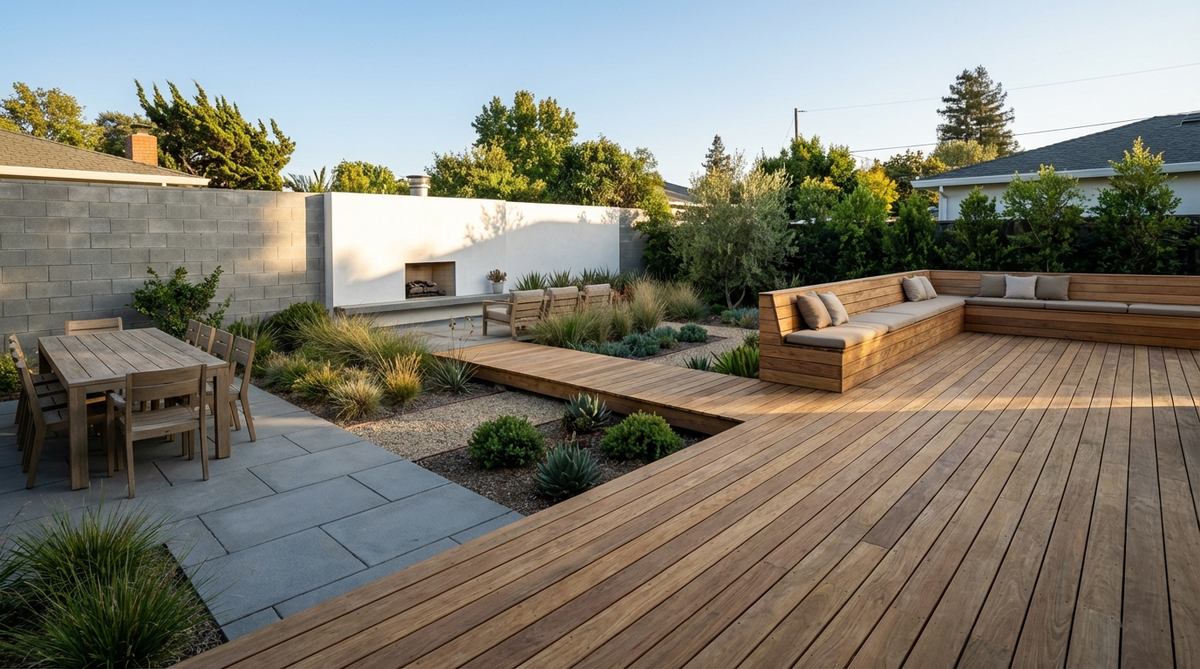
Natural wood tones in tan through honey brown add warmth to otherwise cool modern palettes. The organic material bridges architectural elements and living plantings while introducing comfortable visual temperature.
Use timber for horizontal surfaces like decking and benches where the warm tone creates inviting gathering areas. Pair with gray masonry and white walls for balanced contrast.
70. Green-on-Green Plantings
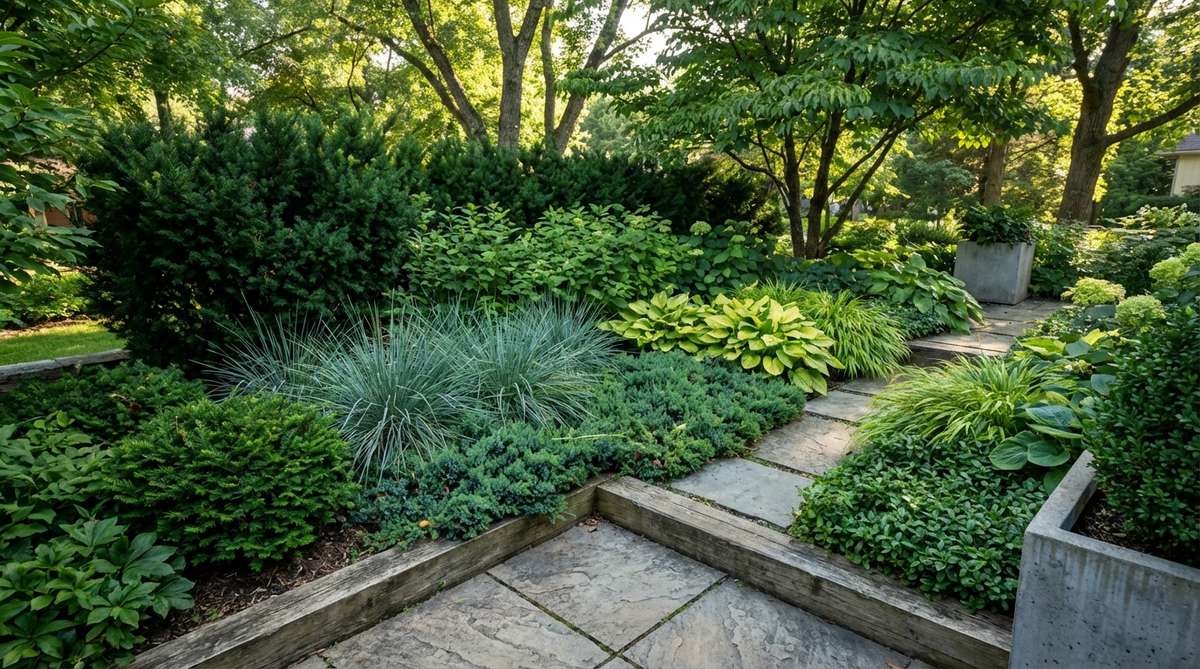
Layering various green foliage tones creates depth and visual interest without introducing competing flower colors. The monochromatic approach emphasizes plant form and texture rather than seasonal blooms.
Mix blue-greens, yellow-greens, and dark forest greens to create subtle contrasts that reveal individual plant characters. Reserve flowering plants for single accent colors used sparingly.
71. Corten Rust Accent
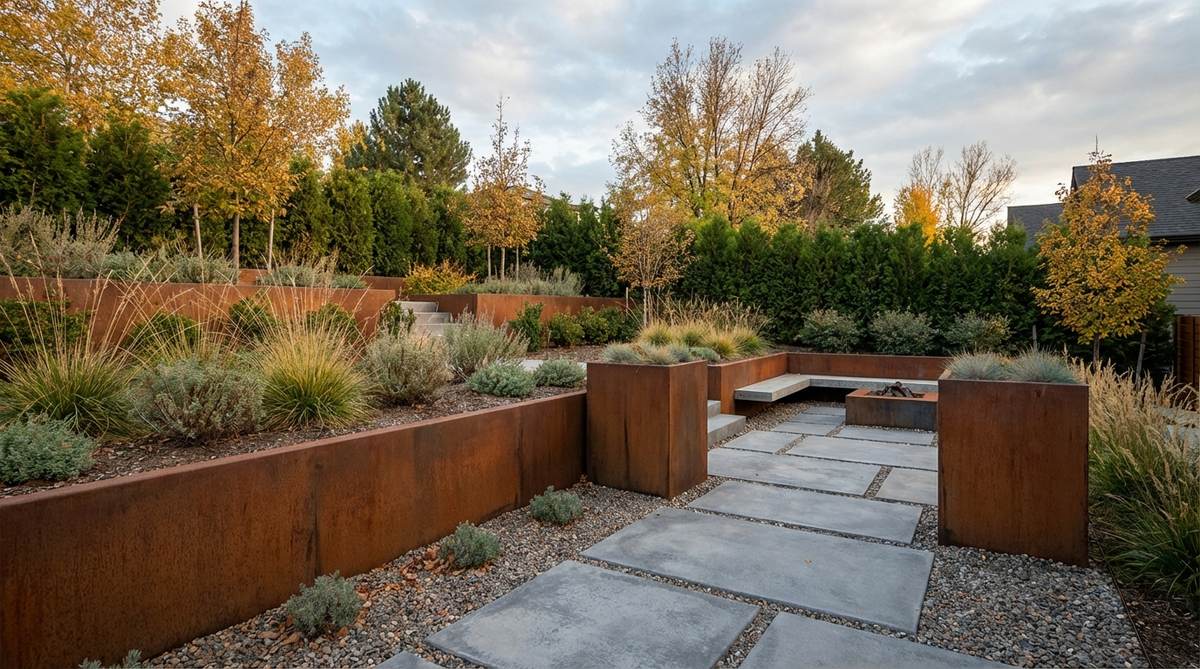
The orange-brown patina of weathering steel provides warm contrast against cool grays and greens without introducing multiple competing hues. The earth tone feels natural while maintaining contemporary edge.
Use corten for prominent vertical elements like planters and retaining walls where the color creates focal points. The rust tone complements both evergreen and deciduous plantings throughout seasons.
Transform Your Space with Modern Design Principles
These 71 modern garden ideas demonstrate how minimalism and structure create outdoor spaces that feel simultaneously refined and relaxed. The consistent emphasis on geometric layouts, restrained materials, and architectural plantings produces gardens that improve with time as vegetation matures and materials develop patina.
Begin your transformation by selecting two or three concepts that address your site’s specific challenges—whether establishing privacy, managing drainage, or creating outdoor living zones. Implement changes systematically rather than attempting complete renovation, allowing each addition to integrate with existing elements before proceeding to the next phase.
Visit Fresh Garden Ideas regularly for additional inspiration and detailed guides that help you achieve the sophisticated modern garden you envision.