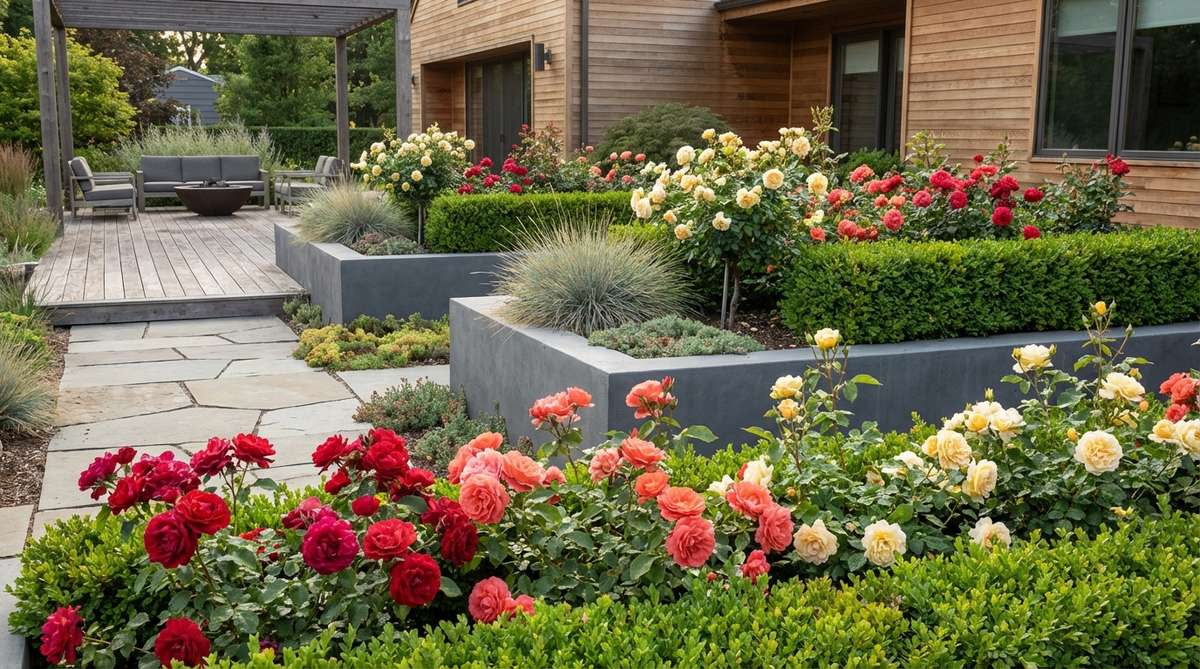
Modern garden roses have transformed contemporary landscapes by combining old-world beauty with resilient genetics and continuous blooms. Today’s varieties offer disease resistance, low maintenance requirements, and architectural forms that complement minimalist hardscaping and naturalistic planting schemes. Fresh Garden Ideas presents this curated collection of roses bred specifically for the demands of modern garden design.
Design SnapshotKey Principles
- Repeat Blooming: Select varieties that flower continuously from late spring through frost for sustained visual impact
- Disease Resistance: Prioritize roses with natural immunity to black spot, powdery mildew, and rust to minimize chemical interventions
- Architectural Form: Choose growth habits that complement contemporary design—compact shrubs, clean groundcovers, or vertical climbers
- Low Maintenance: Focus on self-cleaning varieties that shed spent blooms naturally and require minimal pruning
Disease-Resistant Workhorses for Zero-Spray Gardens
Contemporary gardeners demand roses that thrive without weekly fungicide applications. These bulletproof varieties demonstrate exceptional resistance to common foliar diseases while delivering nonstop color.
1. Knock Out
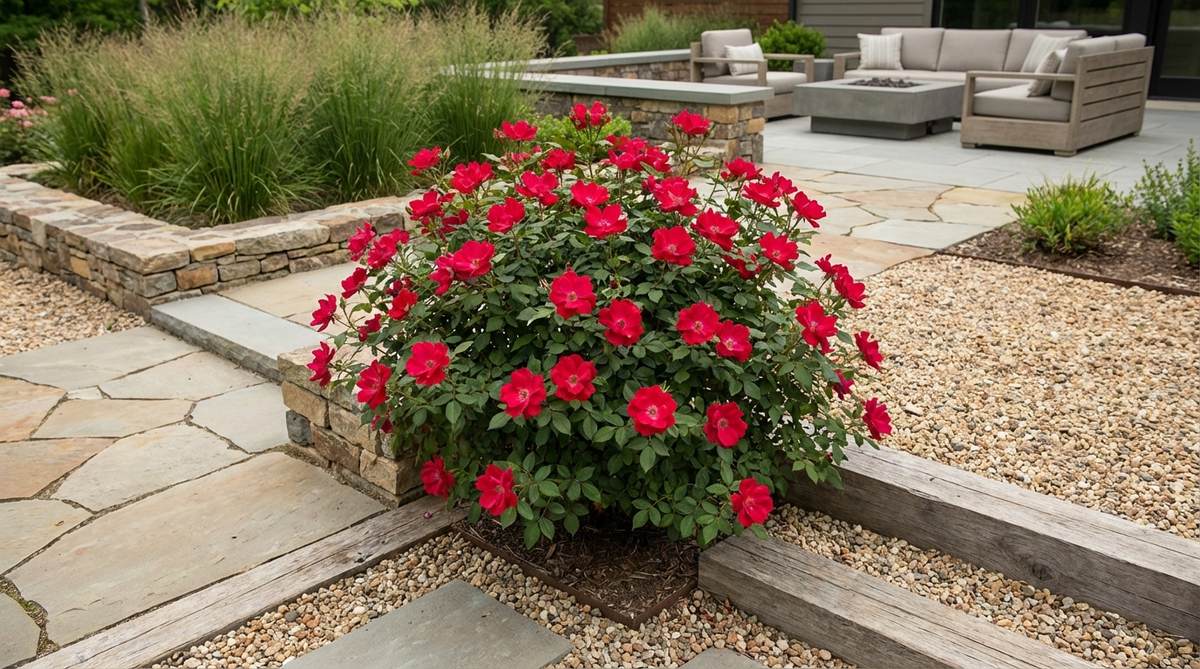
Cherry-red single blooms cover this rounded shrub from spring through frost, creating a vivid focal point against neutral modern architecture. The self-cleaning flowers drop cleanly without deadheading.
Plant specimens 3 feet apart for a continuous hedge effect along walkways or property lines. This variety tolerates poor soils and drought conditions once established.
Knock Out set the industry standard for disease resistance when introduced, showing near-immunity to black spot even in humid climates. Reaches 3 to 4 feet in height with equal spread.
2. Coral Drift
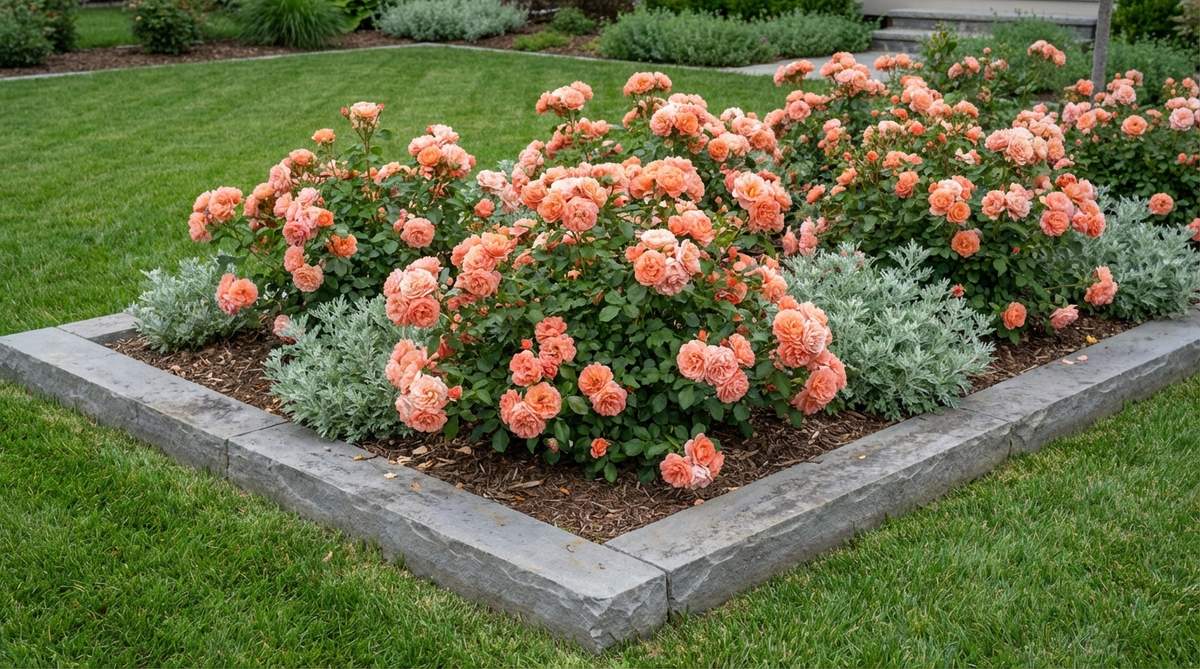
Peachy-coral double blooms emerge in dense clusters on this groundcover-type shrub rose. The compact 18-inch mounding habit fits perfectly along contemporary raised bed edges.
Use Coral Drift to define geometric planting zones or soften the transition between hardscape and lawn areas. The variety resists powdery mildew and rust in addition to black spot.
Pair with silver-foliaged perennials like artemisia for striking color contrast. This Drift series rose requires no spraying and minimal pruning beyond annual spring shaping.
3. Top Gun
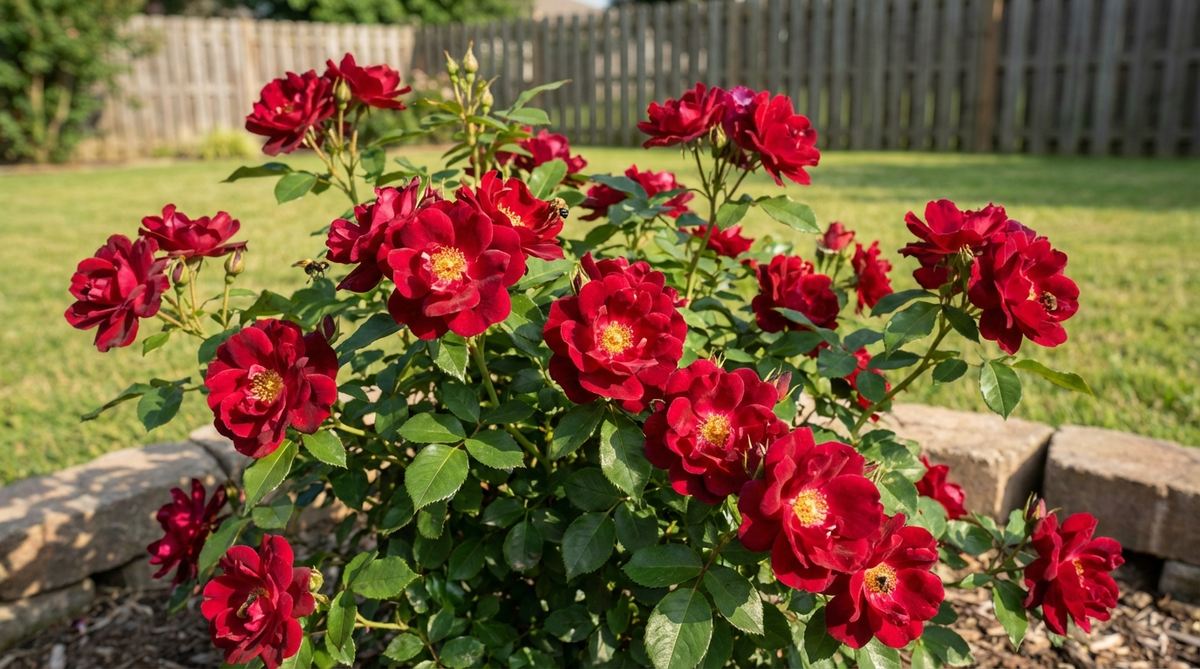
Deep crimson semi-double flowers with golden-yellow stamens create dramatic visual punch in mixed borders. The blooms hold their color intensity even under intense summer heat.
This shrub rose demonstrates near-bulletproof resistance to all major rose diseases including rose rosette virus. Plant in full sun locations where its 3 to 4-foot frame can anchor perennial combinations.
The contrasting yellow centers attract native pollinators while the disease-resistant foliage remains glossy green throughout the season. Excellent choice for organic garden programs.
4. Ebb Tide
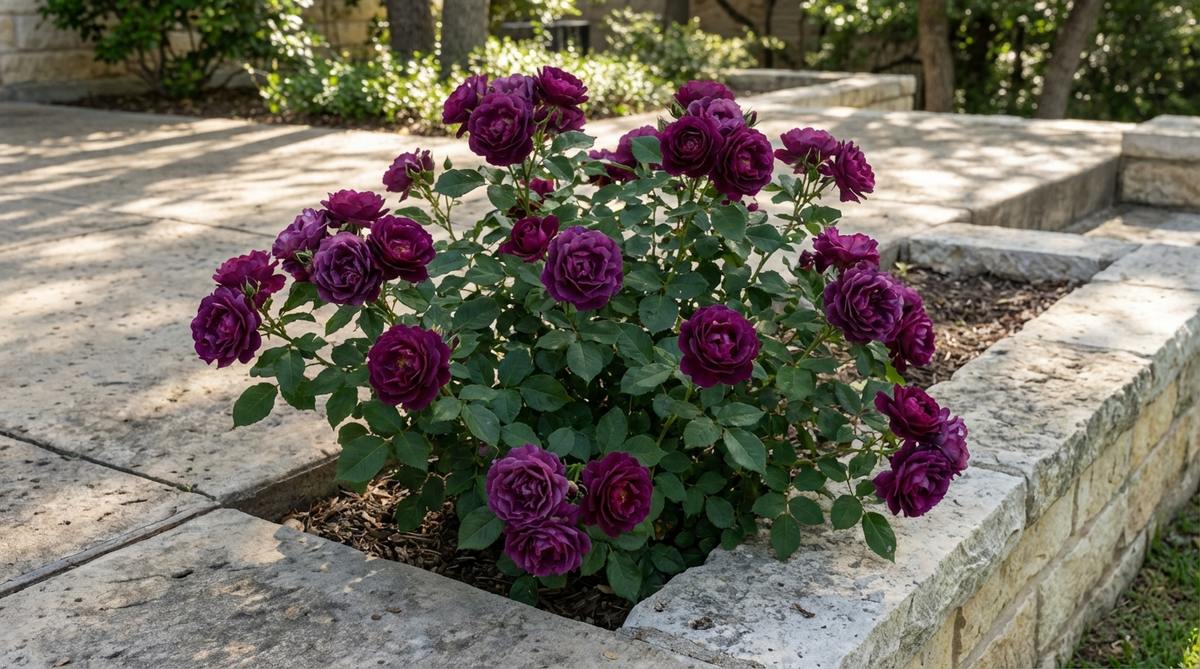
Deep plum-purple blooms emit a powerful clove fragrance that perfumes evening garden spaces. The unusual color palette complements modern plantings featuring burgundy foliage and cool-toned perennials.
This floribunda rose maintains compact 2 to 3-foot dimensions suitable for container culture on contemporary patios. Position near seating areas to maximize fragrance impact.
Ebb Tide exhibits fierce disease resistance while reblooming continuously without deadheading. The dark flower color provides sophisticated contrast against limestone or concrete elements.
English RosesModern Romance Meets Repeat Performance
David Austin English Roses bridge heritage charm and contemporary performance through decades of hybridization. These varieties combine full-petaled old-rose forms with disease resistance and continuous flowering.
5. Kew Gardens
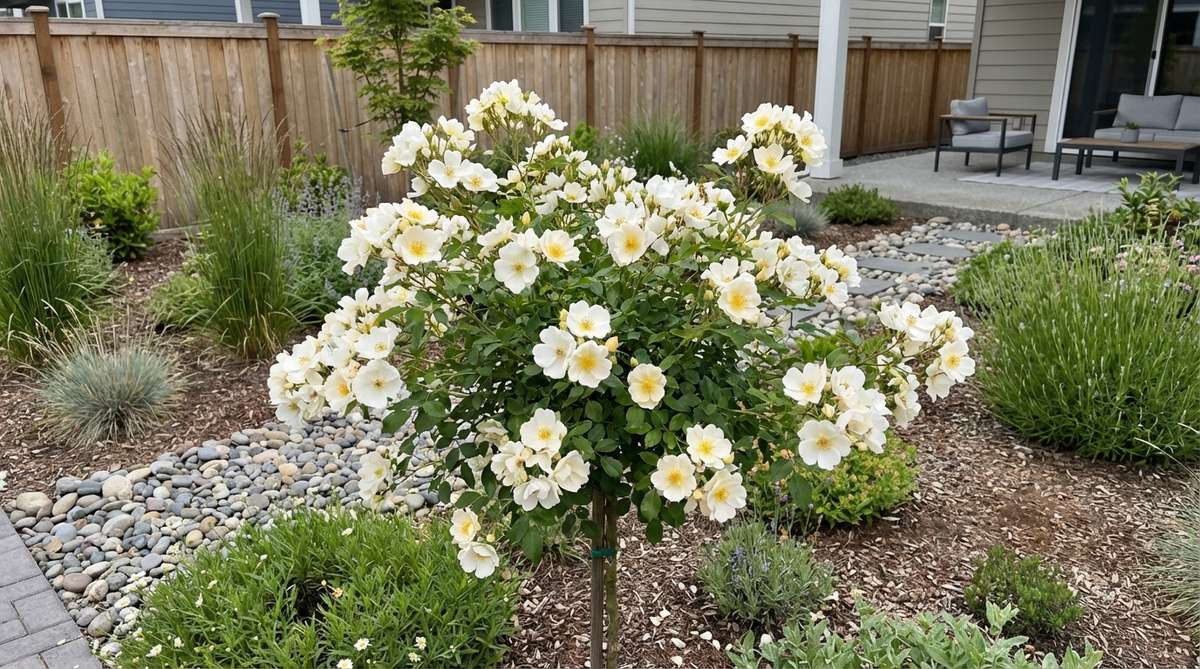
Single white flowers with prominent yellow stamens bloom in large sprays on nearly thornless canes. The fountain-shaped 4-foot shrub brings soft texture to minimalist garden compositions.
This variety excels in modern mixed borders where its pale cream-to-ivory blooms provide neutral punctuation between bold perennial colors. Demonstrates excellent black spot resistance.
Plant Kew Gardens as an informal hedge or specimen shrub in contemporary courtyard gardens. The simple flower form aligns perfectly with restrained color palettes favored in modern design.
6. The Lady of the Lake
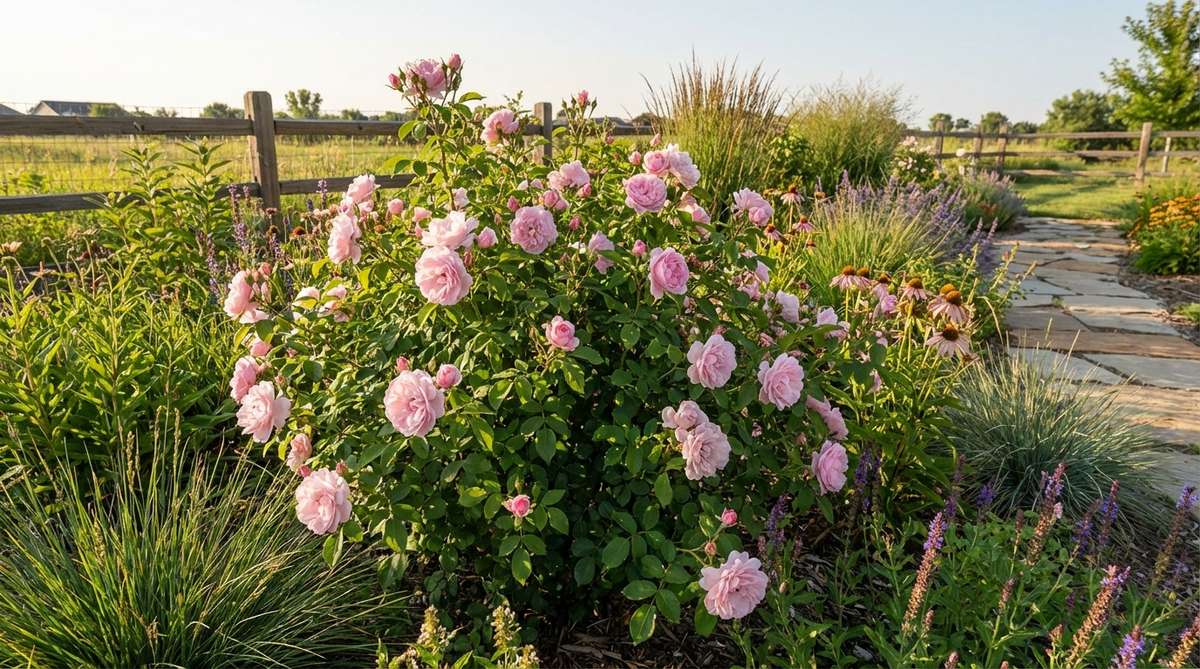
Soft pink blooms with relaxed open forms make pollen easily accessible to beneficial insects. The romantic color and airy structure work beautifully in naturalistic contemporary plantings.
Incorporate this 4-foot shrub rose into prairie-style gardens or pollinator-focused designs. The semi-double flowers emit medium fruity fragrance throughout long blooming cycles.
Strong disease resistance and continuous flowering make this English rose practical for low-maintenance landscapes. Pairs effectively with ornamental grasses and purple salvias.
7. Bathsheba
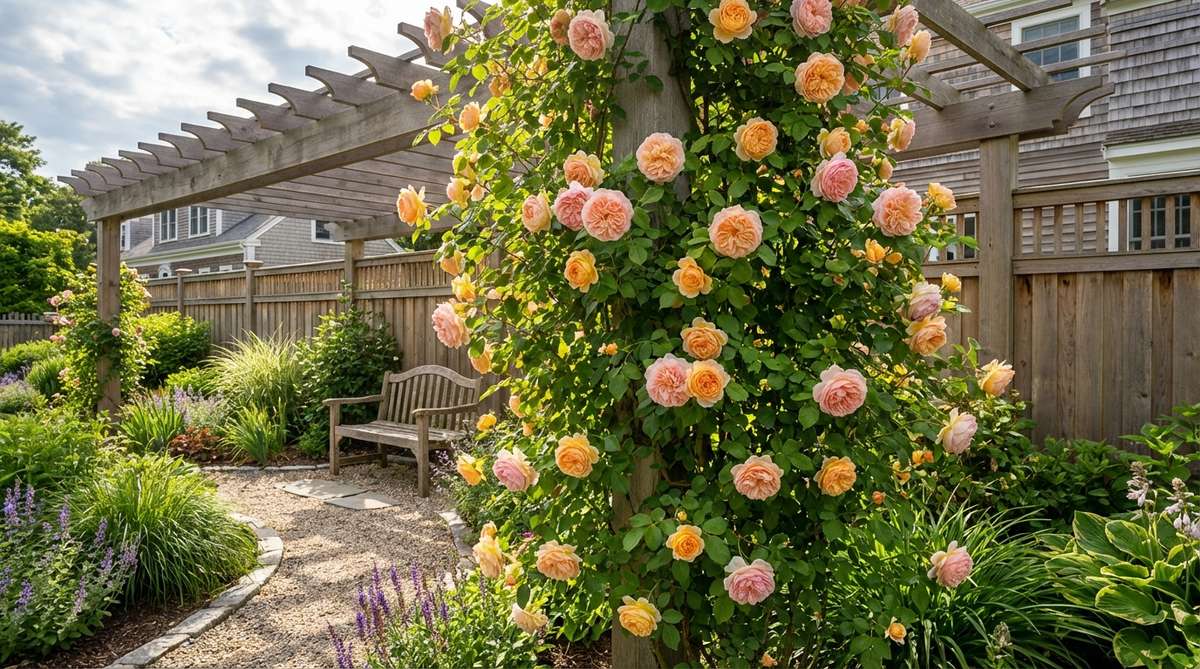
Intensely layered petals in apricot, soft pink, and butter tones create dimensional flat flowers unlike typical rose forms. This short climber reaches 8 to 10 feet on walls or pergolas.
Train Bathsheba beside contemporary entryways where its stunning fragrance welcomes visitors. The unusual petal arrangement adds architectural interest to vertical surfaces.
This David Austin variety demonstrates improved disease resistance while maintaining the rich fragrance associated with heritage roses. Blooms repeatedly through the growing season.
8. Emily Brontë
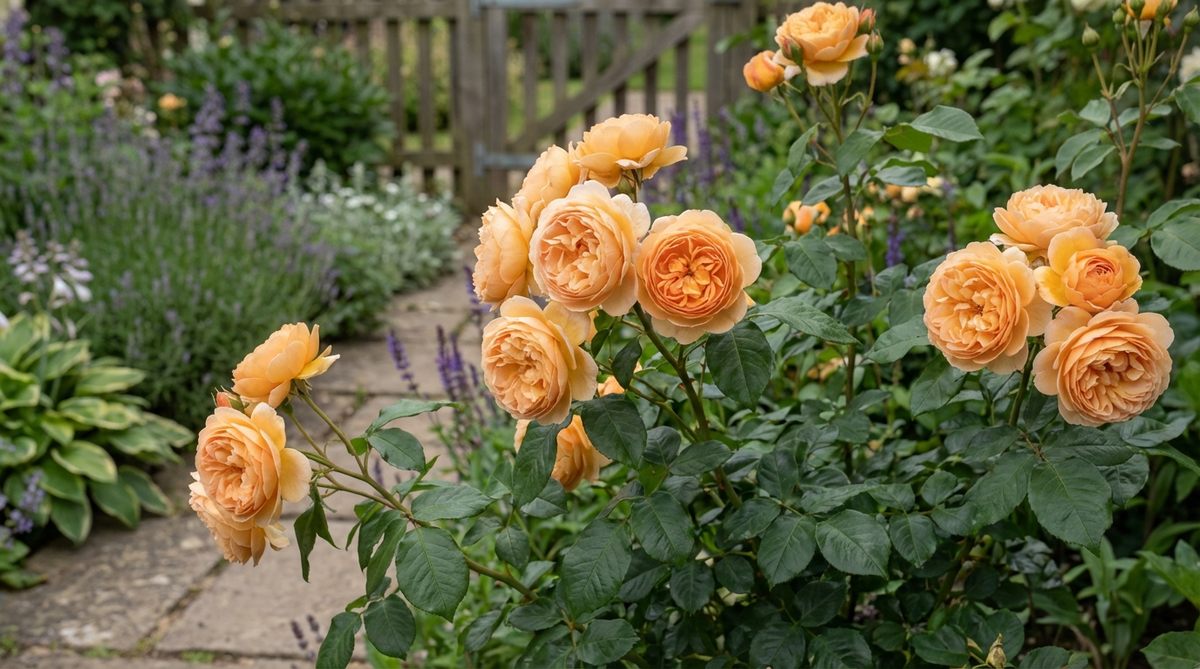
Cupped blooms in warm apricot shades provide height at the back of mixed borders. This 4-foot English shrub rose holds flowers above surrounding perennials for extended visual impact.
Use Emily Brontë to add vertical interest in contemporary cottage-style plantings. The variety combines old-rose flower form with modern repeat-blooming genetics.
Strong stems support the full-petaled blooms even during summer storms. Disease-resistant foliage remains clean and attractive throughout humid growing seasons.
Compact Powerhouses for Urban Spaces
Space-constrained contemporary gardens require roses with disciplined growth habits and maximum floral output. These compact varieties deliver abundant blooms within tight dimensional envelopes.
9. Rainbow’s End
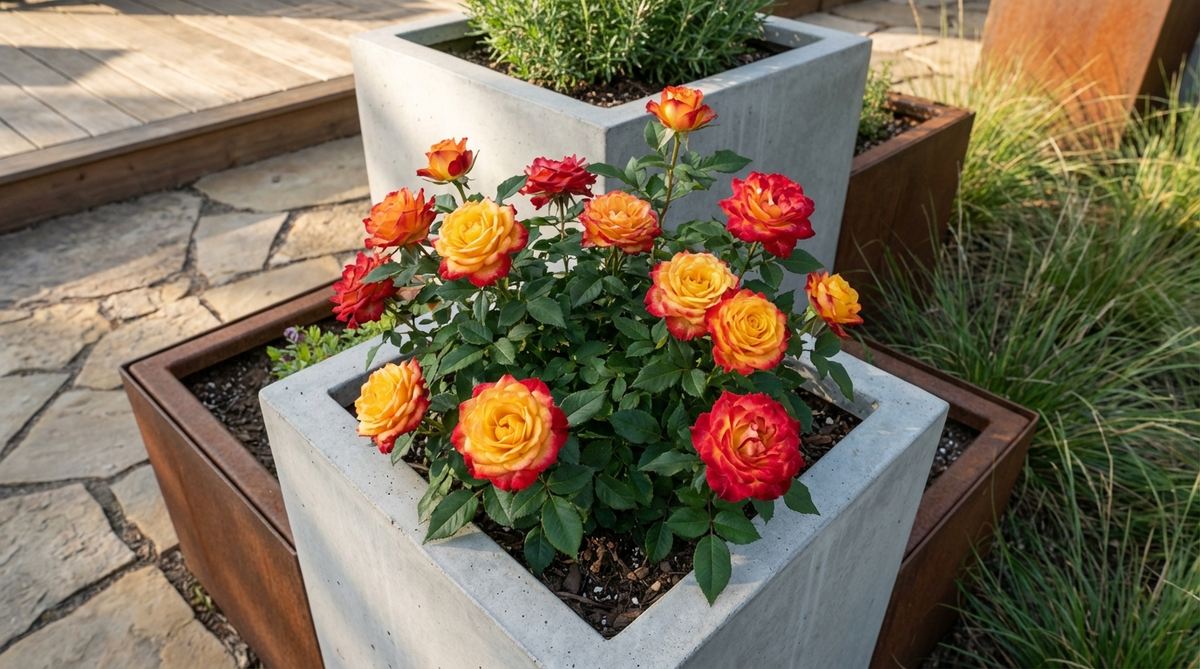
Bi-colored miniature blooms shift from golden yellow at the petal base to deep red at the edges. This 18-inch rose fits perfectly in container groupings on modern balconies or patios.
Plant Rainbow’s End in geometric arrangements of contemporary pots to create repeating color patterns. The variety tolerates black spot and powdery mildew better than most miniatures.
Continuous blooming occurs without deadheading when plants receive adequate sunlight and water. Ideal for rock gardens or narrow planting strips along building foundations.
10. Flower Carpet Amber
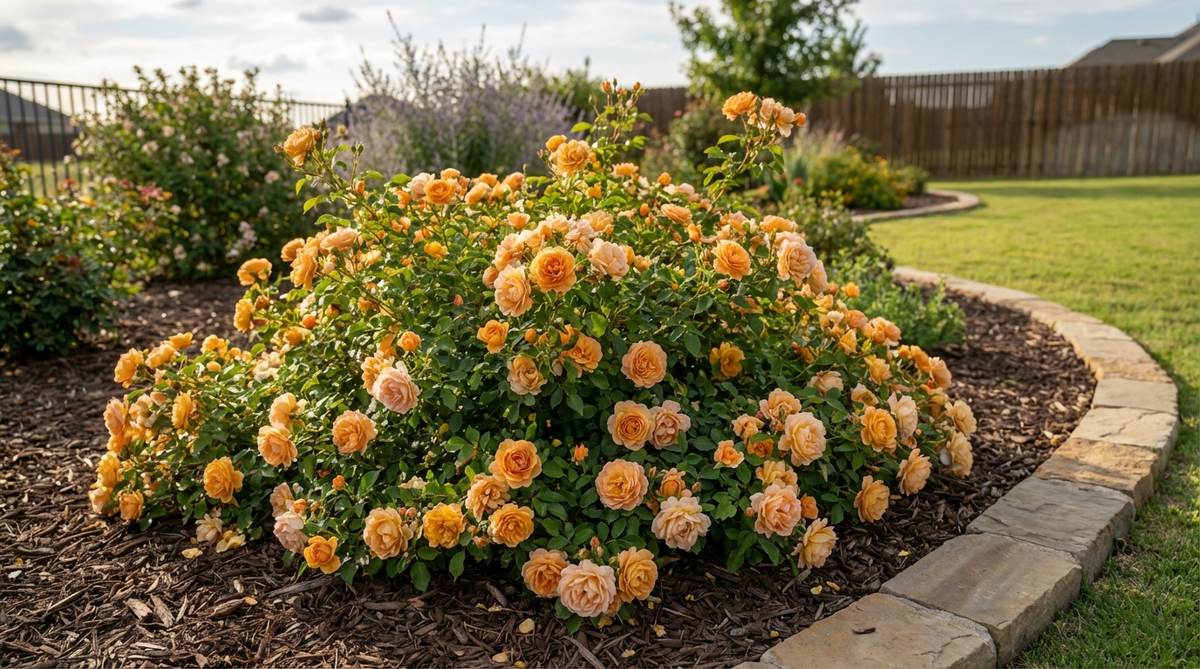
Warm amber, apricot, and peach tones bloom repeatedly throughout summer on this easy-care groundcover rose. The 2-foot mounding habit spreads 3 feet wide for substantial coverage.
Use Flower Carpet Amber in mass plantings to fill large contemporary bed areas with minimal plant count. The variety attracts pollinators while emitting pleasant fragrance.
This rose ranks among the easiest to grow, thriving in containers or garden beds with basic care. Disease resistance eliminates the need for preventive spray programs.
11. Cosmic Clouds
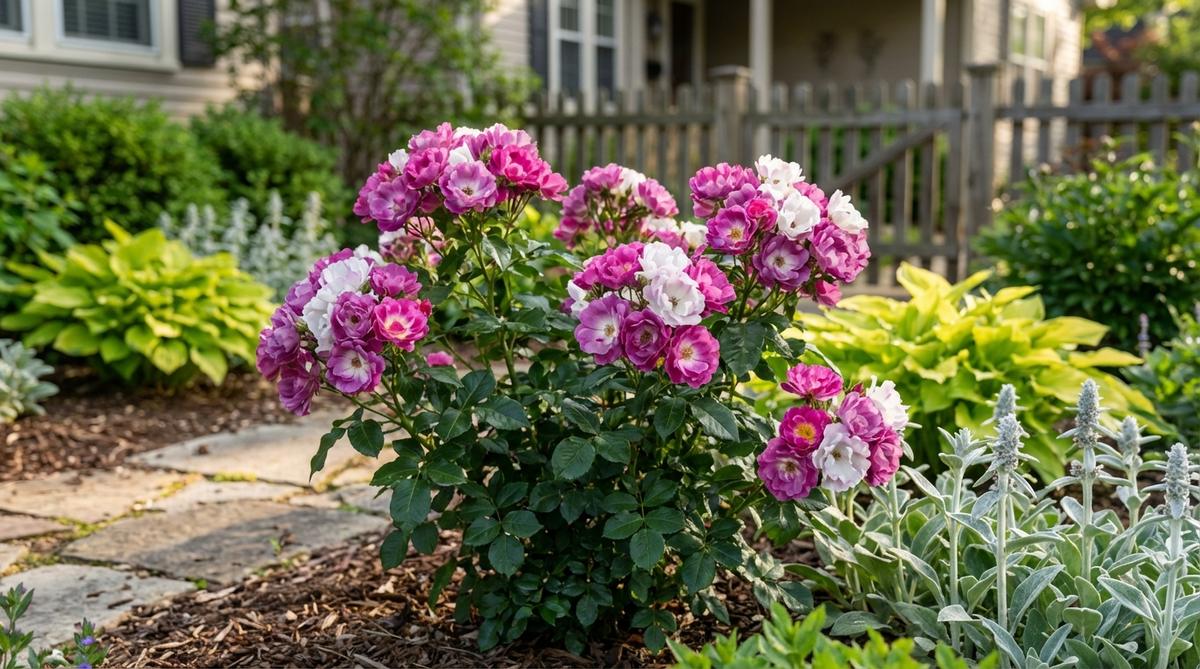
Vibrant pinky-purple petals with white reverses create unusual bi-color effects as blooms open and fade. This 3-foot shrub rose introduced in 2024 brings contemporary color to modern gardens.
Position Cosmic Clouds where its unique coloration can contrast with chartreuse or silver foliage plants. The variety grows vigorously while maintaining disease-resistant foliage.
Strong fragrance and rapid growth make this newcomer valuable for gardeners seeking bold statement plants. Self-cleaning flowers require no deadheading for continuous performance.
Groundcover Solutions for Slopes and Borders
Low-spreading roses solve erosion challenges while creating colorful horizontal planes in contemporary landscapes. These varieties suppress weeds and define bed edges with minimal intervention.
12. Peach Drift
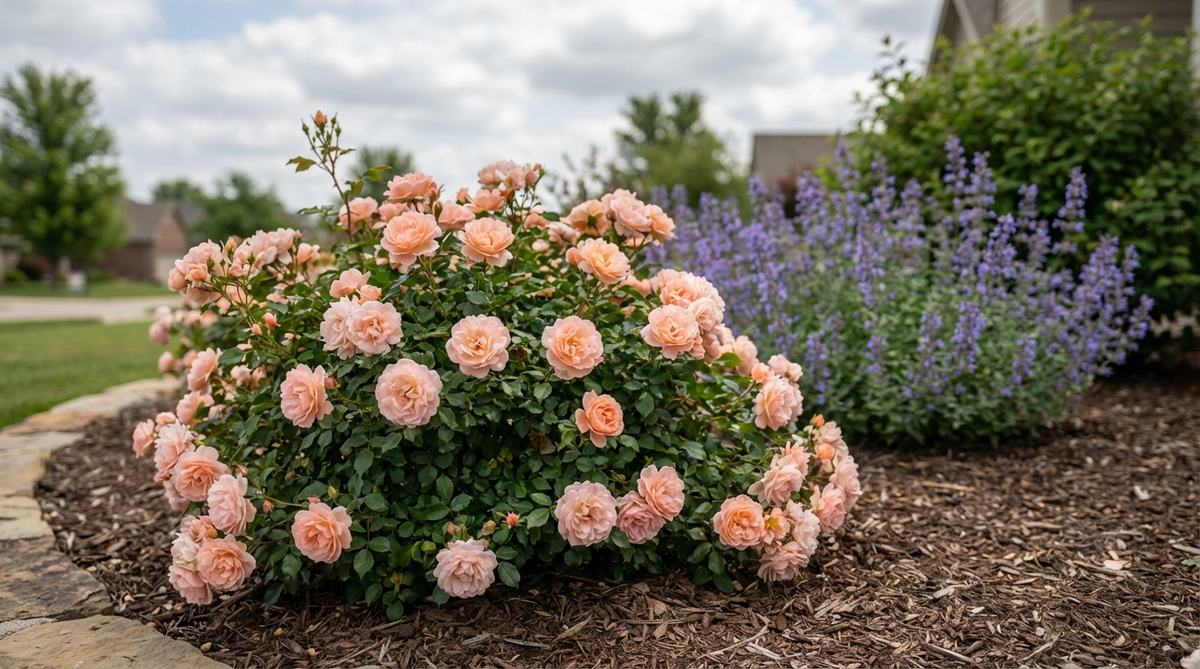
Soft peachy-pink double blooms cover dense 18-inch mounds that spread 3 feet wide. The low profile works perfectly for edging geometric contemporary beds or filling parking strip plantings.
Plant Peach Drift en masse for weed-suppressing groundcover that blooms continuously. The variety handles wet weather without developing foliar diseases.
This Drift rose requires only annual spring pruning to remove dead wood and shape the plant. Pair with blue catmint or Russian sage for cooling color harmonies.
13. Red Drift
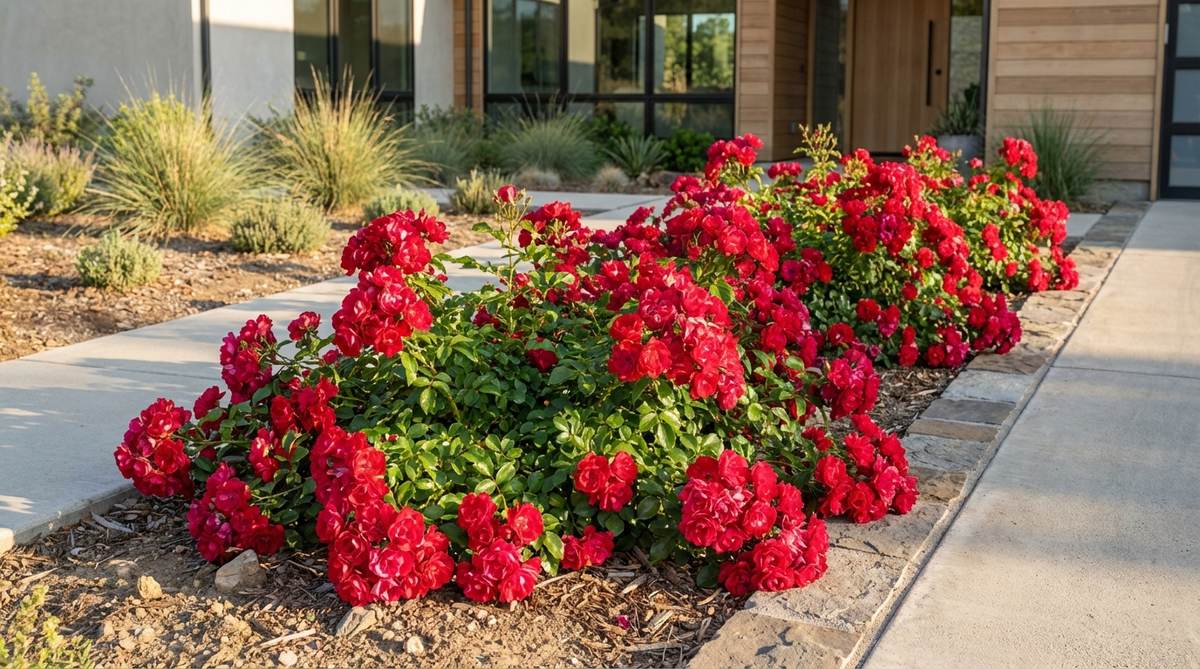
Cherry-red blooms in abundant clusters create vivid color impact along contemporary walkways and driveways. The spreading 2-foot habit hugs the ground while providing substantial floral presence.
Use Red Drift to define property boundaries or create color blocks in modernist planting schemes. Disease resistance ensures clean foliage throughout the growing season.
This groundcover rose tolerates poor soils and compacted ground better than hybrid teas. Minimal maintenance requirements make it ideal for large-scale commercial installations.
14. The Fairy
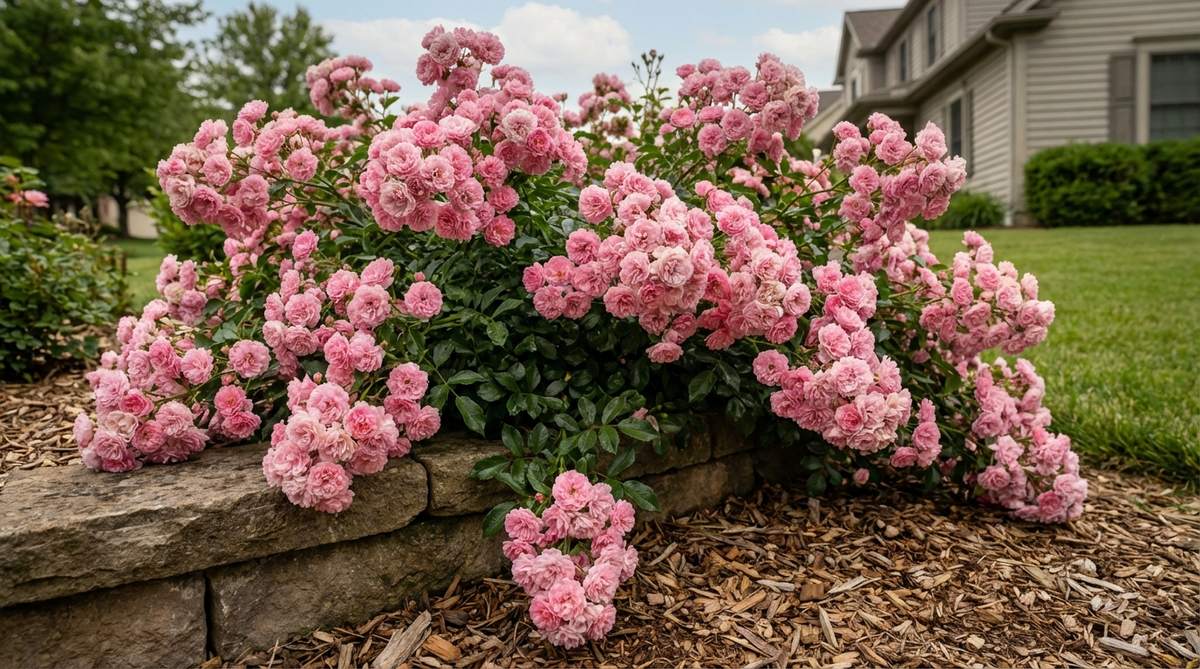
Small pink pompom flowers bloom in cascading sprays on this classic groundcover polyantha. The 2 to 3-foot shrub spreads wider than tall, creating soft informal masses.
Plant The Fairy along retaining walls where its flowers can cascade over edges. This variety blooms later than most roses, extending garden color into early fall.
Exceptional cold hardiness and disease resistance make this 1932 introduction still relevant in modern landscapes. Requires minimal care beyond annual pruning.
Architectural Climbers for Vertical Interest
Contemporary gardens utilize vertical surfaces to maximize planting area and create privacy screens. These climbing roses provide structure and bloom coverage on modern trellises and walls.
15. Above All
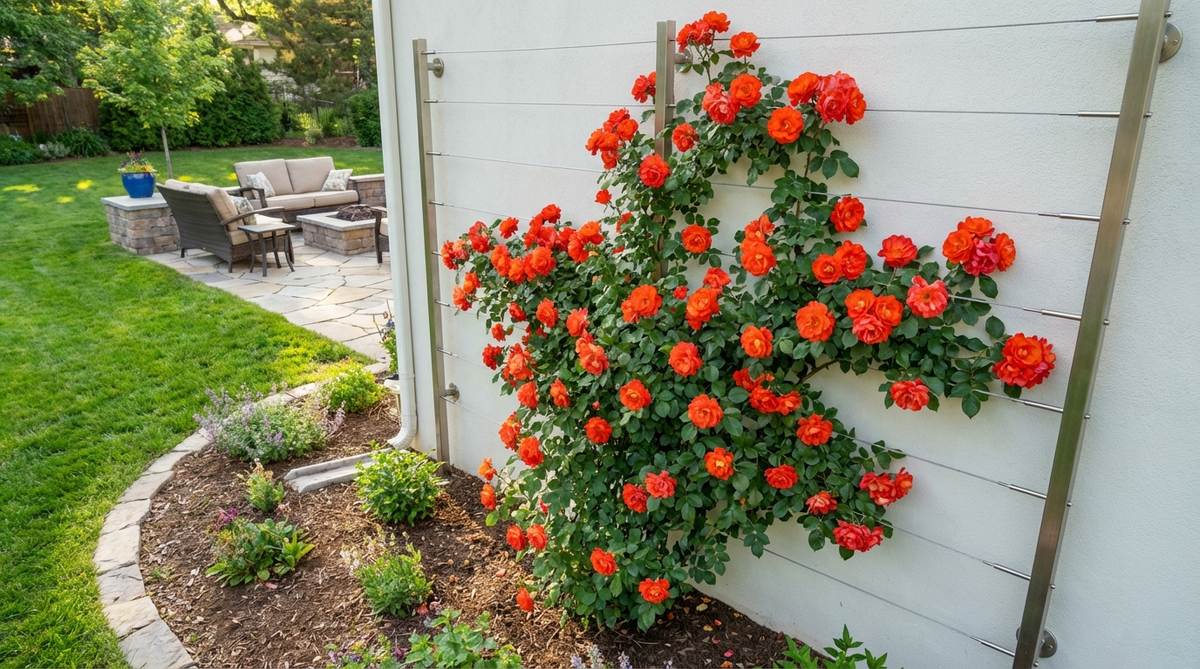
Bright orange-red fragrant blooms cover vigorous canes that reach 10 to 12 feet. The intense color makes dramatic statements against white stucco or gray composite fencing.
Train Above All on contemporary cable trellis systems or geometric metal frameworks. Strong disease resistance ensures clean foliage coverage throughout the climbing structure.
This climbing rose blooms repeatedly through summer and fall without extensive deadheading. Robust growth fills vertical spaces quickly after establishment.
16. New Dawn
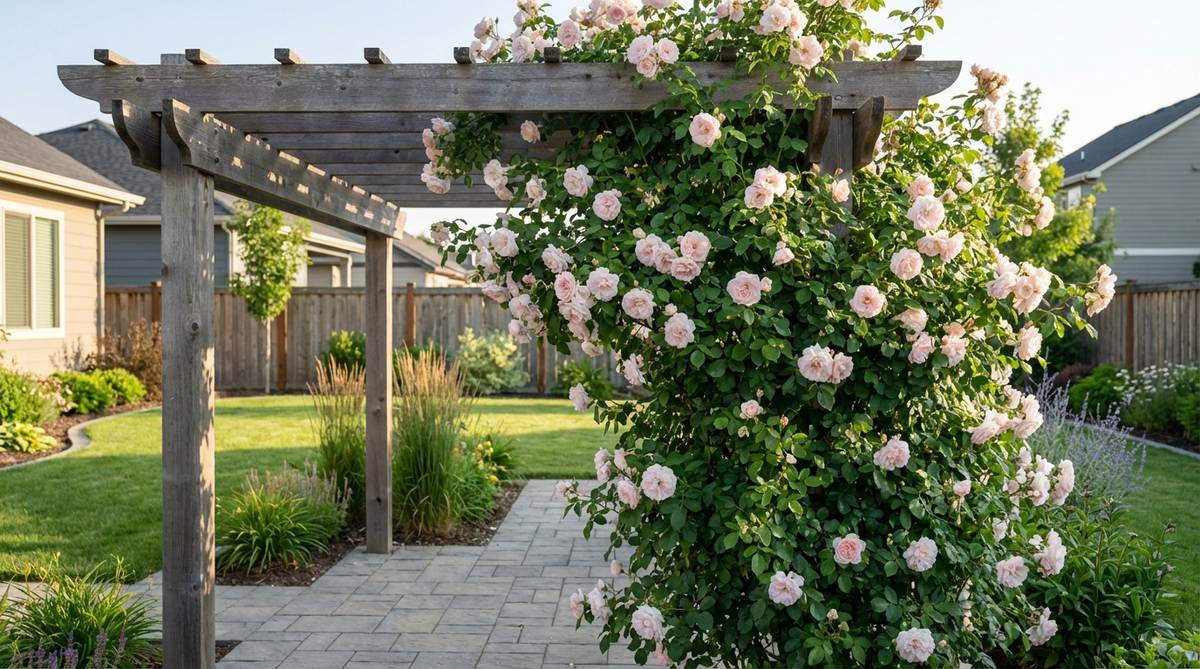
Pale blush-pink semi-double flowers emit sweet fragrance while covering 12 to 15-foot climbing canes. The soft color palette integrates easily into restrained contemporary color schemes.
This classic climber demonstrates strong resistance to black spot and mildew while showing some virus resistance. Use New Dawn on pergolas or arbors in modern courtyards.
Vigorous repeat blooming occurs throughout the growing season on established plants. The variety tolerates partial shade better than most climbing roses.
17. Sky’s the Limit
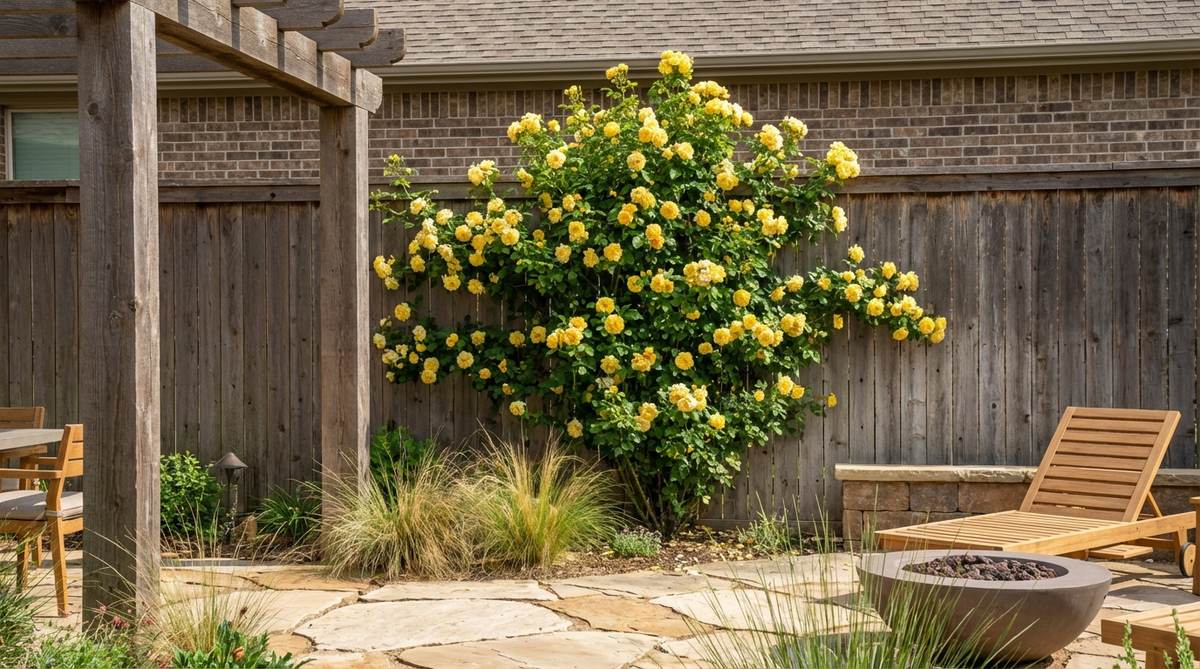
Cheerful yellow blooms bring sunshine color to vertical surfaces in contemporary gardens. This vigorous climber reaches 10 feet while maintaining disease-resistant foliage.
Plant Sky’s the Limit where its bright blooms can illuminate shaded wall areas or fence lines. Long blooming season provides months of yellow color impact.
Hardy and healthy growth habits make this climber reliable in various climate zones. Minimal care requirements suit low-maintenance modern landscape programs.
Statement Floribundas for Mass Plantings
Floribunda roses produce abundant flower clusters that create bold color blocks in contemporary garden designs. Their bushy growth habits fill bed space efficiently with continuous blooms.
18. Eyeconic Mango Lemonade
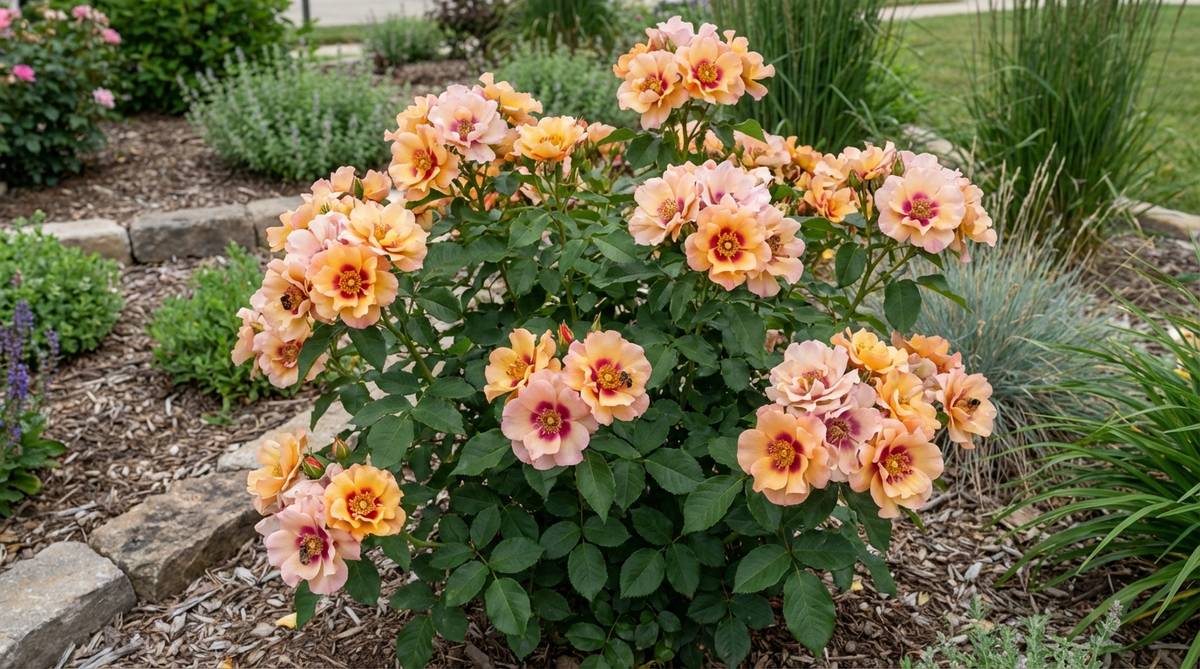
Striking blooms feature amber and pink petals surrounding deep magenta eyes with golden stamens. The semi-double flowers make pollen accessible to visiting bees and beneficial insects.
This compact 2-foot floribunda suits contemporary borders where pollinator support is a design priority. The unusual color combination creates focal points in mixed plantings.
Rounded growth habit and continuous blooming make this variety suitable for geometric bed layouts. Disease-resistant foliage maintains appearance without chemical interventions.
19. Honey Dijon
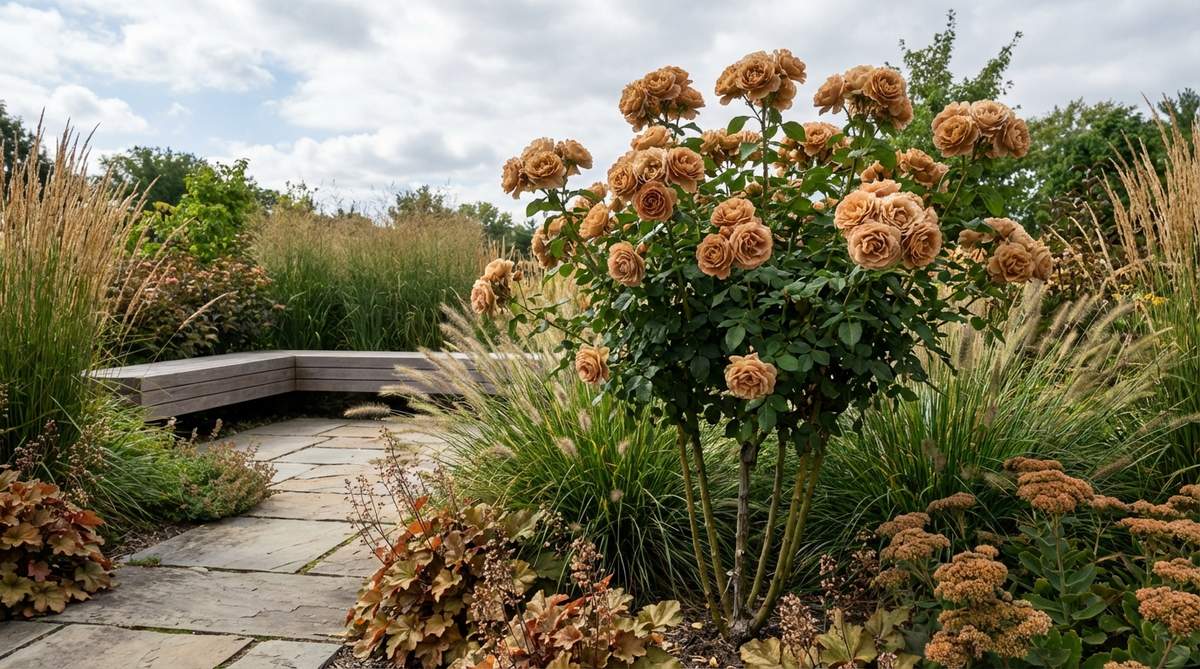
Dusty caramel blossoms bring sophisticated neutral tones to modern gardens favoring earth-toned palettes. This grandiflora rose produces abundant blooms on 4 to 5-foot plants.
Use Honey Dijon in contemporary prairie-style gardens alongside grasses and bronze-foliaged perennials. The muted color works beautifully in minimalist planting schemes.
Strong stems support the clusters of blooms even during storms. Continuous flowering occurs throughout the growing season with basic deadheading.
20. Absolutely Fabulous
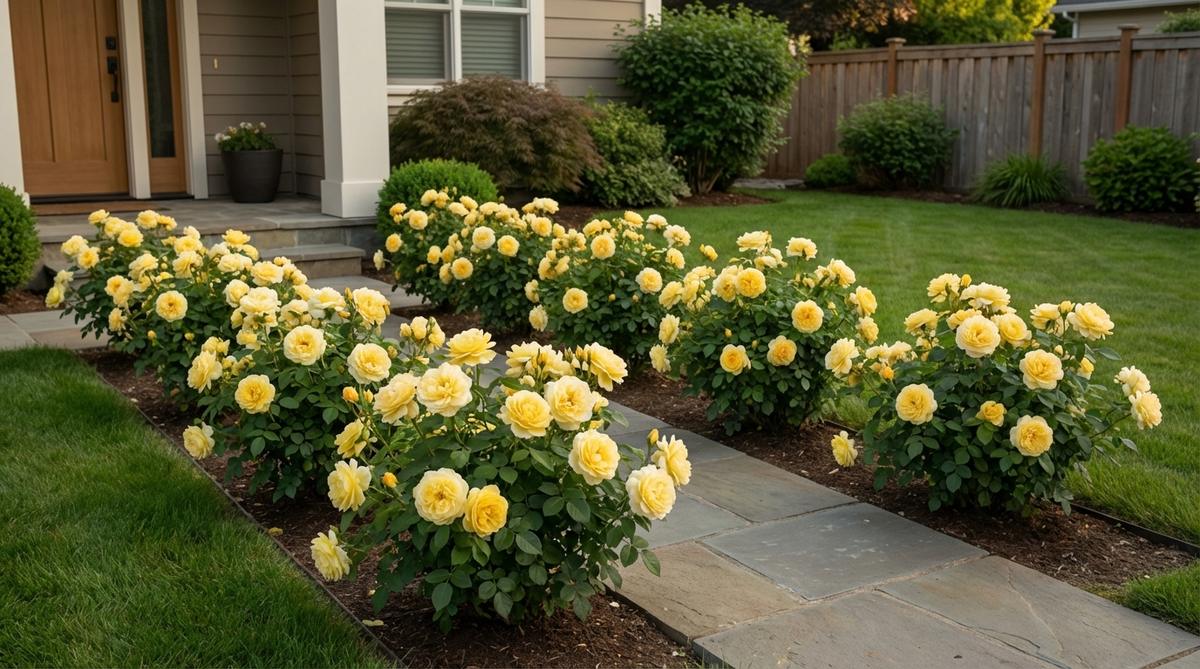
Butter-yellow fragrant blooms reach 10cm diameter on compact 50cm plants. The spicy fragrance and strong flowering habit make this floribunda valuable for container groupings.
Plant Absolutely Fabulous in contemporary pots flanking modern entryways where fragrance can be appreciated. The compact growth suits narrow garden spaces.
Repeat blooming occurs reliably when spent flowers are removed. Disease resistance and cold hardiness make this variety reliable across climate zones.
21. Black Baccara
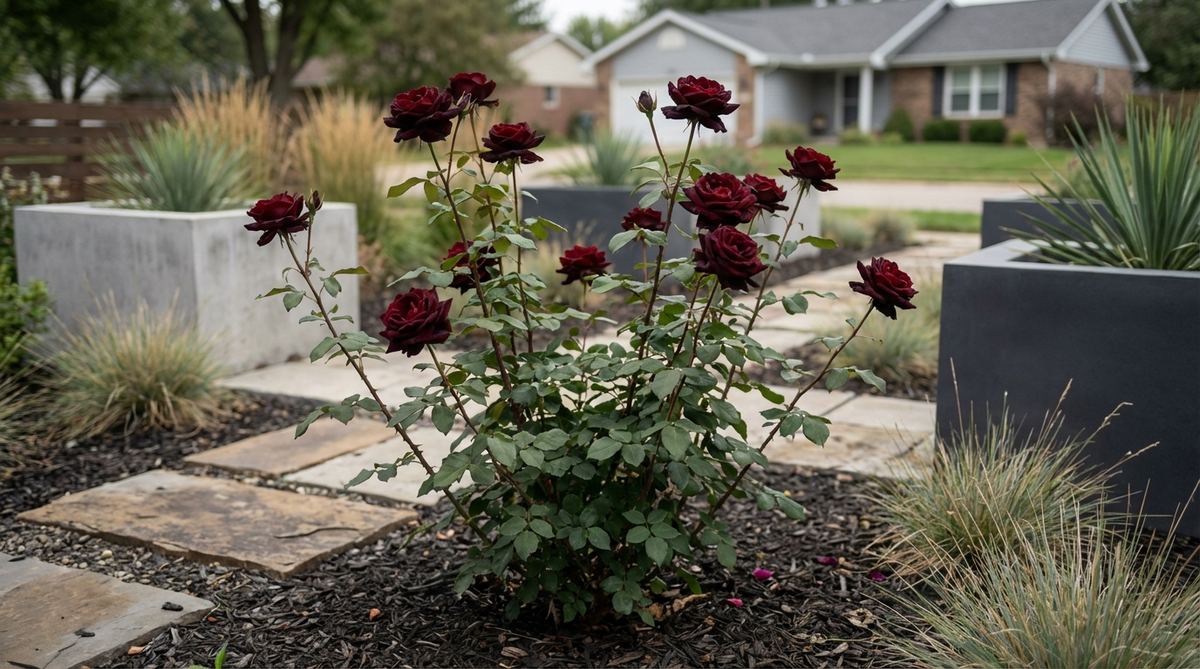
Deep velvety crimson blooms appear almost black, providing dramatic moody tones in contemporary gardens. This hybrid tea rose produces long-stemmed flowers ideal for cutting.
Use Black Baccara in minimalist plantings where its intense color can stand as a singular focal point. The blooms hold exceptionally well in vases.
Sturdy upright growth reaches 3 to 4 feet with classic hybrid tea form. Plant against pale backgrounds to maximize the impact of the nearly black flower color.
22. Champagne Moment
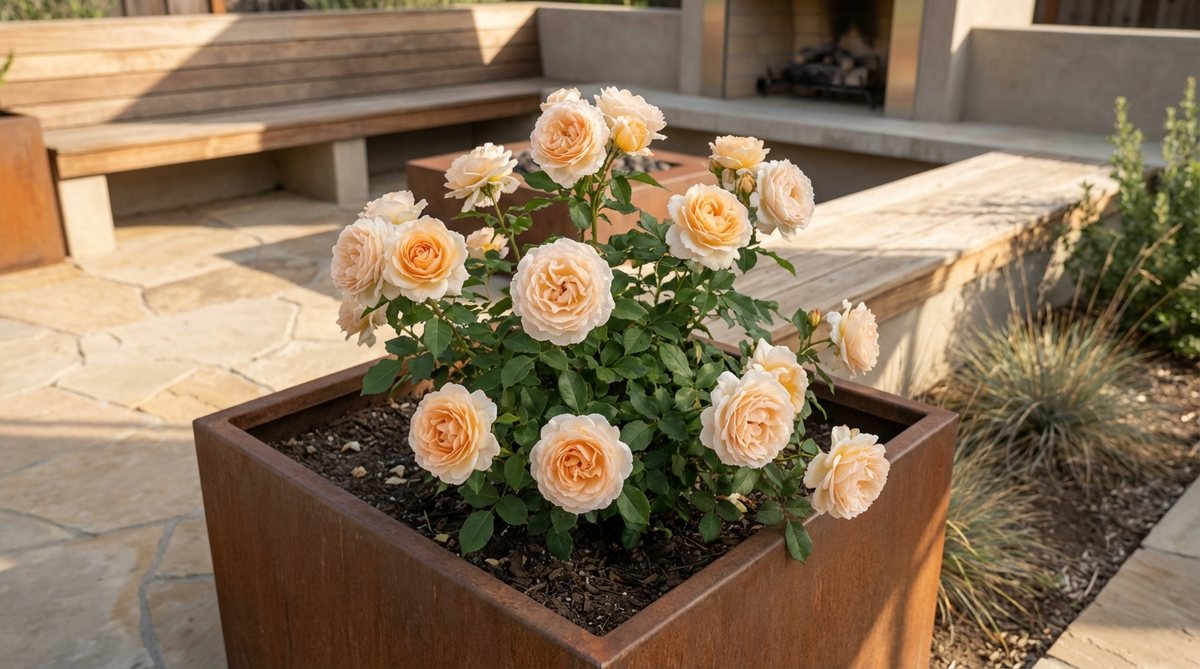
Fragrant blooms feature soft apricot centers that fade to cream at petal edges. This 50cm floribunda produces 10cm flowers with powerful fragrance.
Position Champagne Moment in contemporary raised beds or large containers on modern patios. The warm neutral tones coordinate with natural stone and wood elements.
Strong flowering occurs continuously through summer when plants receive adequate sunlight. Compact dimensions suit small urban gardens and courtyard spaces.
Bringing Modern Garden Roses Into Your Landscape
Contemporary gardens benefit immensely from modern garden roses that deliver reliable performance without intensive maintenance protocols. These 22 varieties represent the best current genetics for disease resistance, continuous blooming, and architectural form suited to today’s design aesthetics. Start by selecting roses appropriate for your specific site conditions—sun exposure, soil type, and hardiness zone—then group varieties by color palette and growth habit to create cohesive contemporary plantings that bloom from spring through fall.
Frequently Asked Questions
What makes a rose variety “modern” for contemporary gardens?
Modern garden roses combine genetic improvements developed since the mid-20th century, including disease resistance, continuous blooming throughout the growing season, and self-cleaning flowers that drop cleanly without deadheading. Contemporary varieties also feature compact or architectural growth habits that fit modern landscape designs better than sprawling antique roses. Disease resistance is particularly important, as modern gardeners prefer plants that thrive without weekly fungicide applications.
How much sun do modern garden roses need to bloom properly?
Most modern rose varieties require a minimum of 6 hours of direct sunlight daily for optimal bloom production and disease resistance. In hot climates with intense afternoon sun, roses benefit from light afternoon shade that prevents flower fading. Some varieties like New Dawn tolerate partial shade conditions better than others, but flowering will be reduced in locations receiving less than 4 hours of direct sun. Position roses in the sunniest available locations for best performance.
Are disease-resistant roses truly maintenance-free?
Disease-resistant modern roses require significantly less maintenance than traditional varieties, but they are not completely maintenance-free. These varieties rarely need fungicide sprays and maintain clean foliage naturally, but they still require basic care including adequate water during establishment, annual spring pruning to remove dead wood, and occasional fertilization for optimal bloom production. Self-cleaning varieties eliminate deadheading requirements, making them as close to maintenance-free as roses can be while still providing abundant blooms.
Can modern roses grow successfully in containers on contemporary patios?
Many modern rose varieties thrive in containers, particularly compact floribundas, miniatures, and patio roses bred for small spaces. Choose containers at least 18 inches in diameter with drainage holes, and use quality potting mix rather than garden soil. Container roses require more frequent watering than in-ground plants and benefit from slow-release fertilizer applications. Varieties like Absolutely Fabulous, Rainbow’s End, and the Drift series perform exceptionally well in contemporary container groupings.
Which modern rose varieties work best for pollinator-friendly gardens?
Single and semi-double rose varieties with exposed stamens provide the best pollen access for bees and beneficial insects. Excellent pollinator-friendly modern roses include Kew Gardens with its single white flowers, The Lady of the Lake with open semi-double blooms, Eyeconic Mango Lemonade featuring accessible golden stamens, and Top Gun with prominent yellow centers. Avoid fully double roses with densely packed petals that prevent pollinators from reaching pollen sources.
How should I space modern roses in contemporary bed designs?
Spacing depends on the variety’s mature size and your design intent. Shrub roses like Knock Out require 3-foot spacing for individual specimens or closer 2-foot spacing for hedge effects. Groundcover roses like the Drift series can be planted 3 to 4 feet apart for eventual solid coverage. In contemporary designs emphasizing geometric patterns, plant odd-numbered groups of the same variety with consistent spacing for visual rhythm. Always check the specific variety’s mature dimensions and plant accordingly to prevent overcrowding.