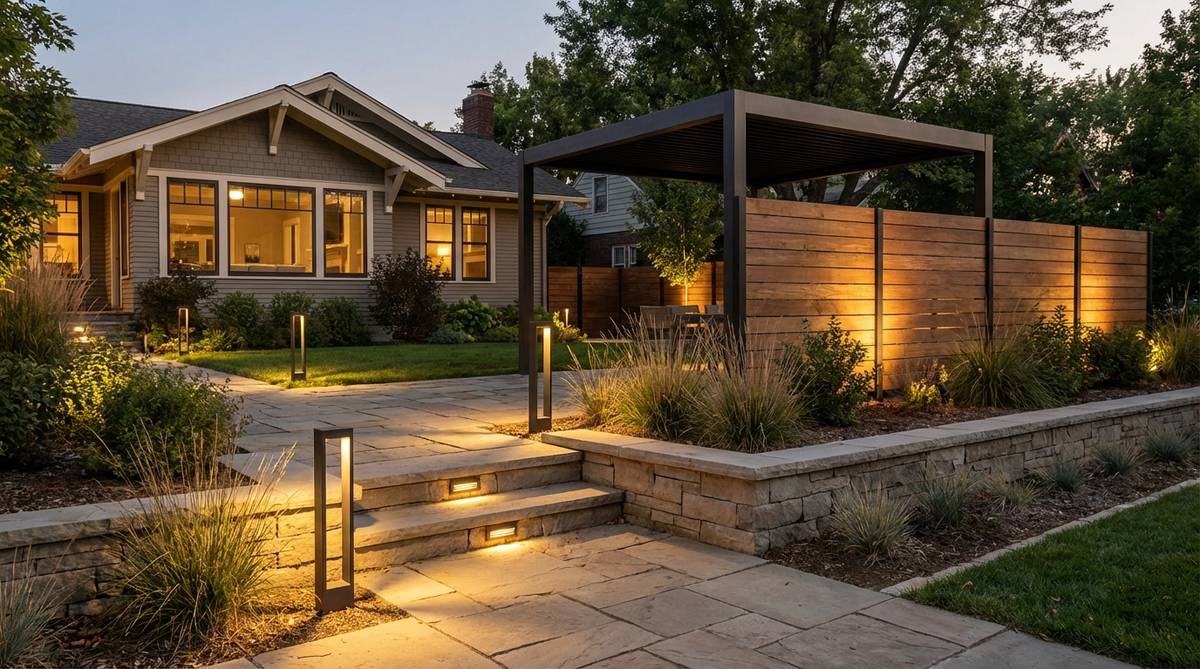
Modern garden lighting transforms ordinary architectural features into dramatic focal points after dark. These carefully selected fixtures from Fresh Garden Ideas represent the latest innovations in outdoor illumination, combining energy efficiency with striking visual impact.
Design SnapshotKey Principles
- Layered Illumination: Combine ambient, accent, and task lighting to create depth and dimension across architectural surfaces
- Beam Control: Match fixture beam angles to feature size—narrow beams for columns, wide angles for facade washing
- Color Temperature: Warm whites (2700-3000K) enhance traditional materials; neutral tones (3500-4000K) suit contemporary architecture
- Energy Efficiency: LED fixtures consume 50-80% less power than traditional sources while delivering superior lumen output
Uplighting Fixtures for Vertical Drama
Uplighting fixtures positioned at ground level direct illumination upward to emphasize height, texture, and architectural detail. Designers use these to transform flat surfaces into dynamic vertical canvases with dramatic shadow play.
1. Narrow Beam Column Uplights
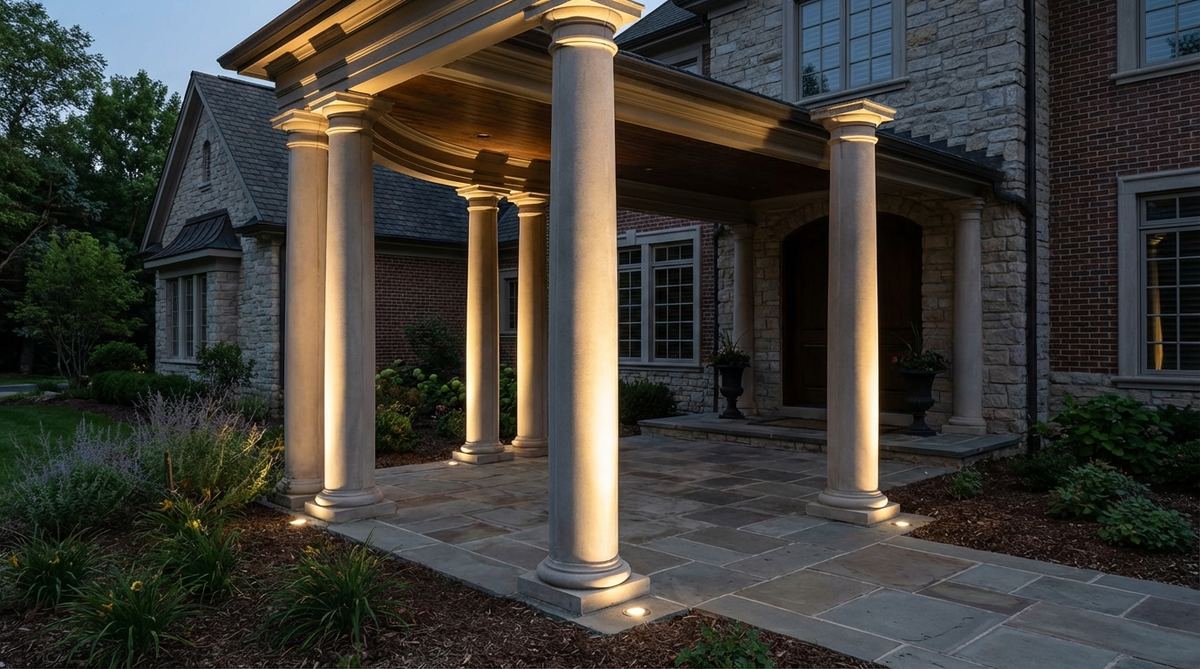
These fixtures produce a concentrated 10-15 degree beam that traces the full height of columns and pillars. The tight beam accentuates roundness and creates strong vertical lines that emphasize classical architectural elements.
Install at the base of each column, positioning the fixture 4-6 inches from the surface. Adjust the angle to eliminate ground spill and focus illumination exclusively on the column shaft.
This technique adds grandeur to porticos and entryways while maintaining clean, uncluttered ground planes during daylight hours.
2. Wide-Angle Facade Uplights
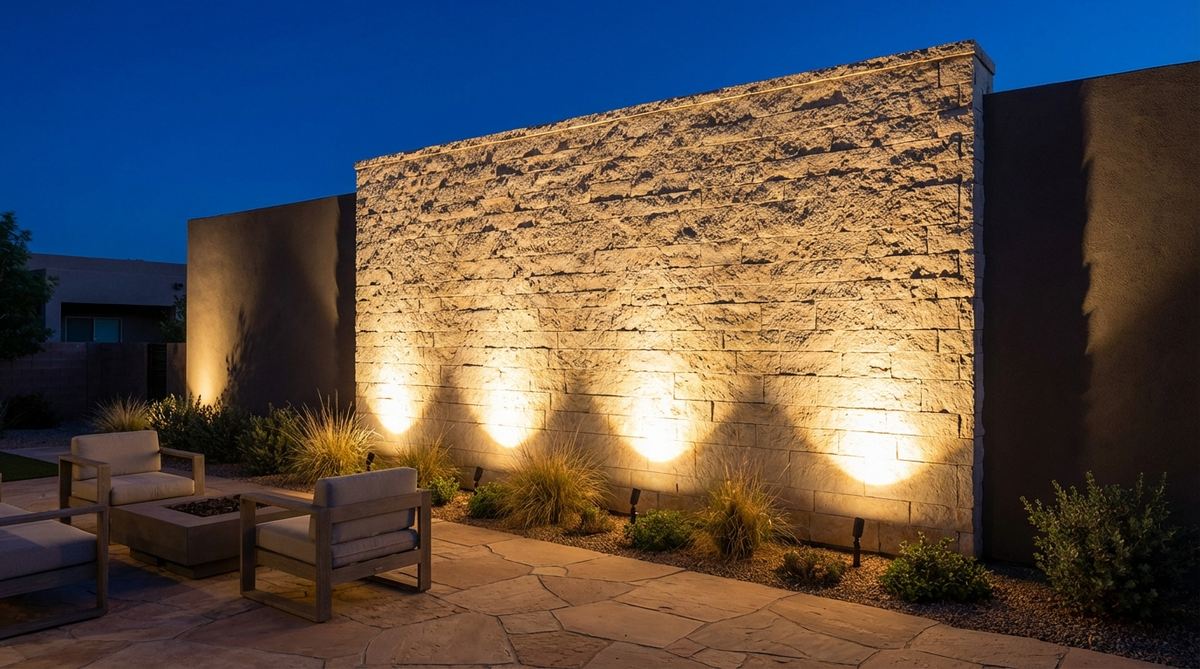
Fixtures with 30-50 degree beams deliver broad coverage for large architectural surfaces. The wide distribution illuminates expansive walls, revealing texture in stonework, brick, or stucco finishes.
Position these 18-24 inches from the wall base, spacing fixtures every 6-8 feet for even coverage. Select higher wattages (15-20W LED) for multi-story elevations.
Wide-angle uplights reduce fixture count while maintaining uniform illumination across broad surfaces, keeping installation costs manageable.
3. Adjustable Gimbal Uplights
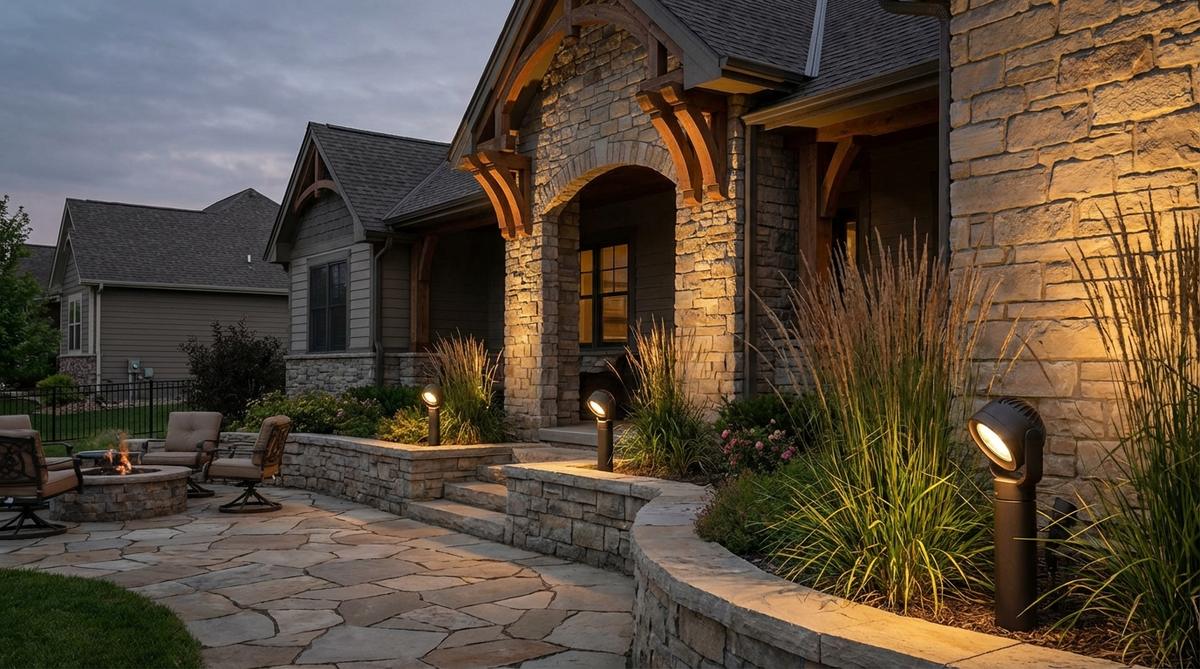
These feature rotating heads that pivot through 180-degree arcs, directing light precisely where needed. The mechanical flexibility accommodates irregular architectural features and angled surfaces.
Use gimbal fixtures where architectural elements change angle or direction—corbels, arches, or stepped facades. Lock the head position after aiming to maintain consistent illumination.
The adjustability eliminates costly relocation if landscape or architectural modifications occur after initial installation.
4. RGB Color-Changing Uplights
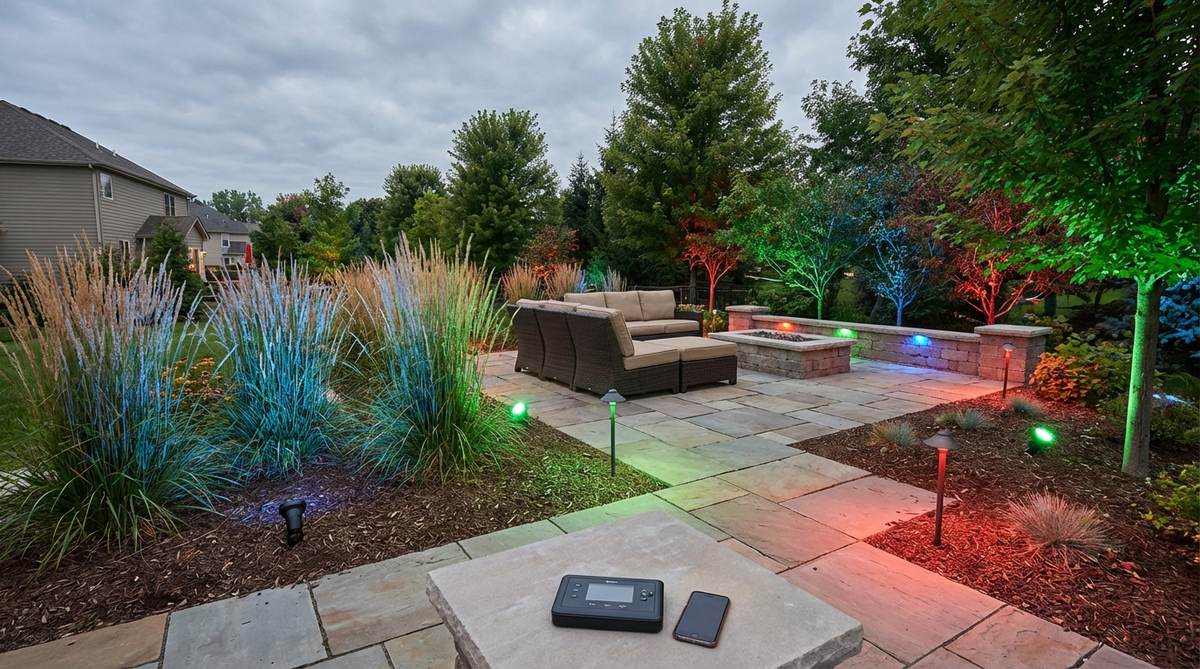
Multi-color LED arrays allow dynamic color shifts for seasonal themes or special events. Individual red, green, and blue diodes mix to produce millions of color combinations.
Program color scenes through DMX controllers or smartphone apps, creating synchronized displays across multiple fixtures. Reserve vibrant colors for holidays; use warm whites for everyday illumination.
Color-changing capability extends fixture versatility without requiring separate seasonal lighting installations.
5. Low-Voltage Compact Uplights
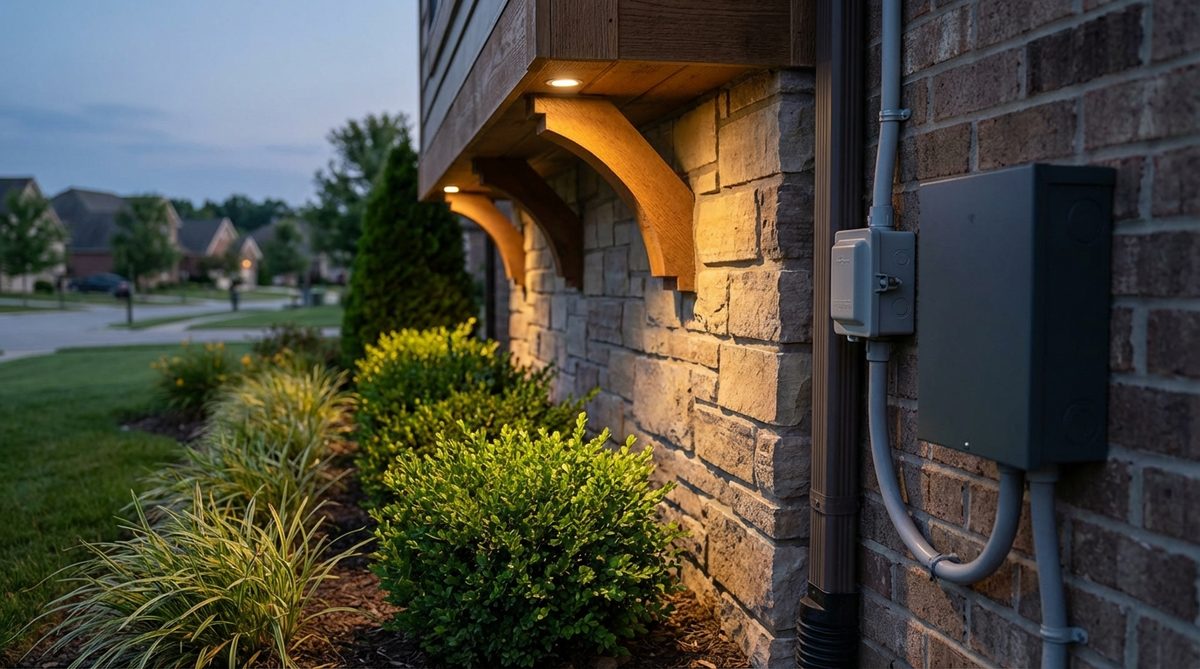
Operating on 12V systems, these small-profile fixtures integrate seamlessly into tight spaces beneath architectural overhangs or against foundation plantings. The reduced voltage enhances safety in accessible garden areas.
Connect multiple fixtures to a single transformer, simplifying electrical runs and reducing installation labor. Use 12-gauge wire for runs exceeding 50 feet to prevent voltage drop.
Low-voltage systems comply with most residential electrical codes without requiring licensed electrician installation in many jurisdictions.
6. Shielded Glare-Free Uplights
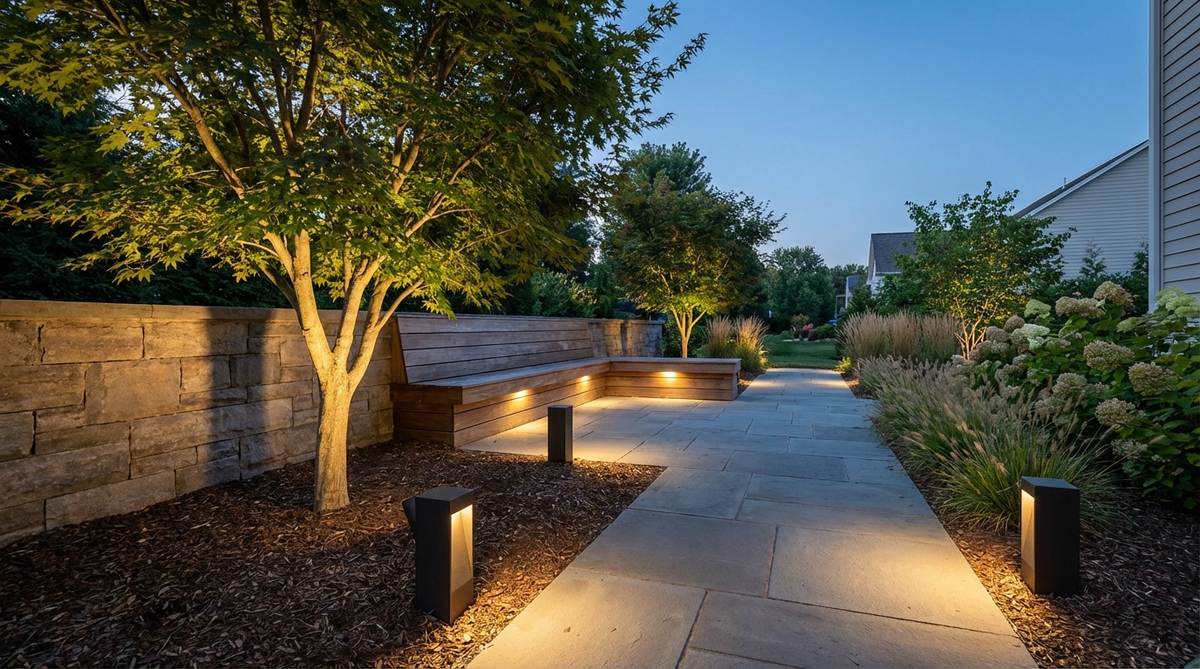
Internal baffles and recessed lenses eliminate direct view of the light source from normal sight lines. The shielding prevents visual discomfort while maintaining full upward light output.
Install near walkways or seating areas where fixture visibility creates glare issues. The shields redirect all illumination toward architectural targets rather than into viewers’ eyes.
Glare control improves visual comfort in multi-use garden spaces where people gather near illuminated features.
7. High-Power Architectural Floods
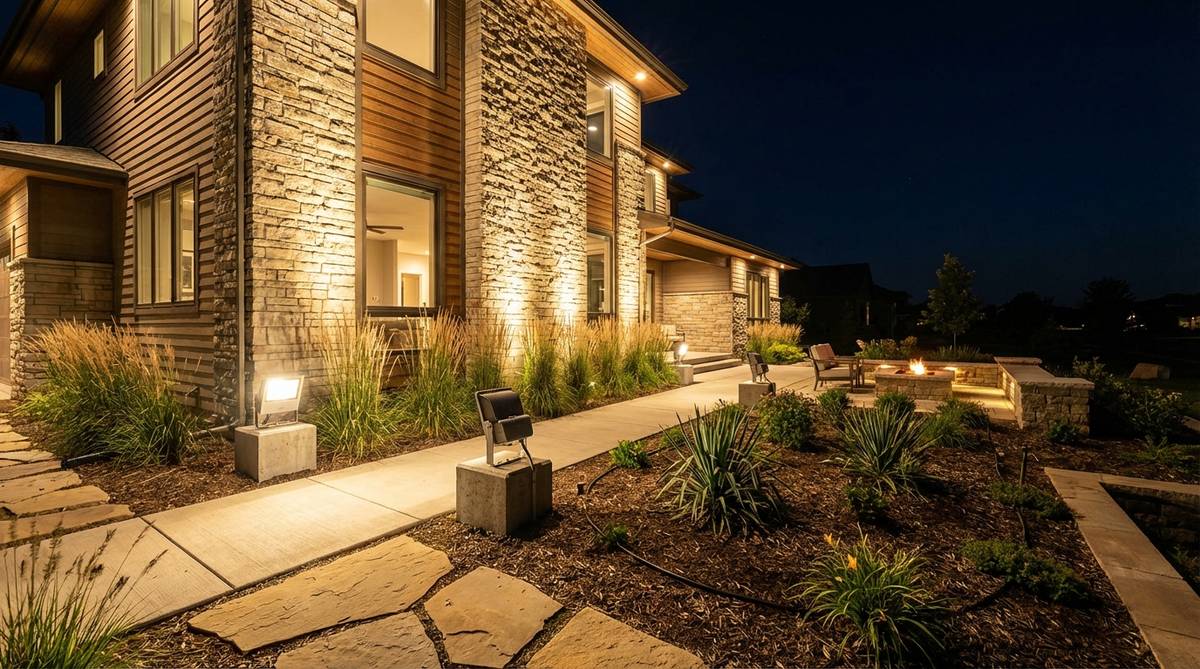
These robust fixtures deliver 3000+ lumens for illuminating large-scale architectural features—chimneys, gables, or multi-story walls. Die-cast aluminum housings withstand harsh weather exposure.
Mount on rigid foundation stakes or concrete pads to prevent settling that would misalign the beam. Use only on substantial architectural elements that can visually balance the intense illumination.
High-output floods create commanding nighttime presence for prominent estates and commercial properties.
Wall Wash & Linear Systems
Linear fixtures deliver continuous, uniform illumination across extended surfaces. These systems wash walls with seamless light that reveals material texture without hotspots or dark zones.
8. LED Linear Wall Washers
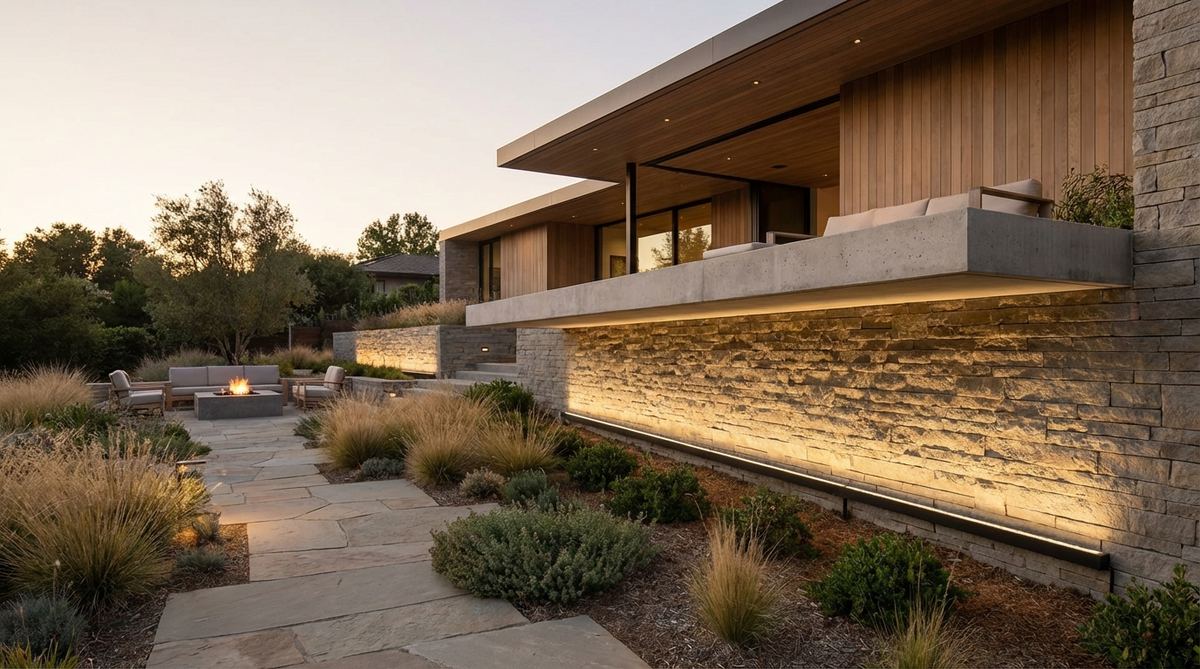
Elongated housings contain continuous LED arrays that produce even illumination across their entire length. Standard sections span 1-4 feet with end-to-end connection capability for unlimited runs.
Mount these 12-18 inches from wall surfaces, parallel to the grade line. The asymmetric optics throw light upward in controlled patterns that minimize ground spill.
Linear washers excel at illuminating contemporary architecture where horizontal emphasis and clean lines define the design vocabulary.
9. Grazing Light Strips
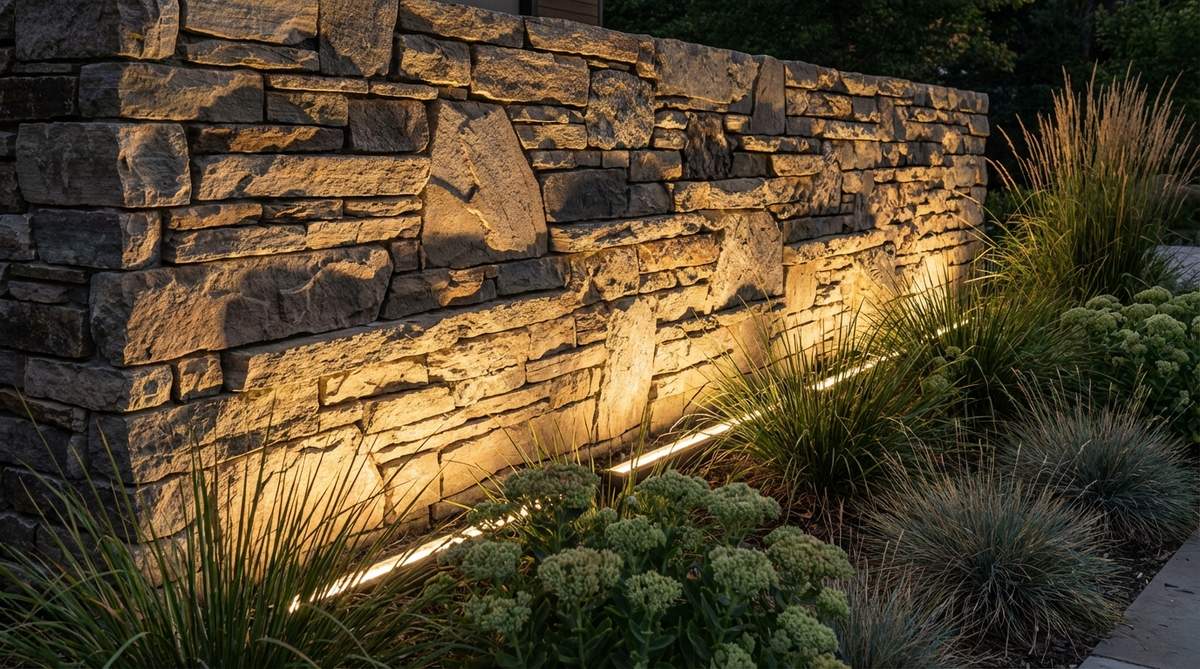
Positioned within 2-4 inches of textured surfaces, these create dramatic shadowing that amplifies surface relief. The extreme proximity produces long shadows from even subtle texture variations.
Use on split-face stone, rough timber siding, or decorative masonry where surface texture constitutes the primary visual interest. Avoid on smooth surfaces where imperfections become exaggerated.
Grazing reveals architectural depth that remains invisible under ambient or distant lighting conditions.
10. RGB Linear Color Bars
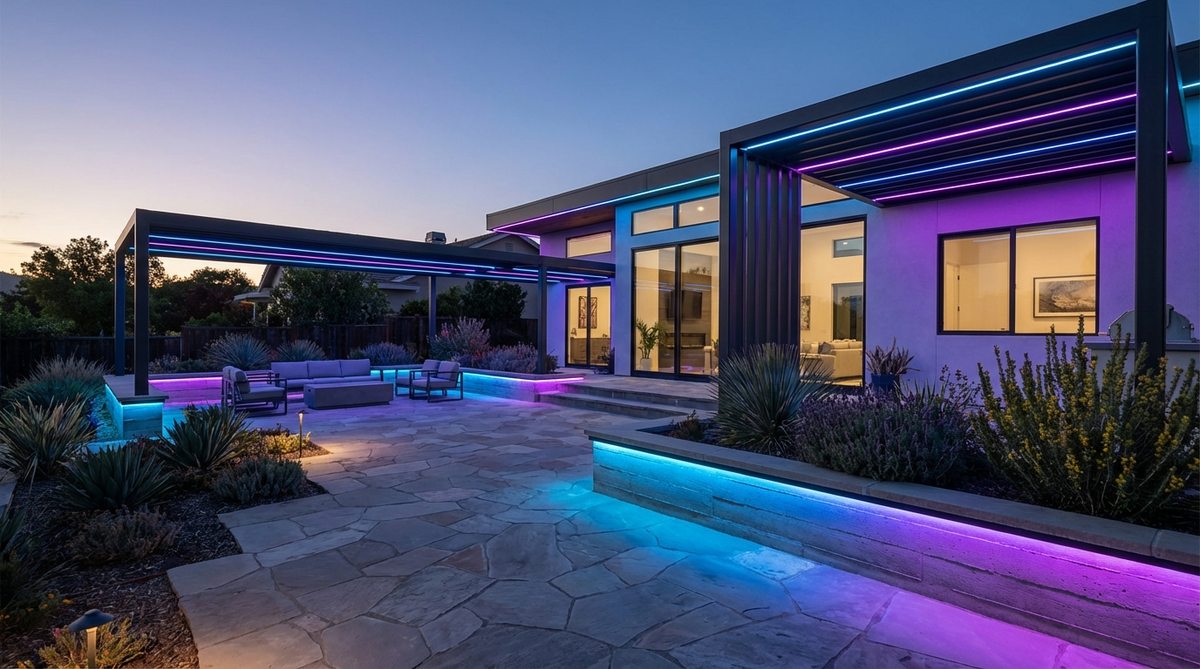
Multi-channel LED strips enable independent color control across long runs. DMX addressing allows complex color chases and gradient effects.
Install on contemporary buildings where dynamic lighting complements modern architectural expression. Program subtle color shifts rather than rapid changes to maintain sophisticated presentation.
Color-capable linear systems transform architecture into responsive canvases for seasonal and celebratory displays.
11. Weatherproof Cove Lighting
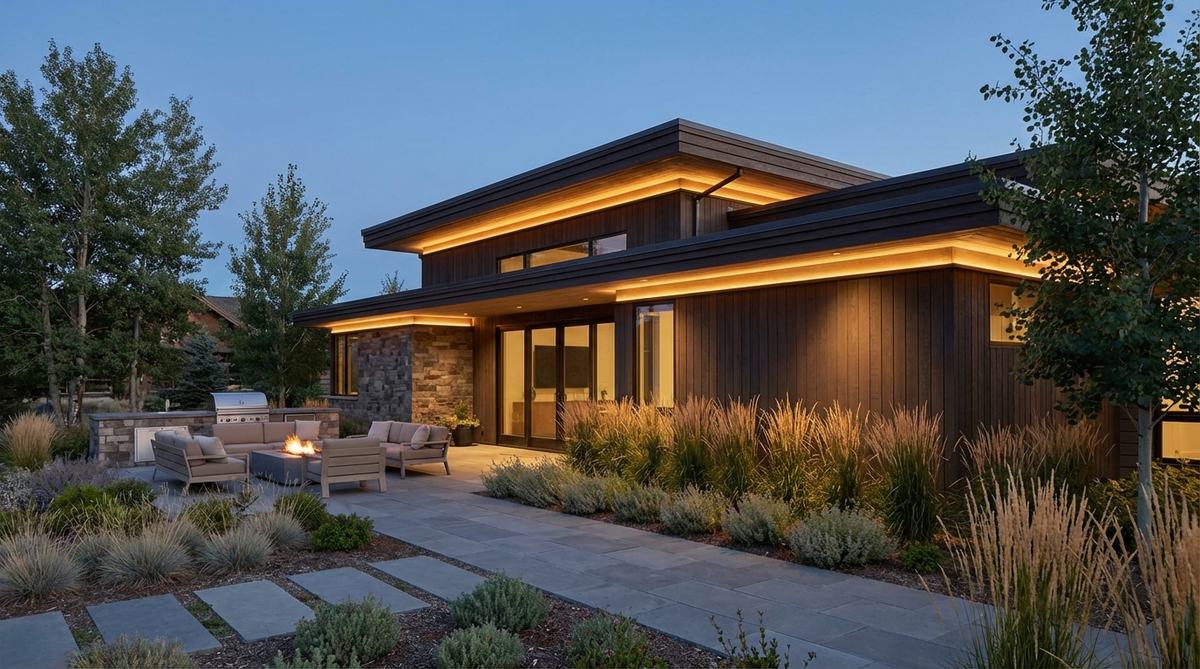
Sealed linear strips install in architectural recesses beneath eaves, behind fascia boards, or within decorative cornices. The concealed placement produces indirect illumination that highlights architectural profiles.
Detail architectural drawings to include light pockets during construction, ensuring adequate depth for fixture installation plus maintenance access. Use IP67-rated products for exposed locations.
Cove installations deliver architectural emphasis without visible fixture clutter on building elevations.
12. Tunable White Linear Fixtures
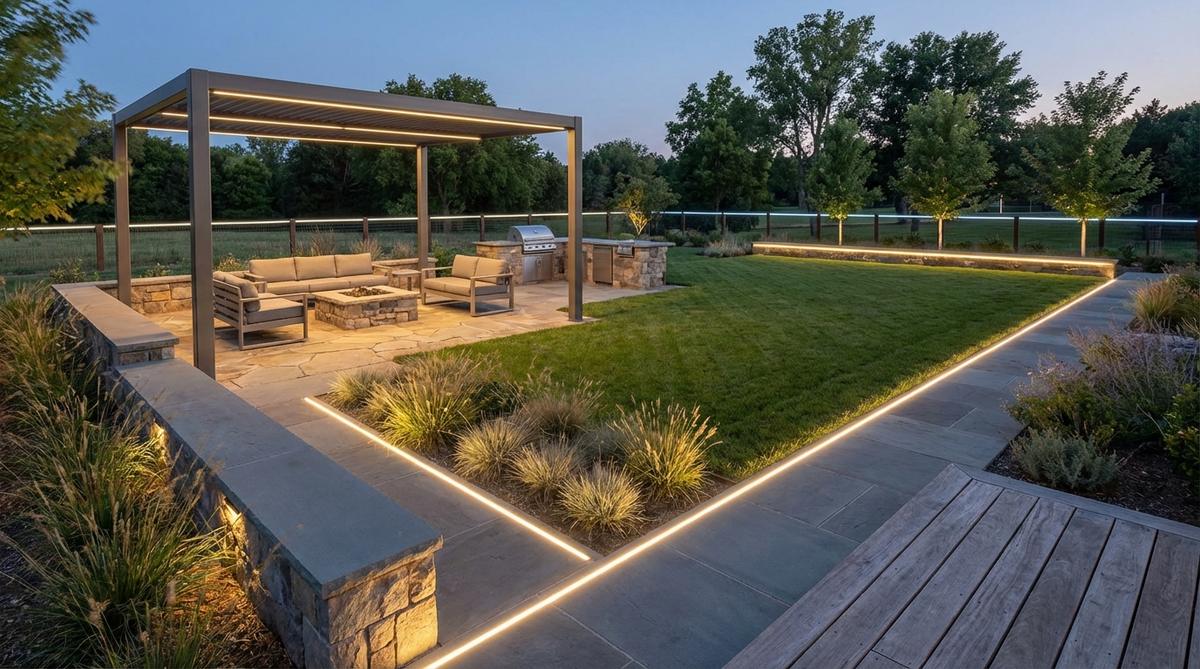
Dual-channel LEDs adjust color temperature from warm (2700K) to cool (5000K) through electronic controls. The temperature flexibility responds to seasonal preferences or programmed schedules.
Program warmer tones for evening hours to create inviting atmospheres; shift cooler during security monitoring periods for enhanced visibility. Transition gradually to avoid abrupt visual changes.
Tunable systems provide lighting flexibility without fixture replacement when aesthetic preferences evolve.
13. Modular Linkable Wall Bars
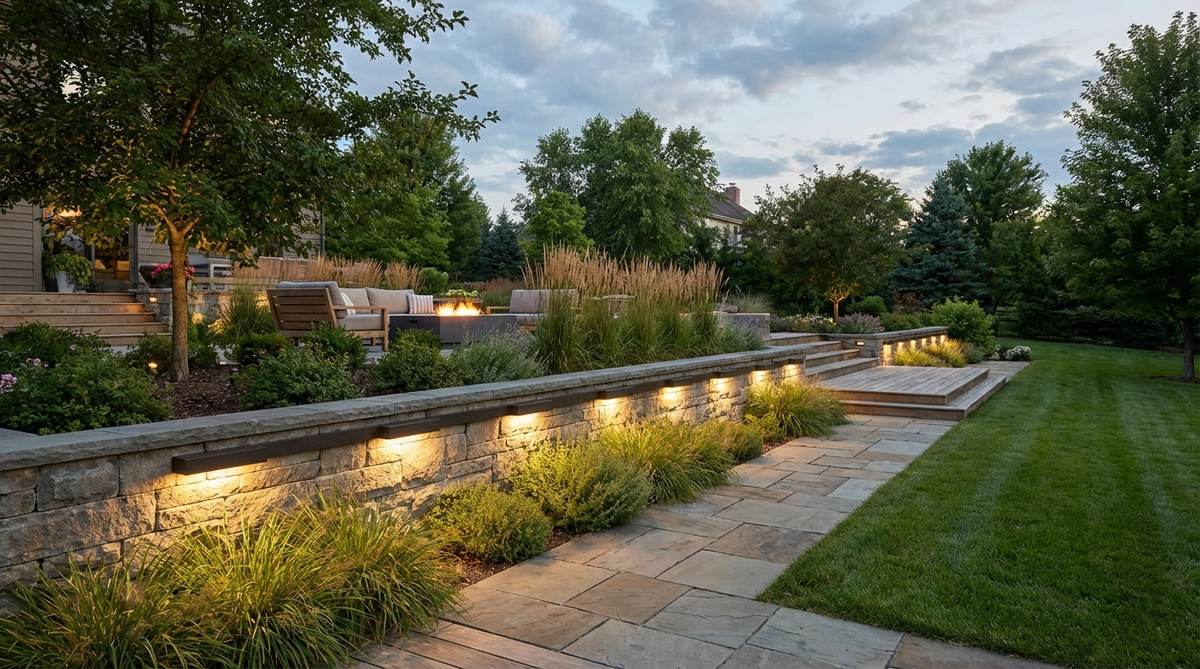
Individual 12-24 inch sections connect electrically and mechanically to form continuous runs. The modular design simplifies transportation and accommodates complex installation geometries.
Plan section breaks at architectural divisions—window frames, pilaster locations, or material transitions. The segmentation maintains visual continuity while respecting building proportions.
Modular systems reduce on-site modifications and allow phased installations as project budgets permit.
Precision Spot & Accent Lighting
Focused beam fixtures direct concentrated illumination onto specific architectural details—medallions, decorative brackets, address markers, or material transitions. Precision optics control light placement with minimal spill.
14. Micro-Spot Detail Lights
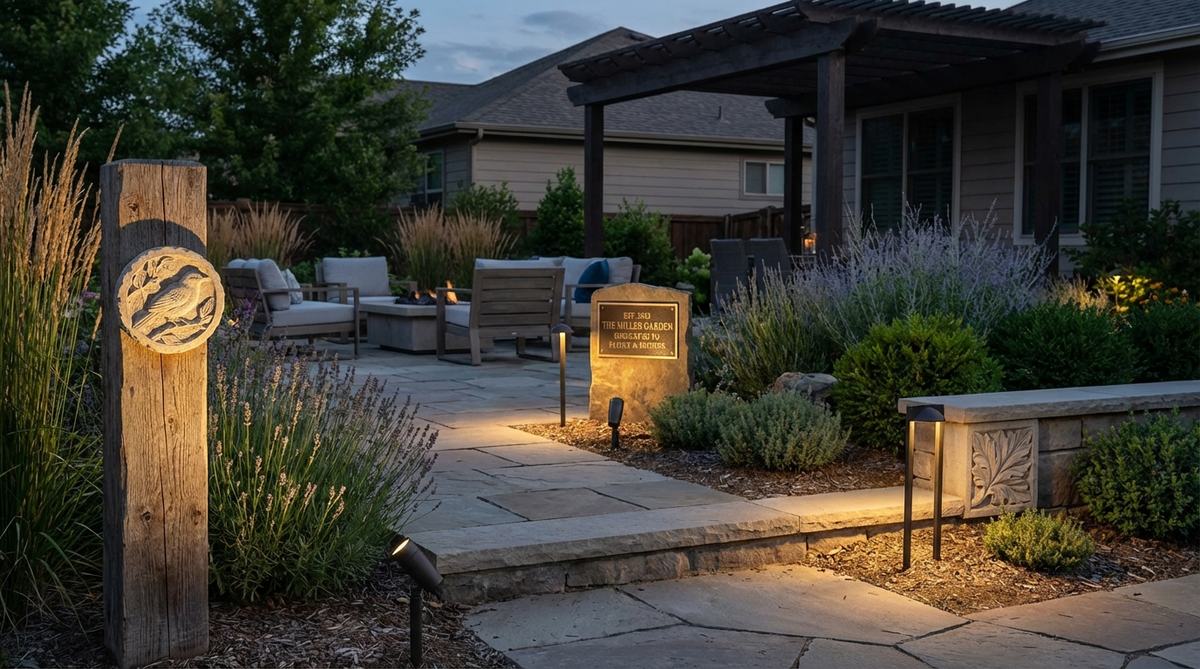
These produce extremely narrow 5-8 degree beams that pinpoint small architectural ornaments. The concentrated output creates high-contrast emphasis on details that larger fixtures would overwhelm.
Aim from distances of 6-10 feet to achieve proper beam spread at the target. Test beam patterns before finalizing fixture mounting to ensure the feature fits within the illuminated area.
Micro-spots excel at highlighting architectural craftsmanship—carved details, decorative medallions, or commemorative plaques.
15. Adjustable Accent Spotlights
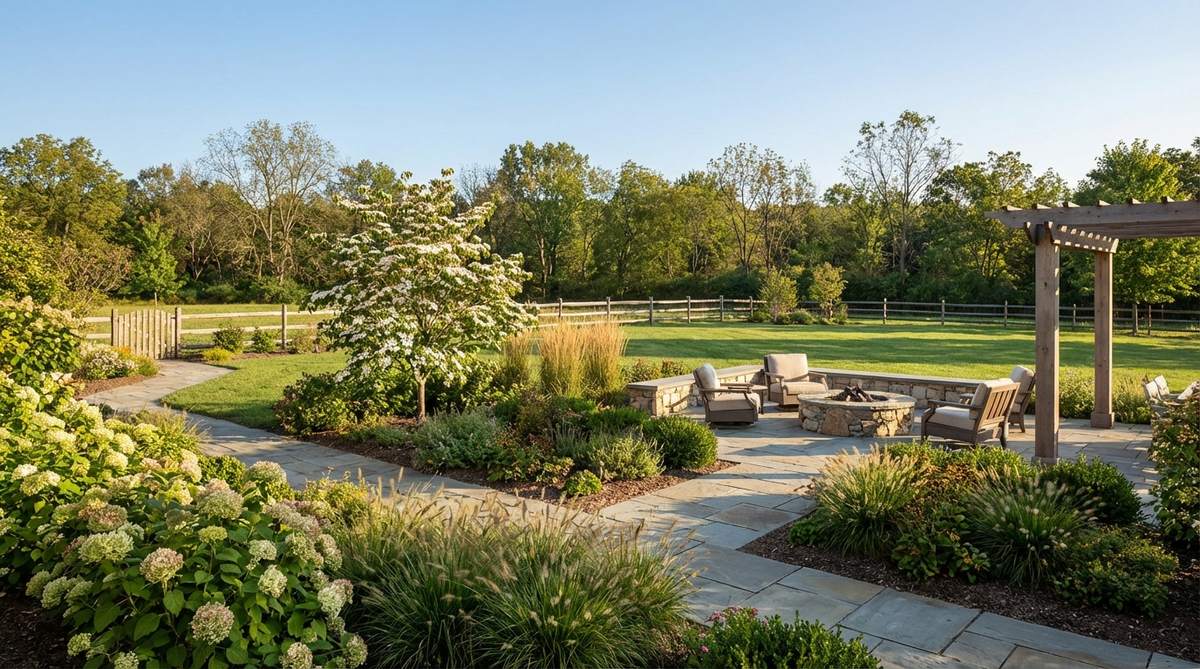
Swivel-mount housings rotate through full 350-degree horizontal arcs plus 90-degree vertical tilts. The multi-axis adjustment enables precise aiming after installation.
Position these where architectural targets may shift due to plant growth or future modifications. The reusability extends fixture lifespan beyond single-purpose installations.
Adjustable mounts reduce waste by allowing fixture repositioning rather than replacement when landscape conditions change.
16. Framing Projector Lights
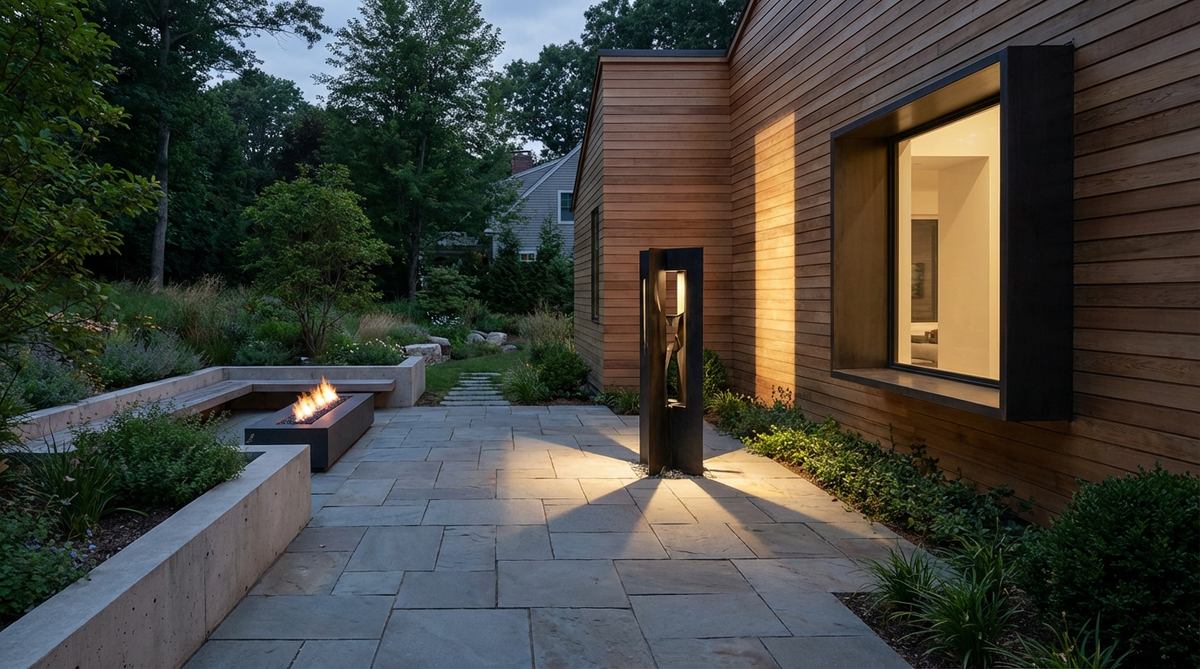
Internal shutters shape the beam into precise rectangles or geometric patterns. The framing capability confines illumination exactly to the target boundaries without spill onto adjacent surfaces.
Use on architectural features surrounded by elements that should remain unlit—windows, artwork, or material transitions. Adjust shutters individually to match irregular feature shapes.
Framing projectors deliver exhibition-quality precision to residential and commercial architectural highlighting.
17. Cross-Lighting Spot Pairs
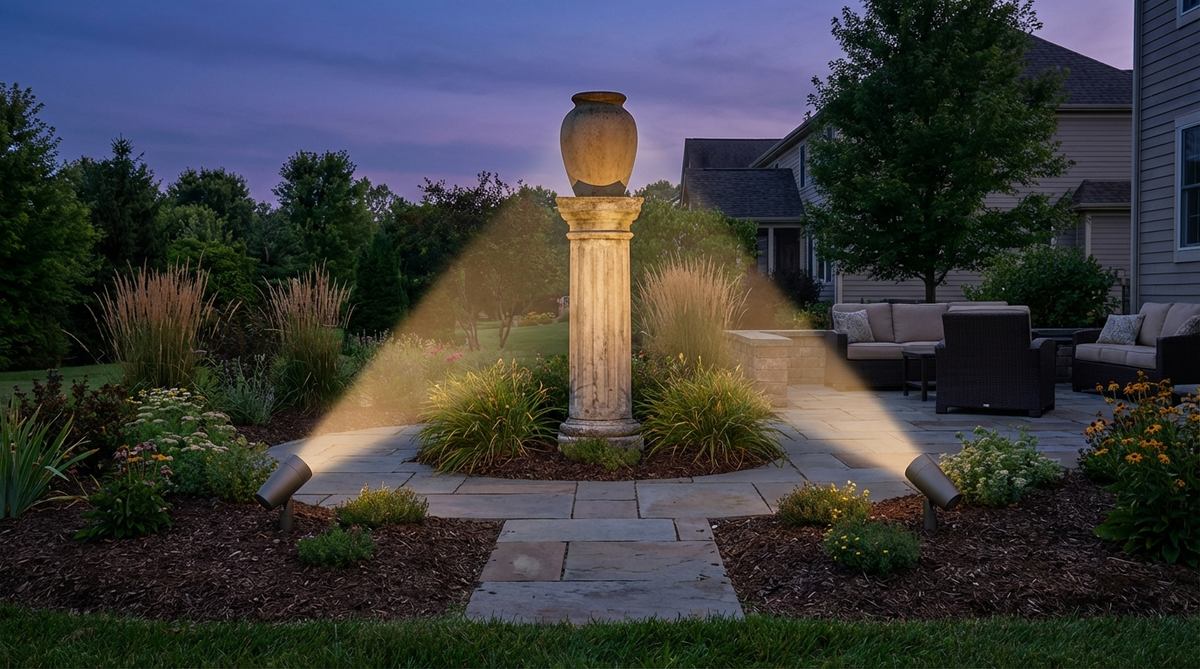
Two fixtures aimed from opposing angles eliminate harsh shadows while reinforcing three-dimensional form. The crossed beams reveal depth that single-source lighting flattens.
Position fixtures at 45-degree angles to the feature centerline, maintaining equal distances to balance illumination intensity. Use identical beam spreads and output levels for symmetrical effect.
Cross-lighting adds sculptural dimension to architectural elements with significant relief—columns, statuary, or ornamental urns.
18. Honeycomb Louvered Spots
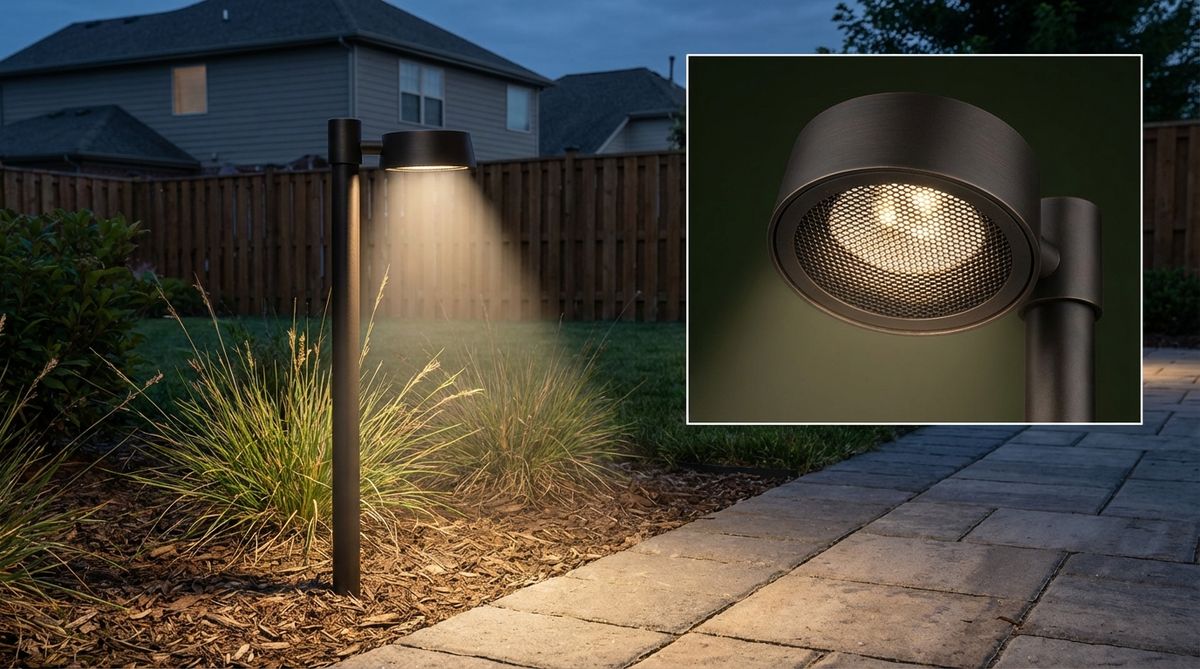
Accessory louvers snap onto fixture fronts, reducing beam spread by 30-50% and eliminating peripheral spill. The cellular structure maintains center beam intensity while controlling edge light.
Add louvers where property lines or neighboring windows require strict light trespass control. The accessories provide beam shaping without replacing entire fixtures.
Louvered spots meet dark-sky ordinances and good-neighbor policies in dense residential settings.
19. Solar-Powered Accent Spots
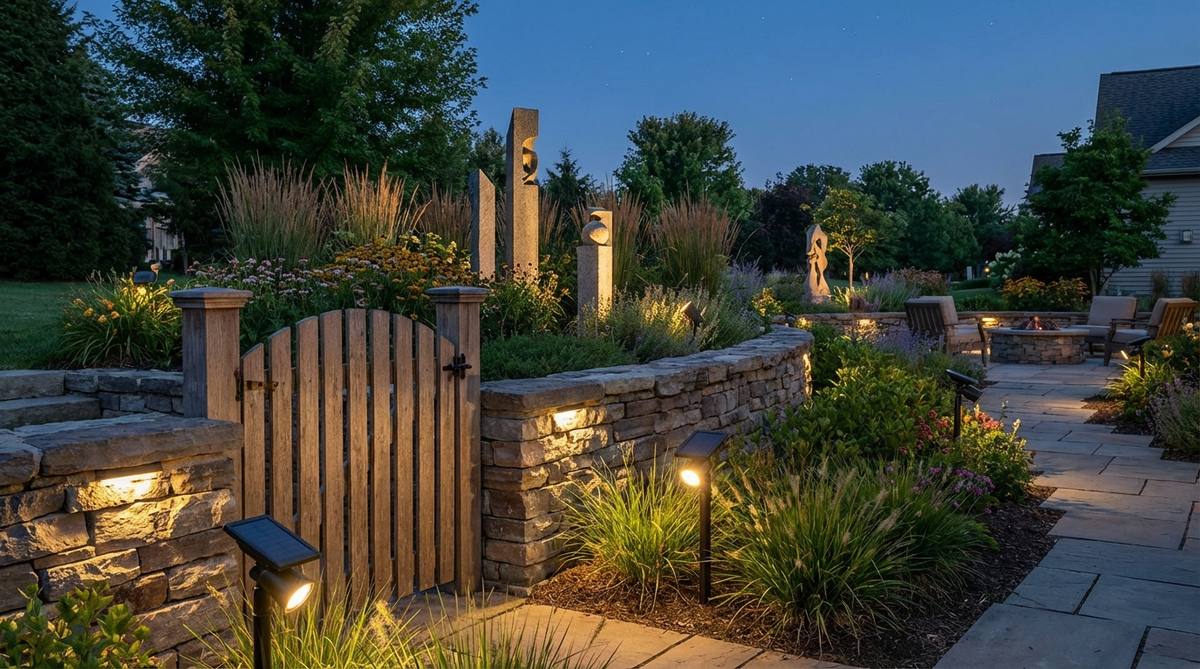
Integrated photovoltaic panels charge internal batteries during daylight hours. The self-contained design eliminates wiring to remote architectural features—gates, outbuildings, or perimeter walls.
Position solar panels for maximum southern exposure free from tree shade. Accept slightly reduced output compared to line-voltage fixtures as the trade-off for installation simplicity.
Solar spots provide economical accent lighting where electrical infrastructure is absent or cost-prohibitive to install.
20. Fiber-Optic Pin Spots
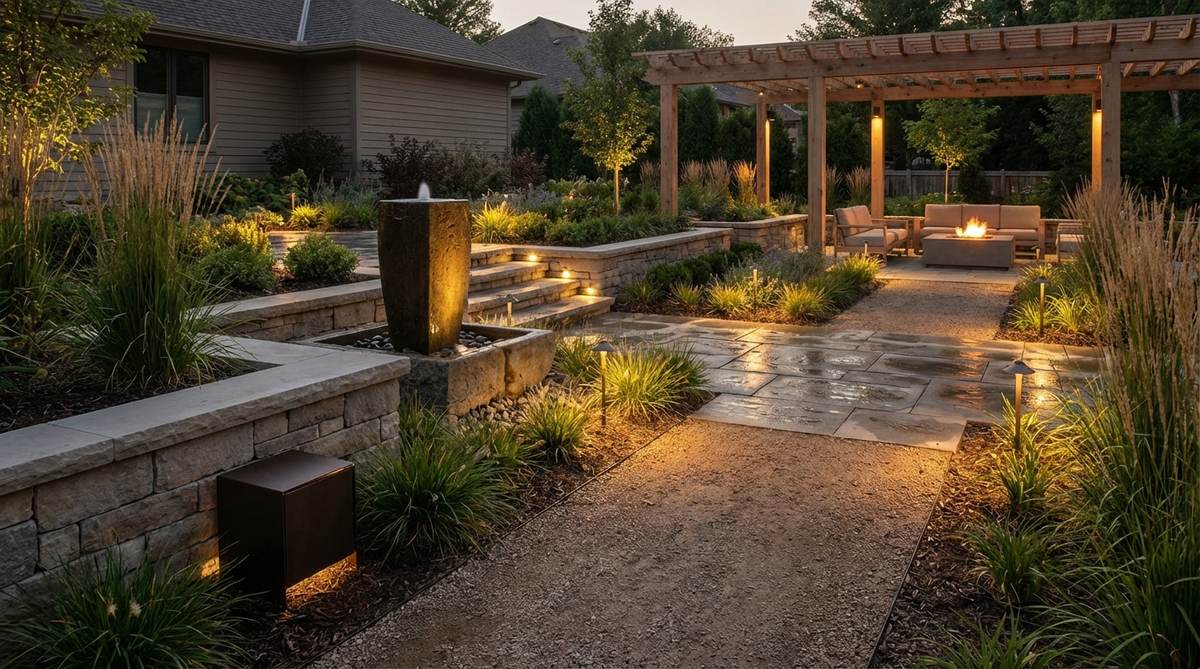
Single remote light sources feed multiple fiber endpoints that deliver small pools of illumination. The passive fiber carries no electricity, enhancing safety near water features or combustible materials.
Distribute fiber ends to highlight dispersed architectural details from one central illuminator. Replace lamps at the single source location rather than accessing multiple remote fixtures.
Fiber systems reduce maintenance labor in installations featuring numerous small accent points.
Architectural Bollards & Path Posts
Vertical fixtures at pedestrian scale define pathways while casting gentle illumination on adjacent architectural surfaces. Modern bollard designs serve dual functions—wayfinding and architectural accent.
21. Slim-Profile Architectural Bollards
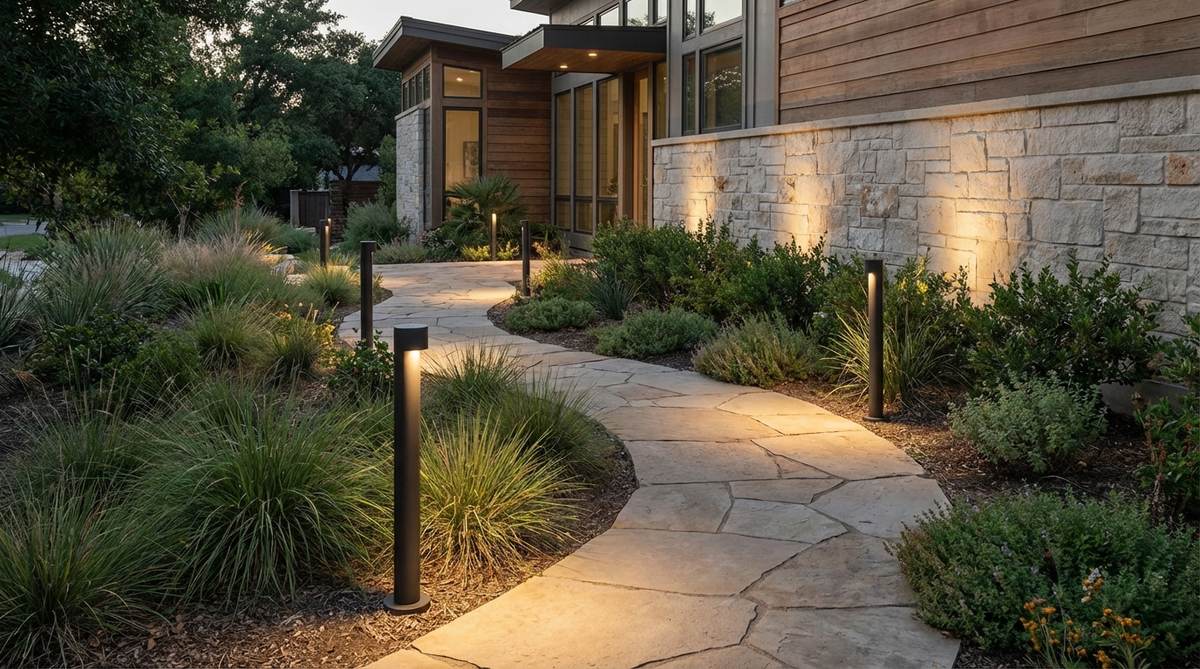
Narrow cylindrical forms (3-4 inches diameter) maintain minimal visual impact during daylight hours. The slender proportions complement contemporary architecture where bulk disrupts clean lines.
Space these 12-15 feet apart along pathways, positioning them 18 inches from building foundations to wash light across lower wall surfaces. Select heights of 24-36 inches for optimal facial illumination zones.
Slim bollards guide circulation while providing subtle architectural washing that connects buildings to surrounding gardens.
22. Geometric Cube Bollards
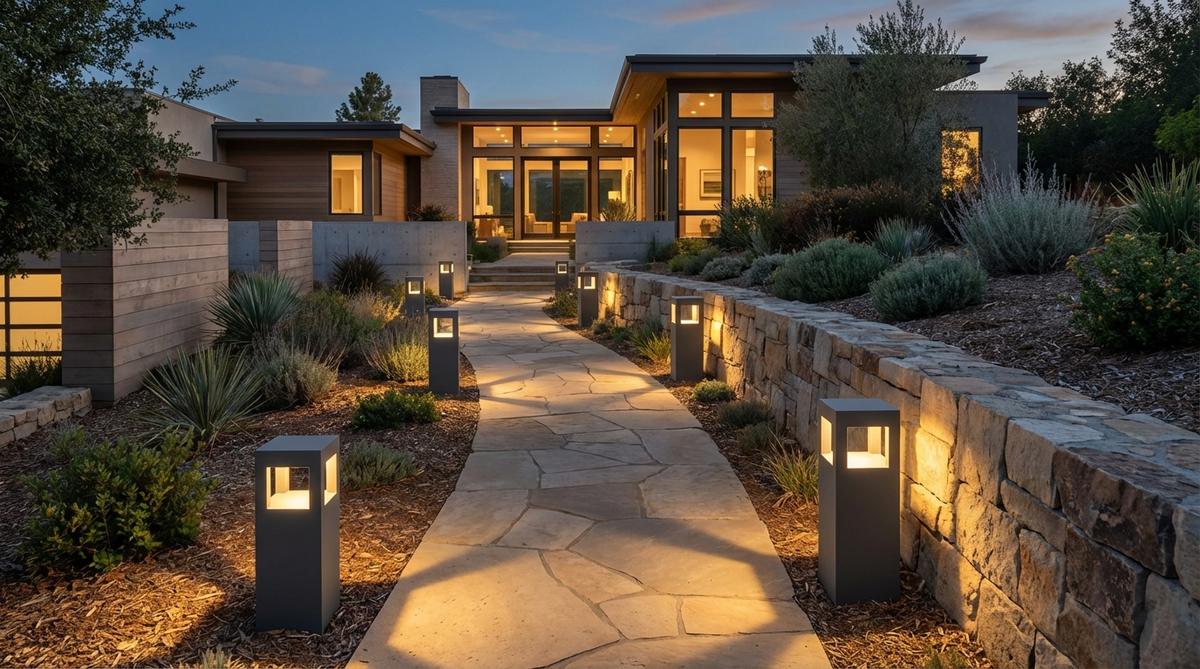
Square or rectangular housings echo the orthogonal geometry of modern architecture. Multi-directional light distribution illuminates pathways plus adjacent walls through perpendicular optical systems.
Align cube faces parallel to building elevations to direct maximum output toward architectural surfaces. The geometric form creates visual rhythm when installed in repetitive sequences.
Cubic designs reinforce architectural order while delivering functional pathway illumination.
23. Top-Emitting Column Lights
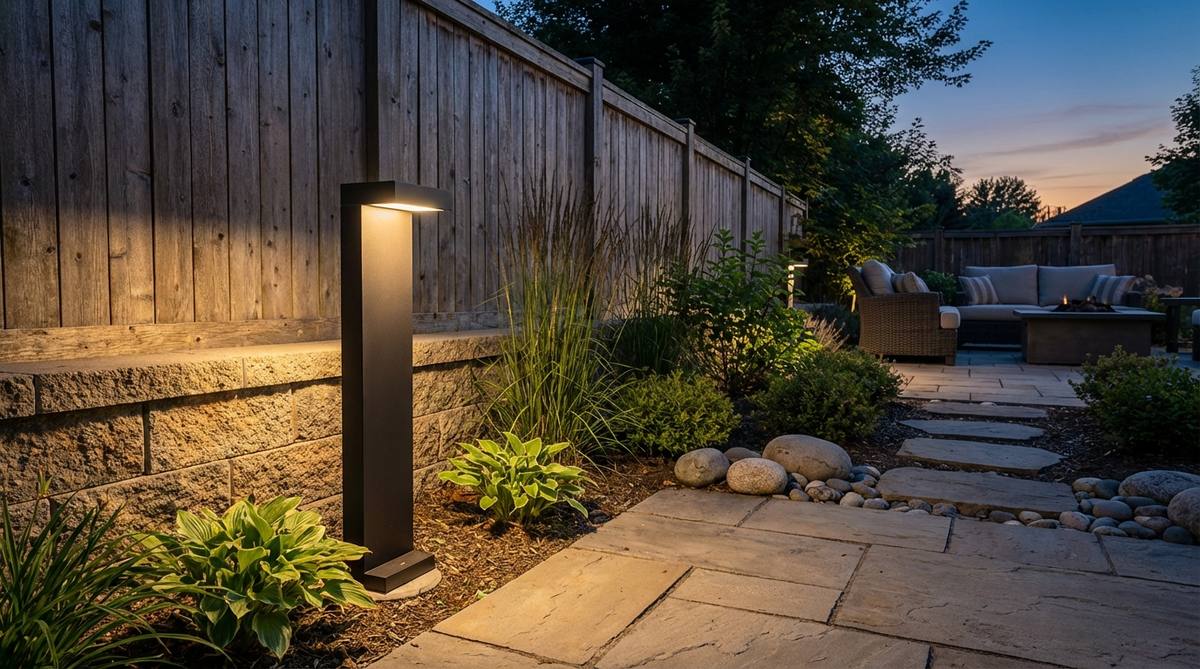
Light exits exclusively through the fixture top, casting 350-degree illumination downward onto pathways and nearby ground planes. The downward-only distribution prevents glare while washing vertical surfaces with reflected light.
Install near architectural corners where the omnidirectional output illuminates multiple elevations simultaneously. The reflected illumination reveals building texture without direct fixture aiming.
Top-emission bollards provide ambient architectural illumination while maintaining strict glare control.
24. Dual-Direction Wall-Grazing Bollards
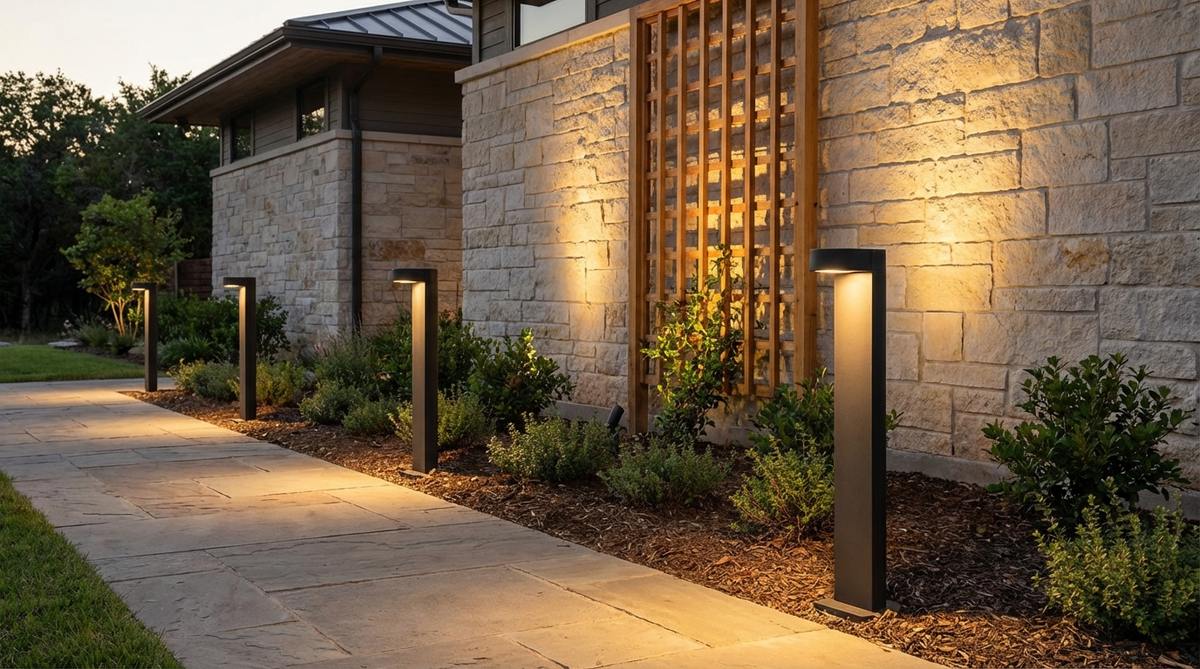
Opposed horizontal apertures cast light toward parallel surfaces—pathway on one side, building wall on the other. Internal optics shape each beam independently for optimized coverage.
Position these along building perimeters where pathways run parallel to walls. The dual output eliminates need for separate path and architectural fixtures, reducing installation costs.
Bifunctional bollards deliver integrated lighting solutions where space constraints limit fixture quantities.
25. Decorative Perforated Bollards
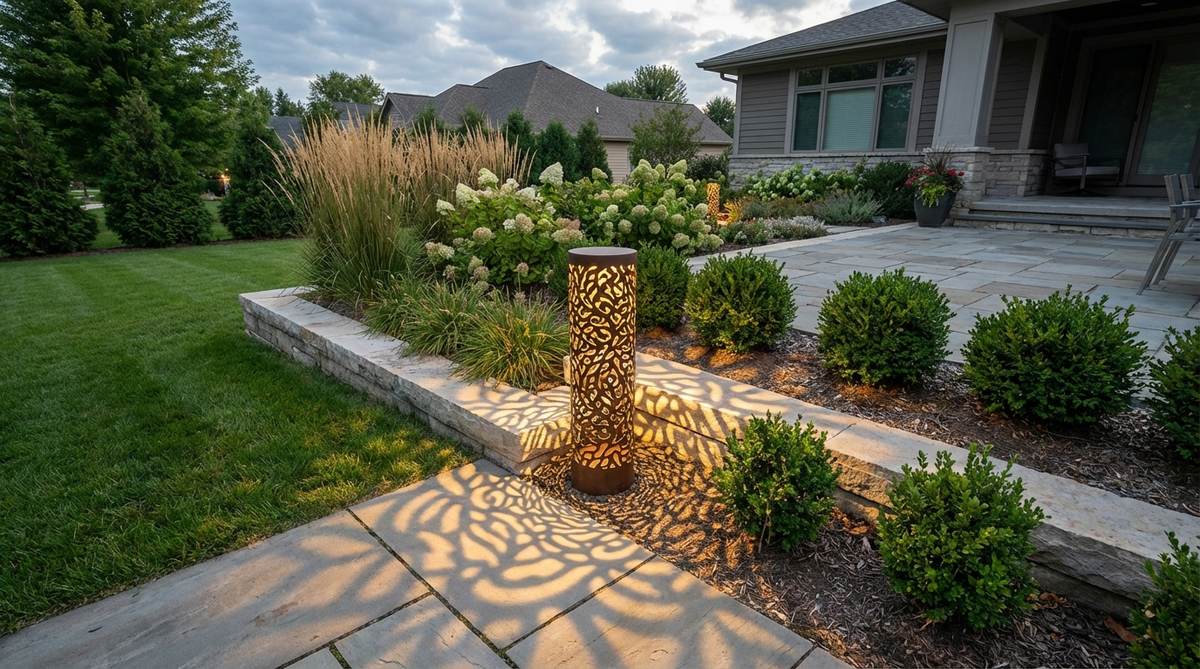
Custom cutout patterns in the housing walls create decorative light projections on adjacent surfaces. The perforations transform functional fixtures into artistic elements that complement architectural character.
Select perforation patterns that reference building details—Gothic tracery for historic properties, geometric screens for contemporary designs. The projected patterns add visual interest to plain wall surfaces.
Perforated bollards merge utility with decoration, enhancing architectural presentation through patterned light.
26. Color-Temperature-Selectable Bollards
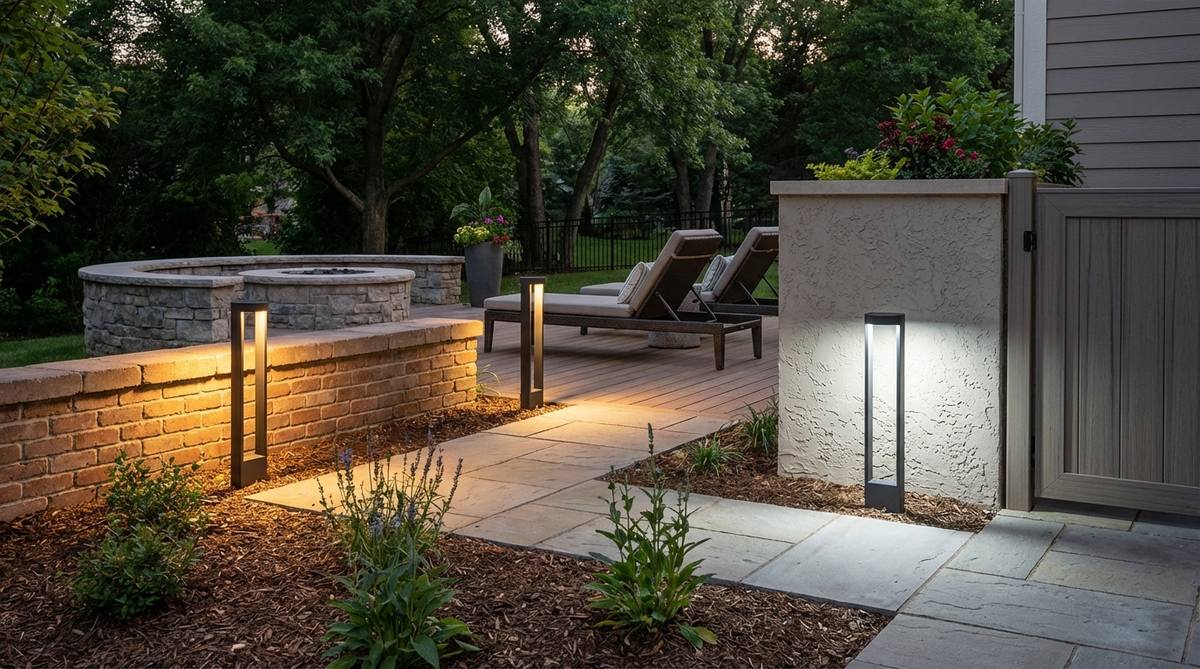
Dual LED arrays provide field-selectable color temperatures via internal switches. Installers choose warm, neutral, or cool whites to match architectural materials without stocking multiple fixture models.
Match warmer temperatures (2700-3000K) to traditional brick or wood materials; select neutral whites (3500K) for contemporary stucco or composite finishes. Test illuminated samples before committing to large orders.
Selectable temperature reduces inventory complexity while ensuring proper color rendering on diverse architectural palettes.
27. Vandal-Resistant Steel Bollards
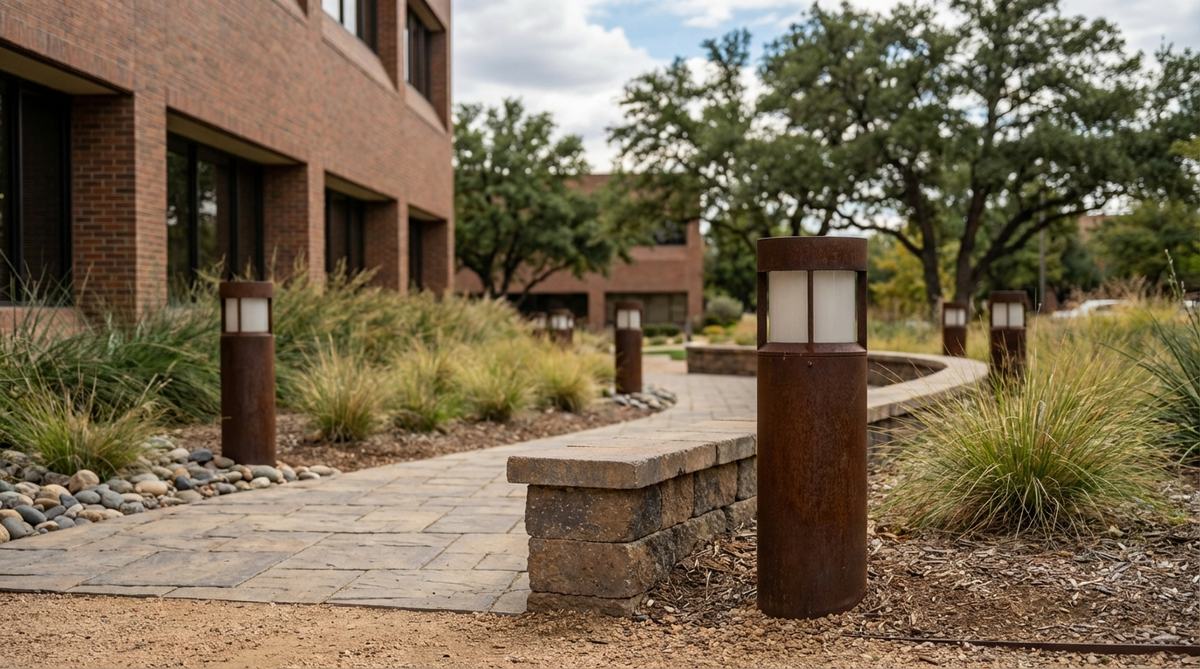
Heavy-gauge stainless or corten steel construction withstands impact and tampering in public settings. Tamper-proof fasteners and polycarbonate lenses resist forced entry and vandalism.
Specify for commercial installations, institutional campuses, or high-traffic urban environments. The robust construction ensures long-term performance despite exposure to potential abuse.
Hardened bollards maintain architectural lighting integrity in challenging public realm applications.
Recessed & In-Ground Installations
Fixtures mounted flush with walking surfaces or grade levels provide uplighting without above-ground profiles. These installations maintain unobstructed sight lines while delivering dramatic architectural emphasis.
28. Heavy-Duty Drive-Over Uplights
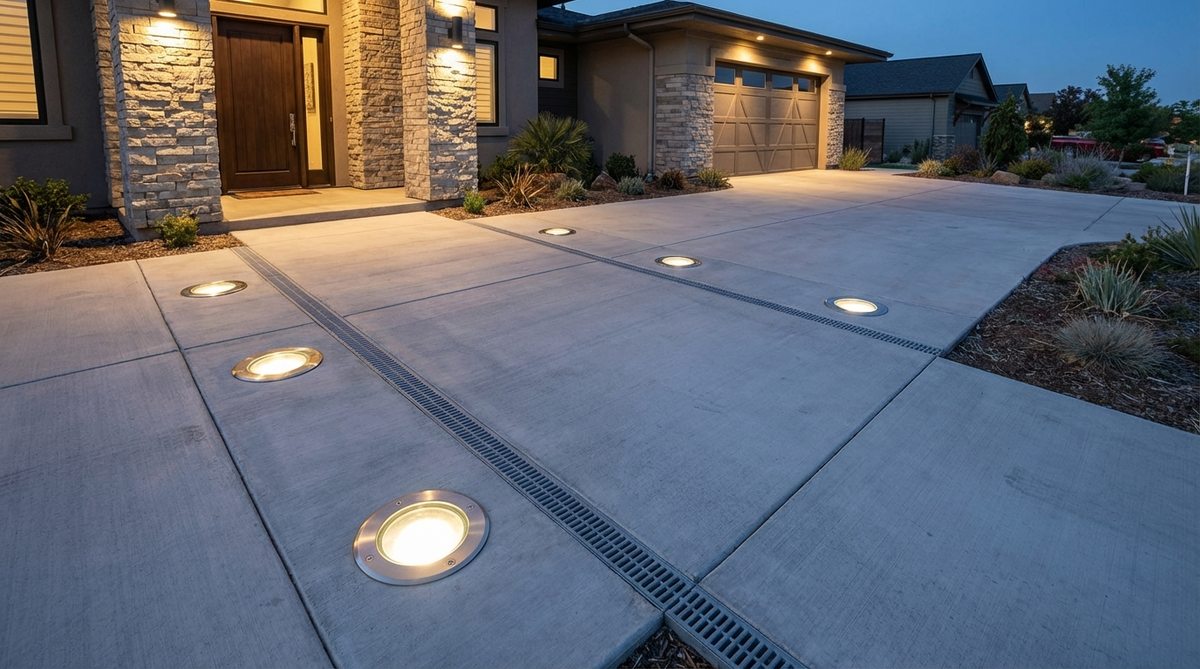
Reinforced housings and tempered glass lenses withstand vehicular loads exceeding 5,000 pounds. The structural integrity allows installation in driveways where fixtures illuminate adjacent building entries or garage elevations.
Set fixtures in concrete pads that extend 6 inches beyond the housing perimeter for load distribution. Provide drainage channels to prevent water accumulation in the fixture wells.
Drive-over capability brings architectural uplighting to areas where above-ground fixtures would obstruct vehicles or snow removal equipment.
29. Adjustable In-Ground Spots
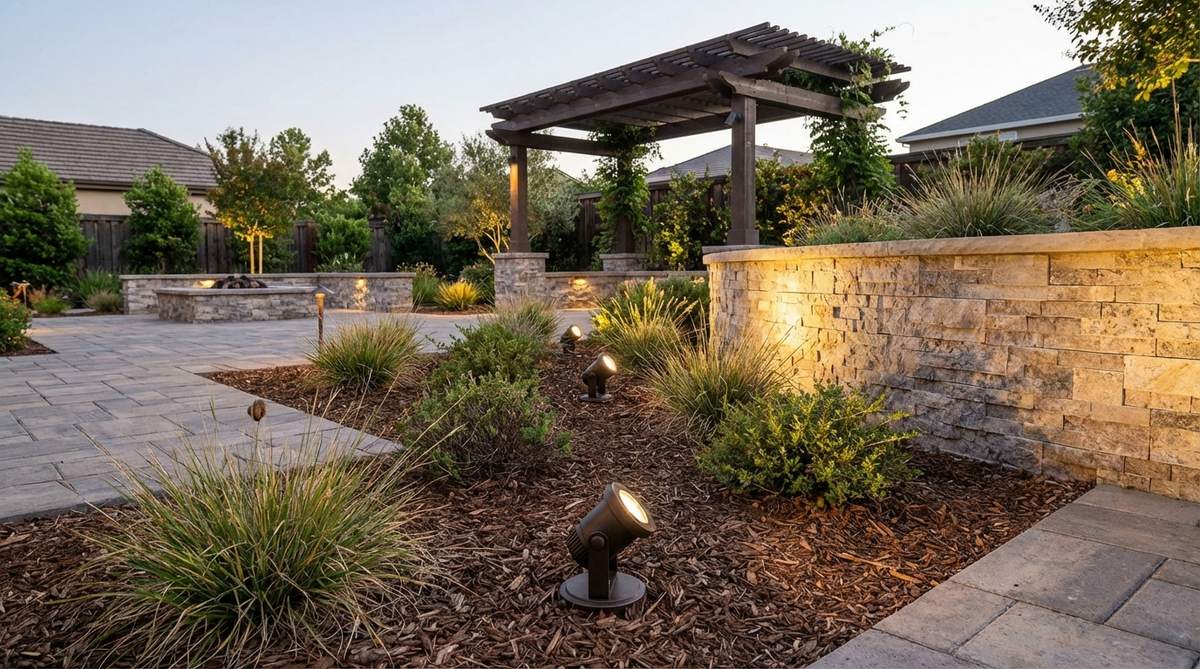
Below-grade housings contain gimbal-mounted lamp heads that tilt 0-30 degrees from vertical. The adjustment capability accommodates varied distances between fixture locations and architectural targets.
Install in planting beds 3-6 feet from building foundations, angling beams to graze walls or highlight specific features. The in-ground placement conceals fixtures within groundcover plantings.
Adjustable in-ground fixtures provide uplighting flexibility from discreet landscape positions.
30. Linear Slot In-Grade Lights
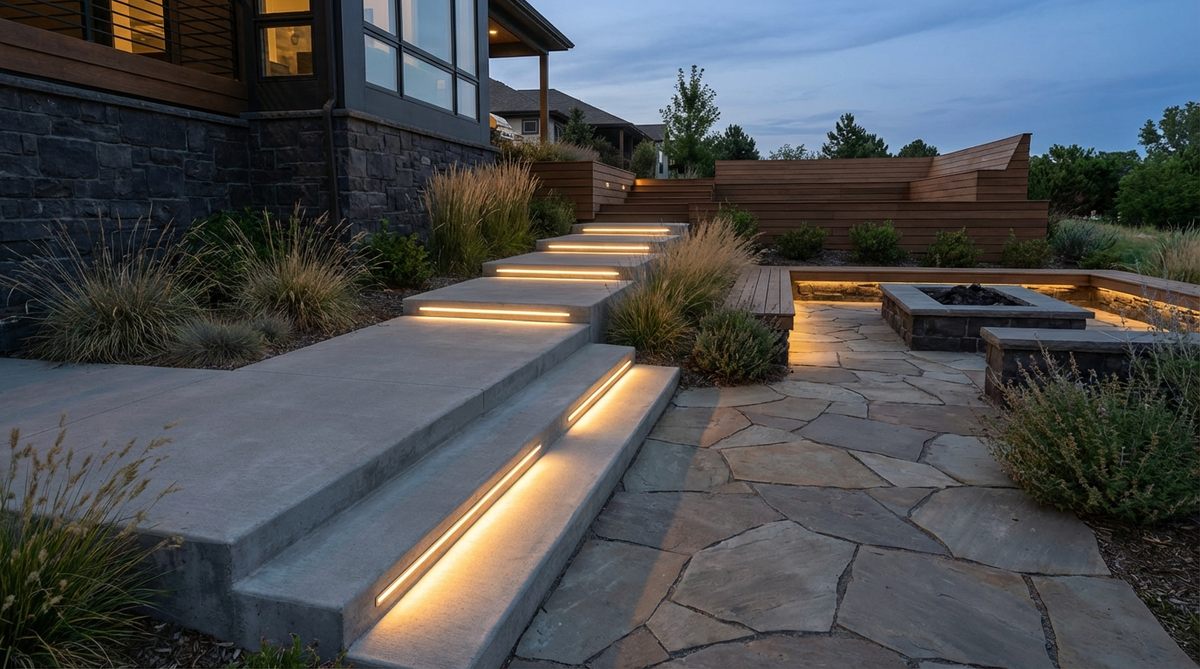
Continuous narrow channels house LED arrays that produce blade-like beams along their entire length. The linear distribution illuminates building bases or architectural steps with uniform intensity.
Detail slots into hardscape edges—where paving meets building foundations or along step risers. Ensure proper drainage pitch to prevent water infiltration into electrical components.
Slot fixtures deliver architectural emphasis integrated directly into hardscape construction.
31. Color-Kinetic In-Ground Fixtures
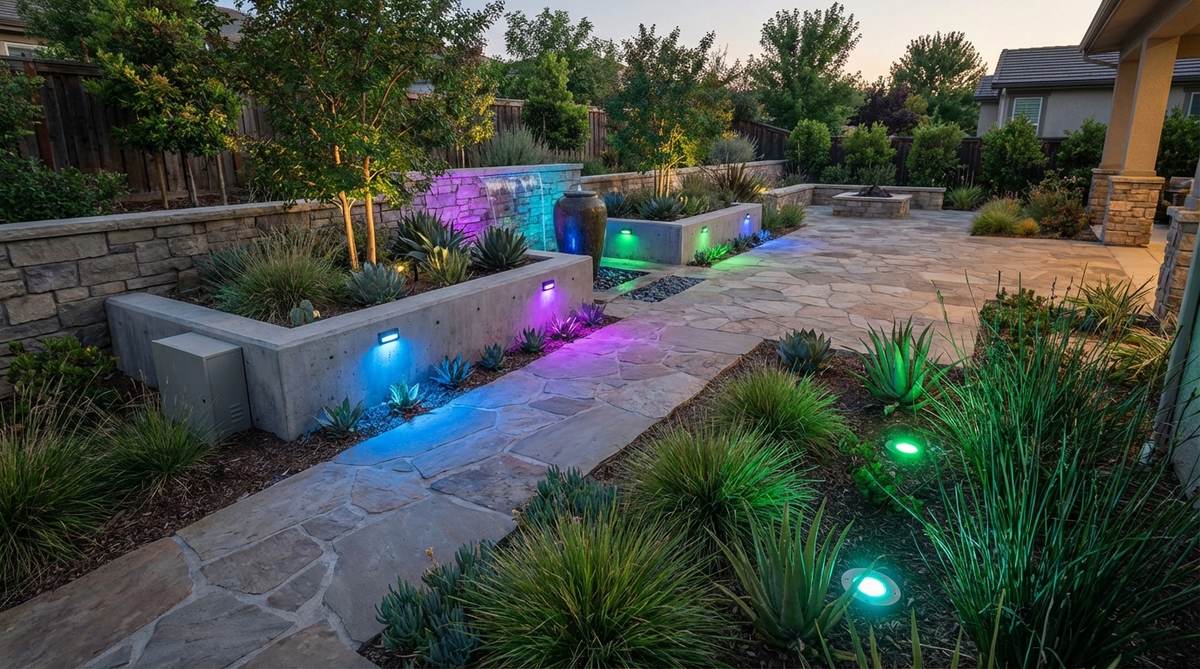
RGB LED arrays plus dynamic control systems create programmable color sequences and fades. The in-ground positioning allows bold color effects without visible fixture hardware.
Program seasonal color themes or event-specific palettes that transform architectural presentation for holidays and celebrations. Maintain white light programs for everyday use to avoid visual fatigue.
Color-capable in-ground systems provide architectural flexibility for properties hosting varied events and seasonal displays.
32. Ultra-Shallow Remodel Wells

Compact housings require only 4-6 inches of burial depth, enabling retrofit installations in existing landscapes with limited excavation. The shallow profile accommodates sites with high water tables or shallow utilities.
Use rotary hammer drills to core precise openings in existing paving or compacted soils. The minimal depth reduces installation labor while maintaining IP68 waterproof ratings.
Shallow wells bring in-ground uplighting to retrofit projects where deep excavation proves impractical.
33. Asymmetric Wall-Wash Wells
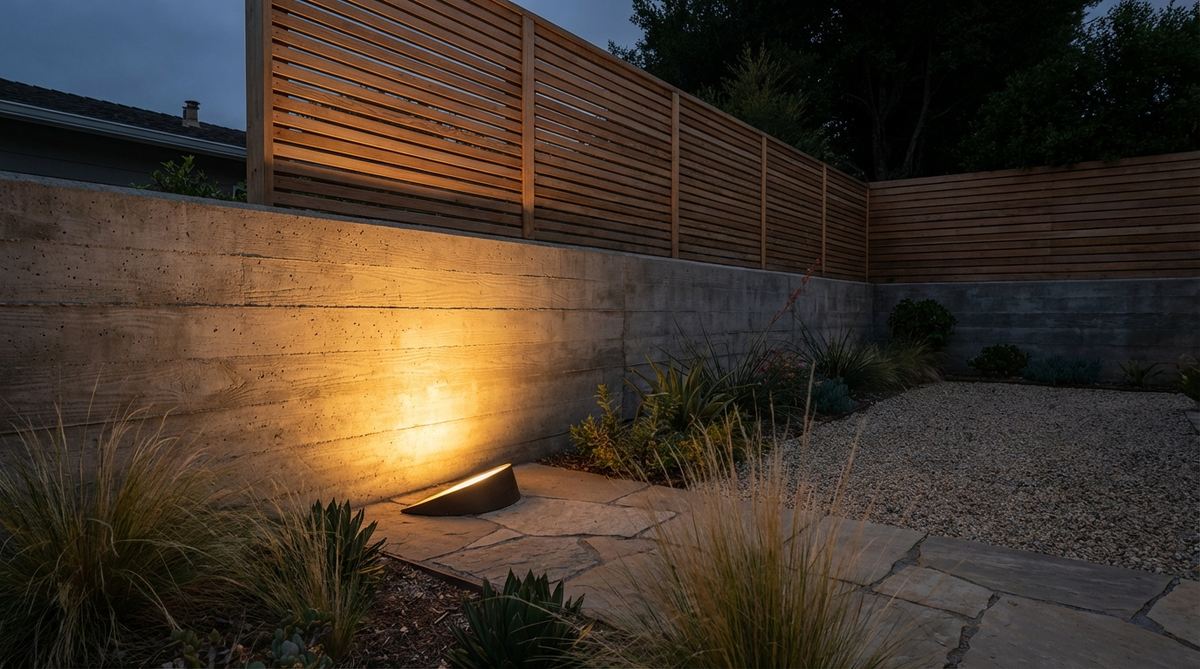
Specialized optics throw light predominantly to one side, washing nearby walls while minimizing opposite-direction spill. The asymmetric distribution maximizes architectural illumination efficiency.
Position these 2-3 feet from building foundations, orienting the primary beam toward the wall surface. The directional output reduces light pollution while concentrating lumens on intended targets.
Asymmetric wells optimize lumen delivery to architectural surfaces from in-grade positions.
34. Composite-Deck Recessed Lights
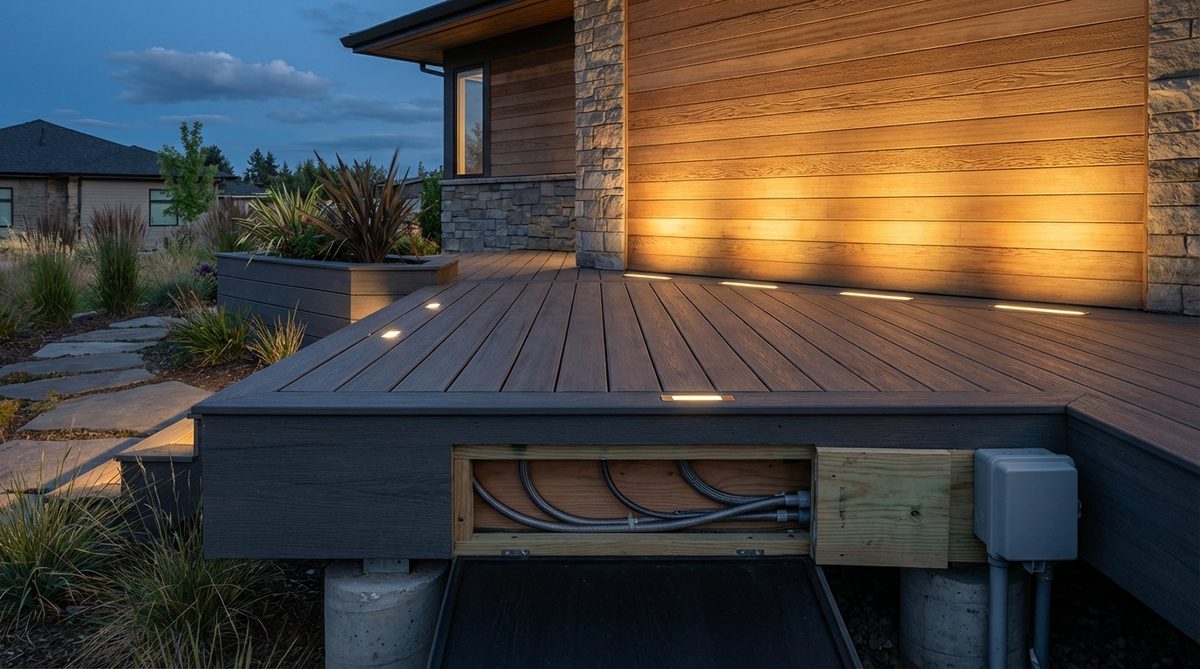
Low-profile housings install between deck joists beneath composite decking boards. The uplighting illuminates building walls visible from elevated decks without visible fixtures disrupting deck surfaces.
Cut deck boards to accommodate fixture flanges, sealing all penetrations against moisture infiltration. Wire fixtures through joist bays to central control locations beneath the deck structure.
Deck-mounted recessed lights extend architectural illumination to elevated outdoor living spaces.
Smart & Integrated Control Systems
Advanced control platforms coordinate multiple fixtures through wireless protocols and programmable interfaces. These systems enable sophisticated architectural lighting effects impossible with manual switches.
35. Wireless Mesh Network Controllers
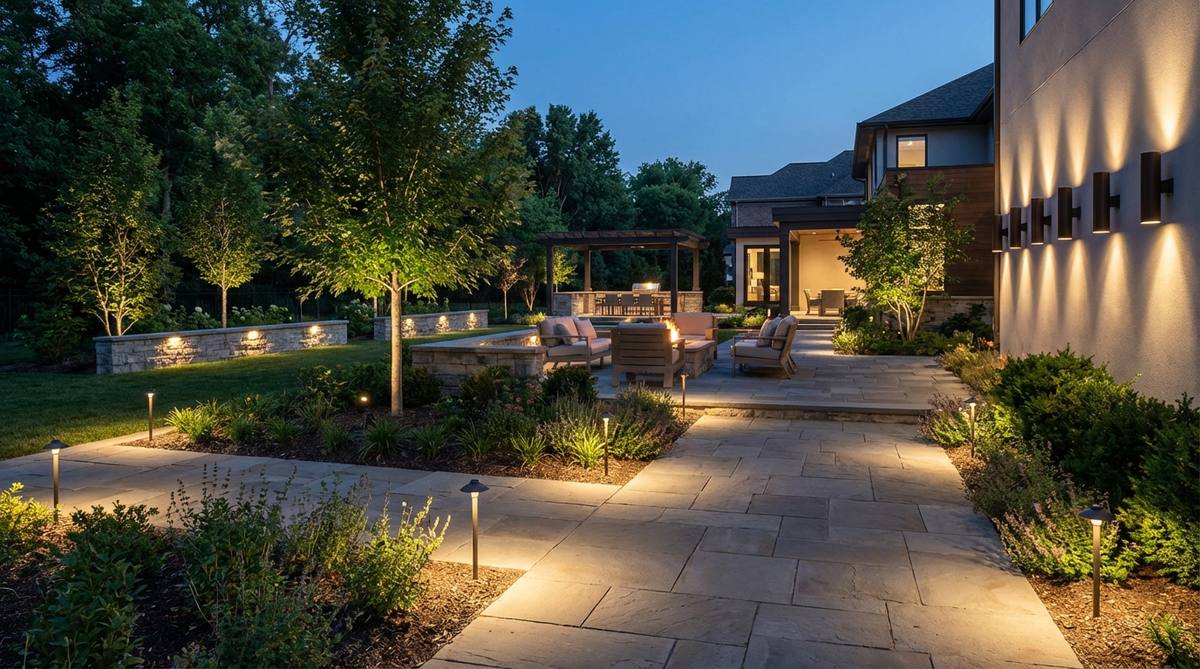
Each fixture contains integrated radio transceivers that form self-healing mesh networks. The distributed intelligence eliminates central control panel failure points while enabling individual fixture programming.
Commission networks through smartphone apps that discover and address each fixture automatically. Program zones, scenes, and schedules without physical access to fixture locations.
Mesh networks provide enterprise-grade control flexibility scaled appropriately for residential architectural lighting.
36. Astronomical Time Clock Systems
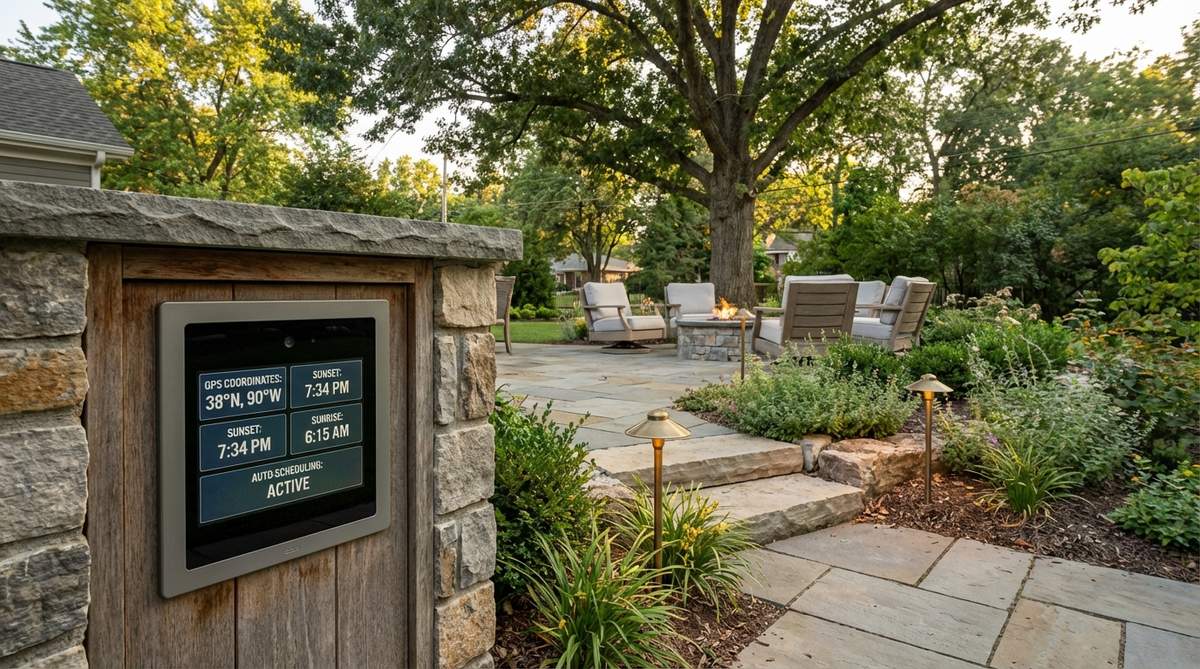
GPS-enabled controllers calculate precise sunset and sunrise times based on property coordinates. The automated scheduling eliminates manual seasonal adjustments while ensuring fixtures operate only during darkness.
Program offset times to activate architectural lighting 30 minutes after sunset for natural dusk transitions. The astronomical accuracy prevents daytime operation that wastes energy and reduces lamp life.
Time-clock automation delivers consistent architectural presentation without ongoing maintenance attention.
37. Occupancy-Sensor Zone Controls
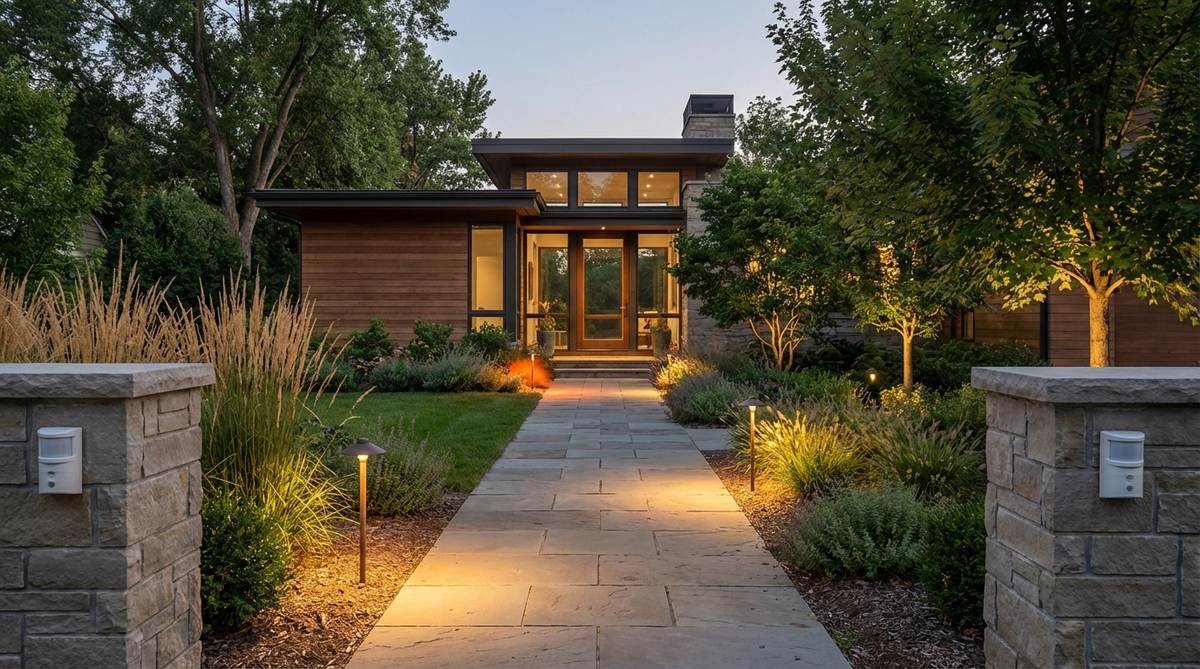
Motion detectors trigger architectural lighting in response to human presence, illuminating building entries when residents or guests approach. The responsive activation provides security while conserving energy during unoccupied periods.
Install sensors with 180-degree coverage patterns aimed at primary approach paths. Program 10-15 minute hold times to prevent premature shut-off during slow movements or pauses.
Occupancy controls balance architectural presentation with energy conservation through demand-responsive operation.
38. DMX-Addressable RGB Systems
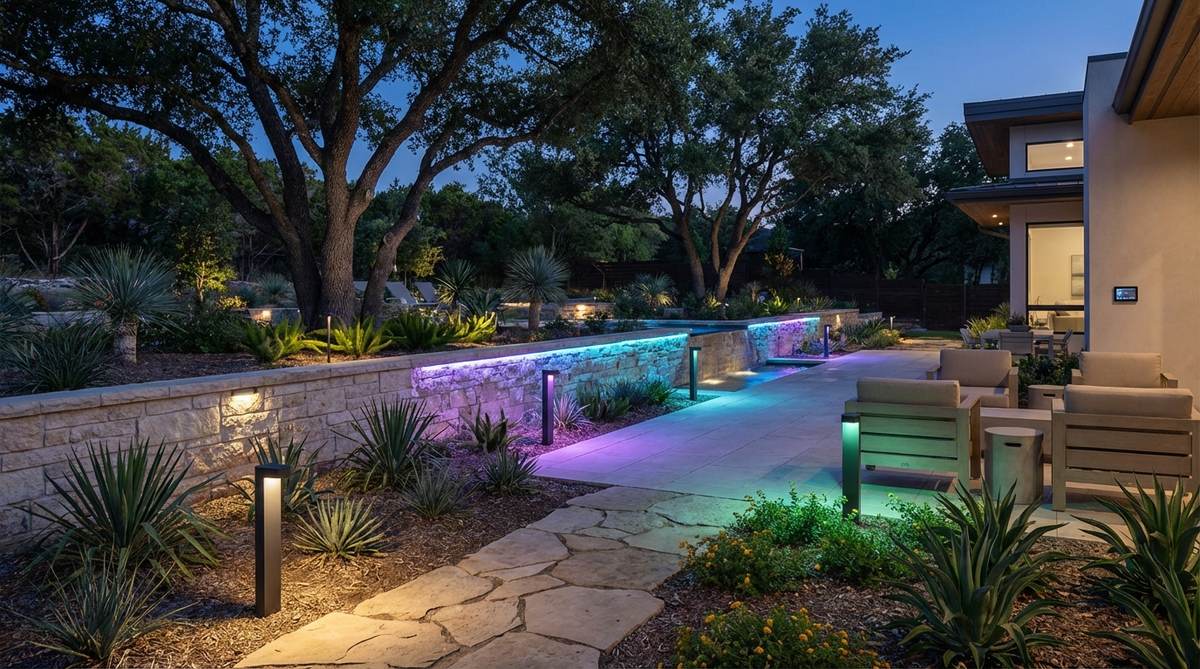
Professional theatrical control protocols enable complex color programming across hundreds of individual fixtures. Each fixture receives unique addressing for pixel-level control in synchronized displays.
Program architectural color washes, chases, and fades through dedicated DMX software on standard computers. The theatrical-grade control delivers exhibition-quality effects for high-end residential and commercial installations.
DMX systems bring professional lighting design capabilities to permanent architectural installations.
39. Voice-Assistant Integration
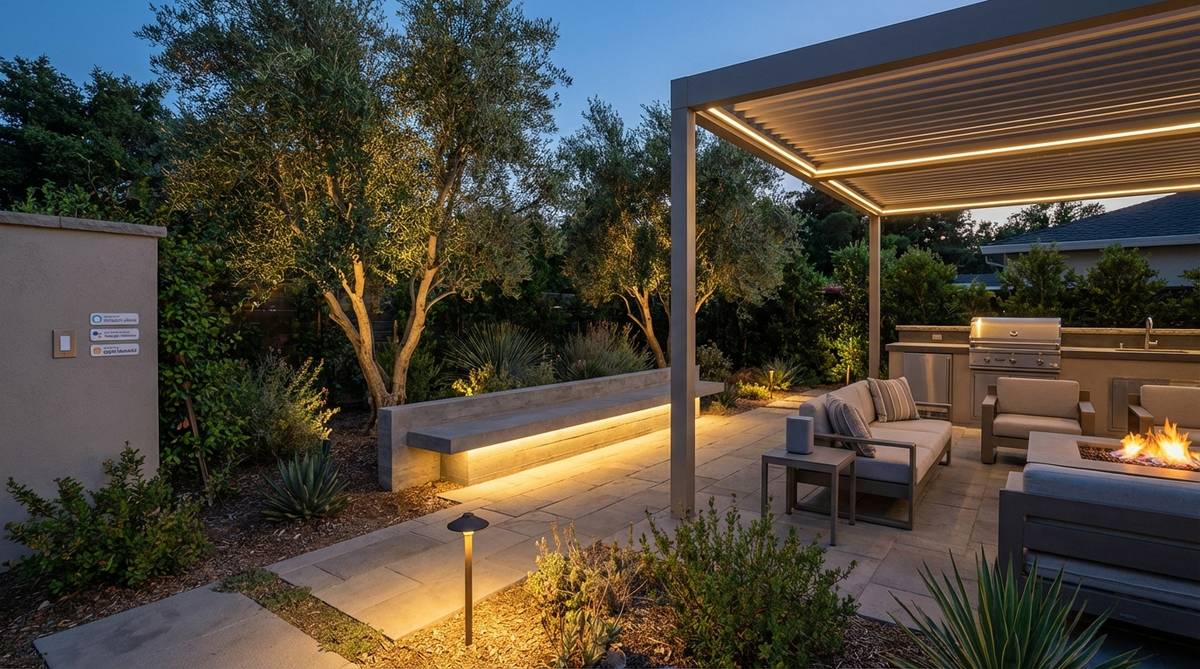
Compatible fixtures connect to Amazon Alexa, Google Assistant, or Apple HomeKit platforms. Voice commands activate preset scenes—”Alexa, turn on architectural lighting”—without physical switches or apps.
Create routines that combine architectural lighting with other smart home functions—security cameras, door locks, or audio systems. The unified control simplifies complex multi-system operation.
Voice integration makes sophisticated architectural lighting accessible through natural language commands.
40. Daylight-Harvesting Photocells
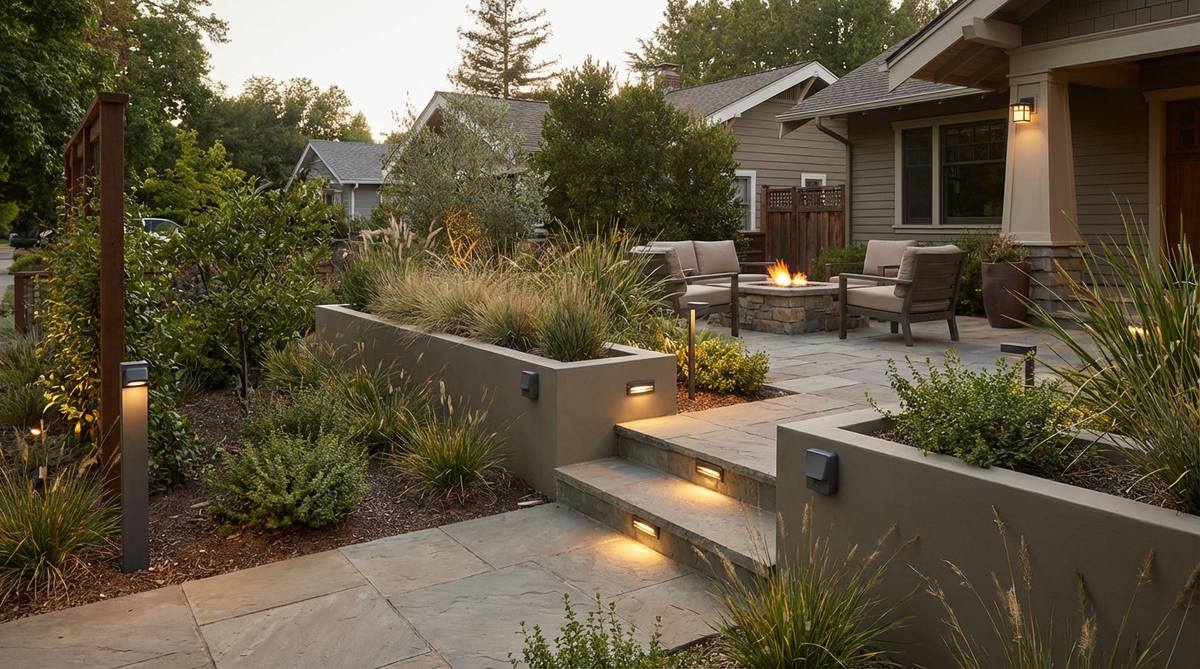
Ambient light sensors measure natural illumination levels and adjust fixture output inversely—dimming as daylight increases, brightening as darkness falls. The proportional response maintains consistent architectural visibility while minimizing energy consumption.
Mount photocells facing north to measure true ambient light without direct sun exposure skewing readings. Position away from fixture illumination that would create false feedback loops.
Daylight harvesting extends energy savings beyond simple on/off control through proportional dimming strategies.
41. Building Automation Integration
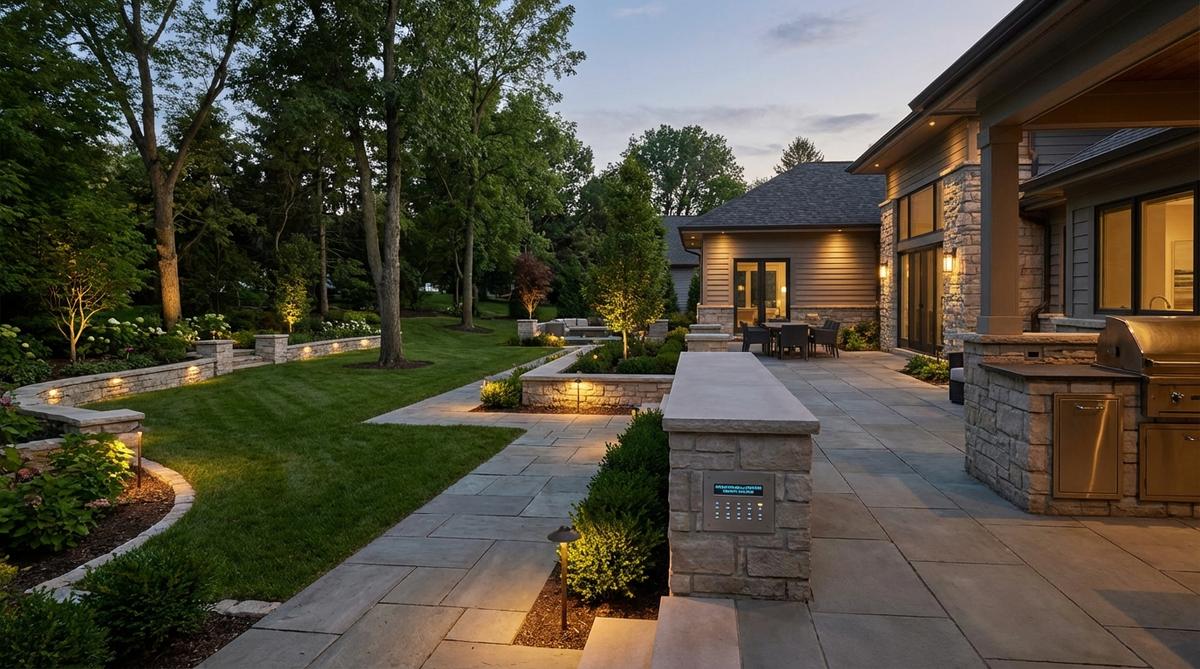
Architectural lighting integrates with comprehensive building management systems through BACnet or Modbus protocols. The unified control platform manages HVAC, security, and lighting from single operator interfaces.
Program architectural lighting to coordinate with security modes—full intensity during alarm conditions, reduced output during away periods. The integration leverages existing building infrastructure for enhanced functionality.
Automation integration positions architectural lighting as a component of holistic building management rather than isolated systems.
42. Energy-Monitoring Analytics Platforms
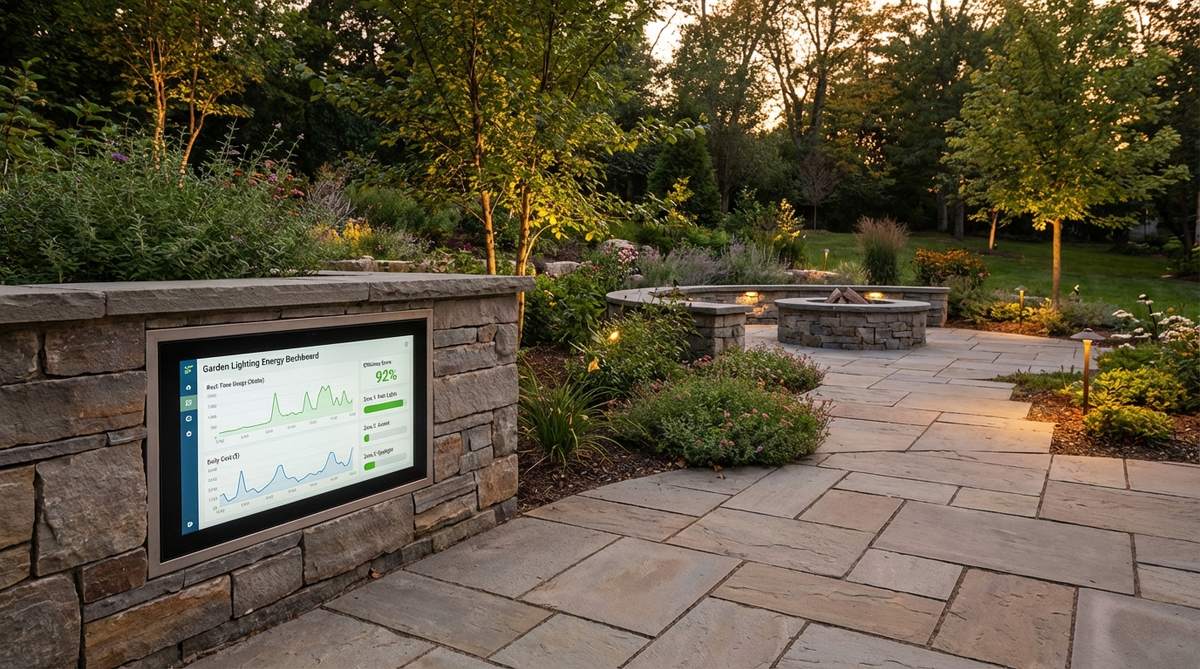
Current sensors and connected controllers track energy consumption at fixture and zone levels. Cloud-based dashboards display usage patterns, identify inefficient fixtures, and calculate operational costs.
Review analytics quarterly to identify fixtures operating during unintended hours or consuming excess power due to component failures. The data-driven insights optimize both performance and operating expenses.
Monitoring platforms transform architectural lighting from static installations into actively managed, continuously optimized systems.
Bringing Architectural Vision to Life
Strategic deployment of modern garden lighting fixtures transforms architectural features into commanding nighttime focal points that enhance property value and visual appeal. The fixtures and techniques presented here represent proven approaches used by professional designers to create dramatic, energy-efficient outdoor environments. Begin with focused uplighting on primary architectural features, then layer additional fixture types to build depth and visual interest across your property’s unique design elements.
Frequently Asked Questions
What beam angle works best for uplighting columns and pillars?
Use narrow 10-15 degree beams for slender columns under 12 inches diameter to maintain focused vertical emphasis. Wider columns exceeding 18 inches benefit from 20-30 degree beams that provide adequate coverage without excessive spill. Position fixtures 4-6 inches from the column base and test beam spread before finalizing installation.
How many lumens are required to effectively highlight a two-story wall?
Residential two-story walls typically require 15-20 lumens per square foot of illuminated surface for adequate visibility. A 20-foot-wide by 20-foot-tall wall (400 square feet) needs approximately 6,000-8,000 total lumens distributed across 3-4 fixtures. Dark materials like charcoal stucco require 25-30% more output than light-colored surfaces to achieve equivalent brightness perception.
What color temperature should I choose for traditional brick architecture?
Warm white temperatures between 2700-3000K enhance the natural red and orange tones in traditional brick while creating inviting, residential-scale atmosphere. Avoid cool whites above 4000K that suppress brick warmth and create commercial or institutional appearance. Test sample fixtures on the actual brick surface after dark to confirm color rendering before purchasing complete systems.
How far should uplights be positioned from building walls?
Standard practice positions fixtures 18-36 inches from wall surfaces depending on building height and desired beam spread. Closer placement (12-18 inches) creates dramatic grazing effects on textured surfaces. Greater distances (36-48 inches) provide broader coverage suitable for tall walls or when using narrow beam fixtures. Always test positioning before finalizing installation to achieve desired effects.
Can solar-powered fixtures provide adequate architectural highlighting?
Quality solar fixtures deliver 200-400 lumens suitable for accent lighting small architectural details or secondary features. They cannot match the 800-1,500 lumen output of line-voltage fixtures needed for primary architectural illumination of large walls or prominent features. Reserve solar options for supplemental accents where trenching electrical lines proves cost-prohibitive or impractical.