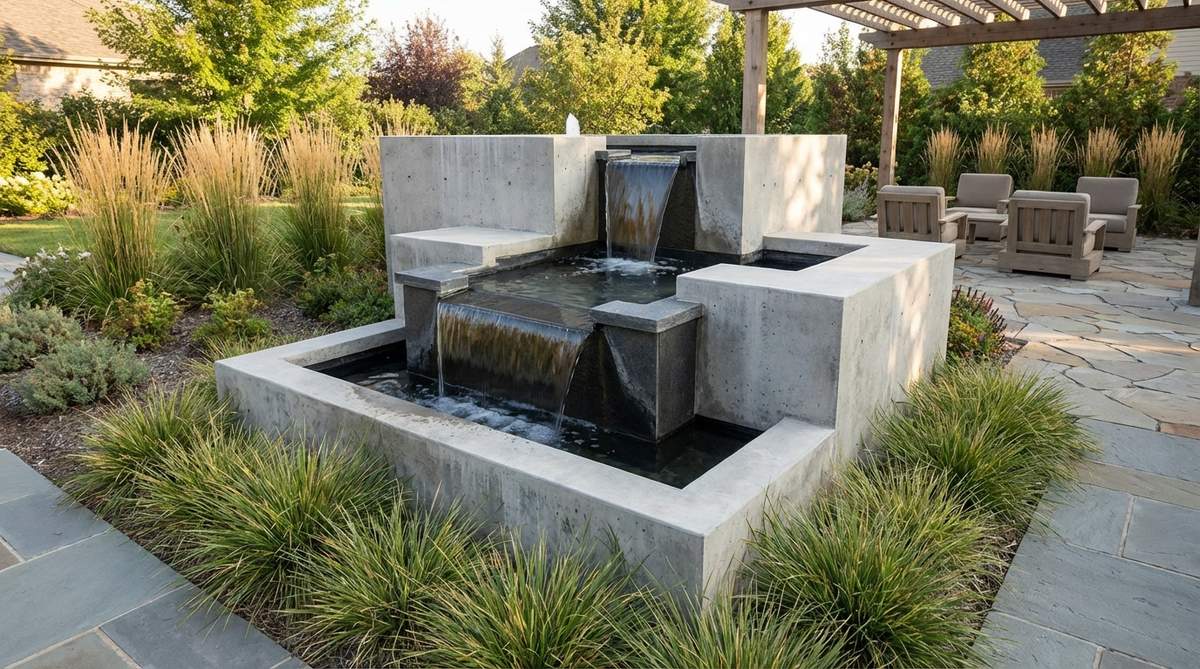
A modern garden fountain transforms outdoor spaces through precise geometric forms and controlled water movement. These contemporary water features combine architectural clarity with the natural beauty of flowing water. Fresh Garden Ideas explores over twenty designs that bring sculptural presence and soothing sound to residential and commercial landscapes.
Design SnapshotKey Principles
- Geometric Precision: Clean lines and angular forms create visual order while directing water flow in predictable, elegant patterns
- Material Contrast: Combining concrete, metal, stone, and glass amplifies the interplay between solid structure and liquid movement
- Flow Control: Laminar nozzles and engineered channels produce smooth cascades, sheets, and arcs with minimal turbulence
- Spatial Integration: Scale and placement align with architectural elements to enhance rather than compete with existing design language
Linear Cascade Fountains That Define Contemporary Edges
Linear fountains direct water along precise horizontal or vertical planes, creating visual boundaries within the landscape. These features work exceptionally well in urban gardens and courtyard settings where space requires deliberate organization.
1. Single-Spout Linear Channel
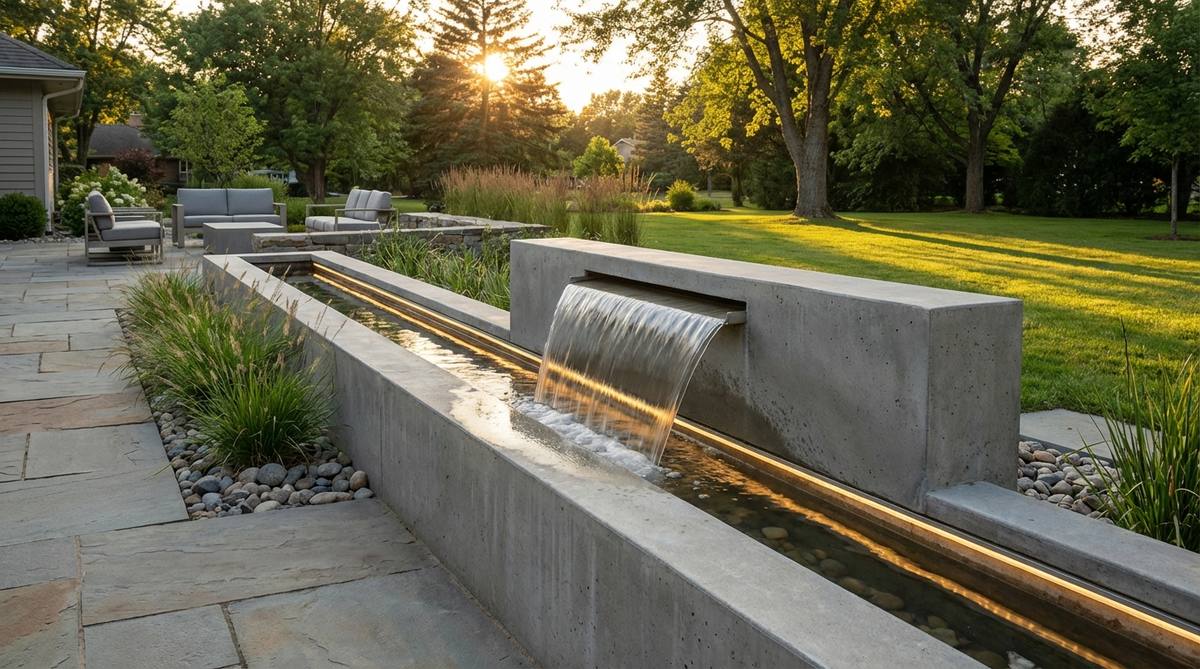
A single outlet releases water across the full width of a rectangular channel, producing a uniform sheet that glides toward a collection basin. The effect resembles a liquid curtain suspended between two parallel edges.
Designers position these features along property lines or between garden zones to create subtle spatial divisions. The consistent flow generates white noise that masks traffic sounds without overwhelming conversation.
Maintenance stays minimal because the straight channel prevents debris accumulation. Installing LED strips beneath the water path adds dramatic nighttime illumination.
2. Dual-Track Parallel Flow
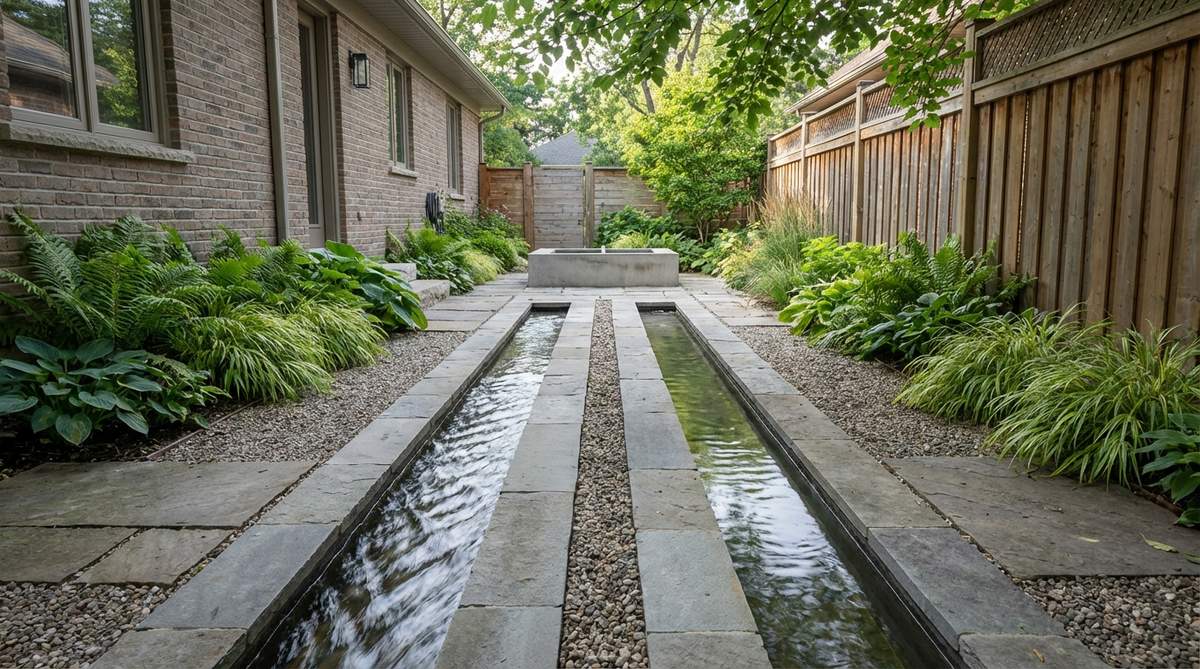
Two narrow channels run side by side, each carrying water at slightly different velocities to create visual rhythm. The parallel streams reflect surrounding plantings while maintaining independent movement patterns.
This configuration suits narrow side yards or entries where width limitations prevent larger installations. Pumps can operate both channels from a single reservoir hidden beneath decorative grating.
3. Stepped Linear Descent
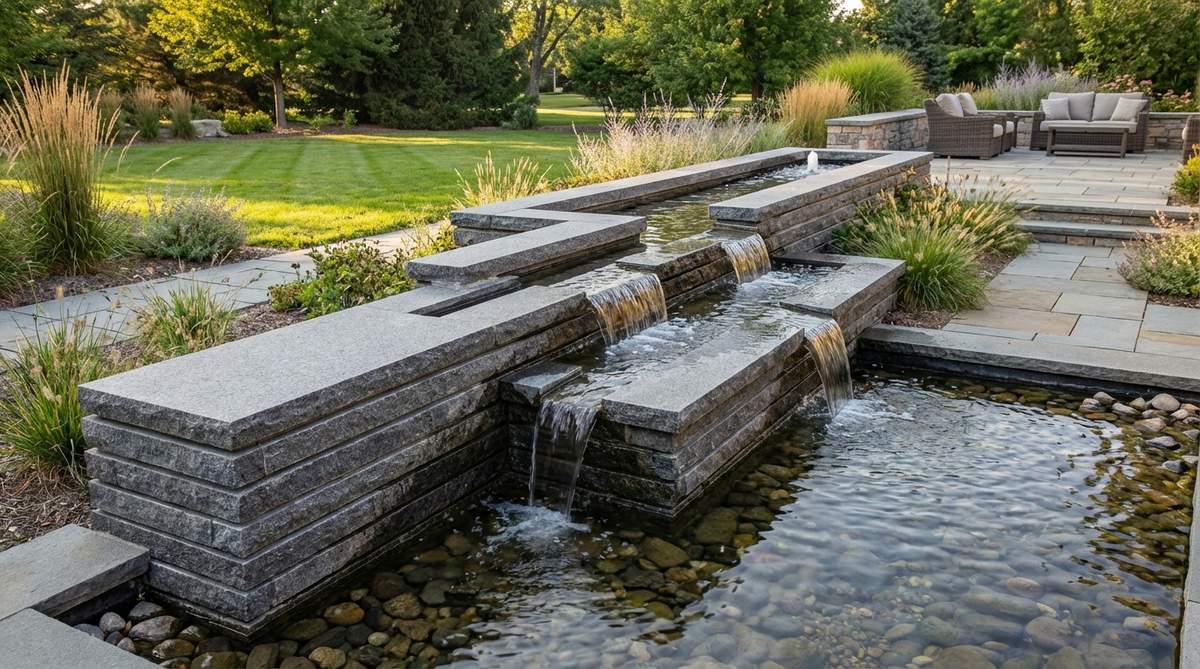
Water drops from one level to the next across a series of horizontal planes, each step creating a distinct cascade sound. The staircase geometry produces layered acoustics as water strikes successive surfaces.
Engineers typically specify three to five steps for optimal sound variation without excessive height. This design integrates naturally with retaining walls or grade changes already present in the landscape.
The stepped profile aerates water effectively, making this option practical for koi ponds or other features where oxygenation matters.
4. Floating Linear Trough
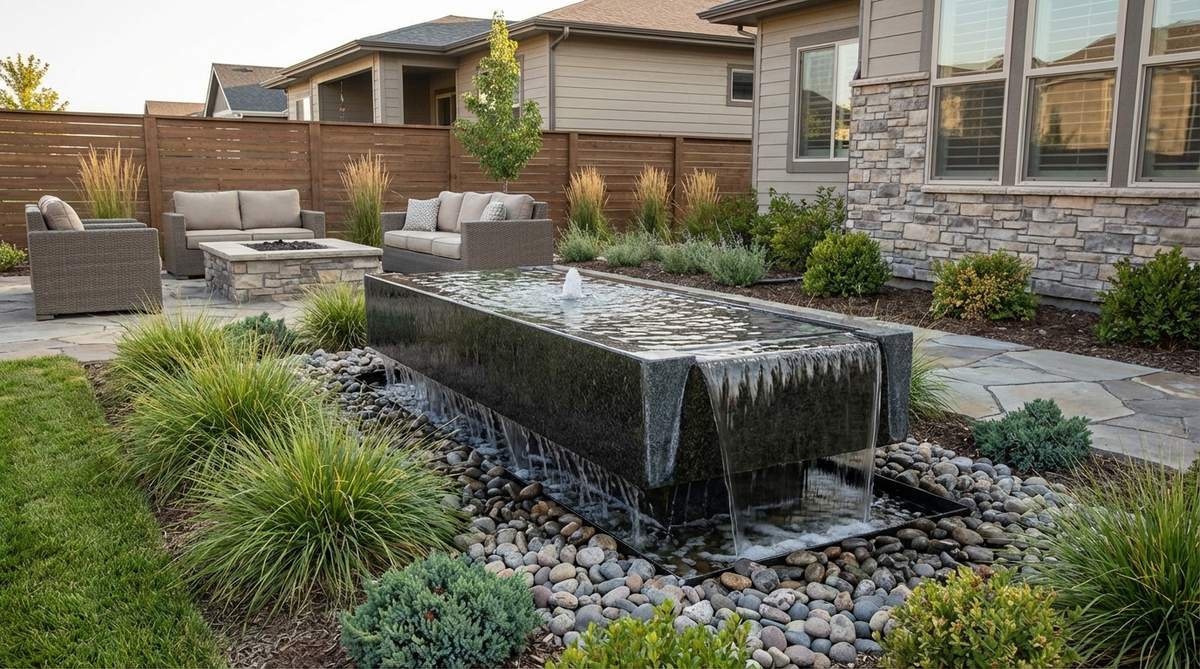
A suspended rectangular trough appears to hover above the ground, with water spilling over all four edges into a concealed catch basin. The floating effect requires structural supports hidden within surrounding hardscape or plantings.
This approach delivers 350-degree water display, allowing circulation around the entire feature. The visual lightness contrasts with heavy architectural elements nearby.
5. Knife-Edge Linear Overflow
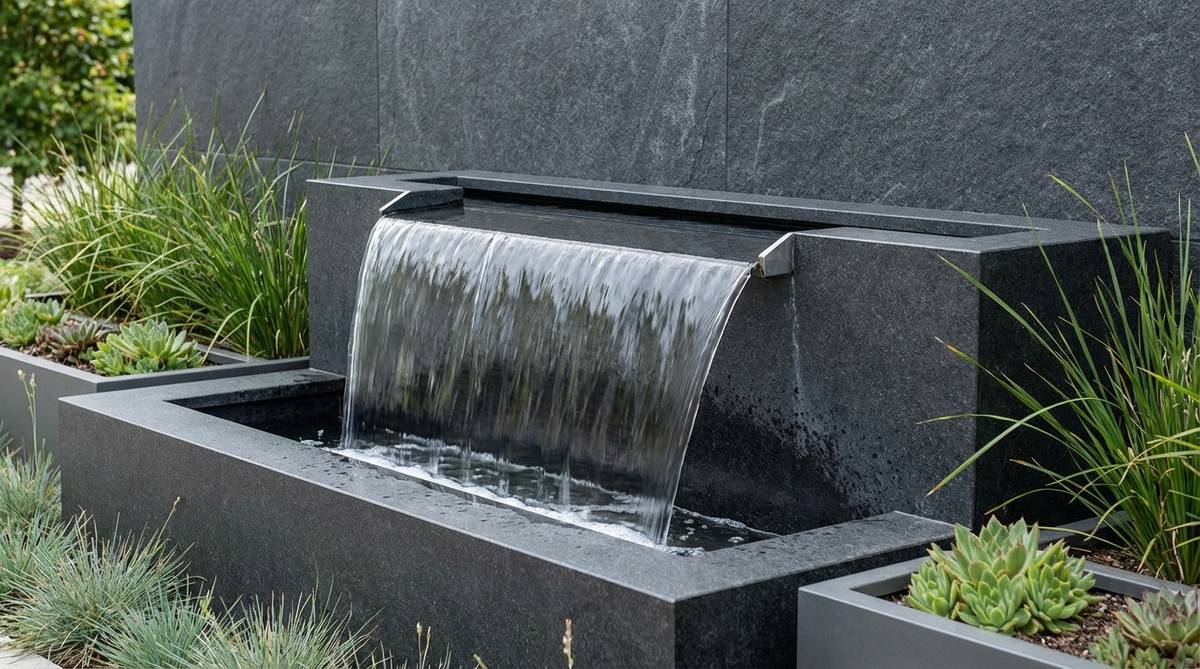
Water flows over a razor-thin edge machined into stone or metal, creating an unbroken sheet with glass-like clarity. The precision-cut edge eliminates drips and maintains laminar flow across the entire span.
Fabricators use stainless steel or granite for durability and consistent water release. The clean geometry suits minimalist gardens where every detail receives close scrutiny.
Positioning this feature against a dark background wall amplifies the visual contrast between transparent water and solid material.
Cubic and Angular Structures With Dynamic Water Geometry
Cubic forms and angular compositions introduce three-dimensional interest through intersecting planes and offset volumes. These fountains function as sculptural focal points that anchor garden compositions.
6. Stacked Cube Cascade
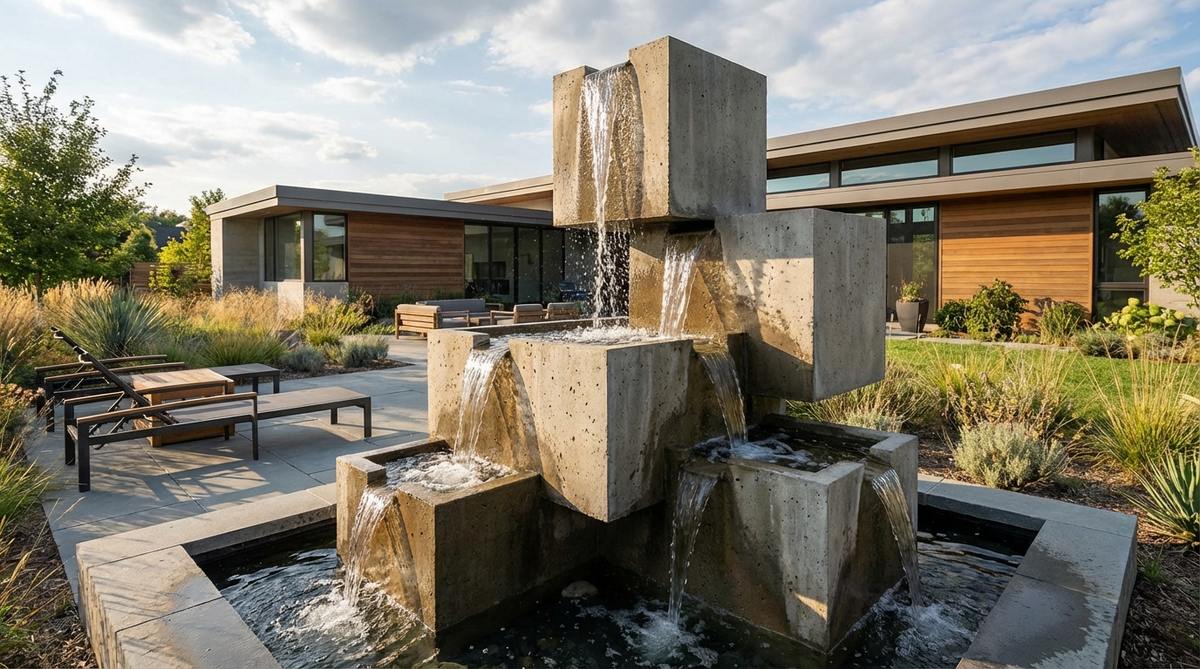
Multiple concrete or stone cubes stack in offset positions, with water flowing from the top cube down through each level. The asymmetrical arrangement creates varied water paths depending on viewing angle.
This design allows customization through different cube sizes and offset distances. Larger bottom cubes provide stability while smaller upper units add vertical interest.
The rectilinear shapes echo contemporary architecture and work particularly well near buildings with strong horizontal lines.
7. Rotating Cube Fountain
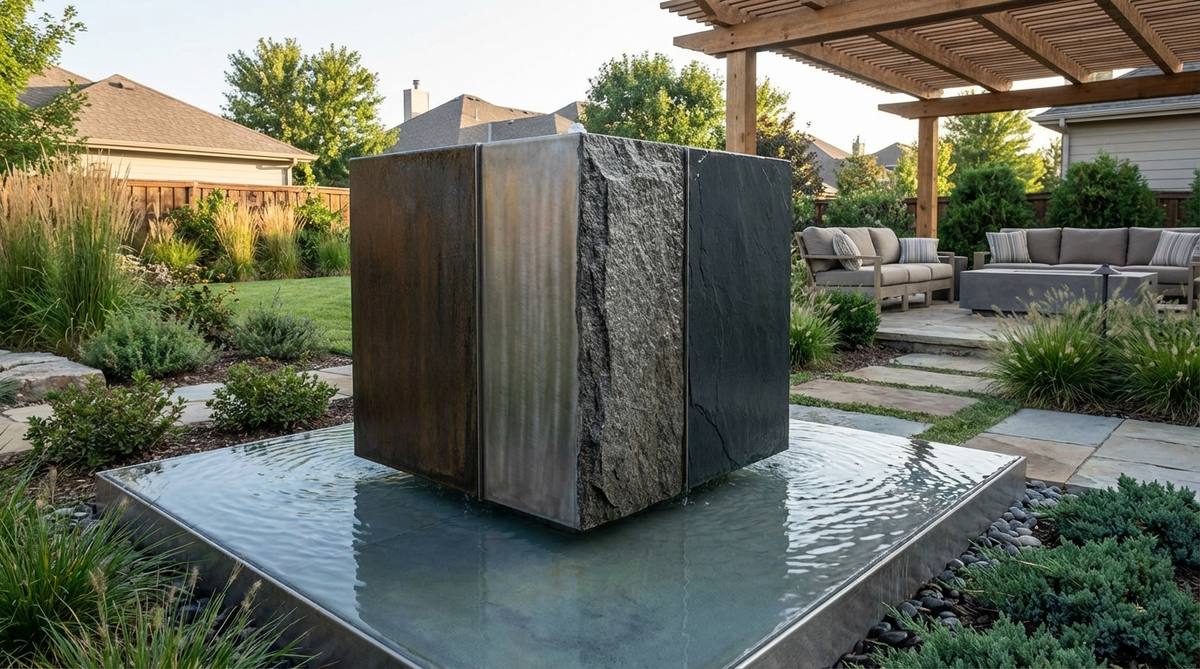
A perfectly balanced cube rotates on a thin film of water pumped beneath its base, creating perpetual motion powered by hydraulic pressure. The rotation reveals different surface textures as the cube turns.
Engineers drill precision channels within the cube and mounting surface to maintain consistent water pressure. The slow rotation mesmerizes viewers while demonstrating fluid dynamics principles.
8. Corner-Spout Cubic Basin
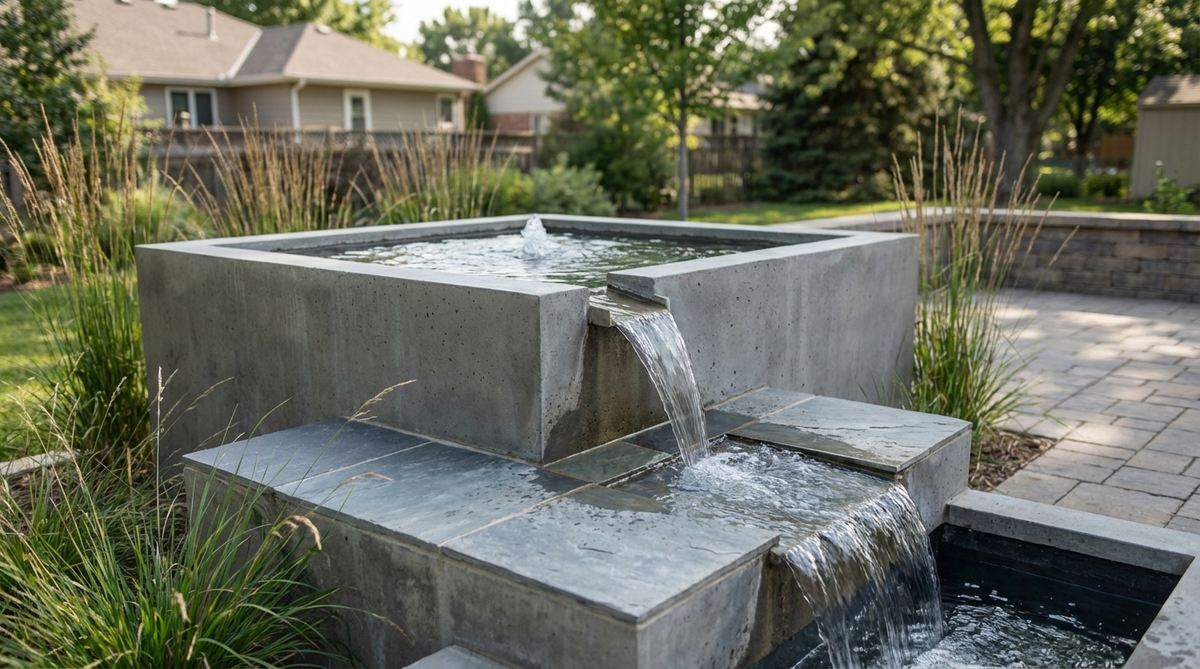
Water emerges from one corner of a cubic basin and flows diagonally across the top surface before dropping into the reservoir. The diagonal flow path contrasts with the orthogonal container geometry.
Designers can orient the spout toward primary viewing areas to optimize visual impact. The corner placement keeps water motion visible while maintaining the cube’s clean profile.
This configuration works at multiple scales, from desktop tabletop versions to large plaza installations.
9. Perforated Cubic Screen
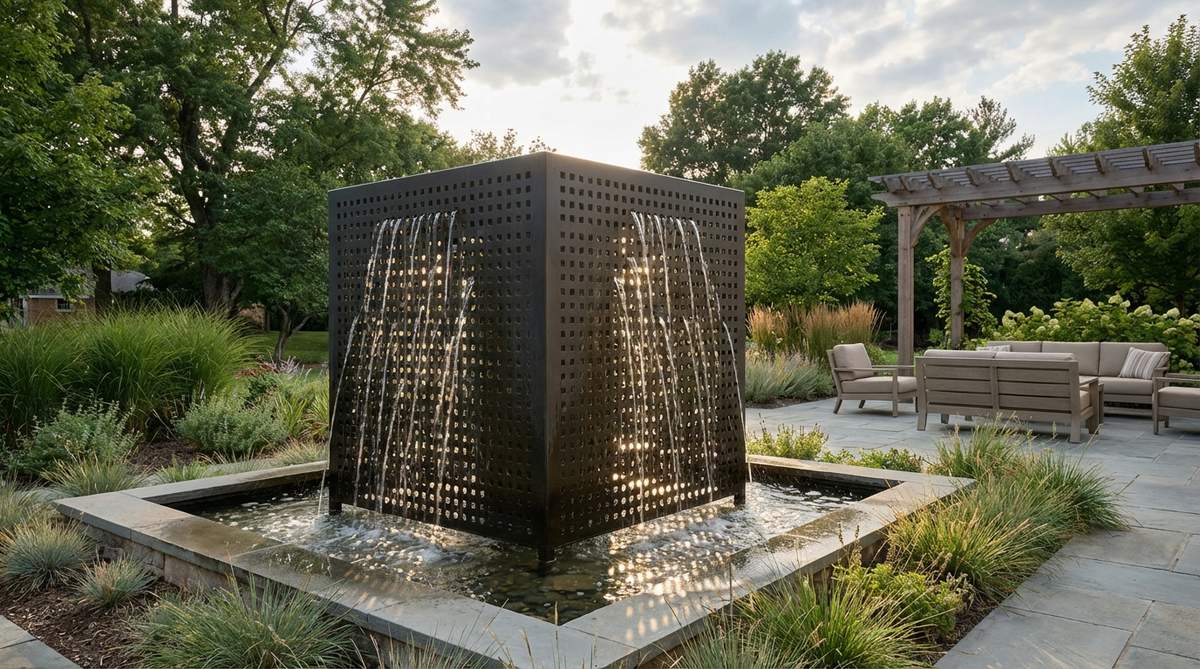
Water flows through a cube constructed from perforated metal panels, creating multiple thin streams that emerge from the geometric pattern. The perforations act as individual nozzles that collectively form a shimmering surface.
This design produces complex light effects as water droplets refract sunlight passing through the openings. The perforated structure also reduces wind resistance compared to solid panels.
10. Triangular Wedge Spillway
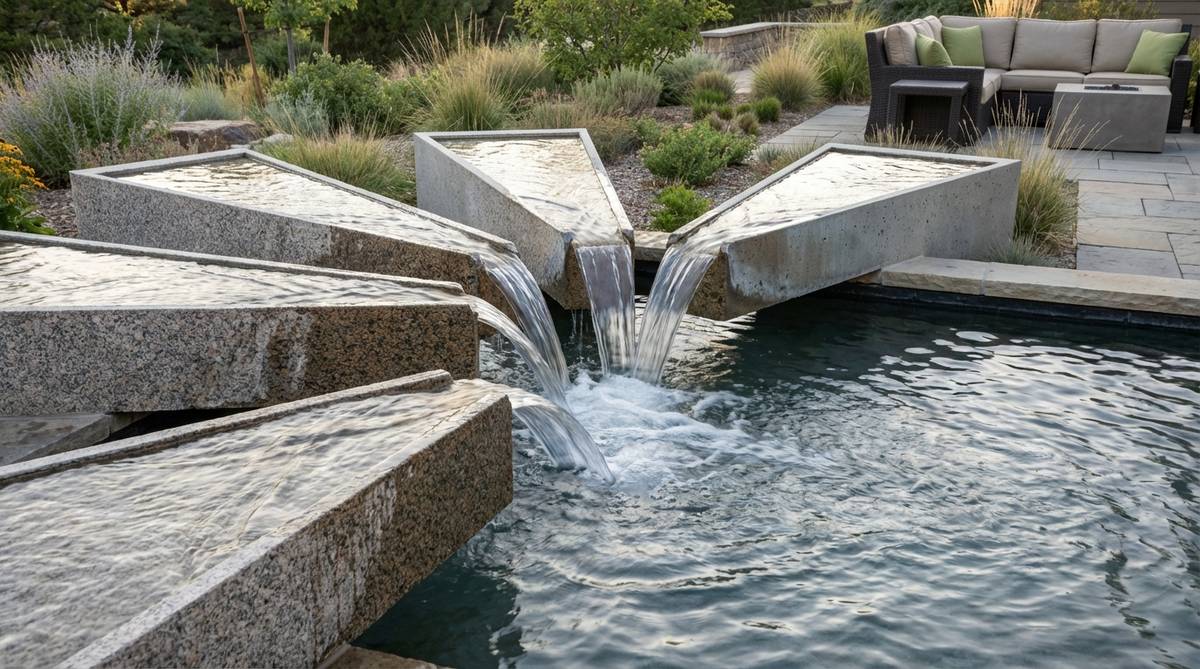
A triangular wedge directs water from its narrow apex across an expanding face, accelerating flow as the surface widens. The geometric progression creates visible velocity changes from top to bottom.
The angled face can incorporate texture patterns that further manipulate water behavior. Smooth finishes maintain laminar flow while ribbed surfaces break water into rippled patterns.
Installing multiple wedges at different angles produces intersecting water paths that merge in the collection basin.
Sphere and Column Features Combining Curves With Structure
Spherical elements and vertical columns introduce curved geometry that softens the strict rectilinear vocabulary. These shapes demonstrate how water interacts with rounded surfaces through gravity and surface tension.
11. Granite Sphere Fountain
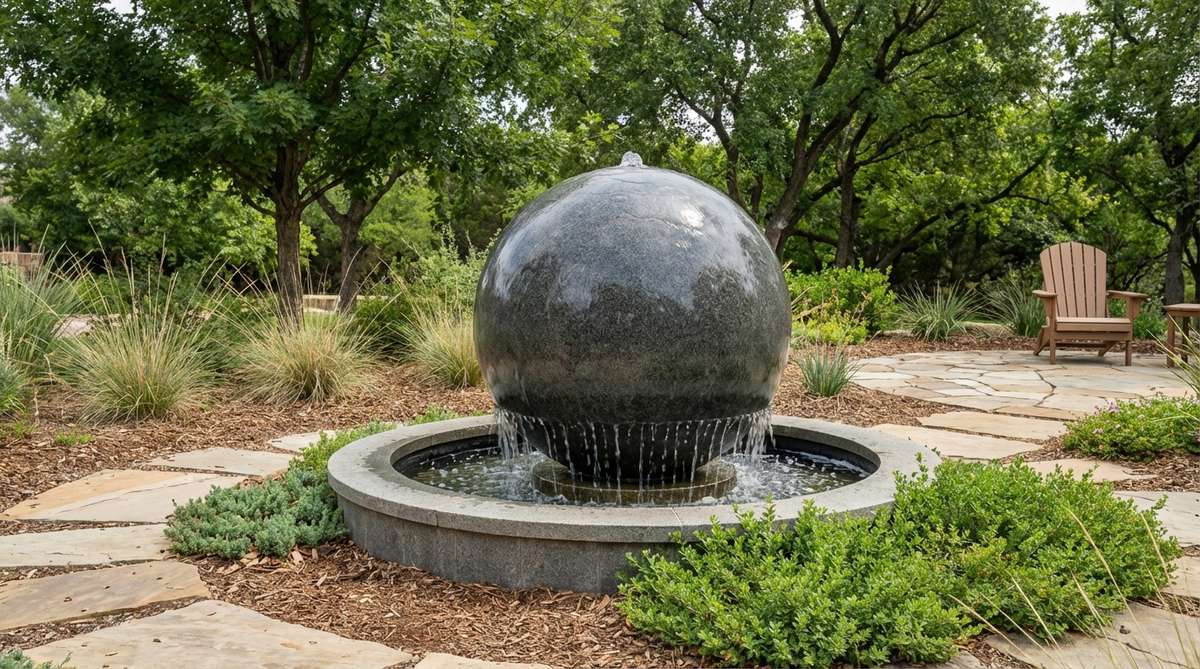
A polished granite sphere rotates on a thin water layer within a fitted socket, creating continuous motion. Water flows uniformly across the sphere’s surface, allowing it to spin with minimal friction.
The rotational movement produces subtle sound as water spreads across the stone. Visitors often engage directly with this feature, spinning the sphere by hand to feel the hydraulic cushion.
Multiple spheres of varying sizes create grouped compositions that increase visual interest through repetition and scale variation.
12. Clear Acrylic Sphere Cascade
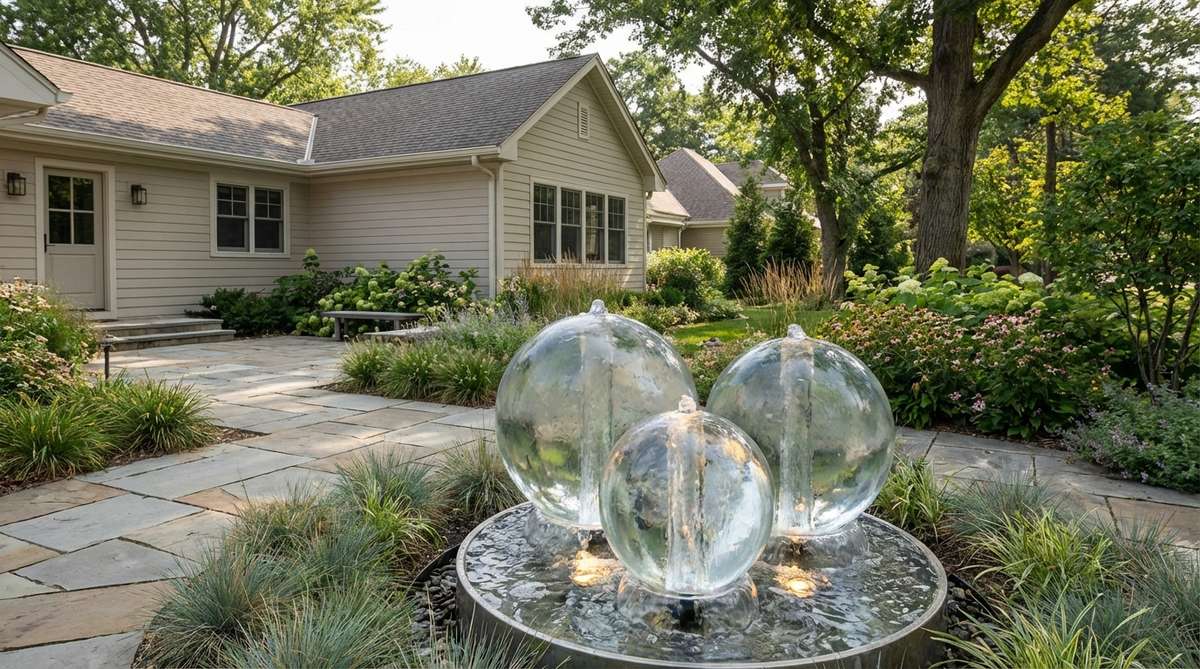
Transparent acrylic spheres nest within each other, with water flowing between the layers and through central openings. The clear material reveals internal water movement that remains hidden in opaque designs.
Lighting placed beneath the spheres illuminates water as it travels through the nested forms. The visual effect combines sculpture with kinetic performance.
13. Multi-Column Bubbler Array
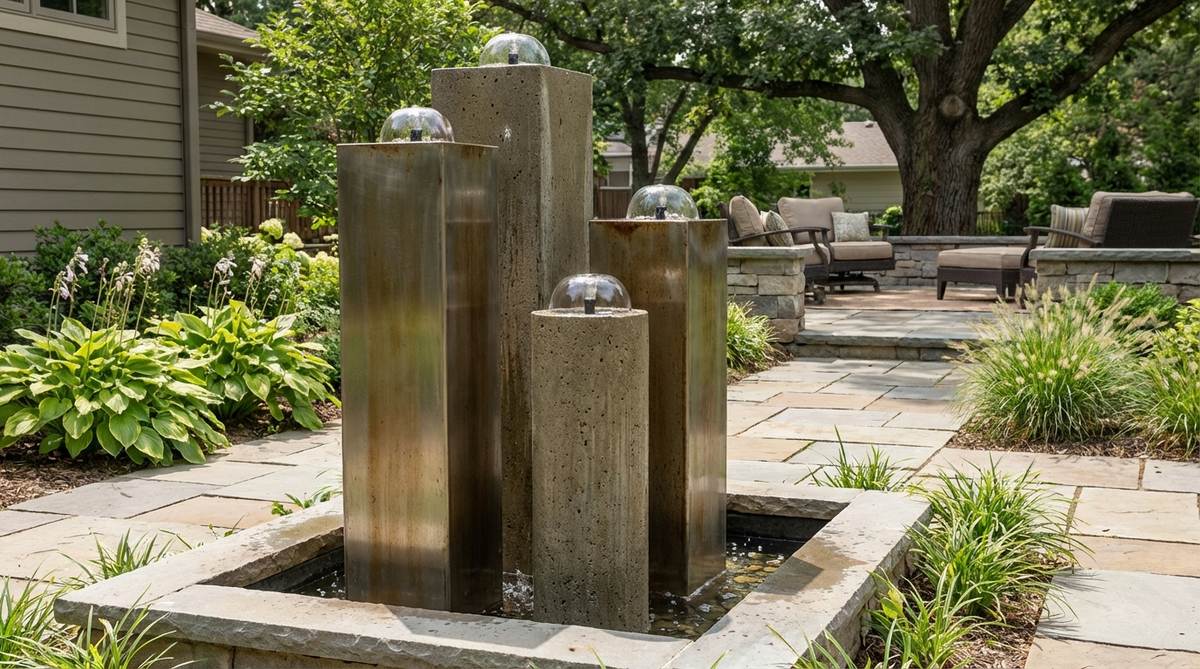
Several narrow columns rise from a shared basin, each topped with a bubbler nozzle that produces a gentle dome of water. The columns reach different heights to create a varied skyline profile.
This arrangement generates layered sound as each bubbler operates at slightly different pressures. The column heights can follow a mathematical progression for subtle visual rhythm.
Stainless steel or concrete columns withstand weather while maintaining precise vertical alignment. The bubbler effect uses less water than spray fountains while providing comparable visual interest.
14. Helical Column Twist
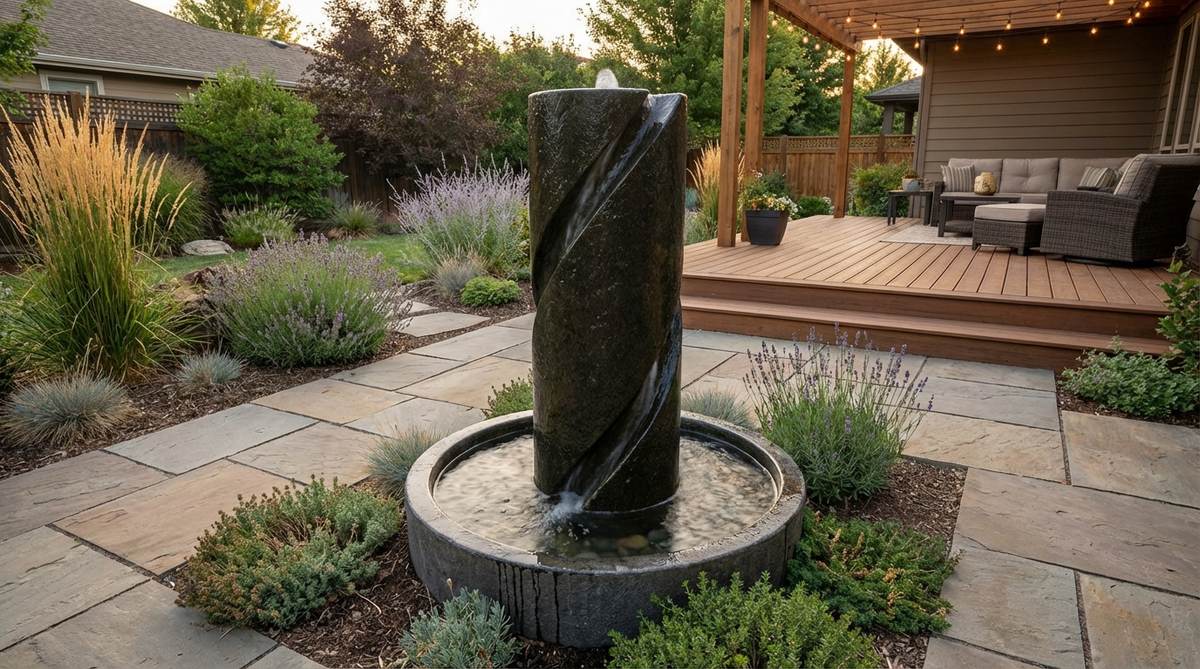
A vertical column incorporates a spiral groove that guides water in a helical path from top to bottom. The twisted geometry transforms a simple downward flow into a rotating descent.
The spiral pitch determines rotation speed and visual complexity. Tighter spirals produce faster apparent motion while wider spirals create a more relaxed flow pattern.
15. Hollow Column Internal Flow
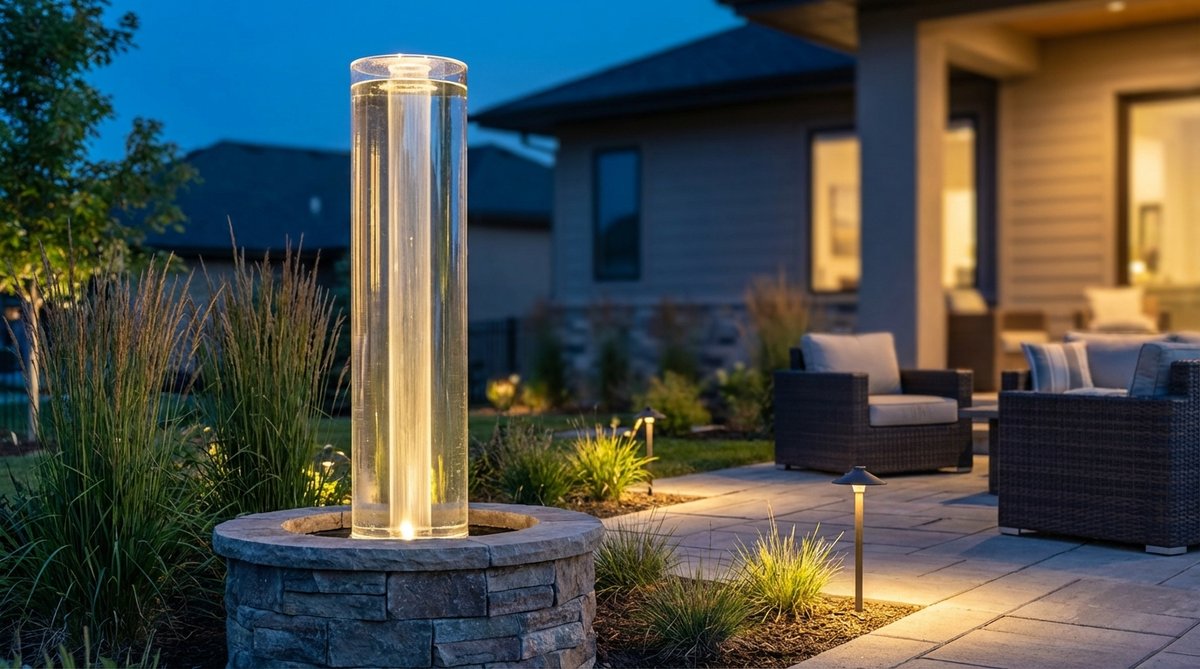
Water flows inside a transparent or translucent column, visible through the material but protected from wind and debris. The enclosed flow maintains laminar characteristics that outdoor streams cannot achieve.
Acrylic or glass columns showcase internal turbulence and bubble patterns. LED lighting transforms the column into an illuminated beacon after dark.
This design suits windy locations where exposed water streams would disperse. The protected flow also reduces evaporation rates compared to open features.
Wall-Mounted Geometric Features That Maximize Vertical Space
Wall-mounted fountains utilize vertical surfaces to deliver water features where ground space remains limited. These installations transform blank walls into active landscape elements while conserving valuable floor area.
16. Rectangular Panel Waterfall
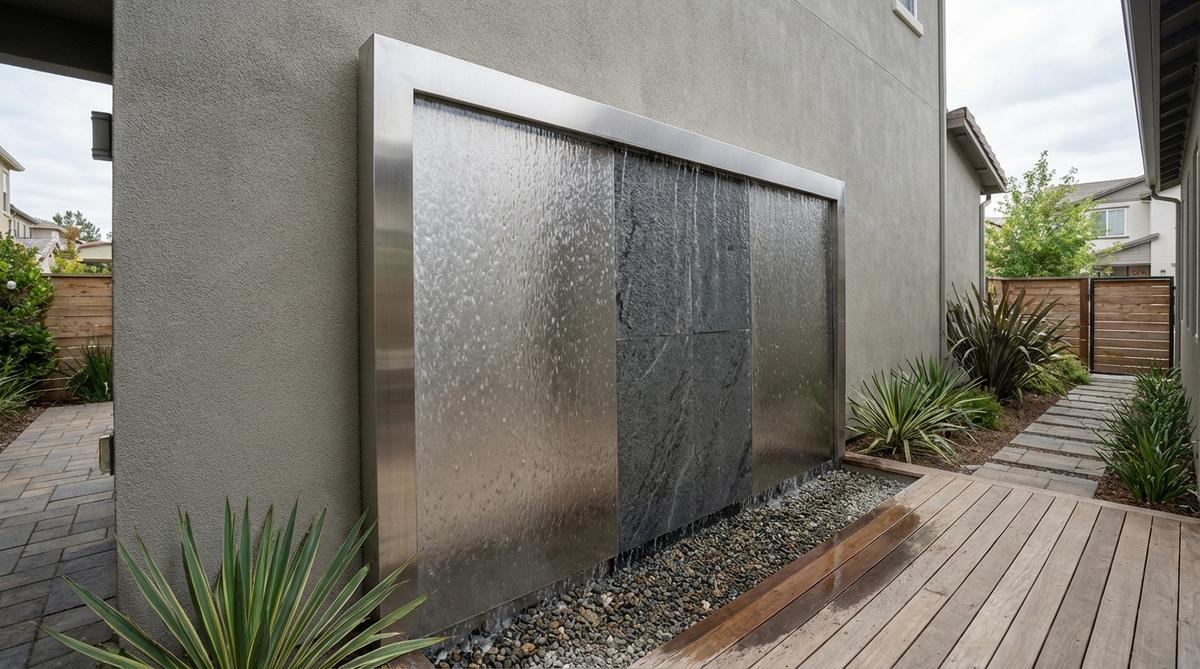
A flat rectangular panel mounts flush against a wall, with water flowing uniformly across its entire face. The panel surface can feature brushed metal, textured stone, or frosted glass that alters water behavior.
Water emerges from a concealed header along the top edge and descends in an unbroken sheet. The wall behind the panel should include waterproofing to handle any splash or mist.
This design creates a living wall effect without requiring soil or plants. The vertical orientation suits narrow side yards or small courtyards where horizontal features would overwhelm available space.
17. Geometric Scupper Series
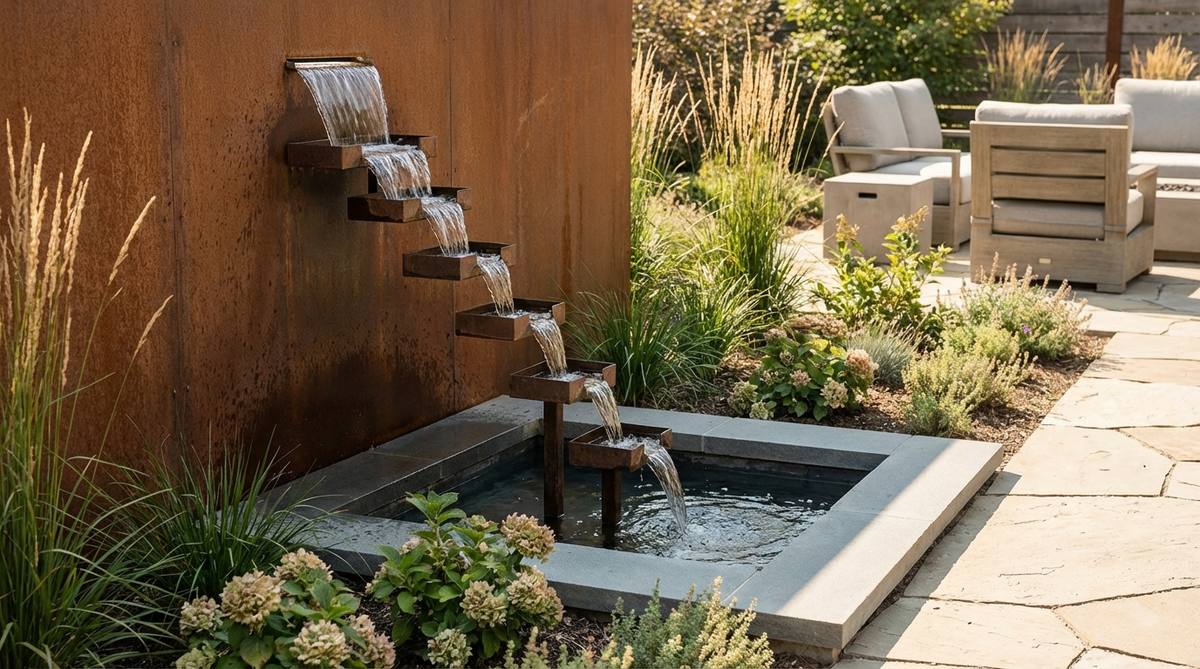
Multiple rectangular scuppers project from a vertical surface at regular intervals, each releasing water into the scupper below. The repeated geometry creates a stepped cascade down the wall face.
Scupper spacing influences both visual rhythm and acoustic character. Closer spacing produces a more continuous sound while wider gaps create distinct individual splashes.
18. Angular Trough Offset
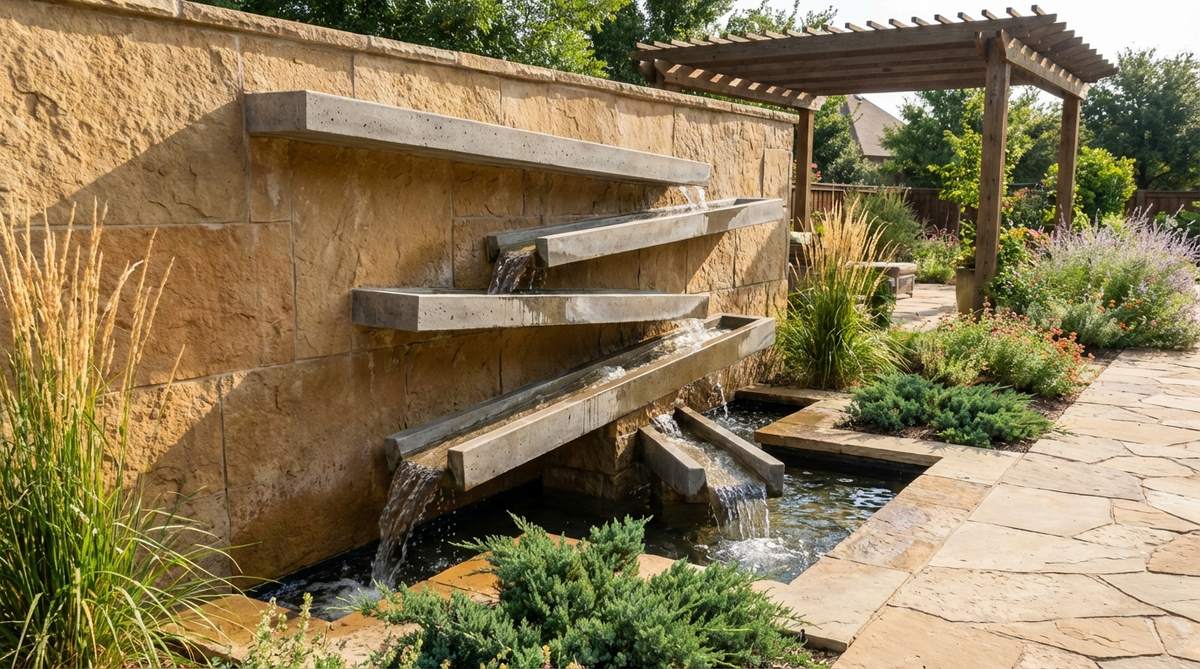
Narrow troughs mount to the wall at alternating angles, directing water back and forth across the surface in a zigzag path. The angled geometry extends the water’s travel distance and creates directional flow patterns.
Each trough can feature different angles to produce varied flow speeds and trajectories. The offsetting arrangement breaks up the vertical descent into discrete horizontal movements.
This feature adds kinetic interest to otherwise static walls. The angular composition complements modern architecture with similar geometric complexity.
19. Hexagonal Tile Weep Wall
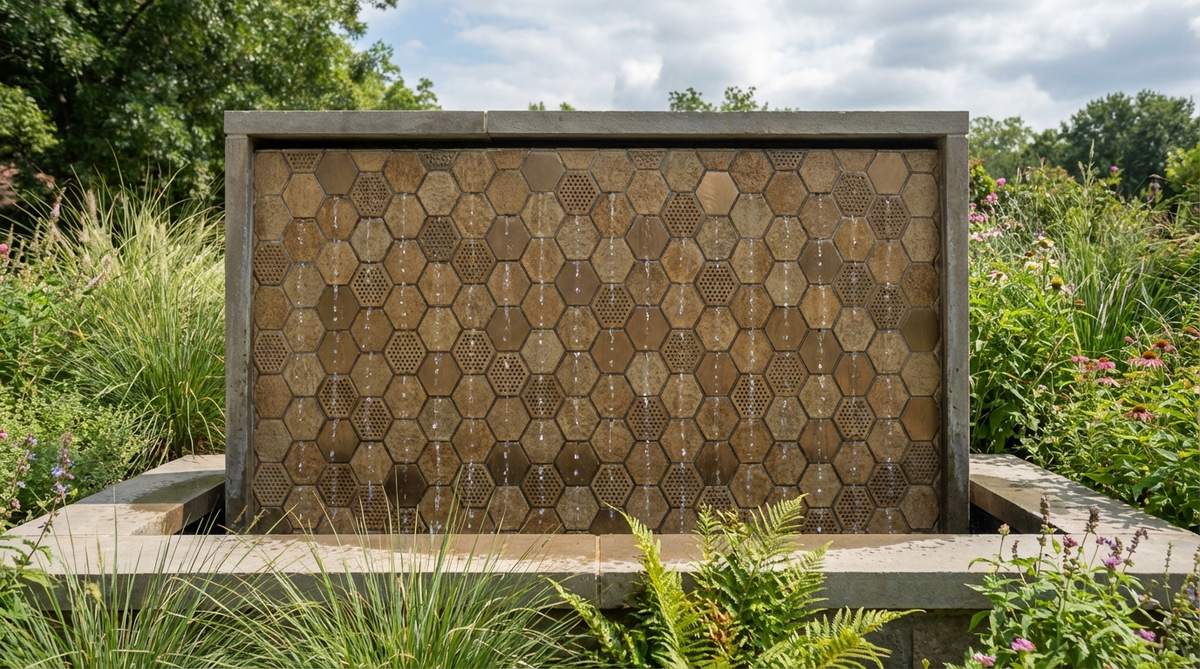
Hexagonal tiles arranged in a honeycomb pattern cover the wall surface, with water weeping through the grout lines or tile perforations. The geometric tessellation creates countless small streams that collectively cover the wall.
The hexagonal pattern provides structural strength while distributing water evenly. Tile materials can include ceramic, metal, or stone depending on desired aesthetics.
20. Slot-Spout Wall Fountain
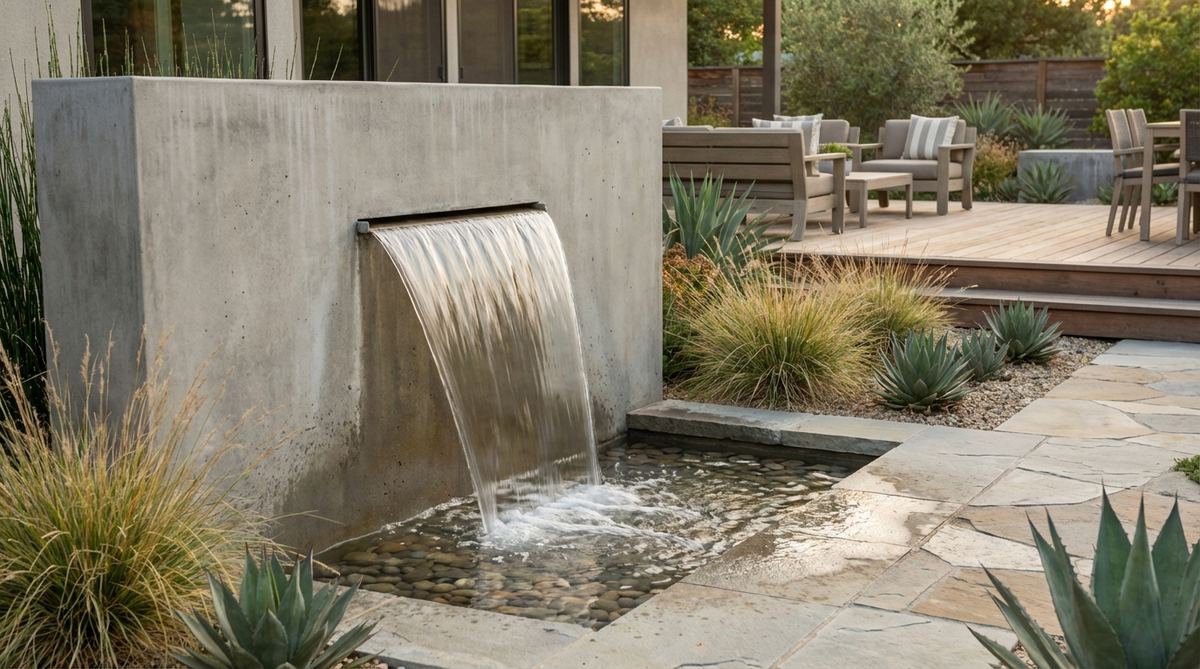
A narrow horizontal slot cut into the wall releases water in a thin, precise sheet. The slot width determines flow characteristics, with narrower openings producing higher velocity streams.
The slot can span the full wall width or appear as a centered accent. Multiple slots at different heights create layered curtains of falling water.
This minimalist approach emphasizes water itself rather than decorative housing. The linear slot integrates cleanly with contemporary architectural detailing.
Multi-Tier Geometric Designs For Layered Visual Impact
Multi-level fountains organize water movement through stacked geometric forms. These tiered structures create depth and complexity through repeated shapes at different scales.
21. Square Tier Pyramid
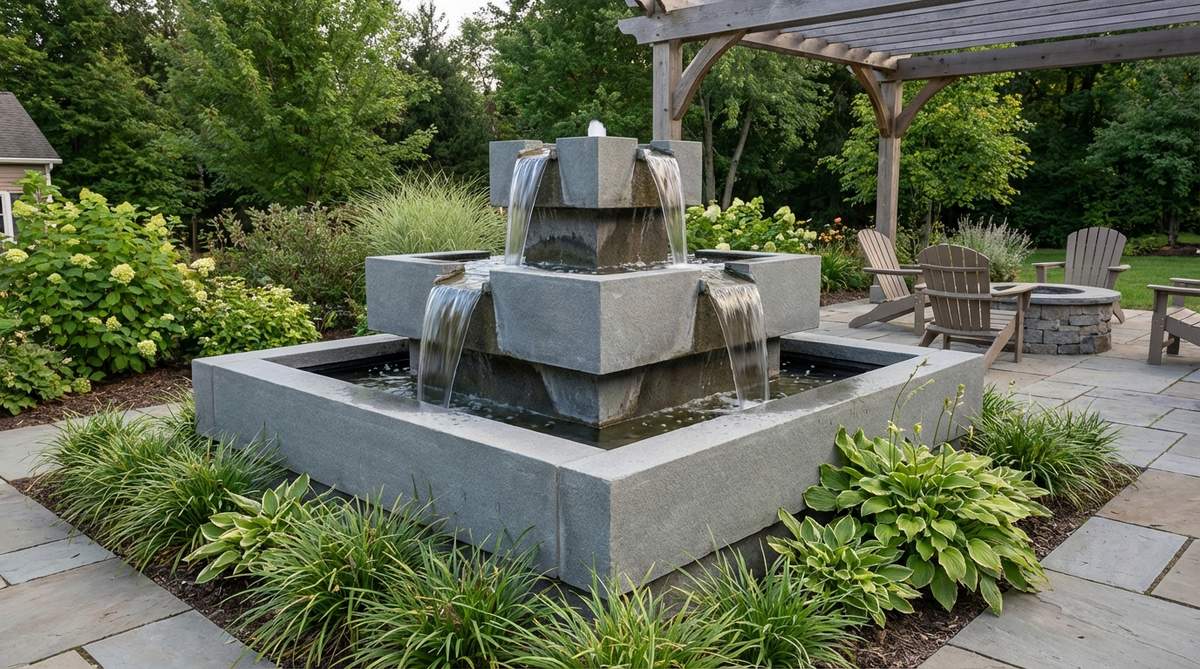
Square basins decrease in size as they stack upward, forming a stepped pyramid profile. Water flows from the smallest top basin down through each successive level.
The graduated sizing creates natural visual hierarchy while ensuring adequate capacity at each tier. Designers typically use three to five levels to balance height with stability.
Corner overflows or centered spouts offer different aesthetic options. Corner flows produce four distinct streams while centered spouts create singular cascades.
22. Offset Rectangular Plates
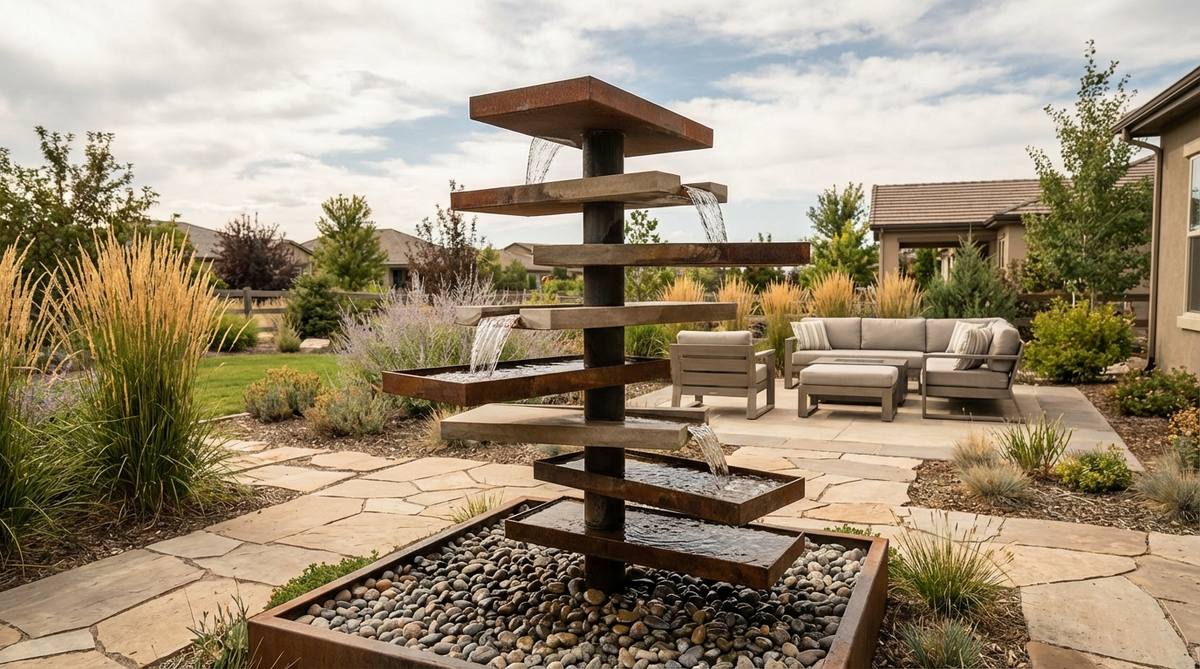
Rectangular plates mount at alternating offsets along a central support, creating a spiraling cascade as water moves from plate to plate. The offset geometry produces varied viewing experiences from different angles.
The rotation angle between plates determines how much overlap occurs and influences water trajectory between levels. Greater offset increases the spiral effect.
23. Concentric Ring Cascade
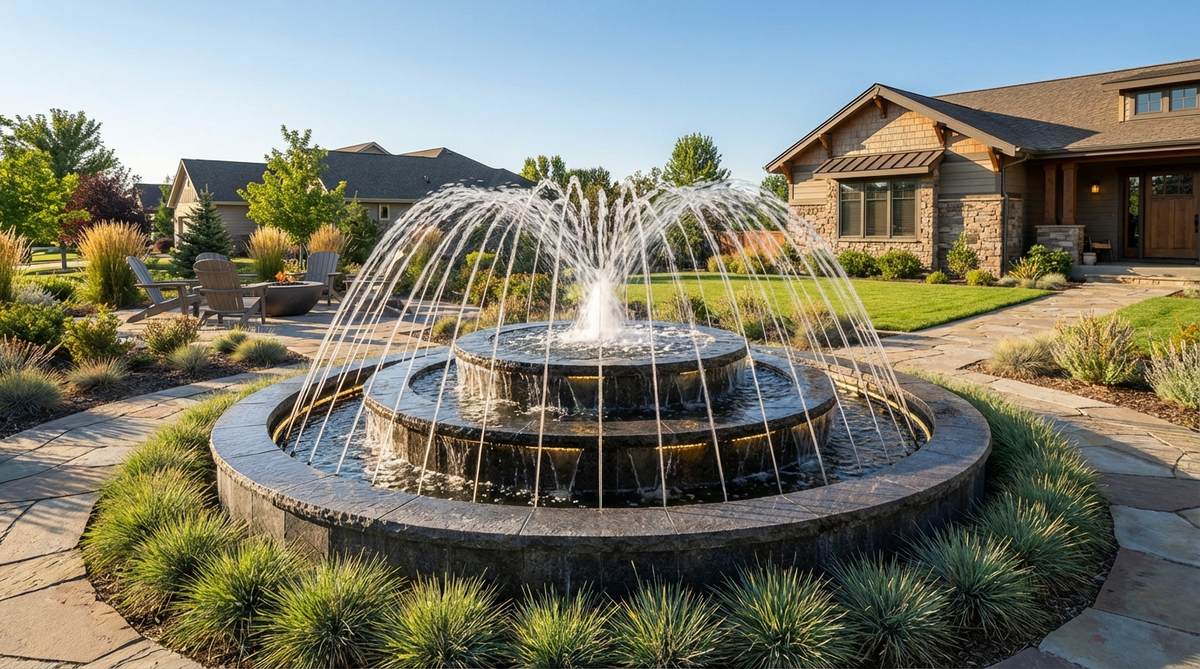
Circular rings arranged in concentric tiers direct water radially outward before it drops to the next level. The geometry produces 350-degree water display with symmetrical flow patterns.
Each ring can feature internal channels that control flow direction and velocity. The circular form suits central placement where the fountain receives viewing from all sides.
Ring thickness and spacing adjust scale to fit various garden sizes. Thicker rings accommodate integrated lighting within the structure.
24. Triangular Shelf Series
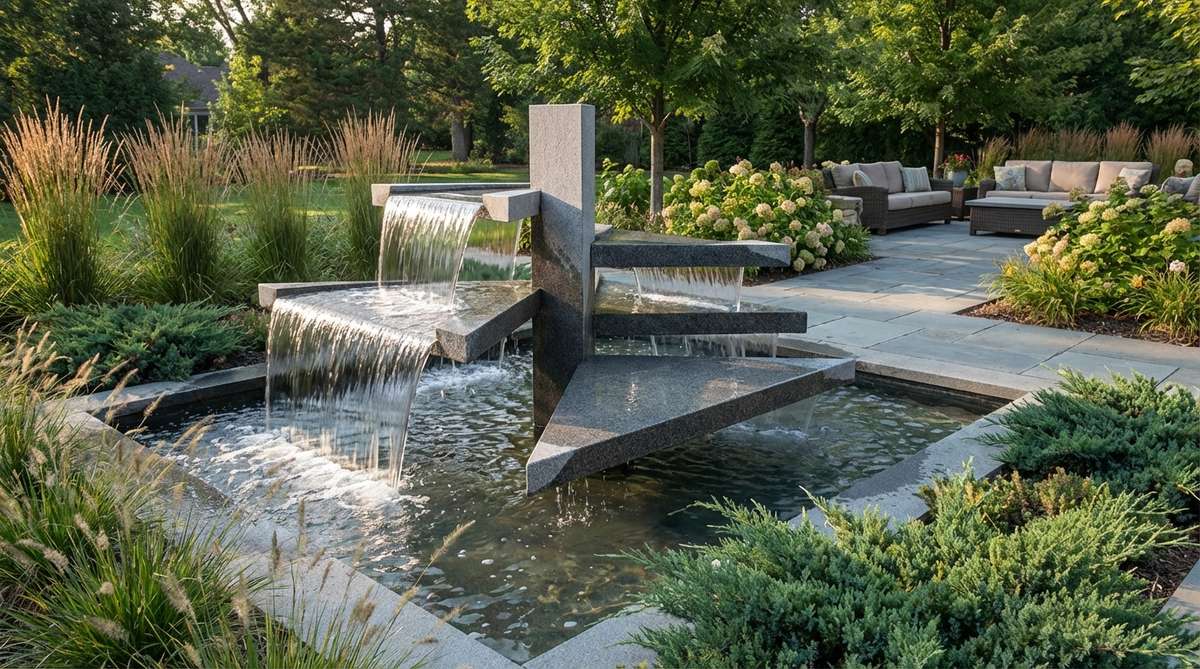
Triangular platforms extend from a vertical support at different angles and heights. Water drops from point to point following the triangular edges.
The angular geometry introduces dynamic visual movement through repeated diagonal lines. Triangle orientation can alternate to increase complexity.
25. Modular Box Stack
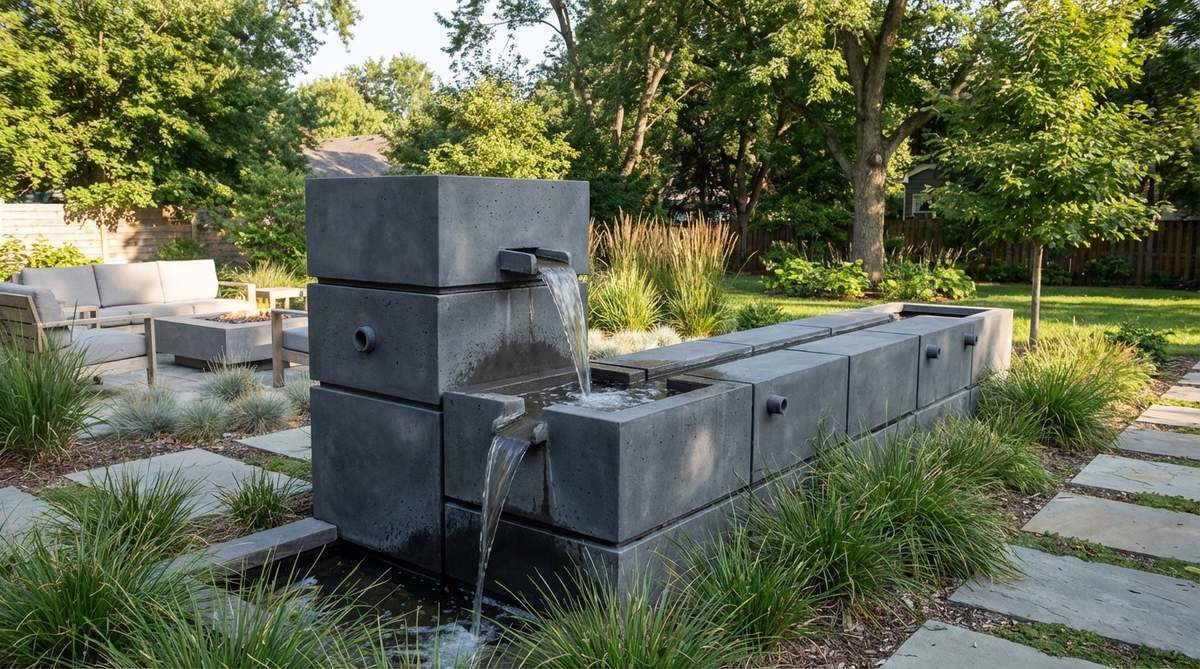
Individual box modules connect in custom configurations, allowing for personalized fountain compositions. Each box includes inlet and outlet ports that link to adjacent units.
The modular system permits easy reconfiguration or expansion as landscape needs change. Boxes can stack vertically, arrange horizontally, or combine both orientations.
This flexibility suits evolving gardens where initial installations may expand over time. The standardized modules simplify replacement if components sustain damage.
Conclusion
Geometric water features transform outdoor spaces through precise form and controlled flow. These modern garden fountain designs demonstrate how architectural clarity combines with natural water movement to create compelling focal points. Select designs that complement existing landscape geometry while providing the acoustic and visual effects your space requires.
Frequently Asked Questions
What materials work best for geometric fountain construction?
Glass fiber reinforced concrete (GFRC) offers durability with reduced weight compared to solid stone. Stainless steel provides corrosion resistance and maintains precise edges essential for laminar flow. Natural stone like granite delivers traditional aesthetics with modern geometry. Material selection should consider climate conditions, maintenance requirements, and integration with existing hardscape.
How do geometric fountains handle wind and water loss?
Linear and wall-mounted features experience less wind disruption than high spray fountains because water stays close to solid surfaces. Enclosed designs like hollow columns eliminate wind exposure entirely. Reducing water velocity and keeping flow heights under 24 inches minimizes evaporation. Automatic fill valves maintain proper reservoir levels without manual monitoring.
What pump capacity suits residential geometric fountains?
Most residential geometric features require pumps between 200 and 800 gallons per hour. Linear fountains need higher flow rates to maintain uniform sheets across wide spans. Bubbler columns and sphere fountains operate effectively with lower flow rates. Calculate pump requirements based on vertical lift height, desired flow rate, and tubing length between pump and outlet.
Can geometric fountains integrate with existing pools?
Scuppers, sheer descent waterfalls, and linear spillways mount directly to pool edges and operate from pool circulation systems. Geometric forms complement rectangular and angular pool shapes better than naturalistic rock features. Coordinate fountain finish materials with pool coping and decking for cohesive visual integration.
How does lighting enhance geometric fountain features at night?
LED strips installed beneath water flow paths create illuminated sheets and cascades. Submersible spotlights positioned in collection basins project light upward through falling water. Backlighting transparent materials like acrylic or glass transforms the entire structure into a luminous element. Color-changing LEDs allow seasonal adjustments to match garden themes or events.