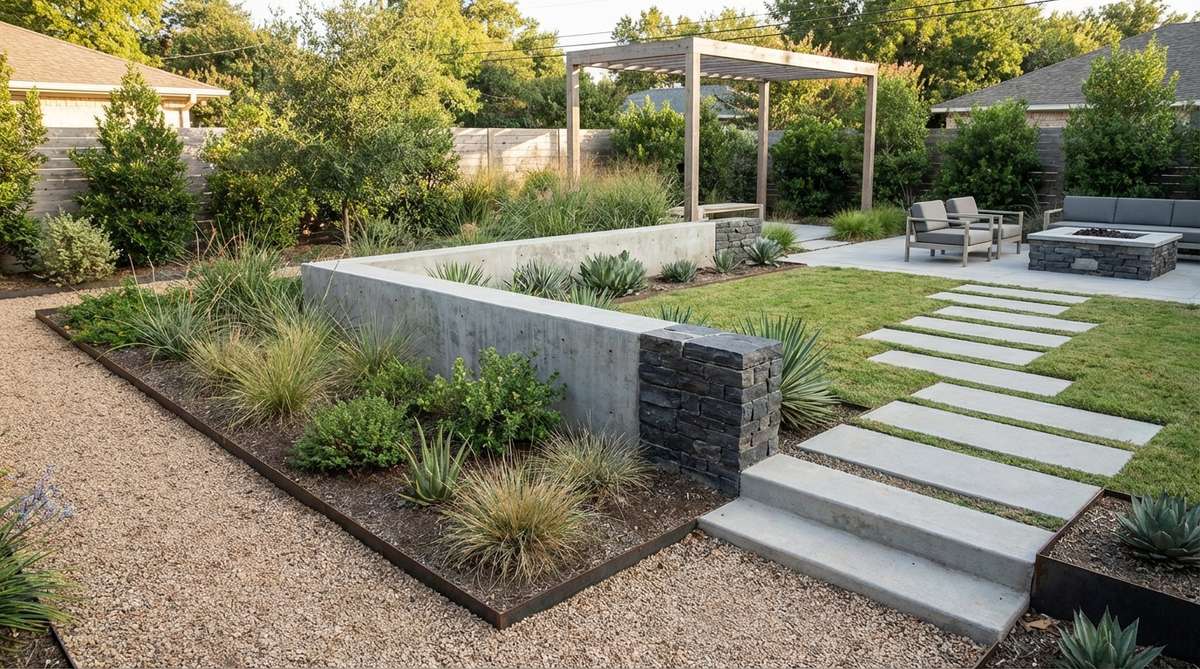
Modern garden edging ideas transform outdoor spaces with clean lines, architectural precision, and lasting durability. Fresh Garden Ideas brings you this comprehensive guide to steel, concrete, and stone edging materials that define contemporary landscapes. These professional-grade solutions combine functionality with striking visual impact, creating borders that withstand weather while elevating your garden’s aesthetic.
Design SnapshotKey Principles
- Material Integrity: Steel, concrete, and stone offer superior longevity compared to plastic or wood alternatives
- Visual Weight: Industrial materials provide architectural structure that anchors modern landscape design
- Installation Precision: Professional edging requires proper trenching, leveling, and securing for lasting performance
- Maintenance Economy: Contemporary materials resist rot, rust (when treated), and degradation for decades of use
Steel & Metal Edging Solutions for Contemporary Landscapes
Metal edging provides the sharpest definition for modern gardens, with options ranging from industrial corten to refined aluminum. These materials flex around curves while maintaining structural strength, making them ideal for lawns, gravel beds, and raised planters. Designers favor metal for its minimal visual footprint and decades-long durability.
1. Corten Steel Straight-Line Borders
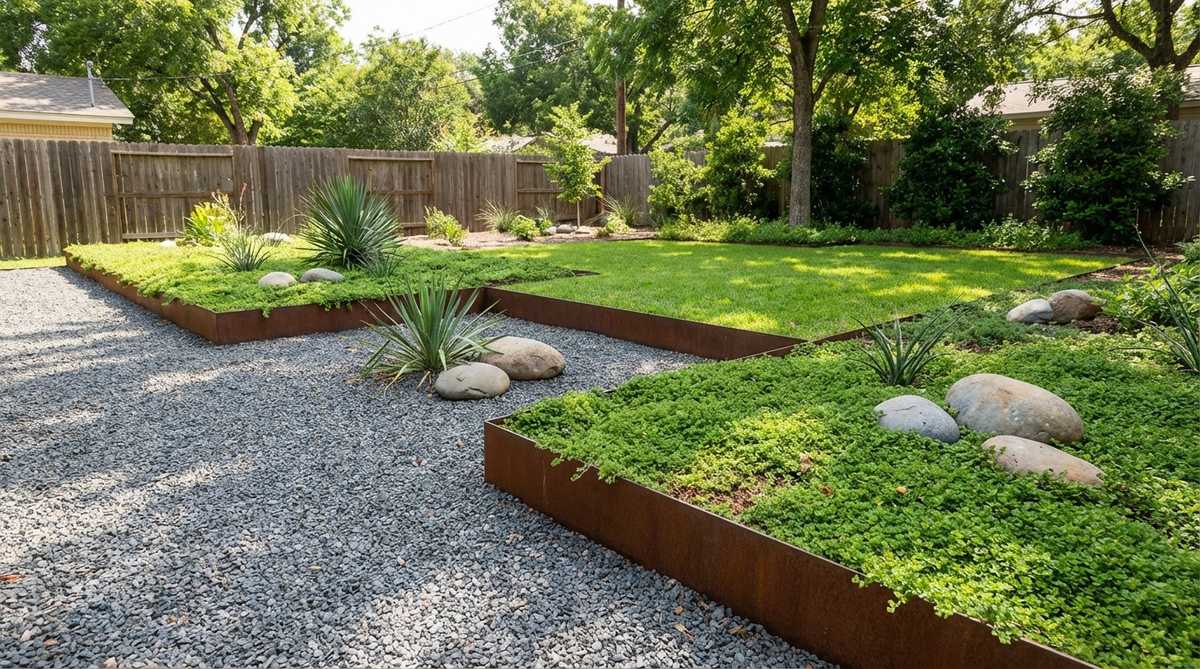
Corten steel develops a stable rust patina that shifts from bright orange to deep amber over 6-12 months. This weathering process creates a protective oxide layer that prevents further corrosion. The 1-3mm steel strips install vertically along trenches, standing 4-8 inches above grade.
Designers specify corten for minimalist gardens where the rust tone contrasts with gray gravel or lush green groundcovers. The material works equally well as lawn edging or to contain decomposed granite pathways. Installation requires driving spikes through pre-drilled holes into compacted soil.
Corten maintains sharp lines that mowers can roll against without damage. The steel’s flexibility allows gentle curves while straight runs create geometric precision. Expect 30+ years of performance with zero maintenance beyond occasional cleaning.
2. Galvanized Steel Flexible Curves
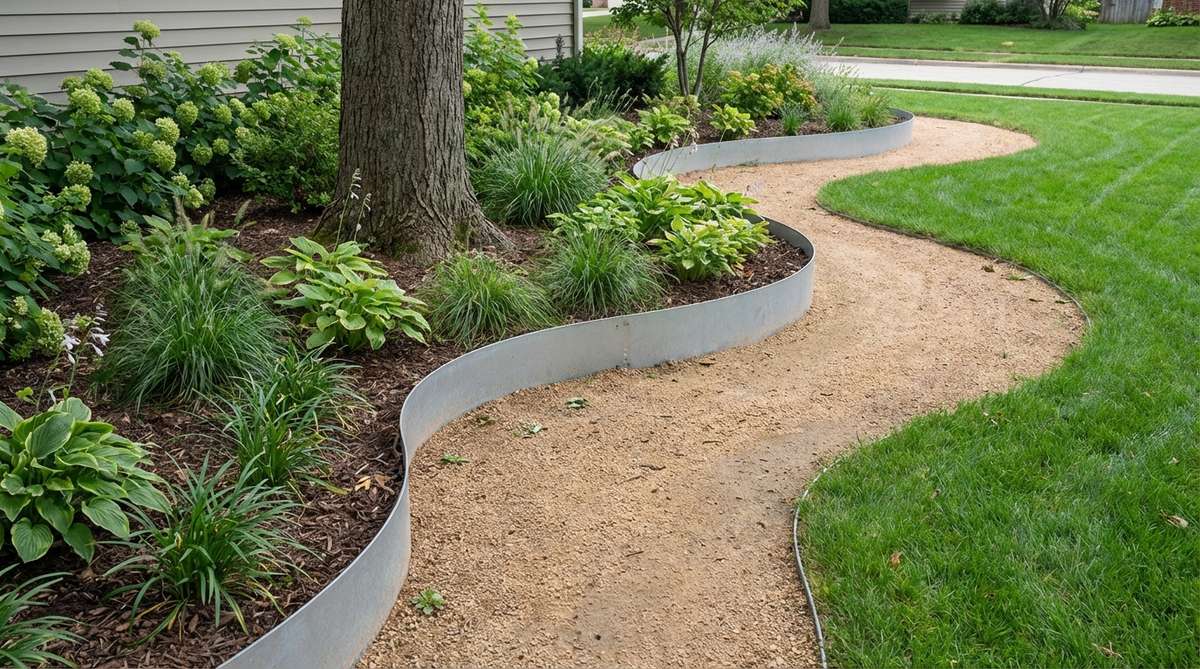
Galvanized steel edging features a zinc coating that resists rust in moist environments. The lightweight material bends easily around organic curves, following the natural contours of flower beds and pathways. Its silver-gray finish provides neutral tones that recede visually.
Install galvanized steel for lawn perimeters where mower wheels need smooth transitions. The material’s flexibility surpasses corten, making it ideal for sinuous borders around tree rings or island beds. Connect sections with manufacturer-supplied clips or overlap joints.
This option costs less than corten while delivering similar structural performance. The thinner gauge (20-22) suits residential applications, while commercial projects require heavier 16-18 gauge steel.
3. Aluminum Landscape Edging
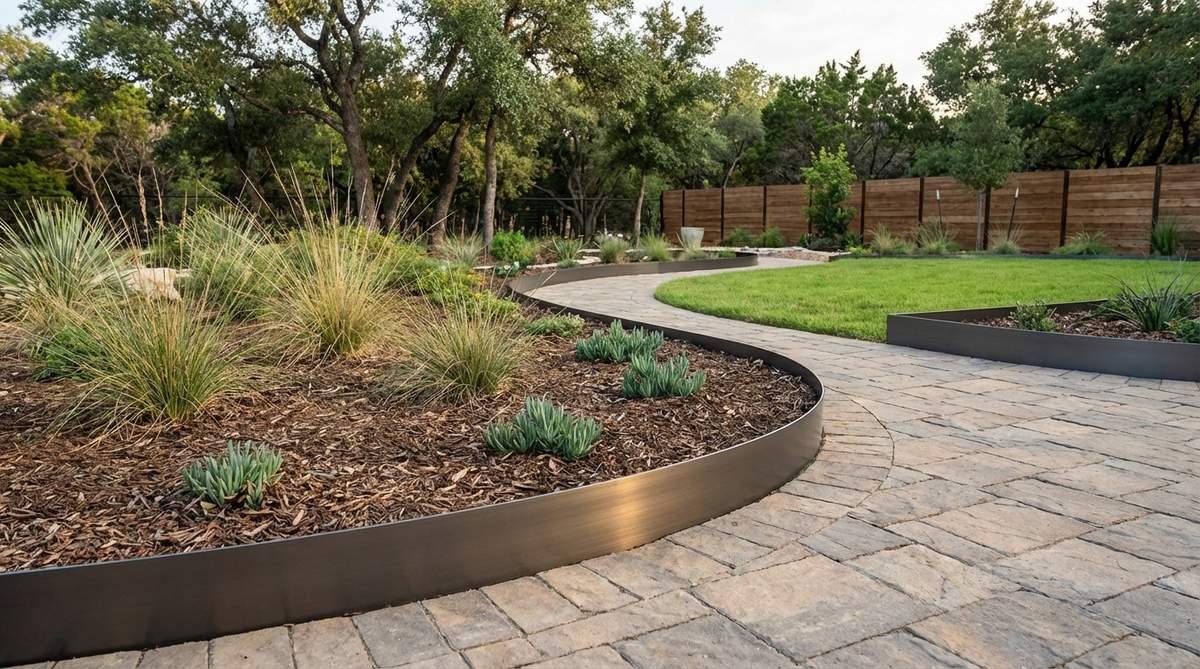
Aluminum combines corrosion resistance with exceptional workability for intricate garden designs. The material naturally forms a protective oxide layer that prevents degradation in all weather conditions. Anodized finishes enhance durability while offering color options beyond raw metal.
Landscape architects specify aluminum for curved beds, pathways, and tree surrounds requiring precise radius control. The material cuts cleanly with tin snips and stakes into place with minimal effort. Its light weight simplifies transportation and handling during installation.
Aluminum maintains its appearance for 20+ years without rust or rot. Choose thicker profiles (0.090-0.125 inch) for structural applications like raised beds. Thinner gauges (0.040-0.050 inch) work well for decorative borders.
4. Corten Tiered Retaining Walls
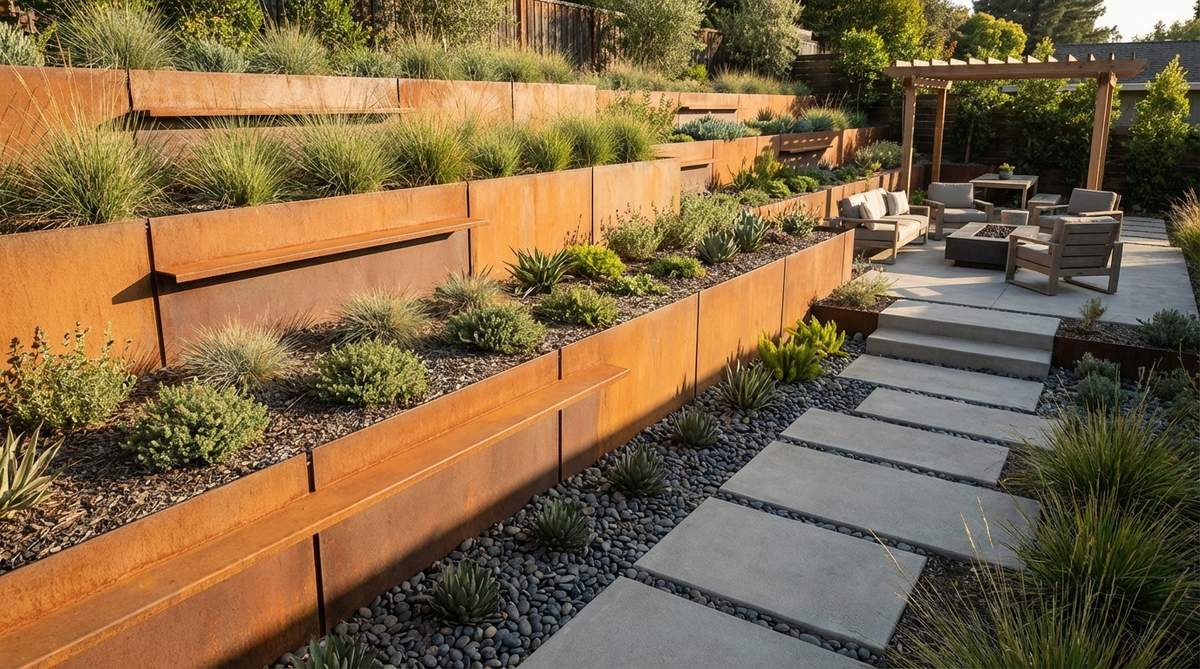
Multi-level corten installations create dramatic elevation changes in sloped gardens. Each tier stands 12-18 inches tall, with horizontal plates welded at right angles to vertical faces. The stepped design prevents soil erosion while adding architectural interest to flat yards.
Designers use tiered corten for sunken patios, terraced planting beds, and modern amphitheater seating. The rust patina coordinates naturally with stone mulch, wood decking, and concrete pavers. Welded construction ensures structural integrity without visible fasteners.
This application requires professional fabrication and installation due to load-bearing requirements. Drainage holes prevent hydrostatic pressure buildup behind walls. Expect premium pricing but exceptional longevity.
5. Geometric Steel Planter Boxes
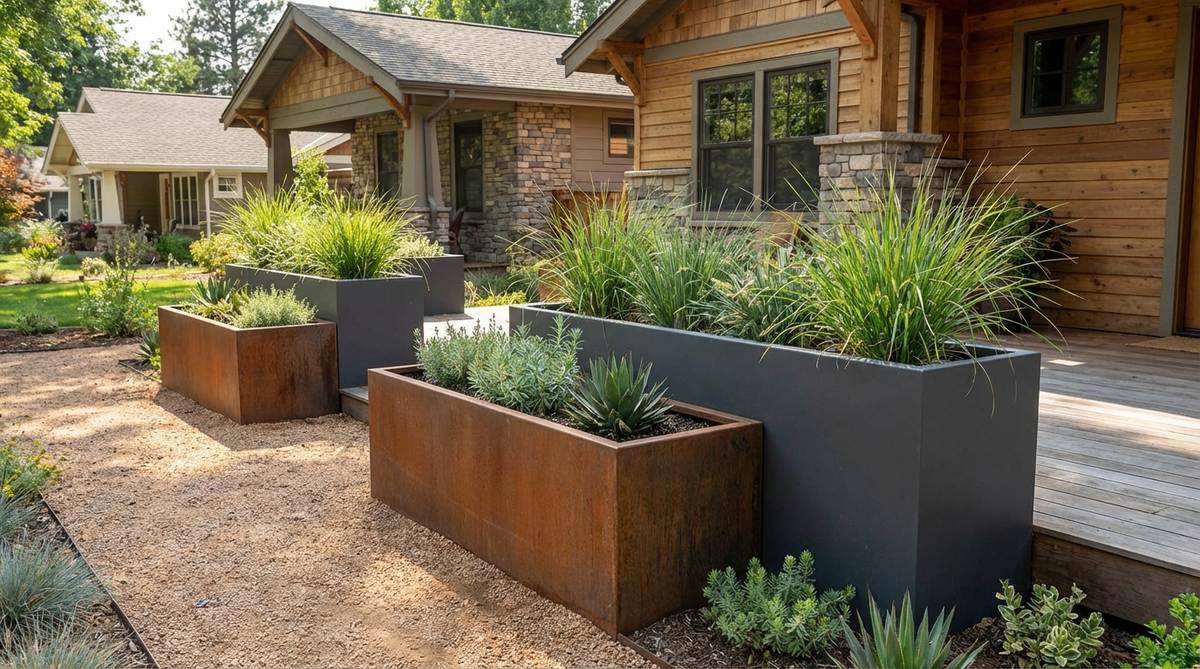
Square and rectangular steel planters introduce vertical elements to ground-level edging systems. Fabricated from 3-5mm corten or powder-coated mild steel, these boxes hold 12-36 inches of soil depth. Corner welds create seamless joints that emphasize clean geometric forms.
Position geometric planters as focal points along pathways or cluster them to create modular garden zones. The raised design improves drainage and allows ornamental grasses or structural perennials to achieve greater visual impact. Interior dimensions accommodate standard nursery plant sizes.
Powder-coated steel offers custom colors (charcoal, bronze, white) that coordinate with architectural elements. Drainage is critical—specify bottom perforations or elevate boxes on feet. Corten planters develop rust that may stain adjacent paving during initial weathering.
6. Industrial Angle Iron Edging
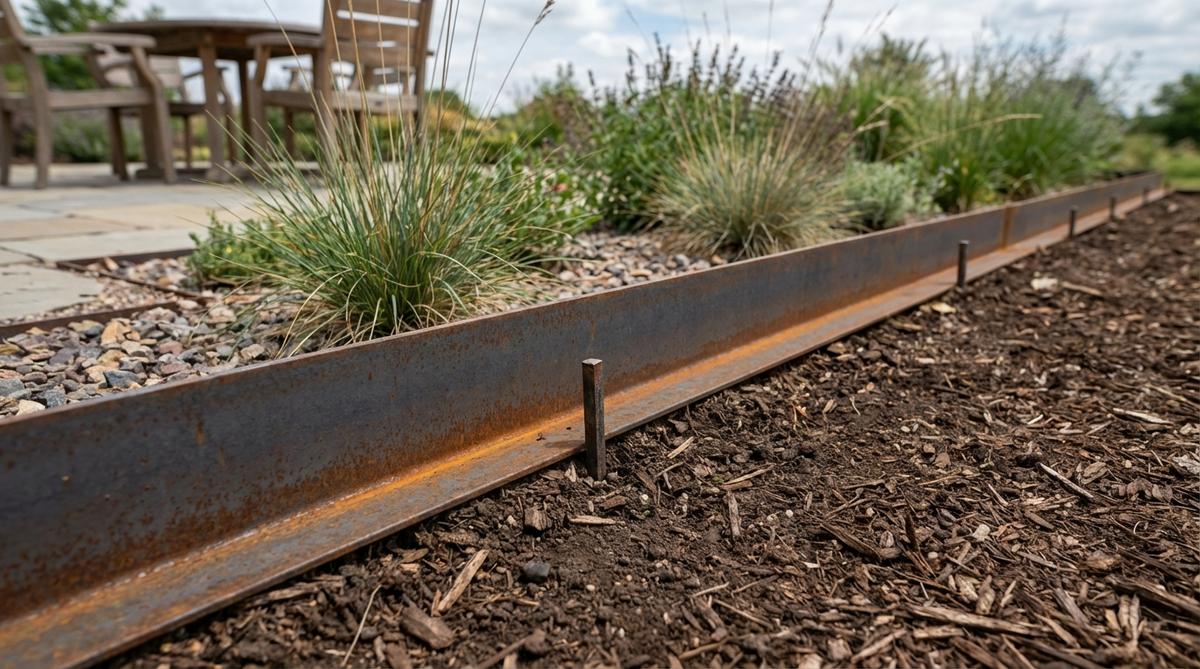
Standard L-shaped angle iron (1.5 x 1.5 inch or 2 x 2 inch) provides robust edging at contractor pricing. The right-angle profile sits with one leg buried and one exposed, creating a visible barrier 1-2 inches tall. Raw steel develops surface rust that stabilizes within months.
Contractors favor angle iron for budget-conscious commercial projects requiring durability over refined aesthetics. The material suits loading dock perimeters, parking lot islands, and municipal landscapes. Cut sections to length with an angle grinder and stake every 3-4 feet.
Apply rust converter or black enamel if consistent coloring is required. Otherwise, embrace the uneven patina as part of the industrial aesthetic. This approach delivers function at 30-50% less cost than specialty edging products.
7. Perforated Metal Screen Dividers
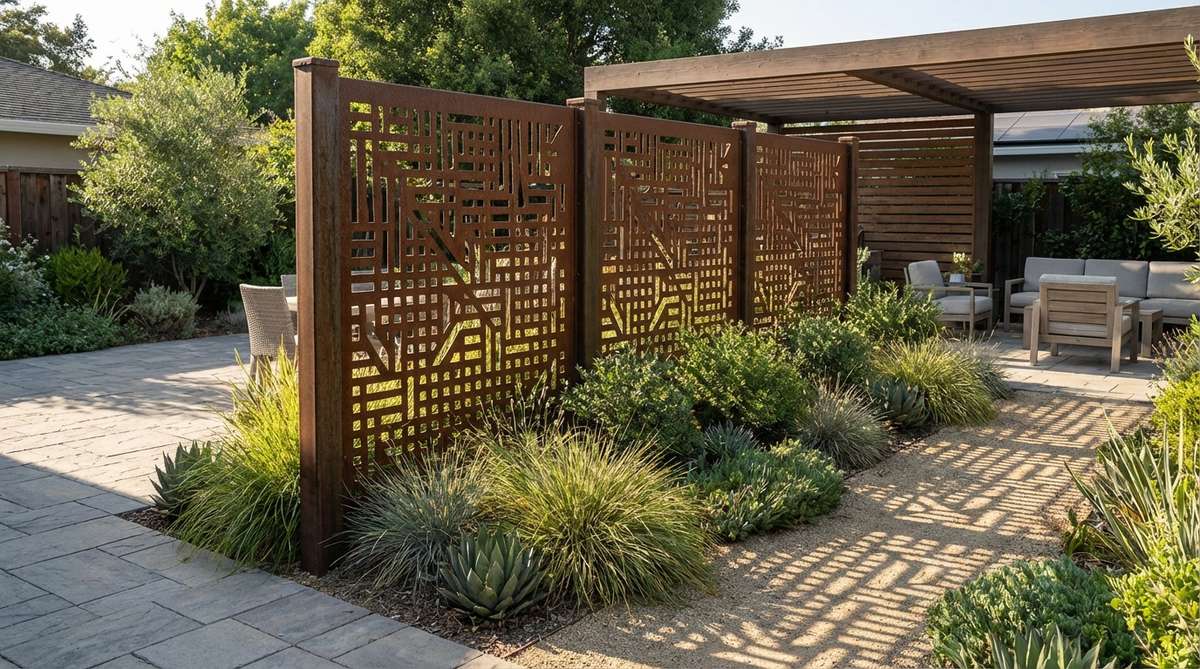
Laser-cut steel screens serve as vertical garden dividers rather than ground-level edging. Custom patterns range from geometric grids to organic motifs, casting dynamic shadows across planted areas. Screens stand 36-72 inches tall, mounted to posts or frames.
Designers position perforated screens to separate garden rooms, obscure utility areas, or create privacy buffers. The semi-transparent nature maintains visual flow while defining spatial boundaries. Corten finishes harmonize with natural landscapes; powder-coated options suit modern architecture.
Fabrication costs increase with pattern complexity, but the design impact justifies premium pricing. Anchor screens securely to resist wind loads. Combine with low edging to create complete enclosure systems.
8. Steel Channel Pathway Borders
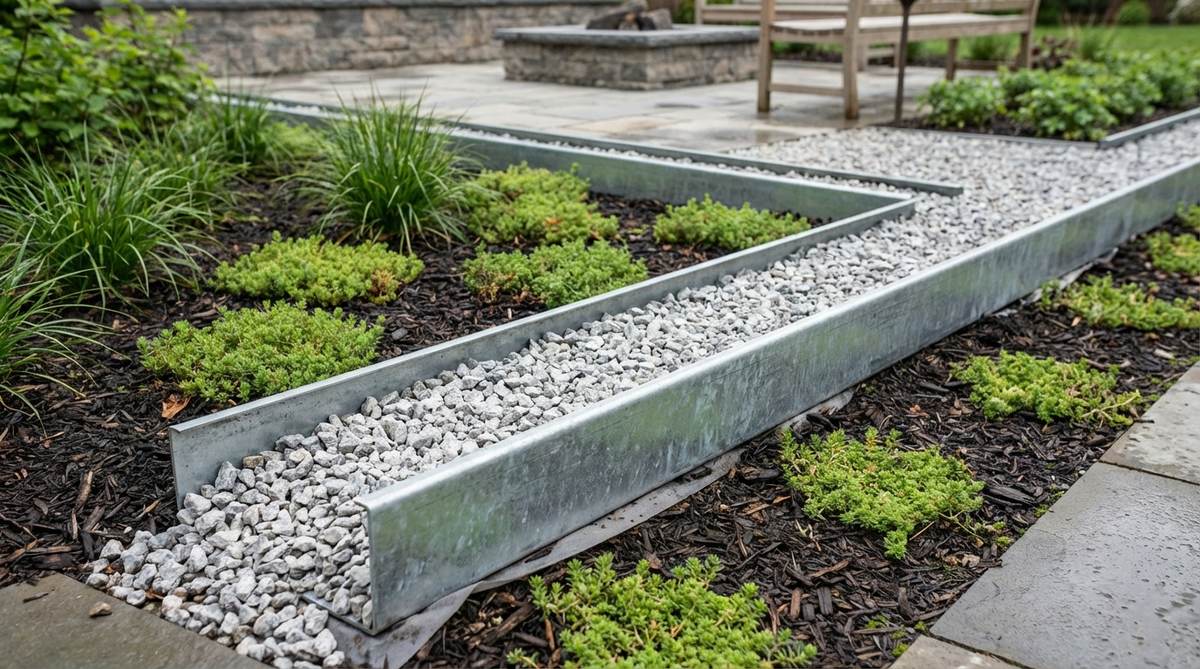
U-channel steel profiles contain gravel, decomposed granite, or crushed stone pathways with precision. The channel’s depth (2-4 inches) prevents loose materials from migrating into adjacent planting beds. Install channels with the open side up, creating a trough that holds path aggregate.
This method works particularly well for straight pathways where clean edges are non-negotiable. The steel’s rigidity maintains alignment even under foot traffic and wheelbarrow use. Galvanized or painted finishes prevent rust stains on light-colored aggregates.
Stake channels every 36 inches to prevent shifting. Pair with landscape fabric beneath pathways to suppress weeds. The industrial profile suits contemporary gardens and commercial landscapes.
9. Stainless Steel Thin-Line Edging
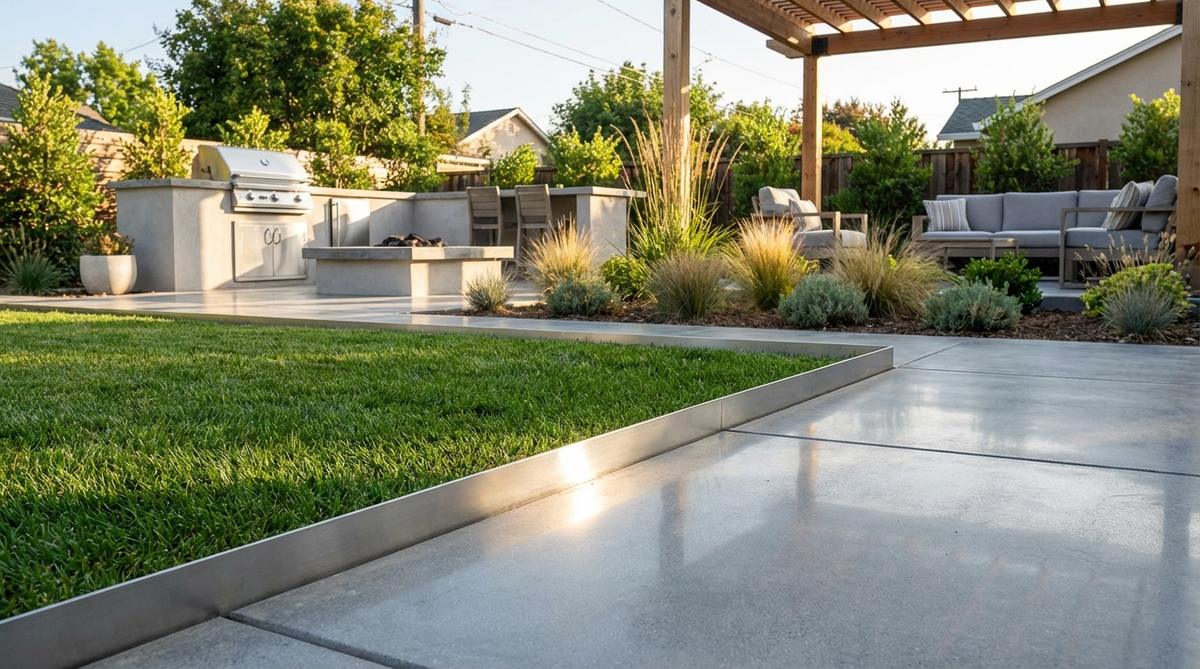
Stainless steel strips (0.5-1.5mm thick) deliver near-invisible separation between materials. The bright metallic finish reflects light while the thin profile minimizes visual interruption. This premium material resists all forms of corrosion indefinitely.
Specify stainless steel for high-design residential projects where budget allows for top-tier materials. The edging works beautifully between contrasting texturesdark mulch against white gravel, or lawn against polished concrete. Installation requires careful attention to achieve perfectly straight or smoothly curved lines.
Cost exceeds corten and aluminum by 2-3x, but the refined aesthetic justifies the investment in luxury landscapes. Stainless requires no finishing or maintenance. Choose brushed or polished surface treatments based on desired reflectivity.
10. Painted Steel Custom Color Borders
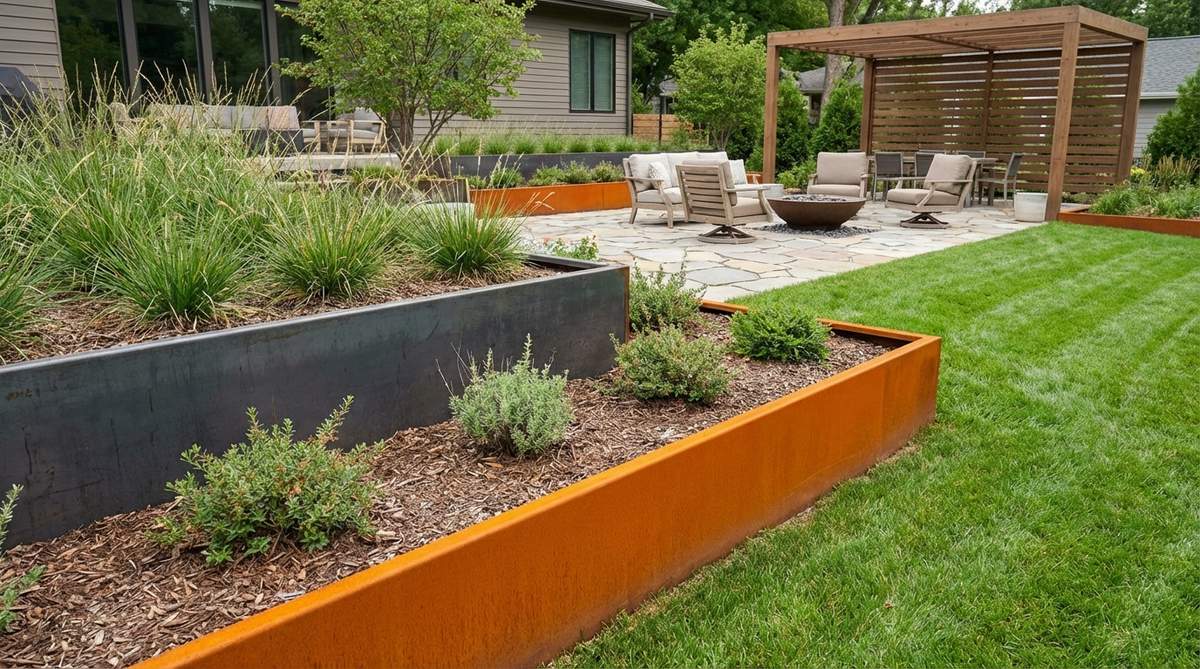
Powder-coated mild steel edging accepts any RAL or custom color specification. Pre-treated steel receives electrostatically applied powder coating that cures into a durable, chip-resistant finish. Colors range from matte black to vibrant accent tones.
Designers coordinate edging colors with building trim, furniture, or accent walls to create cohesive outdoor schemes. Dark colors (charcoal, bronze, deep green) recede visually, while bright tones create intentional focal points. The coating adds UV and moisture protection.
Expect 10-15 years before recoating becomes necessary in harsh climates. Touch-up paint addresses scratches from installation or maintenance equipment. This approach offers creative freedom unavailable with raw metal finishes.
Concrete Border Innovations for Permanent Garden Structure
Concrete edging provides unmatched permanence and design versatility for modern gardens. Poured-in-place borders follow any contour while maintaining structural strength. Pre-cast units offer quick installation with consistent dimensions. Stamped and stained concrete achieves the look of natural stone at a fraction of the cost.
11. Poured-In-Place Curbing
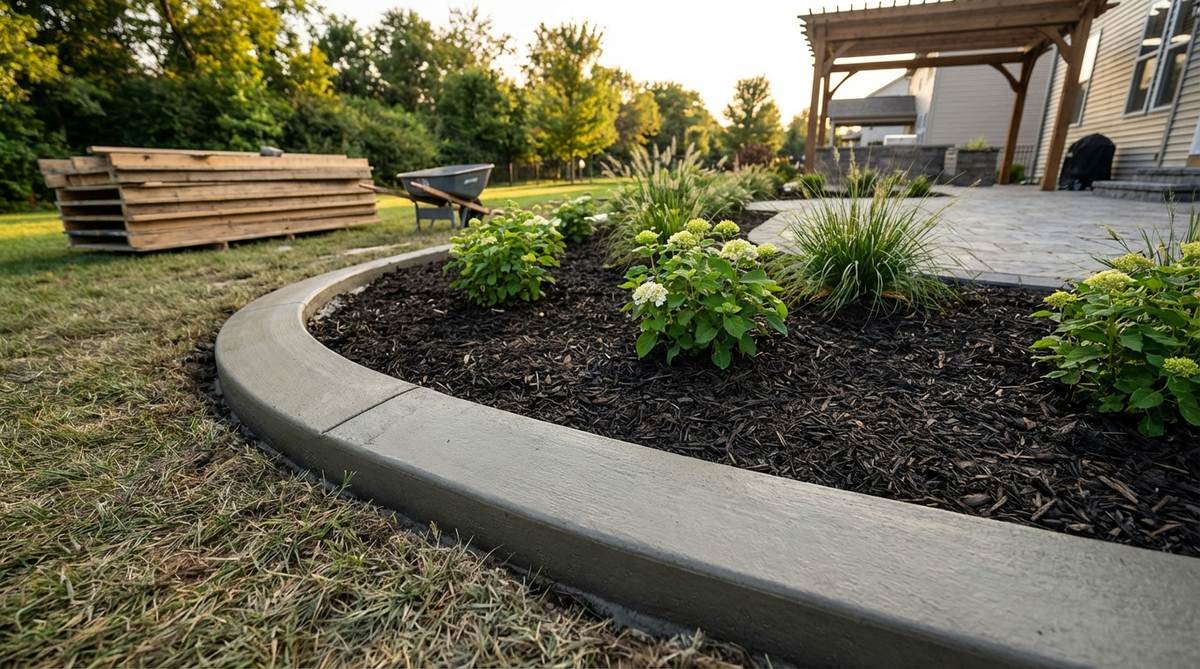
Site-mixed concrete forms continuous borders without joints or seams. Contractors excavate 8-inch-wide trenches to 4-inch depth, then pour and shape concrete using forms or trowels. The monolithic construction resists frost heaving and root intrusion better than segmented systems.
Poured borders work equally well for straight runs and complex curves around tree surrounds or bed edges. Add fiber reinforcement to prevent cracking. Tool control joints every 3-4 feet to manage inevitable shrinkage cracks. Float smooth or broom-finish for texture.
Apply acrylic sealer after 5-7 days curing to protect the surface and enhance color. This method costs less per linear foot than pre-cast units when projects exceed 100 feet. Expect 20+ years of service with proper installation.
12. Stamped Concrete Faux Stone Borders
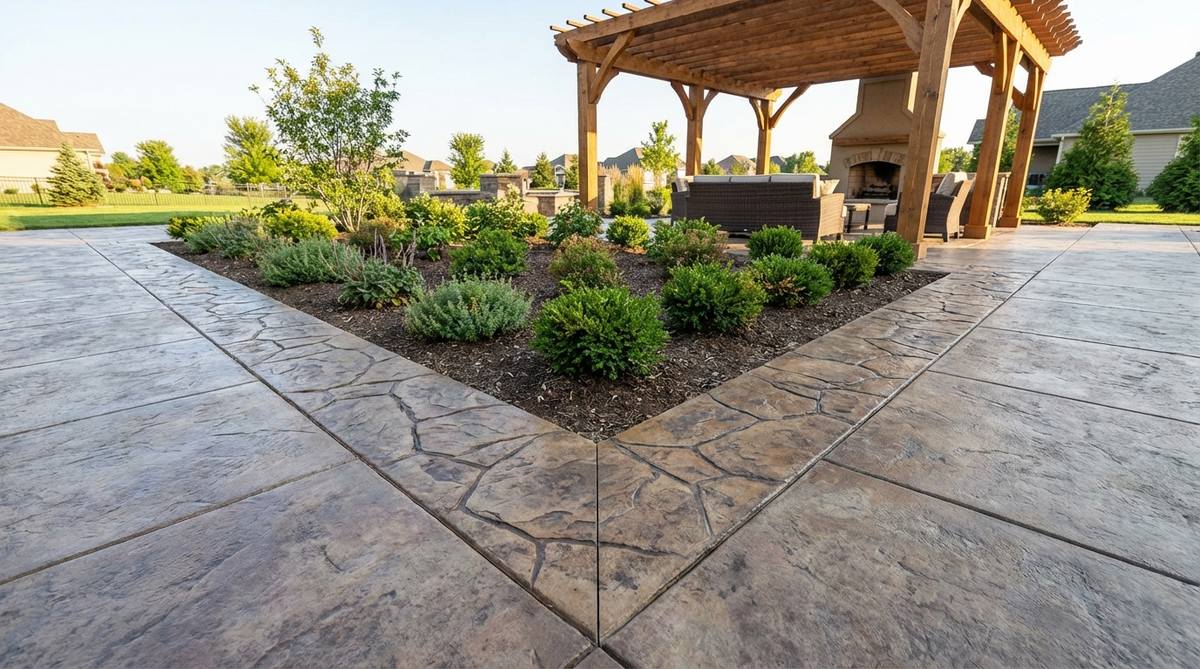
Texture mats imprint patterns resembling flagstone, cobblestone, or ashlar into wet concrete borders. Color hardeners and antiquing stains create realistic stone appearance. The seamless surface prevents weed growth between joints.
Designers use stamped borders to frame patios and driveways, creating visual interest without mixed-material complications. Patterns coordinate with stamped patio surfaces or provide contrast to plain concrete. The technique allows premium stone aesthetics at half the material cost.
Installation requires specialized tools and experience to achieve professional results. Timing is critical—stamping occurs within a narrow window during concrete setup. Sealed stamped concrete resists fading and staining for years.
13. Precast Concrete Curb Sections
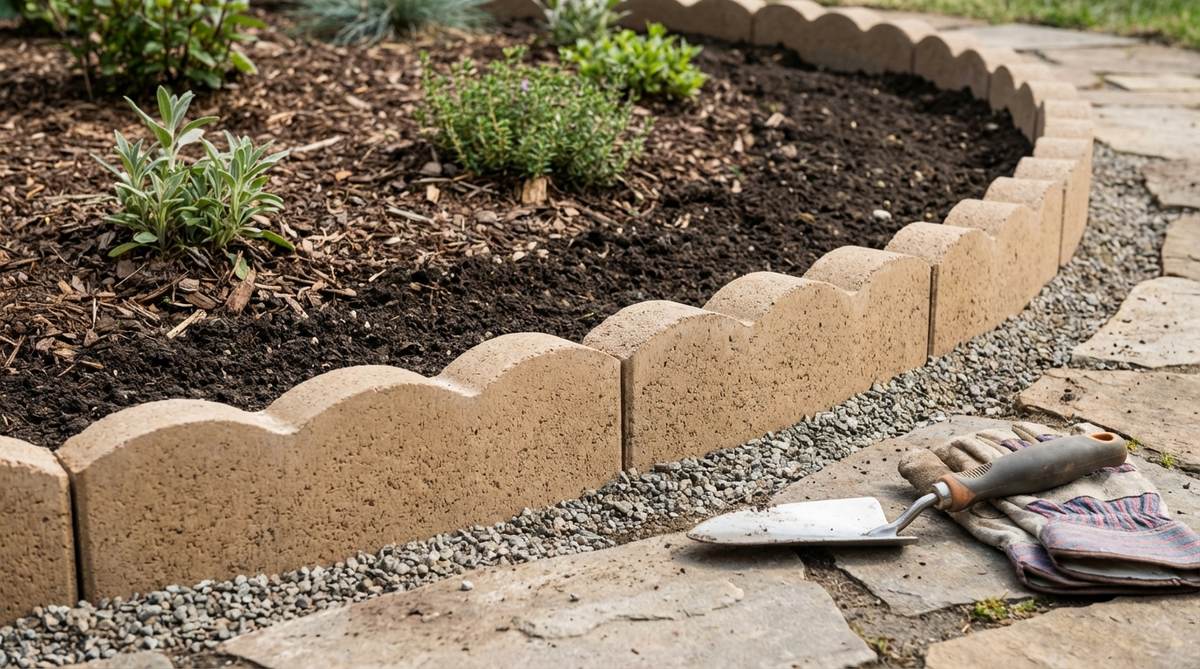
Factory-molded concrete units arrive ready to install, with consistent dimensions and finishes. Sections measure 24-48 inches long, with profiles ranging from simple rounded tops to decorative rope or scalloped designs. Gray, tan, and charcoal colors suit various landscape palettes.
Installation involves excavating a level trench, setting units end-to-end on compacted gravel, and backfilling for stability. The standardized shapes simplify estimating and ordering. Transitions to curves require specialty radius units or straight sections with small gaps.
Pre-cast edging suits DIY installation for homeowners lacking concrete-finishing skills. The modular system allows phased projects without mixing concrete. Replace damaged sections individually rather than removing entire borders.
14. Colored Concrete Ribbon Edging
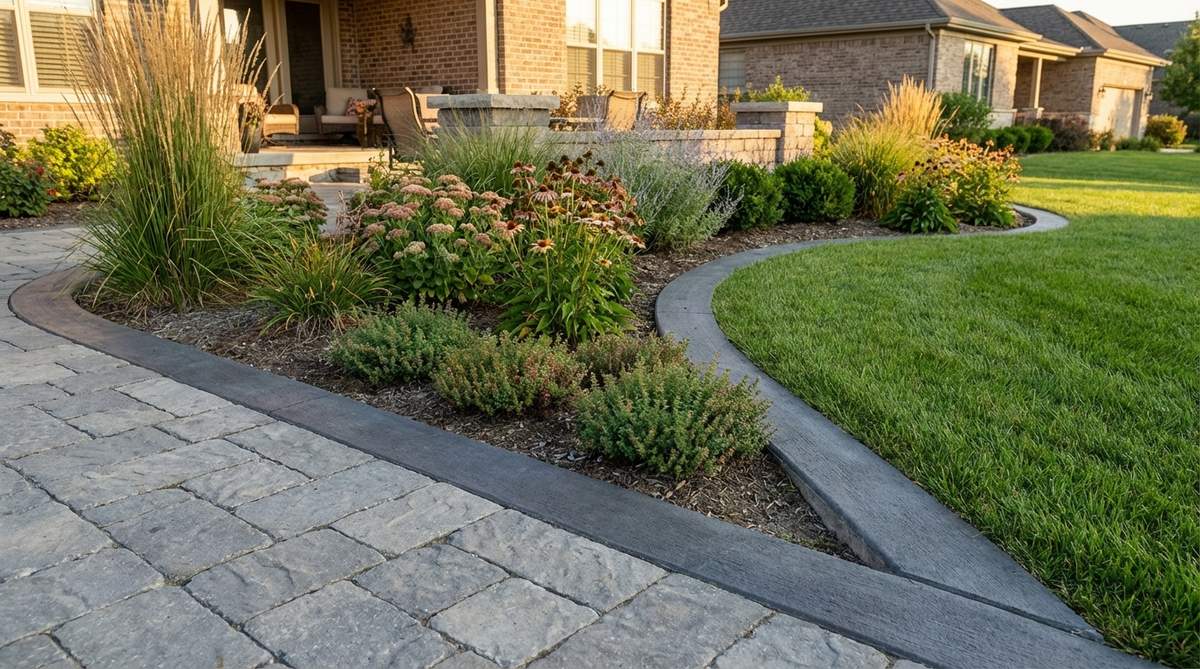
Integral color additives tint concrete borders in earth tones (terra cotta, buff, sandstone) or contemporary shades (charcoal, slate blue). The color extends throughout the concrete thickness, so chips and wear don’t expose gray base material. Pour narrow ribbons 4-6 inches wide for refined borders.
Colored edging coordinates with paver walkways or complements planting palettes. Warm tones unify with brick and natural stone; cool grays suit modern architecture. The continuous color eliminates painting or staining maintenance.
Test color samples before full installation—wet concrete appears darker than cured results. Sealers deepen tones and add sheen. Budget 10-20% more than plain gray concrete for integral color additives.
15. Exposed Aggregate Concrete Borders
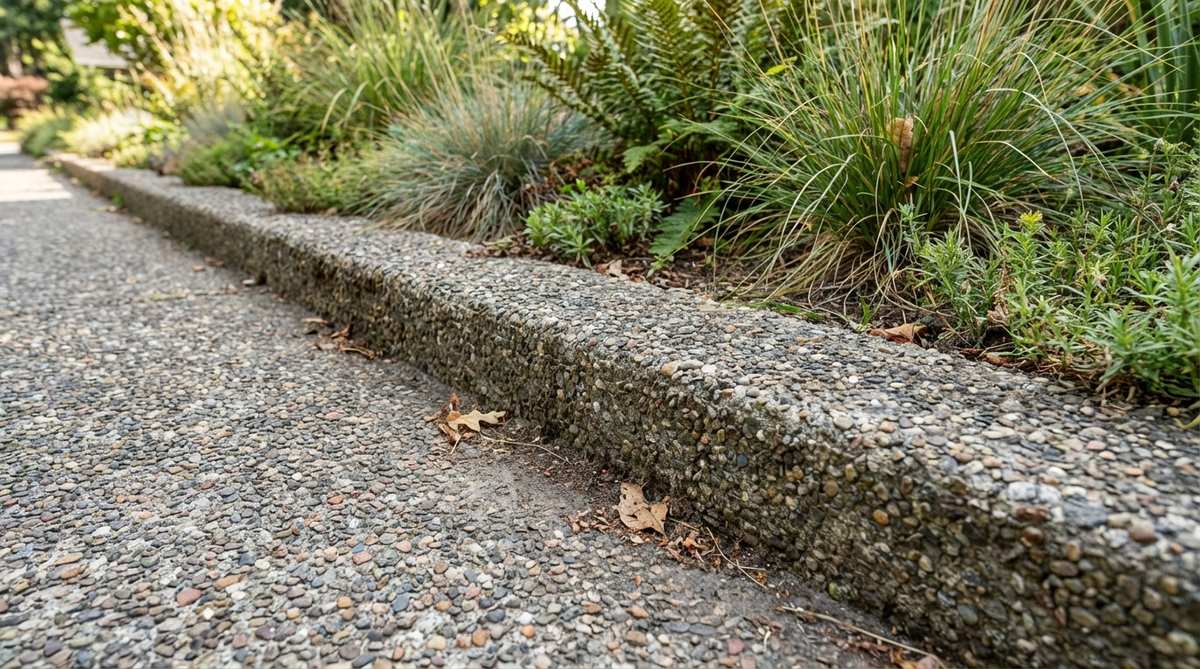
Surface retarders delay top-layer curing, allowing contractors to wash away cement paste and reveal decorative aggregate. Pea gravel, crushed granite, or river rock creates textured, slip-resistant surfaces. The technique adds visual interest and tactile dimension to plain concrete.
Exposed aggregate suits naturalistic gardens where texture complements plantings. The rough surface provides traction along sloped pathways. Coordinate aggregate colors with existing hardscape materials for cohesive design.
Application requires precision timing—wash too early and aggregate dislodges; too late and surface won’t clean properly. Seal with penetrating sealer to protect against staining. This finish costs 15-25% more than smooth trowel finishes.
16. Concrete Soldier Course Edging
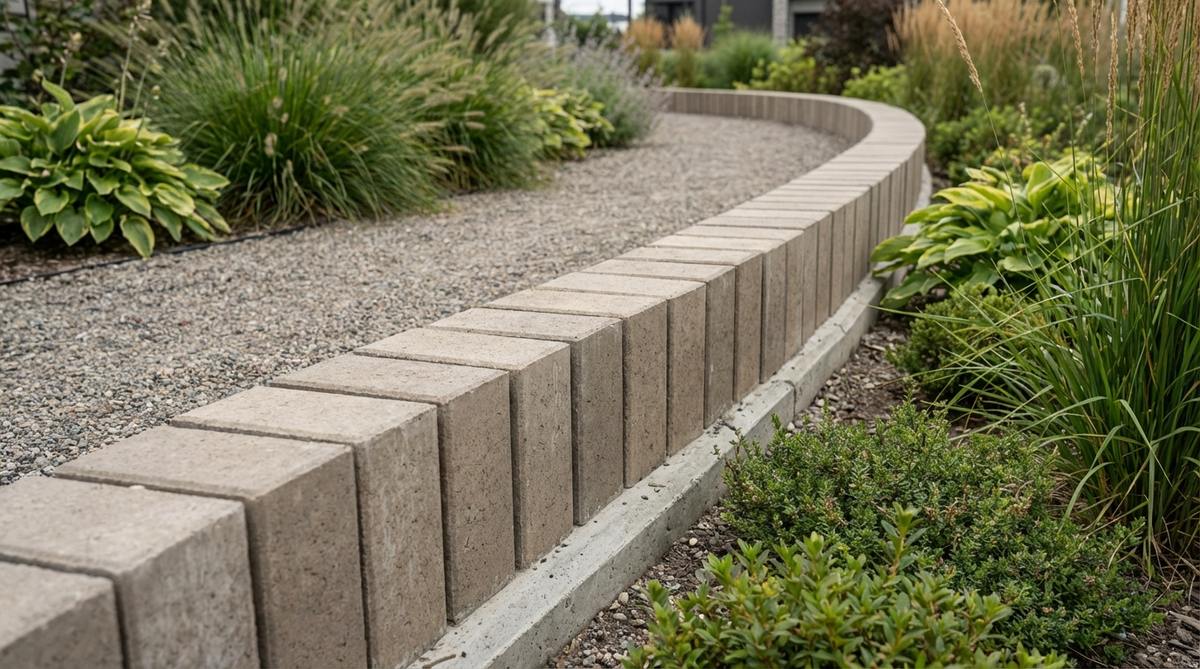
Pavers installed vertically (on edge) create distinctive linear borders with dimensional depth. Standard 4×8-inch pavers extend 4 inches above grade when set in concrete footing. The repetitive pattern provides rhythmic visual interest along pathways and beds.
Soldier courses work particularly well with brick pavers for traditional landscapes or concrete pavers for modern settings. The vertical orientation showcases paver thickness and creates shadows that enhance texture. Mix paver colors for striped patterns.
Excavate 6-inch-deep trenches and pour 2-3 inches of concrete footing. Set pavers into wet concrete, using a string line to maintain alignment. This method consumes more pavers per linear foot but delivers architectural presence.
17. Polished Concrete Slab Edging
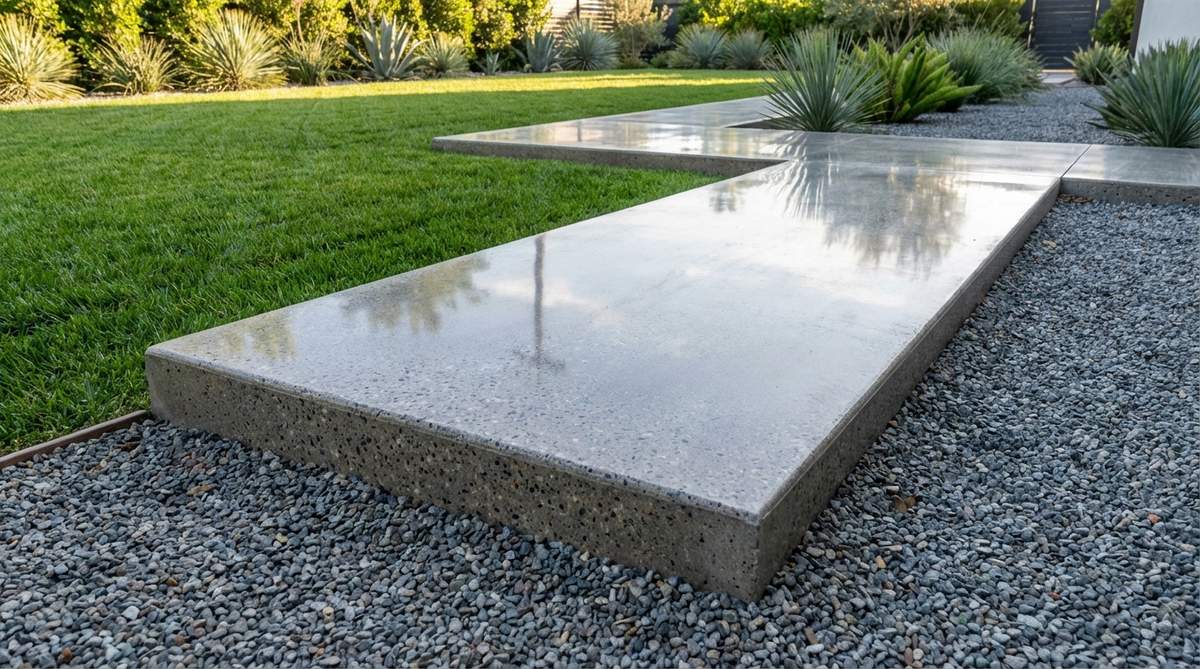
Ground and polished concrete slabs (2-3 inches thick, 8-12 inches wide) create minimalist borders with glass-smooth surfaces. Diamond grinding exposes aggregate and creates reflective finishes. The contemporary aesthetic suits ultra-modern landscapes.
Fabricate slabs off-site for consistent quality, then install on level gravel base. The polished surface resists staining and requires only occasional hosing. Position slabs as edging between grass and gravel, or as raised borders around patios.
This premium approach requires specialized grinding equipment and expertise. Cost exceeds standard concrete by 3-4x but delivers distinctive architectural character. Slabs accept integral color or decorative aggregate for customization.
18. Concrete Block Retaining Edging
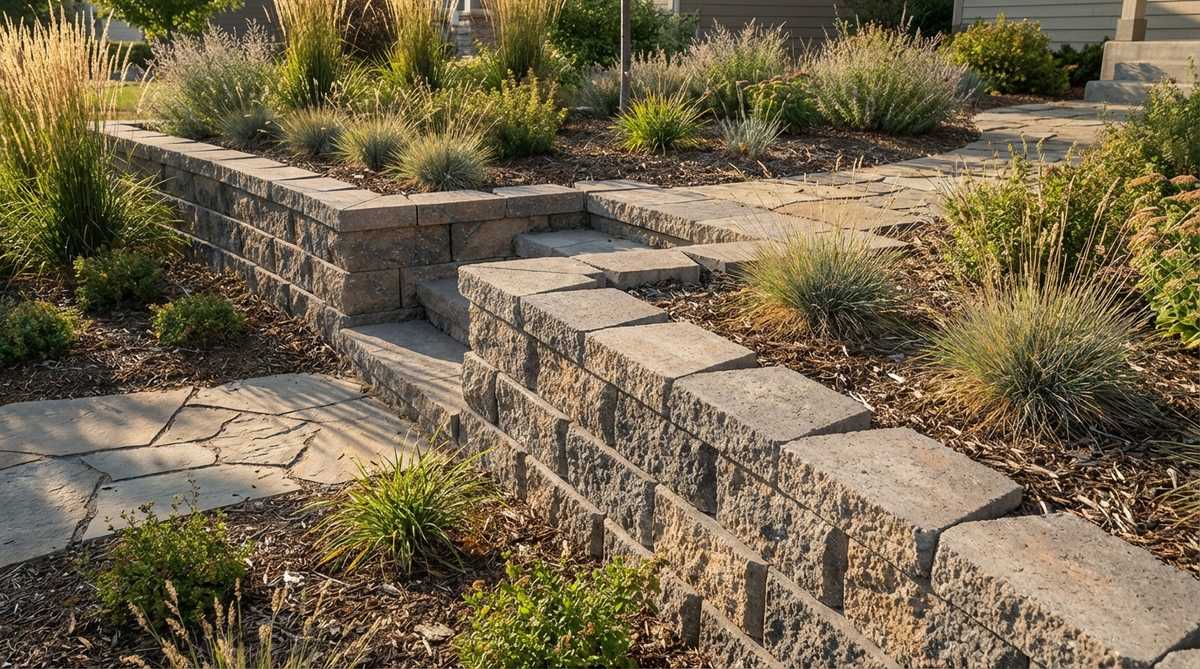
Modular concrete blocks stack to create low retaining walls (12-24 inches) that double as edging. Interlocking profiles ensure stability without mortar. The blocks contain planting beds on sloped terrain while defining level transitions.
Installation begins with leveled base course on compacted gravel. Upper courses interlock via lips or pins cast into block design. Finish walls with flat cap units. The system suits larger residential and commercial projects requiring engineered solutions.
Textured or split-face blocks offer decorative alternatives to smooth surfaces. Colors range from natural gray to earth tones. This approach handles elevation changes that exceed the capacity of simple edging materials.
19. Acid-Stained Concrete Borders
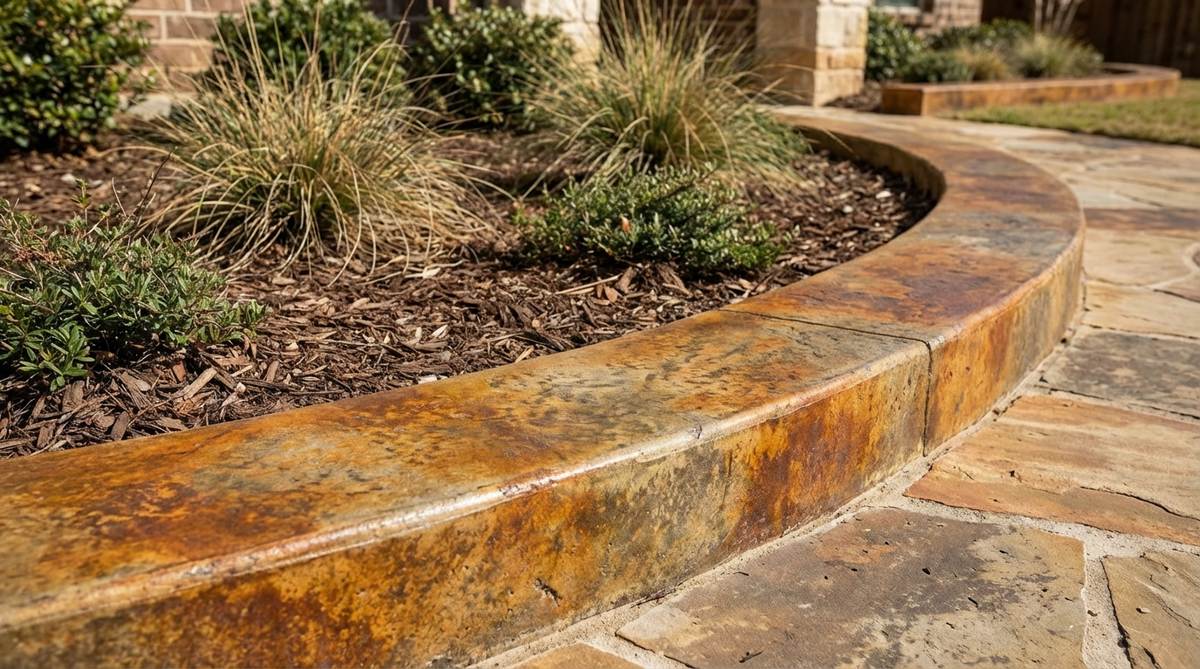
Chemical stains react with concrete minerals to create variegated, translucent color. Earth tones (amber, terra cotta, copper, sage) develop mottled patterns resembling aged stone. Each application produces unique results based on concrete composition and application technique.
Designers specify acid stain for borders requiring organic color variation. The thin stain penetrates surface pores rather than coating, so it won’t peel or chip. Multiple stain colors layer for complex color fields.
Application requires neutralizing and cleaning between coats. Seal with penetrating or acrylic sealer to protect the stained surface. The process adds artisanal character to standard concrete borders at modest cost increase.
20. Precast Concrete Rope Edging
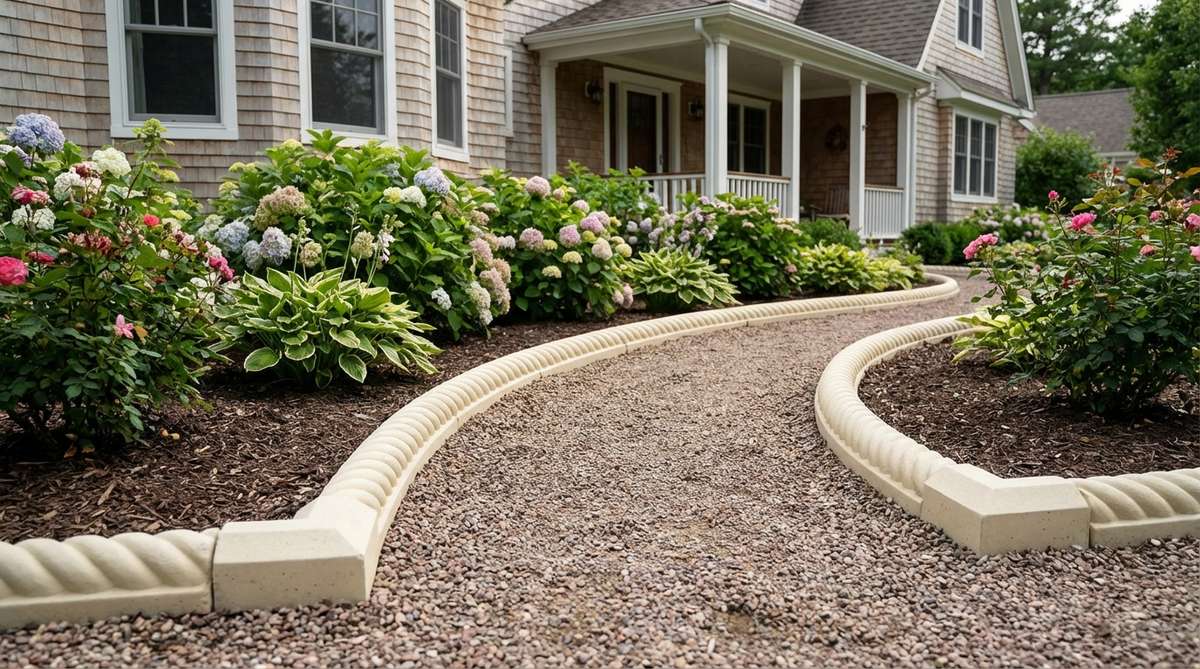
Victorian-inspired rope pattern molded into concrete creates traditional borders for cottage gardens. The twisted-rope profile adds dimensional detail along flower beds and pathways. Units include matching corner dollies for right-angle turns.
This decorative option suits period homes and formal garden designs. The raised profile (4-6 inches) provides clear definition between lawn and beds. Light colors (white, cream, buff) enhance the classical aesthetic.
Install on level sand or concrete base for stability. The segmented system allows straight runs or gentle curves. While less modern than plain profiles, rope edging serves traditional landscapes effectively.
Stone Edging Designs for Timeless Natural Beauty
Natural stone brings geological authenticity and permanence to garden borders. Granite, sandstone, limestone, and fieldstone each offer distinct colors and textures. Stone edging suits both formal and naturalistic designs, aging gracefully while requiring minimal maintenance. These materials represent the highest investment but deliver unmatched longevity.
21. Granite Sett Edging
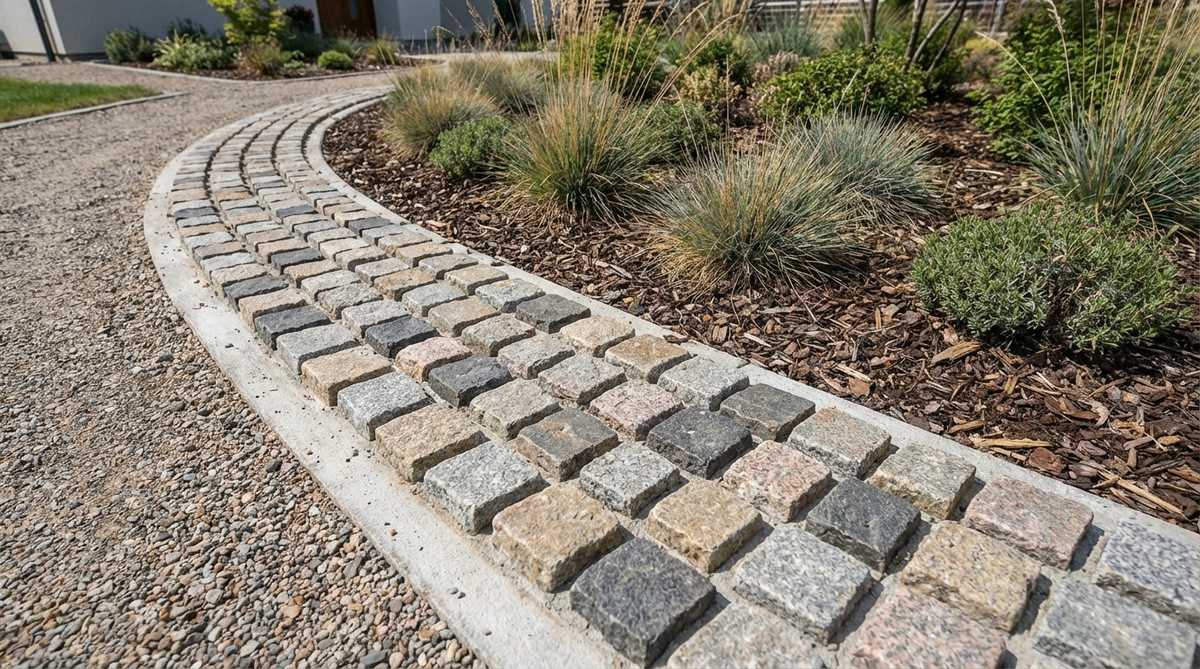
Small granite cubes (4×4, 4×6 inches) install in rows to create precise linear borders. The individual setts allow tight radius curves while maintaining geometric order. Colors range from salt-and-pepper gray to pink, charcoal, and gold tones depending on granite origin.
Landscape architects specify setts for driveways, pathways, and formal bed edges requiring durability. Set setts in concrete or sand, with joints tight or spaced for visual variety. The modular nature simplifies repairs and adjustments.
Granite’s hardness resists chipping from mowers and frost. The material lasts indefinitely with zero maintenance. Expect premium pricing but consider it a permanent installation.
22. Flagstone Standing-Edge Borders
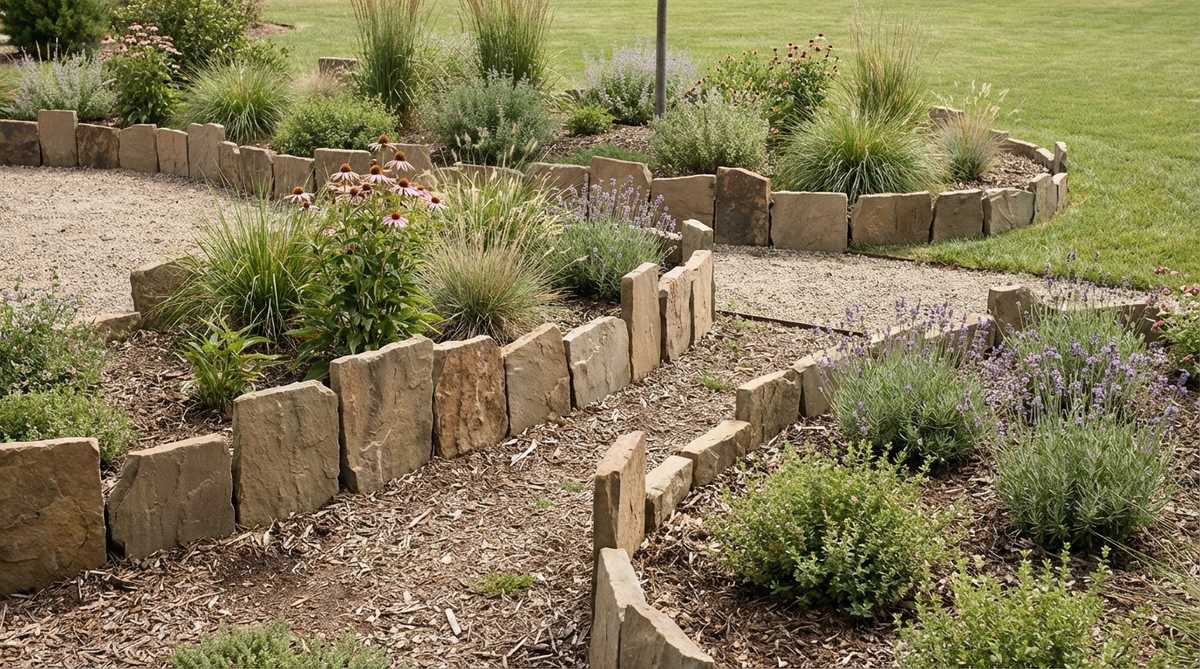
Flagstone pieces set vertically (on edge) create organic borders with natural thickness variations. Each piece stands 6-10 inches tall, partially buried for stability. The irregular edges and earth-tone colors blend seamlessly with planted areas.
Designers use standing flagstone for naturalistic gardens, xeric landscapes, and rustic settings. The vertical installation showcases stone stratification and color banding. Pair with decomposed granite or mulch pathways.
Excavate trenches deep enough to bury 40-50% of stone height. Backfill with soil or concrete for stability. This approach consumes more stone than flat-laid edging but creates distinctive three-dimensional borders.
23. Cut Limestone Curbing
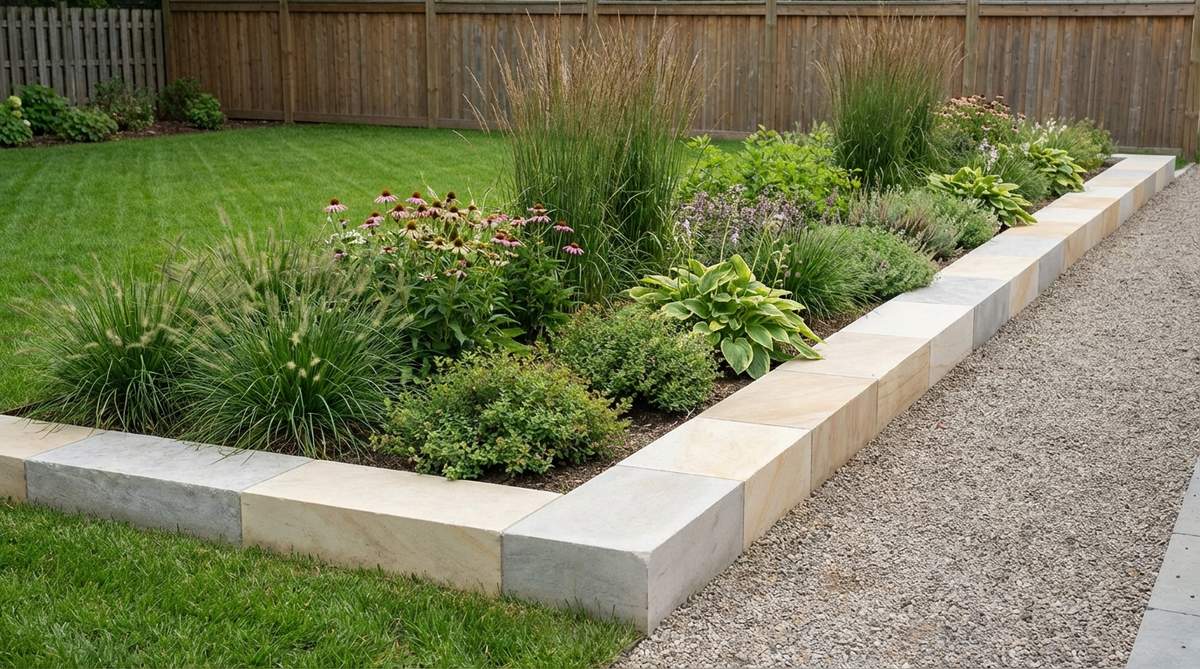
Sawn limestone strips (4-6 inches wide, 12-24 inches long) provide refined borders with consistent dimensions. The smooth-cut surfaces and right-angle edges suit formal gardens and commercial landscapes. Natural cream, buff, and gray tones lighten and brighten plantings.
Install limestone curbs on concrete base for structural projects or gravel for decorative applications. The uniform sizing simplifies layout and installation. Joints align precisely when cuts are square.
Limestone weathers naturally, developing patina over time. The stone’s porosity can stain near rust-producing elements. Seal with penetrating sealer in high-maintenance applications. Cost falls between granite and concrete.
24. Fieldstone Stacked Borders
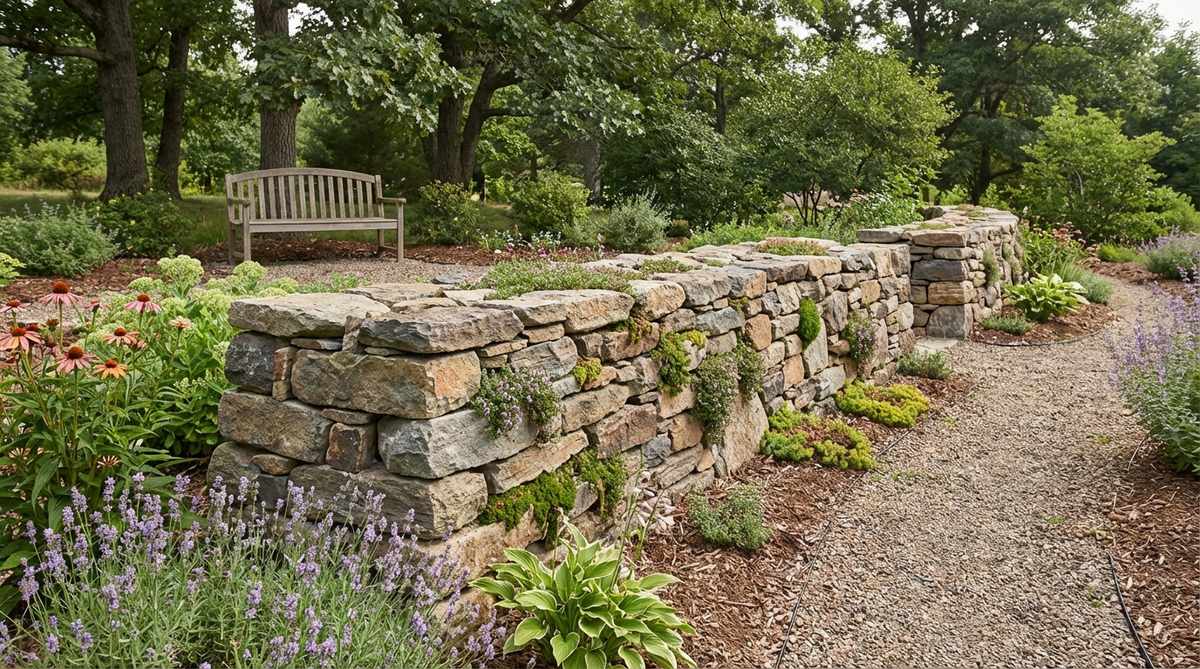
Rounded fieldstone gathered from properties or purchased creates rustic low walls (8-12 inches tall) serving as edging. The irregular shapes stack without mortar in dry-laid construction. Earth tones—gray, brown, tan—coordinate naturally with any planting palette.
This approach suits cottage gardens, woodland edges, and rural properties where formality is undesirable. The organic forms soften hardscape transitions. Gaps between stones accommodate creeping plants for tapestry effects.
Select stones with at least one flat face to create stable courses. Larger stones form the base; smaller pieces fill gaps. The labor-intensive installation rewards with timeless character. Expect gradual settling and occasional restacking.
25. Bluestone Thermal-Finish Edging
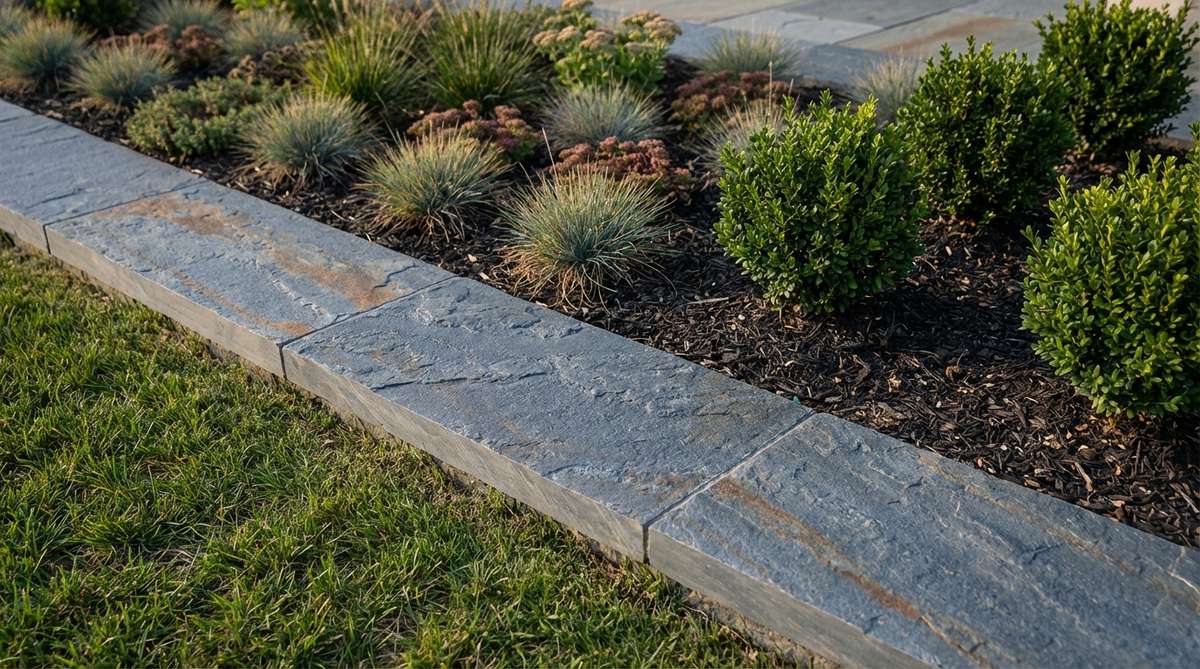
Thermally treated bluestone strips develop textured surfaces while maintaining straight edges. The process exposes aggregate and creates slip-resistant finish. Blue-gray coloring with occasional rust tones provides cool, sophisticated tones.
Specify thermal bluestone for contemporary landscapes requiring natural stone with refined character. The textured surface provides traction along slopes while the cut edges maintain clean lines. Standard sizes simplify ordering and installation.
Install on concrete base for permanent applications or compact gravel for flexibility. The dense stone resists freeze-thaw damage in cold climates. Bluestone represents mid-premium pricing among natural stone options.
26. Sandstone Riven-Edge Strips
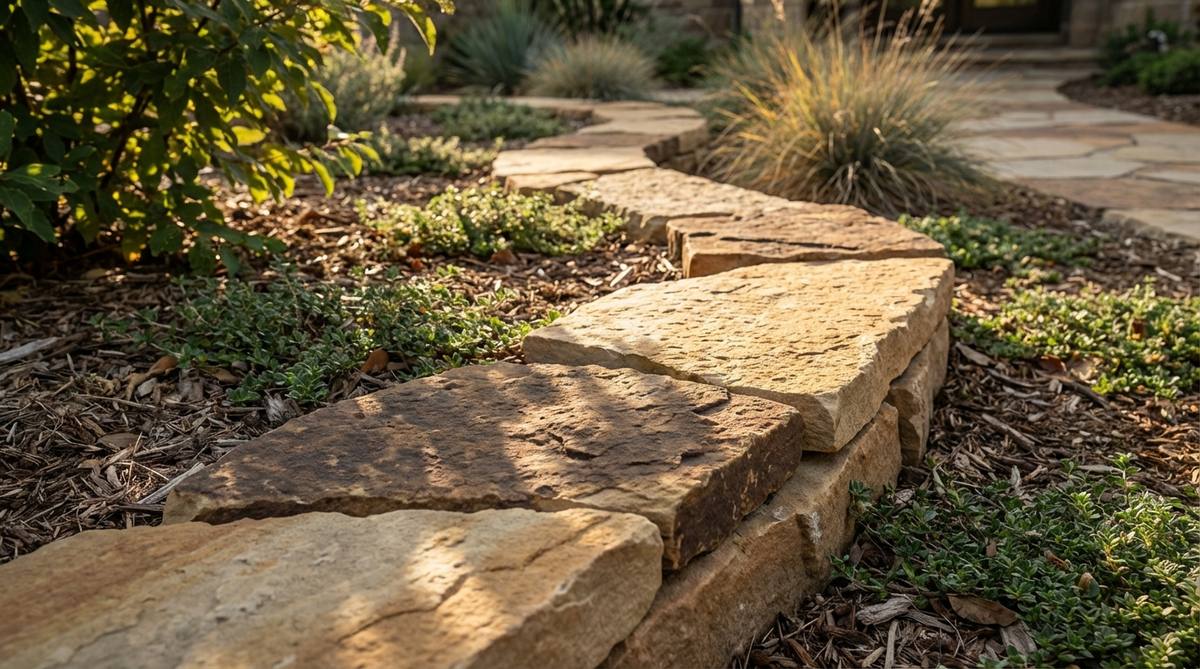
Split sandstone pieces retain natural riven (cleaved) texture on faces while cut edges create straight lines. The combination of rough surface and precise form bridges traditional and modern aesthetics. Warm buff, red, and brown tones add color richness.
Designers select riven sandstone for cottage gardens, Mediterranean landscapes, and transitional styles. The textured face catches light and shadow throughout the day. Thickness variations (1.5-3 inches) create visual interest in long runs.
Install with riven face exposed and cut edge underground or horizontal. The softer stone scratches more easily than granite but develops attractive patina. Seal to prevent staining from organic matter.
27. Granite Curb Edging
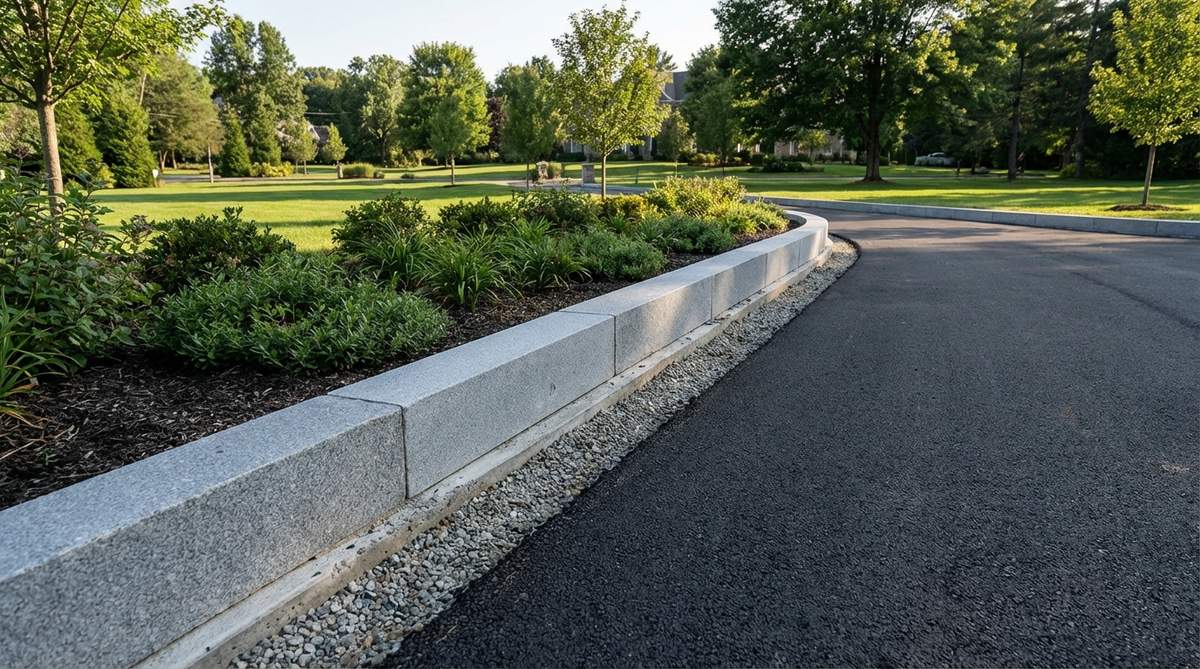
Full-size granite curbs (6×18, 6×24 inches) provide robust borders for driveways and heavy-traffic areas. The substantial dimensions resist displacement from vehicles and equipment. Machine-cut faces ensure consistent profiles and tight joints.
Landscape contractors specify granite curbing for commercial properties, municipal projects, and high-end residential work. The curbs create permanent definition requiring zero maintenance. Straight sections mix with radius units for curves.
Installation requires excavation, gravel base, and often concrete footing. The weight (150-300 lbs per piece) necessitates equipment for placement. This represents the most durable edging solution available, with 50+ year lifespan.
28. Slate Tile Vertical Edging
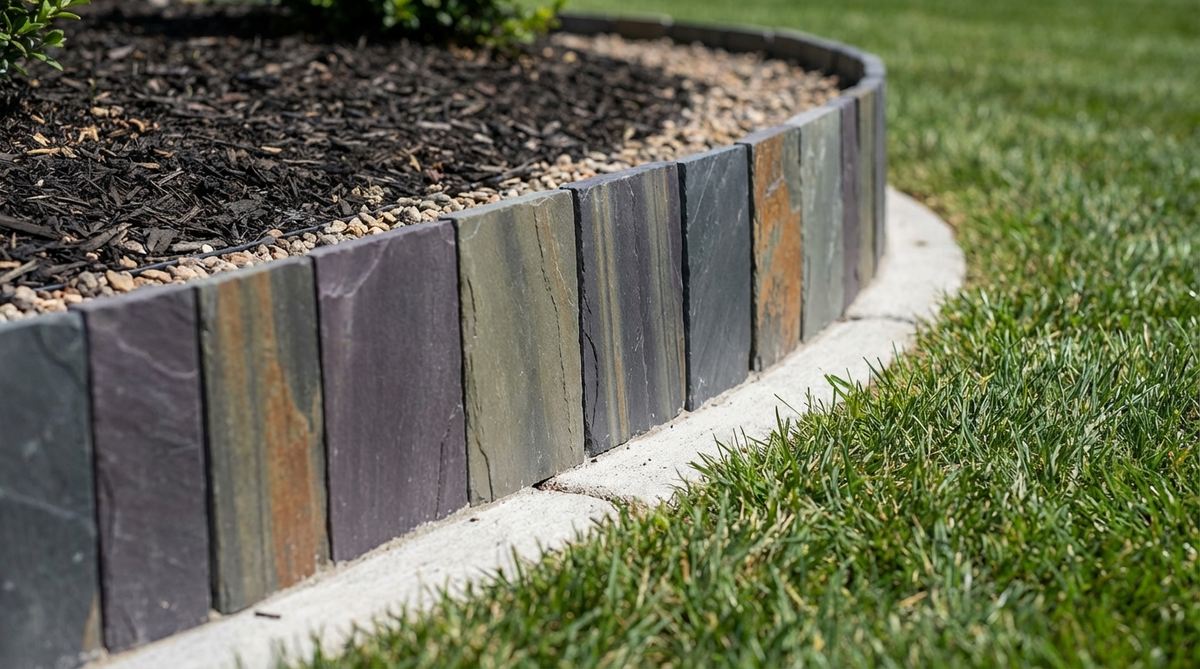
Thin slate tiles (0.5-1 inch thick) set on edge create refined borders with linear stratification. The layered geology becomes a design feature when displayed vertically. Colors range from charcoal and purple-gray to green-gray and rust.
This elegant solution suits modern gardens where minimalist borders are desired. The thin profile minimizes visual impact while effectively separating materials. Slate’s smooth surface and sharp edges provide contemporary detailing.
Bury tiles 40-50% of height in trenches backfilled with concrete for stability. The thin material can fracture under lateral pressure, so avoid in areas subject to soil expansion. Expect sophisticated appearance at moderate cost.
29. River Rock Mortared Borders
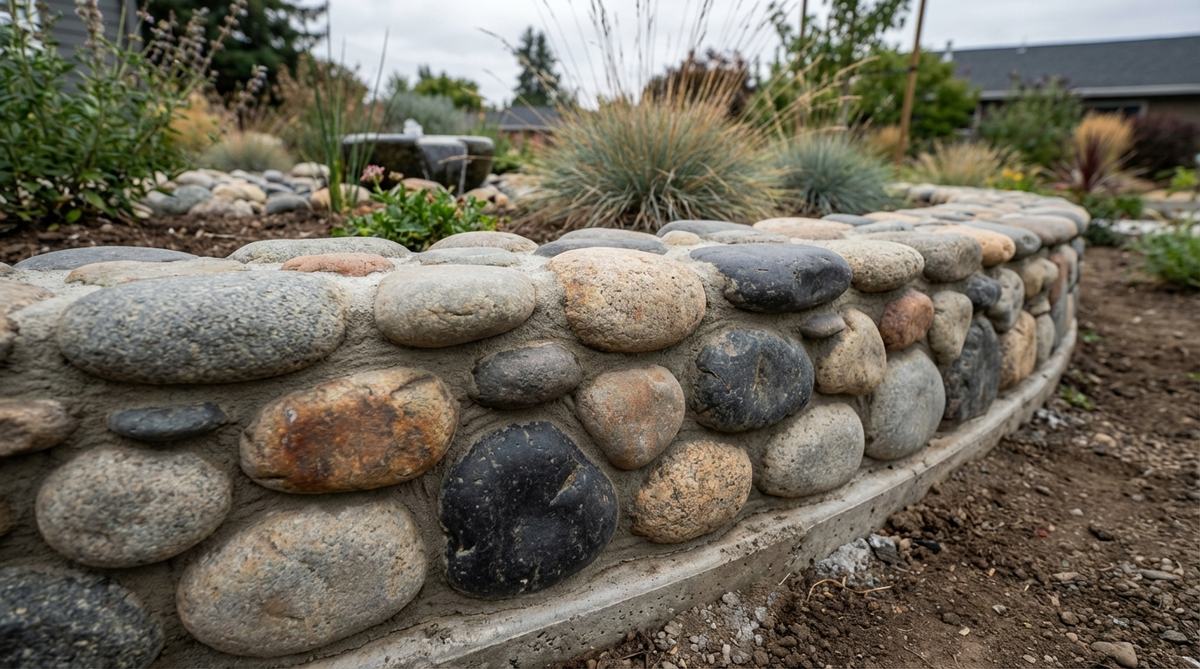
Smooth river stones (3-6 inches diameter) mortared together create textured, organic borders. The rounded forms and varied colors (gray, tan, rust, black) provide naturalistic character. Mortar joints hold stones permanently while allowing creative patterning.
Designers use mortared river rock for water features, Japanese-inspired gardens, and Zen spaces. The construction requires building skills but results in unique, artistic borders. Mix stone sizes and colors for visual complexity.
Construct on concrete footing for stability. Apply mortar to back sides of stones, leaving faces clean. Point joints or leave recessed based on desired appearance. This labor-intensive method creates one-of-a-kind installations.
30. Travertine Tumbled-Edge Pavers
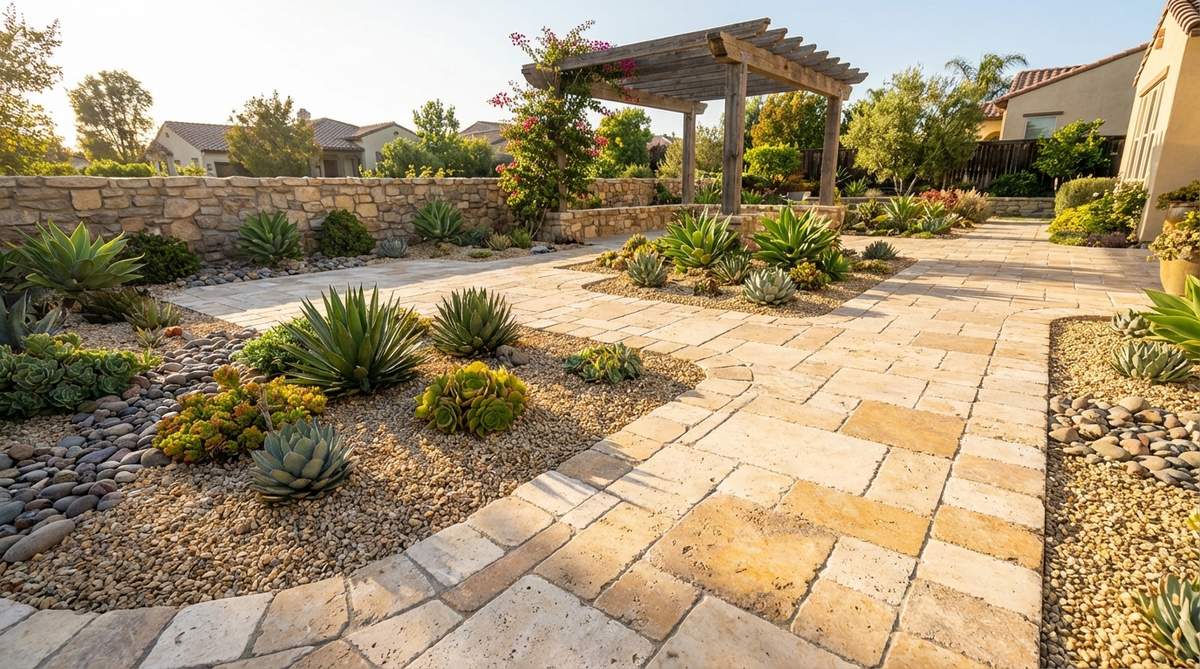
Tumbled travertine pavers feature softened edges and lightly textured surfaces. The warm cream, beige, and gold tones brighten planted areas. Porous surface texture provides slip resistance and organic character.
Specify travertine edging for Mediterranean, desert, and warm-climate gardens. The stone’s porosity requires sealing to prevent staining. Install pavers flat or on edge depending on desired height and visual impact.
Travertine works particularly well with succulent gardens and gravel landscapes. The stone remains cool underfoot in hot climates. Budget mid-premium pricing and plan for periodic resealing to maintain appearance.
31. Basalt Column Borders
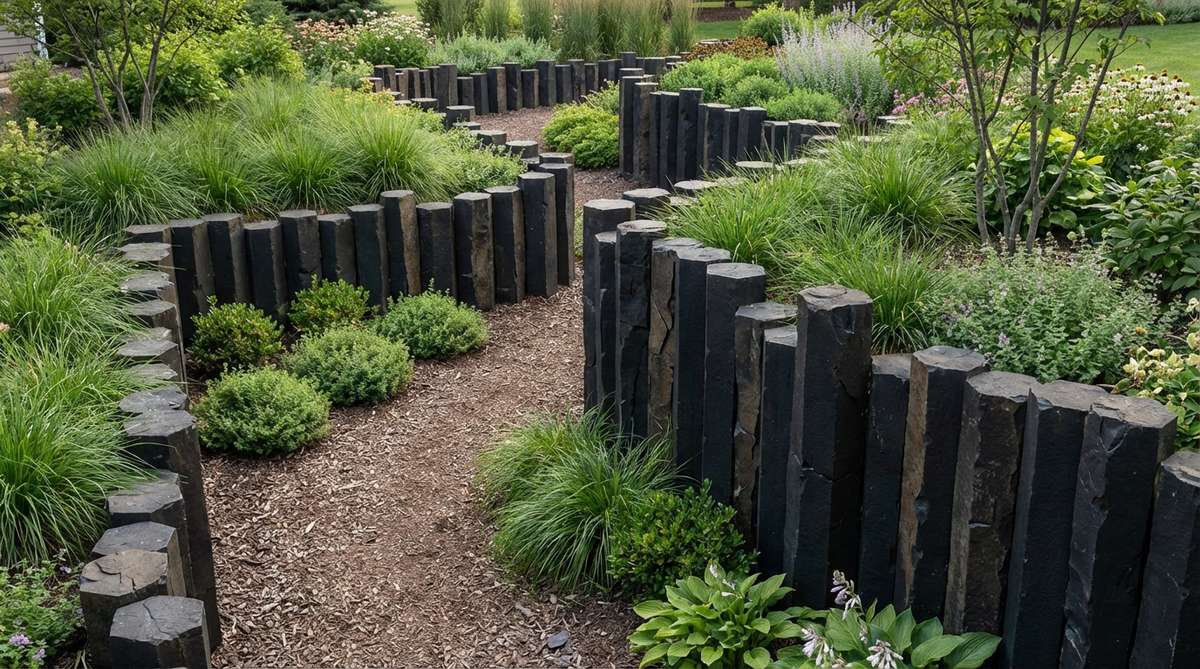
Cut basalt columns (4-8 inch diameter) installed vertically create dramatic linear borders with geological authenticity. The dense black stone provides maximum contrast against plantings. Natural hexagonal fracture patterns in some basalt add geometric interest.
Landscape architects use basalt columns for ultra-modern gardens and commercial installations. The vertical elements create rhythmic patterns along borders. Vary column heights (12-30 inches) for dynamic profiles.
Excavate holes for each column, set in concrete, and backfill firmly. The weight and dark color anchor visual compositions. This distinctive approach commands premium pricing but delivers unmatched dramatic impact.
32. Mixed Stone Mosaic Edging
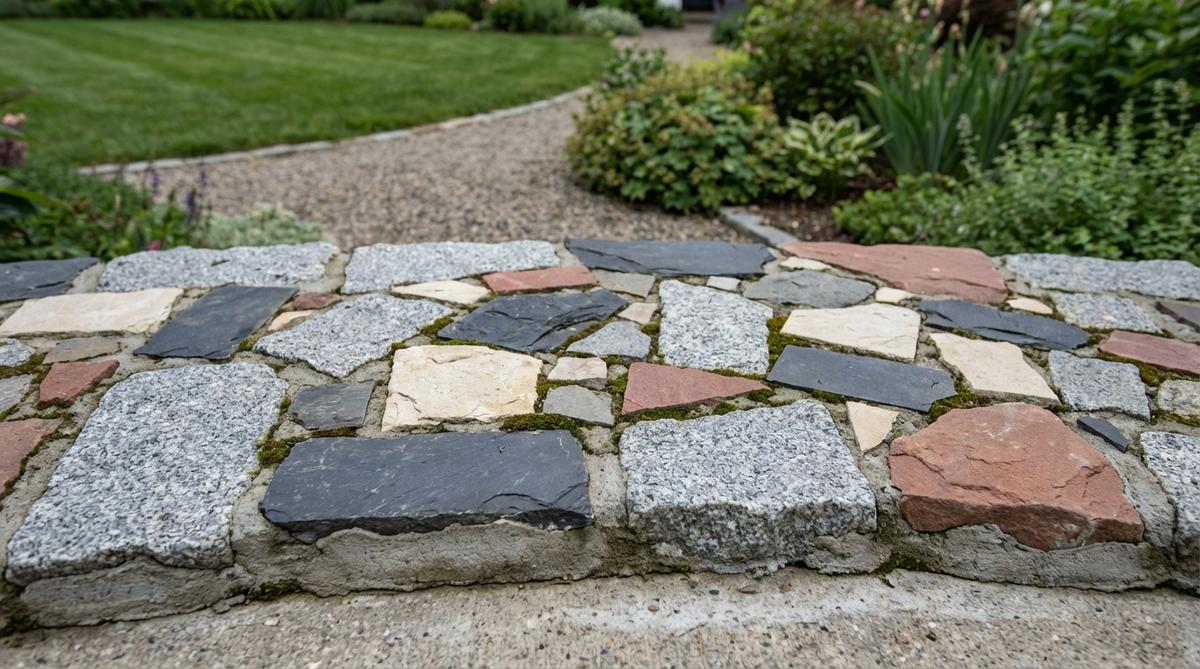
Combining multiple stone types, colors, and sizes creates custom mosaic borders. Granite, slate, limestone, and sandstone pieces fit together like puzzles. The technique allows creative expression while using remnant materials economically.
This artistic approach suits eclectic gardens and artistic personalities. The varied textures and colors create visual richness unavailable from single-material borders. Plan patterns in advance or create organic compositions during installation.
Set stones in mortar bed on concrete base for permanent installation. Fill joints with mortar or polymeric sand based on desired look. The labor-intensive process rewards with truly unique garden edging.
Creating Lasting Borders with Modern Materials
Steel, concrete, and stone edging materials provide the durability and design flexibility that define contemporary landscapes. These modern garden edging ideas transform ordinary borders into architectural features that structure outdoor spaces for decades. Whether you select the industrial character of corten steel, the permanence of poured concrete, or the natural beauty of granite, each material contributes lasting value to your property. Fresh Garden Ideas encourages you to evaluate your garden’s style, budget, and maintenance preferences to select edging that elevates your landscape design while meeting practical requirements.
Frequently Asked Questions
What is the longest-lasting garden edging material?
Granite and basalt stone provide the longest service life, often exceeding 50 years without deterioration. Stainless steel and properly installed corten steel also deliver 30+ years of performance. Concrete borders last 20-30 years when correctly installed with proper drainage and control joints. Material longevity depends significantly on installation quality, climate conditions, and maintenance practices.
How much does professional garden edging installation cost?
Professional installation costs range from $8-15 per linear foot for basic aluminum or galvanized steel, $12-25 per foot for corten steel or poured concrete, and $20-40 per foot for natural stone materials like granite or bluestone. Complex designs, site preparation requirements, and regional labor rates affect final pricing. Obtain multiple quotes and verify contractor experience with your chosen material.
Can modern garden edging work with curved landscape designs?
Flexible materials like thin-gauge steel, aluminum, and poured concrete adapt easily to curves. Corten steel bends to gentle radius curves; tighter curves require scoring or specialized flexible profiles. Small stone units like granite setts follow curves through radial placement. Pre-cast concrete typically suits straight runs but manufacturers offer radius units for curved sections.
Does corten steel edging stain concrete or pavers?
Corten steel’s rust runoff can stain light-colored concrete, pavers, and gravel during the first 6-12 months of weathering. Install barriers like plastic edging behind corten when protecting adjacent materials is critical, or plan installation distances that prevent runoff contact. Once the stable patina forms, staining typically ceases. Some designers embrace the rust staining as part of the aesthetic.
What maintenance do metal and stone borders require?
Metal edging requires minimal maintenance—occasional hosing removes debris, and checking stakes ensures borders remain secure. Corten and stainless steel need no protective coatings. Painted steel may require touch-ups every 5-10 years. Stone edging needs no routine maintenance beyond keeping joints clear of weeds. Resetting displaced stones maintains alignment. Concrete benefits from resealing every 3-5 years to prevent staining.