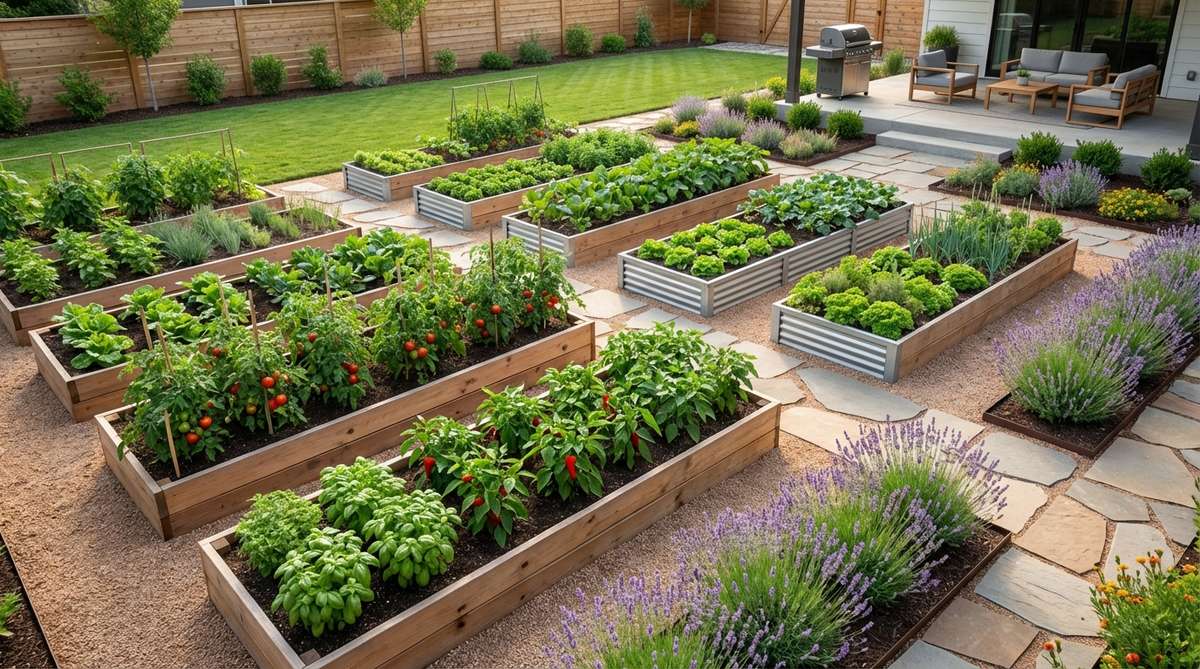
A well-designed modern garden bed transforms outdoor spaces into productive, organized growing systems that maximize yield while minimizing maintenance. Whether you’re working with compact urban yards or expansive backyards, strategic layouts combine form and function to create gardens that perform beautifully season after season. Fresh Garden Ideas brings you expert-tested configurations that blend contemporary aesthetics with time-proven growing principles.
Design SnapshotKey Principles
- Orientation Matters: Position beds north-south for consistent sun exposure throughout the growing season
- Access Width: Keep bed width at 4 feet maximum to reach center areas without compacting soil
- Pathway Planning: Allow 2-3 feet between beds for wheelbarrow access and comfortable movement
- Depth Standards: Build beds 12-18 inches deep for most vegetables, deeper for root crops
Geometric Precision Layouts For Contemporary Gardens
Geometric configurations bring architectural discipline to garden spaces, creating visual focal points while optimizing growing area. These layouts work particularly well in modern landscapes where clean lines and symmetry define the aesthetic.
1. Hexagonal Hub System
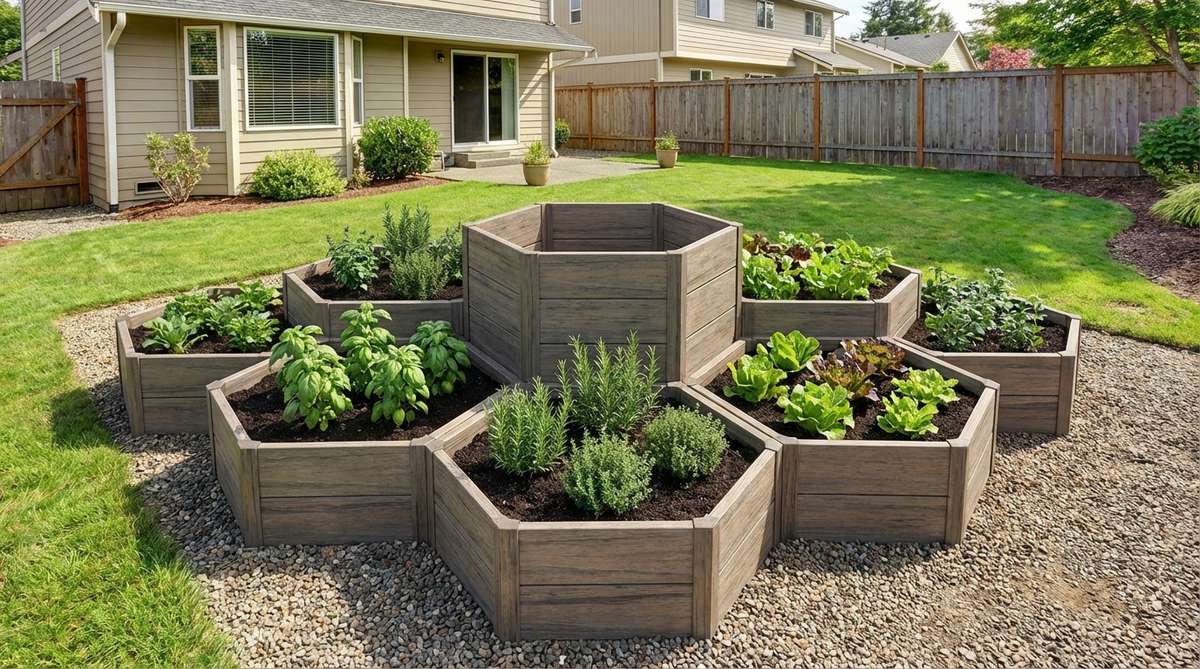
Six-sided beds radiate from a central point, creating a honeycomb pattern that maximizes edge space for planting. Each hexagon measures 110cm across, offering accessible reach from all angles.
Assemble modular panels without tools, stacking to your preferred working height in 25cm increments. The design eliminates corner spaces that often go unused in traditional rectangular beds.
This configuration works particularly well for herb gardens and salad greens where frequent harvesting benefits from 350-degree access.
2. Circular Accent Beds
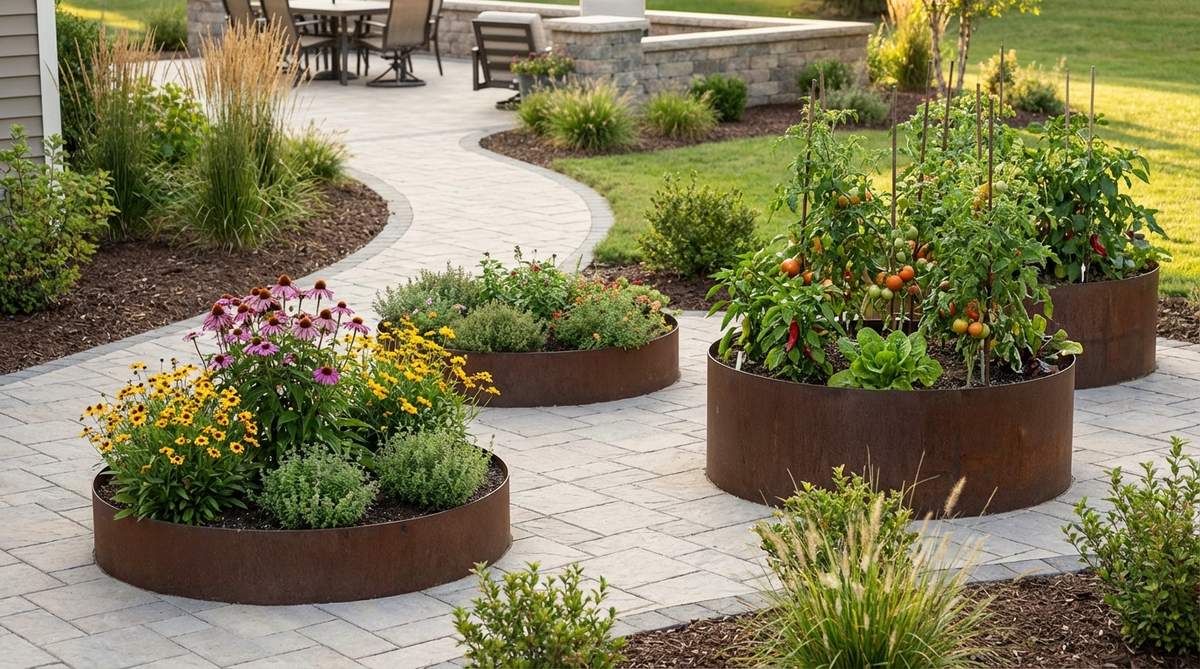
Round planters measuring 42 inches in diameter introduce organic curves that soften hardscaped areas. Metal construction in 17-inch or 32-inch heights adds sculptural presence to otherwise linear garden designs.
Position circular beds as focal points at pathway intersections or anchor corner spaces with dramatic plantings. The spacious depth accommodates both flowering plants and productive vegetables like tomatoes.
3. Pyramid Tier Planter
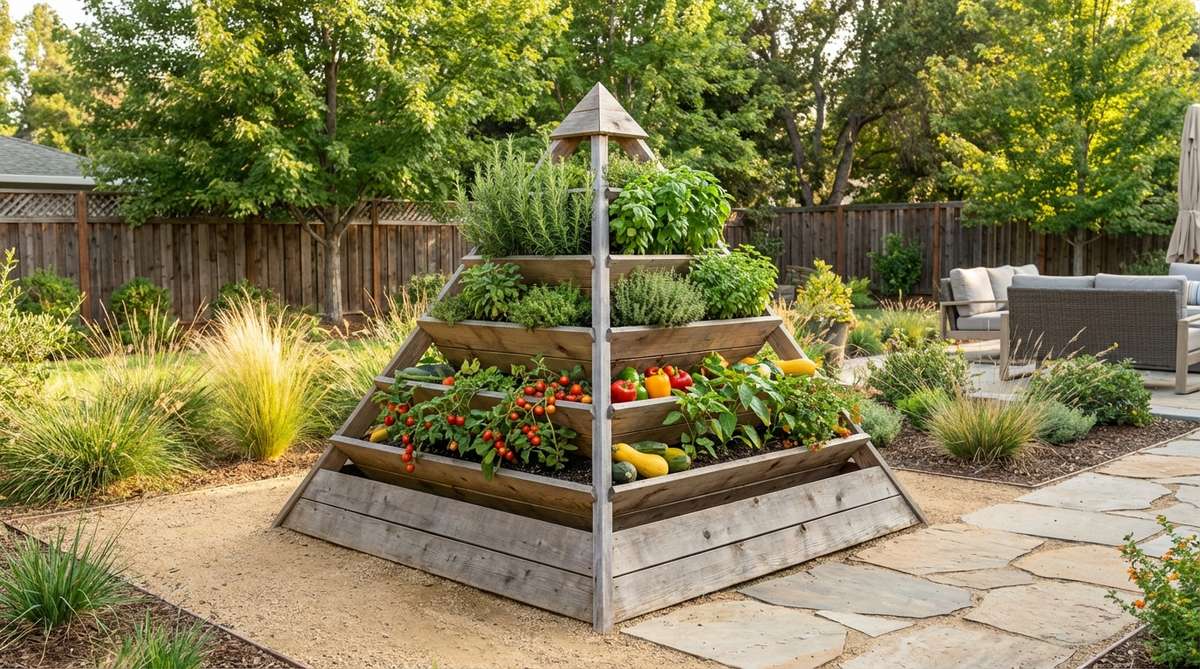
Stacked containers form ascending levels, with the largest base tier supporting progressively smaller platforms above. This vertical structure creates a living sculpture while maximizing square footage.
Arrange herbs on upper tiers where they’re easily accessible for harvesting, reserving lower levels for larger vegetables. The stepped design ensures each level receives adequate sunlight without shading plants below.
4. Diamond Grid Arrangement
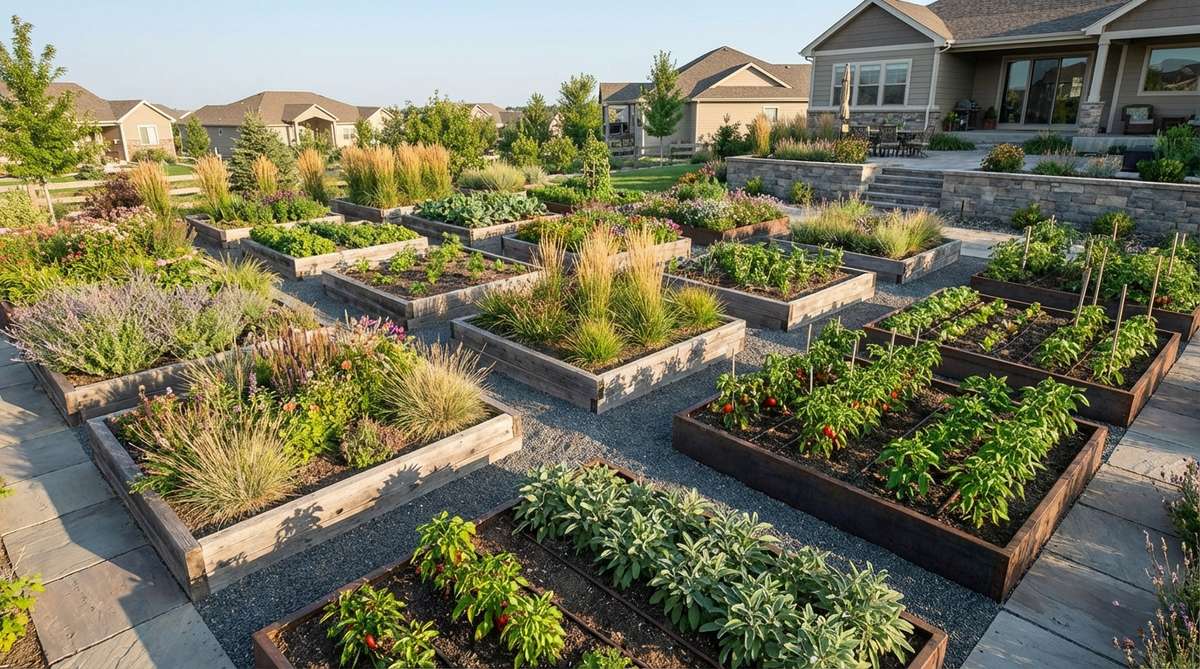
Rotate square beds 45 degrees to create diamond shapes aligned along diagonal axes. This orientation generates dynamic visual movement while maintaining practical growing dimensions.
Connect diamonds with narrow pathways that form X-patterns through the garden. The angled layout naturally divides spaces into distinct planting zones for crop rotation.
5. Concentric Ring Design
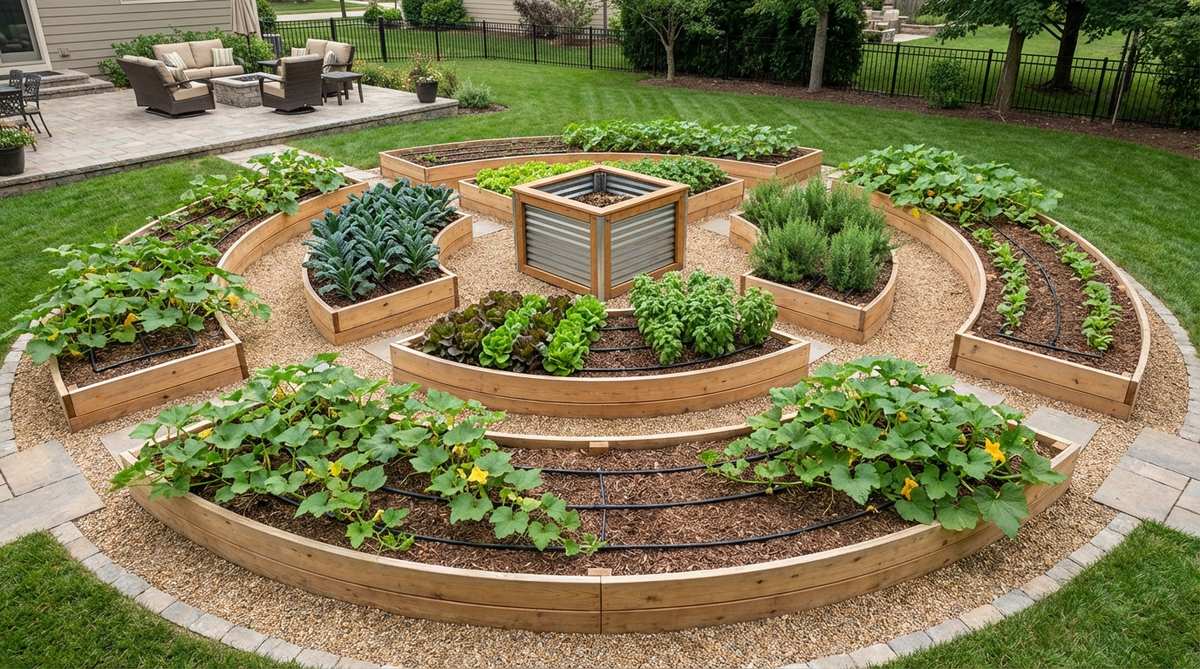
Nested circular beds radiate outward from a central composting hub, each ring devoted to different crop families. The layered structure creates depth while organizing plants by water and nutrient requirements.
Outer rings accommodate sprawling crops like squash, while inner circles host compact greens and herbs. Install drip irrigation at each level for efficient water distribution.
Space-Efficient Systems For Maximum Productivity
Urban gardeners and those with limited square footage require layouts that extract maximum yield from minimal footprint. These configurations prioritize vertical space, intensive planting, and strategic design.
6. Keyhole Access Bed
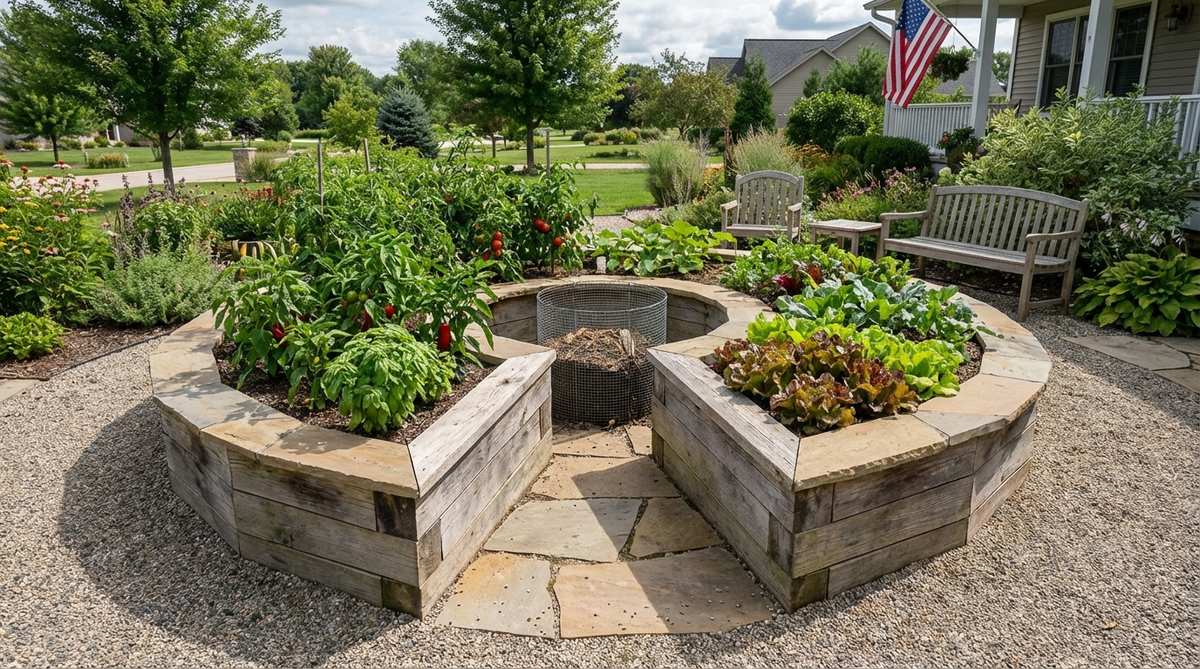
A circular raised bed features a wedge-shaped cutout that extends to a central compost basket. This traditional design allows you to reach all planting areas from the keyhole opening without stepping on soil.
Fill the center basket with kitchen scraps that decompose and feed surrounding plants through the growing season. The raised perimeter prevents animals from trampling crops while maintaining ergonomic working height.
Position the keyhole opening facing your most frequent approach path for convenient access during daily harvests.
7. Narrow Corridor Beds
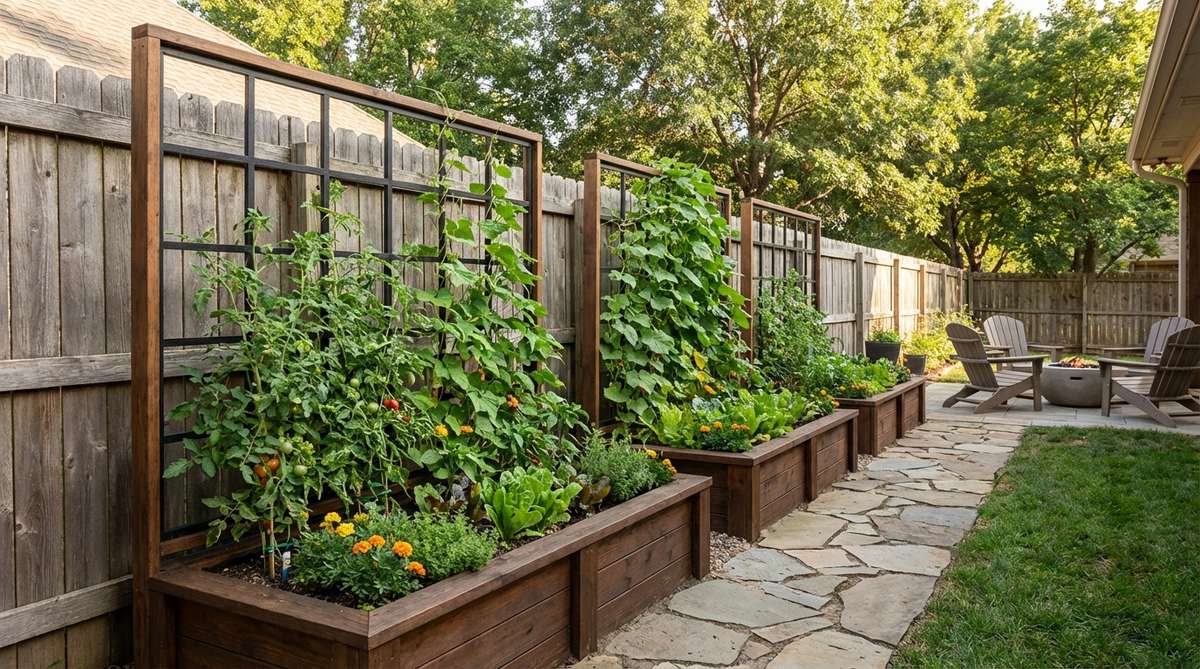
Install 2-foot-wide beds along fence lines or property boundaries where wider configurations won’t fit. Single-row planting allows you to tend crops from one side while vertical supports utilize wall space.
These slender beds excel for climbing vegetables trained on trellises, maximizing vertical growing potential in constrained horizontal areas.
8. Modular Reconfigurable Units
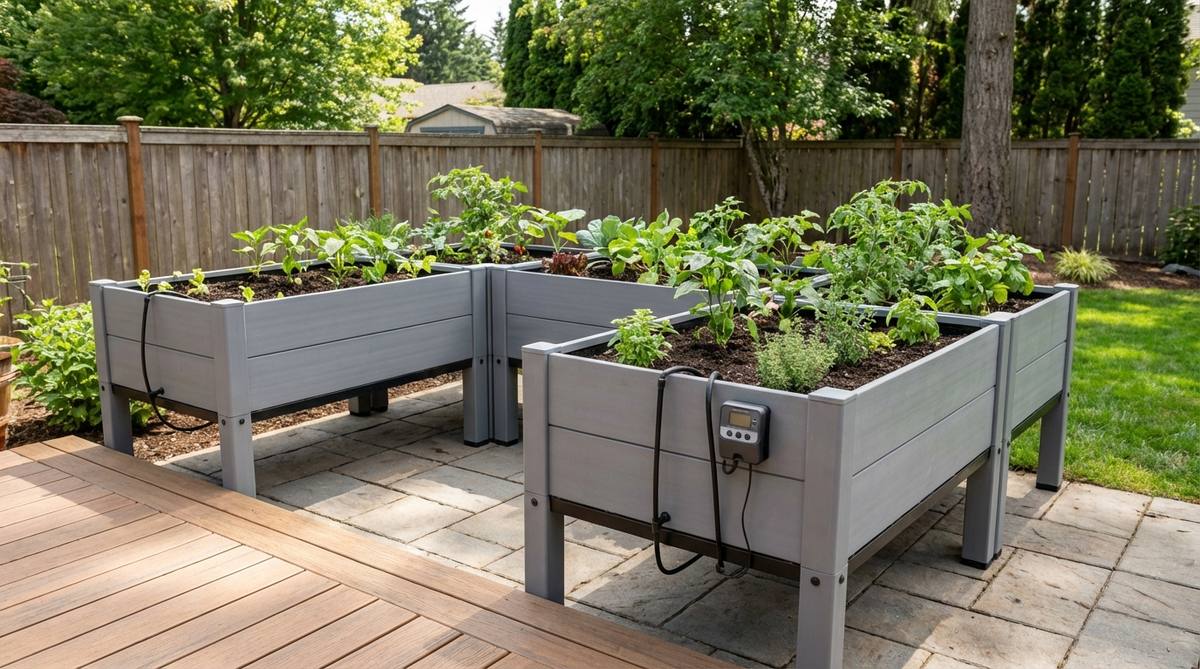
Three interlocking planters connect via adjustable legs, creating customizable shapes that adapt to available space. Each 33cm-high unit adds 0.5 square meters of growing area.
Rearrange modules seasonally to accommodate crop rotation or redesign layouts without permanent construction. Lightweight polypropylene construction allows one person to move units as needed.
Built-in drip systems and tap timers ensure consistent irrigation across all connected modules.
9. Stacked Vertical Columns
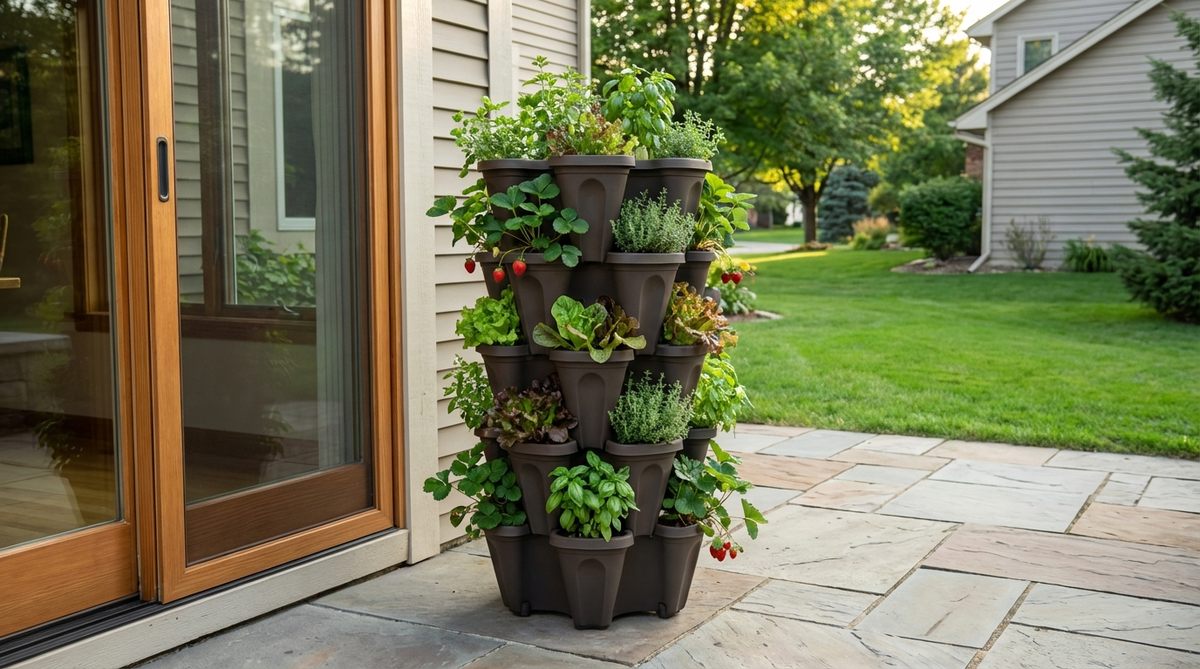
Tower planters with multiple pockets grow 20-30 plants in a 2-square-foot footprint. GreenStalk-style systems rotate for even sun exposure and simplified maintenance.
Reserve vertical columns for high-yield crops like strawberries, lettuce, and herbs that thrive in compact root zones. Position towers near kitchen doors for convenient culinary access.
10. Tiered Platform Cascade
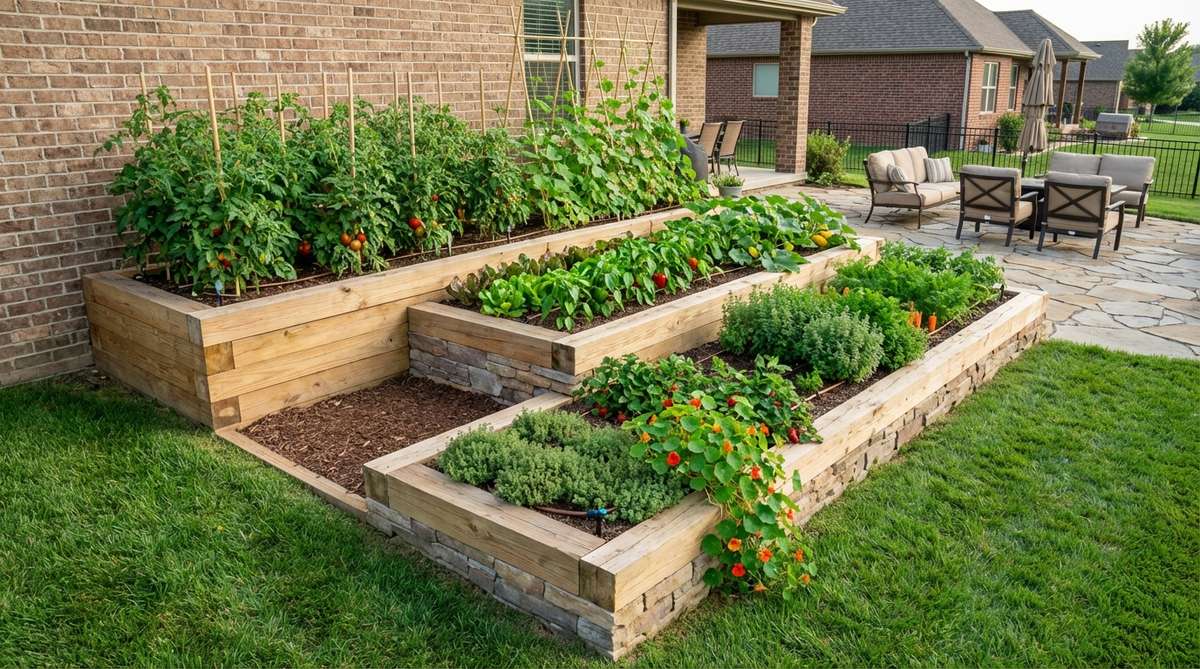
Three or four descending levels create a staircase effect, each platform 8-12 inches below the previous tier. Southern exposure ensures upper beds don’t shade lower plantings.
Install tall crops like tomatoes and pole beans on the highest tier, transitioning to medium vegetables mid-level, with ground covers and sprawling plants on the lowest platform.
Modern Garden Raised Beds That Define Contemporary Spaces
Elevated planting systems offer superior drainage, soil control, and ergonomic benefits while establishing strong visual structure. These modern garden raised beds combine functional advantages with architectural presence.
11. Twelve-Bed Production Grid
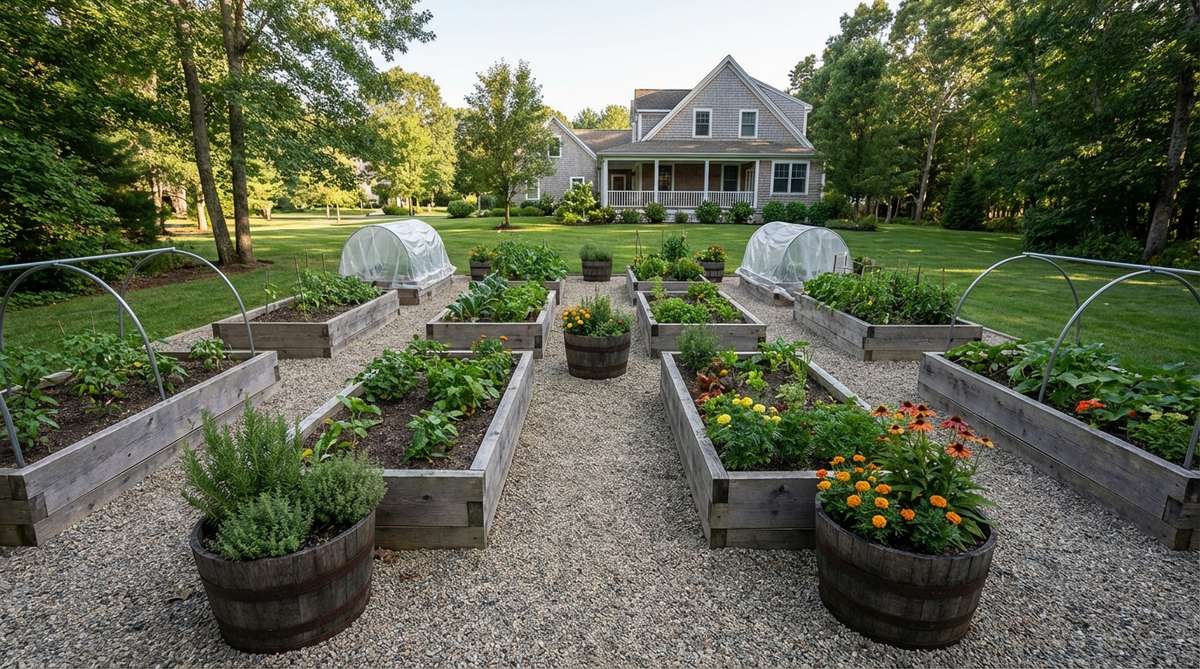
Arrange twelve 4×8-foot beds in a rectangular grid with uniform 3-foot pathways between each unit. This classic layout accommodates serious food production while maintaining organized appearance.
Orient beds north-south to optimize sunlight distribution throughout the day. Add whiskey barrel planters at intersection points for herbs and seasonal flowers that attract pollinators.
The standardized dimensions simplify crop rotation planning and season extension with hoop tunnels or cold frames.
12. Double-Height Vegetable Boxes
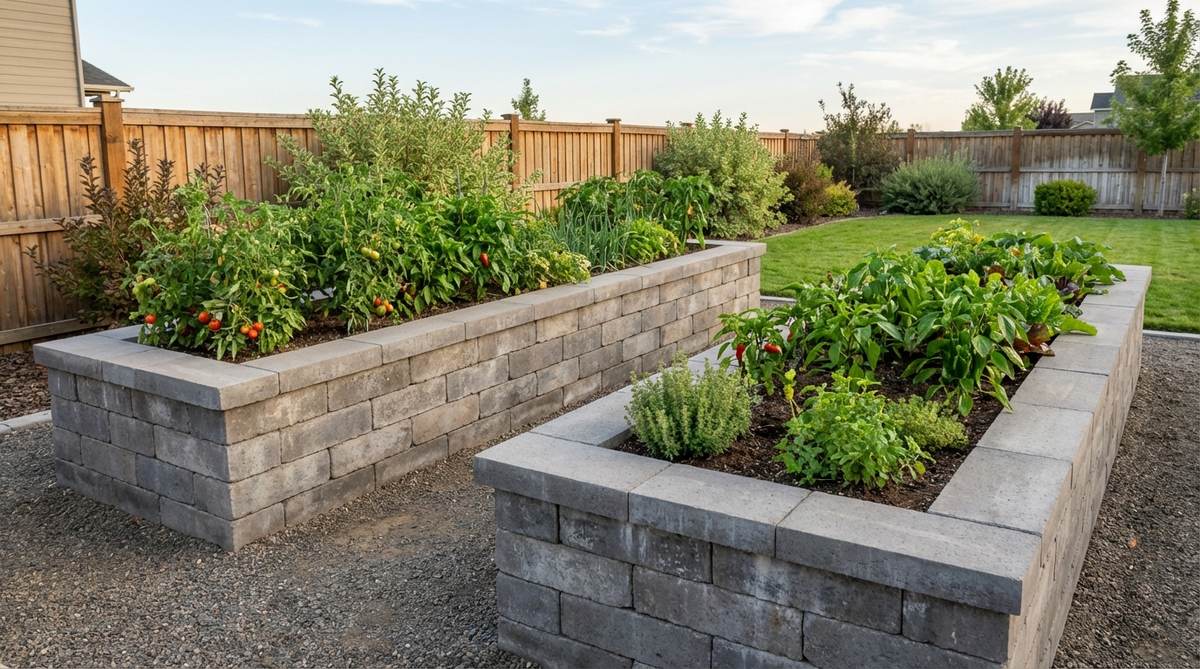
Stack concrete blocks two levels high to create 18-inch beds that eliminate bending for elderly gardeners or those with mobility limitations. Cap blocks finish the perimeter with clean edges.
Each 4×16-foot bed requires 50 hollow blocks plus 30 cap blocks for construction. The thermal mass of concrete extends the growing season by absorbing daytime heat and releasing it at night.
13. Mixed-Dimension Cluster
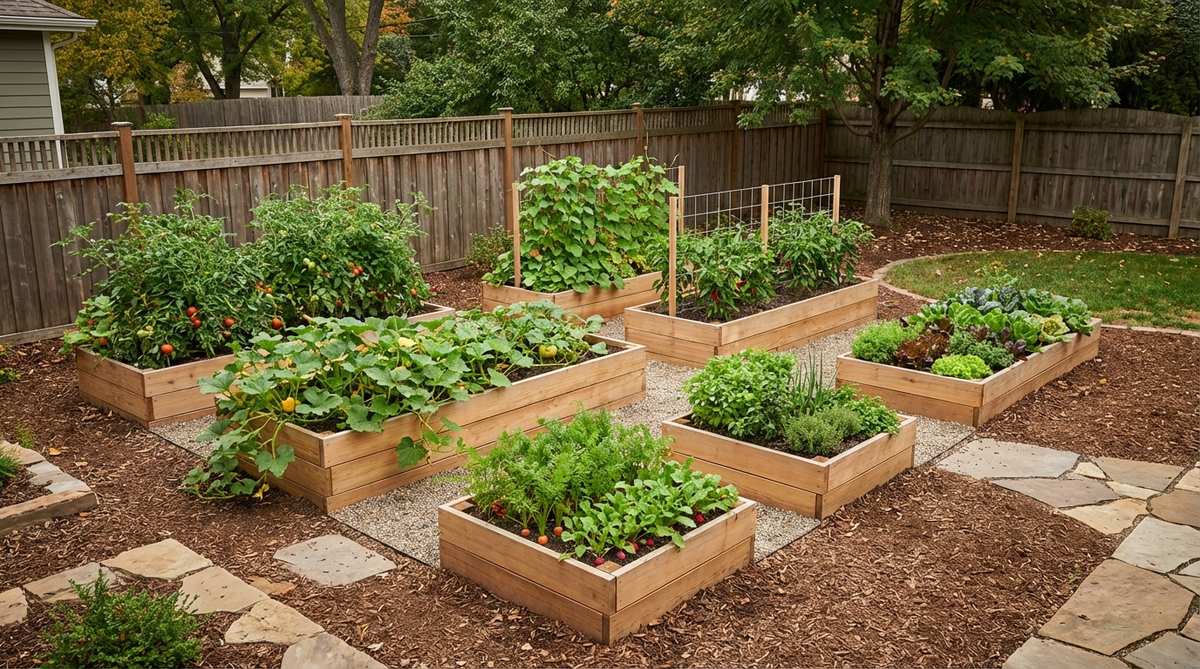
Combine 4×8, 2×8, 2×6, and 4×4 beds in a single area to accommodate diverse crop requirements. Larger beds handle sprawling vegetables while compact squares suit intensive greens and root crops.
This varied approach allows you to scale production up or down for specific crops based on family consumption patterns. Tuck smaller beds into odd spaces that standard dimensions can’t fill.
14. Elevated Waist-Height Planters
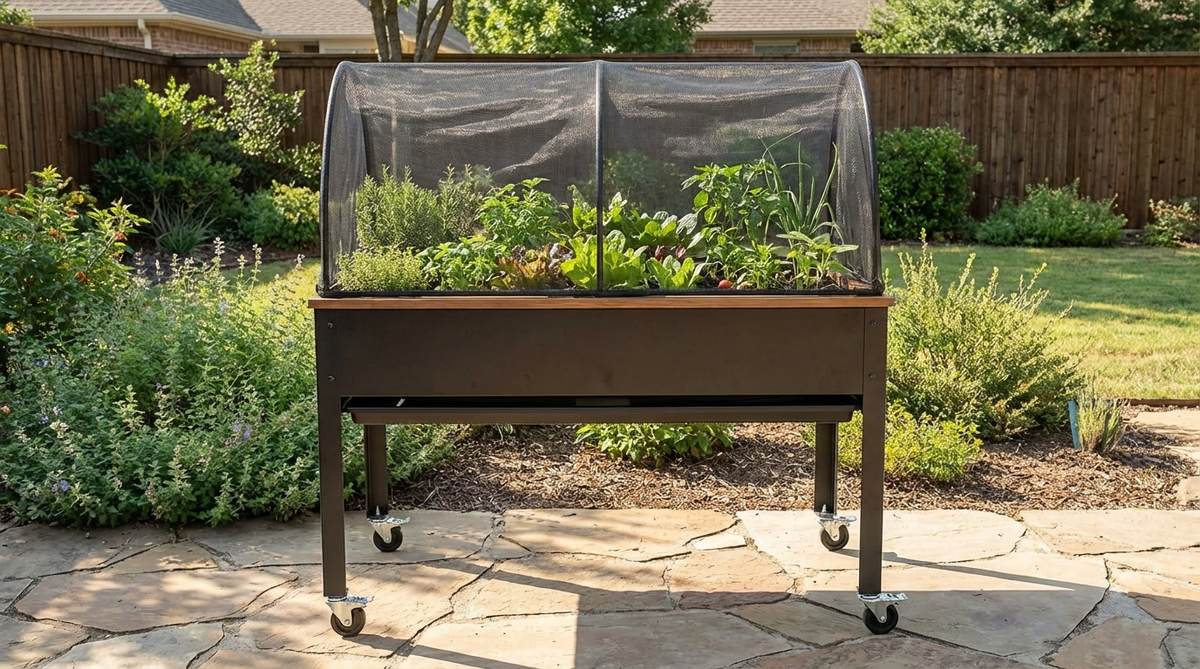
Build beds on 36-inch legs that bring soil level to a comfortable standing position. These wheelchair-accessible designs welcome gardeners of all abilities.
Waist-height beds warm faster in spring, drain efficiently, and deter ground-dwelling pests. Install casters on legs for portable growing stations that relocate to follow sun patterns.
15. L-Shaped Corner Maximizer
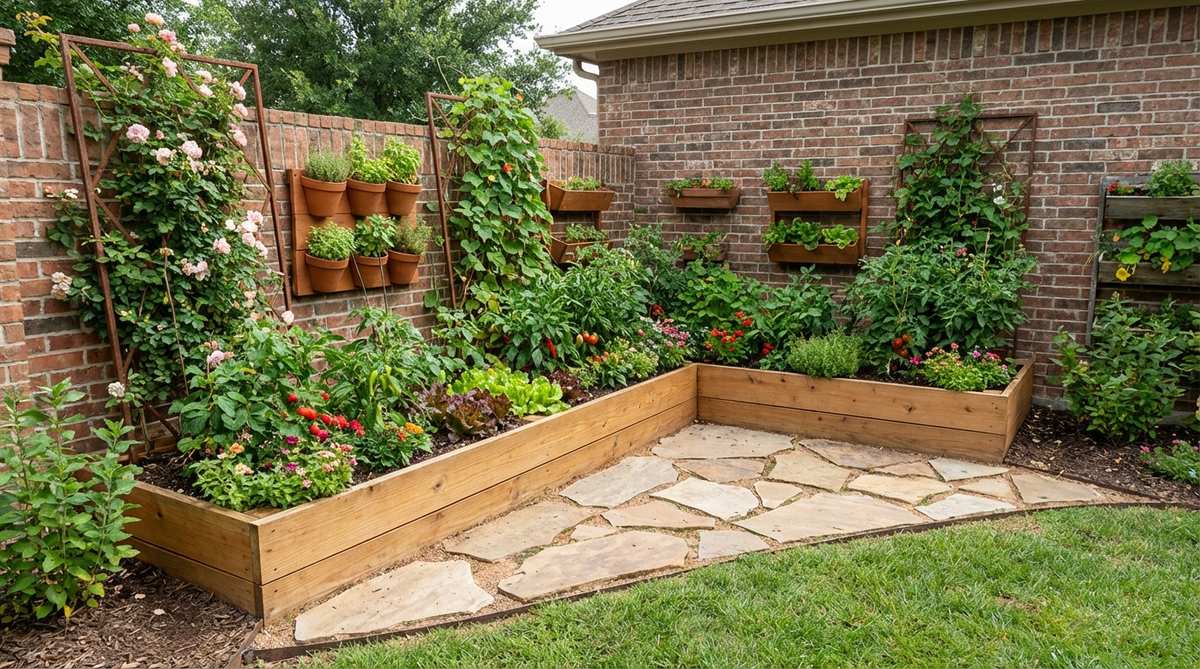
Configure beds in L-formation to define outdoor room boundaries while utilizing corner spaces that often remain empty. One leg of the L runs 12-16 feet while the perpendicular section extends 8-12 feet.
The protected inside corner creates a microclimate ideal for heat-loving crops like peppers and basil. Outside edges handle cool-season vegetables that tolerate more exposure.
16. U-Shaped Courtyard System
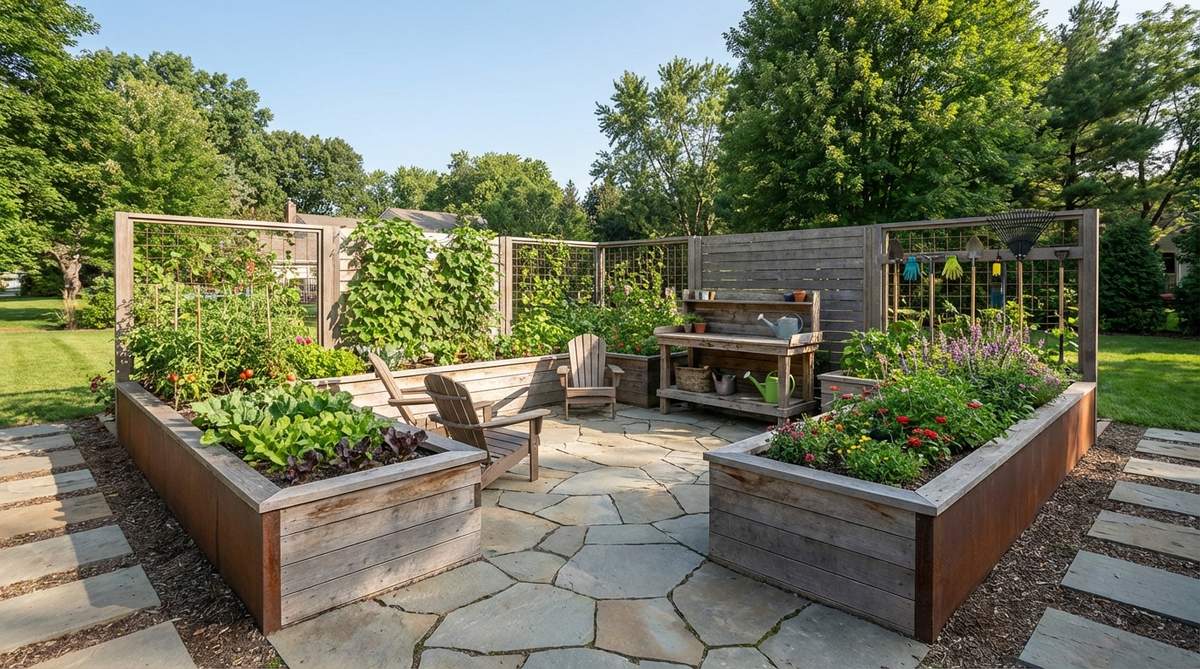
Three connected beds form a U-configuration that encloses a central workspace or seating area. The surrounding beds create privacy while keeping tools and harvests within arm’s reach.
Design the courtyard opening to face south for optimal sun penetration into the sheltered space. Beds backing the north side receive reflected light from paving or gravel fill.
Functional Specialty Designs For Specific Growing Needs
Purpose-built layouts address particular crops, growing methods, or site challenges. These specialized configurations optimize conditions for targeted production goals.
17. Vine Crop Expansion Bed
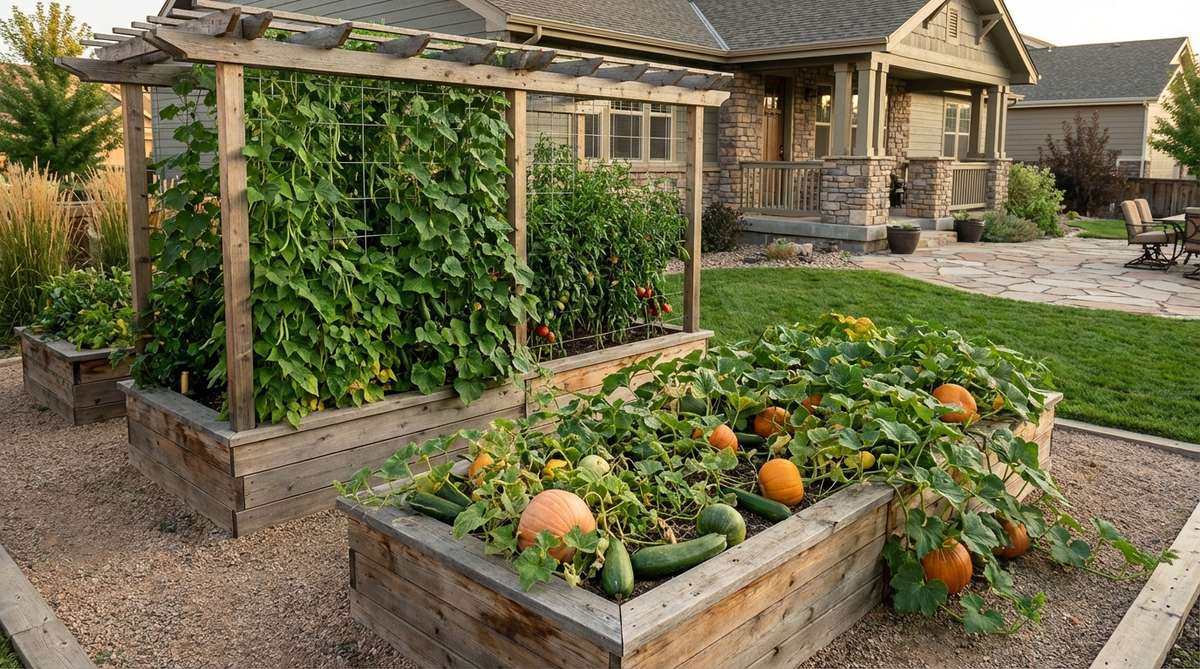
A 4×8 bed reserves the north half for trellised vertical crops while the south section accommodates sprawling squash and pumpkins. Vines cascade over the bed edge and run along ground pathways.
Install sturdy arched trellises at the north end for cucumbers, pole beans, and peas. Southern ground space handles winter squash that stores for months in root cellars.
This dual-zone approach maximizes production from a single bed while separating climbing and sprawling growth habits.
18. Succession Planting Modules
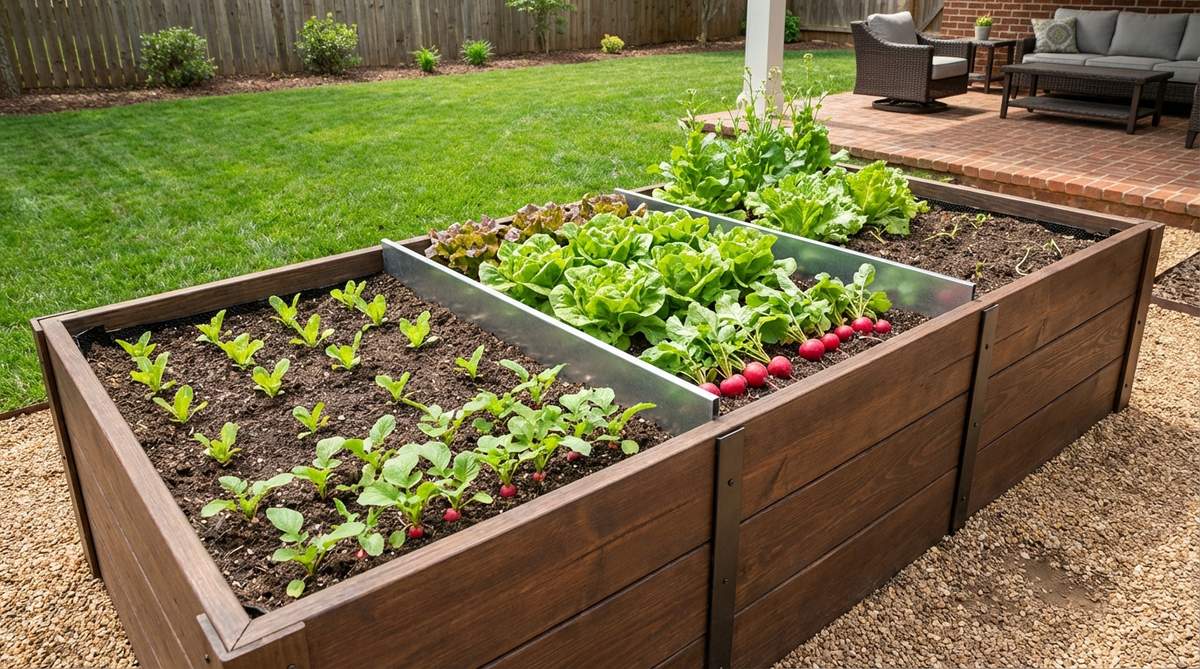
Divide beds into thirds with removable dividers, dedicating each section to crops planted two weeks apart. Staggered maturity dates provide continuous harvests rather than overwhelming gluts.
Rotate through lettuce, radishes, and other quick-maturing crops, replanting sections immediately after harvest. The systematic approach maintains consistent production spring through fall.
19. Square Foot Intensive Grid
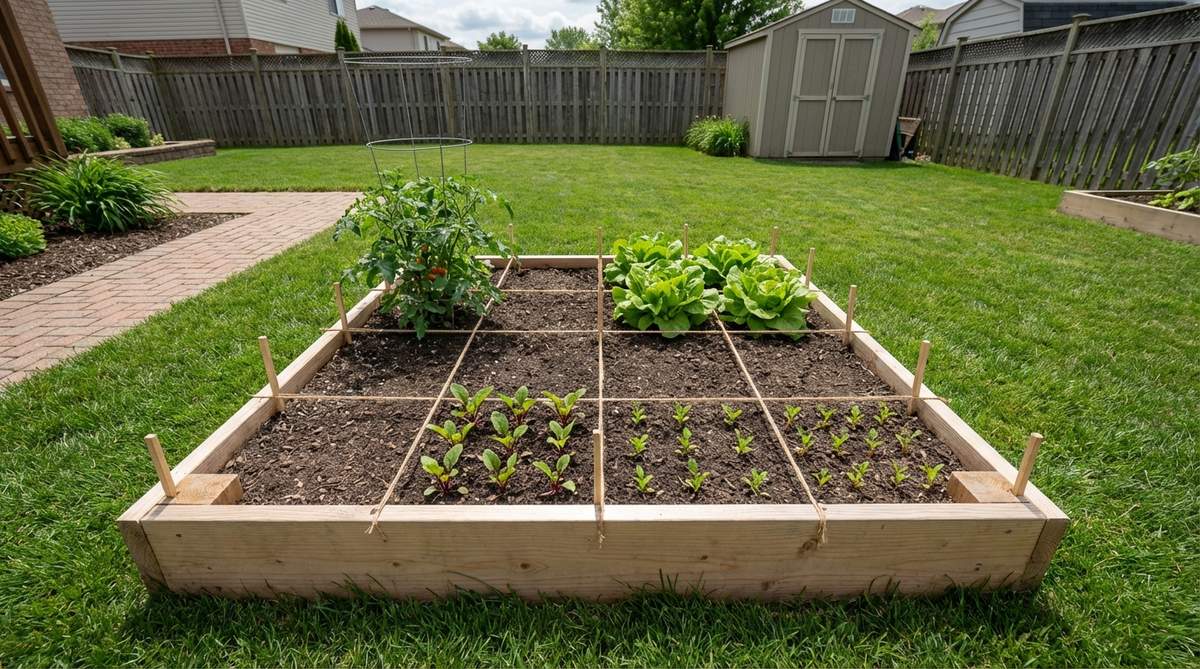
Mark 4×4 beds into sixteen 1-foot squares using permanent dividers or string guides. Each square accommodates one, four, nine, or sixteen plants depending on mature size.
Plant one tomato per square, four lettuce heads, nine beets, or sixteen carrots following square-foot gardening spacing guidelines. The organization prevents overcrowding while maximizing every inch.
This method excels for beginning gardeners who struggle with proper spacing in traditional row planting.
20. Cut Flower Production Bed
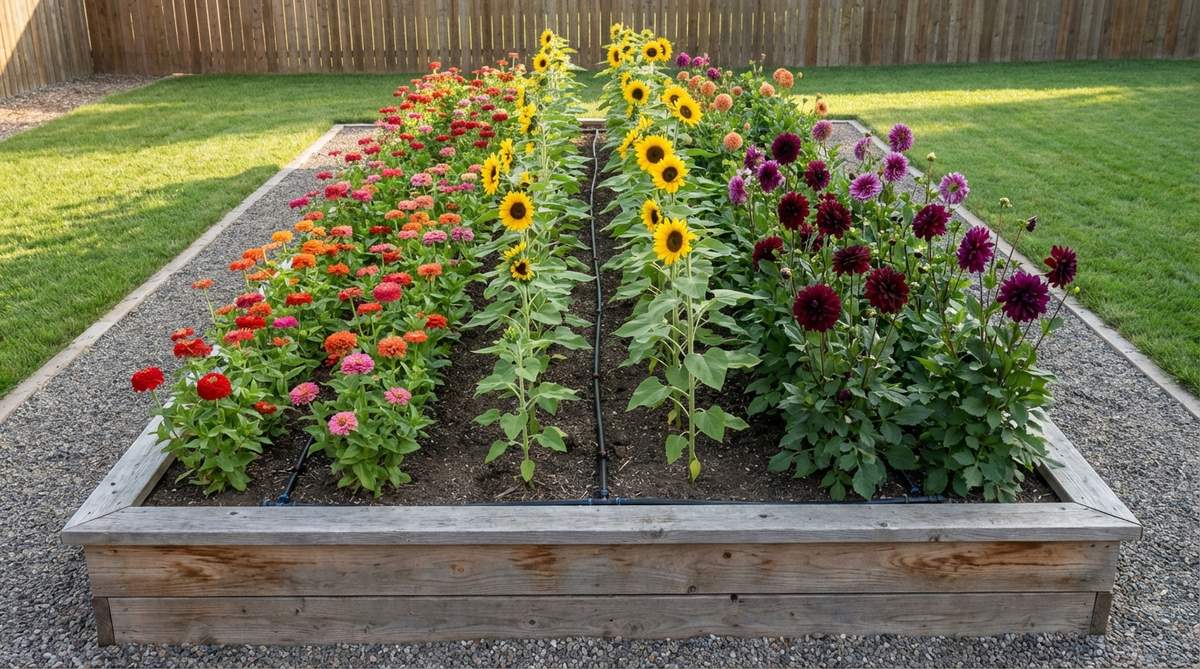
Long, narrow beds optimized for flower farming grow zinnias, sunflowers, and dahlias in organized rows. The 2×12 configuration allows efficient planting, maintenance, and harvesting of stems.
Install drip irrigation down the center with emitters spaced for individual plants. Arrange varieties by height with tallest flowers at the north end to prevent shading.
21. Root Vegetable Deep Bed
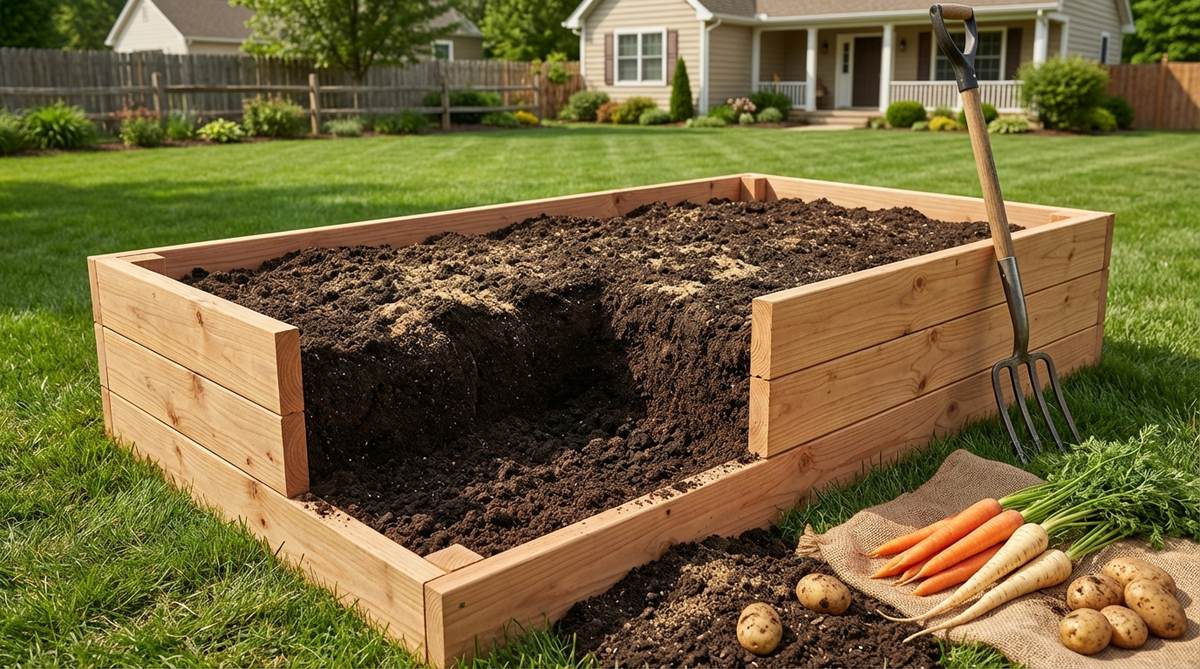
Construct 24-inch-deep beds specifically for carrots, parsnips, and potatoes that require extensive soil depth. The extra excavation and fill investment pays dividends in root quality.
Blend sand into native soil to improve drainage and prevent forking in long root crops. The loose, deep growing medium produces prize-worthy specimens.
22. Companion Planting Zones
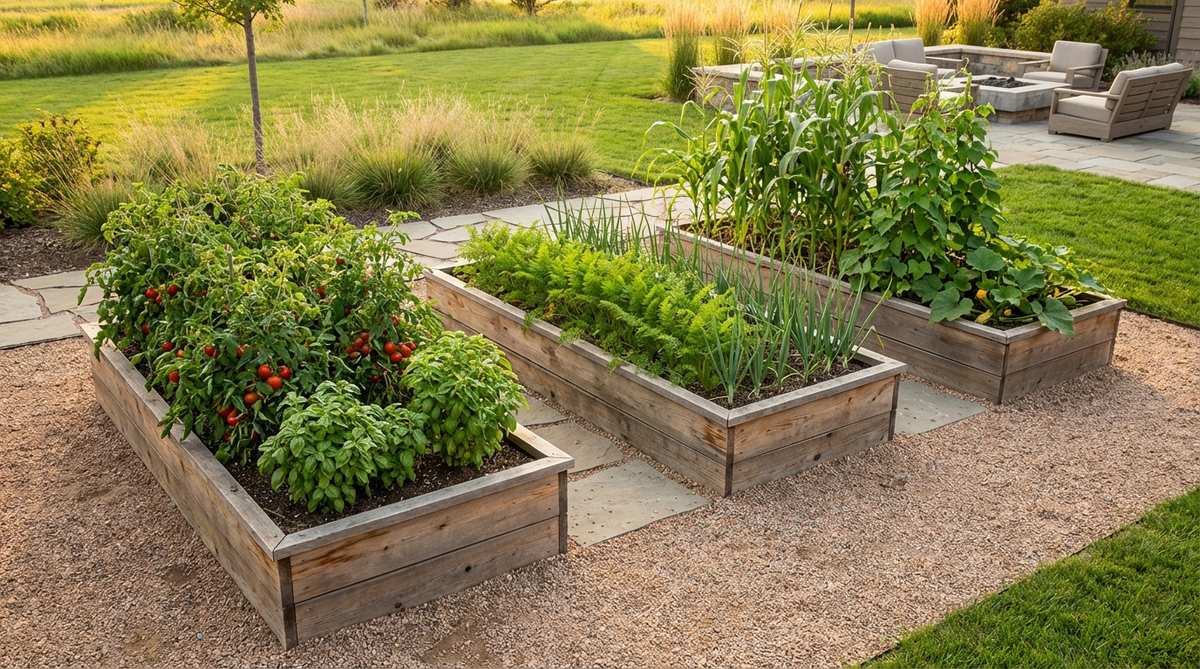
Organize beds into paired sections that house mutually beneficial crop combinations. Classic partnerships include tomatoes with basil, carrots with onions, and beans with corn.
Strategic placement of companion plants deters pests, improves pollination, and maximizes nutrient uptake. The intentional design reduces chemical inputs while boosting yields.
Material-Driven Aesthetics For Design-Forward Gardens
Construction materials establish visual character while influencing growing conditions. Contemporary gardens showcase innovative materials that balance beauty with function.
23. Weathered Cedar Classics
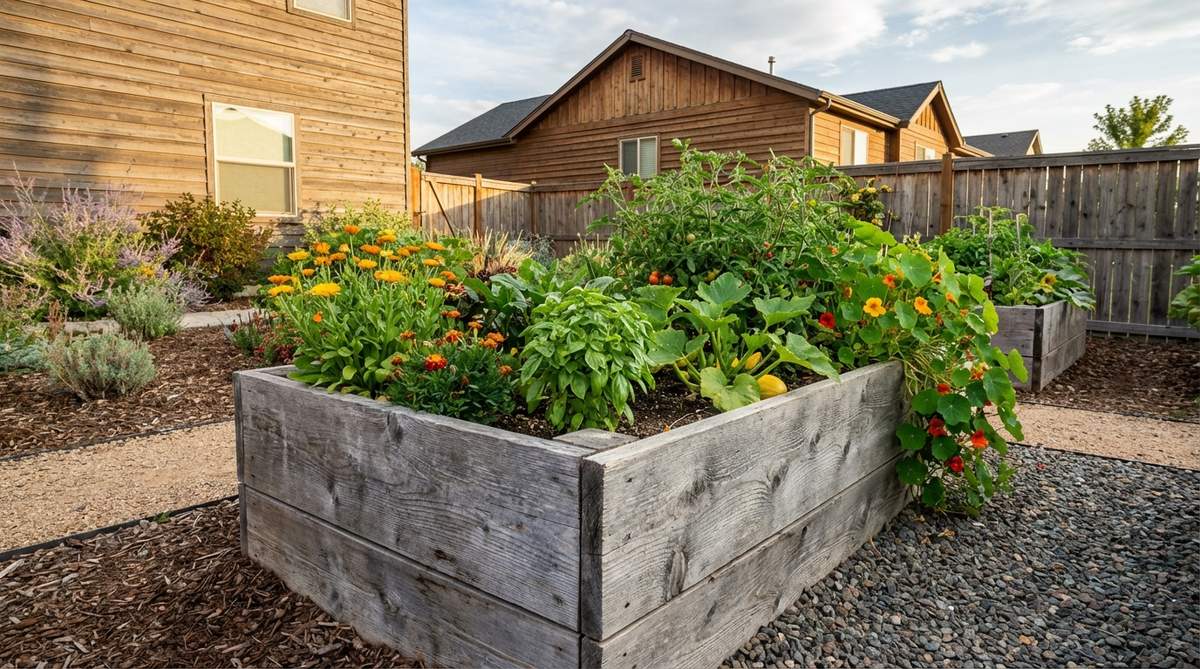
Natural cedar boards develop silvery patina over time, creating rustic warmth in modern landscapes. The wood’s natural oils resist rot without chemical treatments.
Cedar absorbs solar heat quickly, warming soil earlier in spring for extended growing seasons. Expect 8-12 years of service before boards require replacement.
Untreated cedar qualifies for organic certification, meeting strict standards for food production.
24. Galvanized Metal Planters
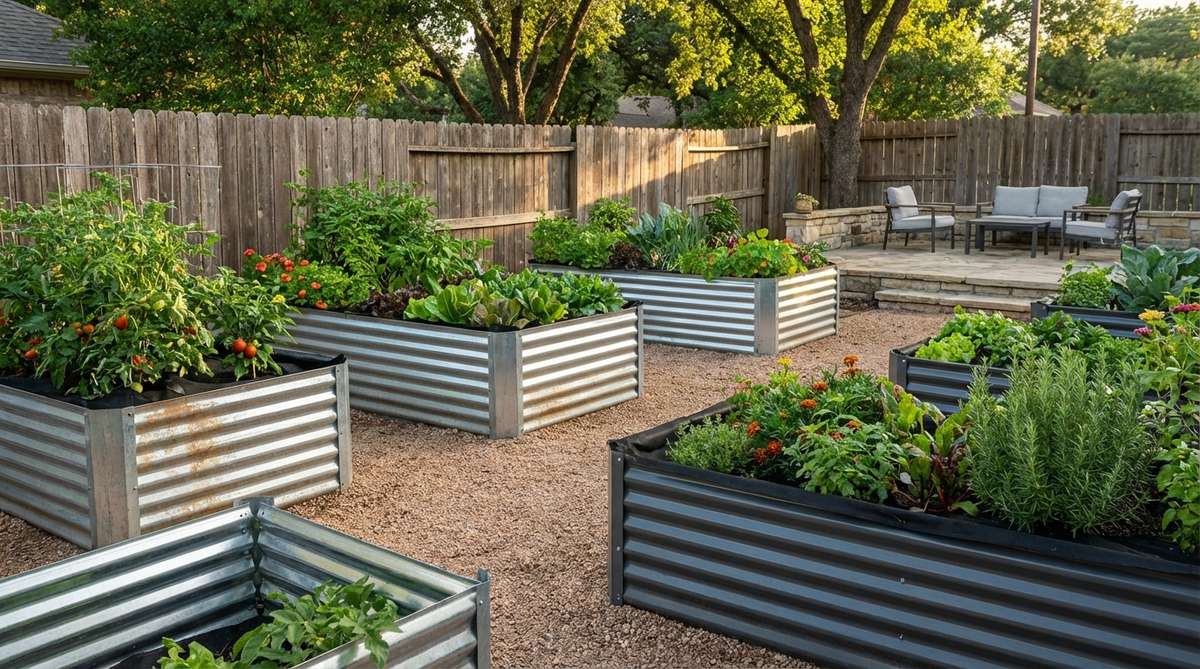
Corrugated steel beds in galvanized or painted finishes deliver industrial-chic aesthetic while providing extreme durability. Metal construction withstands decades of use without warping or decay.
Line beds with food-safe barrier fabric to prevent direct soil-metal contact in vegetable gardens. The reflective surfaces amplify light to surrounding plants.
25. Composite Lumber Frames
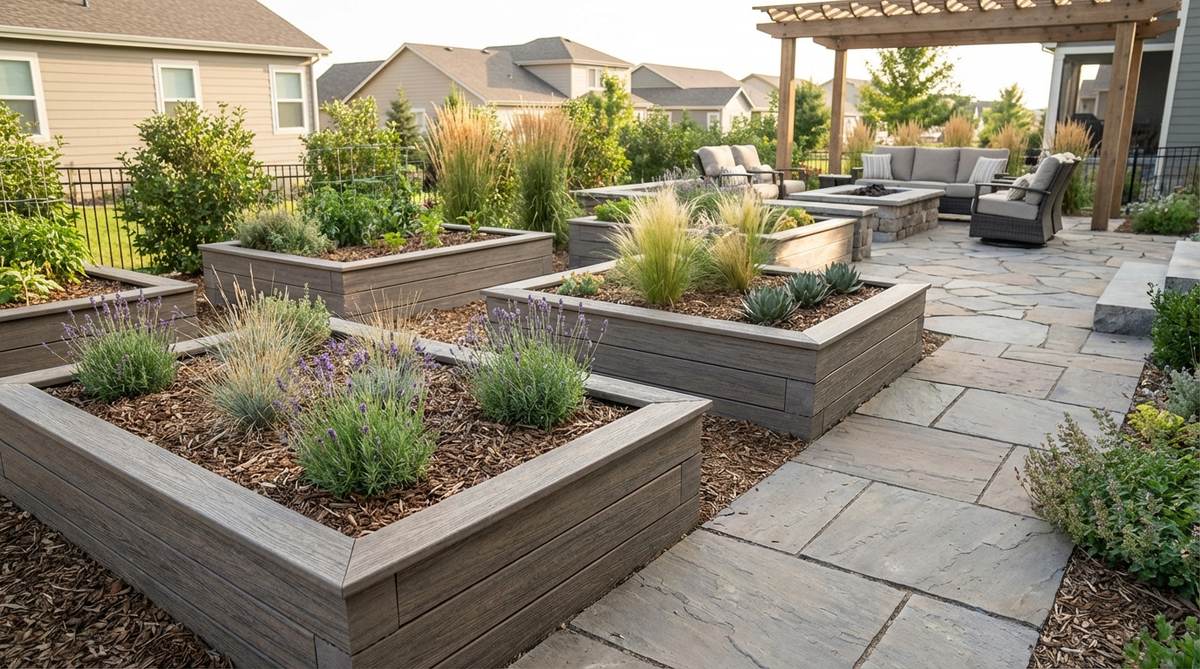
Recycled plastic lumber mimics wood grain texture while resisting moisture, insects, and UV degradation. Five-year warranties reflect manufacturer confidence in longevity.
Composite materials install without specialized tools using standard carpentry techniques. The consistency eliminates knots, splits, and imperfections found in natural lumber.
Choose composites for permanent installations where minimal maintenance is prioritized.
26. Stone Masonry Permanence
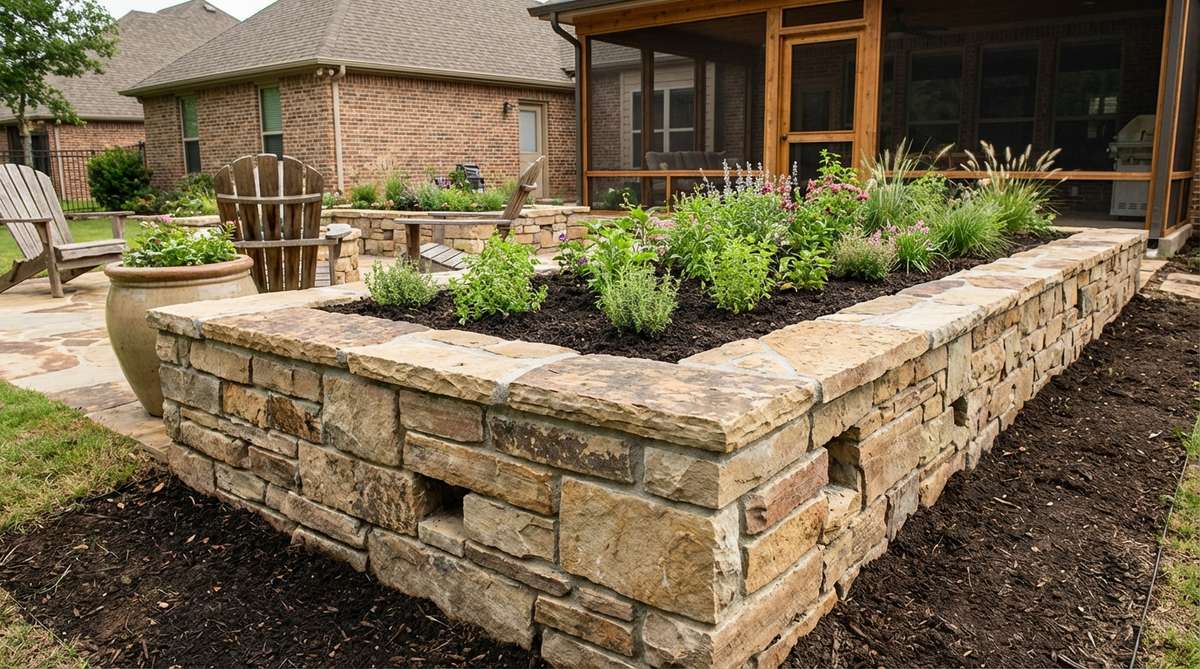
Stacked flagstone or brick creates heirloom beds that last generations while adding substantial visual weight. Natural stone blends seamlessly with traditional and contemporary architecture.
Dry-stack construction allows seasonal adjustments, while mortared joints provide earthquake-resistant permanence. The thermal mass moderates soil temperature fluctuations.
27. Reclaimed Wood Character
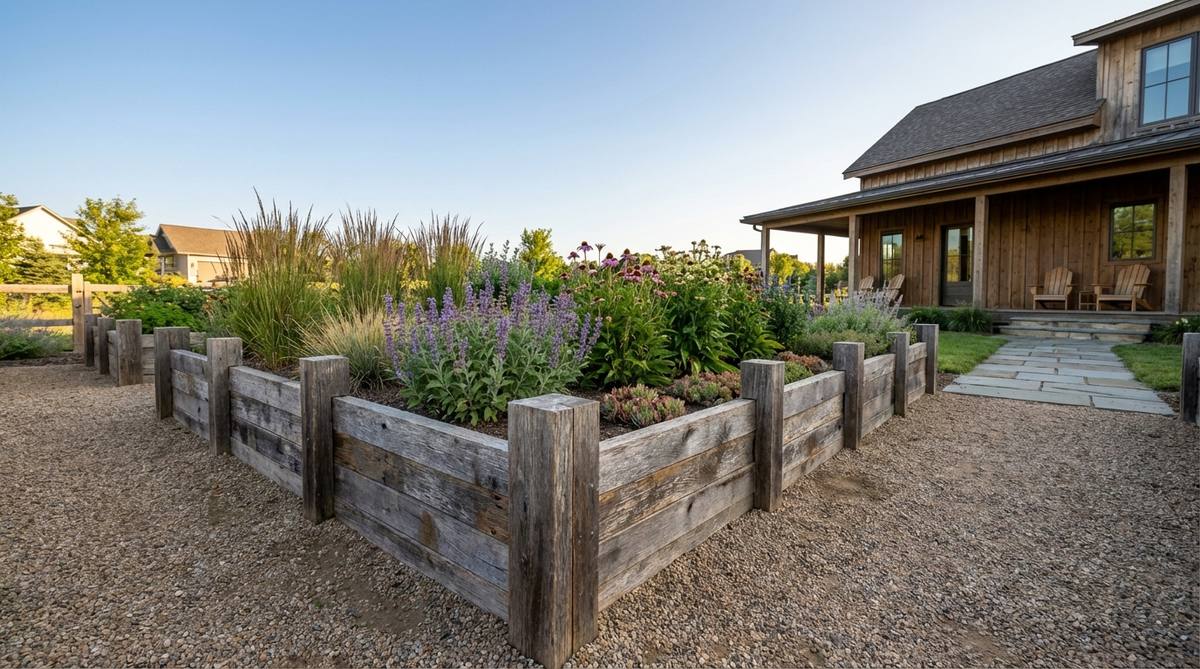
Salvaged barn wood, fence boards, or pallet lumber brings history and texture to garden beds. Each piece tells a story while diverting material from landfills.
Inspect reclaimed wood carefully for chemical treatments that may contaminate food crops. Weathered patina requires no additional finish, ready to install as-found.
Vertical-Integrated Layouts For Upward Expansion
Three-dimensional growing strategies multiply production capacity by utilizing airspace above horizontal beds. These designs merge ground-level planting with vertical structures.
28. Trellis Arches For Climbing Vegetables
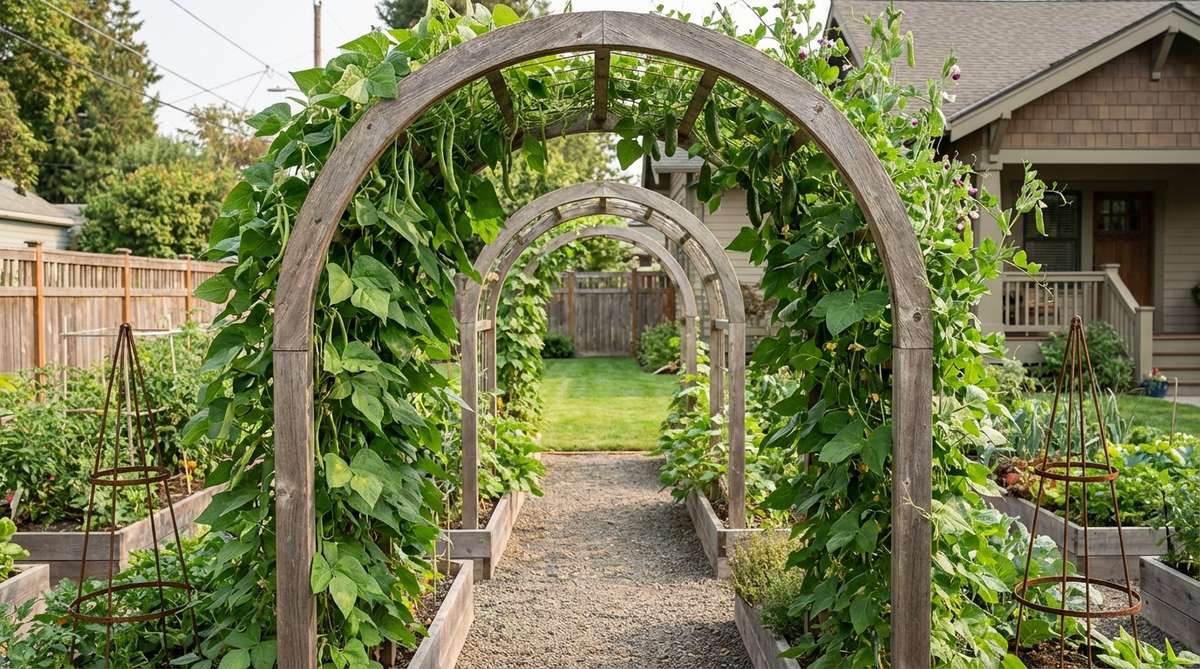
Metal or wooden arches span pathways between beds, creating tunnel-like passages draped with climbing crops. Pole beans, cucumbers, and peas transform functional structures into living architecture.
Install arches at 6-8 foot heights to allow comfortable walking beneath mature vines. The overhead canopy provides summer shade while maximizing vertical growing space.
Harvest from both sides of the archway without entering beds, preserving soil structure.
29. Obelisk Accent Supports
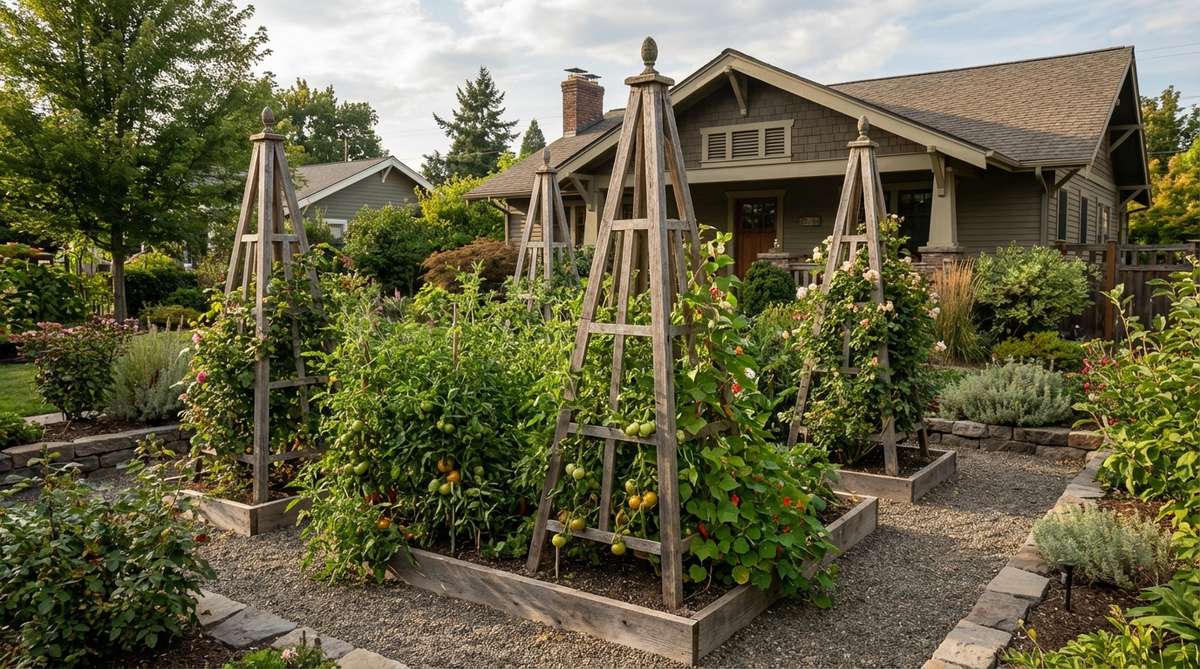
Four-sided pyramidal trellises rise 6-8 feet from bed centers, creating dramatic vertical focal points. These structures support indeterminate tomatoes, runner beans, or flowering vines.
Space obelisks 4 feet apart to prevent excessive shading while maintaining visual rhythm. The narrow footprint concentrates plants upward rather than outward.
30. Living Wall Integration
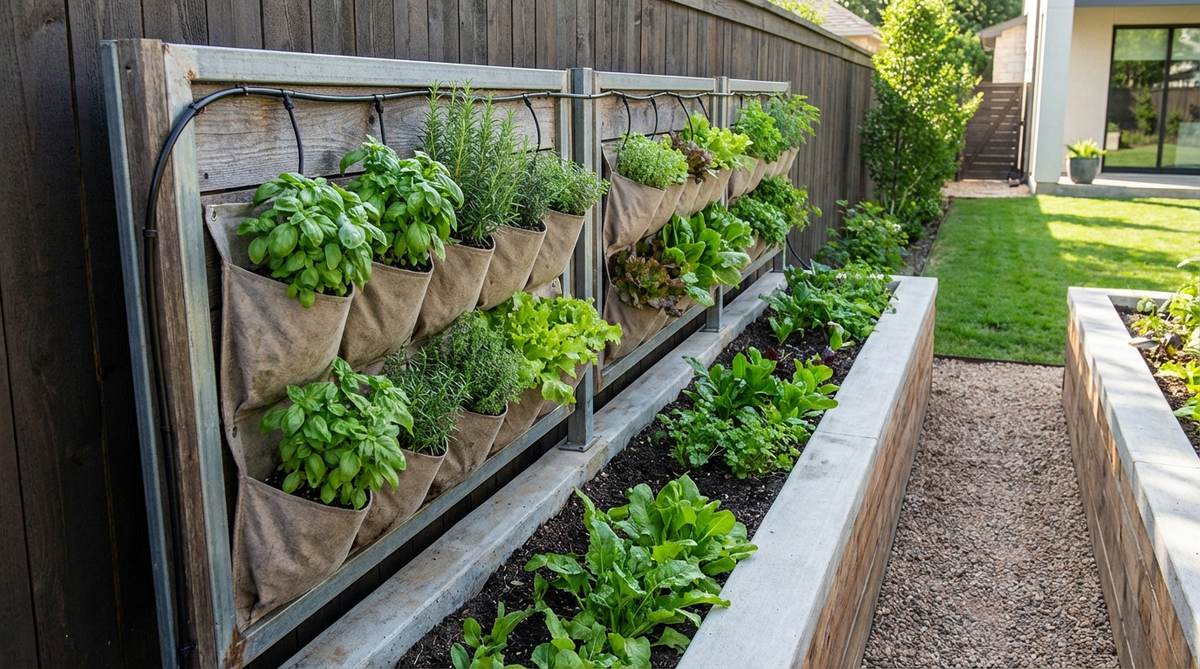
Mount vertical pocket planters or gutter systems directly to bed-backing fences, doubling growing area. These wall gardens accommodate herbs, strawberries, and salad greens in compact root pockets.
Position beds 12-18 inches from fence lines to allow maintenance access behind plantings. The layered approach creates lush, jungle-like abundance in minimal square footage.
Install drip irrigation at the wall top, allowing gravity to distribute water down through tiers.
31. A-Frame Trellis Beds
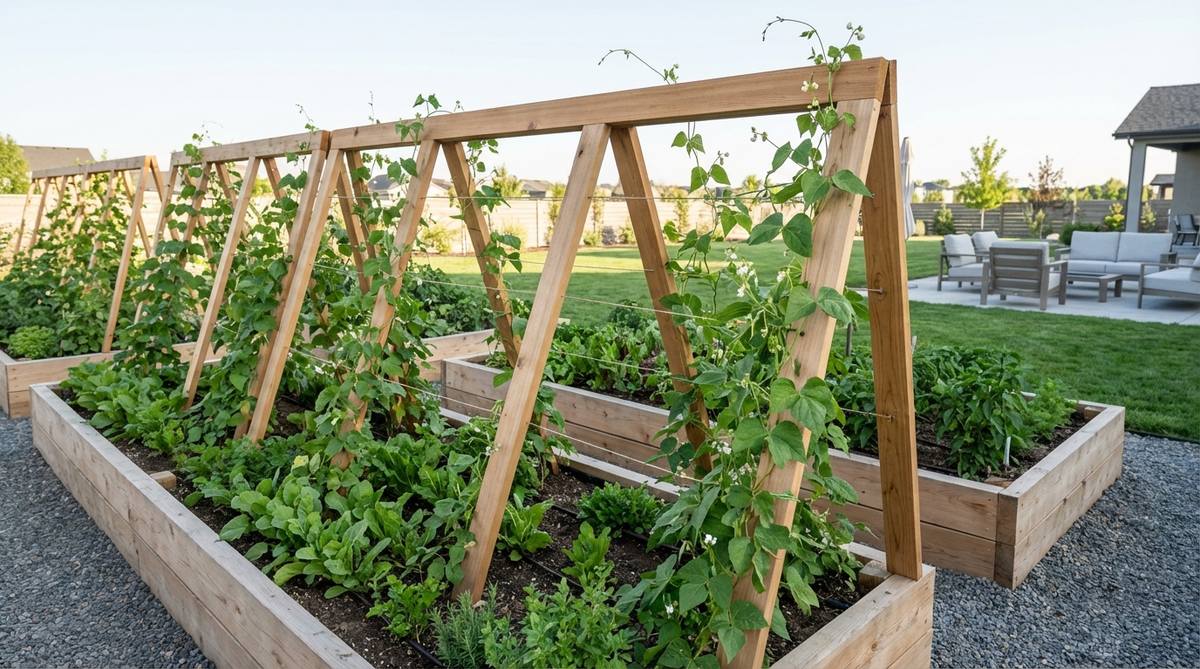
Triangular support structures straddle narrow beds, with climbing crops ascending both sides of the peaked trellis. This space-efficient design grows two rows of vertical crops in a single bed width.
Harvest from ground level as lower fruits mature, accessing upper production from stepladders or stools. The steep angle sheds rain and prevents disease-promoting moisture accumulation.
32. Pergola-Integrated Growing
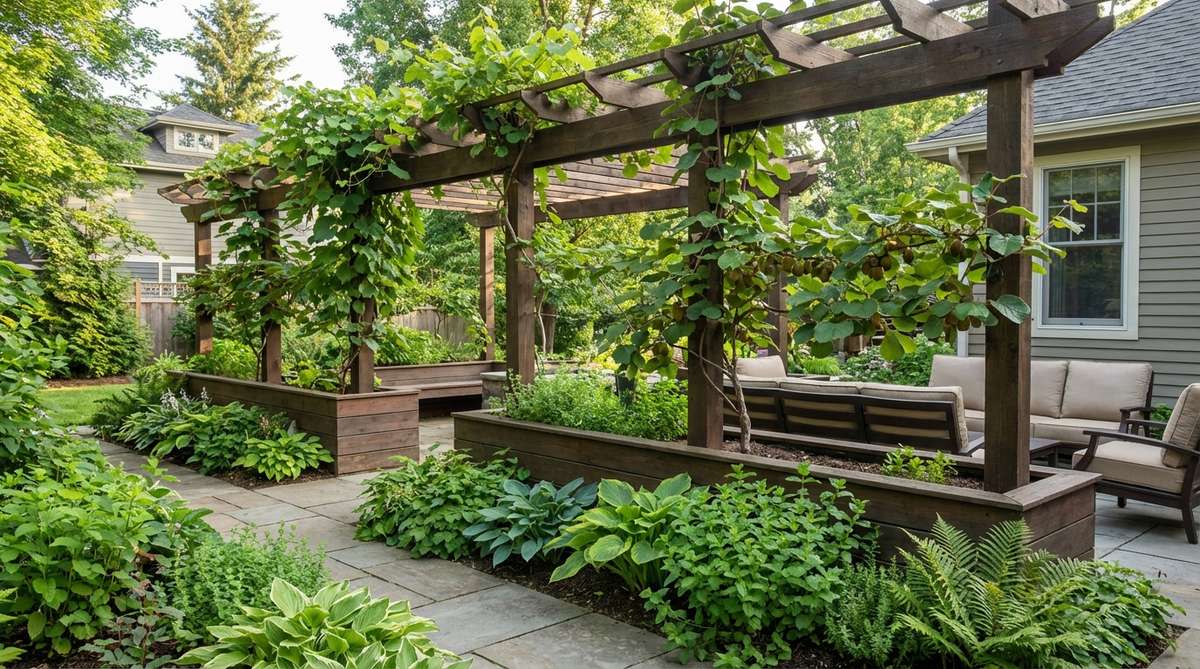
Build beds along pergola post lines, training climbing crops up support columns and across overhead beams. Grapes, kiwis, and hardy vines create edible canopies above outdoor living spaces.
The dual-purpose structure provides summer shade while producing fruit overhead. Underplant with shade-tolerant herbs and leafy greens that thrive in filtered light.
33. Tiered Fence-Line Cascade
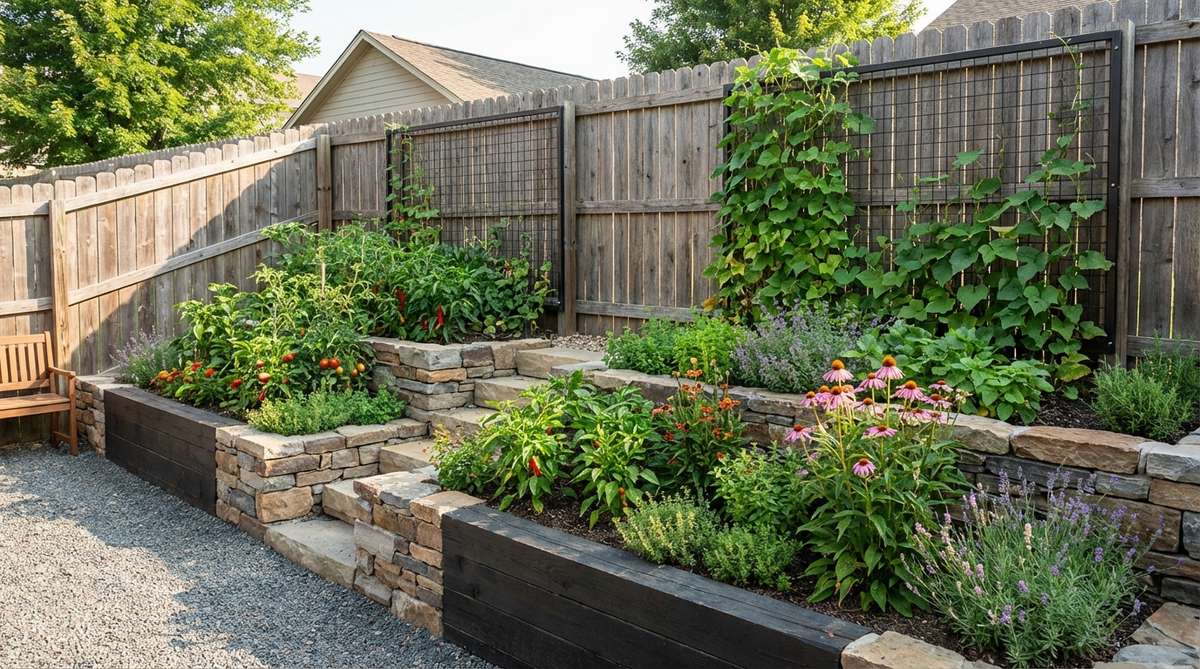
Stack two or three bed levels against boundary fences, creating terraced growing zones. Each tier steps down 12-18 inches from the previous level.
Upper beds receive full sun exposure while lower tiers capture morning and late afternoon light. The cascading design maximizes vertical footage along property lines.
Attach trellis netting to the fence behind beds for additional climbing space without consuming ground area.
Conclusion
Strategic modern garden bed layouts transform yards into productive, organized growing systems that perform efficiently season after season. Whether you implement geometric precision, space-saving configurations, or vertical-integrated designs, thoughtful planning maximizes yields while creating beautiful outdoor spaces. Start with one or two beds this season, refining your layout as you discover what works best for your site, crops, and gardening style.
Frequently Asked Questions
What is the ideal width for a modern garden bed?
Four feet wide represents the optimal dimension for most garden beds, allowing you to comfortably reach the center from either side without stepping on soil. This width accommodates two to three rows of most vegetables while preventing soil compaction. Narrower 2-3 foot beds work well along fence lines where access is limited to one side, while wider beds require internal stepping stones or pathways.
Should garden beds run north-south or east-west?
North-south orientation provides the most consistent sunlight distribution throughout the day, particularly beneficial in northern climates. This alignment ensures both sides of the bed receive adequate sun exposure as the angle changes from morning to evening. East-west beds can work on sloped properties where following contour lines prevents erosion, though tall crops on the south side may shade shorter plants behind them.
How deep should raised beds be for vegetables?
Most vegetables thrive in beds 12-18 inches deep, providing sufficient root zone for productive growth. Shallow-rooted crops like lettuce, herbs, and radishes perform well in 6-8 inch depths, while root vegetables including carrots and parsnips benefit from 18-24 inch depth. Deep beds offer better drainage and warm faster in spring, extending the growing season at both ends.
What spacing is needed between raised garden beds?
Allow 2-3 feet between beds for comfortable movement and wheelbarrow access during maintenance tasks. Narrow 18-24 inch pathways work in compact yards where space is limited, though they become congested when plants mature and overflow bed edges. Production gardens benefit from 3-4 foot pathways that accommodate equipment and harvest containers without damaging plants.
Can you mix different bed sizes in one garden layout?
Combining various bed dimensions creates flexible layouts that accommodate diverse crops while utilizing available space efficiently. Pair standard 4×8 beds with smaller 2×4 units for quick-maturing crops, or add 4×4 squares in corners that larger beds cannot fill. The mixed approach allows you to scale production for specific vegetables based on consumption needs rather than forcing everything into uniform dimensions.
What materials work best for modern garden raised beds?
Cedar and composite lumber lead material choices for contemporary raised beds, balancing durability with aesthetic appeal. Untreated cedar resists rot naturally for 8-12 years and qualifies for organic growing, while composite materials last 20+ years with minimal maintenance. Galvanized metal offers industrial styling with extreme longevity, and stone or brick creates permanent installations that appreciate in character over time.