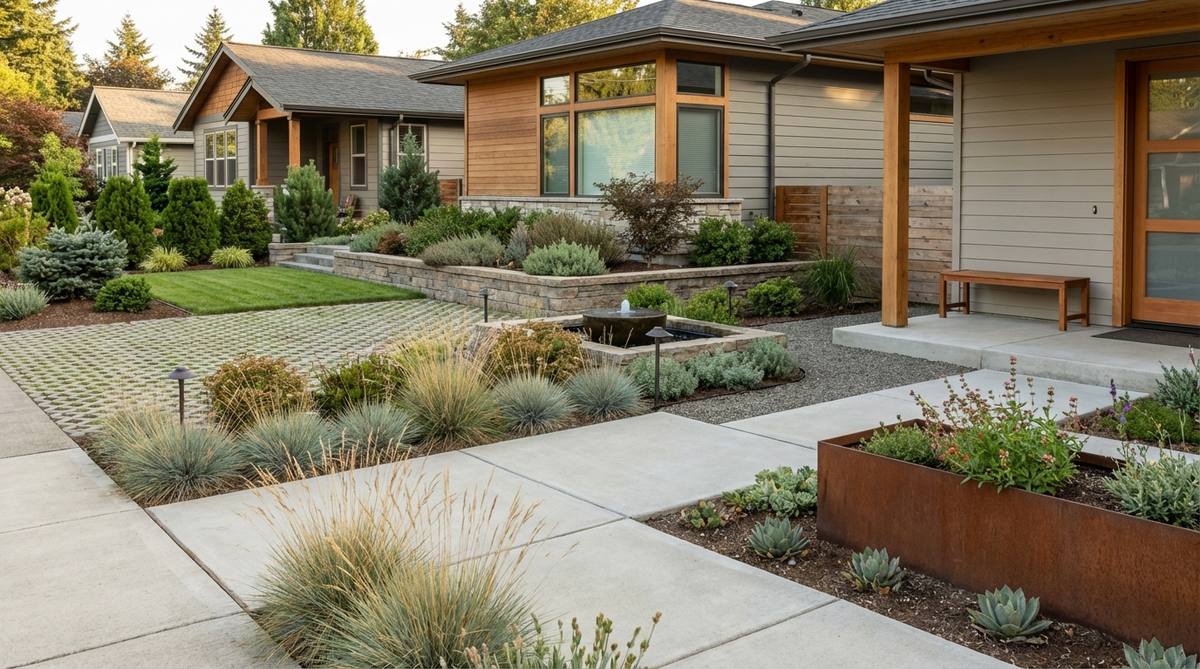
Transform your home’s entrance with modern front yard garden ideas that combine clean design principles, sustainable planting, and architectural precision. Whether you’re drawn to minimalist gravel gardens or layered native plantings, these contemporary layouts deliver curb appeal that reflects 2026’s most forward-thinking design trends. Fresh Garden Ideas brings you expert-curated concepts that balance visual impact with practical maintenance.
Design SnapshotKey Principles
- Layered Planting: Combine grasses, perennials, and shrubs at varying heights to create depth and movement instead of linear foundation rows.
- Hardscape Integration: Use permeable materials like decomposed granite, concrete pavers, and angular stone to establish structure and reduce water runoff.
- Native Plant Priority: Select climate-adapted species that thrive with minimal irrigation while supporting local ecosystems and pollinators.
- Geometric Clarity: Apply clean lines, symmetrical layouts, and precise angles to frame modern architecture and define functional zones.
Minimalist Gravel Gardens
Gravel serves as the foundation for contemporary front yards that prioritize texture over traditional turf. These layouts use crushed stone or angular aggregate to create low-maintenance surfaces that frame sculptural plants and architectural elements.
1. Linear Zen Pathway
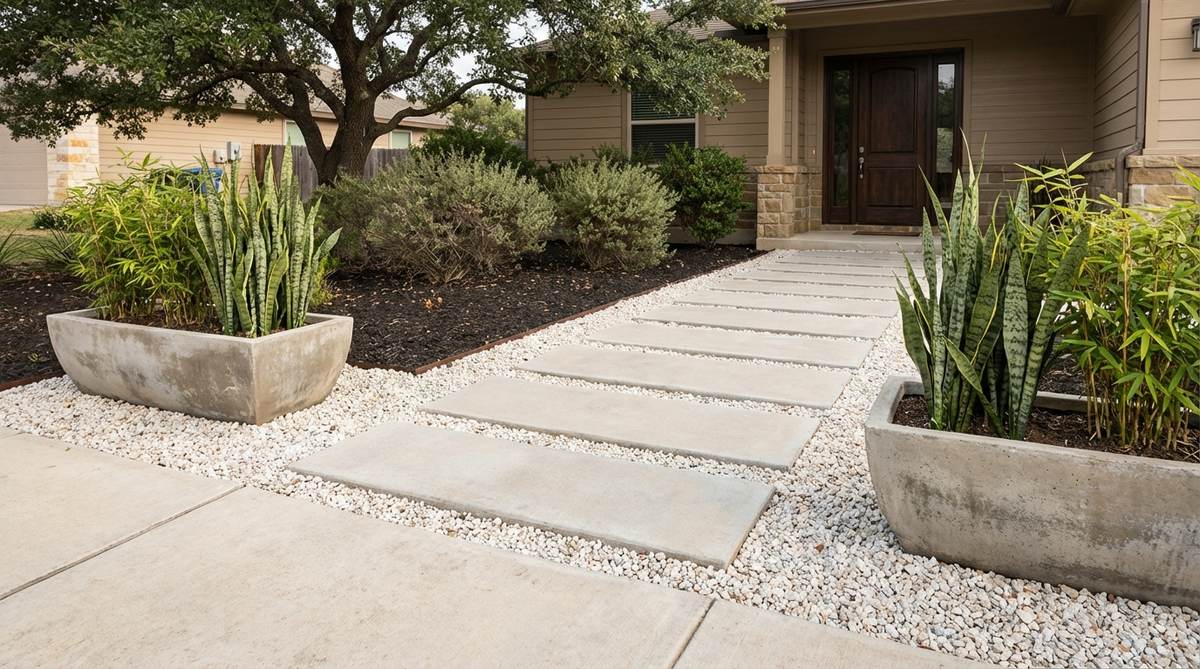
Rectangular concrete stepping stones float across crisp white gravel, establishing a meditative rhythm from sidewalk to front door. Flanking planters hold tall snake plants or compact dwarf bamboo, their vertical forms contrasting with the horizontal stone flow.
This layout emphasizes negative space and intentional placement. Each element occupies its defined zone without competing for visual attention.
Maintenance involves occasional gravel raking and minimal plant pruning. The design scales effectively for narrow entry strips or wider forecourt areas.
2. Gravel Entrance with Floating Beds
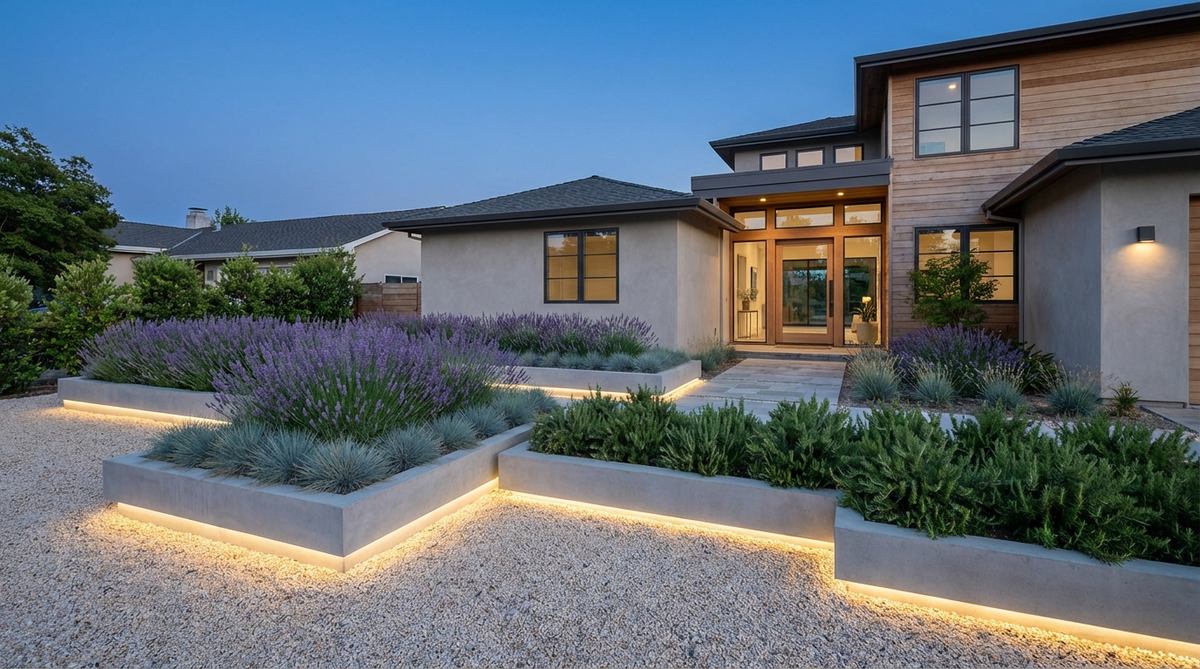
Raised concrete planters appear to hover above a pale gravel field, creating distinct planting islands without physical borders. Each bed contains drought-tolerant species like lavender, rosemary, or ornamental grasses arranged in monochromatic groupings.
The elevation change adds dimension while improving drainage and root health. Angular planter geometry reinforces modern architectural language.
This approach works particularly well on flat lots where grade variation doesn’t exist naturally. LED uplighting beneath planters enhances the floating effect after dark.
3. Dry Stream Garden
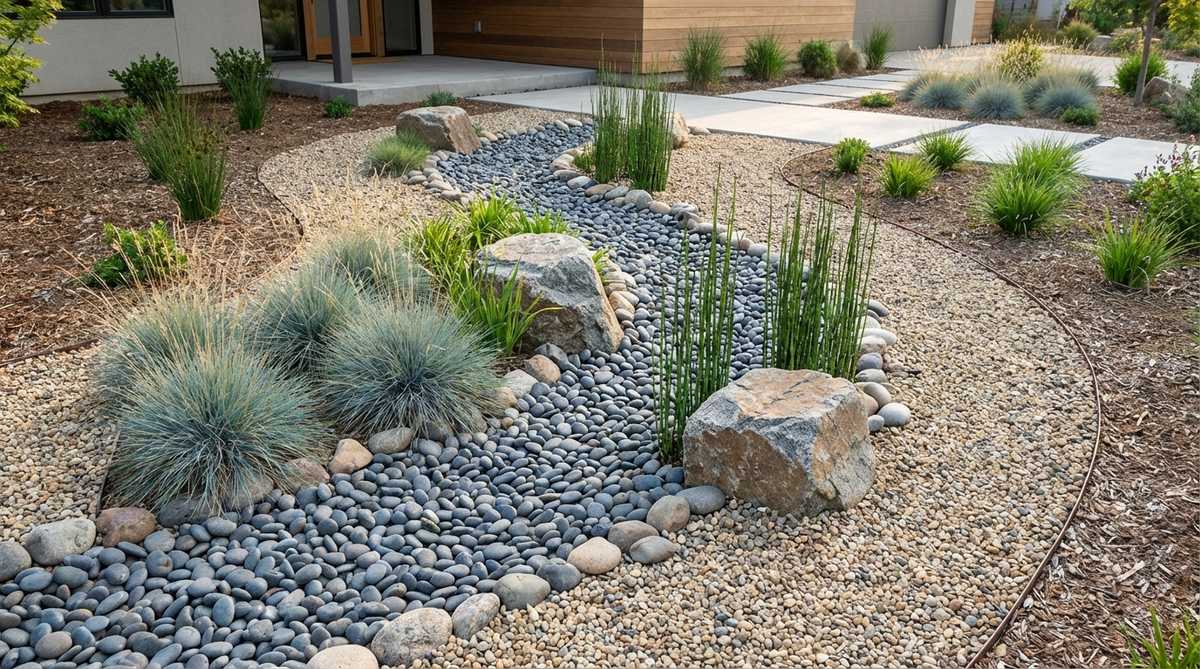
A curving river of dark pebbles flows through lighter gravel, mimicking natural waterways without actual irrigation. Boulders placed at curves create visual anchors and suggest erosion patterns.
Flanking plants include sedges, horsetail reeds, and blue fescue to reinforce the riparian aesthetic. The contrast between stone sizes and colors defines the “banks” without formal edging.
Dry streams provide effective drainage channels while adding organic movement to rectilinear architecture. Designers use this technique to guide runoff toward permeable collection areas.
4. Monochrome Texture Garden
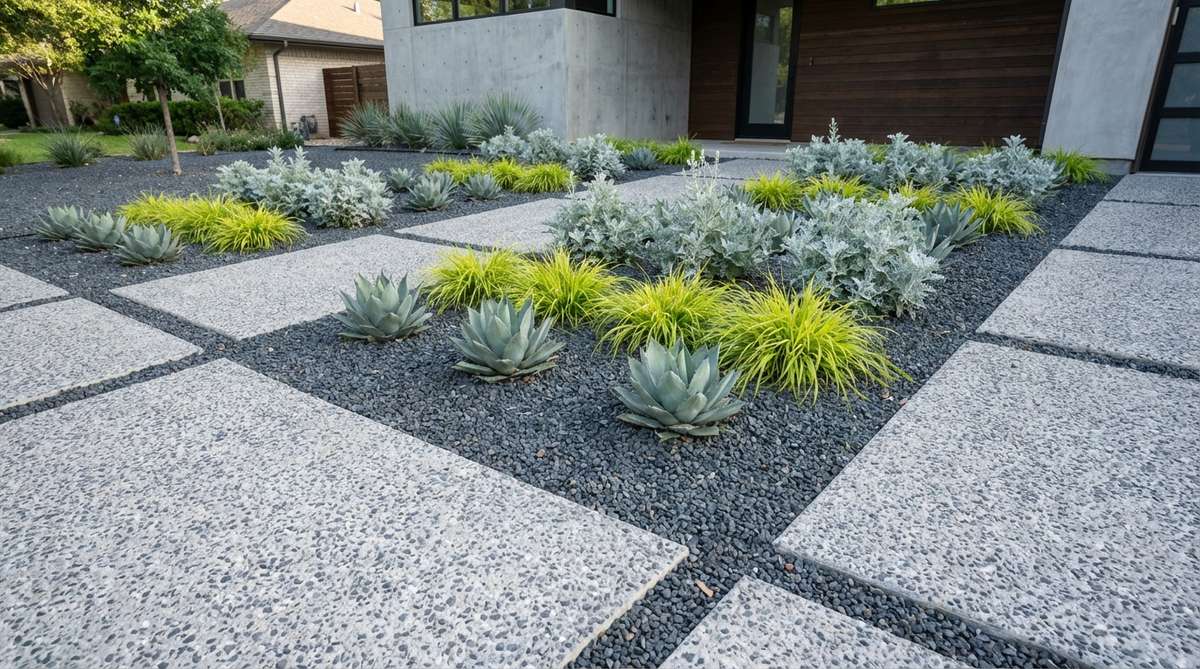
A single-color gravel palette from light gray to charcoal creates subtle zoning through texture variation. Coarse aggregate defines pathways while fine crushed granite fills planting areas.
Plant selection focuses on foliage color rather than flowers—silver artemisia, blue agave, and chartreuse sedge provide chromatic interest within the neutral ground plane. Repetition of three to five species in staggered masses maintains visual calm.
This restrained approach suits contemporary homes where architectural details deserve primary focus. The garden complements rather than competes with building materials.
5. Gravel Lawn Alternative
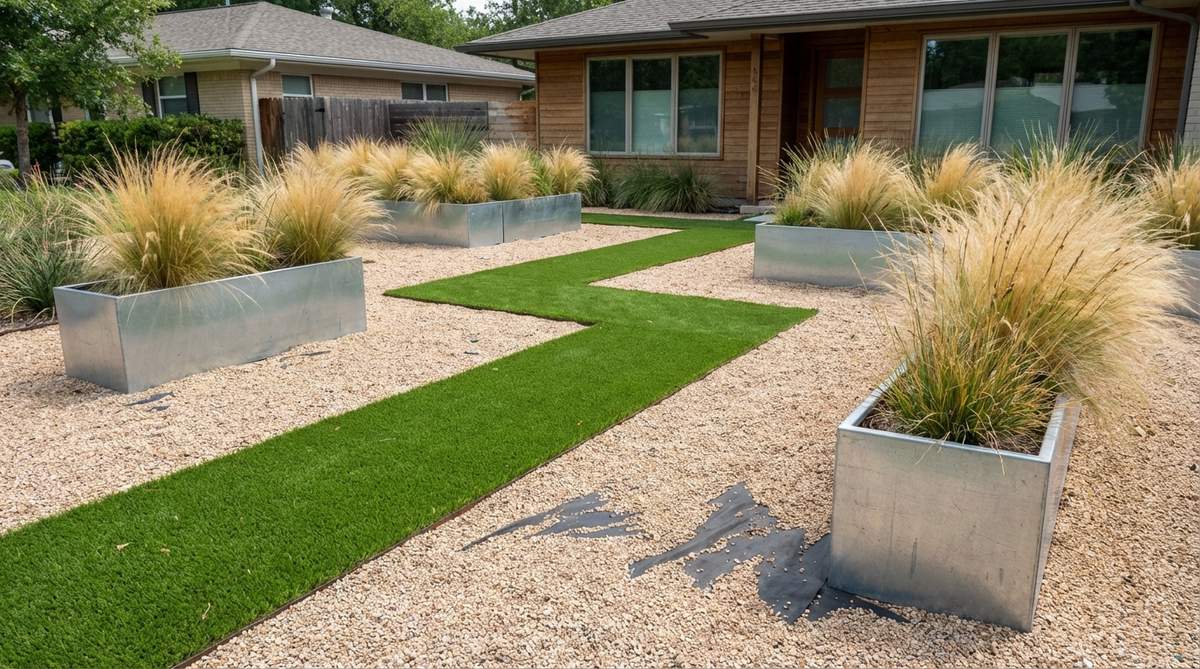
A full gravel surface replaces traditional turf, accented by sleek strips of artificial grass or poured-in-place rubber to define circulation zones. The layout eliminates mowing and irrigation while maintaining usable outdoor space.
Strategic placement of ornamental grasses in galvanized steel planters breaks up the expanse. Species like Mexican feather grass or purple fountain grass add softness without soil contact.
Permeable fabric beneath gravel prevents weed emergence and facilitates drainage. This solution delivers immediate visual transformation with lower installation costs than hardscape.
6. Shadow Path Design
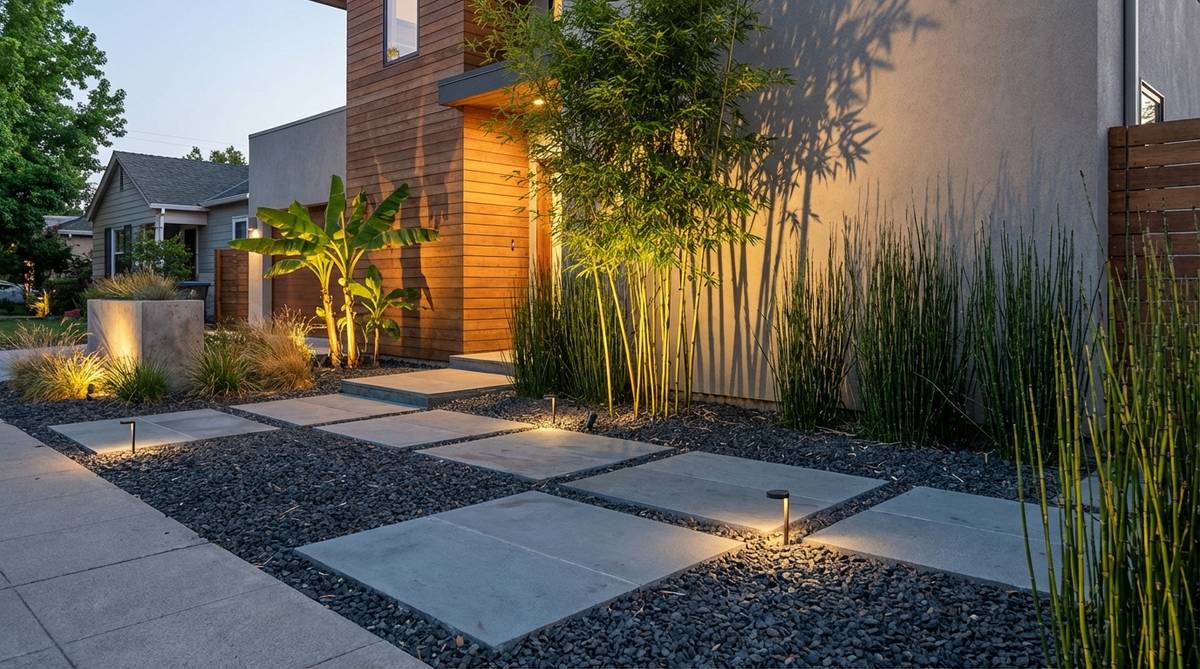
Stepping stones set over dark charcoal gravel receive strategic ground lighting that casts architectural shadows across the surface. Vertical elements like bamboo, banana plants, or horsetail reeds amplify the shadow play.
The design transforms throughout the day as natural light shifts, creating dynamic visual interest from a simple material palette. LED fixtures recessed between stones provide safety and drama.
This layout suits contemporary homes with strong geometric facades. The interplay of light, texture, and form reinforces modern design principles without excessive ornamentation.
Native & Layered Plantings
Mixed-height plantings using climate-adapted species replace outdated foundation rows. These gardens layer groundcovers, perennials, grasses, and shrubs to create depth, movement, and year-round interest while supporting local ecosystems.
7. Prairie-Style Meadow Entry
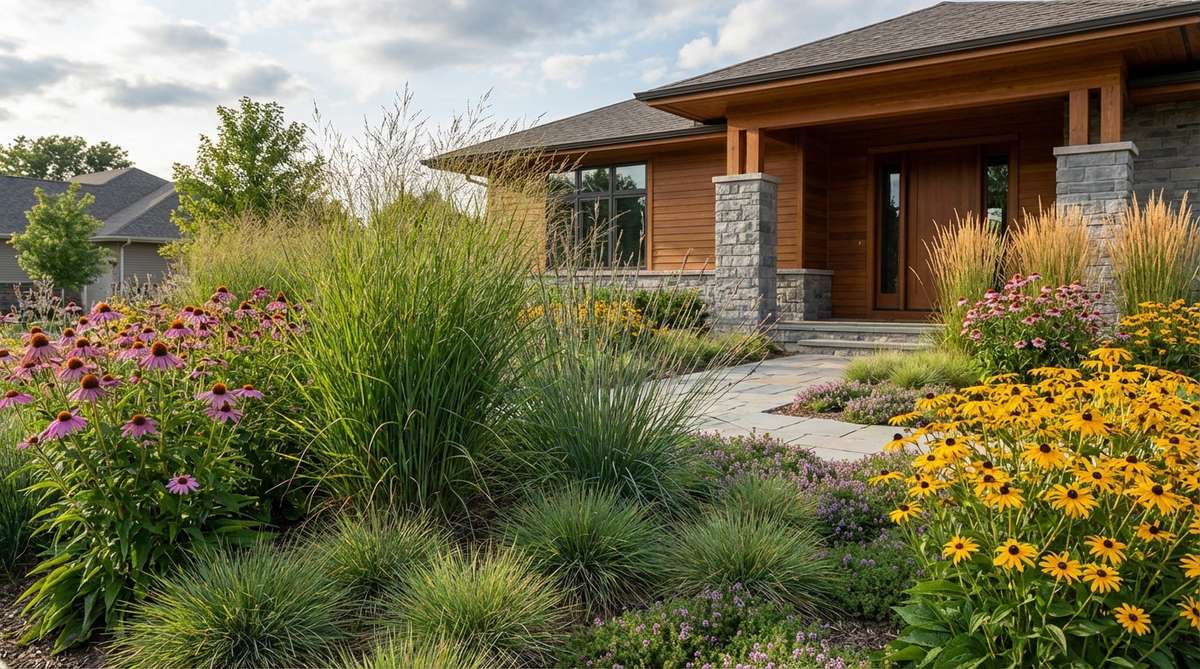
Tall native grasses like switchgrass, little bluestem, and Indian grass form the upper canopy, reaching 36 to 50 inches at maturity. Mid-level perennials such as coneflowers, black-eyed Susans, and asters fill the middle zone.
Groundcovers like sedges and creeping thyme occupy the lowest layer. This three-tier structure mimics natural prairie ecosystems while framing the home’s foundation.
Allow plants to self-seed for a slightly untamed look that feels alive rather than manicured. Cut grasses back once annually in late winter to refresh growth cycles.
8. Native Pollinator Corridor
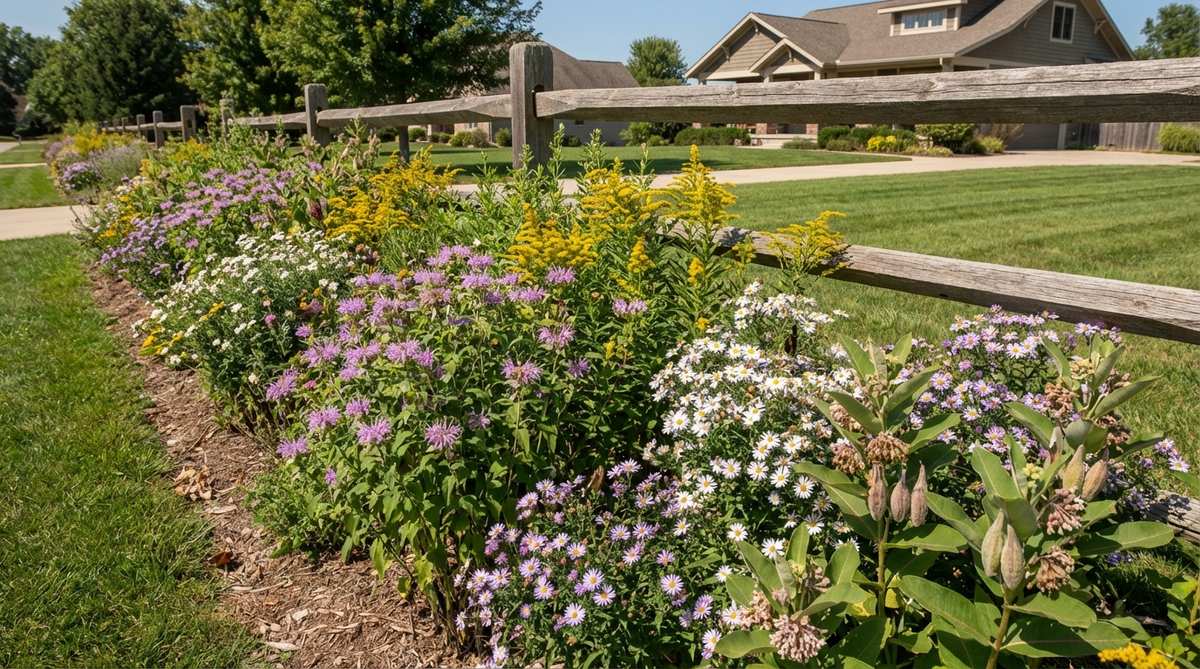
A linear planting bed stretches along the front property line, packed with nectar-rich natives that bloom sequentially from spring through fall. Species include wild bergamot, goldenrod, aster, and native milkweeds.
Designers plant in odd-numbered groupings of five to seven specimens per species to create visual impact. The corridor provides habitat connectivity for bees, butterflies, and beneficial insects.
This layout works particularly well for corner lots or homes set back from the street. Informal edges reduce maintenance compared to crisp-cut borders.
9. Woodland Edge Garden
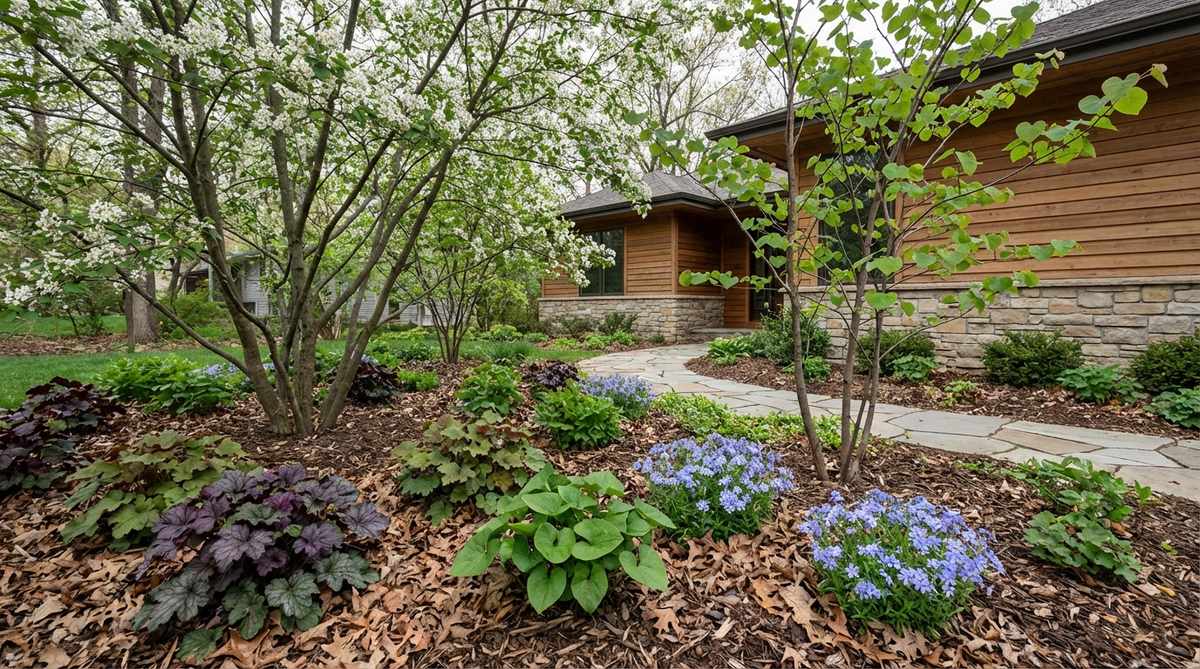
Shade-tolerant natives like coral bells, wild ginger, and woodland phlox nestle beneath existing trees or newly planted specimens such as serviceberry or redbud. The planting mimics forest floor ecology with layered canopy heights.
Mulch depth of two to three inches suppresses weeds while retaining moisture. Leaf litter integration adds organic matter and supports soil health naturally.
This design suits homes with mature tree canopy or northern exposures. It eliminates struggling turf in shaded areas while delivering refined woodland character.
10. Mixed Shrub Meadow
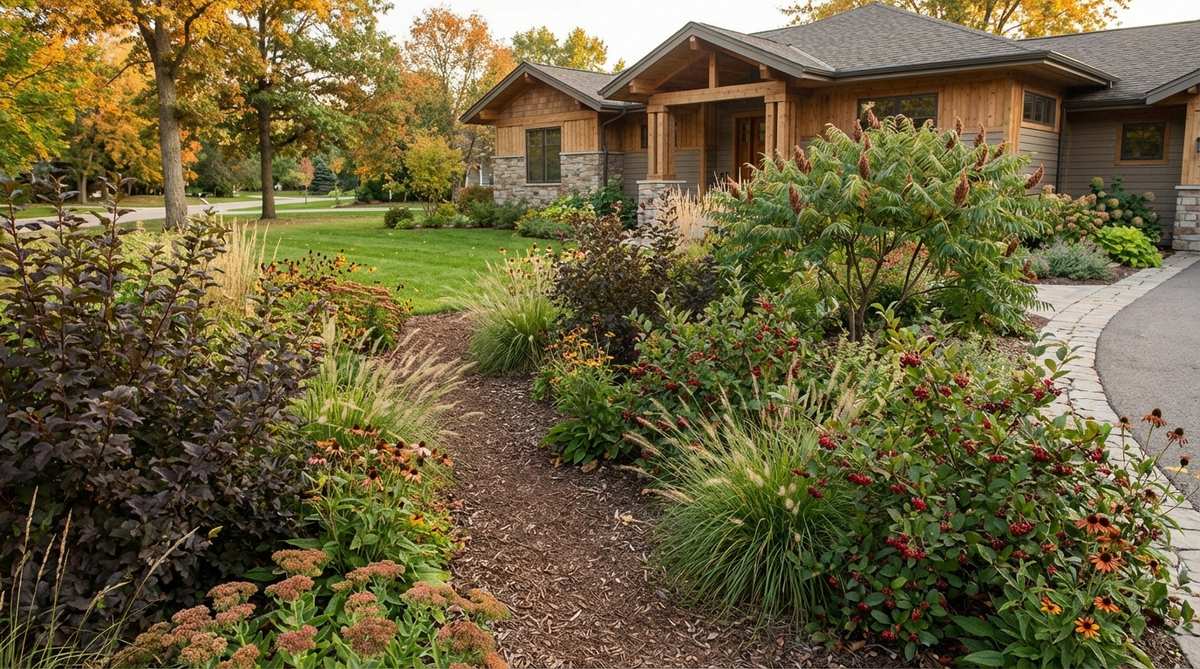
Deciduous shrubs like ninebark, chokeberry, and sumac provide 24 to 48-inch structural elements interspersed with flowing grasses and perennials. The combination delivers privacy screening without rigid hedge formality.
Seasonal interest shifts as shrubs bloom in spring, grasses swell in summer, and fall color ignites the composition. Winter structure comes from persistent seed heads and branching architecture.
Plant shrubs at their mature spread to avoid overcrowding. This approach requires less pruning than traditional foundation plantings while offering superior wildlife value.
11. Native Grass Tapestry
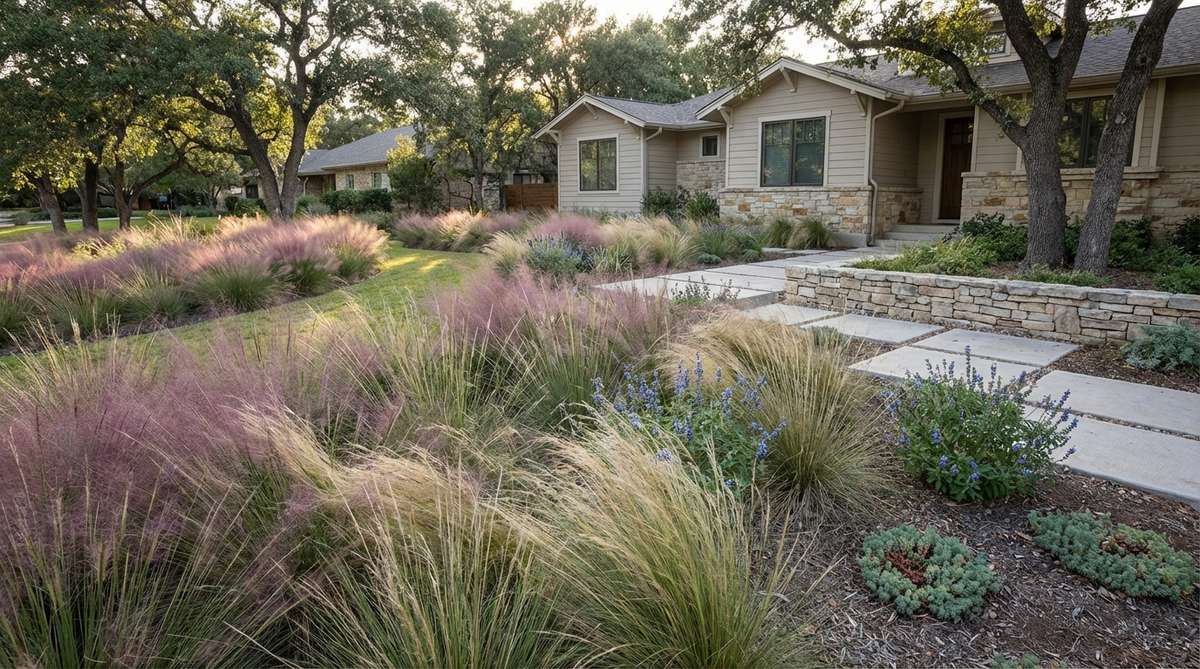
Warm-season grasses dominate the layout in sweeping drifts—purple muhly, side-oats grama, and prairie dropseed create textural ribbons that shift with wind and light. Minimal perennial accents punctuate the grass matrix.
The design delivers maximum impact with minimal species diversity. Repetition of three to four grass varieties in generous masses reads as intentional rather than sparse.
This layout thrives in full sun and well-drained soil. It requires virtually no irrigation once established and can be refreshed annually with a single dormant-season mowing.
12. Layered Foundation Replacement
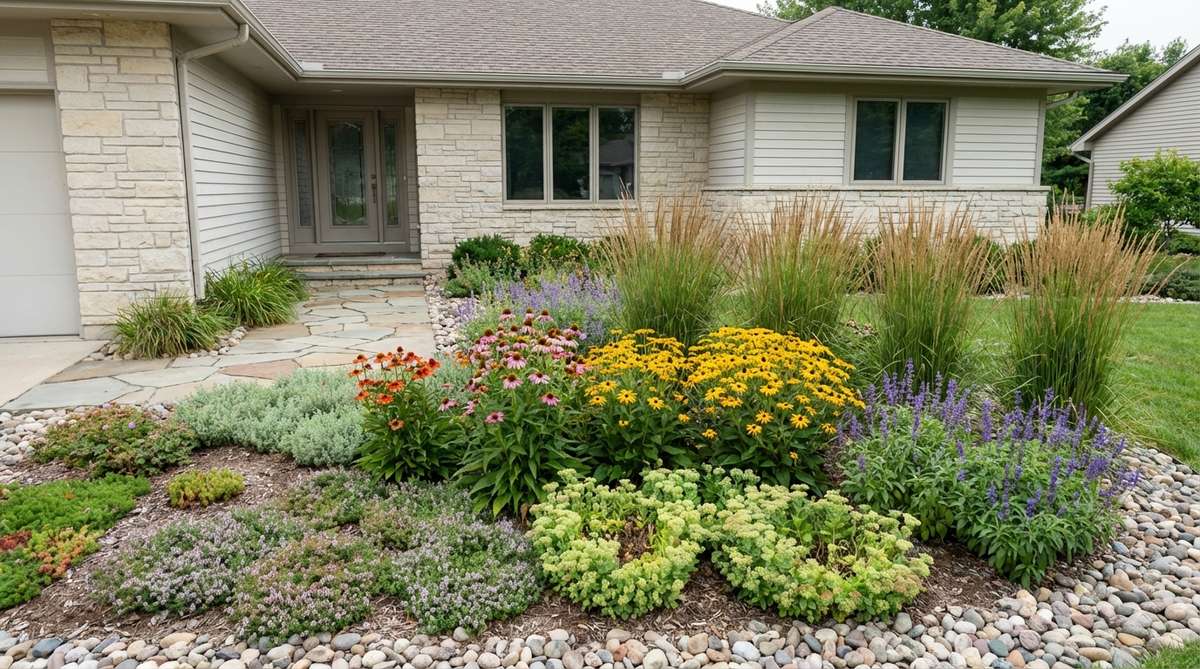
Traditional foundation evergreens give way to dynamic layers12-inch groundcovers at the base, 24-inch perennials in the middle, and 36 to 48-inch ornamental grasses or small shrubs as the top tier. This progression creates depth without obscuring windows.
Species selection focuses on native or climate-adapted plants that won’t outgrow their space. Examples include sedge groundcovers, salvia or penstemon perennials, and compact native azaleas or spirea.
The layered approach feels lighter and more intentional than overgrown boxwoods or yews. It aligns with naturalistic design trends while improving home visibility and light penetration.
Geometric & Structured Designs
Clean lines and precise angles define these layouts, using symmetry, rectangles, and circles to create formal order. Geometric gardens complement modern architecture through repetition of shape and carefully controlled plant placement.
13. Rectangular Planter Grid
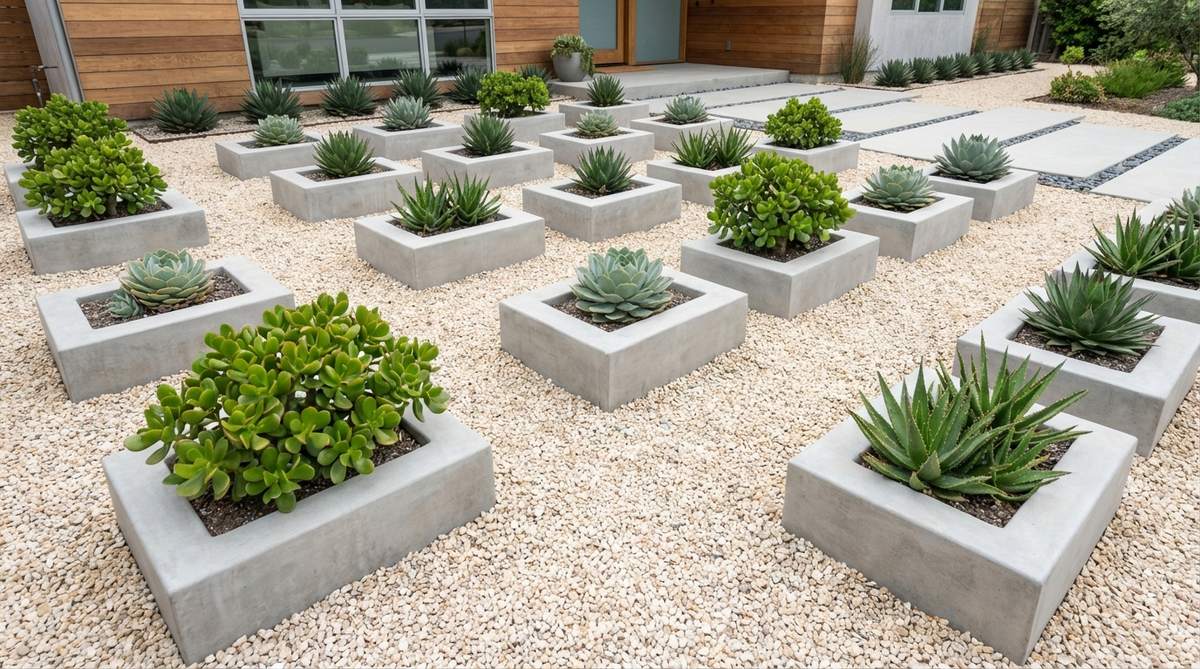
Concrete block planters arranged in a precise grid pattern over pale gravel create structured planting pockets. Each box contains a single species—jade, echeveria, or aloe—to emphasize form over variety.
The uniform spacing and repetition generate rhythm and predictability. Negative space between planters remains as important as the planted zones themselves.
This layout suits narrow side yards or entry courtyards where space limitations demand efficient organization. The modular nature allows for phased installation or future reconfiguration.
14. Symmetrical Flanking Beds
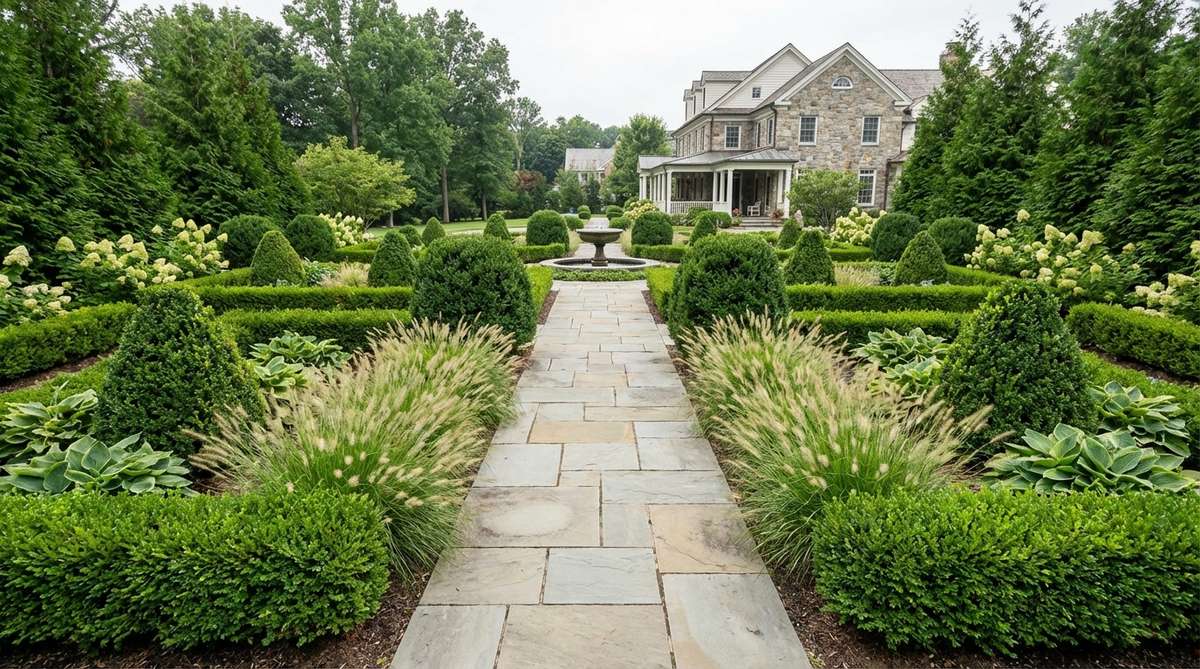
Matching planting beds mirror each other on either side of a central walkway, creating formal balance. Each bed contains identical plant selections arranged in the same sequence to reinforce symmetry.
Low hedges like dwarf boxwood or germander define bed perimeters. Interior plantings feature three to five species repeated in both beds—perhaps ornamental grasses, evergreen perennials, and a specimen shrub.
This approach works best with straight entry paths and centered front doors. It delivers classic formality while accommodating modern plant palettes.
15. Circular Planting Island
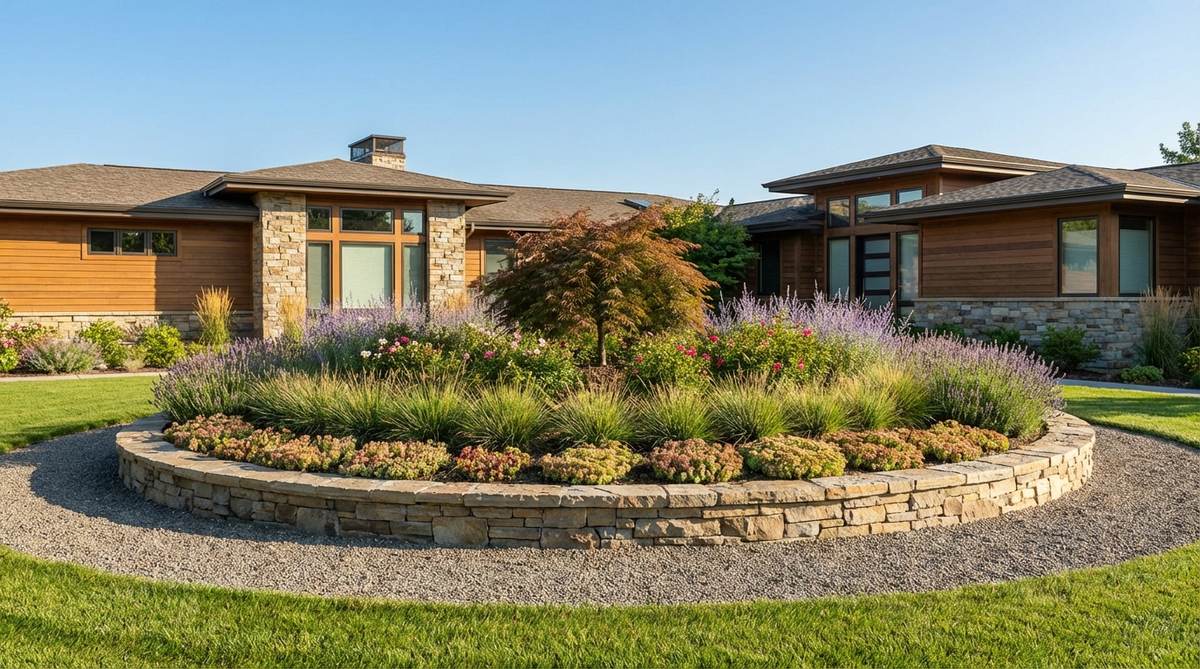
A stone-edged circle interrupts a gravel or turf foreground, planted with concentric rings of varying heights. The tallest element occupies the center—perhaps a small ornamental tree or large grass clump—with progressively shorter rings radiating outward.
The circular form creates a focal point visible from the street while breaking up rectangular lot geometry. Steel or stone edging maintains the crisp perimeter.
Designers often align the circle’s center with a window or architectural feature to strengthen the connection between landscape and building. LED ring lighting can trace the circle’s edge after dark.
16. Linear Planter Sequence
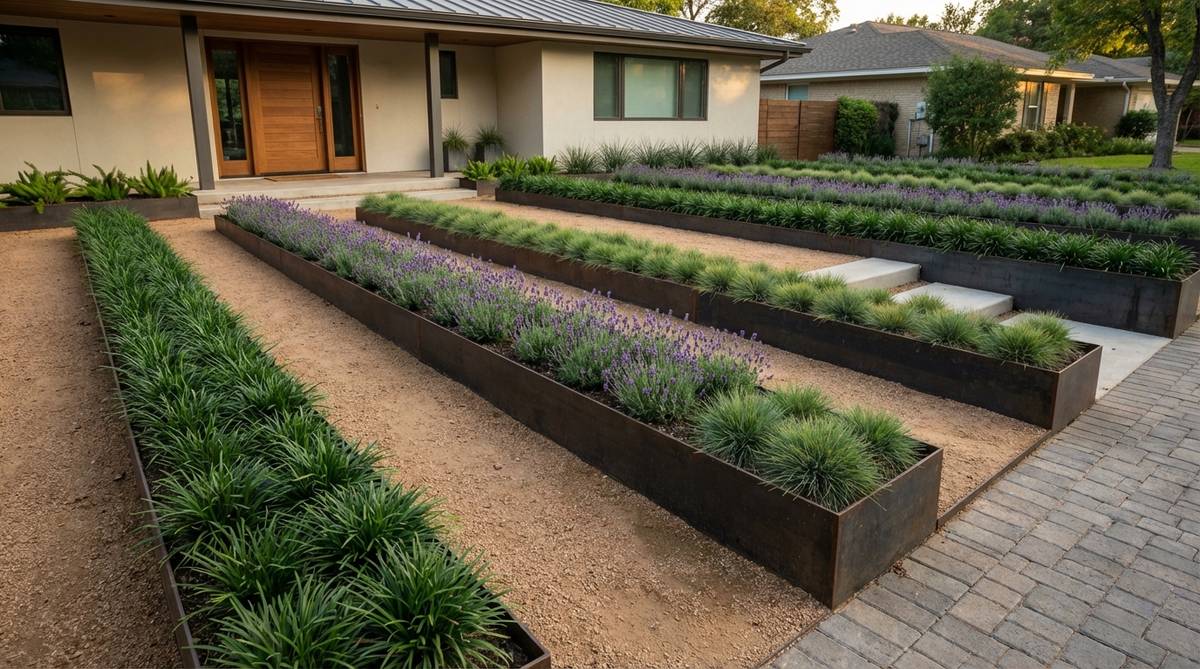
Narrow rectangular planters march in parallel formation, separated by decomposed granite or concrete pathways. Each planter holds a single species repeated down the line—perhaps dwarf mondo grass, lavender, or compact sedge.
The linear repetition directs movement toward the entry while creating vertical rhythm. Planter heights can vary to add subtle elevation changes without disrupting the horizontal emphasis.
This layout works particularly well along property lines or driveway edges. It defines boundaries without solid barriers while maintaining visual openness.
17. Angular Zigzag Borders
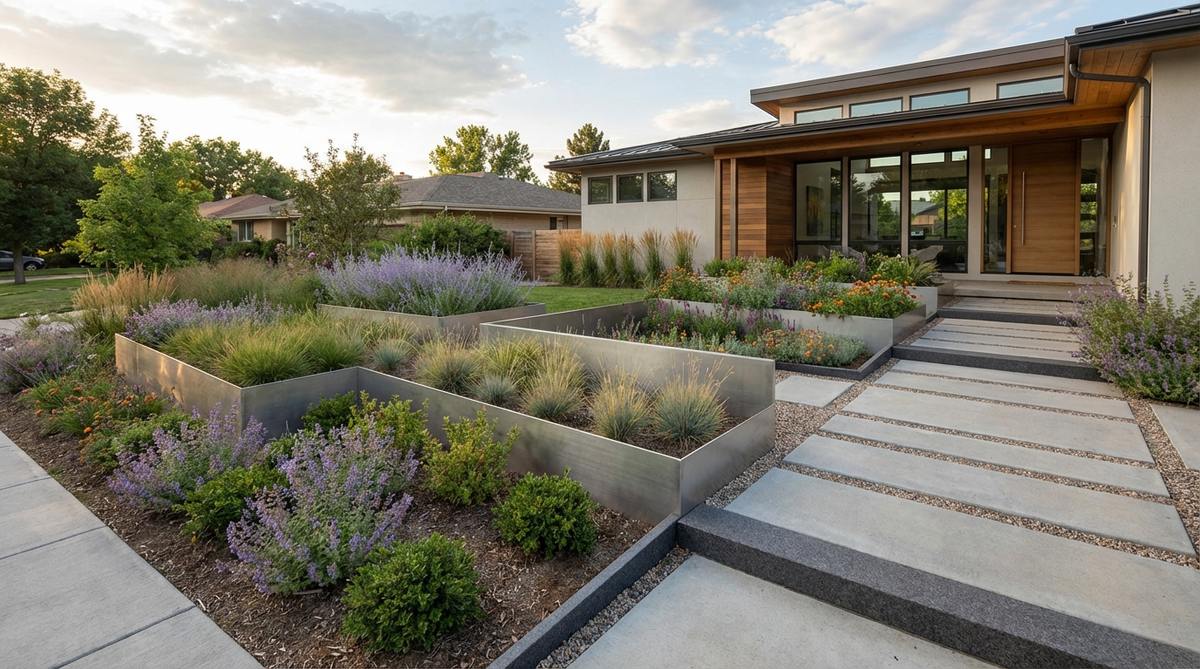
Bed edges follow sharp angular patterns rather than curves, creating dynamic movement through geometric precision. Granite edging or steel borders maintain crisp transitions between planted areas and pathways.
The zigzag pattern guides the eye across the landscape while dividing the space into distinct zones. Each segment can feature different plant groupings for seasonal variation.
This technique suits contemporary homes where angular architecture extends into the landscape. It adds visual energy without relying on excessive plant diversity or ornamentation.
18. Geometric Lawn Cutouts
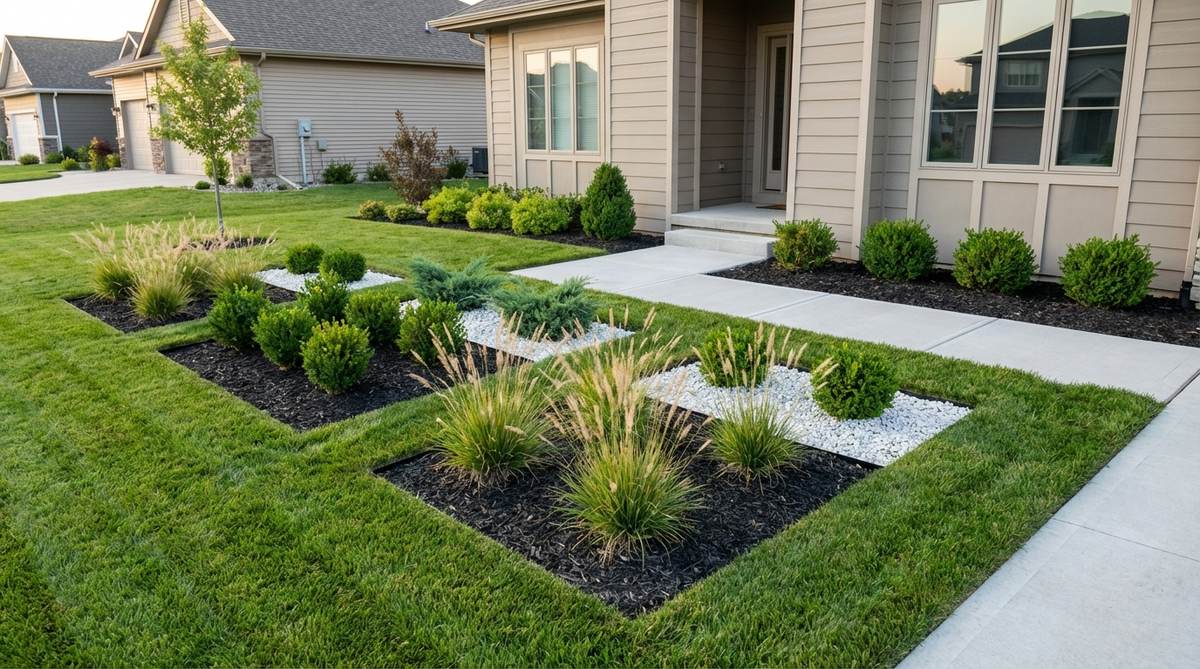
Precise rectangular or triangular shapes are carved from a turf expanse, then filled with contrasting materials like dark mulch, white gravel, or specimen plantings. The geometric voids create visual intrigue within a simple lawn plane.
Each cutout becomes a planting opportunity for ornamental grasses, dwarf shrubs, or seasonal color. The shapes relate to building geometry or lot boundaries to maintain design coherence.
This approach allows gradual conversion from traditional lawn to more sustainable plantings. Homeowners can expand cutout areas over time as maintenance preferences shift.
Drought-Tolerant Layouts
Water-wise gardens combine climate-adapted plants, mulch layers, and efficient irrigation to reduce consumption while maintaining year-round appeal. These layouts prioritize resilience and sustainability without sacrificing contemporary style.
19. Desert Modern Vibes
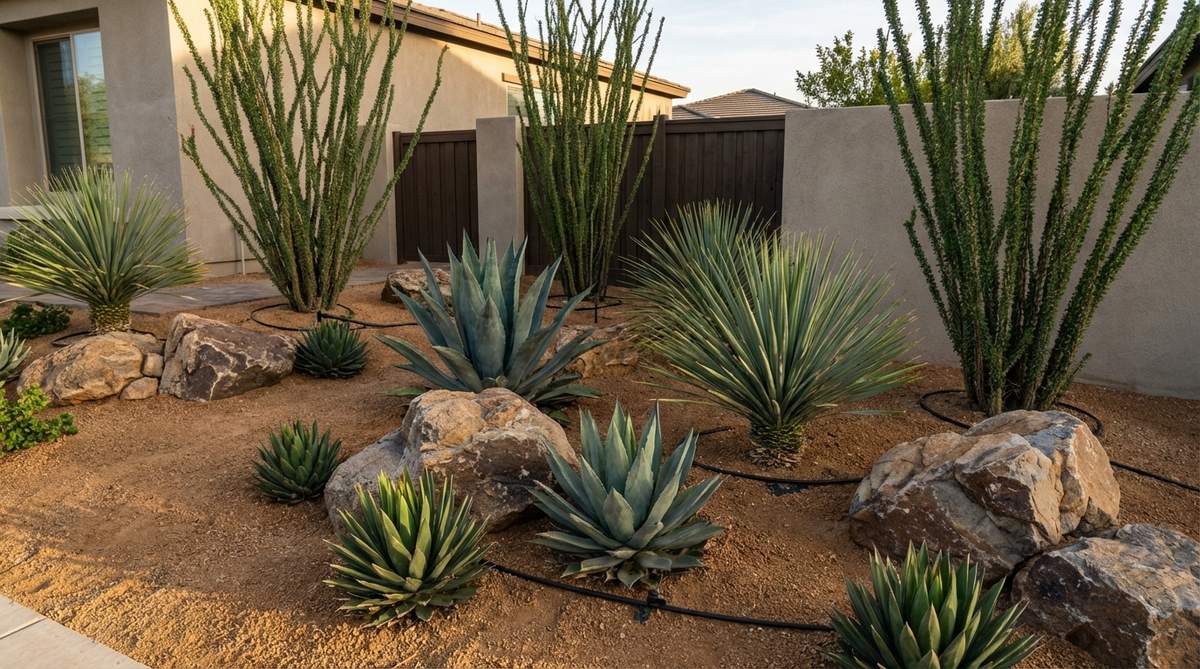
Agaves, yuccas, and ocotillo provide architectural structure against decomposed granite ground cover. Boulder groupings add scale and visual weight while creating microclimates for smaller succulents.
The plant palette remains intentionally limited—three to five species repeated in varied arrangements. Warm-toned gravel and stone selections complement desert plant colors.
Drip irrigation delivers water directly to root zones, minimizing evaporation. This layout thrives in arid climates and full-sun exposures where traditional landscapes struggle.
20. Mediterranean Courtyard
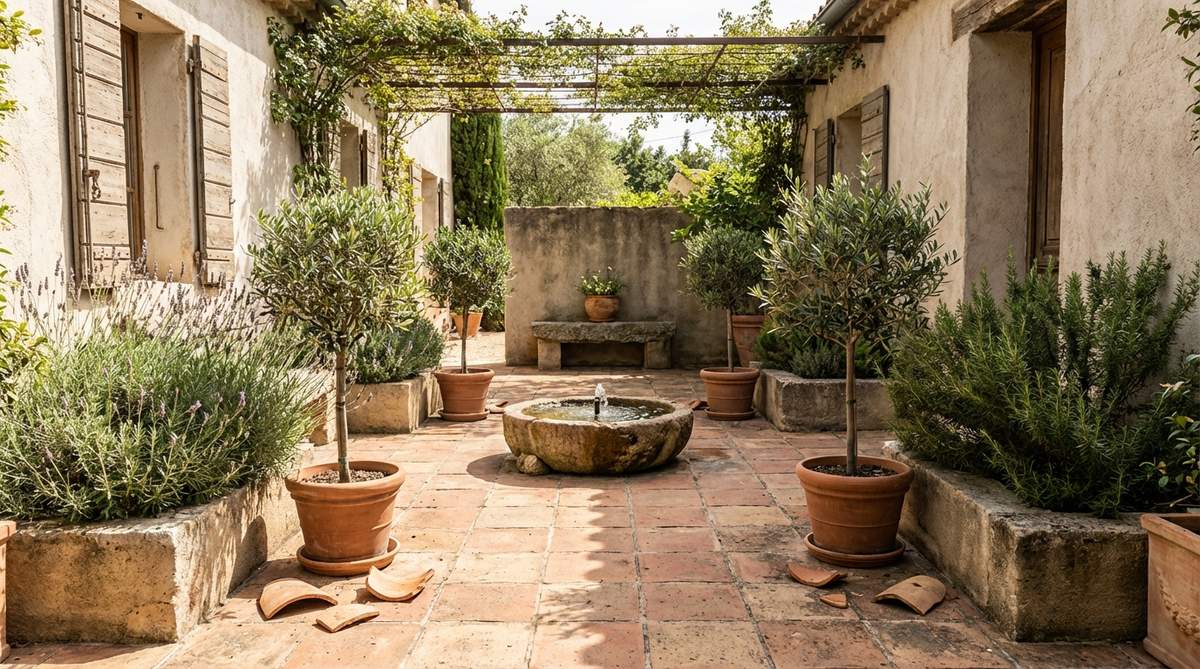
Olive trees, rosemary, and lavender create a drought-tolerant palette inspired by coastal Mediterranean landscapes. Decomposed granite pathways weave between informal planting masses.
Terra cotta accents and warm-toned stone reinforce the regional character. Plant spacing allows for mature spread without overcrowding, reducing competition for limited water resources.
This design suits temperate climates with mild winters. It delivers fragrance, texture, and culinary value alongside water conservation benefits.
21. Sculptural Succulent Garden
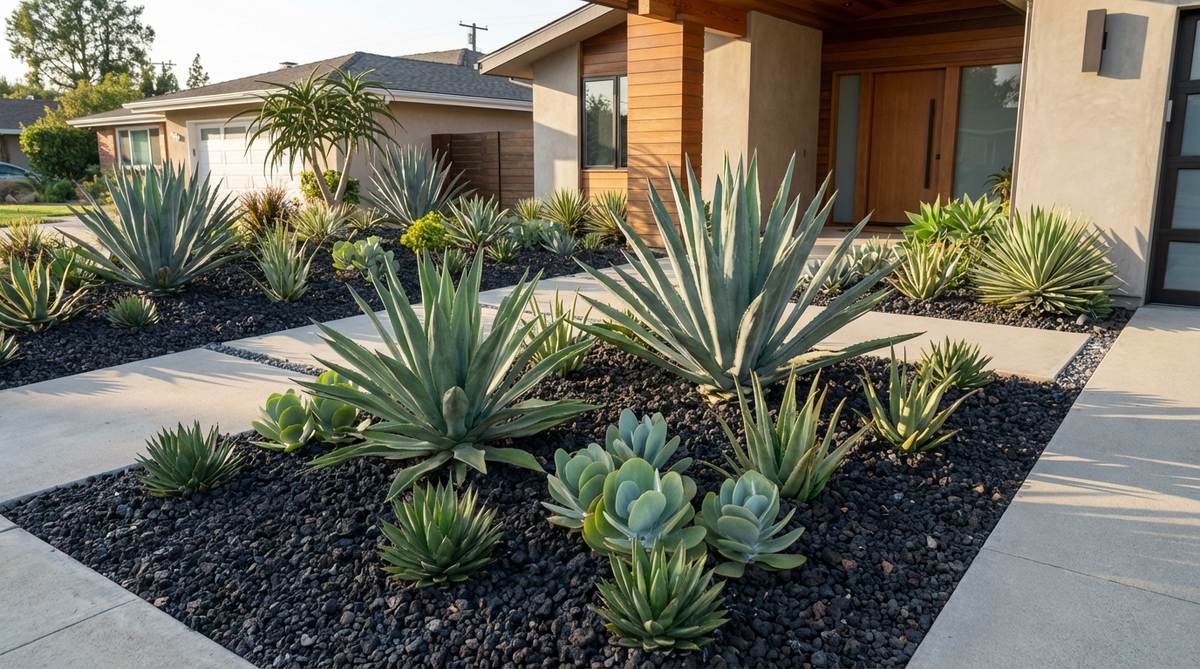
Large-scale succulents like century plant, paddle plant, and aloe varieties function as living sculptures. Each specimen occupies generous space to showcase its architectural form.
Black lava rock or crushed granite provides contrasting ground cover. Planting density remains low to emphasize individual plant geometry rather than massed coverage.
This approach works best in frost-free climates or with cold-hardy succulent selections. Excellent drainage prevents root rot during occasional heavy rains.
22. Tiered Zen Slope
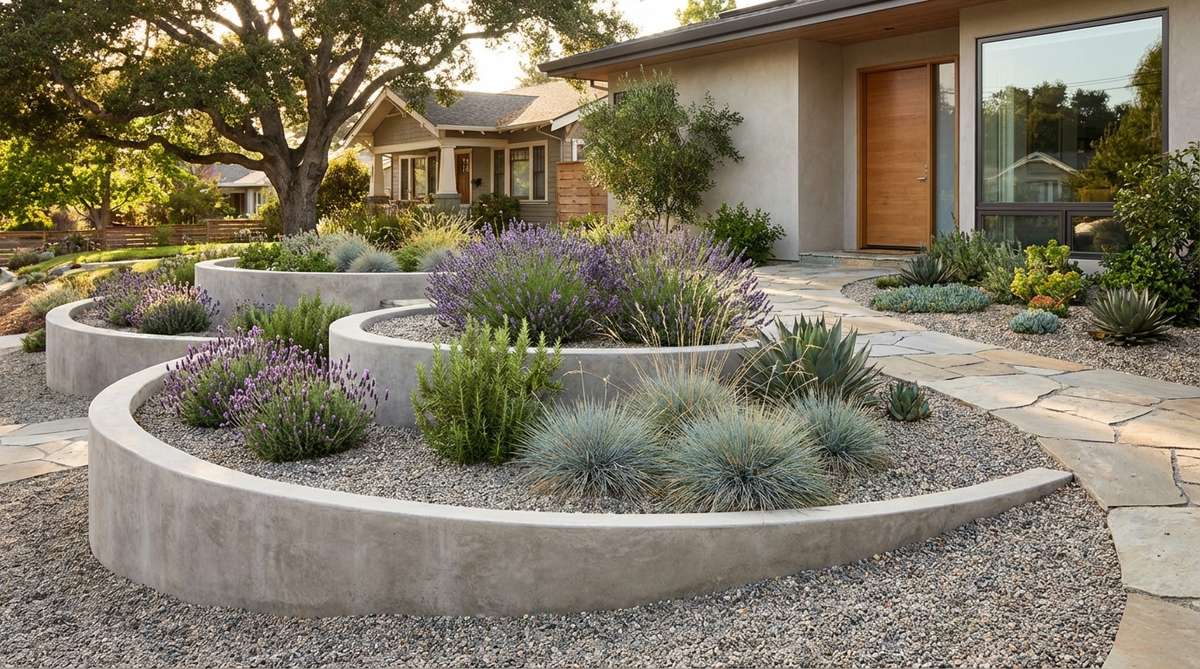
Gentle gravel terraces step down a sloped lot, supported by low retaining walls in concrete or stone. Each tier holds drought-tolerant species like lavender, rosemary, or ornamental grasses.
The layered approach manages grade changes while creating distinct planting zones. Water naturally drains from upper to lower tiers, concentrating moisture where plants can access it.
This layout transforms challenging slopes into design assets. It reduces erosion while delivering contemporary visual impact through horizontal line repetition.
23. Native Dryland Meadow
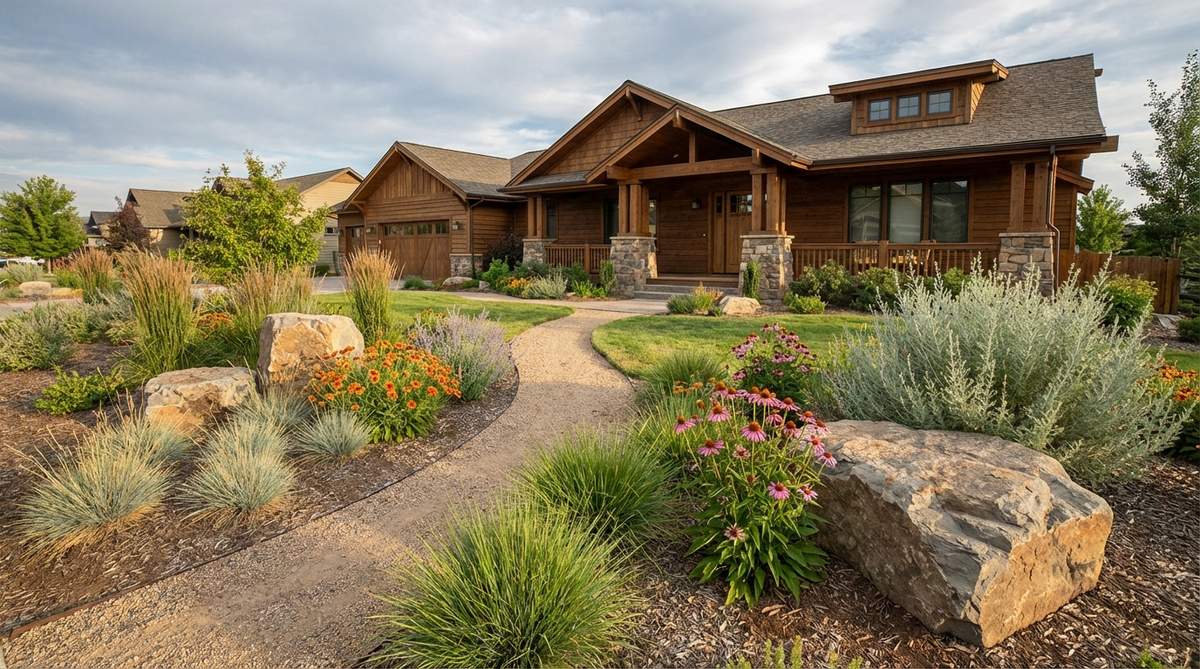
Drought-adapted native grasses and perennials create a naturalistic meadow that requires minimal supplemental water. Species like blue grama, buffalo grass, and blanket flower thrive on seasonal rainfall.
The meadow aesthetic embraces movement and seasonal variation. Plants may go dormant during peak drought, then regenerate with fall or spring moisture.
This design connects regional ecology with contemporary landscape values. It supports pollinators and wildlife while reducing irrigation infrastructure and costs.
24. Gravel and Boulder Composition
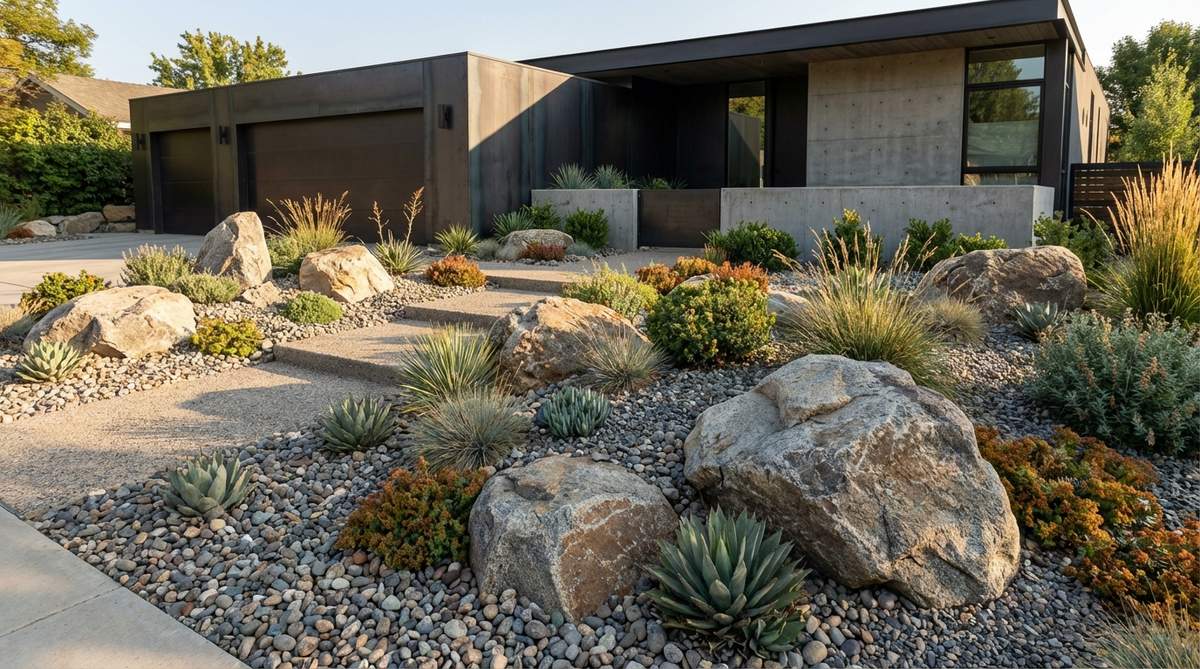
Large boulders anchoring expanses of crushed stone create a mineral-forward landscape with selective planting pockets. Drought-tolerant species emerge from gravel gaps near boulder bases.
The composition emphasizes texture, color variation, and scale relationships between stone sizes. Plant material remains secondary to the geological elements.
This approach suits homes with modern or industrial architecture. It requires virtually no irrigation and offers immediate visual maturity without waiting for plant establishment.
Vertical Dimension Gardens
Height variation adds drama and privacy to front yards without consuming excessive ground area. Vertical elements include tall grasses, columnar plants, trellises, and living walls that draw the eye upward.
25. Vertical Plant Accent Wall
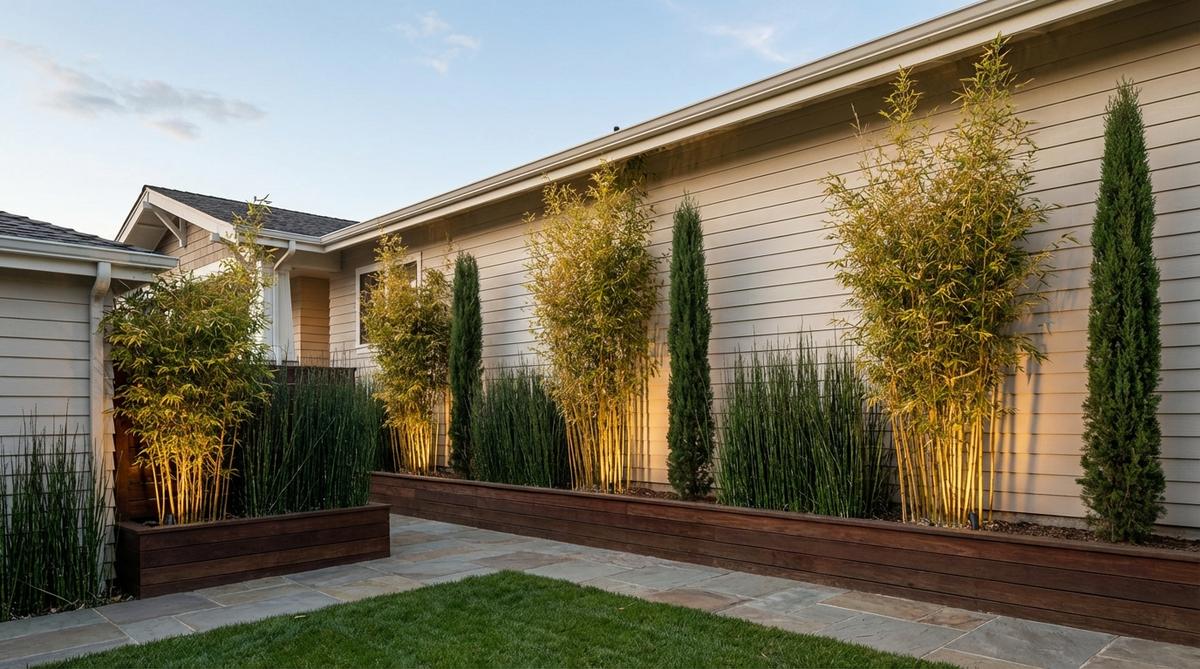
A narrow planting strip against the home’s facade features tall architectural plants like bamboo, horsetail reed, or columnar evergreens. The vertical emphasis creates privacy and softens building walls.
Uplighting positioned at ground level casts dramatic shadows against the facade after dark. The narrow footprint preserves walkway clearance while maximizing visual impact.
This solution works particularly well for homes with limited front yard depth. It adds dimension without extending into limited circulation space.
26. Tall Grass Screen
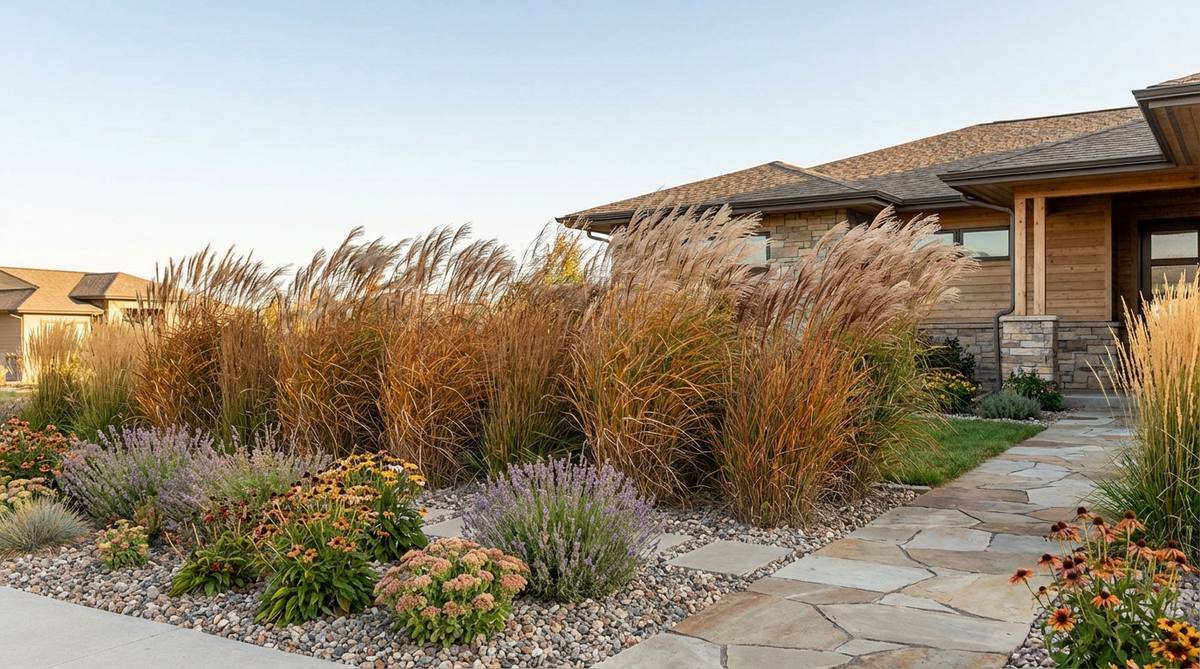
Screening grasses like Miscanthus or switchgrass form a permeable privacy barrier reaching 50 to 84 inches at maturity. The planting mass filters views without solid enclosure.
Seasonal movement and color changes keep the screen visually dynamic. Wind animates the grasses, adding auditory interest through rustling foliage.
Plant spacing of 24 to 36 inches allows individual clumps to fill without creating gaps. This living screen requires less maintenance than traditional hedge pruning.
27. Columnar Tree Grove
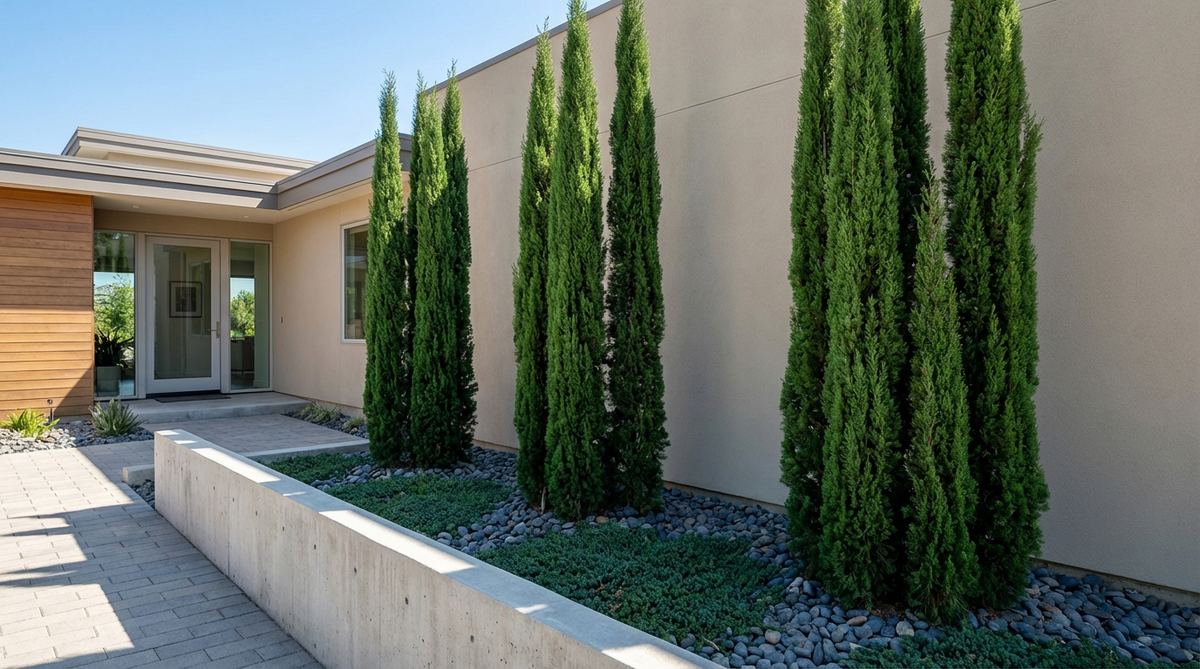
Narrow columnar trees like Italian cypress, Sky Pencil holly, or columnar oak create vertical emphasis without wide canopy spread. Groupings of three to five specimens amplify the upward thrust.
The grove arrangement provides height and presence while consuming minimal ground area. Underplanting with low groundcovers or gravel maintains simplicity at the base.
This layout suits narrow lots or side yards where lateral space is limited. Columnar forms frame entries or corner property lines effectively.
28. Living Wall Panel
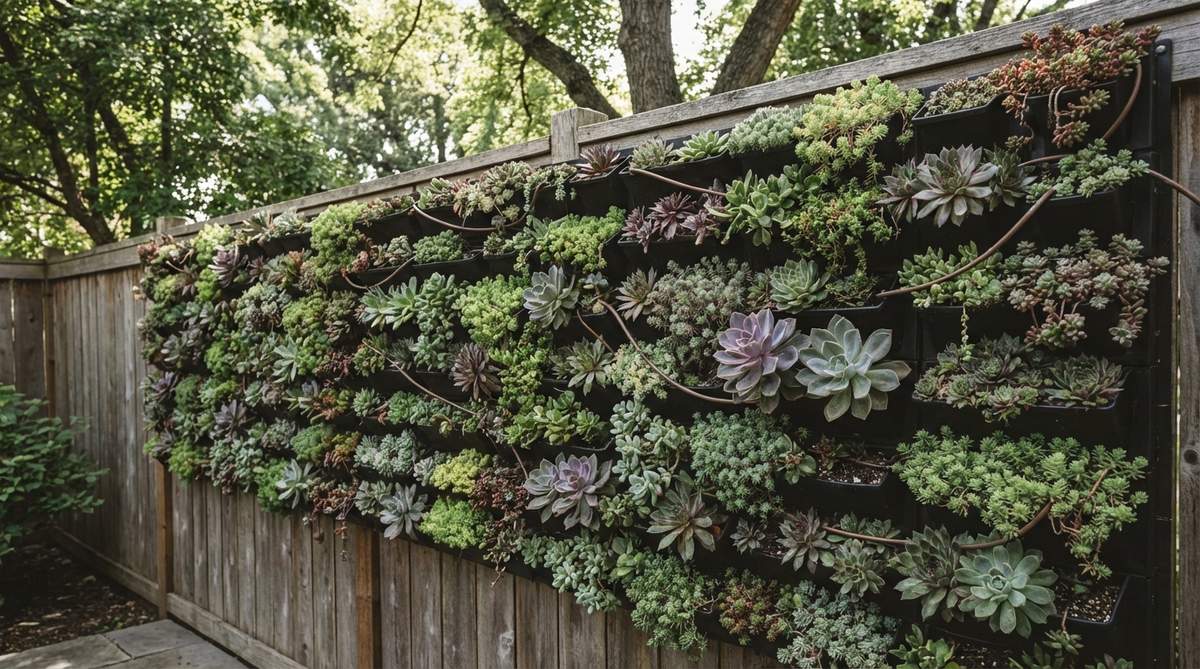
Modular planting panels mount to exterior walls or freestanding frames, supporting drought-tolerant species in pockets or cells. The vertical garden becomes architectural art visible from the street.
Drip irrigation integrates into the panel structure, delivering water to individual planting cells. Species selection focuses on shallow-rooted plants like sedums, succulents, and compact ferns.
Living walls work best in partially shaded locations to reduce water stress. They transform blank walls into textured focal points with minimal footprint impact.
29. Trellis and Vine Entry
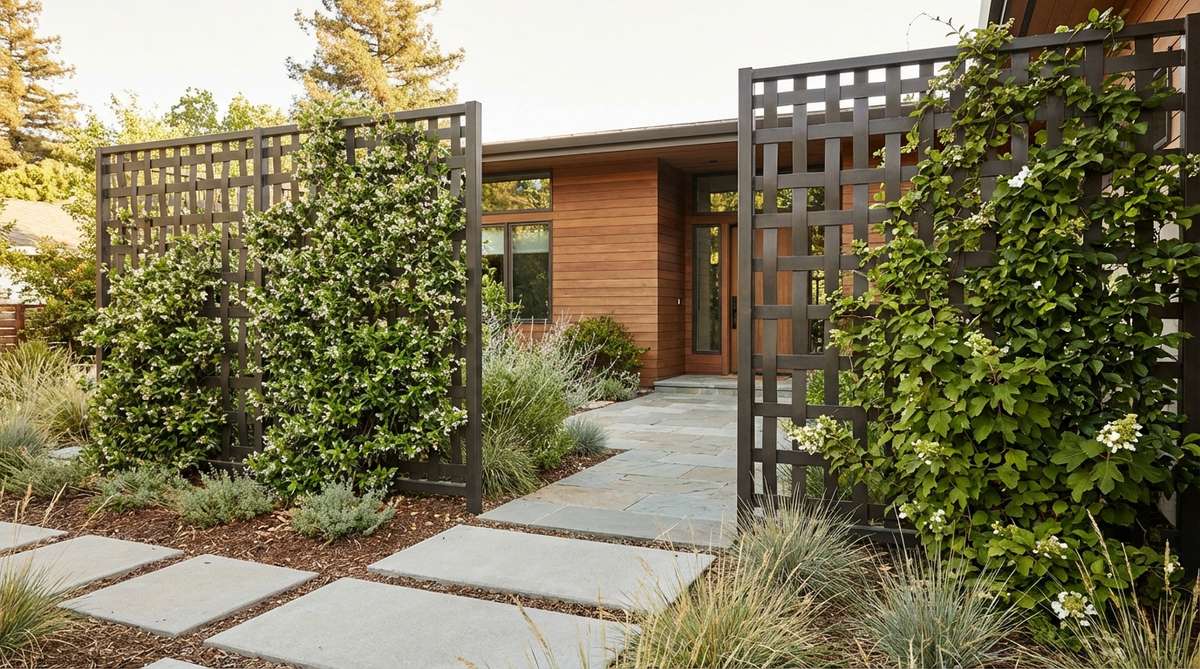
Steel or wood trellis panels flank the entry path, supporting climbing vines that add vertical greenery without ground-level planting beds. Species like star jasmine, climbing hydrangea, or evergreen clematis provide year-round coverage.
The trellis structure establishes immediate presence while vines mature. Geometric trellis patterns reinforce modern design language through repetition and precision.
This approach delivers privacy and shade development vertically. It suits homes where foundation planting space is limited or paved over.
30. Tiered Planter Stack
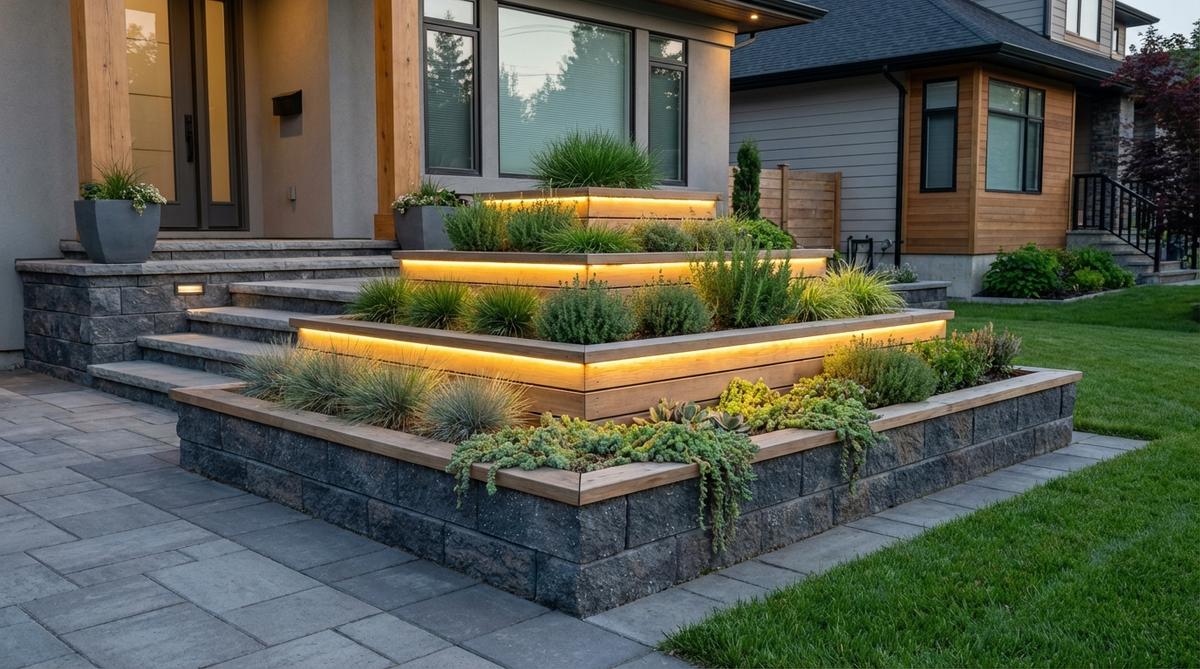
Stepped planters create vertical gardens through elevation changes rather than tall plants. Each tier holds progressively smaller plantings, forming a living pyramid or cascade.
The stacking arrangement adds dimension to flat lots while improving drainage through gravity flow. Compact specimens like dwarf grasses, herbs, or trailing succulents suit the tiered pockets.
LED lighting integrated into tier edges highlights the stacked geometry after dark. This design works particularly well flanking entry stairs or garage approaches.
Hardscape-Forward Entries
Material selection and installation patterns drive these designs, with hardscape occupying primary visual roles. Concrete, stone, pavers, and steel create structure that requires minimal plant maintenance while delivering contemporary curb appeal.
31. Floating Step Garden
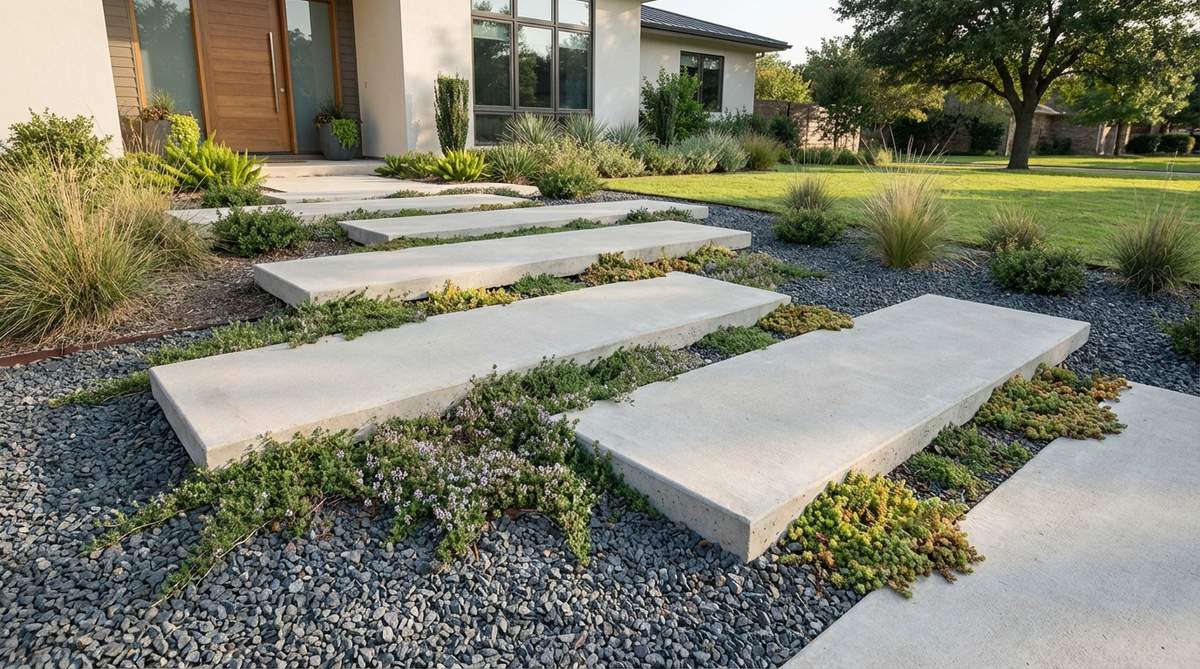
Individual concrete pads hover above gravel or groundcover, creating a stepping-stone path with generous spacing. Each pad appears to float independently rather than forming a continuous walkway.
Low plantings like thyme or sedum fill gaps between pads, softening the hard edges. The spacing encourages slower, more deliberate movement toward the entry.
This layout suits flat or gently sloped lots. It reduces hardscape volume compared to continuous pathways while maintaining clear circulation definition.
32. Linear Concrete Ribbons
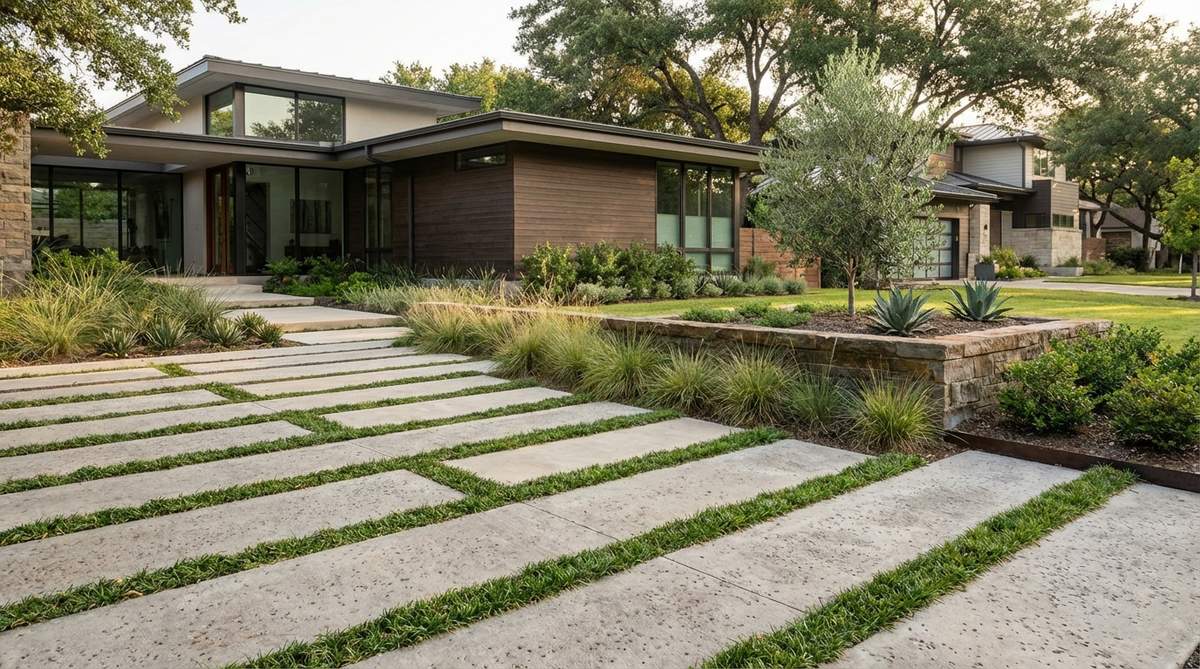
Parallel concrete strips run from sidewalk to entry, separated by planting strips or gravel channels. The ribbon pattern creates strong directional movement and modern geometric clarity.
Plant material occupies the interstitial spaces—perhaps mondo grass, compact sedges, or creeping groundcovers. The ratio of hardscape to planting typically favors concrete for durability and presence.
This design handles high foot traffic while maintaining contemporary aesthetics. The linear emphasis complements horizontal building lines and modern facade details.
33. Steel Edged Planting Beds
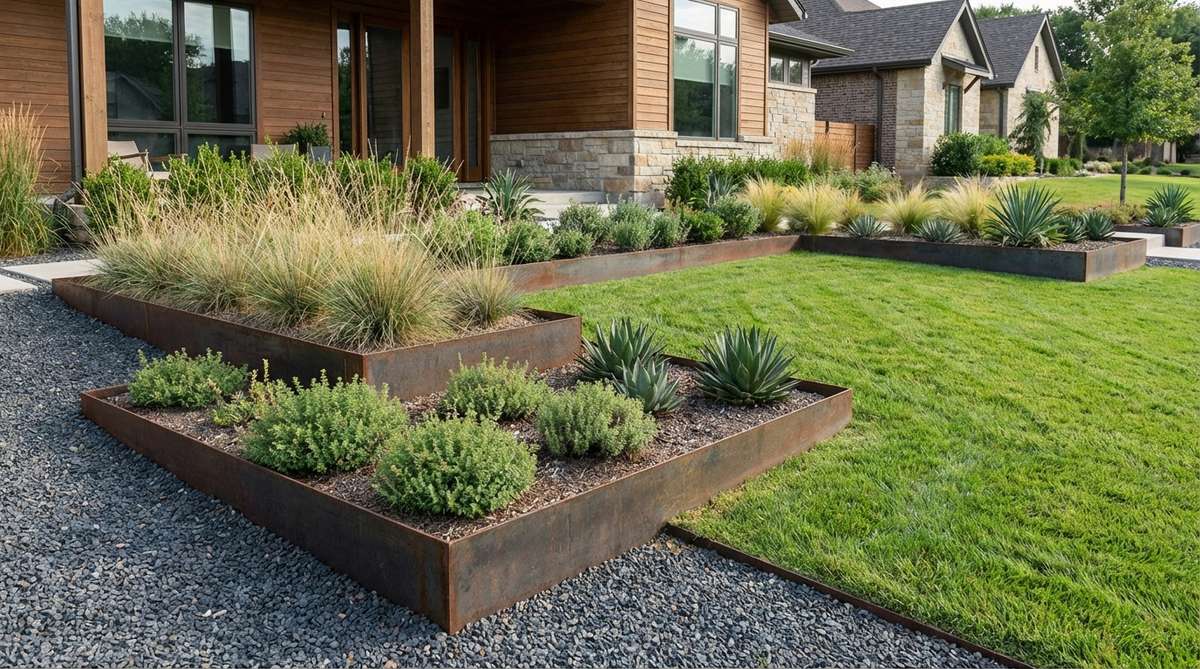
Cor-ten steel or powder-coated aluminum creates crisp, durable bed borders with clean industrial character. The metal edges define planting zones against gravel, concrete, or turf surfaces.
Material thickness of 3/16 to 1/4 inch provides structural rigidity for straight or curved applications. The edging weathers to a stable rust patina or maintains factory finish depending on material selection.
Steel edging suits contemporary and industrial architecture. It establishes precise boundaries that remain stable through freeze-thaw cycles and root pressure.
34. Large-Format Paver Grid
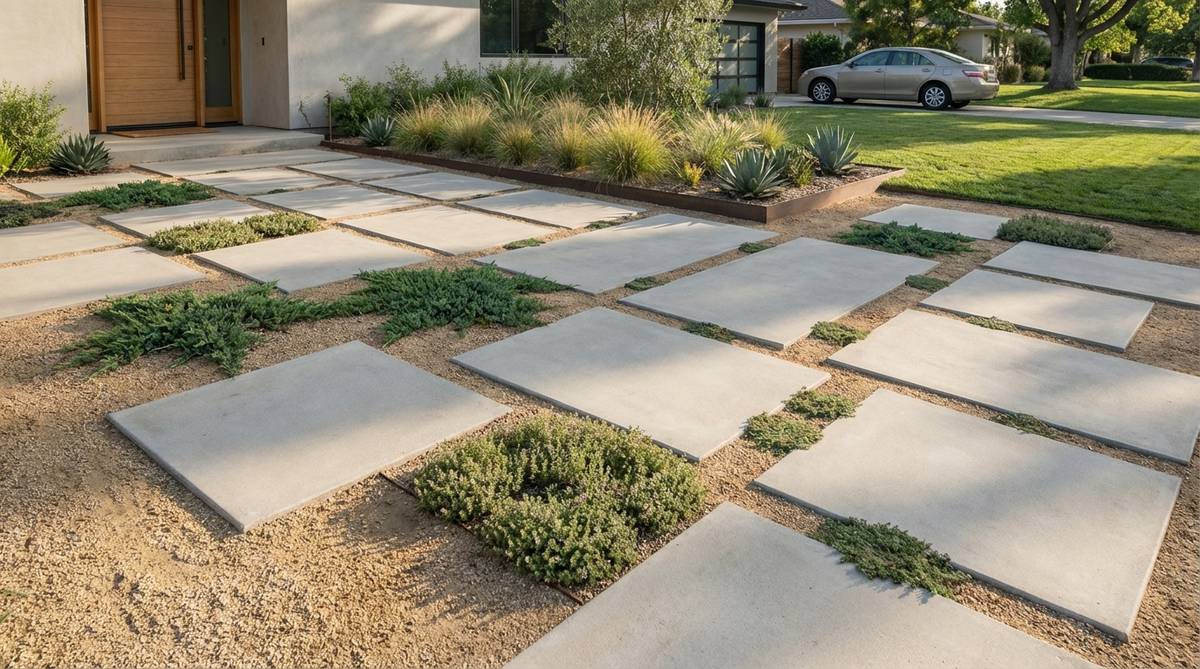
Oversized concrete pavers in 24-inch or 36-inch formats create a bold modular pattern. Joint spacing of 1/2 inch to 2 inches filled with decomposed granite or groundcover softens the grid.
The large scale reduces visual busyness compared to standard brick or small pavers. It reads as contemporary and intentional rather than traditional or decorative.
This layout works well for entry courts, driveway approaches, or parking areas. The pavers handle vehicle loads while maintaining pedestrian-scale visual interest.
35. Framed Entry Zen Gate
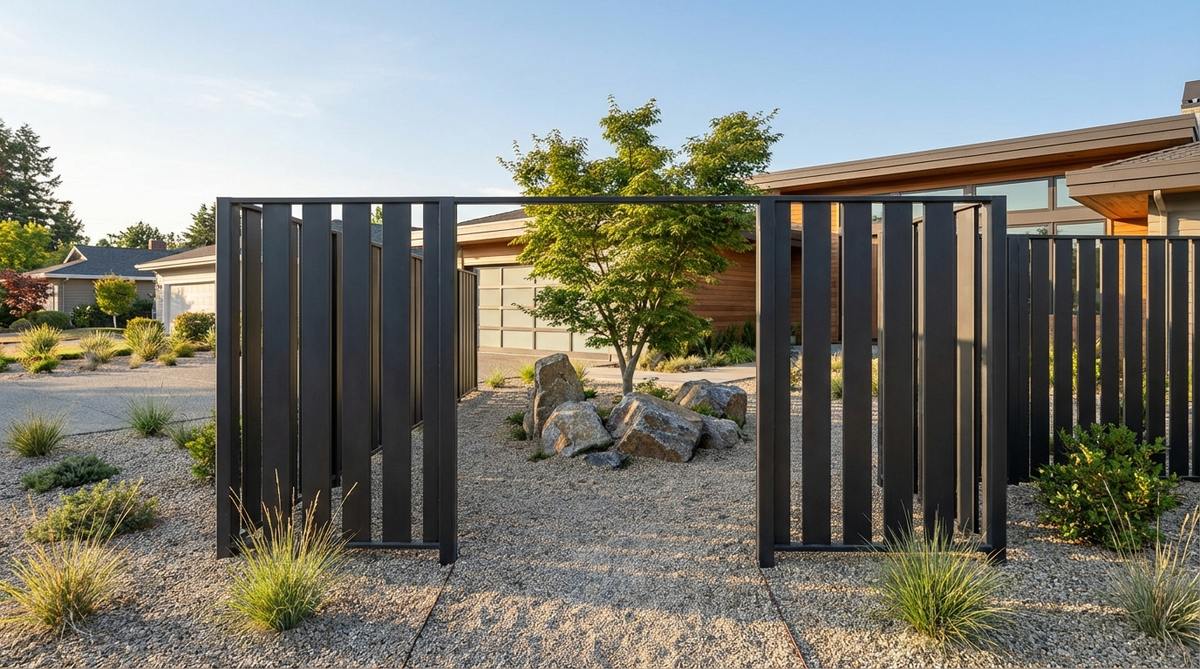
Vertical wood slats or steel panels create a partial enclosure framing the front yard, establishing a transitional courtyard between street and door. The slat spacing filters views while maintaining visual connection.
Gravel flooring and minimal plantings within the frame emphasize simplicity and restraint. A single specimen tree or boulder grouping provides a focal point without clutter.
This design generates privacy and sense of arrival on exposed lots. The frame defines territory while the permeable structure prevents visual isolation.
36. Diagonal Paving Pattern
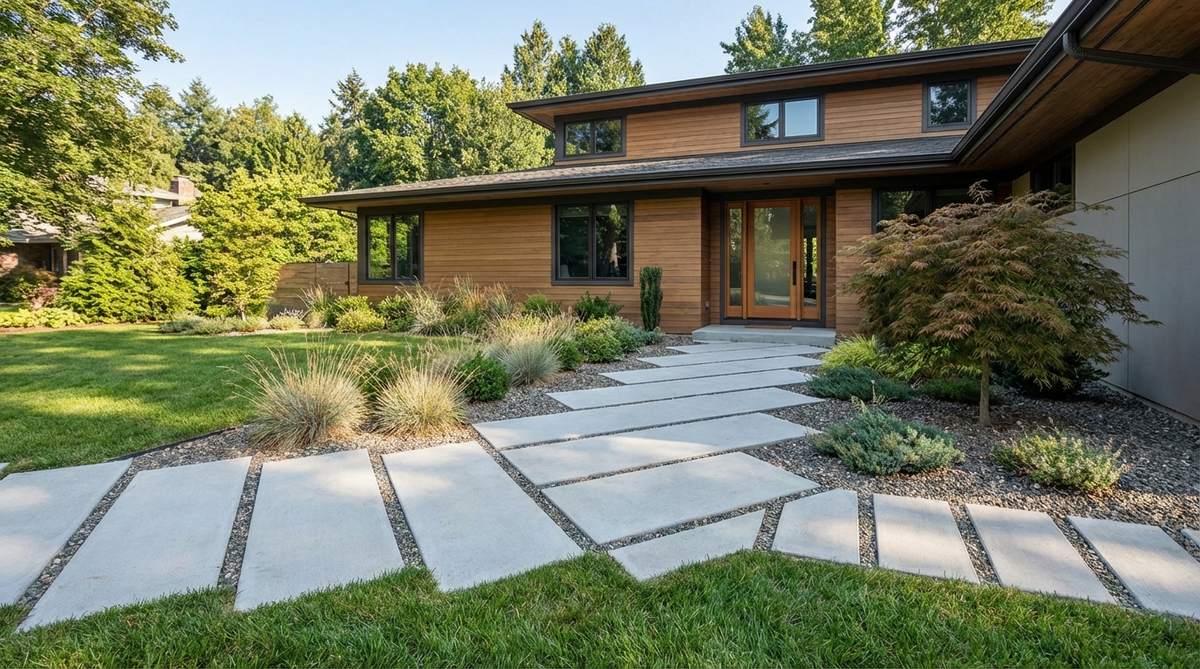
Pavers or concrete strips installed at 45-degree angles to the home’s facade create visual widening on narrow lots. The diagonal orientation breaks up predictable geometry and adds dynamic energy.
The angled pattern draws attention to specific features like entries or specimen plantings. It transforms standard rectangular layouts into more complex spatial experiences.
This technique requires precise layout and cutting but delivers significant visual impact. It suits contemporary homes where unconventional geometry reinforces architectural character.
Sustainable & Permeable Systems
Regenerative landscapes actively improve environmental conditions through soil health, water infiltration, and biodiversity support. These designs prioritize ecological function alongside contemporary aesthetics.
37. Permeable Driveway Integration
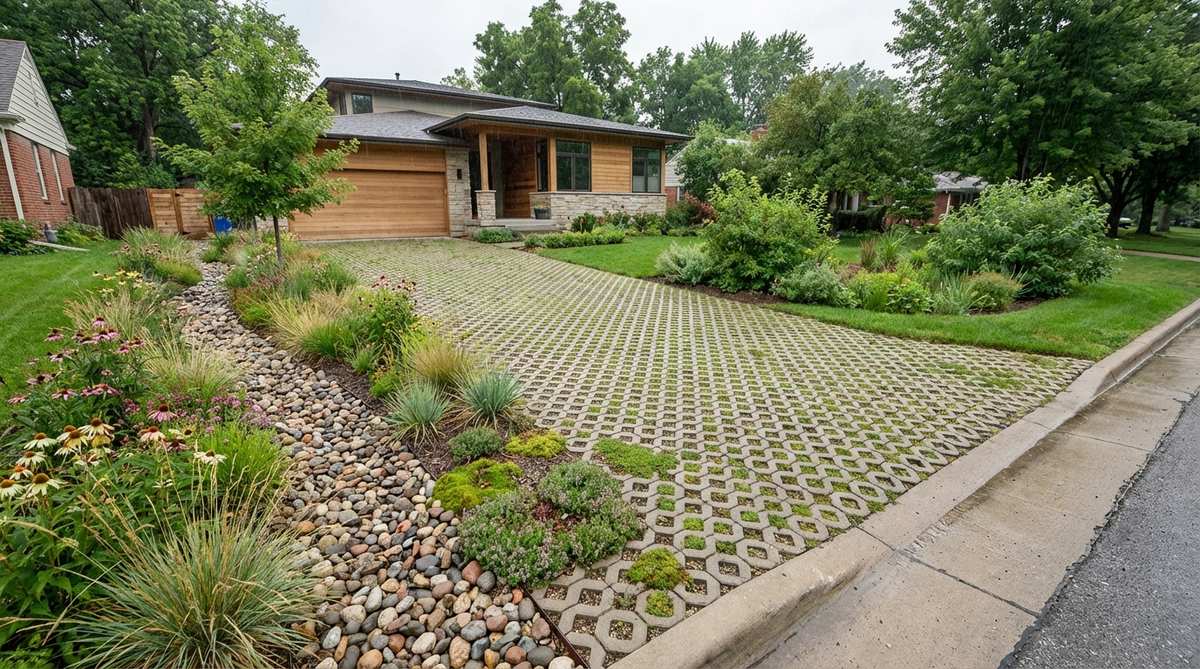
Permeable pavers or porous concrete allow water infiltration while supporting vehicle loads. Native groundcover grows in paver joints, creating a living surface that filters runoff.
The system reduces stormwater burden on municipal infrastructure while recharging groundwater supplies. It prevents puddling and ice formation compared to solid concrete.
Designers combine permeable driveways with bioswales or rain gardens to manage larger storm events. The integrated approach handles function and sustainability simultaneously.
38. Rain Garden Forecourt
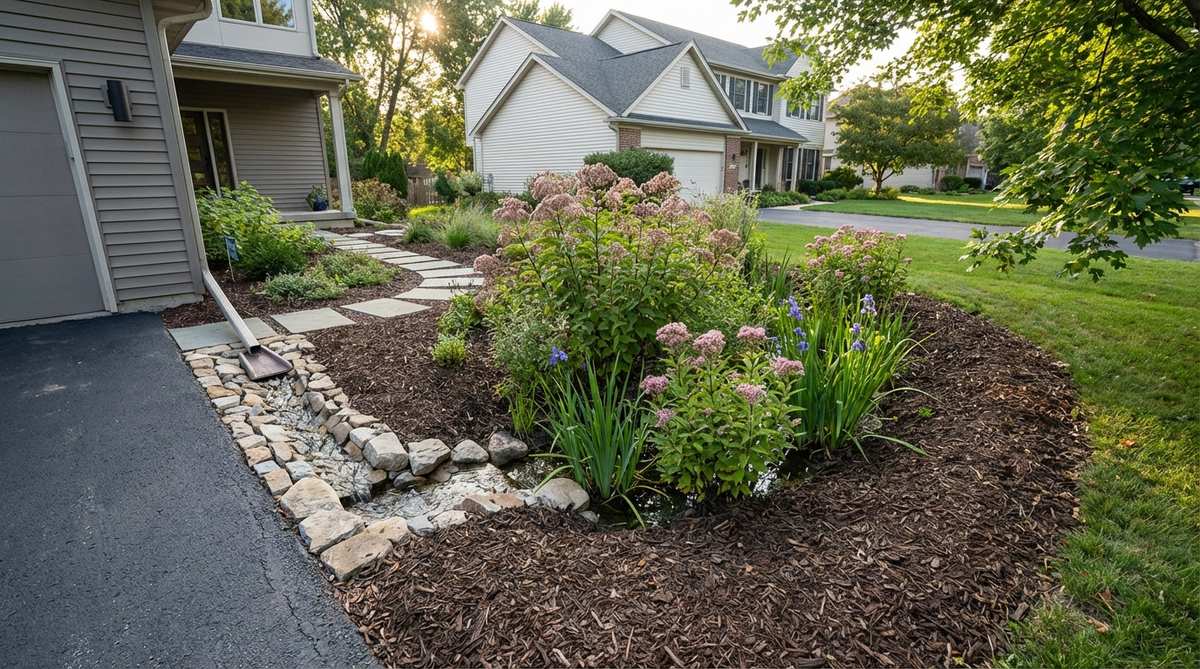
A shallow depression planted with moisture-tolerant natives captures roof runoff and driveway drainage. The garden retains water temporarily, allowing slow infiltration while filtering pollutants.
Plant selection includes species that tolerate both wet and dry conditions—Joe Pye weed, swamp milkweed, and blue flag iris thrive in these dynamic environments. Mulch depth of 3 to 4 inches prevents erosion during heavy flows.
Rain gardens typically occupy 10 to 20 percent of the drainage area they serve. They transform functional infrastructure into attractive landscape features visible from the street.
39. Composting Planting Beds
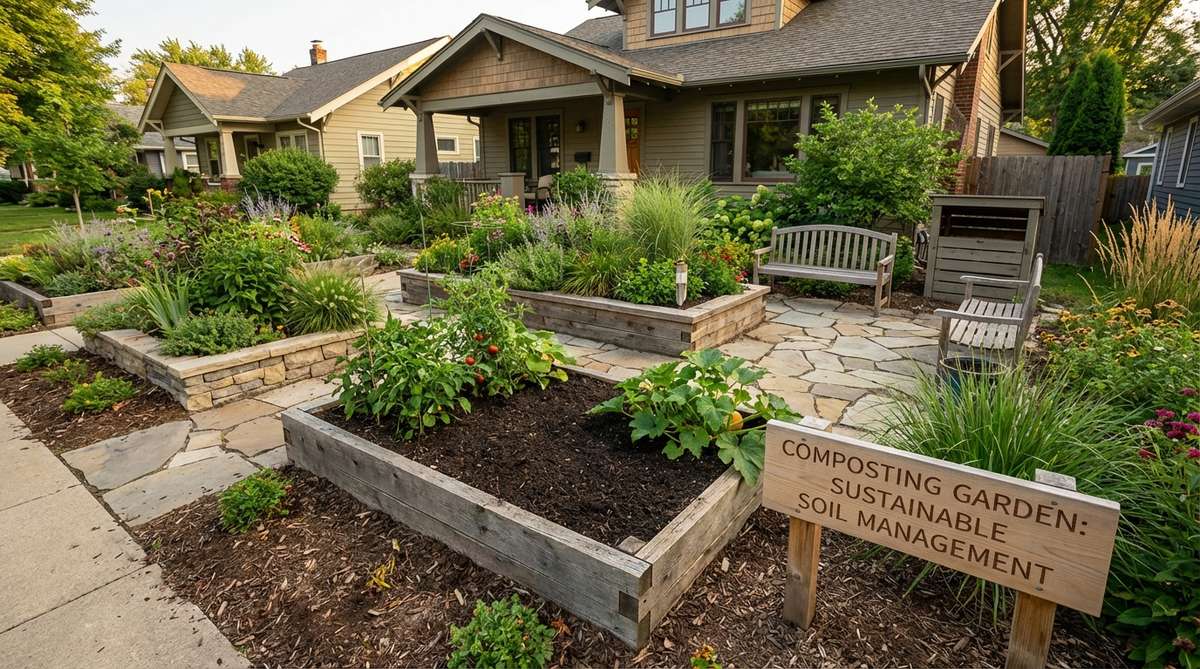
Beds designed with 6 to 12 inches of finished compost over native soil support robust plant growth while sequestering carbon. Annual compost top-dressing maintains soil fertility without synthetic fertilizers.
The organic matter improves water retention and microbial activity. Plant health increases, reducing pest and disease pressure naturally.
This regenerative approach requires initial soil preparation but reduces long-term inputs. Homeowners can produce compost on-site or source from municipal programs.
40. Biodiverse Species Mix
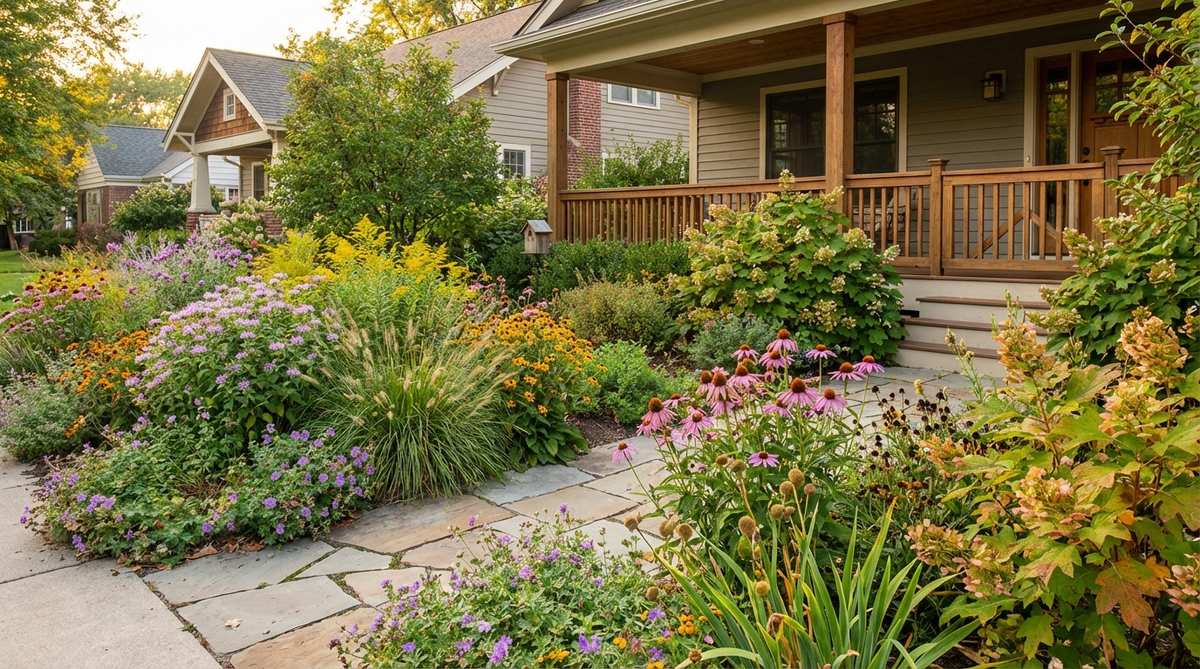
Front yards planted with 15 to 25 different native species create habitat complexity that supports diverse insect, bird, and small mammal populations. The variety provides food and shelter across all seasons.
Designers group plants by water and sunlight needs while varying heights and bloom times. The diversity prevents monoculture vulnerability while delivering visual interest through seasonal changes.
This approach aligns with ecological gardening principles and regenerative landscape goals. It transforms ornamental front yards into functional ecosystems that connect to larger habitat networks.
Bringing Modern Vision to Your Front Yard
Contemporary front yards balance architectural precision with ecological responsibility, creating entries that reflect current design values while addressing climate realities. Whether you gravitate toward minimalist gravel gardens, layered native plantings, or hardscape-forward compositions, these modern front yard garden ideas demonstrate that sustainable landscapes can deliver exceptional curb appeal. Start with one layout approach that matches your site conditions and architectural style, then refine through material selection and plant choices that suit your climate and maintenance preferences.
Frequently Asked Questions
What defines a modern front yard garden layout?
Modern front yard layouts emphasize clean lines, geometric precision, and layered planting schemes rather than traditional foundation rows. They typically feature hardscape integration, native or climate-adapted plants, sustainable water management, and minimal ornamentation. Contemporary designs prioritize structure, texture, and seasonal interest over flower color displays.
How do I choose between gravel and traditional lawn for my front yard?
Gravel suits contemporary aesthetics, requires zero mowing or irrigation, and provides excellent drainage while reducing maintenance costs. Traditional lawn offers soft surface texture and cooling effects but demands regular water, mowing, and fertilization. Consider your climate, maintenance capacity, architectural style, and local water restrictions when deciding. Many homeowners compromise by using gravel with strategic turf strips or permeable paving.
What are the best drought-tolerant plants for modern front yards?
Top drought-tolerant choices include ornamental grasses like Mexican feather grass and blue fescue, succulents such as agave and sedum, Mediterranean herbs like lavender and rosemary, and native species adapted to your region—California fuchsia for the West Coast or yucca for arid climates. These plants deliver contemporary structure and texture while thriving on minimal water once established.
How can I add privacy to a modern front yard without blocking curb appeal?
Use permeable screening methods like tall ornamental grasses, columnar trees, vertical slat fencing, or layered planting beds that filter views without solid barriers. Designs between 48 and 72 inches tall provide privacy for ground-floor windows while maintaining street visibility. Staggered plantings or angled panels create visual interest and partial screening that feels intentional rather than defensive.
What is the typical cost range for installing a modern front yard layout?
Costs vary widely based on size, materials, and labor rates, but expect $8,000 to $25,000 for a complete front yard redesign of 800 to 1,200 square feet. Gravel and native plant designs typically cost less than extensive hardscaping with large-format pavers or natural stone. DIY installation of simpler layouts like gravel gardens with container plantings can reduce costs to $2,000 to $5,000 for materials.
How do I maintain a layered native planting garden?
Layered native gardens require minimal maintenance once established—annual cutback of grasses and perennials in late winter, occasional weeding during the first two years, and mulch replenishment every 18 to 24 months. Avoid fertilization, which encourages excessive growth and weakens plant structure. Allow leaf litter to remain in beds to support soil health and overwintering beneficial insects.