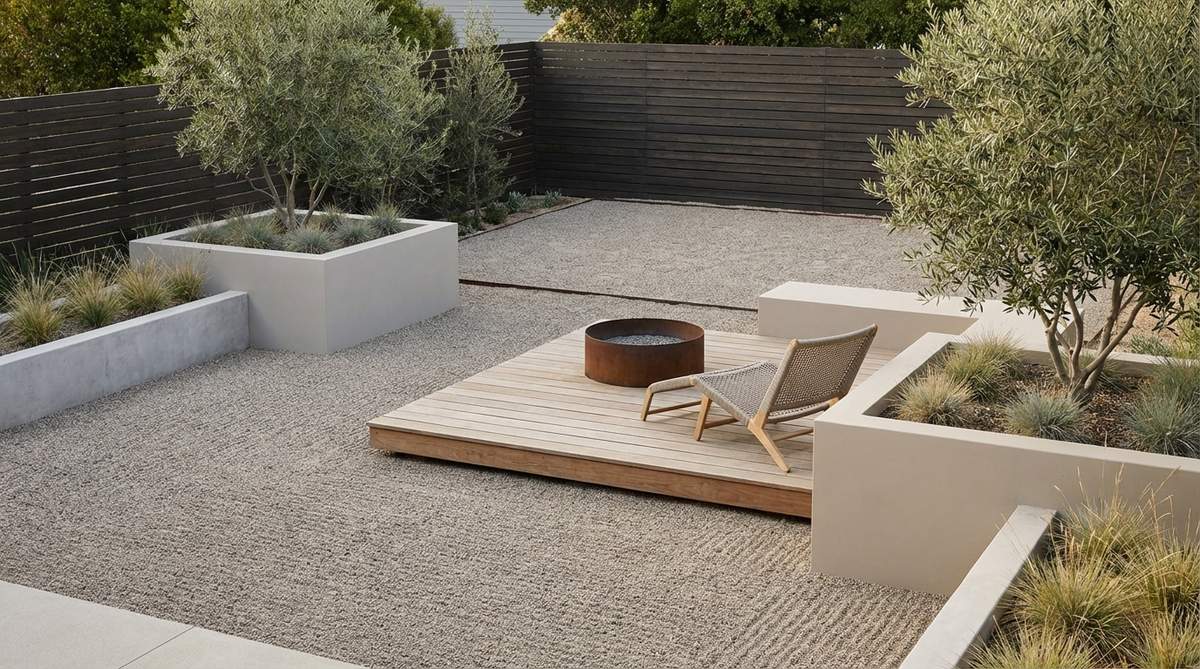
Minimalist gardens transform outdoor spaces into serene retreats by prioritizing intentional design over excessive ornamentation. Designers use clean lines, limited color palettes, and strategic negative space to create landscapes that reduce visual clutter while maximizing impact. Fresh Garden Ideas presents expert-curated concepts that help US homeowners achieve calm, functional gardens requiring minimal maintenance.
Design SnapshotKey Principles
- Negative Space: Open areas create breathing room and prevent overcrowding between planted zones
- Limited Palette: Three to five plant species repeated throughout the design establish visual cohesion
- Geometric Clarity: Angular lines and defined edges bring structure to hardscaping and planting beds
- Natural Materials: Stone, wood, and gravel provide texture without complexity
Foundation ElementsGravel & Stone
Ground covers set the tone for minimalist design. Gravel and stone require no watering, offer excellent drainage, and create uniform surfaces that anchor surrounding elements.
1. Raked White Gravel Zen Base
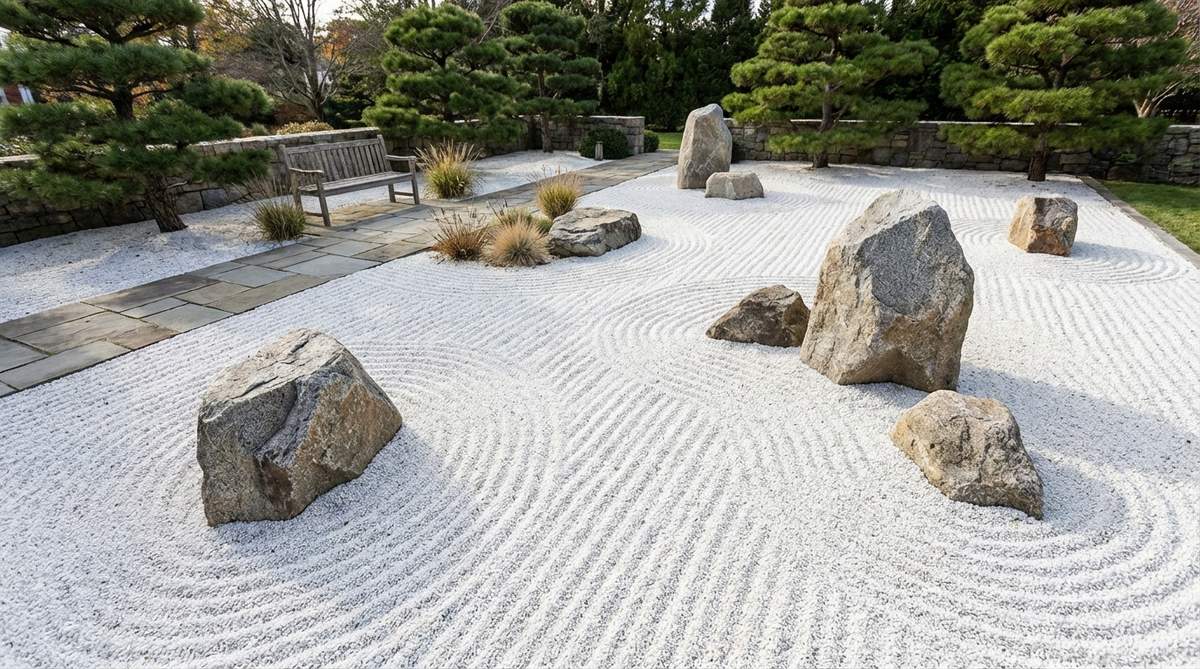
Fine white gravel creates a blank canvas that reflects light throughout the day. Raking the surface into linear patterns adds subtle movement without introducing color.
Position large boulders at intervals to break the expanse and establish focal points. This approach requires only periodic raking to maintain the pattern.
2. Crushed Granite Pathways
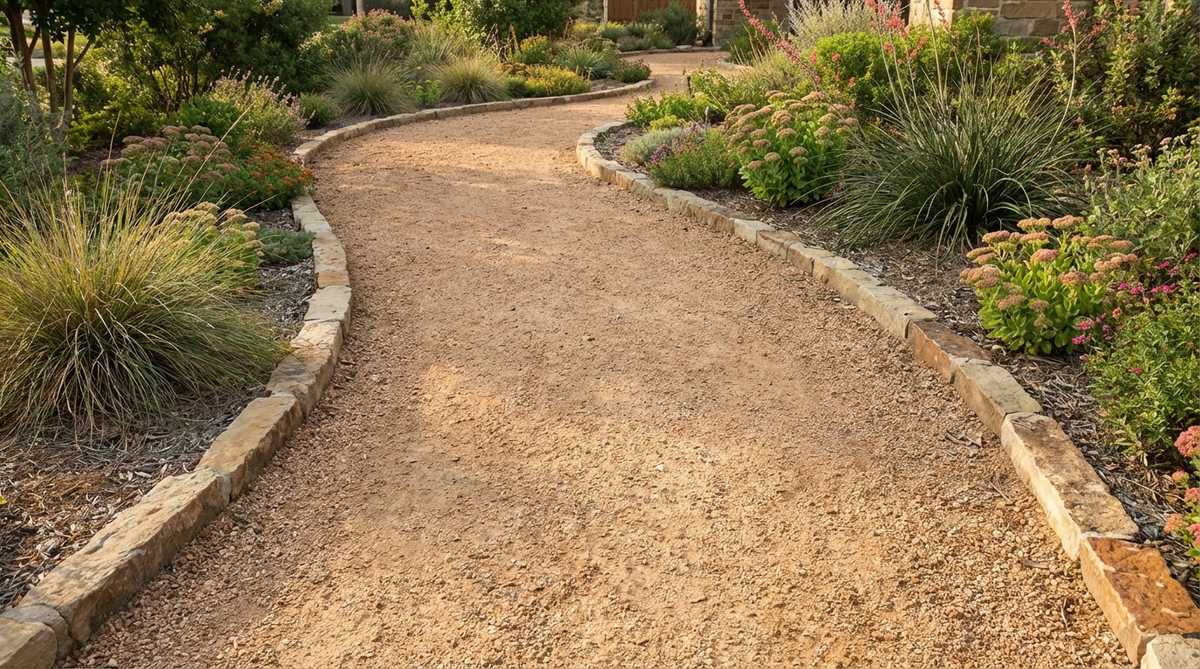
Decomposed granite compacts underfoot to form stable walking surfaces in neutral tones. The material transitions seamlessly between planting beds and seating areas.
Edging with steel or aluminum strips keeps the granite contained while emphasizing geometric boundaries. Granite works particularly well in arid climates where drought resistance matters.
3. Pea Gravel with Stepping Stones
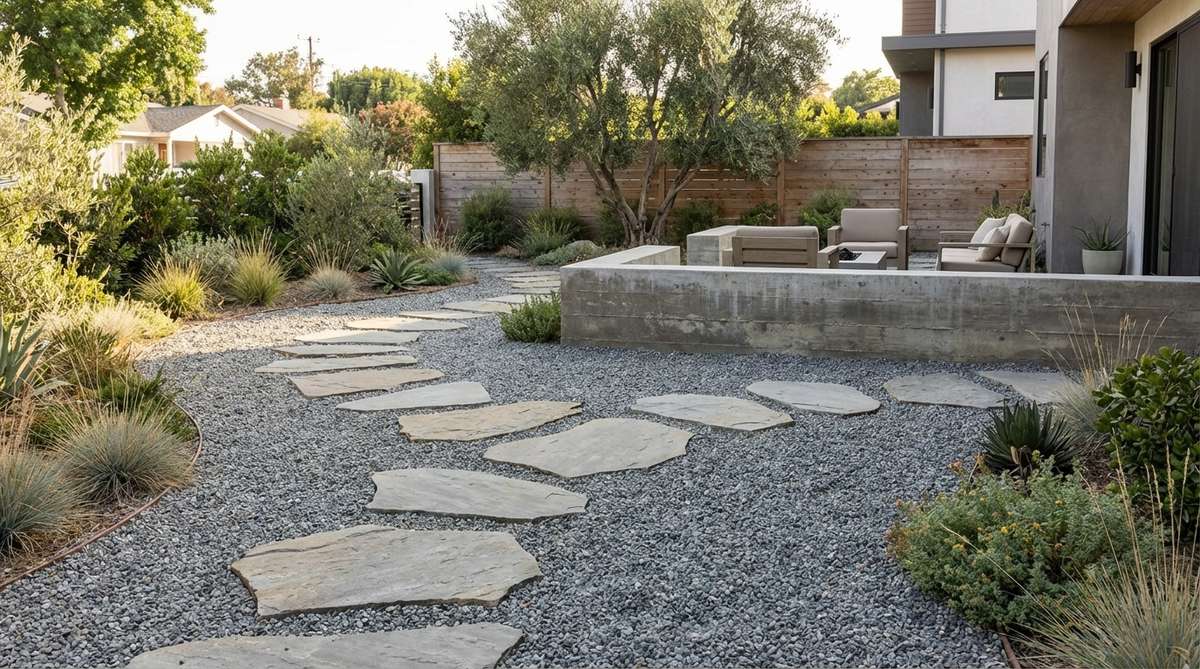
Pea gravel in gray or tan tones provides a soft texture underfoot. Flat stepping stones set at regular intervals create rhythm and guide movement through the space.
This combination allows for flexible layouts that adapt to changing needs. The gravel drains quickly after rain, preventing standing water.
4. River Rock Dry Creek Bed
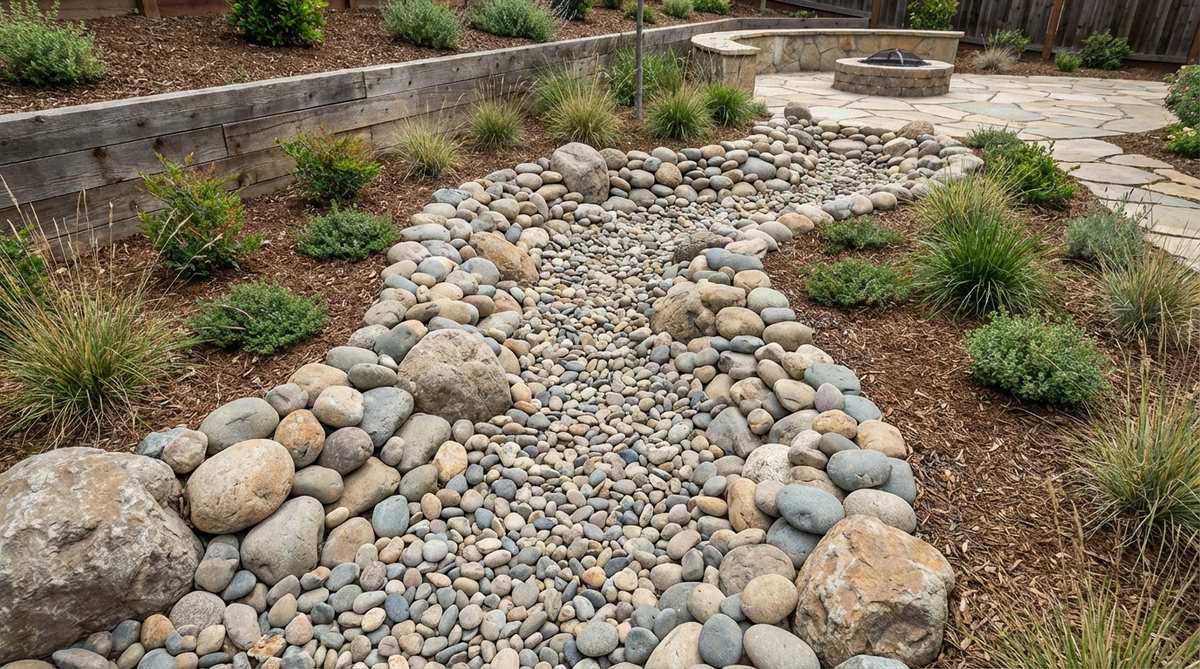
Smooth river rocks in graduated sizes mimic natural water channels. Designers arrange larger stones along edges and smaller rocks in the center to suggest flow.
This feature adds visual interest while solving drainage issues in sloped yards. Select rocks in a single color family to maintain minimalist cohesion.
5. Slate Chip Mulch Alternative
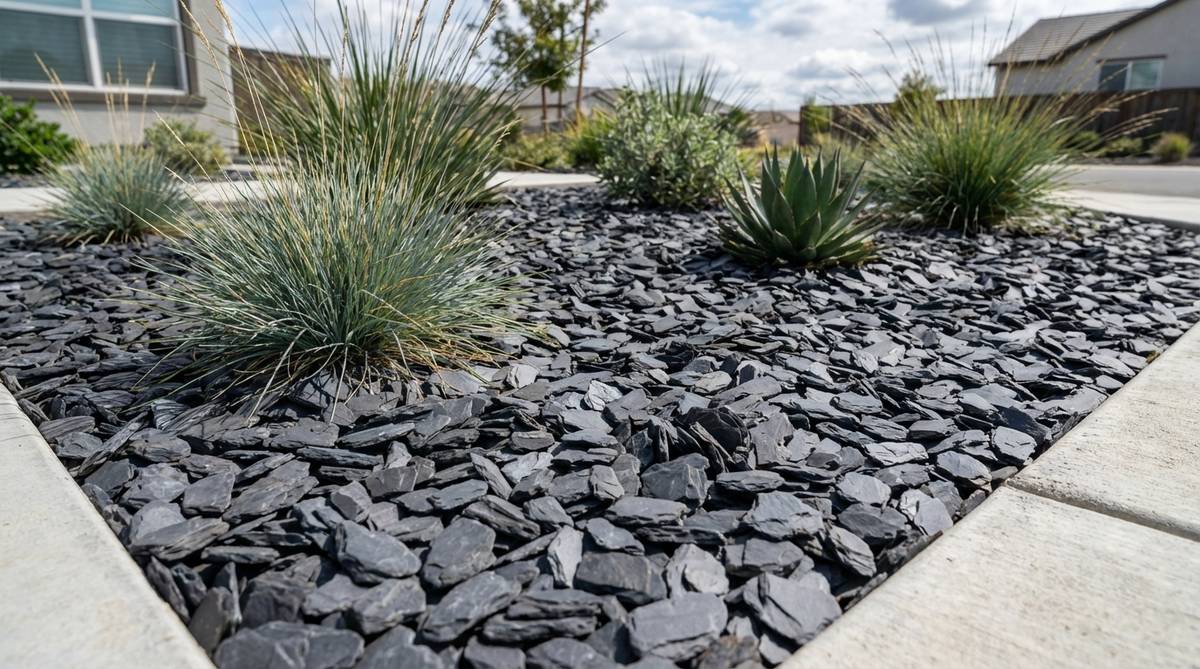
Dark slate chips replace traditional organic mulch around plants. The material doesn’t decompose, eliminating the need for annual replacement.
Slate’s angular fragments catch light differently than rounded gravel, adding texture. Use a single chip size throughout for uniformity.
6. Monochrome Limestone Chippings
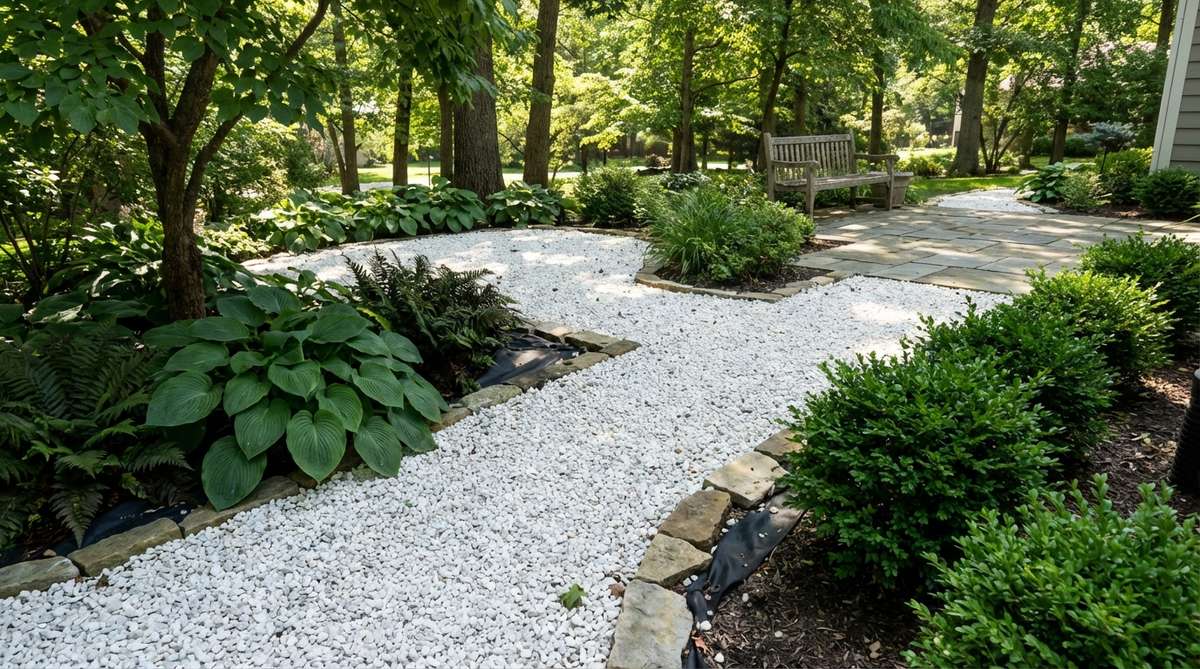
White limestone chippings brighten shaded areas and provide high contrast against dark foliage. The material reflects heat, making it suitable for cooler climates.
Limestone’s alkaline nature benefits certain plants while deterring slugs. Apply landscape fabric beneath to prevent weed penetration.
7. Black Lava Rock Accents
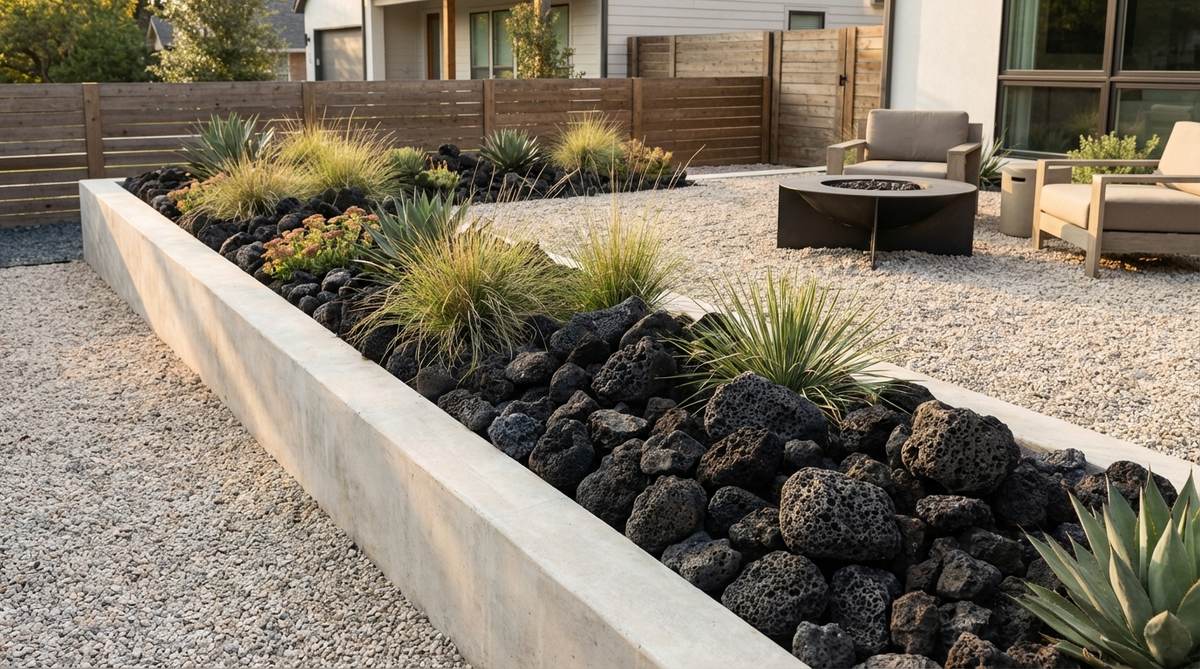
Porous black lava rock delivers dramatic contrast in planting beds. Its lightweight structure makes installation easier than dense stone alternatives.
Use lava rock sparingly as an accent rather than covering entire areas. Pair it with light-colored gravel or concrete for maximum impact.
Structural Features That Define Space
Hardscaping elements establish boundaries and create functional zones. Minimalist garden design emphasizes precision in materials and placement to achieve clean architectural lines.
8. Concrete Slab Seating Platform
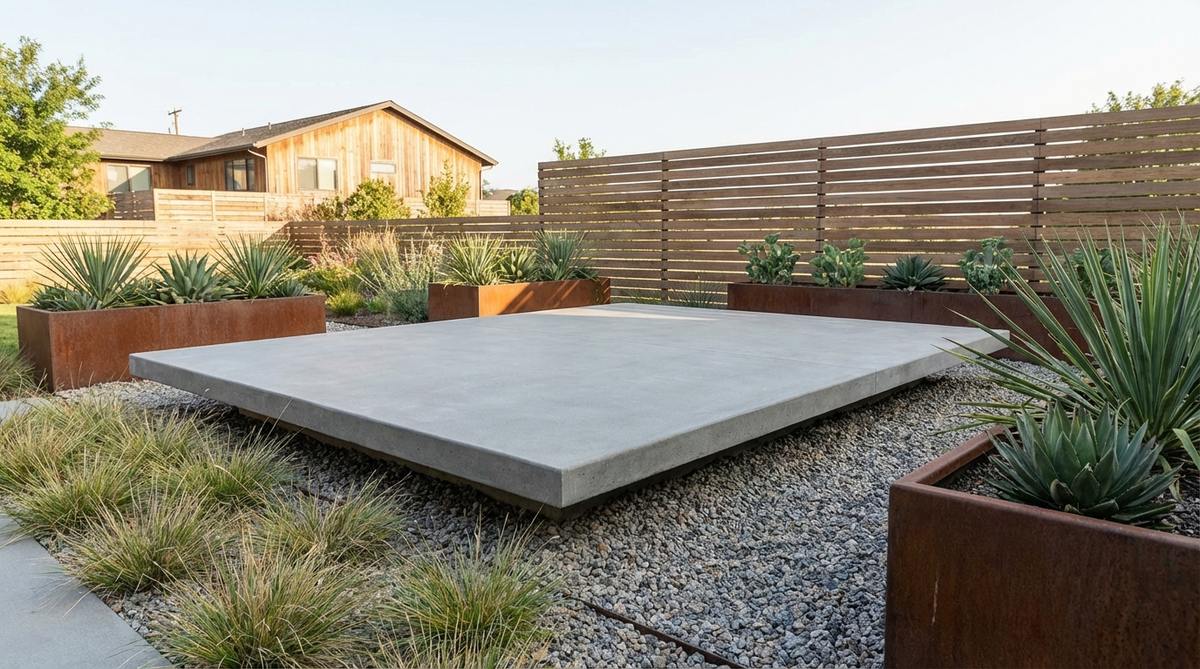
Poured concrete forms a low platform that doubles as seating and visual anchor. The smooth surface contrasts with organic plant textures.
Integrate the platform flush with surrounding gravel for a floating appearance. Concrete’s neutral gray tone works across multiple design styles.
9. Steel Edging for Planting Beds
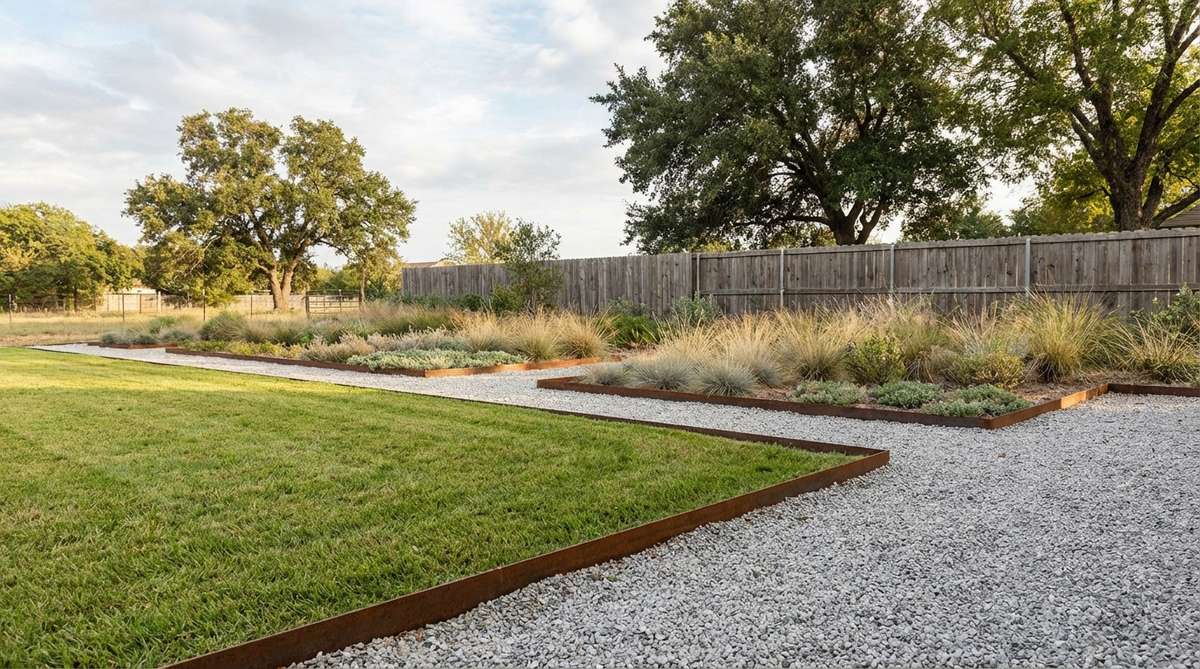
Thin steel strips create crisp boundaries between grass, gravel, and planting areas. The material bends to form curves or angles as needed.
Corten steel develops a rust patina that adds warmth to monochrome palettes. Install edging flush with the soil surface to simplify mowing.
10. Floating Timber Walkway
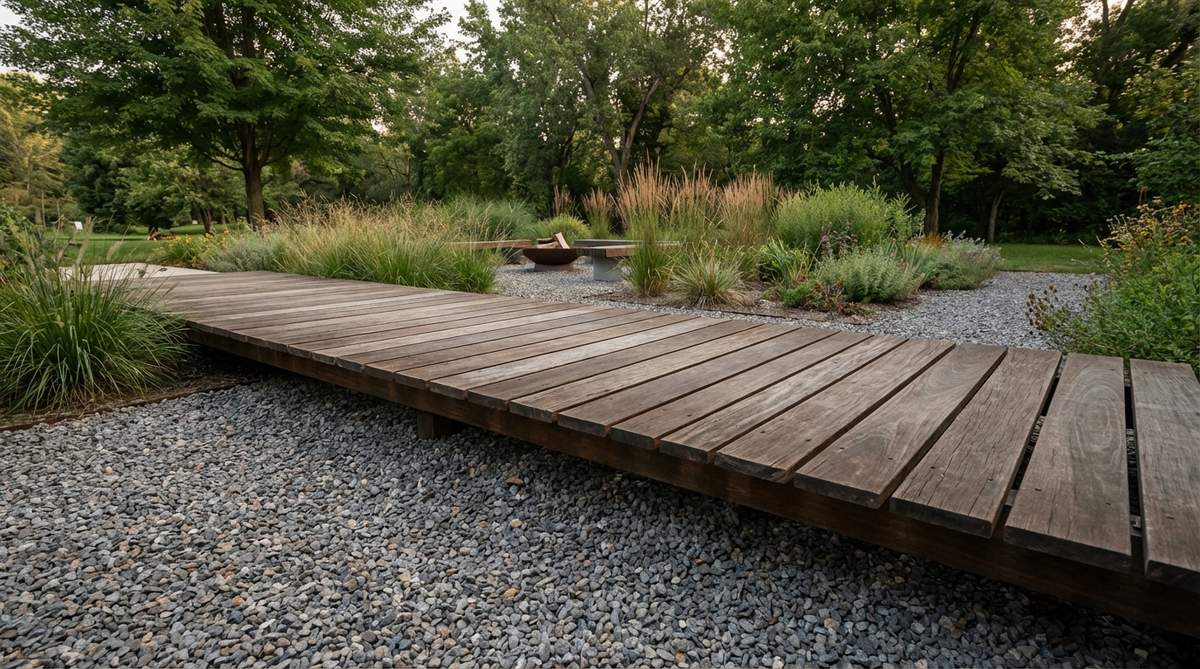
Hardwood planks mounted on concealed supports appear to hover above gravel. Gaps between planks allow water drainage and reduce material use.
Choose durable species like ipe or cumaru that weather to silver gray. Position the walkway to frame views of key garden features.
11. Single Wall Privacy Panel
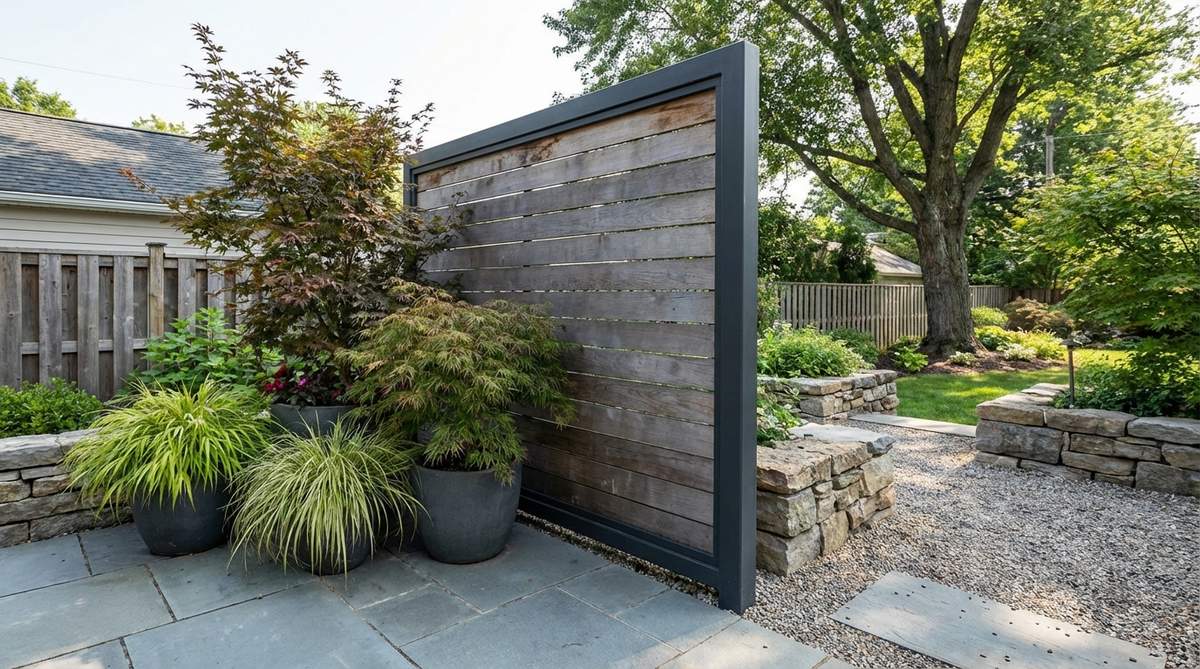
A freestanding vertical panel in wood or metal defines space without enclosing it. The panel provides backdrop for specimen plants while blocking unwanted views.
Paint the panel in charcoal or leave natural wood to complement surrounding tones. Positioning the panel at an angle creates depth in small yards.
12. Raised Concrete Planting Box
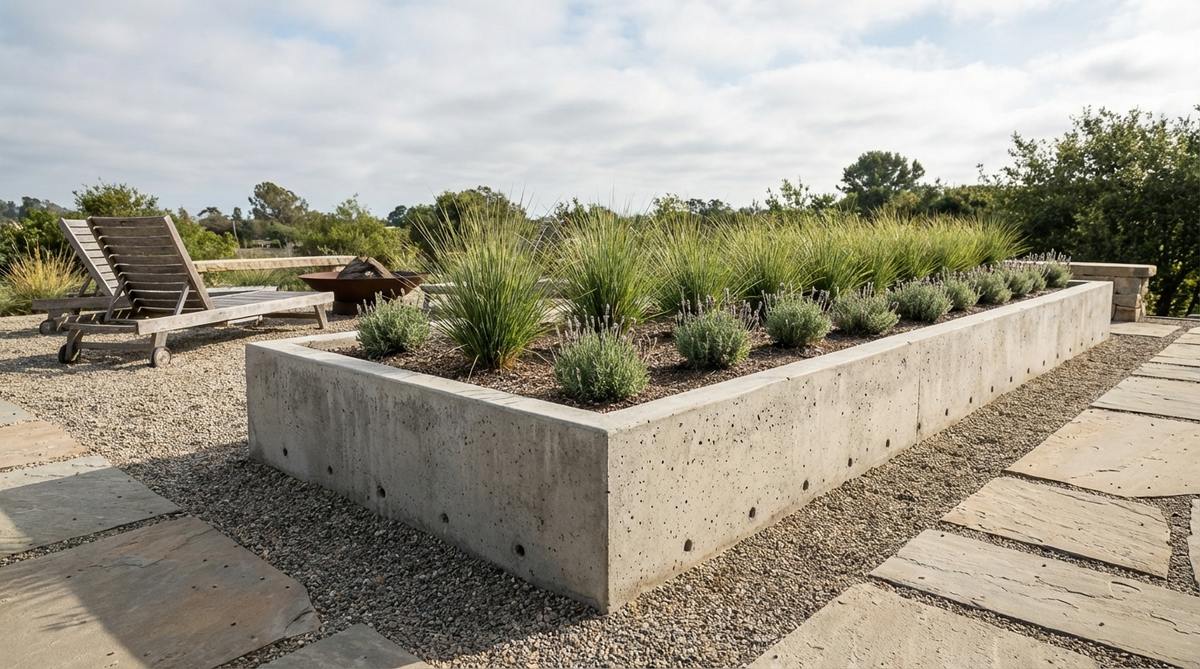
Rectangular concrete boxes elevate plants to eye level, reducing the need for ground-level beds. Multiple boxes arranged in a grid create rhythm.
Drainage holes prevent waterlogging while the raised height improves accessibility. Fill boxes with a limited number of species for unified appearance.
13. Linear Bench with Storage
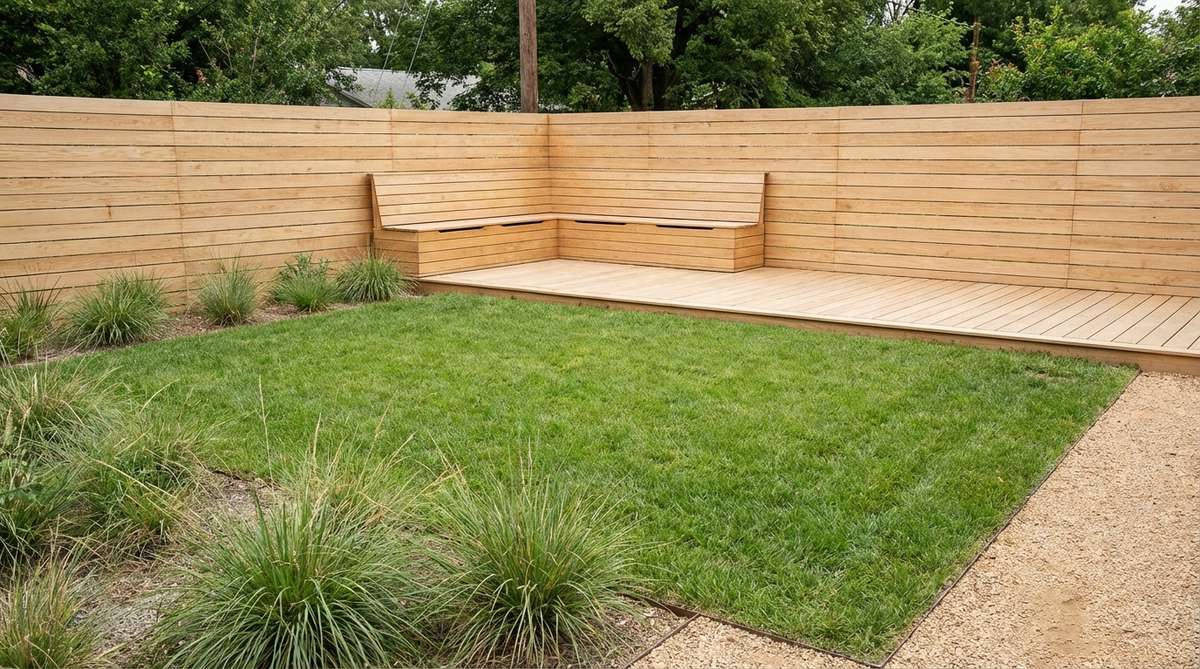
Built-in benches with lift-up seats provide seating and concealed storage. Clean horizontal lines reinforce the minimalist aesthetic.
Construct benches in the same material as fencing or decking for continuity. Position near the garden perimeter to maximize open central space.
14. Pergola with Minimal Beams
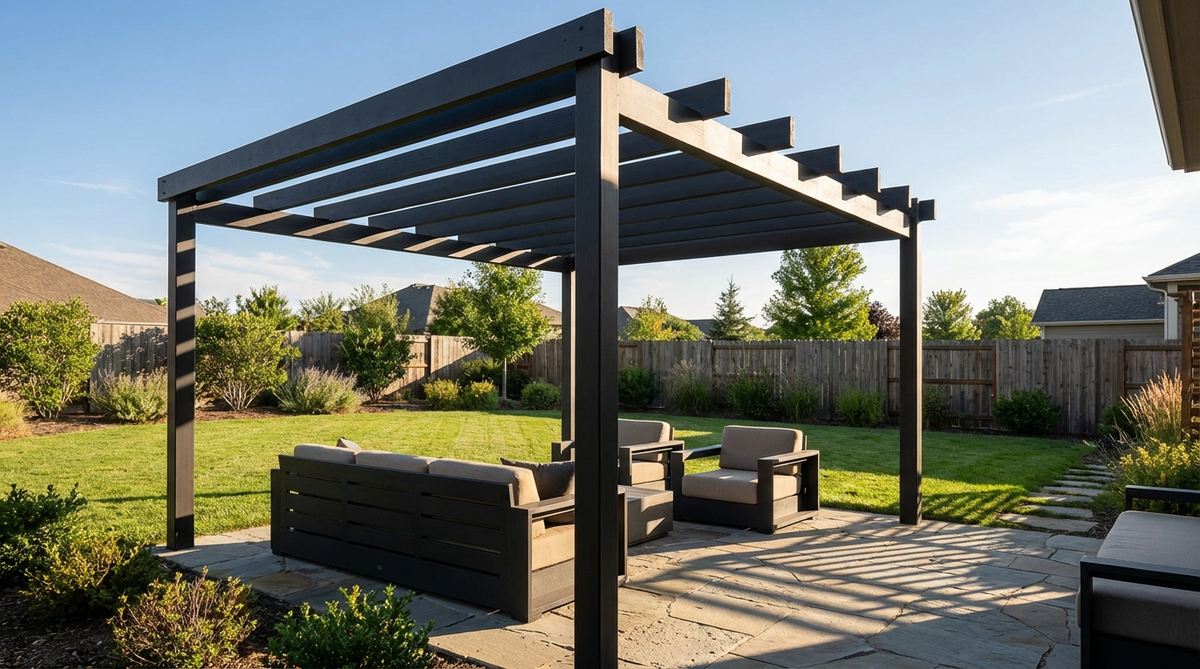
A pergola using widely spaced beams casts linear shadows without heavy coverage. This structure defines outdoor rooms while preserving openness.
Paint beams white or black depending on whether the goal is brightness or drama. Avoid climbing plants to maintain architectural clarity.
15. Glass Panel Wind Barrier
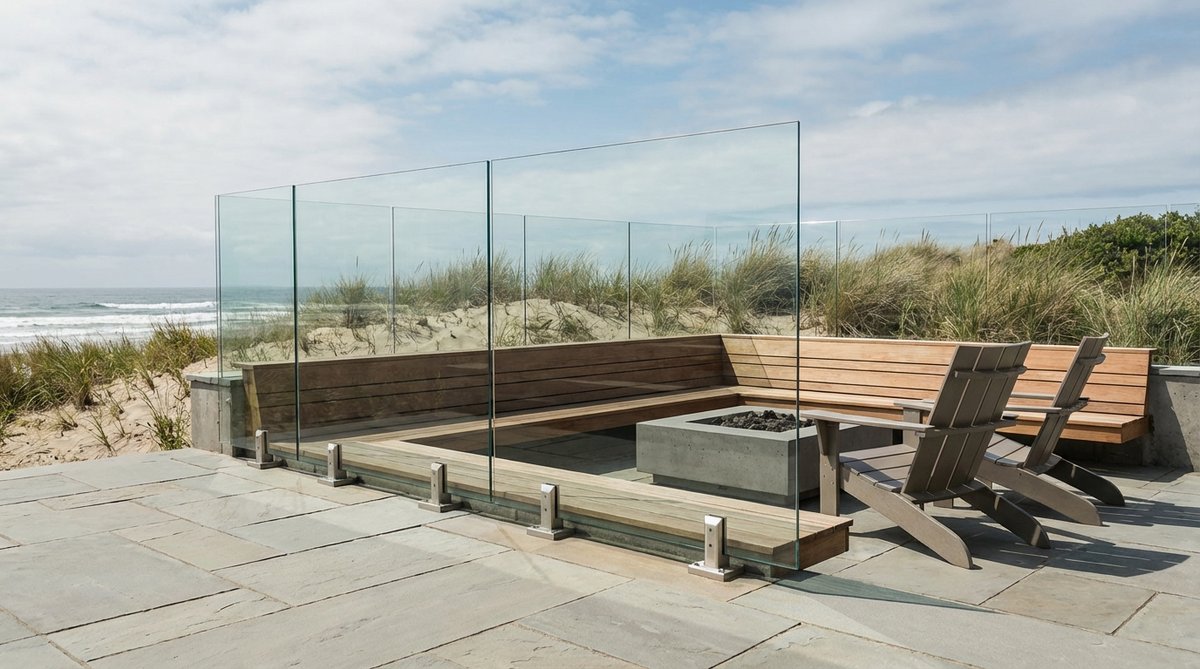
Frameless glass panels protect seating areas from wind without obstructing views. The transparent material disappears visually while serving a functional purpose.
Ground-mounted brackets hold panels securely without visible posts. Glass works particularly well in coastal locations where wind is constant.
Plant Selections for Simplicity
Strategic planting choices emphasize form over variety. These minimalist garden ideas focus on species that offer year-round structure with minimal intervention.
16. Mass Planting of Single Grass
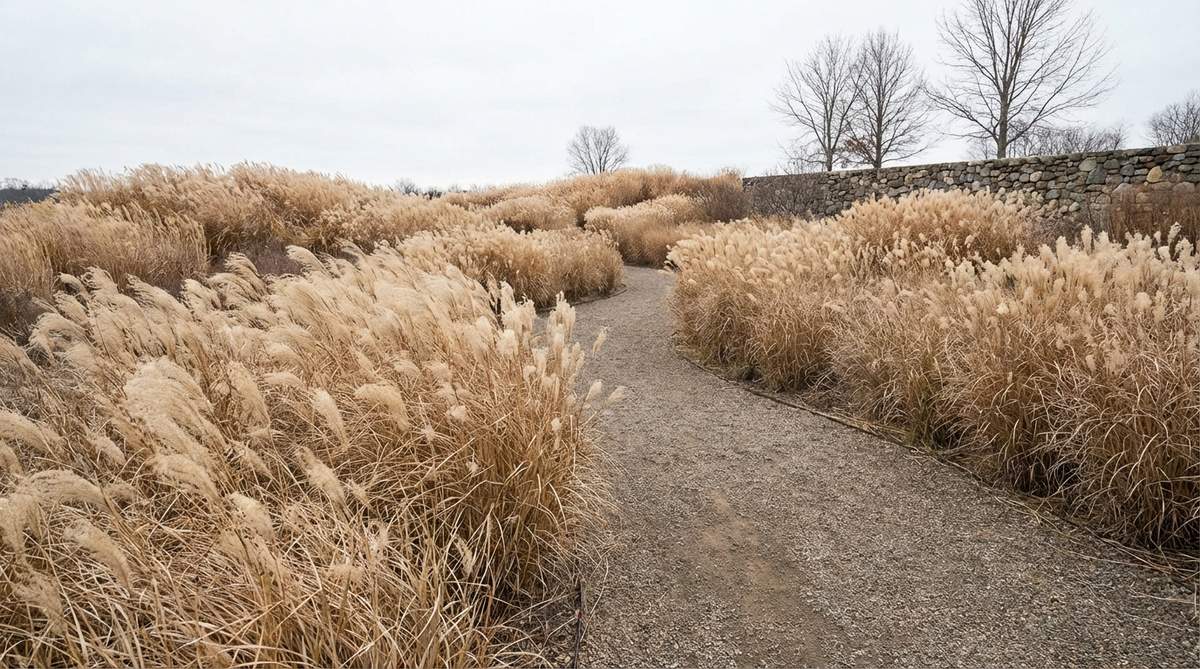
Miscanthus sinensis planted in large drifts creates waves of texture that move with wind. Repetition of one species eliminates visual competition.
Grasses require cutting back only once annually in late winter. The dried seed heads provide winter interest before removal.
17. Boxwood Hedges in Rows
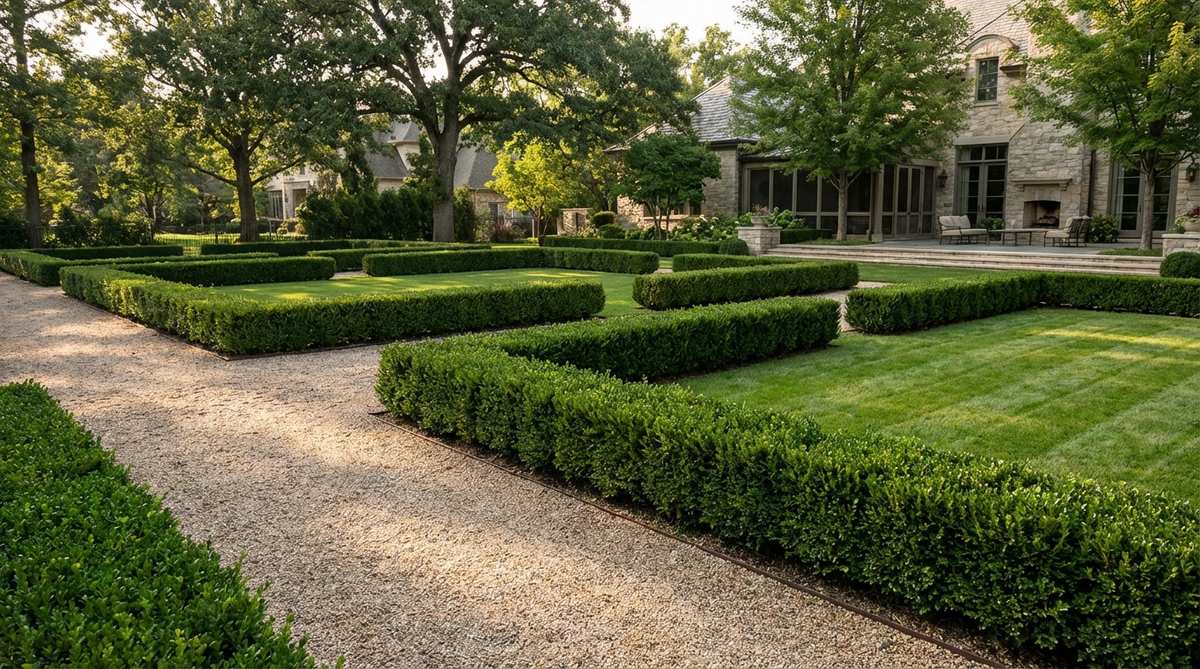
Low boxwood hedges arranged in parallel lines divide space geometrically. The evergreen foliage maintains structure through all seasons.
Clip hedges twice yearly to preserve sharp edges and uniform height. Boxwood works in both sun and partial shade across most climate zones.
18. Single Specimen Tree
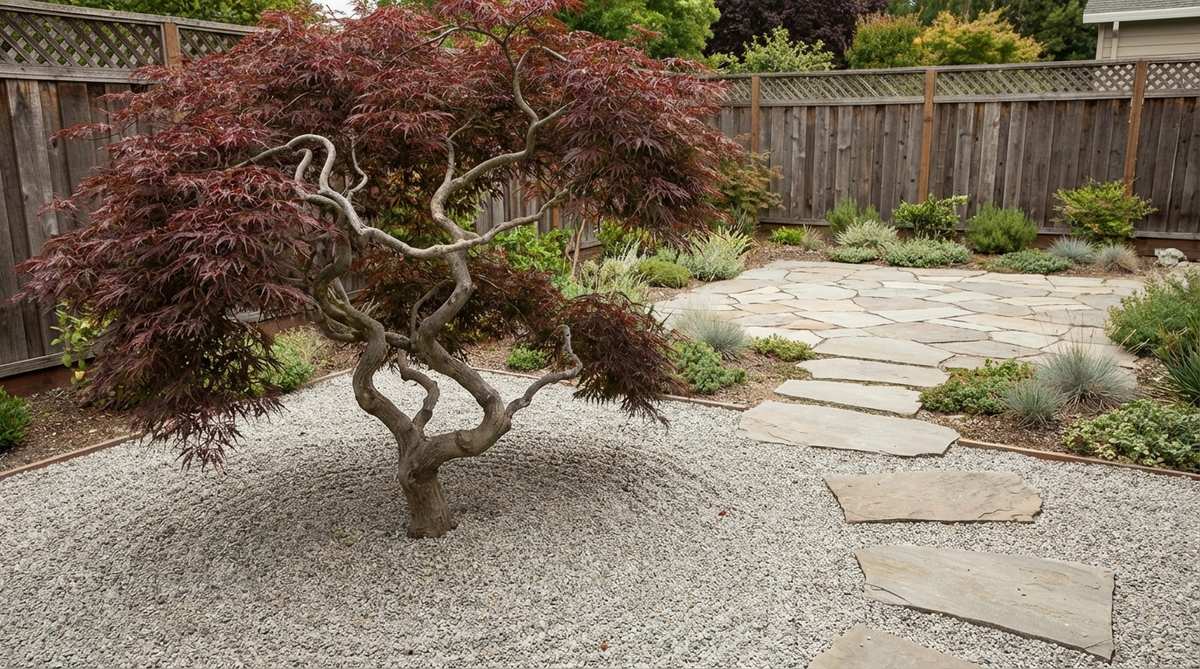
A carefully chosen tree becomes the garden’s focal point. Japanese maples offer elegant branching patterns that read as living sculpture.
Position the tree off-center to create tension in the composition. Surround the base with gravel rather than competing plants.
19. Succulent Geometric Grid
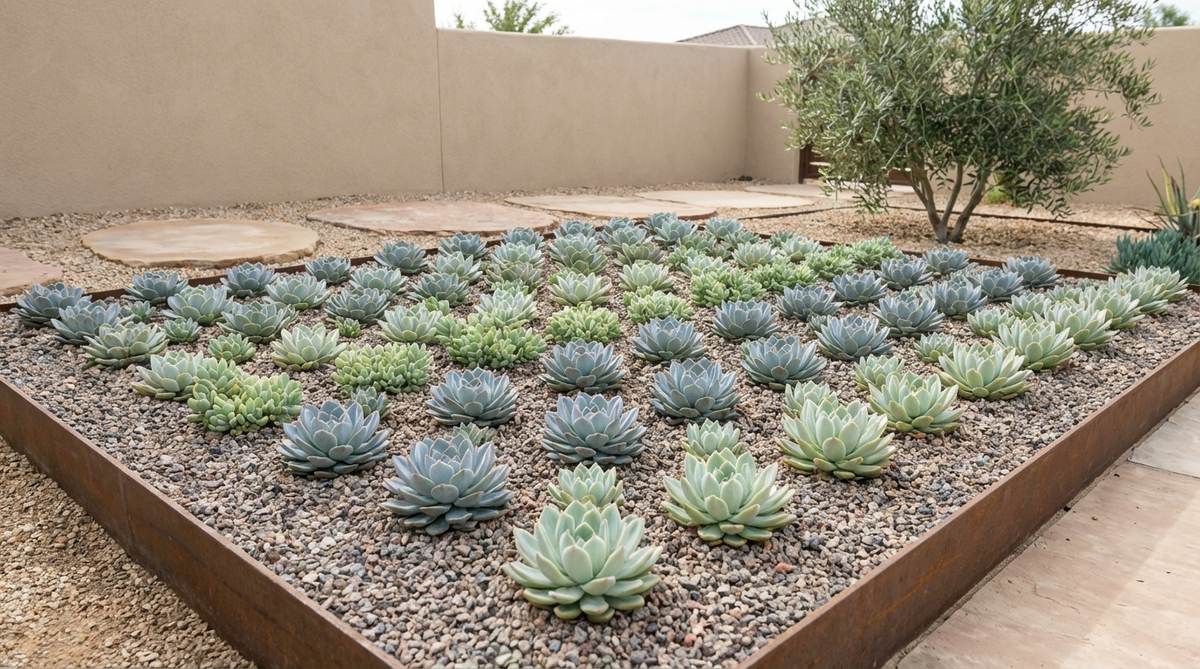
Echeveria or sedum planted in a precise grid pattern emphasizes order. The fleshy leaves provide sculptural quality without flowers.
Succulents thrive in well-drained soil with minimal watering once established. Select varieties in a single color family for cohesion.
20. Bamboo Vertical Screening
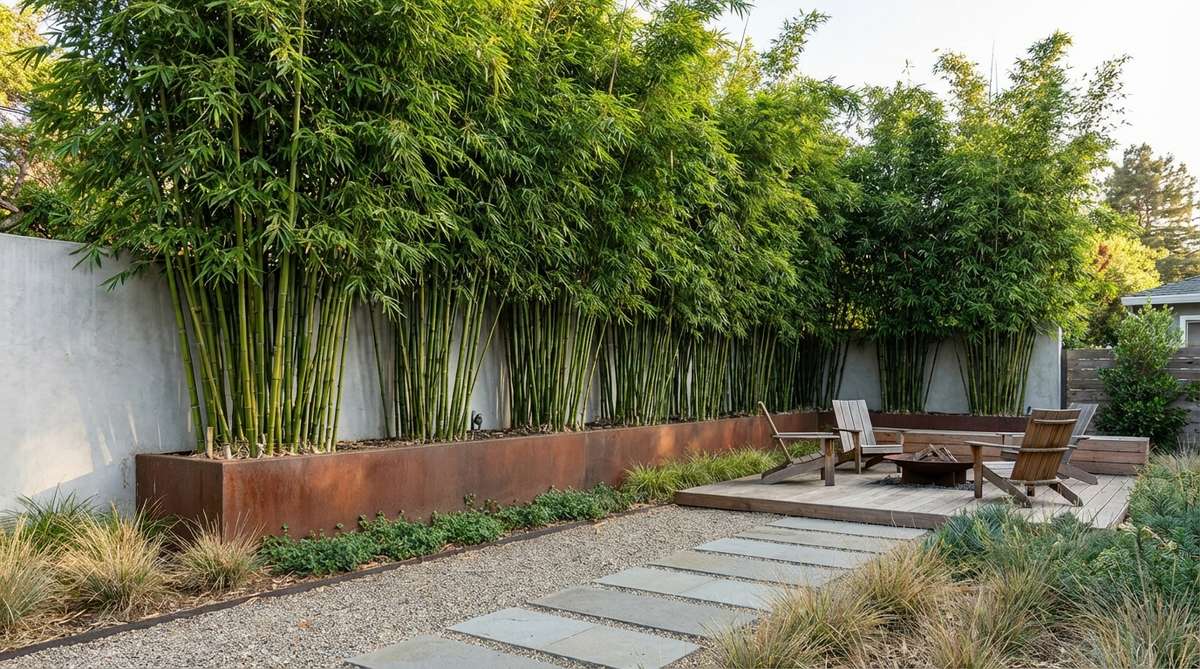
Clumping bamboo varieties grow upright to create living walls. The vertical canes and narrow leaves add height without horizontal spread.
Bamboo requires containment to prevent invasive growth beyond desired boundaries. Regular watering maintains the fresh green color.
21. Agave for Desert Minimalism
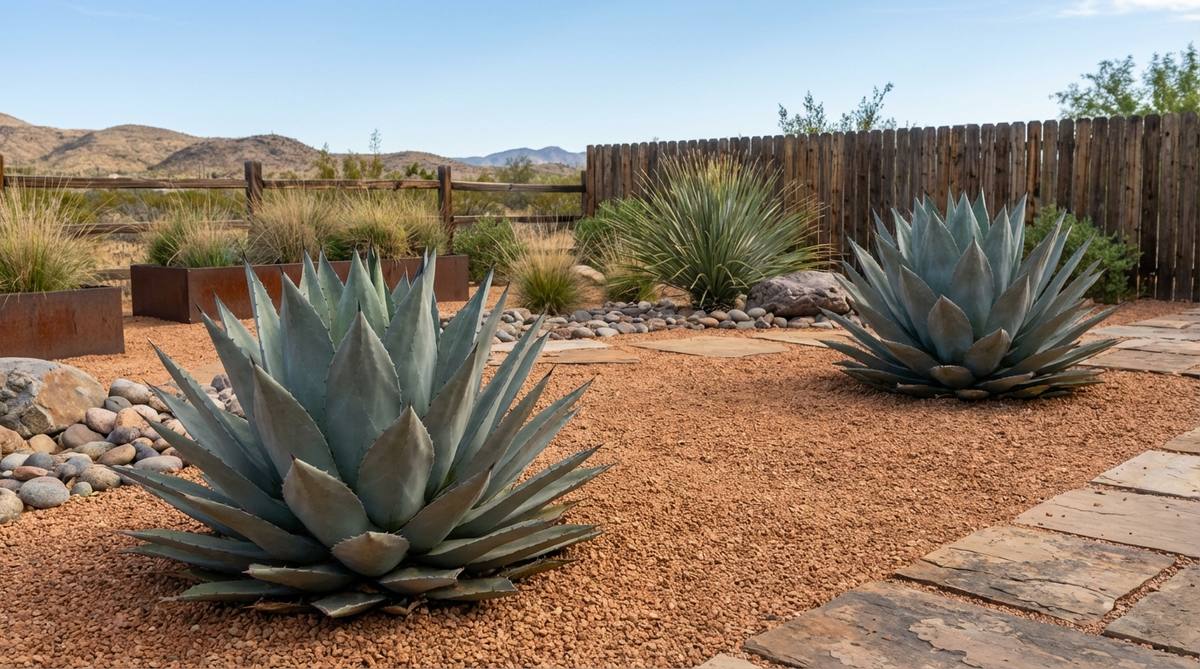
Agave’s architectural rosettes function as natural sculptures. The blue-gray foliage contrasts sharply with warm-toned gravel.
These drought-tolerant plants require no supplemental water once established. Space agaves generously to appreciate their individual forms.
22. Carex as Evergreen Groundcover
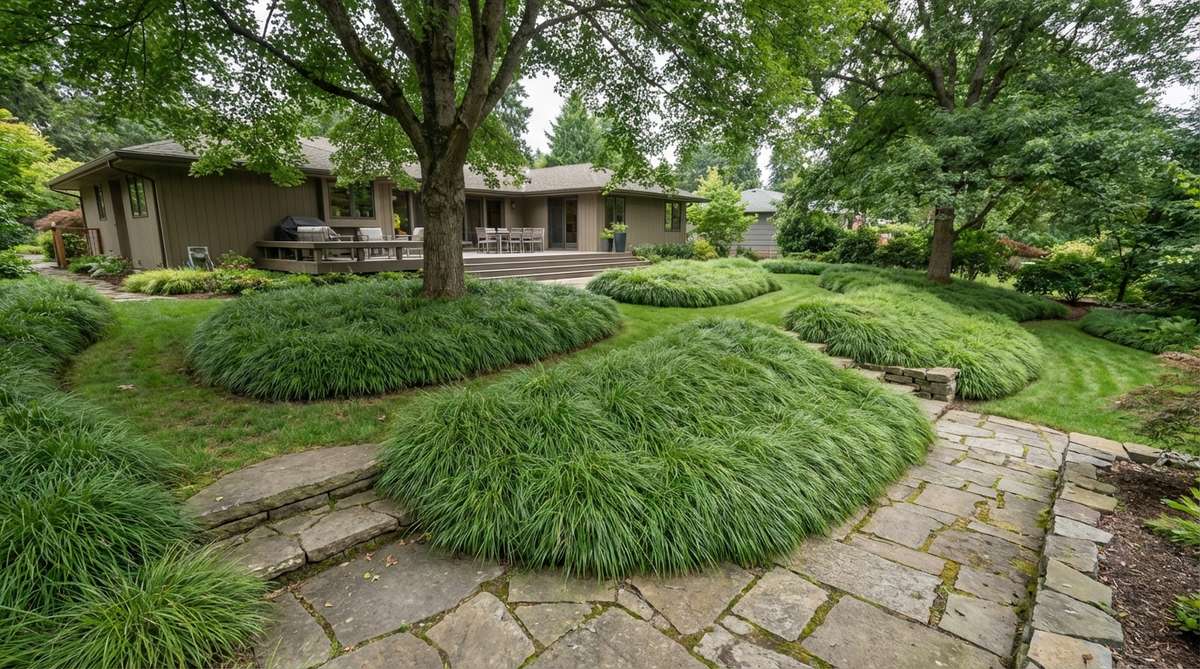
Carex varieties provide fine-textured groundcover in sun or shade. The grass-like leaves form soft mounds that require no mowing.
Plant carex in sweeping masses rather than scattered clusters. Divide clumps every few years to refresh growth and maintain density.
23. Pruned Pine in Cloud Form
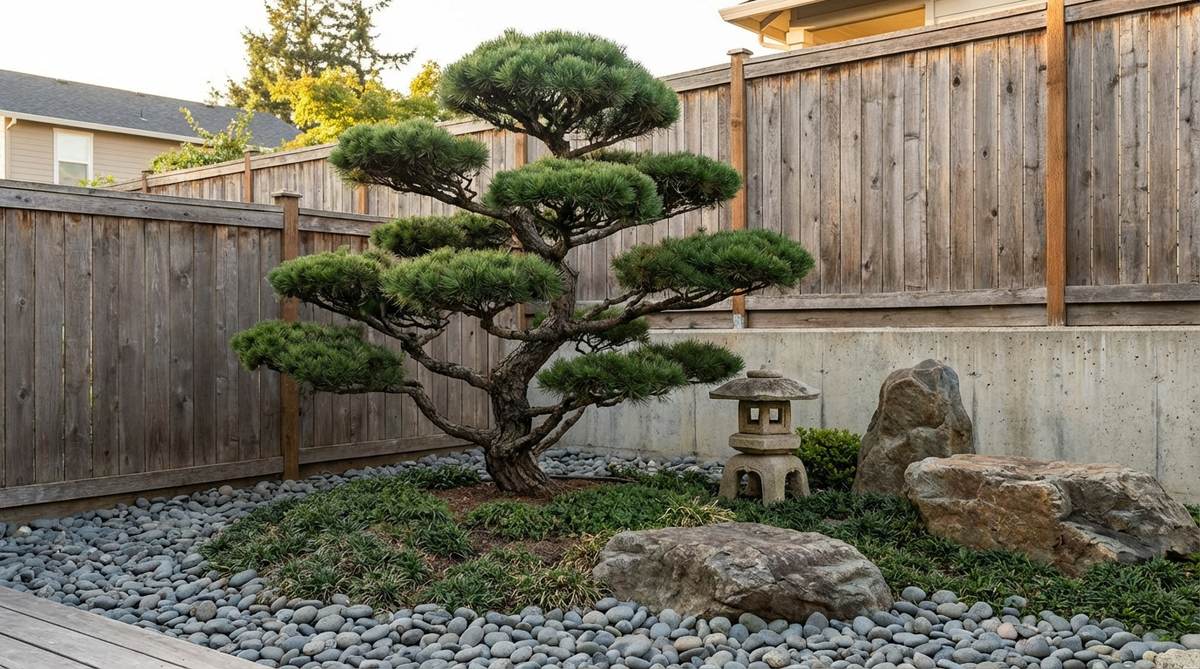
Japanese black pine trained into cloud-pruned shapes offers year-round interest. The sculptural branching creates depth without occupying much ground space.
Cloud pruning requires specialized knowledge and annual maintenance. The investment produces a living artwork that appreciates with age.
24. Yucca for Architectural Spikes
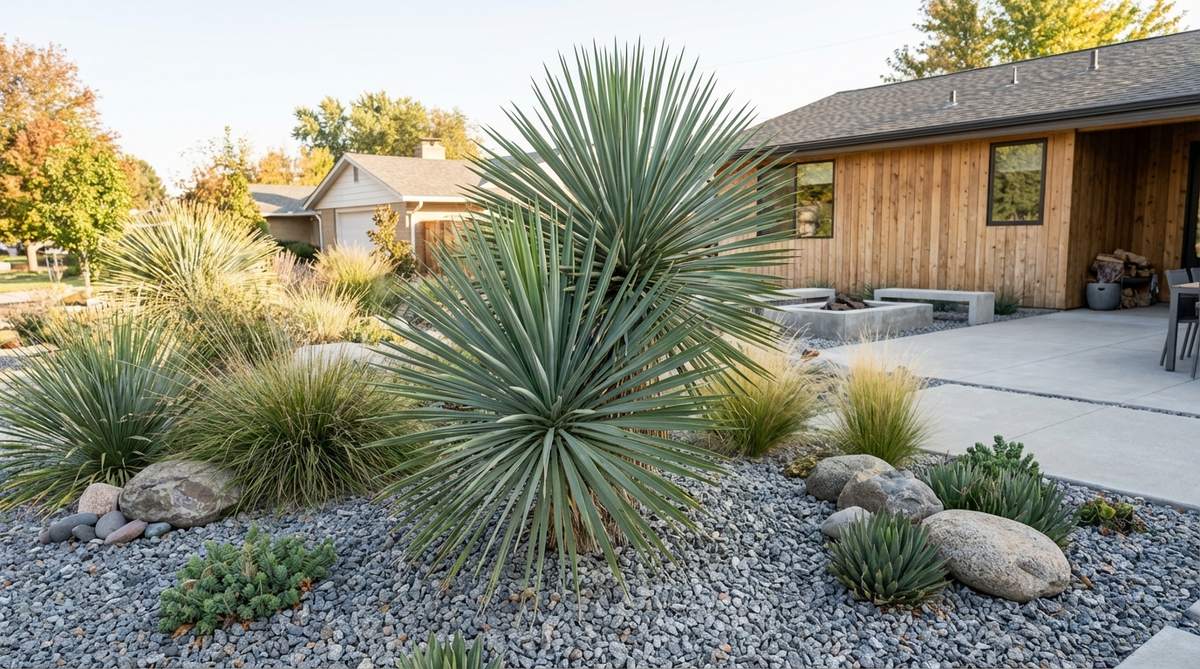
Yucca’s sword-like leaves radiate from central crowns. The dramatic form punctuates gravel expanses without spreading.
Mature specimens produce tall flower stalks with white blooms. Remove spent stalks after flowering to maintain clean lines.
Japanese Influences in Modern Minimalism
Traditional Japanese garden principles align naturally with contemporary minimalism. These japanese minimalist garden concepts emphasize contemplation and balance through restrained composition.
25. Karesansui Rock Garden
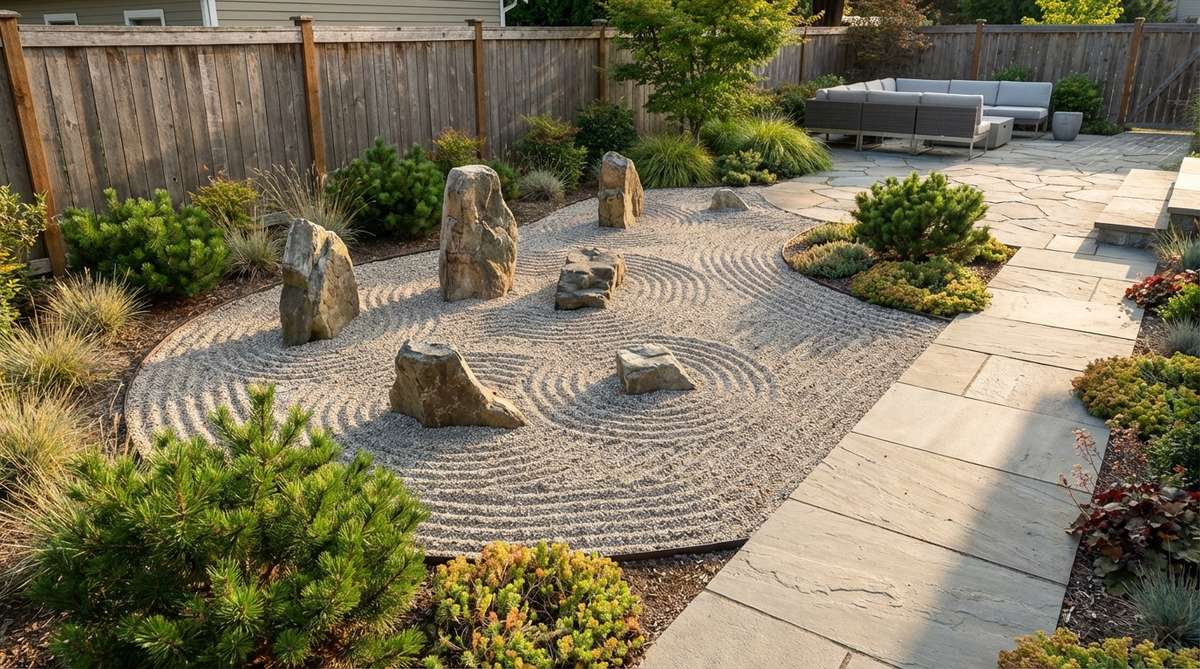
Raked gravel represents water flowing around carefully positioned stones. Each rock placement follows traditional principles of balance and asymmetry.
This style requires no plants or irrigation, reducing maintenance to periodic raking. The abstract composition encourages meditation and reflection.
26. Tsukubai Water Basin
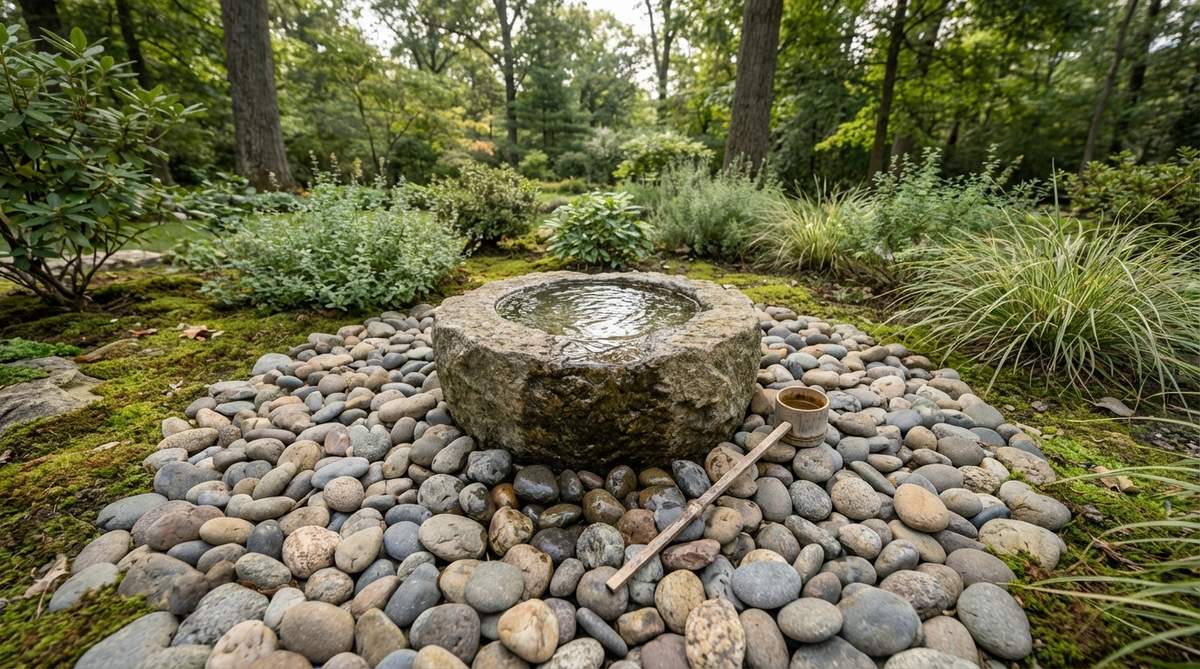
A low stone basin filled with water serves as both functional and symbolic element. Traditionally used for ritual cleansing, the basin adds tranquil sound.
Position the basin on a bed of river rocks that catch overflow. A bamboo ladle completes the traditional arrangement.
27. Stepping Stone (Tobi-ishi) Path
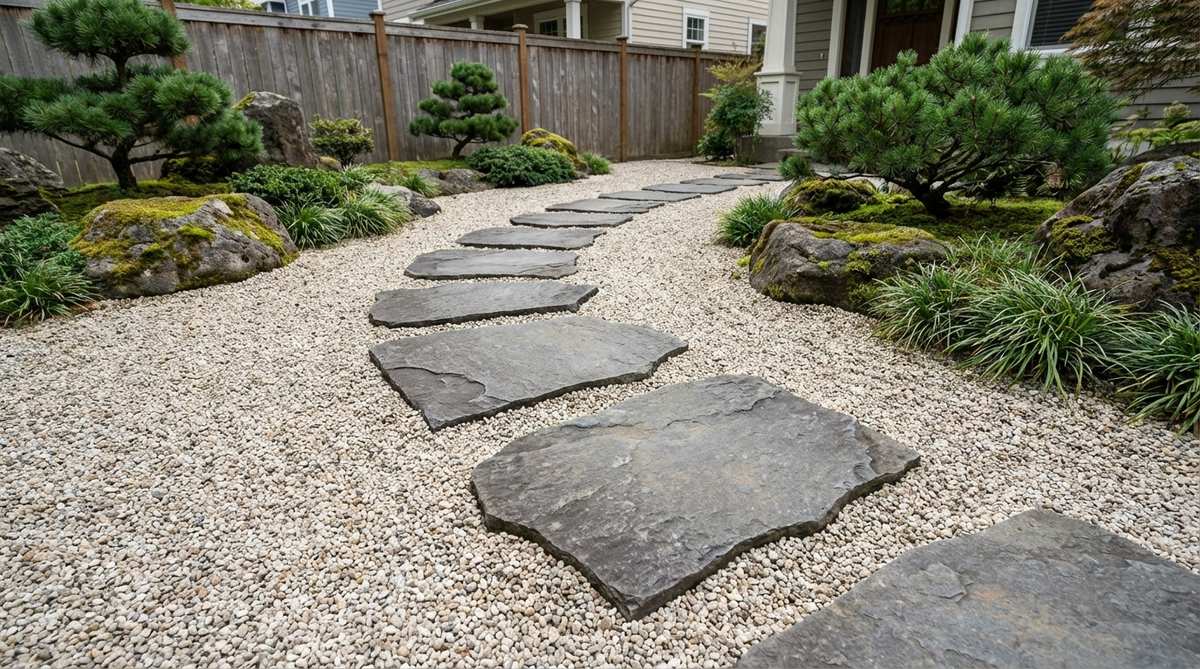
Irregularly shaped natural stones set in gravel slow movement through the garden. The spacing requires attention to each step, promoting mindfulness.
Arrange stones in subtle curves rather than straight lines. Leave generous space between stones to emphasize negative space.
28. Moss Garden Simplicity
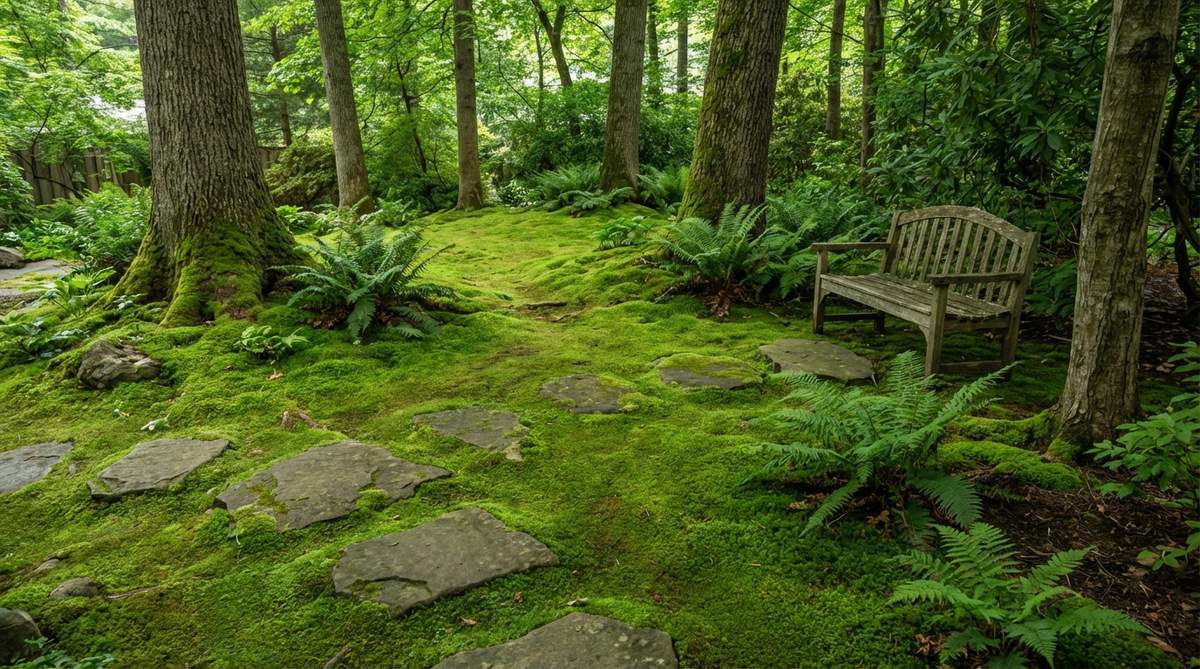
Moss covering the ground plane creates a velvety surface that unifies the space. The monochrome green eliminates distraction from other elements.
Moss thrives in shaded areas with consistent moisture. Remove fallen leaves promptly to prevent die-off beneath.
29. Shakkei (Borrowed Scenery)
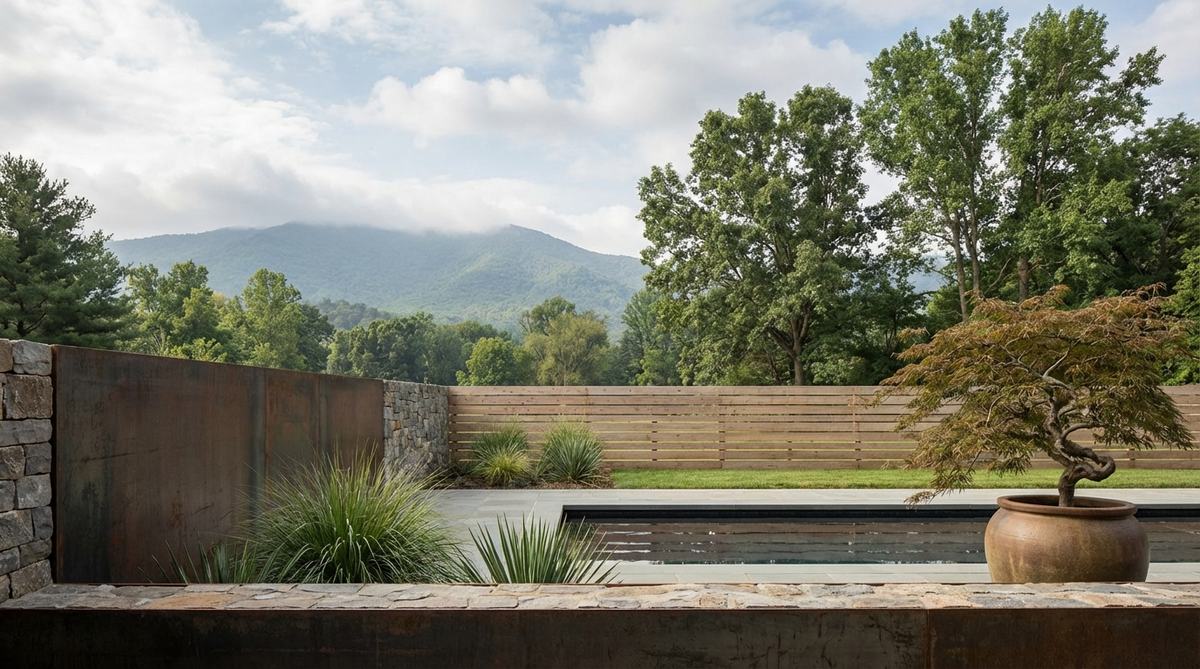
Frame distant views as part of the garden composition. This technique expands perceived space by incorporating background elements.
Remove or minimize foreground plants that obstruct sightlines. Position seating to optimize the borrowed view.
30. Single Lantern as Focal Point
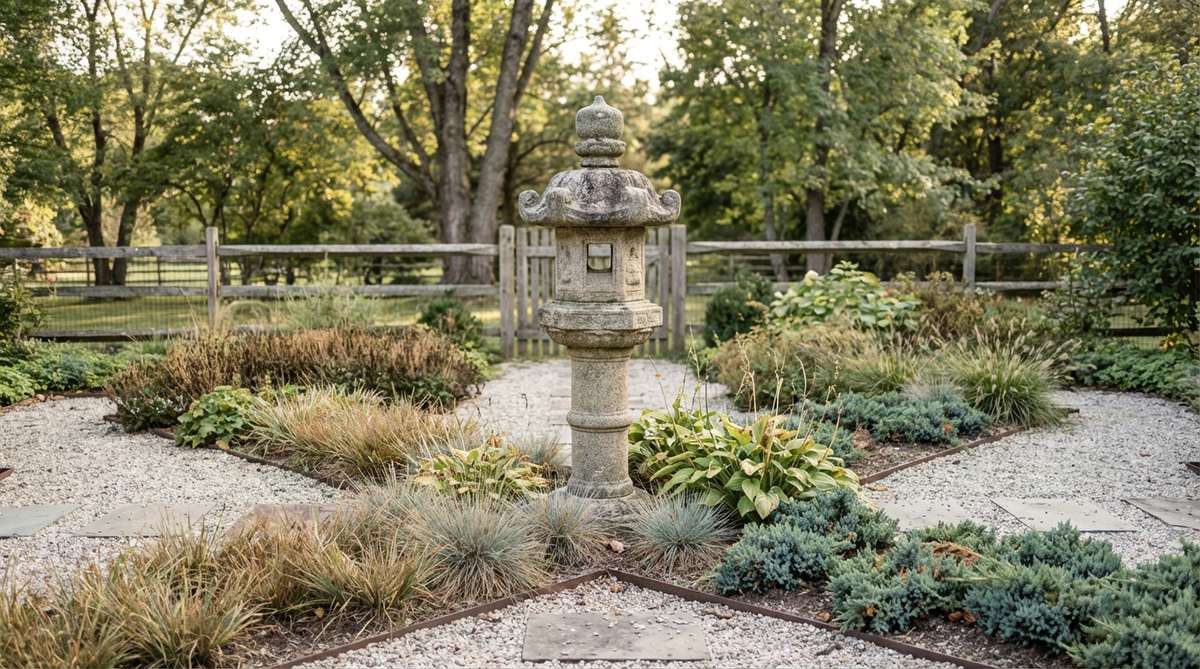
A stone lantern placed deliberately draws the eye without competing elements. The vertical form contrasts with horizontal planting beds.
Position the lantern at path intersections or garden transitions. Weathered stone develops character that enhances the minimalist aesthetic.
31. Bamboo Fence for Clean Backdrop
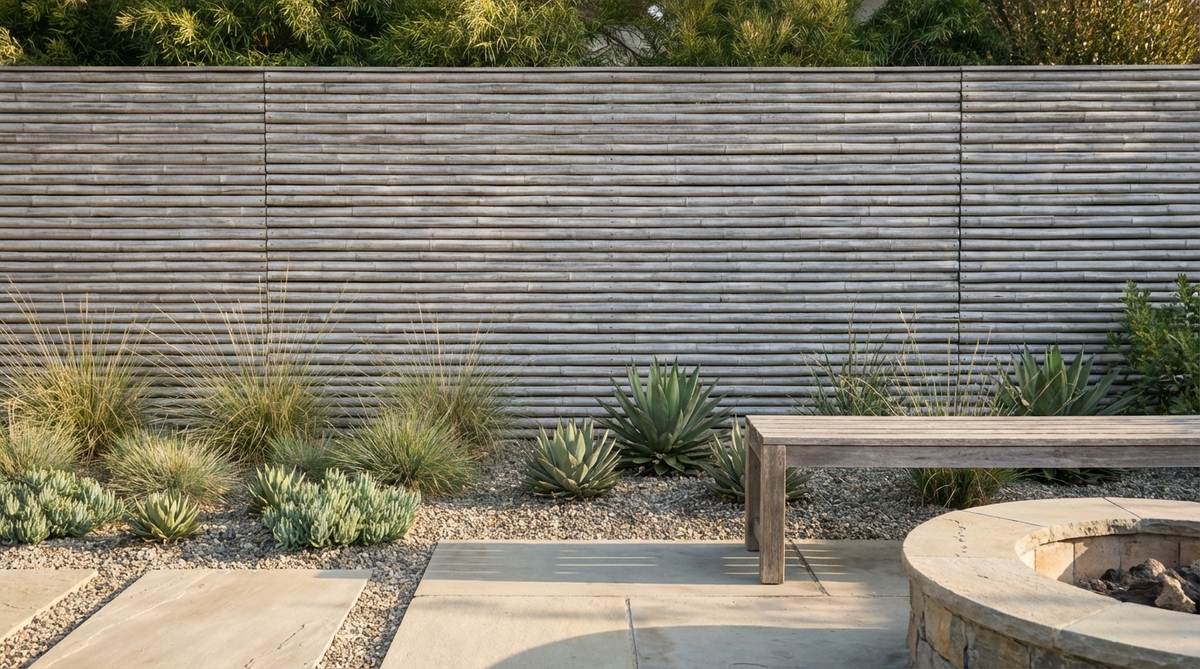
Bamboo poles bound horizontally form a neutral backdrop that doesn’t demand attention. The natural material ages gracefully to silver tones.
Construct fences in straight panels rather than decorative patterns. The simple vertical lines complement rather than compete with plantings.
Water Features with Minimal Footprint
Water adds sensory dimension without requiring extensive square footage. Modern designs integrate water elements that enhance rather than dominate the composition.
32. Rill (Linear Water Channel)
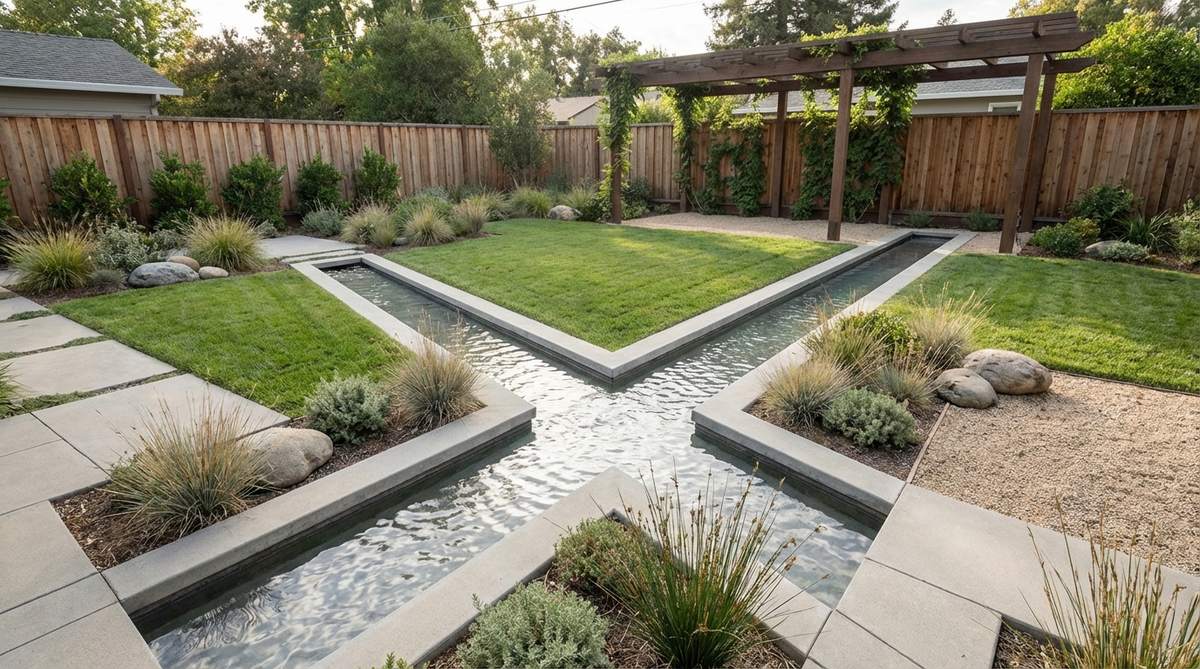
A narrow concrete channel carries water in a straight line across the garden. The geometric form reinforces minimalist principles while adding movement.
Recirculating pumps eliminate water waste. The channel’s reflective surface multiplies light throughout the space.
33. Blade Water Fountain
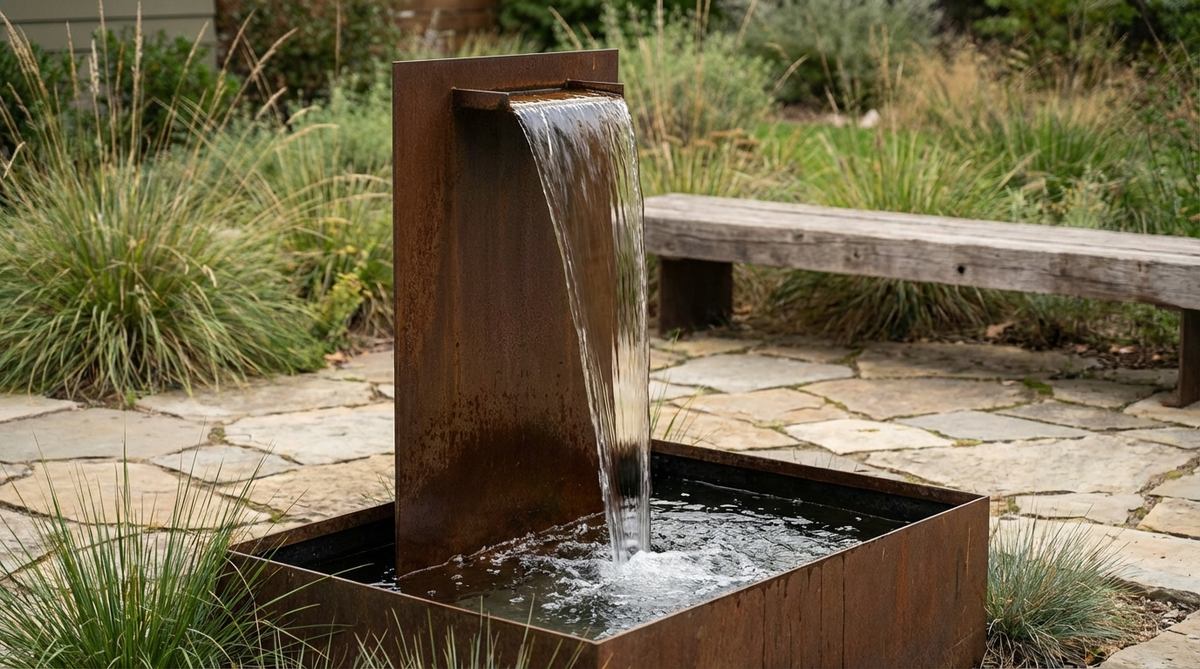
A single vertical blade releases water in a thin sheet into a basin below. The minimalist sculpture reads clearly against simple backgrounds.
Stainless steel or corten steel blades require no maintenance beyond pump cleaning. Position the fountain where water sound enhances seating areas.
34. Reflecting Pool for Stillness
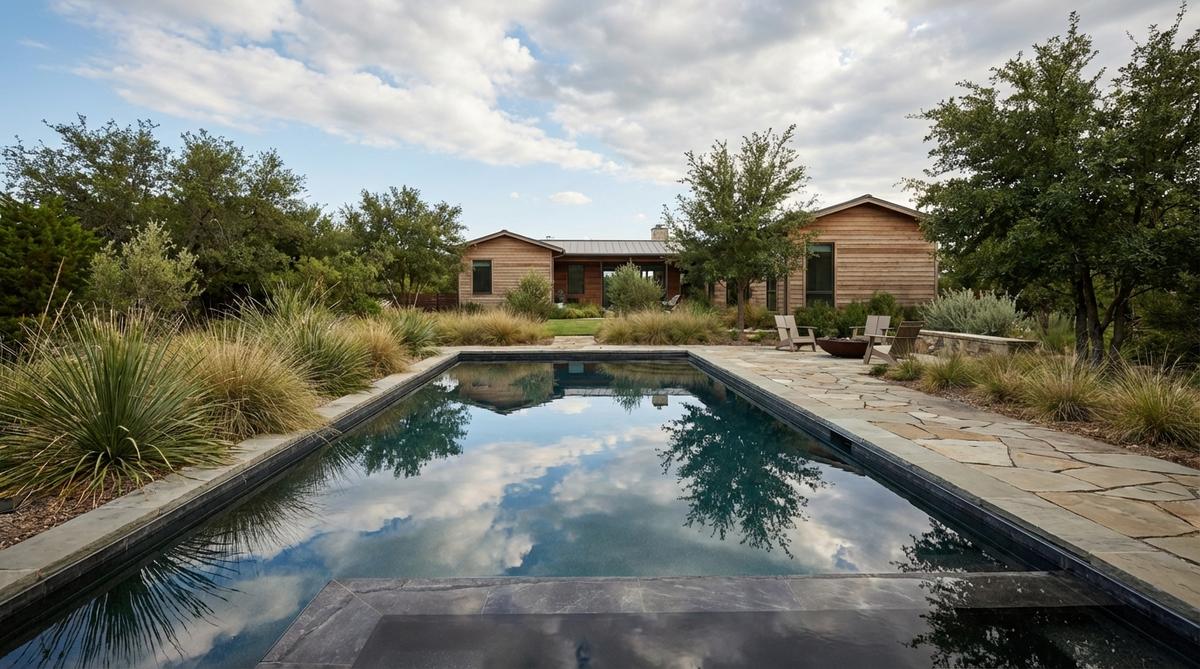
A shallow pool with black interior reflects sky and surrounding elements. The mirror effect doubles visual space without physical expansion.
Still water emphasizes calm over movement. Dark pool lining enhances reflective quality and obscures the bottom.
35. Bubbling Boulder Fountain
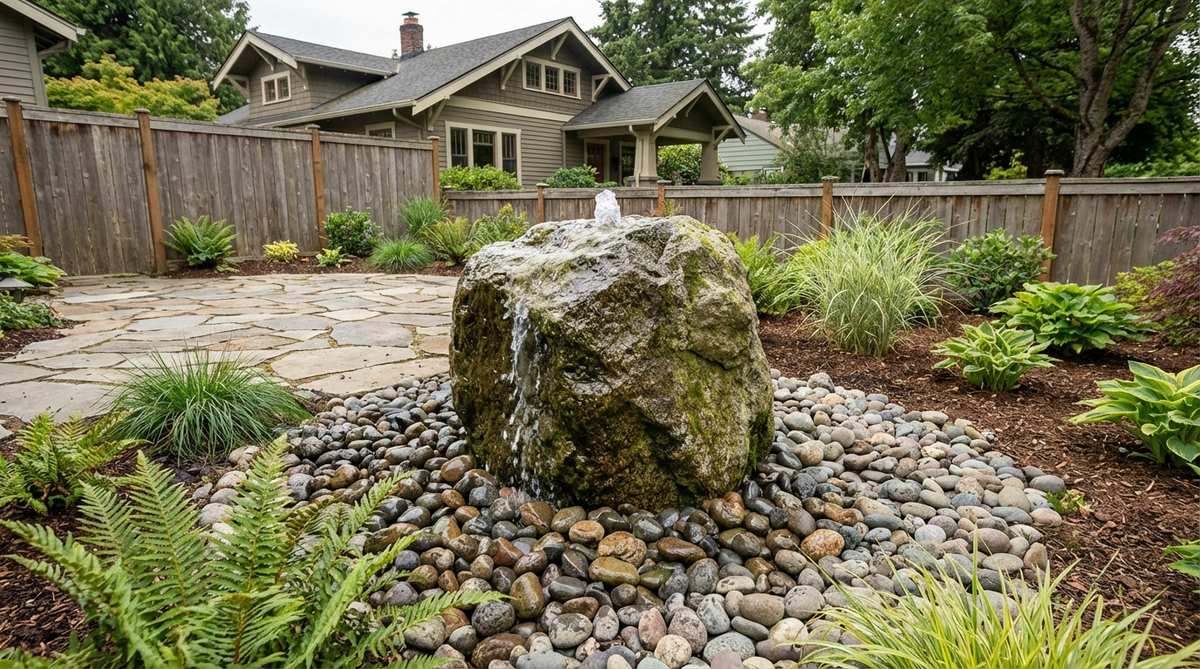
Water emerges from a drilled boulder and disappears into surrounding gravel. The buried reservoir eliminates safety concerns while maintaining simplicity.
Natural stone blends with gravel groundcover. The gentle bubbling sound remains audible without overwhelming conversation.
36. Wall-Mounted Spout
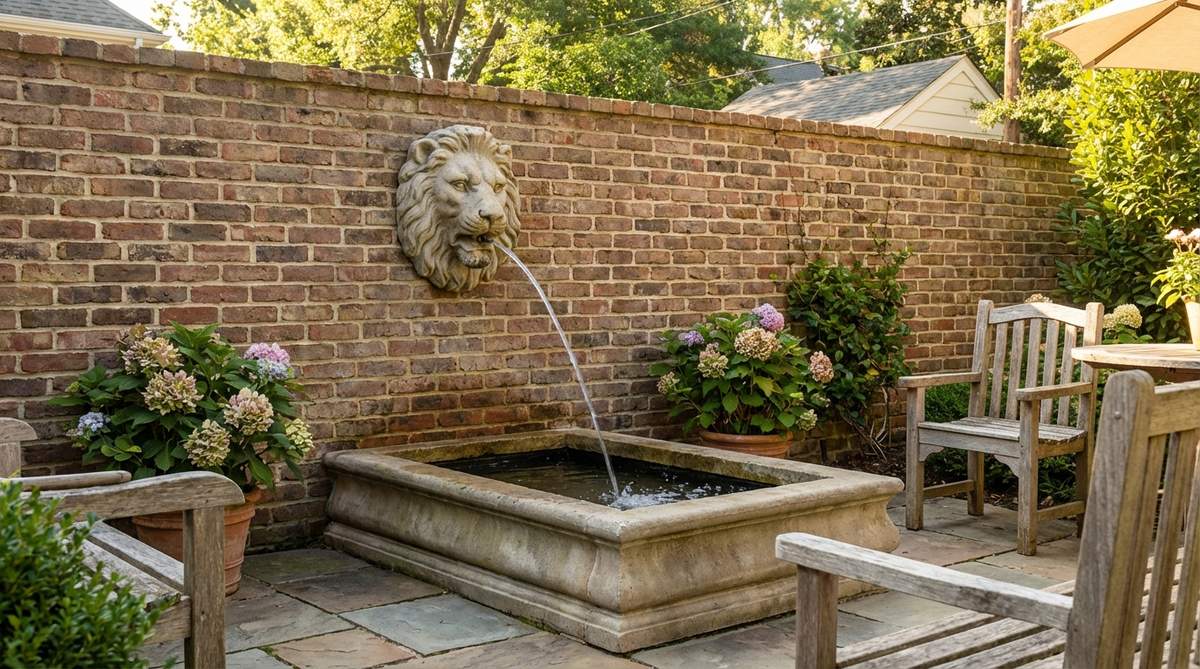
A minimalist spout extends from a vertical surface to fill a basin. The geometric form reads as architectural detail rather than decorative addition.
Copper or bronze spouts develop patina that adds warmth. Mount at a height that allows the water sound to resonate.
37. Infinity Edge Basin
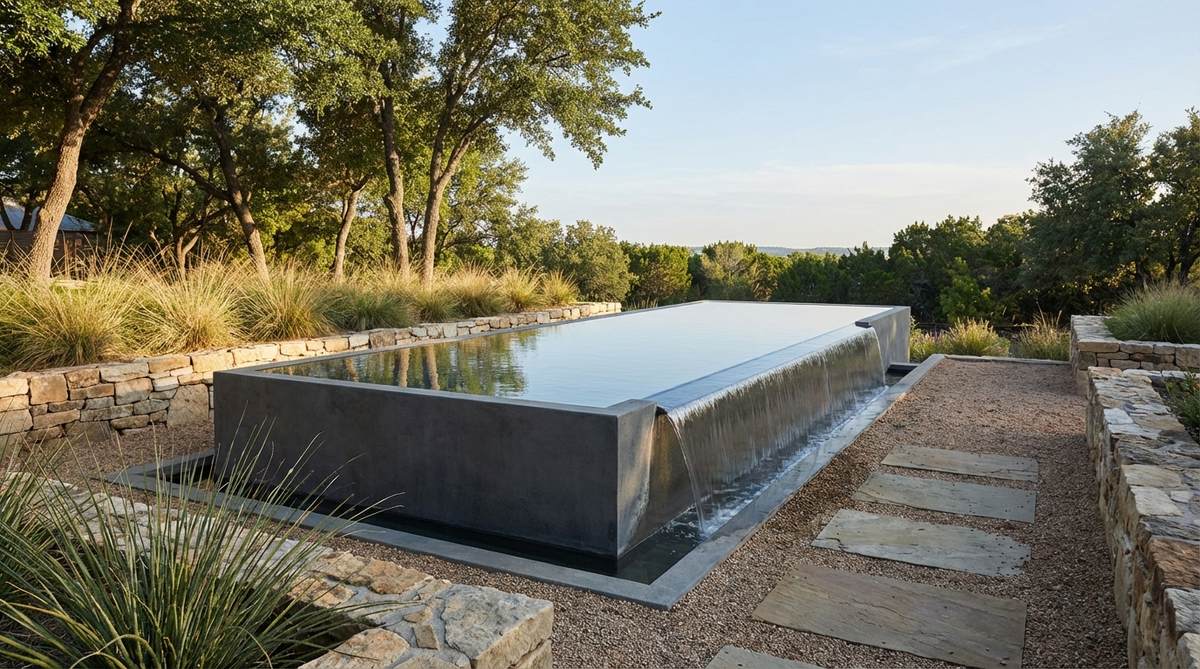
Water fills to the brim and spills over one edge, creating a horizon line. The vanishing edge enhances illusion of limitless space.
This feature works particularly well on sloped sites where water can cascade downward. Hidden catch basins maintain the seamless appearance.
Color & Texture Restraint
Limited palettes amplify the impact of each element. These approaches demonstrate how restriction creates coherence in minimalist garden design.
38. Monochrome White Garden
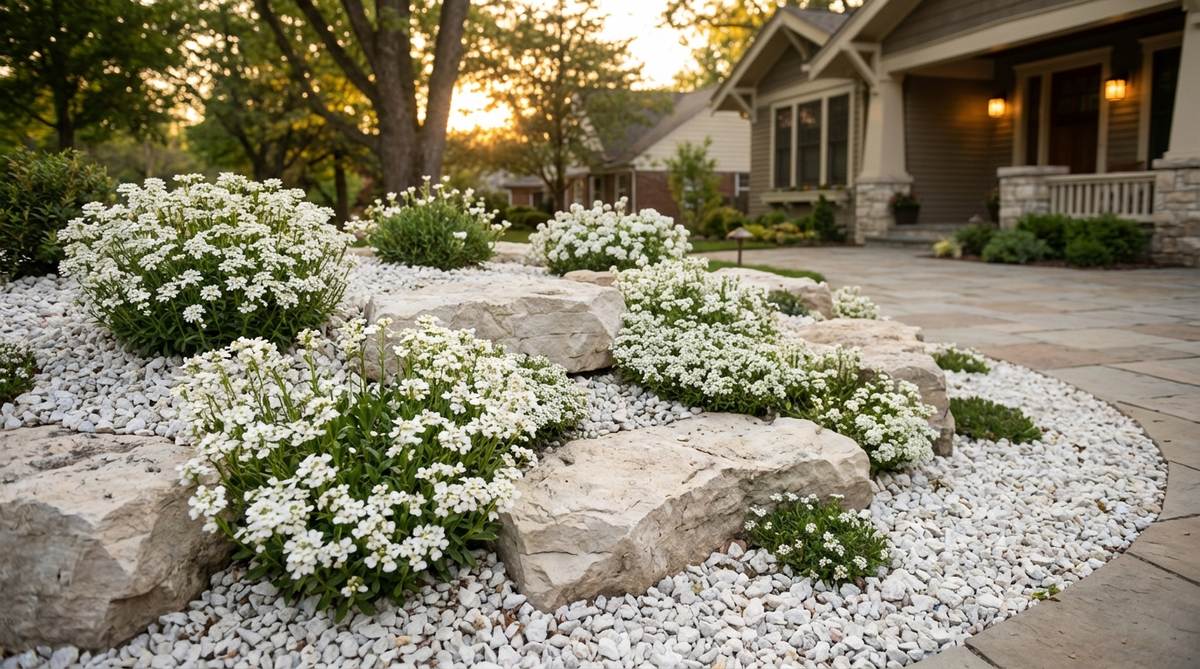
White flowers and silver foliage create a cohesive palette that glows in evening light. Species like white roses, gardenias, and dusty miller layer tones of white.
The restricted color allows varied textures to emerge as the design focus. White gardens reflect moonlight for extended visual interest.
39. Green-on-Green Layering
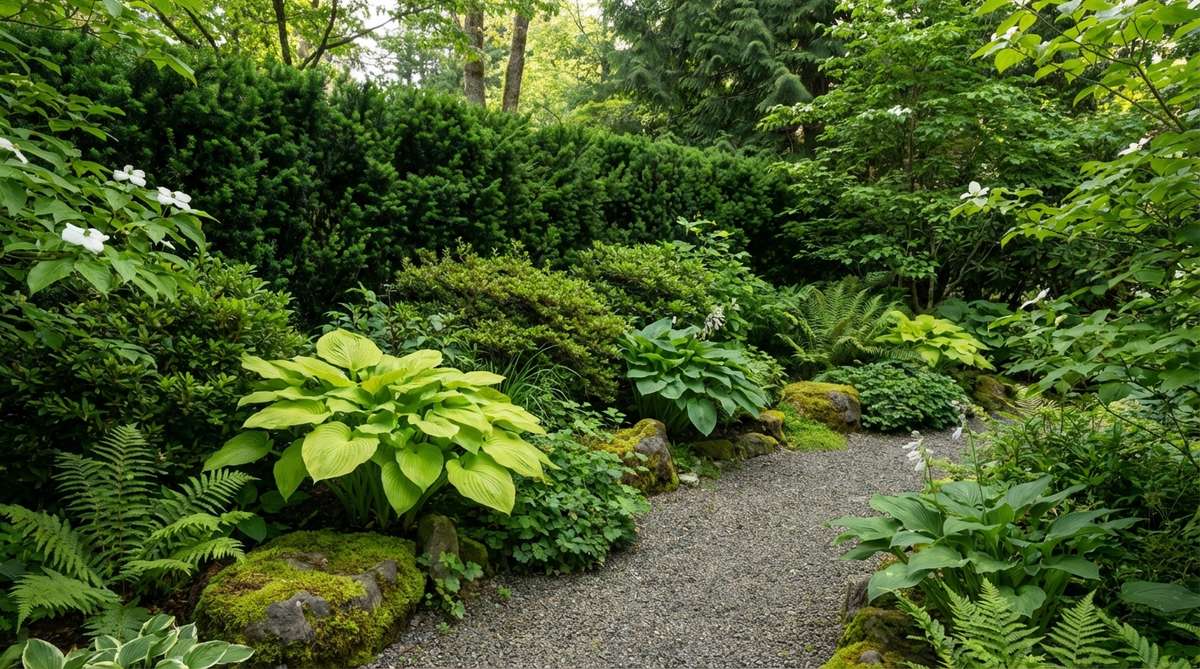
Multiple shades of green foliage create depth without color variety. Chartreuse hostas contrast with dark evergreen shrubs while maintaining tonal unity.
Texture variation through leaf size and shape prevents monotony. This approach thrives in shaded areas where flowers bloom sparsely.
40. Gray Foliage Collection
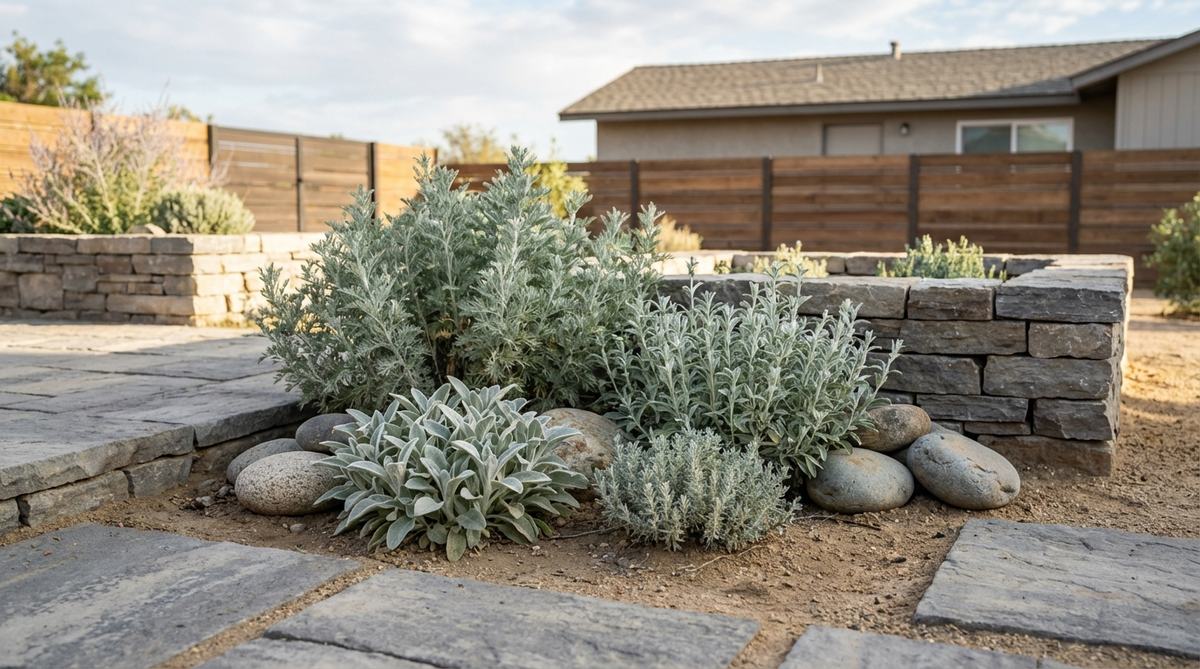
Silver sage, lamb’s ear, and artemisia offer soft gray tones that complement stone hardscaping. The muted palette reduces visual temperature in hot climates.
Gray foliage typically indicates drought tolerance. Group plants with similar water needs to simplify irrigation.
41. Single Bloom Color as Accent
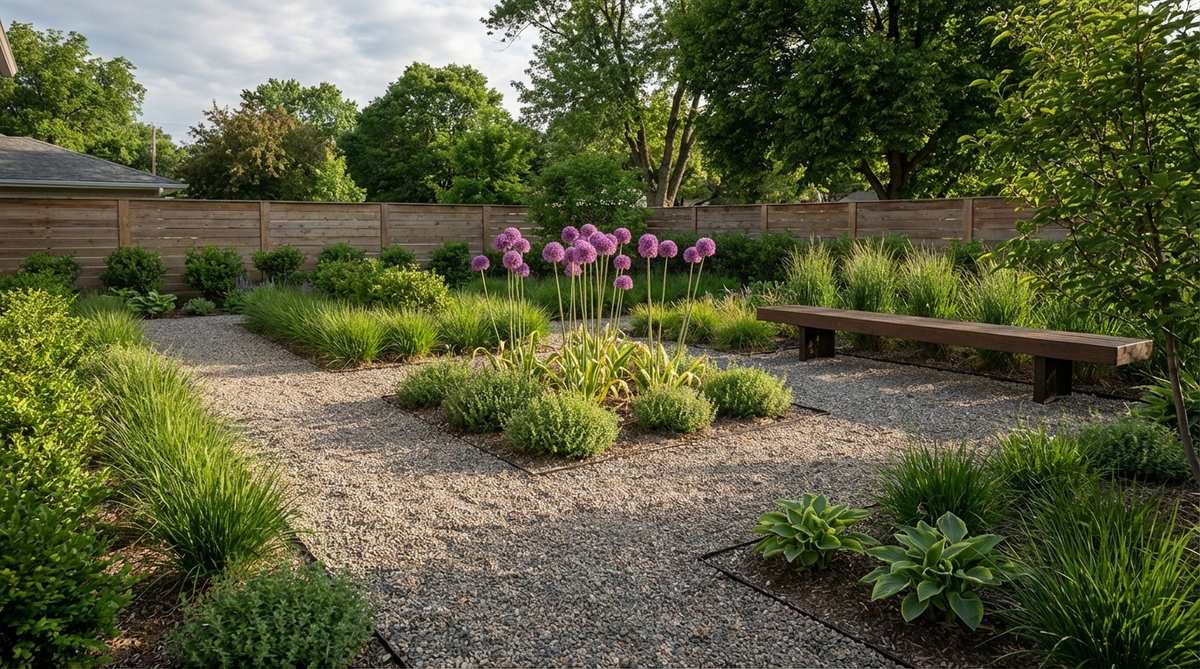
One flower color punctuates an otherwise green palette. Purple alliums rising from gravel create dramatic focal points without introducing chaos.
Limit blooming plants to a single season to maintain restraint. The temporary color becomes an anticipated event rather than constant presence.
42. Black Mondo Grass for Contrast
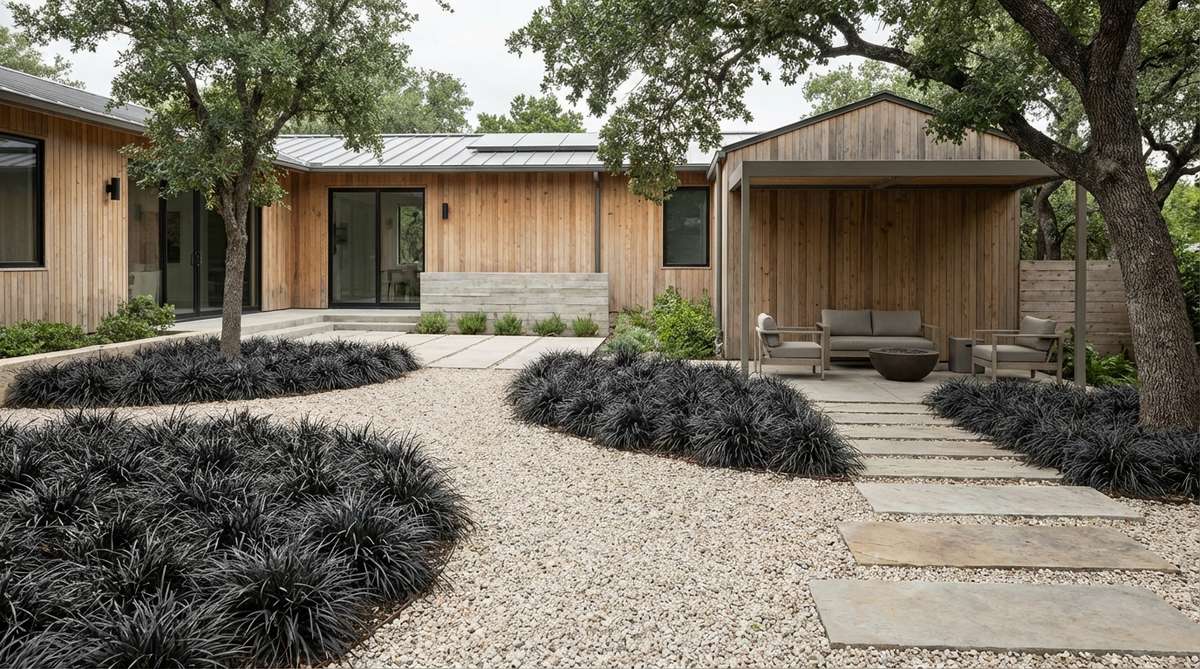
Ophiopogon planiscapus forms dark mounds that read almost black against light gravel. The unexpected color reverses typical green lawn associations.
This evergreen grass tolerates shade and requires minimal care. Use it to define edges or fill narrow planting strips.
Lighting for Evening Ambiance
Strategic illumination extends garden use after dark while emphasizing key features. Minimalist lighting follows the same principles as daytime design.
43. Uplighting Specimen Plants
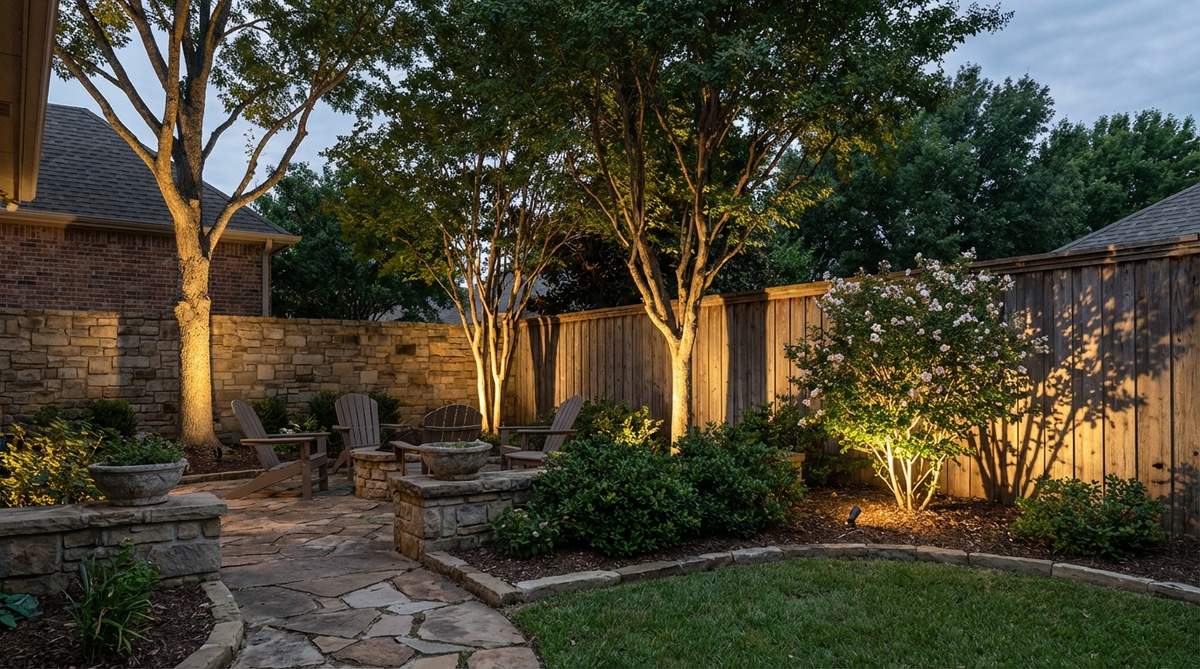
Ground-mounted fixtures direct light upward through tree canopies or architectural grasses. The technique creates dramatic shadows on walls or fences.
LED fixtures provide focused beams without visible heat. Position lights to avoid glare in sight lines from seating areas.
44. Linear LED Path Strips
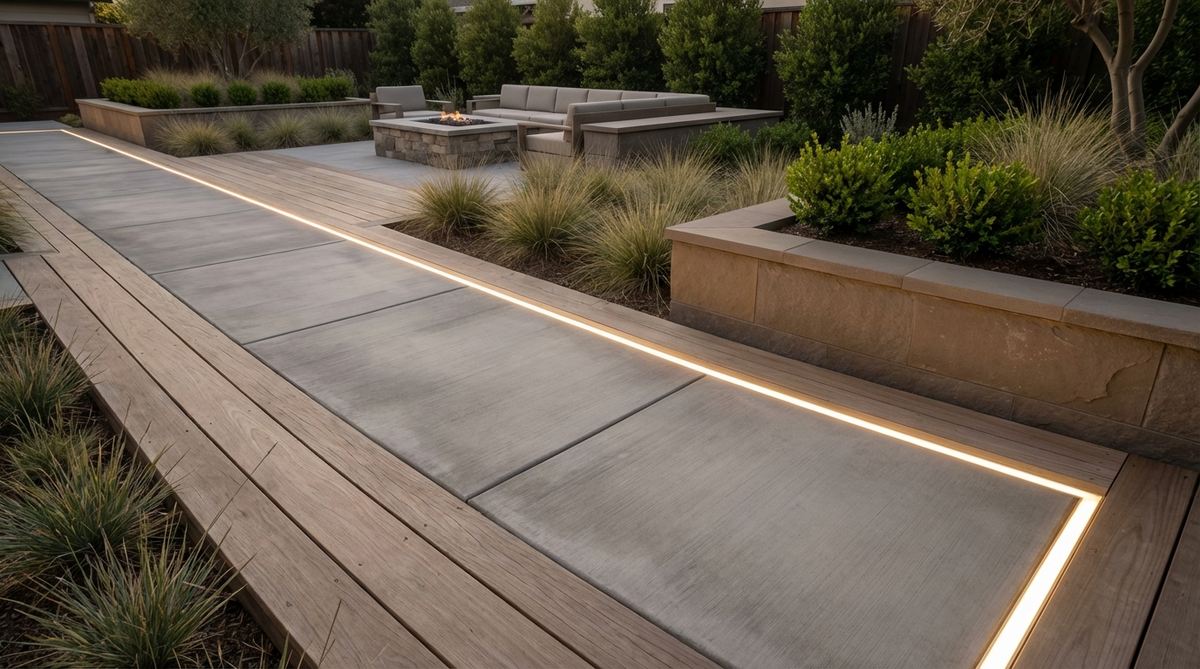
Recessed LED strips installed in concrete or decking mark pathways without visible fixtures. The continuous line guides movement while remaining subtle.
This approach eliminates protruding lights that complicate lawn maintenance. Warm white tones integrate better than cool blue options.
45. Single Pendant Over Seating
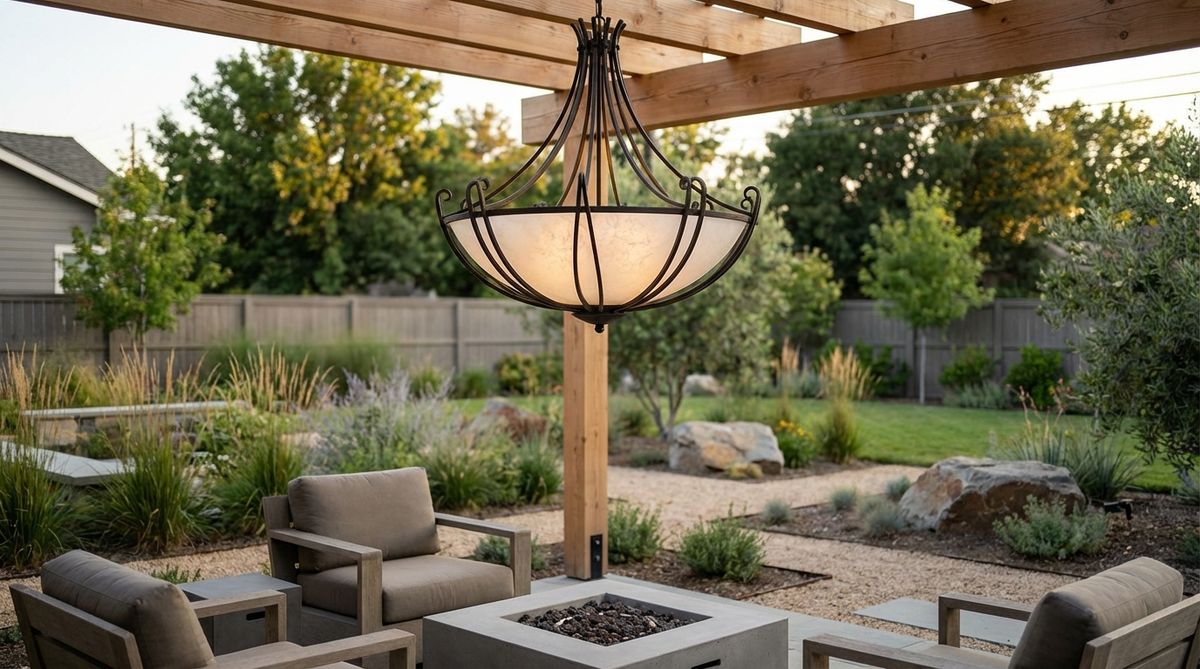
One oversized pendant defines outdoor dining areas with sculptural presence. The fixture provides functional light while serving as daytime focal point.
Choose geometric shapes that echo other garden elements. Dimmer controls adjust ambiance as daylight fades.
46. Moonlighting Through Trees
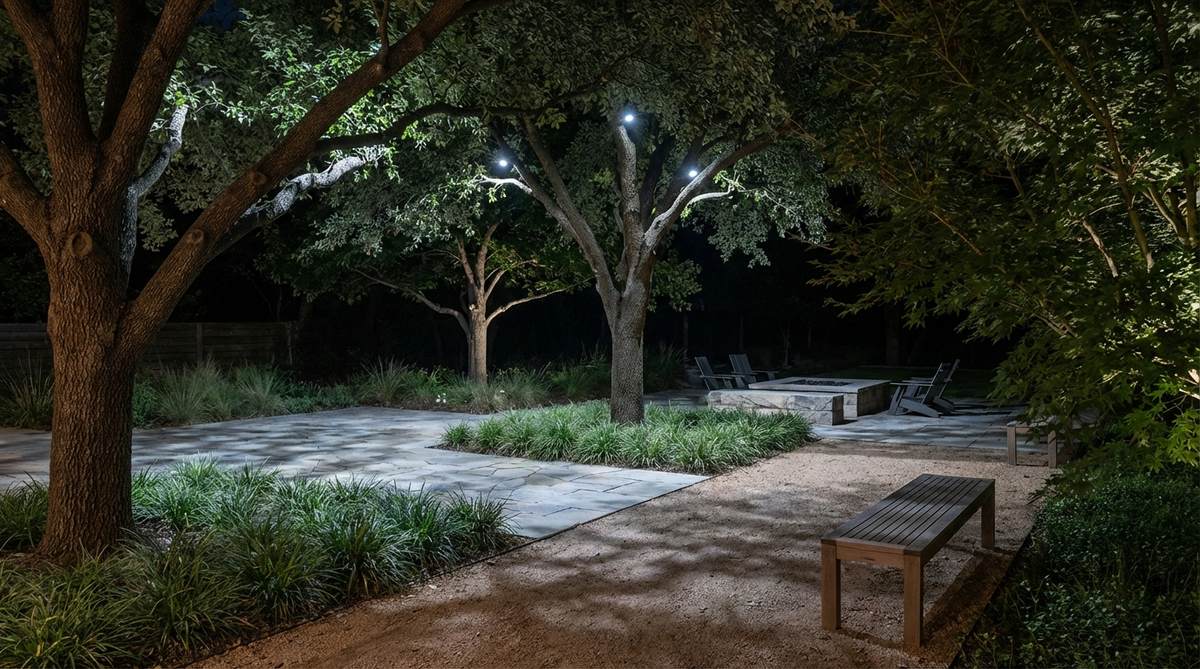
Fixtures mounted high in tree branches cast dappled light downward, mimicking natural moonlight. The effect creates gentle shadows and soft illumination.
This technique requires minimal fixtures to light large areas. The elevated position keeps equipment out of view during daytime.
47. Illuminated Water Features
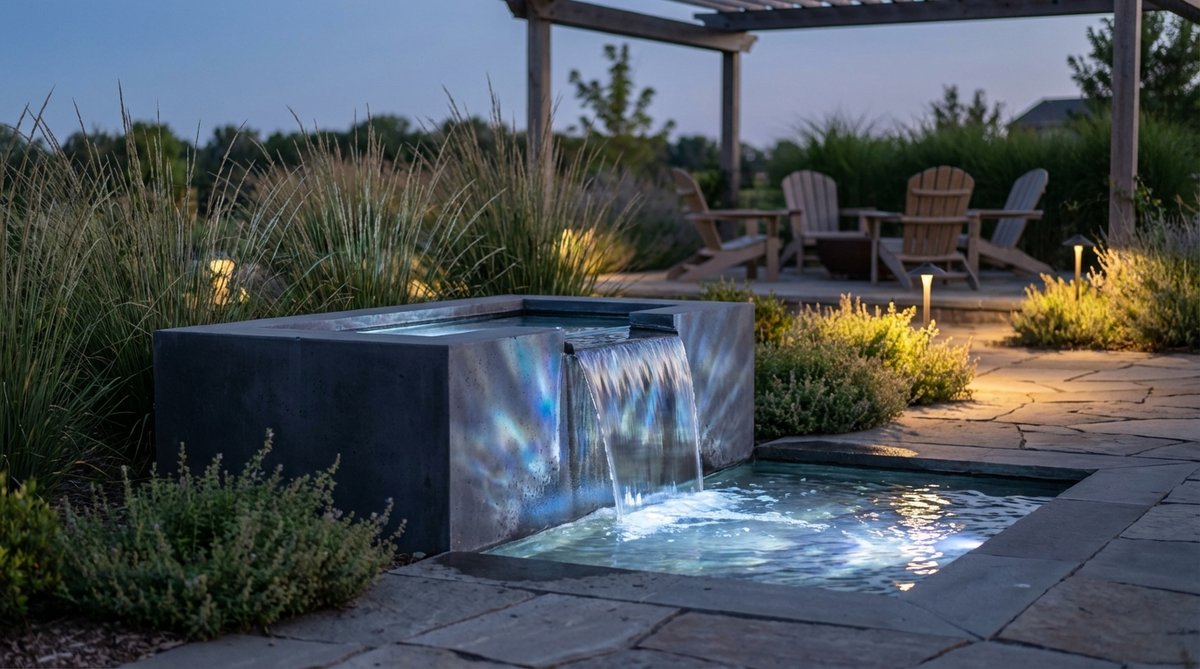
Submersible LED lights transform water elements into evening focal points. The moving water disperses light into shifting patterns.
Underwater lighting requires sealed fixtures rated for continuous submersion. Position lights to avoid direct glare when viewed from seating areas.
Bringing It All Together
These minimalist gardens demonstrate that reducing elements strengthens overall design impact. Each feature works harder when surrounded by intentional negative space and complementary materials. Start with one or two concepts that address your site’s specific challenges, then expand as confidence grows. The principles of simplicity, repetition, and restraint transform ordinary yards into contemplative retreats that require less effort than traditional gardens.
Frequently Asked Questions
What plants work best for minimalist gardens in small spaces?
Ornamental grasses like Miscanthus and Carex provide vertical interest without spreading horizontally. Boxwood and other clipped evergreens maintain compact forms with biannual pruning. Succulents including Agave and Echeveria offer sculptural quality in limited square footage while requiring minimal water and care.
How much does a minimalist garden cost compared to traditional landscaping?
Initial costs typically run lower due to fewer plant varieties and simplified hardscaping. Gravel costs $30-50 per cubic yard installed, while high-quality concrete or steel edging ranges from $8-15 per linear foot. Long-term maintenance savings accumulate through reduced watering, fertilizing, and plant replacement needs.
Can minimalist gardens work in cold climates with harsh winters?
Evergreen selections like boxwood, pine, and bamboo provide year-round structure in cold regions. Ornamental grasses add visual interest through winter with dried seed heads and stems. Hardscaping materials including stone and steel remain unaffected by temperature fluctuations, maintaining clean lines regardless of season.
How do I maintain negative space without it looking unfinished?
Define open areas with intentional boundaries using edging or grade changes. Gravel, moss, or low groundcovers fill space while reading as negative compared to taller plantings. The key involves treating empty space as a deliberate design element rather than area awaiting future additions.
What’s the difference between minimalist and low-maintenance gardens?
Minimalist design prioritizes aesthetic simplicity and spatial clarity through limited elements and clean lines. Low-maintenance focuses solely on reducing upkeep time regardless of appearance. While minimalist gardens often prove low-maintenance, the primary goal remains visual restraint rather than convenience, though the two frequently overlap in practice.