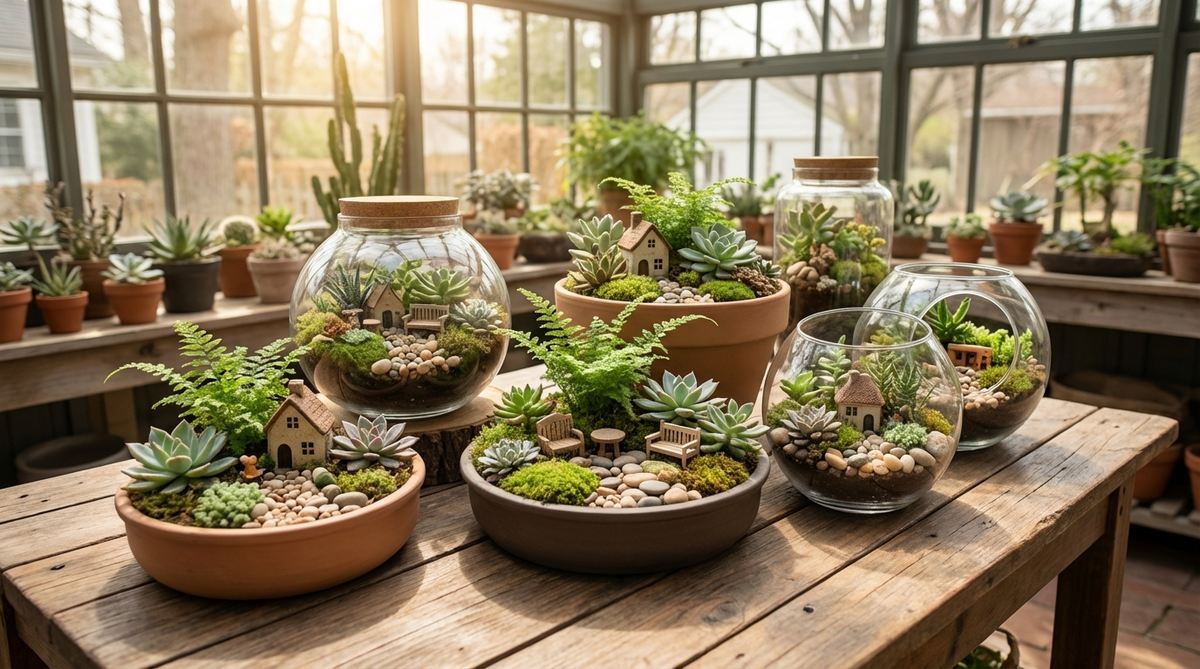
Miniature garden decor transforms small containers into complete living landscapes that capture the imagination and bring nature indoors at any scale. Whether you’re designing a whimsical fairy village or a carefully layered terrarium ecosystem, the right layout creates depth, story, and visual interest within confined spaces. Fresh Garden Ideas shares expert techniques and creative arrangements to help you build miniature worlds that feel intentional, balanced, and alive.
Design SnapshotKey Principles
- Layered Depth: Position larger elements in the foreground and smaller pieces toward the back to create visual distance and perspective within compact spaces.
- Focal Point Strategy: Establish one primary feature—a miniature house, distinctive stone, or specimen plant—that anchors the entire composition and guides the viewer’s eye.
- Scale Consistency: Maintain proportional relationships between plants, hardscape, and accessories so the scene reads as cohesive rather than random.
- Theme Clarity: Commit to a recognizable style or environment—woodland cottage, desert oasis, zen retreat—to unify material choices and create narrative coherence.
Enchanted Woodland Worlds
Woodland layouts recreate forest floor environments using moss, small ferns, and natural materials that mimic ancient groves. These designs rely on organic textures and earth tones to establish authentic outdoor atmospheres.
1. Moss-Covered Cottage Clearing
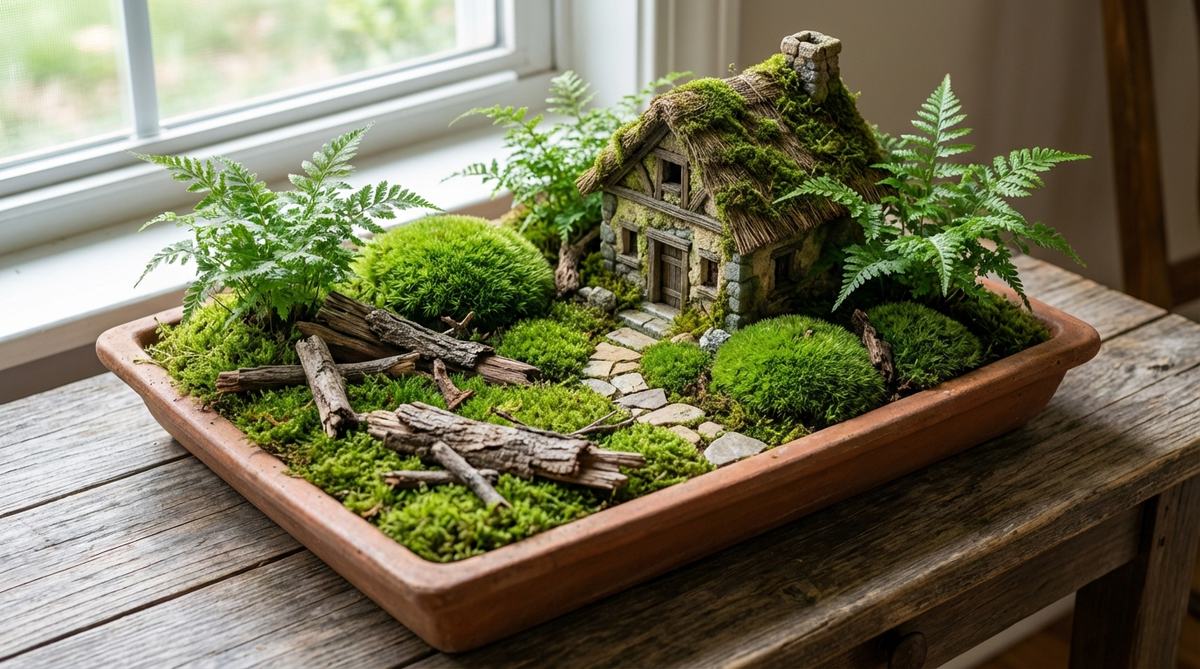
Sheet moss forms the foundation for a miniature cottage surrounded by live cushion moss and tiny ferns. A stone pathway made from flat pebbles leads to the front door, creating clear sightlines through the composition.
Position the cottage slightly off-center to avoid symmetry, then cluster low-growing plants around the base. Add pieces of bark or small twigs as fallen logs to reinforce the forest setting.
This layout works in shallow bowls or terra cotta saucers where drainage stays manageable. The moss stays green with weekly misting and indirect light.
2. Toadstool Ring Gathering Space
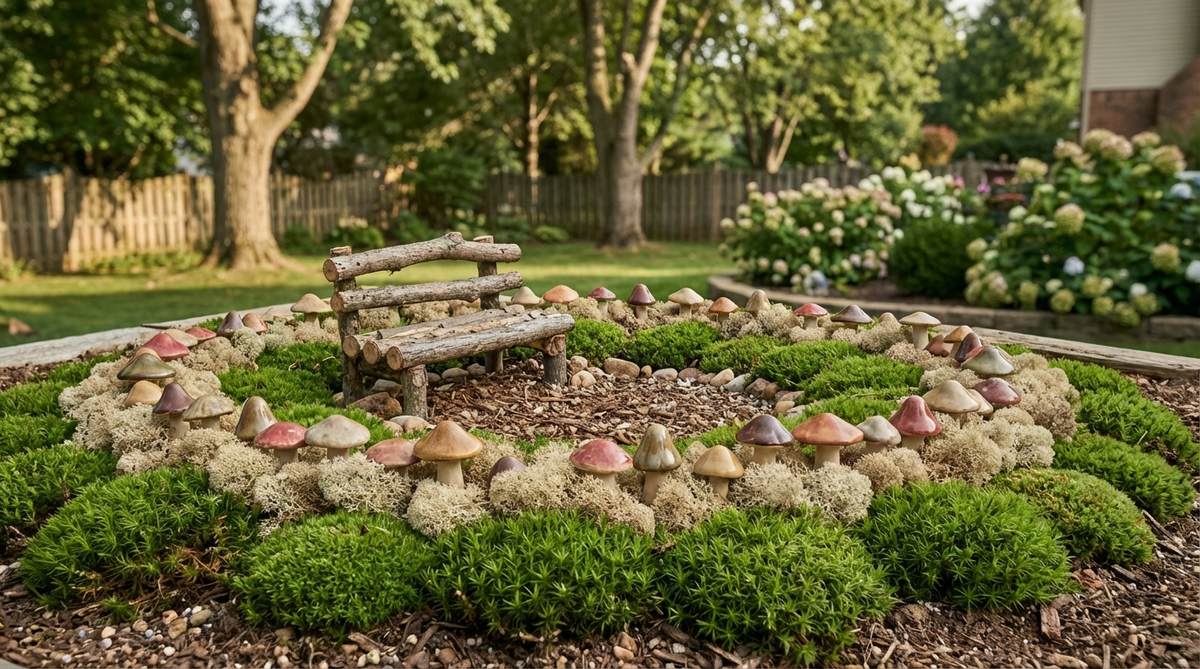
Arrange miniature mushroom decorations in a circular pattern on a bed of preserved reindeer moss. The ring creates a natural focal point that suggests fairy gatherings or woodland rituals.
Plant Irish moss or baby tears between the toadstools for living ground cover that stays compact. Place a small log bench or flat stone seating area inside the circle.
The circular arrangement draws the eye inward and establishes clear spatial organization. Scale the toadstool size to your container—larger vessels accommodate more elaborate rings.
3. Birch Bark Forest Canopy
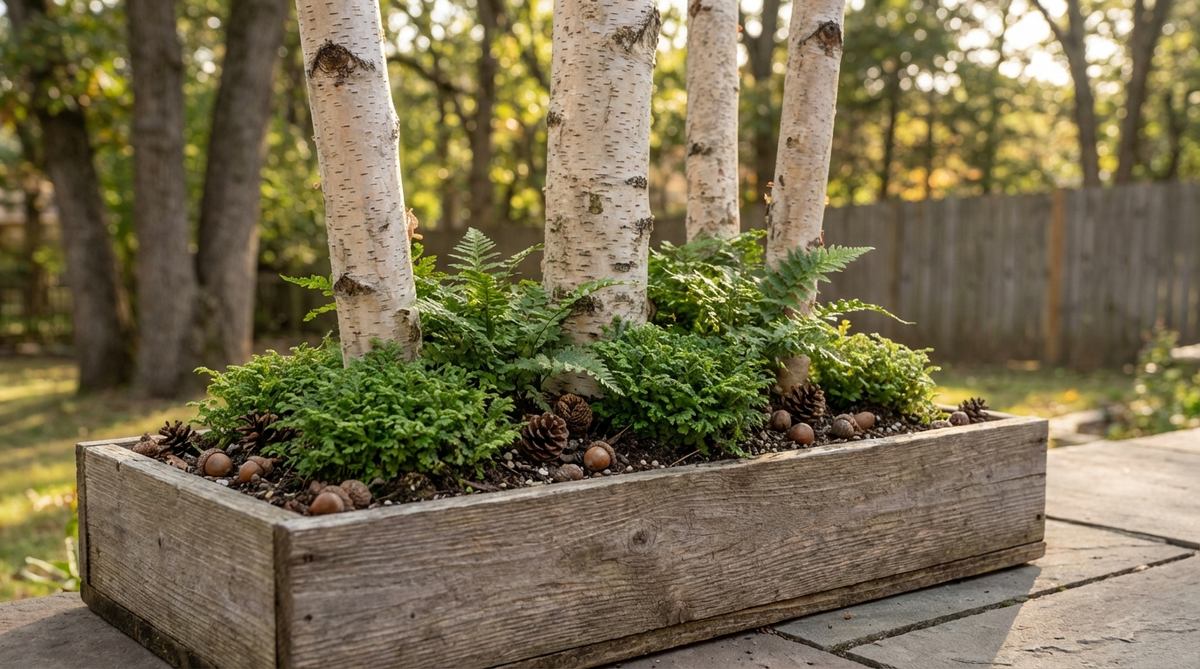
Use small pieces of birch bark stood vertically to simulate tree trunks in a miniature forest. The white bark provides high contrast against dark soil and green moss.
Plant fine-textured plants like selaginella or miniature ferns at the base of each “tree” to represent undergrowth. Add tiny pinecones or acorns as scattered forest debris.
This technique works particularly well in rectangular planters where you can create depth by spacing bark pieces from front to back. The vertical elements add height without requiring mature plants.
4. Woodland Stream With Pebble Bed
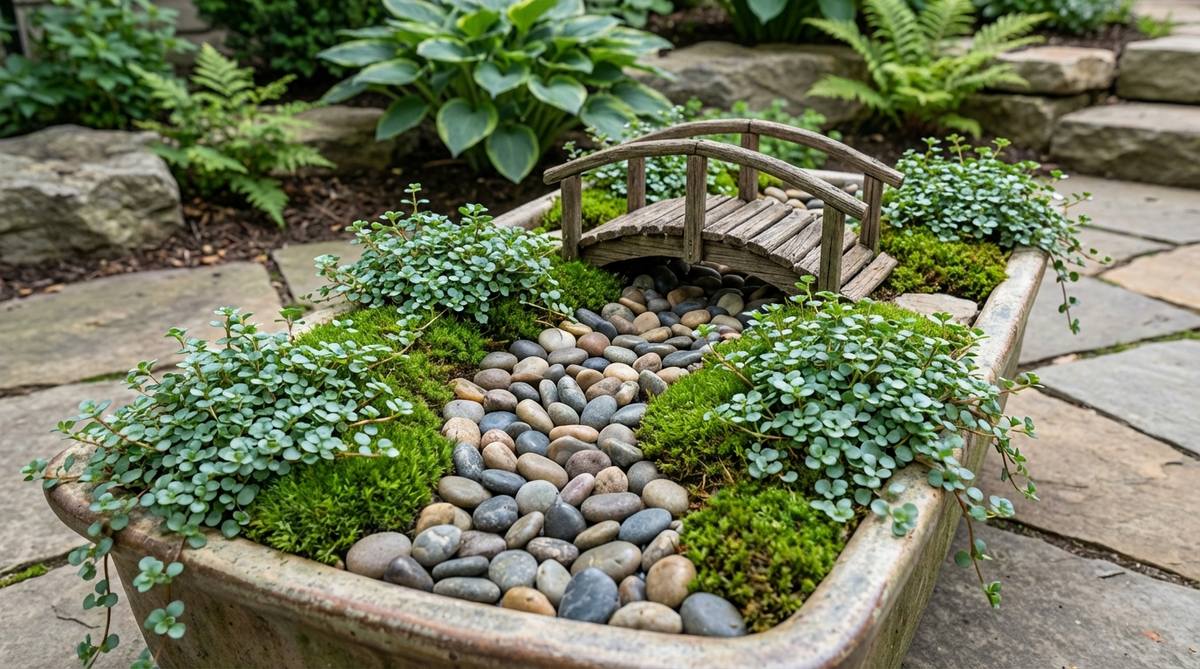
Create a dry streambed using smooth aquarium pebbles arranged in a winding path through the container. The curved line adds movement and guides the viewer’s eye through the scene.
Flank the stream with moss and small leafy plants like Pilea glauca to suggest stream bank vegetation. Position a miniature bridge crossing at the widest point for architectural interest.
The pebbles provide color contrast and textural variation while serving as practical hardscape that won’t overgrow. This layout adapts to both fairy gardens and naturalistic terrariums.
5. Fallen Log Micro-Habitat
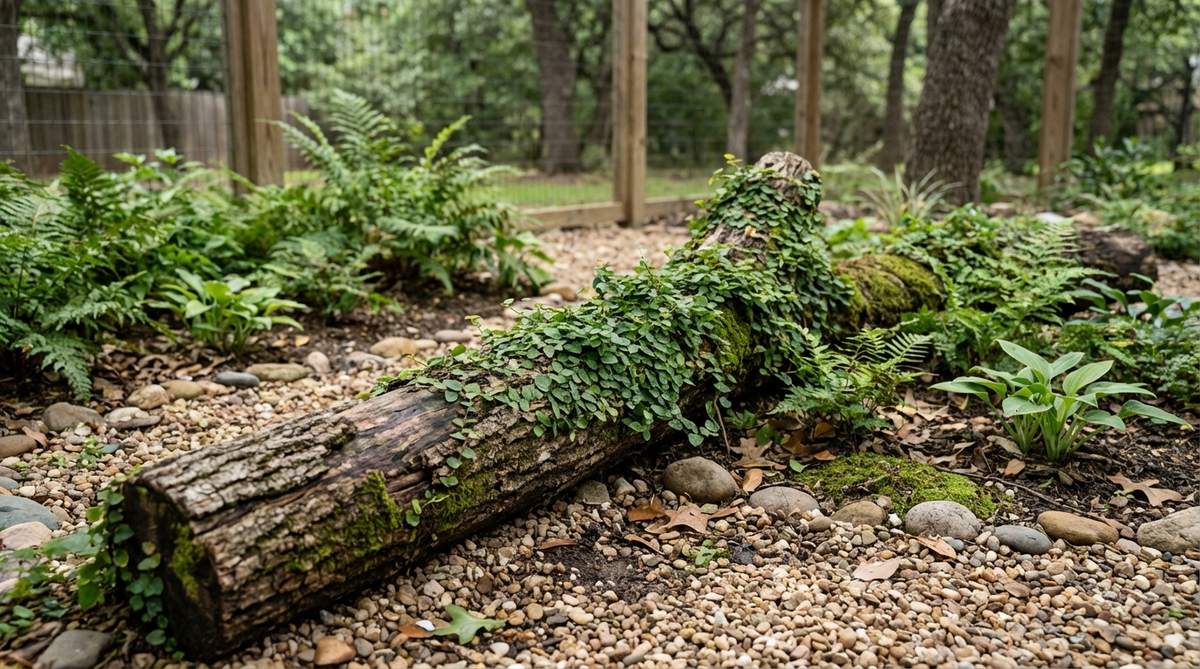
Place a section of natural bark or a small branch horizontally across the container to represent a fallen tree. This element creates an instant focal point and provides elevation changes.
Plant trailing varieties like Ficus pumila on one side of the log so foliage appears to grow over it. Add moss to the top surface of the bark to suggest age and decay.
The fallen log divides the space into distinct zones—forest floor on one side, cleared area on the other. This natural barrier organizes plant placement and creates compositional structure.
Container-Specific Compositions
Different vessels offer unique spatial challenges and opportunities that shape layout decisions. Matching design strategy to container characteristics produces more successful miniature gardens.
6. Mason Jar Layered Landscape
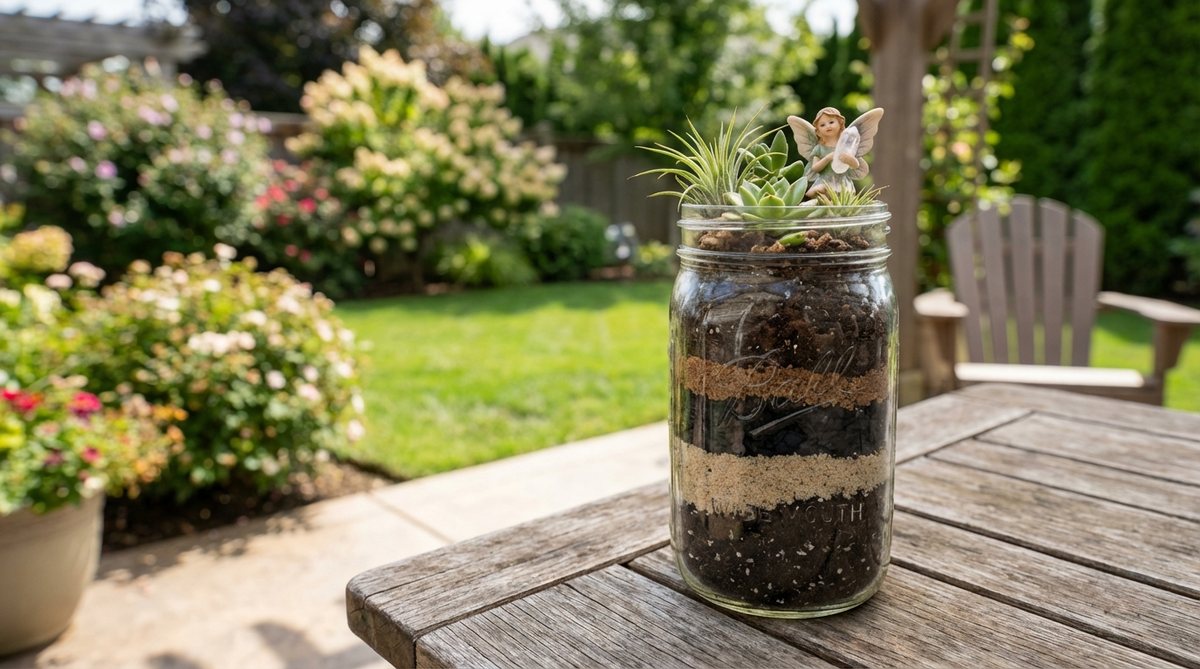
Wide-mouth mason jars provide vertical space for dramatic soil layering visible through clear glass. Use colored sand, activated charcoal, and potting mix in distinct horizontal bands.
Plant small air plants or miniature succulents that won’t outgrow the opening. Add a single decorative element—a tiny fairy figurine or small crystal—to avoid overcrowding.
The transparent walls make every layer part of the design, so material selection becomes critical. This layout works as a no-maintenance option when you skip live plants and use only decorative elements.
7. Wicker Basket Country Garden
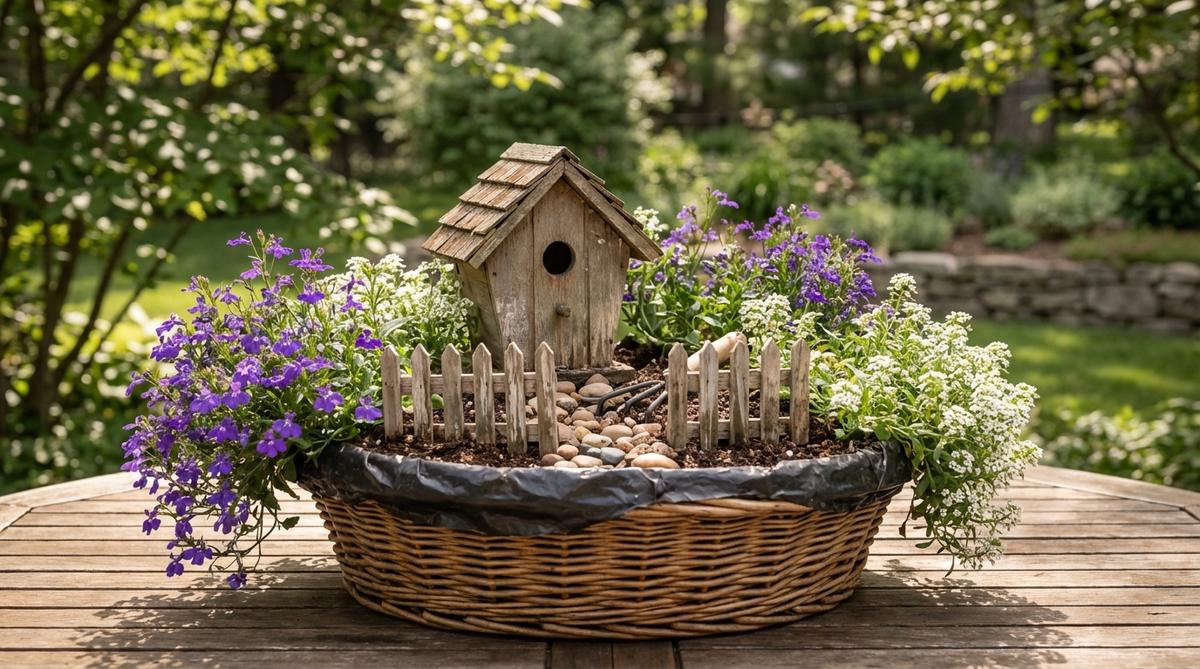
Line a shallow wicker basket with plastic sheeting, then fill with potting soil for a rustic farmhouse aesthetic. The natural basket weave adds texture that complements cottage-style plantings.
Plant purple lobelia, white alyssum, or other cascading annuals around the edges to soften the rim. Create a central vignette with a miniature birdhouse and small wooden fence sections.
The basket’s portability makes seasonal design changes easy. Drainage requires monitoring since baskets don’t have built-in holes—water carefully to prevent soil saturation.
8. Teacup Miniature Vignette
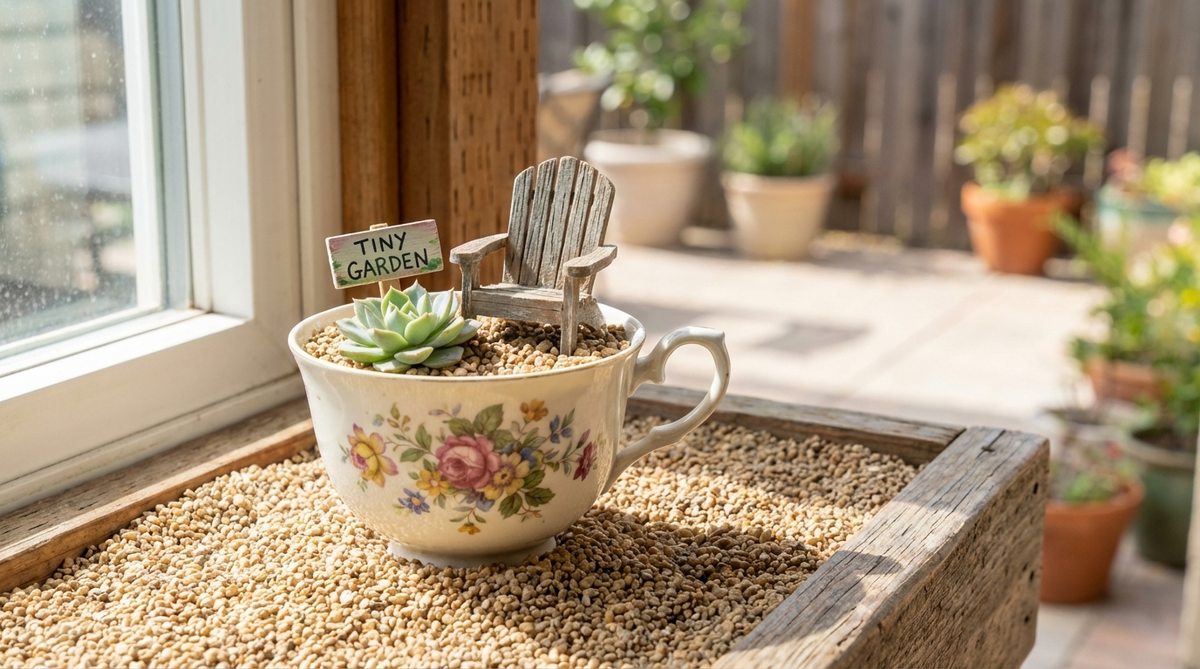
Vintage teacups create ultra-small gardens where every element must be carefully scaled. The limited space forces disciplined editing and precise placement.
Use a single small succulent as the living component, then add one or two tiny accessories like a miniature chair or garden sign. Layer fine gravel or decorative sand as the base surface.
These compact designs work best as desk decorations or windowsill collections where close viewing reveals the detail. Group multiple teacup gardens with different themes for visual impact.
9. Galvanized Washtub Farmstead
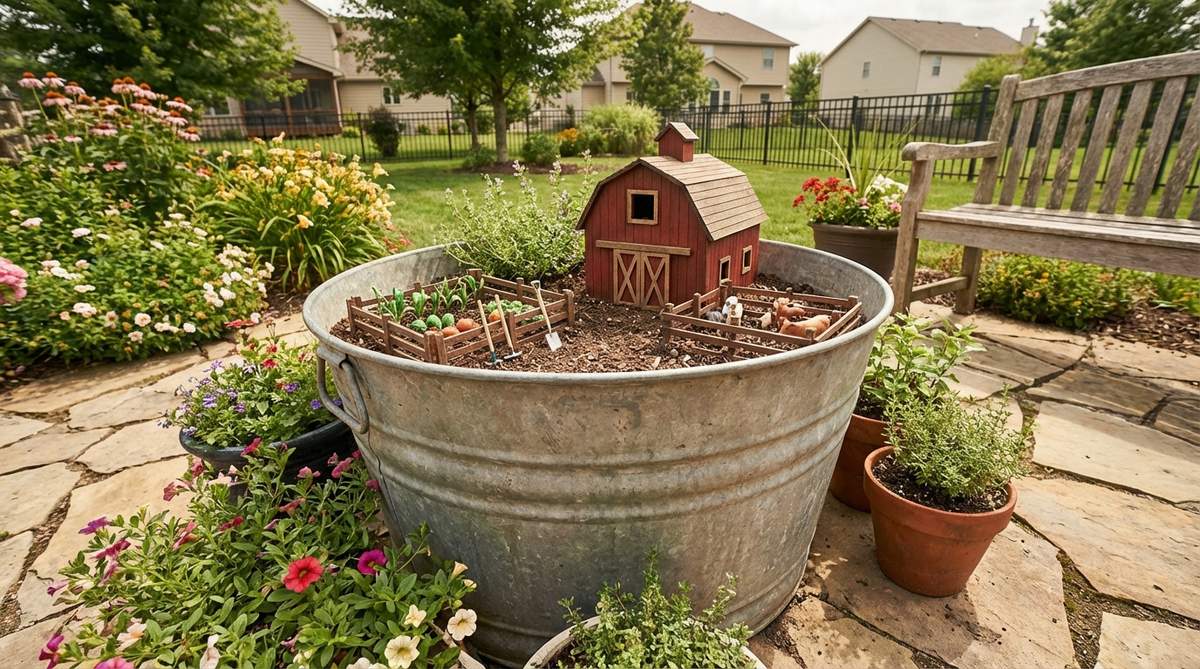
Large galvanized tubs provide ample space for elaborate farmhouse scenes with multiple structures. The metal container adds vintage charm and withstands outdoor placement.
Drill drainage holes in the bottom, then create zones for a miniature barn, vegetable garden section with tiny plant markers, and a small animal area with fence corrals. Use real herbs like thyme and oregano as edible landscaping.
The generous depth accommodates root growth for more substantial plantings. This scale allows narrative development—tell the story of a working farm in miniature.
10. Wooden Crate Rustic Retreat
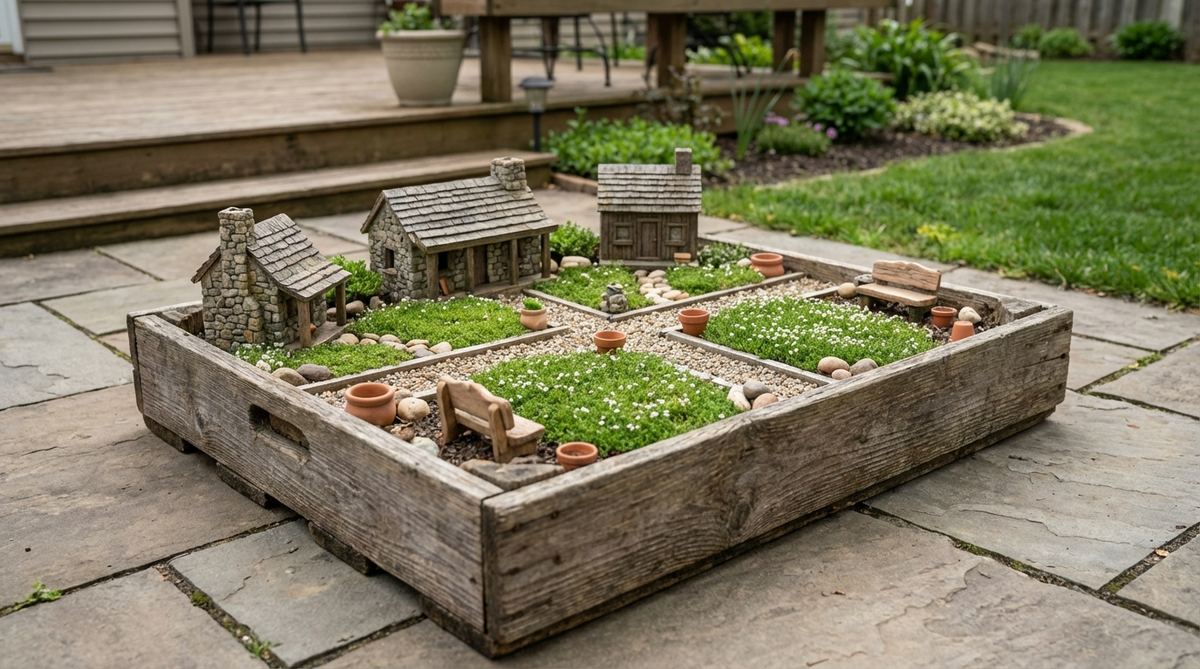
Shallow wooden crates or produce boxes lined with landscape fabric offer rectangular footprints ideal for village layouts. The weathered wood contributes to cottage or farmhouse themes.
Arrange miniature buildings in a linear street pattern with a central pathway. Plant low-growing ground covers like Sagina subulata between structures to represent lawns.
The rectangular format encourages front-to-back depth rather than radial arrangements. Wooden containers eventually degrade outdoors, so treat them as seasonal projects or keep them under cover.
Terrarium Landscape Techniques
Enclosed glass environments require specific layout strategies that account for humidity, visibility through transparent walls, and limited access after planting. These techniques translate landscape design principles to miniature scale.
11. Three-Layer Depth Composition
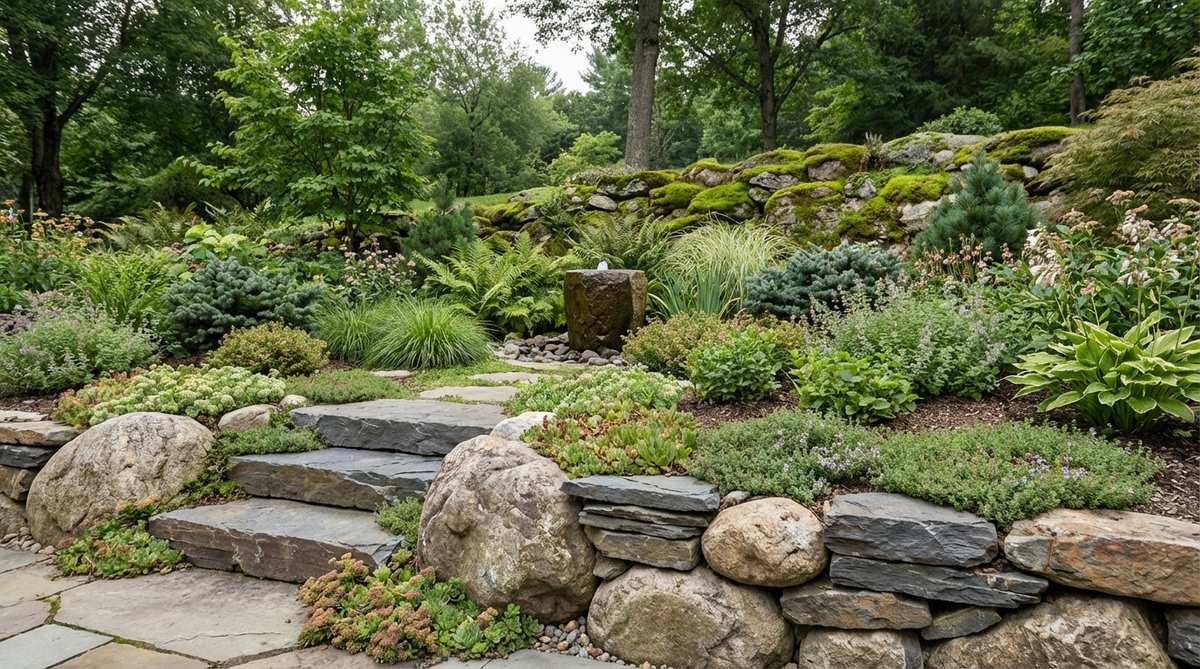
Divide your terrarium into foreground, middle ground, and background zones using progressively smaller elements. Large feature stones anchor the front, medium-sized plants fill the middle, and fine-textured moss creates distant background.
This layering technique creates perceived depth that makes small containers feel more spacious. The eye travels through the composition rather than stopping at a single plane.
Position your primary focal point—a distinctive rock or architectural element—at the intersection of foreground and middle ground. This placement establishes clear spatial hierarchy within the glass walls.
12. Serpentine Stone Mountain Scene
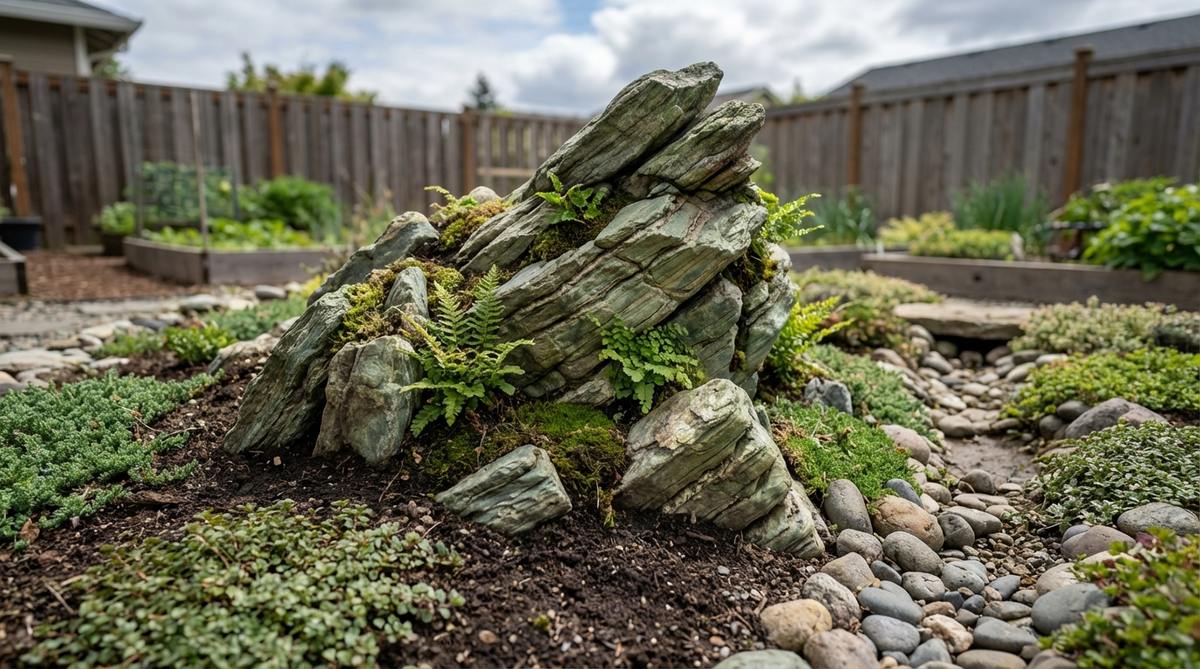
Stack serpentine or other striated stones to create miniature mountain formations with visible geological layers. The green tones in serpentine blend naturally with plant material.
Bury the base of each stone in the soil layer so rocks appear to emerge from the earth rather than sit on top. Tilt stones at slight angles to suggest natural erosion and weathering.
Plant small ferns in crevices between stones to reinforce the alpine or rocky outcrop theme. The contrast between hard stone surfaces and soft plant textures adds visual interest.
13. Sand Desert Oasis Layout
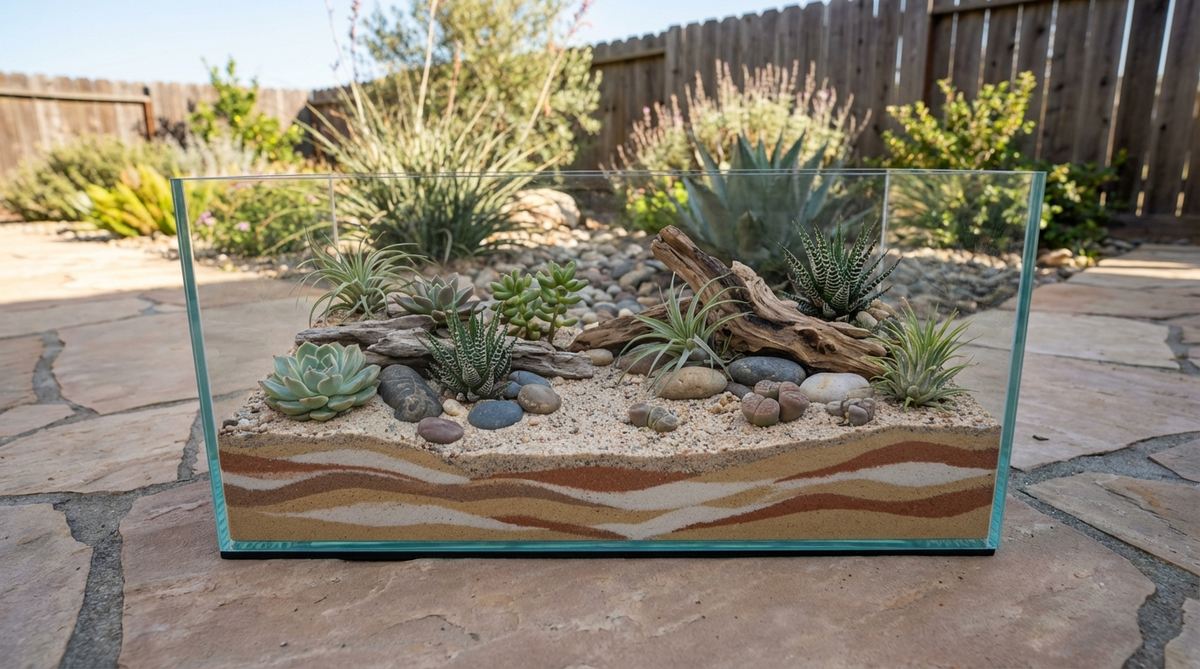
Use different colors of sand—tan, white, rust—to create desert floor patterns in an open terrarium. Layer the sand in organic shapes rather than strict geometric bands.
Plant small succulents and air plants that tolerate dry conditions. Add smooth river rocks as boulders and small pieces of driftwood as desert trees.
This layout requires minimal watering and works in containers without drainage since moisture needs stay low. The sand provides excellent contrast for showcasing succulent forms and colors.
14. Tropical Rainforest Canopy
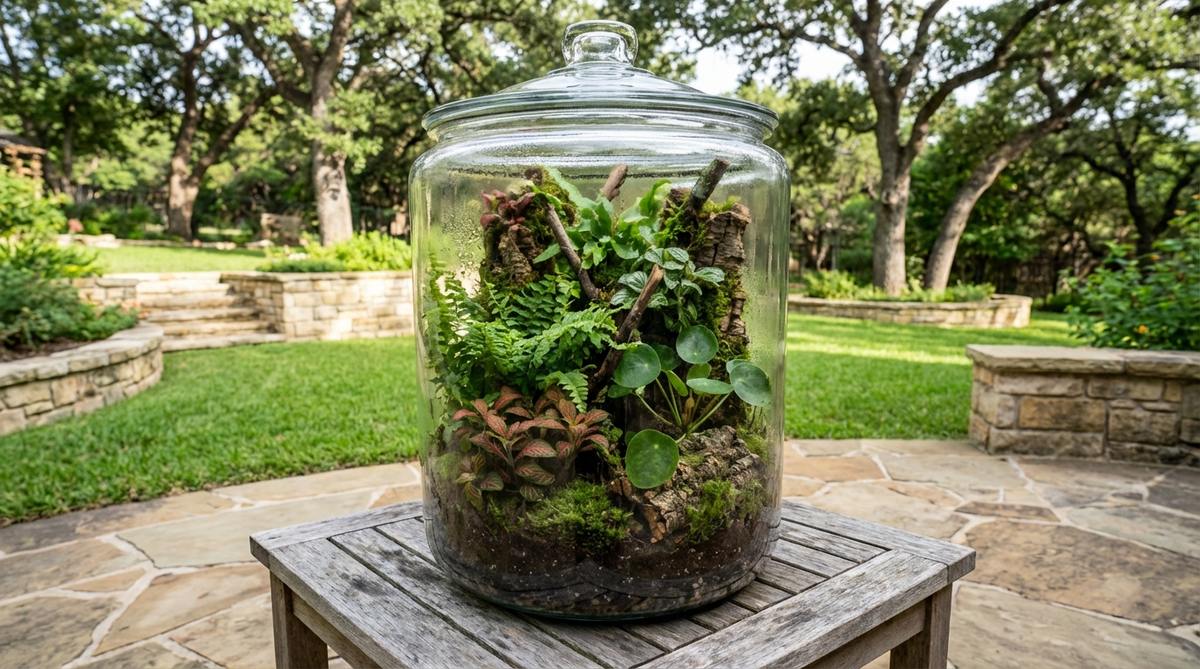
Create a closed terrarium jungle using humidity-loving plants like miniature ferns, Fittonia, and Pilea. The sealed environment maintains consistent moisture without daily attention.
Layer the planting vertically with taller specimens toward the back and cascading varieties draping forward. Add a small piece of cork bark as an epiphyte mounting surface.
The high humidity in closed terrariums supports tropical species that would struggle in open containers. Position away from direct sun to prevent overheating inside the glass.
15. Zen Meditation Garden
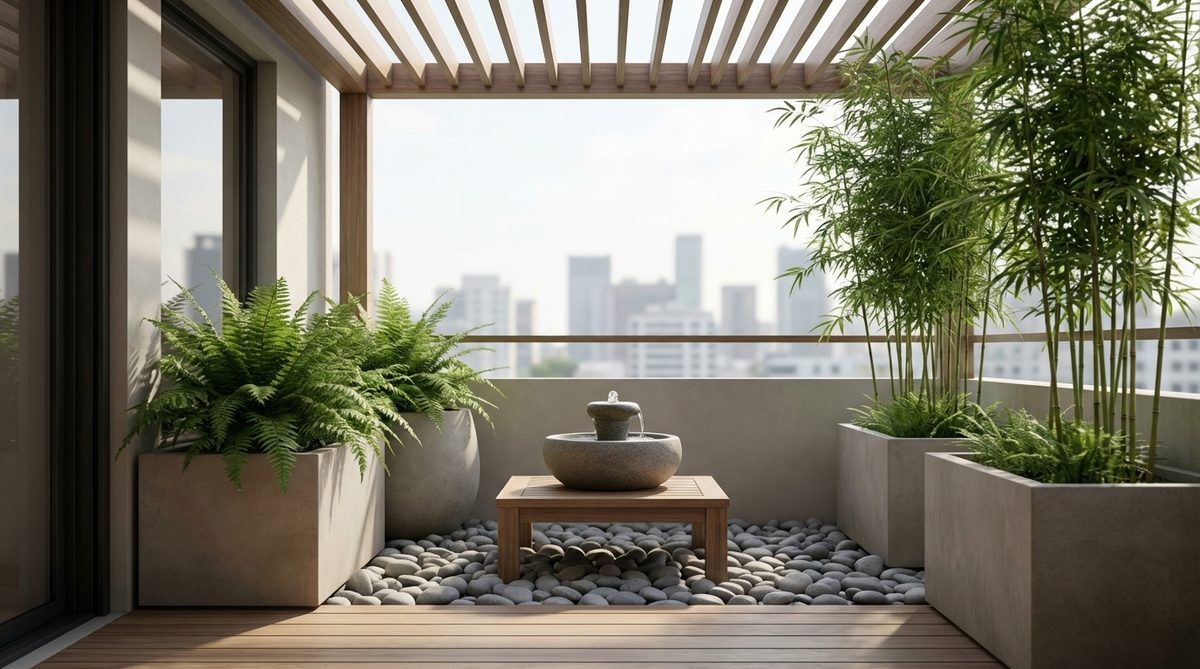
Design a minimalist Japanese-inspired layout using fine white sand, carefully positioned rocks, and a single specimen plant. The restrained palette creates calm visual space.
Rake parallel lines or concentric circles in the sand around rock features to represent water or energy flow. Add a miniature Buddha statue or simple stone lantern as the focal point.
This style emphasizes negative space and intentional placement over abundance. Each element carries visual weight, so positioning becomes critical to overall balance.
Architectural Miniature Villages
Building-focused layouts organize space around structures and hardscape features rather than plant material. These designs tell stories through architectural details and urban planning at miniature scale.
16. Main Street Village Row
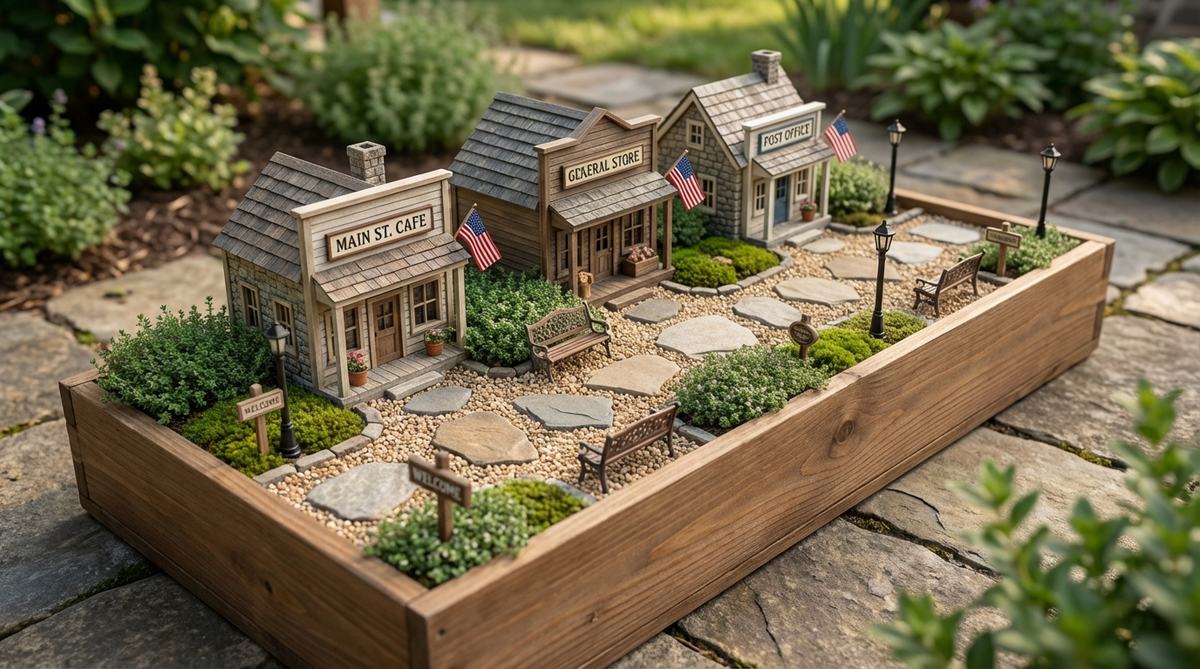
Line up three to five miniature buildings along a central pathway to create a village main street. Use pea gravel or fine sand for the road surface with larger flat stones as stepping areas.
Plant compact ground covers between buildings to represent yards without obscuring the structures. Add miniature street furniture—benches, lamp posts, signs—to develop the urban character.
This linear arrangement works well in rectangular containers or window boxes. The organized street pattern creates immediate visual clarity about the scene’s purpose and story.
17. Cottage With Garden Courtyard
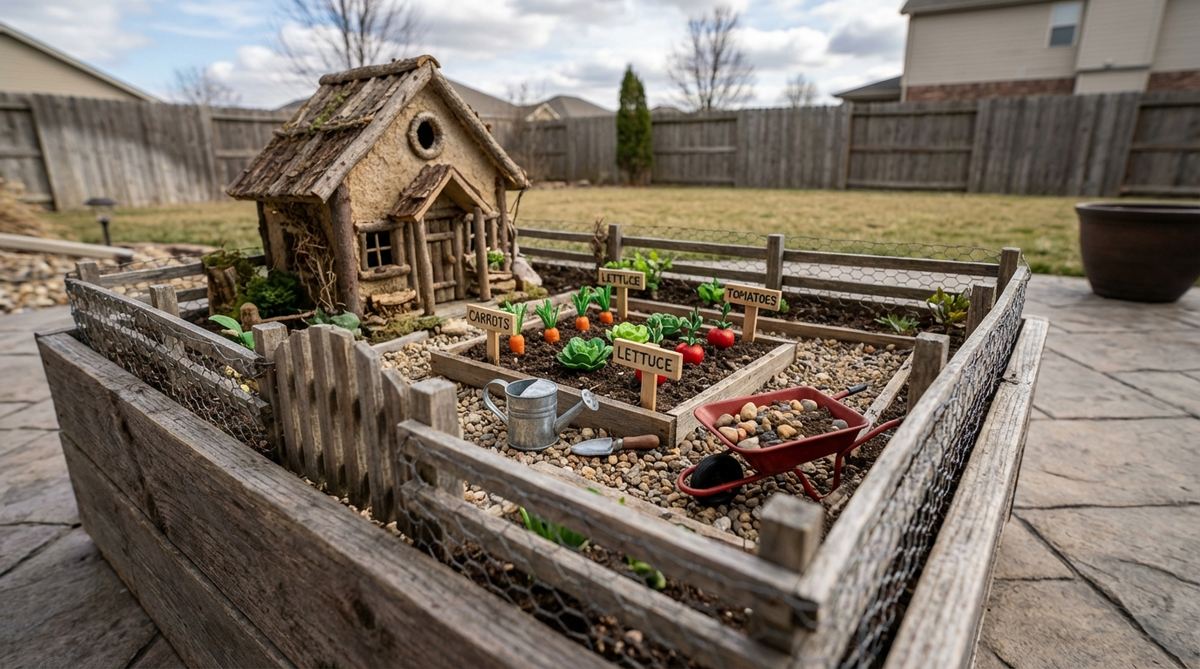
Position a miniature cottage toward one edge of the container, leaving open space for an enclosed courtyard garden. Use small wood pieces or wire to create fence enclosures.
Plant a miniature vegetable garden inside the courtyard using tiny artificial vegetables or label markers. Add a miniature watering can, garden tools, and a wheelbarrow as working garden elements.
The enclosed courtyard creates a defined outdoor room that relates directly to the cottage. This layout tells a story about daily life and seasonal food growing.
18. Lighthouse Coastal Scene
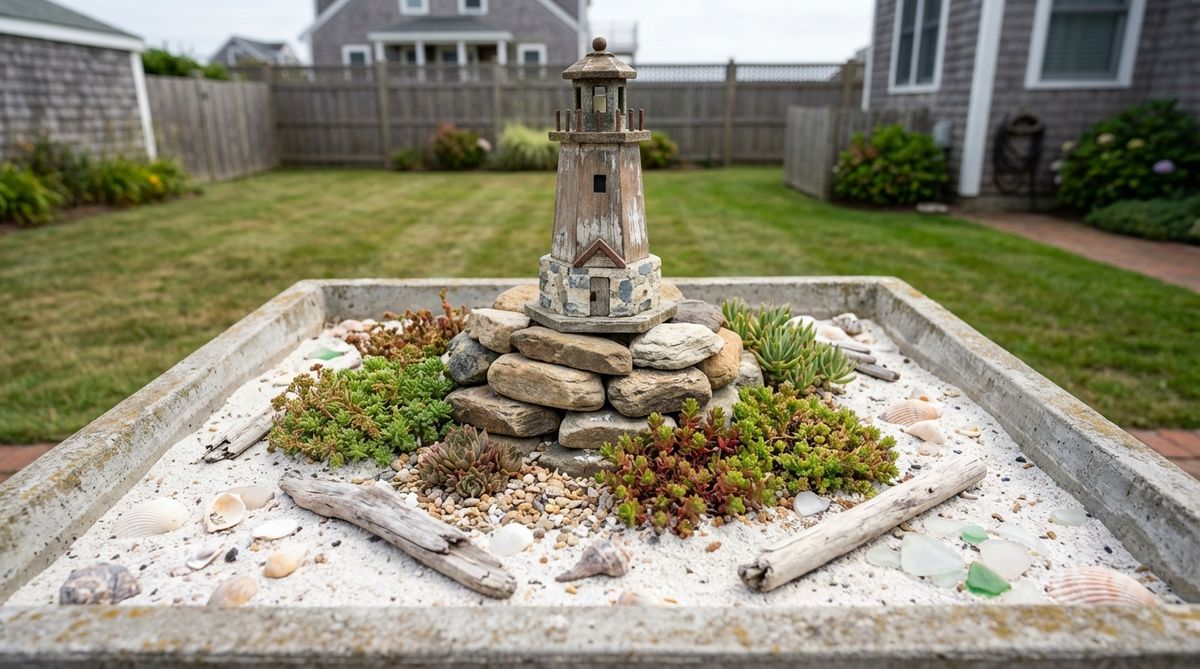
Place a miniature lighthouse on elevated terrain created with stacked stones. Surround the base with white sand or fine gravel to represent a beach environment.
Add shells, small pieces of driftwood, and beach glass as coastal details. Plant drought-tolerant varieties like sedums that suggest windswept seaside vegetation.
The vertical lighthouse provides a strong focal point and height variation in an otherwise flat coastal landscape. This theme works particularly well in wide, shallow containers that mimic beach expanses.
19. Treehouse Elevated Dwelling
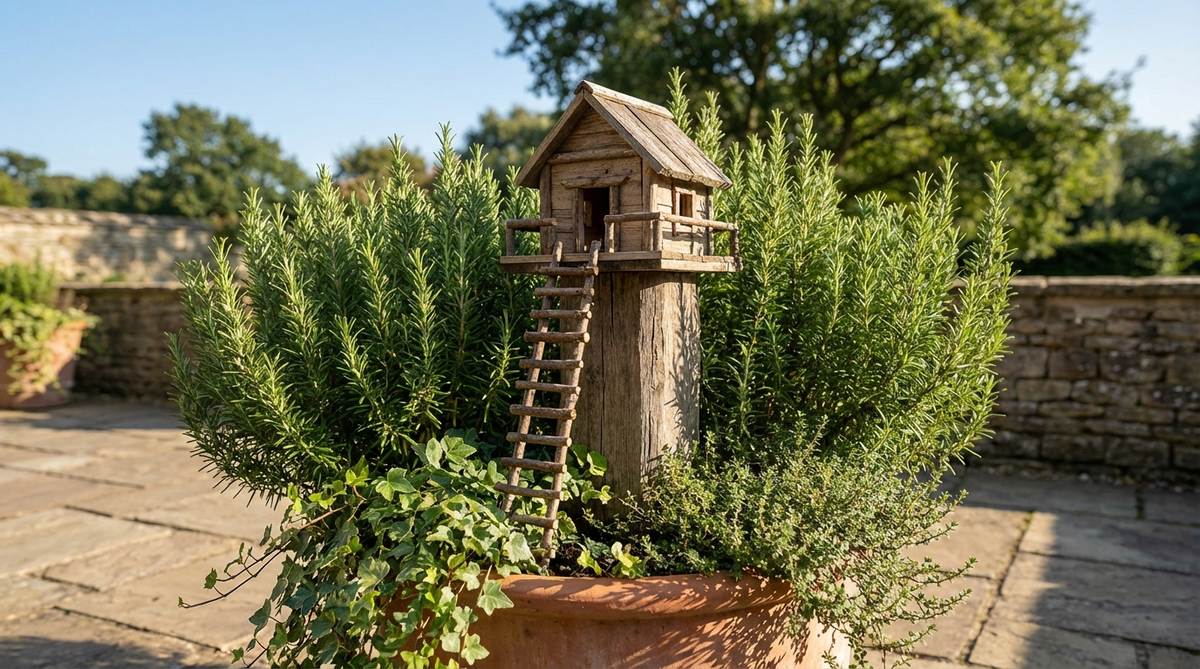
Mount a miniature house on a vertical support or secure it among branches of a small woody herb like rosemary. The elevated structure creates vertical interest and suggests childhood adventure.
Build a ladder or stairway from twigs leading up to the entrance. Plant climbing varieties at the base that will eventually grow up around the support structure.
This three-dimensional layout uses vertical space efficiently in smaller containers. The elevation creates natural foreground and background separation even in compact footprints.
20. Castle Ruins With Overgrowth
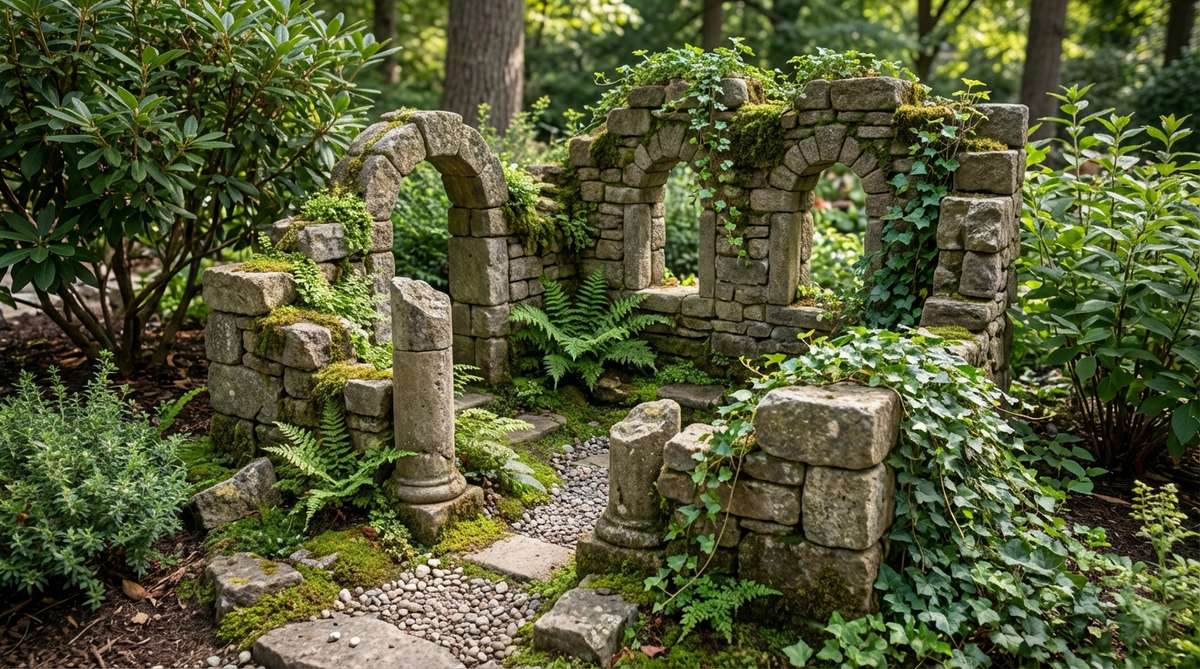
Arrange stone pieces or miniature castle components to suggest ancient ruins partially reclaimed by nature. The combination of structure and decay creates visual tension and narrative depth.
Encourage moss growth on and around the stone elements to reinforce the sense of age. Plant small ferns in crevices as if nature slowly dismantles the architecture.
This romantically themed layout appeals to fantasy aesthetics while remaining botanically grounded. The ruins provide hardscape structure that won’t shift as plants mature.
Seasonal & Themed Designs
Temporary or changeable layouts celebrate specific times of year or special interests. These designs refresh quickly and allow experimentation without long-term plant commitments.
21. Autumn Harvest Scene
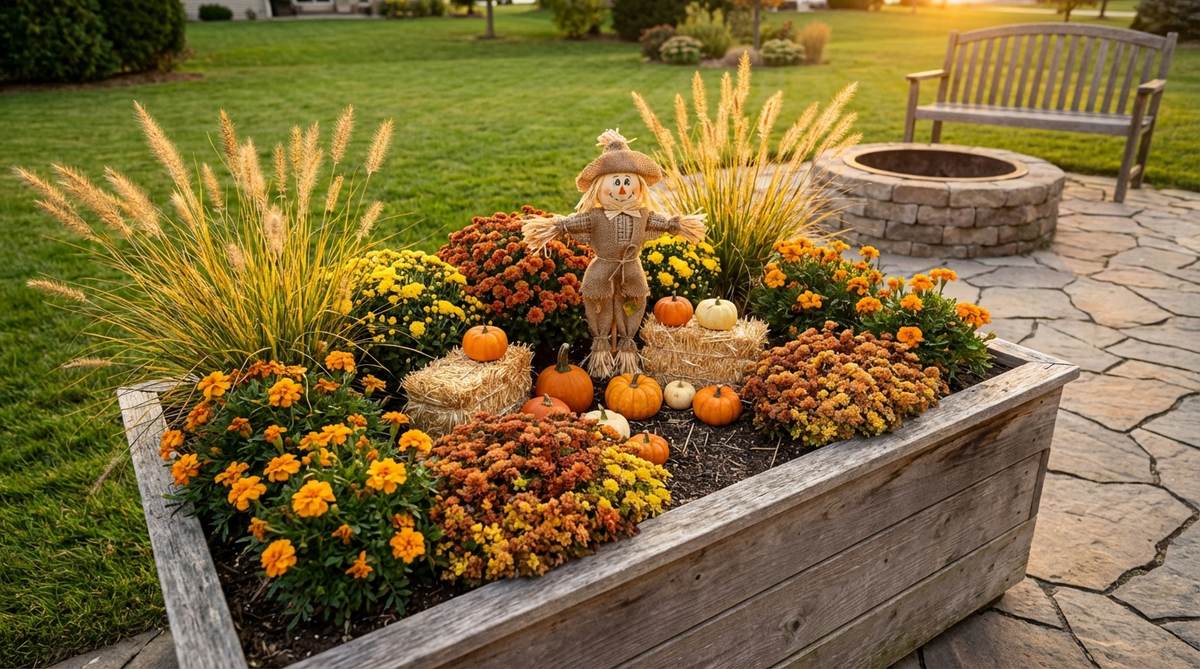
Create a fall vignette using miniature pumpkins, hay bales made from dried grass bundles, and warm-toned decorative elements. Choose plants with rust, orange, or burgundy foliage if using living material.
Add a scarecrow figure and tiny corn stalks made from dried plant material. Scatter preserved autumn leaves across the soil surface as seasonal ground cover.
This temporary design transitions easily after the season by swapping out decorative elements while keeping the base plantings. The warm color palette creates strong visual impact during gray autumn days.
22. Winter Snow Village
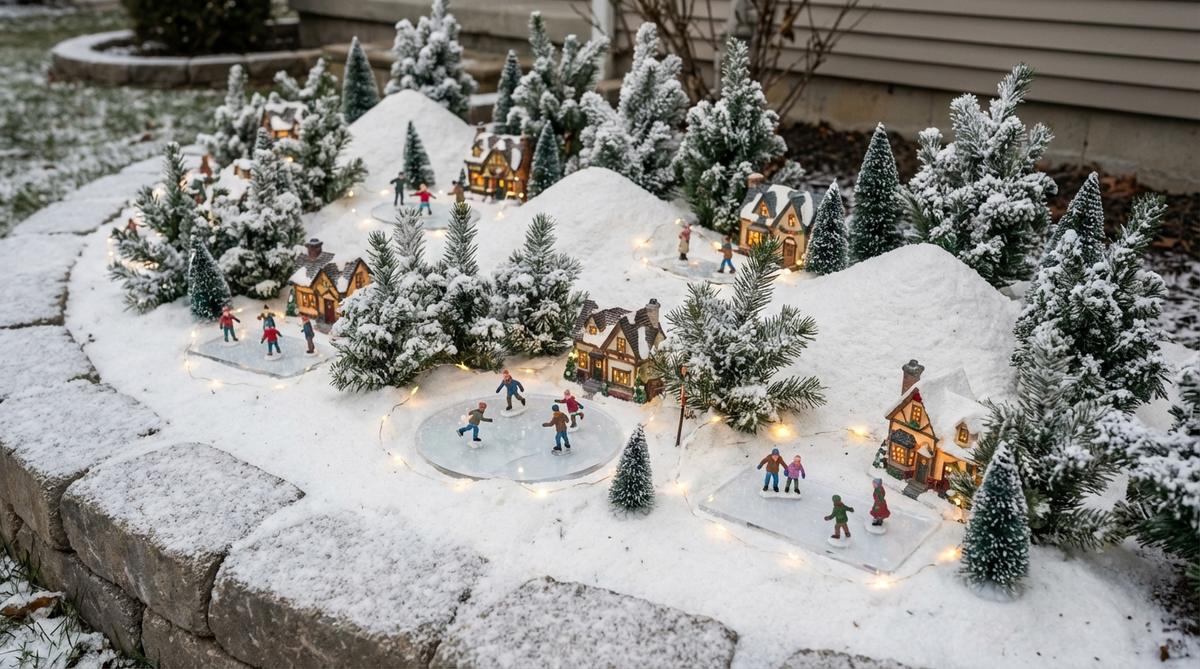
Use white sand, crushed white stone, or epsom salt to simulate snow covering a miniature village. Position small evergreen sprigs as winter trees dusted with “snow.”
Add miniature ice skating rinks made from small mirrors, and tiny figures engaged in winter activities. Battery-operated LED string lights create a warm glow against the white landscape.
This design works without living plants, making it ideal for holiday displays that need to last several weeks indoors. The monochromatic palette emphasizes form and structure over color.
23. Spring Flower Garden
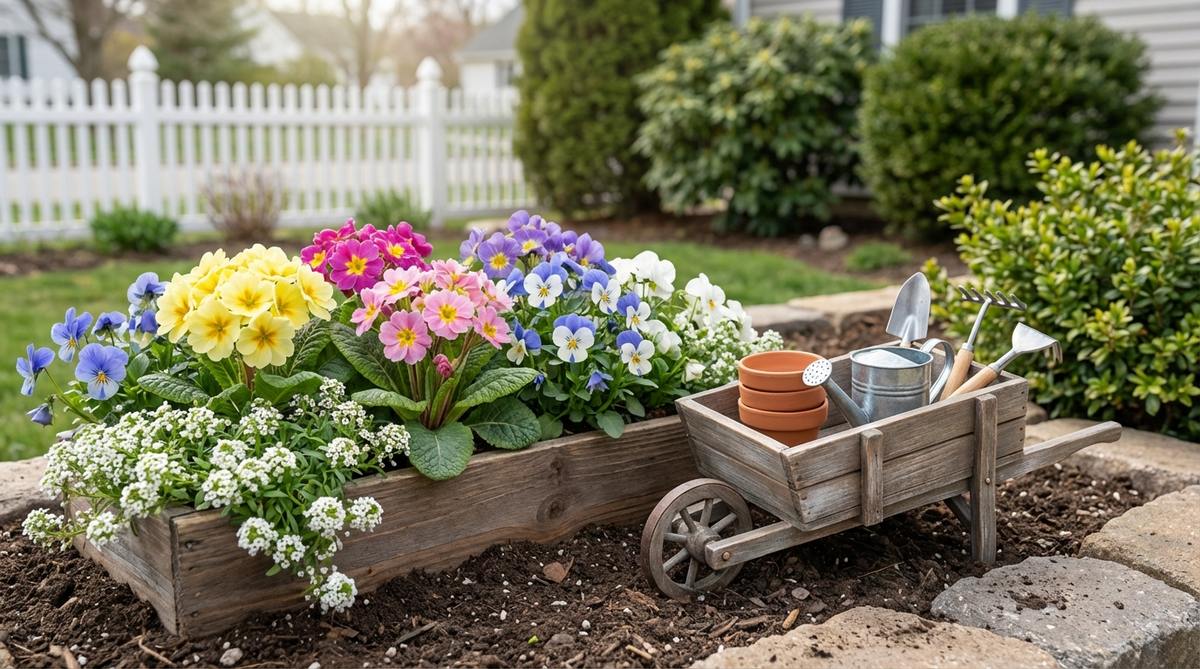
Feature small blooming plants like miniature primroses, tiny violas, or alyssum in a celebration of spring renewal. Arrange plants in colorful clusters rather than scattered single specimens.
Add a miniature garden cart or wheelbarrow filled with tiny flower pots. Include a small watering can and garden tools to suggest active spring planting.
The blooming plants provide natural seasonal timing—design in early spring when garden centers stock miniature flowering varieties. This layout captures the optimism of the growing season.
24. Beach Vacation Paradise
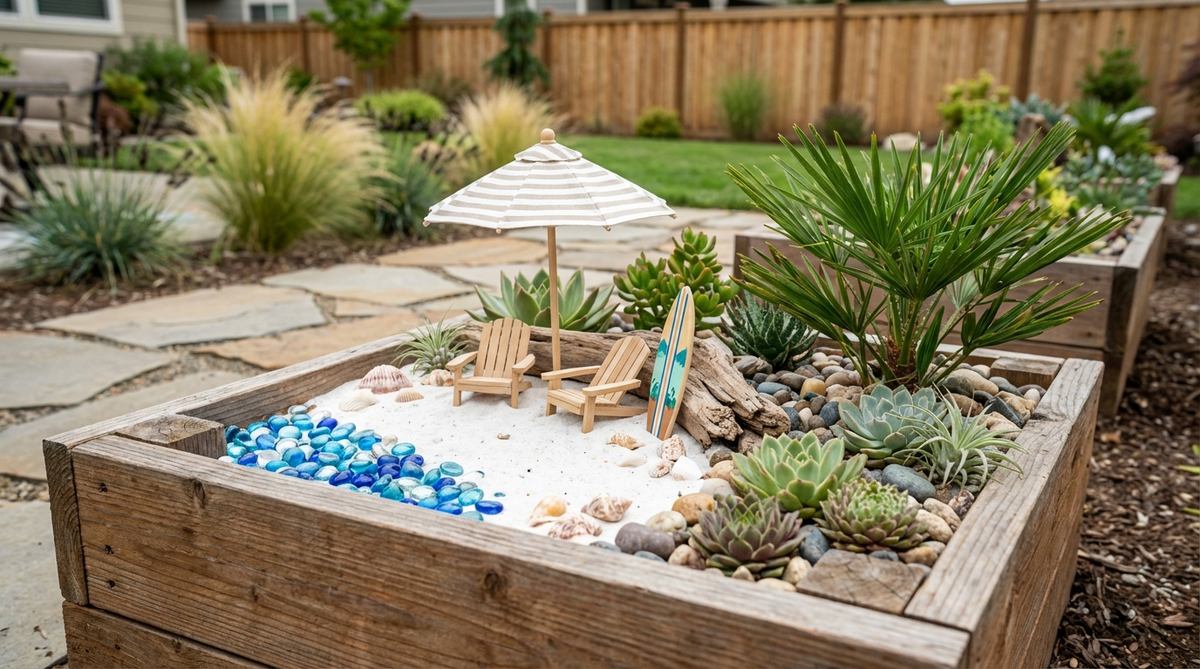
Build a miniature beach resort using white sand, shells, and tropical elements. Add a tiny umbrella, beach chairs, and a miniature surfboard leaning against a driftwood “tree.”
Plant small succulents or air plants that tolerate sandy conditions and suggest palm trees or tropical vegetation. Use blue glass beads or a small mirror as a water feature.
This whimsical theme appeals to vacation memories and provides a cheerful visual escape. The sand base requires minimal watering, making this a low-maintenance option.
25. Camping Adventure Setup
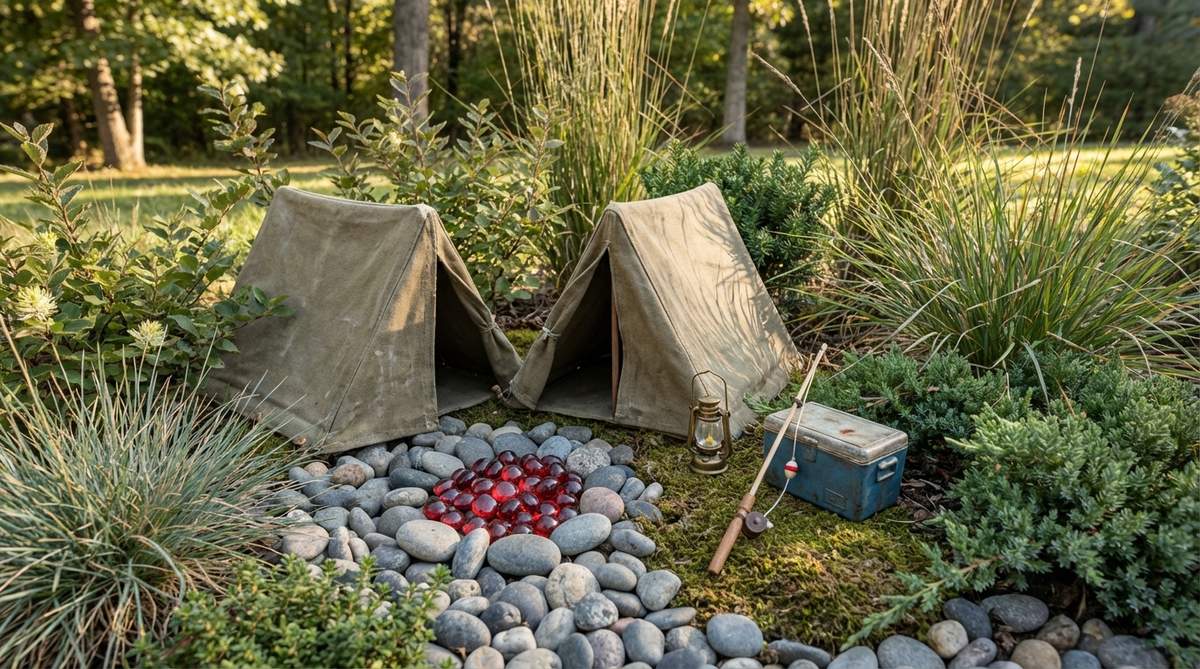
Position a miniature tent or camper among small plants to create an outdoor recreation scene. Add a tiny campfire ring made from small pebbles with red glass beads as glowing embers.
Include camping accessories like a miniature lantern, fishing pole, and cooler. Plant native-looking grasses and small shrubs to suggest a wilderness campsite.
This theme resonates with outdoor enthusiasts and creates narrative possibilities. The camping elements remain visible even as plants grow, maintaining the scene’s readable story.
Water Feature Layouts
Actual or simulated water elements add movement, reflection, and cooling visual effects to miniature gardens. These features become primary focal points that organize surrounding design decisions.
26. Mirror Pond With Bridge
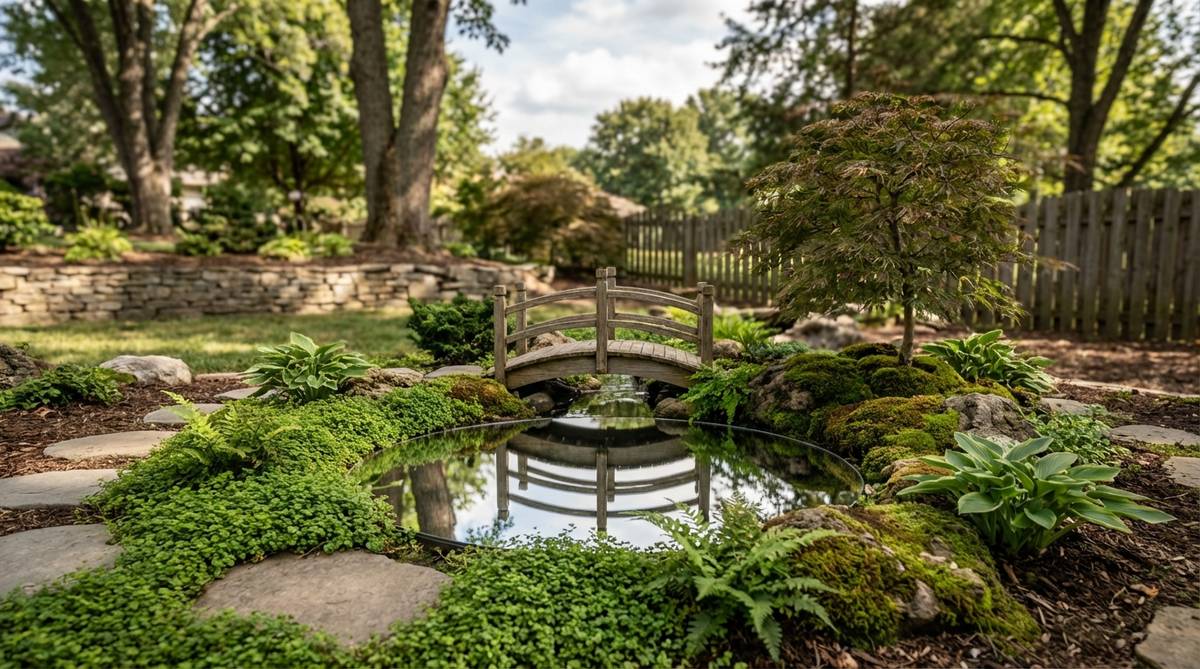
Cut a small mirror to fit as a pond surface embedded in the soil surface. The reflection doubles the visual impact of overhead plants and creates the illusion of depth.
Position a miniature arched bridge spanning the pond, with stepping stones leading to each end. Plant moisture-loving varieties like baby tears around the pond edges.
The mirror requires no maintenance while providing constant “water” presence. Clean the surface periodically to maintain reflective quality and prevent soil buildup.
27. Fountain Centerpiece Plaza
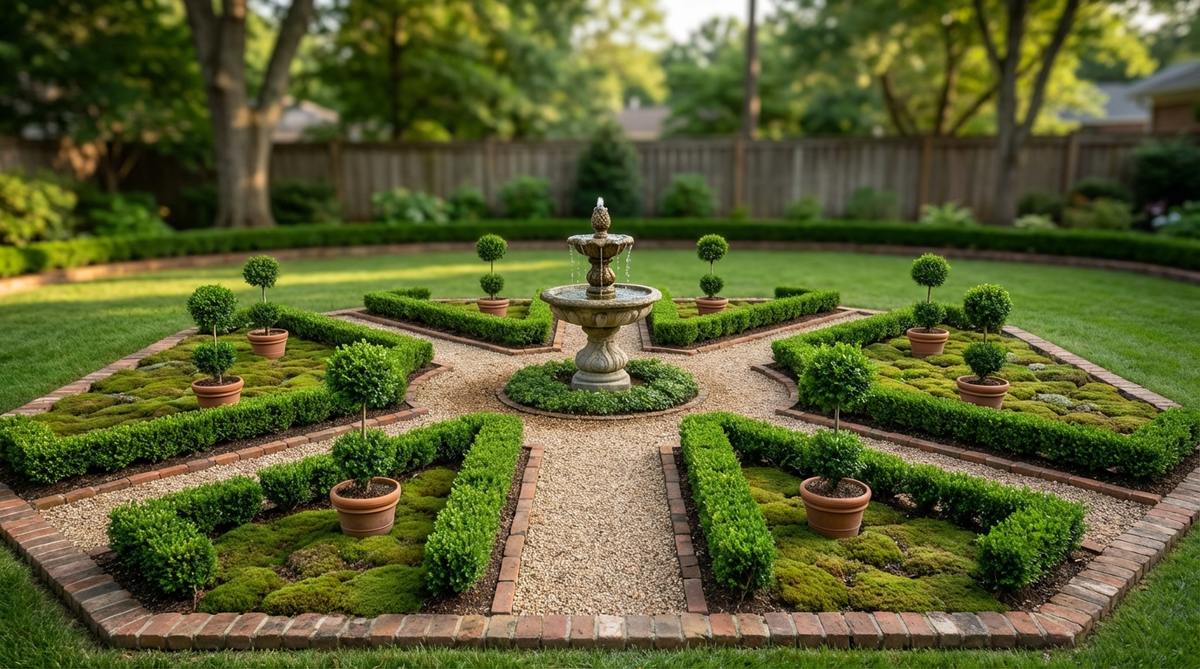
Place a small decorative fountain as the central feature with paths radiating outward like spokes. The symmetrical layout creates formal garden structure at miniature scale.
Plant identical specimens at regular intervals around the fountain perimeter to reinforce the formal geometry. Use clipped moss or fine ground cover as manicured lawn areas.
This design references European plaza traditions and grand estate gardens. The organized structure contrasts effectively with more naturalistic designs in a collection.
28. Koi Pond With Glass Gems
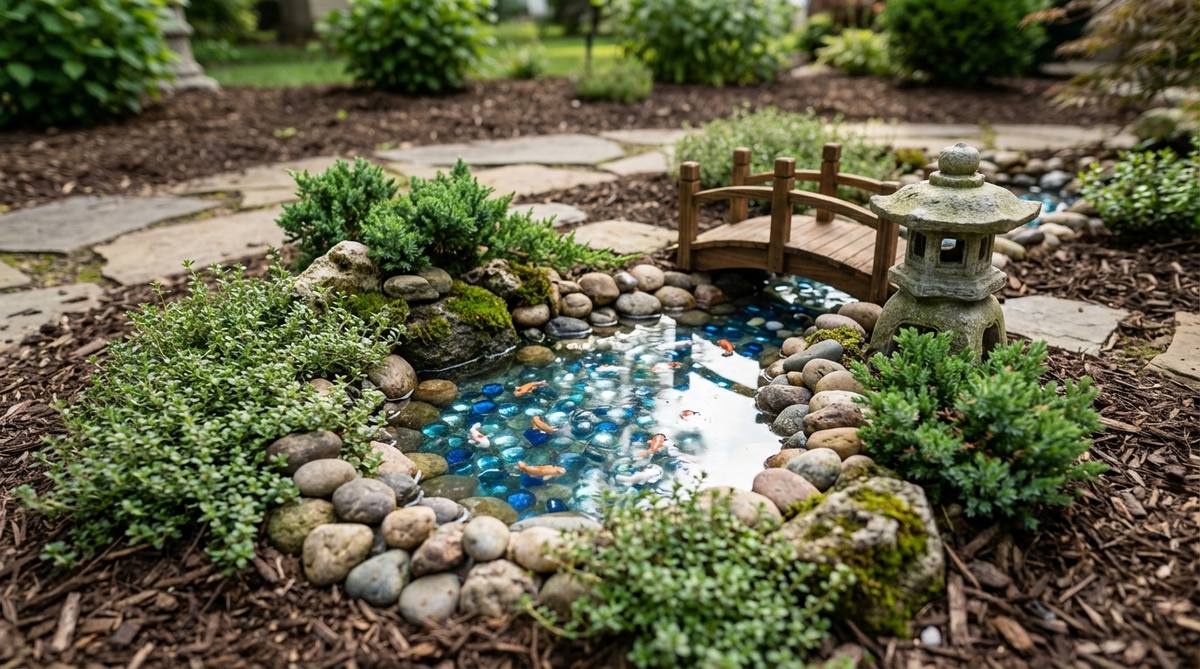
Create a pond feature using clear resin or stacked blue and clear glass gems to suggest water. Add small fish-shaped beads or painted pebbles as koi swimming beneath the surface.
Build up pond edges with small rocks, then plant cascading varieties that drape over the edge toward the water. Add a miniature bridge and stone lantern for Japanese garden authenticity.
The glass gems catch light and create shimmer that suggests moving water. This technique provides visual water interest without actual moisture that could affect plant health.
29. Waterfall Rock Formation
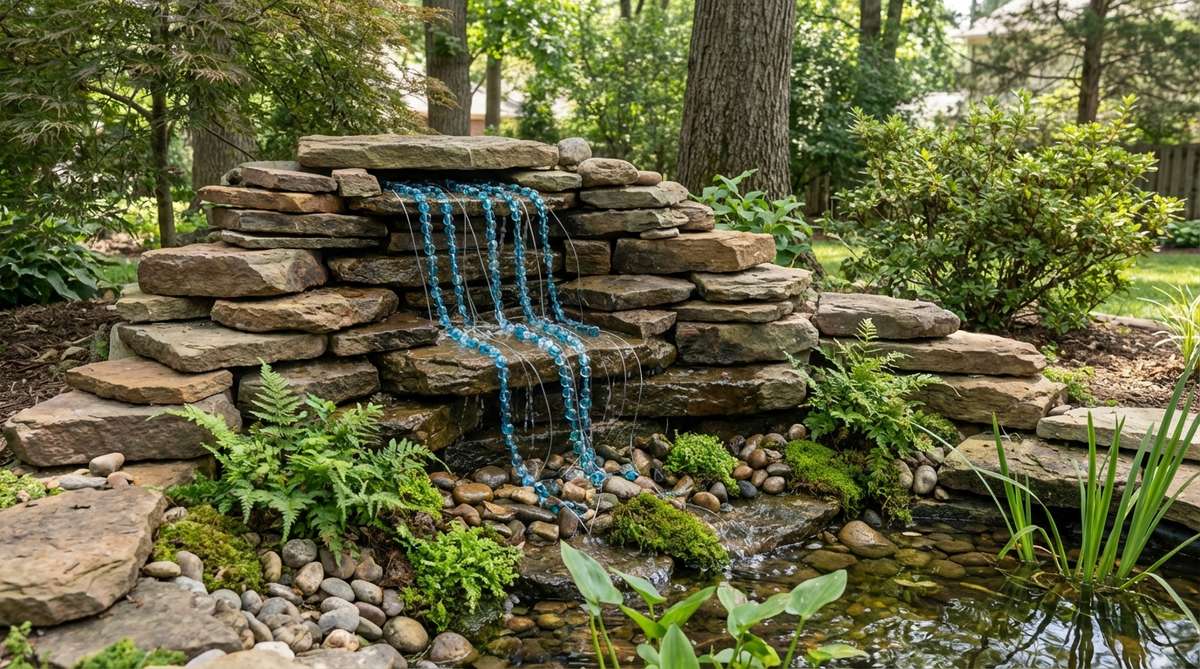
Stack flat stones in a graduated formation with spaces between layers. Tuck small strands of blue glass beads or clear fishing line through the gaps to represent falling water.
Plant small ferns and moss around the waterfall base to suggest lush moisture-fed vegetation. Position the rock formation toward one edge of the container so the waterfall feeds into a pond or stream feature.
The vertical rock stack adds dramatic height while the waterfall effect draws the eye downward through the composition. This creates dynamic visual movement in static designs.
30. Creek With Stepping Stones
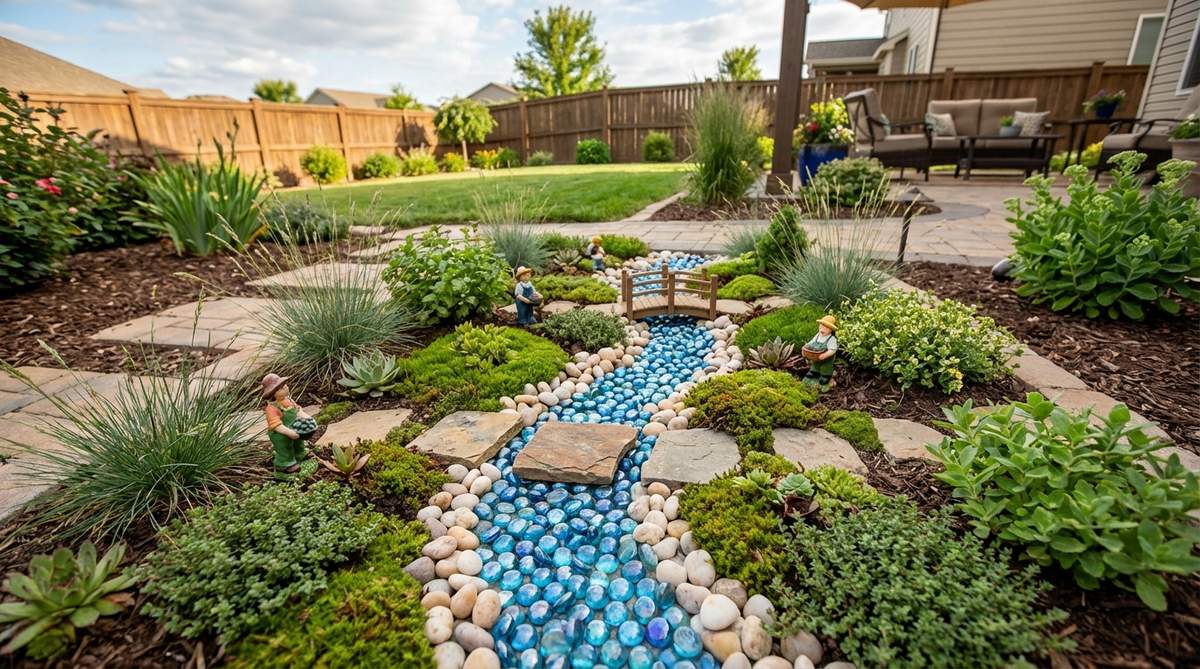
Arrange a curving line of blue glass beads or light-colored pebbles to represent a creek bed flowing through the container. Position flat stones as stepping stones crossing at intervals.
Plant low ground covers on both banks, with slightly taller plants creating visual barriers that suggest the creek winding out of sight. Add miniature figures crossing the stones to establish scale.
The meandering creek creates natural zones on either side that can house different plant communities or thematic elements. This layout guides viewers through the entire composition.
Vertical & Hanging Gardens
Elevated and suspended miniature gardens expand design possibilities beyond tabletop surfaces. These approaches maximize space usage and create opportunities for cascading plant forms.
31. Hanging Colander Cascade
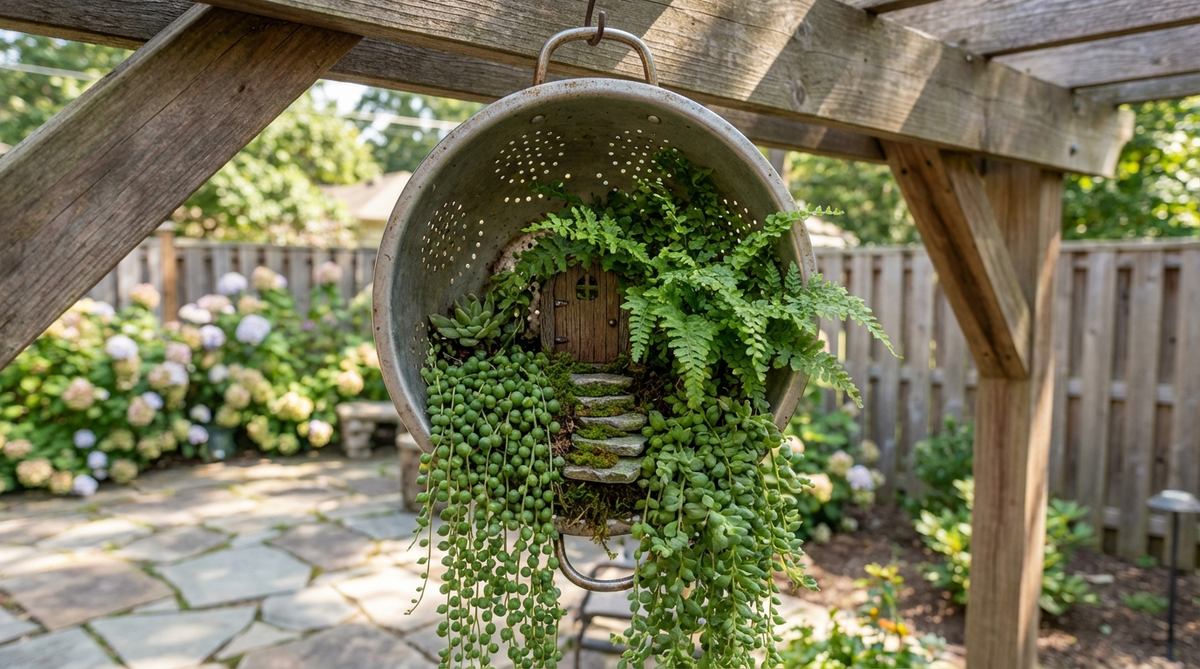
Repurpose a vintage metal colander as a hanging container where drainage is built into the design. The holes allow trailing plants to grow through and create a living sphere effect.
Plant varieties with long vining habits like string of pearls or trailing ferns that naturally cascade through the drainage holes. Add a miniature fairy dwelling inside where it remains visible through the planted exterior.
This suspended design utilizes vertical space and creates a three-dimensional garden visible from all angles. The colander’s inherent drainage makes overwatering nearly impossible.
32. Wall-Mounted Shadow Box Garden
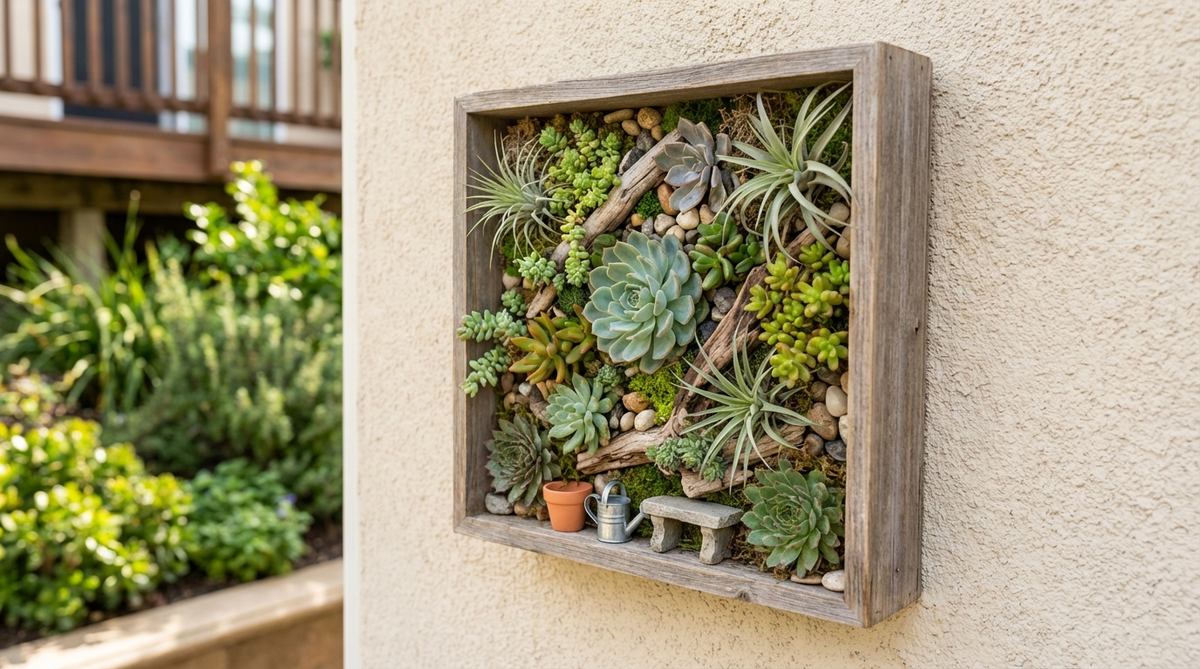
Convert a shallow shadow box frame into a vertical miniature garden by adding a waterproof liner. Mount on a wall to save horizontal space while creating living art.
Plant drought-tolerant succulents or air plants that tolerate the limited soil depth. Arrange miniature accessories in a vertical composition that reads clearly from straight-on viewing.
The frame edge defines the garden boundaries and creates a finished, gallery-quality presentation. This approach works particularly well in small apartments or offices where floor space is limited.
33. Tiered Stand Village Levels
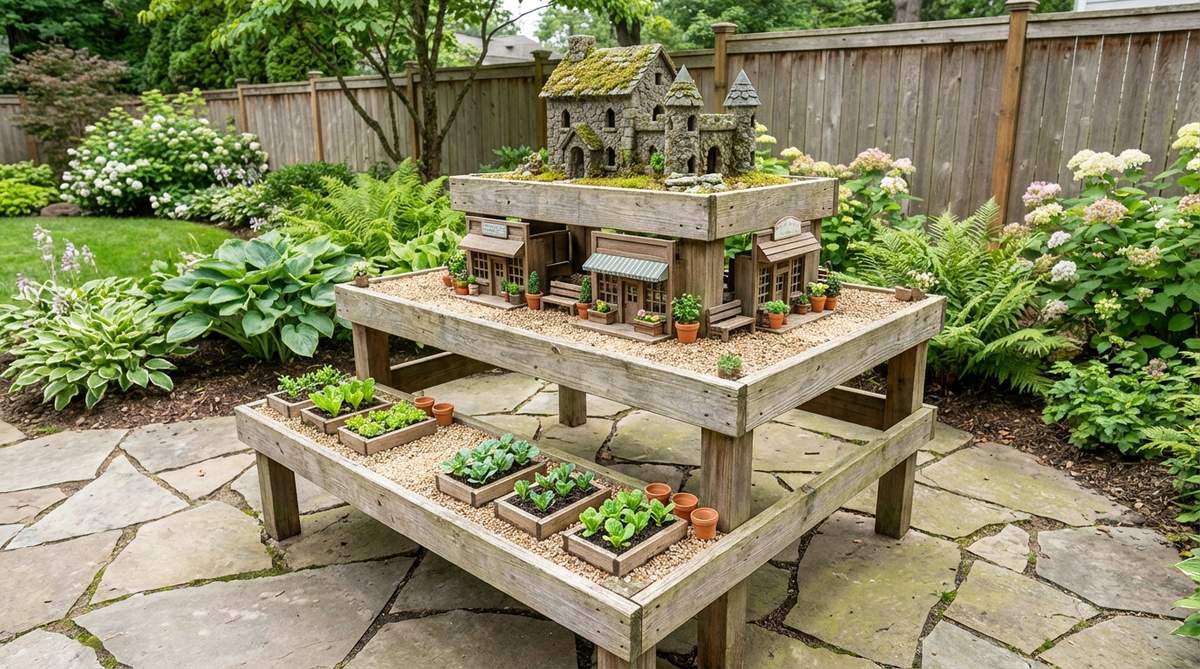
Use a multi-tiered plant stand or cake stand to create village neighborhoods at different elevations. Each tier becomes a distinct neighborhood or themed area within a larger community.
Design the top tier as an elevated estate or castle overlooking lower village areas. Use the middle tier for main street shops and the bottom level for farm or garden plots.
The vertical separation creates clear zoning while maintaining visual connection between levels. This structure allows simultaneous viewing of multiple miniature gardens in a compact footprint.
Final Thoughts On Miniature Garden Layouts
Successful miniature garden decor balances scale, theme, and spatial organization to create cohesive living landscapes within confined containers. Start with a clear vision—whether woodland retreat, architectural village, or seasonal celebration—then select plants and accessories that support that specific narrative. Layer your design with foreground, middle ground, and background elements to establish depth, and maintain consistent proportions so each component relates harmoniously to the whole. Experiment with different containers and themes to discover which layouts resonate with your personal aesthetic and maintenance preferences, knowing that miniature gardens remain flexible projects you can refresh seasonally or redesign completely as your skills develop.
Frequently Asked Questions
What size container works best for beginners starting miniature gardens?
Containers between 8 and 14 inches in diameter provide enough space to create meaningful layouts without overwhelming new designers. This size accommodates 3-5 miniature accessories plus several small plants, allowing practice with spatial arrangement and scale relationships. Shallow bowls or standard terra cotta pots in this range offer good drainage and visibility while remaining manageable for planting and maintenance. Avoid tiny containers under 4 inches until you develop editing skills and proportion judgment.
How do I prevent miniature garden plants from outgrowing the design?
Select naturally compact varieties like miniature ferns, slow-growing succulents, cushion moss, and dwarf cultivars specifically bred for small spaces. Trim plants regularly to maintain scale, removing new growth before it disrupts proportions. Root pruning every 12-18 months keeps plants contained without requiring transplanting. For aggressive growers, replace specimens annually rather than fighting their natural growth habit, treating plants as seasonal elements within permanent hardscape structures.
Can miniature fairy gardens survive outdoors year-round?
Outdoor miniature gardens succeed when you choose weather-resistant materials and cold-hardy plants appropriate to your climate zone. Select resin or stone accessories rather than wood or fabric that degrades in moisture. Plant perennials with compact growth habits that survive local winters, and remove delicate decorative elements during harsh weather. Ensure containers have drainage holes to prevent ice damage, and position gardens in locations protected from extreme temperature swings and heavy wind.
What plants work best in closed terrarium environments?
Humidity-loving tropical species thrive in sealed terrariums where moisture recirculates. Miniature ferns like maidenhair and button ferns, Fittonia nerve plants, Pilea varieties, baby tears, and small-leafed Peperomia all tolerate consistent moisture and lower light conditions inside glass. Avoid succulents and cacti in closed terrariums since they require dry conditions and good air circulation. Choose plants with similar water and light requirements so all specimens thrive under the same conditions.
How often should I water miniature gardens and terrariums?
Open miniature gardens require watering when the top soil layer feels dry, typically every 3-5 days depending on plant selection, container size, and environmental conditions. Water sparingly since small containers have limited drainage capacity. Closed terrariums need watering only every few weeks or months once the ecosystem establishes, and only if condensation disappears from the glass walls. Monitor plants for wilting or yellowing as signs of water stress rather than following rigid schedules.