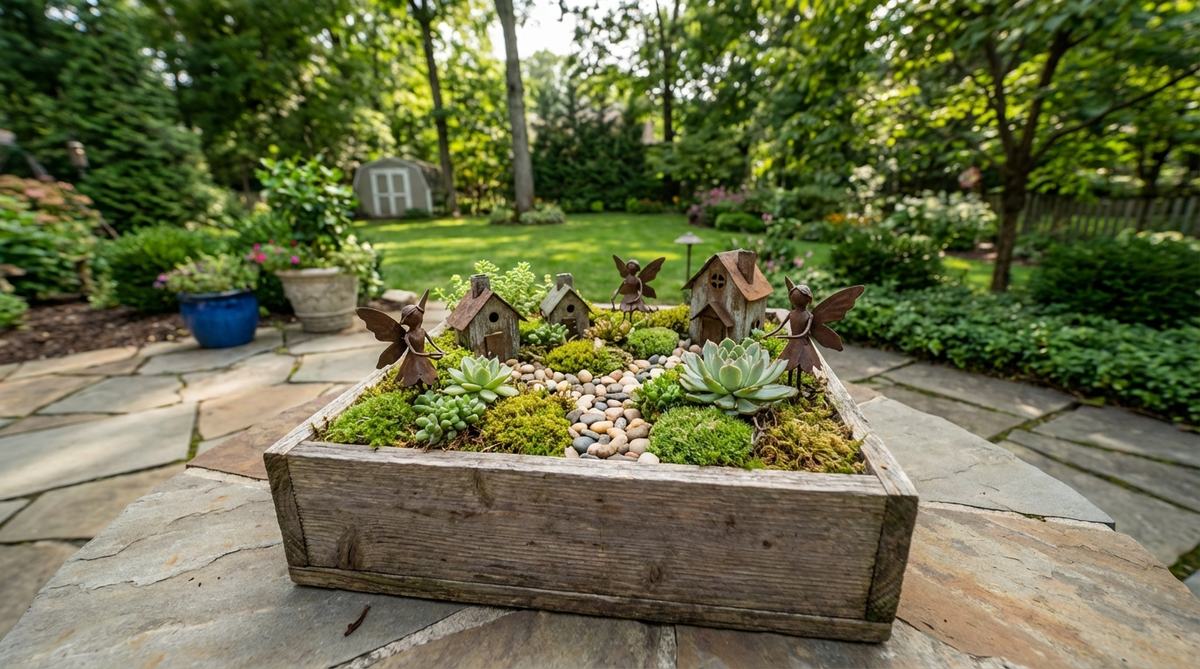
Creating mini gardens transforms compact spaces into enchanting displays that capture the imagination of both children and adults. Whether you’re working with tabletop containers or fairy tale themes, these miniature landscapes offer endless creative possibilities without requiring extensive square footage. Fresh Garden Ideas brings you expert-curated designs that combine practical horticulture with whimsical storytelling, helping you build magical worlds in surprisingly small spaces.
Design SnapshotKey Principles
- Scale Consistency: Maintain proportional relationships between plants, structures, and accessories to create believable miniature worlds
- Container Selection: Choose vessels with proper drainage and depth appropriate to your plant selections and theme requirements
- Layered Composition: Build visual interest through height variation, textural contrast, and strategic placement of focal points
- Plant Compatibility: Group species with similar water, light, and soil requirements to ensure long-term vitality
Enchanted Fairy Tale Miniatures
Fairy tale-inspired designs transport viewers into storybook worlds through carefully chosen elements that evoke classic narratives. Designers layer moss, miniature figures, and dwarf plants to establish instantly recognizable scenes. These gardens thrive when builders balance whimsy with botanical realism.
1. Woodland Cottage With Stone Pathway
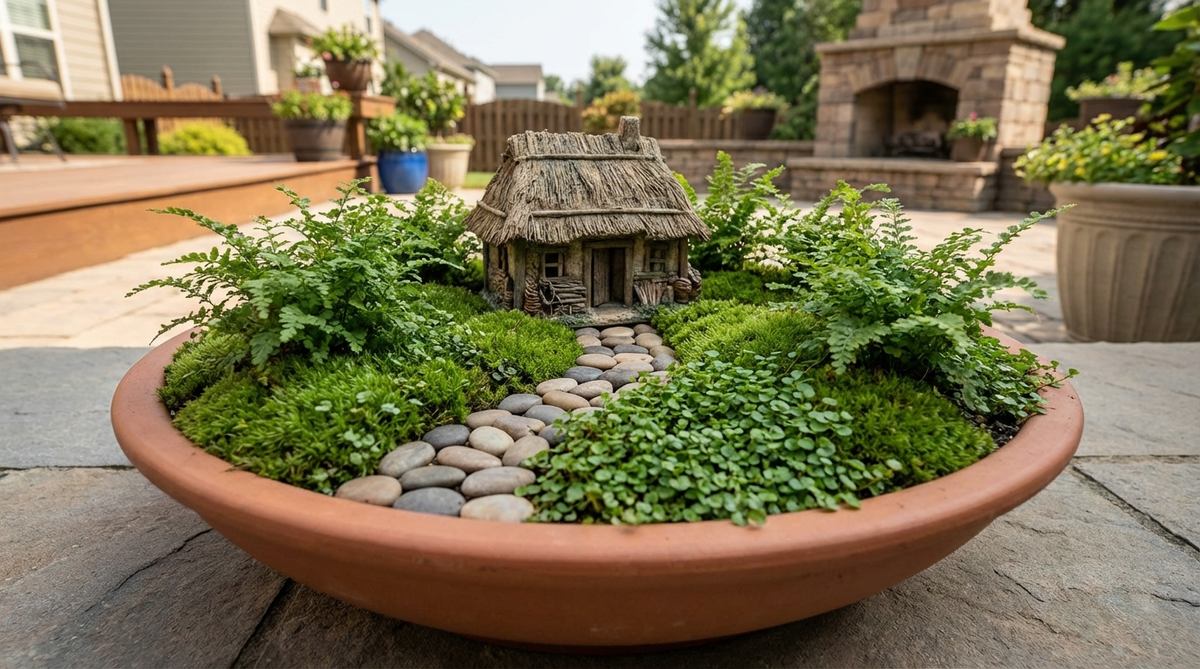
A miniature thatched cottage sits among cushions of Irish moss and baby’s tears, connected to the container edge by a winding path of flat river pebbles. Dwarf ferns flank the structure, creating the illusion of a forest clearing.
Position the cottage off-center to establish visual flow, then press pebbles firmly into moist potting mix at slight angles for a weathered appearance. Use a spray bottle for watering to prevent displacing your carefully arranged stones.
This design works exceptionally well in wide, shallow bowls where horizontal space allows for journey-like storytelling. The low-growing groundcovers require minimal pruning while maintaining the scale relationship.
2. Rapunzel Tower Garden
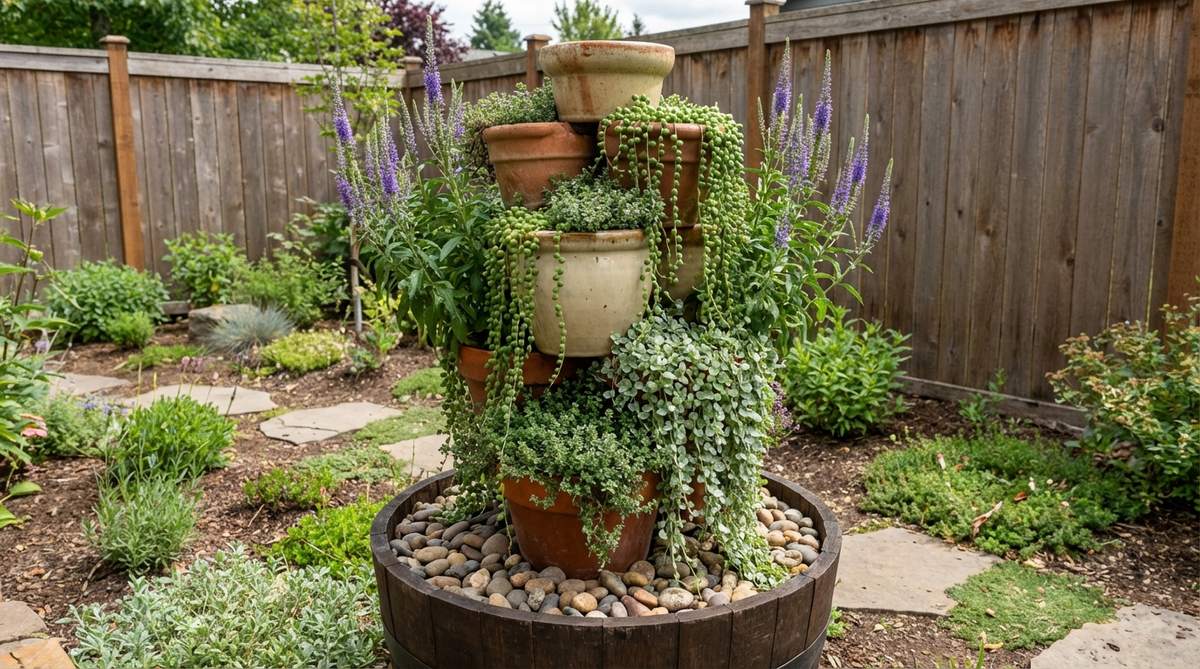
A vertical ceramic tower serves as the centerpiece, surrounded by trailing string of pearls or creeping thyme that cascades like Rapunzel’s legendary locks. Purple-flowering Veronica adds height variation behind the structure.
Anchor the tower with small stones at its base, then train trailing plants upward using thin floral wire if needed during establishment. Choose containers at least 8 inches deep to accommodate root systems of cascading species.
The vertical emphasis draws the eye upward, creating drama in compact footprints. This design particularly suits corner placements where the tower can rise against backdrop elements.
3. Three Little Pigs Brick House Scene
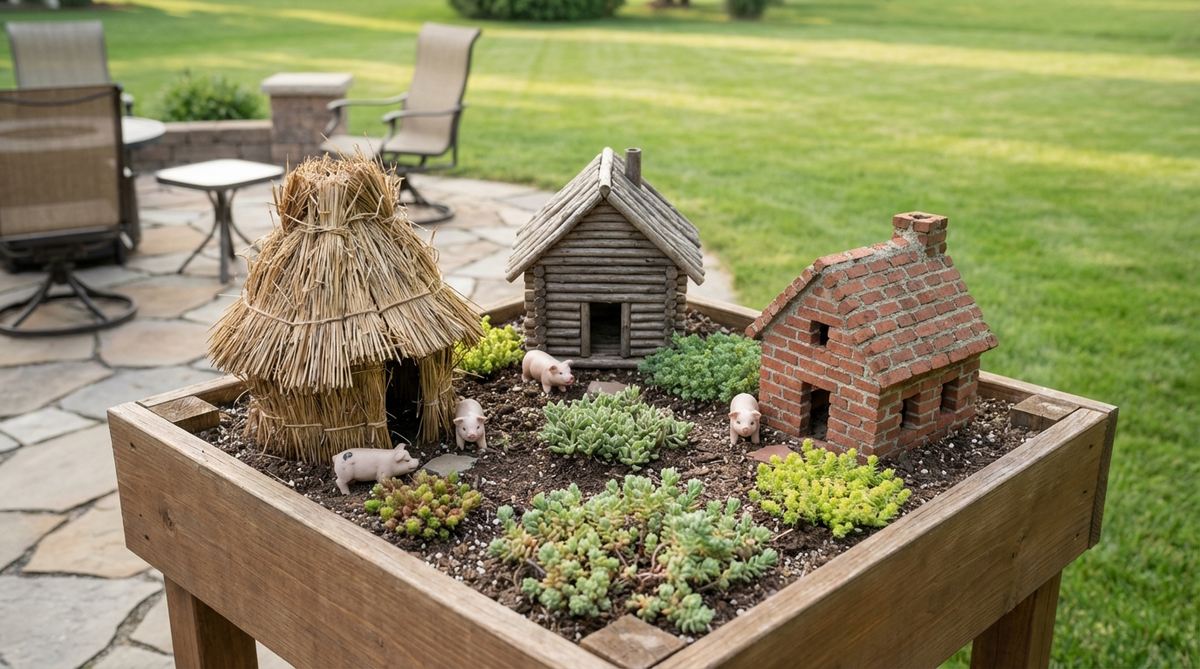
Three miniature structures progress from straw-textured accessories to a red brick house, positioned in a triangular arrangement within the container. Miniature pig figurines and snippets of dried grass complete the narrative.
Use miniature straw bales or raffia wound around toothpicks for the first house, popsicle sticks painted brown for the second, and polymer clay or resin for the brick structure. Plant quick-growing baby sedums between houses to represent clearing transitions.
Children particularly engage with this storybook recreation, making it excellent for educational settings. The design encourages discussion about materials, architecture, and perseverance themes.
4. Enchanted Mushroom Ring
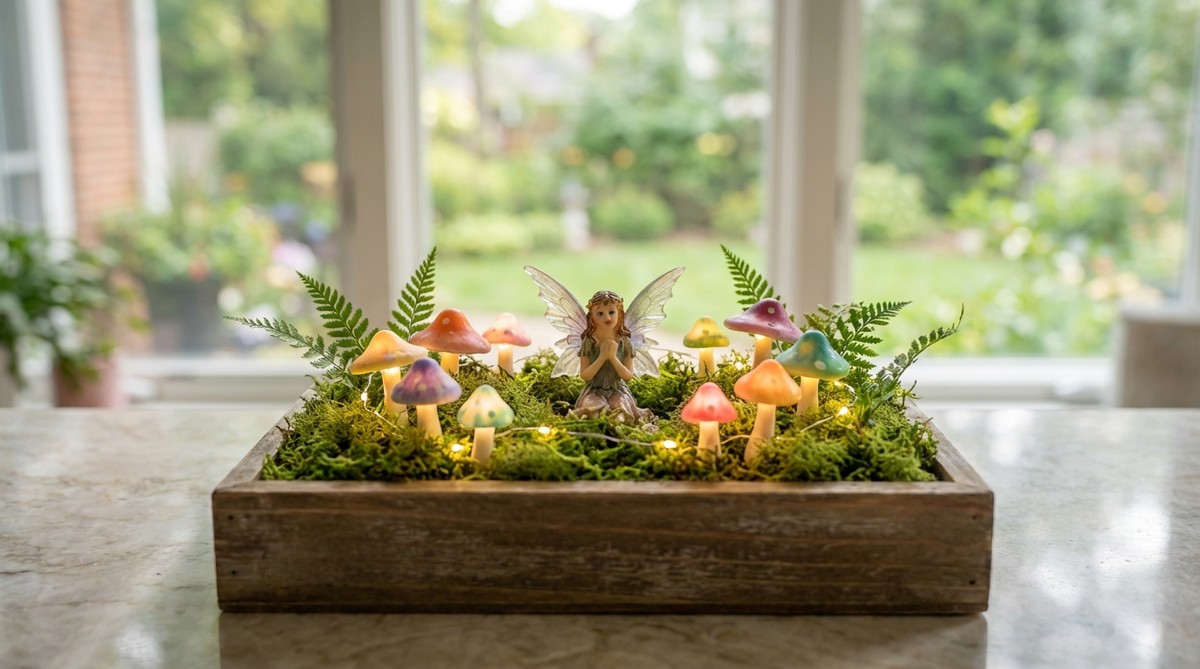
Polymer clay or resin mushrooms encircle a central fairy figurine, nestled in a bed of preserved moss and miniature ferns. Tiny LED lights buried beneath the moss create an otherworldly glow.
Space mushrooms irregularly rather than uniformly for organic authenticity. Select battery-operated micro LEDs with timers to conserve power while maximizing magical effect during evening hours.
This low-maintenance design substitutes preserved moss for living plants, eliminating watering requirements while maintaining visual impact. The arrangement suits indoor environments where lighting control enhances atmosphere.
5. Alice In Wonderland Tea Party
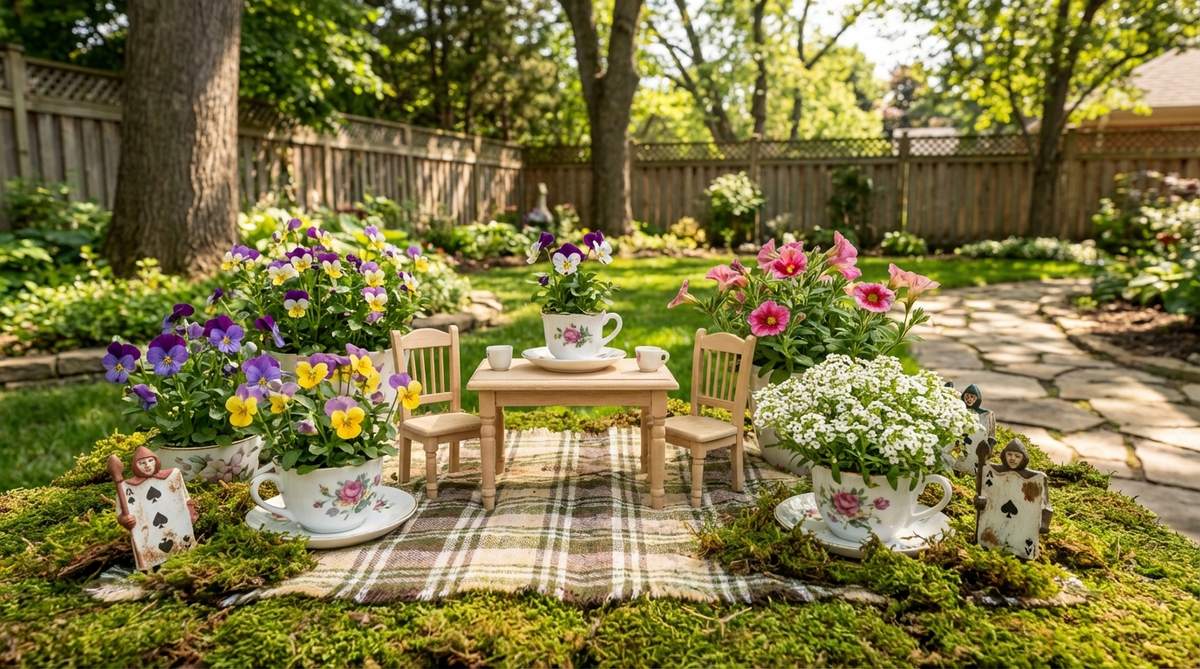
Miniature furniture arranged on a checkered fabric base creates the Mad Hatter’s table, surrounded by small flowering plants in teacup containers. Playing card soldiers stand among the blooms.
Source vintage-style dollhouse furniture or craft your own from painted balsa wood. Plant miniature roses, violas, or cyclamen in mismatched teacups, ensuring each cup has a drainage hole drilled in the bottom.
The eclectic mix of patterns and colors mirrors the chaotic whimsy of Carroll’s original tale. This design adapts easily to both indoor windowsills and covered outdoor spaces.
6. Wizard Of Oz Yellow Brick Road
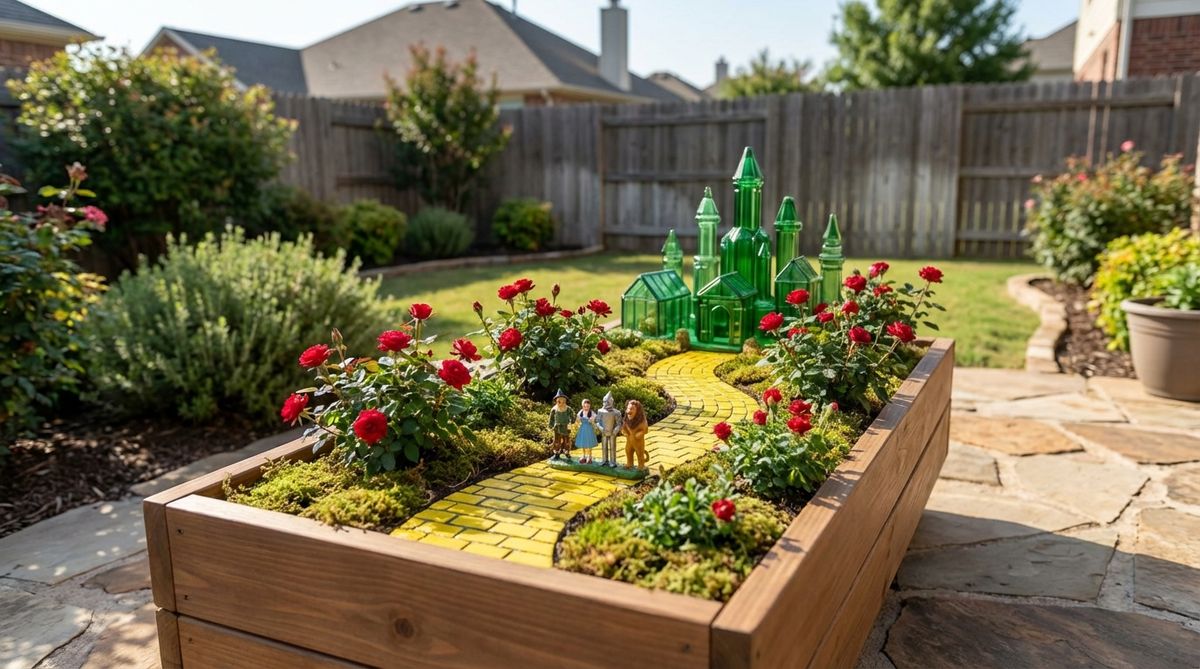
A winding path of yellow-painted flat stones leads from one edge of the container to an Emerald City structure crafted from green glass pieces. Dorothy, Scarecrow, Tin Man, and Lion figurines populate the journey.
Paint clean, flat stones with outdoor acrylic in yellow tones, sealing with clear polyurethane for weather resistance. Plant red-blooming plants like miniature roses to represent poppies along sections of the path.
This narrative design encourages viewers to follow the visual journey from start to finish. The linear pathway structure works particularly well in rectangular containers.
7. Peter Pan Neverland Hideaway
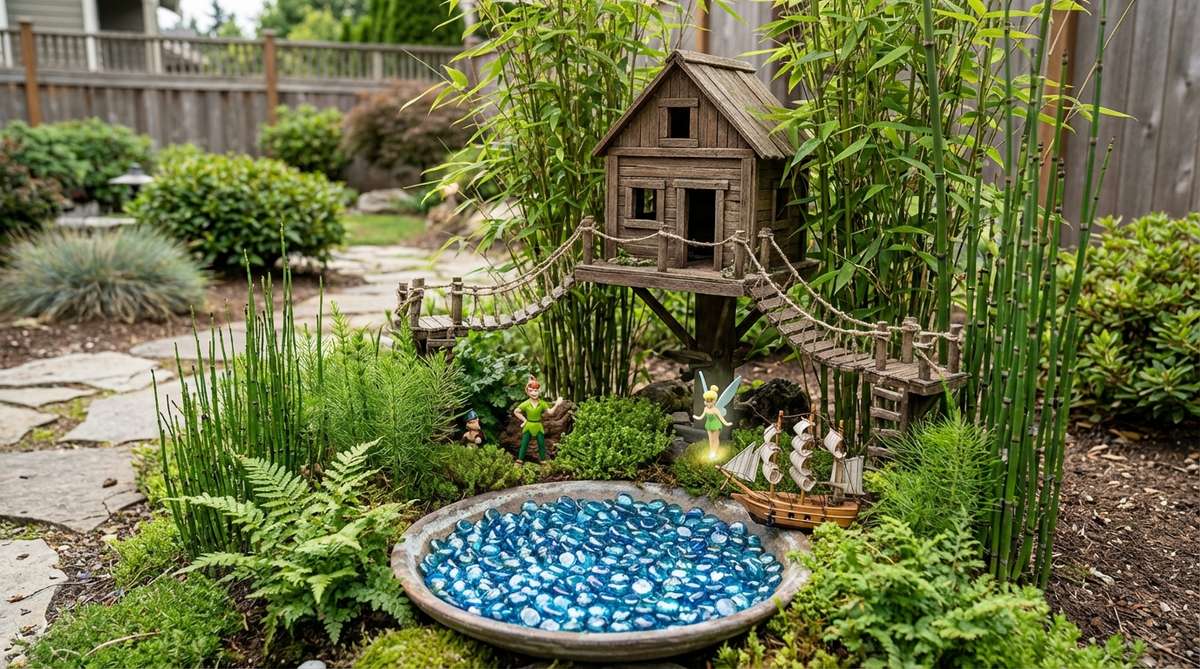
A treehouse structure perches among miniature bamboo or horsetail plants, with a small pond created from a shallow dish filled with blue glass gems. Miniature Peter, Tinkerbell, and pirate ship accessories complete the scene.
Elevate the treehouse on hidden supports like inverted bottle caps to create the illusion it’s nestled in tree branches. Use aquarium-safe sealant if incorporating actual water rather than glass gem representation.
The combination of vertical plant growth and water feature adds dimensional complexity. This design benefits from taller containers that accommodate the bamboo’s upright habit.
8. Hansel And Gretel Candy House
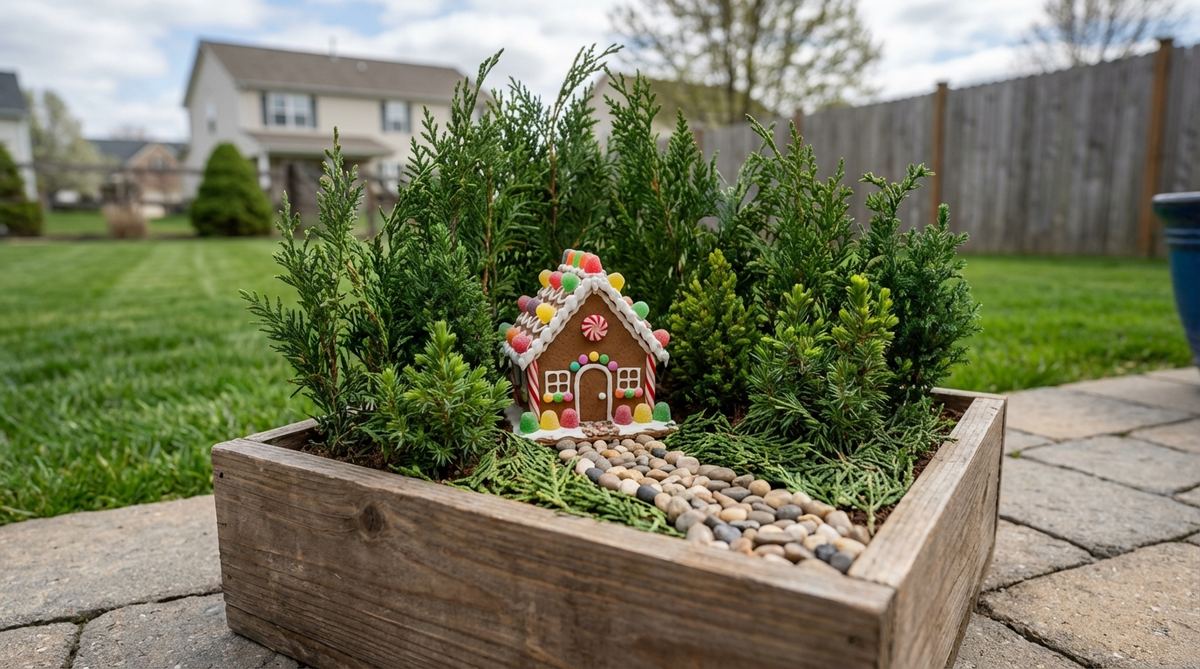
A gingerbread-style house decorated with faux candy embellishments sits within a “forest” of miniature evergreen cuttings or preserved cedar. A pebble path leads to the doorway.
Construct the house from polymer clay, decorating with miniature candy-shaped beads or painted details before baking. Plant dwarf conifers or use preserved greenery that maintains shape without watering.
This design works beautifully as a holiday display while remaining appropriate year-round. The darker greens provide excellent contrast against the colorful house structure.
Succulent Mini Garden Collections
Succulent-based mini gardens dominate contemporary miniature gardening due to their low water requirements and architectural forms. These drought-tolerant plants offer incredible variety in color, texture, and growth habit. Designers currently favor minimalist approaches that highlight plant form over excessive ornamentation.
9. Desert Landscape Tableau
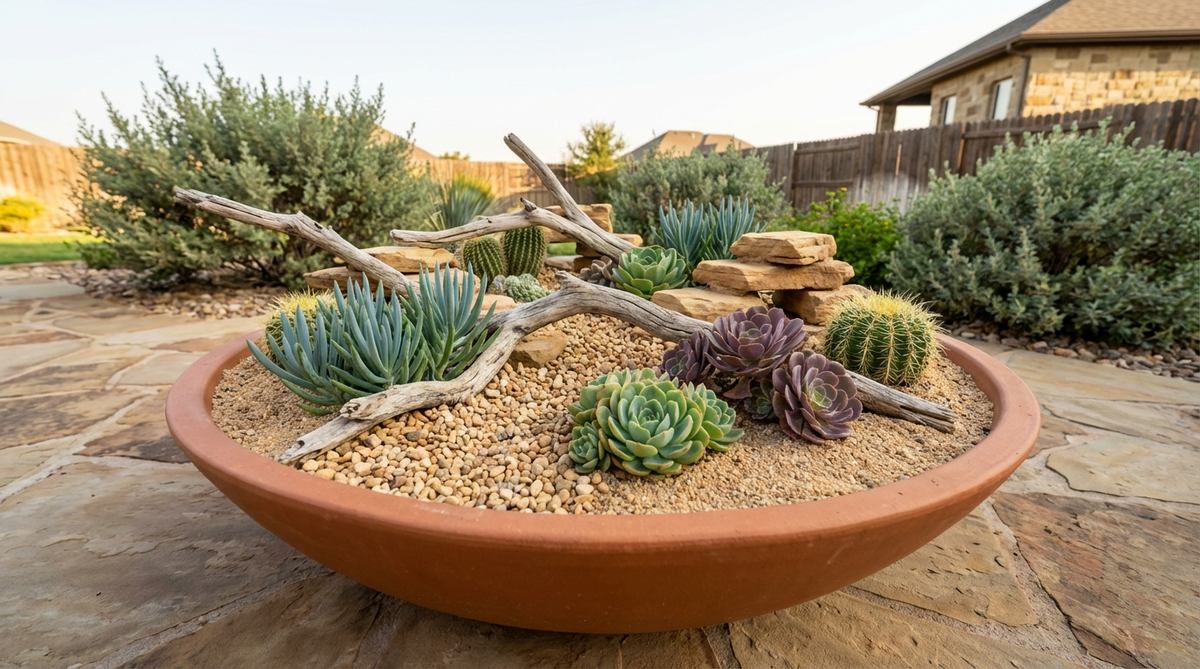
Multiple succulent varieties in shades of blue, green, and purple cluster among sand-colored gravel and weathered driftwood pieces. Small rock formations create elevation changes across the container.
Layer coarse sand over cactus potting mix for authentic desert appearance and optimal drainage. Group succulents by growth rate, placing slower-growing specimens like lithops toward the front where they won’t be overshadowed.
This design requires watering only every 2-3 weeks, making it ideal for busy households or office environments. The neutral color palette provides a calming visual effect.
10. Zen Succulent Meditation Garden
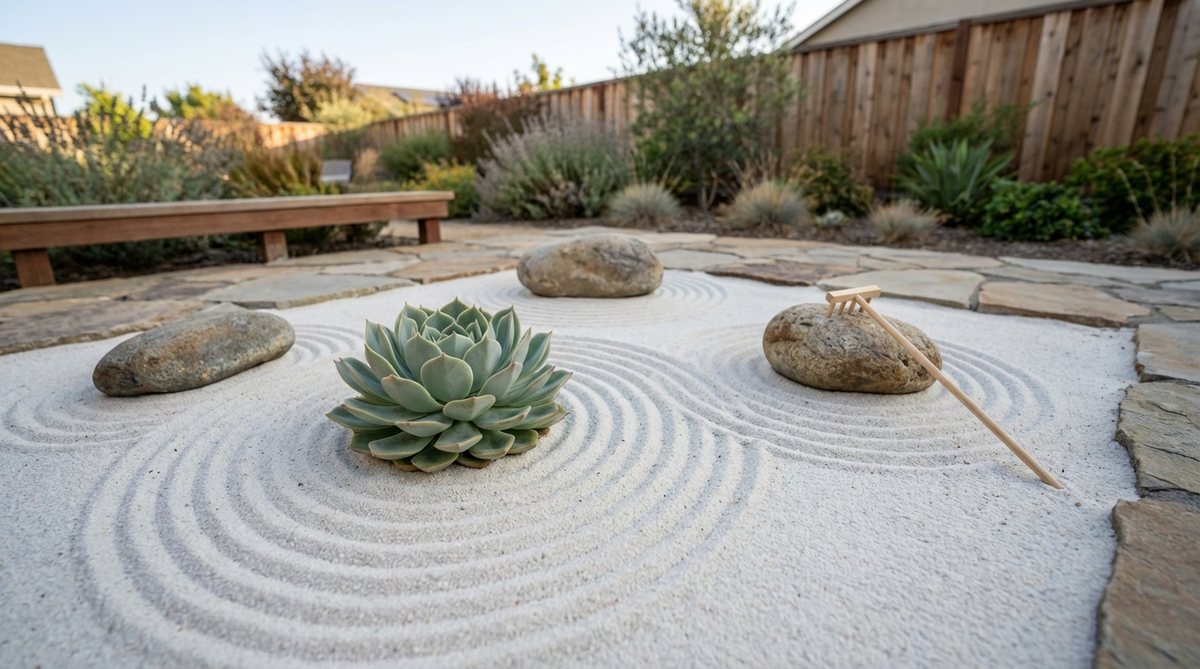
A single statement succulent like an echeveria serves as the focal point within a bed of fine white sand, raked into concentric patterns. Three river rocks positioned asymmetrically balance the composition.
Use a miniature rake (or a fork) to create ripple patterns in sand weekly, refreshing the meditative quality. Select sand that drains quickly; avoid decorative colored sand that may contain dyes harmful to roots.
This minimalist approach embodies Japanese aesthetic principles while remaining botanically sound. The design encourages mindful interaction through the regular sand-raking ritual.
11. Succulent Terrarium Globe
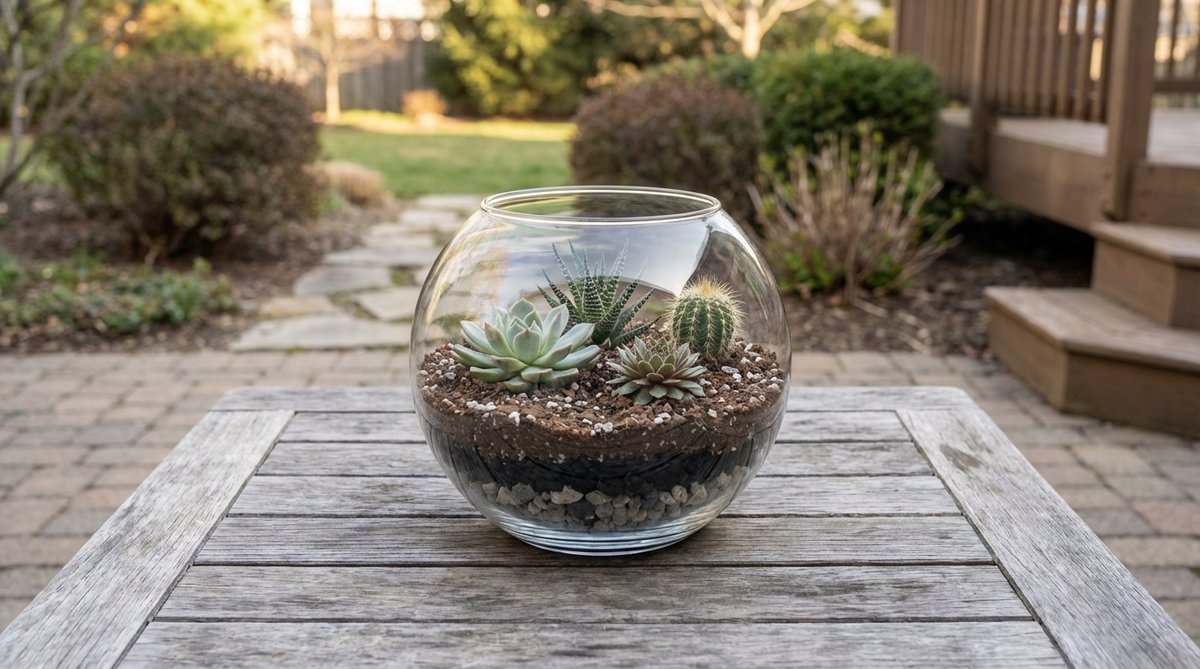
A clear glass sphere contains layers of pebbles, activated charcoal, and cactus mix supporting 3-4 small succulents. The vessel’s transparency reveals the complete growing environment.
Layer materials visibly using the side as your guide1 inch pebbles for drainage, thin charcoal layer for filtration, then 2-3 inches growing medium. Select succulents with similar mature sizes to prevent overcrowding within 6 months.
These globes function beautifully as desk accessories or hanging displays when suspended from macramé holders. Rotate weekly to ensure even light exposure on all sides.
12. Color Gradient Succulent Bowl
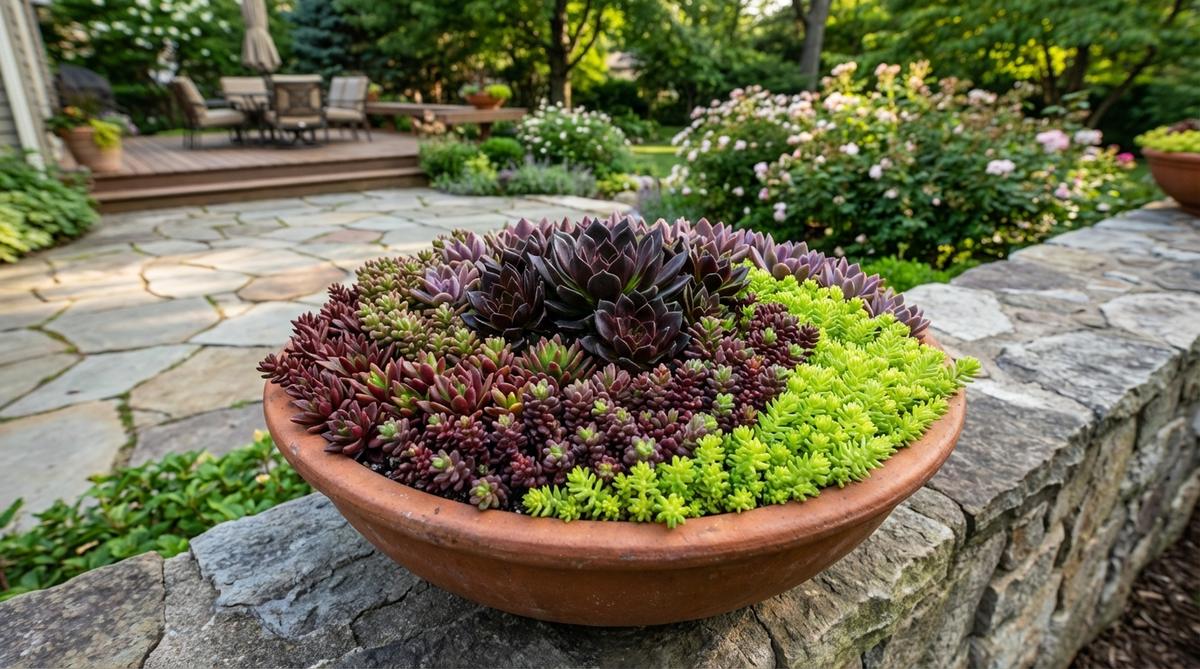
Succulents arranged chromatically transition from deep purple Echeveria ‘Black Prince’ through burgundy Sedum varieties to lime-green Sedum ‘Angelina’. The progression creates a living color wheel.
Research mature coloration since many succulents shift hues with sun exposure and temperature. Plant in curved lines rather than straight rows to soften the transition between color zones.
This design works as both botanical display and color theory teaching tool. The visual impact intensifies as plants mature and develop stress colors under appropriate light levels.
13. Miniature Cactus Collection
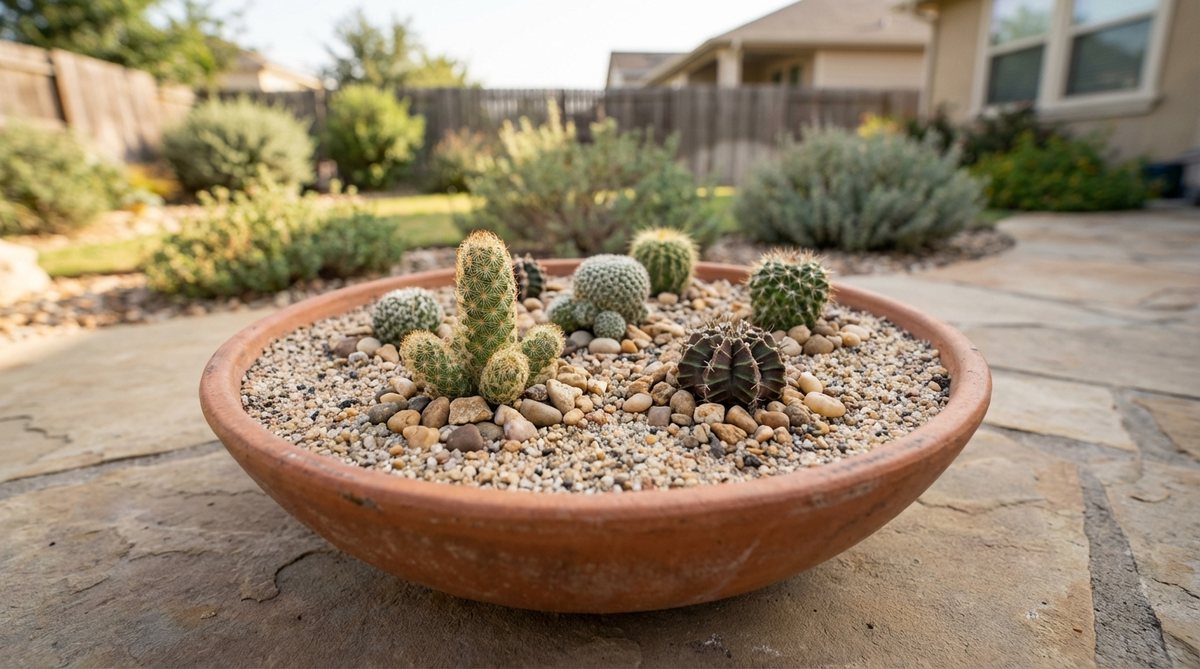
Small cacti varieties including Mammillaria, Rebutia, and Gymnocalycium cluster in a shallow terracotta bowl filled with gritty, fast-draining mix. Top dressing of coarse sand and small pebbles mimics native habitats.
Handle cacti during planting using folded newspaper or foam pieces to protect both hands and spines. Space specimens 1-2 inches apart to accommodate their slow expansion over years.
Cacti flower spectacularly when provided proper winter dormancy with reduced watering and cooler temperatures. This collection rewards patient growers with surprising blooms each spring.
14. Succulent Vertical Wall Frame
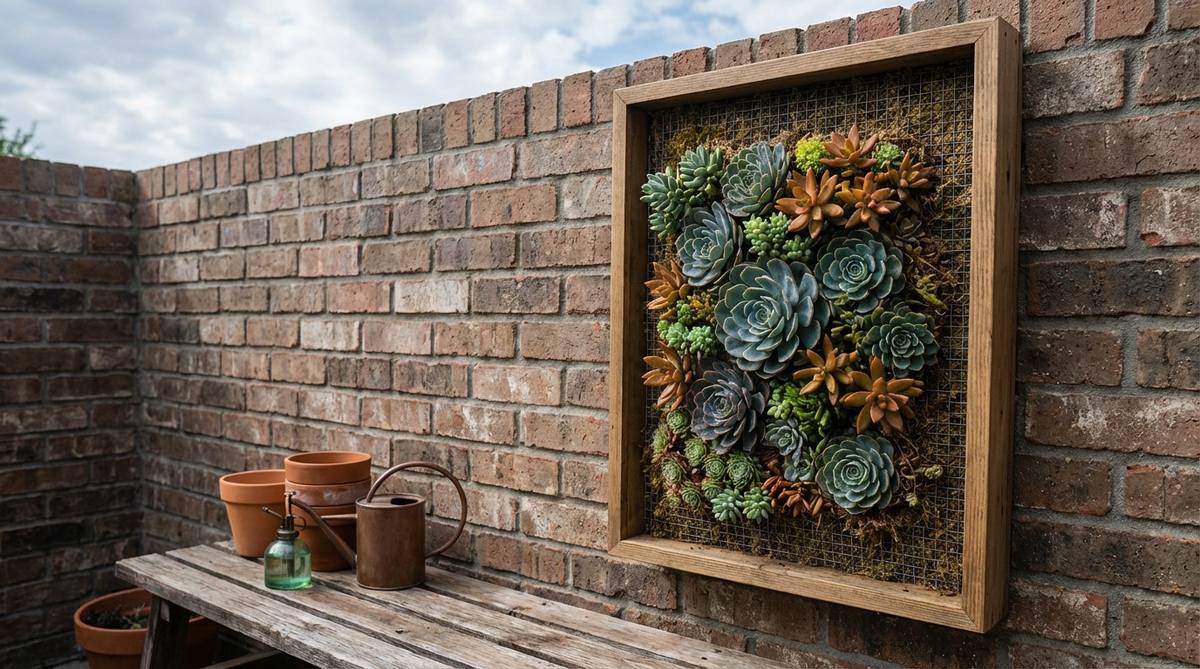
A shadow box frame positioned vertically holds succulents planted in wire mesh backed with moss. The living artwork displays textural variety across its surface.
Keep frame horizontal for 4-6 weeks after planting to allow root establishment before hanging vertically. Mist lightly rather than watering heavily to prevent soil from washing through the mesh.
This space-saving approach brings gardens to wall surfaces where horizontal space is limited. Rotate the frame quarterly to ensure even growth patterns across all planted sections.
15. Haworthia Window Collection
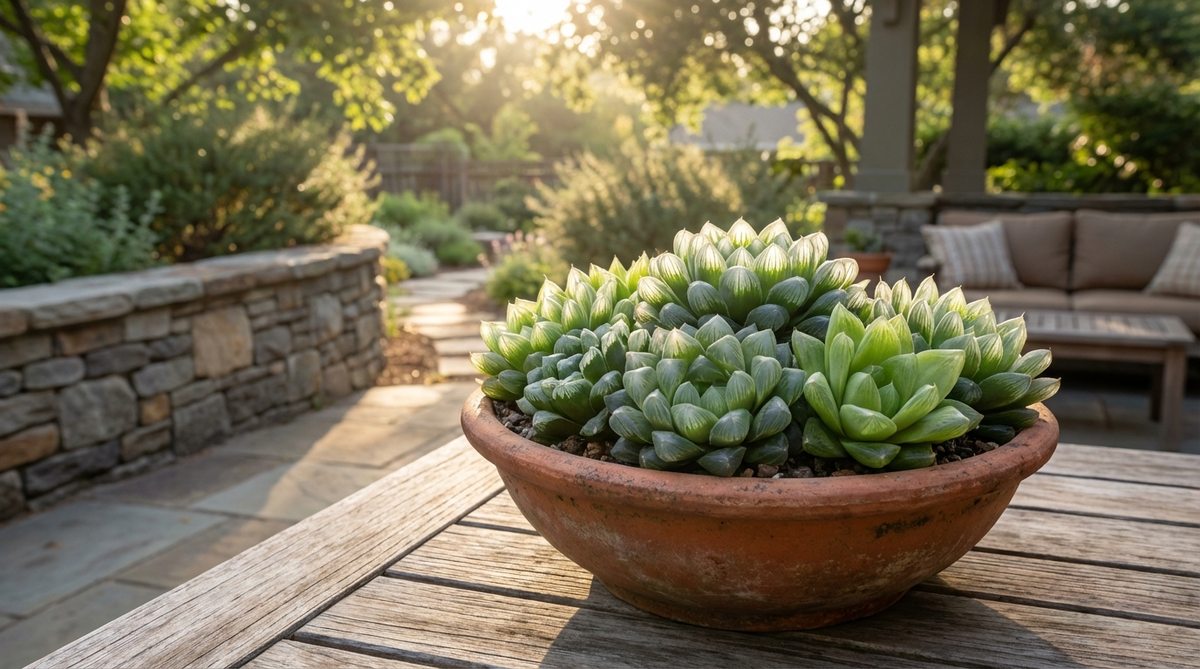
Translucent-leaved Haworthia species gather in a single container, their distinctive “windowed” foliage creating a collection focused on a single genus. Varieties include cooperi, truncata, and cymbiformis.
Position where morning sun illuminates the translucent leaf tips, revealing their architectural beauty. These shade-tolerant succulents thrive in bright indirect light rather than full sun exposure.
Haworthia collections appeal to botanical enthusiasts interested in subtle variations within species. The compact growth habit allows substantial collections within small footprints.
Tabletop Container Designs
Tabletop gardens prioritize portability and viewing from all angles since they’re accessible from multiple sides. Container selection dramatically impacts the final presentation, with shallow bowls, trays, and repurposed items offering distinct aesthetic outcomes. These designs function equally well indoors on tables or outdoors on patios.
16. Botanical Bento Box
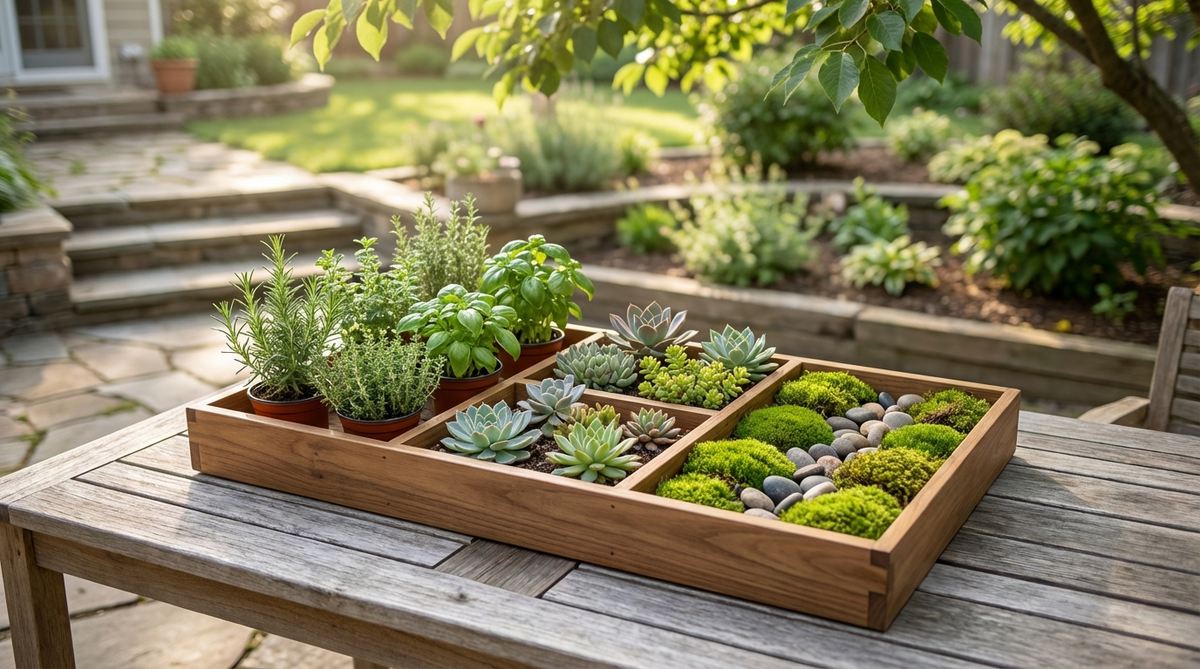
A sectioned wooden or ceramic tray houses different plant groupings in each compartmentherbs in one, succulents in another, and moss in a third. The organized approach mirrors Japanese bento lunch boxes.
Line compartments with plastic to protect wood from moisture, cutting drainage holes in the plastic layer. Select plants with similar water needs within each section to simplify care routines.
This organized system appeals to those who appreciate order and categorization. The compartmentalized structure prevents plant roots from competing for resources.
17. Teacup Herb Garden
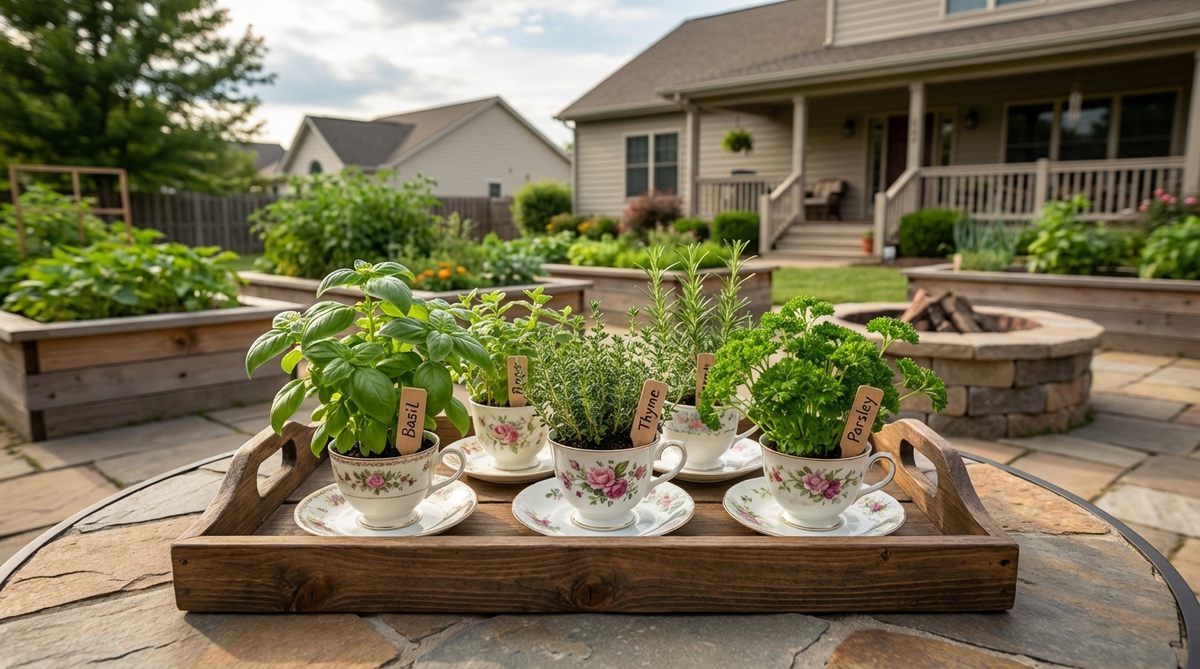
Vintage teacups and saucers serve as individual containers for culinary herbs like thyme, small basil varieties, and parsley. Grouped on a serving tray, they create a functional kitchen garden.
Drill drainage holes using a ceramic/glass drill bit and constant water cooling to prevent cracking. Plant one herb per cup to prevent root competition in the limited soil volume.
This charming approach combines functionality with decorative appeal. Harvest herbs regularly to maintain compact growth appropriate to container size.
18. Shallow Terrarium Bowl
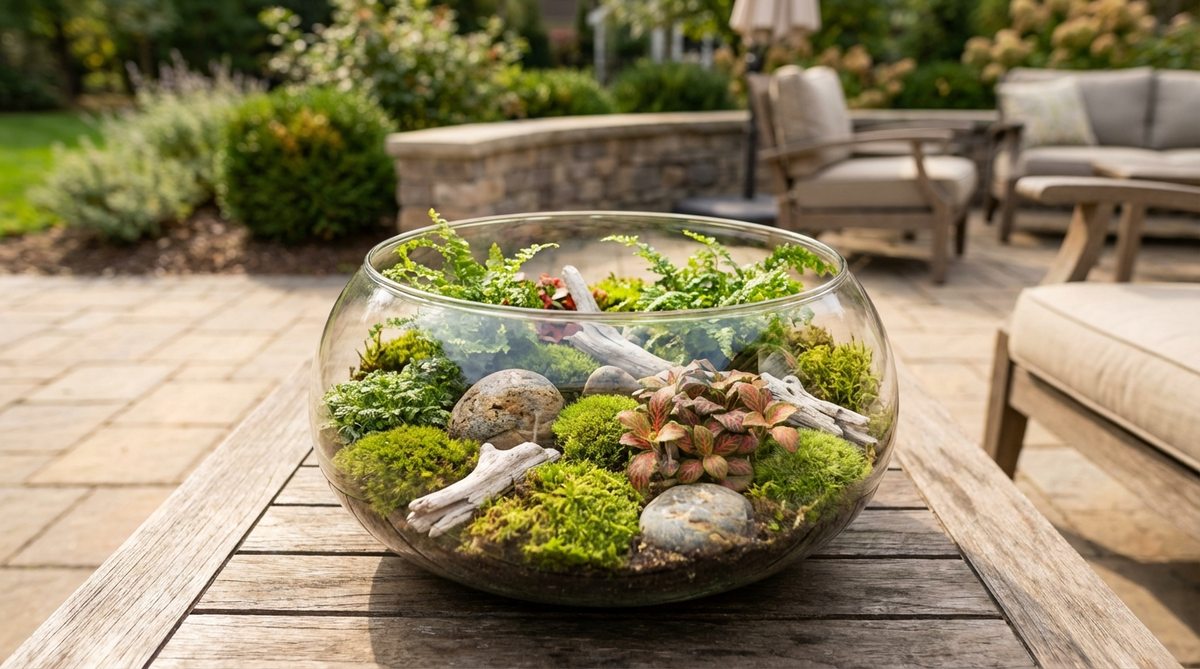
A wide, shallow glass bowl contains a miniature landscape of moss, ferns, and small-leaved fittonia arranged around decorative stones and driftwood. The open top prevents humidity buildup.
Mist plants 2-3 times weekly rather than pouring water directly, preventing waterlogged soil in vessels without drainage. Select moisture-loving plants that tolerate the humid microclimate created by glass walls.
These bowls suit coffee tables or dining centerpieces where their low profile doesn’t obstruct conversation sight lines. The glass magnifies visual details, rewarding close inspection.
19. Concrete Planter Trio
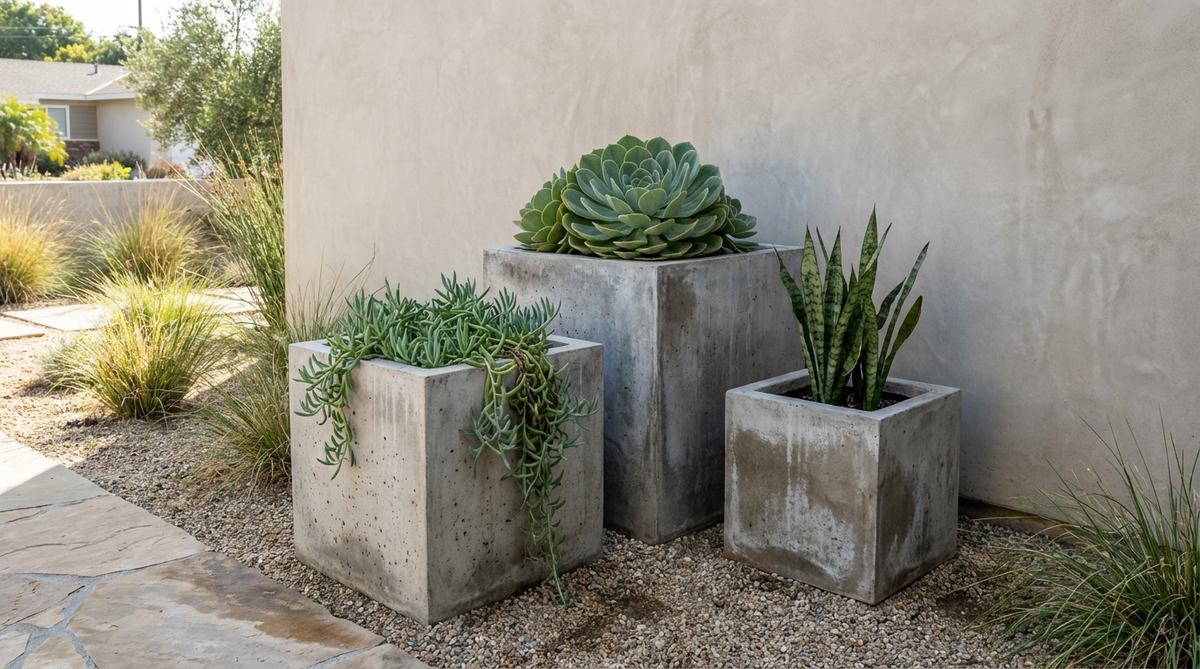
Three geometric concrete planters in varying sizes create a modernist composition when grouped together. Each container holds a different succulent variety with distinct form—rosette, trailing, and upright.
Arrange in triangular configuration with the largest at the back, medium at middle right, and smallest front left for dynamic visual weight distribution. The concrete’s porosity provides excellent drainage for succulent cultivation.
The industrial aesthetic complements contemporary interiors while providing a neutral backdrop that emphasizes plant form. Concrete weathers beautifully, developing character over time.
20. Wooden Trough Garden
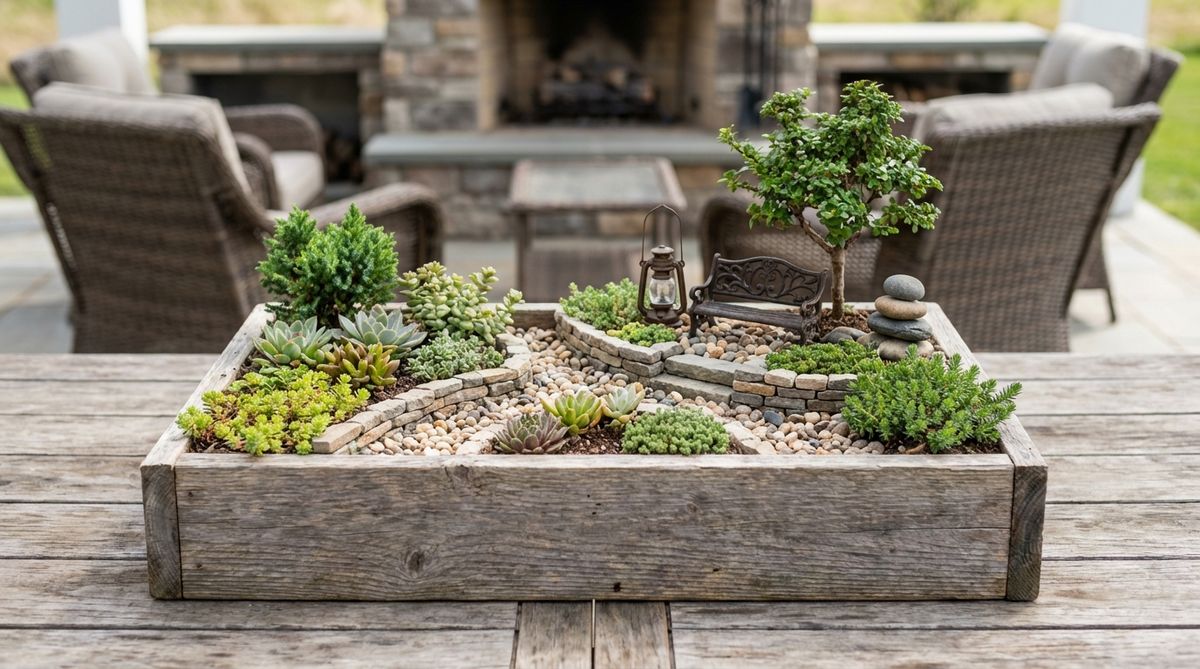
A rectangular wooden planter box houses a miniature landscape with pebble pathways, small plants, and decorative accessories arranged to create depth. The elongated shape allows for narrative progression.
Line untreated wood with heavy plastic sheeting, stapling securely to interior walls before adding soil. Create a slight slope from back to front to enhance visual depth and improve drainage.
The horizontal format suits table runners and sideboard displays. Wooden troughs develop an attractive patina as they age, enhancing rustic or farmhouse aesthetics.
21. Fishbowl Miniature World
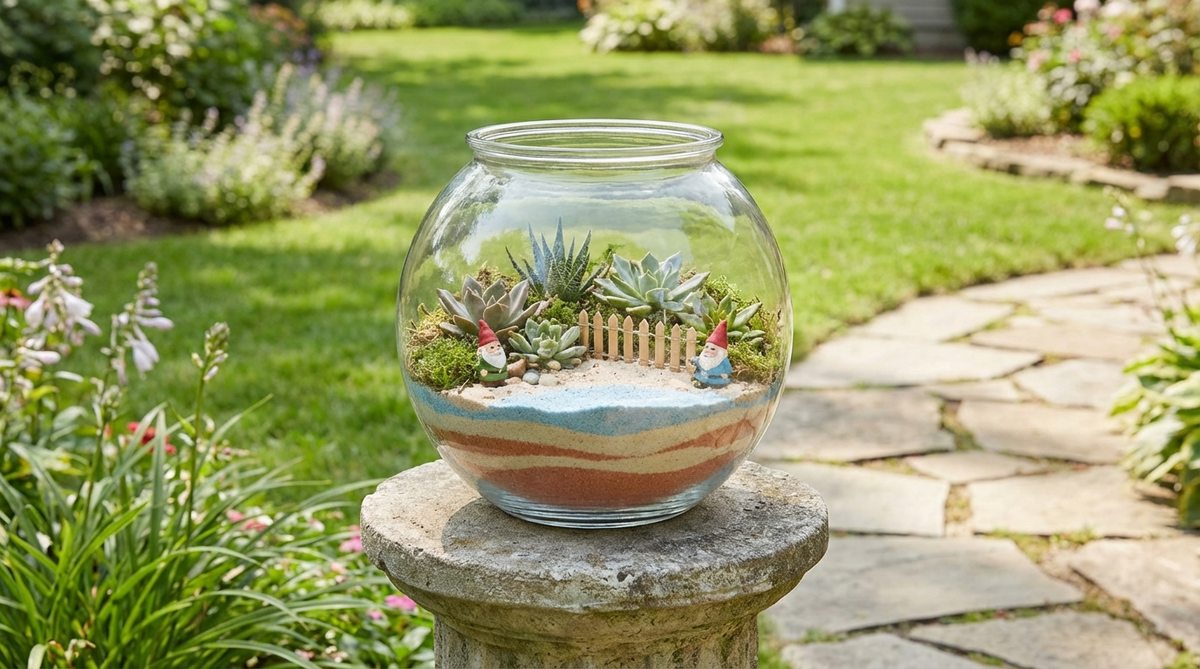
A vintage round fishbowl transforms into a miniature garden with layers of colored sand, small plants, and whimsical accessories visible through the clear glass. The spherical shape provides 360-degree viewing.
Add materials in visible layers using a funnel or rolled paper cone to control placement against the glass. Choose plants that tolerate the higher humidity created by the bowl’s rounded walls.
These conversation-starting displays work beautifully on pedestals where viewers can appreciate all angles. The contained ecosystem requires minimal watering due to moisture retention.
22. Slate Tile Display
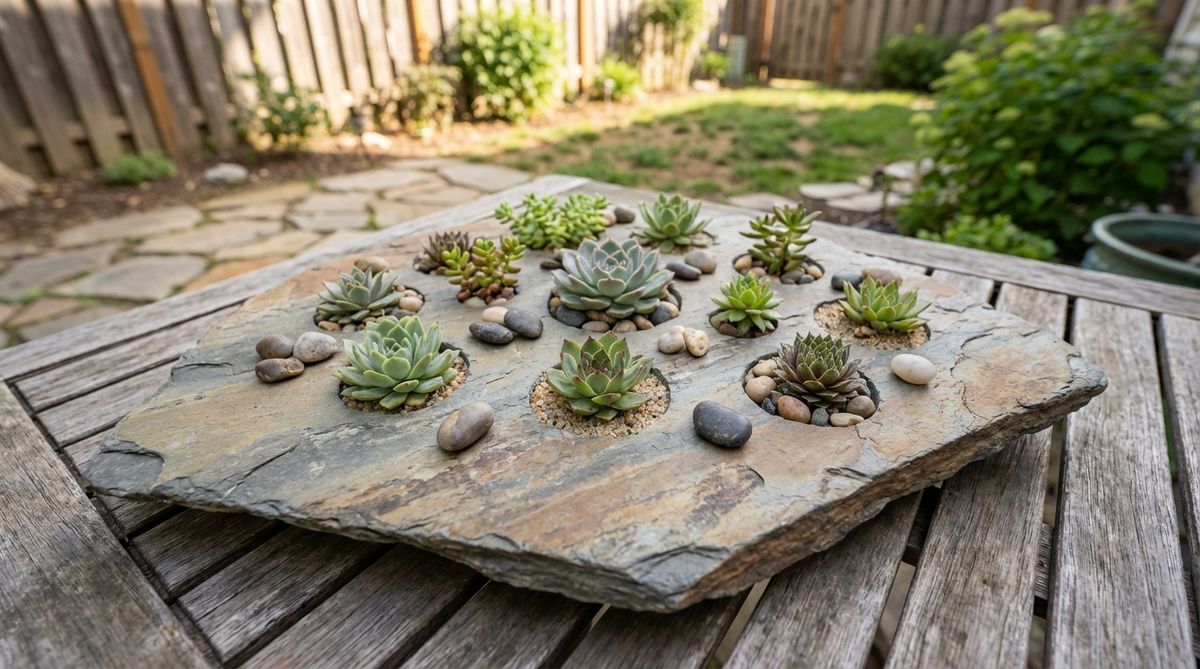
A large flat piece of slate serves as both base and container, with shallow depressions drilled to hold small succulents. River pebbles and sand fill the spaces between plantings.
Drill shallow cups using a masonry bit with water lubrication, creating depressions approximately 1 inch deep and 2 inches across. Fill holes with fast-draining cactus mix before planting.
This permanent installation works on outdoor tables or as a permanent centerpiece. The slate’s natural grain patterns complement the organic forms of succulent rosettes.
23. Tiered Cake Stand Garden
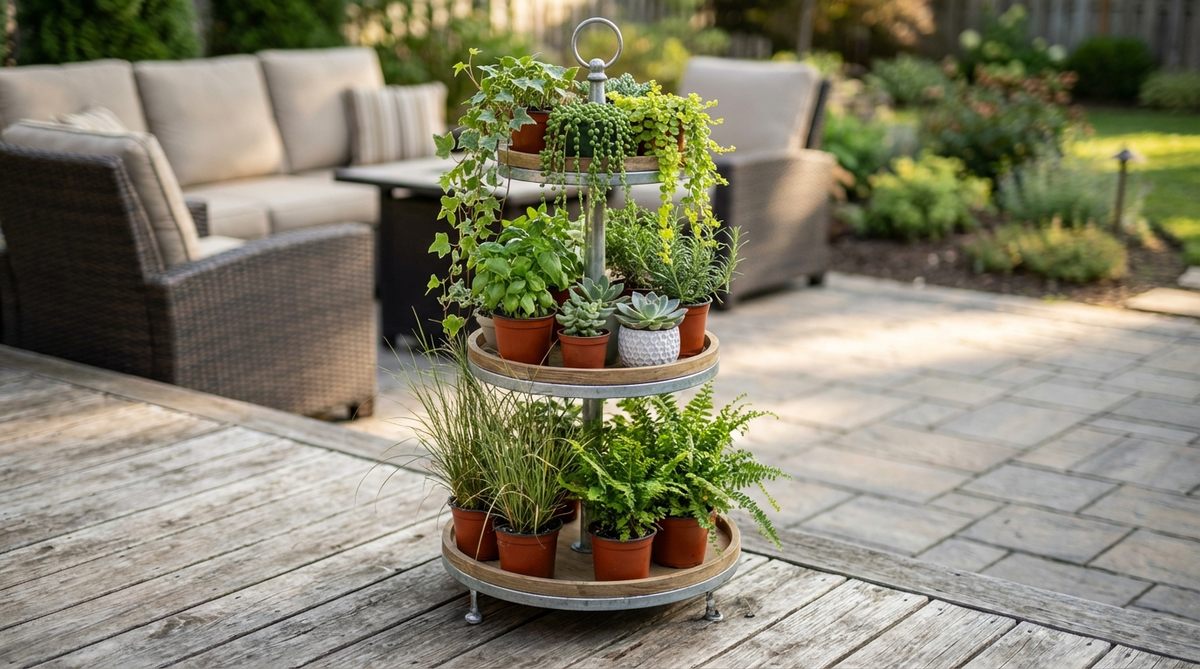
A three-tier dessert stand holds small potted plants on each level, creating a vertical garden tower with minimal footprint. Each tier features plants with complementary but distinct characteristics.
Place tallest plants on the bottom tier, medium on middle, and trailing varieties on top to cascade downward. Ensure individual pots have drainage and use saucers on each tier to protect surfaces.
This vertical approach maximizes growing space in compact areas while creating dramatic height. The tiered structure allows varied light exposure at different levels.
Mini Garden House Structures
Architectural elements anchor miniature gardens and provide focal points that draw the eye. Structures range from simple resin cottages to handcrafted wooden buildings, each establishing scale for surrounding plantings. Quality houses feature weatherproof construction suitable for both indoor and protected outdoor use.
24. Thatched Roof Cottage
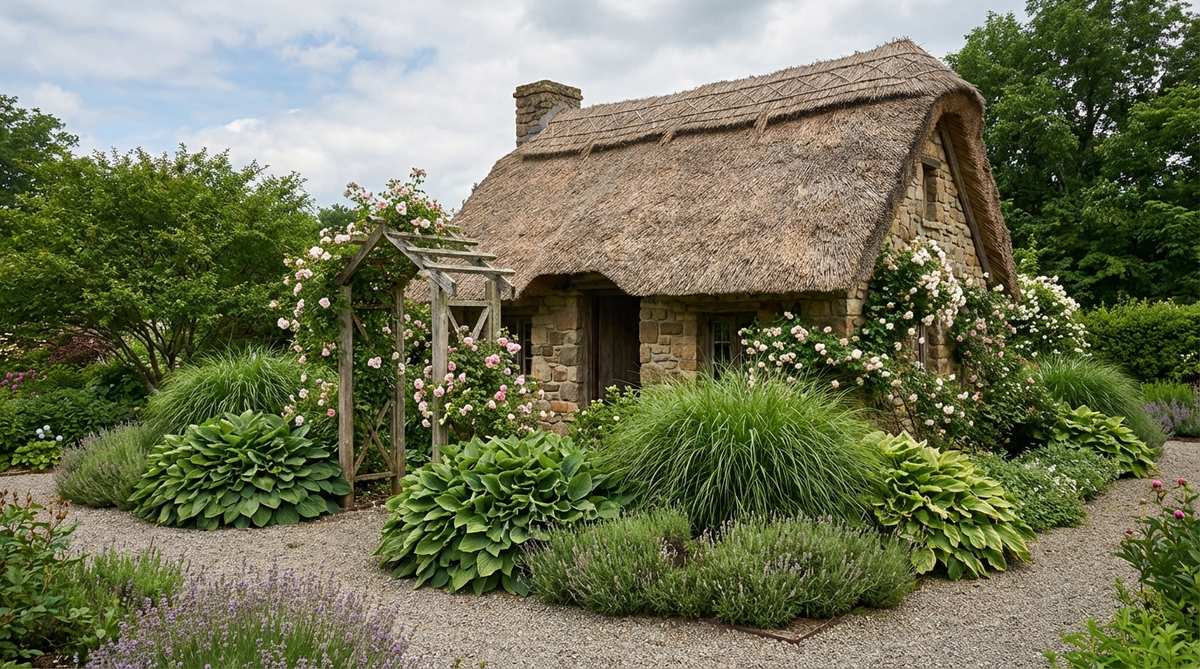
A rustic cottage with detailed thatching sits nestled between mounding plants that soften its foundations. Miniature climbing roses trained against the walls suggest years of growth.
Secure the structure with floral putty or silicone dots on the base to prevent toppling during maintenance. Plant low-growing groundcovers like Scotch moss immediately adjacent to walls for integrated appearance.
The classic cottage design evokes English countryside charm while remaining versatile enough for various garden styles. The thatched roof’s texture provides visual interest even in the absence of flowering plants.
25. Stone Castle Tower
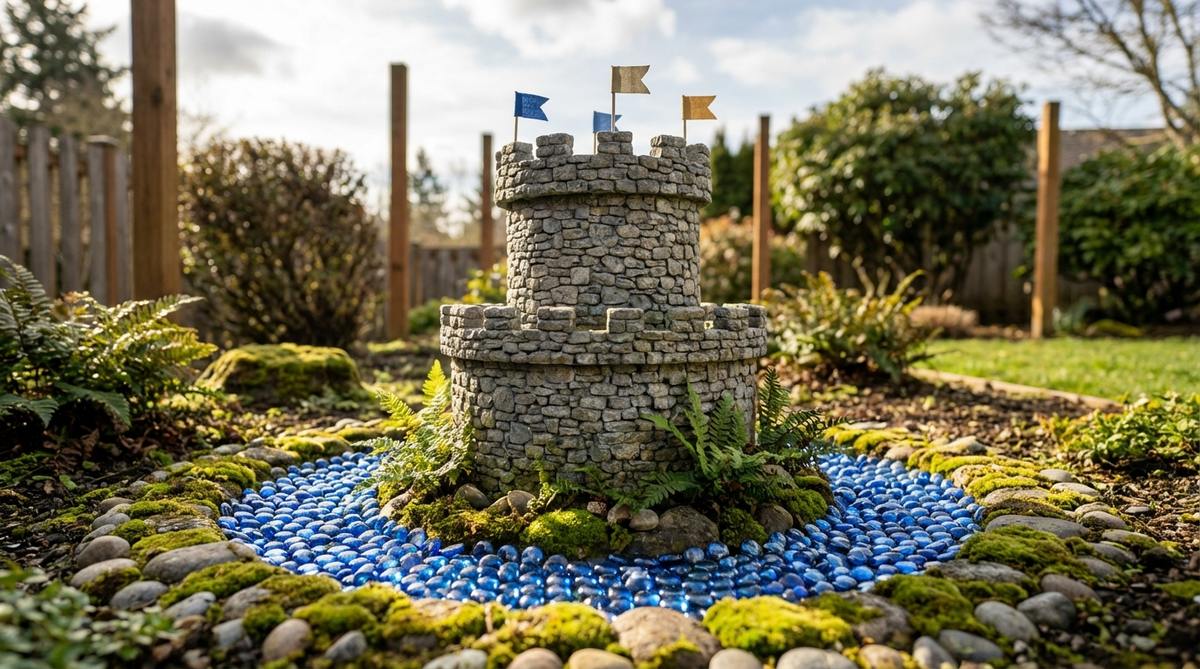
A cylindrical tower with stone-textured walls rises from a base of blue glass gems representing a moat. Miniature flags flutter from the battlements.
Position on a slight elevation created by extra soil beneath the structure to enhance the commanding presence. Surround the glass gem moat with larger stones to create defined edges.
This dramatic structure suits medieval or fantasy themes while providing significant vertical emphasis. The castle’s mass anchors the composition, allowing lighter elements to surround it.
26. Tudor Style Shop
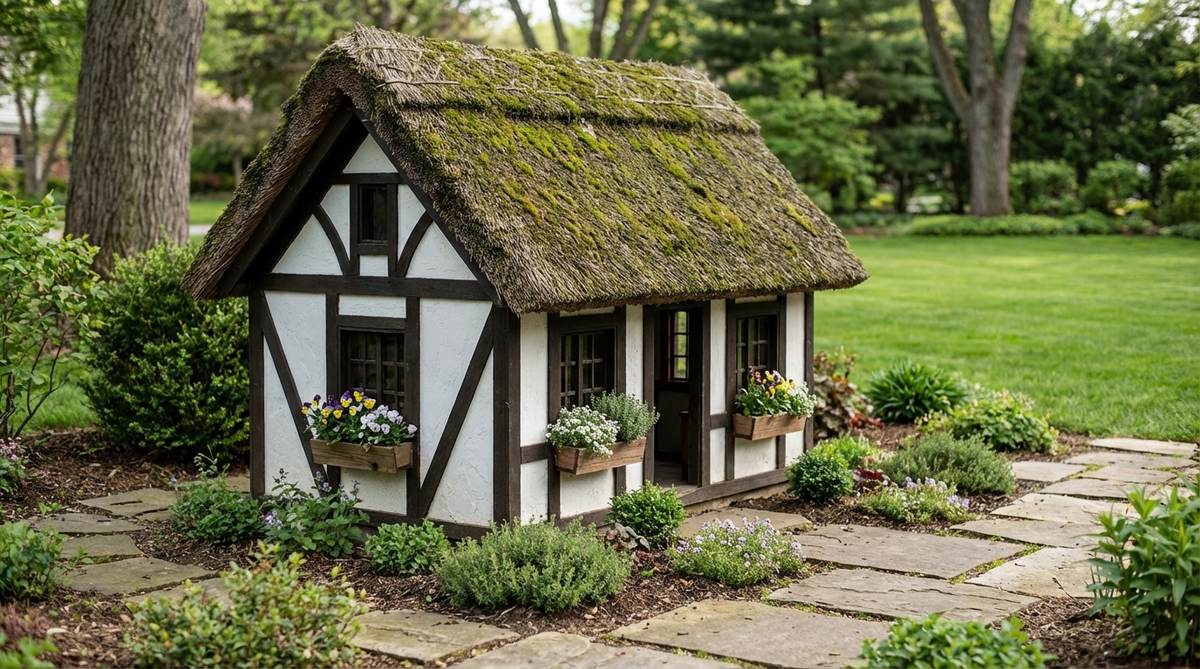
A half-timbered structure with black beams against white walls suggests a village shop or tavern. Window boxes attached to the facade hold tiny flowering plants.
Paint real moss onto roof surfaces using buttermilk-moss mixture to create aged appearance over several weeks. Plant miniature sedums in the window boxes, securing with small amounts of floral clay.
Tudor architecture provides historical charm and recognizable style. The vertical timber lines create pleasing visual rhythm against organic plant forms.
27. Treehouse Platform
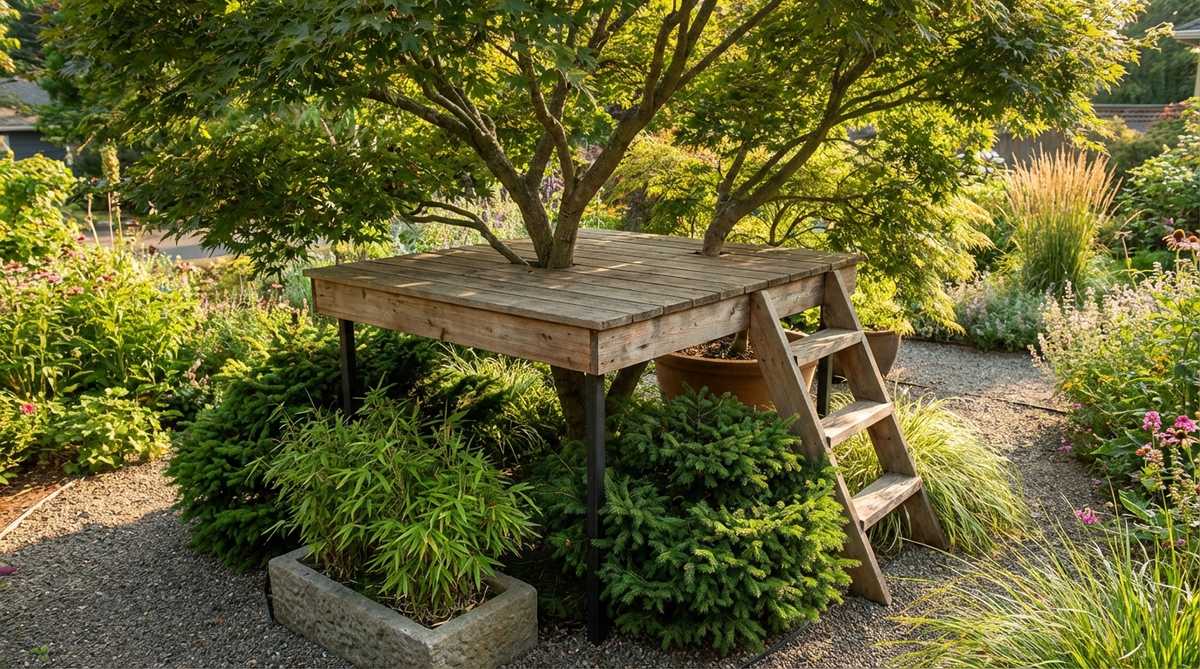
A wooden platform with ladder access appears to rest in the branches of a miniature tree or tall plant. The elevated structure creates dimensional interest.
Support the platform with hidden stakes driven into the soil and camouflaged by surrounding plants. Choose trees like dwarf Alberta spruce or miniature bamboo that provide appropriate scale.
Children particularly enjoy the elevated perspective this structure provides. The treehouse concept invites storytelling and imaginative play beyond passive viewing.
28. Victorian Greenhouse
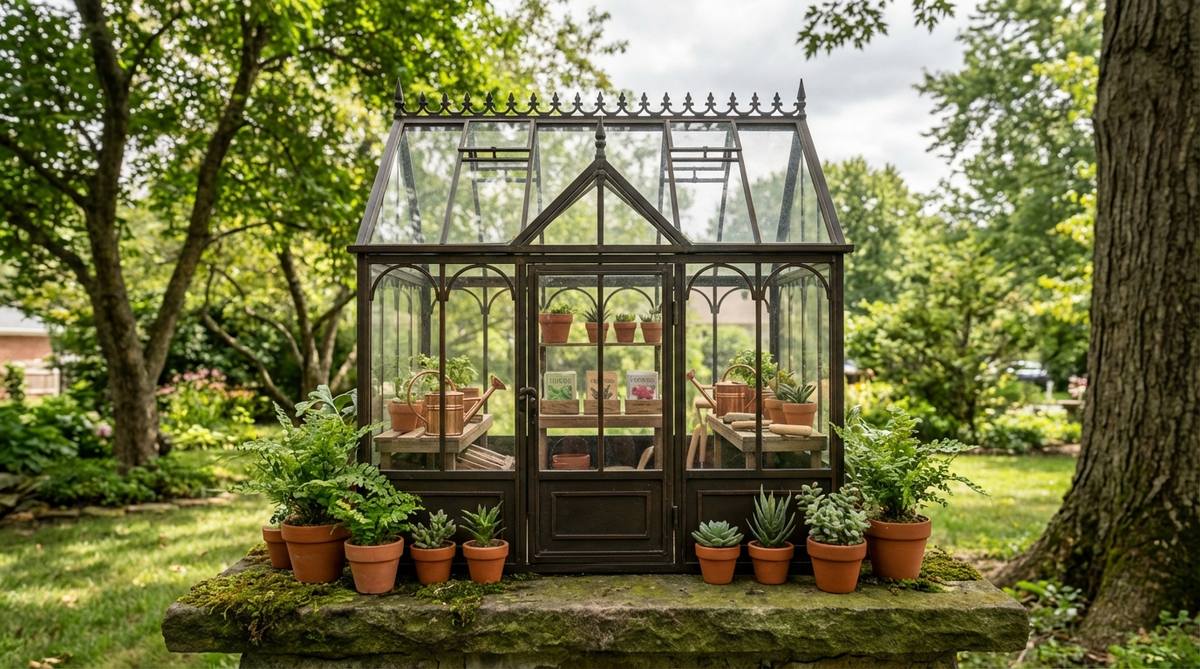
A miniature glass-paneled greenhouse with ornate details sits among miniature potted plants. The transparent structure reveals tiny pots and tools inside.
Fill the interior with appropriately scaled accessories like miniature watering cans, seed packets, and tiny clay pots. Position where natural light passes through the glass panels for maximum effect.
This meta-garden concept—a greenhouse within a garden—appeals to gardening enthusiasts. The Victorian styling adds elegance to both traditional and cottage garden themes.
29. Rustic Log Cabin
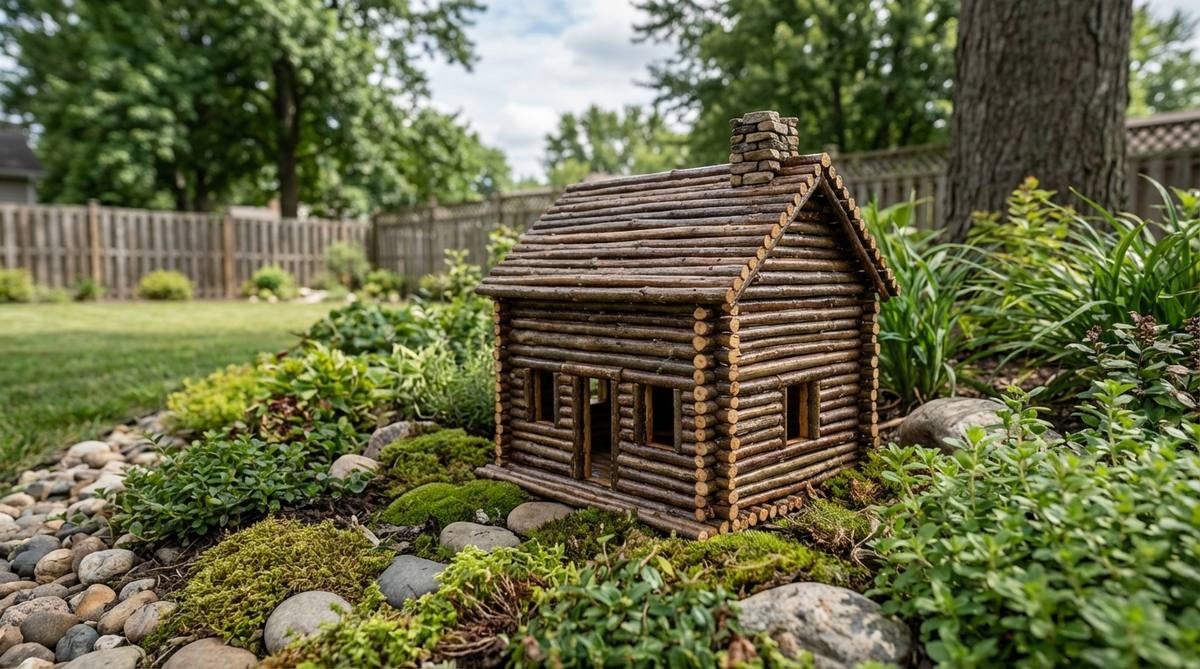
A hand-built structure created from small twigs and branches features authentic log cabin construction techniques. A miniature stone chimney adds detail.
Construct using straight twigs trimmed to equal length, gluing with weatherproof adhesive in traditional notched-corner style. Seal finished structure with clear polyurethane for outdoor durability.
DIY builders appreciate the handcrafted authenticity achievable with natural materials. Each cabin develops unique character based on the specific twigs selected.
30. Modern A-Frame
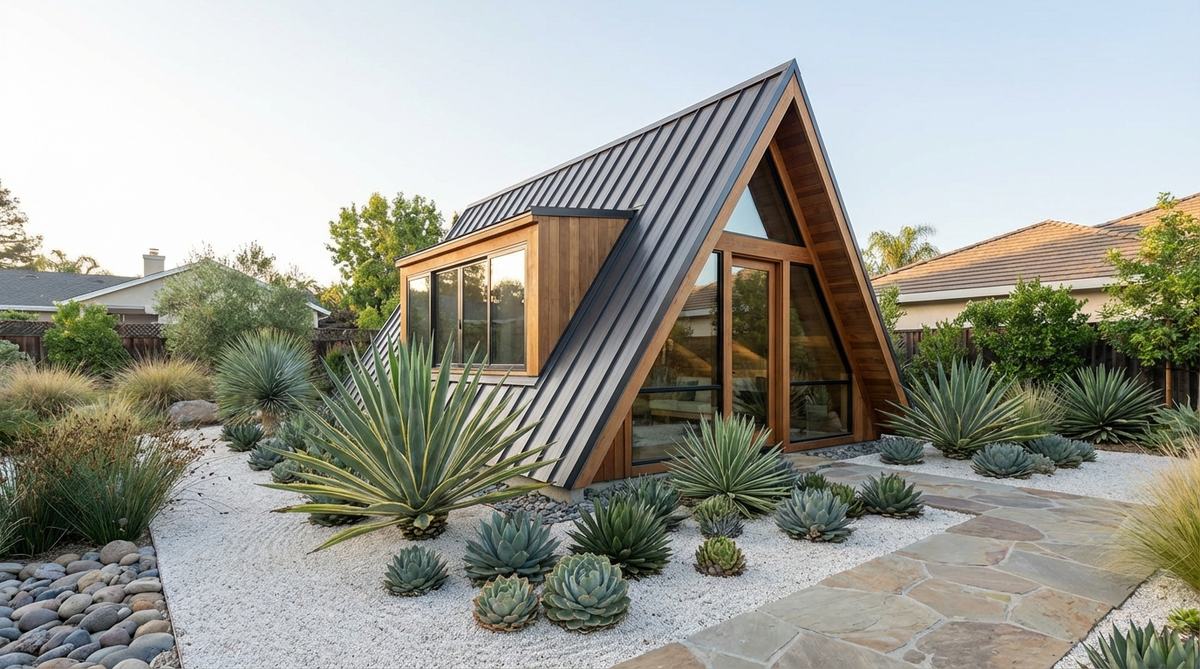
A contemporary triangular structure with clean lines provides minimalist architectural interest. The steep roofline and large window create bold geometric form.
Pair with equally modern plantings like architectural agaves or geometric-leaved succulents to maintain style consistency. Use fine white gravel as ground cover for contemporary aesthetic.
This design appeals to those preferring modern rather than traditional fairy garden styles. The A-frame’s simple form prevents visual competition with surrounding plants.
31. Beach Hut Cabana
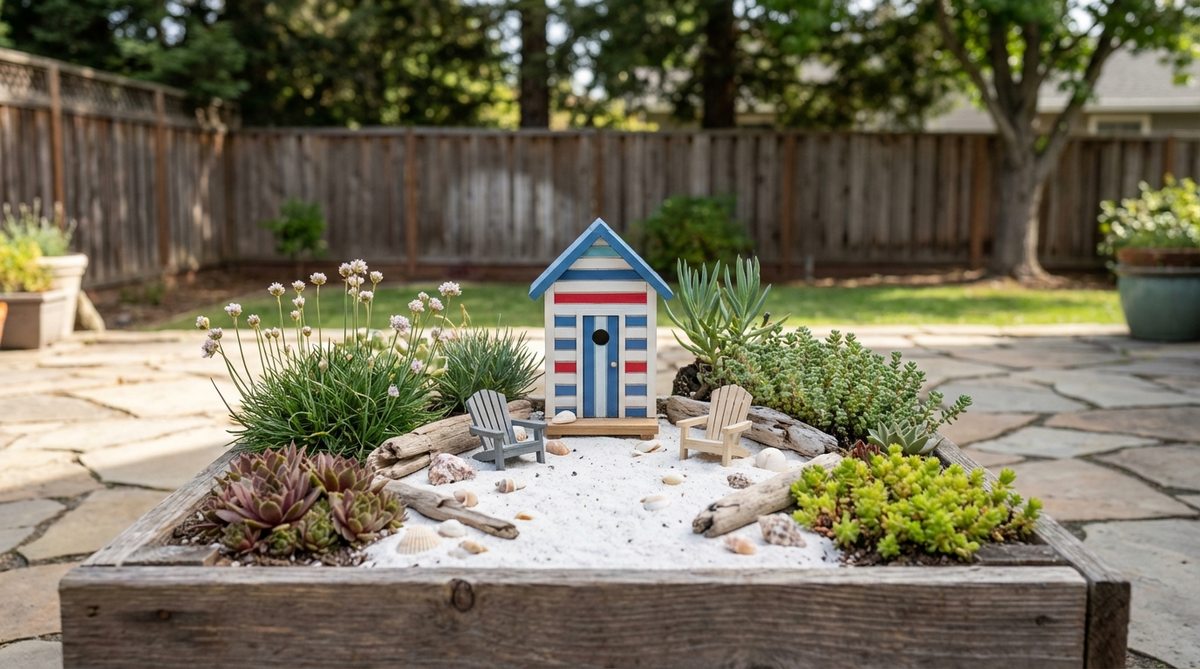
A colorfully striped beach hut sits on a “beach” of fine sand with small shells scattered nearby. Miniature beach chairs face outward.
Use aquarium sand or play sand as the beach surface, containing it with a low edge of stones. Select drought-tolerant coastal plants like miniature grasses to complete the seaside theme.
This vacation-inspired theme brings coastal charm to landlocked locations. The bright colors inject cheerfulness into the overall composition.
Themed Miniature Landscapes
Thematic coherence transforms collections of miniature elements into compelling narratives. Successful themed gardens maintain internal logic through consistent scale, color palette, and stylistic choices. These designs often reference specific locations, time periods, or cultural aesthetics.
32. Japanese Zen Garden
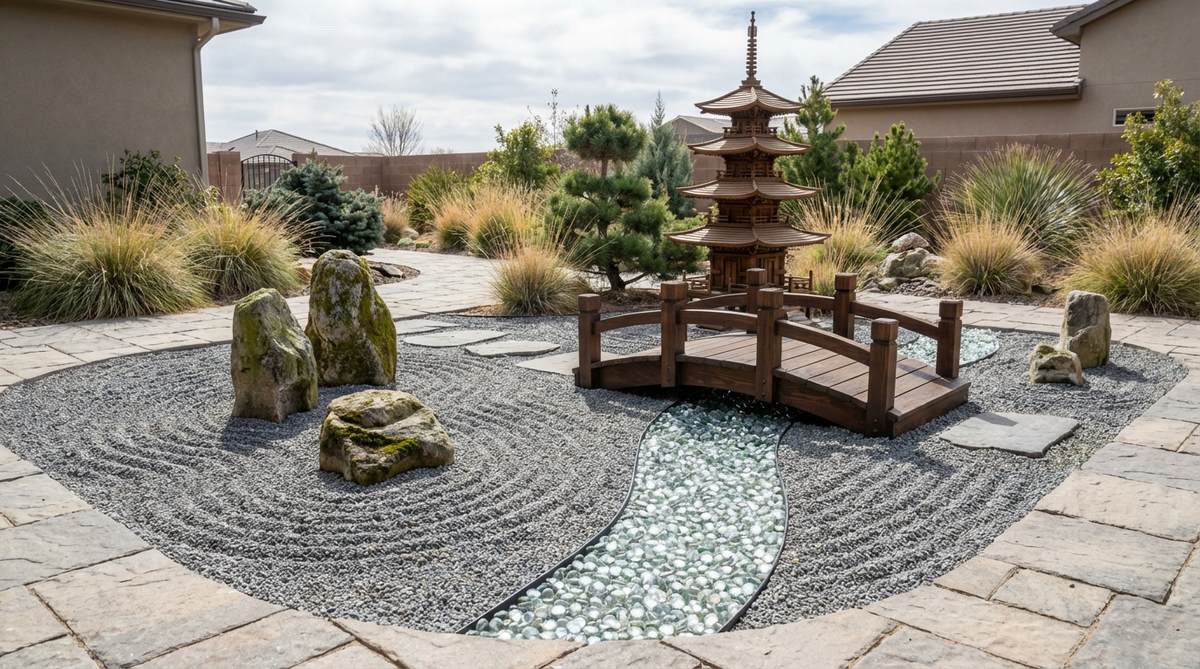
Raked gravel, carefully placed stones, and a miniature bridge over glass gem water create traditional Japanese garden elements. A small pagoda provides architectural focus.
Follow odd-number grouping principles for stone placementone large statement stone, two medium accent stones. Rake gravel in flowing patterns around stones to represent water movement.
The meditative quality makes this theme particularly suitable for workspaces. Regular raking of gravel patterns provides a calming ritual.
33. English Cottage Garden
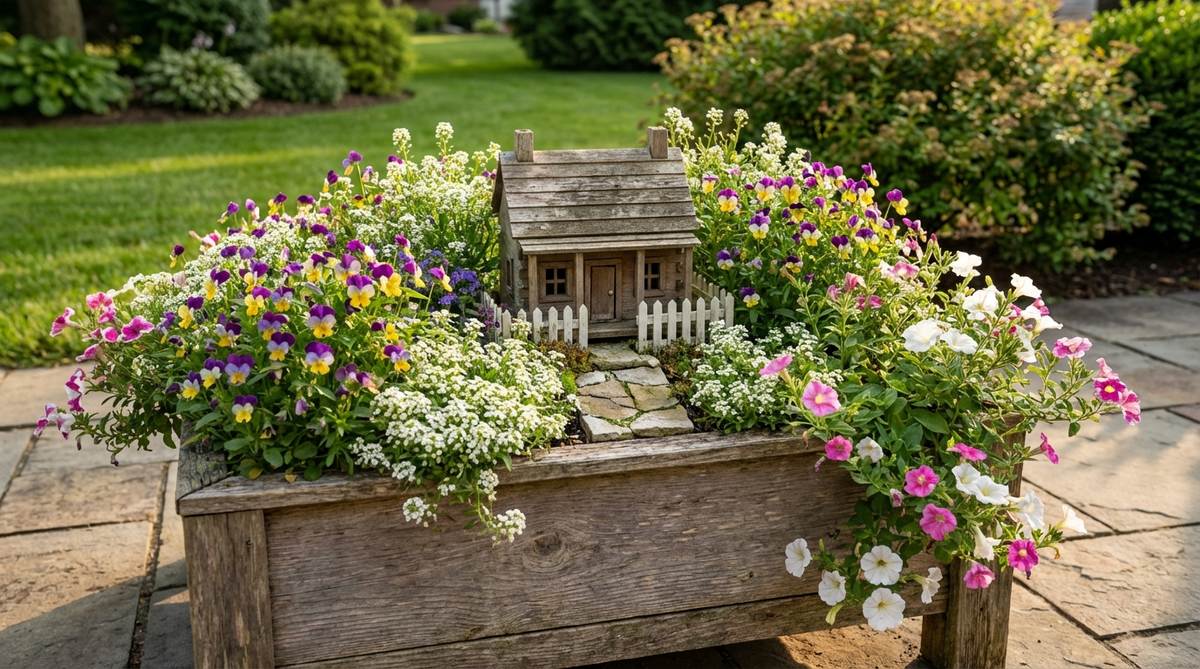
Densely planted miniature flowering plants tumble around a small cottage with a white picket fence. The abundant, slightly wild appearance captures cottage garden spirit.
Select continuously blooming miniature varieties like small violas, alyssum, and miniature petunias. Plant more densely than typical miniature gardens to achieve the characteristic overflowing look.
This romantic style suits vintage containers and weathered accessories. The informal planting approach forgives less-than-perfect placement.
34. Tropical Paradise
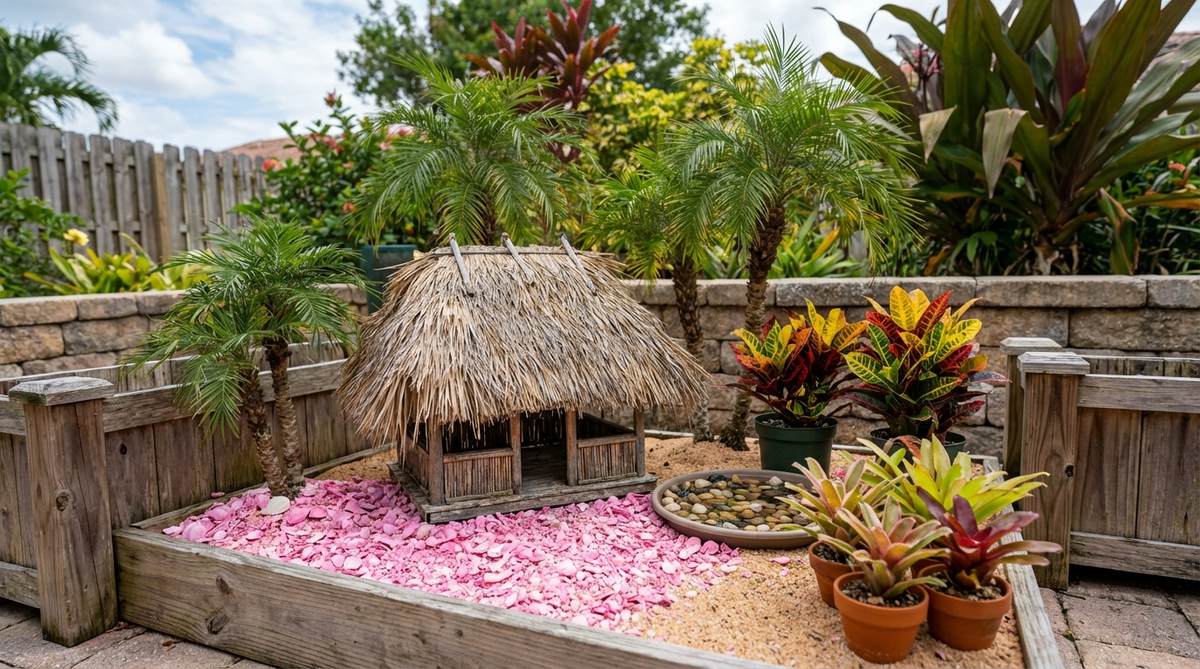
Small palms, colorful crotons, and miniature bromeliads surround a thatched hut. Bright pink sand or crushed shells create a tropical beach.
Maintain higher humidity for tropical plants through regular misting or by placing the container on a pebble-filled tray with water below the pot level. Position in bright, indirect light to prevent leaf scorch.
The exotic theme transports viewers to vacation destinations. Tropical plantings require warmer temperatures and higher humidity than desert-themed alternatives.
35. Autumn Harvest Scene
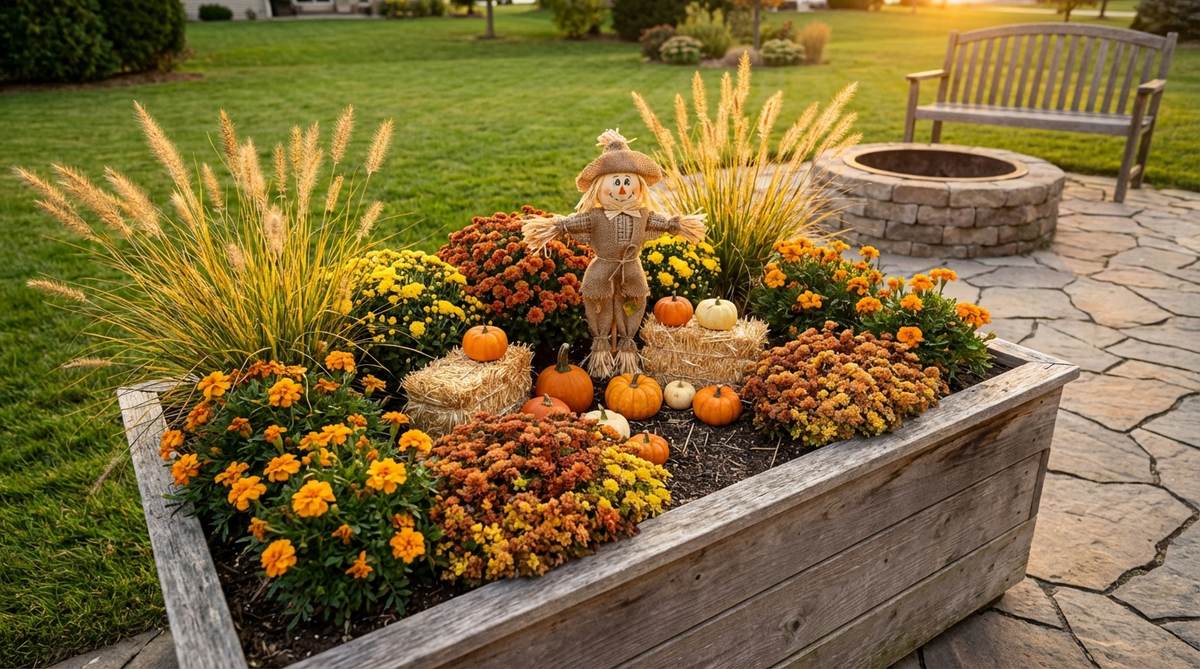
Miniature pumpkins, hay bales, and a scarecrow figure populate a fall-themed garden. Orange and gold flowering plants echo seasonal colors.
Craft tiny hay bales from natural raffia bound with twine. Select plants with burgundy or bronze foliage like certain sedums to reinforce the autumn palette.
This seasonal theme works beautifully as a temporary fall display. The warm colors provide psychological comfort as days shorten.
36. Winter Wonderland
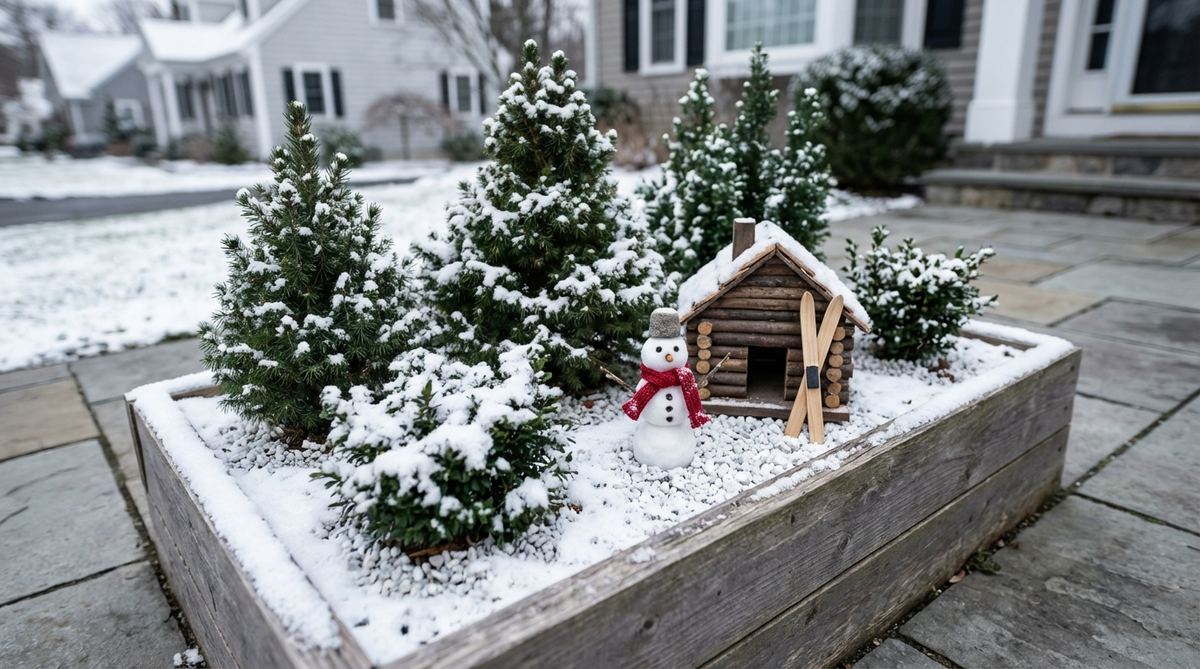
A snow-dusted scene features evergreen plants, a miniature snowman, and tiny skis propped against a cabin. White gravel or sand represents snow.
Use dwarf Alberta spruce or preserved evergreen clippings for trees. Dust surfaces lightly with artificial snow or white sand for a frosted appearance.
This theme maintains garden interest during months when outdoor gardening pauses. The monochromatic palette creates serene visual calm.
37. Woodland Forest
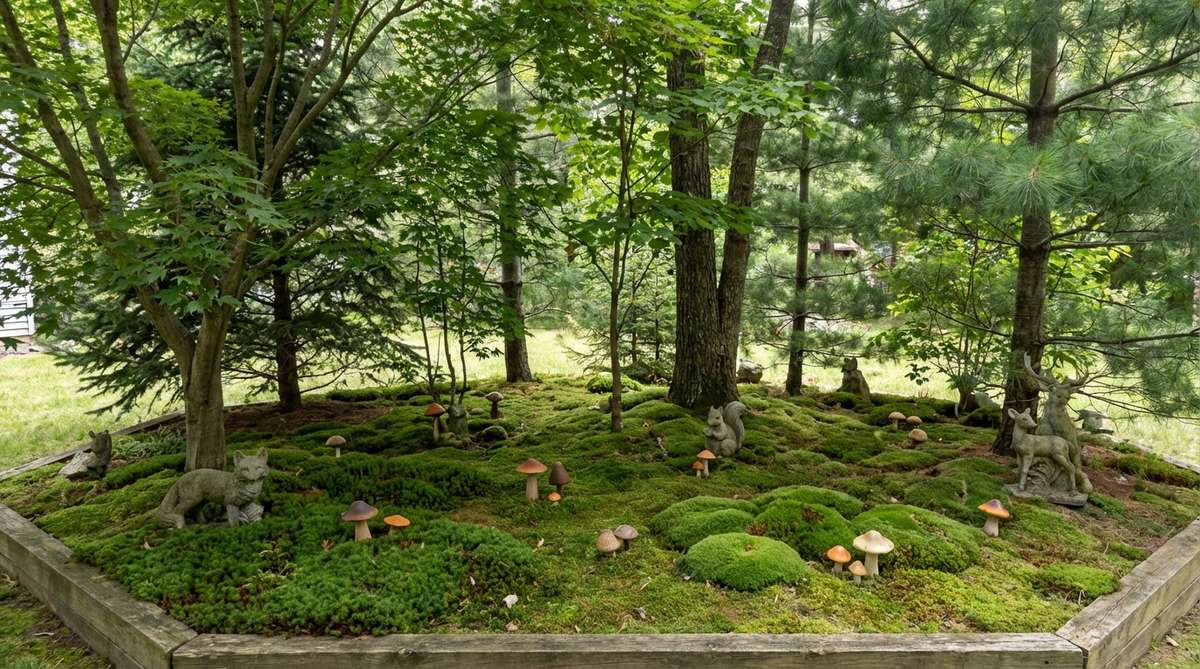
Multiple miniature trees in varying heights create a forest canopy over moss-covered ground. Mushroom accessories and woodland animal figurines complete the natural scene.
Layer different moss types for textural varietysheet moss for open areas, cushion moss for dimensional hillocks. Preserve moss by keeping it slightly damp but never waterlogged.
The naturalistic approach requires less structured maintenance than formal styles. Woodland themes adapt well to shadier locations.
38. Mediterranean Courtyard
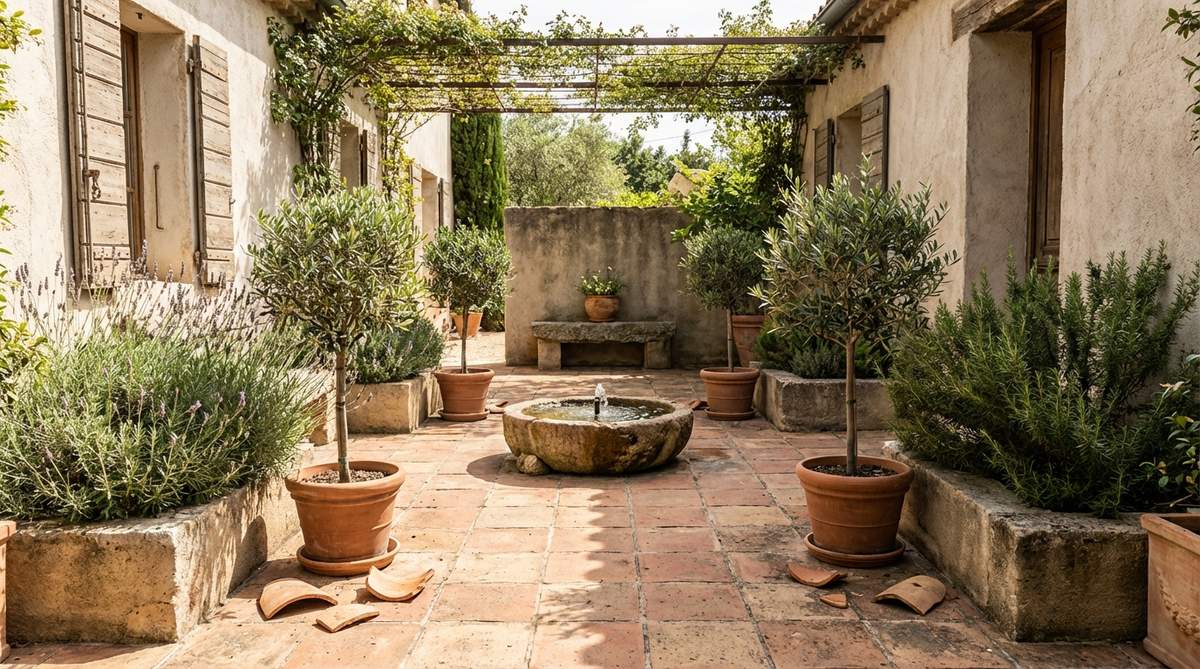
Terra cotta tiles form a small patio surrounded by miniature olive trees, lavender, and rosemary. A tiny fountain provides water feature interest.
Use actual miniature herb plants for authenticity and fragrance. Arrange broken pieces of terra cotta pottery as paving stones for an aged Mediterranean appearance.
This theme suits warm, sunny locations where Mediterranean plants thrive naturally. The fragrant herbs provide sensory appeal beyond visual interest.
39. Secret Garden
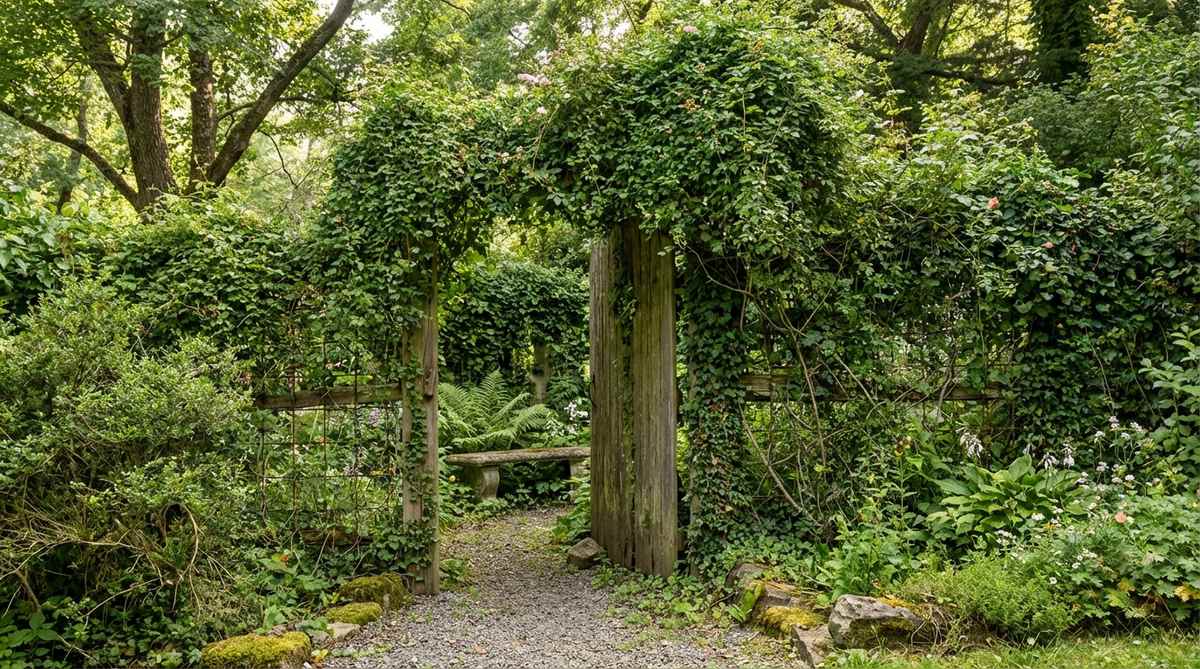
An overgrown aesthetic features plants climbing over a rustic gate entrance, with a hidden bench visible through the foliage. The mysterious quality invites closer inspection.
Train small-leaved ivy or creeping fig over wire structures to create the overgrown effect. Position the gate slightly ajar to enhance the “discovered” feeling.
The romantic secret garden theme references literary classics. The slightly wild appearance requires less precise maintenance than formal designs.
Creative Mini Garden Decor
Accessories and decorative elements personalize miniature gardens beyond basic plants and structures. Strategic placement of these details enhances storytelling while avoiding cluttered appearance. Quality miniature accessories withstand outdoor conditions when properly sealed.
40. Pebble Pathways
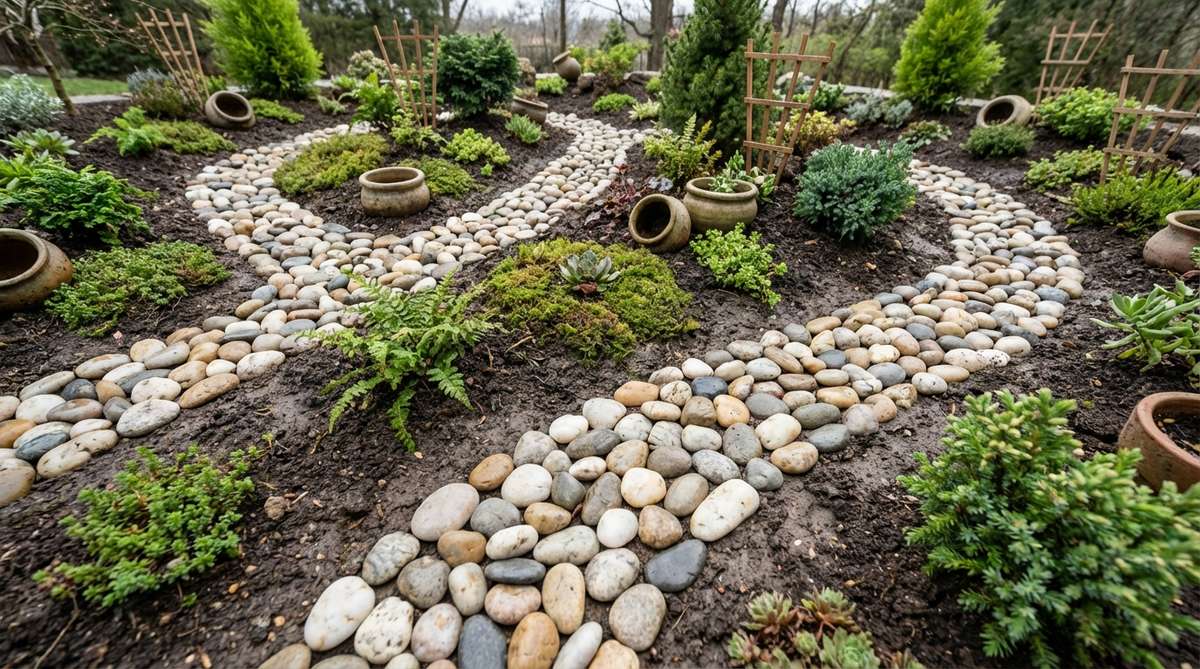
Smooth river pebbles form winding paths that guide the eye through the miniature landscape. The stone colors range from white to gray to brown for natural variation.
Press pebbles firmly into moist soil, setting them slightly below the soil surface for stability. Curve paths naturally rather than creating straight lines for organic flow.
Pathways create visual journey within the small space while serving the practical function of defining planted areas. The stones also help retain soil moisture.
41. Miniature Furniture Vignettes
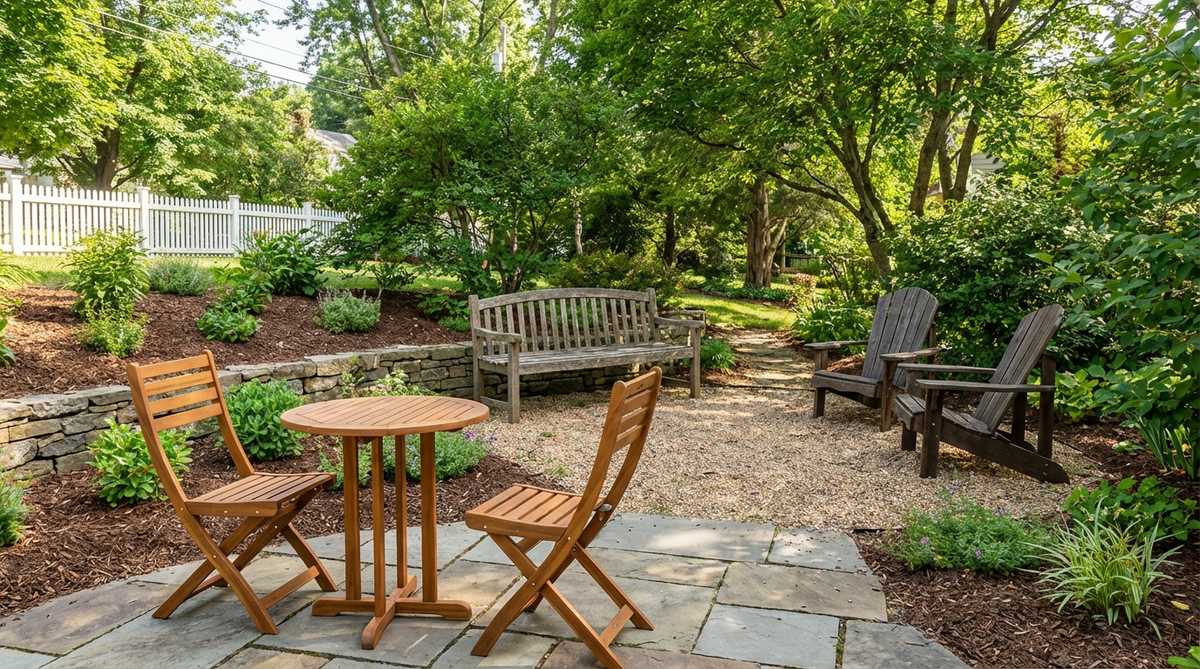
A bistro set, bench, or Adirondack chairs create “living spaces” within the garden. The furniture suggests human scale and habitation.
Seal wooden furniture pieces with polyurethane for weather resistance. Position furniture groupings where they make compositional sense—benches near paths, tables in clearings.
These elements invite viewers to imagine themselves within the miniature world. Furniture placement guides the eye to key viewing angles.
42. Fairy Doors And Windows
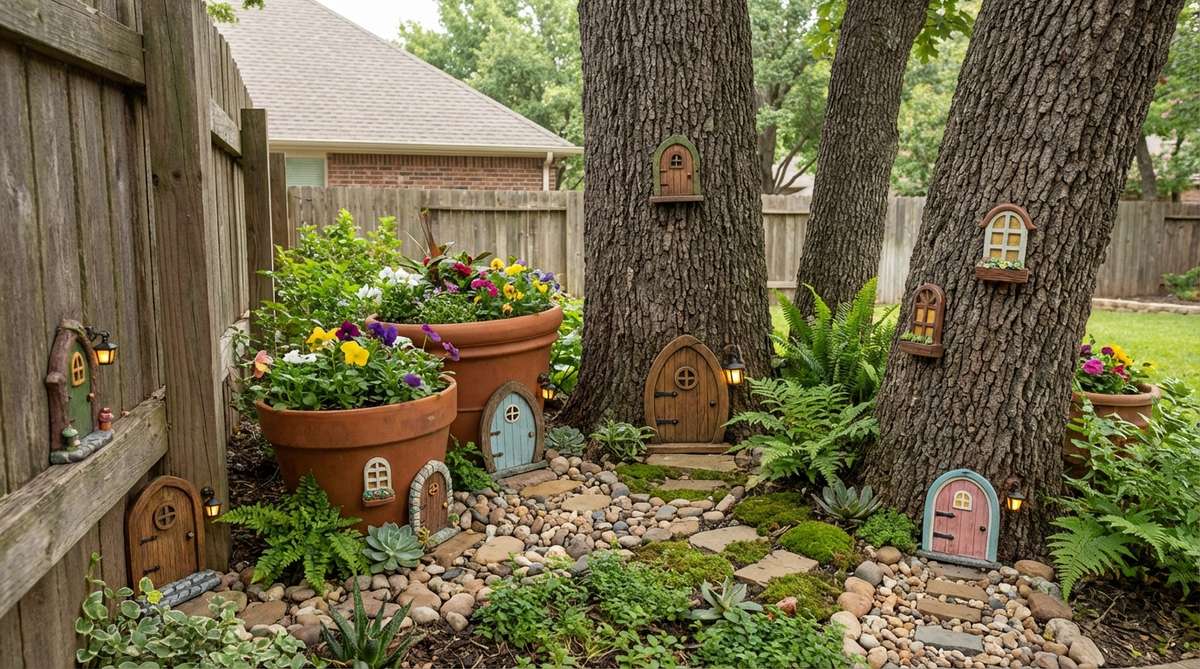
Decorative doors and windows mount against container edges, fence posts, or nearby trees, suggesting hidden fairy dwellings. The whimsical elements spark imagination.
Attach using weatherproof adhesive or small screws depending on the mounting surface. Paint doors in bright colors to stand out against natural backgrounds.
Children particularly enjoy discovering these hidden architectural details. The doors suggest entire worlds beyond what’s visible.
43. Miniature Lighting
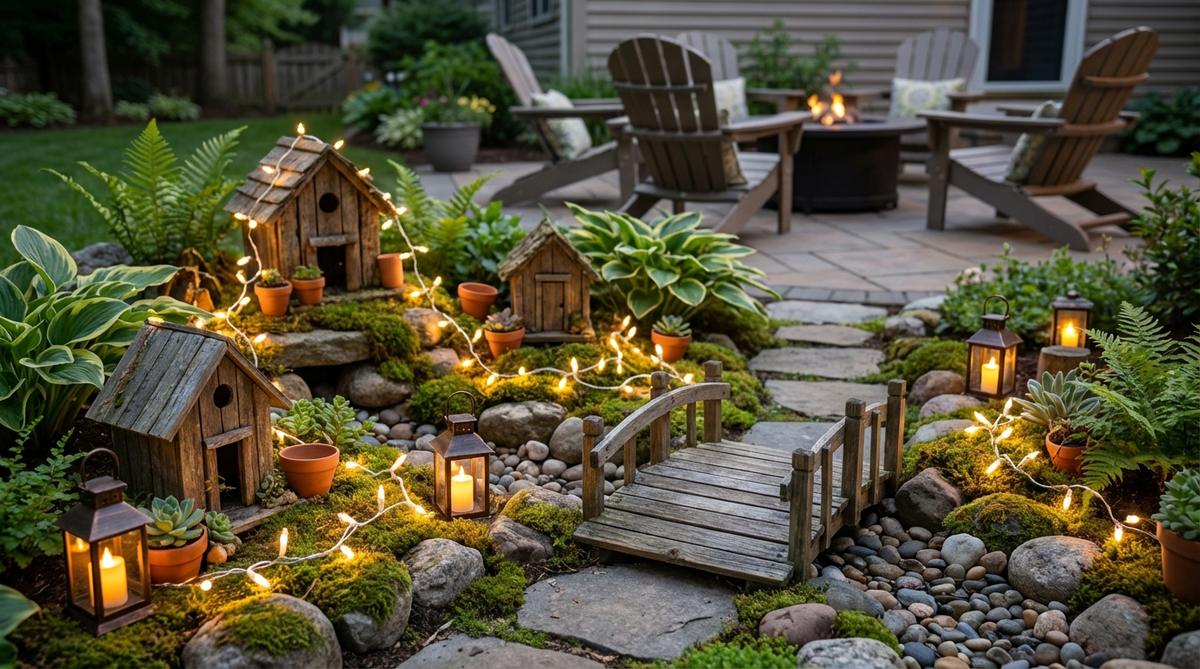
Battery-operated LED string lights, small lanterns, or glowing mushrooms illuminate the garden after dark. The lighting transforms the display into evening entertainment.
Select lights with automatic timers to conserve battery life. Position wiring discreetly behind plants and structures to maintain daytime aesthetics.
Evening illumination extends viewing pleasure beyond daylight hours. The magical nighttime glow enhances fairy tale atmosphere dramatically.
44. Water Features
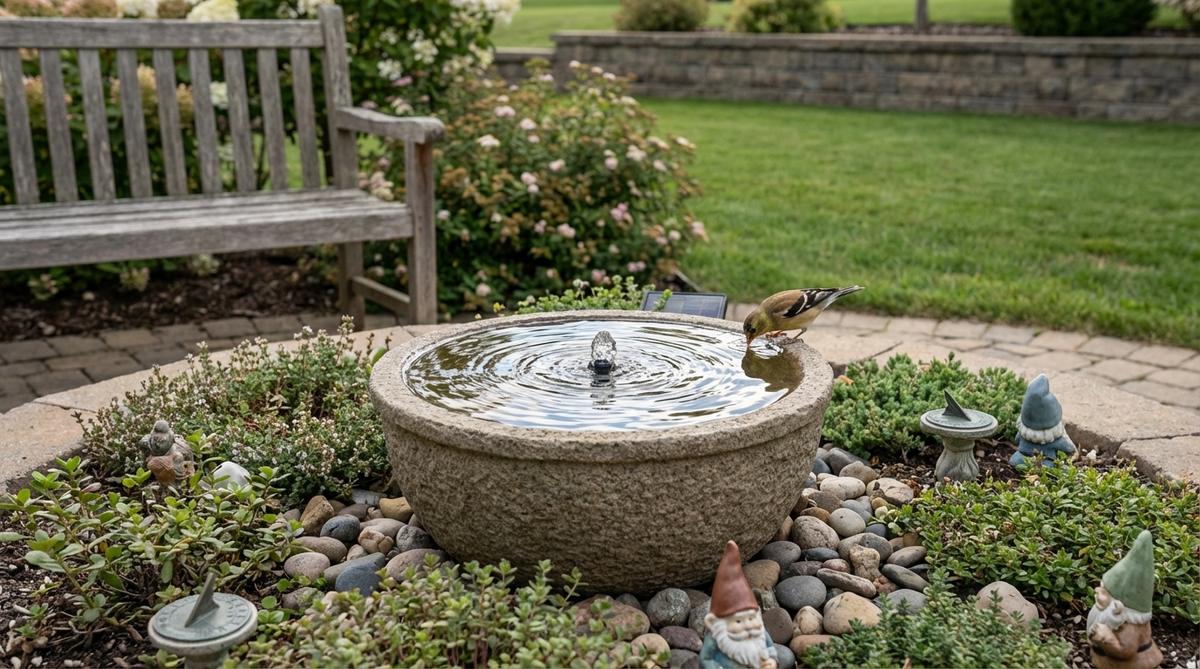
Small solar-powered fountains or still water in shallow dishes add reflective elements and sound. Water attracts birds to outdoor miniature gardens.
Use distilled water to prevent mineral deposits on decorative elements. Clean pumps monthly to maintain water flow and prevent algae buildup.
The sound of moving water adds sensory dimension beyond visual appeal. Water features require more maintenance but provide significant impact.
45. Seasonal Banners And Flags
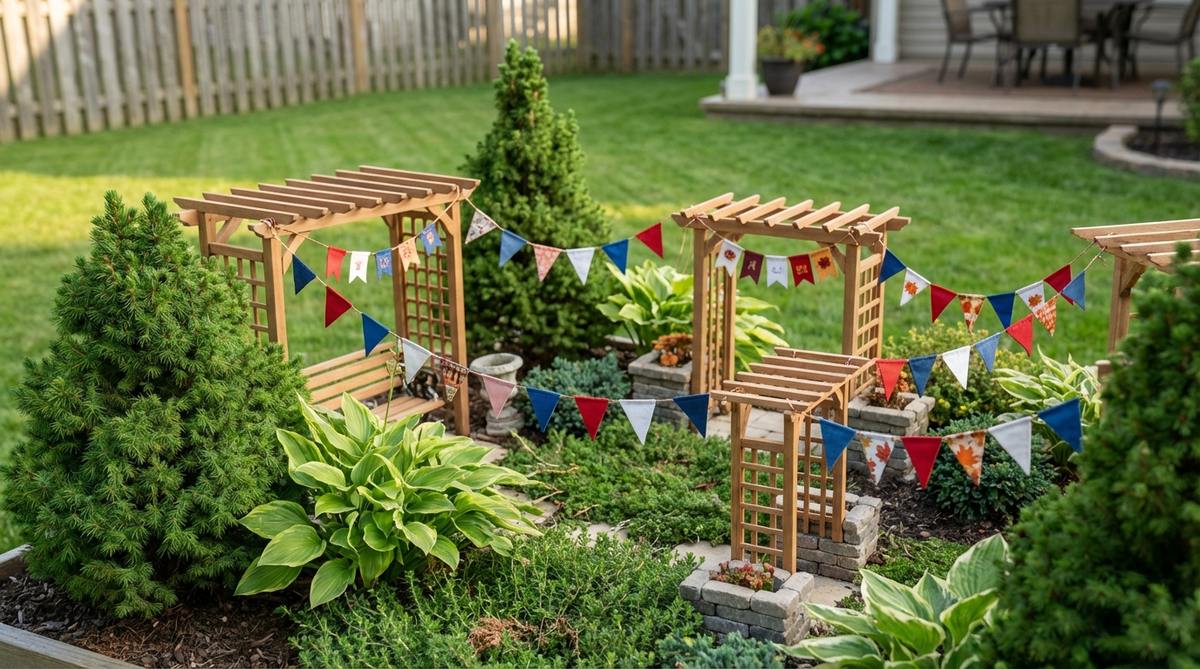
Miniature bunting, flags, or banners strung between structures add festive color and movement. The fabric accessories change easily with seasons or holidays.
Craft banners from weather-resistant fabric or felt, securing with thin wire or thread. Replace seasonal decorations to keep displays fresh and current.
These changeable elements allow design evolution without replanting. The movement adds kinetic interest as breezes activate the fabric.
46. Garden Tool Accessories
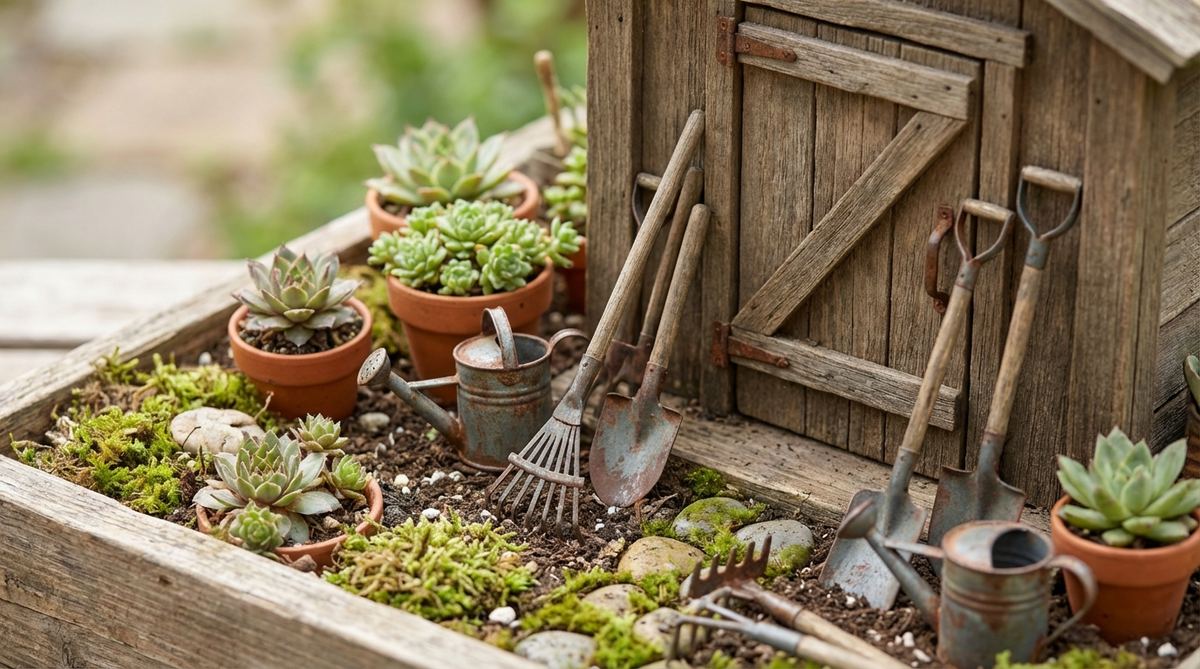
Tiny rakes, shovels, and watering cans lean against sheds or rest near planted areas. The tools suggest active gardening maintenance within the miniature world.
Weather metal tools with fine sandpaper for realistic aged appearance. Position tools casually rather than in strict arrangements for natural look.
Garden tool accessories particularly appeal to fellow gardeners who appreciate the meta-reference. The tools add narrative detail about the miniature world’s inhabitants.
47. Animal Figurines
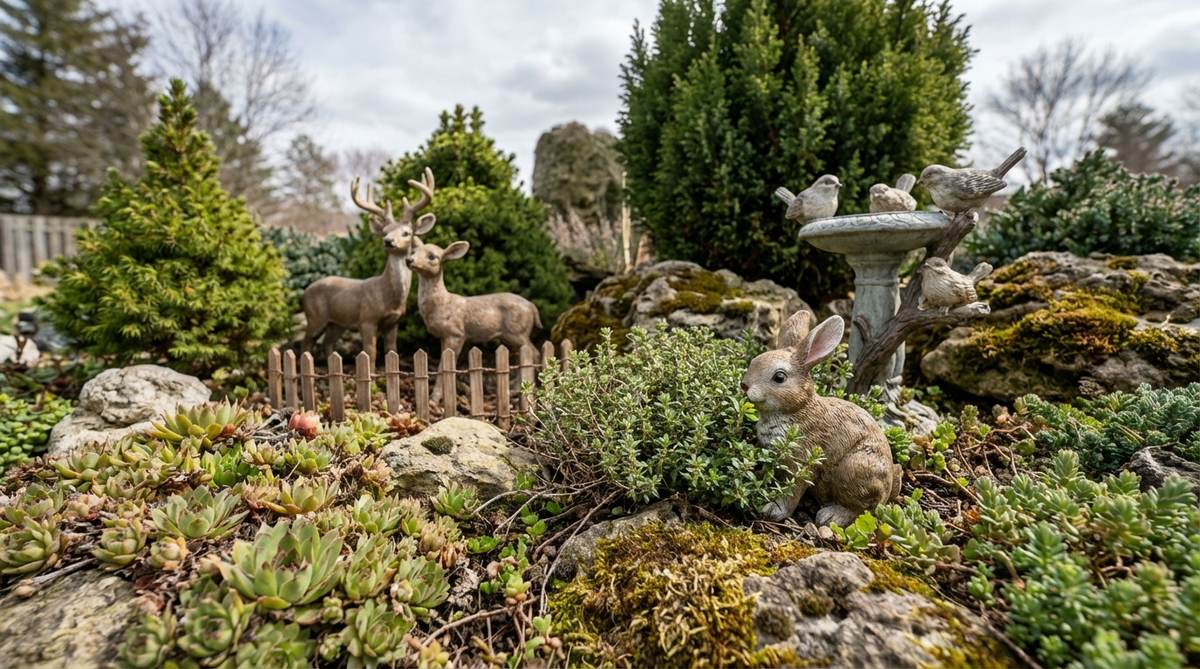
Miniature birds, rabbits, deer, or domestic animals populate the garden spaces. The creatures add life and movement suggestions to static plantings.
Select resin or metal figurines for outdoor durability. Position animals engaged in natural behaviors—birds at feeders, deer near water, rabbits under bushes.
Animal additions create storytelling opportunities and help establish the garden’s ecosystem. Children often name the resident creatures.
Seasonal Tabletop Displays
Seasonal miniature gardens celebrate annual cycles while providing fresh content throughout the year. These temporary or adaptable designs acknowledge holidays, weather changes, and botanical availability. Smart designers create frameworks that accept seasonal element exchanges without complete redesign.
48. Spring Bulb Garden
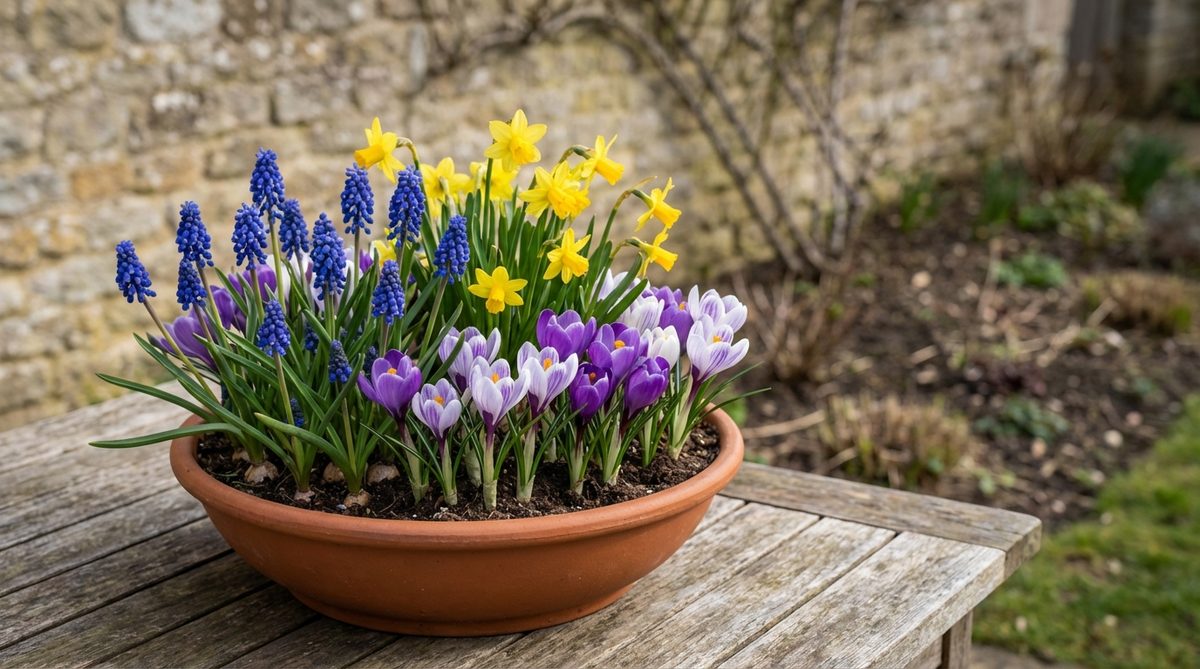
Forced miniature bulbs like grape hyacinth, crocus, and small daffodils bloom in a shallow bowl. The concentrated color announces spring arrival.
Pre-chill bulbs in refrigerator for 12-14 weeks before planting to ensure blooming. Plant densely for maximum visual impact during the brief flowering period.
This design provides color when outdoor gardens remain dormant. The bulbs bloom reliably with proper chilling treatment.
49. Summer Beach Scene
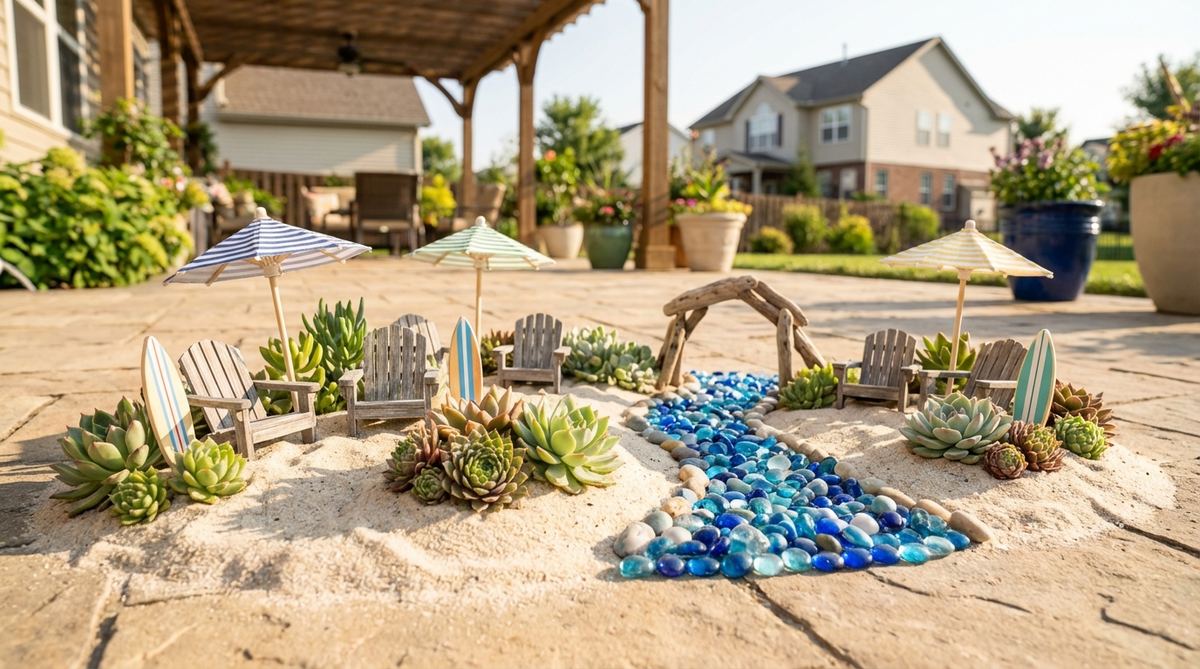
Beach-themed elements like tiny umbrellas, chairs, and surfboards sit on sand with heat-tolerant succulents representing coastal vegetation. Blue glass gems form the ocean.
Use drought-tolerant plants that withstand summer heat. Position outdoors on patios during warm months, bringing inside only during extreme heat.
The vacation theme brightens summer spaces while requiring minimal water during hot weather. The sand and succulents thrive in high light conditions.
50. Halloween Spooky Garden
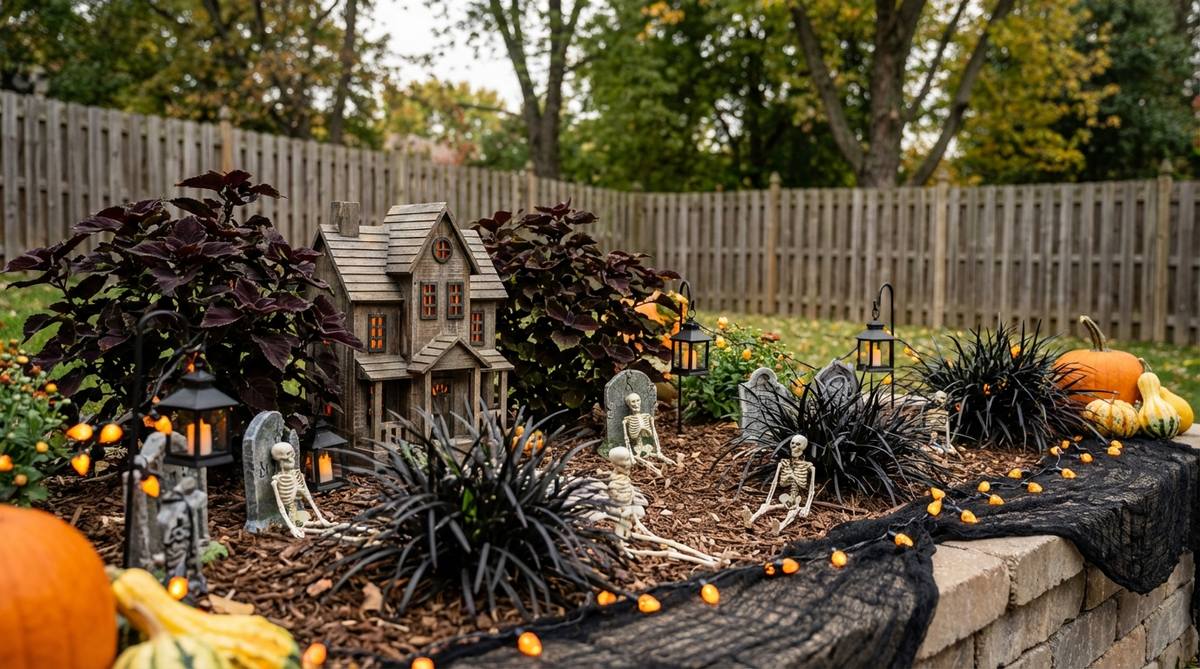
A haunted house with miniature tombstones, skeleton figures, and dark-leaved plants creates October atmosphere. Orange and black accessories reinforce the holiday theme.
Plant dark-foliaged coleus or black mondo grass for appropriately spooky vegetation. Add battery-operated orange lights inside the haunted structure.
This playful seasonal display entertains trick-or-treaters and party guests. The temporary nature allows dramatic theme changes without long-term commitment.
51. Thanksgiving Harvest Table
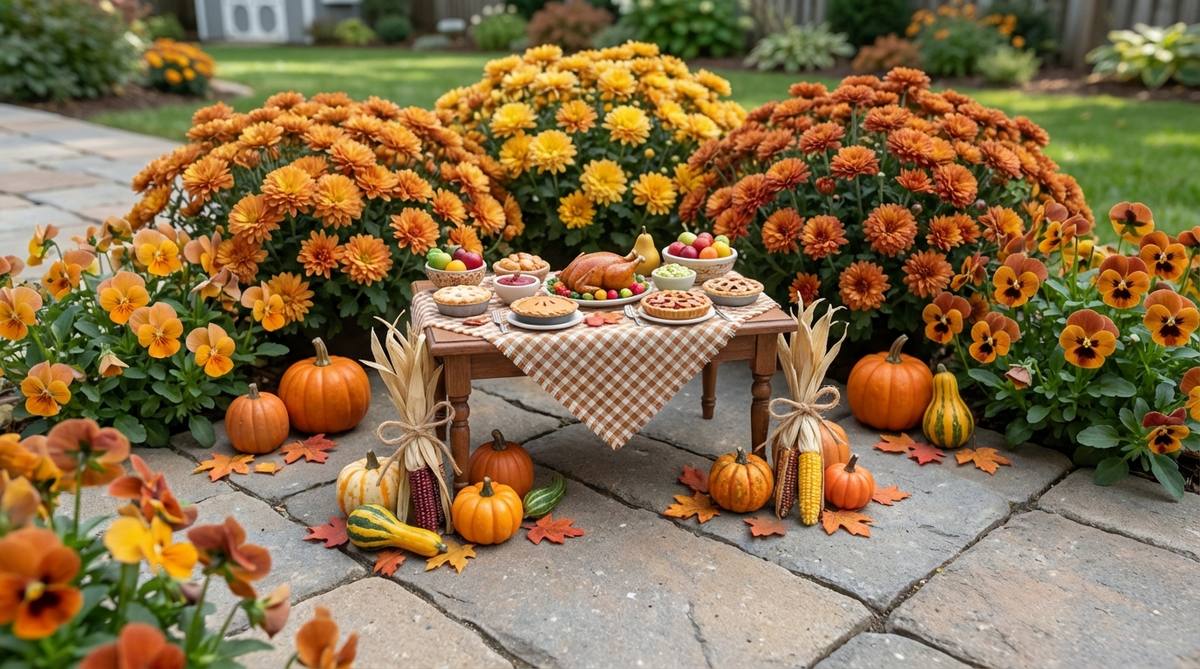
Miniature pumpkins, gourds, and corn stalks surround a tiny harvest feast table. Warm-toned plants and autumn leaves complete the abundance theme.
Craft miniature harvest foods from polymer clay for weatherproof decorations. Select chrysanthemums or pansies in fall colors for living plant elements.
The gratitude-focused theme provides meaningful seasonal content. The rich autumn colors create visual warmth during cooling weather.
52. Christmas Village Scene
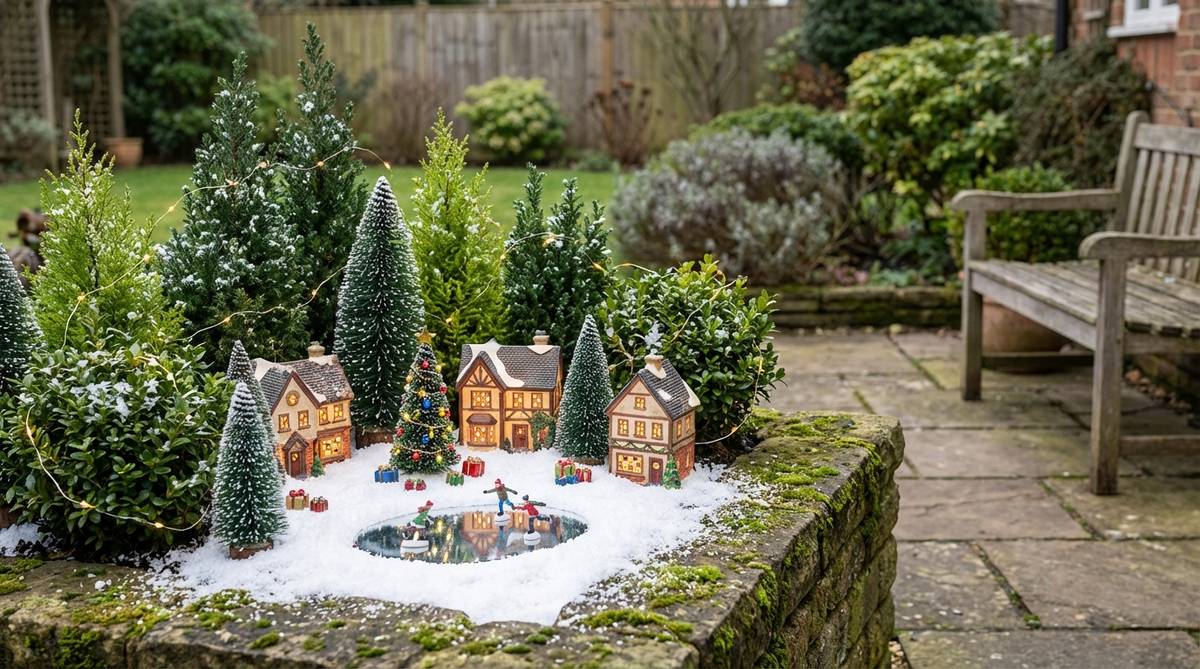
Small evergreen plants form a forest around miniature houses with glowing windows. Artificial snow, tiny presents, and a small decorated tree complete the holiday scene.
Use battery-operated micro LED lights inside structures for warm window glow. Add a mirror piece beneath the scene as a skating pond.
This beloved holiday theme becomes an annual tradition many families anticipate. The nostalgic quality resonates across generations.
53. Valentine’s Romantic Garden
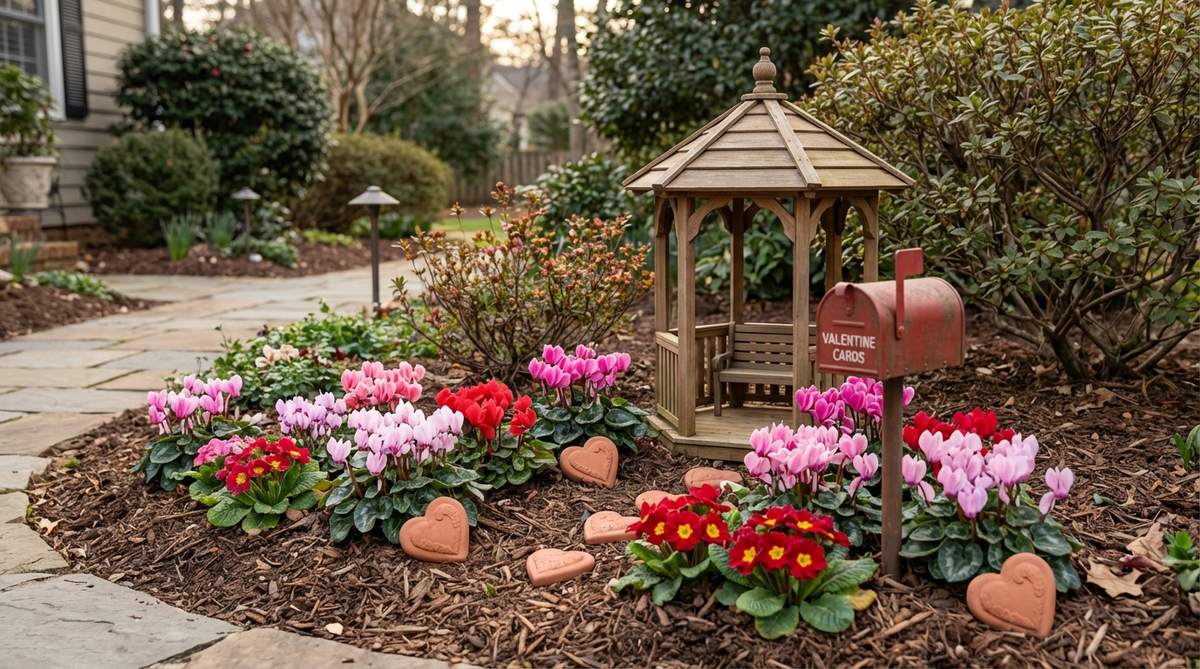
Pink and red flowering plants surround a miniature gazebo or bench. Heart-shaped accessories and a tiny mailbox for valentine cards add holiday specificity.
Select early-blooming plants like miniature cyclamen or primrose for February color. Add pink or red decorative elements that remove easily after the holiday.
The romantic theme suits both Valentine’s Day and anniversary celebrations. The pink color palette provides cheerful contrast to winter’s drabness.
Conclusion
These 53 mini gardens demonstrate the remarkable versatility of miniature landscaping, from fairy tale fantasies to modern succulent displays. Each design offers opportunities for creative expression within manageable scales, bringing the satisfaction of gardening to spaces as compact as a tabletop. Whether you’re drawn to the whimsy of enchanted cottages, the clean lines of contemporary containers, or the seasonal joy of holiday themes, miniature gardening rewards your efforts with outsized impact. Start with a single design that speaks to your aesthetic preferences, master the basics of scale and plant selection, and watch as your tiny landscape becomes a cherished focal point that sparks conversation and joy throughout the seasons.
Frequently Asked Questions
What plants work best for mini gardens?
The best plants for mini gardens include slow-growing varieties that maintain compact proportions. Succulents like echeveria, haworthia, and small sedums thrive in containers with minimal maintenance. For fairy gardens, choose miniature groundcovers such as Irish moss, baby’s tears, and creeping thyme. Small ferns, dwarf conifers, and miniature roses also work well. Always match plant selection to your light conditions and maintenance commitment, grouping species with similar water and care requirements.
How often should I water a tabletop mini garden?
Watering frequency depends entirely on your plant selection and container type. Succulent mini gardens require water only every 2-3 weeks, while moss and fern gardens need misting 2-3 times weekly. Check soil moisture by inserting your finger one inch deep—water only when the top layer feels dry. Containers without drainage holes require especially careful watering to prevent root rot. Shallow containers dry faster than deep ones, potentially requiring more frequent attention during hot weather.
Can mini gardens survive outdoors year-round?
Outdoor survival depends on your climate zone and plant choices. Hardy miniature gardens using cold-tolerant plants like dwarf conifers, sedum, and sempervivum withstand freezing temperatures in appropriate zones. Tropical and tender plants require indoor relocation before first frost. Container material matters too—terracotta and ceramic can crack in freezing conditions, while resin and wood better tolerate temperature fluctuations. Provide winter protection by moving containers against buildings or under overhangs to shield from harsh conditions.
How do I prevent plants from outgrowing my mini garden?
Prevent overgrowth by selecting genuinely dwarf and slow-growing varieties rather than young versions of standard plants. Trim plants regularly to maintain desired size and shape, treating the mini garden like a living bonsai. Root prune plants annually by removing them from containers, trimming outer roots by one-third, and replanting in fresh soil. Replace fast-growing specimens before they dominate the composition. Research mature plant sizes before purchasing to ensure long-term compatibility with your design scale.
What containers work best for miniature fairy gardens?
The best containers provide adequate drainage and appropriate depth for root development—typically 3-4 inches minimum. Shallow bowls, wooden crates, ceramic planters, and repurposed items like dresser drawers or vintage containers all function well. Ensure any container without pre-drilled holes gets drainage added using appropriate drill bits for the material. Width matters more than depth for landscape-style designs that spread horizontally. Choose containers proportional to your available display space, remembering that larger vessels provide more design flexibility and require less frequent watering.
How do I create realistic miniature garden pathways?
Create realistic pathways using materials scaled appropriately to your garden size. Smooth river pebbles work for rustic paths, while crushed stone or fine gravel suits formal designs. Press materials firmly into moist soil, setting them slightly below surface level for stability. Curve pathways naturally through the space rather than creating straight lines. Small flat stones positioned like stepping stones add dimensional interest. Edge pathways with slightly larger stones or low plants to define boundaries. Seal pebble pathways with diluted white glue to prevent displacement during watering.