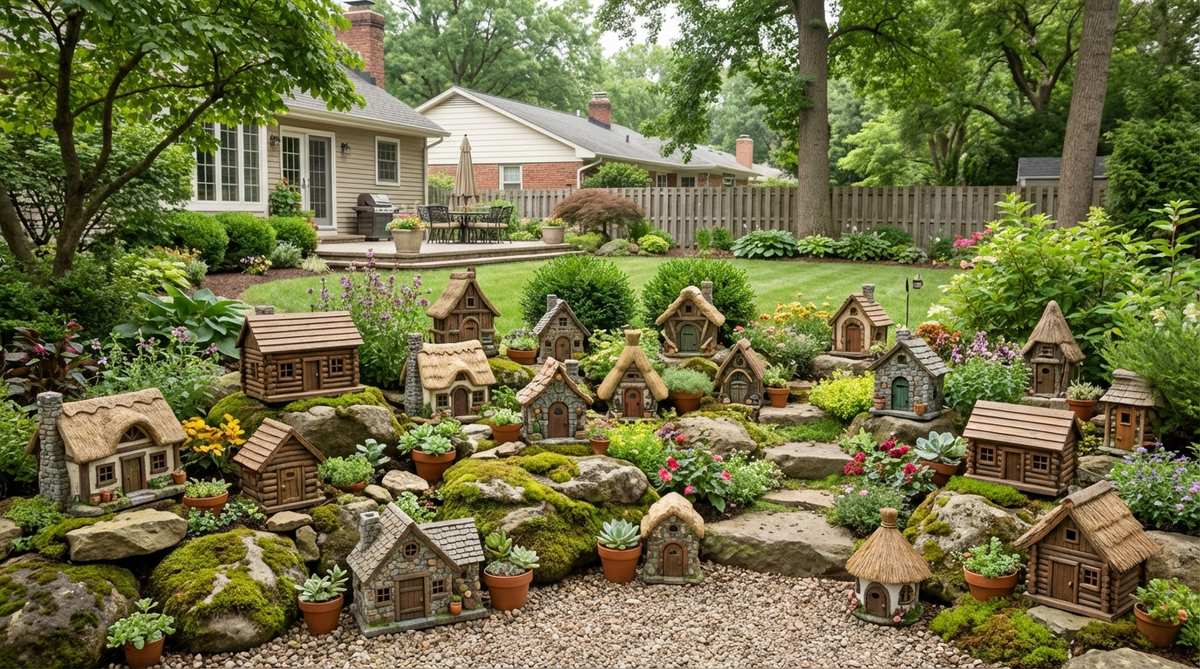
Creating a captivating fairy garden starts with selecting the perfect mini garden shed that anchors your miniature landscape. Whether you prefer rustic charm, whimsical fantasy, or elegant cottage designs, the right shed transforms an ordinary garden display into an enchanting fairy realm. Fresh Garden Ideas presents over 30 carefully curated shed models that landscape architects and fairy garden enthusiasts trust for building magical outdoor spaces.
Design SnapshotKey Principles
- Scale Proportion: Match shed dimensions to surrounding plants and accessories for visual harmony
- Material Selection: Choose weather-resistant resin, treated wood, or sealed ceramic based on climate exposure
- Architectural Style: Align shed design with garden theme—cottage, woodland, Victorian, or modern aesthetics
- Functional Details: Incorporate opening doors, working windows, and interior elements for authentic storytelling
Classic Cottage Charmers
Traditional cottage-style sheds evoke timeless garden elegance with painted trim, flower boxes, and charming architectural details. These designs suit English garden themes and pastoral fairy landscapes where refinement meets natural beauty.
1. English Garden Potting Shed
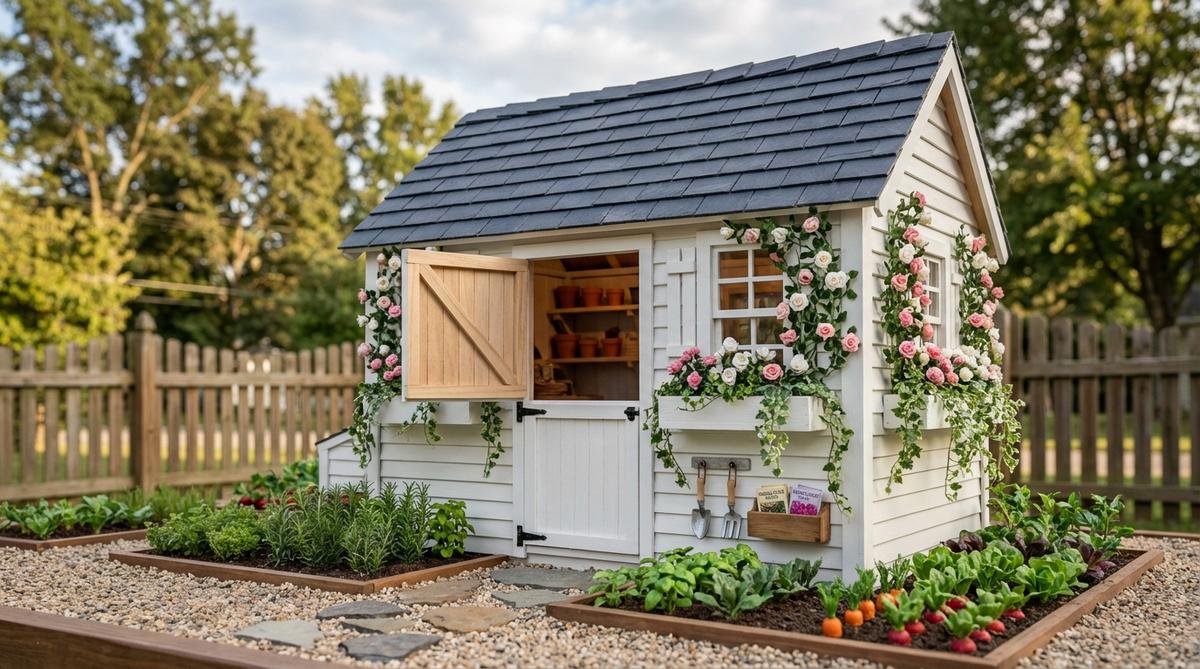
White-painted walls contrast beautifully with slate-gray roof shingles, while miniature terracotta pots rest on tiny shelves visible through open Dutch doors. Window boxes overflow with sculpted climbing roses and ivy that cascade down exterior walls.
Designers position this shed near herb gardens or alongside miniature vegetable patches to emphasize its functional purpose. The hinged upper door allows fairy gardeners to showcase interior details like hanging tools and seed packets.
This model works best in 1:12 or 1:24 scale gardens where detail visibility matters. Place it on a gravel base with a stepping-stone path to create an authentic work-shed atmosphere.
2. Victorian Tool House
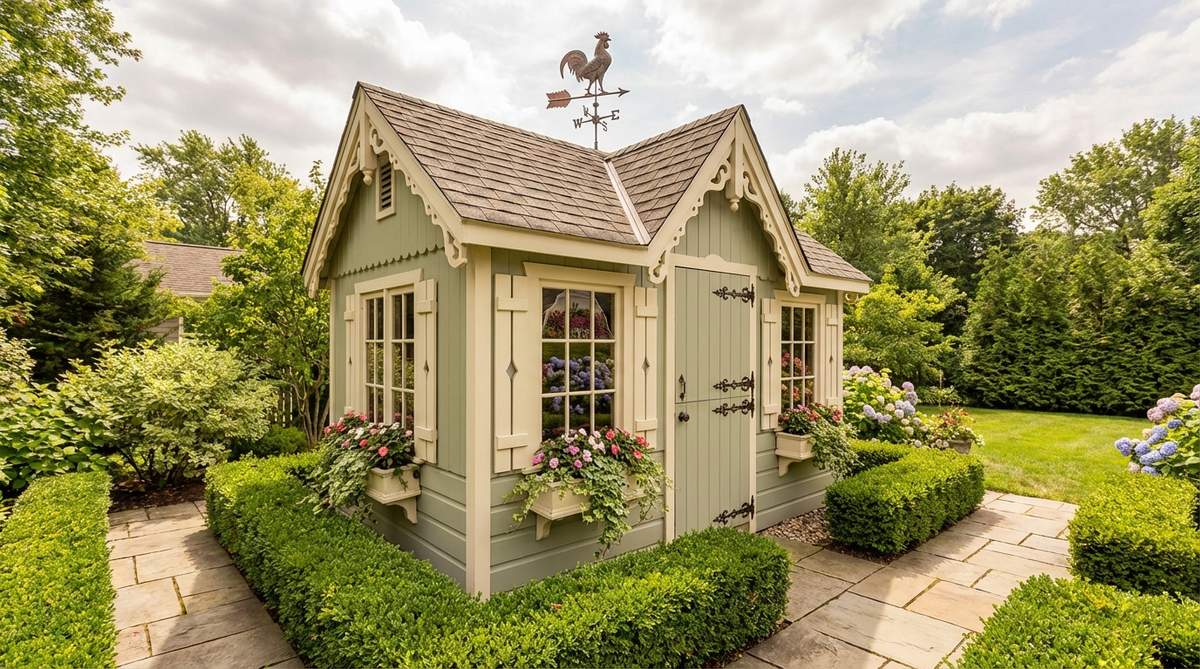
Ornate gingerbread trim adorns the peaked roof, while decorative shutters frame multipaned windows that reflect miniature garden scenes. The structure features subtle lavender or sage paint with cream-colored accents highlighting architectural features.
Craftsmen often add copper weathervane details or miniature wrought-iron hardware to enhance the Victorian aesthetic. Position this shed as a focal point at garden path intersections or near formal flower beds.
3. Farmhouse Storage Barn
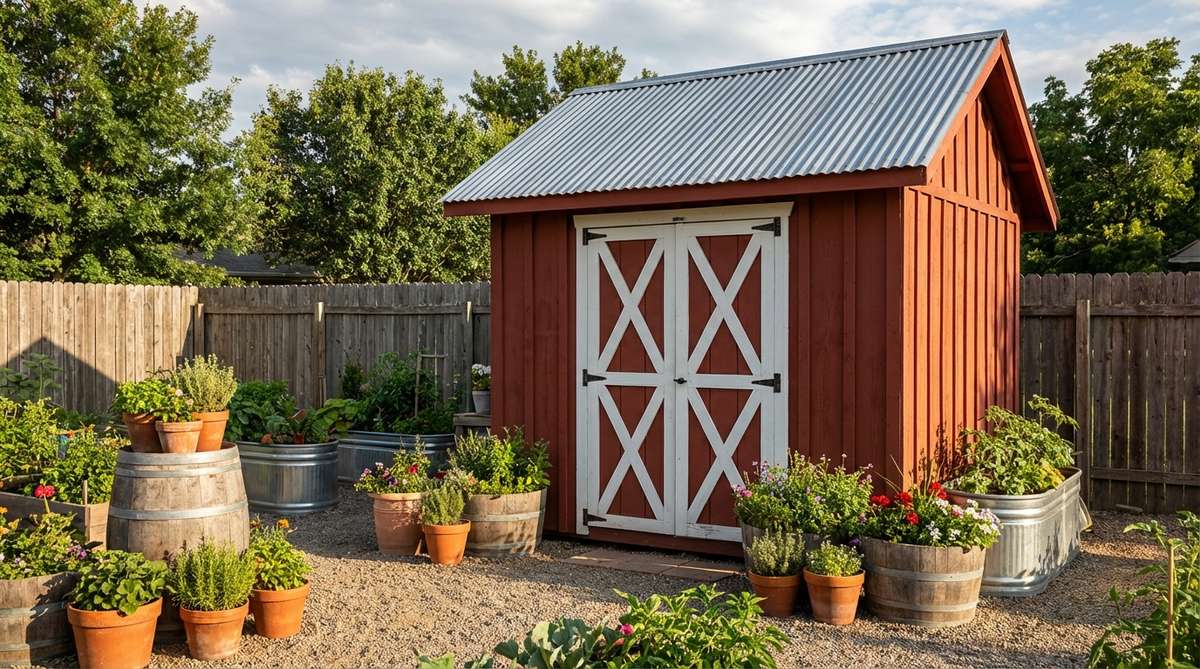
Red-painted board-and-batten siding creates instant rural charm, complemented by white X-pattern doors that swing open on metal hinges. A galvanized metal roof adds authentic farm character while protecting interior details from moisture.
Landscape architects recommend pairing this shed with miniature wheelbarrows, stacked firewood accessories, and rustic fence lines. The design scales well from small container gardens to large outdoor fairy landscapes.
Weather-resistant resin construction ensures longevity in exposed locations. Add weathering effects with diluted acrylic paint to create aged wood appearance.
4. French Country Retreat
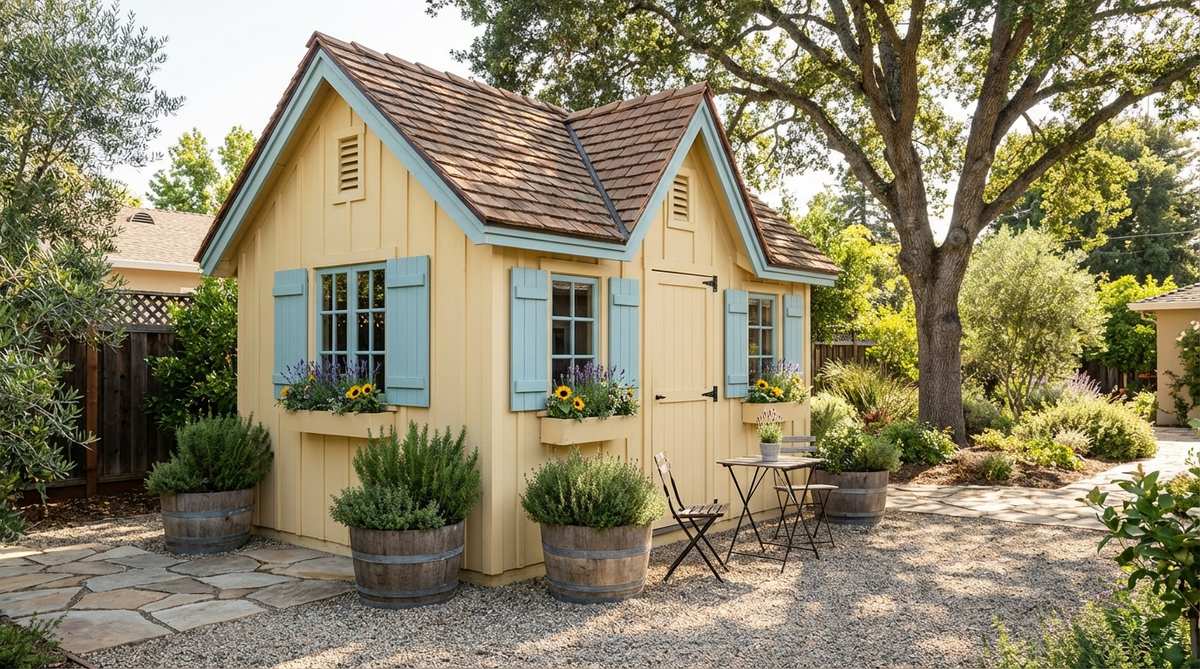
Soft butter-yellow walls paired with robin’s-egg blue shutters evoke Provence countryside charm. The steeply pitched roof accommodates miniature clay tiles, while window boxes burst with sculpted lavender and sunflowers.
This design benefits from surrounding elements like miniature bistro furniture, tiny wine barrel planters, and gravel courtyard settings. The color palette coordinates beautifully with Mediterranean plant selections like rosemary and thyme.
5. Cape Cod Beach Shed
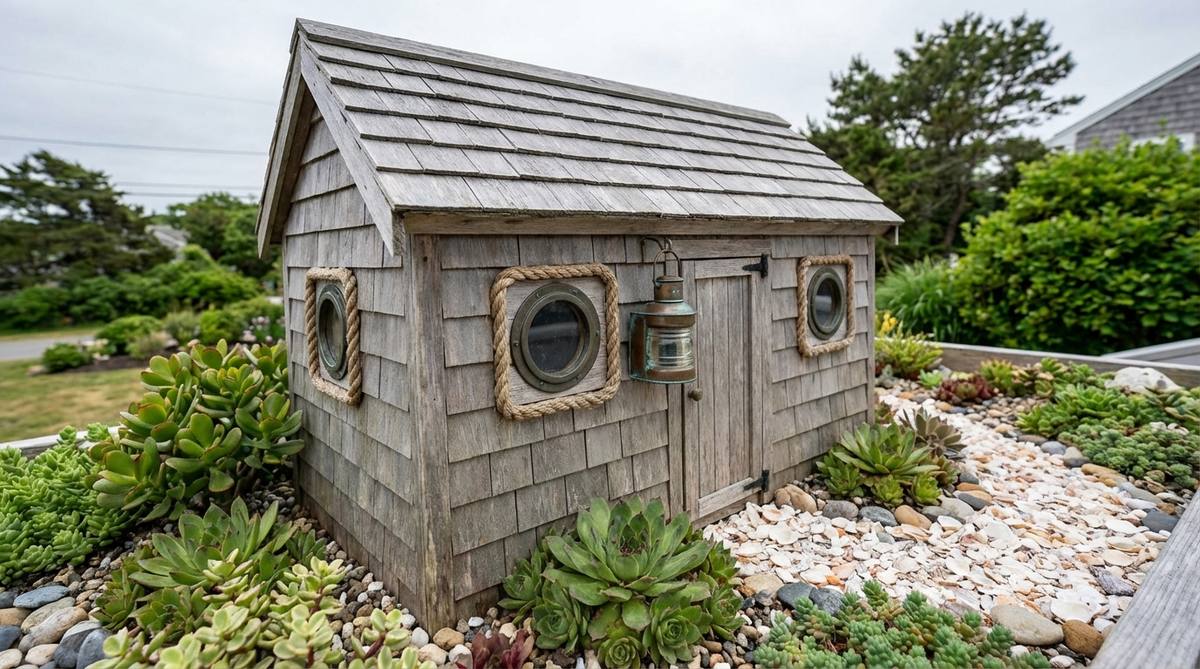
Weathered gray cedar shingles cover both walls and roof in classic New England style. Nautical details include miniature rope accents, porthole-style windows, and a ship’s lantern mounted beside the door.
Designers position this shed in coastal-themed fairy gardens alongside seashell paths, beach grass plantings, and miniature adirondack chairs. The monochromatic palette allows surrounding colorful flowers to pop visually.
Seal wood-based models with marine varnish for outdoor durability. This style pairs exceptionally well with succulent plantings that mirror seaside vegetation.
6. Colonial Garden House
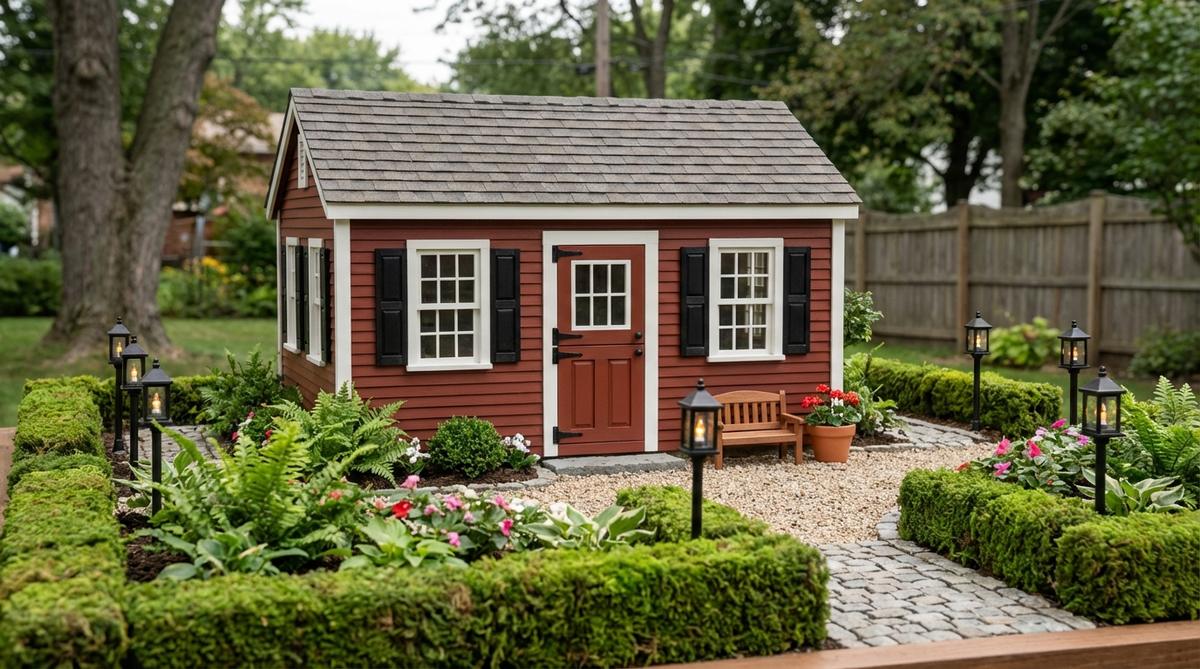
Brick-red paint with black shutters and white trim creates quintessential American colonial architecture at miniature scale. The symmetrical design features centered door placement with matching windows on each side.
Add authenticity with miniature lantern posts, cobblestone pathways, and formal boxwood hedges sculpted from preserved moss. This shed anchors traditional landscape designs with historical accuracy.
Rustic & Weathered Retreats
Aged wood textures, moss-covered roofs, and natural material integration define this category of authentic woodland structures. These sheds suit forest-themed gardens and naturalistic fairy landscapes.
7. Moss-Covered Stone Cottage
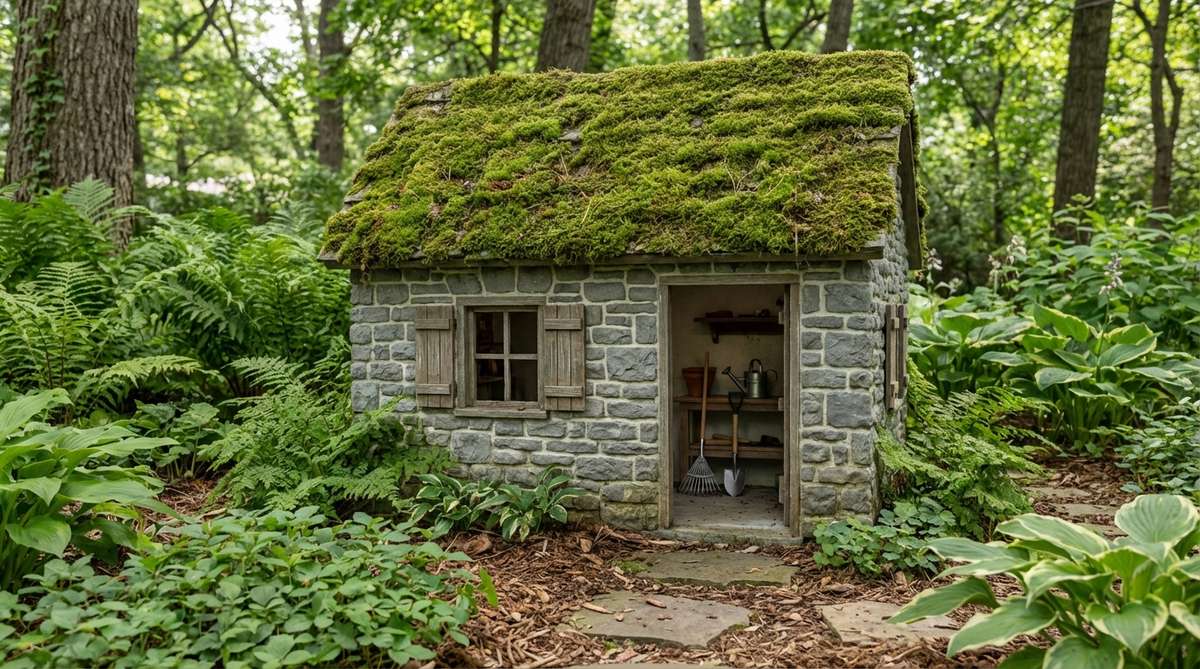
Gray stone walls textured with realistic mortar lines support a roof completely overtaken by preserved green moss. Tiny wooden shutters hang slightly askew, suggesting decades of weathering and forest reclamation.
The structure integrates seamlessly into woodland settings when surrounded by ferns, miniature toadstools, and bark mulch groundcover. Opening doors reveal interior walls lined with miniature garden tools and lanterns.
Cold-cast resin construction allows for intricate stone detail while maintaining weather resistance. Position near tree roots or partially embed in hillside gardens for natural integration.
8. Reclaimed Barn Wood Shelter
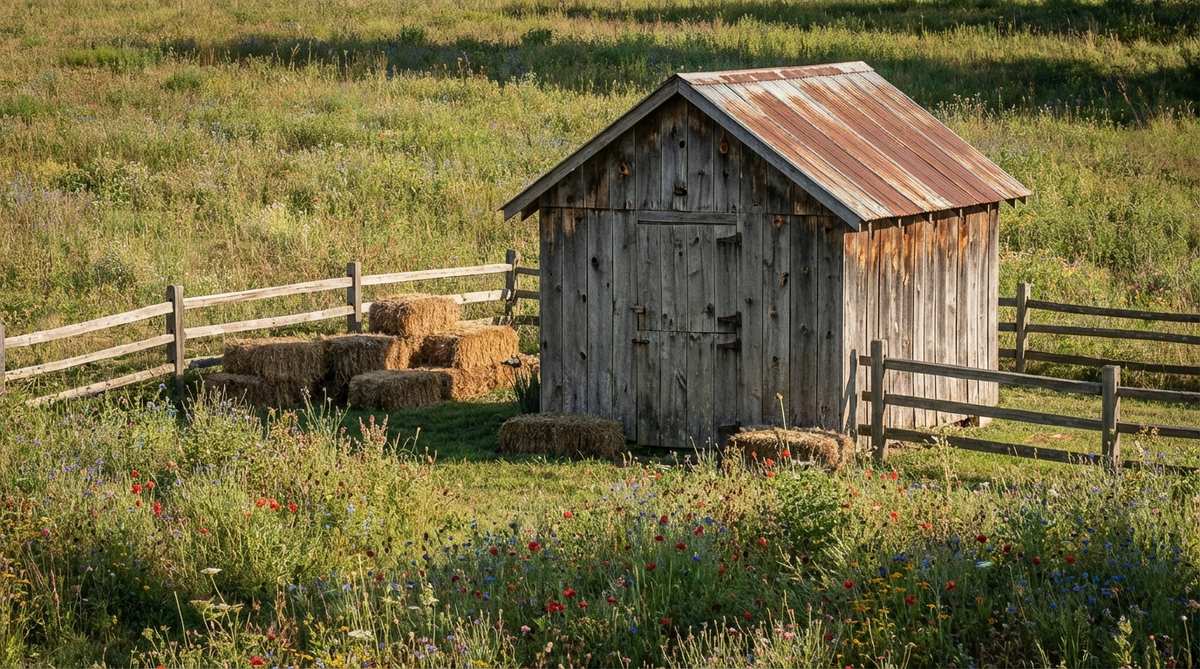
Weathered gray wood planks show realistic grain patterns, knots, and age discoloration that mirrors century-old barn siding. Metal roof sections exhibit rust patina that adds to the authentic abandoned aesthetic.
Landscape designers use this shed in rustic country settings alongside split-rail fencing, hay bale accessories, and wildflower meadow plantings. The neutral color palette prevents visual competition with surrounding botanicals.
9. Cordwood Construction Cabin
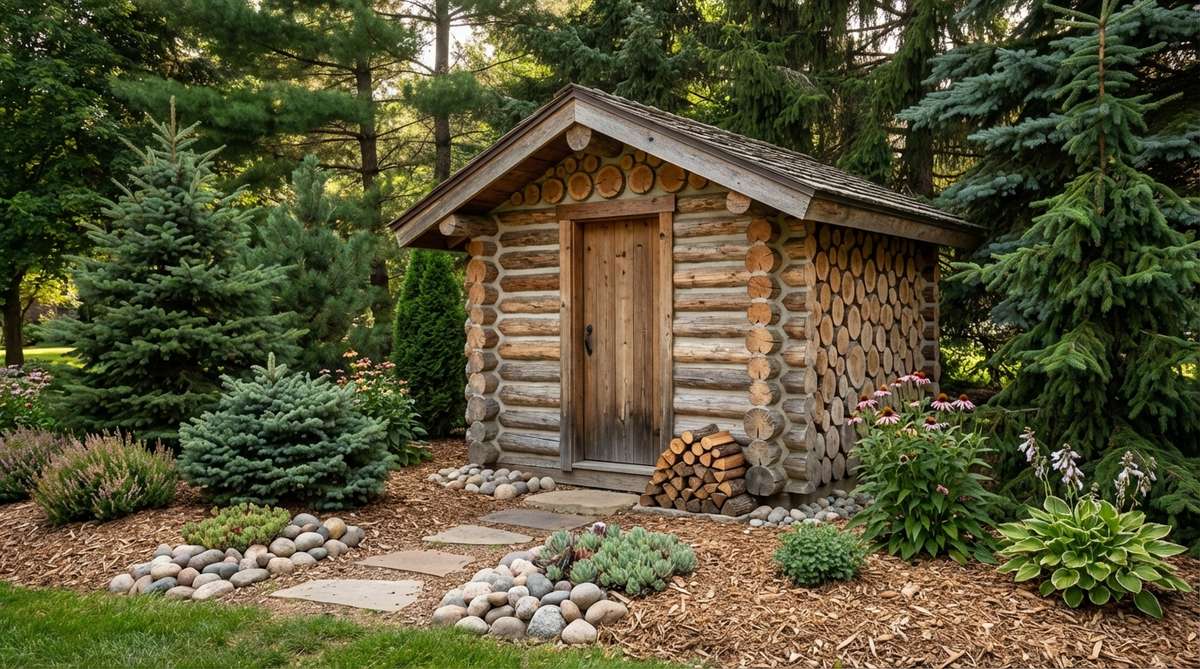
Horizontal log sections mortared together create distinctive texture patterns unique to Scandinavian building traditions. The rounded wood ends create rhythmic visual interest across all four walls.
This eco-inspired design complements sustainable garden themes and appeals to fairy gardeners interested in traditional building techniques. Pair with evergreen plantings and rock gardens for Nordic forest atmosphere.
The substantial appearance works best in larger fairy landscapes where the architectural detail receives proper visual weight. Add miniature stacked firewood beside the structure for contextual storytelling.
10. Driftwood Beach Shack
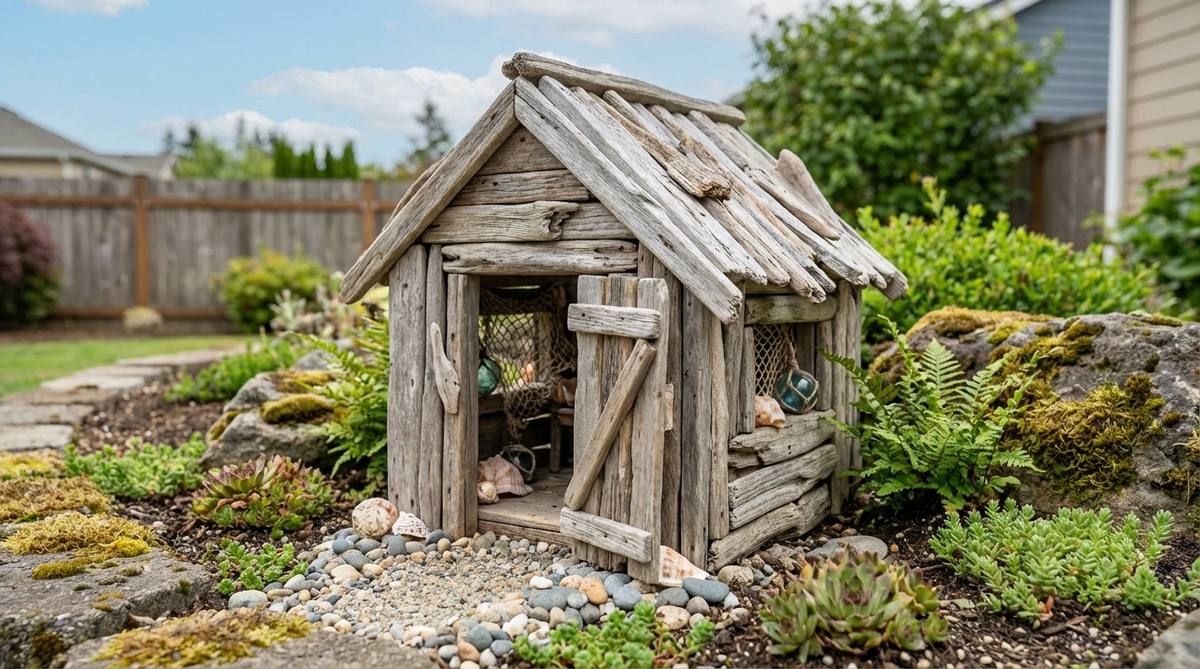
Silvered driftwood pieces arranged in irregular patterns suggest storm-salvaged construction by imaginative coastal fairies. Gaps between boards reveal glimpses of interior treasures like fishing nets and seashells.
Designers position this shed on sand-filled containers or pebble beaches within larger fairy landscapes. Surround with beach grass, sea oats, and coastal succulents for authentic shoreline context.
11. Thatched Roof Gardener’s Hut
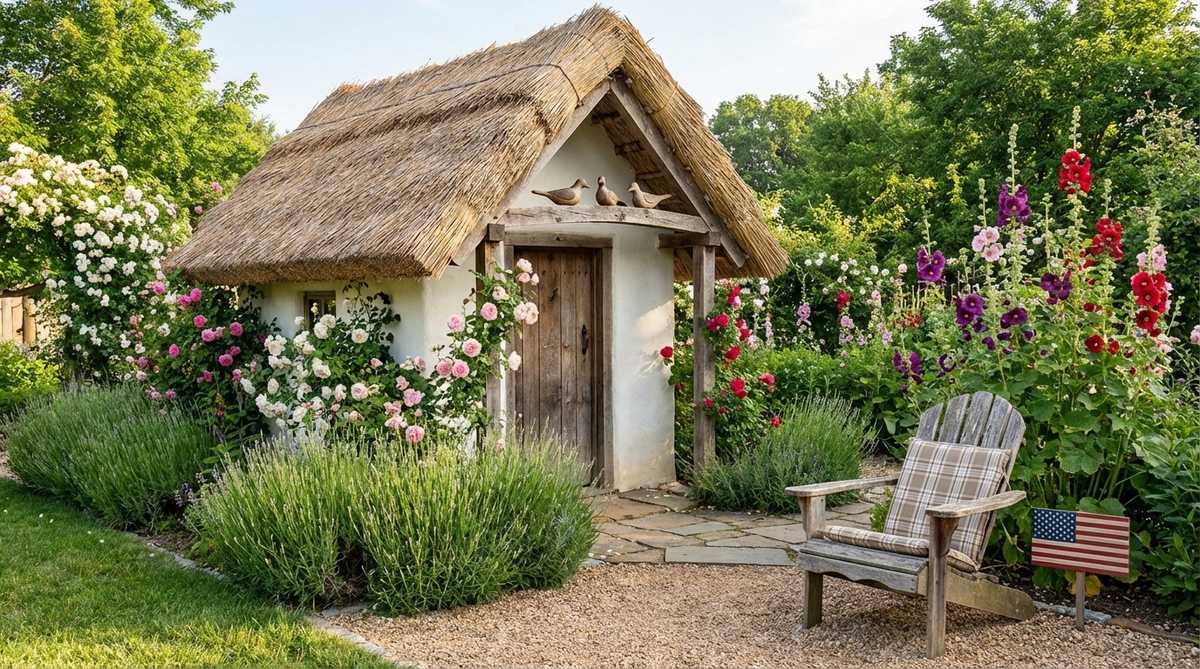
Woven natural fiber roofing cascades down over whitewashed walls, creating the iconic English countryside look. The dramatically thick roof overhang protects miniature doorways and provides nesting spots for tiny sculpted birds.
This design requires protected locations or seasonal display to preserve the delicate thatching material. Place in cottage garden settings surrounded by climbing roses, hollyhocks, and traditional perennial borders.
The texture-rich roof contrasts beautifully with smooth wall surfaces and draws the eye upward in garden compositions. Enhance authenticity by adding miniature woven baskets and garden tools propped near the entrance.
Whimsical Fantasy Structures
Imaginative designs transcend traditional architecture with magical elements, unexpected materials, and storybook charm. These sheds become conversation pieces in fairy gardens designed for pure enchantment.
12. Mushroom Cap Storage Dome
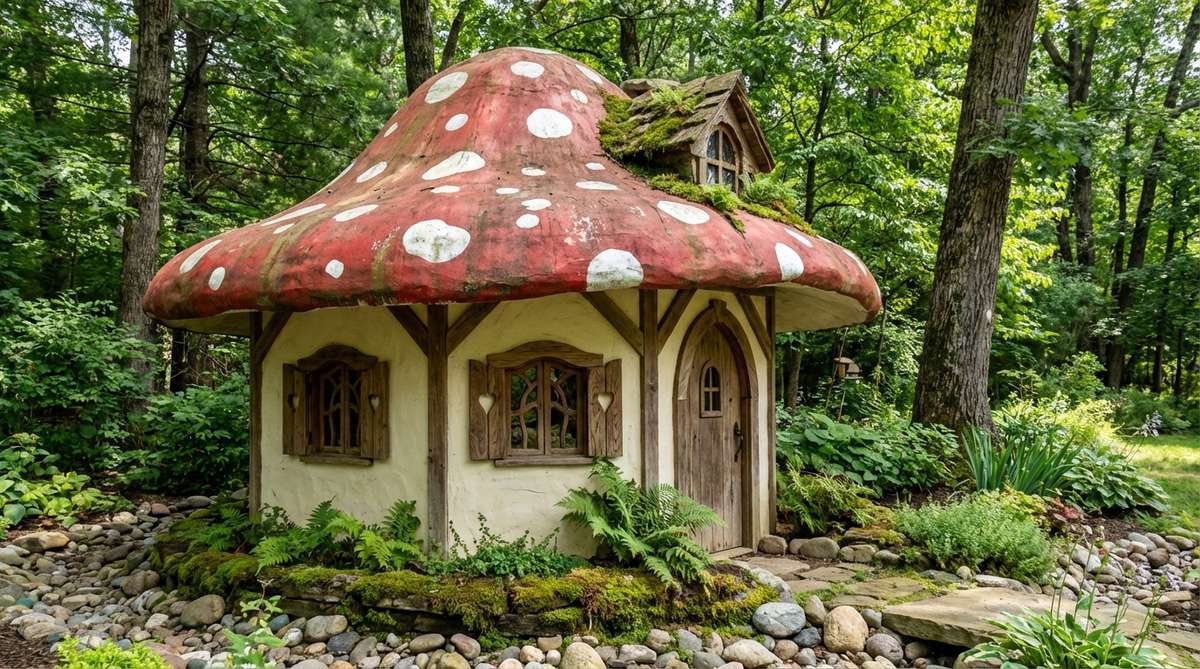
A spotted red-and-white toadstool cap forms the roof over a cream-colored stalk base with carved windows and arched doorway. Scale variations allow this design to serve as anything from tool shed to fairy dwelling.
The organic form integrates naturally into woodland gardens planted with ferns, moss, and shade-loving groundcovers. Position multiple mushroom structures in clusters to create fairy village atmospheres.
13. Acorn Treasure House
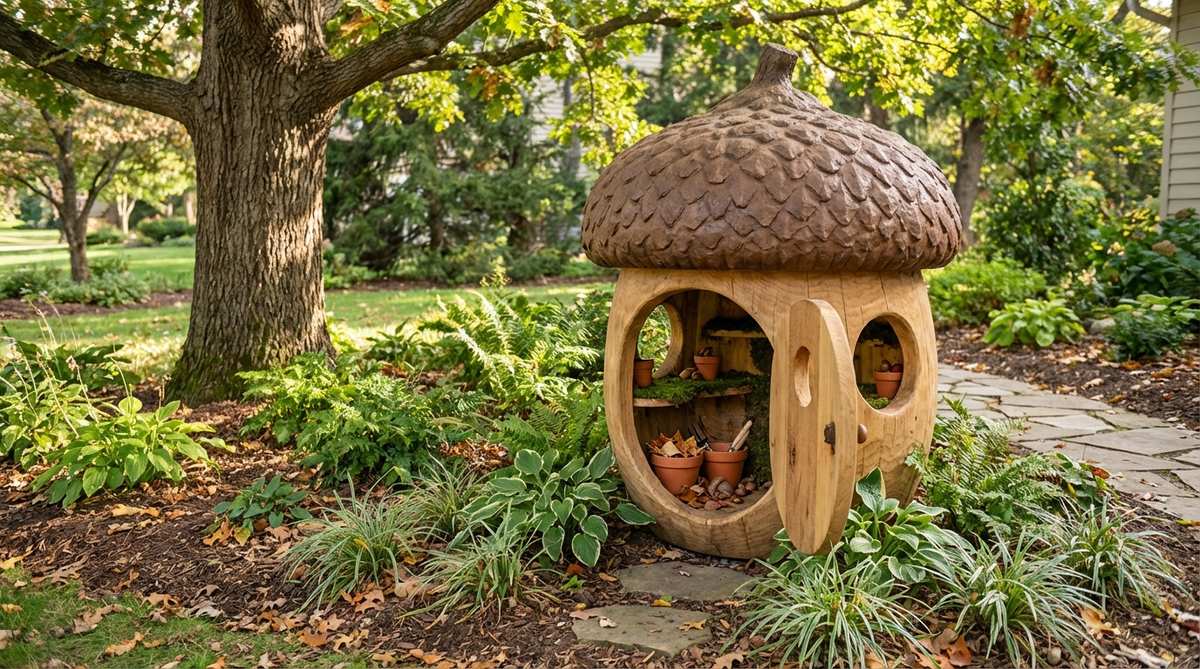
An oversized acorn shell creates the domed roof, while the textured cap details provide realistic botanical accuracy. The hollow base features carved door and window openings that reveal storage space for fairy treasures.
Landscape architects use this design in oak tree-themed gardens or autumn-inspired displays. Surround with real acorn caps, preserved leaves, and miniature squirrel figurines for cohesive forest floor scenes.
The compact size works well in small container gardens where space limitations require vertical interest rather than horizontal spread. Natural brown tones coordinate with virtually any planting palette.
14. Fairy Boot Workshop

A weathered leather work boot converted into a multi-level shed features windows cut into the shaft and a door in the toe area. Laces become decorative climbing structures for miniature ivy and morning glory vines.
This playful design appeals to gardeners who appreciate whimsical storytelling elements in their landscapes. The vertical orientation provides multiple display levels for showcasing tiny tools and accessories.
15. Teapot Garden Retreat
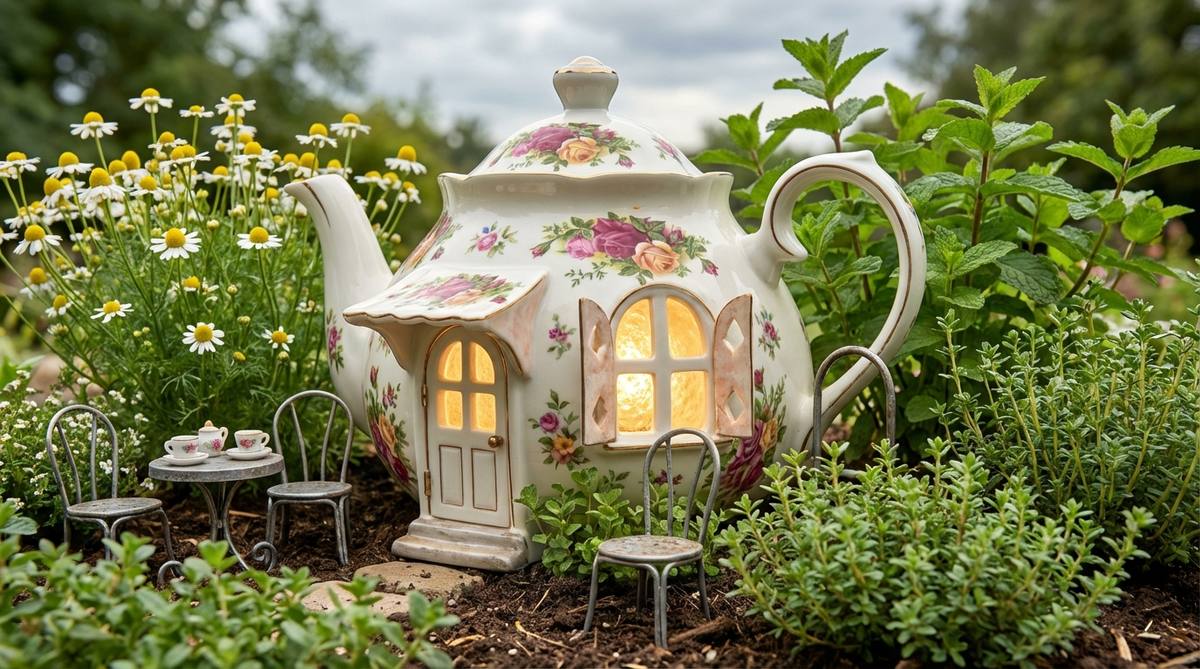
A vintage-style teapot transformed into fairy architecture features the spout as an awning and the handle as decorative archway. Windows cut into the sides allow interior lighting to glow through translucent porcelain.
Designers position this shed in tea garden themes surrounded by miniature café furniture and herb plantings like chamomile and mint. The rounded form softens angular garden hardscapes and provides focal point interest.
Ceramic construction requires careful handling but offers superior weather resistance compared to resin alternatives. Paint finishes range from floral china patterns to solid pastel colors that complement specific garden palettes.
16. Tree Stump Hollow
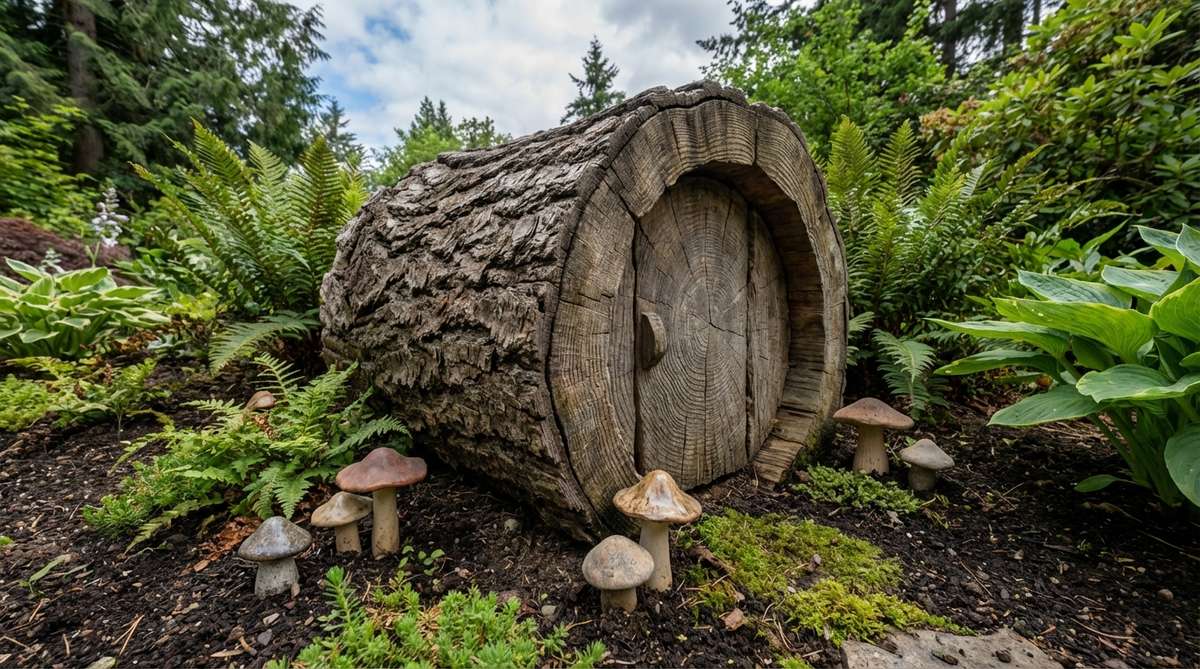
Carved bark texture surrounds the entrance to this shed built into what appears to be an ancient tree stump cross-section. Wood grain details and growth ring patterns provide remarkable realism at miniature scale.
Position this design as if growing naturally from your garden soil by partially burying the base. Surround with forest floor plantings, fungi accessories, and moss to enhance the woodland integration.
17. Flower Petal Pavilion
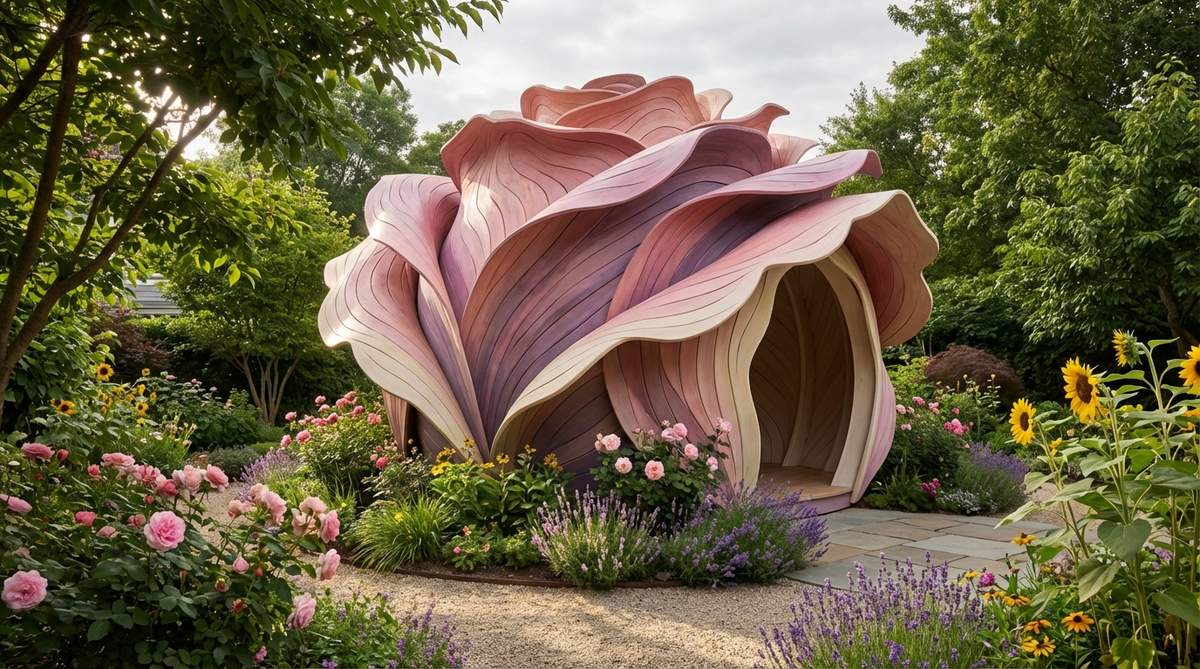
Layered sculpted petals in rose or dahlia formation create a domed shelter with organic curves and natural color gradients. The botanical architecture appears as if fairies commandeered a giant blossom for their storage needs.
This design shines in flower-focused gardens where it echoes the surrounding live blooms. Coordinate petal colors with your dominant planting palette—pink for rose gardens, purple for lavender themes, yellow for sunflower landscapes.
The delicate appearance benefits from sheltered placement away from heavy rain or strong winds. Use as a seasonal accent piece that rotates into displays during peak flowering periods.
Modern Minimalist Designs
Clean lines, geometric forms, and contemporary materials bring fairy gardens into the 21st century. These sheds suit urban gardens and modern landscape aesthetics.
18. Cube Storage Module
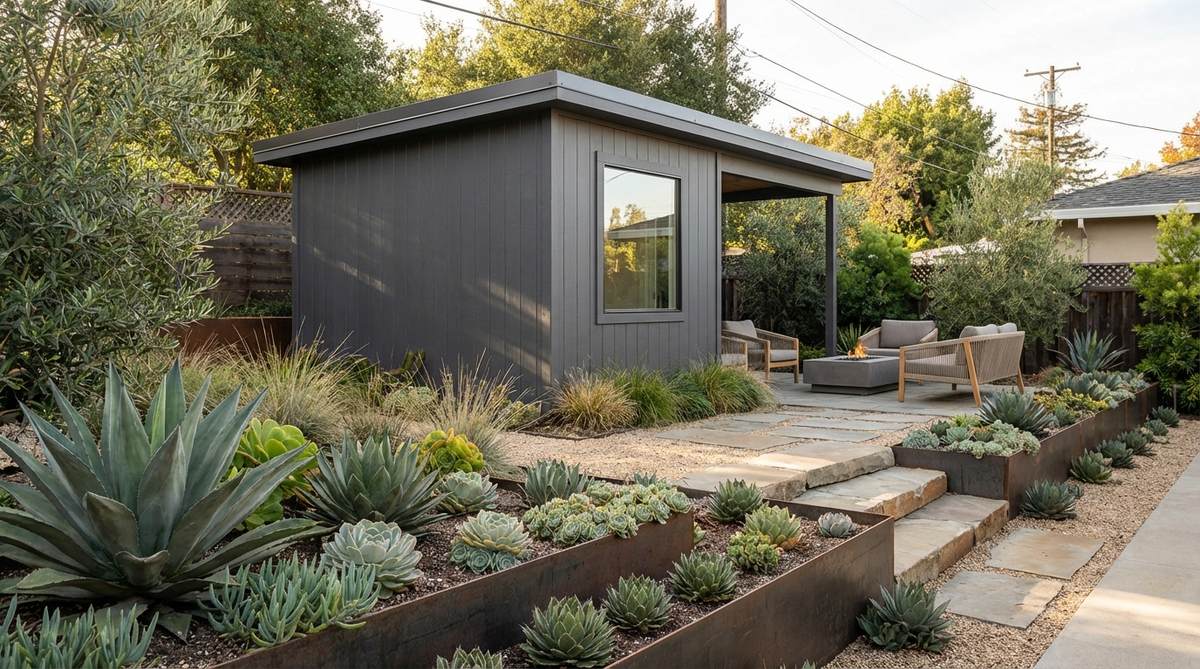
A perfect square structure with flat roof and asymmetric window placement embodies mid-century modern design principles. Smooth painted surfaces in charcoal gray or crisp white create striking visual contrast against organic garden elements.
Landscape architects specify this shed for contemporary gardens featuring succulents, architectural grasses, and minimalist hardscaping. The geometric form provides counterpoint to flowing plant shapes.
19. Glass and Steel Greenhouse
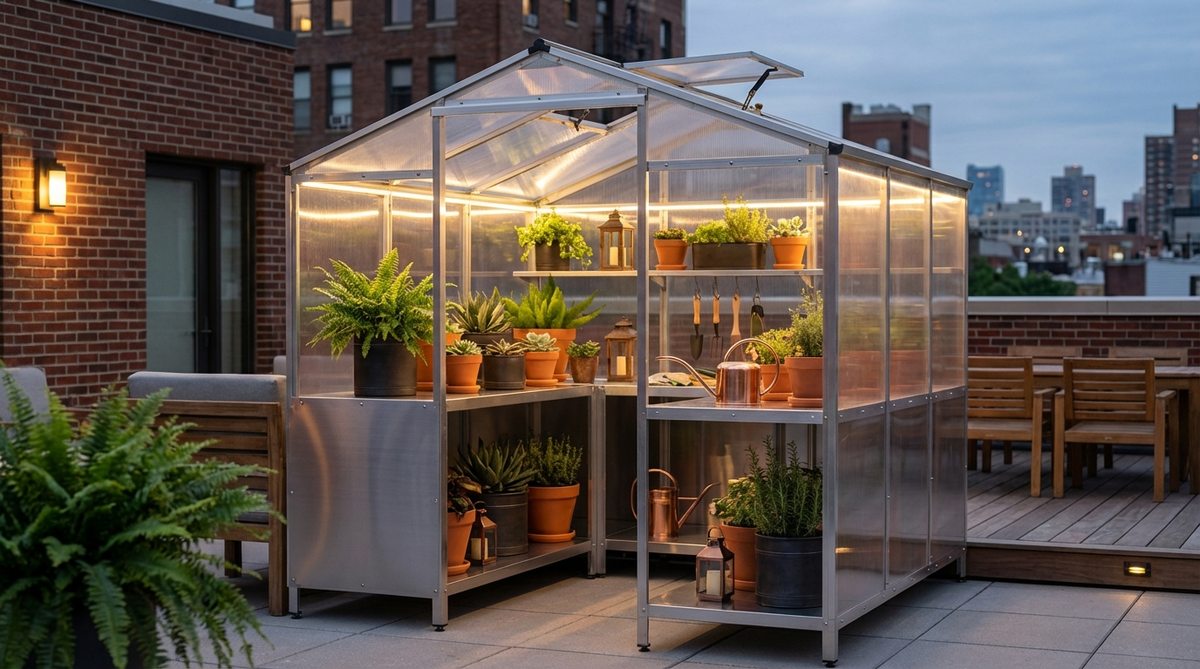
Transparent acrylic panels set in metal frames create a miniature conservatory that showcases interior plantings and accessories. The industrial aesthetic suits urban rooftop fairy gardens and modern patio displays.
This design functions as both storage shed and display case for prized miniature plants. LED lighting installed inside creates dramatic nighttime illumination that transforms the structure into a glowing jewel box.
The see-through construction demands carefully arranged interiors since all elements remain visible. Use this to your advantage by creating curated vignettes with color-coordinated pots and tools.
20. A-Frame Alpine Cabin
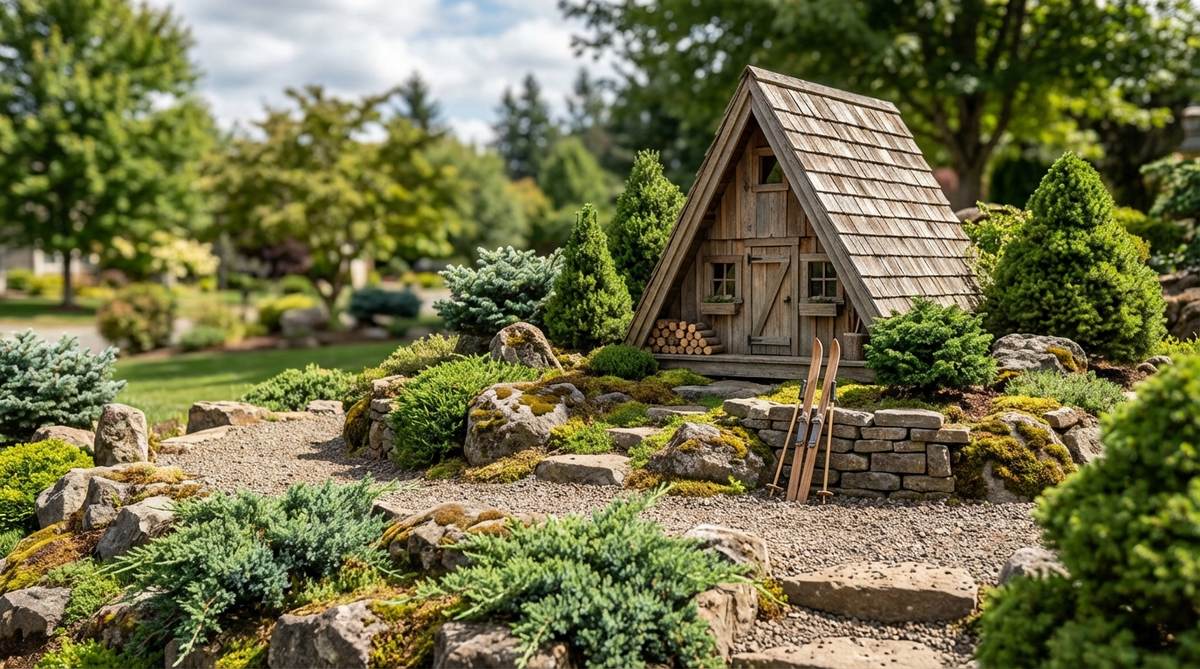
Steeply pitched rooflines meet at dramatic peaks, creating the iconic triangular silhouette popularized in 1960s architecture. Natural wood tones or painted finishes work equally well depending on garden style.
Position this shed in elevated areas of tiered fairy gardens to emphasize the mountain cabin aesthetic. Surround with evergreen plantings, miniature ski equipment, or rock garden elements for alpine atmosphere.
21. Shipping Container Studio
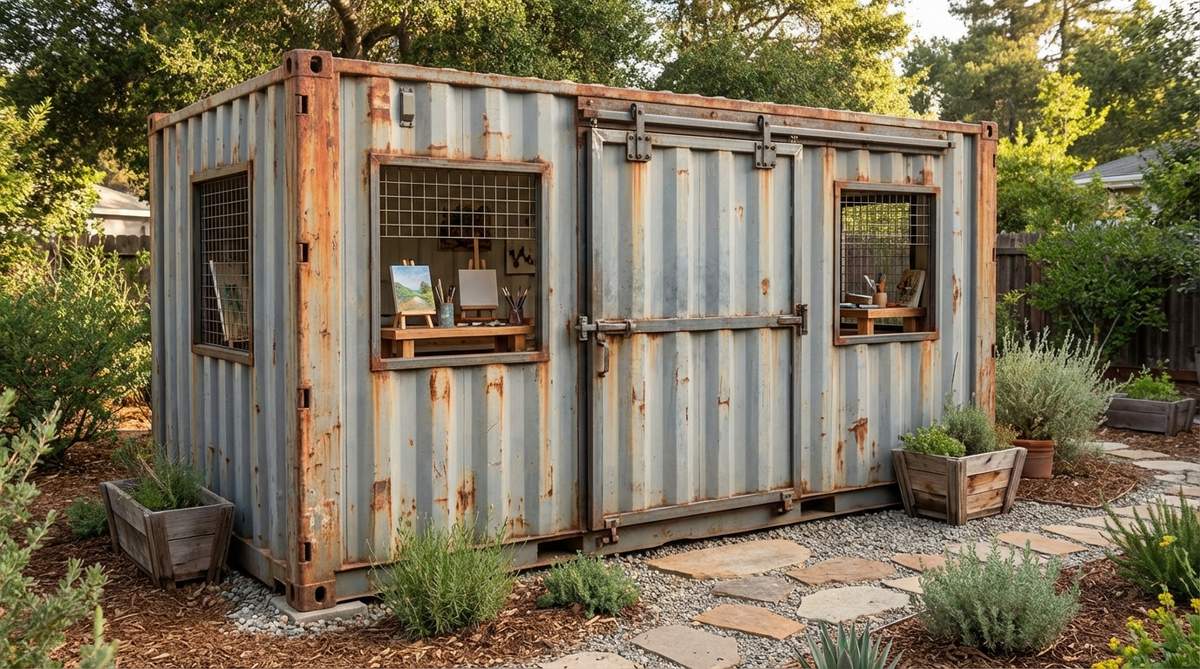
Corrugated metal siding with industrial door hardware replicates the repurposed shipping container trend at miniature scale. Rust or painted finishes provide authentic cargo container appearance.
This ultra-modern design appeals to urban gardeners and industrial-chic landscape aesthetics. Pair with concrete pavers, metal planters, and contemporary furniture accessories for cohesive modern fairy gardens.
The rectangular form provides excellent proportions for creating workshop or studio scenarios. Add miniature art supplies, pottery wheels, or craft tools visible through side windows.
22. Zen Meditation Shelter
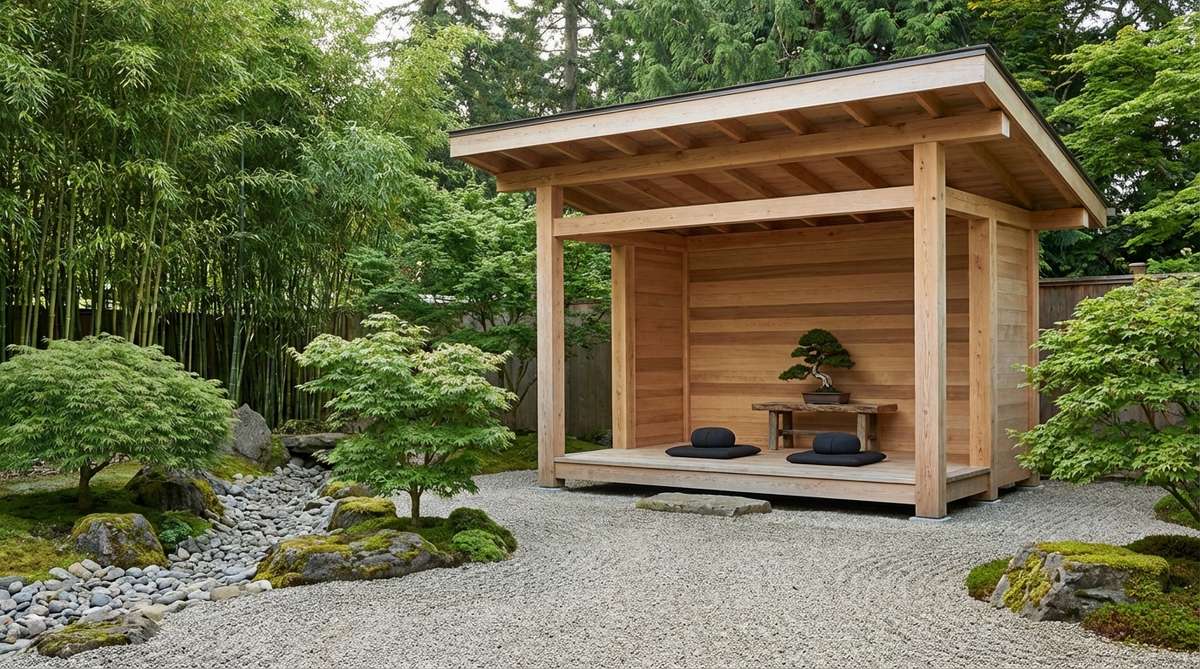
Simple post-and-beam construction with clean horizontal lines reflects Japanese architectural principles. Natural wood finishes and minimal ornamentation create serene visual calm in garden settings.
Designers incorporate this shed into Asian-inspired gardens featuring raked gravel, bamboo, and carefully pruned specimens. The open-sided design invites viewing of interior elements like meditation cushions or bonsai displays.
Themed & Specialty Sheds
Purpose-built structures designed around specific activities, professions, or interests add narrative depth to fairy landscapes. These sheds tell stories through architectural details and contextual accessories.
23. Bakery Shop with Awning
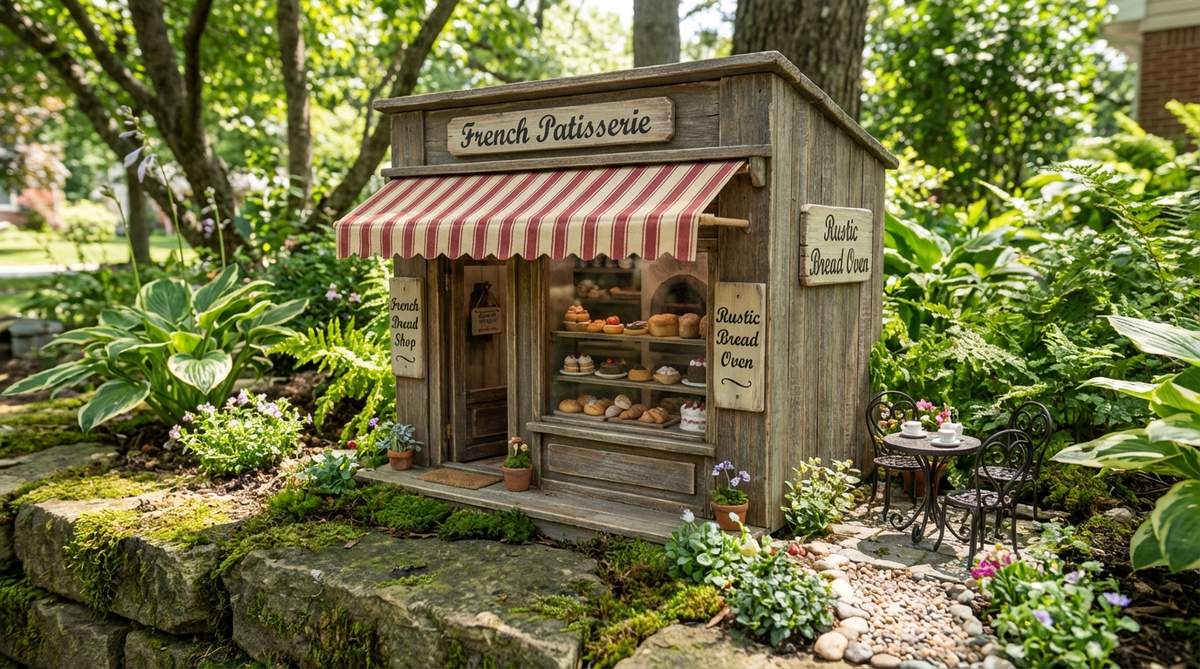
Striped canvas awning shades a display window filled with sculpted miniature pastries and breads. Painted signage announces the establishment’s specialty, whether French patisserie or rustic bread oven.
This commercial structure works beautifully in fairy village settings alongside other shops and community buildings. Position near miniature café seating areas with tiny tables and chairs to create outdoor dining atmosphere.
24. Apothecary Herb Shop
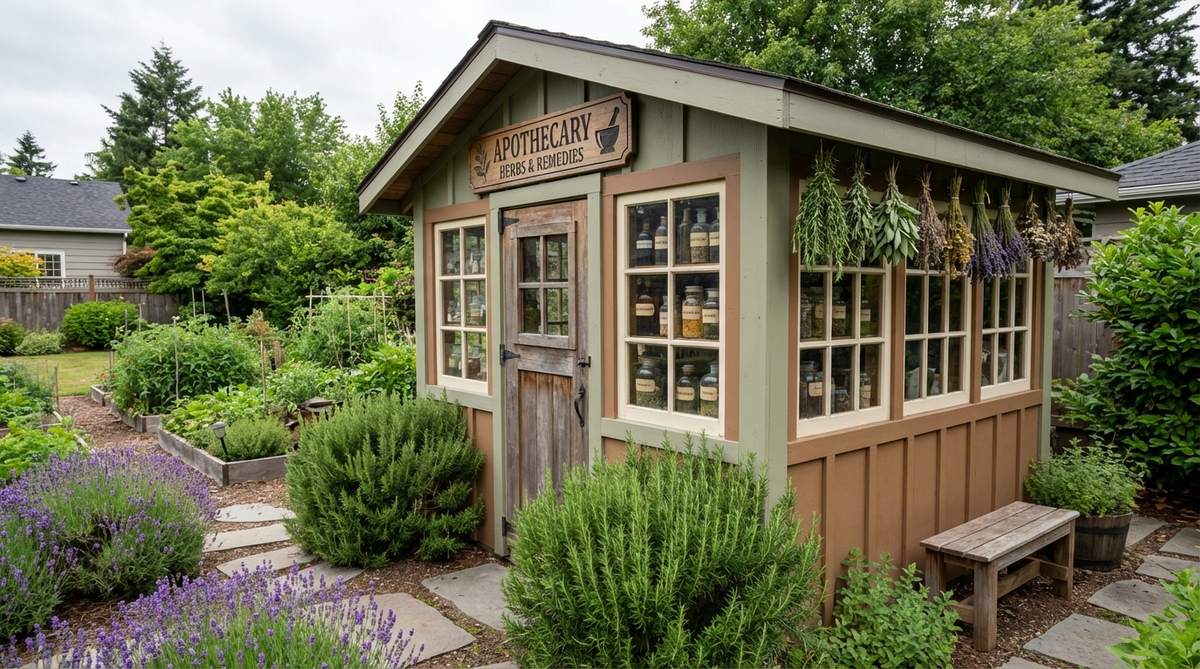
Vintage pharmacy details include mortar-and-pestle signage, multipaned windows revealing shelves of potion bottles, and dried herb bundles hanging from the eaves. Earth-tone paint colors suggest natural medicine traditions.
Landscape designers position this shed adjacent to herb gardens featuring rosemary, lavender, and medicinal plantings. The thematic connection between structure and surrounding plants creates educational opportunities for children’s gardens.
Interior details benefit from glass bottle accessories, miniature scales, and handwritten label elements that enhance the apothecary narrative. This design suits cottage garden and medieval fantasy themes equally well.
25. Artist Studio with Easel
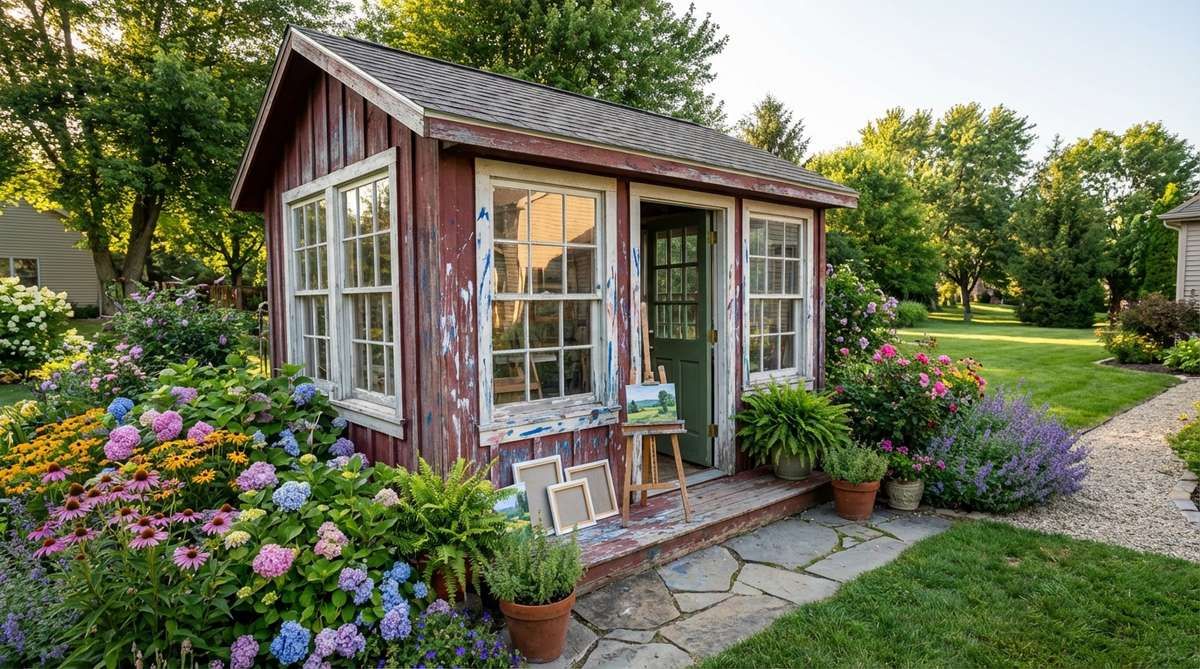
Large windows flood the interior with light necessary for artistic work, while exterior details include paint-splattered walls and miniature canvases leaning beside the door. A tiny easel positioned outside suggests plein air painting sessions.
This shed adds bohemian charm to garden settings and provides opportunities for rotating miniature artwork displays. Surround with colorful flower gardens that appear to inspire the fairy artist’s subjects.
26. Blacksmith Forge Workshop
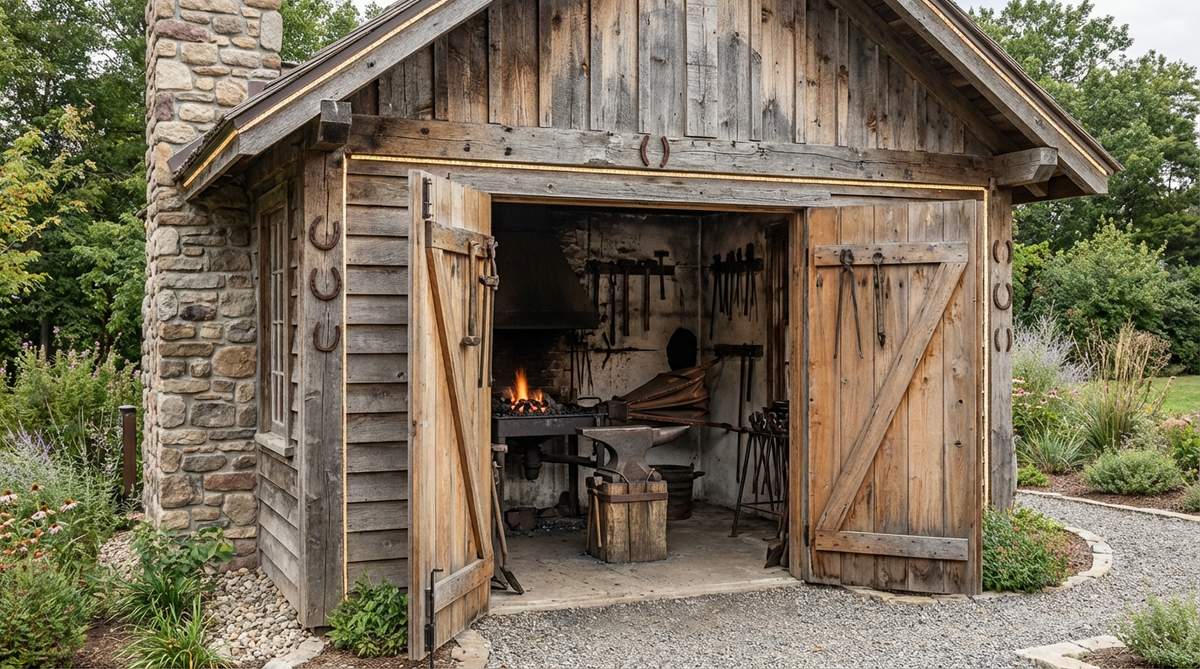
Stone chimney rises from the roof while open doors reveal miniature anvil, bellows, and hanging metalwork tools. Soot-darkened walls and iron door hardware emphasize the industrial craft tradition.
Position this structure in medieval or fantasy-themed gardens alongside castle accessories and knight figurines. The rustic aesthetic pairs well with weathered stone pathways and herb gardens featuring historically accurate plantings.
LED lighting behind translucent windows can simulate forge fire glow for dramatic nighttime displays. Add miniature horseshoes and wrought-iron accessories around the exterior to reinforce the blacksmith narrative.
27. Lighthouse Keeper’s Station
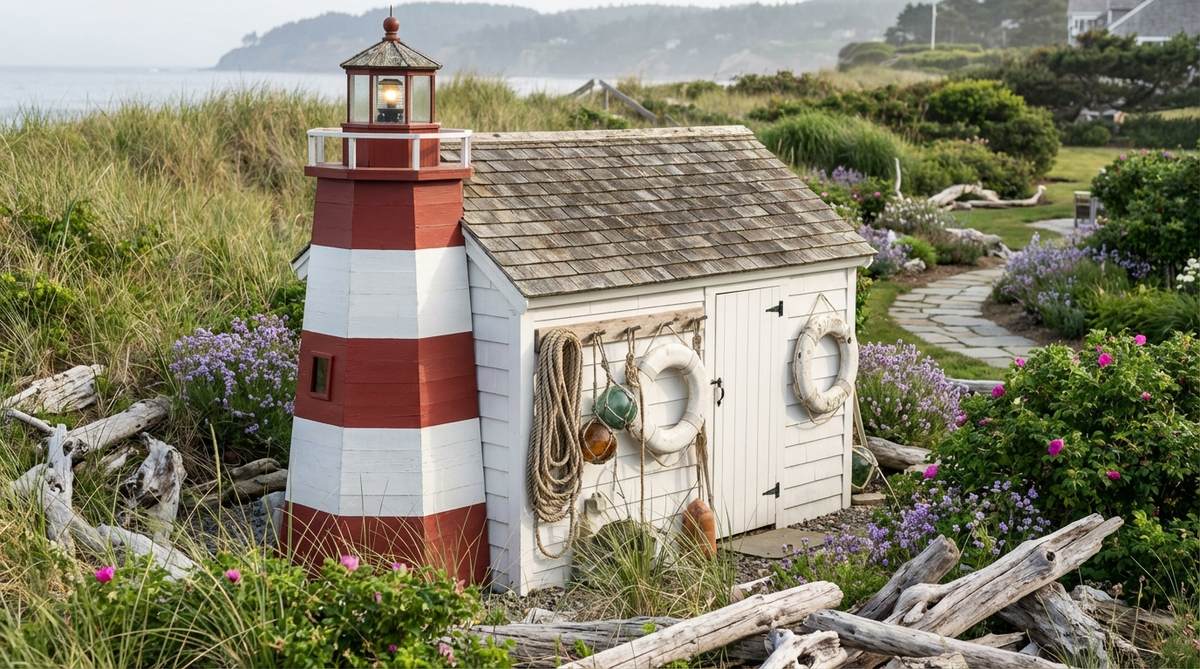
Red-and-white striped tower rises beside a modest keeper’s cottage, complete with widow’s walk railing and beacon housing. Nautical details include rope coils, life preservers, and miniature ships in bottles visible through windows.
This dramatic vertical element works well as garden focal point in coastal-themed landscapes. Surround with beach plantings, driftwood, and sea glass mulch to create authentic maritime settings.
28. Honey House Beekeeping Shed
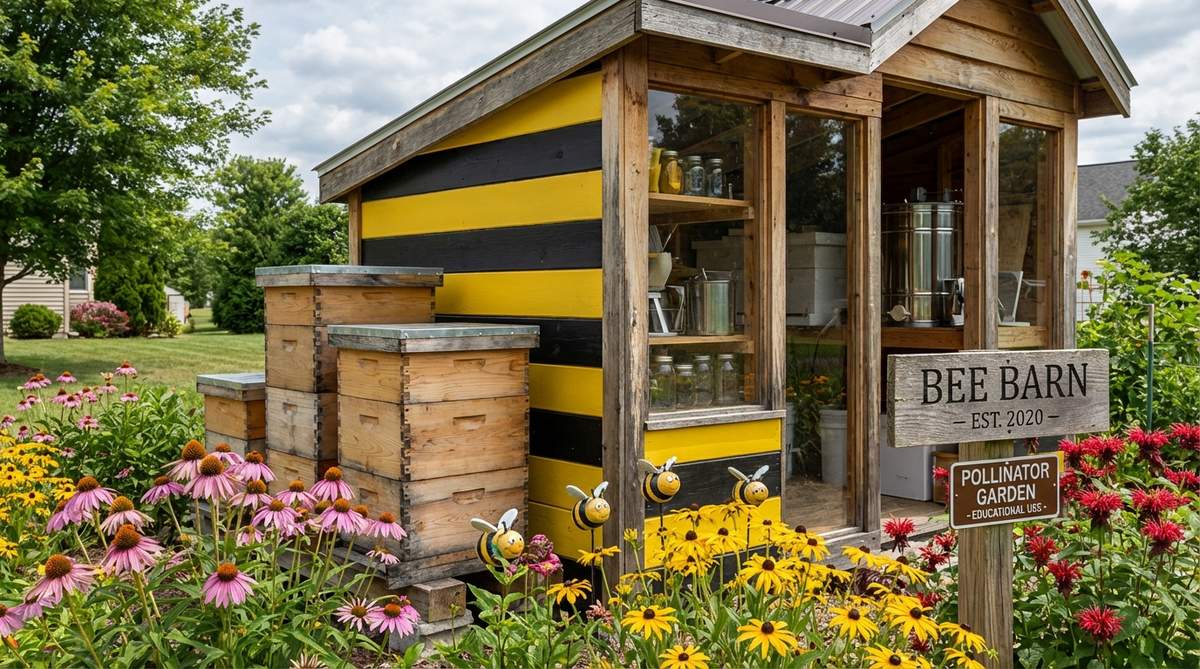
Yellow-and-black striped paint scheme announces the structure’s purpose, while miniature beehive boxes stacked beside the entrance complete the scene. Windows reveal honey extraction equipment and storage jars inside.
Landscape architects use this shed in pollinator gardens surrounded by bee-friendly flowering plants. The educational aspect makes this design particularly valuable in children’s gardens and school landscapes.
Add miniature bee figurines hovering near flowers and windows to bring the scene to life. Position near herb gardens or wildflower meadows where real pollinators visit to create delightful thematic overlap.
Seasonal & Holiday Editions
Rotating seasonal structures keep fairy gardens fresh throughout the year with holiday-specific architectural details and festive decorations. These limited-time displays build anticipation and mark seasonal transitions.
29. Gingerbread Candy Cottage
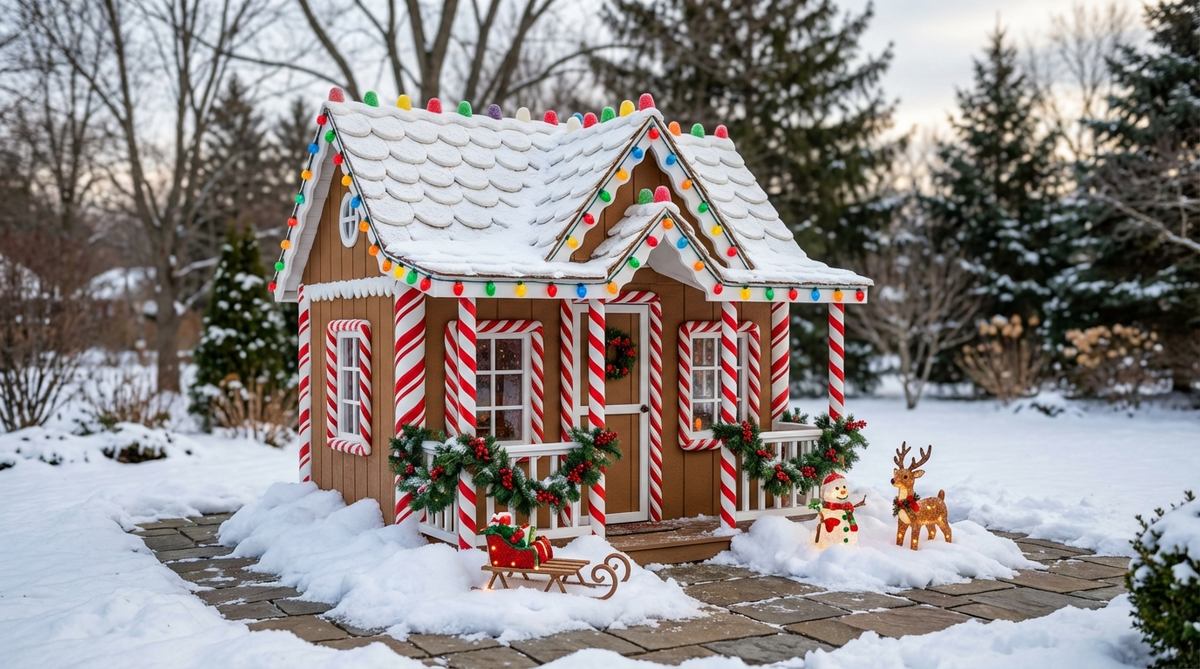
Frosting-textured roof shingles and gumdrop accents transform this shed into an edible-looking holiday confection. Peppermint stick columns and candy cane trim create whimsical Christmas magic in winter garden displays.
Display this structure from Thanksgiving through New Year surrounded by artificial snow, miniature evergreen trees, and holiday figurines. The fantastical design appeals to children while satisfying adult collectors’ appreciation for detailed craftsmanship.
30. Autumn Harvest Barn
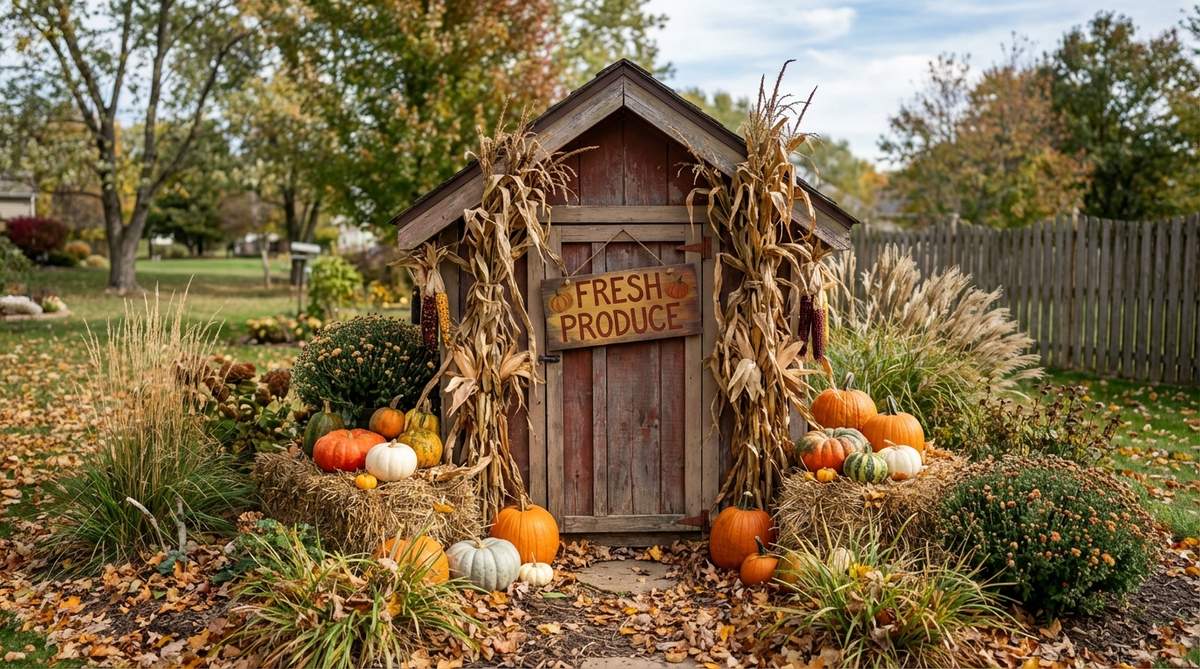
Corn stalk bundles flank the doorway while miniature pumpkins and gourds pile beside weathered walls painted in harvest gold or russet tones. A “Fresh Produce” sign announces the season’s bounty.
This shed anchors fall fairy garden transformations from September through November. Surround with chrysanthemums, ornamental cabbage, and autumn leaf litter to create seasonal immersion.
Swap out pumpkin accessories for hay bales, apple baskets, or corn mazes to vary the scene throughout harvest season. The warm color palette coordinates beautifully with fall foliage and sunset lighting conditions.
31. Spring Greenhouse Potting Station
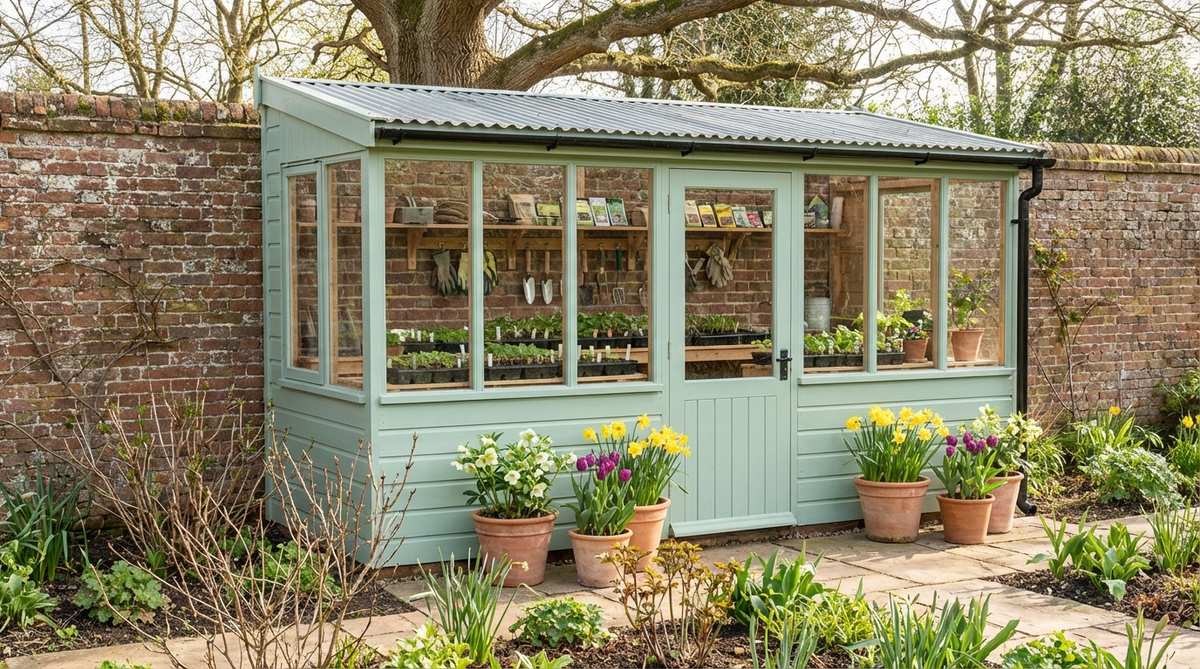
Glass panels reveal rows of seedling trays and gardening tools ready for planting season. Pastel paint colors in robin’s egg blue or soft mint green herald the renewal of growth after winter dormancy.
Display from March through May as real gardens begin active growing seasons. Position near emerging bulbs and early flowering perennials to mirror the themes of new life and botanical awakening.
32. Summer Beach Cabana
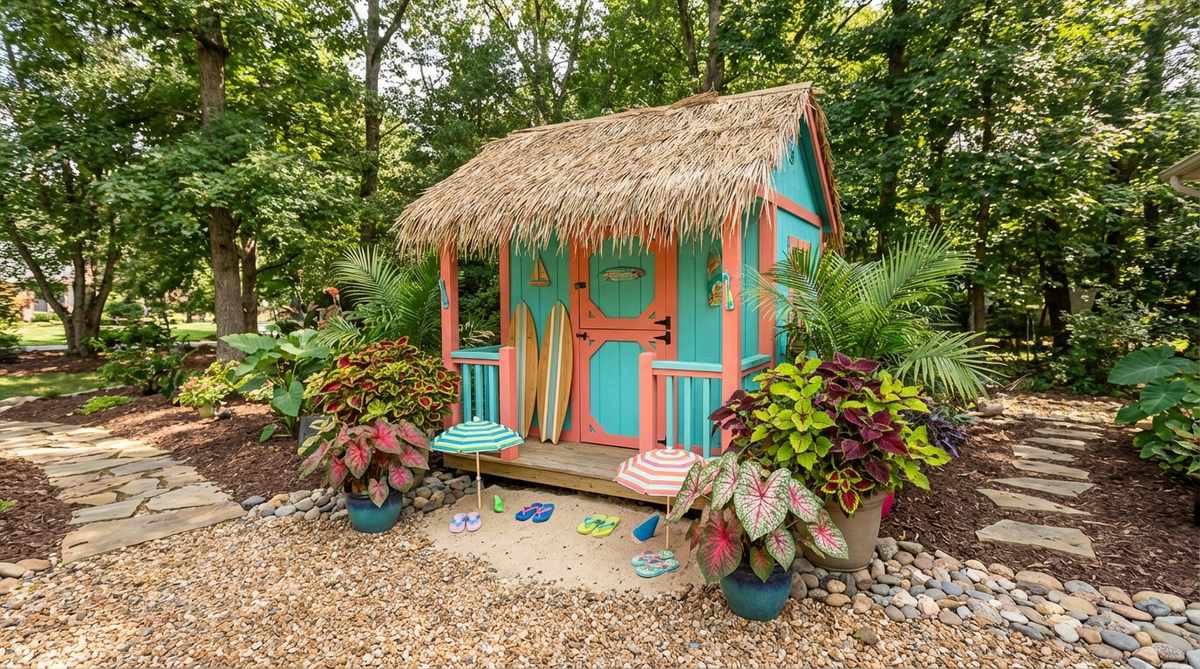
Bright tropical colors and thatched roof evoke vacation destinations and sunny leisure. Miniature surfboards, beach umbrellas, and flip-flops scattered around the structure suggest carefree summer days.
This seasonal shed thrives in June through August displays when real gardens reach peak color and gardeners spend maximum time outdoors. Pair with tropical plantings like coleus, caladium, and bold annuals for vibrant summer impact.
The vacation theme provides psychological respite during hot weather and transforms utilitarian garden spaces into resort-like retreats. Add miniature palm trees and tiki torches to amplify the tropical atmosphere.
33. Valentine Love Letter Post
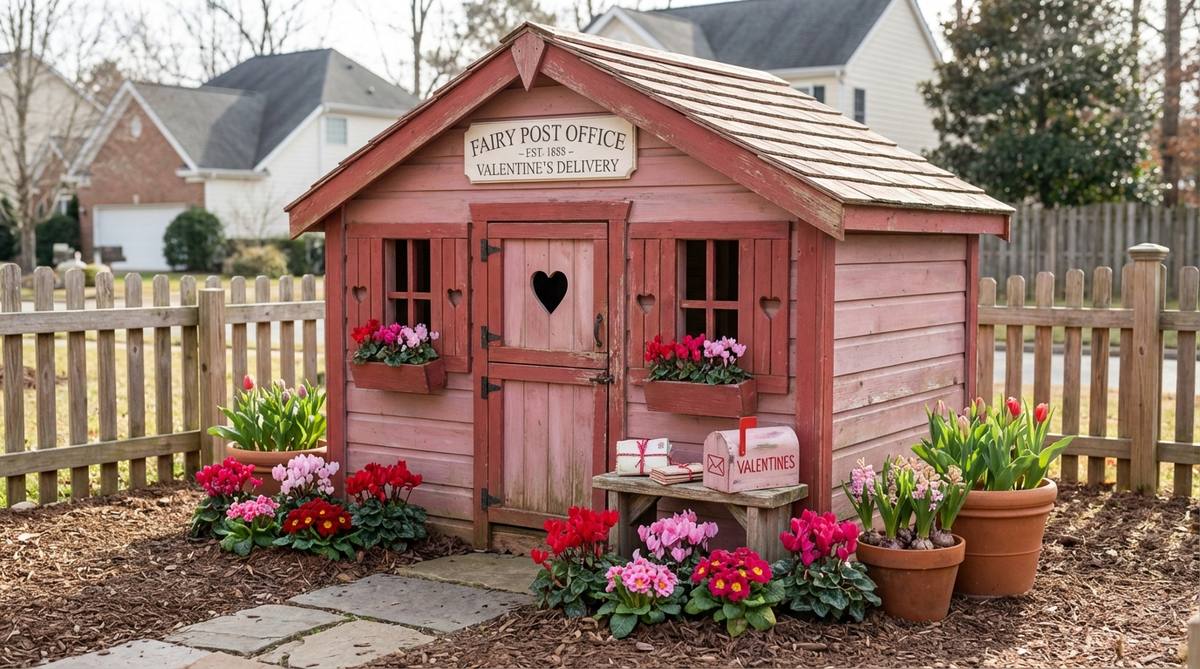
Heart-shaped window cutouts and romantic pink or red paint finishes celebrate February’s romantic holiday. The structure functions as a miniature post office where fairy mail carriers deliver love letters and valentines.
Display this limited-edition shed for two weeks surrounding Valentine’s Day, creating photo-worthy garden vignettes perfect for social media sharing. Surround with red and pink flowers or force early bulbs indoors for coordinated color schemes.
Transform Your Fairy Garden with the Perfect Shed
Selecting the ideal mini garden shed elevates your fairy landscape from simple container garden to immersive miniature world. Whether you gravitate toward classic cottage aesthetics, embrace modern minimalism, or prefer whimsical fantasy structures, the architectural anchor you choose sets the tone for your entire design. Start with one carefully selected shed that reflects your garden’s theme, then expand your fairy village with complementary structures and accessories. Fresh Garden Ideas encourages you to experiment with multiple styles across seasons, creating dynamic landscapes that evolve throughout the year while maintaining cohesive design principles that professional landscape architects employ at full scale.
Frequently Asked Questions
What size mini garden shed works best for fairy gardens?
Most fairy garden sheds range from 3 to 8 inches tall, with 1:12 or 1:24 scale being standard proportions. Choose shed size based on your container dimensions and surrounding plant scale—larger gardens accommodate multiple structures at varying scales, while small containers require compact 3-4 inch models. Ensure the shed remains proportional to accessory figurines and furniture to maintain visual believability in your miniature landscape composition.
Which materials last longest for outdoor fairy garden sheds?
Weather-resistant resin offers the best durability for outdoor fairy gardens, withstanding temperature fluctuations, moisture, and UV exposure without degrading. Sealed ceramic and treated wood also perform well in protected locations under tree canopies or covered patios. Avoid unsealed wood, cardboard, and delicate painted finishes in exposed garden beds where direct rain and intense sun cause rapid deterioration. Apply marine-grade sealant annually to wooden structures for maximum longevity in outdoor settings.
How do I anchor a mini garden shed to prevent tipping?
Secure lightweight sheds by pressing the base into soil or inserting wooden skewers through hidden bottom holes into the ground beneath. Hot glue attaches sheds permanently to decorative stone bases or wooden platforms that provide stability. For container gardens, use museum putty or waterproof adhesive on the shed’s base to bond it to rocks or the container floor without permanent commitment. Weight hollow structures internally with aquarium gravel to lower the center of gravity and resist wind displacement.
Can I customize a pre-made mini garden shed?
Resin and wood sheds accept acrylic paint modifications to match specific color schemes or add weathering effects that increase realism. Attach miniature accessories like window boxes, shutters, or climbing vine embellishments using waterproof glue. Drill small holes to add interior LED lighting that illuminates windows for nighttime display. Sand glossy resin surfaces lightly before painting to improve paint adhesion, and seal finished customizations with clear acrylic spray for weather protection.
Where should I position the shed in my fairy garden layout?
Place the shed off-center rather than in the exact middle to create dynamic visual composition and allow space for pathways and plantings. Position structures in the back third of container gardens to establish depth through layered foreground, midground, and background elements. Consider sightlines from primary viewing angles—place architectural details and opening doors facing observers. Use sheds to anchor corners or terminate pathway views, creating destination points that guide the eye through your miniature landscape narrative.