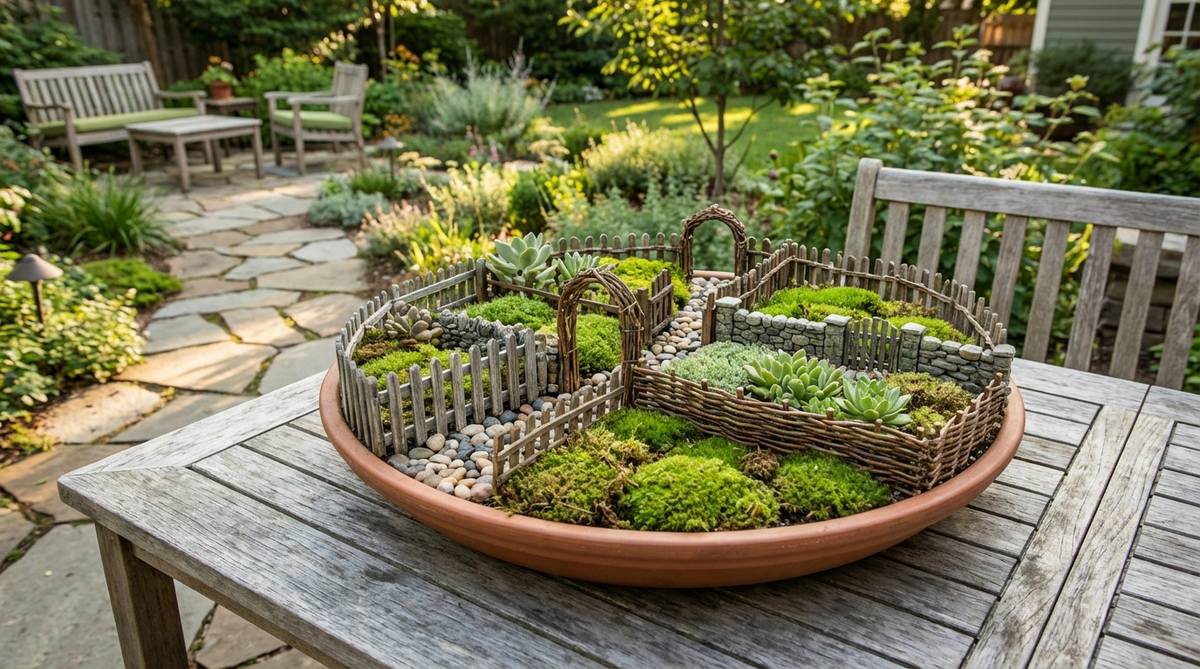
A well-chosen mini garden fence transforms a simple terrarium into a miniature world with defined boundaries and visual interest. Whether you’re crafting a fairy garden scene or creating botanical art in glass, the right fence style anchors your design and guides the viewer’s eye through your composition. Fresh Garden Ideas presents this comprehensive guide to help you select boundary solutions that match your terrarium’s scale, theme, and planting style.
Design SnapshotKey Principles
- Scale Accuracy: Fence height should range from 1-3 inches to maintain proper proportion with miniature plants and accessories
- Material Selection: Choose moisture-resistant materials like treated wood, plastic, resin, or metal to withstand terrarium humidity
- Flexibility: Bendable fences with wire bases allow you to create curves and circles that follow organic planting patterns
- Installation Method: Look for designs with ground stakes or flat bases that anchor securely in substrate without disturbing root systems
Traditional Wooden Styles That Create Classic Garden Charm
Wooden fence styles bring timeless appeal to terrarium designs. These miniature versions of full-scale garden fencing establish familiar boundaries that connect viewers to outdoor spaces at reduced scale.
1. White Picket Fence Sections
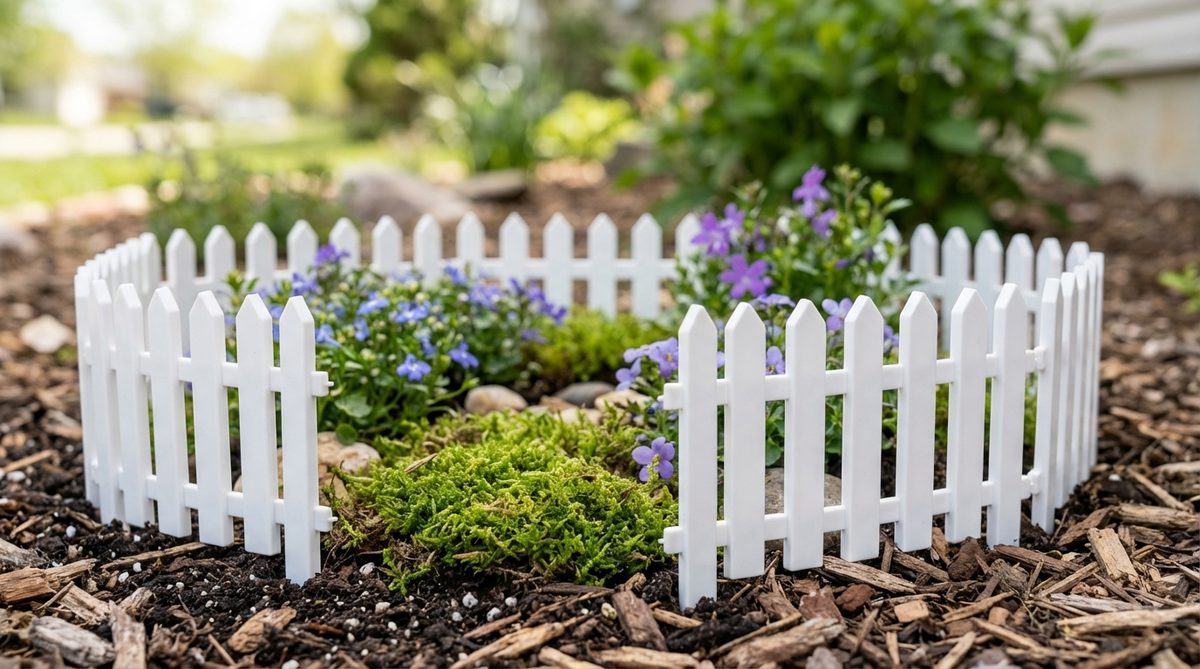
The iconic white picket design instantly establishes a cottage garden atmosphere in any terrarium. Clean vertical slats with pointed tops create rhythmic patterns that frame flowering plants and moss without blocking views.
Look for plastic or resin versions measuring 1.5 inches tall with individual stakes at each picket base. These allow flexible positioning around curves and adapt to uneven terrain in layered substrate.
Paint quality matters in humid environments—choose pre-finished pieces rather than attempting to seal raw wood yourself. White reflects light to brighten enclosed spaces while maintaining a crisp, maintained appearance.
2. Split Rail Fence Miniatures
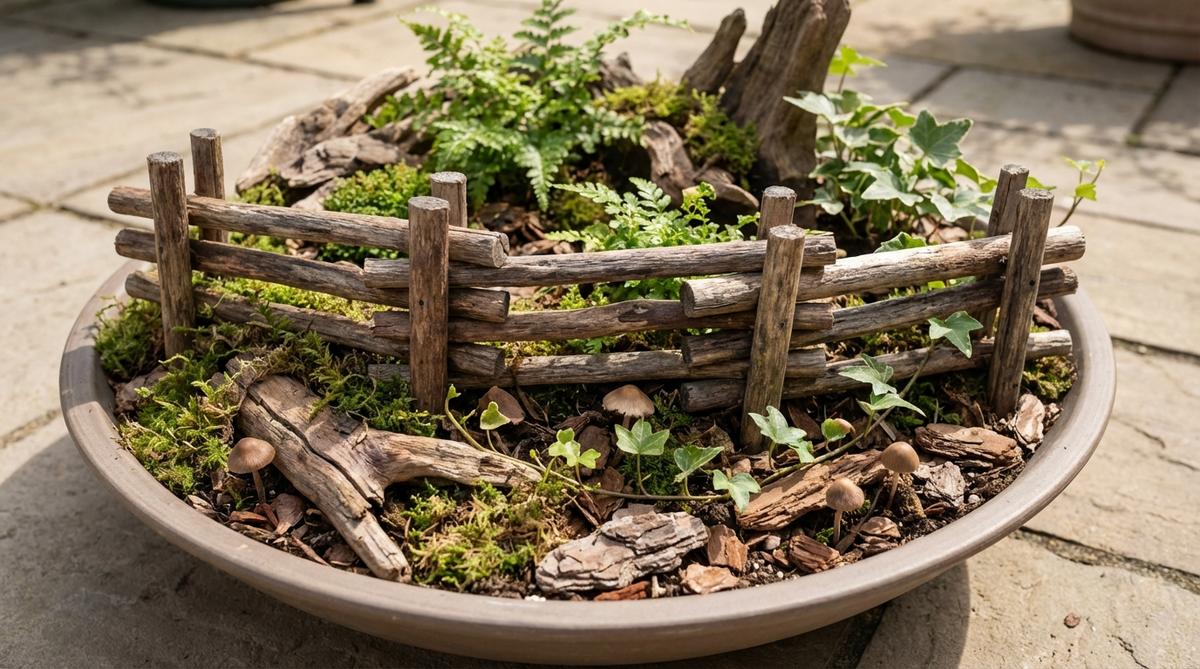
Split rail designs use horizontal logs stacked between upright posts to create open boundaries. This style works beautifully for rustic terrarium themes featuring woodland plants, mushroom accessories, and natural wood elements.
The horizontal orientation draws the eye across the landscape rather than upward, making these fences ideal for wide, shallow containers. Spacing between rails allows trailing plants to weave through the structure organically.
Seek out pieces finished in natural brown tones or weathered gray to coordinate with driftwood and bark substrates. Three-rail designs at 1-2 inch heights provide substantial presence without overwhelming small-scale plantings.
3. Lattice Panel Miniatures
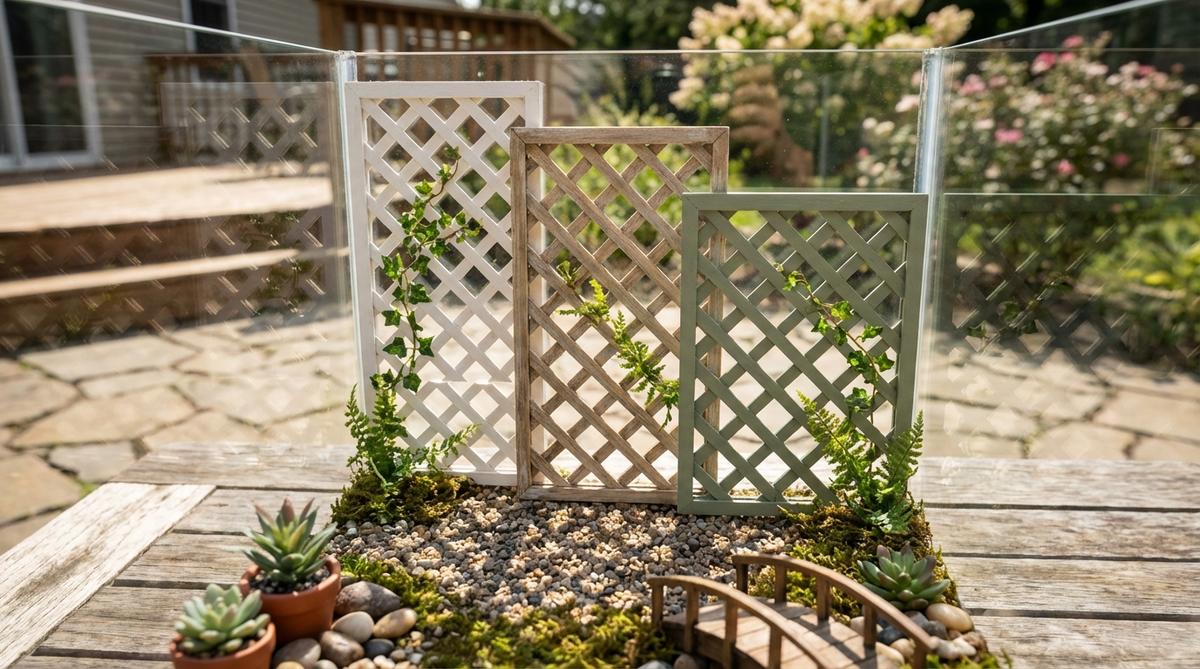
Diagonal crisscross patterns create semi-transparent boundaries that maintain visual connection between terrarium zones. Lattice works exceptionally well as backdrop fencing where you want separation without complete division.
Position these panels against the rear glass wall to add architectural depth. Their open structure casts interesting shadows when properly lit and provides attachment points for tiny climbing plants or moss.
Diamond or square grid patterns in white, natural wood, or sage green integrate smoothly with both formal and informal planting schemes. Choose 2-inch heights for adequate presence without dominating the scene.
4. Post and Board Fencing
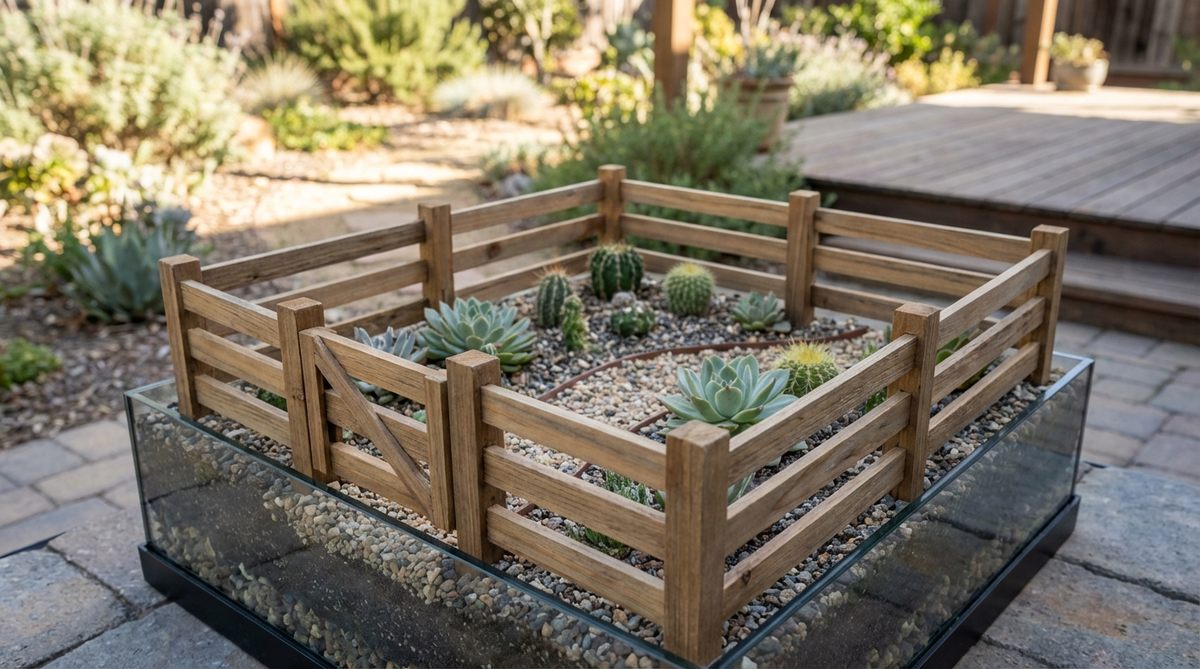
Horizontal boards attached to vertical posts create classic ranch-style boundaries. This configuration offers more visual weight than picket fences while remaining simpler than ornate designs.
Two or three horizontal boards at 1.5 inch total height establish clear boundaries for miniature garden “rooms” within larger terrariums. The solid construction blocks sightlines completely, useful for creating surprise reveals.
Natural finish options pair with succulent gardens and desert themes, while painted versions suit cottage or formal styles. Ensure boards are thin enough—around 1-2mm—to maintain proper scale.
5. Bamboo Stake Fencing
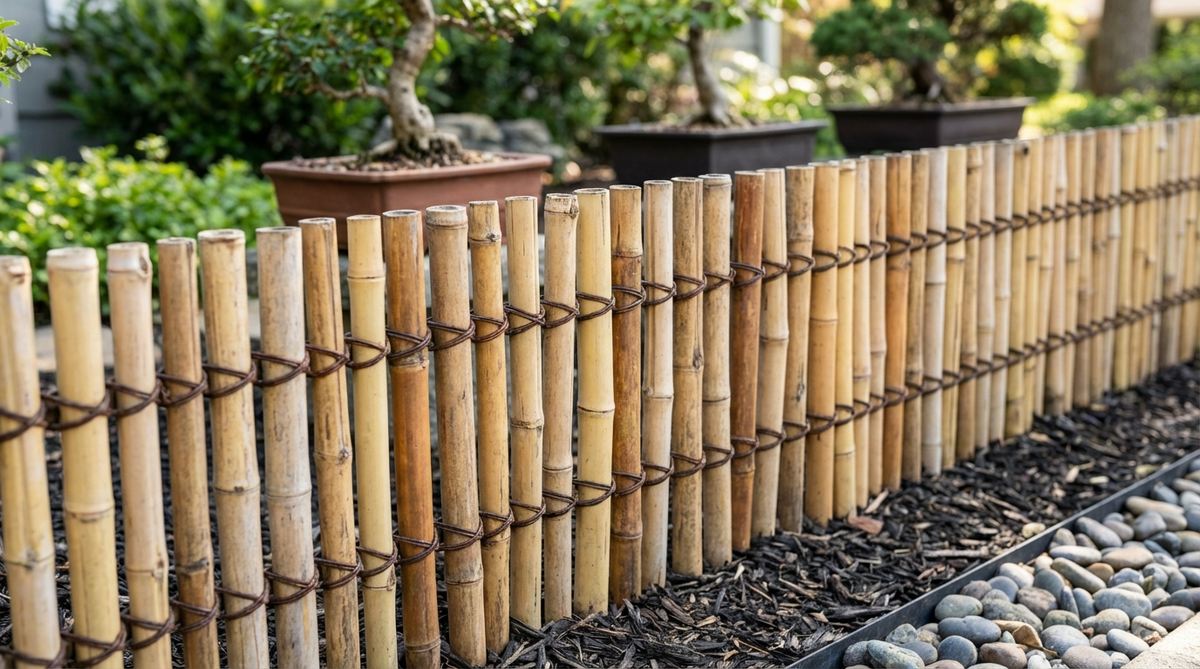
Vertical bamboo sections lashed together with dark thread or wire create Asian-inspired boundaries. Natural color variation in bamboo adds organic authenticity that synthetic materials cannot replicate.
This style complements zen gardens, bonsai presentations, and tropical terrarium themes. The vertical emphasis draws eyes upward, making these fences perfect for adding height interest to flat compositions.
Look for stakes cut to uniform 2-inch lengths and bound with black or brown cord. The gaps between stakes allow air circulation while providing structure—important for maintaining healthy closed terrarium ecosystems.
Modern Minimal Designs For Contemporary Terrariums
Clean lines and simple forms define modern fence styles. These options suit geometric containers, architectural plantings, and minimalist design philosophies where restraint creates impact.
6. Horizontal Slat Panels
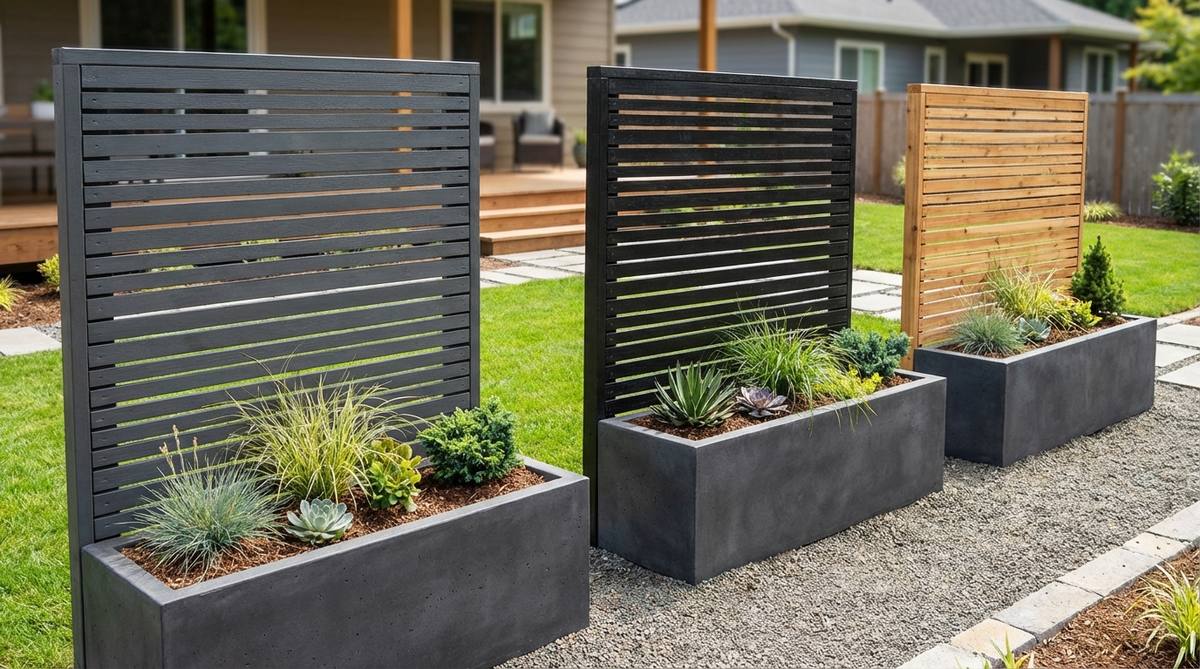
Contemporary horizontal slat designs use thin boards with deliberate spacing to create linear patterns. This horizontal emphasis elongates visual perception of terrarium width while maintaining modern aesthetics.
Gray, black, or natural finish options coordinate with industrial and Scandinavian design trends. The spacing ratio—typically 3mm slat with 2mm gap—balances privacy with transparency.
Install these along one side of rectangular containers to create a backdrop for specimen plants. The consistent rhythm provides visual stability that lets bold plant forms take center stage.
7. Wire Grid Boundaries
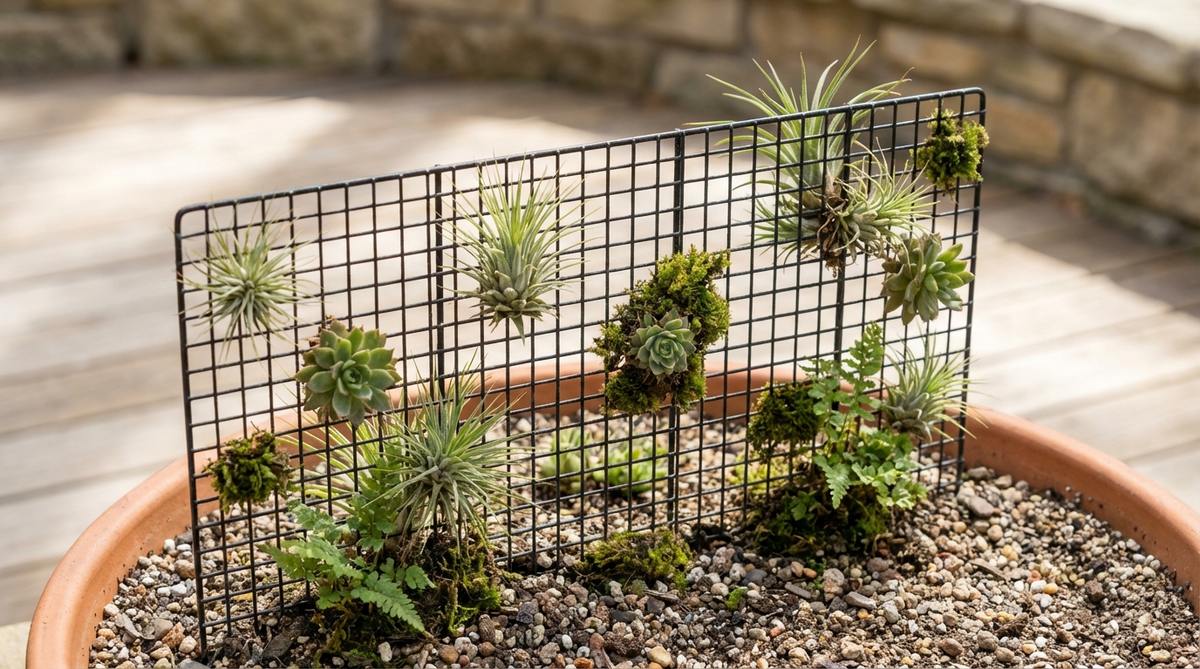
Fine metal wire formed into square or rectangular grids creates industrial-style fencing. The minimal material presence adds structure without visual heaviness, ideal for small containers where every element competes for attention.
Black powder-coated or raw silver wire in 5mm grid patterns provides the right scale for terrarium use. These work exceptionally well with air plant displays and modern succulent arrangements.
The three-dimensional quality allows you to attach small plant specimens directly to the grid surface. This transforms functional boundary into living wall as moss and tiny ferns colonize the structure.
8. Acrylic Divider Strips
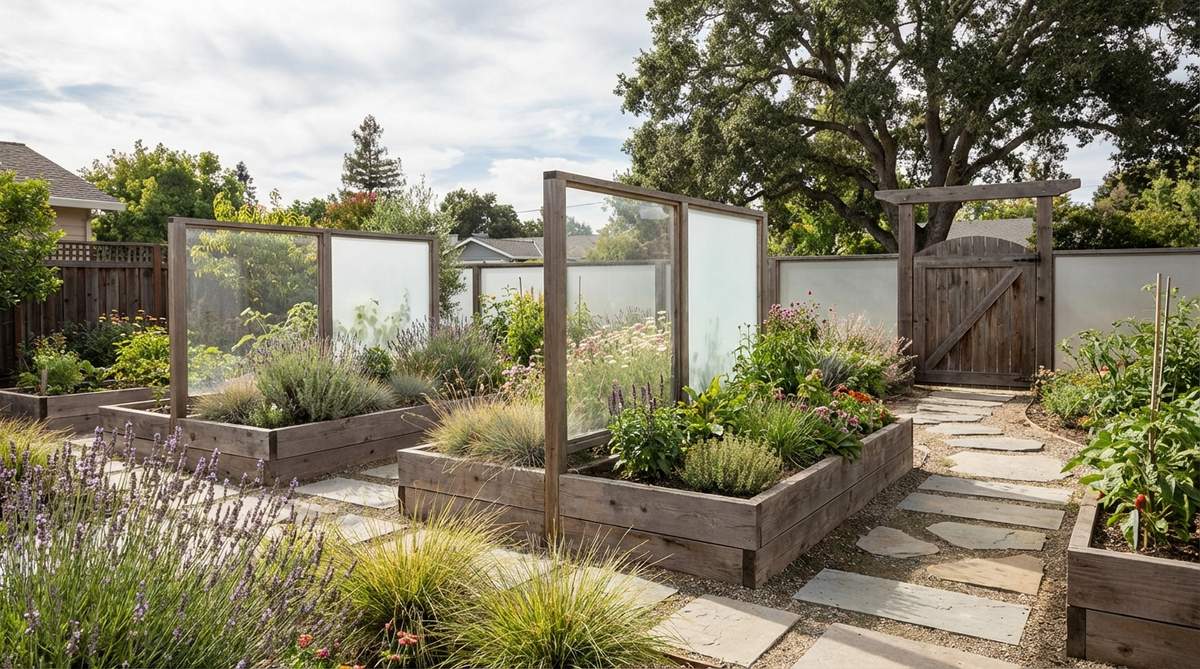
Clear or frosted acrylic sheets cut into thin strips provide nearly invisible separation. This approach works when you need functional division without adding visual elements that compete with plantings.
Frosted versions diffuse light beautifully while maintaining the clean lines essential to modern design. Position these to separate contrasting substrate colors or to contain loose materials like decorative sand.
The transparency ensures all light reaches plants unobstructed—critical for maintaining healthy growth in smaller enclosed environments. Custom cutting allows exact fitting to container dimensions.
9. Metal Rod Fencing
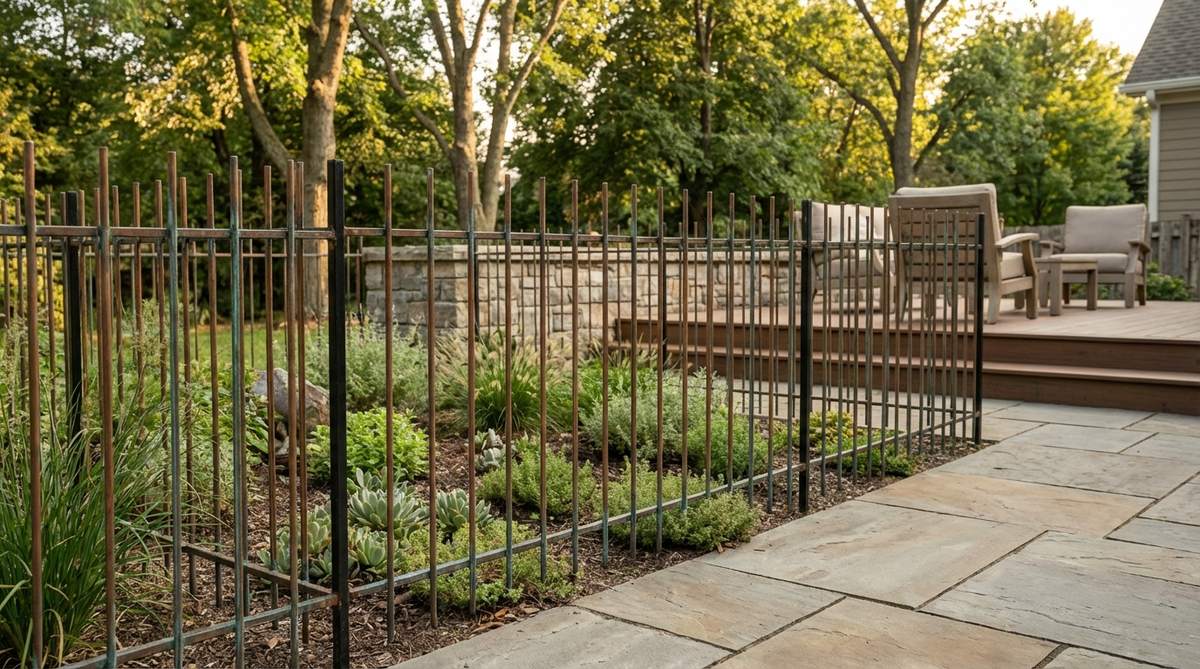
Thin metal rods arranged vertically with minimal horizontal supports create sophisticated industrial boundaries. Copper, brass, or black steel rods at 2-inch heights establish clean divisions with maximum transparency.
The vertical lines add height emphasis to low, spreading plant compositions. Metal develops natural patina in humid terrarium environments, adding character that evolves over time.
Space rods 5-8mm apart to balance openness with clear boundary definition. The minimal footprint makes this style ideal for smaller containers where space limitations require restraint.
10. Corrugated Metal Panels
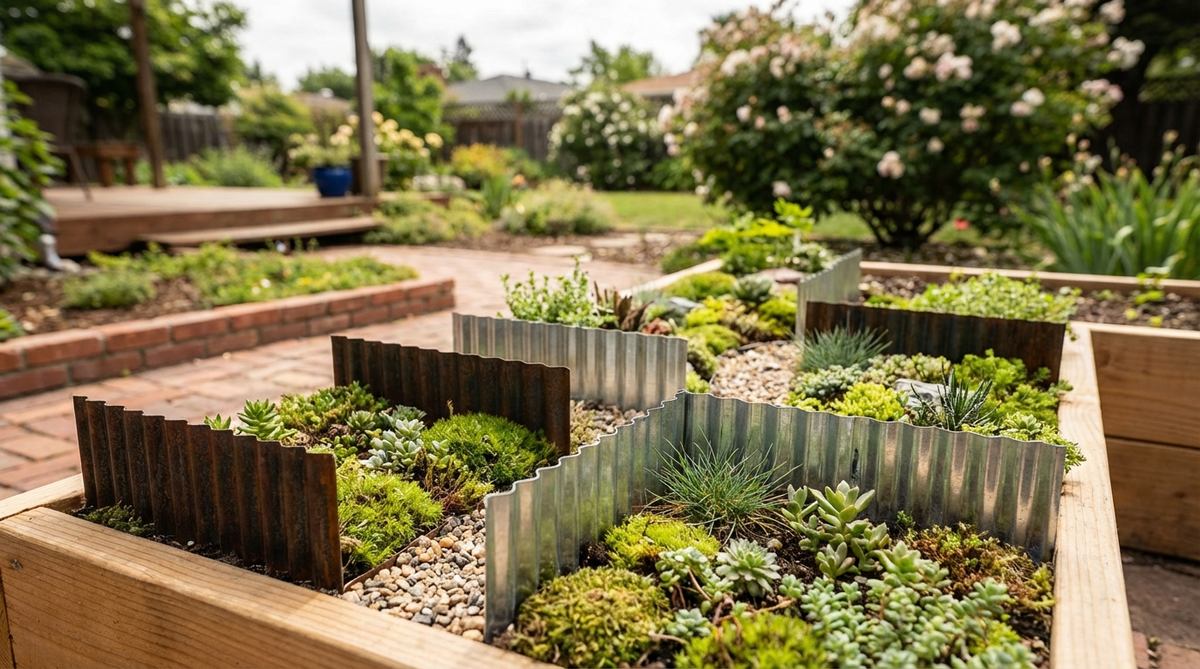
Miniature versions of industrial corrugated sheeting bring urban edge to terrarium designs. The repeating wave pattern adds texture while maintaining the clean geometry modern styles require.
Weathered steel finishes suit industrial themes, while galvanized silver versions coordinate with contemporary gray-and-green color schemes. The solid construction provides complete visual separation between zones.
Cut to 1.5 inch heights, these panels work well for defining planting beds within larger displays. The material’s rigidity allows freestanding installation without additional support structures.
Rustic Natural Materials For Organic Aesthetics
Natural material fences integrate seamlessly with woodland and organic terrarium themes. These options emphasize texture, irregular forms, and earth-toned colors that reference wild landscapes.
11. Twig Bundle Fencing
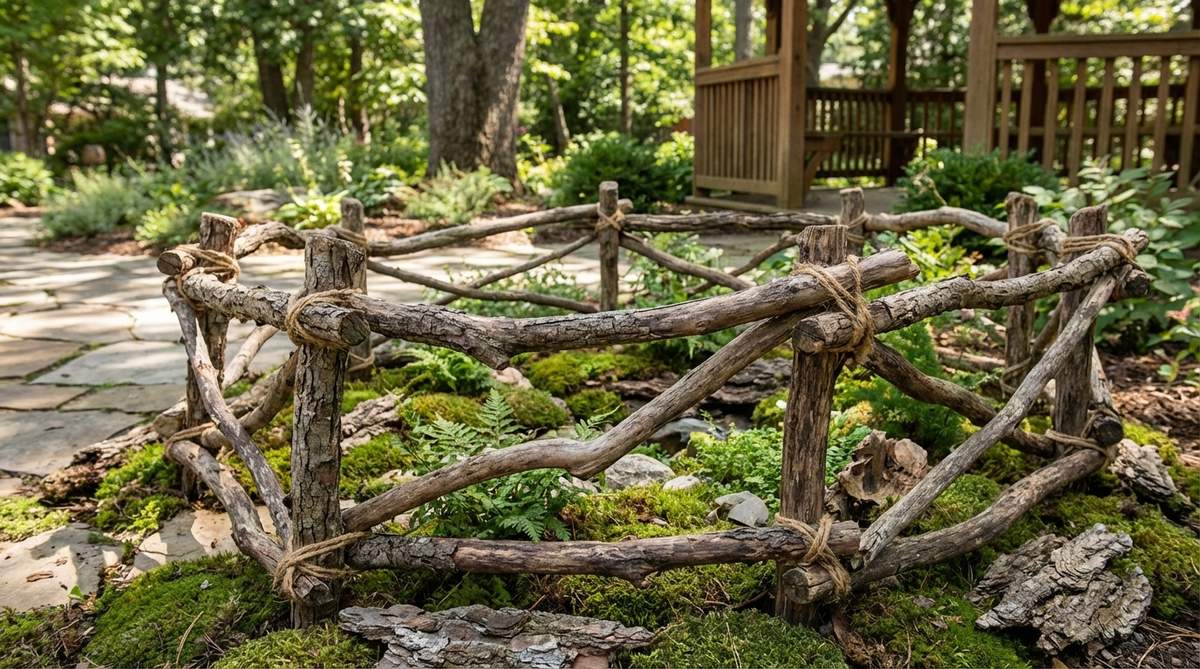
Small branches bound together with natural fiber cord create authentically rustic boundaries. Each section displays unique character from bark texture and natural branch curves—no two pieces match exactly.
Collect dried twigs from gardens, cut to uniform 1.5 inch lengths, and bind with jute twine or thin wire. The handcrafted quality adds personality that mass-produced items cannot replicate.
This style pairs perfectly with moss, woodland mushrooms, and forest floor themes. The natural materials weather gracefully in terrarium environments, developing moss colonization that enhances authenticity.
12. Bark Strip Borders
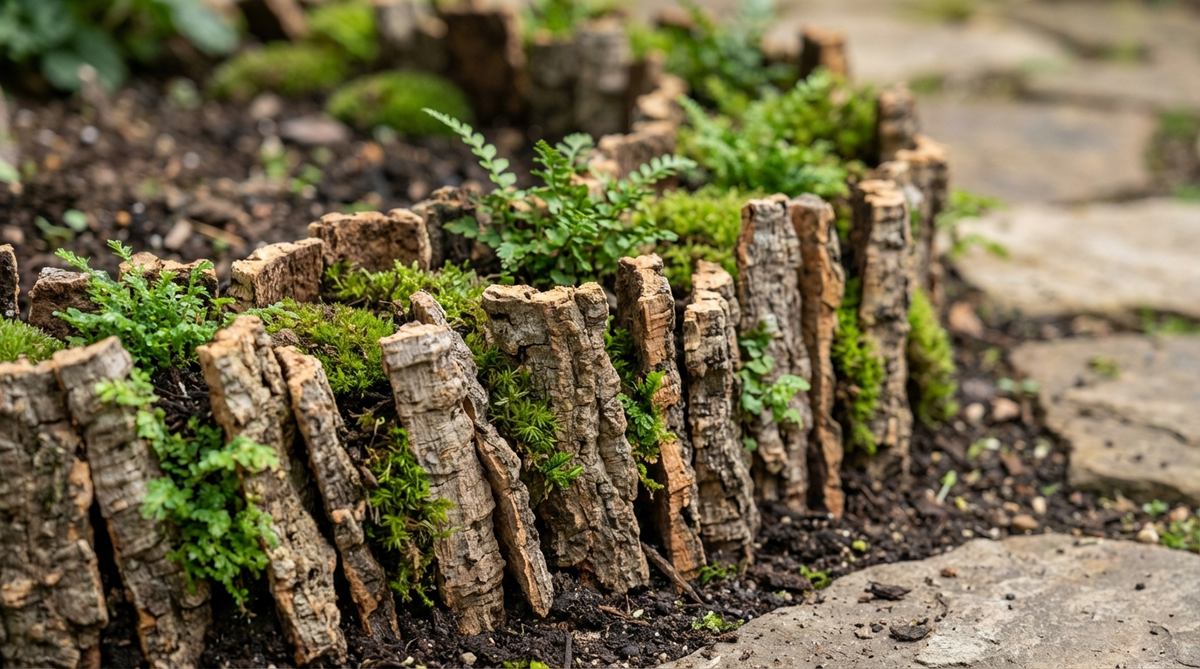
Thin pieces of natural bark positioned vertically create textured boundaries that disappear into woodland plantings. Cork bark works particularly well due to its moisture resistance and layered texture.
Cut strips to 2 inch heights and press into substrate at slight angles for natural appearance. The irregular edges and color variation provide organic visual interest without rigid geometry.
Bark’s porous structure allows beneficial microorganisms to colonize the surface, contributing to healthy terrarium ecosystems. The material also provides attachment sites for mosses and small ferns.
13. Pebble Stacked Walls
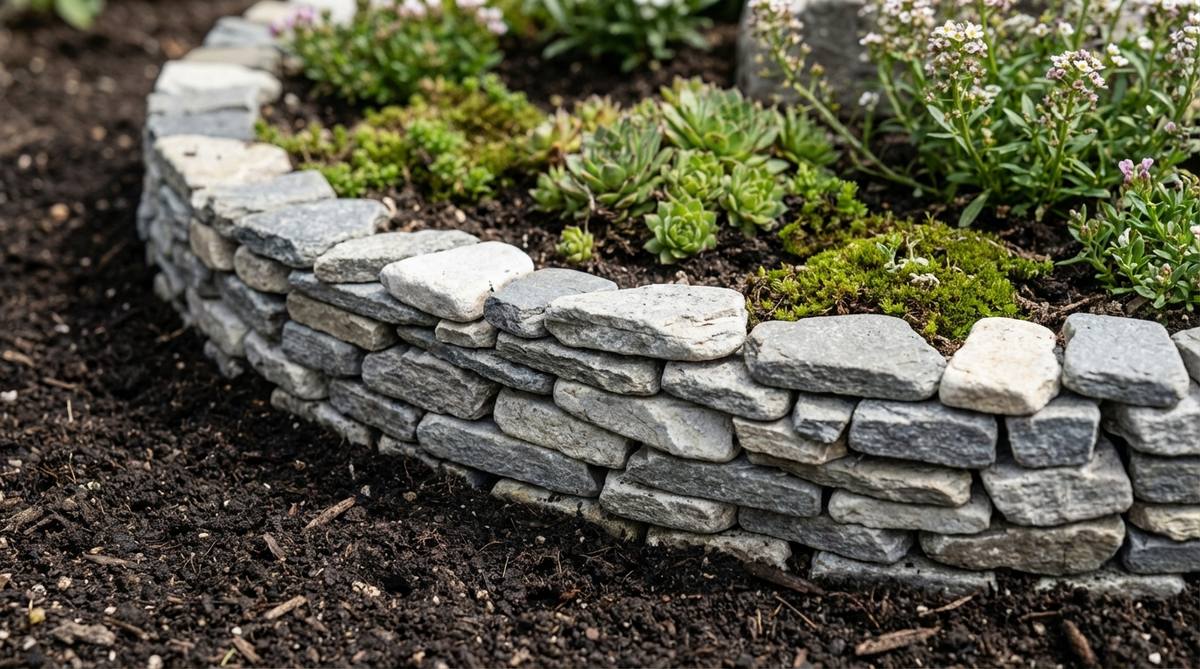
Small flat stones stacked to create low walls establish boundaries through mass rather than height. This ancient technique translates beautifully to miniature scale when using 5-10mm pebbles.
Select stones with one flat side and arrange them in irregular stacking patterns. The three-dimensional quality adds substantial visual weight while remaining low enough to view plantings behind.
Dry-stack construction without adhesive allows rearrangement as terrarium designs evolve. Choose stone colors that contrast with substrate for clear definition—gray or white stones against dark soil create strong boundaries.
14. Moss-Covered Branch Rails
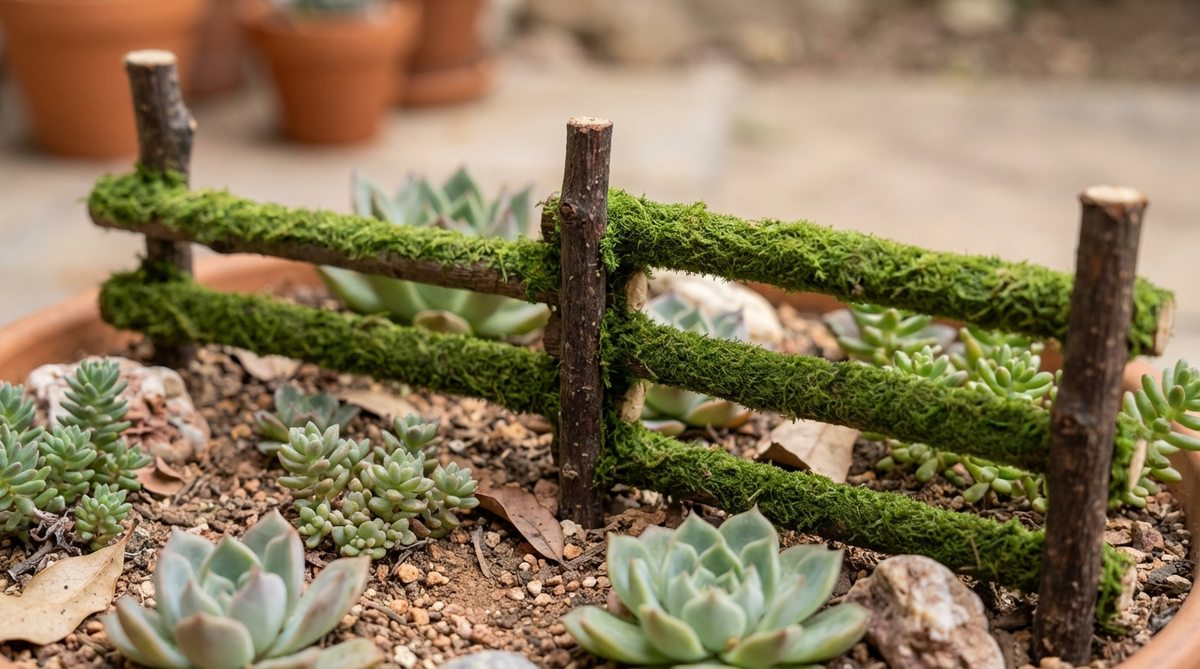
Horizontal branches pre-colonized with preserved moss create living fence structures. The combination of wood structure and green moss coating blurs the line between hardscape and planting.
Position these on small twig supports to create elevated rail fences at 1-2 inch heights. The moss texture softens the linear quality while adding color that coordinates with planted areas.
Preserved moss maintains appearance without requiring the moisture levels living moss demands. This makes the style suitable for open terrariums and succulent displays with lower humidity.
15. Driftwood Section Dividers
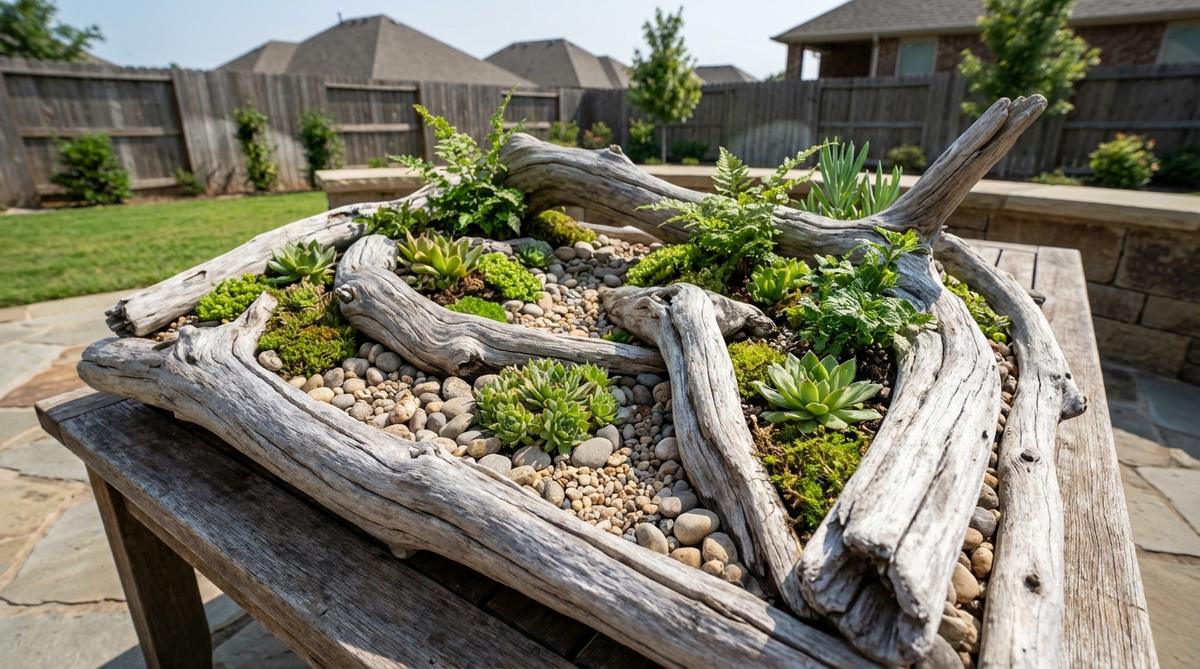
Weathered wood pieces from beaches or rivers bring sculptural character to terrarium boundaries. The smooth, bleached surfaces and organic curves create focal points rather than simple dividers.
Choose pieces with interesting shapes—natural curves, holes, or branches—and position them vertically as statement fencing. The silver-gray tones coordinate with both green plantings and neutral substrates.
Driftwood’s density makes it naturally stable in loose substrate. The pre-weathered quality means pieces won’t degrade or change appearance in humid conditions, maintaining design intent long-term.
Ornate Decorative Options For Fantasy Themes
Detailed, embellished fence designs establish fairy tale atmospheres in terrariums. These options prioritize decorative appeal and storytelling over minimalist restraint, creating immersive miniature worlds.
16. Wrought Iron Style Fencing
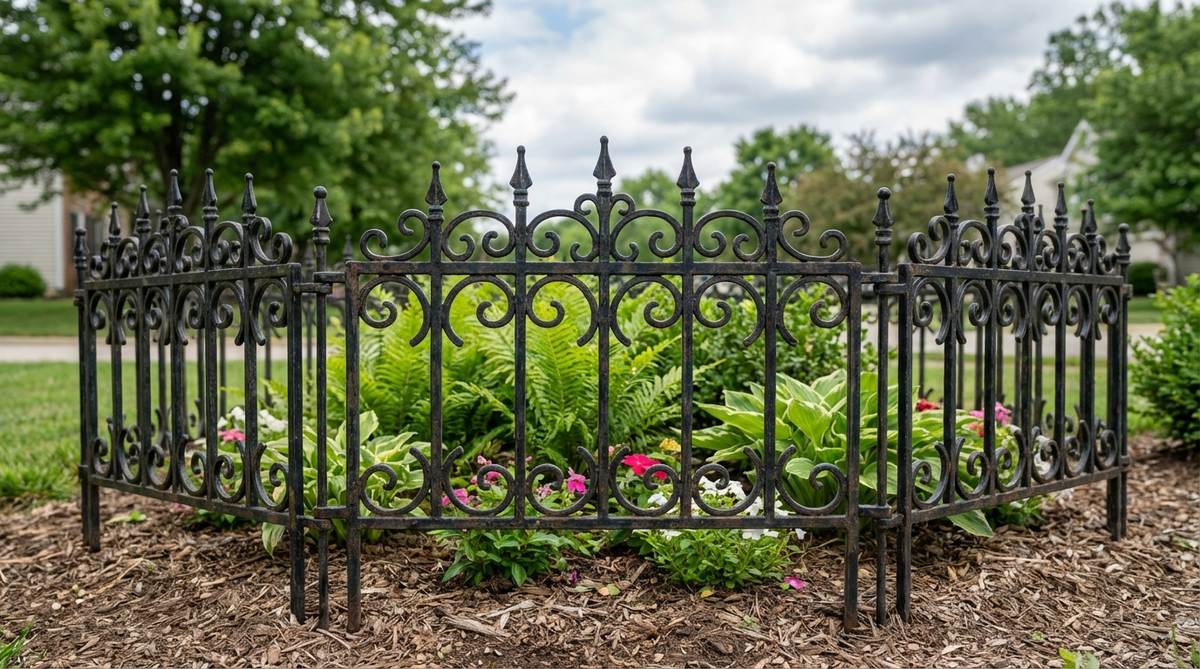
Cast resin or metal fencing with scrollwork, finials, and decorative elements replicates Victorian garden ironwork at miniature scale. Black finishes and intricate patterns add formal elegance to fairy garden themes.
Sections typically include gate elements with tiny hinges or decorative arches. These focal point pieces anchor compositions and provide narrative interest—where does the gate lead?
The height—usually 2-3 inches—makes substantial visual impact. Position these as primary design elements with plantings arranged to complement rather than compete with the ornate detailing.
17. Gothic Pointed Arch Panels
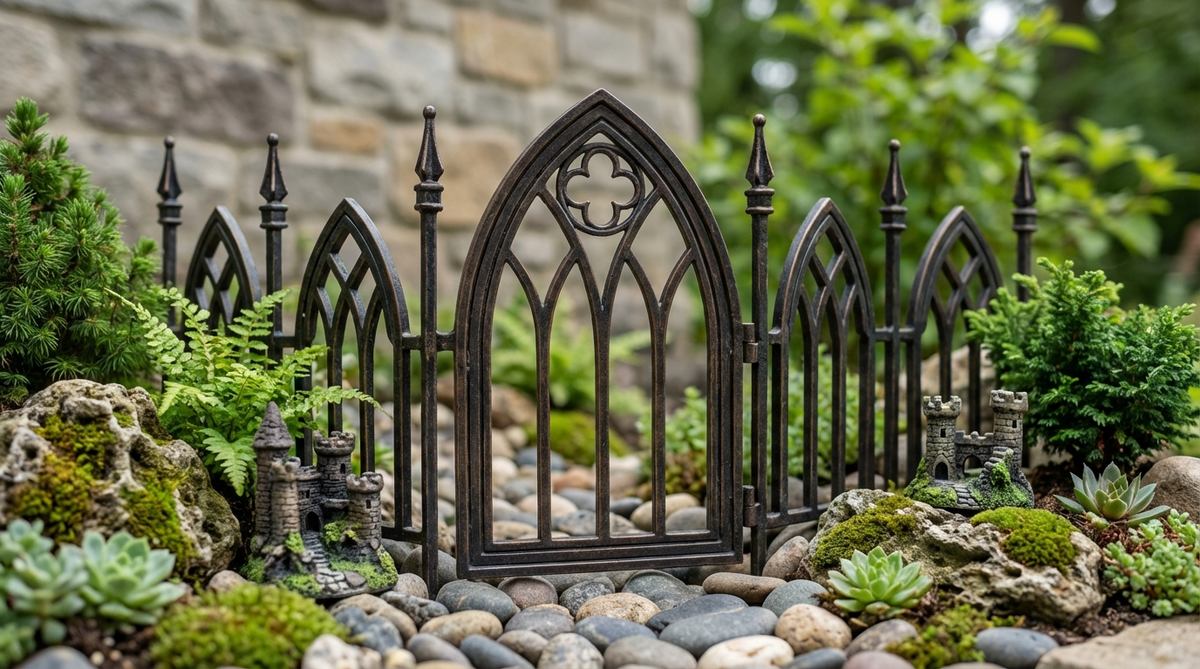
Fence sections featuring pointed arch motifs bring medieval castle aesthetics to terrarium designs. The vertical emphasis and dramatic shapes suit fantasy themes with towers, dragons, and enchanted forests.
Dark finishes in black, bronze, or deep brown enhance the period character. The repeating arch pattern creates rhythmic visual flow that guides eyes through complex multi-element compositions.
Pair these with stone substrate, miniature castle accessories, and deep green plantings. The architectural detail provides context that transforms simple plant displays into immersive environments.
18. Colored Painted Picket Fences
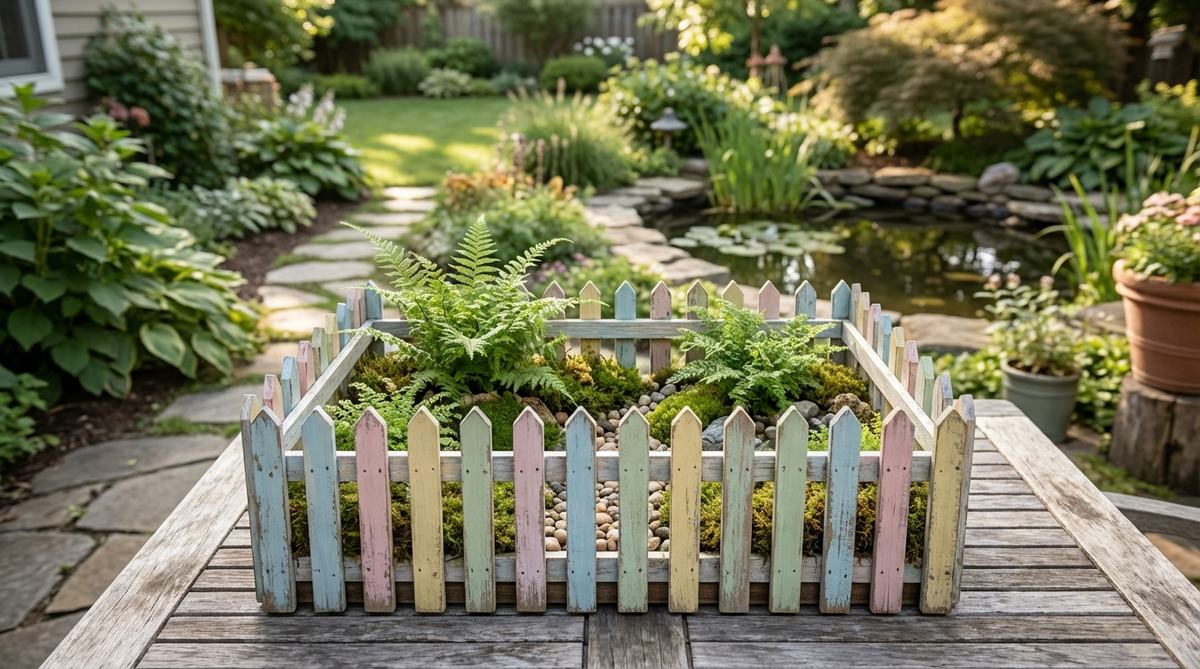
Traditional picket designs rendered in pastel blues, pinks, yellows, or greens inject whimsy into terrarium scenes. The color becomes a design element itself, coordinating with or contrasting against flowering plants.
Distressed paint finishes add cottage charm—edges worn to reveal wood beneath suggest age and history. This weathered quality makes miniature gardens feel established rather than newly assembled.
Use colored fences as accent elements in predominantly green compositions. A sky blue fence against emerald moss creates vibrant contrast that energizes the entire display.
19. Stone Wall Texture Fencing
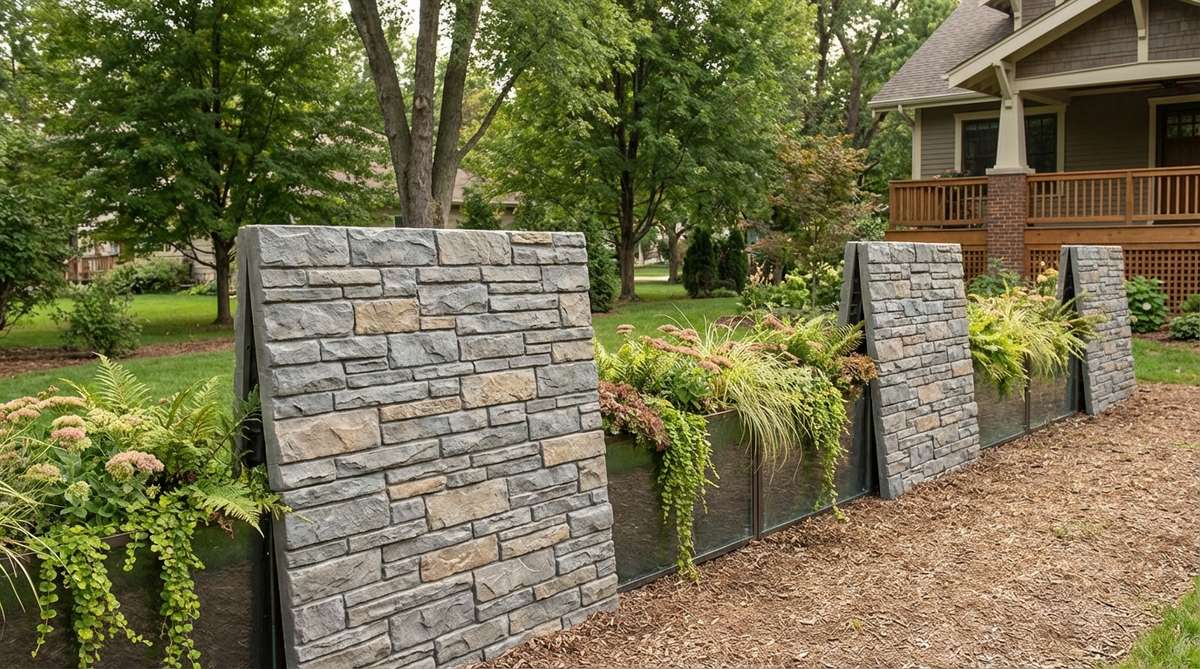
Resin fencing molded to replicate stacked stone walls provides the appearance of masonry boundaries at minimal weight. Gray, tan, or weathered white finishes simulate limestone, granite, or sandstone.
The three-dimensional texture creates convincing illusion from viewing distance, though close inspection reveals the lightweight material. This makes installation easier than using actual stacked pebbles.
Position these along container edges where they can lean against glass for support. The solid appearance provides strong visual anchoring for loose, flowing plant forms.
20. Vine-Wrapped Trellis Fencing
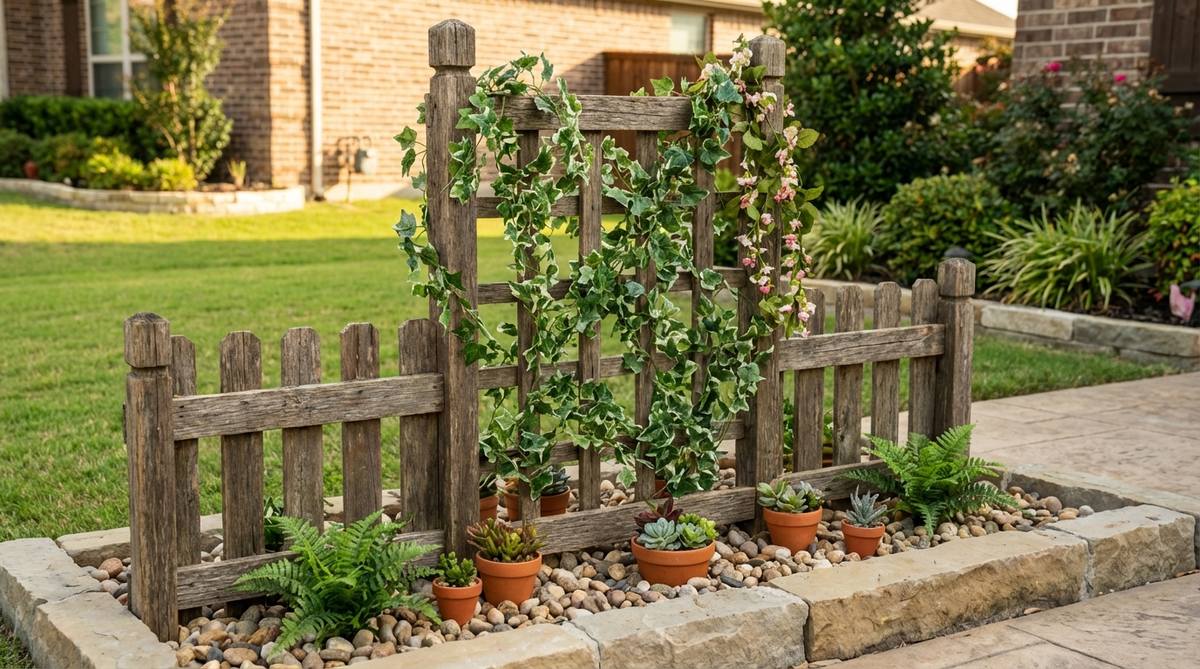
Small trellis structures pre-decorated with artificial or preserved vines create instant aged garden atmosphere. Green foam or fabric ivy permanently attached to white or natural wood trellises suggests established plantings.
The dimensional quality adds depth to flat fence surfaces. Position these as backdrop elements where the elevated detail won’t obstruct views of actual living plants.
This style works well in terrariums where maintaining living climbing plants proves difficult. The permanent vine detail provides greenery without demanding care or growing space.
DIY Craft Approaches For Custom Boundaries
Handcrafted fences offer complete creative control over materials, dimensions, and finishing. These approaches suit crafters who want unique pieces tailored precisely to specific terrarium designs.
21. Popsicle Stick Construction
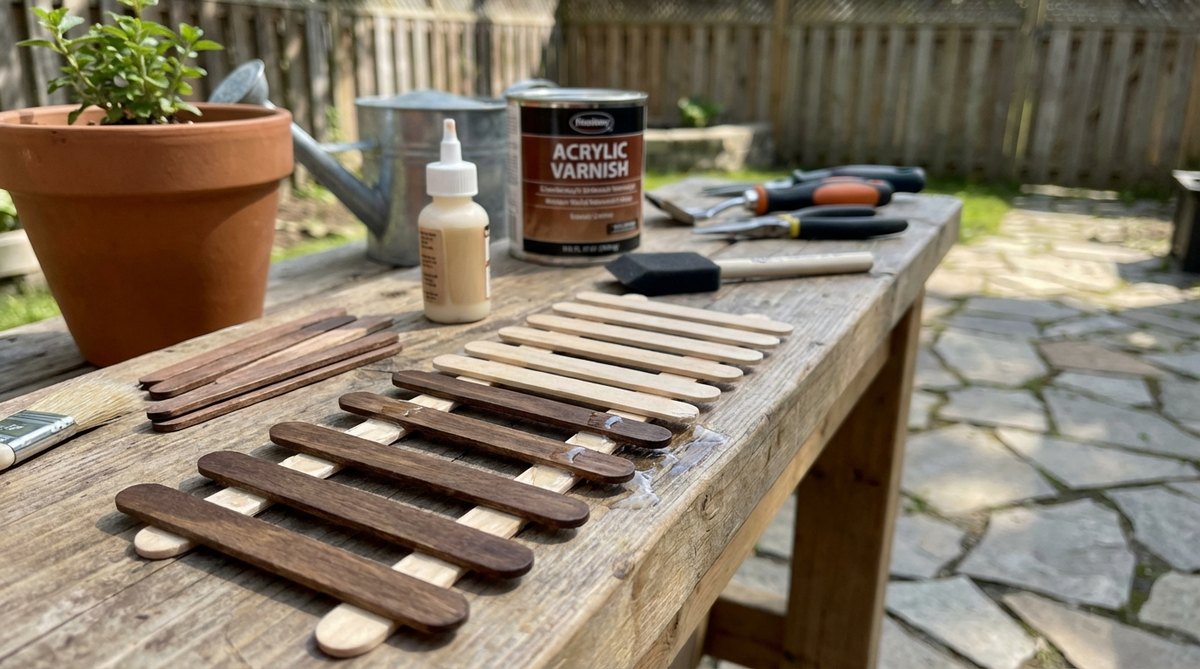
Standard craft sticks cut to size and assembled with wood glue create custom fence sections at minimal cost. Cut sticks to 1.5-2 inch lengths and arrange in picket, rail, or lattice patterns.
Sand edges smooth and seal with acrylic varnish before terrarium installation. Staining or painting before assembly allows color customization to match any theme—whitewash for cottages, dark walnut for rustic styles.
The lightweight material glues easily to substrate or container edges. Create curved sections by gluing individual pickets to flexible wire or fabric backing that bends to follow organic shapes.
22. Matchstick Picket Fencing
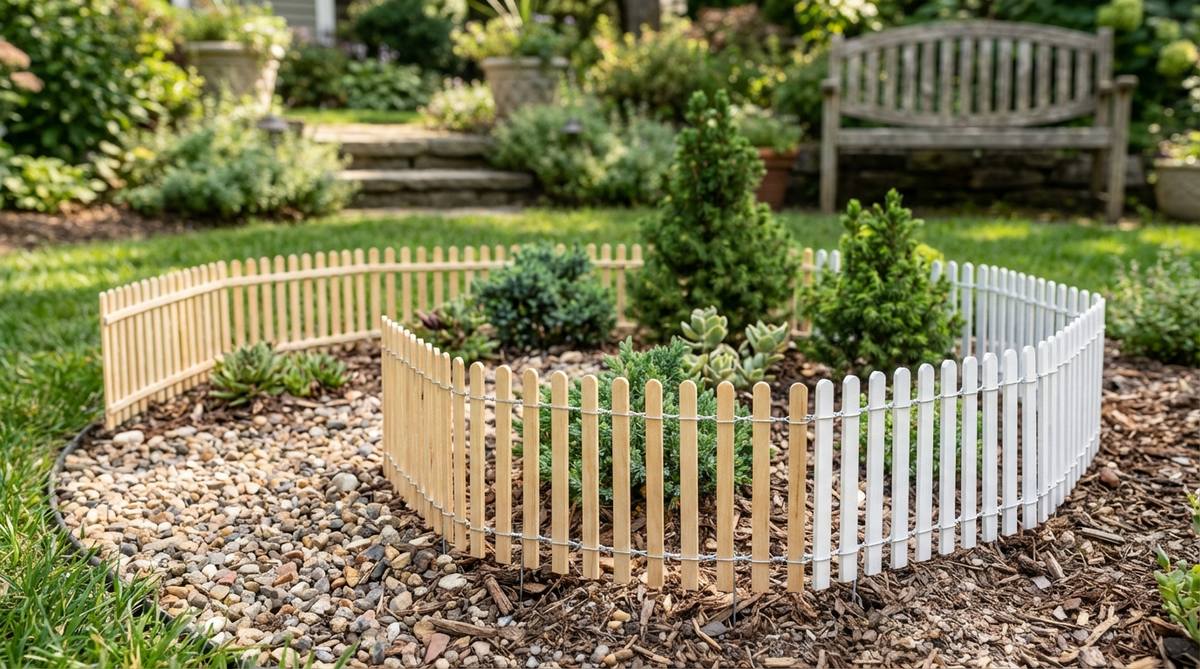
Wooden matchsticks with heads removed provide perfectly scaled material for delicate fence construction. Glue sticks vertically to thin craft wire or thread for flexible fencing that curves smoothly.
The thin profile—approximately 2mm wide—maintains proper scale even at close viewing distances. Natural wood finish looks authentic, while white paint creates crisp traditional picket appearance.
Position matchsticks with slight spacing between each or tightly together for solid boundaries. The wire backing allows pushing sections directly into substrate without additional support structures.
23. Wire and Bead Fencing
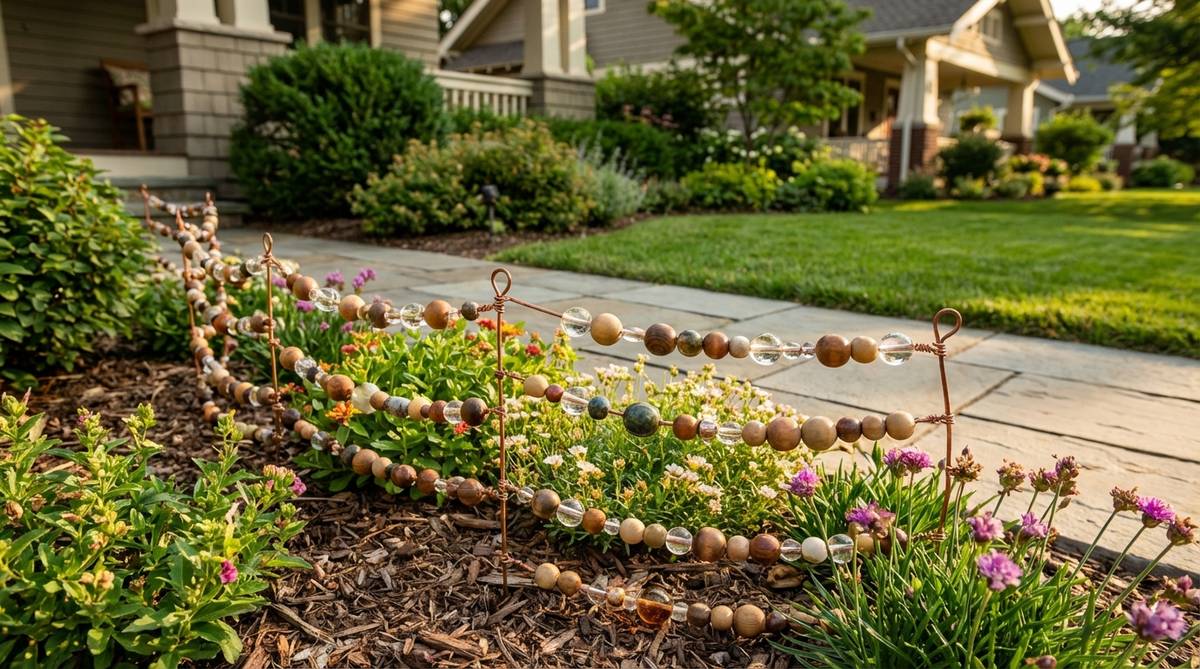
Thread wooden, glass, or stone beads onto thin craft wire to create artistic boundary designs. Alternate bead sizes and colors to create patterns, or use uniform beads for clean contemporary looks.
Form wire into posts with horizontal bead rails between them. The beads slide along wire, allowing spacing adjustments to achieve perfect proportions before securing with small crimps or glue drops.
Natural wood beads suit organic themes, while glass beads add sparkle to fairy gardens. The transparent quality of glass allows light to pass through, maintaining brightness in enclosed spaces.
24. Polymer Clay Custom Fencing
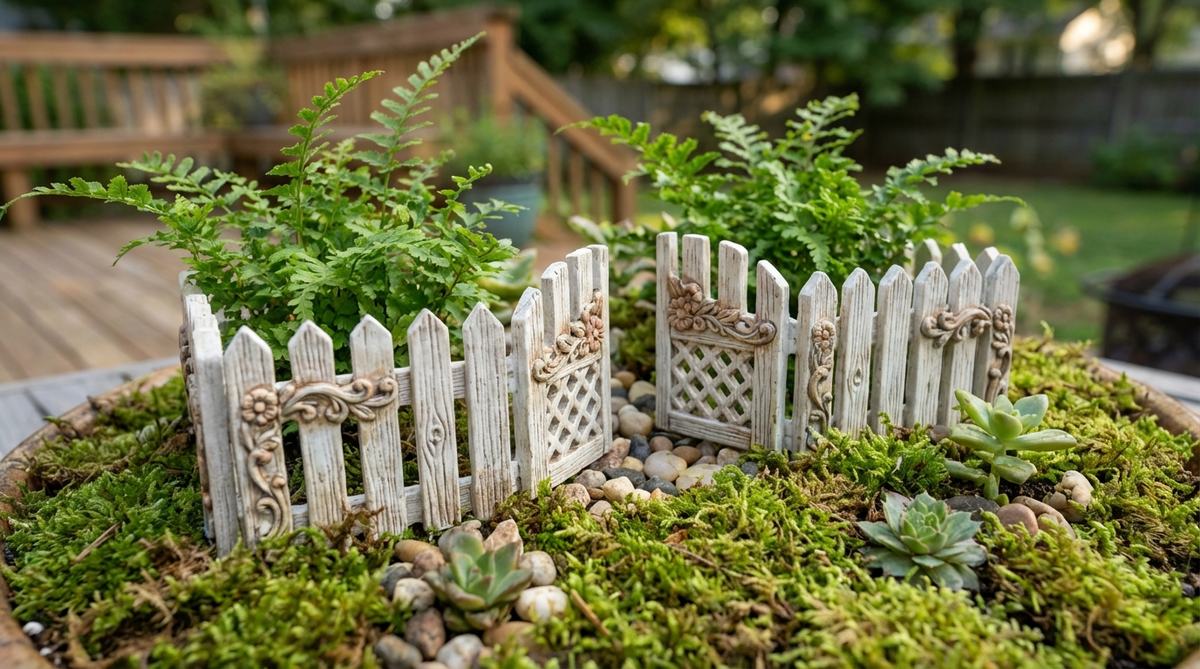
Sculpted polymer clay baked until hardened creates completely custom fence designs impossible to find as manufactured products. Roll clay into thin sheets and cut pickets, or sculpt ornate details by hand.
Paint after baking with acrylic craft paints and seal with clear finish. The material’s waterproof quality when properly sealed makes it suitable for high-humidity terrarium environments.
Create matching sets of fence sections, gates, and posts that coordinate perfectly with other custom clay elements. The design possibilities remain limited only by crafting skill and imagination.
25. Fabric and Cardboard Fencing
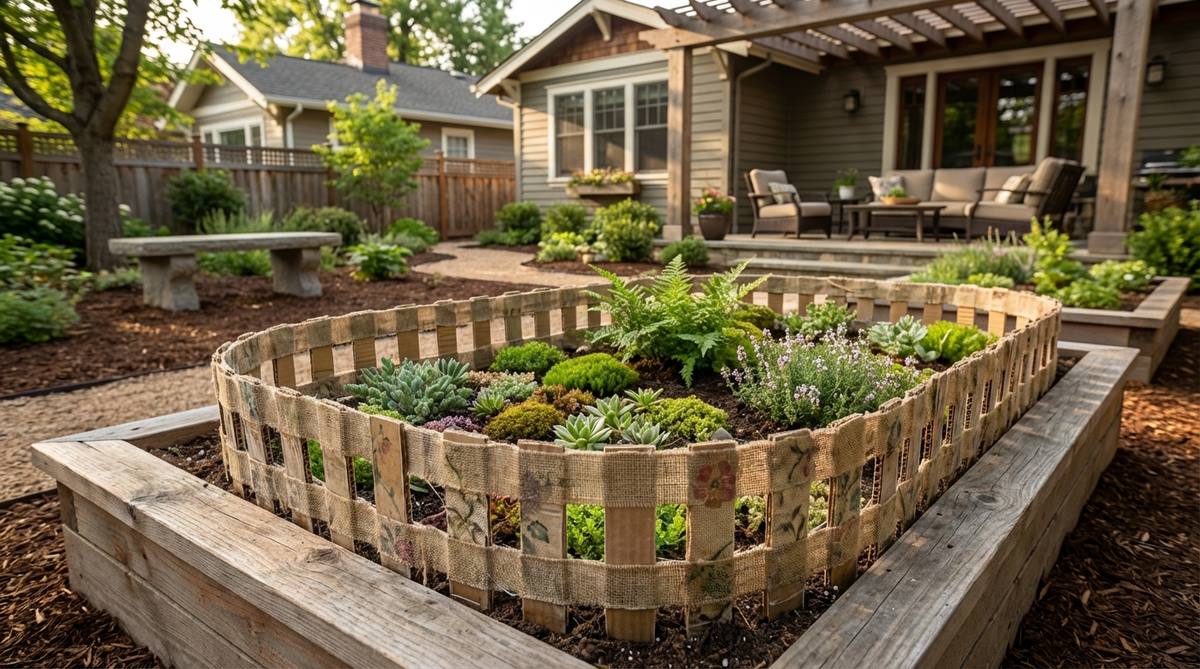
Corrugated cardboard strips covered with fabric or decorative paper create lightweight temporary fencing. Cut cardboard to desired heights and wrap with materials that coordinate with terrarium themes.
Burlap suits rustic designs, while patterned scrapbook papers work for cottage themes. Seal completed sections with clear acrylic spray to add moisture resistance—though this approach works best in open terrariums.
The flexibility allows creating curved boundaries and the low cost encourages experimentation. Replace sections seasonally or when themes change without significant material investment.
Specialty Theme Fences For Unique Concepts
Specialized fence designs serve specific themes or functional needs beyond general boundary marking. These options solve particular design challenges or establish highly specific aesthetic contexts.
26. Beach Driftwood Post Fencing
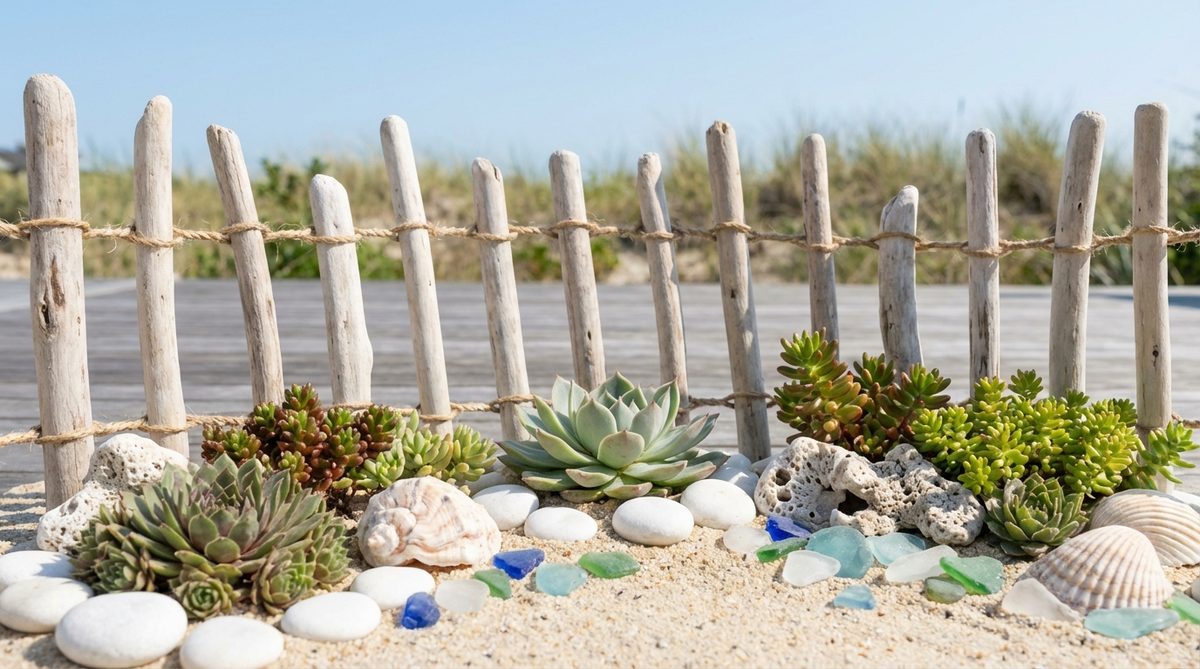
Bleached driftwood posts connected with natural twine create coastal-themed boundaries. The weathered wood and rope details reference seaside boardwalks and beach environments.
Pair with sand substrate, shell accessories, and succulent plantings to complete nautical themes. The tan and gray color palette coordinates with beach glass, coral pieces, and white pebbles.
Install posts at slight angles for casual, wind-worn appearance. The natural materials weather gracefully and develop character as terrarium microorganisms colonize surfaces over time.
27. Seasonal Holiday Fencing
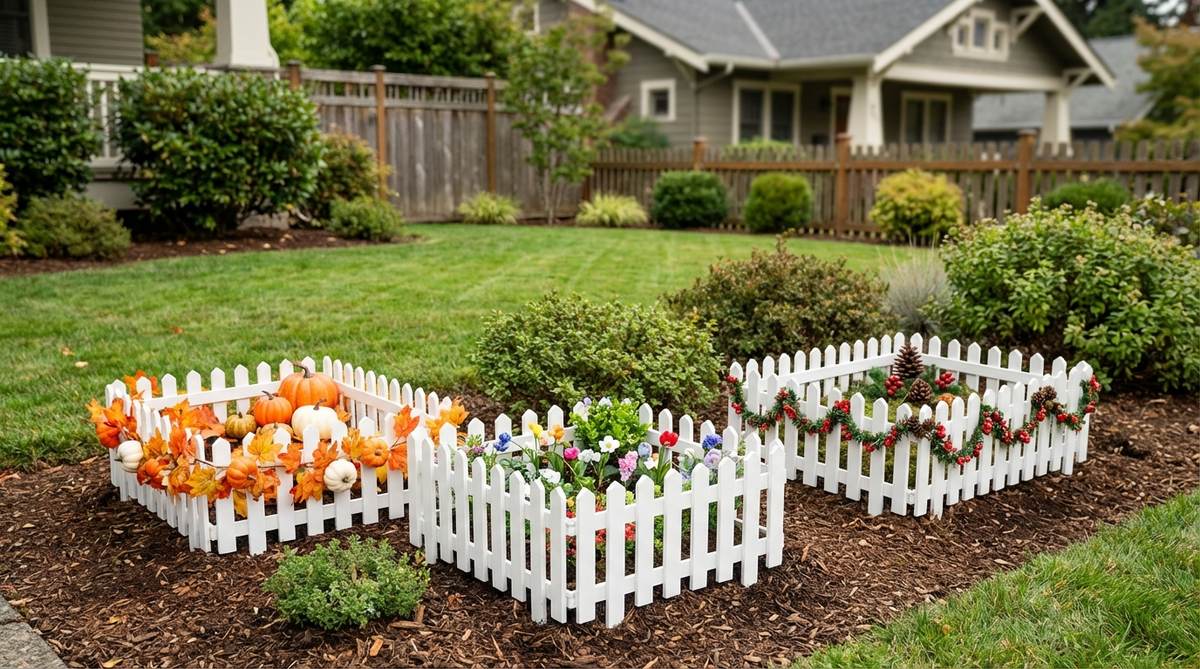
Interchangeable fence sections decorated for specific holidays allow seasonal terrarium updates. Red and green for winter, pastels for spring, orange for autumn—rotating fence colors transforms displays throughout the year.
Attach small seasonal accessories to basic white picket bases—tiny pumpkins for fall, miniature flowers for spring. The modular approach requires storing multiple fence sets but provides maximum seasonal flexibility.
Design fences with removable decorative elements rather than permanently attached ornaments. This allows one base fence to serve multiple seasons with simple accessory changes.
28. Glow-in-the-Dark Fencing
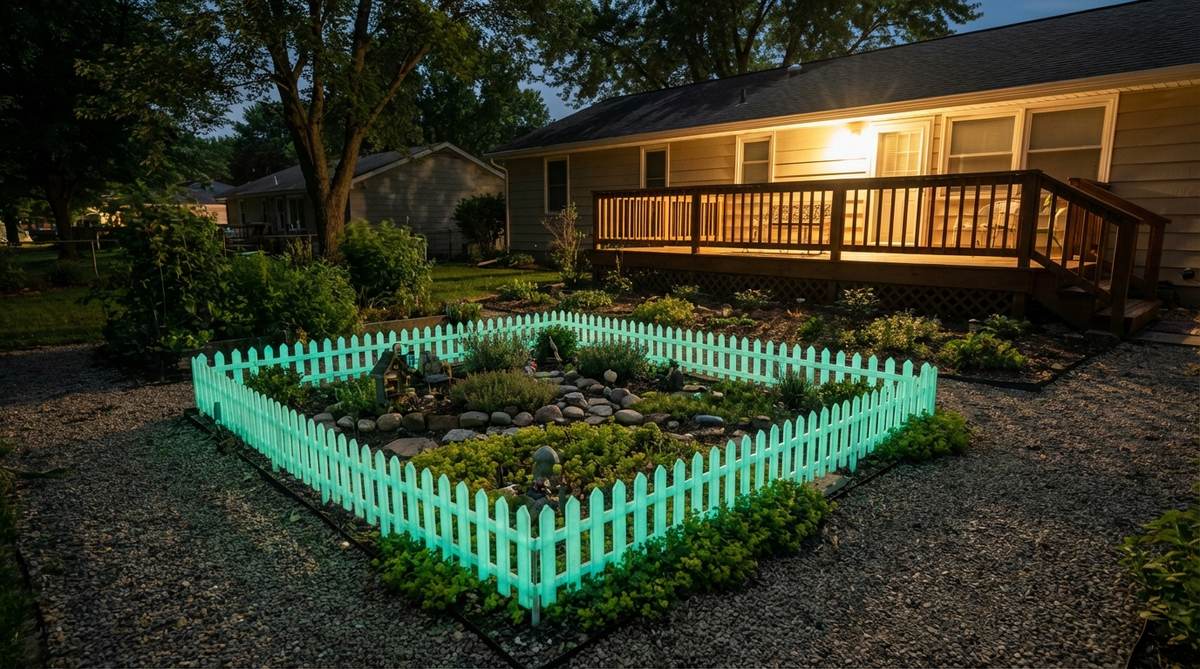
Fencing painted with glow-in-the-dark paint or made from phosphorescent materials creates nighttime visual interest. These work particularly well in children’s rooms where the terrarium provides gentle illumination after dark.
Charge the material with bright light during the day and the fence sections emit soft green or blue glow for hours. This adds magical quality to fairy garden themes without requiring electrical lighting.
Paint standard white plastic fencing with glow paint, or source plastic pre-mixed with phosphorescent materials. The effect works best with open, sparse plantings that don’t obscure the fence surfaces.
Conclusion
Selecting the right mini garden fence transforms terrarium design from simple plant display to cohesive miniature landscape. Consider your container size, planting style, and overall theme when choosing from traditional wood, modern metal, rustic natural, or ornate decorative options. Whether you purchase finished pieces or craft custom designs, proper scale and moisture-resistant materials ensure your boundary elements enhance rather than distract from living plantings. Start with one fence style that resonates with your vision, install it thoughtfully, and watch how defining boundaries creates depth and narrative in your miniature world.
Frequently Asked Questions
What height should mini garden fences be for terrariums?
Fence heights between 1 and 3 inches work best for most terrarium scales. In containers under 6 inches tall, use 1-1.5 inch fences to maintain proportion. For larger terrariums over 12 inches, 2-3 inch fences provide adequate presence without blocking plant views. The fence should reach roughly one-quarter to one-third of the total container height for balanced visual weight.
What materials work best for mini fences in humid terrarium environments?
Plastic, resin, sealed wood, and metal materials withstand high humidity without deteriorating. Avoid raw unsealed wood, cardboard, and paper-based materials in closed terrariums as moisture causes warping and mold growth. Treated bamboo, powder-coated wire, and ceramic pieces also perform well. For natural wood aesthetics in humid environments, coat pieces with clear acrylic sealant before installation.
How do you install mini fences in terrarium substrate without damaging plant roots?
Install fences during initial terrarium construction before planting, or push sections gently into substrate away from root zones of established plants. Choose designs with thin wire stakes or individual post supports that create minimal soil disturbance. For fragile root systems, position fences against container walls where glass provides support rather than forcing stakes through planted areas.
Can you create curved boundaries with mini garden fencing?
Flexible fences with wire backing bend into smooth curves and circles to follow organic planting patterns. Individual picket sections connected by thin wire or fabric allow shaping without breaking. Alternatively, arrange rigid fence sections at slight angles to approximate curves—the shorter each section, the smoother the curve appears. Craft wire with beads or small attachments also flexes easily for custom curved boundaries.
Where should fences be positioned in terrarium designs?
Place fences to separate distinct planting zones, create depth by dividing foreground from background, or establish focal points around specimen plants or accessories. Position taller fences toward the rear against container walls to avoid blocking views of forward plantings. Use lower fences as mid-ground dividers that define spaces while maintaining sightlines. Corner placement works well for suggesting gardens that extend beyond visible container boundaries.