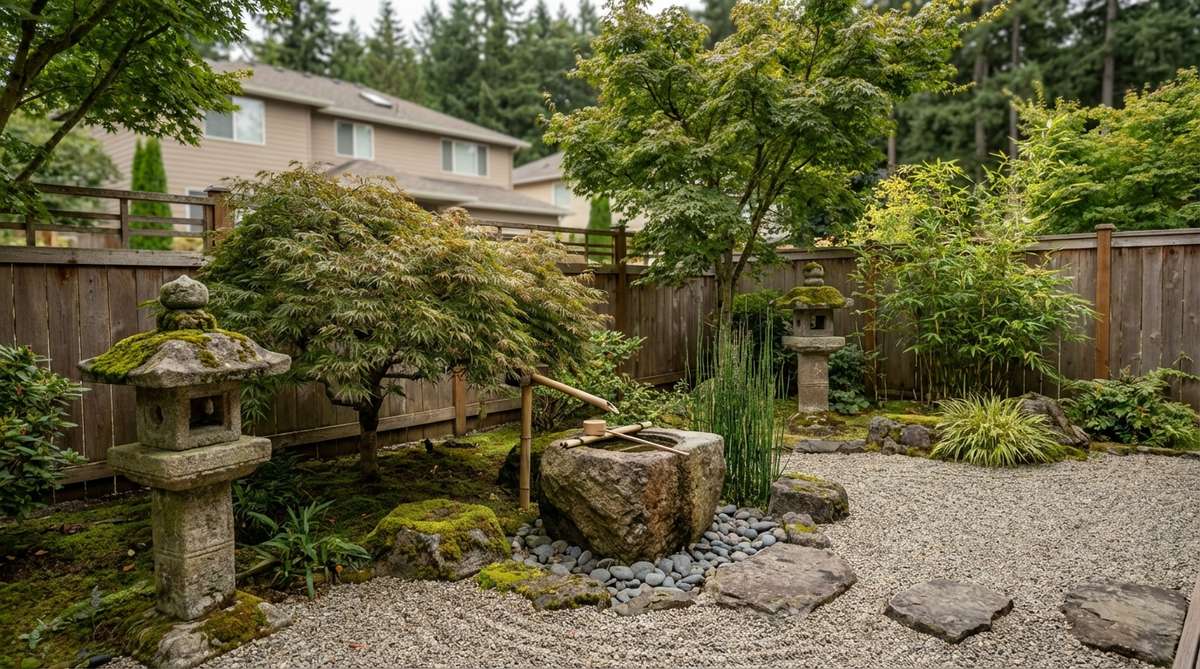
Japanese outdoor decor transforms ordinary gardens into contemplative sanctuaries through carefully selected ornamental elements rooted in centuries of design philosophy. Fresh Garden Ideas presents authentic pieces that American gardeners can integrate to achieve the balanced aesthetic that defines traditional Japanese landscapes.
Design SnapshotKey Principles
- Wabi-sabi aesthetic: Embrace natural patina, weathering, and imperfection in stone and bamboo elements
- Functional symbolism: Each ornament serves both practical purpose and spiritual meaning in the garden narrative
- Scale harmony: Balance large statement pieces like pagodas with intimate details like water basins
- Material authenticity: Prioritize natural granite, volcanic stone, bamboo, and aged wood over synthetic alternatives
Traditional Stone Lanterns That Anchor Garden Corners
Stone lanterns originated in Buddhist temples before migrating into tea gardens and residential landscapes. Designers position these carved granite fixtures to mark pathway nodes, illuminate water edges, and create vertical interest against low ground covers.
1. Tachi-doro Pedestal Lanterns
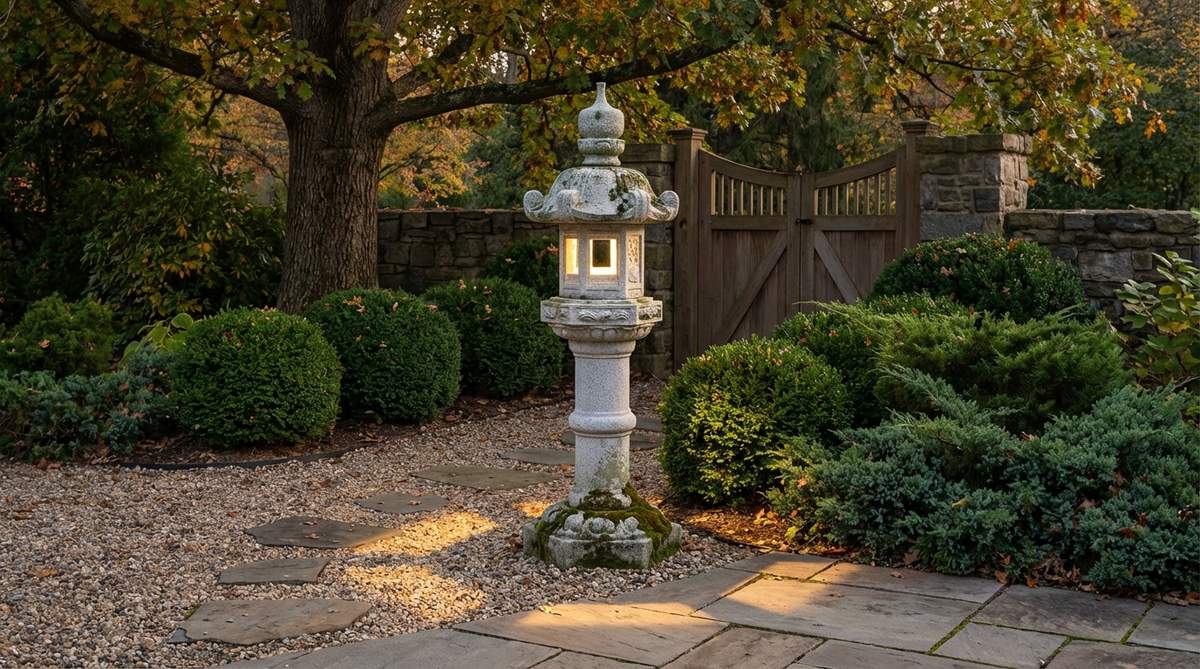
The tall, slender silhouette of pedestal lanterns establishes commanding focal points along primary sight lines. Hand-carved silver-grey granite develops moss patina in shaded placements, while the hexagonal light chamber casts geometric shadows at dusk.
Position these near entryways or at garden transitions where their height guides visitor flow. The base, shaft, and compartment stack without mortar, allowing seasonal repositioning as plantings mature.
Expect 36 to 50 inches in total height for standard residential installations. Pair with evergreen shrubs to emphasize the lantern’s vertical geometry during winter months.
2. Kasuga-doro Hexagonal Shrine Lanterns
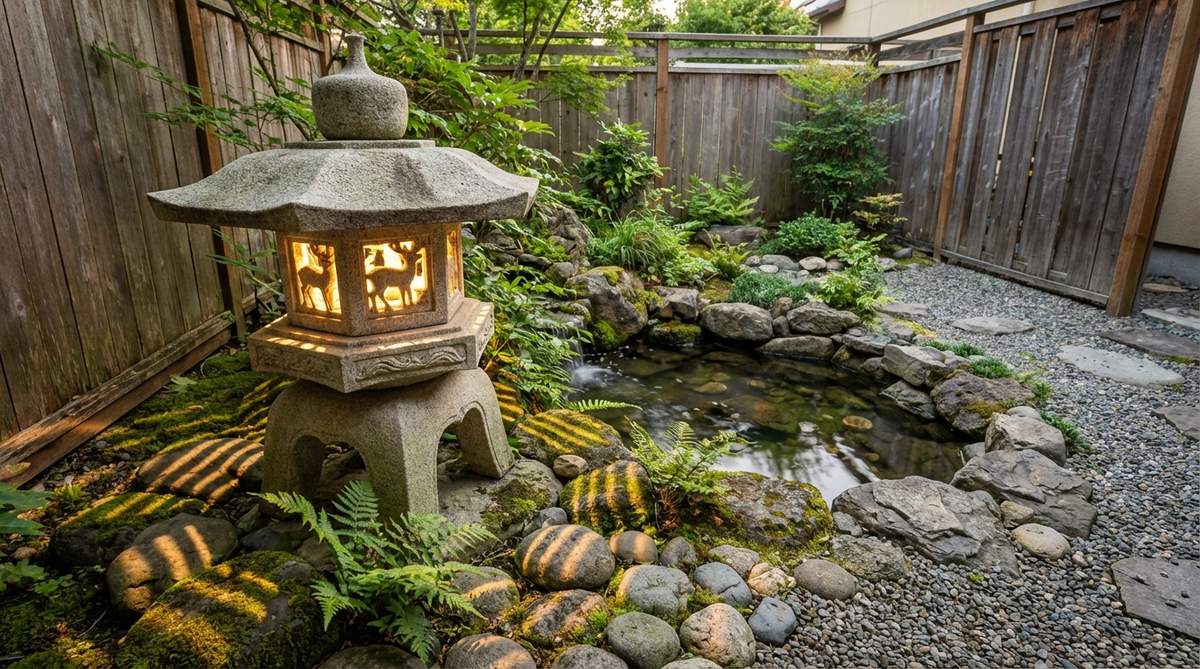
Named after Nara’s Kasuga Shrine, these hexagonal lanterns feature deer motifs carved into each facet. The multi-sided design allows light to radiate in six directions, creating layered shadow patterns across ground planes.
Install near naturalistic water features where reflected light amplifies the ornamental effect. The compact footprint suits smaller gardens constrained by narrow side yards or courtyard dimensions.
3. Yukimi-doro Snow-Viewing Lanterns
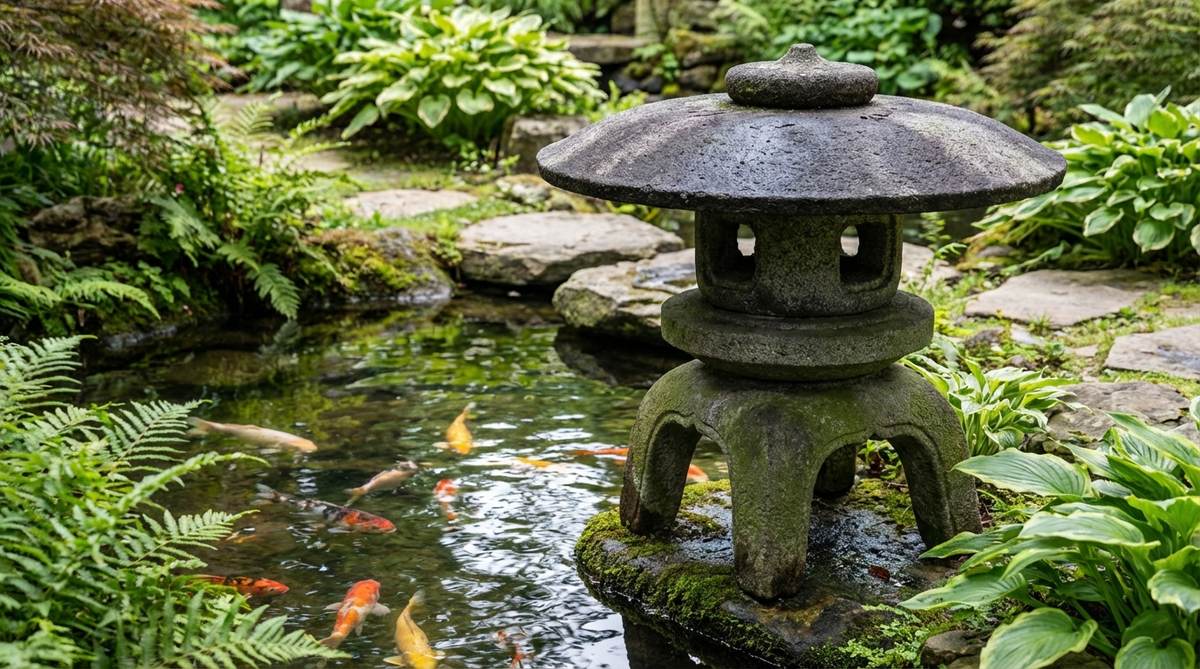
Low, squat proportions and wide flat caps define these water-edge lanterns designed to collect and display snow. Three or four curved legs elevate the light chamber just above ground, creating intimate illumination for koi ponds and stream margins.
Place at pond corners or beside bridge approaches where their horizontal emphasis contrasts with upright plantings. The broad canopy prevents rain from extinguishing candles, though LED retrofits now dominate American installations.
Granite surfaces weather to charcoal grey within two seasons in humid climates. This natural aging process enhances authenticity rather than diminishing aesthetic value.
4. Oribe-doro Tea Garden Lanterns
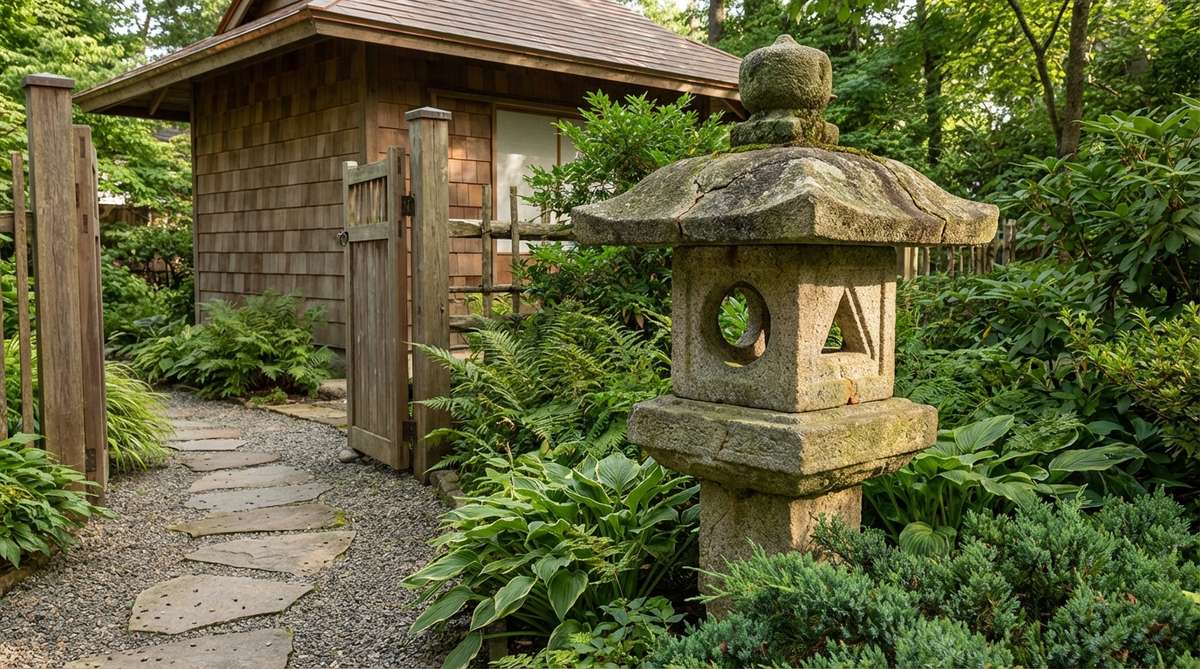
Tea master Furuta Oribe’s namesake lanterns incorporate square light compartments with different shaped openings on each side—circular, square, triangular, and arched. This asymmetry embodies the wabi-sabi philosophy of intentional imperfection.
Designers install these near teahouse entrances or along roji (tea garden paths) to honor their historical context. The varied apertures create distinct light patterns depending on viewer angle, rewarding slow observation.
5. Hanging Paper Chochin Lanterns
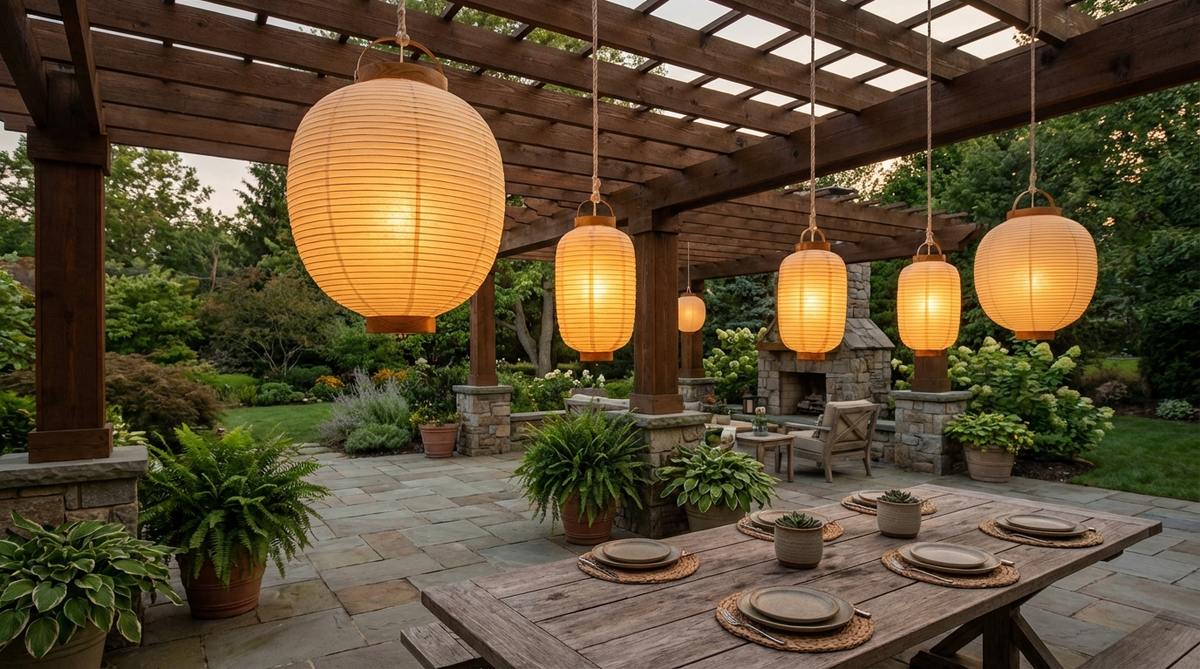
Collapsible washi paper lanterns stretched over bamboo frames bring portable illumination to covered porches and pergola structures. Traditional chochin use mulberry fiber paper that diffuses candlelight while remaining durable against moisture.
String multiple lanterns at varying heights to define outdoor dining zones during evening gatherings. Oak or cedar rings at top and bottom provide structural integrity, while cotton cords simplify seasonal removal before winter storms.
Soft white or warm amber bulbs pair better with natural wood finishes than cooler LED temperatures. Install dimmer switches to adjust ambiance between task lighting and atmospheric glow.
6. Stone Toro Path Markers
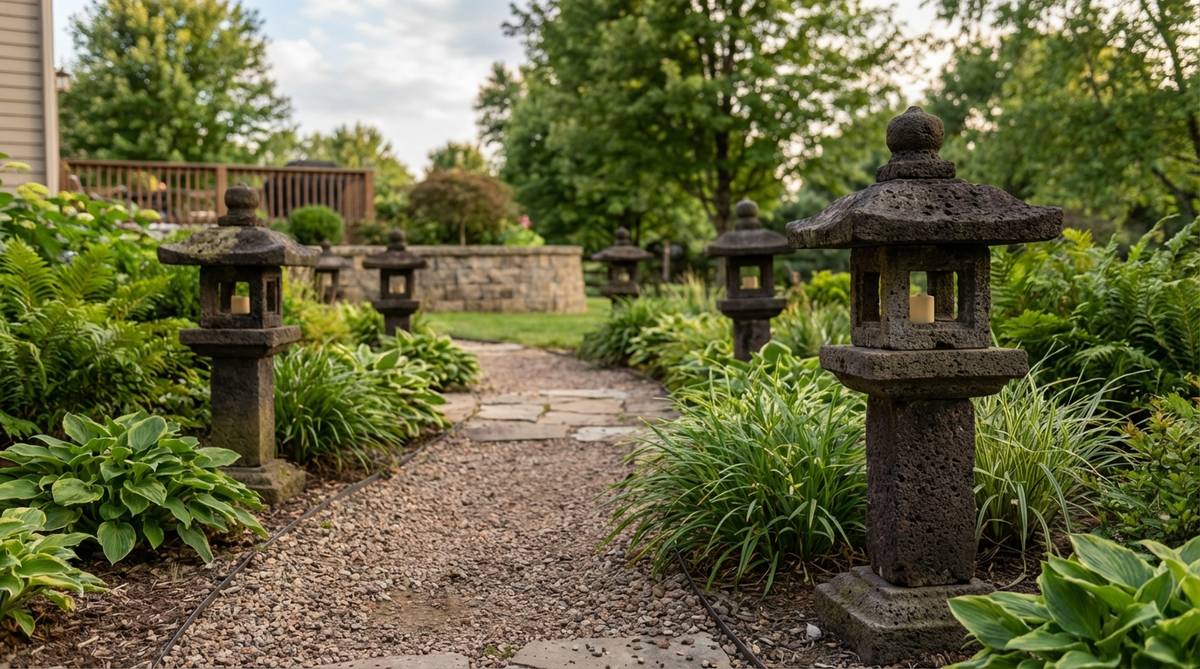
Miniature toro lanterns scaled between 12 and 18 inches mark secondary pathways without overwhelming narrow spaces. These compact versions include all traditional elements—cap, light chamber, shaft, and base—rendered in proportional reduction.
Line walkways at 6 to 8 foot intervals to establish rhythm and guide nighttime navigation. Volcanic lavastone versions develop distinctive textures as mineral deposits accumulate across porous surfaces.
Water Basins And Fountains For Ritual Cleansing
Water elements in Japanese gardens serve purification functions while contributing auditory and reflective qualities to the sensory experience. Basin placement follows specific protocols developed within tea ceremony traditions that American designers adapt to contemporary residential contexts.
7. Tsukubai Stone Water Basins
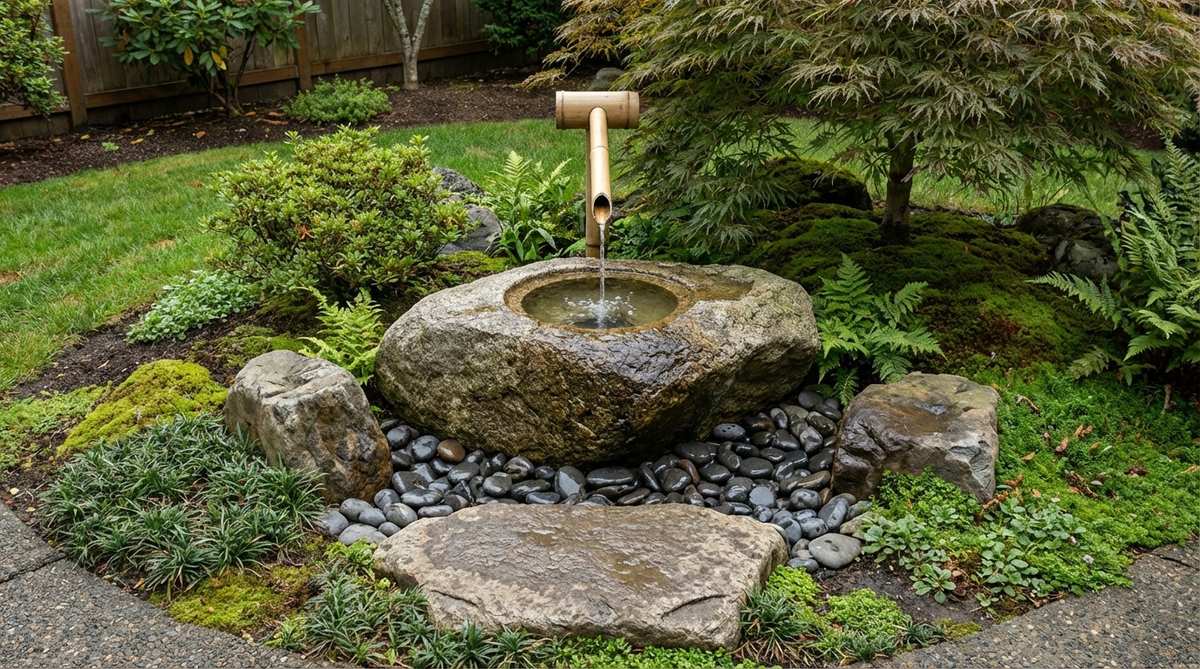
Low stone basins force visitors to crouch in humble posture during ritual hand washing before tea ceremony. The mizuana (water hole) carved into natural granite holds 2 to 4 gallons, fed by continuous trickle from bamboo spout overhead.
Position tsukubai 12 to 18 inches above grade with cobblestone drainage area directly forward. Three accompanying stones—maeishi (front stepping stone), yuoke-ishi (hot water vessel stone), and teshoku-ishi (candle stone)—complete the functional arrangement.
Recirculating pumps hidden beneath cobble layers eliminate plumbing complexity while maintaining authentic water flow. Clean drainage cobbles every two to three years to prevent sediment clogging.
8. Chozubachi Tall Washing Basins
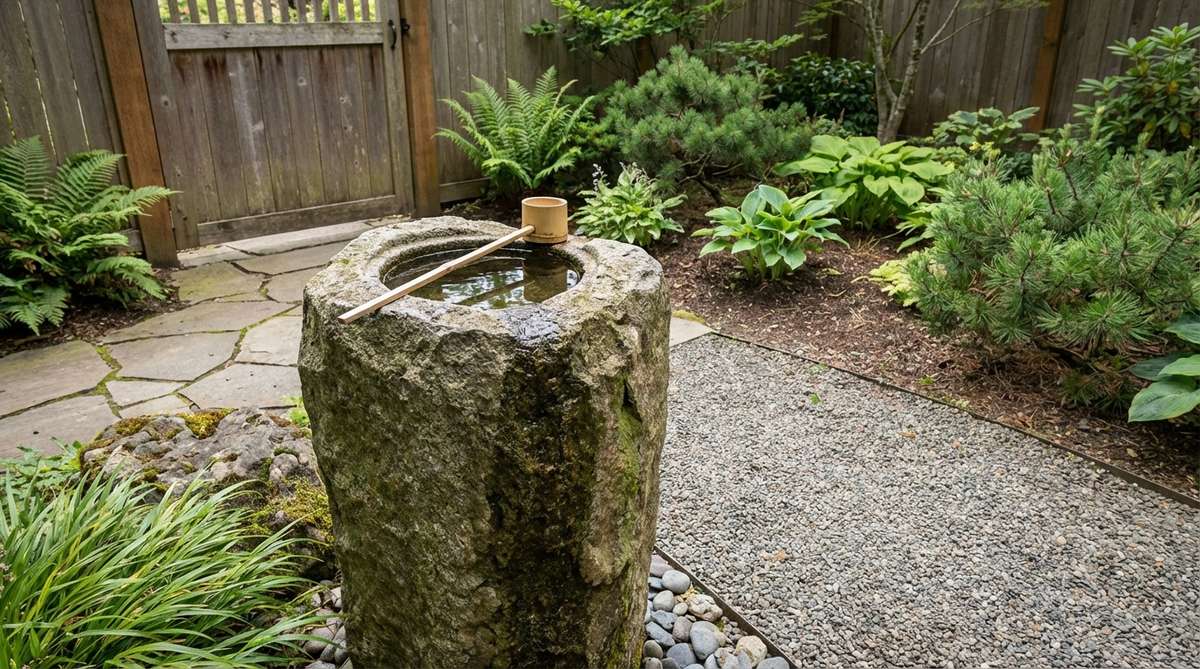
Taller than tsukubai, these upright basins accommodate standing use at shrine entrances and garden thresholds. Carved from single granite blocks, chozubachi range from 24 to 36 inches in height with basin depths of 6 to 10 inches.
Install near entry gates or patio transitions where hand washing marks passage between public and private garden zones. Shihobutsu-gata variants feature Buddha carvings on four sides, sourced historically from abandoned temple salvage.
9. Kakei Bamboo Water Spouts
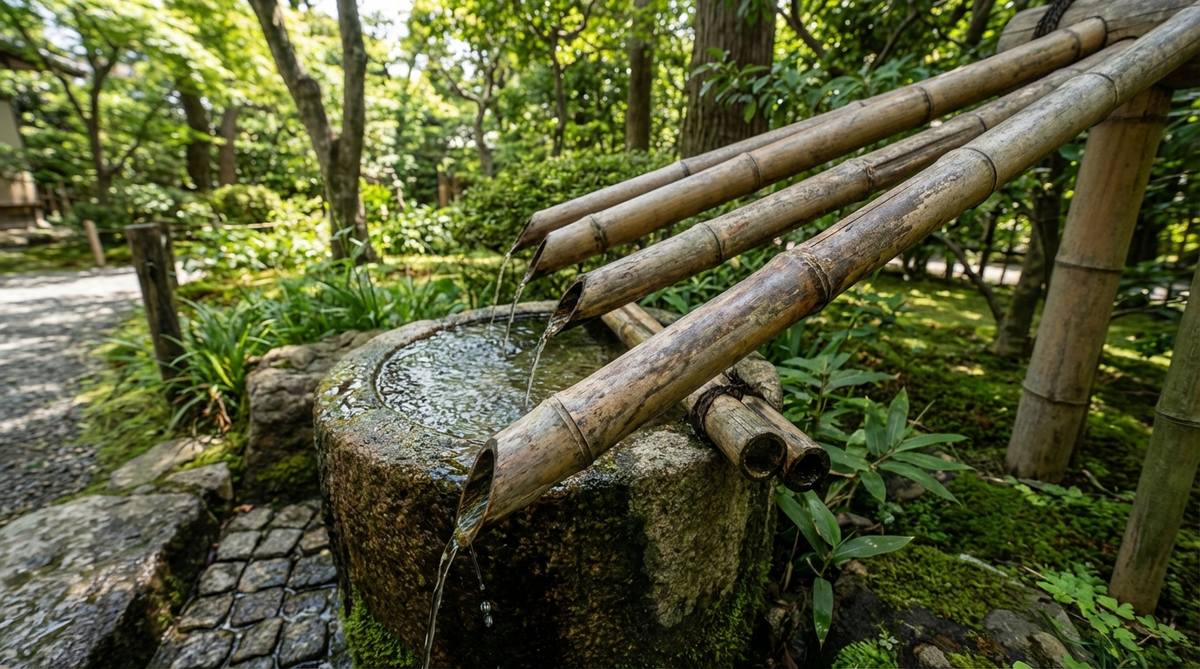
Bamboo pipes angled over stone basins deliver water through natural tube segments cut just above node joints. The hollow culm channels flow from hidden reservoir to basin, creating the distinctive trickle sound central to Japanese garden acoustics.
Select bamboo diameter of 2 to 3 inches for residential scale installations. Angle the spout 30 to 45 degrees to prevent splashing beyond the cobblestone drainage zone.
Replace bamboo elements every 4 to 6 years as outdoor exposure causes splitting and fiber degradation. This maintenance cycle reinforces the Japanese design principle of impermanence and renewal.
10. Shishi-Odoshi Bamboo Deer Scarers
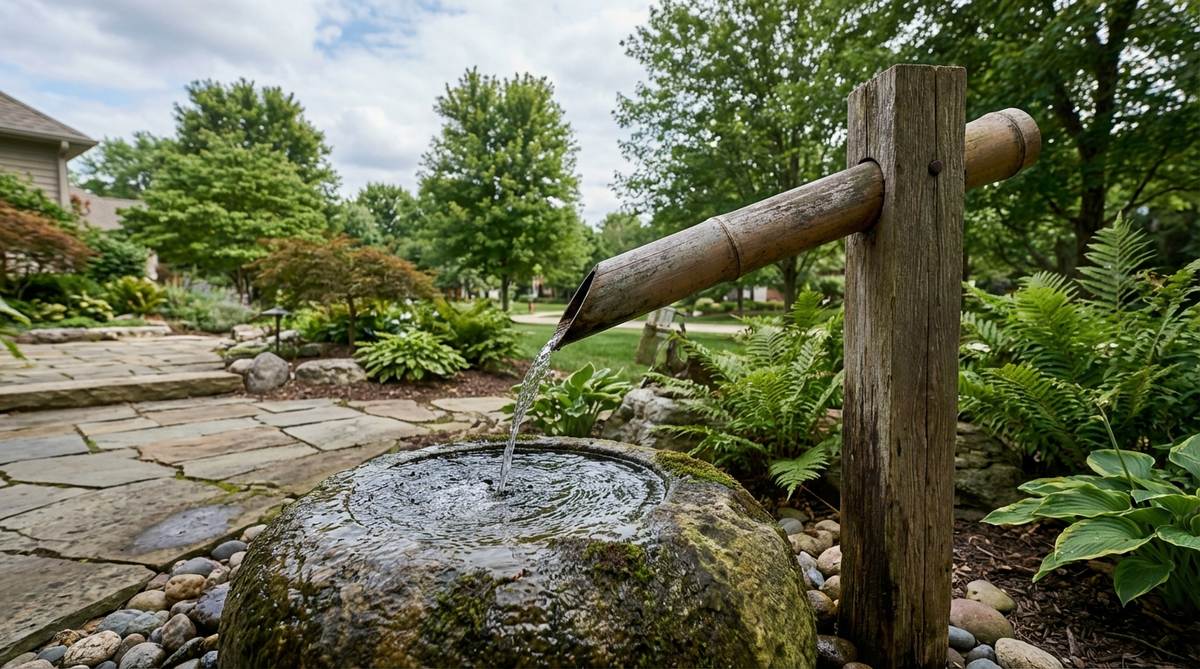
Pivoting bamboo tubes mounted on wooden posts fill with water until tipping forward to empty, then snap back against stone with sharp clack sound. Originally used to frighten deer from agricultural fields, these fountains now provide meditative rhythm in residential gardens.
Mount the pivot arm 18 to 24 inches above a flat-topped rock that produces resonant strike tone. Adjust water flow rate to achieve 20 to 40 second fill cycles—slower intervals suit contemplative spaces while faster rhythms energize smaller courtyards.
Commercial kits include pre-cut bamboo and support posts, though custom versions allow diameter and length adjustments. The mechanical simplicity ensures reliable operation with minimal maintenance beyond periodic bamboo replacement.
11. Suikinkutsu Underground Water Harps
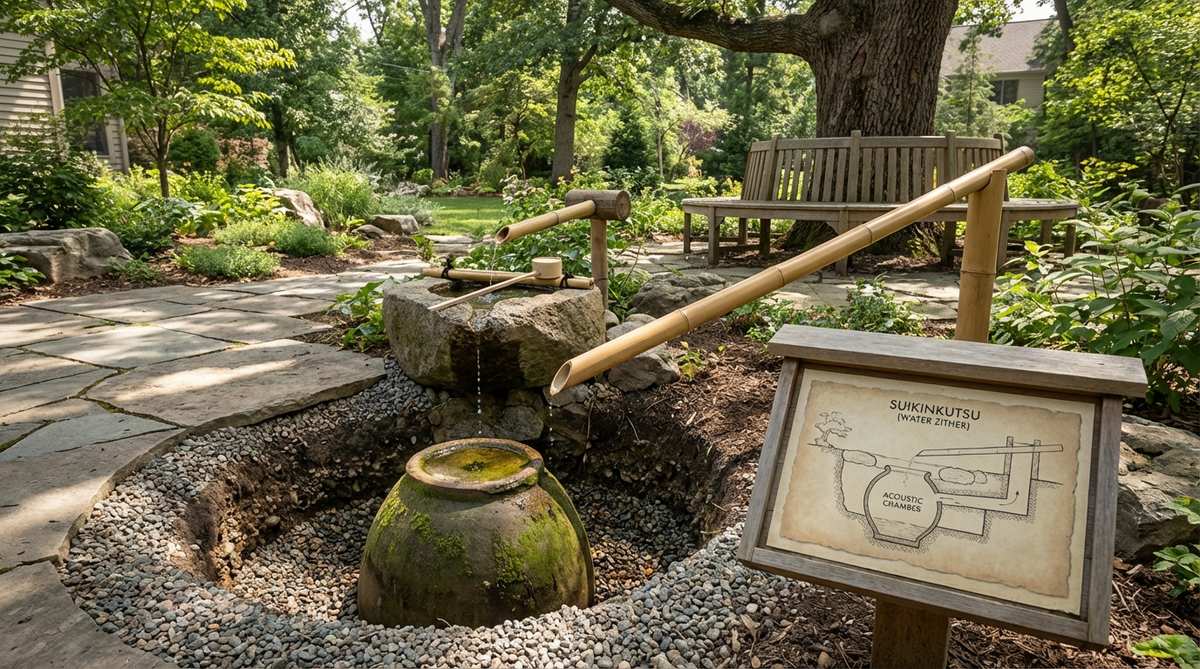
Inverted ceramic vessels buried beneath drainage areas amplify water droplet sounds into bell-like tones. As tsukubai overflow drips into the buried chamber, each drop resonates through the cavity, creating musical notes audible through bamboo listening tubes.
Excavate holes 24 to 36 inches deep, lined with gravel for acoustic enhancement. Position the inverted pot so drainage water enters through a small top opening, maximizing resonance of interior droplet impacts.
This hidden feature rewards attentive visitors who lean close to hear the ethereal tones. The subtle acoustic layer adds discovery element without visual clutter.
12. Natural Stone Water Basins
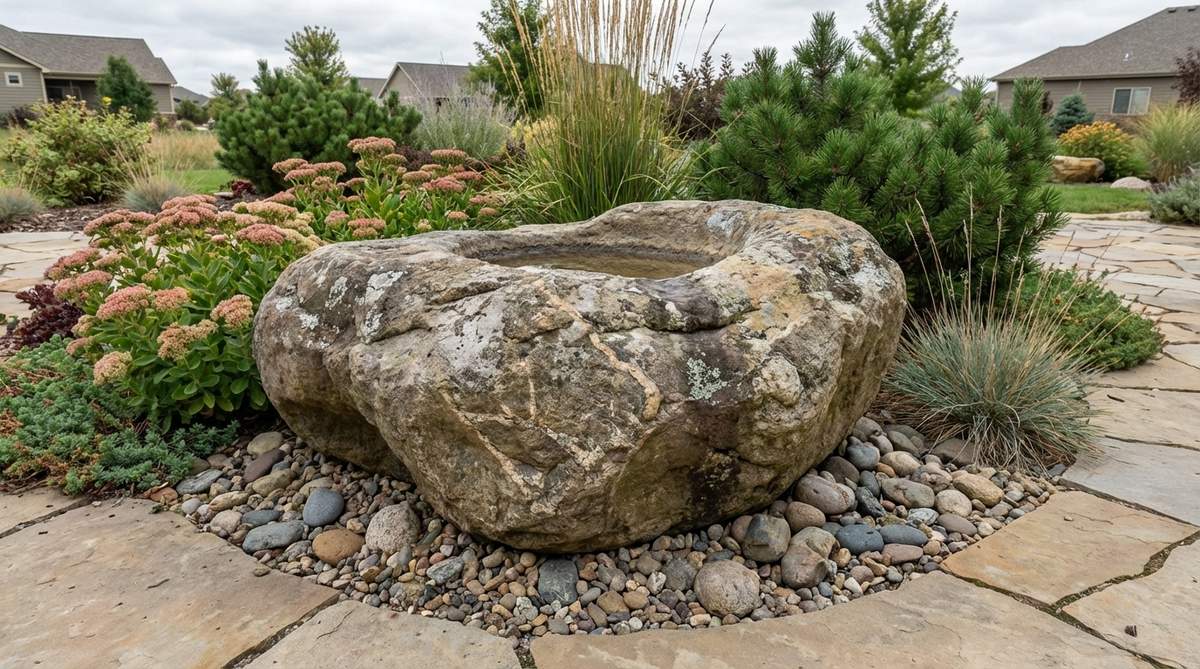
River boulders and naturally weathered stones carved with shallow depressions create irregular basins that celebrate found materials. Each piece displays unique mineral striations, lichen patterns, and erosion textures impossible to replicate in quarried granite.
Select stones with relatively flat top surfaces measuring 16 to 24 inches across. Carve or grind the mizuana to 4 to 6 inch depth, preserving exterior irregularities that distinguish natural from fabricated forms.
Bamboo Garden Accents For Texture And Movement
Bamboo’s hollow culms, rapid growth, and flexibility make it essential for screens, fencing, and structural accents in Japanese garden vocabulary. American gardeners source both living bamboo groves and harvested canes for diverse applications.
13. Kenninjigaki Bamboo Sleeve Fences
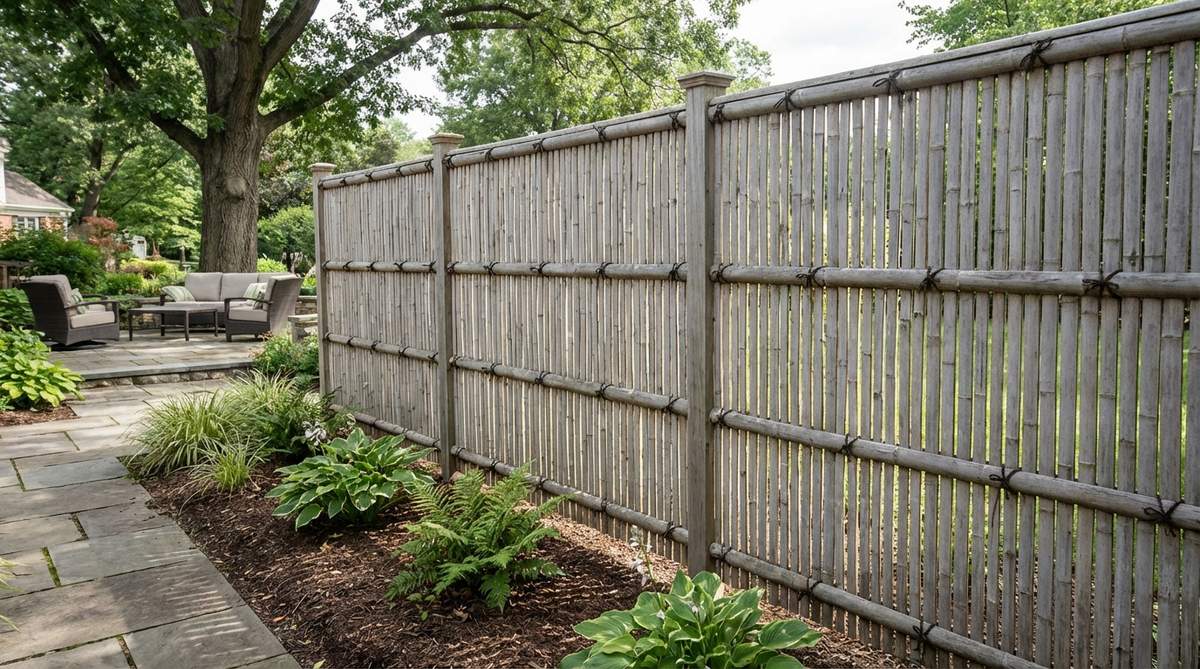
Split bamboo canes woven onto horizontal rails create semi-transparent screens that filter views without solid barriers. The vertical slat arrangement establishes rhythm while allowing air circulation and dappled light penetration.
Install panels between 4 and 6 feet tall along property lines or to subdivide larger gardens into discrete rooms. Dark fiber cord lashing adds textural detail at each rail intersection.
Bamboo weathers to soft grey within two seasons under full sun exposure. Apply clear wood sealer annually to extend service life to 8 to 12 years before replacement becomes necessary.
14. Yotsume-gaki Four-Eye Fences
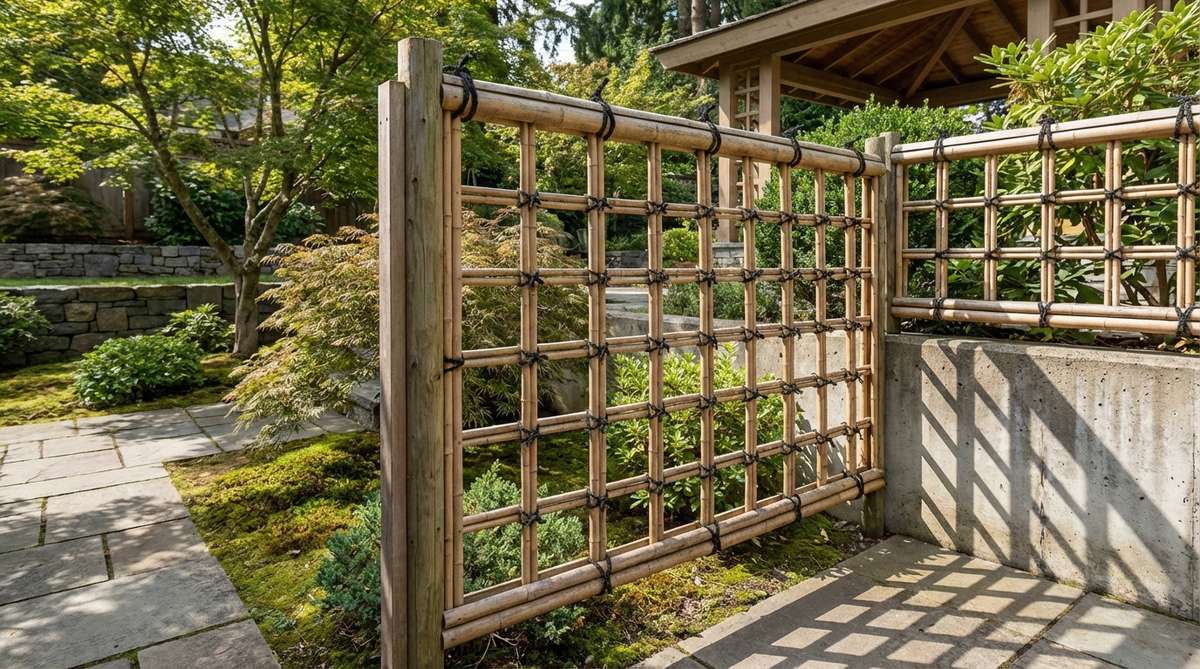
Square-grid bamboo lattices bound with black hemp rope define tea garden boundaries through geometric transparency. The open framework maintains visual connection between spaces while signaling transition zones along paths.
Build frames from 2-inch diameter canes spaced 6 to 8 inches apart in both directions. The resulting grid pattern casts crisp shadows that shift across adjacent walls and paving throughout the day.
15. Bamboo Rain Chains
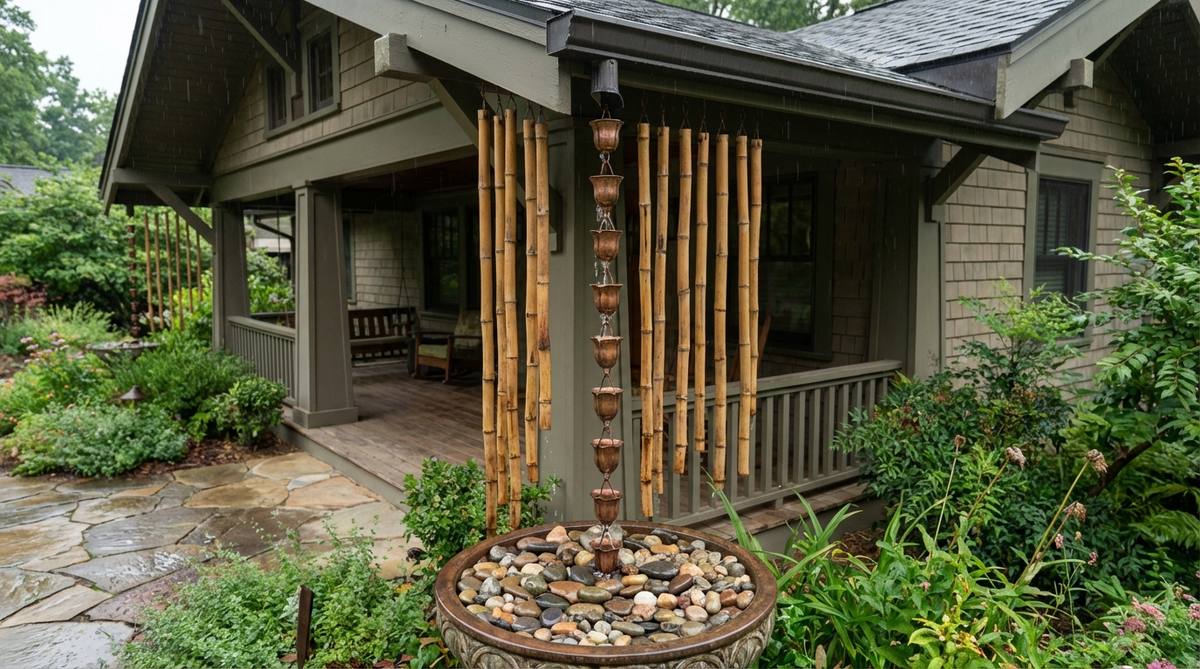
Linked bamboo segments replace conventional downspouts, channeling roof runoff through cascading cups that create visual and auditory water features during rainfall. Each joint between segments allows controlled spillage that catches light.
Suspend chains from gutter outlets above drainage basins filled with river rock. The theatrical water display transforms utilitarian drainage into decorative garden event during storms.
Bamboo chains suit covered porches where partial weather protection extends material longevity. Copper chains offer greater durability for fully exposed installations.
16. Bamboo Edging Borders
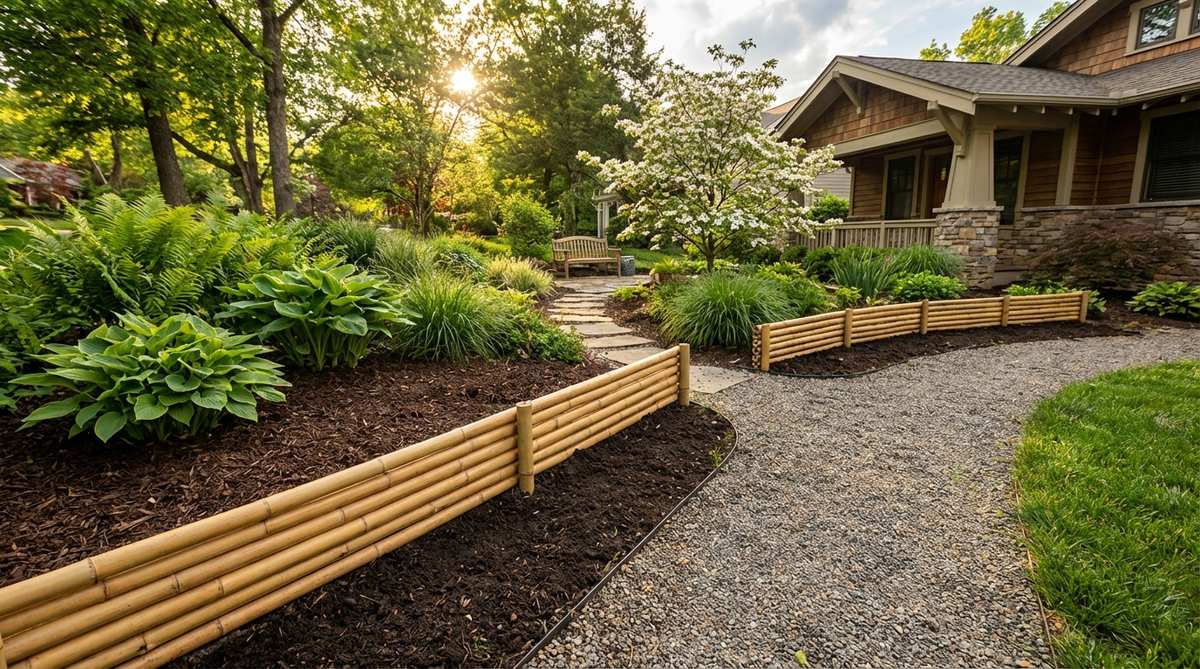
Half-culm bamboo sections staked horizontally along bed edges provide low barriers that separate mulched areas from pathways. The curved profile and golden-tan coloration contrast with dark soil amendments and green foliage.
Stake borders with rebar driven through pre-drilled holes to prevent seasonal frost heave. Overlap sections by 6 inches at joints to maintain continuous line without gaps.
17. Bamboo Plant Supports
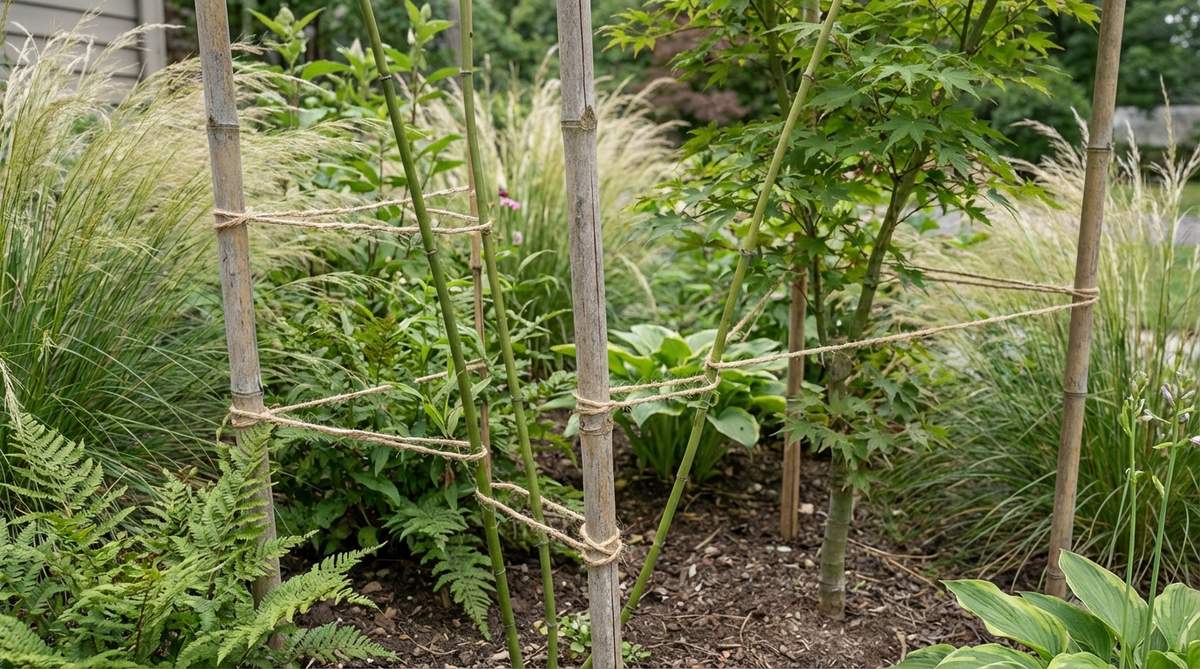
Single canes between 4 and 8 feet tall provide discreet staking for perennials, small trees, and ornamental grasses. The natural material blends with plantings better than metal or synthetic alternatives.
Drive stakes 12 to 18 inches into soil beside plant crowns, angling away from root zones. Secure stems with soft jute twine in figure-eight loops that prevent bark abrasion.
Replace supports every 3 to 4 years as bamboo loses structural strength. Compost degraded canes rather than disposing in landfills.
Stone Architectural Elements For Permanence
Carved stone pieces communicate stability and timelessness in Japanese landscapes. These durable elements withstand decades of weathering while developing character through moss colonization and mineral staining.
18. Gorinto Five-Ring Pagodas
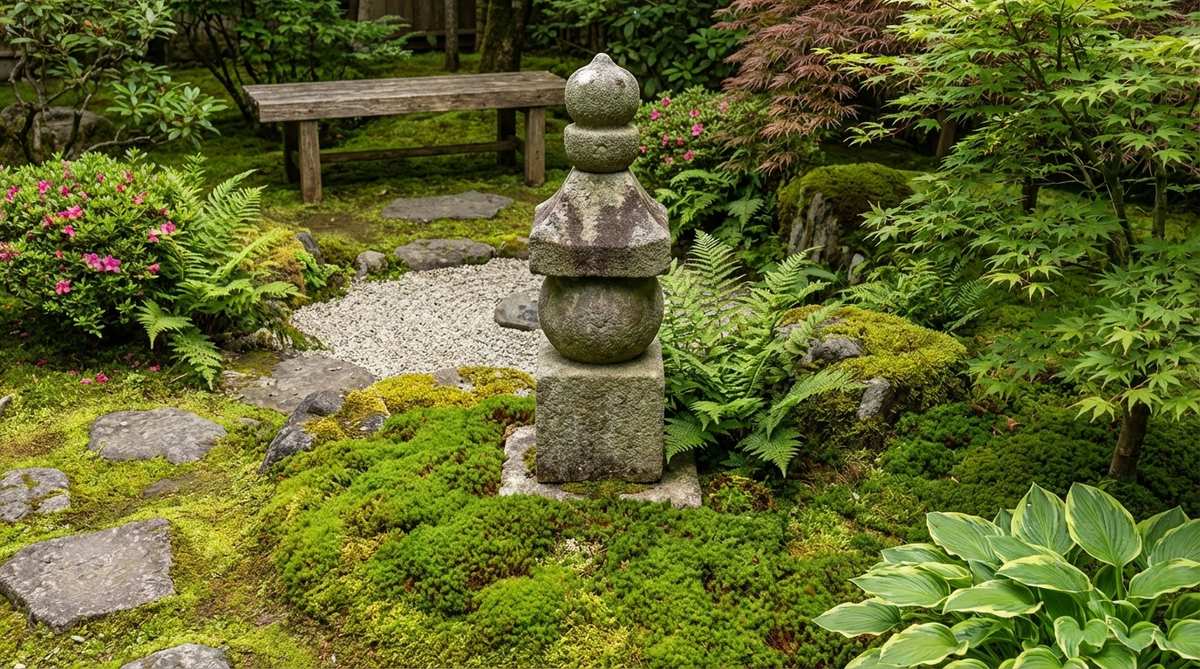
Stacked stone tiers represent the five Buddhist elements—earth, water, fire, air, and space—ascending from broad base to pointed apex. Traditional gorinto serve memorial functions while contemporary garden versions operate as sculptural focal points.
Position these vertical monuments at garden termination points where paths converge or sight lines conclude. Heights between 24 and 48 inches suit residential scales without overpowering surrounding plantings.
Each tier balances atop the previous without mortar, allowing disassembly for relocation. Volcanic lavastone versions offer porous texture that accelerates moss establishment in humid climates.
19. Stone Pagoda Towers
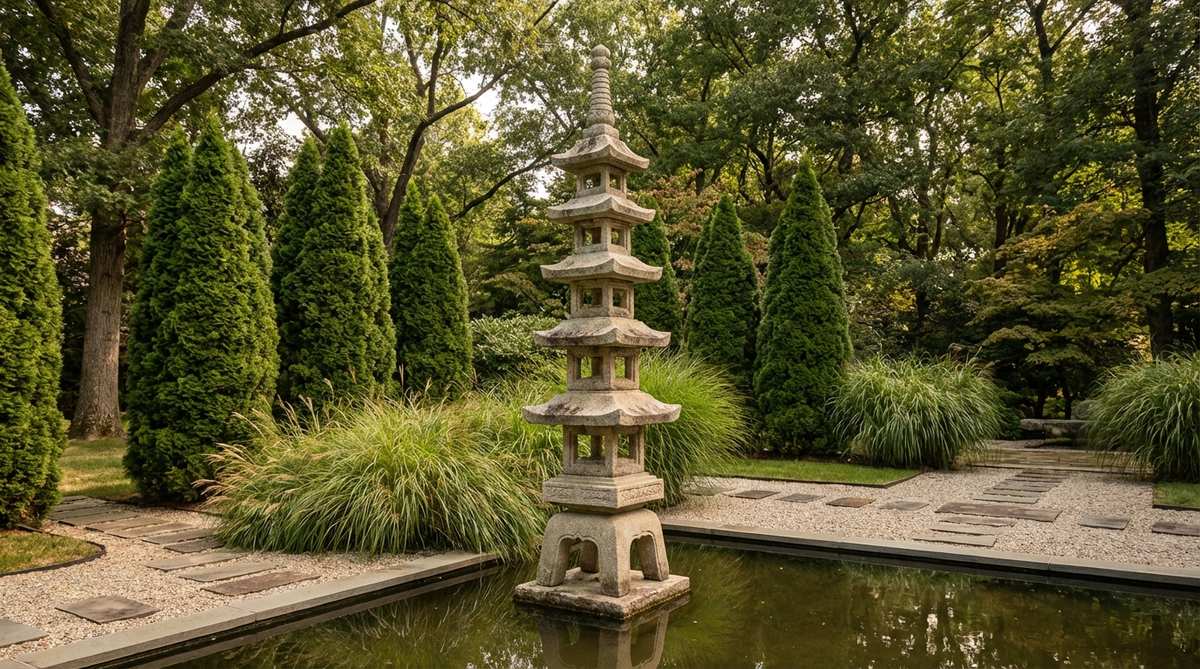
Multi-tiered pagodas carved from granite or lavastone anchor formal garden compositions with architectural presence. Three, five, or seven levels stack to heights between 3 and 6 feet, each roof tier slightly smaller than the level below.
Center pagodas within gravel courts or position at pond edges where reflections double their visual impact. The repetitive horizontal layers contrast effectively with columnar evergreens and ornamental grasses.
20. Tobi-ishi Stepping Stones
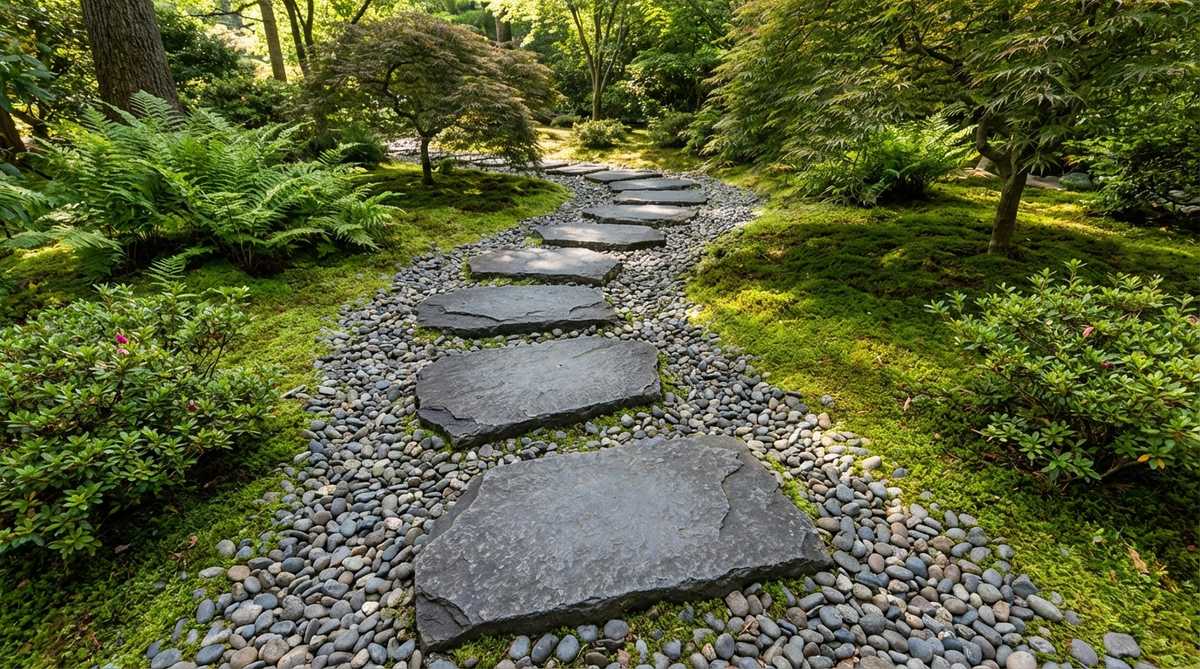
Irregular natural stones placed in deliberate sequences guide visitors along prescribed routes while slowing pace to encourage observation. Designers space stones 4 to 6 inches apart to require attentive foot placement rather than casual striding.
Select flat-topped stones measuring 12 to 18 inches across with thickness of 3 to 6 inches. Bury each stone halfway to ensure stability under foot traffic, adjusting top surfaces to consistent height.
Curved paths using non-linear stone arrangements prevent direct sight lines to garden destinations, preserving mystery and discovery. Plant low ground covers between stones to soften edges while maintaining clear walking surfaces.
21. Ishidatami Stone Pavement
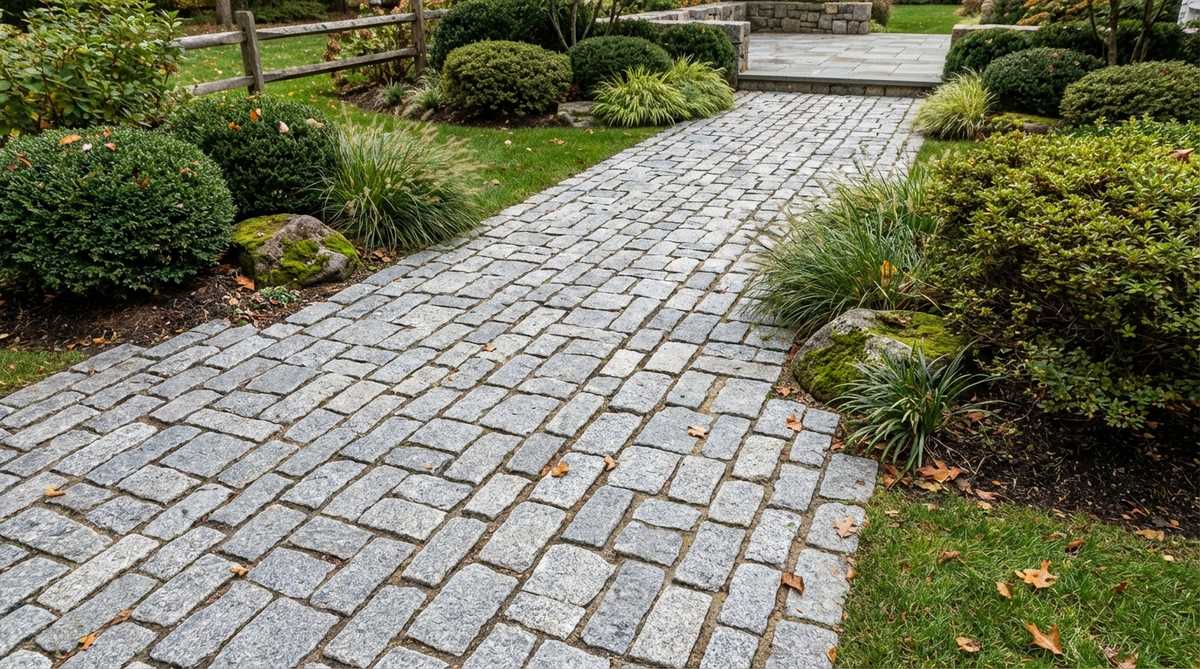
Fitted granite cobbles create durable walking surfaces that handle foot traffic while maintaining aesthetic refinement. Traditional patterns include parallel lines, radiating arcs, and irregular mosaics that require skilled mason work.
Excavate base layer 6 to 8 inches deep, filling with crushed rock and sand before setting stones. Sweep polymeric sand into joints to lock pieces while allowing water permeation.
22. Curved Stone Bridges
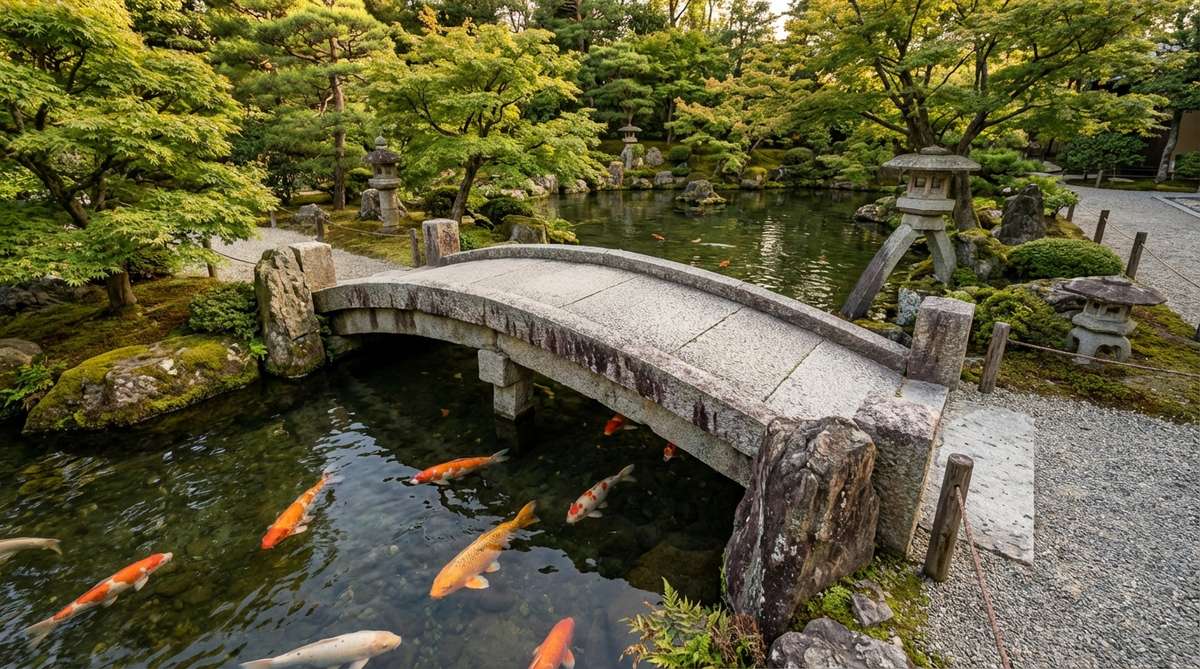
Gently arched granite slabs spanning streams and pond narrows provide both functional crossings and sculptural garden features. The elevated walkway offers viewing platform for observing koi and aquatic plantings from above.
Specify bridges between 4 and 8 feet in length for typical residential water features. Bush-hammered top surfaces provide slip resistance in wet conditions while split stone sides present rustic texture.
Pier supports at each end require foundations below frost line in northern climates. The arch rise typically measures 6 to 10 inches at center span for comfortable walking.
23. Flat Stone Bridges
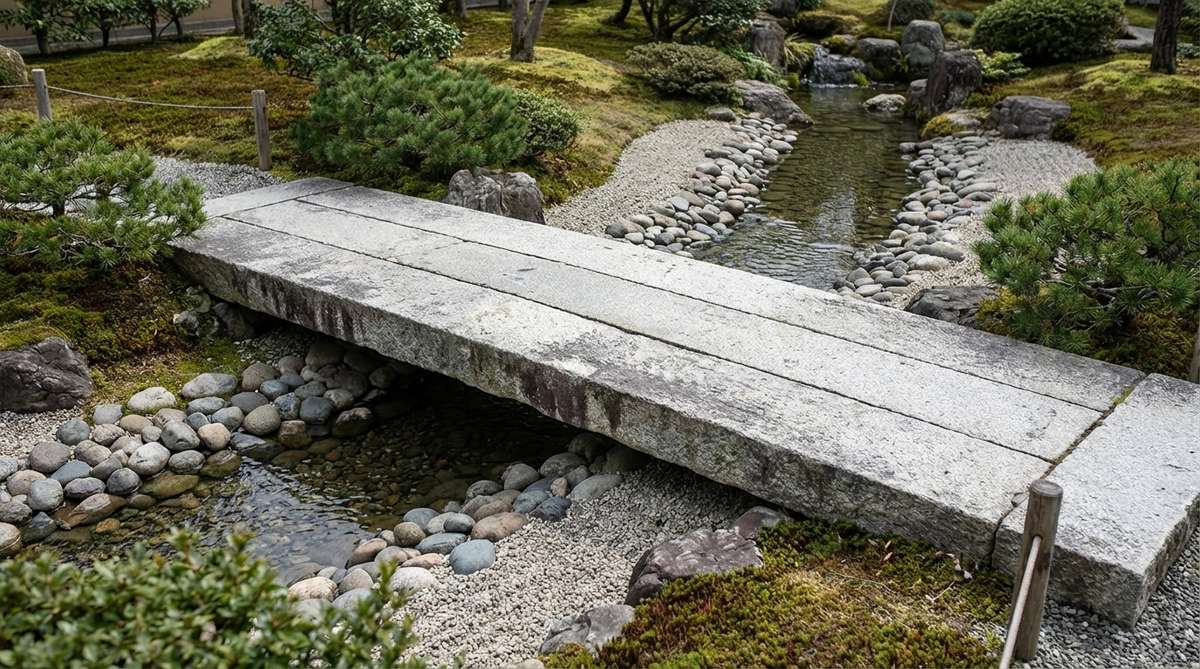
Low-profile granite planks set on stone piers create minimalist crossings for narrow streams and dry gravel rivers. The horizontal emphasis suits contemporary interpretations of Japanese design vocabulary.
Hand-carved silver-grey granite develops natural patina as mineral deposits accumulate across surfaces. Width of 18 to 24 inches accommodates single-file passage appropriate to contemplative garden pace.
Decorative Structural Pieces For Garden Definition
Gates, arbors, and freestanding frames establish spatial hierarchy within Japanese landscapes. These structures mark transitions between garden areas while providing support for climbing plants and seasonal decorations.
24. Torii Gate Portals
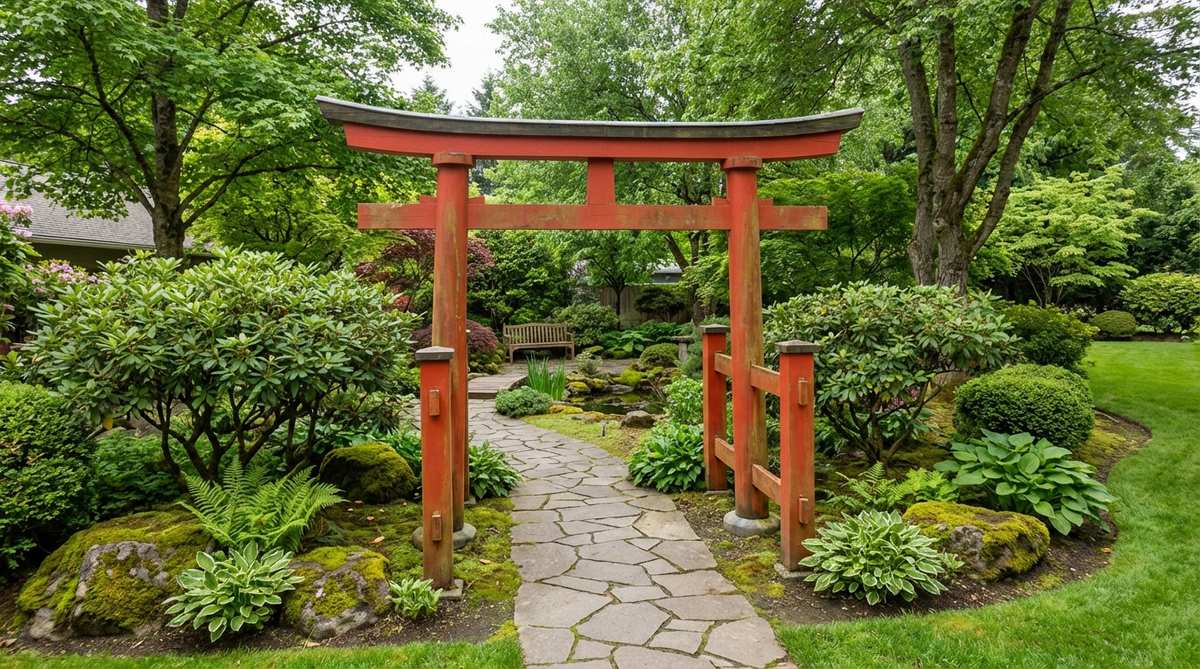
Two upright posts supporting dual crossbeams create the signature Shinto shrine entrance adapted for residential gardens. Vermillion red remains traditional, though natural wood finishes suit less formal installations.
Install torii at property entries or pathway thresholds to signal passage into garden sanctuary. Proportions follow traditional ratios with top crossbeam extending beyond verticals and slightly upturned ends.
Wood gates require repainting every 3 to 5 years to maintain vivid color. Steel powder-coated alternatives eliminate maintenance while sacrificing authentic material expression.
25. Moon-Viewing Platforms
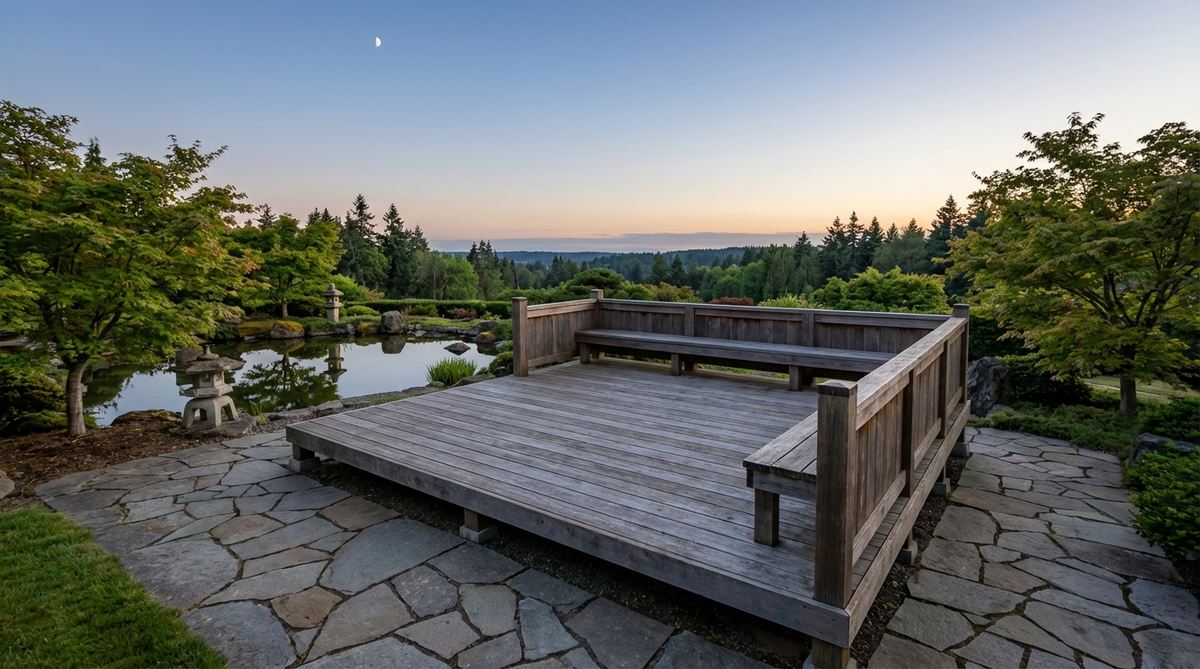
Raised wood decks positioned to frame pond reflections and distant views provide dedicated observation points for seasonal garden appreciation. Simple post-and-beam construction elevated 12 to 18 inches above grade defines the platform as separate from surrounding ground plane.
Orient platforms toward western or southern exposures to maximize evening light and lunar viewing opportunities. Bench seating along rear edges accommodates guests without obstructing primary sight lines.
26. Bamboo Garden Gates
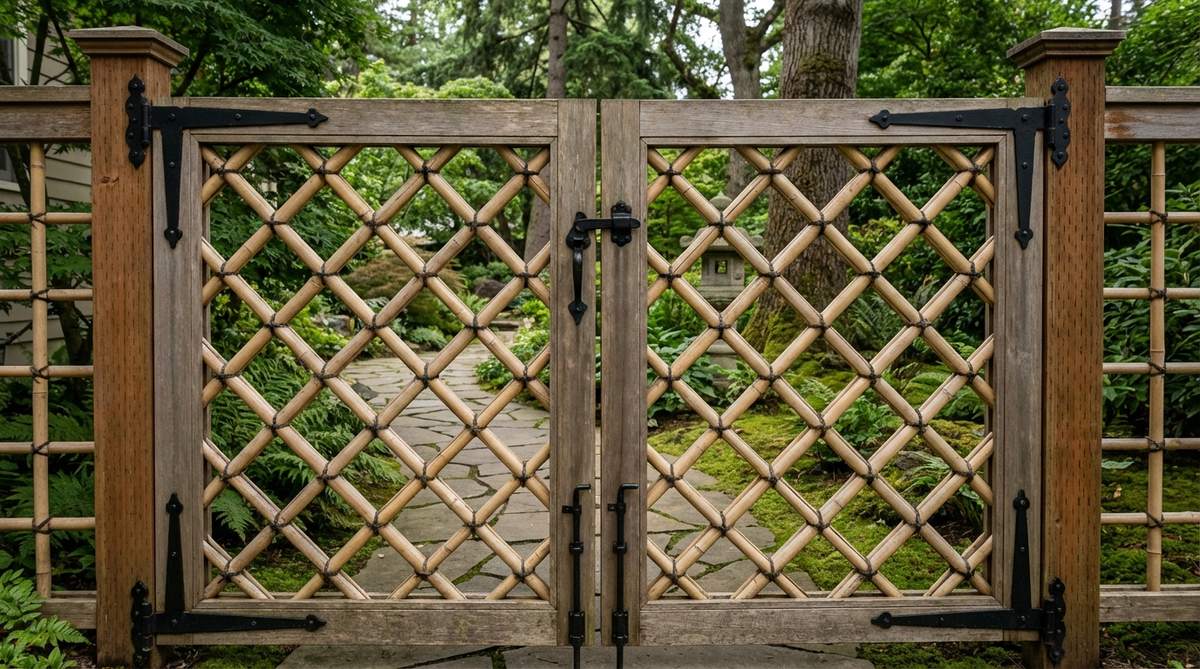
Framed bamboo screens hung on pivot hinges create semi-transparent entries that maintain visual connection while marking garden boundaries. Diagonal lattice patterns or vertical slat arrangements offer varying degrees of privacy.
Build frames from decay-resistant cedar or cypress to support lighter bamboo infill panels. Black iron hardware complements natural material tones while providing durable mechanical function.
27. Rope Boundary Markers
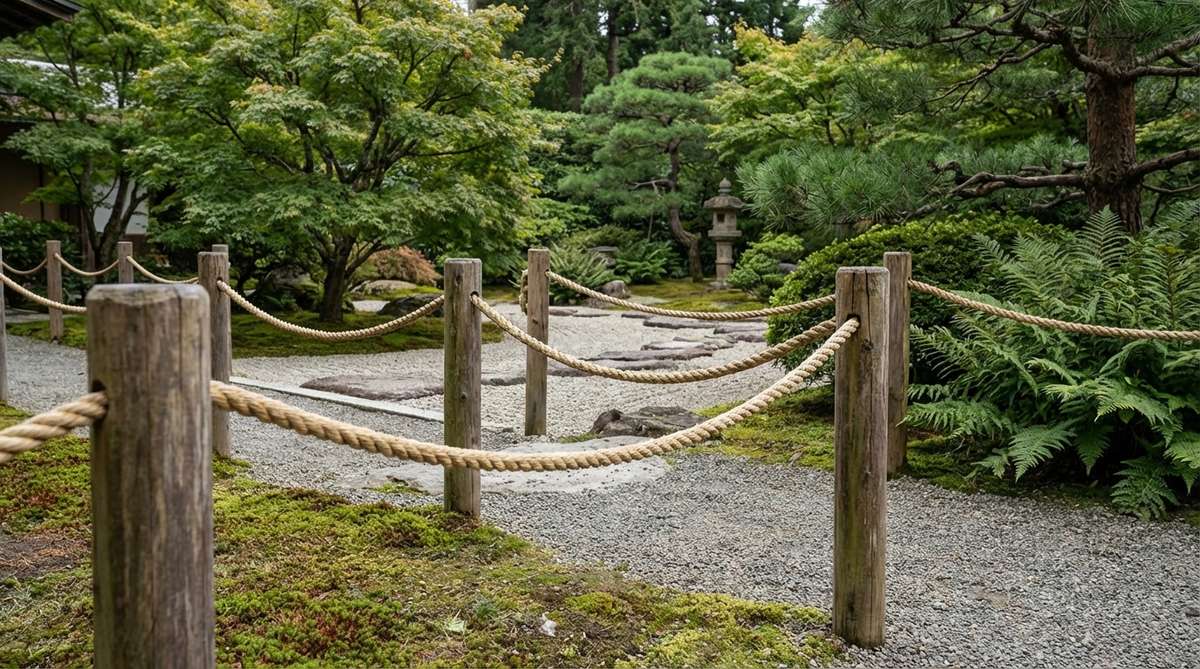
Natural fiber ropes stretched between posts at hip height define spaces without solid barriers. The soft edge preserves open sight lines while psychologically signaling areas meant for viewing rather than entry.
Use hemp or manila rope with 1 to 1.5 inch diameter for visible presence without heavy visual weight. Suspend ropes with slight sag between supports spaced 6 to 10 feet apart.
Replace natural fiber every 2 to 3 years as outdoor exposure causes deterioration. The maintenance cycle aligns with Japanese acceptance of material impermanence and seasonal renewal.
Bringing Japanese Design Philosophy To American Gardens
Authentic japanese outdoor decor achieves balanced landscapes through careful selection of stone, bamboo, and water elements that work together as integrated systems rather than isolated ornaments. Start with one or two signature pieces—a stone lantern and tsukubai basin provide strong foundation—then expand the palette as your understanding of spatial relationships deepens. Source materials from specialized importers who guarantee traditional craftsmanship and natural materials that weather gracefully across decades. Your garden will mature into a contemplative retreat that honors Japanese aesthetic principles while responding to American climate and lifestyle patterns.
Frequently Asked Questions
What is the difference between tsukubai and chozubachi water basins?
Tsukubai are low stone basins requiring users to crouch during ritual hand washing before tea ceremony, typically positioned 12 to 18 inches above grade with accompanying stones for specific functions. Chozubachi are taller upright basins between 24 and 36 inches high that accommodate standing use at shrine entrances and garden thresholds. Both serve purification purposes but tsukubai emphasize humility through lowered posture while chozubachi prioritize accessibility.
How do I maintain stone lanterns in freezing climates?
Granite and volcanic stone lanterns withstand freeze-thaw cycles without damage when properly installed with drainage beneath base elements. Remove any water collection from light chambers before winter to prevent ice expansion cracking. Apply breathable stone sealer every 3 to 5 years to reduce moisture absorption while allowing natural weathering patina to develop. Moss growth accelerates in humid conditions and should be preserved rather than removed as part of authentic aging process.
Can bamboo outdoor decor survive American winters?
Harvested bamboo canes used for fencing, water spouts, and deer scarers survive cold temperatures but degrade faster in climates with extreme freeze-thaw cycling. Expect 4 to 8 year service life for exposed bamboo elements depending on regional conditions, with annual clear sealer application extending durability. Living bamboo groves vary by species hardiness zones—select cold-hardy varieties rated for your specific USDA zone to ensure winter survival.
Where should I position a stone lantern in my garden?
Stone lanterns work best at pathway intersections, near water features, at garden entry points, or as focal elements terminating sight lines. Avoid centering lanterns within open lawn areas—Japanese design principles favor asymmetric placement that creates dynamic balance with surrounding plantings and architectural features. Position taller pedestal lanterns in background layers while placing low yukimi lanterns at water edges for intimate illumination.
Do I need a professional to install a shishi-odoshi bamboo fountain?
Basic carpentry skills and simple plumbing knowledge allow most homeowners to install shishi-odoshi using commercial kits that include pre-cut bamboo, support posts, and assembly instructions. The fountain requires recirculating pump connected to water reservoir, bamboo spout for water delivery, and flat-topped strike stone to produce characteristic clack sound. Adjust water flow rate through inline valve to achieve desired 20 to 40 second fill-and-dump cycles.