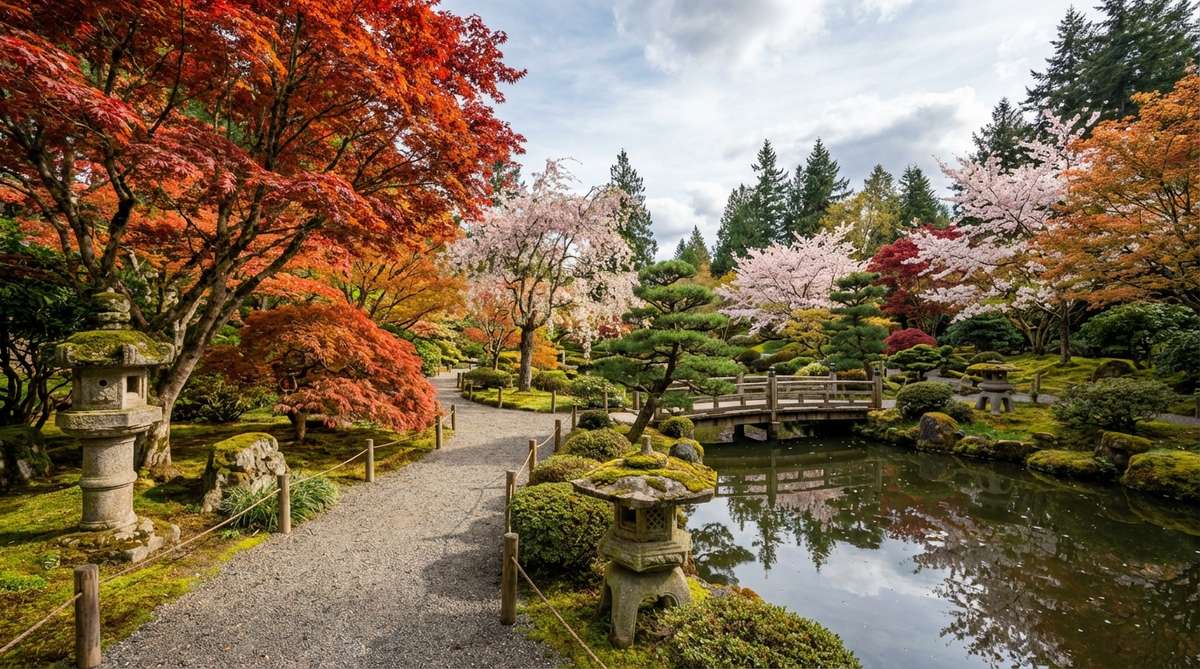
Selecting the right japanese garden trees transforms any landscape into a tranquil retreat that honors centuries of design wisdom. From fiery maples to delicate cherry blossoms, these specimens offer year-round interest through seasonal color shifts, elegant forms, and symbolic meaning. Fresh Garden Ideas brings you this comprehensive collection of authentic varieties proven to thrive in American gardens while maintaining traditional Japanese aesthetics.
Design Principles for Japanese Garden Trees
- Seasonal Drama: Choose trees with multi-season interest including spring blooms, summer foliage, autumn color, and winter structure
- Layered Canopy: Mix tall pines, medium maples, and low-growing junipers to create depth and visual harmony
- Symbolic Intent: Select species that carry cultural meaning—cherry for renewal, pine for longevity, maple for grace
- Pruning Architecture: Prioritize trees that respond well to shaping techniques like cloud pruning and branch thinning
Japanese Maple TreasuresAcer Varieties for Every Garden Scale
The japanese garden maple stands as the cornerstone of authentic design, offering hundreds of cultivars from three primary speciesAcer palmatum, Acer japonicum, and Acer shirasawanum. These deciduous trees provide spectacular fall displays ranging from crimson to gold while maintaining elegant branch architecture through winter. Designers favor maples for their versatility in both large estates and compact urban spaces.
1. Crimson Queen Maple
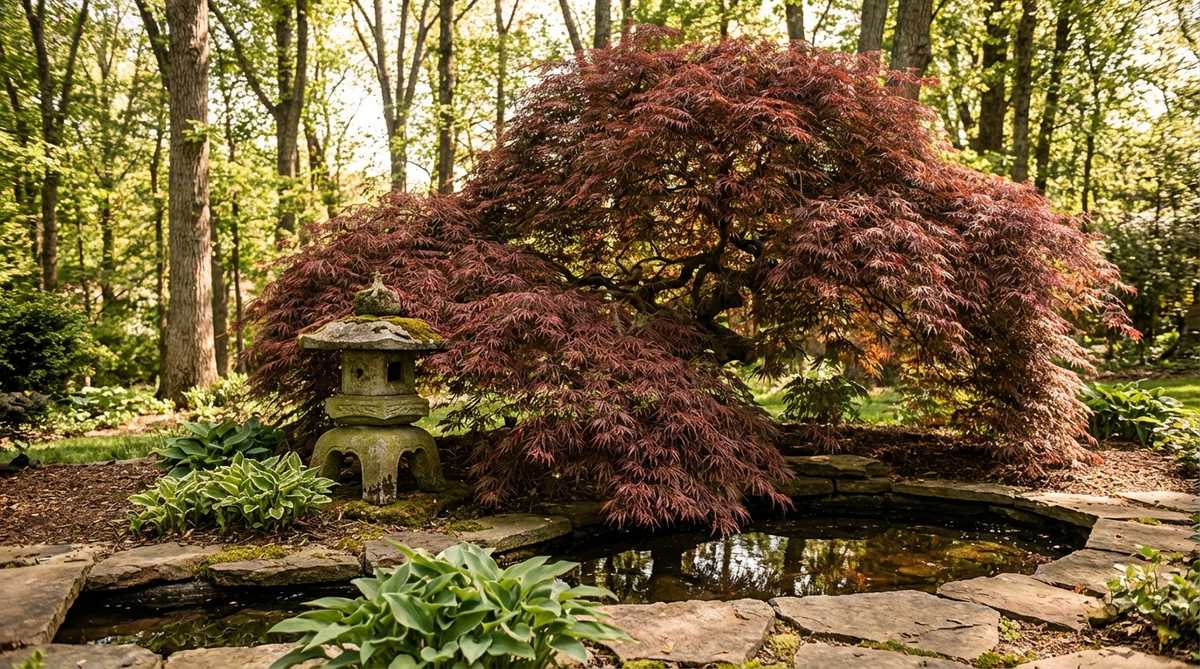
This dissectum variety features deeply cut lacey leaves that hold crimson-red coloration for three full seasons. The weeping branches cascade gracefully to ground level, creating a fountain effect that works exceptionally well as a focal point near water features or stone lanterns.
Mature specimens reach 8-10 feet tall with a 10-15 foot spread, functioning more like architectural shrubs than traditional trees. Plant in partial shade to prevent leaf scorch during peak summer heat.
Crimson Queen tolerates sun better than most red dissectum cultivars and establishes quickly in well-drained, acidic soil. This cultivar received the Royal Horticultural Society’s Award of Garden Merit for outstanding performance.
2. Bloodgood Maple
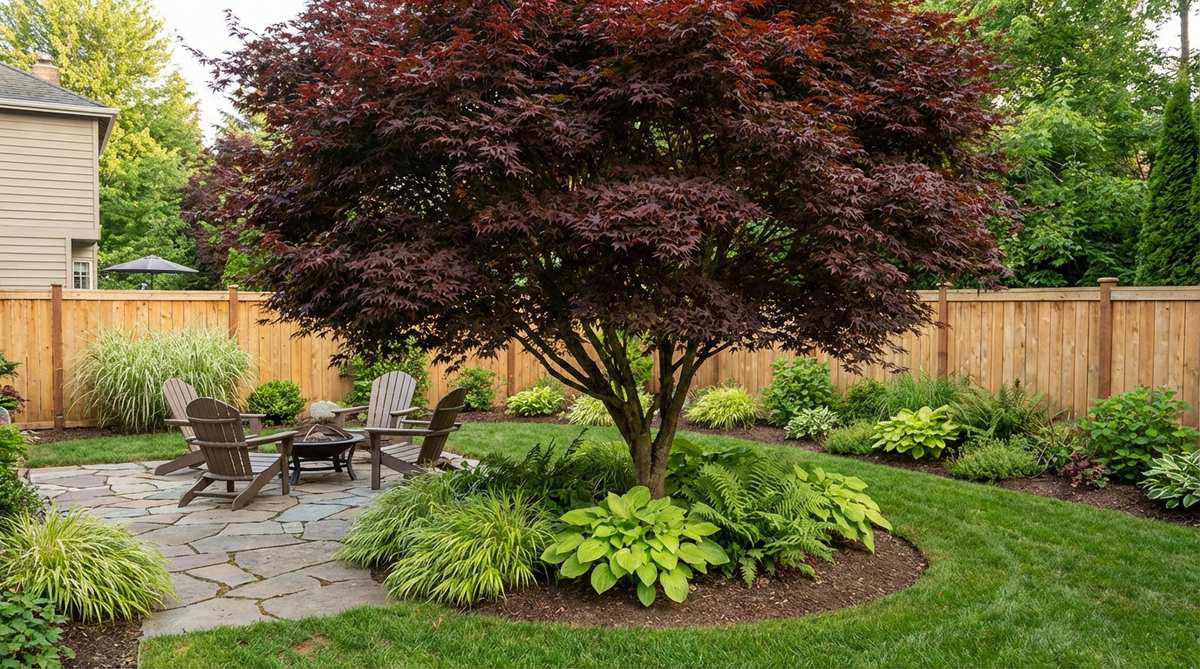
Bloodgood represents the palmatum upright form with deep burgundy-red foliage that intensifies rather than fades throughout summer. The tree develops a rounded canopy with strong horizontal branching that provides excellent structure for cloud pruning techniques.
Growing 15-20 feet in both height and width, this cultivar serves as an ideal small shade tree for residential gardens. The dark foliage creates dramatic contrast against lighter green conifers and flowering shrubs.
This variety shows exceptional heat tolerance and maintains color integrity in full sun exposures across USDA zones 5-8. Plant 15 feet from structures to accommodate mature spread.
3. Emperor Maple
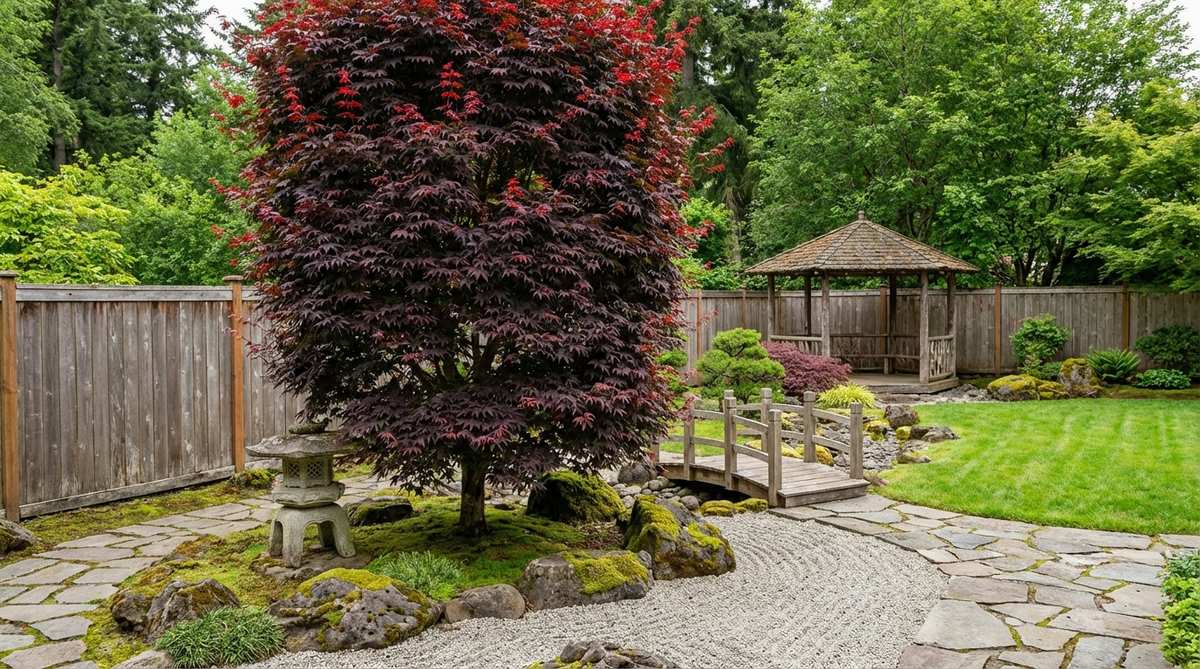
Emperor improves upon Bloodgood genetics with enhanced cold hardiness and superior color retention under variable conditions. The leaves emerge bright red in spring and deepen to purple-red by midsummer.
This upright palmatum reaches 15-20 feet tall with a more columnar habit than Bloodgood, making it suitable for narrower planting spaces. The delayed dormancy break—approximately two weeks later than other cultivars—protects emerging buds from late spring frosts.
Designers specify Emperor for northern gardens where temperature fluctuations challenge other red-leafed varieties. The cultivar adapts to both acidic and slightly alkaline soils with proper drainage.
4. Tamukeyama Maple
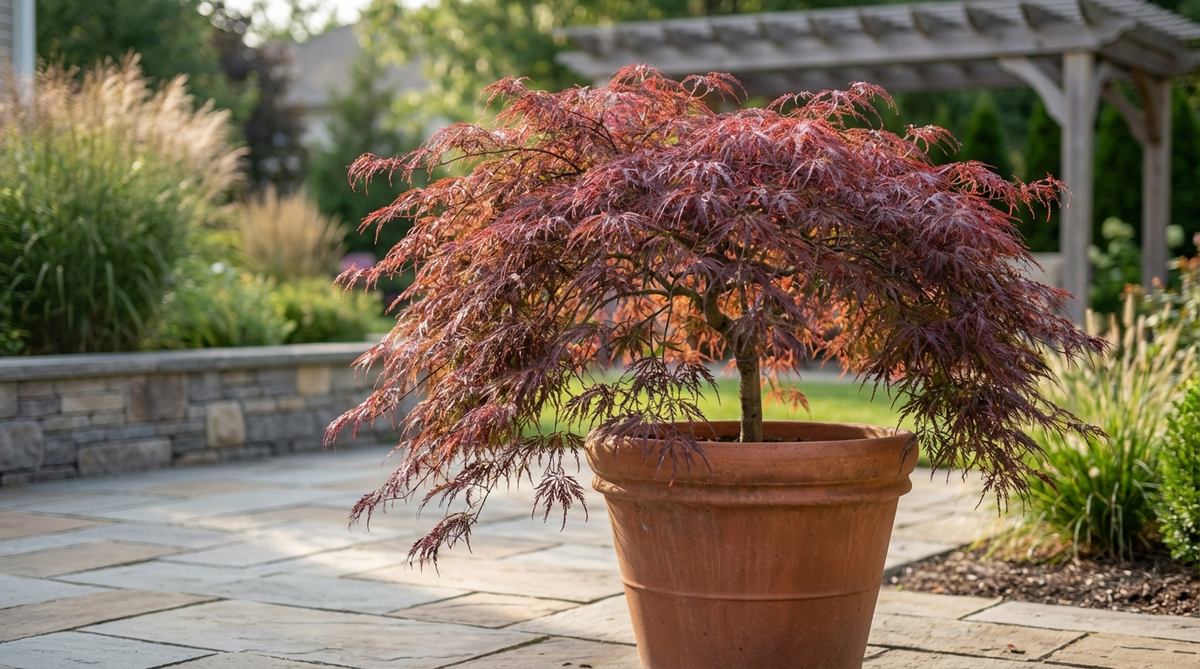
Tamukeyama delivers exceptional compact growth for containers and small-scale compositions, staying under 6 feet tall while spreading 10-15 feet. The finely dissected leaves display rich red-purple tones that hold through autumn.
This cultivar demonstrates remarkable vigor despite its dwarf stature, establishing robust root systems that support dense foliage. The weeping branches create graceful curves that remain attractive even after leaf drop.
Container cultivation succeeds with Tamukeyama when using acidic potting media and consistent moisture. Position in morning sun with afternoon shade for optimal leaf condition.
5. Weeping Viridis Maple
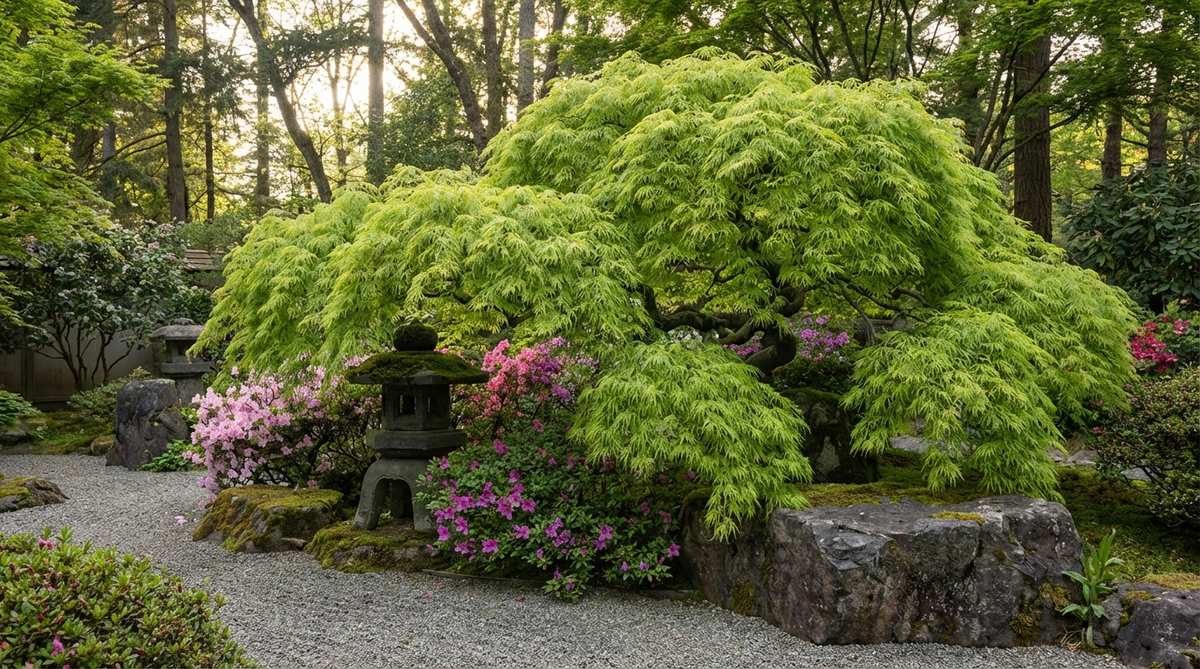
Viridis breaks the red-leaf pattern with brilliant lime-green spring foliage that matures to medium green. The dissected leaves transform to vivid yellow with orange-red accents in autumn, creating a waterfall effect as branches sweep downward.
Growing 6-8 feet tall and wide, this cultivar brightens shaded areas where red varieties lose intensity. The green foliage serves as an excellent backdrop for flowering azaleas and contrasts beautifully with dark stone elements.
Viridis tolerates more shade than red cultivars while maintaining vibrant color. Plant in rich, moisture-retentive soil amended with organic matter.
6. Red Dragon Maple
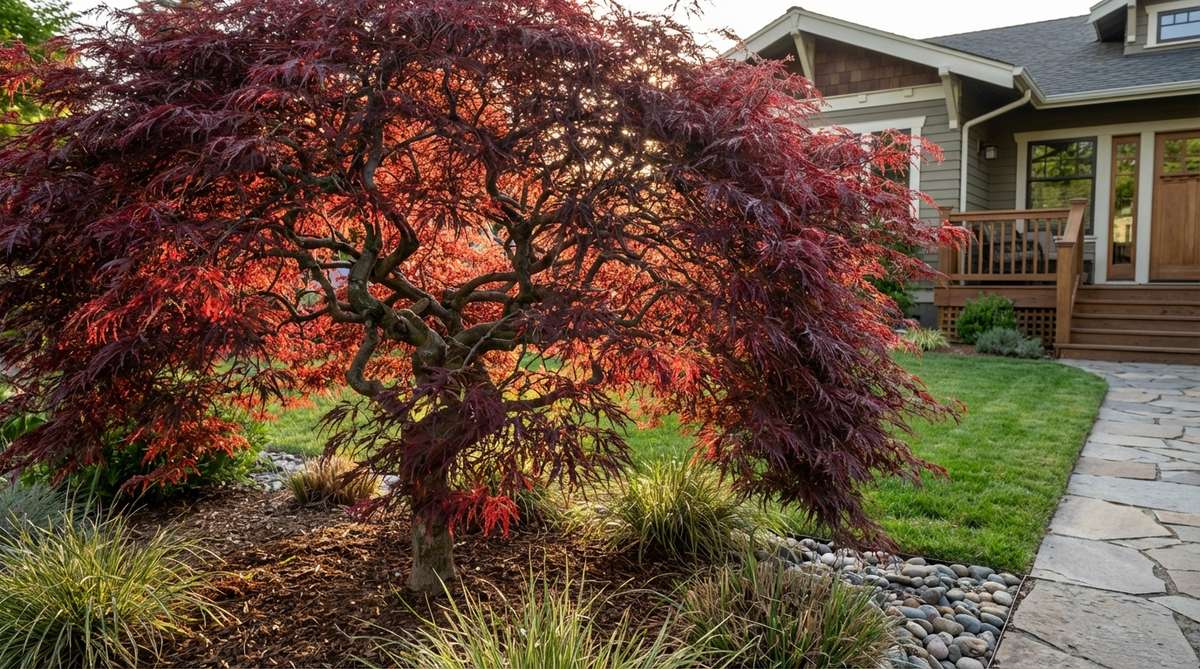
Red Dragon produces deeply cut burgundy foliage on a compact weeping frame that typically stays below 8 feet. The lacy texture and cascading habit create an almost translucent effect when backlit by morning or evening sun.
This dissectum variety maintains consistent color through heat and humidity better than many competitors. The dense branching pattern responds well to selective thinning to enhance air circulation and light penetration.
Establish in partial shade with protection from harsh afternoon sun. The cultivar performs excellently in zones 5-8 with winter mulching in colder regions.
7. Coral Bark Maple
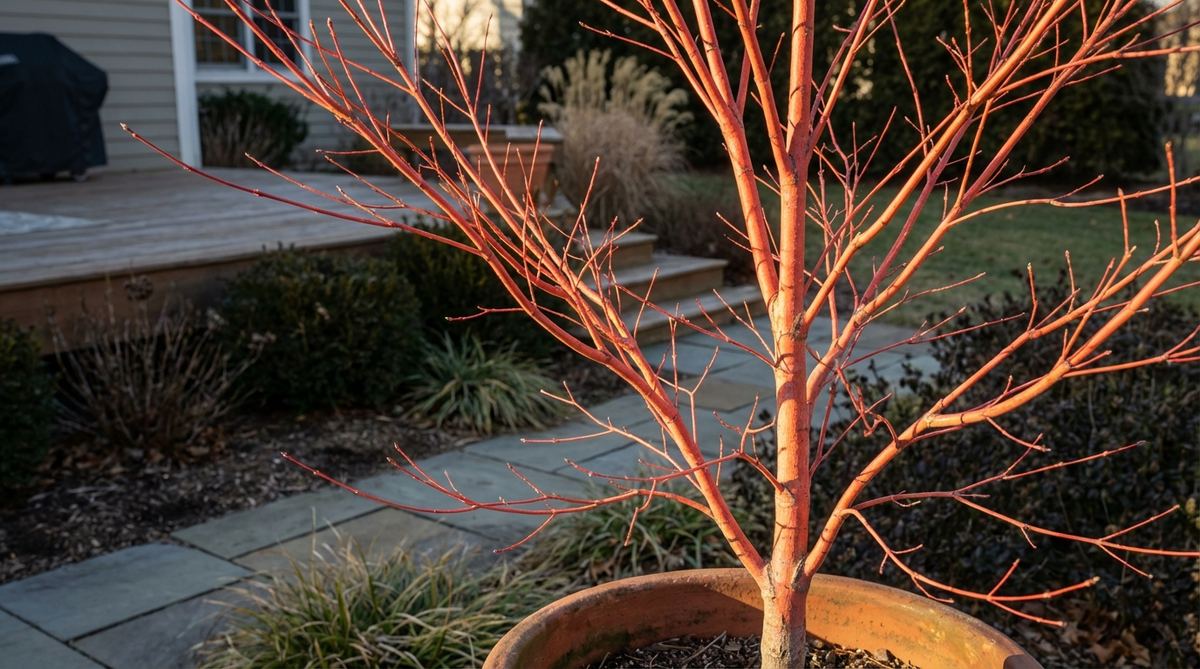
Acer palmatum ‘Sango-kaku’ features bright coral-pink bark that intensifies during winter months, providing spectacular color when most gardens rest dormant. The upright branching structure shows off this bark color to maximum effect against evergreen backgrounds or fresh snow.
Spring leaves emerge yellow-green with pink margins, maturing to light green through summer before transforming to golden-yellow in autumn. This multi-season performer reaches 20-25 feet tall with an upright, vase-shaped form.
Plant where winter sun can illuminate the coral branches, perhaps near a window viewed from indoors. The cultivar prefers afternoon shade in hot climates to prevent bark sunscald.
8. Emerald Lace Maple
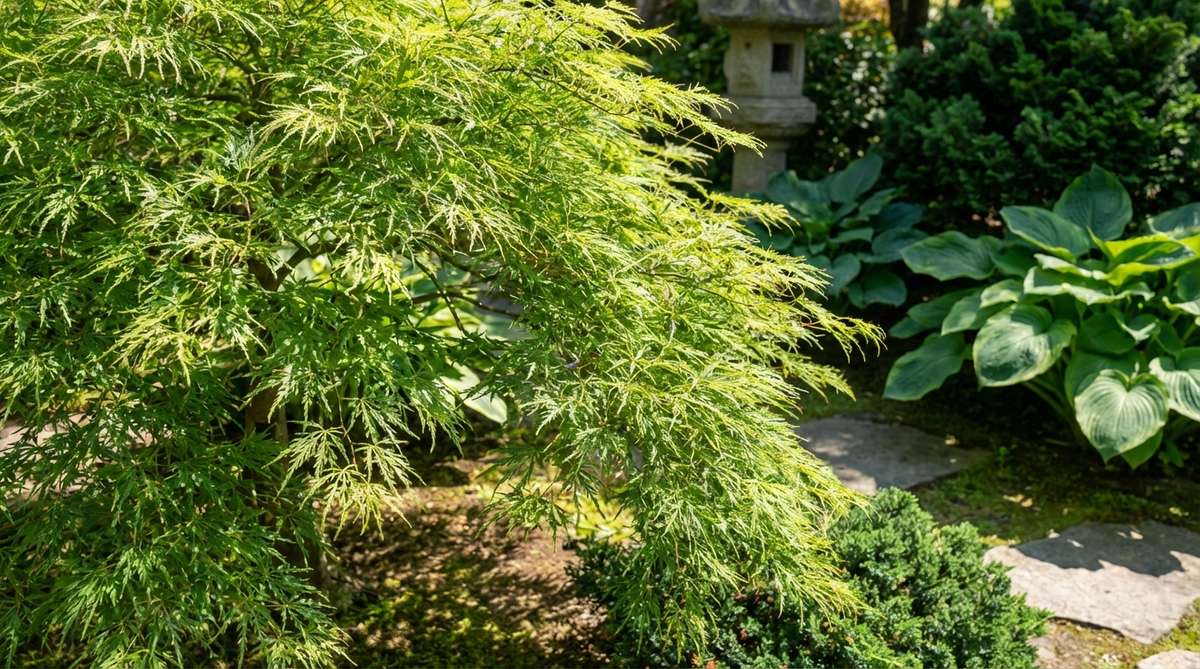
Emerald Lace displays finely dissected bright green foliage with a more upright habit than typical dissectum forms. The lacy leaves create a delicate texture that contrasts with bold-leafed hostas and solid-form evergreens.
Reaching 8-10 feet tall and wide, this cultivar bridges the gap between weeping and upright forms. The airy branching structure allows light to filter through, making it suitable for understory planting beneath taller pines or cryptomeria.
Fall color transitions to golden-yellow with orange highlights. Provide consistent moisture and protection from drying winds to maintain prime leaf condition.
9. Geisha Gone Wild Maple
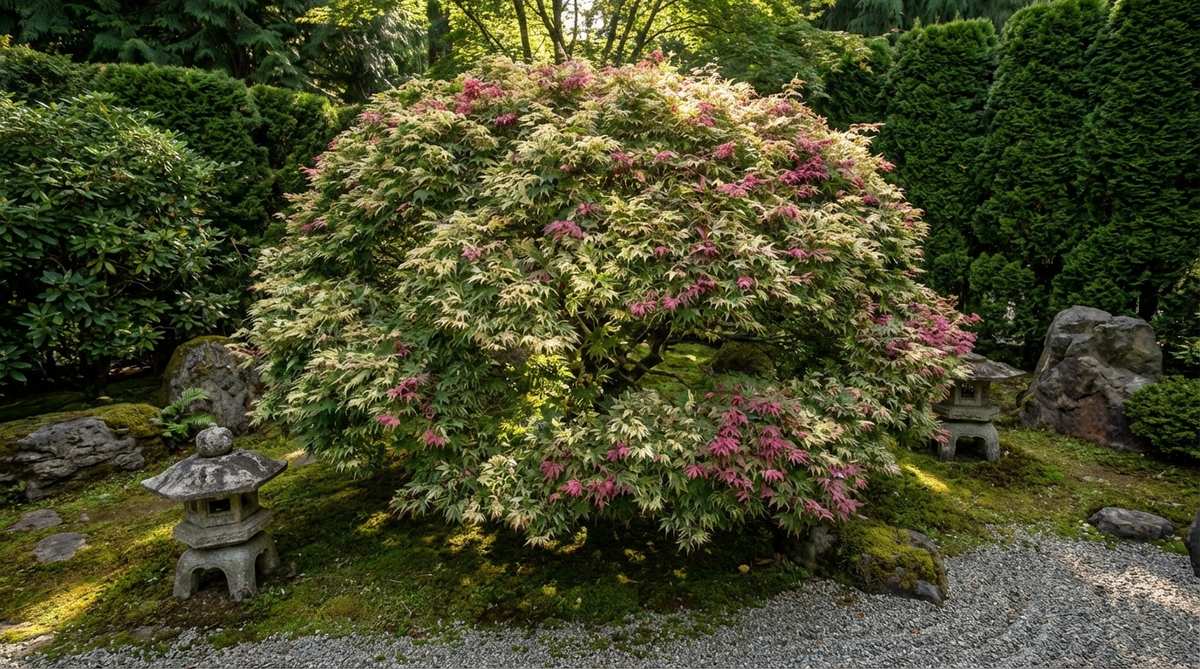
This sport of ‘Geisha’ features variegated foliage with green, white, and pink coloration that creates a tapestry effect throughout the canopy. The irregular variegation pattern means no two trees display identical markings.
Growing 6-8 feet tall with a rounded form, this cultivar functions as a living sculpture in shaded garden rooms. The variegation shows most intensely in spring and fall, with summer foliage stabilizing to green with white margins.
Place in dappled shade to prevent leaf burn on white portions. The unstable variegation occasionally produces all-green branches that should be pruned to maintain ornamental effect.
10. Osakazuki Maple
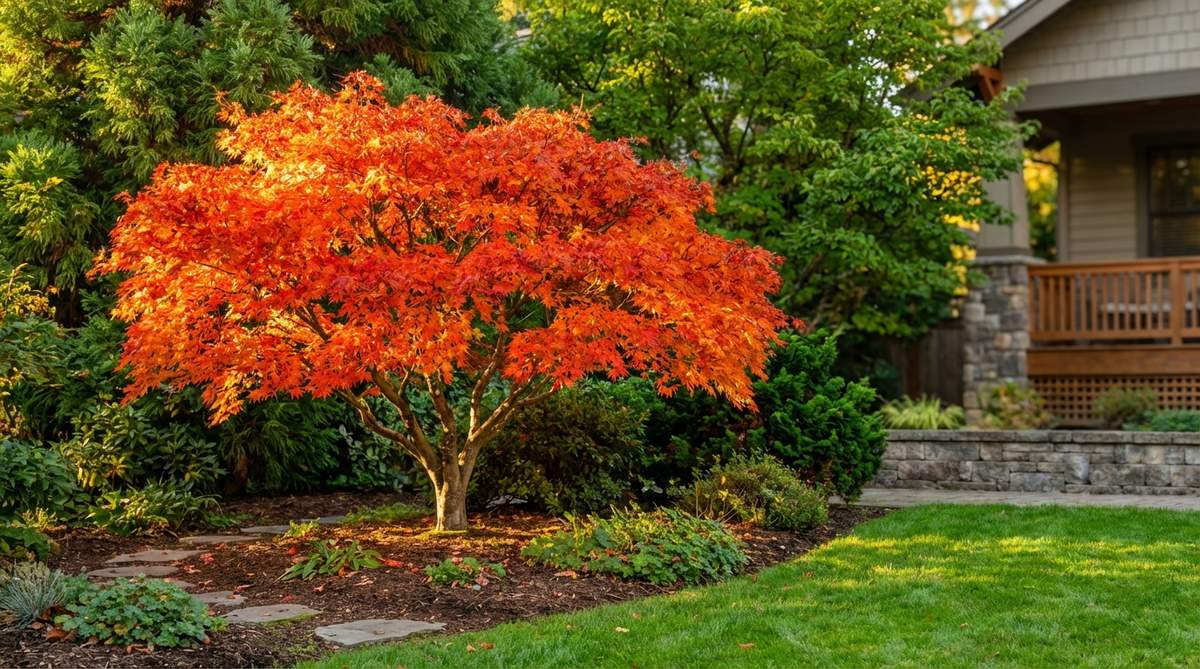
Osakazuki delivers arguably the most brilliant fall color of any Japanese maple, with leaves transforming to intense scarlet-orange that literally glows in autumn light. The upright palmatum form develops into a broad, rounded tree that commands attention.
Summer foliage maintains medium green coloration, providing a neutral backdrop before the autumn spectacle. Mature specimens reach 15-20 feet with equal spread.
This cultivar demonstrates exceptional cold hardiness to zone 5 and adapts to various soil types. Position where fall afternoon sun can backlight the autumn foliage.
11. Shishigashira Maple
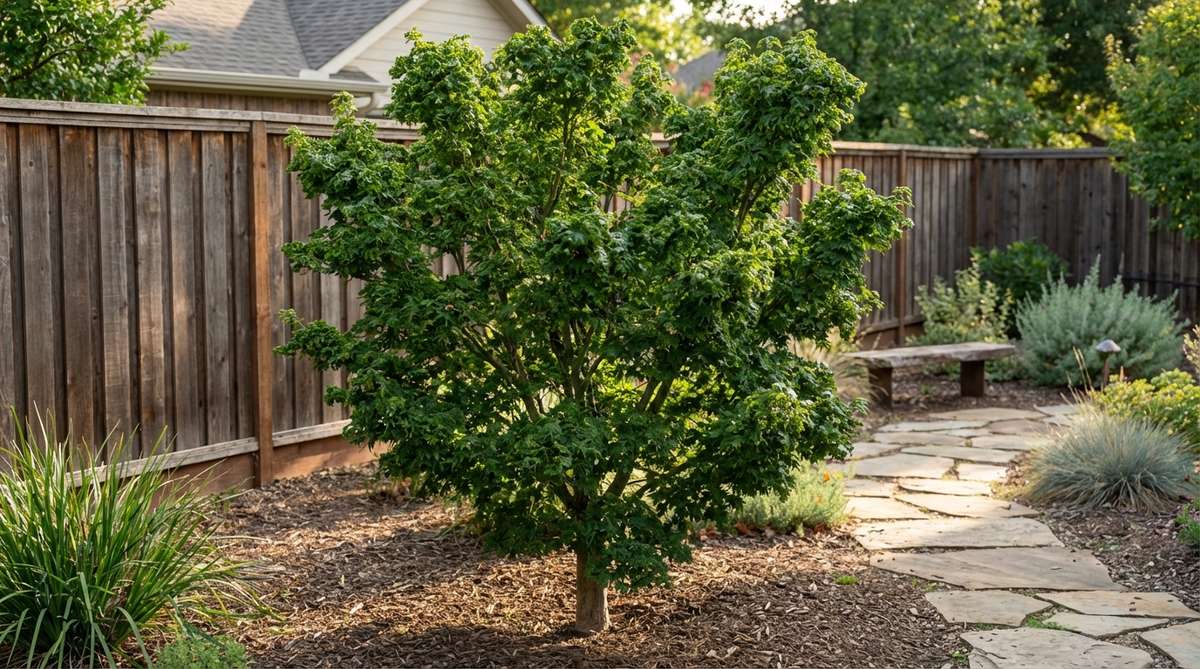
Known as the “Lion’s Head” maple, Shishigashira produces tightly crinkled leaves that create a distinctive texture unlike any other cultivar. The compact, upright growth habit stays naturally dense without requiring extensive pruning.
This slow-growing variety reaches 12-15 feet over many years, making it ideal for constrained spaces. The dark green summer foliage transforms to yellow-gold with hints of red in autumn.
The extremely tight branching pattern creates natural visual weight suitable for anchoring garden corners or framing entryways. Plant in partial shade with rich, well-drained soil.
12. Butterfly Maple
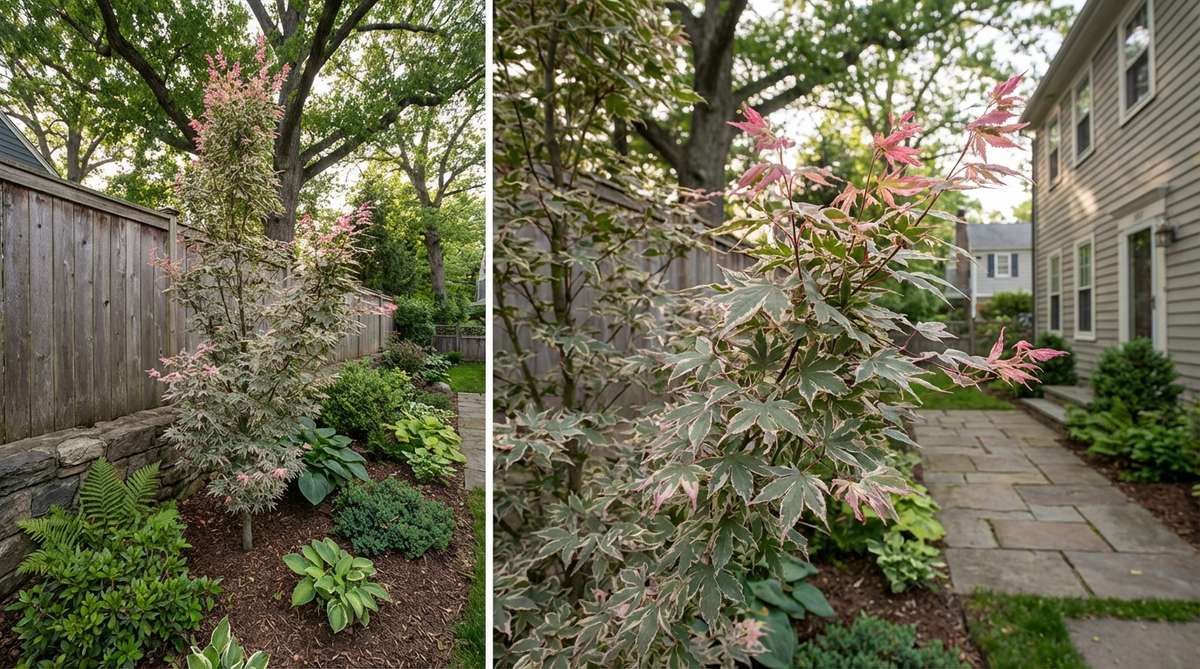
Butterfly features gray-green leaves with irregular cream and pink margins that create a fluttering effect in the breeze. This variegated upright cultivar brings light and movement to shaded compositions.
Growing 12-15 feet tall with a narrow, upright habit, Butterfly fits into tight planting beds and urban gardens. The delicate coloration burns easily in full sun, requiring afternoon shade for best appearance.
New spring growth shows the most intense pink tones, fading to cream margins by summer. Remove any all-green reversions promptly to maintain variegation.
13. Seiryu Maple
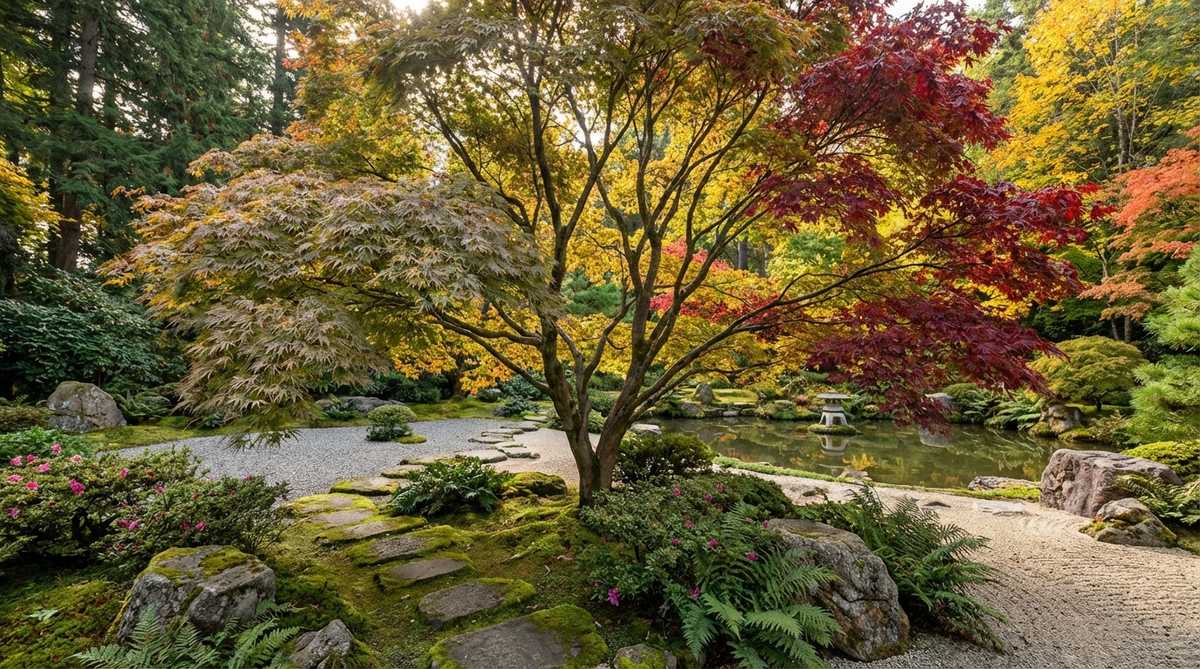
Seiryu breaks convention as the only upright-growing dissectum variety, combining finely cut green leaves with a vertical branching structure. The unique form offers dissectum texture without the weeping habit.
This vigorous grower reaches 15-20 feet tall, providing filtered shade while maintaining an elegant silhouette. Fall color progresses through yellow to crimson-red, rivaling any upright palmatum.
The upright habit makes Seiryu more wind-tolerant than typical dissectum varieties. Plant 12-15 feet from other specimens to accommodate lateral spread.
14. Mikawa Yatsubusa Maple
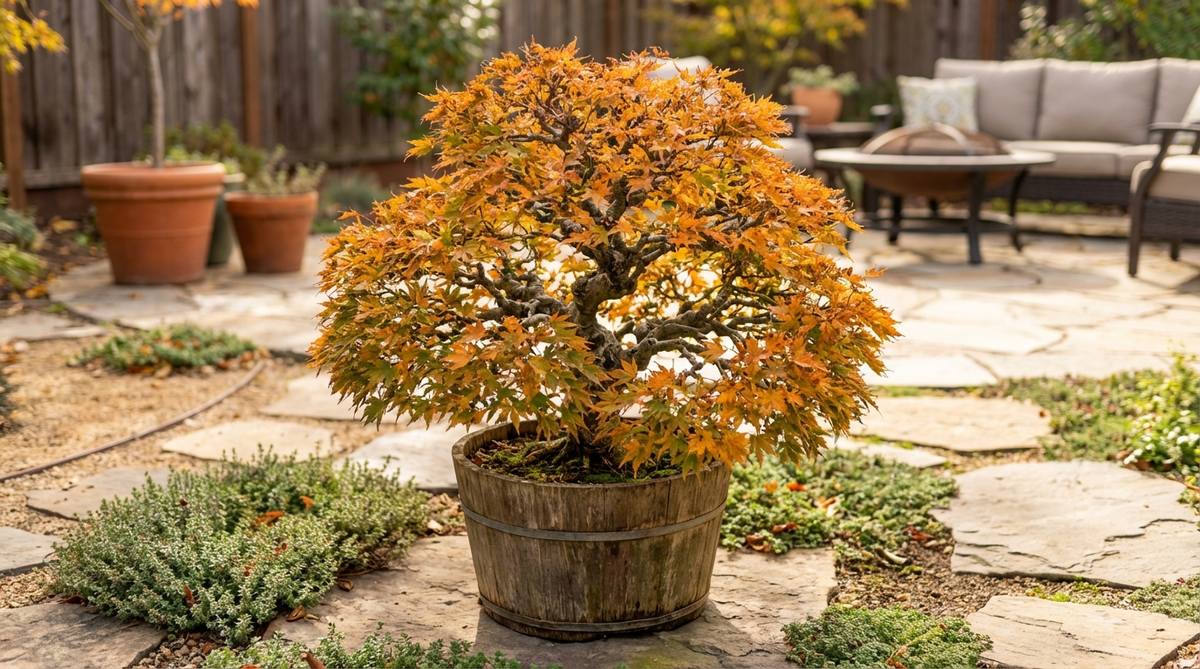
This ultra-dwarf cultivar grows at a glacial pace, eventually forming a dense mound rarely exceeding 4 feet tall. The tightly clustered green leaves create a bonsai-like appearance even without training.
Mikawa Yatsubusa serves as an excellent specimen for trough gardens, small courtyards, or container cultivation. The miniature scale allows detailed viewing of the refined branching pattern.
Fall color develops to orange-yellow shades. Provide protection from harsh afternoon sun and strong winds that can damage the delicate foliage.
15. Beni-kawa Maple
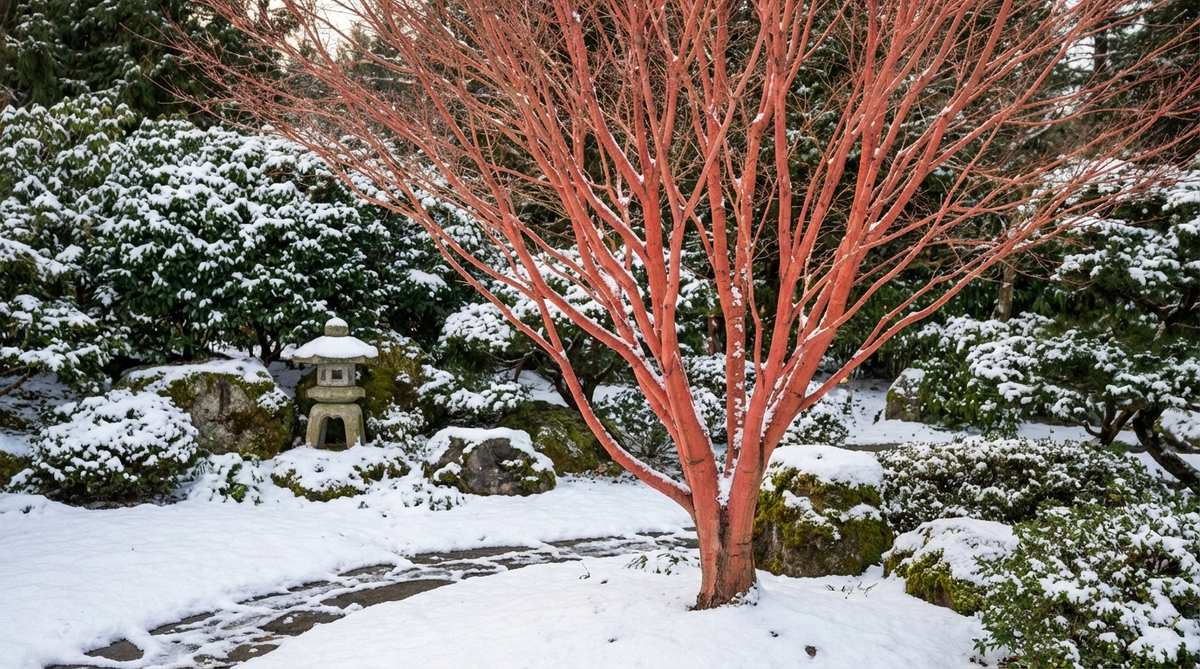
Beni-kawa showcases bright coral-red bark similar to ‘Sango-kaku’ but with slightly different leaf characteristics. The winter bark color provides a striking focal point against snow or evergreen backgrounds.
This upright grower reaches 15-20 feet with a vase-shaped canopy. Green summer foliage transitions to golden-yellow autumn color, but the primary ornamental value lies in the winter bark display.
Position near pathways or windows where the colored bark receives maximum visibility during winter months. Prune to enhance branching structure and bark exposure.
Cherry Blossom CollectionSakura Varieties for Spring Spectacle
The japanese garden cherry blossom symbolizes renewal and the transient nature of beauty in traditional design philosophy. Over 200 sakura varieties exist within the Prunus genus, ranging from single-petaled wild forms to elaborate double-flowered cultivars. These spring-flowering trees require full sun and well-drained soil to produce abundant blooms.
16. Somei Yoshino Cherry
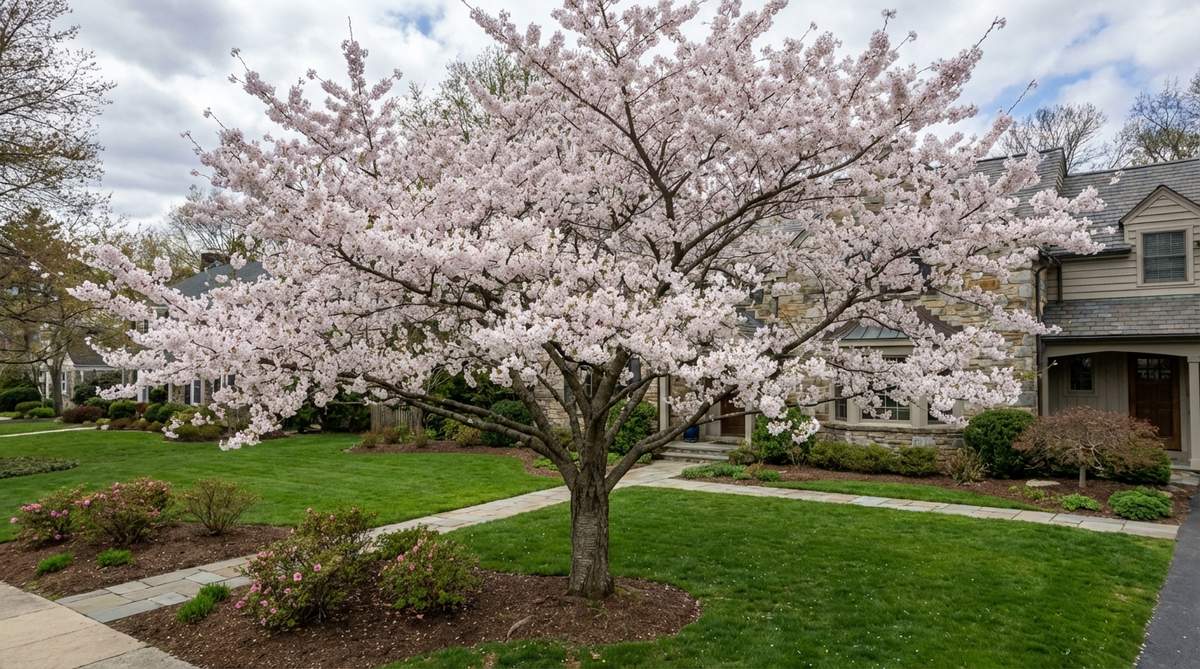
Somei Yoshino represents the most recognized cherry blossom variety worldwide, producing clouds of pale pink to white five-petaled flowers before leaves emerge. The synchronized bloom creates the dramatic sakura displays celebrated across Japan each spring.
This vigorous hybrid grows 30-40 feet tall with a broad, spreading crown. Flowers appear in dense clusters along branches, creating the appearance of continuous floral coverage.
Bloom timing varies by climate, typically occurring in early to mid-spring when temperatures stabilize above 50°F. Plant in full sun with excellent air circulation to minimize disease pressure.
17. Akebono Cherry
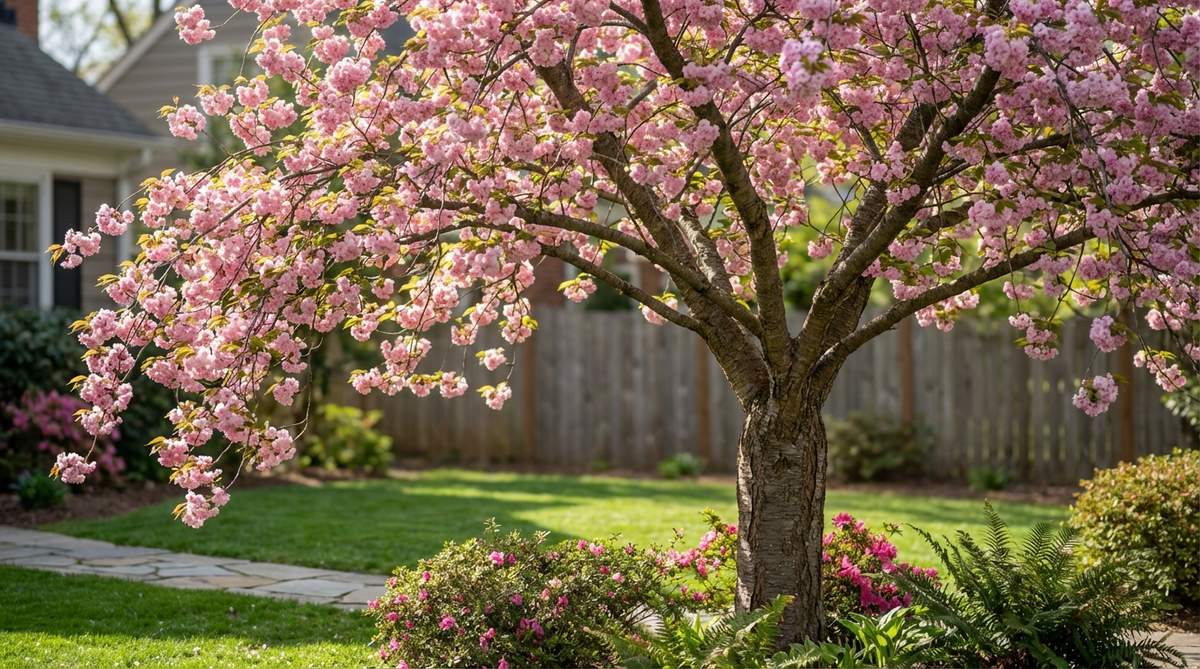
Prunus x yedoensis ‘Akebono’ produces shell-pink double flowers that hold their color longer than Somei Yoshino. The delicate blooms appear in profusion along arching branches, creating a waterfall effect.
Growing 25-35 feet tall with equal spread, Akebono develops an elegant vase-shaped form suitable for specimen planting. The flowering display lasts 7-10 days under ideal conditions.
This cultivar shows good heat tolerance for southern gardens within zones 5-8. Provide supplemental water during establishment and bloom periods.
18. Shidarezakura Weeping Cherry
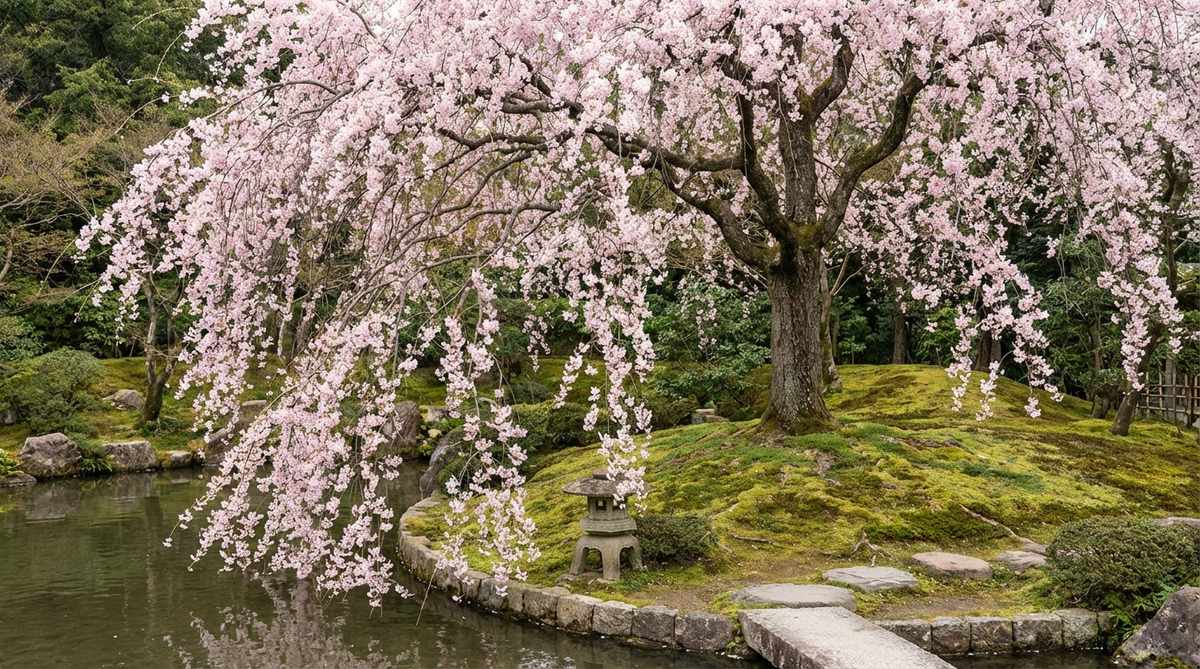
The iconic weeping cherry features cascading branches covered in pale pink flowers that hang like floral curtains. This growth habit creates natural privacy screens and dramatic focal points near water features or meditation spaces.
Mature trees reach 20-25 feet tall with branches sweeping to ground level, requiring adequate space for full development. The weeping form shows best when planted on slight elevations or beside paths.
Shidarezakura blooms approximately one week before Somei Yoshino, extending the sakura season. The cultivar performs best in zones 5-8 with winter chill hours.
19. Yamazakura Mountain Cherry
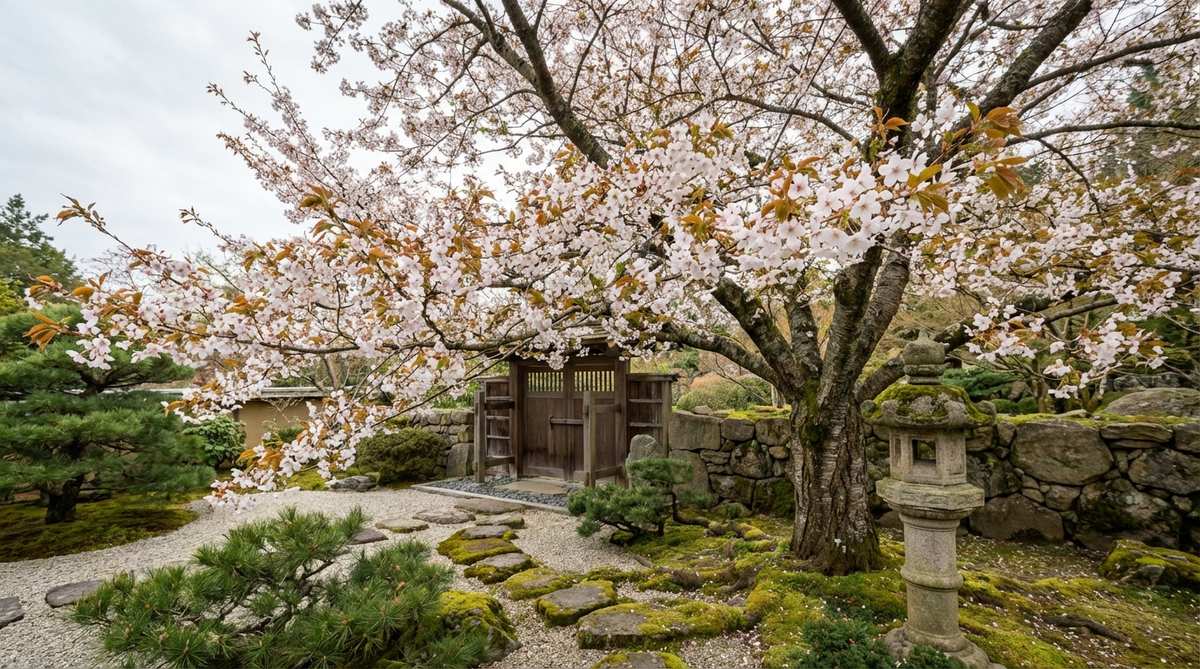
Yamazakura represents the most common wild cherry species in Japanese mountain regions, featuring white to pale pink five-petaled flowers that appear simultaneously with bronze-colored new leaves. This species maintains the natural, rustic aesthetic prized in traditional garden design.
Growing 30-40 feet tall, Yamazakura develops an irregular crown that suits naturalistic plantings. The combination of flowers and emerging foliage creates a softer effect than pure white-flowered varieties.
This species demonstrates excellent cold hardiness and adapts to various soil conditions. The scattered bloom timing creates extended flowering periods when planted in groups.
20. Edohigan Cherry
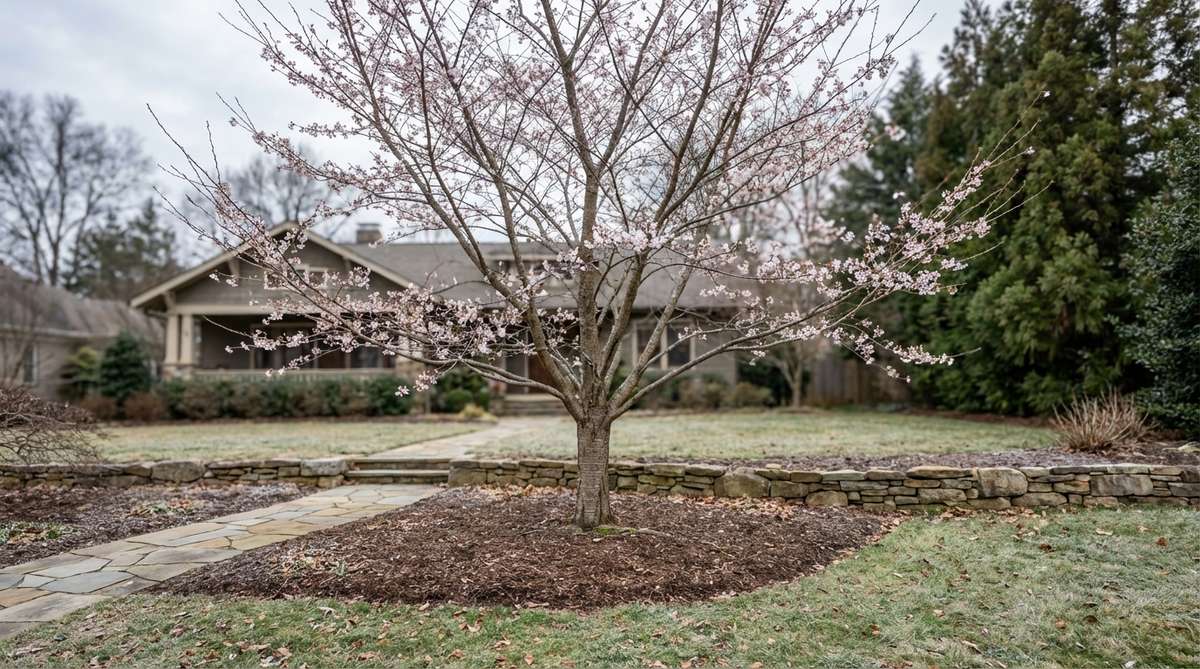
Edohigan ranks among the earliest blooming cherries, often flowering while late winter cold persists. The small pale pink flowers emerge before leaves, covering bare branches in delicate blooms.
This long-lived species can survive for centuries, with famous specimens in Japan exceeding 1,000 years old. The upright form reaches 40-50 feet at maturity.
Edohigan serves as a parent species for many hybrid cultivars including Somei Yoshino. Plant in full sun with excellent drainage to maximize longevity.
21. Yaezakura Double Cherry
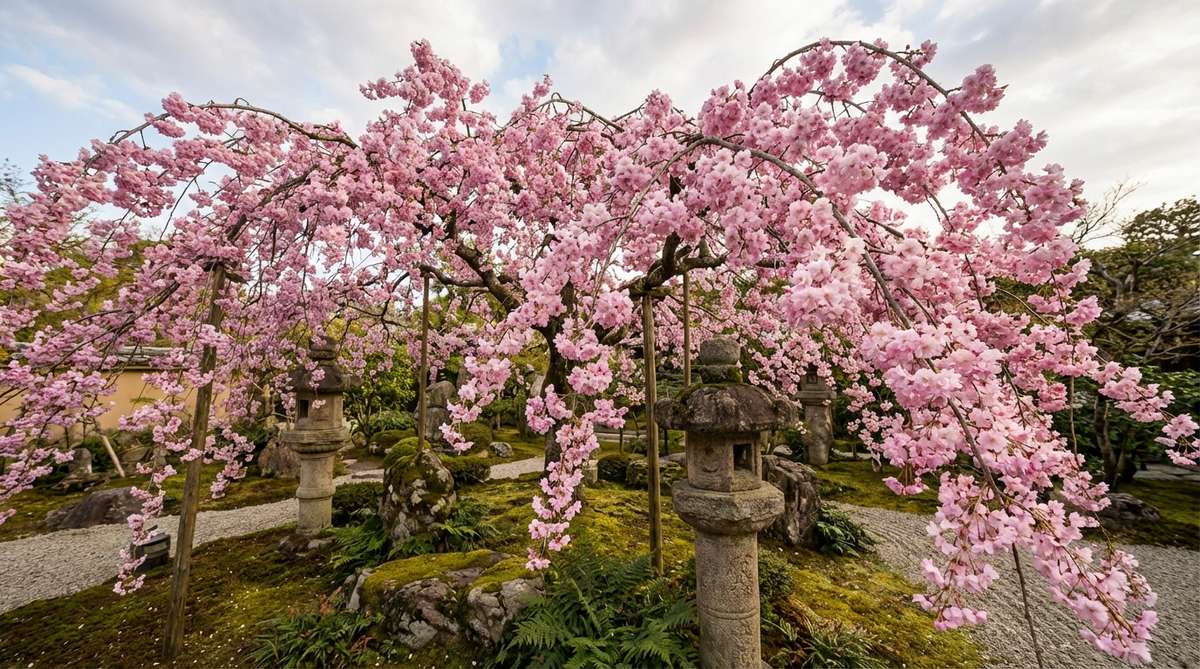
Yaezakura encompasses any cherry variety with more than six petals per flower, with some cultivars displaying 10-300 petals. The elaborate double flowers create a more luxurious, ornate effect than single-flowered species.
Bloom timing generally occurs later than single varieties, extending the sakura season into late spring. The extra petals create heavier flower clusters that weigh down branches into graceful arcs.
Popular yaezakura cultivars include ‘Kanzan’ with deep pink flowers and ‘Ukon’ featuring unusual pale yellow-green blooms. Provide staking support for young trees to develop strong trunks.
22. Kikuzakura Chrysanthemum Cherry
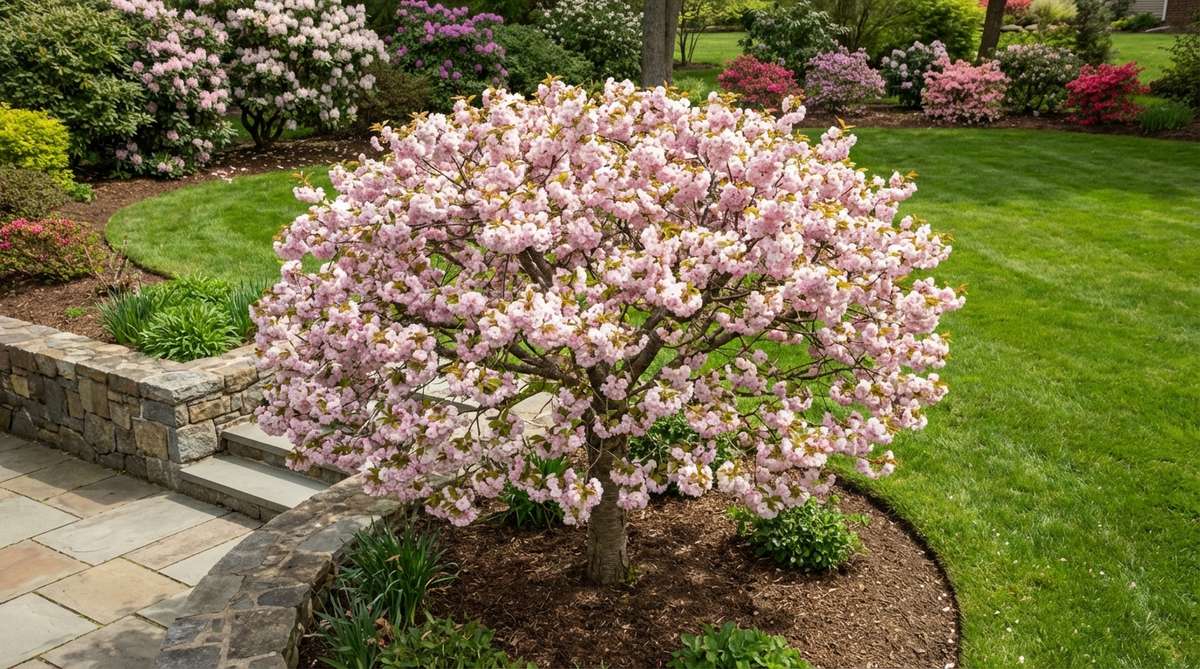
Kikuzakura produces incredibly complex flowers with 100+ petals arranged in pompom-like clusters resembling chrysanthemums. The pale pink blooms appear in mid to late spring, well after standard varieties finish.
This rare cultivar grows slowly to 15-20 feet tall with a rounded form. The extraordinary flowers command close-up viewing in courtyard settings or near seating areas.
The heavy flowers require calm spring weather to avoid damage from wind or rain. Plant in protected locations with full sun exposure.
23. Kanzan Cherry
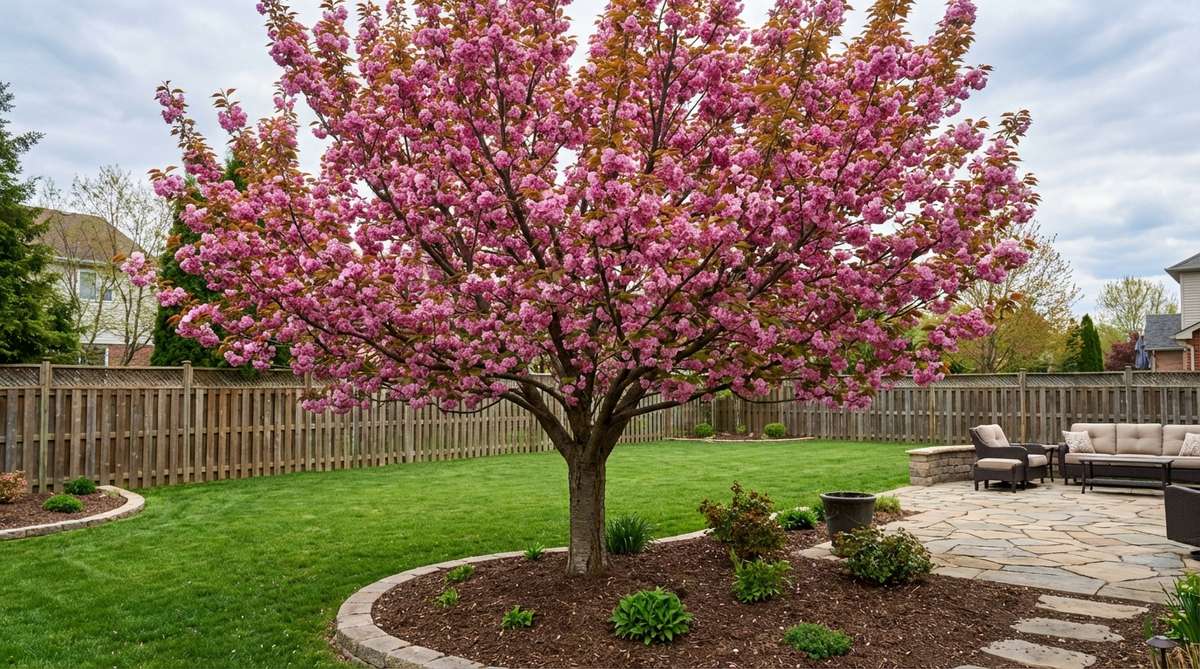
Kanzan produces vibrant deep pink double flowers in abundant clusters that create one of the most dramatic sakura displays. The flowers emerge simultaneously with copper-bronze new foliage, enhancing the color intensity.
This vigorous upright grower reaches 30-40 feet with a vase-shaped habit. The late bloom period—typically 1-2 weeks after early varieties—extends seasonal interest.
Kanzan demonstrates good urban tolerance, accepting less-than-ideal soil conditions and air pollution. The cultivar performs reliably across zones 5-9.
24. Okame Cherry
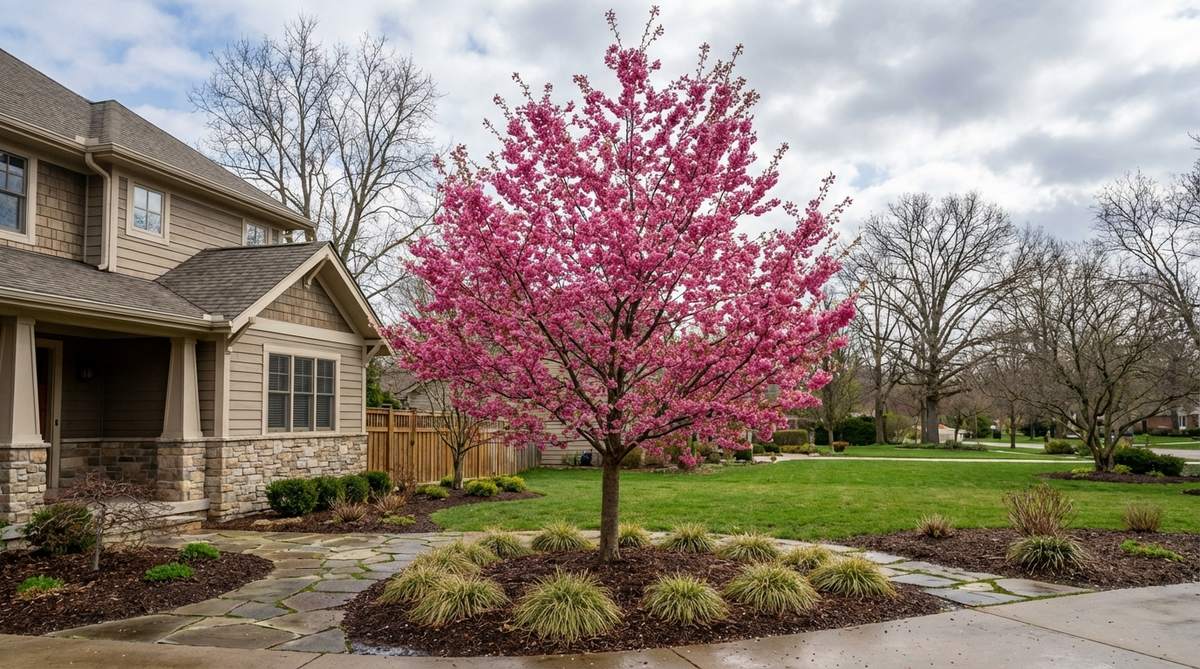
Okame hybrid cherry produces carmine-pink flowers in early spring, ranking among the first cherries to bloom. The upright pyramidal form develops into a neat, manageable shape suitable for smaller gardens.
Growing 20-25 feet tall, Okame fits residential landscapes better than larger sakura species. Fall foliage transitions to orange-red shades, providing secondary seasonal interest.
This hybrid shows excellent disease resistance and heat tolerance. Plant in full sun with moderate moisture for optimal bloom production.
25. Snow Fountain Cherry
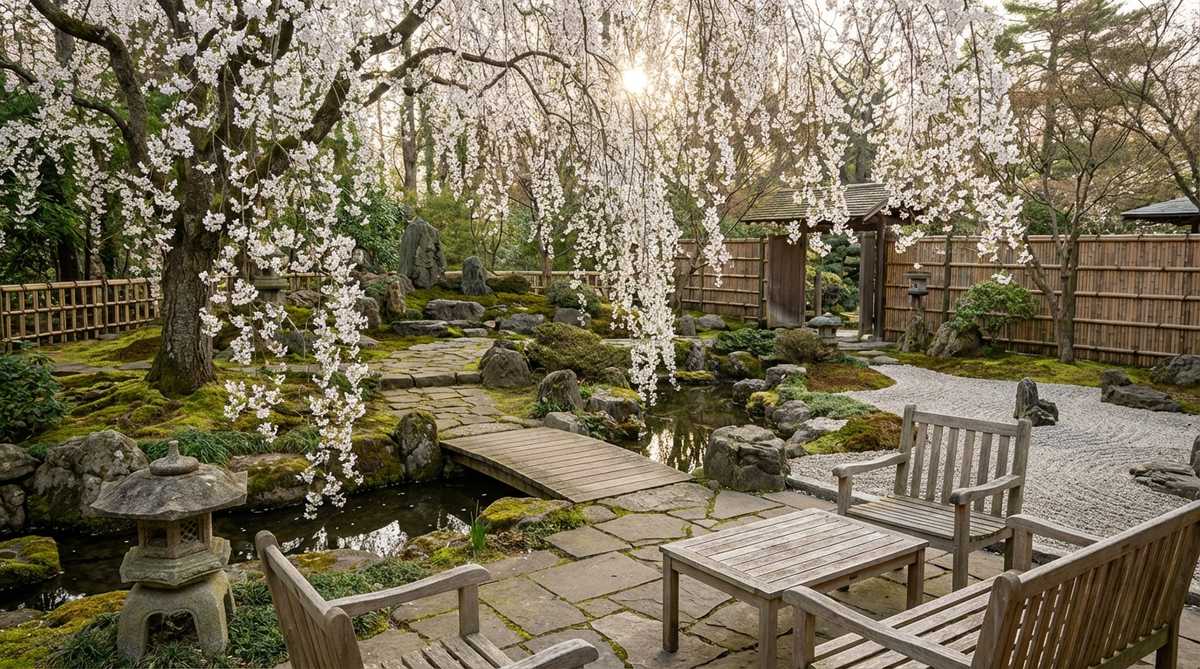
This weeping form produces pure white single flowers along cascading branches that sweep dramatically toward the ground. The clean white blooms create a serene, peaceful effect that embodies traditional wabi-sabi aesthetics.
Typically grafted onto 5-6 foot standards, Snow Fountain reaches 12-15 feet tall with branches trailing to ground level. The compact size suits small courtyards and container cultivation.
Plant in full sun with excellent drainage. The white flowers show best against dark backgrounds or reflected in water features.
Essential ConifersPines, Junipers & Year-Round Structure
The japanese garden juniper and other conifers provide the evergreen backbone that maintains garden interest through all seasons. These species respond exceptionally well to traditional pruning techniques including cloud pruning and niwaki training. Conifers symbolize longevity and steadfastness in Japanese design philosophy.
26. Japanese Black Pine
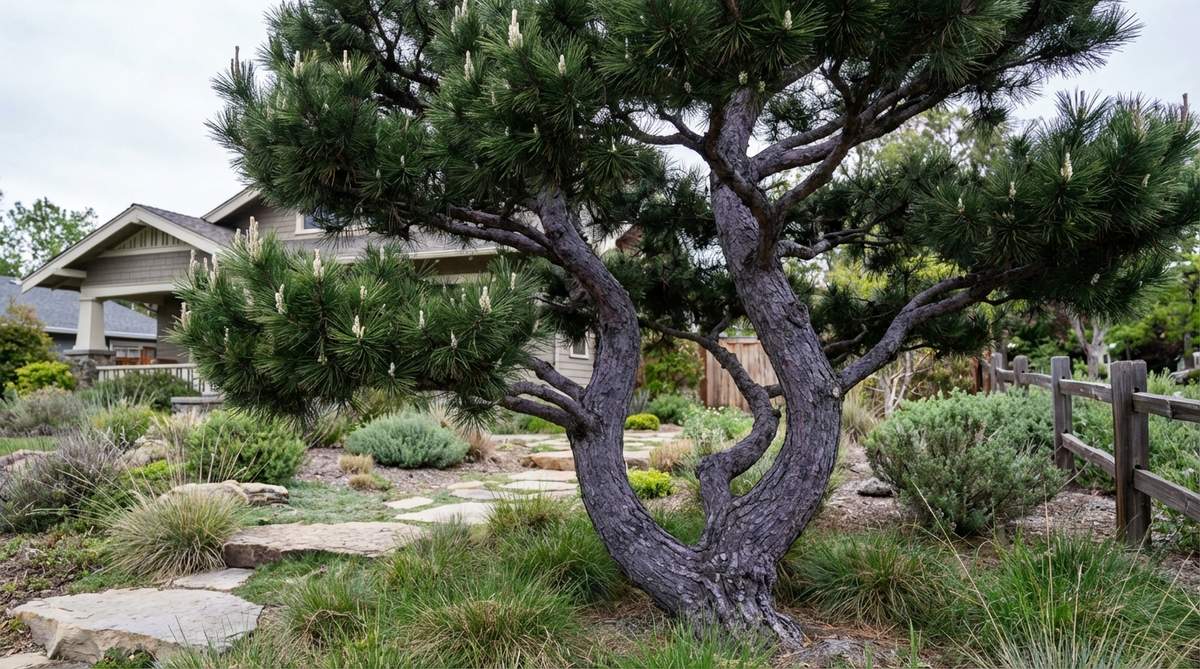
Pinus thunbergii stands as the most iconic pine in Japanese garden tradition, featuring dark gray-purple bark and pairs of sharp, lustrous dark green needles. The species naturally develops sculptural forms with age, displaying curved trunks and irregular branching that embody weathered coastal character.
Young trees display striking white candles in spring that contrast dramatically with dark foliage. This growth habit allows precise pruning control by removing or shortening candles to direct tree development.
Black pine grows 20-50 feet tall depending on training intensity and soil conditions. The species demonstrates exceptional salt tolerance, drought resistance, and adaptability to poor soils, making it invaluable for challenging sites in zones 5-8.
27. Japanese White Pine
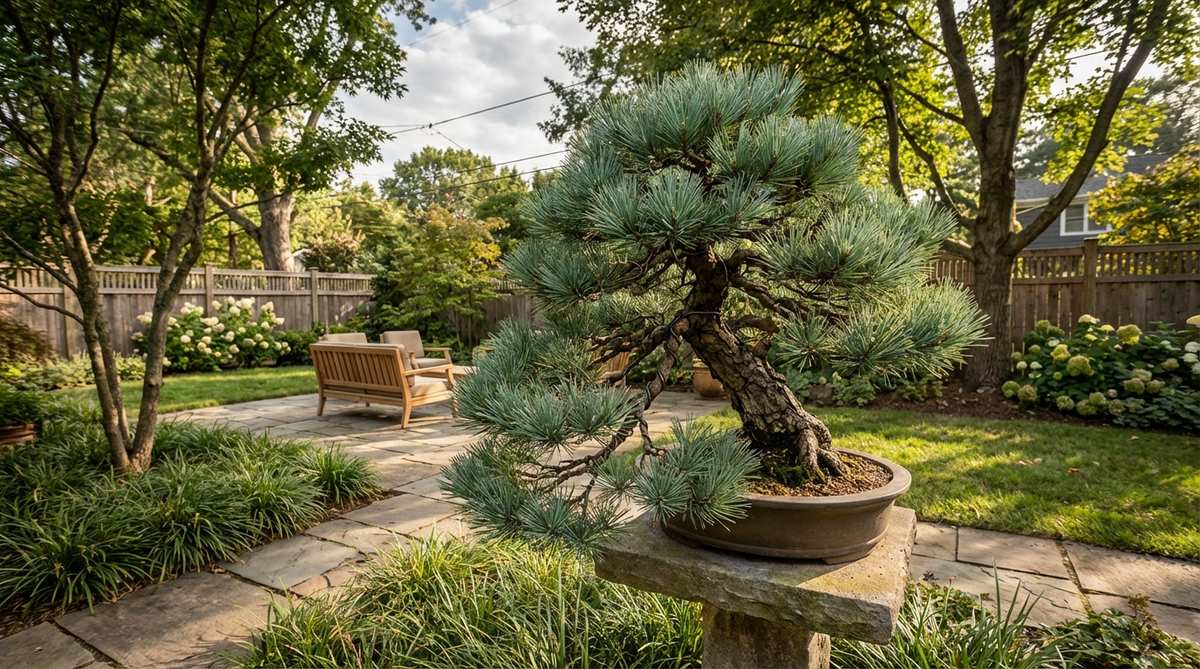
Pinus parviflora produces soft blue-green needles in bundles of five, creating a refined texture softer than black pine. The more delicate appearance suits intimate garden spaces and bonsai training.
This pine grows slowly to 25-50 feet with horizontal branching that responds beautifully to cloud pruning. The small cones add ornamental interest and the exfoliating bark develops attractive patterns with age.
White pine prefers well-drained, slightly acidic soil and tolerates partial shade better than black pine. Several dwarf cultivars exist for small-scale gardens.
28. Dwarf Japanese Garden Juniper
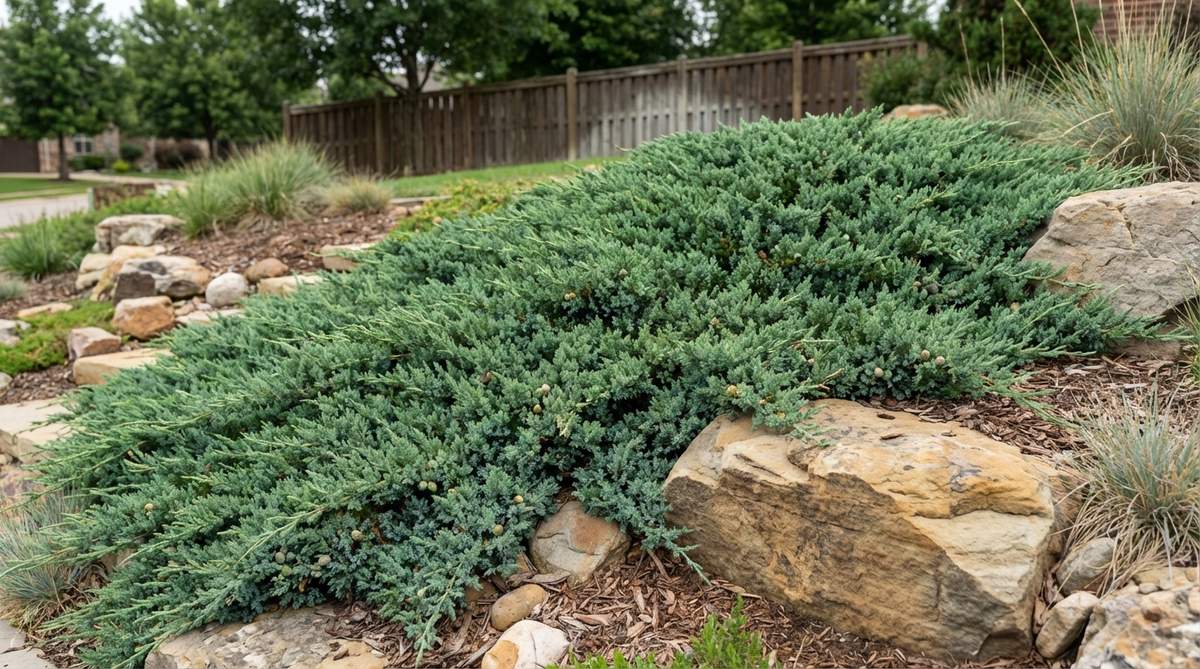
Juniperus procumbens ‘Nana’ forms a dense, low-growing mat rarely exceeding 12 inches tall while spreading 5-8 feet wide. The blue-green foliage creates excellent groundcover for slopes, rock gardens, and areas requiring low maintenance coverage.
This evergreen responds well to selective pruning to control spread and enhance form. The prickly texture discourages foot traffic while adding visual interest at ground level.
Dwarf juniper demonstrates exceptional cold hardiness to zone 4 and tolerates drought once established. Plant in full sun to partial shade with excellent drainage to prevent root rot.
29. Japanese Red Pine
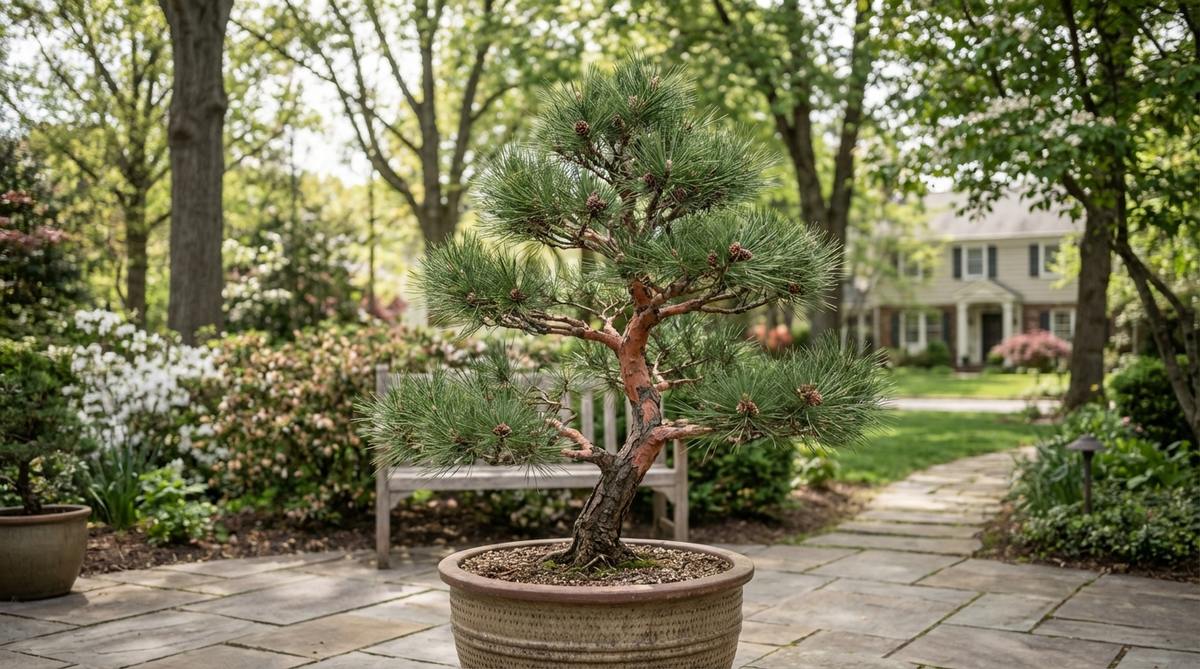
Pinus densiflora features reddish-orange bark that becomes increasingly prominent with age, particularly in the upper canopy where bark plates exfoliate. The soft blue-green needles grow in pairs, creating a lighter texture than black pine.
Growing 40-50 feet tall in nature, red pine responds well to pruning to maintain smaller sizes. The species naturally develops an irregular, picturesque form suitable for traditional niwaki training.
Red pine prefers slightly acidic, well-drained soil and full sun exposure. The cultivar ‘Umbraculifera’ offers a naturally compact form reaching only 12-15 feet.
30. Cryptomeria Japanese Cedar
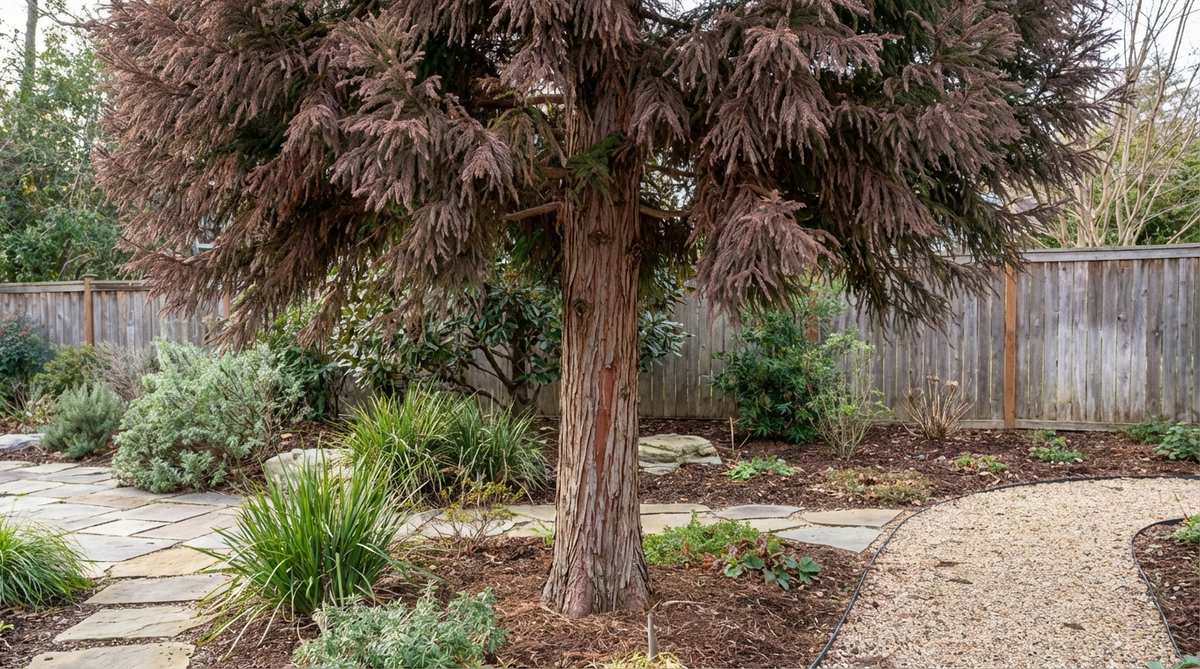
Cryptomeria japonica serves as Japan’s national tree, featuring soft, awl-shaped evergreen foliage that turns bronze-purple during winter months. The straight, tapering trunk and pyramidal form create strong vertical elements in garden compositions.
This fast-growing conifer reaches 50-70 feet in cultivation, though dwarf cultivars remain under 10 feet. The reddish-brown bark peels in strips, revealing fresh bark beneath.
Cryptomeria performs best in moist, well-drained acidic soil with protection from drying winds. Popular cultivars include ‘Yoshino’ for fast growth and ‘Elegans’ for bronze winter color.
31. Hinoki Cypress
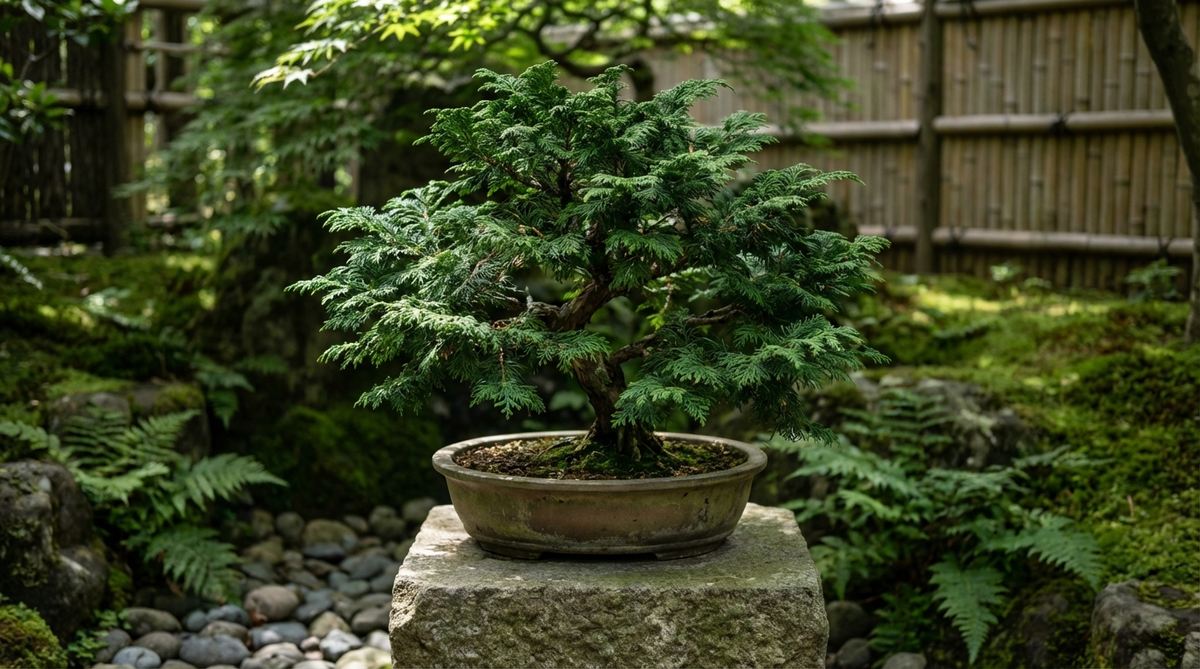
Chamaecyparis obtusa produces scale-like evergreen foliage with distinctive white markings on leaf undersides, creating a two-toned effect. The foliage emits a pleasant lemon-like fragrance when crushed.
Full-sized trees reach 50-75 feet, but numerous dwarf and intermediate cultivars suit smaller gardens. The wood ranks among the most prized in Japan for temple and shrine construction.
Hinoki prefers moist, acidic soil with good drainage and partial shade in hot climates. The cultivar ‘Nana Gracilis’ forms a compact pyramid ideal for residential landscapes.
32. Sawara Cypress
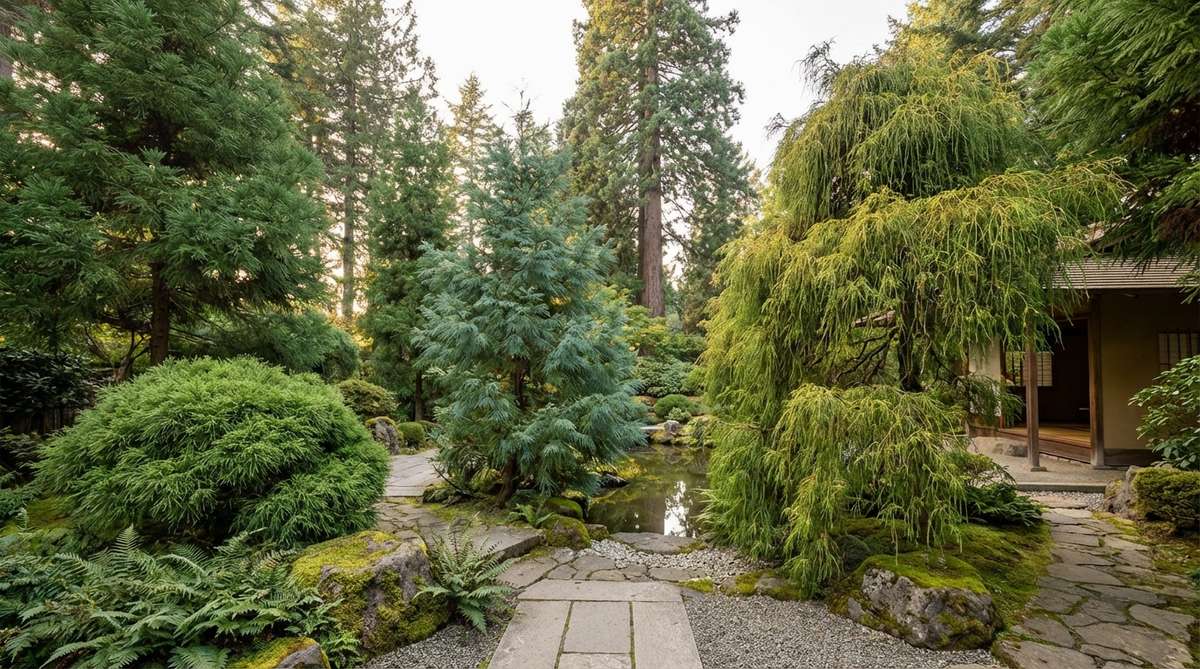
Chamaecyparis pisifera exhibits remarkable diversity through cultivars displaying juvenile, intermediate, or adult foliage forms. The species naturally develops scale-like adult leaves, but many ornamental selections retain feathery juvenile foliage.
The Squarrosa group features soft, moss-like foliage, while Plumosa types display feathery texture, and Filifera forms show threadlike weeping branches. This variation allows matching specific design needs.
Sawara adapts to various soil conditions and tolerates urban environments. Select cultivars based on desired mature size, ranging from dwarf mounds to 50-foot trees.
33. Buddhist Pine
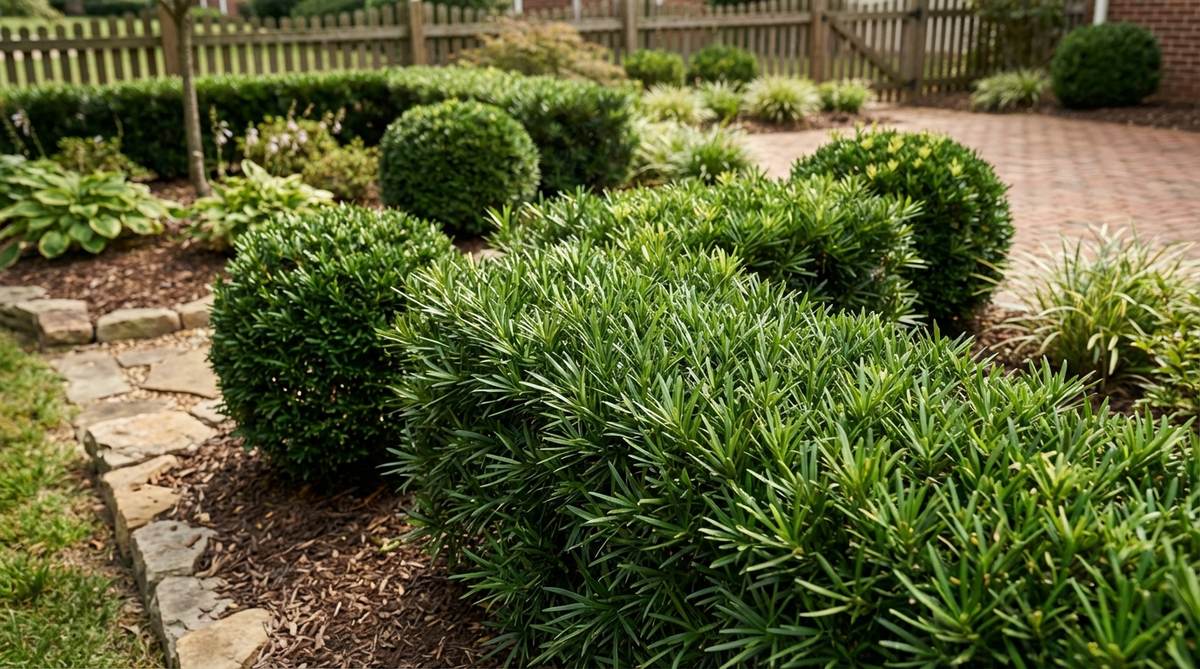
Podocarpus macrophyllus produces long, narrow evergreen leaves unlike typical conifer needles, creating a refined, almost tropical appearance. The dense foliage responds exceptionally well to shearing and shaping.
This slow-growing evergreen reaches 20-35 feet but accepts heavy pruning for hedges and topiary forms. The species originates from Japanese mountain regions and southern China.
Buddhist pine thrives in zones 7-11 and tolerates shade better than most conifers. Provide protection from drying winter winds in northern portions of the range.
34. California Torreya
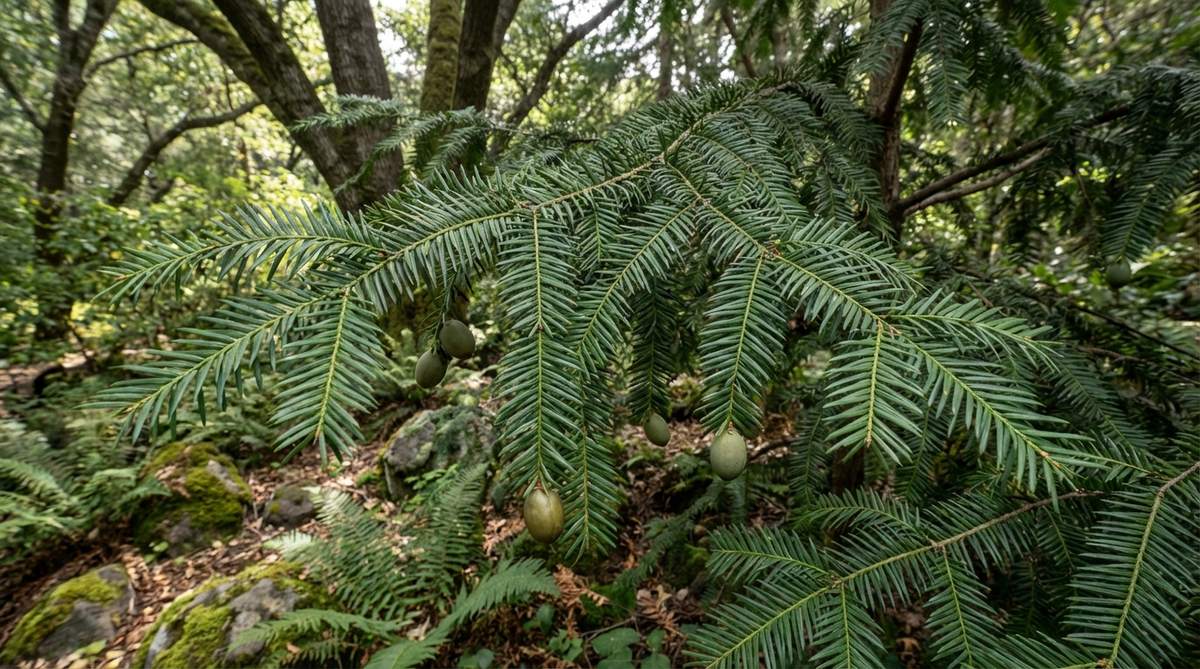
Torreya californica produces dark green, needle-like leaves with sharp points arranged in flat sprays. The evergreen foliage creates a unique texture distinct from typical pines and cypress.
This rare conifer grows slowly to 30-50 feet with a pyramidal form. The species produces large olive-like seeds that hang beneath branches.
Torreya prefers cool, moist conditions with partial shade. The species brings botanical interest to woodland garden settings in zones 7-9.
35. Umbrella Pine
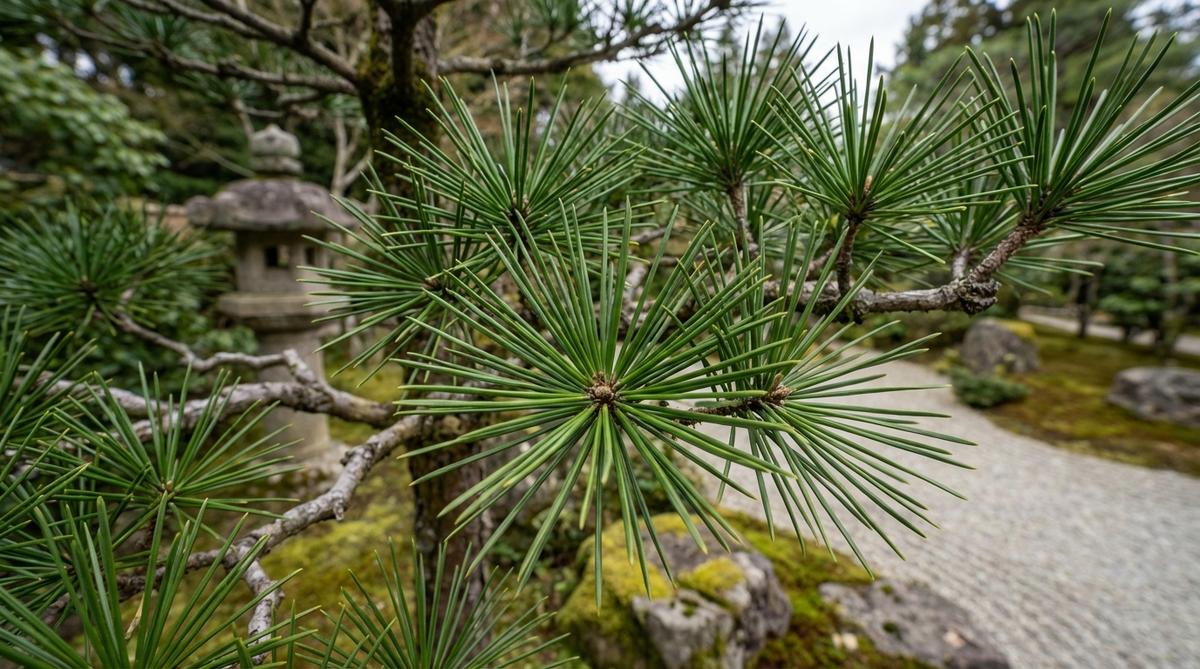
Sciadopitys verticillata displays distinctive whorled needles arranged like umbrella spokes at branch tips. The glossy dark green foliage creates a bold architectural statement unlike any other conifer.
This extremely slow-growing evergreen reaches 20-30 feet over many decades, making it suitable for long-term landscape investment. The pyramidal form requires no pruning to maintain shape.
Umbrella pine demands excellent drainage, consistent moisture, and protection from drying winds. The species performs best in zones 5-8 with partial shade in hot climates.
36. Japanese Plum Yew
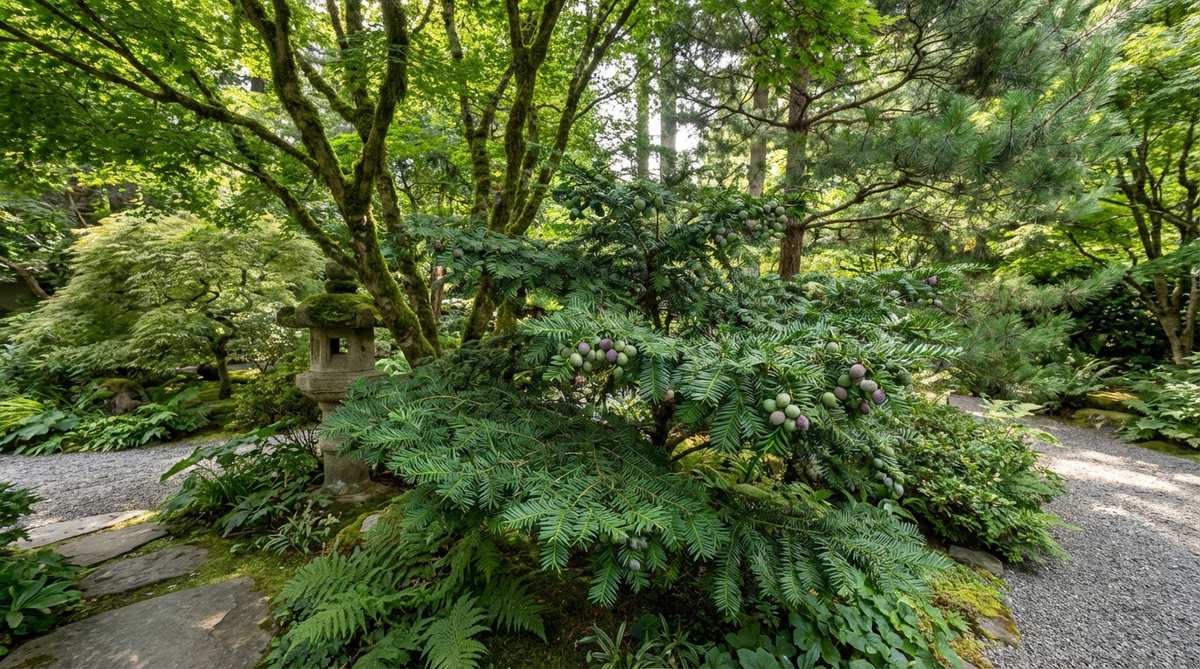
Cephalotaxus harringtonia produces dark green needles arranged in two flat rows, creating a yew-like appearance. The shade-tolerant evergreen fills understory roles beneath taller canopy trees.
Growing 5-10 feet tall with a spreading habit, this shrubby conifer suits foundation plantings and shaded garden areas. The species produces plum-sized fleshy fruits on female plants.
Japanese plum yew adapts to deep shade and various soil types in zones 6-9. The cultivar ‘Prostrata’ offers a low-growing groundcover form.
Flowering Accent TreesMagnolias, Dogwoods & Seasonal Color
These deciduous flowering species complement maples and cherries with distinct bloom timing and form. Traditional Japanese gardens incorporate these trees selectively for seasonal punctuation and wildlife value. Most prefer acidic, well-drained soil and benefit from organic mulch application.
37. Star Magnolia
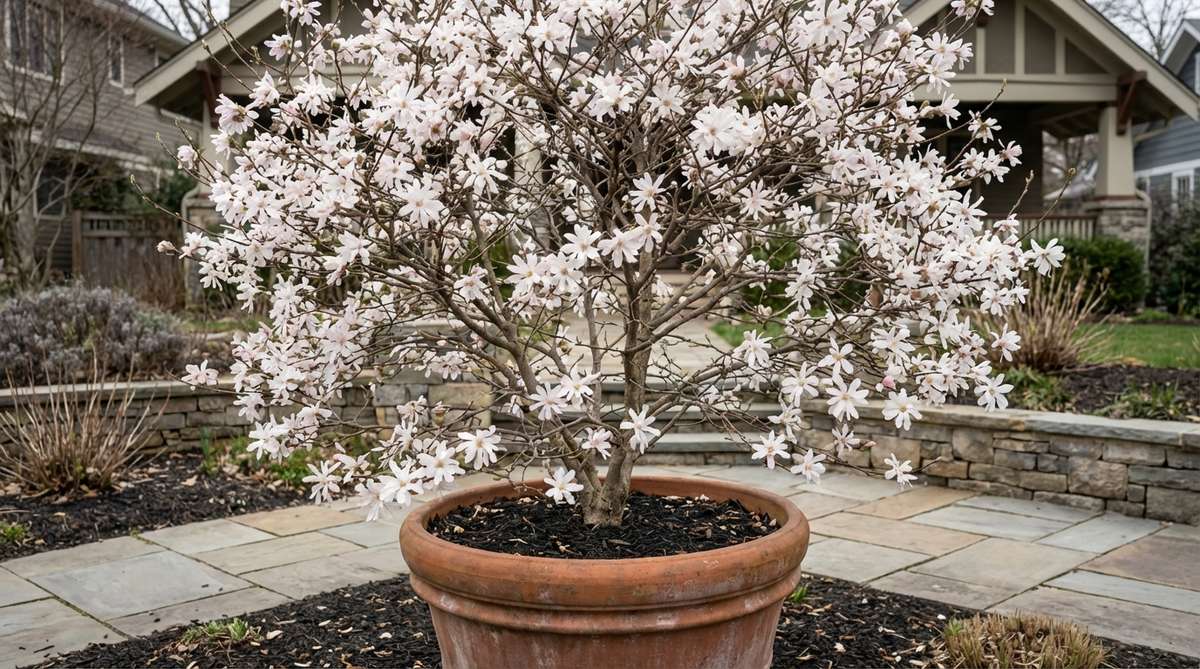
Magnolia stellata produces fragrant white star-shaped flowers with 12-18 narrow petals in late winter or early spring before leaves emerge. The compact multi-stemmed form suits small gardens and courtyard settings.
Growing 15-20 feet tall and wide, Star Magnolia blooms at a young age, often flowering within 2-3 years of planting. The fuzzy silver flower buds provide winter interest before opening.
Plant in locations protected from harsh winds that can damage flowers. The species performs best in zones 4-8 with afternoon shade in hot climates.
38. Kousa Dogwood
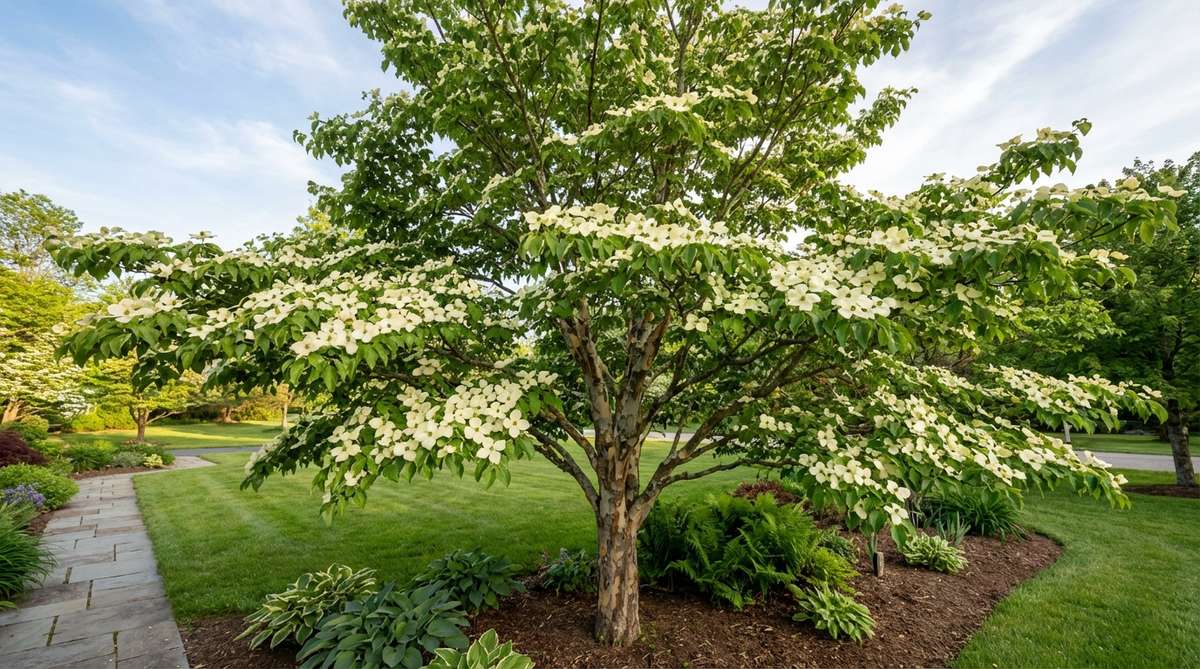
Cornus kousa produces large white four-bracted flowers in late spring after leaves emerge, blooming several weeks later than native American dogwoods. The layered horizontal branching creates distinct architectural tiers.
This tree grows 15-30 feet tall with equal spread, developing into a vase-shaped specimen. The flowers mature into strawberry-like red fruits in fall, coinciding with purple-red foliage color.
Kousa demonstrates superior disease resistance compared to flowering dogwood species. The exfoliating bark develops attractive mottled patterns on mature specimens in zones 5-8.
39. Saucer Magnolia
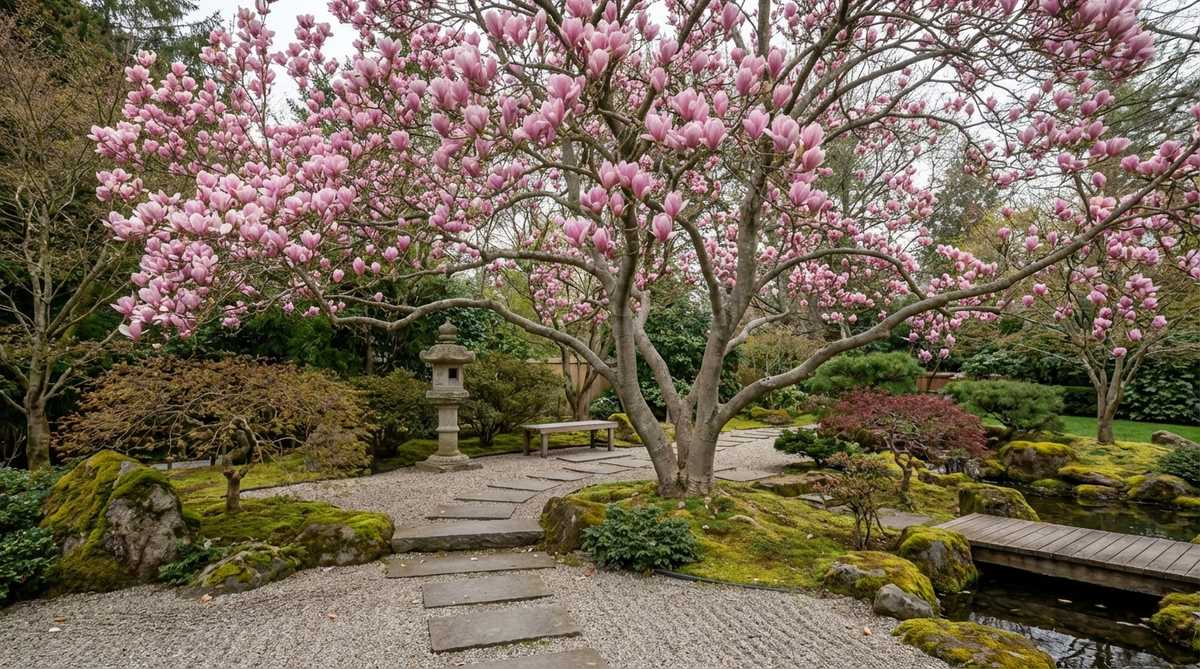
Magnolia x soulangeana hybrid produces large goblet-shaped flowers in pink, purple, or white shades before foliage appears. The dramatic flowers reach 5-10 inches across, creating bold spring displays.
Growing 20-30 feet tall with a broad, spreading habit, Saucer Magnolia develops into a substantial small tree. The smooth gray bark and spreading branches provide winter structure.
Late spring frosts can damage emerging flowers, so select sites with northern exposure to delay bloom. Plant in rich, acidic soil with consistent moisture.
40. Cornelian Cherry Dogwood
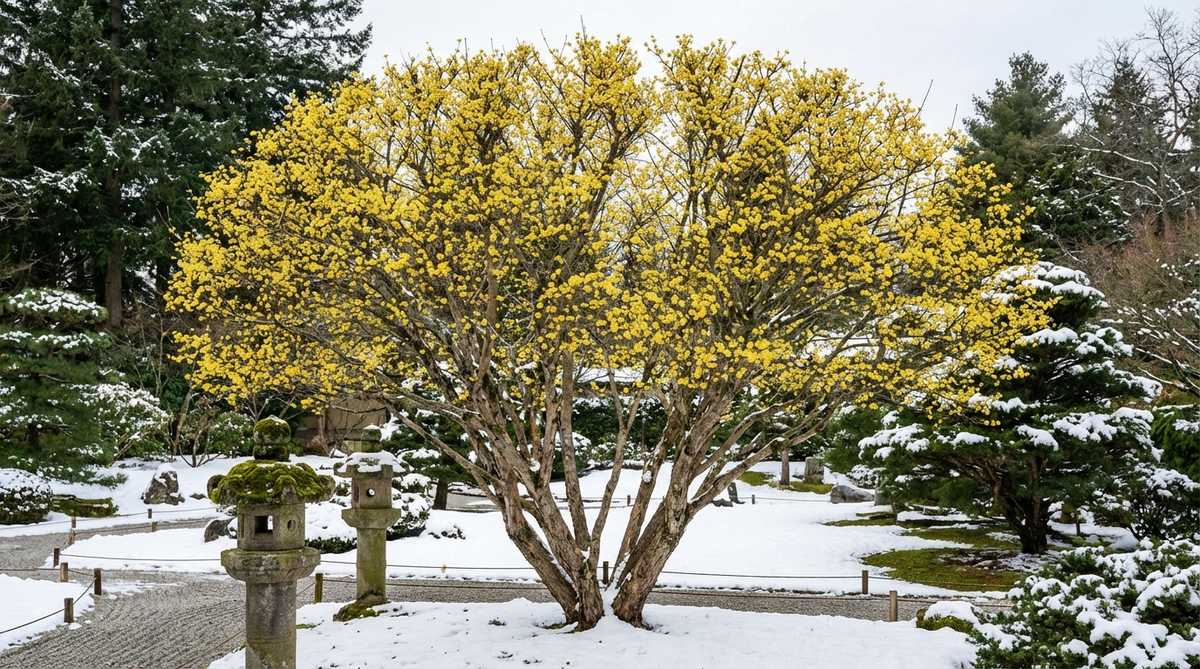
Cornus mas produces clusters of small yellow flowers in late winter, often blooming while snow remains on the ground. The early flowers provide critical nectar for emerging pollinators.
This multi-stemmed tree reaches 20-25 feet with a rounded form. The species produces edible cherry-like red fruits in summer and displays yellow to reddish-purple fall color.
Cornelian cherry adapts to various soil types and tolerates urban conditions in zones 4-8. The exfoliating bark creates winter interest on mature specimens.
41. Serviceberry
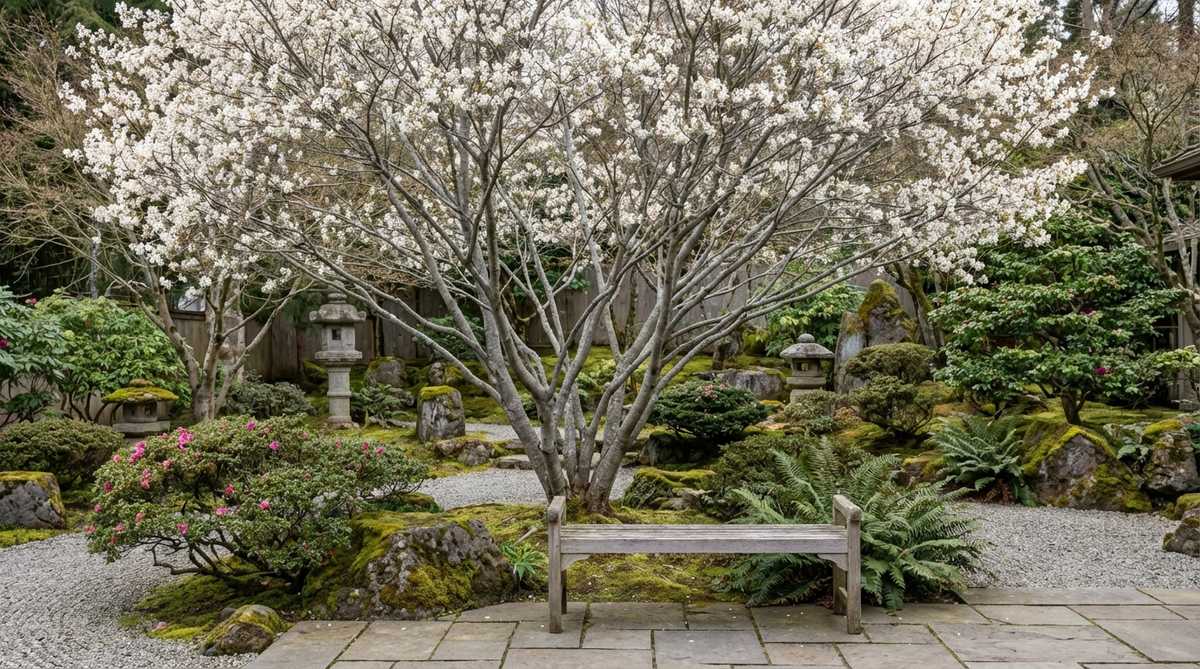
Amelanchier species produce white flowers in early spring followed by edible purple-black berries favored by birds. The delicate flowers create a soft, cloud-like effect against bare branches.
Growing 15-25 feet tall depending on species, serviceberries offer multi-season interest including fall foliage in shades of yellow, orange, and red. The smooth gray bark develops ornamental striations with age.
These adaptable natives thrive in partial shade and various soil conditions across zones 4-9. The species bridges native plant landscapes and Japanese design aesthetics.
42. Flowering Crabapple
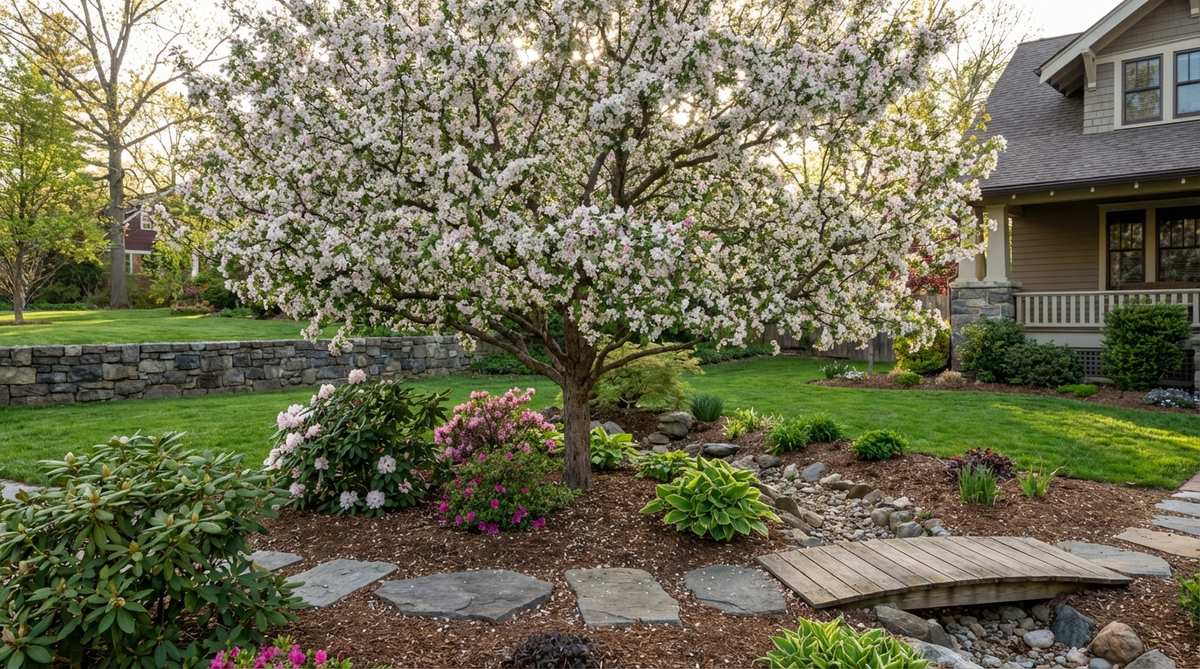
Malus species produce abundant white, pink, or red flowers in spring followed by small colorful fruits that persist into winter. The profuse bloom rivals cherry displays while offering different timing.
Crabapples range from 15-25 feet tall with rounded to upright forms depending on cultivar. Select disease-resistant varieties to minimize maintenance requirements.
The persistent fruits provide wildlife food and ornamental winter interest. Plant in full sun with good air circulation to reduce disease pressure in zones 4-8.
43. Sourwood
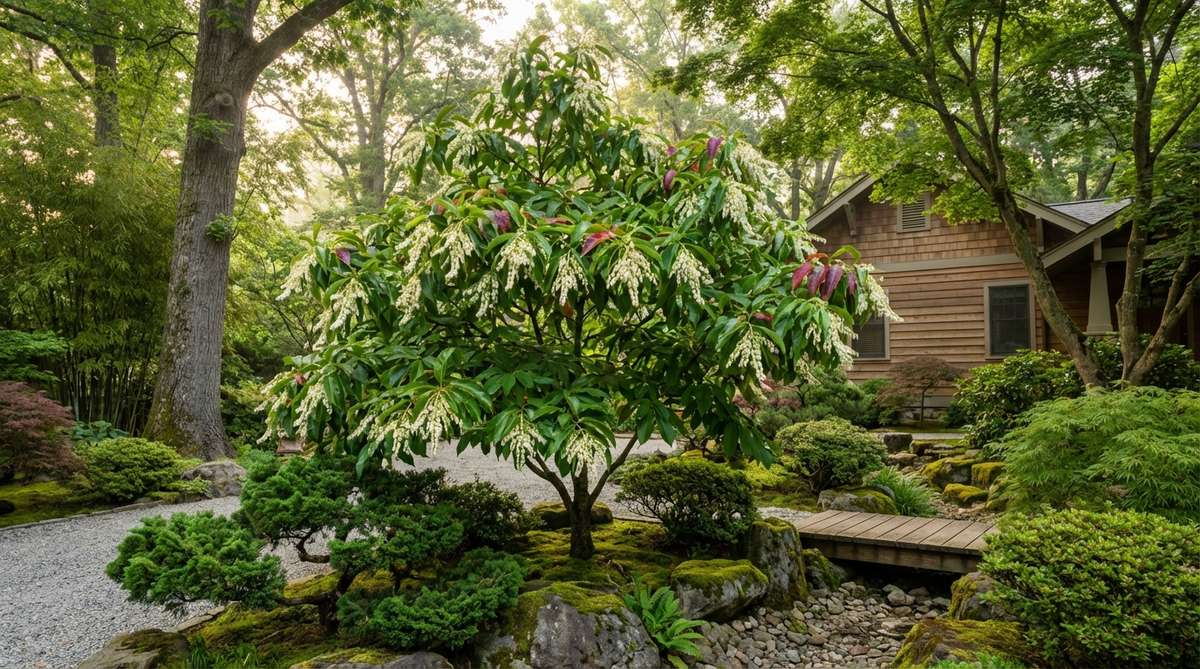
Oxydendrum arboreum produces drooping panicles of white urn-shaped flowers in midsummer when few other trees bloom. The lily-of-the-valley-like flowers dangle beneath glossy green foliage.
This native tree grows 25-30 feet tall with a pyramidal form and distinctive fall color that begins in late summer with brilliant red-purple shades. The seed capsules persist through winter.
Sourwood demands acidic, well-drained soil and struggles in alkaline conditions. Plant in partial shade in hot climates, zones 5-9.
44. Fringe Tree
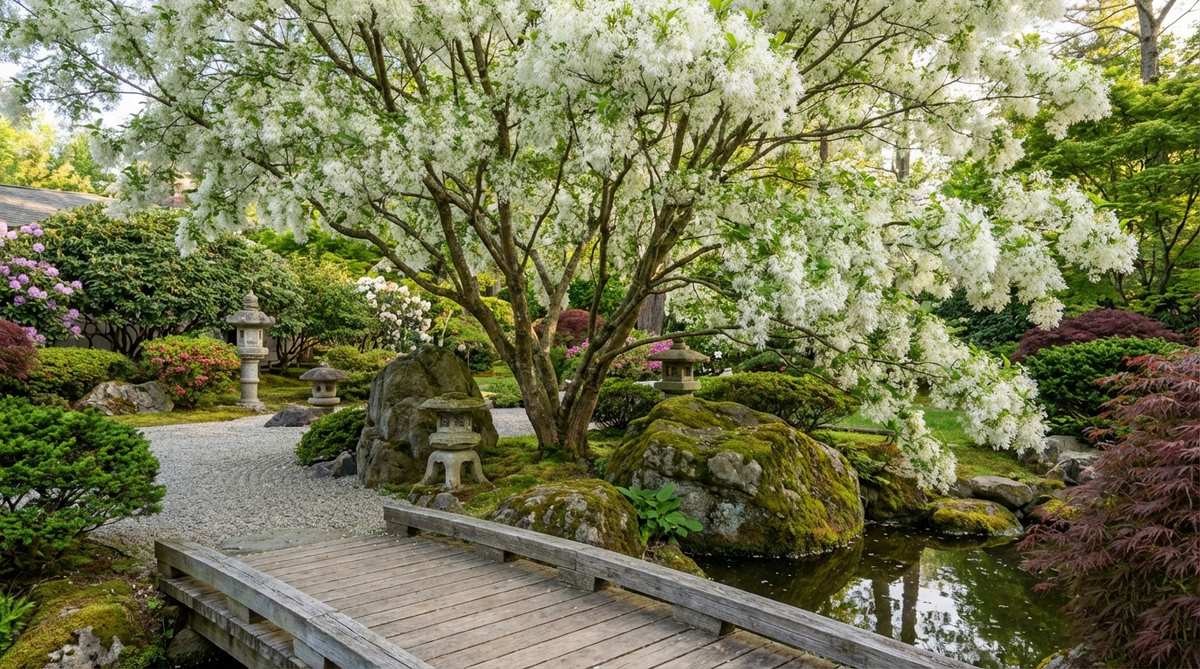
Chionanthus species produce feathery white flower clusters in late spring that create a fringe-like appearance covering the entire canopy. The fragrant blooms attract numerous pollinators.
Growing 12-20 feet tall with equal spread, fringe trees develop into multi-stemmed specimens with an open, airy form. Female trees produce blue-black fruits if male pollinators are present.
This adaptable tree tolerates various soil conditions and partial shade. The late leafing habit prevents frost damage in zones 4-9.
45. Redbud
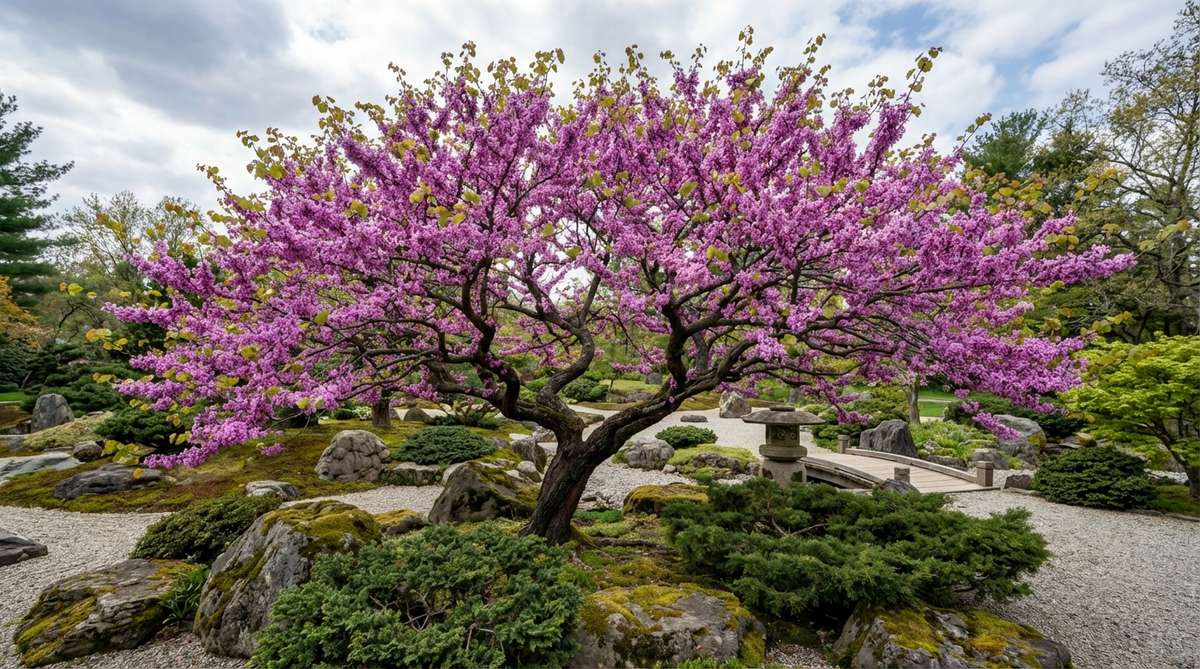
Cercis species produce clusters of small pink-purple pea-like flowers directly on trunks and branches before leaves emerge. This unusual bloom pattern creates striking visual impact in early spring.
Growing 20-30 feet tall with a rounded form, redbuds develop heart-shaped leaves that provide summer shade. Several cultivars offer white flowers or burgundy foliage.
Redbud adapts to partial shade and various soil types in zones 4-9. The species serves as a native alternative to imported flowering trees.
46. Silverbell
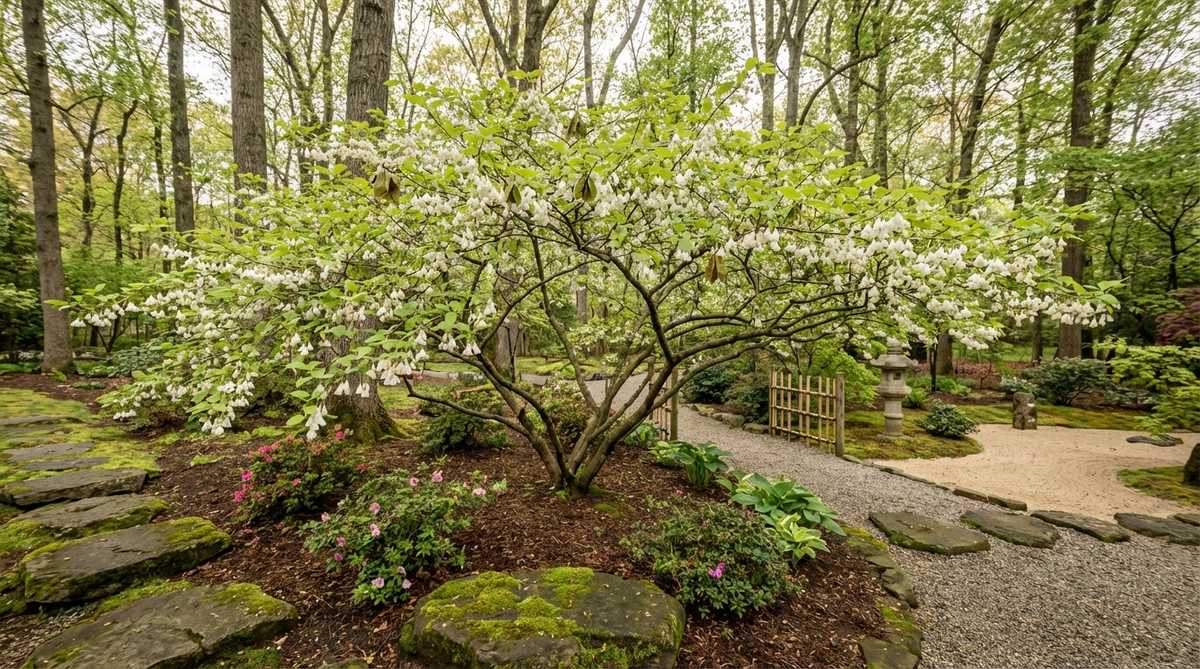
Halesia species produce pendulous white bell-shaped flowers in spring that dangle beneath emerging foliage. The delicate flowers create a soft, romantic effect along branches.
This understory tree grows 30-40 feet tall with a pyramidal to rounded form. The flowers develop into four-winged seed pods that persist into winter.
Silverbell prefers moist, acidic soil and partial shade in zones 5-8. The species provides excellent transition between sunny and shaded garden areas.
BambooVertical Elements & Sound in Motion
Bamboo species provide vertical accent elements, natural screening, and the characteristic rustling sound that brings gardens to life. Most bamboo varieties require root barriers to prevent aggressive spreading. Select clumping species for contained growth or running types with barrier installation for traditional grove effects.
47. Black Bamboo
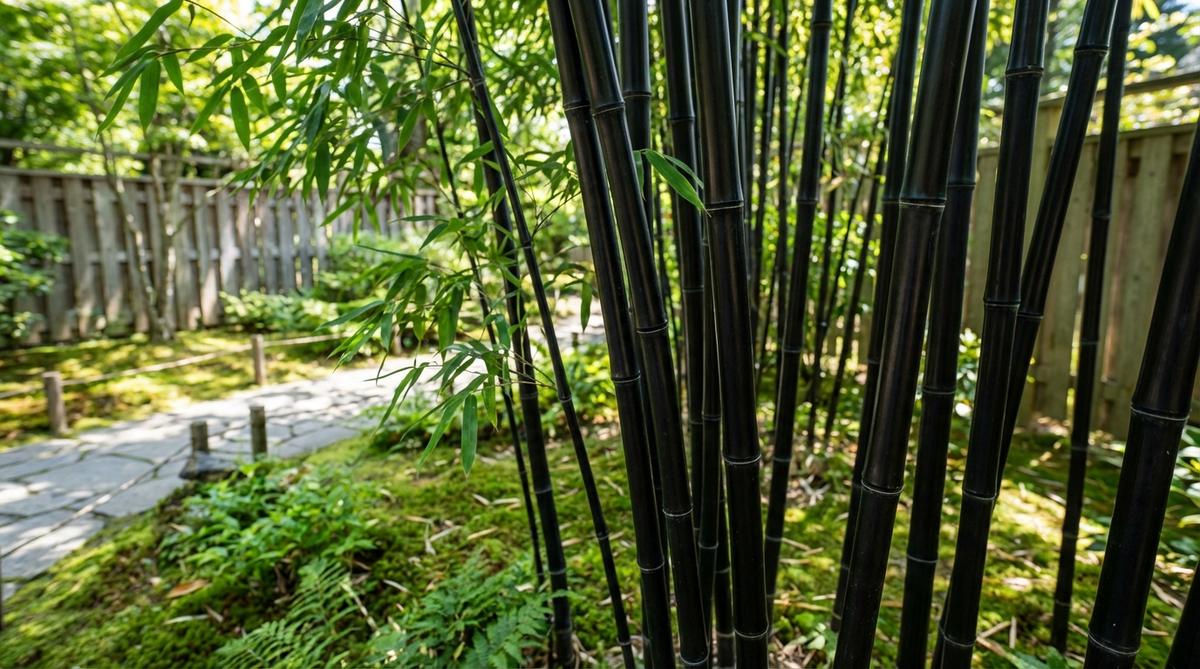
Phyllostachys nigra produces culms that transition from green to jet black over 2-3 years, creating dramatic contrast against green foliage. The color transformation intensifies with sun exposure.
Growing 20-35 feet tall depending on climate, black bamboo suits smaller gardens better than giant timber species. The slender culms create an elegant, refined appearance suitable for viewing gardens.
This running bamboo requires root barriers for containment. Plant in partial shade to full sun in zones 7-10 with protection from drying winds.
48. Timber Bamboo
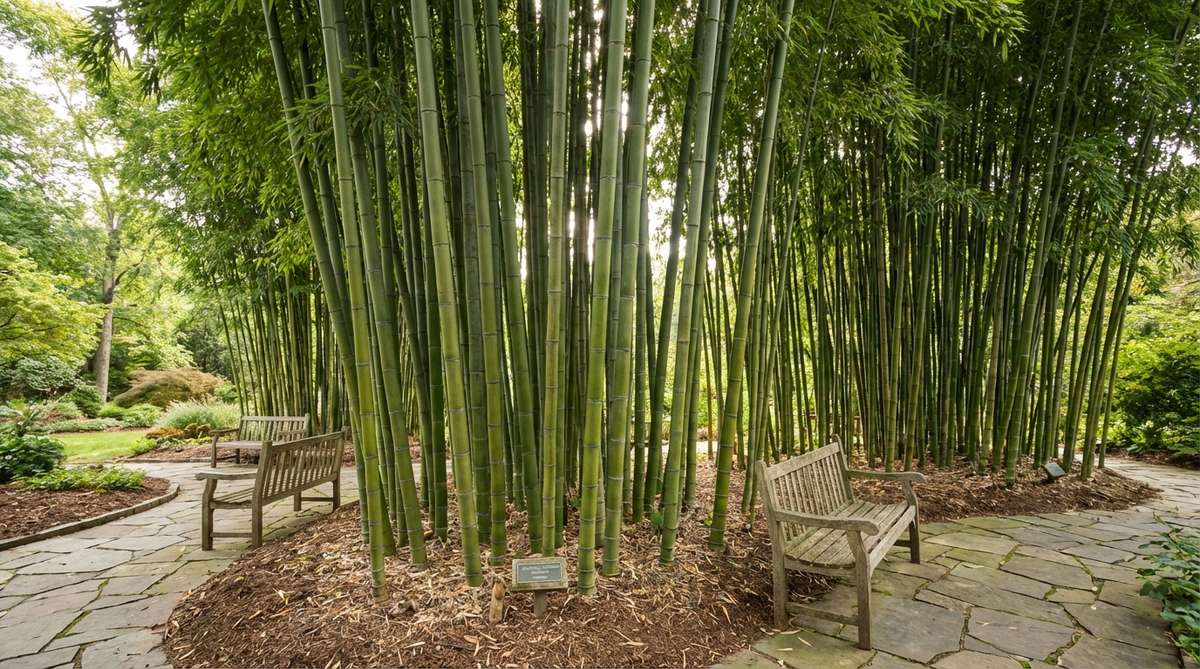
Phyllostachys bambusoides represents one of the tallest cold-hardy bamboos, reaching 40-70 feet in ideal conditions. The thick culms provide traditional material for construction and crafts.
This running bamboo creates impressive groves when given space to spread. The vertical culms filter light while providing dense screening and wind protection.
Timber bamboo demands root barriers and regular thinning to maintain optimal appearance. Plant in full sun with rich, moist soil in zones 7-10.
49. Golden Groove Bamboo
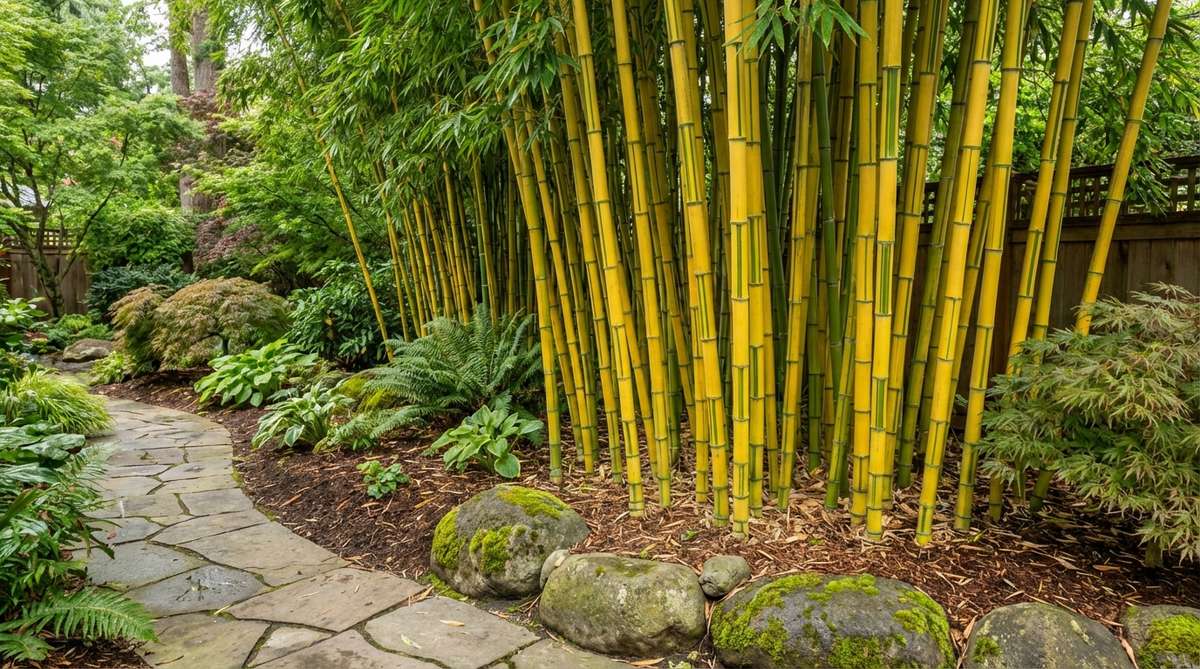
Phyllostachys aureosulcata features bright yellow culms with green stripes in the grooves between nodes. The colorful stems create year-round ornamental interest and brighten shaded areas.
Growing 25-35 feet tall, this cold-hardy running bamboo tolerates zone 5 conditions. The culms occasionally develop dramatic zigzag bends near the base, adding sculptural interest.
Install root barriers to contain spread. The species adapts to various soil types and light conditions from full sun to partial shade.
50. Hedge Bamboo
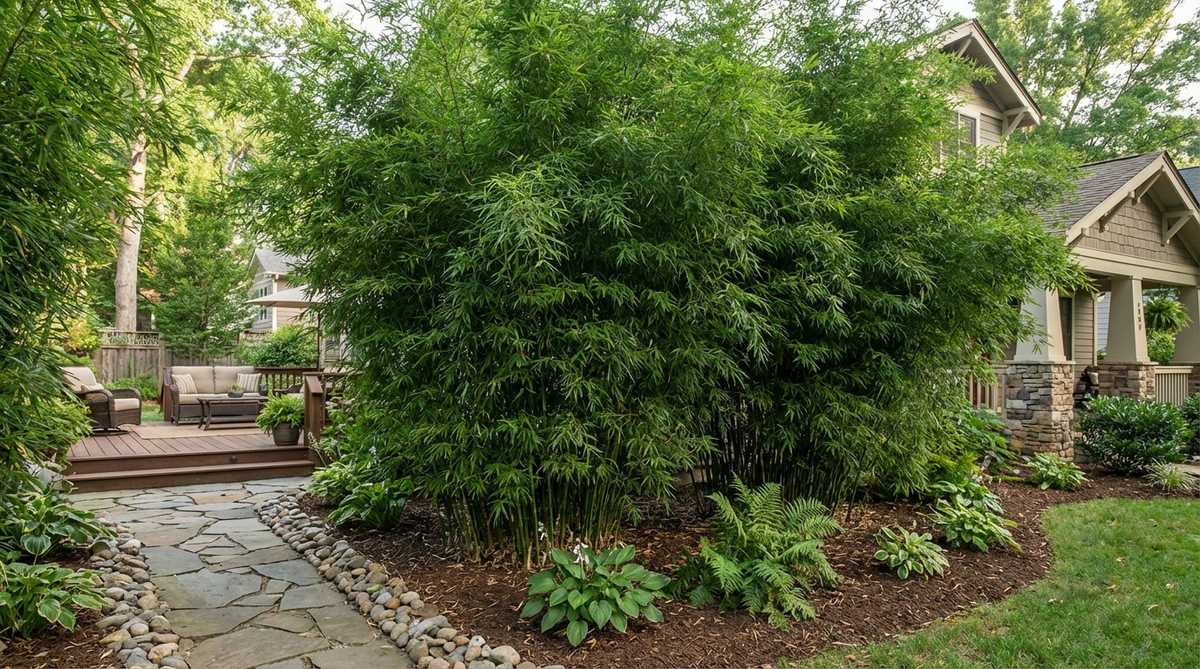
Bambusa multiplex forms dense clumping growth that stays naturally contained without spreading aggressively. The non-invasive habit makes this species ideal for residential gardens without barrier installation.
Growing 15-25 feet tall depending on cultivar, hedge bamboo provides excellent screening and privacy. The fine-textured foliage creates a soft appearance suitable for formal or informal settings.
This clumping bamboo performs best in zones 7-11 with protection from hard freezes. Plant in full sun to partial shade with regular water during establishment.
51. Moso Bamboo
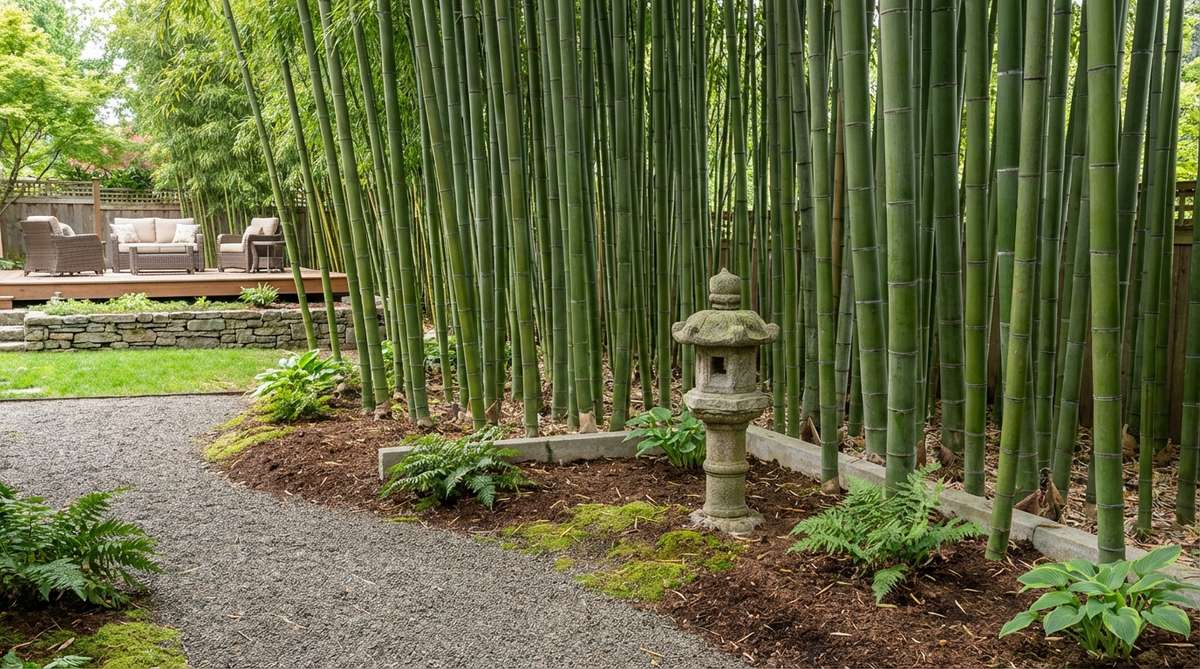
Phyllostachys edulis produces the thickest culms of any cold-hardy bamboo, reaching 4-6 inches in diameter. The massive size creates impressive presence in large-scale landscapes.
This running bamboo grows 50-70 feet tall, requiring substantial space and containment measures. The species produces edible shoots harvested in spring.
Moso bamboo demands root barriers and performs best in zones 8-10. Provide full sun, rich soil, and consistent moisture for optimal growth.
52. Simon Bamboo
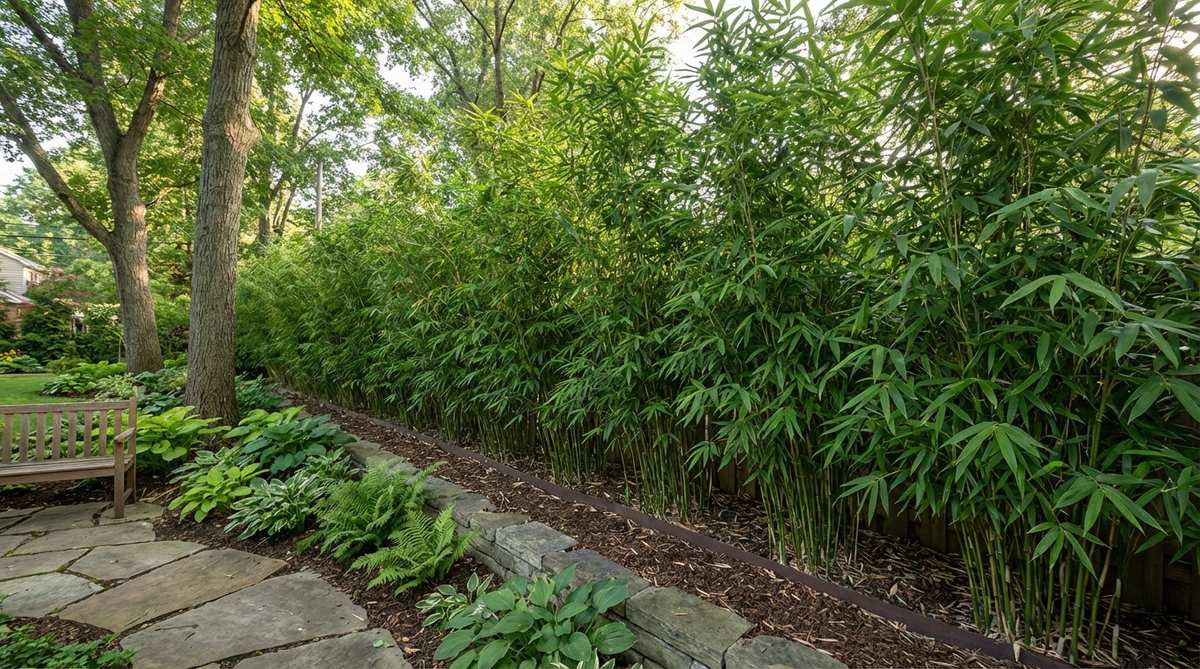
Pleioblastus simonii creates effective hedging with upright growth to 20 feet tall. The medium-textured foliage provides year-round screening while tolerating heavy pruning.
This running bamboo spreads aggressively without containment, requiring vigilant root barrier installation. The species accepts shade better than most timber bamboos.
Simon bamboo demonstrates excellent cold hardiness to zone 7 and adapts to various soil conditions. Thin culms regularly to maintain attractive appearance.
53. Narihira Bamboo
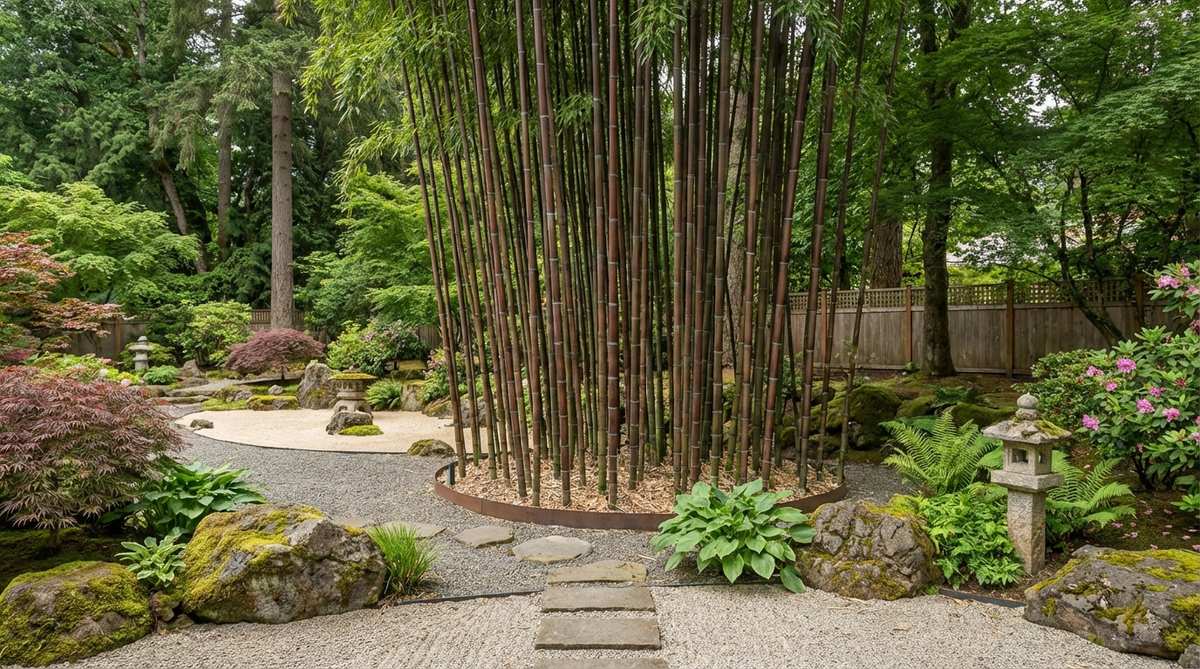
Semiarundinaria fastuosa produces tall, upright culms striped with burgundy-brown, creating distinctive coloration. The species maintains a relatively narrow footprint compared to other running bamboos.
Growing 20-30 feet tall, Narihira bamboo suits medium-sized gardens when contained with barriers. The straight culms provide classic Japanese grove aesthetics.
This cold-hardy species tolerates zone 7 conditions and adapts to sun or partial shade. Prune in spring to control height and density.
54. Umbrella Bamboo
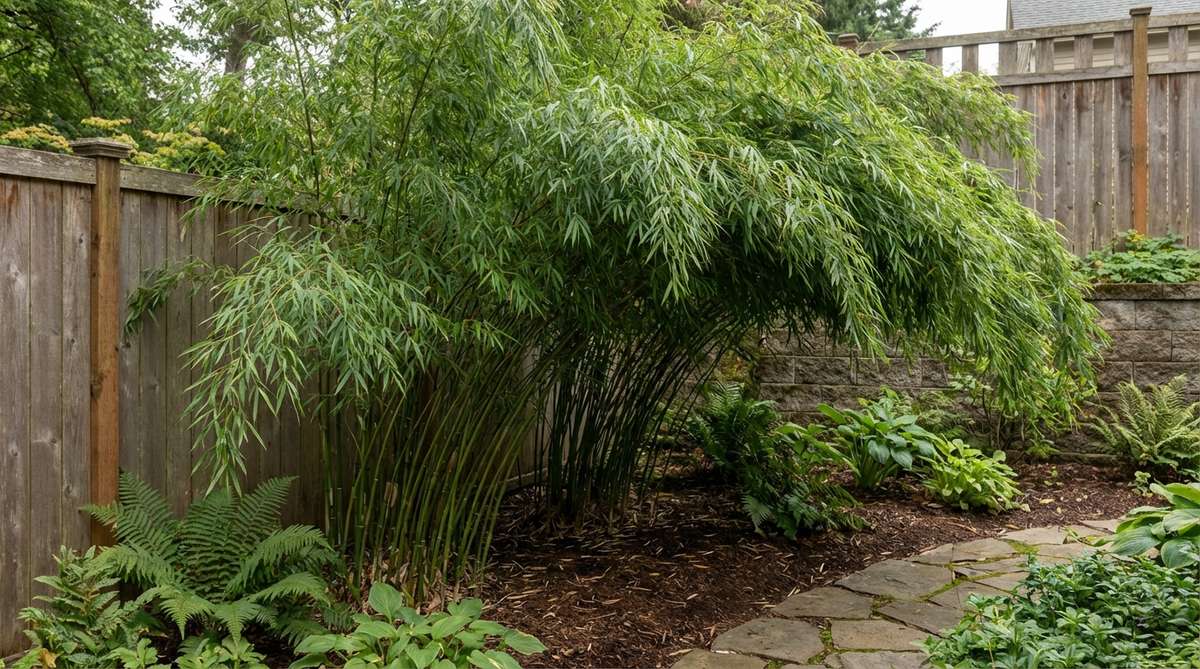
Fargesia murielae forms non-invasive clumps with gracefully arching culms topped by dense foliage that creates an umbrella-like canopy. The clumping habit eliminates containment concerns.
Growing 12-15 feet tall, this cold-hardy bamboo tolerates zone 5 conditions. The refined appearance suits Japanese-style tea gardens and woodland settings.
Umbrella bamboo prefers partial shade and consistent moisture. The species provides excellent screening without aggressive spreading tendencies.
55. Dwarf Bamboo
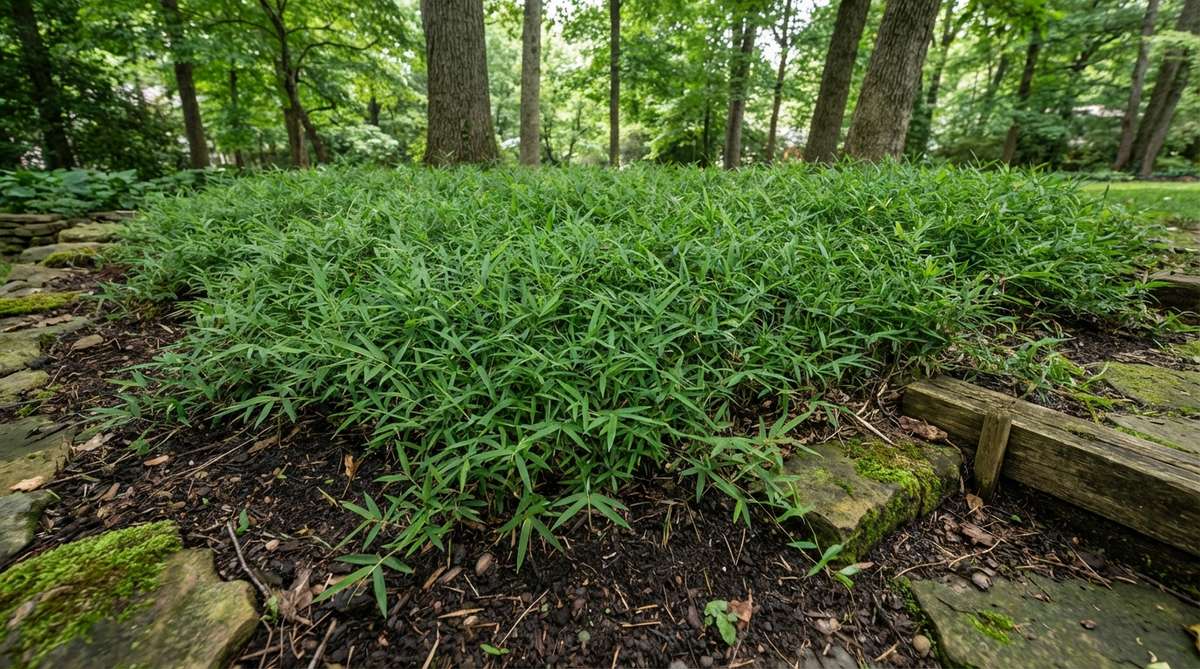
Pleioblastus pygmaeus grows only 12-18 inches tall, creating a groundcover rather than upright screen. The miniature scale suits rock gardens, border edges, and container cultivation.
This running bamboo spreads steadily but remains manageable due to its low height. The fine-textured foliage provides an alternative to traditional lawn areas.
Dwarf bamboo tolerates shade and various soil conditions in zones 6-10. Mow or trim in early spring to rejuvenate foliage.
56. Kuma Bamboo
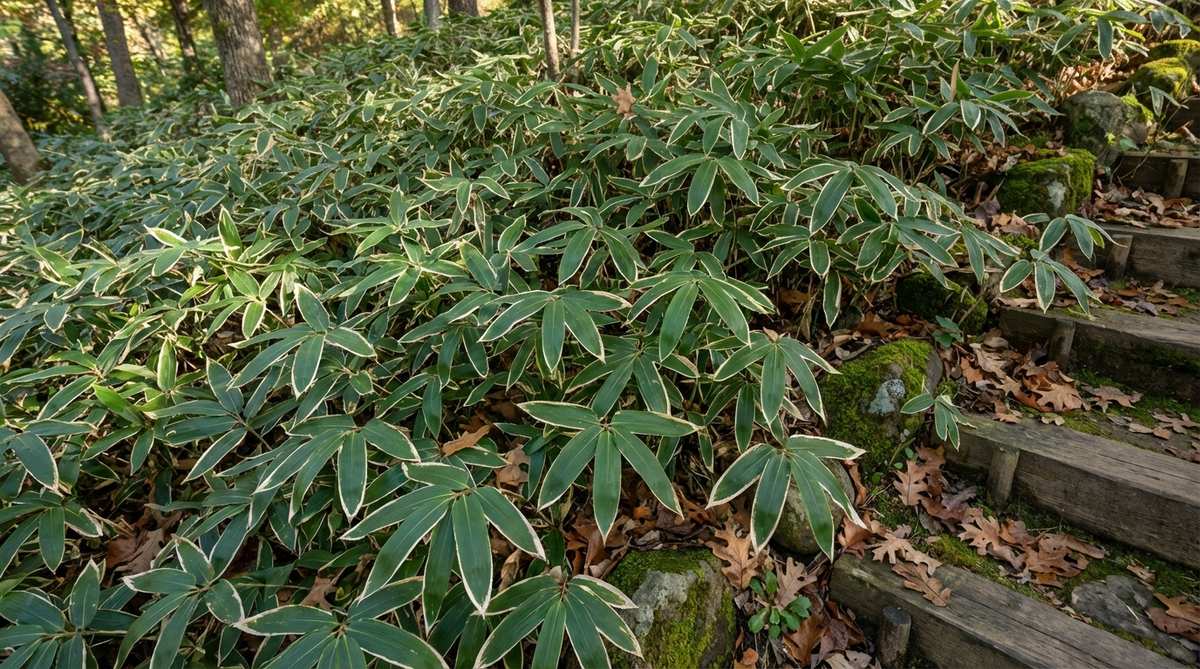
Sasa veitchii produces broad leaves that develop white margins in fall, creating a variegated winter appearance. The short stature and bold foliage create groundcover effect.
Growing 3-5 feet tall, Kuma bamboo spreads moderately through rhizomes. The species provides excellent erosion control on slopes while adding textural interest.
This shade-tolerant bamboo performs well in woodland settings in zones 6-9. Install barriers to prevent spread into adjacent areas.
Specialty Ornamental Trees for Unique Interest
These distinctive species add specialized functions and aesthetic qualities to Japanese garden compositions. Many serve symbolic roles or provide specific seasonal highlights that complement primary plantings. Select based on site conditions and desired cultural references.
57. Nandina
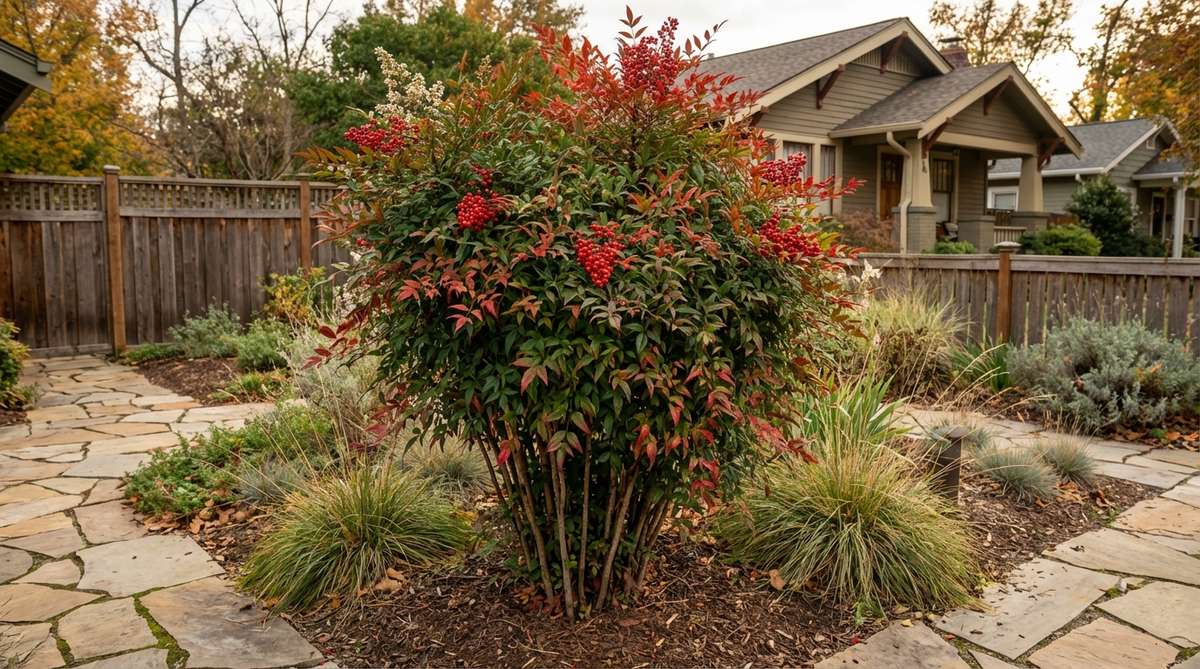
Nandina domestica produces bamboo-like evergreen foliage on vertical stems that redden dramatically in fall and winter. The compound leaves create fine texture despite the plant’s shrub-to-small-tree classification.
Growing 6-8 feet tall in the straight species, Nandina displays white flower clusters in spring followed by bright red berries that persist through winter. The multi-seasonal interest and vertical form suit entry plantings and narrow spaces.
Numerous dwarf cultivars stay under 3 feet for groundcover applications. The species adapts to sun or shade in zones 6-9 but shows best color with sun exposure.
58. Japanese Stewartia
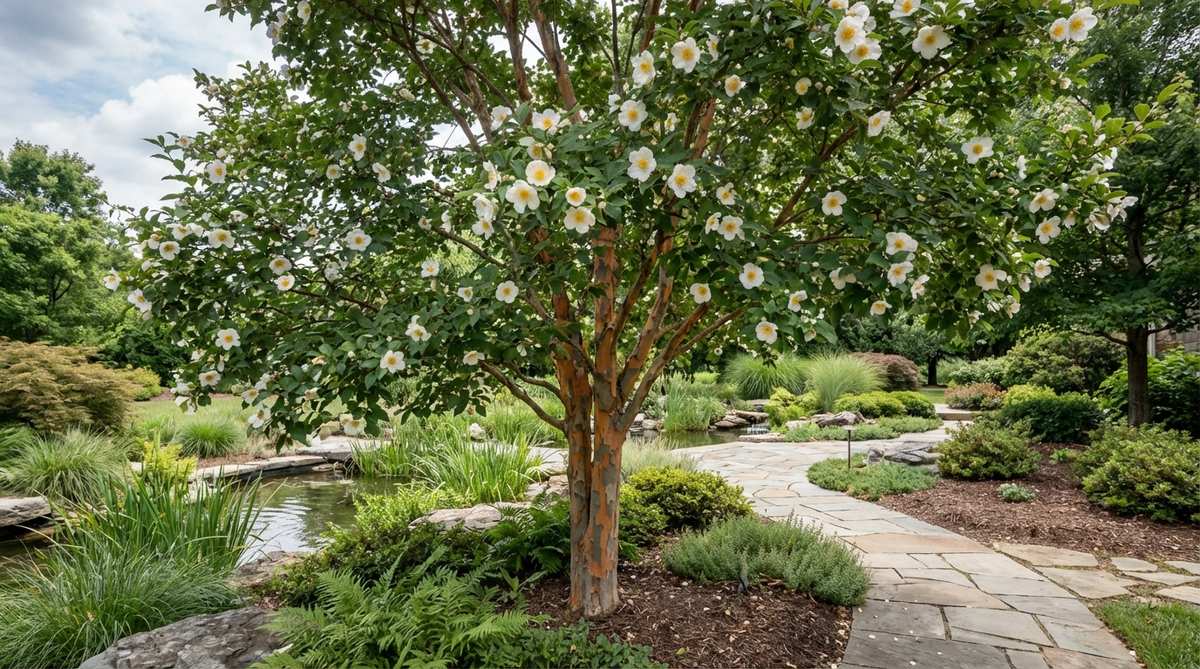
Stewartia pseudocamellia produces white camellia-like flowers with prominent yellow stamens in midsummer when few other trees bloom. The flowers create a serene, contemplative mood appropriate for tea gardens.
This slow-growing tree reaches 20-40 feet with a pyramidal form and exfoliating bark that reveals orange-brown and gray patches. Fall foliage displays brilliant orange-red coloration.
Stewartia demands acidic, well-drained soil with consistent moisture and partial shade. The tree performs best in zones 5-7 with protection from hot afternoon sun.
59. Ginkgo
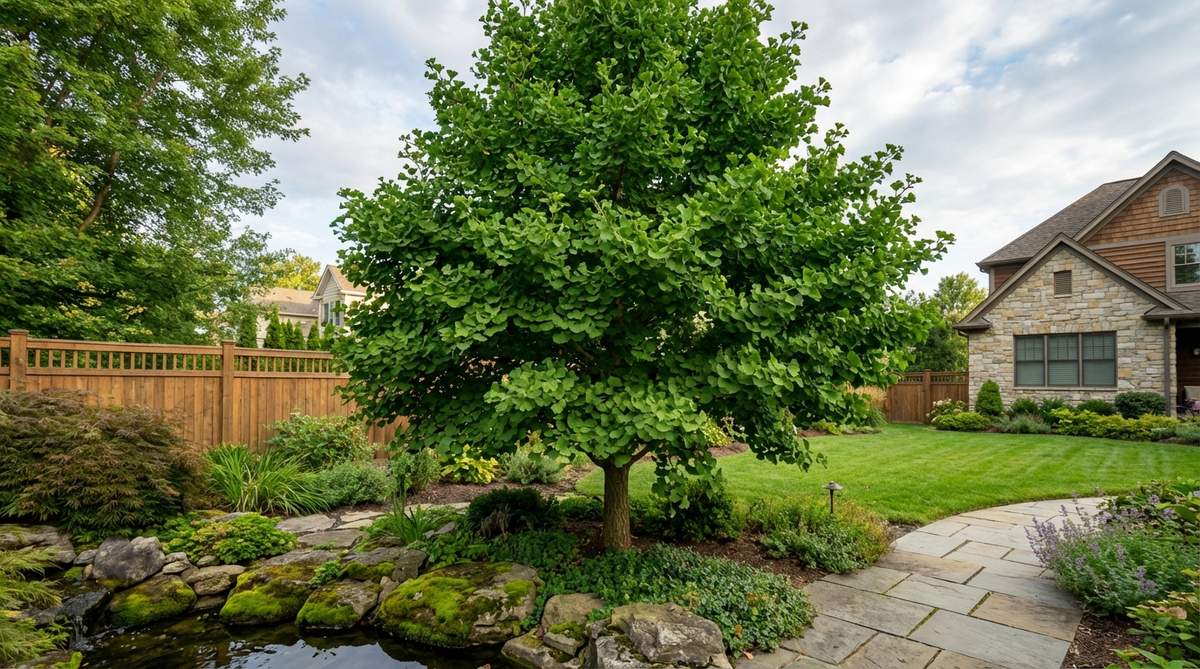
Ginkgo biloba produces distinctive fan-shaped leaves unlike any other tree, creating unique textural interest. The bright green summer foliage transforms to brilliant golden-yellow in autumn.
Growing 50-80 feet tall, ginkgo develops a pyramidal form that becomes more spreading with age. Select male cultivars to avoid messy fruit production.
This living fossil demonstrates exceptional urban tolerance, accepting pollution, confined root space, and variable soil conditions. Plant in full sun across zones 3-8.
50. Japanese Zelkova
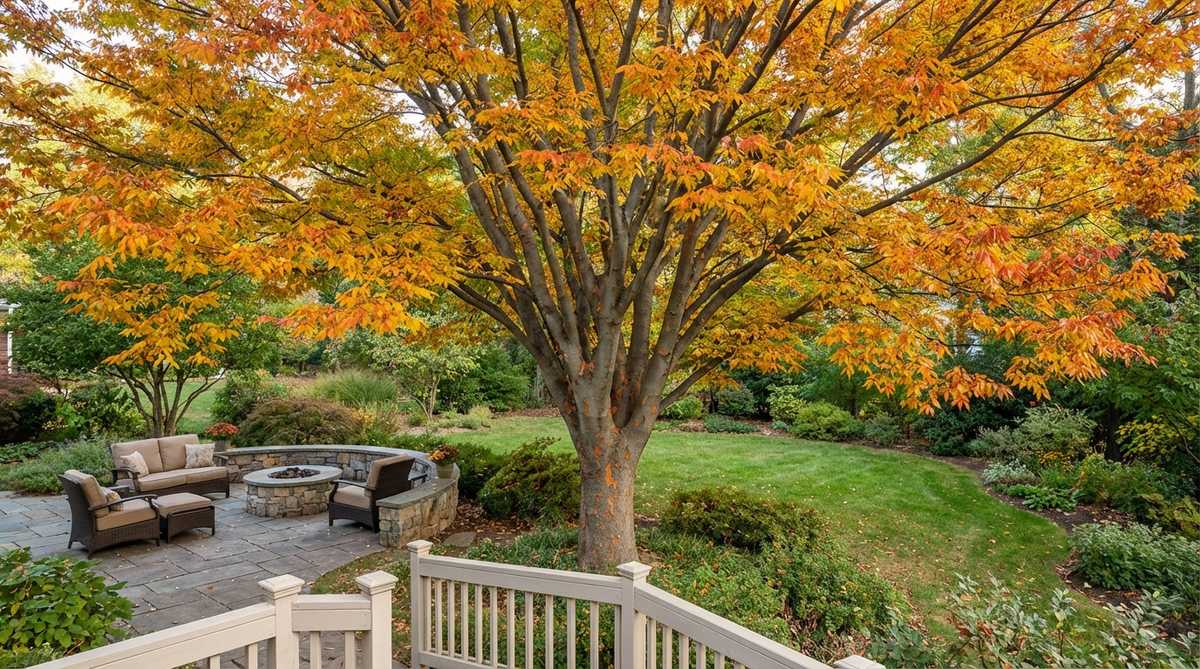
Zelkova serrata develops into a large vase-shaped shade tree with fine-textured elm-like foliage that turns yellow, orange, or red in autumn. The smooth gray bark exfoliates to reveal orange undertones.
Growing 50-80 feet tall with equal spread, zelkova provides substantial shade and strong architectural presence. The species serves as a disease-resistant alternative to American elms.
Zelkova adapts to various soil types and urban conditions in zones 5-8. Plant in full sun with adequate space for mature development.
61. Japanese Snowbell
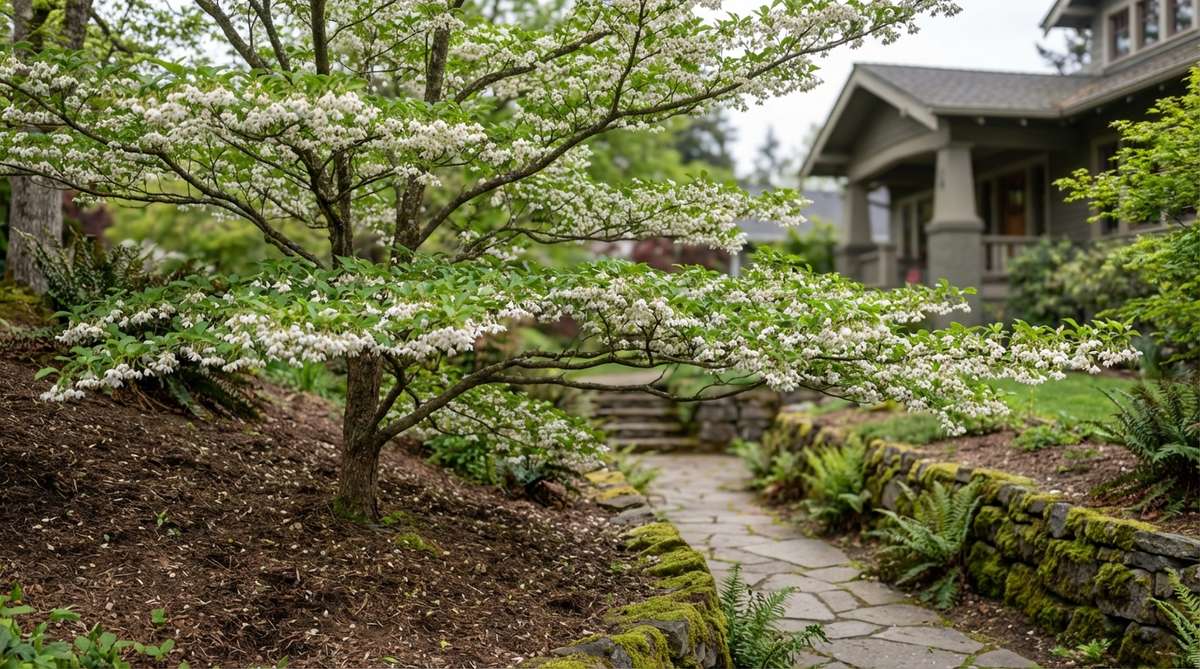
Styrax japonicus produces pendulous white bell-shaped flowers in late spring that dangle beneath horizontal branches. The flowers create an understory canopy effect best viewed from below.
This small tree grows 20-30 feet tall with elegant horizontal branching tiers. The late bloom timing follows cherries and extends spring flowering succession.
Japanese snowbell prefers acidic, moist soil and partial shade in zones 5-8. Plant on slopes or beside paths where flowers can be appreciated from underneath.
62. Katsura
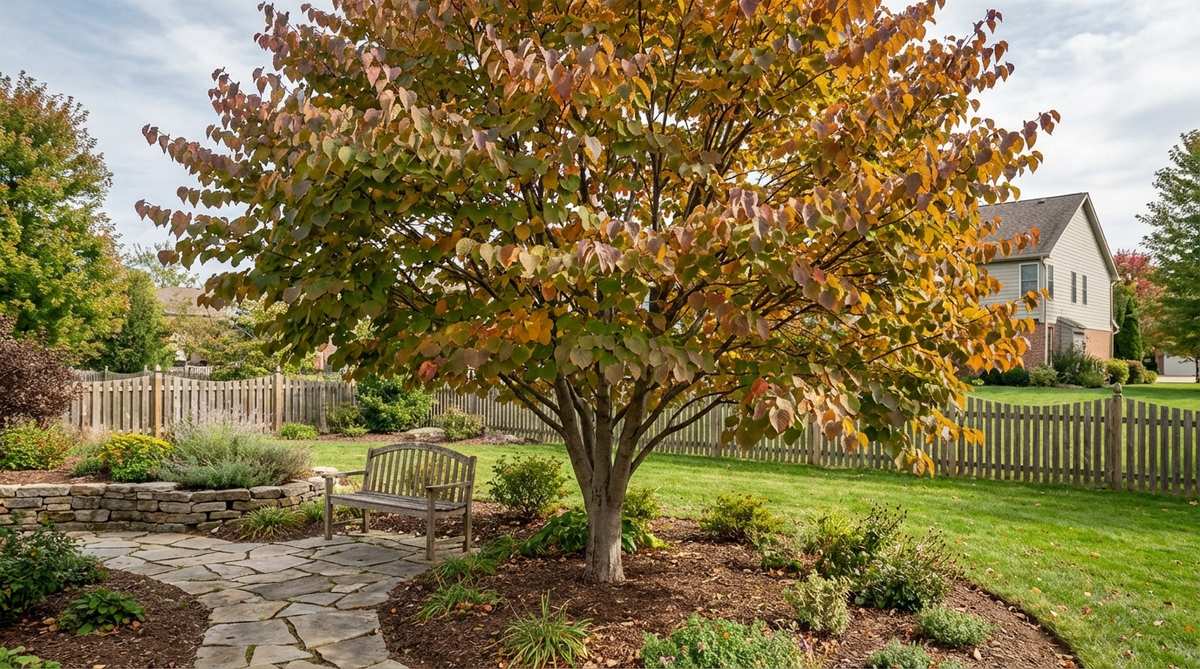
Cercidiphyllum japonicum produces heart-shaped leaves that emerge reddish-purple, mature to blue-green, then transform to yellow-orange in fall. The autumn foliage releases a distinctive cotton-candy or caramel fragrance.
Growing 40-50 feet tall with a pyramidal to rounded form, Katsura develops into a substantial specimen tree. The clean branching structure and smooth bark provide four-season interest.
Katsura demands consistent moisture and performs best near water features or in well-irrigated areas. Plant in full sun to partial shade in zones 4-8.
Creating Your Japanese Garden Tree Collection
This comprehensive guide to japanese garden trees provides authentic options for every garden scale and climate zone across the United States. The key to successful design lies in selecting species that complement each other through contrasting forms, seasonal succession, and cultural significance. Start with foundation conifers for year-round structure, add deciduous maples for seasonal drama, then incorporate flowering cherries and specialty trees for specific interests.
Remember that traditional Japanese gardens evolve slowly through intentional pruning and training rather than relying solely on natural growth. Visit established Japanese gardens in your region to observe mature specimens and seasonal progression. Fresh Garden Ideas recommends working with local nurseries specializing in Japanese cultivars to source authentic varieties adapted to your specific conditions. Begin with 3-5 key specimens rather than attempting comprehensive installation, allowing time to observe growth patterns and develop your pruning skills before expanding your collection.