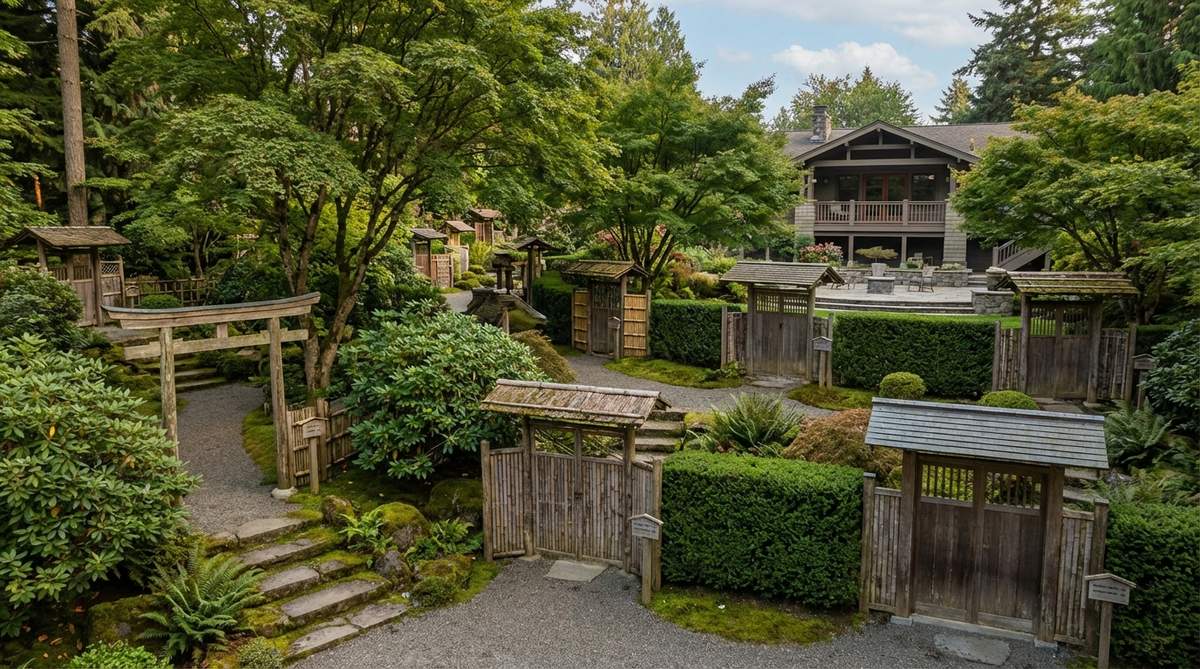
The japanese garden gate transforms an ordinary threshold into a mindful transition between worlds. Designers use these structures to mark sacred boundaries, create spatial hierarchy, and establish contemplative pauses within the landscape. Drawing from centuries of tradition and adapted for contemporary settings, Fresh Garden Ideas presents over 40 gate concepts that blend cultural authenticity with practical implementation.
Design SnapshotKey Principles
- Threshold Hierarchy: Layer multiple gate types (outer, middle, inner) to create progressive transition zones that slow movement and heighten awareness
- Material Authenticity: Select cedar, bamboo, or stone based on regional Japanese precedents; each material carries specific cultural meaning and weathering characteristics
- Structural Simplicity: Favor clean post-and-beam construction over ornate detailing; restraint in form amplifies the gate’s spiritual function
- Spatial Definition: Position gates to frame views, separate garden rooms, and establish clear boundaries without complete visual obstruction
Traditional Torii StructuresSacred Japanese Garden Entrance
Torii gates originated at Shinto shrines to mark the transition from secular to sacred ground. These iconic two-post structures with distinctive crossbeams create instant recognition and establish ceremonial importance. Designers adapt torii proportions to residential scale while maintaining authentic joinery and material choices.
1. Classic Vermilion Torii
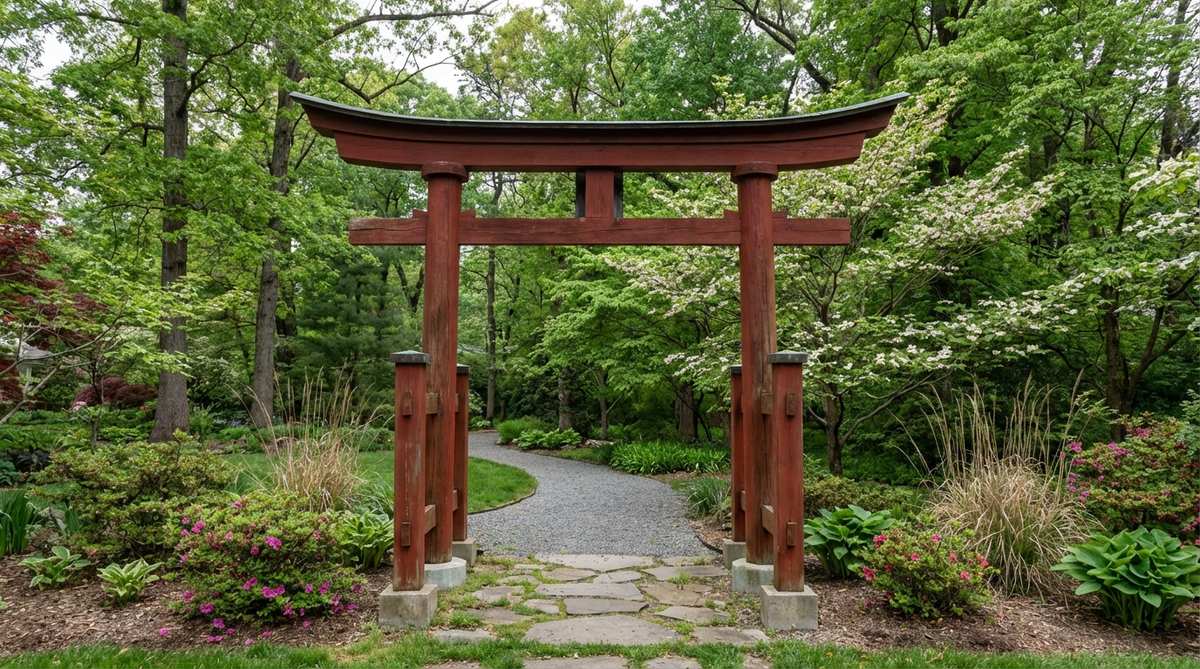
The bright red torii stands as the most recognizable form, featuring curved kasagi top beam and secondary shimagi crosspiece. Cedar or cypress posts receive traditional red oxide stain that weathers to deeper tones over time.
Set posts in concrete footings at depths equal to one-third the above-ground height for stability. The curved kasagi requires steam-bending or lamination techniques to achieve authentic upward sweep at the ends.
Position this gate at primary garden entries where ceremonial impact matters most. The bold color creates focal power but requires commitment to maintenance schedules that preserve finish integrity.
2. Natural Wood Myojin Style
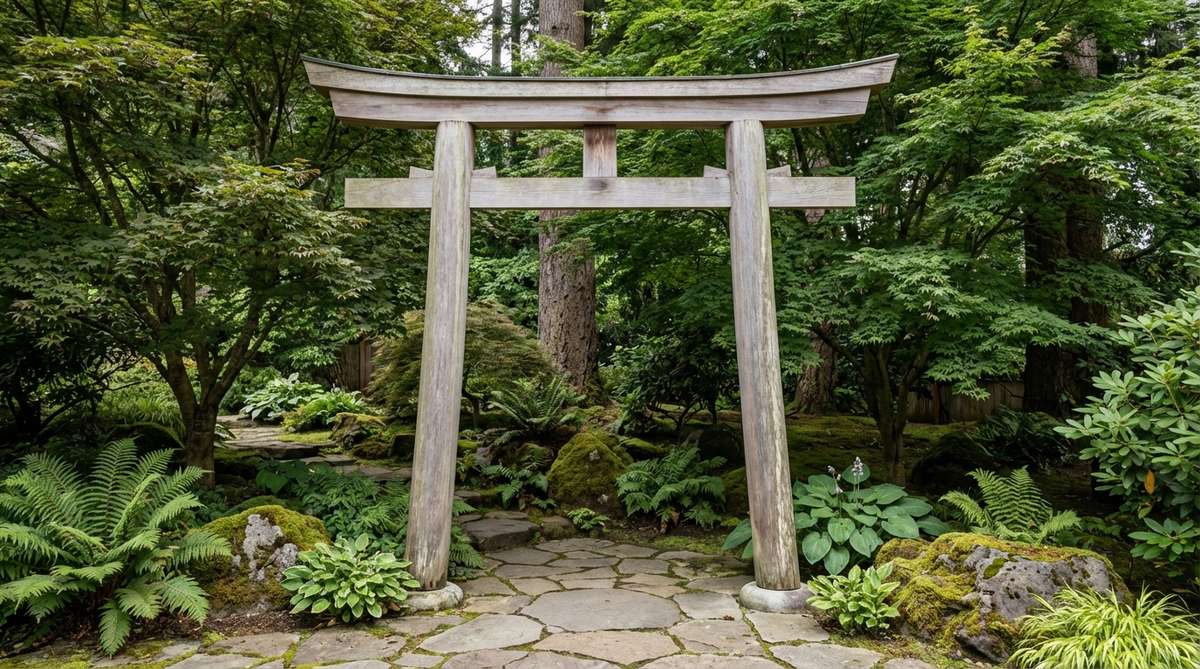
Myojin torii feature curved posts that taper toward the top, creating organic movement within the structure. Weathered cedar or redwood develops silver-gray patina that harmonizes with stone and planted elements.
This style requires larger timber dimensions—minimum 6×6 posts—to maintain visual weight when unpainted. Use traditional mortise-and-tenon joinery at crossbeam connections, reinforced with concealed steel brackets.
Natural wood torii integrate seamlessly into woodland settings or shade gardens where red-stained versions would compete with foliage. Plan for annual inspection of structural connections as wood movement occurs.
3. Stone Pillar Torii
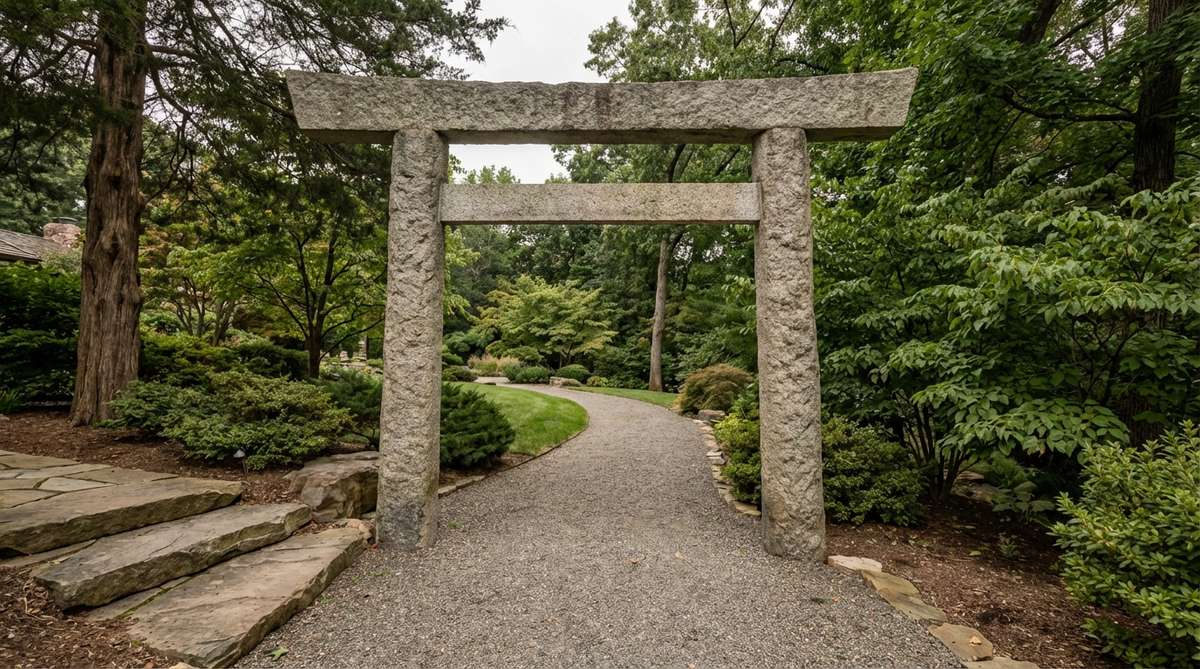
Granite or basalt pillars create permanent torii structures that improve with age. Stone posts demand precise engineering for crossbeam attachment using concealed steel armatures embedded during fabrication.
Work with stone suppliers who understand torii proportions; posts typically measure 12-18 inches square and stand 8-10 feet tall. Timber crossbeams attach through steel plates recessed into the stone surface.
Stone torii excel at high-traffic locations where wood replacement cycles become impractical. Budget appropriately—stone fabrication and installation costs run three to five times higher than timber equivalents.
4. Miniature Pathway Torii
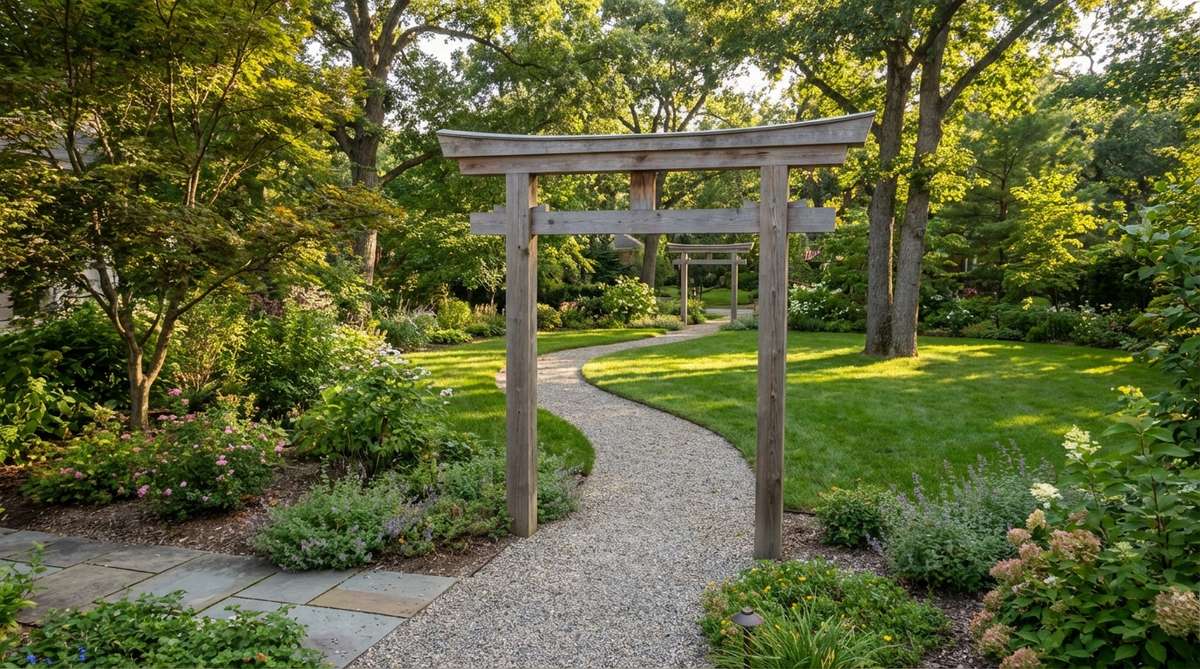
Scaled-down torii at 36-48 inches height mark secondary paths or frame specific views without dominating sightlines. These compact structures use 4×4 posts and proportionally sized crossbeams.
Install miniature torii in sequences to create rhythmic progression along walkways. Space units 15-20 feet apart to maintain individual presence while suggesting continuous transition.
Small-scale torii work effectively in urban gardens where space constraints limit full-size installations. Paint in traditional vermilion or leave natural depending on surrounding plant palette intensity.
5. Double Post Reinforced Torii
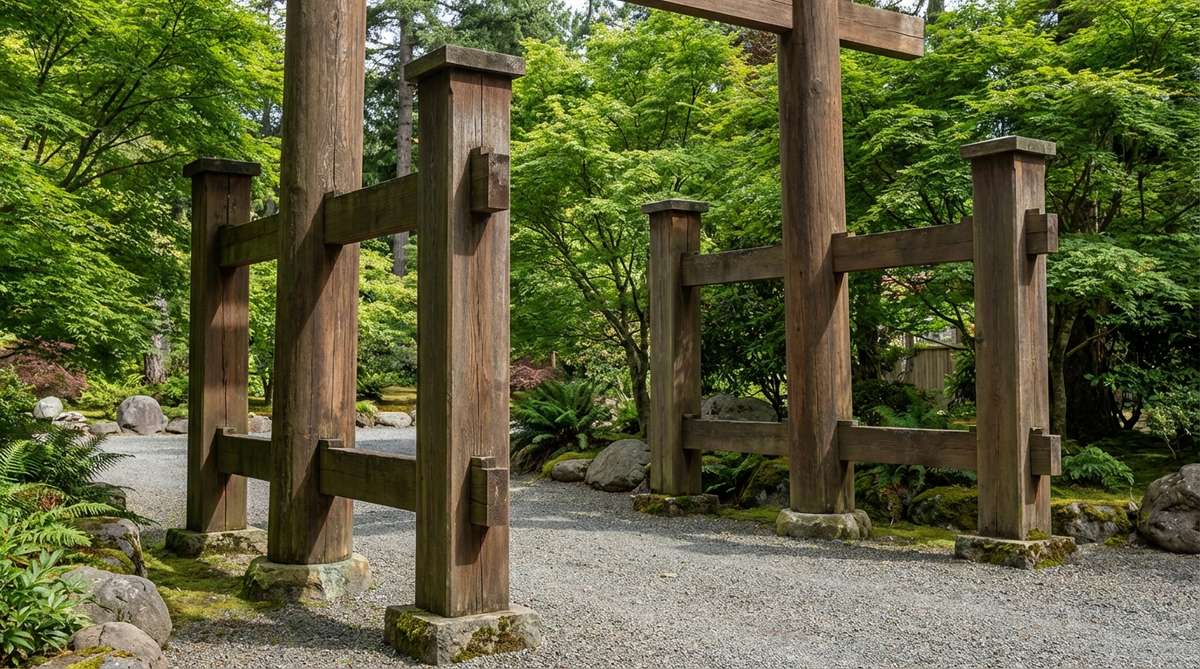
Adding secondary support posts parallel to main uprights increases structural capacity for wider spans. This four-post configuration allows crossbeam spans up to 12 feet while maintaining stability.
Space support posts 18-24 inches behind main posts, connecting them with horizontal braces at mid-height. The doubled structure creates depth and shadow play that single-post versions lack.
Use this approach for driveway entries or locations where vehicular clearance dictates wider openings. The additional posts frame views more deliberately than simple two-post designs.
6. Copper Roof Torii
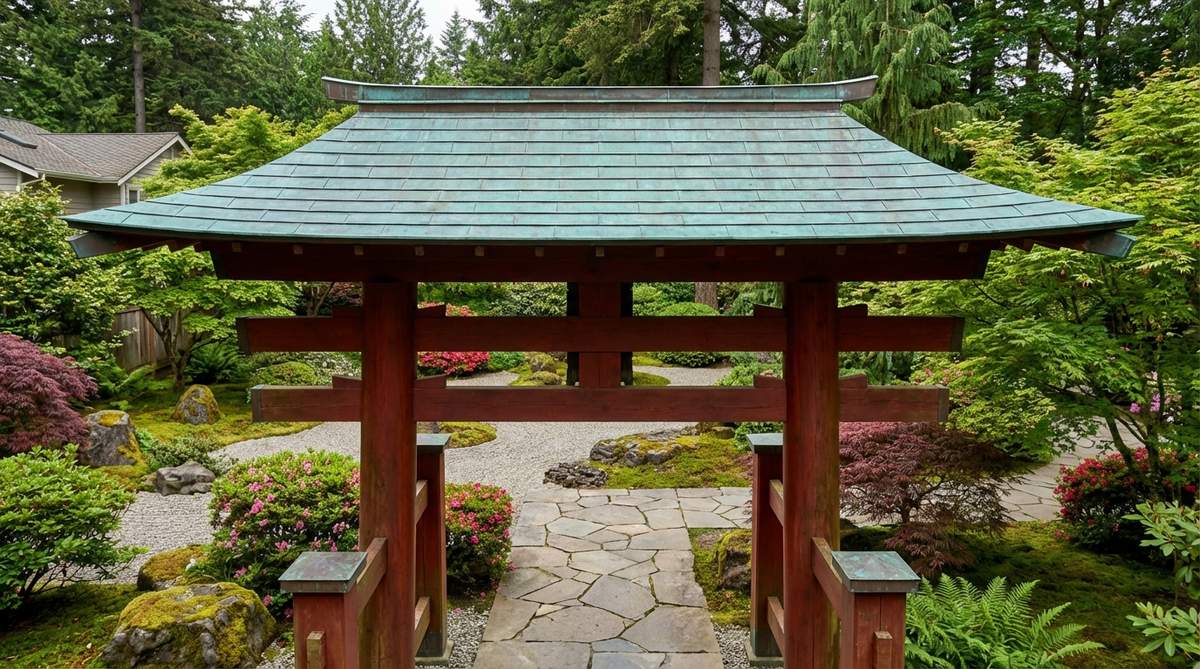
Adding protective copper roofing above crossbeams extends timber life and introduces material contrast. The metal develops verdigris patina that complements both red-stained and natural wood finishes.
Construct shallow-pitch hip roofs with 3-inch overhangs beyond crossbeam ends. Solder copper seams and integrate concealed flashing where roofing meets timber to prevent water infiltration.
Roofed torii establish stronger architectural presence appropriate for main entries. The added complexity increases construction costs but eliminates repeated crossbeam replacement from weather exposure.
7. Floating Water Torii
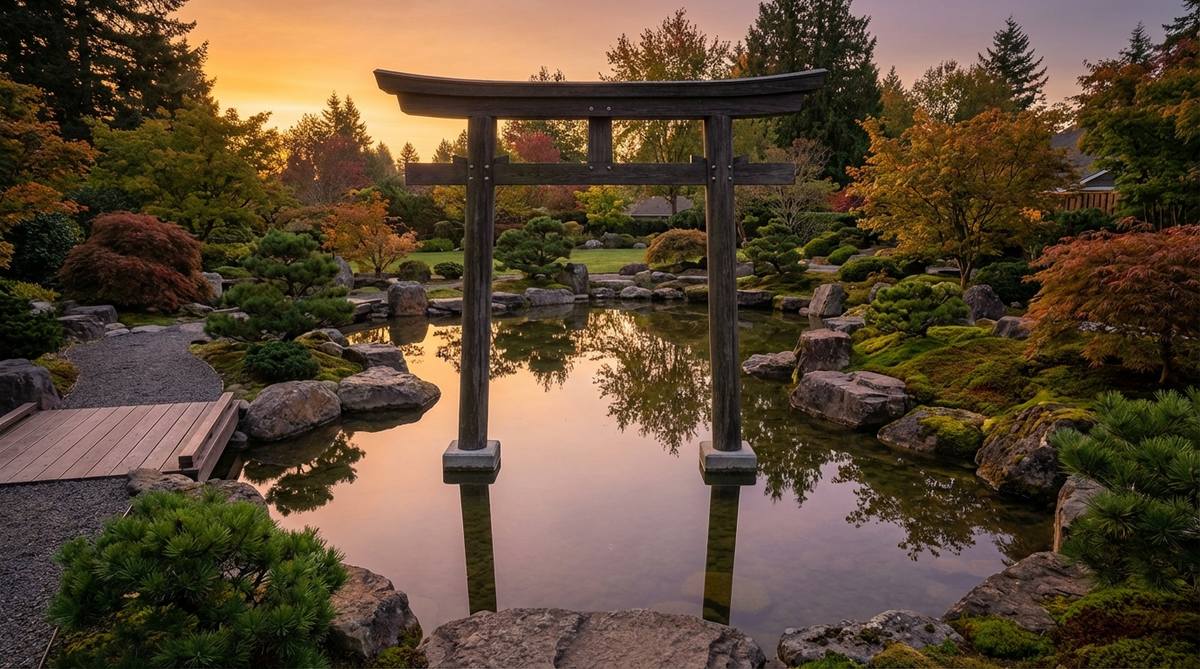
Installing torii in shallow ponds creates dramatic reflections and emphasizes the gate’s spiritual function. Concrete footings extend below water level while posts emerge to create floating illusion.
Engineer footings for 30-36 inch water depth, using marine-grade timber or composite materials for submerged components. Stainless steel hardware prevents corrosion at water-air interfaces.
Floating torii require significant pond depth and professional structural engineering. Position to capture sunrise or sunset reflections that double visual impact during golden hours.
8. Black Lacquer Torii
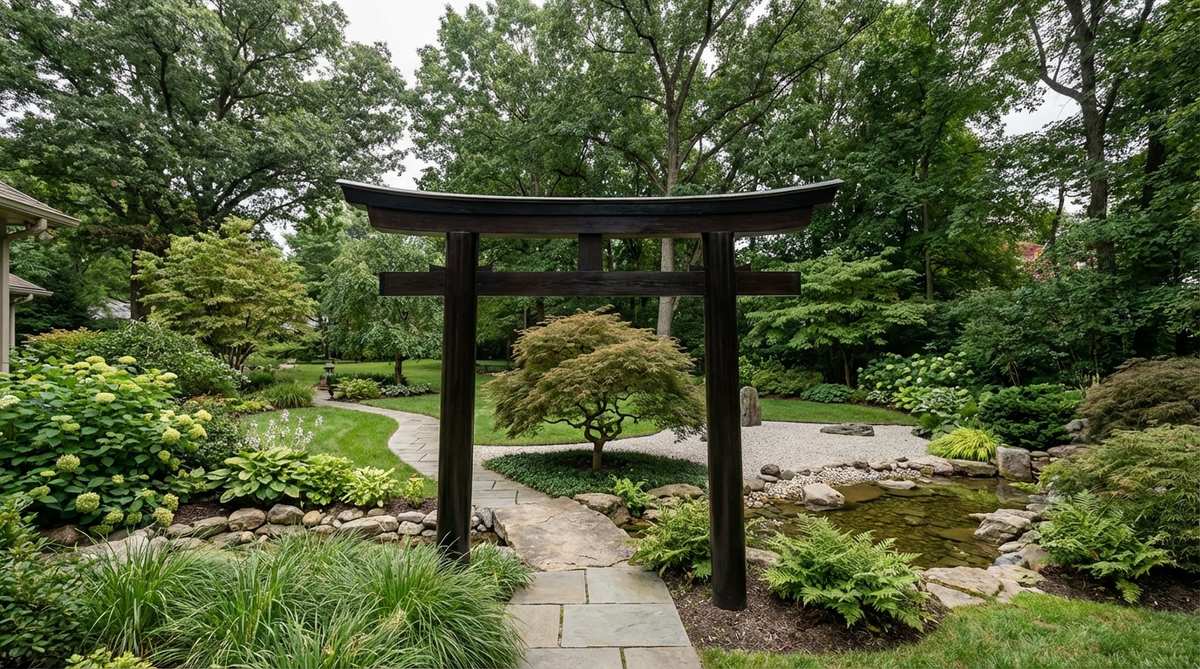
Traditional black urushi lacquer creates sophisticated alternative to vermilion staining. The deep finish provides weather protection while establishing formal presence suited to minimalist landscapes.
Apply multiple thin coats of exterior-grade black stain or paint over properly prepared cedar. Sand between coats to build smooth, durable surface that resists UV degradation.
Black torii recede visually compared to red versions, directing attention toward framed views rather than the gate itself. This restraint suits contemporary interpretations of Japanese design principles.
Tea Garden Entry GatesJapanese Garden Gate Authenticity
Tea garden gates evolved to facilitate tea ceremony protocol, creating thresholds that prepare participants for mindful experience. Outer gates (sotomon) and middle gates (chumon) work in sequence to transition visitors from everyday consciousness to contemplative awareness. These functional structures prioritize symbolic meaning over decorative elaboration.
9. Roofed Outer Gate Sotomon
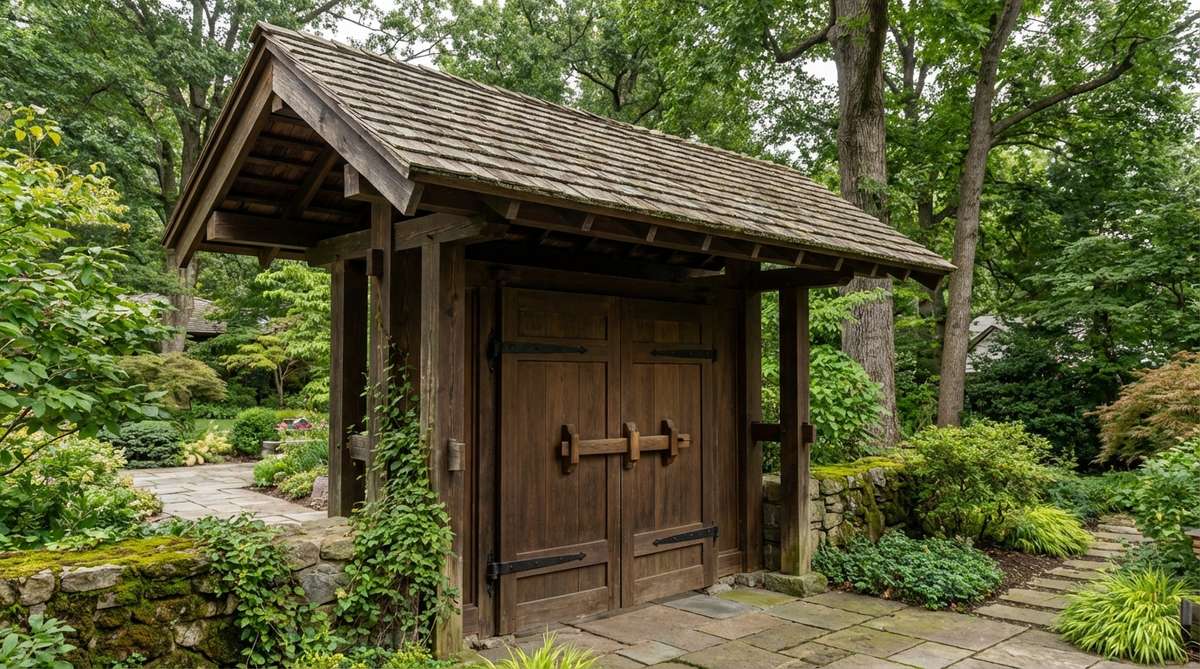
The formal outer gate features post-and-beam construction with protective roof and solid wood doors. This substantial structure announces the garden boundary and provides weather protection for visitors arriving in rain.
Build with 6×6 posts supporting hip or gable roof finished with cedar shingles or ceramic tiles. Hang doors on traditional pin hinges that allow removal for seasonal maintenance.
Include wooden cross-bolt closure on interior side—the sound of bolt seating signals host that all guests have arrived. Size door openings at 32-36 inches width to naturally slow passage and focus attention.
10. Split Bamboo Middle Gate Chumon
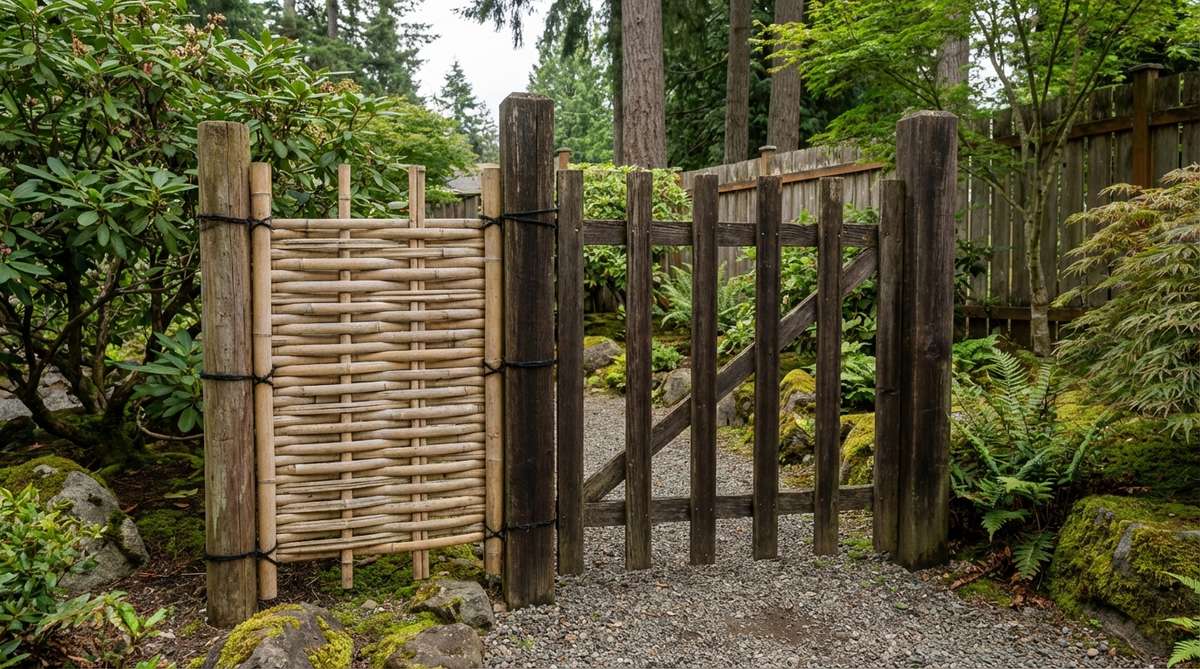
The simple middle gate consists of loosely woven split bamboo panel attached to single post. This humble structure marks the boundary between outer and inner tea gardens through presence rather than physical barrier.
Weave 1-inch split bamboo in horizontal pattern, leaving 2-3 inch gaps between elements. Attach panel to 4×4 post using black hemp or synthetic twine in traditional square lashing.
Position chumon at the natural pause point in the approach path where guests traditionally wait for host’s invitation to proceed. The transparent panel maintains visual connection while establishing clear protocol boundary.
11. Woven Wicker Gate
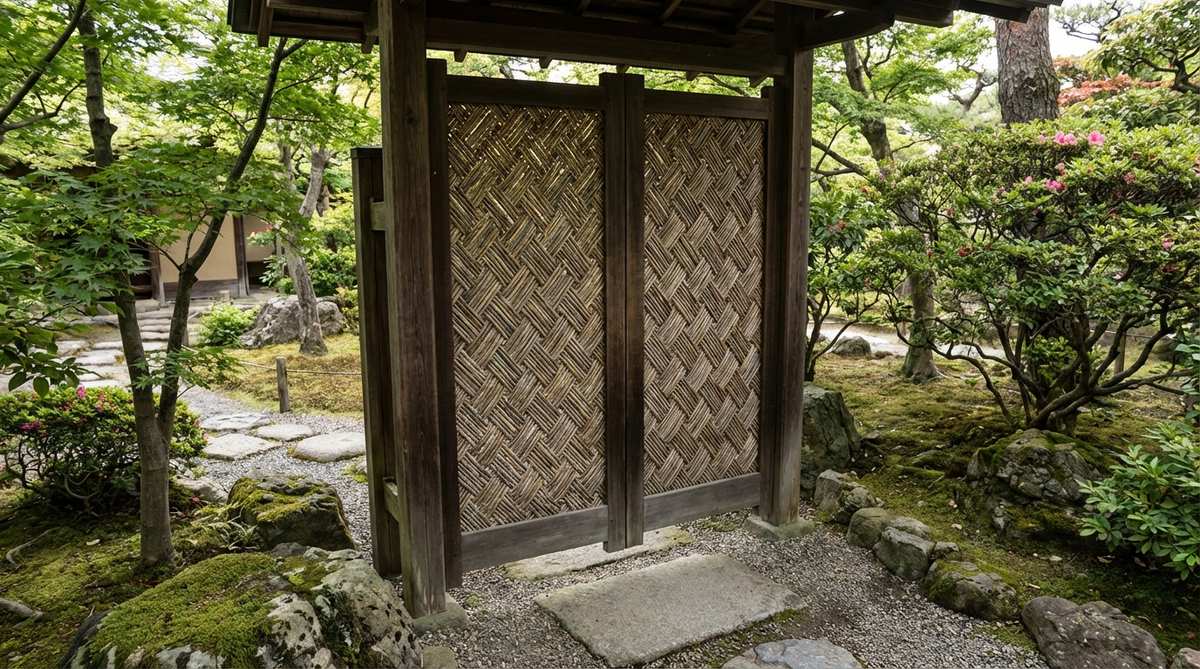
Dense wicker weaving (ajiro) creates semi-opaque panels that screen views while allowing filtered light and air passage. Thin bamboo or willow strips interlace in diagonal or herringbone patterns.
Construct wicker panels within cedar frames using traditional plaiting techniques passed down through specialized craftspeople. Expect skilled labor to require 6-8 hours per square foot of finished surface.
Wicker gates suit locations where privacy matters but solid doors feel too imposing. The woven texture adds visual interest appropriate to rustic or informal garden settings.
12. Lattice Panel Gate
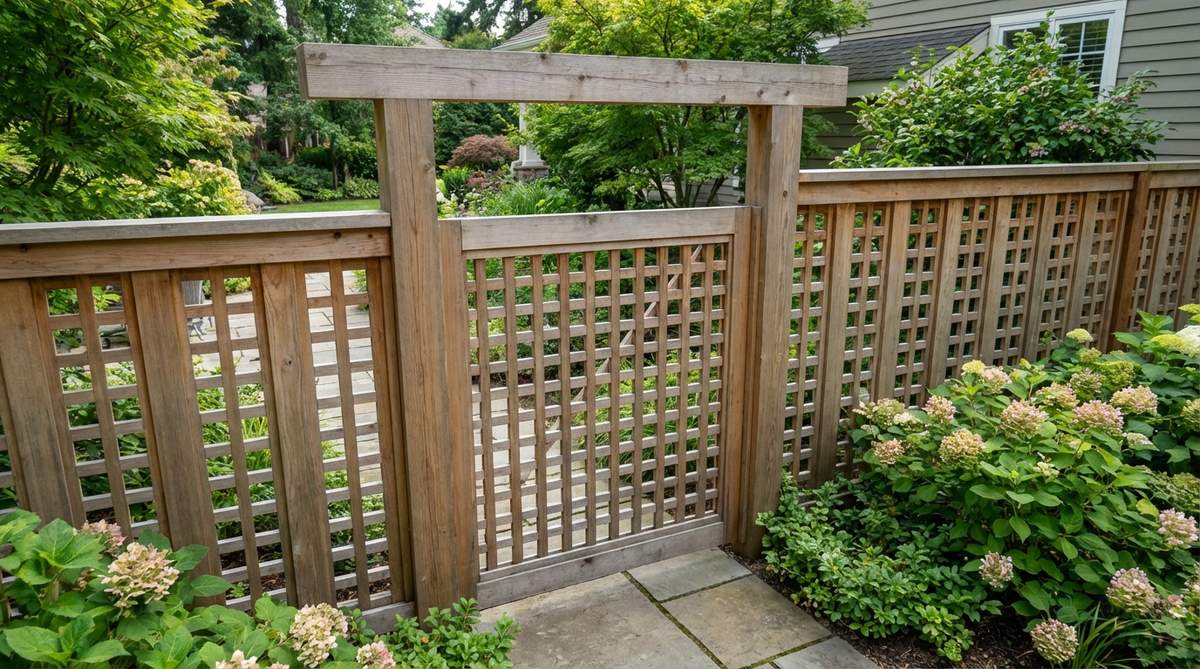
Square or diamond lattice panels balance privacy with airflow and partial views. Cedar strips mill to consistent 1×2 dimensions for uniform appearance and simplified construction.
Build lattice within sturdy outer frames capable of supporting gate weight without sagging. Space lattice members at 4-6 inches on center depending on desired screening level.
Lattice gates adapt easily to various opening widths and integrate with fence systems for continuous boundaries. Stain or paint to match adjacent fencing or leave natural to contrast with vertical post elements.
13. Corner Post Bracket Gate
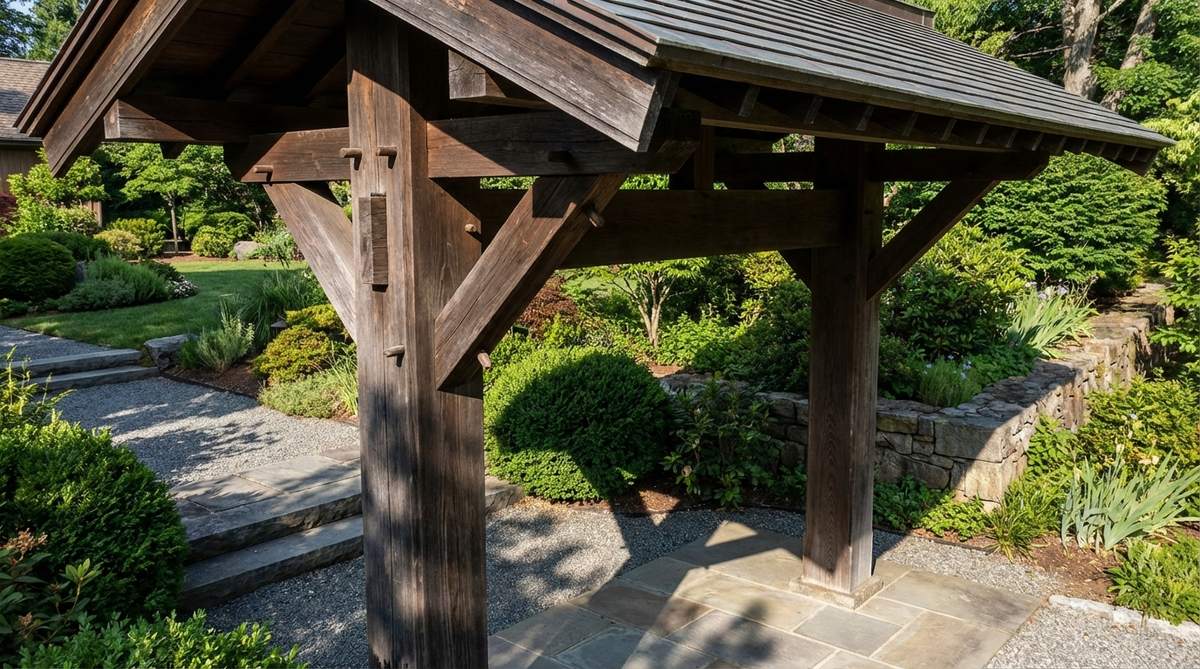
The udegi-mon style features angled brackets extending from posts to support roof eaves beyond the post line. These traditional joinery details add structural expression appropriate to formal entries.
Cut bracket members from solid timber at 45-degree angles, securing through mortise-and-tenon joints reinforced with draw-bore pegs. Project brackets 12-18 inches beyond posts to create pronounced eave depth.
Bracket gates demonstrate construction craft while providing proportional roof shelter. The extended eaves improve weather protection and cast dramatic shadows that animate the structure.
14. Sliding Panel Gate
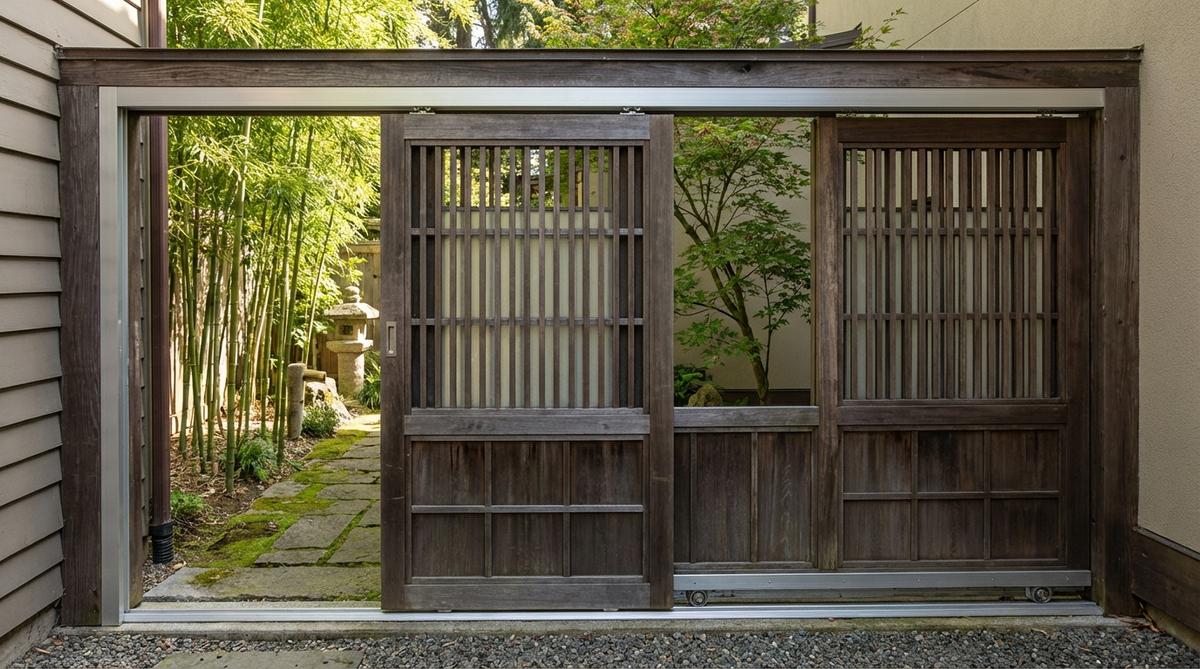
Horizontally sliding panels conserve space in narrow passages while maintaining traditional tea garden aesthetics. Track systems mount at top and bottom, allowing panels to slide laterally rather than swing.
Install aluminum or stainless steel tracks with sealed bearing assemblies that resist debris accumulation. Size panels for 50% overlap when fully extended to prevent gap visibility.
Sliding gates excel in confined courtyards or side yards where swing clearance creates circulation problems. The horizontal movement reads as contemporary while respecting Japanese spatial efficiency principles.
15. Stepped Threshold Gate
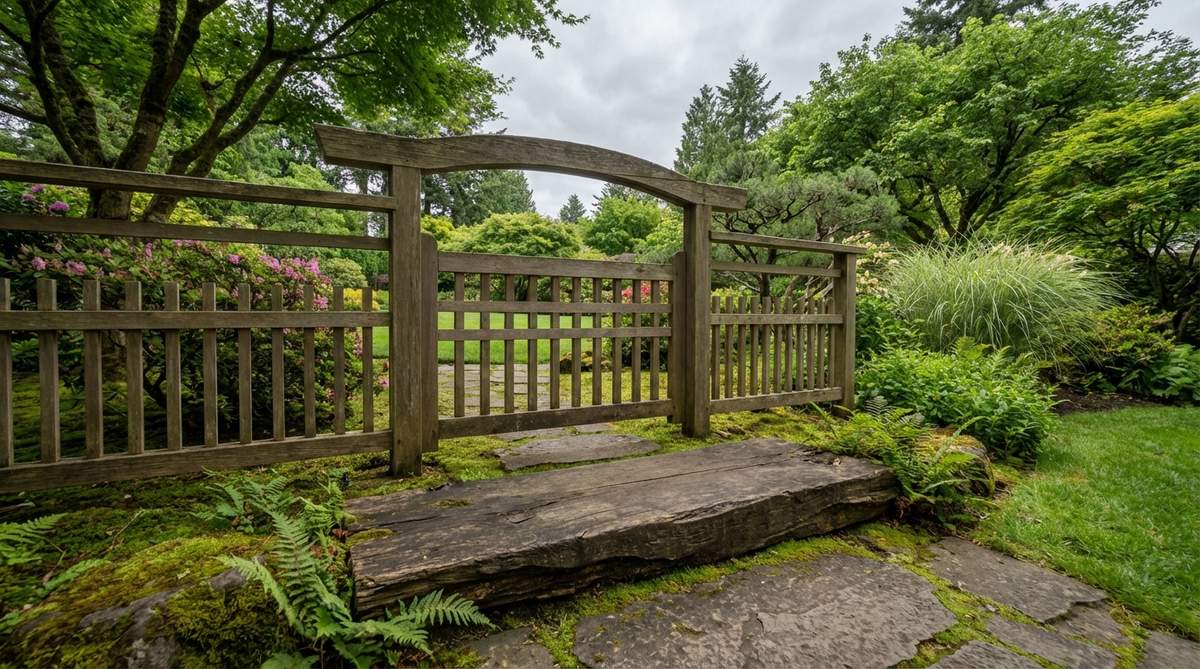
Raising the gate threshold 6-8 inches above approach path level forces conscious stepping that interrupts automatic movement. This deliberate design element embodies tea ceremony principles of mindful action.
Construct threshold from single piece of rot-resistant timber or stone slab spanning the opening width. Ensure step height remains comfortable for all users—excessive heights create accessibility barriers.
Pair stepped thresholds with low gates that require slight ducking to pass through. These physical gestures promote the bowing posture associated with entering sacred spaces.
16. Brushwood Bundled Gate
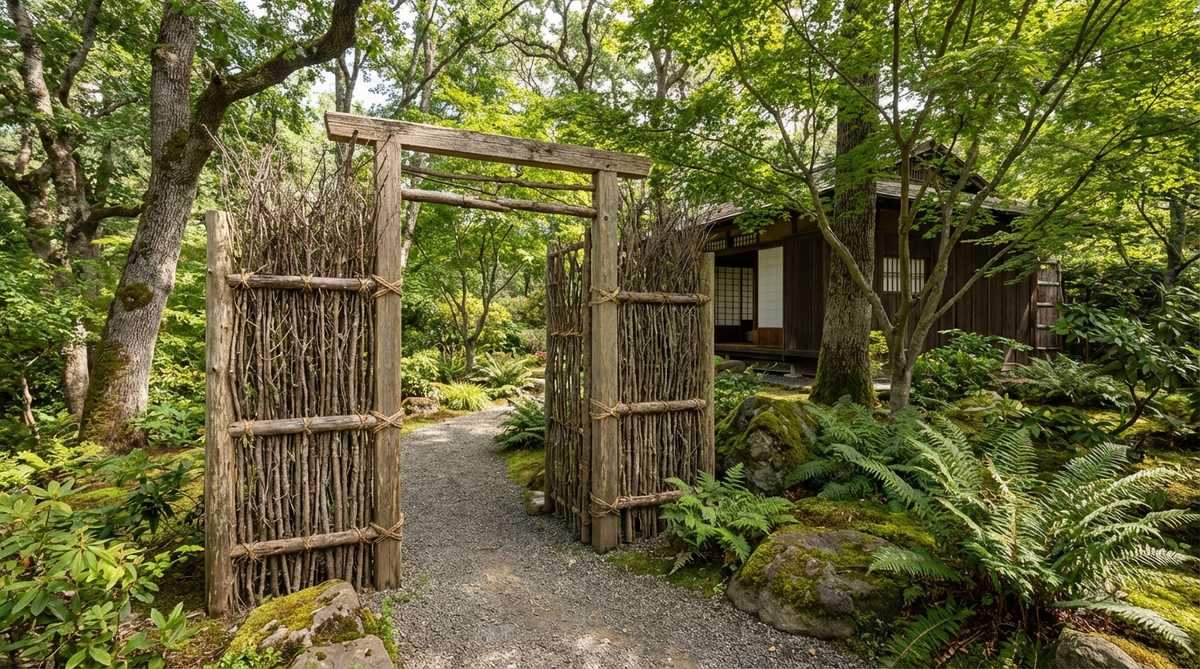
Bundles of thin branches or twigs lashed to frame create rustic gates suited to woodland tea gardens. This construction method utilizes pruning waste and seasonal materials gathered on-site.
Wire small-diameter branches into tight bundles 4-6 inches thick, then secure bundles vertically or horizontally within post frames. Expect two to three year lifespan before bundle replacement becomes necessary.
Brushwood gates establish immediate connection to surrounding forest. The rough texture and organic variation contrast intentionally with refined teahouse architecture nearby.
Bamboo Gate ConstructionsJapanese Garden Fence Integration
Bamboo construction offers sustainable material with inherent elegance and cultural authenticity. Multiple traditional styles (gaki) provide templates for gates that coordinate with fence systems. Proper joinery techniques and material selection determine structural longevity in exterior applications.
17. Kenninji Vertical Slat Gate
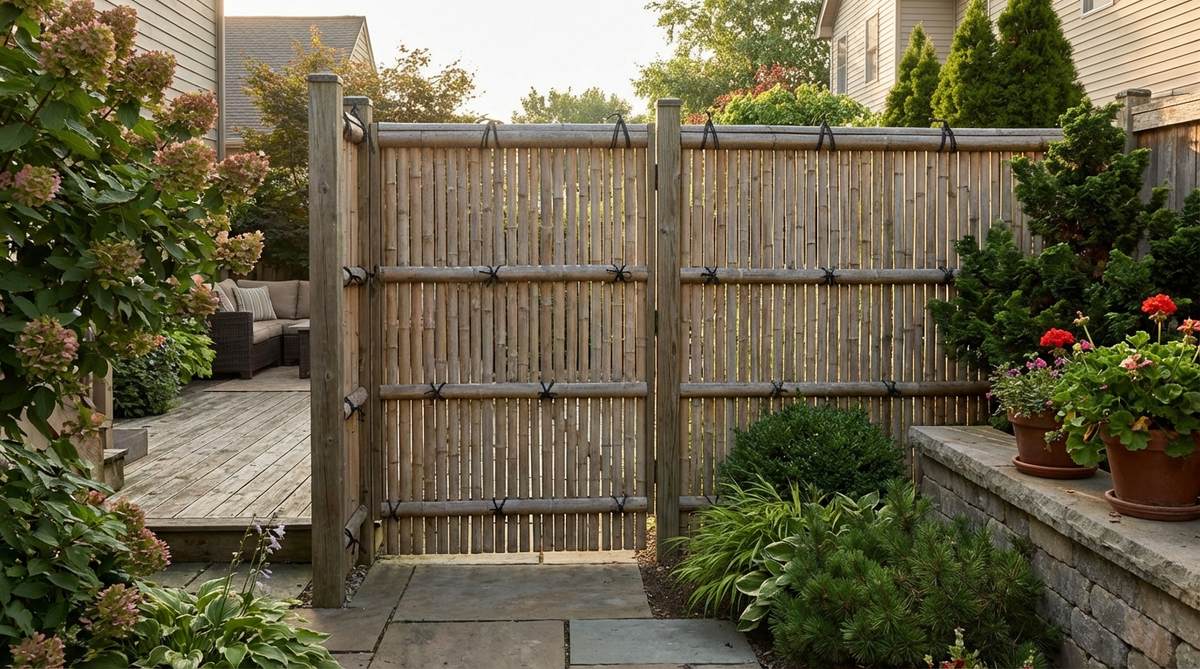
The most common screening style features split bamboo slats arranged vertically with minimal gaps. Horizontal bamboo rails provide backing structure, creating privacy fence that permits air circulation.
Space 1-inch split bamboo slats at 1/4-inch intervals for maximum screening while maintaining natural material expression. Lash slats to horizontal rails using black synthetic cord at 8-inch vertical intervals.
Kenninji gates integrate seamlessly with matching fence sections to establish unified boundaries. The vertical emphasis adds height perception—valuable in compact urban gardens.
18. Yotsume Open Lattice Gate
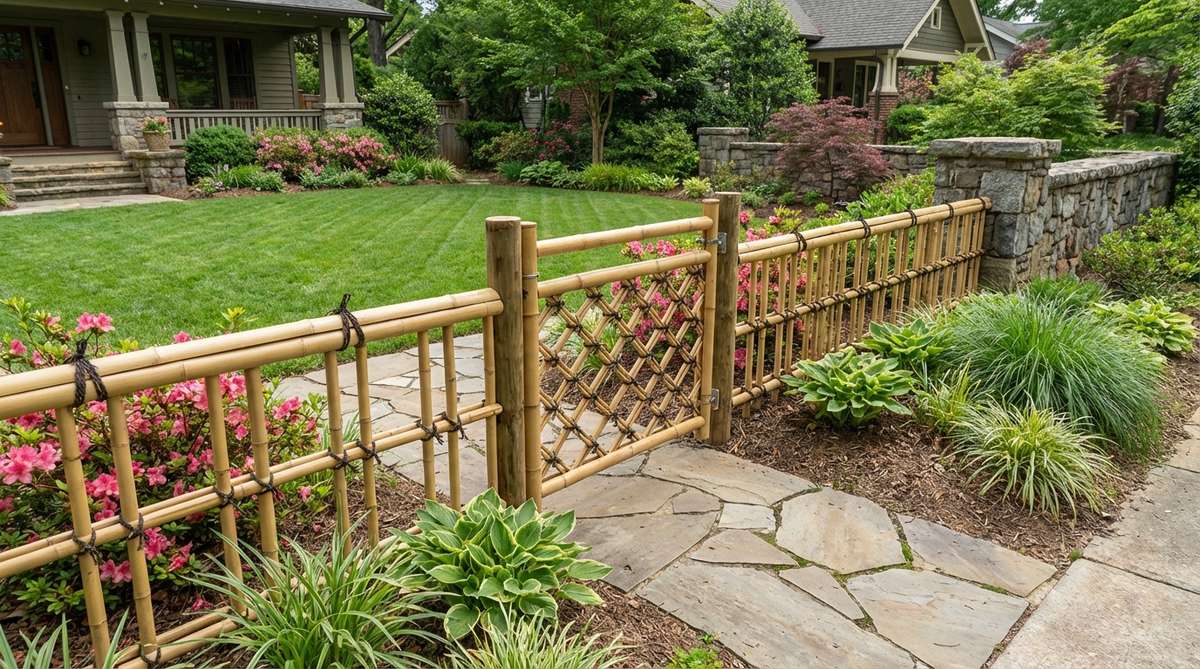
Open lattice construction places round bamboo poles alternately on both sides of crossbars, creating distinctive see-through pattern. This low-height gate style defines boundaries without blocking views.
Use 2-inch diameter bamboo poles spaced at 6-8 inch intervals for structural adequacy and visual proportion. Secure poles to crossbars using stainless steel screws concealed behind decorative lashing.
Yotsume gates work effectively at property lines where complete screening violates regulations or disrupts borrowed scenery. Install at 30-36 inch heights to mark boundaries while preserving openness.
19. Shimizu Slender Pole Gate
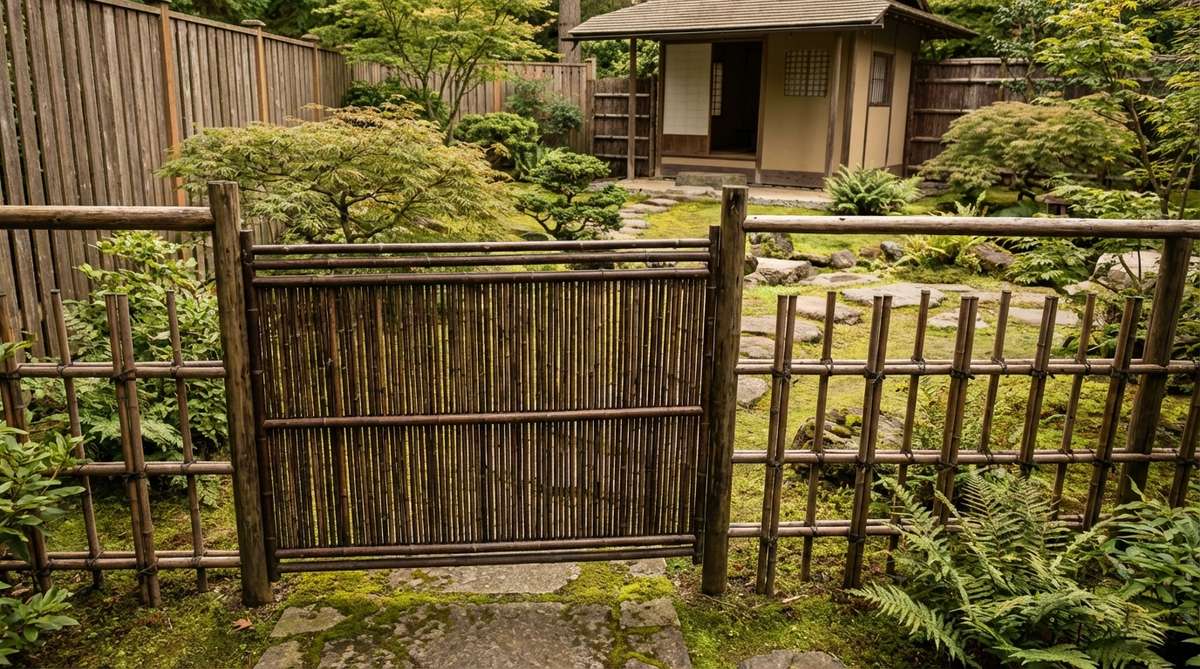
This refined variation uses extremely thin bamboo poles (under 1-inch diameter) for delicate appearance. The slender elements require careful handling during construction and yield elegant proportions suited to intimate gardens.
Source select-grade bamboo culms with consistent diameter and minimal taper. Double the quantity of support rails compared to standard Kenninji construction to prevent slat deflection.
Shimizu gates establish formal character appropriate near teahouses or viewing pavilions. The fine texture reads as craftsmanship investment that elevates overall garden quality.
20. Sleeve Wrapped Bamboo Gate
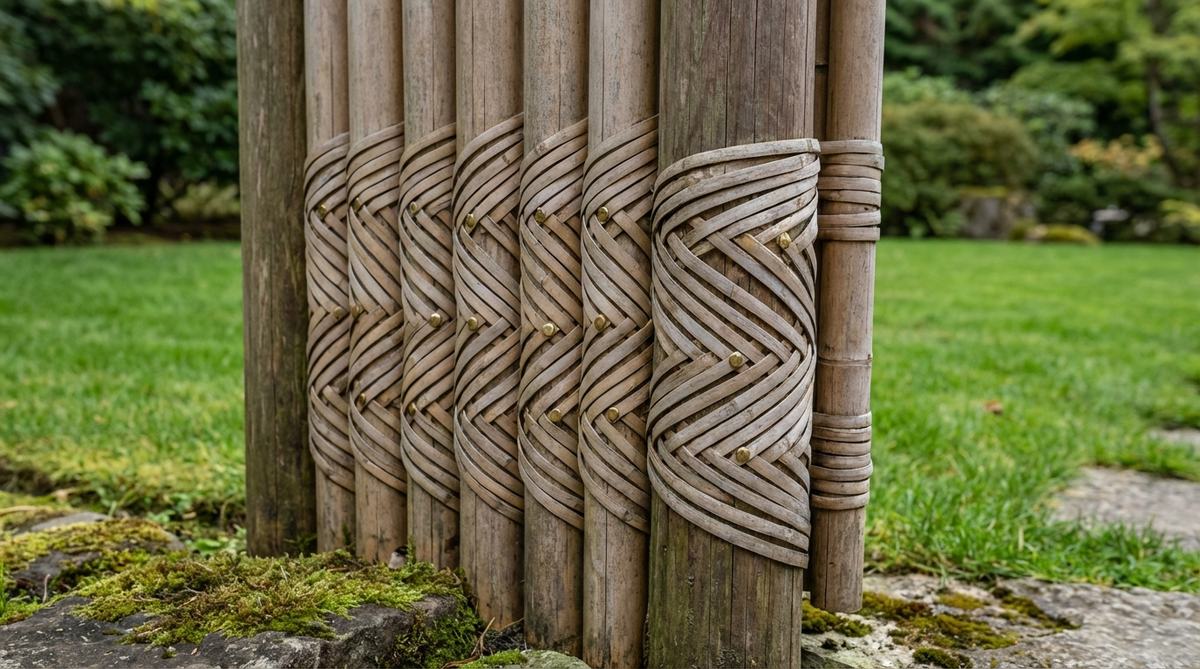
Vertical bamboo poles receive decorative wrapping with split bamboo strips creating geometric patterns. The wrapping technique (sleeve fence) adds texture while concealing structural connections.
Wrap split bamboo strips in spiral patterns around 2-3 inch diameter poles, securing wraps with small brass escutcheon pins. Maintain consistent wrap spacing for uniform appearance across gate surface.
Sleeve gates command attention through detailed craftsmanship visible at close range. Position at entrances where visitors pause to admire construction quality before proceeding.
21. Kinkakuji Low Boundary Gate
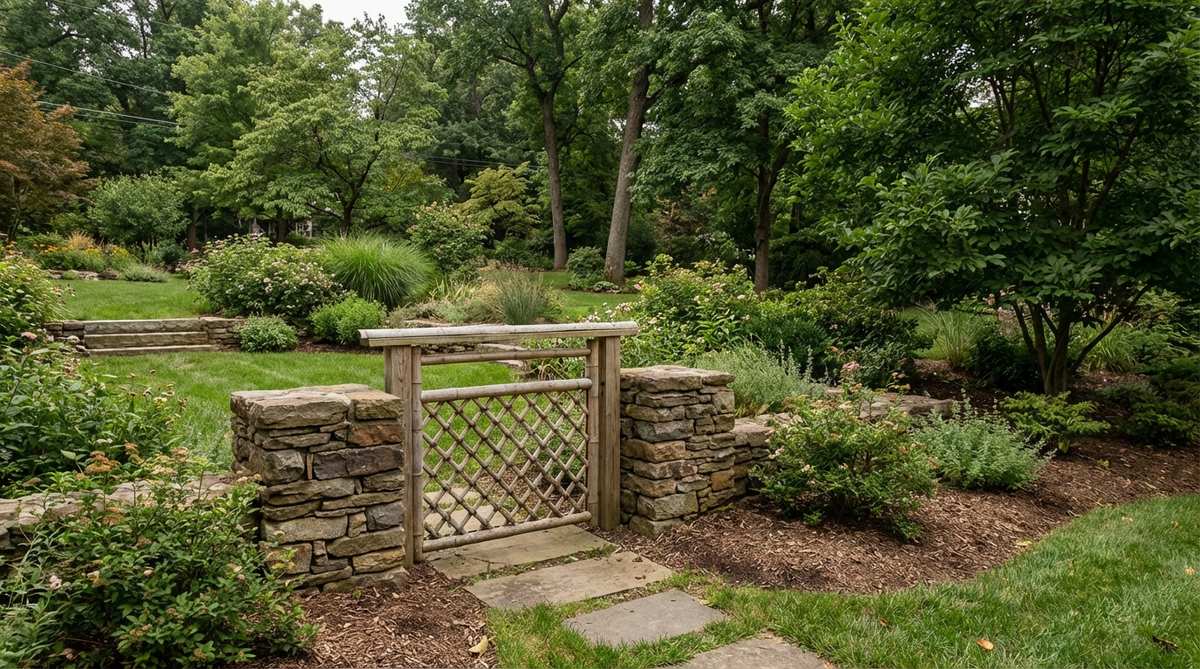
Named for Kyoto’s Golden Pavilion, this low gate style uses bamboo lattice mounted on existing stone walls. The minimal design establishes symbolic boundaries without interrupting horizontal sightlines.
Construct bamboo frames that cap stone bases at 24-30 inch total heights. Integrate lattice patterns that complement architectural details visible beyond the boundary.
Low gates preserve views while defining garden room transitions. They work particularly well at grade changes where physical barriers prevent falls without requiring tall vertical elements.
22. Arched Bamboo Tunnel Gate
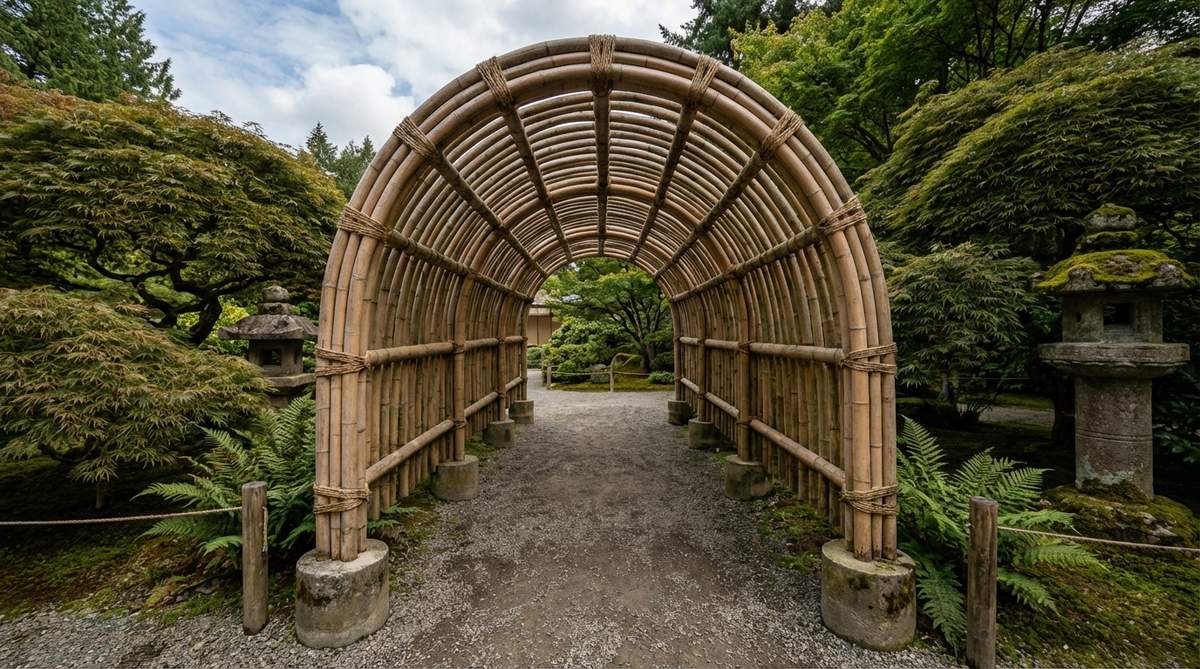
Bending bamboo poles into arched form creates tunnel-like passages with strong spatial impact. Multiple arches placed in series establish covered walkway transitions between garden areas.
Steam-bend select bamboo poles or use naturally curved sections harvested specifically for arched applications. Anchor arch bases in concrete footings capable of resisting outward thrust forces.
Arched tunnels transform simple gates into experiential passages that engage visitors physically. Plan for 6-8 foot interior heights to accommodate comfortable passage without head clearance concerns.
23. Split Bamboo Herringbone Gate
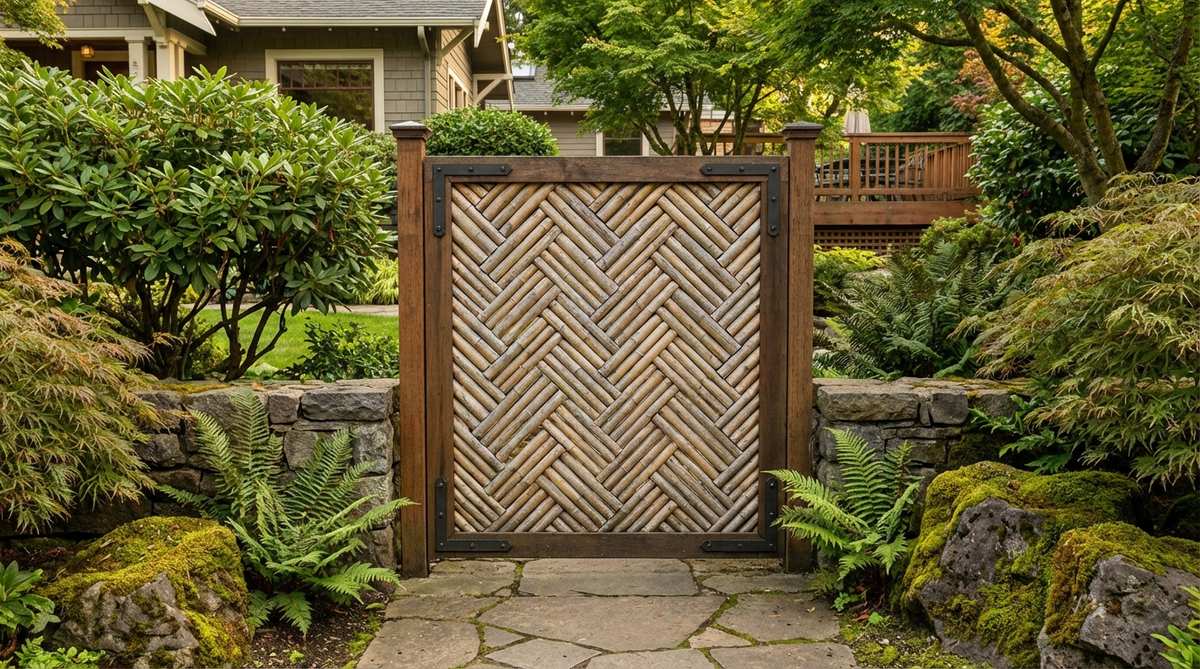
Diagonal split bamboo arranged in alternating angles creates dynamic herringbone patterns. This decorative approach suits gates serving as garden focal points rather than subtle boundaries.
Cut split bamboo to precise lengths allowing 45-degree angles to meet cleanly at centerline. Pin each piece individually to backing frame using corrosion-resistant fasteners.
Herringbone patterns demand significant labor but deliver visual impact justifying the effort. Use this technique selectively for primary gates where craft display reinforces entry importance.
24. Bamboo and Rope Lashing Gate
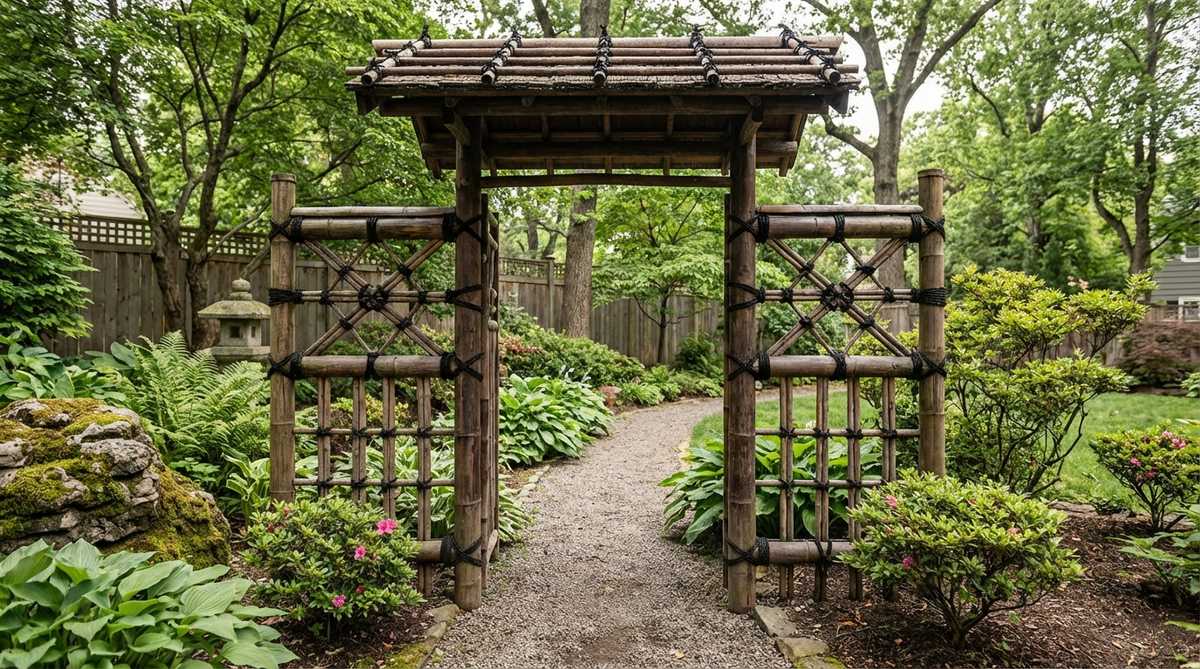
Traditional black hemp rope lashing becomes prominent design feature rather than concealed connection. The decorative knots and wrapping patterns add textural interest to simple bamboo frames.
Learn authentic lashing techniques including square lashing, diagonal lashing, and figure-eight wraps. Use UV-stabilized synthetic rope that mimics hemp appearance while resisting weather degradation.
Exposed lashing celebrates construction methods as aesthetic elements. This approach suits organic or rustic garden styles where craft processes remain visible rather than hidden.
Timber Frame EntrancesWooden Japanese Garden Gate
Heavy timber construction creates substantial gates with architectural presence suited to formal gardens and large properties. Cedar, cypress, and redwood offer natural rot resistance and dimensional stability. Post-and-beam joinery techniques drawn from traditional carpentry establish structural integrity without reliance on metal connectors.
25. Massive Timber Munamon
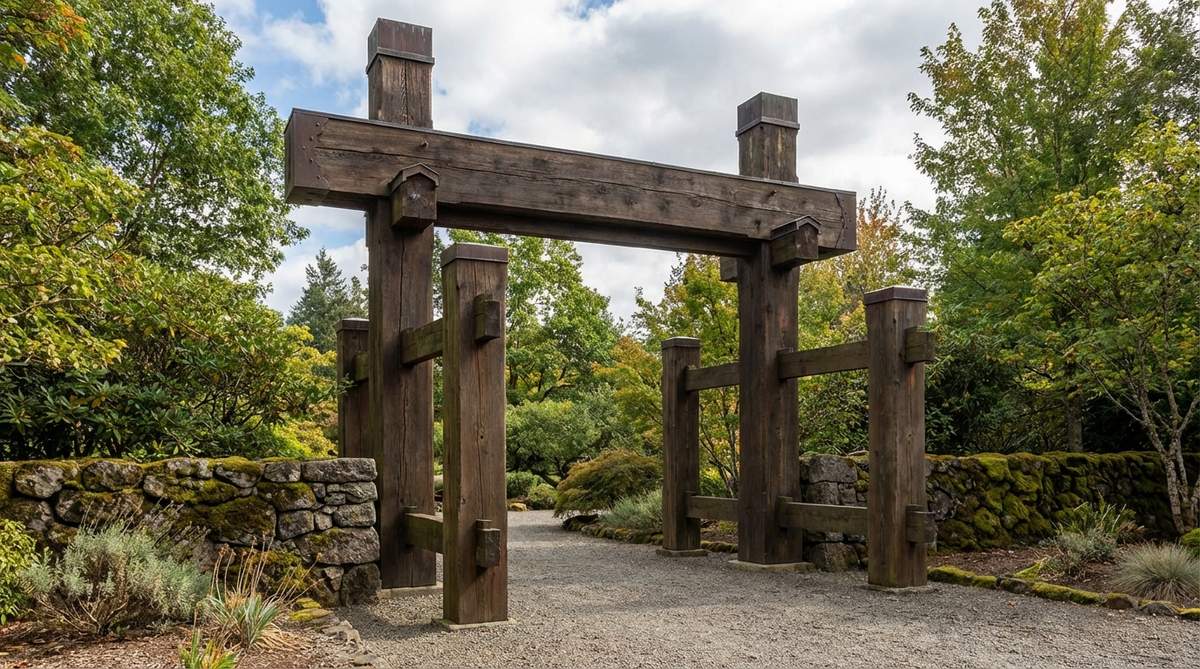
The munamon style features two substantial posts supporting wide crossbeam with secondary outrigger posts for added stability. This robust construction suits large properties requiring durable, low-maintenance entries.
Use 8×8 or larger timbers for primary posts and 6×12 crossbeams spanning 8-12 feet. Brace outrigger posts back to main structure using angled members that transfer lateral loads to foundations.
Munamon gates establish immediate architectural authority appropriate at property entrances or between major garden zones. The heavy timber requires professional installation with equipment access for positioning large members.
26. Board and Batten Gate
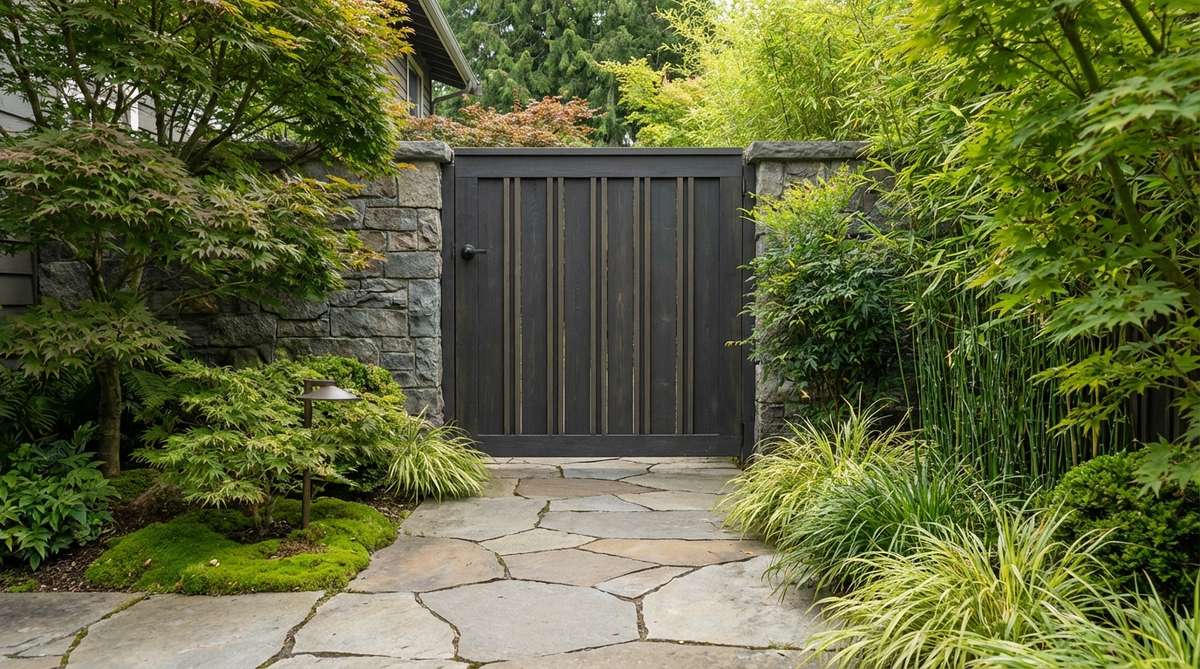
Vertical boards with thin batten strips covering joints create clean-lined gates with contemporary appeal. This construction method adapts easily to various heights and widths while maintaining Japanese simplicity principles.
Install 1×6 or 1×8 vertical boards with 1×2 battens centered over joints. Use stainless steel screws driven through battens into vertical boards, avoiding face-fastening visible boards.
Board and batten gates coordinate with modern residential architecture while respecting Japanese aesthetic restraint. Stain in dark tones to emphasize vertical lines and create visual weight.
27. Horizontal Plank Gate
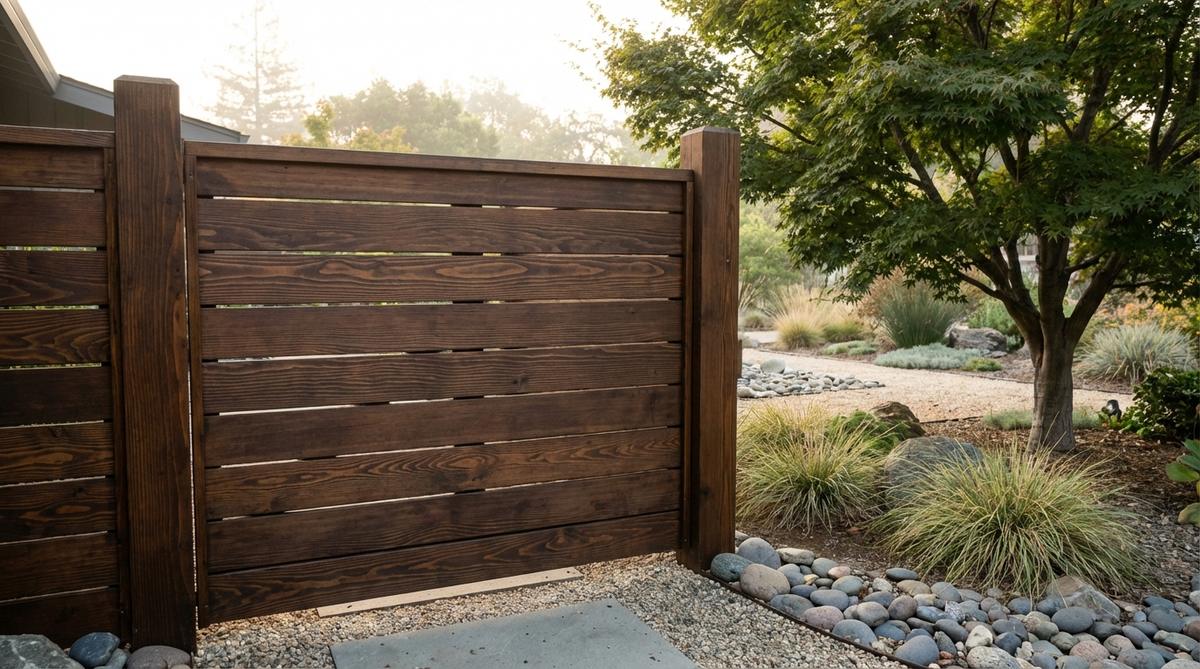
Stacked horizontal planks between vertical posts create strong contemporary statement. The linear grain direction emphasizes width over height—useful for low, wide openings.
Use 2×6 or 2×8 planks with shiplap or tongue-and-groove edges for weather-tight connections. Support planks on internal frame members to prevent warping across wide spans.
Horizontal gates read as modern interpretations that respect Japanese material honesty. The wide planks minimize visual busyness preferred in contemplative garden settings.
28. Post and Beam Portal
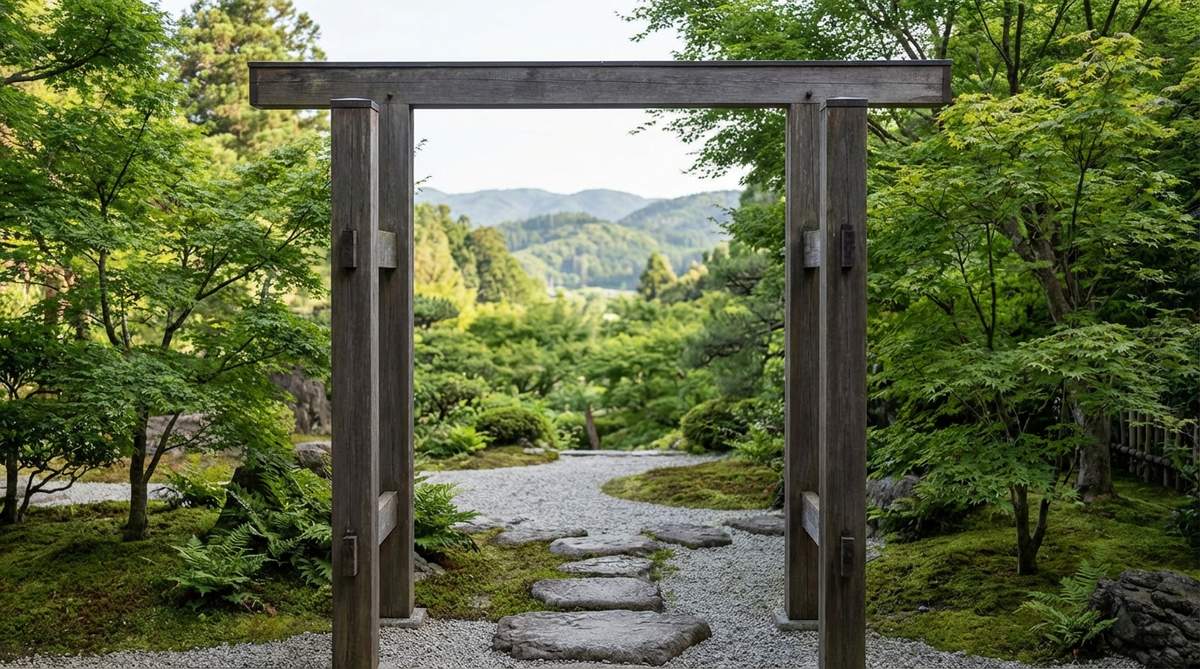
Simple four-member construction—two posts and two beams—creates minimalist frames that direct attention toward views beyond rather than gate structure itself. This reductive approach embodies Japanese spatial philosophy.
Size timber members proportionally6x6 posts supporting 4×8 or 6×8 beams depending on span. Use traditional mortise-and-tenon joinery or concealed steel brackets for beam connections.
Portal frames serve as thresholds marking transition without physical closure. Position to frame specific views or garden features visible through the opening.
29. Angled Brace Gate
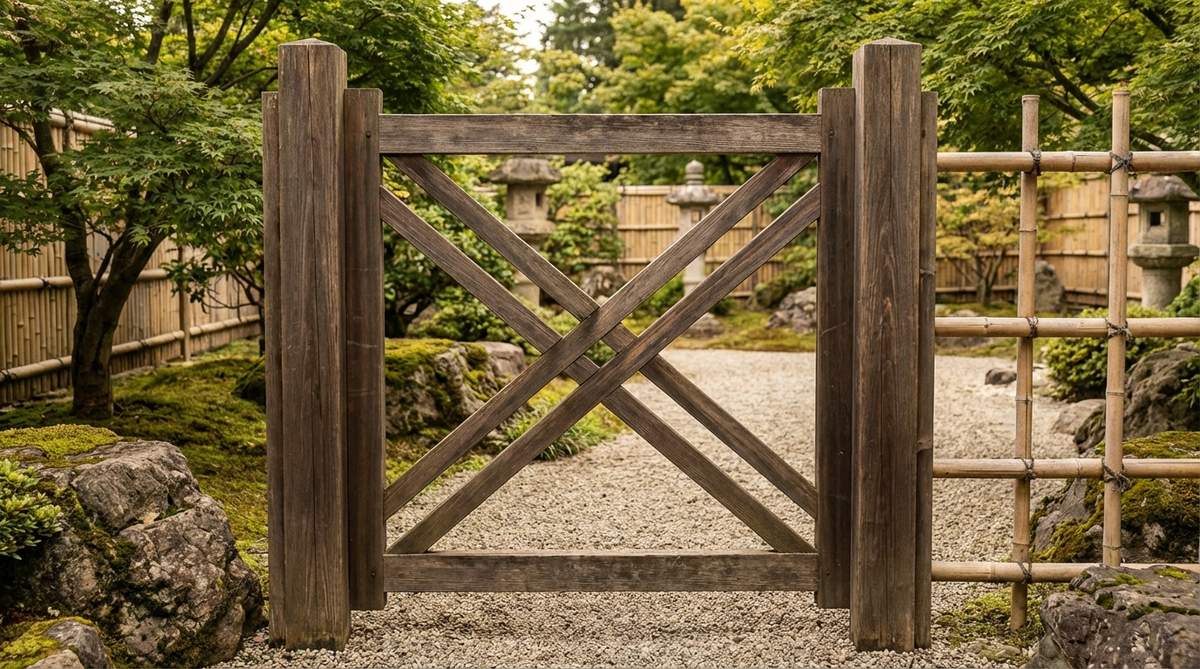
Diagonal bracing members create structural triangulation while adding dynamic visual elements to rectangular frames. The angled lines introduce movement that animates simple post-and-beam compositions.
Calculate brace angles at 45 degrees for maximum structural efficiency and clean geometric appearance. Notch braces into posts and rails using traditional housed joints that resist movement.
Braced gates telegraph structural logic as design feature. This honest expression of forces suits gardens emphasizing craft and traditional building methods.
30. Charred Cedar Shou Sugi Ban Gate
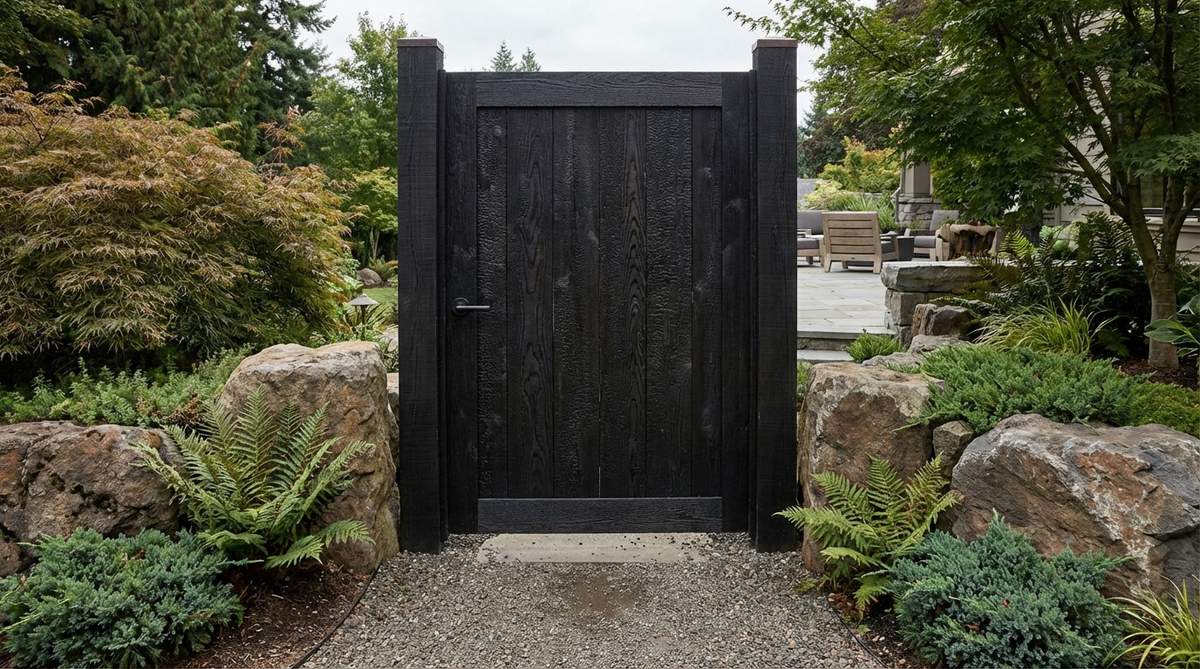
Traditional Japanese burning technique (shou sugi ban) preserves wood through controlled charring that creates protective carbon layer. The blackened surface with visible grain texture offers dramatic alternative to staining.
Char cedar boards using propane torch, then wire-brush to remove loose carbon while preserving textured surface. Seal with clear exterior oil to fix carbon and enhance weather resistance.
Charred gates establish bold contemporary presence while using centuries-old preservation methods. The technique works best on smooth-grained cedar—avoid resinous species that burn unevenly.
31. Live Edge Rustic Gate
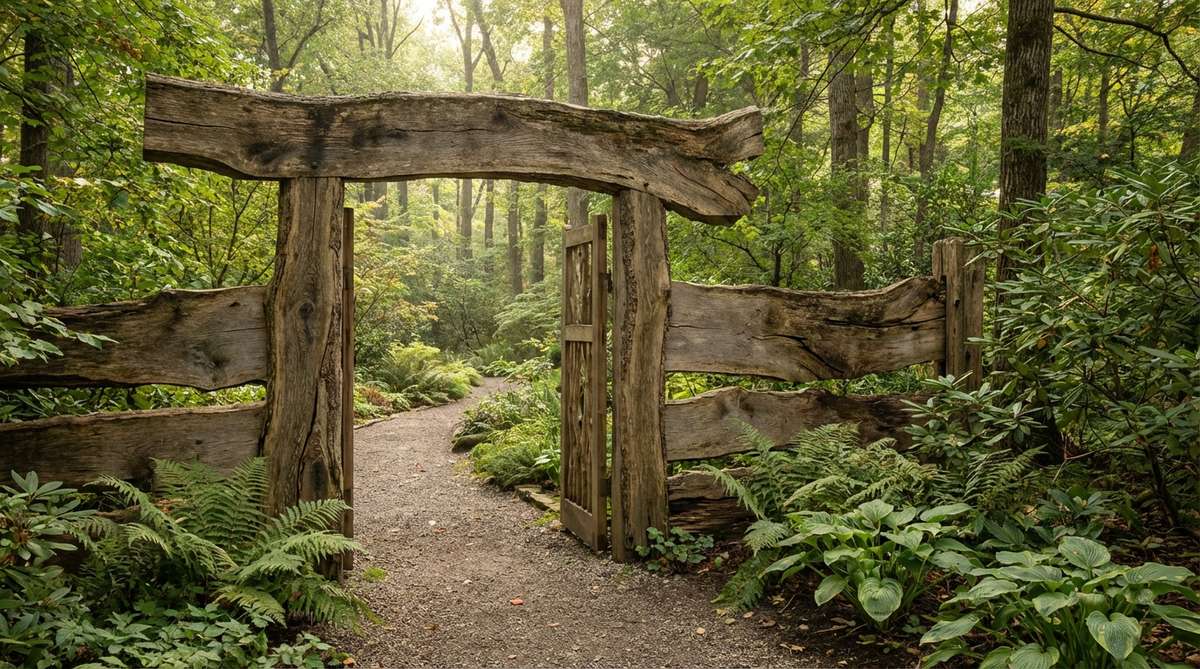
Retaining natural edge contours on timber posts and beams creates organic gates suited to woodland settings. The irregular profiles connect structurally refined gates to surrounding natural environment.
Source air-dried local timber with interesting edge character—avoid spalted or punky wood lacking structural integrity. Remove bark to prevent insect habitat while preserving cambium layer texture.
Live edge gates work best in informal gardens where refined aesthetic would feel inappropriate. The natural edges require more maintenance to prevent rot at irregular surfaces retaining moisture.
32. Mortise and Tenon Exhibition Gate
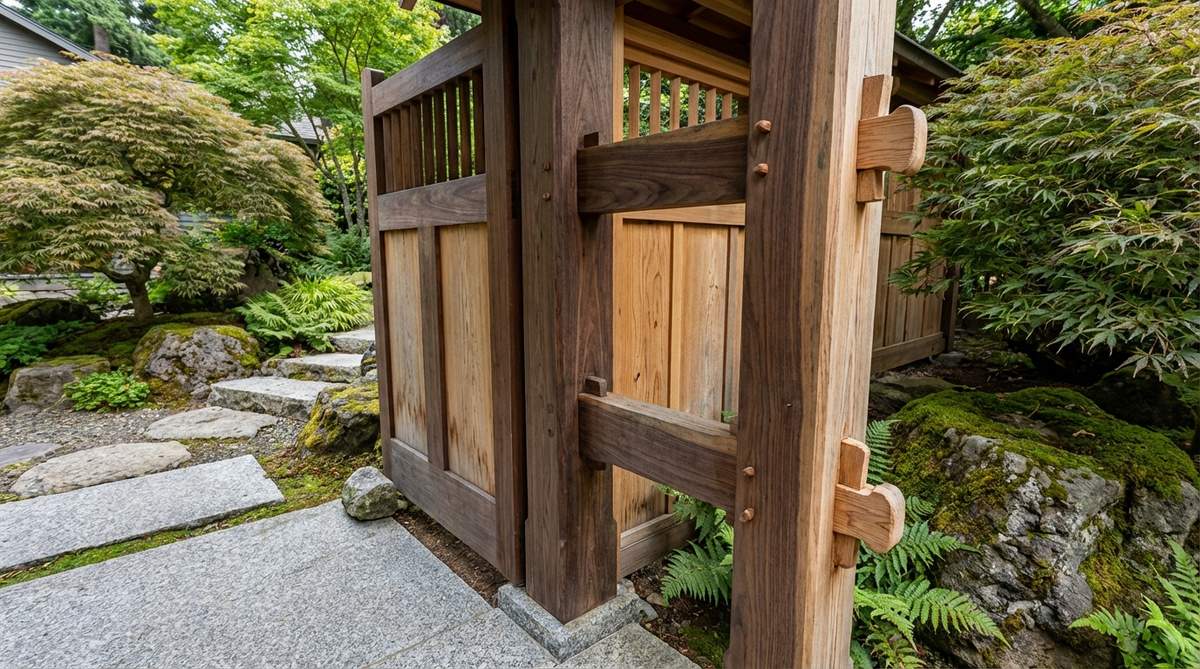
Making structural joints visibly prominent celebrates traditional joinery as design element. Through-tenons wedged from exterior and decorative peg locations demonstrate craft mastery.
Cut joints with precision hand tools or CNC equipment for tight fits requiring only mallet persuasion during assembly. Use contrasting wood species for wedges and pegs to emphasize joint locations.
Exhibition joinery gates appeal to audiences appreciating traditional woodworking. Position where close viewing allows appreciation of craft details often missed from distance.
Hybrid Contemporary GatesModern Japanese Garden Entry
Contemporary interpretations blend traditional Japanese principles with modern materials and fabrication methods. Steel, glass, and composite materials expand design possibilities while maintaining cultural references. These hybrid approaches suit urban gardens where historical recreation feels inappropriate but Japanese aesthetic values remain relevant.
33. Steel Frame with Bamboo Infill
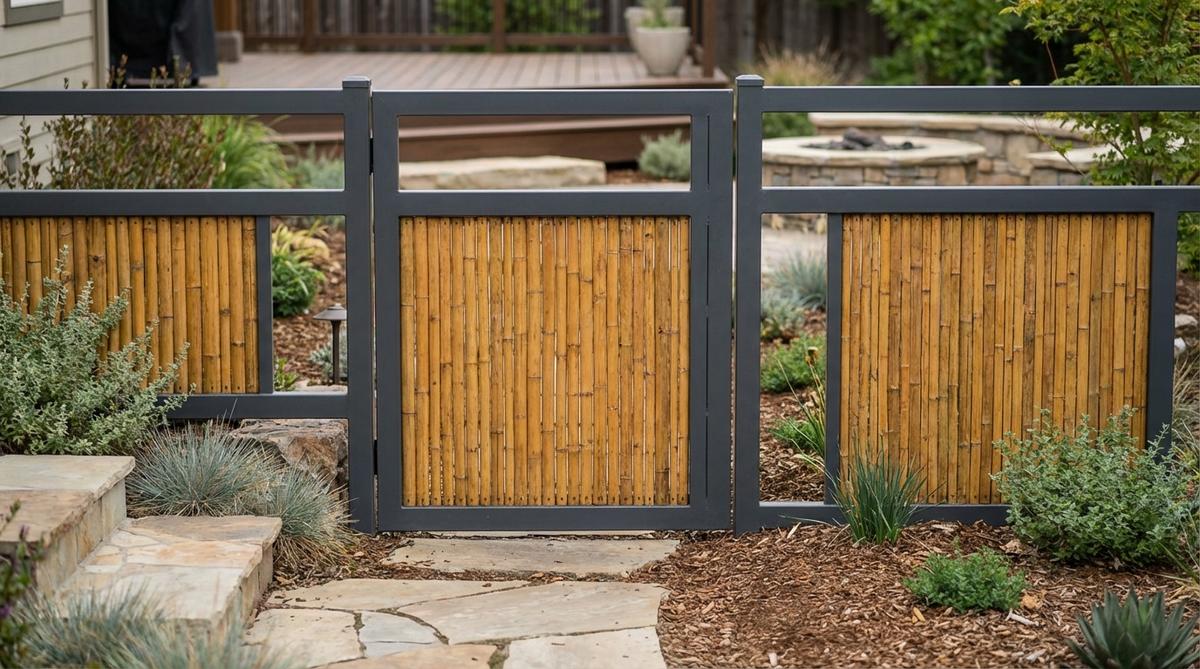
Powder-coated steel frames provide durable structure supporting natural bamboo panels. The material contrast emphasizes contemporary interpretation while respecting organic materials.
Weld steel tube frames from 2×4 or 3×3 rectangular stock, then drill mounting holes for bamboo panel attachment. Size frame members to remain visually subordinate to bamboo infill rather than dominating composition.
Steel-bamboo hybrids offer longevity exceeding all-bamboo construction while maintaining natural aesthetics. The metal framework simplifies panel replacement when bamboo elements eventually degrade.
34. Glass Panel Transparency Gate
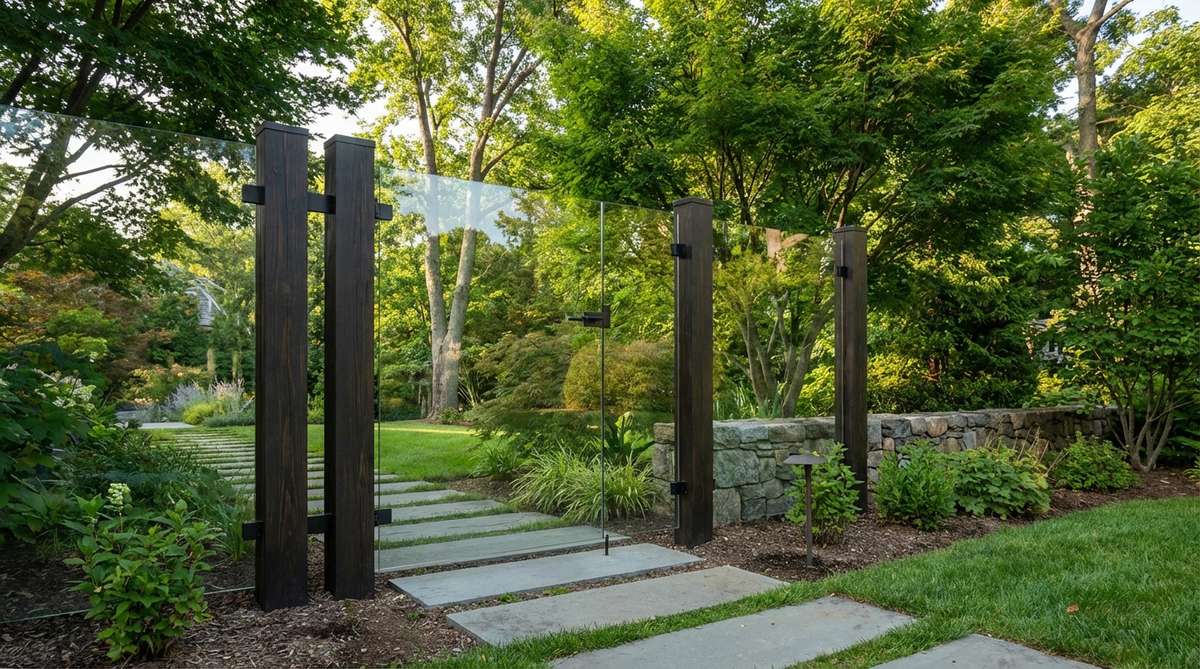
Frameless glass panels create invisible boundaries that preserve views while defining spatial zones. Tempered or laminated safety glass receives minimal hardware for nearly transparent appearance.
Install glass using base channels and top clamps that eliminate visible vertical framing. Select low-iron glass to minimize green tint that compromises transparency.
Glass gates serve contemporary gardens prioritizing openness and light transmission. The material requires regular cleaning to maintain clarity but eliminates maintenance associated with organic materials.
35. Corten Steel Torii Interpretation
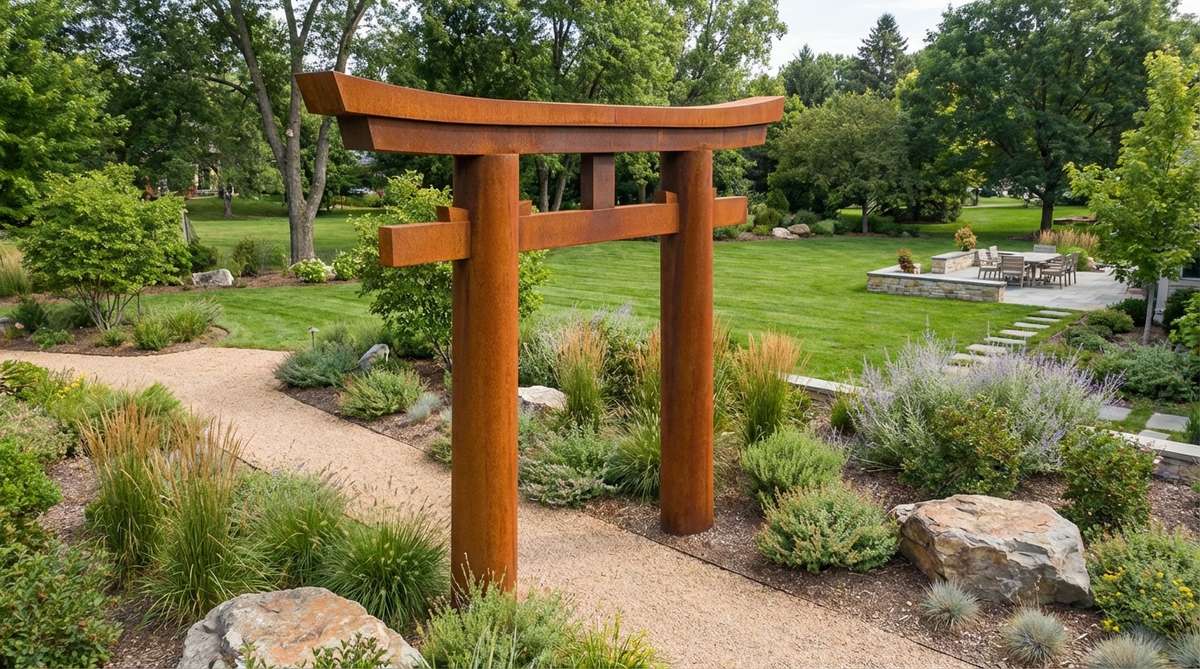
Weathering steel develops stable rust patina offering maintenance-free color and texture. Fabricated torii forms in corten establish bold modern presence while referencing traditional gate structures.
Work with metal fabricators experienced in corten welding and finishing. Allow 6-12 months for complete patina development—expect rust runoff staining adjacent surfaces during initial weathering.
Corten gates make powerful statements in modernist landscapes. The material’s warm rust tones bridge contemporary architecture and natural garden elements more successfully than standard painted steel.
36. Composite Decking Gate
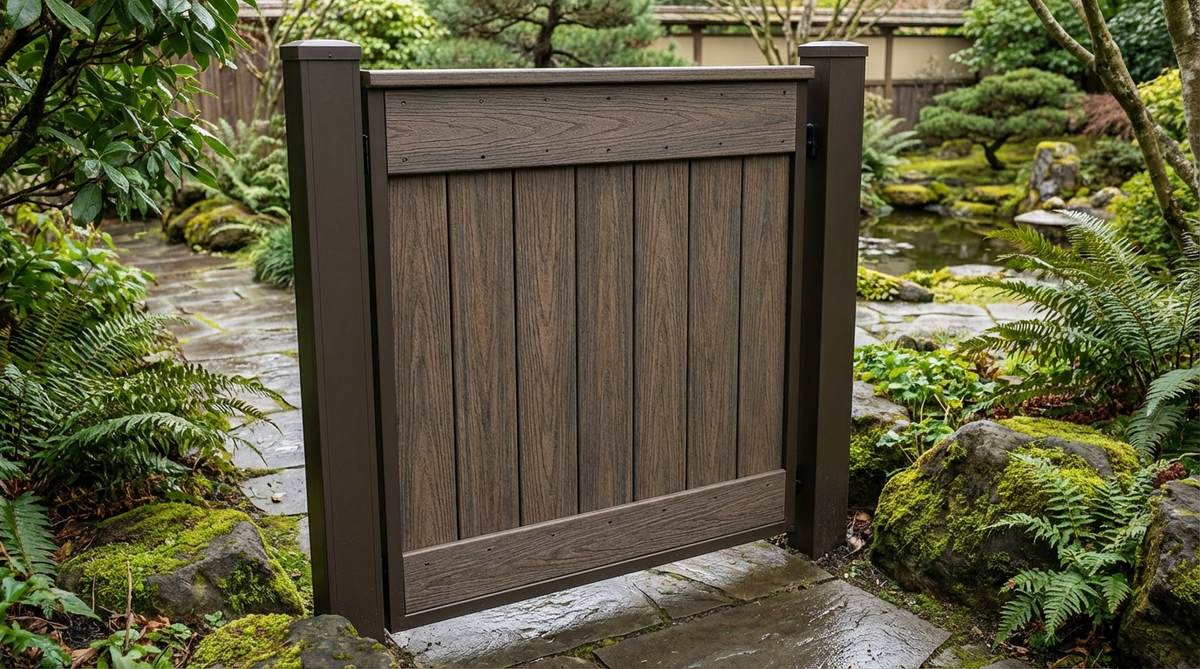
Wood-plastic composite boards eliminate rot and insect damage while mimicking wood grain appearance. The synthetic material suits high-moisture locations where natural wood deteriorates rapidly.
Frame composite boards with aluminum or vinyl posts designed for exterior exposure. Use concealed fastening systems that avoid visible screws marring smooth surfaces.
Composite gates prioritize durability over authentic material expression. They suit practical applications where maintenance reduction outweighs aesthetic considerations favoring natural materials.
37. Laser Cut Metal Pattern Gate
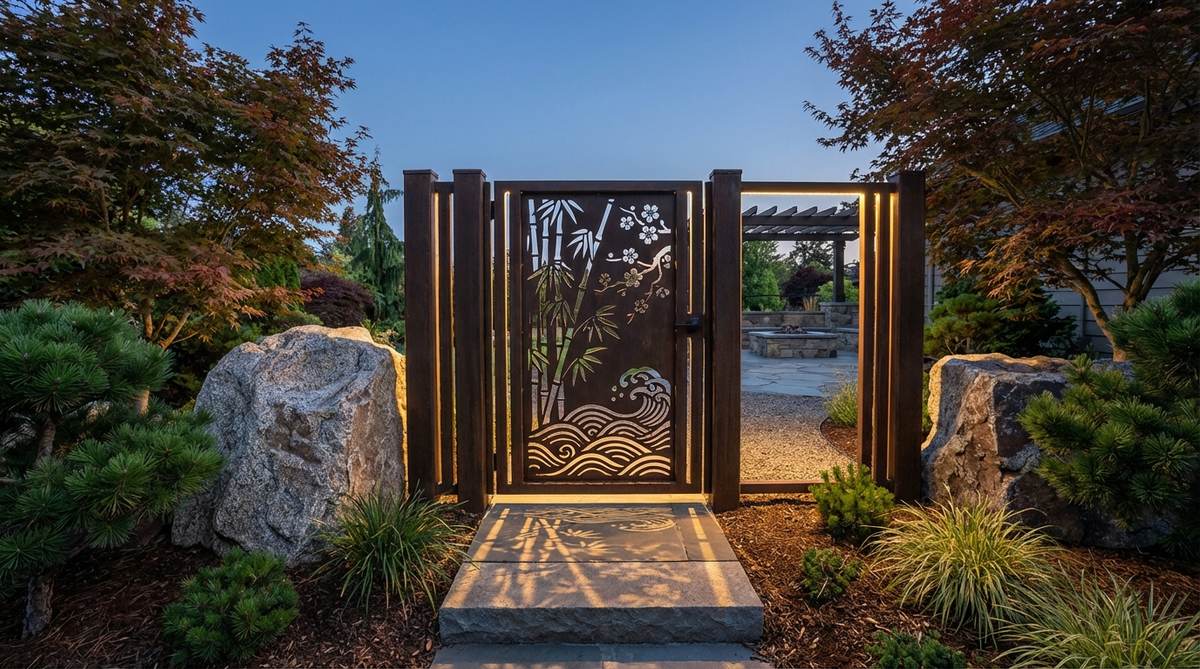
CNC laser cutting produces intricate geometric patterns in steel or aluminum panels. The technology enables complex designs impossible through traditional fabrication while maintaining clean execution.
Design patterns referencing traditional Japanese motifs—bamboo, waves, cherry blossoms—translated into contemporary geometric abstraction. Specify 1/8 to 1/4 inch material thickness balancing structural adequacy with cutting capabilities.
Laser-cut gates serve as artistic elements beyond functional thresholds. The backlit panels create dramatic nighttime effects when integrated with landscape lighting systems.
38. Living Green Wall Gate
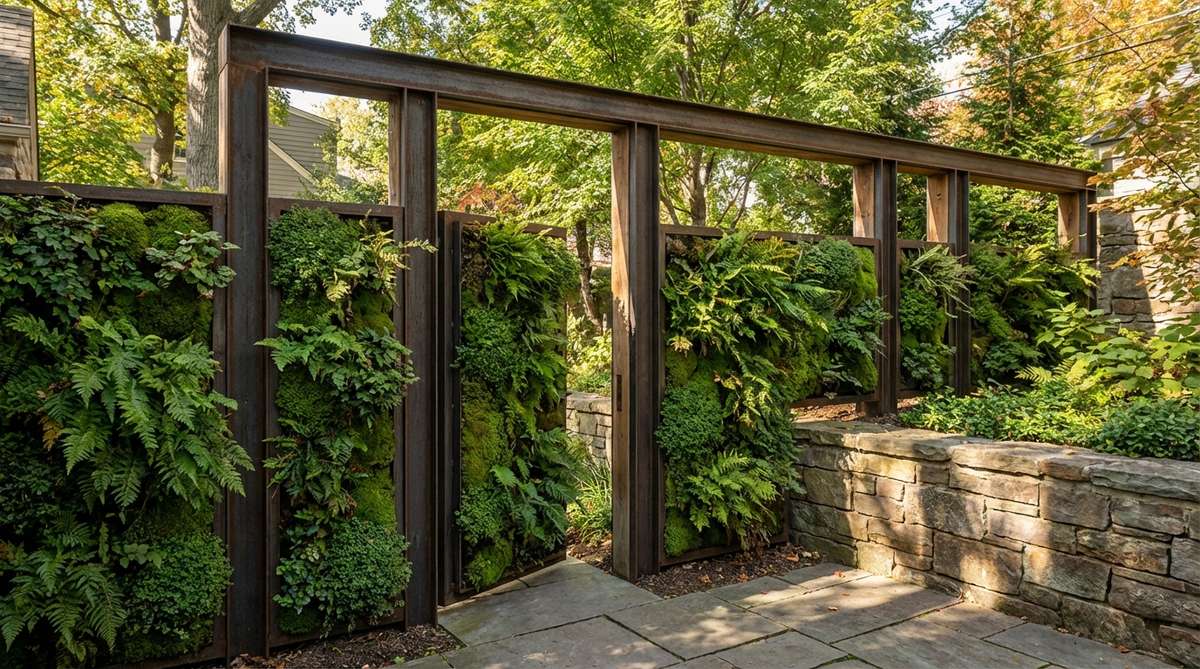
Vertical planting systems integrated with structural frames create living gates that change seasonally. Modular planting panels attach to permanent frame infrastructure supporting irrigation and drainage.
Install commercial green wall systems with built-in irrigation or construct custom panels using landscape fabric pockets filled with growing media. Select shade-tolerant ferns, mosses, or evergreen groundcovers for consistent appearance.
Living gates demand ongoing horticultural maintenance but deliver unique organic presence. The planted surfaces cool surrounding air and provide habitat in urban environments lacking vegetation.
39. Pivoting Steel Screen Gate
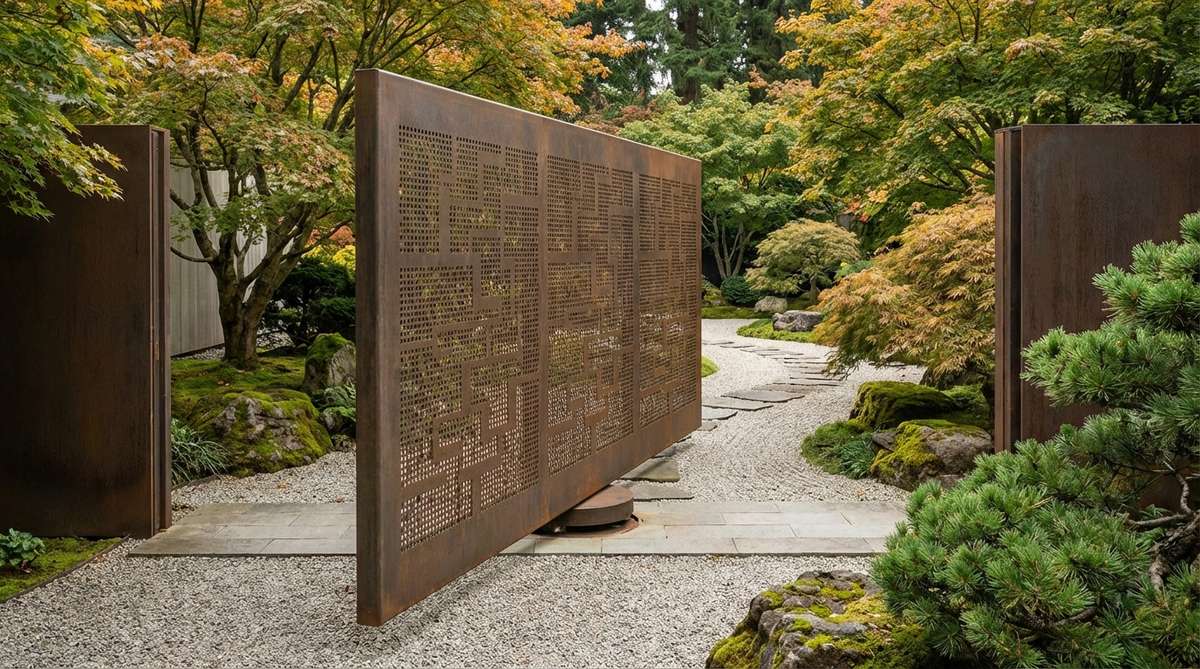
Large-format gates rotating on central pivots create dramatic kinetic elements. The pivot mechanism allows substantial gate sizes while requiring less swing clearance than traditional hinged installation.
Engineer pivot hardware for gate weight and wind loading—residential-grade hinges prove inadequate for panels exceeding 50 pounds. Conceal pivot mechanisms below grade for clean aesthetic.
Pivoting gates establish contemporary character through unexpected movement patterns. The rotation creates shifting view frames as the gate swings—an effect amplifying spatial transition experience.
40. Illuminated Resin Panel Gate
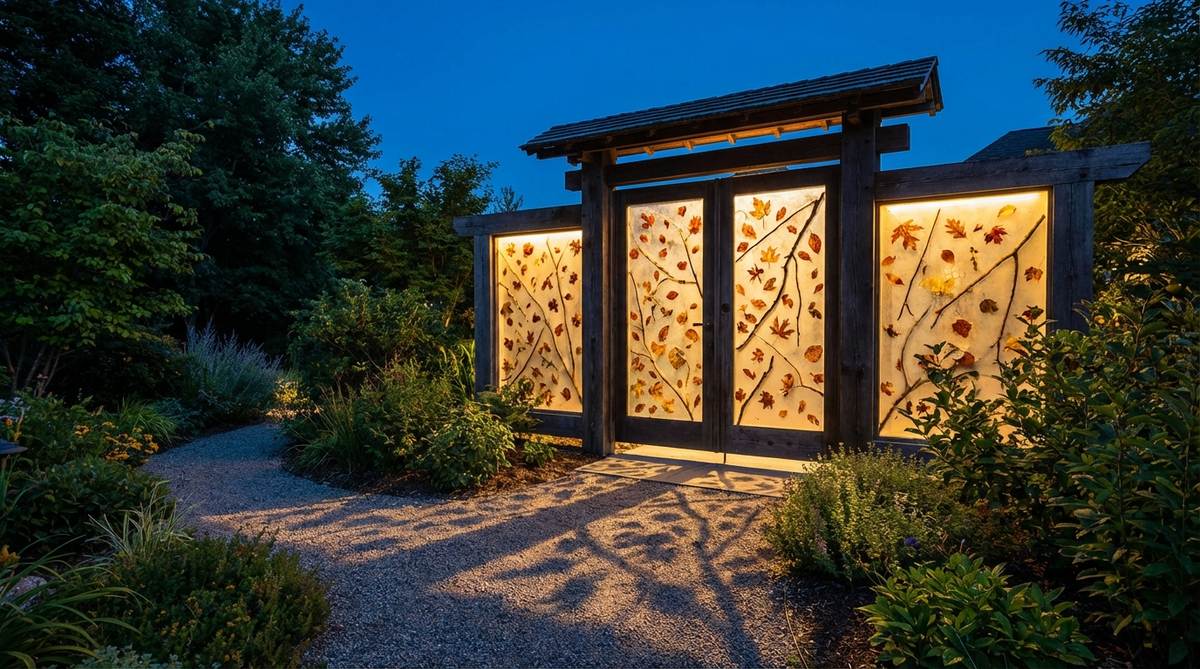
Translucent resin panels with embedded LED lighting transform gates into glowing elements after dark. The panels accept organic inclusions—leaves, branches, grasses—that cast shadows when backlit.
Work with fabricators experienced in resin casting to avoid bubbles and achieve even translucency. Specify UV-stable resins that resist yellowing from sun exposure.
Illuminated gates create focal drama in evening gardens. The glowing panels establish welcoming presence at entries while serving wayfinding function after daylight ends.
41. Stone Pillar with Steel Beam
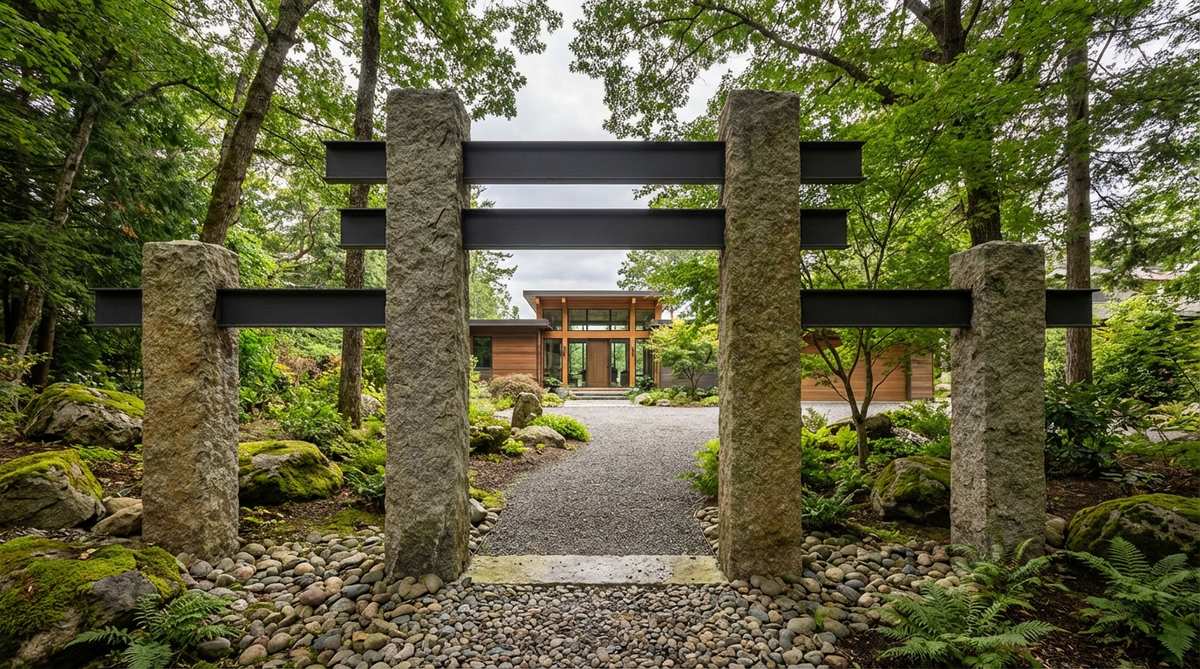
Natural stone posts supporting modern steel crossbeams blend geological permanence with industrial precision. The material juxtaposition emphasizes transition between natural garden and human habitation.
Source large-format stone pillars from quarries specializing in landscape elements—expect 18-24 inch cross-sections for adequate visual weight. Fabricate steel beams with concealed connection plates embedded in stone.
Stone-steel combinations work effectively at entries mediating between contemporary architecture and naturalistic landscapes. The hybrid construction acknowledges both realms without favoring either.
42. Tensioned Cable Bamboo Gate
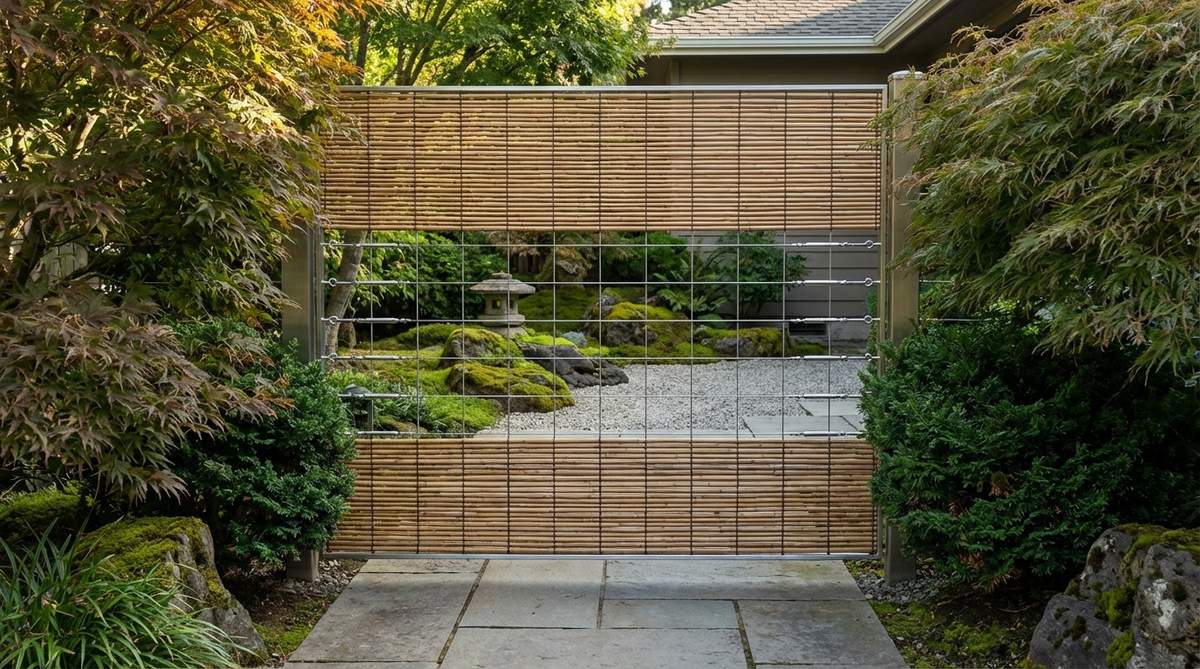
Stainless steel cables provide tension structure supporting bamboo screening panels. The cable system allows thin bamboo elements to span greater distances than traditional post-supported construction.
Install vertical cables at 12-18 inch spacing using turnbuckles for tension adjustment. Lash bamboo horizontally to cables using traditional techniques adapted for steel rather than wood structure.
Cable-supported gates achieve visual lightness through minimal structural expression. The system works particularly well for wide openings where conventional posts would create cluttered appearance.
Implementing Your Japanese Garden Gate
Selecting the right japanese garden gate depends on matching traditional principles to contemporary site conditions and maintenance capabilities. Designers balance authentic construction methods with practical durability requirements, often adapting historical templates through modern materials or simplified detailing. Start with clear understanding of the threshold’s symbolic function—whether marking property boundaries, separating garden rooms, or establishing ceremonial entries—then choose structural and material strategies supporting that intention.
The gates presented here from Fresh Garden Ideas range from faithful historical reproductions to contemporary interpretations that preserve Japanese spatial philosophy while embracing current fabrication technologies. Successful implementation requires respecting the cultural depth behind these structures rather than treating them as decorative elements. Consider working with landscape architects or specialized craftspeople familiar with traditional joinery and proportional systems when attempting complex constructions, particularly roofed gates or structures requiring custom metalwork connections.
Frequently Asked Questions
What is the standard height for a Japanese garden gate?
Traditional Japanese garden gates vary by type and function. Torii gates typically stand 8-12 feet tall for residential installations, while tea garden middle gates (chumon) measure only 4-6 feet high to create intimate scale. Outer gates (sotomon) with roofs reach 9-10 feet to accommodate headroom beneath roof structures. Contemporary interpretations often reduce these dimensions by 15-20% for urban gardens with smaller proportions. The key principle involves scaling gates to surrounding architectural elements rather than following absolute measurements—gates should feel substantial without overwhelming adjacent structures or plantings.
How long does bamboo last in an outdoor gate installation?
Untreated bamboo exposed to weather typically lasts 3-5 years before requiring replacement due to splitting, UV degradation, and biological deterioration. Treating bamboo with borates or other preservatives extends longevity to 7-10 years depending on local climate conditions. The thicker the bamboo culm wall, the longer the service life—select poles with minimum 1/4-inch wall thickness for structural applications. Regular maintenance including annual cleaning, inspection of lashing connections, and reapplication of UV-protective finishes significantly impacts durability. Design for component replacement rather than complete gate reconstruction—modular panel systems within permanent post frames simplify inevitable bamboo renewal.
Can I install a torii gate without traditional joinery skills?
Yes, several approaches make torii installation accessible without advanced carpentry expertise. Purchase prefabricated torii kits with pre-cut components and hardware packages that eliminate complex joinery—these typically assemble using bolted connections concealed beneath decorative caps. Alternatively, hire timber framing professionals to fabricate traditional mortise-and-tenon joints off-site, then perform final assembly and installation. For simpler projects, use steel bracket hardware hidden within post-beam connections to achieve authentic appearance without traditional joints. The key involves setting posts plumb in properly sized concrete footings—this foundation work determines structural success regardless of joinery method. Consider professional installation for gates exceeding 10 feet width or when using materials requiring specialized handling like large stone elements.
What is the difference between a gate and a fence in Japanese garden design?
Japanese garden gates (mon) function as thresholds marking intentional passage between spaces, while fences (gaki) establish continuous boundaries defining garden edges or internal zones. Gates carry symbolic meaning associated with transition and purification—crossing through a gate represents leaving one state and entering another. Fences primarily serve practical screening and definition without the ceremonial implications. Design traditions treat these elements differentlygates receive architectural emphasis through roofs, substantial posts, and deliberate framing, while fences prioritize continuous linear expression using lighter materials and repetitive patterns. Many successful Japanese garden designs coordinate gate and fence styles through matching materials or construction techniques, creating unified boundaries punctuated by gate entries that emphasize threshold significance.
Should I paint my Japanese garden gate red or leave it natural wood?
The decision depends on the gate type and garden context rather than universal rules. Traditional torii gates at Shinto shrines receive distinctive vermilion (red-orange) finish symbolizing sacred boundaries—this treatment suits formal entries or gardens emphasizing cultural authenticity. Tea garden gates traditionally remain natural wood that weathers to silver-gray patina, reflecting wabi-sabi aesthetic values of impermanence and natural aging. Contemporary landscape architects often choose finishes based on surrounding architecturered gates complement traditional Asian-inspired designs, while natural wood coordinates with modern minimalist settings. Consider maintenance willingness—red finishes require recoating every 3-5 years to maintain color intensity, while natural wood develops patina without ongoing refinishing. Both approaches possess historical precedent and aesthetic validity when applied thoughtfully to appropriate gate types and garden contexts.