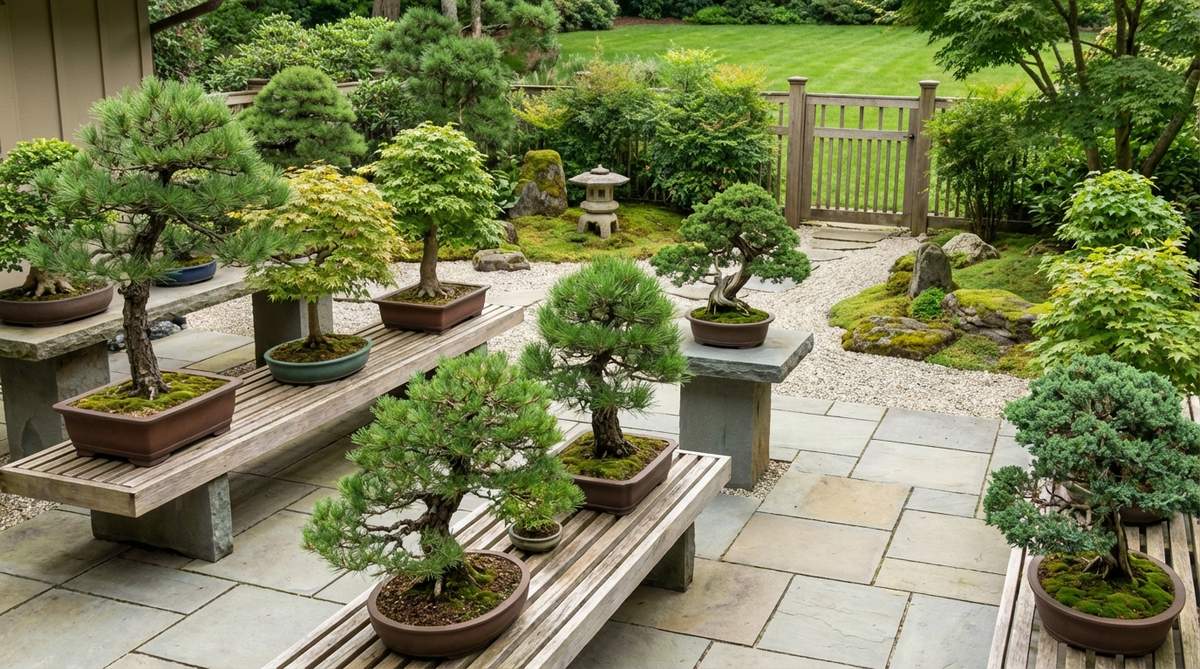
Selecting the right japanese garden bonsai specimen transforms pruning from maintenance into artistic expression. This curated collection from Fresh Garden Ideas guides you through traditional and contemporary varieties that respond beautifully to skilled shaping techniques.
Design SnapshotKey Principles
- Species Selection: Choose specimens with forgiving growth patterns and visible response to pruning techniques
- Trunk Character: Prioritize trees with textured bark and natural taper that develops aesthetic value over time
- Foliage Density: Select varieties that produce compact growth and respond to pinching with vigorous back-budding
- Seasonal Interest: Combine evergreen structure with deciduous color changes for year-round garden impact
Classic Pine Specimens for Traditional Aesthetics
Pine species represent the pinnacle of traditional japanese garden bonsai cultivation. These conifers develop rugged bark texture and accept aggressive pruning while maintaining health through strategic candle manipulation.
1. Japanese Black Pine (Pinus thunbergii)
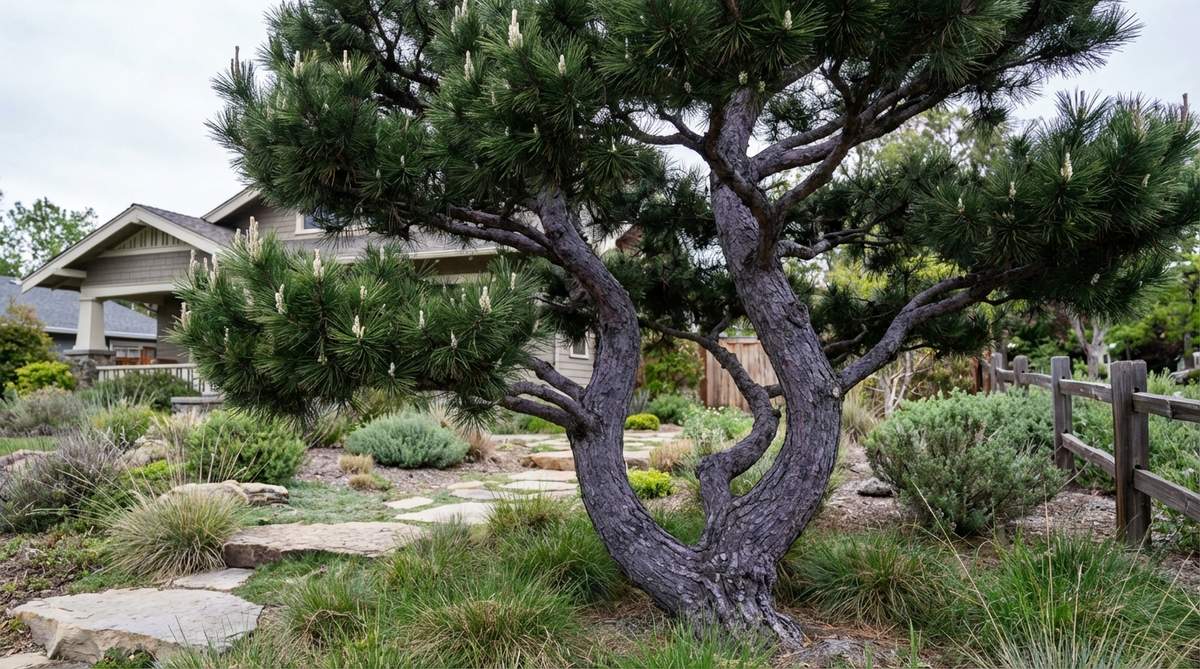
The masculine character of this species shows through rough, plated bark and dark green needles that cluster densely. Vigorous growth allows dramatic reduction without weakening the tree.
Prune new candles by breaking the longest completely, shortening medium growth by half, and leaving weak shoots untouched. This differential approach balances energy distribution across the entire canopy.
Salt tolerance and adaptability to poor soil conditions make this species forgiving for beginners while offering depth for advanced practitioners.
2. Japanese White Pine (Pinus parviflora)
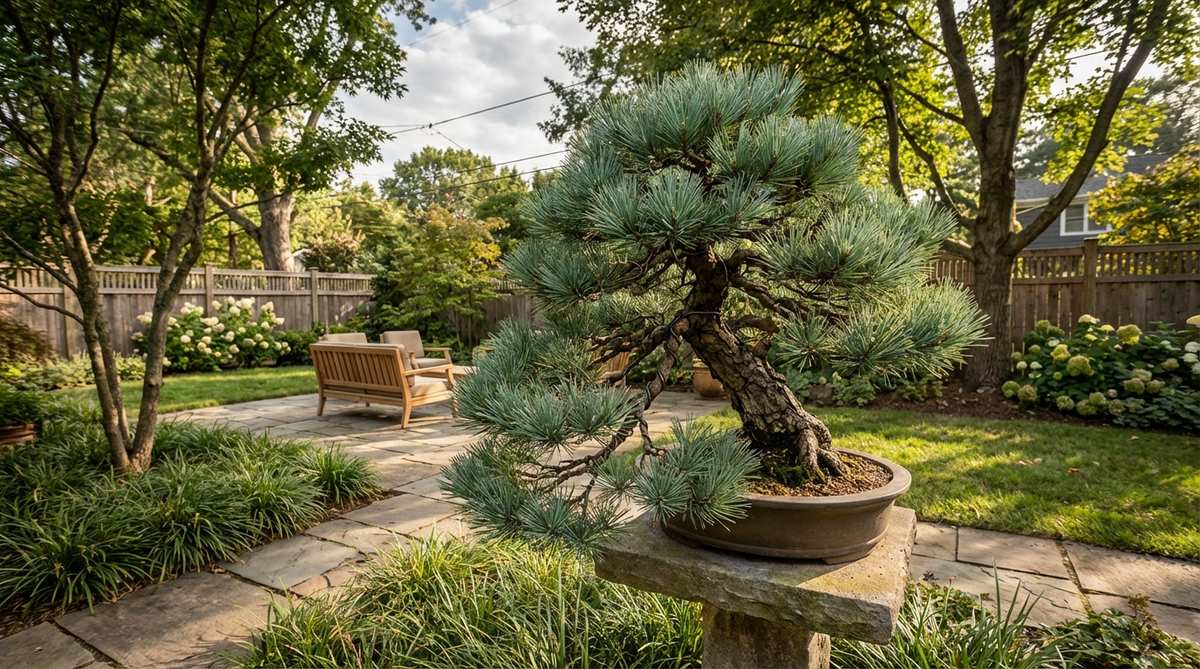
Soft blue-green needles create feminine elegance compared to other pine species. The subtle coloration intensifies in full sun exposure, adding dimensional interest to garden compositions.
Five-needle clusters grow more compactly than two-needle species, allowing finer detail in pad development. Wire branches during dormancy to avoid sap bleeding.
3. Japanese Red Pine (Pinus densiflora)
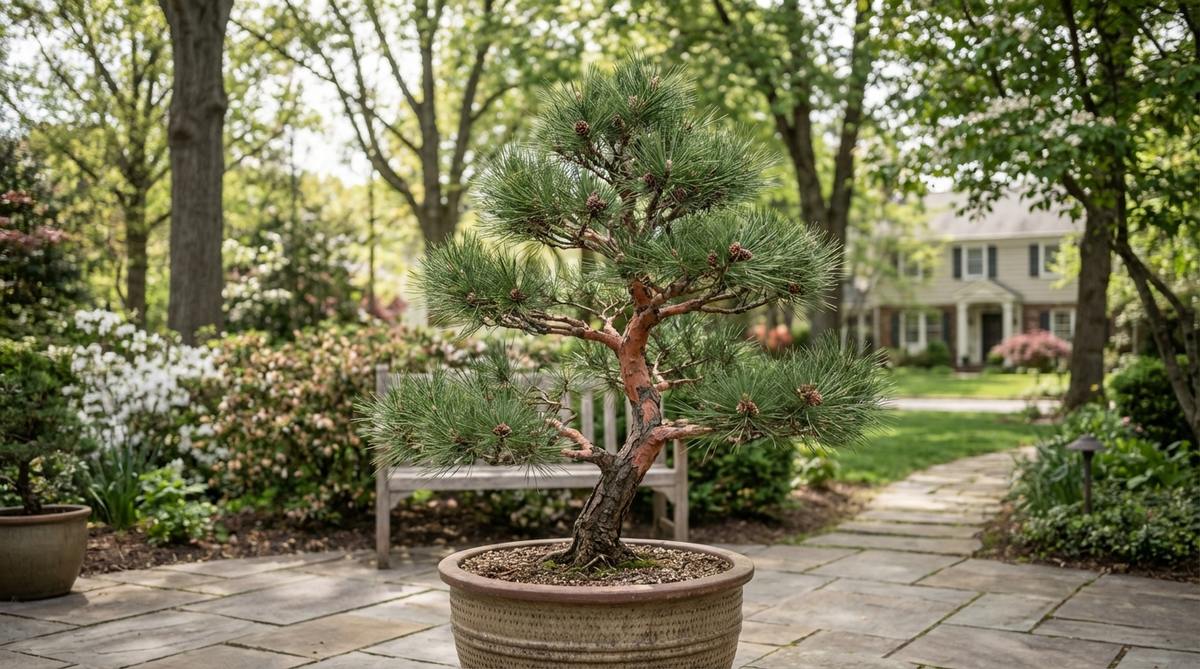
Airy foliage and naturally artistic growth patterns position this as the queen of traditional bonsai. The reddish bark flakes reveal salmon-colored undertones with age.
Light needle texture demands careful fertilization to maintain density without promoting excessive elongation. Decandling techniques produce ramification while controlling needle length.
This species excels in informal upright and literati styles where grace outweighs power.
4. Mountain Pine (Pinus mugo)
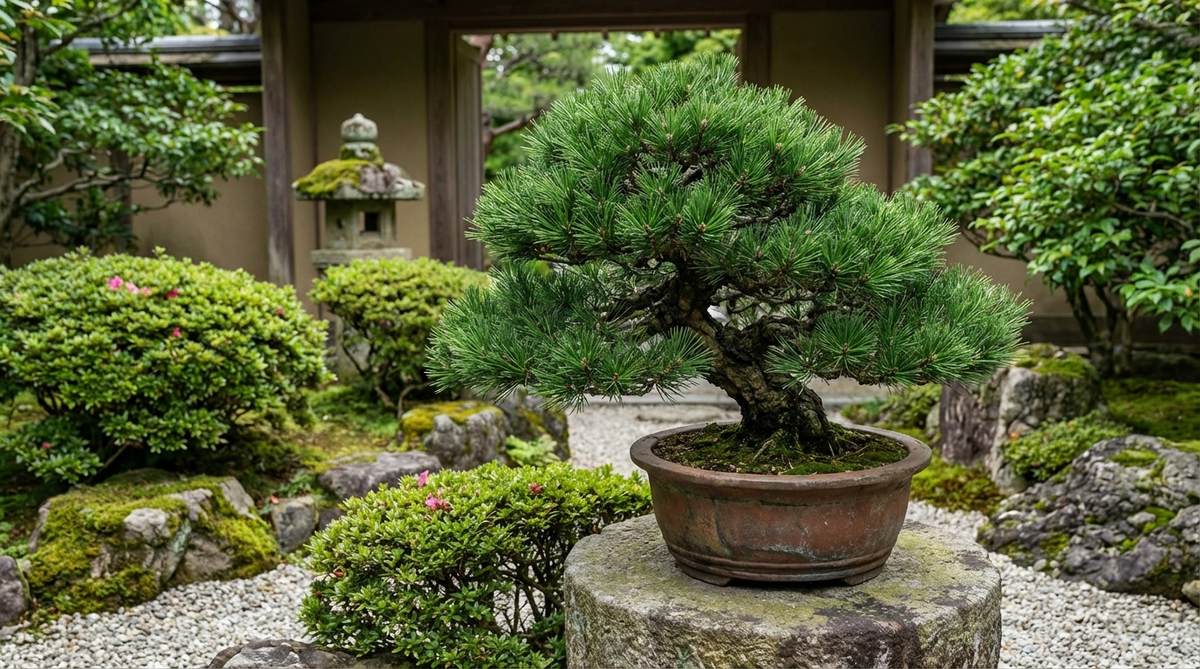
Dense branching habit and short internodes create compact silhouettes naturally. Variable growth across the species allows selection for specific visual characteristics.
European origins bring cold hardiness that survives extreme winter exposure. Pinch new growth early in the season to maintain pad definition throughout summer expansion.
5. Scots Pine (Pinus sylvestris)
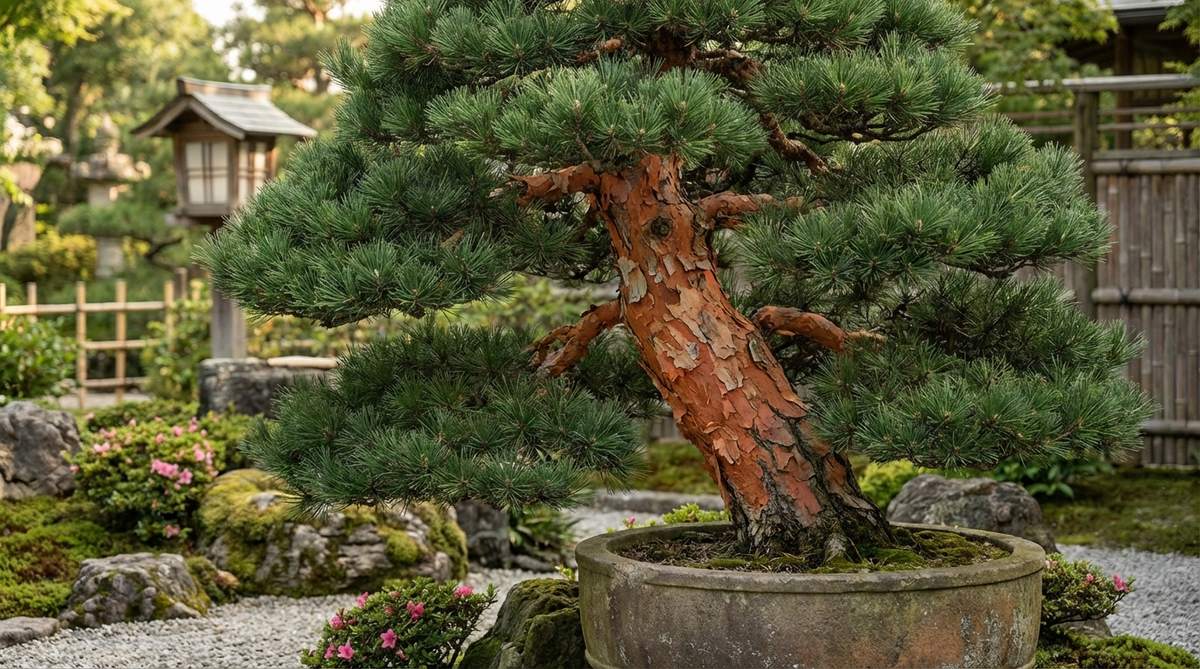
Orange-red bark peels in distinctive plates on mature trunks, creating focal interest even without foliage. The two-needle configuration responds predictably to seasonal pruning cycles.
Candle selection follows the same differential length approach used for Japanese black pine. Remove interior shoots to concentrate energy at branch tips where detail matters most.
6. Austrian Pine (Pinus nigra)
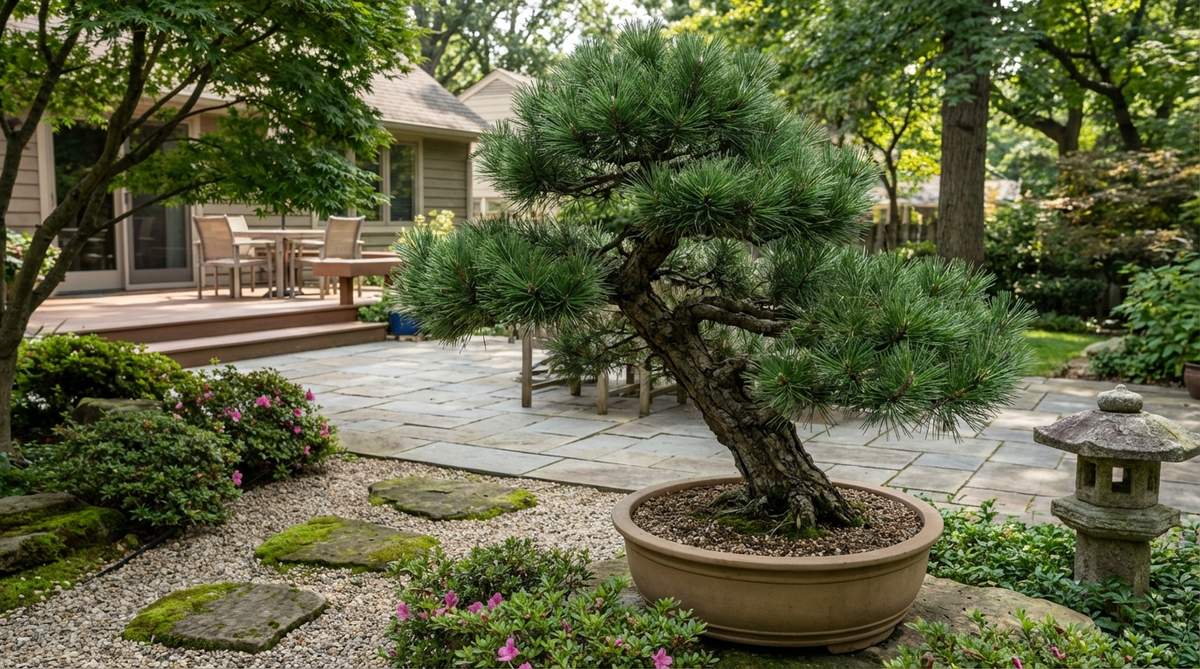
Thick, rigid needles project strength in formal upright compositions. Dark green coloration provides backdrop contrast for lighter foliage companions in multi-specimen displays.
Vigorous root systems require frequent repotting to maintain proportion. The species tolerates urban pollution better than most conifers, functioning well in city gardens.
7. Japanese Umbrella Pine (Sciadopitys verticillata)
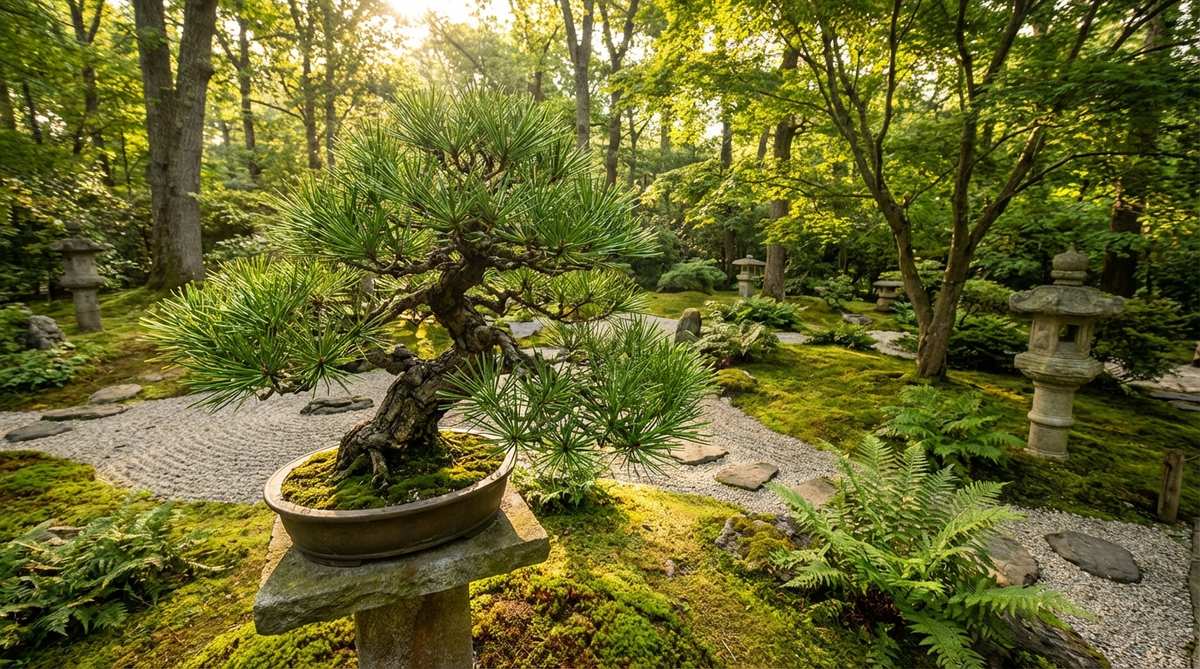
Glossy whorled needles create distinctive texture unlike any other conifer. Slow growth demands patience but rewards with refined character that improves annually.
Pruning focuses on thinning rather than shortening, as cuts on mature branches heal slowly. Position specimens where morning sun encourages compact growth without afternoon stress.
Japanese Garden Juniper Collection for Dramatic Form
Juniper species dominate beginner recommendations due to pruning forgiveness and rapid response to training. The japanese garden juniper bonsai varieties accept wire positioning while developing character through selective foliage removal.
8. Shimpaku Juniper (Juniperus sargentii)
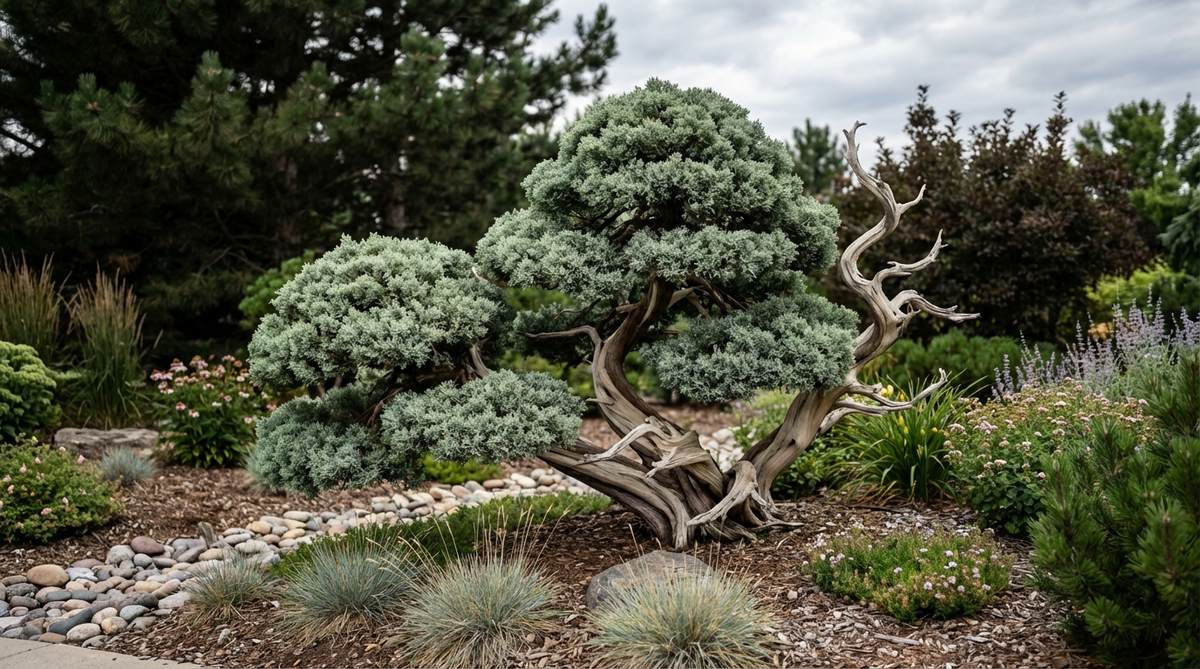
Compact scale foliage appears naturally in mature specimens, eliminating the need to manage juvenile growth. Silvery green coloration lightens compositions dominated by darker pines.
Allow new shoots to extend fully before pruning in early summer, then repeat the cycle as secondary growth emerges. This rhythm produces dense foliage pads within two growing seasons.
Deadwood carving techniques create jin and shari features that age specimens artificially.
9. Itoigawa Juniper (Juniperus chinensis ‘Itoigawa’)
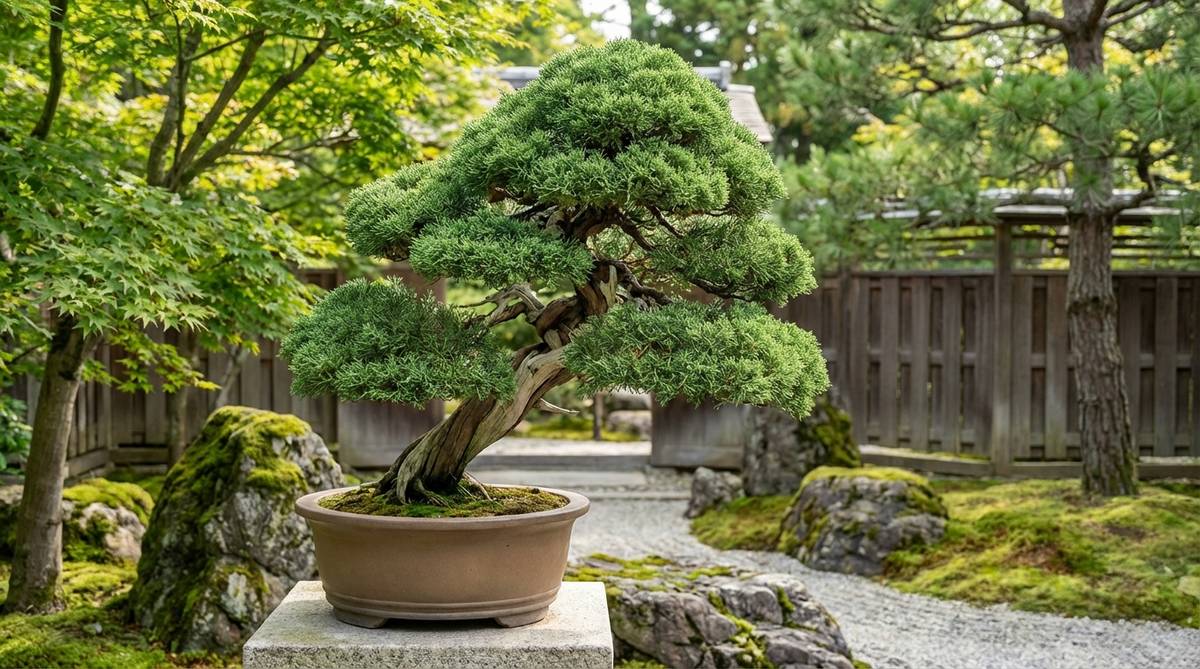
Fine-textured foliage naturally forms tight clouds without excessive pinching. The cultivar originated in Japan and remains prized for refined aesthetic in competition specimens.
Thin interior growth to allow light penetration while leaving extending shoots intact during spring. Cut back only after full elongation to maintain tree health through proper hormone distribution.
10. Needle Juniper (Juniperus rigida)
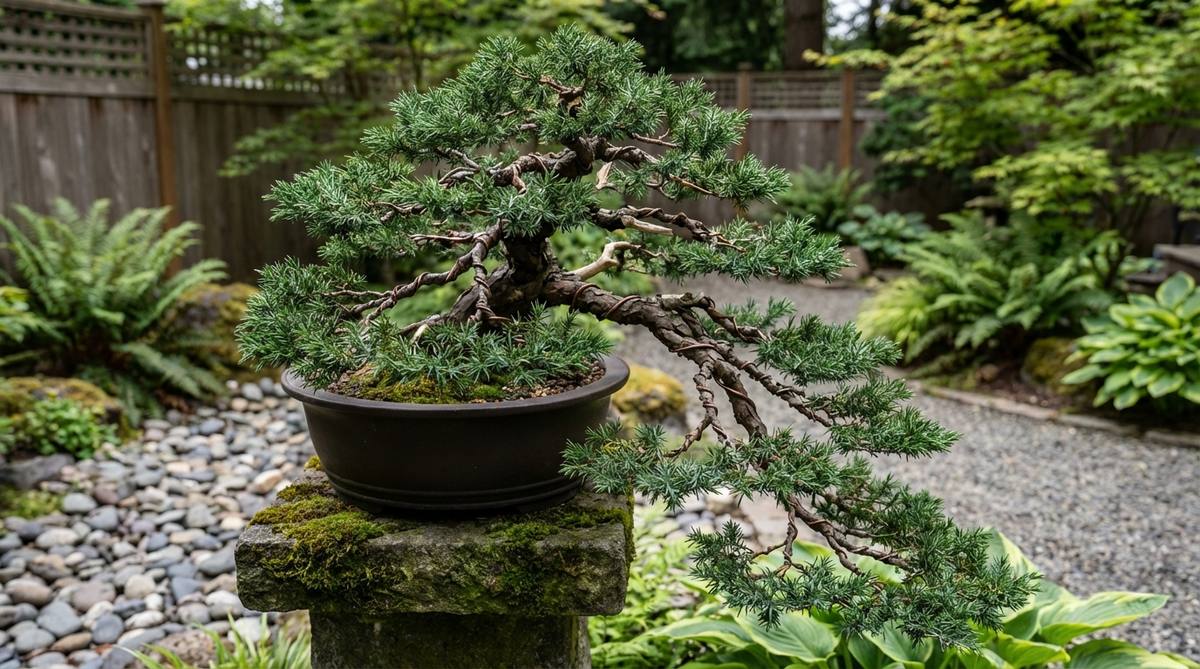
Sharp needles create bold texture compared to scale-foliaged varieties. Cascading growth habit suggests dramatic cliff-dwelling compositions in nature-inspired designs.
Wire young branches into position before they lignify, as mature wood snaps rather than bends. Remove crotch growth and undersides of pads to emphasize horizontal layering.
11. California Juniper (Juniperus californica)
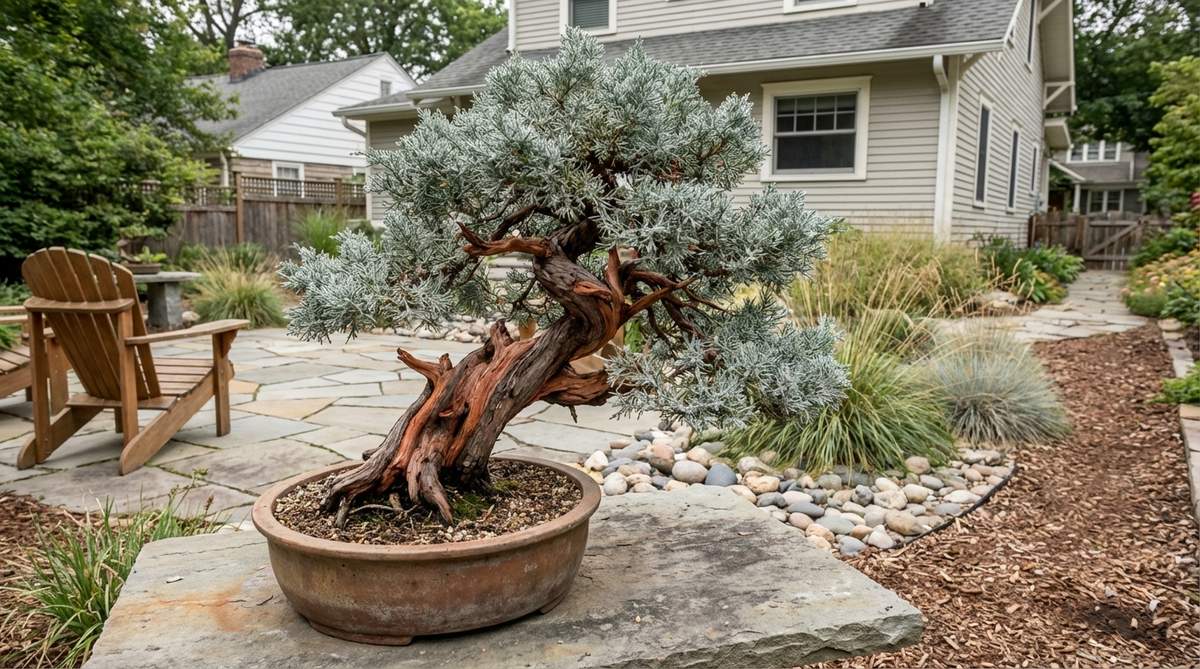
Twisted trunks develop naturally in harsh native habitats, providing instant age appearance. Silver-gray foliage contrasts dramatically with reddish deadwood features.
Collect yamadori specimens ethically with landowner permission and proper timing. Established trees adapt to container culture through gradual root work over multiple seasons.
12. Rocky Mountain Juniper (Juniperus scopulorum)
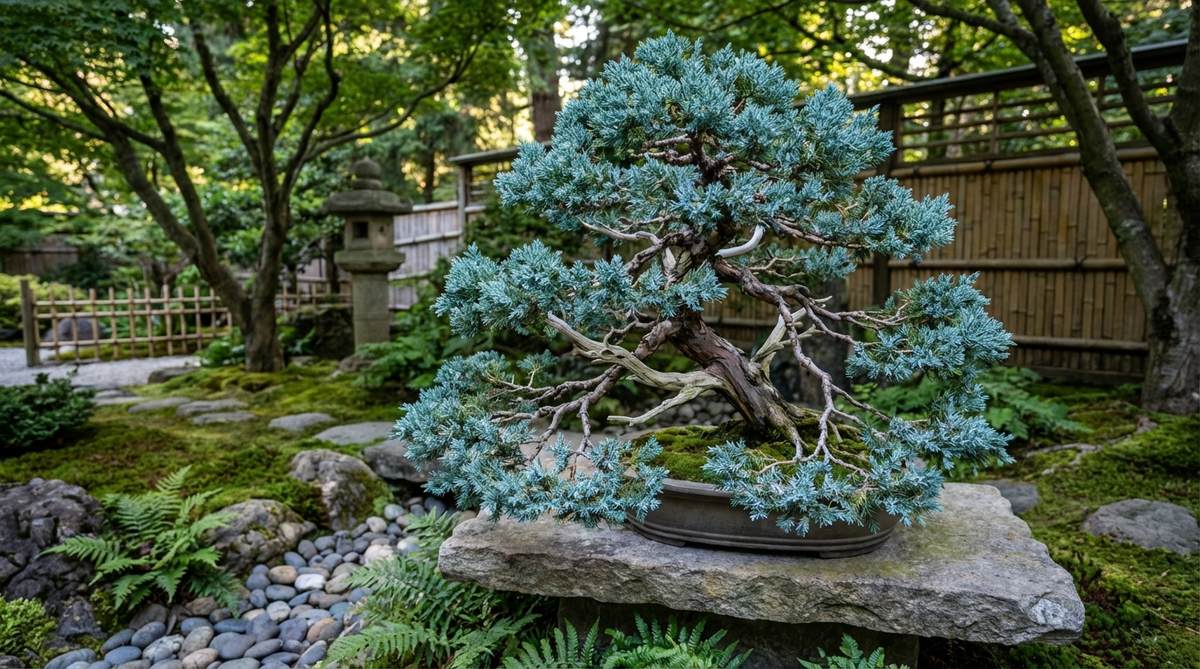
Blue-tinted foliage provides unique color in evergreen collections. Compact cultivars eliminate excessive pruning while maintaining bonsai-appropriate proportions.
Prune three times annually following the elongation-and-cut rhythm. Spring, midsummer, and early autumn sessions maintain definition without stressing the tree.
13. Common Juniper (Juniperus communis)
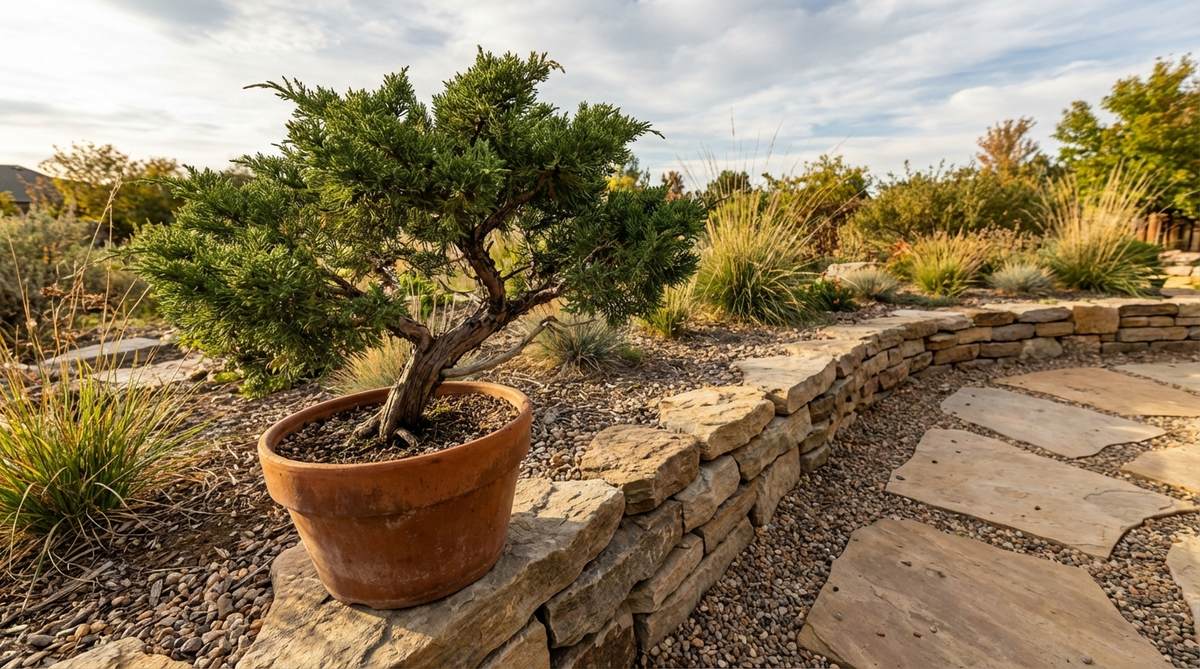
Wide distribution across temperate zones means locally adapted genetics survive regional climate extremes. Needle foliage creates informal texture suitable for naturalistic styling.
Select dwarf cultivars to reduce pruning frequency while achieving scaled proportions. The species tolerates poor soil and exposed sites better than most alternatives.
14. Hollywood Juniper (Juniperus chinensis ‘Torulosa’)
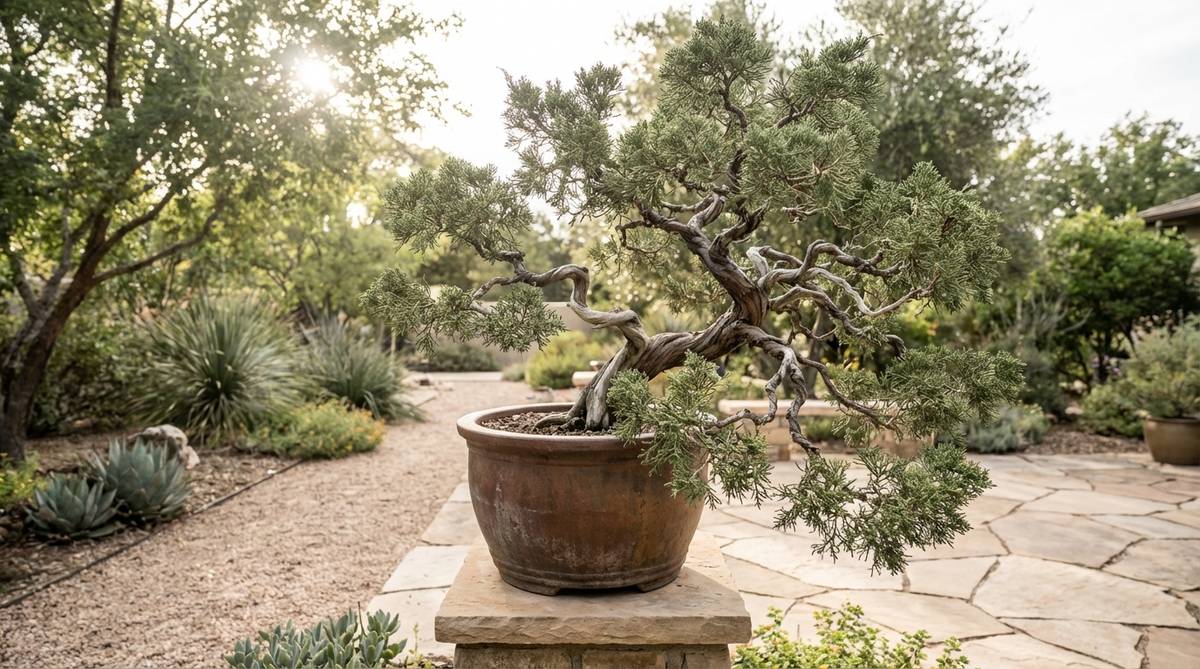
Naturally twisted branches require minimal wiring to achieve dynamic movement. The cultivar name references dramatic Southern California landscaping where it appears frequently.
Prune scale foliage by cutting shoots rather than trimming individual needle tips. Clean cuts heal faster and prevent browning that occurs with torn tissue.
15. Creeping Juniper (Juniperus horizontalis)
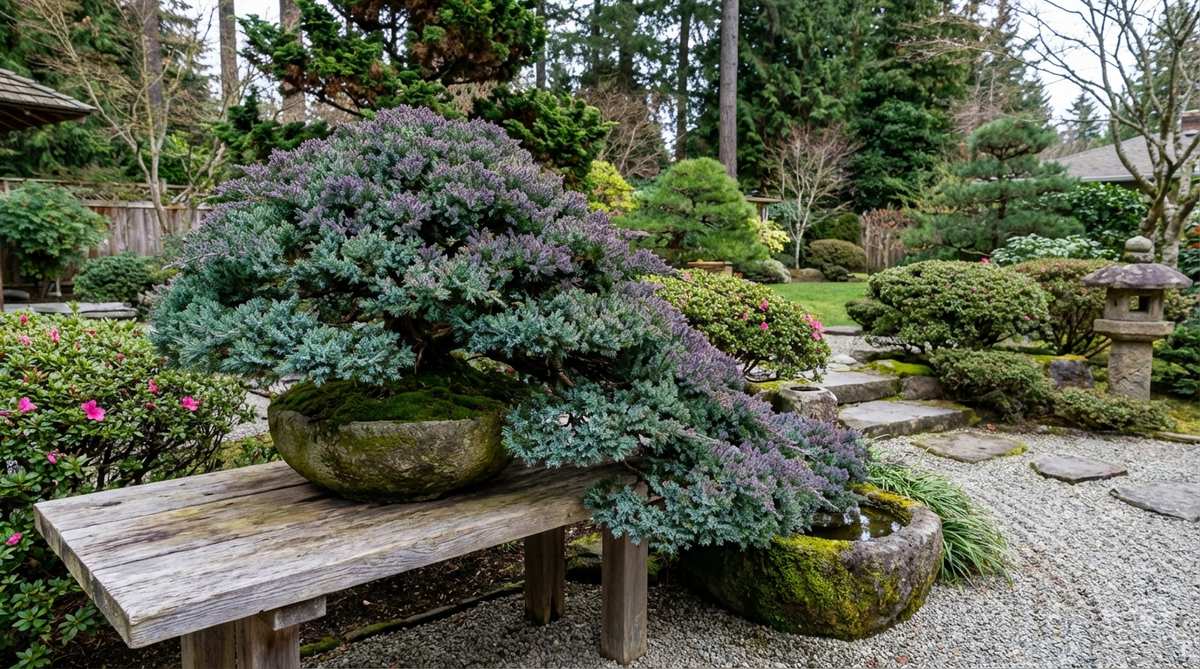
Ground-hugging growth patterns translate naturally into cascade and semi-cascade bonsai forms. Blue and purple winter coloration adds seasonal interest beyond evergreen structure.
Root cuttings easily from healthy growth, allowing propagation of preferred color forms. Young plants develop trunk character faster when grown in open ground before container training.
Deciduous Masterpieces for Seasonal Transformation
Deciduous specimens provide dramatic seasonal changes that mark time passage in garden settings. These japanese garden bonsai varieties develop intricate branch structures visible during winter dormancy, then explode with spring color before autumn transformation.
16. Japanese Maple (Acer palmatum)
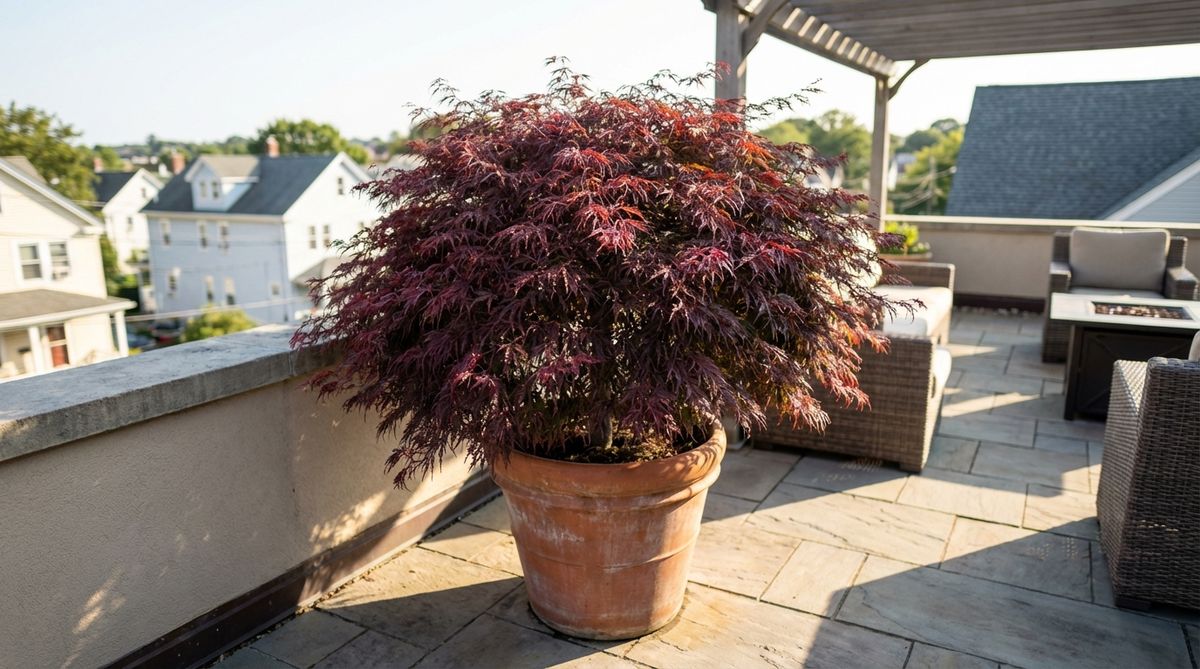
Five-lobed leaves transition through spring green, summer depth, and autumn fire in predictable annual cycles. Hundreds of cultivars offer color variations from chartreuse to burgundy.
Prune during late autumn after leaf drop when branch structure appears clearly. Wire-free techniques protect thin bark from scarring that permanent damage causes.
Leaf reduction occurs naturally in healthy specimens through proper fertilization timing and light exposure management.
17. Trident Maple (Acer buergerianum)
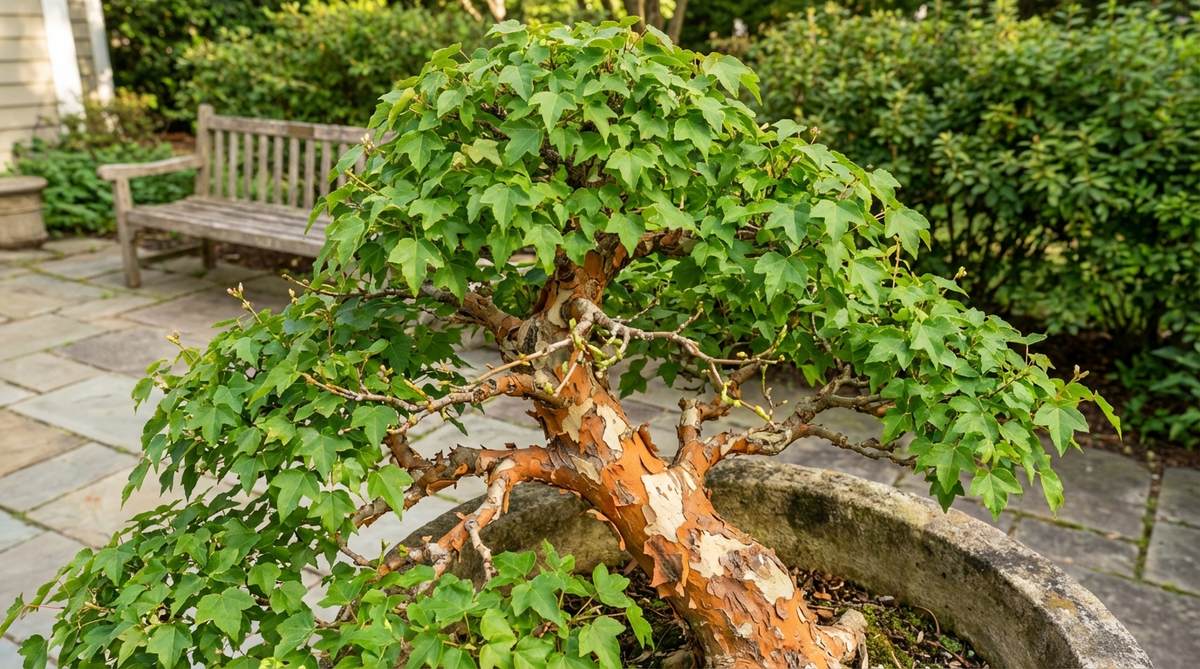
Three-lobed leaves create finer texture than Japanese maple varieties. Vigorous growth produces ramification quickly when cut back hard during growing season.
Orange-brown bark flakes on mature trunks, revealing lighter undertones that add aged character. The species back-buds reliably along old wood, allowing major restructuring of established specimens.
18. Japanese Zelkova (Zelkova serrata)
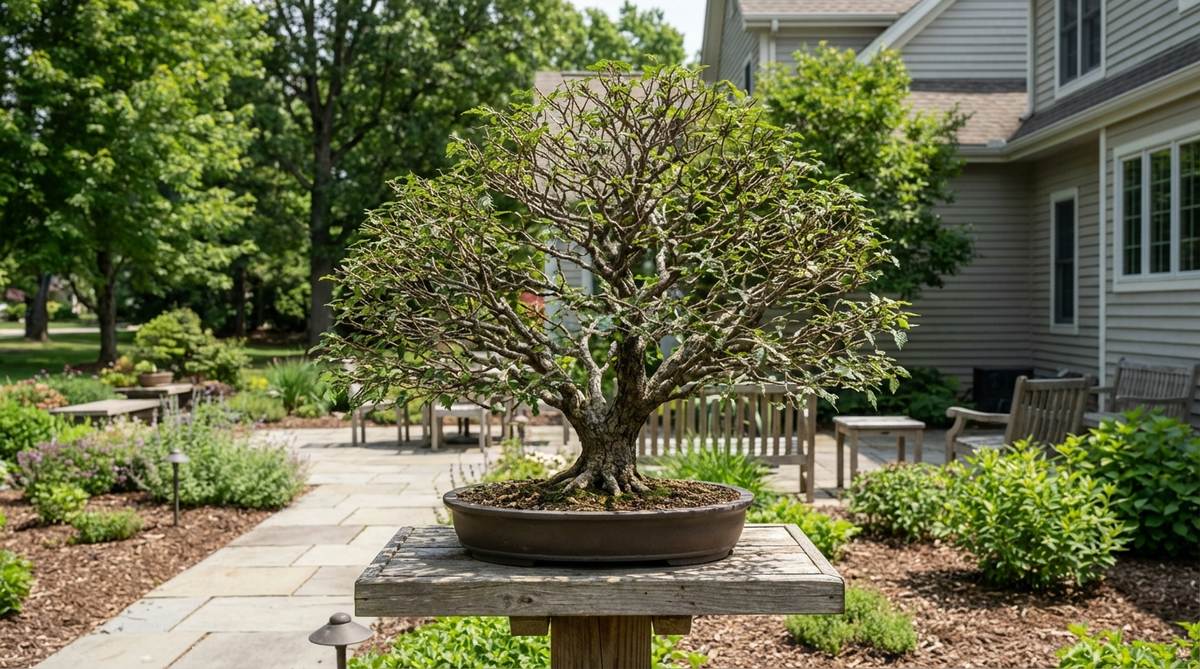
Broom-style training showcases the species’ natural branching pattern. Tiny serrated leaves reduce automatically in refined specimens, creating scaled proportion.
Clip and grow techniques build dense twiggy growth at branch terminals. Prune multiple times during growing season to encourage back-budding while maintaining overall silhouette.
19. Chinese Elm (Ulmus parvifolia)
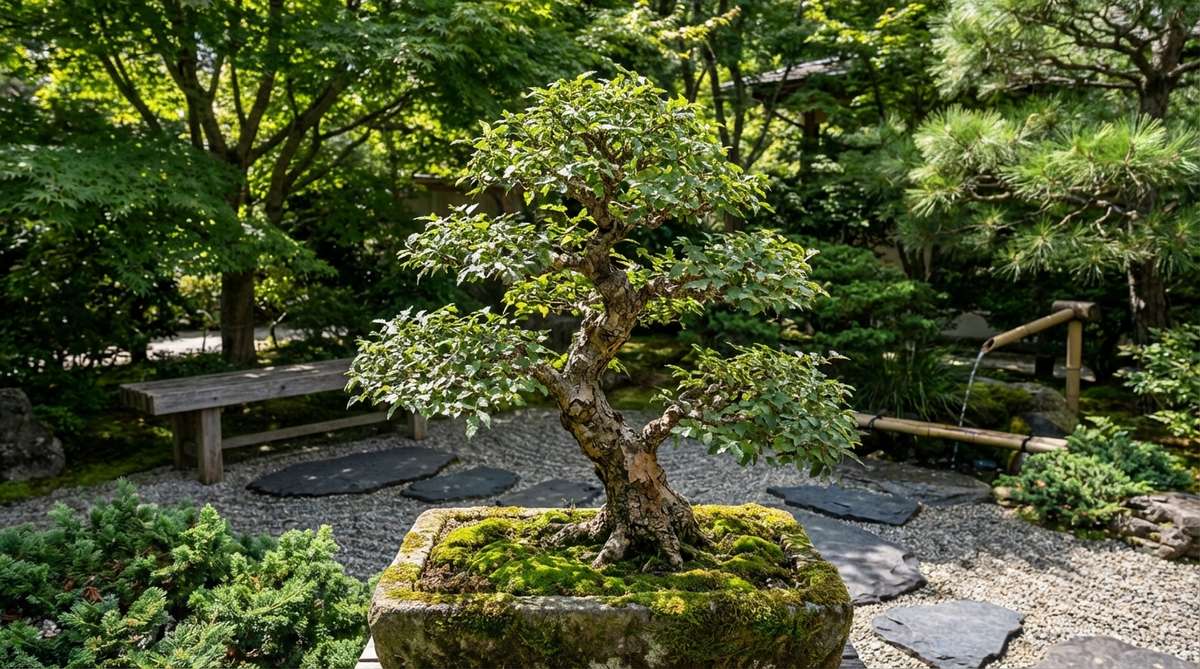
Small leaves and corky bark develop quickly on young material. The species tolerates indoor conditions better than most alternatives, functioning as transitional learning material.
Prune throughout growing season without concern for timing, as vigorous growth recovers quickly. Root work proceeds similarly, with trees tolerating aggressive reduction during repotting.
20. European Beech (Fagus sylvatica)
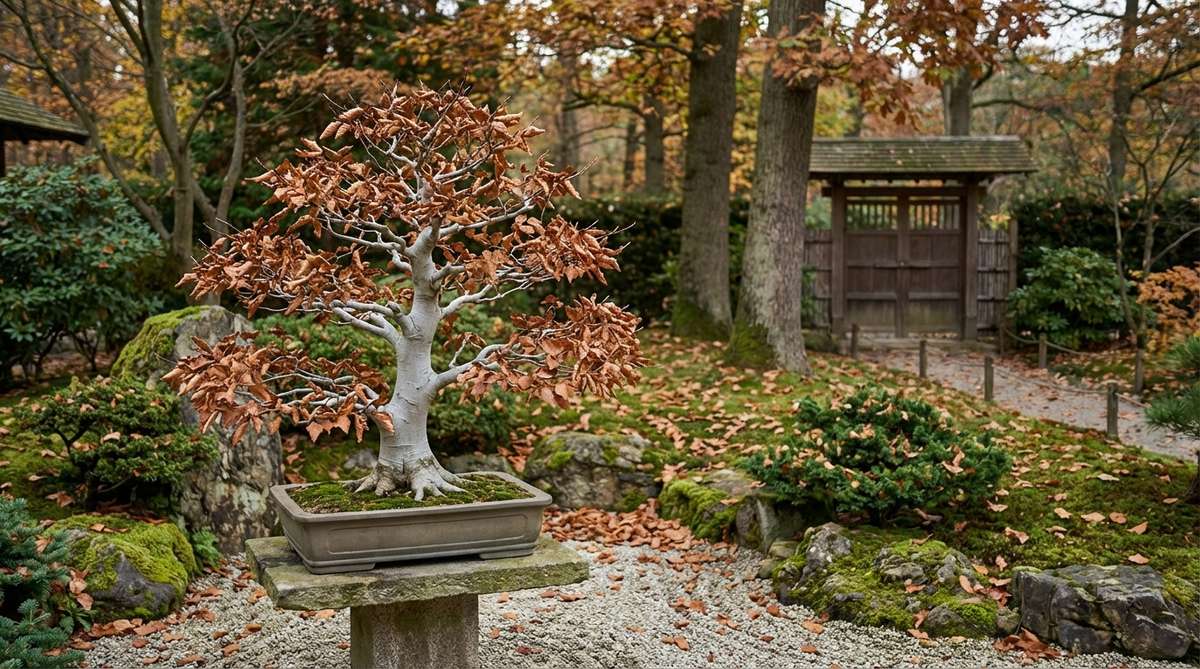
Smooth gray bark remains visually striking throughout winter dormancy. Spring leaves emerge copper-tinted before maturing to green, then bronze in autumn.
Marcescent foliage clings through winter, providing continued interest when other deciduous specimens stand bare. Remove retained leaves in early spring to avoid damage to emerging buds.
21. Hornbeam (Carpinus betulensis)
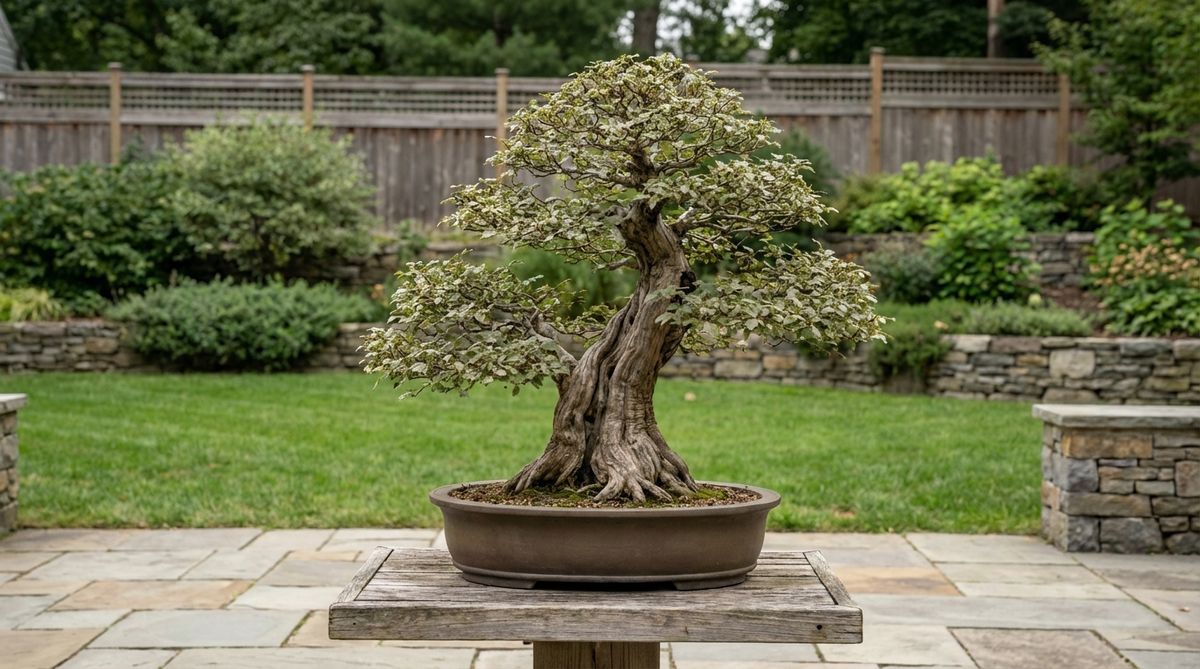
Muscular trunk fluting develops naturally with age, creating powerful visual movement. Fine ramification builds through diligent growing season pruning over multiple years.
The species responds to clip and grow methodology better than wiring. Allow shoots to extend, then cut back to two leaves repeatedly throughout summer months.
22. Liquidambar (Liquidambar styraciflua)
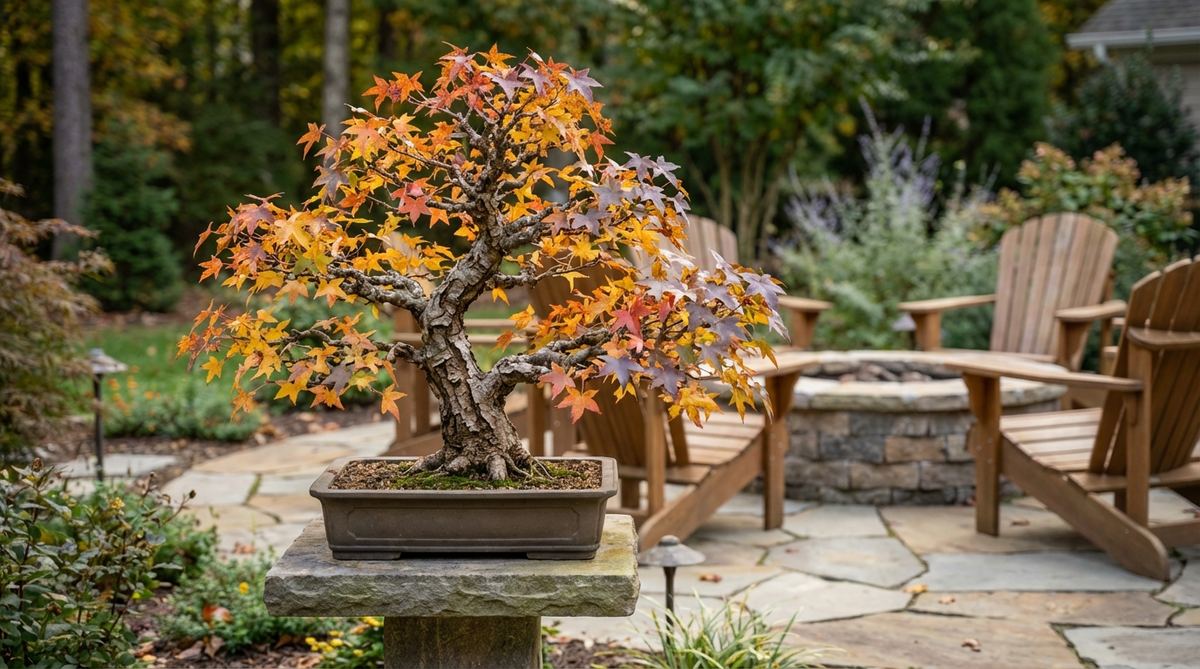
Star-shaped leaves transition through yellow, orange, red, and purple during extended autumn display. Corky bark ridges provide winter interest after leaf drop.
Long internodes in juvenile material require patience or ground-growing to develop usable trunk sections. Mature specimens reduce leaf size through root confinement and fertilization control.
23. Ginkgo (Ginkgo biloba)
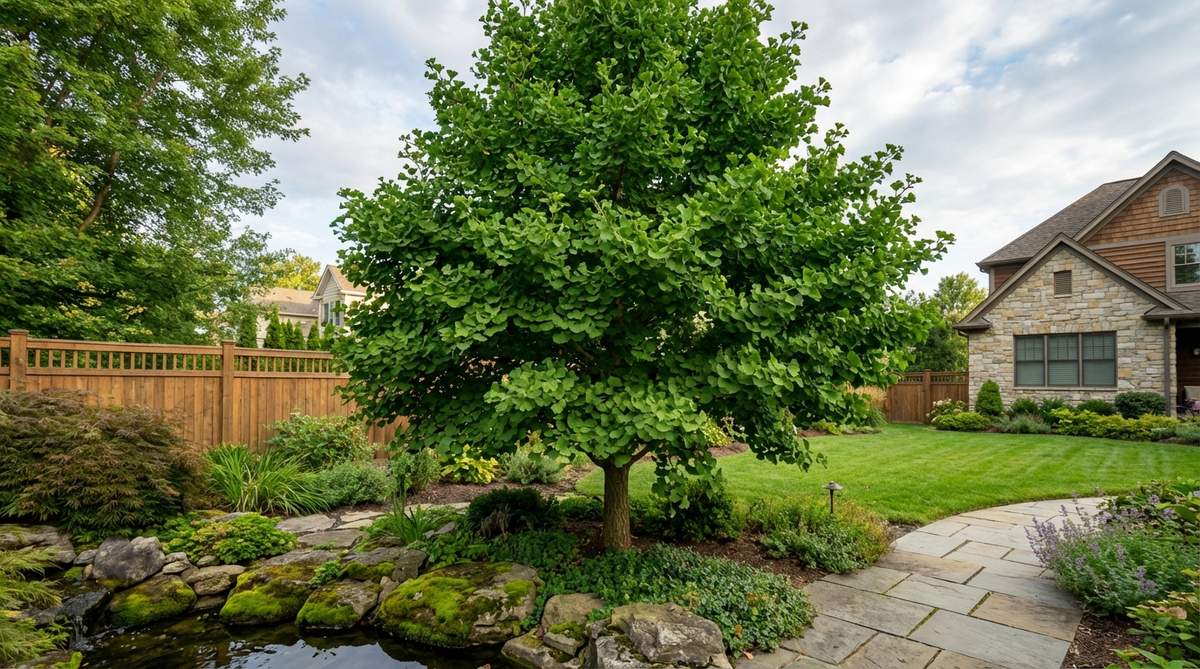
Ancient lineage and fan-shaped leaves create instant recognition. Butter-yellow autumn color appears uniformly before leaves drop within days.
The species grows slowly compared to maples, requiring commitment to long-term development. Pruning during active growth prevents excessive bleeding from cut surfaces.
Flowering Bonsai Specimens for Spring Color
Flowering varieties add explosive color to japanese garden bonsai collections during bloom periods. These specimens require specific pruning timing to preserve flower bud formation while maintaining structural refinement.
24. Satsuki Azalea (Rhododendron indicum)
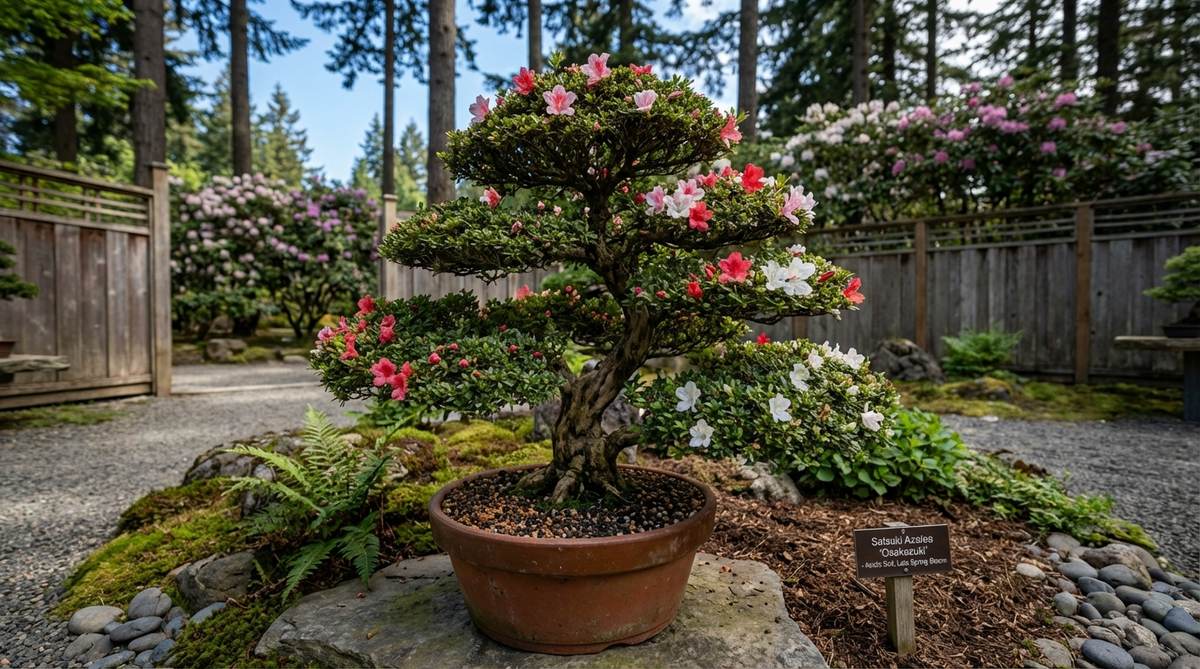
Late spring flowering extends bloom season after earlier azaleas finish. Individual flowers open in succession across several weeks, prolonging display impact.
Prune immediately after flowering concludes to allow maximum time for next season’s bud development. Pinch new shoots throughout summer to build dense foliage pads without sacrificing blooms.
Acidic soil requirements demand specialized fertilization and water management compared to pH-tolerant species.
25. Kurume Azalea (Rhododendron obtusum)
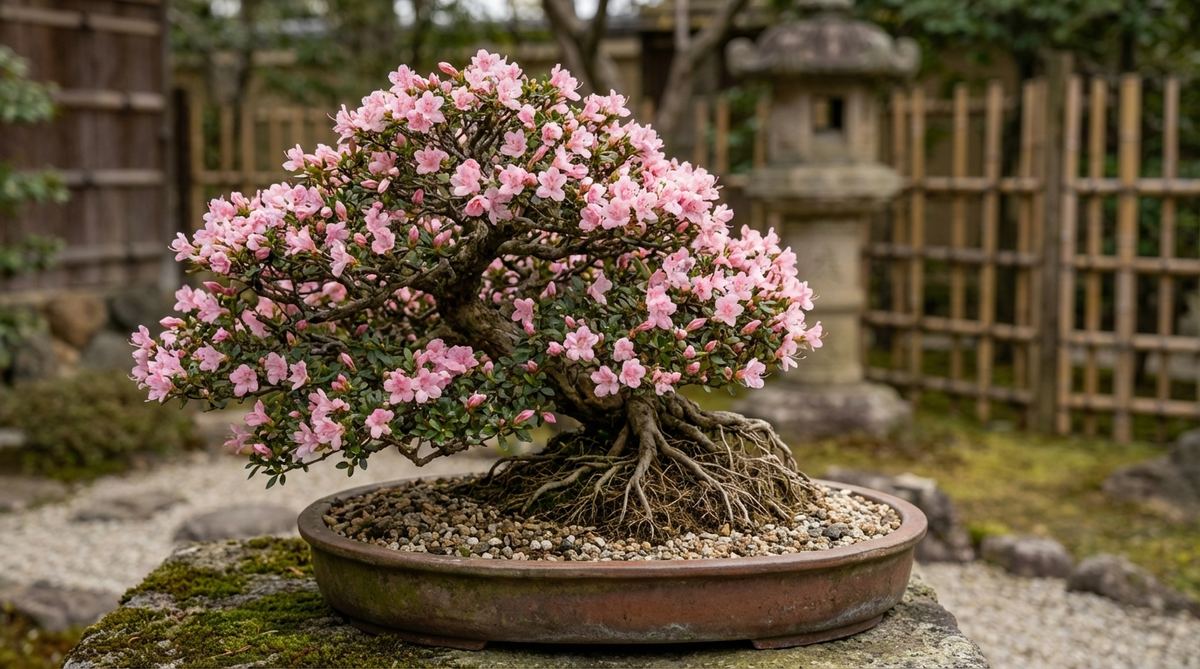
Smaller flowers appear in greater profusion than Satsuki varieties. The early bloom timing provides color while other specimens remain in spring green.
Dense branching habit creates natural bonsai proportion without excessive intervention. Root pruning requires care, as fine feeder roots damage easily during repotting.
26. Japanese Apricot (Prunus mume)
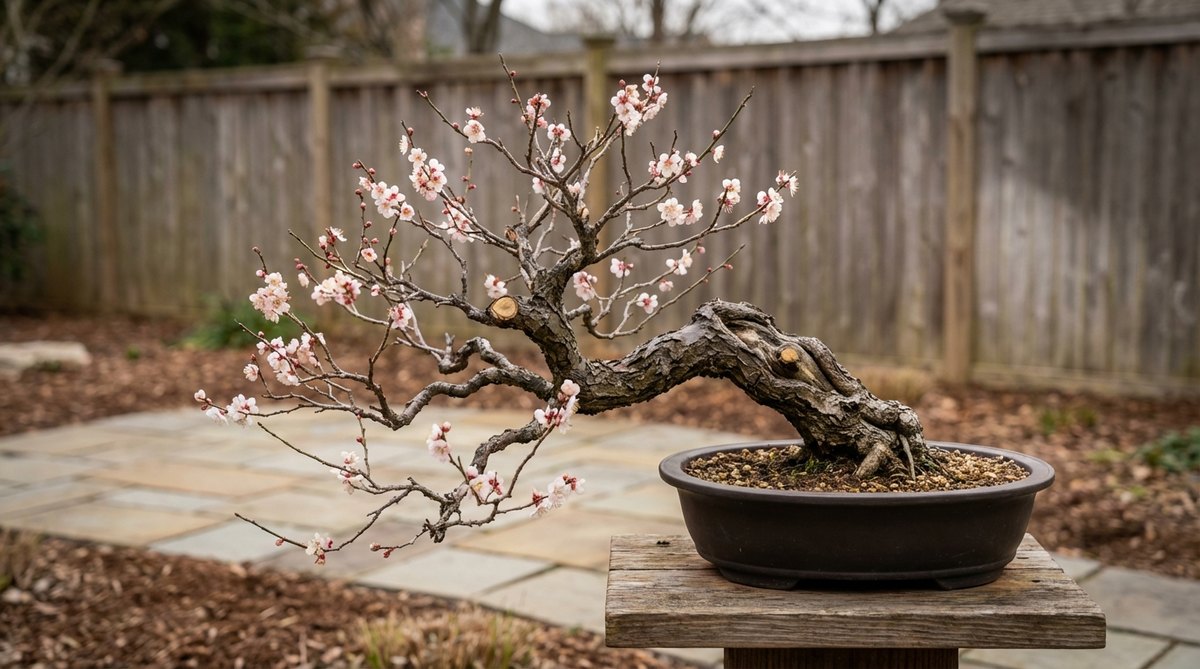
Winter flowering breaks dormancy gloom with fragrant pink or white blossoms on bare branches. The early timing risks frost damage in cold climates but creates unforgettable displays.
Prune after flowering to maintain branch structure while encouraging spur development. Old wood flowers more reliably than vigorous young shoots, so balance growth energy carefully.
27. Flowering Cherry (Prunus serrulata)
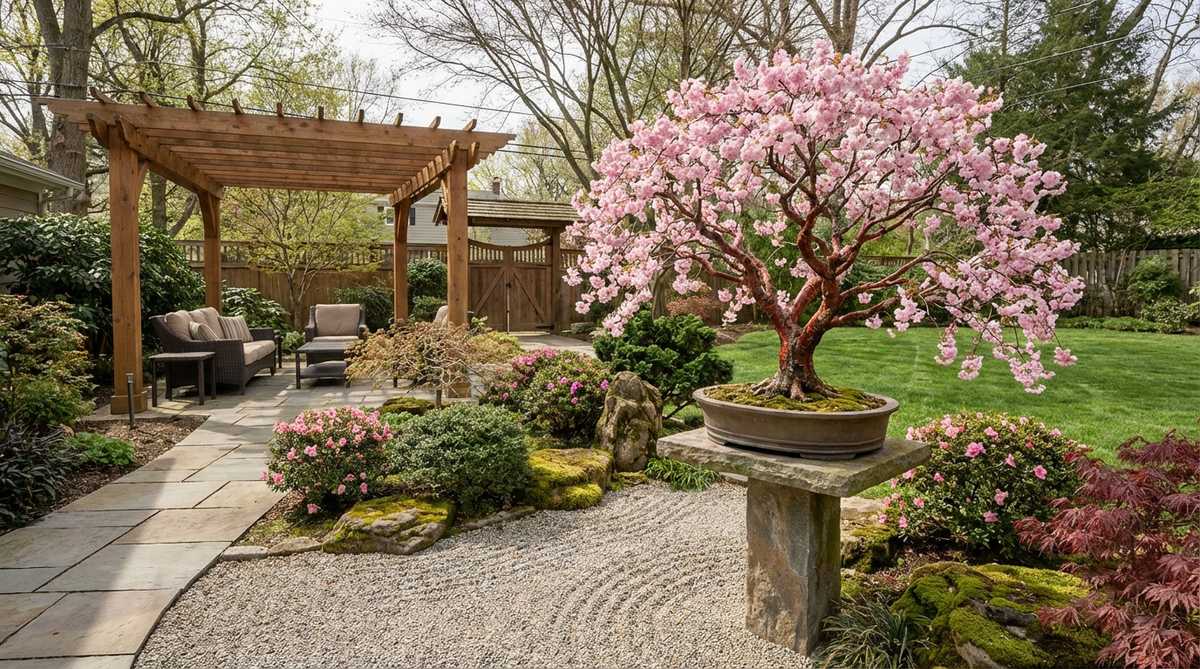
Spring clouds of pink or white blooms define Japanese garden aesthetics. Glossy reddish bark adds interest during dormancy between autumn color and spring flowering.
Short-lived flowers demand precise timing to showcase specimens at peak. Plan garden positioning where daily viewing captures the brief but glorious bloom window.
28. Crabapple (Malus species)
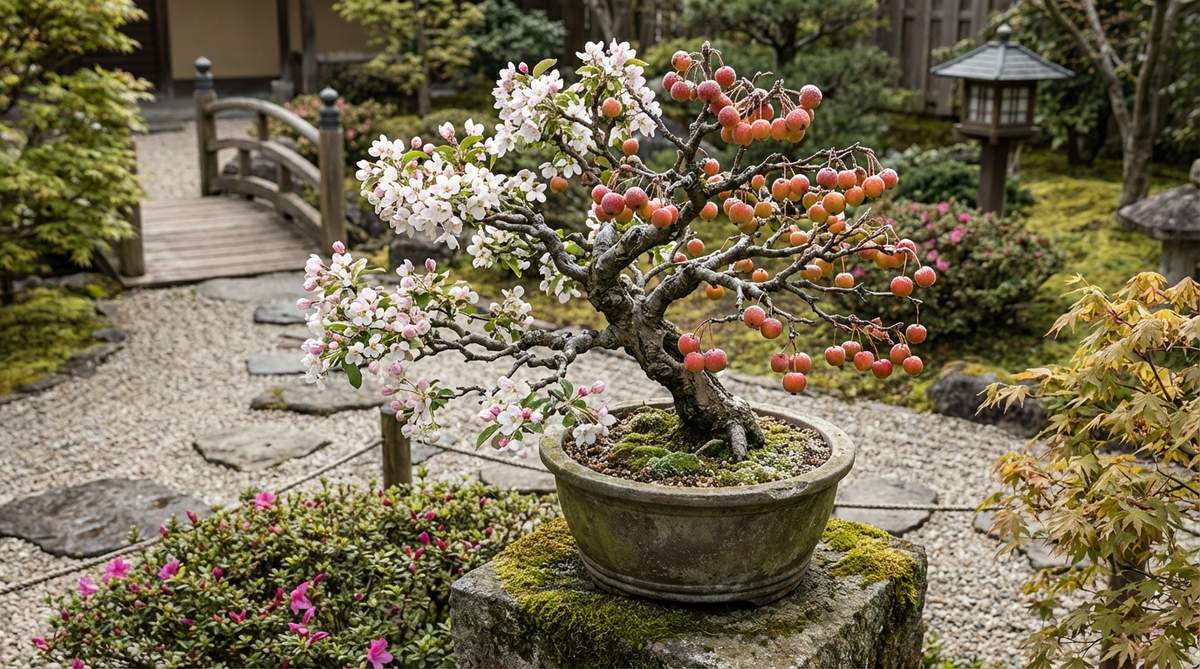
Spring flowers transition to autumn fruit displays that persist through early winter. Miniature apple varieties scale appropriately to bonsai proportions.
Fruit production drains tree energy, so remove excess developing apples to balance display with plant health. Allow only what the tree can support without weakening structure.
29. Wisteria (Wisteria floribunda)
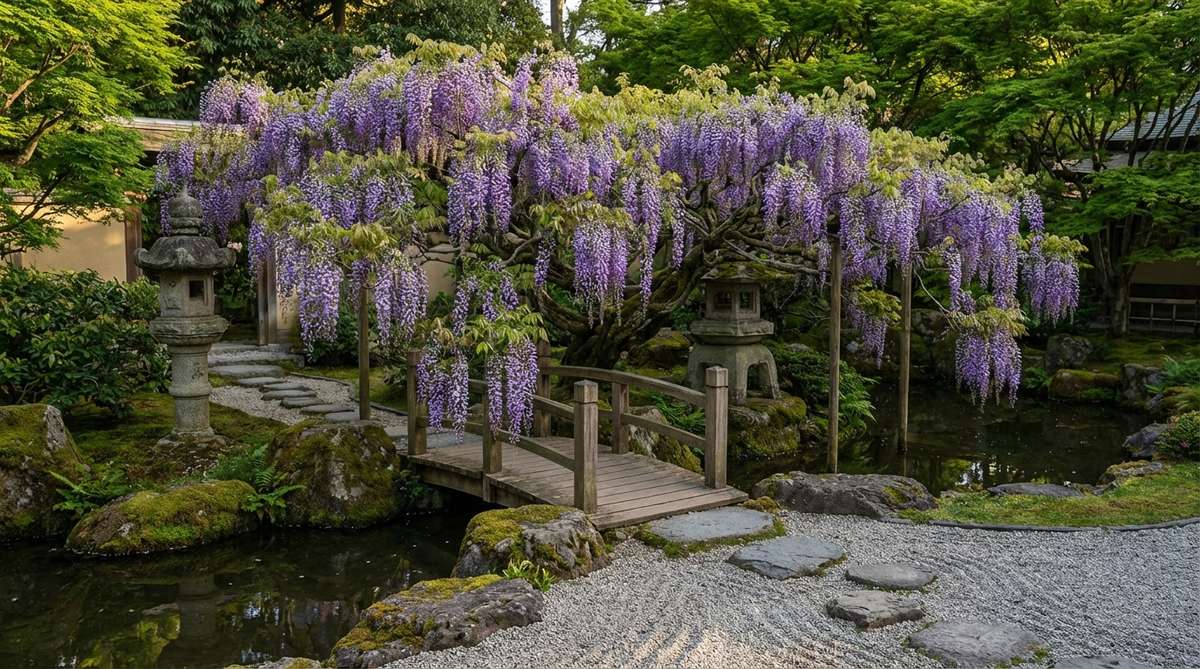
Cascading flower clusters drape dramatically from trained branches. Fragrance adds sensory dimension to visual impact during peak bloom periods.
Heavy feeding supports vigorous growth and flower production. Prune twice annually—summer reduction for structure and winter detail work for refinement.
30. Camellia Japonica
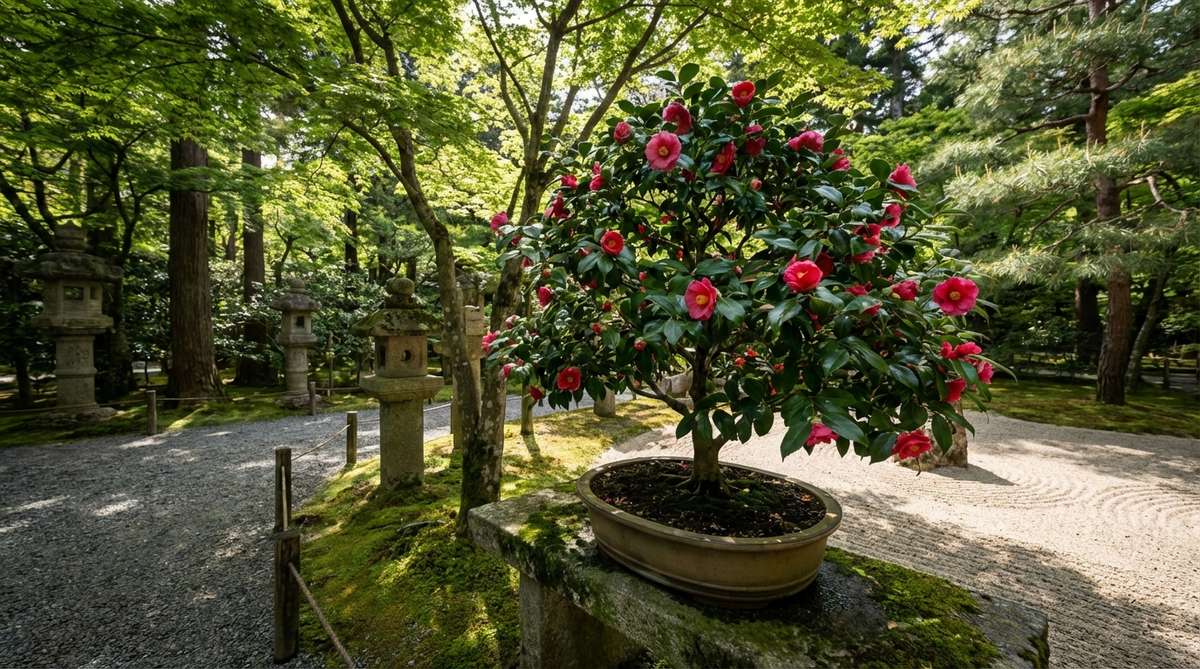
Winter to spring flowering brightens cold months when most species remain dormant. Glossy evergreen foliage provides year-round structure beyond bloom periods.
Acidic soil and shade tolerance suit woodland garden positions. Prune after flowering concludes to shape structure without removing developing buds.
31. Camellia Sasanqua
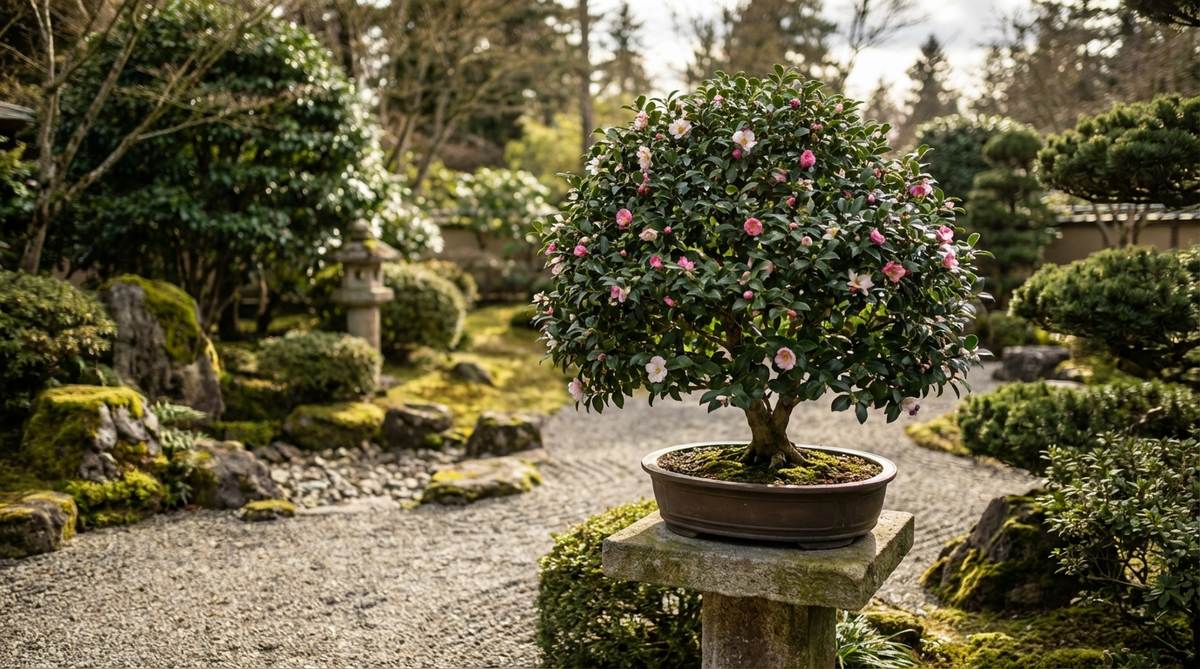
Autumn flowering distinguishes this species from spring-blooming japonica varieties. Smaller flowers appear more abundantly across extended bloom windows.
The species tolerates more sun exposure than japonica types while maintaining similar cultural requirements. Evergreen leaves remain decorative through all seasons.
32. Forsythia (Forsythia species)
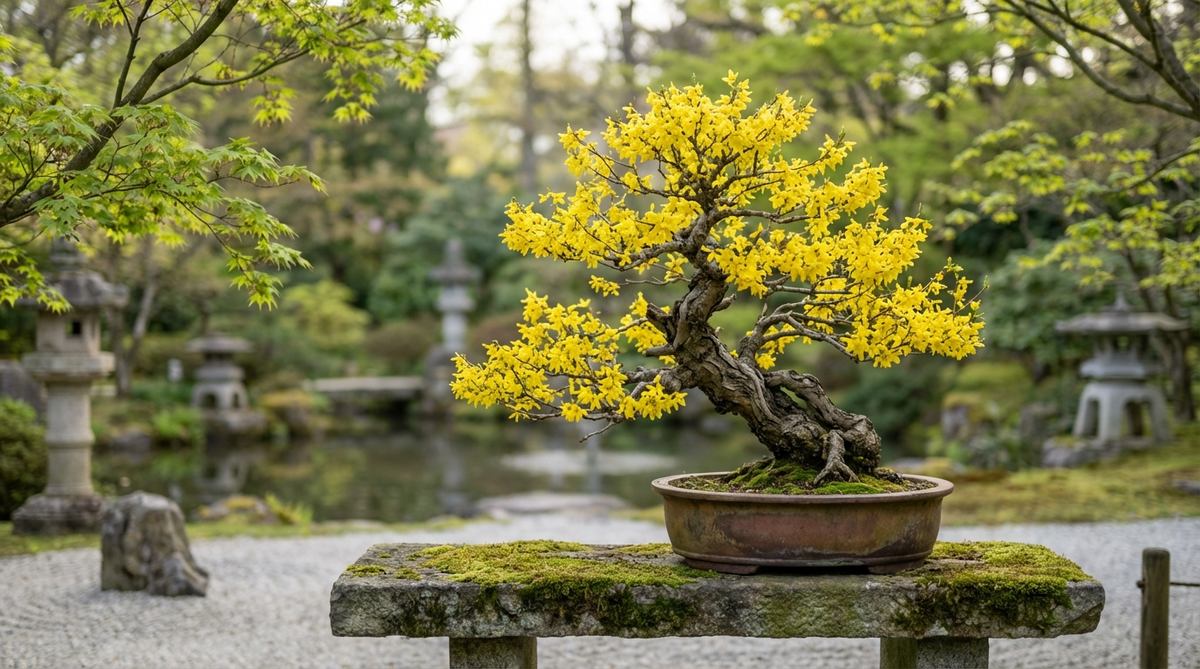
Electric yellow flowers emerge before leaves, creating pure color impact. The early spring timing signals winter’s end with unmistakable visual announcement.
Vigorous growth requires frequent pruning to maintain bonsai scale. Cut back hard after flowering, then pinch new growth throughout summer to build ramification.
33. Flowering Quince (Chaenomeles species)
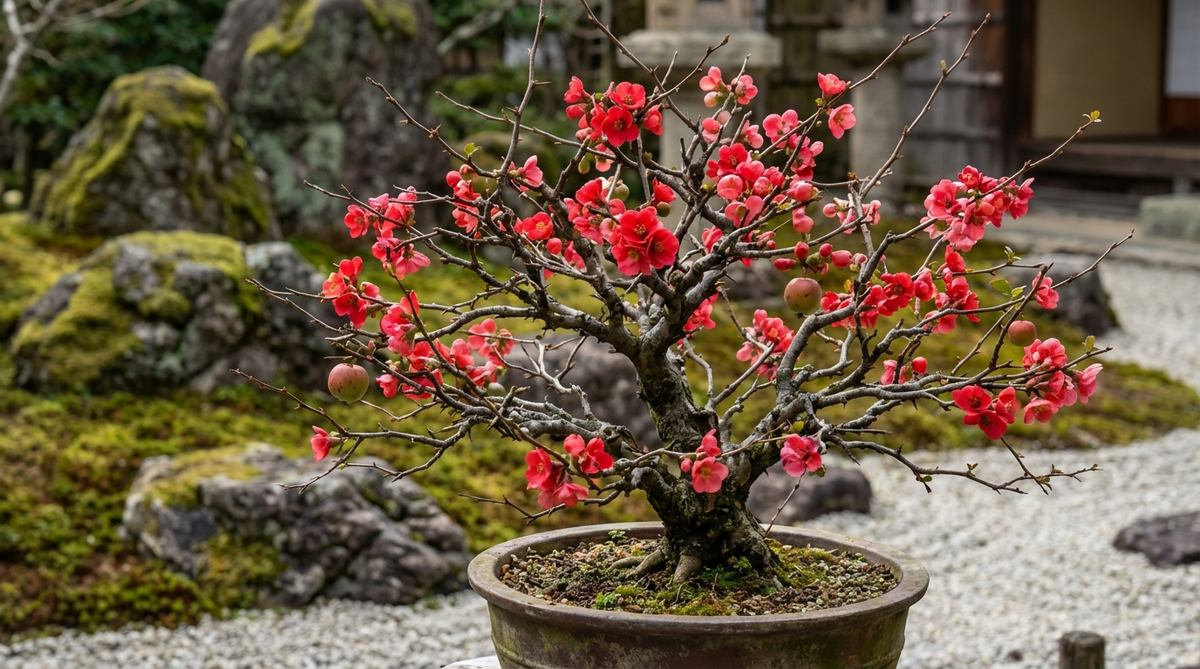
Orange, red, pink, or white flowers emerge on bare branches during late winter. Thorny growth creates handling challenges but adds authentic character.
Fruit development follows flowering if cross-pollination occurs. The small quince apples scale appropriately to bonsai proportions while adding autumn interest.
Evergreen Character Trees for Structure
Broadleaf evergreens maintain foliage through winter while offering different texture than needle conifers. These japanese garden bonsai specimens provide year-round interest with varied seasonal growth patterns.
34. Boxwood (Buxus species)
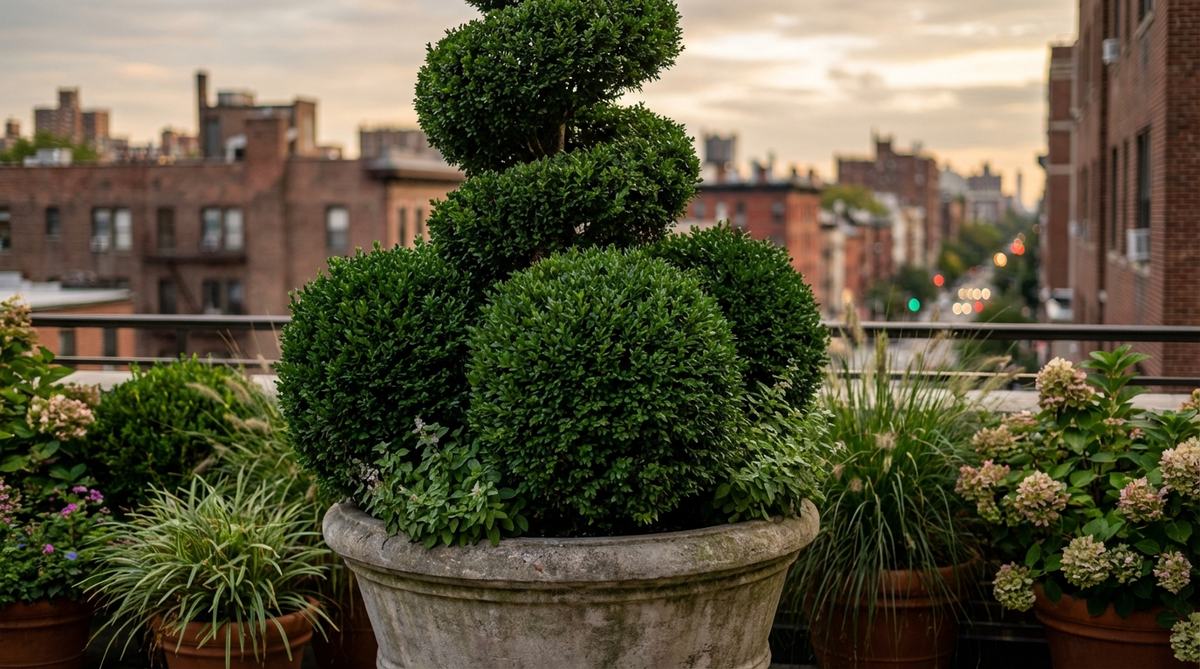
Dense twiggy growth creates instant aged appearance. Small leaves reduce naturally in healthy specimens exposed to appropriate light levels.
Clip and grow techniques work efficiently with boxwood’s reliable back-budding habit. Prune multiple times during growing season to maintain compact silhouettes.
Cold hardiness varies by species, so select varieties proven in your climate zone.
35. Japanese Holly (Ilex crenata)
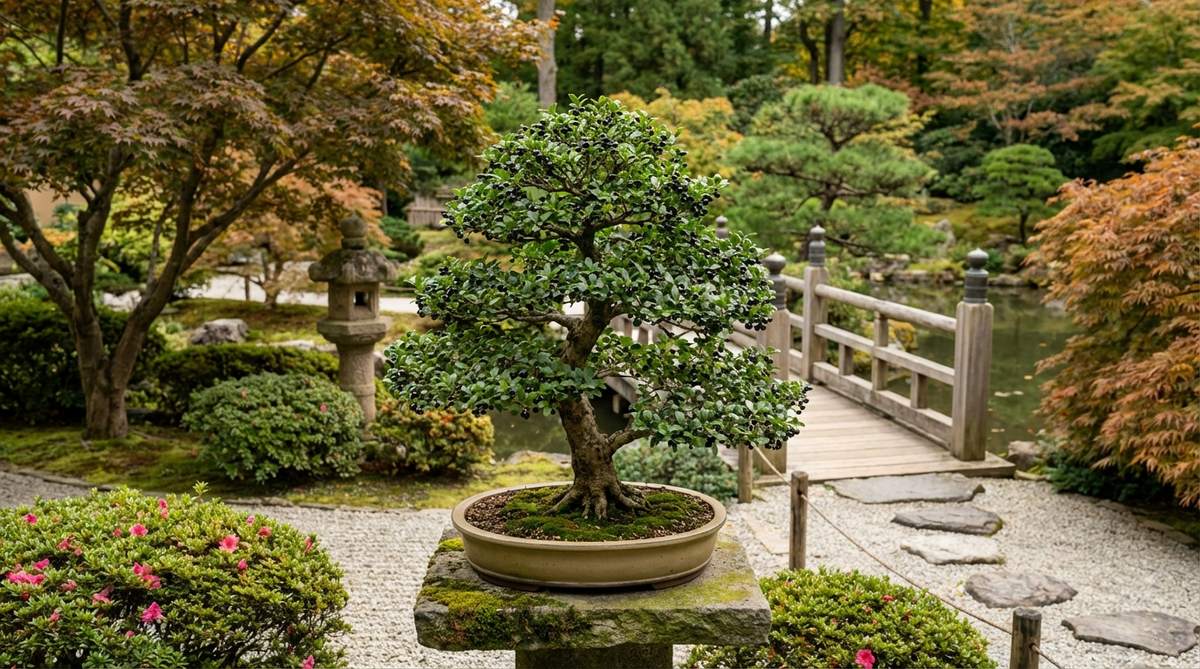
Tiny leaves mimic boxwood but with glossier texture. Naturally compact growth requires less intervention than vigorous species demand.
Black berries develop on female plants when males provide pollination. The fruit adds autumn and winter interest to refined branch structures.
36. Olive (Olea europaea)
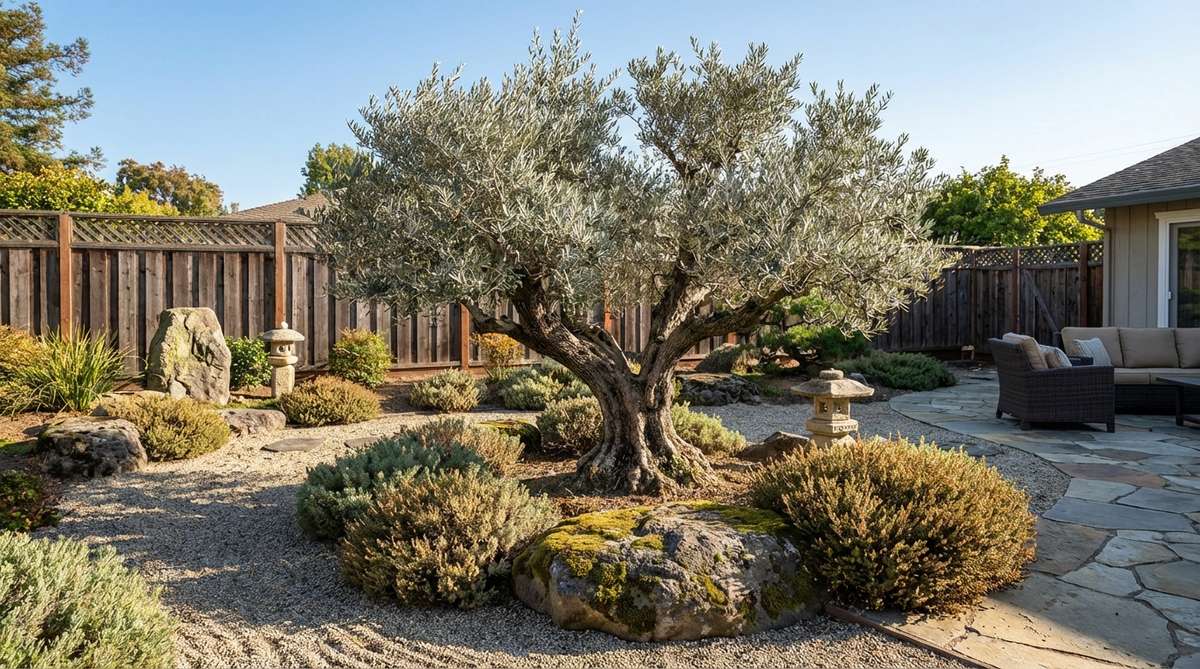
Silver-gray foliage creates Mediterranean atmosphere in garden settings. Gnarled trunk character develops quickly, suggesting ancient age on young material.
Drought tolerance suits exposed positions with excellent drainage. Protect from hard freezes in cold climate zones where temperatures drop below species limits.
37. Pyracantha (Pyracantha species)
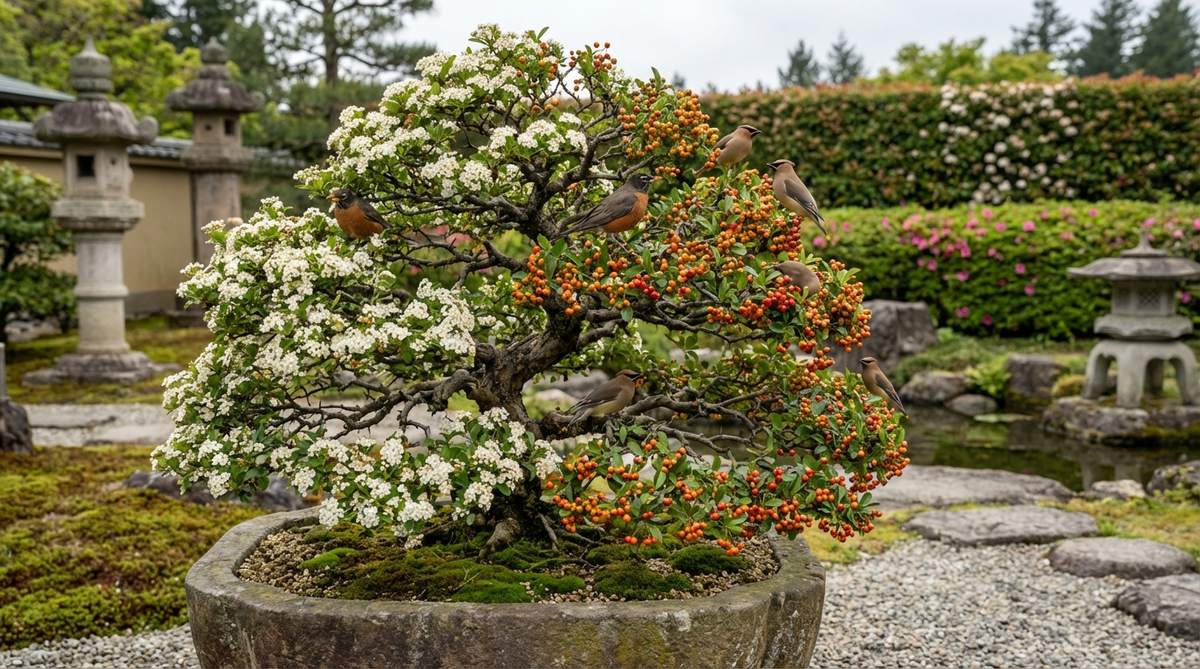
White spring flowers transition to orange, red, or yellow berry displays lasting through winter. Birds eventually consume fruit, creating dynamic seasonal interaction.
Thorny branches demand careful handling during pruning and wiring operations. Dense growth responds to aggressive reduction without weakening overall health.
38. Serissa (Serissa foetida)
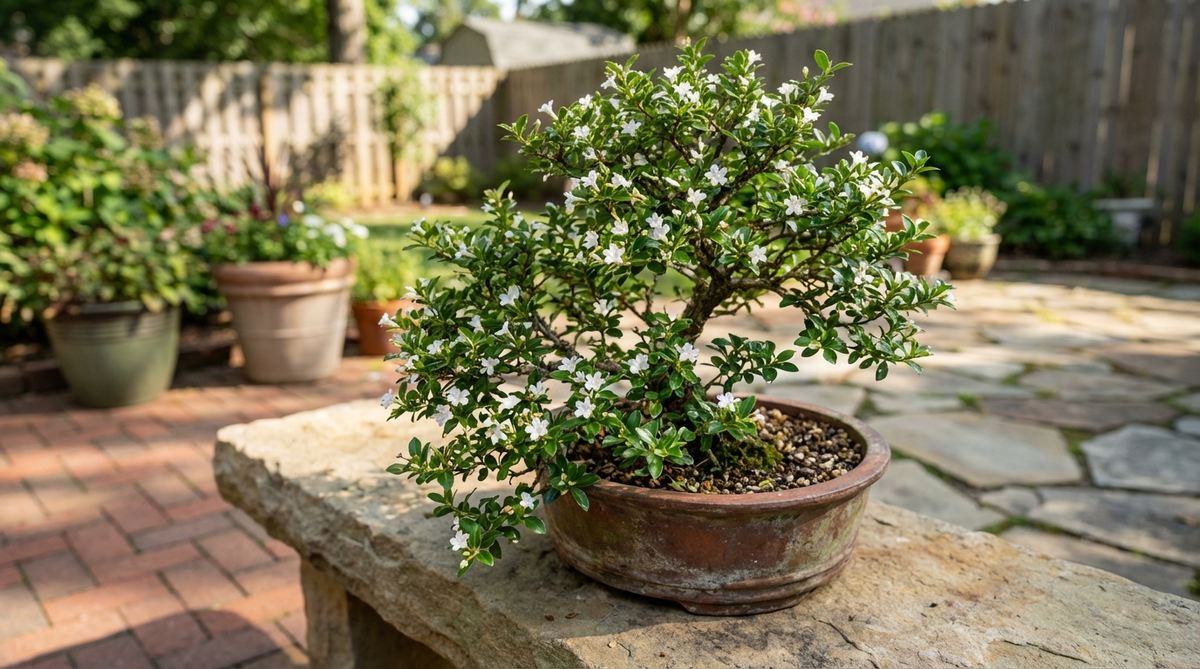
Tiny white flowers appear sporadically throughout growing season. Miniature leaves scale perfectly to shohin and mame sizes without reduction techniques.
Frost sensitivity requires winter protection in cold climates. The species tolerates indoor conditions during protection periods better than most outdoor material.
39. Privet (Ligustrum species)
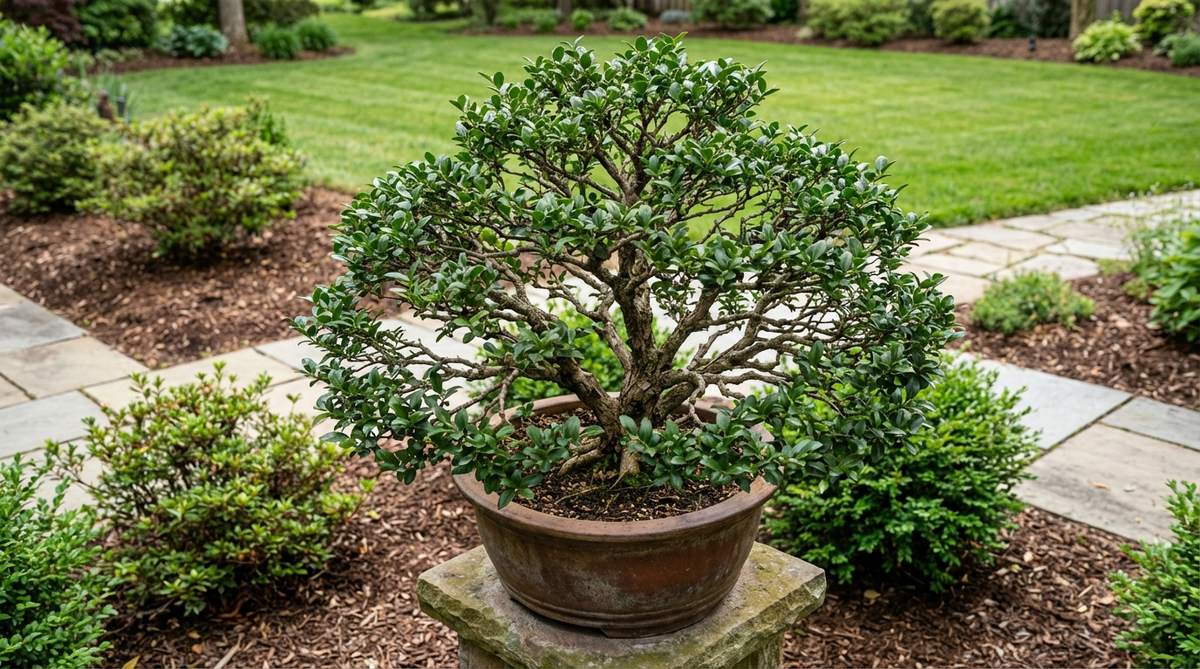
Vigorous growth builds trunk thickness rapidly on young material. Small leaves and dense branching create refined silhouettes with diligent pruning.
The species tolerates hard cutback, regenerating from old wood reliably. Use this characteristic to restructure established specimens needing design revision.
40. Tea Tree (Leptospermum species)
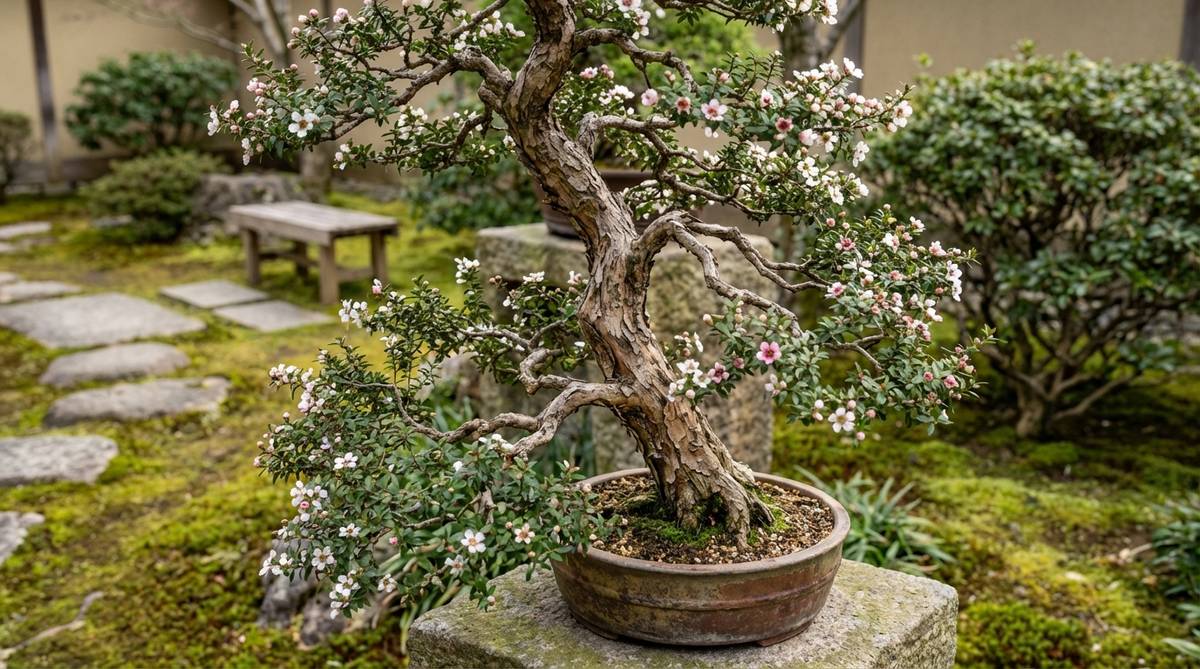
Twisting branch movements develop naturally without extensive wiring. Small leaves and dense growth suit smaller bonsai formats.
White or pink flowers appear in spring along branch lengths. Exfoliating bark adds textured interest to trunk and major branch surfaces.
Unique Bark Texture Specimens
Trunk character carries equal importance to foliage refinement in mature japanese garden bonsai development. These species develop distinctive bark patterns that improve with age.
41. Pomegranate (Punica granatum)
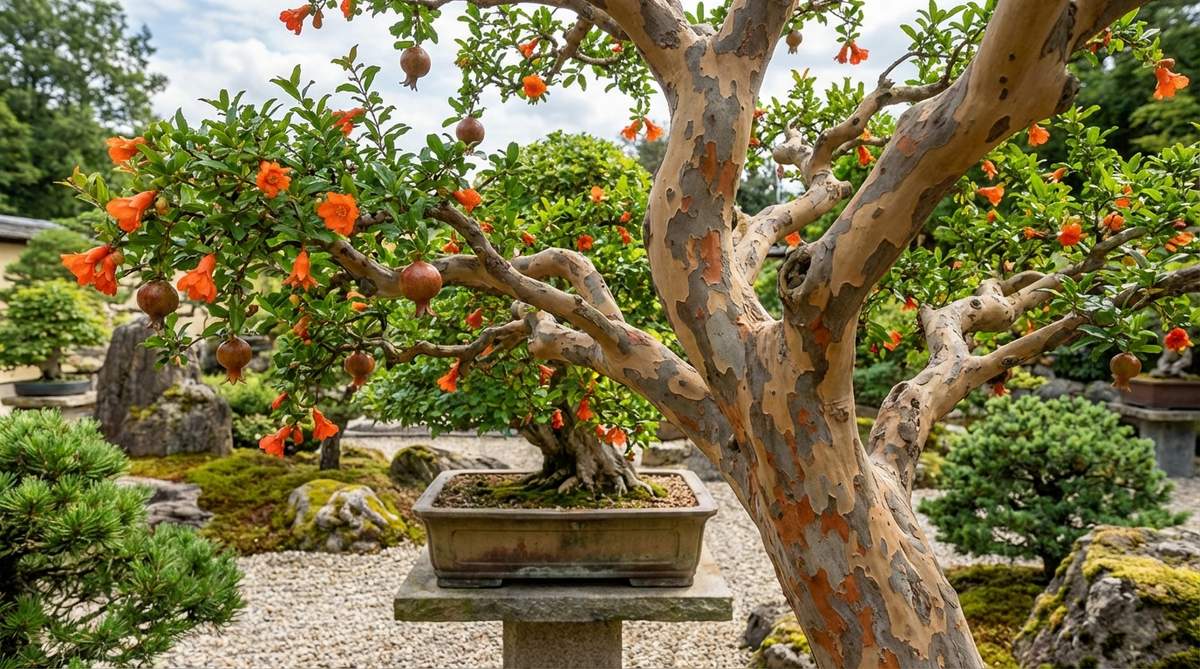
Smooth tan bark flakes to reveal mottled undertones creating living camouflage patterns. Orange flowers appear throughout summer followed by scaled-down fruit.
Dwarf cultivars eliminate need for extreme size reduction while maintaining appropriate proportions. The species back-buds readily after hard pruning during growing season.
42. Crape Myrtle (Lagerstroemia indica)
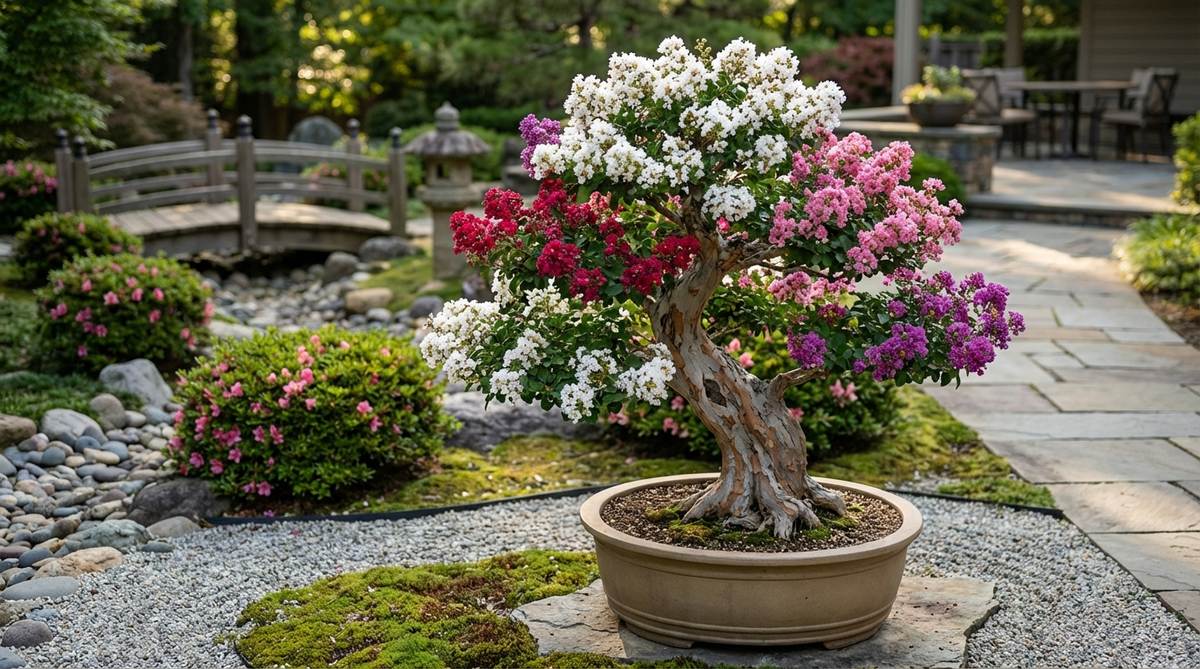
Exfoliating bark reveals smooth multicolored trunk surfaces ranging from gray to cinnamon. Summer flowers provide extended color in white, pink, red, or purple.
Vigorous growth requires frequent summer pruning to control size and encourage ramification. Trunk thickening occurs rapidly when trees receive adequate fertilization.
43. Stewartia (Stewartia pseudocamellia)
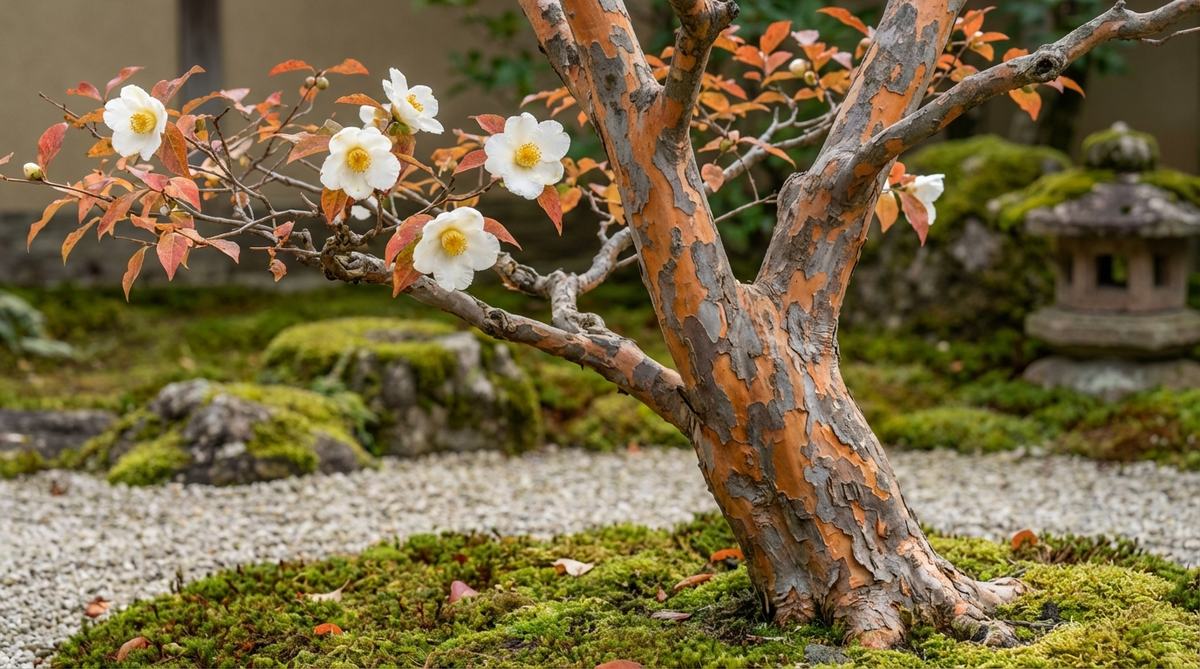
Flaking bark creates jigsaw puzzle patterns in orange, gray, and brown. White camellia-like flowers appear in summer when few other trees bloom.
Slow growth demands patience but rewards with exceptional character. Autumn color provides bonus interest before winter showcases the remarkable bark.
44. River Birch (Betula nigra)
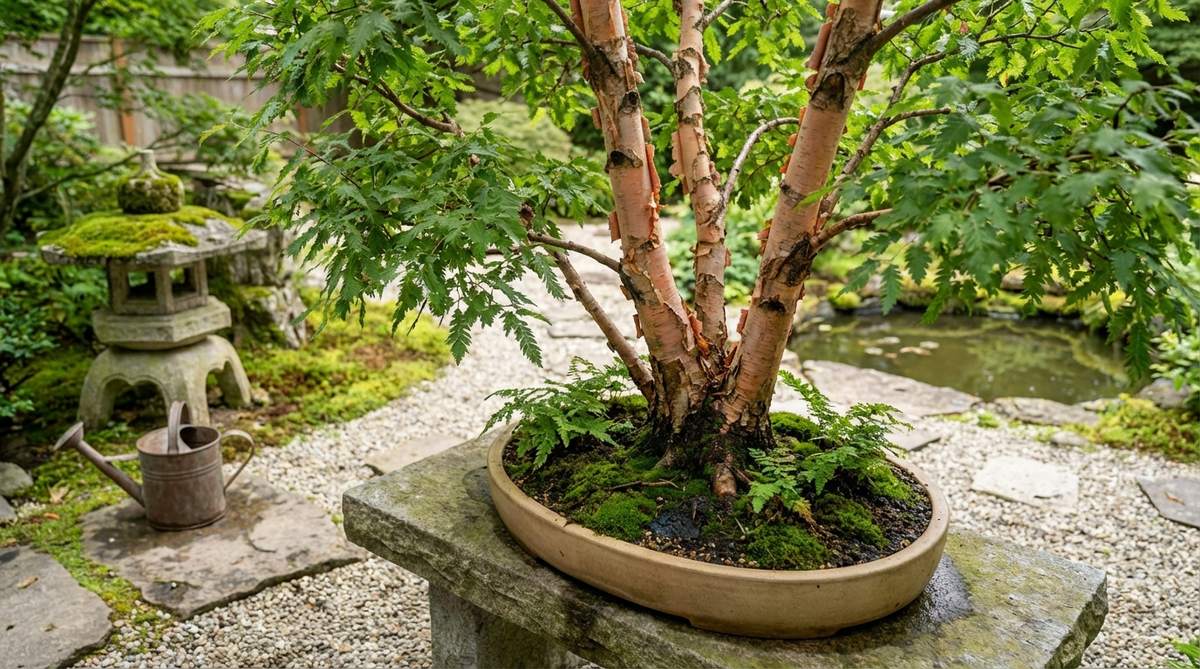
Peeling salmon-pink bark creates immediate visual interest. Naturally multi-trunked growth suits clump-style compositions without grafting multiple trees.
Water requirements exceed drought-tolerant species, so monitor soil moisture closely. The species thrives in humid climates where other birches struggle.
45. Cork Bark Elm (Ulmus parvifolia ‘Corticosa’)
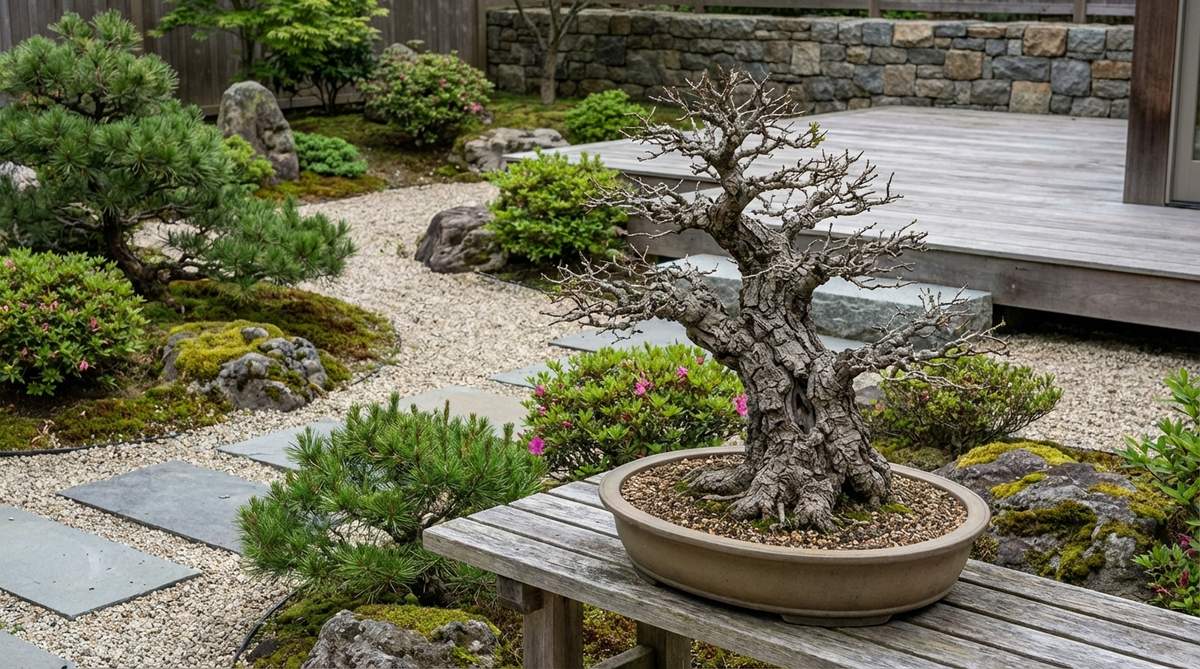
Deeply fissured corky bark develops on young trunks, eliminating decades-long waits for aged appearance. The cultivar maintains Chinese elm’s cultural ease.
Growth rate matches standard Chinese elm, allowing rapid development. Bark texture intensifies with each passing year as ridges deepen and expand.
Compact Needle Varieties for Detail Work
Fine-textured conifers suit smaller bonsai formats where coarse growth appears disproportionate. These japanese garden bonsai specimens maintain scaled foliage naturally.
46. Hinoki Cypress (Chamaecyparis obtusa)
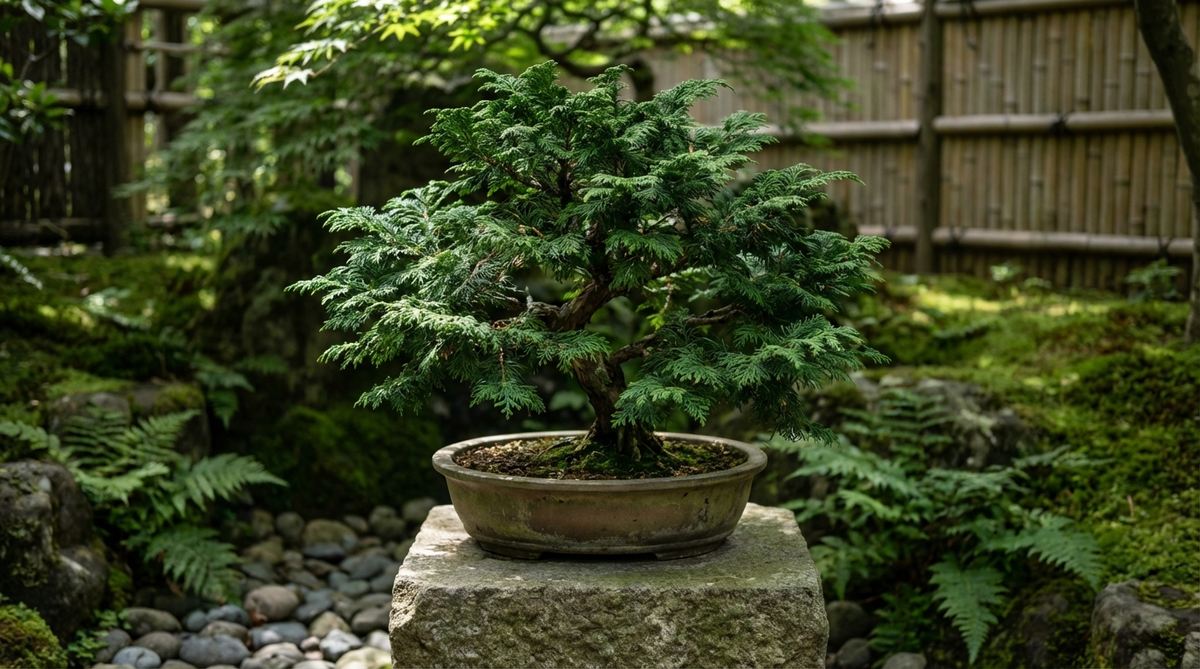
Spray-like foliage creates soft texture compared to needle junipers. Dwarf cultivars like ‘Nana Gracilis’ eliminate excessive pruning while maintaining proper scale.
The species tolerates shade better than most conifers, functioning well in woodland garden settings. Fragrant foliage releases pleasant aroma when handled during pruning.
47. Cryptomeria (Cryptomeria japonica)
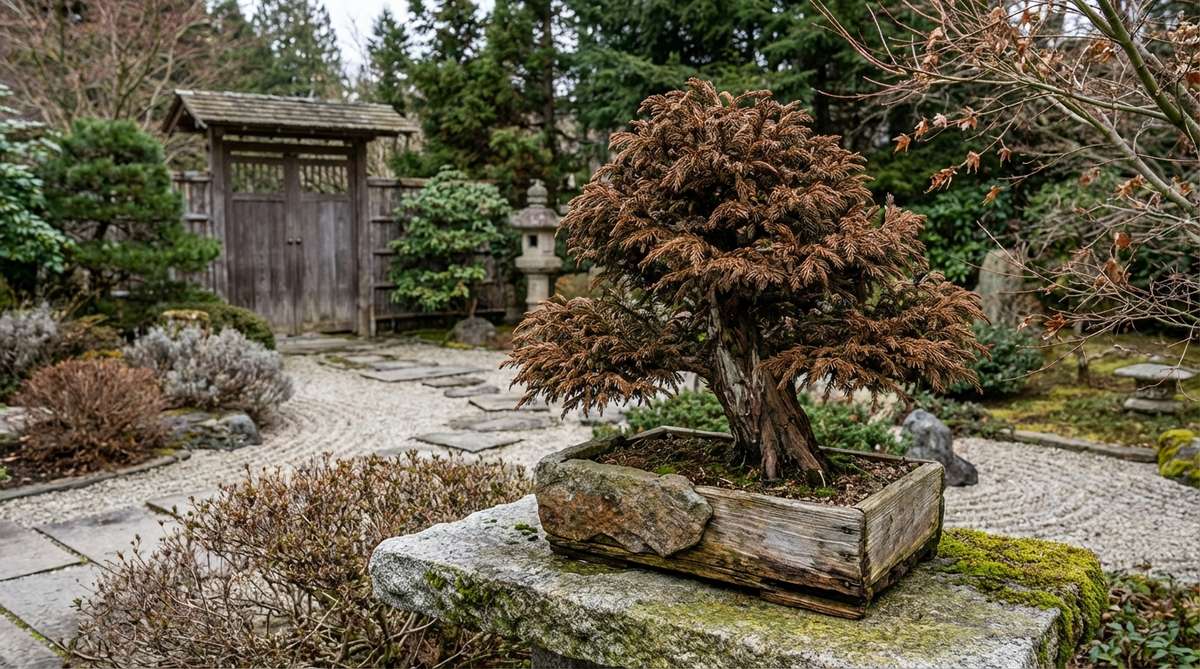
Awl-shaped leaves create unique texture unlike typical scale or needle foliage. Bronze winter coloration adds seasonal interest to evergreen structure.
Vigorous growth builds trunk character quickly on young material. Prune throughout growing season to maintain density and prevent interior dieback.
48. Yew (Taxus species)
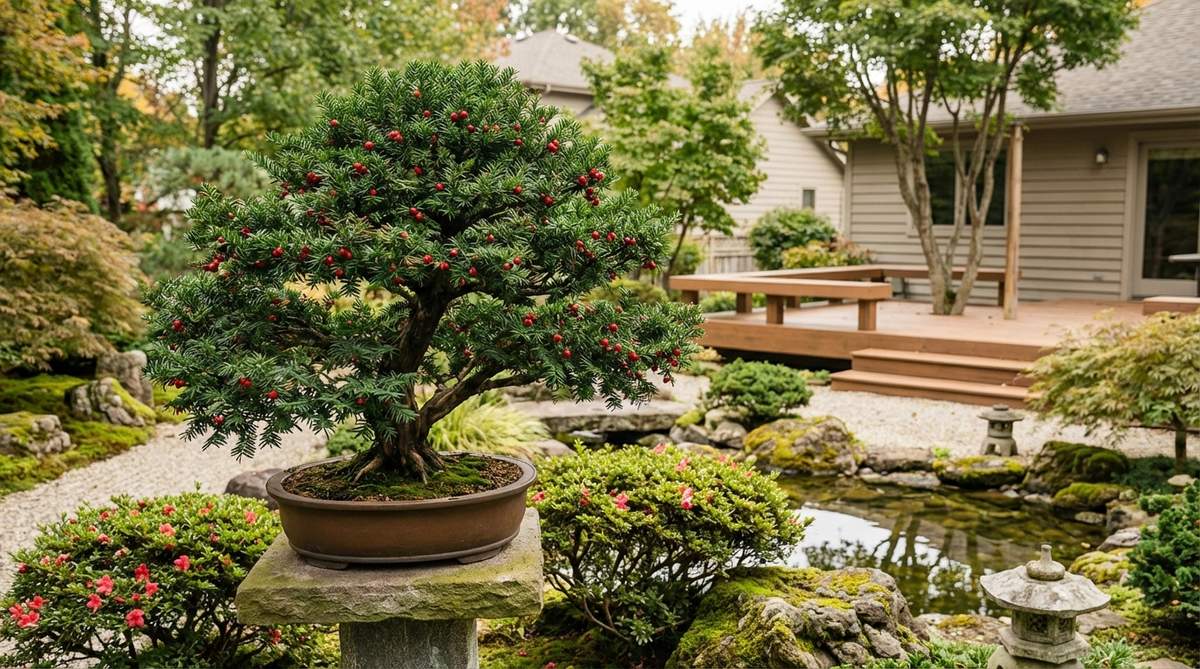
Dark green needles arranged in flat sprays create formal appearance. Red berries on female plants add autumn color where males provide pollination.
The species back-buds reliably on old wood, allowing major restructuring of overgrown specimens. Toxic foliage demands care during handling and disposal.
49. Hemlock (Tsuga species)
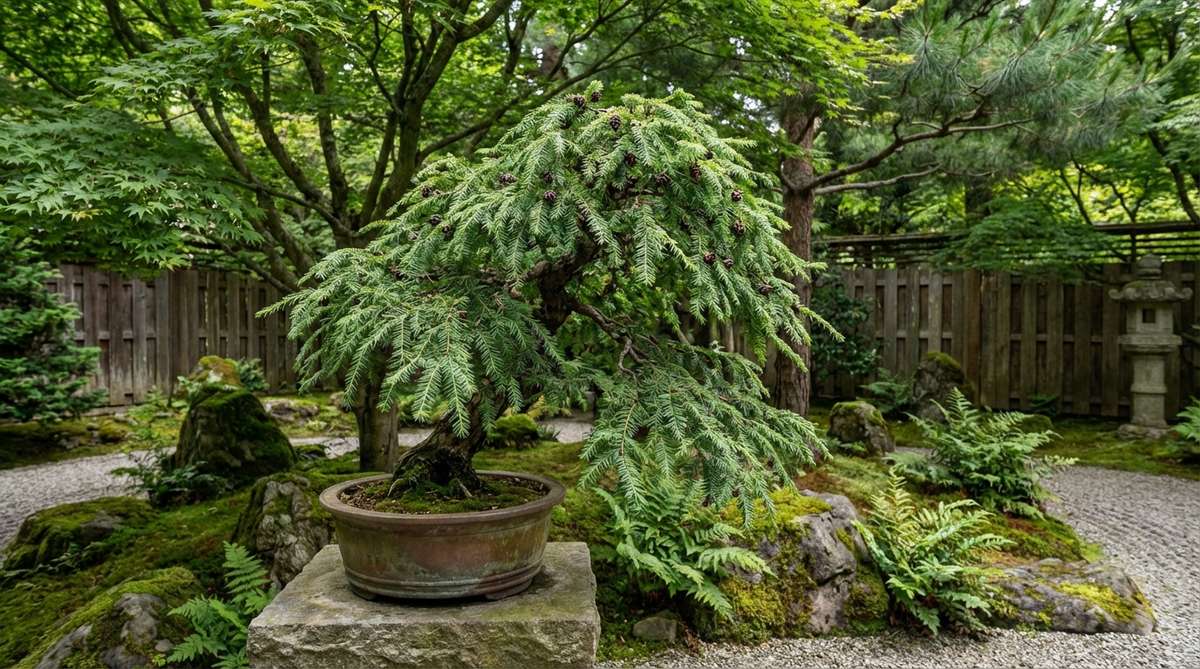
Delicate needle arrangement creates graceful cascading movement naturally. Small cones add detail interest without overwhelming refined branch structures.
Shade tolerance exceeds most conifers, making hemlock suitable for woodland understory positions. Consistent moisture requirements demand attentive watering during summer heat.
50. Bald Cypress (Taxodium distichum)
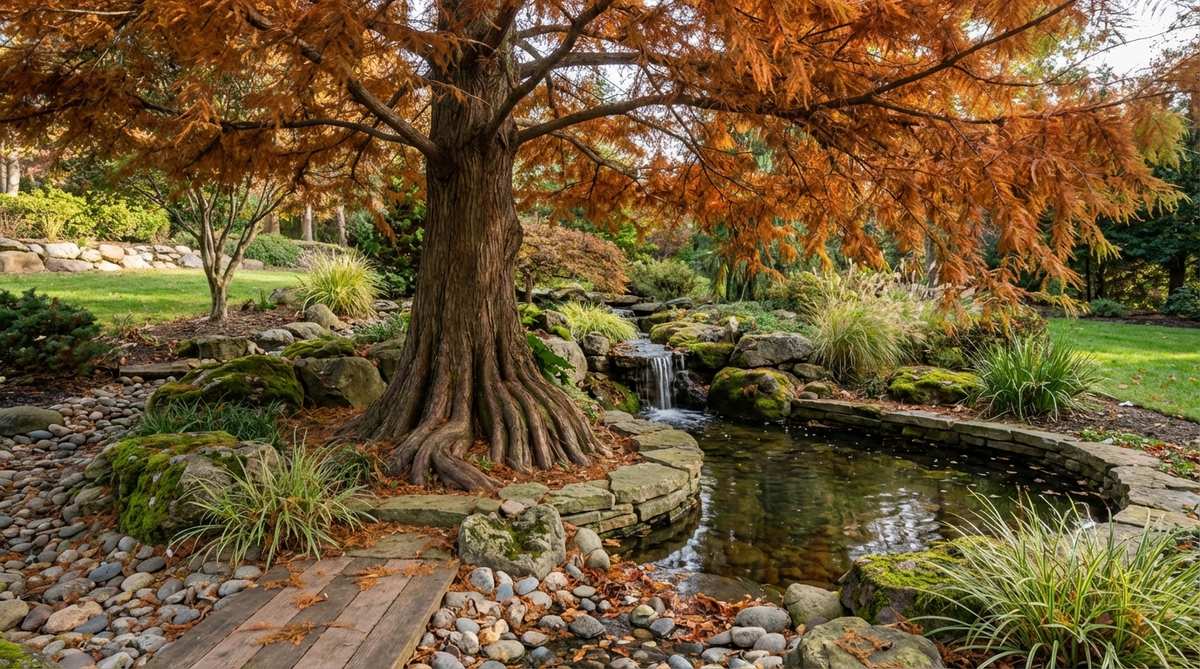
Deciduous conifer drops needles in autumn after developing orange-brown color. Buttressed trunk bases create powerful visual anchors in larger compositions.
Water-loving nature suits bog and pond-edge placements where drainage-dependent species fail. Knee formations develop when roots remain consistently wet.
51. Dawn Redwood (Metasequoia glyptostroboides)
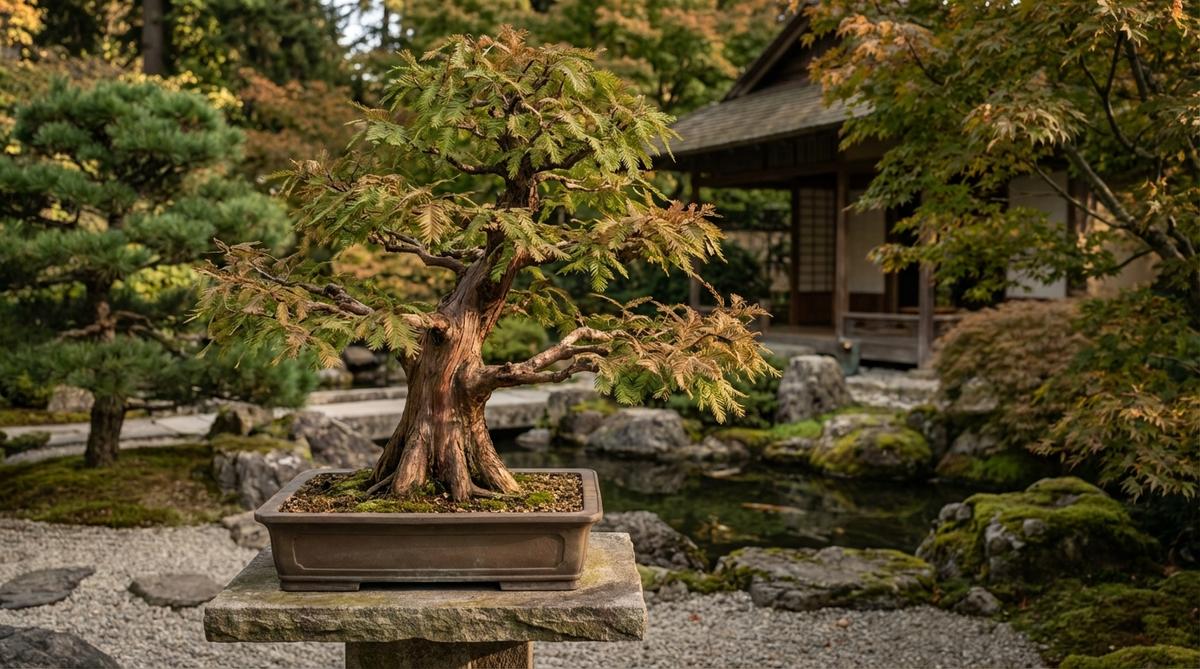
Opposite branching pattern distinguishes this species from similar-appearing bald cypress. Fast growth builds trunk thickness rapidly during early development.
Deciduous needles emerge bright green in spring, darken through summer, then turn bronze before autumn drop. The species accepts urban conditions better than most conifers.
52. Spruce (Picea species)
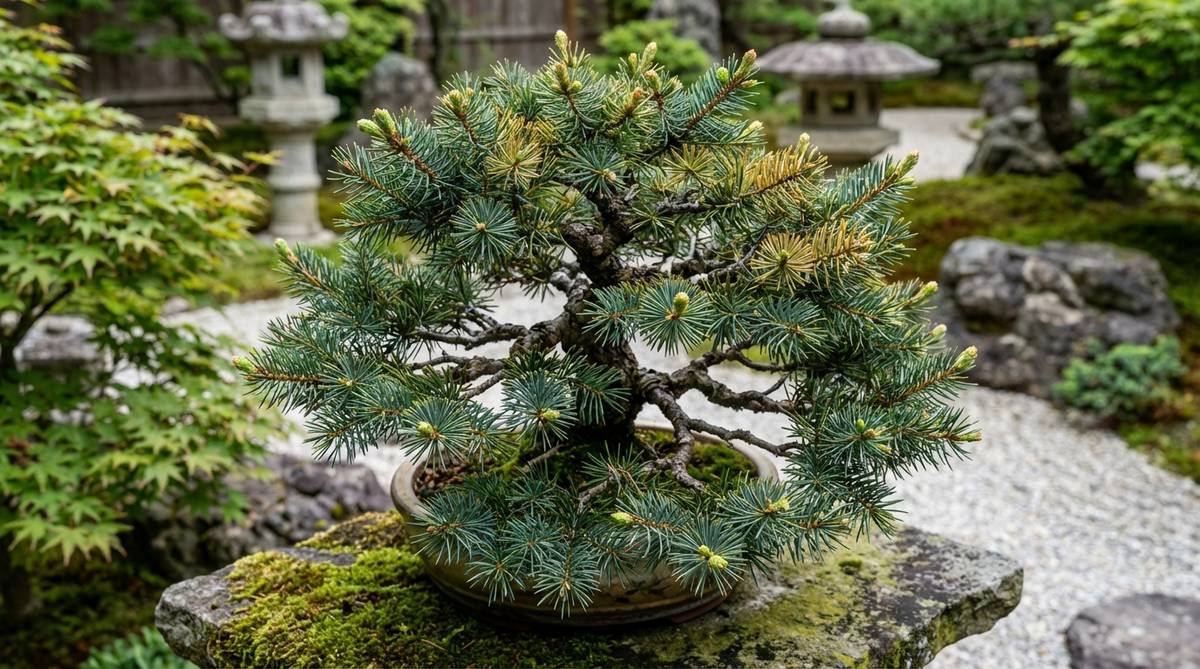
Stiff needles project radially around branches creating dense texture. Various species offer blue, green, or gold coloration depending on cultivar selection.
Pinch new growth while soft and extending to control length and encourage back-budding. Once needles harden, cutting techniques replace pinching methods.
Bringing Japanese Garden Bonsai Vision to Life
These 52 japanese garden bonsai specimens offer starting points for developing refined collections that balance traditional aesthetics with personal expression. Successful artful pruning emerges from understanding each species’ growth patterns, seasonal rhythms, and response to training techniques.
Begin with varieties matching your climate conditions and skill level, then expand into challenging species as experience builds. The journey from nursery stock to refined specimen requires patience measured in years, but each growing season brings visible progress toward your artistic vision.
Frequently Asked Questions
What makes a good beginner japanese garden bonsai specimen?
Juniper species and Chinese elm offer the most forgiving characteristics for beginners. These varieties tolerate pruning mistakes, recover quickly from improper timing, and respond predictably to training techniques. Both back-bud reliably and accept aggressive root work during repotting without significant setback.
When should I prune different types of bonsai specimens?
Conifers like pine and juniper accept pruning throughout the growing season following species-specific candle or shoot management techniques. Deciduous flowering varieties require pruning immediately after bloom to preserve next season’s flower buds. Structural pruning occurs during dormancy when branch architecture appears clearly without foliage obstruction.
How do I develop trunk character in young bonsai material?
Plant young specimens in open ground rather than containers during early development years. Unrestricted root growth produces vigorous trunk thickening while strategic pruning builds taper and movement. Transition to containers once desired trunk diameter develops, typically after three to five growing seasons depending on species vigor.
Can I grow pine and maple bonsai in the same garden conditions?
Yes, though positioning adjustments optimize each species’ requirements. Pines demand full sun exposure for compact needle growth and bark development. Japanese maples benefit from afternoon shade protection during summer heat while receiving morning sun for color intensity. Group species with similar water and fertilization needs to simplify maintenance routines.
What tools do I need for artful bonsai pruning?
Essential tools include concave cutters for branch removal that heals flush, scissors for shoot trimming, and wire cutters for training wire removal. Add knob cutters for stub reduction and jin pliers for deadwood creation as skills advance. Quality Japanese-made tools maintain sharp edges longer than economy alternatives, producing clean cuts that heal without scarring.