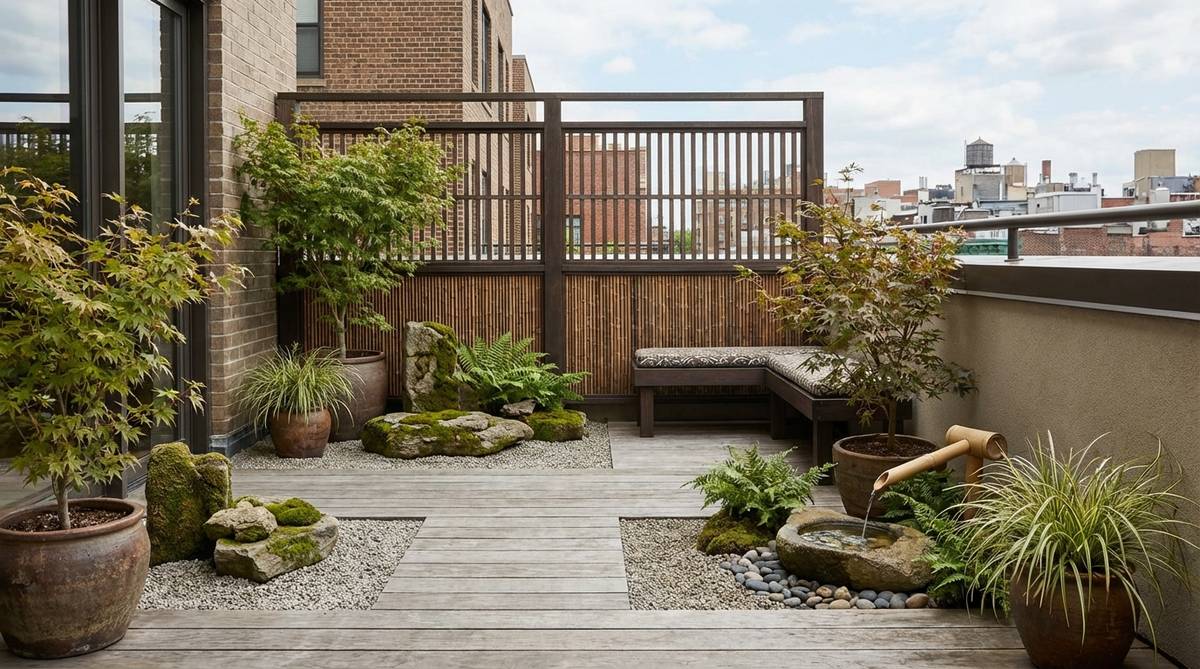
A japanese balcony garden brings ancient zen principles into compact urban spaces through deliberate arrangements of stone, water, and carefully selected plantings. These layouts prioritize simplicity, asymmetry, and the strategic use of negative space to create meditative outdoor sanctuaries. Fresh Garden Ideas presents proven design frameworks that translate traditional Japanese garden aesthetics into balcony-scale environments suitable for American homes.
Design SnapshotKey Principles
- Asymmetrical Groupings: Arrange rocks, plants, and features in odd numbers (3, 5, 7) to mirror natural landscapes rather than formal Western symmetry
- Kanso (Simplicity): Remove unnecessary elements; each stone, plant, and object must serve a defined visual or spiritual purpose within the composition
- Ma (Negative Space): Empty areas allow the garden to breathe and prevent visual clutter; spacing between elements affects the entire experience
- Shakkei (Borrowed Scenery): Frame distant views or architectural elements to expand perceived space and integrate the balcony with surrounding context
Stone and Gravel Foundations for Balcony Garden Japan Designs
Stone arrangements form the structural backbone of authentic zen gardens. Gravel floors and carefully positioned boulders create the karesansui (dry landscape) aesthetic that defines contemplative Japanese spaces.
1. Sanzon-ishigumi Three-Stone Grouping
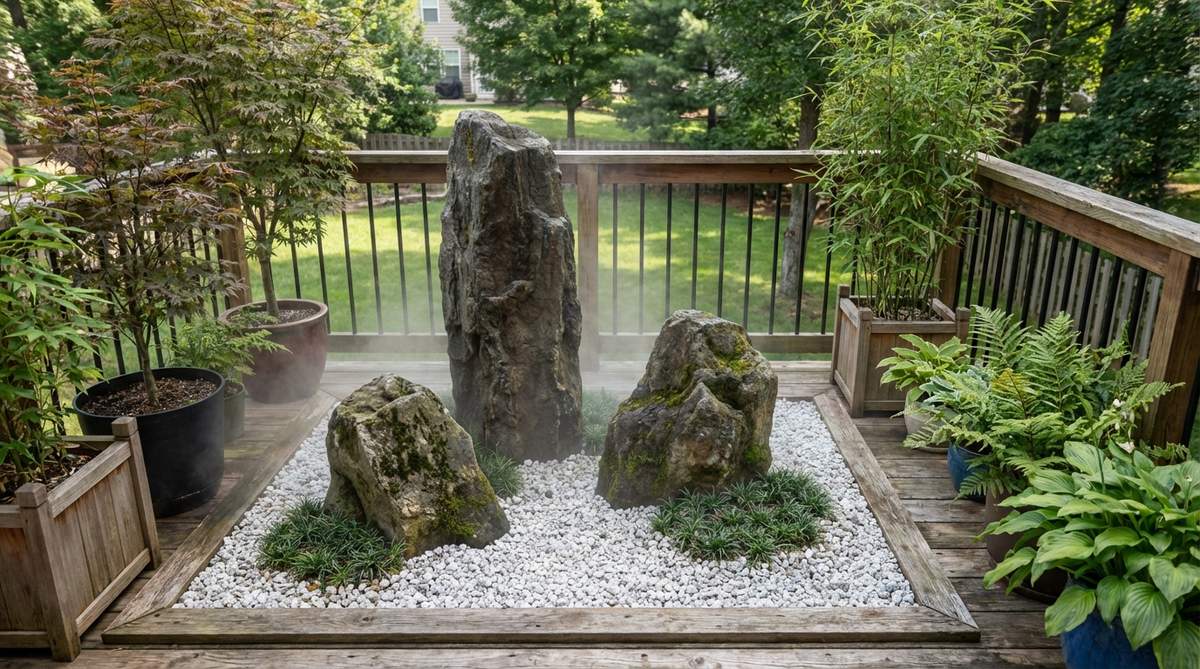
Position one tall vertical stone as the central Buddha element flanked by two smaller attendant stones in an asymmetrical triangle. This classical arrangement symbolizes mountain peaks emerging from mist and anchors the entire balcony composition.
Place the tallest stone slightly off-center, not in the geometric middle of your space. The secondary stones should vary in height and be positioned at different distances from the primary rock.
This configuration works best in corners where the vertical stone draws the eye upward, creating an illusion of greater height on compact balconies.
2. Raked Gravel Meditation Platform
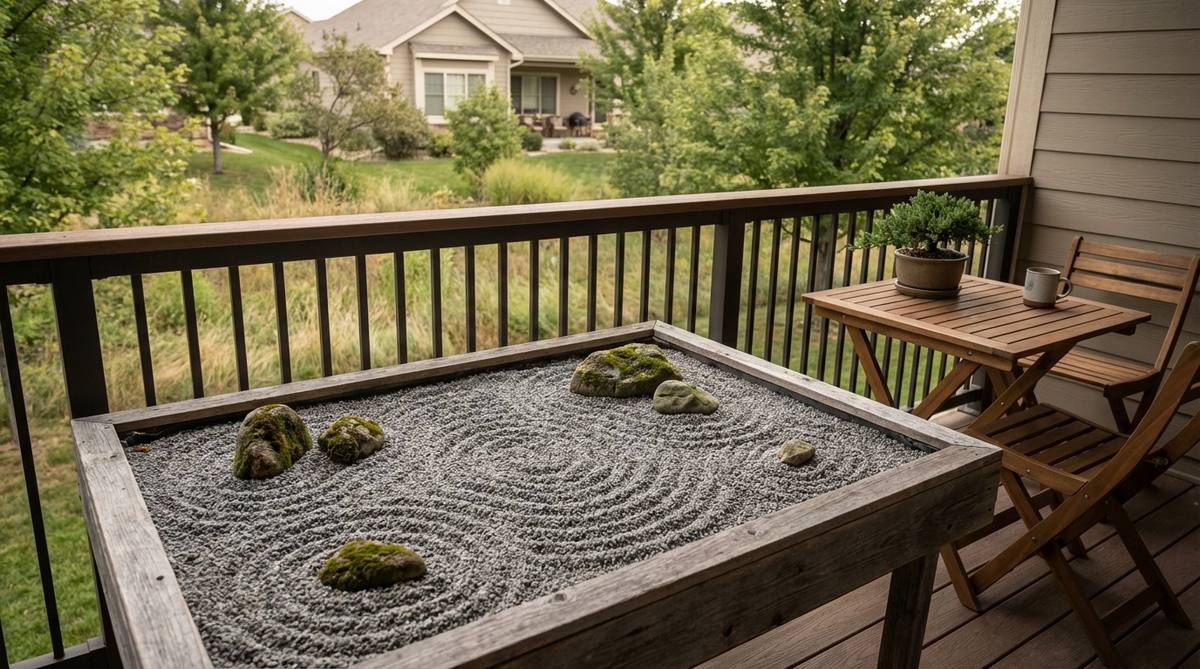
Install a shallow wooden frame filled with fine white or grey gravel to create a miniature karesansui garden. Rake flowing patterns that represent water ripples or concentric circles around stone placements.
Use a 2-3 inch depth of crushed granite or decomposed granite for authentic texture. Establish a weekly raking routine as a meditative practice that refreshes the visual patterns.
3. River Stone Pathway Border
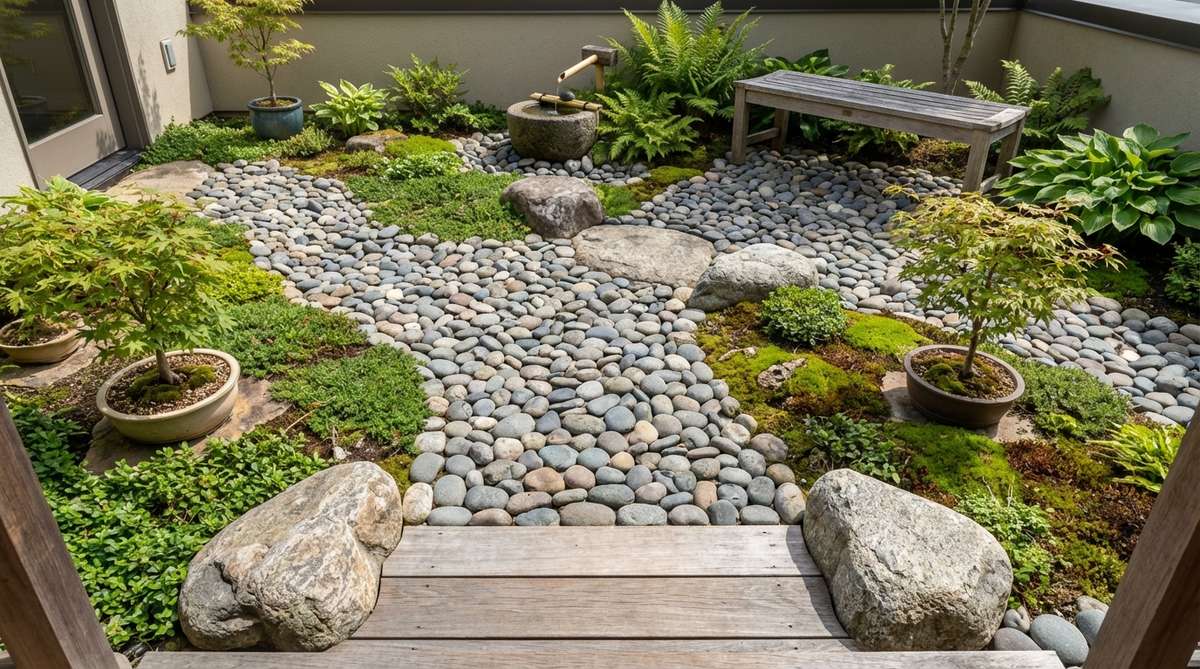
Line balcony edges with smooth river stones in varying sizes to define circulation zones and protect plant beds. Select stones with complementary grey and brown tones for natural color harmony.
Arrange larger stones at pathway intersections as symbolic stopping points. Position two matching stones at the balcony entrance to mark the threshold between ordinary and meditative space.
4. Stacked Stone Mountain Representation
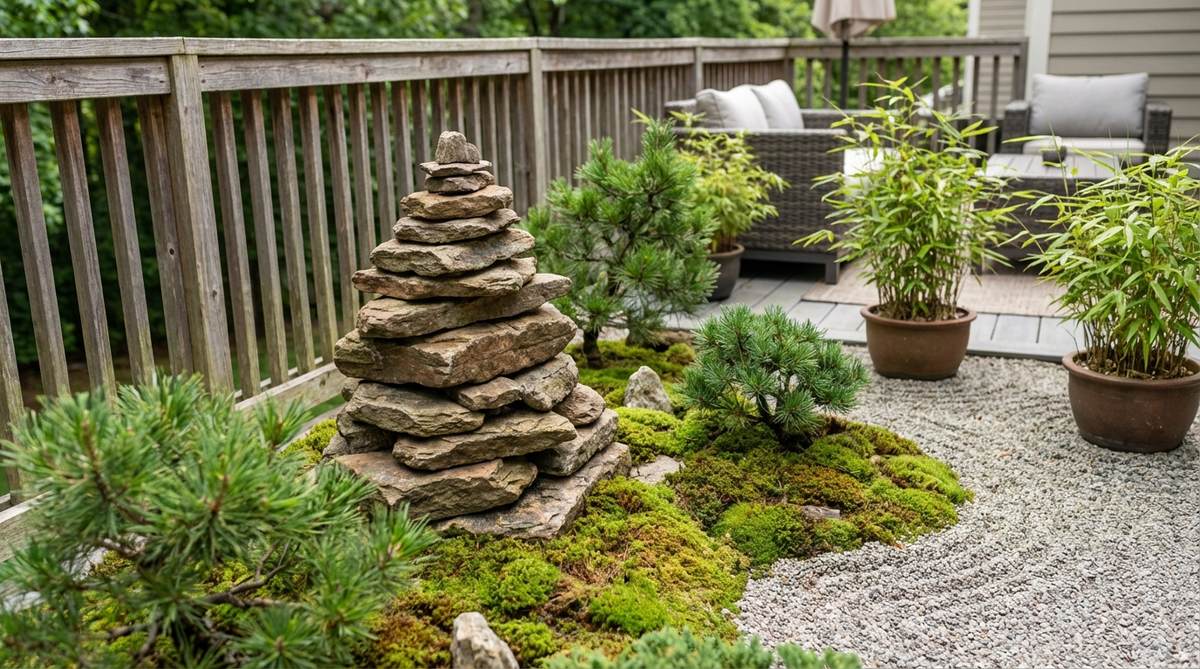
Build a small cairn using flat stones stacked vertically to represent distant mountain ranges. Keep the structure under 24 inches tall to maintain scale proportions on balconies.
Choose stones with weathered surfaces rather than polished finishes. The imperfect textures add authenticity and visual interest when viewed up close.
5. Decomposed Granite Base Layer
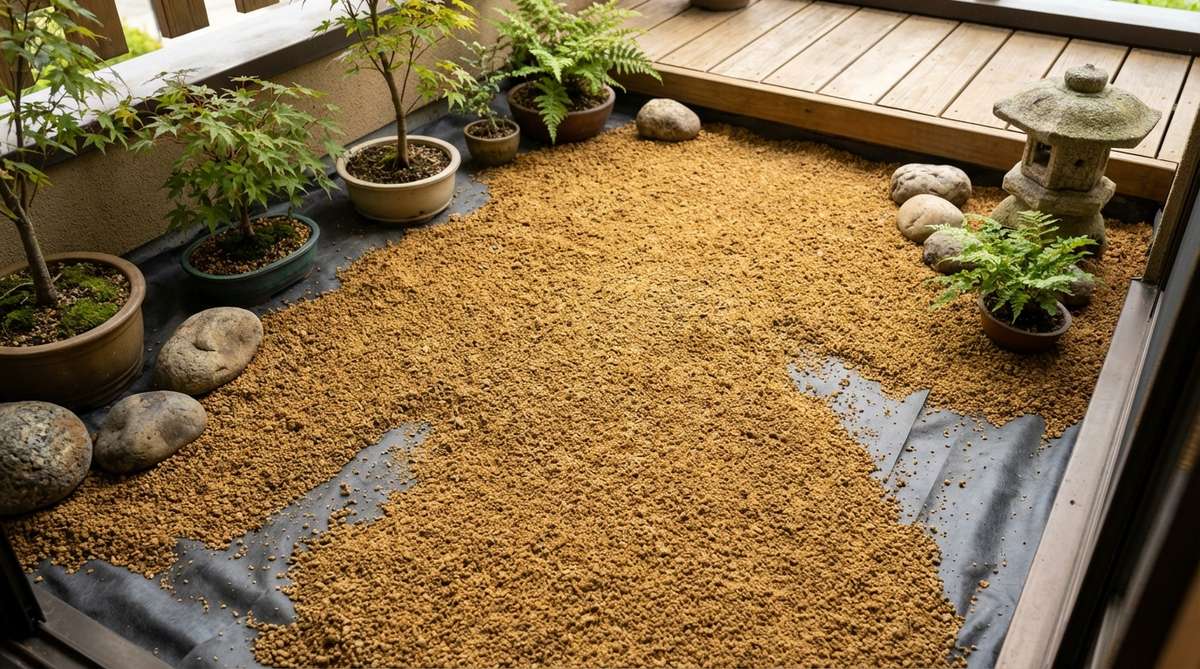
Cover balcony flooring with decomposed granite to create a permeable, naturalistic foundation. This material drains well, suppresses weeds, and provides a neutral backdrop for featured elements.
Apply a 1-2 inch layer over landscape fabric to prevent material migration. The fine particles compact slightly when walked on, creating stable pathways that still appear organic.
Bamboo and Maple Compositions for Japanese Balcony Garden Structure
Japanese maples and clumping bamboo species provide signature plant forms while remaining manageable in containers. These woody plants establish vertical structure and seasonal interest without overwhelming limited square footage.
6. Weeping Japanese Maple Focal Point
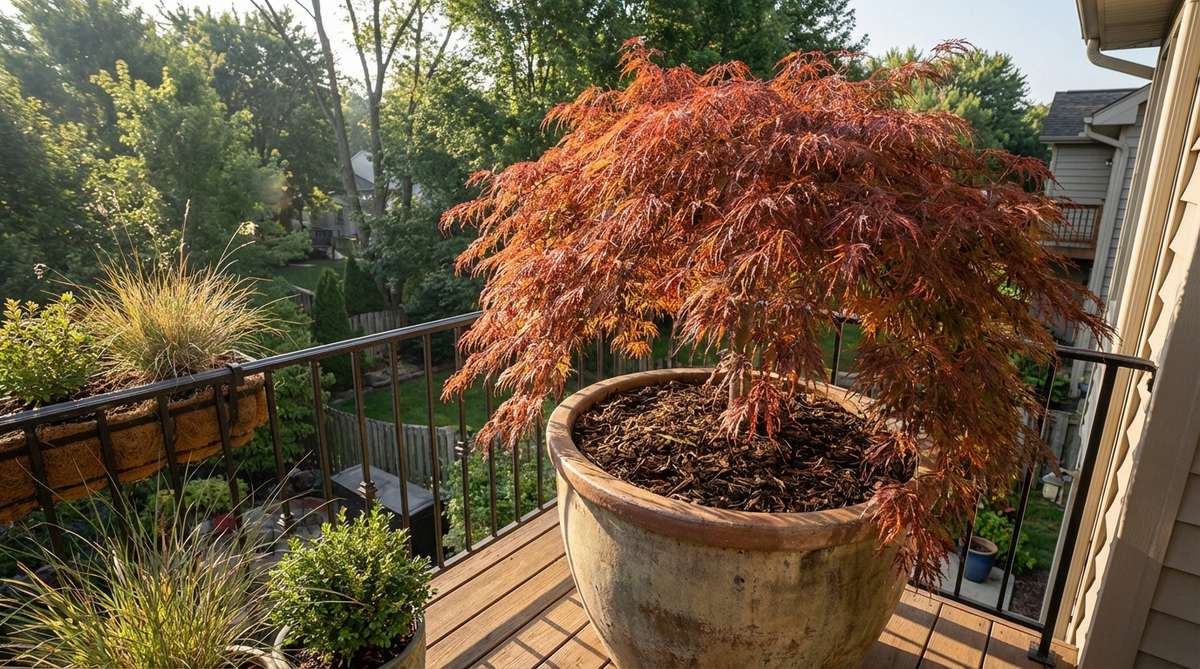
Position an Acer palmatum ‘Brocade’ or ‘Red Dragon’ in a large ceramic container as the primary specimen plant. Weeping cultivars naturally create cascading forms that soften hard balcony edges.
Japanese maples require afternoon shade and consistent moisture; place the container where it receives morning sun only. Apply 2-3 inches of organic mulch around the base to moderate soil temperature and protect roots.
Prune lightly throughout the growing season to maintain the desired shape. These maples display bronze-red spring growth, deep purple summer foliage, and brilliant crimson fall color.
7. Clumping Bamboo Privacy Screen
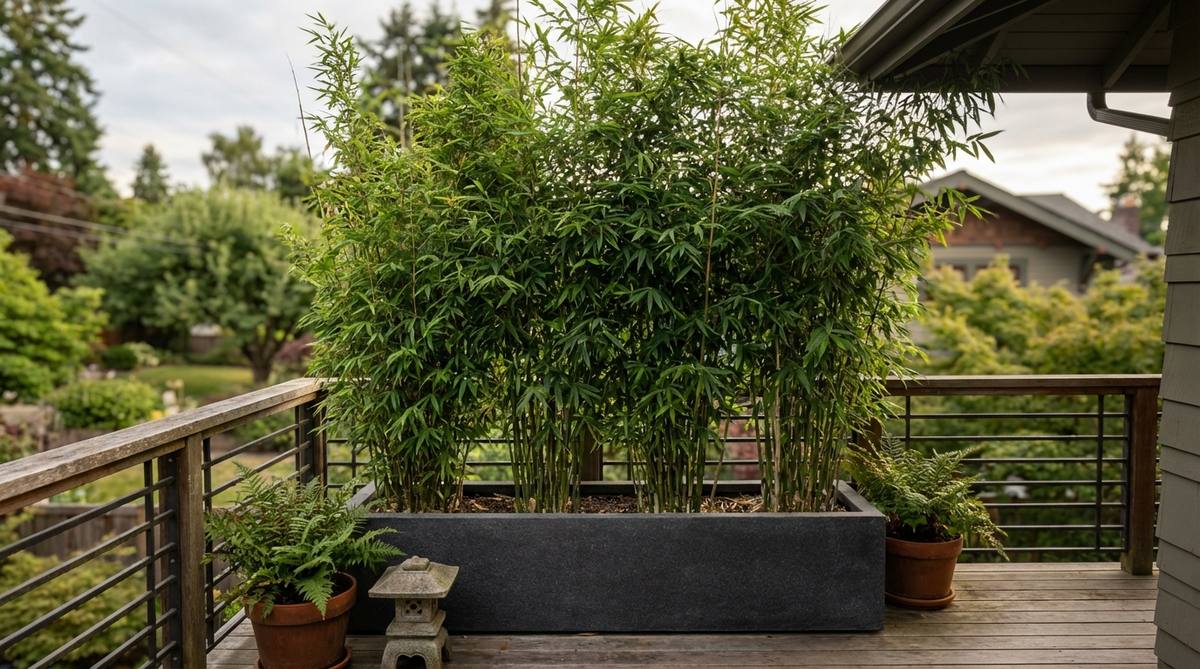
Plant Fargesia rufa ‘Green Panda’ in a long rectangular planter along one balcony edge to create a living screen. This clumping bamboo reaches 8 feet tall and spreads only one inch annually, eliminating invasive behavior concerns.
Space plants 18-24 inches apart for full coverage within two growing seasons. Clumping bamboo tolerates partial shade and requires weekly deep watering during active growth.
8. Bamboo Grove Miniature Forest
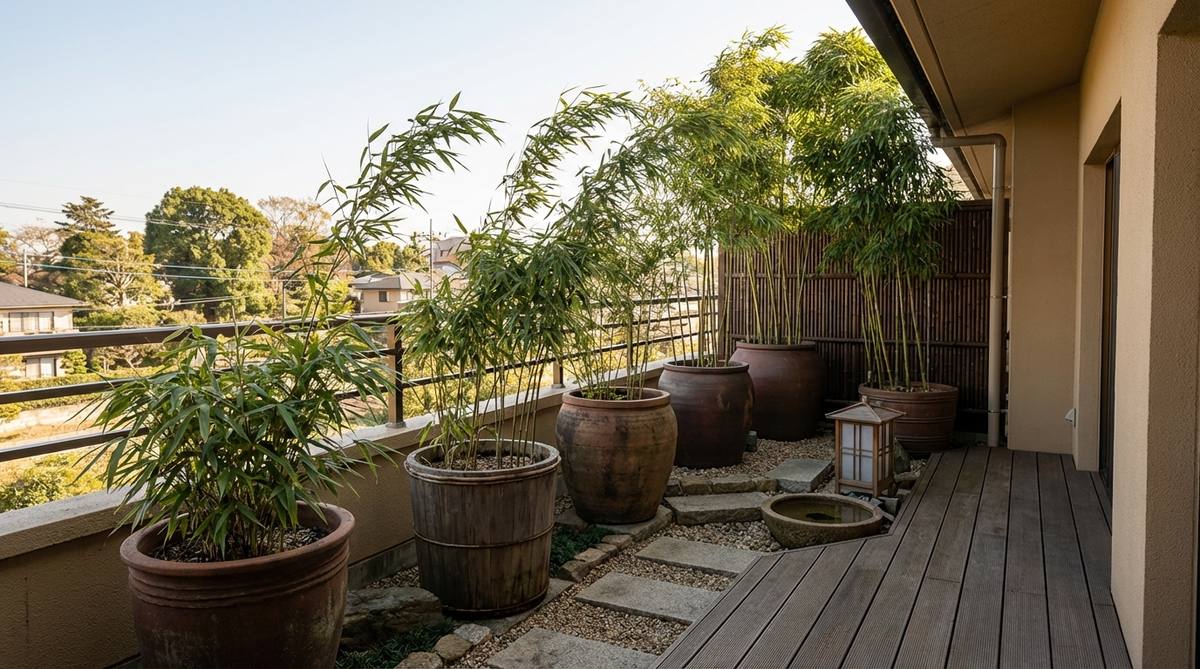
Arrange five containers of varying heights planted with Fargesia dracocephala (Dragon’s head bamboo) to simulate a forest perspective. Position taller specimens in the background, smaller ones forward.
This forced perspective technique makes the balcony appear deeper than actual dimensions. The weeping habit of this cultivar adds movement as culms sway in breeze.
9. Maple and Bamboo Layered Planting
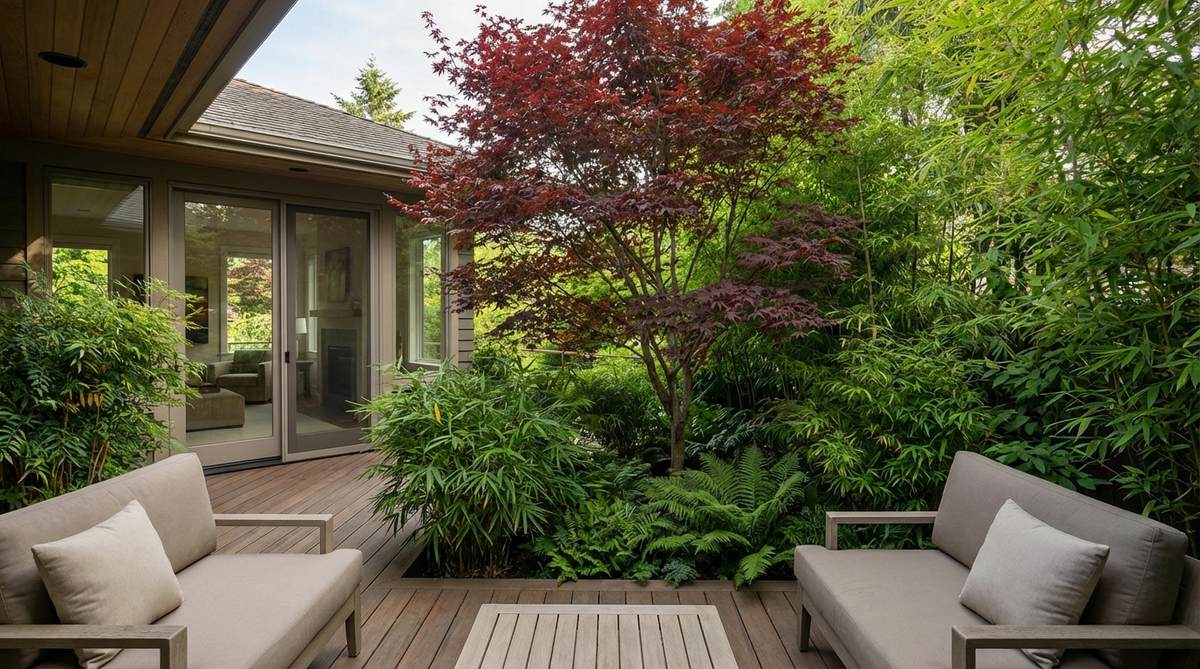
Combine an upright Japanese maple with understory bamboo plantings to create depth. Position the maple center-stage with bamboo flanking either side or placed behind.
Select bamboo varieties that remain shorter than the maple canopy to maintain proper visual hierarchy. This pairing mimics mountain forest ecosystems where maples grow above bamboo thickets.
10. Coral Bark Maple Winter Interest
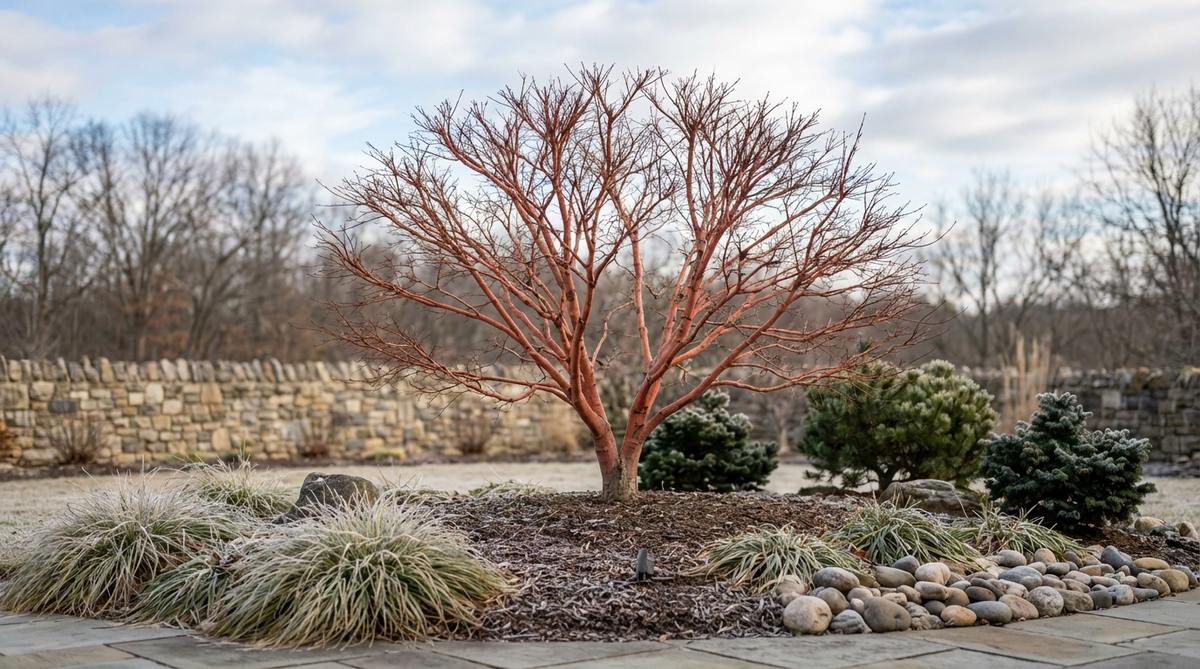
Feature Acer palmatum ‘Sangokaku’ for four-season appeal, particularly striking in winter when coral-red bark glows against snow or grey skies. Green summer leaves transition to yellow fall color before dropping.
Position this upright cultivar where winter sun illuminates the bare branches. The architectural branching structure provides visual interest even when deciduous.
Water Features for Tranquility in Small Japanese Gardens
Moving water introduces sound and reflection into balcony gardens. Properly scaled water features enhance the meditative atmosphere without overwhelming tight spaces or creating maintenance burdens.
11. Bamboo Fountain Tsukubai Style
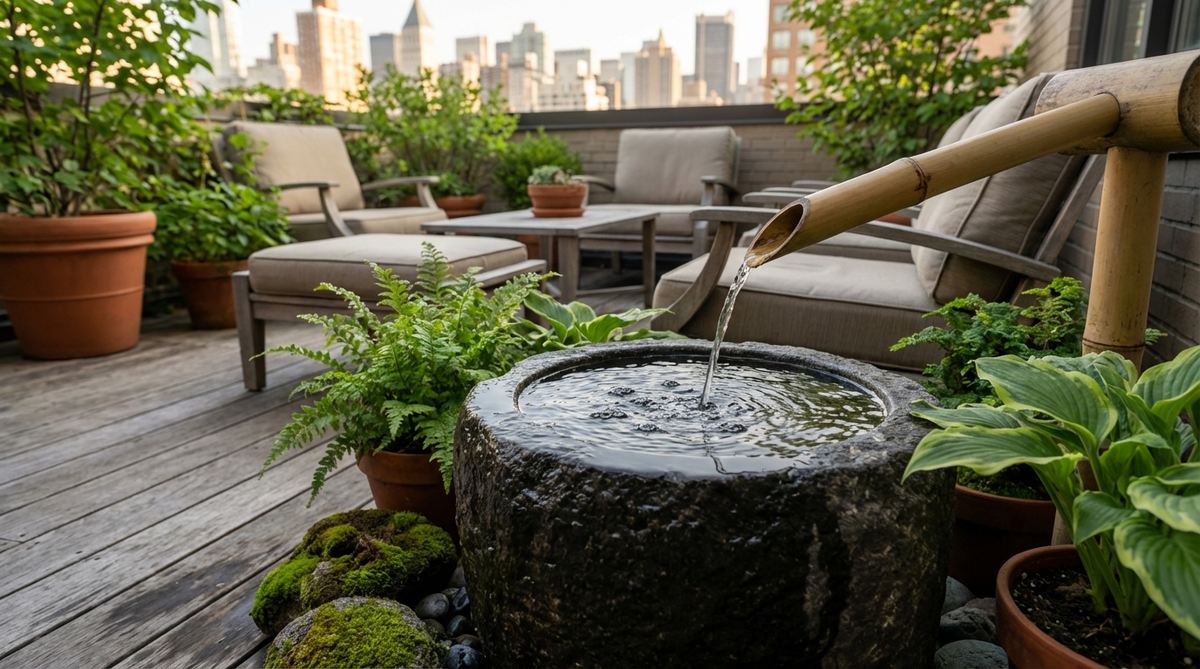
Install a bamboo spout that pours into a stone basin positioned at seating height. The hollow bamboo section creates a distinctive trickling sound as water flows through the natural tube.
This traditional water feature references the hand-washing basins found at temple entrances. Select a recirculating pump sized for 50-100 gallons per hour to maintain gentle flow without splashing.
Position the basin where you can observe the water surface while seated. Small bubbles and ripples provide a meditative focal point during morning or evening relaxation sessions.
12. Stone Basin with Moss Surround
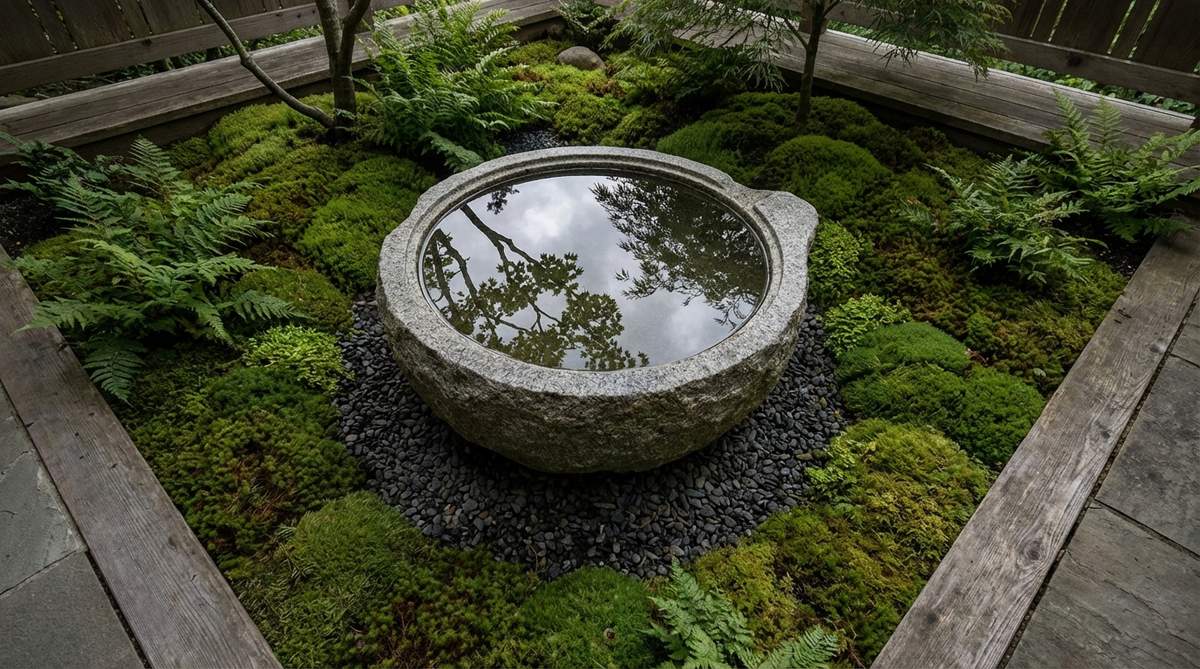
Place a carved granite basin on a gravel bed surrounded by live moss varieties. The water surface remains still, creating mirror-like reflections of sky and overhanging foliage.
Keep water levels consistent by checking weekly during warm weather. The moss requires shade and moisture; position this feature away from direct afternoon sun.
13. Ceramic Urn Bubbler Fountain
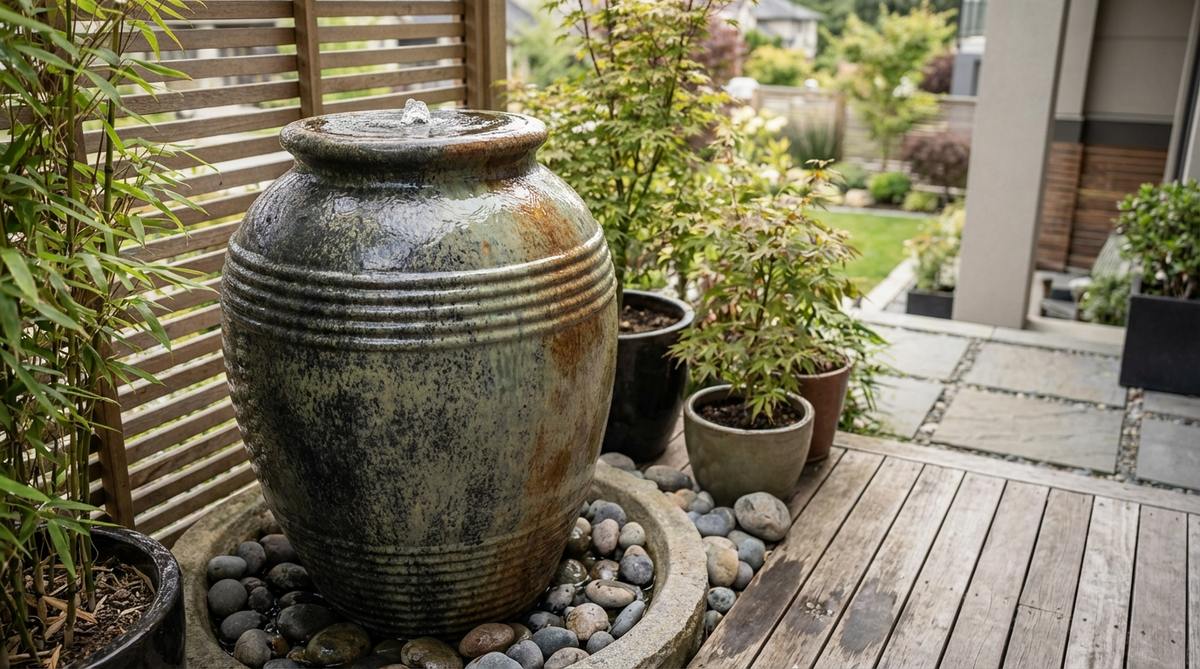
Use a large ceramic vessel with a hidden pump that pushes water upward to bubble gently at the rim. The water sheets down the curved exterior before collecting in a concealed reservoir.
This vertical format occupies minimal floor space while delivering substantial visual presence. Choose earth-toned glazes in charcoal, celadon, or rust that complement stone and wood elements.
14. Shishi-odoshi Bamboo Rocker
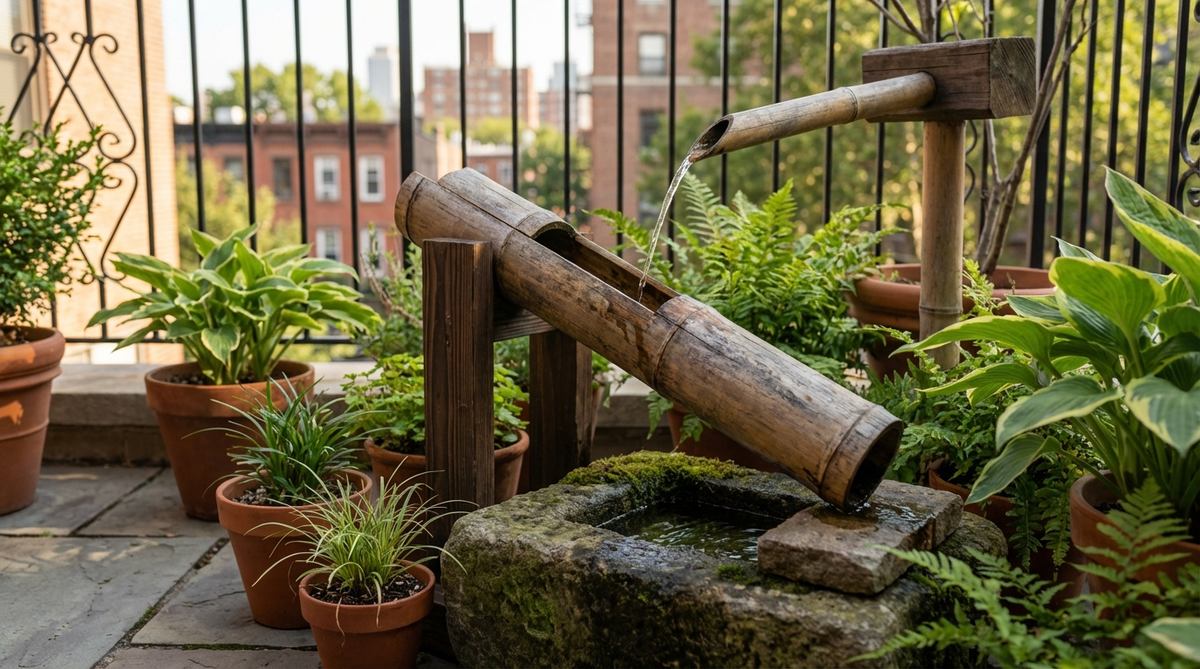
Install a segmented bamboo tube that fills with water, tips to empty, then rocks back with a hollow clacking sound. This traditional deer-scarer adds intermittent acoustic punctuation to the garden soundscape.
Position the pivot point carefully so the bamboo tips at the correct water volume. The periodic sound marks time passage and interrupts ambient urban noise.
15. Recessed Water Bowl with Pebbles
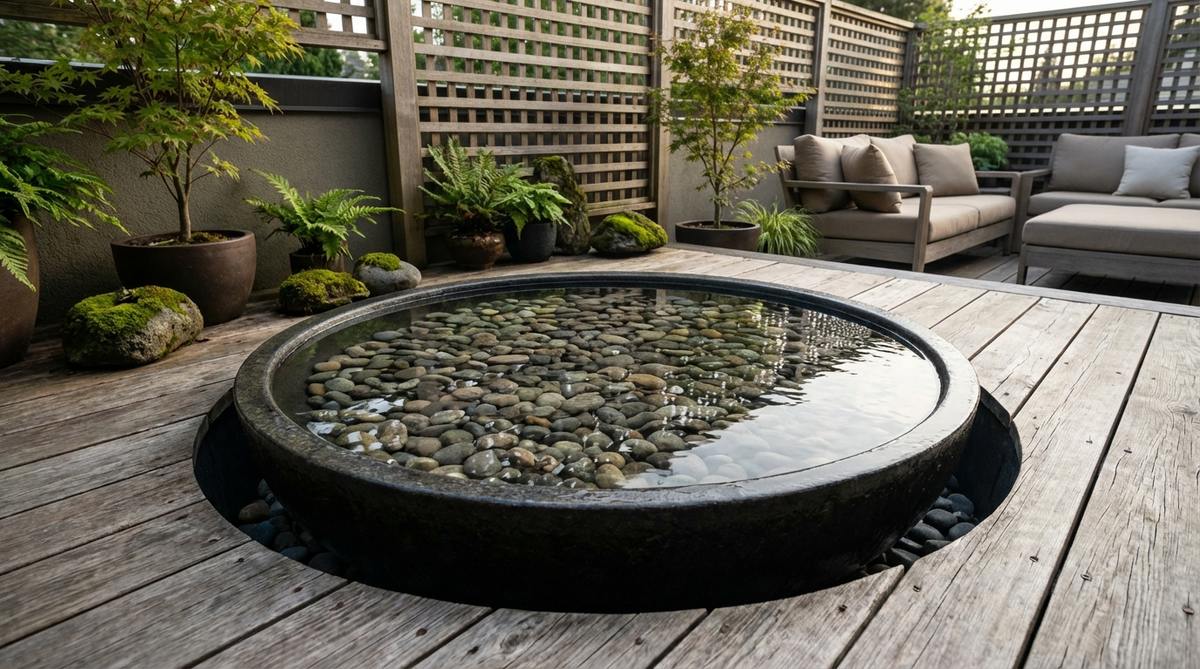
Set a wide shallow bowl flush with decking, filled with smooth pebbles beneath a thin water layer. The submerged stones create textural interest while keeping water volume minimal.
This low-profile design prevents children or pets from accidentally tipping containers. The recessed installation creates a microclimate that helps cool the immediate area through evaporation.
Minimalist Plant Arrangements Following Zen Garden Principles
Plant selection in zen gardens emphasizes form, texture, and symbolic meaning over flower color. Restrained plantings with ample spacing between specimens allow each plant to display its natural character.
16. Bonsai Trio Display
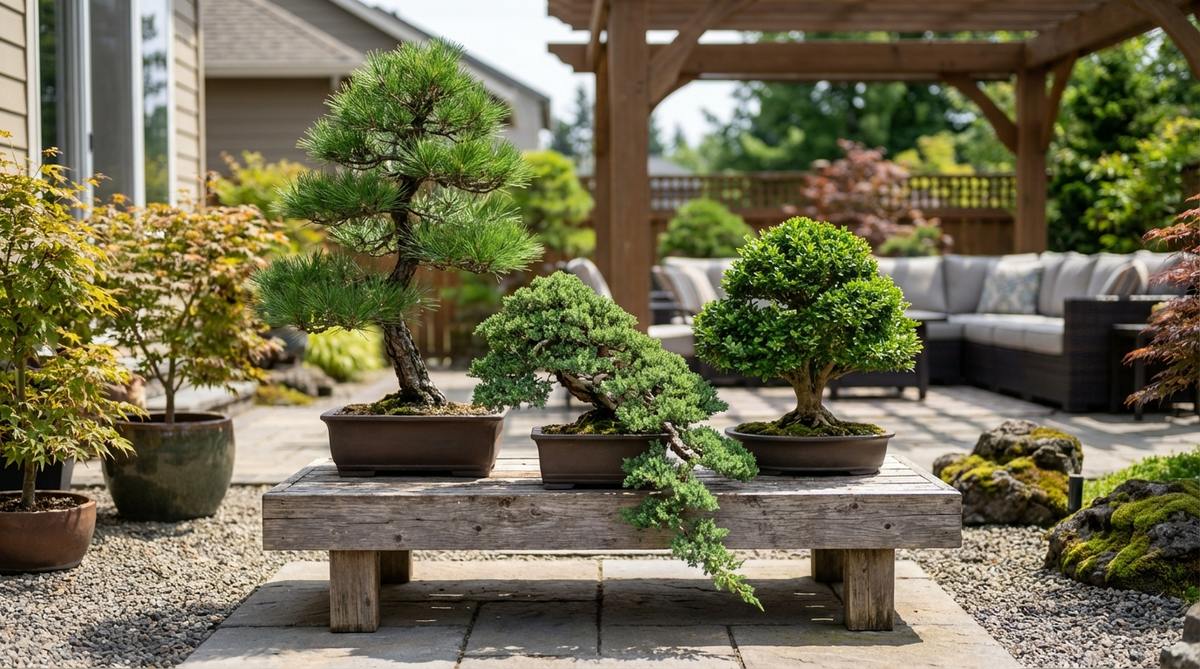
Arrange three bonsai specimens in graduating sizes on a low wooden platform or individual stands. Select species with contrasting formsupright pine, cascading juniper, and rounded boxwood.
Bonsai requires consistent care including daily watering checks and seasonal pruning. Position the display where morning sun reaches the plants but afternoon heat is moderated by shade or structure.
Group the bonsai in an asymmetrical triangle rather than a straight line. This arrangement creates visual interest from multiple viewing angles.
17. Moss Garden Ground Cover
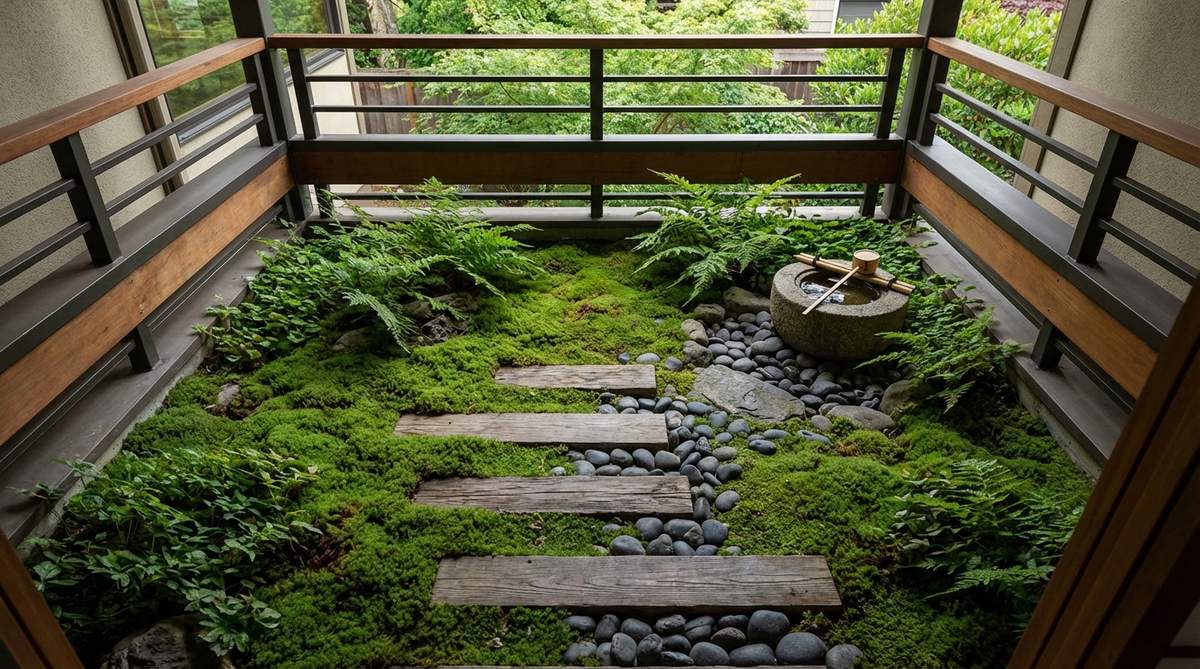
Cultivate live moss varieties including Scleranthus biflorus across sections of balcony floor or within container surfaces. Moss provides lush green texture without height, emphasizing horizontal planes.
Maintain moss by misting daily during dry periods and ensuring shade coverage. Moss thrives in the same moist, shaded conditions preferred by ferns and many Japanese maples.
18. Single Specimen Pine Placement
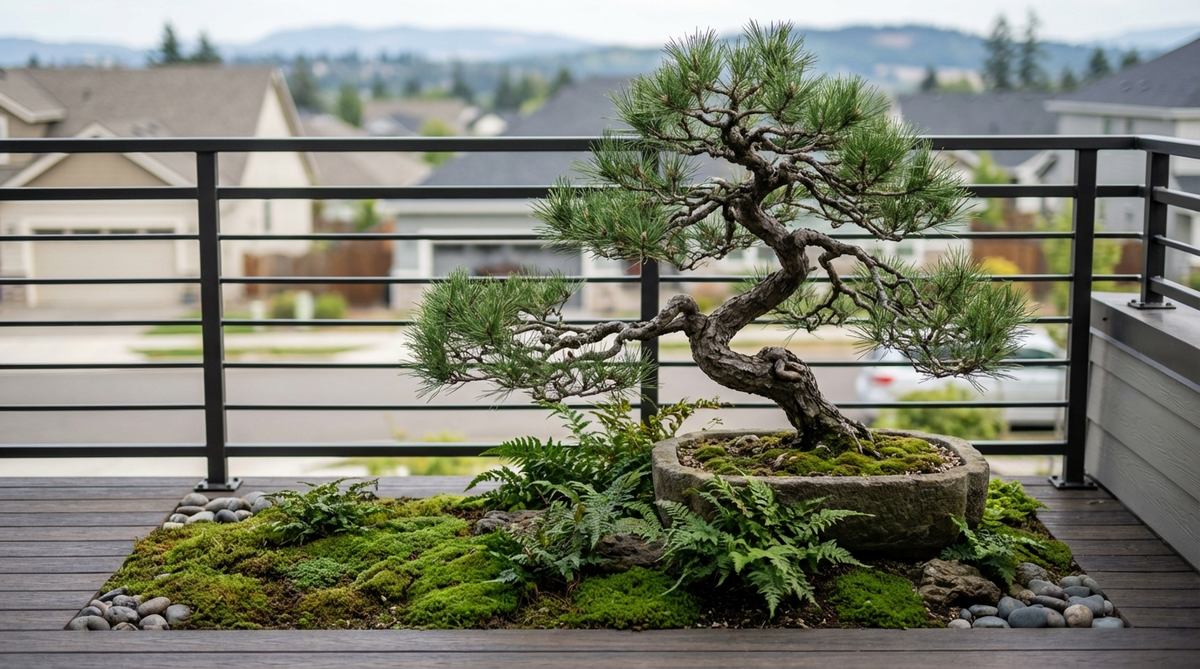
Feature one mature Japanese black pine (Pinus thunbergii) as the sole tree element. Prune the pine to reveal branch architecture and create the windswept forms seen in coastal Japanese landscapes.
This minimalist approach demonstrates restraint and allows the pine’s sculptural qualities to dominate. Underplant with low ferns or moss rather than competing shrubs.
19. Fern Collection in Shadow
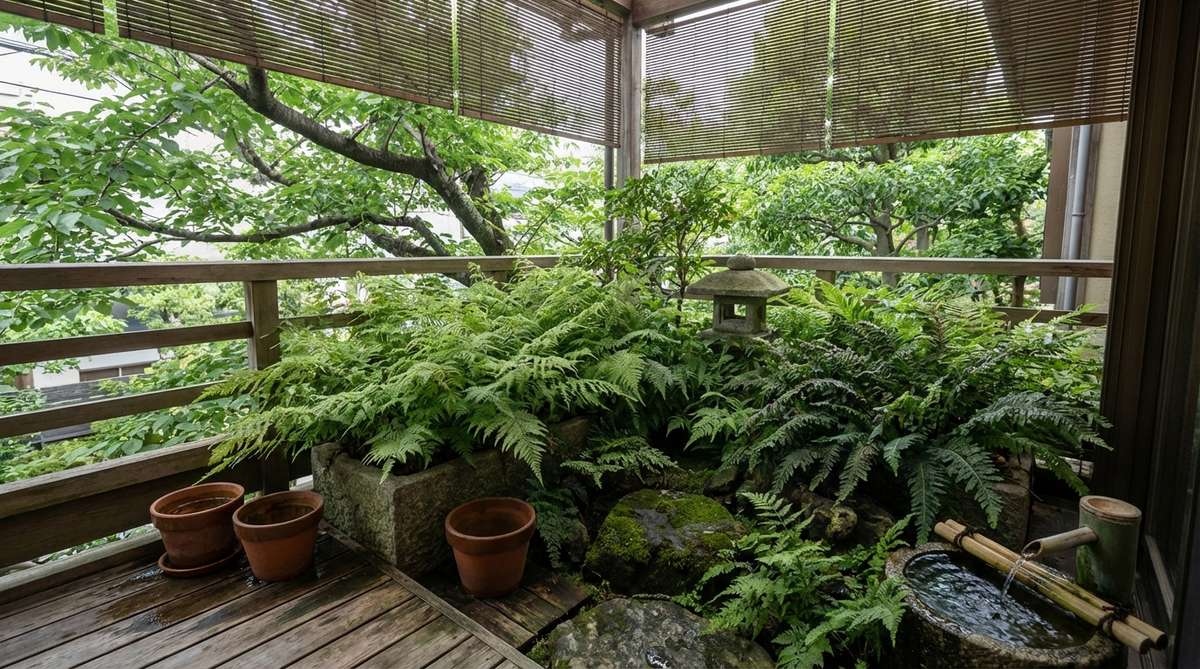
Plant Asplenium bulbiferum (hen and chicken fern) and Doodia aspera (prickly rasp fern) in shaded corners. These understory species provide fine-textured foliage without flowering distractions.
Ferns appreciate consistent moisture and protection from direct sun. Group three to five ferns of the same species for visual cohesion rather than mixing multiple varieties.
20. Evergreen Azalea Seasonal Accent
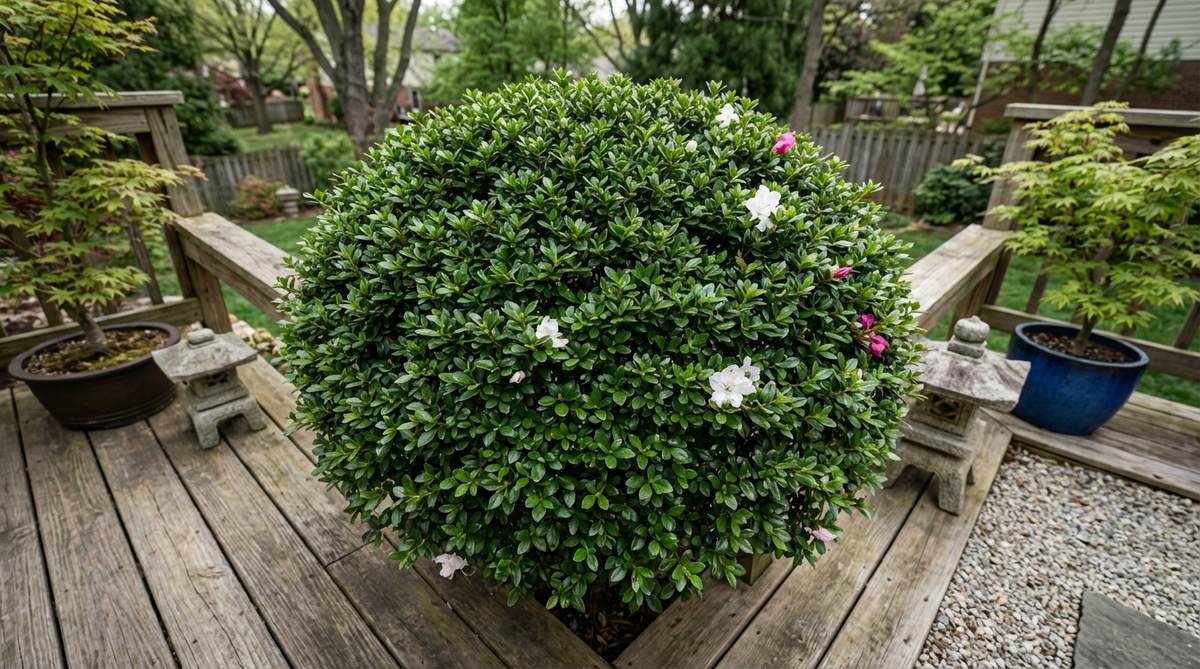
Include one compact azalea cultivar for brief spring bloom, then rely on its evergreen foliage the remainder of the year. Prune after flowering to maintain dense, rounded form.
Select azaleas with small leaves and restrained growth habits. These provide seasonal celebration without abandoning the zen emphasis on foliage over flowers.
Vertical Zen Elements for Compact Balcony Spaces
Vertical features draw the eye upward and create the illusion of greater height. Lanterns, screens, and climbing supports add dimension without consuming precious floor area.
21. Stone Pagoda Lantern
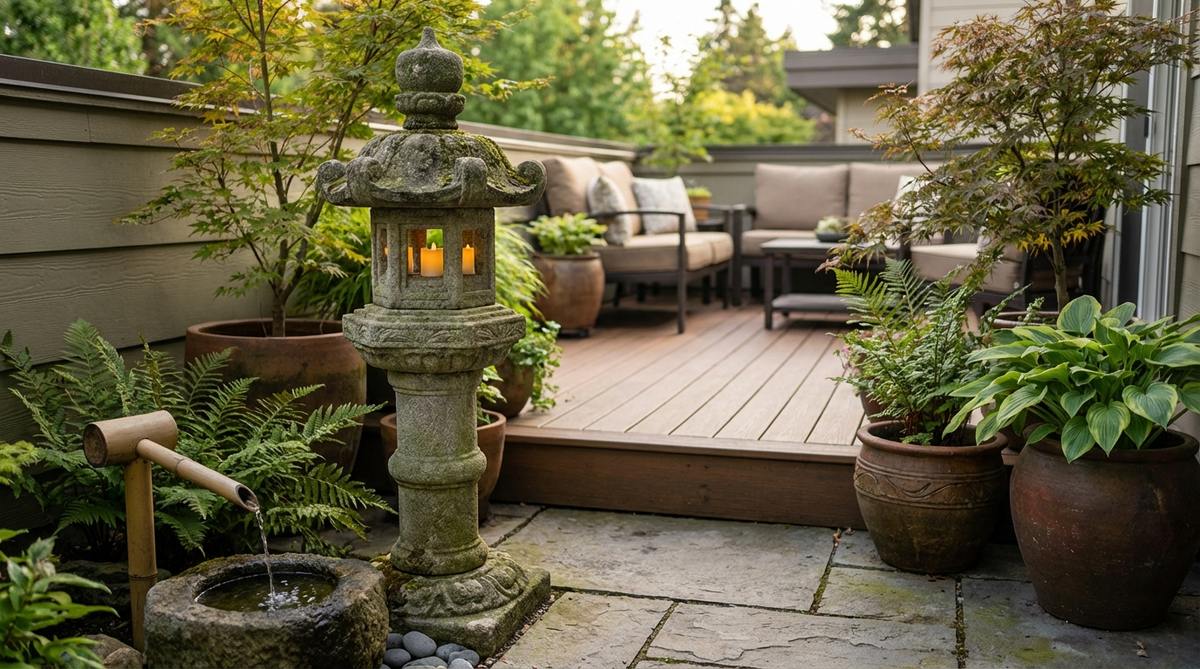
Position a traditional multi-tiered stone lantern (toro) as a vertical accent piece. These carved stone structures range from 24 to 48 inches tall and anchor garden compositions.
Authentic stone lanterns include chambers for candles or small LED lights that create evening ambiance. Place the lantern off-center following asymmetrical design principles, often near water features or at pathway junctures.
The weathered stone surface develops moss and patina over time, increasing authenticity. Select lanterns with simple geometric forms rather than ornate carvings.
22. Bamboo Privacy Screen Panel
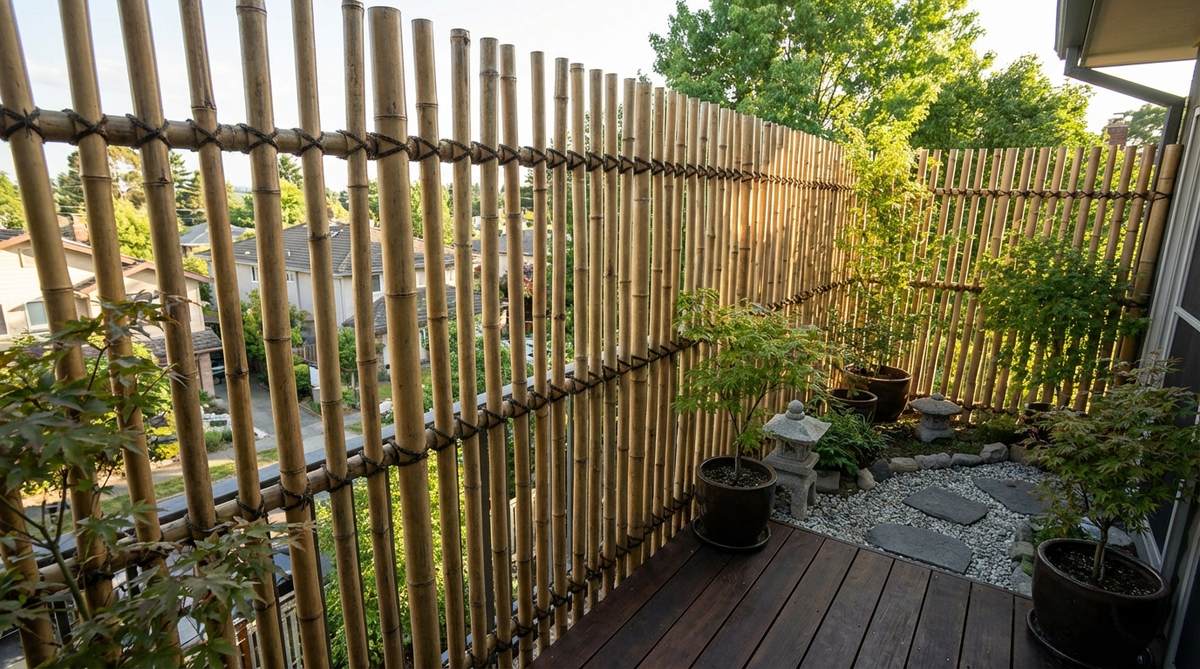
Install vertical bamboo fencing panels to create enclosure and block unwanted views. Natural bamboo poles lashed with dark cord provide authentic material expression.
These screens define garden boundaries while maintaining visual permeability through gaps between poles. Position screens to frame desired views or create intimate sub-zones within the balcony.
23. Climbing Vine on Minimal Trellis
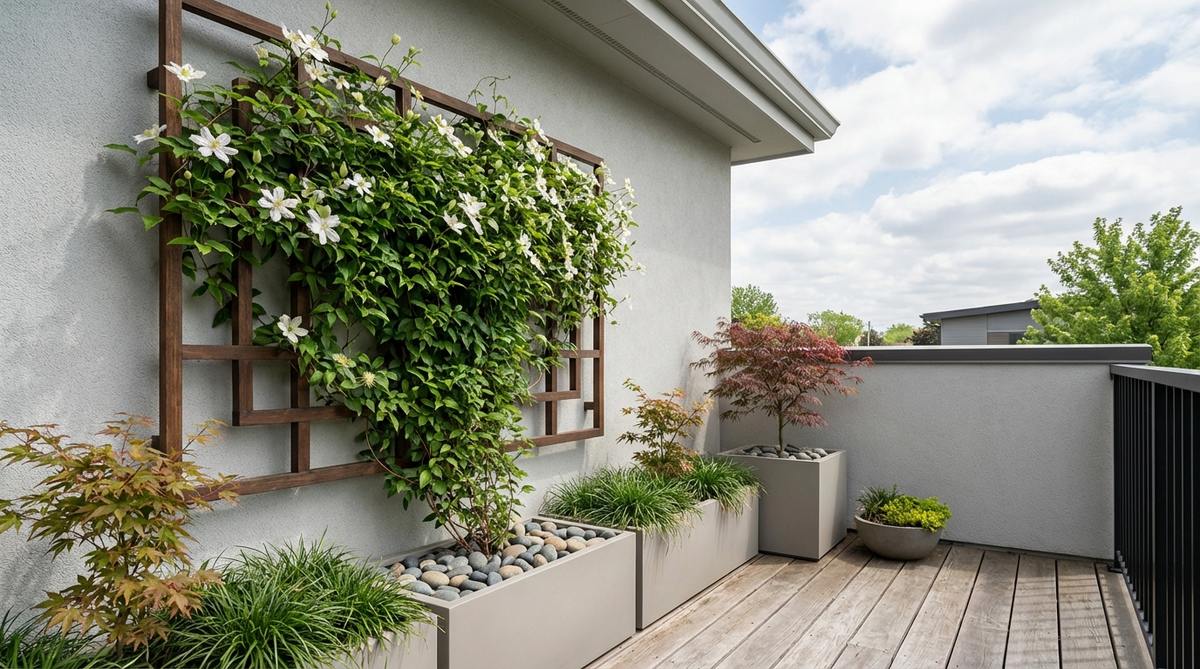
Train a restrained climbing plant like Japanese wisteria or evergreen clematis on a simple vertical trellis structure. Select trellises with clean geometric patterns rather than ornate designs.
Prune climbing plants regularly to prevent excessive growth that obscures the trellis architecture. The goal is balanced integration of plant and structure, not complete coverage.
24. Vertical Cedar Board Backdrop
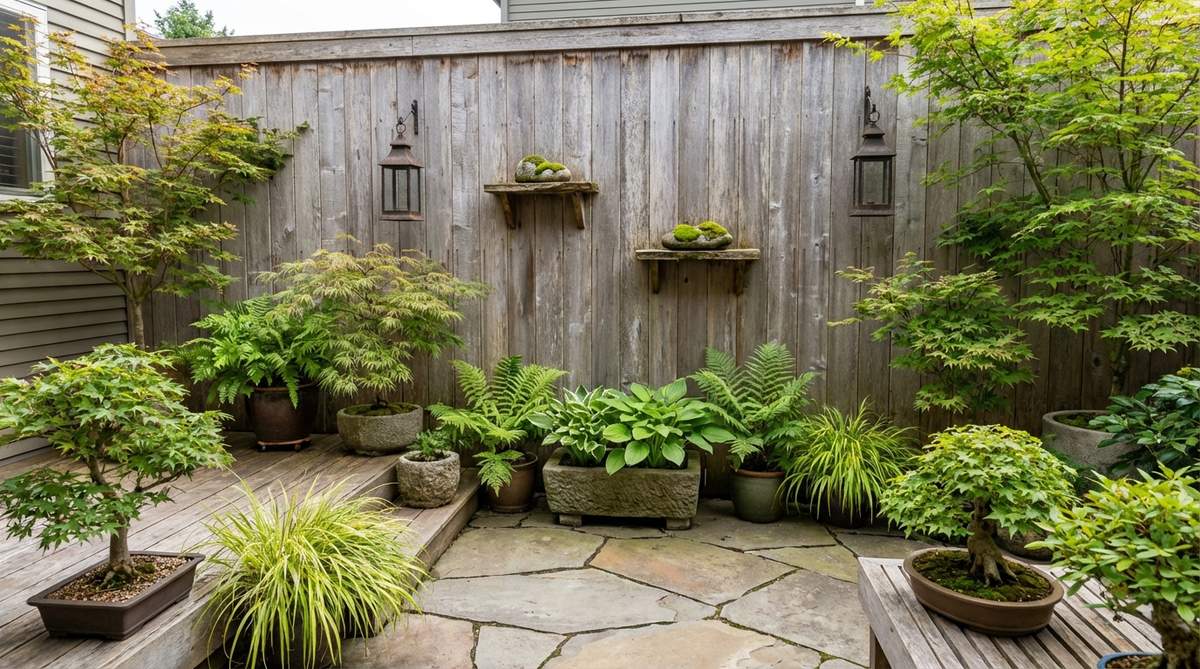
Mount weathered cedar boards vertically as a neutral backdrop for plant displays. The natural wood grain and silvered patina complement stone and foliage without competing visually.
This architectural element defines garden edges and provides mounting surfaces for hanging lanterns or small shelves. Leave boards unsealed to develop natural weathering.
25. Hanging Wind Chime Placement
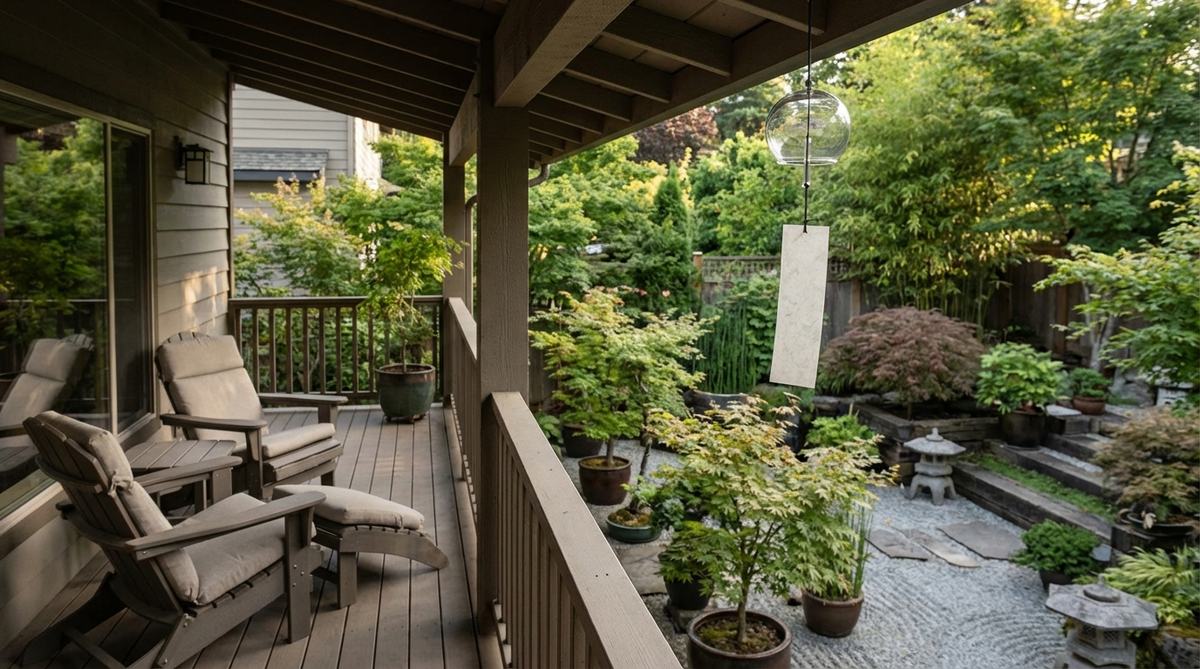
Suspend a Japanese wind chime (furin) with glass bell and paper sail where breezes activate gentle tones. Traditional furin produce subtle sounds distinct from metal tubular chimes.
Position the chime where you can observe it from seating areas but away from locations where constant sound becomes intrusive. The intermittent tones mark air movement and add acoustic interest.
Meditation and Seating Zones for Contemplation
Functional seating allows extended garden engagement. Seating areas should integrate with the overall design rather than interrupt the zen aesthetic with bulky patio furniture.
26. Low Wooden Meditation Bench
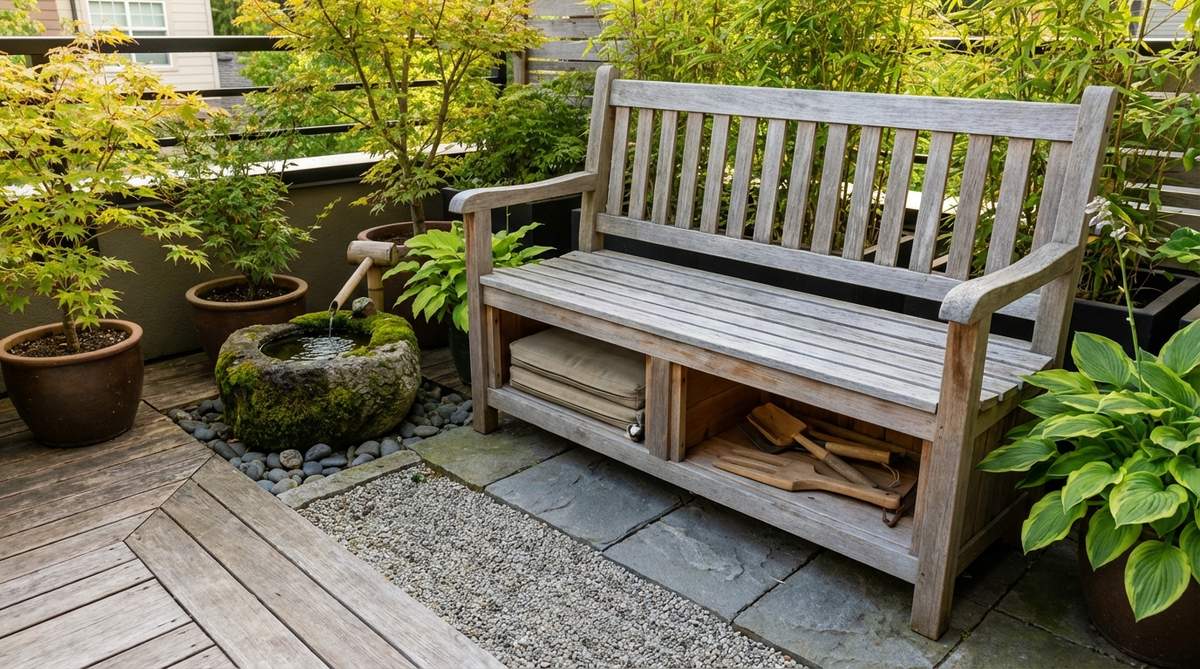
Place a simple wooden bench or storage seat along one edge, positioned to face the primary view or water feature. Keep the bench height low (12-16 inches) to maintain horizontal emphasis.
Natural wood finishes in cedar or teak weather gracefully and require minimal maintenance. The bench doubles as storage for garden tools, cushions, or raking implements.
27. Floor Cushion on Platform
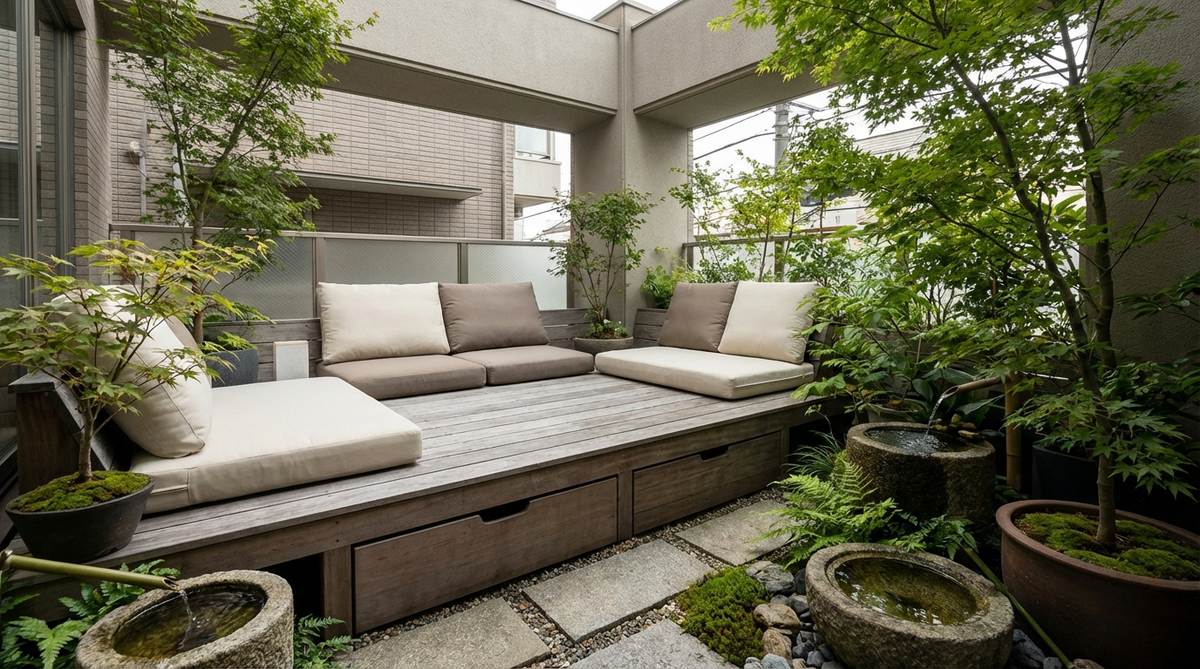
Create a raised wooden platform covered with outdoor cushions for floor-level seating. This traditional posture encourages longer meditation sessions and closer connection to ground-level plantings.
Build the platform 4-6 inches high with storage underneath. Select weather-resistant cushions in neutral tones that complement the natural material palette.
28. Corner Contemplation Nook
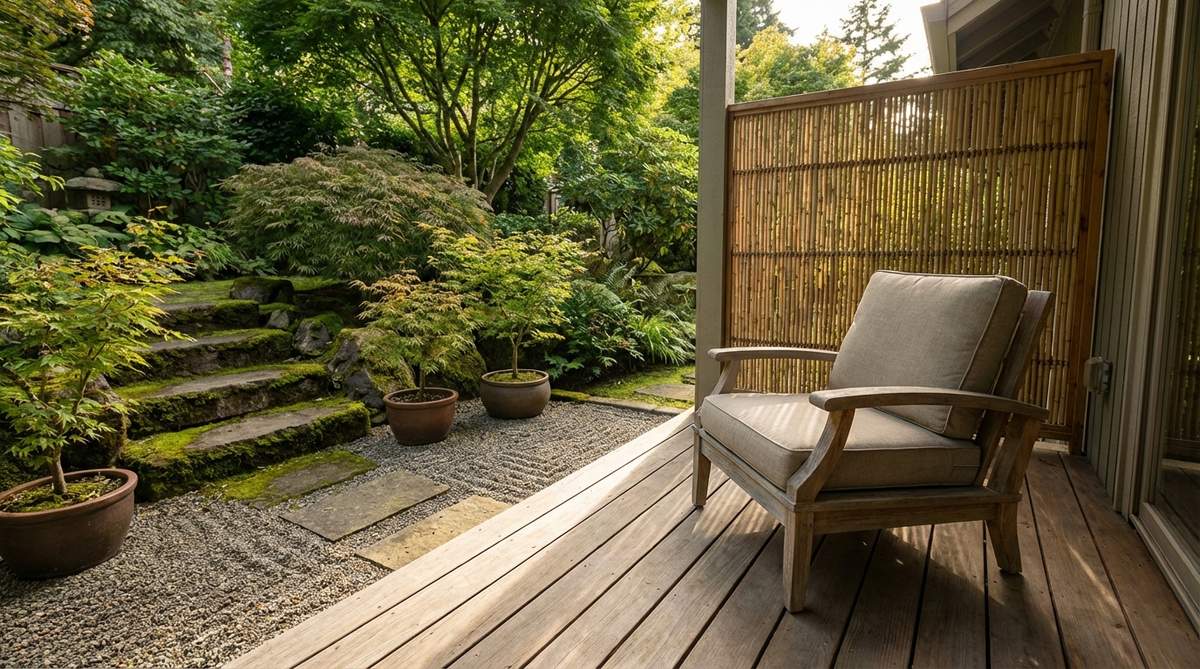
Dedicate one balcony corner exclusively to sitting and observation. Screen this area partially with bamboo or a planted screen to create separation from activity zones.
Orient the seating to face the most developed garden section or borrowed scenery beyond the balcony edge. This focused viewpoint enhances the meditative experience.
Bringing Zen Balance to Your Space
These japanese balcony garden layouts demonstrate how ancient design principles translate into contemporary urban settings. Success depends on restraint, deliberate material selection, and respect for negative space rather than cramming maximum elements into limited areas. Start with a simple three-stone arrangement or single water feature, then expand gradually as you develop understanding of balance and asymmetry. Fresh Garden Ideas encourages you to adapt these frameworks to your specific balcony dimensions and climate conditions, creating a personal sanctuary that honors traditional aesthetics while serving modern needs.
Frequently Asked Questions
What are the essential elements for an authentic Japanese balcony garden?
The foundation includes rocks arranged in odd-numbered groups, gravel or decomposed granite flooring, one or two carefully selected plants like Japanese maple or bamboo, and a single water feature. Authentic designs emphasize empty space as much as filled areas, allowing each element to breathe. Add vertical accents like a stone lantern and simple wooden seating to complete the composition without overcrowding.
Can I create a Japanese zen garden on a small apartment balcony?
Compact balconies work well for zen gardens because the design philosophy prioritizes quality over quantity. Focus on miniature elementsa tabletop karesansui gravel garden, one bonsai specimen, a small ceramic fountain, and strategically placed stones. Even a 4 by 6 foot balcony accommodates a meaningful zen arrangement when you resist the urge to fill every square foot with objects or plants.
How do I maintain a Japanese balcony garden with minimal effort?
Select drought-tolerant plants like pines and established bonsai that require less frequent watering than annuals. Use gravel or decomposed granite instead of grass to eliminate mowing. Install recirculating water features with minimal evaporation rather than ponds requiring constant refilling. Most maintenance involves weekly raking of gravel patterns and seasonal pruning, both of which function as meditative practices rather than chores.
What plants work best in shaded Japanese balcony gardens?
Shade-loving options include Japanese maples (which actually prefer afternoon shade), clumping bamboo varieties like Fargesia species, multiple fern types including hen and chicken fern, and moss ground covers. Hostas with simple leaf forms, evergreen azaleas, and Pieris also thrive in partial shade while maintaining appropriate aesthetic restraint for zen designs.
How much does it cost to create a Japanese balcony garden?
Budget designs start around 200-300 dollars for basic gravel flooring, three to five stones, one container plant, and a small fountain. Mid-range gardens with quality Japanese maple specimens, carved stone basins, and authentic lanterns cost 800-1500 dollars. Premium installations featuring large bonsai, custom bamboo screens, and carved granite elements can exceed 3000 dollars. Focus initial investment on one quality focal element, then add pieces gradually.
Should I use real or artificial bamboo for balcony screens?
Real bamboo screens weather authentically and develop natural patina, but require replacement every 3-5 years as poles deteriorate. Artificial bamboo maintains appearance longer but lacks the genuine texture and subtle color variation of natural material. For true zen aesthetics, use real bamboo and accept weathering as part of the garden’s lifecycle, or invest in living clumping bamboo planted in containers for the most authentic approach.