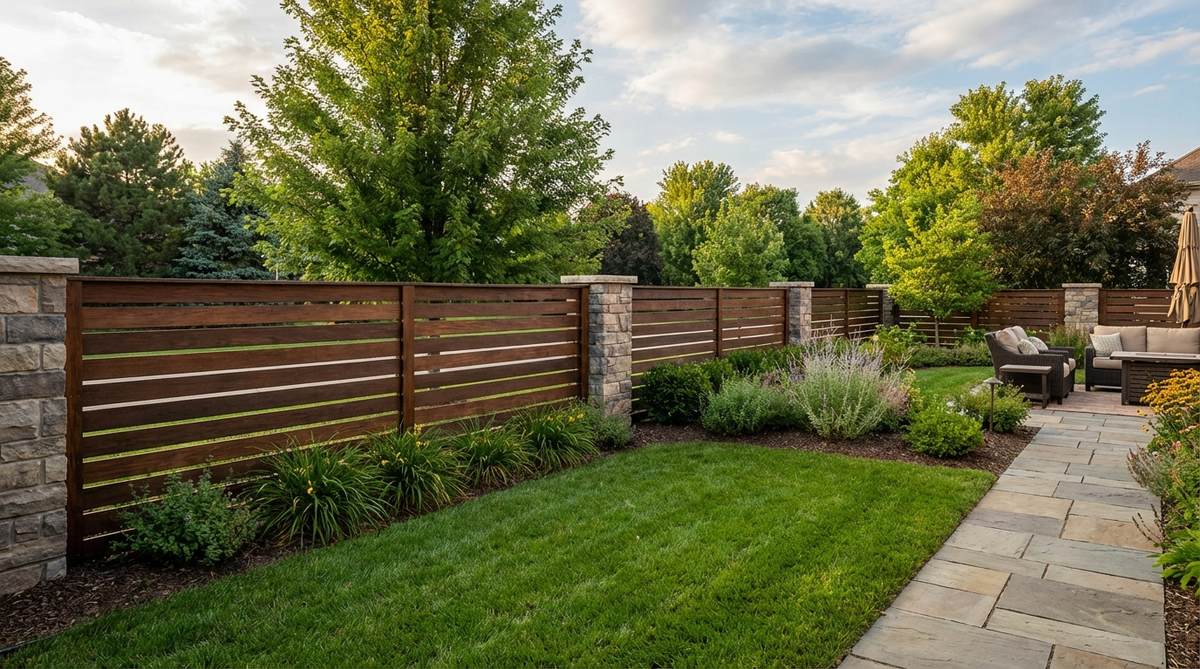
A well-designed garden design fence transforms outdoor spaces by establishing clear boundaries while elevating architectural appeal. Whether you prioritize complete seclusion or prefer semi-private screens that allow filtered light and airflow, the right fence style balances function with visual impact. Fresh Garden Ideas brings you expert-curated styles that merge structural integrity with design sophistication for American homeowners.
Design SnapshotKey Principles
- Height Matters: Six-foot minimum for full privacy; four-foot works for boundary definition with partial screening
- Material Durability: Cedar and redwood resist rot naturally; vinyl and composite eliminate maintenance; metal adds industrial edge
- Visual Flow: Horizontal lines elongate spaces; vertical boards add height perception; mixed materials create textural contrast
- Structural Rhythm: Board spacing controls privacy level while managing airflow and shadow play across garden beds
Classic Vertical Privacy Structures
Vertical board configurations remain the backbone of residential garden design fence installations across American properties. These time-tested orientations naturally shed water, resist warping, and accommodate sloped terrain without complex adjustments.
1. Board-on-Board Overlapping Panels
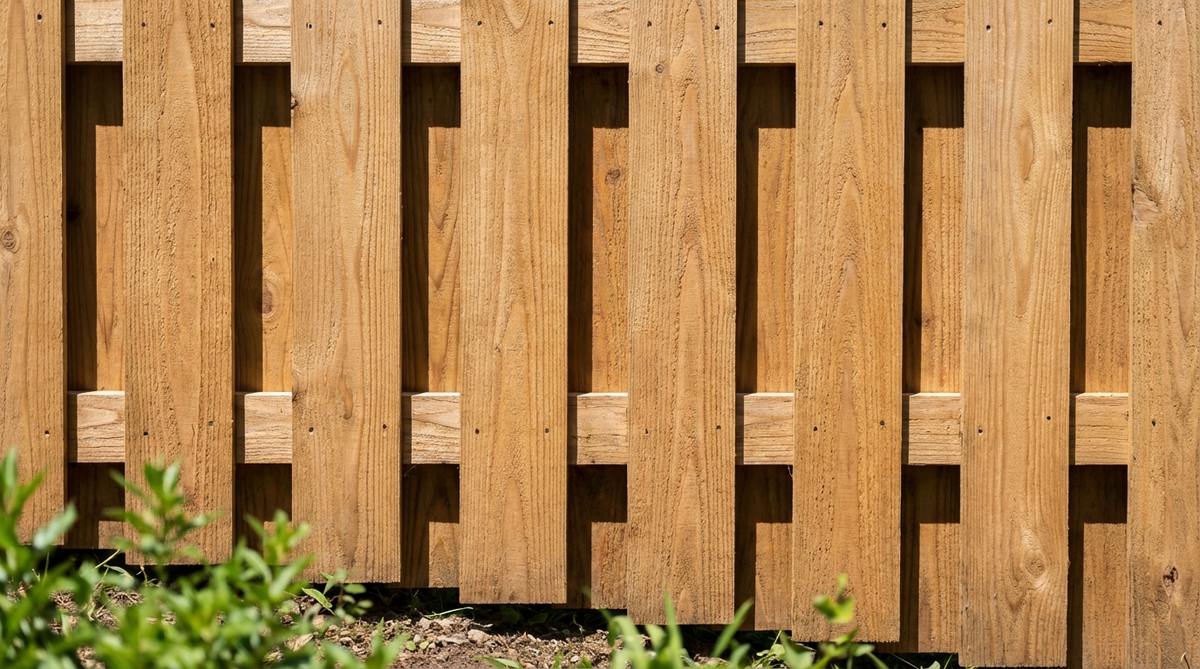
This construction method staggers vertical boards on alternating sides of the horizontal rails, creating overlapping coverage that eliminates sight lines. The dimensional layering produces subtle shadow patterns that shift throughout the day, adding visual texture to flat surfaces.
Install six-inch boards with one-inch overlap using rot-resistant cedar or pressure-treated pine. The alternating pattern maintains airflow while blocking direct views from standard angles.
This design delivers aesthetically pleasing results from both property sides, making it neighbor-friendly and suitable for shared fence line agreements.
2. Tongue-and-Groove Solid Privacy
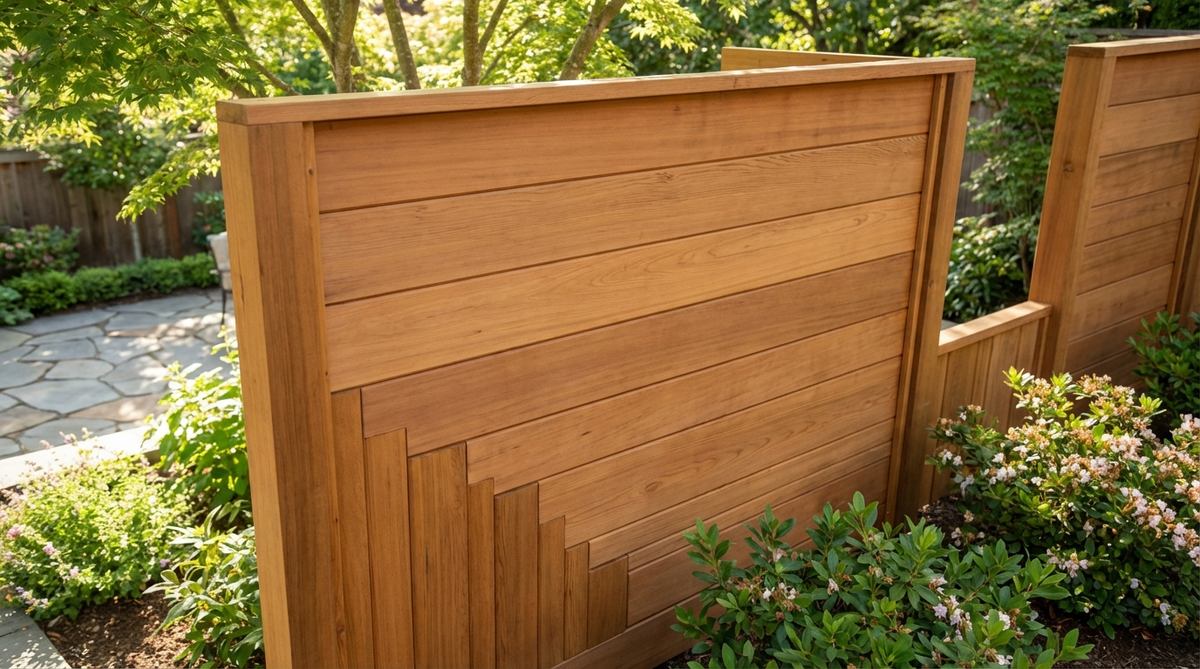
Interlocking tongue-and-groove boards eliminate gaps entirely, creating an impenetrable visual barrier. The tight joinery prevents warping while producing smooth, uniform surfaces ideal for staining or painting.
This construction requires precise milling but rewards with superior structural integrity. Choose redwood or cedar for outdoor longevity without chemical treatment.
The solid panel design maximizes sound dampening, making it effective for properties near busy streets or commercial zones.
3. Capped Vertical Board with Trim
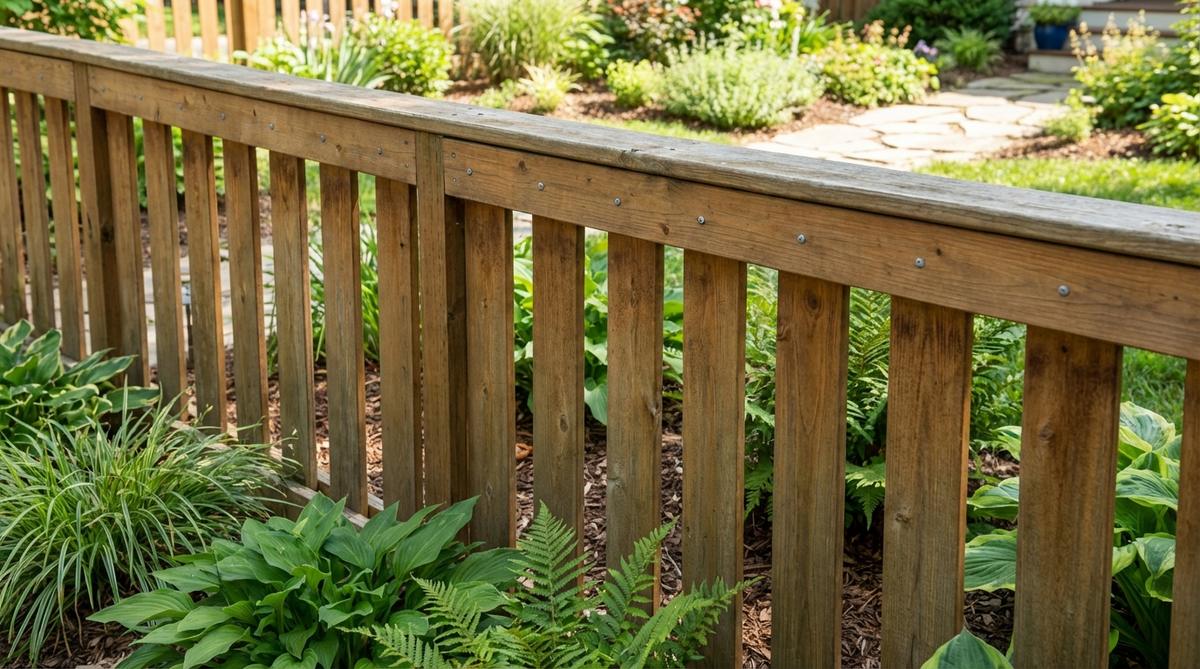
A horizontal cap board crowns standard vertical pickets, protecting end grain from moisture penetration while adding finished architectural detail. The cap creates clean horizontal lines that contrast with vertical rhythm.
Install one-by-six cap boards across the top rail, securing with galvanized screws countersunk and filled. Apply matching stain to unify the design.
This upgrade extends fence lifespan by ten years while elevating perceived construction quality through refined detailing.
4. Scalloped Top Vertical Picket
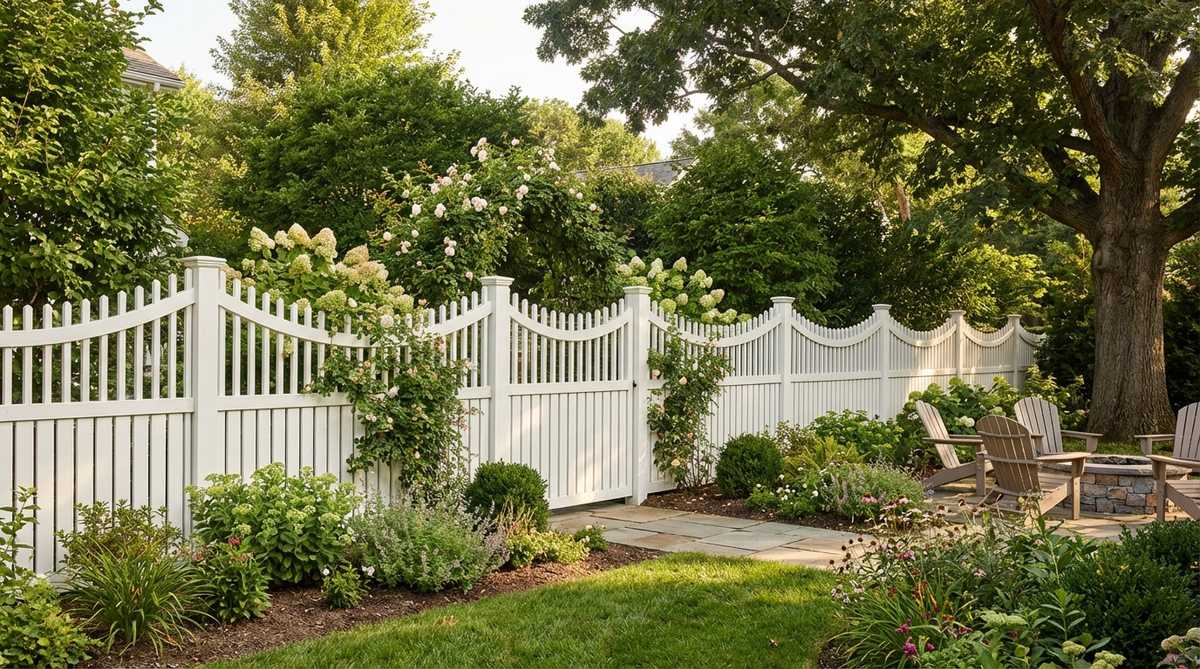
Curved concave or convex top profiles soften the linear severity of vertical boards. The undulating rhythm draws eyes horizontally across the fence line, creating graceful movement.
Cut curves using a jigsaw following a template, then sand edges smooth. Maintain consistent spacing between picket tops to preserve the flowing pattern.
This classic design complements cottage and traditional garden styles while maintaining full-height privacy in the lower sections.
5. Vertical Shadow Box Construction
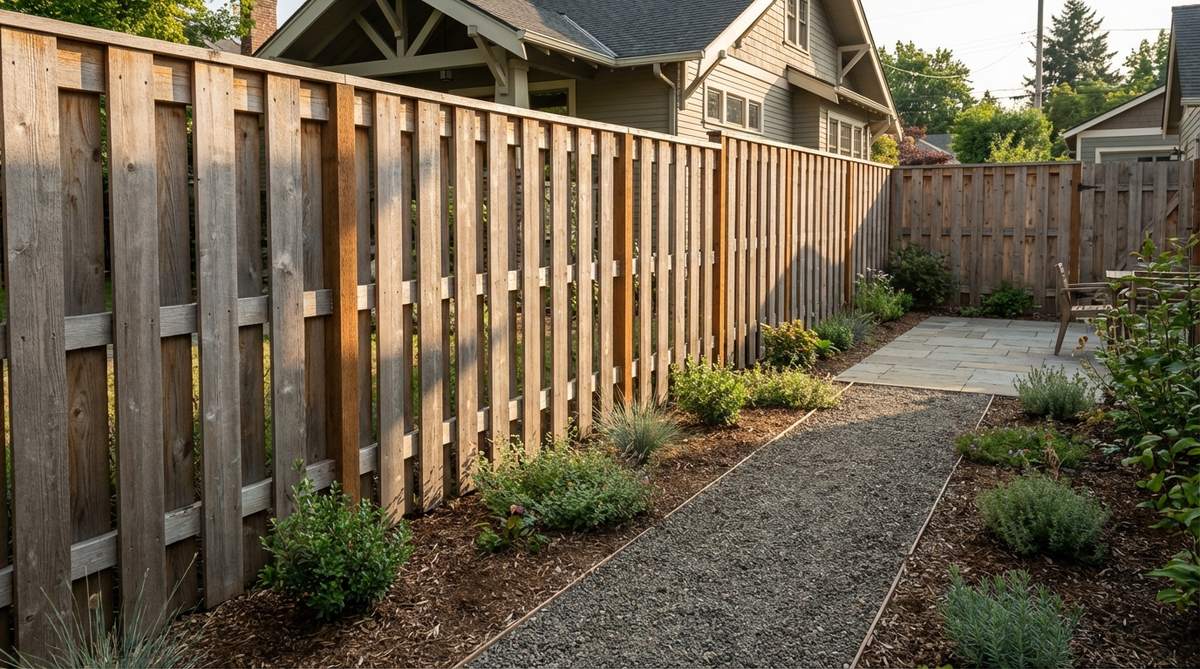
Boards mounted on alternating sides of rails with intentional gaps create a three-dimensional effect. Light penetrates at angles while straight-on views remain blocked, balancing privacy with airflow.
Space boards one to two inches apart on each side, offsetting them to cover gaps. This requires wider posts and rails to accommodate double-sided attachment.
The design provides nearly full privacy while reducing wind load, making it suitable for exposed hilltop locations.
Modern Horizontal Compositions
Horizontal slat fences define contemporary landscape architecture, creating elongating visual lines that expand perceived yard width. Designers specify tight-gap spacing for maximum privacy or staggered arrangements for ventilated screening.
6. Tight-Gap Horizontal Slat
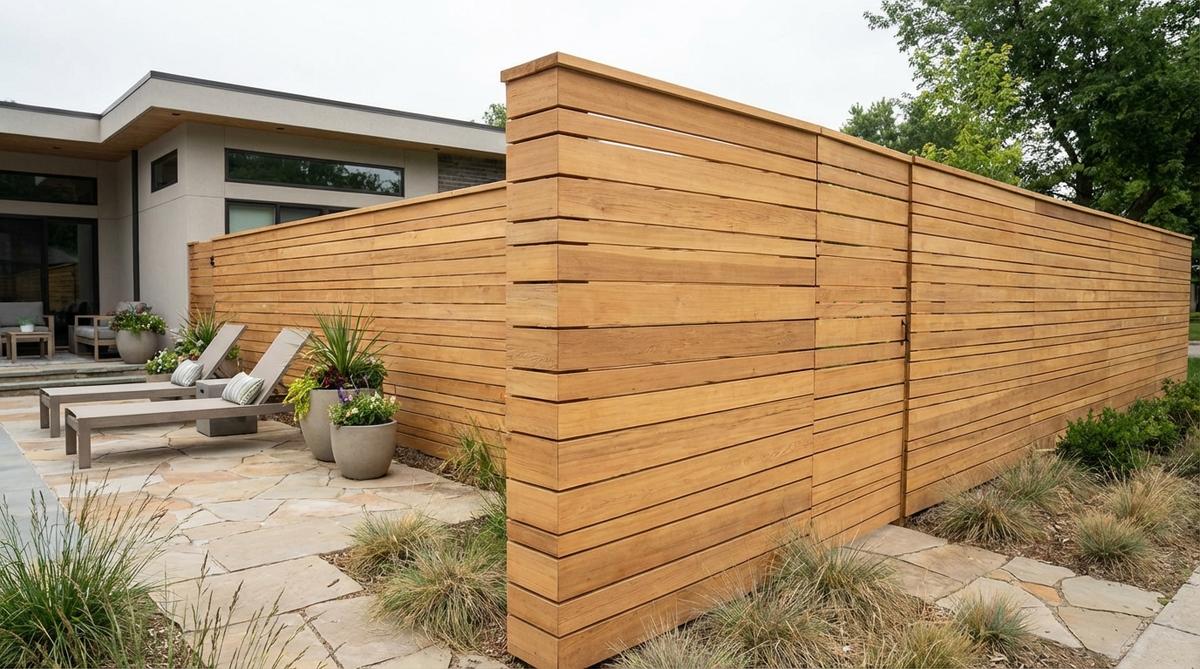
Boards run parallel to ground level with quarter-inch or less spacing between planks. This minimal separation delivers complete visual blocking while the horizontal orientation creates sleek, uninterrupted lines.
Use one-by-six or one-by-eight boards in cedar or composite materials. Precise installation prevents gaps from opening as wood naturally expands and contracts seasonally.
The geometric minimalism pairs exceptionally well with mid-century modern and contemporary home designs featuring clean architectural lines.
7. Floating Horizontal Panels
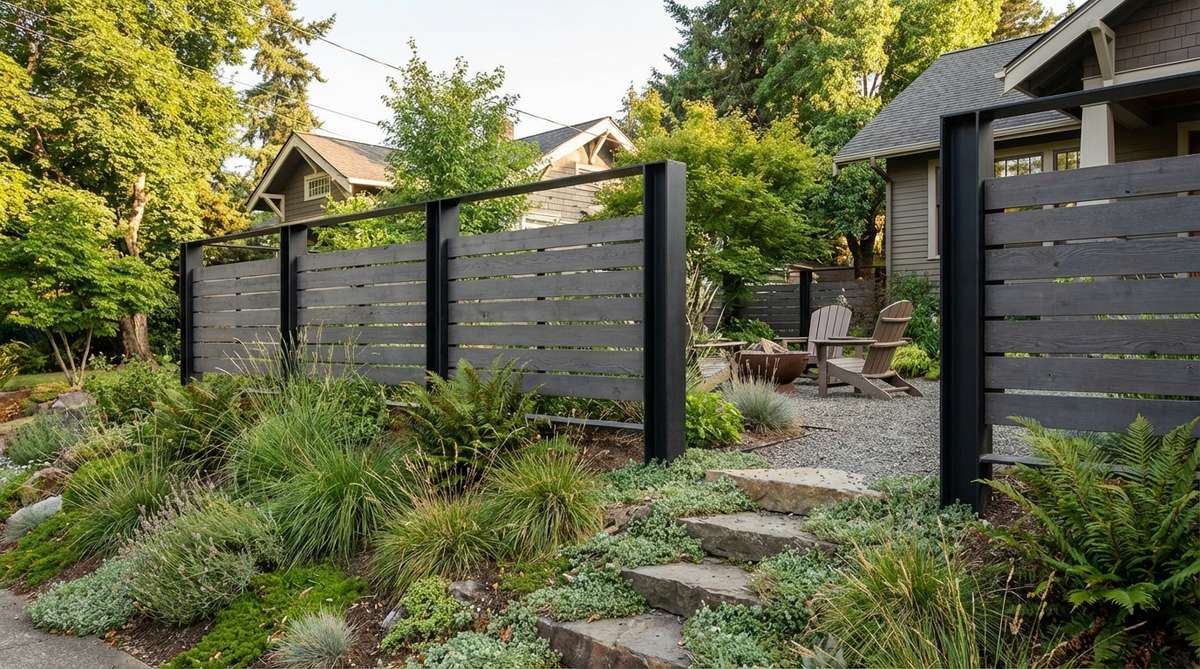
Horizontal boards suspend between vertical posts with intentional gaps top and bottom, creating floating panel sections. The elevated design allows ground-level plantings to extend beneath, softening the fence base.
Mount the lowest board twelve to eighteen inches above grade, leaving a six-inch gap at the top. Frame with steel or aluminum posts powder-coated in matte black for industrial contrast.
This solution works well on sloped properties where grading varies, eliminating the need for stepped panels.
8. Alternating Width Horizontal Boards
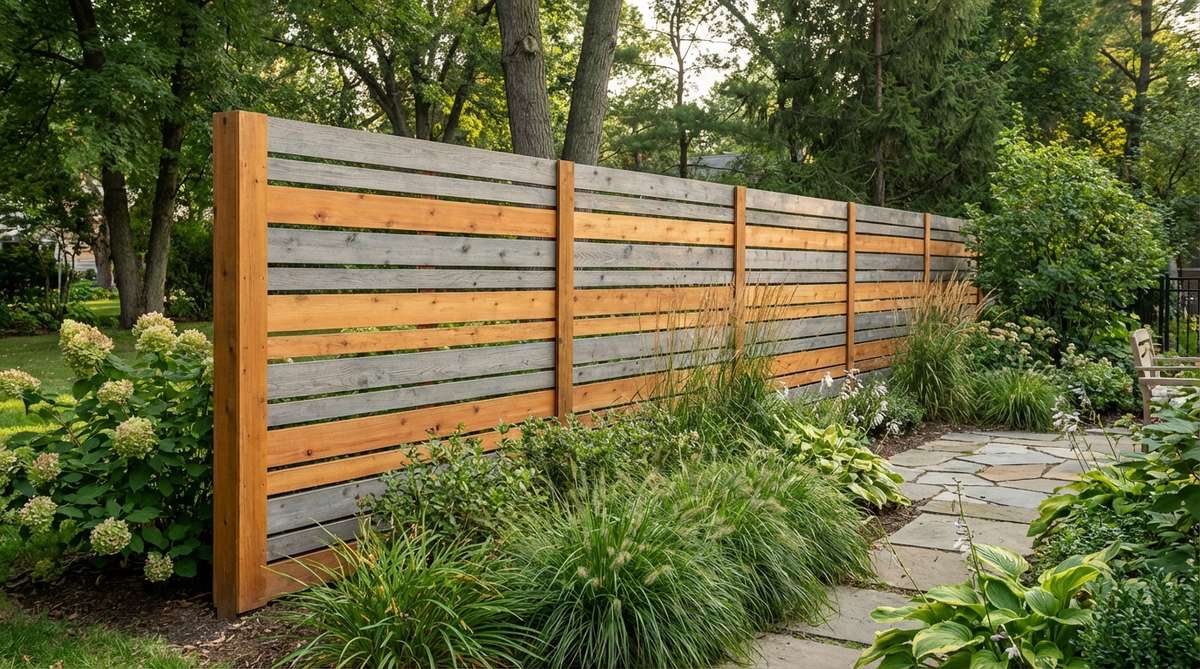
Mix four-inch and six-inch board widths in rhythmic patterns to break visual monotony. The varied dimensions create textural interest while maintaining the horizontal flow.
Establish a repeating pattern such as two narrow boards followed by one wide board. Stain in contrasting tones to emphasize the dimensional variation.
This technique adds custom detailing without complex construction methods or significant material cost increases.
9. Horizontal Board-and-Batten
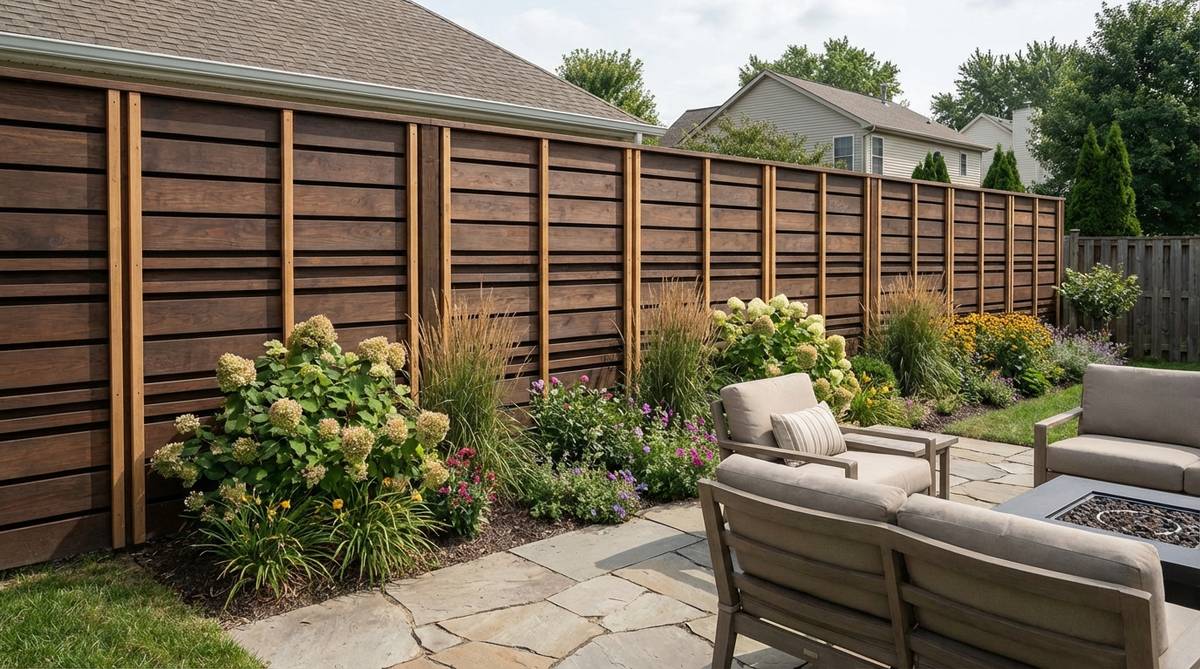
Wide horizontal boards overlay with narrow battens covering seams, creating bold shadow lines. The dimensional layering produces strong architectural presence.
Install eight-inch primary boards horizontally, then apply two-inch battens vertically at seams and mid-panel. Use contrasting wood tones or paint colors to accentuate the pattern.
This fusion of horizontal and vertical elements bridges traditional and modern aesthetics effectively.
10. Horizontal Cedar Rain Screen
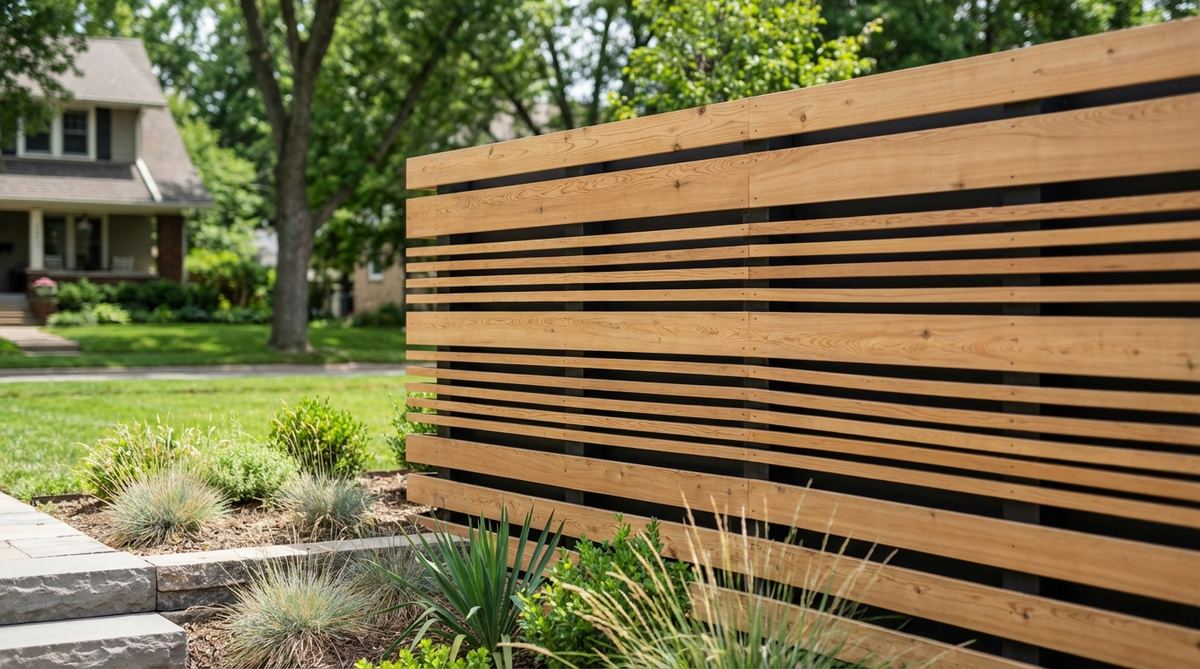
Borrowed from architectural cladding systems, rain screen fencing spaces horizontal boards away from a backing panel, allowing air circulation behind boards. The ventilation gap prevents moisture accumulation and extends wood life.
Mount furring strips to posts, then attach horizontal cedar boards to the strips. Leave a one-inch air gap behind boards with weep holes at the bottom.
This advanced technique delivers superior durability in humid climates while maintaining clean horizontal aesthetics.
Architectural Statement Designs
Bold structural choices transform functional garden design fence installations into focal points that define outdoor room character. These designs prioritize visual impact alongside privacy performance.
11. Louvered Privacy Slats
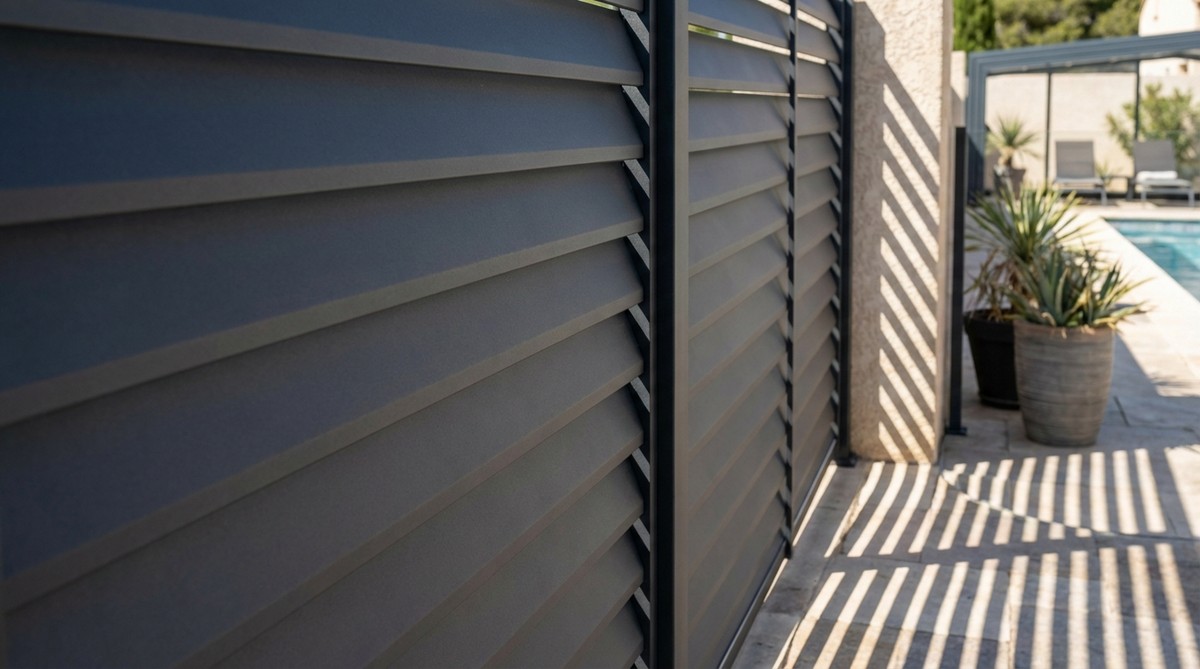
Angled horizontal slats rotate at thirty to forty-five degrees, blocking sight lines while permitting airflow. The louver orientation creates strong shadow patterns and European-inspired sophistication.
Install slats at consistent angles using aluminum or composite materials that resist warping. The angled configuration requires specialized brackets and precise measurements.
This design excels in warm climates where ventilation prevents heat buildup behind solid panels, particularly effective around pool enclosures.
12. Corrugated Metal Panels
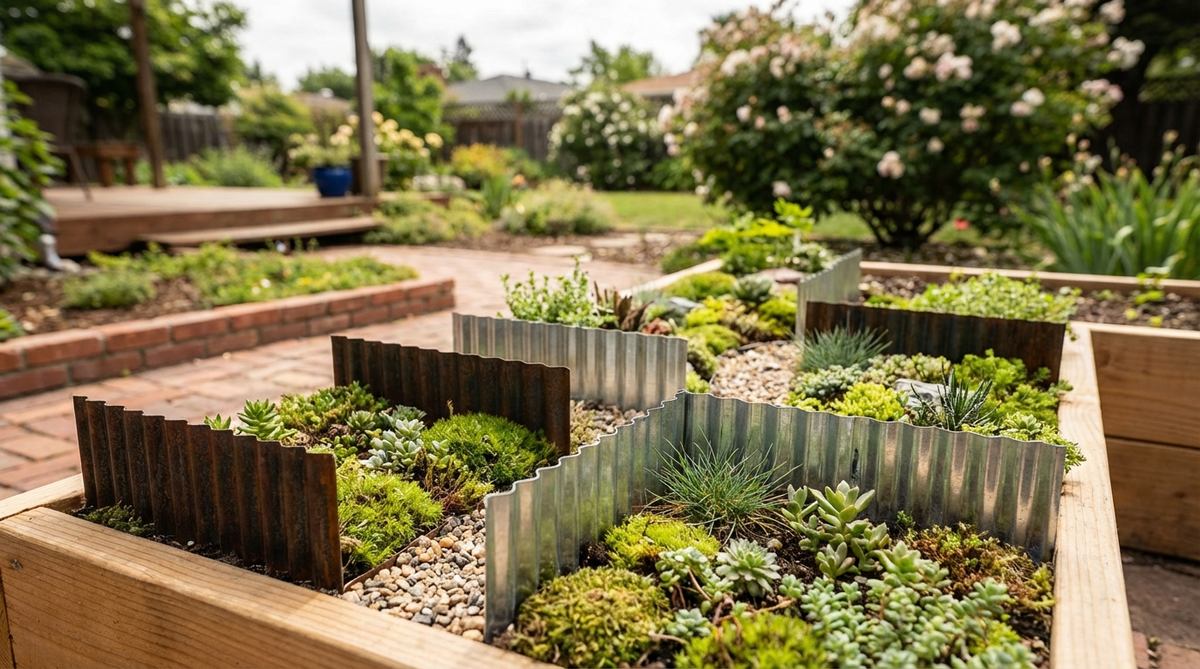
Industrial corrugated steel or aluminum sheets create bold textural contrast in garden settings. The undulating metal surface plays with light, producing dynamic visual interest throughout changing daylight.
Frame panels with wood posts and rails, securing metal sheets with exposed fasteners or concealed clips. Choose galvanized or Corten steel finishes for weather resistance and distinctive patina development.
The solid panels deliver complete privacy while the material choice introduces raw, contemporary edge to urban gardens.
13. Vertical Steel Picket Screen
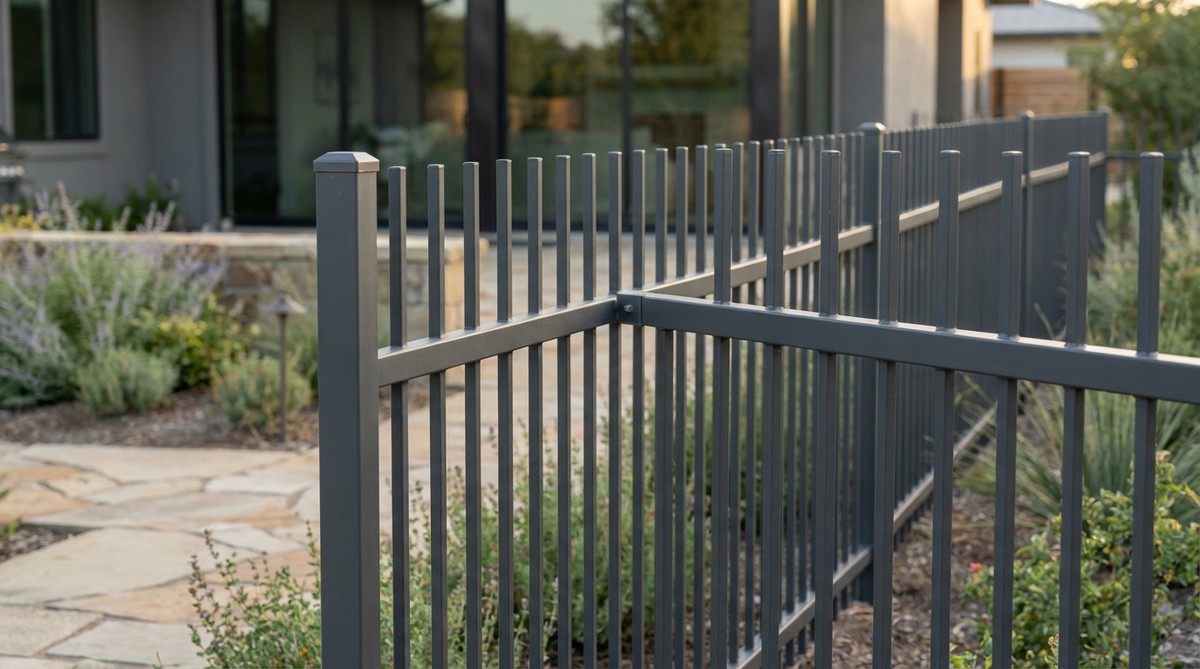
Narrow steel pickets welded or bolted to horizontal rails create refined vertical rhythm with industrial precision. Powder-coated finishes in matte black or charcoal gray eliminate rust concerns.
Space pickets one to three inches apart depending on desired privacy level. The metal construction allows taller spans between posts without sagging.
This minimalist approach suits modern architecture while providing security and boundary definition without visual heaviness.
14. Gabion Stone-Filled Walls
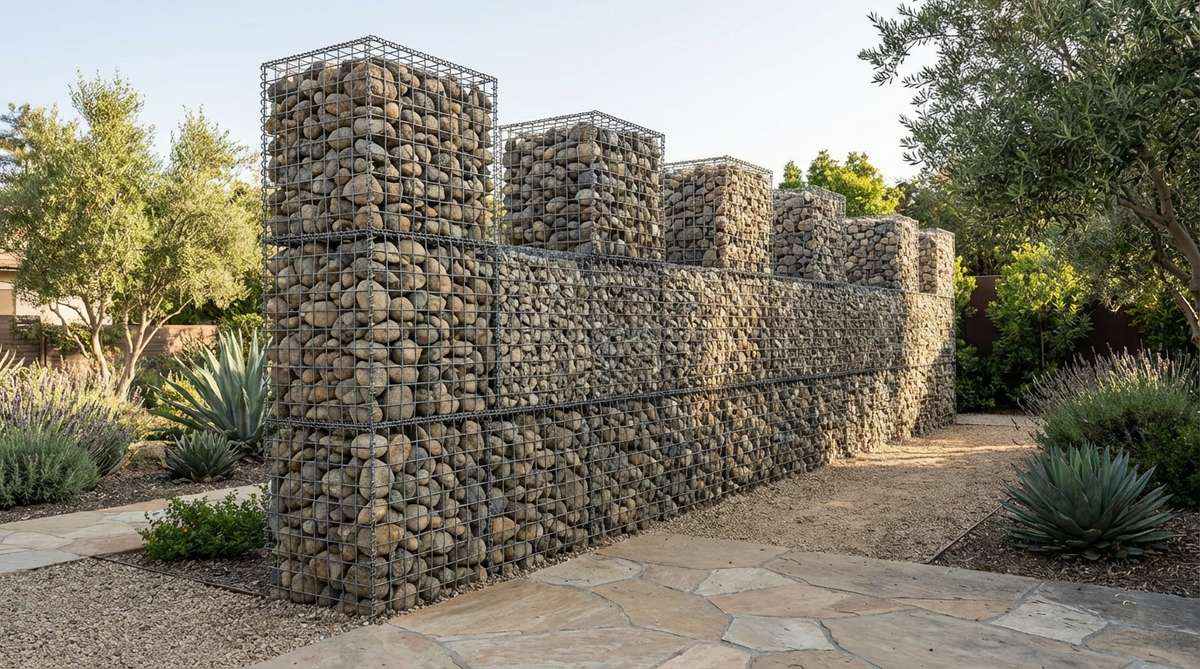
Wire mesh cages filled with river rock or crushed stone create substantial privacy barriers with organic texture. The modular gabion panels stack to achieve custom heights from four to eight feet.
Install welded wire baskets on concrete footings, then hand-fill with stone aggregates in consistent size grades. The nineteen-centimeter depth requires minimal stone volume compared to solid masonry.
Gabion walls integrate beautifully with xeriscape and Mediterranean garden styles while providing excellent sound dampening and thermal mass.
15. Laser-Cut Metal Panels
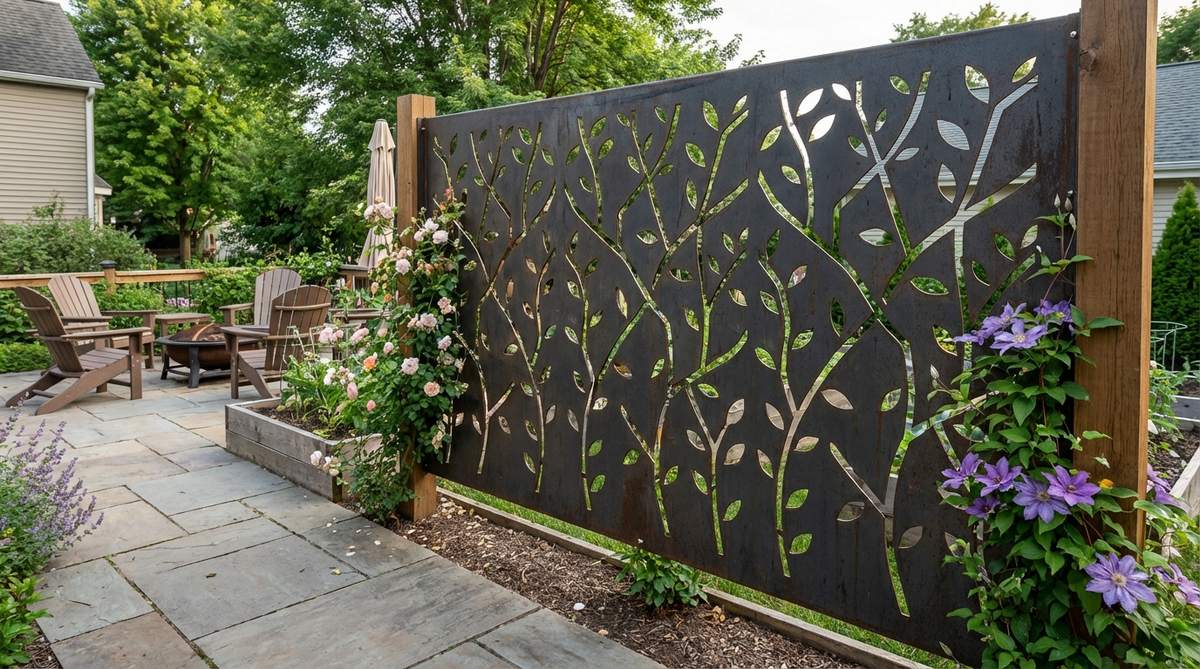
Precision-cut decorative patterns in aluminum or steel sheets filter light while maintaining privacy. Custom geometric or organic designs transform functional screens into artistic installations.
Commission patterns that balance open percentage with screening needs, typically thirty to forty percent open area. Powder-coat in durable finishes resistant to UV degradation.
These panels serve as garden focal points, particularly effective when backlit with landscape lighting for dramatic nighttime presence.
Hybrid Material Innovations
Combining materials creates textural contrast and visual layering that elevates garden design fence systems beyond single-material monotony. Strategic material pairing balances warmth with durability.
16. Cedar-and-Steel Post Combination
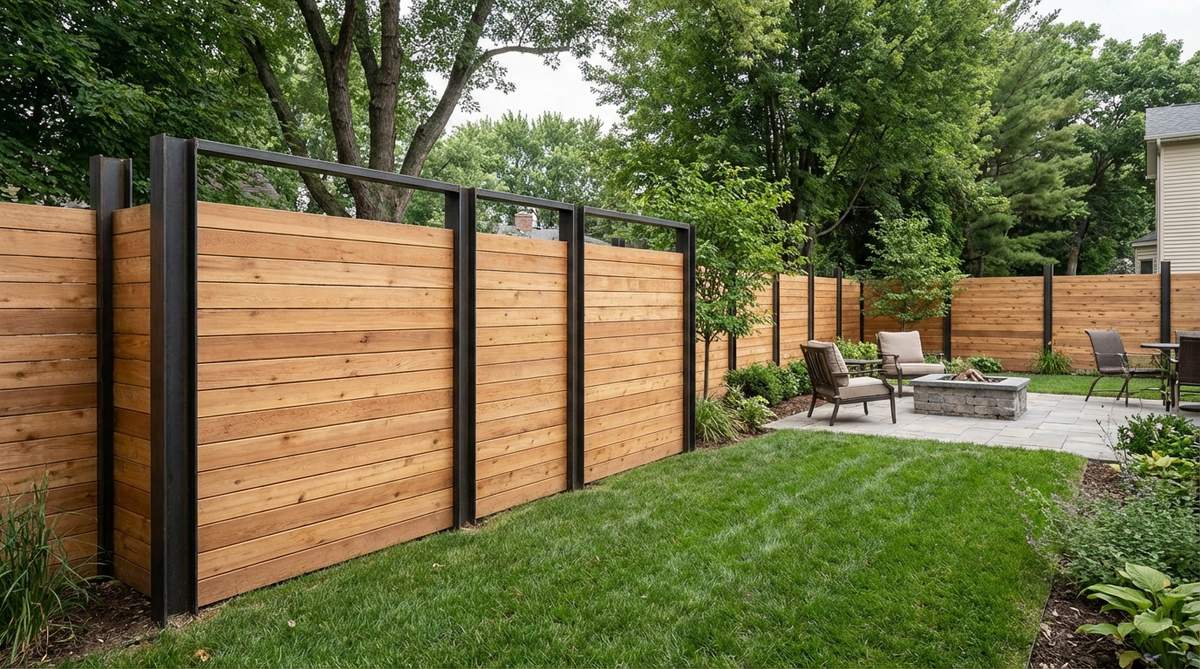
Warm cedar horizontal boards frame between structural steel posts powder-coated in black or bronze. The material contrast emphasizes vertical posts while horizontal wood provides natural softness.
Weld steel posts with integrated mounting tabs for wood attachment. Select tight-grain cedar boards and apply transparent stain to highlight wood character against metal frames.
This pairing merges modern industrial elements with traditional wood warmth, suitable for transitional architecture styles.
17. Wood Frame with Metal Mesh Inserts
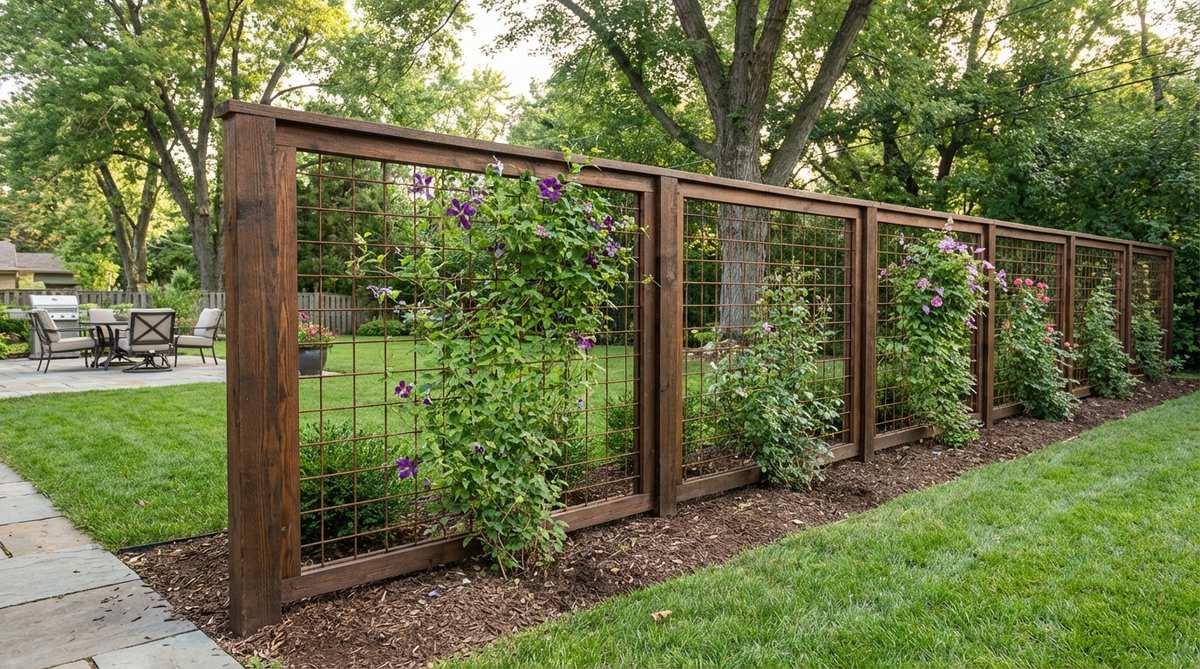
Stained wood frames contain hog wire or woven mesh panels that provide semi-privacy while supporting climbing plants. The open weave maintains visibility and airflow.
Build sturdy frames using four-by-four posts and two-by-four rails, then stretch welded wire mesh and secure with staples or trim strips. Plant clematis, jasmine, or climbing roses at base.
This design evolves over seasons as vegetation fills gaps, creating living privacy screens with structural support.
18. Stone Columns with Wood Panels
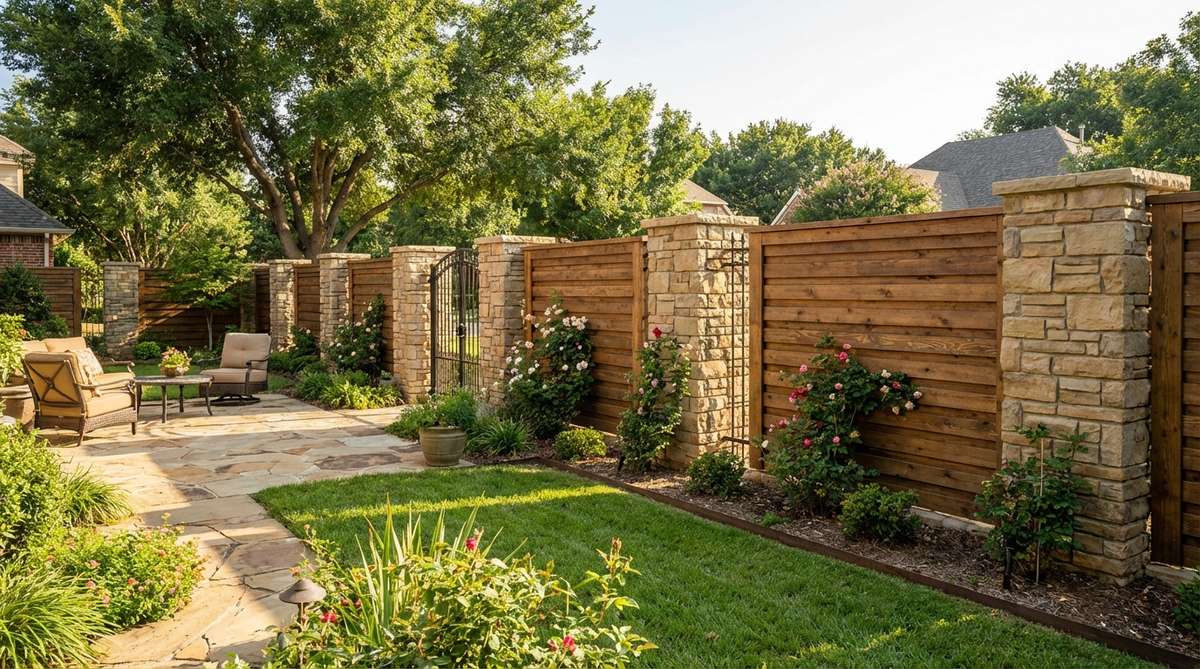
Masonry or stone-clad columns anchor wood panel sections, adding substantial mass and traditional elegance. The column rhythm breaks long fence runs into proportioned segments.
Space columns every eight to twelve feet, using dry-stack stone veneer over concrete block cores. Infill with horizontal or vertical wood panels stained to complement stone tones.
This high-end design approach suits craftsman and Mediterranean architectural styles requiring formal garden boundaries.
19. Composite-and-Aluminum Hybrid
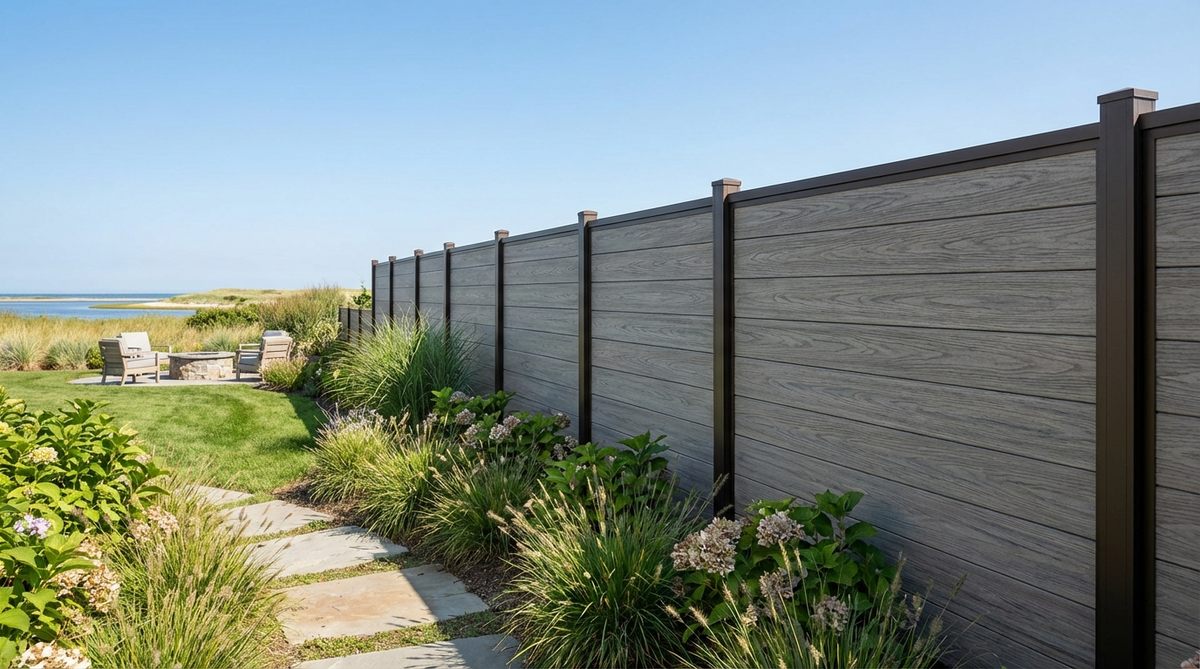
Composite wood-alternative boards combine with aluminum posts and rails for zero-maintenance longevity. The composite material mimics wood grain without splitting, fading, or requiring refinishing.
Select composite boards in warm tones like walnut or driftwood gray. Aluminum framework in coordinating colors provides structural support without visible rust or corrosion.
This pairing delivers decades of service in coastal environments where salt air accelerates traditional wood and steel deterioration.
20. Wood-and-Corrugated Metal Panels
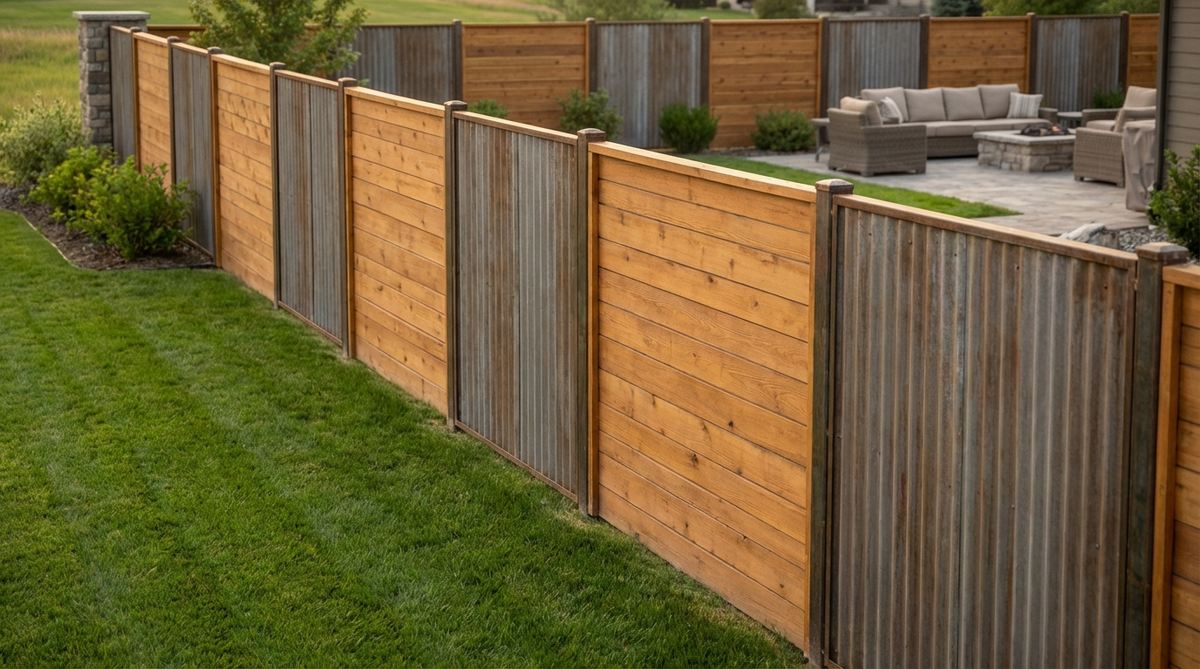
Alternate sections of horizontal cedar boards with corrugated metal panels to create rhythmic material variation. The contrasting textures prevent visual monotony across long fence runs.
Design a repeating pattern such as two wood panels followed by one metal panel. Use consistent framing to unify disparate materials visually.
This modern farmhouse aesthetic balances rustic wood warmth with industrial metal edge, trending in rural and suburban settings.
Semi-Private Decorative Options
Partial screening defines boundaries without imposing solid barriers, appropriate for front yards and areas where neighborhood connection matters. These designs filter views while maintaining openness.
21. Diagonal Lattice Panels
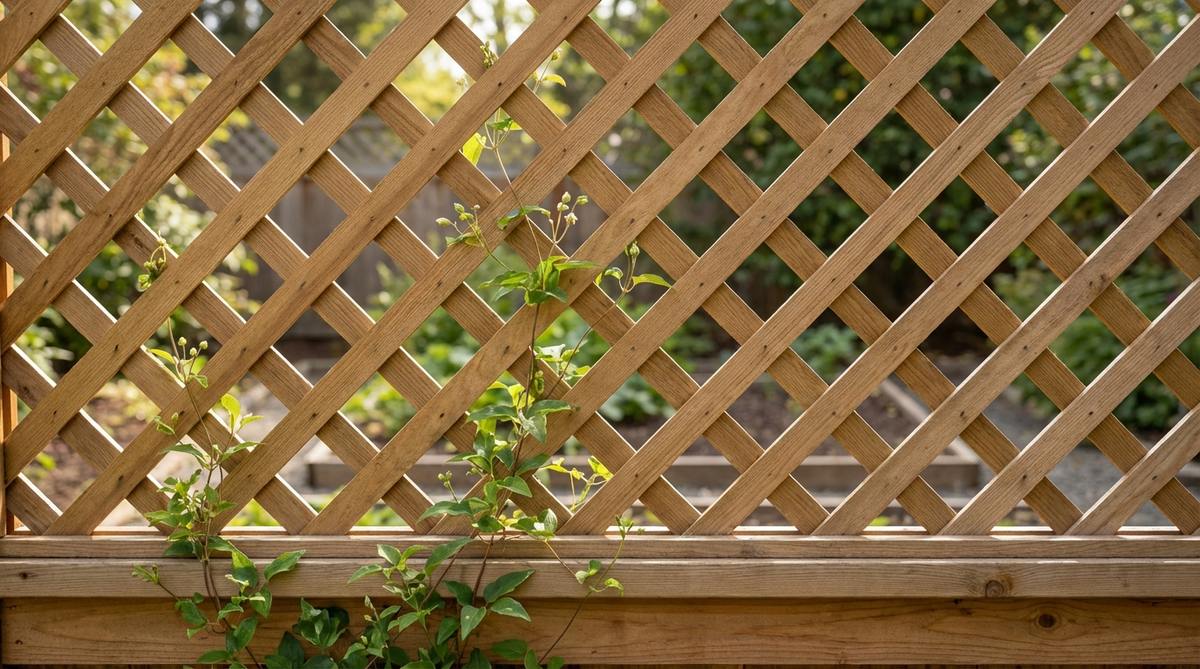
Thin wood slats cross diagonally forming diamond or square grid patterns. The open structure allows light penetration and air circulation while obscuring direct sight lines.
Install lattice panels atop four-foot solid bases to achieve privacy where needed while maintaining upper openness. Paint or stain lattice to match or contrast with base sections.
This traditional design supports climbing vines beautifully, transforming functional screening into vertical garden opportunities.
22. Square Lattice Topper
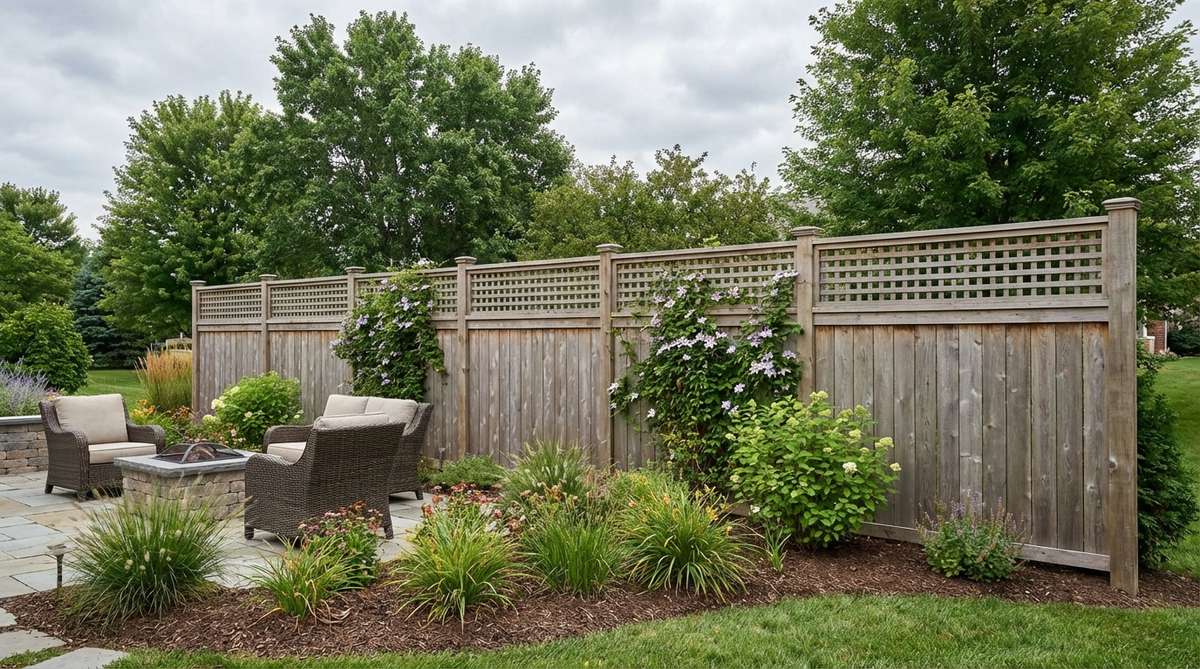
A six-foot solid privacy base combines with twelve to eighteen inches of square lattice at the top. The lattice softens the fence profile while allowing sky views and light passage.
Match lattice grid size to overall fence scale; larger yards accommodate wider grid spacing. Secure lattice frames between decorative trim for finished integration.
This compromise design satisfies privacy requirements while preventing the closed-in feeling solid eight-foot fences can impose.
23. Vertical Slat Screen with Gaps
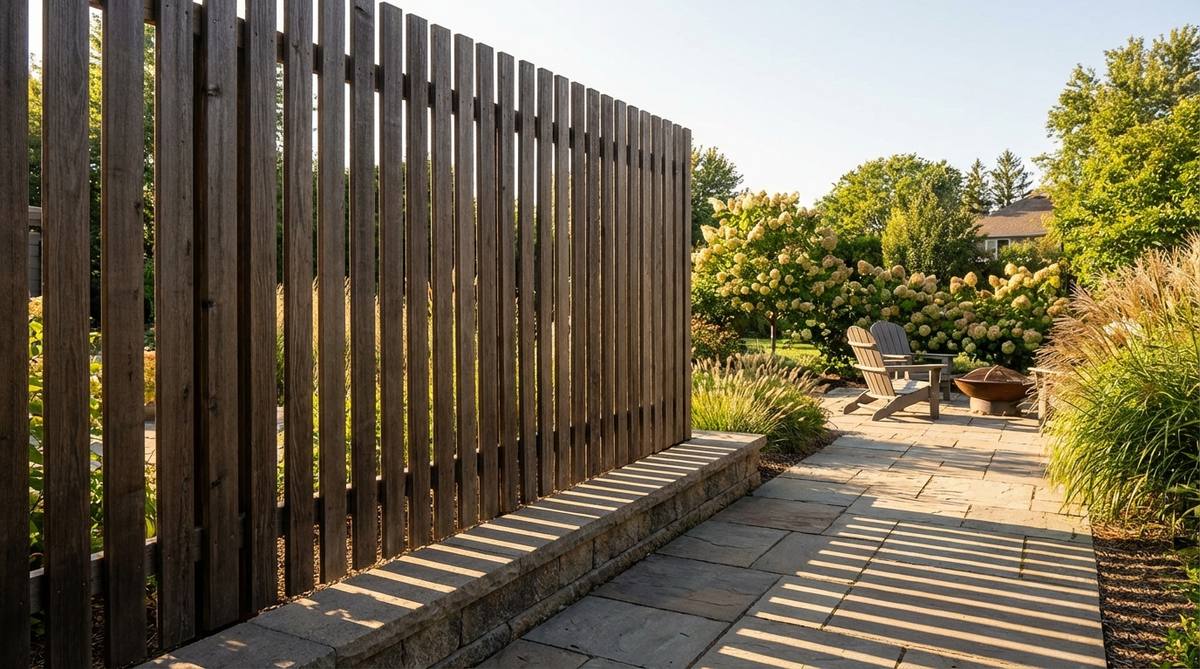
Narrow vertical boards space one to two inches apart, creating rhythmic screening that filters views without complete blocking. The gap pattern produces interesting shadow play across patios and pathways.
Use one-by-three or one-by-four boards in consistent spacing. The proportions create semi-privacy suitable for defining garden rooms within larger landscapes.
This design maintains visual connection between spaces while establishing psychological boundaries and spatial organization.
24. Horizontal Slat with Spacing
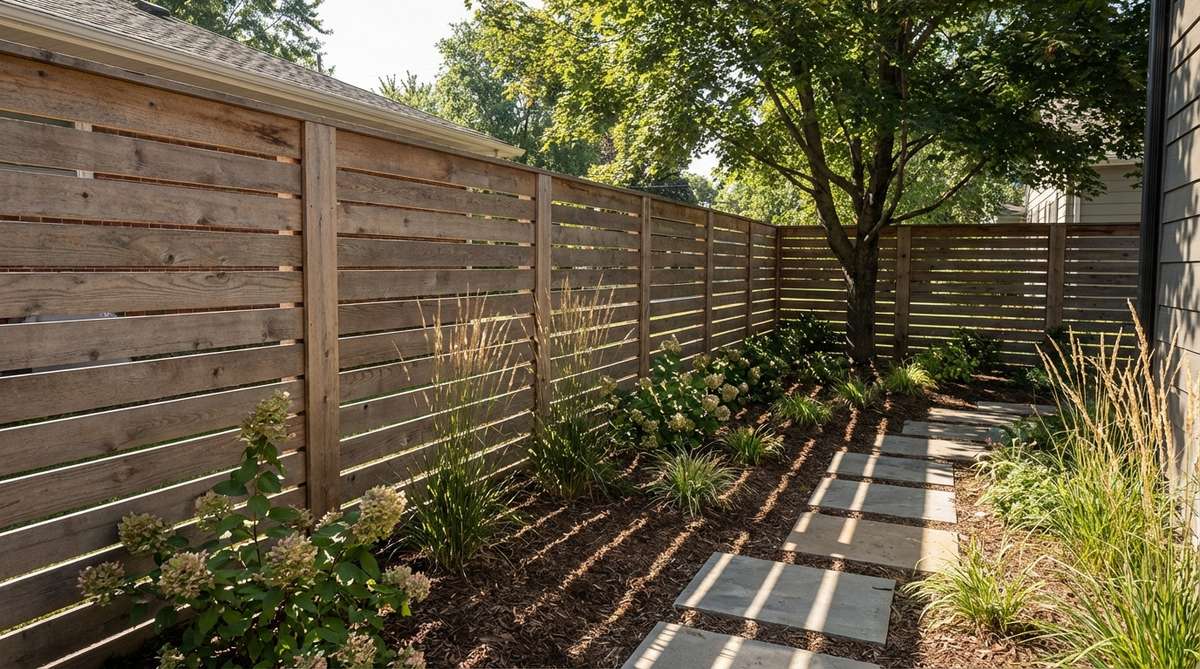
Horizontal boards separated by two to four-inch gaps allow light and breeze penetration while maintaining boundary definition. The floating boards create contemporary screening with transparency.
Space boards consistently using router-cut spacers during installation. The layered shadows shift throughout the day, adding dynamic visual interest.
This approach works well for side yards where complete privacy isn’t required but clear property demarcation benefits both neighbors.
25. Bamboo Reed Panels
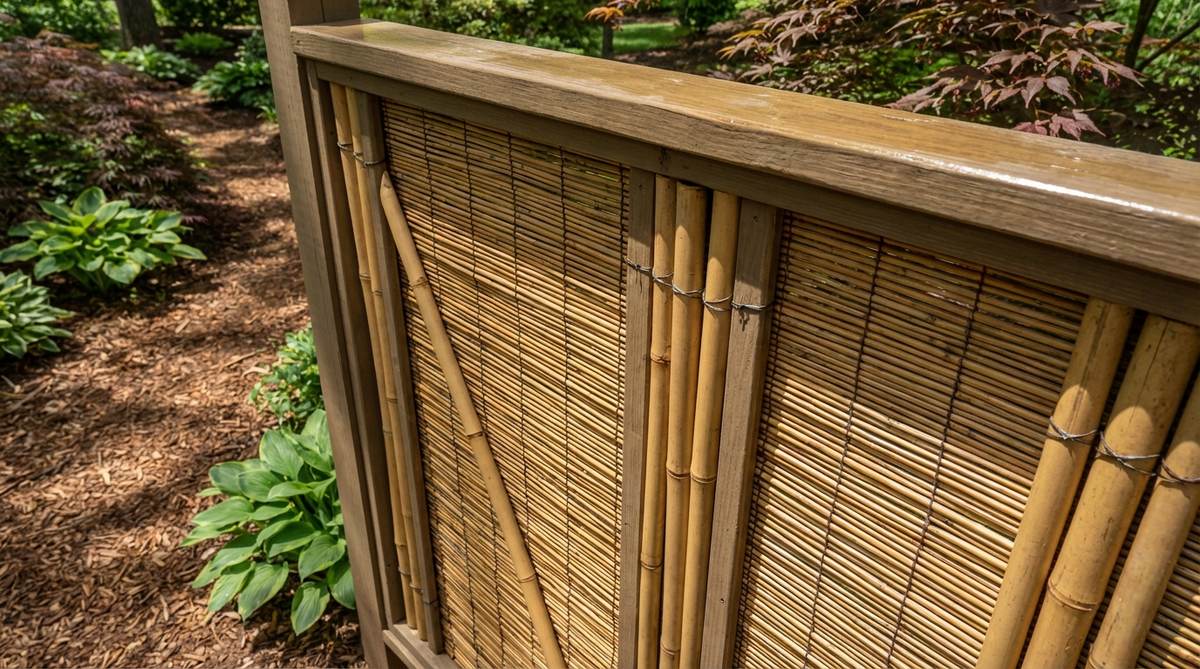
Natural bamboo poles or reeds wire-bound into panels provide organic texture and tropical aesthetic. The material variation in natural bamboo prevents monotonous uniformity.
Frame bamboo panels with pressure-treated wood to support the lightweight reed construction. Apply exterior polyurethane to extend bamboo life and prevent splitting.
This eco-friendly option suits Asian-inspired gardens and creates instant exotic atmosphere at modest material cost.
Sustainable Natural Boundaries
Environmentally conscious garden design fence choices minimize ecological impact through material selection and construction methods that work with natural systems rather than against them.
26. Living Willow Fedge
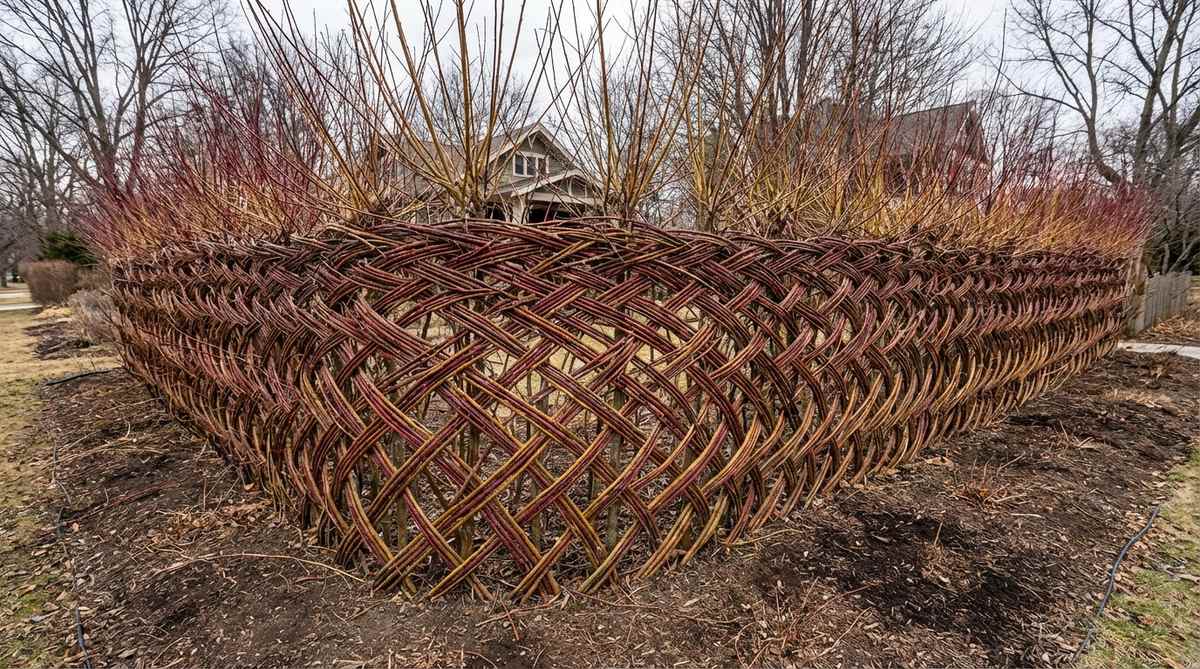
Willow whips planted in tight rows and woven horizontally create living fence-hedge hybrids. The vigorous willow growth fills gaps within two seasons, producing dense organic privacy.
Plant dormant willow cuttings in early spring, spacing twelve inches apart. Weave flexible stems horizontally as they grow, securing intersections with biodegradable twine.
This technique requires annual pruning but creates self-sustaining boundaries that improve habitat value while sequestering carbon throughout their lifespan.
27. Reclaimed Wood Pallet Fence
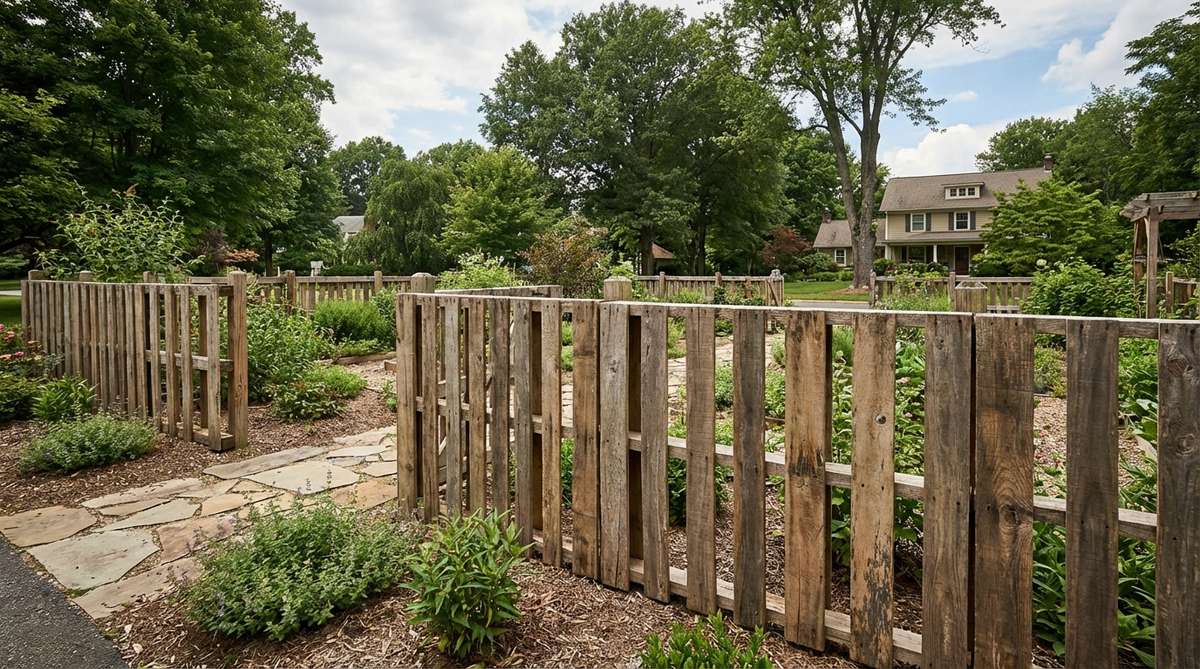
Deconstructed shipping pallets provide free or low-cost lumber with weathered character. The varied board widths and natural distressing deliver instant rustic charm.
Disassemble pallets carefully, removing all nails. Rebuild boards vertically or horizontally on standard fence frames. Leave wood unfinished for maximum weathered aesthetic or seal for extended life.
This sustainable approach diverts waste from landfills while creating one-of-a-kind fences with authentic aged character impossible to replicate with new materials.
28. Composite Recycled Plastic Lumber
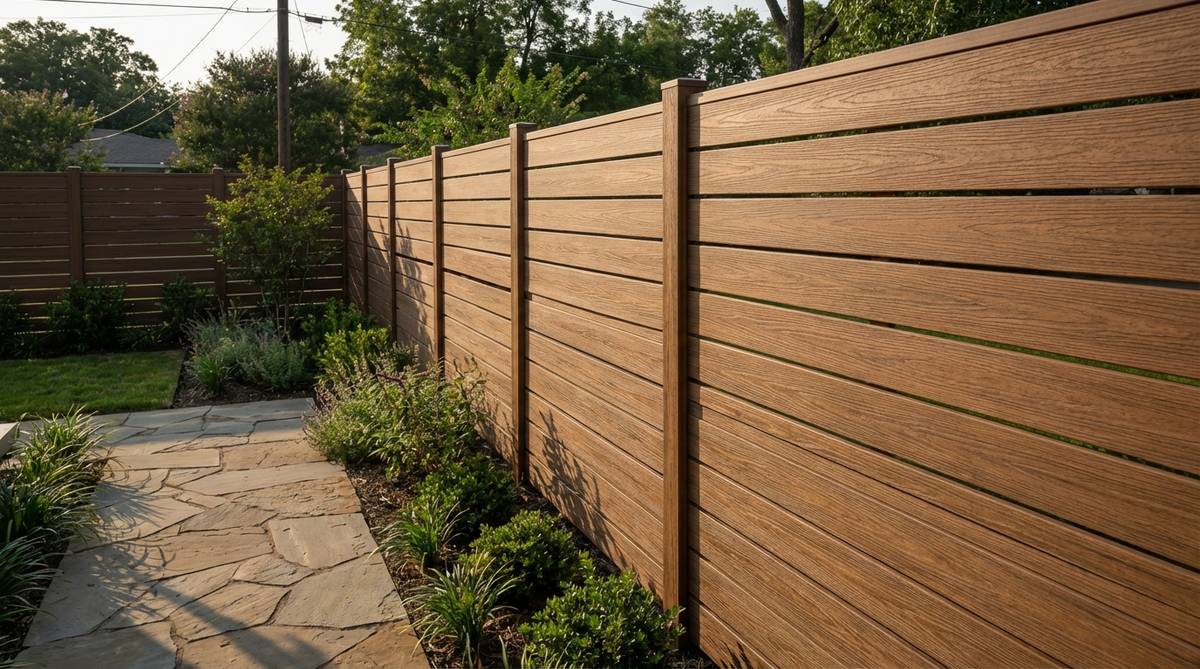
Manufactured boards containing fifty to ninety-five percent recycled plastic and wood fiber eliminate forest pressure while delivering exceptional durability. Modern composites closely mimic natural wood grain and texture.
Install composite boards using manufacturer-specified fasteners and techniques. The material resists rot, insects, and moisture completely, functioning for decades without maintenance.
Initial costs exceed wood, but lifecycle analysis shows significant savings through eliminated staining, sealing, and eventual replacement requirements.
29. Living Wall with Structural Support
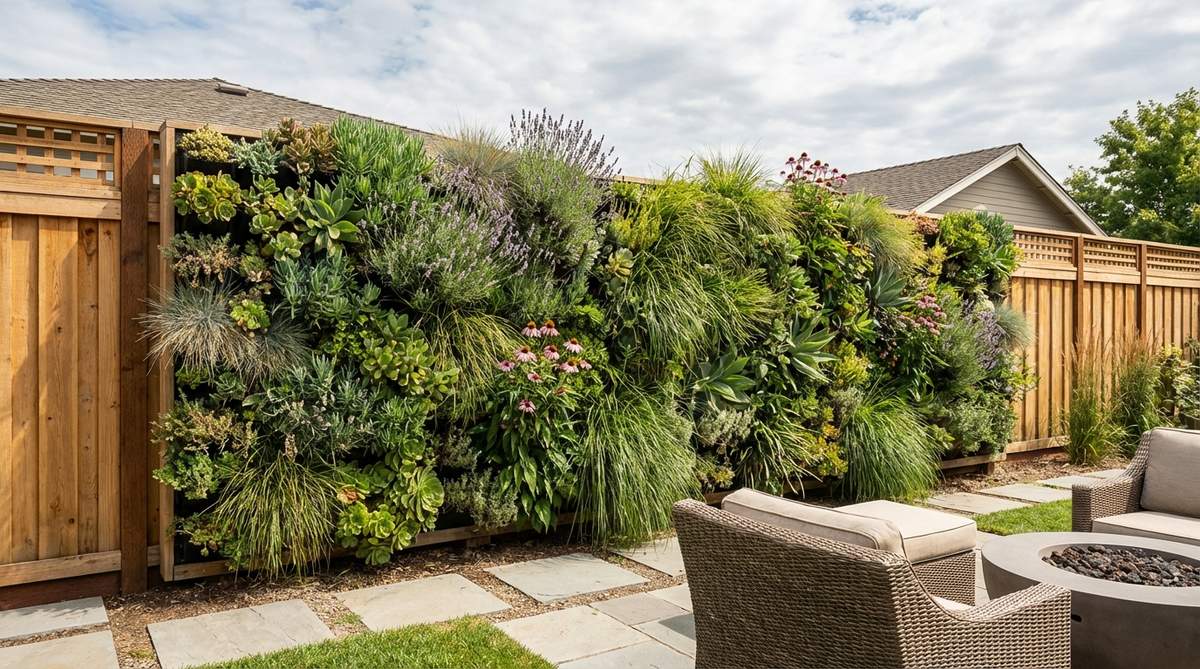
Vertical garden structures combine fence framing with integrated planting pockets or panels. The vegetation provides privacy while delivering ecological benefits including pollinator habitat and air quality improvement.
Install modular living wall systems or custom-build pocket panels behind wire mesh. Select drought-tolerant perennials suited to vertical growing conditions and local climate.
This advanced technique requires irrigation planning but creates stunning verdant walls that evolve seasonally and increase property value substantially.
30. Black Locust Naturally Rot-Resistant
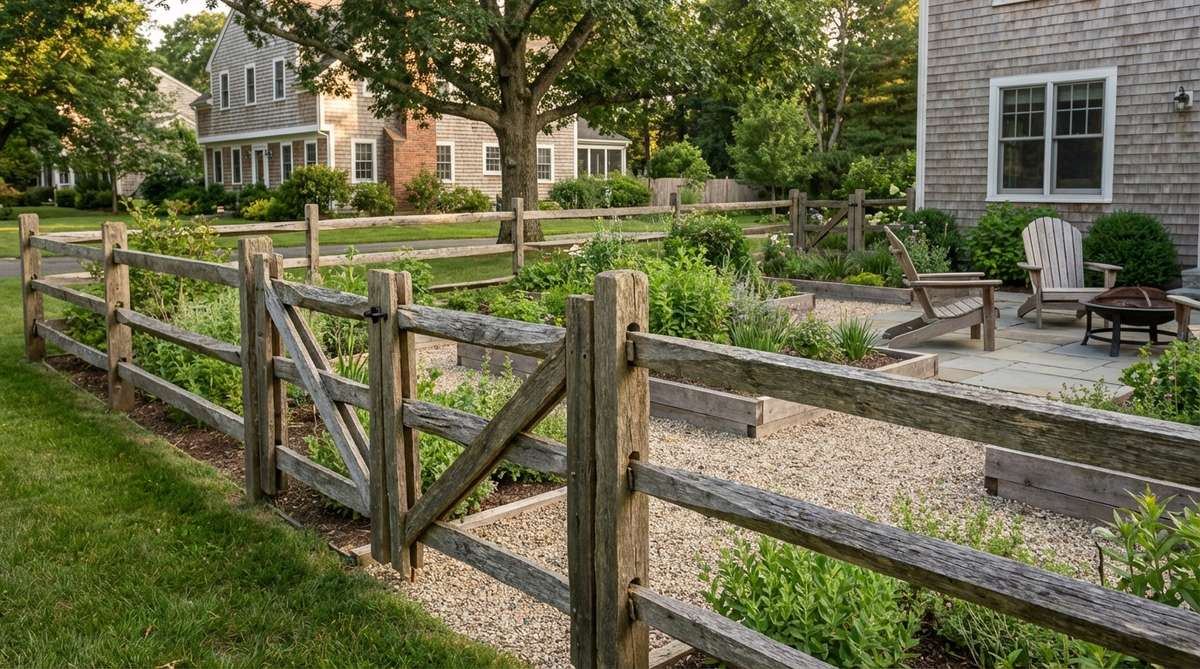
Black locust heartwood contains natural compounds that resist decay for decades without chemical treatment. This domestic hardwood rivals tropical species for outdoor durability while supporting local forestry.
Source black locust from sustainable forestry operations. The dense wood requires pre-drilling for fasteners but delivers exceptional strength and longevity exceeding pressure-treated alternatives.
This native species choice supports regional economies while eliminating concerns about chemical preservatives leaching into garden soils over time.
31. Iron Fence with Climbing Vines
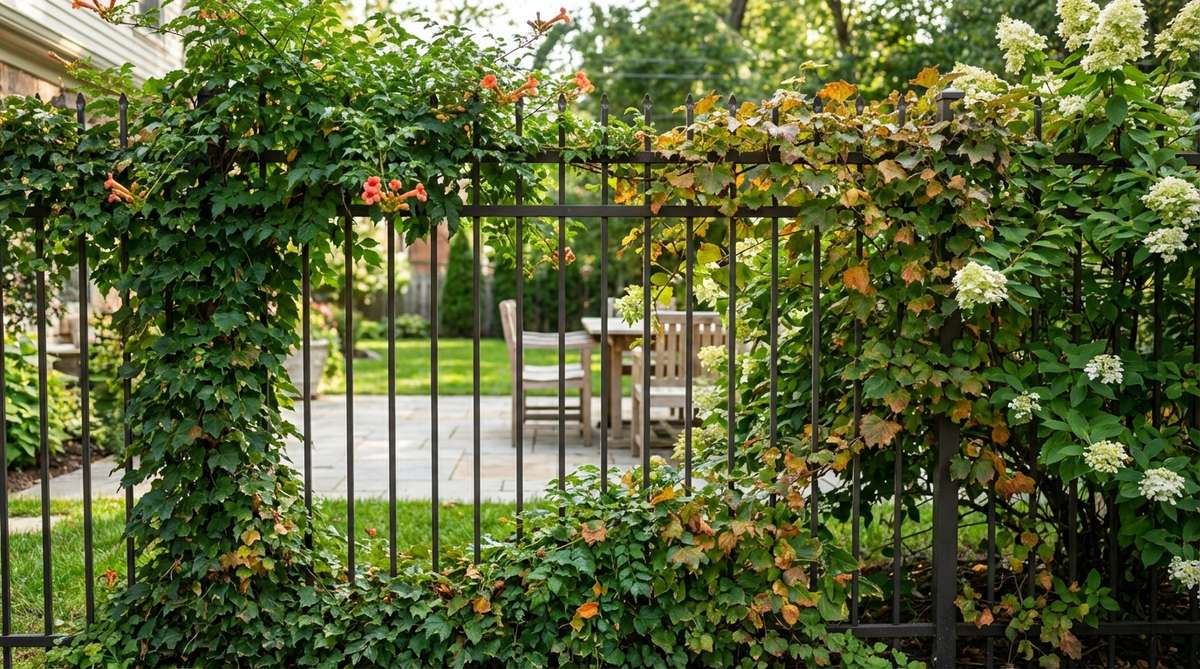
Wrought iron or steel picket fencing provides structural framework for perennial climbing plants. The metal durability supports heavy vine growth while the plants soften industrial materials with organic forms.
Install powder-coated iron fencing in classic or contemporary patterns. Plant Boston ivy, trumpet vine, or climbing hydrangea at base, training growth onto metal framework.
The living coverage improves annually, eventually creating dense privacy screens that combine permanent structure with seasonal variation and habitat value.
32. Untreated Cedar Silvering Naturally
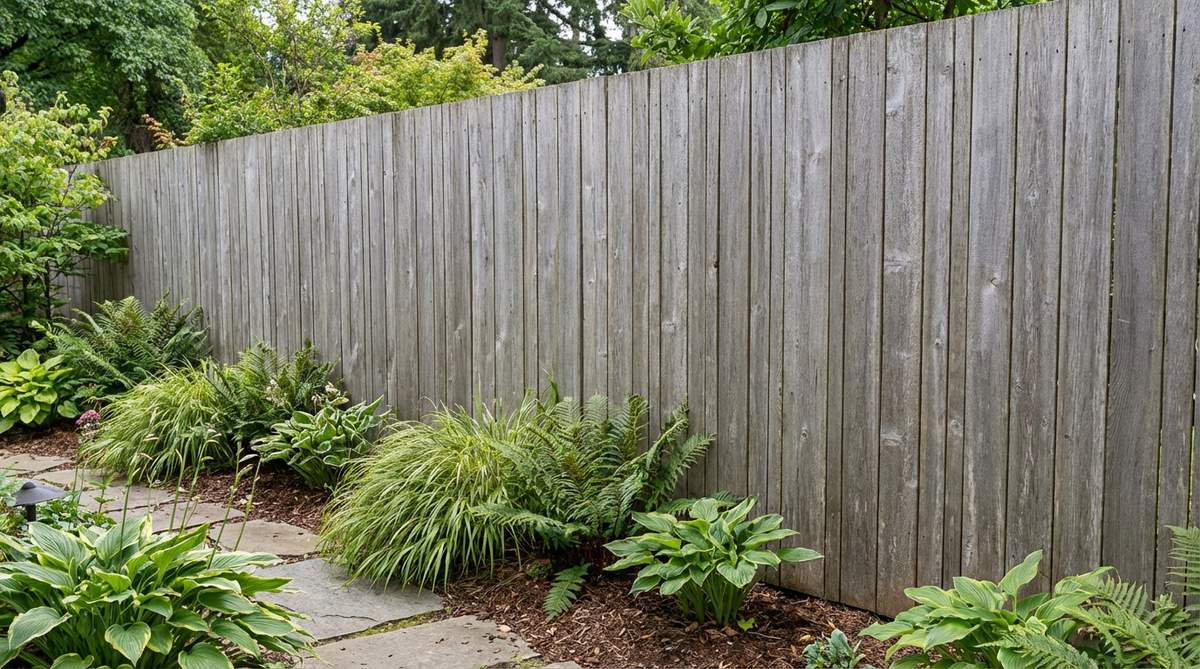
Allow naturally rot-resistant cedar to weather without stain or sealant, developing silvery-gray patina over several years. The aging process creates distinguished character while eliminating maintenance chemical applications.
Install tight-grain Western red cedar or Alaskan yellow cedar. The wood weathers uniformly if left completely untreated, developing elegant silver-gray tones within two to three years.
This zero-maintenance approach embraces natural aging as aesthetic feature rather than fighting inevitable weathering through constant refinishing cycles.
Wrap-Up
Strategic garden design fence selection balances privacy requirements with architectural style, material durability, and maintenance preferences. The thirty-plus options presented span traditional vertical boards through innovative hybrid compositions, giving American homeowners comprehensive choices for defining outdoor spaces. Evaluate your specific needs for sight blocking, airflow, aesthetic integration, and long-term maintenance commitment to identify the optimal fence style. Start by assessing your property’s architectural character and existing landscape elements, then select fence designs that enhance rather than compete with those established features for cohesive outdoor environments.
Frequently Asked Questions
What fence height provides complete privacy for standard residential applications?
Six-foot fence height blocks sight lines effectively for most residential situations where viewers stand at ground level. Properties with elevated neighboring decks or second-story windows may require seven to eight-foot installations for equivalent privacy, though local ordinances often restrict maximum heights requiring permit variances for taller structures.
How does horizontal versus vertical board orientation affect fence longevity?
Vertical board orientation naturally sheds water downward, preventing moisture accumulation in board end grain and extending wood life. Horizontal installations trap water on top edges unless boards feature beveled profiles or receive diligent sealing maintenance. Both orientations perform well with proper construction techniques and appropriate material selection for climate conditions.
Which fence materials require the least ongoing maintenance?
Vinyl, composite lumber, and powder-coated aluminum demand minimal maintenance beyond occasional cleaning with soap and water. These manufactured materials resist rot, insect damage, and weathering without requiring staining or sealing. Natural cedar and redwood need periodic sealing to maintain color but resist decay even without treatment due to inherent oils.
Can garden design fences reduce noise transmission from neighboring properties?
Solid panel fences constructed from dense materials like tongue-and-groove wood, composite, or masonry reduce noise transmission by fifteen to twenty decibels when properly installed. Maximum sound dampening requires fence height of at least six feet, solid construction without gaps, and dense mass. Living fences with evergreen hedge backing provide additional acoustic absorption through foliage.
What spacing between fence boards maintains privacy while allowing airflow?
Quarter-inch to half-inch gaps between boards permit airflow and prevent wind load stress while maintaining privacy from standard viewing angles. Shadow box and louvered designs provide superior ventilation through intentional construction methods that offset boards or angle slats. Solid panel fences block airflow completely, creating potential wind pressure concerns in exposed locations requiring reinforced post installation.