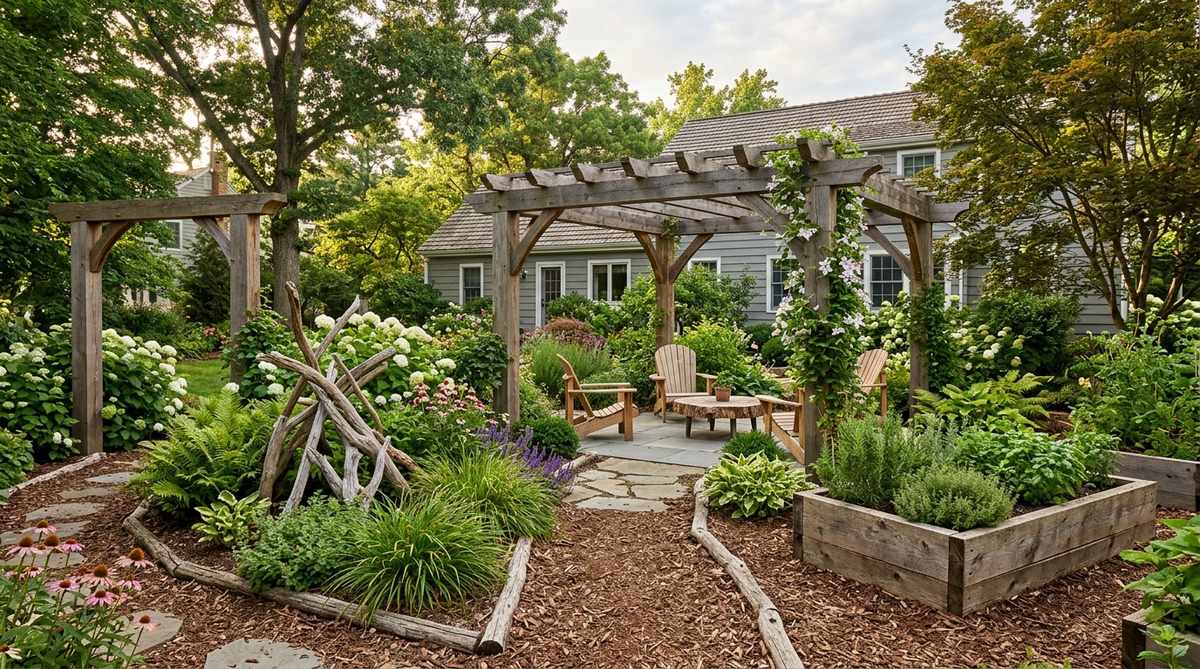
Transform your outdoor sanctuary with garden decor wood projects that blend functionality with natural beauty. From weathered driftwood sculptures to rustic timber structures and decorative bark applications, these sustainable ideas help you create a personalized landscape using materials that age gracefully. Fresh Garden Ideas brings you expert-tested projects that turn raw materials into stunning focal points.
Design SnapshotKey Principles
- Material Selection: Match wood type to project durability requirements—use treated timber for structural pieces, driftwood for decorative accents, and bark for functional ground applications
- Weather Protection: Apply appropriate sealants to preserve wood grain while extending lifespan through seasonal temperature fluctuations and moisture exposure
- Sustainable Sourcing: Prioritize reclaimed timber, naturally fallen branches, and ethically harvested materials to reduce environmental impact while adding character
- Visual Balance: Combine wood textures with complementary plantings and hardscape elements to create cohesive outdoor rooms that feel intentional
Structural Timber Projects for Garden Framework
Timber forms the backbone of functional garden design, providing durable structures that define spaces and support plant growth. These projects require basic carpentry skills and untreated or sustainably treated wood appropriate for outdoor exposure.
1. Raised Cedar Planting Beds
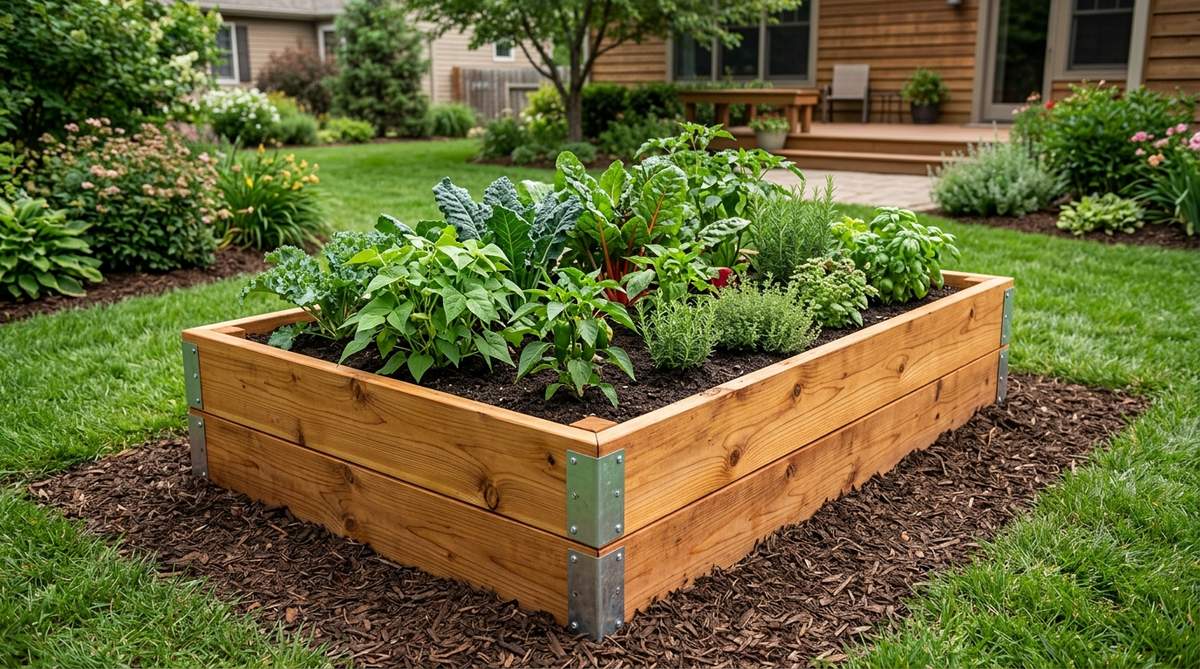
Cedar’s natural rot resistance makes it ideal for elevated growing spaces that improve drainage and soil control. The warm amber tones deepen over time, creating a rustic frame that contrasts beautifully with vibrant vegetable foliage and herb textures.
Construct boxes using 2×10 or 2×12 boards connected at corners with galvanized brackets or mortise joints. Stack multiple levels to create terraced gardens on slopes, filling with quality soil mix customized for your crops.
Raised beds eliminate ground-level pest access while reducing back strain during planting and harvest. Position beds to receive six to eight hours of sunlight for productive vegetable yields throughout the growing season.
2. Timber-Framed Garden Arbor
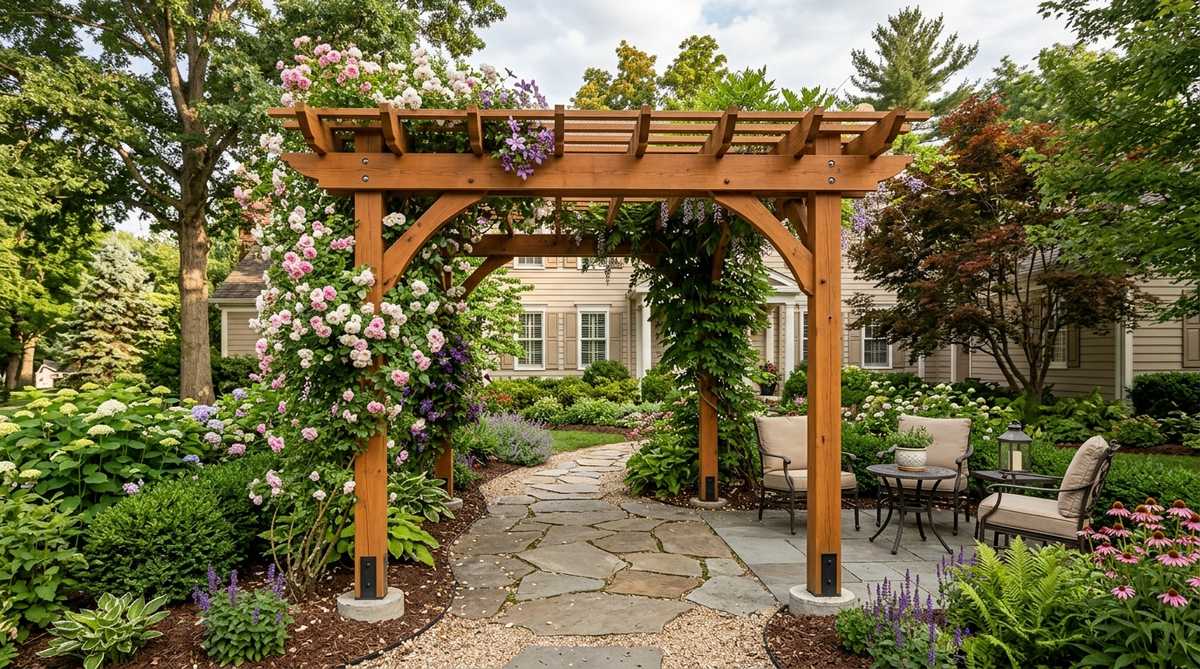
A freestanding arbor creates architectural height while supporting climbing roses, clematis, or wisteria. Use 4×4 posts anchored in concrete footings with 2×6 cross beams to form a sturdy overhead structure.
Space vertical posts six to eight feet apart to create a walkway beneath, attaching horizontal lattice panels for vine support. Stain or seal the wood in natural tones that complement your home’s exterior palette.
This focal point draws the eye through garden spaces, establishing clear circulation paths. The overhead canopy provides dappled shade once plants mature, creating intimate gathering spots for outdoor seating.
3. Chunky Timber Garden Benches
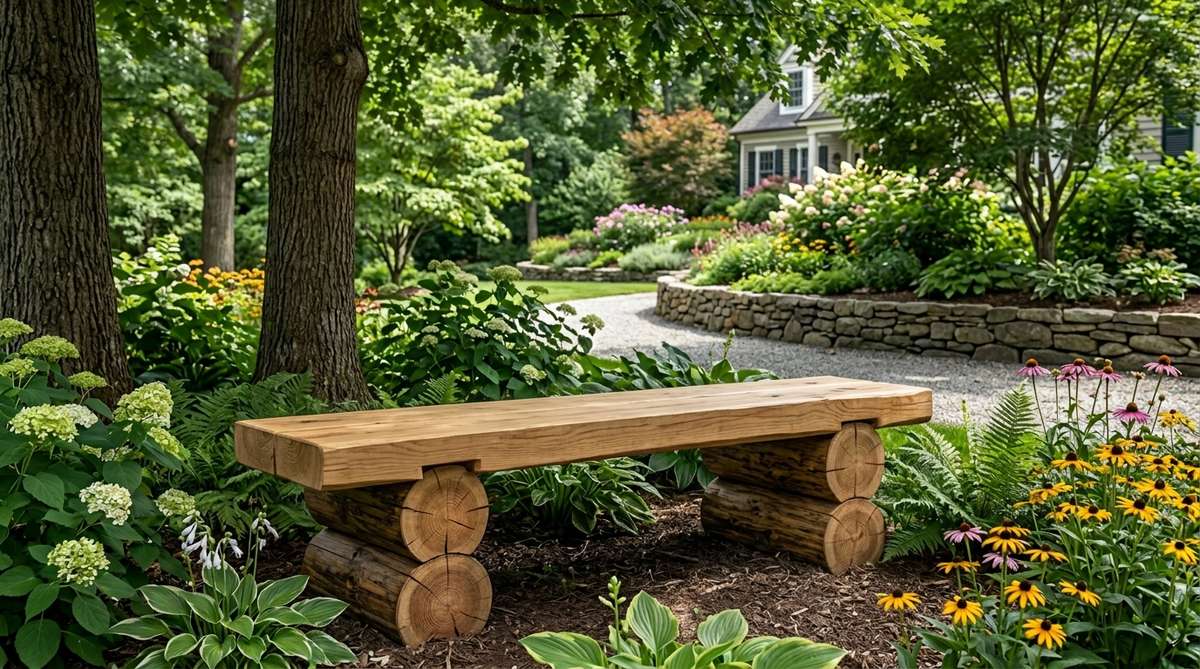
Reclaimed timber beams or thick planks form substantial seating with minimal fabrication. Two stacked log rounds serve as legs, topped with a sanded plank seat secured with construction adhesive and lag screws.
Leave edges natural for organic character or chamfer corners for refined comfort. Apply exterior-grade polyurethane to protect wood while showcasing grain patterns and natural knots.
Position benches at garden viewpoints or beneath shade trees for contemplative resting spots. The substantial mass grounds lighter plantings, providing visual weight that anchors composition.
4. Pressure-Treated Retaining Walls
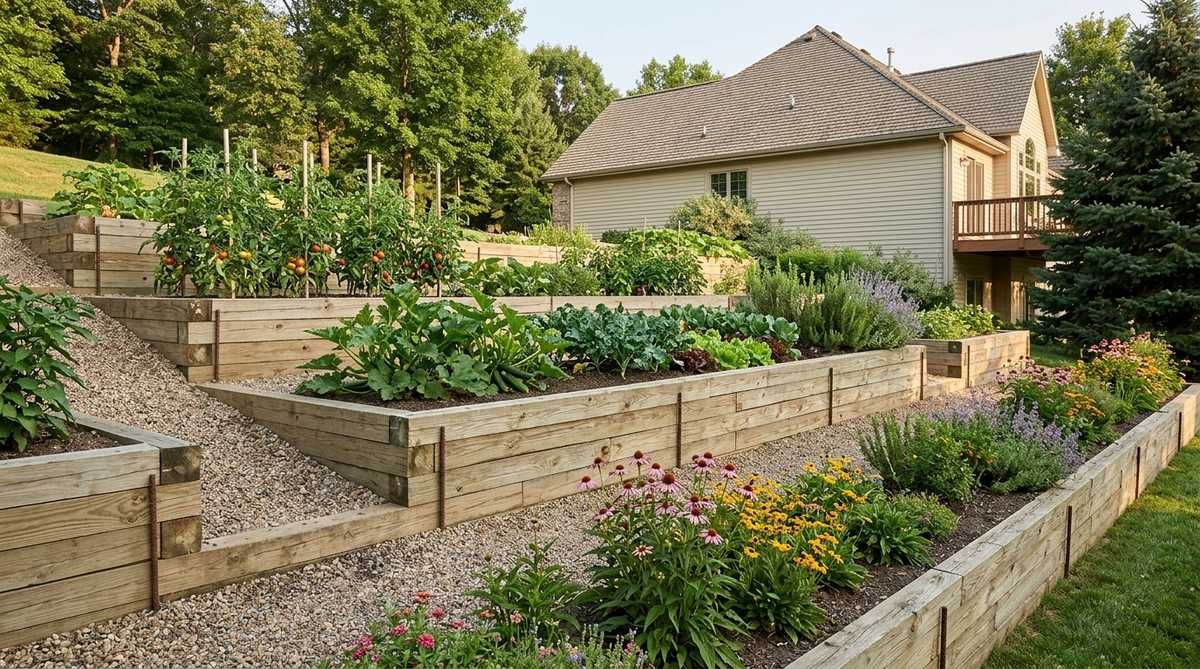
Landscape timbers stacked in running bond patterns create terraced planting areas on sloped properties. Anchor the first course below grade with rebar stakes driven through drilled holes for structural stability.
Offset each row by half a timber length, backfilling with gravel for drainage before adding topsoil. Cap the top course for a finished appearance that prevents water intrusion.
These functional walls transform unusable slopes into productive garden zones while controlling erosion. Plant trailing varieties along edges to soften hard lines as vegetation matures.
5. Wooden Garden Pathways
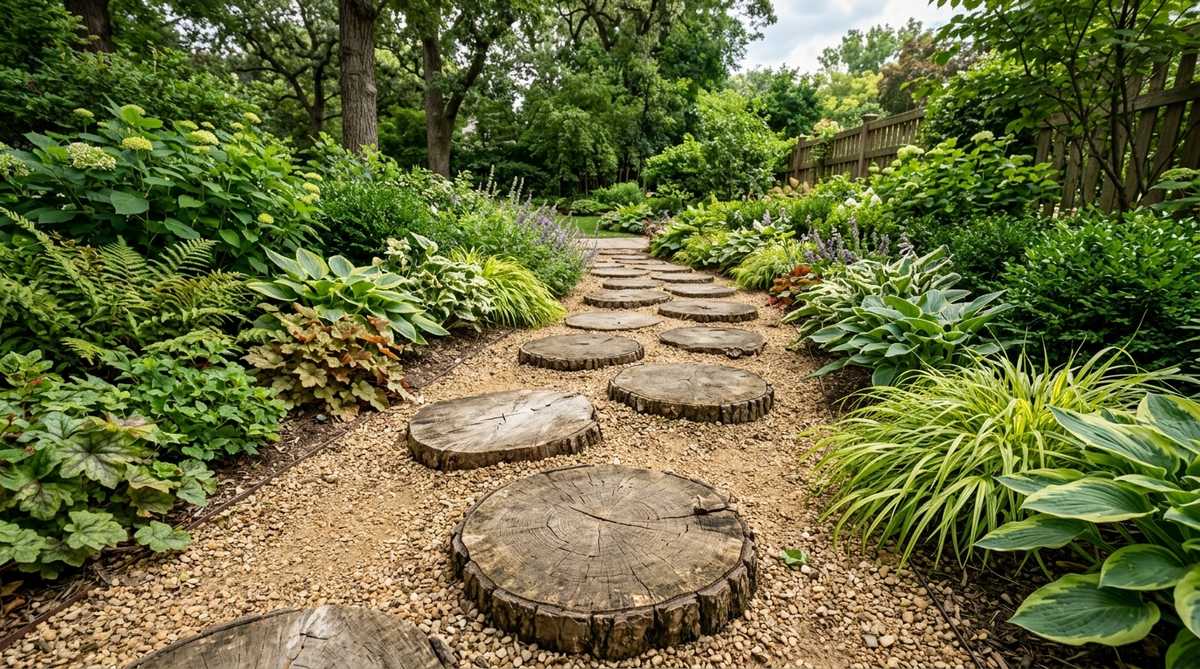
Flat timber rounds cut from logs create organic stepping paths through planting beds. Slice rounds to uniform three-inch thickness, allowing wood to dry for several weeks before installation.
Excavate shallow depressions matching round diameters, bedding each piece in sand for leveling. Space rounds at comfortable stride intervals, filling gaps with decomposed granite or pea gravel.
The natural wood grain and concentric growth rings add texture underfoot while guiding visitors through garden rooms. Seal wood annually to prevent moisture damage and extend pathway lifespan.
6. Timber Pergola with Shade Lattice
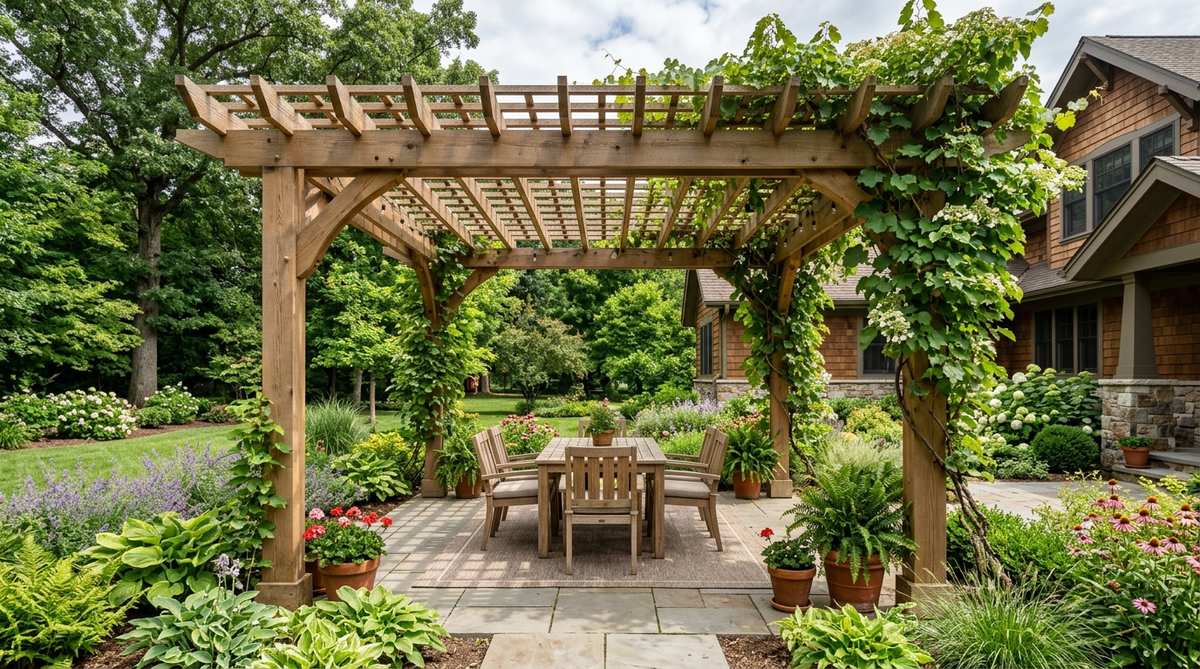
An overhead pergola defines outdoor dining and entertaining zones with architectural presence. Construct using 6×6 posts supporting 2×8 rafters spaced at sixteen-inch intervals for moderate shade.
Add cross pieces perpendicular to rafters, creating a grid that filters afternoon sun while allowing morning light. Train grapevines or climbing hydrangea across the framework for living shade.
This structure extends living space outdoors, increasing property value and usability. The open framework maintains air circulation while providing just enough overhead protection for furniture placement.
Driftwood Decorative Elements and Artistic Accents
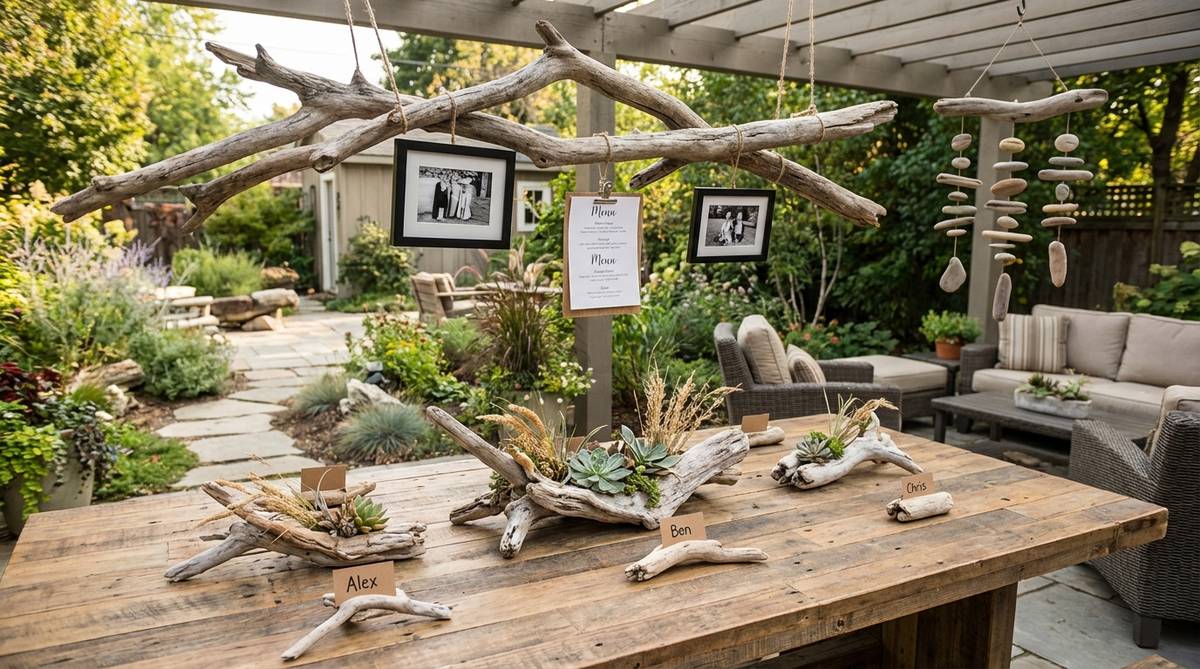
Driftwood’s weathered silvery-gray tones and sculptural forms bring coastal charm to inland gardens. These lightweight pieces require minimal processing while delivering maximum visual impact through their organic shapes.
7. Driftwood Garden Wall Art
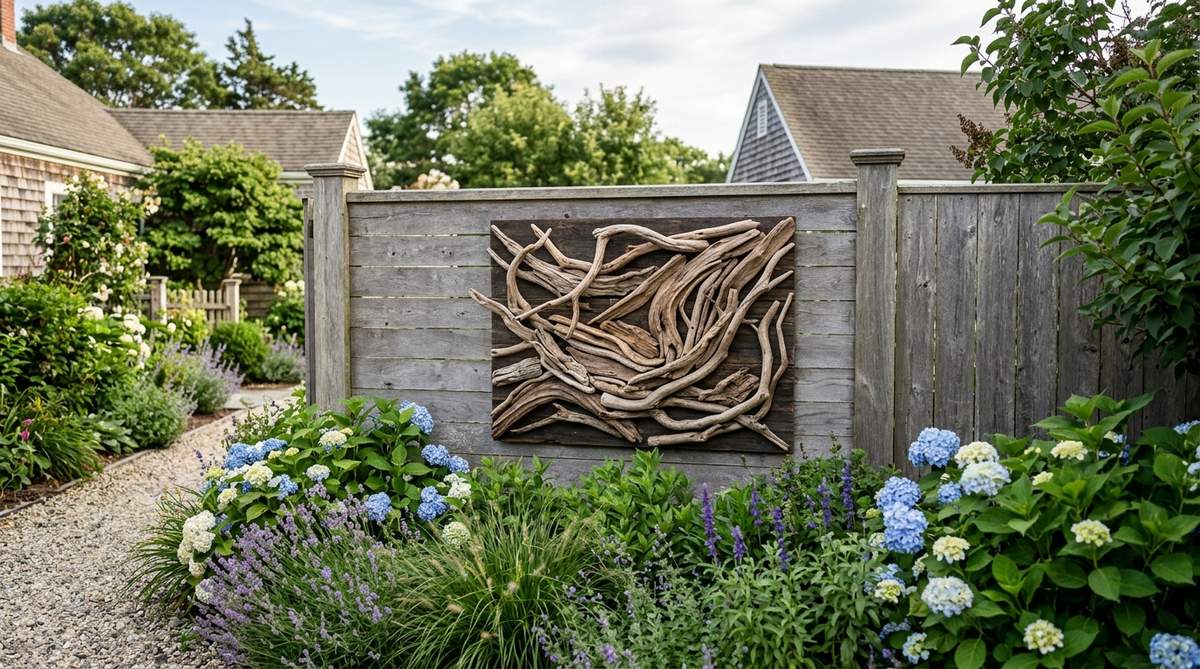
Arrange driftwood branches on weatherproof backing boards to create dimensional wall sculptures for fences or shed exteriors. Select pieces with interesting curves and textures, securing with exterior construction adhesive and hidden screws.
Layer smaller twigs over larger branches to build depth, creating abstract compositions or recognizable shapes like fish or birds. Leave wood natural or highlight details with diluted white wash for coastal cottage appeal.
These installations transform blank vertical surfaces into gallery-worthy focal points. Position art where morning or evening light casts dramatic shadows that change throughout the day.
8. Driftwood Wind Chimes
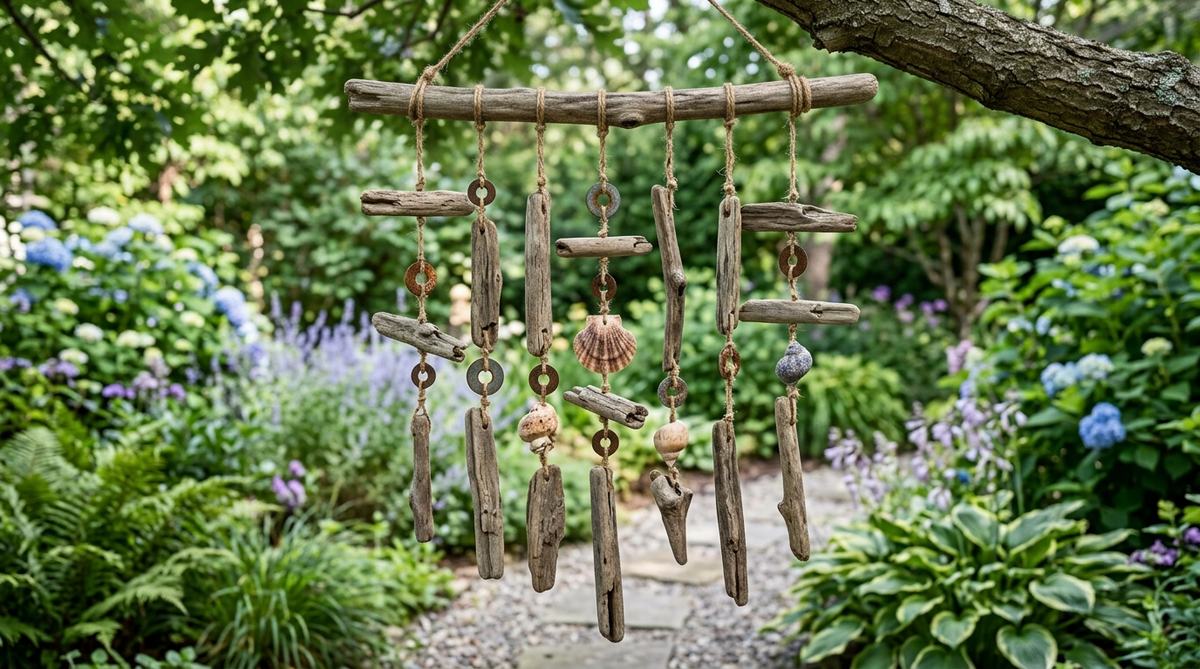
Suspend driftwood pieces at varying lengths from a horizontal branch using fishing line or jute twine. Add metal washers or seashells between wood segments to create gentle percussion when breezes blow.
Drill small holes through each piece for secure attachment, spacing elements to allow movement without tangling. Hang chimes from pergola beams or tree branches where air circulation activates the installation.
The subtle clicking sounds and kinetic movement add sensory dimensions to garden spaces. This project utilizes smaller driftwood fragments often overlooked for larger installations.
9. Rustic Driftwood Planters
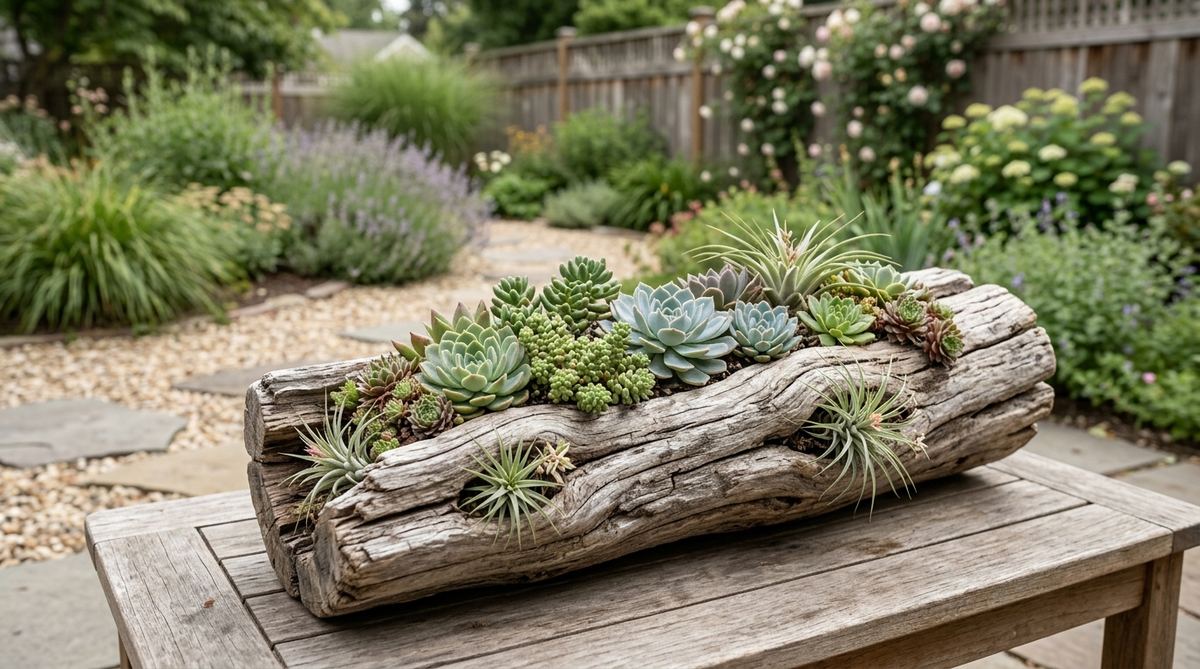
Hollow driftwood logs create unique containers for succulents, air plants, or trailing varieties. Clean interior cavities and drill drainage holes, lining with landscape fabric before adding cactus soil mix.
The irregular shapes and weathered surfaces contrast beautifully with sculptural succulent forms. Display on outdoor tables or mount to walls as living vertical elements.
These containers require minimal watering, making them ideal for forgetful gardeners. The porous wood wicks moisture slowly, creating favorable conditions for drought-tolerant plantings.
10. Driftwood Garden Trellis
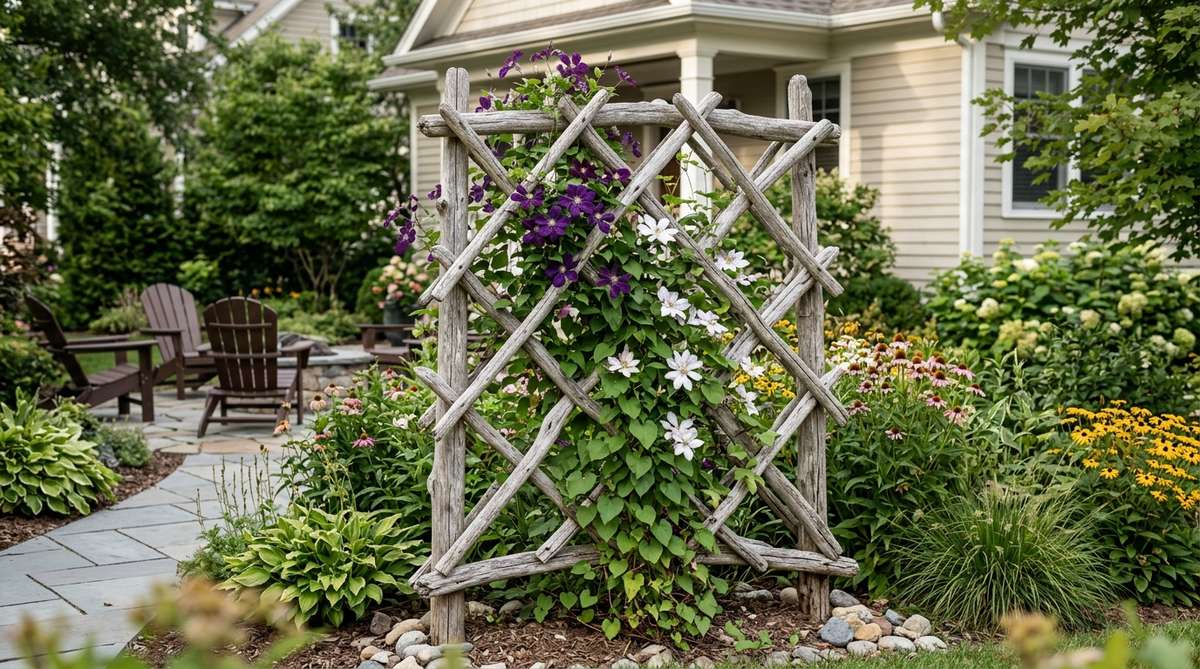
Assemble branching driftwood pieces into lattice patterns using galvanized wire or jute wrapping at intersections. Lean against walls or anchor freestanding in large containers filled with fast-setting concrete.
The irregular framework provides natural climbing support for clematis or morning glory vines. The organic structure feels less rigid than traditional trellises, blending seamlessly into naturalistic plantings.
Allow vines to weave through gaps, creating living sculptures that change seasonally. The driftwood remains visible even when fully covered, adding textural interest during dormant months.
11. Driftwood Garden Arch
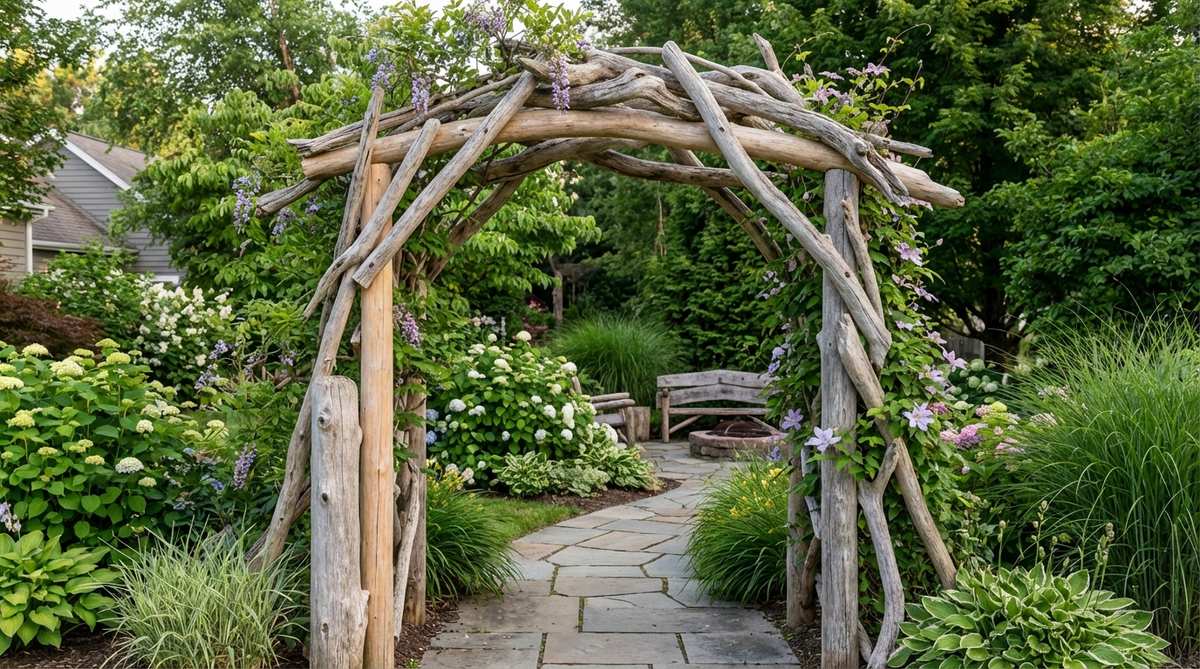
Two substantial driftwood branches serve as uprights connected by smaller curved pieces lashed with wire to form an overhead arc. Anchor uprights eighteen inches deep in gravel-filled post holes for stability.
Position arches as garden entry features or to frame views of focal points beyond. Drape with fairy lights for evening ambiance or train lightweight annual vines for seasonal color.
The sculptural silhouette remains beautiful year-round, even without vegetation. This project works particularly well in coastal or cottage-style gardens.
12. Driftwood Candle Holders
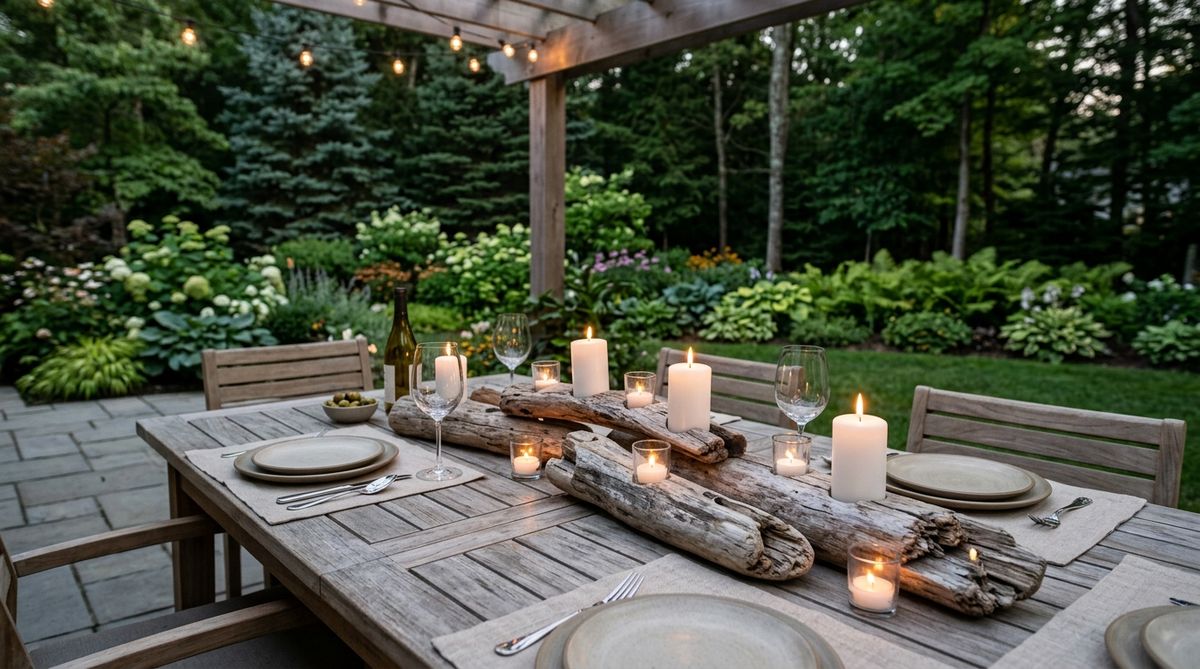
Drill shallow depressions into thick driftwood pieces to accommodate pillar candles or glass votives. Cluster multiple pieces on outdoor tables for ambient lighting during evening gatherings.
The weathered wood and soft candlelight create intimate atmosphere in dining areas. Choose stable, flat-bottomed pieces that won’t tip easily when candles are lit.
This quick project transforms collected beach finds into functional decor. Replace candles with succulents during daytime for continuous decorative value.
13. Driftwood Birdhouse Installation
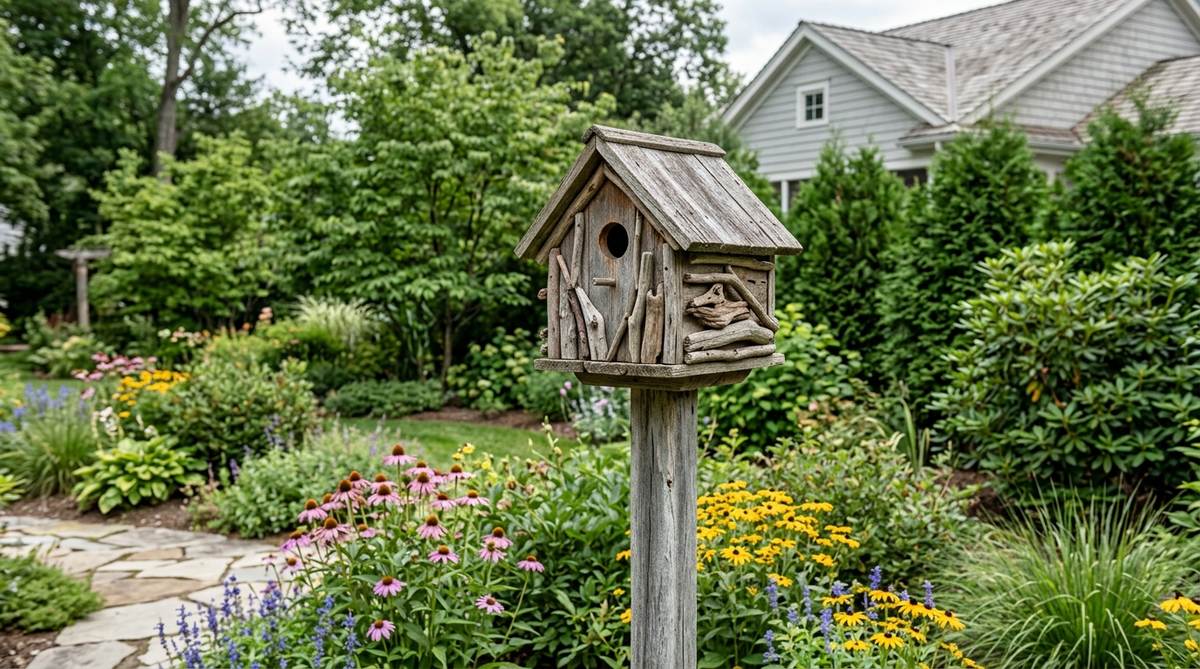
Construct simple birdhouse boxes using cedar or pine, then embellish exteriors with driftwood pieces as decorative cladding. Attach smaller branches with waterproof adhesive, maintaining proper entry hole dimensions for target species.
The textured exterior provides grip for birds while creating visually distinctive houses. Mount on poles or hang from tree branches at appropriate heights for cavity-nesting species.
Monitor houses annually, cleaning after nesting season ends. The driftwood accents weather naturally, developing rich patina over multiple seasons.
Bark Functional Applications for Ground and Border
Bark mulch and bark chippings serve multiple practical purposes while improving garden aesthetics. These renewable materials regulate soil conditions, suppress weeds, and create cohesive visual flow.
14. Decorative Bark Mulch Borders
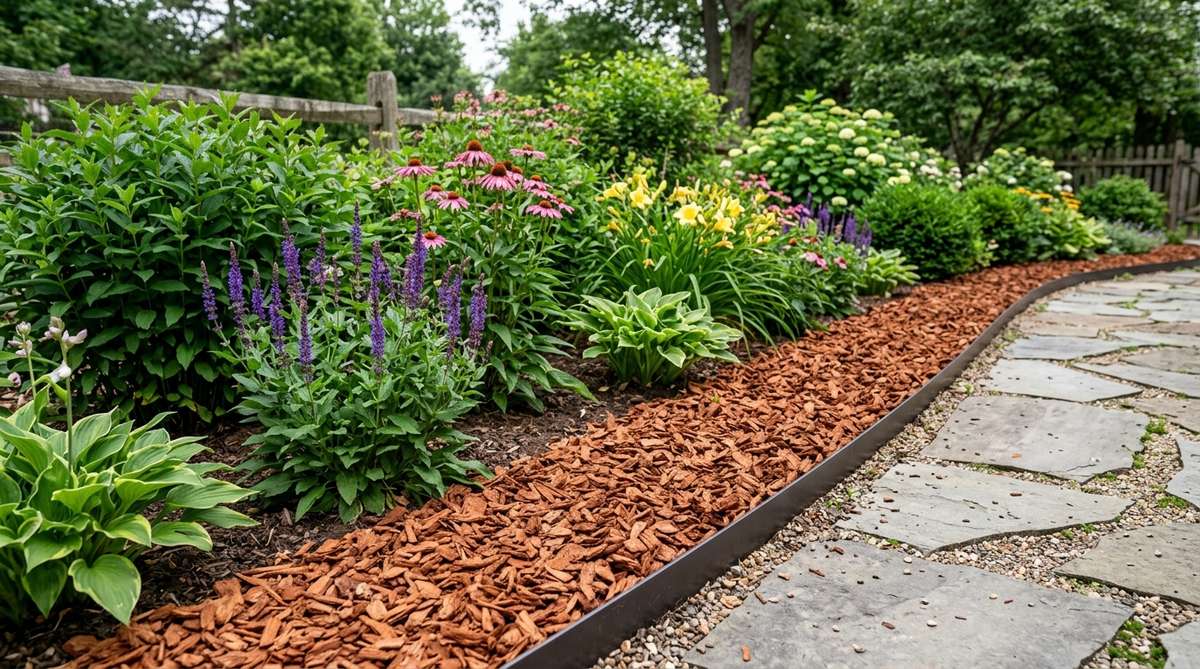
Spread ornamental spruce bark three to four inches deep around perennial plantings to create neat, uniform borders. The reddish-brown color provides warm contrast against green foliage and colorful blooms.
Edge borders with metal or timber edging to contain bark within defined areas. Refresh annually to maintain depth and color intensity as lower layers decompose into soil.
Bark suppresses weed germination while retaining soil moisture during dry periods. The organic material breaks down gradually, improving soil structure and nutrient content over time.
15. Bark Chip Garden Pathways
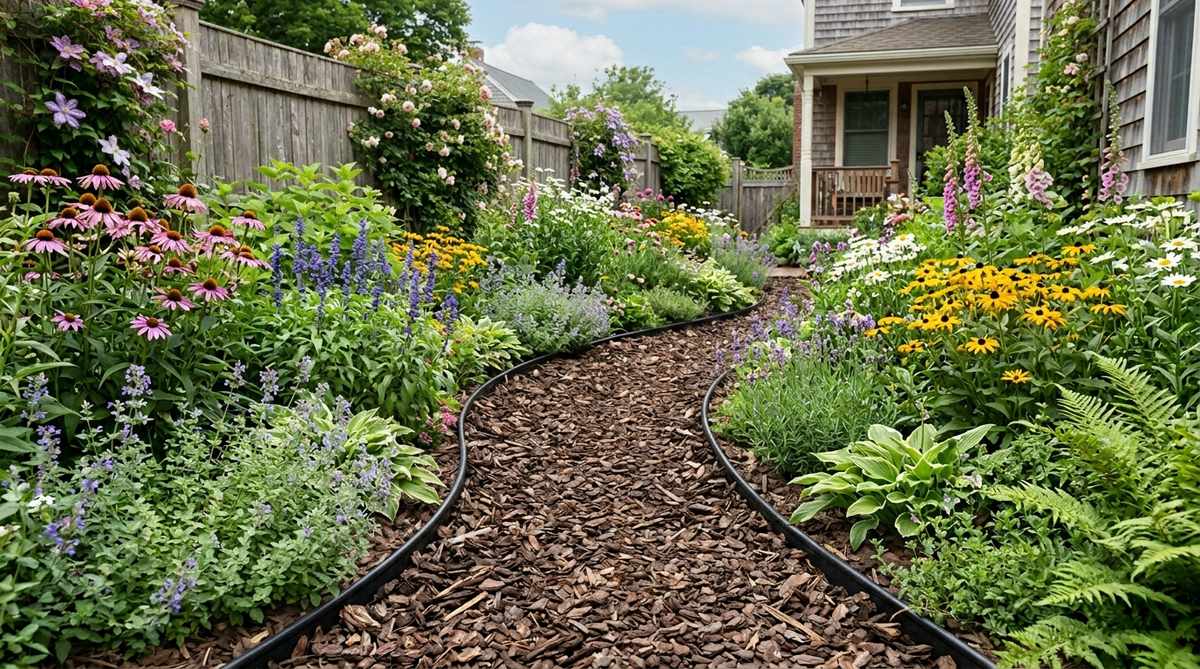
Install bark pathways as cost-effective alternatives to gravel or paving materials. Excavate paths four inches deep, laying landscape fabric before spreading bark chips to ten-centimeter depth.
The cushioned surface provides comfortable walking while absorbing impact. Edge paths clearly to prevent bark migration into adjacent planting beds during heavy rains.
This solution works particularly well for informal cottage gardens and woodland settings. Top-dress paths annually to maintain adequate depth as materials compact from foot traffic.
16. Composted Bark Soil Amendment
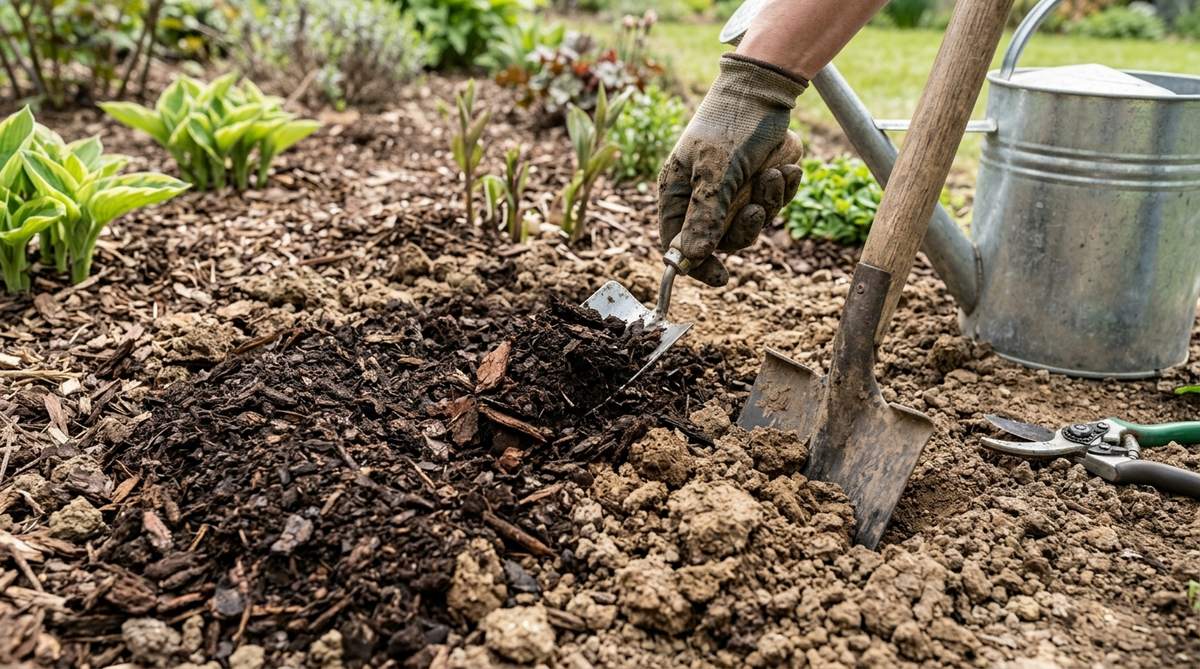
Mix aged composted bark into heavy clay soils to improve drainage and aeration. The partially decomposed material opens soil structure while adding organic matter that feeds beneficial microorganisms.
Apply two-inch layers around established trees and shrubs as top-dressing that slowly incorporates through natural processes. Avoid piling bark against plant stems where excess moisture encourages rot.
The dark color absorbs solar heat in spring, warming root zones for earlier growth activation. This natural soil conditioner costs less than commercial amendments while providing comparable benefits.
17. Bark Play Area Surfacing
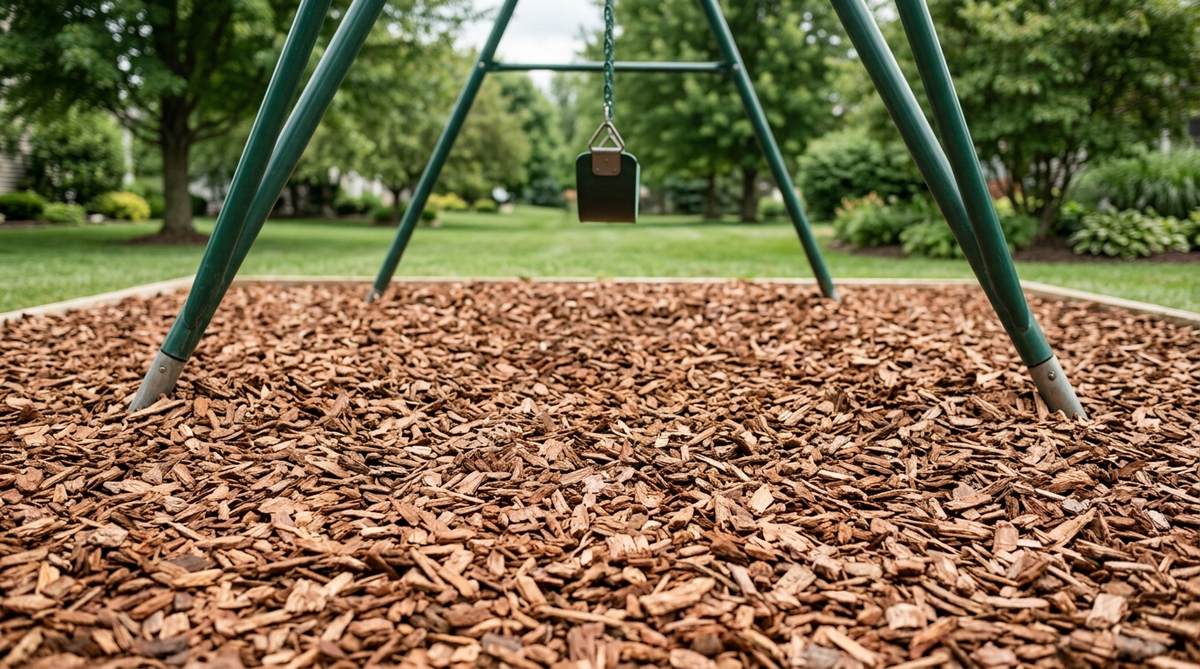
Install certified playground bark beneath swing sets and climbing structures as impact-absorbing safety surfacing. Spread bark to appropriate depths based on equipment height, typically eight to twelve inches.
The natural material feels pleasant underfoot while providing cushioning that meets safety standards. Rake regularly to maintain even coverage and remove debris.
Bark surfacing costs significantly less than rubber mulch while offering natural aesthetics. Monitor depth monthly, adding material as it compresses or decomposes.
18. Shredded Bark Erosion Control
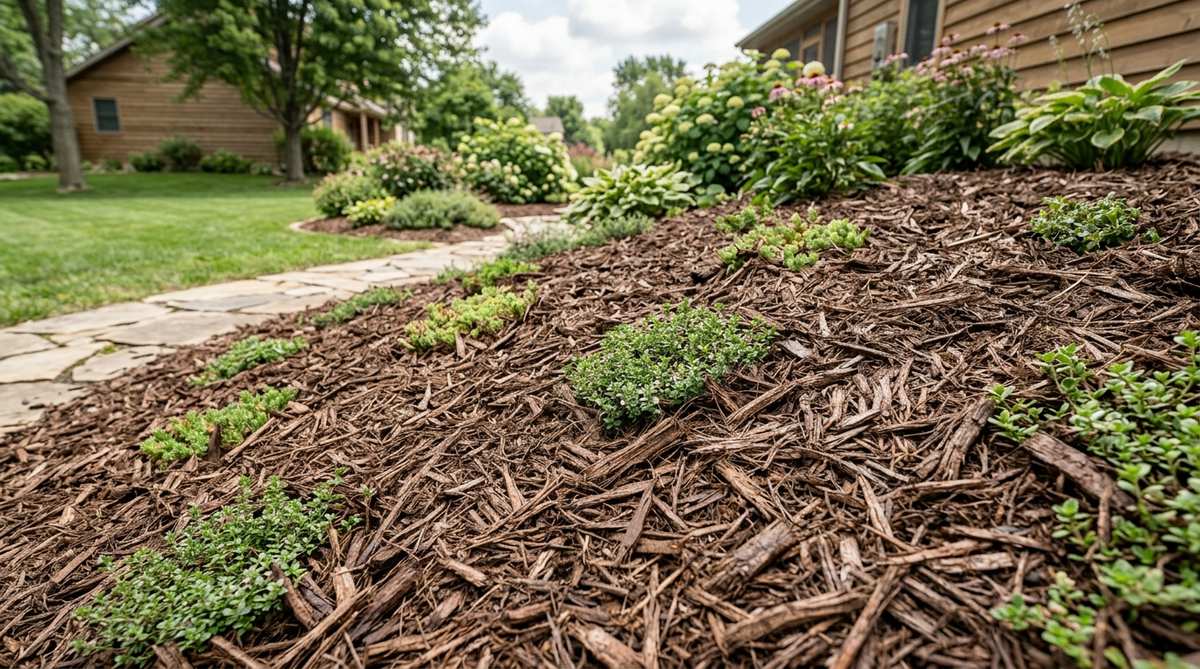
Apply shredded bark on slopes to prevent soil erosion during heavy rainfall. The interlocking fibers knit together, creating a protective mat that slows water runoff while allowing gradual infiltration.
Establish groundcover plantings through the bark layer for permanent erosion control. The bark protects soil until vegetation roots stabilize the slope naturally.
This technique works on gentle to moderate grades without requiring extensive terracing. The organic material decomposes into slope soils, improving long-term stability.
Repurposed Wood Features and Salvaged Materials
Reclaimed wood brings character and sustainability to garden projects through materials with existing patina and history. These pieces often require less processing while delivering unique aesthetic qualities.
19. Pallet Wood Vertical Gardens
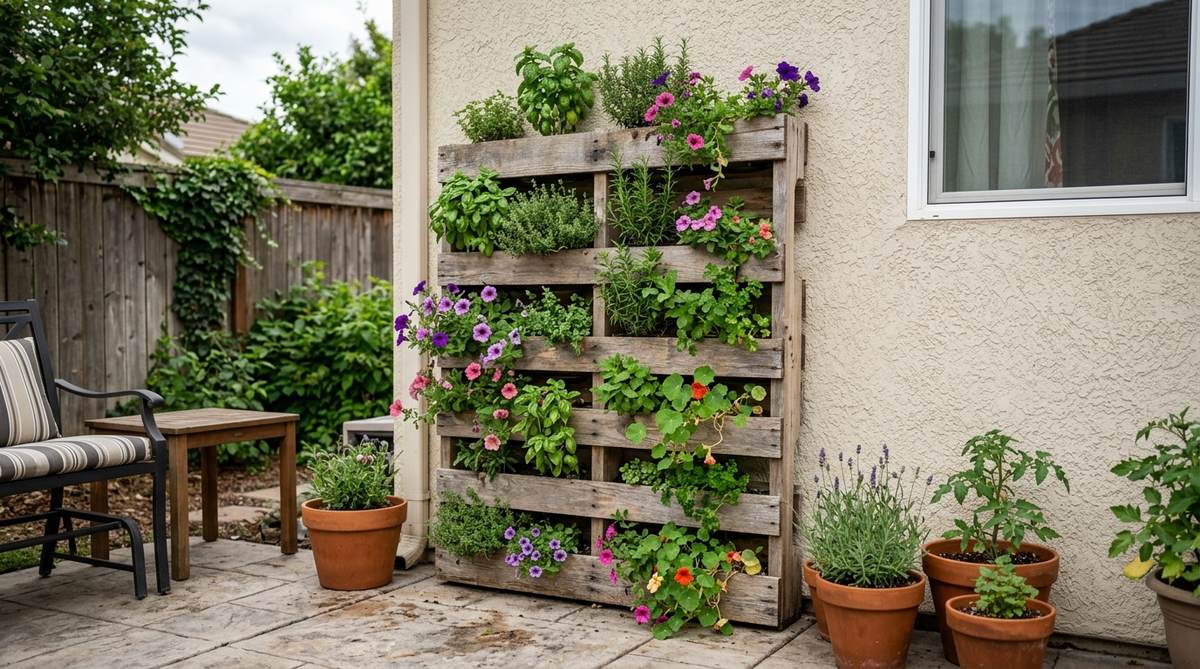
Stand shipping pallets vertically against walls or fences, creating instant frameworks for vertical plantings. Attach landscape fabric to back and bottom, filling gaps between slats with potting soil.
Plant herbs, lettuces, or trailing flowers through front openings, creating living walls in compact spaces. The weathered pallet wood adds rustic charm while maximizing growing area in small yards.
This space-efficient solution brings greenery to balconies and patios where ground space is limited. Water carefully to prevent soil washout until root systems establish.
20. Reclaimed Wood Potting Bench
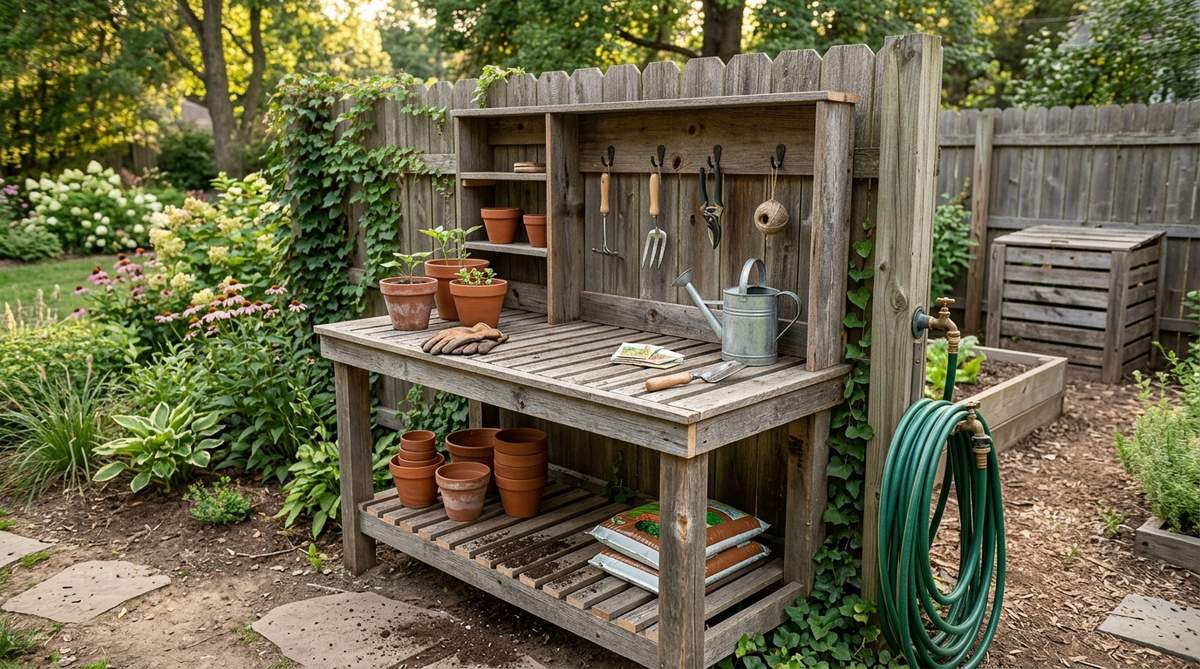
Construct functional work surfaces using salvaged barn wood or fence boards. Create a lower shelf for pot storage and an upper surface at comfortable working height, typically thirty-six inches.
Add hooks for hanging tools and a raised back to prevent items from falling behind. The varied wood tones and textures create visual interest while providing practical workspace.
Position benches near water sources and compost areas for efficient garden maintenance. The open structure allows soil debris to fall through slatted surfaces for easy cleanup.
21. Wine Barrel Planters
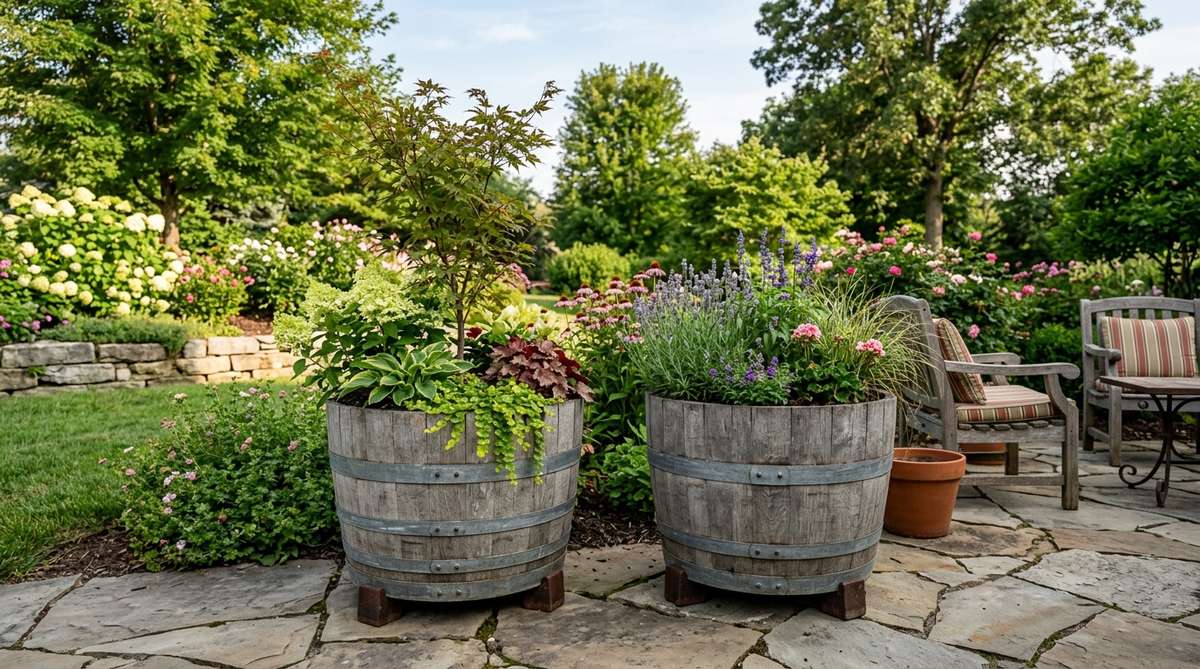
Repurpose oak wine barrels as substantial container gardens for small trees, shrubs, or mixed plantings. The curved staves and metal bands create instant architectural presence.
Drill additional drainage holes in barrel bottoms, elevating on pot feet for air circulation. The large soil volume supports extensive root systems while the oak weathers to distinguished silver-gray.
These containers anchor patio corners and define entry areas with formal presence. Group odd numbers for professional designer impact.
22. Tree Stump Planters
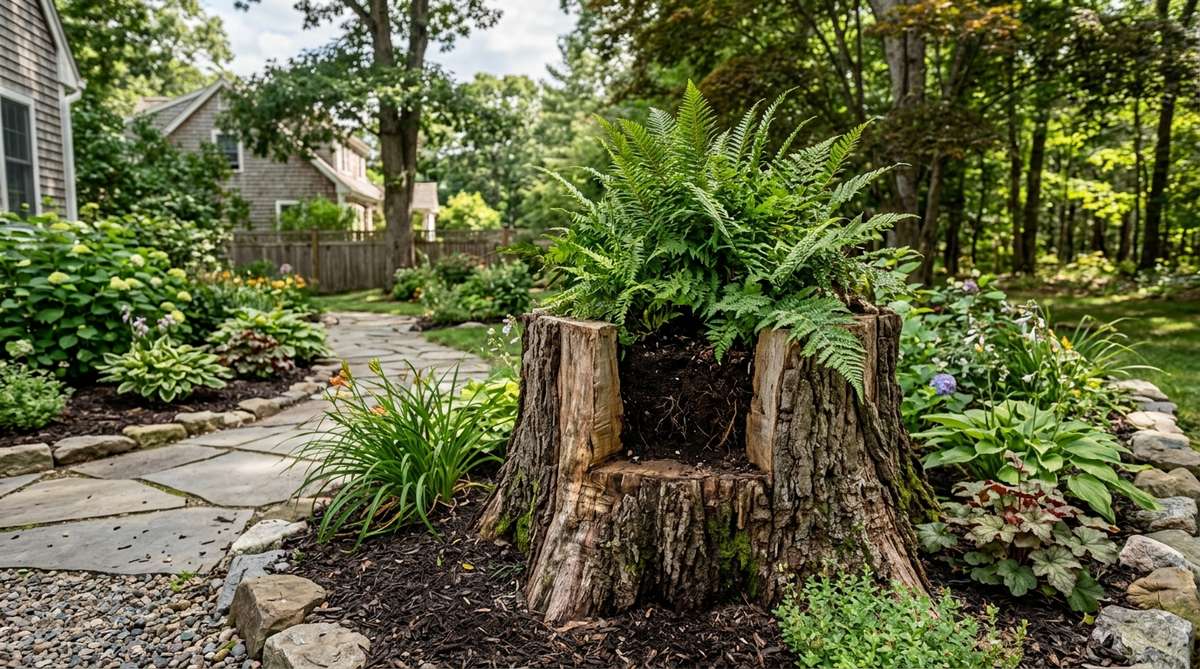
Transform unavoidable tree stumps into rustic planters rather than paying for removal. Hollow centers using drill and chisel, creating cavities at least six inches deep.
Treat interior wood with preservative to slow decomposition, then add gravel for drainage before filling with potting mix. Plant shade-tolerant groundcovers or ferns that thrive in the naturally moist environment.
The organic form integrates stumps into landscape design as intentional features. This solution converts eyesores into focal points at minimal cost.
23. Wooden Crate Storage
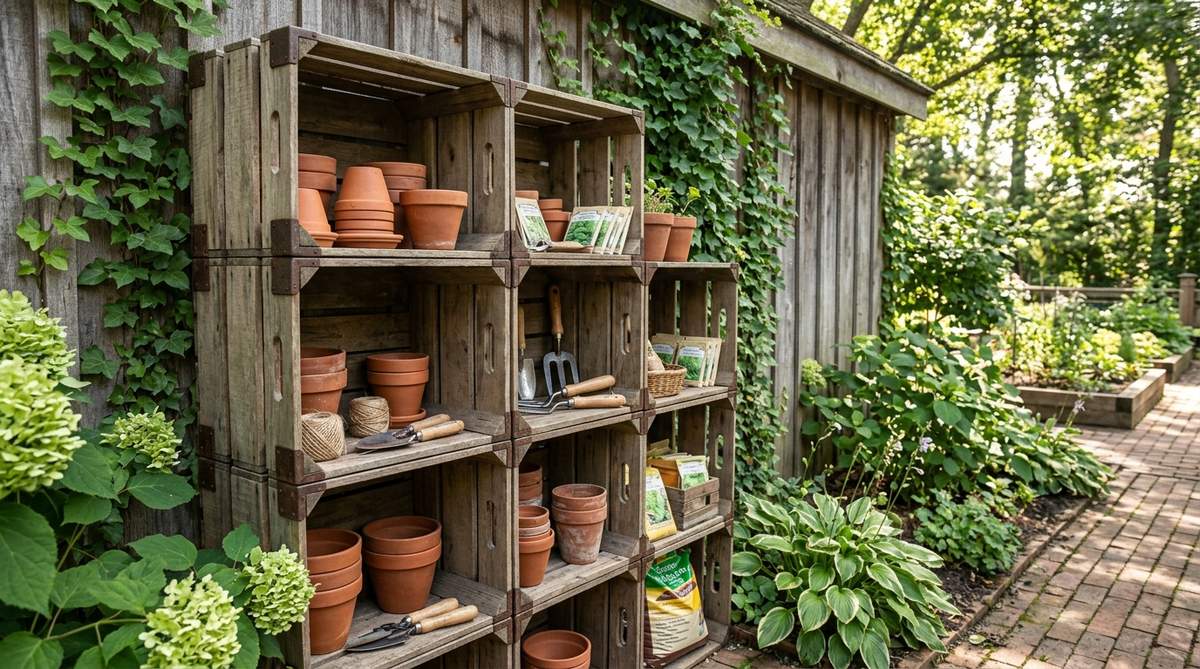
Stack vintage wooden crates as open shelving for storing pots, hand tools, and garden supplies. Secure crates with corner brackets to prevent toppling, creating customized configurations.
The compartmentalized storage keeps items organized and accessible. Position crate units near potting areas or inside garden sheds for functional organization.
The industrial aesthetic works in modern, rustic, and cottage garden styles. Stain or paint crates to match existing structures or leave natural for authentic patina.
Vertical Wood Installations for Climbing Plants
Vertical wooden structures maximize planting space while adding architectural dimension to flat landscapes. These projects support climbing vegetables, flowering vines, and espalier fruit trees.
24. Cedar Obelisk Trellises
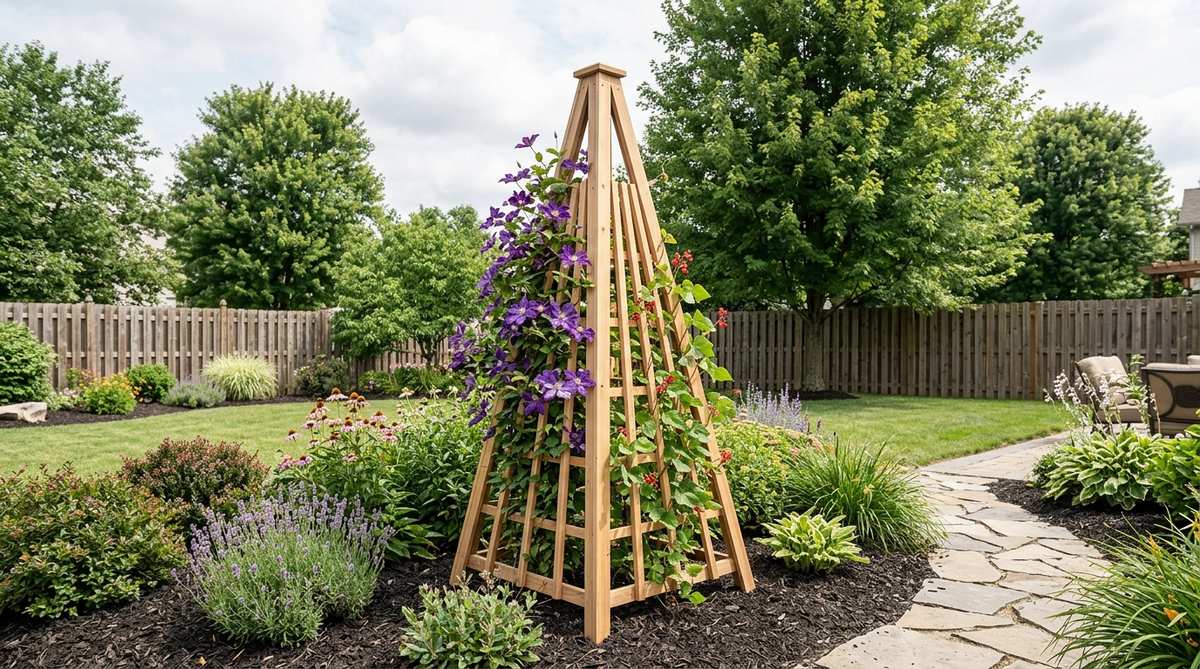
Construct pyramid-shaped obelisks using four corner posts connected by horizontal rungs at regular intervals. The tapering form provides structural strength while creating elegant vertical accents.
Position obelisks in perennial borders or vegetable gardens, planting climbing beans, sweet peas, or clematis at the base. The open structure allows air circulation that prevents disease while supporting heavy vine loads.
These freestanding units move easily for crop rotation and seasonal plantings. The architectural form remains attractive even when plants are dormant.
25. Wall-Mounted Espalier Frames
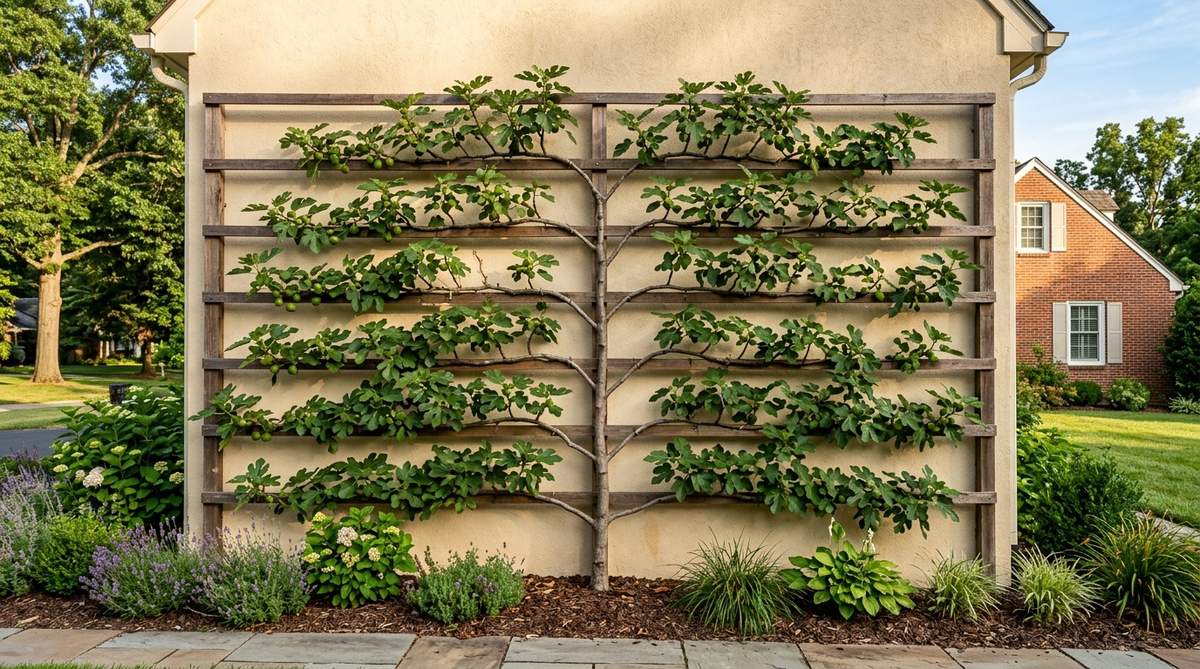
Install horizontal wires or cedar slats attached to wall-mounted brackets, creating frameworks for training fruit trees in flat patterns. Space supports at twelve-inch intervals for adequate branch attachment.
This space-saving technique produces fruit in narrow spaces while creating living wall art. The disciplined branch structure requires annual pruning to maintain desired forms.
South-facing walls provide ideal conditions for heat-loving fruits like figs or apricots. The reflected heat accelerates ripening while protecting blossoms from late frosts.
26. Bamboo Teepee Structures
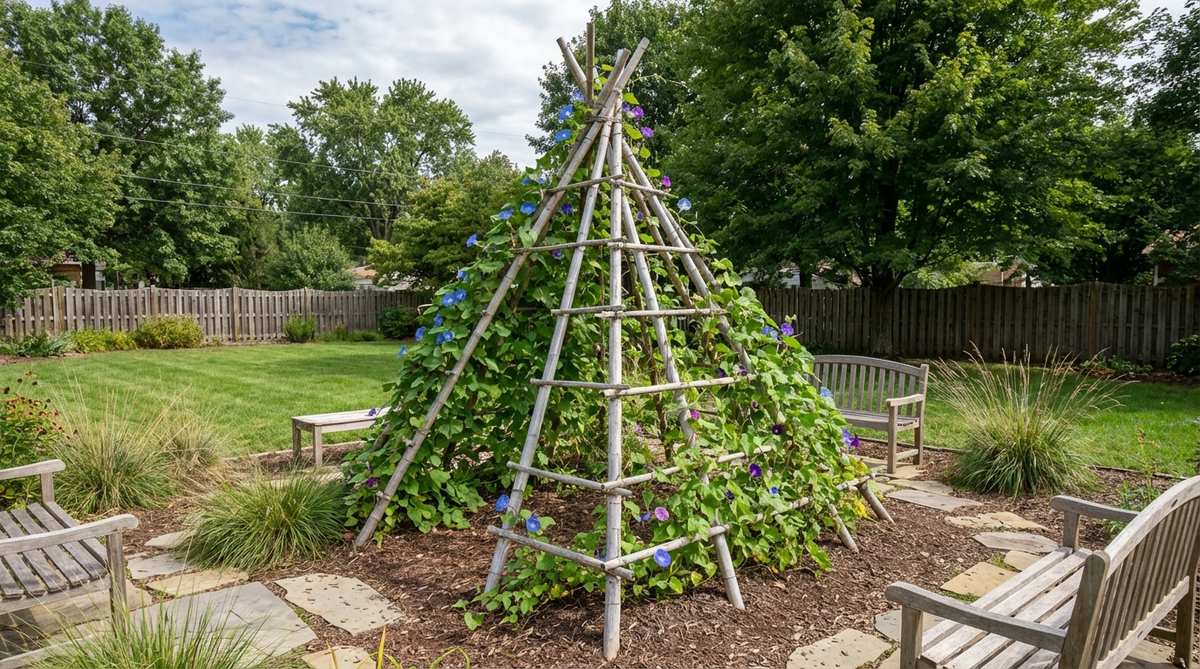
Lash bamboo poles together at tops, spreading bases in circular formations to create conical growing supports. The natural golden color and smooth texture complement informal garden styles.
Plant pole beans, runner beans, or morning glories around the perimeter, training vines to climb the framework. The center creates a shaded play space for children as vegetation fills in.
Bamboo’s natural decay resistance provides several seasons of use before requiring replacement. This lightweight solution installs and removes easily for seasonal crops.
27. Lattice Privacy Screens
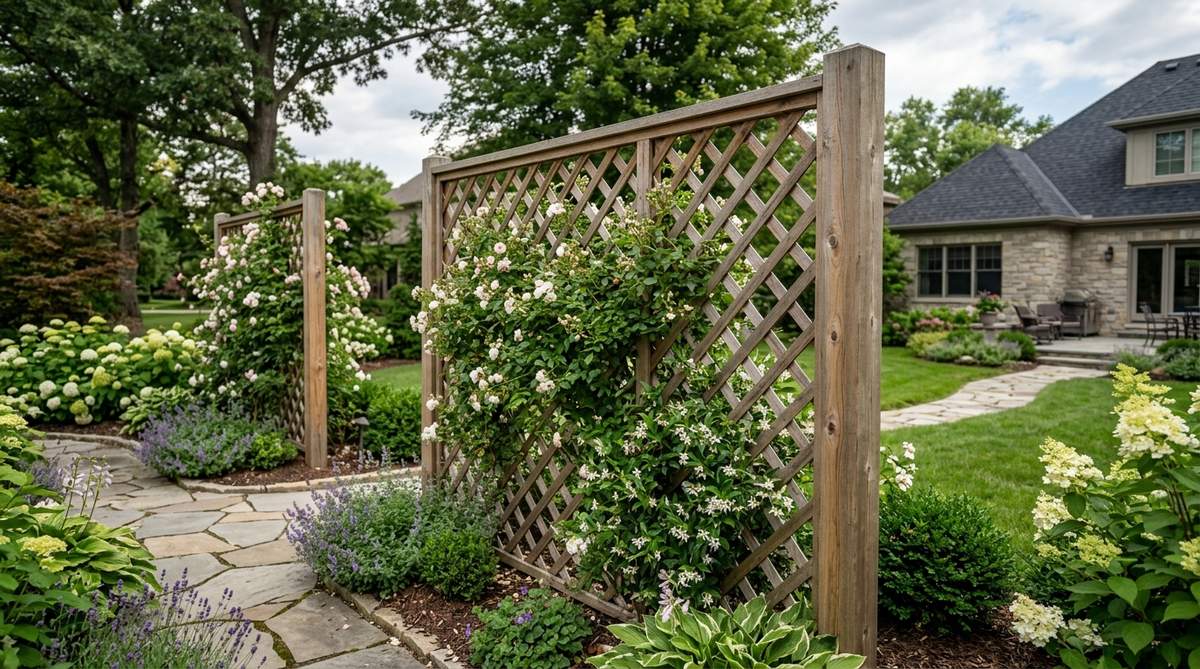
Frame cedar or vinyl lattice panels with substantial posts and rails, creating semi-transparent barriers between garden rooms. The diagonal grid pattern provides partial screening while maintaining air flow.
Train climbing roses, jasmine, or honeysuckle through lattice openings for living privacy walls. The combination of structure and vegetation creates layered boundaries more interesting than solid fencing.
These screens define spaces without creating boxed-in feelings. Position strategically to block sight lines while preserving desirable views.
28. A-Frame Cucumber Trellis
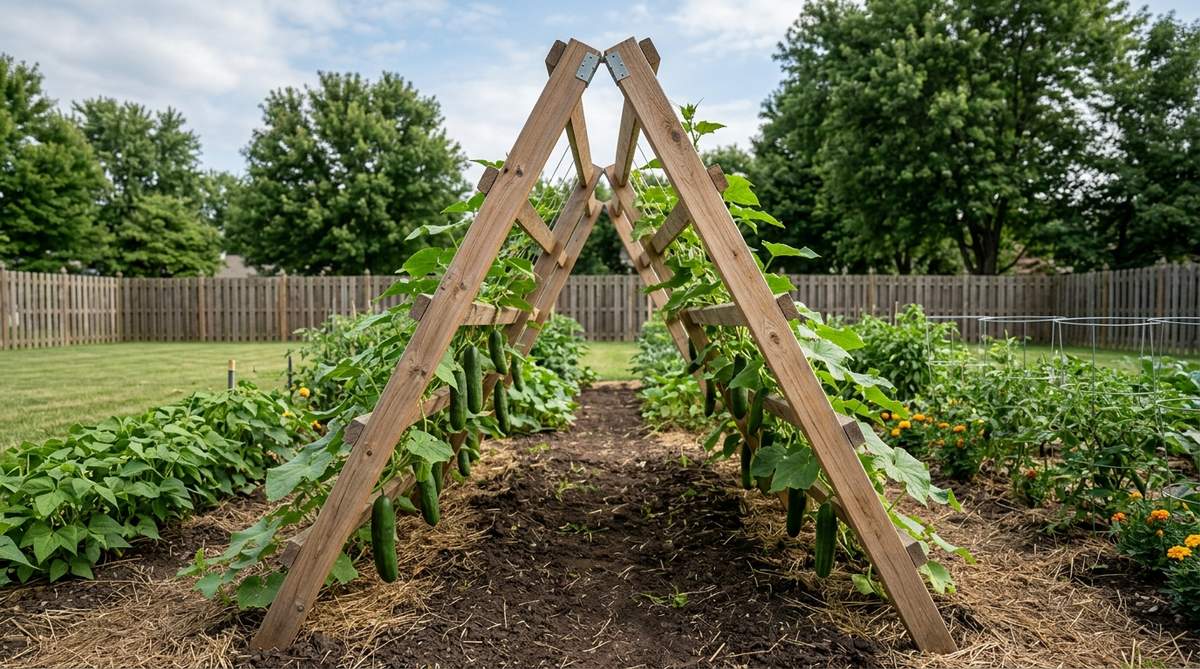
Construct inverted V-shaped frames using two ladder-style panels joined at the peak. Position over planted rows, allowing cucumbers to climb both sides for easy harvest.
The overhead fruit hangs freely, developing straight shapes instead of curved ground-grown forms. Air circulation around elevated fruit reduces disease pressure.
This portable structure stores flat when disassembled for off-season organization. The design works equally well for squash, melons, or beans.
Small-Scale Wood Projects for Garden Details
Finishing touches complete garden designs through small wooden elements that add personality and function. These quick projects require minimal materials while delivering significant visual impact.
29. Wooden Plant Markers
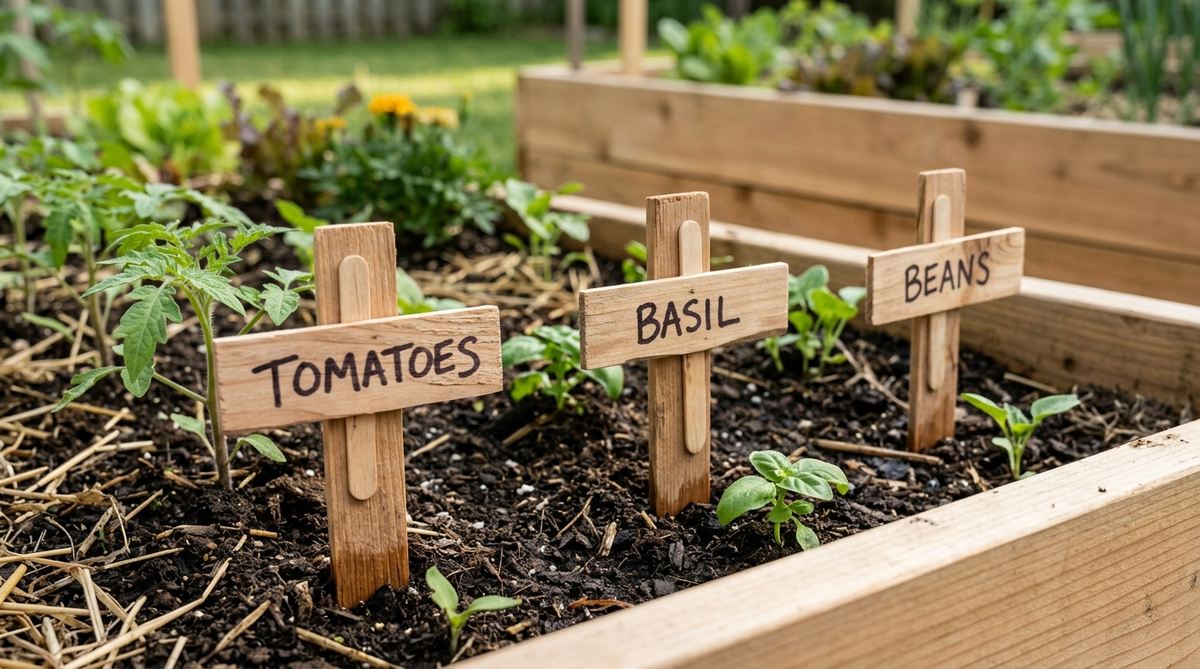
Cut cedar shims or popsicle sticks into pointed stakes, writing plant names with permanent markers or wood-burning tools. The natural material coordinates with any garden style while providing essential labeling.
These biodegradable markers last multiple seasons before requiring replacement. Create decorative versions with carved or painted details for ornamental displays.
Markers help track varieties in seed-starting operations and vegetable gardens. The simple craft engages children in garden planning and maintenance.
30. Rustic Wooden Garden Signs
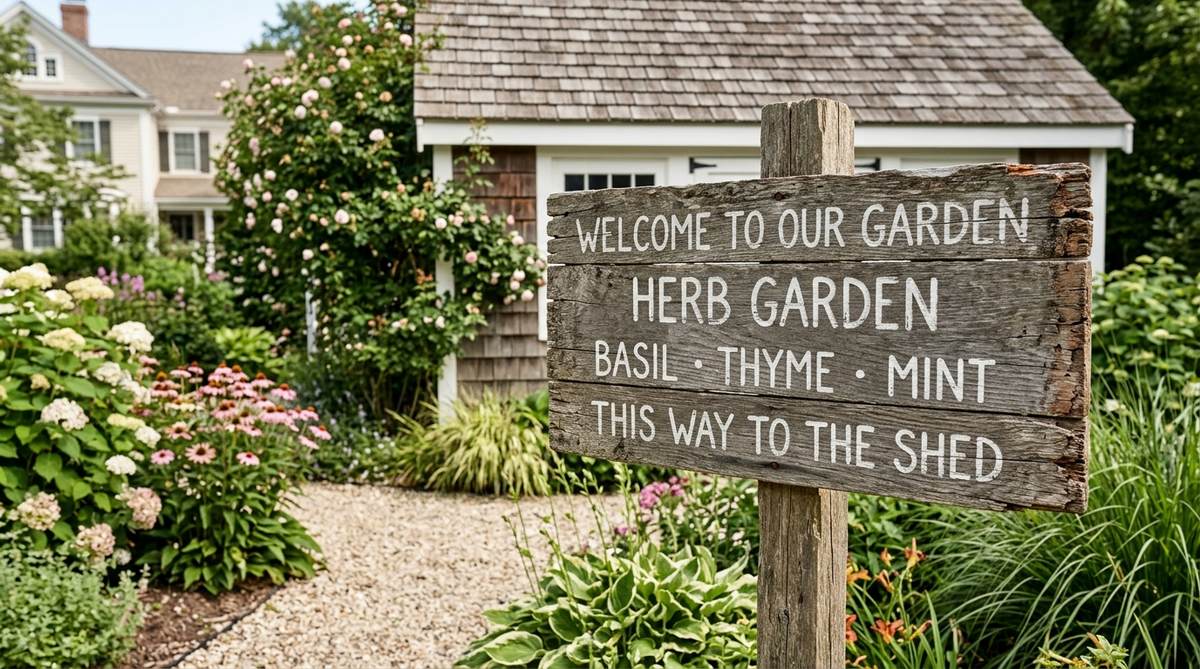
Paint or stencil welcoming messages, herb names, or directional guidance on reclaimed fence boards. Distress edges and add weathering effects for vintage farmhouse character.
Mount signs on posts at garden entries or attach directly to fences and shed walls. The handmade quality adds personal touches that reflect individual style.
These decorative elements inject humor and warmth into outdoor spaces. Update seasonally with fresh messages and paint colors.
31. Log Round Stepping Stones
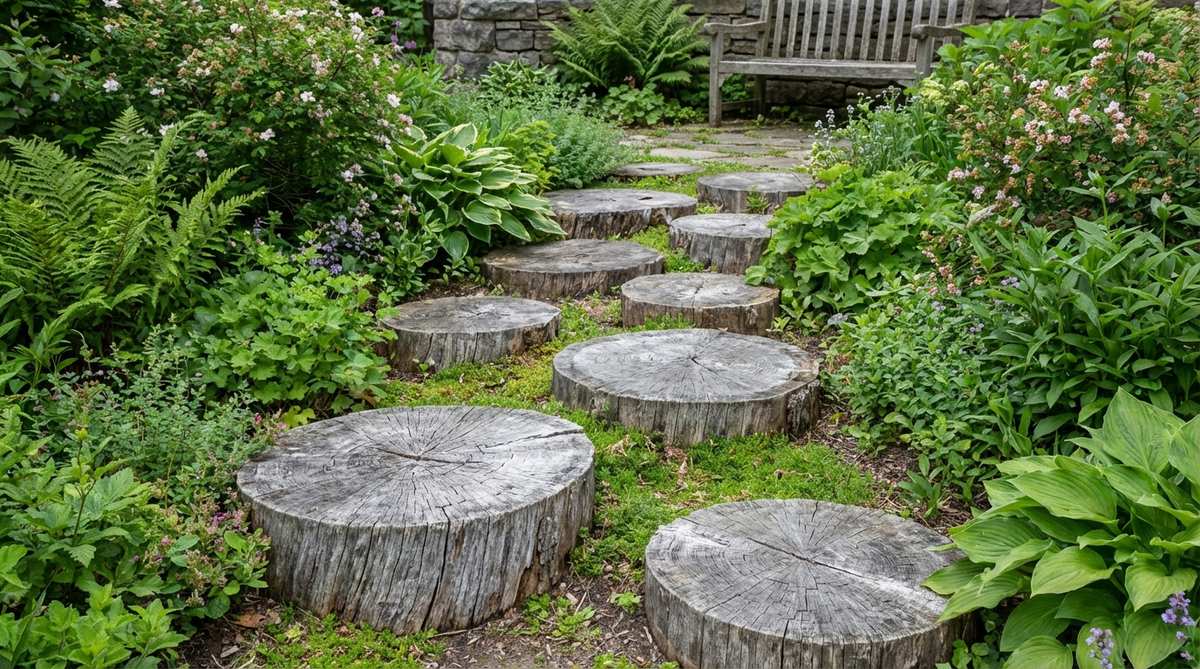
Slice logs into three-inch-thick rounds, sanding surfaces smooth and treating with water sealant. Embed rounds in gravel or sand beds to create organic pathways through planting areas.
The concentric growth rings and varied diameters add natural artistry underfoot. Space rounds according to average stride length for comfortable navigation.
This project utilizes fallen trees or pruned branches that would otherwise become waste. The wood surface provides better traction than smooth stone in wet conditions.
32. Wooden Garden Tool Organizer
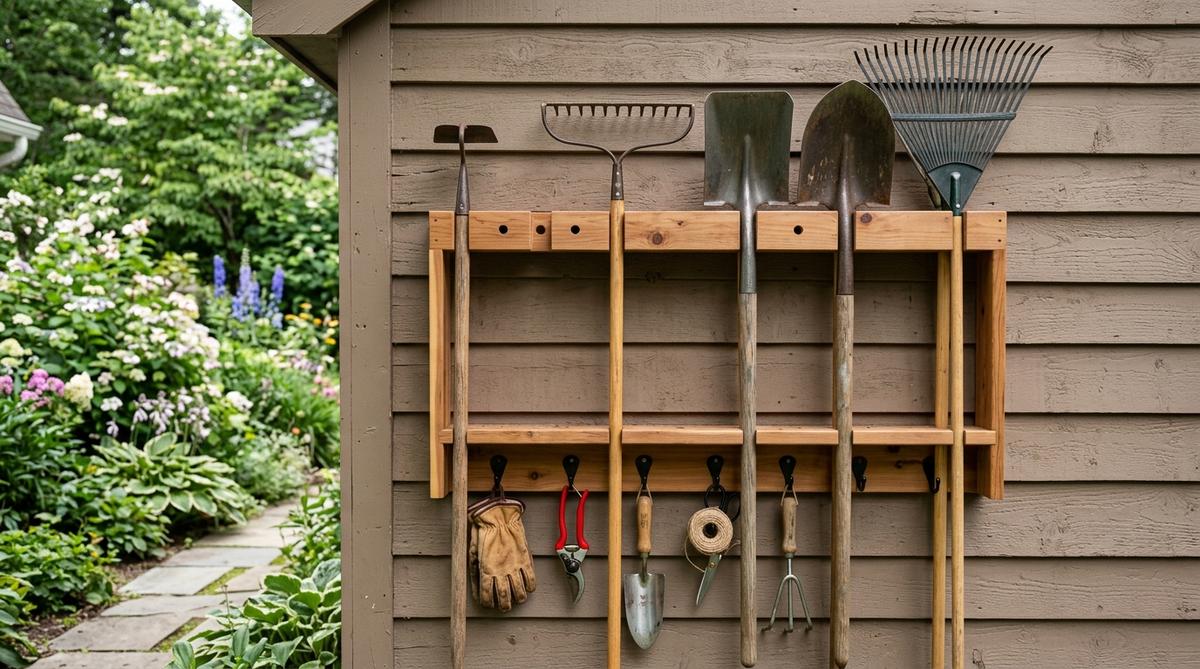
Mount horizontal boards with evenly spaced PVC pipe sections or drilled holes to create wall storage for long-handled tools. Keep rakes, hoes, and shovels accessible while preventing tangled piles.
The organized system protects tool edges from damage while utilizing vertical wall space efficiently. Add hooks below for hanging trowels, pruners, and gloves.
This functional storage reduces time spent searching for misplaced tools. The visible organization encourages proper maintenance and cleaning after use.
33. Branch Twig Garden Edging
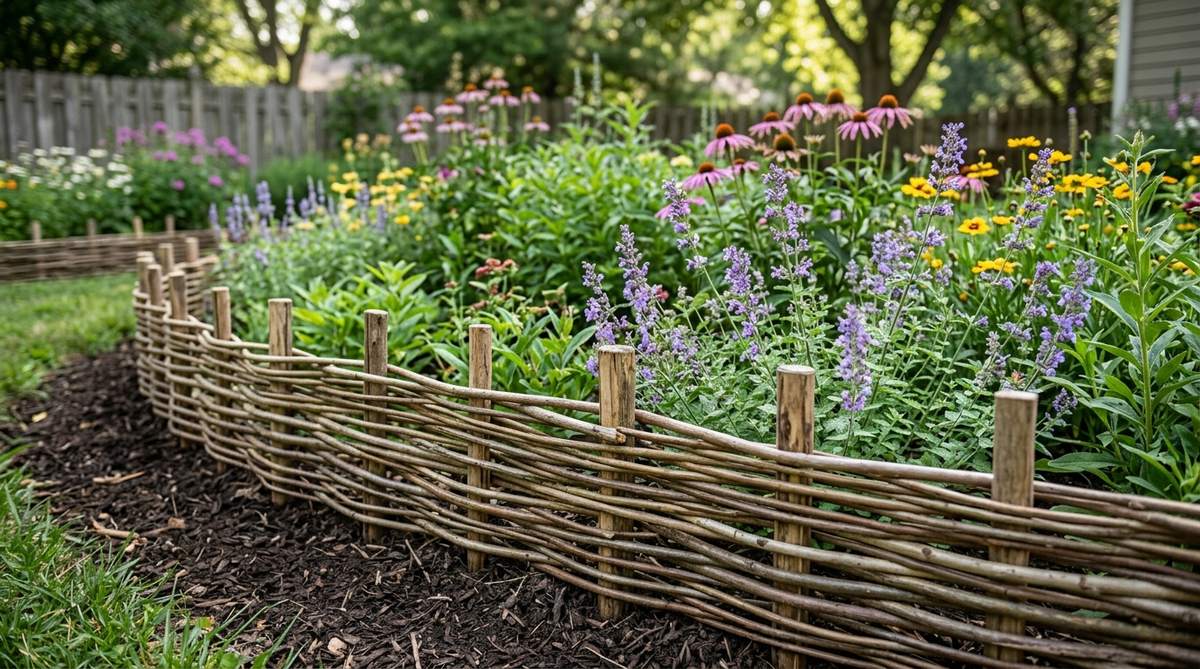
Weave flexible willow or birch twigs through vertical stakes to create low decorative borders. The wattle-fence technique produces rustic edges that define beds while remaining permeable.
This traditional method costs nothing when using pruned materials from property trees. The woven pattern adds cottage-garden charm to informal plantings.
Replace sections annually as twigs decompose, incorporating old material into compost. The living edges may sprout if installed during dormant season using fresh-cut willow.
34. Wooden Fairy Garden Accessories
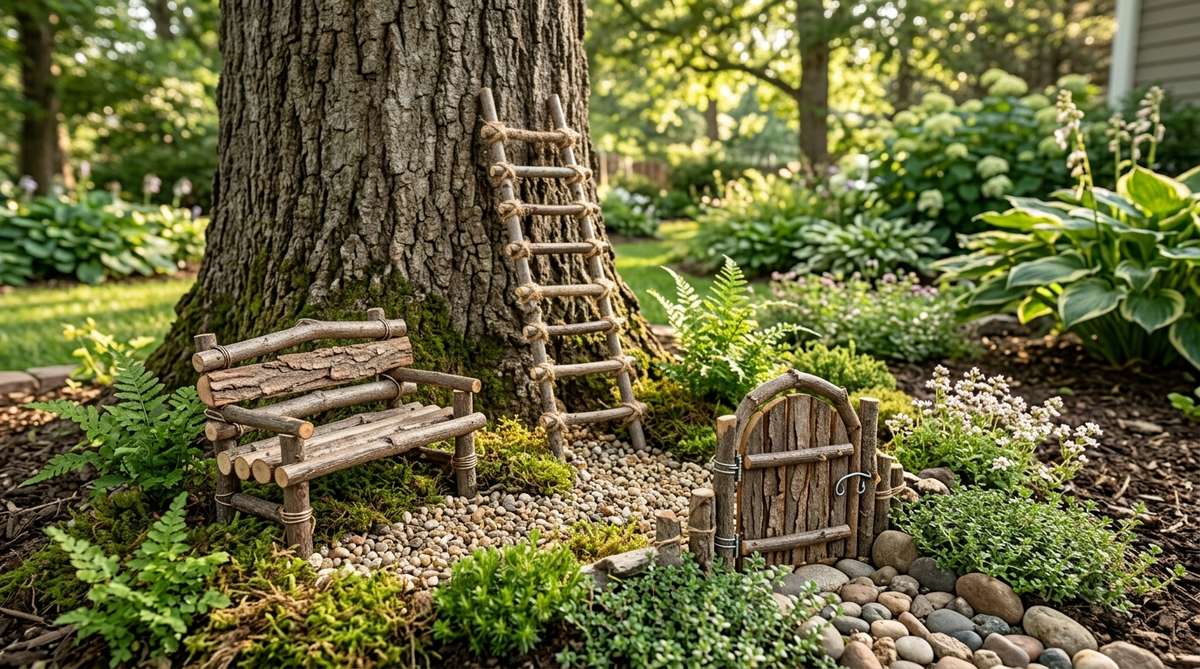
Craft miniature benches, ladders, and gates from twigs and bark to populate whimsical fairy gardens. Bind components with thin wire or natural jute for authentic rustic construction.
These tiny installations delight children and adults alike, creating imaginative focal points in container gardens or under trees. Position moss and small-leaved plants around accessories for scaled landscapes.
The creative process encourages outdoor exploration as builders forage for appropriately sized natural materials. Weather accessories with diluted paint washes for aged appearance.
Bringing Your Garden Decor Wood Vision to Life
These 30+ garden decor wood projects demonstrate how timber, driftwood, and bark transform ordinary outdoor spaces into personalized retreats. Start with small-scale projects like plant markers or driftwood candle holders to build confidence before tackling structural installations. Source materials sustainably through local tree services, beach combing, and reclamation yards to reduce costs while supporting environmental stewardship. As you implement these ideas, remember that wood’s natural aging process enhances character over time—embrace the weathered patina as evidence of seasons passed in your thriving garden sanctuary.
Frequently Asked Questions
What type of wood lasts longest for outdoor garden projects?
Cedar, redwood, and black locust offer superior natural rot resistance for outdoor applications without chemical treatment. These species contain natural oils and tannins that repel insects and resist moisture damage for 15-20 years or longer. For budget-conscious projects, pressure-treated pine provides acceptable longevity when rated for ground contact. Apply annual water-based sealant to extend the lifespan of any outdoor wood by preventing moisture penetration and UV damage.
How do I prepare driftwood for use in garden projects?
Clean collected driftwood by scrubbing with a stiff brush to remove loose debris, salt deposits, and organisms. Rinse thoroughly with fresh water and allow to dry completely for several days in a covered, ventilated area. For pieces collected from saltwater environments, soak in fresh water for 24-48 hours to leach remaining salt before drying. Once prepared, apply clear exterior polyurethane or marine varnish to preserve the weathered appearance while protecting against further deterioration from moisture and insects.
Can I use bark mulch in vegetable gardens?
Use bark mulch cautiously in vegetable gardens, applying it only around established pathways rather than directly in planting beds. Fresh bark contains compounds that temporarily bind nitrogen as it decomposes, potentially starving vegetables of this essential nutrient. For vegetable beds, choose fully composted bark that has aged at least one year, or opt for straw, shredded leaves, or grass clippings instead. Reserve ornamental bark for perennial borders and shrub beds where nitrogen immobilization poses less concern.
How should I seal wooden garden furniture to prevent weathering?
Clean wooden furniture thoroughly with mild detergent and allow to dry completely before applying sealant. Use penetrating oil finishes like teak oil for hardwoods, or exterior polyurethane for softwoods, applying thin coats according to manufacturer instructions. Reapply sealant annually before weather exposure begins each spring, focusing on end grain and joint areas where moisture penetrates most easily. For furniture experiencing full sun exposure, add UV-blocking additives or choose sealants with built-in UV protection to prevent graying and surface checking.
What thickness of bark mulch prevents weeds most effectively?
Apply bark mulch in three to four-inch layers for effective weed suppression without suffocating plant roots. This depth blocks sufficient sunlight to prevent most weed seed germination while allowing water and air to reach soil beneath. Install landscape fabric before spreading bark for maximum weed control in high-maintenance areas. Monitor mulch depth quarterly and refresh as material decomposes or compacts, maintaining adequate coverage throughout the growing season when weed pressure peaks.