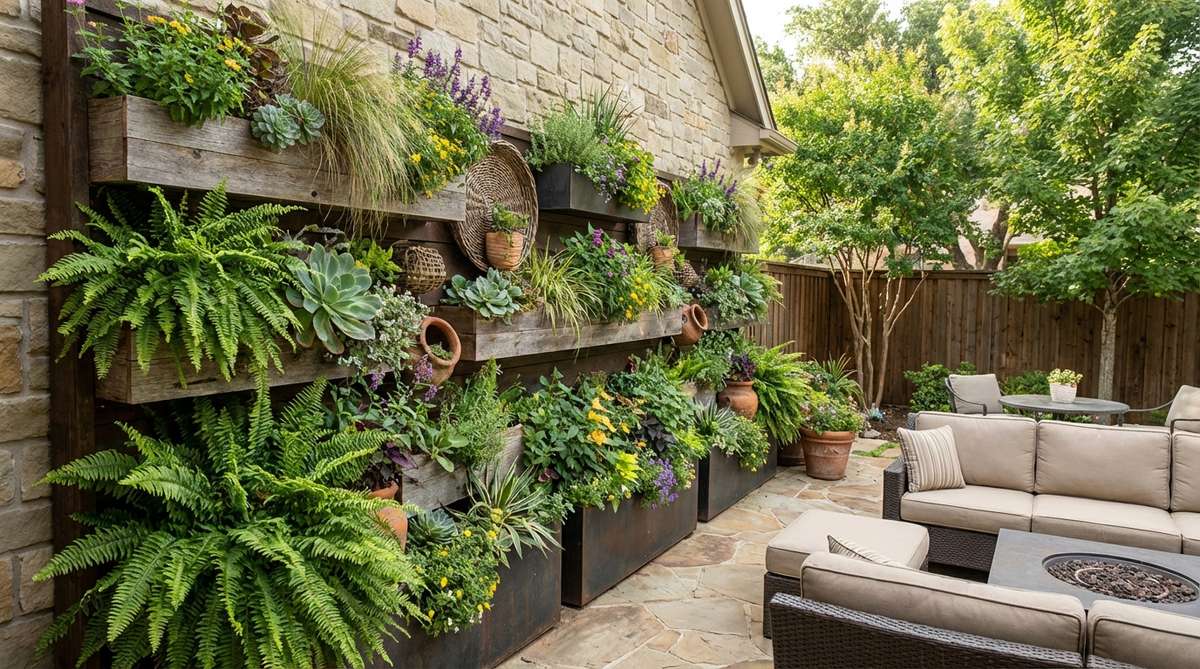
A well-designed garden decor wall transforms underutilized vertical spaces into living galleries that blend horticultural beauty with artistic expression. Whether you have a compact urban patio or an expansive backyard, these displays maximize square footage while creating visual impact throughout the year. Fresh Garden Ideas brings you expert-tested concepts that merge structural elements, plant selections, and decorative accents into cohesive outdoor statements.
Design SnapshotKey Principles
- Layered Depth: Combine flat art pieces with three-dimensional planters to create shadow play and visual interest throughout the day
- Strategic Plant Selection: Match growth habits to wall orientation—trailing varieties soften edges while upright specimens add vertical drama
- Material Harmony: Balance organic textures like wood and stone with modern metals to bridge traditional garden aesthetics and contemporary design
- Maintenance Access: Position planting zones within comfortable reach and incorporate irrigation solutions to sustain displays without daily intervention
Modular Living Wall Systems
Modular systems offer flexibility and scalability for designers seeking professional results without permanent installation. These self-contained units feature built-in reservoirs and drainage channels that simplify irrigation while protecting wall surfaces from moisture damage.
1. Stacked Trough Planters with Grid Layout
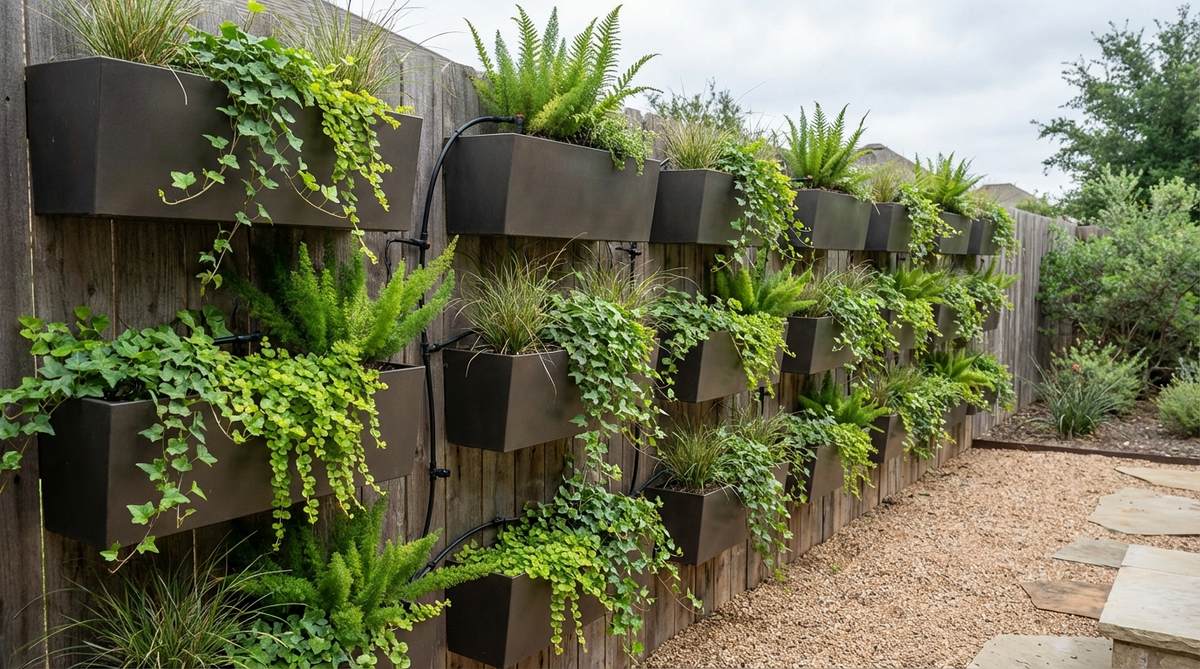
Metal or composite troughs mounted in horizontal rows create clean lines that complement modern architecture. The uniform spacing between units allows trailing plants like ivy and creeping jenny to cascade naturally while upright ferns fill the containers themselves.
Designers typically position troughs 8-12 inches apart vertically to accommodate root growth and simplify watering access. Install a drip irrigation line along the back rail to automate moisture delivery during peak growing months.
This configuration works exceptionally well on garage walls and privacy fences where the structured appearance enhances rather than competes with existing hardscape elements.
2. Pocket Panel Living Walls
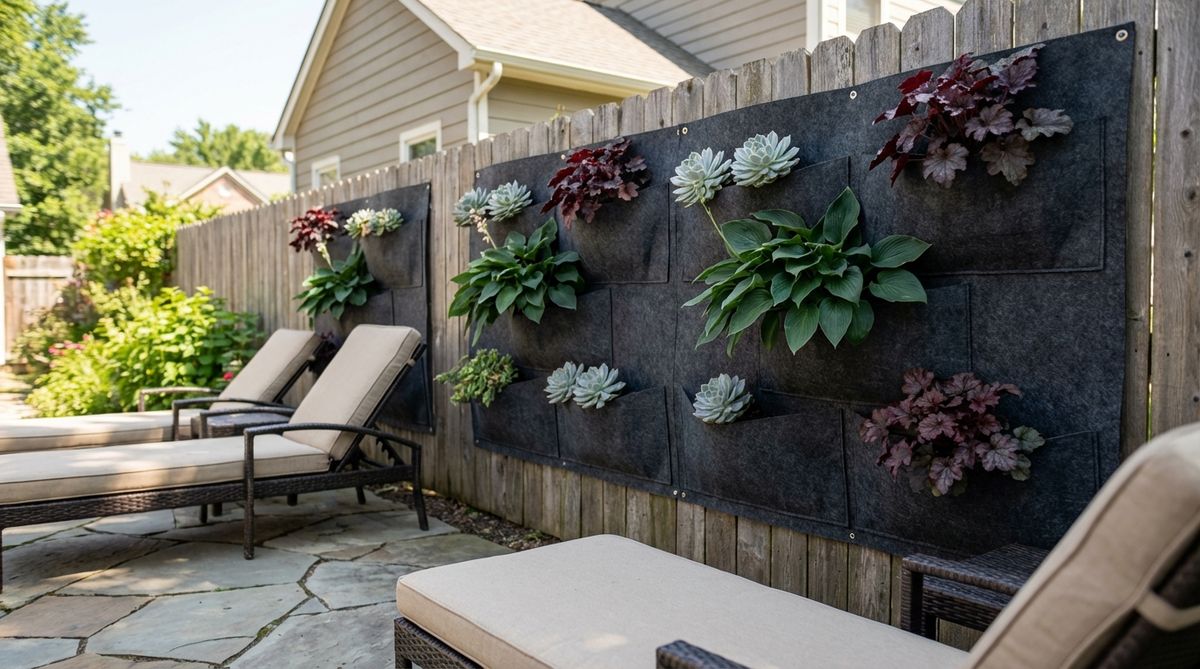
Felt or fabric panels with sewn pockets accommodate dozens of plants in a compact footprint. Each pocket drains independently while the backing material wicks moisture evenly across the display.
Installers mount panels onto battens that create a one-inch air gap behind the fabric, preventing mildew and extending the lifespan of wooden fences or siding. Mix foliage colors and textures by alternating dark green hostas with silver-leafed succulents and burgundy heucheras.
Rotate seasonal annuals into select pockets to maintain visual interest from spring through frost without redesigning the entire composition.
3. Interlocking Box Modules
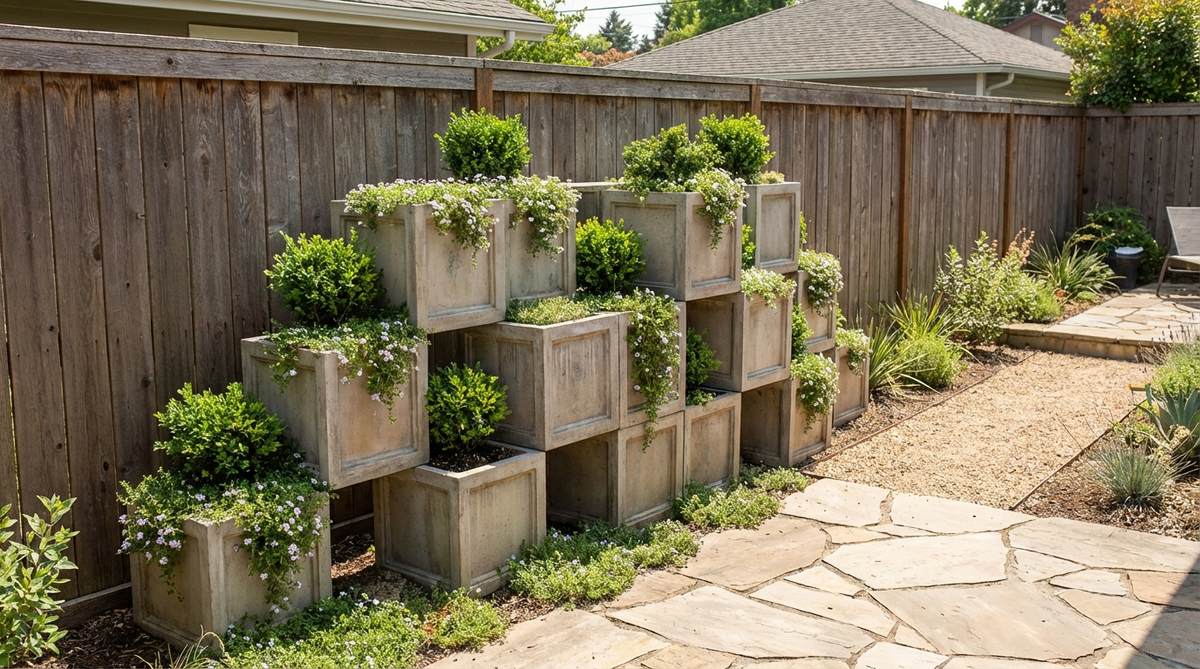
Cube-shaped containers with flanged edges stack and interlock without additional hardware. Designers create asymmetric patterns by offsetting rows or clustering units into pyramid formations.
Each box holds 2-3 gallons of growing medium, sufficient for perennial ground covers or compact shrubs like dwarf boxwood. The modular nature allows reconfiguration when plant sizes change or aesthetic preferences evolve.
4. Self-Watering Wall Planters
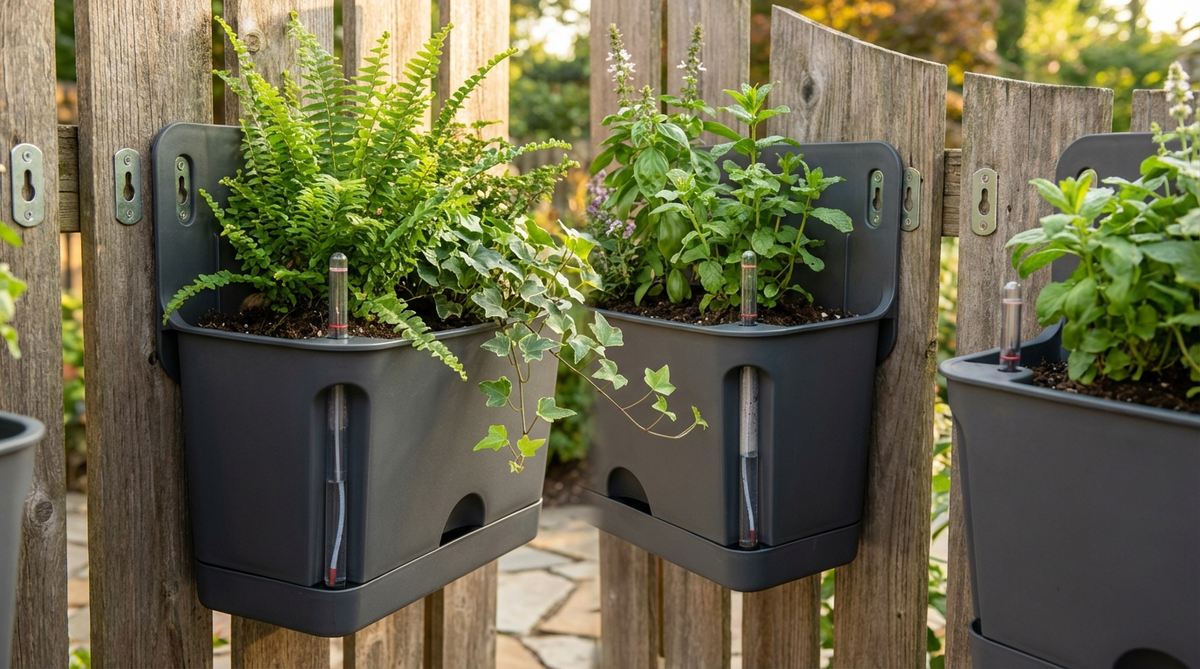
These specialized containers feature dual chambers where a bottom reservoir feeds moisture upward through capillary action. The system reduces watering frequency to once weekly even during summer heat.
Mount units with keyhole brackets that slide over heavy-duty screws, enabling removal for seasonal cleaning or plant replacement. Indicators built into the sidewall show water levels at a glance.
Vertical Planter Arrangements
Individual planters arranged with intentional spacing and height variation create dynamic displays that evolve with plant growth. This approach offers maximum creative control over composition while remaining budget-friendly through the use of repurposed containers.
5. Tiered Ladder Plant Stand
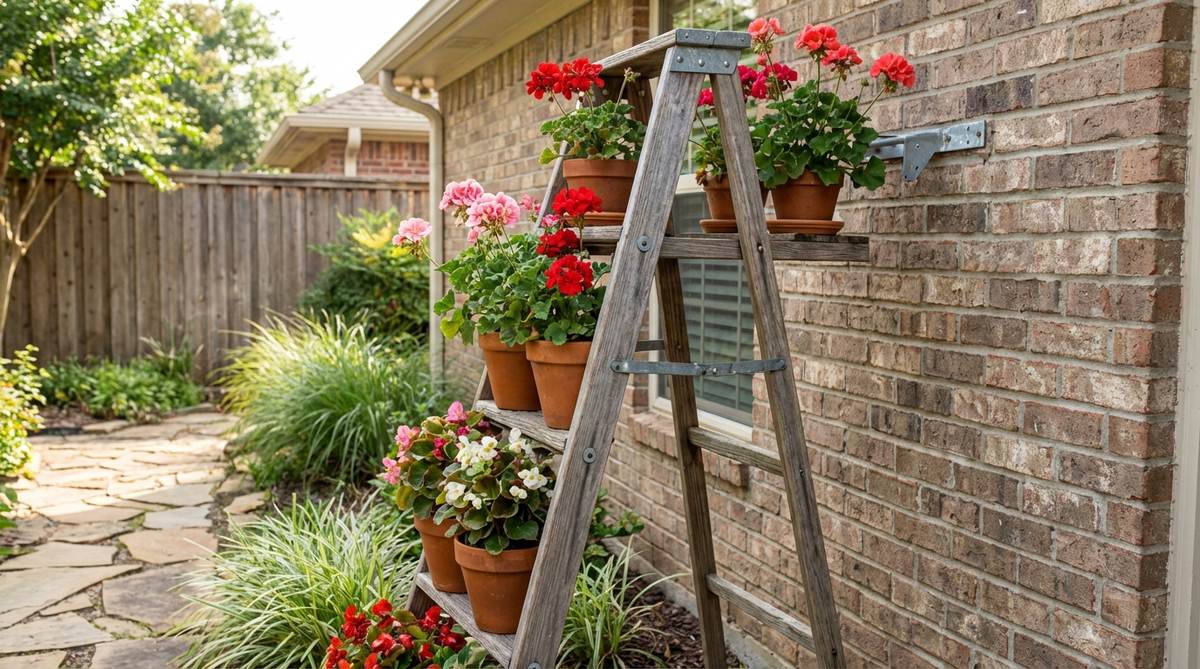
A-frame ladders or ladder-style shelving lean against walls to display potted plants at graduated heights. Painted wood ladders inject cottage garden charm while metal versions suit industrial-modern spaces.
Position shade-tolerant plants like begonias on lower rungs and sun-lovers including zonal geraniums near the top. Rotate pots 180 degrees weekly to promote even growth and prevent plants from leaning toward light sources.
Secure the ladder top to wall studs or masonry anchors to prevent toppling during wind events.
6. Hanging Basket Cascade
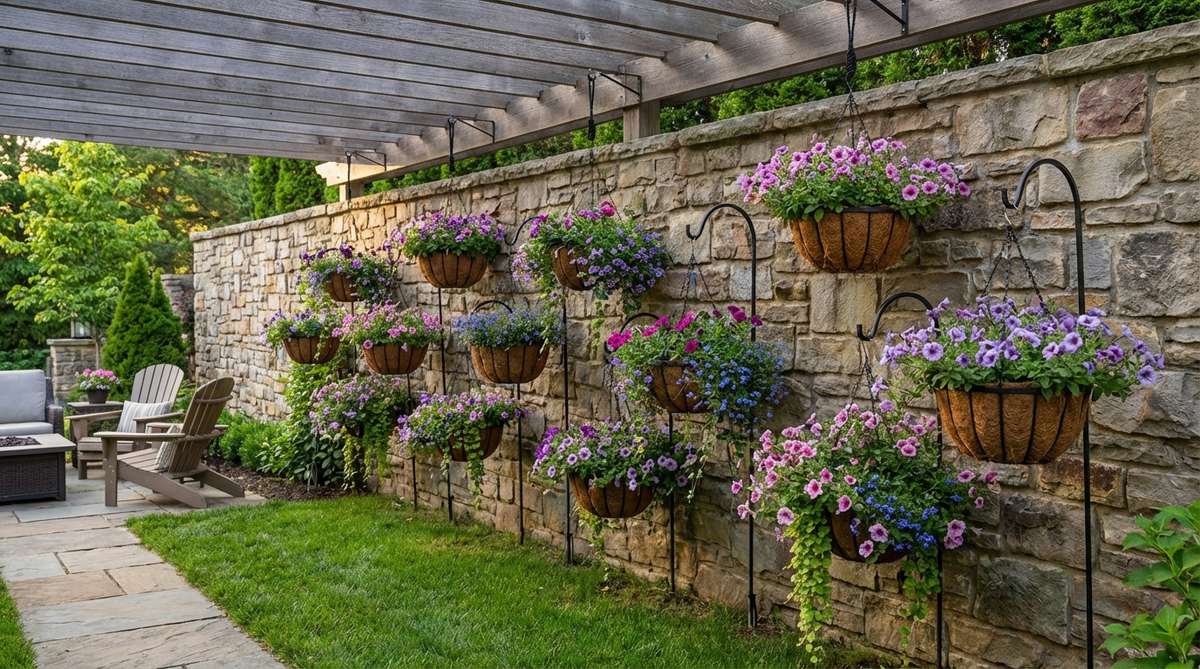
Shepherd hooks or ceiling-mounted brackets support baskets at staggered heights along a wall’s length. This creates a waterfall effect as trailing petunias, calibrachoa, and lobelia spill downward.
Space hooks 24-30 inches apart horizontally and vary heights by 12-18 inches vertically. Use chains or adjustable ropes to fine-tune positioning as plants mature and containers become heavier.
7. Gallery Wall with Mounted Pots
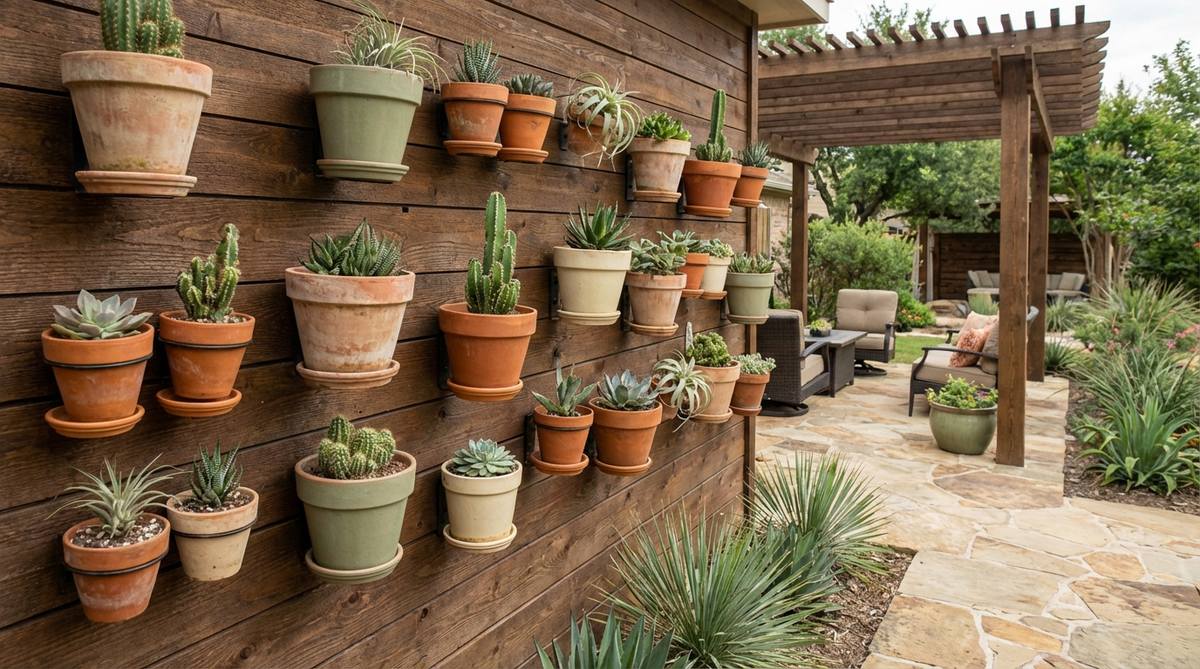
Arrange terracotta or ceramic pots with back-mounted hardware in an asymmetric pattern similar to indoor photo galleries. Smaller 4-inch pots cluster near larger 8-inch specimens to create rhythm without rigidity.
Drill drainage holes if they don’t exist and attach removable drip trays beneath each pot. Plant with low-maintenance succulents or air plants that tolerate brief dry periods between waterings.
Paint pot exteriors in coordinating colors or leave natural for rustic appeal depending on the surrounding garden style.
8. Gutter Garden Rows
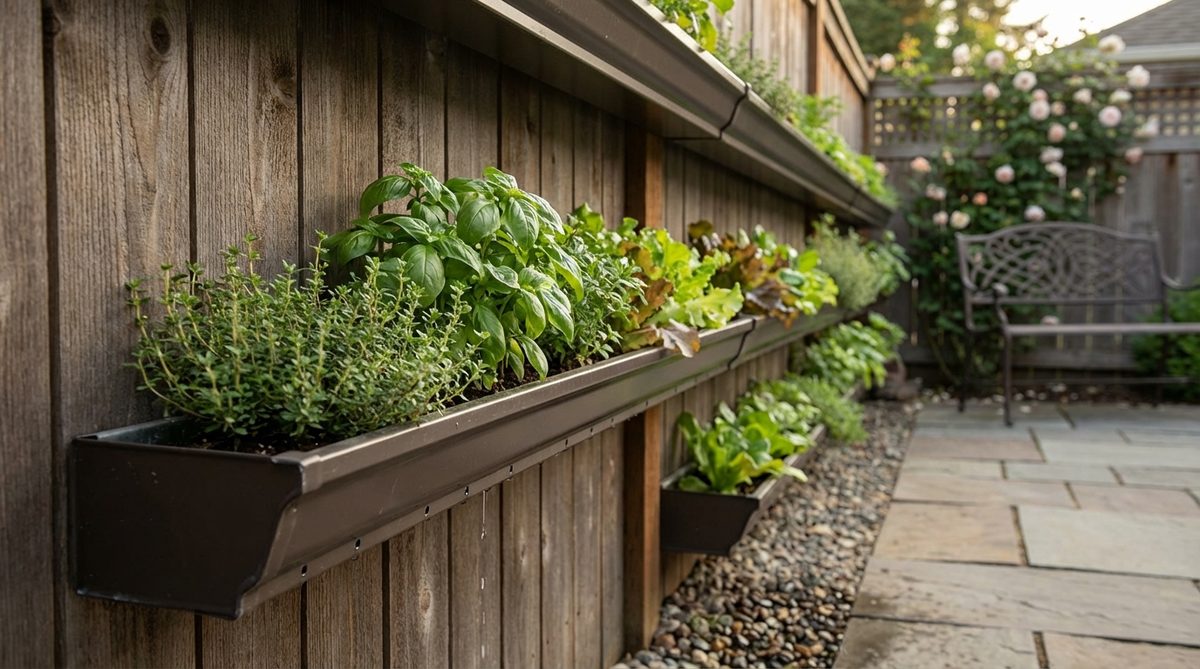
Vinyl or aluminum gutters mounted horizontally function as long, narrow planters ideal for shallow-rooted herbs and lettuces. The linear form emphasizes horizontal lines that counterbalance tall vertical elements nearby.
Install end caps with drainage holes spaced every 6 inches along the bottom seam. Mount gutters with a slight forward tilt so excess water drains away from the wall rather than pooling inside.
9. Repurposed Wooden Crate Shelving
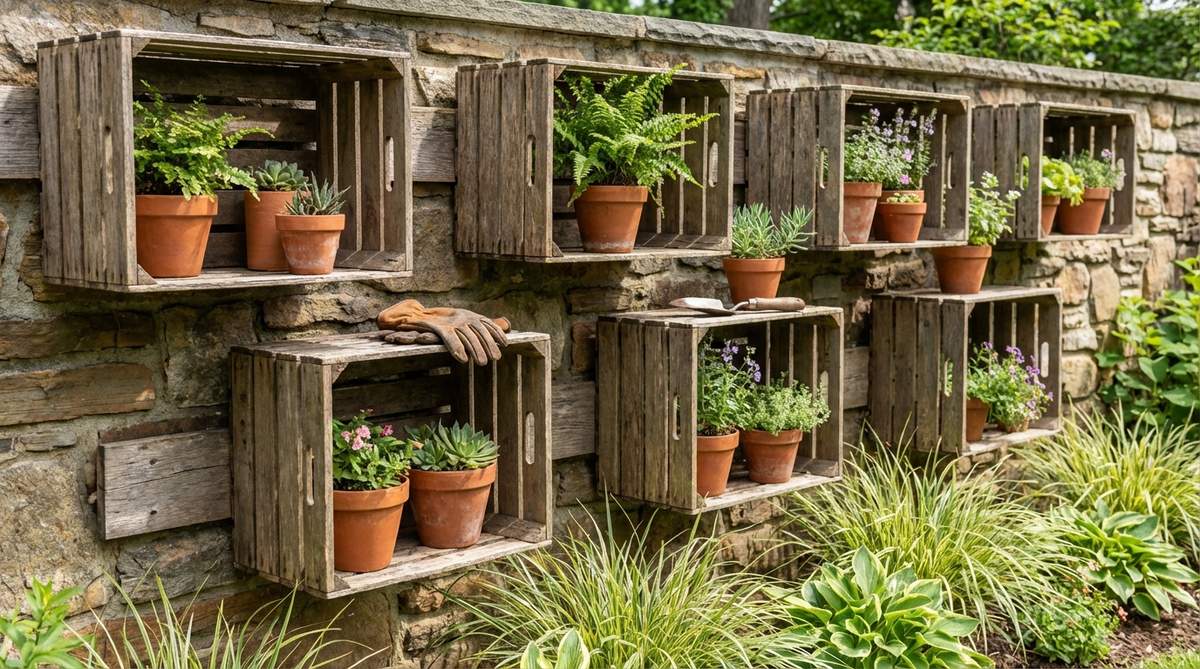
Vintage produce crates or wine boxes bolted to walls offer rustic charm and open storage for potted plants. The slatted construction provides airflow around containers while the weathered wood patina complements naturalistic plantings.
Line crate interiors with landscape fabric to prevent soil from sifting through gaps. Stack crates in offset patterns or align them for a more formal grid depending on your garden’s overall design language.
Metal Art and Sculpture Integration
Weather-resistant metal sculptures anchor garden decor walls with permanent focal points that complement seasonal plantings. Powder-coated steel and aluminum resist rust while maintaining intricate detailing through years of exposure.
10. Laser-Cut Botanical Silhouettes
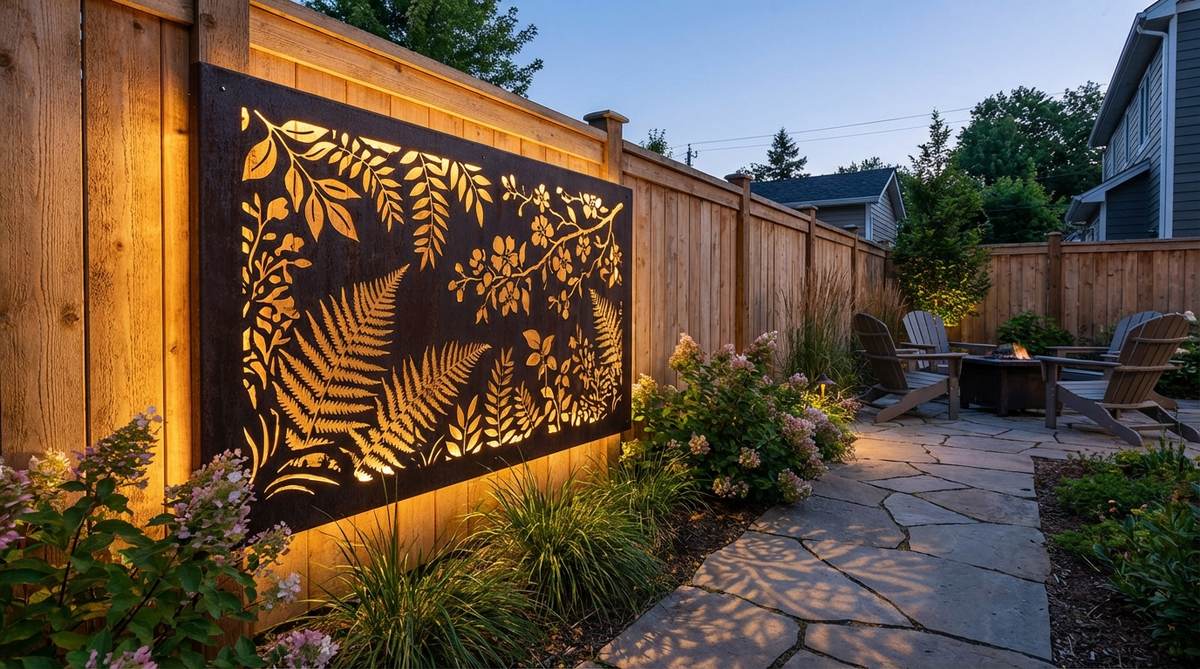
Large-scale leaf forms or floral outlines cut from 16-gauge steel create dramatic shadows against light-colored walls. Manufacturers typically apply black or rust-finish powder coating that develops additional character as the piece ages.
Position sculptures 2-3 inches off the wall using spacer washers so light penetrates behind the cutouts, intensifying the shadow effect during morning and evening hours. Surround with live plants that echo the sculptural forms—pair a metal fern silhouette with actual ferns planted below.
Single large pieces command attention on small walls while groupings of three or five create cohesive collections on expansive surfaces.
11. Three-Dimensional Metal Flowers
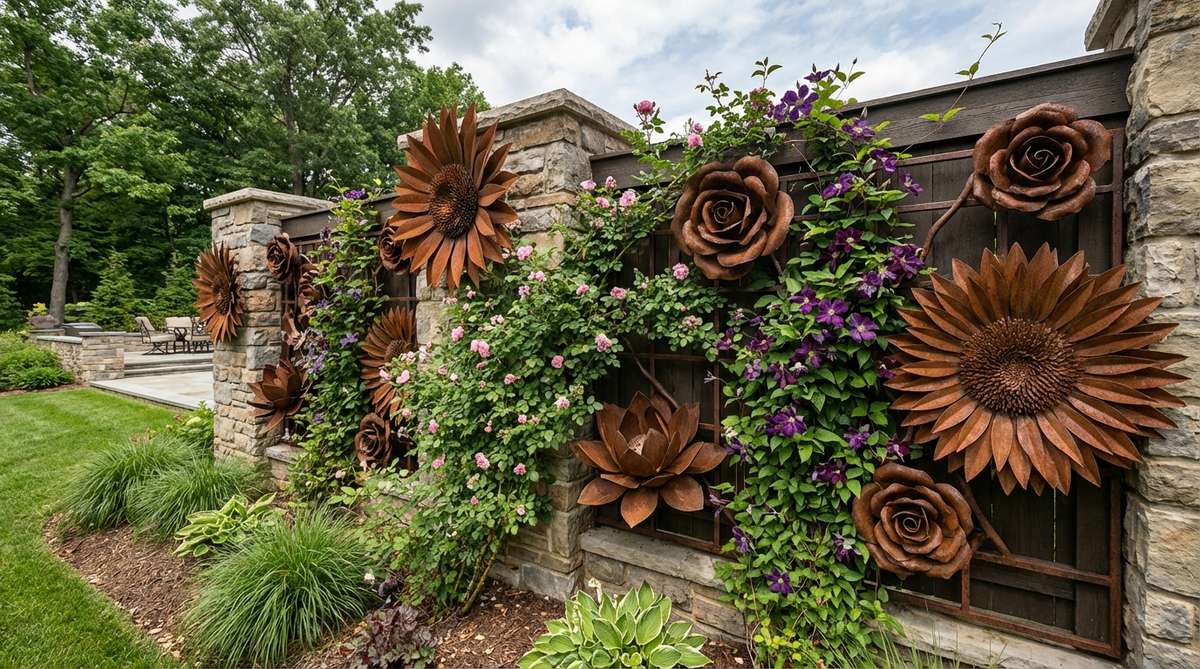
Sculptural blooms crafted from layered petals add dimensionality to flat walls. Sunflower, lotus, and rose designs range from realistic representations to abstract interpretations depending on fabrication style.
Install between climbing roses or clematis so living blooms intermingle with metal versions throughout the growing season. The sculptures maintain visual interest during dormant months when biological flowers have finished.
12. Geometric Metal Trellis Panels
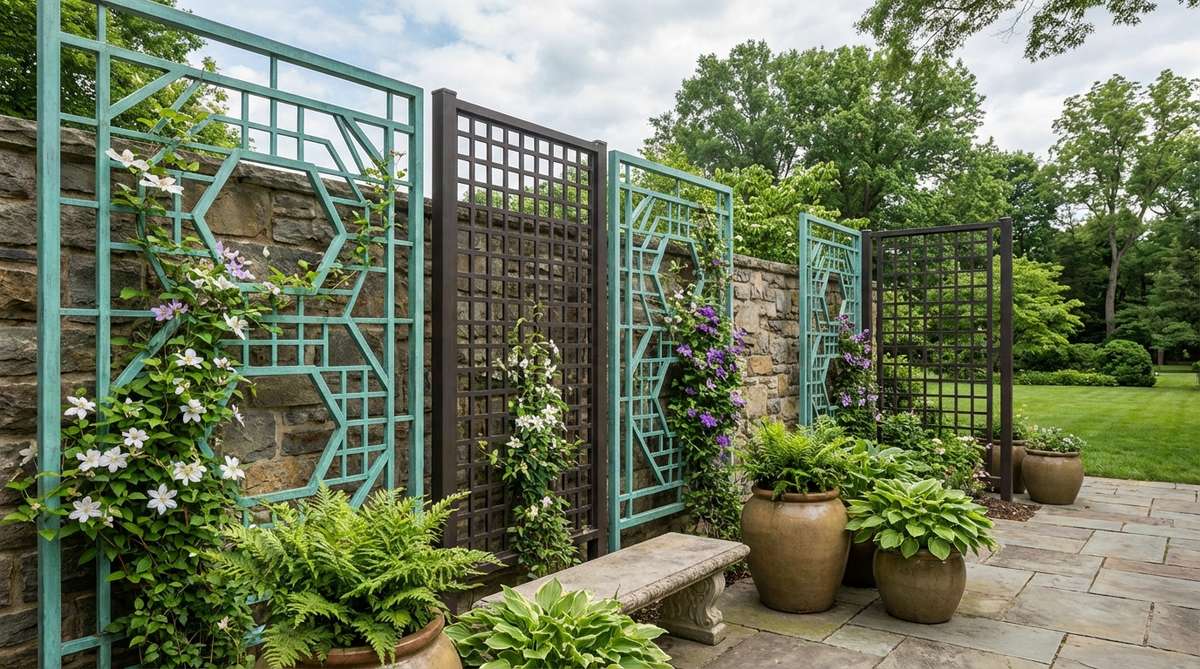
Square, hexagonal, or circular frames with interior lattice patterns function as both art and plant support. Powder-coated finishes in charcoal, bronze, or verdigris suit various color schemes.
Train twining vines like clematis or jasmine through the openings so foliage partially obscures the metal in summer while the trellis remains visible during winter. The geometric precision contrasts beautifully with organic plant growth patterns.
Multiple panels of identical design establish rhythm when spaced evenly across long walls or fence runs.
13. Animal and Wildlife Sculptures
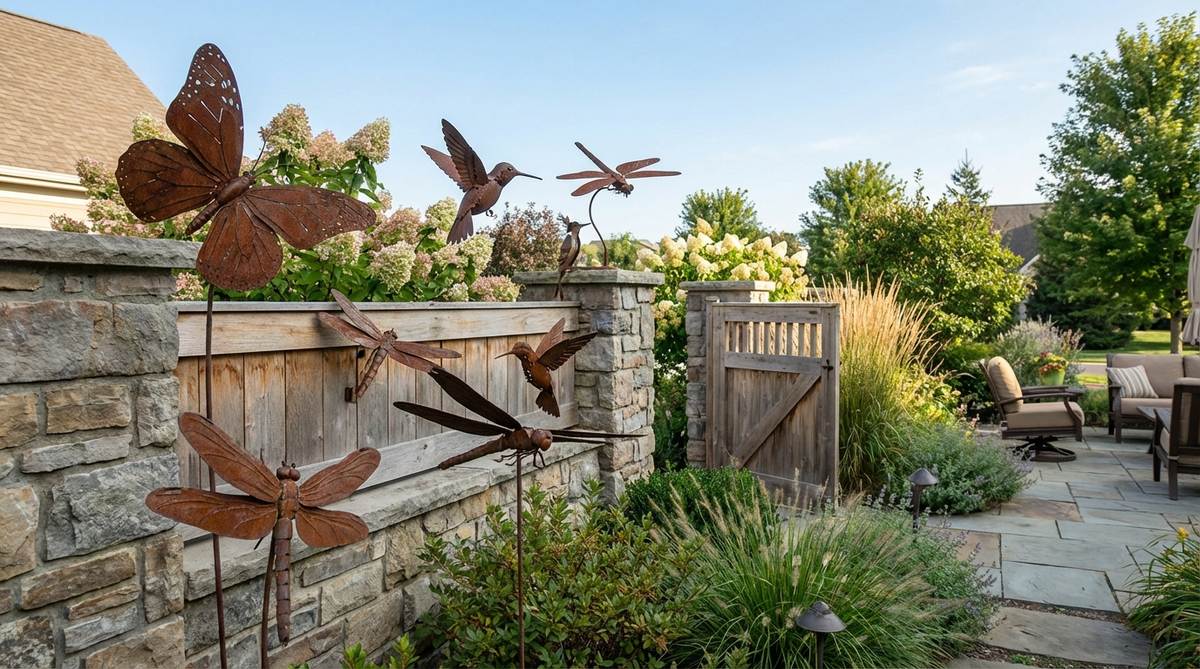
Butterflies, dragonflies, hummingbirds, and other garden fauna rendered in metal introduce whimsy and movement. These pieces often feature articulated wings or bodies that sway gently in breezes.
Cluster smaller butterflies in flights of five to seven specimens at varying heights to suggest natural behavior. Position larger heron or owl sculptures as singular statement pieces that anchor entire wall compositions.
14. Metal Wall Planters with Decorative Frames
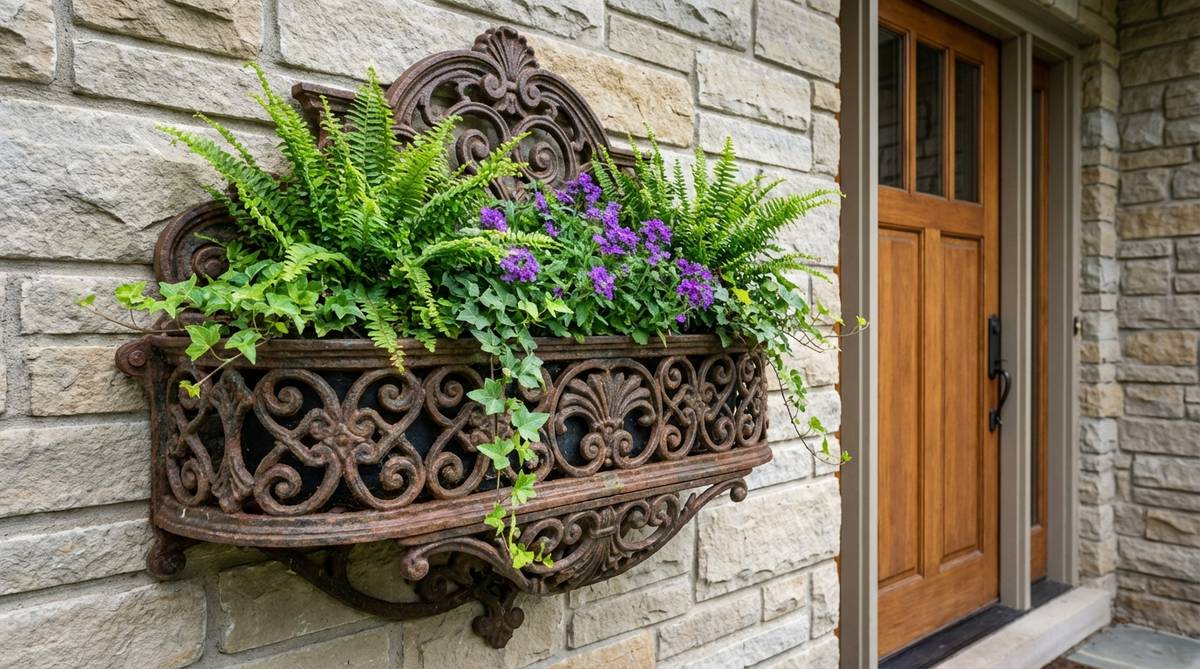
Planters surrounded by ornamental scrollwork or Arts and Crafts-inspired metalwork merge functional and decorative elements. The planter holds live plants while the surrounding frame reads as sculpture.
These work particularly well flanking doorways or windows where symmetrical placement enhances architectural features. Use identical plantings in mirrored units for formal balance or varied species for eclectic energy.
Mixed Media Display Concepts
Combining multiple materials and techniques generates visual complexity that holds viewer attention longer than single-medium displays. Successful mixed media walls balance rough and smooth textures, matte and glossy finishes, and living versus permanent elements.
15. Reclaimed Wood and Planter Combination
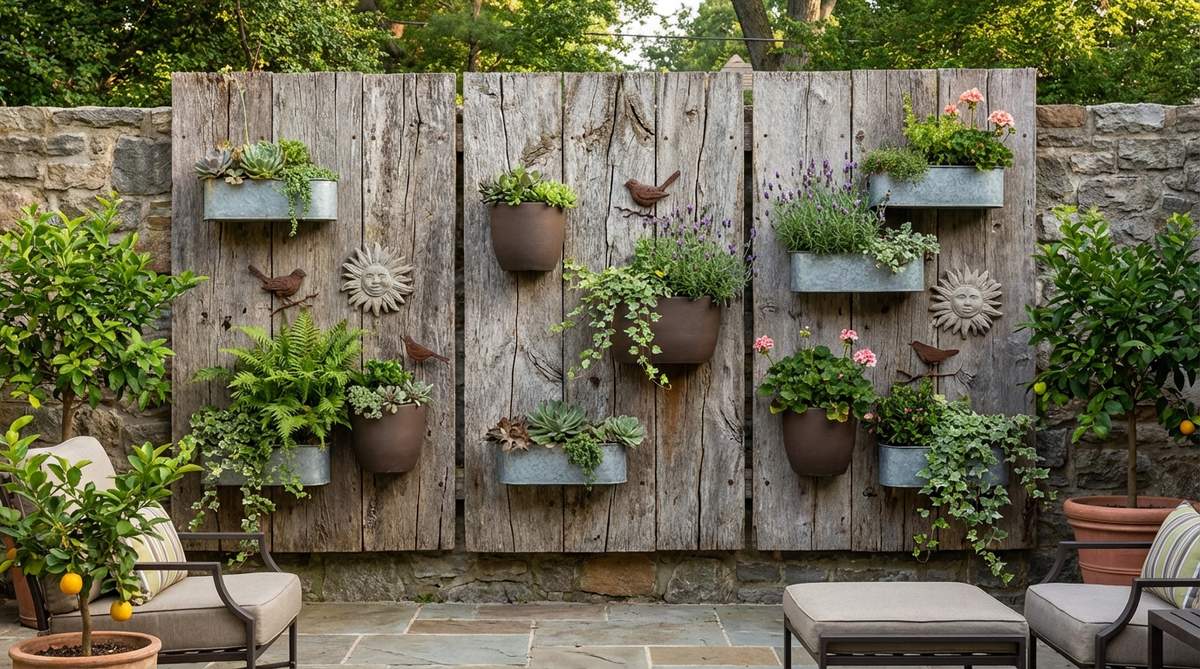
Weathered barn siding or pallet wood panels create textured backdrops for attached planters and small sculptures. The wood grain and aged patina provide organic warmth that softens contemporary planter materials.
Seal wood surfaces with exterior-grade stain to prevent accelerated decay while maintaining the weathered appearance. Mount small shelf brackets to support additional potted plants or garden ornaments at varying heights.
This approach works especially well when transitioning from wood deck railings or pergola posts to adjacent walls.
16. Mirror and Greenery Illusion
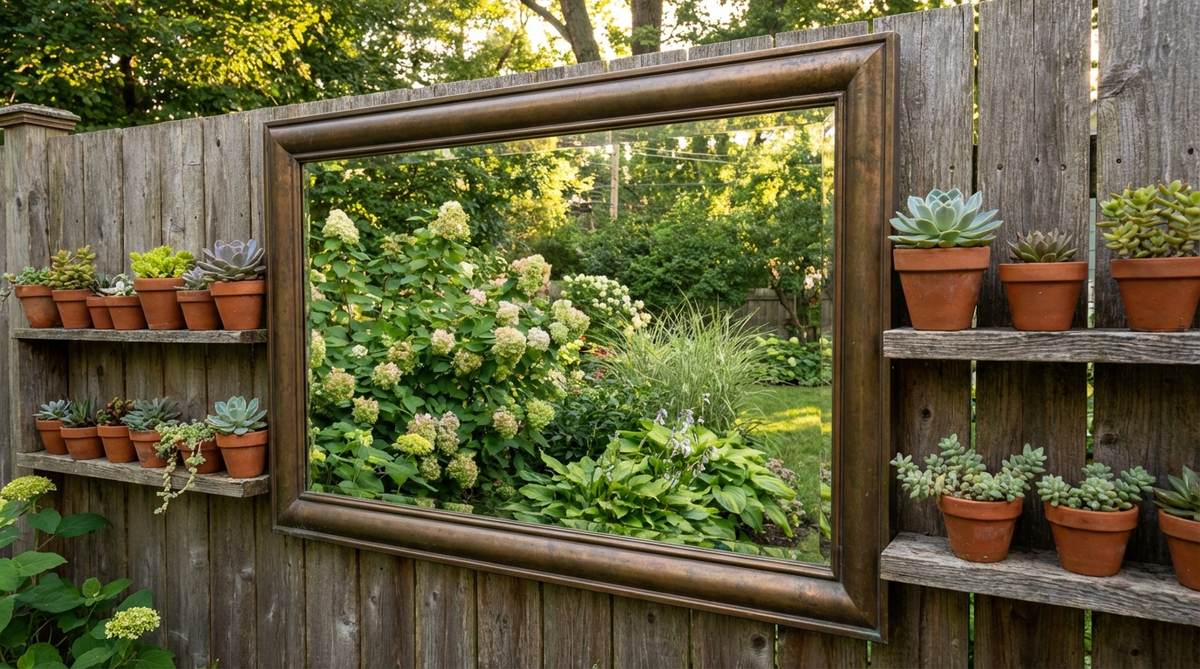
Weatherproof mirrors framed in rust-resistant materials reflect surrounding plants to visually double garden depth. Position mirrors to capture particularly attractive planting beds or water features.
Frame mirrors with narrow shelves or ledges that hold small potted succulents, creating the illusion that plants grow both in front of and behind the reflective surface. Clean glass monthly to maintain clarity and reflective properties.
17. Ceramic Tile Mosaic with Integrated Planters
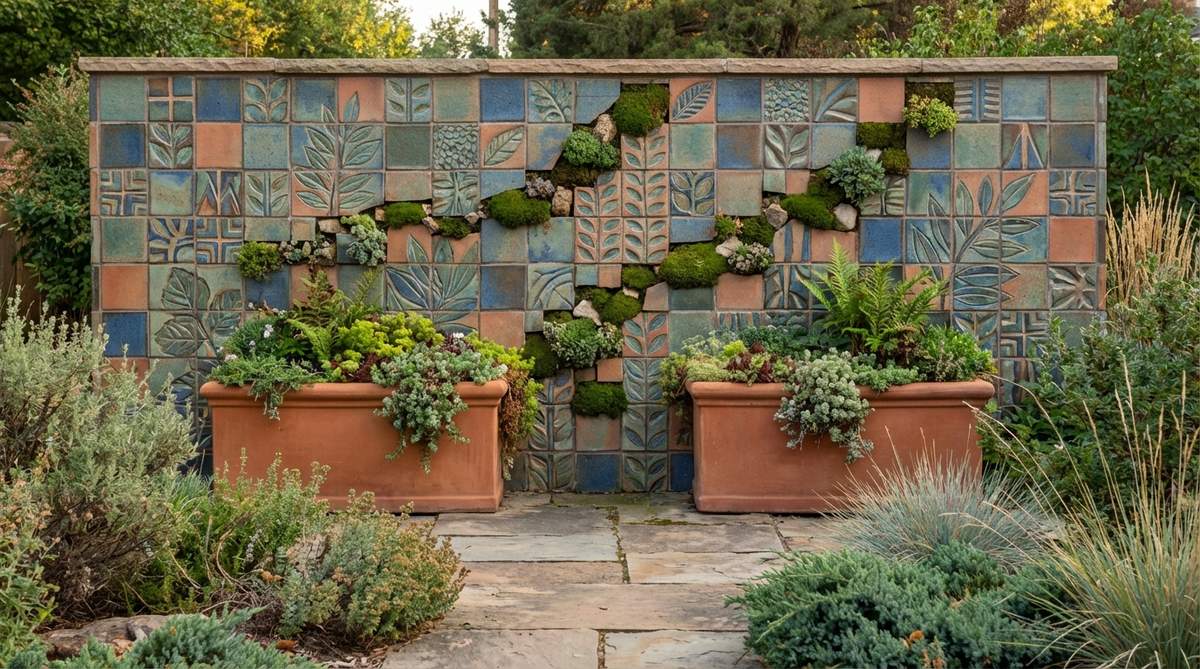
Frost-resistant ceramic tiles in botanical patterns or abstract designs form permanent artwork that contrasts with seasonal plantings. Grout lines create graphic structure that organizes surrounding organic forms.
Leave strategic gaps in tile layouts where small pockets hold alpine plants or moss. The juxtaposition of rigid geometric tiles and soft plant textures generates visual tension that energizes the composition.
Extend tile patterns vertically from built-in planter boxes to unify the lower planted zone with upper decorative areas.
18. Framed Succulent Living Pictures
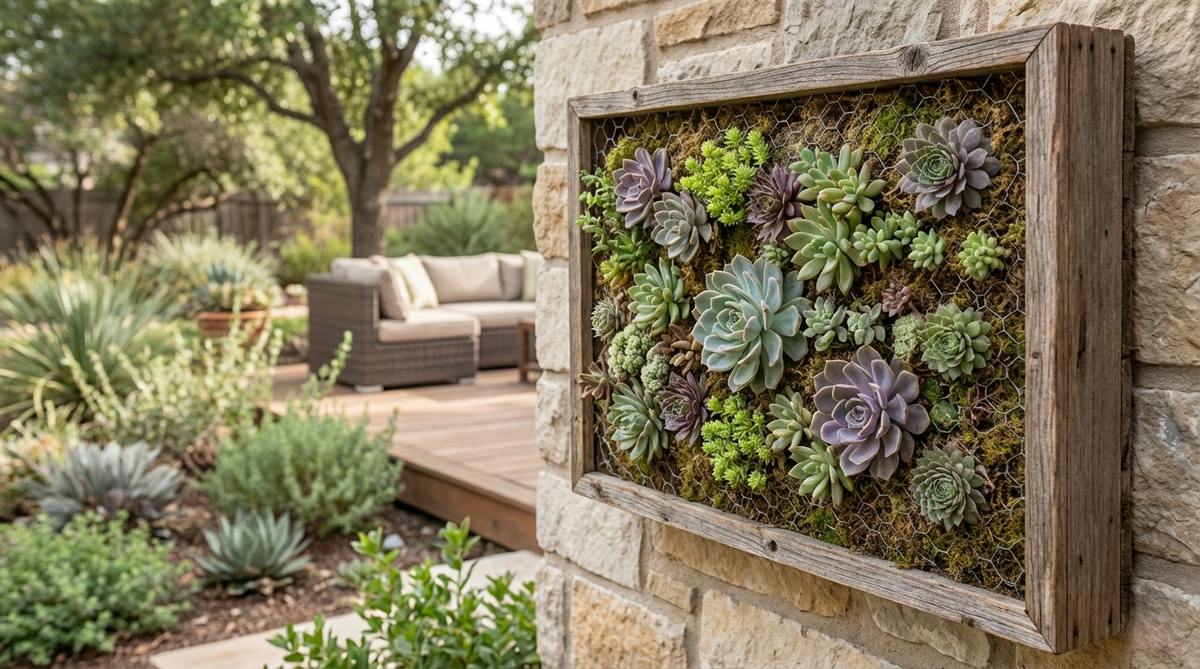
Shadow box frames with chicken wire or hardware cloth backing support shallow-rooted succulents planted directly into the frame. Once established, succulents root into added sphagnum moss and require minimal watering.
Hang frames vertically for the first month to allow roots to anchor before rotating to final display orientation. Arrange multiple frames in gallery-style groupings or use a single large frame as a focal point.
19. Outdoor Tapestry and Climbing Plant Combo
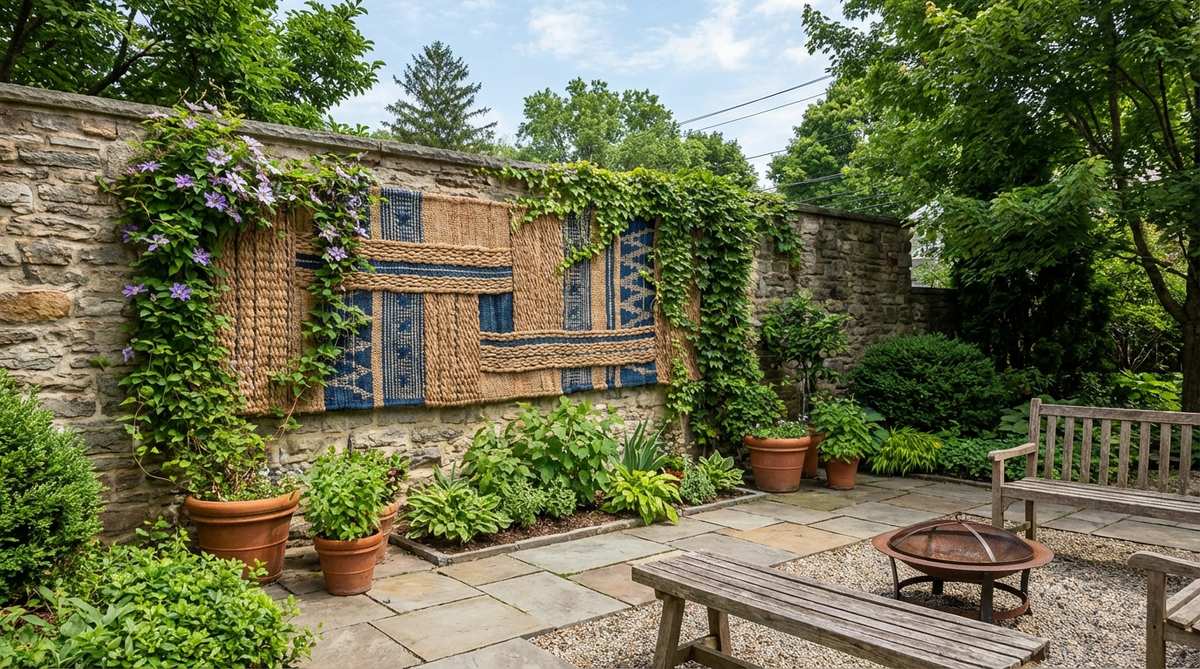
Weather-resistant fabric art or macramé wall hangings provide texture and color while vines planted below gradually intermingle with the textile. Select fade-resistant synthetic fibers designed for outdoor exposure.
Position plantings 12-18 inches from the wall base to give vines room to climb. As tendrils reach tapestry height, guide select strands to weave through the fabric while trimming others to maintain intentional separation between art and plant.
Edible Vertical Gardens
Functional gardens that produce herbs, vegetables, and edible flowers transform walls into productive spaces without sacrificing aesthetic appeal. Strategic plant selection ensures continuous harvest alongside visual beauty.
20. Tiered Herb Spiral Against Wall
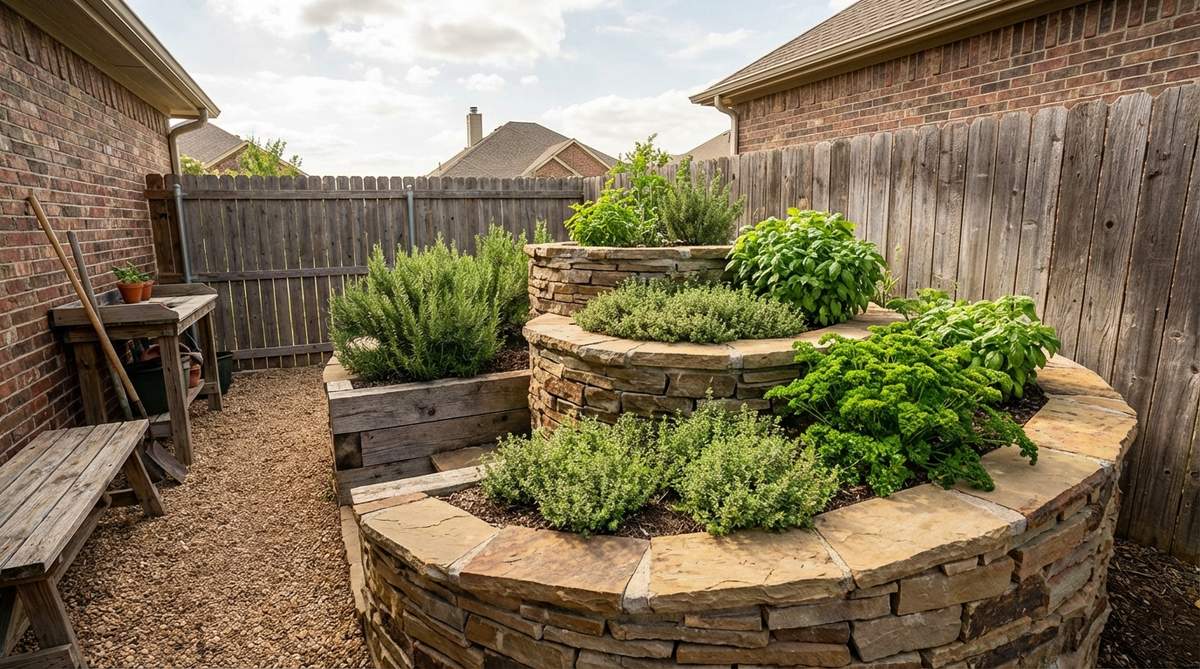
Ascending platforms filled with culinary herbs optimize sun exposure while creating dimensional interest. Position Mediterranean herbs like rosemary and thyme in upper tiers where drainage excels, while moisture-loving basil and parsley occupy lower levels.
Construct tiers from stacked stone, timber, or composite materials that match existing garden hardscape. The spiral configuration allows easy harvesting from all sides while the wall behind reflects heat to extend growing seasons.
Include flowering herbs like chive and oregano that attract beneficial pollinators while contributing edible blooms to salads.
21. Vertical Strawberry Tower
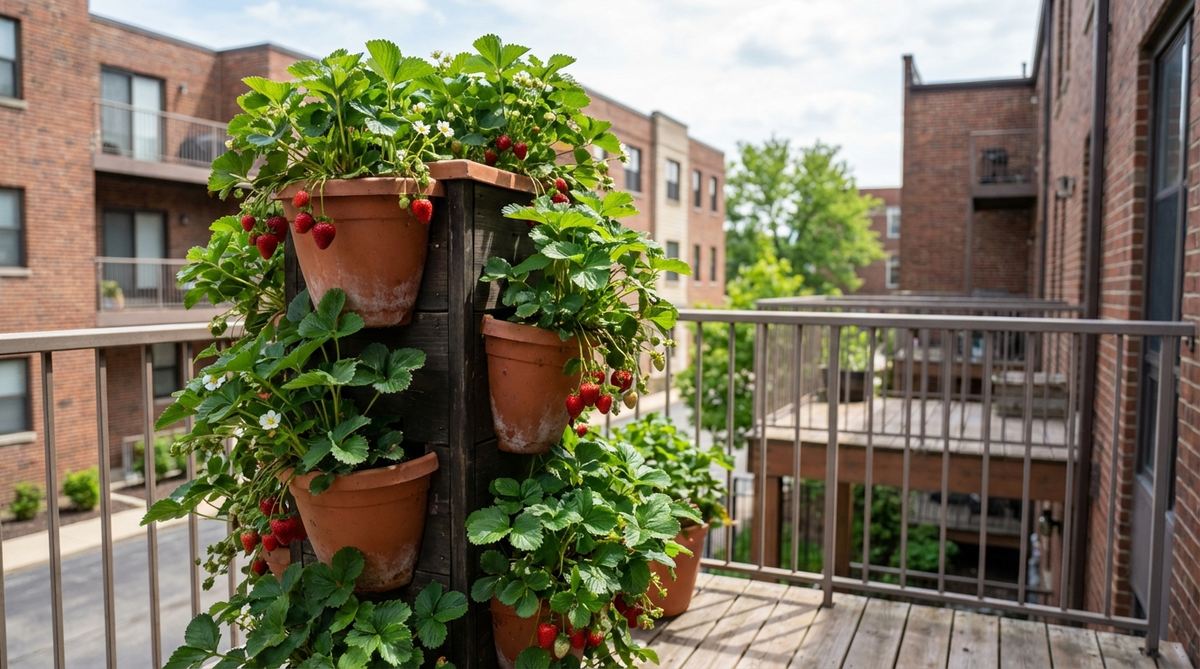
Cylindrical towers or stacked containers with side pockets position strawberry plants at eye level for effortless harvesting. The vertical orientation also protects ripening fruit from ground-dwelling pests.
Plant June-bearing varieties for concentrated harvests or everbearing types for continuous production. Position towers where they receive 6-8 hours of direct sun daily for optimal fruiting.
22. Salad Wall with Cut-and-Come-Again Greens
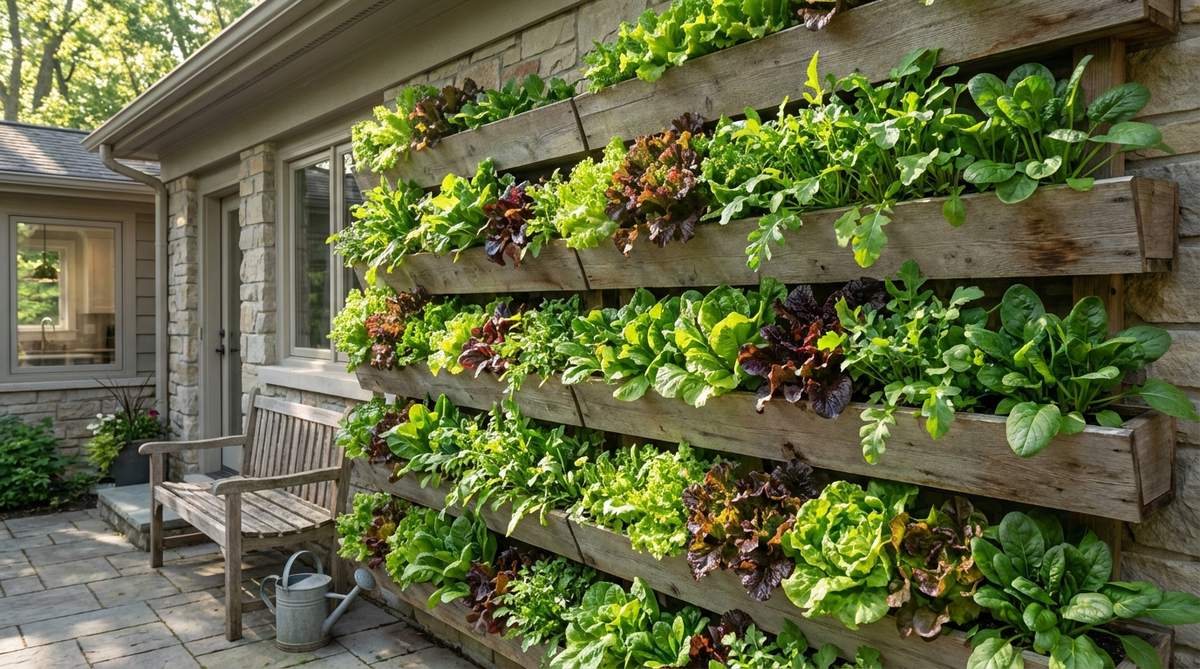
Shallow troughs planted densely with lettuce, arugula, and spinach provide fresh greens within steps of the kitchen. Harvest outer leaves regularly to promote continuous production throughout cool seasons.
Install troughs in locations that receive morning sun but afternoon shade during summer to prevent bolting. Replant every 4-6 weeks for succession harvests from early spring through late fall.
The varied leaf textures and colors of mixed lettuces create tapestry-like patterns that rival purely ornamental displays.
23. Climbing Bean and Pea Trellis Wall
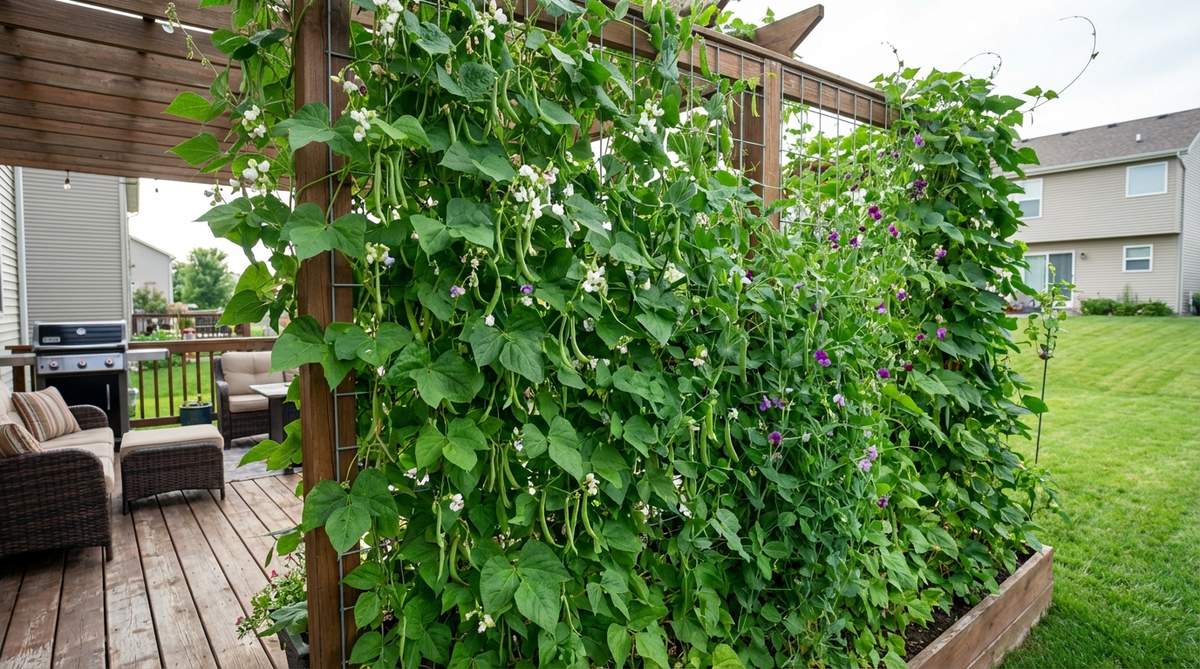
Tall trellises supporting pole beans, snap peas, and cucumbers maximize vertical production while their flowers and foliage provide seasonal beauty. White or purple bean blossoms attract pollinators before developing into harvestable pods.
String vertical wires or jute twine at 6-inch intervals to guide vines upward. The dense growth creates living privacy screens during peak summer months.
Seasonal and Color-Focused Displays
Intentional color palettes and seasonal rotation strategies maintain year-round interest and allow displays to celebrate specific times of year or design themes.
24. Monochromatic Green Living Wall
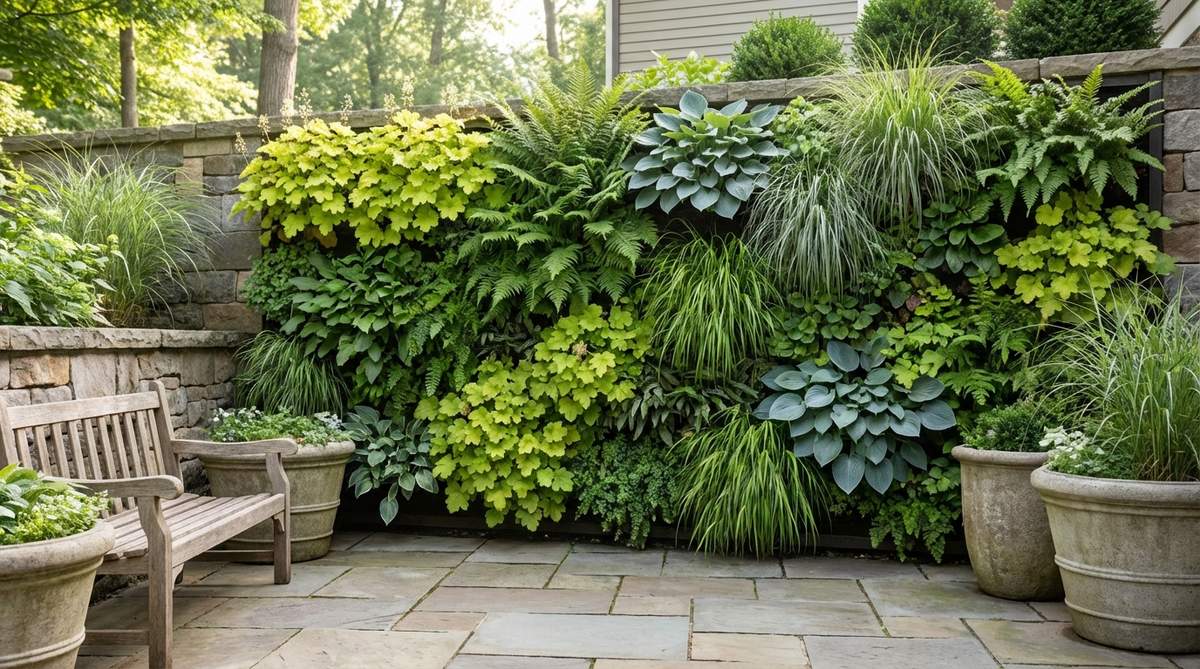
Exclusive use of foliage plants in varied green shades creates sophisticated, calming displays. Mix chartreuse heucheras, deep green ferns, and silvery-blue hostas to generate depth without introducing floral colors.
This palette suits modern minimalist gardens where plant form and texture take precedence over bright blooms. The limited color range allows intricate leaf shapes and growth habits to command full attention.
Supplement with architectural plants like ornamental grasses or sedges that add linear elements to rounded and ruffled foliage forms.
25. Hot Color Summer Wall
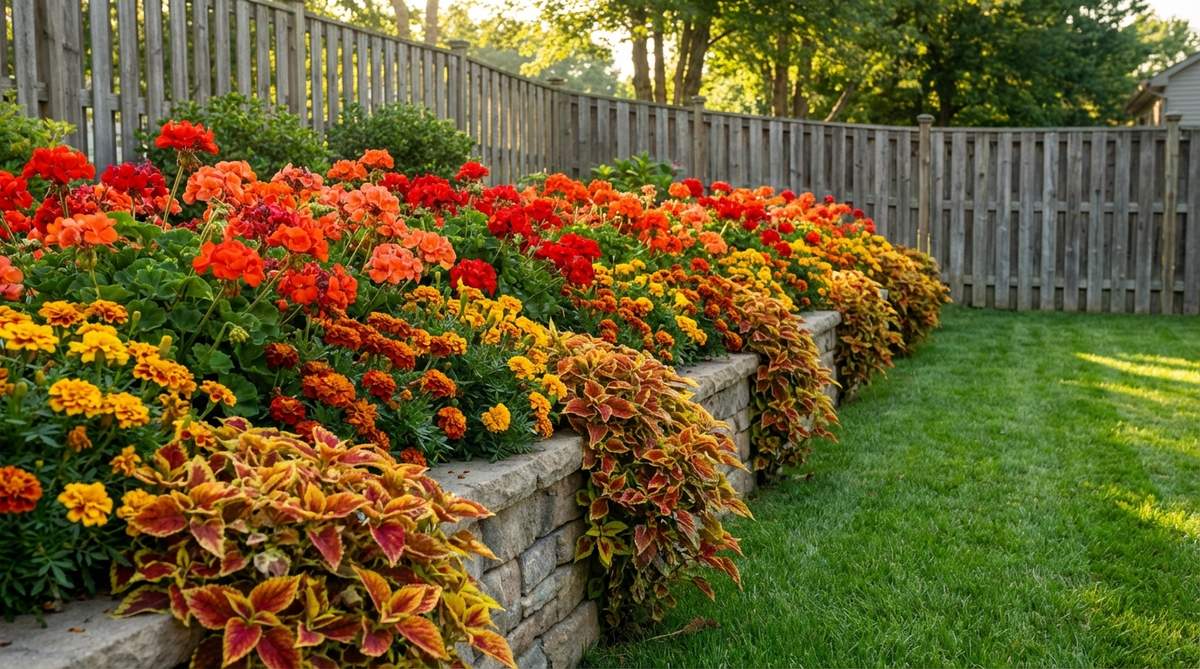
Fiery reds, oranges, and yellows clustered together amplify warmth and energy during summer months. Zonal geraniums, marigolds, and coleus in sunset hues create vibrant focal points visible from across the yard.
Position this palette where it receives afternoon sun to intensify already-bold colors. The warm tones visually advance, making walls appear closer and more prominent in the landscape.
26. Cool Tone Shade Garden Wall
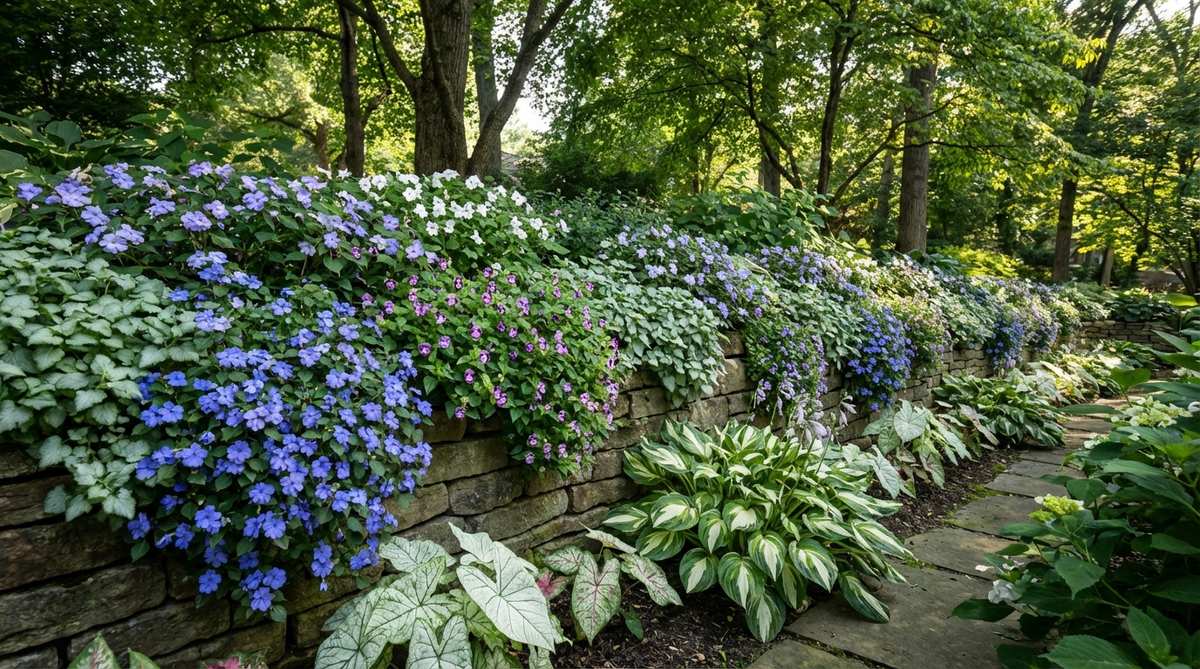
Blues, purples, and whites glow in low-light conditions where hot colors would disappear. Shade-tolerant impatiens, torenia, and browallia provide continuous bloom while silver-leafed lamium brightens darker corners.
Cool palettes create the illusion of additional depth, making small enclosed gardens feel more spacious. Add white-variegated hostas and caladiums to reflect available light and increase overall brightness.
27. Autumn Harvest Wall Display
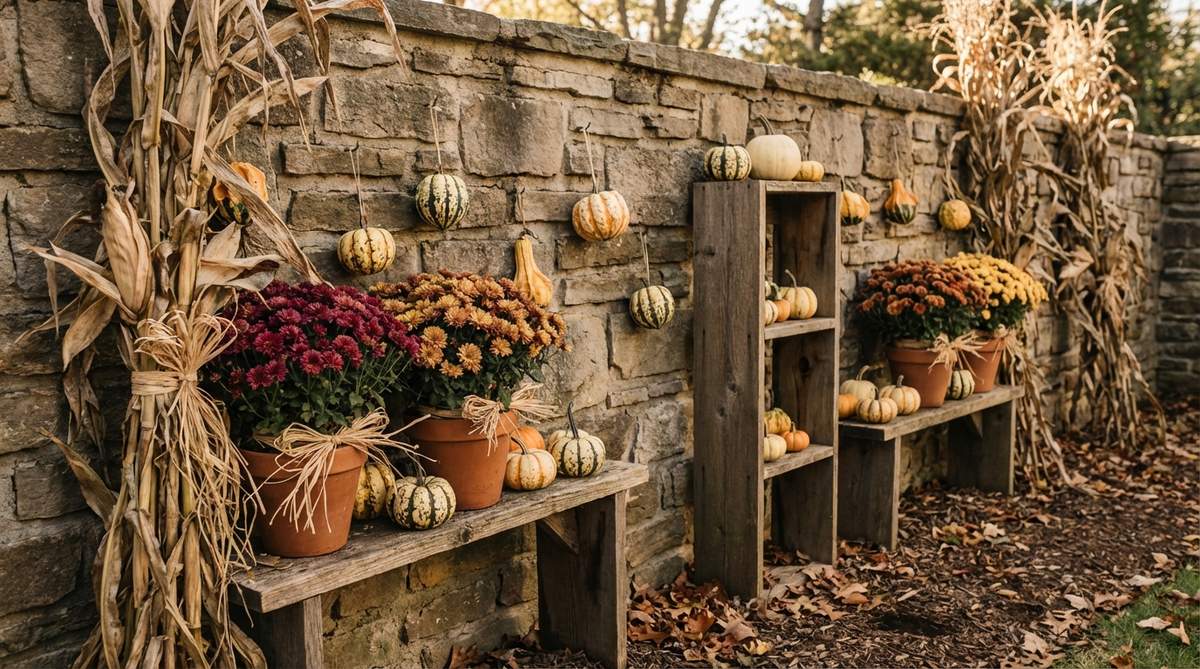
Transition displays in September by incorporating ornamental gourds, dried corn stalks, and fall-blooming asters. Mums in bronze, burgundy, and gold replace summer annuals while maintaining color saturation.
Attach small gourds directly to walls using removable adhesive hooks or display them on integrated shelving. The seasonal shift celebrates harvest traditions while refreshing the garden’s appearance before winter dormancy.
28. Winter Evergreen and Berry Display
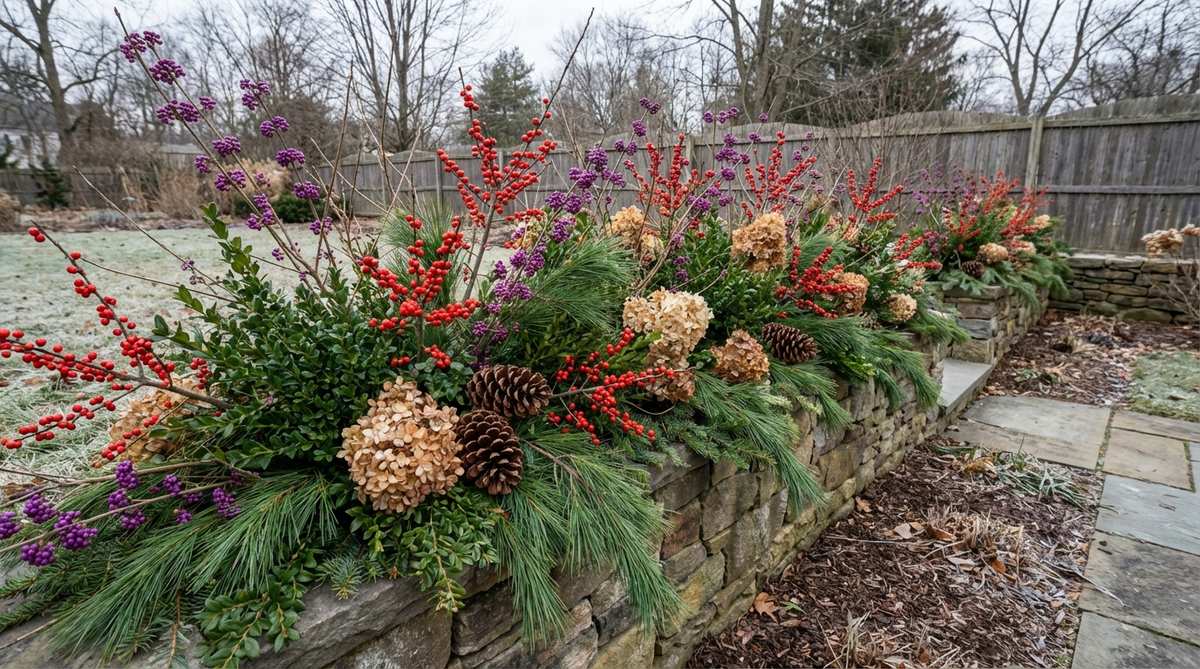
When herbaceous plants die back, evergreen branches, berry-laden stems, and sculptural seed heads maintain structure and interest. Clip boxwood, holly, and pine boughs to mount temporarily in planters or attach directly to walls.
Add branches with persistent berries like winterberry holly or beautyberry for color pops against evergreen backgrounds. Incorporate decorative elements like pine cones or dried hydrangea blooms that withstand freeze-thaw cycles.
This approach bridges the gap between autumn color and spring emergence while requiring minimal maintenance during the dormant season.
Conclusion
Successful garden decor wall designs balance structural permanence with seasonal flexibility, allowing core elements to anchor displays while plantings evolve throughout the year. Start with one or two concepts that align with your available sunlight, maintenance capacity, and aesthetic preferences, then expand gradually as you identify what thrives in your specific microclimate. The most effective walls combine personal style with practical considerations, creating outdoor spaces that deliver both visual pleasure and functional benefits season after season.
Frequently Asked Questions
What plants work best for vertical garden walls in partial shade?
Shade-tolerant options include ferns, hostas, heucheras, impatiens, begonias, and coleus. These species tolerate 3-4 hours of direct sun or dappled light throughout the day while maintaining healthy growth and foliage color. Mix upright forms like ferns with trailing varieties such as ivy or creeping jenny to create textural variety. Rotate containers quarterly to ensure even growth since wall-mounted plants often lean toward available light sources.
How do I prevent water damage to walls from vertical planters?
Install planters on furring strips or mounting brackets that create a 1-2 inch air gap between containers and wall surfaces, allowing moisture to evaporate rather than accumulate. Use planters with built-in drip trays or attach separate catch basins beneath each unit. Apply waterproof membrane or exterior-grade paint to wall surfaces before installation. For heavy irrigation needs, consider self-watering systems with reservoirs that minimize overflow and runoff.
Can metal garden art withstand extreme weather conditions?
Quality metal art constructed from powder-coated steel or aluminum resists rust, fading, and structural degradation through years of outdoor exposure. Powder coating creates a barrier against moisture while UV-resistant pigments prevent color loss. In coastal areas with salt exposure, rinse sculptures quarterly with fresh water to remove corrosive residue. Secure all pieces with appropriate hardware rated for your region’s wind loads to prevent displacement during storms.
How often should I water plants in vertical wall displays?
Watering frequency depends on container size, plant selection, sun exposure, and season. Small pockets and shallow troughs dry faster than deep planters, often requiring daily watering during summer heat. Install drip irrigation on timers to automate delivery and maintain consistent moisture levels. Group plants with similar water needs together to simplify scheduling. Check soil moisture by inserting a finger 1-2 inches deep—water when soil feels dry at that depth.
What is the ideal height range for garden decor wall displays?
Position primary visual elements between 4-6 feet high where they fall naturally within the viewer’s sight line from typical standing and sitting positions. Extend displays from 2-8 feet total height to create vertical interest without requiring ladders for routine maintenance. Reserve the lowest 18 inches for trailing plants that soften the base transition and the highest zones for low-maintenance permanent sculptures or seasonal decorations that need infrequent attention.