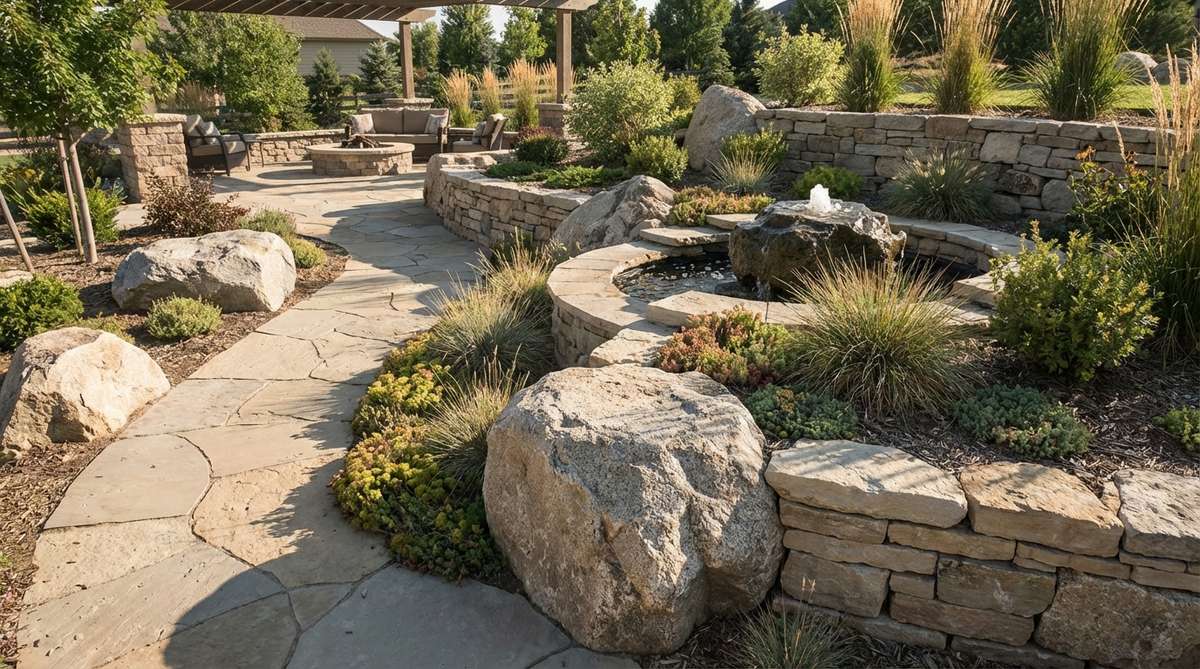
Garden decor stone transforms ordinary outdoor spaces into striking landscapes through strategic use of natural materials and textured surfaces. These versatile elements—from boulders and pathways to walls and water features—add structure, focal points, and year-round visual interest with minimal maintenance. Fresh Garden Ideas presents this comprehensive guide to incorporating stone and masonry into your garden design, offering practical solutions for both functional needs and aesthetic appeal.
Design SnapshotKey Principles
- Scale and Proportion: Match stone size to your garden’s dimensions—larger boulders anchor spacious areas while smaller stones accentuate pathways and beds
- Texture Contrast: Combine smooth river rock with angular granite or rough fieldstone to create dynamic visual layers
- Strategic Placement: Position heavy elements first, partially bury larger stones for natural integration, and use odd-numbered groupings for organic appearance
- Functional Beauty: Select stone features that serve dual purposes—erosion control, drainage improvement, habitat creation, and decorative impact
Structural Stone Foundations for Landscape Architecture
Foundational stone elements establish the framework of your garden while addressing practical challenges like drainage, erosion, and grade changes. These permanent installations anchor the design and create definition between distinct garden zones.
1. Boulder Retaining Walls
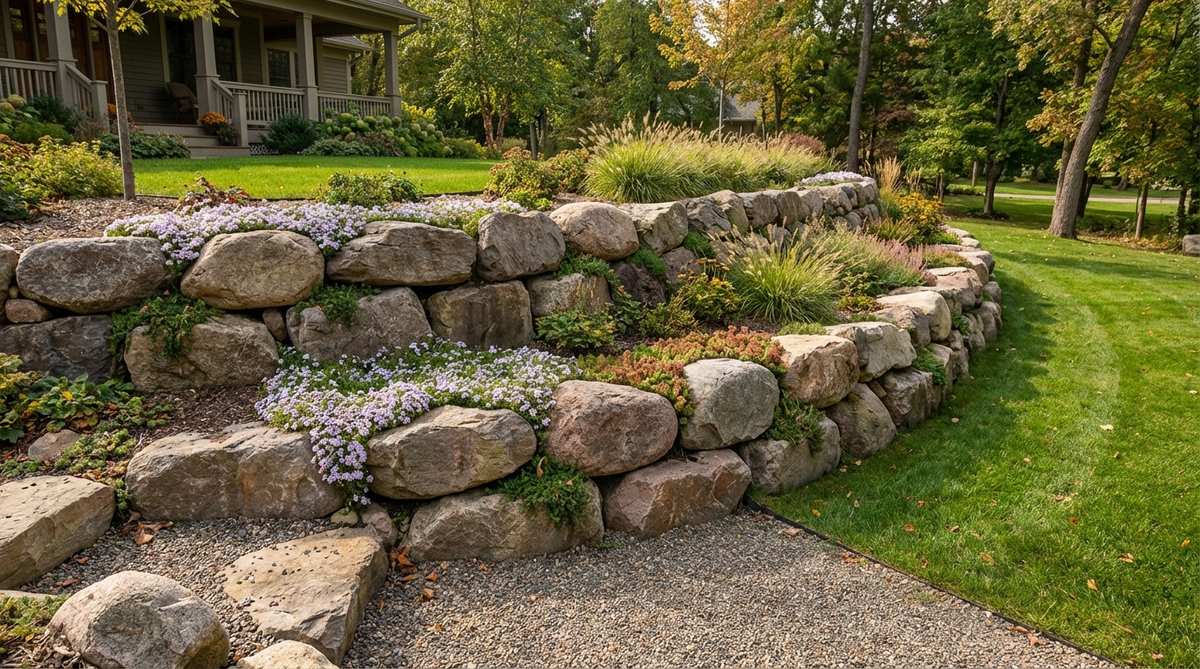
Large fieldstone boulders stacked in tiered formations create dramatic retaining structures on sloped properties. The irregular surfaces and varied sizes produce a rugged, mountain-inspired aesthetic that appears as though the stone emerged naturally from the earth.
Position the largest boulders at the base, setting them 30-40% below ground level for stability. Fill joints between stones with soil pockets to accommodate alpine plants, creeping thyme, or sedums that soften the hard edges.
These walls control erosion while creating elevated planting beds with improved drainage. The stone absorbs heat during the day and releases it slowly, extending the growing season for adjacent plantings.
2. Dry-Stacked Stone Walls
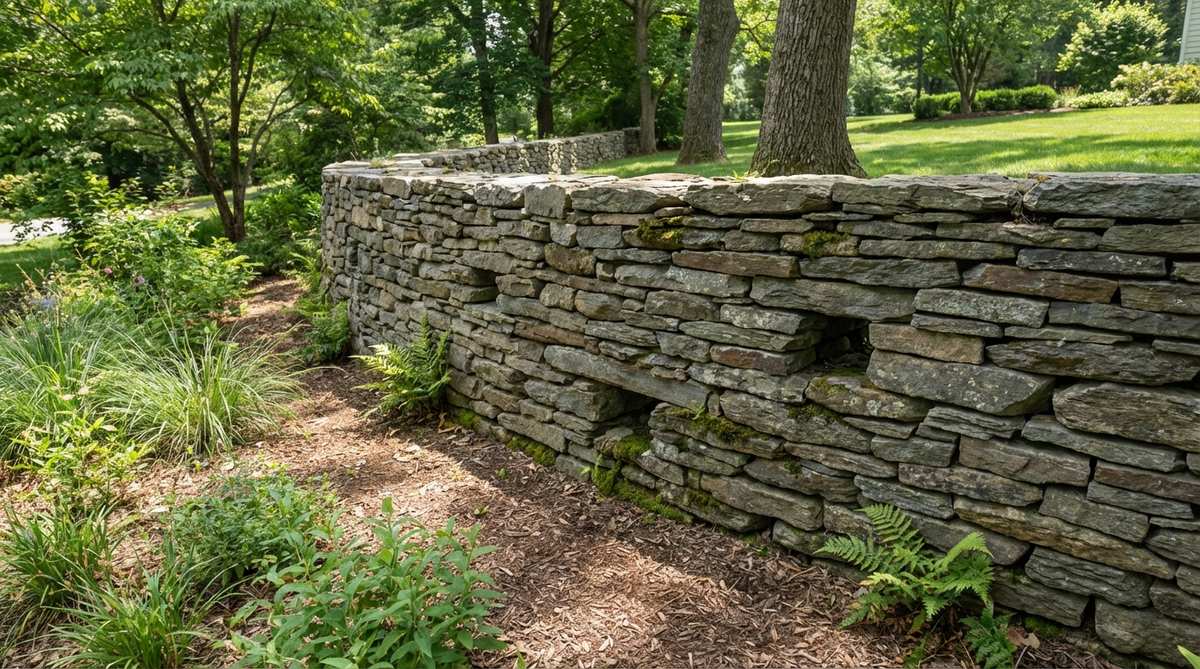
Traditional fieldstone walls assembled without mortar showcase centuries-old masonry techniques. The gravity-based construction allows for slight movement and drainage, preventing frost heave damage in cold climates.
Select flat-faced stones with relatively uniform thickness for easier stacking. Overlap joints like brickwork, ensuring no vertical seams align between courses for maximum structural integrity.
The gaps between stones provide habitat for beneficial insects, small reptiles, and cavity-nesting pollinators. This permeable structure allows water to flow through rather than pooling behind the wall.
3. Granite Boulder Clusters
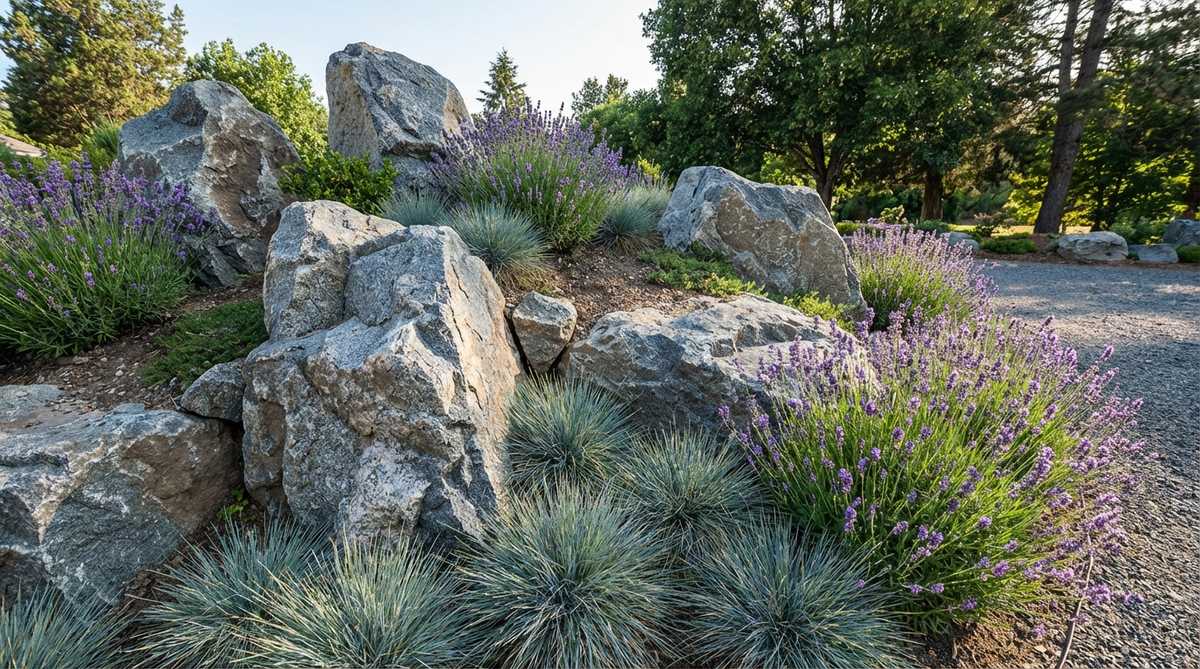
Groups of three to seven granite boulders arranged in asymmetric clusters create powerful focal points in lawn areas or at garden entries. The crystalline structure of granite catches light differently throughout the day, producing subtle color shifts from charcoal to silver-gray.
Excavate and bury the bottom third of each boulder to mimic natural stone outcroppings. Vary the heights and positions, placing the largest stone off-center with smaller specimens grouped around it.
Surrounding plantings should remain low and fine-textured—ornamental grasses, lavender, or prostrate junipers—to emphasize the boulder mass without competition.
4. Limestone Block Terraces
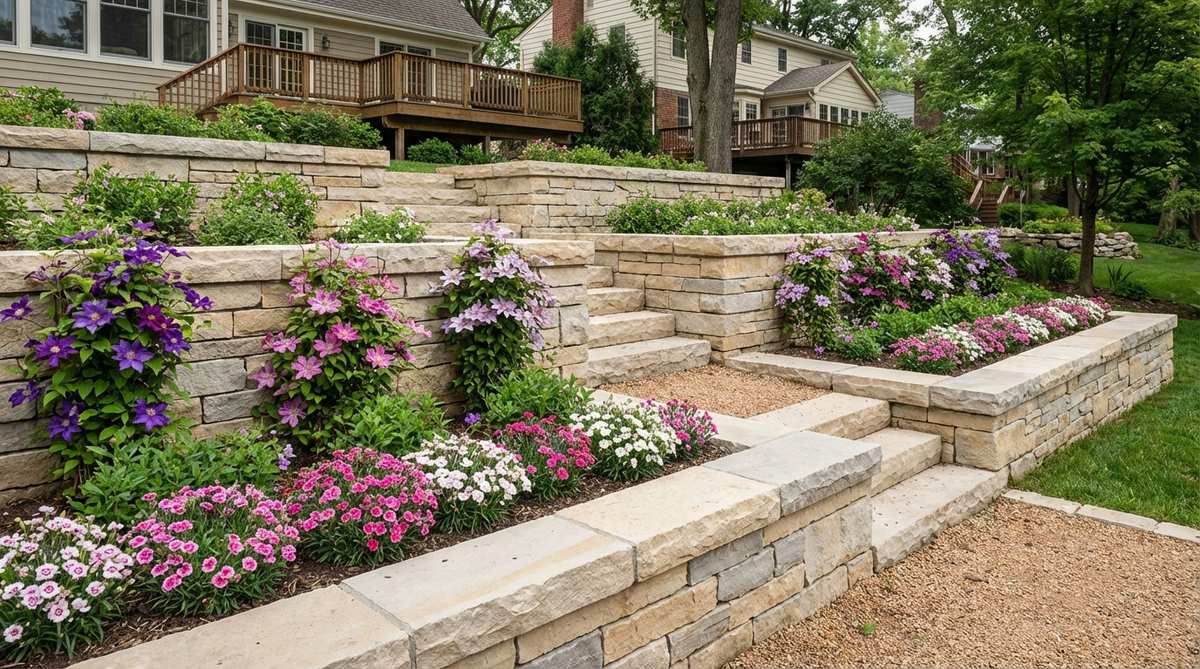
Cut limestone blocks form clean-lined terraces that transform steep slopes into usable planting areas. The warm beige to gray tones complement both traditional and contemporary architecture.
Install a compacted gravel base beneath the first course, then stack subsequent layers with a slight backward lean. Use construction adhesive between courses for permanence in high-traffic areas.
Limestone’s alkaline nature gradually influences surrounding soil pH, favoring plants like clematis, dianthus, and lilacs. The blocks weather beautifully, developing a soft patina over time.
Garden Decor RocksBorders, Edging, and Accent Features
Smaller-scale stone elements define garden beds, create visual boundaries, and add textural interest without overwhelming the landscape. These applications work particularly well in mixed borders and cottage-style gardens.
5. River Rock Borders
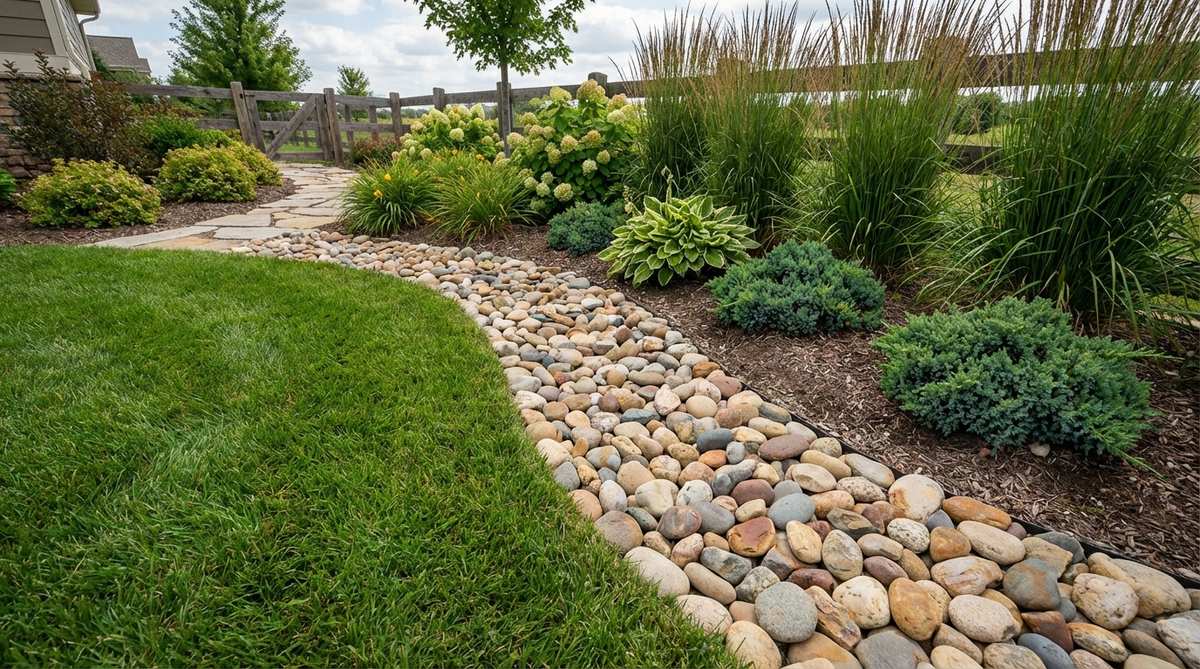
Smooth, water-worn stones ranging from 2 to 6 inches create flowing borders along planting beds and pathways. The rounded forms and neutral tones—tan, gray, rust, and cream—provide a calming visual transition between lawn and garden.
Excavate a shallow trench 4-6 inches deep and line it with landscape fabric to prevent stone migration into soil. Arrange rocks in a single layer, positioning flatter specimens on top for a finished appearance.
These borders suppress weeds, retain soil moisture, and prevent mulch from washing into lawn areas. The stone stays cool underfoot, making it comfortable for barefoot garden walks.
6. Stacked Slate Edging
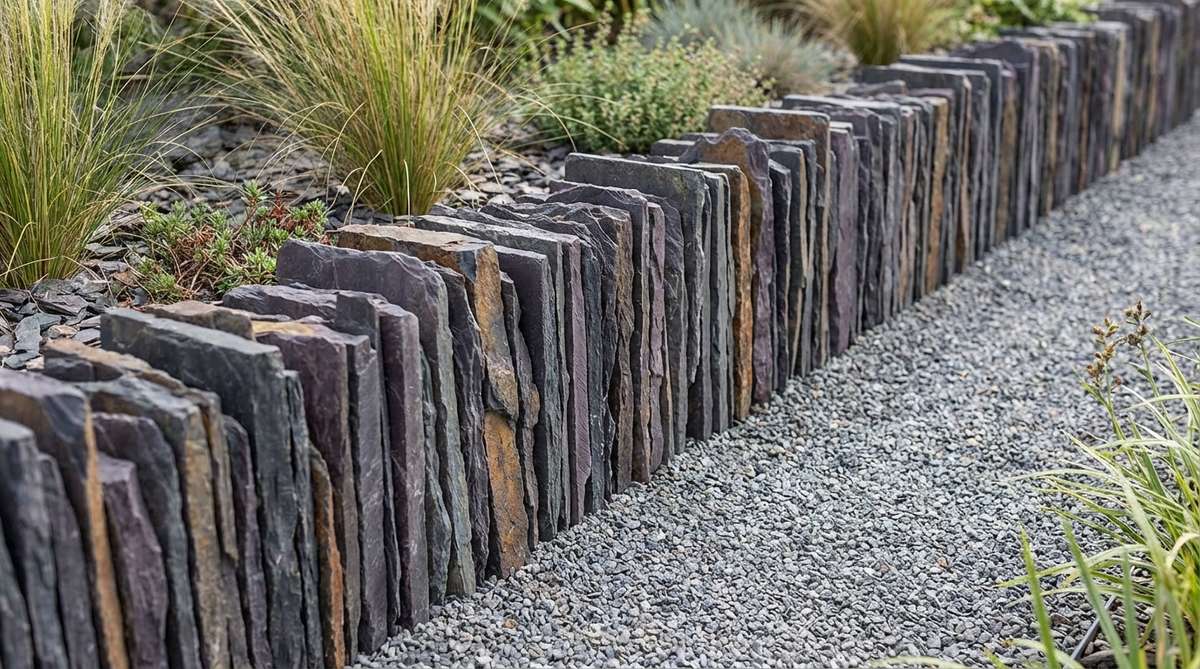
Thin slate pieces stood on edge and partially buried create refined garden borders with vertical interest. The layered sedimentary structure produces natural color variations from charcoal to purple-gray with rust accents.
Bury slate pieces 3-4 inches deep at a slight angle for stability. Overlap edges irregularly rather than creating uniform spacing for a more organic appearance.
This edging style works particularly well in contemporary gardens or alongside gravel pathways where the vertical lines add architectural definition.
7. Cobblestone Accents
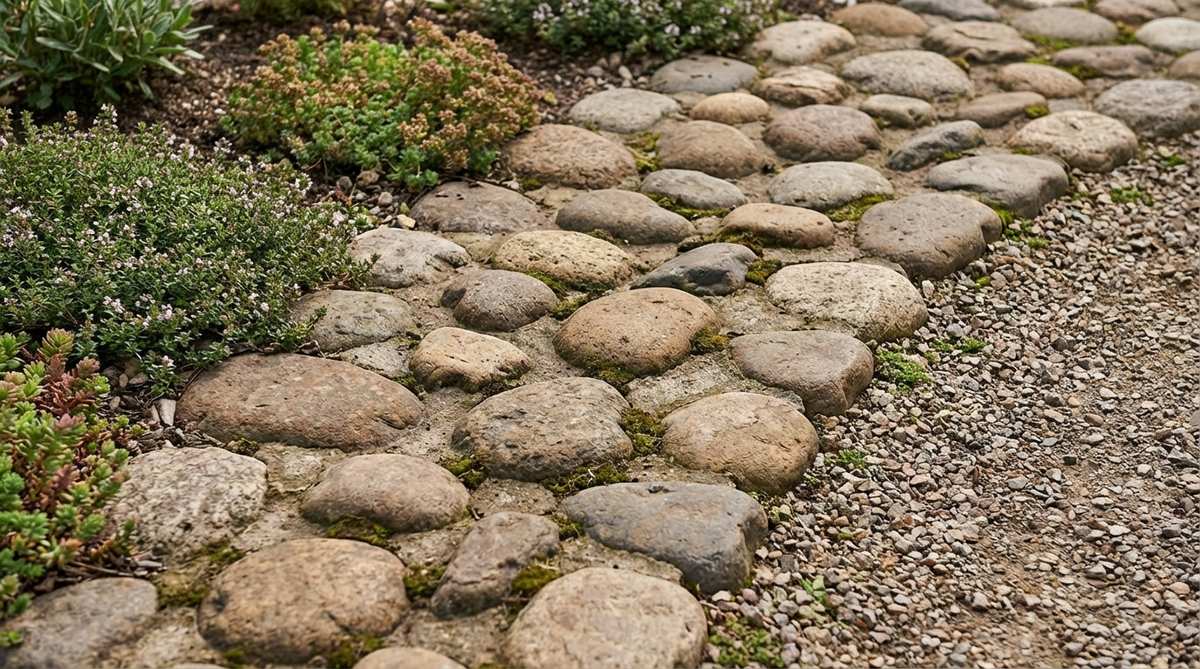
Rounded cobblestones ranging from 3 to 10 inches diameter add Old World charm when used as borders or accent features. The hand-placed stones create an artisanal quality that references historic street paving.
Set cobbles in mortar or concrete for formal borders, or place them loose in compacted gravel for a more casual appearance. Arrange them in single rows or double courses for varied visual weight.
The dimensional quality of cobblestones creates small shadow pockets that enhance depth perception and add visual texture to flat garden areas.
8. Basalt Column Markers
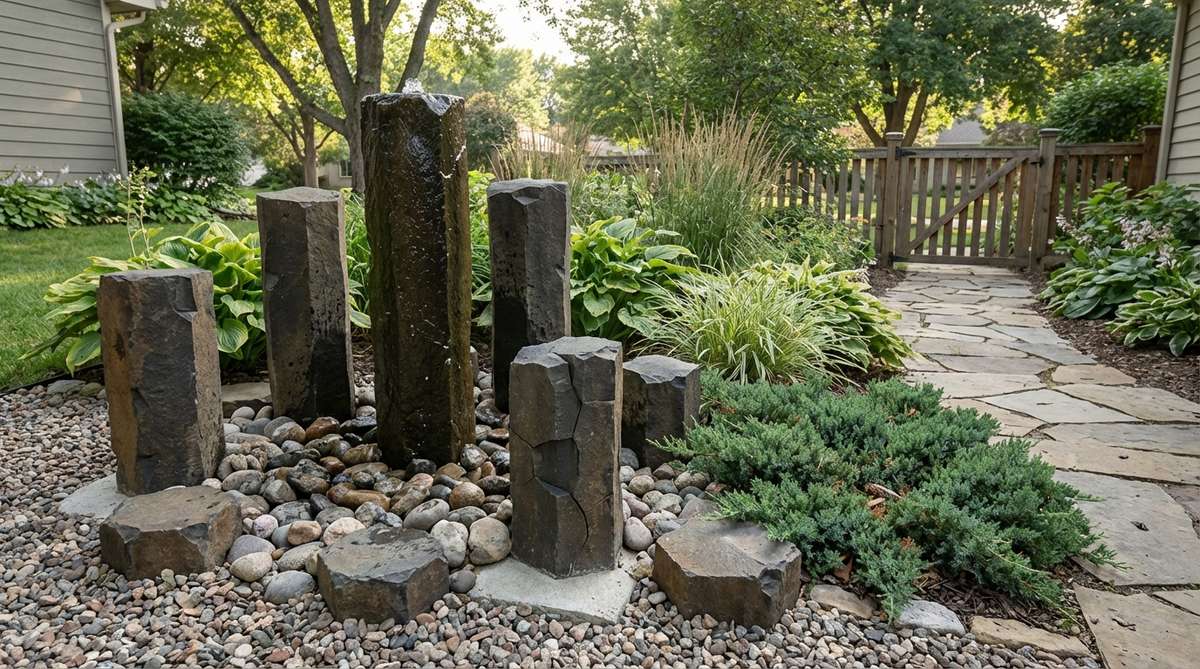
Vertical basalt columns in heights from 18 to 48 inches function as garden punctuation marks. The dark volcanic stone provides dramatic contrast against green foliage and lighter-colored aggregates.
Bury the bottom 20% of each column in concrete footings for stability in high-wind areas. Position columns individually as focal points or in small groups to define entry zones.
The natural hexagonal fractures in basalt create subtle geometric patterns that add visual sophistication. Water features paired with basalt columns produce particularly striking effects as water films over the dark stone surface.
9. Flagstone Medallions
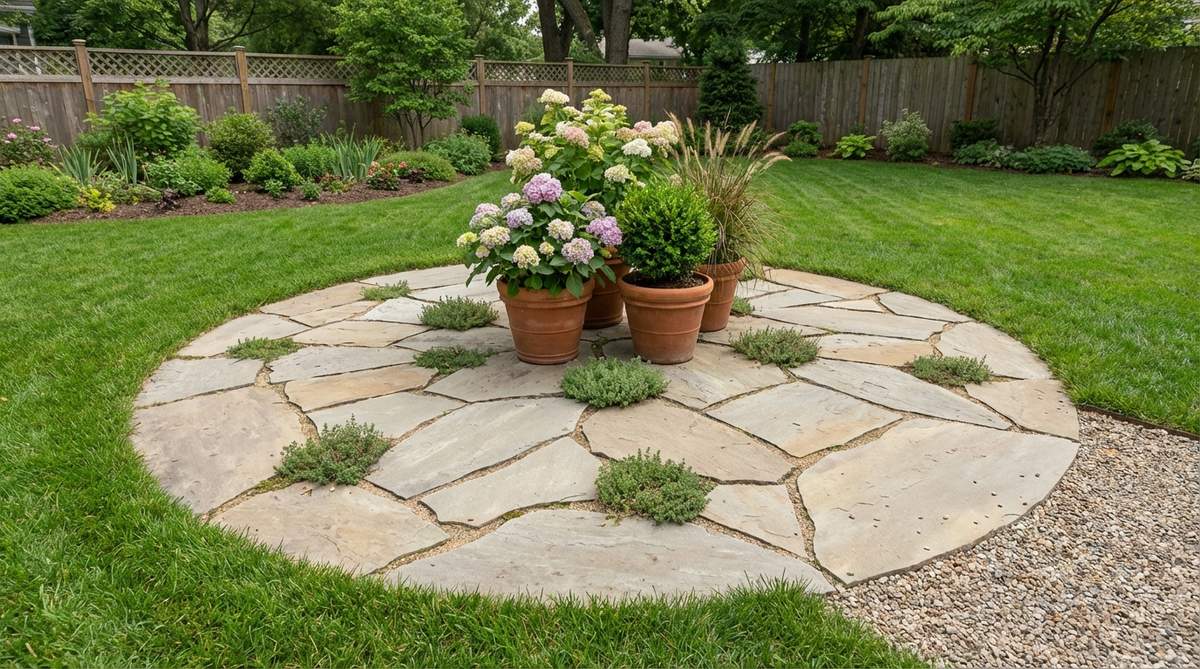
Circular arrangements of flagstone pieces create decorative medallions within lawn areas or at pathway intersections. The flat stones fit together like a puzzle, with minimal joints between pieces.
Excavate a circular area 2-3 inches deep, add a sand base, and arrange flagstone pieces from the center outward. Fill joints with polymeric sand or plant low-growing thyme varieties for living joints.
These medallions function as landing pads for container plants, birdbaths, or sundials while adding unexpected design moments in larger lawn expanses.
Stone Pathways and Circulation Elements
Stone walkways guide movement through the garden while establishing the circulation hierarchy. Different materials and patterns signal formality levels and usage intensity.
10. Irregular Flagstone Paths
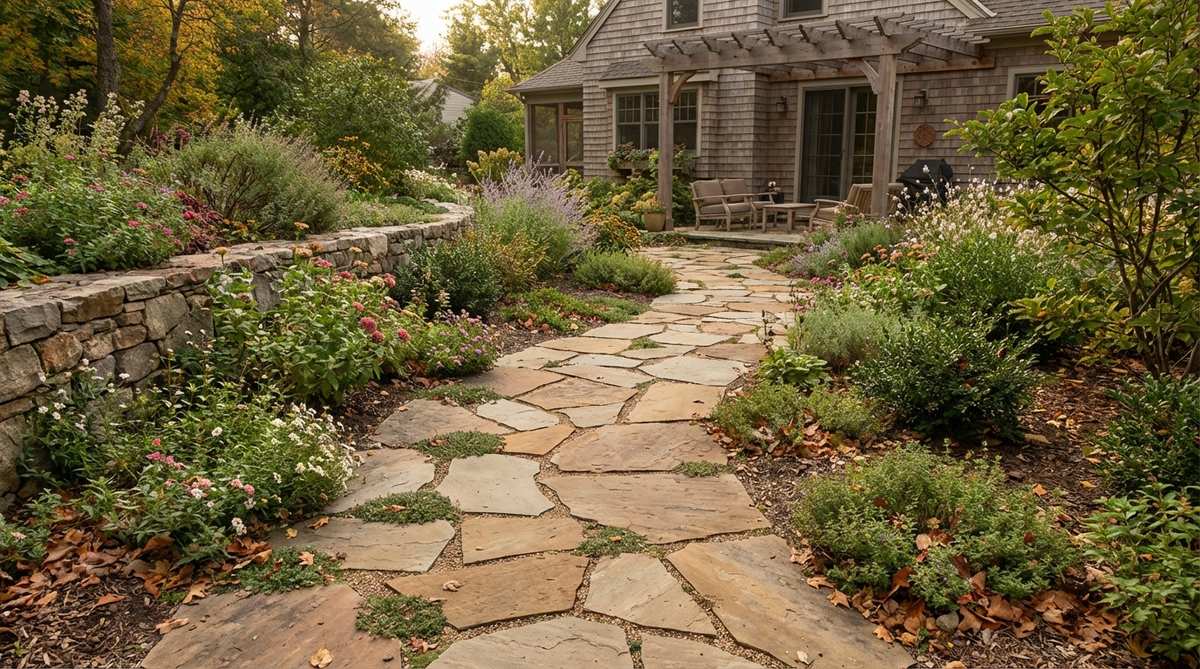
Naturally shaped flagstone pieces fitted together with narrow joints create primary garden pathways with rustic elegance. The varied shapes and muted earth tones complement cottage and naturalistic garden styles.
Excavate pathways 4-6 inches deep, install a compacted gravel base, then add 1 inch of sand for leveling. Arrange flagstones with 1/2 to 1-inch joints, keeping the path width at 36-48 inches for comfortable passage.
Fill joints with decomposed granite, pea gravel, or creeping ground covers like Irish moss. The irregular pattern slows foot traffic, encouraging visitors to notice surrounding plantings.
11. Granite Stepping Stones
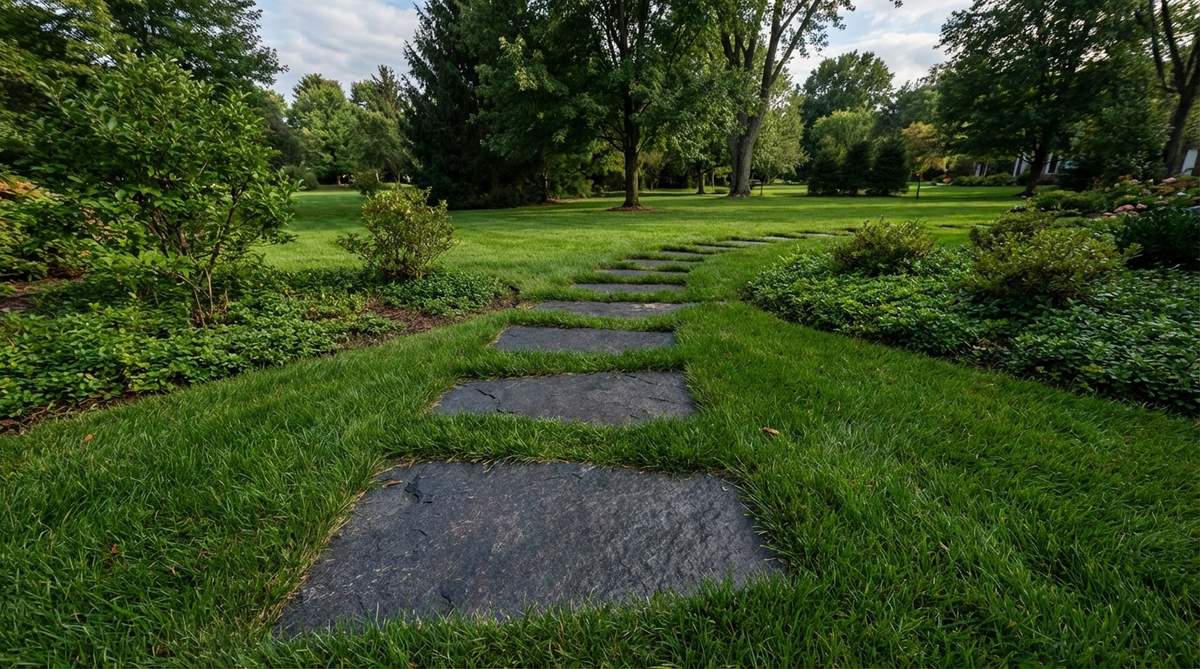
Individual granite slabs spaced 18-24 inches apart create secondary pathways through lawn or ground cover. The dark stone creates bold contrast against green surroundings and provides firm footing in damp conditions.
Set each stone flush with the surrounding grade to allow mower wheels to pass over. Space stones based on average stride length, testing the rhythm by walking the path before final installation.
These stones warm in sunlight and remain ice-free longer in winter. The minimal material requirement keeps costs reasonable for long pathway runs.
12. Crushed Stone Walkways
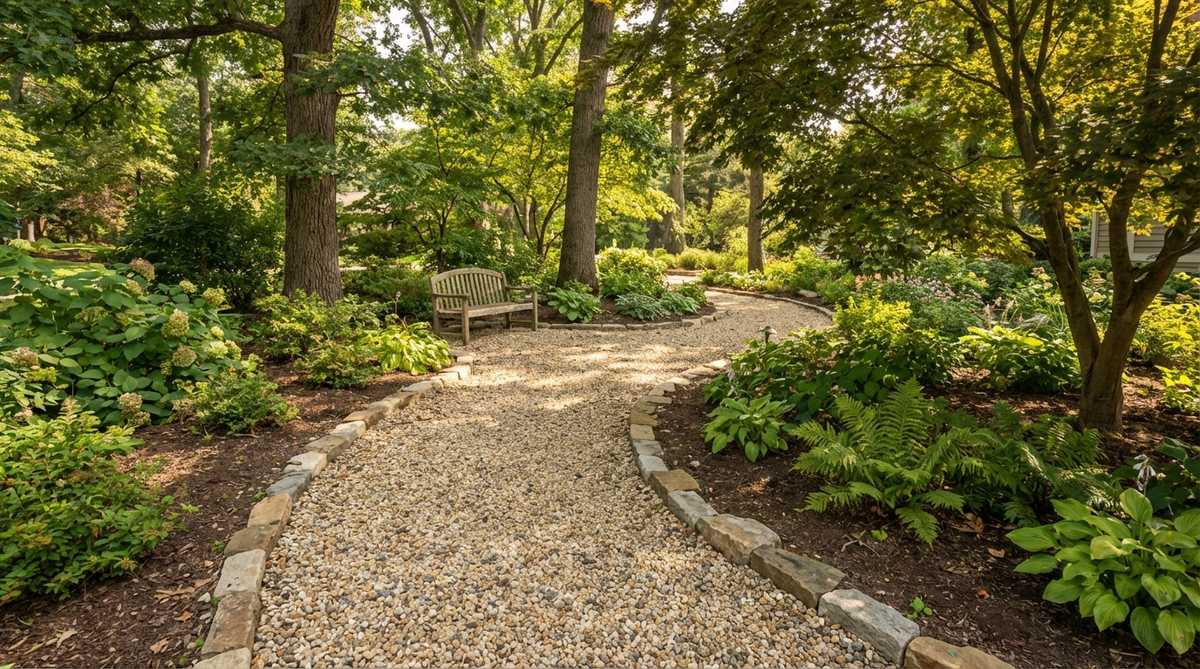
Compacted crushed stone in shades of tan, gray, or white creates informal pathways that curve naturally through garden beds. The angular aggregate locks together better than rounded gravel, resisting displacement under foot traffic.
Install landscape edging along both pathway sides to contain the aggregate. Apply crushed stone in 2-inch layers, compacting each layer before adding the next to achieve a firm, stable surface.
The permeability of crushed stone paths prevents runoff issues while the light color brightens shaded garden areas. Annual top-dressing maintains the crisp appearance.
13. Travertine Pavers
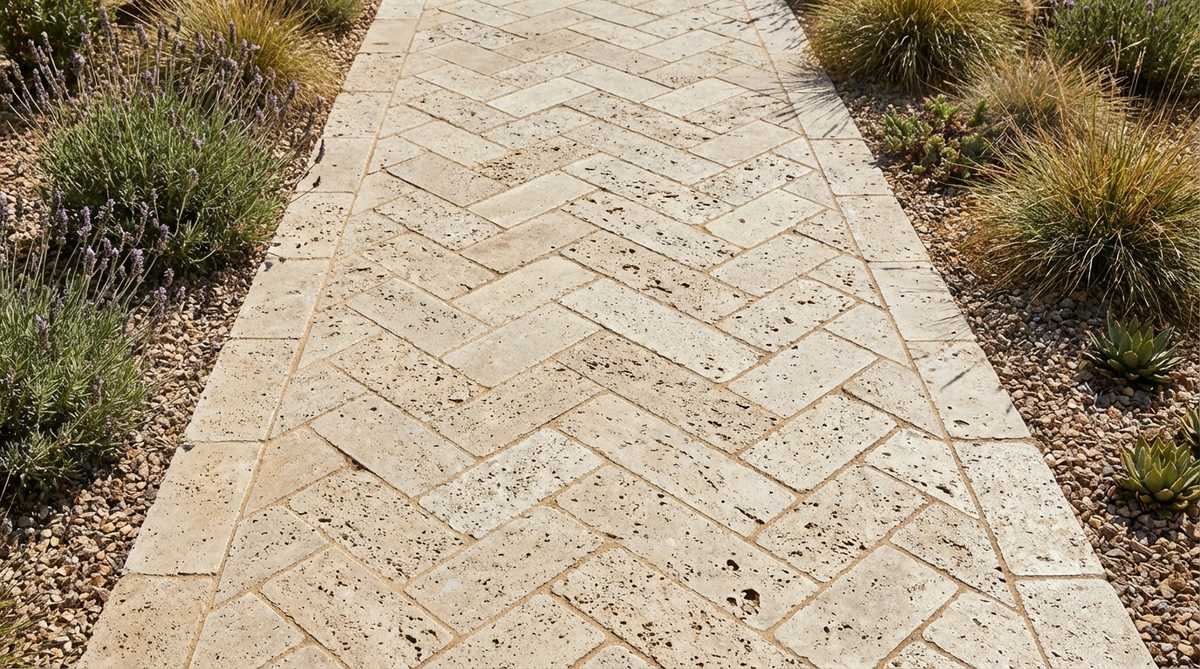
Cut travertine pavers in modular sizes create elegant pathways with Mediterranean character. The stone’s porous surface provides excellent traction when wet, and the neutral beige tones remain cool underfoot even in direct sun.
Lay pavers in running bond or herringbone patterns over a compacted base. Leave 1/4-inch joints and fill with polymeric sand that resists ant colonization and weed emergence.
Travertine’s natural pitting adds subtle texture that catches light at different angles throughout the day. The stone pairs particularly well with drought-tolerant plantings and gravel mulches.
14. Mosaic Pebble Pathways
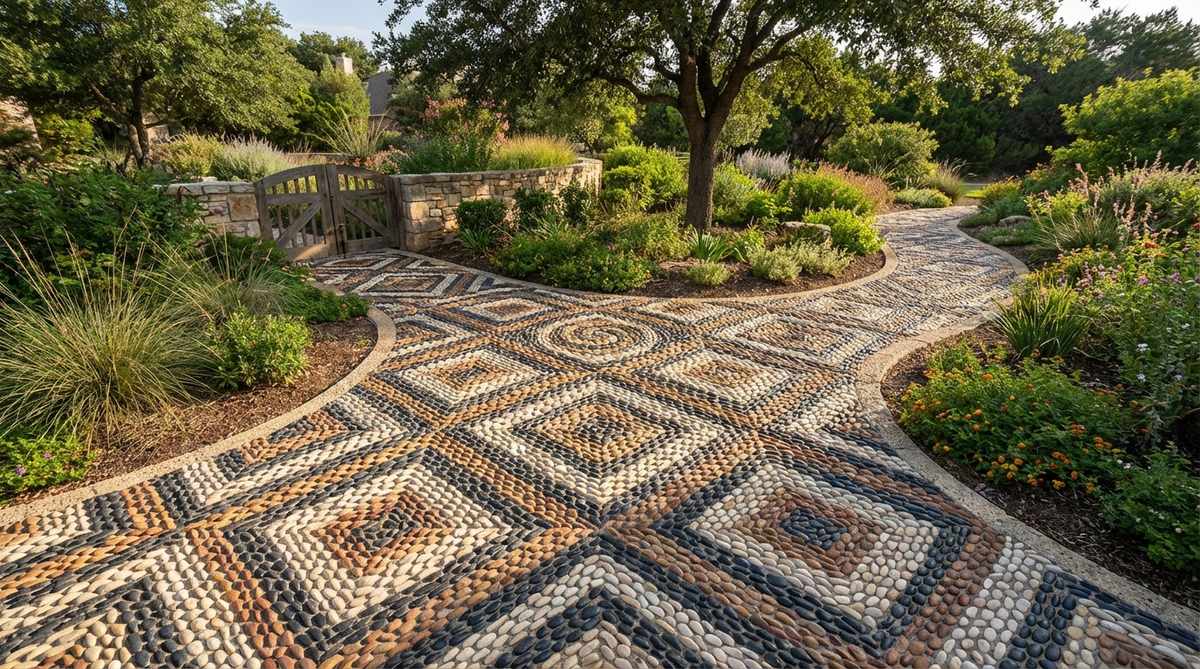
Small river pebbles arranged in geometric or organic patterns create decorative pathway sections that function as art installations. Contrasting stone colors—black, white, tan, and rust—produce graphic designs inspired by traditional Mediterranean courtyards.
Set pebbles vertically in a mortar bed over a concrete base for permanent installations. Work in small sections to prevent mortar from setting before pebbles are placed.
These labor-intensive pathways work best as accent features at entries or destination areas rather than long circulation routes. The textured surface provides sensory interest and slows foot traffic at transition points.
Vertical Stone Features and Decorative Masonry Walls
Upright stone elements add height dimension and create garden rooms by establishing visual boundaries. These features provide backdrops for plantings while introducing architectural scale.
15. Gabion Wall Screens
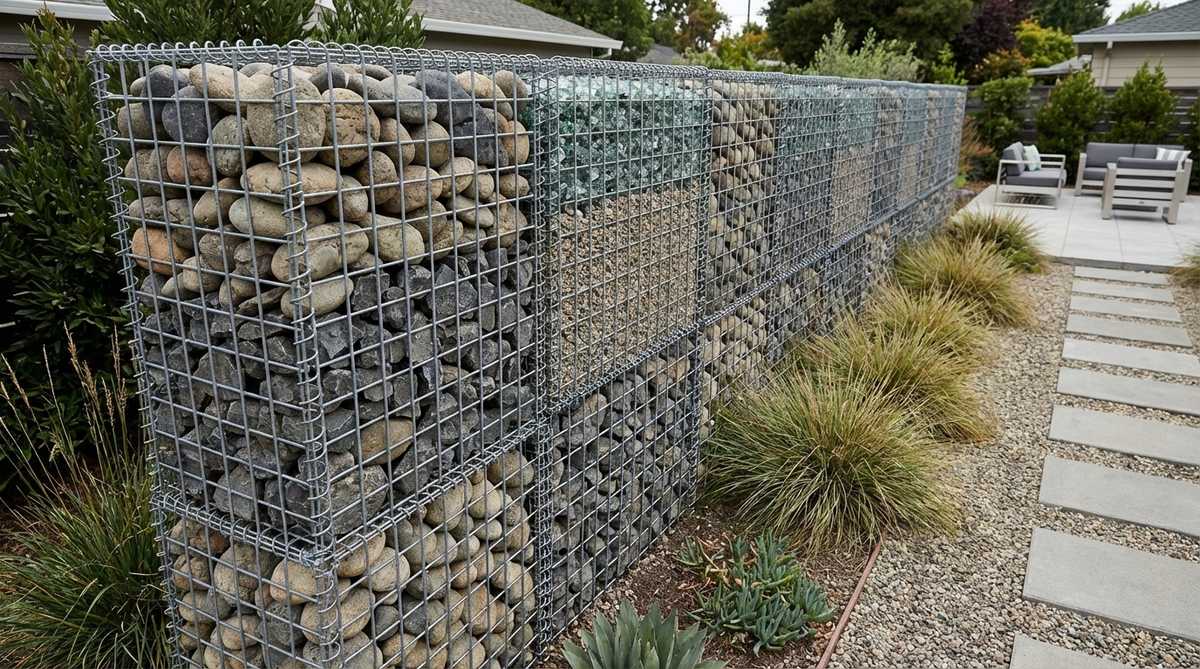
Wire mesh cages filled with decorative aggregate create contemporary garden walls with striking texture. The industrial aesthetic suits modern landscapes while the stone fill options—from river rock to crushed glass—allow customization.
Stack modular gabion baskets on a level gravel base, connecting units with wire clips. Fill baskets with 3-6 inch stones, hand-placing face stones for a refined appearance and filling the interior with smaller aggregate.
These permeable walls allow air circulation and drainage while the metal framework virtually disappears behind the stone fill. Gabion walls work equally well as low seat walls or tall privacy screens.
16. Mortared Stone Walls
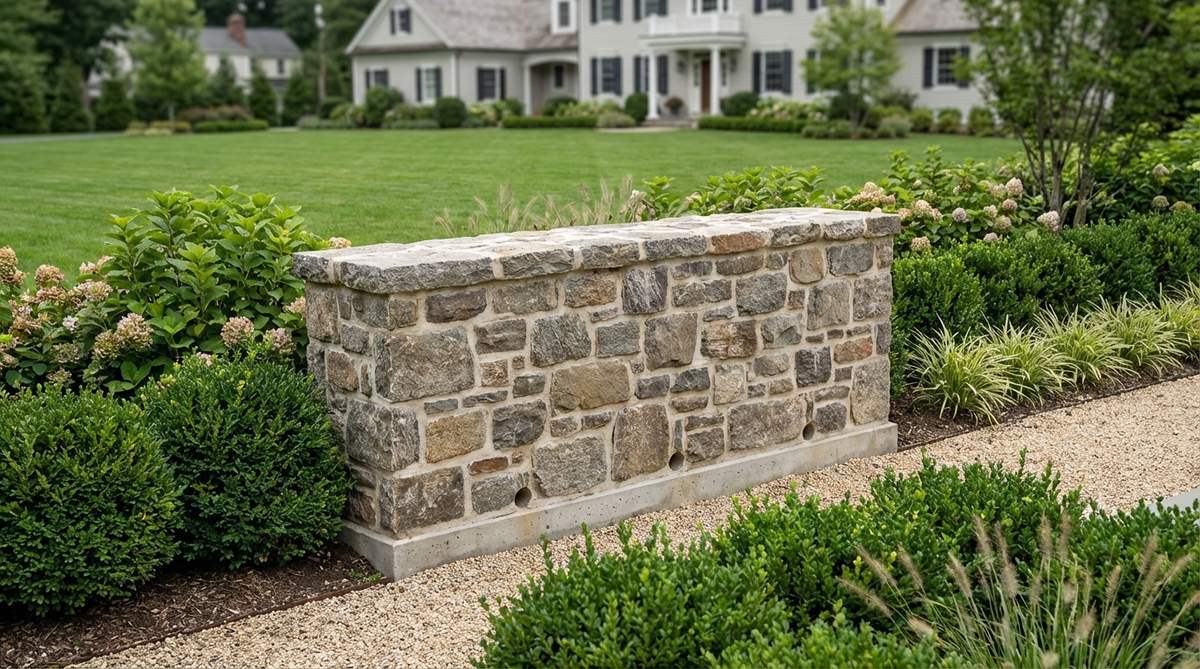
Fieldstone or cut stone laid with mortar joints creates formal garden walls with permanent stability. The mortar allows thinner stone selection since structural integrity relies on the binding rather than gravity alone.
Build walls on concrete footings that extend below frost line. Apply mortar to stone backs and press firmly into place, then point joints once mortar reaches thumbprint firmness.
Mortared walls shed water rather than allowing drainage through, requiring weep holes at the base in retaining wall applications. The finished appearance suits traditional garden styles and formal landscapes.
17. Sandstone Pillar Posts
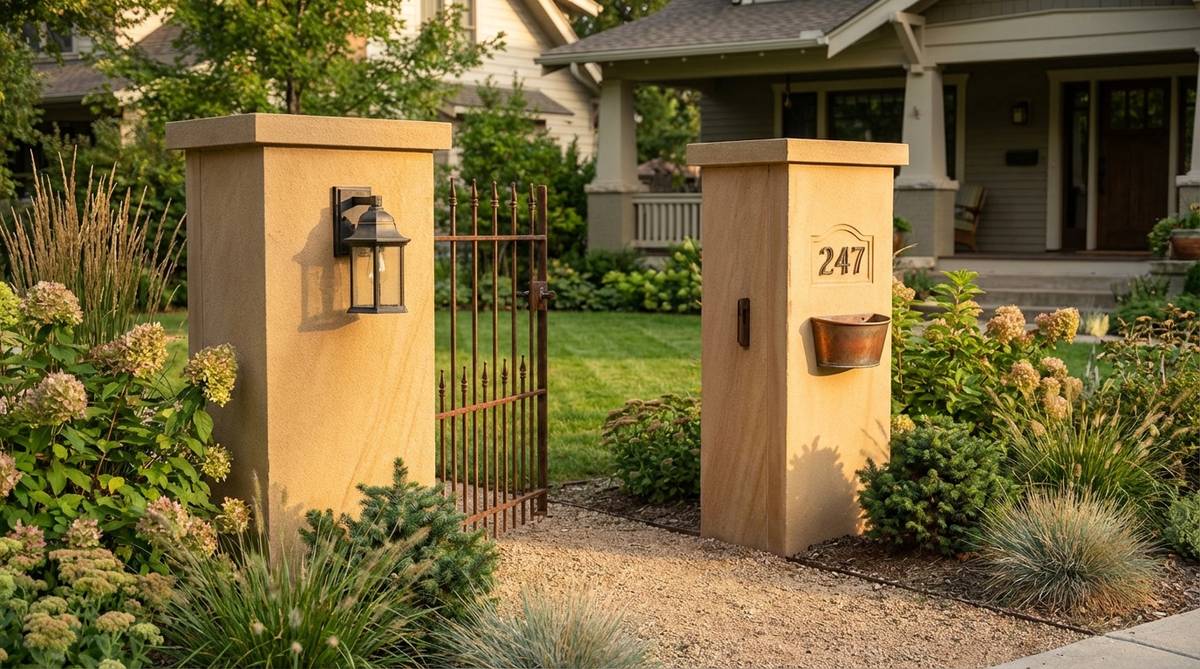
Squared sandstone pillars flanking garden gates or marking pathway entries add architectural gravitas. The warm tones and fine grain of sandstone convey approachability while maintaining formal presence.
Set pillars on concrete pier foundations and cap with flat coping stones to shed water. Heights between 3-5 feet work well for garden-scale applications without overwhelming nearby plantings.
Mount lighting fixtures, house numbers, or decorative elements to pillar faces. The stone’s workability allows for custom carving or tool-textured surfaces that catch shadows.
18. Veneer Stone Facades
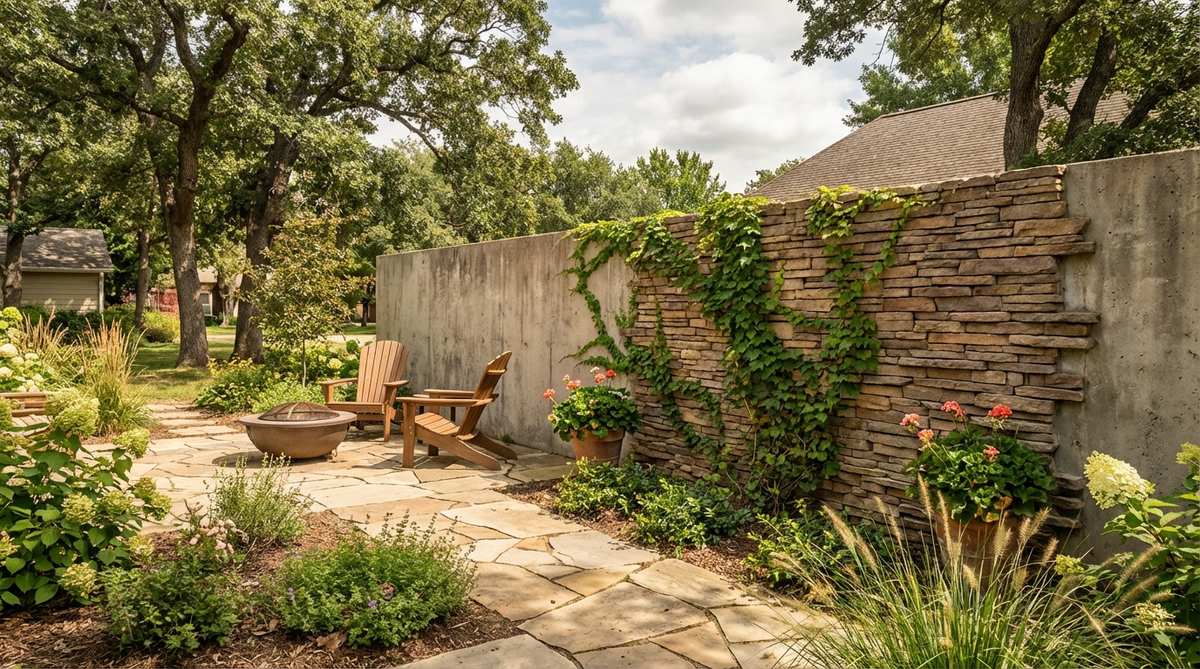
Thin stone veneer applied to concrete block or wood-framed walls creates the appearance of solid stone construction at reduced cost and weight. Modern veneer products replicate natural stone patterns with remarkable accuracy.
Install a weather-resistant barrier and metal lath before applying mortar and veneer pieces. Work from the bottom up, varying stone sizes and shapes for natural randomness.
Veneer transforms utilitarian structures like pump houses or storage sheds into attractive garden features. The application works equally well on curved or straight walls.
19. Stone Seat Walls
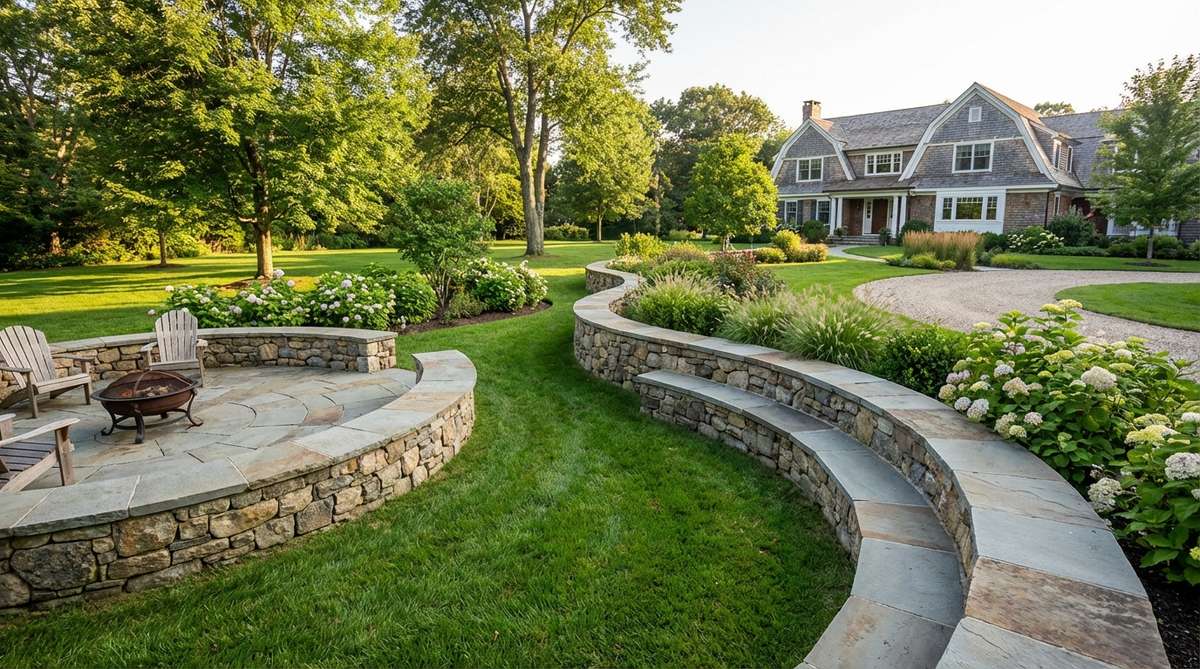
Low walls between 18-20 inches high function as both seating and garden definition. Flat capping stones provide comfortable seating surfaces while the wall body uses less expensive stone.
Maintain level cap stones and adequate depth (14-16 inches) for comfortable seating. Radius curved sections where walls change direction to prevent sharp corners.
These walls invite garden lingering while creating intimate spaces within larger landscapes. Add cushions or leave stone bare depending on desired formality level.
Water Features Enhanced with Garden Decor Stone
Stone and water create compelling partnerships where each element enhances the other. The visual and acoustic qualities of water moving over stone surfaces add sensory richness to garden spaces.
20. Boulder Fountain Features
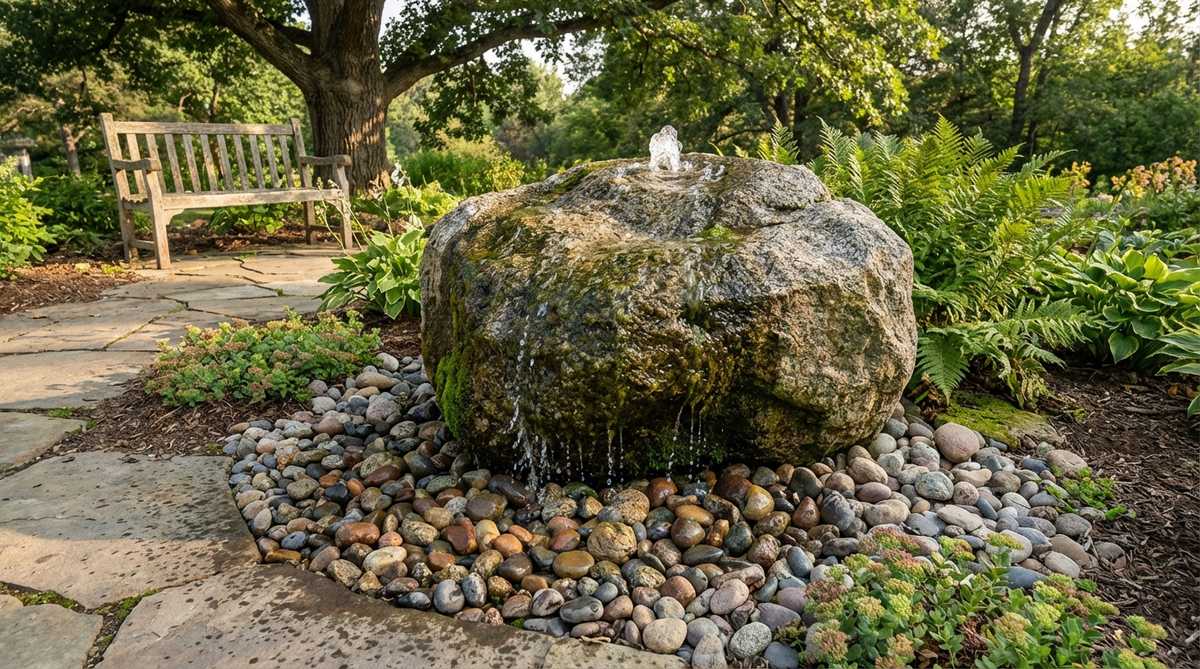
Large stones drilled to allow water to bubble from the top create naturalistic fountain features. The water films over the boulder surface before collecting in a hidden reservoir basin below.
Select boulders with interesting shapes or natural depressions where water can pool momentarily. Professional core drilling creates the vertical channel for pump tubing and plumbing.
Surround the boulder with smaller river rock to conceal the basin grate. The sound of water over stone provides constant auditory interest while the feature requires minimal maintenance.
21. Stacked Slate Waterfalls
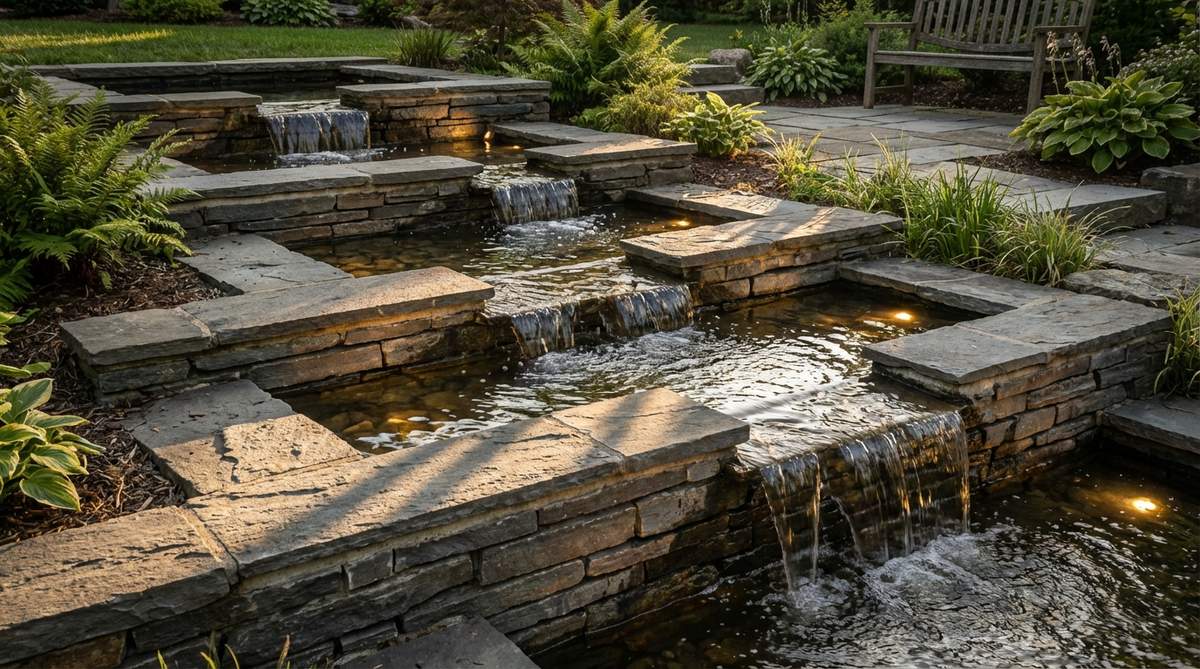
Horizontal slate pieces stacked in offset tiers create cascading water features where liquid sheets over multiple edges. The dark stone intensifies water’s reflective qualities and creates dramatic shadows.
Build the structure with mortar over a waterproof liner, ensuring each slate shelf projects slightly forward to cast water away from the tier below. Seal all joints to prevent leaks.
Multiple water paths emerge as the flow spreads across the varying slate widths. Submersible LED lighting behind the water sheets produces evening drama.
22. Pebble Pond Borders
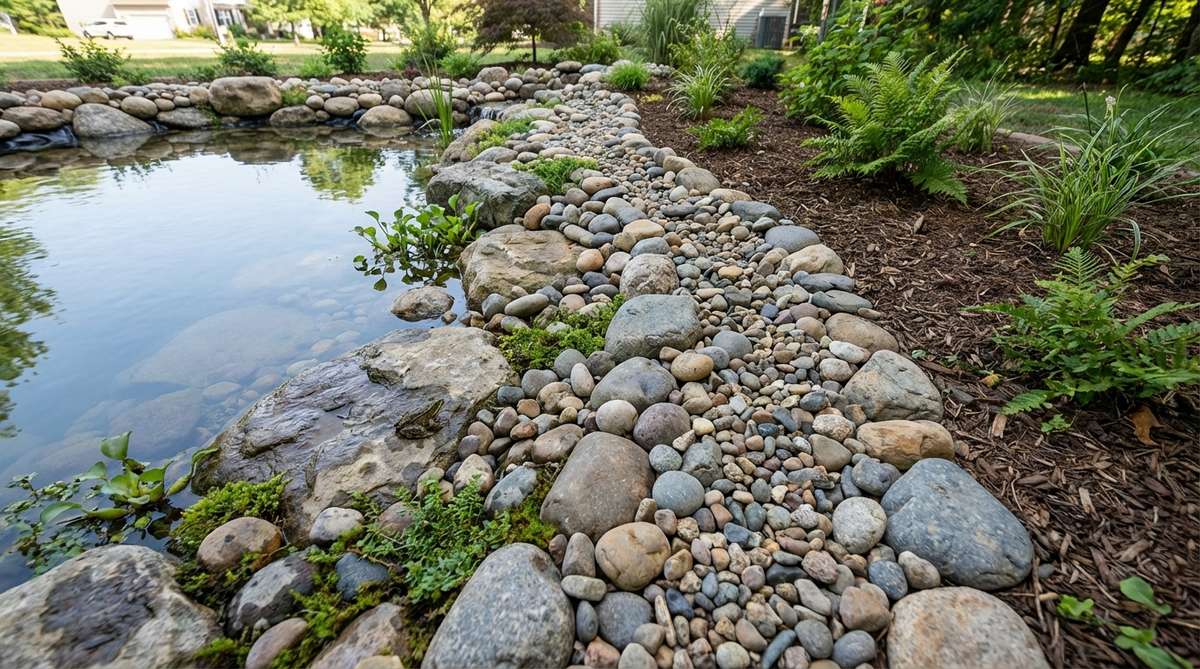
Mixed-size river pebbles arranged along pond edges create naturalistic transitions between water and surrounding landscape. The varied shapes and colors mimic stream bank conditions.
Extend the pond liner 12-18 inches beyond the water’s edge, then arrange larger stones first, filling gaps with progressively smaller pebbles. The stone conceals the liner edge while creating habitat.
Submerged portions develop algae growth that enhances the natural appearance. Amphibians use the graduated depths as entry and exit points.
23. Cast Stone Fountain Basins
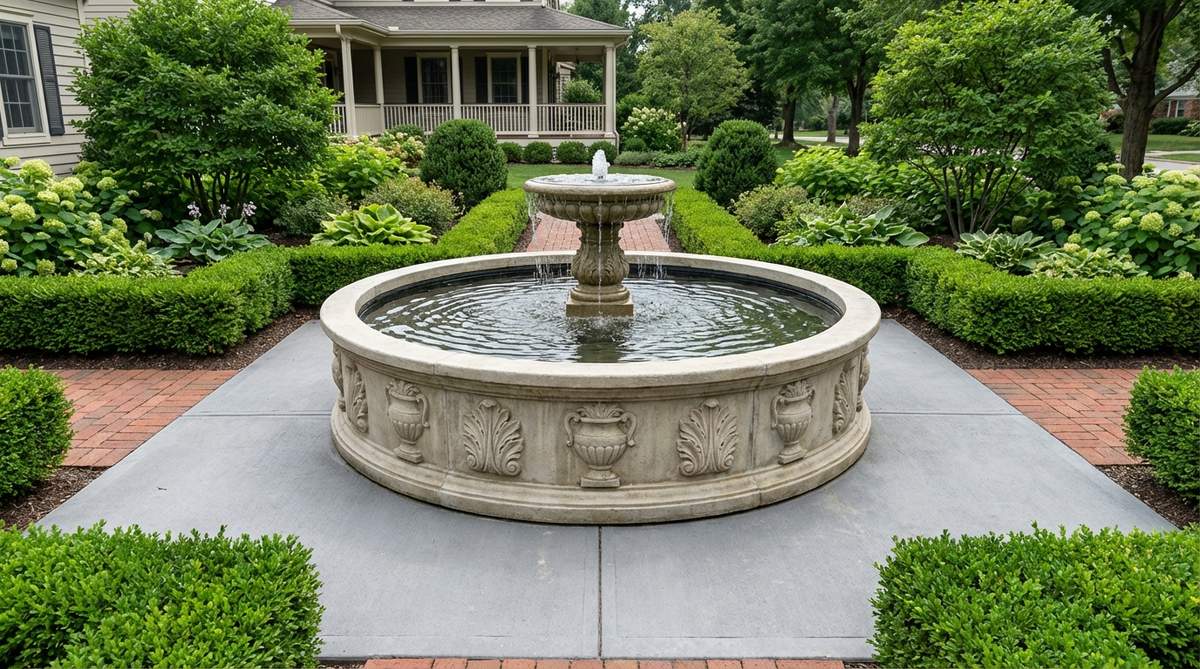
Manufactured cast stone basins replicate traditional carved limestone fountains with classical detailing. The composite material resists freeze-thaw damage better than natural limestone while maintaining authentic appearance.
Position basins on level concrete pads with plumbing access for recirculating pumps. The aging process develops natural patina within 1-2 seasons, further enhancing authenticity.
These fountains function as focal points in formal garden rooms or courtyard spaces. The basin catches falling water, creating concentric ripples that add movement to static surroundings.
24. Dry Stream Beds
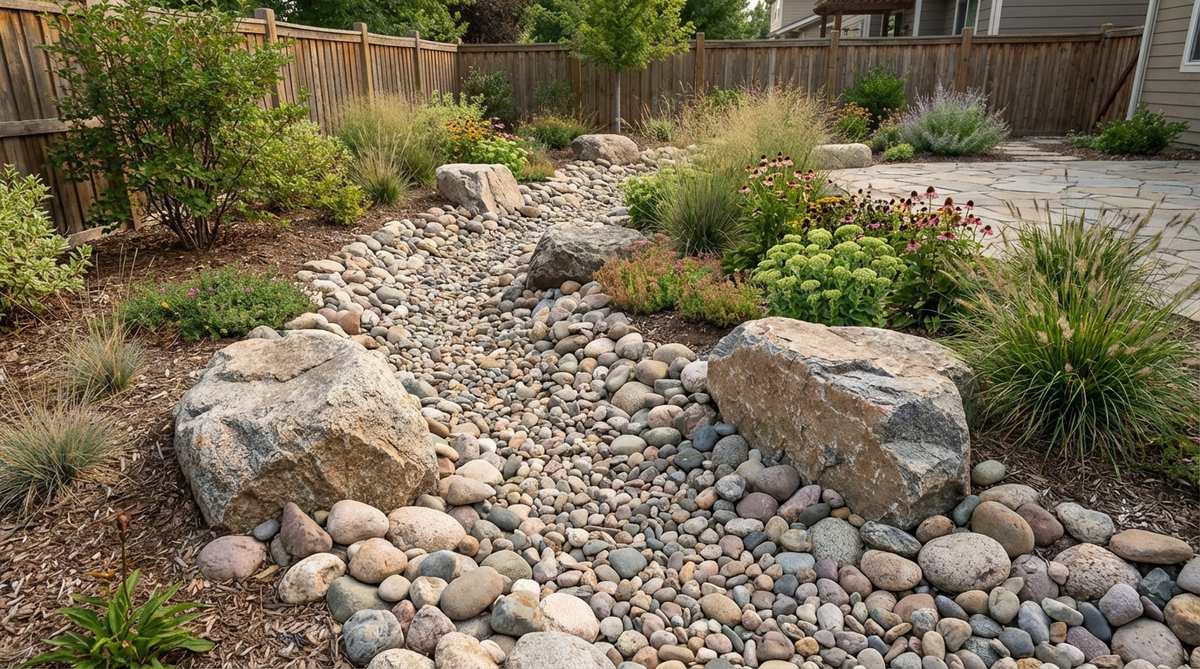
Curving arrangements of river rock simulate seasonal water courses even in perpetually dry conditions. The stone sizes grade from larger boulders at curves to smaller cobbles in straight sections, mimicking natural erosion patterns.
Excavate a shallow channel following natural grade changes. Line with landscape fabric and arrange stones to suggest water flow direction through careful orientation.
These features manage actual drainage while providing visual interest during dry periods. Flanking plantings of ornamental grasses enhance the illusion of water movement.
Creative Decorative Stone Applications
Innovative stone uses extend beyond traditional applications, transforming functional needs into design opportunities. These ideas demonstrate stone’s versatility across garden contexts.
25. Raised Gabion Planters
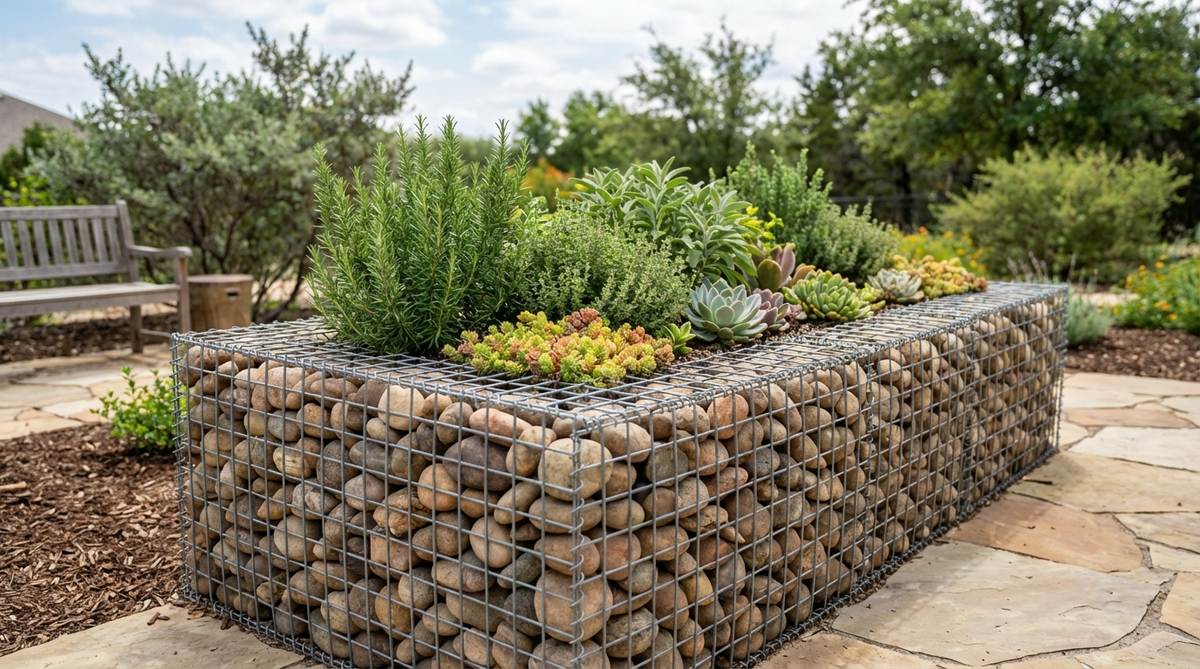
Wire cage planters filled with decorative stone create elevated growing beds with industrial-modern character. The permeable sides provide exceptional drainage while the stone mass moderates soil temperature fluctuations.
Line gabion interiors with landscape fabric to contain soil while allowing drainage. Fill the planter center with quality soil mix, keeping it several inches below the stone surface.
These planters work particularly well for herbs, succulents, and Mediterranean species that prefer sharp drainage. The modular construction allows custom sizing for any space.
26. Stone Mulch Beds
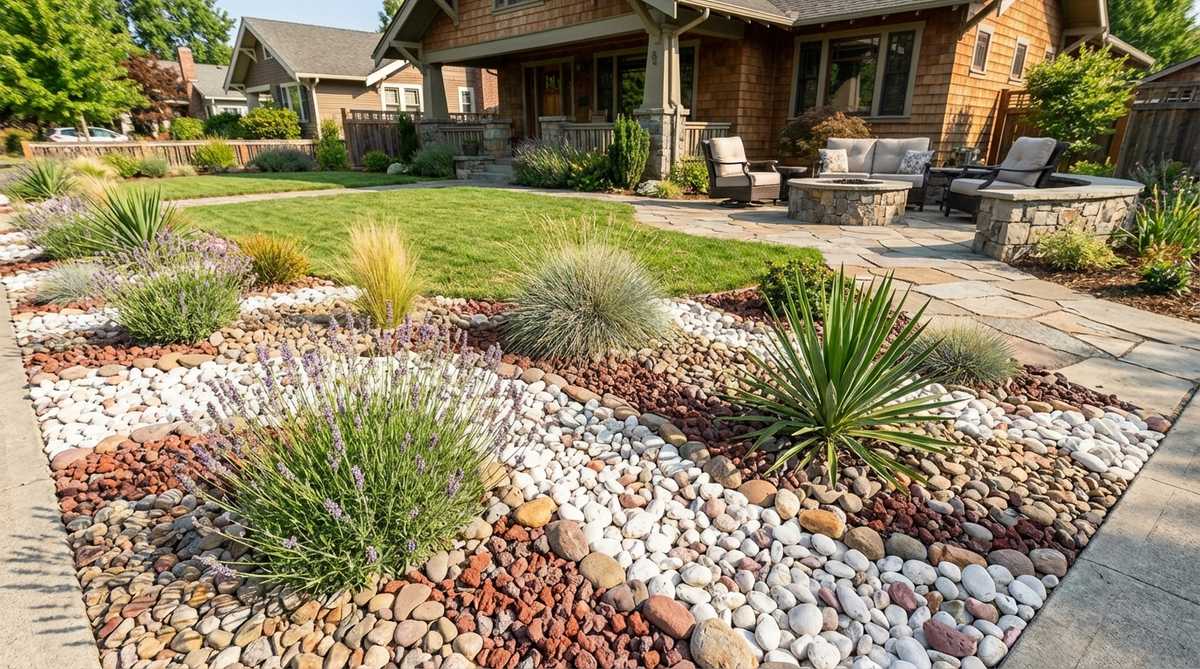
Decorative aggregate used as mulch in planting beds eliminates organic mulch replacement while adding permanent color and texture. Stone mulches in white, red, black, or earth tones create bold statements or subtle backgrounds depending on color selection.
Apply landscape fabric beneath stone to prevent soil mixing and weed emergence. Use 2-3 inch aggregate depth for visual coverage while minimizing weight on the soil surface.
Stone mulch reflects heat, making it suitable for heat-loving plants but potentially stressful for shade species. The material never decomposes or blows away in wind.
27. Memorial Stone Benches
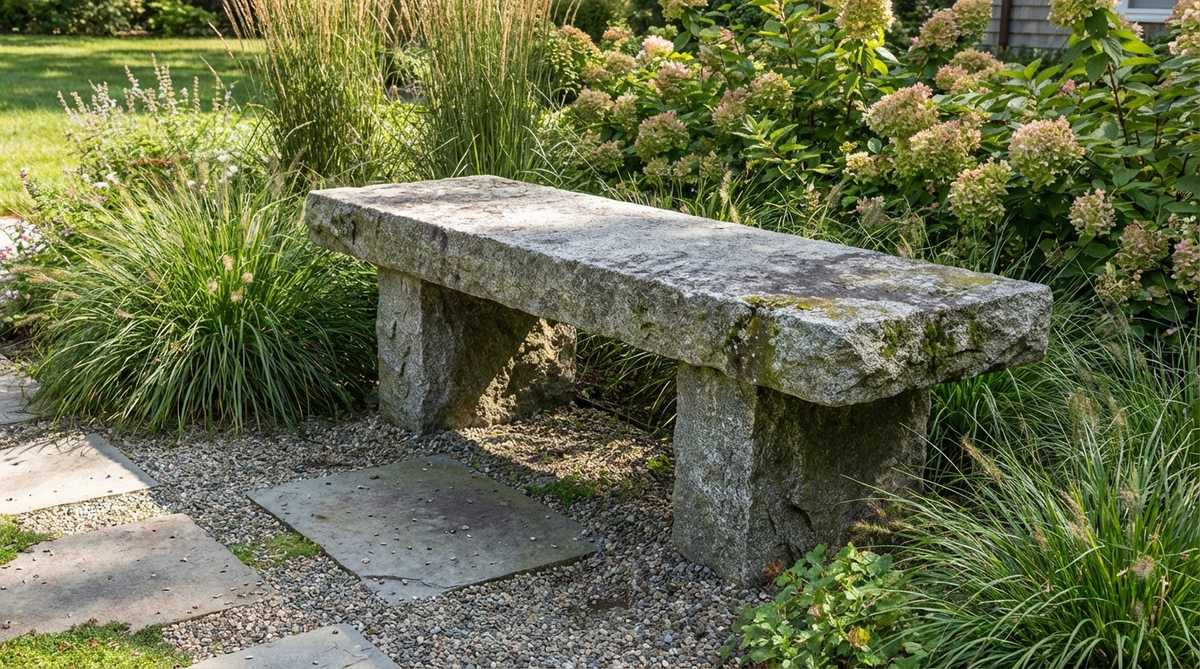
Solid stone bench slabs supported by stone or concrete piers create permanent seating with timeless presence. The substantial mass conveys permanence appropriate for memorial installations or formal garden seating.
Select stone slabs 18-20 inches wide, 50-72 inches long, and 3-4 inches thick for structural adequacy without excessive weight. Support spans over 48 inches require mid-point support.
The stone surface weathers naturally, developing character through decades of use. Carving or engraving adds personalization while the feature requires zero maintenance.
28. Stone Fire Pit Rings
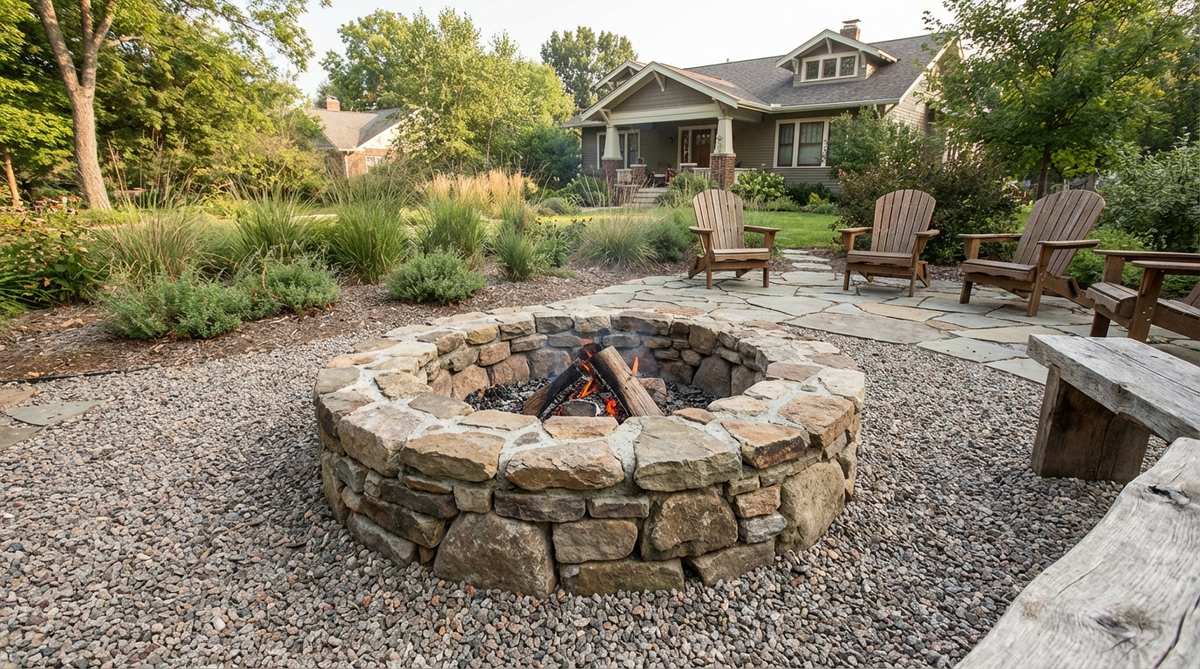
Natural stone arranged in circular fire rings creates gathering spaces with rustic appeal. The stone absorbs and radiates heat while the irregular shapes produce an organic appearance distinct from manufactured fire pit kits.
Stack stones 12-18 inches high, leaving gaps between stones for airflow. Line the interior with fire-rated brick for longevity, keeping flammable materials at least 10 feet distant.
The thermal mass retains warmth after flames subside, extending outdoor comfort hours. Surround with gravel or flagstone rather than lawn to establish a fire-safe perimeter.
Conclusion
Strategic incorporation of garden decor stone elements elevates landscape design through lasting materials that improve with age. Whether implementing structural features like retaining walls, circulation elements such as pathways, or decorative accents including water features, natural stone and masonry provide unmatched durability and visual appeal. Begin with one or two stone features suited to your garden’s specific conditions and aesthetic goals, then expand the palette as you develop confidence with material selection and installation techniques. The investment in quality stone elements returns value through decades of maintenance-free beauty and functional performance.
Frequently Asked Questions
What type of stone is best for garden pathways in cold climates?
Granite and bluestone perform exceptionally well in freeze-thaw conditions due to their low porosity and high density. These stones resist cracking from ice expansion and maintain surface integrity through repeated seasonal cycles. Flagstone varieties with dense composition also work well, while softer sedimentary stones like sandstone may spall or flake in severe winter conditions. Always verify the stone’s freeze-thaw rating with suppliers before installation in regions with harsh winters.
How do I prevent weeds from growing between decorative garden stones?
Install commercial-grade landscape fabric beneath all stone applications, overlapping seams by 6-8 inches to prevent weed breakthrough. For pathways and patios with mortared joints, use polymeric sand that hardens when wetted, creating a barrier against weed seeds. In dry-laid applications, maintain joint widths under 1 inch and refresh with fresh stone dust or polymeric sand annually. Occasional spot-treatment with horticultural vinegar or flame weeding addresses persistent weeds without chemical residues.
What size boulders should I use for a natural-looking garden arrangement?
Select boulders in varied sizes with the largest specimen measuring 2-4 feet in diameter as the anchor stone, accompanied by progressively smaller stones at roughly two-thirds and one-half the primary boulder’s dimensions. This size variation mimics natural stone deposits where glacial or erosion processes sort stones by weight. For modest residential gardens, keep the largest boulders under 3 feet to maintain human scale, while expansive properties can accommodate specimens up to 6 feet for dramatic focal points.
Can I install stone features myself or should I hire professionals?
Simple applications including stone borders, mulch beds, and dry-laid pathways suit confident DIY installation with basic tools and proper planning. Projects requiring excavation equipment, structural engineering, or heavy lifting—retaining walls over 2 feet high, large boulder placement, mortared masonry—benefit from professional installation to ensure safety and longevity. Consider hiring professionals for initial consultation and base preparation, then completing decorative finishing work yourself to balance cost savings with quality results.
How do stone colors affect garden temperature and plant growth?
Dark stones including black basalt and dark gray granite absorb solar radiation, increasing surrounding air and soil temperatures by 5-15 degrees compared to ambient conditions. This thermal gain benefits heat-loving plants and extends growing seasons in cool climates, but stresses moisture-sensitive species. Light-colored stones such as white marble or limestone reflect heat, maintaining cooler microclimates suitable for plants preferring moderate temperatures. Position stone colors strategically based on adjacent plantings’ temperature preferences and sun exposure duration.