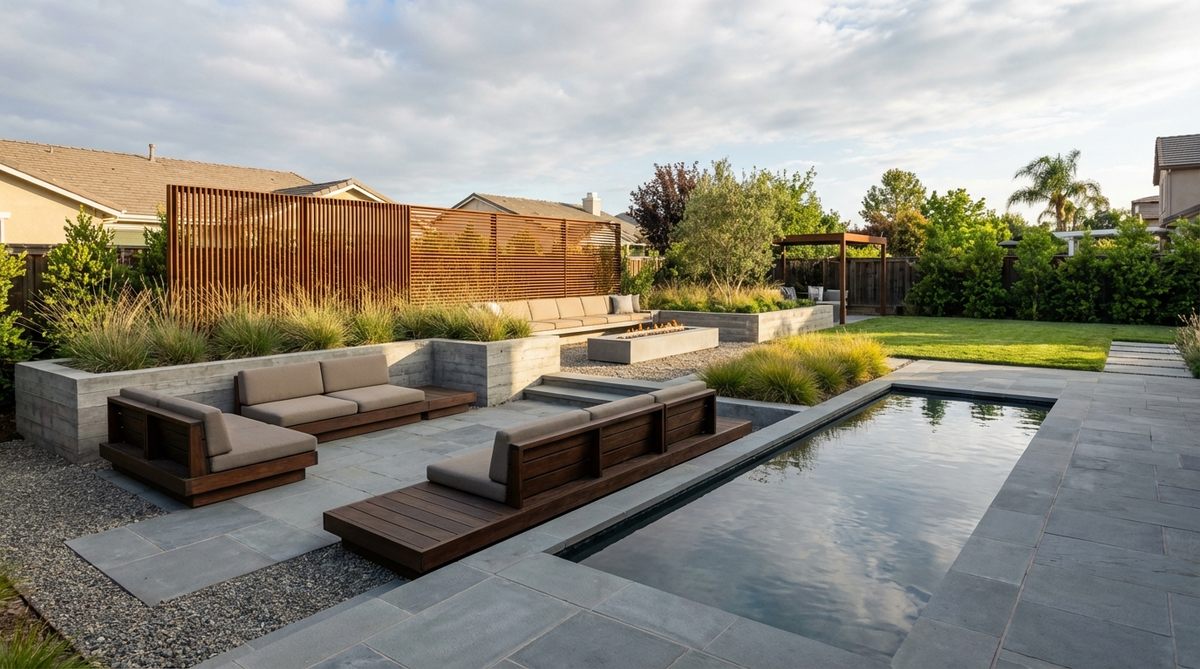
Contemporary garden decor modern design in 2026 centers on clean lines, purposeful elements, and geometric precision that creates outdoor spaces with visual clarity and functional elegance. Fresh Garden Ideas brings you expert insights into minimalist principles that transform gardens into sophisticated retreats where form meets function.
Design SnapshotKey Principles
- Geometric Clarity: Squares, circles, and triangular forms establish order and visual rhythm throughout the landscape
- Material Restraint: Concrete, natural stone, weathered steel, and teak wood provide textural contrast without visual clutter
- Negative Space: Intentional emptiness between elements creates breathing room and emphasizes focal points
- Structural Planting: Architectural plants with bold forms replace ornamental abundance for streamlined impact
Geometric Hardscape Foundations
Hardscape elements establish the structural backbone of modern minimalist gardens. These permanent features use geometric precision to define circulation patterns and spatial divisions while maintaining visual simplicity.
1. Square Paver Grid Systems
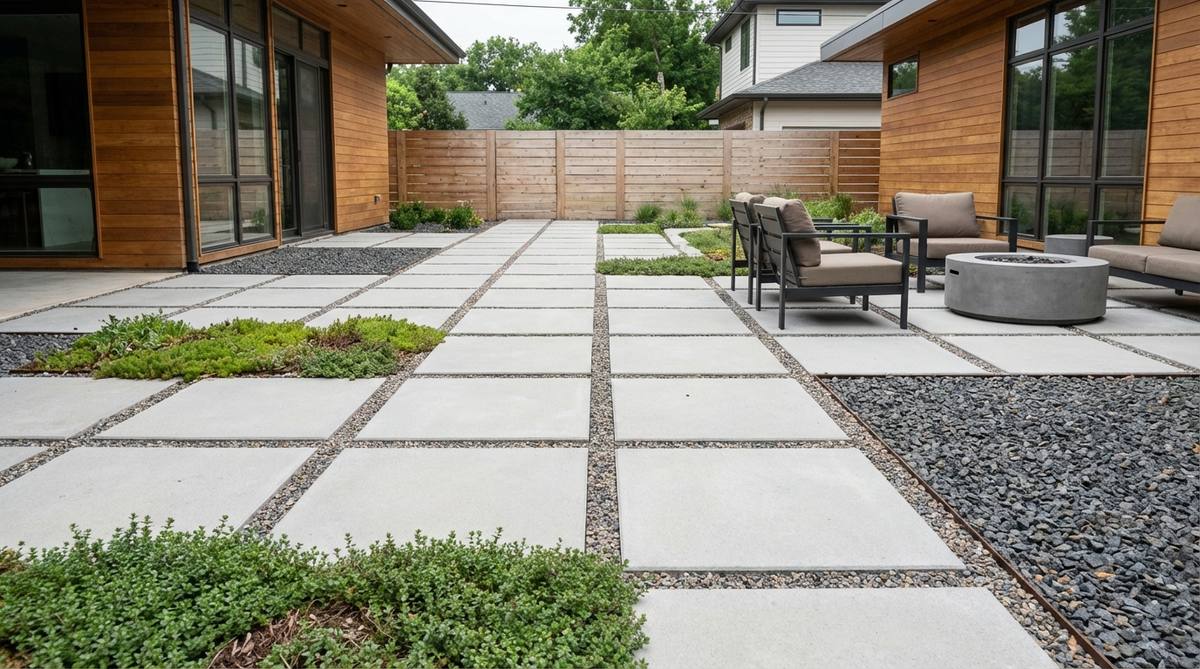
Large-format concrete pavers arranged in perfect grid patterns create clean, architectural floor planes. The uniform spacing and monochromatic tones eliminate visual noise while establishing clear pathways through planted areas.
Designers use 24-inch or 36-inch square units with consistent joints to reinforce the geometric theme. Gaps between pavers accommodate low-growing groundcovers or fine gravel for textural variation.
This approach works particularly well in small urban gardens where clarity of layout maximizes perceived space. Maintenance remains minimal with proper base preparation and weed barrier installation.
2. Circular Lawn Medallions
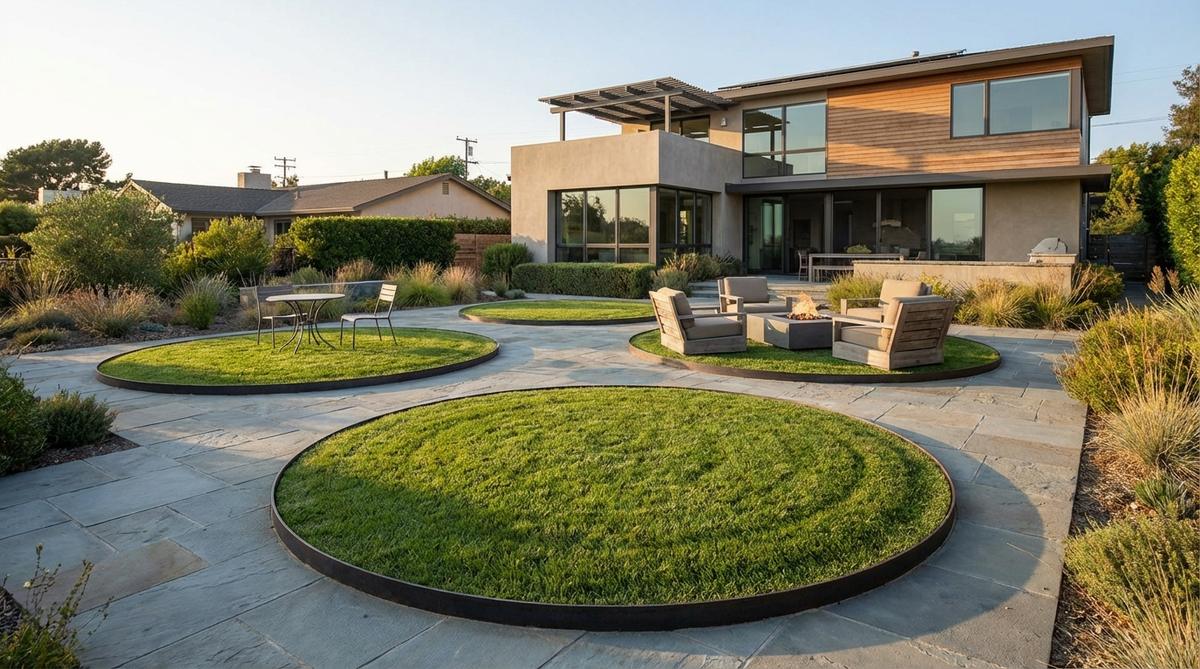
Perfect circles of turf surrounded by contrasting edging materials become central organizing elements. The curved form provides visual relief against rectangular architecture while maintaining geometric discipline.
Cut these circular lawns using a center stake and rope compass method for accuracy. Edge with steel, aluminum, or cut stone to create sharp boundaries that enhance the geometric statement.
The circular format naturally draws attention inward and works as a gathering space or visual anchor visible from multiple angles.
3. Triangular Planting Beds
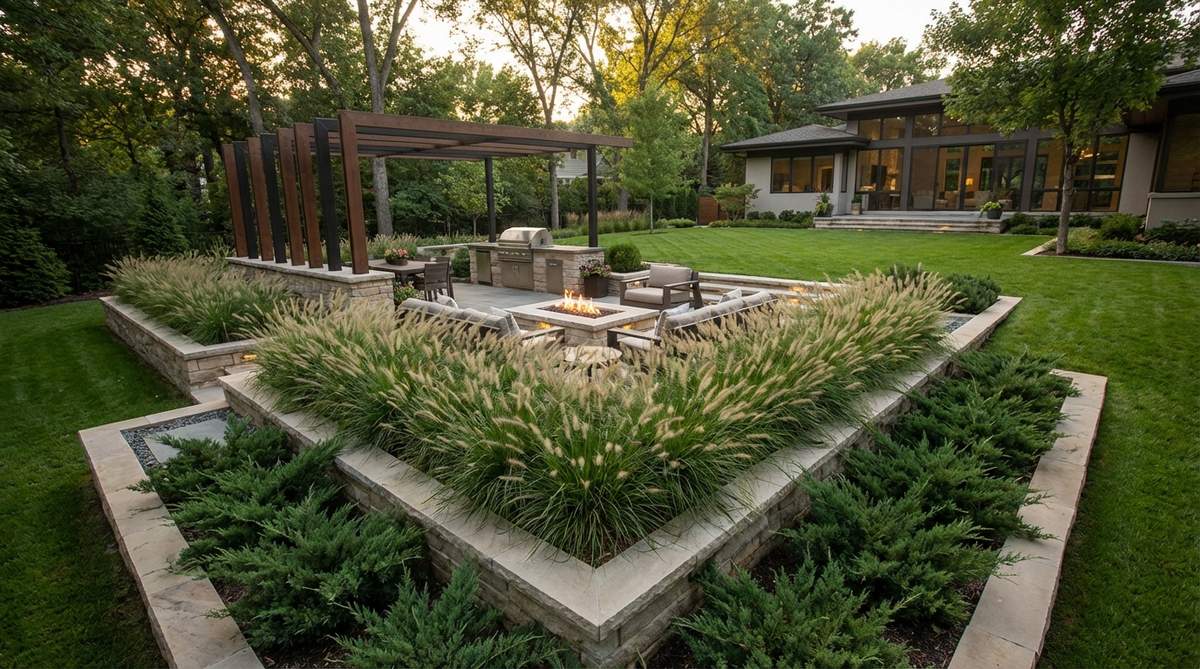
Angular beds formed from 45-degree or 50-degree triangles introduce dynamic movement compared to standard rectangles. These shapes create forced perspective effects that alter spatial perception.
Position triangular beds at garden corners or as transitional elements between different zones. The pointed forms direct sight lines toward specific features or distant views.
Fill with mass plantings of single species to maintain visual simplicity. Ornamental grasses or low evergreen shrubs work particularly well in these angular configurations.
4. Rectilinear Stone Pathways
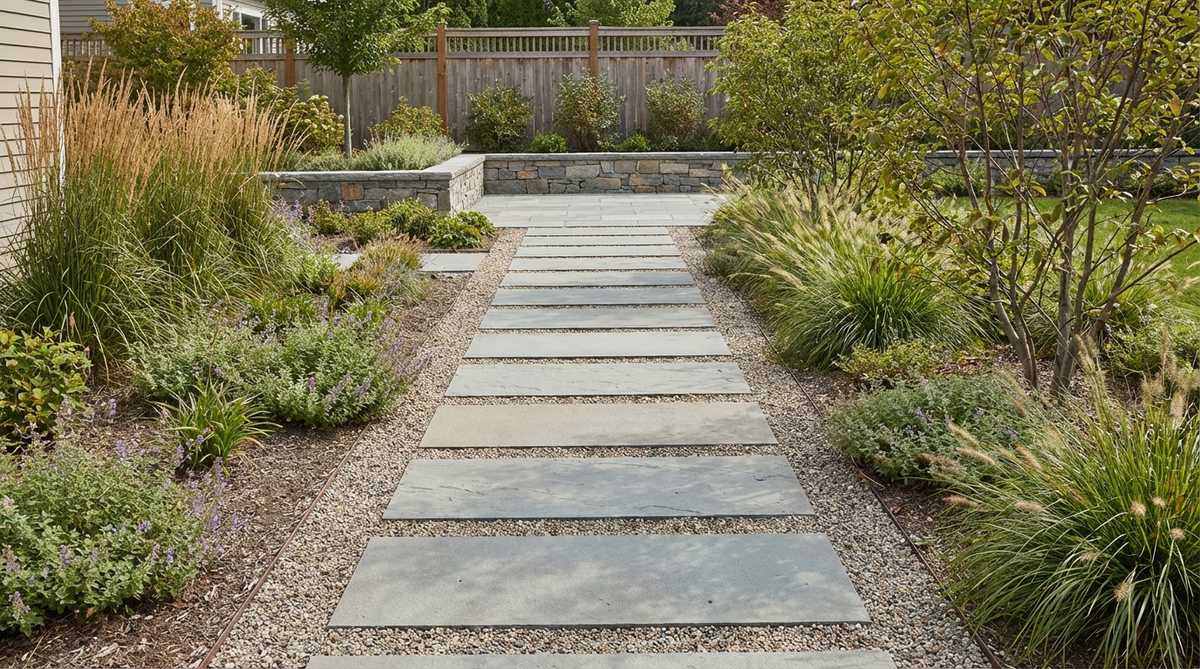
Straight pathways constructed from rectangular stone slabs emphasize directional flow. The linear arrangement guides movement while the natural stone texture prevents sterility.
Lay bluestone, limestone, or sandstone in running bond or stacked patterns with tight joints. Width should accommodate comfortable passage while maintaining proportional relationship to adjacent spaces.
These pathways frame views and establish axes that organize the entire landscape composition. The consistent width and material create visual continuity throughout the garden.
5. Hexagonal Patio Modules
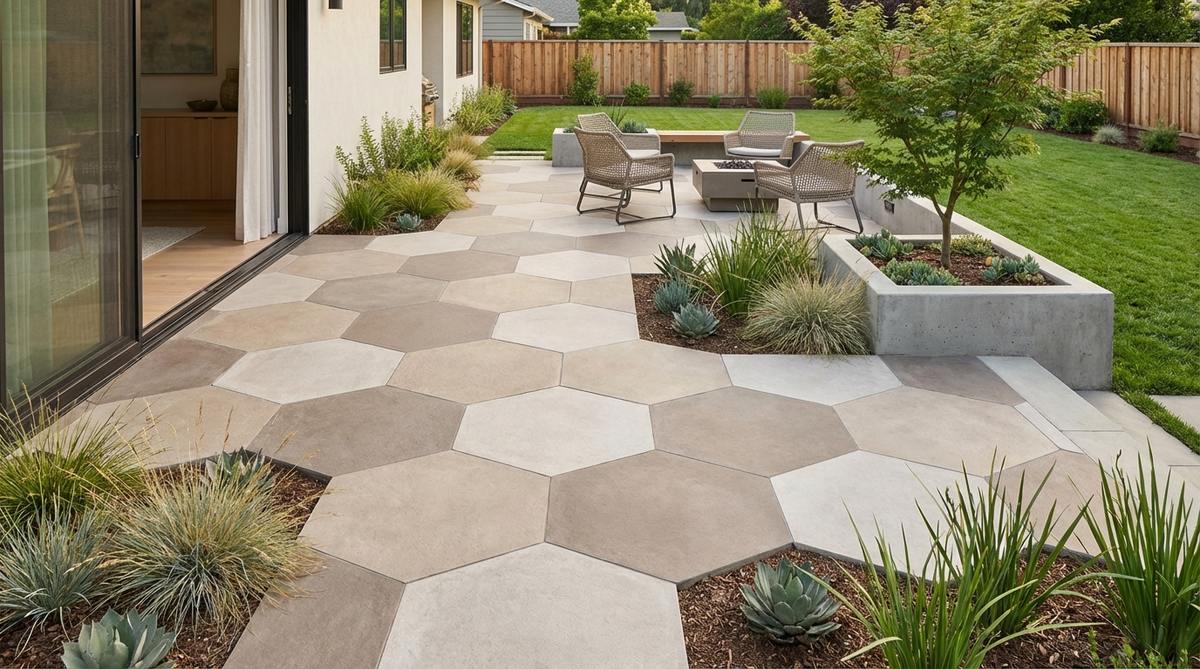
Six-sided pavers tessellate to form interlocking surface patterns with geometric complexity. The honeycomb arrangement provides visual interest while maintaining the clean aesthetic of modern design.
Select concrete or porcelain hexagonal tiles in neutral tones. The modular format allows custom patio shapes that adapt to site constraints.
This pattern works especially well for transitional zones between indoor and outdoor living areas. The geometric repetition creates rhythm without relying on color or ornamentation.
6. Stepped Terrace Platforms
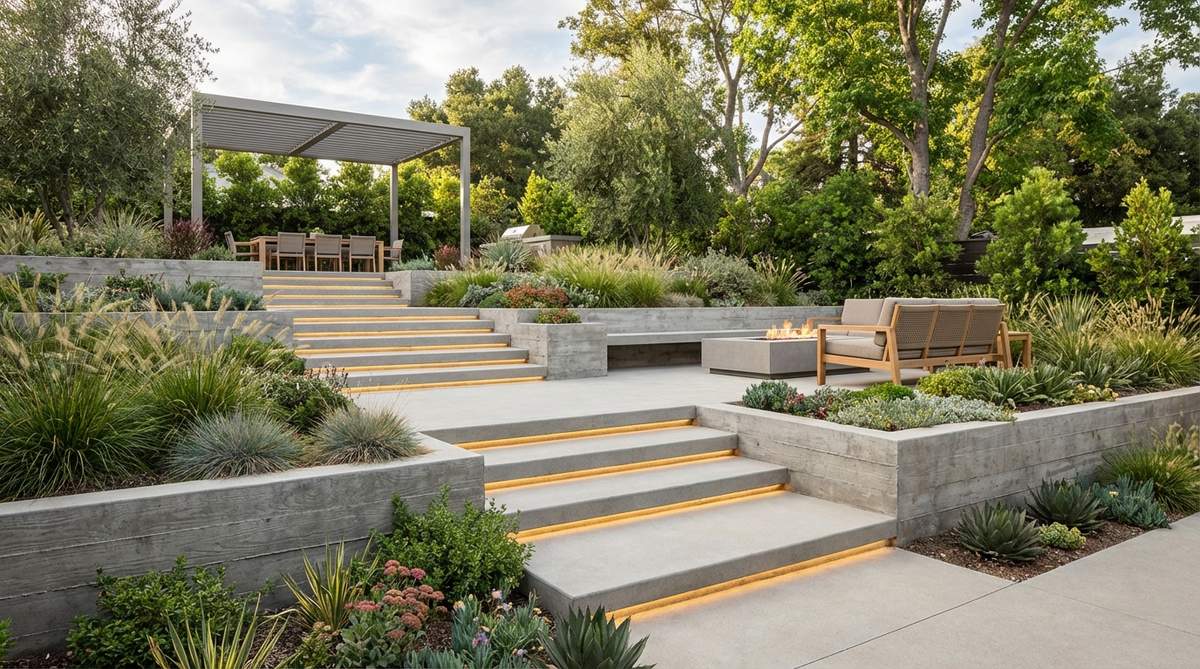
Grade changes handled through geometric terraces create horizontal planes at different elevations. Each level becomes a distinct spatial zone while maintaining visual connection through consistent materials.
Construct terrace walls from poured concrete, stacked stone, or large-format slabs. Keep riser heights uniform and tread depths generous for comfortable circulation.
The stepped arrangement provides built-in seating opportunities and allows varied planting microclimates. Lighting integrated into risers enhances the geometric forms after dark.
Minimalist Planter Systems
Container plantings in modern gardens emphasize form over embellishment. Geometric planters made from industrial materials create architectural presence while focusing attention on plant structure rather than decorative excess.
7. Cubic Concrete Groupings
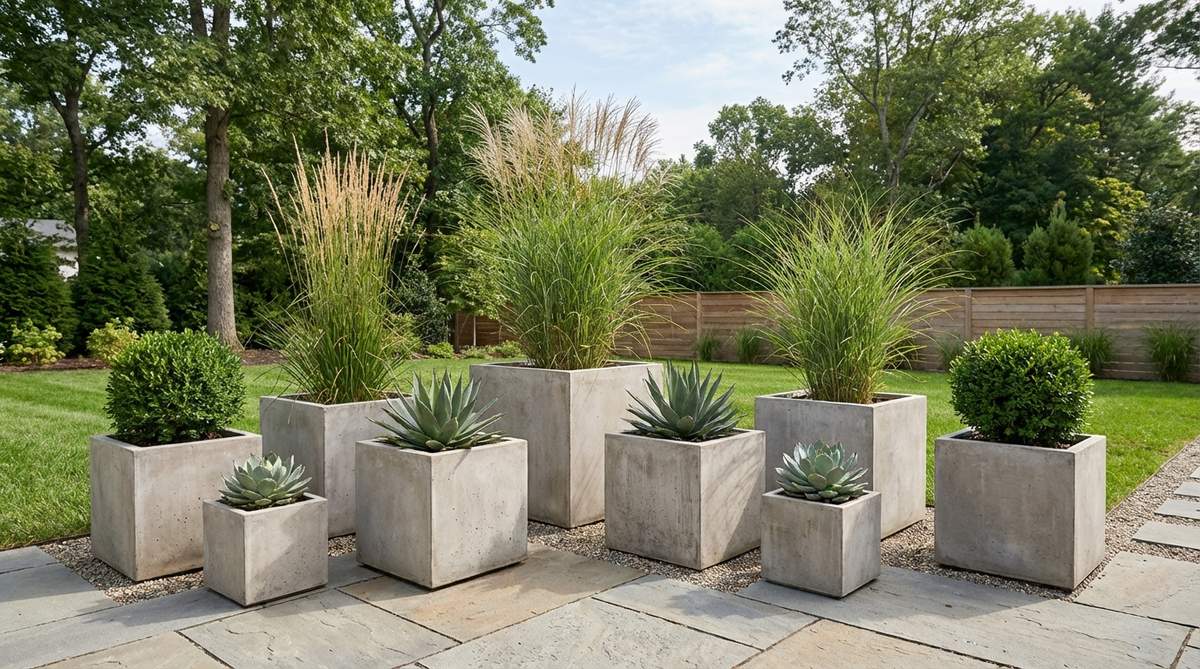
Clusters of identical concrete cubes in varying sizes establish modular planting systems. The repeated geometric form creates unity while different dimensions add visual hierarchy.
Cast planters from fiber-reinforced concrete for durability without excessive weight. Arrange in asymmetrical groupings rather than formal rows to maintain interest.
Plant each cube with a single specimen—structural grasses, sculptural succulents, or clipped evergreens. The uniformity of containers allows plant form to become the focal point.
8. Rectangular Planter Screens
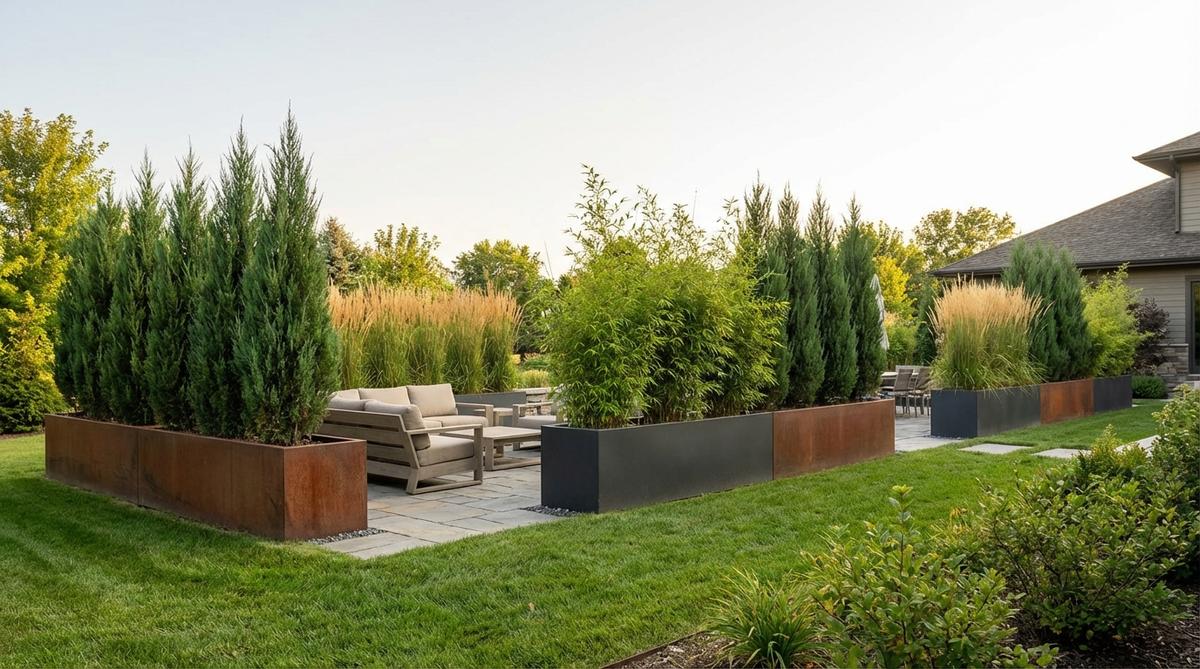
Long, narrow planters function as living walls that define space without solid barriers. The linear format reinforces geometry while vertical plantings provide softness.
Build from weathered steel, powder-coated aluminum, or wood composite materials. Proportions should emphasize length over height for modern restraint.
Fill with columnar evergreens, bamboo species, or tall ornamental grasses that grow upright. The repeating vertical lines contrast with horizontal planter form to create visual tension.
9. Cylindrical Metal Vessels
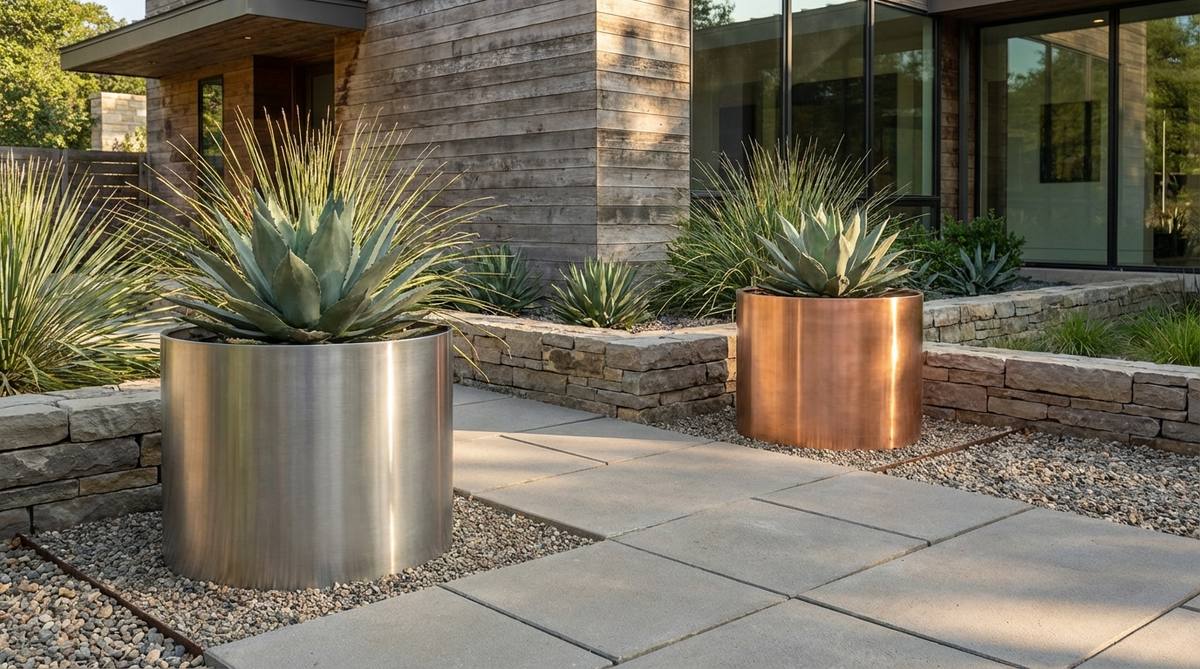
Simple circular planters in brushed stainless steel or copper provide textural contrast against matte concrete and stone. The reflective surfaces capture light and surrounding colors.
Select cylinders with clean welds and minimal detailing. Vary diameters while maintaining consistent height for visual cohesion across multiple containers.
These vessels work particularly well for showcasing specimen plants with architectural form. Position near building corners or pathway intersections to mark key locations.
10. Tiered Box Arrangements
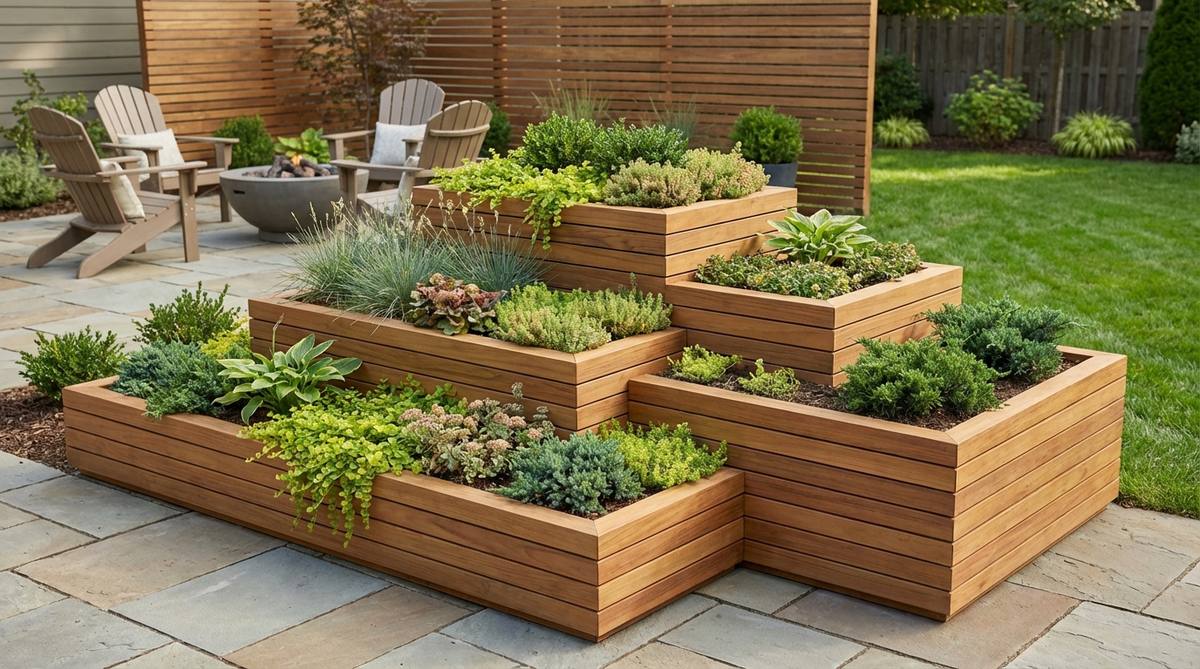
Stacked rectangular planters in descending sizes create three-dimensional geometric compositions. The layered effect adds height variation within a compact footprint.
Construct from teak, ipe, or composite materials with mitered corners for precision. Each tier should support different plant types—groundcovers below, upright forms above.
This vertical arrangement maximizes planting density in small spaces. The geometric stacking pattern itself becomes decorative without additional ornamentation.
11. Integrated Bench Planters
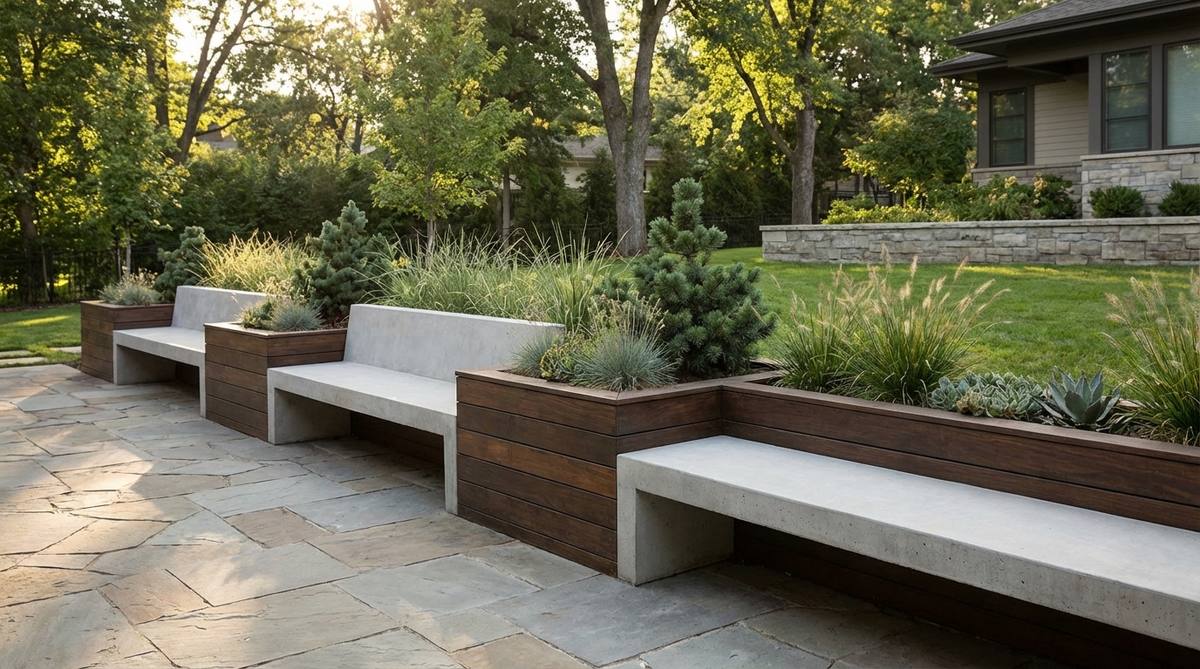
Seating elements combined with planting boxes unify function and form. The dual-purpose design eliminates separate furniture and containers for streamlined space planning.
Build continuous structures with alternating seating and planting compartments. Use consistent material throughout—concrete, wood, or composite—for visual unity.
Plant sections with low-maintenance species that tolerate proximity to human activity. The integrated approach reduces overall element count while increasing functionality.
12. Monolithic Stone Troughs
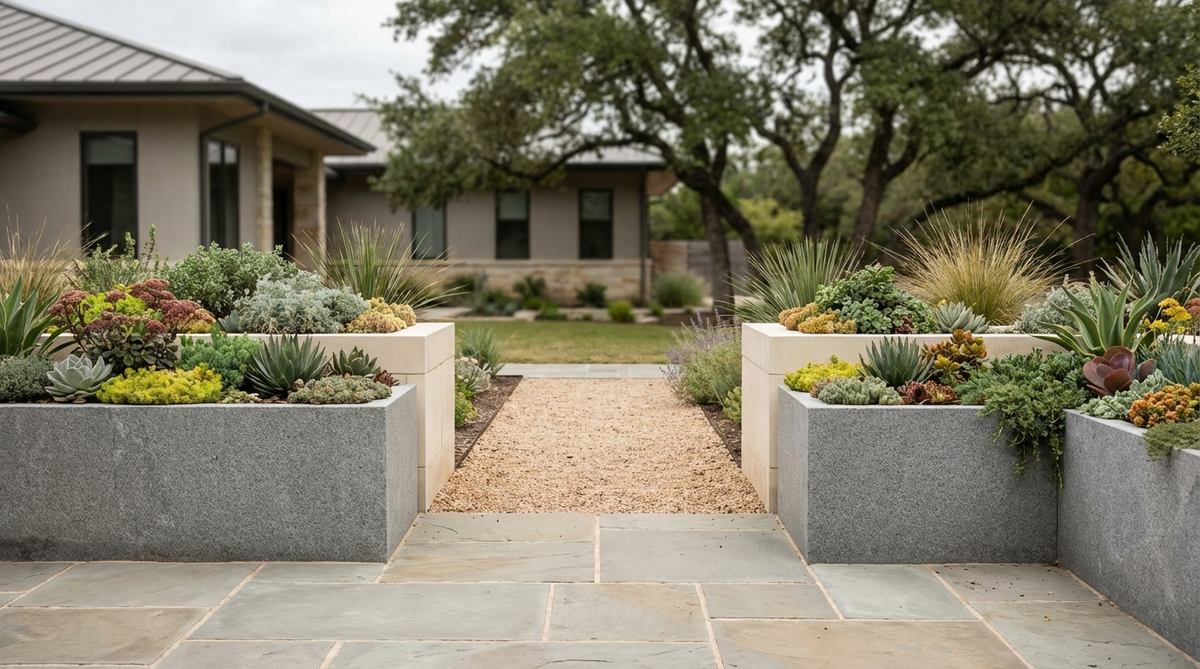
Carved stone planters or cast concrete pieces resembling natural rock provide mass and permanence. The single-piece construction emphasizes material authenticity.
Select troughs with clean geometric profiles—rectangular or square forms with straight edges. Natural stone like limestone or granite ages gracefully and develops character over time.
These heavy planters anchor corners and entry points. Plant with alpine species, succulents, or single specimen trees that enhance rather than hide the container form.
Linear Water Features
Water elements in minimalist gardens favor geometric clarity over naturalistic forms. Channels, pools, and reflecting basins use precise edges and still surfaces to create contemplative focal points.
13. Rectangular Reflecting Pools
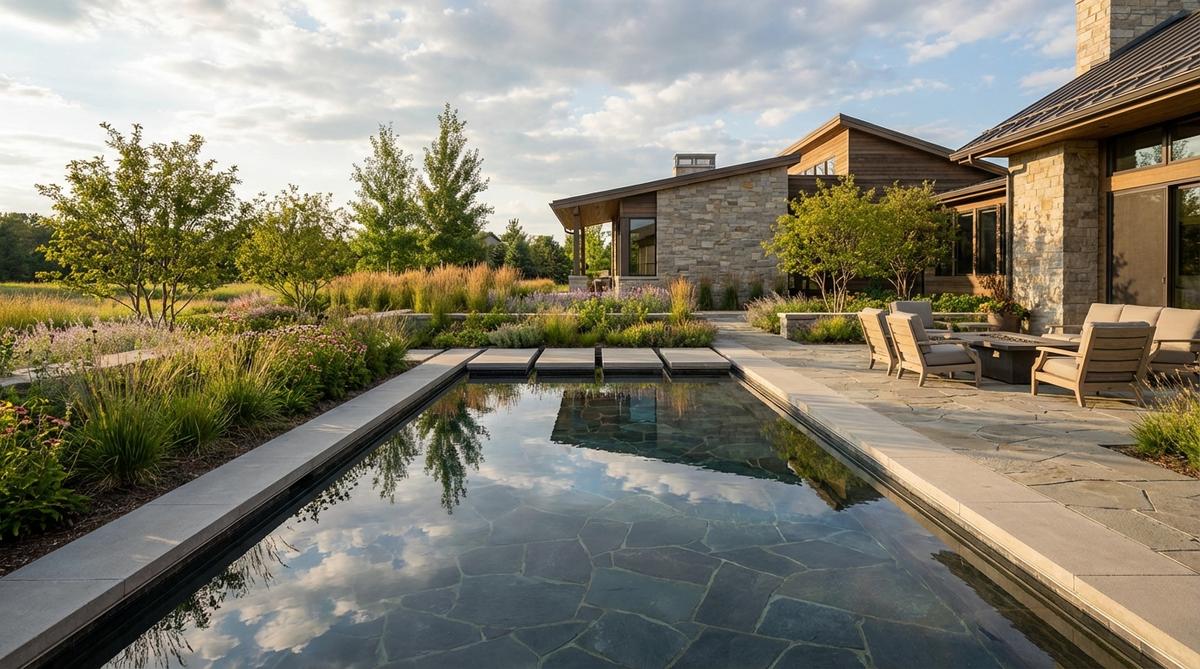
Shallow basins with dark interiors create mirror surfaces that double the visual impact of surrounding elements. The still water reflects sky, architecture, and plantings with perfect clarity.
Construct pools with overflowing edges or knife-edge details that eliminate visible borders. Keep water depth minimal—two to four inches suffices for reflection while reducing maintenance.
Position pools to capture specific views or adjacent structures. The geometric form and reflective quality amplify spatial perception and introduce tranquility through visual stillness.
14. Linear Runnel Channels
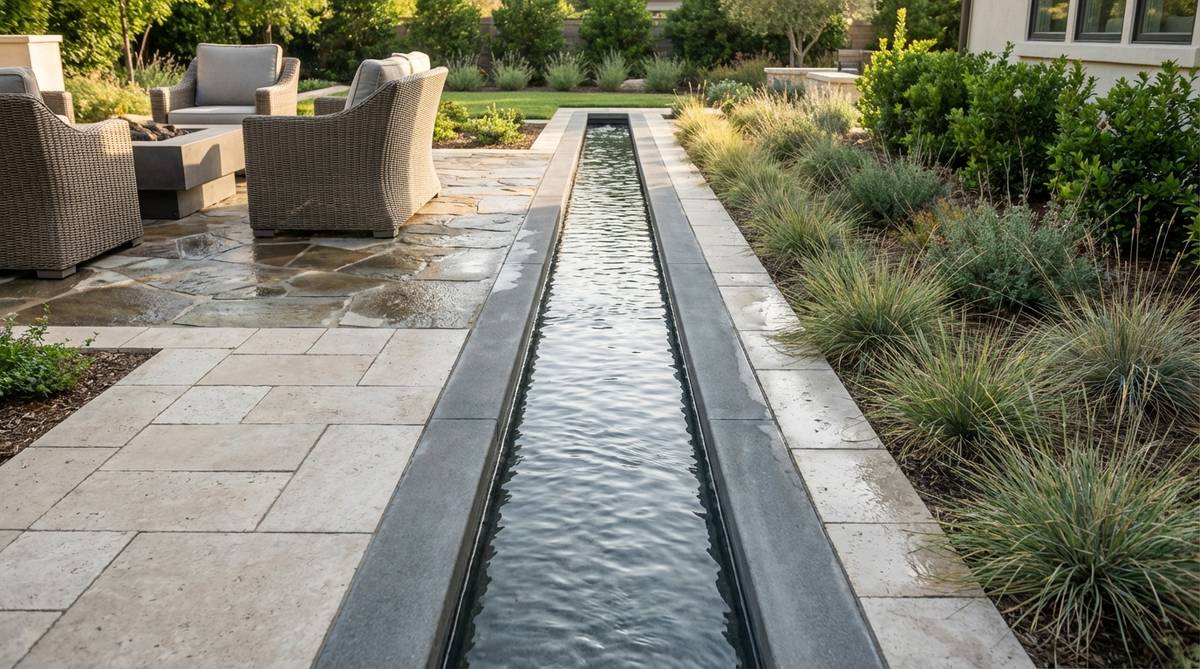
Narrow water channels carved into paving or set as separate elements guide water movement along defined paths. The linear flow creates auditory and visual interest through controlled geometry.
Build from stainless steel, stone, or concrete with precise dimensions—typically four to eight inches wide. Slight grade creates gentle water movement without turbulence.
Runnels work as pathway borders or terrace dividers. The contained water movement provides sensory interest without the complexity of traditional fountains.
15. Cubic Fountain Blocks
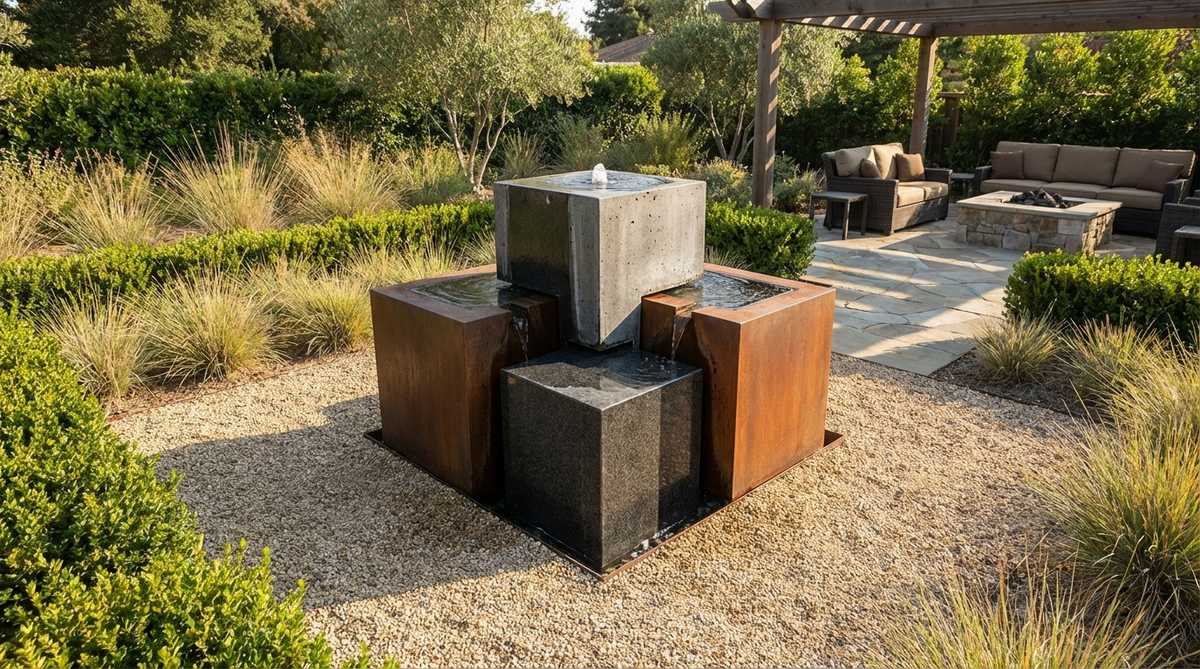
Solid geometric forms with water emerging from top surfaces or faces combine sculpture with function. The precise cubic shape maintains design consistency while water adds movement.
Fabricate from polished granite, concrete, or weathered steel. Water flows over edges in smooth sheets or bubbles from center points depending on outlet design.
These features work as freestanding elements in gravel courts or as focal points in planted areas. The simple geometry allows water behavior to provide all necessary visual interest.
16. Infinity Edge Basins
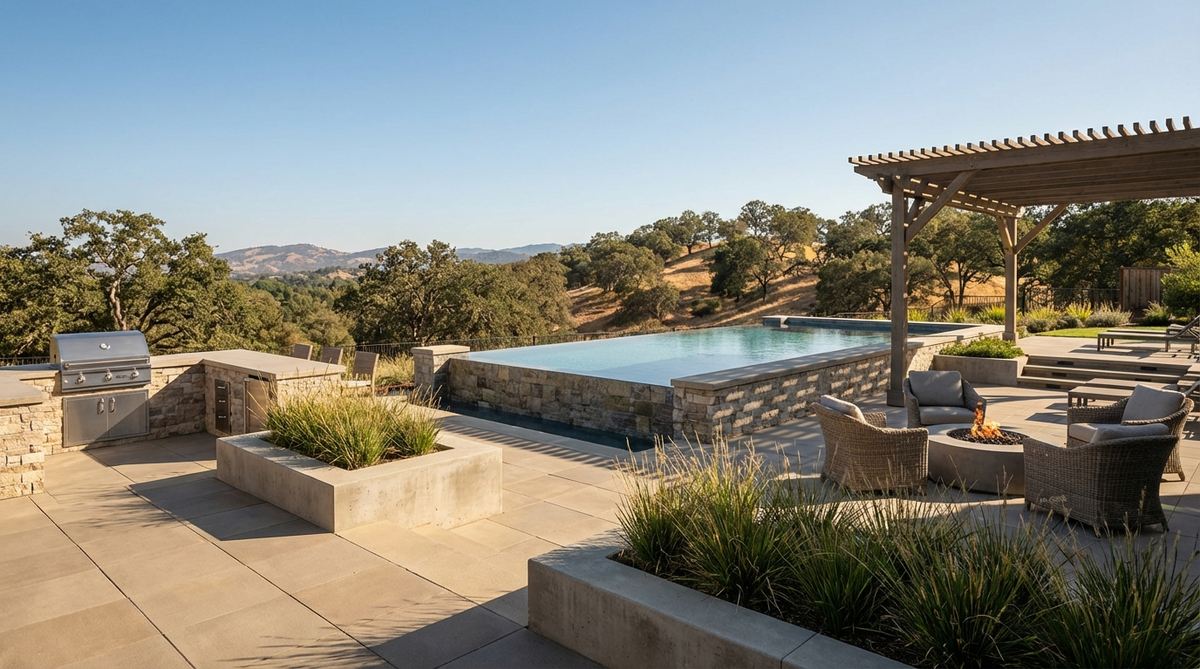
Elevated pools with one or more vanishing edges create dramatic water effects where the surface appears to merge with distant views. The geometric pool form contrasts with the visual trick of the disappearing edge.
Engineer basins with catch reservoirs and recirculation systems. The vanishing edge must be perfectly level and the water depth carefully controlled.
This design approach works best on sloped sites where the infinity edge can relate to downhill views. The modern aesthetic demands clean lines and minimal surrounding decoration.
17. Circular Water Bowls
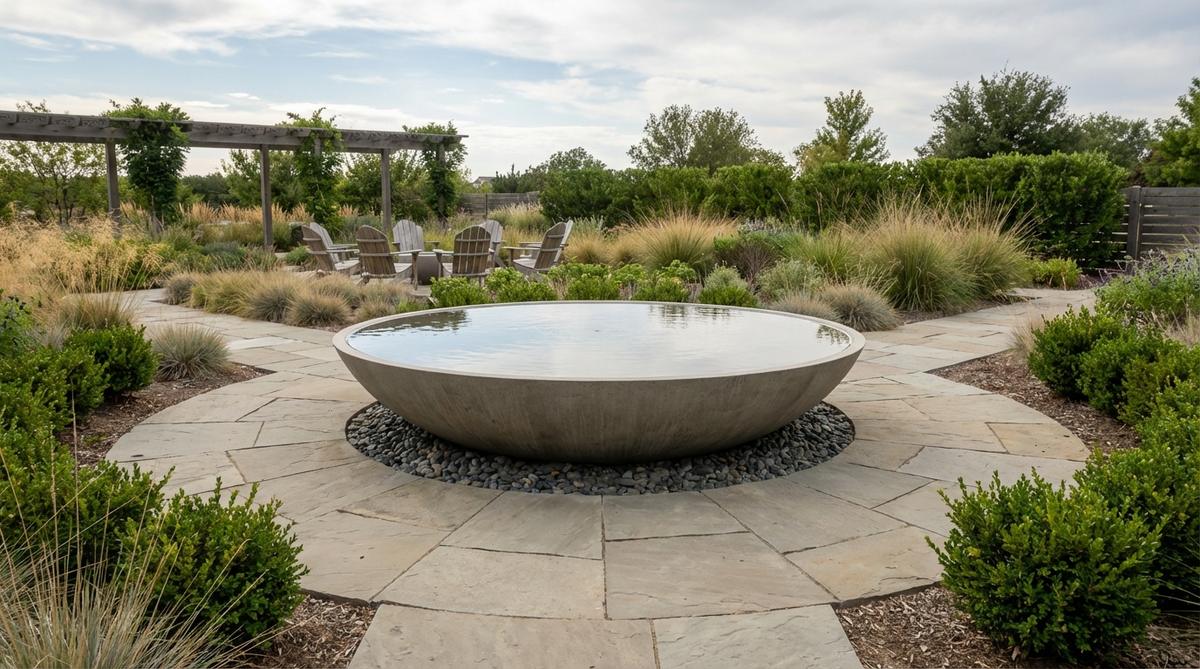
Large-diameter shallow bowls create calm water surfaces with perfect circular geometry. The contained form provides visual anchor points while the circular shape offers relief from rectilinear surroundings.
Cast bowls from concrete or carve from single stone blocks. Interior surfaces should be smooth and dark to maximize reflective quality.
Position bowls at pathway intersections or courtyard centers. The circular form naturally draws attention and creates gathering points around its perimeter.
18. Wall-Mounted Sheet Cascades
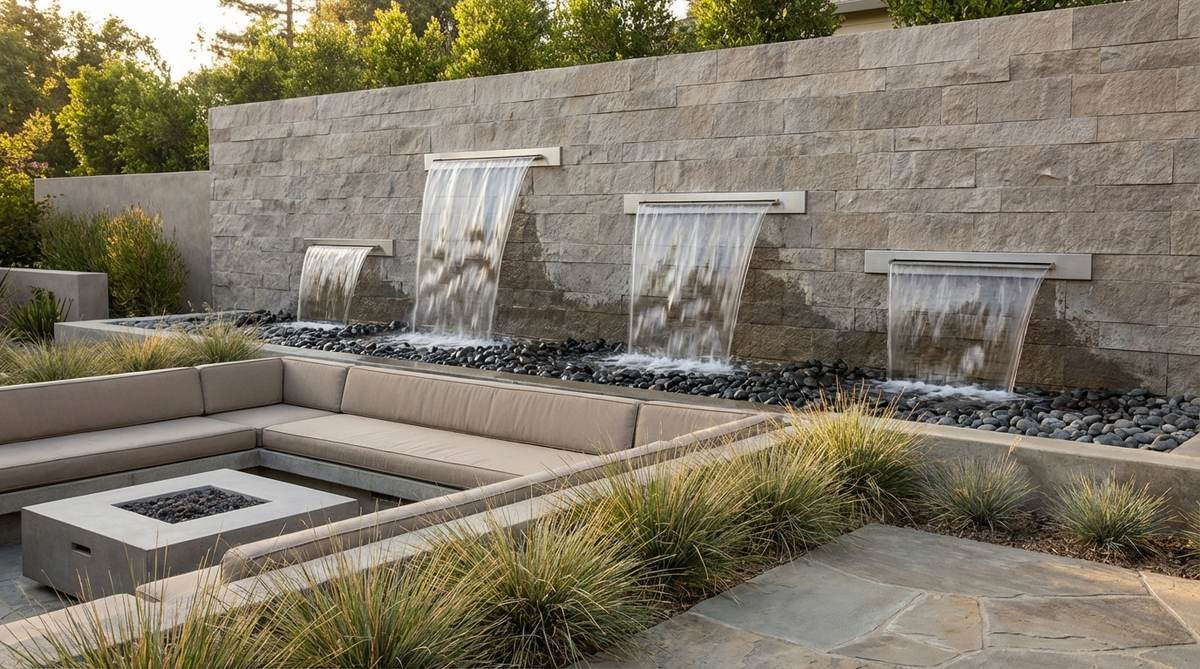
Water flows in smooth sheets from horizontal slots cut into vertical surfaces. The linear water flow emphasizes wall geometry while introducing controlled movement.
Install stainless steel or stone weirs with precise edges for clean water release. The wall surface below should be smooth to maintain sheet flow character.
These features work particularly well on property boundary walls or as backdrops to seating areas. The vertical water plane creates sound masking and visual interest without occupying floor space.
Sculptural Focal Points
Abstract sculptures and geometric art objects anchor modern gardens with three-dimensional form. These pieces function as spatial markers while reinforcing the minimalist aesthetic through material choice and geometric purity.
19. Mirror-Polished Spheres
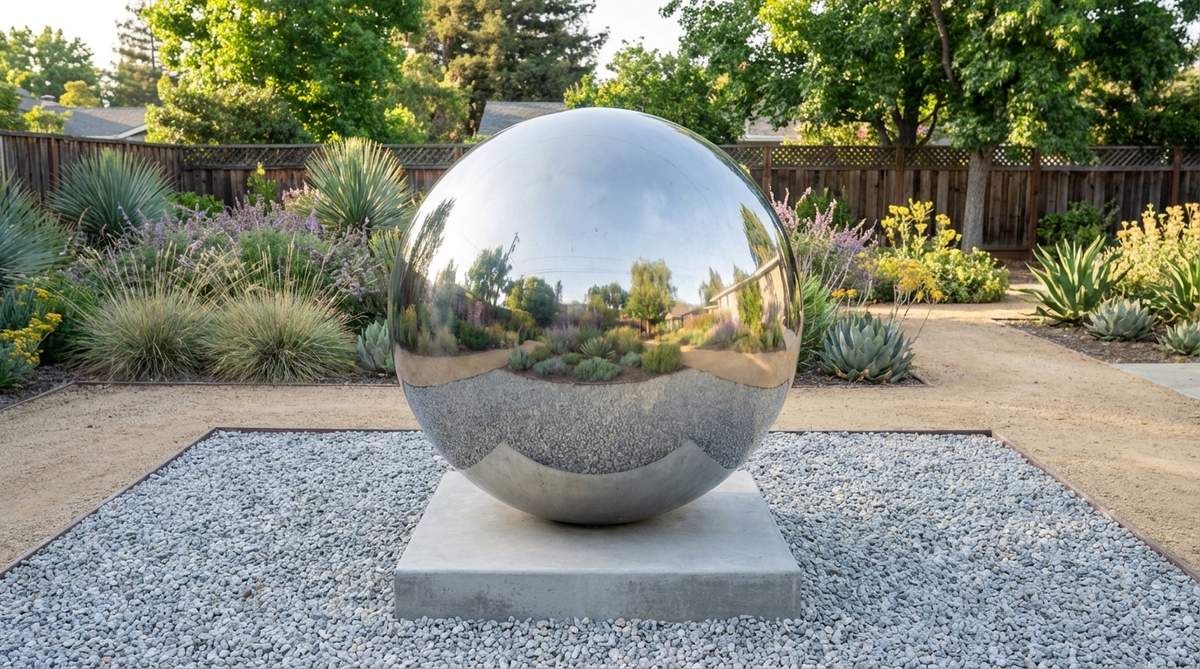
Stainless steel spheres reflect and distort surrounding gardens in their curved surfaces. The perfect geometric form contrasts with organic plantings while the reflective quality integrates the piece into its environment.
Select spheres ranging from 12 to 48 inches in diameter depending on scale requirements. Position on low plinths or directly on gravel surfaces.
These sculptures capture changing light throughout the day and reflect seasonal garden changes. The simple form requires no interpretation while providing strong visual punctuation.
20. Weathered Steel Monoliths
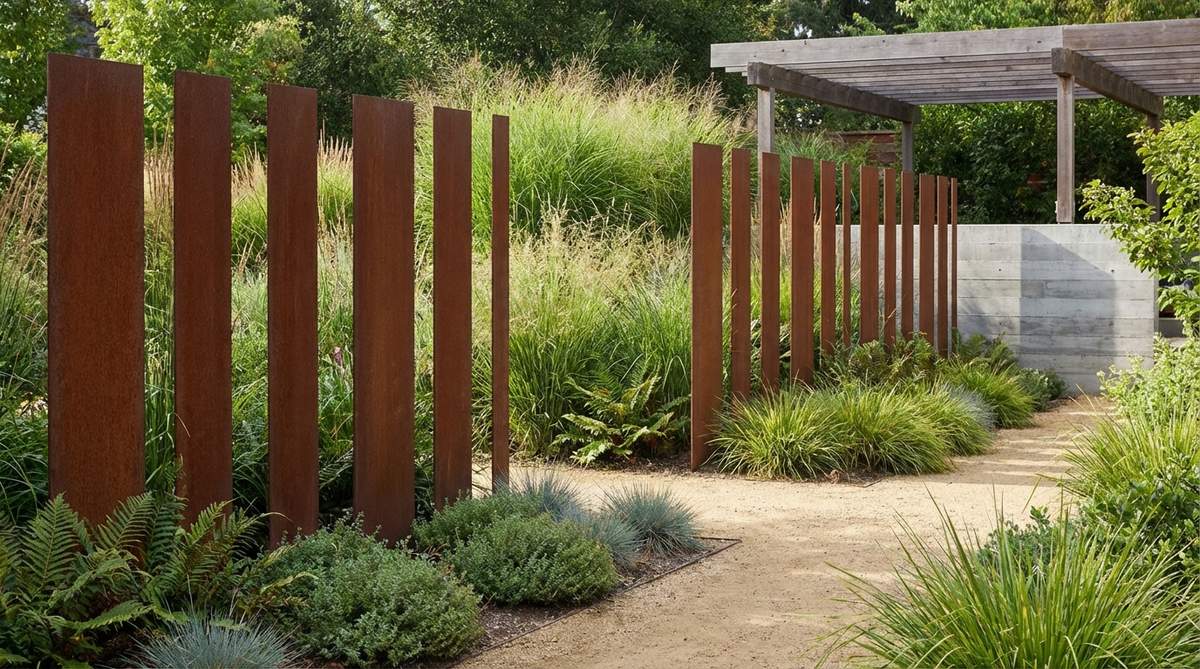
Vertical steel plates develop rich rust patinas that contrast with green plantings. The simple rectangular forms emphasize height and create visual weight through material density.
Fabricate from corten steel in varying heights from three to eight feet. The weathering process stabilizes after several months, producing consistent warm brown tones.
Group multiple monoliths at different heights or use single pieces as terminals along pathways. The material’s industrial character aligns with modern minimalist principles.
21. Geometric Wire Frames
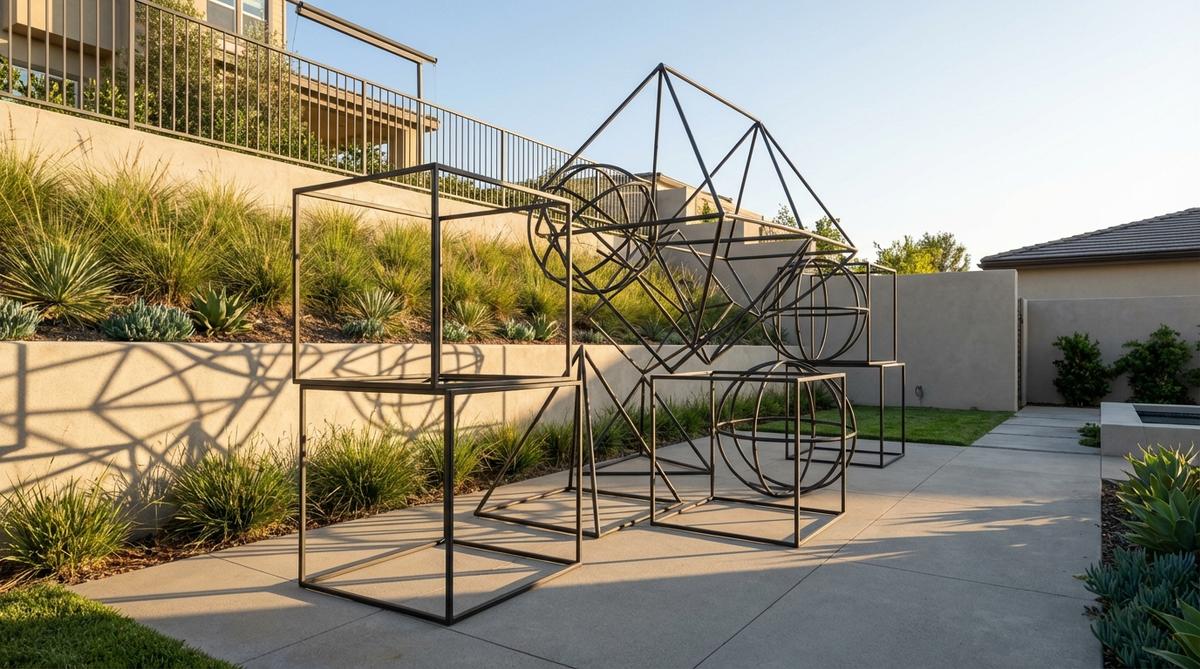
Large-scale wireframe structures outline geometric shapes—cubes, pyramids, spheres—without solid surfaces. The skeletal forms maintain presence while allowing visual penetration.
Construct from powder-coated steel rod or tubing welded at precise angles. The open framework creates changing shadow patterns throughout the day.
These pieces work particularly well when backlit by low sun angles. Position where shadows cast onto walls or paving to extend the sculptural impact beyond the physical object.
22. Stacked Stone Cairns
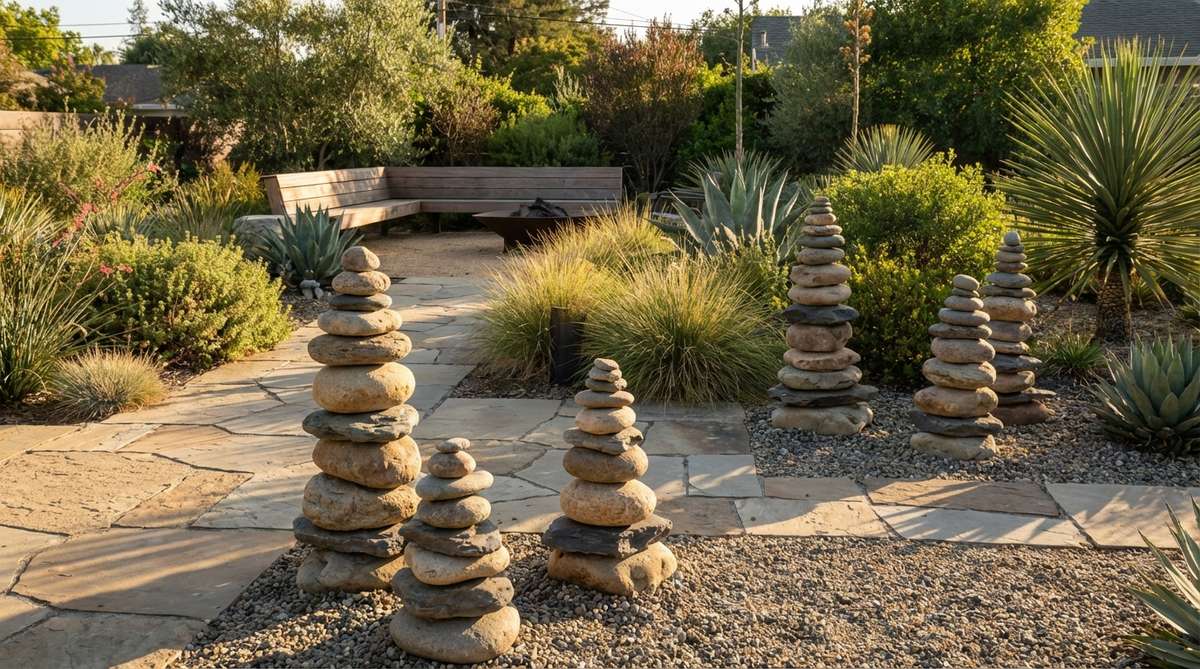
Carefully balanced stone arrangements create vertical markers through geometric stacking. The natural material grounds modern designs while the precise balance demonstrates intentional placement.
Select flat stones in similar tones but varying sizes. Stack vertically or in offset patterns that create geometric profiles.
These features work as meditation focal points or pathway markers. The manual stacking process creates unique pieces that age naturally without degradation.
23. Perforated Metal Screens
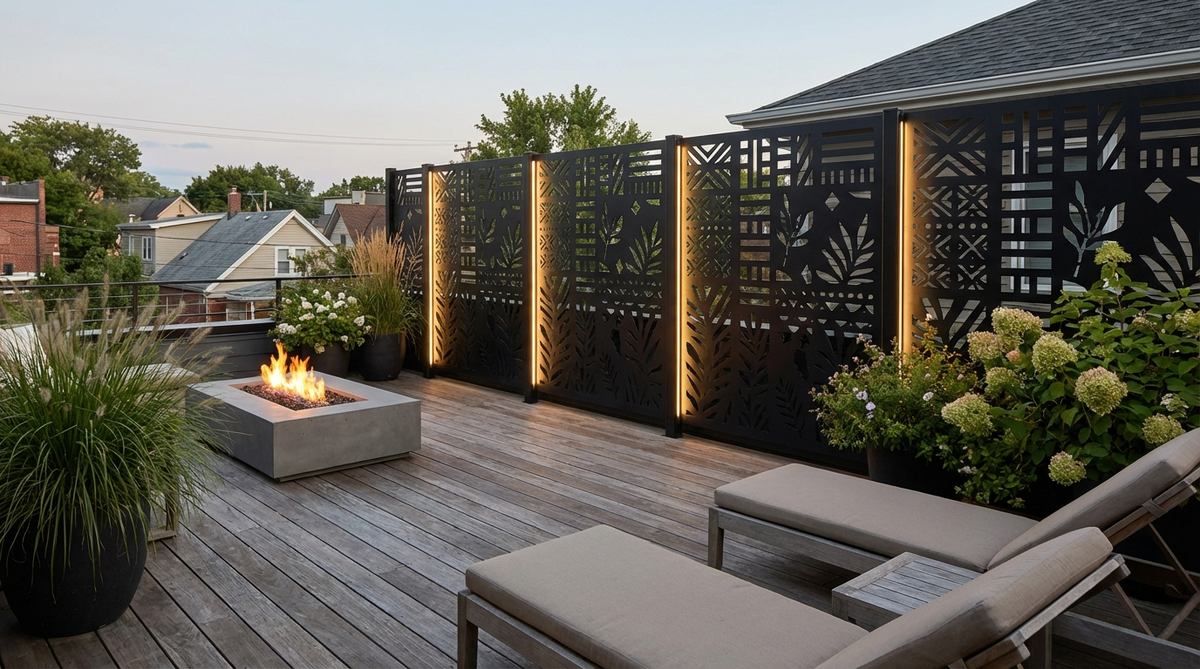
Laser-cut metal panels with geometric perforation patterns function as see-through artwork. The patterned openings create privacy screening while maintaining visual connection.
Design custom perforation patterns or select from standard geometric options—circles, hexagons, linear slots. Corten or powder-coated steel provides weather resistance.
Mount panels as freestanding elements or attach to structural frames. The perforations cast geometric shadow patterns that change position with sun movement.
24. Concrete Geometric Clusters
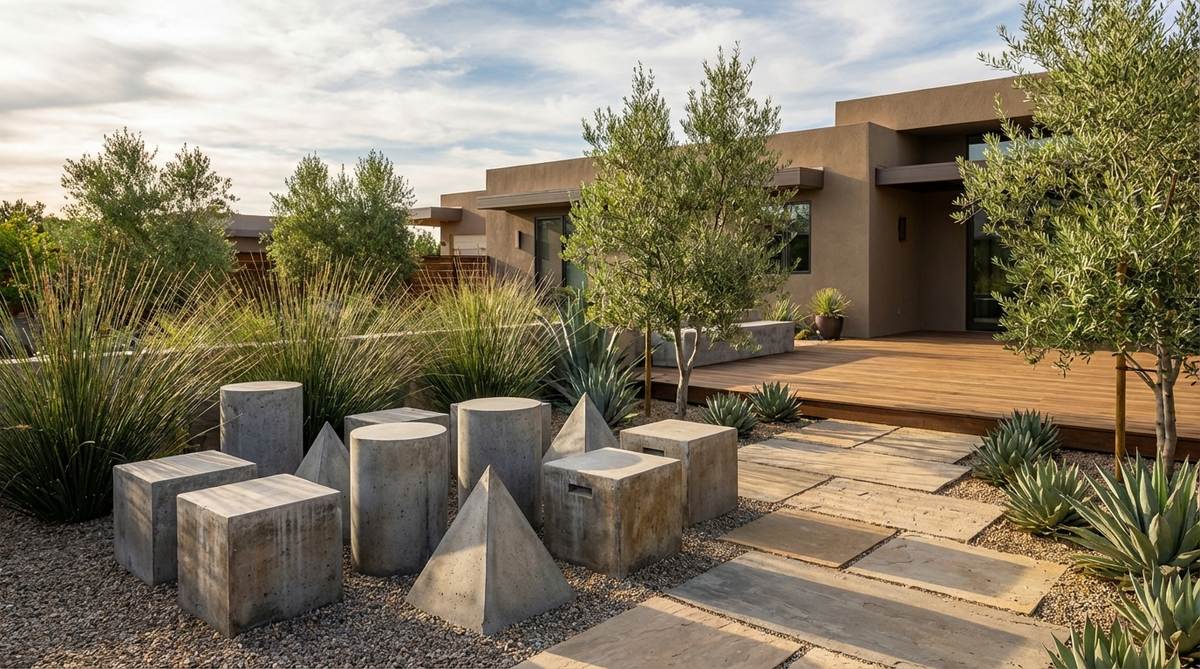
Groups of cast concrete shapes—cubes, cylinders, pyramids—arranged at ground level create three-dimensional compositions. The varied heights and forms generate visual rhythm through repetition and variation.
Cast pieces from architectural concrete with smooth finishes. Vary sizes while maintaining consistent proportional relationships between elements.
These sculptural groupings work as seating alternatives or pure art objects. Position in gravel courts or as islands within planted areas.
Geometric Lighting Solutions
Nighttime illumination in modern gardens emphasizes architectural forms and geometric patterns. Lighting fixtures themselves exhibit clean lines while strategically placed sources reveal spatial organization after dark.
25. Linear LED Strips
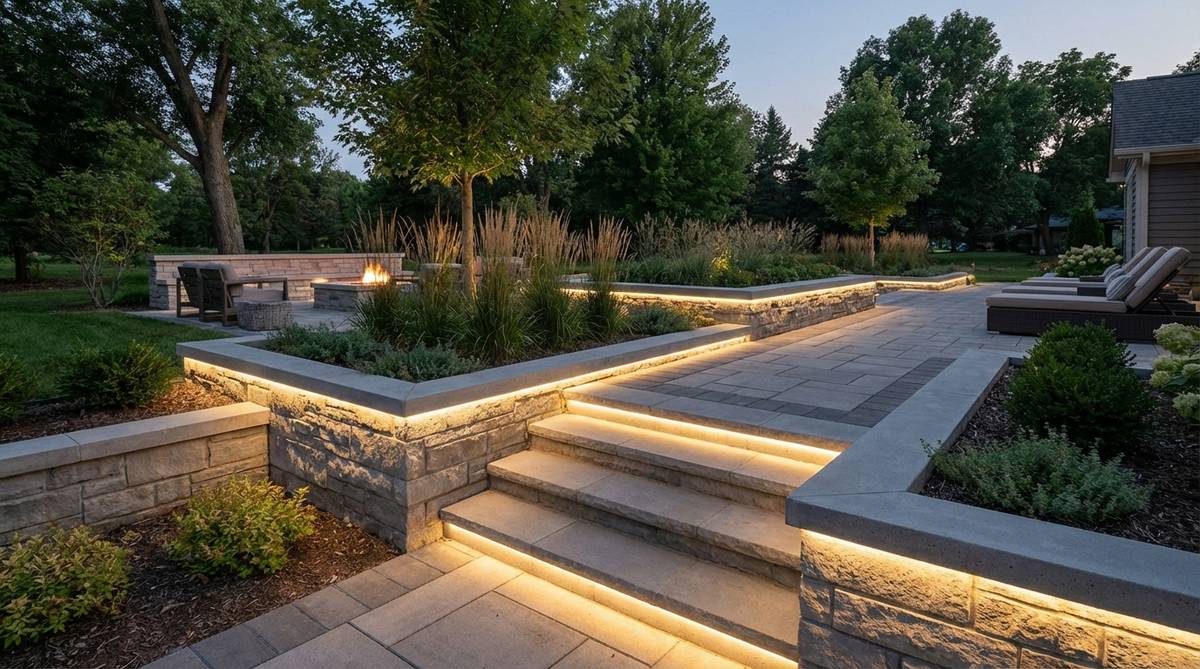
Recessed LED channels along step risers, wall bases, or planter edges create continuous lines of light. The linear illumination emphasizes geometric forms and defines spatial boundaries.
Install commercial-grade LED strips rated for outdoor exposure. Channels should be flush-mounted with minimal visible hardware.
This approach provides functional lighting while reinforcing design geometry. The consistent linear glow guides circulation and highlights architectural features simultaneously.
26. Cubic Pathway Bollards
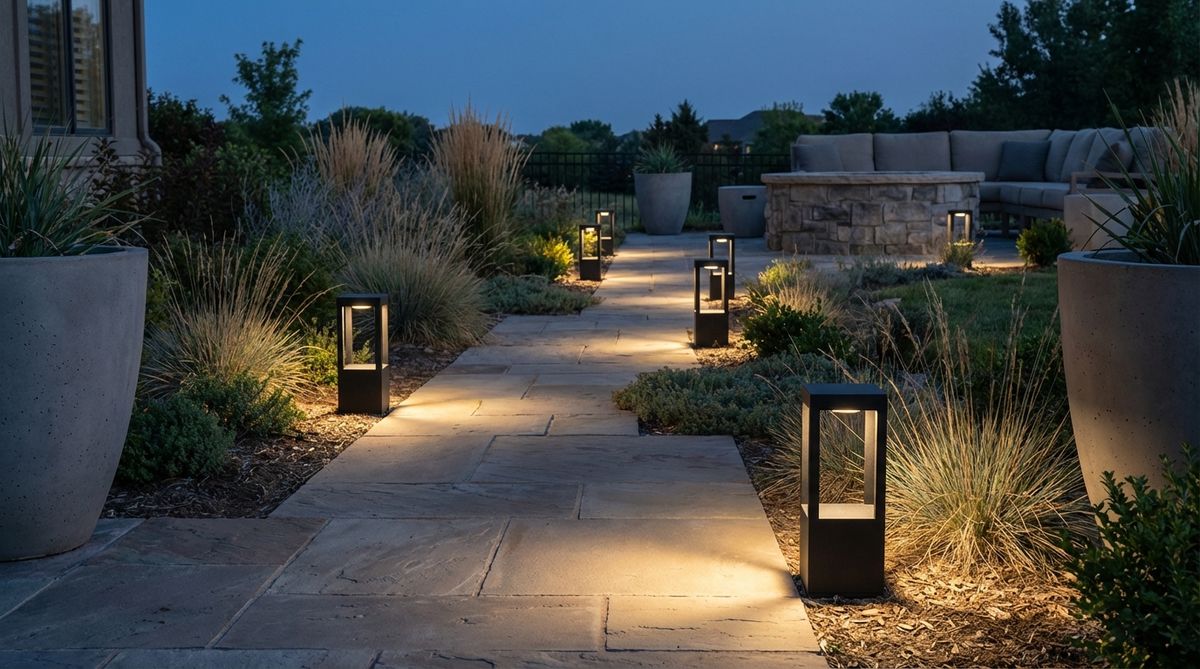
Square or rectangular light fixtures positioned along pathways create rhythmic spacing that guides movement. The geometric fixture form reinforces modern design language.
Select bollards with downward-directed light to minimize glare and light pollution. Matte powder-coated finishes reduce daytime visual impact.
Space bollards at regular intervals—typically eight to twelve feet apart. The repeated geometric form creates order while providing necessary illumination levels.
27. Uplighted Geometric Forms
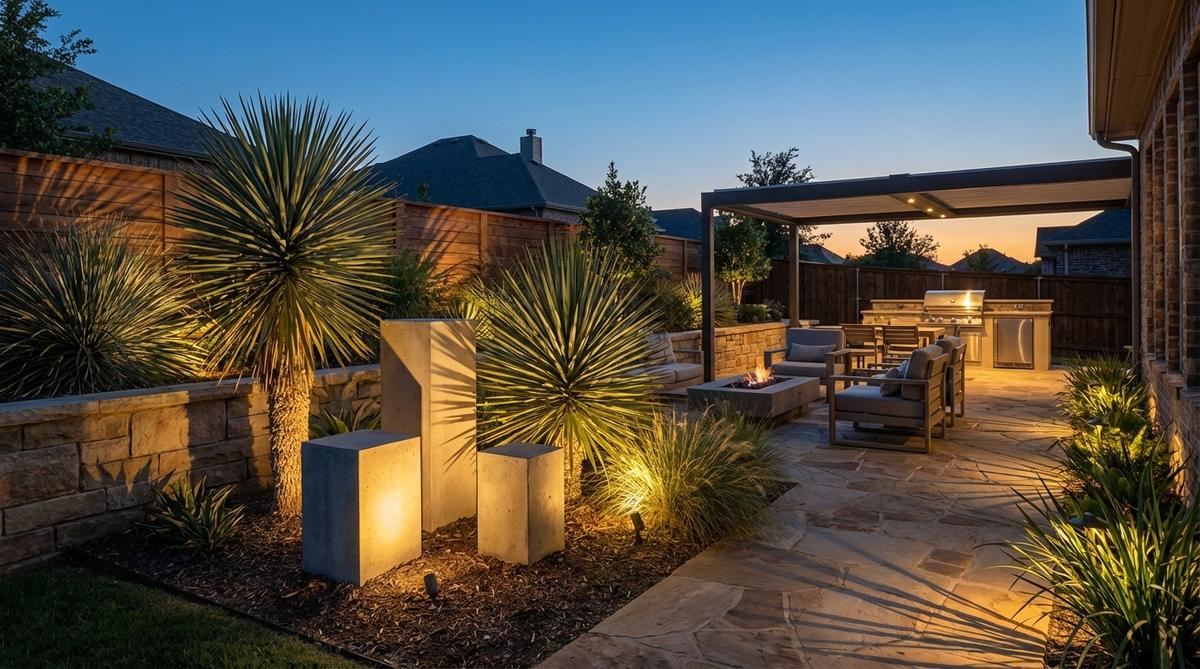
Ground-level fixtures positioned to illuminate architectural plants or sculptural elements from below create dramatic shadows and emphasize three-dimensional form.
Use narrow-beam LED fixtures with precise aiming. Position close to the illuminated object to minimize light spill and maximize shadow definition.
This technique works particularly well with specimens having strong structural character—columnar evergreens, large grasses, or geometric sculptures. The uplighting reveals form that daylight viewing might diminish.
28. Grid Pattern Overhead Strings
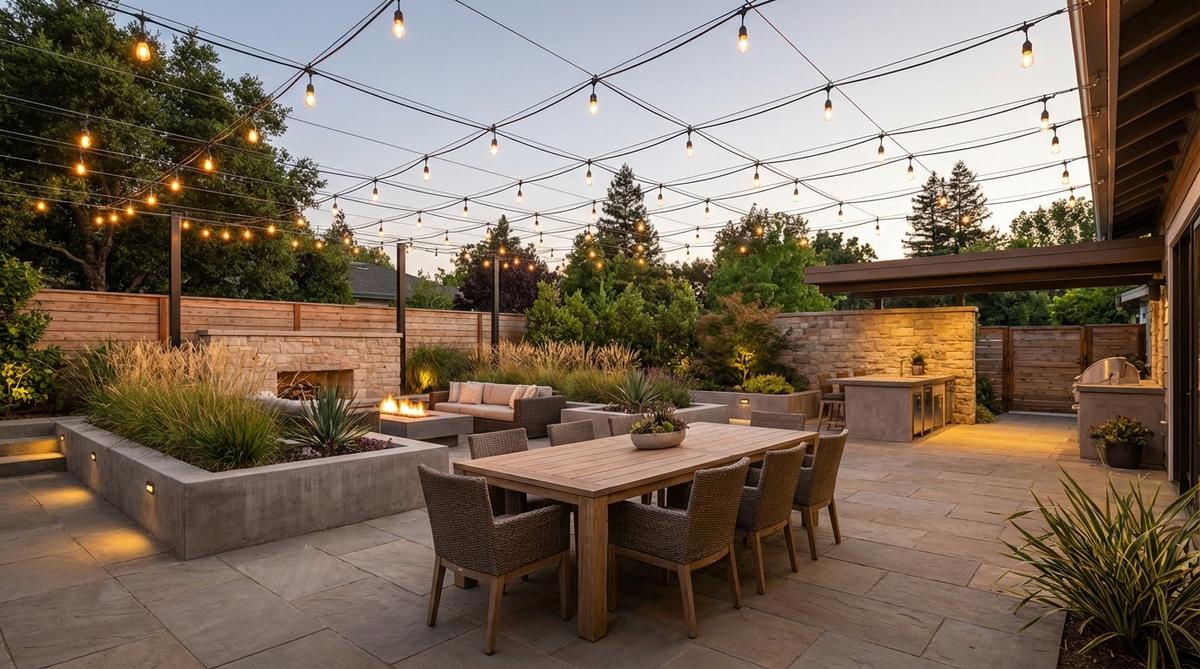
String lights arranged in perfect grids above patios or dining areas create geometric patterns overhead. The precise arrangement transforms casual string lighting into architectural installation.
Use commercial bistro bulbs with consistent spacing—typically 18 to 24 inches. Support structure must allow tension adjustment to maintain grid precision.
The overhead grid provides ambient lighting while the geometric pattern remains visible as a design element. This approach works particularly well for outdoor dining and gathering areas.
29. Backlit Translucent Panels
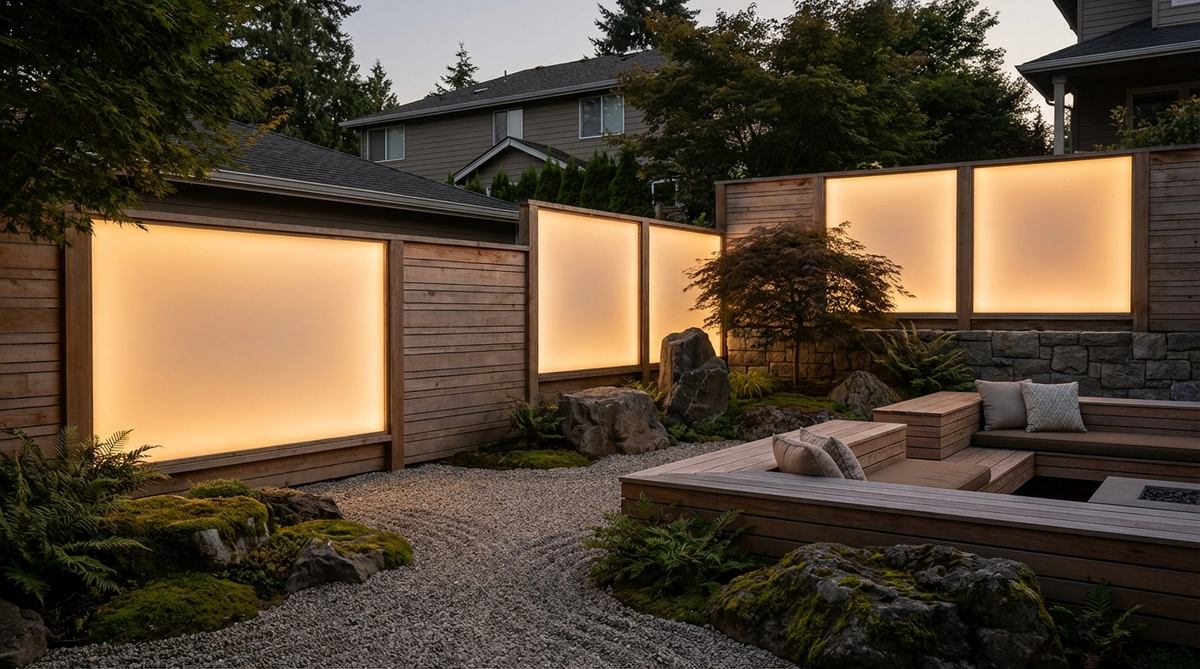
Vertical panels of frosted acrylic, resin, or glass with rear lighting create glowing geometric forms. These illuminated planes function as both privacy screens and light sources.
Frame panels in minimal aluminum or steel structures. LED lighting behind panels should be evenly distributed to prevent hot spots.
These features work as property dividers or backdrop elements for seating areas. The translucent quality provides nighttime glow while maintaining daytime visual interest through material texture.
Structural Seating Arrangements
Seating in modern minimalist gardens integrates with hardscape rather than appearing as added furniture. Built-in benches and geometric seating elements maintain clean lines while providing functional gathering spaces.
30. Cantilever Concrete Benches
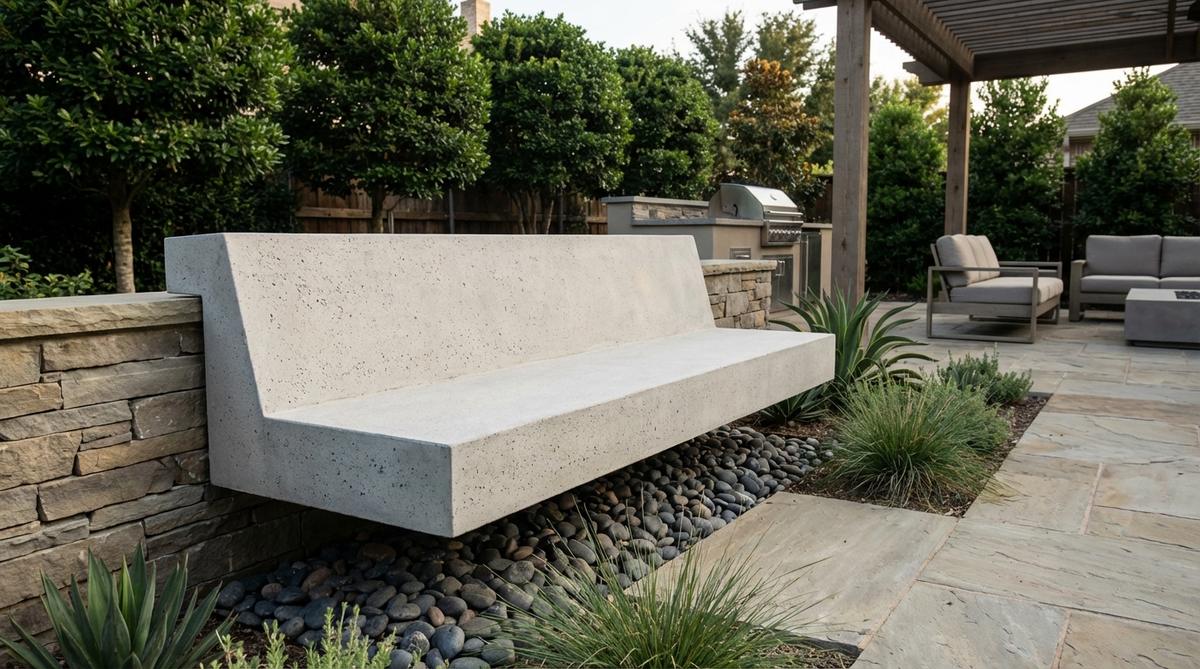
Benches projecting from walls or structural supports appear to float without visible legs. The cantilever construction emphasizes modern engineering while maintaining geometric simplicity.
Cast benches as extensions of retaining walls or design with hidden steel supports. Seat depth should measure 16 to 18 inches with comfortable height around 18 inches.
The floating appearance reduces visual weight while the substantial material provides durability. These permanent installations eliminate furniture maintenance and storage concerns.
31. Modular Cube Seating
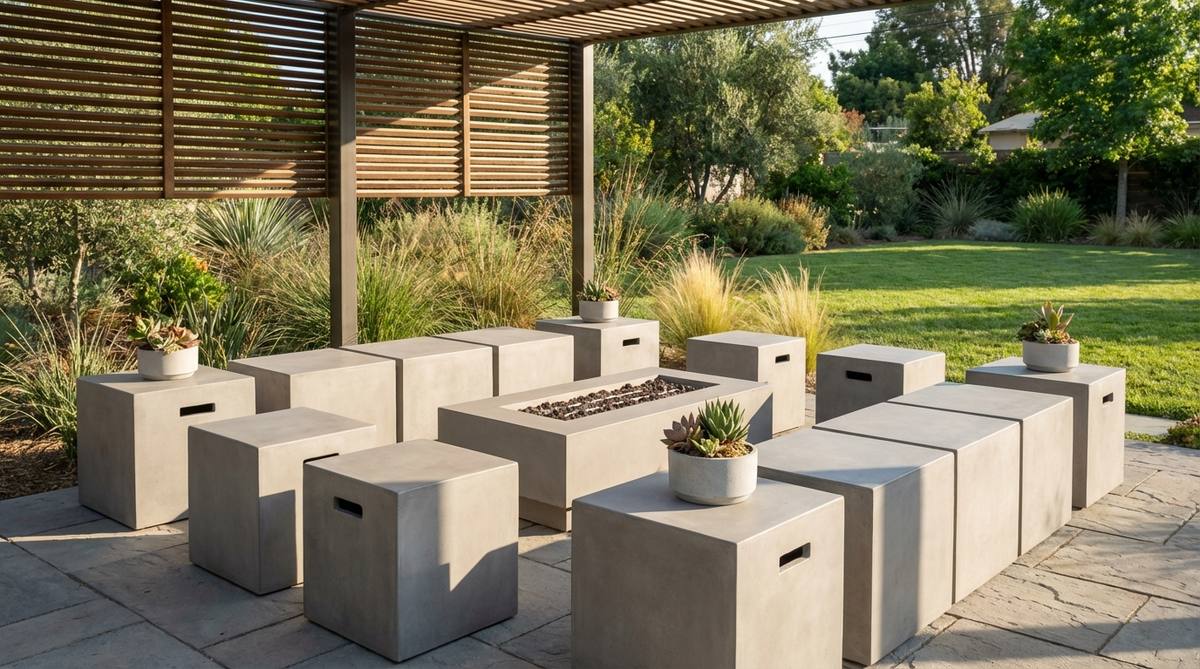
Individual cubic seats arranged in flexible configurations adapt to varying group sizes and activities. The uniform geometry allows infinite arrangement possibilities while maintaining visual consistency.
Construct cubes from teak, concrete, or composite materials. Standard dimensions of 16 to 20 inches per side accommodate comfortable seating or side table function.
The modular system allows reconfiguration for different occasions. When not in use, cubes cluster as sculptural groupings that reinforce geometric design themes.
32. Perimeter Wall Benches
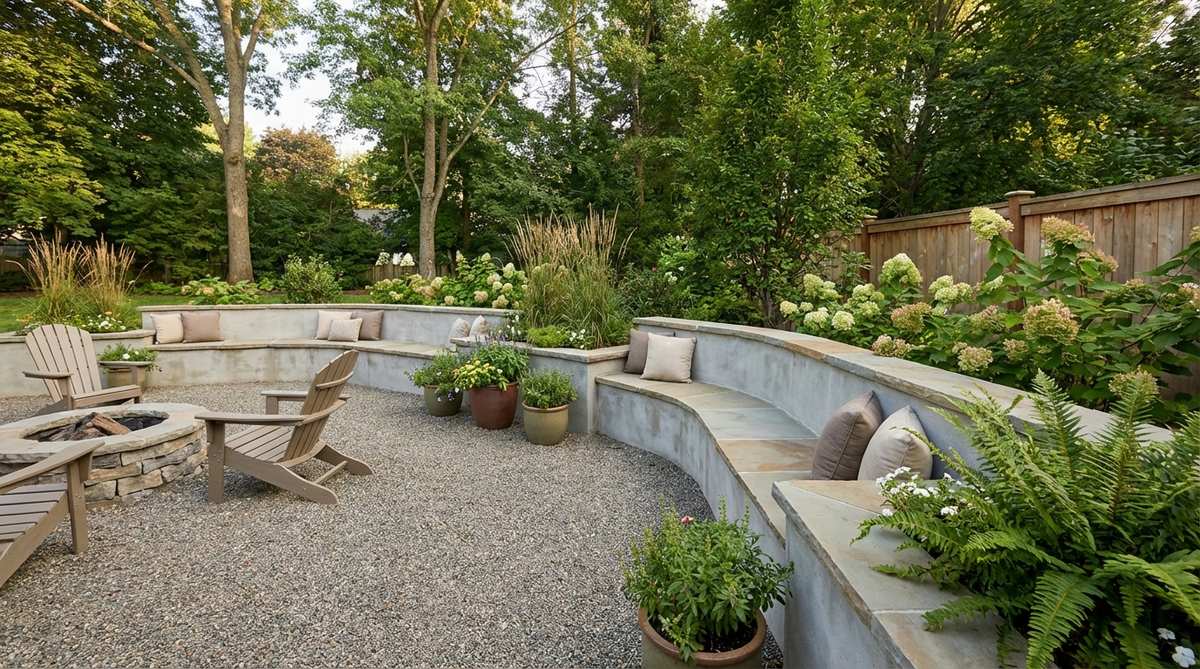
Continuous bench seating built into boundary walls provides abundant seating while reinforcing spatial definition. The linear form emphasizes garden perimeter and creates consistent seating height.
Cap retaining walls with flat stones or cast concrete to create bench surfaces. Width should accommodate comfortable seating—minimum 16 inches with back support if possible.
This approach maximizes seating capacity without consuming floor area. The permanent installation requires zero maintenance beyond occasional surface cleaning.
33. Geometric Daybed Platforms
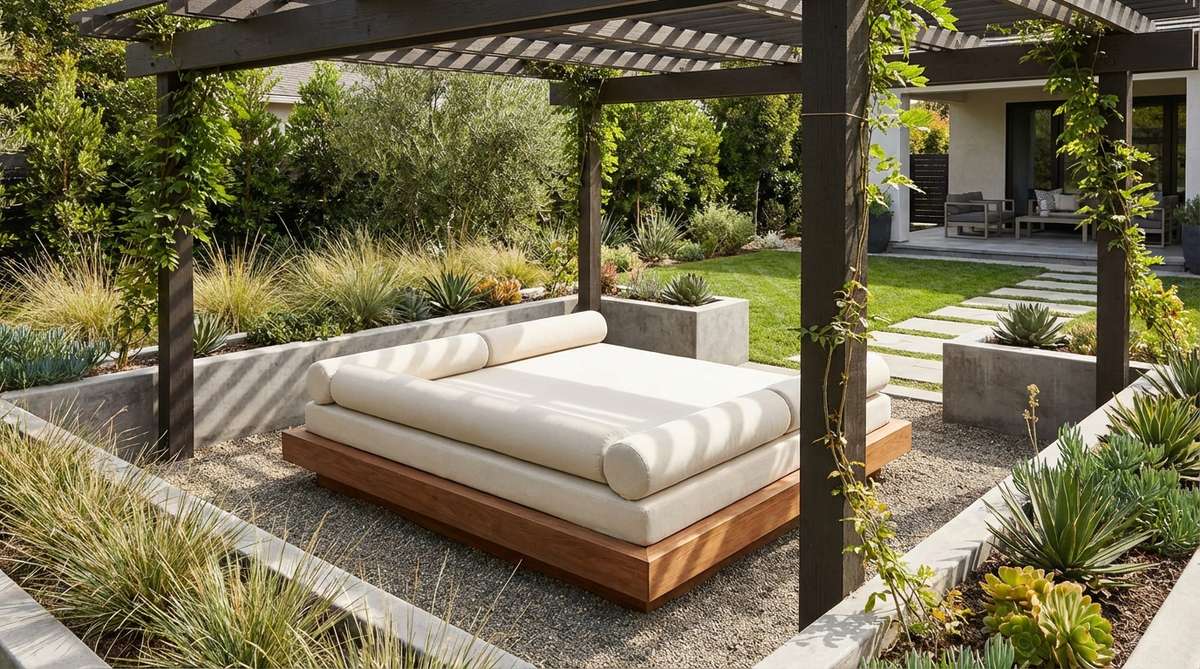
Low platforms with cushioned surfaces create outdoor lounging areas with architectural presence. The raised geometric form defines the relaxation zone while maintaining modern aesthetic.
Build platforms from weather-resistant hardwood or composite decking. Typical dimensions range from 6 by 6 feet to 8 by 8 feet with heights of 12 to 16 inches.
These platforms work particularly well in sheltered corners or under pergola structures. The geometric form and horizontal emphasis invite extended outdoor lounging.
34. Stepped Amphitheater Seating
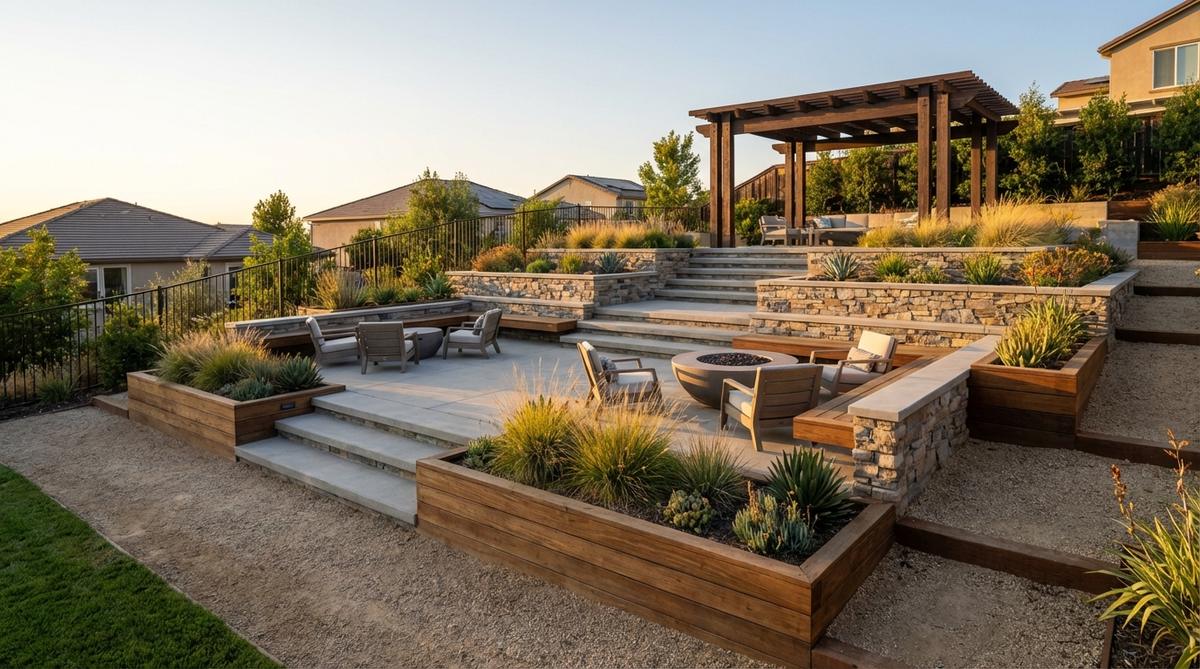
Tiered platforms arranged in semicircular or rectangular patterns create gathering spaces with built-in seating. The stepped geometry accommodates groups while providing clear sight lines.
Construct steps at comfortable seating height—14 to 16 inches with tread depths of 24 inches or more. Materials should match surrounding hardscape for visual integration.
This design works particularly well for sloped sites where grade change requires terracing. The amphitheater format naturally focuses attention on a central area suitable for fire features or performance space.
Vertical Geometric Elements
Height variation in flat gardens comes through intentional vertical structures. Trellises, screens, and architectural supports add geometric interest at eye level and above while maintaining modern restraint.
35. Steel Grid Trellises
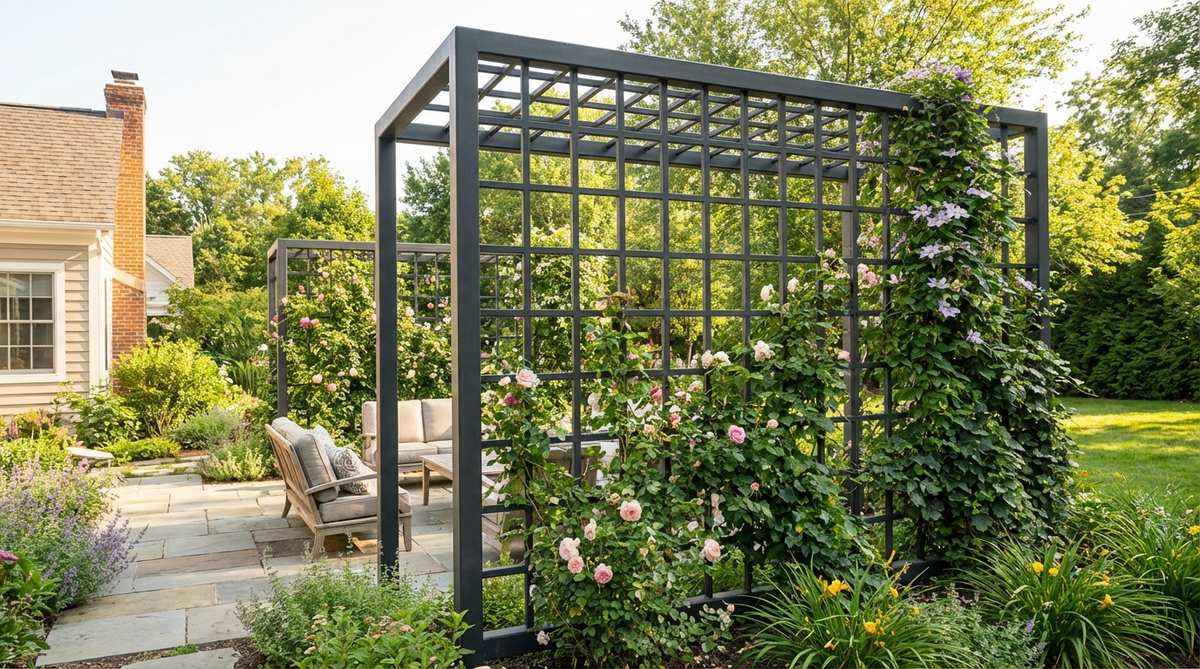
Welded steel frameworks with square or rectangular grids support climbing plants while functioning as freestanding geometric artwork. The visible structure remains prominent even when fully planted.
Fabricate from square steel tubing with consistent grid spacing—typically 8 to 12 inches. Powder coating in dark tones or weathered steel finishes complement planted growth.
These trellises work as privacy screens, property dividers, or backdrop elements. The geometric grid pattern remains visible through foliage, reinforcing design intentions throughout growing seasons.
36. Vertical Cable Systems
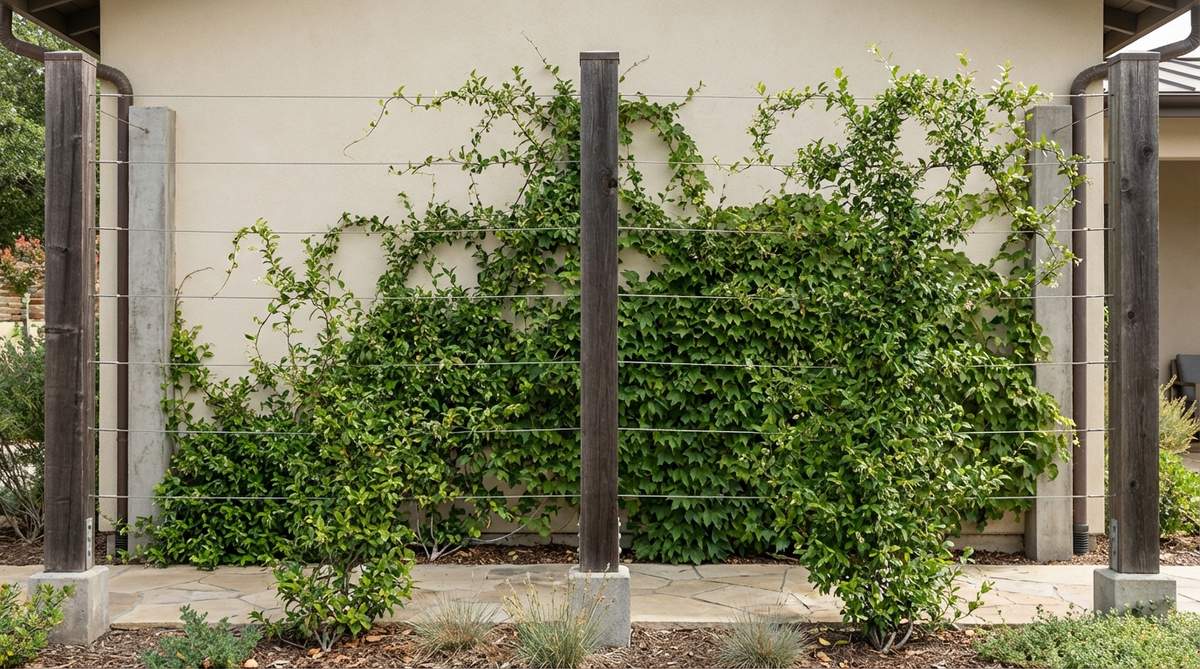
Stainless steel cables stretched between upper and lower supports create minimalist climbing structures. The thin cables almost disappear, allowing plant material to dominate visually.
Install cables at six to eight-inch spacing using tensioned hardware systems. The minimal structure requires little maintenance while supporting substantial plant weight.
This approach works particularly well for green walls where the supporting structure should remain invisible. Cables guide upward growth without competing visually with foliage.
37. Geometric Pergola Frames
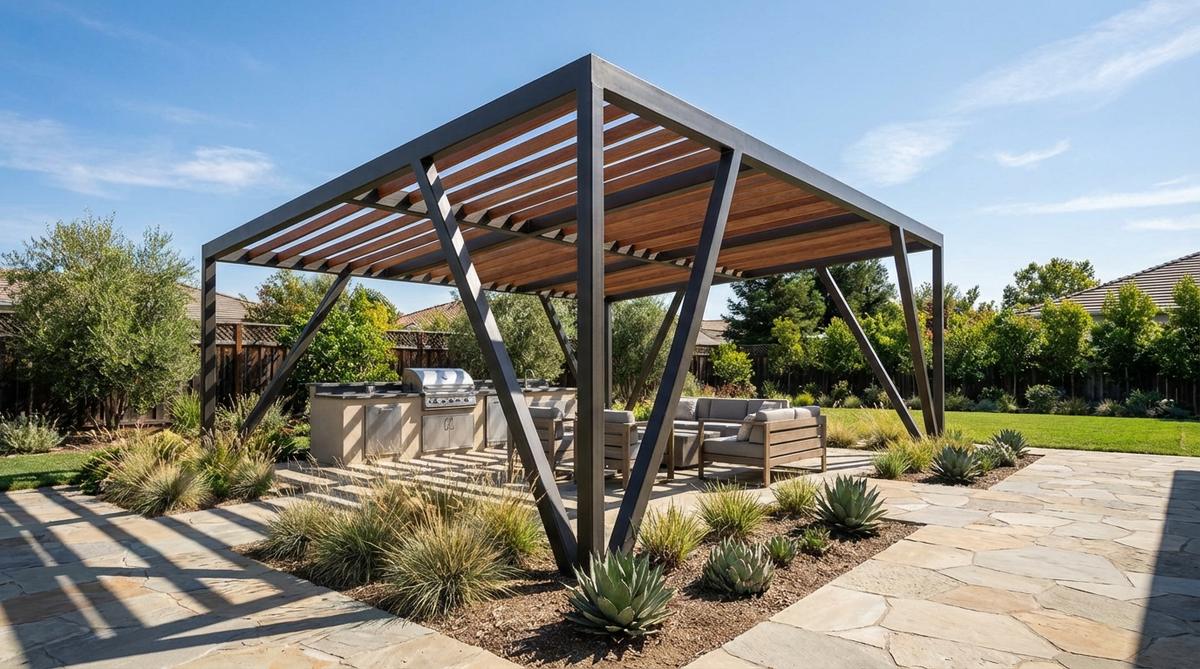
Overhead structures using clean-lined beams and rafters create geometric patterns against the sky. The open framework provides partial shade while maintaining visual lightness.
Construct from steel I-beams, aluminum extrusions, or dimensional lumber with precise connections. Spacing between overhead members should balance shade provision with openness.
Modern pergolas often eliminate decorative details in favor of structural expression. The geometric overhead pattern creates shadow play on surfaces below throughout the day.
38. Laser-Cut Privacy Walls
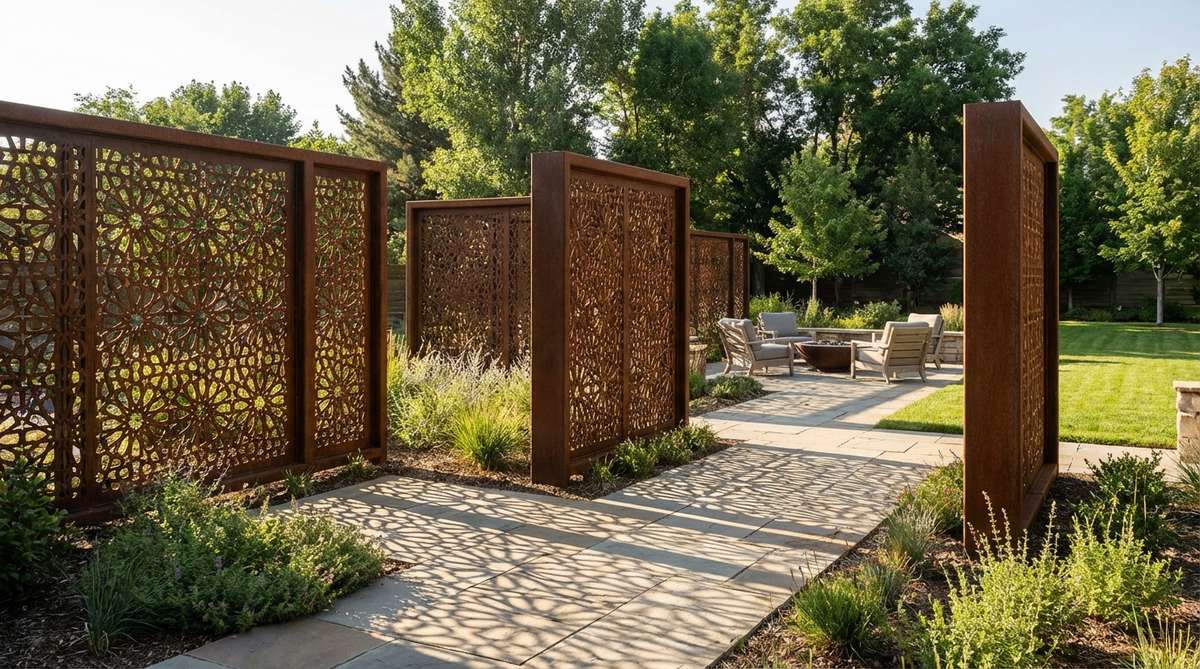
Metal panels with geometric cutout patterns provide screening while allowing air and light penetration. The precision cutting creates complex patterns that cast intricate shadows.
Design custom patterns based on geometric motifs—repeating circles, Islamic geometry, linear compositions. Material choice between corten and powder-coated steel affects long-term appearance.
These panels function as garden art while serving practical screening purposes. The shadow patterns change throughout the day, adding temporal dimension to static installations.
Conclusion
Modern garden decor built on minimalist principles and geometric precision creates outdoor environments with timeless sophistication and functional clarity. The 35+ design strategies outlined demonstrate how intentional form, restrained material palettes, and architectural thinking transform gardens into extensions of contemporary living spaces. Implement these geometric approaches to achieve outdoor areas that balance visual impact with serene simplicity, where every element serves purpose beyond decoration.
Frequently Asked Questions
What materials work best for modern minimalist garden decor?
Concrete, weathered steel, stainless steel, natural stone, and sustainably harvested hardwoods form the material foundation for modern minimalist gardens. These materials age gracefully, require minimal maintenance, and provide textural variety without visual clutter. Concrete offers versatility for custom forms, while weathered steel develops rich patinas. Natural stone grounds contemporary designs with timeless presence, and wood adds warmth that prevents sterility in predominantly hard landscapes.
How do I maintain geometric garden layouts?
Geometric precision requires consistent edge maintenance and periodic adjustments to preserve clean lines. Use commercial-grade metal or composite edging rather than flexible plastic to maintain straight borders. Regular trimming keeps plant material within defined boundaries, while power edging along pathways and lawn areas reinforces geometric clarity. Gravel surfaces need occasional raking to maintain even distribution, and paved areas benefit from pressure washing to remove organic buildup that obscures joint lines.
Can minimalist gardens work in small urban spaces?
Minimalist design principles particularly benefit small gardens where visual simplicity maximizes perceived space. Geometric organization creates clear spatial structure that makes compact areas feel larger and more intentional. Focus on fewer high-quality elements rather than numerous small decorations. Vertical surfaces gain importance in tight spaces—use trellises, wall-mounted planters, and vertical water features to add interest without consuming floor area. The restrained palette and clean lines prevent small gardens from appearing cluttered or chaotic.
What plants complement geometric modern garden designs?
Select plants with architectural form and structural presence rather than busy flowering habits. Ornamental grasses like Miscanthus, Panicum, and Calamagrostis provide vertical lines and seasonal movement. Columnar evergreens such as Juniperus scopulorum and Taxus baccata maintain year-round geometric profiles. Succulents including Agave, Yucca, and sculptural Aloe species offer bold forms with minimal care requirements. Mass plantings of single species reinforce geometric organization better than mixed cottage-style combinations.
How much does implementing modern geometric garden design typically cost?
Costs vary significantly based on material choices, site conditions, and project scale. Concrete and steel elements require higher initial investment but provide decades of service with minimal maintenance. A complete modern garden renovation including hardscape, built-in seating, geometric planters, and lighting typically ranges from $75 to $200 per square foot in the United States as of 2026. Phased implementation allows budget spreading—install permanent hardscape first, then add planters, lighting, and refinements over subsequent seasons. Quality materials and precise installation justify higher costs through longevity and reduced maintenance expenses.