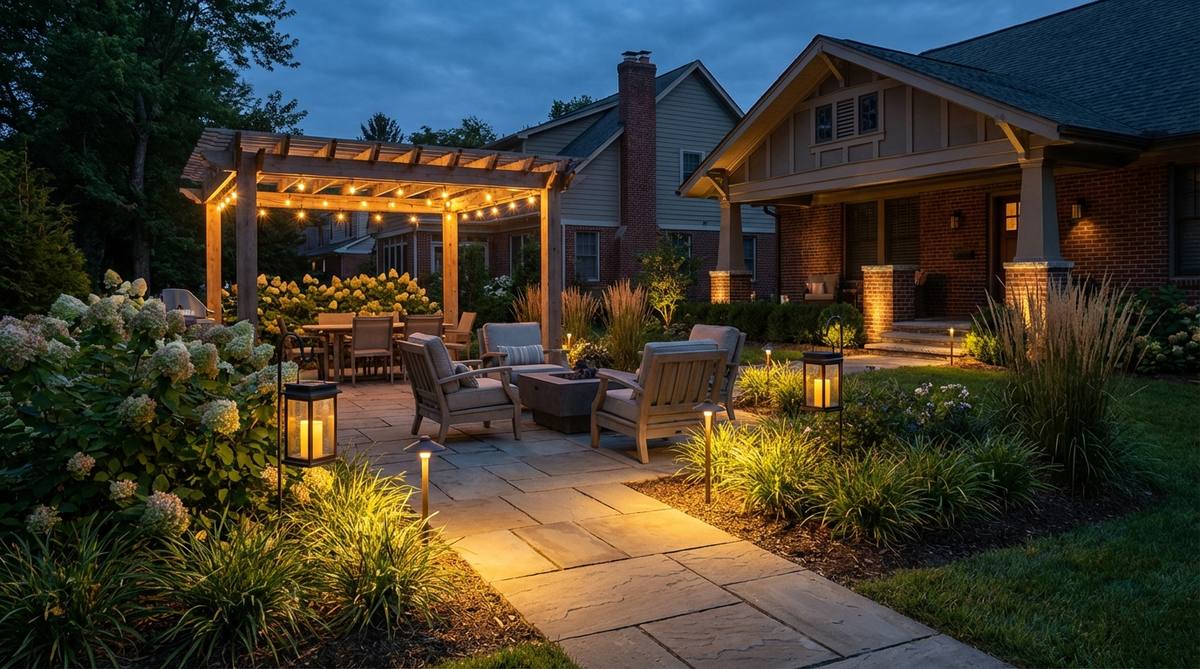
Garden decor lights transform outdoor spaces from functional yards into captivating evening retreats. Whether you’re illuminating pathways for safety or creating ambient zones for entertainment, the right lighting system combines aesthetics with purpose. Fresh Garden Ideas brings you over 50 proven techniques that landscape professionals use to layer illumination throughout residential gardens.
Design SnapshotKey Principles
- Layered Illumination: Combine ambient, task, and accent lighting at multiple heights for dimensional interest
- Energy Efficiency: Prioritize LED and solar technologies to reduce operating costs while maintaining brightness
- Functional Beauty: Every fixture should serve both practical navigation needs and aesthetic enhancement
- Strategic Placement: Position lights to highlight architecture, plants, and hardscaping while avoiding glare and light pollution
Solar-Powered Garden Lighting Systems
Solar fixtures eliminate wiring hassles while providing sustainable illumination throughout your landscape. Position panels in south-facing locations free from shade, and clean them quarterly to maintain optimal charging efficiency. These systems shine brightest in open garden areas where sunlight access remains consistent.
1. Solar Path Marker Stakes
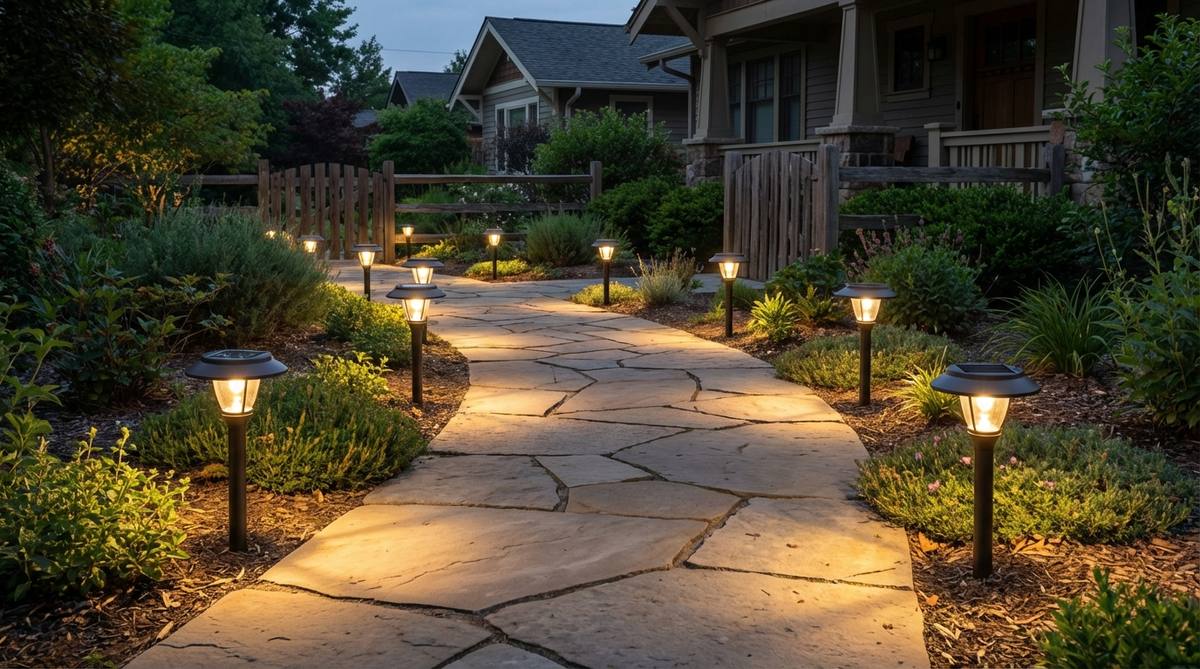
Ground-spike solar lights create visible boundaries along walkways and flowerbeds without installation complexity. The self-contained units charge during daylight hours and automatically illuminate at dusk.
Space stakes 6-8 feet apart for continuous guidance without excessive brightness. Select models with at least 15 lumens per fixture to ensure adequate visibility on moonless nights.
2. Solar Post Cap Accents
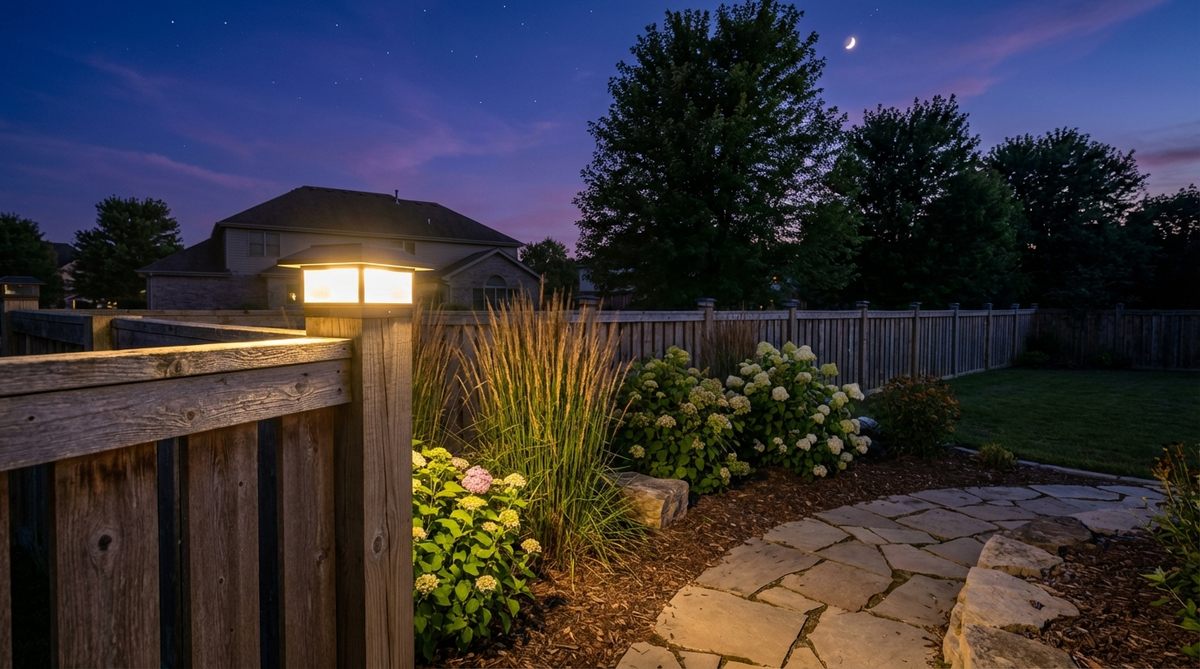
These fixtures sit atop fence posts and railings to define property boundaries with elevated light sources. The raised position prevents ground-level obstruction while showcasing architectural lines.
Install on 4×4 or 6×6 posts using the included mounting brackets. The discrete design blends into daytime aesthetics while providing warm white illumination after sunset.
3. Tree-Mounted Solar Spotlights
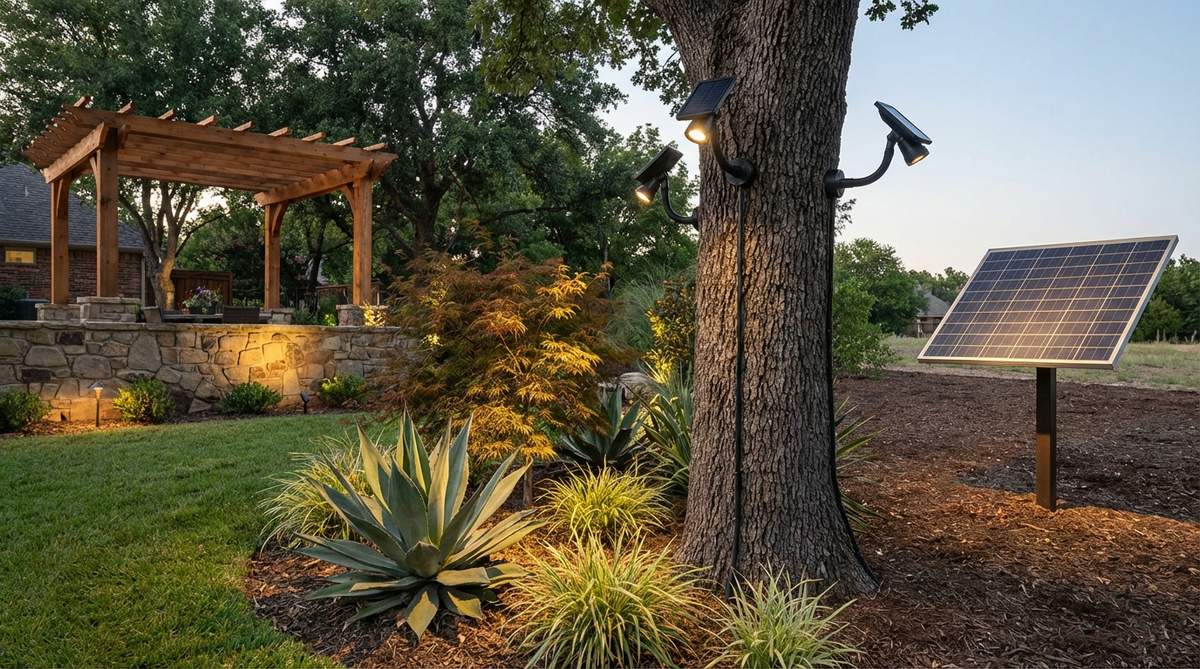
Flexible solar spotlights attach to tree trunks or garden stakes to highlight specimen plants and architectural features. Adjustable heads direct 100-lumen beams precisely where emphasis matters most.
Position the solar panel in open sunlight while aiming the light head toward shaded focal points. This separation maximizes charging while maintaining design intent in areas traditional fixtures cannot reach.
4. Solar Deck Step Lights
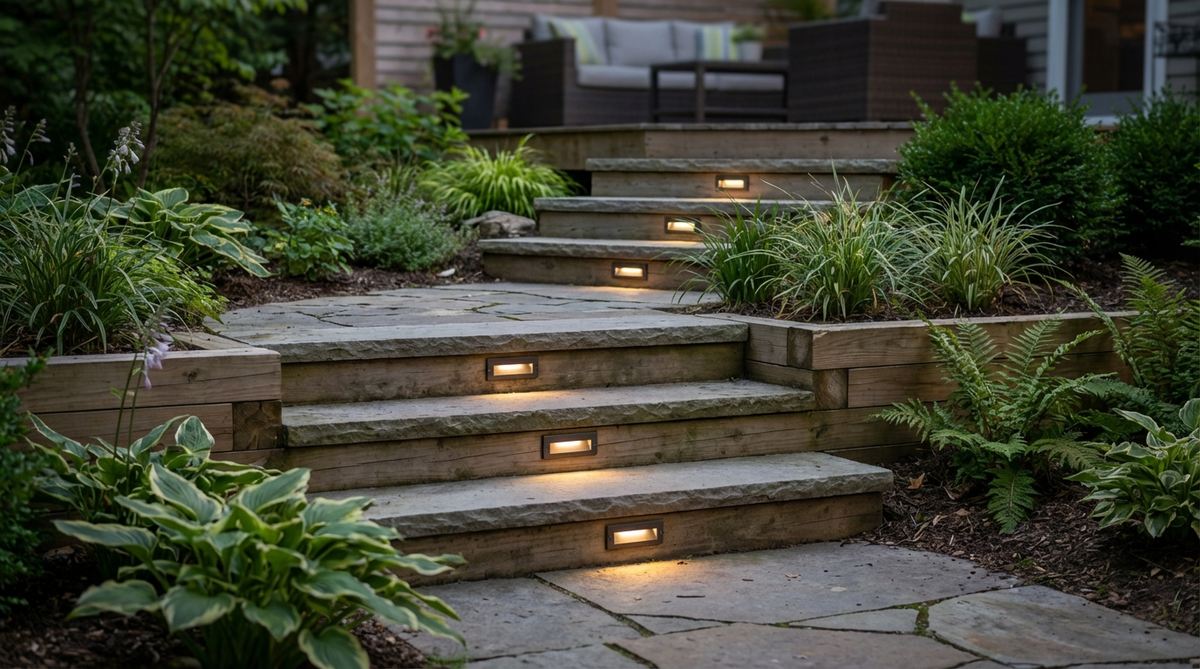
Low-profile fixtures mount flush to deck surfaces and stair risers for safe navigation across elevation changes. The recessed design eliminates tripping hazards while casting downward illumination pools.
Install one light per step on outdoor stairs, alternating sides for balanced coverage. Weatherproof construction withstands foot traffic and seasonal precipitation without performance degradation.
5. Solar Bollard Columns
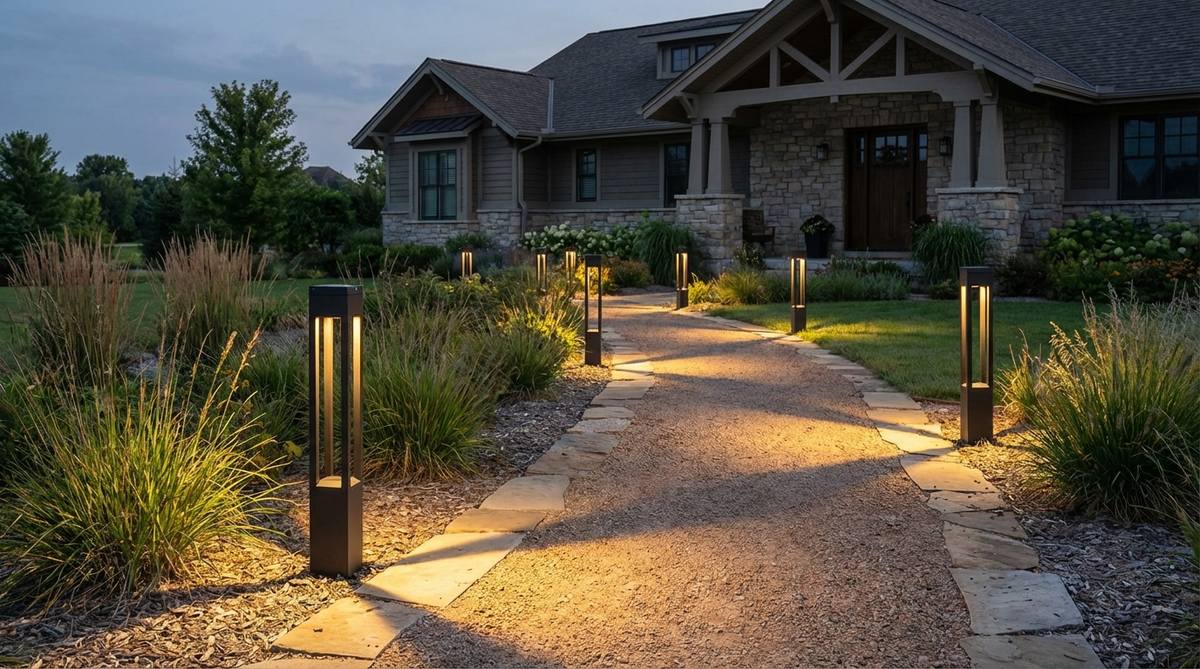
Tall bollard fixtures range from 24 to 48 inches in height, providing substantial light output for wider pathways and driveway edges. The architectural presence makes a design statement while fulfilling practical illumination needs.
Space bollards 10-15 feet apart along major circulation routes. Select models with motion sensors to conserve battery power during low-traffic hours.
6. Solar Lantern Hangers
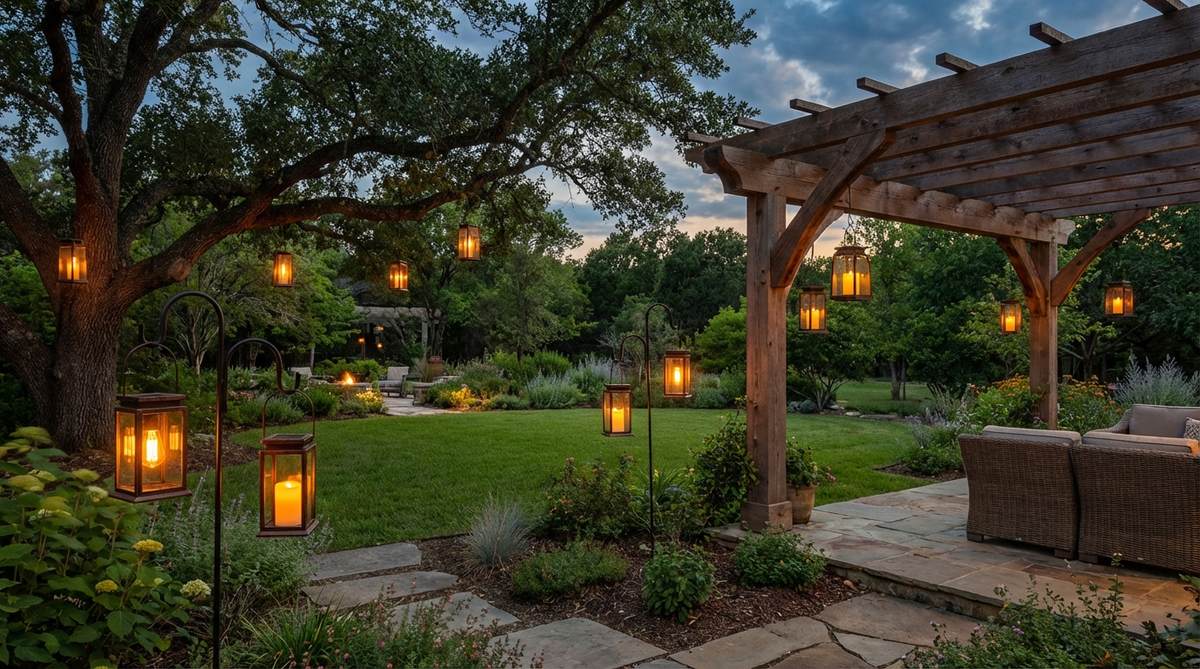
Decorative solar lanterns hang from shepherd hooks, tree branches, or pergola beams to create suspended light sources. The Edison-style bulbs or candle-flicker LEDs add vintage charm to contemporary gardens.
Cluster three lanterns at varying heights for dimensional interest in seating zones. The portable design allows seasonal repositioning without electrical constraints.
7. Solar LED Strip Lighting
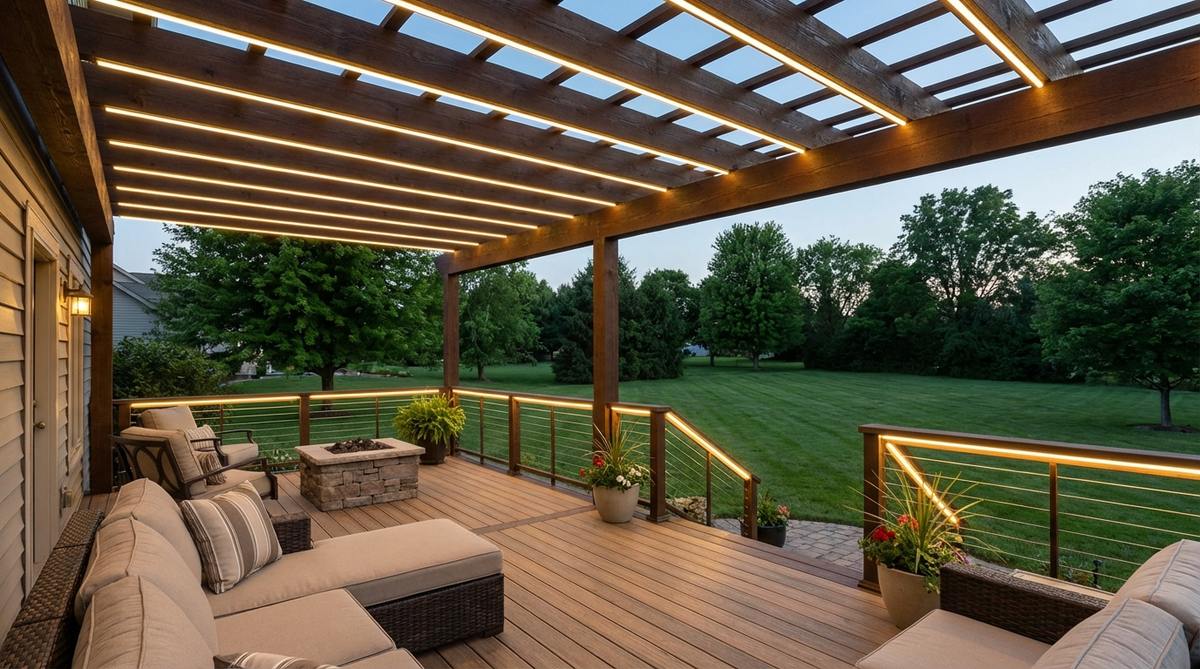
Flexible solar strips adhere to deck railings, planter edges, and pergola beams with weatherproof adhesive backing. The linear format outlines architectural elements with continuous illumination.
Cut strips to precise lengths and connect to solar control boxes positioned in sunny locations. Multiple lighting modes adjust brightness and create gentle pulsing effects for entertaining spaces.
8. Solar Floodlights
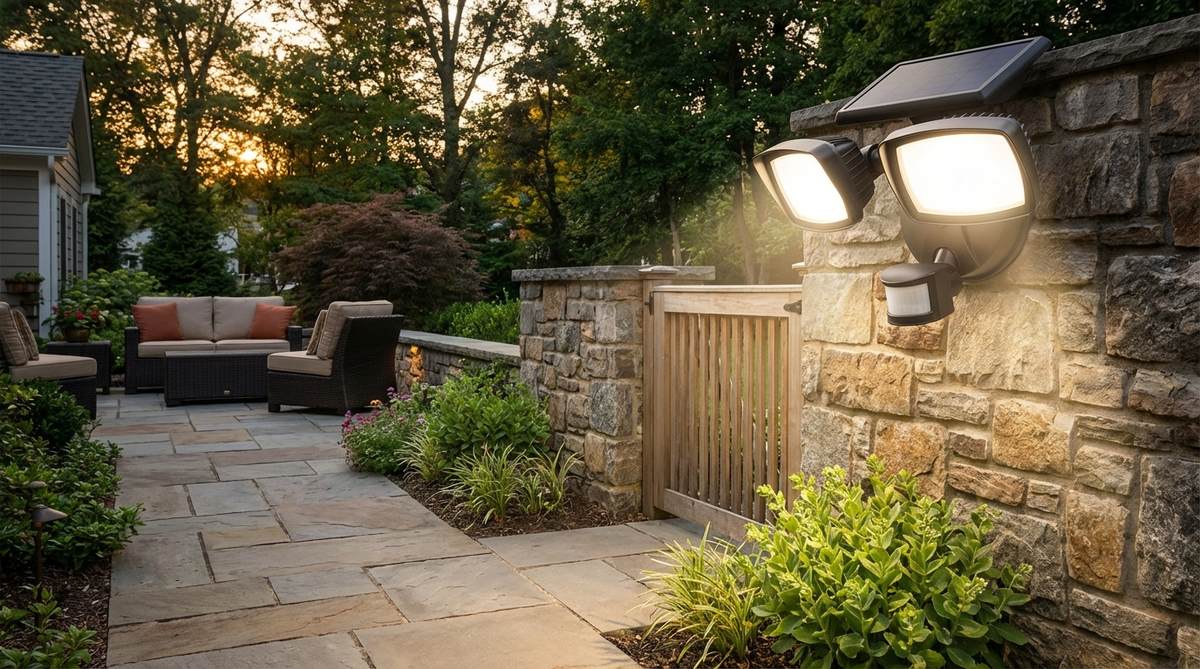
High-output solar floods deliver 300-500 lumens for security and broad-area illumination. Mount these fixtures on walls, fences, or ground stakes to wash light across patios and entry zones.
Pair with motion sensors that trigger full brightness only when activity occurs. Adjust the detection range to minimize false activations from passing wildlife or wind-blown vegetation.
9. Solar Garden Stake Novelties
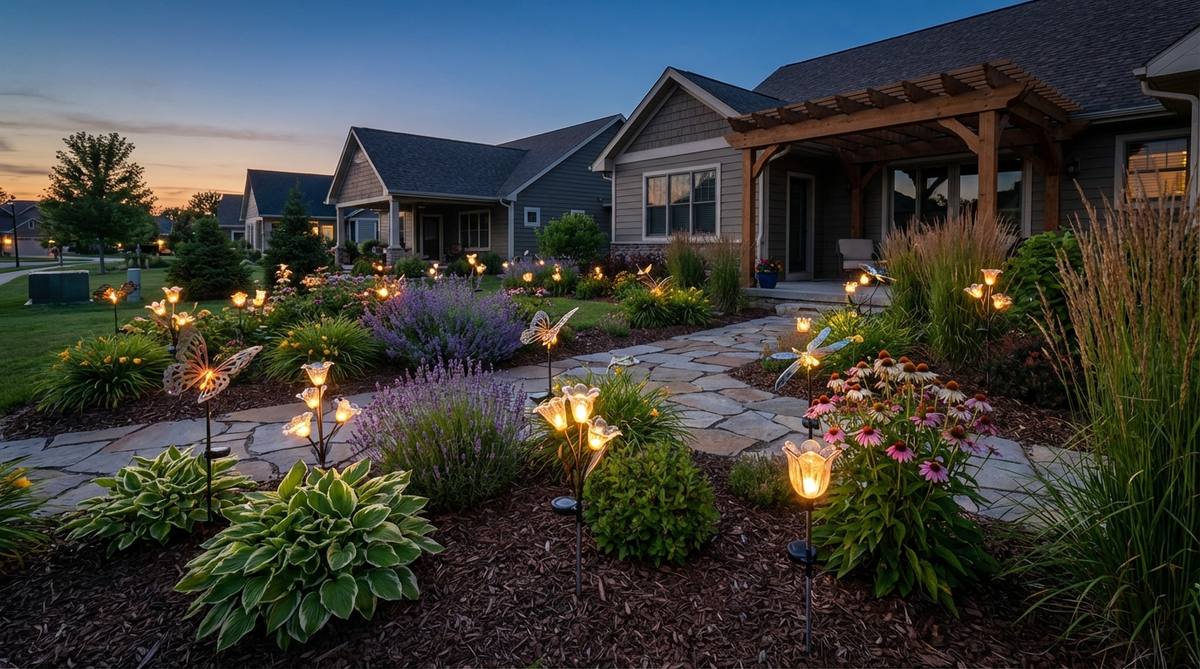
Decorative solar stakes shaped like flowers, butterflies, and dragonflies inject whimsy into planting beds. These fixtures appeal to residential gardens prioritizing personality over formal restraint.
Distribute novelty stakes throughout perennial borders for surprise moments after dark. The playful designs create conversation points during evening garden tours.
10. Solar String Globe Lights
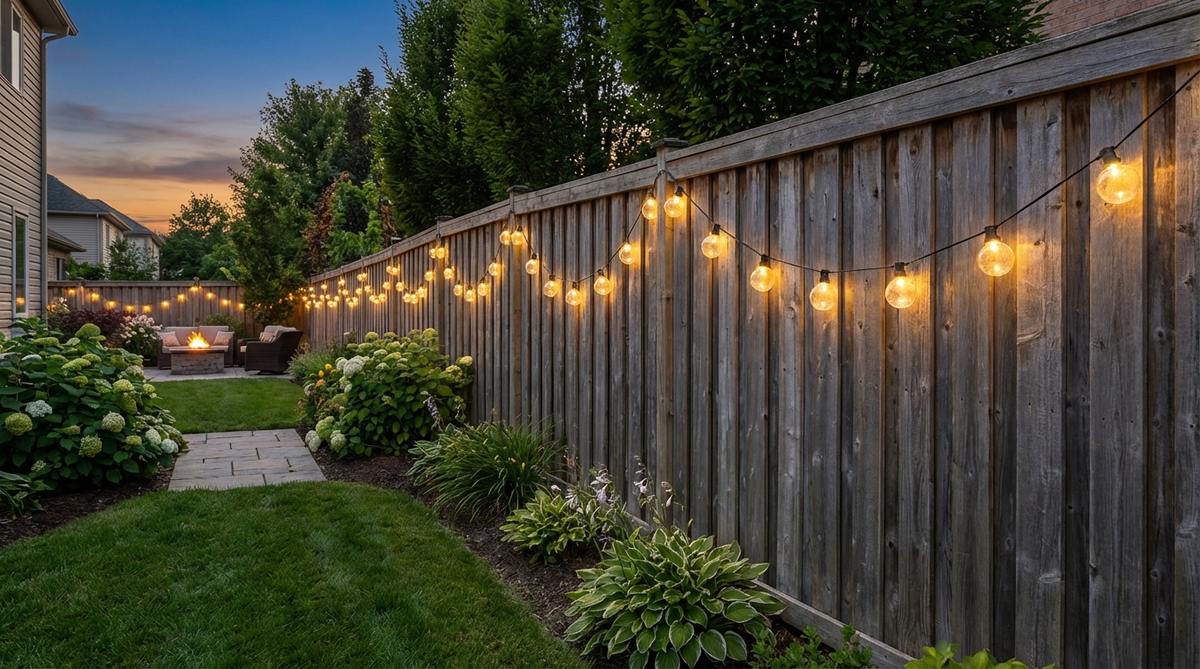
Solar-powered globe strings eliminate the need for outdoor outlets while delivering festoon-style ambiance. The self-contained solar panel stakes into garden soil or mounts to railings.
Drape 20-30 foot strands between pergola posts or along fence lines. Warm white globes soften hardscape materials and extend usable hours in outdoor living areas.
LED Path & Walkway Solutions
Low-voltage LED systems provide superior brightness control and longevity compared to traditional halogen fixtures. Designers specify LEDs for pathways where consistent illumination ensures safe passage through garden zones. The technology reduces energy consumption by 75% while delivering crisp, directional light output.
11. Recessed Hardscape Lights
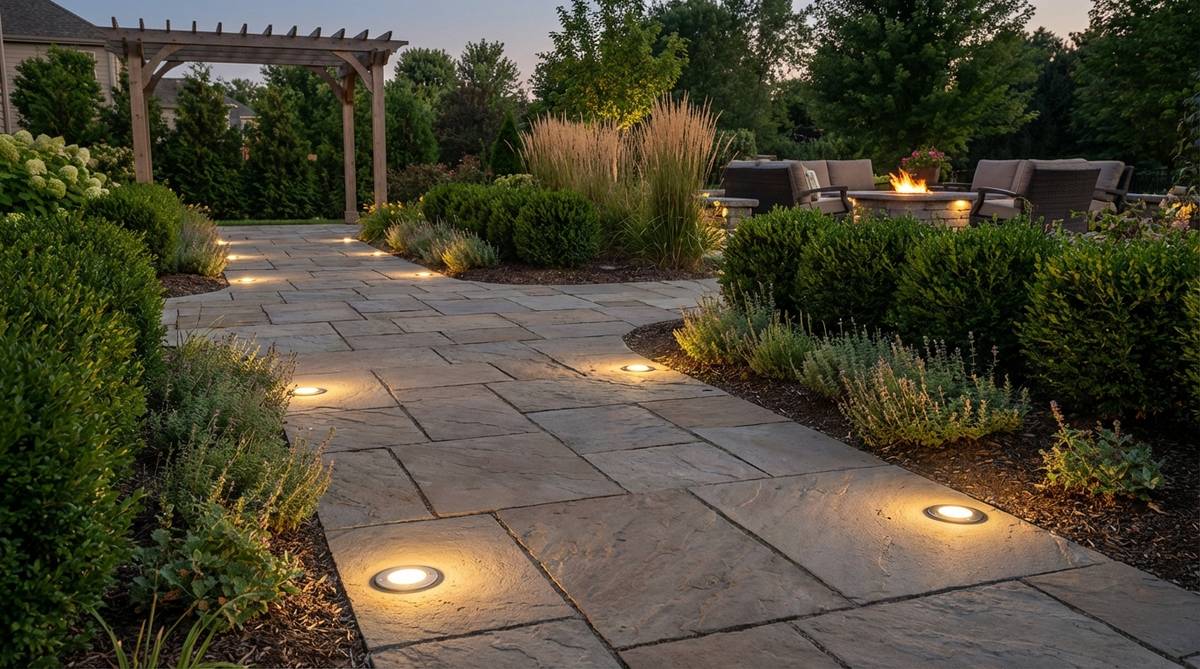
In-ground well lights install flush with paving materials to illuminate pathways without vertical obstruction. The concealed fixtures protect bulbs from impact while directing light upward or laterally.
Space recessed lights every 8-10 feet along the pathway edge rather than center-mounting. This placement guides movement without creating uncomfortable glare as visitors approach.
12. Mushroom Path Lights
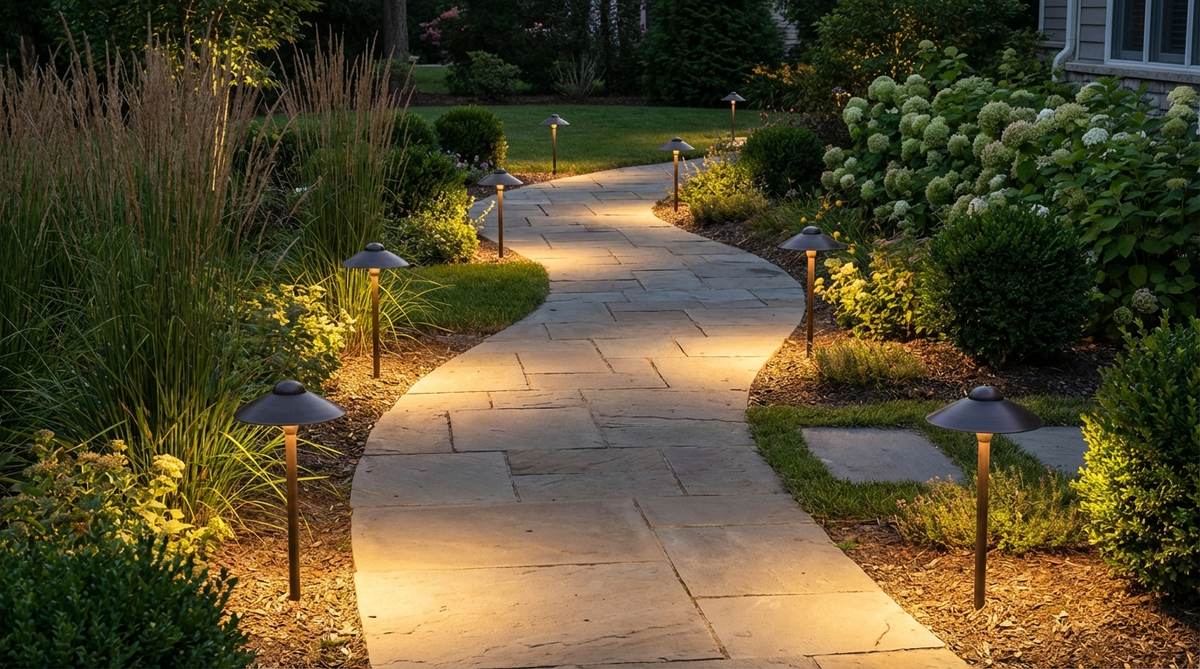
Low-profile mushroom fixtures sit 12-18 inches above grade with downward-facing shields that eliminate glare. The hooded design casts circular pools of light onto walking surfaces.
Install mushroom lights on alternating sides of pathways for rhythmic visual interest. The staggered pattern prevents the regimented appearance of symmetrical placement.
13. Hooded Directional Path Lights
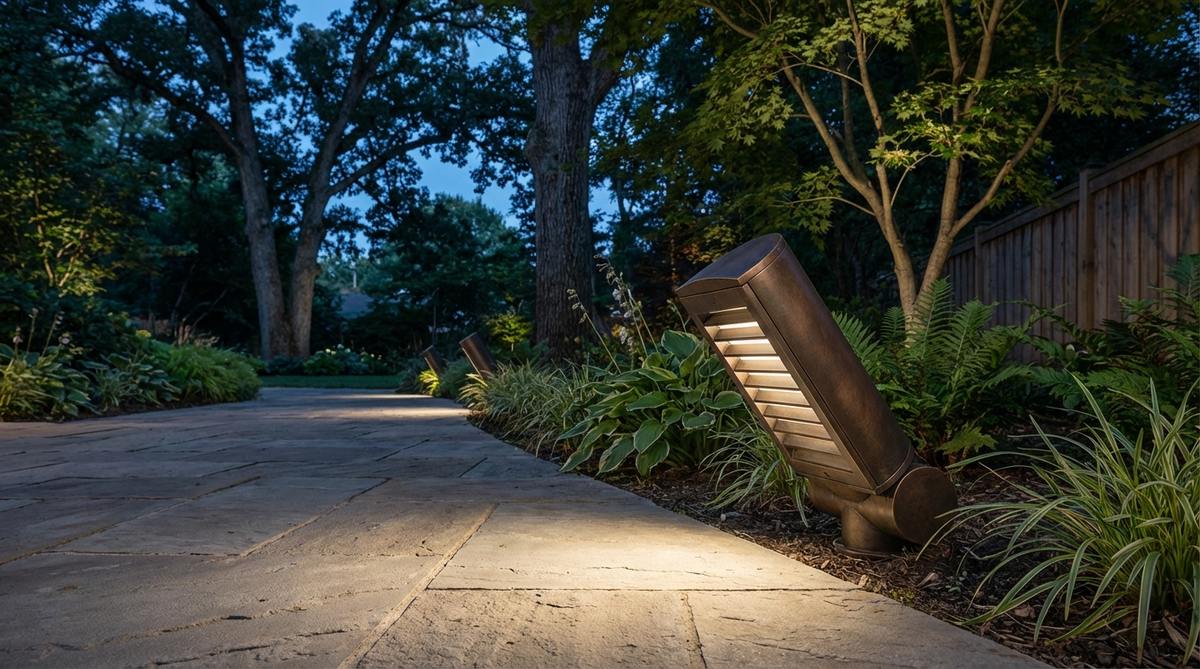
Adjustable path lights with integrated louvers control beam spread and prevent light trespass into neighboring properties. The shielding directs illumination downward while maintaining pathway visibility.
Angle fixtures 15-20 degrees away from the path centerline to create graduated lighting that appears softer than direct overhead illumination. This technique mimics natural moonlight filtering through tree canopies.
14. Brick Paver LED Inserts
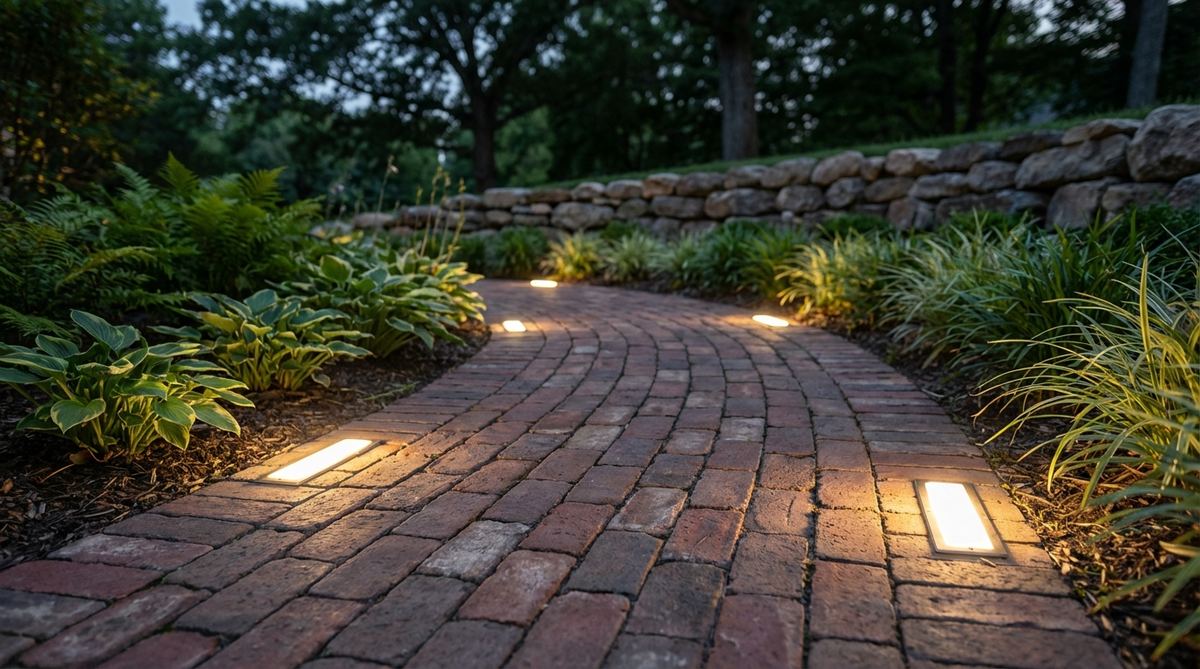
Specialized LED modules replace standard paving bricks in existing hardscape patterns. The flush-mount installation integrates lighting directly into the walking surface.
Position brick lights at decision points where pathways intersect or change direction. The in-surface placement emphasizes circulation flow without adding vertical elements to narrow passages.
15. Step Riser LED Strips
Thin LED strips mount beneath stair nosings or along vertical risers to outline each elevation change. The linear format provides continuous guidance across entire staircases.
Use warm white LEDs rated at 2700-3000K to coordinate with existing landscape lighting temperatures. Install on the underside of treads rather than riser faces to minimize direct eye exposure.
16. Pathway Bollard Lights
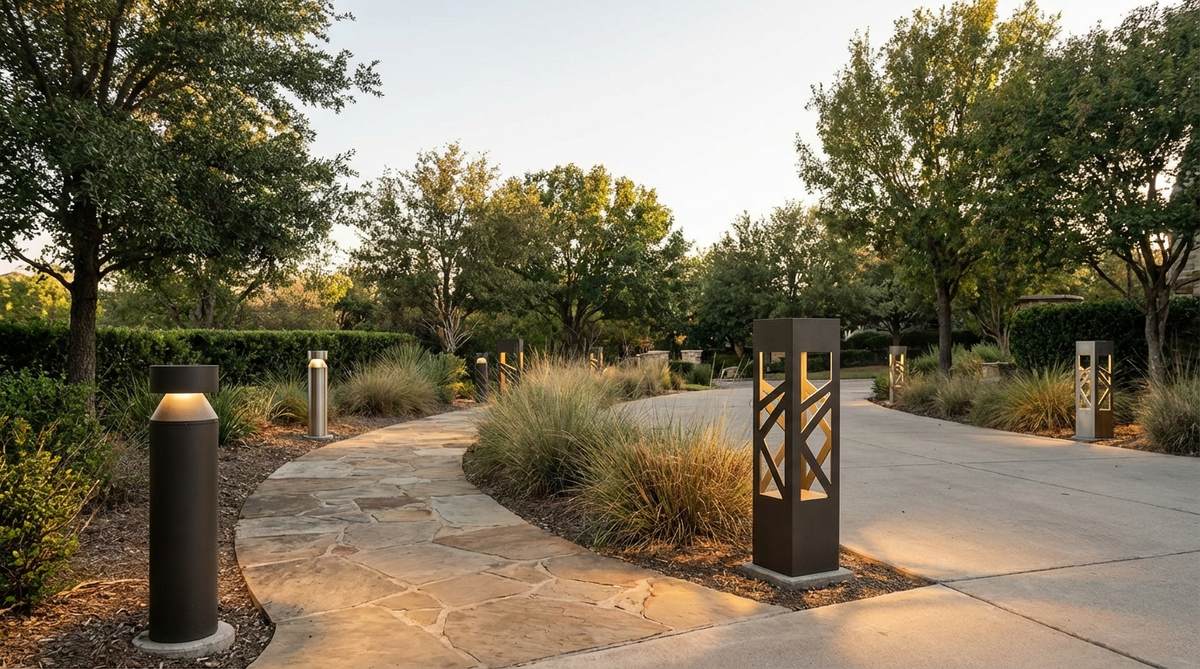
Contemporary bollards feature geometric designs in powder-coated aluminum or stainless steel. The fixtures range from minimalist cylinders to architectural statements with cutout patterns.
Select bollards between 24-36 inches for pedestrian pathways. Taller models suit vehicular driveways where greater visibility distance matters for approaching cars.
17. Low-Voltage Spread Lights
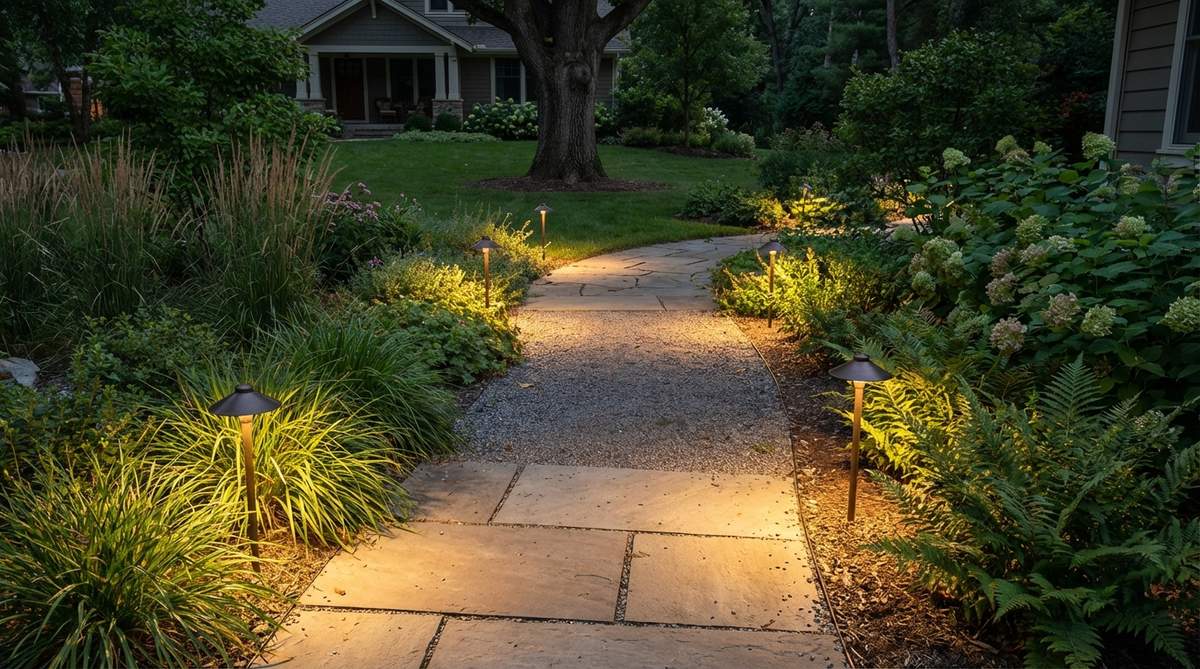
Wide-angle spread lights mounted at ground level wash illumination across pathway surfaces from the edges. The horizontal beam pattern covers 6-8 foot widths with single fixtures.
Install spread lights every 15-20 feet along one pathway side only. The asymmetrical approach creates depth through varied light intensity rather than uniform brightness.
18. Tiered Pathway Lights
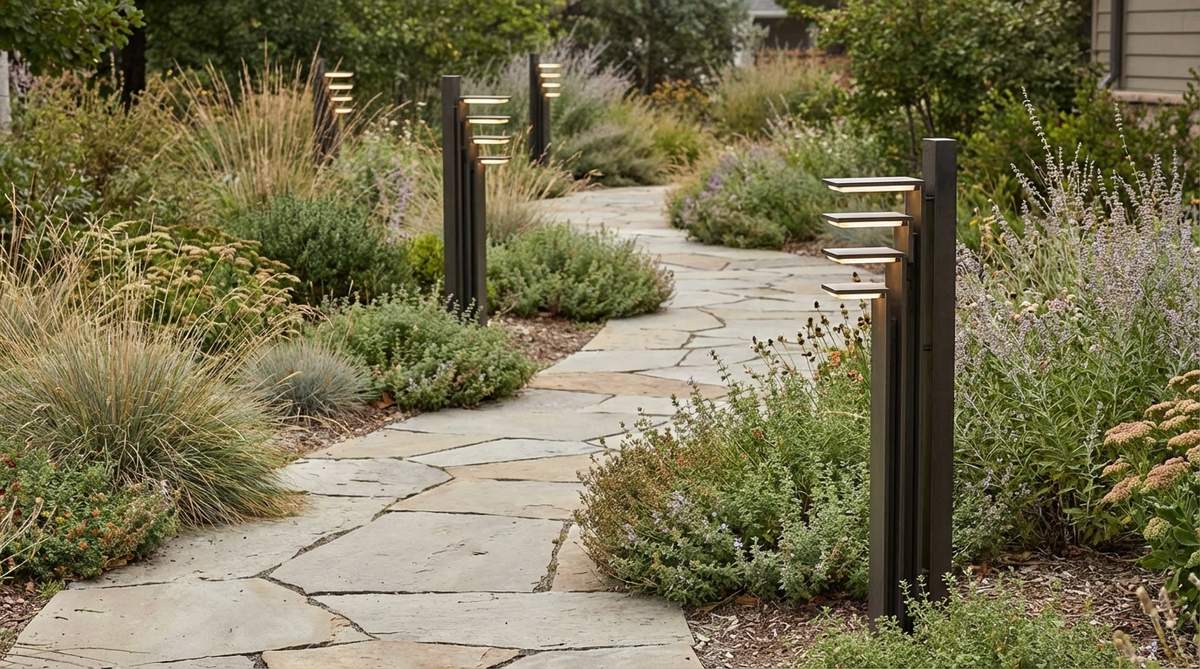
Multi-level path fixtures feature stacked LED elements that illuminate surrounding plantings while lighting walkways. The vertical design adds sculptural interest during daylight hours.
Position tiered lights at garden entries and transitional zones between landscape rooms. The increased height makes these fixtures visible from greater distances as wayfinding beacons.
19. Border Edge Lights
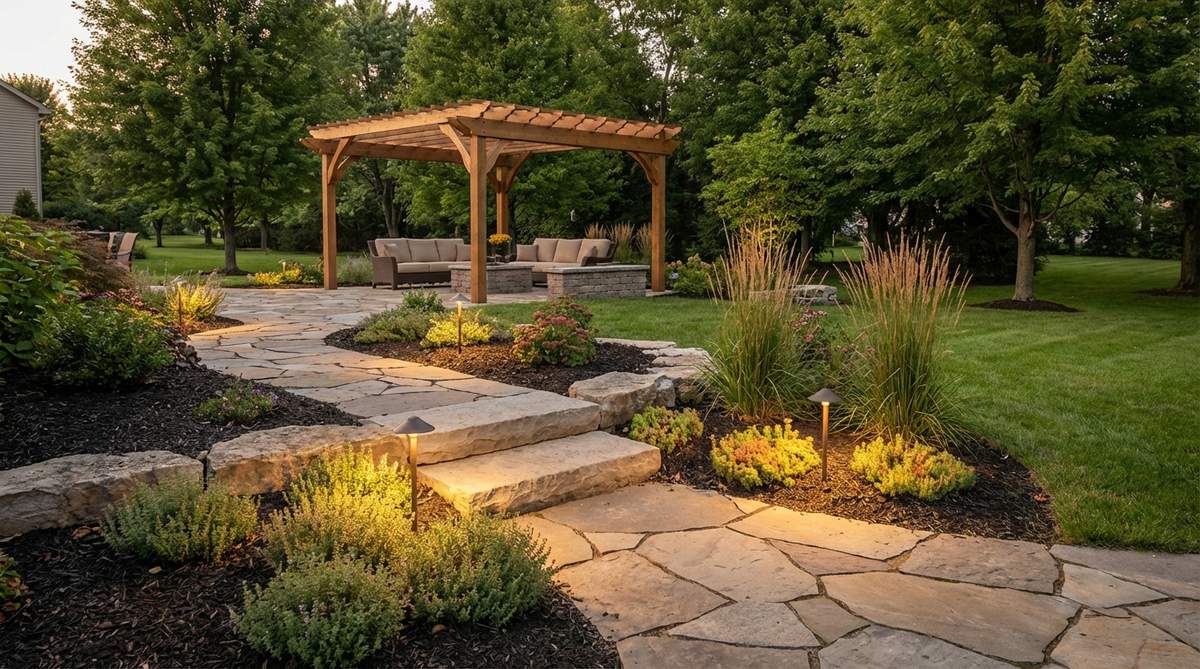
Compact fixtures mount along the edges of planting beds where they meet pathways. The dual function illuminates both circulation routes and adjacent vegetation.
Aim border lights at 45-degree angles toward pathway surfaces rather than straight down. The angled approach reduces harsh shadows while highlighting textural groundcovers.
20. Pathway Rock Lights
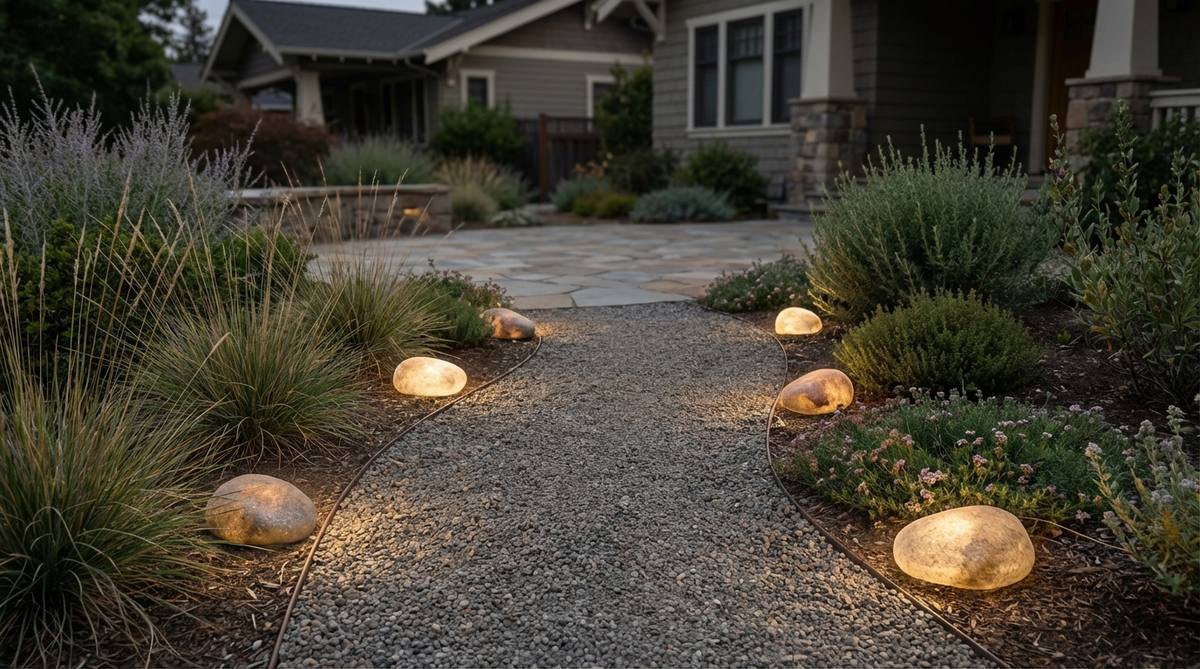
Disguised as natural stones, these LED fixtures blend into gravel pathways and rock gardens. The camouflaged design maintains naturalistic aesthetics during daylight.
Scatter rock lights irregularly through loose stone pathways rather than in straight lines. The randomized placement appears organic while providing adequate illumination density.
String & Fairy Light Installations
String lighting creates overhead canopies that define outdoor rooms and extend evening entertainment hours. Professional installations use commercial-grade weatherproof strands with replaceable LED bulbs rated for 25,000+ hours. The suspended format adds architectural dimension to flat garden spaces.
21. Pergola Canopy Strings
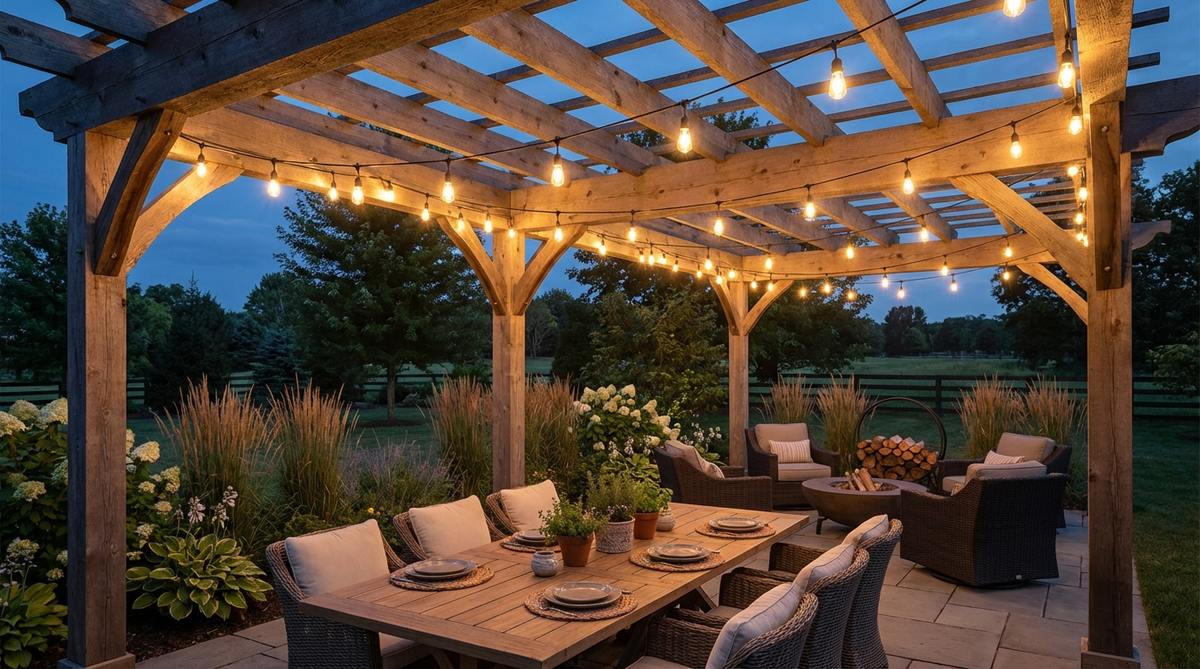
Festoon strings crisscross pergola beams to create glowing ceilings above dining and seating zones. The bistro-style bulbs cast warm ambient light without harsh downward glare.
Run strings parallel to the shortest pergola dimension for easier installation and support. Space strands 18-24 inches apart to achieve full overhead coverage without excessive wiring.
22. Tree Canopy Draping
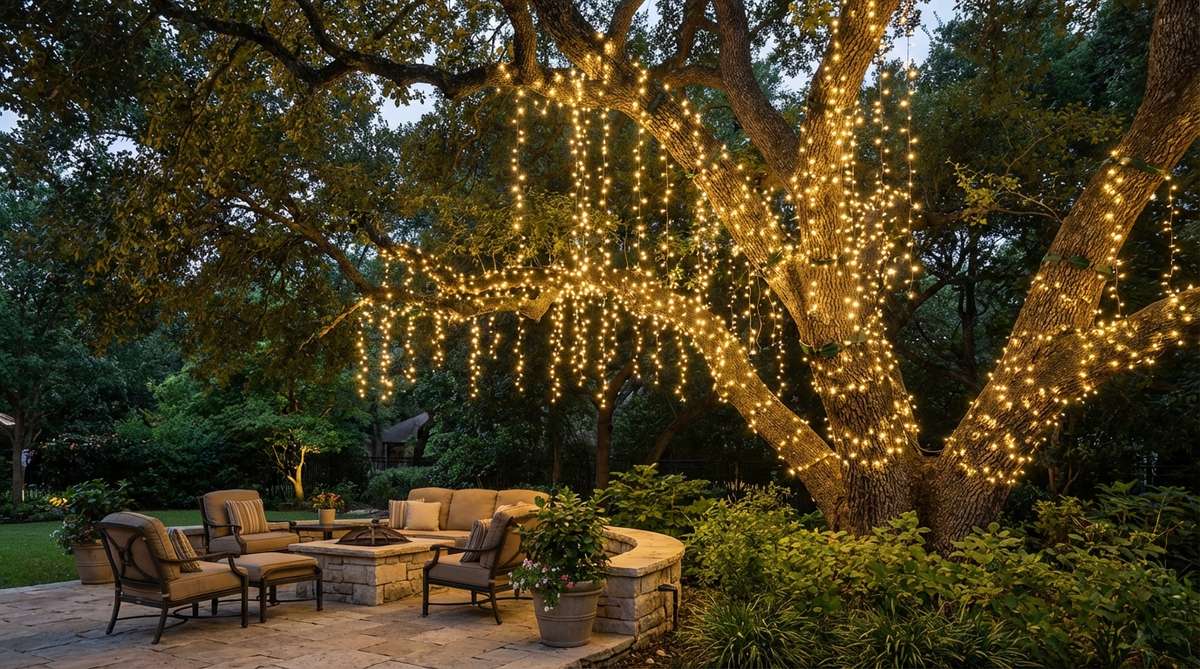
Fairy lights draped through mature tree branches mimic starlight filtering through foliage. The delicate strands wrap around limbs or cascade vertically from central attachment points.
Use 100-200 LED micro-lights per tree for subtle illumination that enhances rather than overwhelms natural forms. Secure wiring with outdoor-rated clips that prevent bark damage as branches sway.
23. Fence Line Festoons
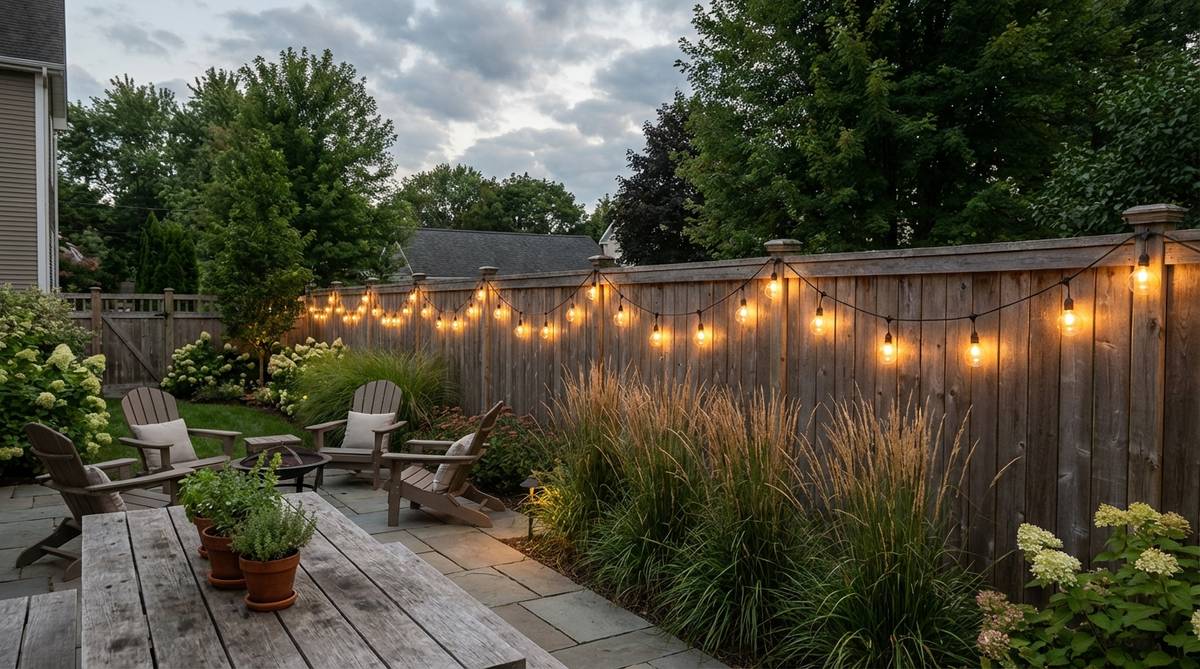
Edison-bulb festoons strung along fence tops define property boundaries with vintage industrial aesthetics. The larger bulb format creates bold visual statements visible from indoor spaces.
Mount brackets every 8-10 feet to support string weight without excessive sagging. The gentle catenary curves add softness to rigid fence lines.
24. Gazebo Swag Lights
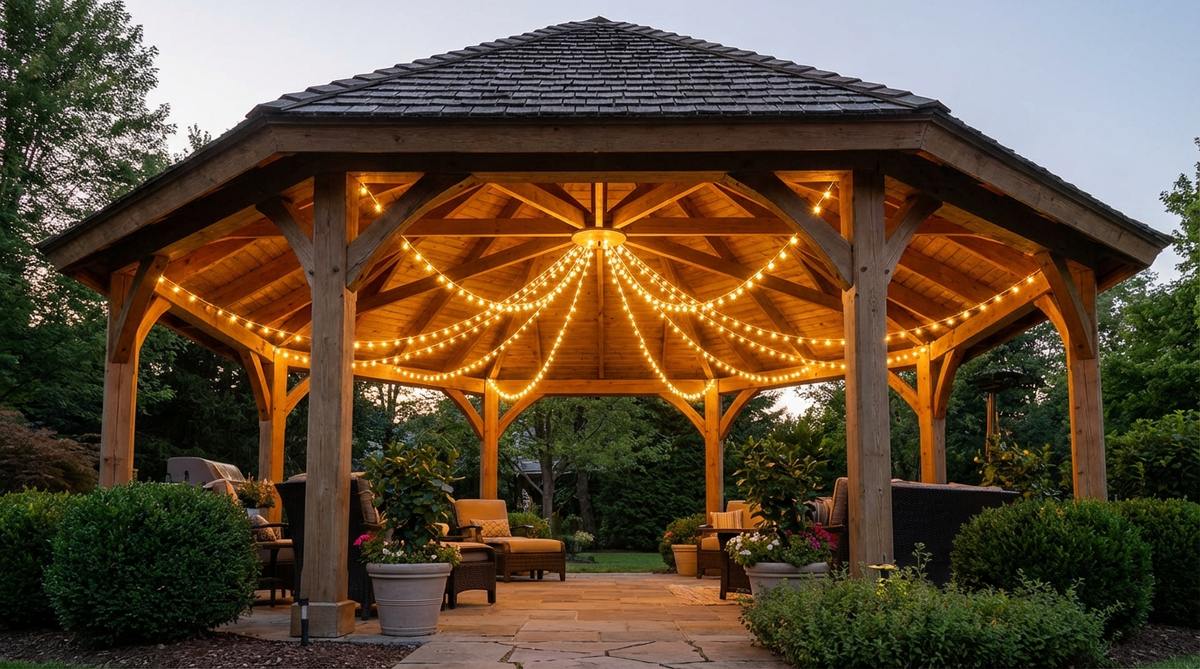
String lights draped in swags from gazebo center points to perimeter posts create dramatic ceiling treatments. The radiating pattern draws eyes upward and emphasizes architectural geometry.
Leave 12-18 inches of slack in each swag for graceful curves rather than taut lines. The relaxed draping appears more organic and accommodates wind movement.
25. Vertical Tree Trunk Wraps
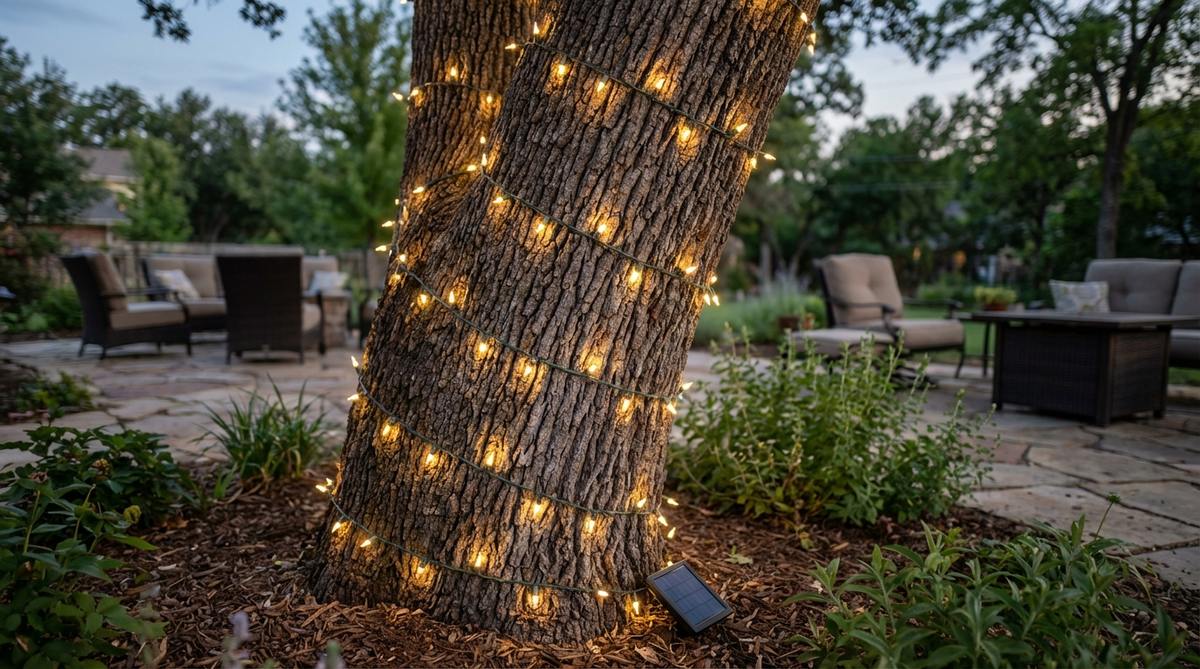
Fairy lights wrapped vertically around tree trunks from base to first branch create illuminated columns. The technique highlights bark texture and defines vertical garden elements.
Space light strands 6-8 inches apart as you spiral upward. Use battery-powered or solar strands to avoid running wire up tree trunks.
26. Cafe-Style Patio Strings
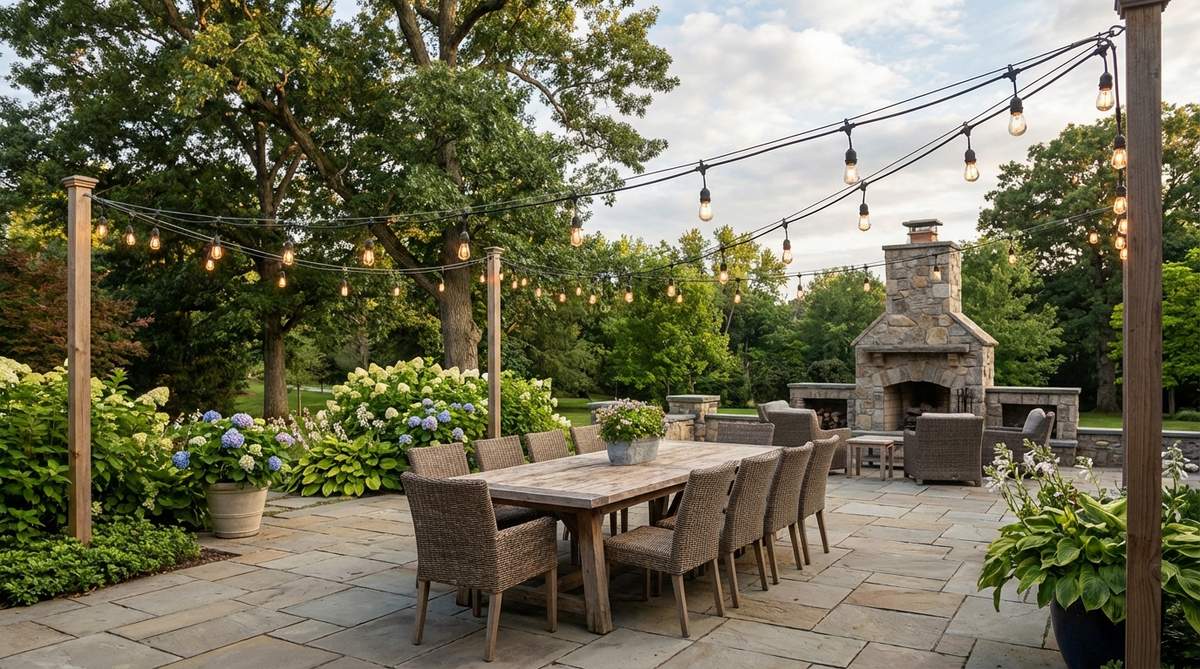
Commercial cafe strings suspended over outdoor dining areas recreate European courtyard ambiance. The weatherproof construction includes sealed sockets that prevent moisture intrusion.
Install permanent support cables between mounting points, then attach light strings to the cables with clips. This two-part system allows easy seasonal removal for maintenance.
27. Trellis Weave Lights
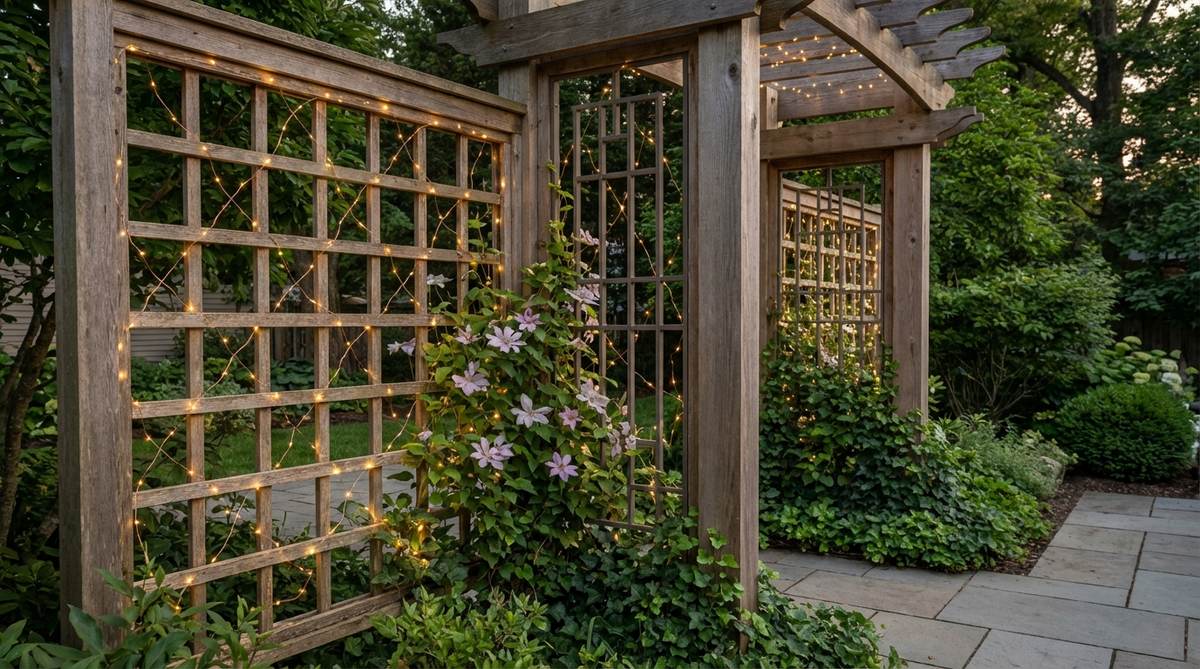
Fine copper wire fairy lights woven through lattice panels and trellises highlight climbing plants and architectural screens. The delicate scale complements rather than competes with vegetation.
Weave lights in figure-eight patterns around trellis intersections for secure mounting. The technique distributes LEDs evenly across the entire structure.
28. Umbrella Spoke Accents
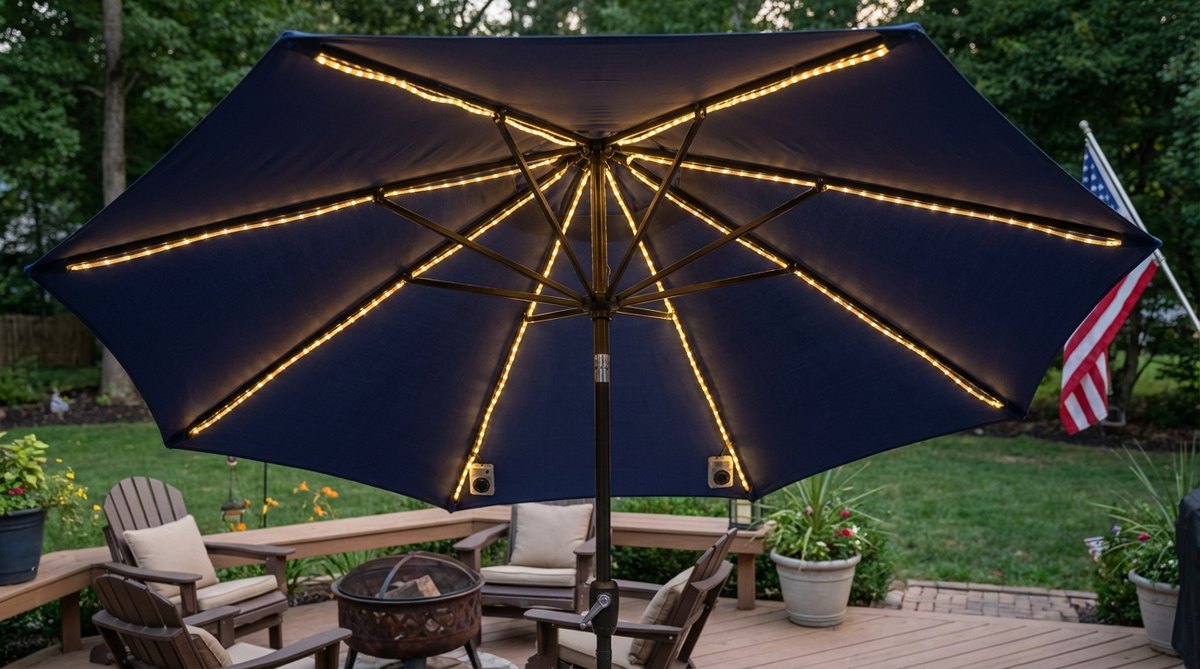
LED strings attached to patio umbrella spokes create portable lighting that moves with outdoor furniture. The integrated approach eliminates separate fixture needs in flexible seating zones.
Use battery-powered strands with timers that automatically illuminate during evening hours. The wireless design accommodates umbrella adjustments throughout the day.
29. Jar Lantern Fairy Lights
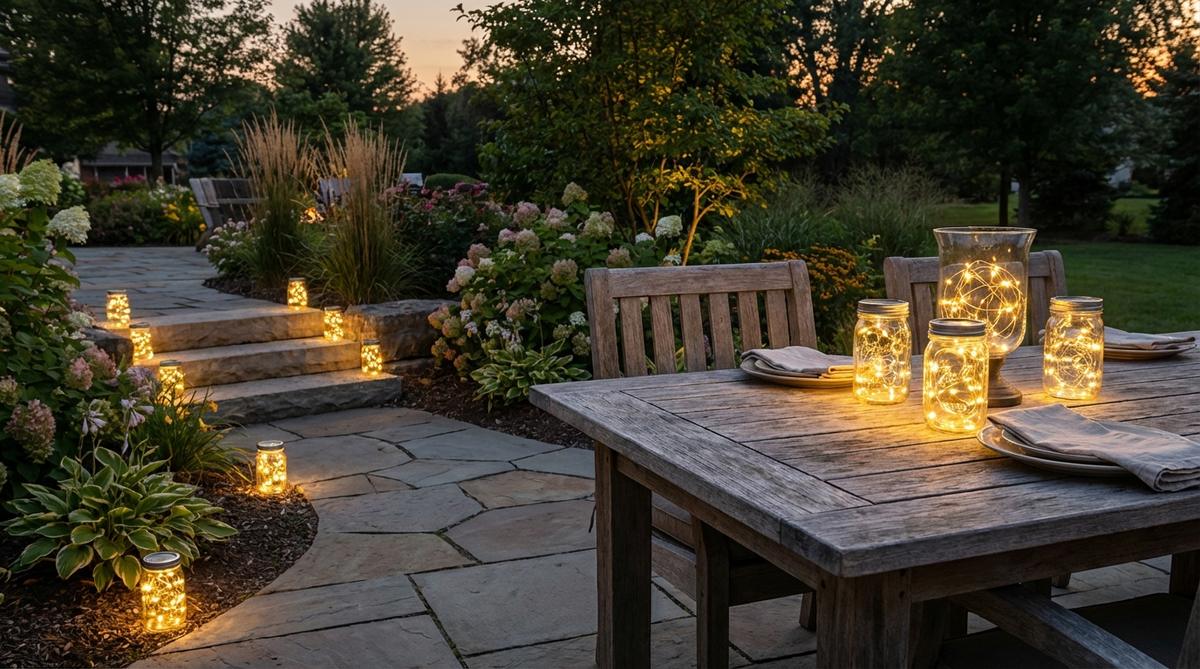
Mason jars or hurricane glasses filled with LED fairy lights create tabletop and hanging lanterns. The contained format prevents tangling while diffusing point-source LEDs into softer glows.
Cluster jars in groups of three at varying heights for dimensional tablescapes. The portable lights shift easily between dining tables, steps, and pathway edges.
30. Railing Rope Lights
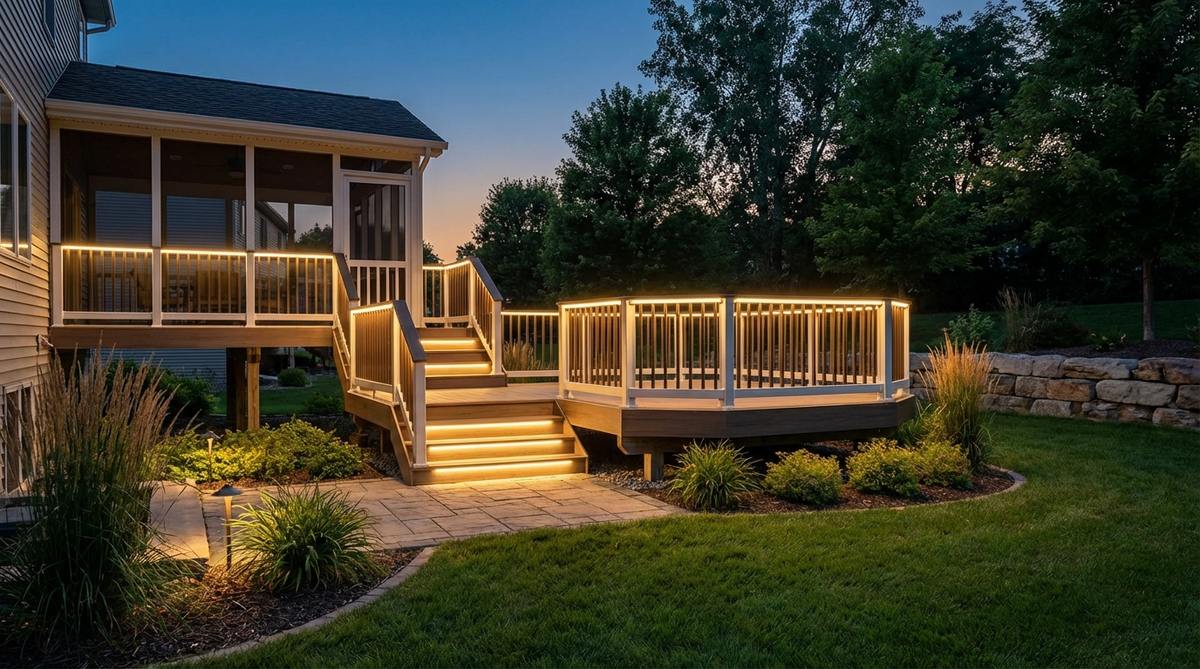
Flexible rope lights mount beneath deck and porch railings with aluminum channels that conceal wiring. The linear format outlines architectural edges with continuous illumination.
Install channels on the underside of top rails rather than vertical balusters. The concealed position prevents direct viewing of individual LEDs while lighting walking surfaces below.
Uplighting & Downlighting Techniques
Directional lighting creates dramatic effects by emphasizing texture, form, and dimension throughout garden compositions. Landscape architects combine uplighting for focal points with downlighting for ambient fill to establish layered illumination schemes. The contrasting approaches work together to reveal depth and hierarchy.
31. Tree Uplighting Spots
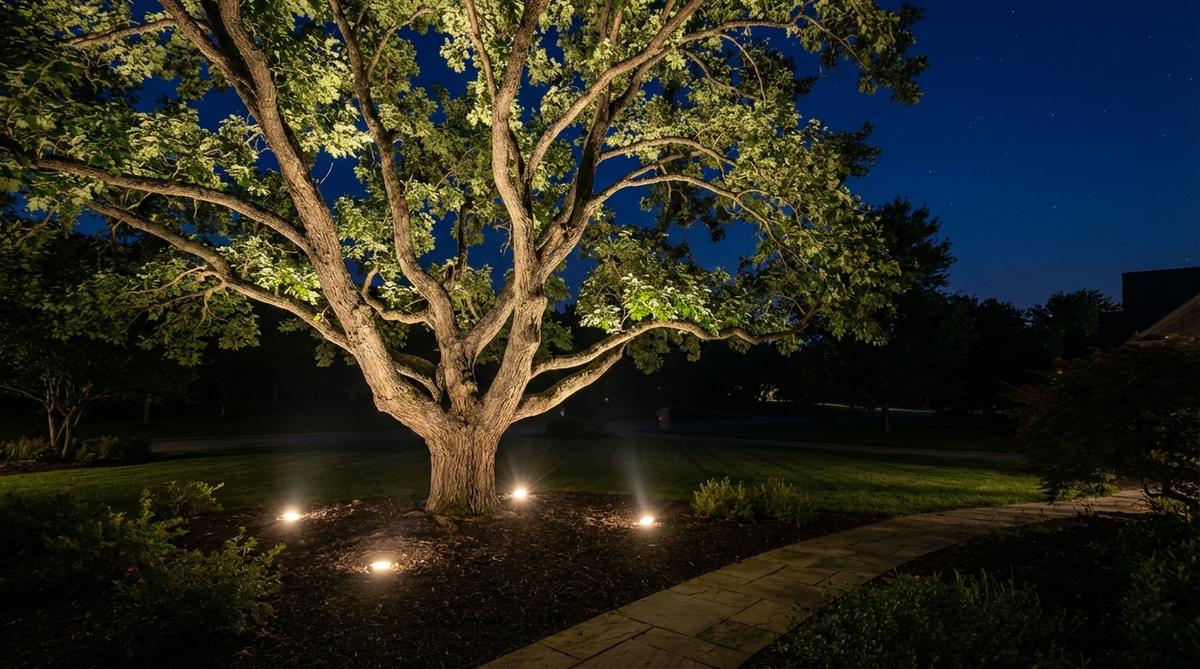
Well lights positioned at tree bases project beams upward through canopies to showcase branching structure and foliage. The low-angle illumination creates dramatic silhouettes against night skies.
Install fixtures 12-18 inches from trunk centers and aim toward the canopy center. Use multiple spots around larger trees to eliminate harsh shadow pockets and provide balanced coverage.
32. Wall Grazing Uplights
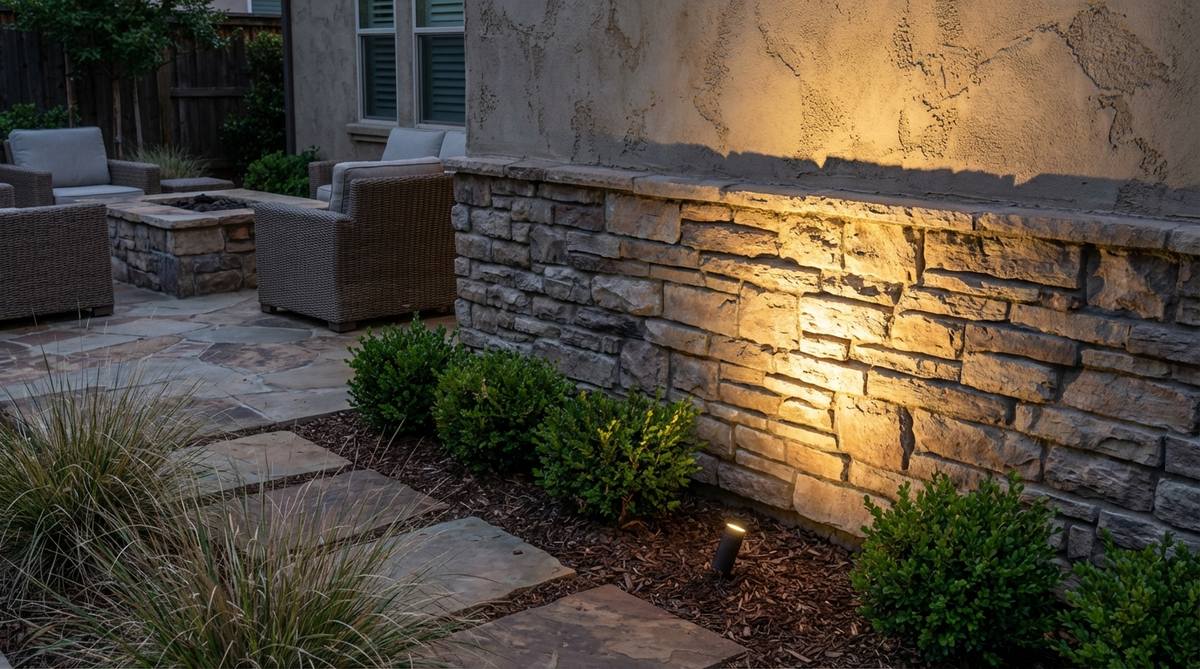
Narrow-beam uplights placed 6-8 inches from textured walls emphasize material surfaces by casting raking light across irregularities. The technique transforms plain surfaces into dramatic focal points.
Space grazing fixtures 24-36 inches apart along wall bases for continuous texture revelation. The close proximity accentuates every brick, stone, or stucco variation.
33. Statue & Feature Uplights
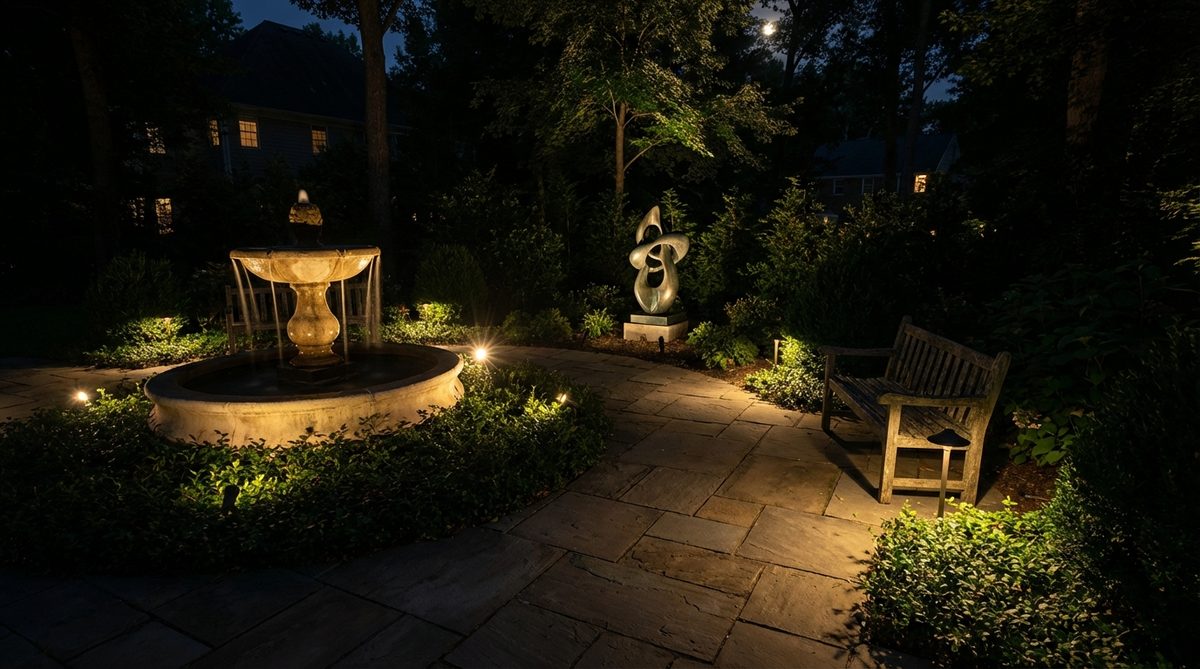
Directional spotlights aimed at garden sculptures, fountains, and decorative elements create nighttime focal points. The concentrated beams separate featured objects from surrounding darkness.
Position uplights at 30-45 degree angles to subject faces rather than directly below. The offset placement prevents unflattering bottom-up shadowing on three-dimensional forms.
34. Architectural Facade Uplighting
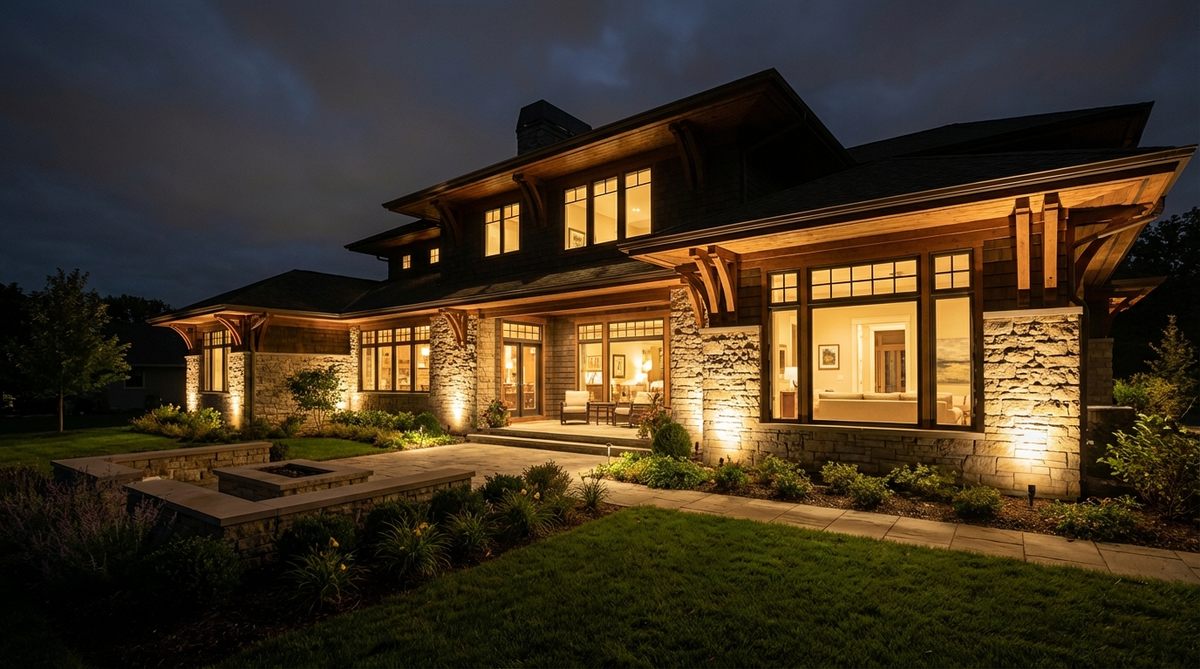
Powerful uplights wash building exteriors with broad-beam illumination that showcases architectural details and material finishes. The technique extends indoor spaces visually into gardens.
Mount fixtures 8-12 feet from building faces using 35-degree beam spreads. The wider angles prevent scalloping patterns that create uneven wall brightness.
35. Shrub Directional Uplights
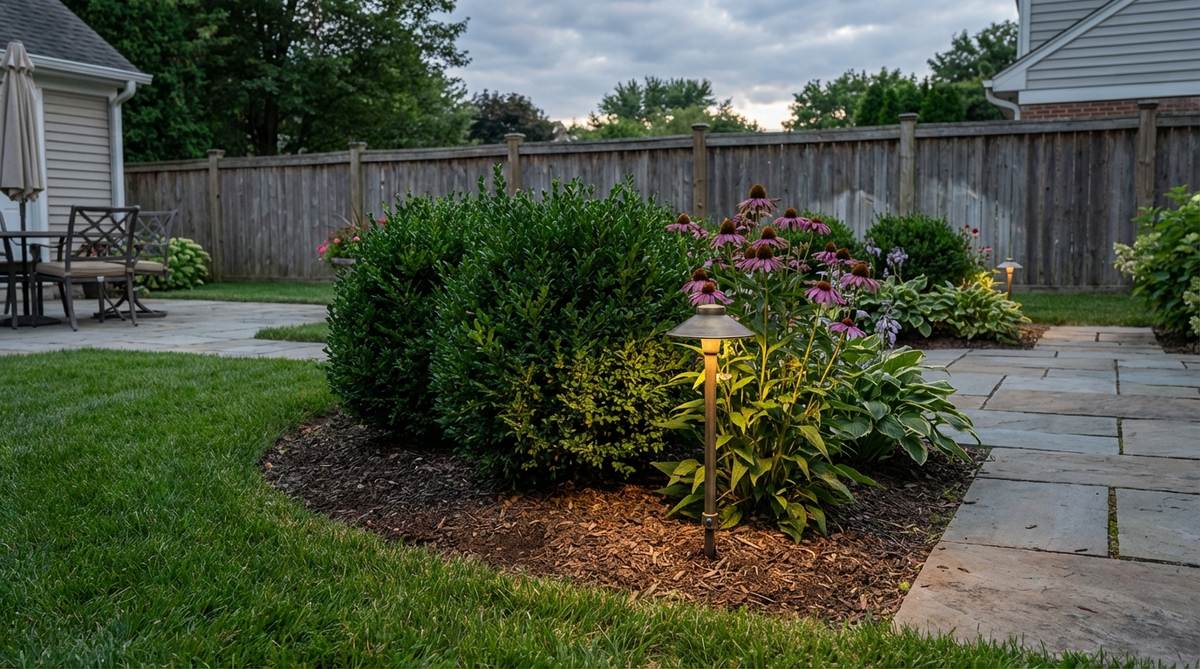
Low-profile uplights on adjustable stakes illuminate ornamental shrubs and perennial clusters from below. The elevated mounting prevents plant growth from blocking fixtures.
Install lights 18-24 inches from plant centers with hoods to control beam spread. The shielding prevents glare while focusing output on featured vegetation.
36. Moonlighting Downlights
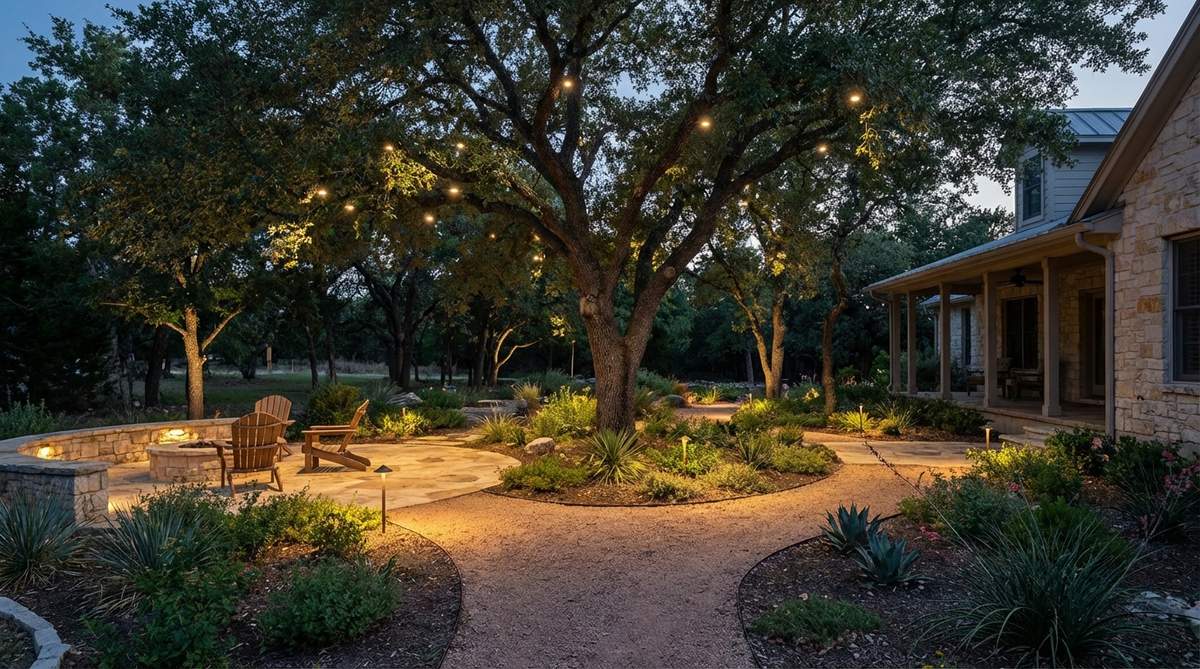
Fixtures mounted high in tree branches cast dappled light downward through foliage, mimicking natural moonlight. The elevated position creates ambient illumination across large areas.
Install 20-35 watt LED fixtures 15-25 feet above ground in mature trees. Aim multiple downlights at overlapping angles to prevent harsh single-source shadows on lawns and patios.
37. Soffit Downlighting
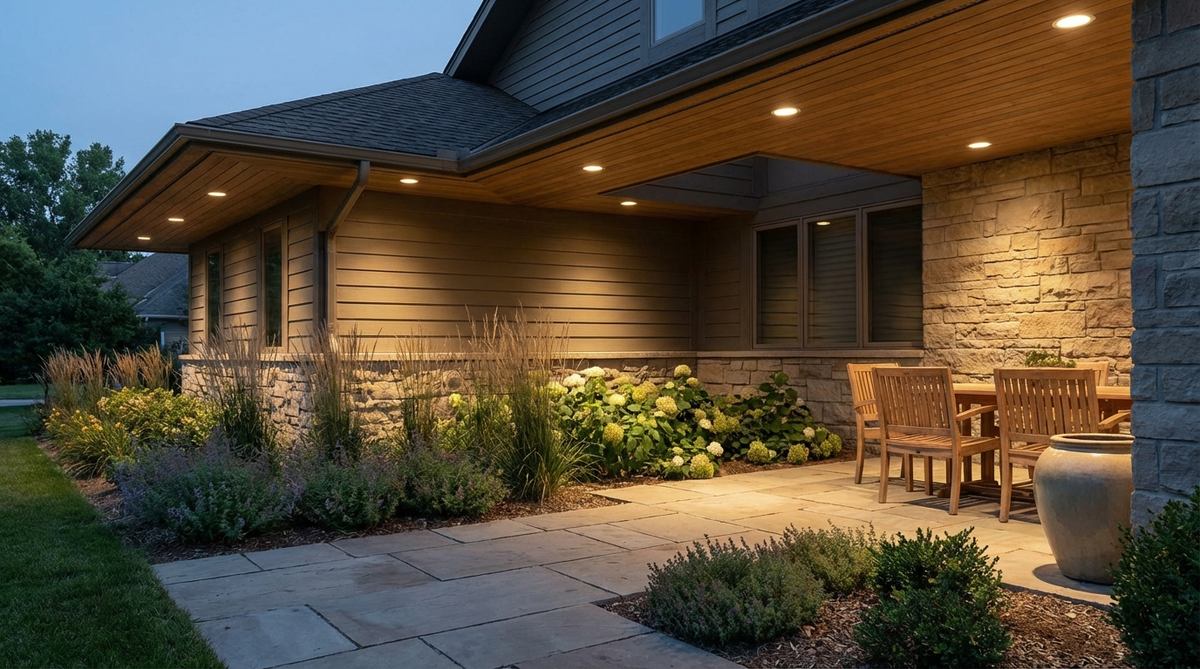
Recessed or surface-mount downlights installed in building eaves illuminate patios, walkways, and planting beds adjacent to structures. The architectural integration conceals fixtures while providing broad coverage.
Space soffit lights 6-8 feet apart along building perimeters. Use narrow flood beams that extend 8-12 feet from the building face without light trespass into distant garden areas.
38. Bench Underside Downlights
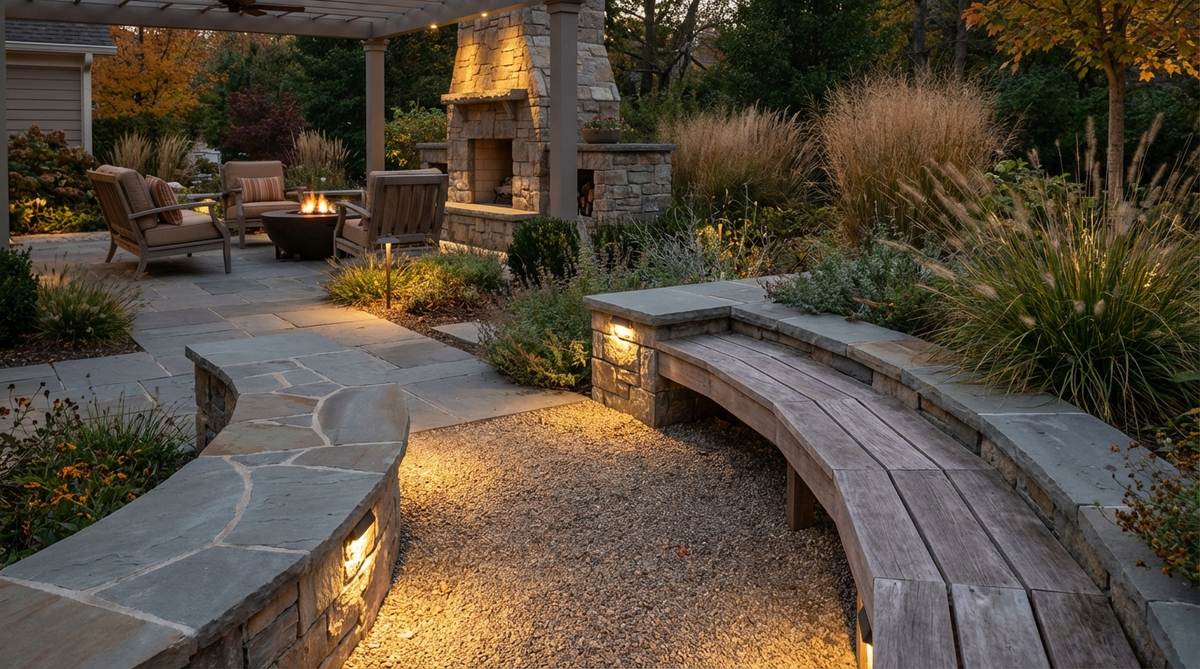
Small LED fixtures mounted beneath seating walls and built-in benches create pools of light along pathways while highlighting architectural elements. The concealed placement appears magical without visible sources.
Install 3-5 watt LEDs every 3-4 feet along bench undersides. The subtle output provides safety illumination without overwhelming intimate seating zones.
39. Plant Bed Downlighting
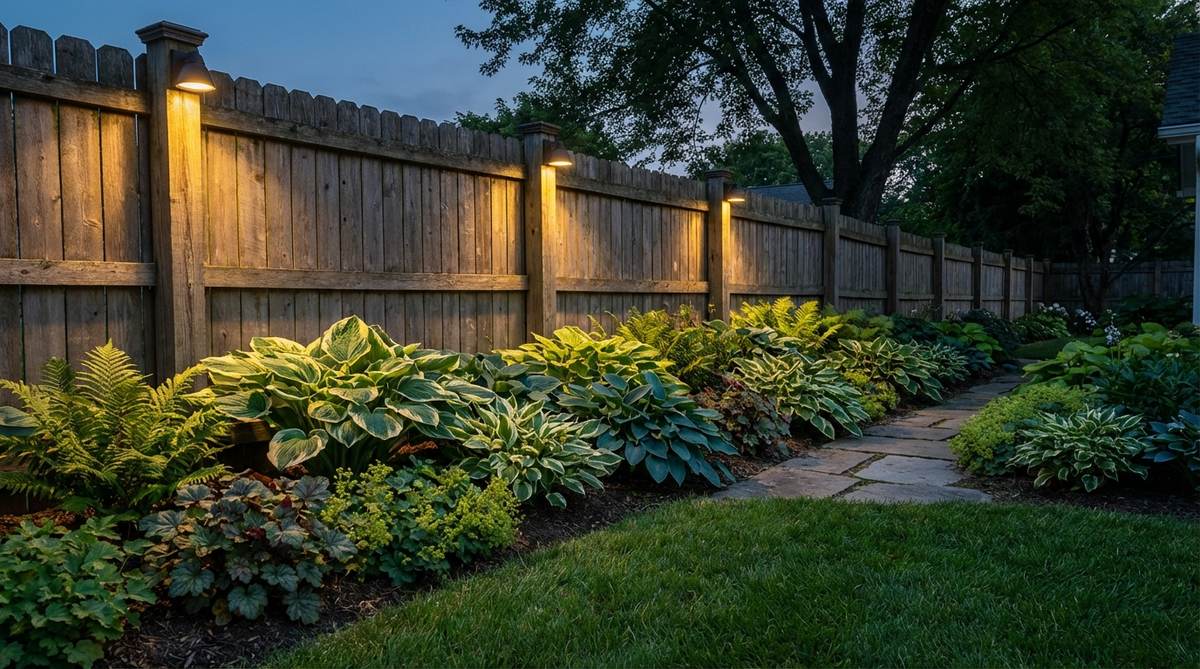
Downlights aimed at hosta beds, groundcover expanses, and low perennials showcase foliage texture and variegation. The overhead angle suits plants too short to benefit from uplighting.
Mount fixtures on nearby fences, walls, or short posts 4-6 feet above plantings. The elevated position casts light across entire bed areas rather than creating small spotlit circles.
40. Cross-Lighting Technique
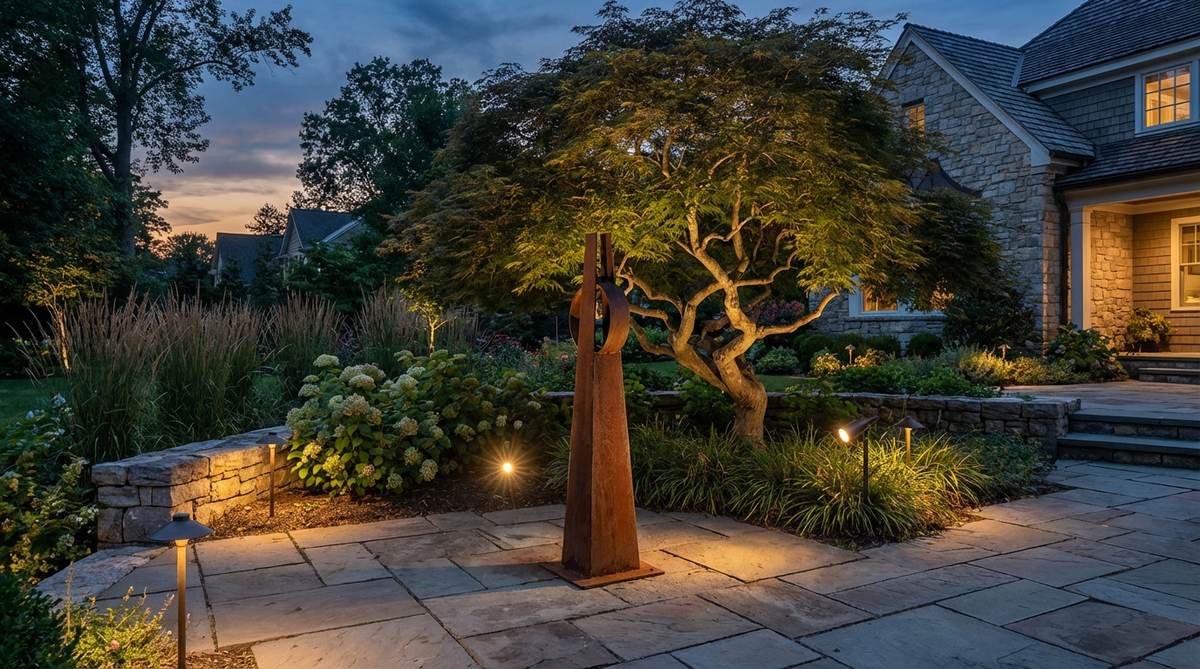
Multiple fixtures positioned at opposing angles illuminate subjects from different directions simultaneously. The overlapping beams eliminate harsh shadows and reveal three-dimensional form.
Use two to four fixtures spaced evenly around specimen plants or sculptures. Balance beam intensities to prevent any single light from dominating the composition.
Smart & Color-Changing Systems
Connected lighting systems offer remote control, color customization, and automated scheduling through smartphone applications. The technology suits entertainment spaces where lighting moods shift between casual gatherings and formal events. Professional-grade RGBW fixtures provide both saturated colors and crisp white light from single units.
41. WiFi-Controlled Spotlights
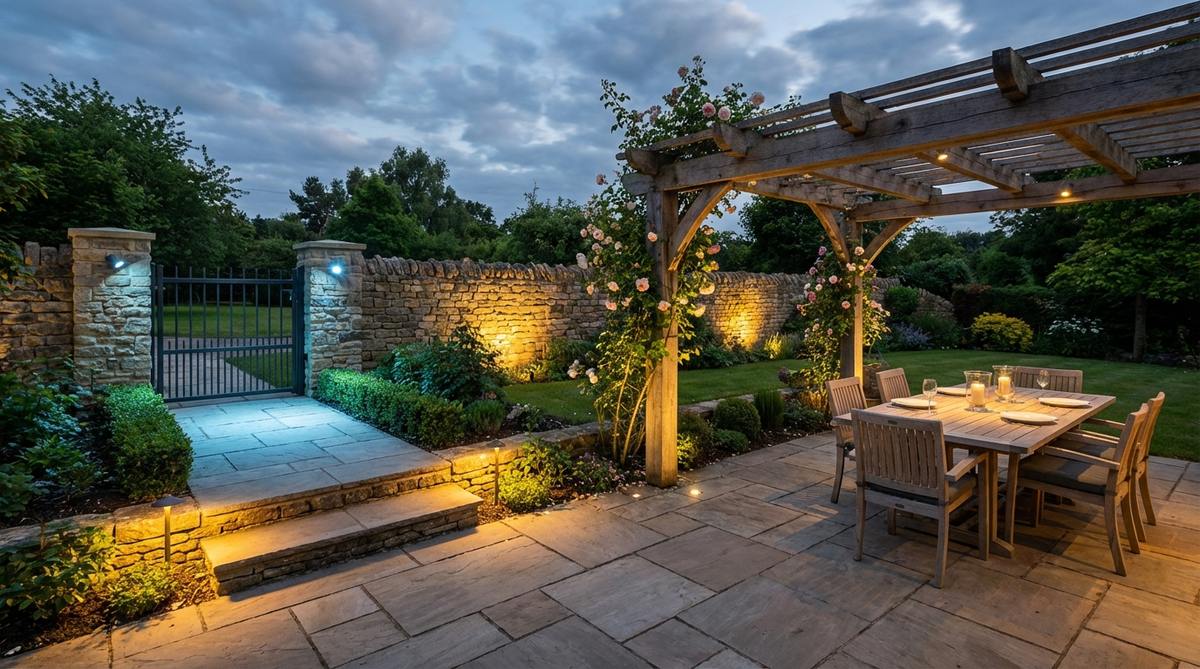
Smart spotlights with WiFi connectivity adjust color temperature, intensity, and beam angle through mobile apps. The fixtures eliminate manual adjustments while enabling scene presets for different occasions.
Install smart spots in high-visibility locations like entry gardens and patios where color changes create maximum impact. Program daily schedules that transition from warm white for dining to cool white for security.
42. RGB Color Wash Lights
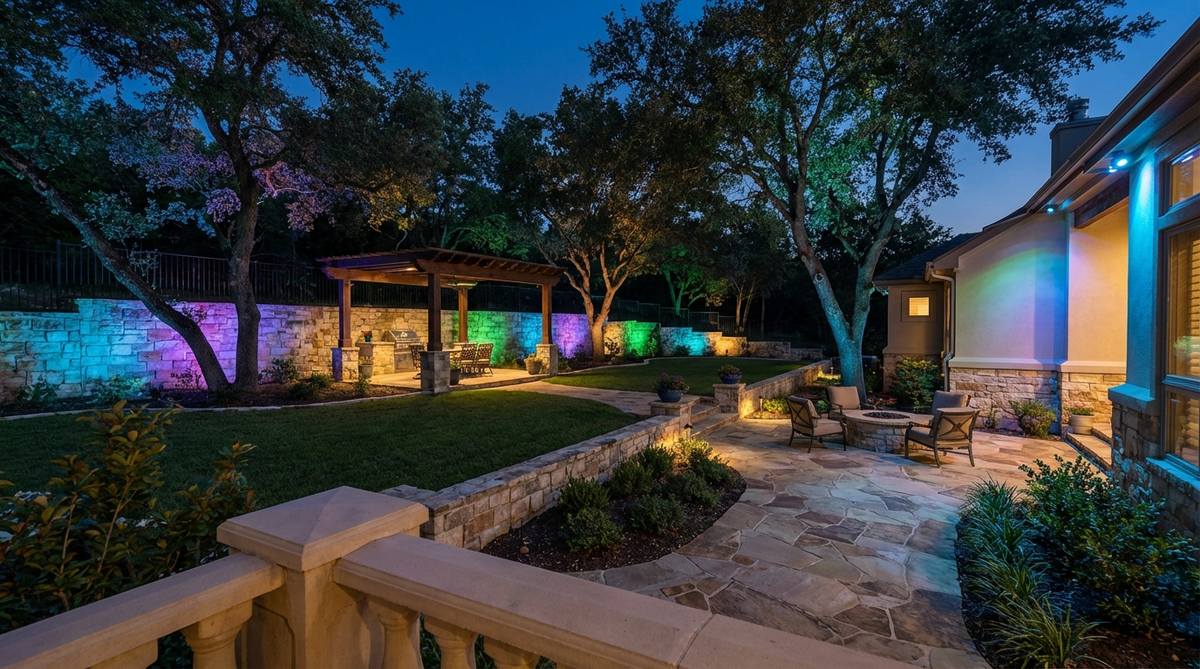
Multi-color LED floods project saturated hues across walls, trees, and architectural features. The wide-angle beams transform entire garden sections with single color washes or dynamic transitions.
Position RGBW fixtures 10-15 feet from target surfaces using 50-degree flood lenses. The broad coverage reduces fixture count while maintaining even color distribution.
43. Smart Pathway Systems
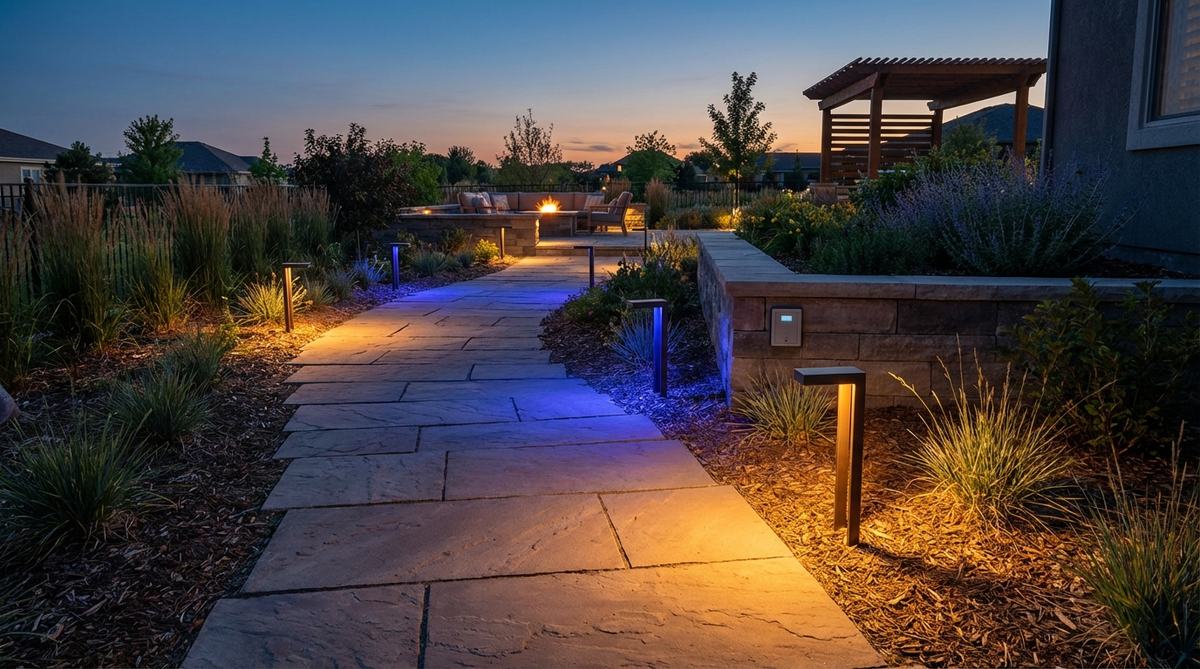
Integrated path lighting networks connect to central controllers that adjust all fixtures simultaneously. The synchronized systems create cohesive color themes across entire properties.
Specify fixtures with individual addressing capability for pattern programming. The granular control enables chasing effects, color gradients, and zone-specific adjustments.
44. Music-Sync Strip Lights
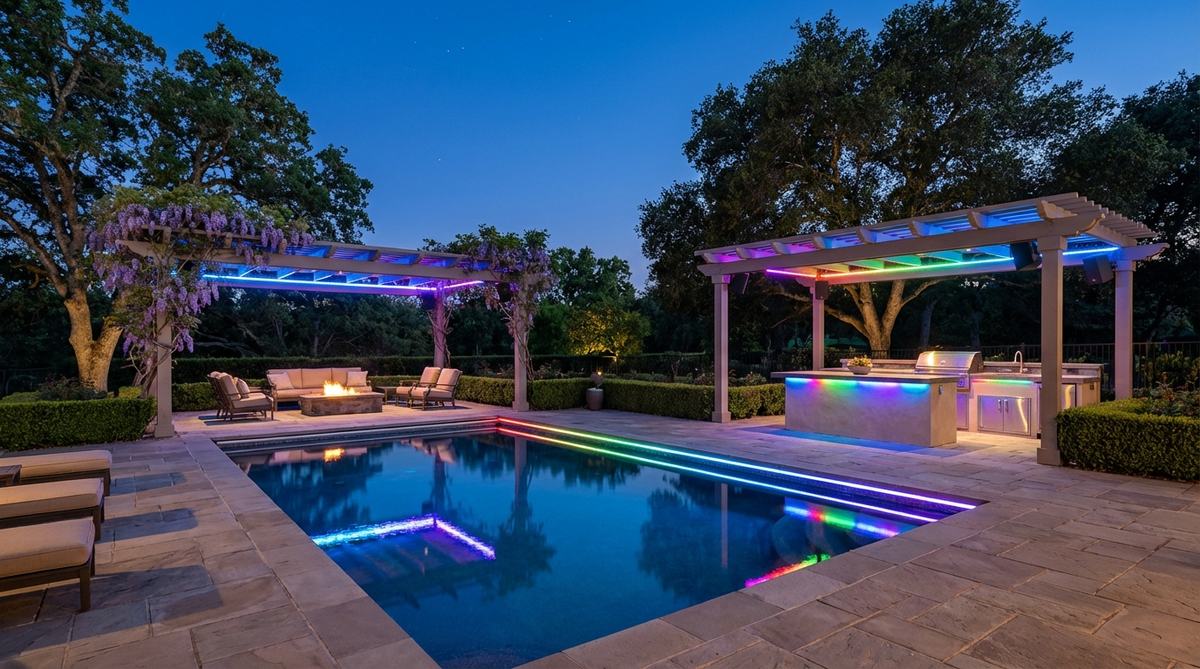
LED strips with sound reactivity pulse and change colors in response to music and ambient noise. The dynamic effects suit pool areas, outdoor kitchens, and entertainment zones.
Mount music-reactive strips under bar counters, pool coping, and pergola beams where motion draws attention. Adjust sensitivity settings to prevent over-reaction to conversation levels.
45. Voice-Controlled Lighting
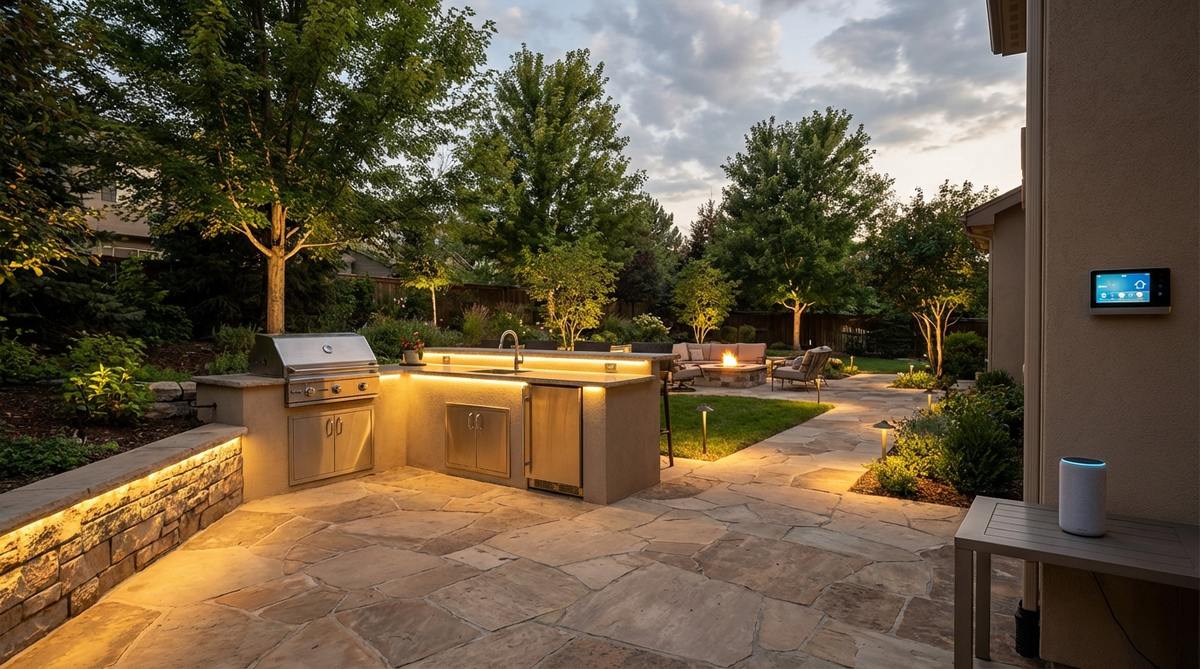
Smart fixtures integrated with voice assistants respond to spoken commands for hands-free operation. The convenience appeals during outdoor cooking and entertaining when manual controls remain inaccessible.
Group fixtures into voice-command zones like “patio lights” or “garden spotlights” for collective control. The named zones simplify commands without specifying individual fixture addresses.
46. Tunable White Systems
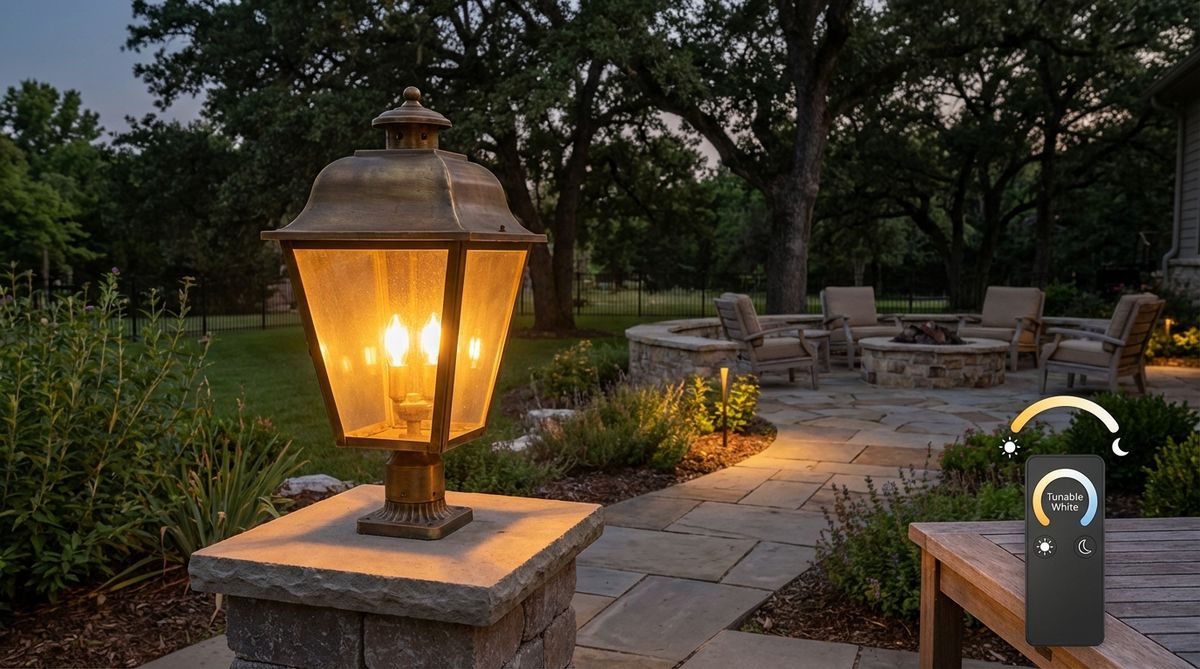
Fixtures with adjustable color temperature shift between warm amber (2200K) and cool daylight (6500K) without color filters. The technology maintains natural white light while adapting to different times and activities.
Program tunable fixtures to track natural daylight cycles, warming to amber tones as evening progresses. The circadian-friendly approach creates comfortable outdoor environments that feel intuitive.
47. Programmable Color Scenes
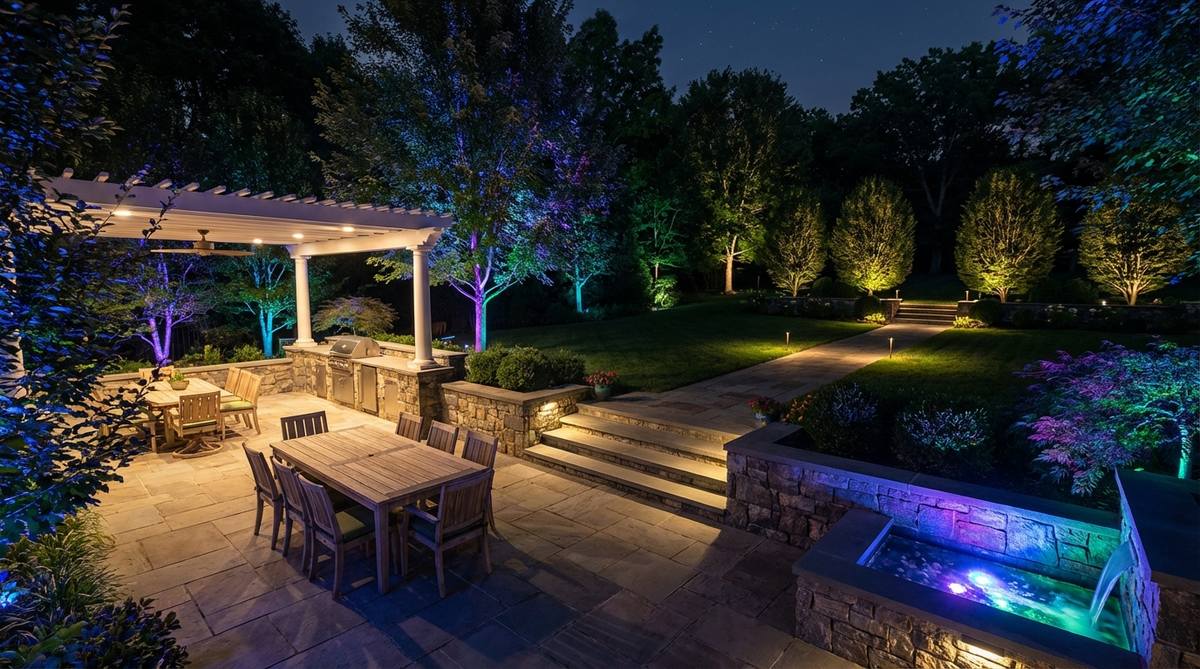
Pre-set lighting scenes recall specific color combinations, intensities, and fixture patterns with single button activation. The scene memory eliminates repetitive manual adjustments for recurring events.
Create scenes for dining, entertaining, security, and landscape showcase modes. The varied programs transform gardens instantly without technical knowledge.
48. Motion-Activated Color Lights
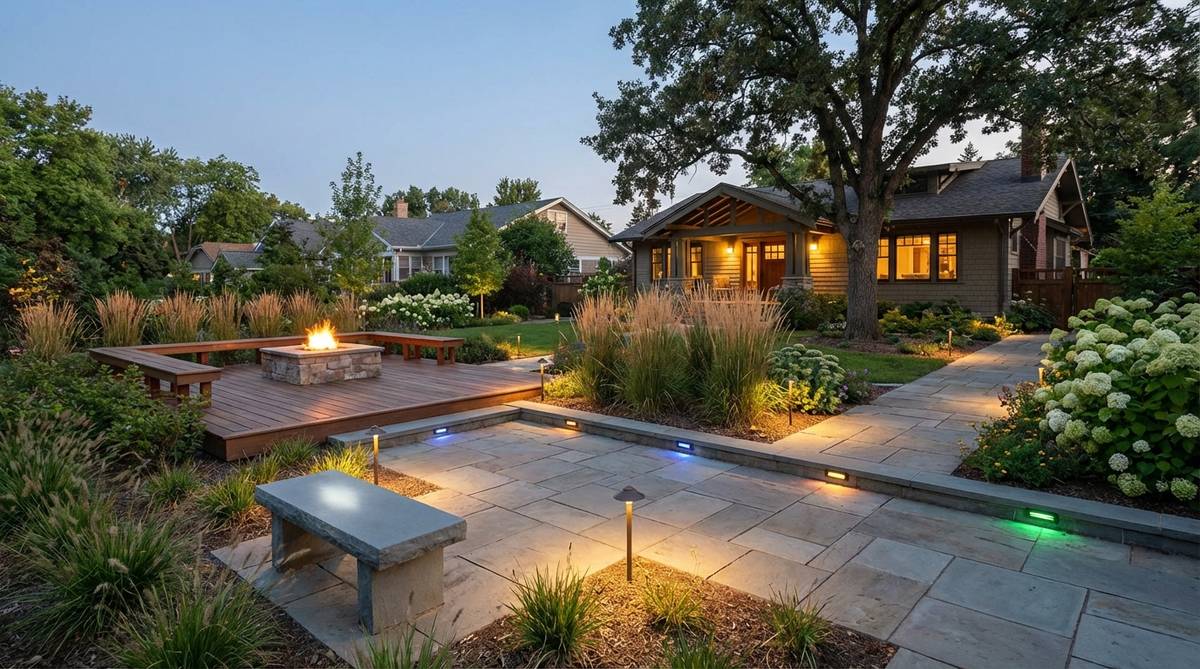
Smart fixtures detect movement and trigger programmed responses like color changes or intensity increases. The reactive behavior adds security functions to decorative lighting systems.
Set motion lights to glow dim white during idle periods, then shift to bright cool white when activity occurs. The two-stage response balances aesthetics with practical security needs.
49. Holiday Color Programming
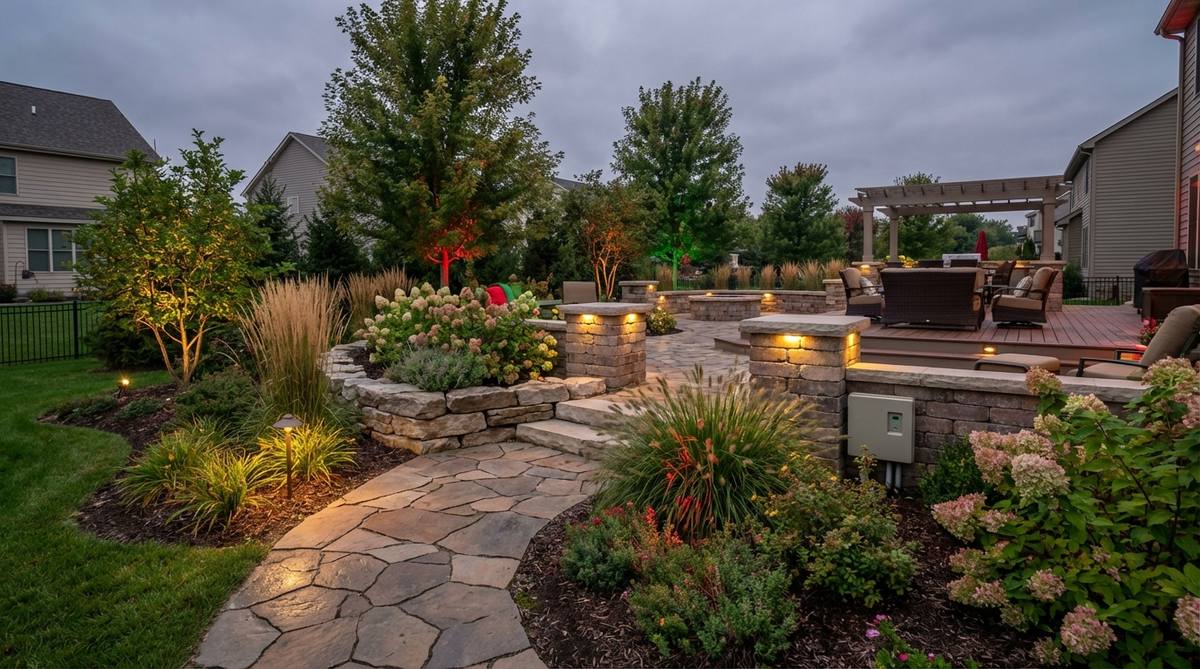
Color-changing systems store seasonal palettes for holidays and special events throughout the year. The programmable approach eliminates temporary decoration installations.
Schedule automated color changes that activate on specific dates without manual intervention. The calendar-based control maintains fresh appearances across seasons.
50. Geofencing Automation
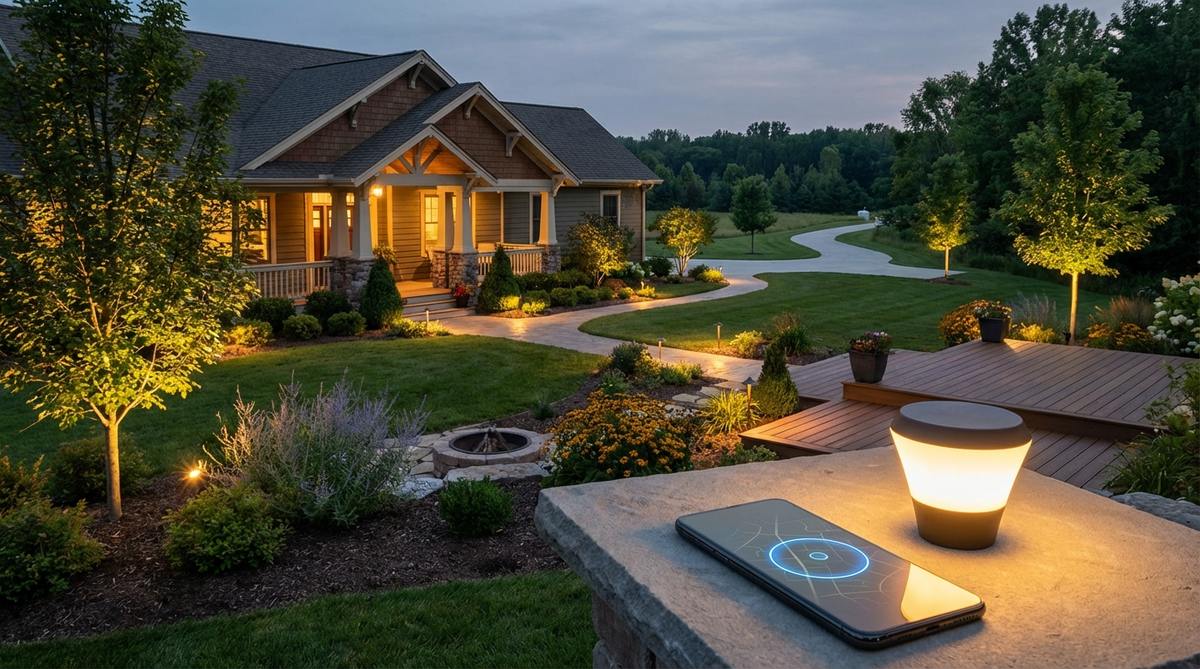
Smart lighting systems detect smartphone locations and activate when residents approach home. The proximity-based automation ensures illuminated arrivals without manual triggers.
Set geofencing radii to 500-1000 feet from property boundaries for appropriate activation timing. The advance warning allows full system illumination before arrival.
Decorative & Accent Fixtures
Statement lighting serves dual purposes as both illumination sources and sculptural garden elements. These fixtures maintain visual interest during daylight hours while providing functional light after sunset. Material selections like copper, bronze, and stainless steel develop natural patinas that enhance garden character over time.
51. Lantern Post Lights
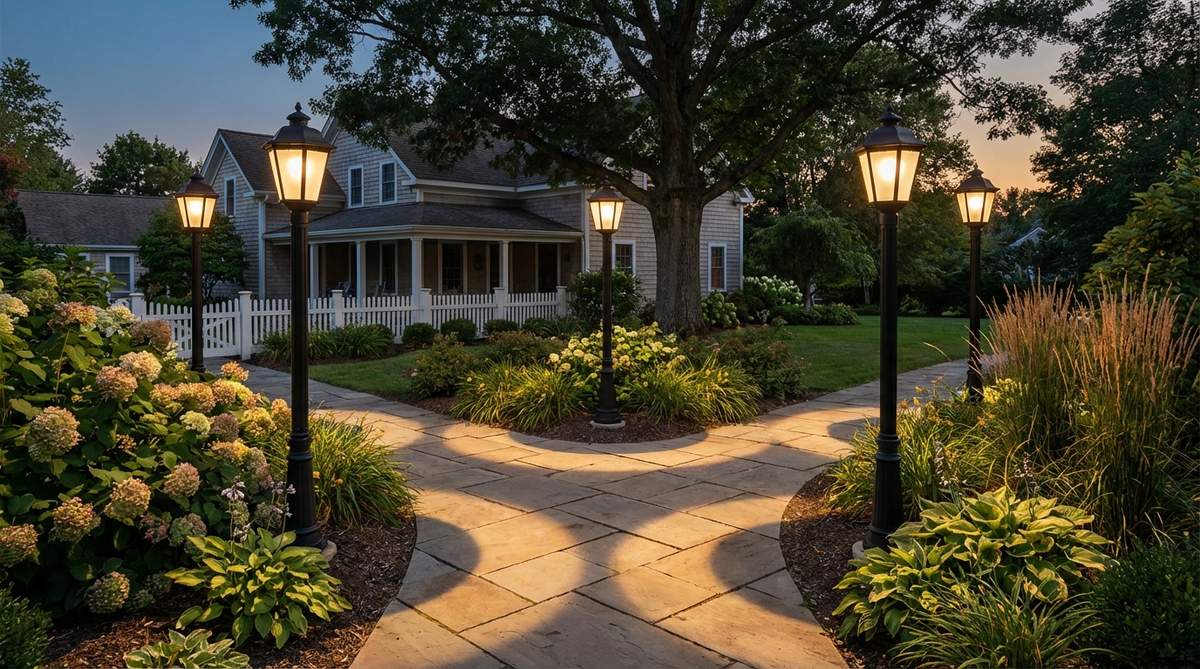
Traditional lantern posts with modern LED technology combine heritage aesthetics with contemporary efficiency. The fixtures anchor garden entries and pathway intersections with vertical emphasis.
Select post heights between 7-9 feet for pedestrian-scale spaces. The elevated light sources cast broad circular patterns without low-angle glare.
52. Contemporary Sculptural Lights
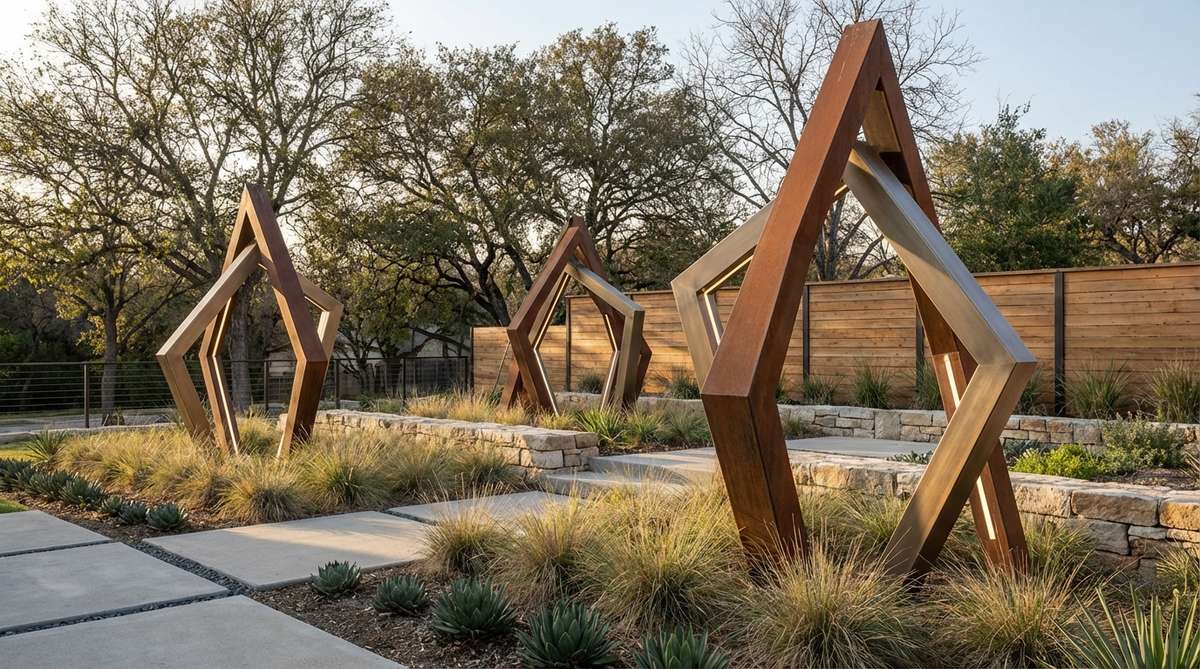
Artistic lighting fixtures featuring geometric forms and architectural metalwork function as daytime sculptures. The bold designs suit modern gardens prioritizing clean lines and material honesty.
Position sculptural lights in highly visible locations where their forms contribute to overall garden composition. The statement pieces merit featured placement rather than discrete concealment.
53. Copper Pathway Luminaires
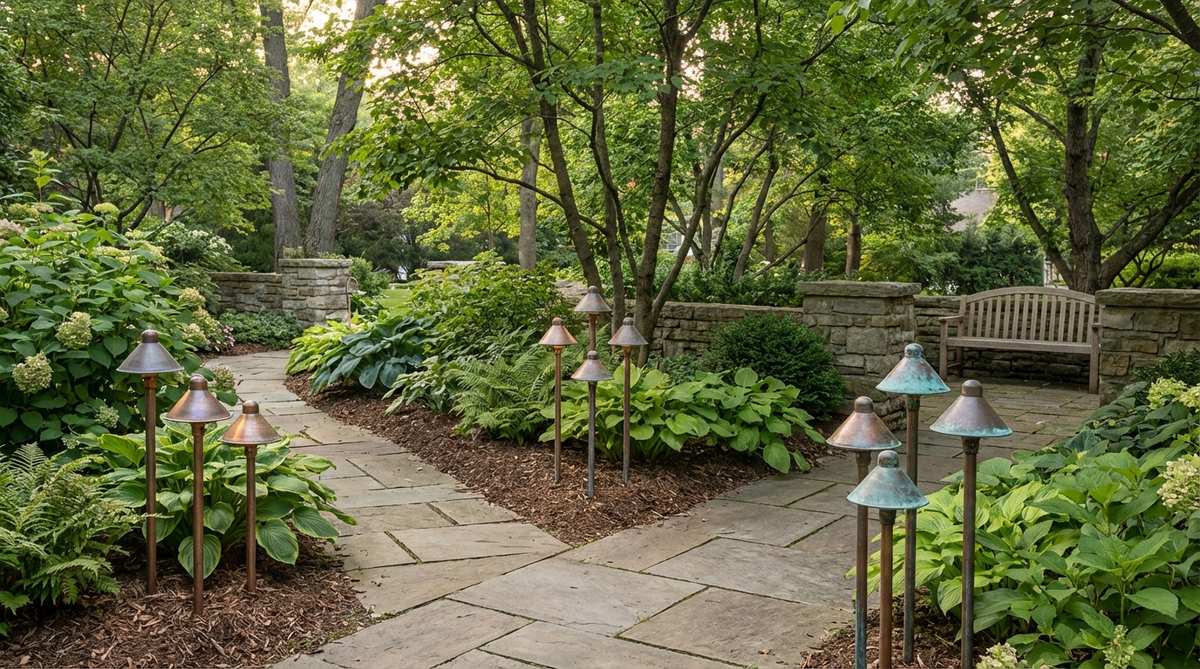
Solid copper fixtures develop living patinas that shift from bright metallic to verdigris green as they age. The natural oxidation process adds character that complements established gardens.
Install copper luminaires in groups of three or five along pathways for rhythmic repetition. The odd-numbered groupings appear more natural than paired installations.
54. Pagoda-Style Accents
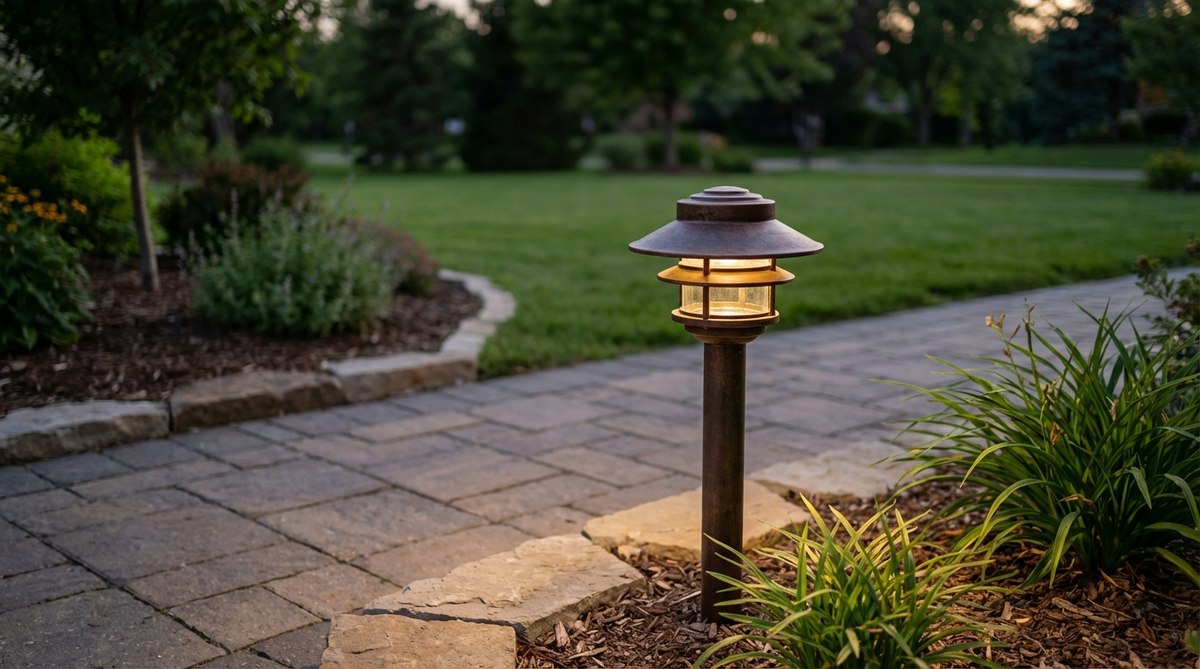
Tiered pagoda fixtures with stepped caps direct light downward while preventing upward light pollution. The classic landscape lighting form suits both traditional and contemporary designs.
Space pagoda lights at 8-12 foot intervals along major pathways. The wider spacing compared to low-profile fixtures compensates for increased light output.
55. LED Neon Flex Outlines
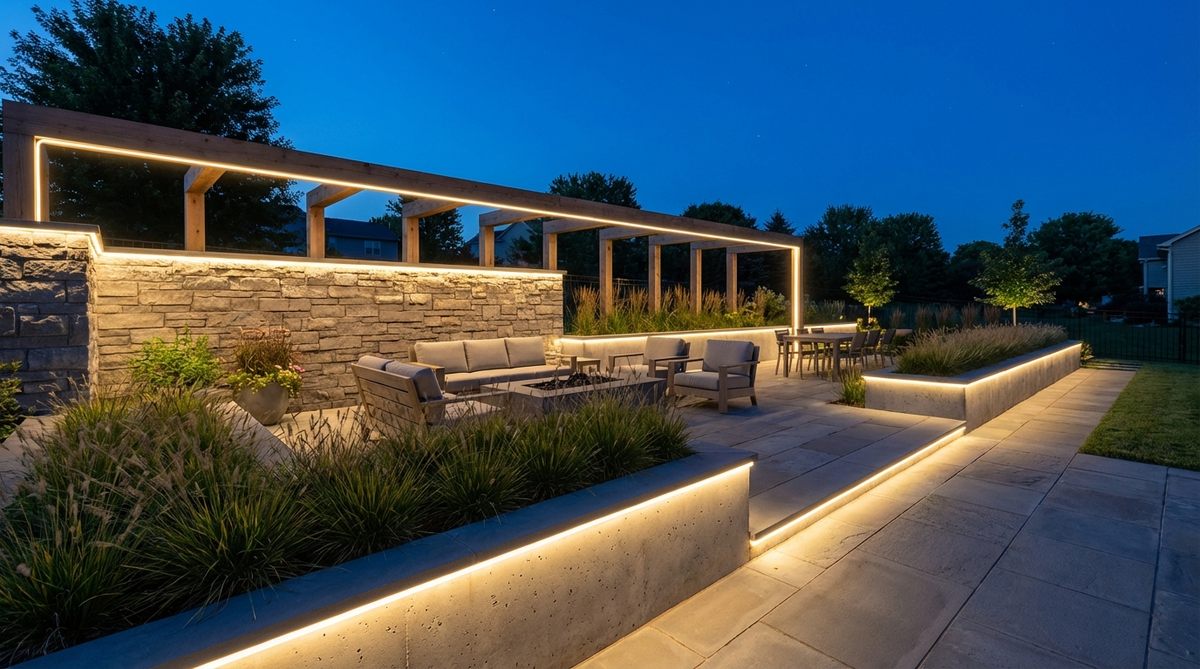
Flexible neon-style LED tubes bend into custom shapes that outline architectural features, planters, and hardscape edges. The continuous glow creates contemporary linear accents.
Install neon flex in aluminum channels for weather protection and clean visual lines. The contained mounting prevents exposed wiring while supporting curved installations.
56. Retro Edison Pendants
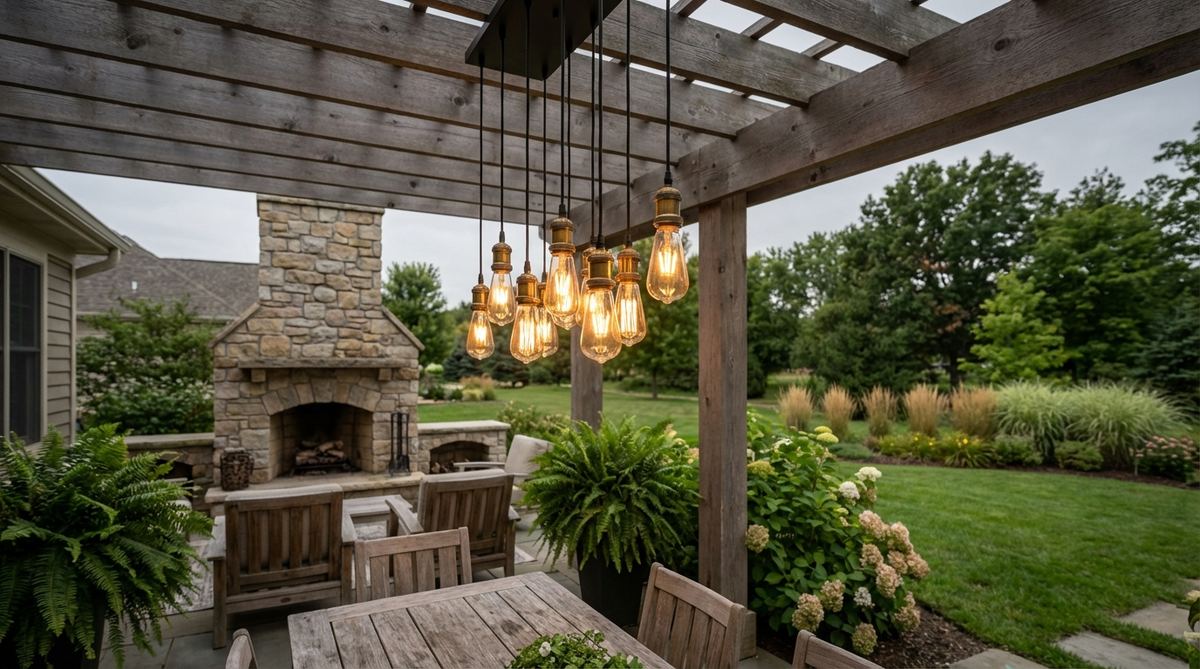
Exposed-filament LED bulbs in industrial pendants hang from pergolas, gazebos, and porch ceilings. The vintage aesthetic adds warmth to outdoor living areas without historical period commitment.
Suspend pendants 6-7 feet above finished floor levels for headroom clearance. The low mounting creates intimate lighting zones beneath overhead structures.
57. Artistic Glass Globes
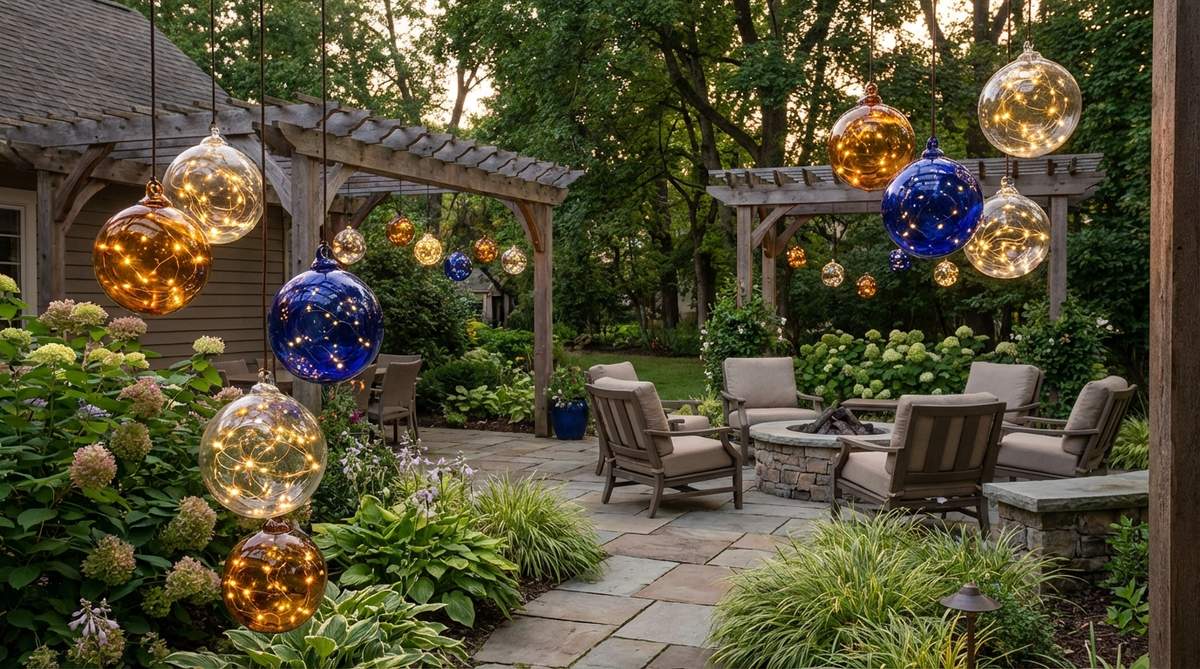
Hand-blown glass globes in amber, cobalt, and clear finishes encase LED sources with artisanal character. The decorative shades filter and color light while showcasing craftsmanship.
Position glass globe fixtures in protected locations where wind exposure remains minimal. The fragile materials suit courtyard gardens rather than exposed hilltop sites.
58. Perforated Metal Lanterns
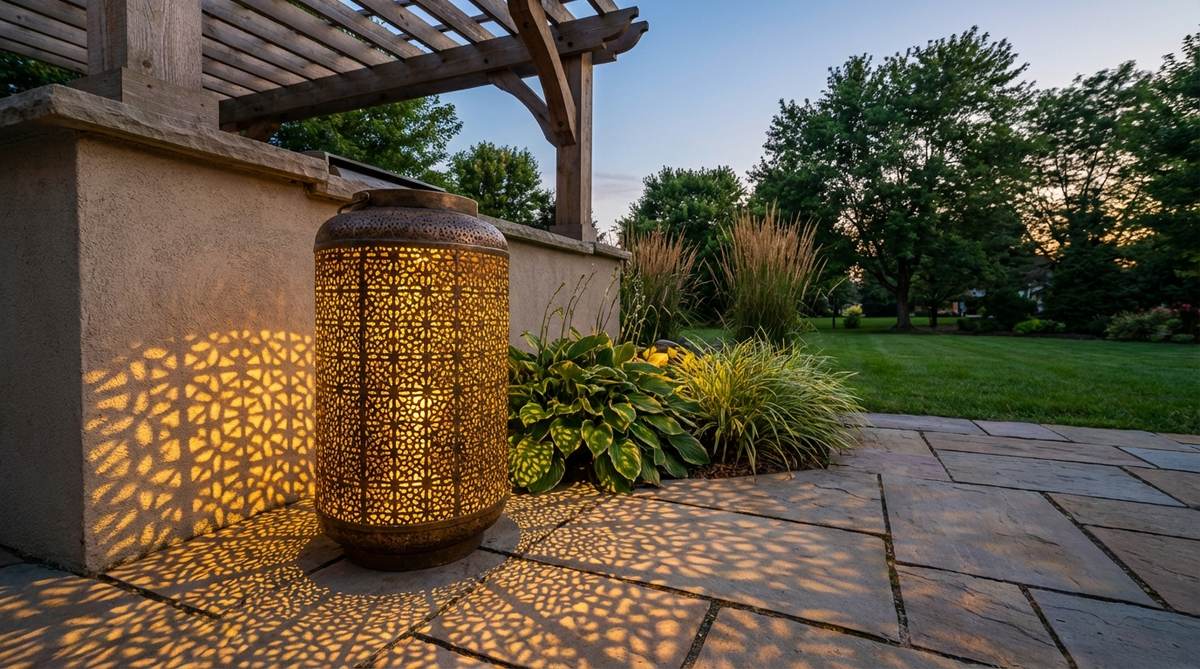
Cut-metal lanterns project patterned light through decorative perforations that cast shadows on surrounding surfaces. The dynamic effect adds visual complexity to simple illumination.
Hang perforated lanterns where their shadow patterns enhance adjacent walls, fences, or paving. The secondary light effects multiply the decorative impact beyond the fixtures themselves.
59. Modern Cube Lights
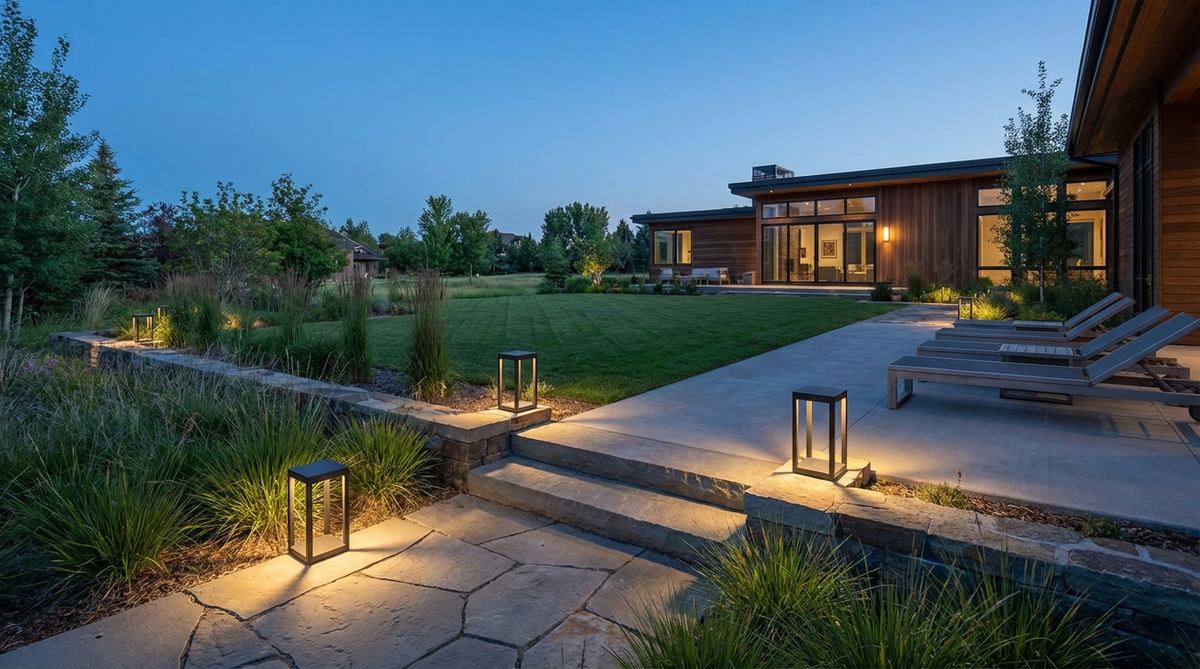
Geometric cube fixtures in powder-coated aluminum provide minimalist illumination for contemporary landscapes. The simple forms emphasize light output over decorative elaboration.
Deploy cube lights in clean linear arrangements that reinforce geometric garden layouts. The restrained design complements rather than competes with bold plantings.
50. Flame-Effect Torches
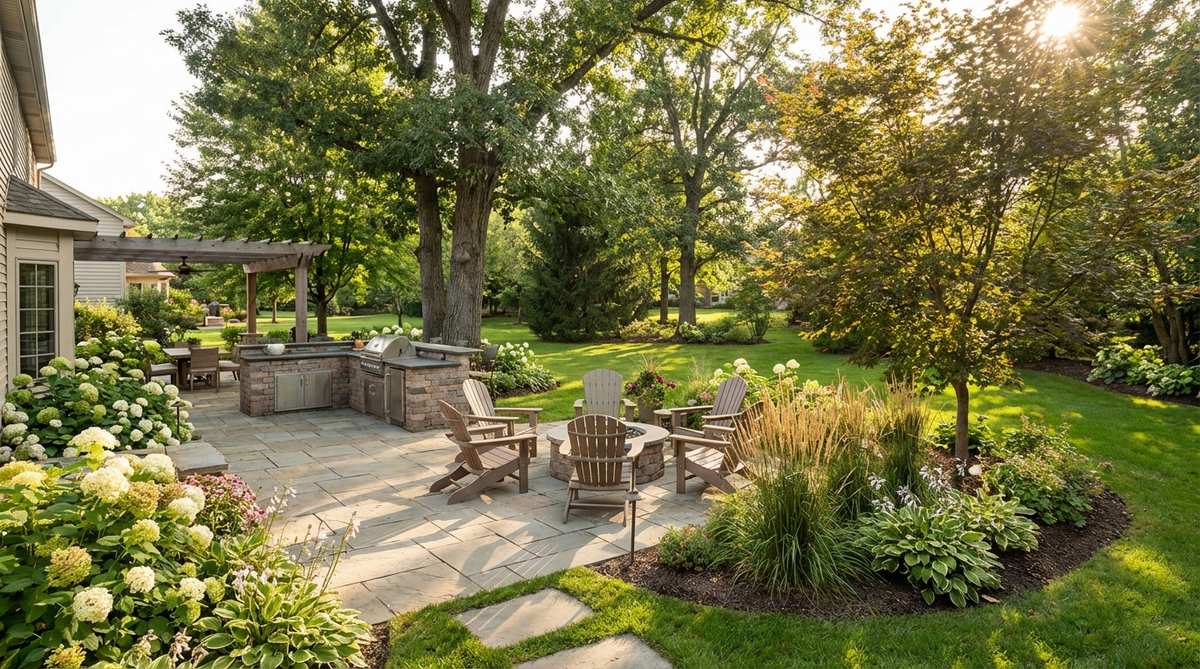
LED torches simulate flickering flames through programmed light patterns that mimic natural fire movement. The battery-powered versions offer portable ambiance without combustion concerns.
Line pathways or pool perimeters with flame-effect torches for dramatic evening atmospheres. The motion programming creates living light that appears organic rather than static.
Specialty & Water Feature Lighting
Water features, slopes, and unique garden elements require specialized lighting approaches that standard fixtures cannot address. Submersible LEDs, adjustable mounting systems, and narrow-beam optics enable illumination in challenging locations. These application-specific solutions expand lighting possibilities throughout complex garden compositions.
61. Submersible Pond Lights
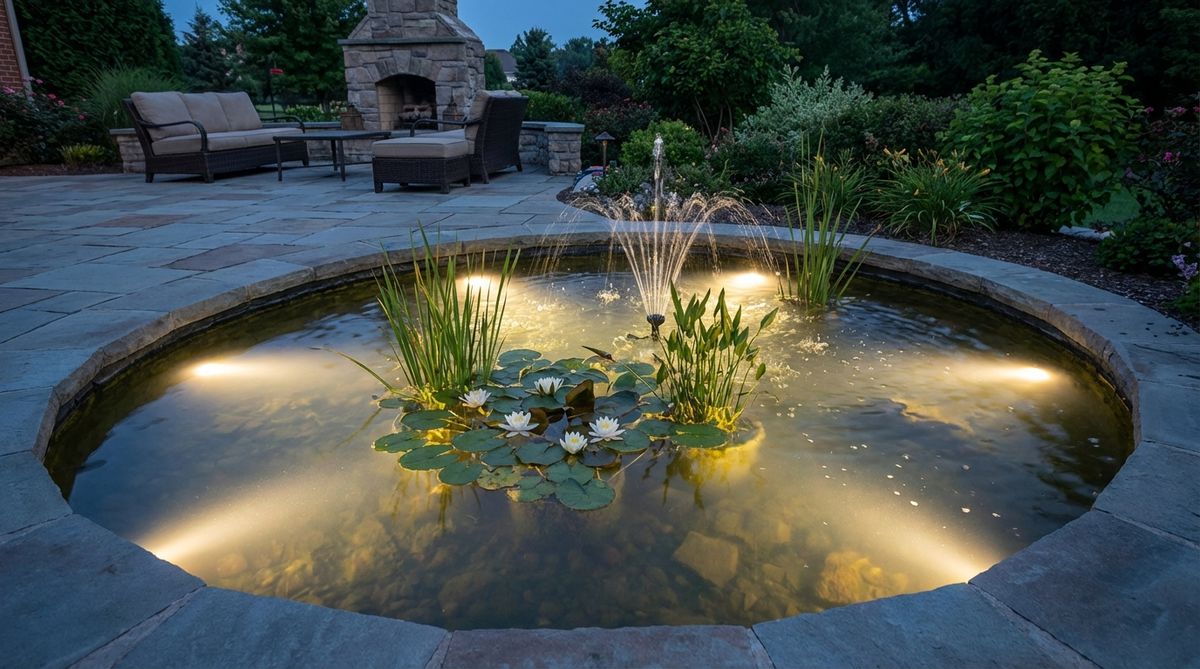
Waterproof LED fixtures submerge beneath pond surfaces to illuminate water features from within. The underwater placement creates glowing effects that showcase aquatic plants and fountain dynamics.
Position submersible lights at varied depths to create dimensional water illumination. Angle fixtures upward toward fountains and waterfalls to emphasize water movement.
62. Floating Pool Orbs
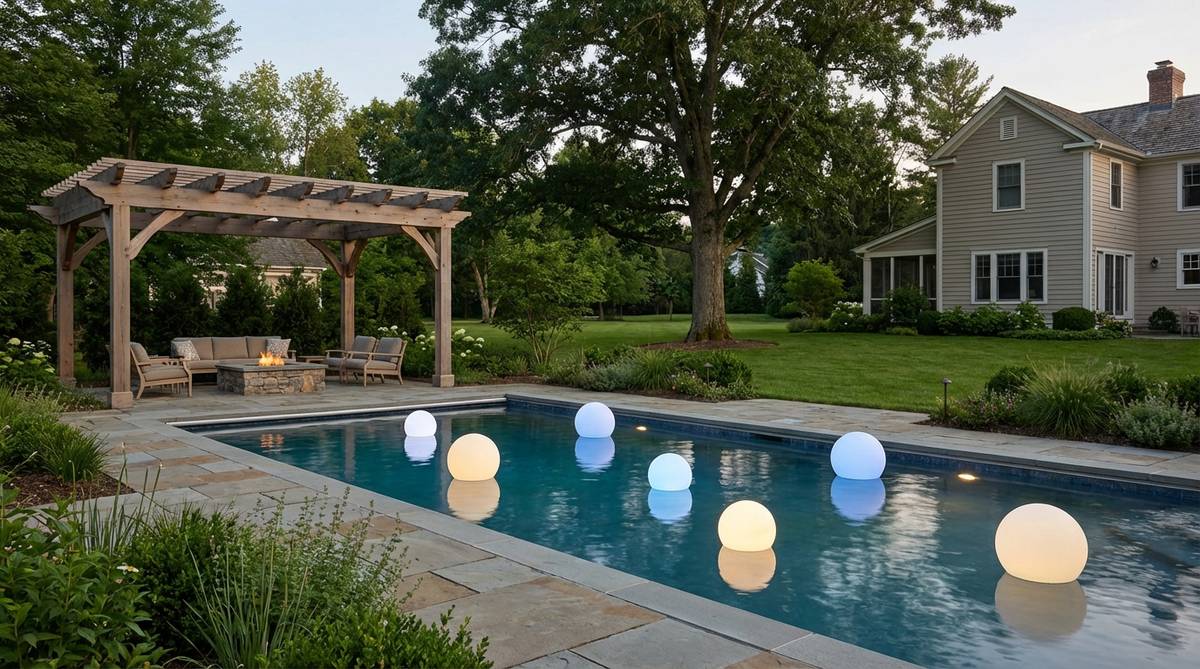
Spherical LED lights float freely across pool surfaces, creating dynamic illumination that shifts with water currents. The portable orbs suit temporary lighting needs for parties and events.
Deploy 3-5 floating orbs in residential pools for adequate coverage without crowding. The rechargeable batteries power 8-12 hours of continuous use per charge cycle.
63. Fountain Ring Lights
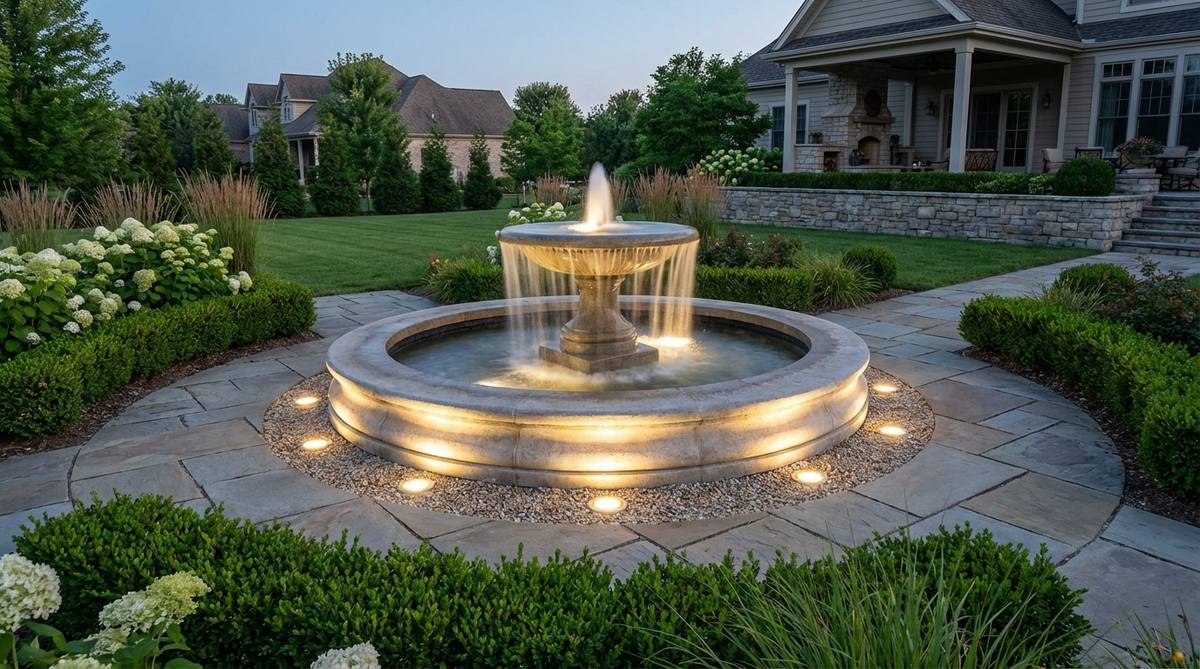
Circular LED arrays install around fountain bases to uplight water jets and cascades. The ring configuration provides even illumination from all directions simultaneously.
Match ring light intensity to fountain scale—larger displays require 200+ lumens while compact bubblers need only 50-100 lumens. The proportional approach prevents overwhelming small features.
64. Waterfall Spotlights
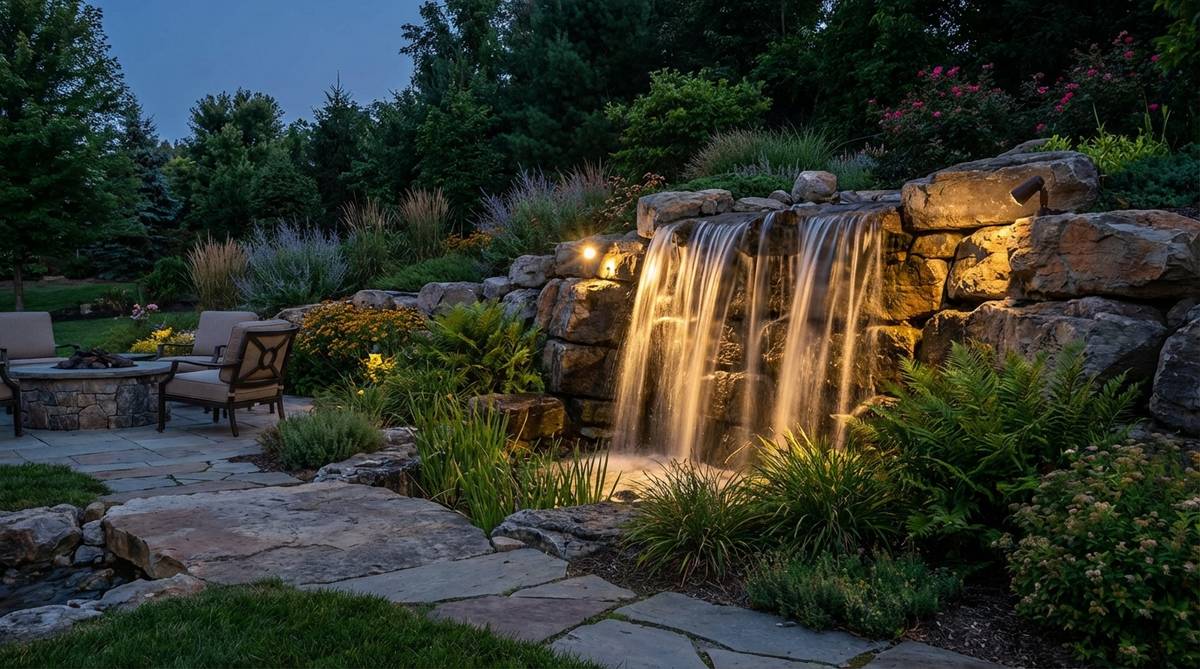
Narrow-beam spots aimed at waterfall faces emphasize water texture and movement. The concentrated light creates dramatic focal points visible across entire garden spaces.
Install waterfall lights on adjacent rocks or structures rather than directly in water flow. The protected placement extends fixture longevity while maintaining visual impact.
65. Slope Stabilizer Lights
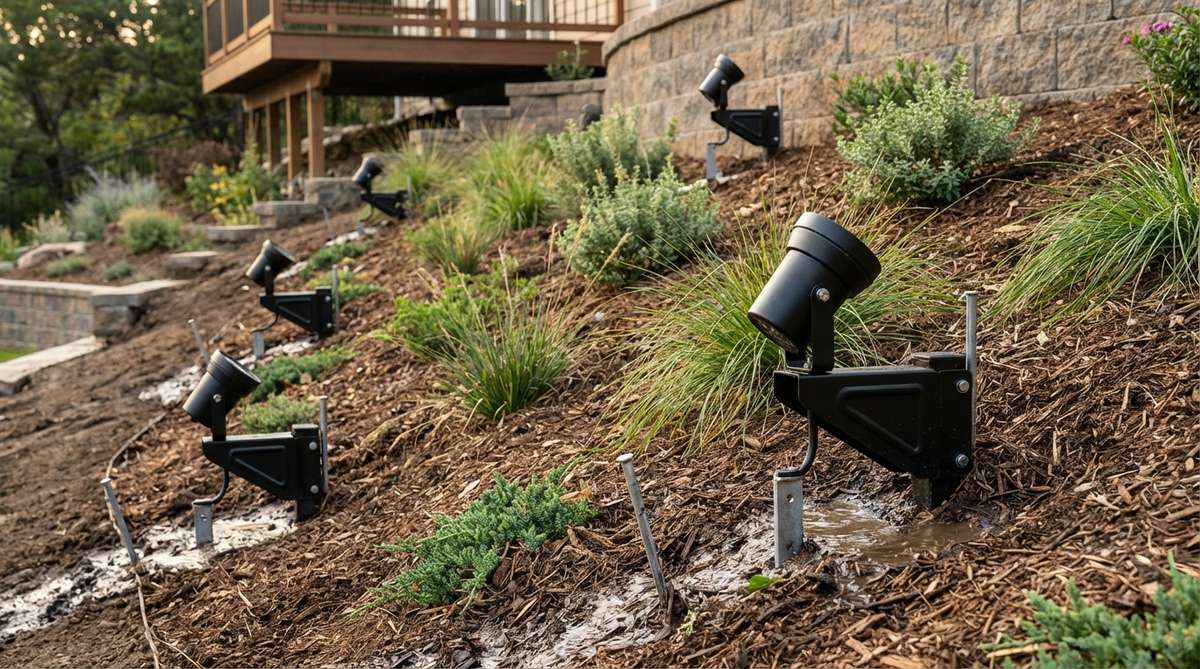
Adjustable mounting brackets accommodate hillside and slope installations where level fixture placement proves impossible. The versatile hardware prevents runoff-induced shifting.
Anchor slope lights to buried stakes driven 12-18 inches deep into stable soil layers. The deep mounting resists erosion forces during heavy precipitation events.
66. Under-Dock Lighting
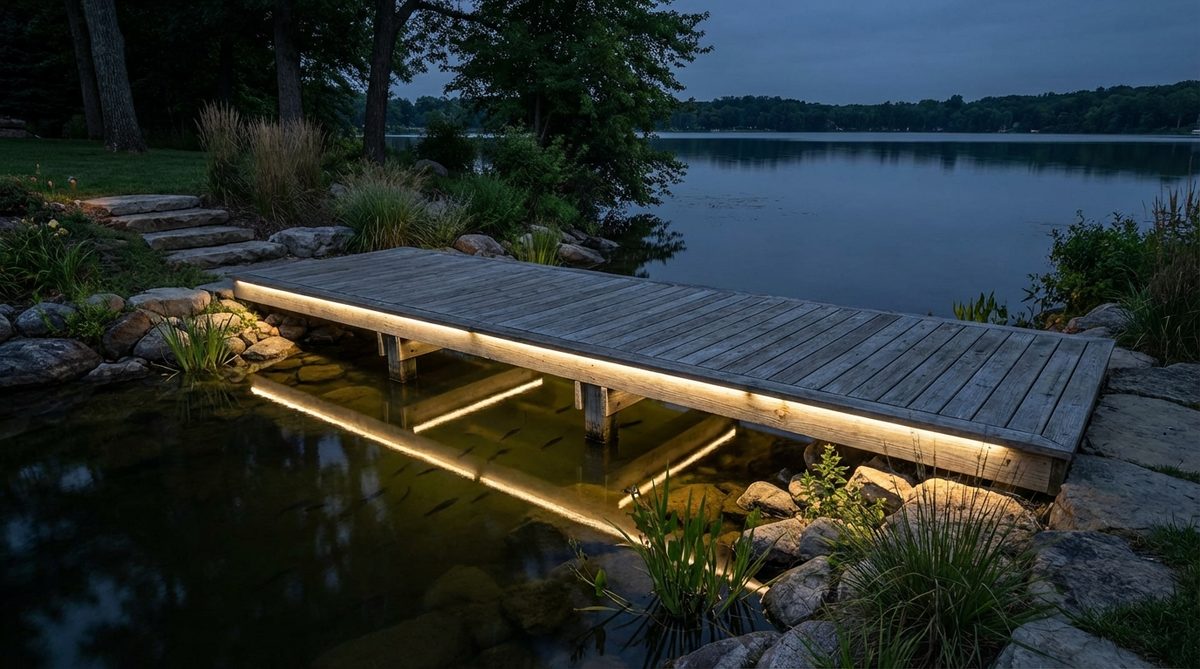
Marine-grade LED strips mounted beneath dock structures illuminate waterfront areas while attracting fish. The indirect underwater glow creates ethereal nighttime dock environments.
Use fixtures rated IP68 for continuous submersion in fresh or salt water. The superior sealing prevents corrosion in harsh aquatic environments.
67. Beach-Entry Lights
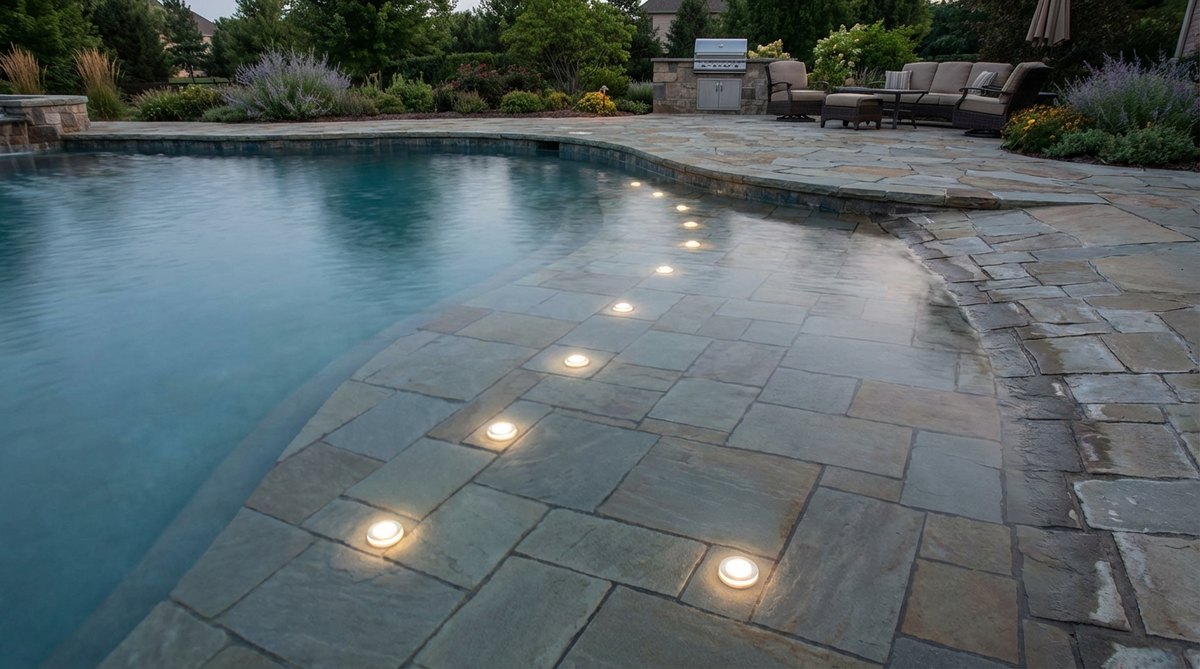
Small LED fixtures installed in pool beach entries guide safe passage across sloped submerged surfaces. The waterproof construction withstands constant submersion and foot traffic.
Space beach-entry lights 24-36 inches apart along slope centerlines. The close spacing compensates for shallow water that diffuses light intensity.
68. Grotto & Cave Lighting
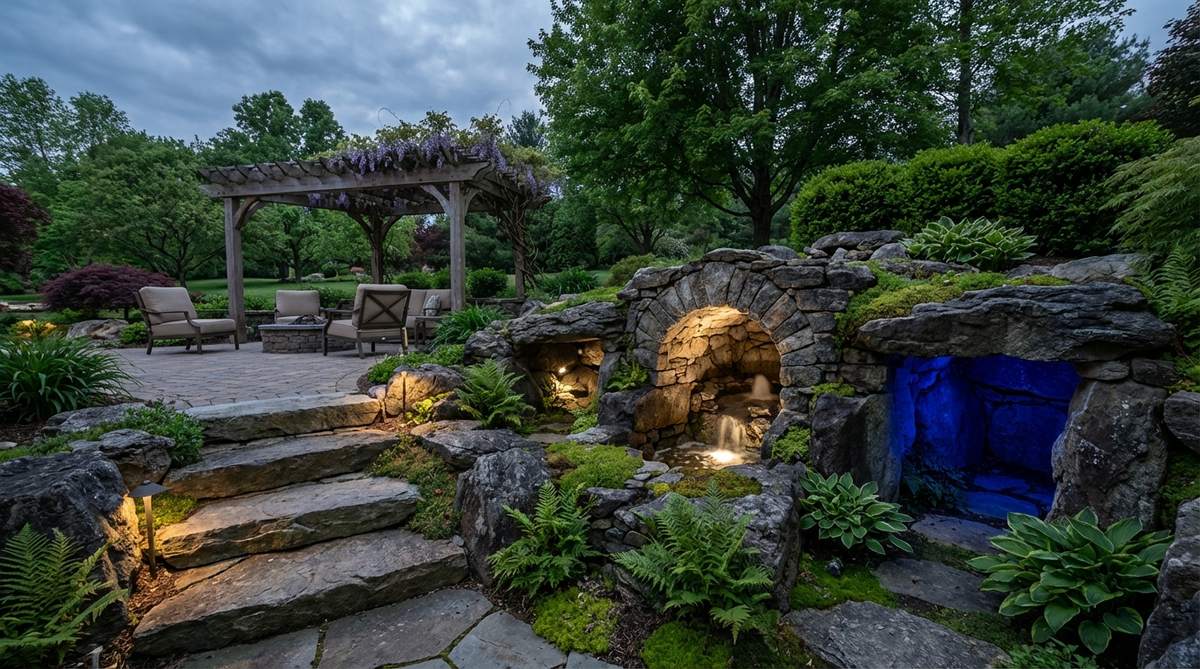
Compact waterproof fixtures tuck into rock grottos and artificial caves to create mysterious illuminated retreats. The concealed placement emphasizes architecture over visible fixtures.
Use color-changing LEDs in grottos to shift moods between natural white and saturated blues or greens. The color flexibility expands the functional range of single installations.
69. Spa Perimeter Lighting
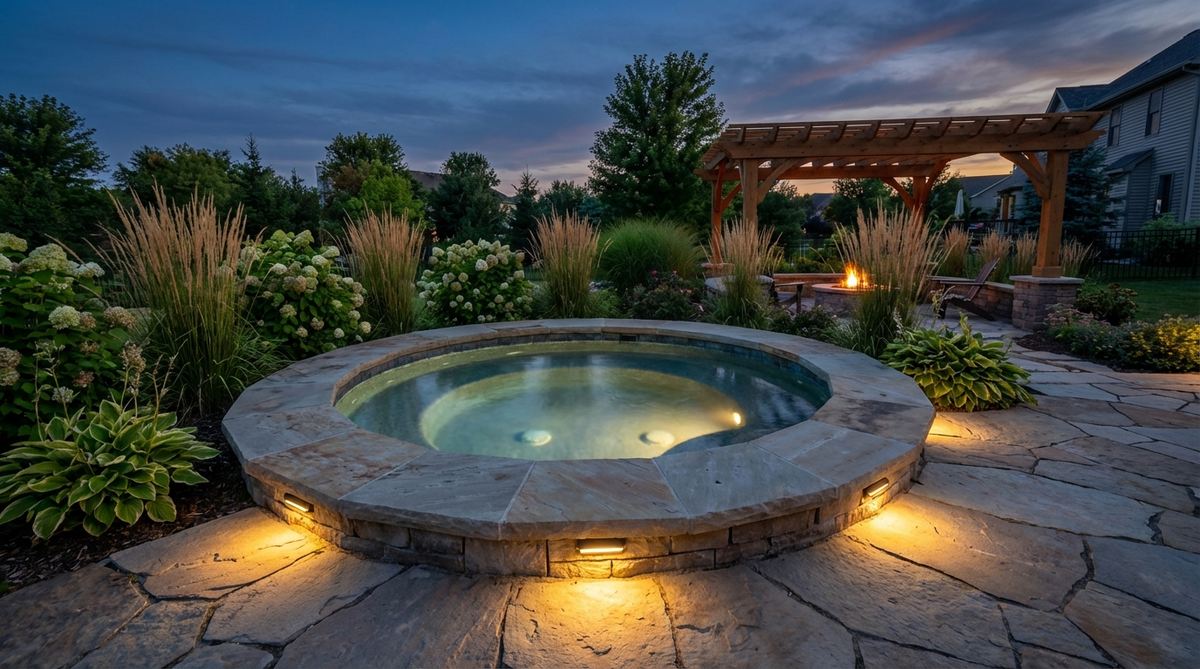
Low-profile lights installed around spa edges define boundaries while preventing tripping hazards. The contained illumination focuses attention on soaking areas without glare.
Install spa lights on the hardscape surrounding the water rather than in the spa itself. The external placement simplifies maintenance access and prevents direct eye exposure.
70. Bridge Underside Accents
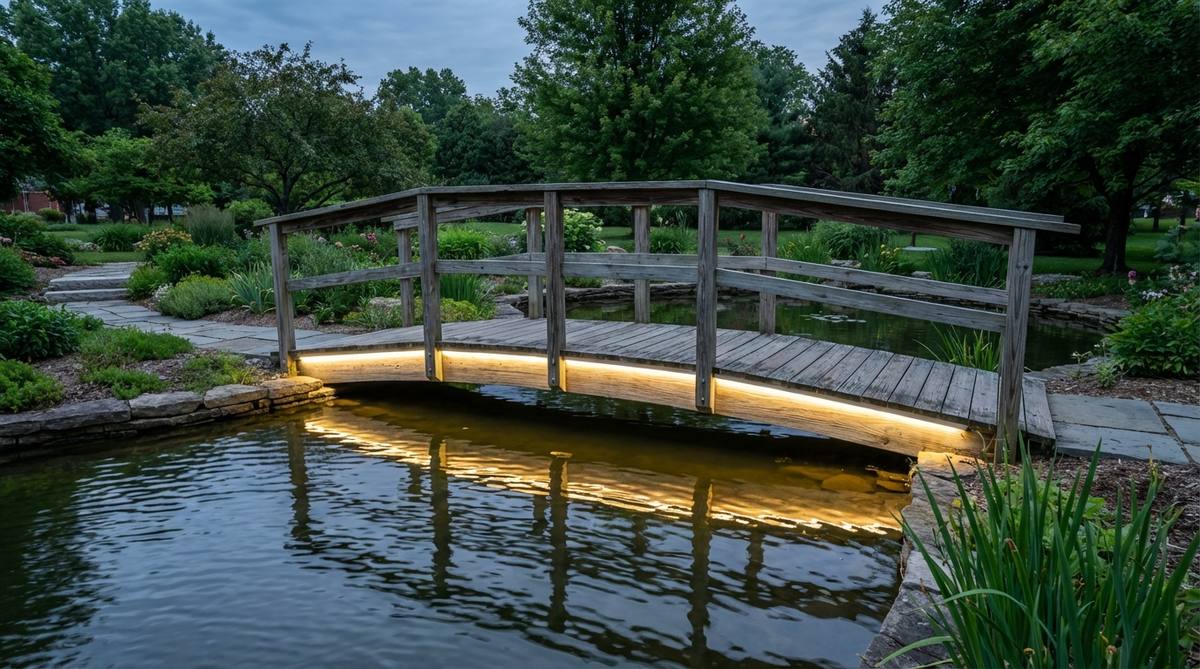
LED strips mounted beneath garden bridges create reflected light on water surfaces below. The indirect illumination technique highlights both structural elements and aquatic features simultaneously.
Install bridge lighting on underside beams using aluminum channels for weather protection. The concealed mounting appears intentional rather than afterthought additions.
Bringing Your Garden To Life After Dark
Effective garden decor lights balance aesthetics, functionality, and energy efficiency across layered illumination schemes. Start with pathway safety lighting, then add accent fixtures that highlight key features, and finish with ambient sources that establish overall mood. The incremental approach allows budget distribution across multiple phases while maintaining cohesive design vision from project inception through final installation.
Frequently Asked Questions
What is the difference between solar and low-voltage LED garden lighting?
Solar lights operate independently using integrated photovoltaic panels that charge internal batteries during daylight, eliminating wiring requirements but limiting brightness to 15-100 lumens per fixture. Low-voltage LED systems connect to transformers that reduce household current to 12 volts, enabling brighter output (100-500+ lumens), consistent performance regardless of weather, and centralized control, but require installation of underground wiring. Professional landscapes typically combine both technologies—solar for supplemental pathway markers and low-voltage for primary illumination where reliability matters most.
How many lumens do I need for garden path lighting?
Residential pathway lighting requires 50-150 lumens per fixture depending on spacing and ambient light conditions. Low-traffic secondary paths function adequately with 50-75 lumen fixtures spaced 10-12 feet apart, while primary walkways near home entries benefit from 100-150 lumen fixtures at 6-8 foot intervals. Properties with significant ambient light from neighboring sources or street lamps can reduce these outputs by 30-40%, whereas rural locations with complete darkness may require the higher ranges for comfortable navigation.
What color temperature is best for outdoor garden lighting?
Warm white LEDs between 2700K-3000K provide the most flattering illumination for residential gardens, complementing natural materials like wood, stone, and brick while rendering plant colors accurately without blue-spectrum distortion. Cooler temperatures (4000K-5000K) suit contemporary architecture with metal and concrete finishes but can make traditional gardens appear harsh and unwelcoming. Reserve pure white (5000K+) for security applications where color rendering takes secondary priority to visibility, and use amber/golden tones (2200K-2400K) sparingly for decorative accents that mimic candlelight or firelight.
How do I prevent light pollution in my garden lighting design?
Specify fixtures with integrated shields, hoods, and louvers that direct light downward and laterally rather than upward into night skies. Position fixtures below eye level whenever possible—typically 18-36 inches for path lights and 6-8 feet for post lanterns—to prevent direct glare while maintaining ground-level illumination. Use the minimum wattage necessary to achieve functional goals; overlighting creates excessive contrast that worsens visibility and disturbs nocturnal wildlife. Finally, install timers or smart controls that extinguish decorative lighting after midnight when outdoor activities cease, reserving overnight operation only for essential security fixtures.
Can I mix different types of garden lighting in one landscape design?
Successful garden lighting designs intentionally layer multiple fixture types, technologies, and techniques to create dimensional illumination with varied purposes. Combine solar path markers for supplemental wayfinding with low-voltage spotlights on specimen trees, string lights overhead for ambient coverage, and accent fixtures at garden entries for architectural emphasis. Maintain color temperature consistency across all sources—typically 2700K-3000K warm white—to ensure visual cohesion despite varied fixture styles. The integrated approach distributes your budget efficiently while addressing the full spectrum of functional and aesthetic lighting needs throughout your property.