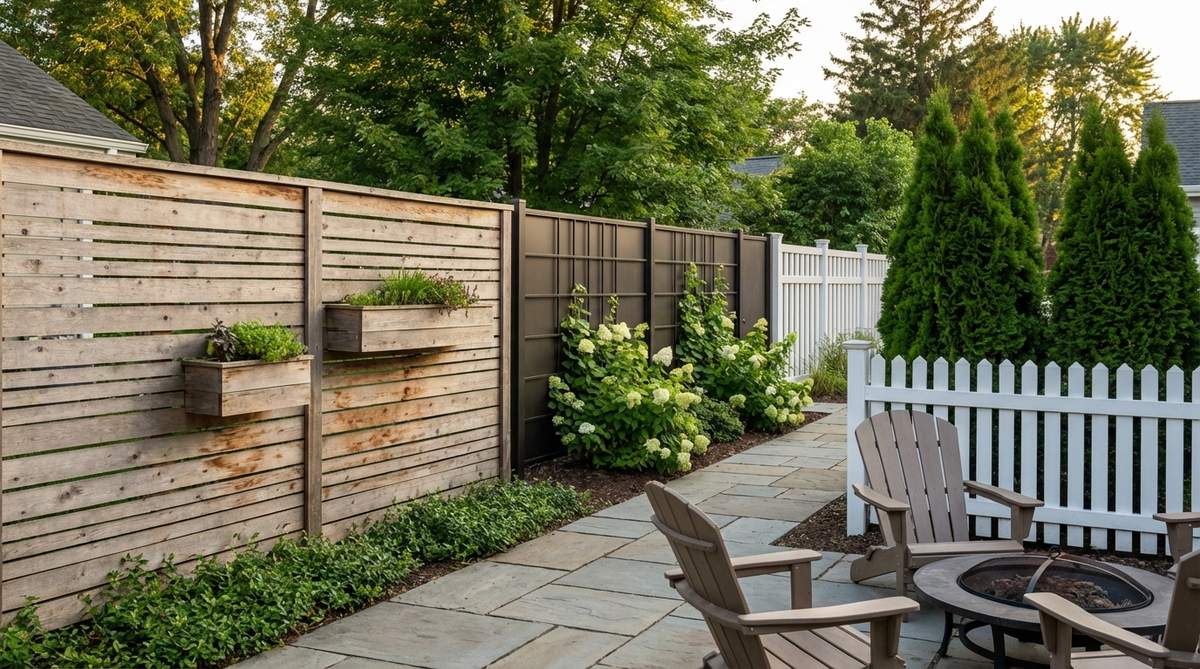
A well-designed garden decor fence does more than mark property lines—it transforms vertical space into a privacy solution, design statement, and living backdrop for outdoor rooms. This curated collection from Fresh Garden Ideas presents 30+ proven fence designs that address privacy needs while elevating aesthetic appeal across diverse American landscapes.
Design SnapshotKey Principles
- Layered Privacy: Combine solid panels with semi-transparent toppers to balance enclosure with airflow and natural light
- Material Innovation: Use composite, corten steel, and reclaimed timber for low-maintenance durability in varied climates
- Vertical Integration: Transform fence surfaces into productive green walls using trellis systems and modular planters
- Height Strategy: Optimize visual boundaries at 6 feet with lattice extensions to add 12-18 inches without overwhelming scale
Modern Horizontal Slat Compositions
Horizontal fence designs dominate 2026 trends for their ability to visually expand narrow lots while providing streamlined privacy. These configurations work particularly well in suburban settings where contemporary architecture meets traditional neighborhoods.
1. Horizontal Cedar with Steel Frame
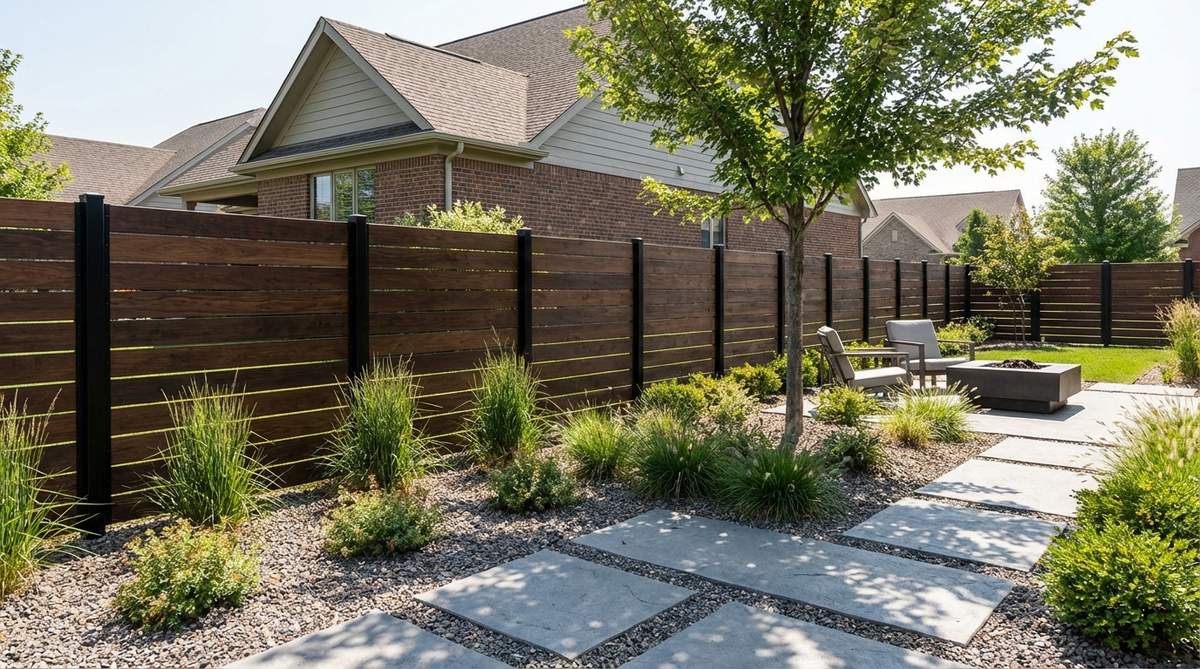
Stained cedar planks mounted on black powder-coated steel posts create high contrast that anchors modern landscaping. The horizontal grain emphasizes width, making side yards feel less confined.
Install 1×6 boards with ½-inch gaps to allow breeze circulation while blocking direct sightlines. Use marine-grade stain in walnut or charcoal tones for 10-year fade resistance.
This design pairs effectively with concrete pavers and ornamental grasses that echo the clean linear aesthetic. Maintenance involves annual inspection of steel connections in coastal regions.
2. Composite Plank Privacy Screen
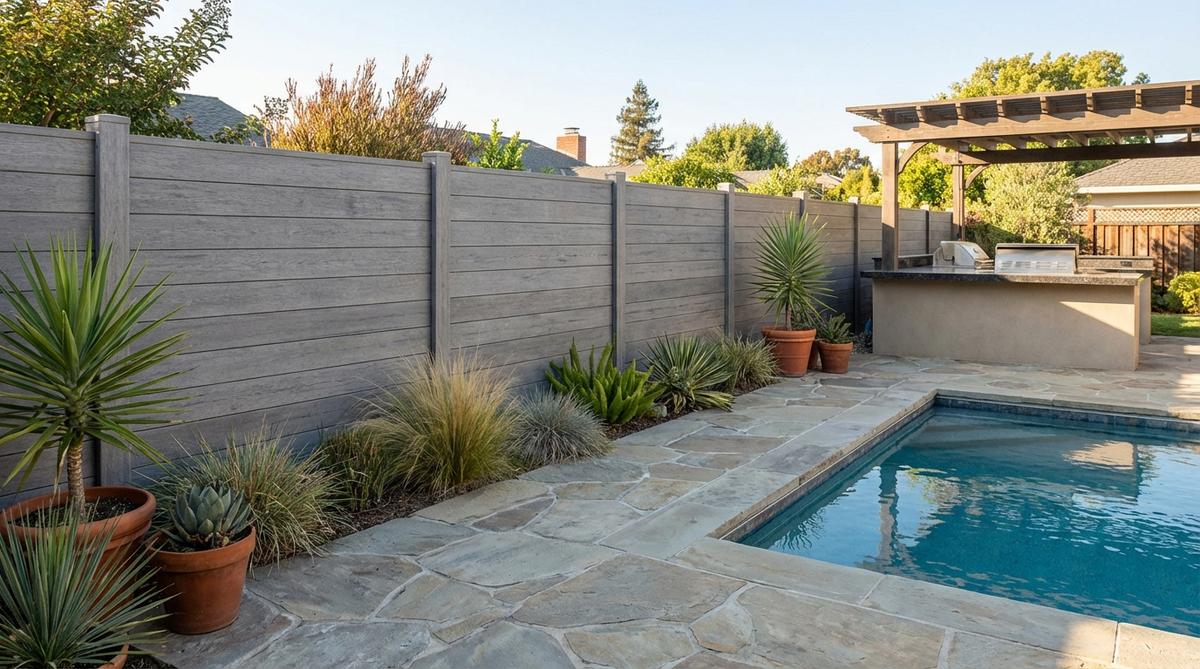
Recycled composite materials resist warping, insects, and UV degradation across hot climates from Texas to Florida. Manufacturers blend FSC-certified hardwood fibers with recycled plastics to create solid panels.
These gapless installations deliver maximum privacy without annual painting or sealing. Choose gray tones to complement stone patios or warm browns to harmonize with wooden deck structures.
The upfront cost runs 20-30% higher than pressure-treated pine, but eliminates maintenance expenses over 25+ year lifespans. Composite fencing proves ideal for pool enclosures requiring strict safety barriers.
3. Two-Tone Horizontal Slat Fence
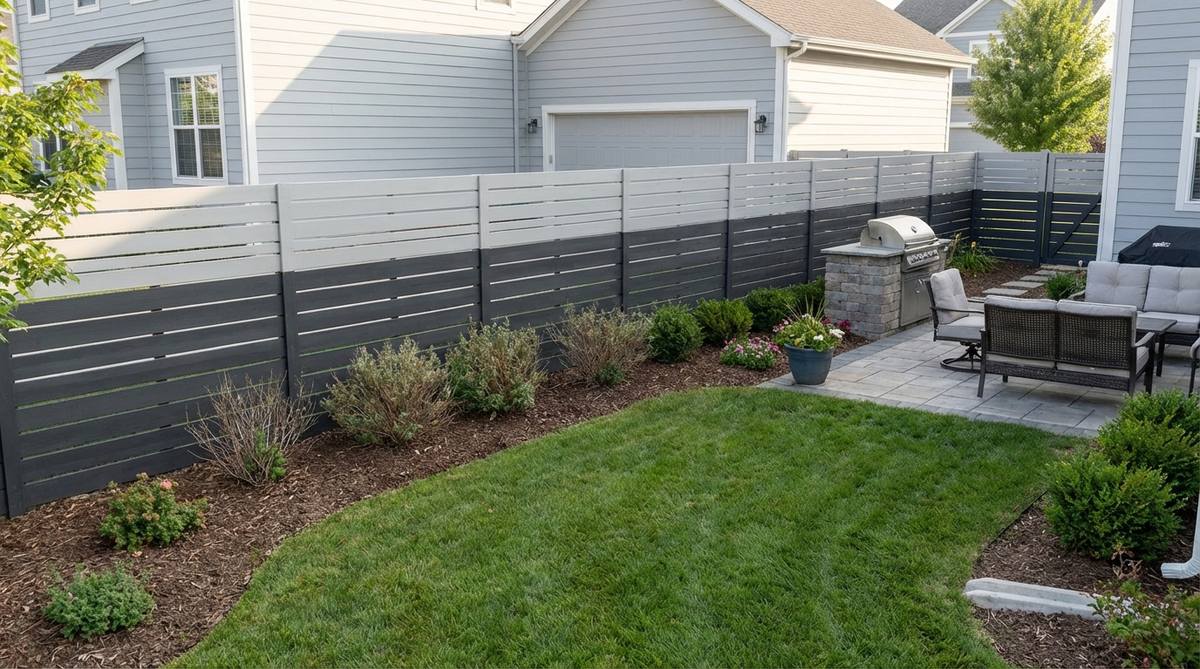
Contrasting color schemes—charcoal lower sections with light gray upper thirds—add visual rhythm to long fence runs. This approach breaks monotony on corner lots with extensive street frontage.
Apply the darker shade to the lower 4 feet where soil splash and mower impact occur. Lighter tones above reduce heat absorption and create an airier feel.
Coordinate fence colors with exterior trim and garage doors for cohesive curb appeal. This technique works across vinyl, composite, and painted wood installations.
4. Sleek Aluminum Slat System
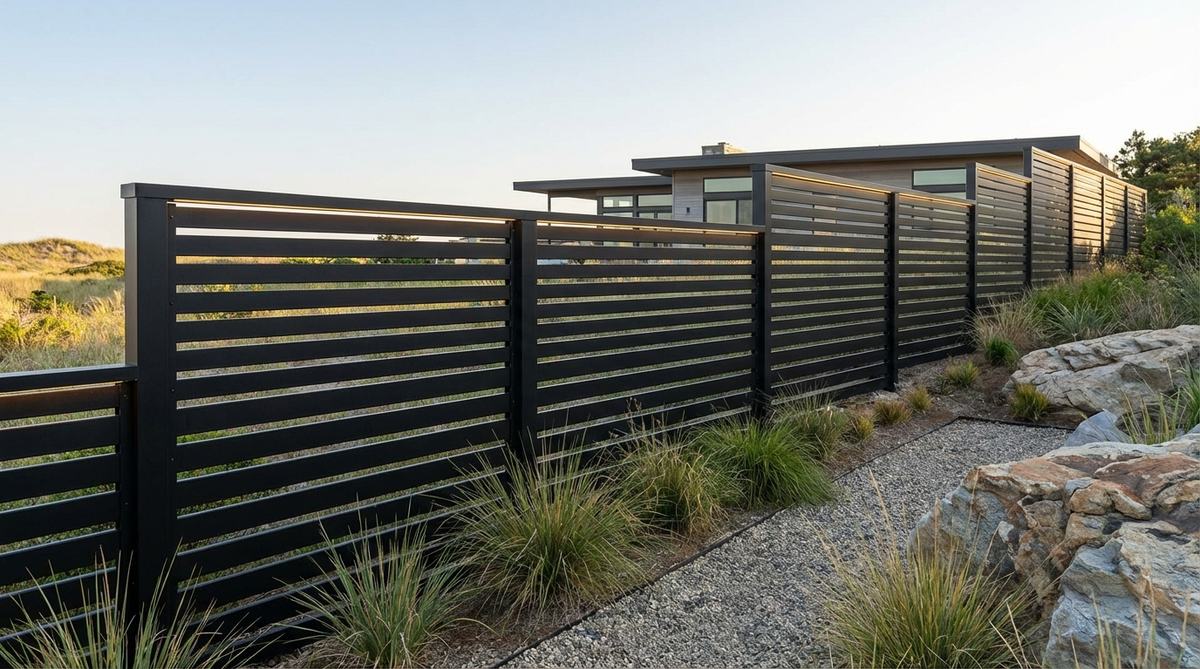
Powder-coated aluminum slats installed horizontally offer corrosion resistance for coastal properties. The material never rots or requires refinishing, maintaining crisp lines indefinitely.
Space slats 1-2 inches apart for semi-privacy that preserves views while screening ground-level activity. Integrate LED strip lighting within top rails for evening ambiance.
Aluminum systems accommodate slopes and grade changes more easily than rigid panel fences. Choose matte black finishes for contemporary homes or bronze tones for Mediterranean styles.
5. Horizontal Board-and-Batten Hybrid
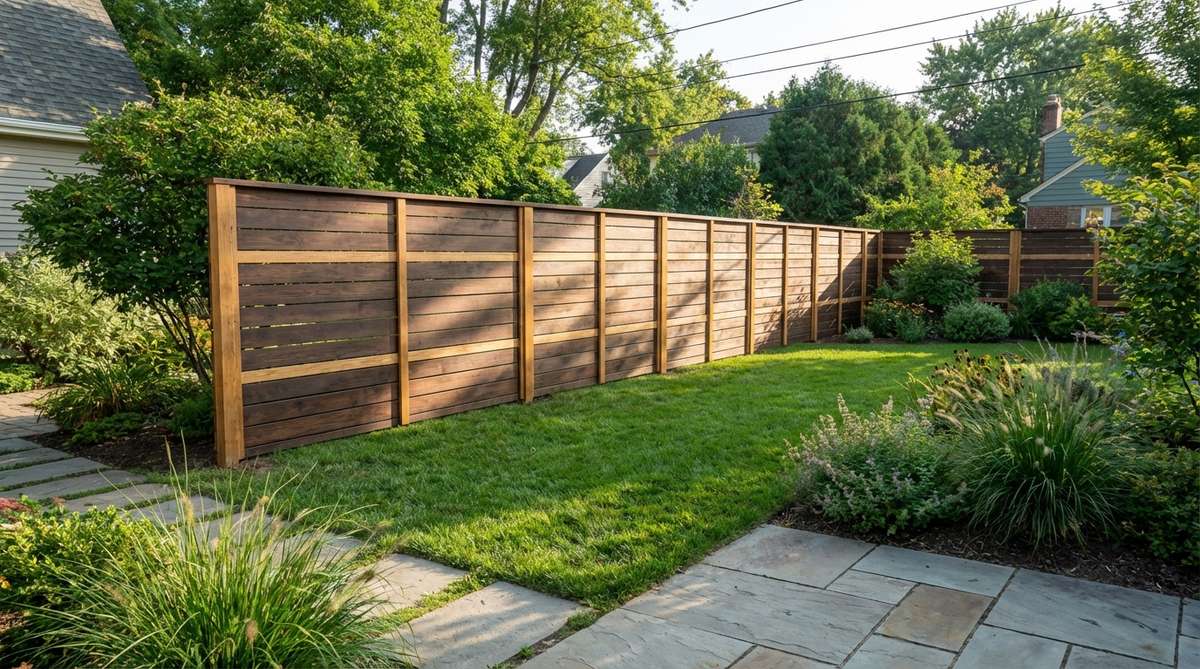
Alternating wide boards with narrow battens creates dimensional texture while maintaining horizontal flow. This adaptation of traditional vertical board-and-batten introduces shadow lines that shift throughout the day.
Use 1×8 boards as primary elements with 1×2 battens covering seams for a layered profile. Install battens on both sides to achieve identical appearance from either viewing angle.
The design conceals wood expansion gaps naturally while adding structural rigidity to longer spans. Stain in contrasting tones to emphasize the geometric pattern.
Living Green Boundaries
Green fencing integrates plant material directly into boundary structures, creating living privacy screens that evolve seasonally. These systems support biodiversity while filtering air and reducing ambient noise.
6. Vertical Garden Panel Fence
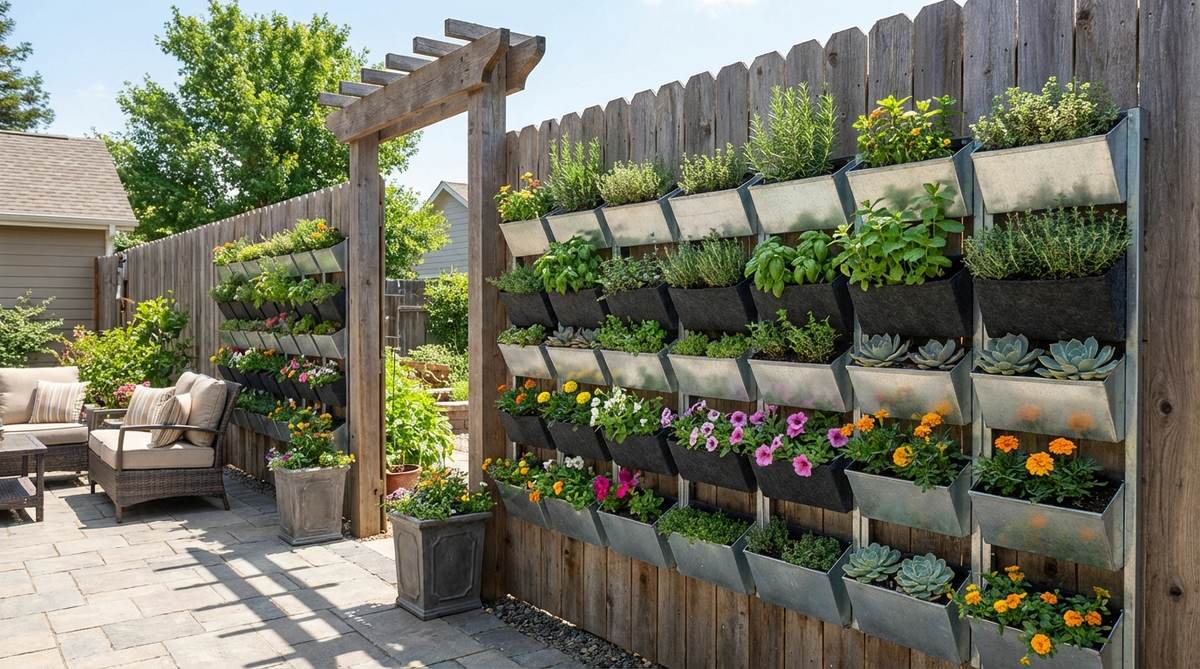
Modular pocket planters mounted to fence frameworks transform flat surfaces into productive growing zones. Install galvanized steel or UV-resistant felt pockets in grid patterns for herbs, succulents, or flowering annuals.
Position panels to receive at least 6 hours of sunlight for edible crops like lettuce and strawberries. Incorporate drip irrigation systems behind panels to automate watering during summer heat.
This approach maximizes growing space in urban yards where ground area is limited. Rotate seasonal plantings—pansies in spring, petunias in summer, ornamental kale in fall.
7. Wire Mesh with Climbing Vines
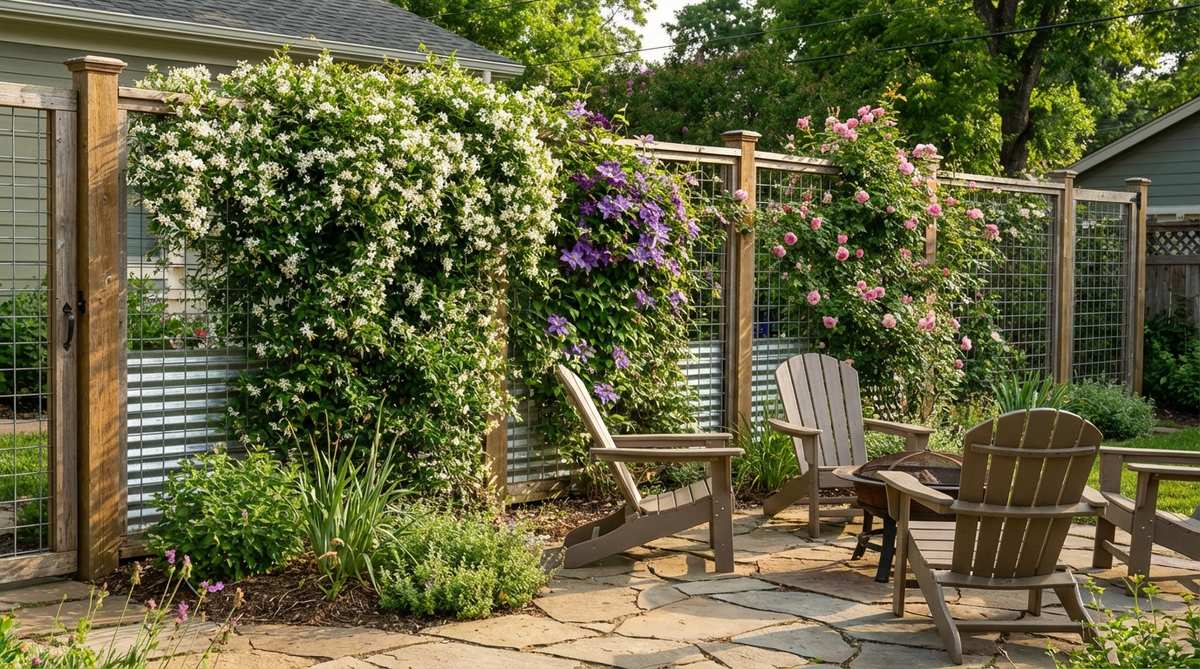
Galvanized wire mesh or cattle panels provide budget-friendly frameworks for flowering climbers. Pair with jasmine, clematis, or climbing roses for fragrant privacy that develops over 2-3 seasons.
Stretch mesh between pressure-treated posts spaced 8 feet apart, securing with fence staples every 12 inches. Plant vines at 3-foot intervals for full coverage.
Choose evergreen climbers like Carolina jessamine for year-round screening in southern zones. In colder regions, combine deciduous vines with ornamental grasses planted at the fence base.
8. Espalier Fruit Tree Fence
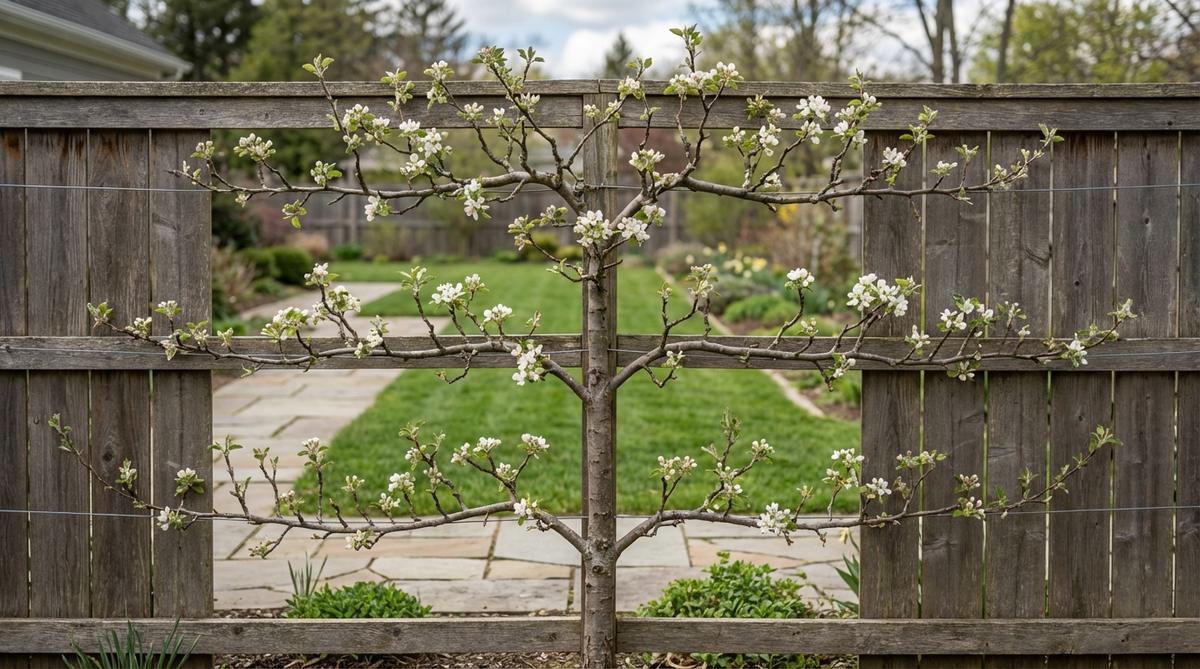
Train apple, pear, or fig trees horizontally along wire supports to create edible boundaries. This centuries-old technique maximizes fruit production in narrow spaces while establishing living walls.
Install horizontal wires at 18-inch intervals between posts, starting 18 inches above grade. Prune and tie new growth annually to maintain flat profiles.
Espalier fences thrive in full sun locations with well-draining soil. The formal geometry complements cottage gardens and European-inspired landscapes.
9. Bamboo Screen Living Fence
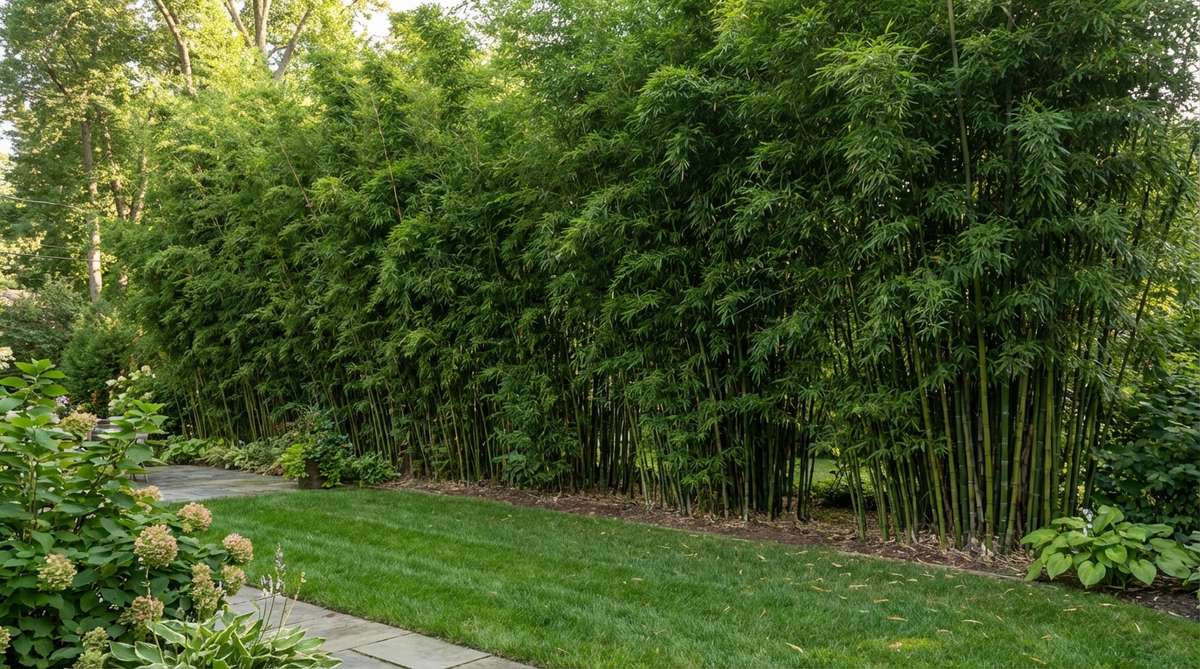
Clumping bamboo varieties like Bambusa multiplex form dense screens 8-12 feet tall without invasive spreading. These evergreen grasses establish quickly and tolerate wind exposure.
Plant rhizome barriers 24 inches deep to contain even clumping types, ensuring roots remain within designated zones. Space plants 3-4 feet apart for full coverage within two growing seasons.
Bamboo’s rapid growth provides privacy faster than traditional hedges. The rustling foliage adds sound texture that masks traffic noise.
10. Mixed Hedge with Wire Backing
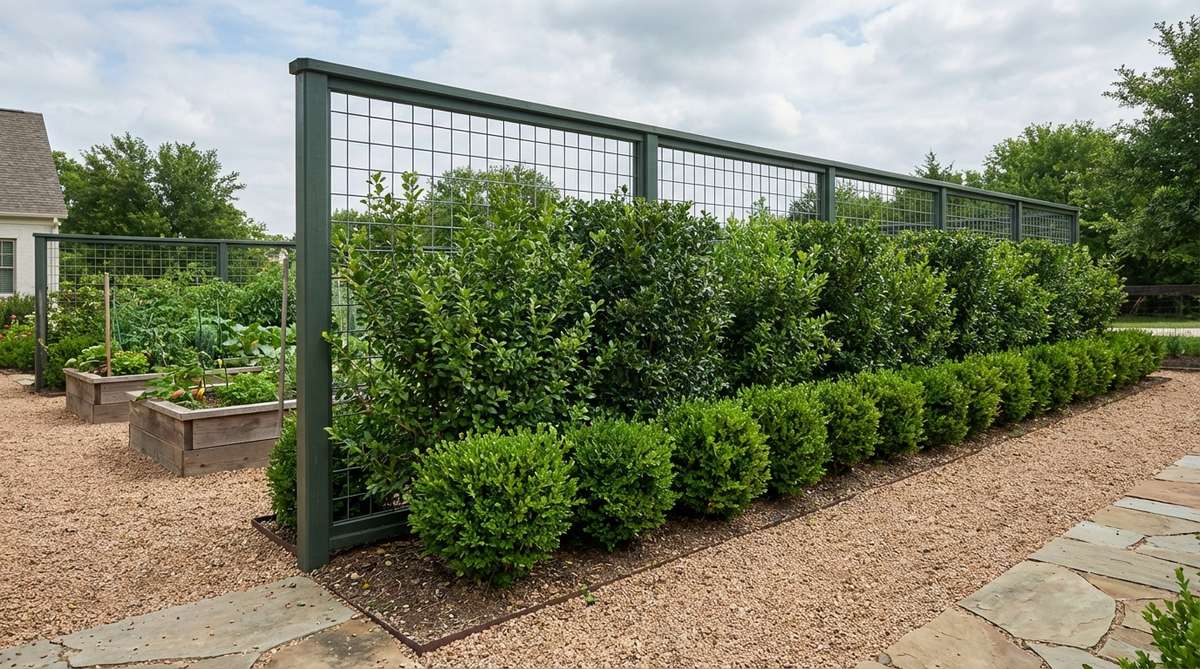
Combine evergreen shrubs like boxwood, holly, and privet with wire mesh supports for structured green fencing. The wire framework guides growth while providing immediate partial screening.
Plant shrubs 18 inches in front of wire fencing, alternating species for varied texture and bloom times. Shear twice annually to maintain 6-foot heights.
This method delivers the formality of clipped hedges with the structural assurance of physical fencing. Use it to border vegetable gardens or define outdoor rooms.
11. Living Wall Frame System
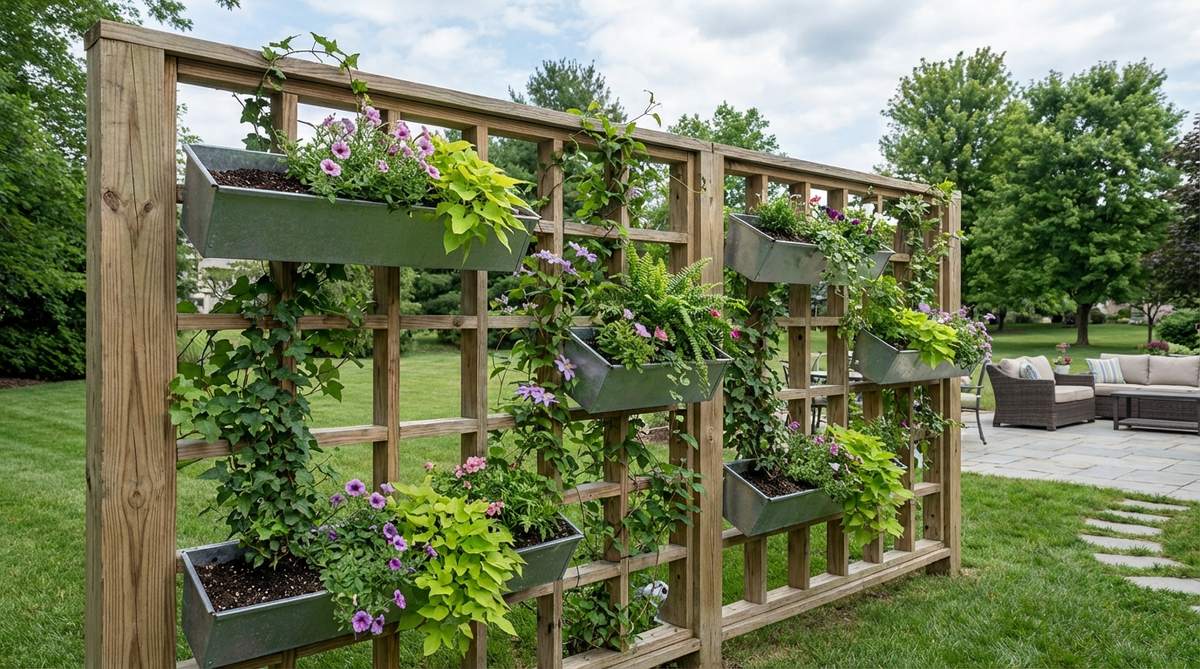
Custom-built wooden grids with integrated planter boxes function as self-supporting green walls. Construct pressure-treated frames with horizontal rails spaced 12-18 inches apart to hold galvanized window boxes.
Angle planter boxes slightly forward for proper drainage and easy plant access. Fill with lightweight soilless mix to reduce structural load.
Incorporate lattice sections within the grid for climbing vines to intermingle with containerized plants. This creates multi-dimensional texture while allowing design flexibility—bring boxes indoors before frost.
Hybrid Material Systems
Combining contrasting materials produces fences with enhanced durability and visual interest. These composite approaches pair structural elements with decorative infill for balanced performance.
12. Wood Panels with Steel Posts
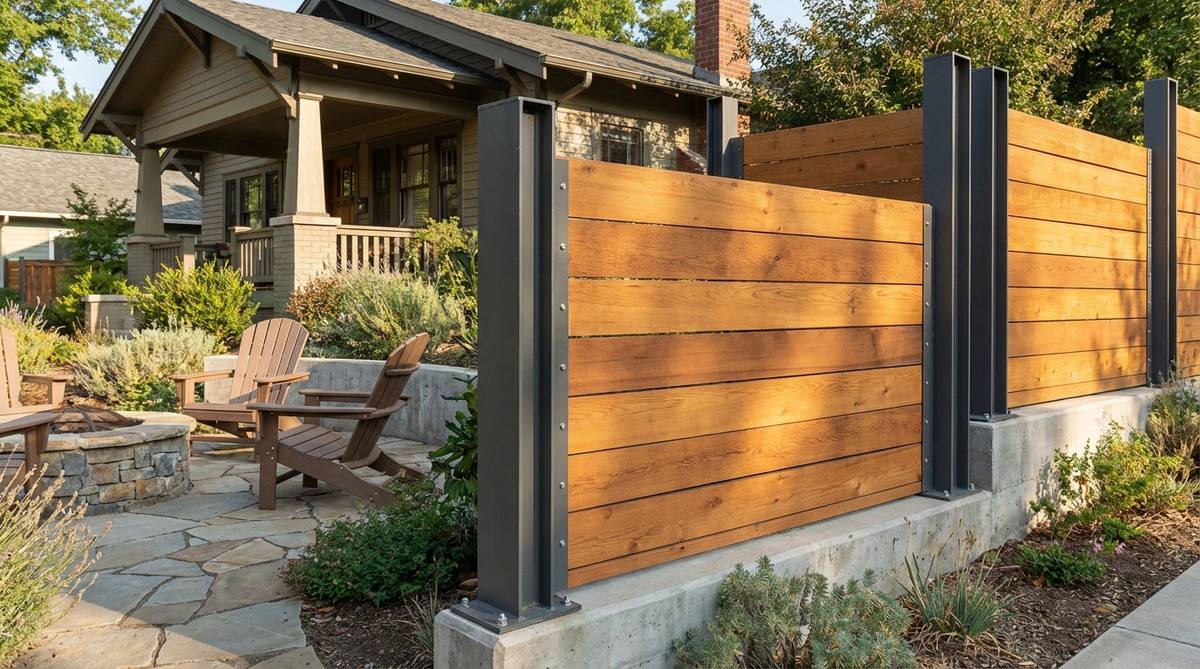
Warm cedar panels framed by steel posts blend organic texture with industrial strength. The steel takes structural load while wood provides privacy and aesthetic warmth.
Bolt horizontal rails between steel posts, then attach wood planks with stainless screws to prevent rust staining. Leave ⅛-inch gaps between boards for expansion.
This combination excels in high-wind zones where steel anchoring prevents panel blowouts. The contrast suits transitional architecture bridging modern and traditional styles.
13. Vinyl Base with Lattice Topper
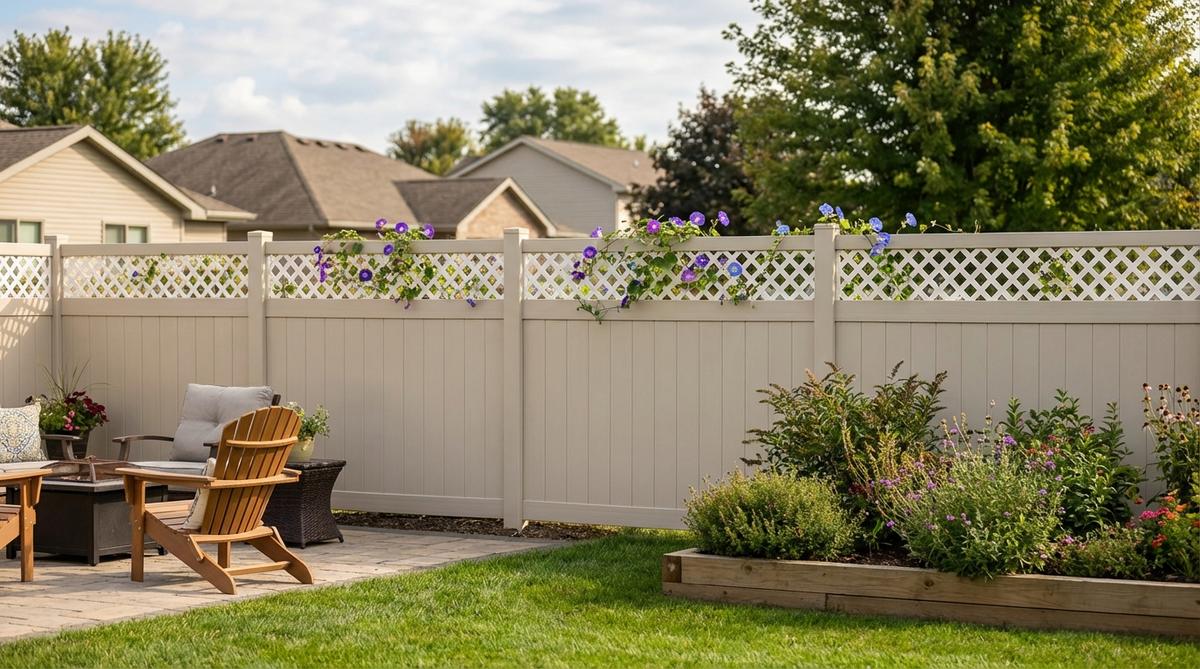
Solid vinyl panels establish privacy at eye level while lattice toppers add 12-18 inches of decorative height. The open lattice maintains airflow and reduces wind resistance.
Install vinyl panels to 6-foot heights, then mount matching lattice sections with brackets. Train lightweight vines like morning glory or sweet pea through lattice openings.
This configuration satisfies HOA height restrictions while achieving greater enclosure. Vinyl’s low maintenance pairs well with minimal vine pruning requirements.
14. Stone Pillars with Metal Infill
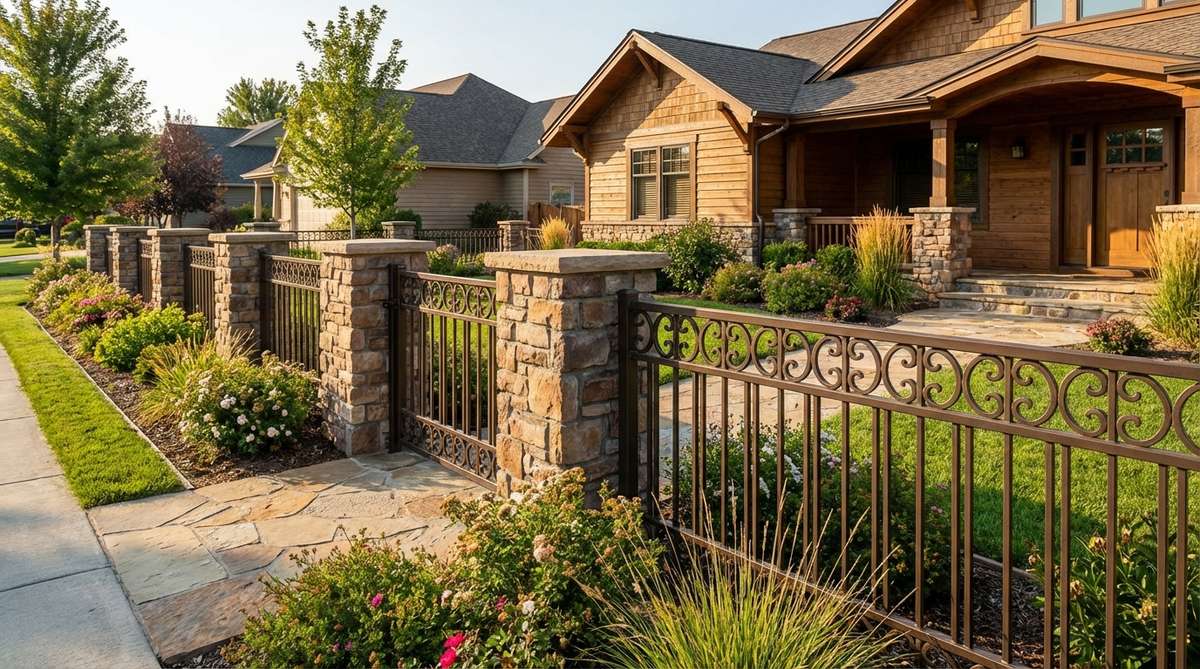
Mortared stone or brick pillars spaced 6-8 feet apart anchor powder-coated aluminum or wrought iron panels. The masonry establishes permanence while metal sections provide visibility control.
Pour reinforced footings for pillars, then build to 6-foot heights using natural stone veneer or brick. Custom-fabricate metal sections to fit between pillars precisely.
Choose decorative metal patterns that complement home architecture—scrollwork for Victorian styles, geometric for contemporary. This approach suits front yards where partial visibility maintains curb appeal.
15. Glass Panel Aluminum Frame Fence
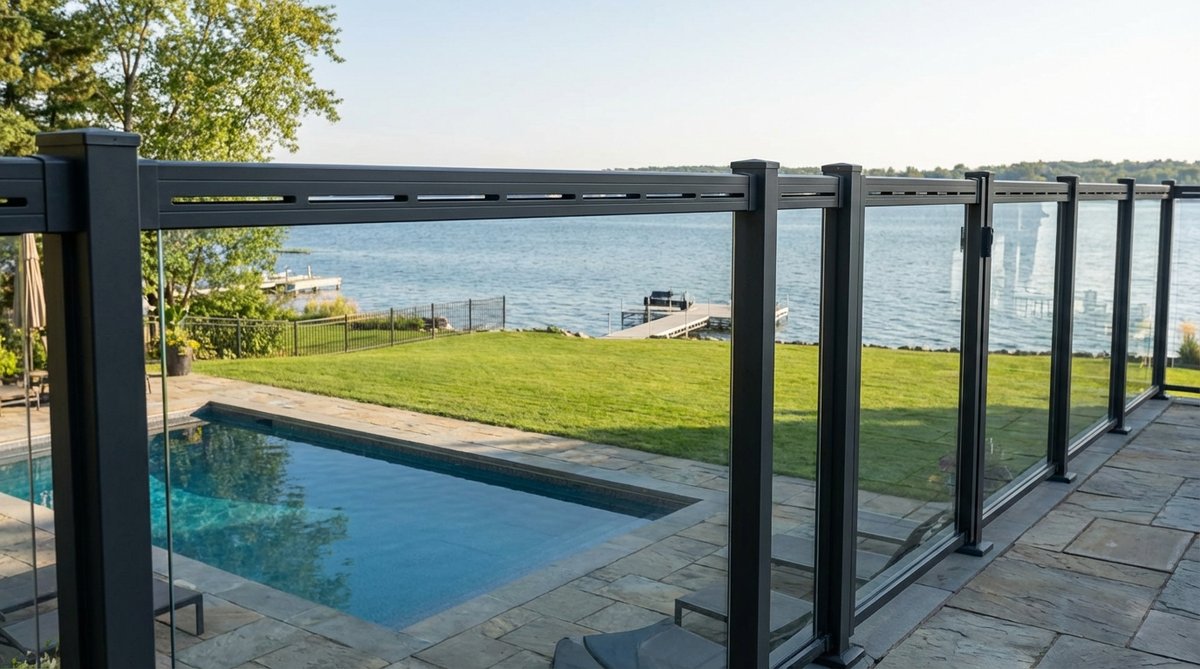
Frameless tempered glass panels within aluminum channels create transparent boundaries for pool areas and modern patios. The glass provides wind protection while preserving views.
Use ½-inch tempered safety glass installed in aluminum U-channels with rubber gaskets. Space panels with minimal gaps to meet pool code requirements.
Glass fencing requires minimal maintenance—occasional cleaning with glass cleaner maintains clarity. The sleek profile suits minimalist landscapes with water features or dramatic vistas.
16. Corrugated Metal with Wood Frame
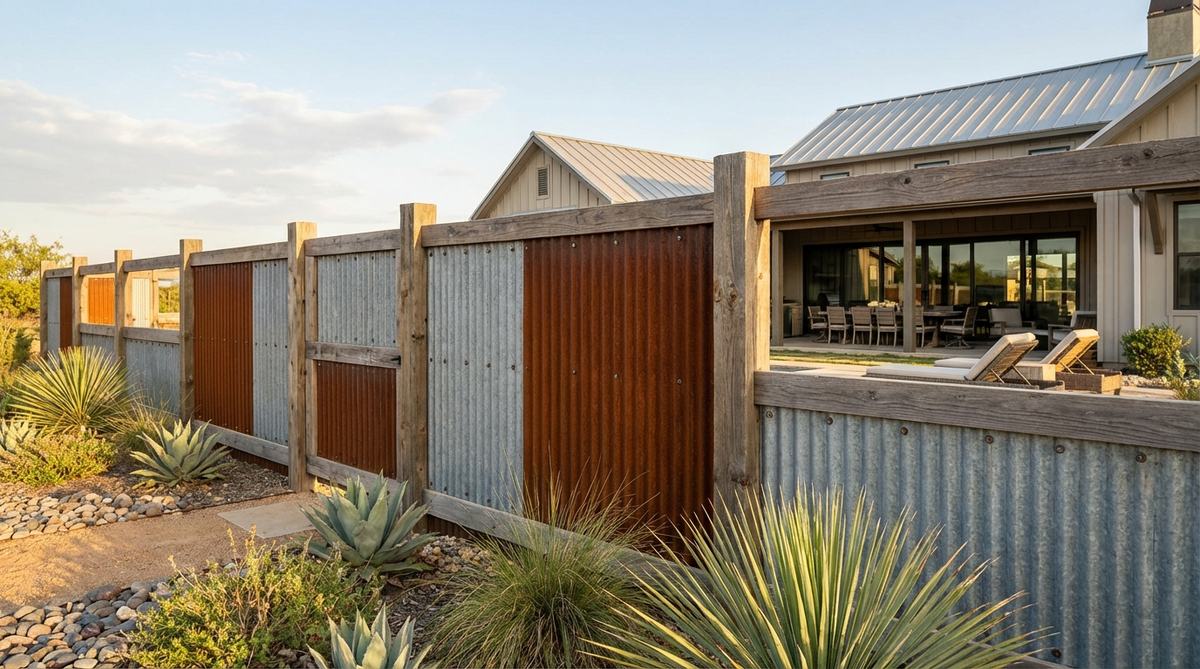
Galvanized or corten steel corrugated panels set within wooden frames deliver industrial character at accessible price points. The metal’s vertical ribs add visual rhythm.
Build 4×4 posts and 2×4 horizontal rails, then cut corrugated panels to fit openings. Attach with exterior screws and neoprene washers to prevent leaks.
Corten steel develops a protective rust patina that stabilizes after 6-12 months. This finish harmonizes with desert landscapes and modern farmhouse aesthetics.
Decorative Vertical Accents
Vertical fence designs emphasize height while incorporating artistic elements that elevate garden boundaries beyond functional barriers. These approaches showcase craftsmanship and personal style.
17. Vertical Slat Privacy Fence
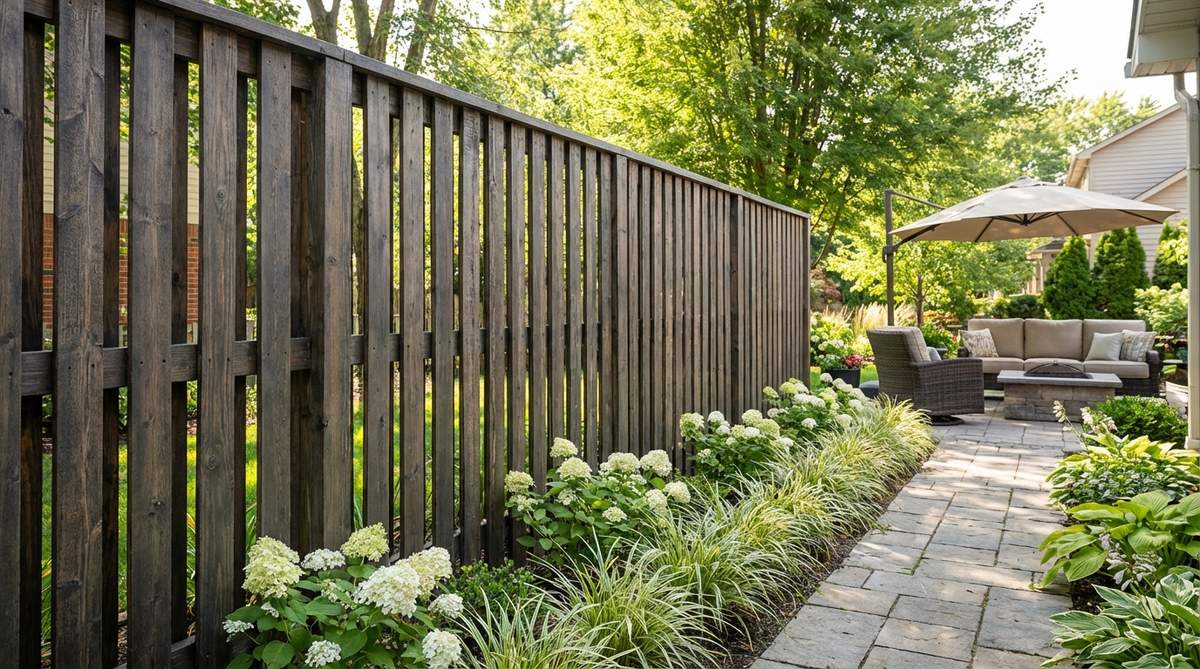
Narrow vertical boards spaced ½-1 inch apart create semi-transparent screens that filter views while admitting light. This design adds perceived height to properties.
Use 1×4 boards mounted to horizontal rails with consistent spacing maintained by jigs during installation. Alternate board placement on opposite sides for complete visual screening.
The vertical orientation sheds water efficiently, extending wood life in rainy climates. Stain in dark tones to create dramatic backdrops for light-colored plantings.
18. Custom-Cut Pattern Panels
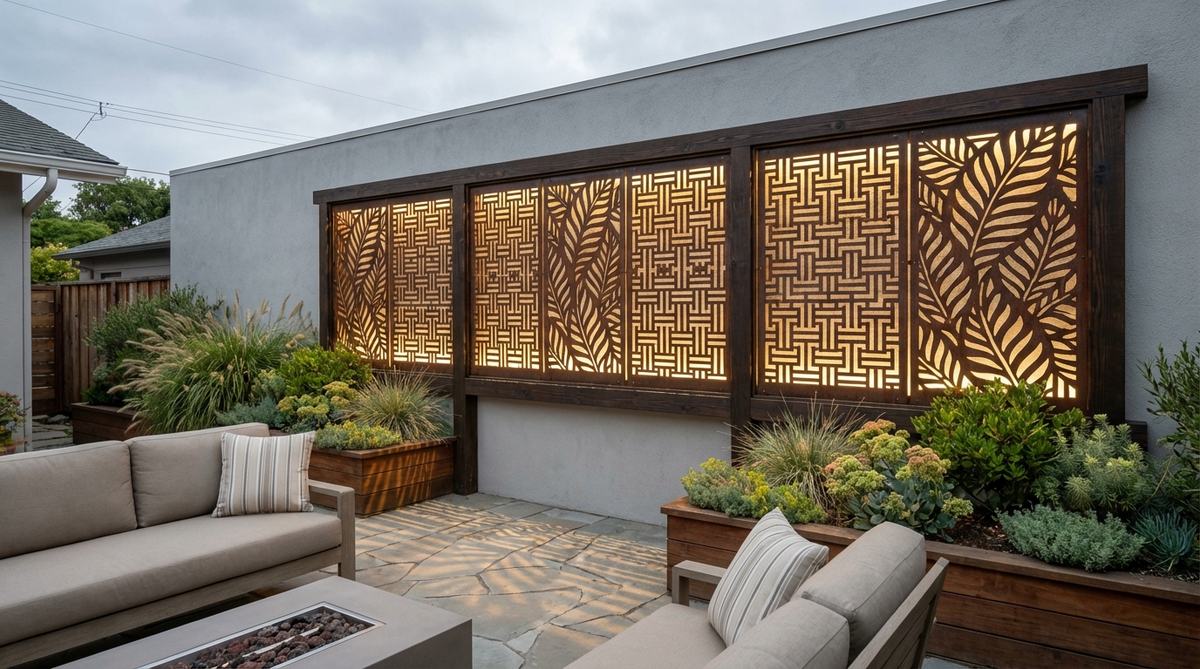
CNC-cut wooden or metal panels featuring botanical motifs, geometric designs, or abstract patterns transform fences into outdoor art. Laser cutting enables intricate detail impossible with traditional methods.
Order custom designs from fabricators or purchase pre-made decorative panels in standard sizes. Mount to solid backing panels where full privacy is needed.
Backlight cut panels with landscape lighting to project patterns onto adjacent surfaces at night. This technique creates dramatic focal points in courtyard settings.
19. Shadowbox Double-Sided Fence
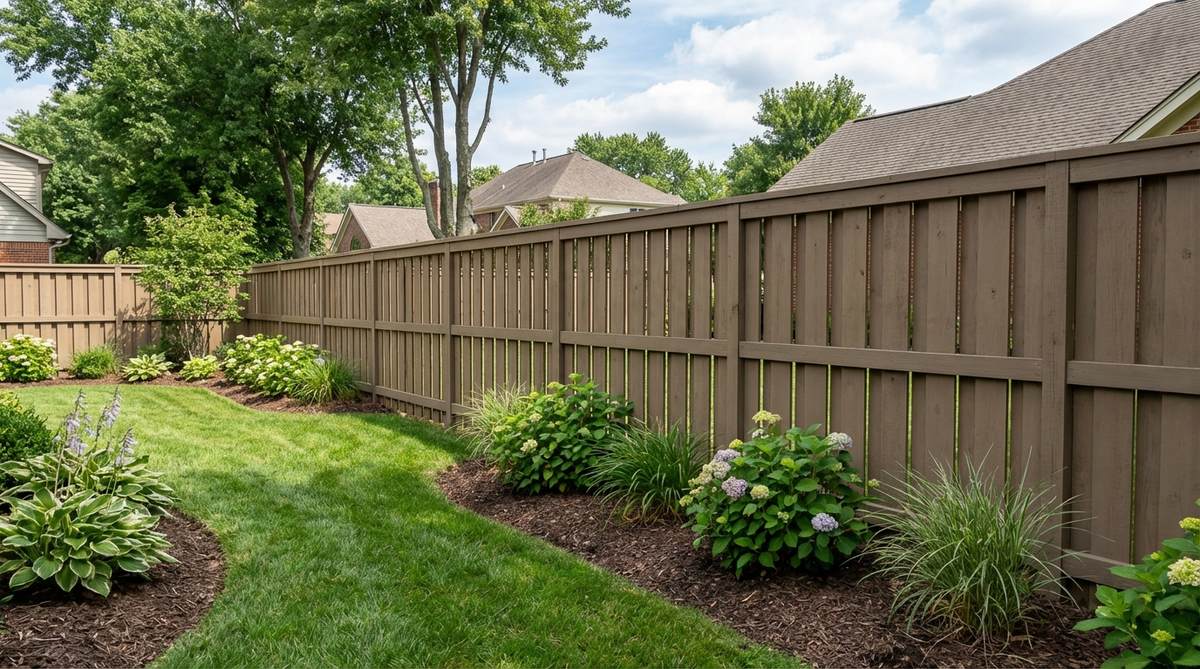
Alternating boards mounted on opposite sides of rails create dimensional fencing with identical appearance from both sides. The overlapping arrangement provides privacy while allowing air circulation.
Nail boards to alternating sides of horizontal rails with 1-inch overlaps. Space boards so gaps on one side align with board centers on the reverse.
This neighbor-friendly design eliminates “good side/bad side” disputes. The layered construction adds structural rigidity without solid panel weight.
20. Trellis-Integrated Fence Panels
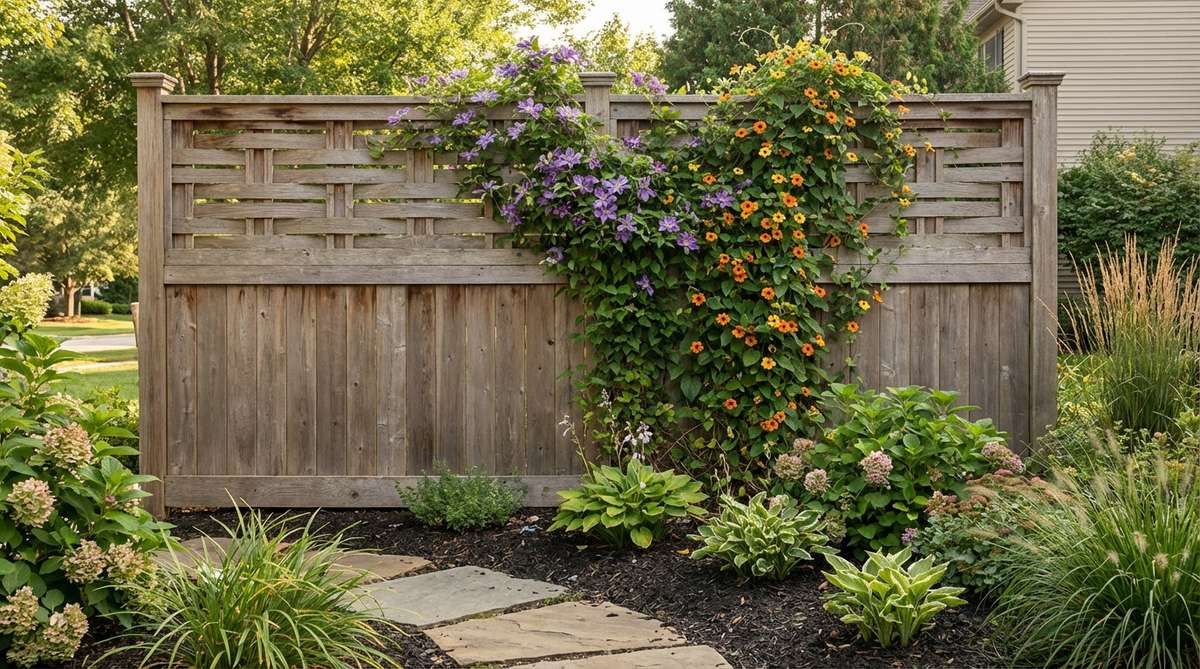
Wooden fence panels incorporating lattice sections near the top combine privacy with growing support. The lattice creates zones for climbing flowers while reducing visual weight.
Build or purchase panels with solid lower sections (48-54 inches) and lattice upper sections (18-24 inches). Choose square or diagonal lattice patterns based on architectural context.
Plant annual vines like black-eyed Susan vine or perennial clematis to enhance the decorative lattice. This approach softens fence lines with seasonal color.
21. Reclaimed Wood Vertical Planks
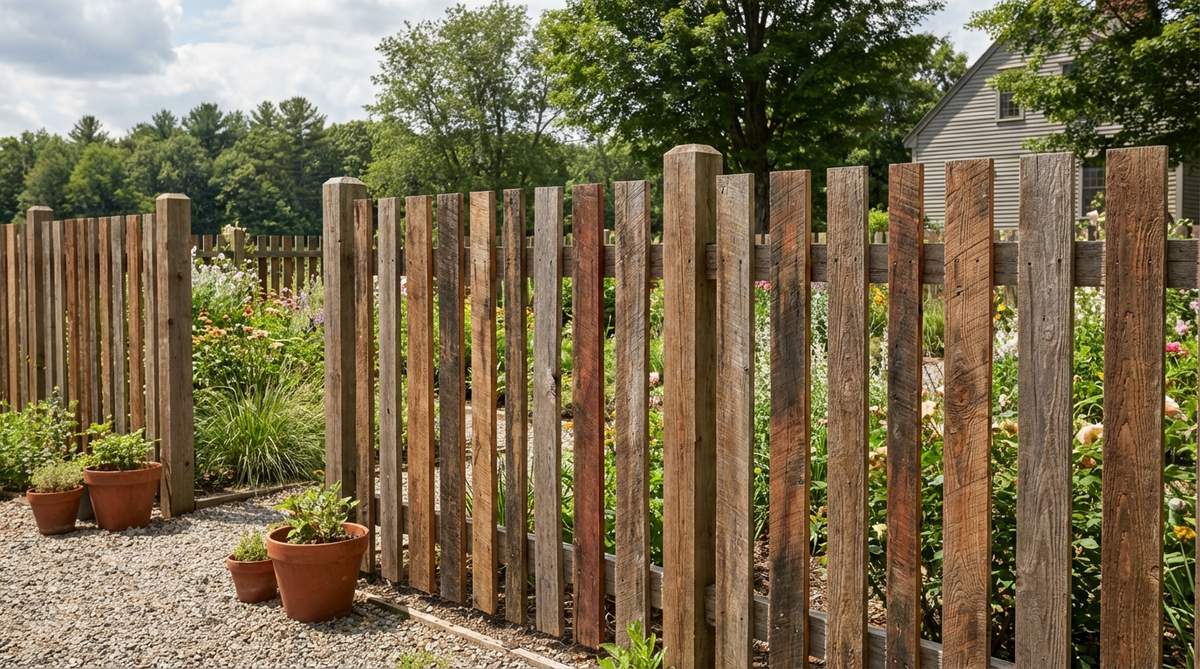
Salvaged barn wood or pallet boards installed vertically create textured fences with sustainable credentials. Each plank’s weathered character introduces unique color variation.
Source reclaimed lumber from architectural salvage yards, ensuring pieces are free from rot and insect damage. Treat with penetrating oil to stabilize wood without obscuring patina.
Mix board widths and tones randomly for organic visual appeal. This rustic approach complements cottage gardens and farmhouse-style properties.
Traditional Styles Reimagined
Classic fence designs gain fresh relevance through material updates and contemporary detailing. These evolved interpretations maintain recognizable forms while addressing modern performance expectations.
22. Updated Picket Fence Design
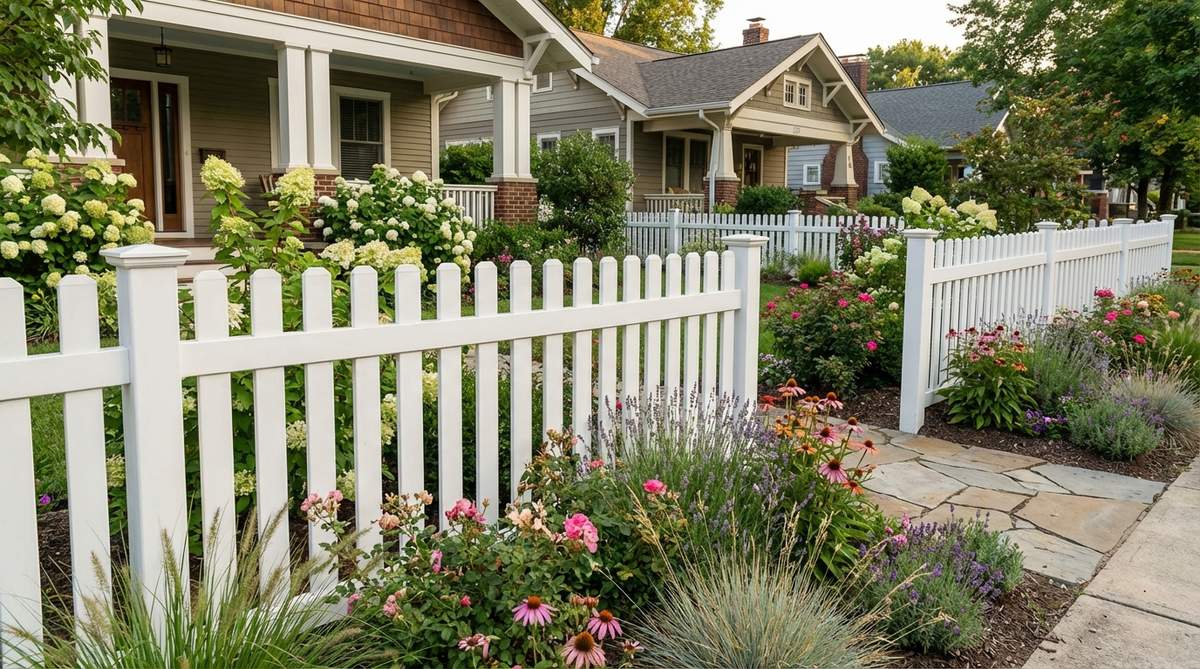
Contemporary picket fences use wider spacing, taller posts, and simplified cap details for cleaner profiles. White vinyl or composite materials eliminate painting while preserving the iconic American fence style.
Space pickets 3-4 inches apart instead of traditional 2-inch gaps for a more open feel. Extend post heights 6-12 inches above picket tops and add simple caps.
This design defines front yards without visual barriers, supporting curb appeal in traditional neighborhoods. Pair with cottage garden plantings that spill through pickets.
23. Horizontal Rail Ranch Fence
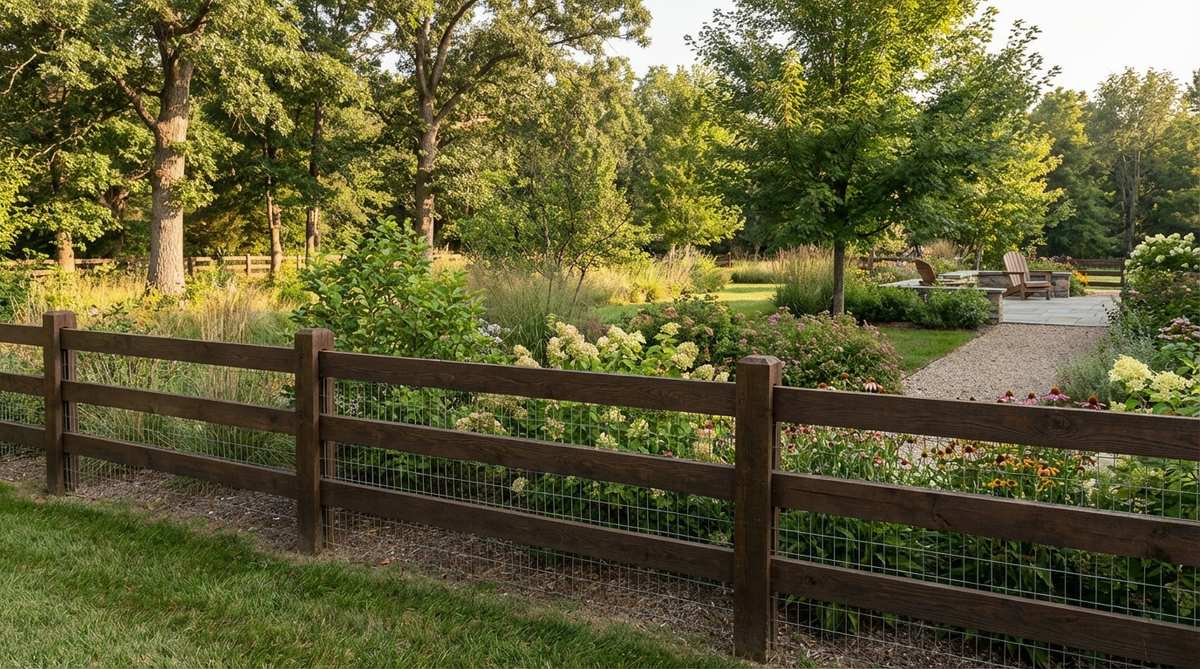
Three- or four-rail fences constructed from pressure-treated lumber or vinyl mark boundaries in rural and suburban settings. The open design contains pets while maintaining sight lines.
Set posts 8 feet apart and attach 2×6 rails horizontally with galvanized bolts or brackets. Paint white for classic appeal or stain dark brown for modern contrast.
Add wire mesh to the lower 36 inches to contain small dogs without altering the fence’s clean profile. Ranch fencing suits properties with mature tree cover and naturalistic plantings.
24. Modern Board-on-Board Fence
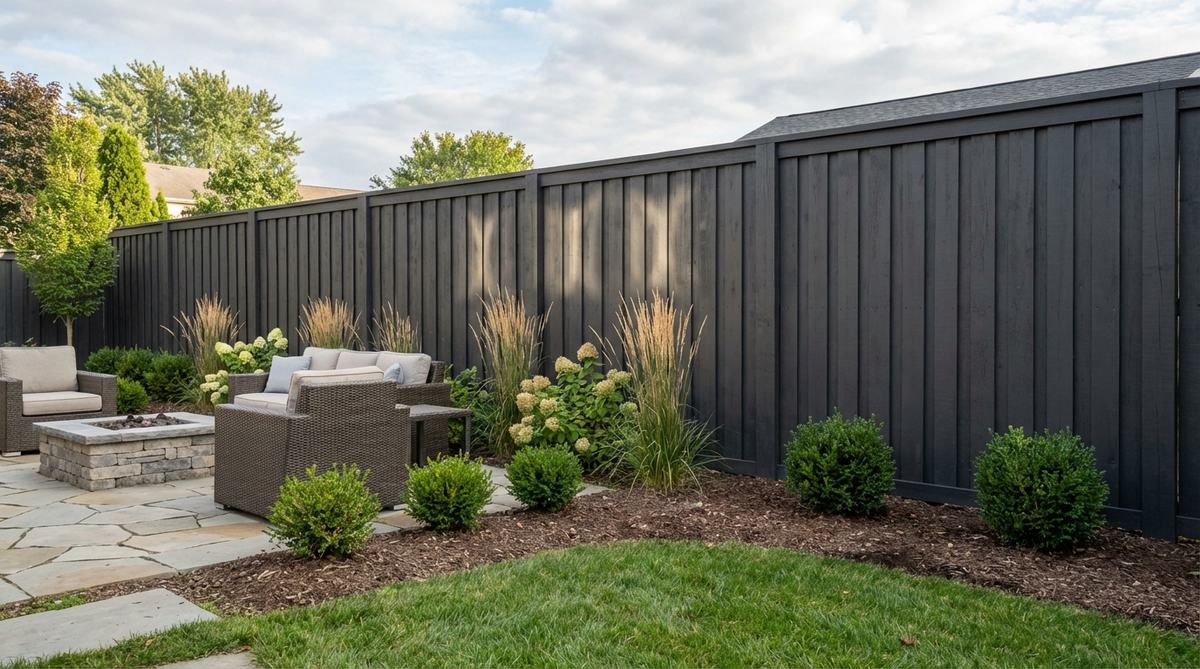
Overlapping vertical boards create solid privacy fences with subtle dimensional texture. Contemporary versions use wider boards and simplified trim for streamlined appearance.
Nail 1×6 boards to horizontal rails with 1-inch overlaps, alternating sides for uniform exterior presentation. Cap top rails with beveled boards to shed water.
This upgrade to traditional stockade fencing provides complete privacy while improving visual refinement. Stain in contemporary grays or charcoals to distinguish from dated versions.
25. Split-Rail Cedar Fence
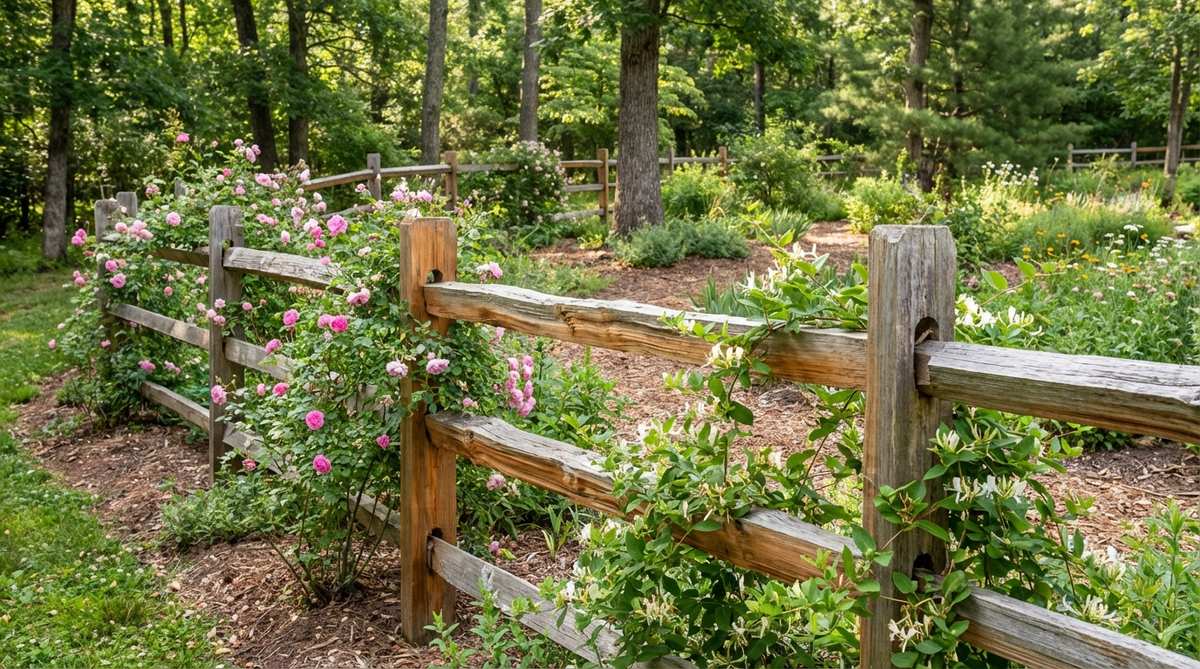
Rustic split-rail fencing defines property lines in wooded settings without creating solid barriers. The rough-hewn posts and rails integrate naturally with informal landscapes.
Install pressure-treated posts 8-10 feet apart with mortised openings for 2-3 split rails. Allow natural weathering to silver, or apply clear sealer to maintain warm tones.
Enhance privacy by planting climbing roses or honeysuckle along the rails. This approach suits acreage properties and country gardens.
Smart Privacy Solutions
Strategic fence design addresses specific privacy challenges through height manipulation, material selection, and placement techniques. These targeted solutions optimize enclosure for particular situations.
26. Stepped Fence for Slopes
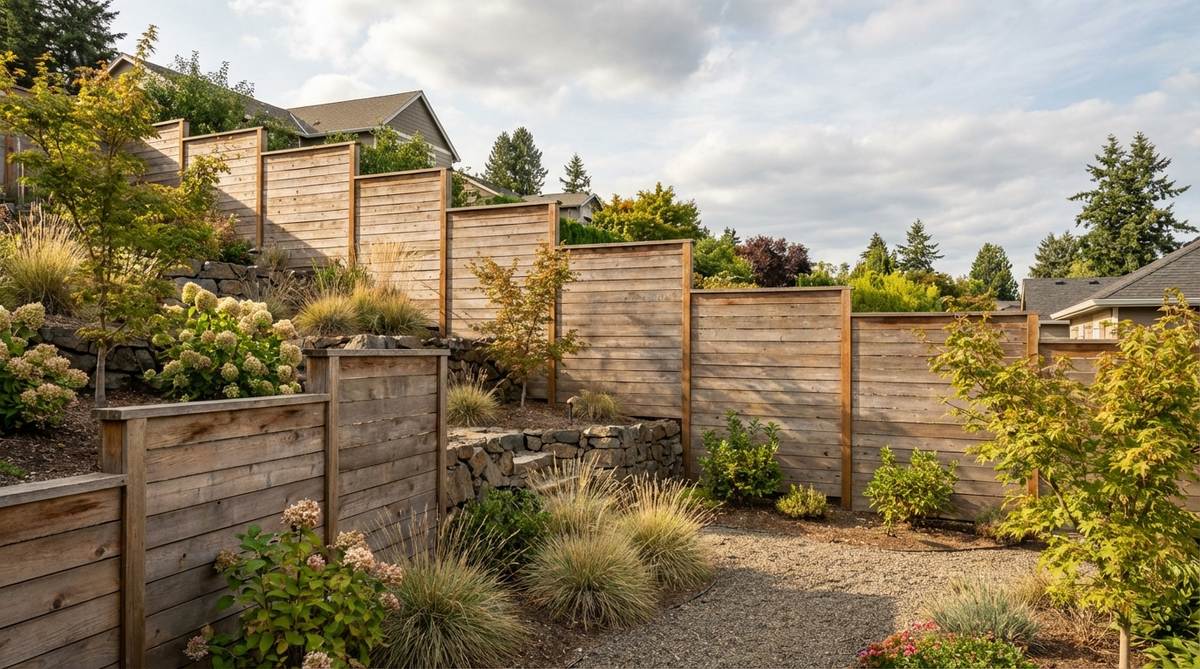
Stepped fence sections maintain consistent top heights while accommodating grade changes. Each panel steps down to follow terrain rather than racking at angles.
Calculate grade drop per fence section and cut posts to lengths that keep panel tops level. Install panels horizontally with posts extending deeper on the downhill side.
This method preserves clean lines on sloped lots while preventing gaps under panels. Use on hillside properties with significant elevation changes.
27. Angled-Top Privacy Fence
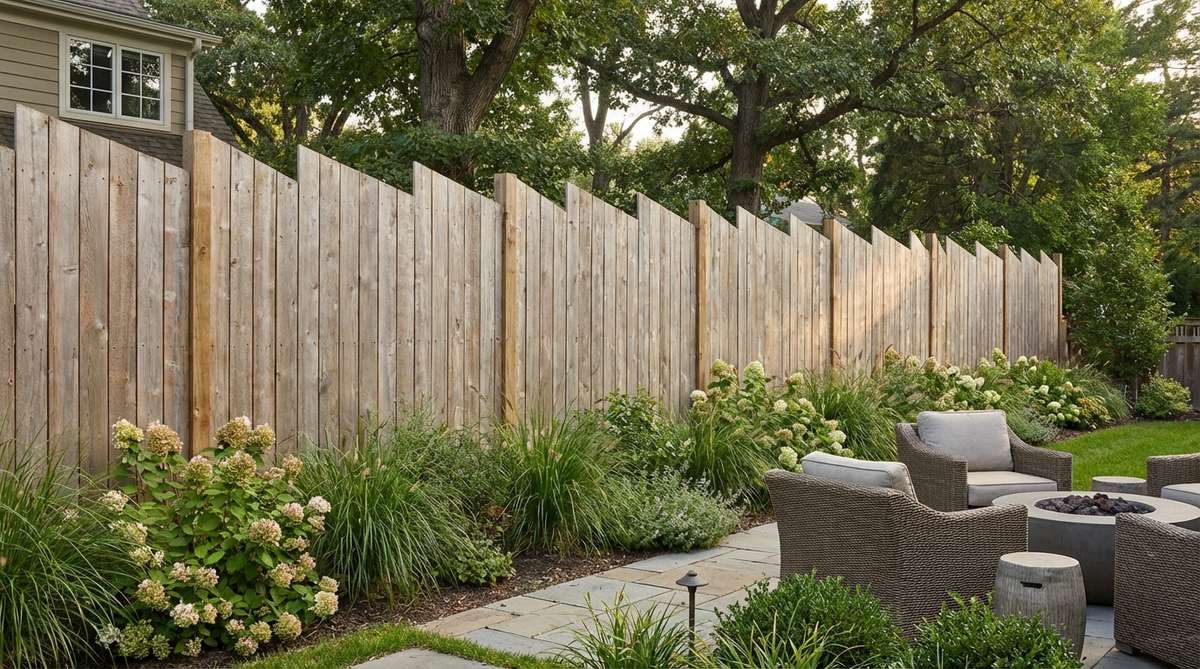
Fence tops cut at 15-30 degree angles deflect sightlines from adjacent second-story windows. The sloped profile directs views upward while maintaining ground-level privacy.
Cut fence boards to graduated lengths, creating angled tops that slope away from primary viewing concerns. Maintain 6-foot minimum heights at the fence’s lowest point.
This design addresses privacy from elevated positions without requiring excessive fence heights. Install facing neighbors with raised decks or overlooking windows.
28. Corner Accent Privacy Screen
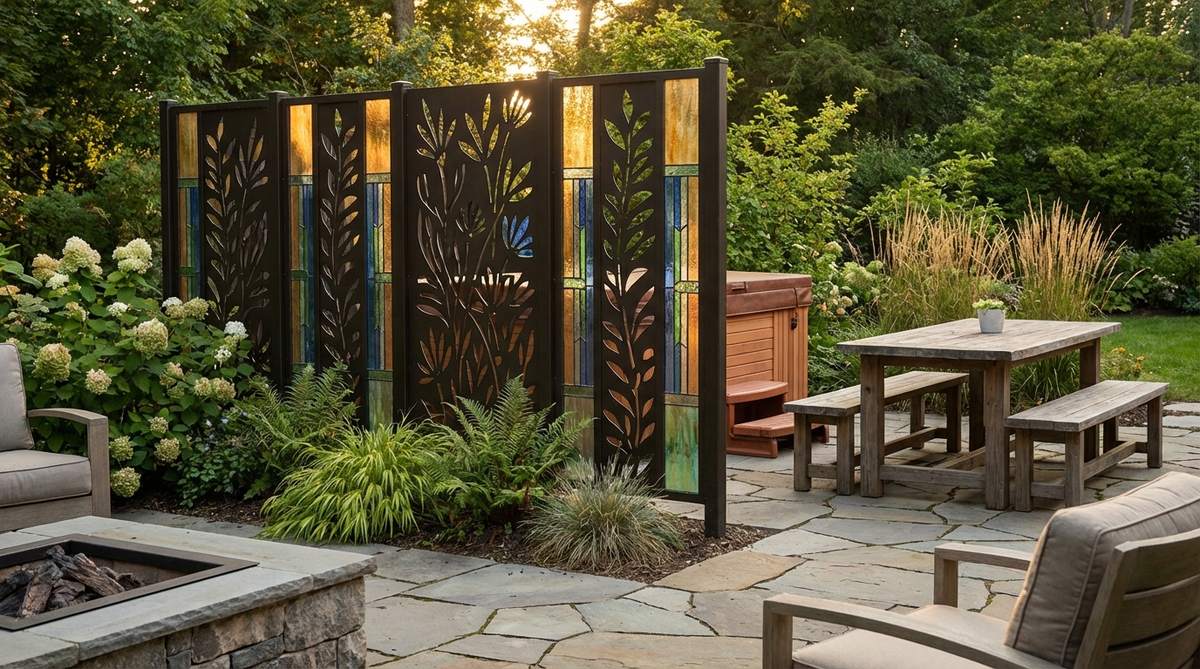
Freestanding fence sections positioned at patio corners or garden entries create targeted privacy without enclosing entire perimeters. These flexible screens block specific sightlines.
Anchor screen panels with deep-set posts or mount to concrete footings for stability. Build 4-6 feet wide and 6-7 feet tall for effective visual barriers.
Use decorative materials—laser-cut metal, stained glass inserts, or custom woodwork—since these focal pieces receive close viewing. Position to screen hot tubs, outdoor showers, or dining areas.
29. Layered Fence and Hedge System
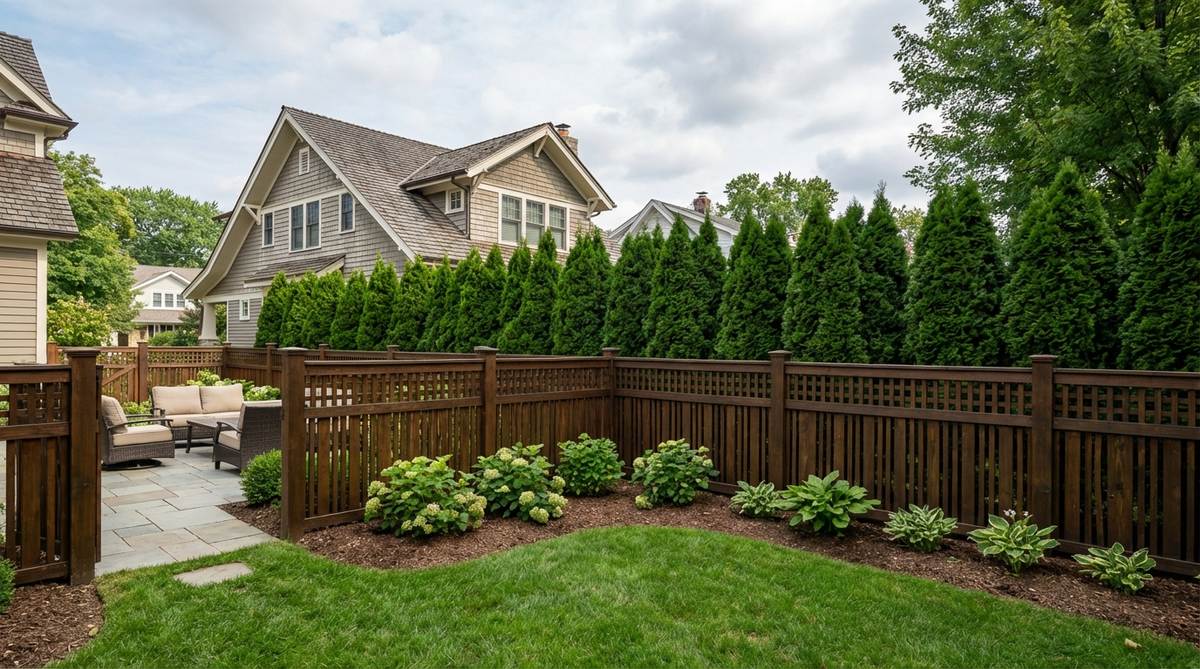
Combining 4-foot fences with 6-foot hedges planted directly behind creates graduated privacy that appears less imposing. The layered approach distributes visual weight.
Install shorter decorative fencing as the primary structure, then plant fast-growing evergreen shrubs 2 feet behind the fence. Choose arborvitae, Leyland cypress, or photinia based on climate.
This system delivers immediate partial screening from the fence while hedges mature over 2-3 seasons. The fence contains pets during hedge establishment.
30. Louvered Fence with Adjustable Slats
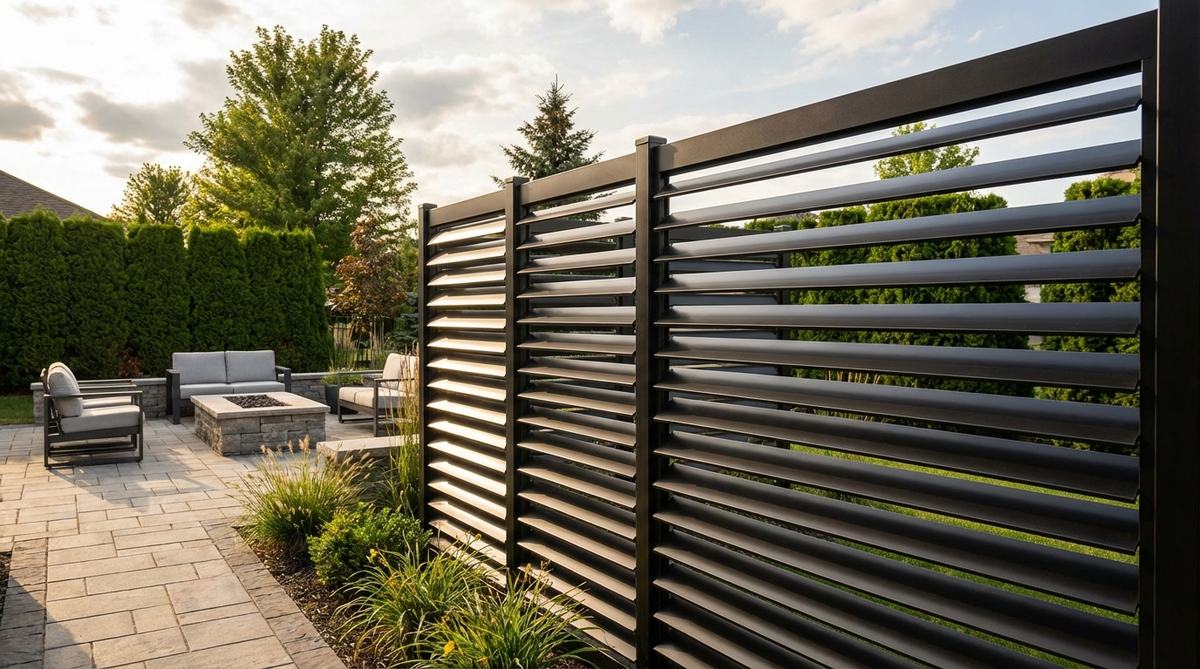
Operable louver systems feature slats that pivot to control privacy, light, and airflow. This dynamic fencing adapts to changing needs throughout the day.
Install motorized or manually operated louver tracks with aluminum or composite slats. Angle slats closed for full privacy or open to 45 degrees for ventilation.
The adjustable design suits outdoor entertaining spaces where privacy needs shift. Premium systems integrate with home automation for scheduled adjustments.
31. Gabion Wall Fence Hybrid
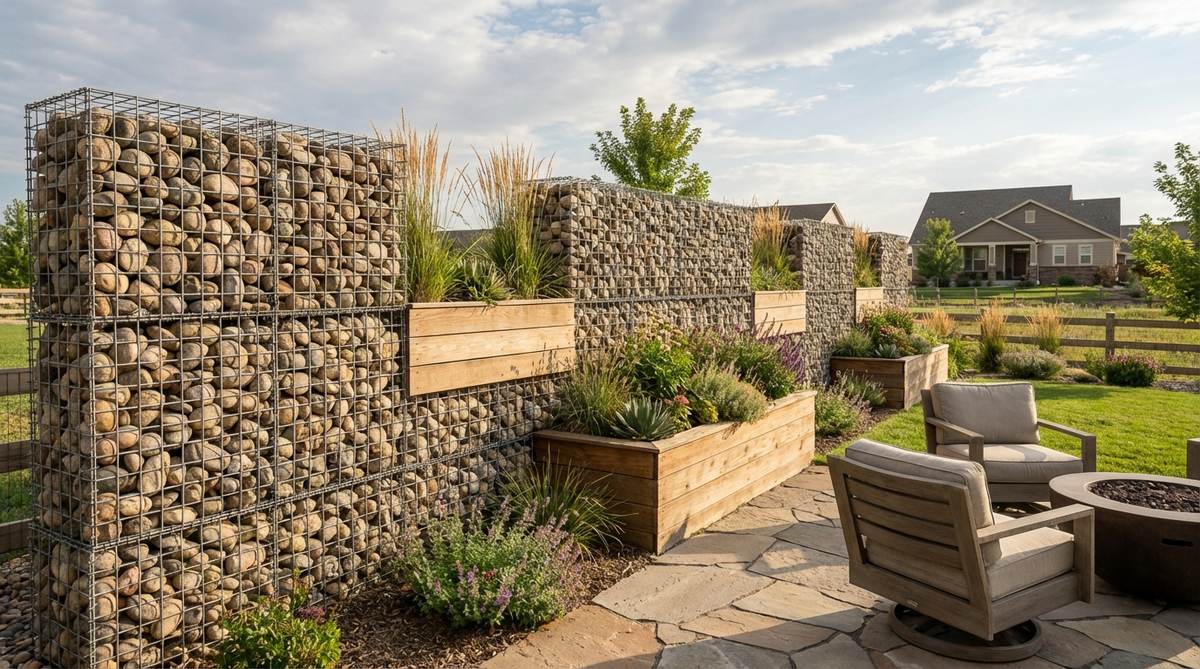
Wire mesh cages filled with stone create structural walls that double as fencing. Gabion installations provide mass, sound dampening, and contemporary industrial character.
Stack wire basket frames to desired heights (typically 6 feet) and fill with 3-6 inch river rock or quarried stone. Wire baskets together and anchor end posts.
This robust system suits properties bordering busy streets where noise reduction complements privacy goals. Integrate planters atop gabion walls for softening greenery.
32. Mixed-Height Privacy Fence
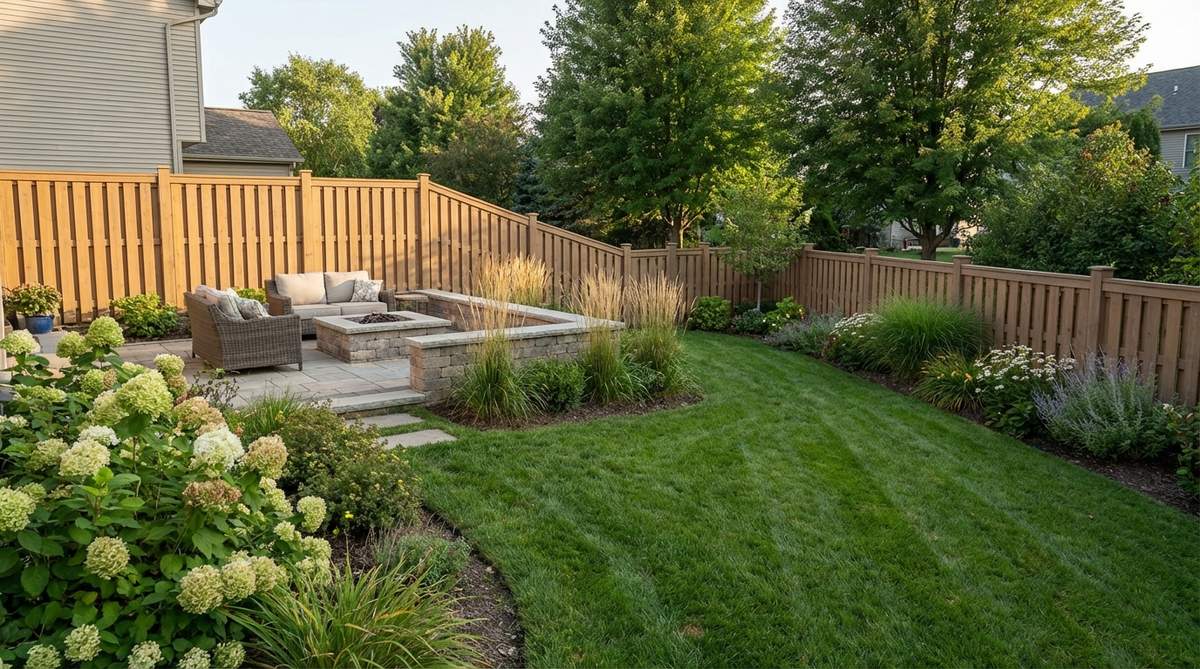
Varying fence heights along property lines creates visual interest while addressing different privacy zones. Tall sections shield patios while lower sections preserve views in less sensitive areas.
Install 8-foot panels along active outdoor living spaces, transitioning to 4-5 foot sections in peripheral zones. Connect height changes with angled transition panels.
This strategic approach reduces material costs and visual monotony. Map sightlines from key positions before determining optimal height placements.
Final Thoughts on Garden Fence Design
Effective garden decor fence design balances privacy requirements with aesthetic ambitions, material durability, and site-specific conditions. The 30+ solutions presented here demonstrate how vertical boundaries transform from necessary barriers into landscape assets that define outdoor spaces, support plant life, and express personal style. Begin by assessing your primary goals—whether complete enclosure, partial screening, or decorative accent—then select materials and configurations that align with your climate, maintenance preferences, and architectural context. Professional installation ensures structural integrity for designs involving complex materials or significant heights, while many simpler projects reward capable DIYers with customized results.
Frequently Asked Questions
What fence height provides the best privacy for residential gardens?
A 6-foot fence height effectively blocks ground-level views for most privacy situations. To enhance screening without creating an imposing enclosure, add 12-18 inches of lattice topper, which increases height while maintaining an open feel. Check local building codes before installation, as many municipalities restrict residential fence heights to 6 feet in side and rear yards without permits.
How do composite materials compare to wood for garden fences?
Composite fencing blends recycled wood fibers and plastics to resist rot, insects, warping, and fading without painting or sealing. While composite costs 20-30% more initially than pressure-treated wood, it eliminates ongoing maintenance expenses and lasts 25+ years. Wood offers warmer aesthetics and easier customization through cutting and staining, but requires regular upkeep. Choose composite for low-maintenance durability or natural wood for traditional appearance and hands-on refinishing flexibility.
What climbing plants work best for living fence privacy?
For evergreen year-round coverage, Carolina jessamine thrives in zones 7-10, while English ivy suits zones 4-9. Deciduous options include clematis for abundant blooms, climbing roses for fragrance and color, and honeysuckle for rapid growth. Match plants to your hardiness zone, provide full sun exposure for flowering vines, and install sturdy support structures since mature vines add considerable weight to fence frameworks.
Can decorative fences satisfy HOA requirements for privacy?
Many HOAs restrict solid fencing in front yards while permitting decorative styles like updated picket, ornamental metal, or low rail designs. Review your association’s architectural guidelines before purchasing materials, as they often specify approved heights, materials, colors, and styles. For rear yards, combine compliant decorative fencing with planted hedges to achieve privacy while meeting aesthetic restrictions—the layered approach delivers screening as plantings mature.
How much does professional garden fence installation cost?
Installation costs vary significantly by material and location, typically ranging from $15-$45 per linear foot including materials and labor. Basic chain link averages $15-$20 per foot, pressure-treated wood $20-$30, vinyl $25-$40, and premium materials like composite or aluminum $30-$45. Costs increase for challenging terrain, complex designs, or areas requiring significant prep work. Obtain multiple quotes from licensed contractors and verify they include post-installation cleanup and warranty coverage.