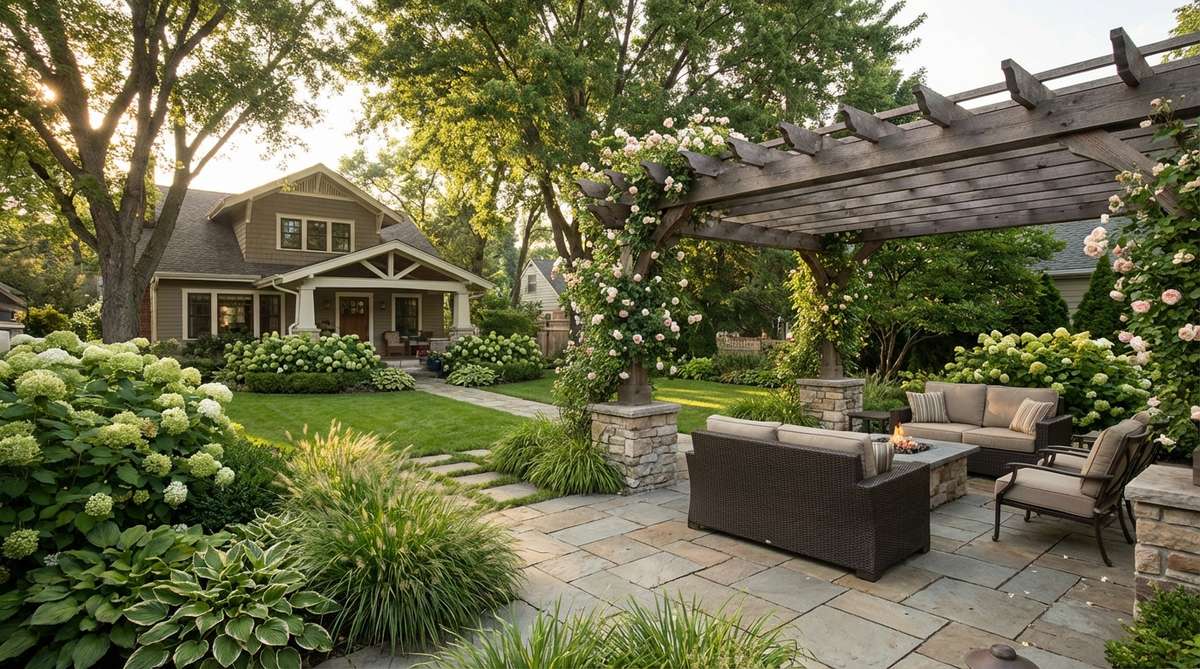
Elegant gardens rely on symmetry to create visual harmony and timeless appeal. These designs draw from centuries-old traditions—French parterres, Italian Renaissance terraces, English knot gardens—where balance, geometry, and proportion form the foundation of beauty. Fresh Garden Ideas brings you expertly curated layouts that transform ordinary landscapes into refined outdoor spaces.
Design SnapshotKey Principles
- Bilateral Symmetry: Mirror planting beds, pathways, and structures along a central axis to establish formal balance
- Geometric Rigor: Use squares, rectangles, circles, and triangles to organize plantings and hardscape elements
- Repetition: Echo plant varieties, container styles, and architectural features at regular intervals to strengthen cohesion
- Restrained Palette: Limit plant diversity to emphasize structure; prioritize evergreens and clipped hedges for year-round elegance
French Formal EleganceParterres and Broderie
French gardens epitomize elegant garden designs through intricate parterres—ornamental beds outlined in clipped boxwood. These layouts use geometry to create embroidery-like patterns (broderie) filled with colored gravel, seasonal flowers, or crushed stone. The effect is best appreciated from upper-story windows or terraced viewpoints.
1. Parterre de Broderie with Boxwood Scrolls
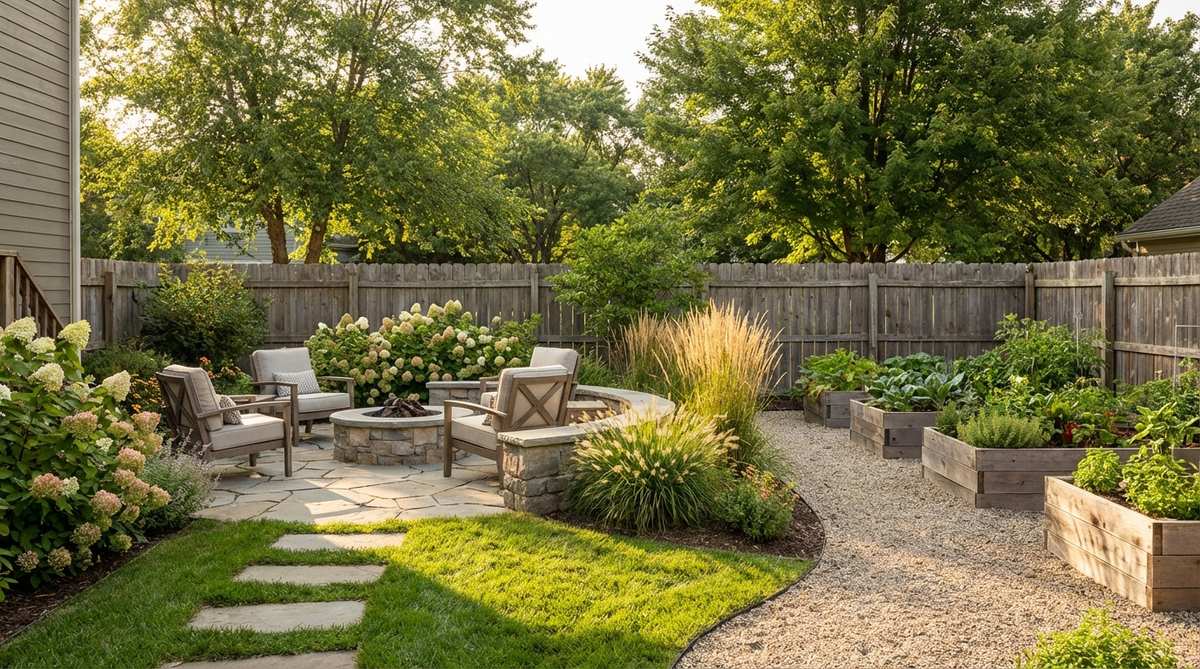
Boxwood hedges (Buxus sempervirens) form flowing scroll patterns reminiscent of 17th-century ironwork. These hedges stay under 12 inches, creating low-relief designs visible against light-colored gravel or sand.
Plant boxwood 8 to 10 inches apart for dense, continuous lines. Prune twice annually—late spring and early fall—to maintain crisp edges and prevent woody gaps.
This layout anchors the area closest to the house, where formality complements architectural details. The evergreen foliage provides year-round structure without seasonal gaps.
2. Symmetrical Floral Compartments
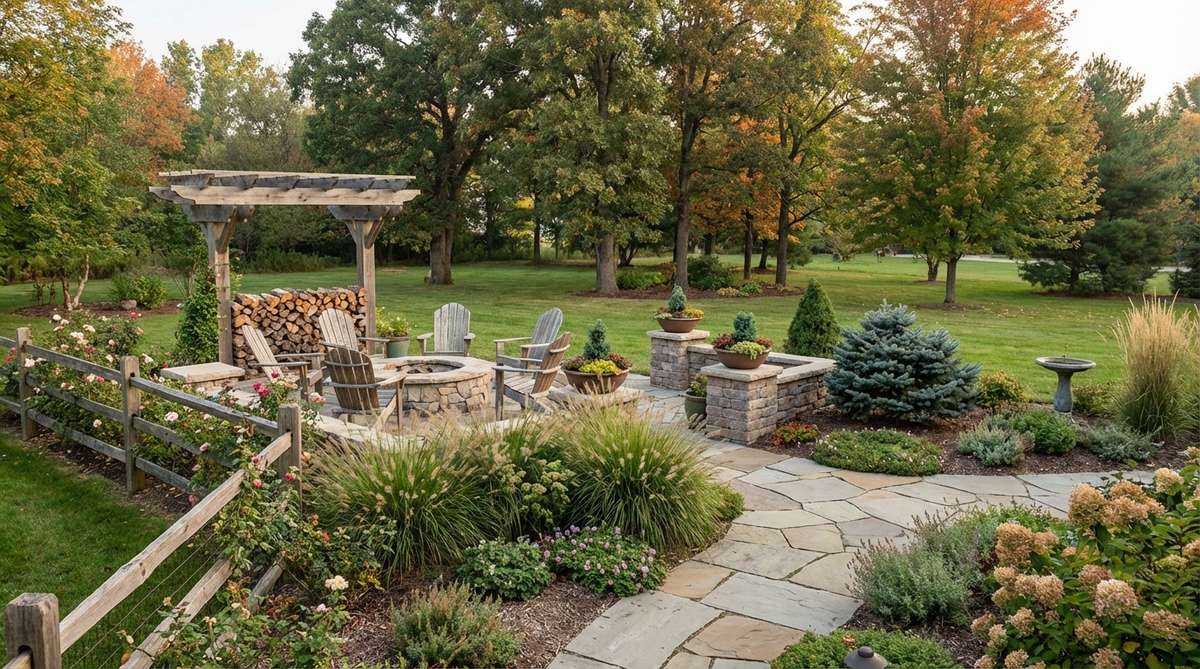
Divide the parterre into four equal quadrants using gravel paths. Fill each compartment with a single flower variety—white petunias in one, lavender in another—for blocks of uniform color.
Rotate plantings seasonallytulips in spring, zinnias in summer, ornamental kale in fall. The simplified palette ensures the geometric framework remains the focal point.
3. Central Fountain as Focal Point
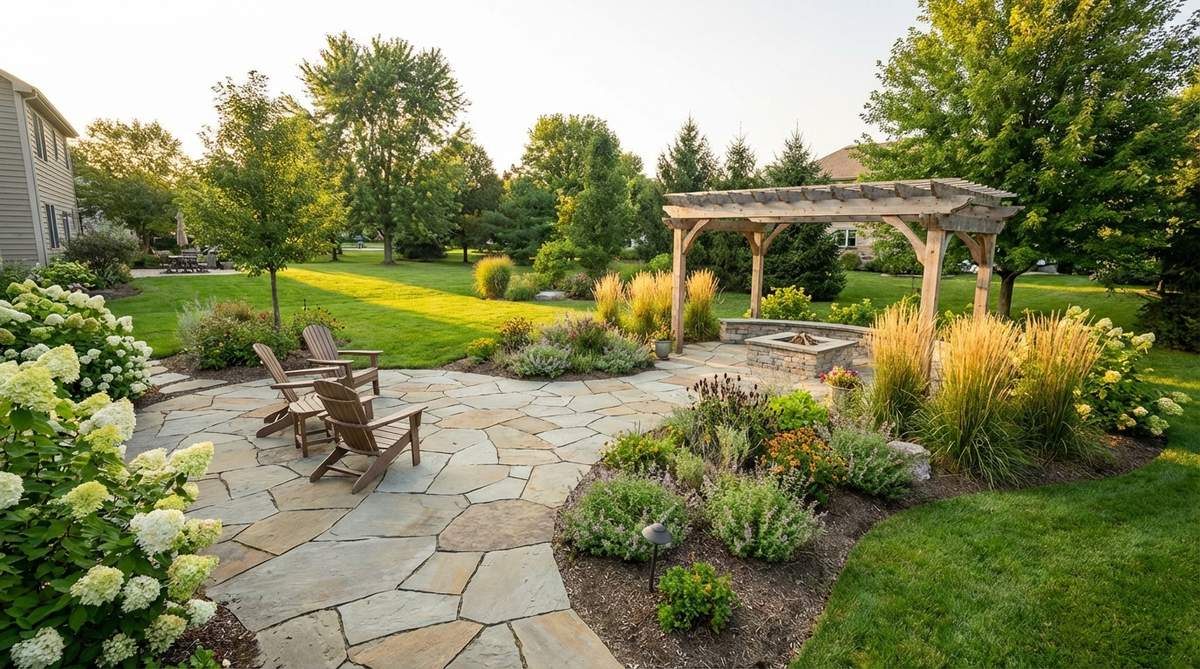
Position a tiered stone fountain at the intersection of primary axes. Water movement adds sensory interest while reinforcing the layout’s central symmetry.
Surround the basin with a circular bed of dwarf yaupon holly or germander, clipped into a perfect ring. This frames the fountain and draws the eye inward from all four approach paths.
4. Allée of Pleached Lindens
Flank the main axis with double rows of linden trees (Tilia cordata) trained into pleached hedges. Branches are woven horizontally on a trellis framework, creating an elevated green wall.
Space trees 6 to 8 feet apart. This technique provides shade while maintaining clean sight lines beneath the canopy, guiding visitors toward the garden’s terminus.
5. Gravel Pathways in Contrasting Tones
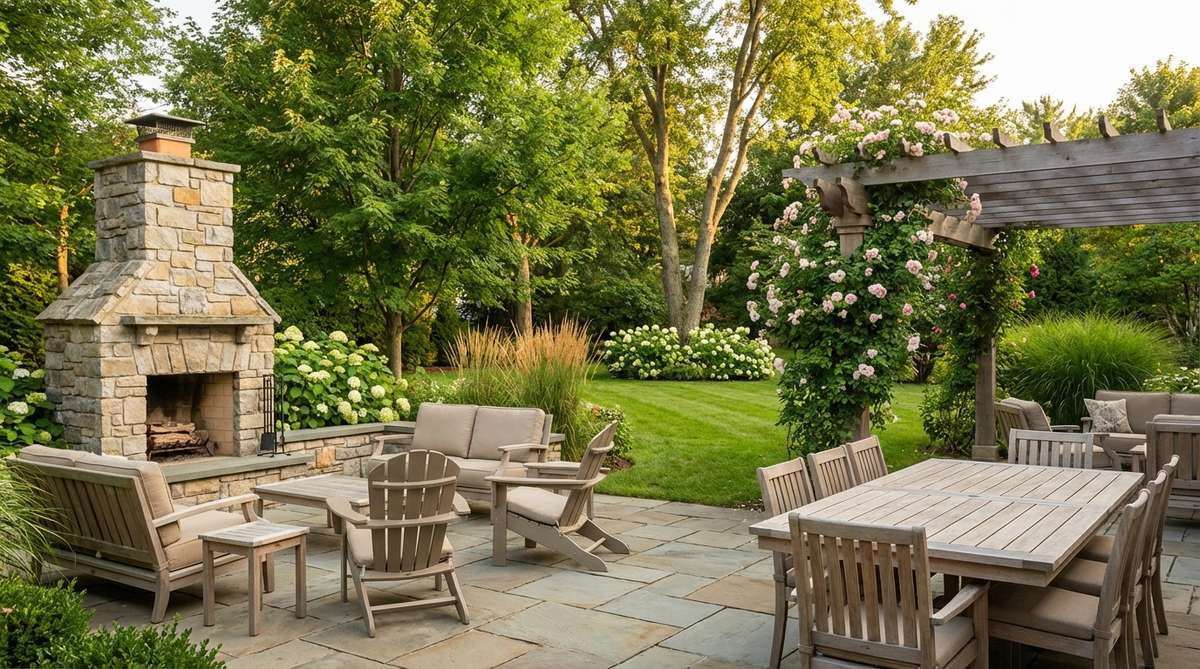
Use light-colored crushed limestone for main pathways and darker pea gravel for compartment interiors. The tonal contrast sharpens the geometry and prevents visual confusion.
Install metal or stone edging to prevent gravel migration. Rake paths weekly to maintain a smooth, manicured appearance that reflects light.
6. Topiary Sentinels at Corners
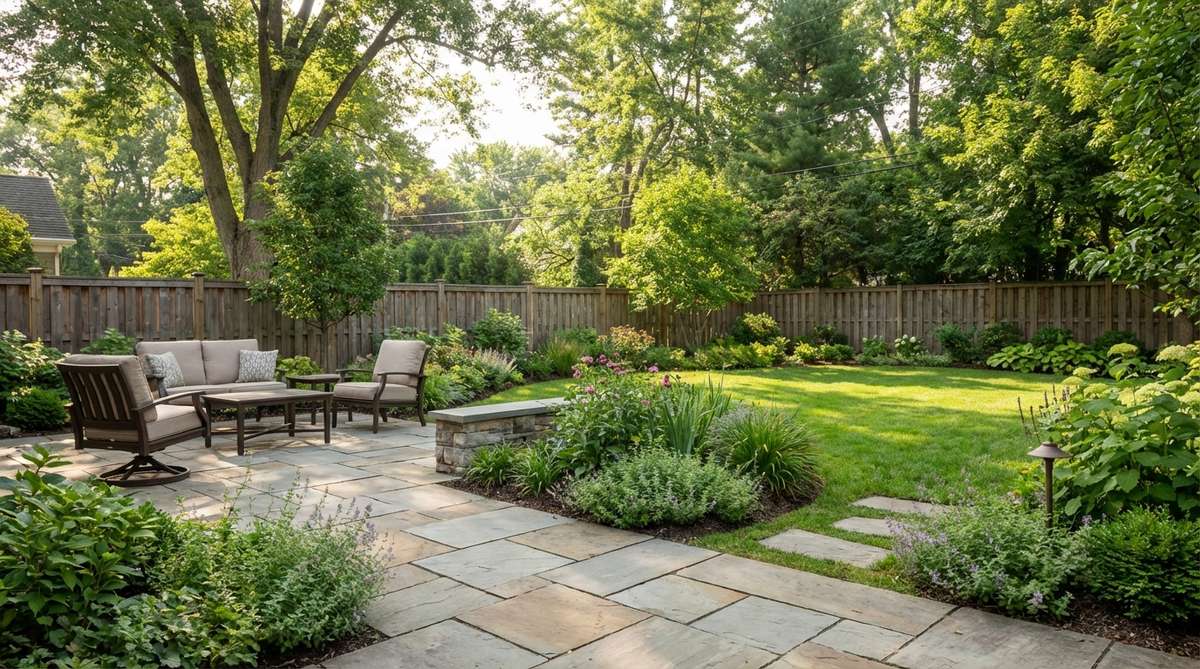
Place cone-shaped yew topiaries (Taxus baccata) at each corner of the parterre. These vertical accents punctuate the horizontal plane and mark transitions between garden rooms.
Maintain topiaries at 4 to 5 feet tall. Prune in late summer to preserve tight, sculptural forms that echo the precision of the boxwood parterres below.
7. Mirrored Rose Beds
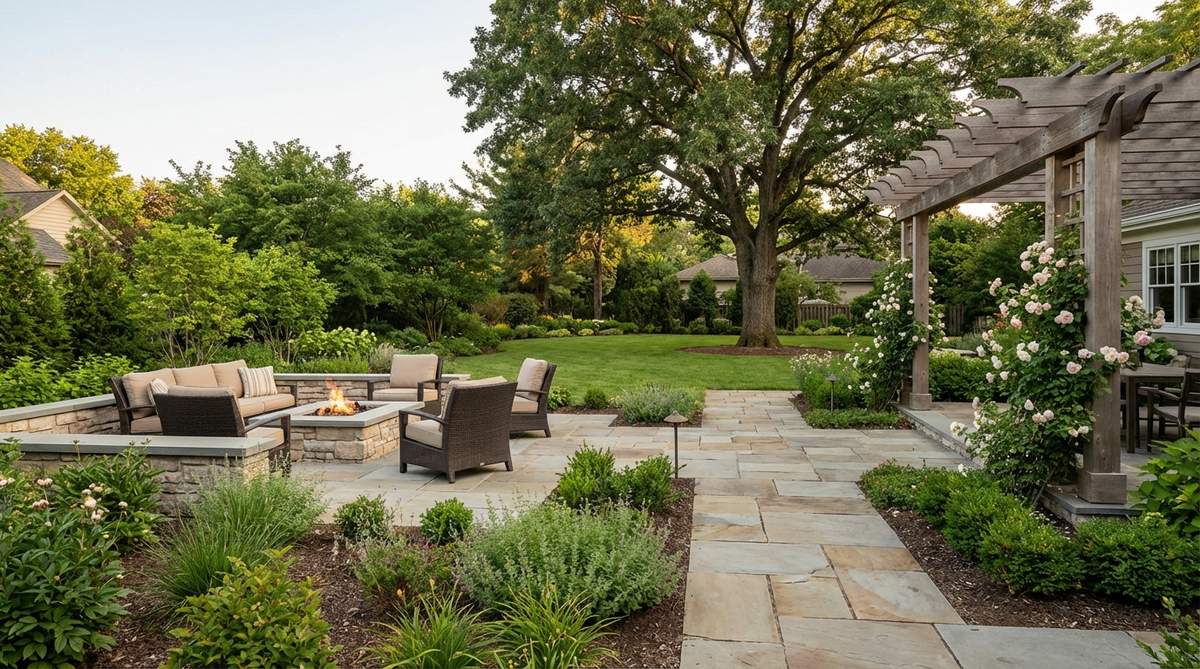
Install symmetrical rose beds on either side of the central path. Use hybrid tea roses in a single color—cream or blush pink—for understated elegance.
Edge beds with low boxwood borders to maintain year-round structure. Prune roses hard in late winter to encourage vigorous spring growth and summer blooms.
8. Geometric Herb Gardens
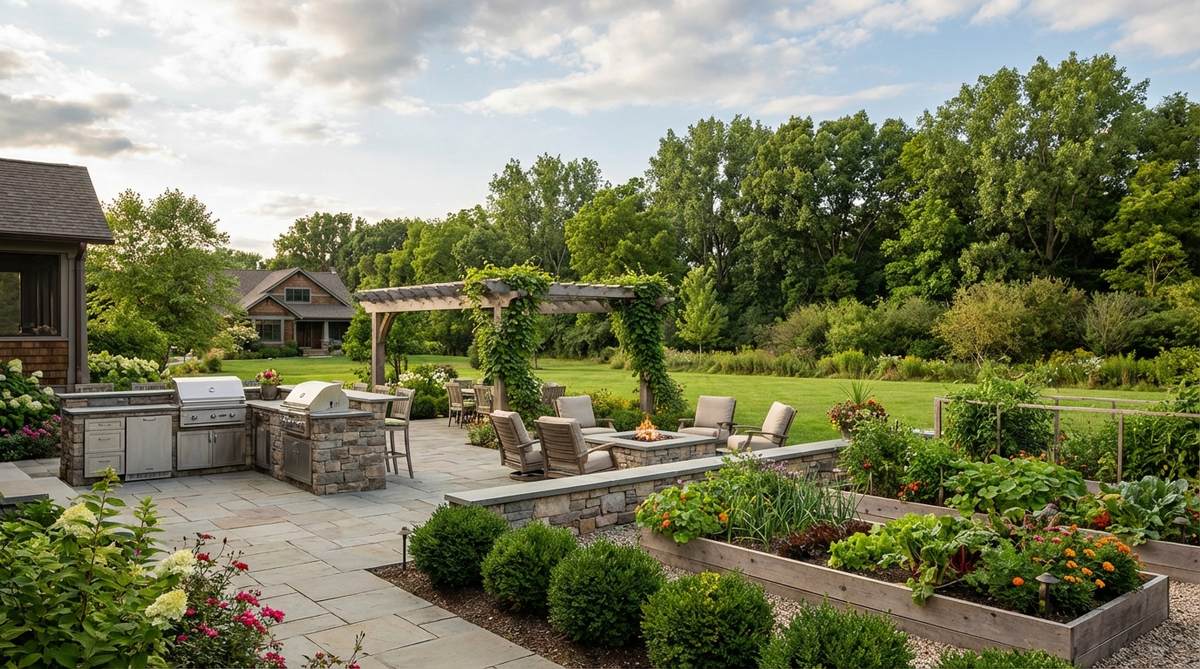
Arrange culinary herbs—thyme, lavender, sage—in rectangular or triangular beds outlined by dwarf hedges. This functional layout combines utility with formal beauty.
Harvest herbs regularly to encourage compact growth. The silver-green foliage palette harmonizes with stone pathways and complements the surrounding evergreen structure.
Italian Renaissance Geometry and Perspective
Italian gardens from the 15th and 16th centuries prioritize linear perspective and terraced layouts that cascade down hillsides. These elegant garden designs integrate water, stone, and clipped vegetation into grand compositions meant to be experienced sequentially, revealing new vistas at each elevation change.
9. Axial Terraces with Balustrades
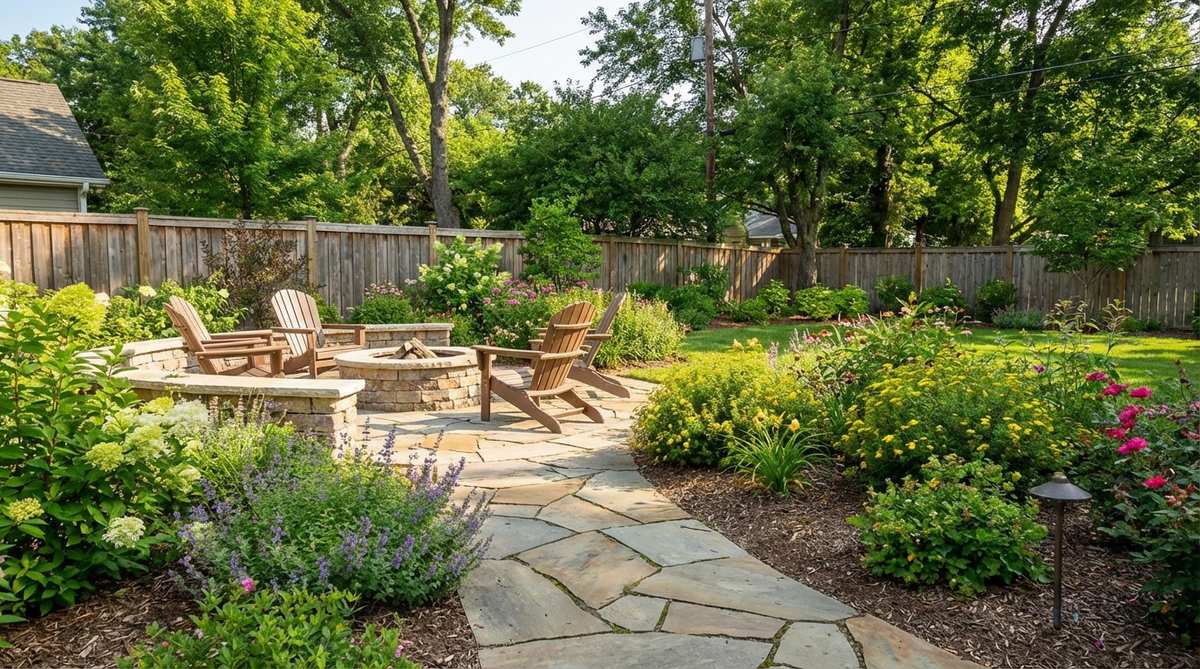
Construct three or more terraces descending along a central axis. Connect levels with wide stone staircases flanked by carved balustrades, creating a theatrical progression through the garden.
Plant each terrace with matching pairs of potted citrus trees or Italian cypress (Cupressus sempervirens). The repetition reinforces the axis and guides movement downward toward a terminal feature like a grotto or pool.
10. Reflecting Pool with Stone Coping
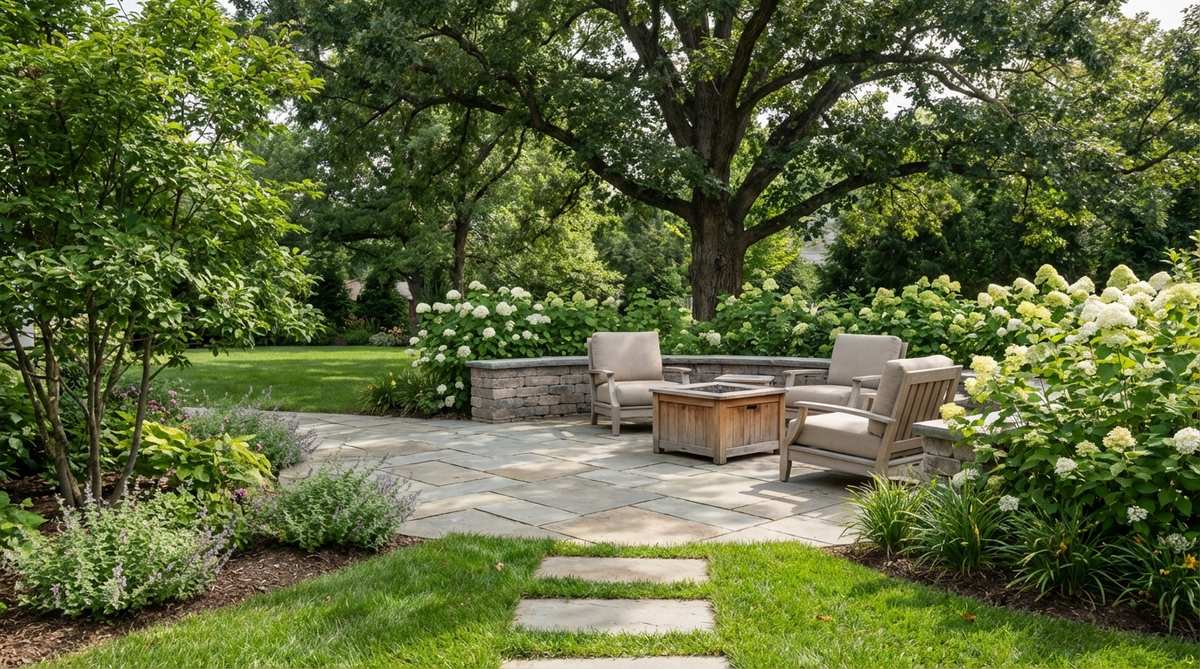
Position a rectangular reflecting pool perpendicular to the main axis. The still water mirrors the sky and surrounding architecture, doubling the visual impact of vertical elements.
Use limestone coping to frame the pool. Plant clipped boxwood spheres at regular intervals along the perimeter to maintain formality without blocking reflections.
11. Symmetrical Parterre Compartments
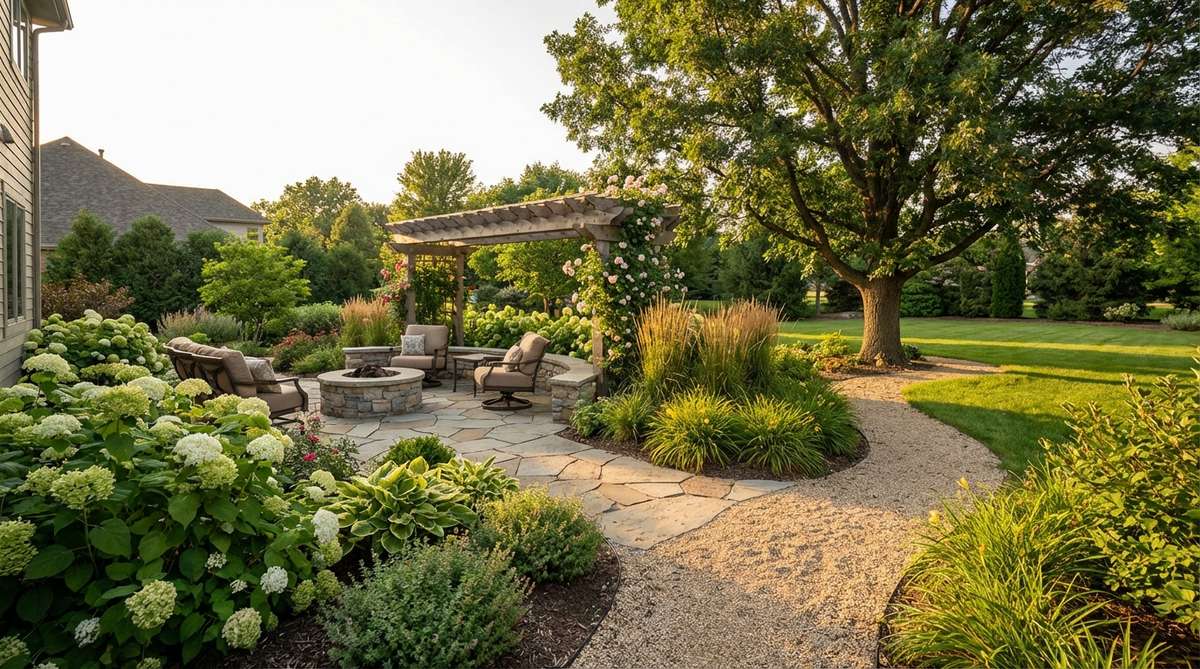
Organize the upper terrace into four square compartments separated by intersecting gravel paths. Fill each with a single species—santolina, lavender, or germander—pruned into low mounds.
This simplified planting strategy emphasizes geometry over botanical diversity. The uniformity creates a carpet-like effect visible from the villa’s upper windows.
12. Wall Fountains with Grotesque Masks
Install wall-mounted fountains featuring carved stone masks that spout water into scalloped basins. These features punctuate retaining walls and add auditory rhythm.
Position fountains symmetrically—one on each side of a terrace staircase. The sound of falling water enhances the sense of coolness and reinforces the garden’s ordered hierarchy.
13. Pergola-Covered Walkways
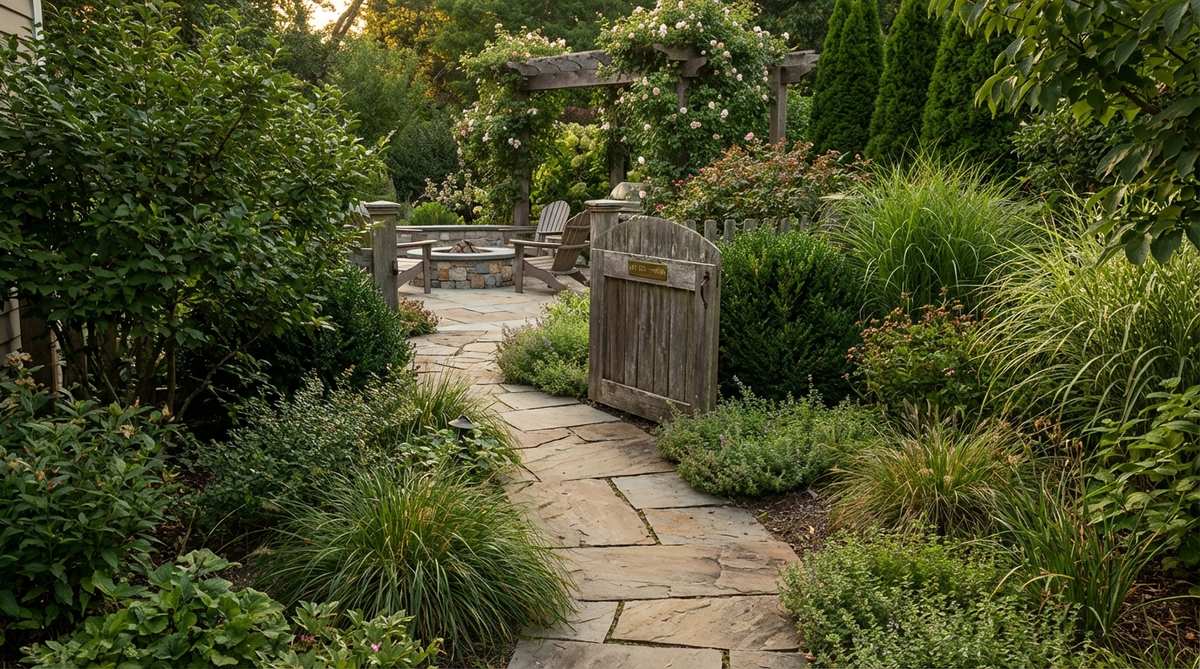
Build pergolas along side paths parallel to the main axis. Train wisteria or grapevines over the timber framework to provide dappled shade and seasonal fragrance.
The linear pergola reinforces directional movement while offering a contrasting experience to the open central terrace. Its shade invites slower, contemplative walking.
14. Giardino Segreto (Secret Garden)
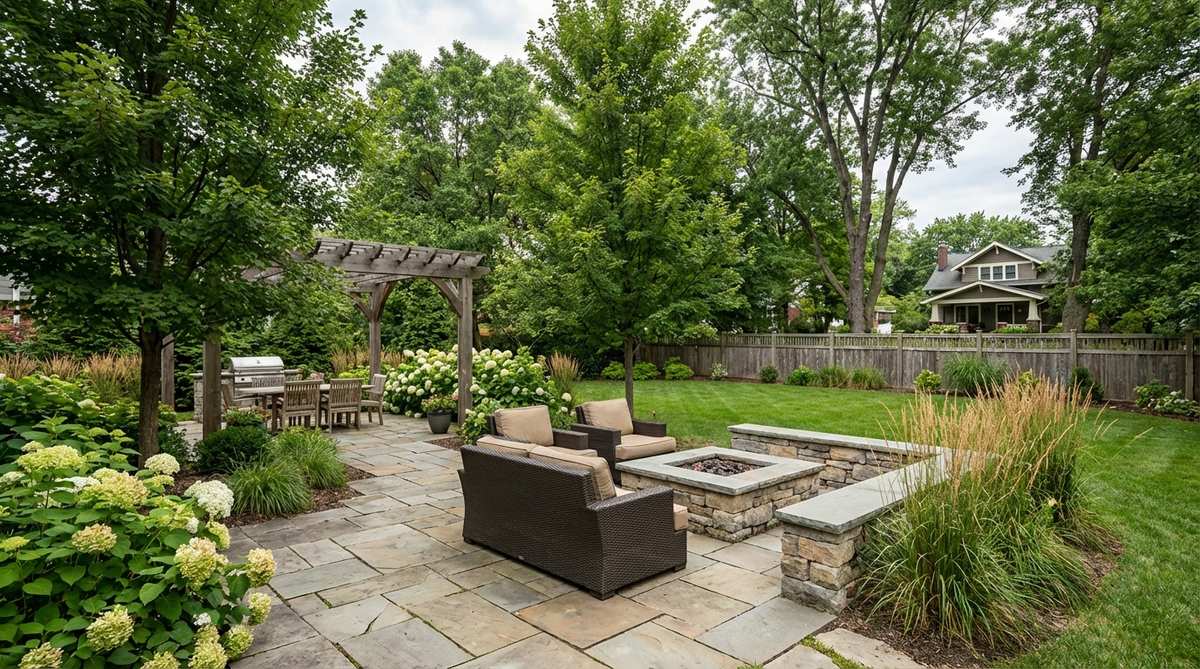
Enclose a small square garden within tall hedges (laurel or yew) to create an intimate, hidden room. Access through a single arched opening reinforces the sense of discovery.
Inside, install a circular fountain or statue at the center. Surround it with benches and fragrant plants like jasmine or roses for a private retreat.
15. Clipped Evergreen Topiary Cones
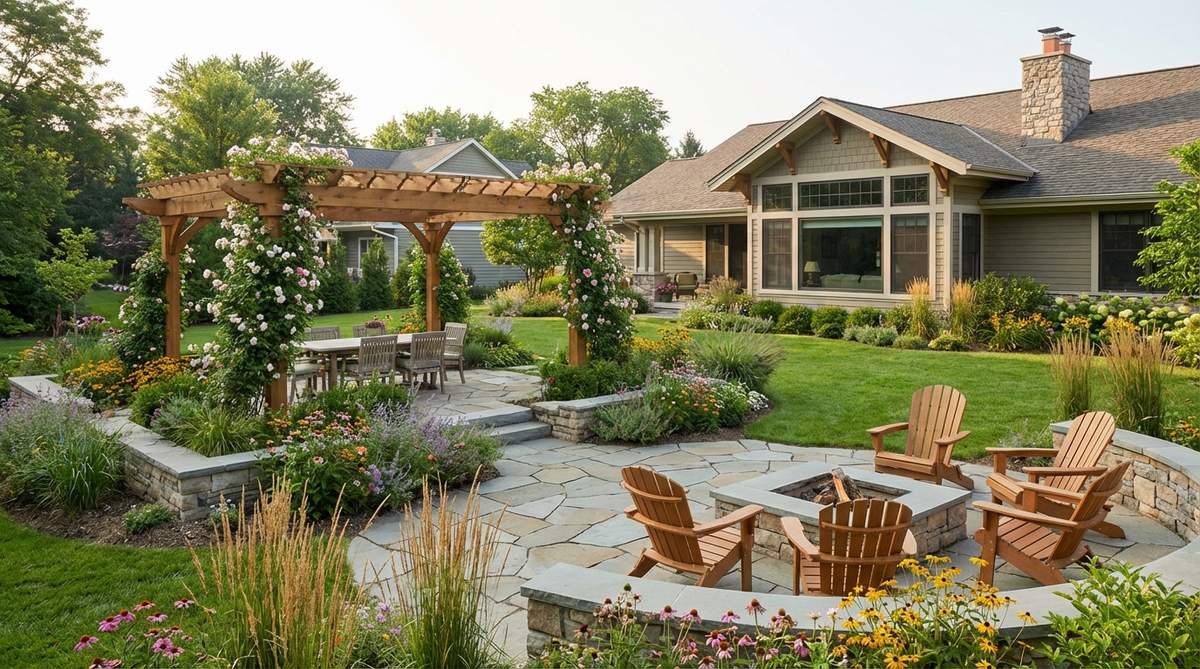
Line terrace edges with cone-shaped topiaries in yew or Italian cypress. These vertical elements frame views and create rhythmic repetition along long sight lines.
Maintain cones at 5 to 6 feet tall. Their dark green foliage contrasts with pale stone paving and provides a stable backdrop for seasonal color accents.
English Garden TraditionsKnots and Topiaries
English formal gardens from the Tudor and Stuart periods feature knot gardens—interlaced patterns of low hedges that resemble embroidery. These elegant gardens combine herbs, boxwood, and colored gravel into intricate designs best viewed from above, emphasizing craftsmanship and horticultural skill.
16. Interlaced Boxwood Knot Patterns
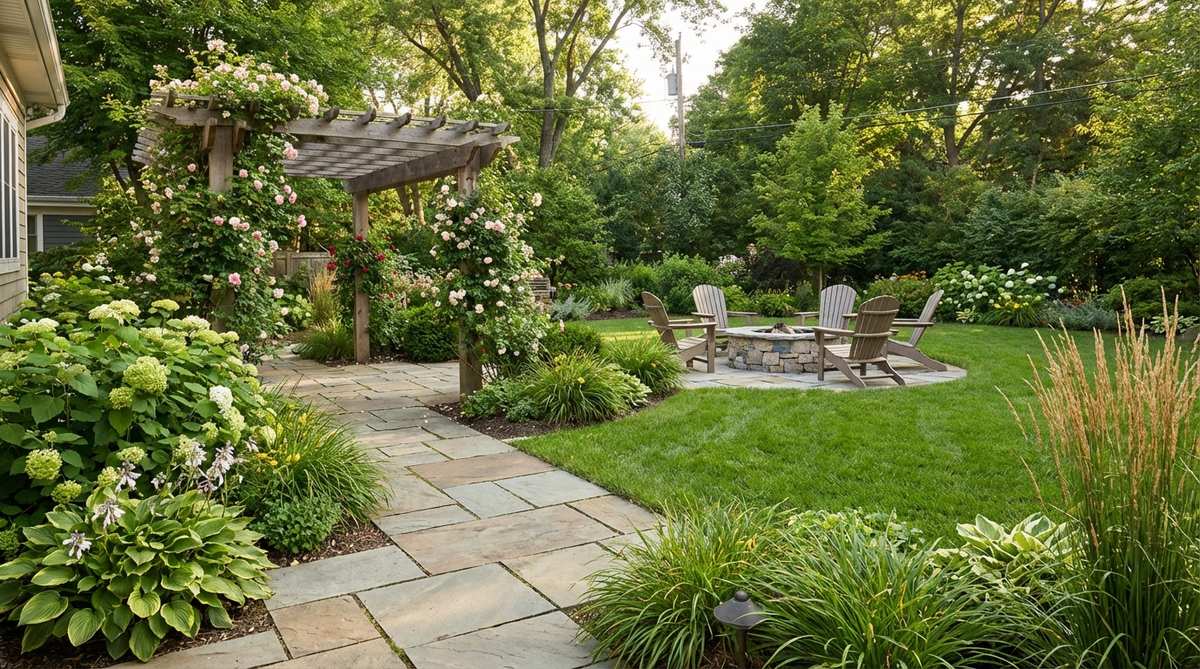
Create a square frame using clipped boxwood, then plant interior lines that weave over and under one another visually. Use contrasting foliage—gray santolina crossing green boxwood—to enhance the illusion of interlaced threads.
Fill negative spaces between hedges with colored gravelred brick dust, white marble chips, or crushed coal. This polychrome infill sharpens the pattern and reduces maintenance.
17. Aromatic Herb Knots
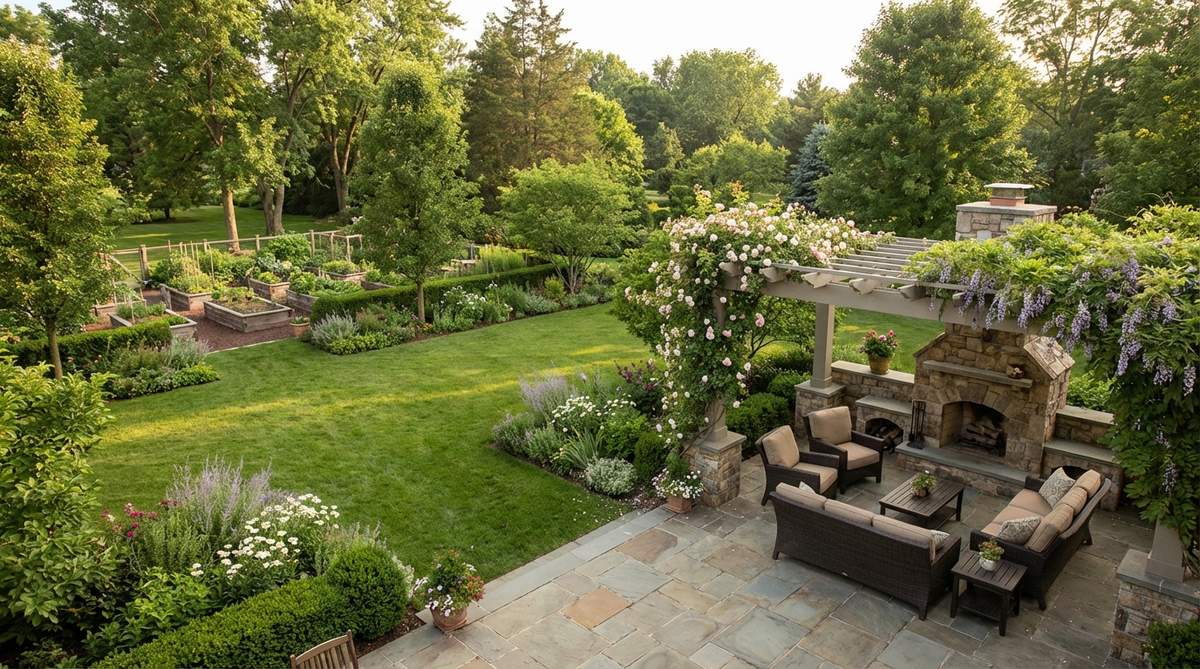
Design knot patterns using rosemary, thyme, lavender, and hyssop. The varied foliage textures and fragrances add sensory layers to the geometric design.
Prune herbs after flowering to maintain compact forms. This functional approach yields culinary harvests while preserving the knot’s visual clarity.
18. Turf Maze with Brick Edging
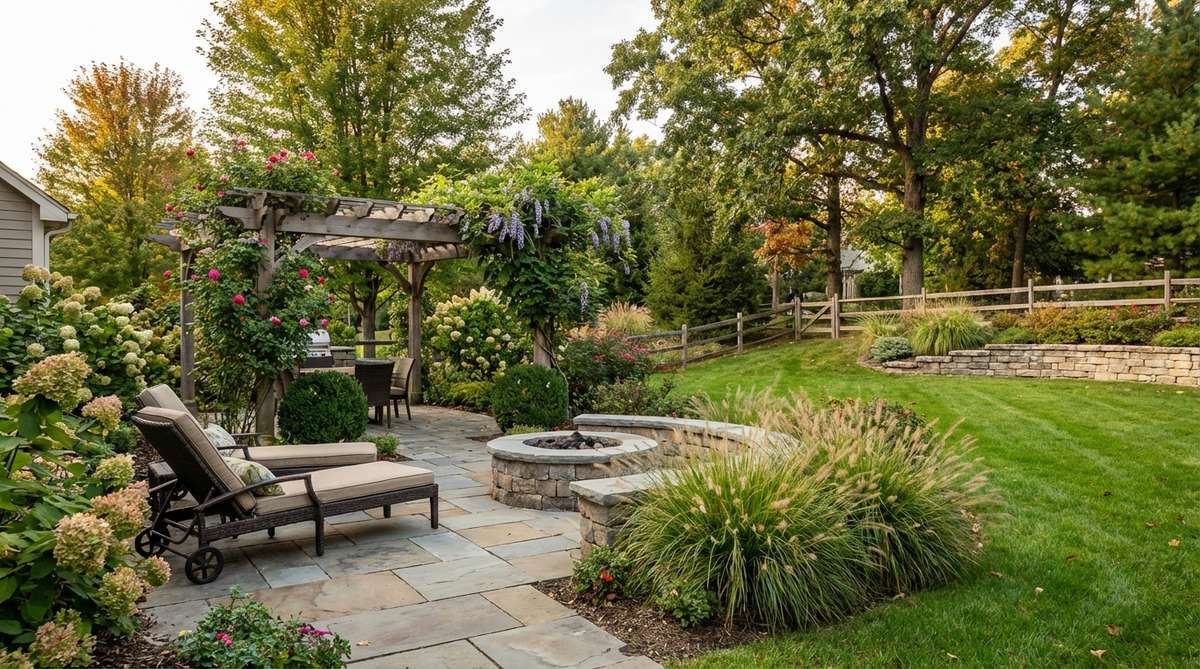
Outline a simple maze pattern using mortared brick set on edge. Fill paths with fine gravel and plant grass in the raised sections to create a low-relief labyrinth.
Mow turf sections weekly during the growing season. The contrast between green grass and pale gravel maintains the maze’s legibility from ground level and upper windows.
19. Topiary Chess Set
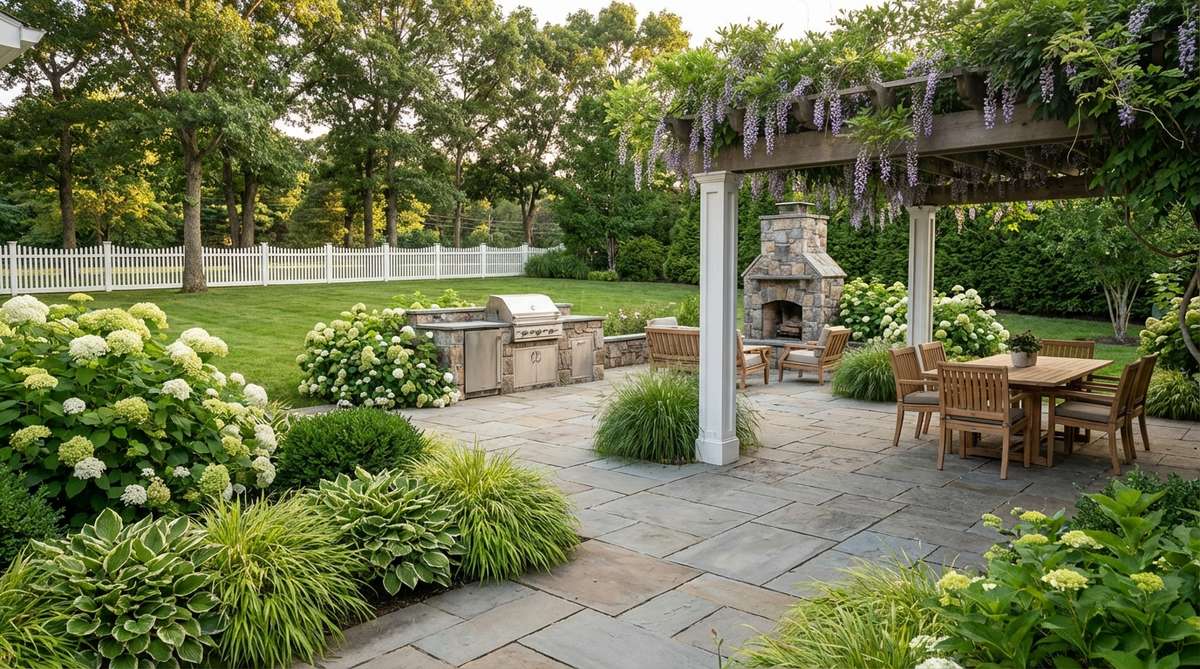
Train boxwood or yew into stylized chess pieces—pawns, knights, bishops—arranged on a checkerboard of alternating paving stones and grass squares. This whimsical layout adds narrative interest to formal geometry.
Shear topiaries annually in late summer. The oversized scale transforms a traditional game into a sculptural garden feature.
20. Quadrant Flower Beds with Obelisks
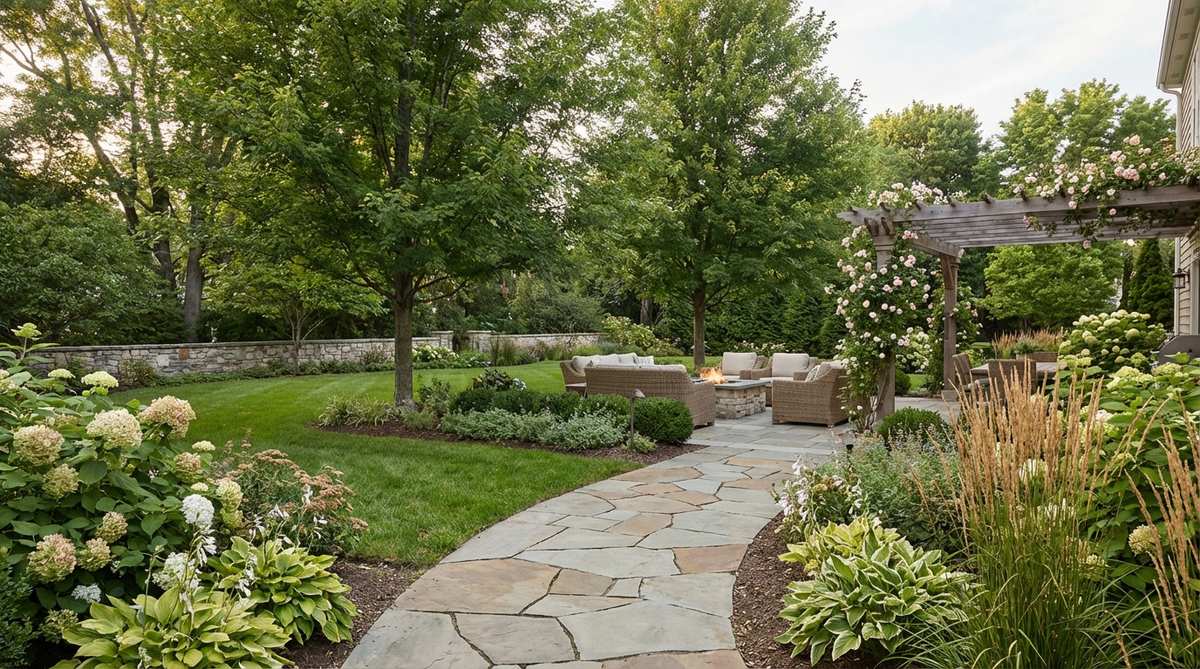
Divide the garden into four equal squares separated by gravel paths. Place a wooden obelisk at the center of each bed to support climbing roses or clematis.
The vertical obelisks create height variation within the flat parterre. Their repetition reinforces symmetry while the climbers add seasonal color.
21. Espalier Fruit Trees on Walls
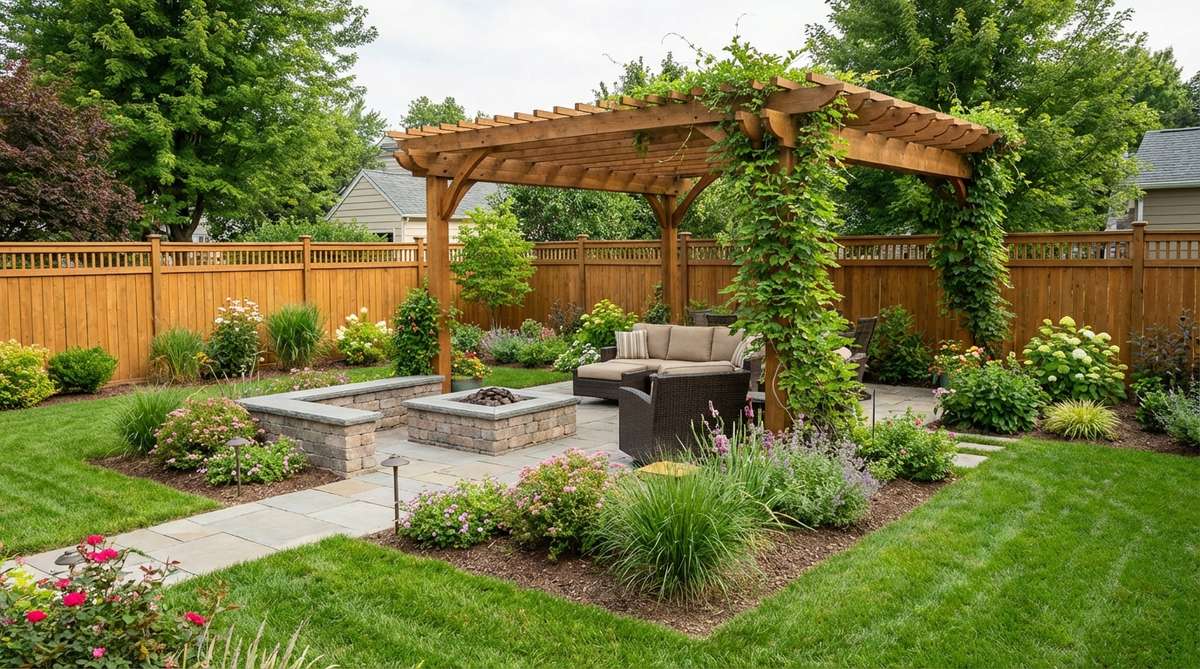
Train apple or pear trees into flat, two-dimensional forms against brick or stone walls. Use horizontal or fan patterns that mirror each other across a central doorway or gate.
This technique maximizes fruit production in limited space while contributing to the garden’s architectural framework. Prune in winter to maintain shape.
22. Sundial as Centerpiece
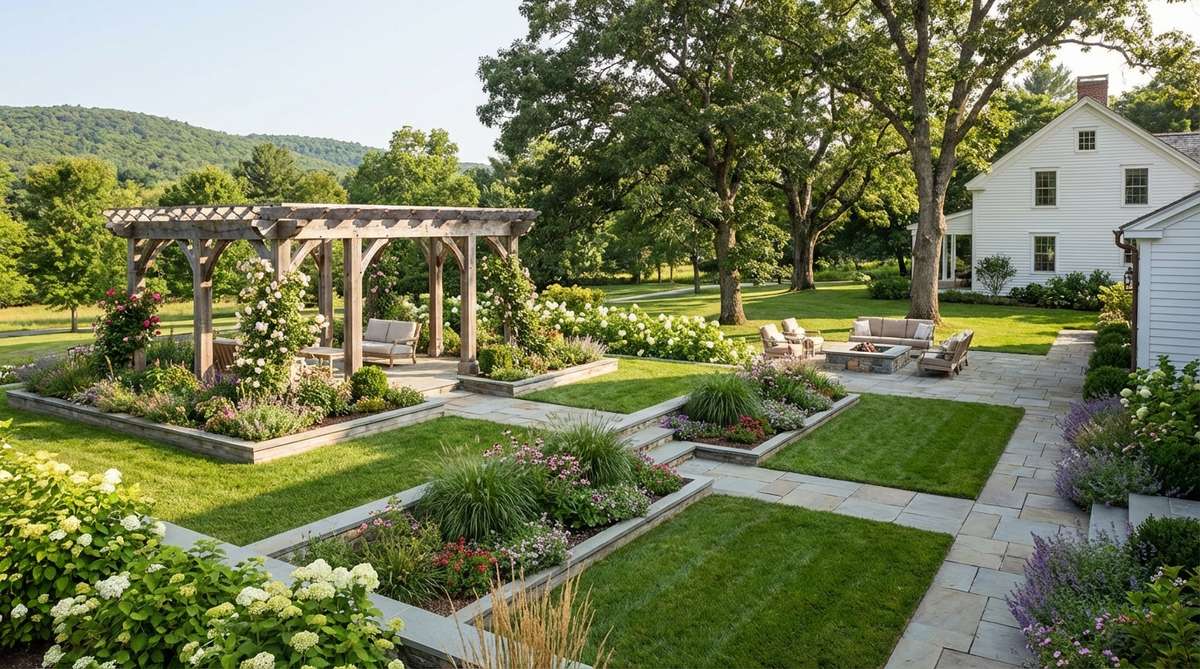
Install a stone sundial on a carved pedestal at the knot garden’s center. This functional ornament marks the passage of time and serves as a focal point for intersecting sight lines.
Surround the sundial with a circular bed of thyme or chamomile. The low planting allows the timepiece to remain visible while providing a textured frame.
Persian-Inspired Quadrants and Water Features
Persian gardens follow the Chahar Bagh (four-garden) template, dividing rectangular plots into quadrants separated by water channels. These elegant garden designs symbolize paradise through geometry, flowing water, and shade trees, creating cool retreats in arid climates.
23. Fourfold Layout with Central Pavilion
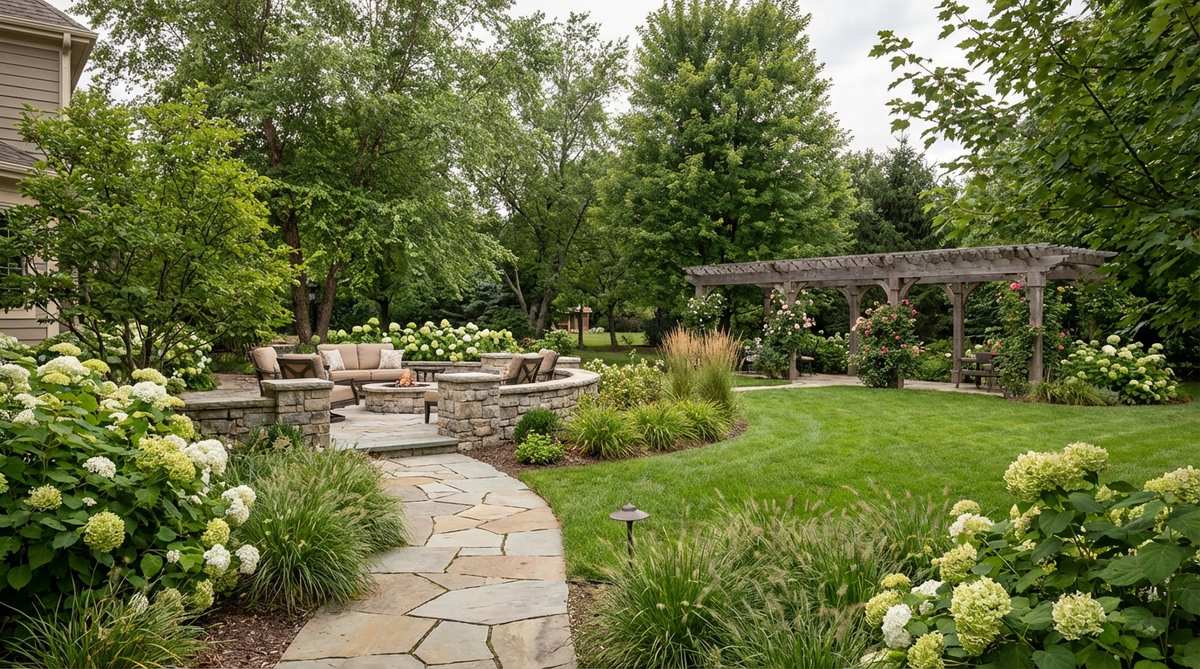
Divide the garden into four equal sections using intersecting pathways or water channels. Position a domed pavilion at the center where the axes cross, providing a shaded vantage point to view all four quadrants.
The pavilion serves as both functional seating area and symbolic representation of the axis mundi. Tile its interior with turquoise mosaics to reflect light and evoke water.
24. Rill Water Channels
Construct narrow, stone-lined channels that carry water along primary axes. The gentle flow creates sound and visual movement while dividing planting areas.
Line channel edges with polished marble or glazed tile. Plant low hedges or irises along the banks to soften edges without obscuring the waterway.
25. Reflecting Pool with Tiled Borders
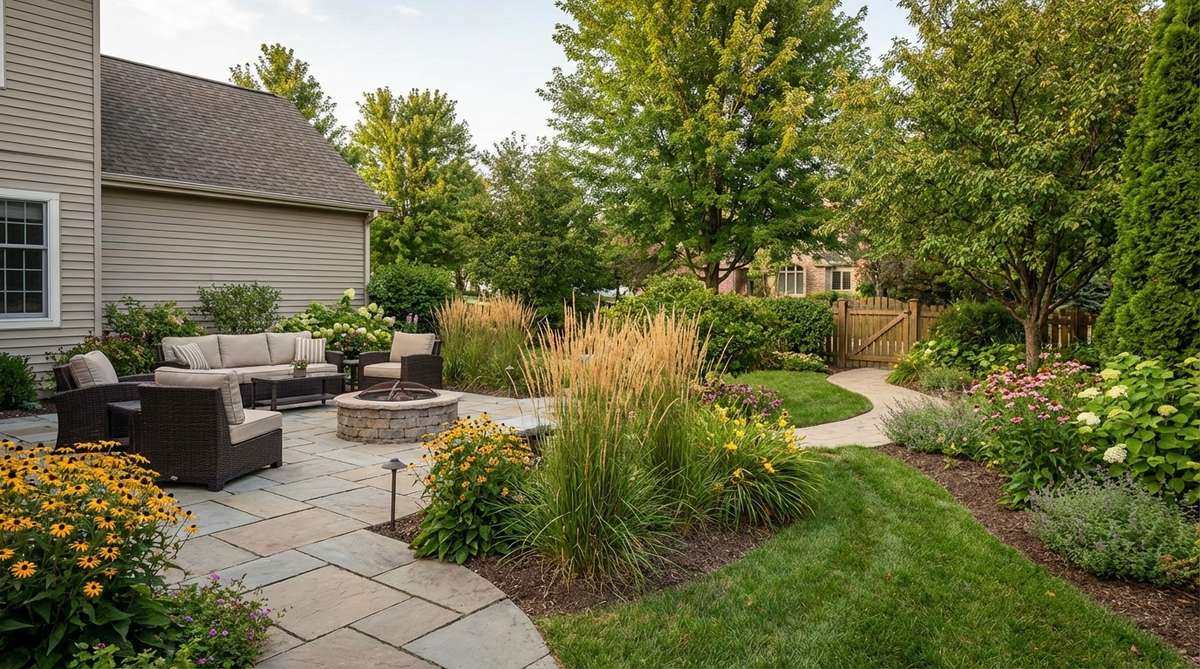
Install a large rectangular pool at one end of the central axis. Frame it with cobalt-blue or emerald-green tiles that sparkle in sunlight and reflect surrounding architecture.
Keep plantings minimal around the pool to preserve mirror-like reflections. Position a single weeping willow or plane tree at the far end to create a focal point.
26. Symmetrical Orchard Quadrants
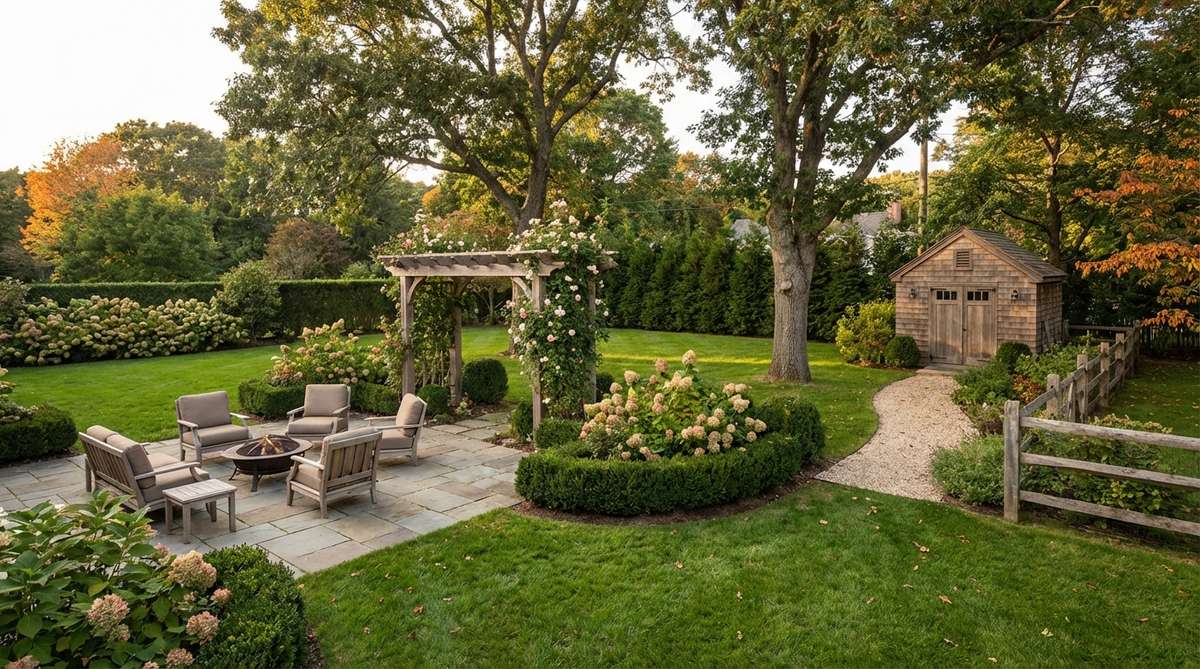
Plant each quadrant with a uniform grid of fruit trees—pomegranates, figs, apricots, or quinces. The regular spacing creates a rhythmic pattern that reinforces geometric order.
Underplant trees with roses or flowering bulbs for seasonal color. The multi-layered planting provides shade, fragrance, and edible harvests within the formal structure.
27. Raised Pathways for Viewing
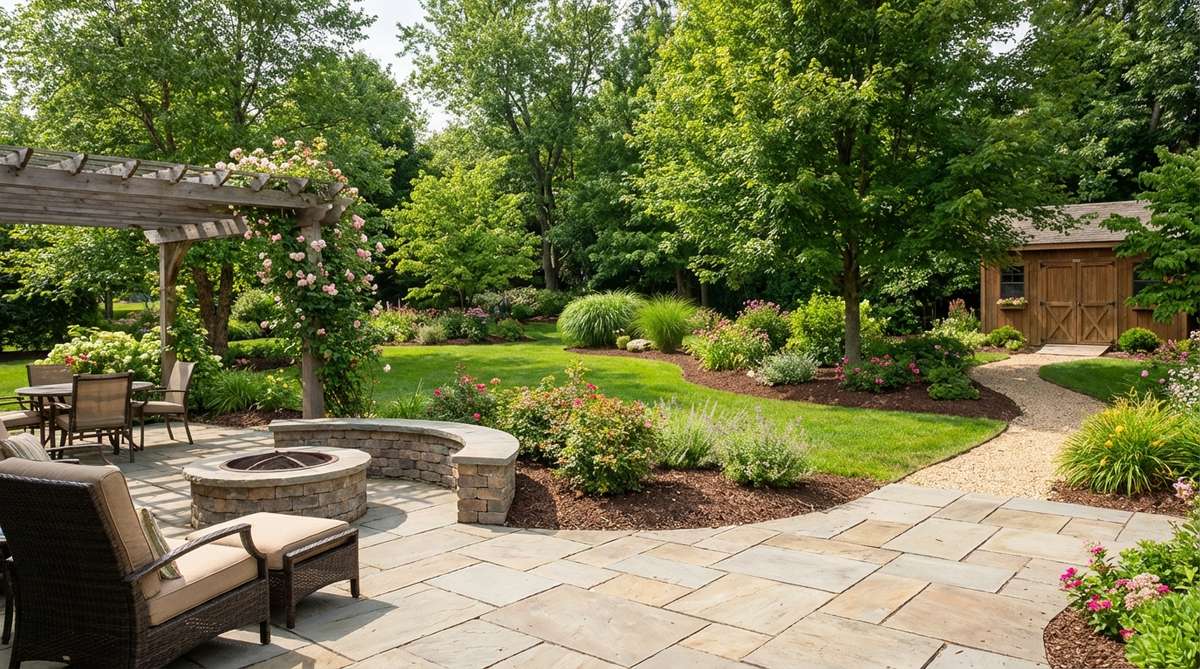
Elevate main walkways 12 to 18 inches above planting beds. This slight height change improves sight lines across the garden and allows visitors to appreciate the overall geometry.
Pave walkways with stone slabs or brick. Install low walls or balustrades along edges to define the raised plane and provide seating.
28. Wall-Enclosed Privacy
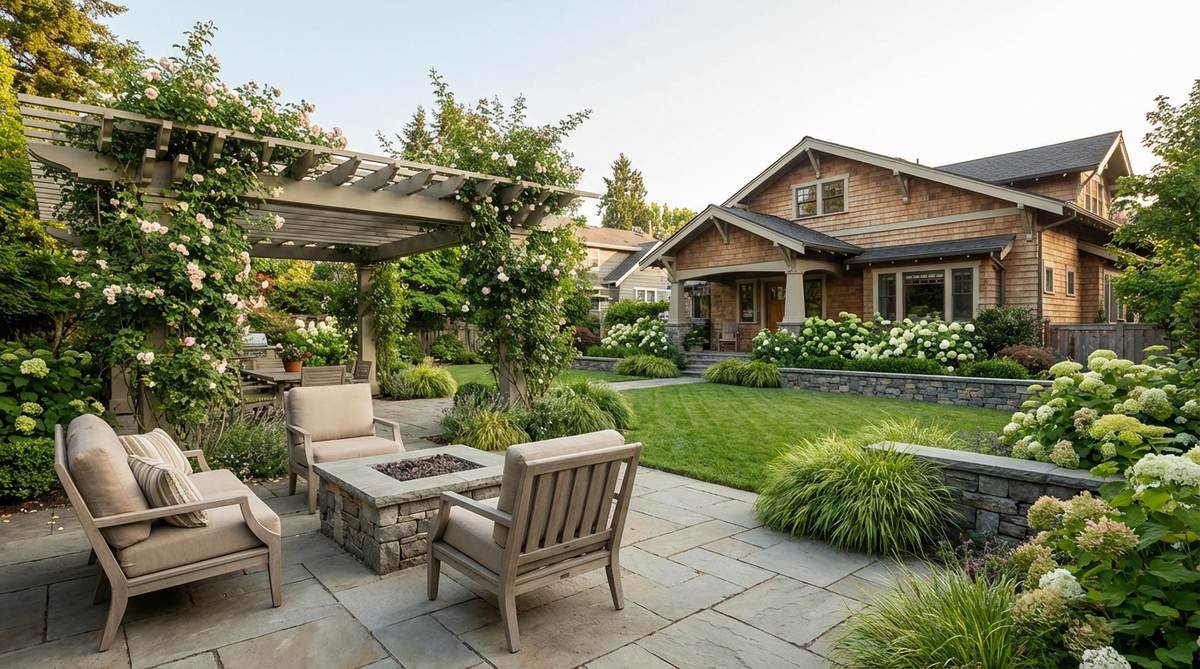
Surround the entire garden with high mud-brick or stucco walls. This enclosure creates a microclimate, reduces wind, and ensures privacy—essential for the inward-focused Persian garden tradition.
Paint walls white or pale ochre to reflect heat and light. Train climbing jasmine or grapevines along interior surfaces for added greenery and fragrance.
29. Cypress Tree Sentinels
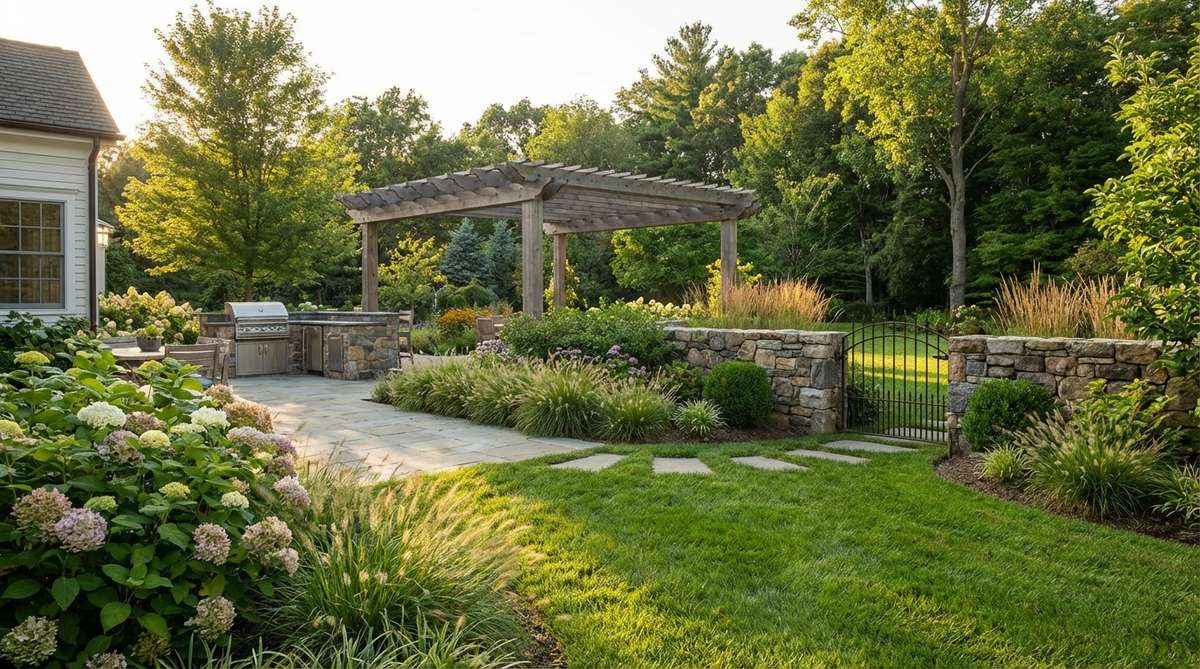
Plant columnar cypress trees (Cupressus sempervirens) at regular intervals along pathways or garden perimeters. Their vertical form contrasts with horizontal water channels and provides evergreen structure.
Space trees 8 to 10 feet apart. Their dark green foliage serves as a backdrop for flowering shrubs and reinforces the garden’s orderly composition.
Colonial American Symmetry with Boxwood
Colonial gardens in Virginia and the Mid-Atlantic region adapted European formality to American conditions. These elegant gardens use native and imported plants—especially boxwood—to create symmetrical layouts around brick pathways and central lawns.
30. Boxwood Parterres Flanking Central Lawn
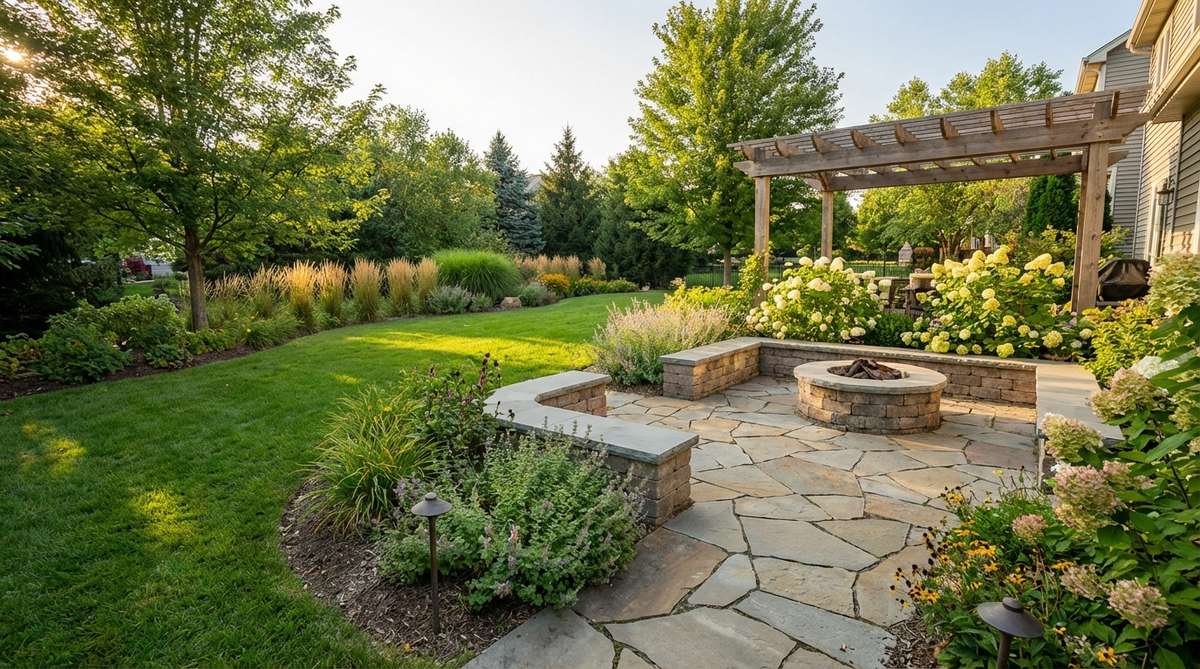
Position mirrored parterres on either side of a rectangular grass panel. Outline beds with American boxwood (Buxus sempervirens ‘American’) and fill interiors with tulips, hyacinths, or zinnias.
The central lawn provides a visual resting point and functional space for gatherings. Keep it mowed short to emphasize the contrast with taller plantings.
31. Brick Herringbone Pathways
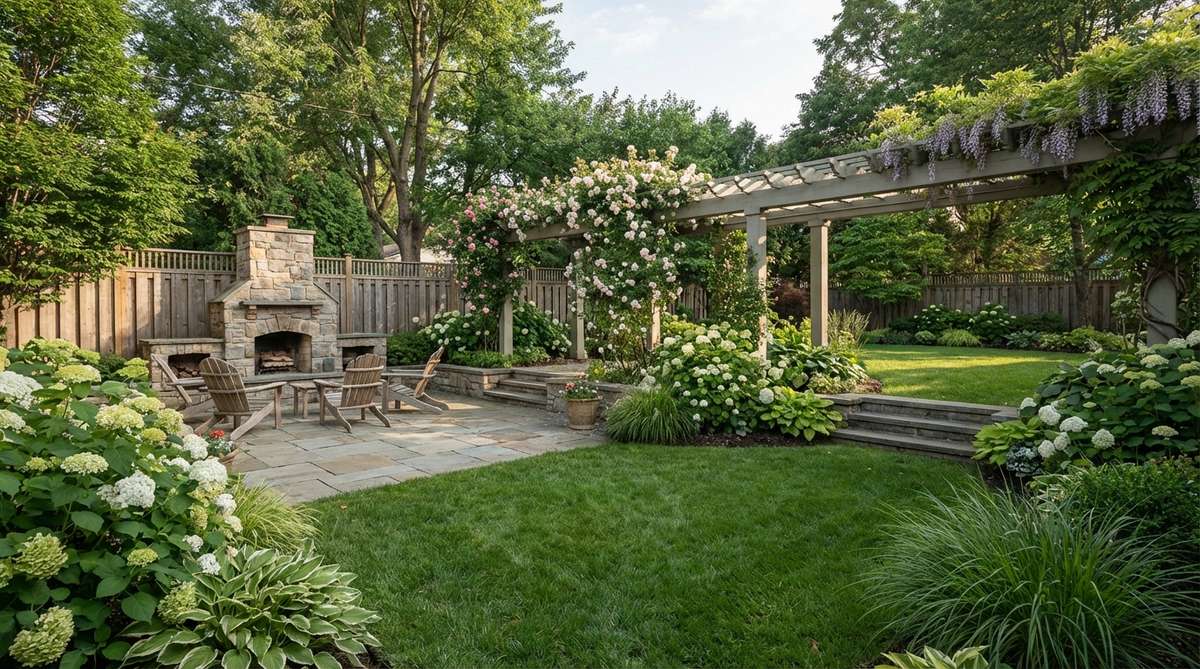
Lay brick in a herringbone pattern for primary pathways. This traditional technique adds textural interest while maintaining clean, straight lines.
Edge paths with soldier-course bricks set upright. The raised border contains gravel and prevents erosion while reinforcing the path’s geometry.
32. Picket Fence Enclosures
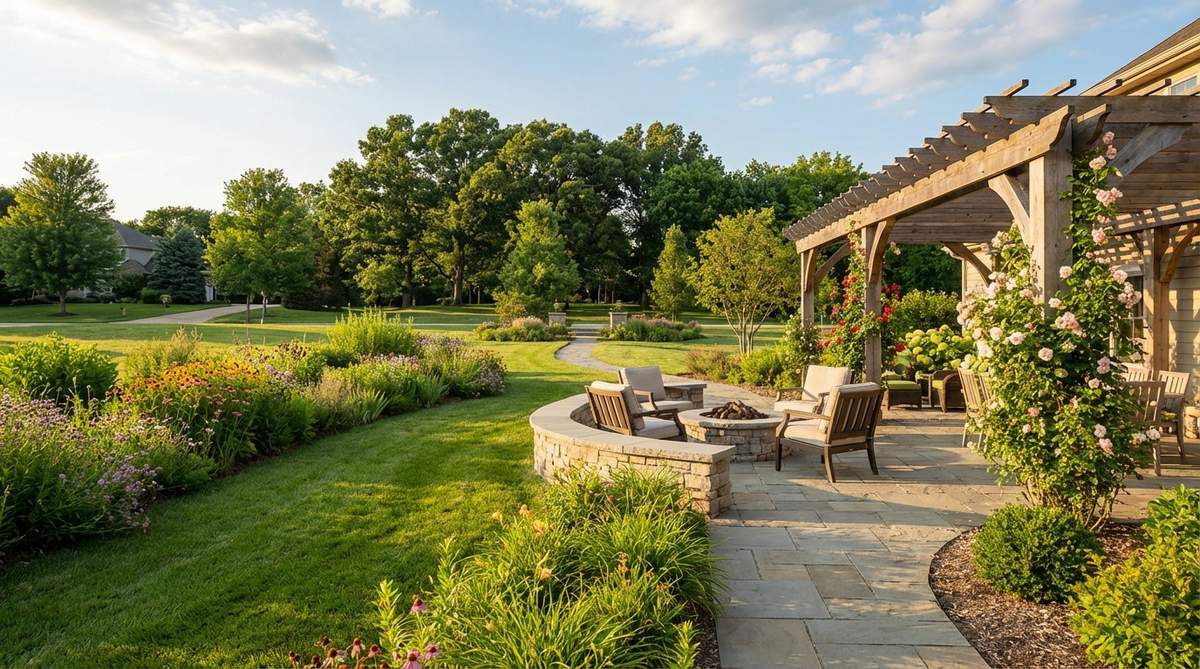
Surround the garden with white-painted picket fencing. The vertical slats provide enclosure without blocking views or airflow, maintaining an open, welcoming character.
Install gates at primary axes. Paint them the same white as the fence to preserve visual continuity and symmetry.
33. Symmetrical Vegetable Beds
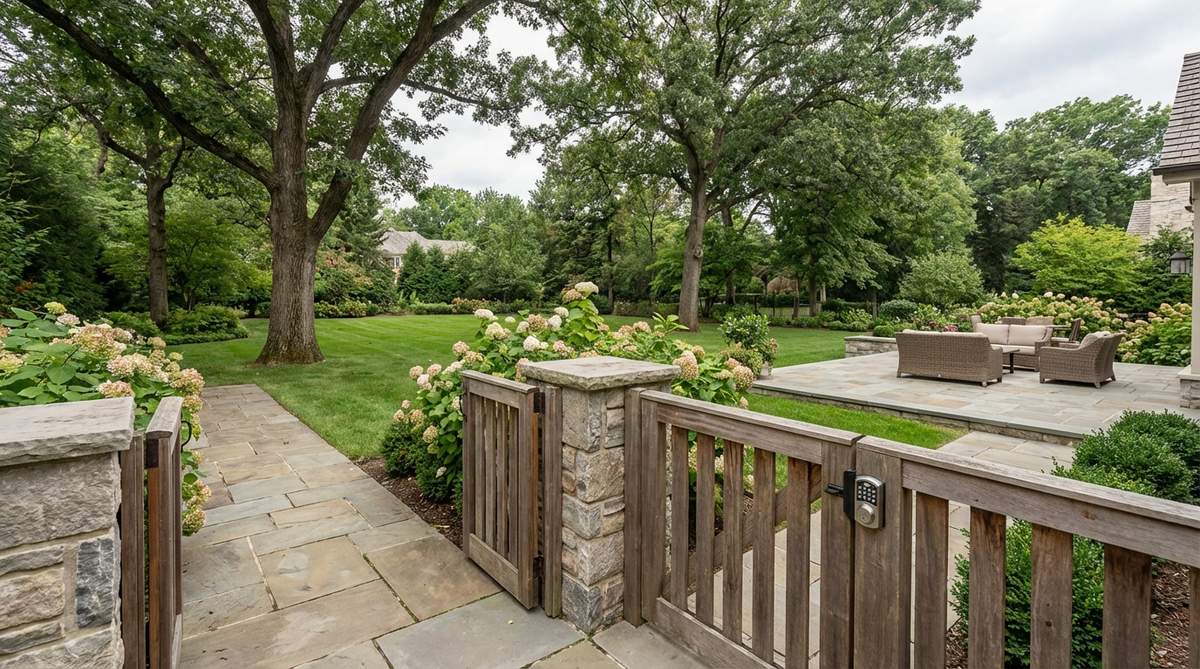
Organize kitchen gardens into geometric beds divided by gravel paths. Plant crops in straight rows—lettuces, cabbages, beans—to create orderly, productive landscapes.
Edge beds with boxwood or germander hedges. This technique blends utility with ornamental appeal, a hallmark of colonial garden design.
34. Colonial-Style Arbor Entrance
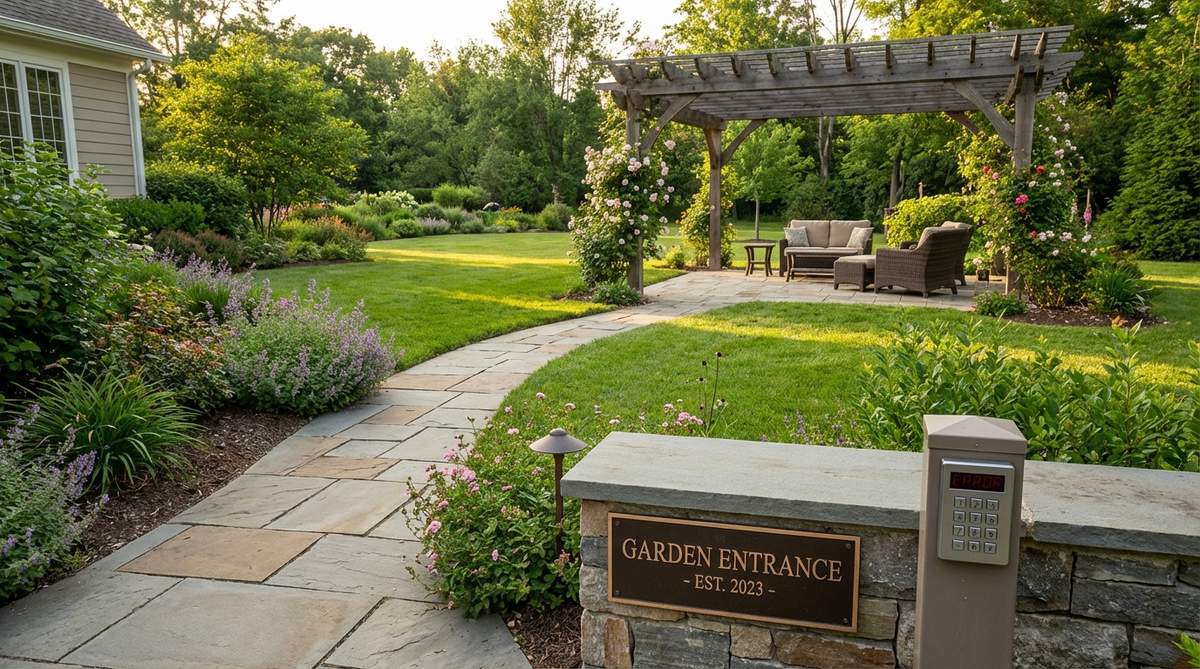
Build a simple wooden arbor at the garden entrance. Train climbing roses or honeysuckle over the structure to mark the transition from utilitarian yard to formal garden.
Paint the arbor white or leave it natural weathered gray. The structure frames views into the garden and establishes the central axis.
35. Matching Container Plantings
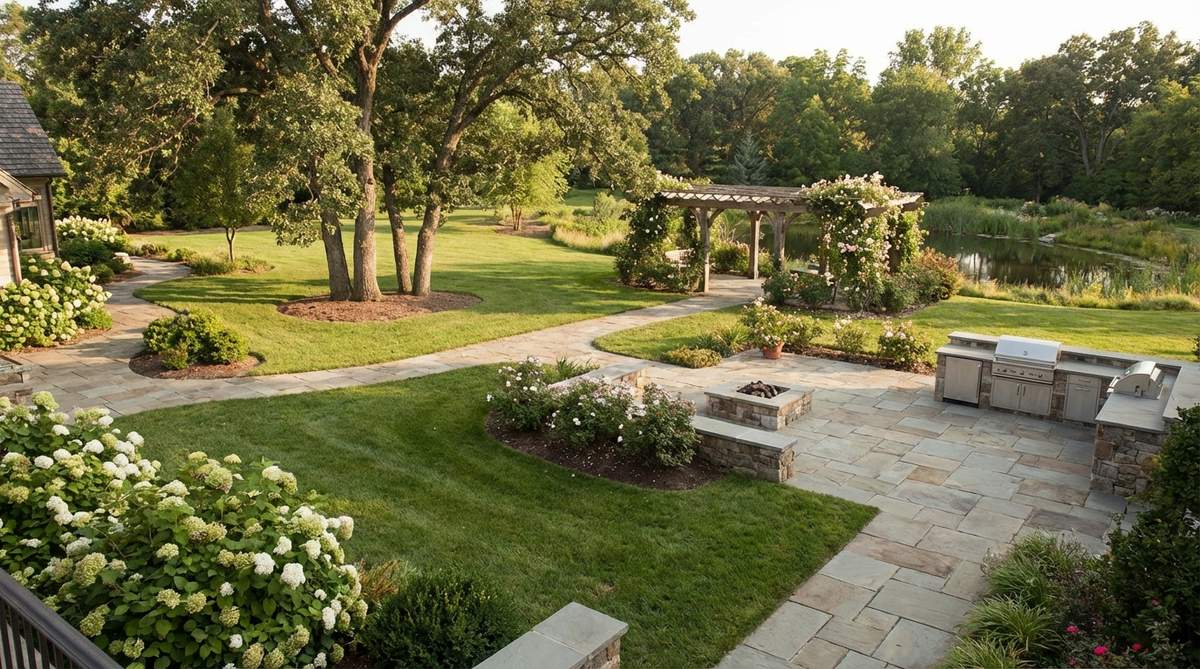
Place identical terra-cotta or wooden planters at symmetrical locations—flanking doorways, marking path intersections, or anchoring corners. Fill with seasonal annuals or clipped evergreens.
This portable symmetry allows flexibility in design adjustments. Containers also provide focal points during winter when perennial beds are dormant.
36. Espaliered Camellias
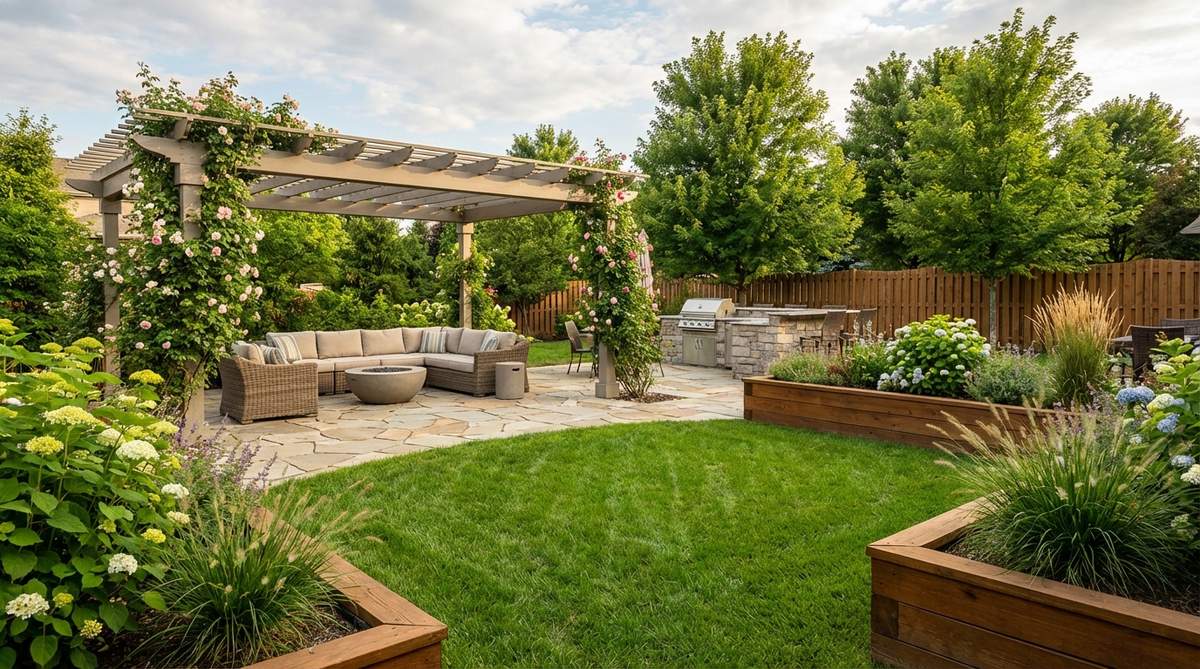
Train camellias or other broadleaf evergreens into flat forms against the house or garden wall. The symmetrical branching patterns mirror one another across windows or doors.
Prune after flowering to maintain shape. This technique adds architectural interest year-round and produces winter blooms near building foundations.
Modern Minimalist Balance and Clean Lines
Contemporary interpretations of symmetry strip away ornament to emphasize pure geometry and material contrasts. These elegant garden designs use restrained plant palettes, architectural hardscaping, and negative space to create calm, uncluttered outdoor rooms.
37. Monochrome Planting Schemes
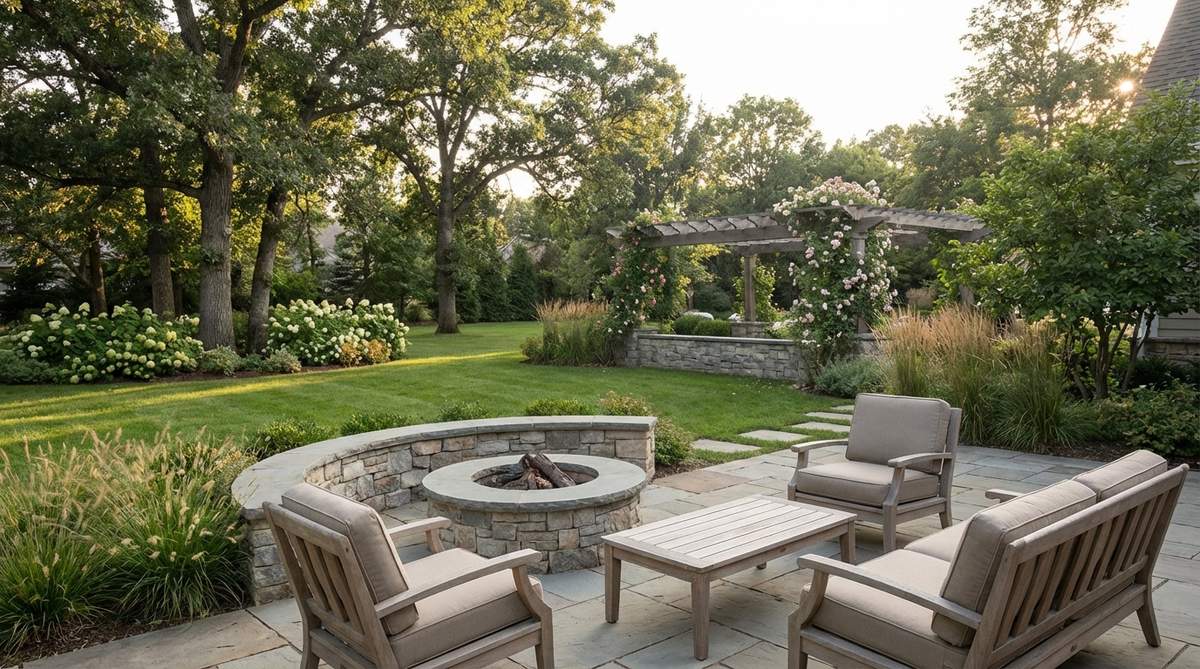
Use a single plant species—mass plantings of ornamental grasses, lavender, or boxwood spheres—arranged in strict grids or linear rows. The uniformity creates visual rhythm without botanical complexity.
This approach emphasizes form, texture, and light over color diversity. Seasonal changes occur subtly through foliage shifts rather than floral displays.
38. Poured Concrete Pathways
Install smooth concrete paths with expansion joints at regular intervals. The industrial material provides a neutral backdrop for plantings and contrasts with organic textures.
Pair concrete with steel or corten edging for a cohesive modern aesthetic. The clean lines reinforce axial views and directional movement.
39. Linear Water Feature
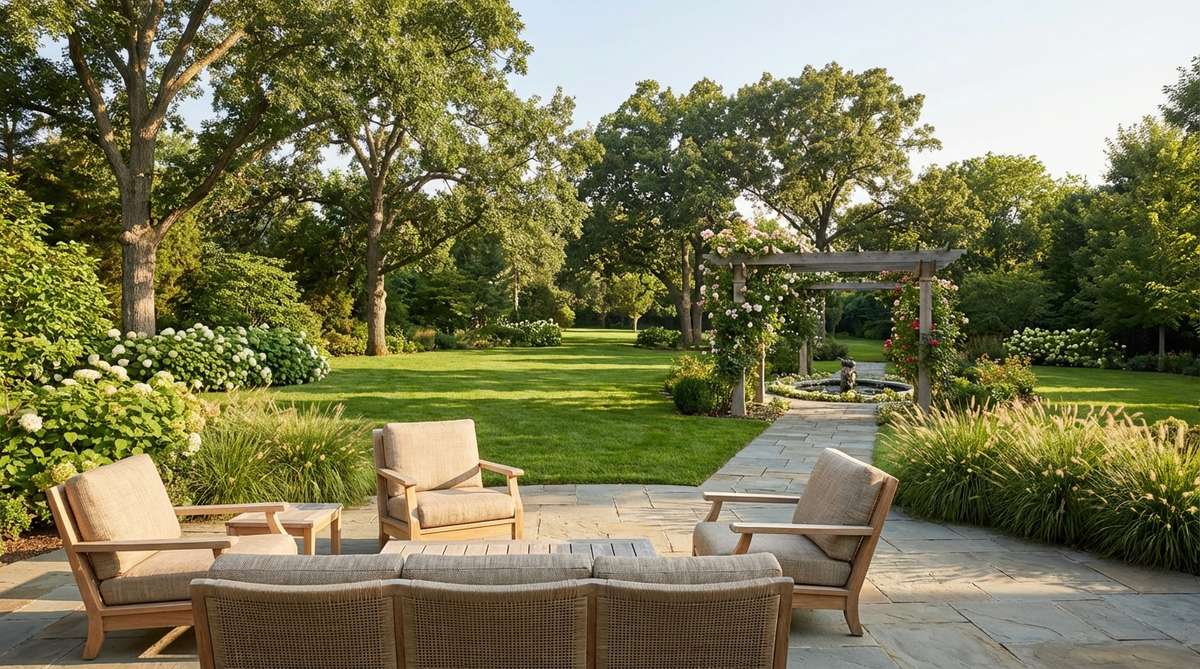
Construct a narrow rectilinear water rill that runs parallel to the main path. Use black granite or stainless steel for the trough to create a mirror-like surface.
The still water reflects sky and adjacent plantings, doubling their visual presence. A hidden recirculating pump maintains water level without visible mechanics.
40. Cubic Stone Seating
Position identical stone cubes at symmetrical intervals along pathways or garden edges. These minimalist benches provide seating while functioning as sculptural elements.
Use limestone, granite, or sandstone cut to precise dimensions. Their geometric purity complements clipped plantings and reinforces the garden’s order.
41. Floating Steel Planters
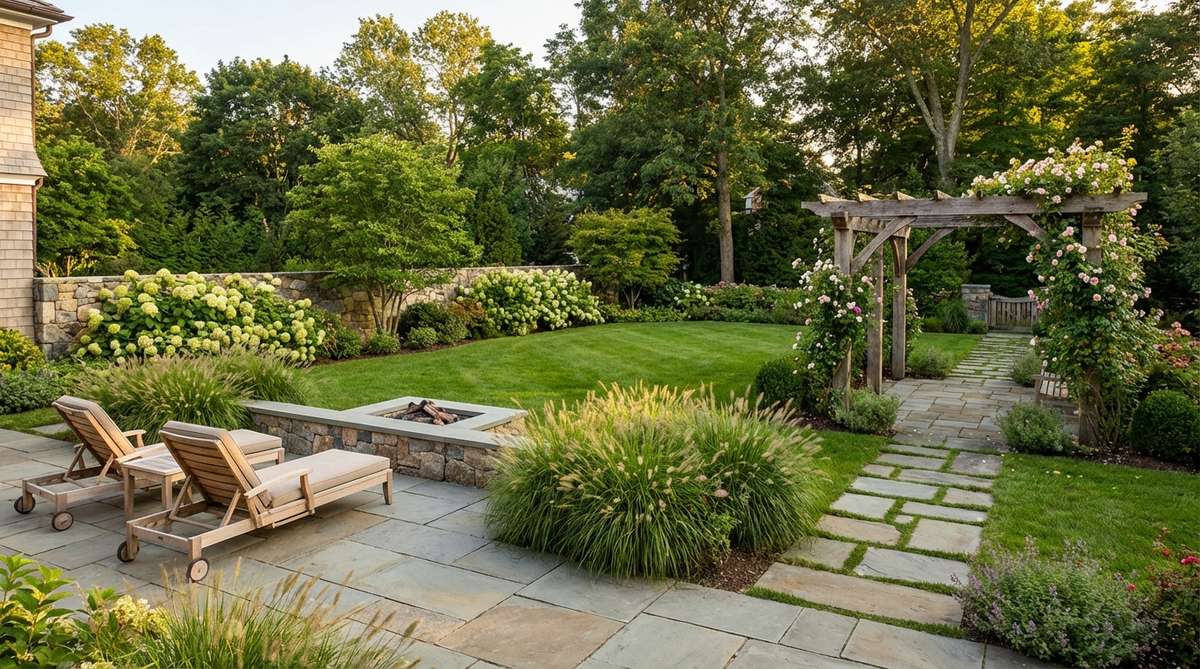
Install raised planters fabricated from weathering steel (corten) or powder-coated aluminum. Position them symmetrically to flank entrances or define outdoor rooms.
Plant with single-species compositions—grasses, sedums, or evergreen shrubs. The elevated planters add height variation without disrupting the horizontal emphasis.
42. Mirrored Hedge Screens
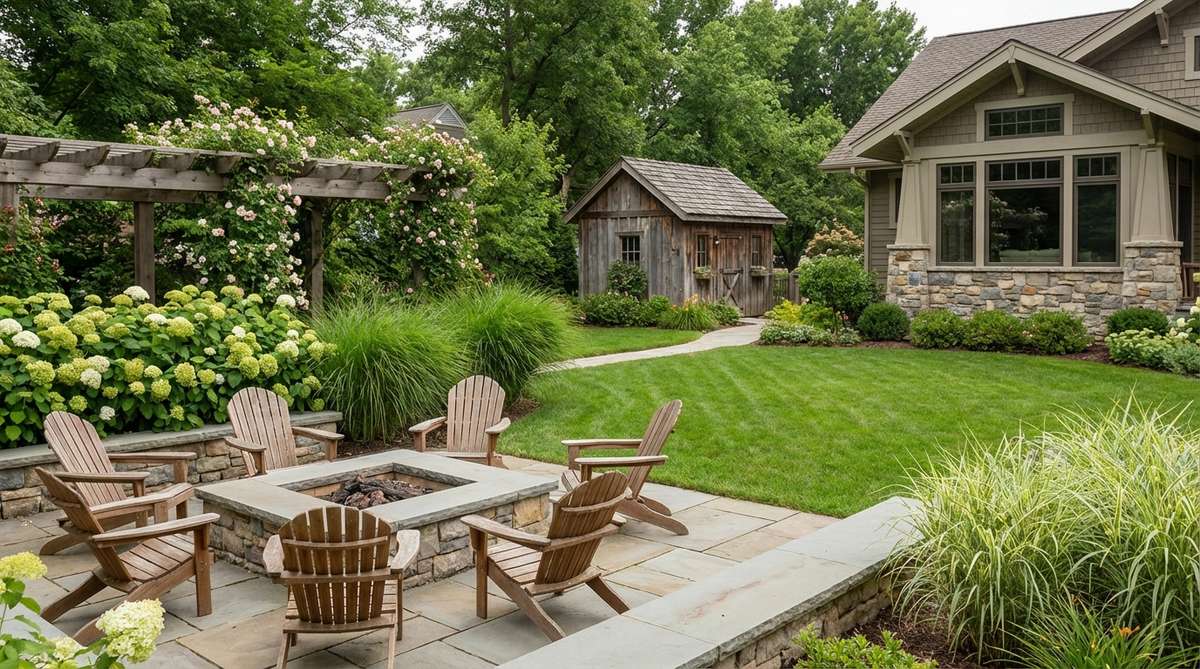
Plant parallel hedges of hornbeam or yew to create narrow corridors leading to focal points. The hedges frame views and guide movement along predetermined axes.
Maintain hedges at 6 to 8 feet tall. Their vertical planes provide enclosure and privacy while preserving clean, geometric lines.
43. Decomposed Granite Groundcover
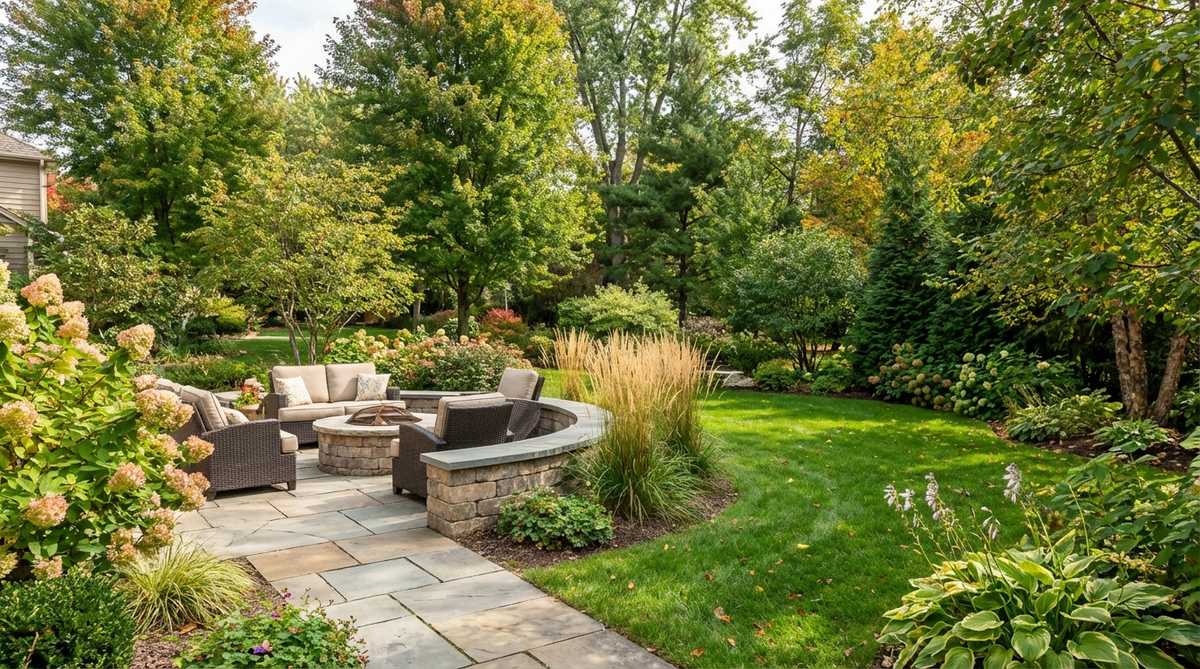
Use stabilized decomposed granite as an alternative to gravel or mulch. Its fine texture and uniform color create a neutral field that highlights architectural plantings.
Compact the granite to create a firm surface that drains well. Edge with metal or concrete strips to prevent spreading into adjacent beds.
Architectural Elements for Elegant Garden Designs
Structures—pergolas, arches, gates, and pavilions—reinforce symmetry by marking axes, framing views, and creating vertical accents. These features integrate hardscape and planting into unified compositions.
44. Twin Pergolas Flanking Paths
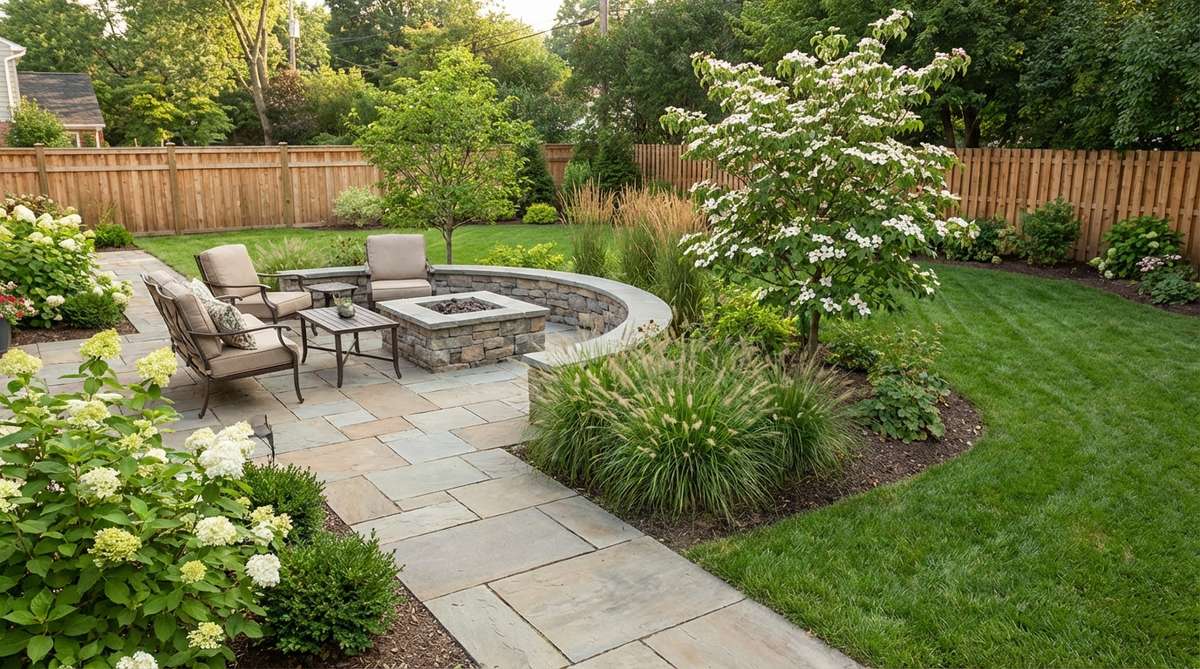
Build matching timber or steel pergolas on either side of a central lawn or pathway. Train wisteria, climbing roses, or grapevines over the structures to create seasonal shade and fragrance.
The mirrored pergolas frame the central space and guide visitors through the garden. Their repetition strengthens the overall symmetry.
45. Formal Garden Gates
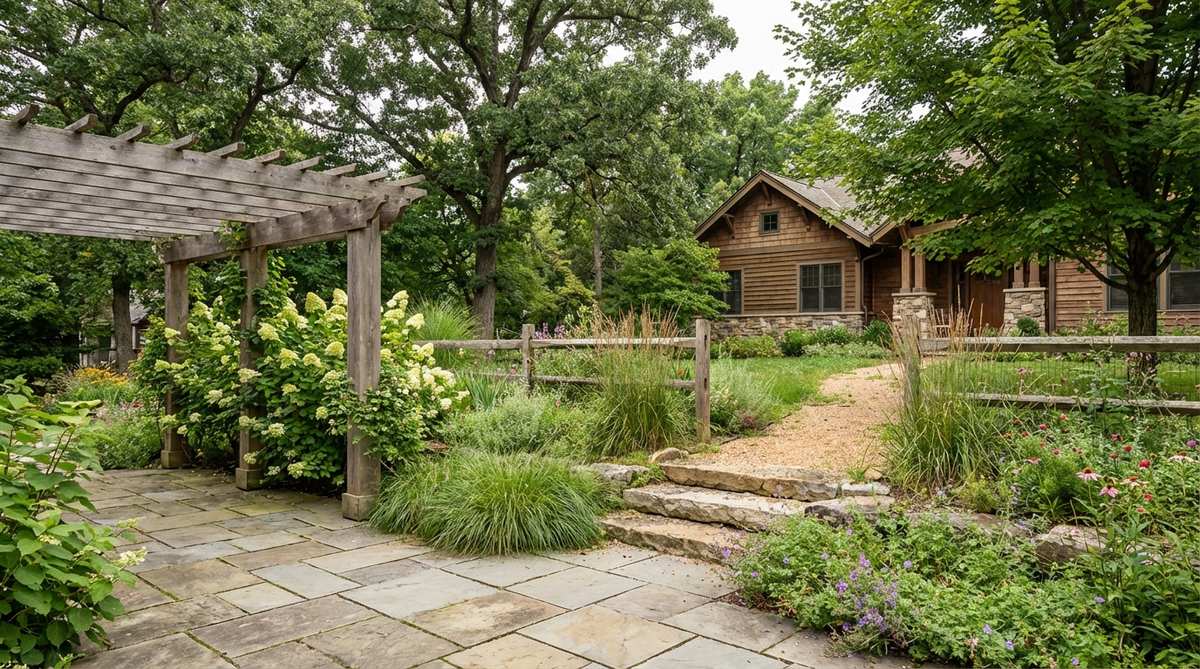
Install wrought-iron or wooden gates at garden entrances, positioned on the primary axis. Design gates with symmetrical patterns—scrolls, geometric grids, or vertical bars—that echo plantings beyond.
Paint gates black or dark green to contrast with light-colored fencing or walls. Their visual weight marks the transition into the formal garden.
46. Classical Columns and Pilasters
Incorporate stone or stucco columns at key points—flanking terraces, marking path intersections, or supporting pergola beams. Classical proportions (Doric, Ionic, or Corinthian orders) add historical gravitas.
Space columns evenly to create rhythm. Their verticality contrasts with horizontal planting beds and emphasizes the garden’s architectural framework.
47. Symmetrical Lighting Fixtures
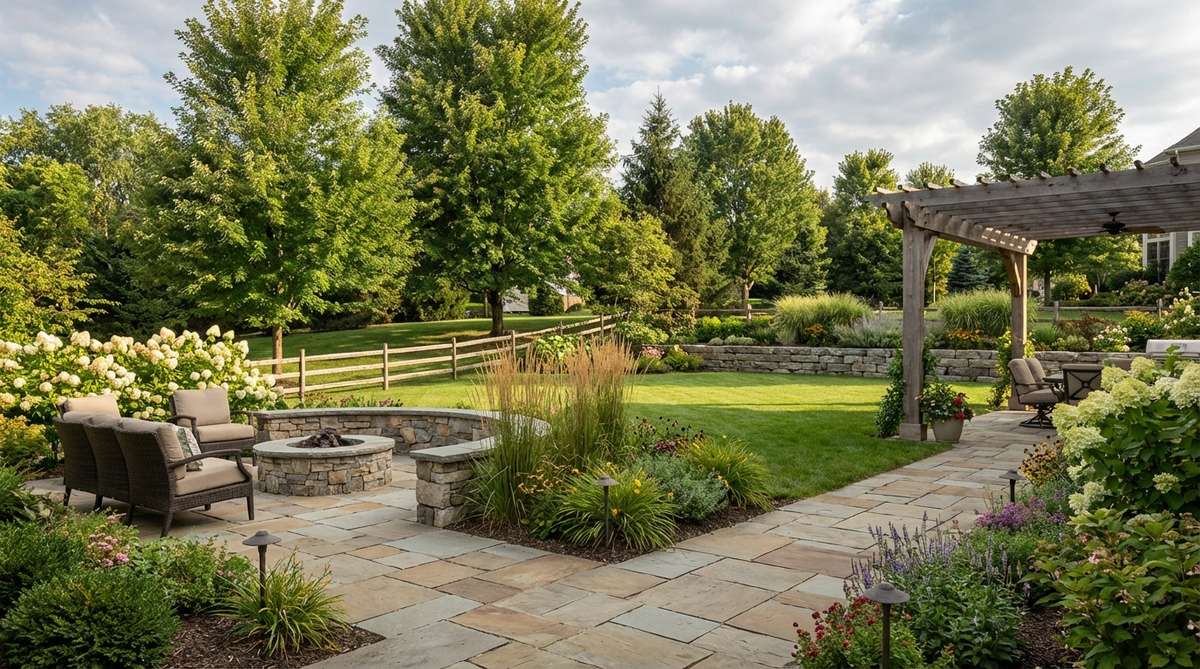
Install matching lanterns, post lights, or uplights at mirrored locations throughout the garden. Lighting reinforces symmetry after dark and extends usability into evening hours.
Use warm-white LEDs to illuminate pathways and accent plantings. Position fixtures to highlight key structural elements—topiaries, fountains, gates—without creating glare.
Conclusion
Designing elegant gardens centered on symmetry requires balancing historical precedent with site-specific conditions. Whether drawing from French parterres, Italian terraces, or Persian quadrants, the core principles remain constantclear axes, geometric order, restrained plant palettes, and architectural reinforcement. Start with a single symmetrical feature—mirrored beds flanking a path, a central fountain, or matching topiaries—and expand outward, ensuring each element strengthens the overall composition. Fresh Garden Ideas encourages you to measure carefully, plant with intention, and prune diligently to maintain the crisp edges that define timeless garden elegance.
Frequently Asked Questions
What plants work best for symmetrical garden designs?
Evergreen species with predictable growth habits perform best in symmetrical layouts. Boxwood (Buxus sempervirens) remains the gold standard for low hedges and parterres due to its fine texture and tolerance of repeated shearing. Yew (Taxus baccata) suits taller hedges and topiaries, while Italian cypress (Cupressus sempervirens) provides vertical accents. For herbaceous plantings, select varieties with uniform habits—lavender, santolina, or ornamental grasses—arranged in blocks or rows to reinforce geometric clarity.
How do I maintain sharp edges in formal hedges?
Shear hedges twice annually using manual or powered hedge shears. The first cut occurs in late spring after the initial growth flush; the second in late summer before fall dormancy. Use a string line stretched between stakes to guide cuts and ensure straight planes. Trim sides with a slight inward taper (narrower at top than base) so lower branches receive adequate light and remain dense. Remove clippings immediately to prevent fungal diseases.
Can I create elegant symmetrical gardens in small spaces?
Yes. Symmetry scales effectively to compact areas by simplifying the design. Focus on a single parterre divided into four quadrants, or create a narrow axial layout with mirrored beds flanking a central path. Use dwarf varieties of traditional plants—dwarf boxwood, compact lavender, or miniature roses—to maintain proportion. Vertical elements like obelisks or wall-mounted features add height without consuming ground space, preserving the garden’s balanced appearance.
What hardscaping materials complement formal garden symmetry?
Materials with uniform dimensions and neutral colors work best. Brick (especially in running bond or herringbone patterns), cut stone pavers, and poured concrete provide clean lines that support geometric planting beds. Gravel—crushed limestone, pea gravel, or decomposed granite—offers a cost-effective alternative for pathways and compartment infill. Metal edging (steel or aluminum) creates crisp boundaries between planting beds and paths, preventing erosion and maintaining design clarity over time.
How much maintenance do symmetrical gardens require?
Formal gardens demand consistent attention to preserve their appearance. Expect to prune hedges and topiaries twice yearly, edge pathways monthly, and weed beds weekly during the growing season. Deadheading flowers, raking gravel, and trimming lawns add to routine tasks. However, the limited plant palette simplifies care compared to diverse perennial borders. Installing irrigation systems reduces manual watering, and using landscape fabric beneath gravel minimizes weeding. Budget four to six hours monthly for a 500-square-foot formal garden.