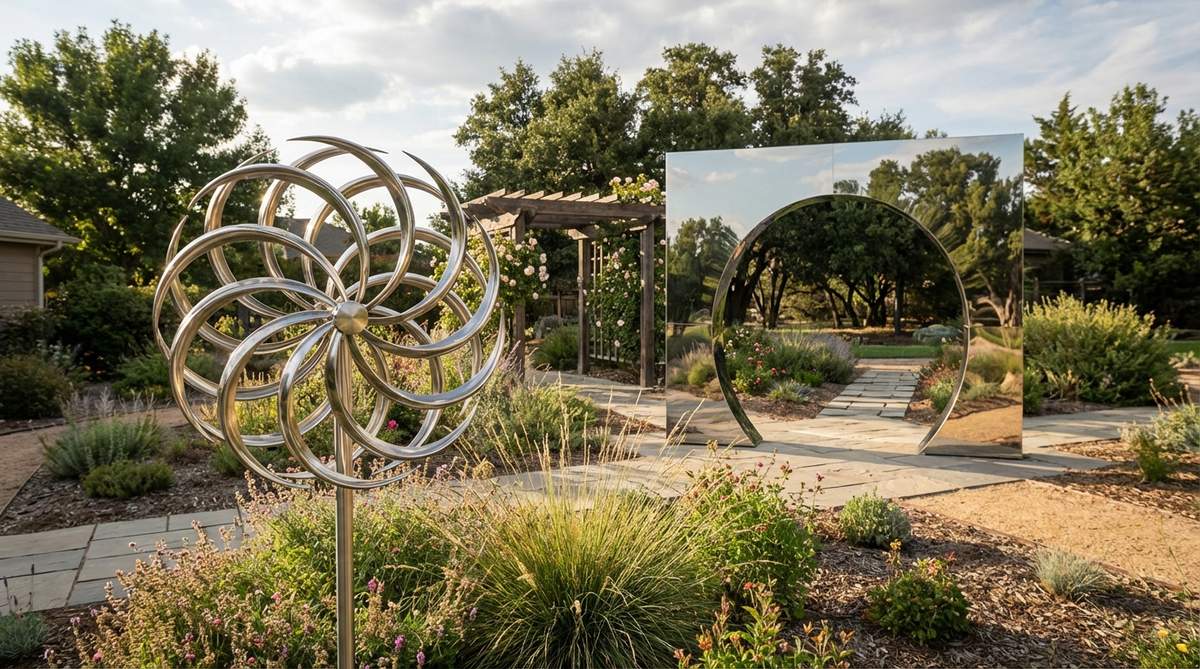
Contemporary garden sculpture installations blend artistic vision with landscape design, creating focal points that evolve with changing light and seasons. From kinetic pieces that dance with the wind to mirror-polished forms that reflect their surroundings, modern garden art redefines how we experience outdoor spaces. Fresh Garden Ideas curates this collection to inspire designers and homeowners seeking sculptural elements that balance form, function, and environmental harmony.
Design SnapshotKey Principles
- Material Integrity: Choose weather-resistant materials like marine-grade stainless steel, corten steel, or bronze that develop character over time
- Scale and Proportion: Position sculptures with clearance space at least twice their width to maintain visual balance and energy flow
- Dynamic Interaction: Incorporate kinetic elements or reflective surfaces that respond to wind, light, and seasonal changes
- Strategic Placement: Use sculptures as focal points at entrances, pathway intersections, or central garden spaces to guide visual journeys
Reflective Stainless Steel Installations
Mirror-polished stainless steel sculptures bring a contemporary elegance to gardens through their ability to capture and reflect surrounding environments. These pieces shift appearance throughout the day as light moves across their surfaces, creating an ever-changing visual experience. Marine-grade stainless steel ensures durability in all climates, including coastal regions where salt exposure demands higher corrosion resistance.
1. Mirror-Polished Torus Sphere
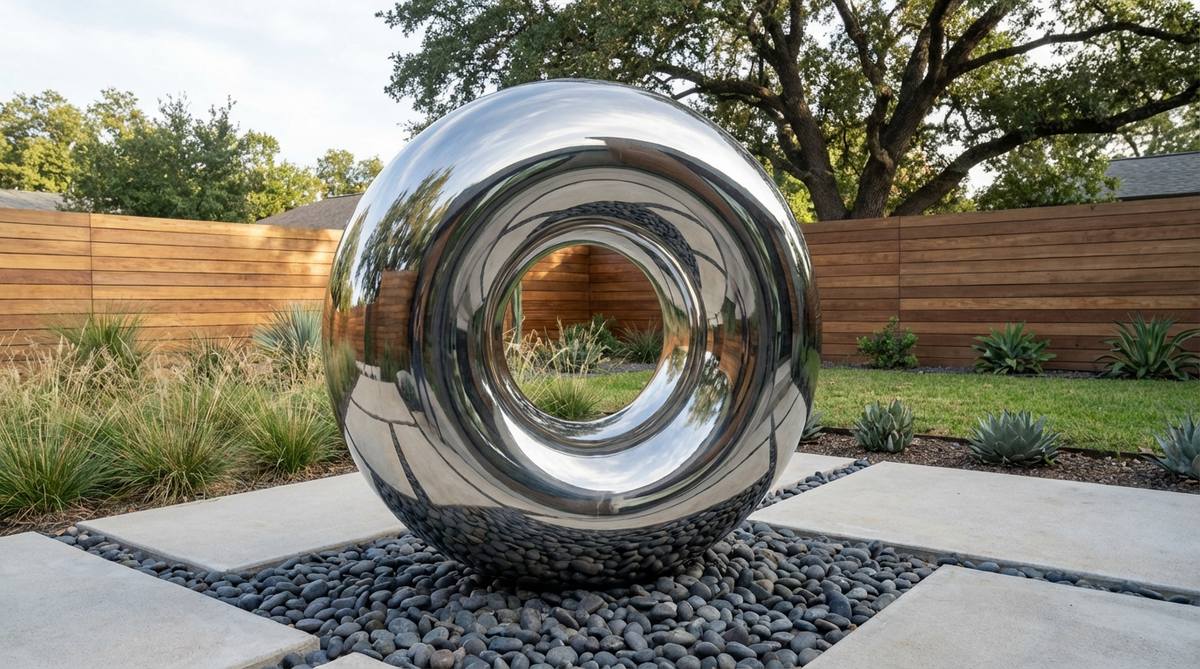
A large circular ring sculpture crafted from polished stainless steel creates kaleidoscopic reflections that mirror the garden’s changing moods. The torus form offers visual interest from every angle, with its reflective surface capturing sky, foliage, and architectural elements.
Position this installation as a centerpiece on open lawn or at the intersection of garden paths where its 350-degree reflective quality can be fully appreciated. The smooth, seamless surface requires minimal maintenance—occasional cleaning with mild soap preserves its mirror finish.
This design works particularly well in minimalist landscapes where the sculpture serves as the primary focal point, drawing the eye through reflected images rather than competing with surrounding plantings.
2. Vertical Quill Tower
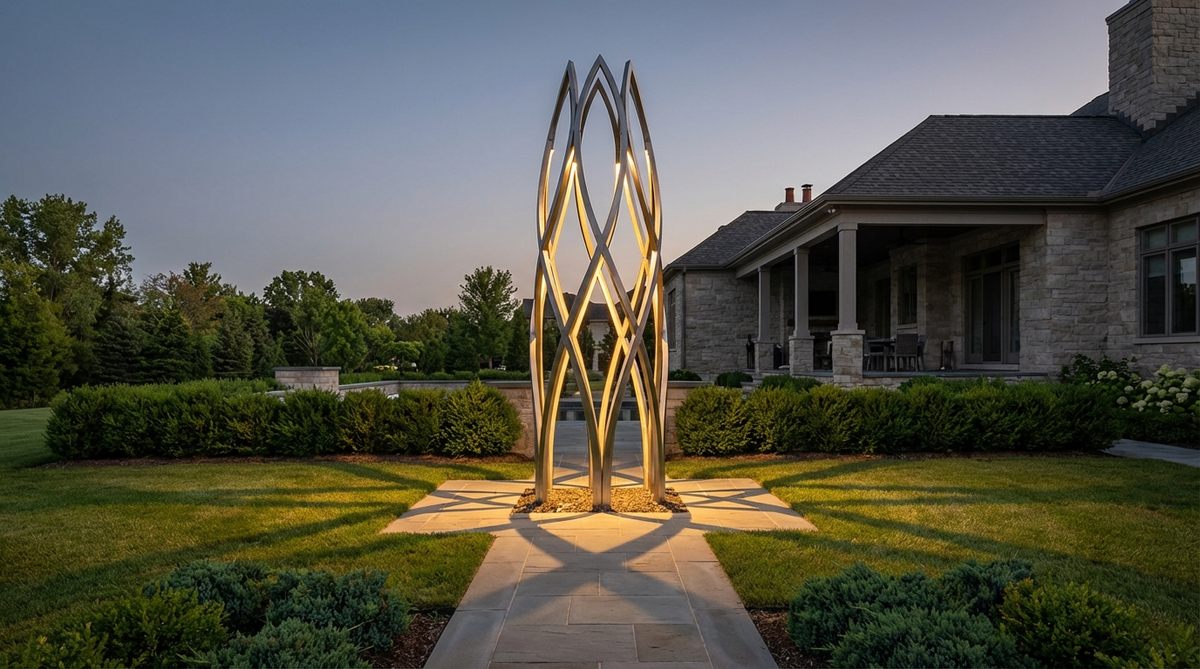
Inspired by Mediterranean pencil pines, this tall sculpture features dozens of interconnected stainless steel petals precision-welded into a slender, elegant form. The delicate structure creates a modern interpretation of classical garden sentinels.
Internal LED lighting transforms the piece after sunset, allowing subtle illumination to filter through the petal gaps and create dramatic shadows on surrounding surfaces. Install near formal garden entries or as a boundary marker between distinct landscape zones.
The vertical emphasis provides height without bulk, making it ideal for narrow garden beds or spaces where traditional statuary might overwhelm the setting.
3. Hydra Multi-Layered Frond Sculpture
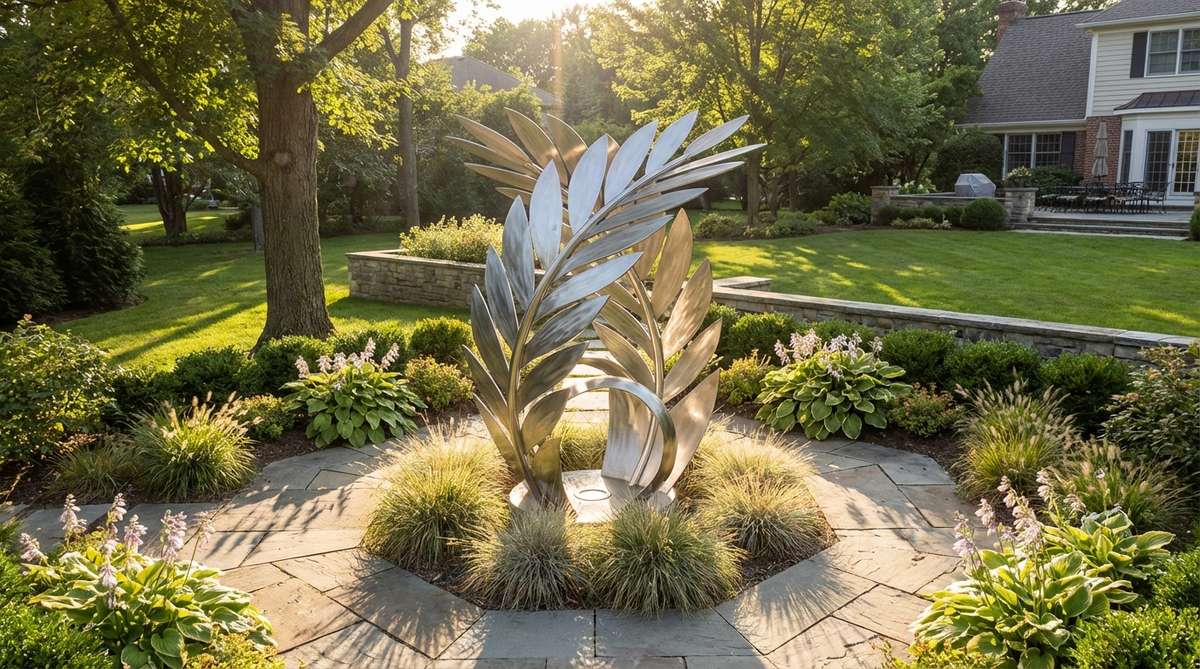
Leaf-like fronds of stainless steel layer and overlap to create organic movement frozen in metal. The structure sways visually between light and shadow, with each frond catching different angles of sunlight throughout the day.
A spotlight positioned at the sculpture’s center enhances the three-dimensional quality at night, casting intricate shadows on nearby walls or ground planes. The installation thrives in transitional spaces between garden rooms.
4. Geometric Steel Breeze Panels
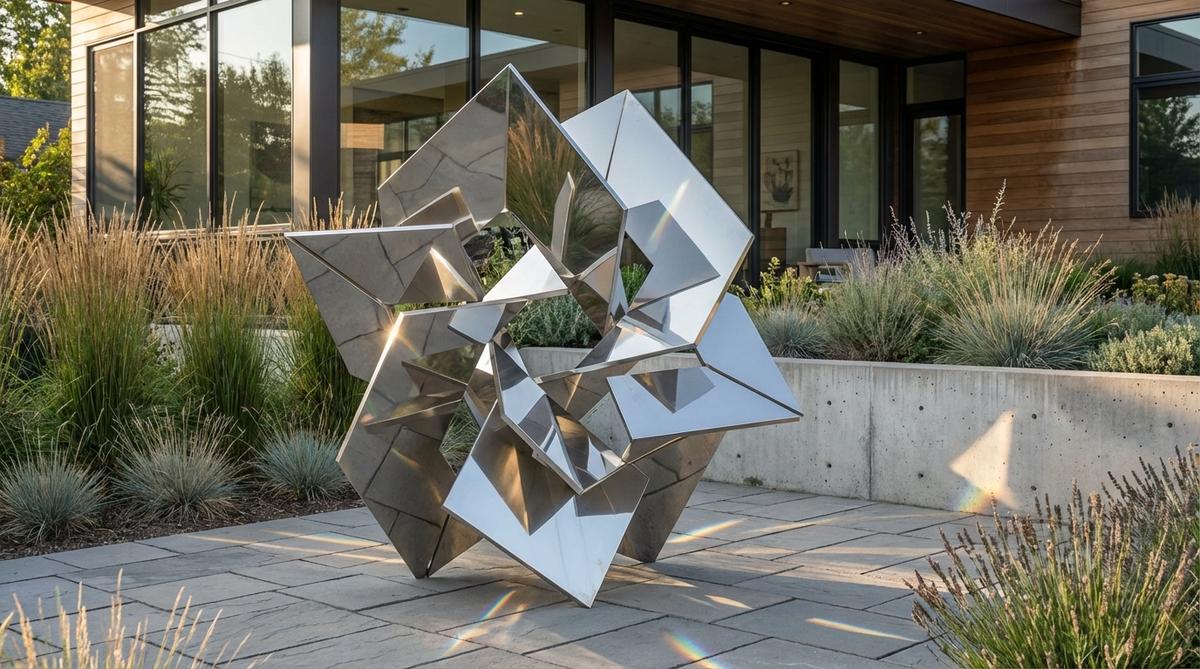
Composed of angular stainless steel panels arranged in geometric patterns, this freestanding sculpture plays with light refraction and environmental reflection. Each panel captures a different section of the surrounding landscape.
The contemporary aesthetic suits urban gardens and modern architectural settings where clean lines and industrial materials dominate the design vocabulary. Position against contrasting backgrounds—dark hedges or neutral walls—to emphasize the sculpture’s sharp edges and reflective surfaces.
Kinetic Wind Sculptures
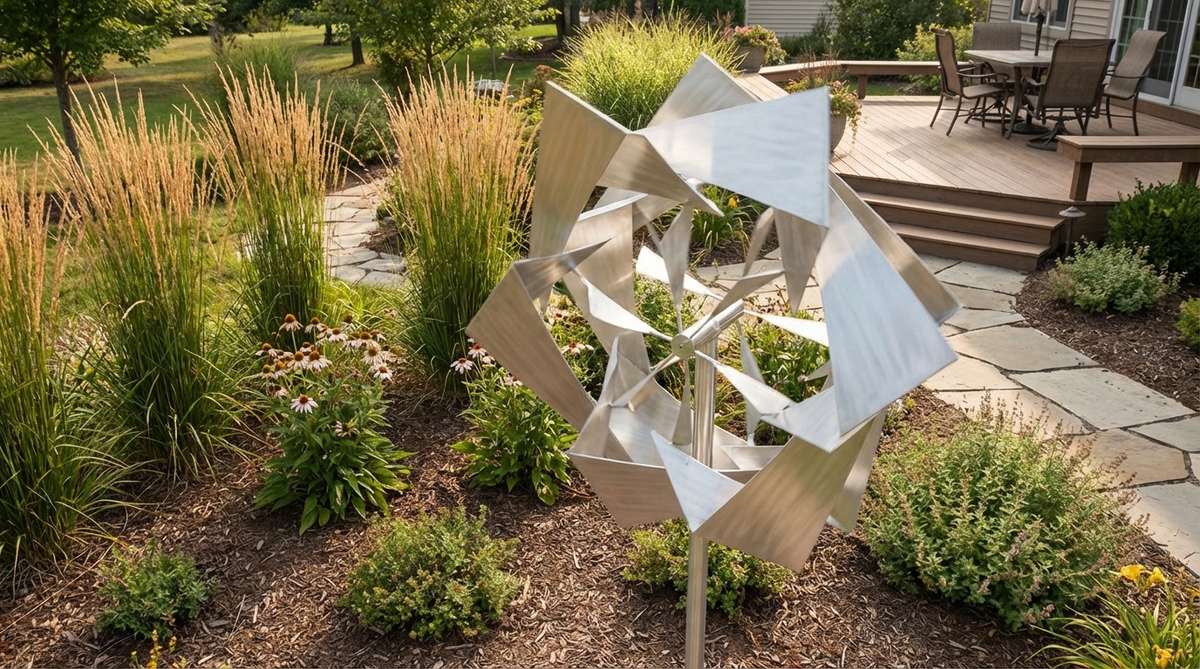
Wind-powered kinetic sculptures harness natural forces to create perpetual motion in the garden landscape. These installations merge engineering precision with artistic expression, using carefully balanced components that respond to even the slightest breeze. Designers favor copper and stainless steel for their durability and ability to withstand wind speeds up to 90 mph while maintaining graceful, fluid movement.
5. Copper Spiral Wind Spinner
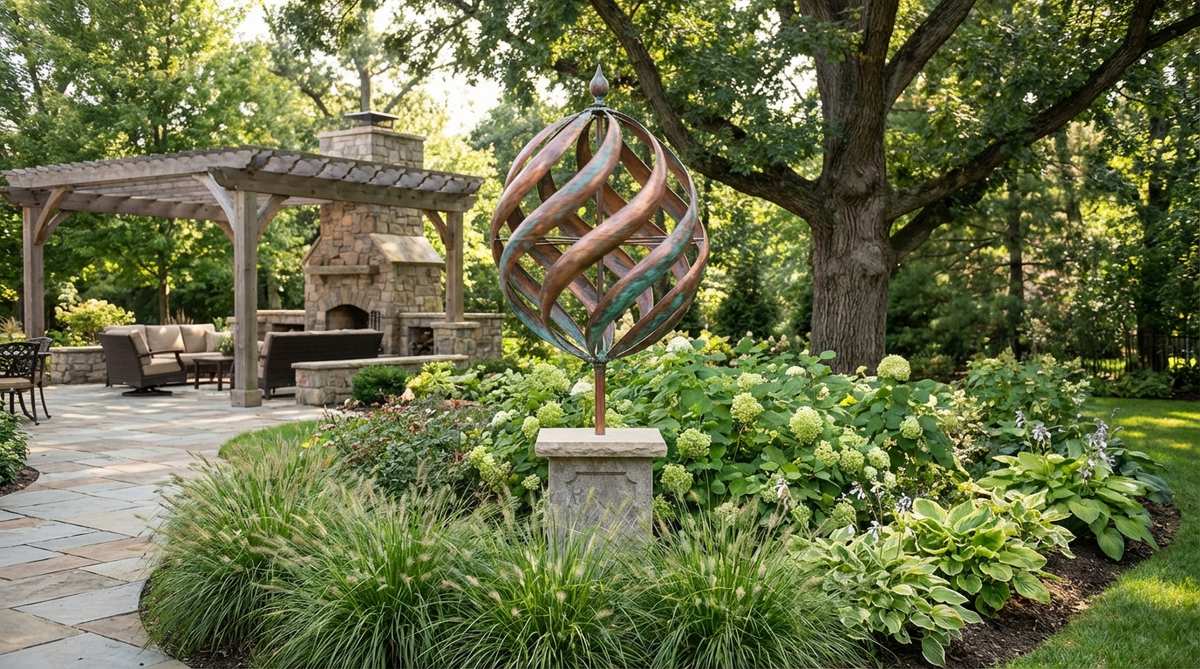
A spiraling copper form rotates on a central axis, creating mesmerizing circular patterns as wind energy sets it in motion. The copper’s natural patina develops over time, shifting from bright metallic tones to rich verdigris hues.
Mount this kinetic piece on an elevated base in open garden areas where wind currents flow freely. The rotation creates dynamic visual interest without sound, operating silently even in strong winds.
The evolving copper surface adds temporal dimension—the sculpture literally transforms with age, developing unique character that reflects local climate conditions.
6. Stainless Steel Double Helix
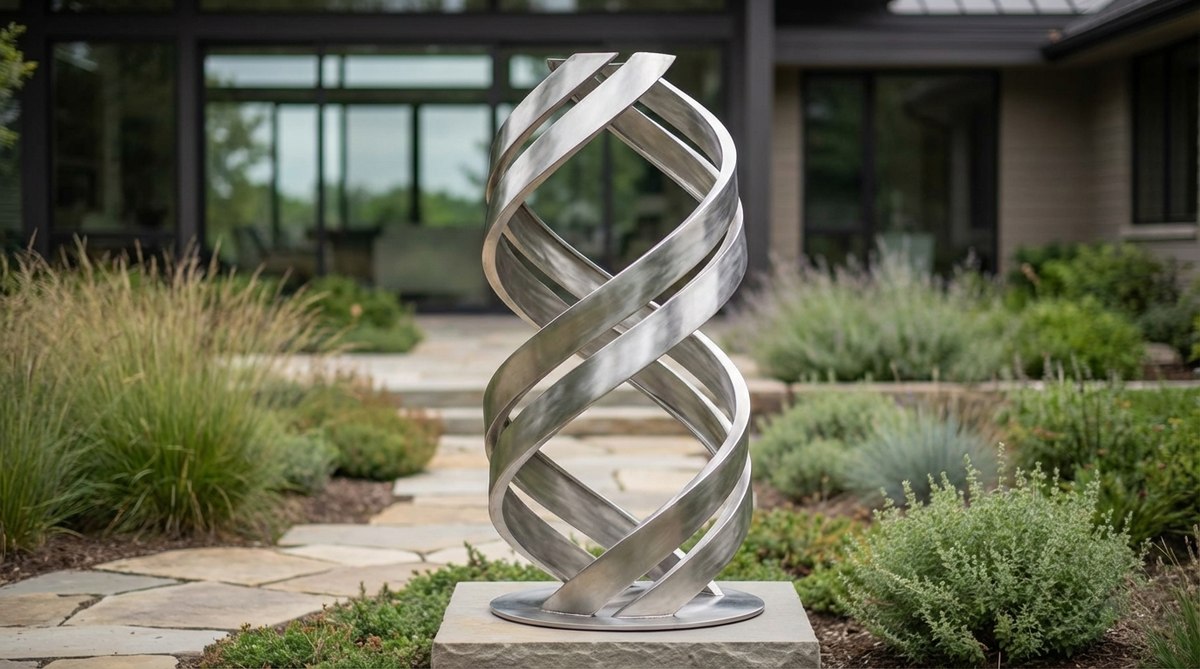
Two interwoven helical forms rotate independently on precision bearings, creating complex layered movement. Stainless steel construction ensures the piece maintains its polished appearance while delivering reliable kinetic performance.
Position in sight lines from interior living spaces to provide year-round visual engagement. The sculpture’s movement draws attention through windows, connecting indoor and outdoor environments.
7. Dancing Figure Kinetic Installation
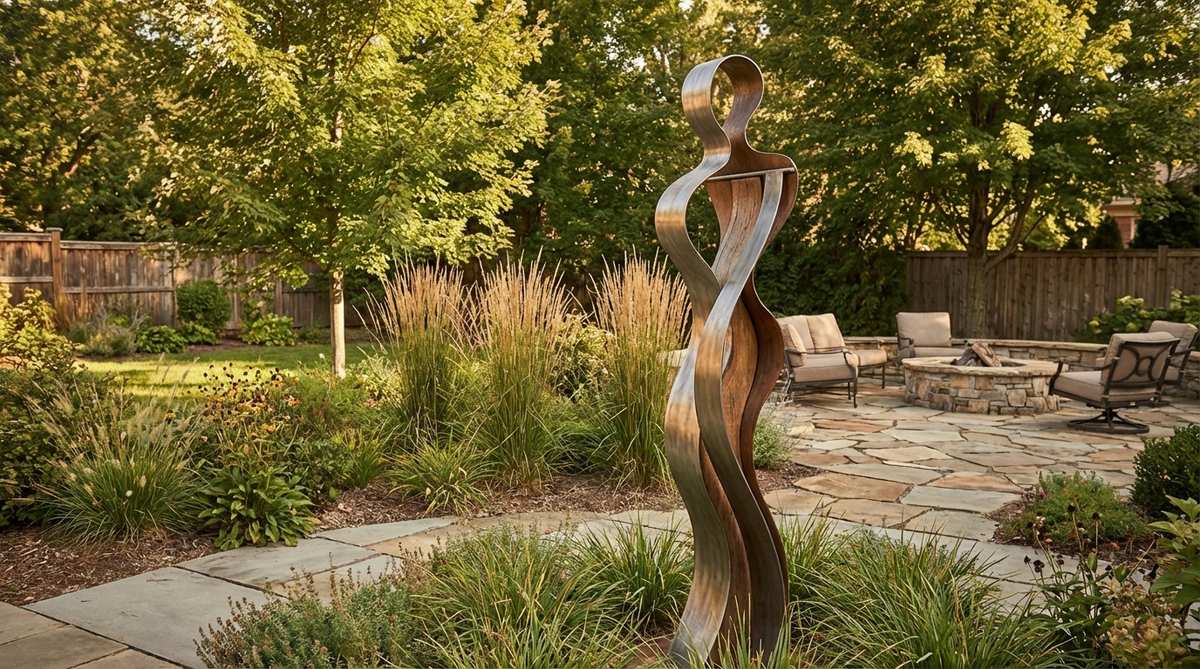
An abstract human form crafted from weatherproof materials moves gracefully with wind currents, mimicking natural gestures and creating the impression of a silent dance performance. The contemporary sculpture explores movement and form through minimalist design.
Install in contemplative garden zones or near seating areas where the gentle motion enhances meditative qualities. The sculpture continues to move elegantly even in high winds without gaining excessive energy or creating noise.
This installation bridges modern kinetic art with timeless human expression, offering viewers an evolving visual narrative that changes with atmospheric conditions.
8. Multi-Blade Wind Turbine Art
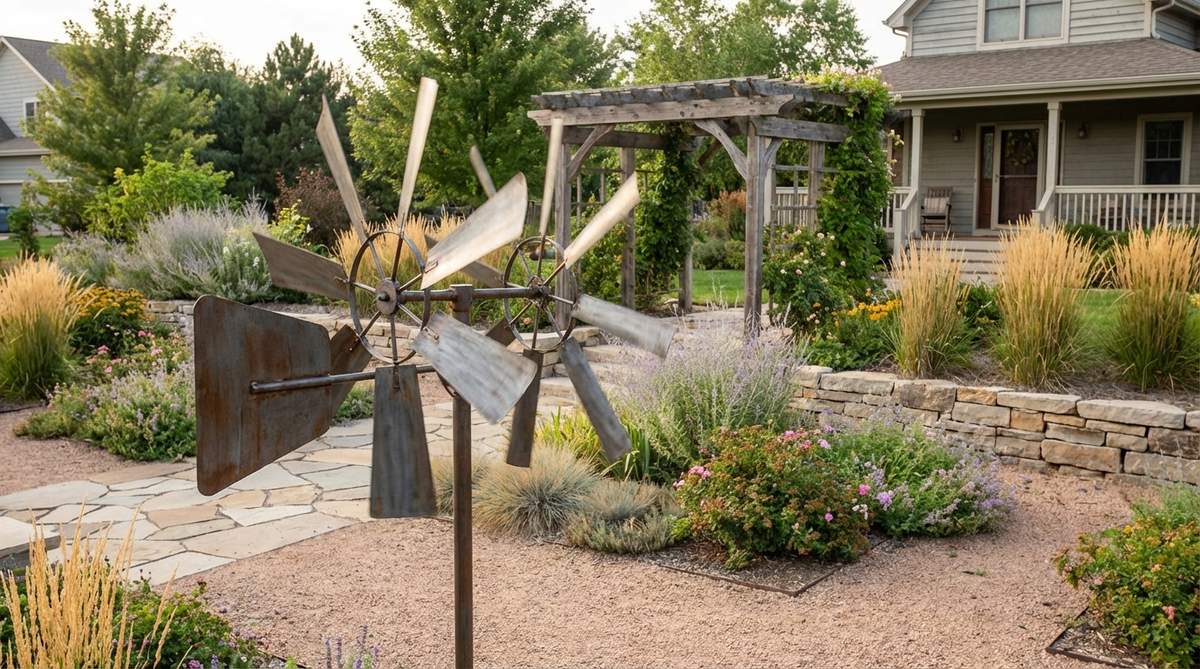
Designers construct this piece with multiple blade elements radiating from a central hub, each catching wind at different angles to create layered rotation effects. The industrial-inspired form suits contemporary landscapes.
The sculpture functions as both kinetic art and conversation piece, with its mechanical aesthetic appealing to those who appreciate the intersection of art and engineering. Proper balance ensures longevity by reducing strain on bearings and support structures.
Weathered Steel and Corten Pieces
Corten and weathered steel sculptures develop protective rust patinas that deepen from natural steel to warm, earthy tones over several months to a year. This oxidation process creates durable surfaces that resist further corrosion while developing unique character tied to local environmental conditions. The russet hues complement naturalistic planting schemes and provide striking contrast when paired with mirror-polished elements.
9. Corten Circle Vertical Stake
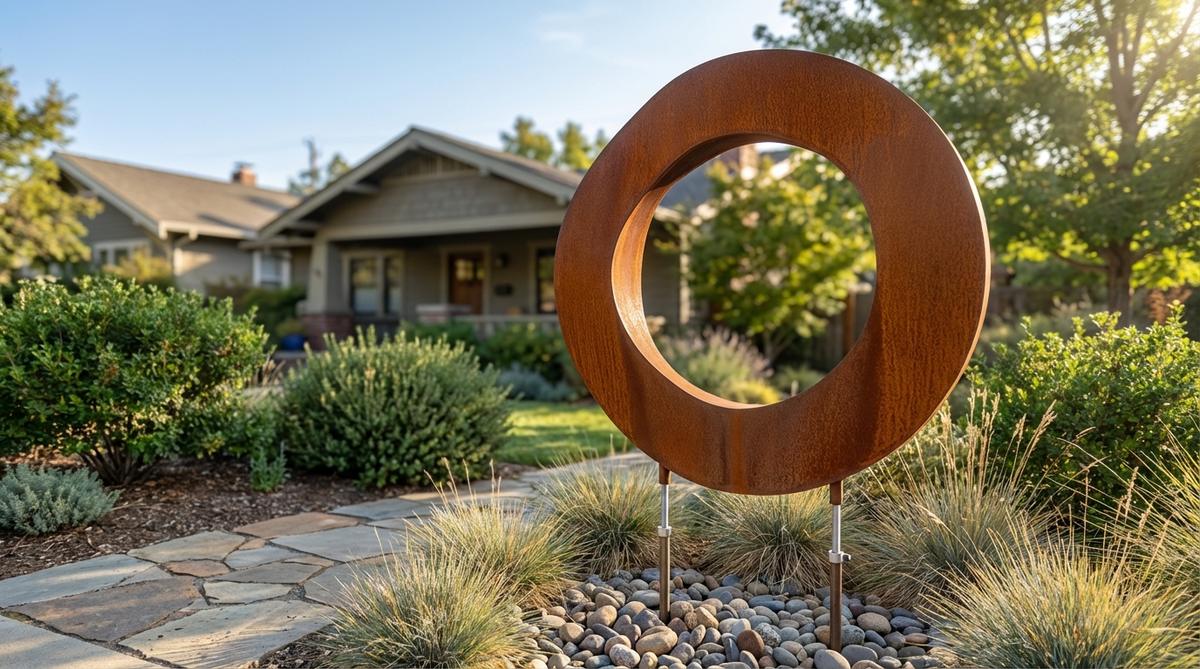
An organic circular form mounted on adjustable stakes allows installation at varying heights to suit surrounding plantings. The two-section design adapts to different garden contexts—low placement integrates with perennial beds while tall installation creates dramatic presence above shorter vegetation.
Weathering steel arrives in its natural state and develops the protective rust patina through environmental exposure. Designers can accelerate the aging process using simple oxidation techniques to achieve the desired finish more quickly.
The sculptural curves add artistic dimension to landscape edges, borders, or as standalone focal points in minimalist gravel gardens.
10. Corten Moon Gate Portal
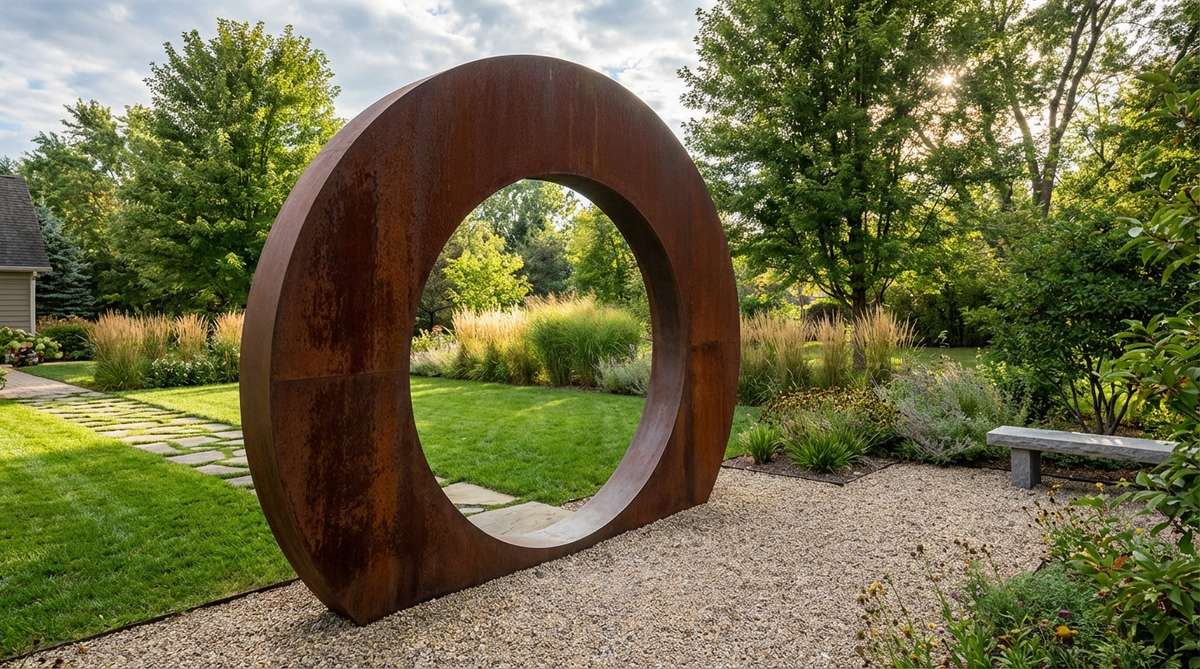
Drawing on Taoist symbolism, this circular portal frame crafted from weathering steel invites passage while creating dramatic threshold moments in the garden. The rusty surface develops rich textural variation that enhances the ancient symbolic form.
Position the moon gate to frame specific views or mark transitions between distinct garden rooms. The cultural significance—representing renewal and good fortune—adds narrative depth to contemporary landscapes.
11. Weathered Steel Geometric Panels
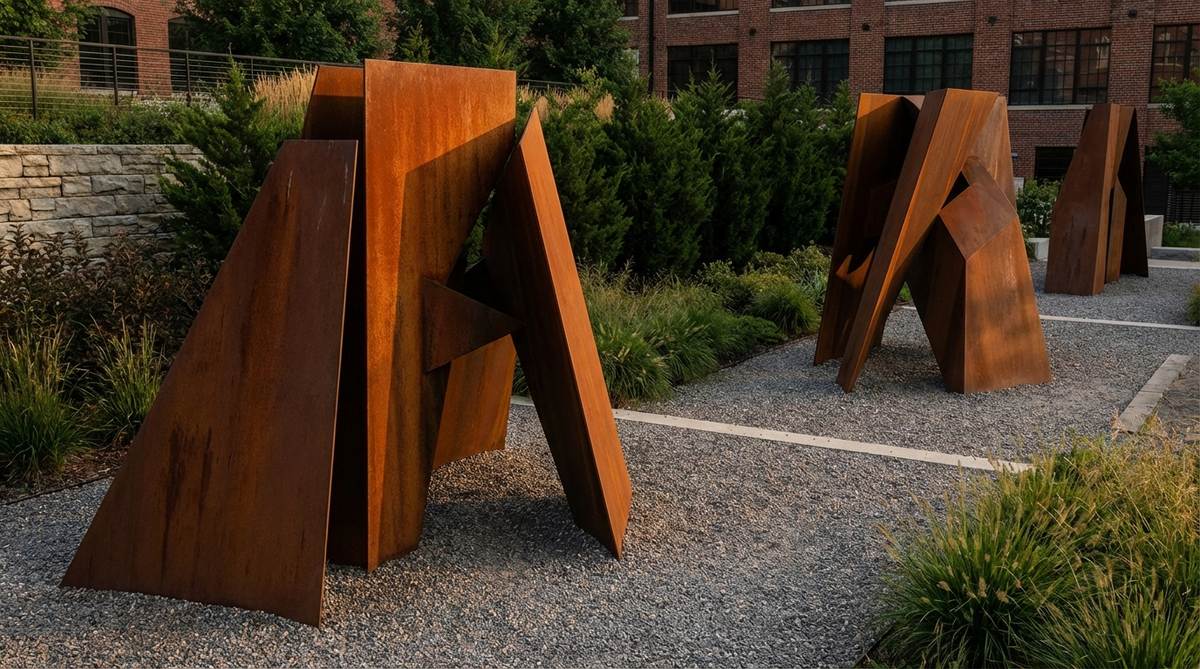
Abstract geometric forms cut from corten steel plates create bold sculptural statements with slim profiles that avoid the bulkiness of concrete or stone alternatives. The linear edges provide architectural clarity.
These installations recall industrial heritage while serving modern design functions, particularly effective in urban gardens or converted industrial sites. The warm rust tones naturalize well against evergreen plantings or gravel surfaces.
Arrange multiple panels in rhythmic sequences along pathways or use single large-scale pieces as primary focal points in open lawn areas.
12. Oxidized Steel Abstract Sculpture
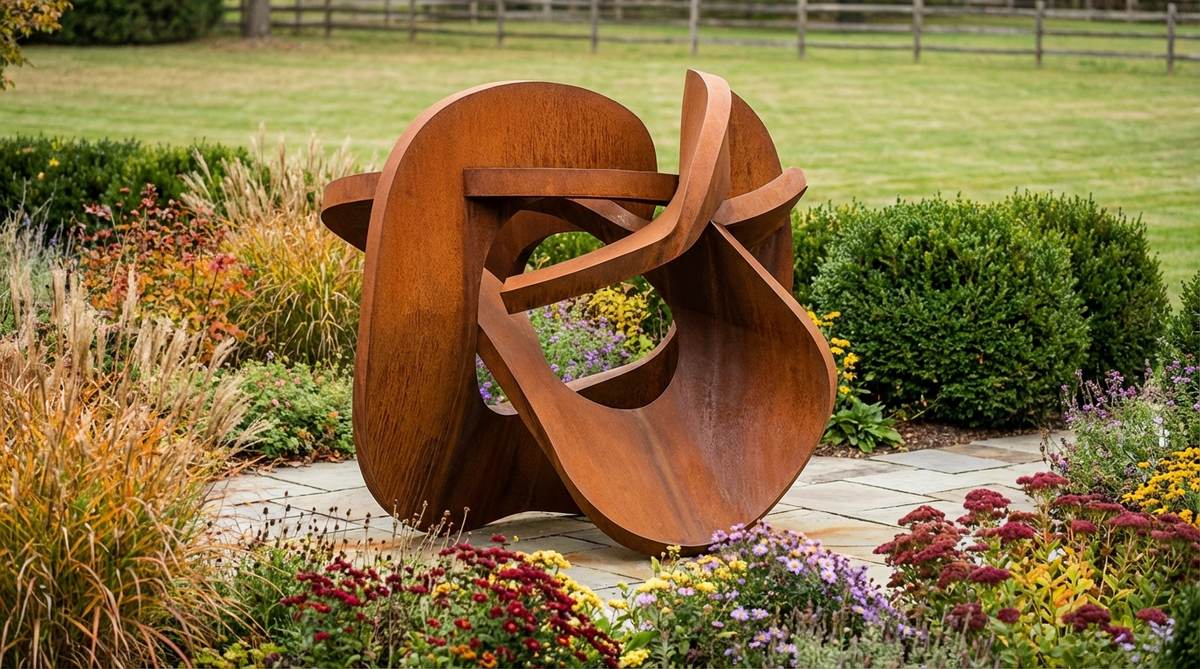
Freeform abstract shapes in oxidized steel explore texture, volume, and negative space through contemporary artistic vision. The weathered surface adds temporal depth—the sculpture appears to carry history despite its modern form.
Position against contrasting backgrounds like crisp green hedges or light-colored walls to emphasize the sculpture’s rusty tones and structural complexity. The earthy coloration harmonizes with autumn-toned planting palettes.
Illuminated Contemporary Garden Statue Designs
Integrated lighting transforms contemporary garden statue installations from daytime focal points into illuminated artworks after sunset. Designers incorporate LED systems directly into sculpture bases or bodies to create seamless aesthetic effects while providing accent lighting that highlights specific textures and forms. Strategic illumination extends the visual impact of sculptural elements throughout evening hours.
13. Internally Lit Sphere Sculpture
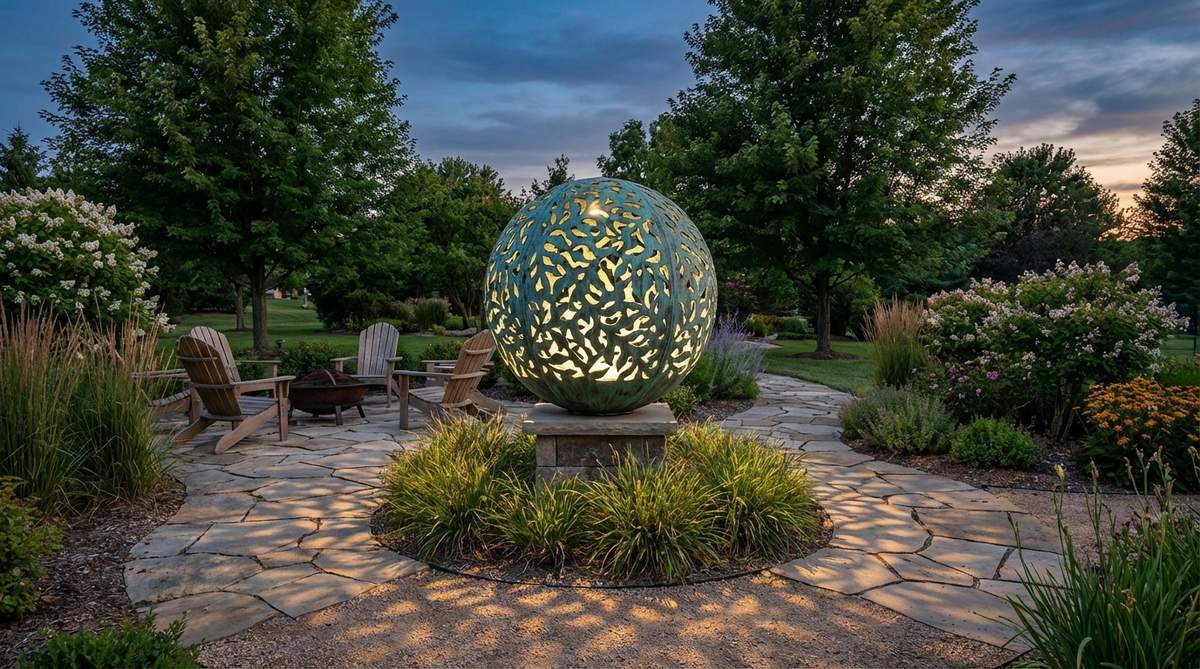
A hollow spherical form with lattice or petal-pattern cutouts houses internal LED lighting that creates an ethereal glow. During daylight, the structure presents intricate shadow patterns; at night, light emanates from within.
This dual-function design works in both verdigris bronze and stainless steel finishes. Position near seating areas or along pathways where the nighttime illumination provides both artistic interest and functional wayfinding.
The subtle interior glow enhances three-dimensional qualities while creating ambient lighting that softens surrounding spaces without harsh spotlighting effects.
14. Backlit Cascade Water Sculpture
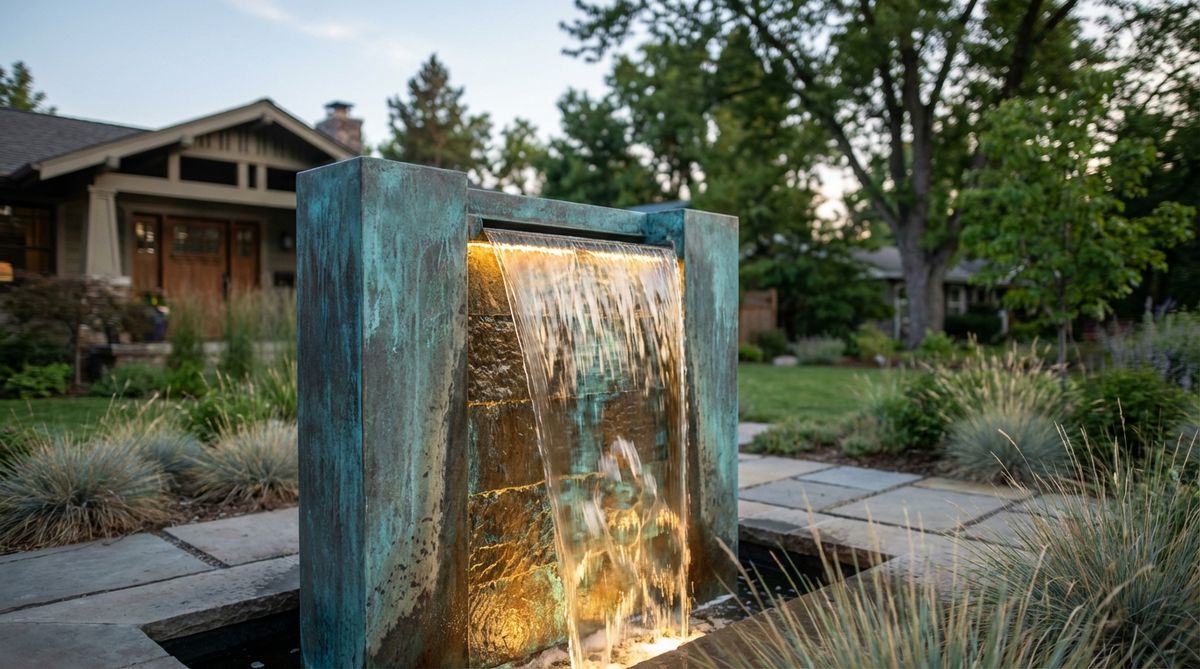
Combining water features with LED backlighting creates a glistening curtain effect as liquid flows over illuminated surfaces. The light catches water movement, emphasizing texture and creating dynamic visual effects.
Install integrated lighting behind delicate lattice fretwork or along water channels to maximize the interplay between light and liquid. The combination proves particularly effective with verdigris bronze finishes where the blue-green patina contrasts with warm LED tones.
15. Spotlight-Enhanced Frond Structure
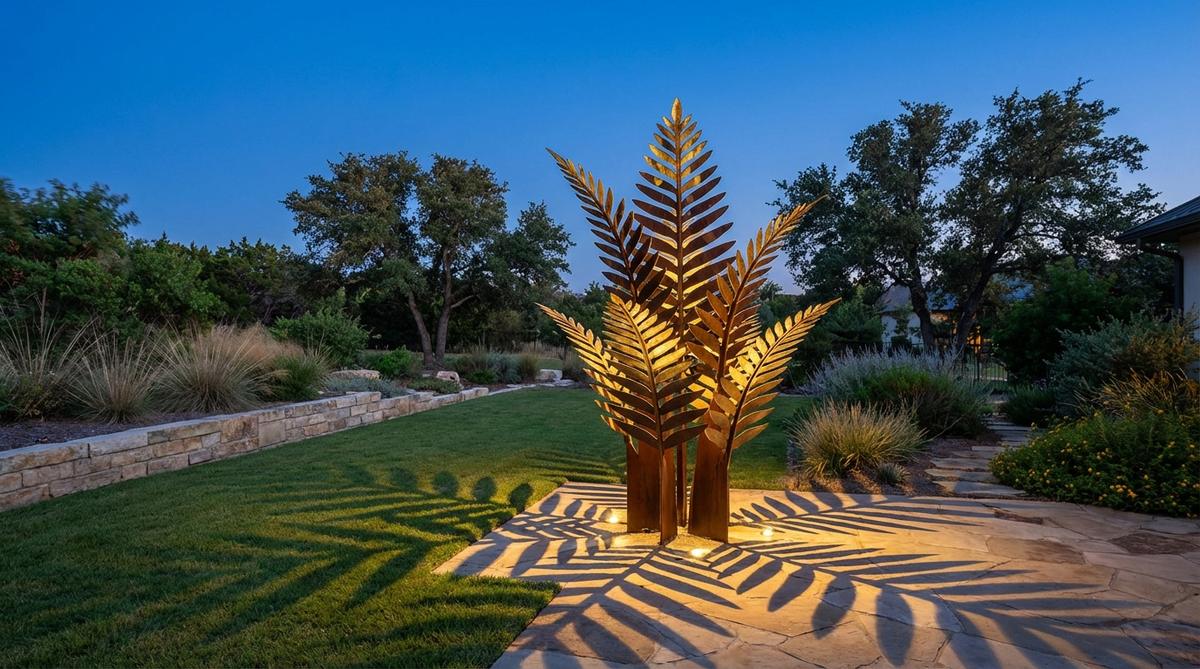
A multi-layered sculpture receives uplighting or central spotlighting to cast dramatic shadows and emphasize gilded details. The directed beam highlights specific angles and surface treatments that might go unnoticed in ambient light.
Position spotlights at ground level or within the sculpture’s base to create uplighting effects that elongate shadows and add vertical drama. Adjustable fixtures allow seasonal changes in lighting angles.
This technique works particularly well for sculptures with intricate details, hand-gilding, or complex layering where directed light reveals hidden depths.
16. Color-Temperature Variable Installation
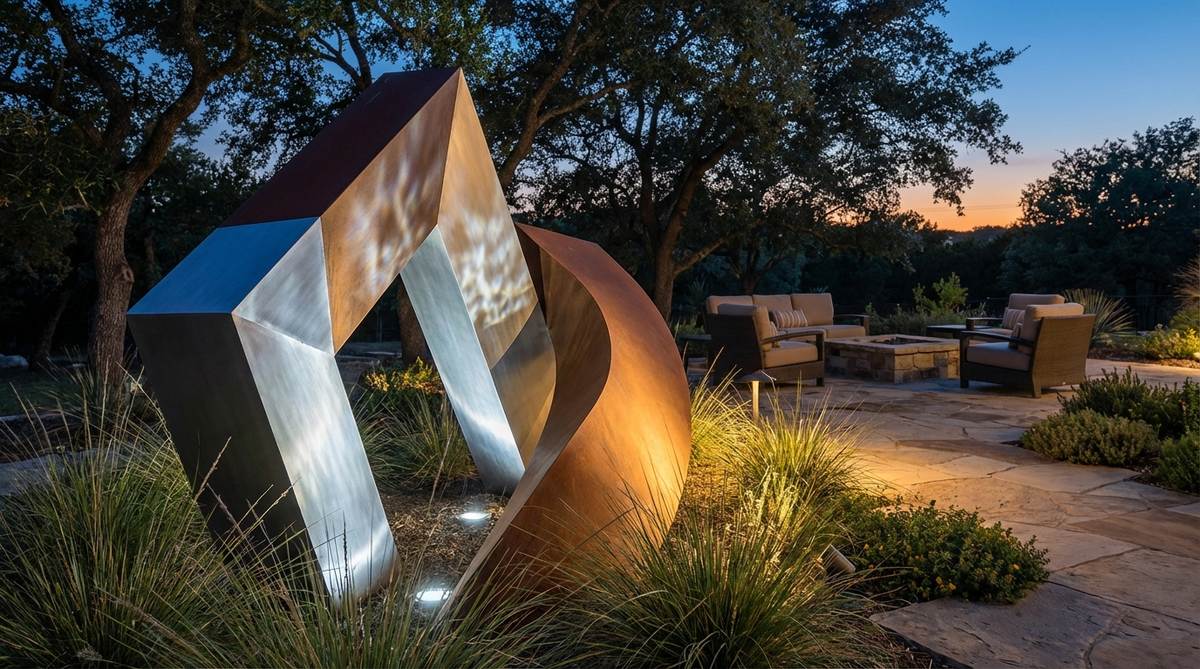
Advanced LED systems with adjustable color temperatures allow the same sculpture to present different moods—cool white emphasizes crisp details in modern pieces while warm ambient tones suit organic or classical forms.
Programmable lighting adds temporal variation, shifting throughout evening hours to maintain visual interest. The installation maintains harmony with surroundings by matching intended spatial mood.
Geometric and Abstract Forms
Abstract and geometric sculptures focus on pure form, shape, and spatial relationships rather than representational imagery. These contemporary garden statue pieces create focal points through bold structural statements, inviting interpretation while complementing modern architectural contexts and minimalist planting schemes.
17. Stacked Cube Progression
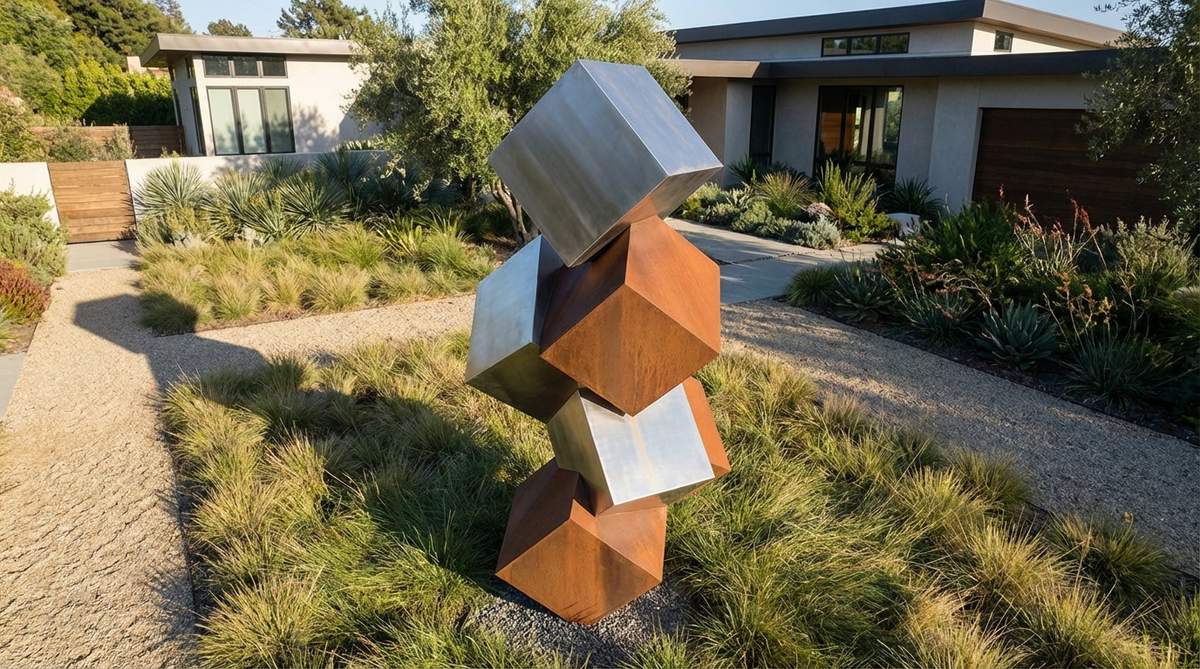
A series of geometric cubes in varying sizes stacked at angles creates visual tension through implied instability. The clean lines and precise edges suit contemporary landscapes with architectural emphasis.
Materials range from polished stainless steel to matte-finished corten, each offering different visual weight. Position in formal garden settings or as counterpoint to loose, naturalistic plantings where the geometric rigor provides structural contrast.
The abstract form encourages viewer engagement—different angles reveal new compositional relationships and shadow patterns throughout the day.
18. Twisted Ribbon Steel Form
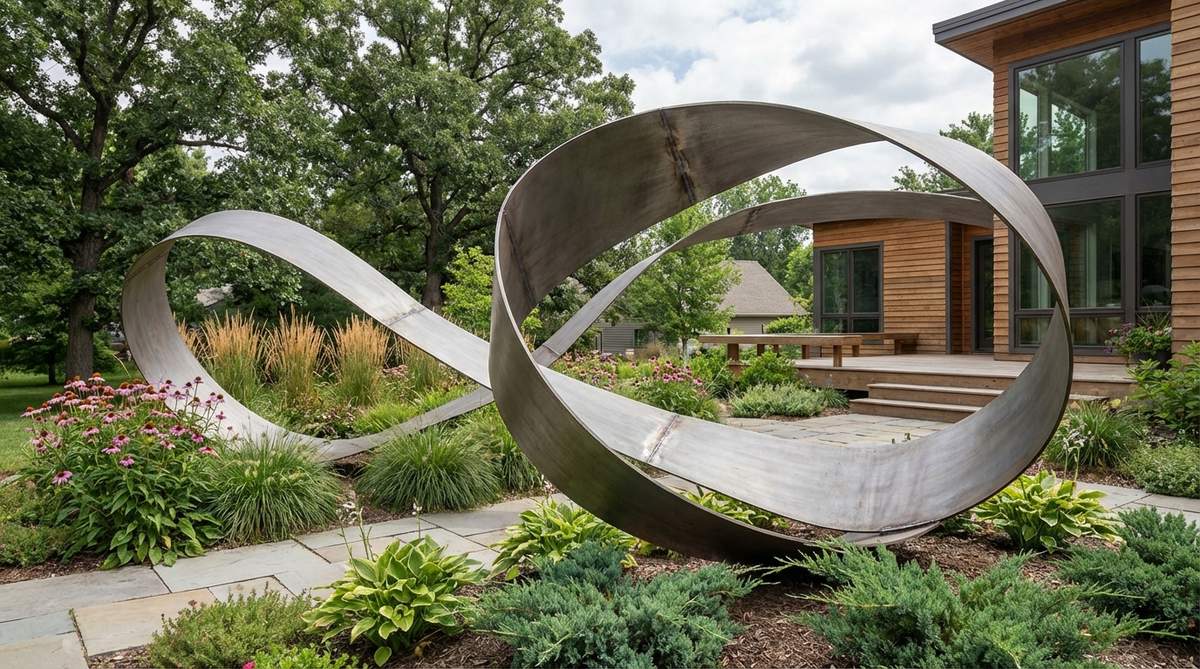
A single continuous steel ribbon twists through three-dimensional space, exploring movement and dynamic form. The industrial material gains grace through elegant curves and precise engineering.
This sculpture type works in both large-scale installations that dominate landscapes and smaller pieces integrated into intimate garden rooms. The continuous form guides the eye along its path, creating visual flow.
19. Hollow Sphere with Geometric Cutouts
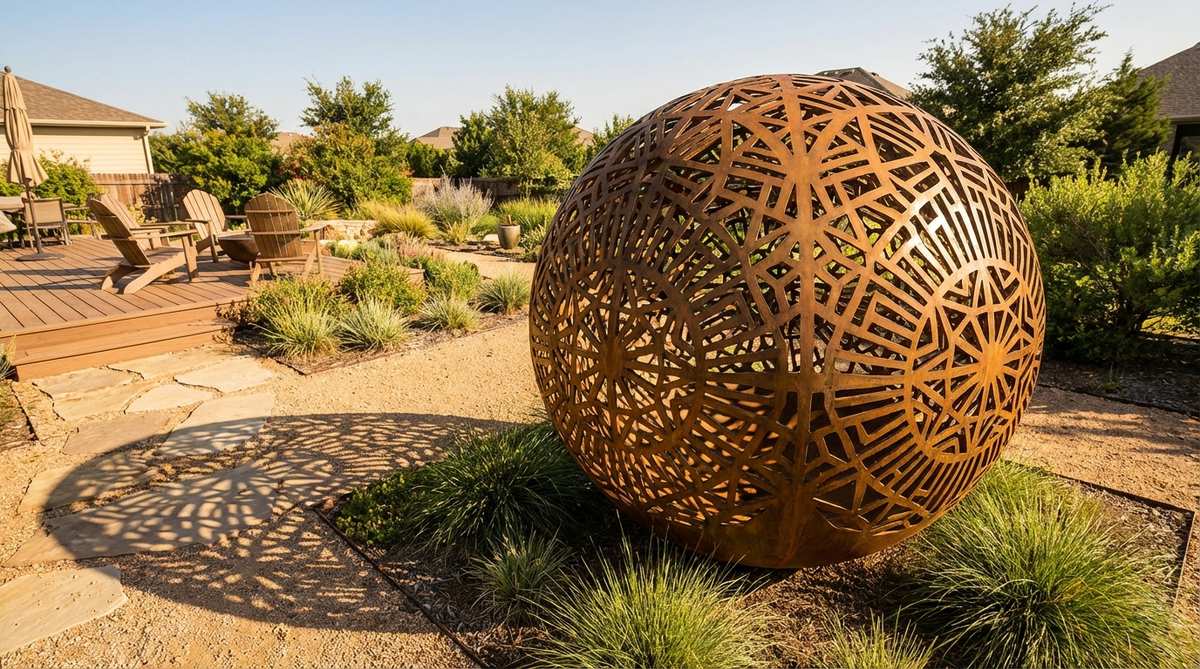
A spherical form features laser-cut geometric patterns that create complex shadow projections while revealing interior space. Bronze versions develop warm patinas; stainless steel maintains crisp contemporary appearance.
Install in locations where shadow play can be fully appreciated—near light-colored paving or walls that receive strong sunlight. The hollow interior invites visual exploration while maintaining structural integrity.
Consider fountain integration where water flows through or around the sphere, adding sound and movement to the geometric static form.
20. Angular Shard Cluster
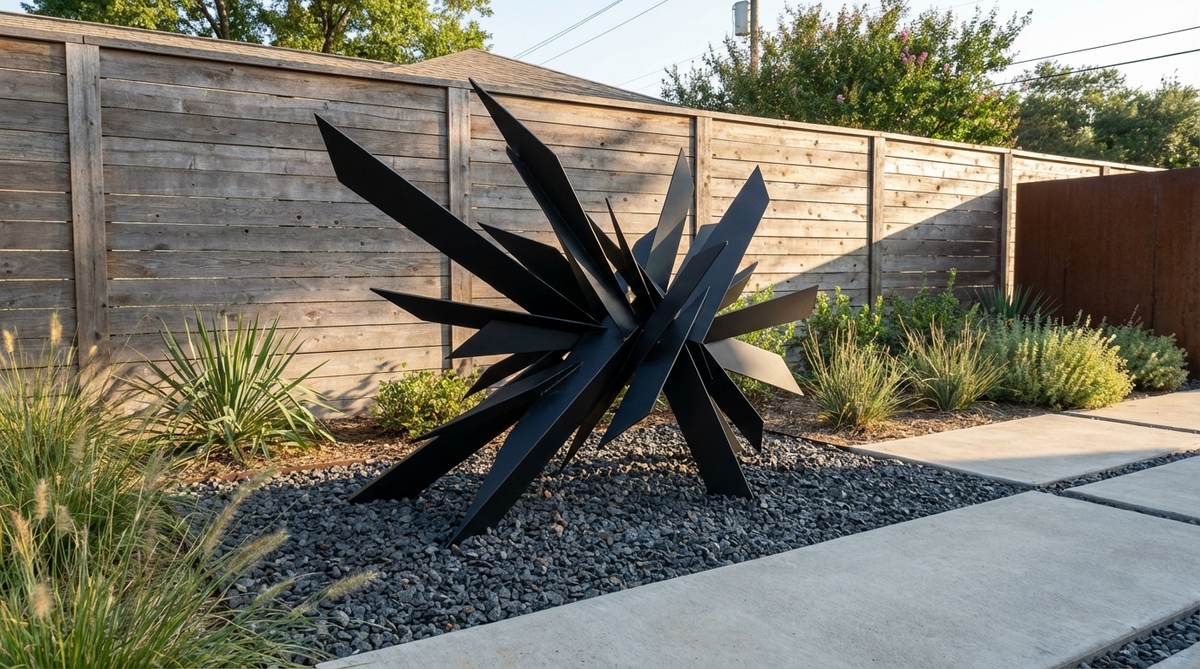
Multiple angular metal shards arrange in dynamic cluster formations suggesting explosion or crystalline growth. The aggressive geometry creates bold sculptural presence suited to urban or industrial-style gardens.
Powder-coated steel allows color customization—matte black provides dramatic contrast while metallic finishes catch light. Position as primary focal points in minimalist landscapes where the sculpture’s complexity stands against simple backgrounds.
21. Interlocking Rings Installation
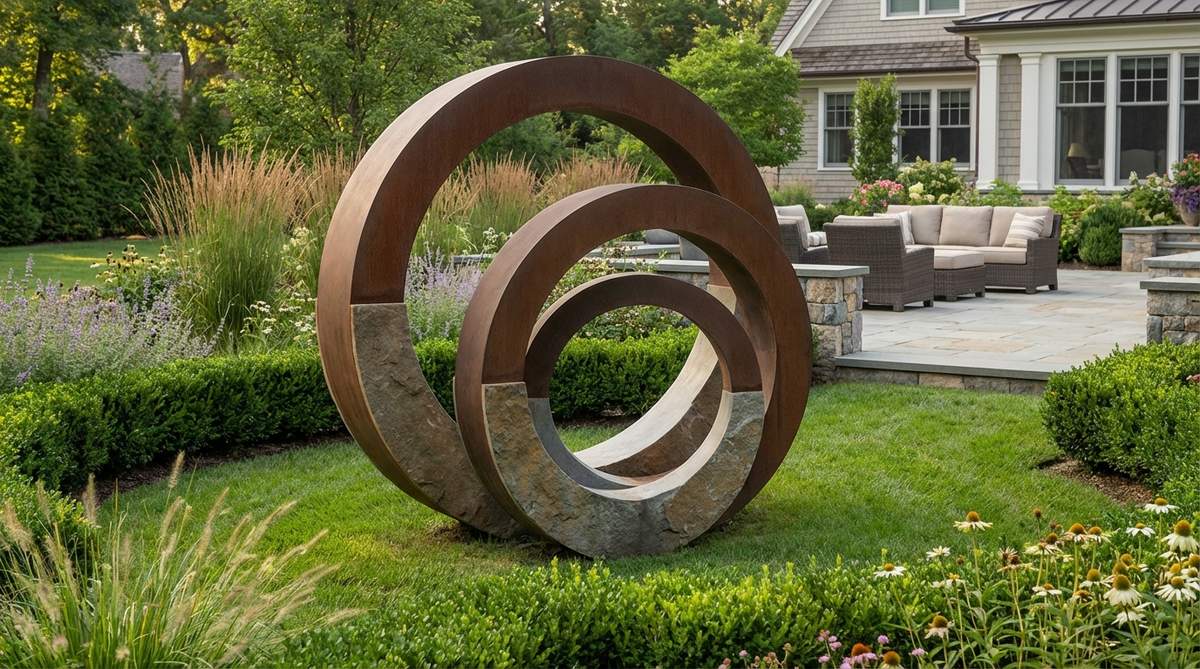
Two or more circular forms intersect at precise angles, creating negative space that becomes as important as the solid material. The mathematical precision suits formal garden designs.
Scale this design from intimate tabletop versions to large-scale installations that visitors can walk through. The interlocking concept represents connection and continuity, adding symbolic dimension to pure geometric form.
22. Faceted Polyhedron Structure
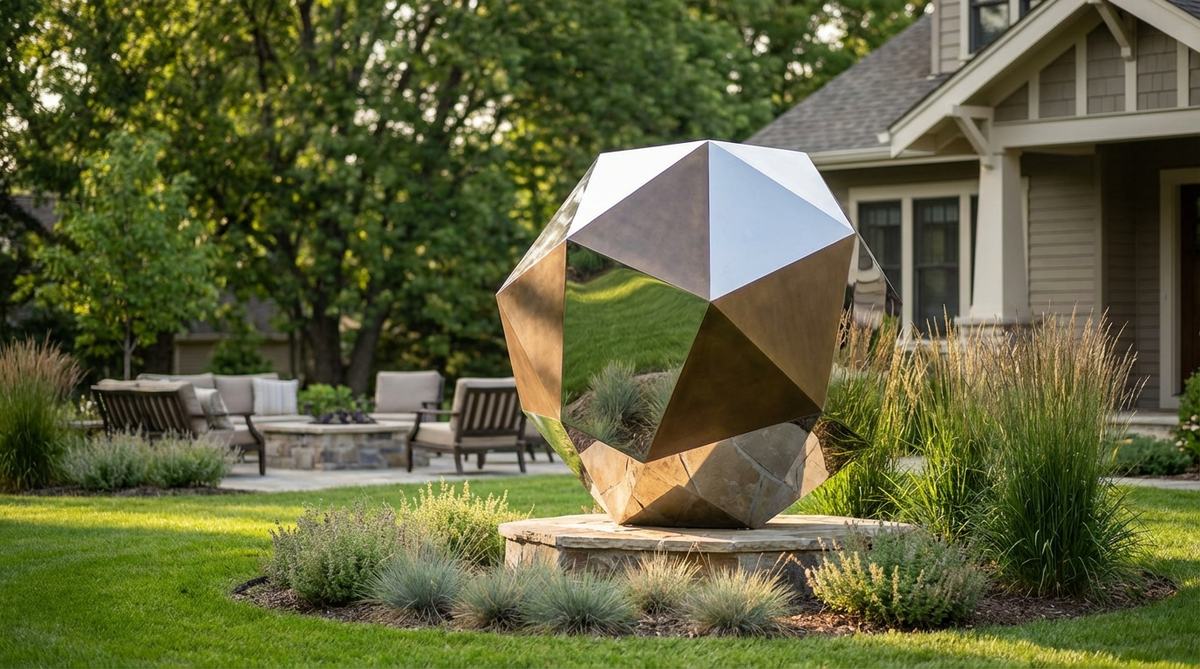
Complex polyhedron forms with multiple faceted surfaces create ever-changing light reflections and shadow patterns. Each facet catches different environmental elements throughout the day.
This sophisticated geometry rewards close observation while maintaining strong presence from distance. Install in central locations where multiple viewing angles allow appreciation of the form’s complexity.
Mirror-polished surfaces multiply the environmental interaction, while matte finishes emphasize pure geometric structure through light and shadow.
23. Minimalist Vertical Monolith
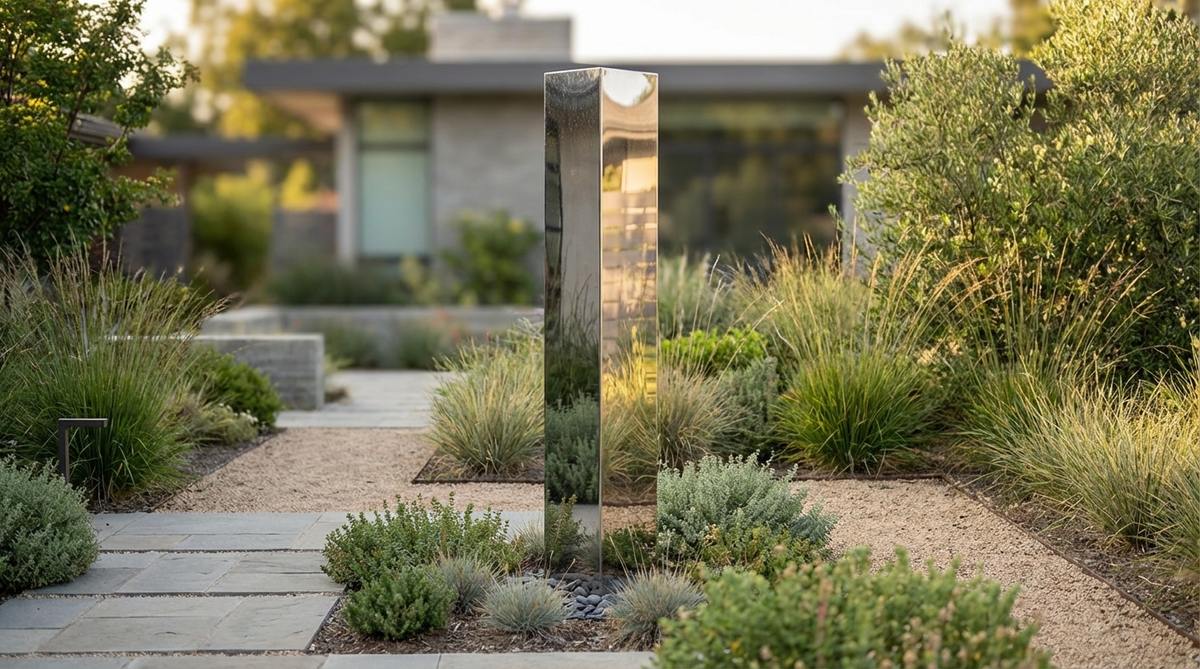
A single tall, slender rectangular form provides vertical emphasis through austere simplicity. The monolithic presence creates contemplative focal points that anchor surrounding spaces.
Material choice dramatically affects character—polished black granite offers timeless elegance, weathered steel provides industrial warmth, while polished stainless steel reflects environment. Position to emphasize the vertical line against horizontal landscape planes.
24. Wave-Form Abstract Sculpture
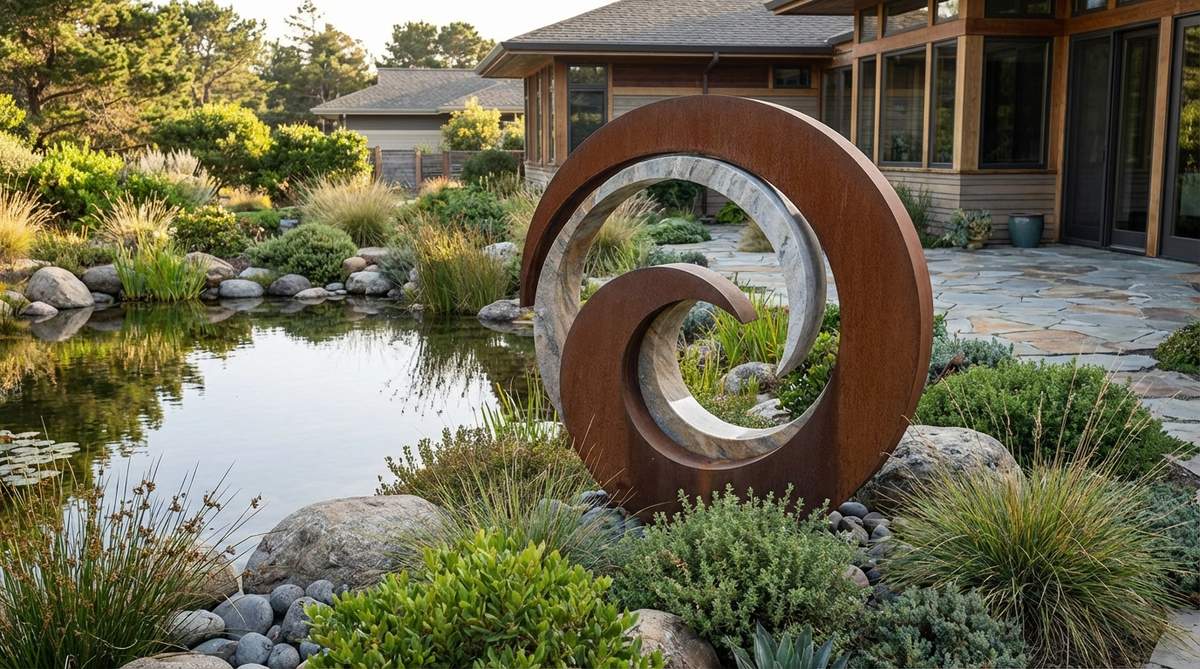
Flowing curved surfaces suggest natural wave motion frozen in durable materials. The organic abstraction bridges natural and constructed environments.
Install near water features or in coastal gardens where the wave reference gains contextual resonance. The smooth curves provide visual softness that complements angular architectural elements, creating balanced compositions.
Scale appropriately—oversized wave forms create dramatic presence while modest sizes integrate more subtly into mixed plantings.
Conclusion
Contemporary garden sculpture installations offer designers and homeowners powerful tools for creating focal points that transform outdoor spaces through artistic expression and material integrity. From kinetic pieces responding to wind currents to illuminated forms that glow after sunset, modern contemporary garden sculpture designs balance aesthetic impact with environmental durability. Whether choosing mirror-polished stainless steel for reflective elegance or weathered corten for earthy warmth, these installations demonstrate how thoughtful sculpture placement elevates landscape design from functional space to curated outdoor gallery. Begin by selecting one statement piece that resonates with your garden’s character, then build complementary layers that enhance rather than compete with the primary sculptural element.
Frequently Asked Questions
What materials work best for contemporary garden sculptures in all climates?
Marine-grade stainless steel and corten steel offer superior weather resistance across diverse climates. Stainless steel maintains its finish without corrosion even in coastal salt-spray environments, while corten develops a protective rust patina that prevents further degradation. Bronze sculptures also perform well, developing attractive verdigris patinas over time. Avoid mild steel in harsh outdoor conditions unless properly sealed and maintained.
How do I determine the right size sculpture for my garden space?
Position sculptures with clearance space at least twice the sculpture’s width to maintain proper visual balance and energy flow. In small gardens, vertical pieces like towers or monoliths provide presence without consuming ground area. Large open lawns can accommodate substantial installations that serve as primary focal points. Consider viewing distances—sculptures visible from indoors or across large spaces require greater scale than pieces in intimate garden rooms.
Should contemporary garden statues be positioned in sun or shade?
Reflective stainless steel sculptures maximize visual impact in sunny locations where they capture changing light throughout the day. Weathered steel and bronze pieces work equally well in both conditions, though shaded positions slow patina development. Internally lit sculptures require strategic placement where evening illumination creates desired effects. Consider seasonal sun angles when positioning permanent installations to ensure year-round visual effectiveness.
How much maintenance do metal garden sculptures require?
Stainless steel needs occasional cleaning with mild soap to maintain mirror finishes; marine-grade materials resist corrosion without additional treatment. Corten and weathered steel require no maintenance once protective patinas develop. Bronze sculptures develop natural verdigris that protects base metal; some owners preserve bright bronze with periodic waxing while others embrace the blue-green patina. Kinetic sculptures benefit from annual bearing inspections to ensure smooth movement.
Can contemporary sculptures work in traditional garden styles?
Modern sculptures create compelling contrast in traditional settings when positioned strategically. Use geometric forms as focal points in formal garden rooms with symmetrical plantings, or place abstract pieces at pathway intersections to mark transitions between spaces. Mirror-polished sculptures reflect surrounding historic elements while maintaining contemporary character. The key lies in respecting scale and allowing the sculpture to dialogue with rather than dominate the established garden vocabulary.