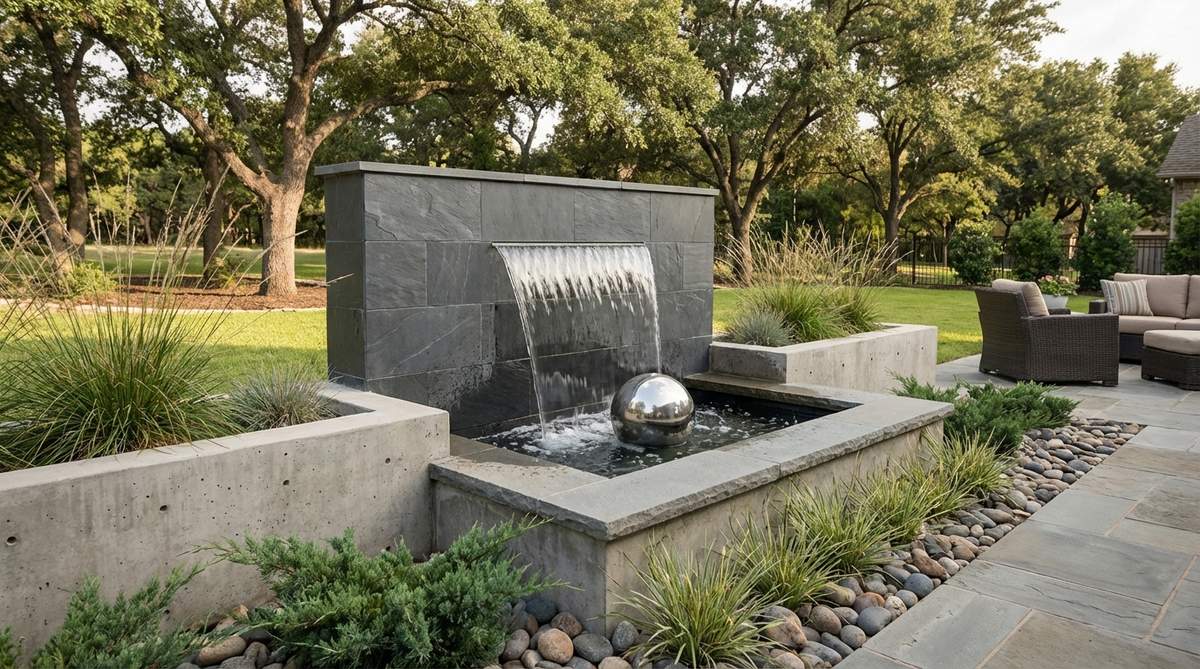
A contemporary garden fountain transforms outdoor spaces into sophisticated retreats through clean lines, innovative materials, and mesmerizing water movement. Water walls and spheres represent the pinnacle of modern fountain design, offering dramatic visual impact while maintaining the serene ambiance that makes fountains essential landscape elements. Fresh Garden Ideas brings you expert-curated designs that blend architectural precision with natural tranquility.
Design SnapshotKey Principles
- Material Selection: Stainless steel, cast stone, and acrylic dominate contemporary designs for durability and modern aesthetics
- Vertical Integration: Water walls maximize visual impact in compact spaces while creating dramatic focal points
- Geometric Precision: Spheres and angular forms emphasize clean architectural lines characteristic of modern landscapes
- LED Enhancement: Integrated lighting extends fountain enjoyment into evening hours and adds dynamic color effects
Vertical Water Wall Masterpieces
Water walls excel at creating dramatic focal points while conserving ground space. These vertical installations range from minimalist steel panels to intricate multi-tiered designs that transform blank walls into dynamic water features.
1. Mirror-Polished Stainless Steel Cascade
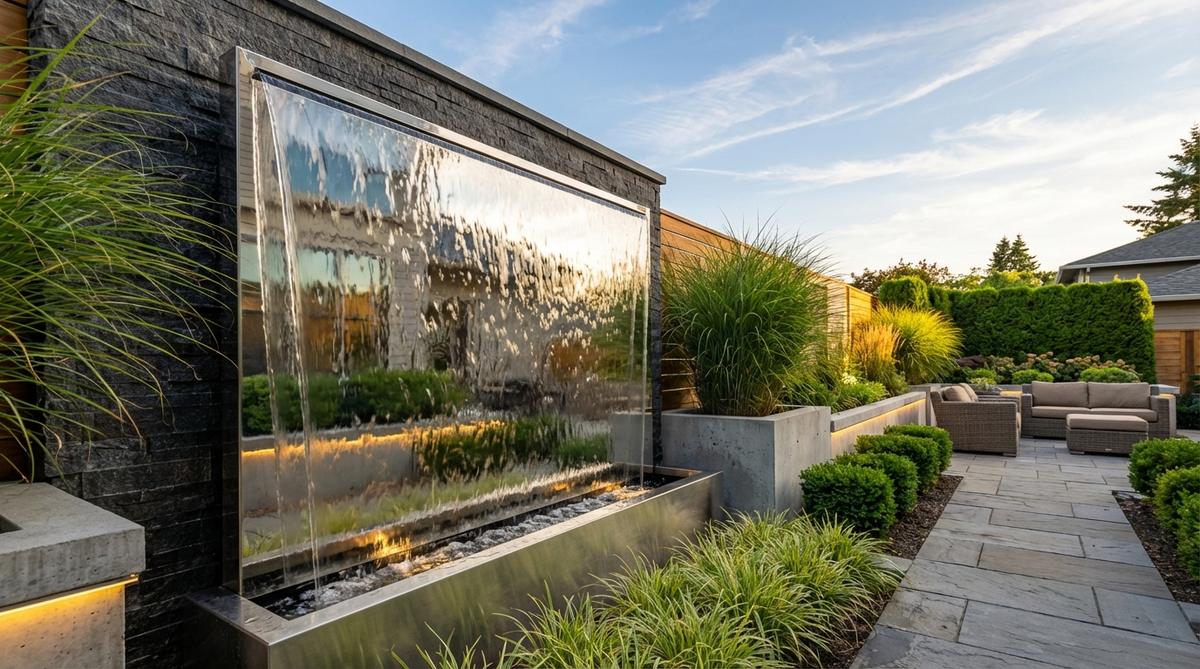
A simple mirror-polished stainless steel panel creates stunning reflections while water sheets across its surface. The highly reflective finish captures surrounding landscape elements and sky, doubling the visual impact.
Position this design as a garden backdrop or courtyard centerpiece where sunlight can interact with the polished surface throughout the day. The installation requires minimal ground footprint yet delivers maximum architectural presence.
Pair with architectural plantings like ornamental grasses or boxwood hedges to enhance the contemporary aesthetic. LED strips installed at the water source create dramatic nighttime illumination.
2. Filigree Bronze Framed Water Wall
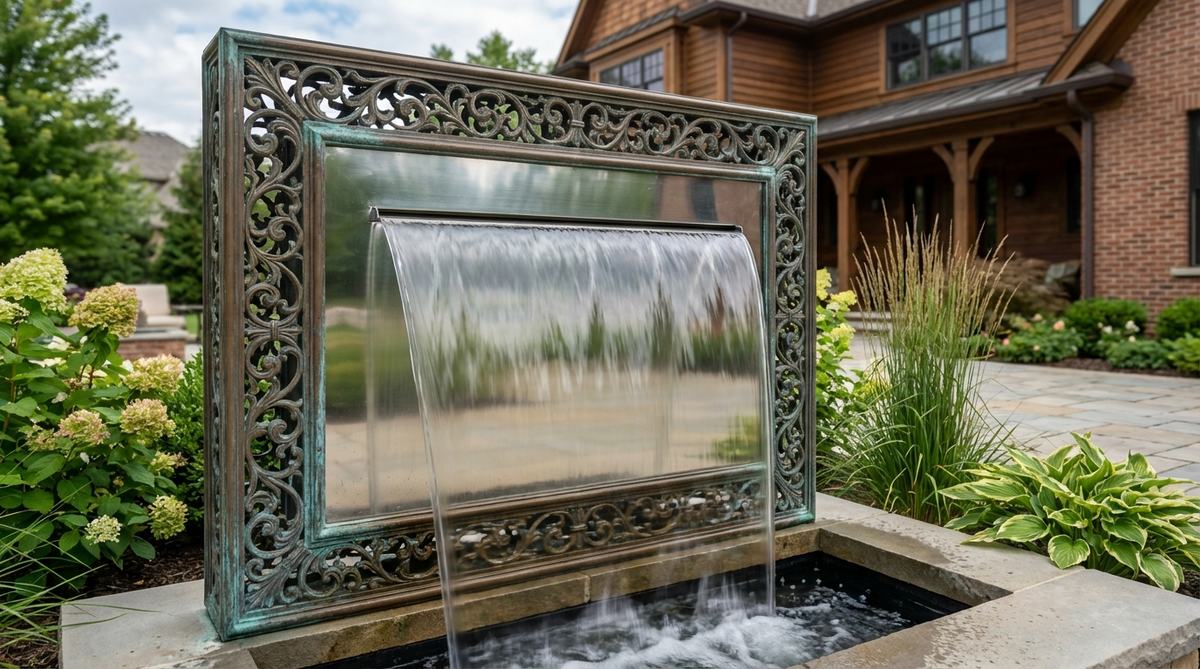
Verdigris bronze fretwork frames a mirror-polished steel water surface, blending timeless metalwork with modern water flow. The delicate framework provides organic contrast against the geometric water panel.
This design bridges traditional and contemporary styles, suitable for gardens transitioning from classic to modern aesthetics. Water flows over the steel surface while the bronze frame develops natural patina over time.
Position near existing ponds or rills to create cohesive water features throughout the landscape. The vertical orientation works particularly well against masonry or stone walls.
3. Multi-Tiered Scalloped Water Wall
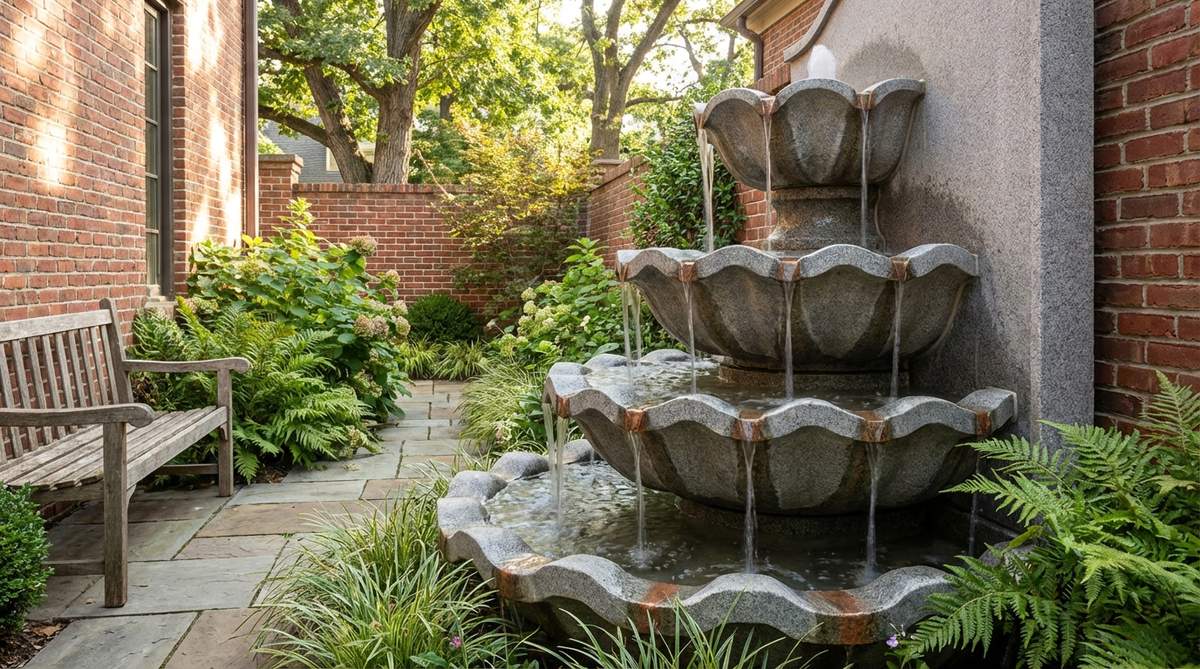
Multiple basins create layered water flow, producing varied sound as water cascades from upper to lower levels. Each tier features curved scalloped edges that soften the geometric structure.
The multi-drop design generates more pronounced water sounds compared to single-sheet walls, creating richer auditory experiences. Designers use this configuration in courtyards where sound amplification enhances the space.
Install against patio walls framed with container plantings to anchor the fountain visually. The vertical stacking accommodates impressive height within narrow spaces.
4. Minimalist Copper Edge Wall Fountain
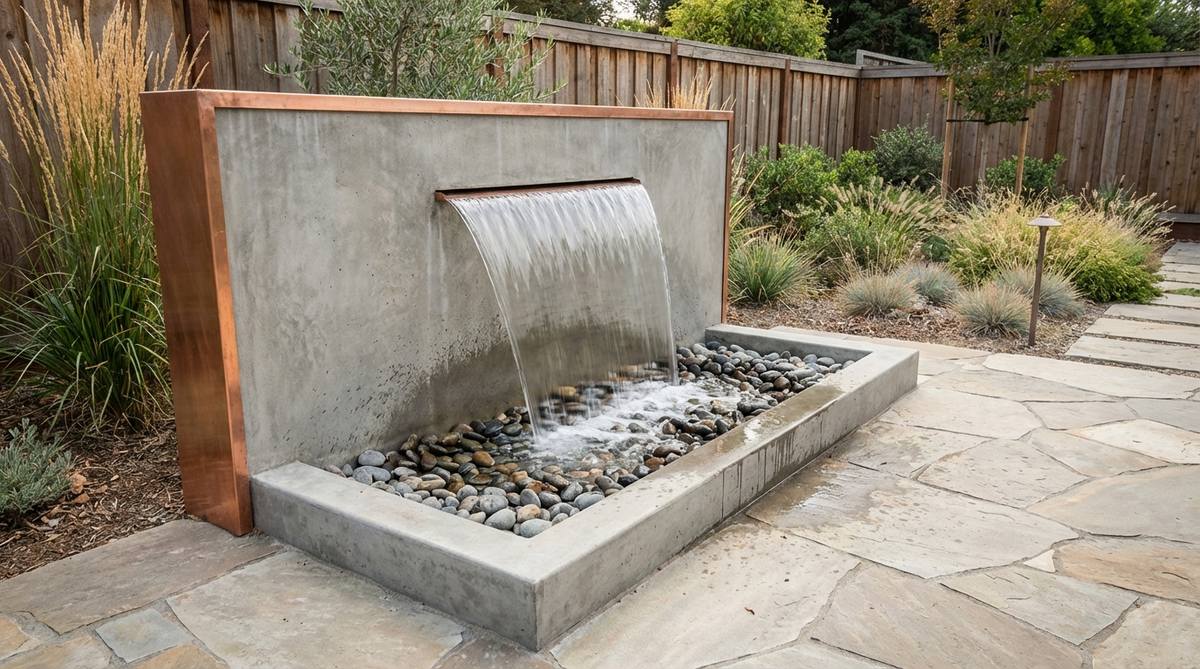
Cast concrete plinth features water pouring across a copper edge into a deep rectangular basin. The copper strip creates a precise linear water drop while developing distinctive patina.
At only 30 inches wide, this compact design suits mid-century modern landscapes without overwhelming smaller patios or entryways. The geometric simplicity complements spare landscape design or serves as cooling elements in rock gardens.
Choose from multiple concrete finishes to match home exteriors. The soft trickling sound provides subtle ambiance without dominating conversation areas.
5. Floating Glass Panel Water Wall
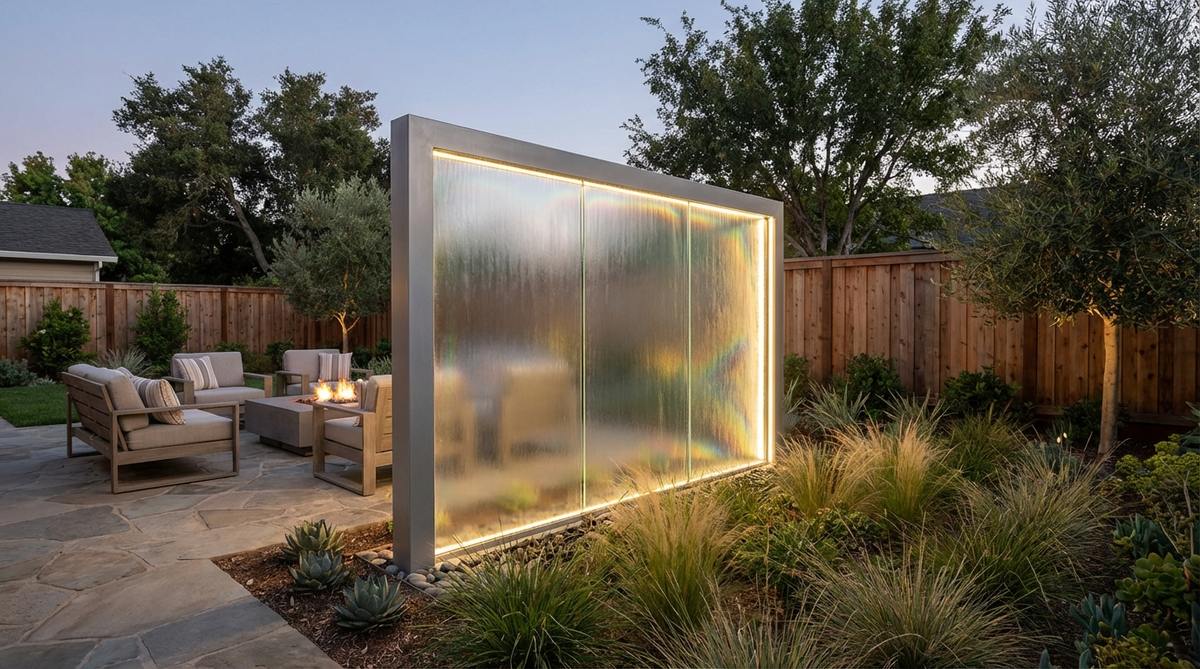
Transparent or frosted glass panels allow water to flow over smooth surfaces while maintaining visual transparency. The glass captures and refracts light, creating dynamic effects throughout the day.
LED backlighting enhances glass panels after dark, transforming the fountain into an illuminated sculpture. This design excels in modern contexts where innovation drives aesthetic choices.
Position as a room divider in outdoor living spaces or against solid walls where the glass creates depth perception. The transparent quality prevents visual barriers while defining distinct garden zones.
6. Tall Vertical Line Cast Stone Wall
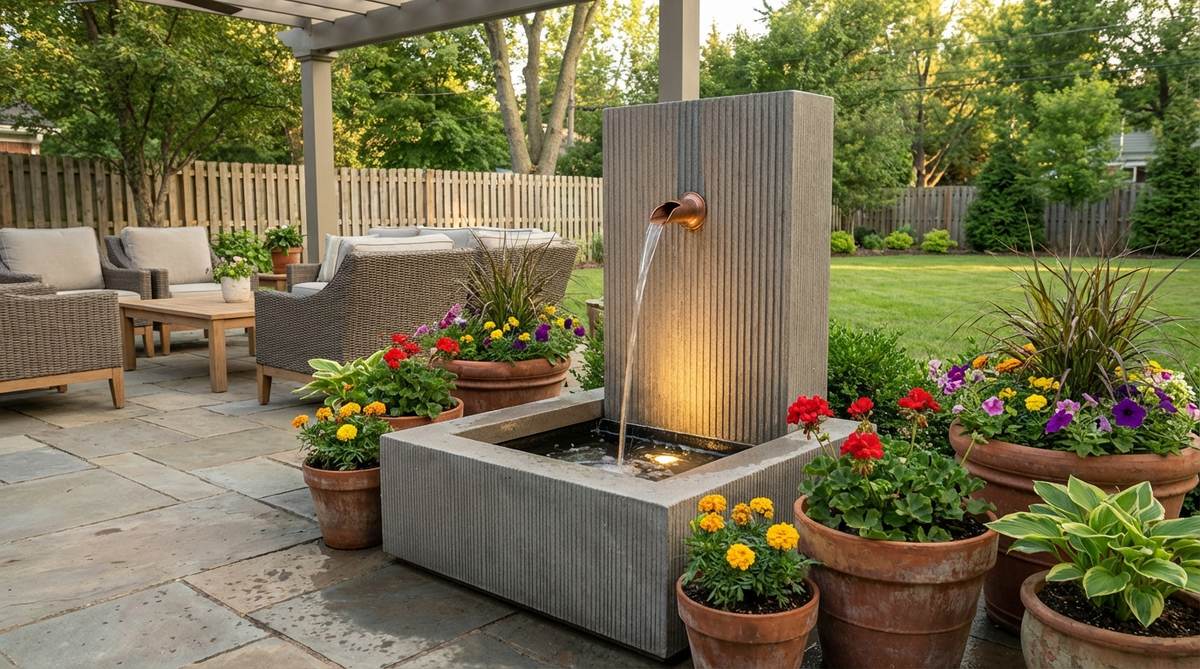
Sleek vertical lines dominate this cast stone fountain featuring a single flower spout directing water into a square basin below. The narrow width makes it ideal for small patio spaces where traditional fountains overwhelm.
Water flows from the elevated spout, creating steady, relaxing sound without excessive splashing. Frame the base with terra cotta pots filled with colorful annuals to soften the architectural lines.
The vertical emphasis draws eyes upward, creating the illusion of height in compact areas. LED uplighting emphasizes the water column for evening drama.
7. Abstract Blade Water Wall
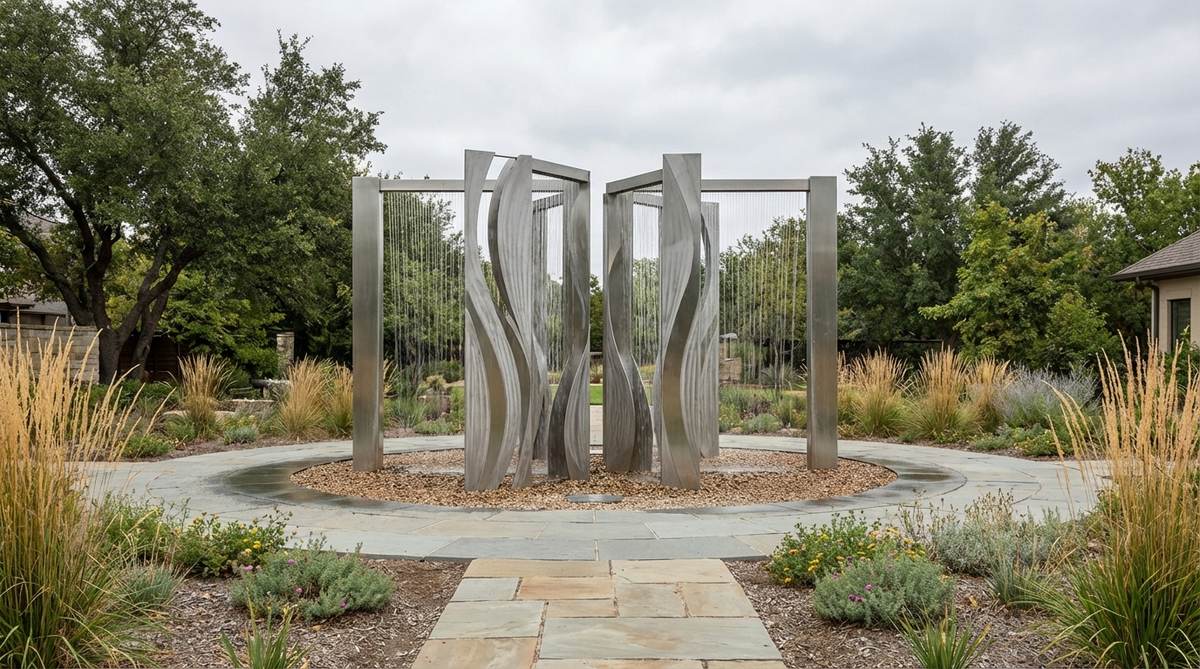
Tall steel blades arranged in abstract patterns create water wall effects without traditional backing panels. Water flows down each blade independently, generating layered water movement.
The blade configuration allows 350-degree viewing, suitable for central placement in courtyards or gardens. Each blade can be positioned at varying heights and angles to create custom compositions.
This standing design divides garden spaces into distinct sections while maintaining visual connection between areas. Brushed steel finish adds texture compared to mirror-polished alternatives.
Sculptural Sphere Fountains
Sphere fountains offer 350-degree visual appeal through their perfectly rounded forms. Water flows over curved surfaces, creating mesmerizing patterns that shift with pump pressure and viewing angle.
8. Mirror-Polished Stainless Steel Sphere
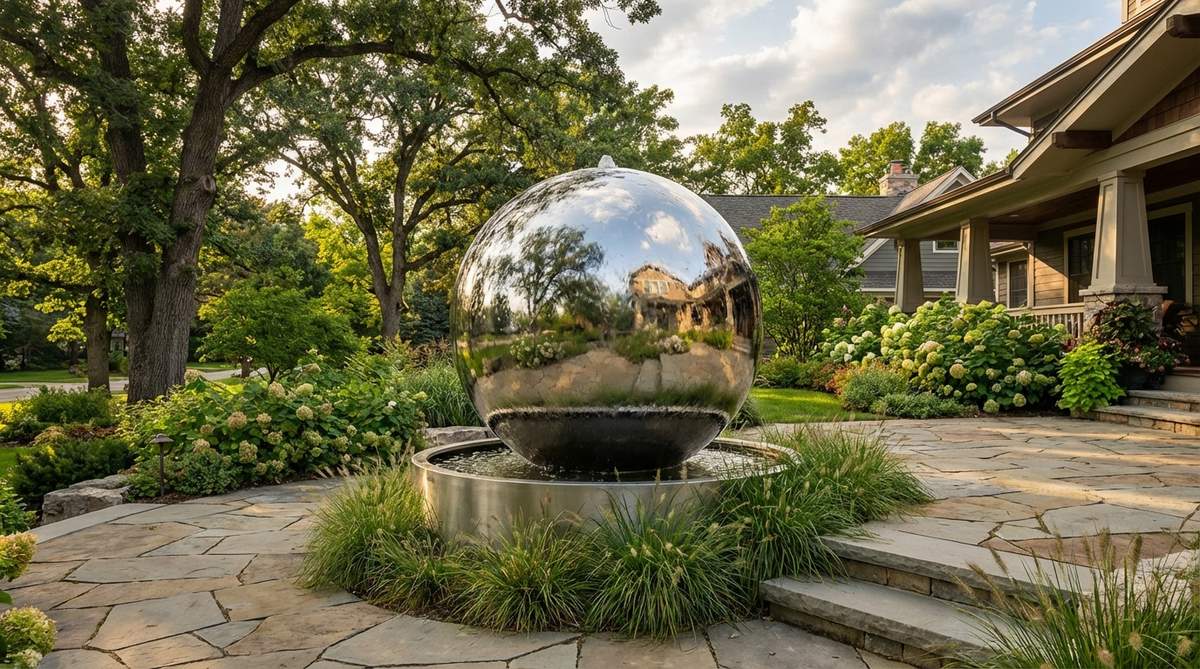
Large mirror-polished spheres up to 84 inches in diameter reflect surrounding landscapes in distorted perspectives. Water emerges from internal piping at the sphere’s apex, flowing evenly across the reflective surface.
The sphere sits on a pedestal-style support post mounted in a basin where water recirculates. Mirror finish captures sky, foliage, and architectural elements, creating living sculpture that changes throughout the day.
Fabricated from durable 304 or 316 stainless steel, these fountains withstand harsh weather in both private gardens and public installations. Position in full sun to maximize reflective effects.
9. Acrylic Sphere with Vortex Effect
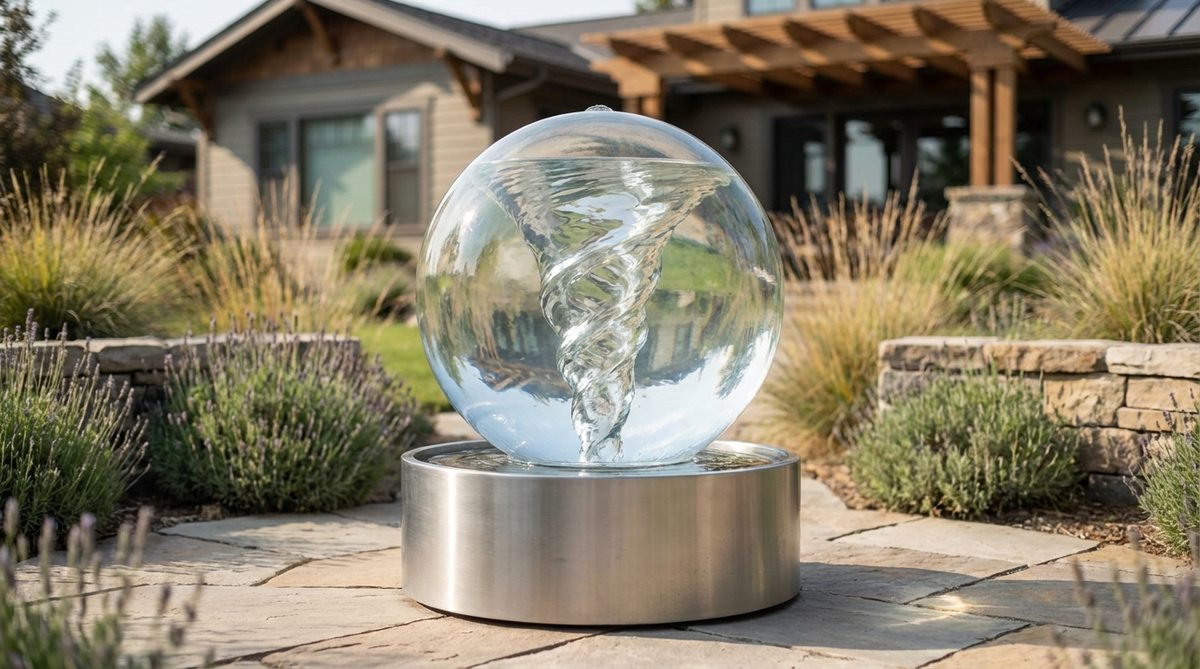
Transparent acrylic spheres reveal internal water vortex as pumps generate spiral motion inside the globe. The vortex creates hypnotic visual effects, appearing to suspend water mid-sphere.
Stainless steel bases provide metal texture contrast against the acrylic transparency. Well-lit outdoor placement showcases the vortex effect most dramatically during daylight hours.
Designers customize sphere size, color, and base configuration to match specific landscape aesthetics. LED lighting options transform the fountain into evening illumination elements.
10. Brushed Steel Textured Sphere
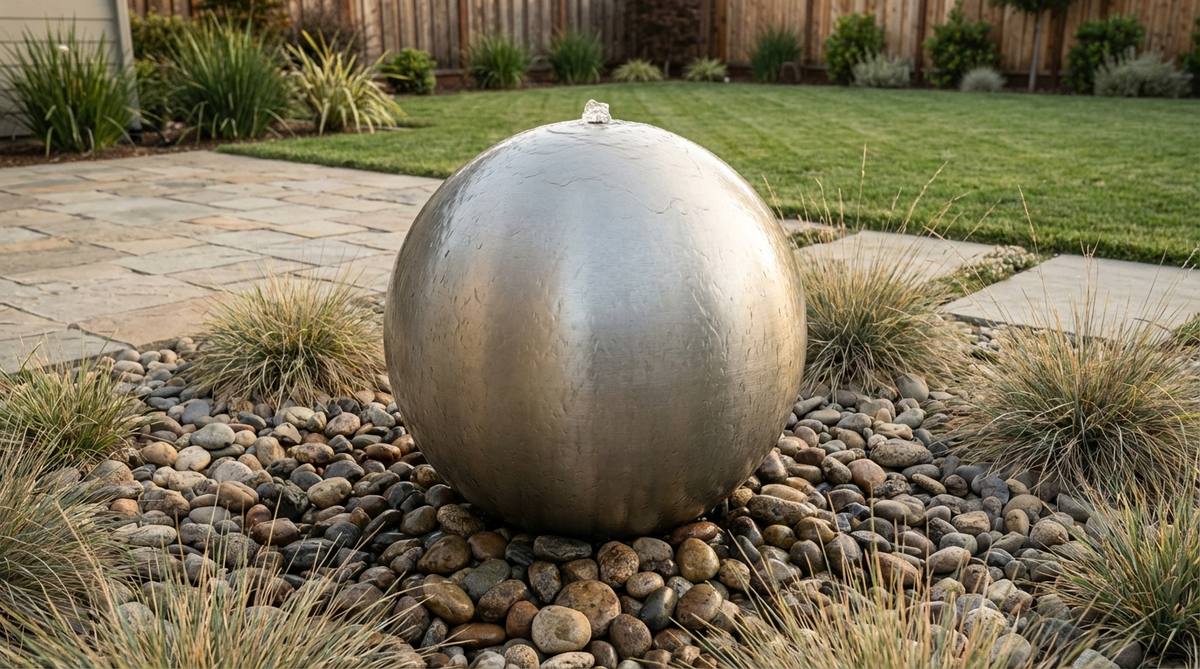
Brushed finish provides subtle texture compared to mirror polish, reducing glare while maintaining contemporary aesthetic. The matte surface shows water flow patterns more distinctly.
Custom sandblasting, coloring, or etching adds patterns, logos, or continental outlines to create personalized globe fountains. The textured surface develops character over time without showing water spots as prominently as polished alternatives.
Position these spheres as focal points in modern rock gardens or minimalist landscapes where texture variation adds visual interest. The brushed finish suits both sunny and shaded locations.
11. Granite Sphere with Natural Stone Basin
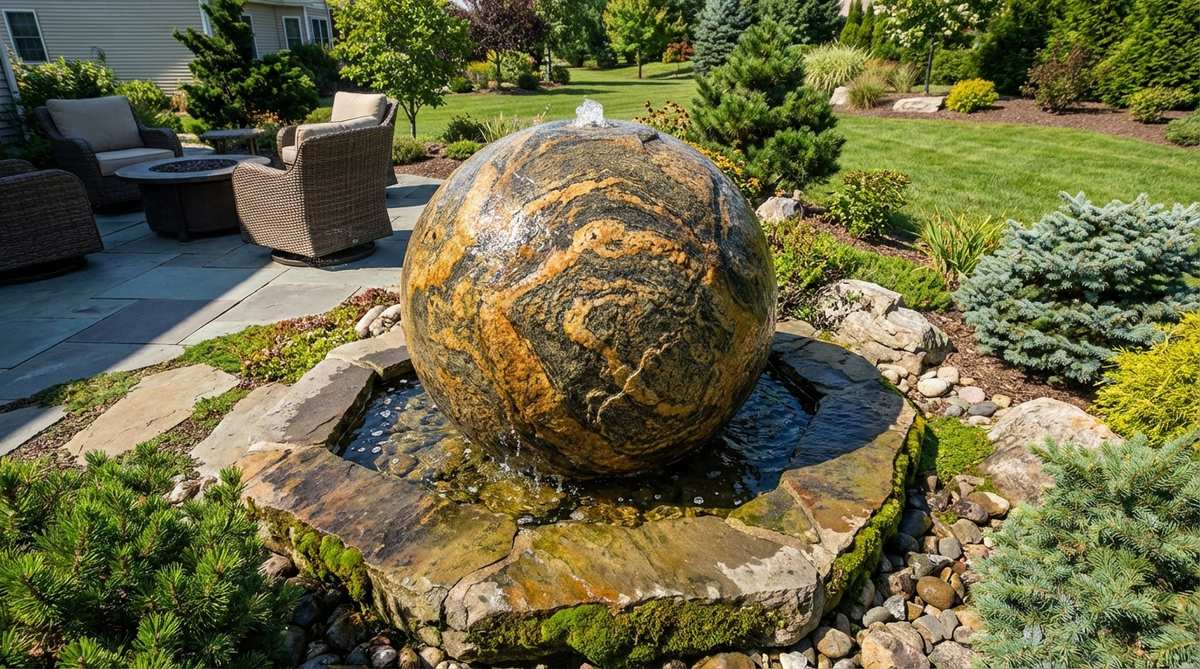
Natural granite spheres offer unique color variations and patterns absent in manufactured materials. Each sphere displays individual character through natural stone striations and mineral deposits.
Water flows over the stone’s textured surface, creating organic patterns distinct from metal alternatives. Stone spheres pair naturally with rock gardens, slate patios, or traditional landscape elements transitioning to contemporary design.
The weight of granite spheres provides stability in windy locations. Natural stone weathers gracefully, developing moss or patina in humid climates that enhances rustic-modern aesthetics.
12. Floating Sphere on Water Basin
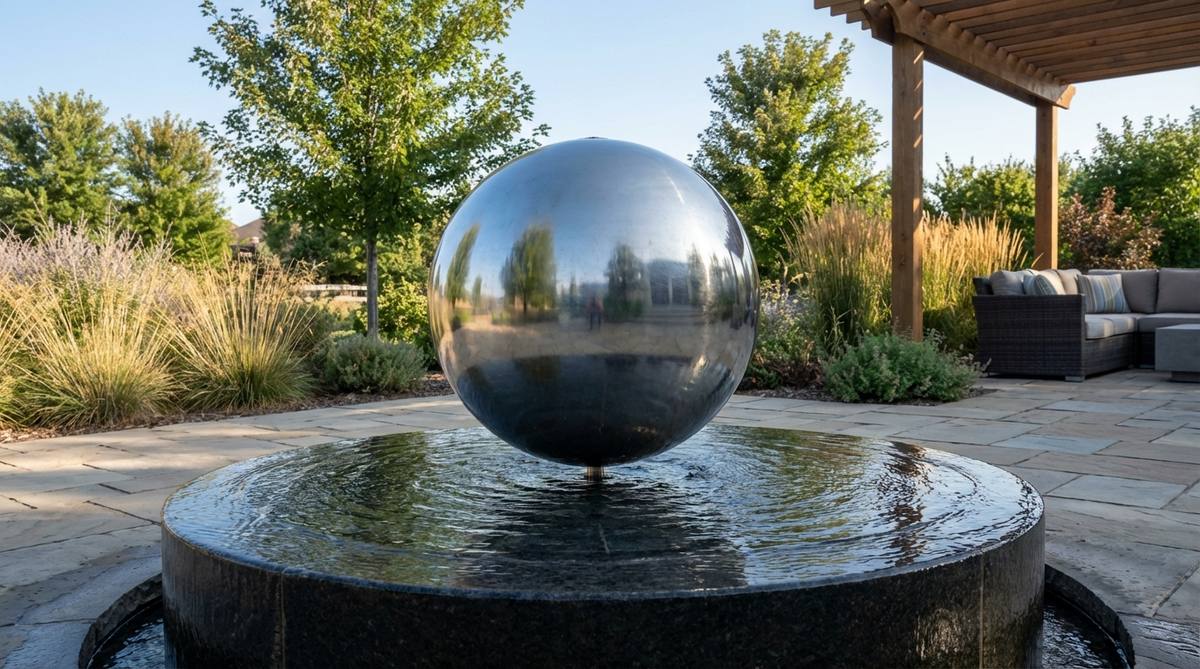
Precision-engineered spheres appear to float weightlessly on water-cushion bases. High-pressure water jets create a thin film allowing spheres to rotate freely, moved by hand or wind.
This interactive design invites engagement, particularly appealing in public spaces or family gardens. The rotating motion creates ever-changing reflections and viewing perspectives.
Found at science museums, shopping centers, and city squares worldwide, floating sphere fountains combine contemporary sculpture with kinetic art. Installation requires precise calibration of water pressure and sphere weight.
13. Multi-Sphere Cluster Fountain
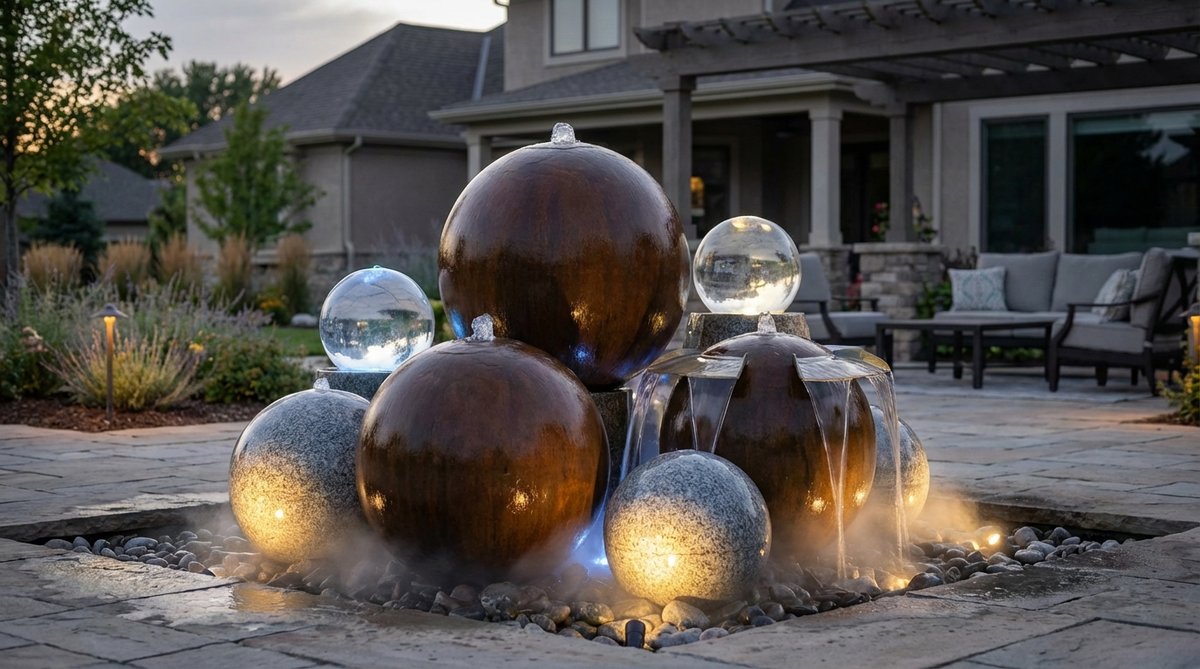
Multiple spheres in graduated sizes create sculptural compositions with varied water flow patterns. Designers arrange spheres at different heights and positions to generate complex visual interest.
Each sphere operates independently, allowing for customized flow rates and patterns. The cluster approach works well as grand entrance features or central courtyard installations.
Mix materials like steel, stone, and acrylic within single installations for textural contrast. LED lighting individual spheres in different colors creates dramatic evening displays.
Illuminated Contemporary Designs
Integrated LED systems transform fountains into evening focal points. Modern lighting technology enables color-changing displays, programmable sequences, and energy-efficient illumination that extends fountain enjoyment beyond daylight hours.
14. LED Bubble Wall Fountain
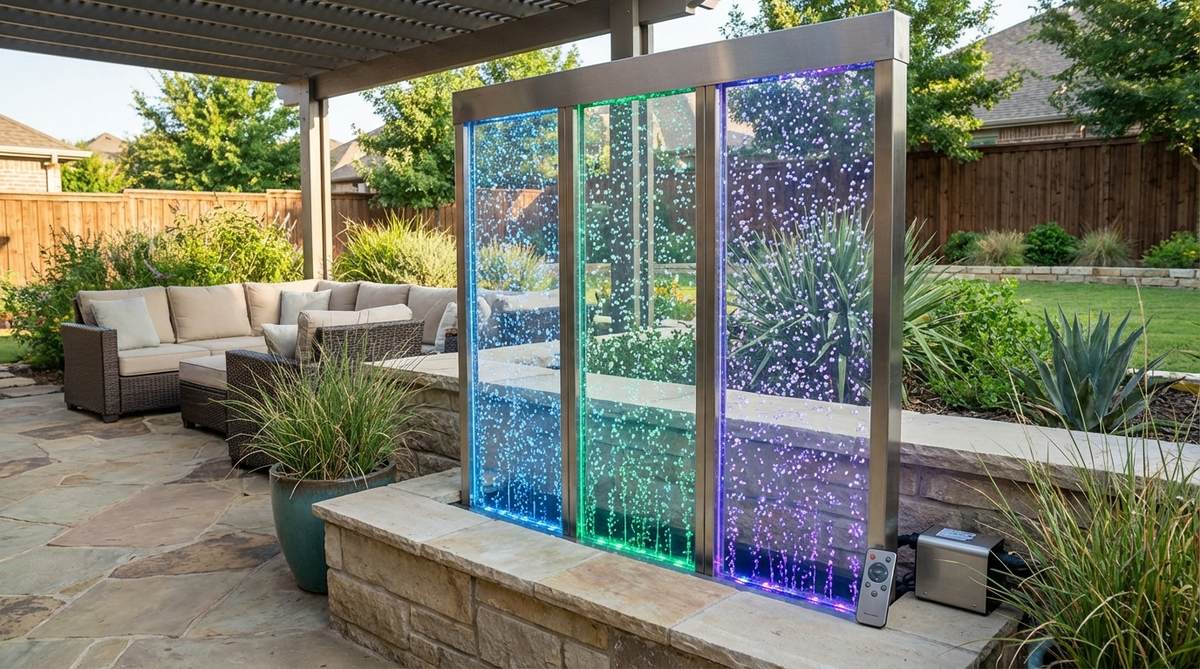
Vertical acrylic or glass panels filled with water feature rising bubbles illuminated by color-changing LEDs. Bubble size and frequency adjust via pump controls, creating varied visual effects.
LED lights positioned behind panels create dramatic backlighting, making bubbles glow while enhancing visual impact. These installations work as architectural room dividers in outdoor living areas or standalone wall features.
Remote control options allow color selection and lighting pattern changes. The combination of flowing water, rising bubbles, and dynamic lighting creates multi-sensory experiences.
15. Underwater Lit Sphere Fountain
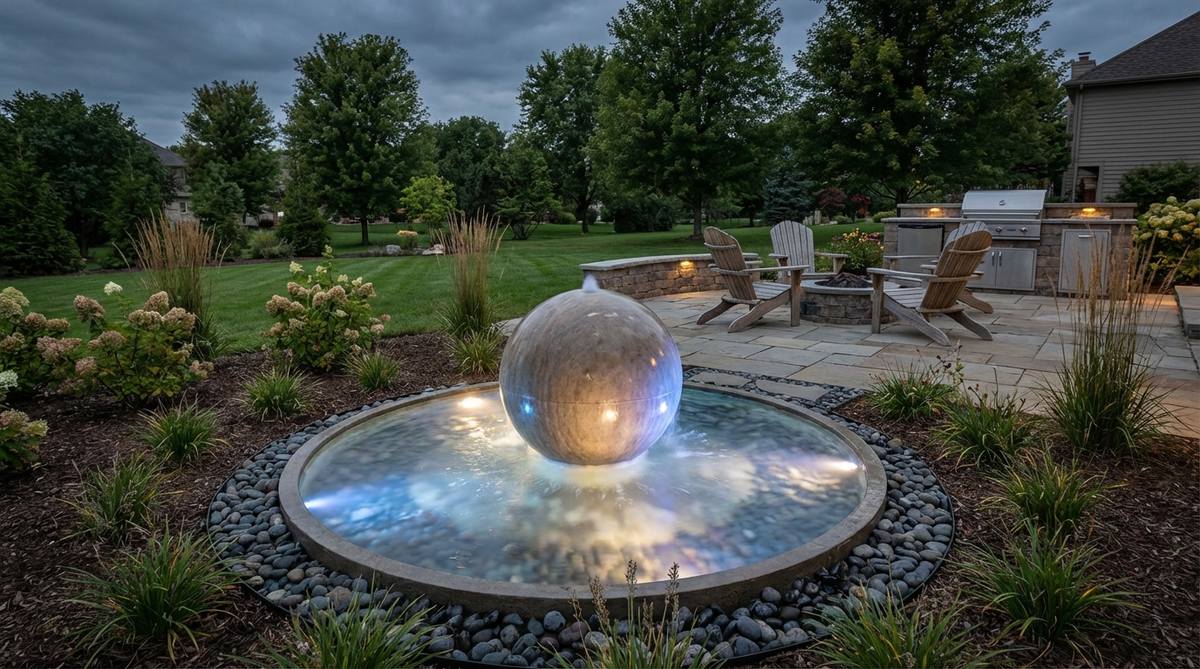
Submersible LED fixtures installed in fountain basins illuminate spheres from below. Light refracts through flowing water, creating shimmering effects across sphere surfaces.
Water amplifies and diffuses light, producing soft glows rather than harsh spotlighting. RGB LEDs enable seasonal color changes or event-specific lighting schemes.
Position LEDs strategically to avoid direct glare while maximizing water illumination. The underwater approach keeps lighting fixtures hidden, maintaining clean contemporary aesthetics during daylight.
16. Color-Changing Water Wall Panel
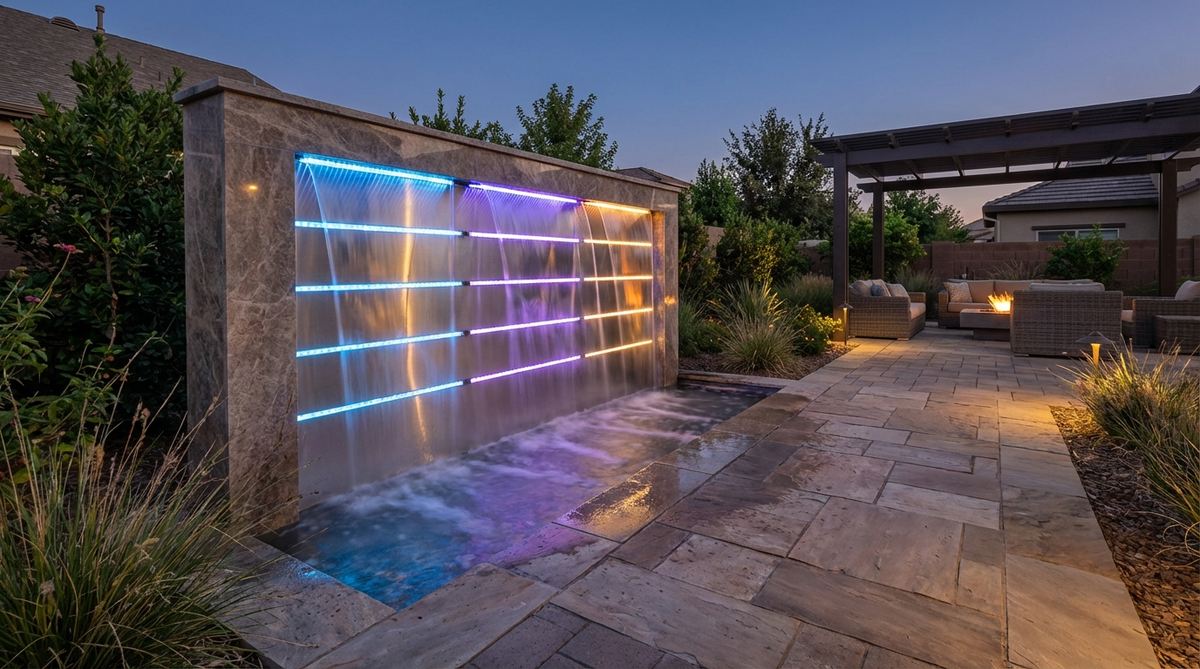
LED strips integrated behind transparent water walls create color-wash effects as water flows over illuminated surfaces. Programmable controllers sequence colors or respond to music for dynamic displays.
The water acts as a diffusion screen, softening LED output into even color fields. This design excels in entertainment areas or modern patios where fountain serves as living art.
Energy-efficient LED systems operate economically even with extended evening use. Install dimmers to adjust intensity based on ambient light levels and desired atmosphere.
17. Fiber Optic Sphere with Starlight Effect
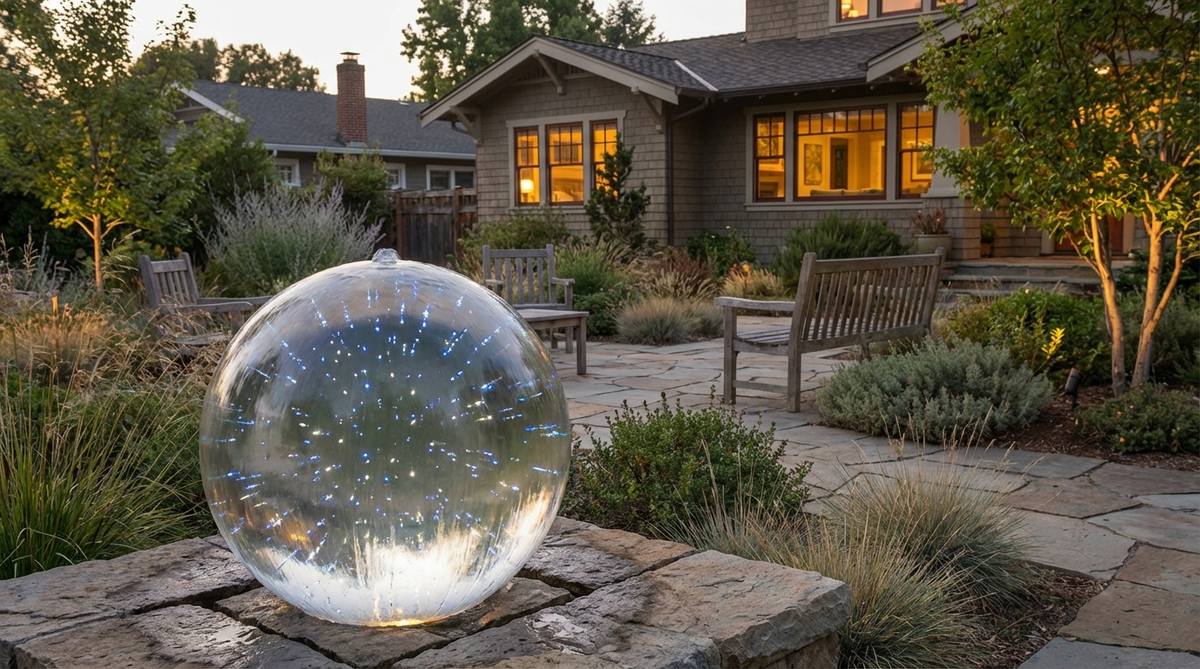
Fiber optic strands embedded in translucent spheres create pinpoint starlight effects throughout the globe. Water flows externally while internal lighting generates ethereal illumination.
The starlight pattern remains visible day and night, though most dramatic after dark. This design suits meditation gardens or contemplative spaces where gentle lighting supports peaceful ambiance.
Fiber optic systems generate minimal heat, suitable for acrylic or resin spheres. The scattered light points create depth perception within the sphere’s form.
18. Perimeter Lit Basin Water Wall
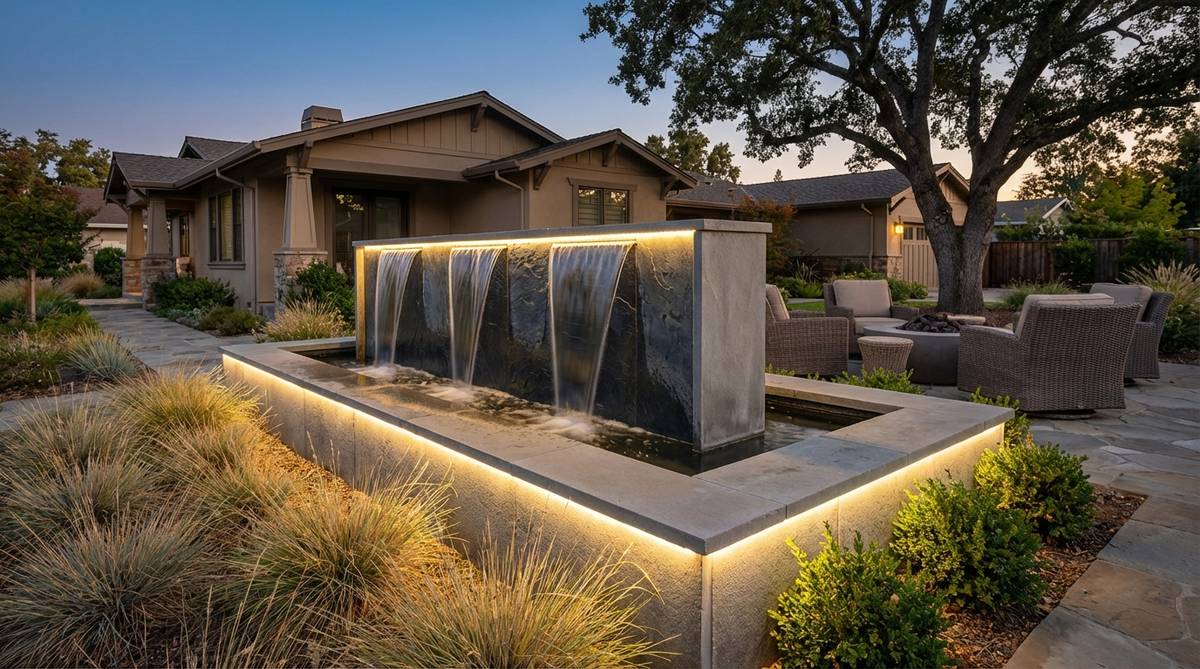
LED strips line fountain basin perimeters, creating uplighting that emphasizes water collection pools. The indirect lighting approach highlights water without overwhelming the feature.
Basin lighting works particularly well with water walls where the focus should remain on cascading water rather than illumination itself. The perimeter approach provides functional lighting for safety while enhancing aesthetics.
Warm white LEDs suit traditional landscapes transitioning to contemporary, while cool white emphasizes modern minimalist design. RGB options offer flexibility for varied occasions.
Architectural Statement Pieces
These designs emphasize sculptural form and architectural integration. Statement fountains serve as primary landscape focal points, often determining surrounding design elements rather than supplementing existing features.
19. Geometric Concrete Plinth Waterfall
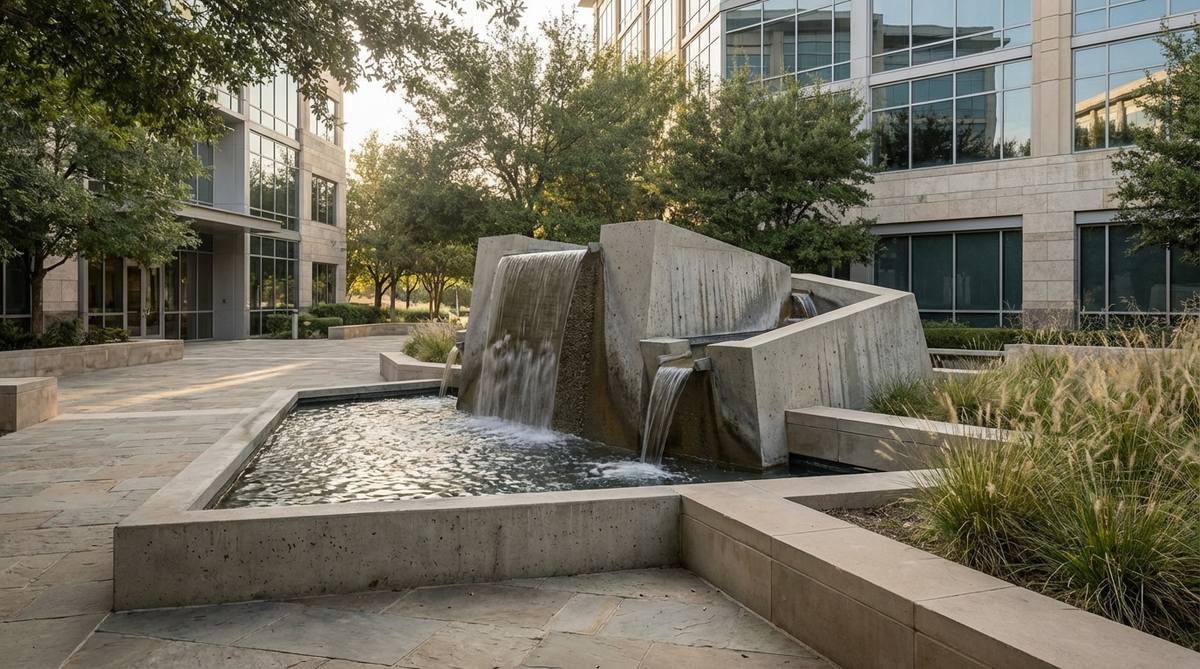
Cast concrete plinths in angular geometric forms create architectural presence independent of water flow. The concrete mass anchors the design while water provides movement and sound.
Designers specify concrete colors and finishes to coordinate with building exteriors and hardscape materials. The plinth’s substantial form suits large-scale landscapes and commercial installations.
Water sheets across the concrete face or pours from integrated spouts, depending on desired effect. The combination of solid mass and fluid water creates dynamic tension in contemporary landscapes.
20. Cantilevered Water Blade Sculpture
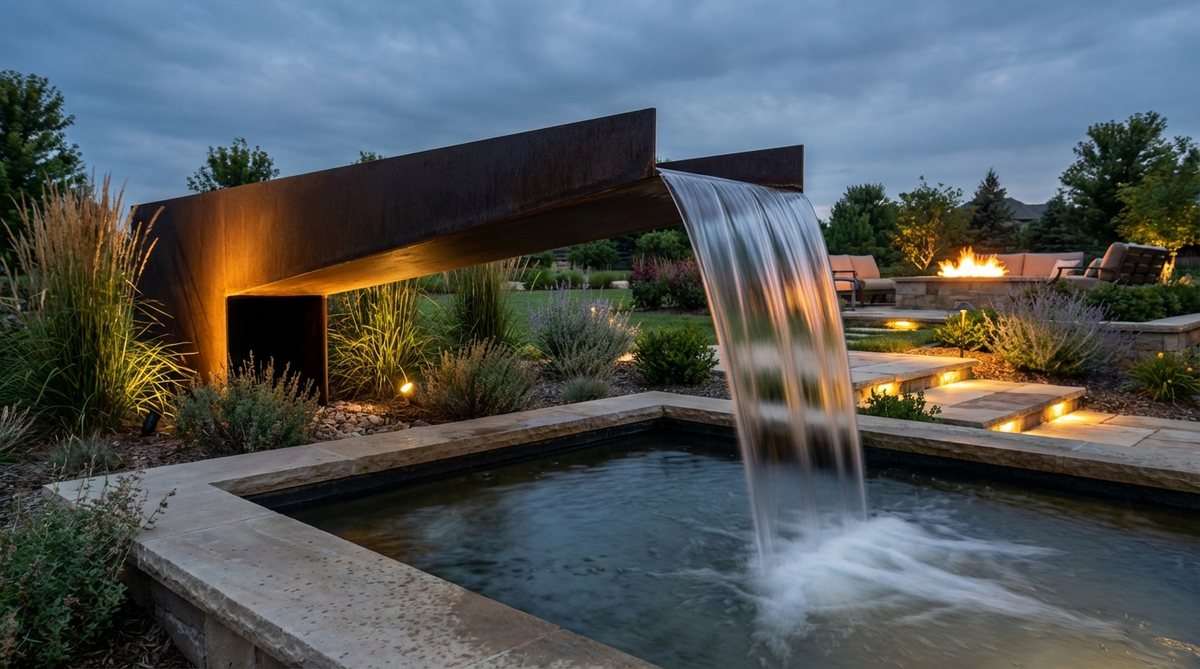
Steel or concrete blades project horizontally from support structures, with water flowing along the blade’s length before dropping vertically. The cantilevered form appears to defy gravity.
This dramatic design requires engineering precision but delivers unmatched visual impact. Position where the cantilever can be appreciated from multiple angles, particularly below the water drop point.
The horizontal water flow contrasts with vertical drops, creating two distinct water experiences within a single feature. Nighttime uplighting emphasizes the structural drama.
21. Rain Curtain Water Wall
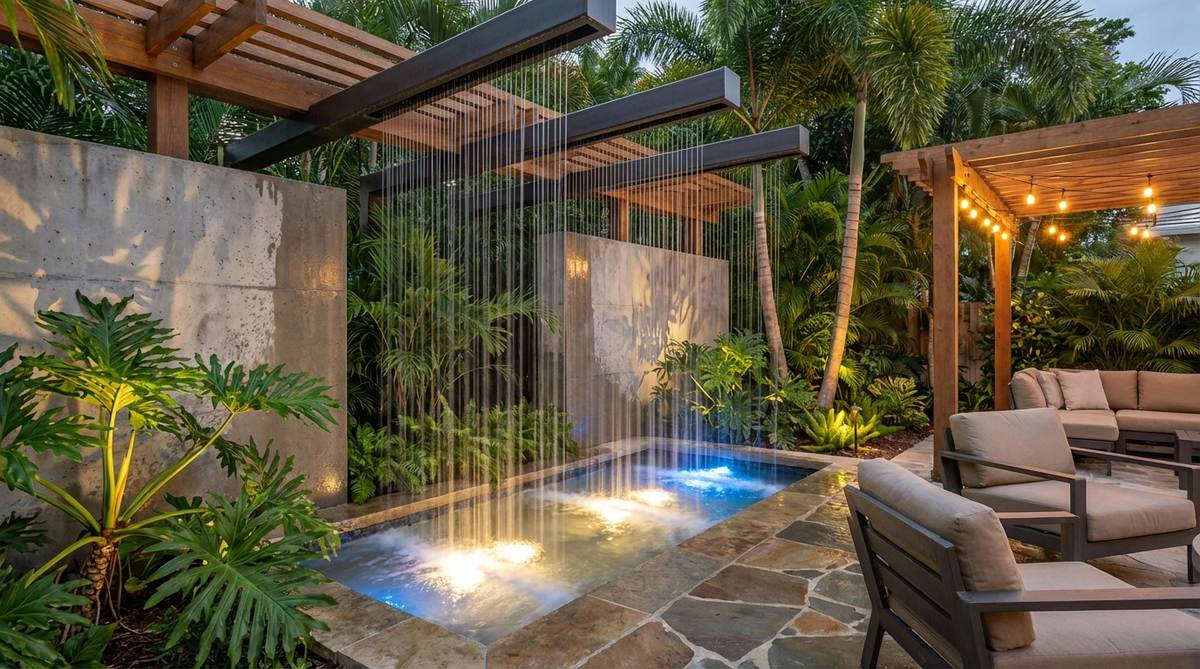
Precision-drilled pipes create even rain curtain effects as water falls in uniform droplets rather than continuous sheets. The negative space between droplets adds visual lightness to what might otherwise be solid water walls.
Adjust pipe hole spacing and water pressure to control curtain density and sound characteristics. Dense curtains create privacy screens between garden zones, while sparse patterns maintain visual connection.
Backlighting through rain curtains produces spectacular evening effects as light refracts through individual water droplets. Position perpendicular to prevailing breezes to prevent wind disruption.
22. Rotating Sphere Pillar Fountain
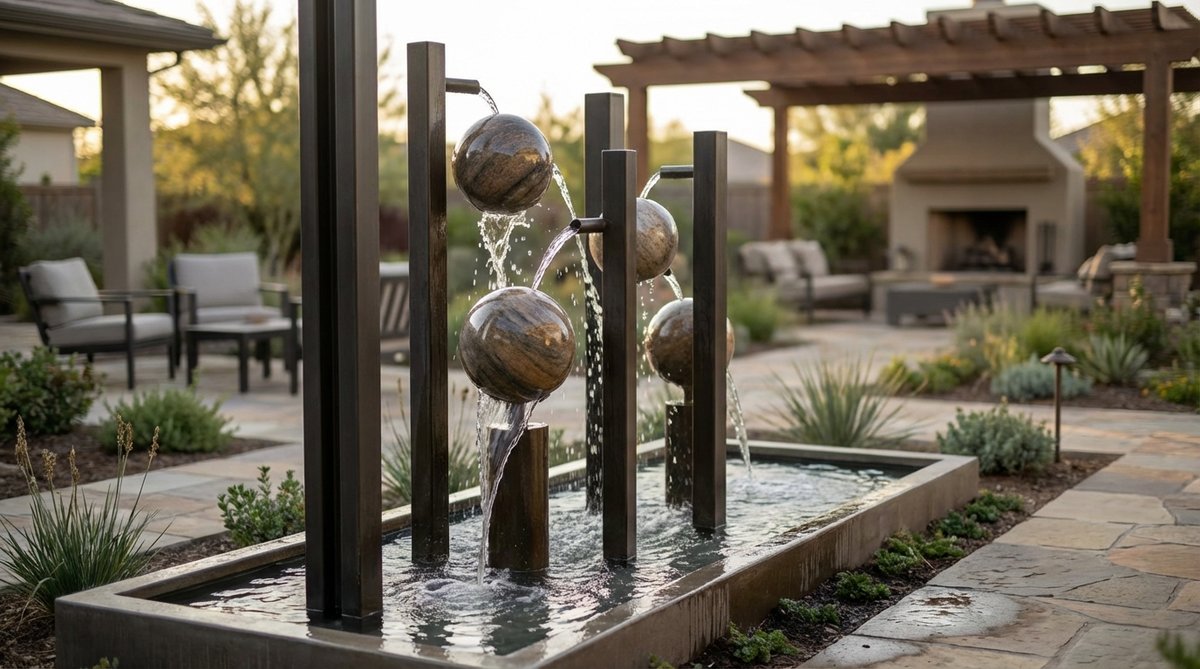
Motorized systems rotate spheres on vertical pillars, creating kinetic sculpture that changes viewing perspectives continuously. The rotation can be slow and meditative or faster for dynamic effect.
Water flows over the rotating sphere, creating spiral patterns that enhance the motion. This interactive design particularly appeals in public spaces where movement attracts attention.
The mechanical complexity requires professional installation and maintenance, but delivers unique water feature experiences unavailable in static designs. Lighting rotating spheres from multiple angles eliminates shadow zones.
23. Oversized Statement Sphere
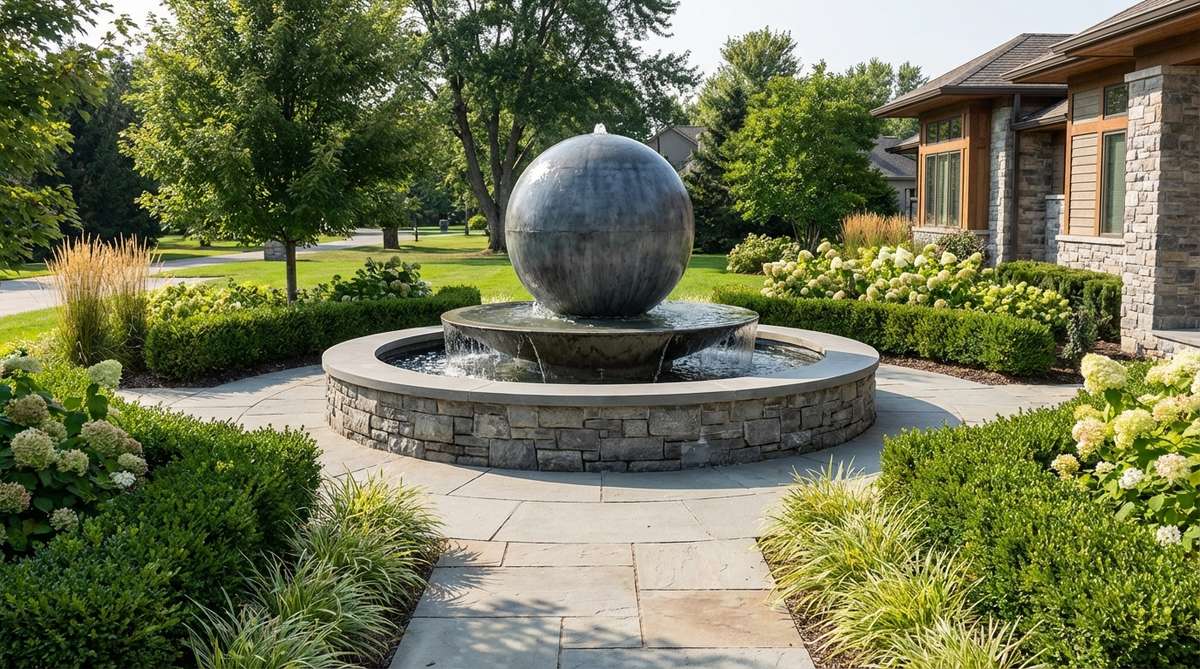
Spheres exceeding 50 inches diameter create commanding presence that dominates landscape views. The scale alone announces these as primary design features rather than accent elements.
Large spheres require substantial basins and robust pump systems to maintain proper water flow across expansive surfaces. The investment in scale delivers proportional impact in spacious gardens or commercial landscapes.
Position oversized spheres as terminus features at pathway ends or central elements in circular courtyards where their full circumference can be appreciated. The reflection capacity increases exponentially with sphere diameter.
24. Modular Water Wall System
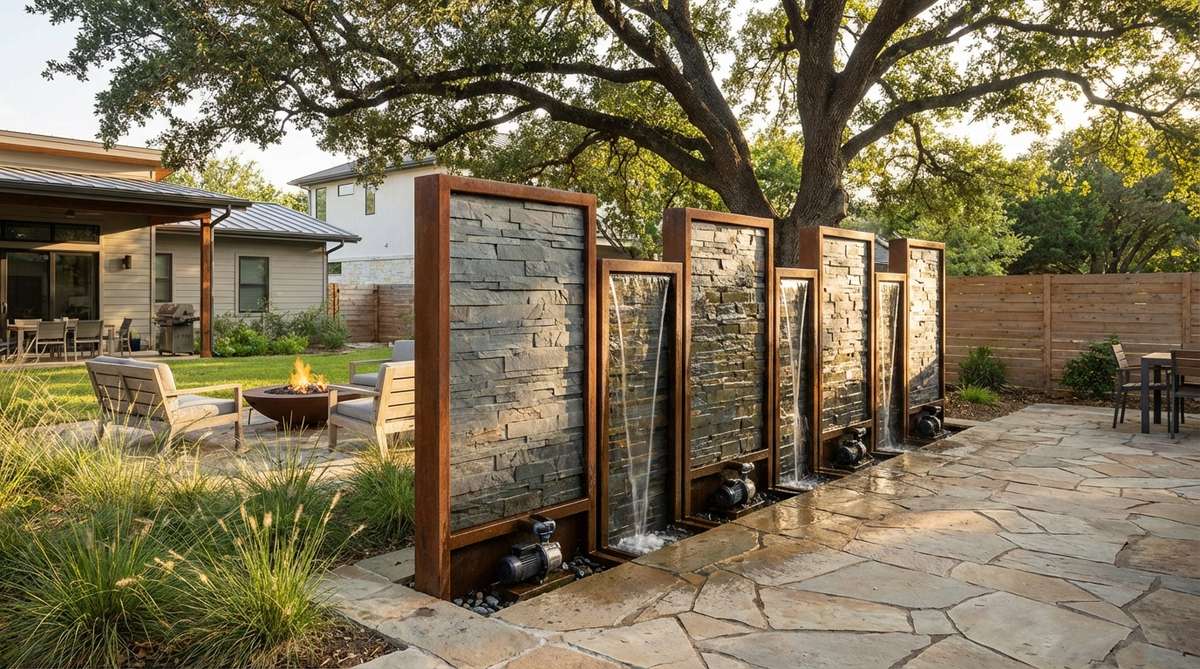
Individual water wall panels connect to create custom-sized installations. Designers configure panel quantities and arrangements to fit specific site dimensions and architectural requirements.
The modular approach allows expansion over time as budgets permit or landscapes evolve. Each panel operates independently, providing redundancy should maintenance be required.
Mix panel heights, widths, or finishes within single installations for visual complexity. Modular systems adapt to both residential and commercial applications across varied scales.
Bringing Contemporary Fountain Design to Life
Contemporary garden fountains using water walls and spheres represent the evolution of outdoor water features into architectural sculpture. These designs deliver serene water sounds while making bold visual statements through clean geometry, reflective surfaces, and innovative materials. Whether selecting mirror-polished steel spheres, minimalist water walls, or LED-enhanced installations, the key lies in matching fountain scale and style to existing landscape character. Fresh Garden Ideas encourages you to explore these contemporary options and envision how modern water features can transform your outdoor spaces into sophisticated retreats that celebrate both design innovation and natural tranquility.
Frequently Asked Questions
What materials work best for contemporary garden fountains?
Stainless steel, cast stone, and acrylic dominate contemporary fountain design. Stainless steel offers durability and modern aesthetics in both mirror-polished and brushed finishes. Cast stone provides weight and texture while accommodating custom colors. Acrylic enables transparency effects impossible with traditional materials. For coastal installations or areas with harsh weather, 316-grade stainless steel provides superior corrosion resistance compared to standard 304 alloy.
How do I maintain proper water flow in sphere fountains?
Proper sphere fountain operation requires matching pump capacity to sphere size and desired flow rate. The pump must generate sufficient pressure to push water through internal piping and create even distribution across the sphere’s top. Clean pump intakes regularly to prevent debris restriction. Check water levels daily during hot weather when evaporation increases. Adjust flow rates seasonally, as winter operation may require reduced flow to prevent freezing in cold climates.
Can contemporary fountains function in small urban gardens?
Water walls excel in compact spaces due to their vertical orientation and minimal ground footprint. Designs as narrow as 30 inches wide deliver dramatic impact without consuming valuable patio or garden area. Wall-mounted fountains require no floor space, making them ideal for balconies or tiny courtyards. Select sphere fountains under 36 inches diameter for small gardens, positioning them as focal points where their 350-degree appeal can be appreciated from multiple viewing angles within confined spaces.
What installation considerations apply to water wall fountains?
Water wall installation requires level mounting surfaces and proper drainage systems. Walls must support the fountain’s weight when filled, particularly for large cast stone designs. Ensure electrical access for pump operation, using GFCI-protected outdoor outlets. Install catch basins large enough to capture splash and contain the fountain’s full water volume during maintenance. For wall-mounted designs, verify wall structural capacity before installation, reinforcing if necessary to support fountain weight and water pressure.
How does LED lighting affect fountain energy consumption?
Modern LED fountain lighting consumes minimal energy compared to older halogen or incandescent systems. A typical LED-lit fountain uses 10-20 watts for lighting, less than the 50-150 watts required by the recirculation pump. LED systems generate negligible heat, making them safe for acrylic and resin materials. The extended lifespan of LED fixtures reduces maintenance requirements and replacement costs. Programmable controllers enable lighting schedules that activate only during desired hours, further reducing consumption.
Are contemporary fountains suitable for winter climates?
Contemporary fountains can operate year-round in moderate climates but require winterization in freezing regions. Drain all water from spheres, basins, and plumbing before temperatures drop below freezing. Stainless steel and cast stone withstand freeze-thaw cycles better than acrylic or fiberglass. Some owners operate fountains through winter using heating elements that prevent ice formation, though this increases energy costs. Alternatively, embrace seasonal operation, winterizing fountains in fall and reactivating them in spring when temperatures stabilize above freezing.