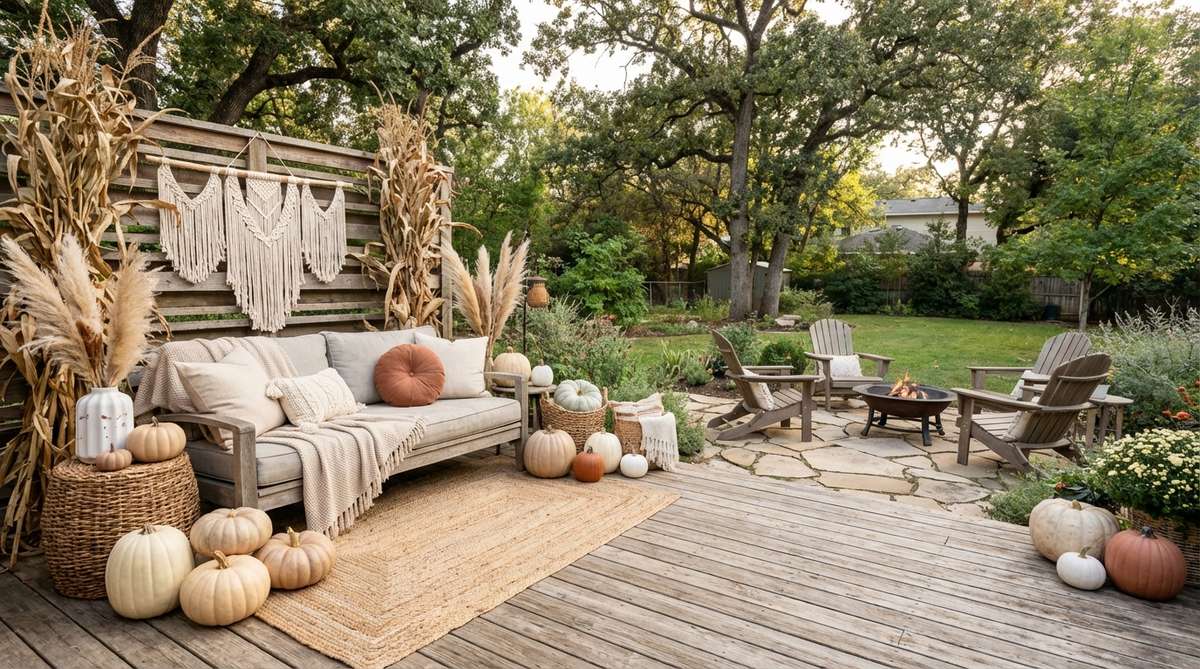
Boho halloween decorations bring a refined, earthy aesthetic to spooky season styling through natural materials, handcrafted elements, and soft neutral palettes. Instead of traditional orange-and-black schemes, these designs embrace cream, beige, terracotta, and white tones that blend seamlessly with year-round interiors. Fresh Garden Ideas offers this curated collection of 25+ decoration concepts that honor both bohemian sensibility and Halloween spirit.
Design SnapshotKey Principles
- Natural Materials: Favor rattan, macramé, dried botanicals, and unfinished wood to establish organic texture
- Neutral Color Palette: Use cream, beige, terracotta, soft gray, and white as your foundation colors
- Handcrafted Elements: Prioritize artisan-made or DIY pieces over mass-produced decorations
- Layered Textures: Combine woven materials, painted surfaces, and dried florals for dimensional displays
Painted Pumpkin Designs
White and neutral-toned painted pumpkins establish the foundation of boho Halloween styling. Designers use matte finishes and soft textures to create visual interest without bright colors.
1. Baking Soda Textured White Pumpkins
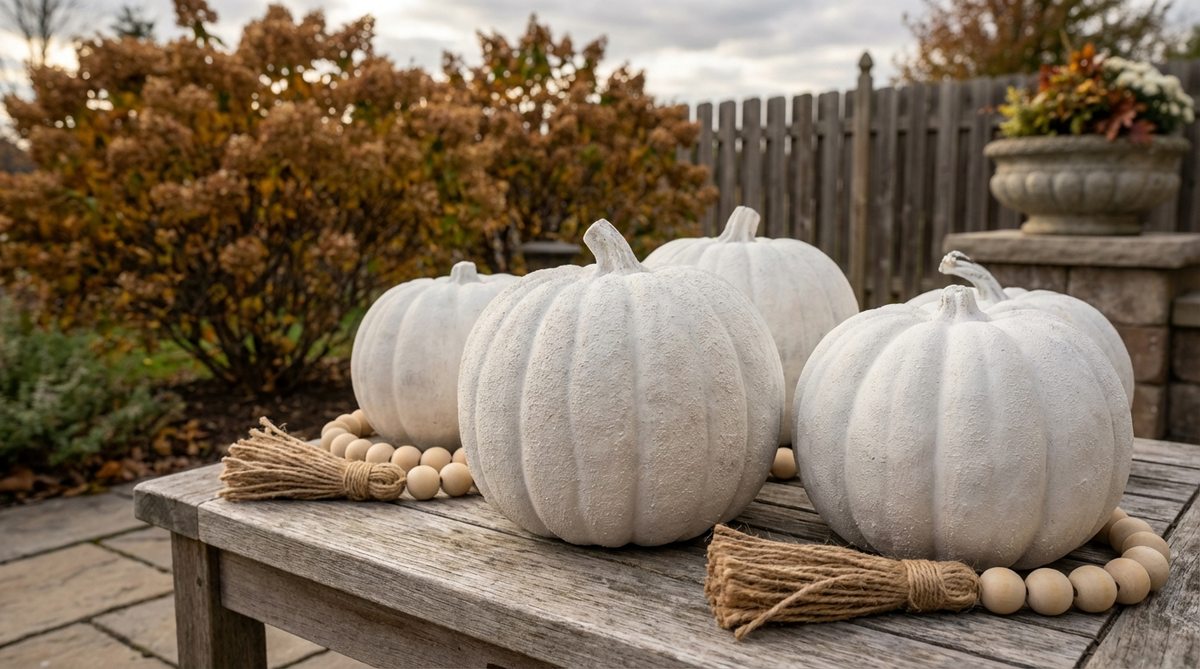
Mix white or navajo-white paint with baking soda to create a chalky, dimensional finish on pumpkin surfaces. The granular texture mimics aged plaster or pottery.
Apply three coats, allowing each layer to dry fully between applications. The baking soda creates subtle ridges that catch light naturally.
This technique works especially well on foam or plastic pumpkins intended for multi-season use. Pair with wooden beads or jute for enhanced bohemian appeal.
2. Gold Geometric Pattern Pumpkins
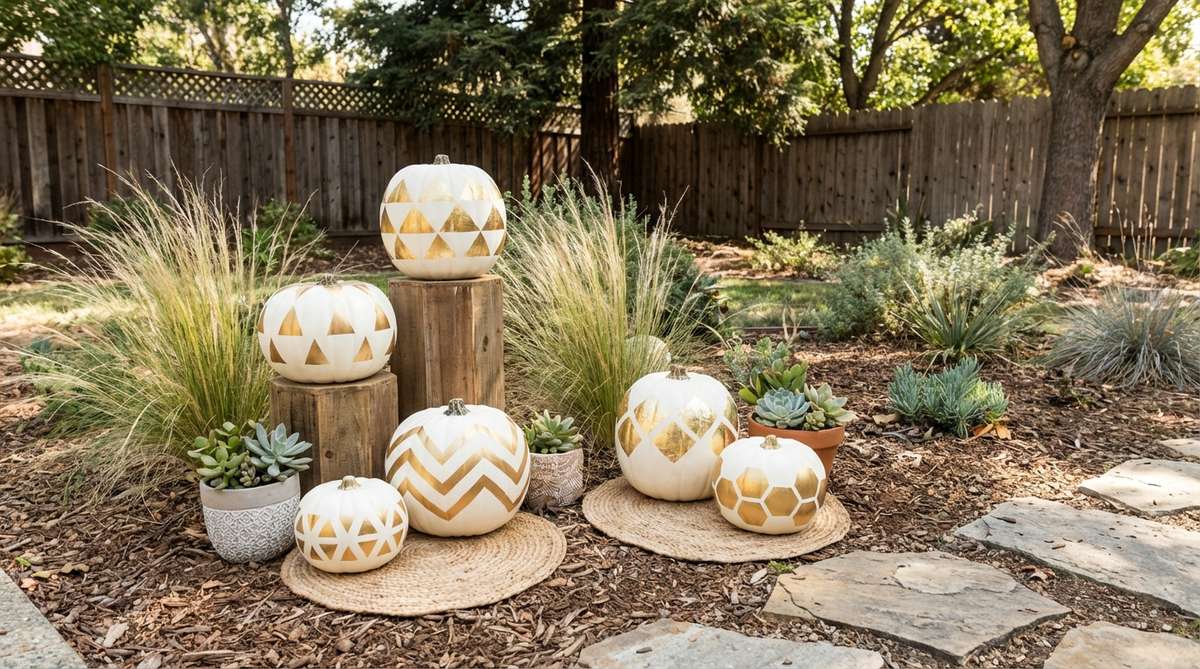
Hand-paint or stencil angular geometric designs onto white pumpkin bases using metallic gold paint. Abstract triangles, chevrons, and hexagons produce modern bohemian contrast.
Use painter’s tape to achieve crisp lines, or freehand for a more organic appearance. Gold leaf adhesive offers an alternative to paint for richer metallic tones.
Position these pumpkins on wooden pedestals or woven placemats to emphasize the interplay between natural and refined elements.
3. Terracotta Washed Pumpkins
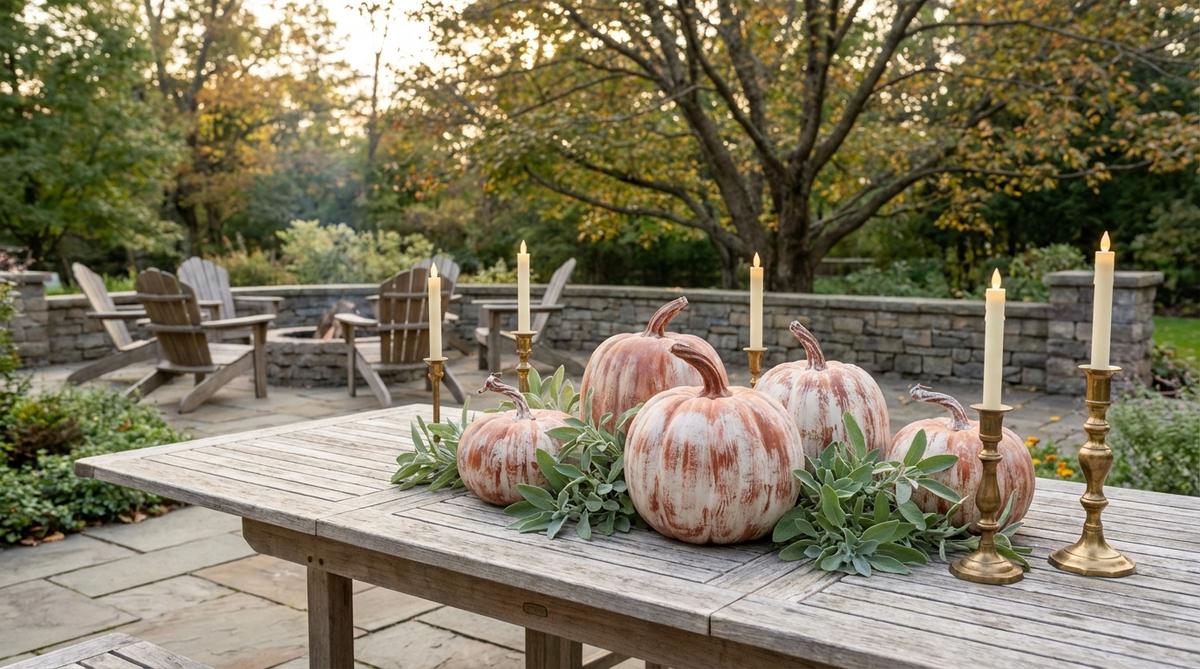
Apply a white chalk paint base, then dry-brush terracotta or rust-colored paint over the surface once dry. This layering technique produces aged, weathered tones.
Use a stiff-bristled brush with minimal paint to create streaky, uneven coverage. The white base shows through in places, adding dimension.
Terracotta washes complement sage greenery and brass candlesticks in mantel or table arrangements.
4. Henna-Inspired Doodle Pumpkins
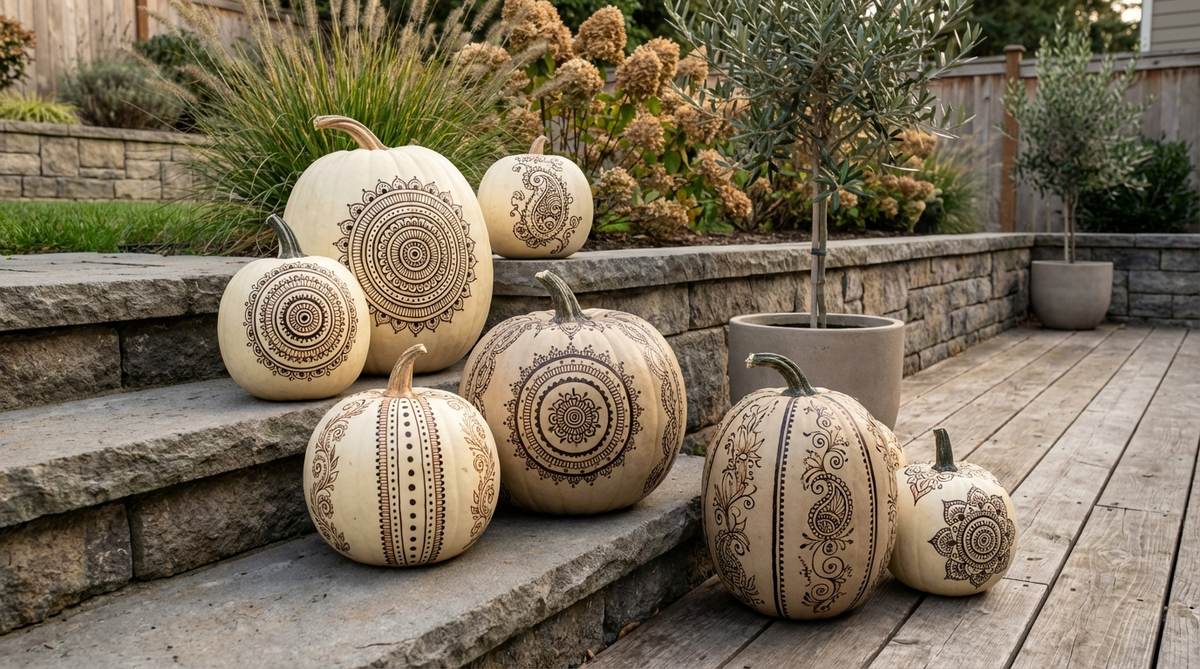
Draw intricate mandala patterns, paisleys, and botanical motifs onto neutral pumpkins using permanent markers or paint pens. These detailed designs reference traditional henna art.
Start at the stem and work downward in concentric circles or vertical bands. Combine dots, curves, and fine linework for authentic pattern complexity.
Cream or beige base colors showcase black or brown ink most effectively. Group multiple decorated pumpkins together for gallery-style impact.
5. Monochrome Herringbone Pumpkins
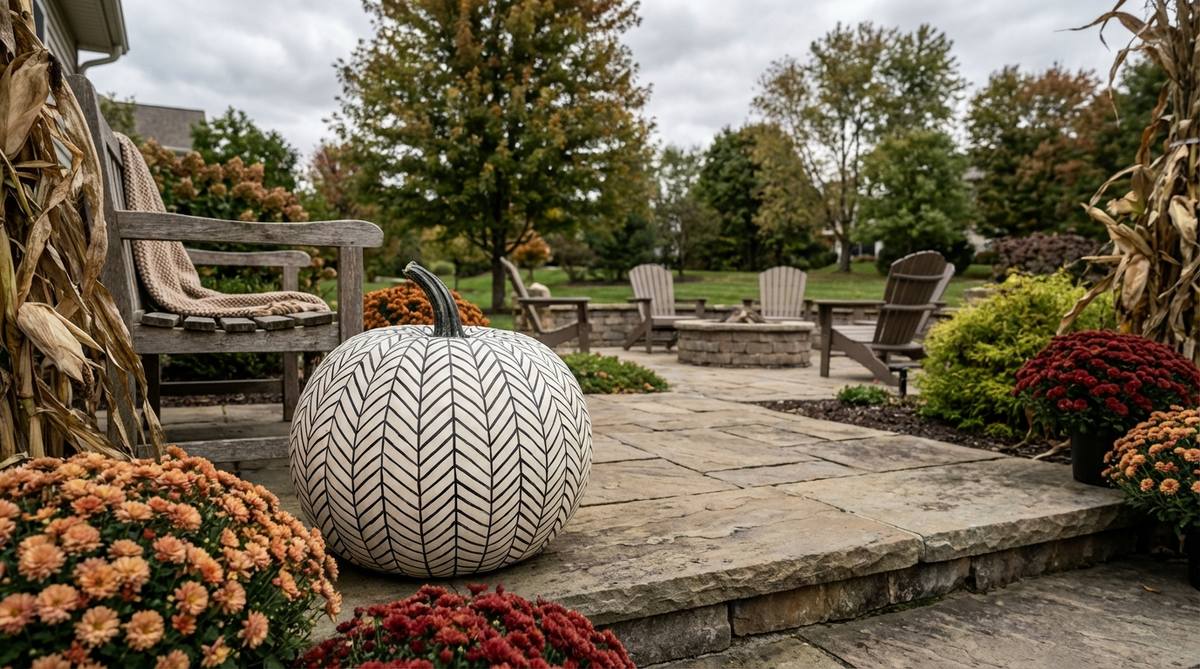
Paint classic herringbone patterns in black or charcoal onto white pumpkin surfaces. This architectural pattern brings structured elegance to organic forms.
Use a fine brush and ruler for precision, or embrace slight imperfections for handmade character. The diagonal arrangement guides the eye around the pumpkin’s curve.
Herringbone pumpkins suit both indoor shelving and outdoor porch displays throughout autumn.
6. Polka Dot Neutral Pumpkins
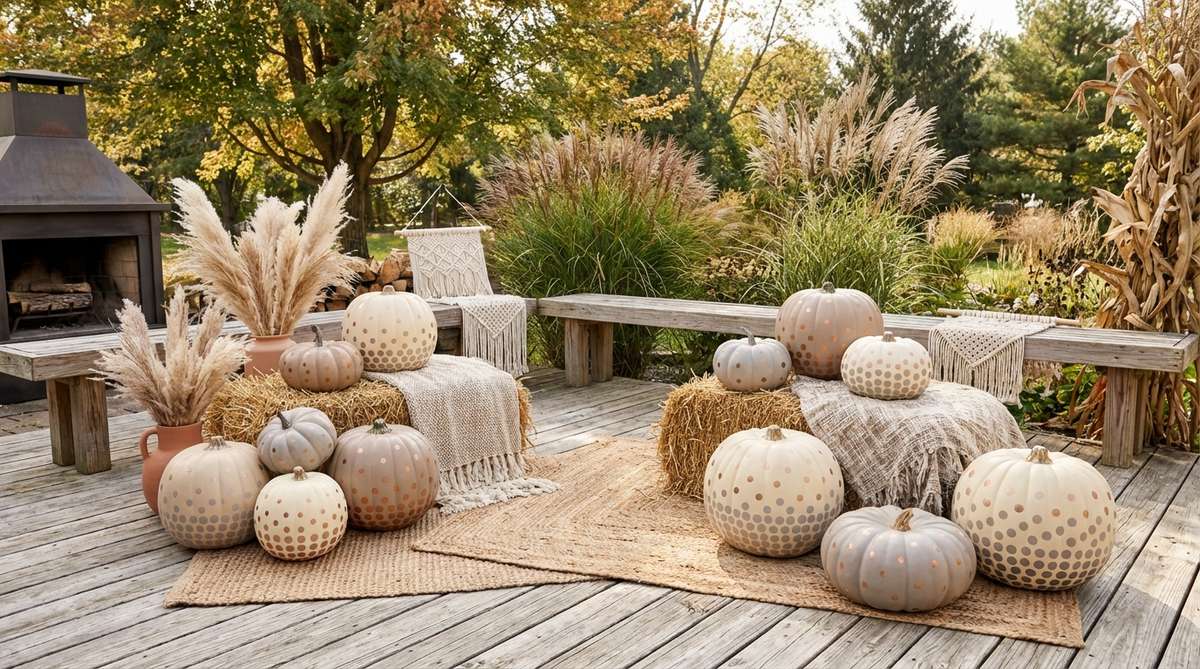
Apply perfectly circular dots in cream, taupe, or soft gray onto slightly darker neutral pumpkin bases. Use makeup sponges or circular stencils for consistent sizing.
Vary dot density across the surface—sparse at the top, denser at the bottom—to create visual weight. Metallic copper or gold dots add subtle glamour.
These playful pumpkins work particularly well in children’s spaces or casual family gathering areas.
Textile & Wrapped Pumpkins
Fabric, yarn, and woven materials transform standard pumpkins into soft, tactile decorative objects. These methods require no paint and offer reusable possibilities.
7. Macramé Wrapped Pumpkins
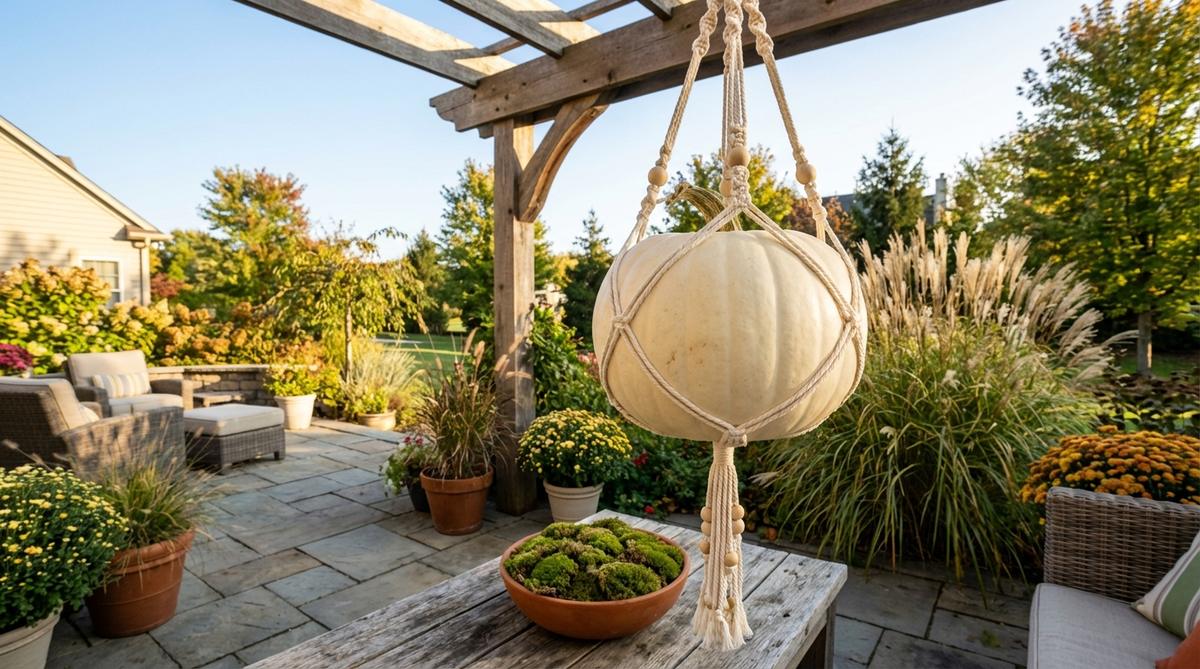
Encase white or natural pumpkins in custom macramé holders featuring square knots and half-hitch patterns. Natural cotton rope in cream or tan maintains color consistency.
Create a circular base that fits the pumpkin’s widest point, then work upward in a net pattern. Add wooden bead accents or tassel details at connection points.
Suspend macramé pumpkins from plant hangers or position them in low bowls filled with moss.
8. Burlap Leaf Collage Pumpkins
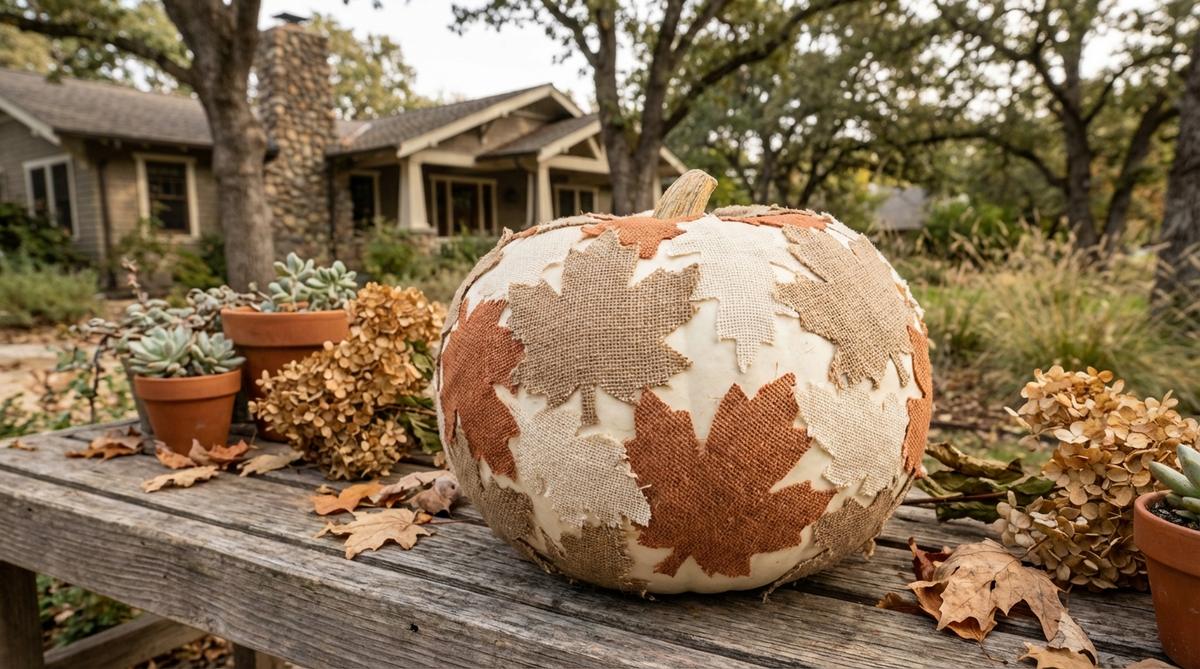
Cut autumn leaf shapes from burlap in varying shades—natural, rust-dyed, and cream-washed. Decoupage these fabric leaves onto white pumpkin surfaces using matte medium.
Overlap leaves at different angles, allowing the pumpkin’s base color to show between pieces. The burlap’s loose weave creates natural texture.
This technique produces dimensional, touchable surfaces that invite closer examination in centerpiece arrangements.
9. Chunky Knit Pumpkin Cozies
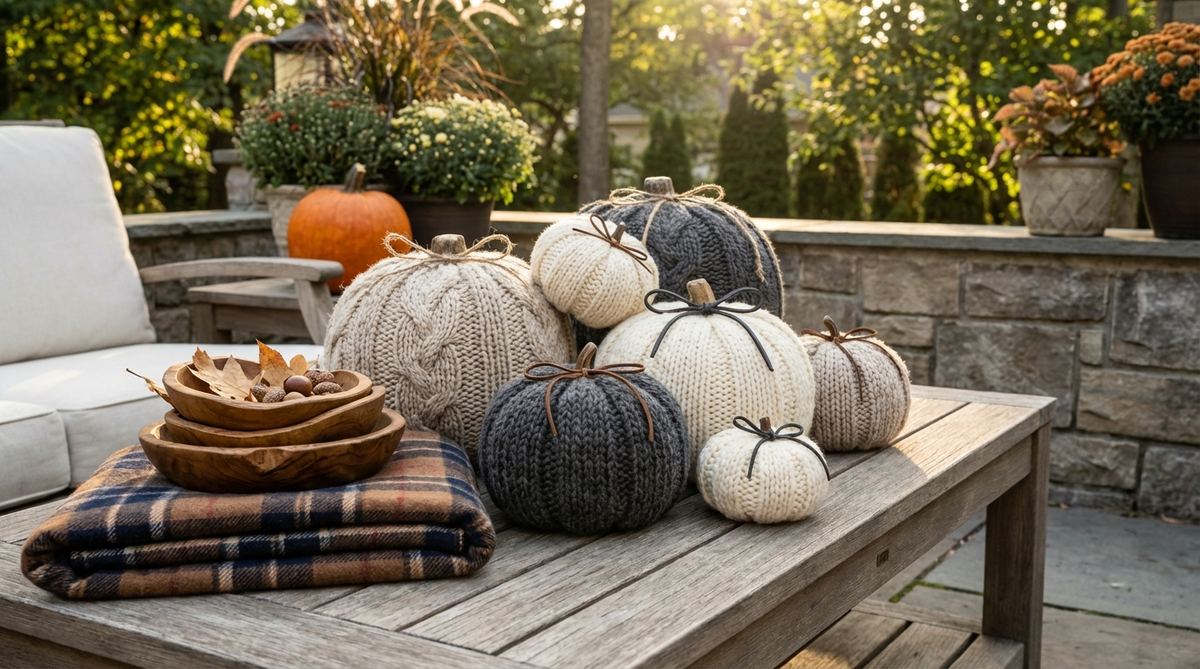
Knit or crochet pumpkin covers using bulky wool in oatmeal, cream, or gray tones. These fabric sleeves slip over foam pumpkins for soft, cozy texture.
Add cable knit patterns or simple stockinette stitches depending on skill level. Secure at the top with twine or leather cord tied around the stem.
Knitted pumpkins pair beautifully with plaid blankets and wooden bowls in living room vignettes.
10. Gauze-Wrapped Ghost Pumpkins
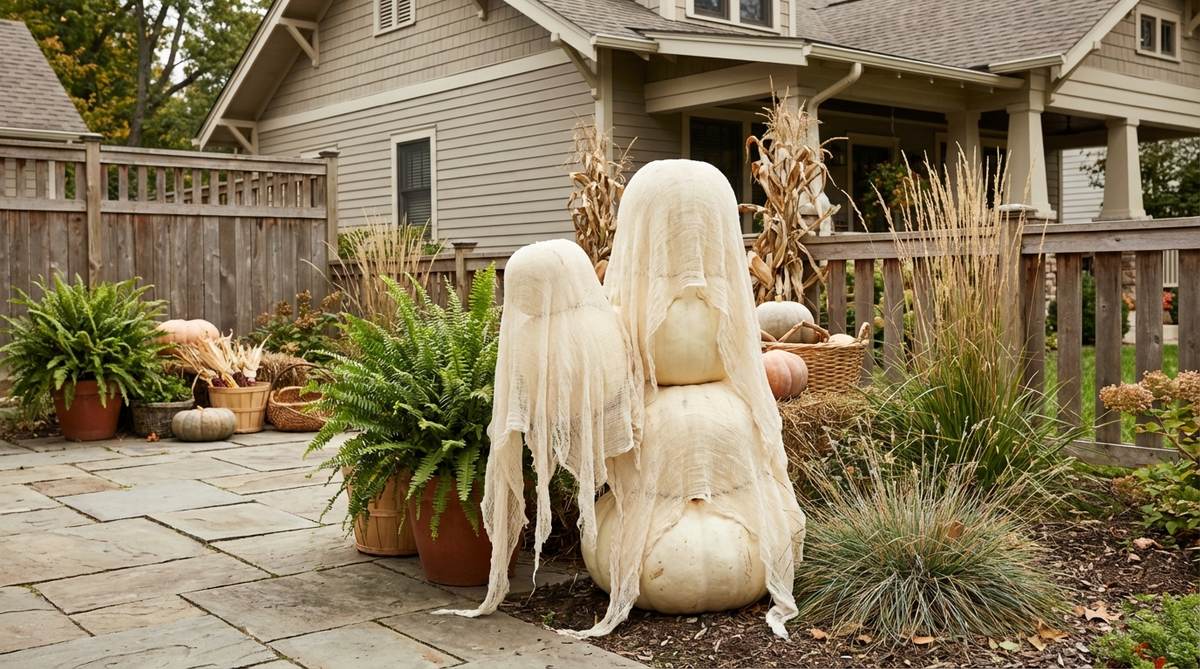
Drape white or natural cheesecloth over stacked white pumpkins to create abstract ghost silhouettes. Stiffen the fabric with fabric starch or diluted glue for sculptural draping.
Position cheesecloth to suggest ethereal movement rather than defined shapes. Allow raw edges to hang loosely for an organic, unfinished appearance.
These ghostly figures maintain subtlety appropriate for spaces where traditional Halloween gore feels excessive.
Natural Element Displays
Dried botanicals, preserved branches, and organic materials create seasonally appropriate backdrops that emphasize the natural world. Gardeners appreciate these earth-connected approaches to Halloween staging.
11. Pampas Grass Pumpkin Arrangements
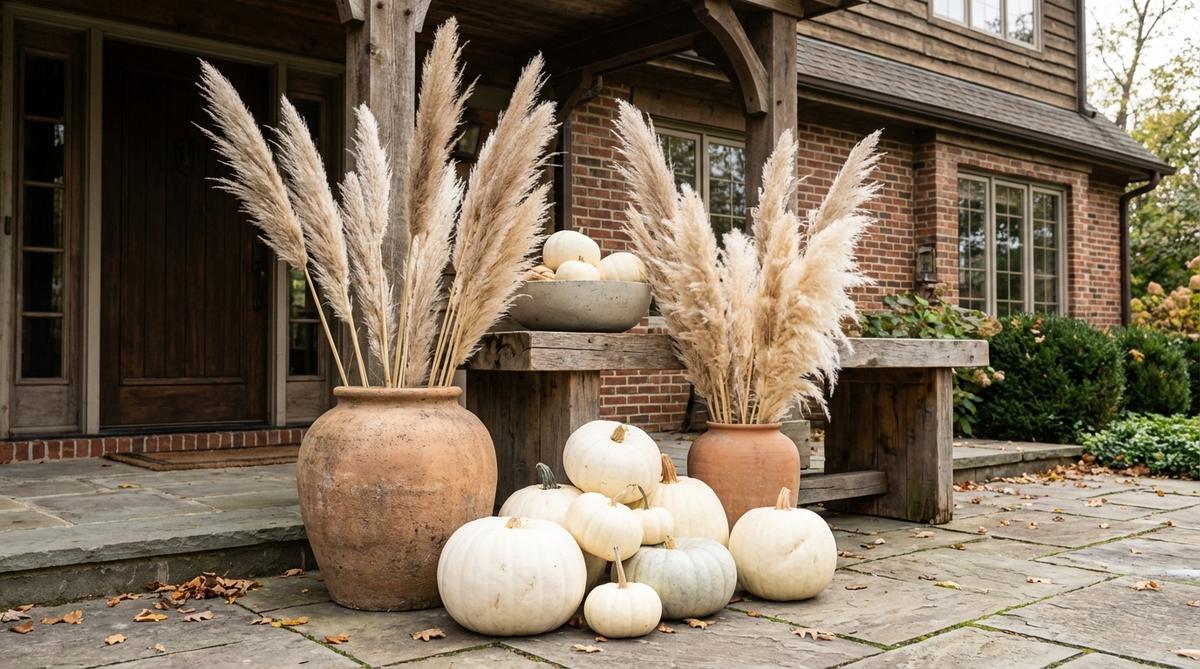
Arrange tall dried pampas grass plumes in natural or bleached tones behind groupings of white pumpkins. The feathery texture provides soft vertical interest.
Place pampas stems in concrete or terracotta vessels, positioning pumpkins at the base to create height variation. Mix plume sizes—some towering, others mid-height.
This combination suits entryway consoles, dining tables, and fireplace mantels throughout October and November.
12. Eucalyptus Garland With Mini Pumpkins
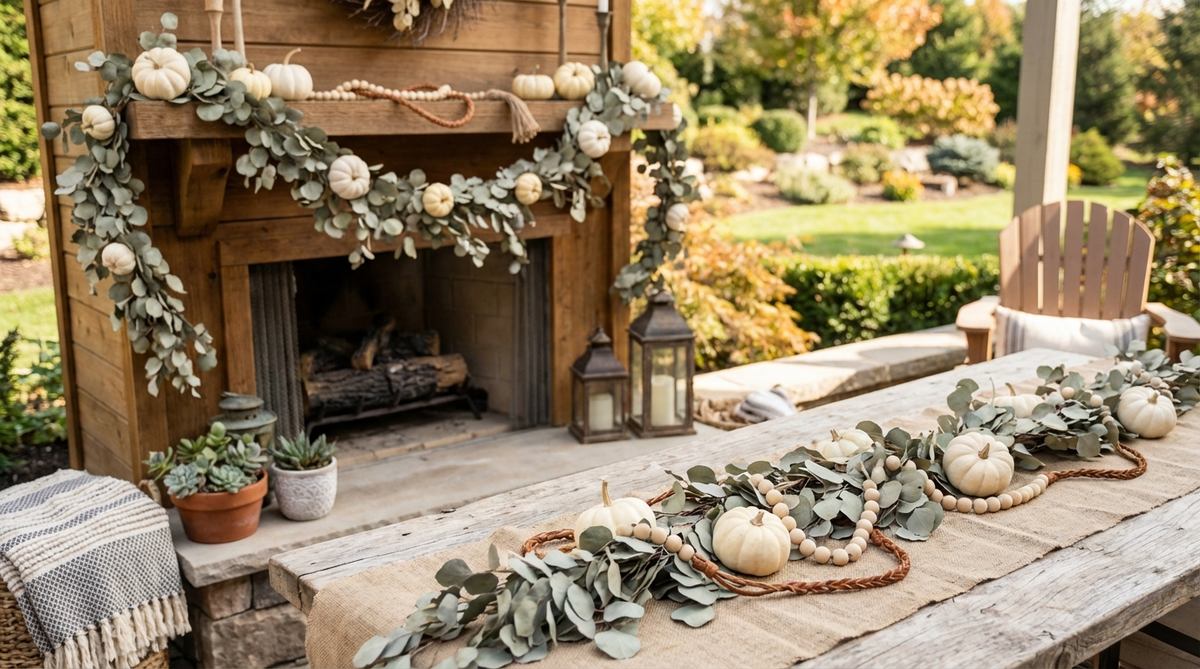
String dried eucalyptus branches with tiny white or cream pumpkins attached at intervals. Use floral wire to secure pumpkins directly to the garland structure.
Drape these garlands across mantels, doorways, or table runners. The eucalyptus provides muted green-gray color alongside neutral pumpkin tones.
Add wooden beads or leather cord details to reinforce the bohemian aesthetic throughout the garland length.
13. Dried Flower Pumpkin Centerpieces
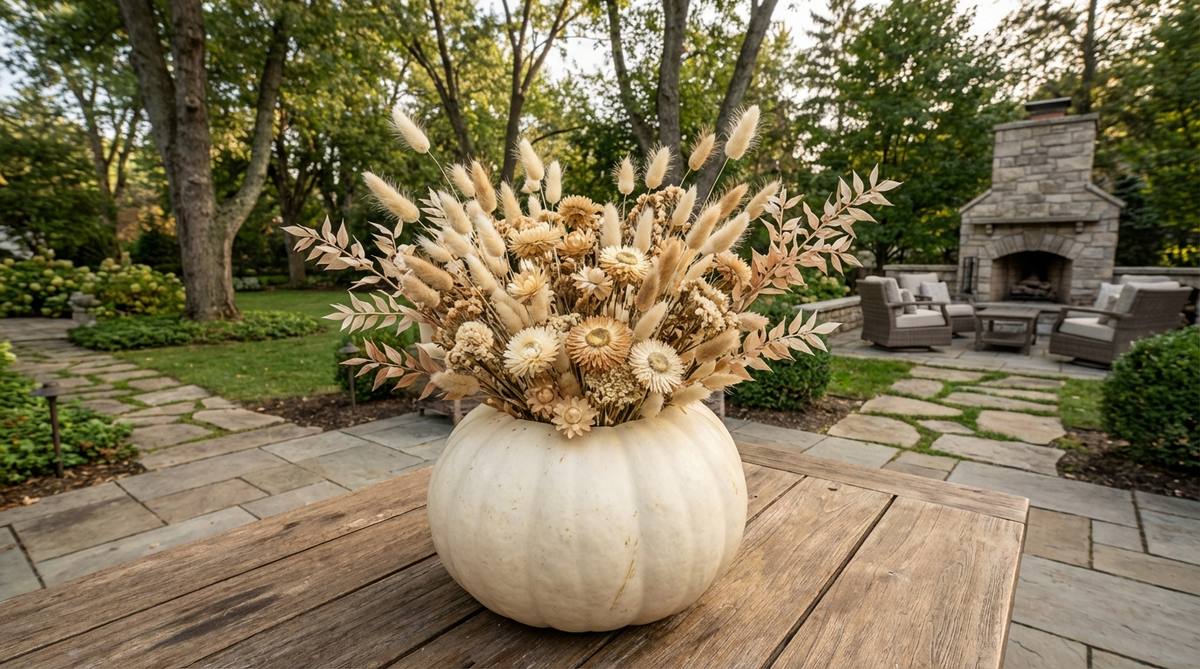
Hollow out the top of a large white pumpkin and insert floral foam to hold dried flower arrangements. Use bunny tails, strawflowers, and bleached ruscus in cream and tan shades.
Build the arrangement directly into the pumpkin, allowing stems to extend naturally outward. Keep the color palette monochromatic for cohesive impact.
These living-meets-seasonal displays bridge garden interest with holiday decoration in a subtle, sophisticated manner.
14. Twig Branch Pumpkin Nests
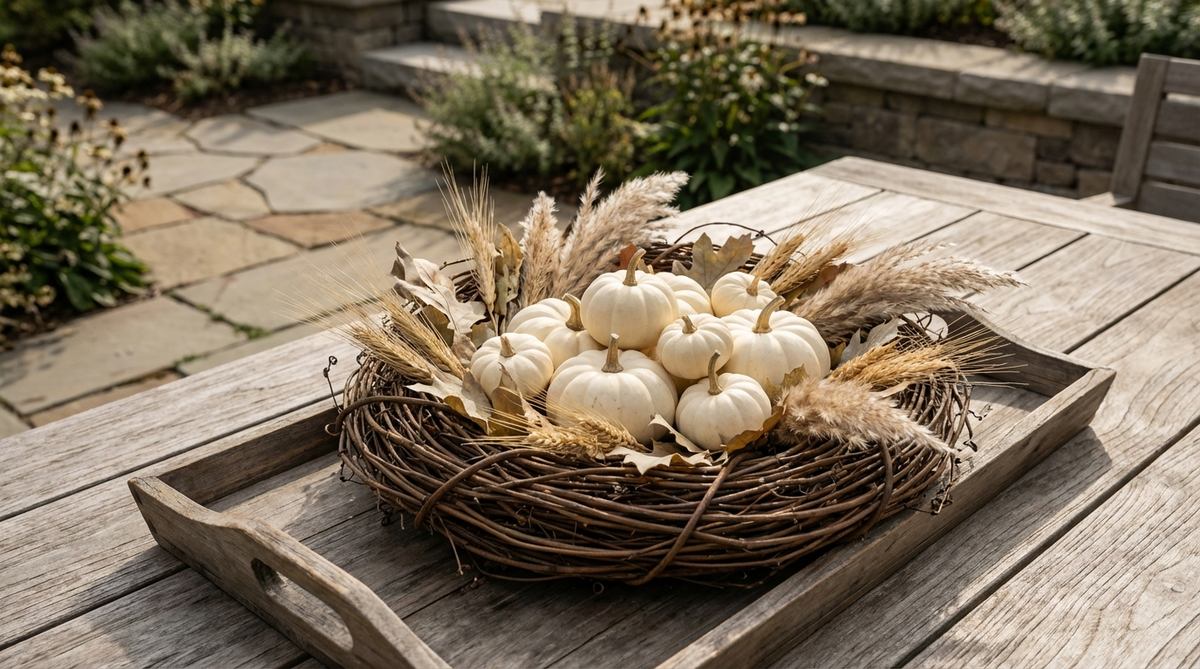
Form circular nests from flexible branches or grapevine, then nestle groups of small white pumpkins inside. The nest structure suggests natural harvest abundance.
Interweave dried grasses or wheat stalks through the branches for added texture. Position nests on wooden trays or directly on dining tables.
This presentation honors agricultural harvest traditions while maintaining contemporary minimalist appeal.
15. Moss-Covered Pumpkin Bases
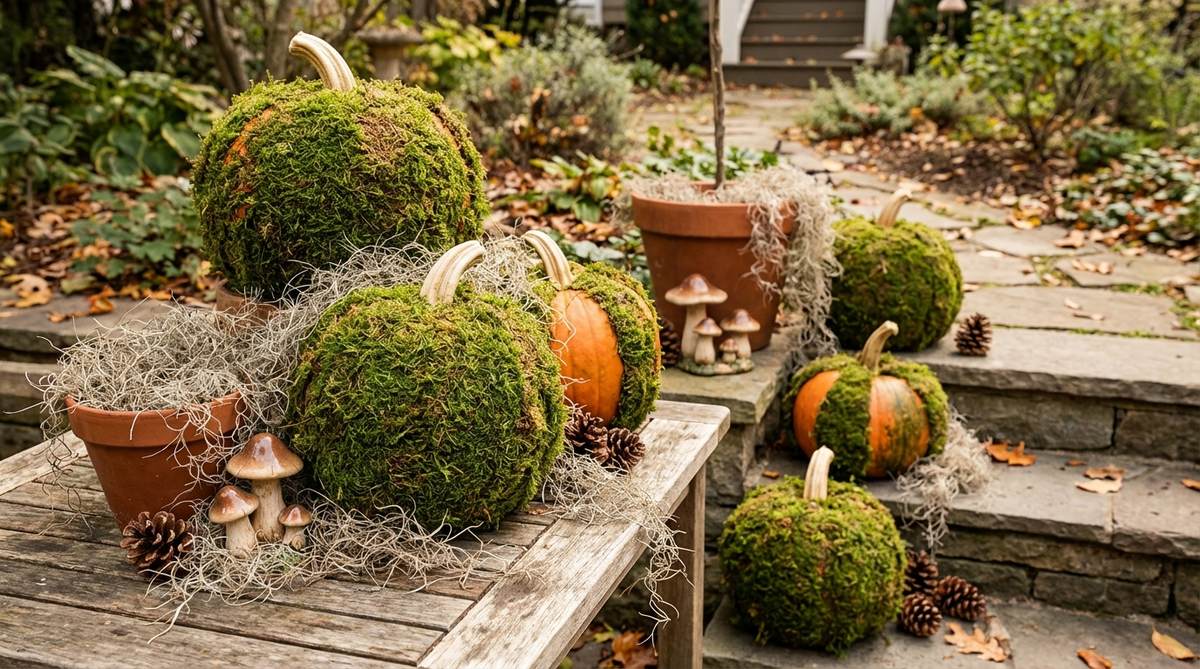
Attach preserved sheet moss to pumpkin surfaces using hot glue, covering the entire exterior. The rich green texture contrasts beautifully with cream-colored stems.
Leave some areas partially exposed to show the pumpkin beneath, or cover completely for full woodland effect. Spanish moss creates looser, more ethereal coverage.
Moss pumpkins suit forest-themed vignettes alongside mushroom figurines and pinecone clusters.
16. Wheat Stalk Bundle Displays
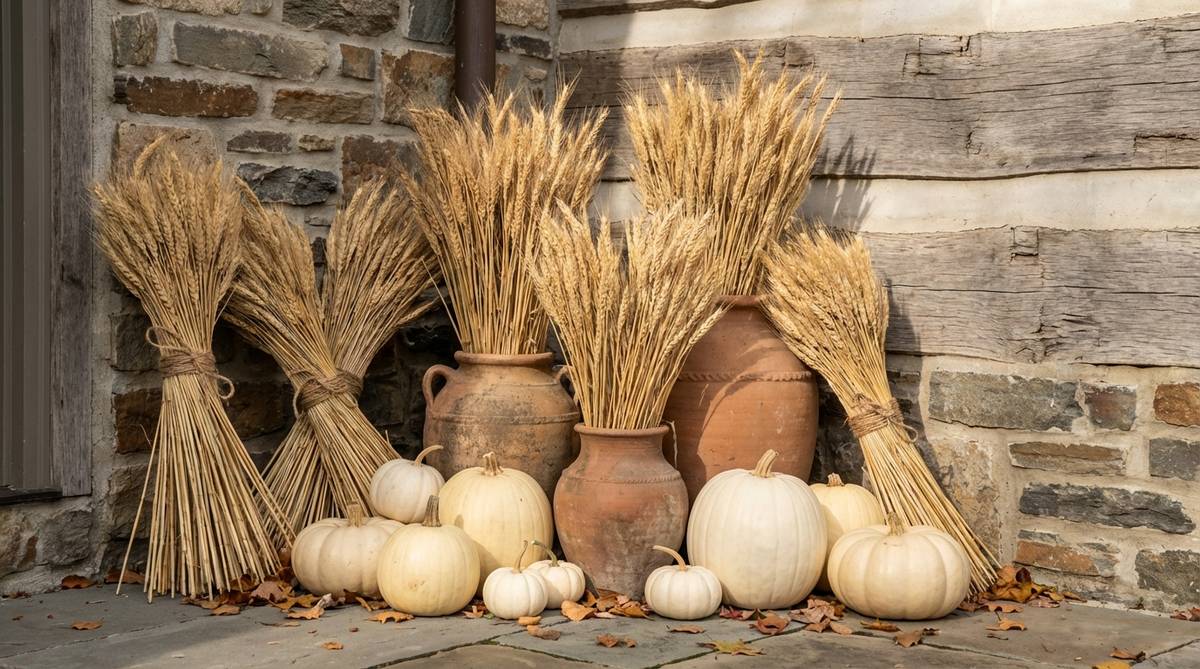
Tie dried wheat stalks or natural grasses into tall bundles with jute twine, positioning white pumpkins at the base. The vertical grains provide architectural structure.
Vary bundle heights—some reaching four feet, others stopping at two—to create visual rhythm. Lean bundles against walls or stand them in weighted urns.
Wheat bundles reference agricultural heritage while offering neutral-toned seasonal impact appropriate for modern farmhouse interiors.
Handcrafted Bohemian Accents
Artisan-made decorative elements and DIY projects bring authentic bohemian character to Halloween displays. These pieces emphasize craftsmanship and individual creativity.
17. Woven Rattan Pumpkin Sculptures
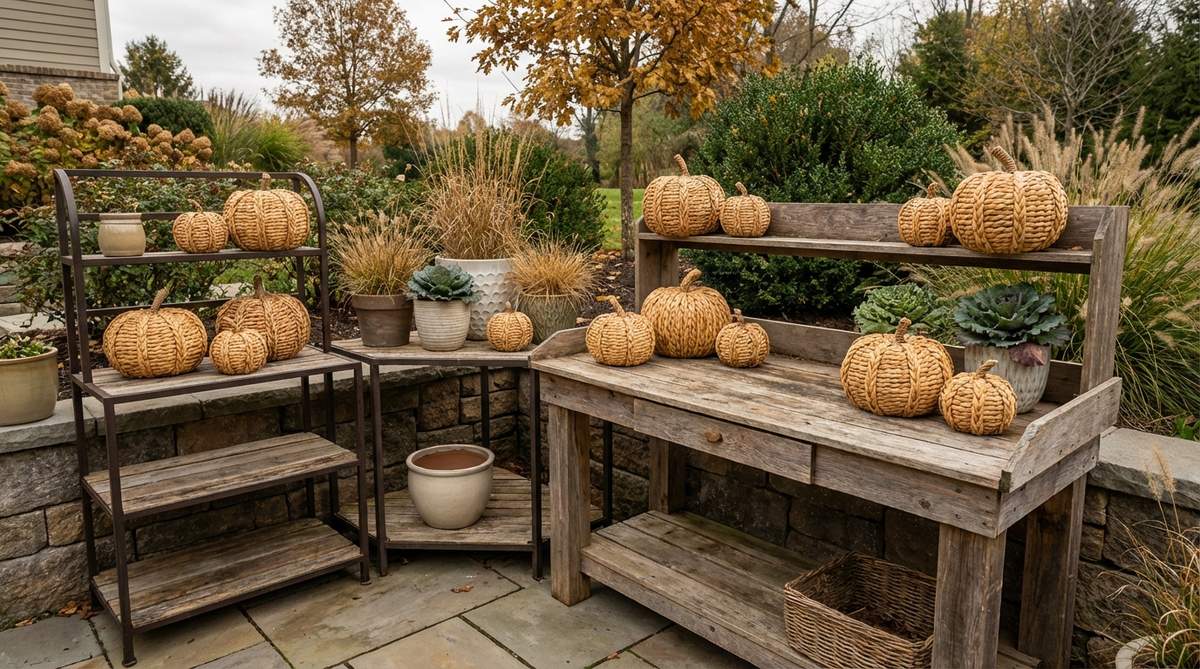
Incorporate ready-made or handwoven rattan pumpkins in various sizes throughout your displays. The natural basketry material provides organic texture and warm tan coloring.
Stack these woven forms in odd-numbered groupings on shelves or entryway tables. Their lightweight construction allows for versatile placement options.
Rattan pumpkins transition seamlessly from Halloween through Thanksgiving without seasonal specificity.
18. Canvas Fabric Halloween Banners
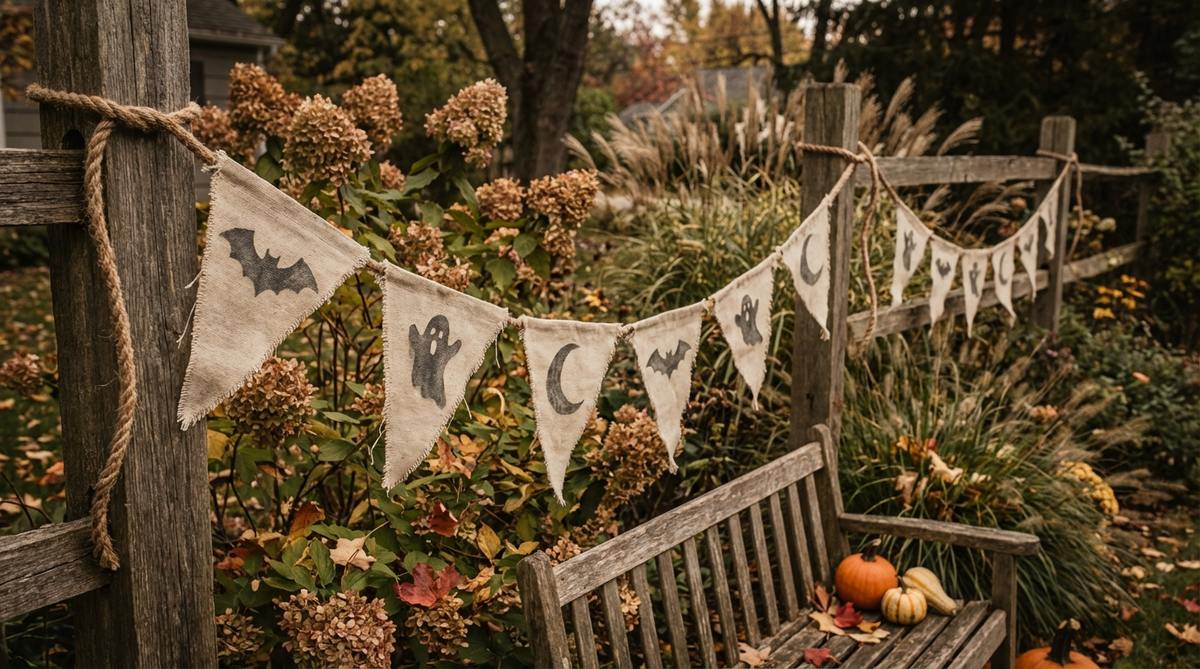
Cut triangular pennants from raw canvas or muslin fabric, leaving edges deliberately frayed. Paint simple Halloween words or symbols in soft black or charcoal.
String pennants on jute rope or leather cord, spacing them evenly. The rustic fabric texture aligns with bohemian textile traditions.
Hang these banners across doorways or windows where natural light emphasizes the fabric’s weave.
19. Terracotta Pot Pumpkin Villages
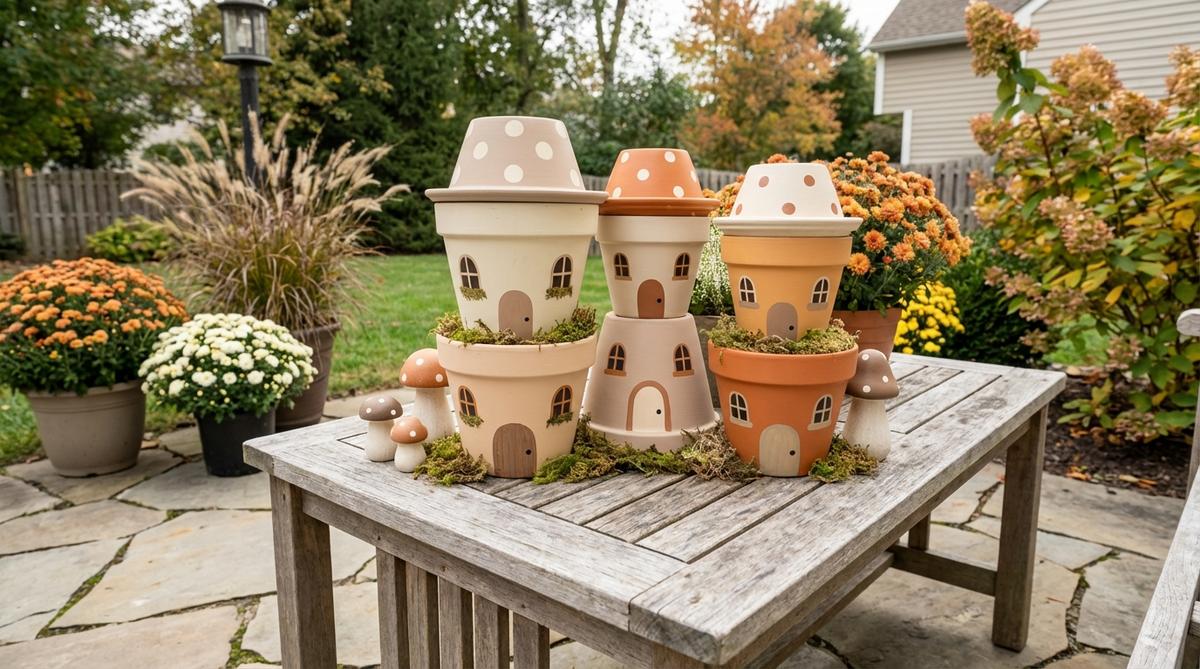
Stack painted terracotta pots in cream, beige, or soft orange to create miniature village structures. Add painted details suggesting windows and doorways.
Top each pot stack with a saucer painted to resemble a polka-dot mushroom roof. Fill bases with preserved moss to establish ground coverage.
These whimsical fairy-garden-inspired scenes bring playful bohemian charm to tabletops and shelving units.
20. Dreamcatcher Pumpkin Wall Hangings
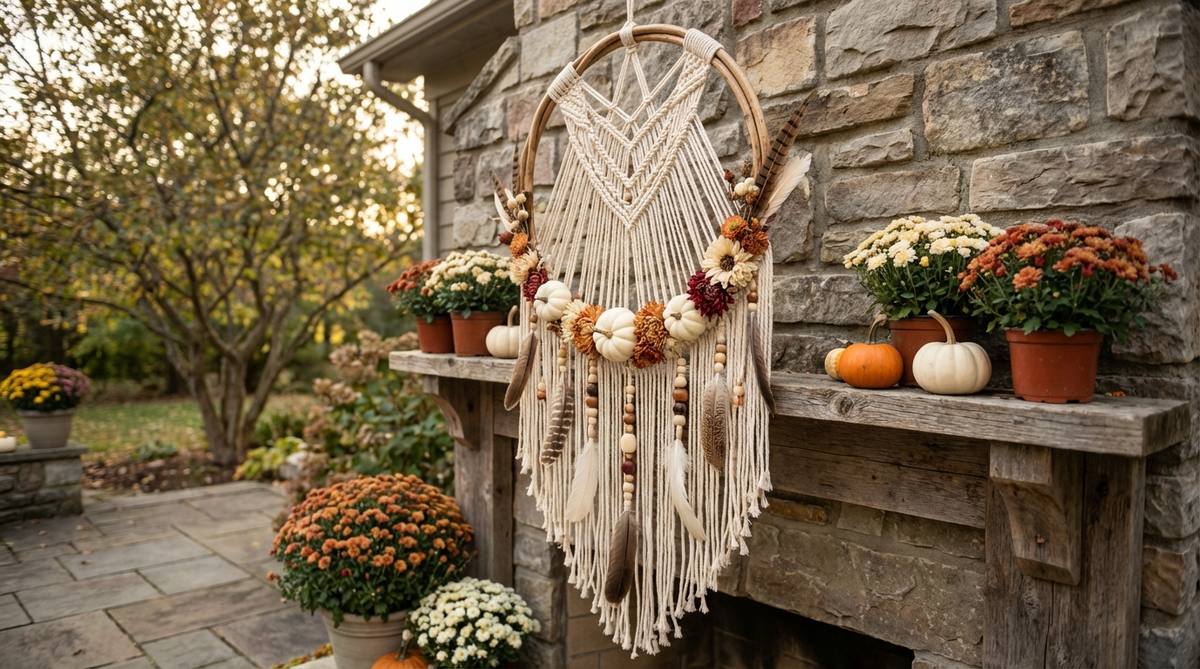
Construct dreamcatchers using natural wood hoops and cream-colored yarn or macramé cord. Attach small white pumpkins to the bottom using leather cord.
Add feather accents, wooden beads, or dried flower stems to the hanging elements. The circular form references traditional Native American designs while incorporating seasonal motifs.
Mount these wall pieces above mantels or in entryway spaces as statement bohemian artwork.
21. Crystal-Accented Skull Displays
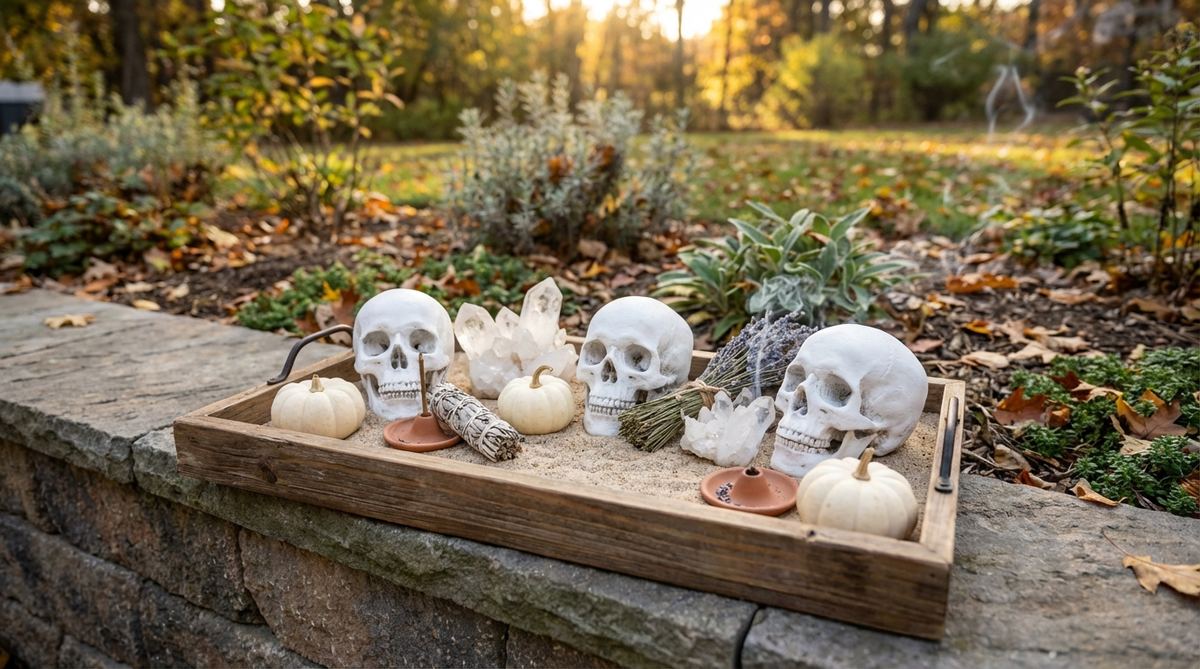
Position white or cream-painted decorative skulls alongside clear quartz crystals and white pumpkins. The mystical elements align with bohemian spiritual aesthetics.
Arrange on wooden trays with sand or salt as a base material. Add dried herb bundles or incense holders to complete the witchy book table concept.
This approach suits spaces where Halloween decor embraces mysticism rather than horror themes.
Minimalist Arrangements
Simplified styling approaches emphasize form, space, and subtle color variation. These arrangements prove that effective decoration requires neither quantity nor complexity.
22. Monochromatic White Pumpkin Stacks
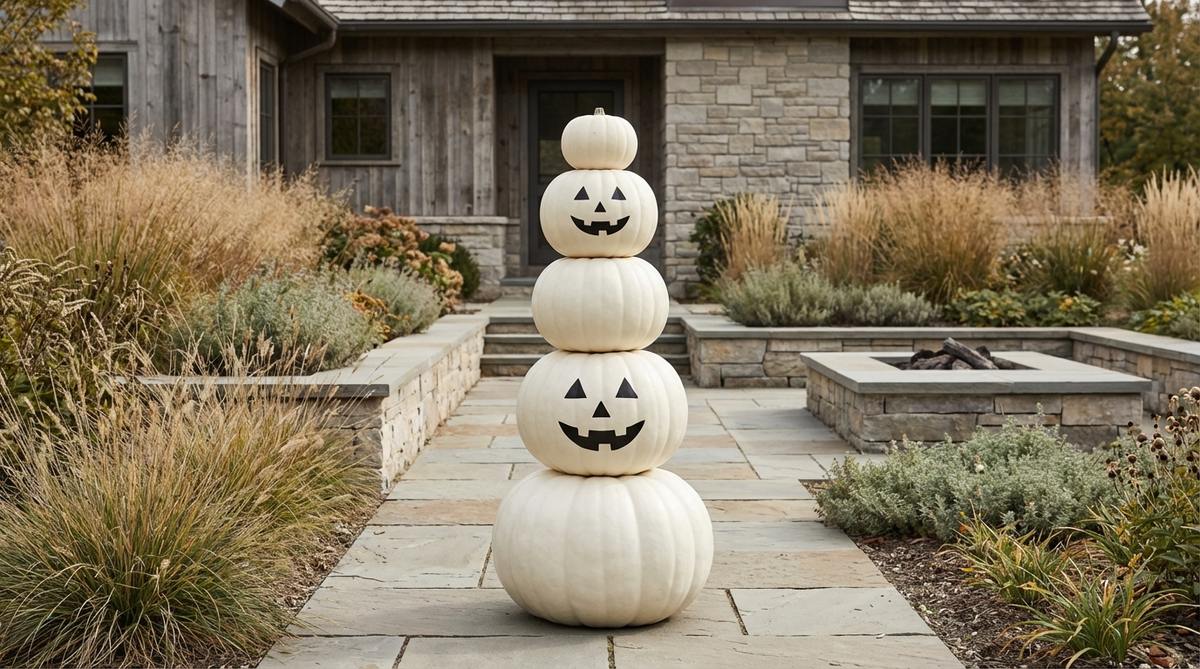
Stack three to five white pumpkins vertically, graduating from large at the bottom to small at the top. This sculptural approach creates height without additional props.
Use real pumpkins for outdoor displays or foam versions for interior mantels. Paint simple facial features on the middle pumpkin for subtle Halloween reference.
The clean white-on-white aesthetic suits Scandinavian-influenced or modern minimal interiors beautifully.
23. Single Statement Pumpkin Displays
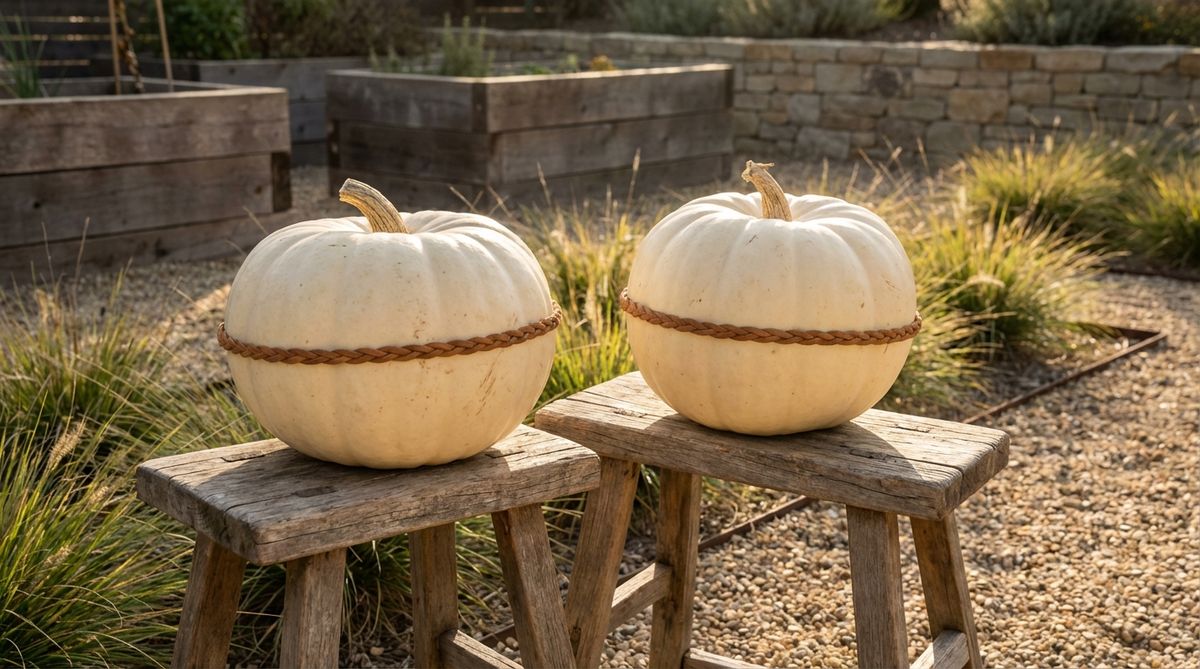
Feature one large white or cream pumpkin on a prominent pedestal or wooden stool. Allow the pumpkin’s natural form to serve as the primary visual element.
Add a single accent—a leather cord wrap, small dried arrangement, or painted detail—rather than multiple embellishments. This restraint emphasizes intentionality.
Position near natural light sources where shadows enhance the pumpkin’s organic curves throughout the day.
24. Line Arrangement Miniature Pumpkins
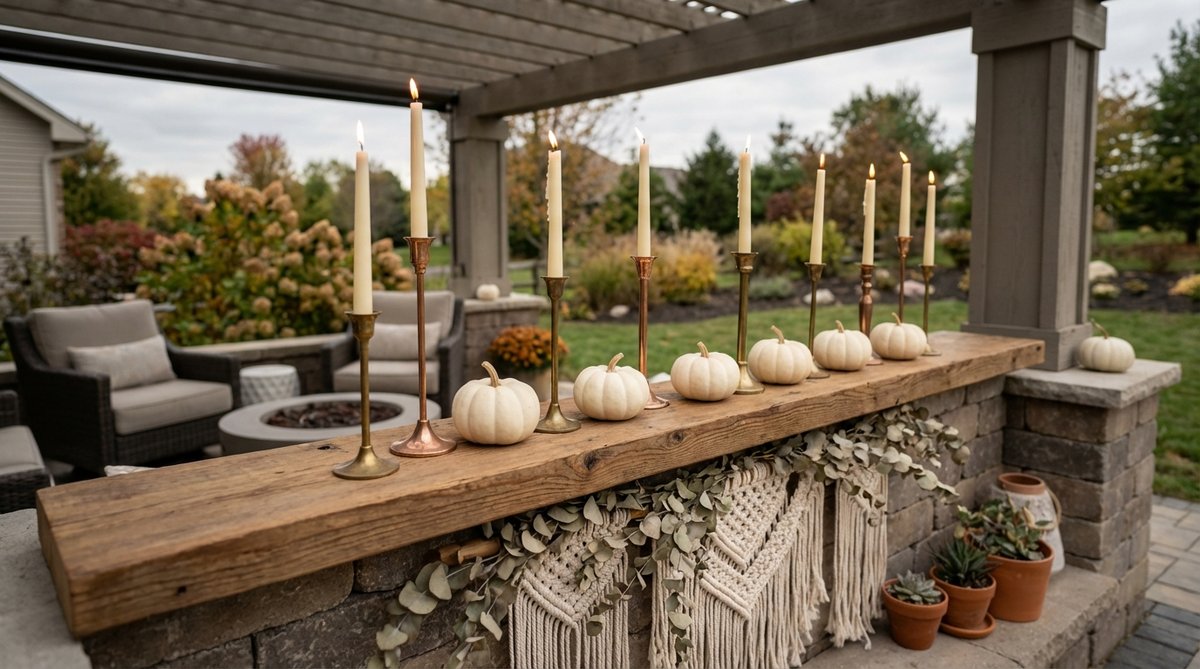
Place a row of small white pumpkins in a straight line across a mantel, shelf, or table runner. Maintain even spacing between each pumpkin for geometric precision.
Use between seven and eleven pumpkins—odd numbers create more dynamic visual rhythm. Add brass or copper candlesticks between pumpkins for warm metallic accents.
This horizontal emphasis grounds a space while maintaining the clean simplicity characteristic of modern bohemian style.
25. Wooden Tray Pumpkin Clusters
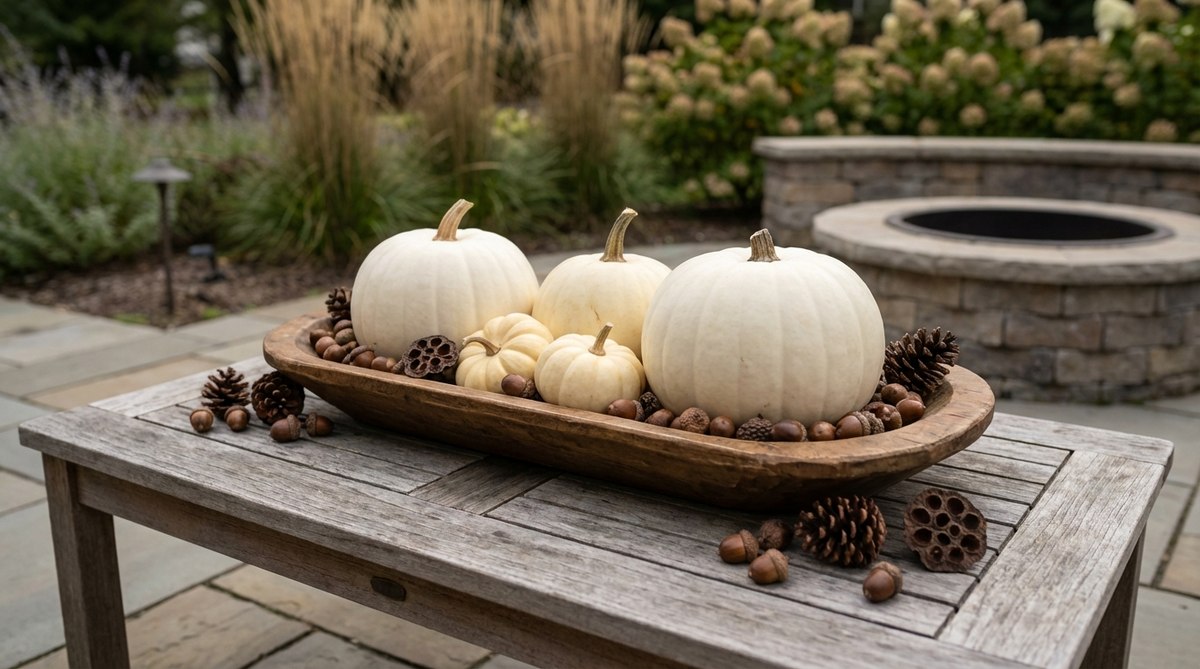
Arrange three to five white pumpkins in varying sizes on a rectangular wooden tray or dough bowl. The contained grouping prevents visual scatter.
Fill negative space with small natural elements—acorns, pinecones, or dried seed pods. Keep the color palette neutral with brown wood tones and cream pumpkins.
These portable arrangements move easily from coffee tables to dining surfaces as functional seasonal centerpieces.
26. Hanging Macramé Pumpkin Planters
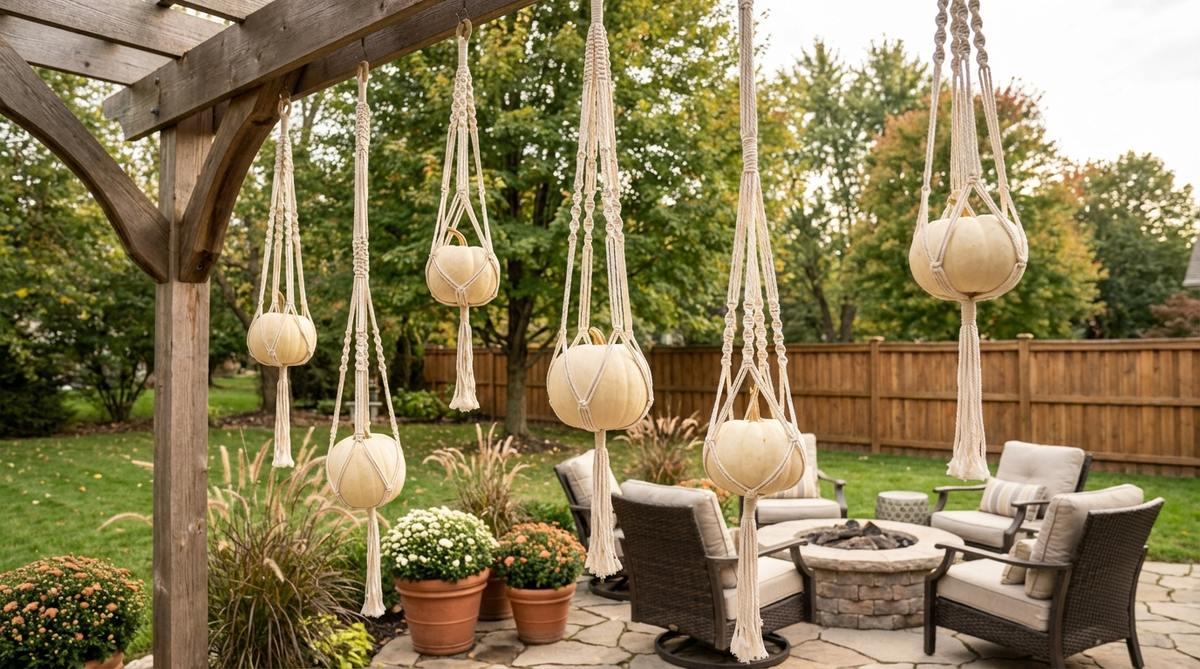
Suspend small white pumpkins in macramé plant hangers at varying heights near windows or from ceiling hooks. The aerial placement creates unexpected visual interest.
Use natural cotton cord in cream or tan colors. Position three hangers at staggered heights to establish vertical dimension.
This technique works especially well in spaces with high ceilings where floor and surface space remains limited.
27. Copper Tape Geometric Pumpkins
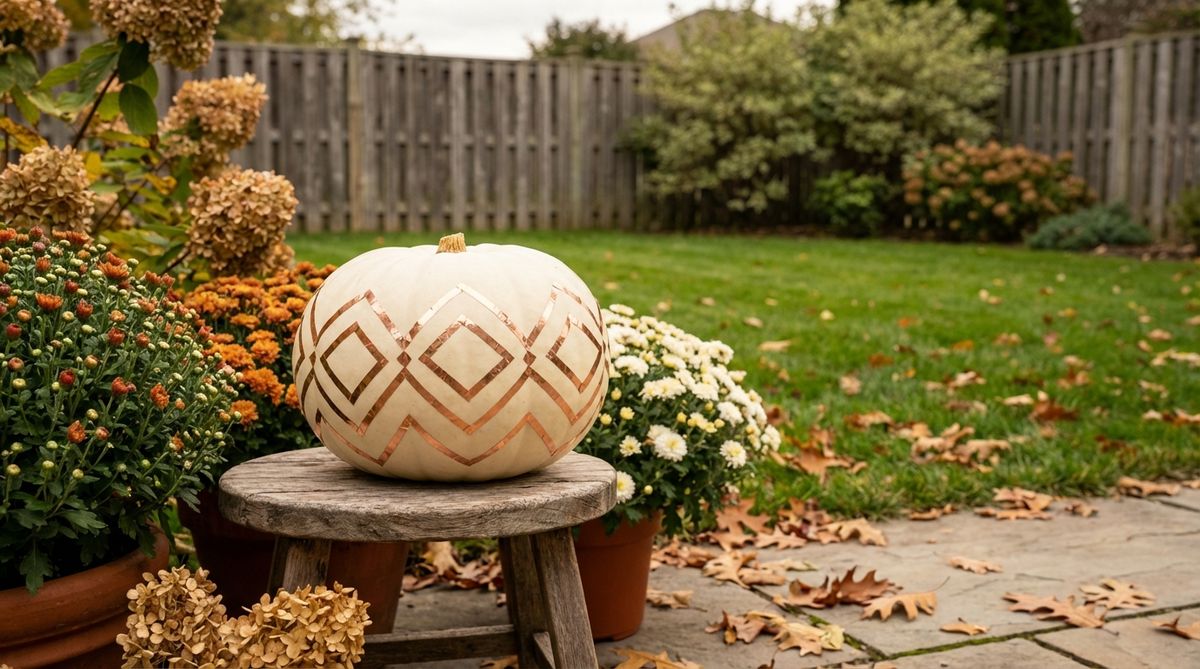
Apply thin copper or brass metallic tape in geometric patterns across white pumpkin surfaces. Create stripes, triangles, or abstract angular designs.
The tape adheres smoothly to pumpkin skin without paint or permanent marking. Peel and reposition until the design satisfies your aesthetic requirements.
Copper accents bring warm metallic tones that complement neutral palettes while adding contemporary edge to traditional pumpkin forms.
Bringing Boho Elegance to Halloween
These boho halloween decorations demonstrate that seasonal styling need not sacrifice existing interior aesthetics. By embracing neutral tones, natural materials, and handcrafted elements, homeowners create Halloween displays that feel both festive and authentically personal. The techniques presented here transition smoothly from Halloween through autumn, maximizing decorative value across multiple months. Start with painted white pumpkins and macramé elements, then gradually incorporate dried botanicals and woven accents as your collection develops. Your space will reflect both seasonal celebration and the earthy, artistic sensibility that defines bohemian design.
Frequently Asked Questions
What colors work best for boho Halloween decorations?
Focus on cream, white, beige, terracotta, soft gray, and taupe as your primary palette. Add warmth through natural wood tones, brass or copper metallics, and muted rust accents. These neutral colors create a calm, cohesive aesthetic that aligns with bohemian design principles while maintaining seasonal appropriateness. Avoid bright orange and neon colors, opting instead for earthy versions of traditional Halloween hues.
Can I reuse boho Halloween decorations for other seasons?
Absolutely. Most boho Halloween decorations transition seamlessly into general autumn decor and even year-round styling. White pumpkins, macramé elements, rattan sculptures, and dried botanical arrangements lack Halloween-specific imagery, making them appropriate through Thanksgiving and beyond. This versatility represents a core advantage of neutral, natural decoration approaches over traditional Halloween themes.
What materials are essential for creating boho Halloween decor?
Prioritize natural materials including cotton rope for macramé, dried pampas grass and eucalyptus, burlap and canvas fabrics, rattan or woven elements, terracotta pottery, and unfinished wood pieces. For painting projects, use chalk paint and matte acrylics rather than glossy finishes. Brass, copper, and natural leather provide accent materials that enhance the organic, handcrafted aesthetic central to bohemian styling.
How do I create texture in neutral Halloween decorations?
Layer multiple textural elements rather than relying on color variation. Combine smooth painted pumpkin surfaces with rough burlap, soft macramé knots with hard wooden beads, and polished ceramic alongside dried botanicals. Mix materials with different visual weights—feathery pampas grass, chunky knit fabrics, and fine-lined patterns. This textural diversity creates visual interest within a limited color palette.
Are boho Halloween decorations suitable for outdoor displays?
Yes, with material considerations. Real pumpkins, dried grasses, and wooden elements withstand outdoor conditions naturally. For painted decorations, use outdoor-rated or multisurface paints to prevent weather damage. Macramé pieces and fabric elements perform best in covered porch areas rather than exposed locations. Rattan and woven materials tolerate light moisture but benefit from protection during heavy rain.