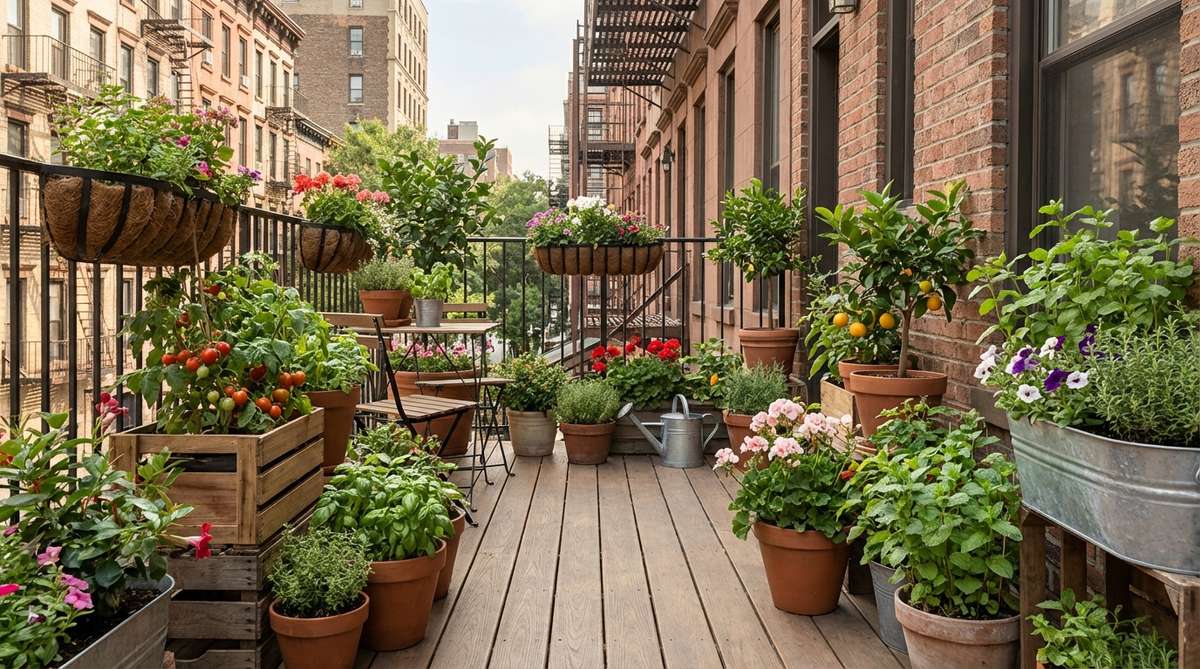
Selecting the right balcony garden plants transforms limited outdoor space into a productive, vibrant oasis. Whether you’re growing edibles or ornamentals, container gardening offers flexibility for renters, urban dwellers, and anyone maximizing vertical or horizontal space. Fresh Garden Ideas brings you expertly curated plant varieties proven to excel in pots, from cascading flowers to compact vegetables.
Design SnapshotKey Principles
- Container Size Matters: Match pot volume to root systems—5-gallon minimum for tomatoes, 1-2 gallons for herbs
- Drainage Is Critical: All containers need drainage holes to prevent root rot and fungal disease
- Light Assessment: Catalog your balcony’s sun exposure (full, partial, shade) to select compatible plants
- Weight Considerations: Use lightweight plastic or fiberglass pots on high-rise balconies with load limits
Flowering Annuals for Continuous Color
Annual flowers deliver season-long blooms with minimal commitment. These varieties perform exceptionally in containers, requiring only deadheading and consistent watering to maintain vibrant displays through frost.
1. Petunias
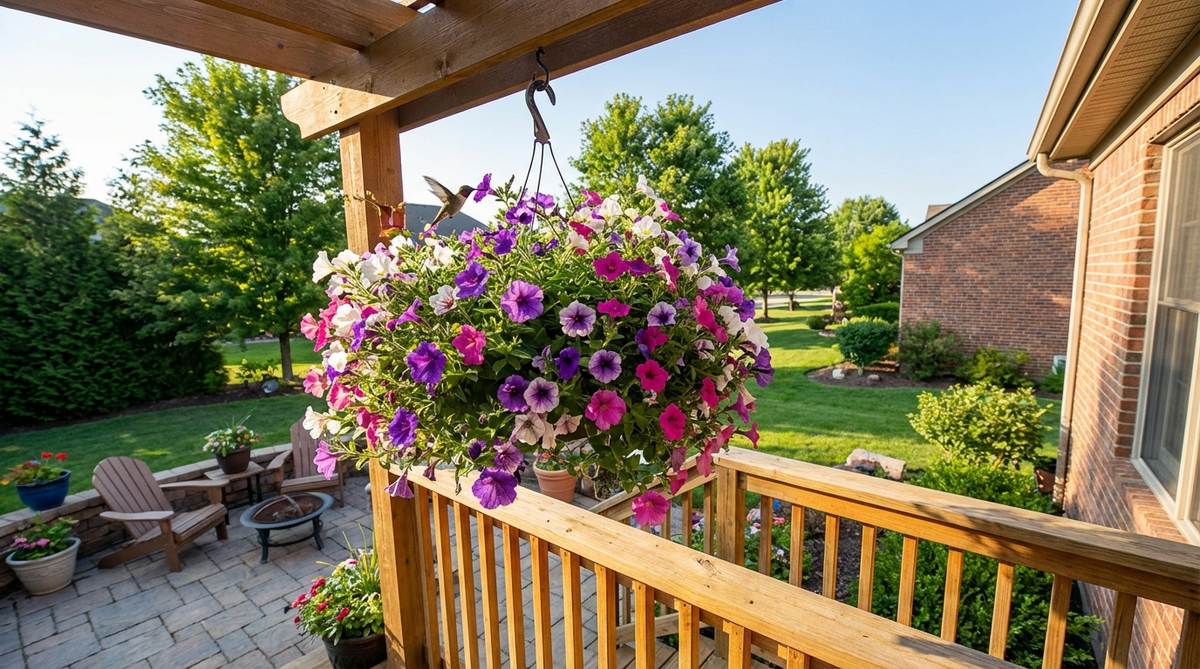
Petunias cascade over container edges in waves of purple, pink, red, white, and striped combinations. Their trailing stems create visual depth when planted in hanging baskets or elevated pots.
Plant in full sun with well-draining potting mix. Newer hybrid varieties tolerate partial shade better than traditional cultivars.
Deadhead spent blooms weekly to encourage continuous flowering. Petunias attract hummingbirds while resisting most common pests.
2. Geraniums
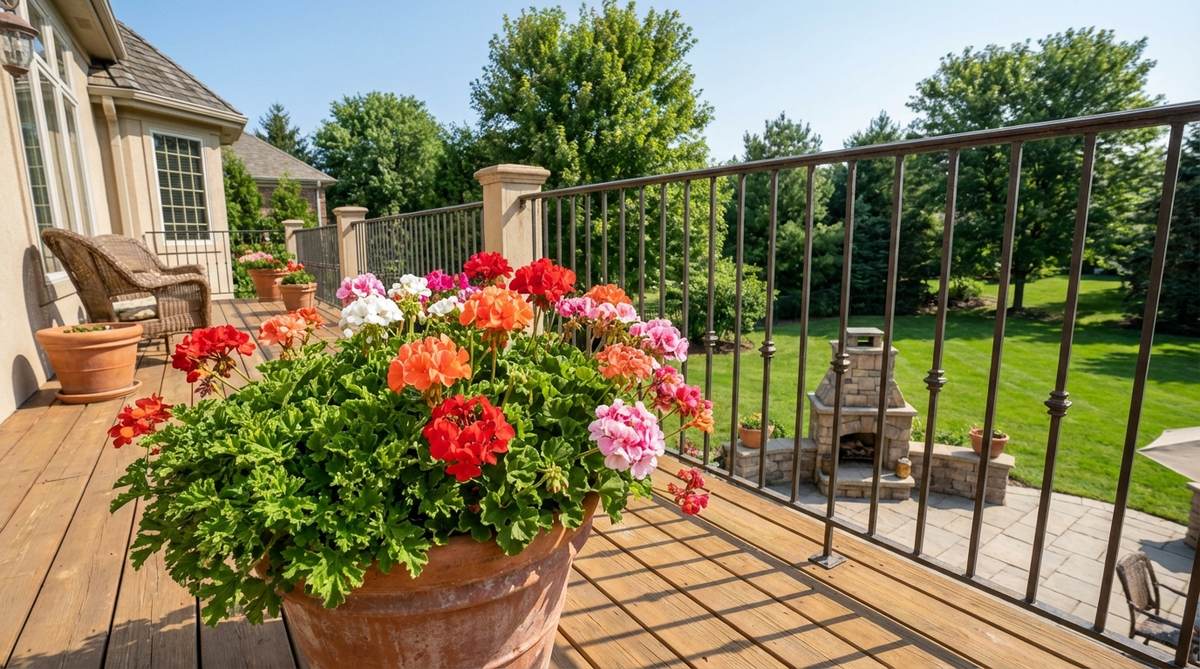
Pelargonium geraniums produce tight clusters of blooms in reds, oranges, pinks, and whites. Their hardy nature makes them ideal for beginner balcony gardeners.
These plants thrive in full to partial sun and loamy soil. They grow 12-24 inches tall and wide, fitting perfectly in medium containers.
The citrusy foliage naturally repels mosquitoes. Water when the top inch of soil dries, avoiding overhead irrigation that damages blooms.
3. Marigolds
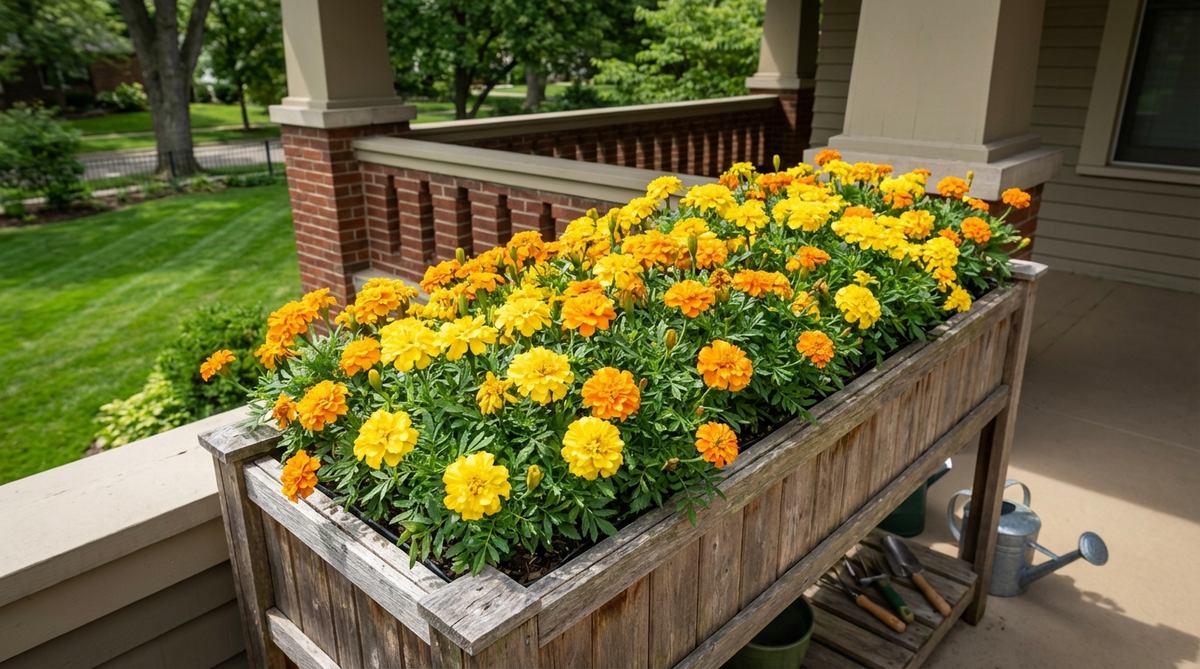
Marigolds radiate sunny yellow and orange tones that brighten south-facing balconies. Their compact growth habit suits pots from 8 inches upward.
Direct sunlight is essential for peak bloom production. French marigolds stay compact at 6-12 inches, while African varieties reach 18-24 inches.
Root secretions deter aphids and whiteflies. Pair marigolds with vegetable containers for natural pest management.
4. Zinnias
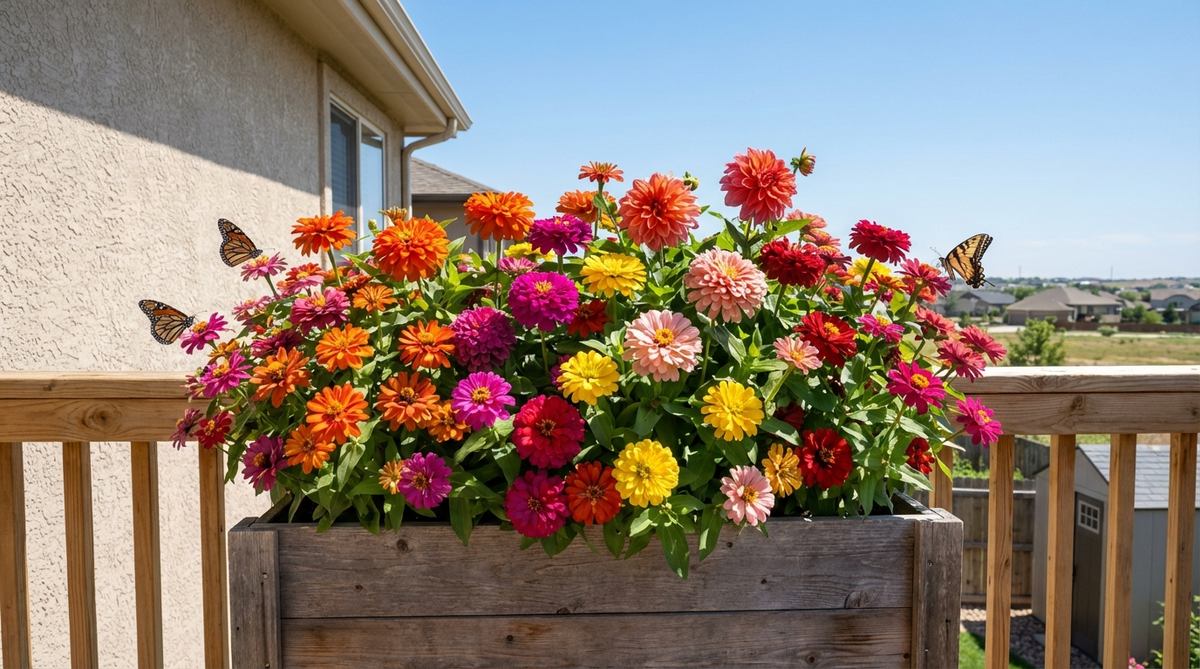
Zinnia blooms range from button-sized pompoms to dinner-plate dahlias in every color except blue. Dwarf varieties like ‘Profusion’ series stay under 18 inches.
Sow seeds directly in containers after the last frost. Zinnias germinate quickly and tolerate heat that wilts other annuals.
Cut flowers regularly to promote branching and prevent powdery mildew. These butterfly magnets thrive in full sun with moderate watering.
5. Verbena
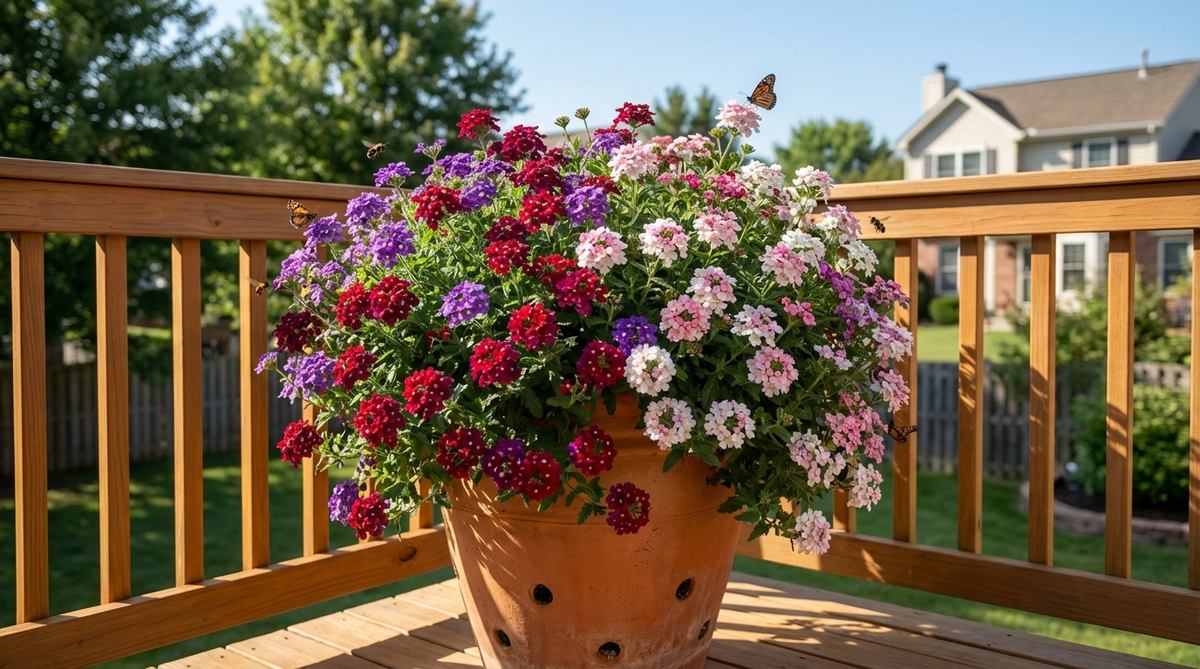
Verbena produces dense flower clusters that attract butterflies and bees to balcony gardens. Colors span red, purple, pink, and white with trailing or upright forms.
Plant in containers with excellent drainage and full sun exposure. Verbena tolerates drought once established but blooms more profusely with consistent moisture.
Trailing varieties spill 12-18 inches over pot edges. Verbena pairs well with upright plants for mixed container arrangements.
6. Begonias
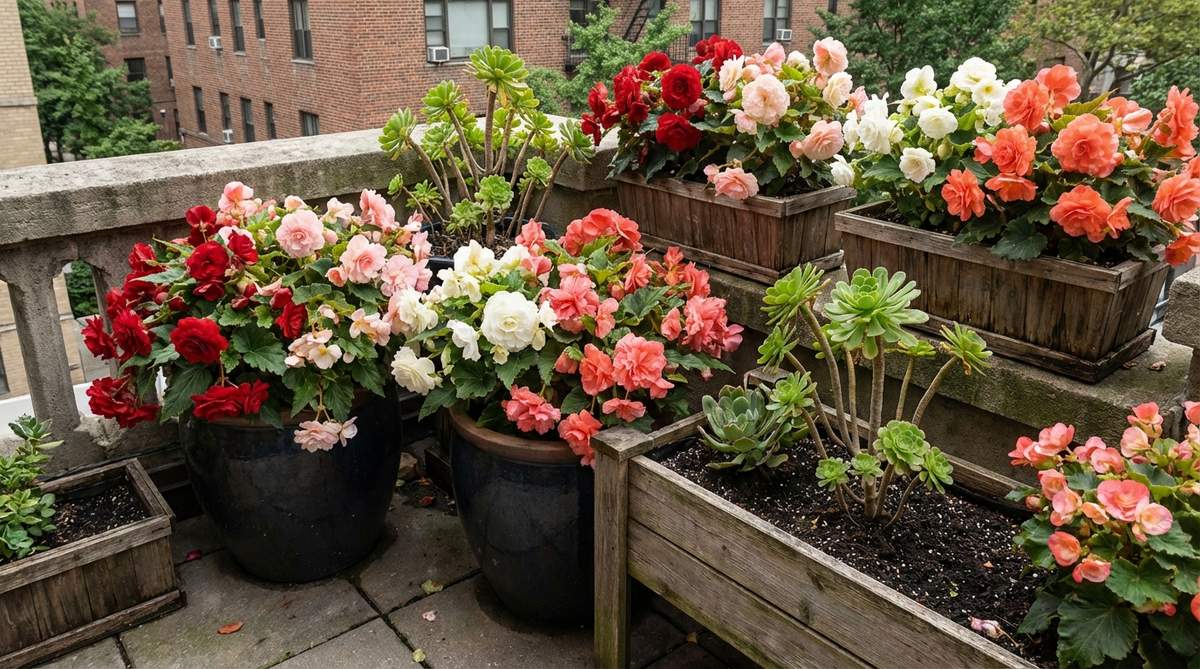
Begonia blooms appear in single or double forms with waxy petals in warm tones. Tuberous begonias offer the largest flowers, while wax begonias provide continuous smaller blooms.
These shade-tolerant plants excel in partial sun to full shade conditions. Fibrous root systems adapt well to container culture in peat-based potting mix.
Avoid overwatering, which causes stem rot. Remove spent flowers by hand to maintain tidy appearance and encourage new buds.
7. Lantana
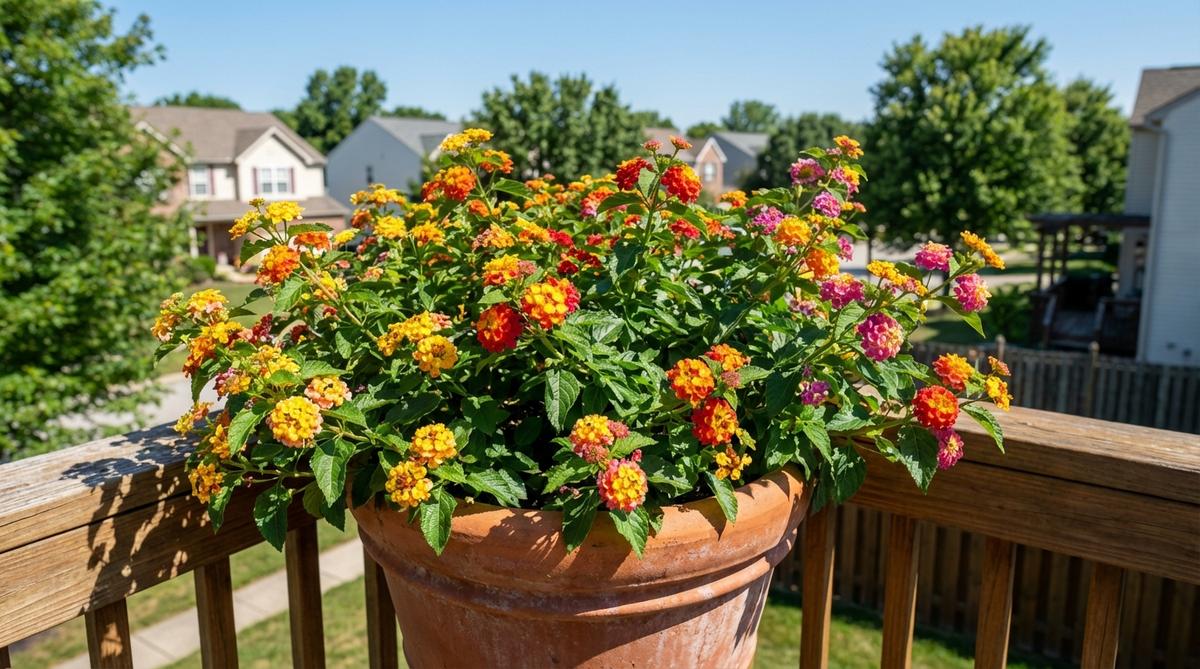
Lantana clusters shift colors as they age, displaying yellow, orange, red, and pink simultaneously. The multi-hued effect creates living kaleidoscopes in containers.
Full sun and heat intensify bloom production. Lantana tolerates drought and poor soil better than most flowering annuals.
Prune leggy stems by one-third mid-season to maintain compact shape. Handle with gloves, as foliage irritates sensitive skin.
8. Cosmos
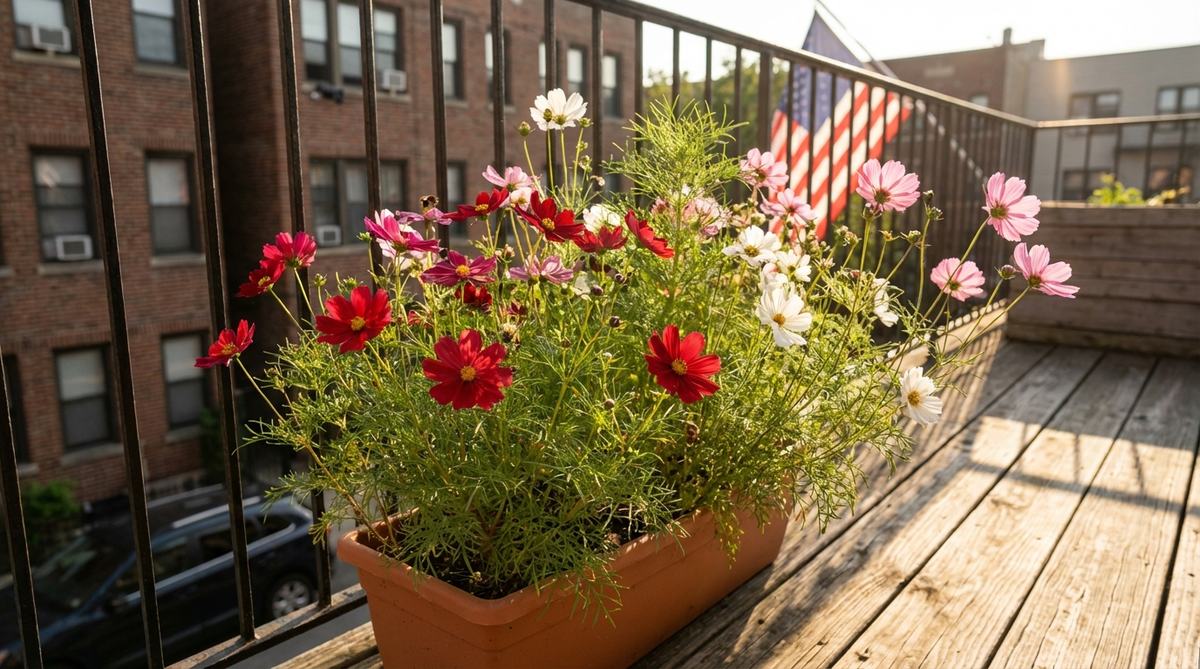
Cosmos produces daisy-like flowers on airy stems that sway in breezes. Dwarf varieties like ‘Sonata’ series reach 18-24 inches in containers.
Direct-seed into pots for best results. Cosmos thrives in lean soil and full sun, flowering more when not over-fertilized.
Deadhead to extend blooming season. These low-maintenance plants attract beneficial insects while tolerating urban pollution.
9. Calibrachoa
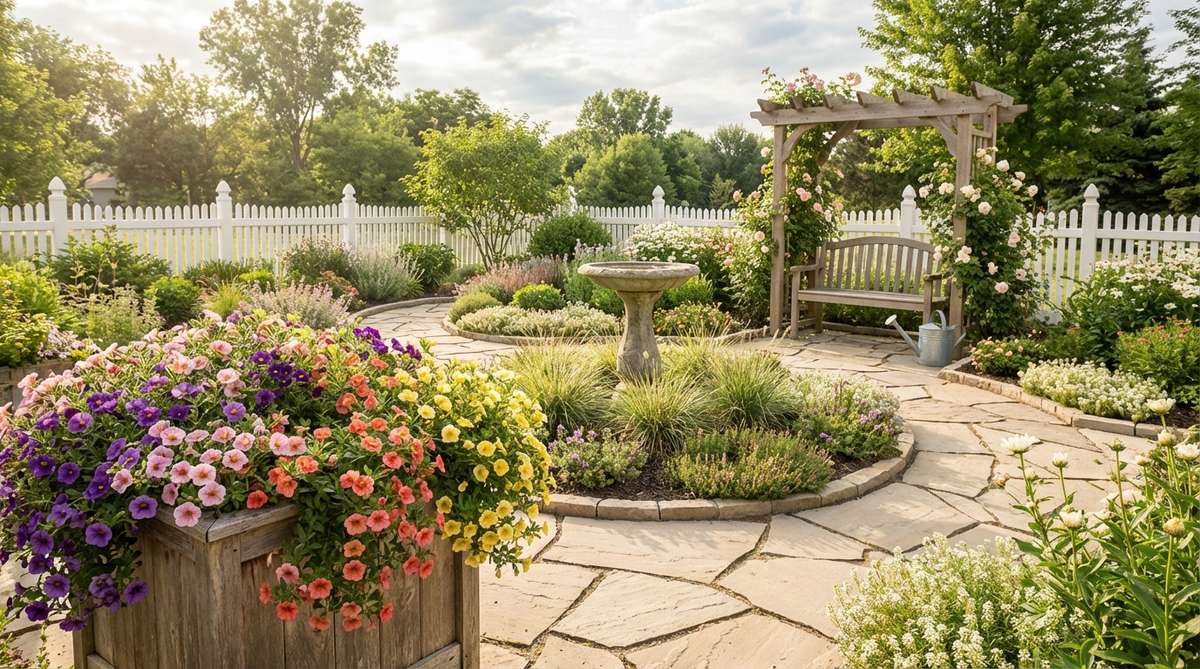
Million bells calibrachoa resembles miniature petunias with 1-inch blooms covering trailing stems. Color options include vibrant oranges, purples, and bi-colors.
Plant in hanging baskets or elevated containers where stems can cascade 12-18 inches. Calibrachoa demands full sun and consistent moisture.
Self-cleaning flowers eliminate deadheading requirements. Feed bi-weekly with water-soluble fertilizer to support prolific blooming.
10. Lobelia
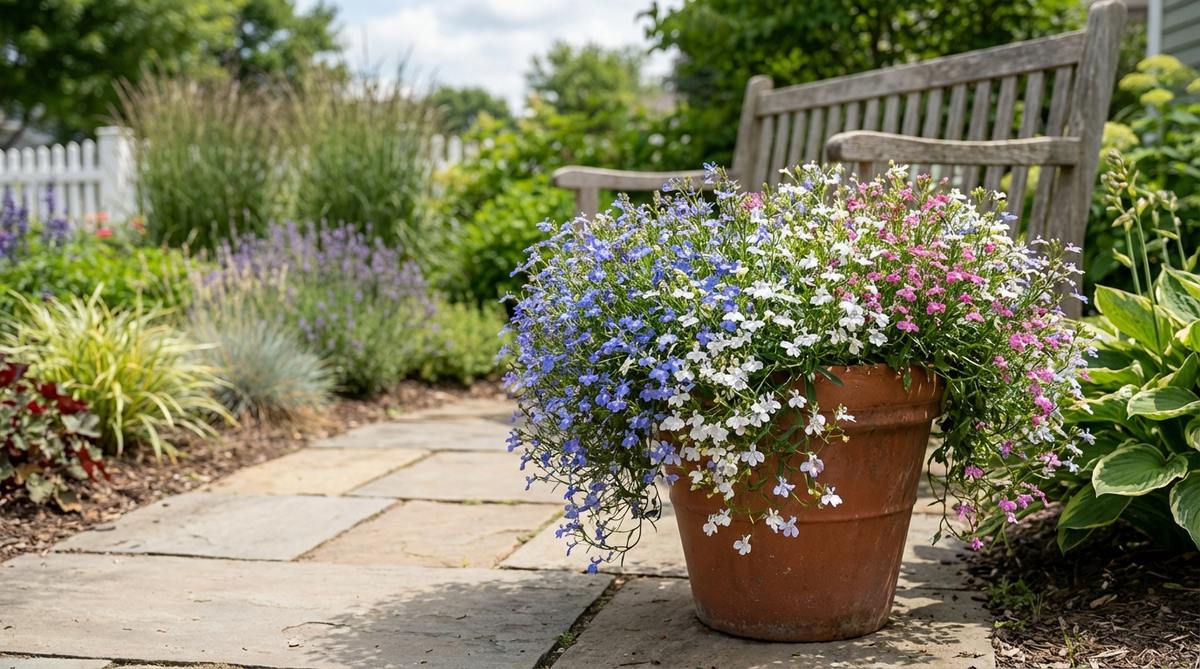
Lobelia creates clouds of tiny blue, white, or purple flowers along trailing or mounding stems. The intense blue shades are rare among container annuals.
Partial shade prevents heat stress in southern climates. Lobelia prefers consistent moisture and benefits from afternoon shade in hot regions.
Shear plants back by half if blooming slows in summer. Cool fall temperatures trigger renewed flowering until frost.
Perennial Balcony Garden Flowers for Year-Round Beauty
Perennial balcony garden flowers return year after year, reducing replanting costs. These container-friendly varieties tolerate the freeze-thaw cycles that challenge potted plants in cold climates.
11. Hardy Geranium
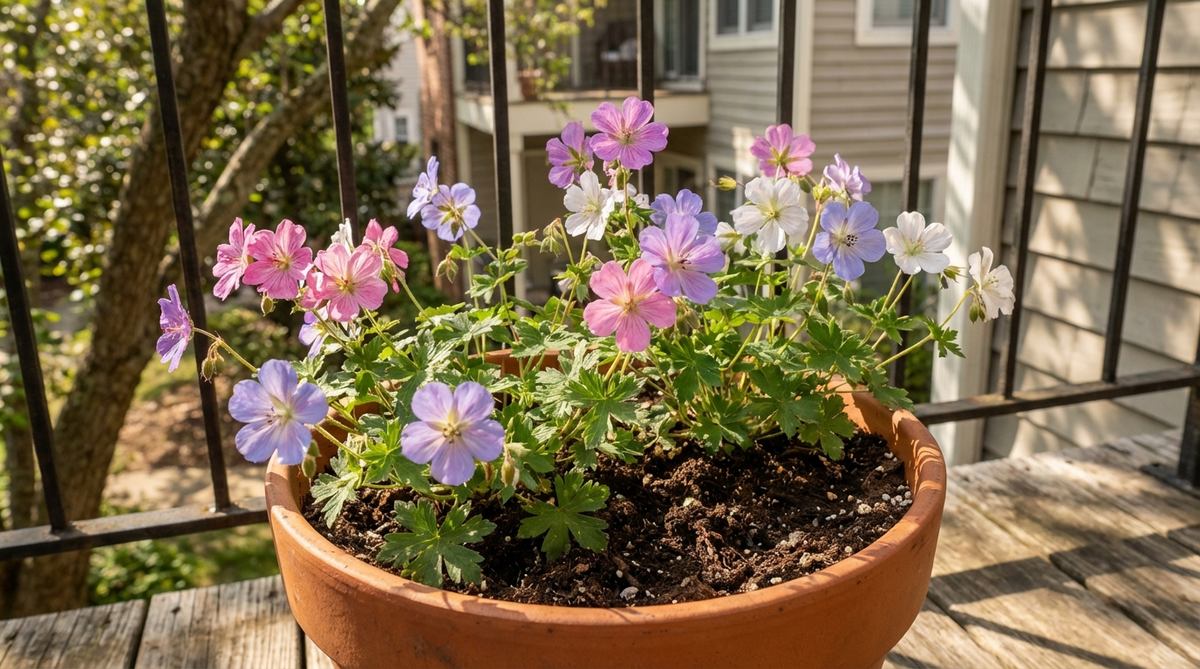
Hardy geraniums (cranesbill) produce delicate five-petaled flowers distinct from annual geraniums. Bloom colors include pink, purple, blue, and white.
Plant in full sun to partial shade in containers at least 12 inches wide. Hardy geraniums bloom for extended periods with repeat flowering.
Cut back by half after initial bloom to encourage second flush. These low-maintenance perennials tolerate drought and resist deer browsing.
12. Miniature Roses
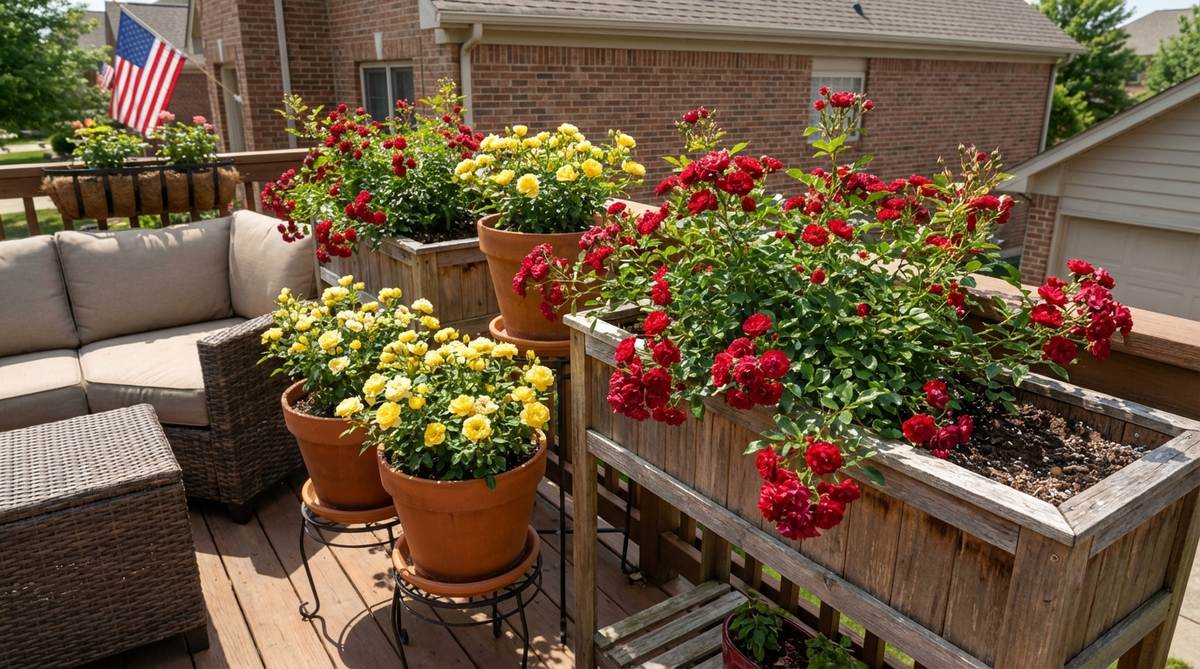
Compact rose varieties deliver classic blooms in containers. ‘Red Cascade’ trails beautifully, while ‘Lemon Drop’ provides cheerful yellow tones.
Use rose-specific potting soil in containers with generous drainage. Position in full sun with good air circulation to prevent fungal issues.
Deadhead aggressively throughout the season. Protect containers with rose cones or burlap during winter dormancy in cold zones.
13. Coreopsis
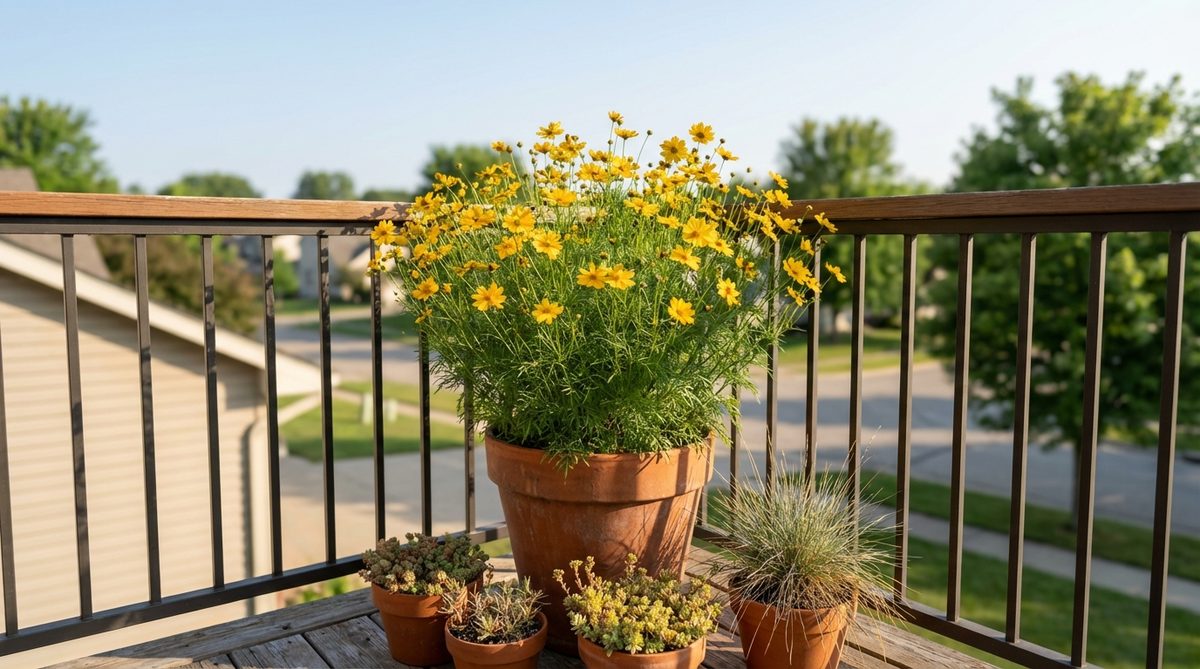
Threadleaf coreopsis produces golden daisy flowers above fine-textured foliage. Compact varieties stay under 18 inches in containers.
Plant in full sun with well-draining soil. Coreopsis tolerates heat and drought once established, making it ideal for south-facing balconies.
Shear spent blooms to maintain tidy appearance. This native perennial attracts butterflies while resisting most pests.
14. Yarrow
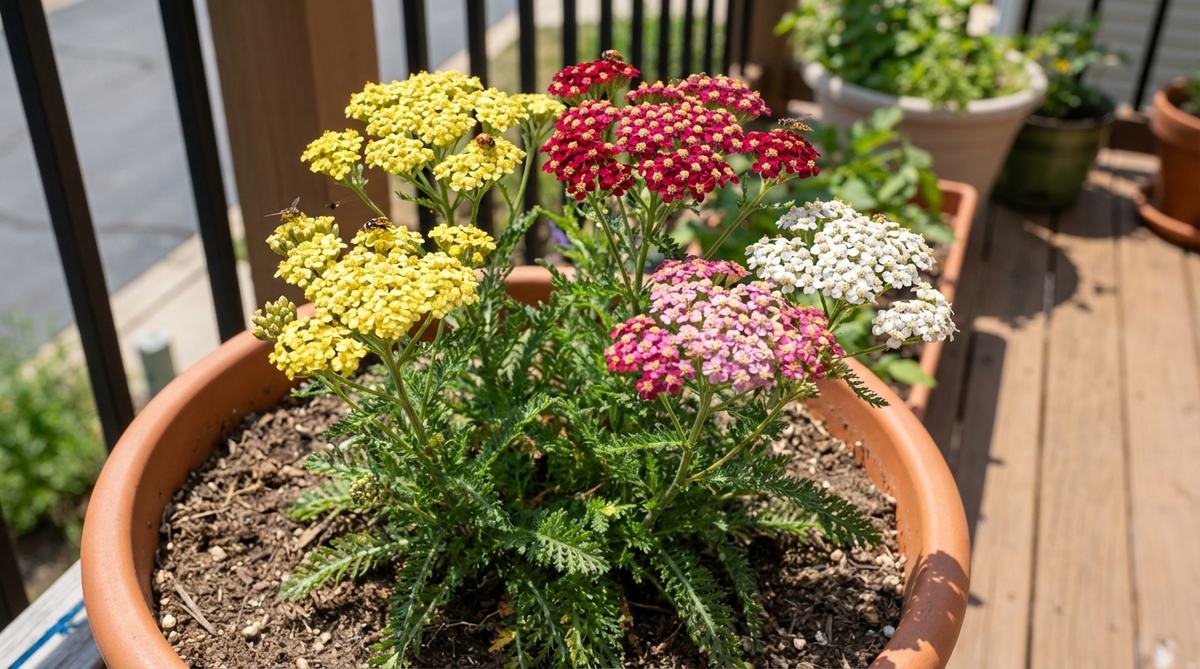
Yarrow’s flat-topped flower clusters appear in yellow, red, pink, or white above aromatic fern-like foliage. Dwarf cultivars like ‘Little Moonshine’ suit container culture.
Full sun and lean soil produce the strongest stems. Shallow roots adapt well to pots, though plants appreciate protection from high winds.
Cut back after flowering to encourage second bloom. Yarrow attracts beneficial predatory insects to balcony gardens.
15. Salvia
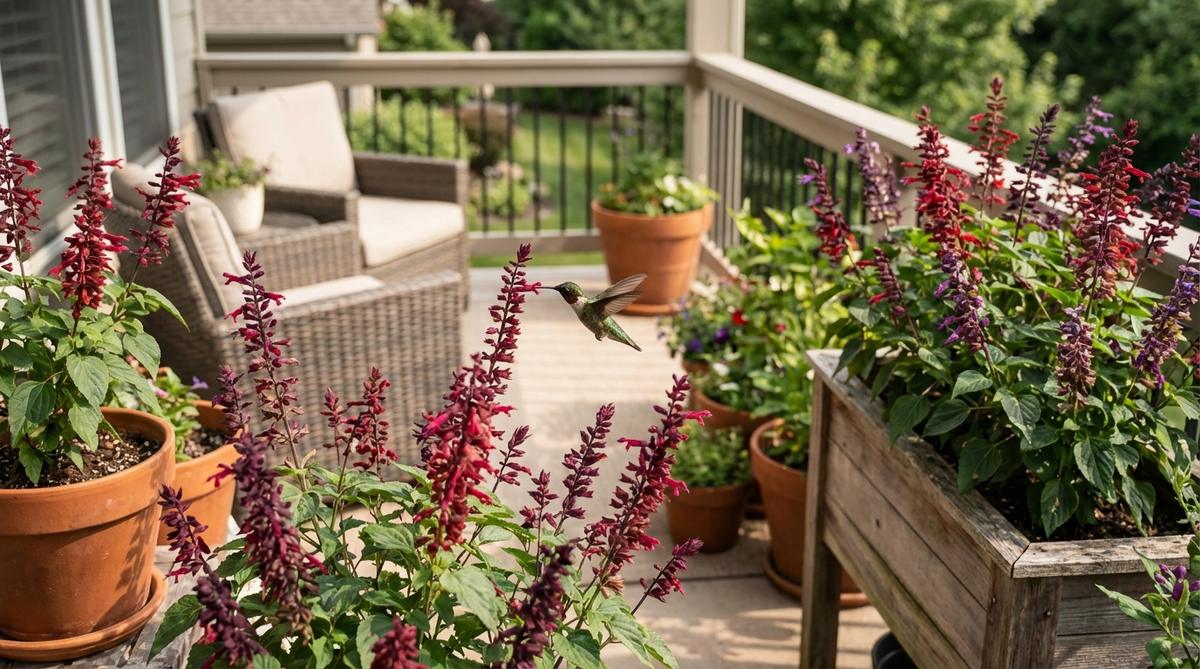
Perennial salvias produce spiky flower clusters attractive to hummingbirds. Varieties range from compact ‘May Night’ to taller ‘Black and Blue’.
Plant in full sun with excellent drainage. Most salvias tolerate dry conditions better than wet soil, preventing root rot in containers.
Deadhead spent spikes to prolong blooming. Cut stems back by one-third in midsummer for bushier growth.
16. Daylilies
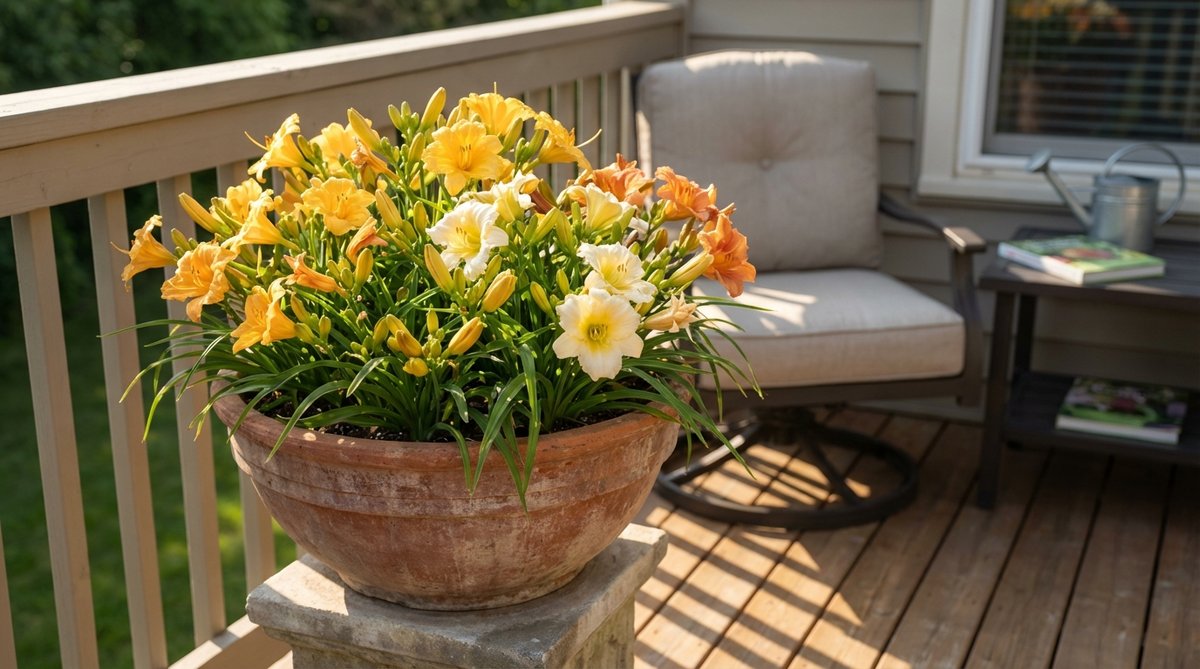
Dwarf daylily cultivars produce trumpet-shaped blooms in containers. Each flower lasts one day, but prolific buds ensure continuous color.
Use large containers (minimum 5-gallon) to accommodate fleshy root systems. Daylilies tolerate partial shade but bloom most in full sun.
Divide overcrowded containers every 3-4 years. Remove spent flowers daily to maintain appearance.
17. Sedum
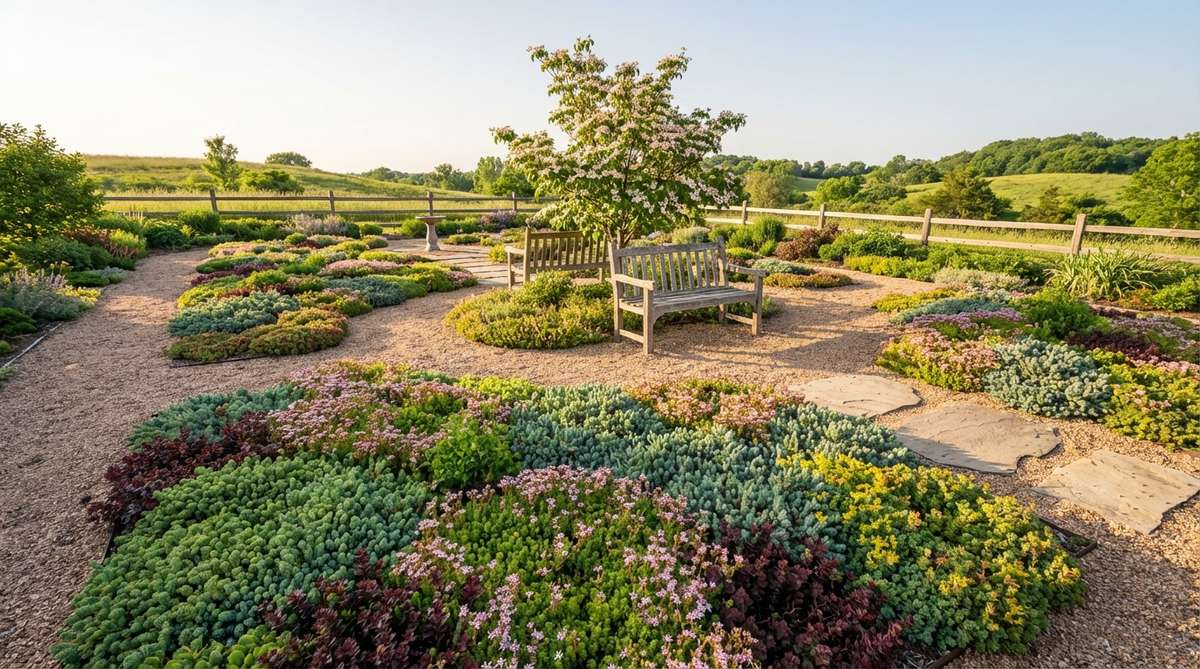
Upright sedum varieties like ‘Autumn Joy’ develop succulent foliage topped with pink flower clusters. The architectural form provides multi-season interest.
Plant in full sun with gritty, well-draining potting mix. Sedum stores water in fleshy leaves, requiring infrequent irrigation.
Flower heads turn bronze in fall, remaining attractive through winter. Cut back dead stems in early spring.
18. Lavender
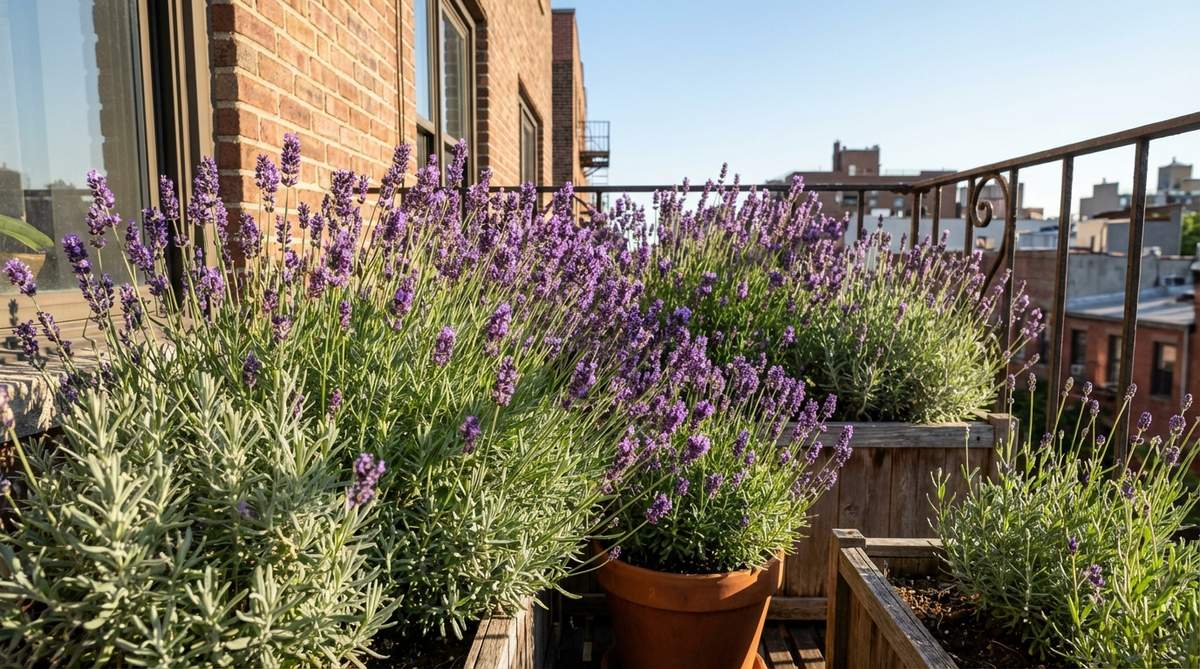
English lavender produces fragrant purple spikes above silvery foliage. Compact varieties like ‘Munstead’ fit 12-14 inch containers.
Full sun and fast-draining soil are essential. Lavender despises wet feet—add extra perlite to standard potting mix.
Harvest flower spikes before fully open for sachets. Trim plants by one-third after blooming to maintain shape.
19. Dianthus
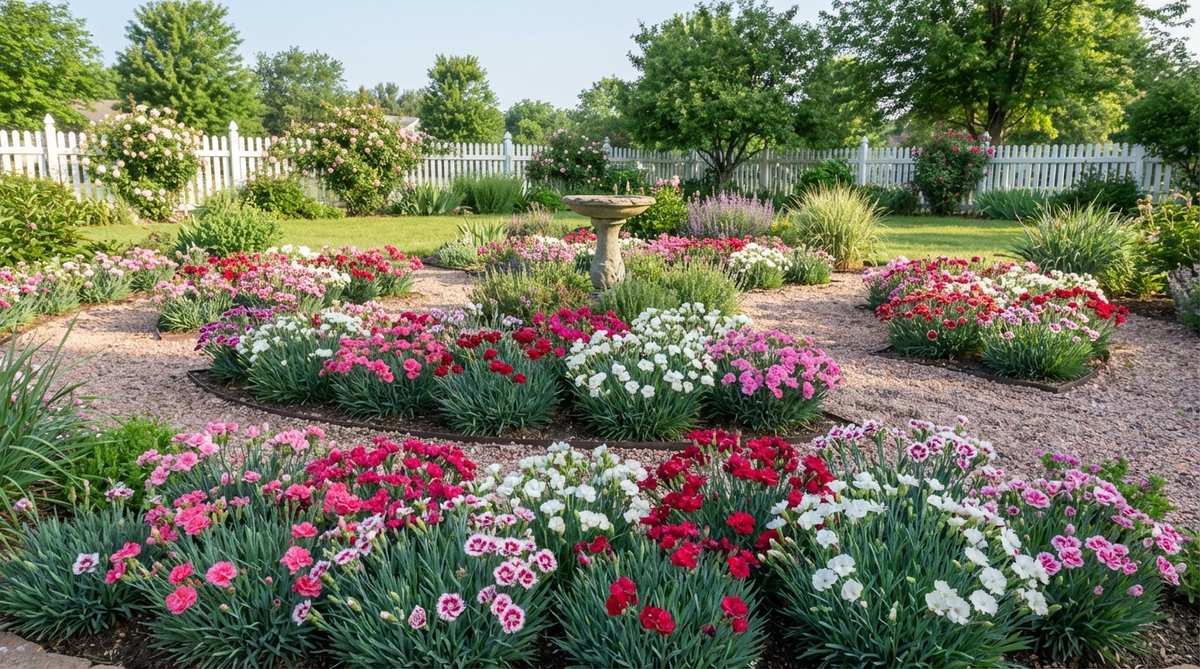
Dianthus flowers display fringed petals in pink, red, white, and bi-colors with spicy clove fragrance. Mat-forming varieties cascade over container edges.
Plant in full sun to partial shade with neutral to slightly alkaline soil. Dianthus prefers cooler temperatures and performs best in spring and fall.
Deadhead regularly to extend bloom period. These deer-resistant plants attract butterflies to balcony spaces.
20. Black-Eyed Susan
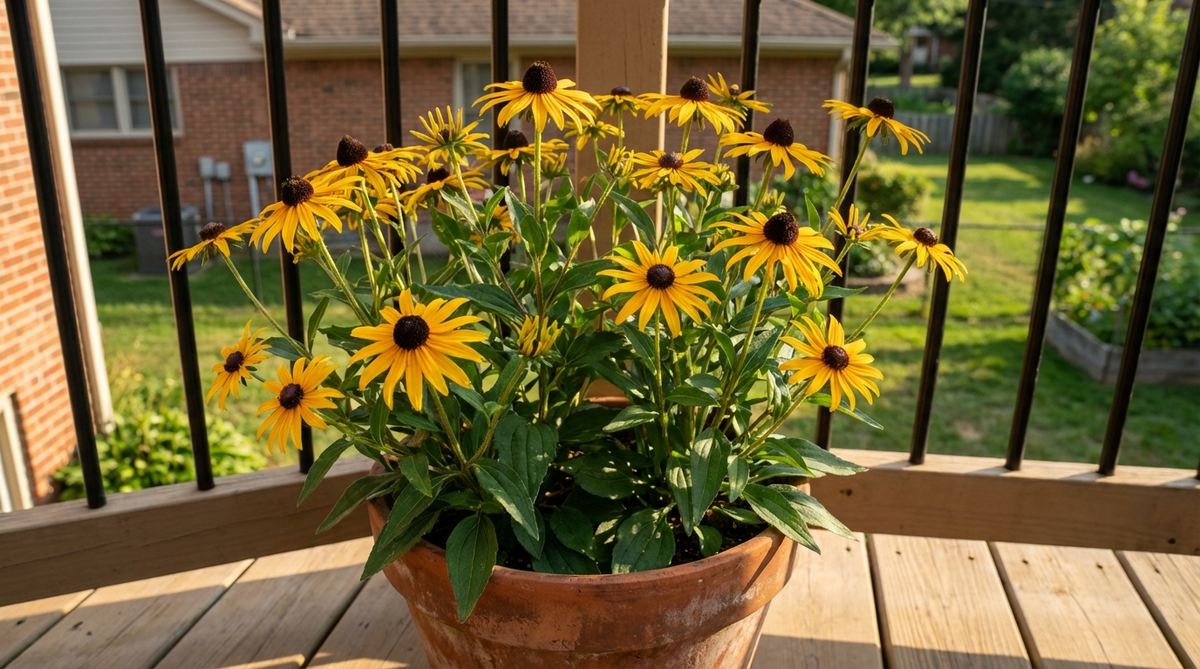
Rudbeckia’s golden petals surround dark centers on sturdy stems. Dwarf cultivars like ‘Goldstrum’ reach 18-24 inches in containers.
Full sun and moderate watering produce abundant blooms from summer through fall. Black-eyed Susans tolerate heat and humidity.
These native perennials self-clean, eliminating deadheading. Divide containers every 3-4 years to maintain vigor.
Compact Vegetables for Edible Container Gardens
Growing vegetables in containers maximizes balcony productivity. These varieties are bred for confined spaces, delivering harvests without sprawling growth habits.
21. Cherry Tomatoes
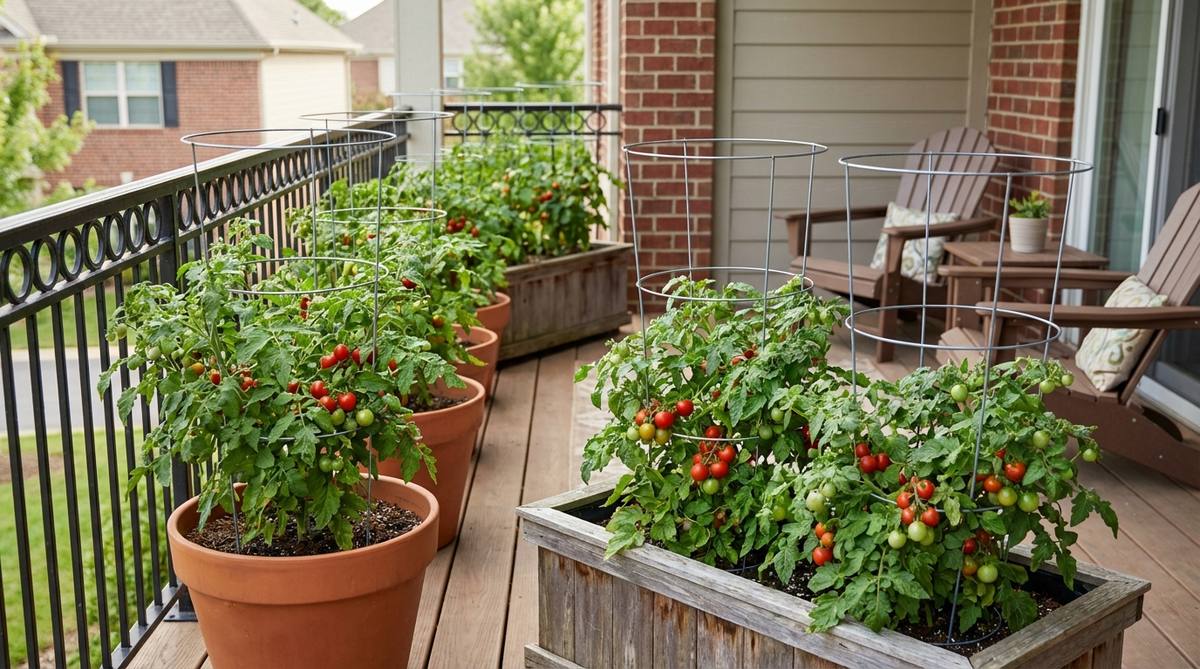
Cherry tomato varieties like ‘Sweet Orange’ and ‘Tumbling Tom’ produce abundant fruit on compact plants. Determinate types reach 2-3 feet, while trailing varieties suit hanging baskets.
Use 5-gallon containers minimum with cages or stakes for support. Plant after the last frost in full sun locations.
Water consistently to prevent blossom end rot and fruit cracking. Feed every two weeks with tomato-specific fertilizer.
22. Bell Peppers
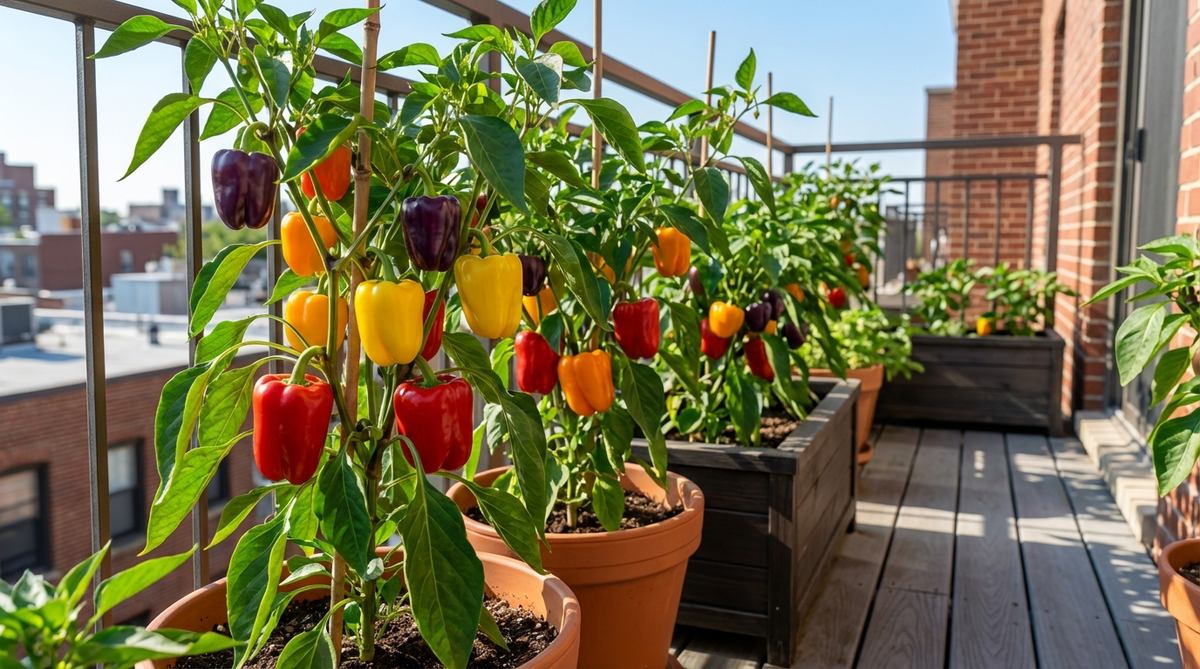
Compact pepper varieties produce full-sized sweet peppers in 3-5 gallon containers. Colors include red, yellow, orange, and purple at maturity.
Plant in warm soil (minimum 65°F) in full sun. Peppers demand consistent moisture and benefit from mulching to stabilize soil temperature.
Stake plants when fruit develops to prevent branch breakage. Harvest peppers at any stage from green to fully colored.
23. Jalapeño Peppers
Jalapeño plants grow 18-24 inches tall in containers, producing moderately hot peppers. A single plant yields 25-35 pods per season.
Use 3-gallon pots with drainage holes and nutrient-rich potting soil. Position in the hottest, sunniest spot on your balcony.
Allow peppers to turn red on the plant for sweeter, milder flavor. Harvest green for traditional heat levels.
24. Bush Beans
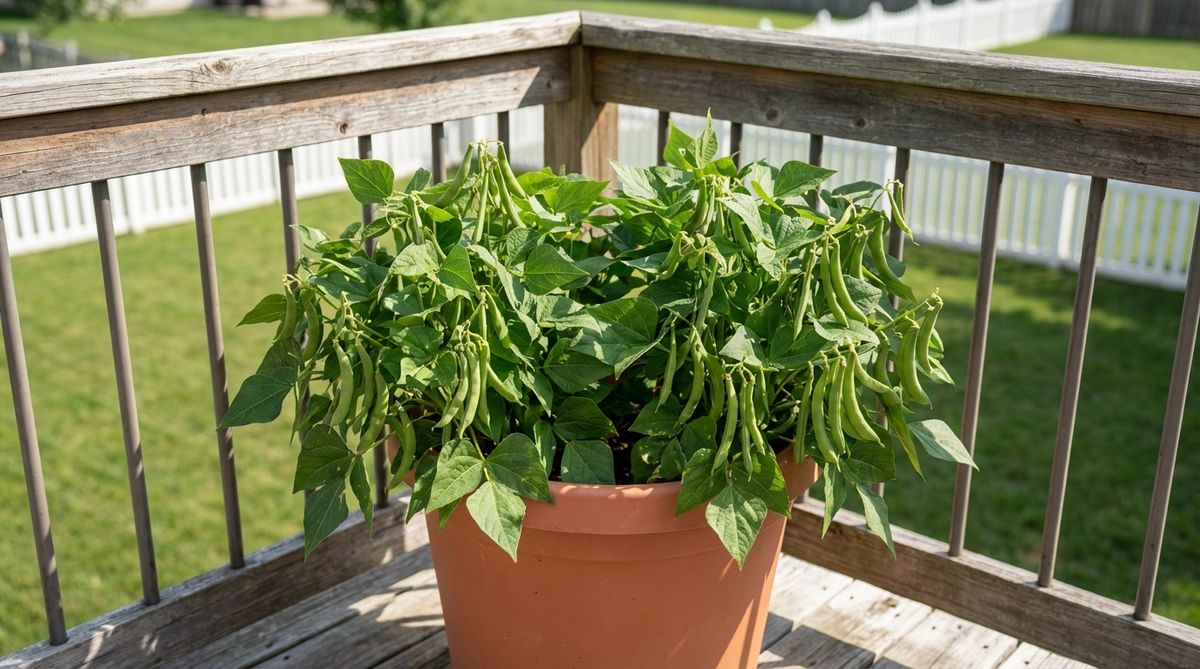
Bush bean varieties eliminate the need for trellising. Plants reach 18-24 inches, producing heavy yields in compact spaces.
Direct-seed into containers at least 8 inches deep after soil warms to 50°F. Space seeds 3 inches apart in circular patterns.
Beans fix their own nitrogen—avoid high-nitrogen fertilizers that promote leaves over pods. Harvest when pods snap cleanly.
25. Pole Beans
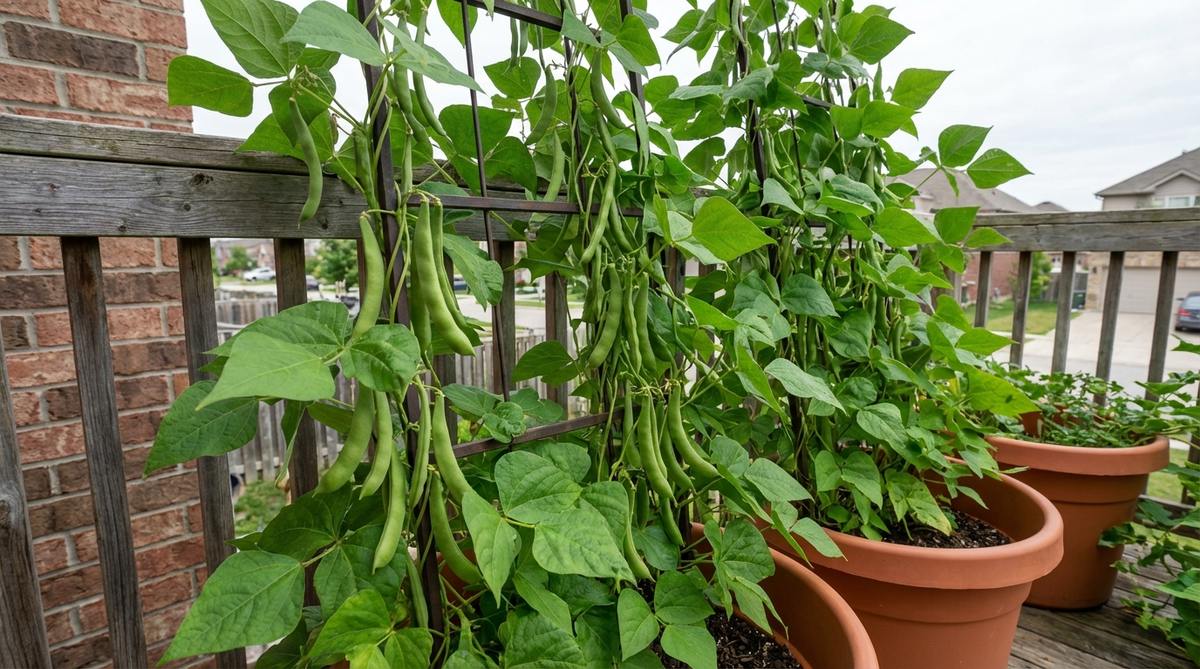
Pole beans climb vertically, maximizing harvest from minimal floor space. Varieties like ‘Kentucky Wonder’ reach 6-8 feet on trellises.
Use large containers (5-gallon minimum) with sturdy support structures attached. Plant seeds around the base of vertical supports.
Harvest every 2-3 days to encourage continued production. Pole beans produce longer than bush varieties.
26. Cucumbers
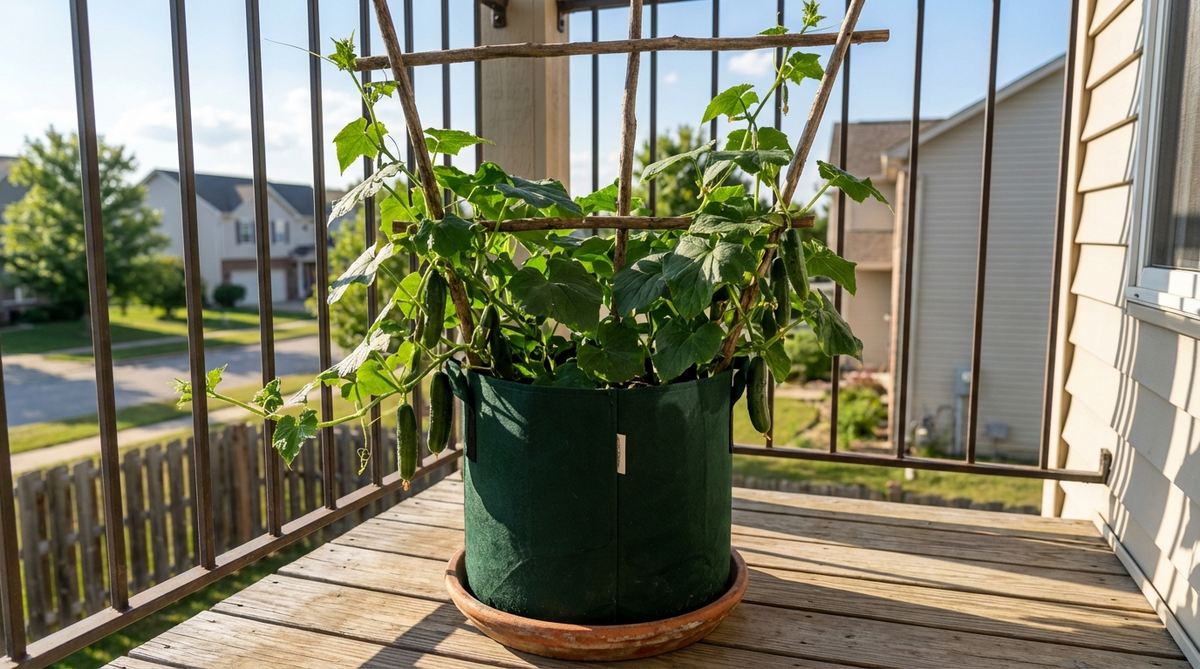
Bush cucumber varieties like ‘Spacemaster’ grow 2-3 feet in containers. Vining types produce more but require vertical support.
Plant in 5-gallon containers with trellises for air circulation. Cucumbers demand consistent moisture and full sun exposure.
Harvest when fruits reach 6-8 inches for best flavor and texture. Daily picking prevents oversized, bitter cucumbers.
27. Zucchini
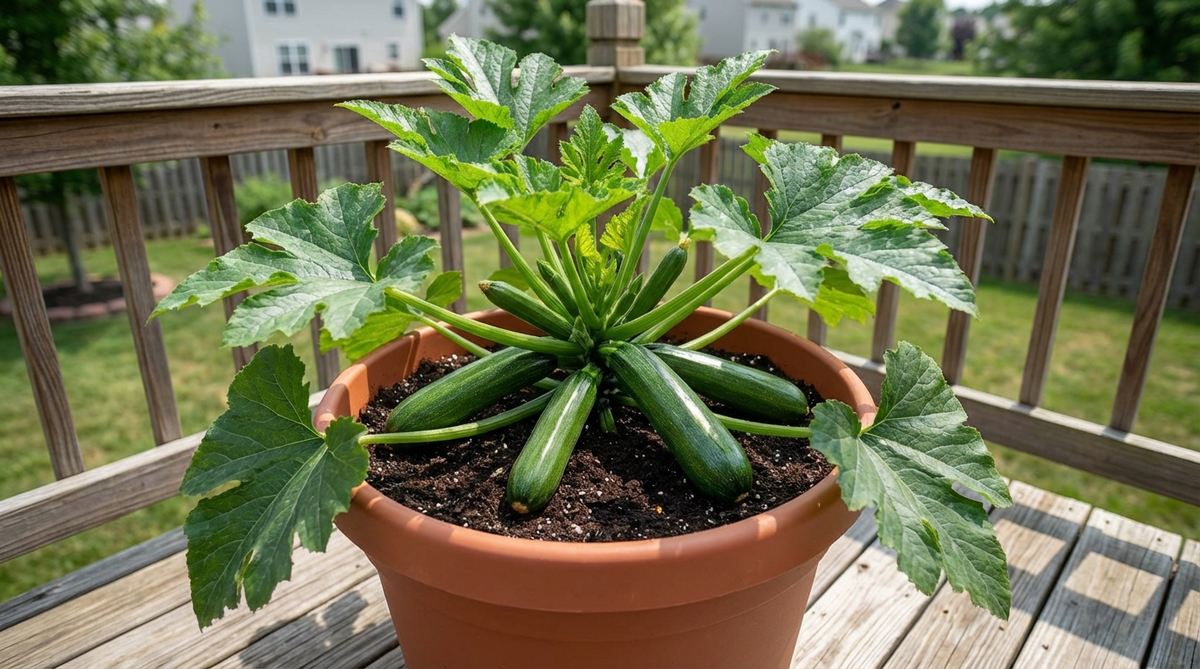
Compact zucchini cultivars produce full-sized fruits on plants suited to large containers. The large leaves provide dramatic foliage interest.
Use 5-gallon pots minimum with rich, well-amended potting soil. Zucchini needs full sun and ample space—allow 18 inches clearance.
Harvest when fruits reach 6-8 inches length. Oversized zucchini develop tough skin and large seeds.
28. Eggplant
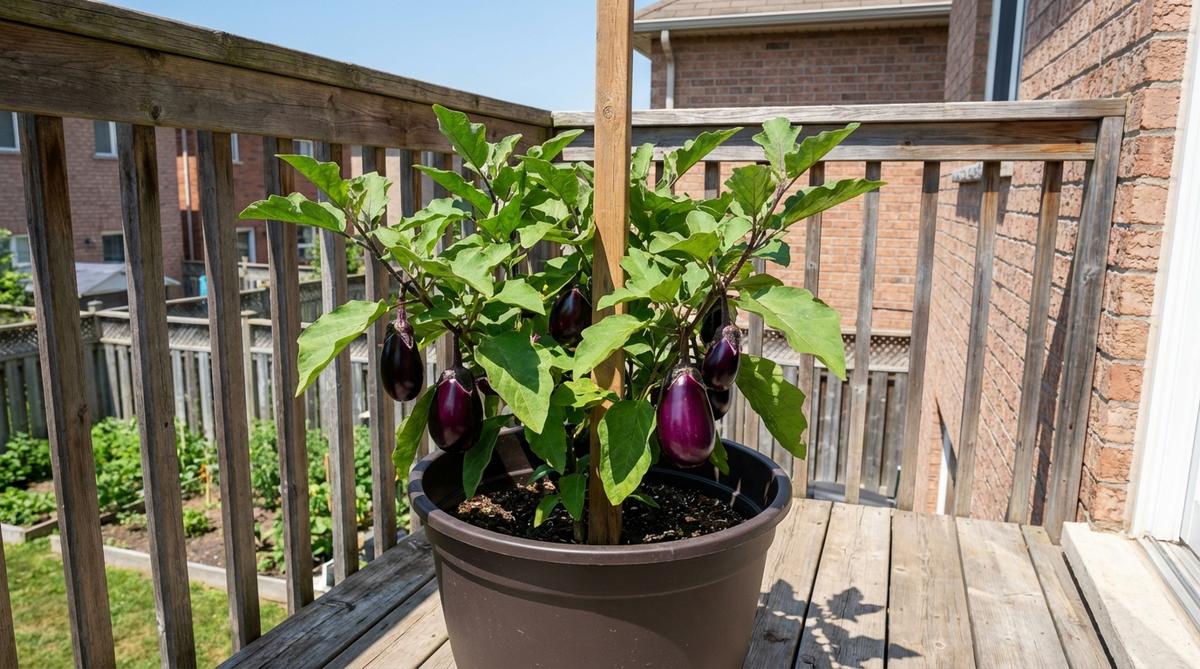
Compact eggplant varieties produce traditional or elongated fruits in purple, white, or striped patterns. Plants grow 18-30 inches in containers.
Plant in 5-gallon pots after soil temperatures exceed 70°F. Eggplants demand heat and full sun for fruit development.
Stake plants to support heavy fruit. Harvest when skin is glossy and firm—dull skin indicates overmaturity.
29. Radishes
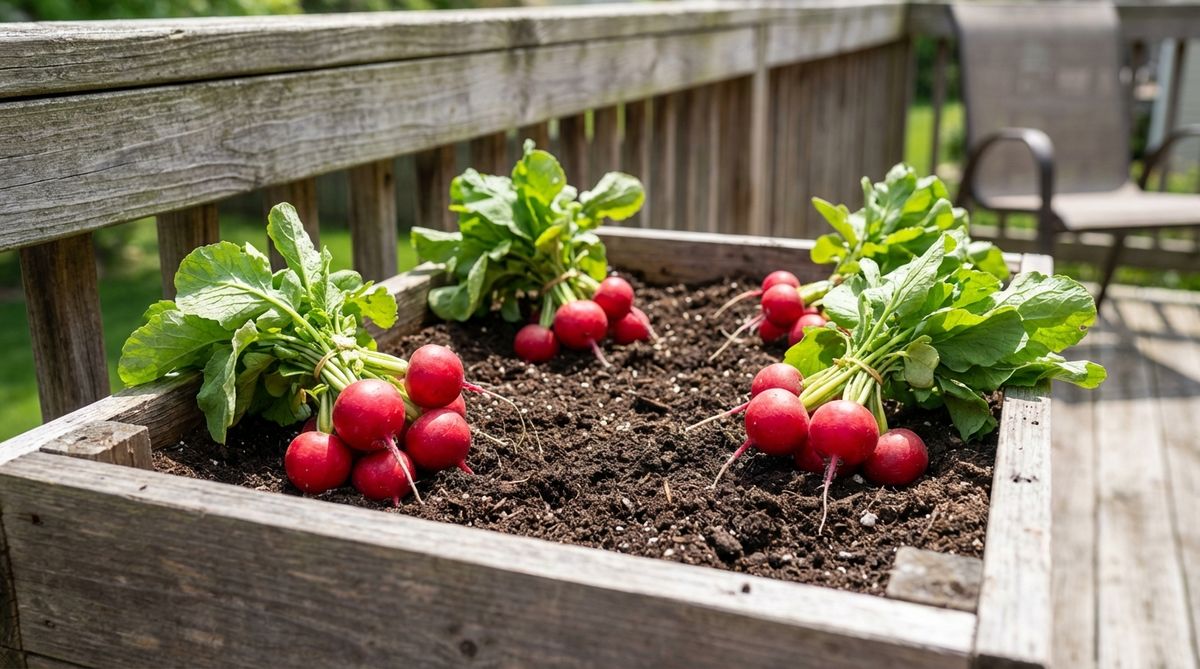
Radishes mature in 25-30 days, making them ideal for impatient gardeners. These root vegetables grow successfully in shallow containers.
Use pots at least 6 inches deep with loose potting mix. Sow seeds 1 inch apart in full sun to partial shade.
Harvest when roots reach 1 inch diameter. Radishes left too long become woody and pithy.
30. Lettuce
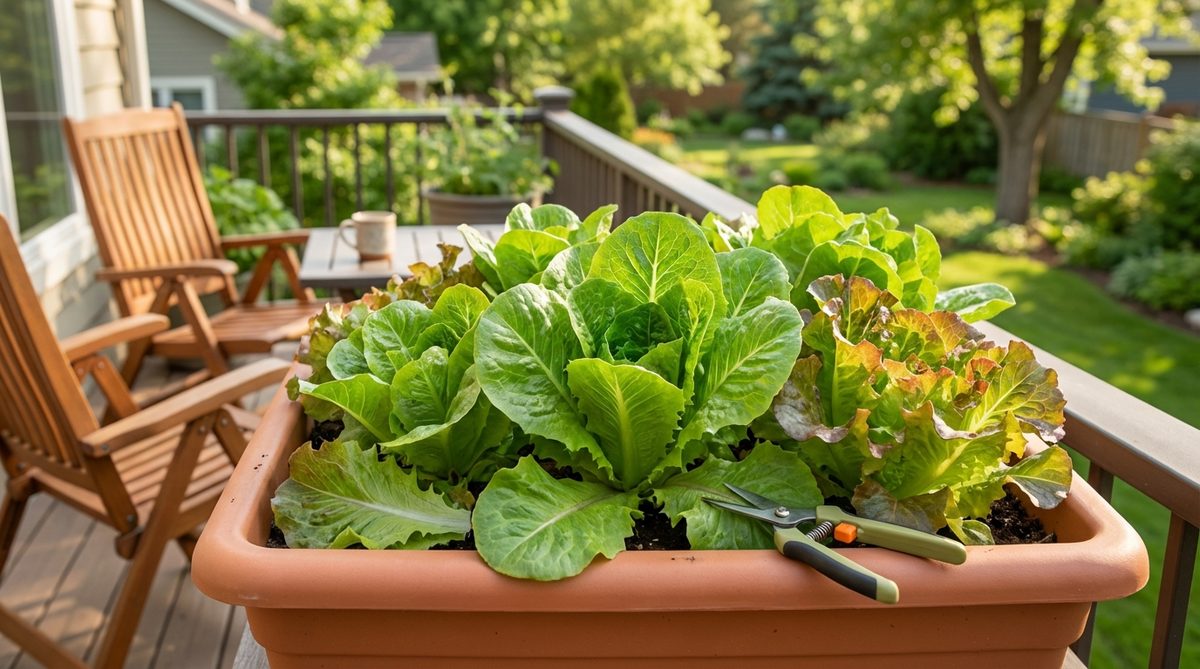
Leaf lettuce varieties provide continuous harvest when cut-and-come-again. Loose-leaf types outperform head lettuce in containers.
Plant in wide, shallow containers in partial shade. Lettuce bolts in heat—provide afternoon shade in warm climates.
Harvest outer leaves, allowing centers to continue producing. Succession plant every two weeks for constant supply.
31. Spinach
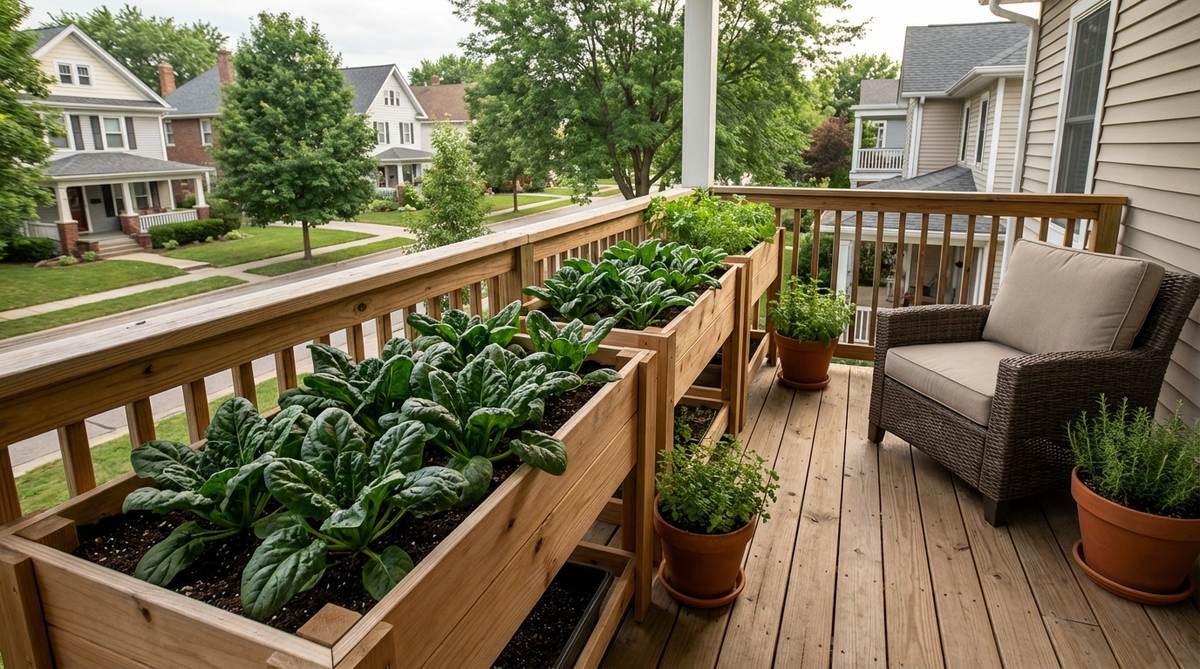
Spinach thrives in cool weather, making it perfect for spring and fall balcony gardens. Baby leaf varieties mature quickly in containers.
Use containers 6-8 inches deep with rich potting soil. Spinach tolerates partial shade better than full sun.
Harvest outer leaves when they reach 3-4 inches. Hot weather triggers bolting—plant in cool seasons only.
32. Kale
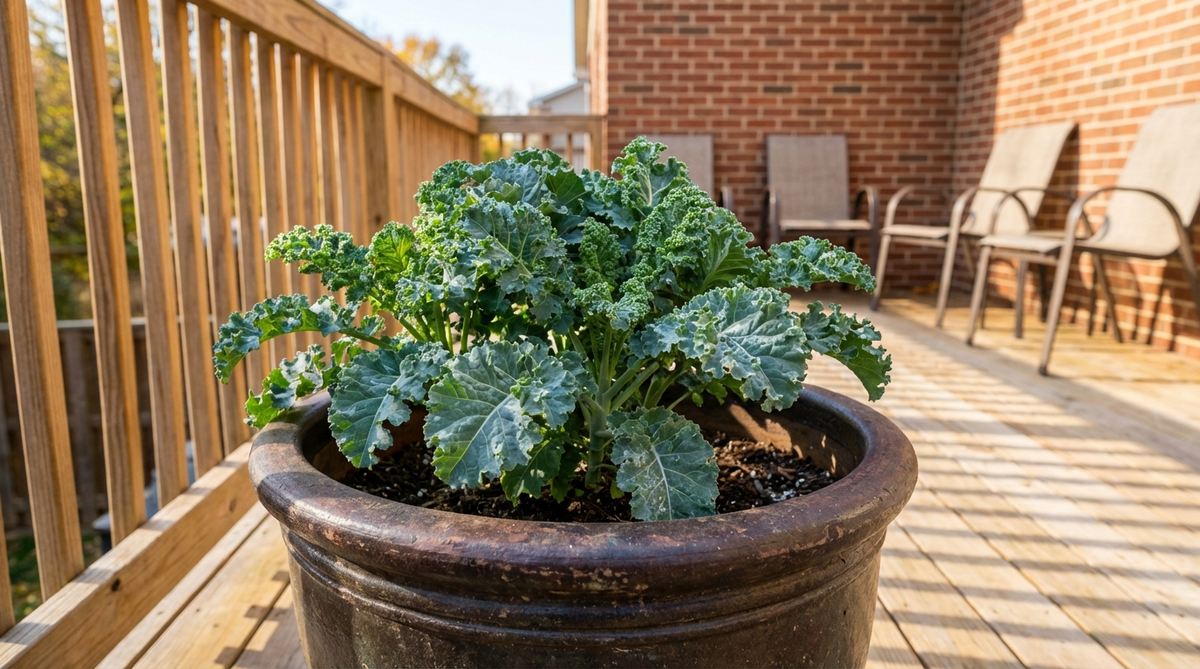
Compact kale varieties like ‘Dwarf Blue Curled’ fit containers while producing nutritious greens. Frost improves flavor, making kale ideal for fall gardens.
Plant in 3-5 gallon containers in full sun to partial shade. Kale tolerates cold and continues producing after light frosts.
Harvest lower leaves first, allowing the plant to continue growing upward. Remove yellowing leaves promptly.
33. Swiss Chard
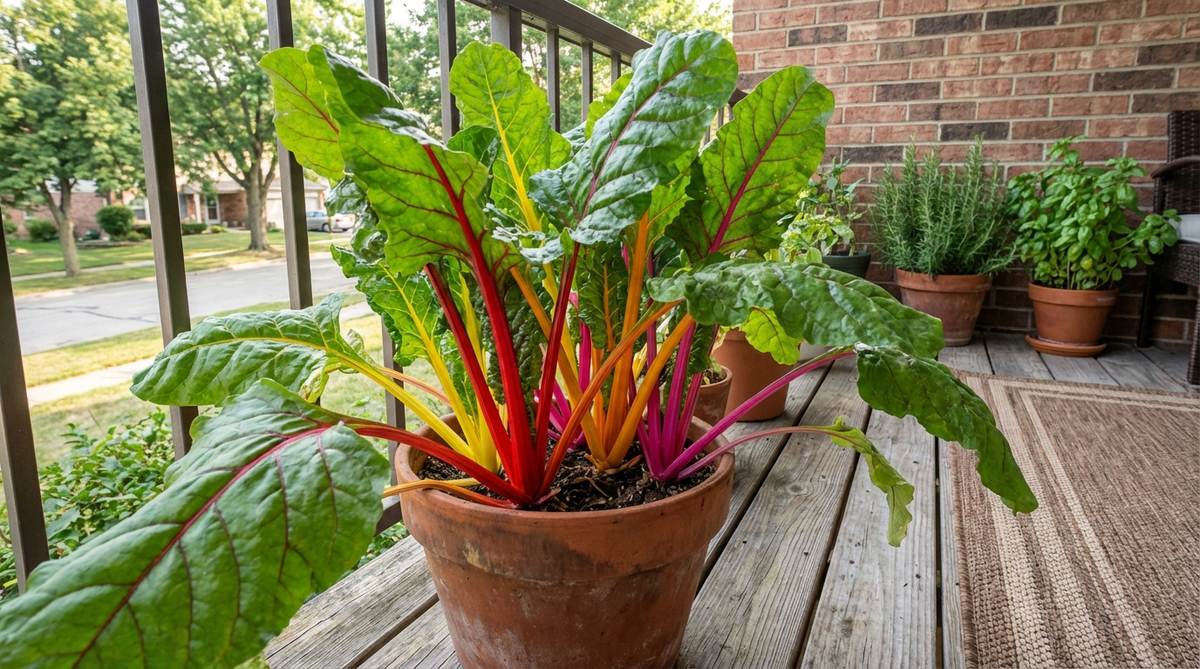
Rainbow chard provides edible greens and ornamental value with colorful stems in red, yellow, orange, and pink. Plants grow 18-24 inches tall.
Use 3-gallon containers in full sun to partial shade. Chard tolerates heat better than spinach and lettuce.
Cut outer stalks at soil level for continuous harvest. Plants produce from spring through fall in most climates.
34. Arugula
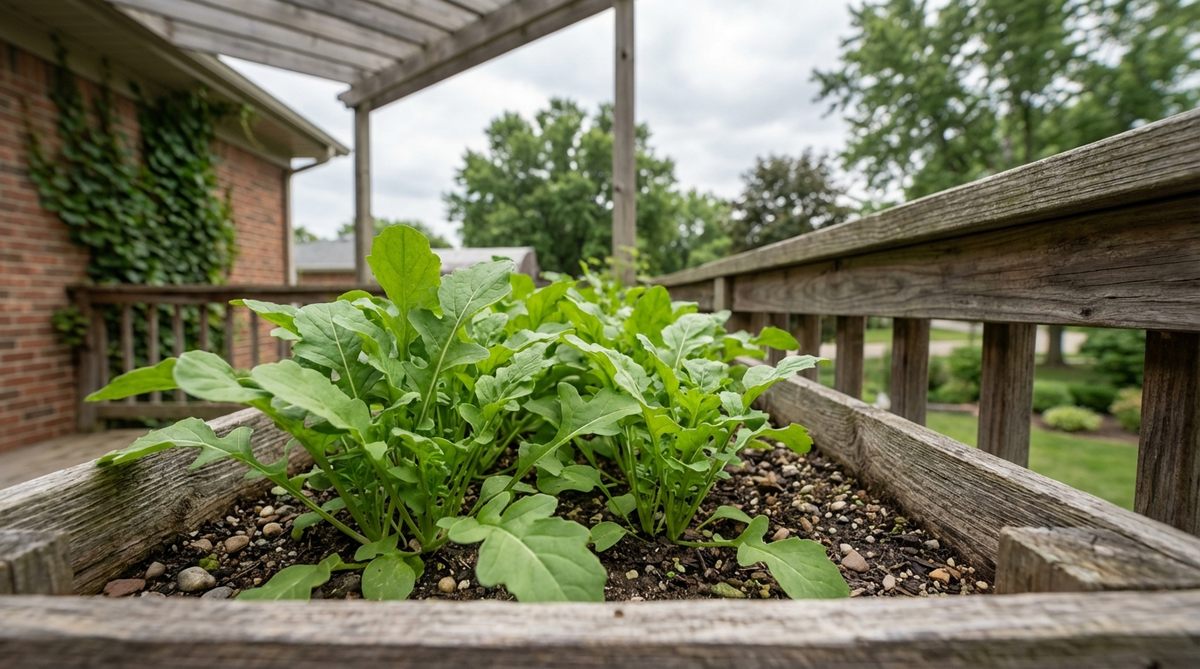
Arugula’s peppery leaves add flavor to salads and sandwiches. This fast-growing green matures in 30-40 days.
Plant in shallow containers with afternoon shade in warm climates. Arugula bolts quickly in heat and full sun.
Harvest entire plants or cut outer leaves. Succession plant every two weeks for continuous supply.
35. Green Onions
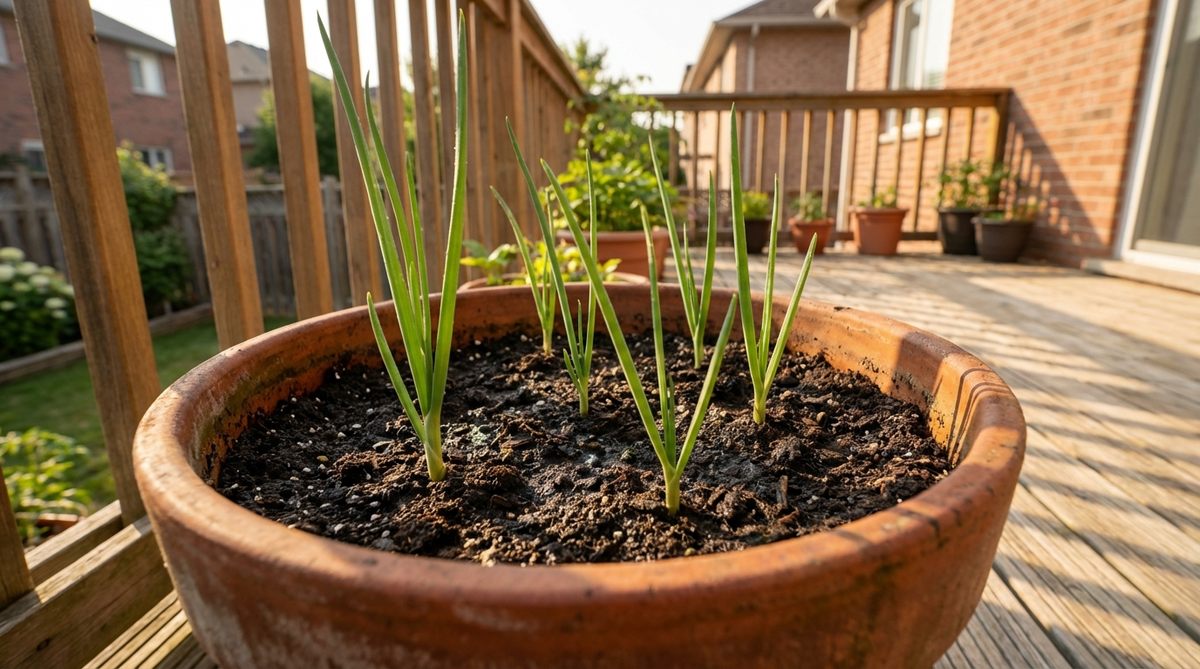
Scallions grow vertically, requiring minimal space in containers. Regrow from grocery store bunches by planting root ends.
Use containers at least 6 inches deep with well-draining soil. Green onions tolerate partial shade and cool temperatures.
Harvest by cutting leaves 1 inch above soil level. Roots continue producing new growth for multiple harvests.
Culinary Herbs Thriving in Small Spaces
Herb containers positioned near kitchen doors provide fresh seasonings steps from the stove. Most culinary herbs thrive in 1-2 gallon pots with minimal maintenance.
36. Basil
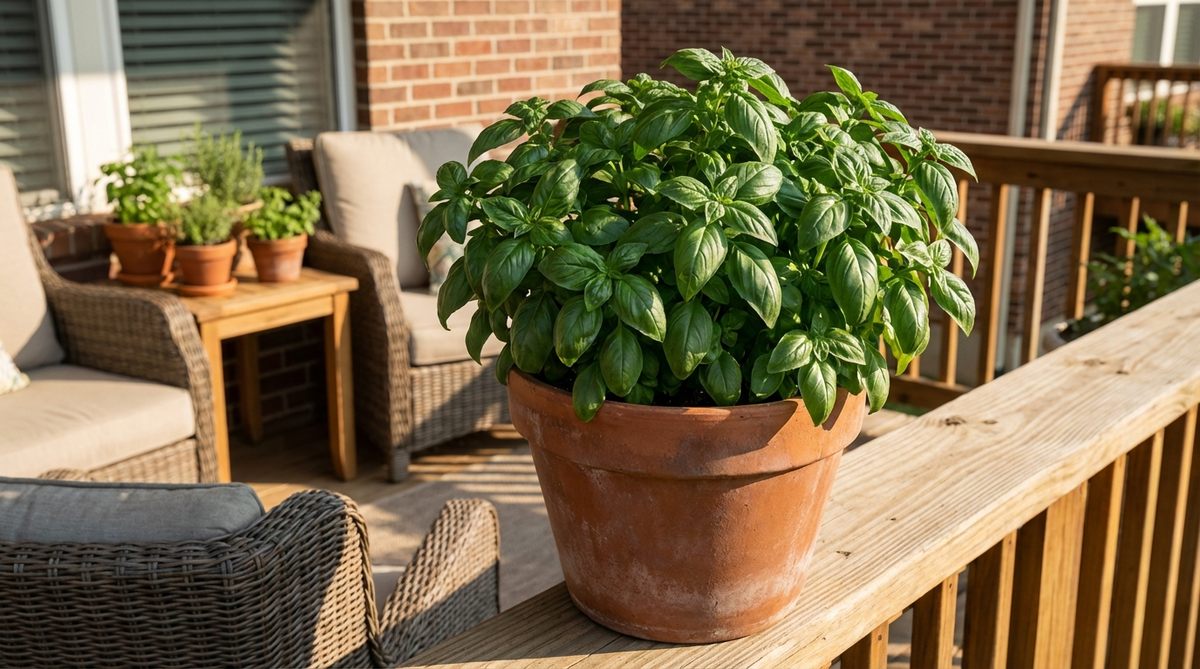
Sweet basil varieties deliver classic Italian flavor, while Thai and lemon basil offer unique profiles. All types grow vigorously in containers.
Plant after the last frost in full sun. Basil demands warm temperatures and dies at the first frost.
Pinch growing tips regularly to encourage bushy growth and prevent flowering. Harvest leaves frequently for best flavor.
37. Mint
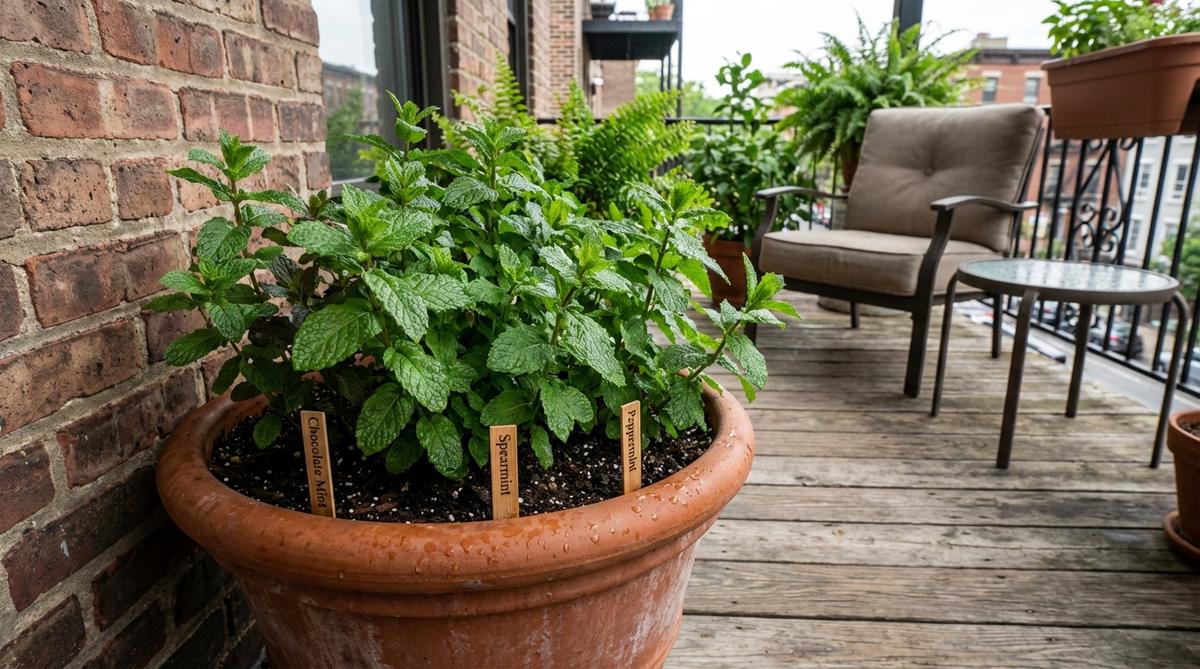
Mint varieties include spearmint, peppermint, chocolate mint, and lemon balm. Aggressive spreading makes containers ideal for containment.
Grow in partial shade with consistent moisture. Mint tolerates less-than-ideal conditions better than most herbs.
Harvest stems by cutting above leaf nodes. Frequent cutting prevents flowering and maintains tender growth.
38. Rosemary
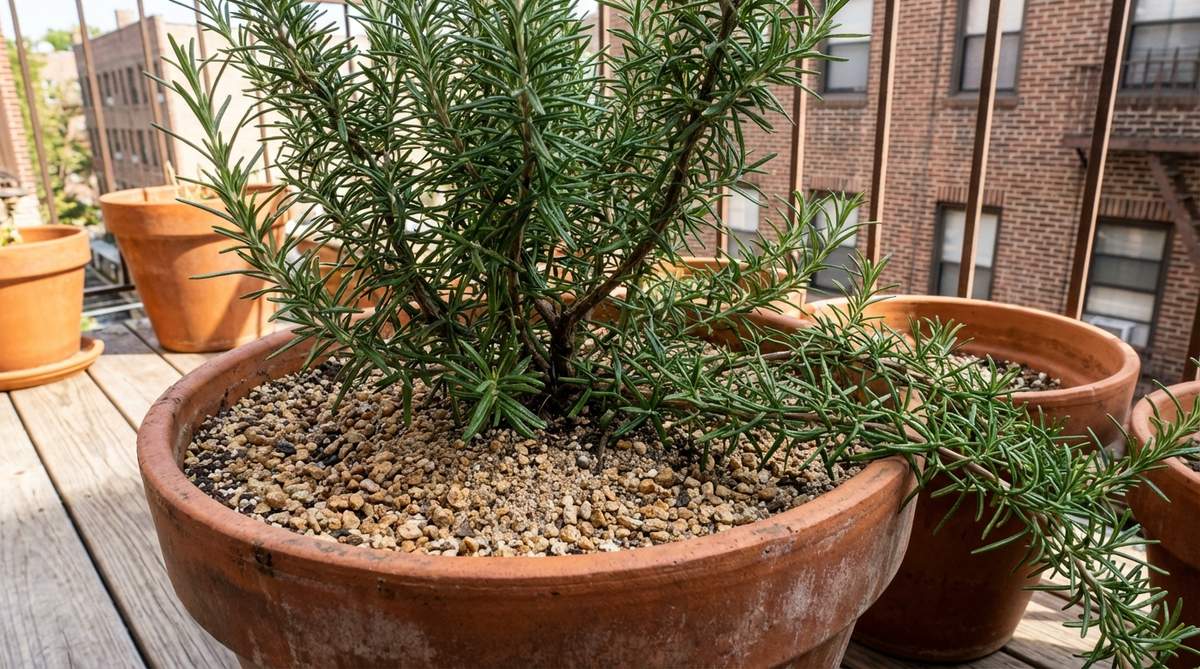
Upright rosemary grows 2-4 feet in containers, while prostrate varieties trail over edges. Needle-like leaves remain evergreen in mild climates.
Plant in full sun with excellent drainage. Rosemary despises wet soil—allow pots to dry between waterings.
Harvest sprigs year-round for cooking. Prune after flowering to maintain compact shape.
39. Thyme
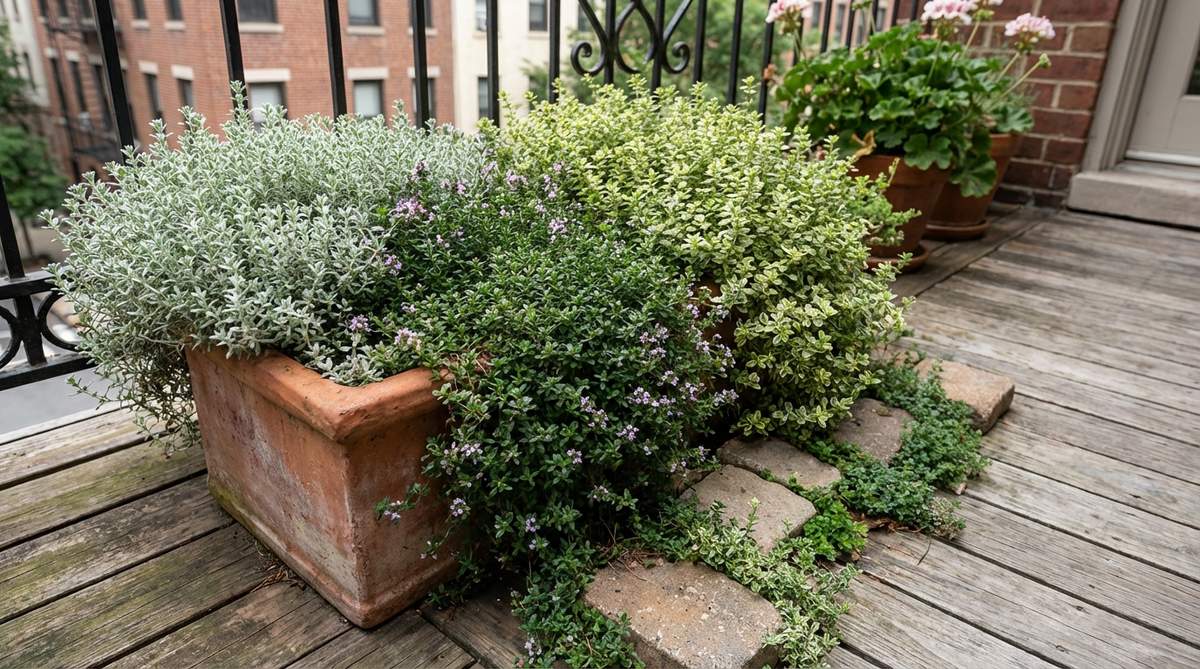
Thyme varieties range from upright common thyme to creeping lemon thyme. All types form low mats covered in tiny aromatic leaves.
Grow in full sun with lean, well-draining soil. Thyme tolerates drought and poor soil once established.
Harvest stems by cutting back one-third of growth. Frequent trimming keeps plants compact and productive.
40. Oregano
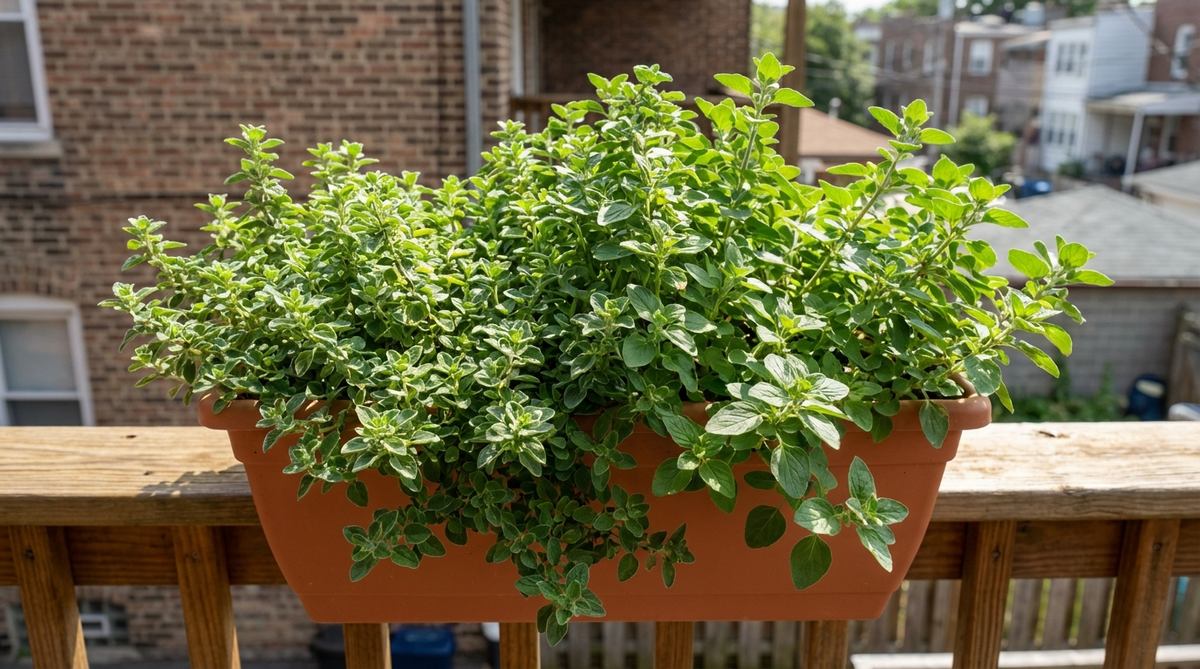
Greek oregano delivers the strongest flavor for Mediterranean dishes. This spreading herb fills containers quickly with aromatic foliage.
Plant in full sun with moderate watering. Oregano tolerates neglect better than fussy attention.
Harvest before flowering for peak flavor. Cut stems back by half mid-season to rejuvenate growth.
41. Parsley
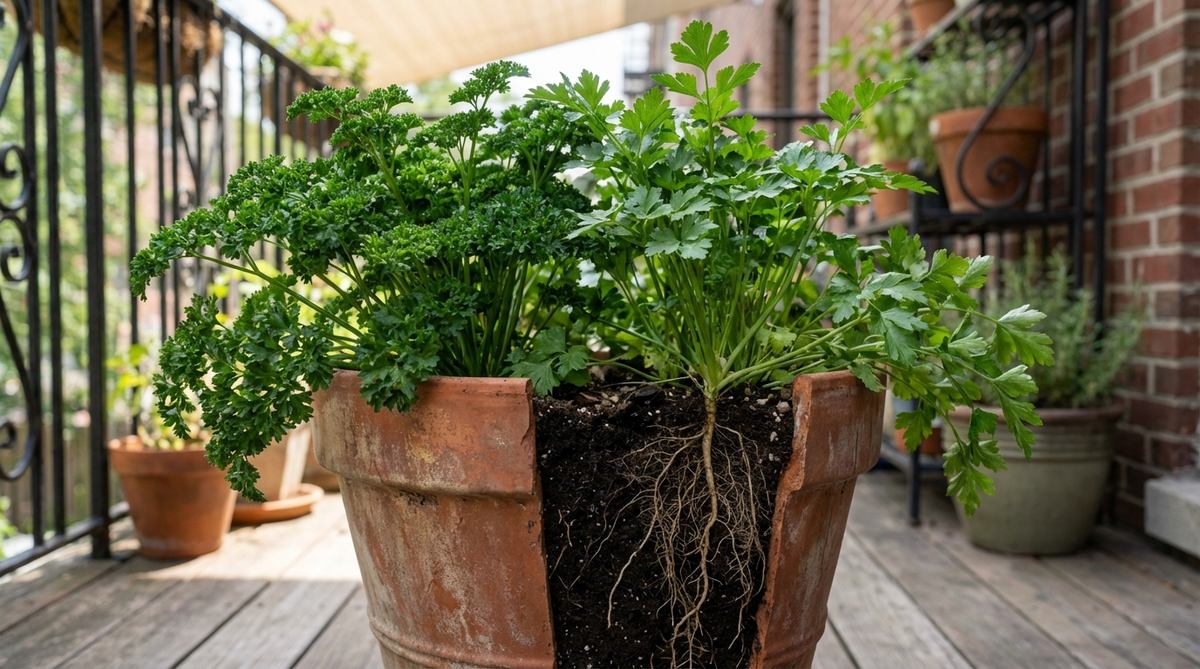
Flat-leaf Italian parsley offers stronger flavor than curly varieties. This biennial herb produces abundantly in its first year.
Grow in partial shade with rich, moist soil. Parsley tolerates cooler temperatures than basil.
Harvest outer stems at soil level. Regular cutting encourages new growth from the center.
42. Cilantro
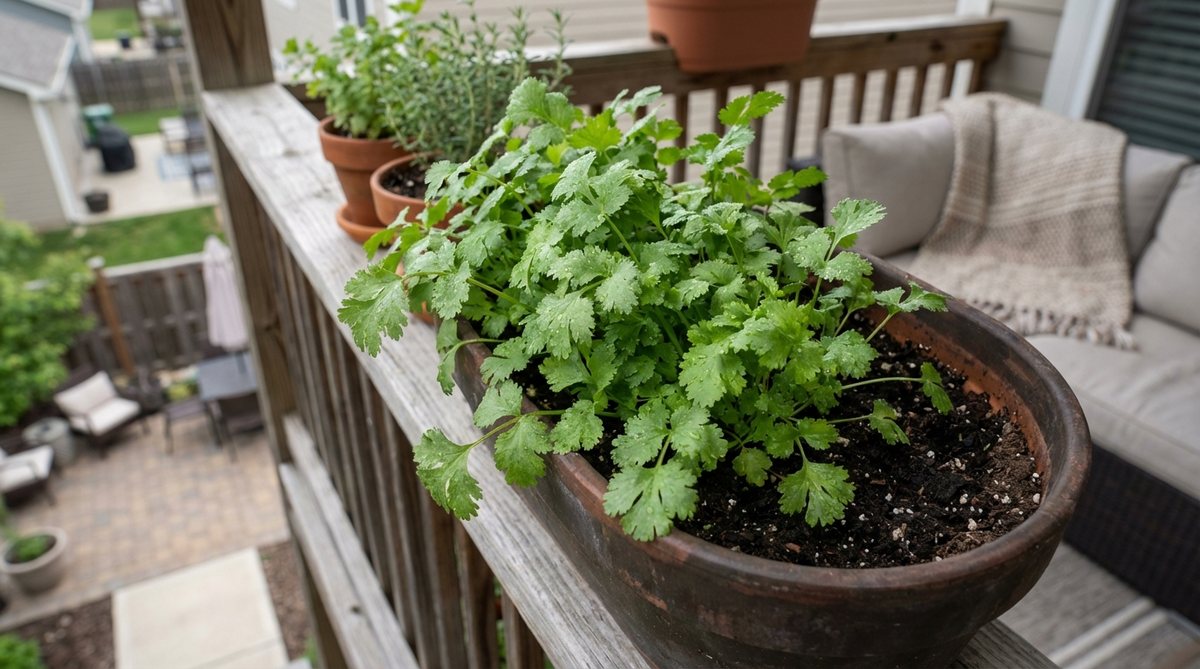
Cilantro provides fresh leaves for Mexican and Asian cuisines. This fast-growing herb bolts quickly in heat.
Plant in cool seasons with partial shade in warm climates. Succession plant every 2-3 weeks for continuous harvest.
Harvest leaves before flowering. Allow one plant to bolt for fresh coriander seeds.
43. Chives
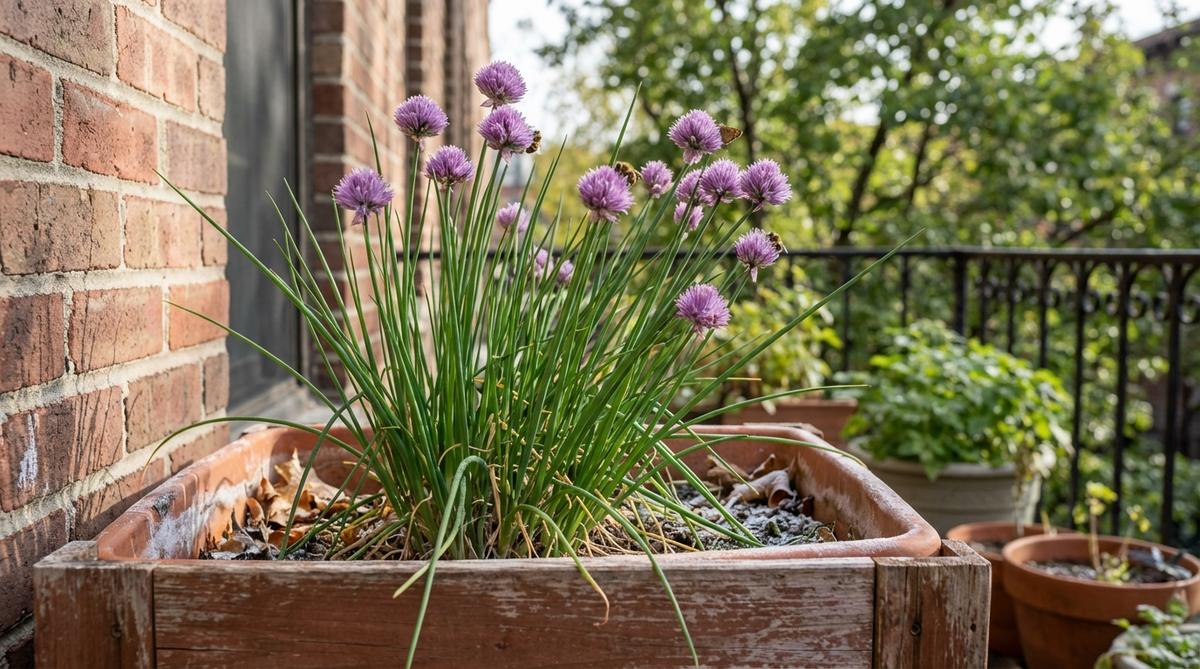
Common and garlic chives produce hollow leaves with mild onion flavor. Purple pompom flowers are edible and ornamental.
Grow in full sun to partial shade with consistent moisture. Chives are perennial and return reliably year after year.
Cut leaves 2 inches above soil level for harvest. Divide overcrowded containers every 3-4 years.
44. Sage
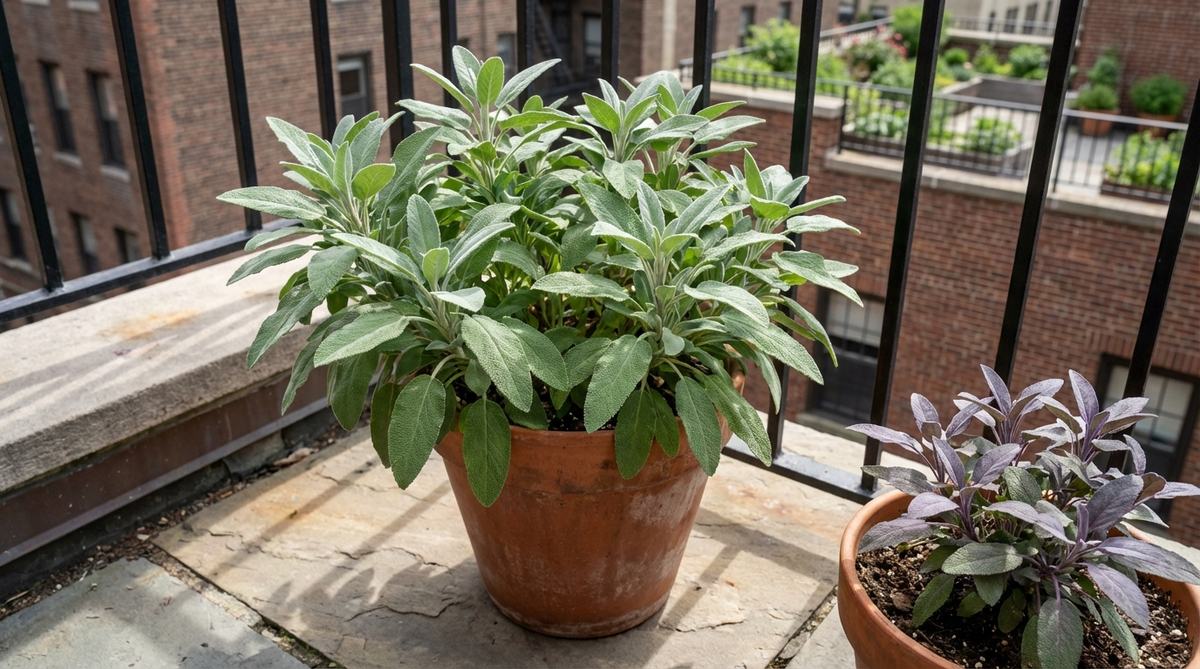
Common sage develops velvety gray-green leaves on woody stems. Variegated and purple varieties add ornamental interest.
Plant in full sun with well-draining soil. Sage tolerates drought and poor soil conditions.
Harvest leaves year-round in mild climates. Prune woody stems in spring to encourage new growth.
45. Dill
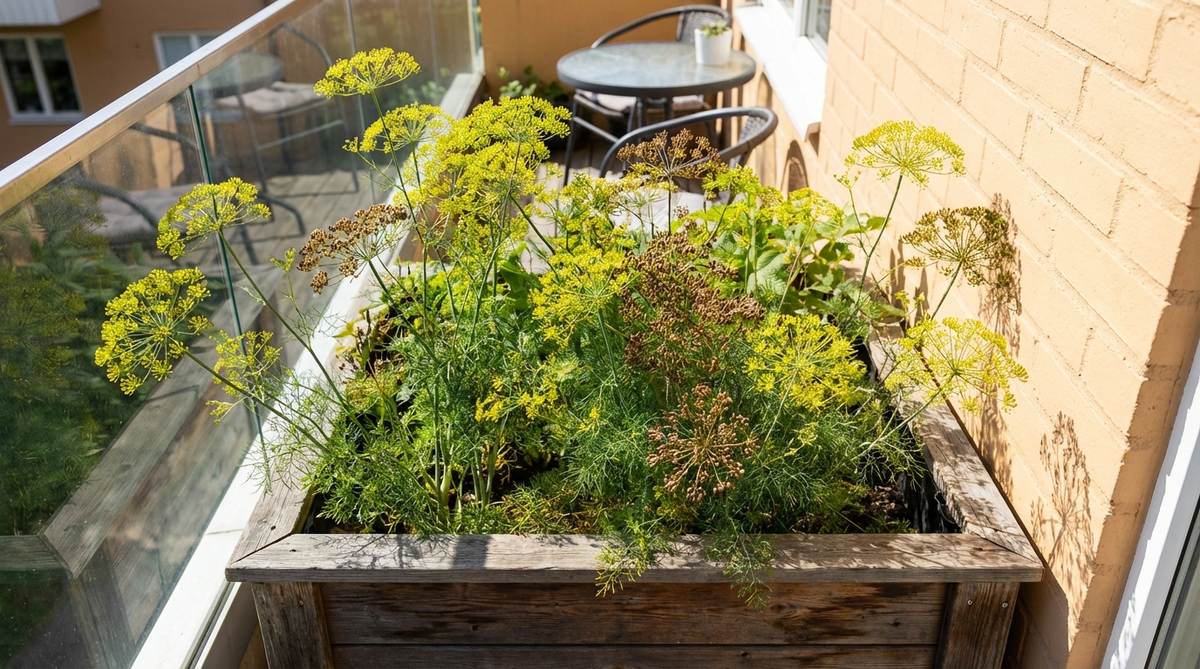
Dill’s feathery foliage and umbrella-shaped flower heads reach 2-3 feet in containers. Both leaves and seeds flavor pickles and fish dishes.
Use deep containers (12 inches minimum) to accommodate taproots. Plant in full sun with protection from strong winds.
Harvest leaves before flowering. Allow flowers to mature for seed collection.
Drought-Tolerant Succulents and Cacti
Succulents thrive in containers with minimal water requirements. These architectural plants suit hot, sunny balconies where traditional flowers struggle.
46. Echeveria
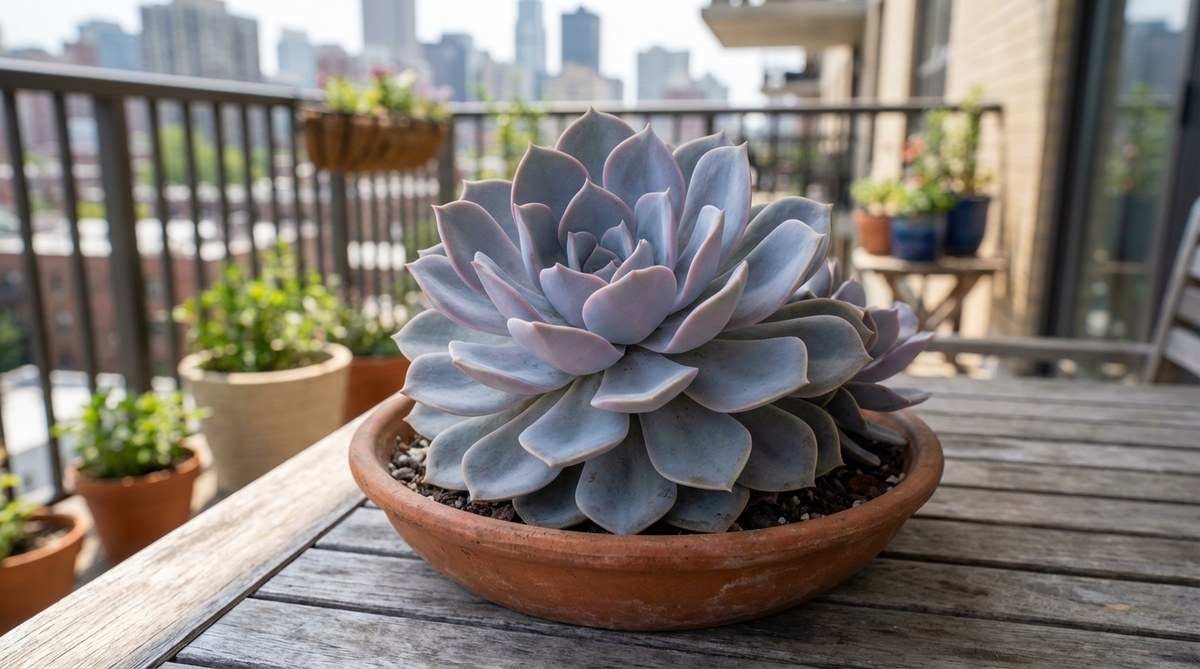
Echeveria rosettes display symmetrical geometry in shades of blue, purple, pink, and green. These sculptural succulents resemble fleshy flowers.
Plant in cactus-specific potting mix with excellent drainage. Echeverias need bright light but tolerate partial shade.
Water when soil dries completely. Avoid overhead watering that traps moisture in rosettes.
47. Sedum Spurium
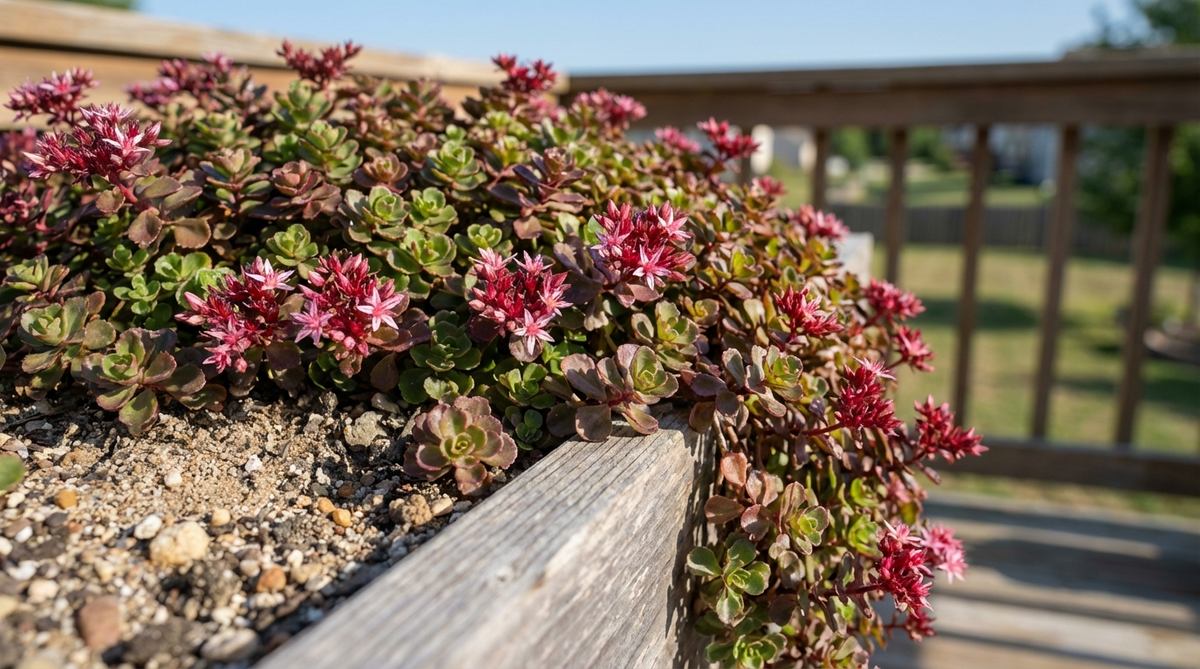
Creeping sedum varieties form low mats of colorful foliage that cascade over container edges. Flowers appear pink or red in summer.
Grow in full sun with gritty, fast-draining soil. Sedums store water in leaves, surviving weeks without irrigation.
Trim back leggy growth in spring. These hardy succulents tolerate cold better than most succulent varieties.
48. Hens and Chicks
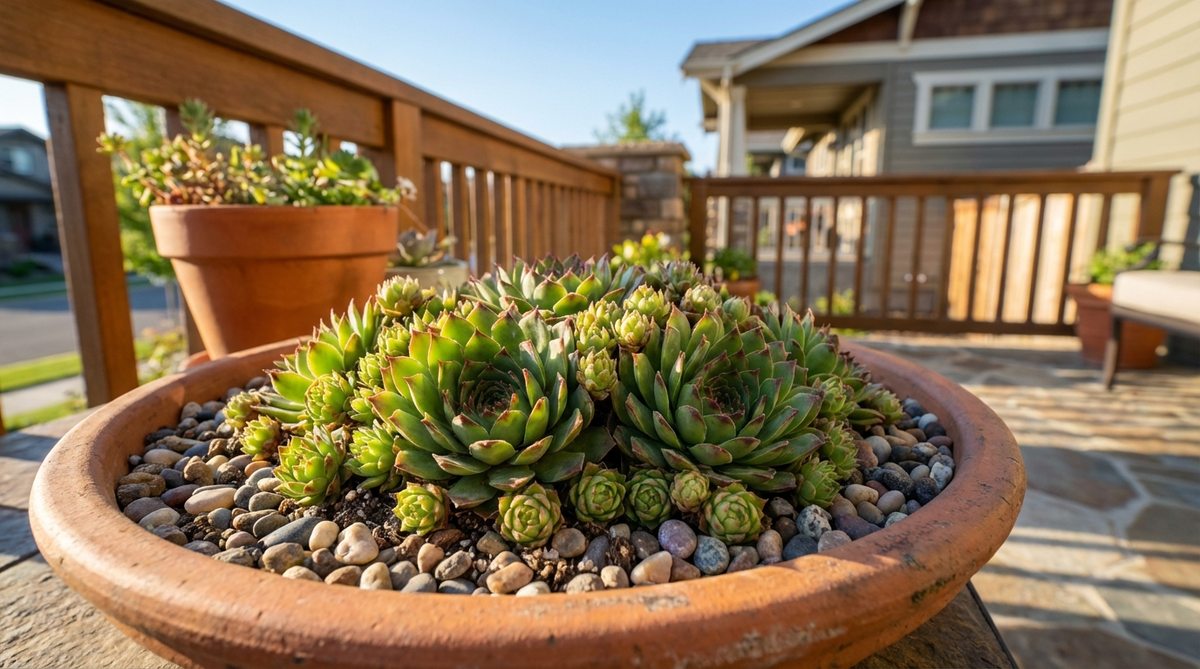
Sempervivum produces tight rosettes that multiply into colonies. Cold-hardy varieties survive freezing temperatures in containers.
Plant in shallow pots with cactus mix and top-dress with decorative gravel. Hens and chicks need minimal water and full sun.
Remove spent flower stalks after blooming. Divide offsets to propagate new plants.
49. Jade Plant
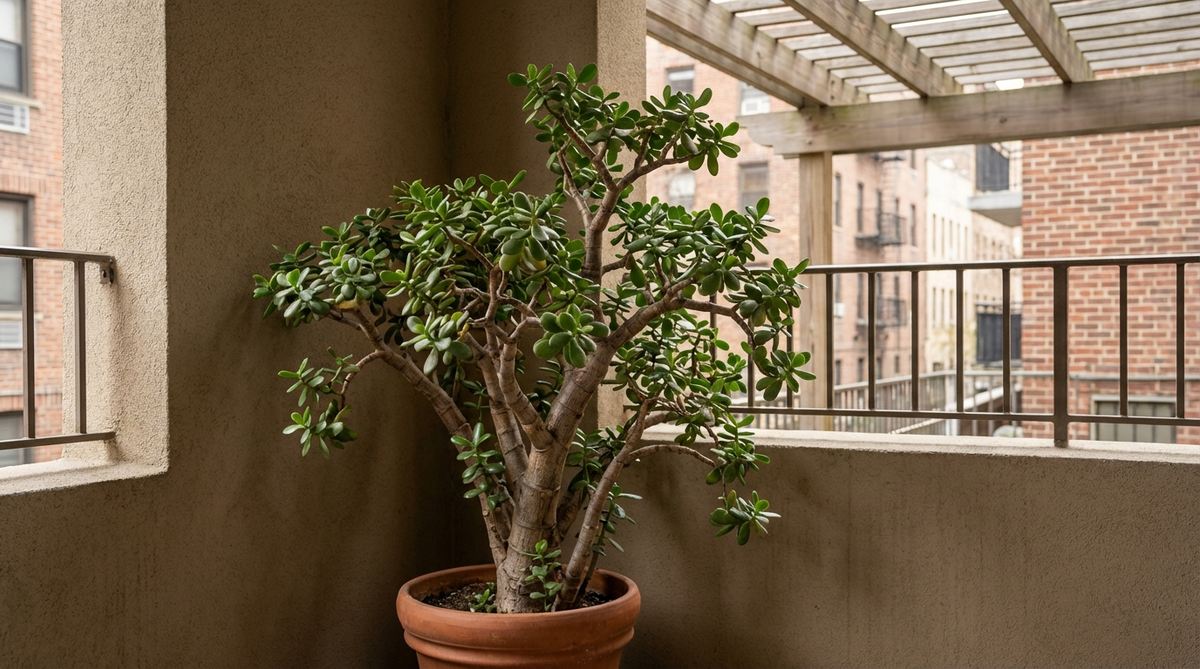
Crassula ovata develops thick trunks and glossy oval leaves resembling miniature trees. Jade plants live for decades with proper care.
Use heavy ceramic pots to prevent top-heavy plants from tipping. Jade prefers bright indirect light and infrequent deep watering.
Allow soil to dry completely between waterings. Fertilize monthly during growing season with half-strength succulent fertilizer.
50. Aloe Vera
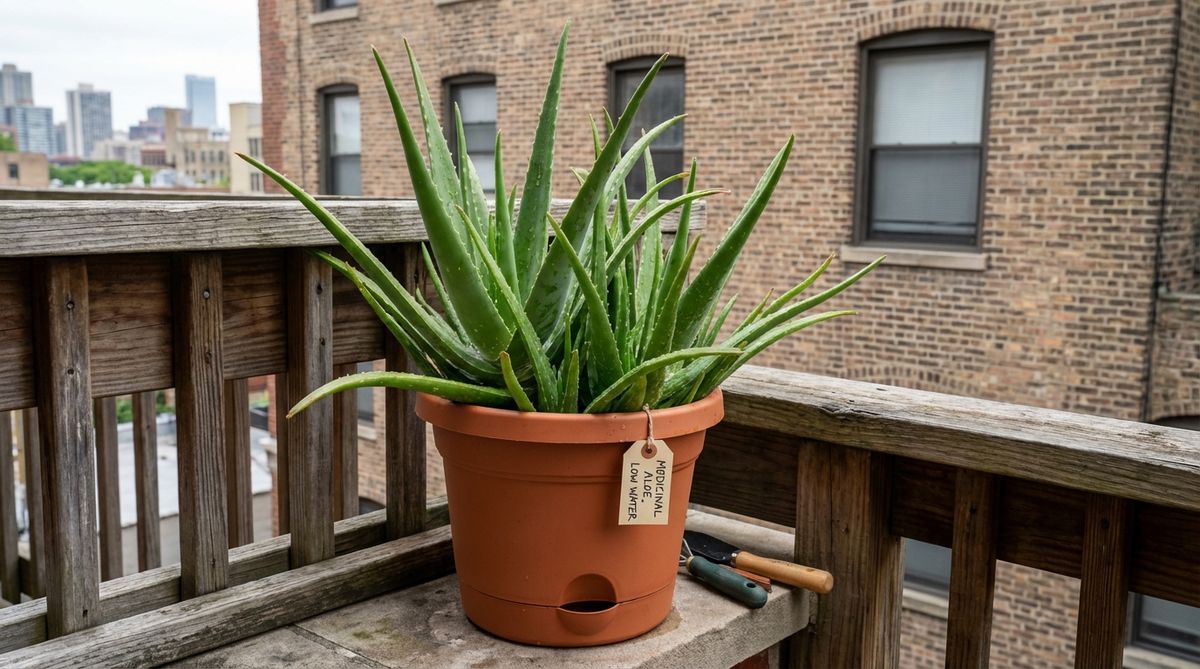
Aloe vera produces medicinal gel in thick, spiky leaves. This functional succulent thrives in bright light with minimal attention.
Plant in cactus mix with added perlite for drainage. Aloe tolerates neglect but rots quickly in wet soil.
Harvest outer leaves by cutting at the base. Use fresh gel for minor burns and skin irritation.
51. Snake Plant
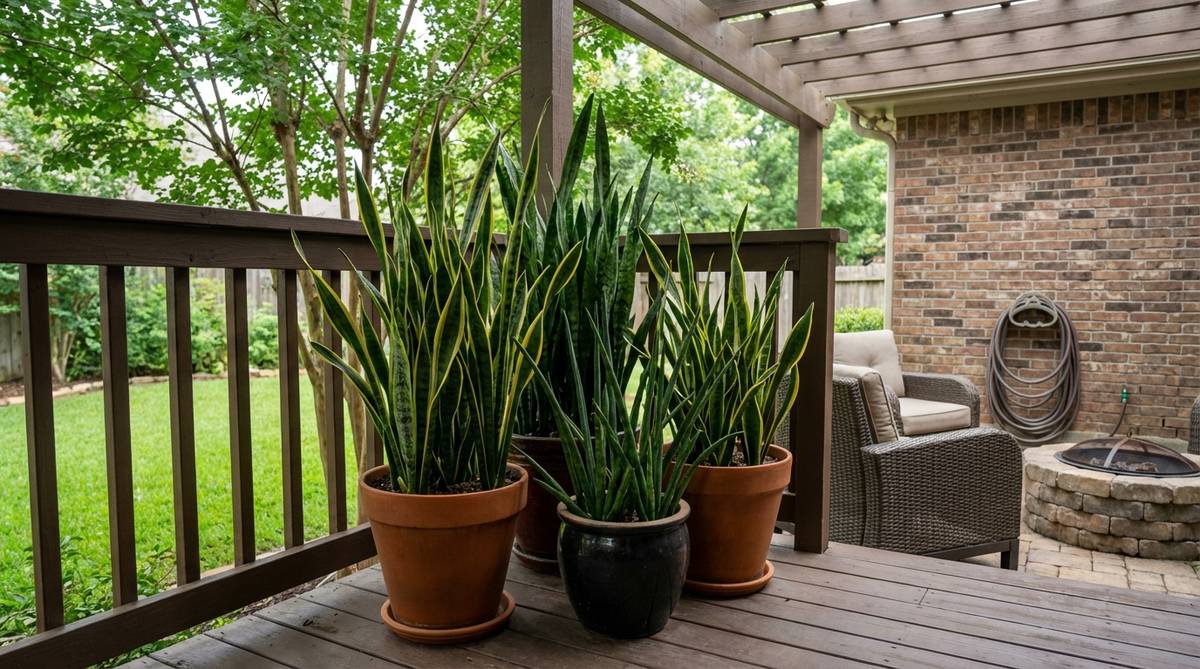
Sansevieria varieties display stiff upright leaves in green, variegated, or banded patterns. These air-purifying plants tolerate extreme neglect.
Grow in low to bright indirect light. Snake plants survive in shade where other succulents fail.
Water sparingly—once monthly in winter, bi-weekly in summer. Root rot is the only common failure point.
52. Barrel Cactus
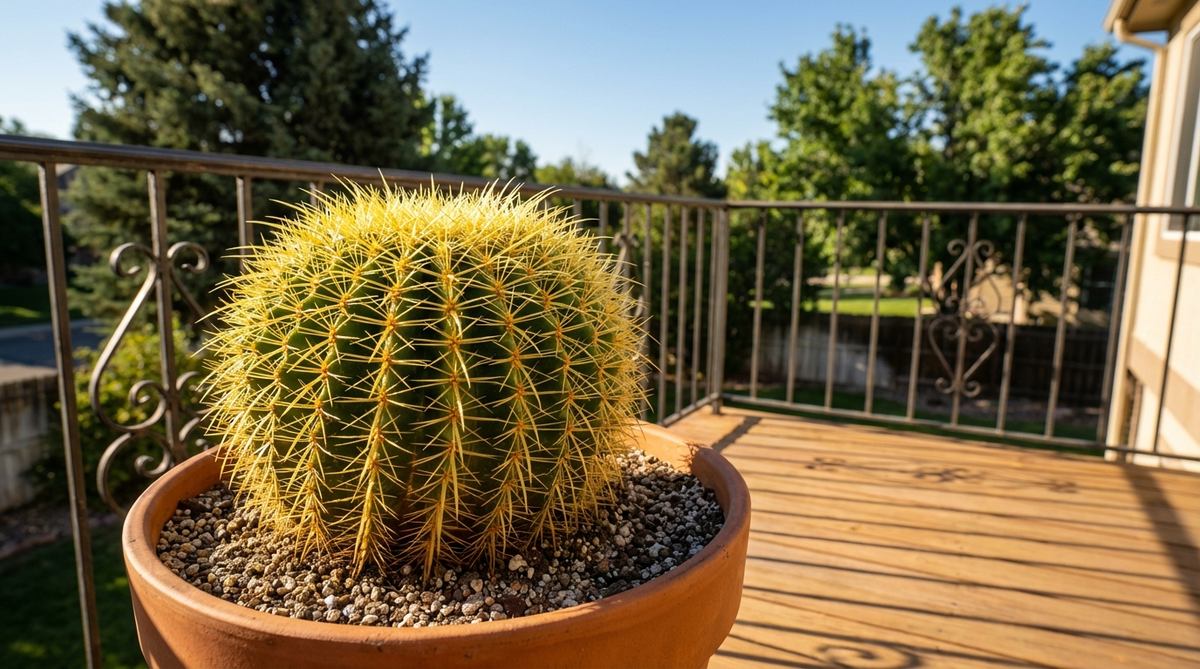
Golden barrel cacti form spherical shapes covered in yellow spines. These slow-growing specimens become focal points in container arrangements.
Use cactus-specific soil in containers with multiple drainage holes. Barrel cacti demand full sun and warm temperatures.
Water deeply but infrequently during growing season. Cease watering entirely in winter dormancy.
Ornamental Grasses Adding Texture and Movement
Ornamental grasses introduce motion and sound to balcony gardens. Their fibrous root systems adapt well to container culture, and vertical growth saves horizontal space.
53. Fountain Grass
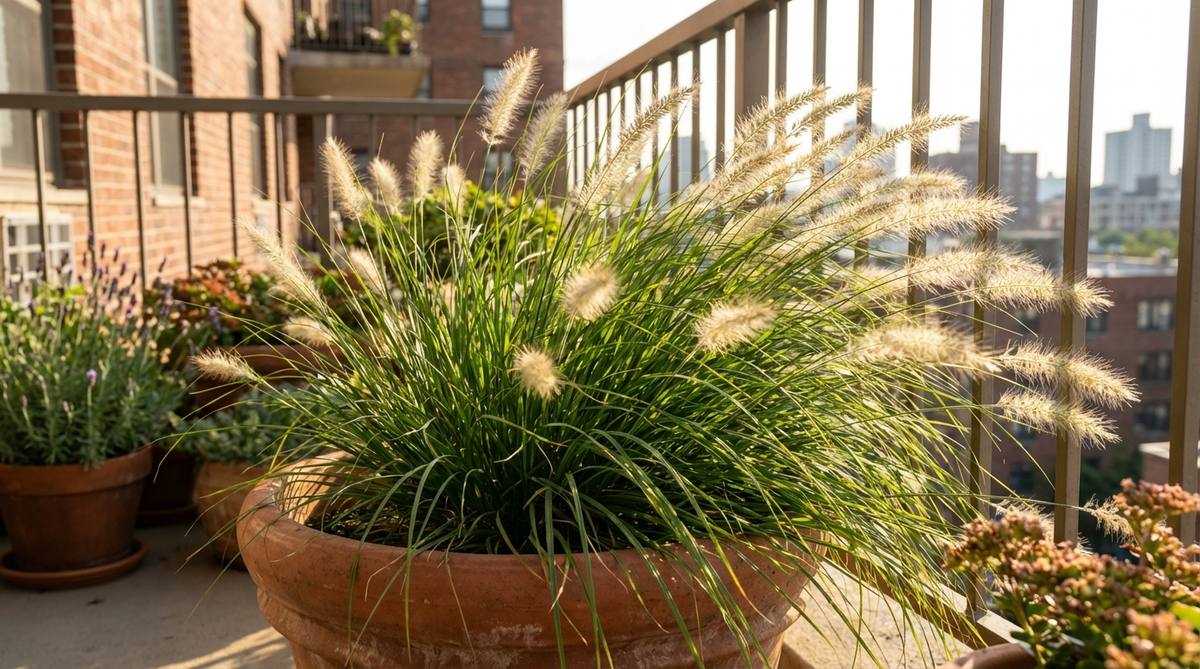
Pennisetum varieties produce arching foliage that fountains from the center. Feathery plumes appear in late summer above the leaves.
Plant in full sun to partial shade in containers at least 14 inches wide. Fountain grass tolerates heat and dry soil.
Cut back dead foliage in early spring before new growth emerges. Divide overcrowded containers every 3-4 years.
54. Blue Fescue
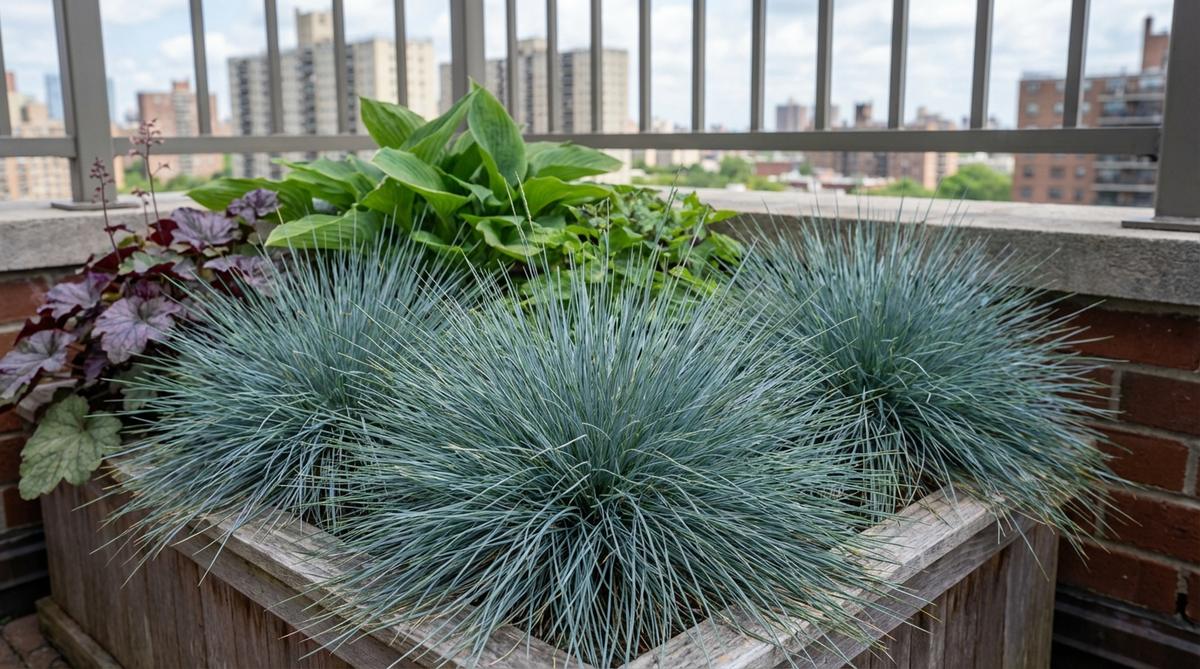
Festuca glauca forms compact blue-gray tufts reaching 8-12 inches. These evergreen grasses maintain color year-round in mild climates.
Grow in full sun with excellent drainage. Blue fescue tolerates poor soil and drought once established.
Remove dead foliage by combing fingers through plants. Replace every 3-4 years as centers die out.
55. Japanese Forest Grass
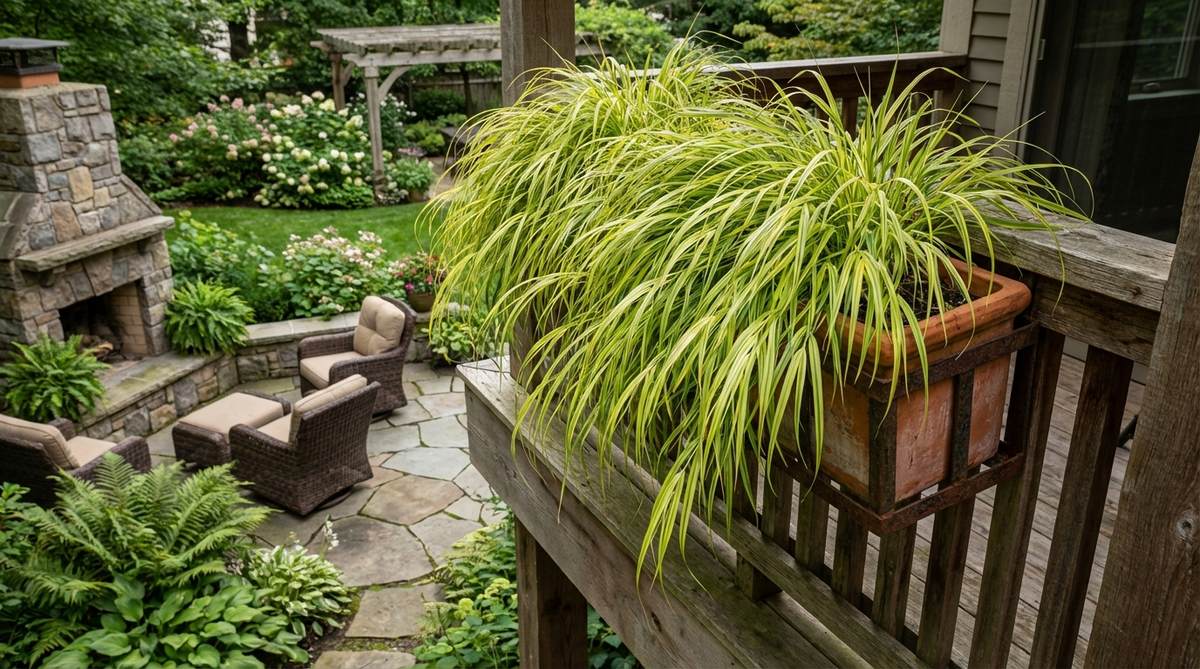
Hakonechloa macra produces cascading mounds of chartreuse or variegated foliage. This shade-tolerant grass brightens low-light balconies.
Plant in partial to full shade with rich, moist soil. Japanese forest grass scorches in hot sun.
Water consistently during growing season. Cut back dead foliage in late winter.
56. Purple Fountain Grass
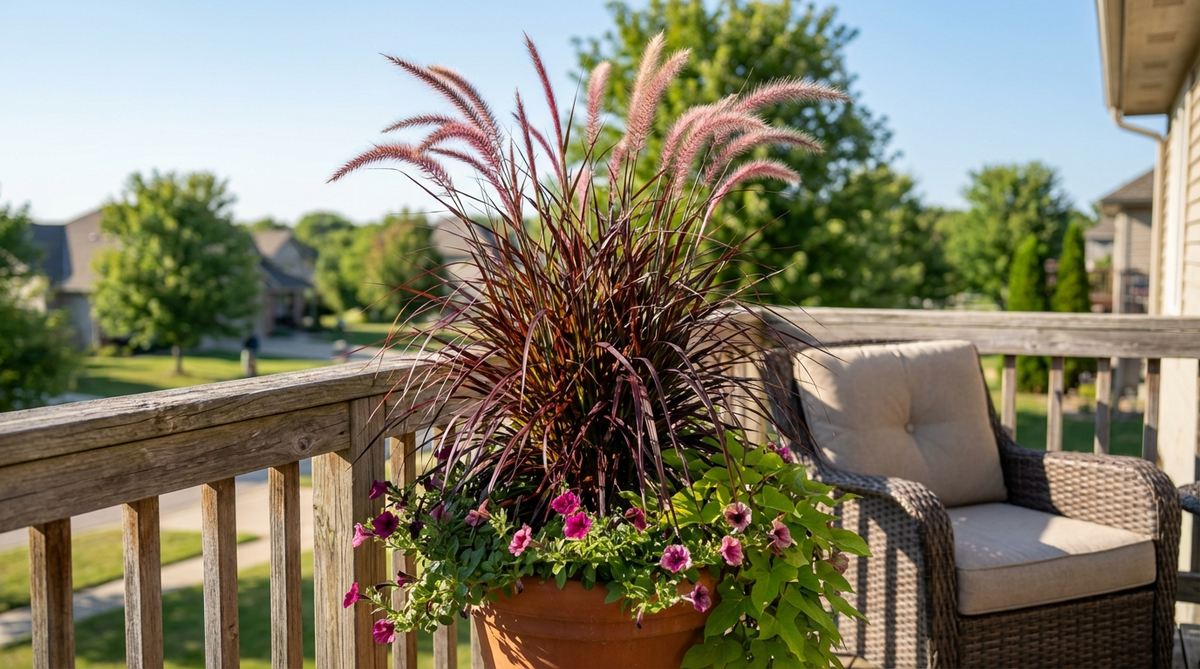
Pennisetum setaceum ‘Rubrum’ displays burgundy foliage and pink plumes. This tender grass is grown as an annual in cold climates.
Position in full sun for deepest color. Purple fountain grass thrives in heat and tolerates dry conditions.
Use as thriller plants in mixed containers. Overwinter indoors in bright light if desired.
57. Sedge
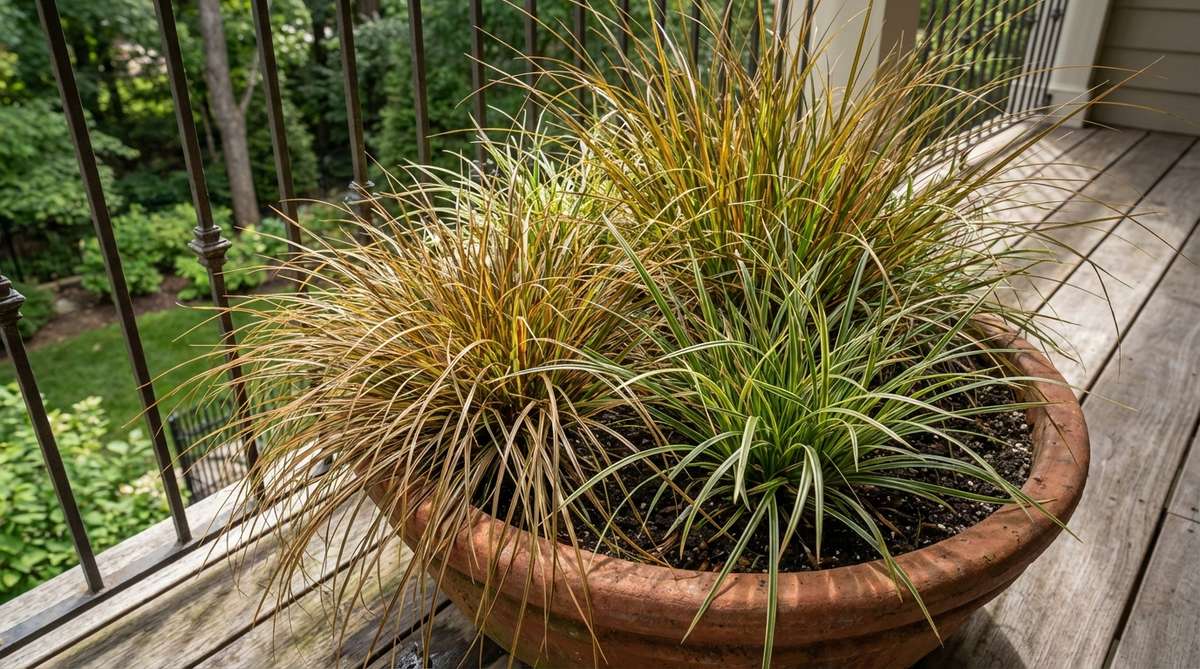
Carex varieties range from bronze to variegated patterns with mounding or upright forms. These grass-like plants tolerate shade better than true grasses.
Grow in partial shade with consistent moisture. Sedges adapt to various light conditions from shade to sun.
Sedges require minimal maintenance. Comb out dead foliage in spring rather than cutting back.
Shade-Loving Plants for Low-Light Balconies
North-facing balconies support plants adapted to limited sunlight. These varieties thrive without direct sun exposure, expanding options for shaded spaces.
58. Hostas
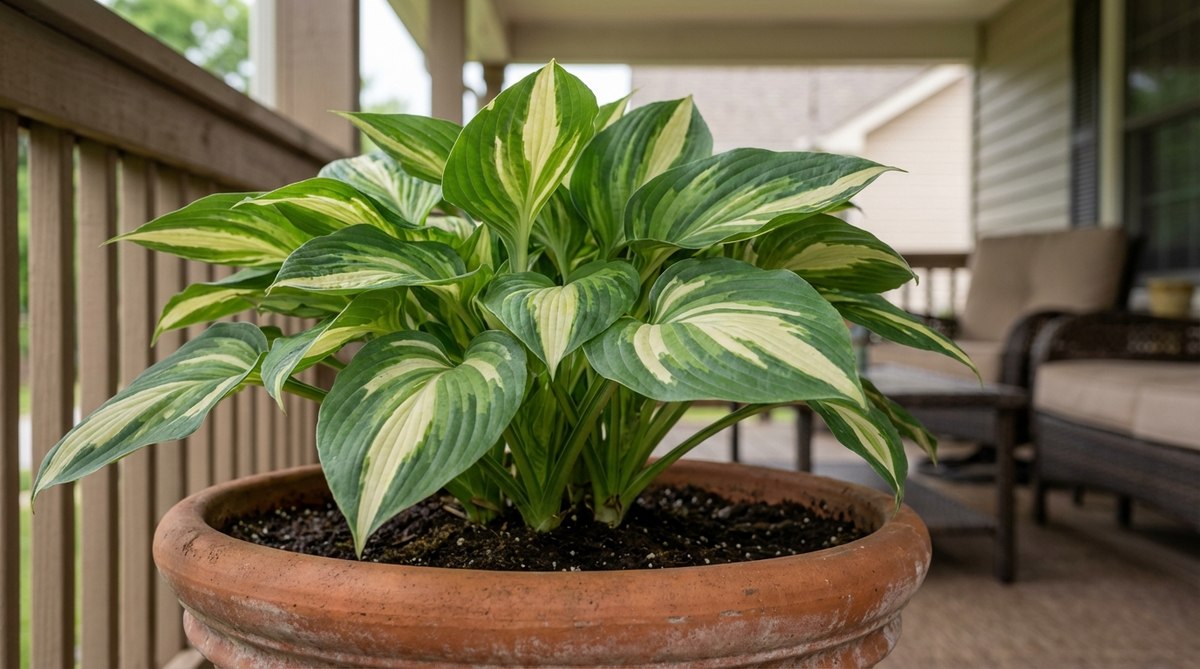
Hosta varieties display architectural foliage in green, blue, chartreuse, and variegated patterns. Leaf sizes range from miniature to dinner-plate dimensions.
Plant in partial to full shade in containers at least 14 inches wide. Hostas demand consistent moisture and rich potting soil.
Remove flower stalks if foliage is the desired focus. Protect from slugs with copper barriers or organic bait.
59. Bleeding Heart
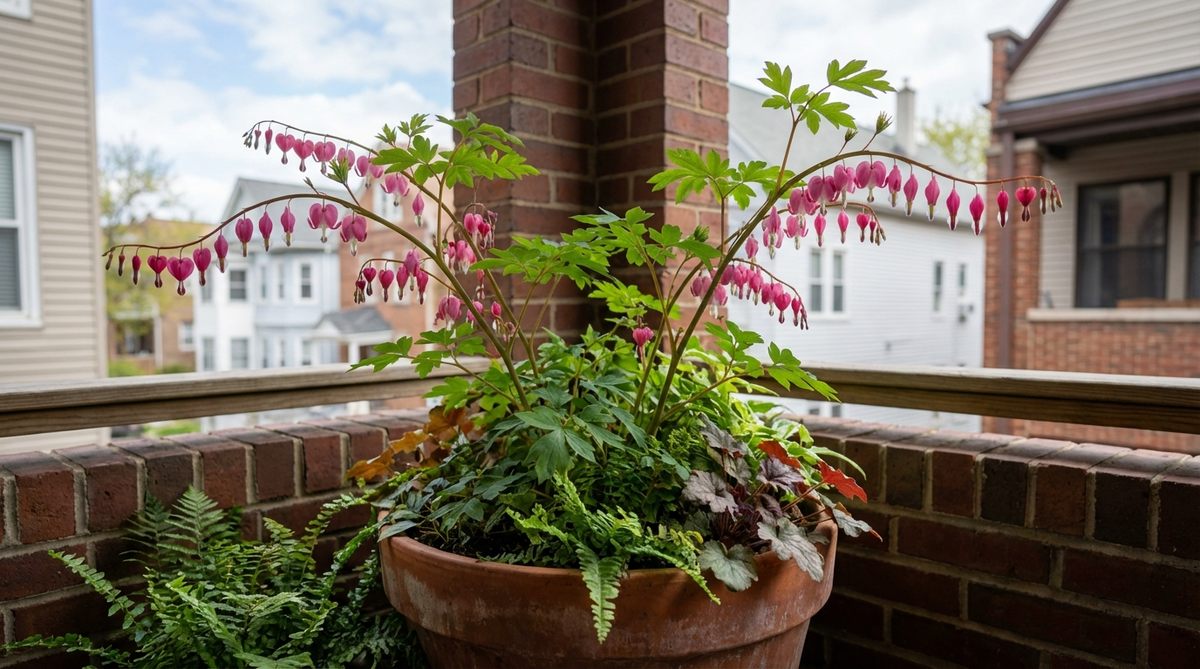
Dicentra produces heart-shaped flowers dangling from arching stems in spring. Lacy foliage remains attractive after blooms fade.
Grow in partial to full shade with rich, well-draining soil. Bleeding heart goes dormant in summer heat.
Water regularly during growing season. Foliage yellows and dies back naturally—remove spent leaves as they appear.
50. Astilbe
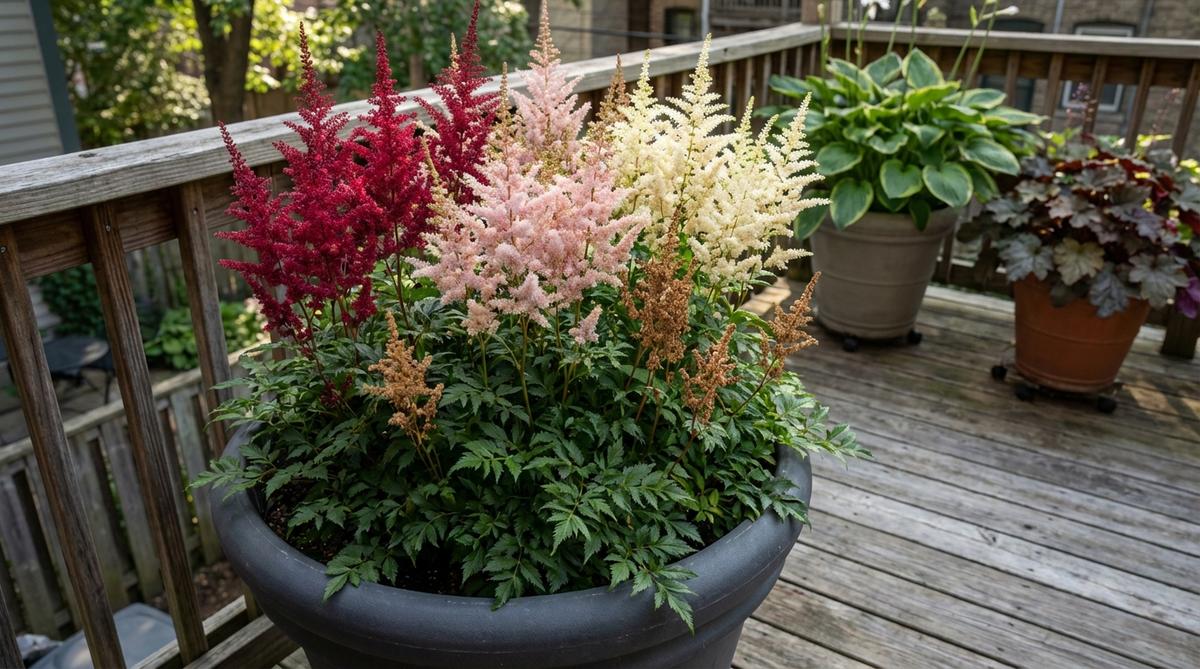
Astilbe’s feathery plumes rise above fern-like foliage in pink, red, white, or purple. These shade perennials bloom in early to mid-summer.
Plant in partial shade with consistently moist soil. Astilbe wilts quickly if allowed to dry out.
Deadhead spent flowers or leave seed heads for winter interest. Divide overcrowded containers every 3-4 years.
61. Ferns
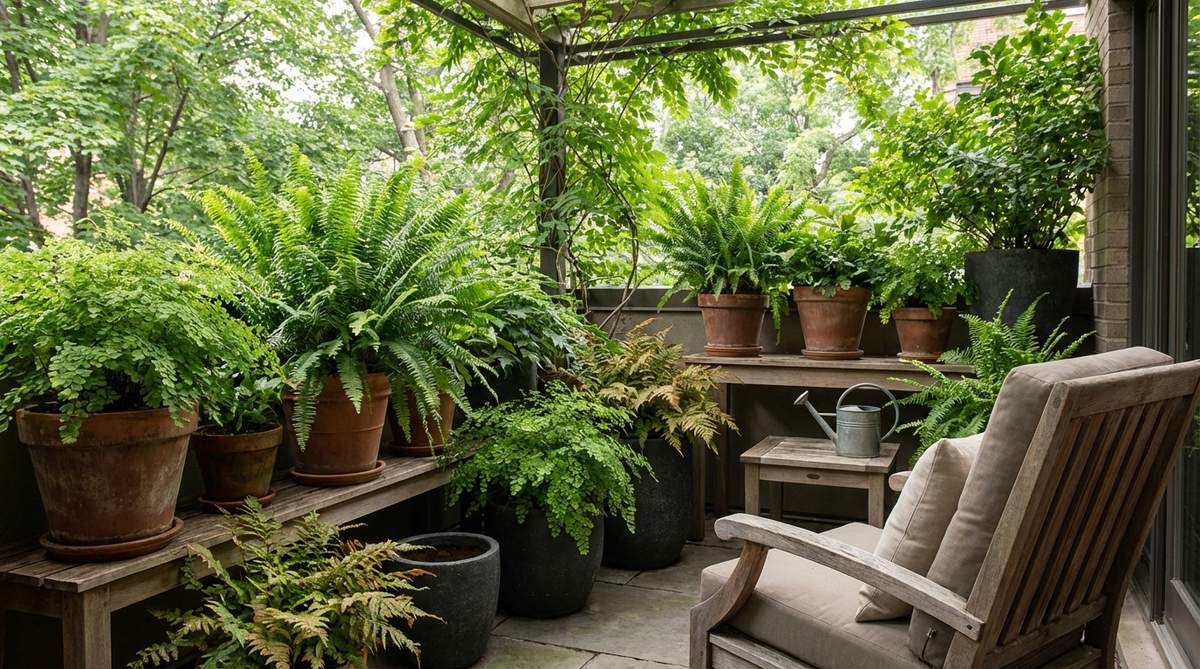
Shade-tolerant ferns like Boston, maidenhair, and autumn fern provide lush foliage texture. Fronds create woodland ambiance on shaded balconies.
Grow in partial to full shade with rich, acidic potting mix. Ferns demand high humidity and consistent moisture.
Mist foliage regularly in dry climates. Remove brown fronds at the base as they appear.
62. Impatiens
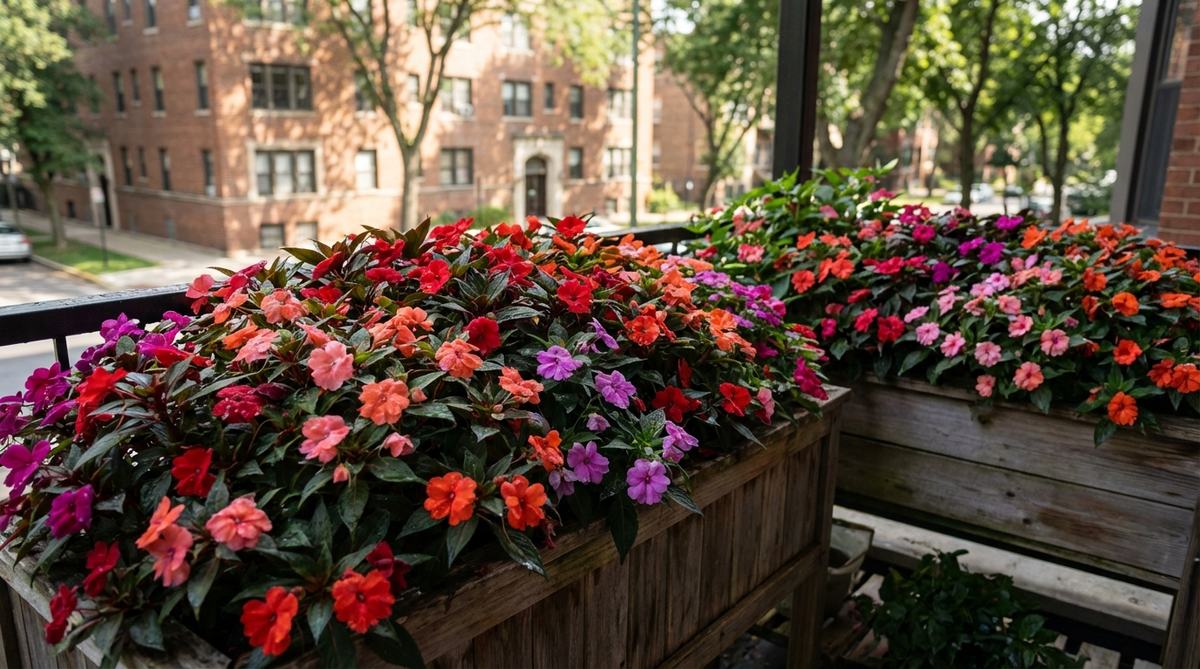
Impatiens deliver continuous blooms in shade where sun-loving annuals fail. Colors span the spectrum except true blue.
Plant in partial to full shade with well-draining soil. Impatiens wilt dramatically when dry but recover quickly after watering.
These self-cleaning flowers require no deadheading. Feed bi-weekly to support prolific blooming.
63. Coleus
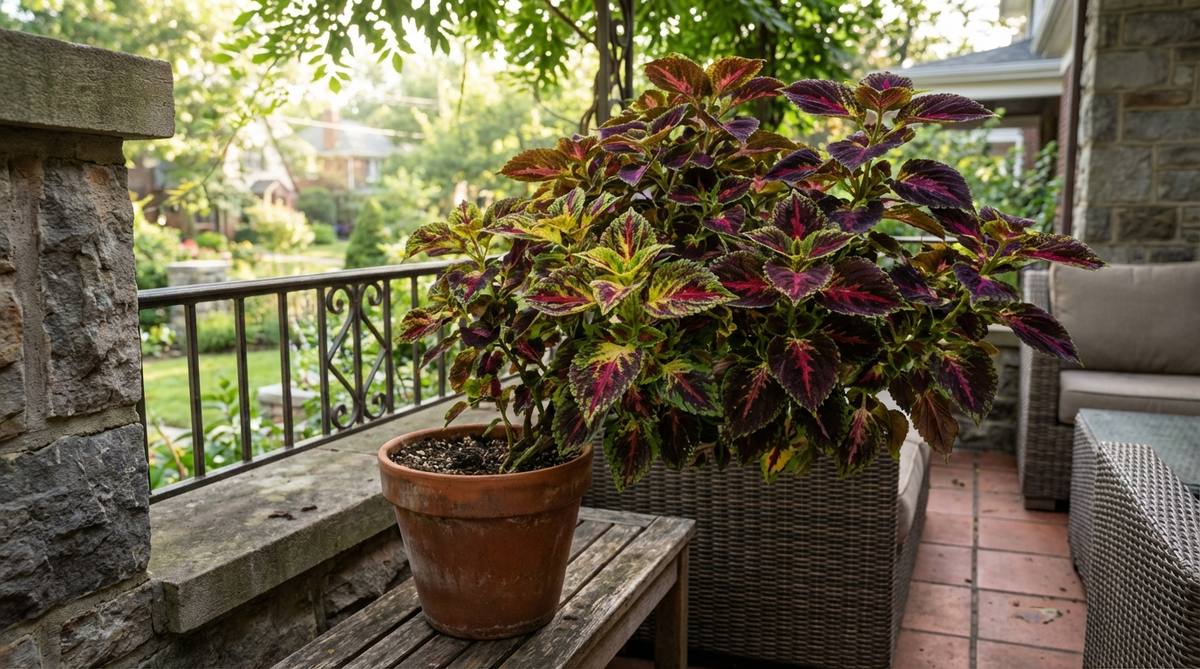
Coleus foliage displays vibrant patterns in purple, red, yellow, and green combinations. Sun-tolerant varieties expand placement options.
Grow in partial shade for best color. Too much sun bleaches foliage, while deep shade dulls colors.
Pinch growing tips and flower buds to maintain bushy form. Coleus roots easily from cuttings for propagation.
Final Thoughts on Container Plant Selection
Successful balcony garden plants match your specific light conditions, climate zone, and maintenance capacity. Start with proven performers from this list, then experiment with more challenging varieties as your confidence grows. Container gardening allows you to curate a dynamic collection that evolves with seasons and personal preferences. Position frequently harvested edibles near doors, place statement plants at focal points, and layer heights for visual depth. With proper container selection, quality potting mix, and consistent care, your balcony transforms into a productive, beautiful extension of your living space.
Frequently Asked Questions
What size containers do balcony garden plants need?
Container size depends on plant type and root system. Herbs thrive in 1-2 gallon pots, while tomatoes and peppers require minimum 5-gallon containers. Root vegetables need depth matching their mature size—carrots need 12 inches, while radishes manage in 6 inches. Perennials benefit from larger containers that insulate roots from temperature extremes. Always verify drainage holes exist regardless of container size.
How often should I water container plants on my balcony?
Watering frequency varies by plant type, container size, weather, and sun exposure. Check soil moisture daily by inserting your finger 2 inches deep—water when dry at that depth. Containers in full sun may require twice-daily watering during heat waves. Terracotta pots dry faster than plastic. Succulents need infrequent deep watering, while vegetables demand consistent moisture. Install self-watering containers or drip irrigation for extended absences.
Can I grow vegetables on a shaded balcony?
Leafy greens like lettuce, spinach, arugula, and kale tolerate partial shade and often prefer protection from afternoon sun in warm climates. Herbs such as parsley, cilantro, mint, and chives adapt to lower light. Most fruiting vegetables like tomatoes, peppers, and cucumbers require 6-8 hours of direct sun and underperform in shade. Assess your balcony’s actual sun exposure throughout the day before selecting vegetables.
What potting mix works best for balcony containers?
Use soilless potting mix specifically formulated for containers rather than garden soil. Quality mixes contain peat moss or coir, perlite, and vermiculite for proper drainage and aeration. Vegetables and heavy feeders benefit from mixes with added compost or controlled-release fertilizer. Succulents require cactus-specific mix with extra drainage amendments. Avoid dense mixes that compact in containers, restricting oxygen to roots and causing drainage problems.
How do I protect balcony plants from wind damage?
Position containers against walls or railings for wind protection. Use heavy ceramic or concrete pots for stability, or add rocks to the bottom of lightweight containers. Stake tall plants like tomatoes and flowers before wind damage occurs. Group containers together to create windbreaks. For high-rise balconies with extreme wind exposure, select low-growing plants like sedums, compact herbs, and dwarf varieties that resist toppling.
When should I fertilize balcony garden plants?
Container plants exhaust nutrients faster than in-ground plants since water flushes fertilizer through drainage holes. Feed vegetables and flowering annuals every 2-3 weeks with water-soluble fertilizer at half strength. Herbs require less frequent feeding—monthly applications prevent excessive leaf growth that dilutes flavor. Slow-release granular fertilizers mixed into potting soil at planting time reduce feeding frequency to every 2-3 months. Avoid fertilizing dormant plants in winter.