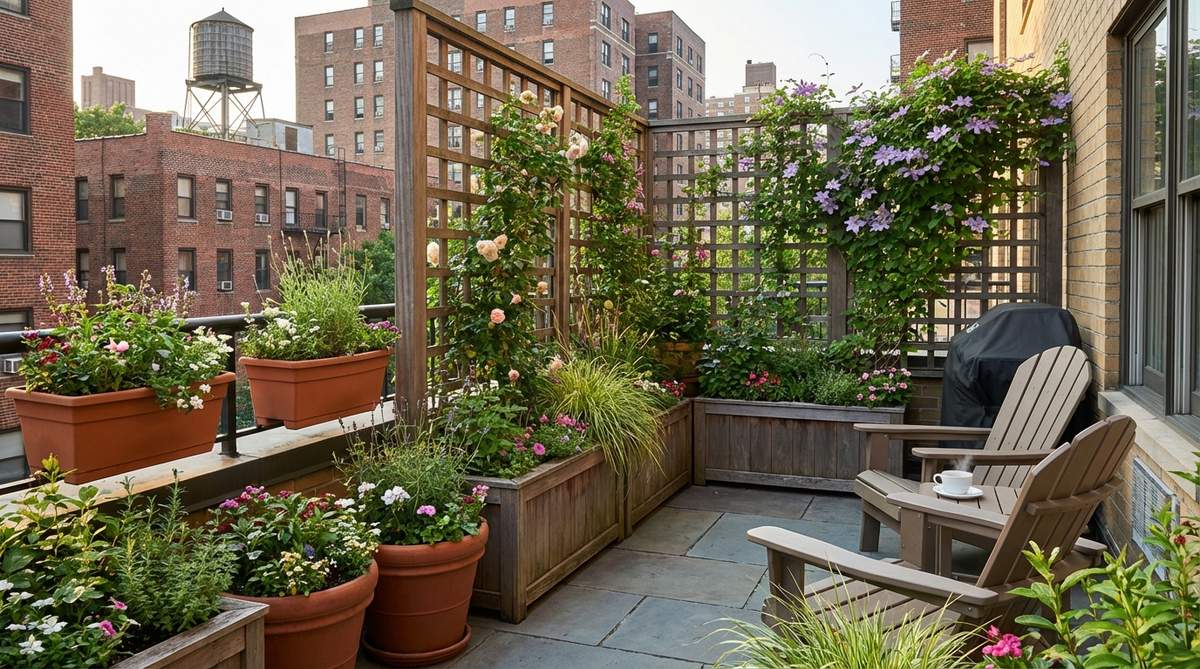
Creating a balcony garden NYC demands smart design that addresses limited square footage, wind exposure, and vertical opportunity. High-rise dwellers across Manhattan, Brooklyn, and Queens transform cramped terraces into lush retreats using container ingenuity, climbing structures, and privacy screening. Fresh Garden Ideas curates 30+ proven styles from urban landscape architects and NYC gardeners who maximize every inch of outdoor space.
Design SnapshotKey Principles
- Vertical Advantage: Wall-mounted planters, trellises, and hanging systems triple growing capacity without consuming floor space
- Wind Mitigation: Railing screens, lattice panels, and strategic plant placement protect delicate foliage from high-altitude gusts
- Weight Distribution: Lightweight containers, fiberglass planters, and proper load calculation ensure structural safety on elevated terraces
- Microclimate Mastery: North-facing balconies suit shade-tolerant herbs while south exposures support full-sun vegetables and flowering annuals
Vertical Garden Systems That Maximize NYC Balconies
High-rise balconies measure 50-150 square feet on average, forcing designers to build upward rather than outward. Vertical systems attached to walls, railings, and overhead structures multiply planting zones by 300% while keeping walkways clear for furniture.
1. Modular Wall Pocket Planters
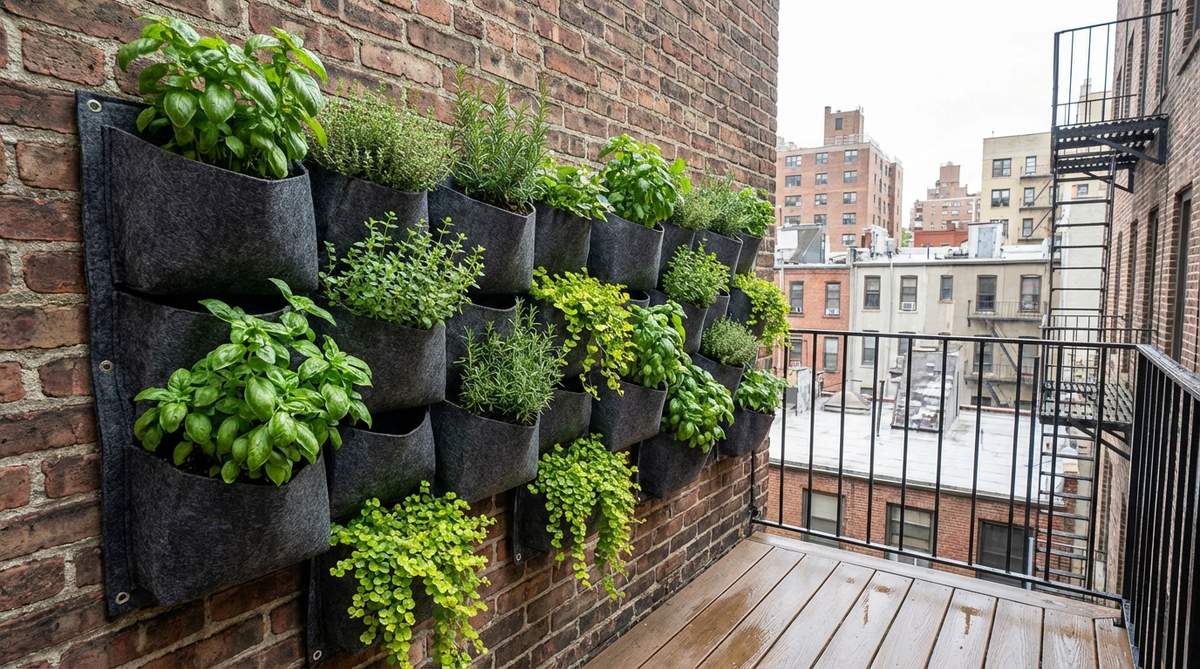
Felt or canvas pockets mount directly onto exterior walls using rust-proof hooks, creating a tapestry of herbs and trailing flowers. Each pocket holds 1-2 quarts of soil, ideal for basil, thyme, and creeping jenny.
Install pockets in staggered rows to prevent water runoff from upper tiers drowning lower plants. Designers recommend leaving 6 inches between rows for adequate air circulation.
This system works on brick, stucco, and concrete surfaces common in NYC pre-war and modern buildings. Removable designs accommodate seasonal changeovers without damaging rental property walls.
2. Ladder Shelf Vertical Garden
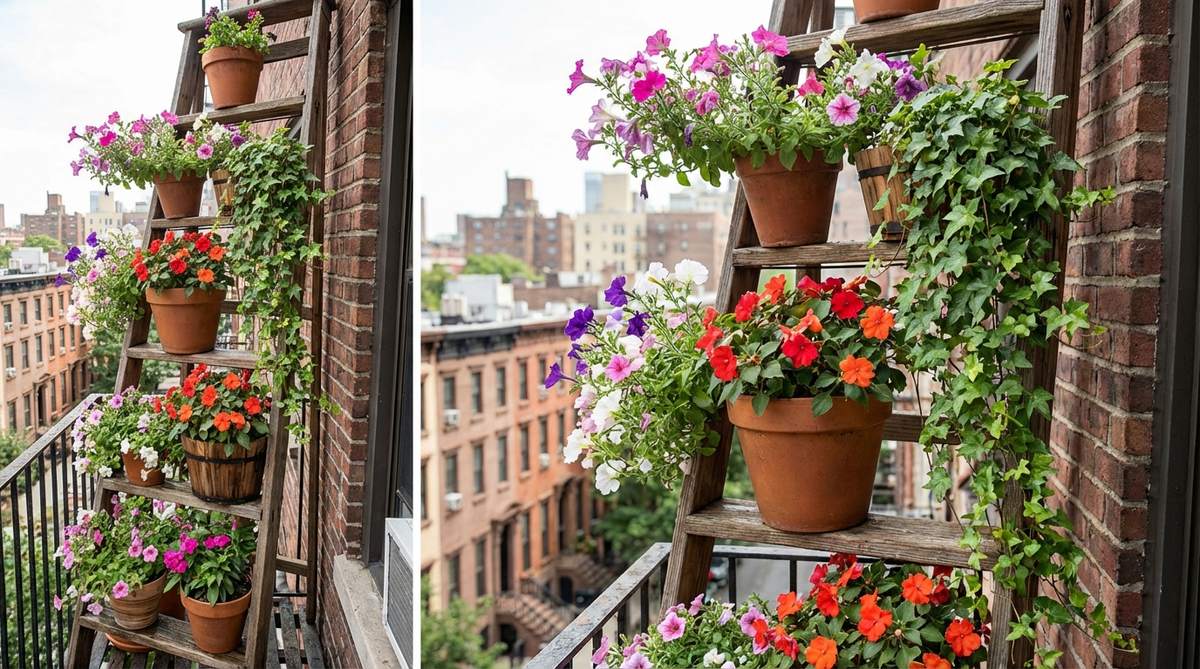
Repurposed wooden ladders or purpose-built tiered shelves lean against balcony walls, displaying 8-12 small containers at varying heights. Cedar and redwood resist moisture rot in humid NYC summers.
Arrange sun-loving petunias on upper rungs where light exposure peaks, positioning shade-tolerant impatiens on lower shelves. Trailing ivy cascades down ladder sides for softening effect.
Freestanding ladders require no drilling or permanent mounting, satisfying strict co-op board regulations that prohibit structural modifications.
3. Railing-Mounted Planter Boxes
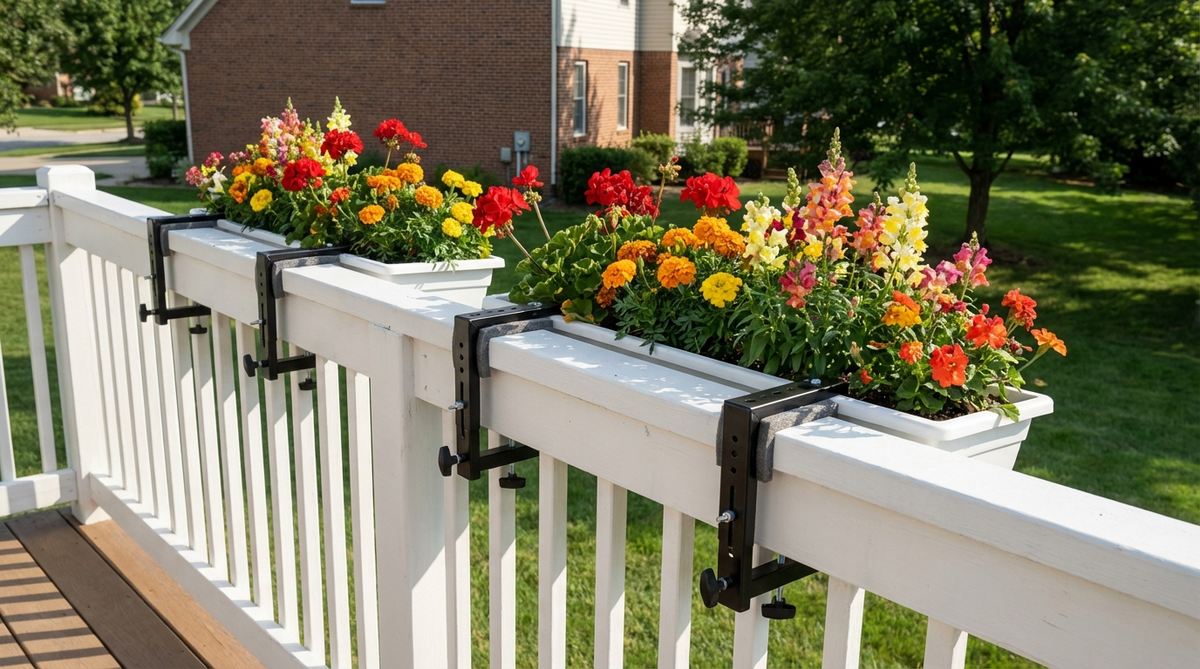
Adjustable brackets clamp onto standard 4-inch railings, suspending rectangular planters that overhang both interior and exterior edges. This doubles usable growing area without claiming floor space.
Plant geraniums, marigolds, and summer snapdragons for vibrant color visible from street level. Ensure brackets include safety locks to prevent dislodgement during storms.
Metal railings heat up in afternoon sun, potentially scorching roots. Line contact points with insulating foam or choose heat-reflective white containers.
4. Hanging Ceiling Hook Gardens
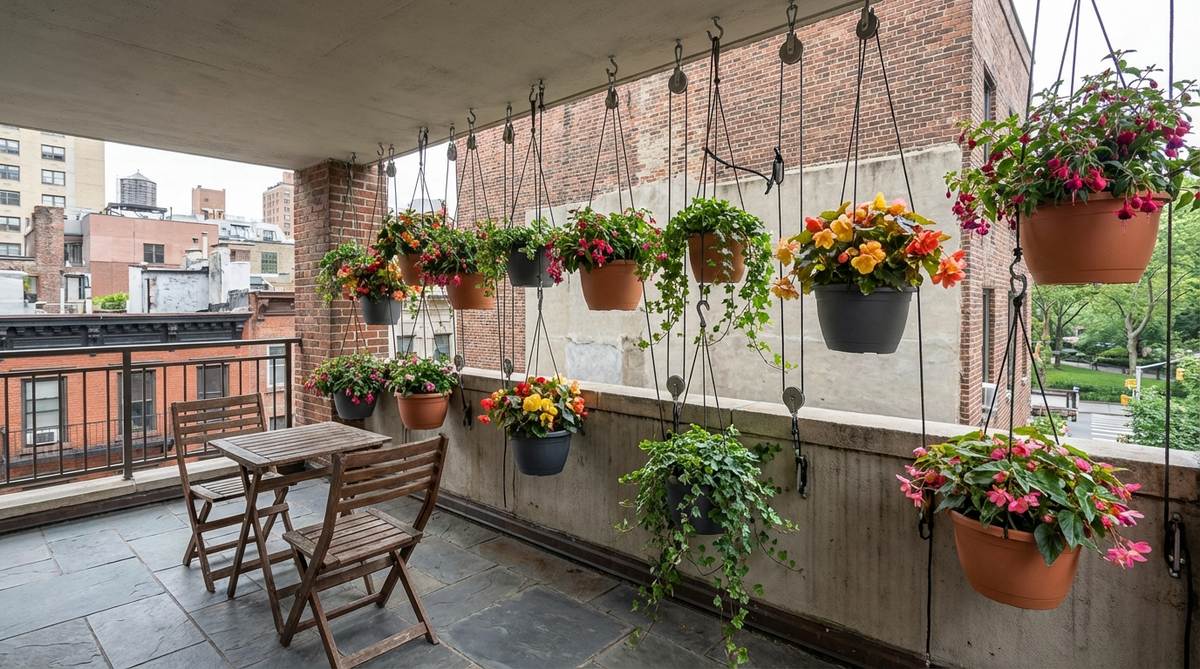
Covered balconies allow installation of swivel hooks that suspend 6-10 hanging baskets at eye level and above. Fuchsias, begonias, and English ivy thrive in elevated positions with excellent drainage.
Stagger basket heights to create layered visual depth and prevent upper plants from shading lower tiers. Use pulley systems for easy watering access.
Check building weight limits before installing multiple hooks. Fiberglass and resin planters weigh 50% less than ceramic alternatives.
5. Trellis Panel Living Walls
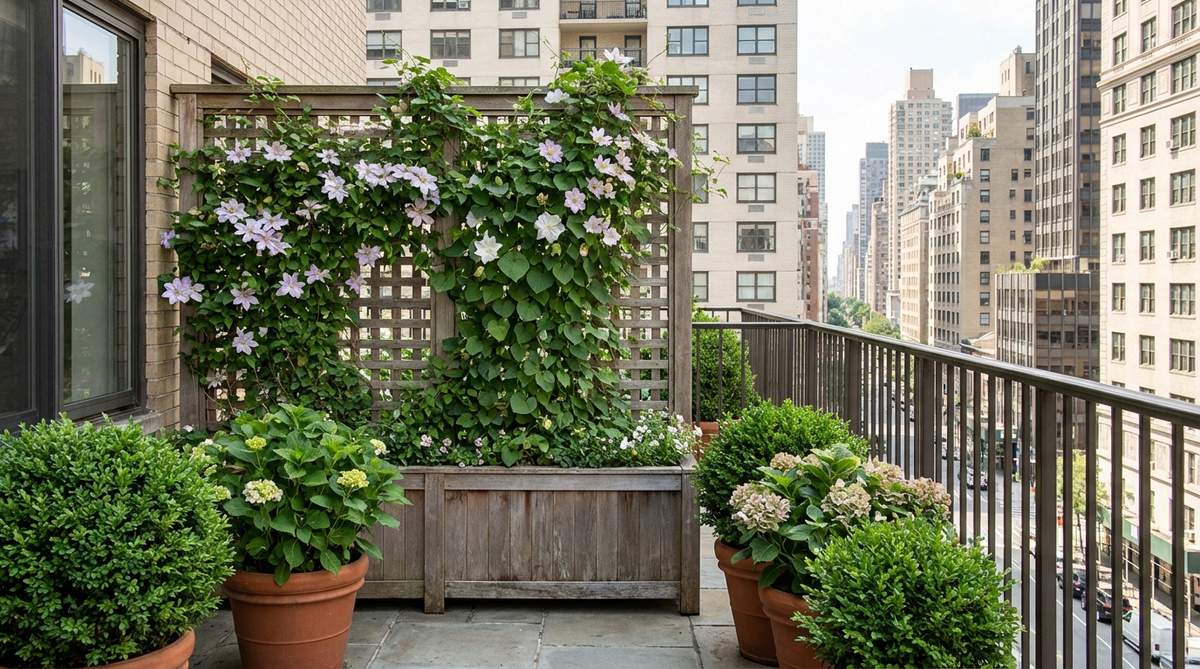
Freestanding lattice panels range from 5-8 feet tall, providing instant vertical growing surface for clematis, climbing hydrangea, and moonflower vines. Panels double as privacy screens and windbreaks.
Anchor panels with weighted bases or attach to railing posts using zip ties and metal brackets. Plant vines at panel base in 5-gallon containers.
Lattice spacing determines climbing success. Choose 2-inch grid patterns for tendrils, 4-inch grids for twining stems.
6. Gutter Garden Channels
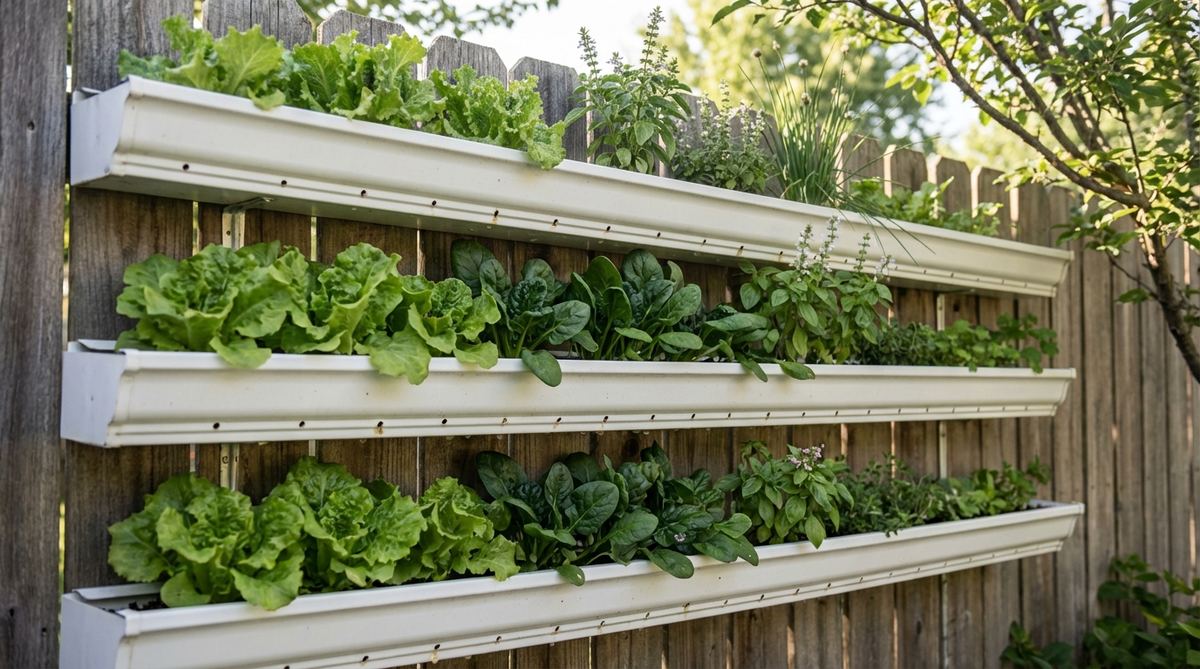
Repurposed vinyl gutters mount horizontally on walls, functioning as narrow planters for lettuce, spinach, and shallow-rooted flowers. Standard 10-foot gutters divide into three segments per wall.
Drill drainage holes every 6 inches to prevent waterlogging. End caps contain soil while allowing excess moisture to escape.
This ultra-space-efficient system suits balconies narrower than 4 feet where traditional containers obstruct movement.
Container & Planter Layouts for New York City Balcony Garden
Strategic container placement balances aesthetic appeal with functional access, ensuring proper sunlight distribution and maintenance ease. NYC landscape architects employ grouping techniques that create focal points while accommodating furniture zones.
7. Corner Cluster Arrangement
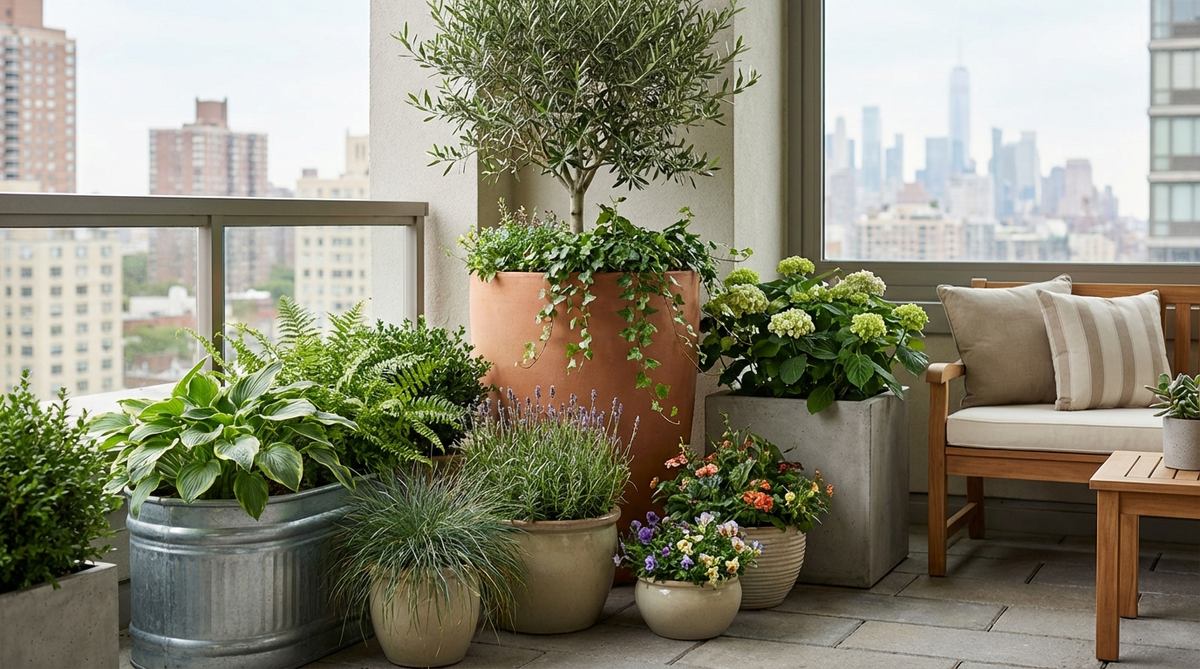
Grouping 5-7 containers of varying heights in balcony corners maximizes dead space while creating lush focal points. Tall grasses or small trees anchor the back, mid-height perennials fill center positions, and trailing annuals spill over front edges.
Use odd numbers for natural, asymmetric visual flow. Cluster containers closely to create microclimate humidity that benefits ferns and hostas.
This layout leaves central floor area open for bistro tables or lounge seating, essential on 50-square-foot terraces.
8. Perimeter Border Strategy
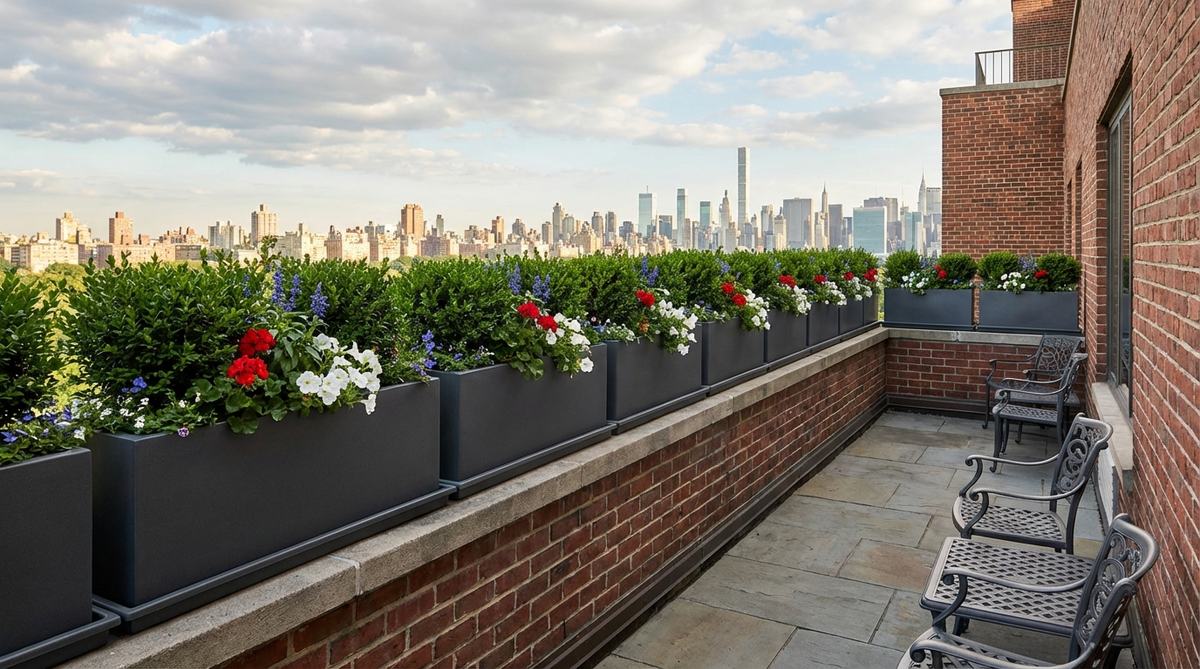
Lining balcony edges with uniform containers establishes defined garden boundaries while keeping sightlines open. Rectangular fiberglass planters 36 inches long and 12 inches deep accommodate multiple plants per box.
Plant evergreen boxwood or dwarf conifers for year-round structure, underplanting with seasonal bulbs and annuals. Raised edges double as seating ledges.
Ensure containers sit 3 inches inside railing line to prevent rainwater overspill onto neighbors below, a common NYC co-op complaint.
9. Mobile Rolling Planters
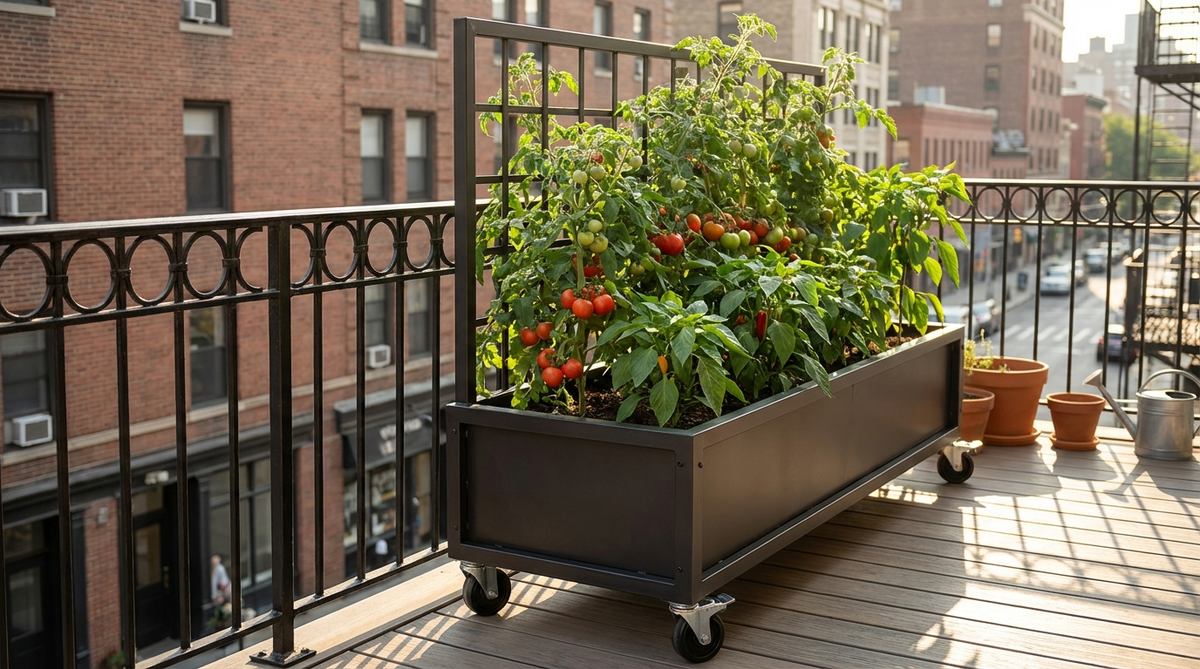
Containers mounted on locking caster wheels allow repositioning to track sun patterns throughout the day. Tomatoes and peppers benefit from 8 hours direct light achievable through strategic moving.
Choose wheels rated for outdoor use with rust-proof bearings. Planters should weigh less than 50 pounds when fully saturated for safe maneuvering.
Mobility accommodates deep cleaning sessions and winter storage, critical for protecting terra cotta from freeze-thaw cracking.
10. Tiered Staircase Planters
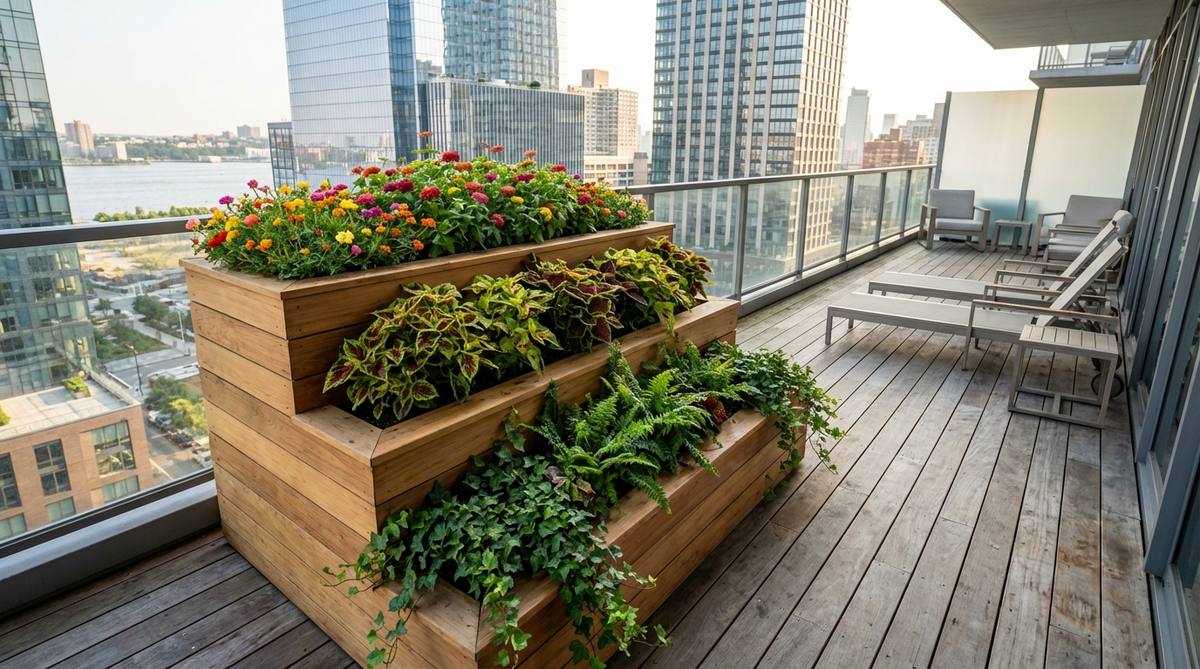
Three-level step designs range from 24-36 inches wide, displaying 9-12 small pots in cascading formation. Each tier receives distinct sunlight exposure, creating natural zones for high, medium, and low-light plants.
Top tier suits sun-worshippers like portulacas and zinnias. Middle step accommodates partial-shade coleus. Bottom level houses shade-tolerant ivy and ferns.
Cedar construction resists rot while adding rustic warmth to modern glass-and-steel balconies common in Hudson Yards and Long Island City.
11. Raised Bed Box Gardens
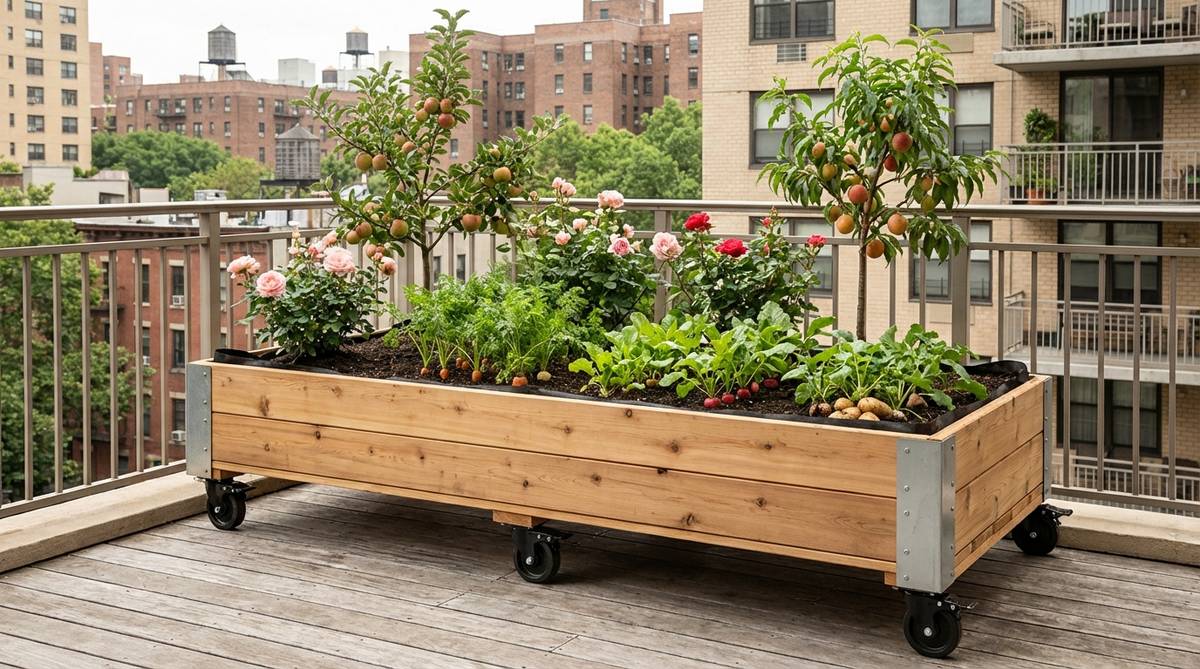
Custom-built wooden boxes 18-24 inches deep provide root depth for dwarf fruit trees, roses, and root vegetables. Elevated designs reduce bending strain and deter ground-level pests.
Line interior with landscape fabric before filling with quality potting mix. Add caster wheels for mobility or leave stationary for structural plantings.
Weight considerations become critical. A 2×4-foot box filled with moist soil weighs 200+ pounds, requiring engineer consultation for older buildings.
12. Wine Crate Rustic Containers
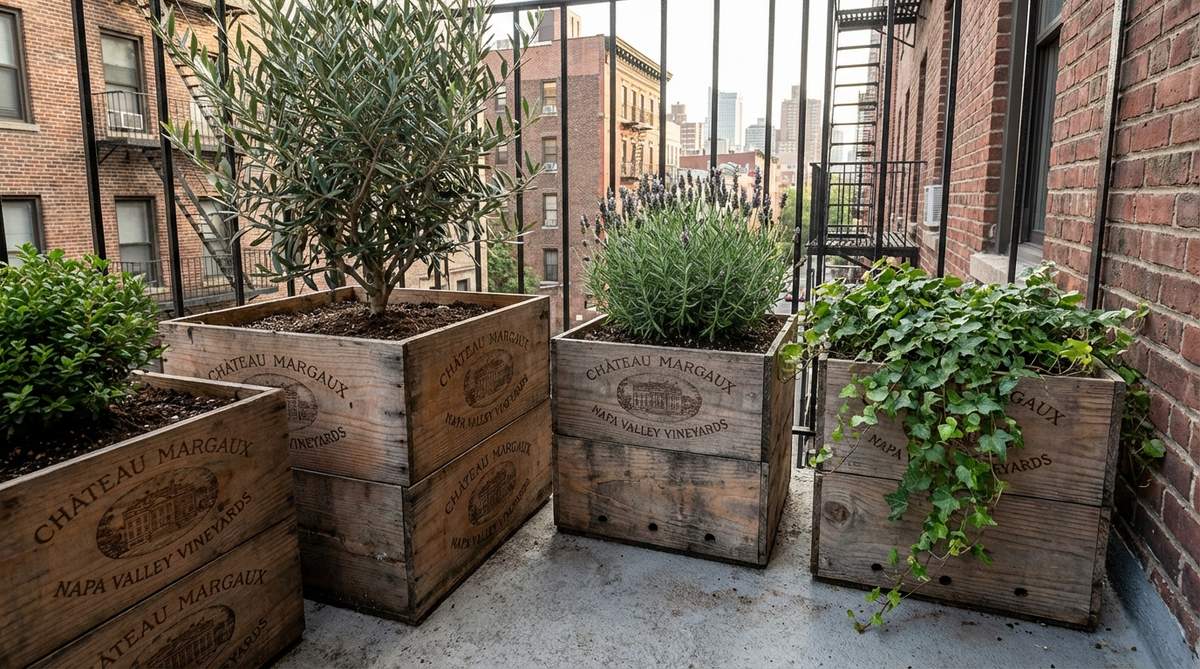
Reclaimed wooden wine boxes from Chelsea wine merchants measure 12x12x18 inches, perfect for single specimen plantings. Natural wood patina complements industrial loft aesthetics.
Line crates with plastic sheeting before adding soil to prevent rot. Drainage holes drilled in bottom ensure proper moisture control.
Lightweight empty crates stack for winter storage in coat closets or under beds, solving the perpetual NYC storage crisis.
Privacy & Screening Solutions for High-Rise Terraces
Overlooked balconies require strategic screening that blocks sightlines without creating oppressive enclosures. Designers balance opacity with airflow, ensuring wind doesn’t transform screens into sails that stress mounting hardware.
13. Bamboo Reed Fencing Panels
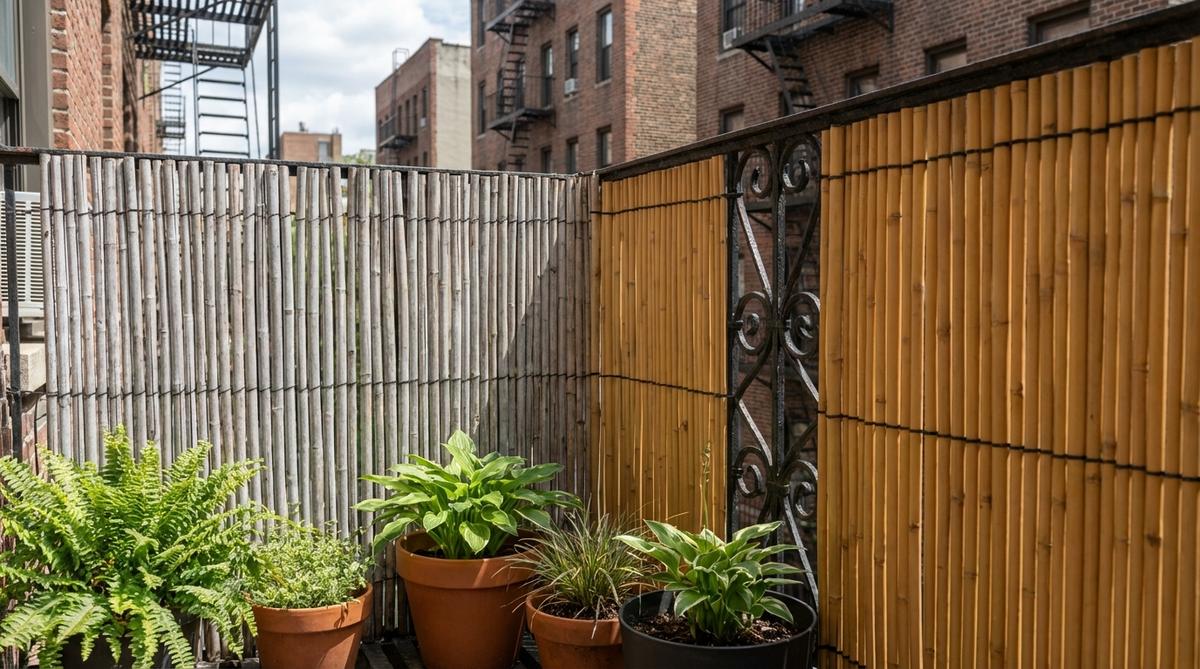
Natural bamboo rolls 6 feet tall attach to existing railings using zip ties, creating instant tropical privacy. Gaps between reeds allow wind passage, reducing pressure on mounting points.
Bamboo weathers to silver-gray within one season, requiring replacement every 2-3 years. UV-resistant polyethylene versions maintain color longer.
This cost-effective solution costs $30-50 per 8-foot section, making it ideal for renters unwilling to invest in permanent structures.
14. Climbing Vine Privacy Walls
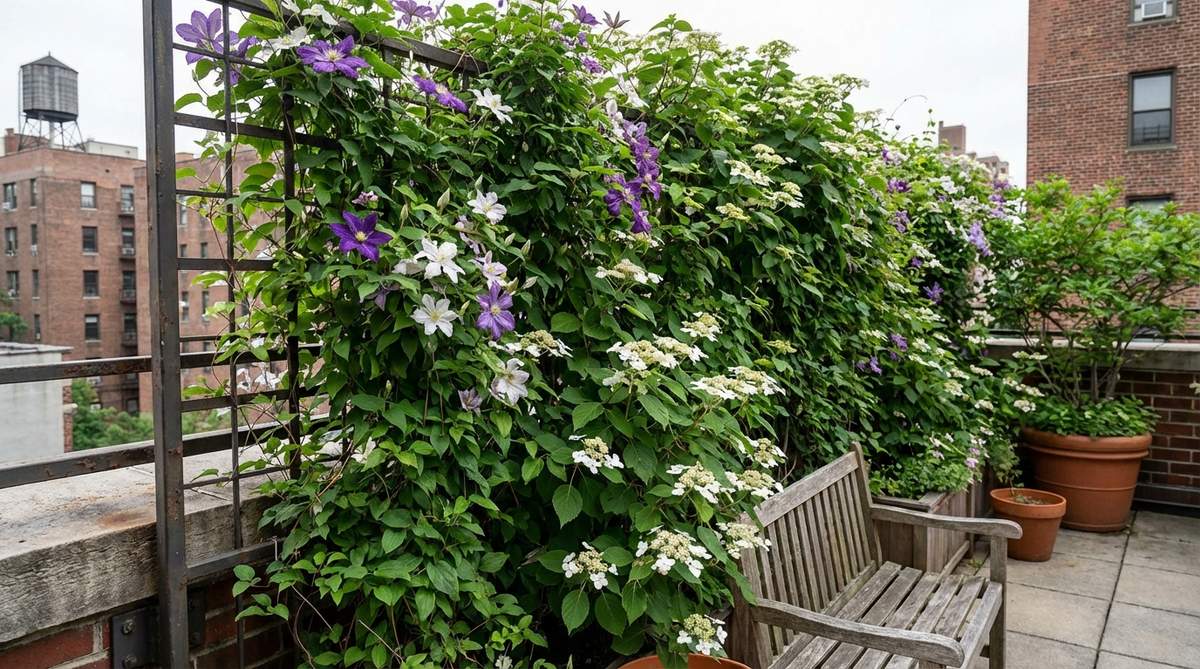
Training clematis, climbing hydrangea, or Boston ivy onto railing-mounted trellis creates living screens that intensify privacy as seasons progress. Spring growth reaches 50-80% coverage by June.
Plant two vines per 4-foot section for faster coverage. Clematis produces purple, pink, or white blooms while hydrangea offers lacy white flowers and fall color.
Evergreen options like winter creeper provide year-round screening in USDA Zone 7b NYC climate. Deciduous vines die back in winter, temporarily reducing privacy.
15. Outdoor Sheer Curtain Panels
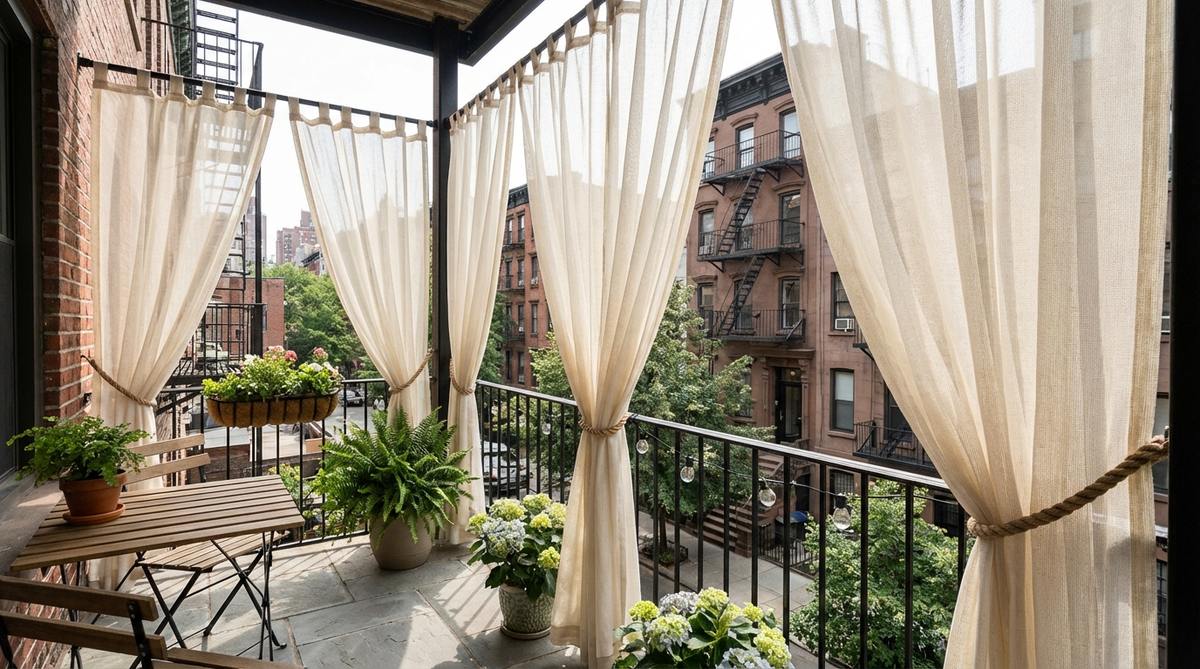
Weather-resistant fabric panels hang from tension rods installed between balcony walls, diffusing views while maintaining light transmission. Sheer white or cream fabrics create romantic, airy ambiance.
Choose fabrics rated for outdoor use with mildew resistance. Panels should tie back with decorative holdbacks for maximum flexibility.
This damage-free solution works perfectly for renters, removing cleanly when lease terms end. Machine-washable fabrics simplify seasonal cleaning.
16. Tall Ornamental Grass Borders
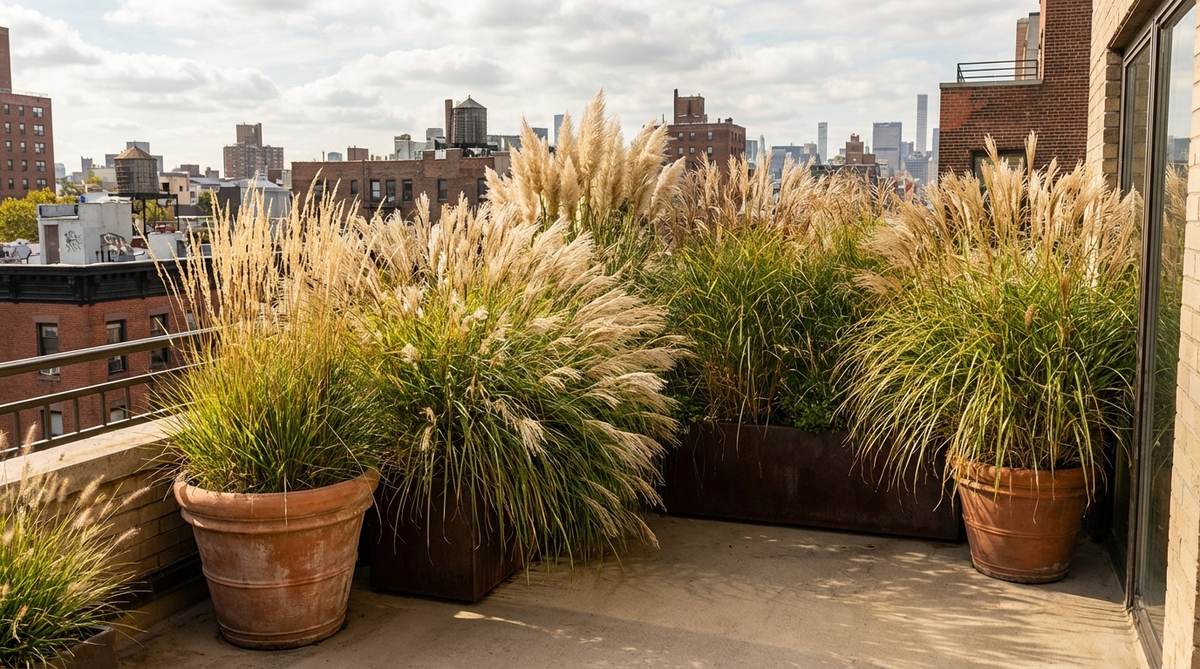
Containerized maiden grass, pampas grass, or giant miscanthus reaches 5-7 feet tall, creating natural sight barriers that sway gracefully in wind. Perennial grasses return stronger each spring.
Plant in 15-gallon containers for adequate root space and wind stability. Position containers along balcony perimeter at 3-foot intervals.
Grasses require minimal maintenance beyond spring trimming. Feathery plumes add architectural interest and motion to static urban environments.
17. Frosted Glass Film Application
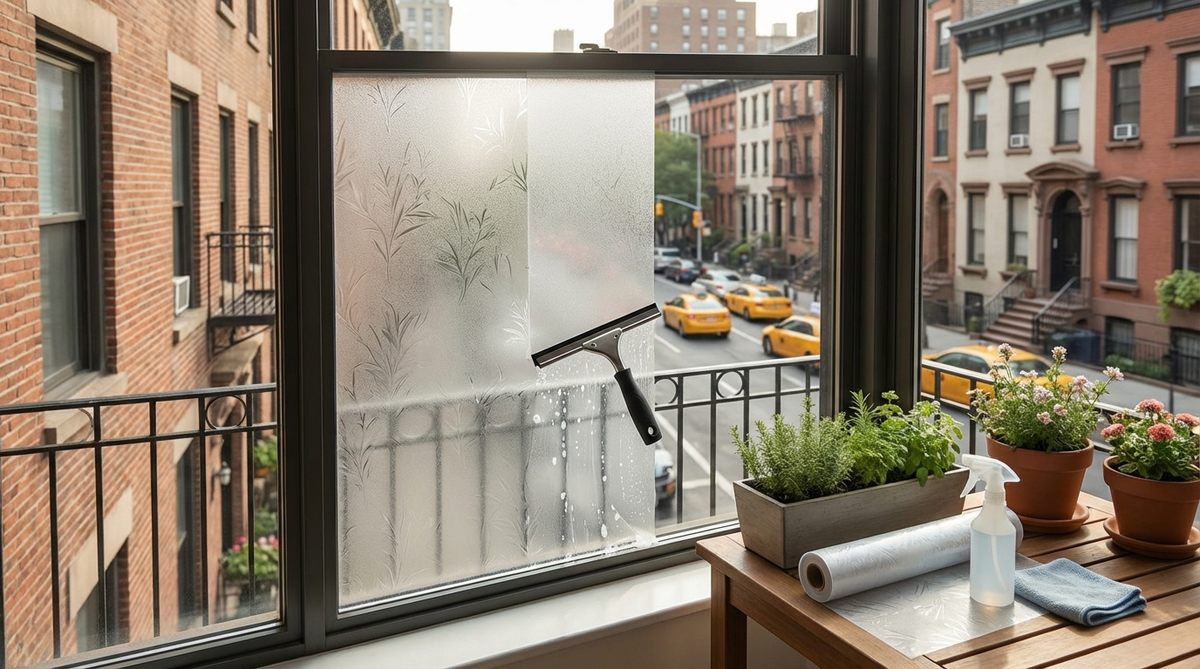
Self-adhesive vinyl films applied to glass balcony panels obscure views while preserving natural light. Frosted, etched, and decorative patterns range from modern geometric to traditional stained-glass effects.
Apply film to interior glass surface for protection from weather degradation. Squeegee application tools eliminate air bubbles during installation.
Removable films suit renters, peeling off cleanly without adhesive residue. Permanent versions use stronger adhesive for owned properties.
18. Decorative Metal Privacy Screens
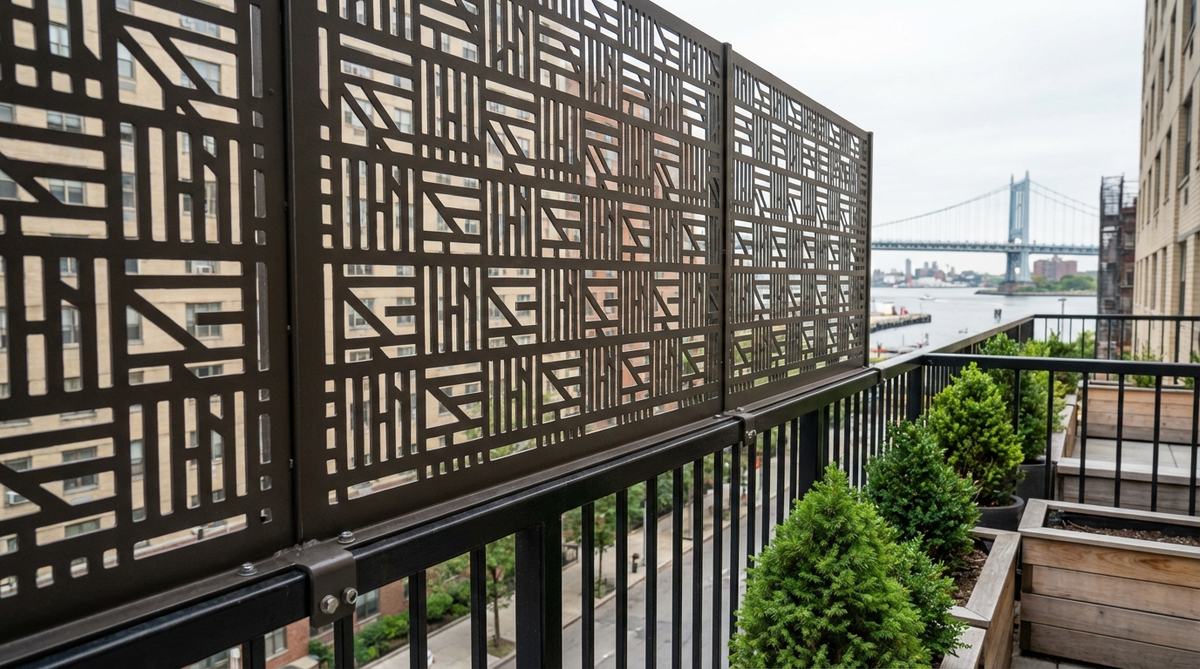
Laser-cut metal panels featuring geometric, floral, or abstract patterns attach to railings using mounting brackets. Powder-coated finishes resist rust in coastal humidity.
Screens range from 50% to 90% opacity depending on pattern density. More open designs suit windy locations while tighter patterns maximize privacy.
Matte black finishes complement modern architecture while brushed bronze suits traditional brownstone terraces. Expect $150-400 per 4×6-foot panel.
Edible Garden Configurations for Urban Harvesters
Productivity-focused layouts prioritize sun exposure and succession planting to deliver continuous harvests from spring through fall. NYC balcony gardeners achieve 20-40 pounds of produce annually from 100 square feet.
19. Herb Spiral Tower Garden
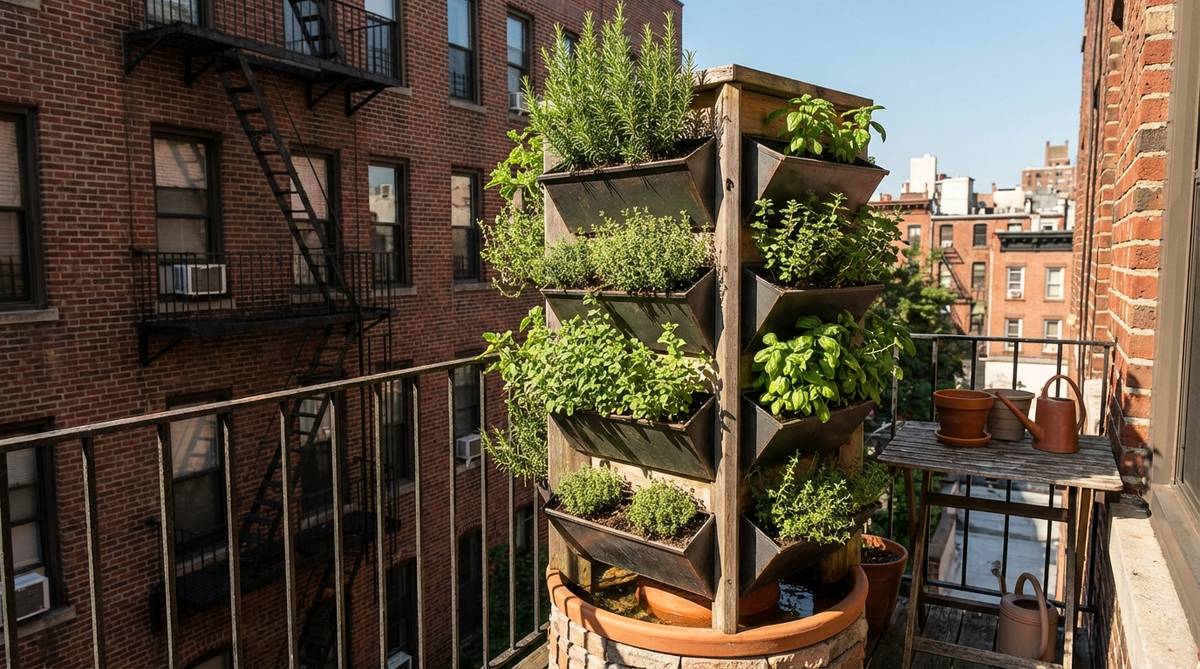
Rotating vertical towers with 5-7 planting pockets deliver 15-20 herb plants in 2 square feet of floor space. Rosemary, thyme, oregano, and basil rotate for optimal sun exposure.
Self-watering reservoirs reduce maintenance to twice-weekly checks. Position towers on south-facing balconies for 6-8 hours direct sun.
Harvest stems regularly to promote bushier growth. A single tower supplies year-round herbs for a household of four with weekly cooking needs.
20. Salad Greens Window Boxes
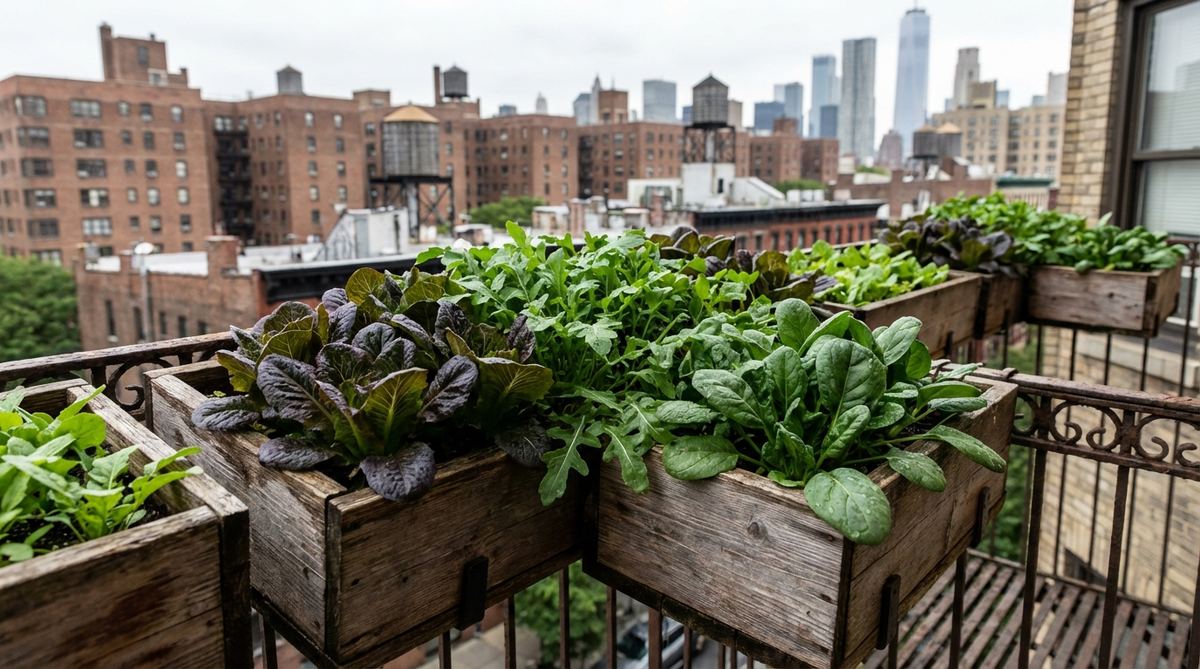
Shallow 6-inch-deep boxes mounted on railings grow lettuce, arugula, and spinach in succession. Sow seeds every two weeks for continuous harvest from April through October.
Cool-season greens tolerate partial shade, thriving on north and east-facing balconies. Cut outer leaves while allowing centers to regenerate.
One 36-inch window box yields 4-6 salads weekly at peak production. Lightweight soil mixes prevent excessive weight on railing mounts.
21. Container Tomato Stations
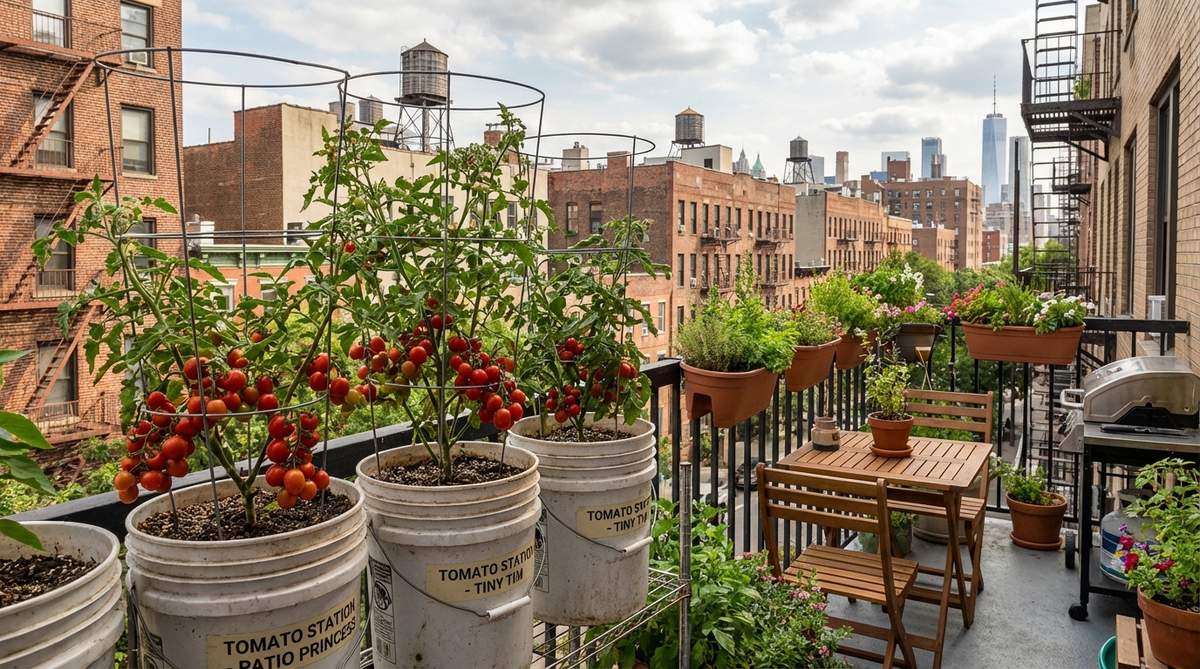
Determinate tomato varieties like Patio Princess and Tiny Tim grow 24-36 inches tall in 5-gallon buckets, perfect for balconies with southern exposure. Each plant produces 10-15 pounds fruit per season.
Install tomato cages at planting time to support fruit-laden branches. Feed weekly with liquid fertilizer starting at first bloom.
Cherry and grape tomatoes outperform beefsteak varieties in containers due to lighter fruit weight and continuous production habit.
22. Vertical Strawberry Planters
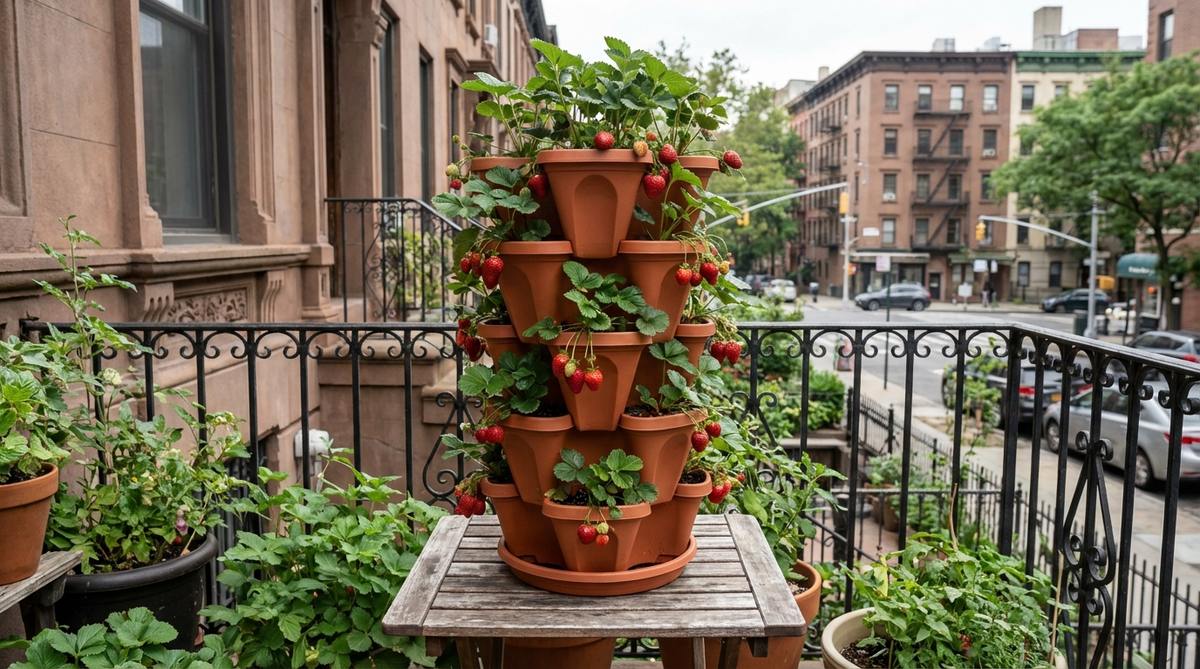
Stackable terracotta or resin towers feature side pockets where strawberry crowns root, producing fruit at multiple levels. June-bearing and everbearing varieties both adapt to vertical growing.
Each pocket holds one crown. A 5-tier tower accommodates 20 plants in 18 inches of floor space, yielding 5-8 pounds berries annually.
Runners from mother plants fill empty pockets by mid-summer. Protect crowns with straw mulch during winter for perennial production.
23. Patio Pepper Collection
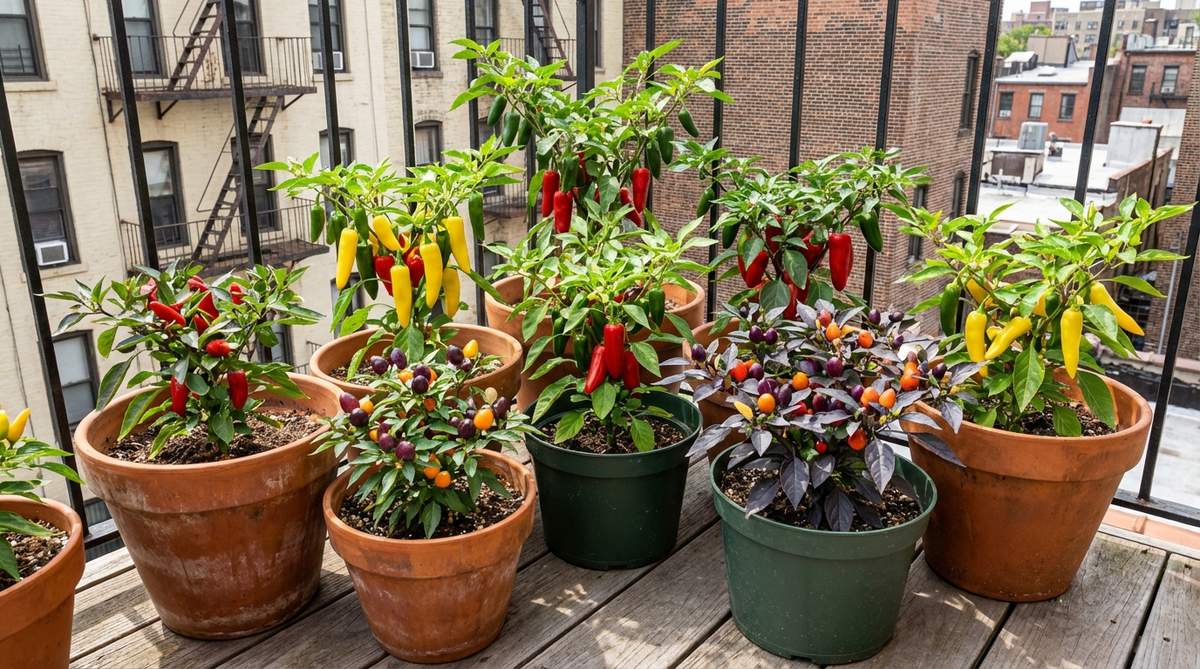
Compact pepper varieties including jalapeño, banana, and ornamental hot peppers produce heavily in 3-gallon containers. Mix colors and heat levels for visual and culinary diversity.
Peppers require 6-8 hours direct sun and consistent moisture. Harvest frequently to encourage continued flowering and fruit set.
Ornamental varieties like Black Pearl and Medusa feature purple foliage and colorful fruits, functioning as edible landscape plants.
24. Edible Flower Cutting Garden
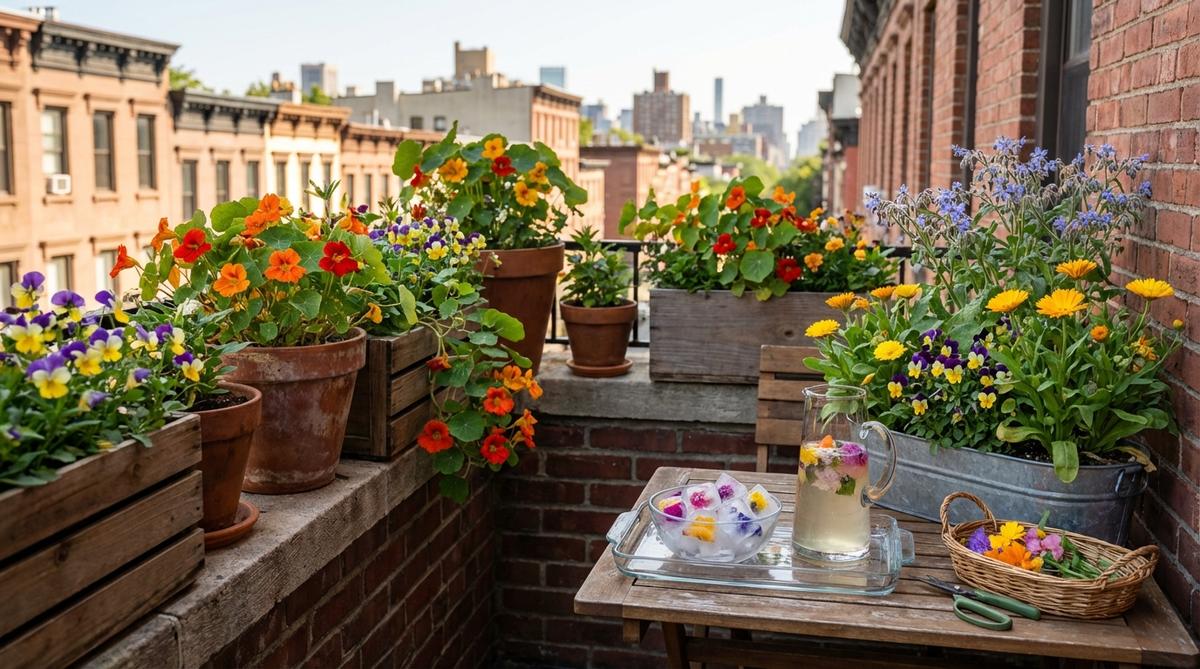
Nasturtiums, violas, calendula, and borage grow in mixed containers, providing petals for salads and garnishes. Peppery nasturtium leaves substitute for arugula.
Edible flowers prefer full sun and well-drained soil. Deadhead spent blooms to extend flowering period from June through October.
One 18-inch container supplies 40-50 flowers weekly at peak season. Float blossoms in ice cubes for dramatic cocktail presentations.
Seasonal & Year-Round Designs
Four-season interest demands strategic plant selection and container rotation schedules. Hardy perennials anchor year-round structure while seasonal annuals provide rotating color accents.
25. Spring Bulb Layering Display
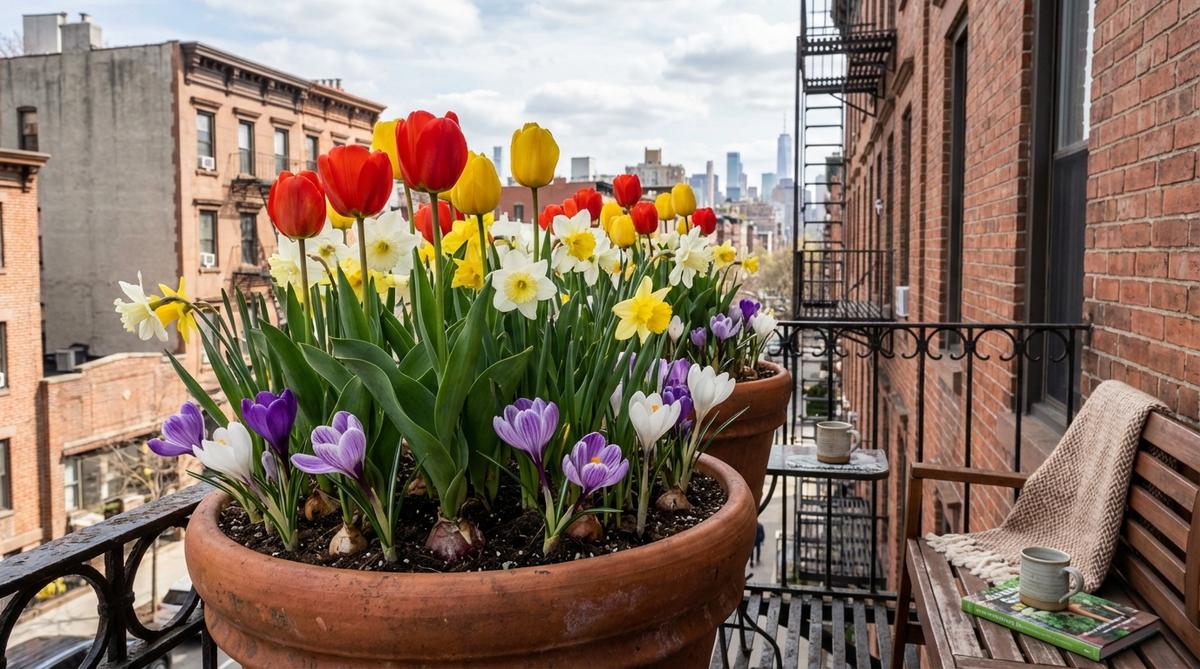
Lasagna planting technique layers tulips, daffodils, and crocus bulbs at different depths in large containers for sequential spring blooms. Plant bulbs in October for April-May color explosion.
Position largest bulbs 8 inches deep, medium bulbs 5 inches, and smallest 3 inches. Single container produces 6-8 weeks continuous bloom.
After flowering, move containers to inconspicuous corners while foliage dies back. Replace with summer annuals in June.
26. Summer Tropical Paradise
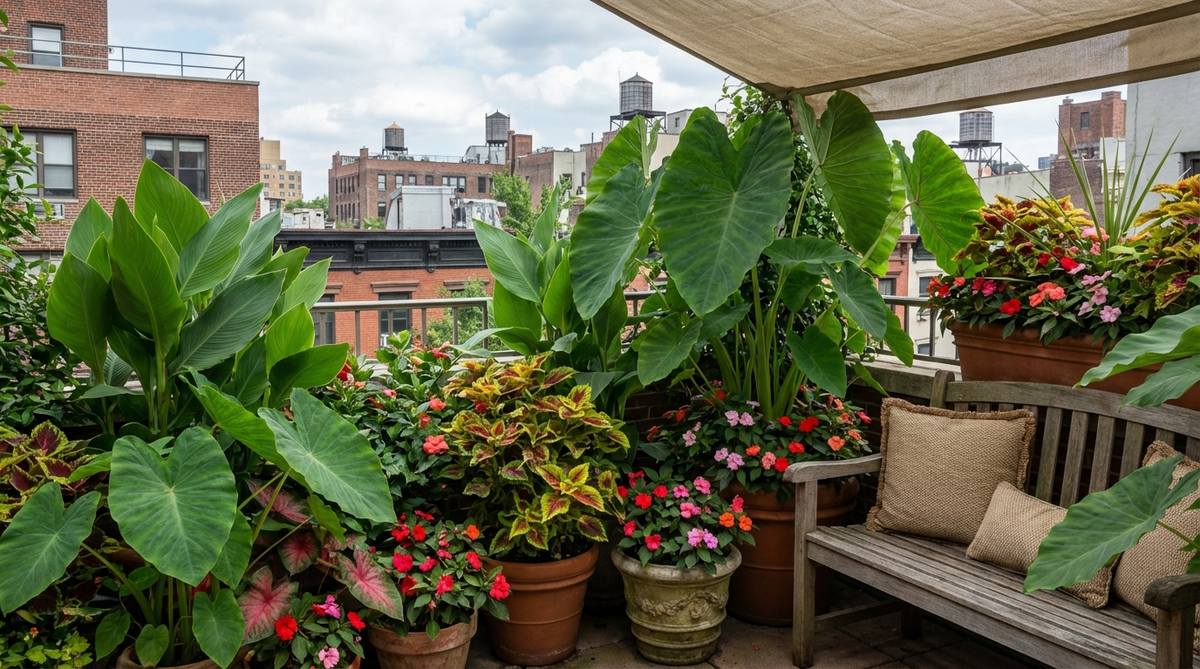
Bold foliage plants including elephant ears, cannas, and caladiums create lush jungle effect from June through September. Pair with bright coleus and impatiens for layered color.
Tropical plants demand consistent moisture and weekly fertilization. Position containers where afternoon shade prevents leaf scorch.
Overwinter tubers and bulbs indoors in paper bags stored in 50-50°F locations. Replant after last frost for annual tropical transformation.
27. Fall Chrysanthemum Showcase
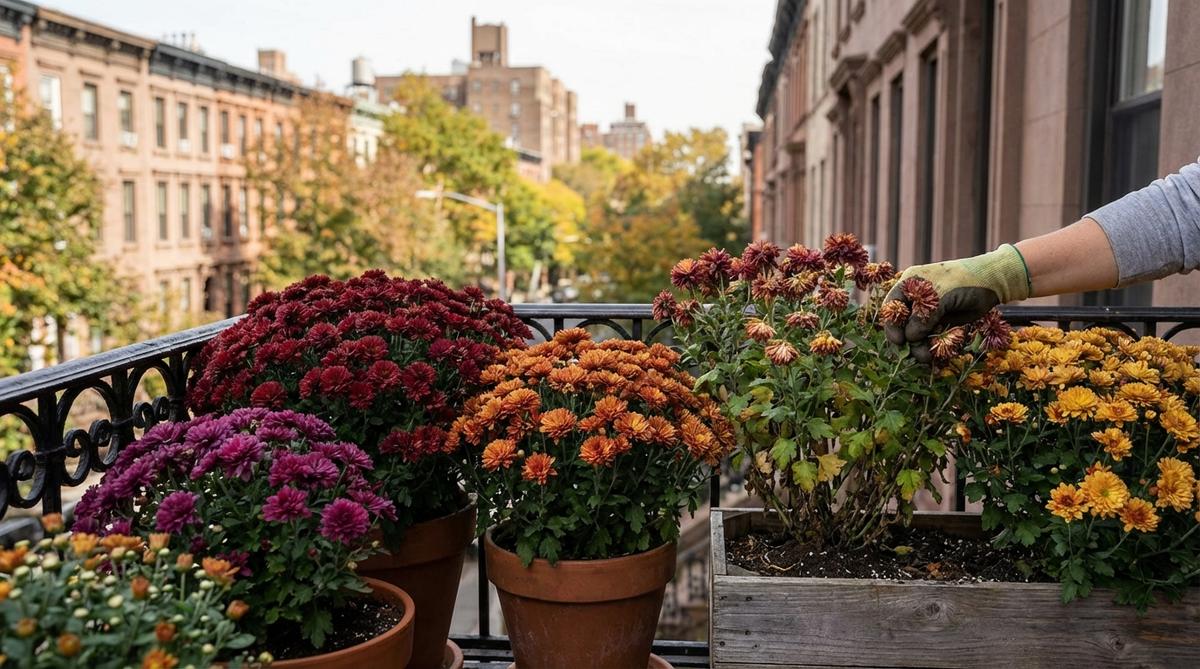
Hardy garden mums planted in September deliver 6-8 weeks of bloom in burgundy, gold, bronze, and purple. Choose early, mid, and late-season varieties for extended color.
Plant mums 12 inches apart in containers or directly into existing planters, replacing spent summer annuals. Pinch spent flowers to prolong display.
After frost kills foliage, cut stems to 3 inches. Mulch heavily for potential perennial survival in protected locations.
28. Winter Evergreen Structure
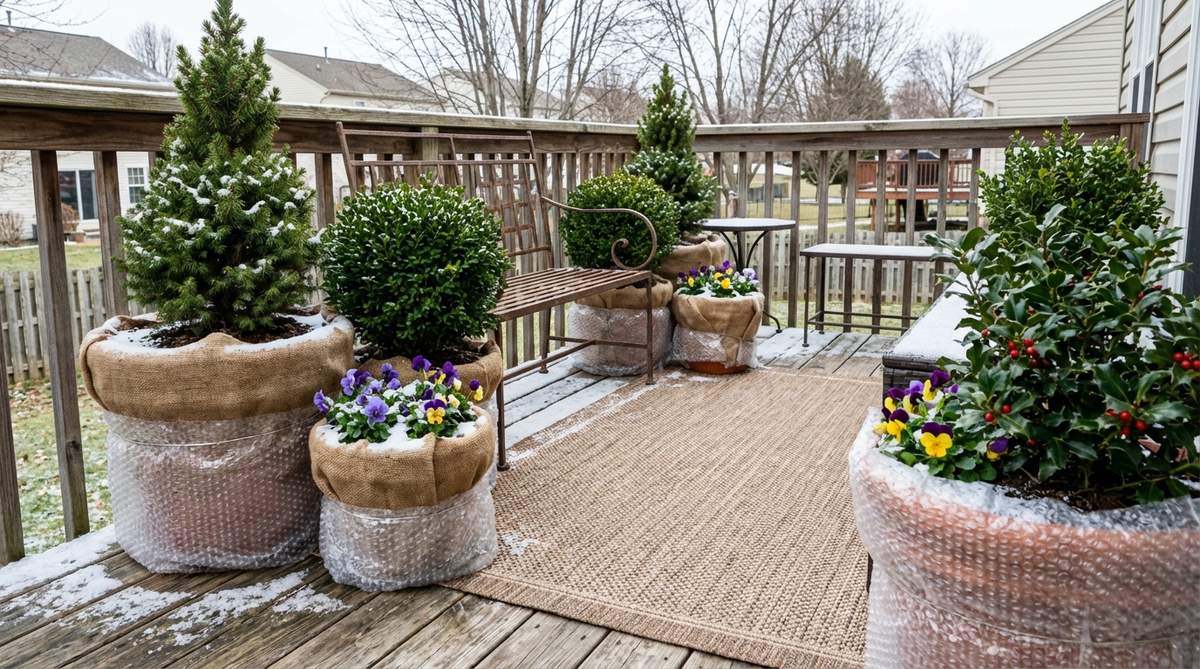
Dwarf conifers, boxwood, and hollies provide green backbones when deciduous plants go dormant. Combine with winter-blooming pansies and ornamental kale for cold-season color.
Evergreens in containers require winter watering during thaws to prevent desiccation. Apply anti-desiccant spray in November to protect foliage.
Add battery-operated string lights to evergreens for festive winter ambiance. Red-twig dogwood cuttings in containers provide architectural winter interest.
29. Year-Round Ornamental Grasses
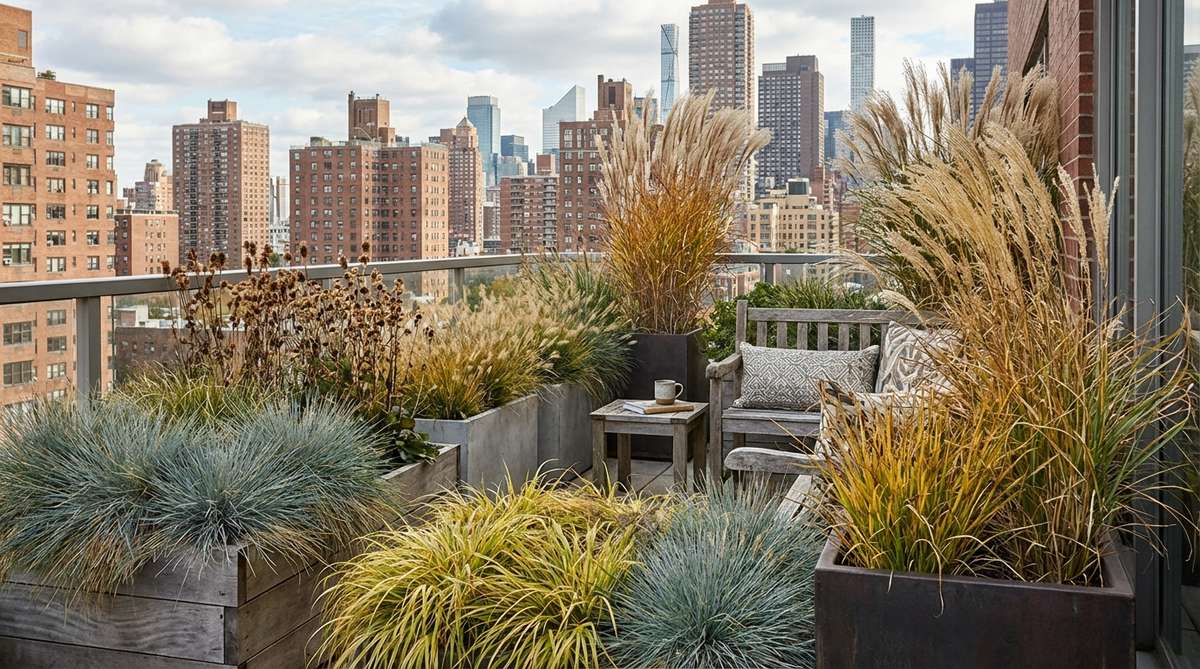
Perennial grasses like blue fescue, Japanese forest grass, and feather reed grass deliver four-season structure with minimal care. New growth emerges in spring, plumes develop in summer, foliage shifts to gold in fall, and tan seed heads persist through winter.
Cut grasses to 4 inches in early March before new growth begins. Divide clumps every 3-4 years to maintain vigor.
Grasses tolerate wind, drought, and temperature extremes, making them ideal low-maintenance anchors for high-rise balconies.
Lighting & Ambiance Features
Strategic illumination extends balcony use into evening hours while highlighting architectural and botanical features. Solar and battery-operated options eliminate electrical work required for hardwired systems.
30. Solar String Cafe Lights
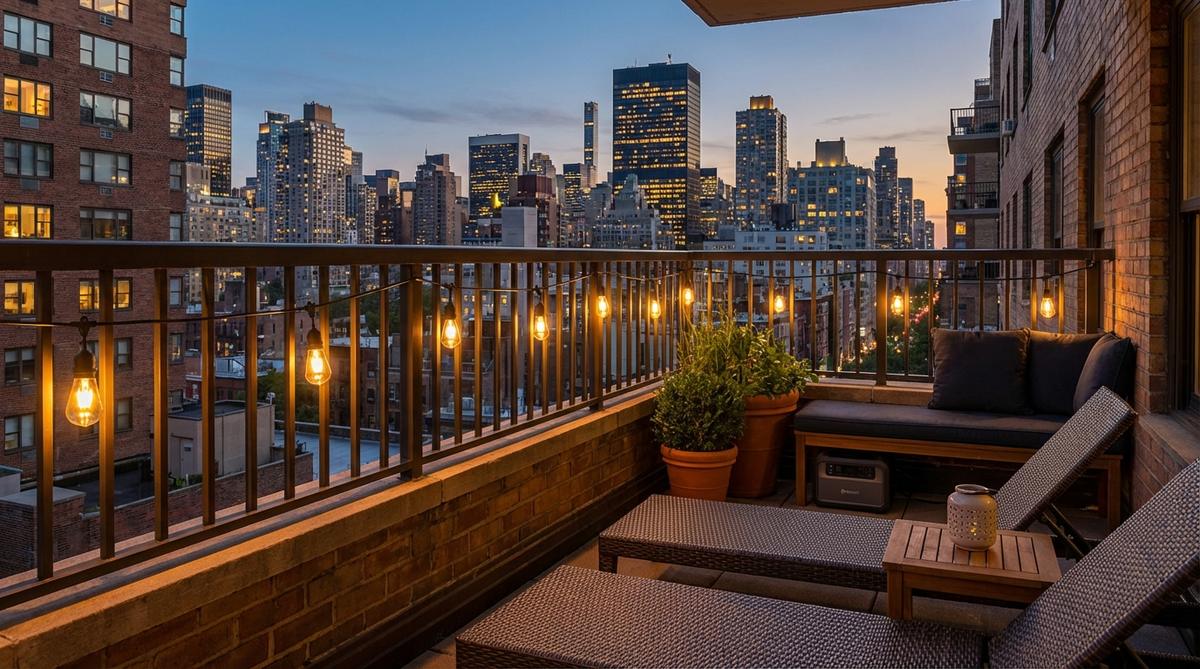
Edison-style LED bulbs on weatherproof strings drape across balcony perimeters, creating warm ambient glow perfect for evening entertaining. Solar panels charge during day for 6-8 hours nighttime illumination.
Suspend strings between opposite walls using cup hooks or wrap around railing posts. Space bulbs 12-18 inches apart for even distribution.
Battery backup ensures lighting during cloudy periods. Warm white (2700K) bulbs create inviting atmosphere while cool white suits modern aesthetics.
31. Uplighting Accent Spots
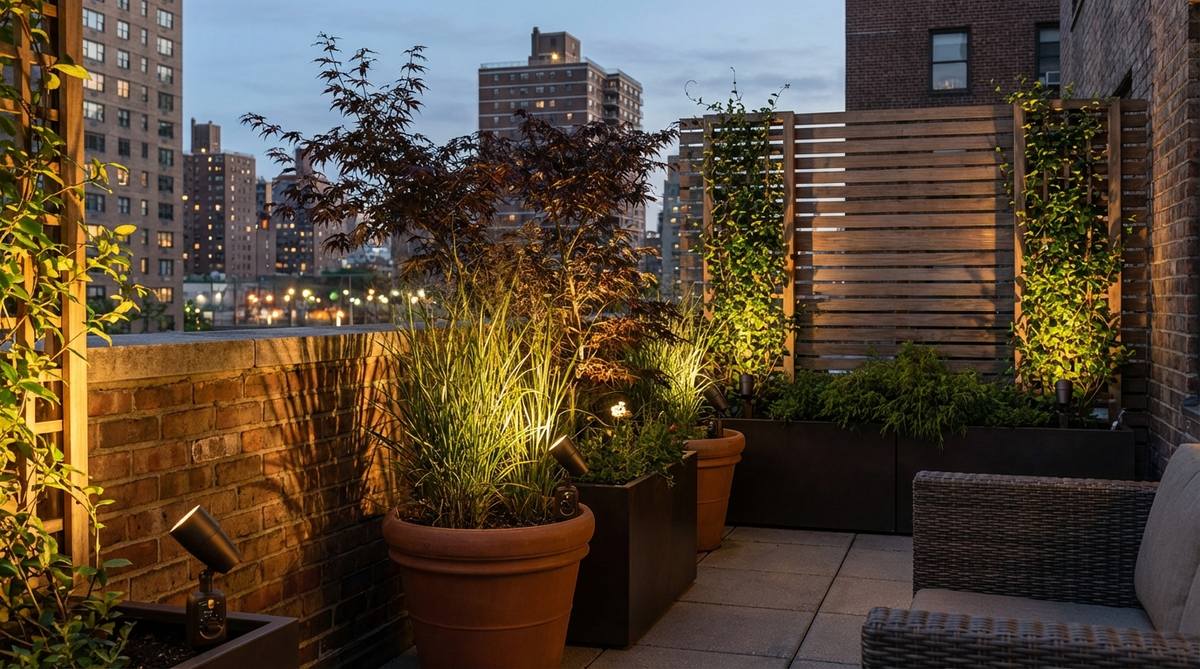
Battery-operated spotlights positioned at container bases cast dramatic shadows of plant silhouettes onto balcony walls. Highlight architectural plants like Japanese maple, ornamental grasses, and vertical trellises.
Adjustable beam angles allow precise shadow control. Warm bronze or black fixtures disappear visually during daylight hours.
Timer functions automate lighting schedules, illuminating balconies from dusk until midnight without manual operation.
32. Lantern Cluster Arrangements
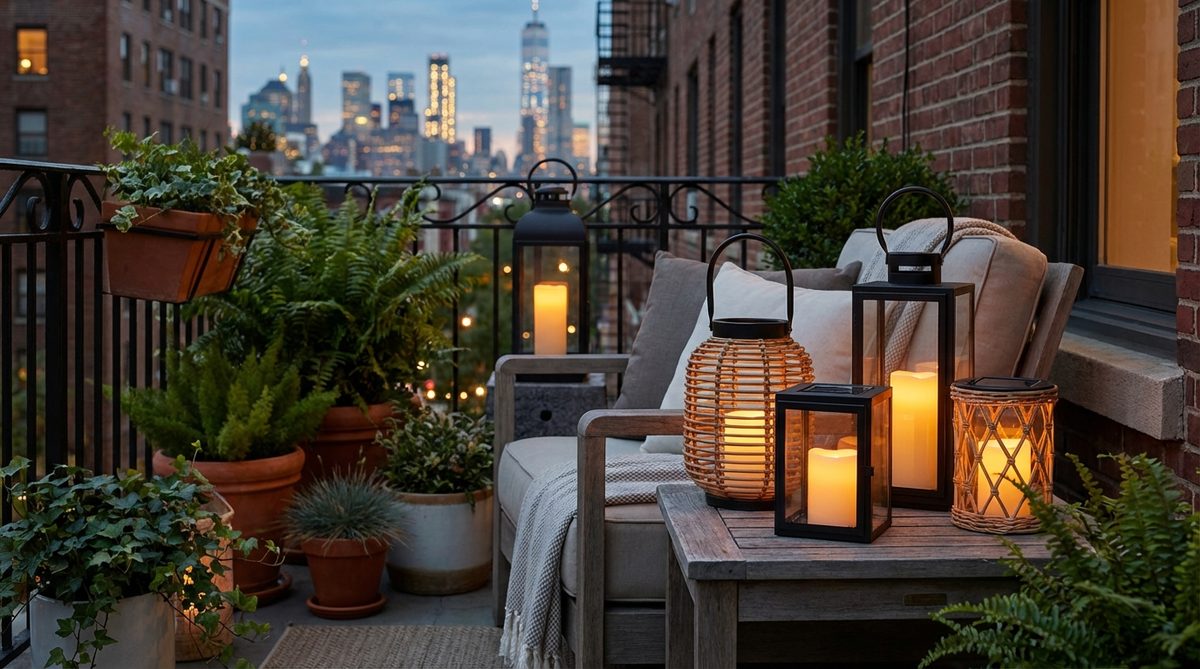
Grouping 3-5 lanterns of varying heights on side tables or floor corners creates intimate lighting zones for reading or conversation. LED candles eliminate fire hazards prohibited by most NYC buildings.
Metal, rattan, and glass lanterns suit different design styles from industrial to coastal. Solar-charged versions relight automatically each evening.
Removable lanterns store easily during winter months, protecting investment from freeze damage.
Wind & Weather-Resistant Setups
High-altitude exposure demands plant and container choices that withstand sustained winds, temperature fluctuations, and precipitation challenges absent at ground level. Engineering principles prevent damage and optimize longevity.
33. Low-Profile Succulent Gardens
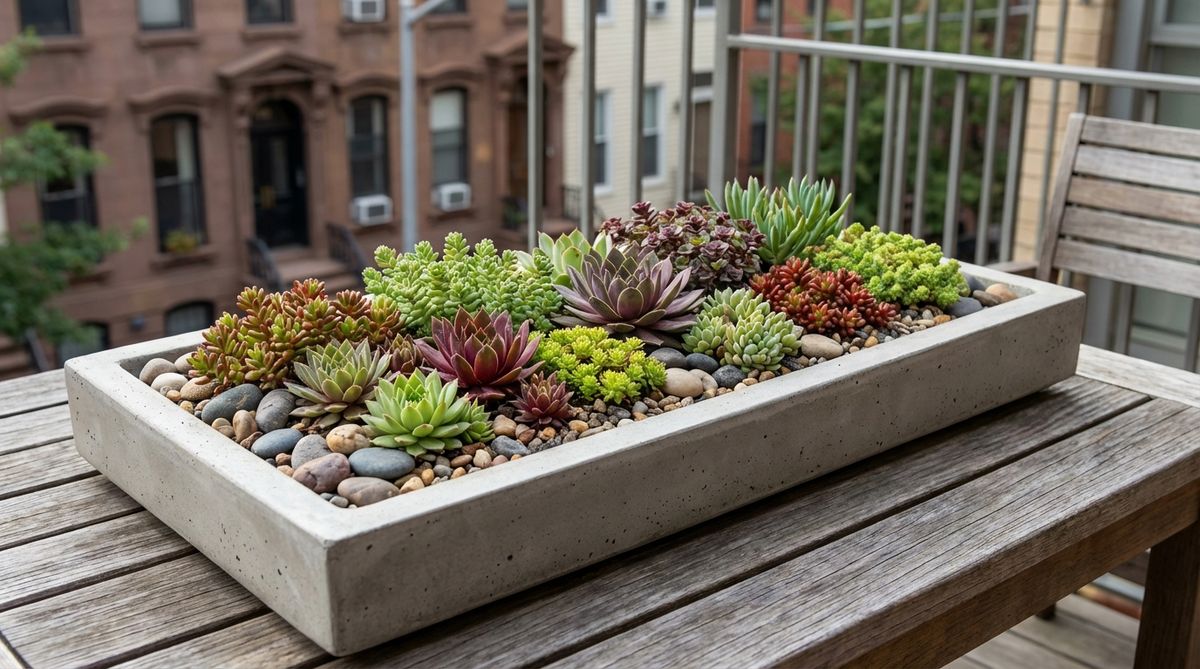
Sedums, sempervivums, and stonecrop varieties grow 2-6 inches tall, presenting minimal wind resistance while tolerating extreme temperature swings. Shallow containers emphasize horizontal spread.
Succulents thrive in full sun with minimal watering, ideal for busy professionals. Winter-hardy varieties survive NYC zone 7b winters without protection.
Decorative gravel mulch prevents soil erosion during storms while adding textural interest. Group multiple shallow bowls for desert-garden effect.
34. Weighted Base Anchor Systems
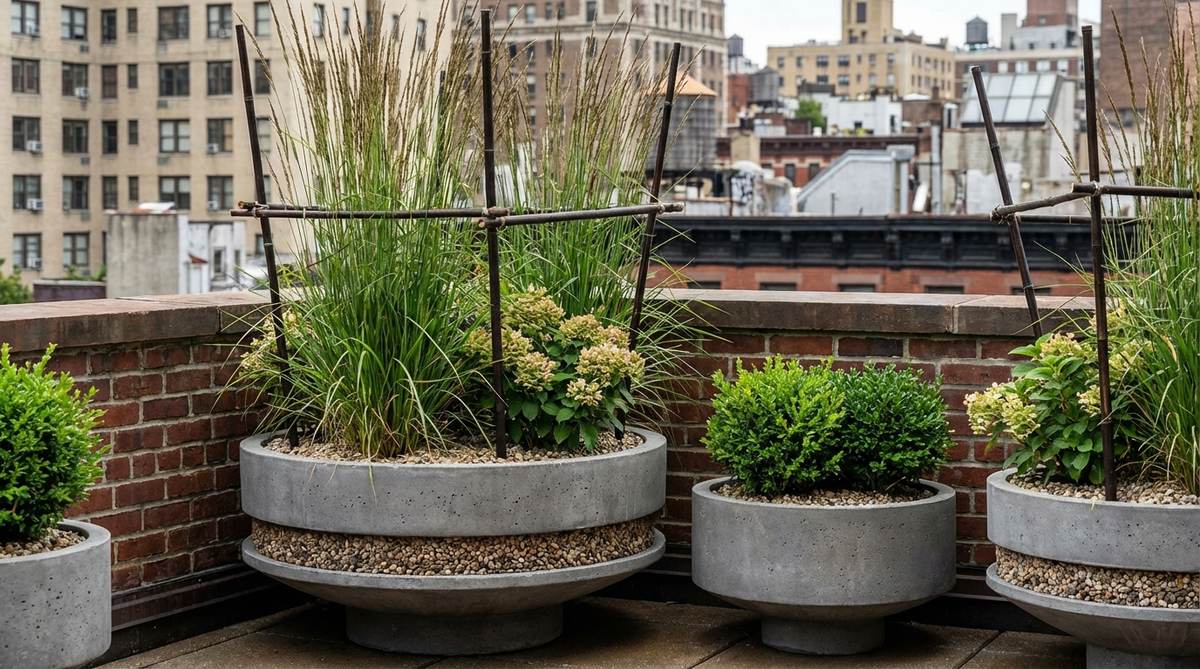
Heavy ceramic, concrete, or stone containers resist tipping in 30-40 mph winds common at high elevations. Wide bases with low centers of gravity provide maximum stability.
Fill container bottoms with 2-3 inches gravel before adding potting mix to increase weight. Cross-brace tall plants to container sides using bamboo stakes.
Test stability by pushing container from multiple angles before planting. Unstable containers require repositioning to protected corners or structural anchoring.
35. Wind-Break Screening Walls
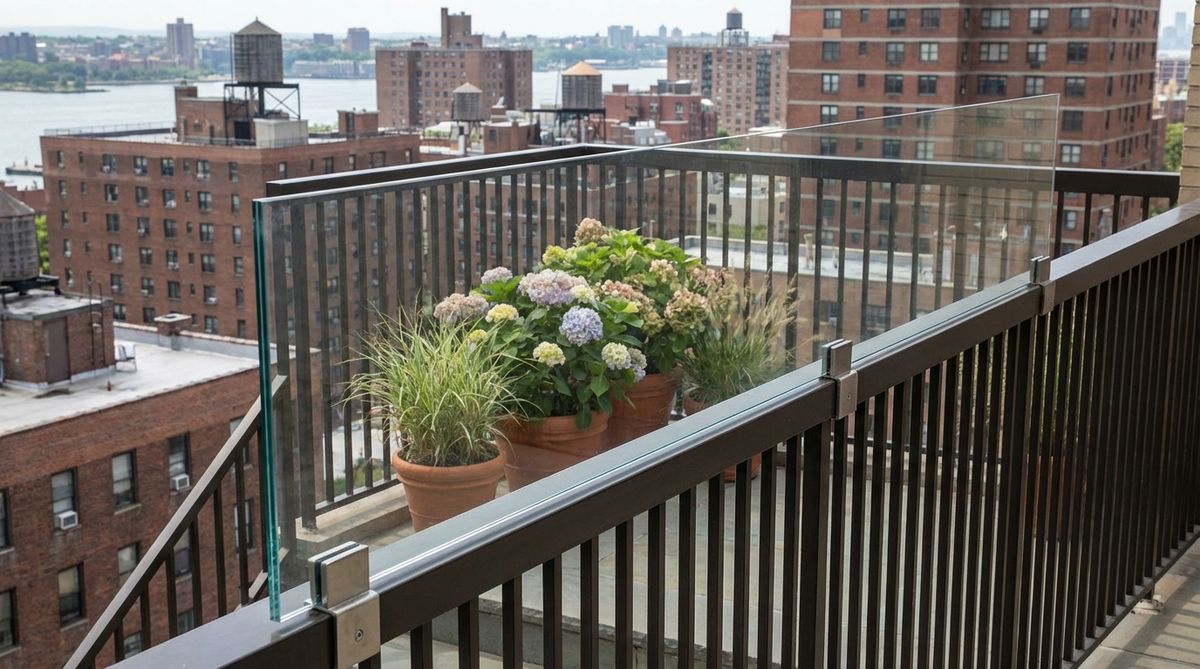
Solid plexiglass or tempered glass panels installed along windward balcony edges reduce wind speed by 50-70%, protecting delicate plants positioned behind screens. Panels should cover upper 3-4 feet of railing height.
Clear panels preserve views while blocking wind. Frosted versions combine privacy with wind protection for dual functionality.
Professional installation ensures proper anchoring to withstand structural wind loads. Check building codes for height restrictions and engineering requirements.
Conclusion
High-rise balcony garden NYC success combines vertical growing strategies, weather-resistant plant selections, and strategic container placement that transforms constrained square footage into productive, beautiful outdoor rooms. Implementing even 3-5 of these 35+ styles immediately elevates urban living quality while connecting residents to seasonal rhythms rarely experienced in concrete environments. Start with vertical systems and container layouts matched to your sun exposure, then layer privacy screening and seasonal plantings as confidence grows. Fresh Garden Ideas recommends photographing your space from multiple angles before purchasing materials, ensuring design choices complement existing architecture while addressing specific wind, sun, and privacy challenges unique to your elevation and orientation.
Frequently Asked Questions
What are the best plants for windy NYC balconies?
Low-growing succulents, ornamental grasses, and woody shrubs withstand high-altitude winds better than tall annuals with large leaves. Sedums, blue fescue, potentilla, and dwarf conifers present minimal wind resistance while tolerating drying winds. Avoid large-leafed tropicals and tall staked plants that act as sails in exposed locations above 15 floors.
How much weight can NYC apartment balconies support?
Most NYC balconies support 50-100 pounds per square foot, though exact limits vary by building age and construction method. Pre-war buildings often feature more robust construction than modern high-rises. Consult building management or structural engineer before installing multiple large containers, especially along balcony perimeters where cantilever stress concentrates. Distribute weight evenly and position heaviest containers near structural walls.
Can you grow vegetables on a north-facing NYC balcony?
Leafy greens including lettuce, spinach, arugula, and Asian greens tolerate 3-4 hours of direct sun available on most north-facing balconies. Herbs like parsley, cilantro, and mint also adapt to reduced light. Fruiting vegetables including tomatoes, peppers, and squash require 6-8 hours direct sun, limiting success on northern exposures unless reflective surfaces bounce additional light.
What containers work best for high-rise balcony gardens?
Fiberglass and resin containers combine light weight with durability, critical for weight-restricted balconies. Self-watering containers reduce maintenance demands for busy urban professionals. Containers should include drainage holes and measure 10-18 inches deep for most plants. Avoid terra cotta on high balconies as freeze-thaw cycles crack unprotected pots. Choose containers with wide bases for wind stability.
How do you winterize balcony container gardens in NYC?
Move tender perennials and expensive containers indoors before first hard freeze in November. Hardy perennials in frost-proof containers can overwinter outdoors if grouped together and wrapped with burlap for insulation. Water evergreens during winter thaws to prevent desiccation. Empty annual containers and store upside down to prevent ice accumulation. Apply anti-desiccant spray to broadleaf evergreens in late November.
Are there NYC building restrictions on balcony gardens?
Co-op and condo boards often regulate balcony modifications including permanent installations, weight limits, and aesthetic guidelines. Review building bylaws before drilling into walls or railings. Most buildings prohibit propane grills, structural modifications, and installations that alter building facade appearance. Obtain written approval for major projects. Rental agreements may further restrict container types, drilling, and seasonal display duration.