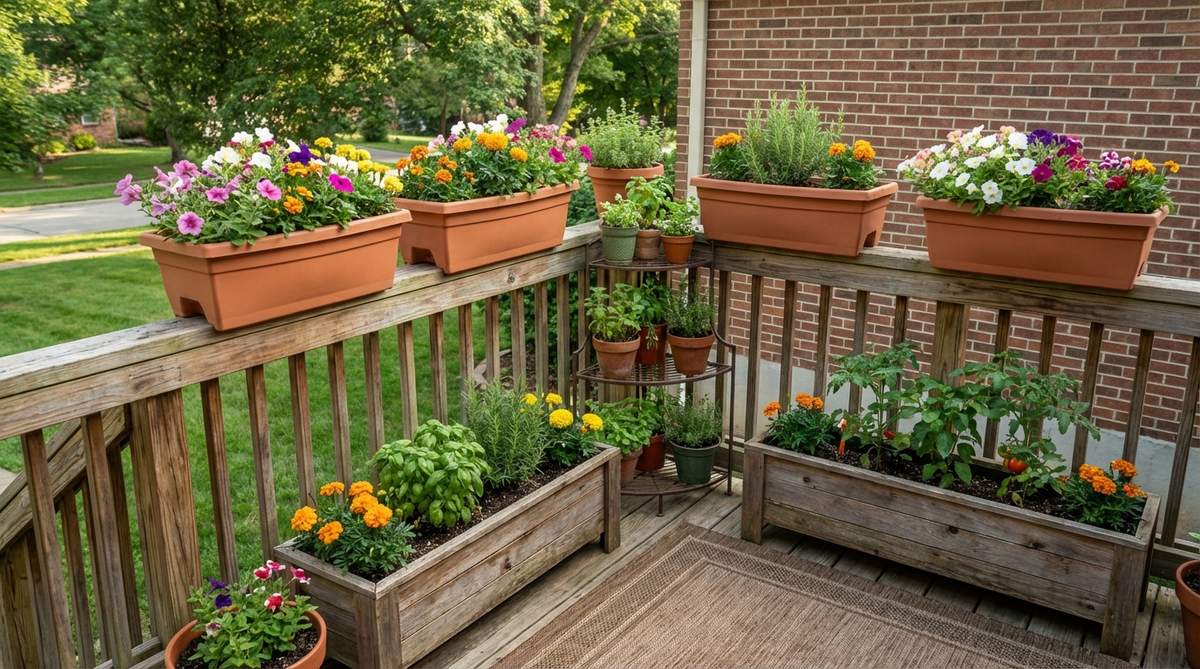
Whether you’re working with a compact city balcony or a spacious terrace, balcony garden boxes offer practical solutions for growing flowers, herbs, and vegetables in limited spaces. Fresh Garden Ideas brings you expert-curated planter designs that attach to railings, fit into corners, and stack vertically to help you create a thriving garden regardless of your square footage.
Design SnapshotKey Principles
- Space Optimization: Utilize vertical surfaces, railings, and corners to expand growing area without compromising floor space
- Weight Distribution: Select materials appropriate for your balcony’s load capacity, with plastic and metal offering lighter alternatives to ceramic
- Drainage Systems: Incorporate proper drainage holes and self-watering reservoirs to maintain soil moisture without oversaturation
- Mounting Security: Ensure all railing-mounted planters use secure brackets or straddle designs that prevent tipping or falling
Railing-Mounted Boxes That Maximize Edge Space
Railing planters transform underutilized perimeter space into productive growing zones. These designs hang over, straddle, or sit atop deck and balcony rails to create accessible gardens at comfortable working heights.
1. Over-the-Rail Bracket Boxes
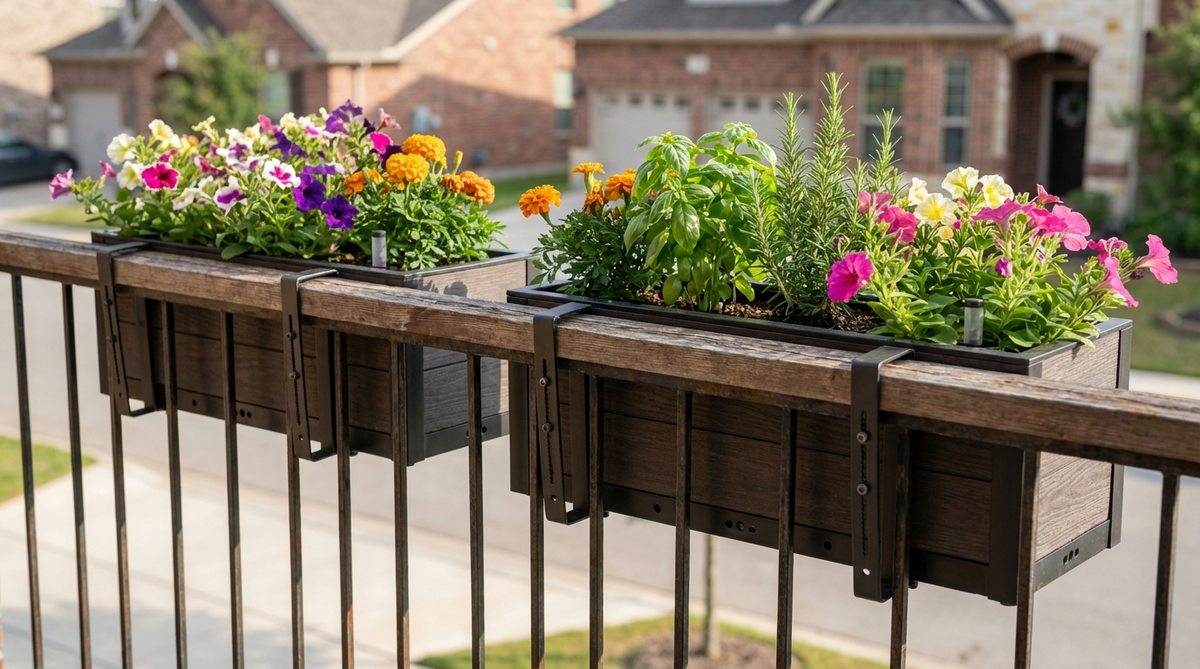
Metal brackets bolt to the back of wooden or composite boxes, creating a secure hook system that hangs planters over your railing. The design accommodates rail widths from 1.5 to 3.5 inches with adjustable offset strips preventing forward tilt.
Install these boxes facing outward for ornamental displays visible from the street, or inward to keep herbs and vegetables within easy reach. Most bracket systems include drainage holes and optional self-watering reservoirs.
Position boxes every 18 to 24 inches along railings for continuous color or harvest potential throughout the growing season.
2. Straddle-Design Planters
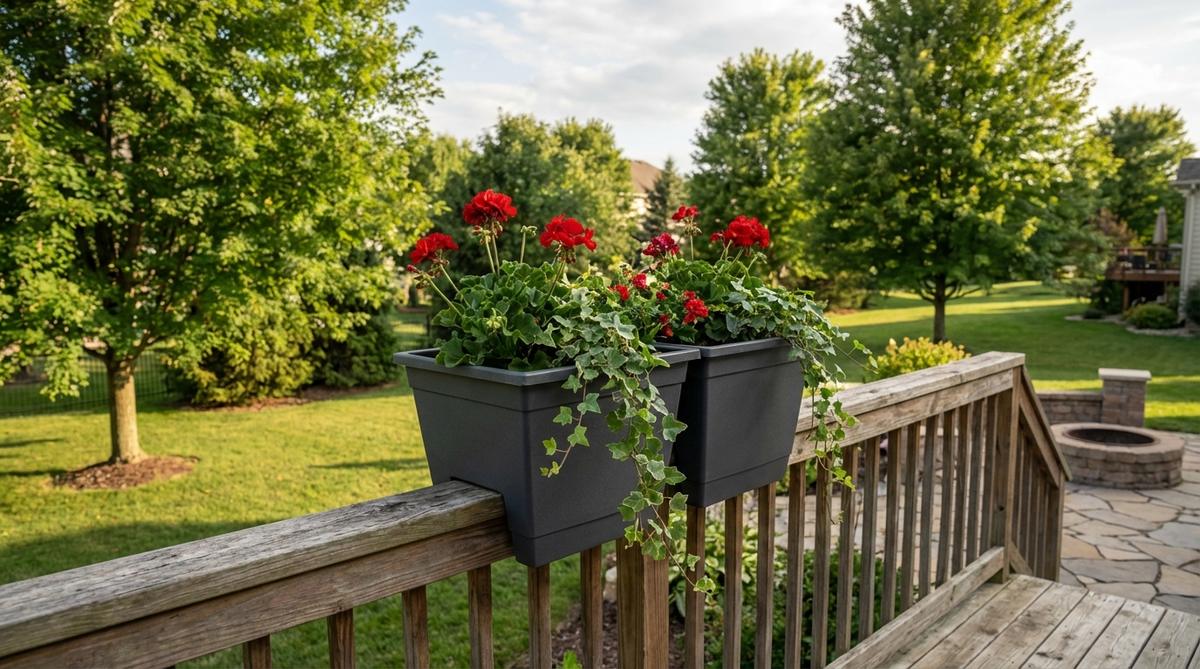
These dual-chamber boxes sit astride railings without requiring screws or permanent hardware. The weight distribution across both sides creates stability while protecting railing surfaces from damage.
Straddle planters work particularly well with standard 2×4 and 2×6 deck railings. The design lifts easily for seasonal changes or cleaning, and the symmetrical planting space encourages matching displays on interior and exterior faces.
3. Rail-Top Trough Planters
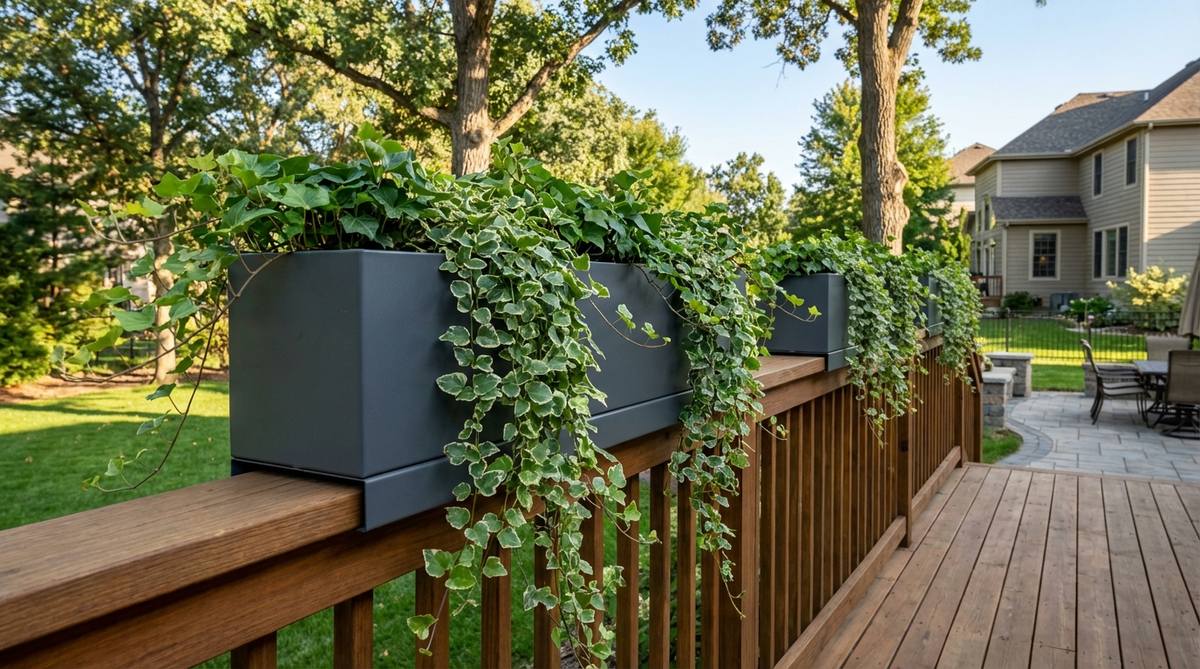
Elongated troughs sit directly on flat railing caps, creating linear gardens that add privacy screening. The raised position improves drainage and places plants at eye level for detailed observation.
Choose troughs with grooved bottoms that fit snugly over rail dimensions to prevent shifting during wind or watering. Cedar and powder-coated steel versions resist weather damage while maintaining structural integrity.
Plant trailing varieties like ivy or sweet potato vine to cascade downward, softening the hard edges of deck railings.
4. Adjustable Hook Planters
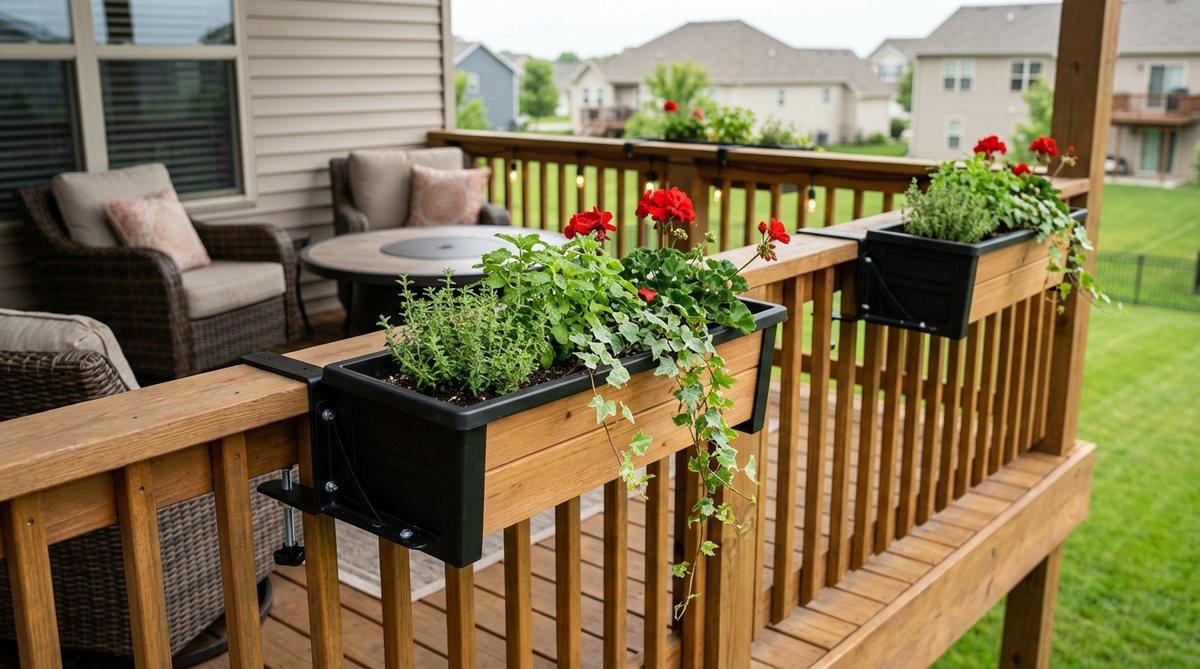
L-shaped brackets with adjustable tension screws accommodate varying rail thicknesses and shapes. These systems hang boxes on the interior or exterior side of railings depending on sun exposure needs.
The hook mechanism distributes weight evenly and includes weather-resistant coating to prevent rust. Installation requires no drilling, preserving rental-friendly balconies.
5. Oval Railing Pots
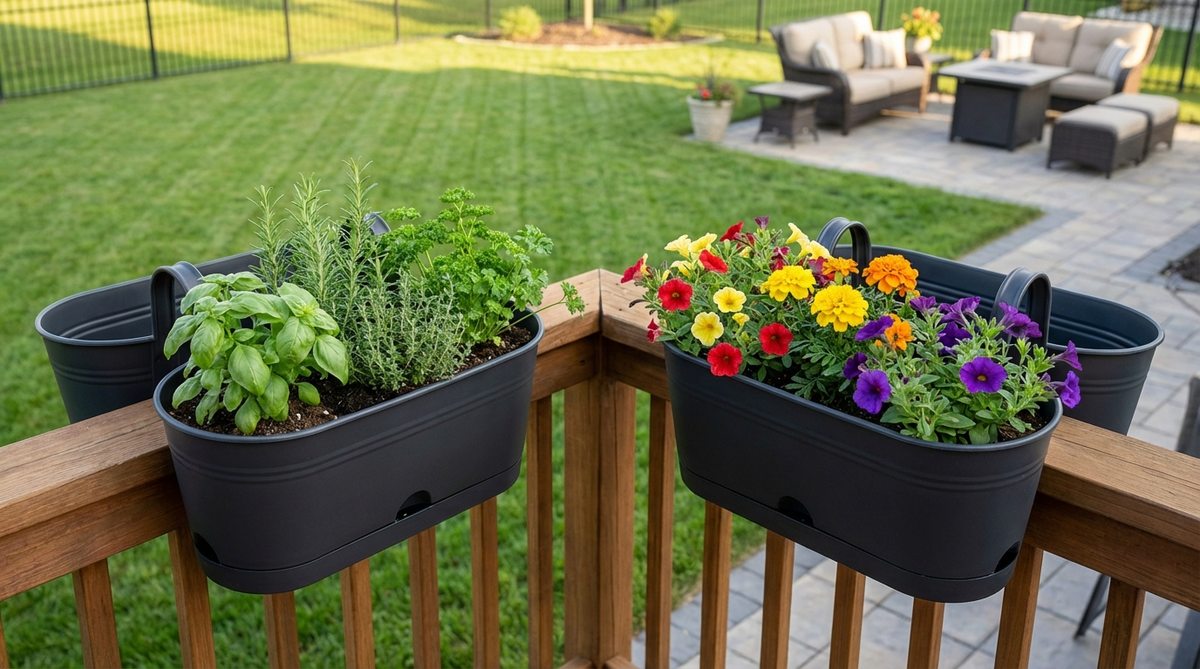
Individual oval containers with detachable hooks create flexible arrangements along railings. The curved shape provides ample root space while maintaining a compact footprint.
Space pots at regular intervals for symmetrical herb gardens, or cluster them in groups of three for varied floral arrangements. Drain holes positioned at the base prevent water accumulation that leads to root rot.
Self-Watering Systems for Low-Maintenance Gardening
Self-watering planters incorporate reservoir chambers that deliver moisture directly to plant roots through wicking action. These systems reduce watering frequency and prevent the feast-or-famine cycles that stress balcony plants.
6. Reservoir-Bottom Planter Boxes
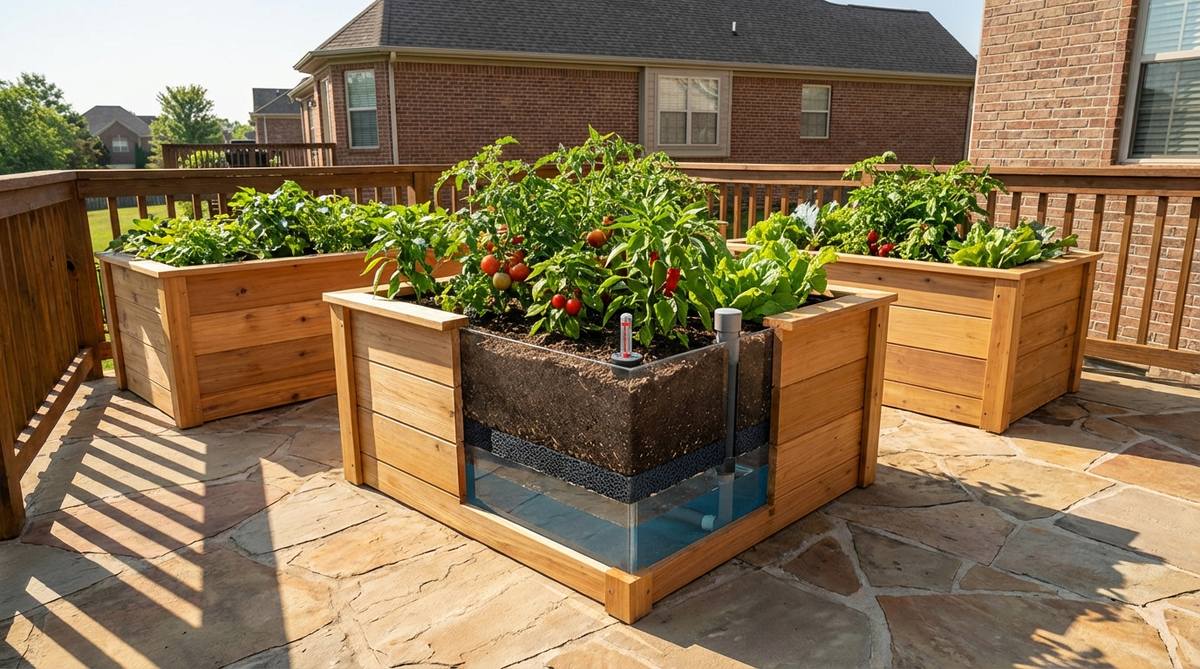
A water chamber at the planter base connects to soil through a porous barrier or wicking column. Plants draw moisture as needed, extending time between waterings to three or four days even in summer heat.
Fill ports with level indicators show exactly when to add water, eliminating guesswork. Cover openings with fine mesh to prevent mosquito breeding in larger reservoirs.
This design works particularly well for thirsty crops like tomatoes, peppers, and leafy greens that struggle in traditional pots.
7. Double-Wall Wicking Planters
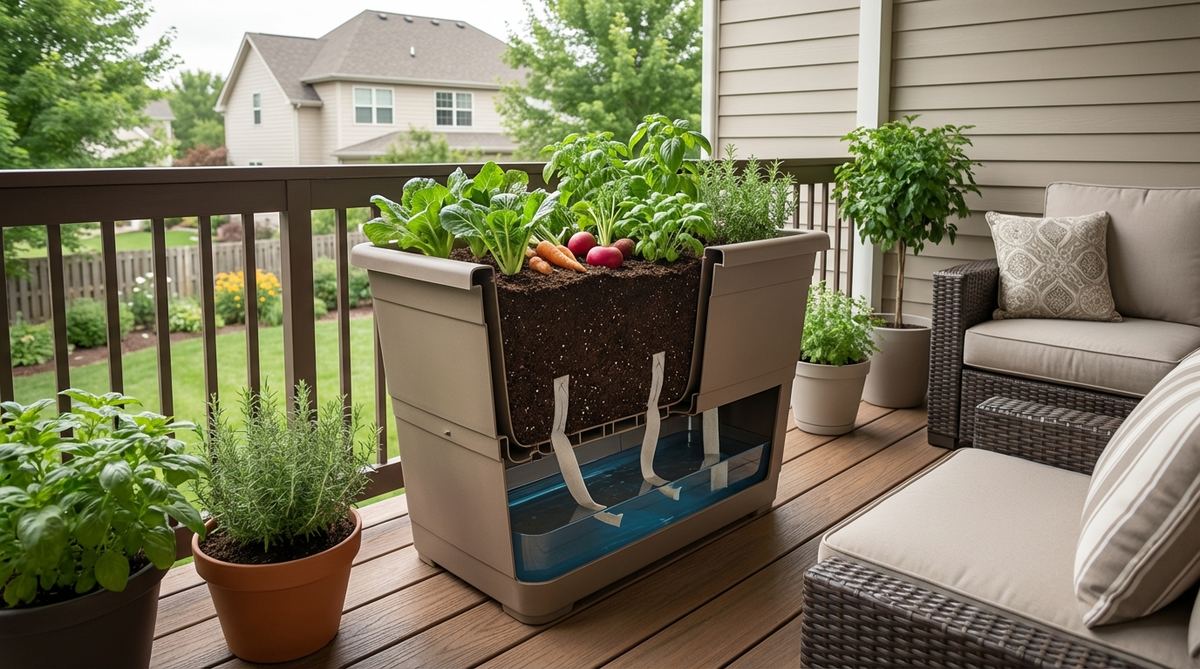
An inner growing chamber sits within an outer reservoir, with fabric wicks transferring water upward through capillary action. The double-wall construction insulates roots from temperature extremes.
These planters suit balconies with inconsistent watering schedules or frequent travel. The hidden reservoir maintains moisture for up to one week depending on plant selection and weather conditions.
8. Sub-Irrigation Garden Beds
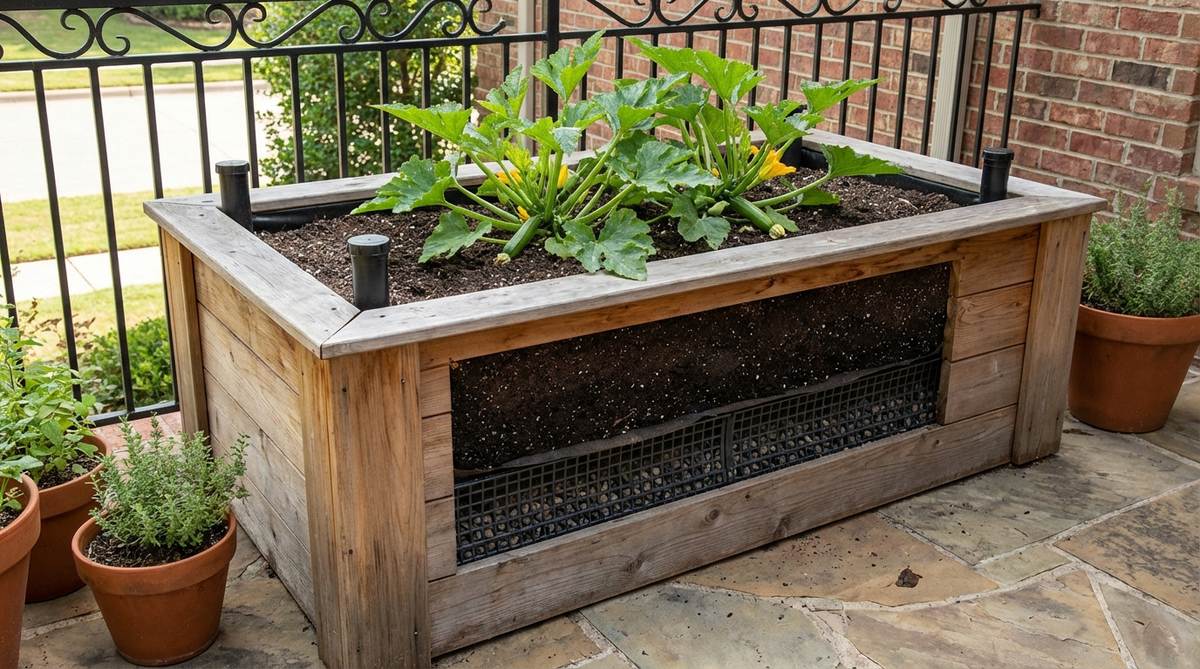
Larger balcony garden beds with built-in water grids deliver moisture from below while keeping foliage dry. This reduces fungal diseases on plants like zucchini that develop powdery mildew from wet leaves.
Install fill tubes that extend above soil level for easy refilling. Layer pea gravel in the reservoir zone before adding a separation fabric and growing medium.
9. Terracotta Wick Inserts
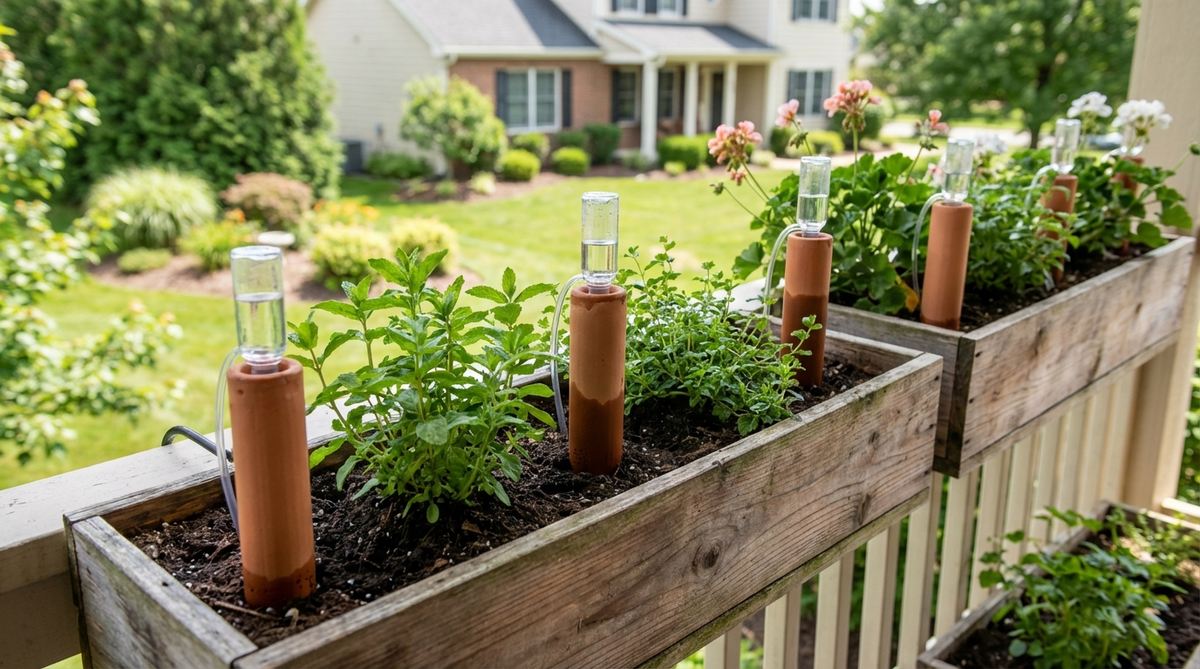
Porous clay stakes inserted into standard pots release stored water gradually as soil dries. Fill the hollow stakes through top openings, and roots grow around the clay surface to access moisture.
This retrofit solution converts existing balcony garden pots into self-regulating systems without replacing containers. Stakes work best in pots 10 inches or larger.
10. Self-Watering Hanging Baskets
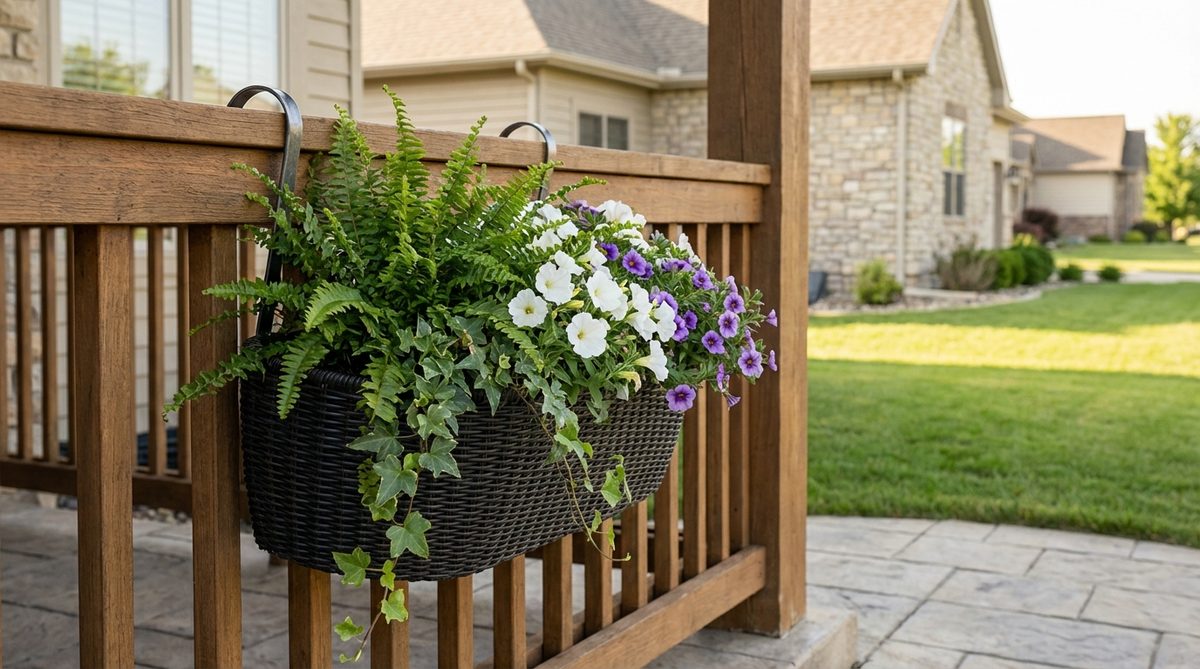
Suspended planters with hidden reservoirs reduce the drip problems associated with overhead watering. The enclosed system prevents water from running onto balcony floors or neighbors below.
Choose hooks rated for the combined weight of saturated soil, water reservoir, and mature plants. Position baskets where chains won’t interfere with door operation or foot traffic.
Corner Planters That Fill Awkward Angles
Corner spaces often go unused on balconies despite offering stable placement away from traffic patterns. Triangular and L-shaped planters fit these 90-degree angles precisely, turning dead zones into productive gardens.
11. Triangular Corner Boxes
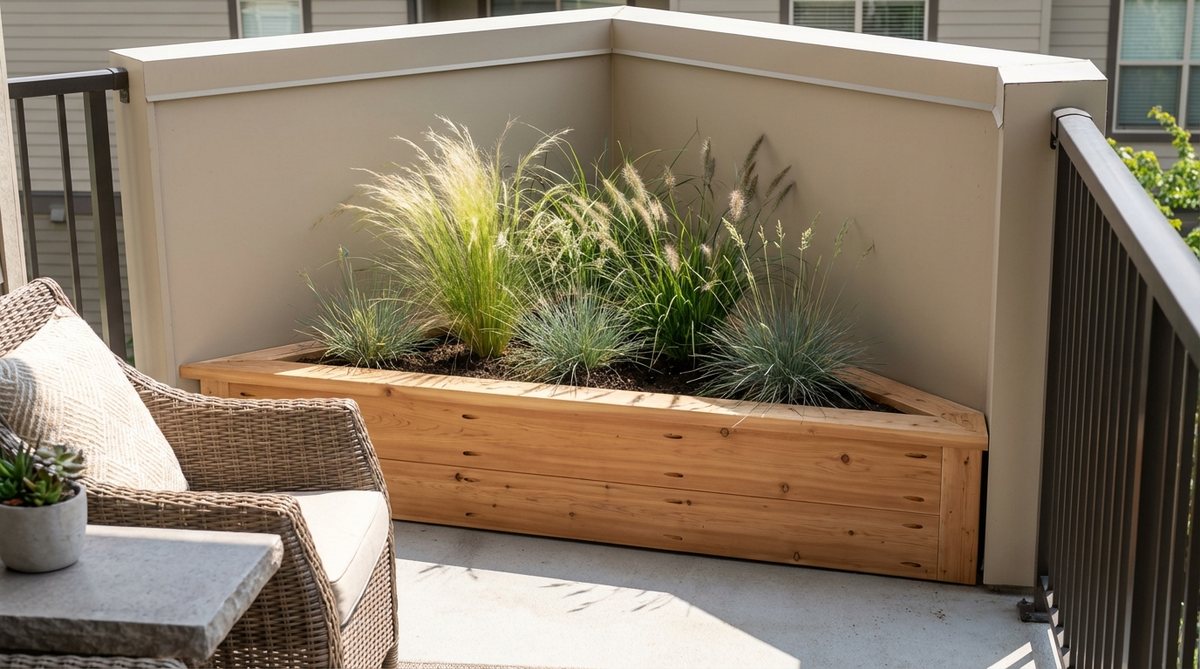
Three-sided planters nestle into right angles formed by walls and railings. The wedge shape provides surprising depth for root development while maintaining a compact footprint along two edges.
Build these boxes from cedar boards with pocket hole joinery for clean exterior lines. Position the widest face outward to display feature plants like ornamental grasses or dwarf conifers.
Corner placement offers wind protection for tender plants while freeing up central balcony space for seating.
12. L-Shaped Raised Beds
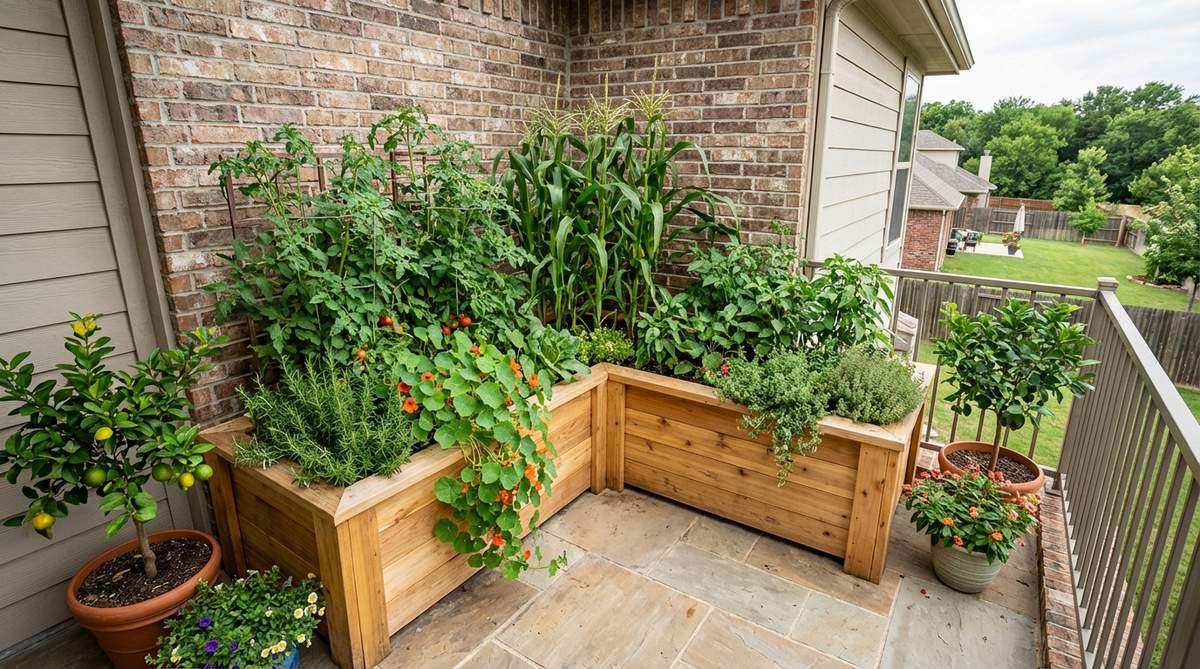
Extended planters wrapping around two perpendicular walls create generous growing zones for vegetable gardens. The configuration zones spaces naturally, with taller crops at the back corner and trailing plants along edges.
Use these beds to establish herb gardens with most-used varieties planted near door access. The continuous soil volume supports deeper root systems than individual pots.
13. Tiered Corner Shelves
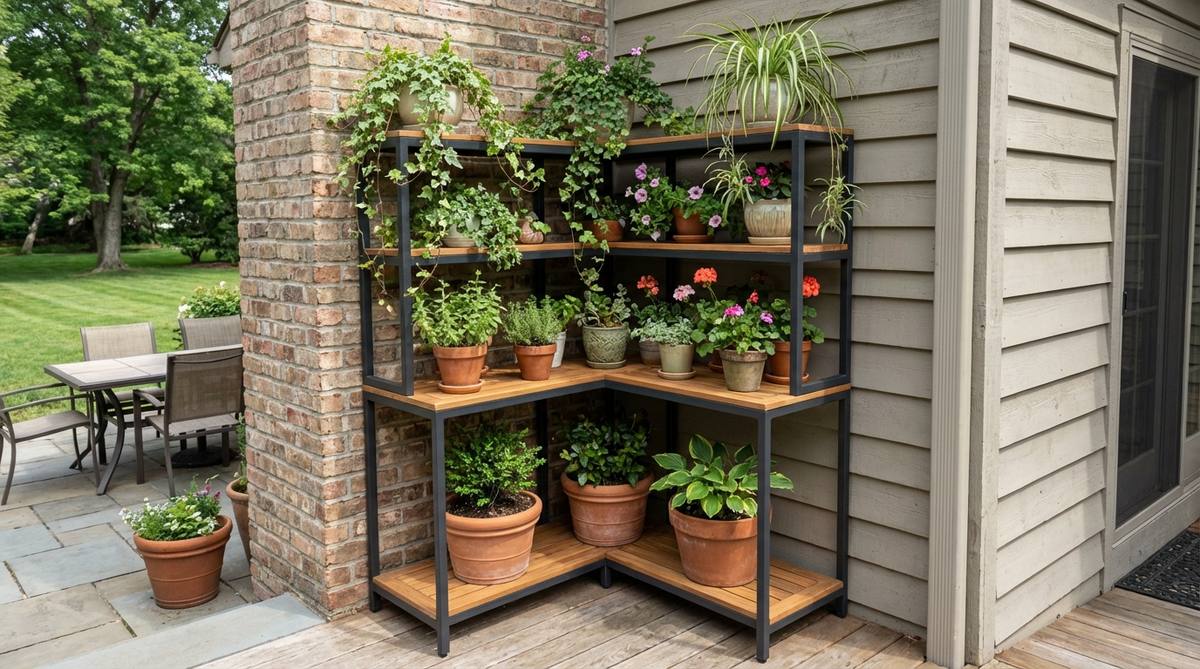
Ladder-style shelving units fit into corners with ascending levels that display multiple smaller pots. The vertical arrangement creates visual interest while providing distinct microclimates at different heights.
Place shade-tolerant plants on lower shelves and sun-lovers at top levels. Weather-resistant wood or powder-coated metal frames withstand outdoor conditions year-round.
14. Corner Tower Planters
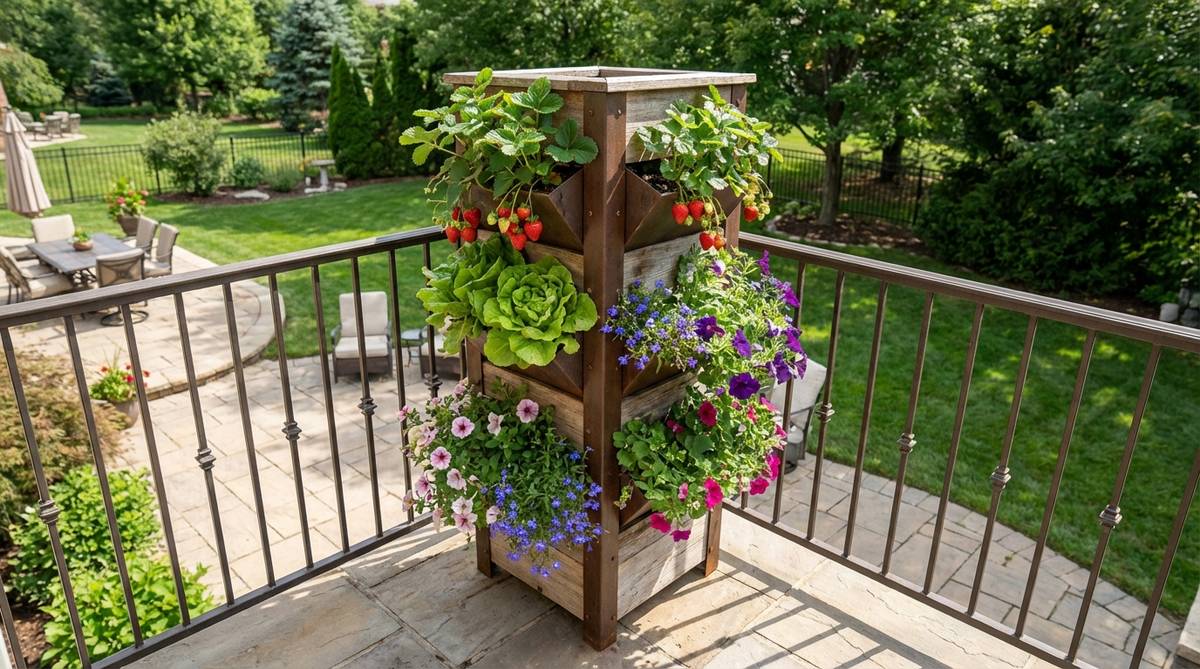
Stacked planting pockets spiral around a central support pole anchored in a corner base. Each pocket drains into the one below, creating efficient water use through the entire tower.
Plant strawberries, lettuce, or cascading flowers in pockets for a living sculpture. The vertical format yields substantial harvests from minimal floor space.
15. Curved Corner Borders
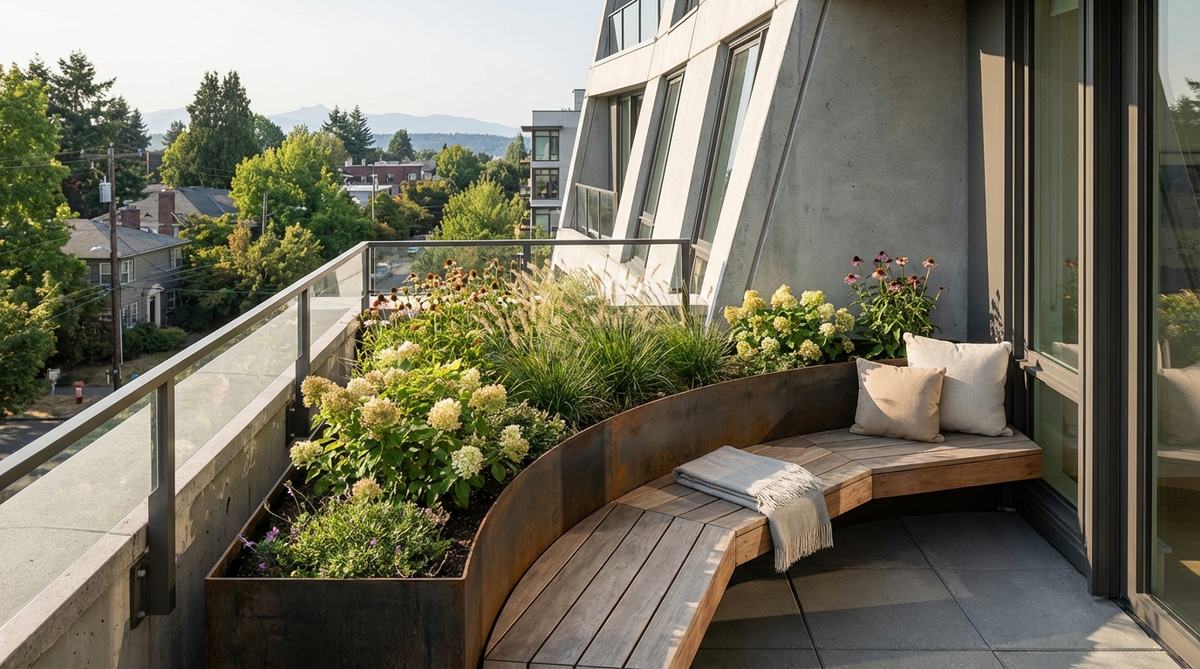
Gentle arcs connecting two walls soften the hard geometry of balcony corners. The curved front edge offers more planting surface than straight designs while improving circulation around the space.
Combine curved corner planters with built-in seating along one edge to create intimate garden nooks. The smooth lines contrast attractively with angular architecture.
Vertical Solutions for Compact Balconies
When floor space limits horizontal expansion, vertical gardening systems multiply growing capacity by utilizing wall and ceiling areas. These designs range from simple hanging pots to sophisticated modular panels.
16. Wall-Mounted Pocket Planters
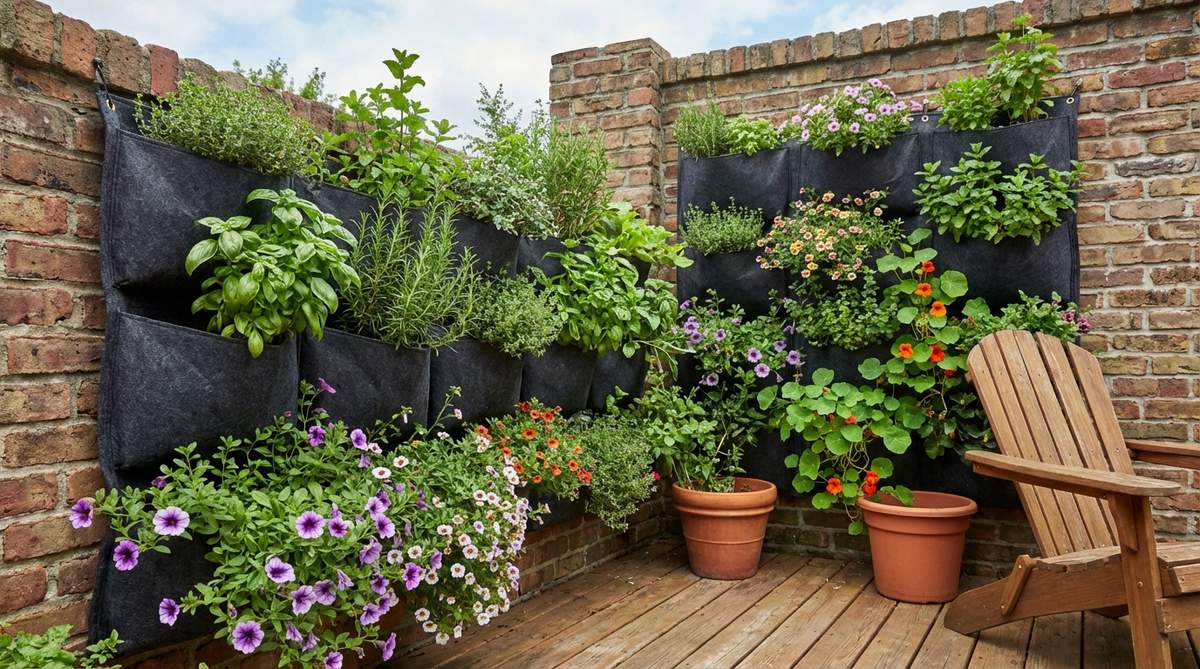
Fabric or plastic panels with multiple pockets hang on exterior walls, transforming vertical surfaces into planting grids. Each pocket includes drainage to prevent water accumulation behind the panel.
Fill pockets with lightweight potting mix rather than garden soil to reduce wall stress. Plant herbs, succulents, or annual flowers based on sun exposure.
These systems work particularly well for salad greens and strawberries that thrive in shallow soil depths.
17. Ladder-Style Plant Stands
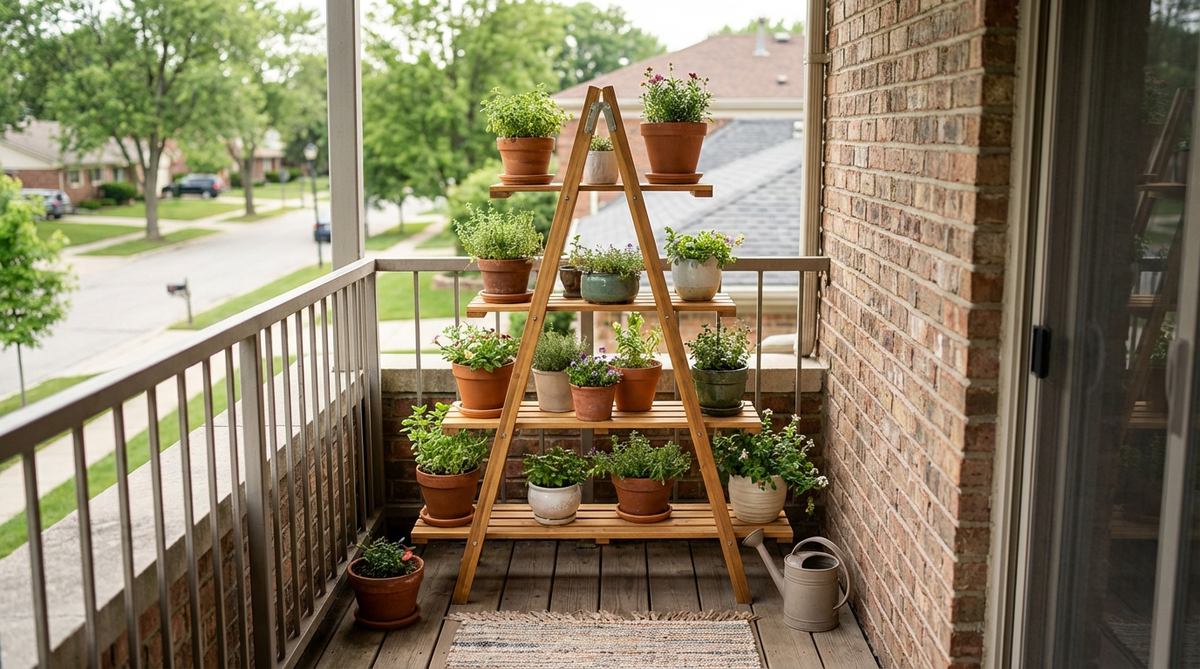
Freestanding A-frame or leaning ladder designs hold pots at ascending heights without wall attachment. The angled structure creates stability while fitting narrow balcony widths.
Position ladders to receive optimal light, rotating every few days if sun patterns favor one side. The open framework allows air circulation around all plants.
18. Gutter Garden Arrays
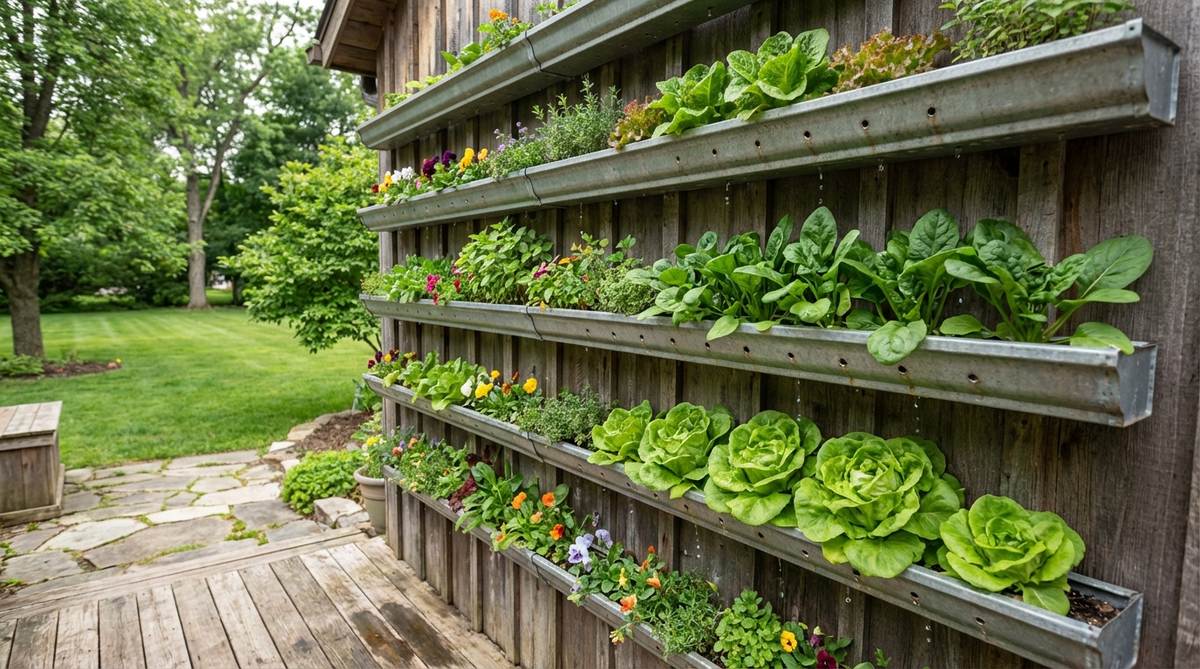
Vinyl or metal gutters mounted horizontally on walls create shallow planters ideal for shallow-rooted crops. Cap the ends and drill drainage holes every 12 inches along the bottom.
Stack gutters in vertical columns with 10 to 12 inches between rows for adequate light penetration. Plant lettuce, spinach, herbs, or edible flowers in these linear beds.
19. Trellis Wall Systems
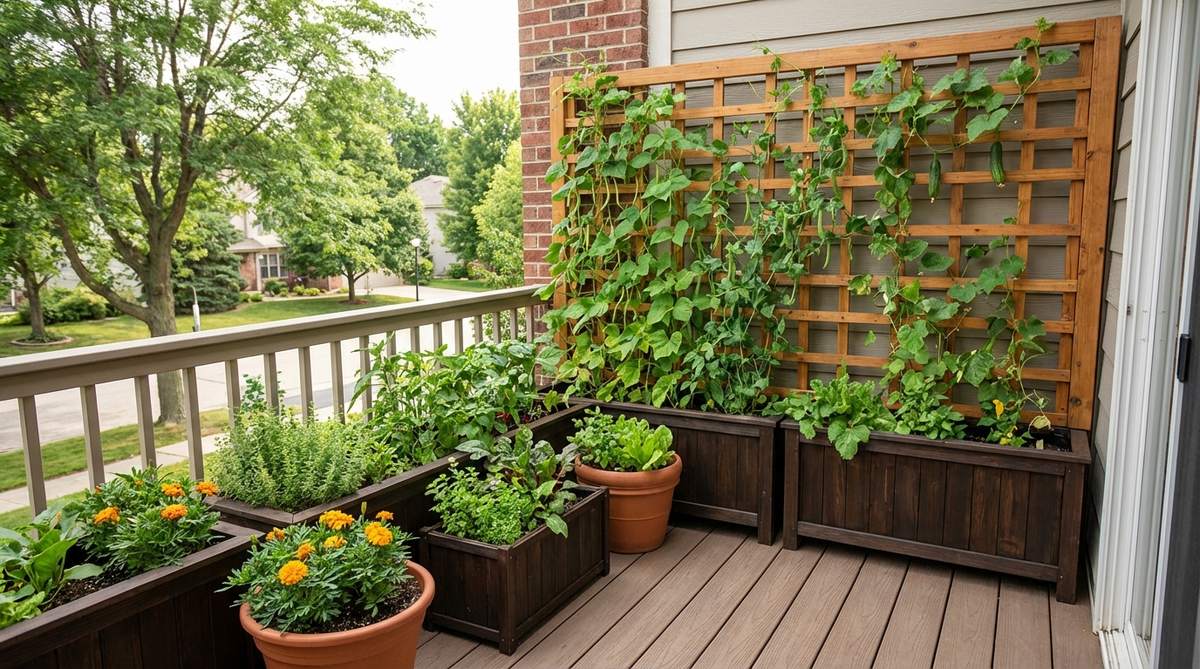
Floor planters paired with vertical trellis panels support climbing vegetables and flowering vines. The combination produces substantial yields from compact footprints as plants grow upward.
Train pole beans, peas, cucumbers, or morning glories up sturdy lattice frameworks. Ensure trellises attach securely to walls or self-support through weighted bases.
20. Hanging Chain Planters
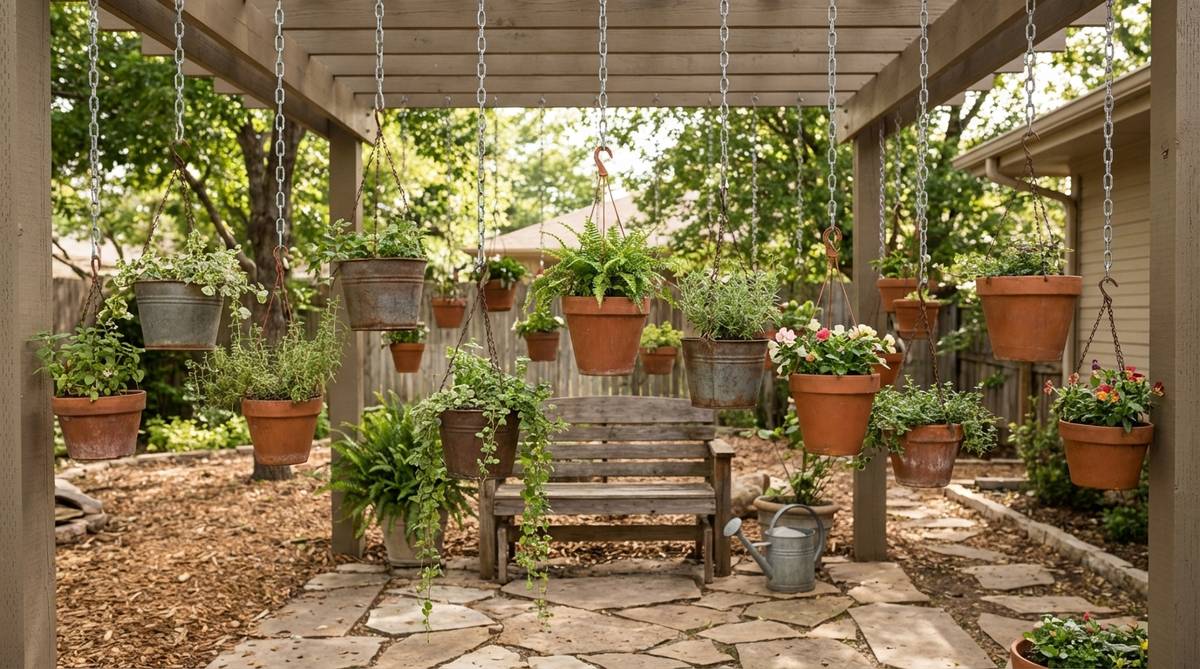
Suspended pots on adjustable chains create floating gardens at eye level. The hanging position improves drainage and deters ground-dwelling pests.
Stagger chain lengths to cascade plants at varied heights. Choose lightweight pots to minimize stress on ceiling hooks, and verify anchor points support at least 40 pounds.
21. Modular Wall Cubes
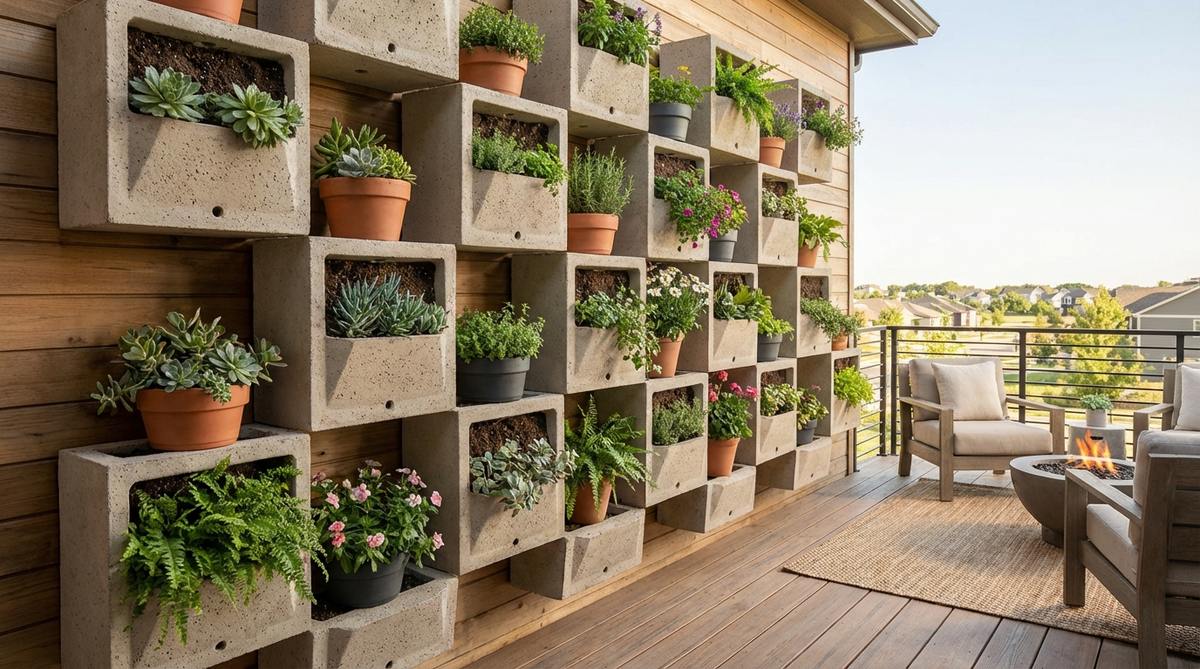
Interlocking box units attach to create custom configurations on walls. Each cube functions independently with its own soil chamber and drainage.
Arrange cubes in geometric patterns or organic clusters depending on architectural style. The modular approach allows seasonal rearrangement and easy replacement of individual units.
Window Box Styles for Classic Appeal
Traditional window boxes bring cottage garden charm to balconies while providing practical growing space. These elongated planters suit a range of plants from cascading flowers to compact vegetables.
22. Classic Charleston Boxes
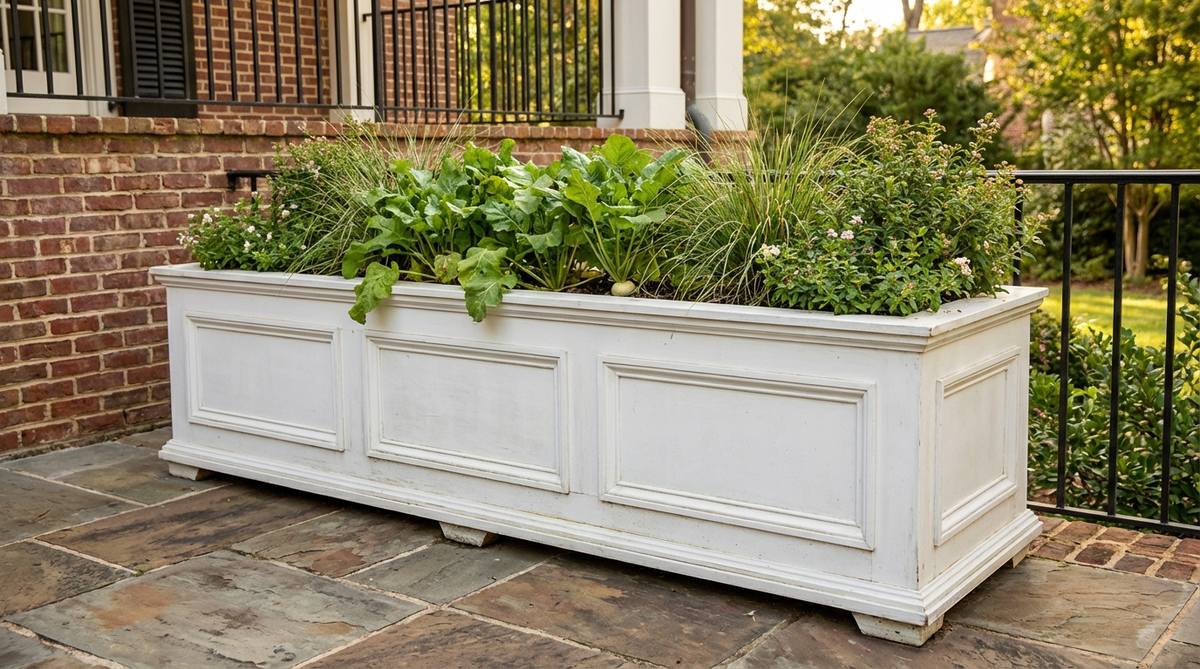
Deep rectangular planters with paneled facades evoke historic Southern architecture. The substantial depth accommodates root vegetables and larger ornamentals that struggle in shallow containers.
Mount Charleston-style boxes on balcony railings or position them on the floor along walls. The formal appearance pairs well with traditional home exteriors.
23. Modern Minimalist Troughs
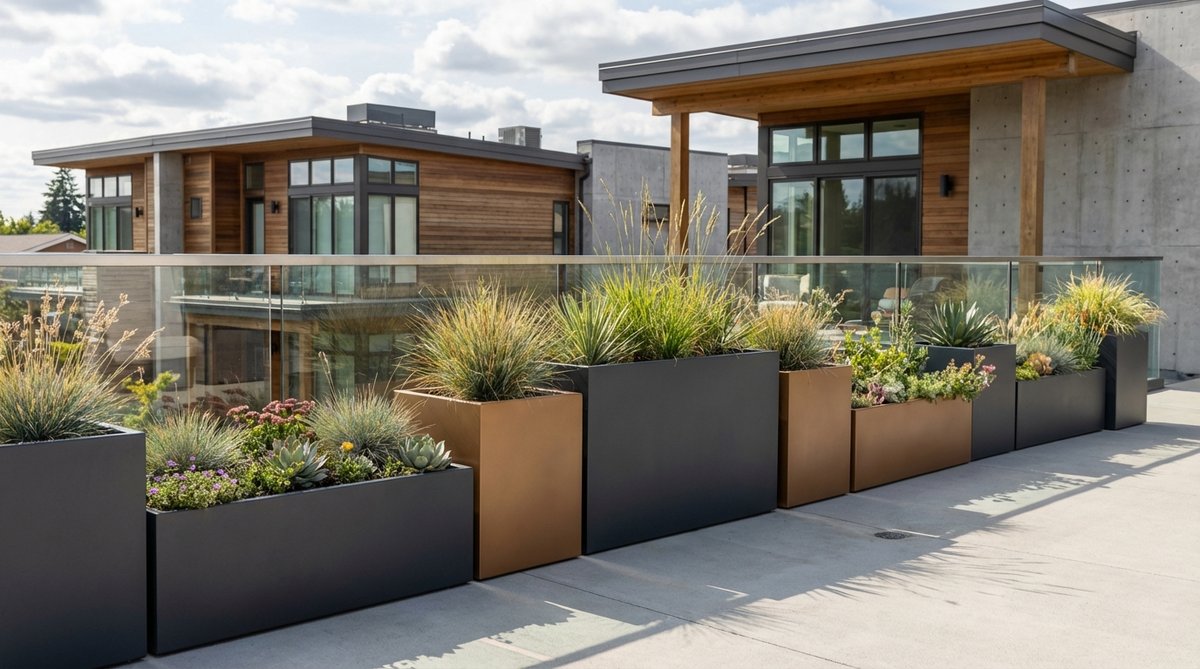
Clean-lined boxes with smooth surfaces complement contemporary architecture. Powder-coated aluminum or fiberglass construction keeps weight minimal while providing weather resistance.
Choose neutral colors like charcoal, white, or bronze to blend with modern building materials. The simple form focuses attention on plant selection rather than container decoration.
24. Scalloped-Edge Planters
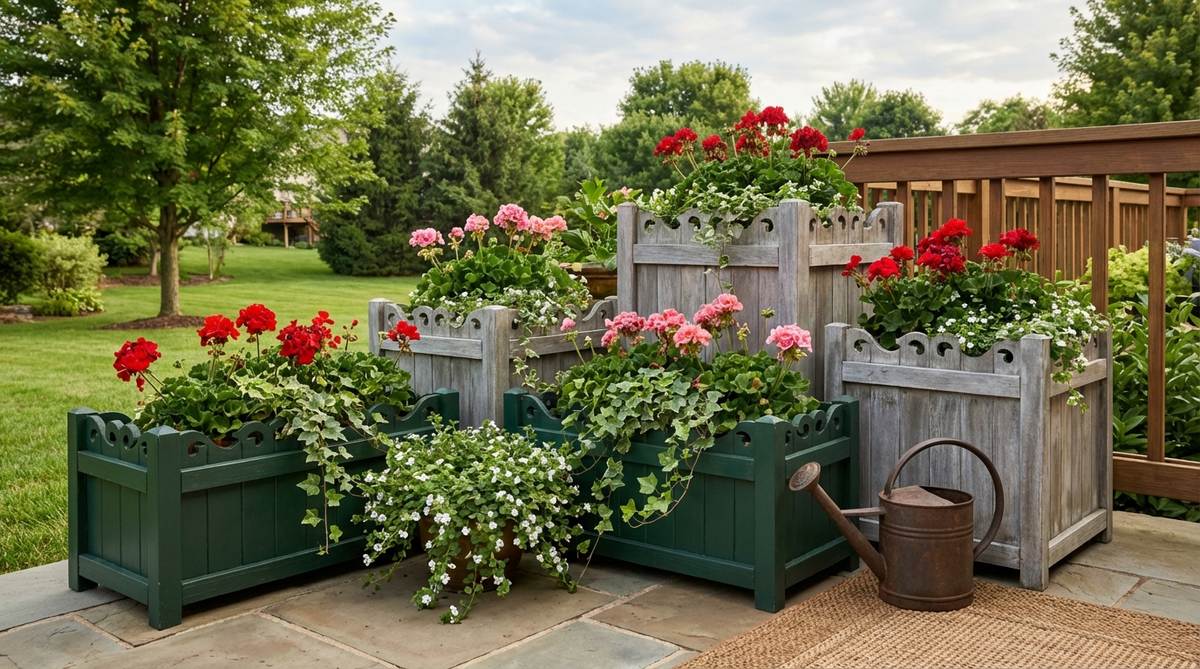
Decorative cutouts along the top rim add Victorian-era elegance to balcony gardens. The curved edges soften rectangular geometry while maintaining structural strength.
Paint scalloped boxes in period-appropriate colors or leave natural wood to weather into silver-gray patina. Plant traditional combinations like geraniums with trailing ivy.
25. European Zinc Window Boxes
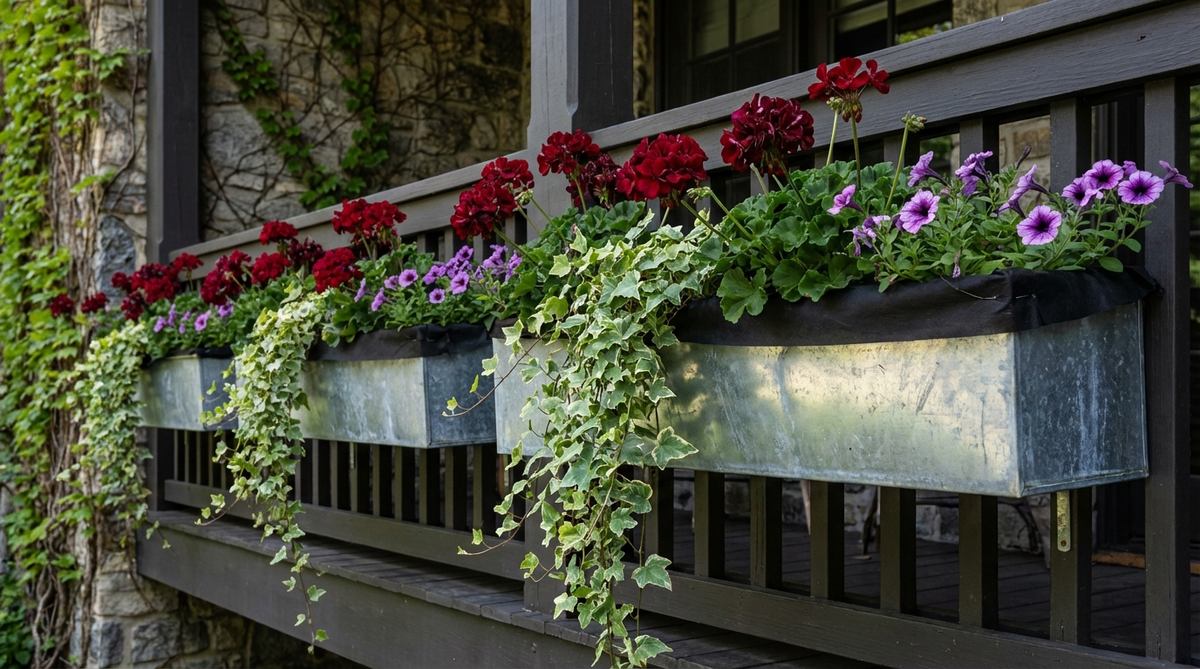
Galvanized metal planters develop a distinguished oxidized finish over time. The material conducts heat, warming soil earlier in spring for extended growing seasons.
Line zinc boxes with landscape fabric to prevent direct root contact with hot metal during summer. The reflective surface brightens shaded balconies.
Tiered Designs for Multi-Level Planting
Stacked or stepped planters create dimensional displays that showcase plants at varying heights. The tiered approach improves light access for lower plants while adding architectural interest.
26. Three-Level Stair-Step Boxes
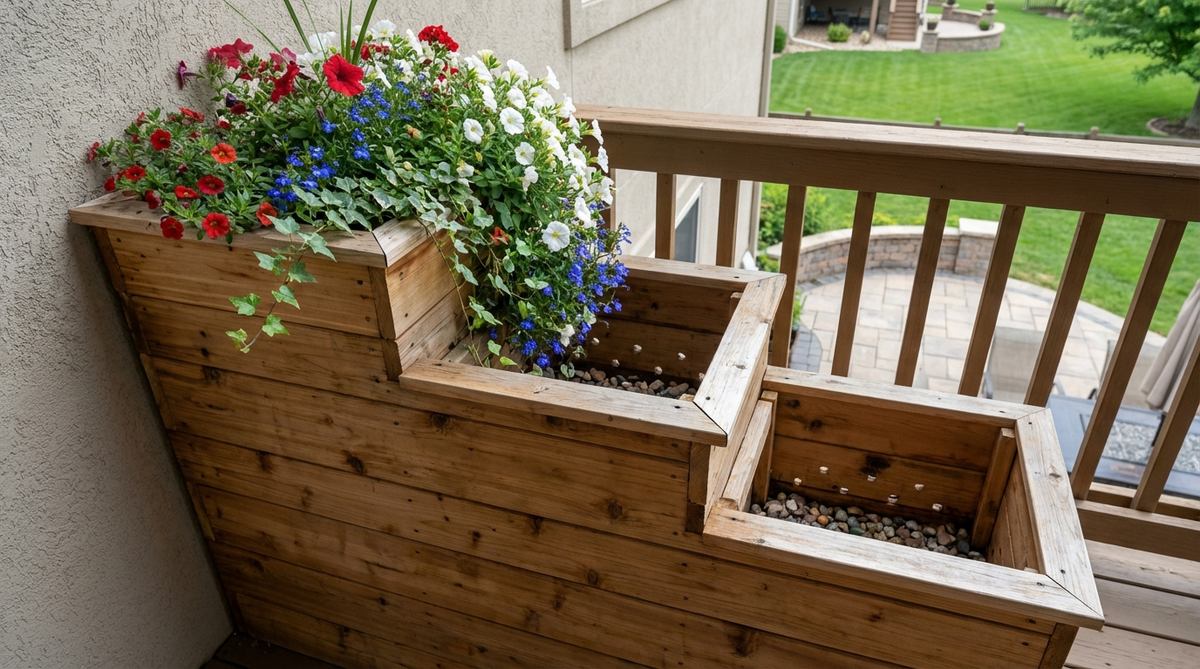
Descending planters form a staircase profile with each level offset from the one above. The configuration provides distinct zones for plants with different water and nutrient requirements.
Build frames from 1×4 cedar boards with plywood bottoms, drilling generous drainage holes. Plant cascading flowers on top tiers to flow downward across lower levels.
Position the tallest level at the back to maintain sightlines across the entire arrangement.
27. Pyramid Tower Planters
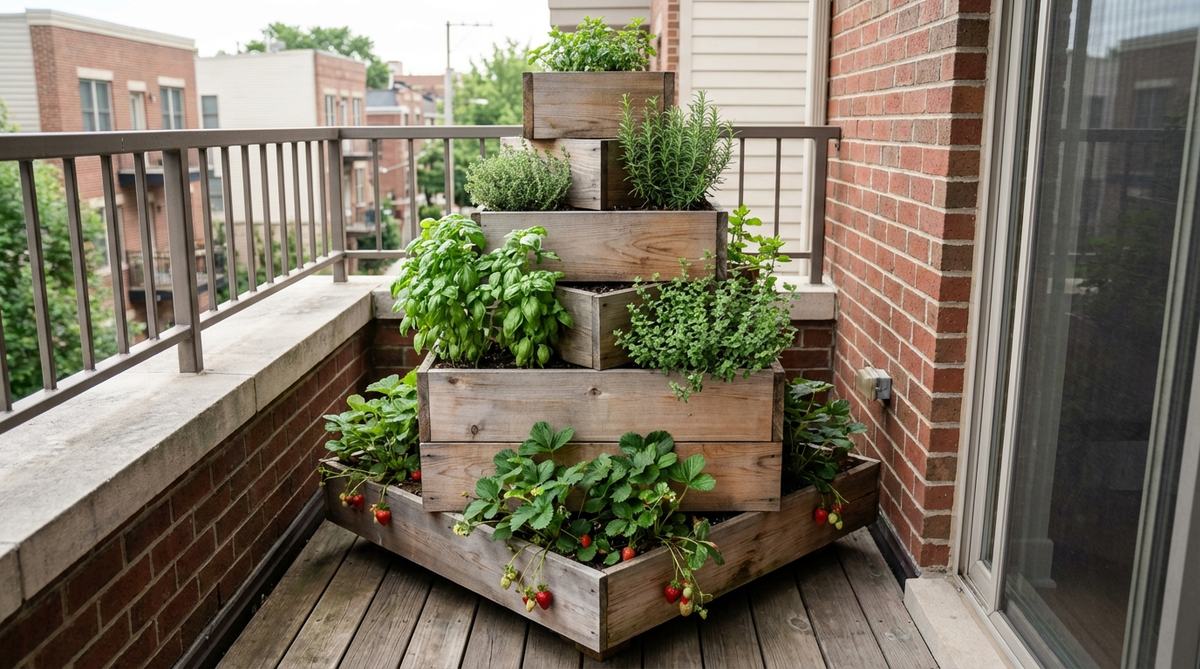
Square boxes decrease in size as they stack upward, creating a pyramid silhouette. Each level rotates 45 degrees to the one below for maximum light penetration.
The stable base supports considerable weight while the tapered form prevents top-heaviness. Plant herbs or strawberries in stacked configurations for vertical kitchen gardens.
28. Waterfall Cascade Planters
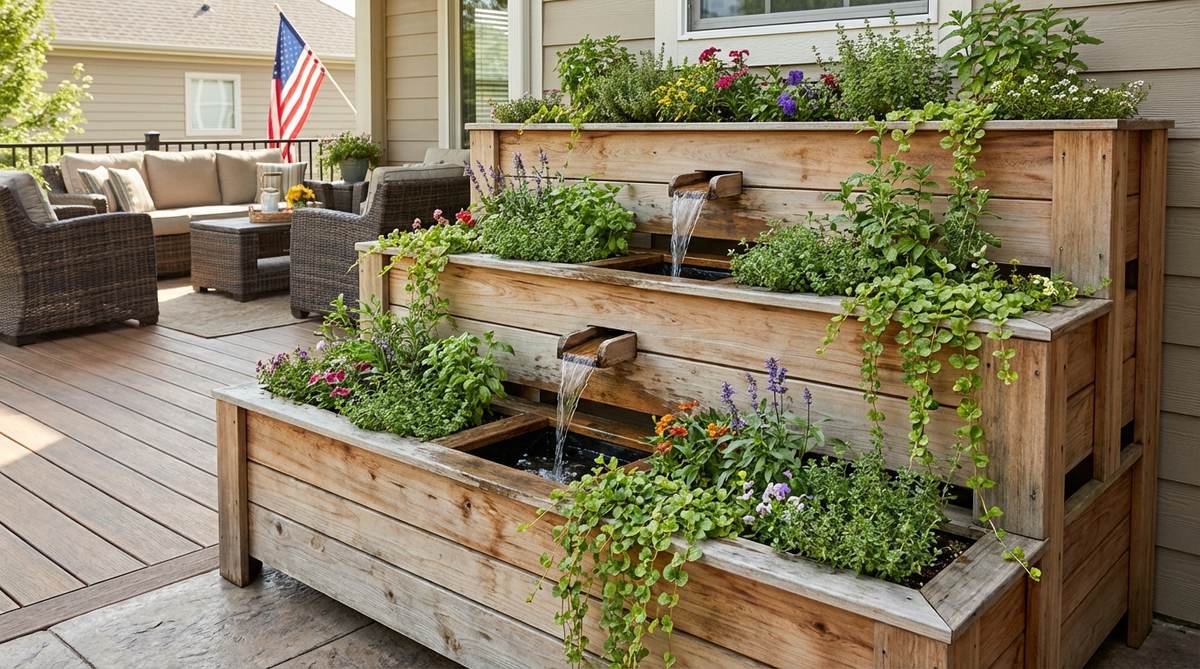
Connected tiers allow water to overflow from upper to lower levels, creating visual movement. The overflow system ensures thorough watering of all plants simultaneously.
Install these planters where drainage runoff won’t damage flooring or bother neighbors. The flowing water adds soothing sound to balcony environments.
29. Fence-Mounted Tier Boxes
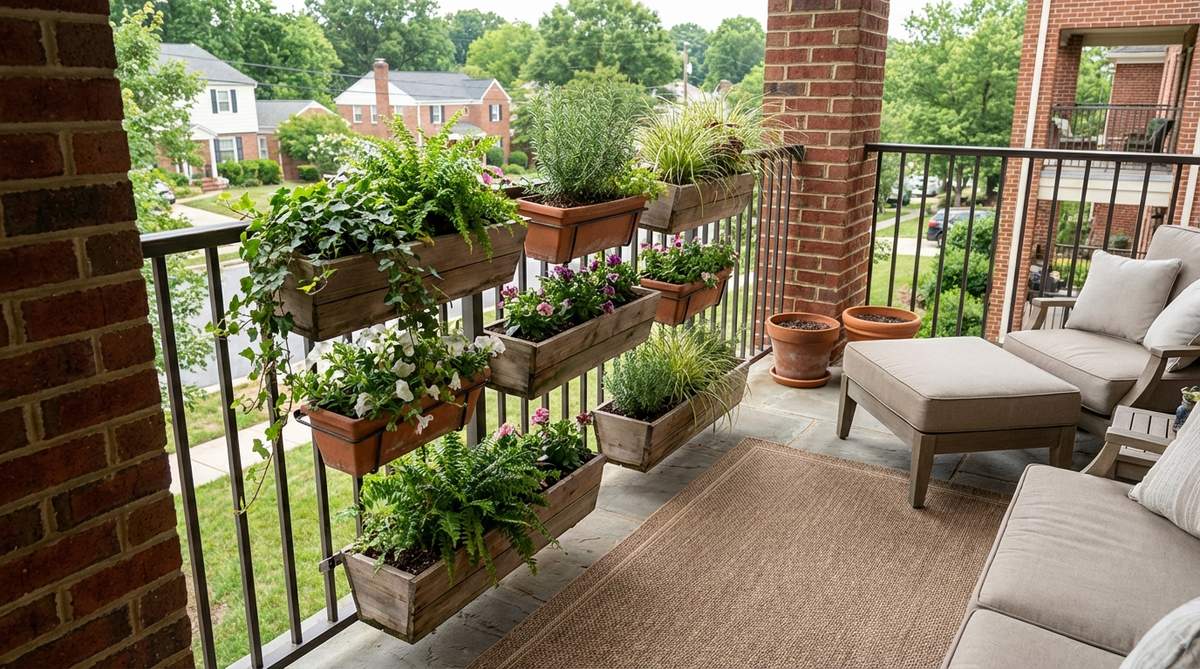
Graduated planters attach to balcony walls or privacy screens at ascending heights. The wall-mounted approach frees floor space while creating vertical gardens.
Space tiers 10 to 14 inches apart vertically to accommodate mature plant heights without crowding. Use french cleats or heavy-duty brackets for secure mounting.
Material-Specific Options for Every Climate
Container materials directly impact durability, weight, and plant health. Selecting appropriate materials for your climate and balcony conditions ensures long-term gardening success.
30. Cedar Planter Boxes
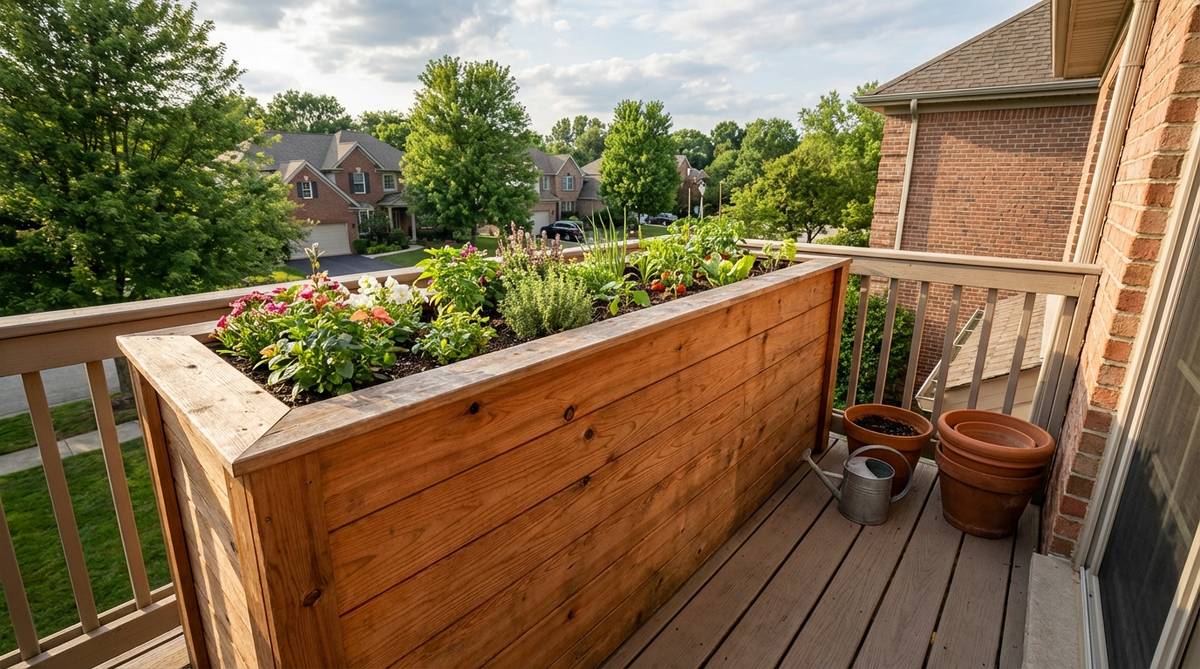
Western red cedar contains natural oils that resist rot and insect damage without chemical treatment. The wood weathers to attractive silver-gray unless sealed with exterior finish.
Cedar’s lightweight nature suits balconies with weight restrictions. The material insulates roots from temperature swings better than metal alternatives.
Build custom sizes using standard lumber dimensions, joining corners with stainless steel screws to prevent rust staining.
31. Galvanized Steel Beds
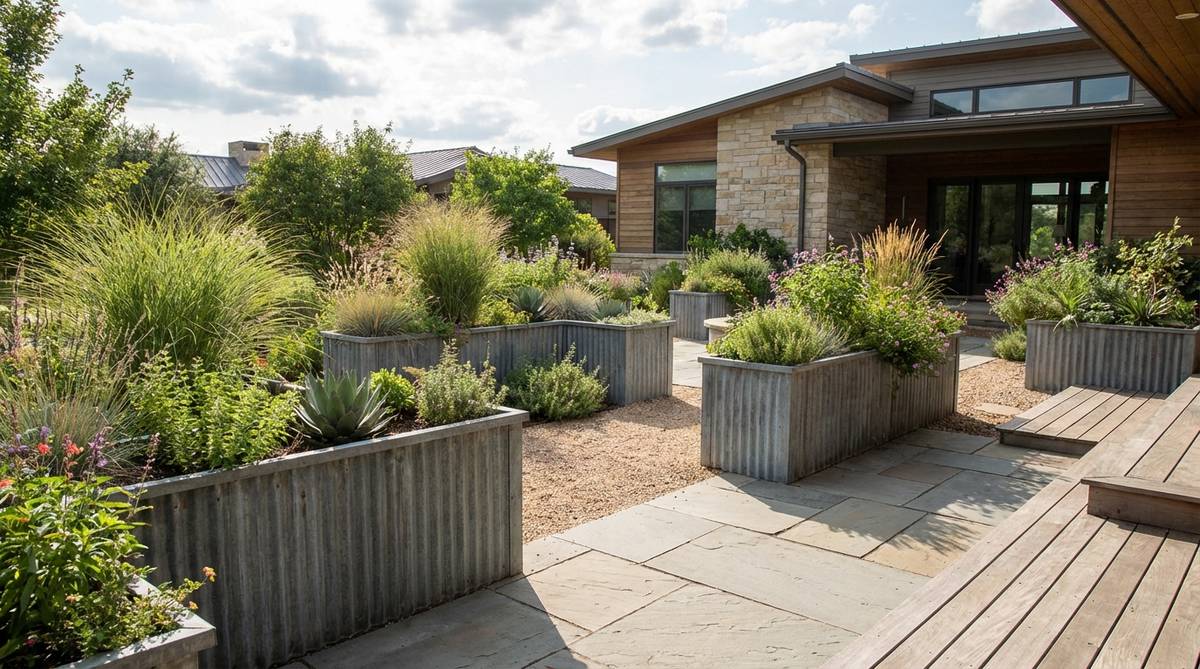
Corrugated metal panels formed into planter boxes offer industrial aesthetics and decades-long durability. The zinc coating prevents rust while conducting heat to warm soil.
Choose rounded edge designs to eliminate sharp corners that pose safety hazards. The material suits modern architecture and high-wind locations.
32. Composite Woodcrete Planters
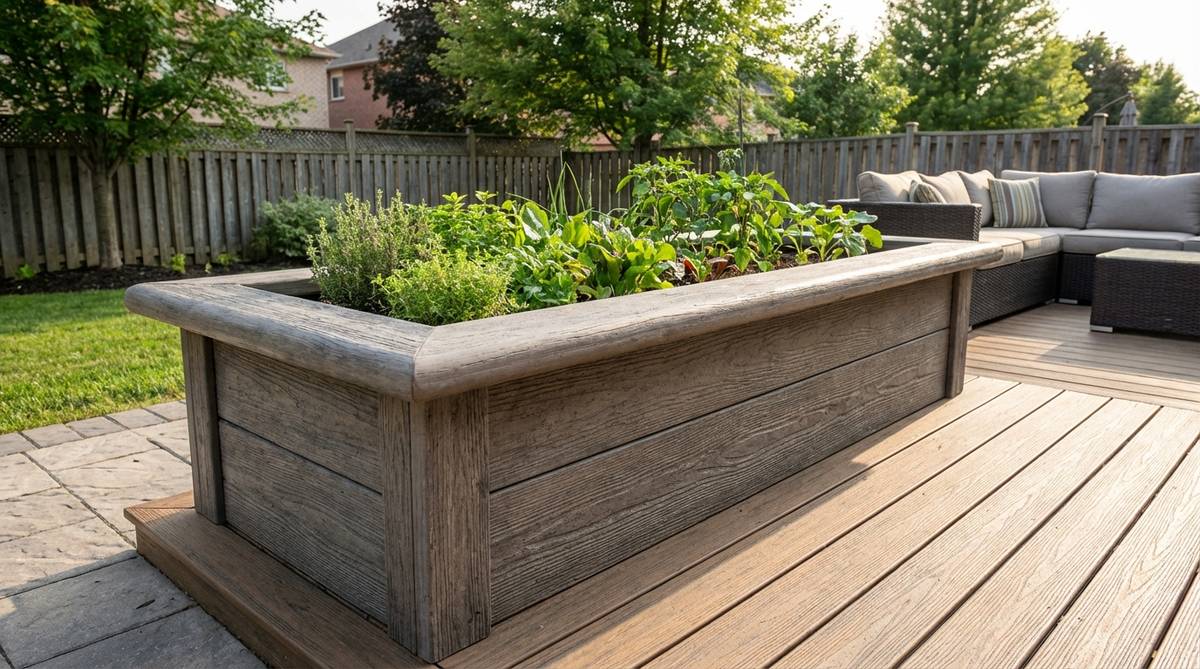
Recycled wood fibers mixed with cement create rot-proof planters that mimic wood’s appearance. The composite material resists warping, splitting, and fading while supporting food-safe gardening.
Woodcrete planters last 20 to 30 years with minimal maintenance. The wide rims provide comfortable seating edges during garden tasks.
33. Fiberglass Resin Containers
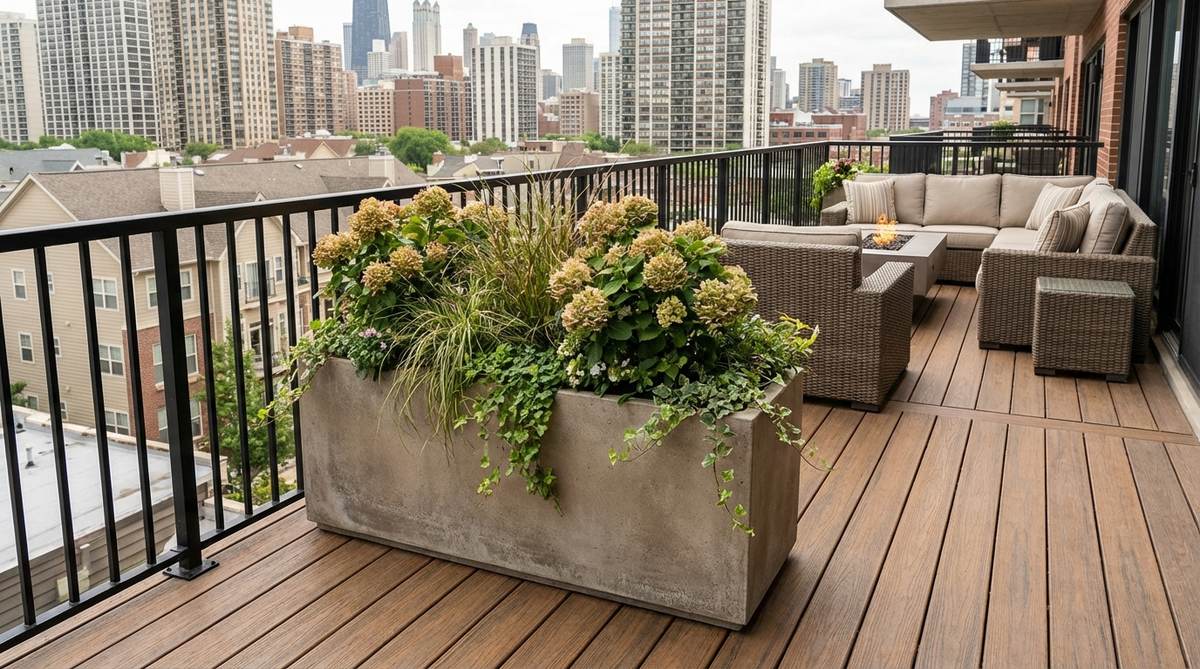
Molded resin planters replicate the appearance of stone, ceramic, or wood at a fraction of the weight. The non-porous surface prevents moisture absorption that causes cracking.
Select UV-stabilized versions to prevent color fading in direct sun. The material suits high-rise balconies where weight capacity limits container choices.
34. Terracotta Clay Pots
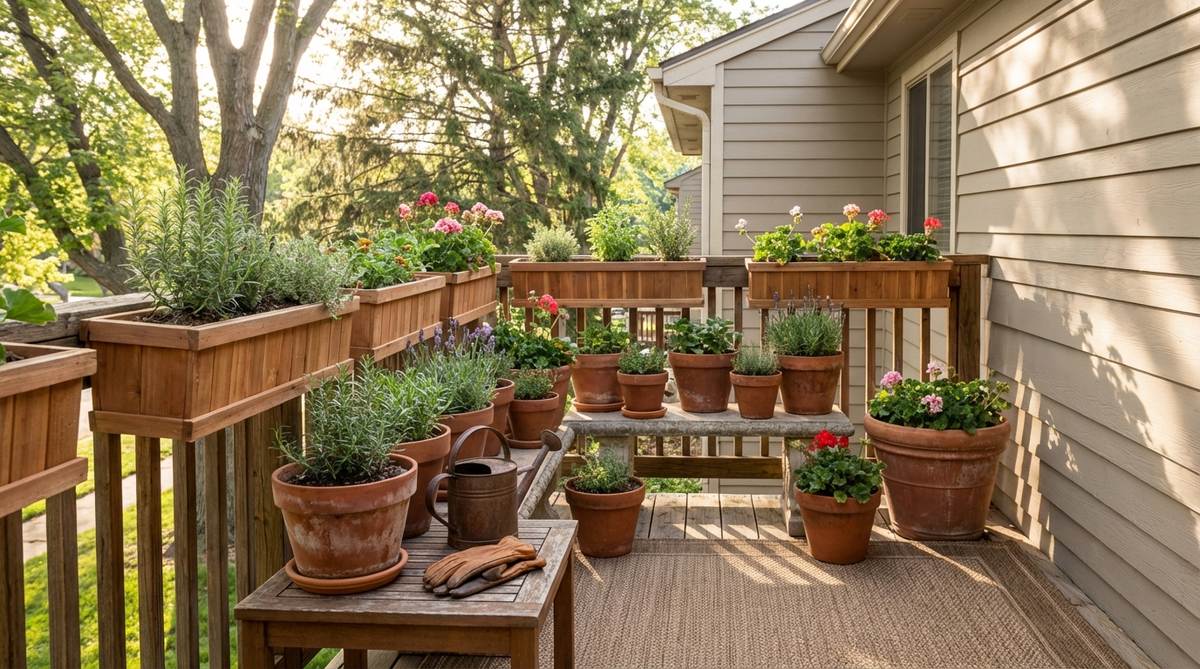
Traditional fired clay breathes moisture through porous walls, preventing oversaturation. The earthy tone complements Mediterranean and rustic design schemes.
Seal interior surfaces in humid climates to slow water evaporation. Store terracotta pots indoors during freeze-thaw cycles to prevent cracking.
35. Fabric Grow Bags
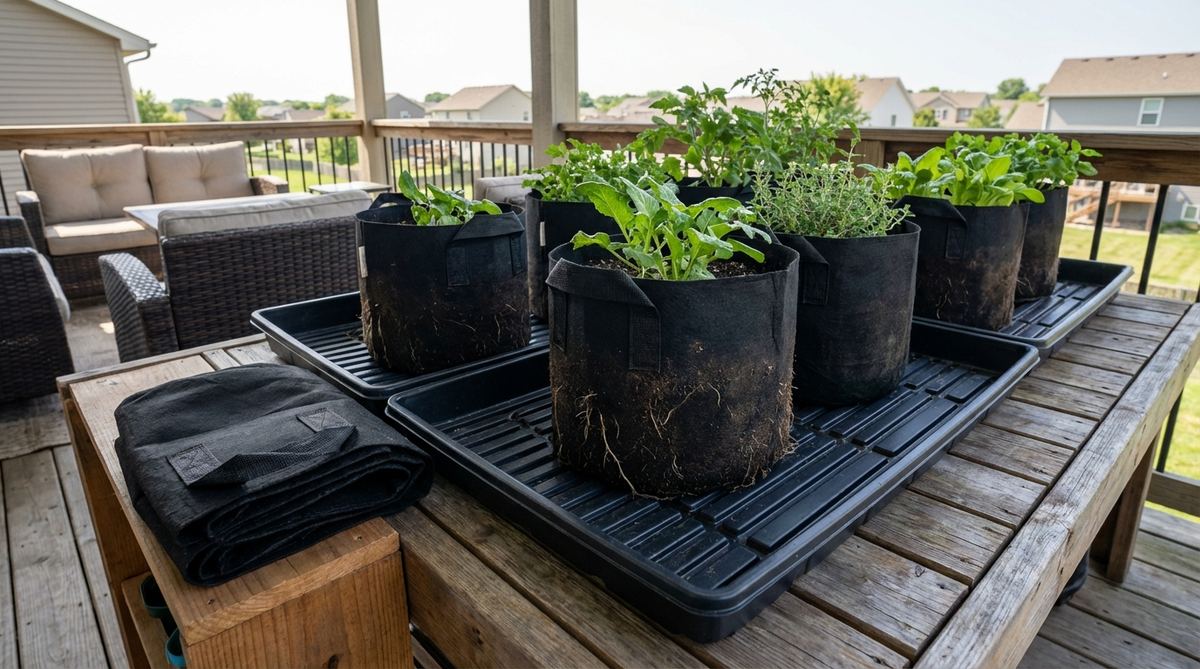
Breathable textile containers promote air pruning of roots, preventing circling that stunts growth. The collapsible bags store flat during off-seasons.
Place fabric bags on trays to catch drainage and protect balcony surfaces. The permeable material requires more frequent watering than solid-walled containers.
Specialty Planters for Unique Growing Needs
Specialized container designs address specific challenges like limited sun, restricted access, or particular plant requirements. These innovative solutions expand what you can grow on balconies.
36. Rolling Mobile Garden Carts
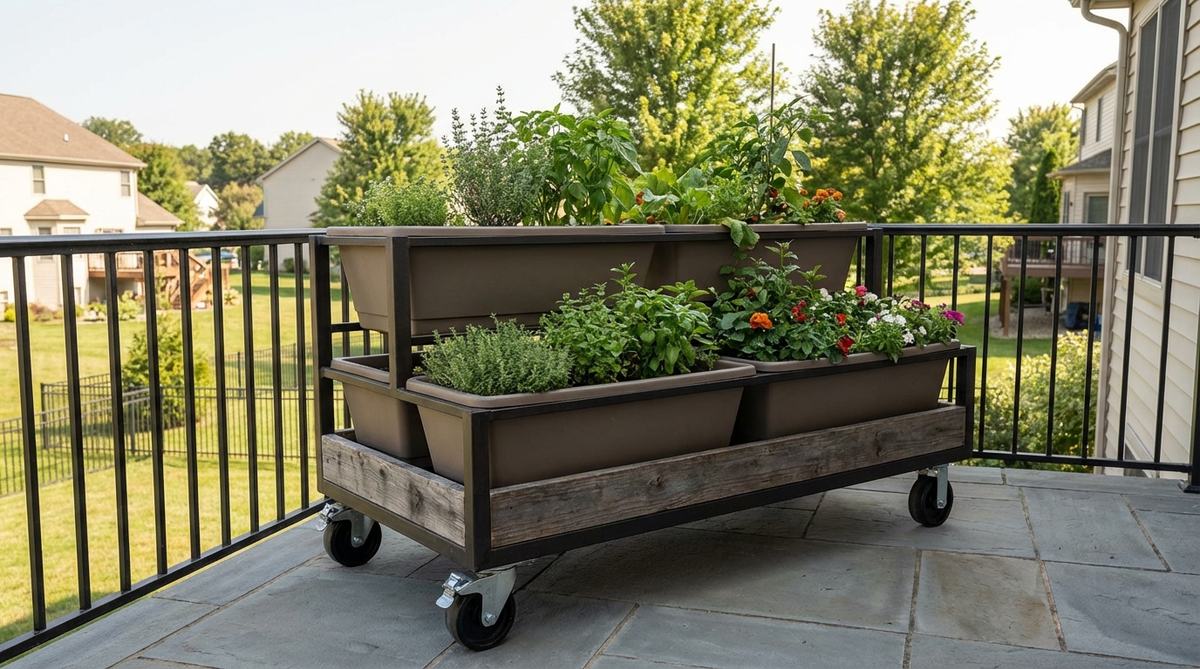
Planters mounted on heavy-duty casters move easily to track sunlight or shelter from storms. The mobility suits balconies with changing sun patterns throughout the day.
Lock wheels during windy conditions to prevent rolling. Choose carts with deep bins for vegetables that require substantial soil volume.
37. Heated Winter Planters
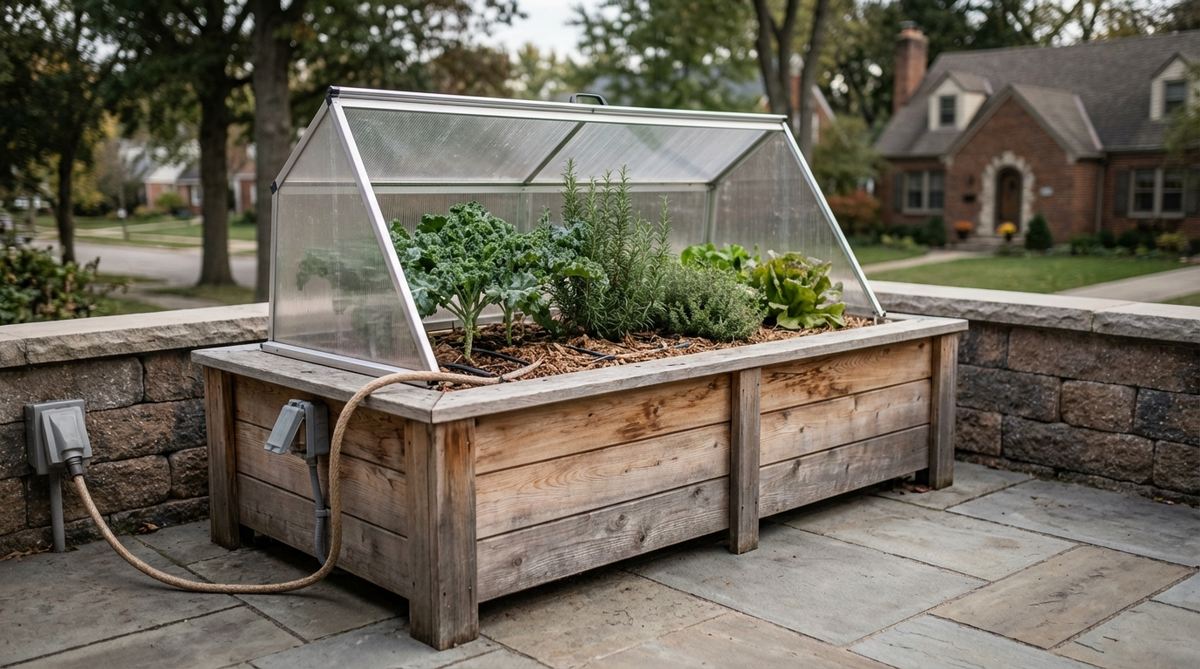
Insulated boxes with optional heating cables extend growing seasons into cold months. The controlled environment protects cold-hardy vegetables and evergreen ornamentals from freeze damage.
Use thermostatic controls to activate heating only when temperatures drop below threshold levels. The system allows year-round herb harvests in northern climates.
38. Salad Table Planters
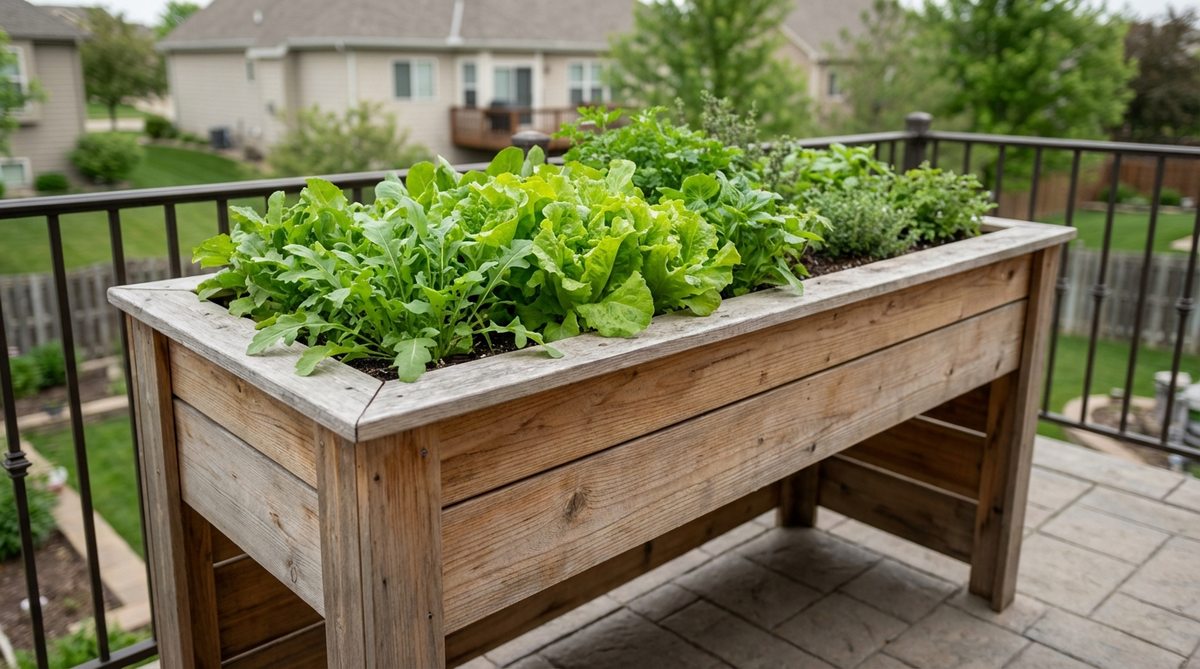
Waist-height table frames with shallow growing beds reduce bending during planting and harvest. The ergonomic design suits gardeners with mobility limitations.
Plant continuous successions of lettuce, arugula, and greens in table beds. The raised position improves air circulation and deters slugs.
Conclusion
These balcony garden boxes demonstrate that limited space need not limit your gardening ambitions. By selecting planters suited to your balcony’s dimensions, sun exposure, and structural capacity, you create productive gardens that supply fresh herbs, vegetables, and flowers throughout the growing season. Start with a few railing-mounted boxes or corner planters to test your site’s conditions, then expand your container collection as you discover which designs work best for your specific situation.
Frequently Asked Questions
What weight can my balcony support for garden boxes?
Most residential balconies support 50 to 100 pounds per square foot, but verify your building’s specific load rating before installing planters. Saturated soil weighs approximately 75 pounds per cubic foot, so calculate combined weights of containers, soil, water, and mature plants. Distribute weight along structural beams rather than concentrating mass in one area, and position heavier planters near walls where balconies connect to buildings.
How do I prevent railing planters from damaging my balcony?
Install protective barriers between planters and railings using foam weather stripping, rubber pads, or cut pieces of landscape fabric. Choose mounting systems that distribute pressure across wide areas rather than concentrating stress on single points. For wooden railings, apply marine-grade sealant annually to prevent moisture damage, and inspect mounting brackets each spring for rust or loosening that requires adjustment.
Which plants work best in shallow balcony garden boxes?
Herbs like basil, cilantro, parsley, and thyme thrive in containers 6 to 8 inches deep. Lettuce, spinach, arugula, and other salad greens produce well in shallow boxes, as do radishes, green onions, and annual flowers like petunias and marigolds. Strawberries adapt to limited depth while still producing fruit, and succulents require minimal root space while offering drought tolerance.
How often should I water balcony garden pots?
Container gardens typically require daily watering during summer heat, as soil dries faster in above-ground planters than in-ground beds. Check moisture by inserting your finger two inches into soil; water when it feels dry at that depth. Self-watering planters reduce frequency to every three or four days, while small pots and hanging baskets may need twice-daily watering during peak summer. Morning watering allows foliage to dry before evening, reducing fungal disease risk.
Can I use regular garden soil in balcony planter boxes?
Use lightweight potting mix rather than garden soil in containers, as potting mix drains better and weighs substantially less. Garden soil compacts in containers, restricting oxygen to roots and creating drainage problems. Quality potting mixes contain peat moss or coir, perlite or vermiculite for drainage, and controlled-release fertilizers. For vegetables and heavy feeders, choose mixes labeled for edibles with higher nutrient content.