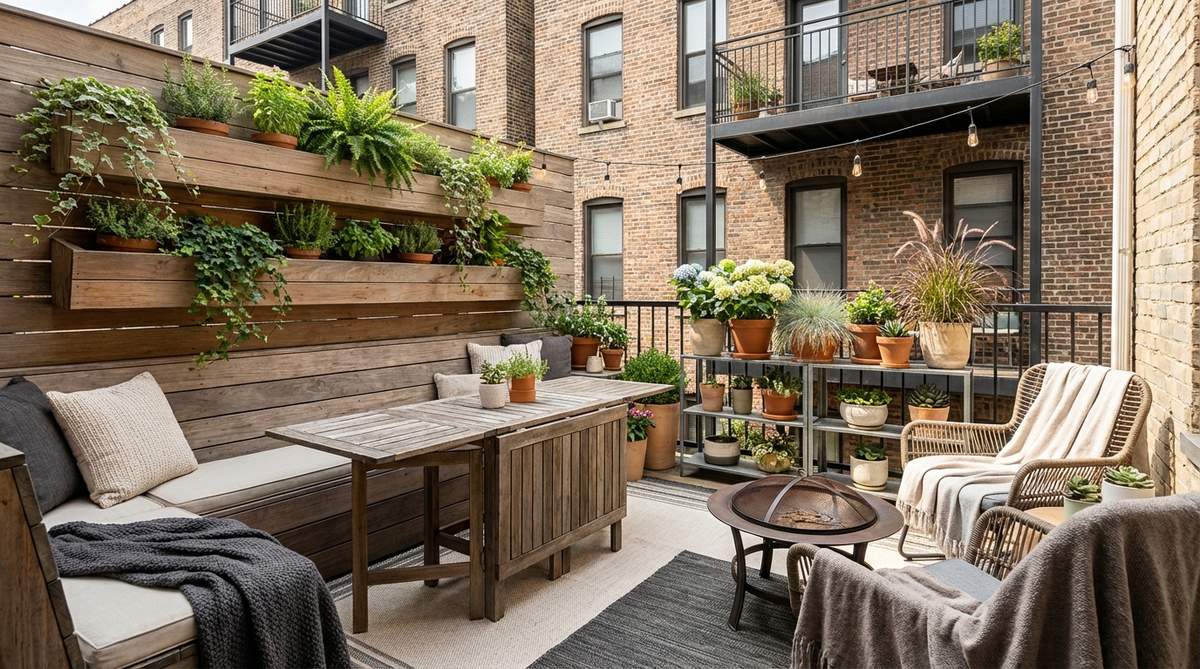
Transforming a small balcony decor from overlooked square footage into a functional outdoor sanctuary requires strategic planning and creative execution. Whether you manage a compact 40-square-foot urban balcony or a slightly larger apartment terrace, the principles remain consistentmaximize vertical space, choose multi-functional furniture, and layer textures to create visual depth. Fresh Garden Ideas brings you expert-vetted concepts that address the unique challenges apartment dwellers face—weight restrictions, rental-friendly installations, and limited floor area—while delivering magazine-worthy results.
Design SnapshotKey Principles
- Vertical Integration: Utilize wall-mounted systems and hanging elements to preserve floor space while adding greenery and storage
- Scale Appropriateness: Select furniture proportional to your square footage—oversized pieces in micro-spaces create claustrophobia, not luxury
- Layered Lighting: Combine ambient string lights with task-focused lanterns to extend usability into evening hours
- Weather Resilience: Prioritize UV-resistant fabrics, powder-coated metals, and sealed wood to minimize maintenance cycles
Space-Saving Furniture Solutions For Small Balcony Decor
Furniture selection determines whether your balcony feels cramped or curated. Designers prioritize pieces that fold, stack, or serve dual purposes to accommodate both daily use and spatial flexibility.
1. Bistro Café Sets
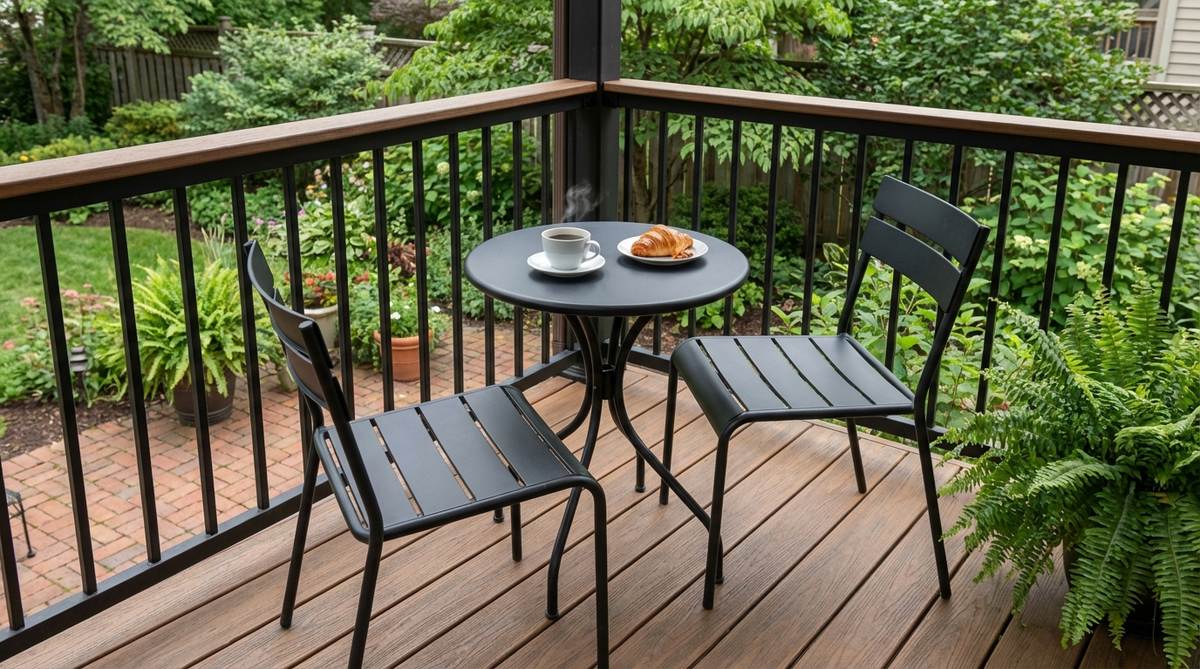
A two-chair café table creates an intimate dining zone without overwhelming narrow balconies. Steel frames in powder-coated finishes withstand humidity better than painted alternatives.
Position the set near the railing to maintain clearance for the door swing. Opt for slatted tabletops that allow rainwater drainage rather than solid surfaces that pool moisture.
This configuration supports morning coffee rituals and casual meals while requiring only 4-6 square feet of floor space.
2. Folding Wall-Mounted Tables
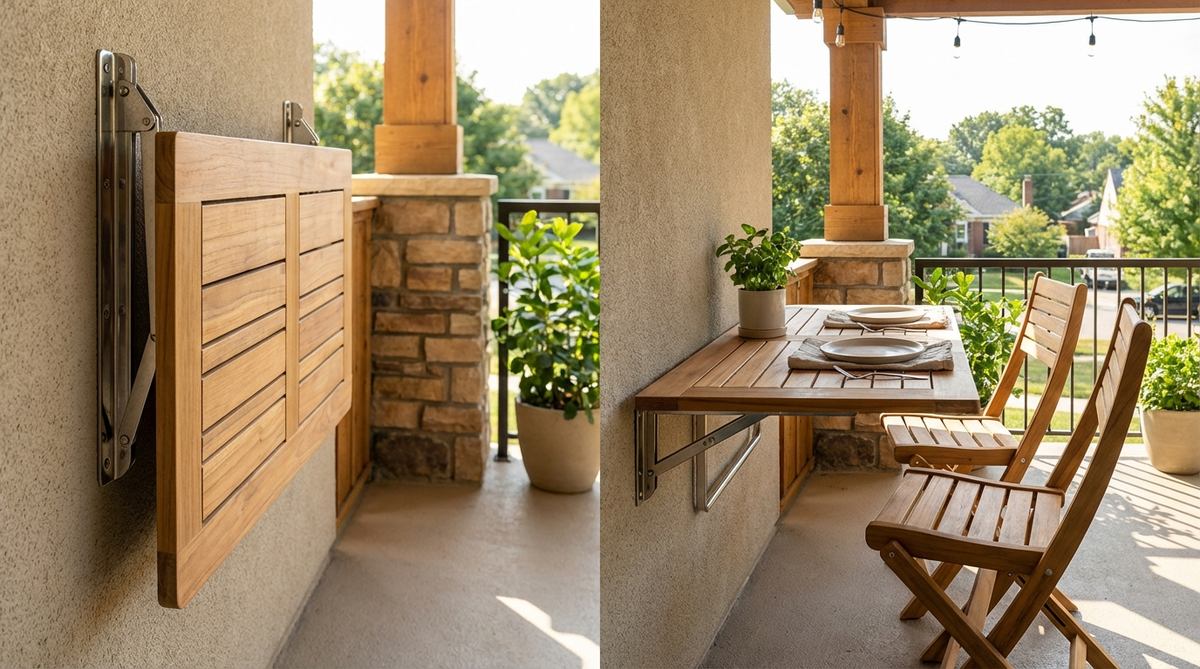
Wall-mounted drop-leaf tables attach directly to balcony walls, folding flat when not in use. Teak and acacia wood options deliver natural warmth while handling outdoor exposure.
Install at standard dining height (30 inches) with marine-grade stainless steel brackets rated for outdoor conditions. Pair with folding chairs stored indoors between uses.
This setup converts dead wall space into functional dining for two, then disappears to restore full floor access.
3. Stackable Resin Chairs
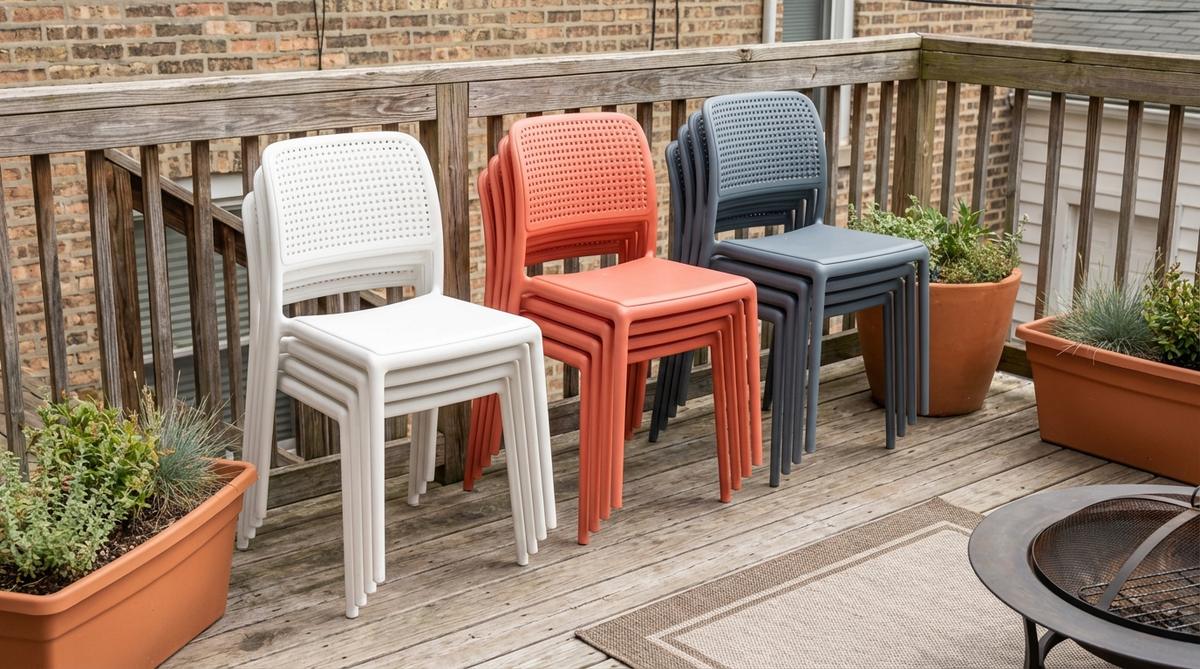
Contemporary resin chairs stack vertically for off-season storage while offering surprising style range. Modern designs feature contoured backs and fade-resistant pigments embedded throughout the material.
Choose chairs rated for 250+ pound capacity with UV stabilizers to prevent brittleness. Stack no more than six units high to maintain stability.
4. Compact Sectional Sofas
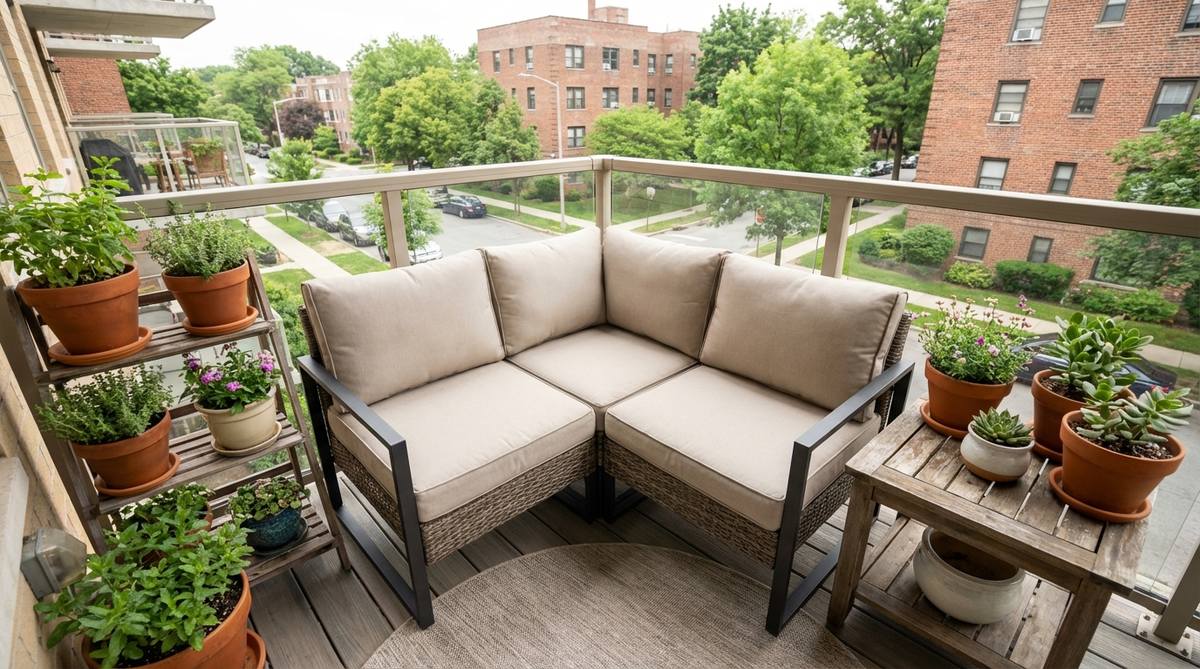
Weather-resistant sectionals scaled for small spaces provide lounge seating without custom built-ins. Modular two-piece configurations adapt to corner layouts or inline arrangements.
Select all-weather wicker with aluminum frames and quick-dry foam cushions covered in solution-dyed acrylic. Measure your balcony precisely—allow 30-36 inches of clearance for walkways.
This approach maximizes seating capacity for entertaining while maintaining a cohesive aesthetic.
5. Nested Side Tables
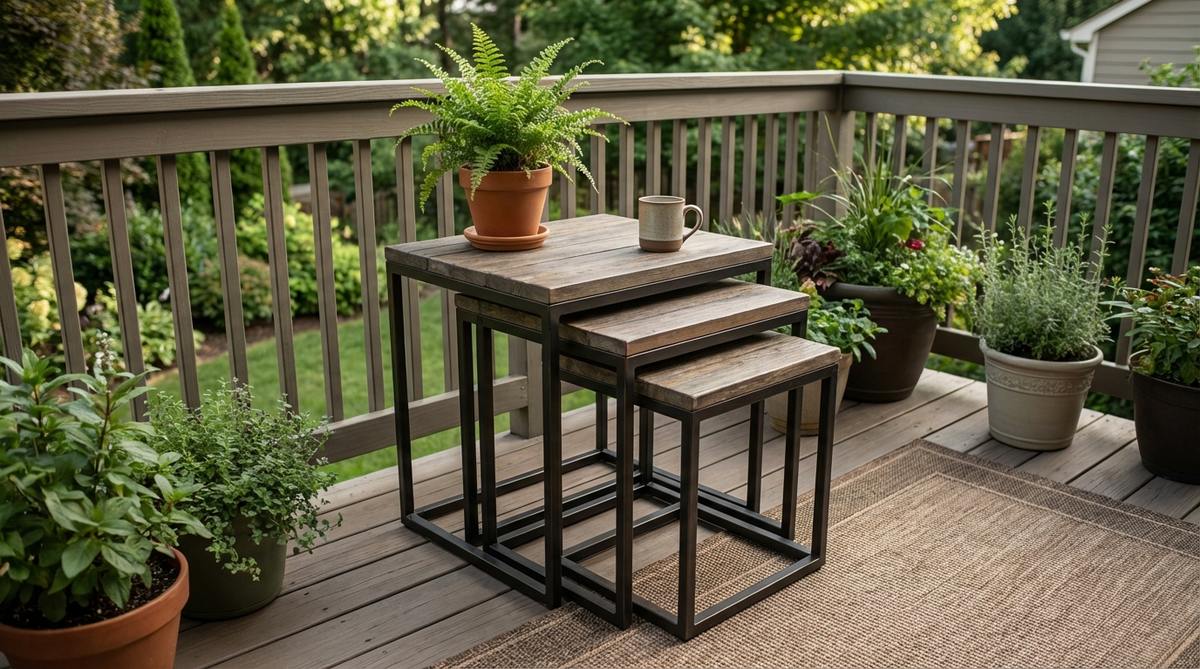
Three-piece nesting table sets store compactly, with smaller tables sliding beneath larger ones. Metal and wood combinations add material contrast to monochromatic schemes.
Deploy individual tables as plant stands or surfaces for drinks, then consolidate them when floor space is needed for other activities.
6. Storage Benches
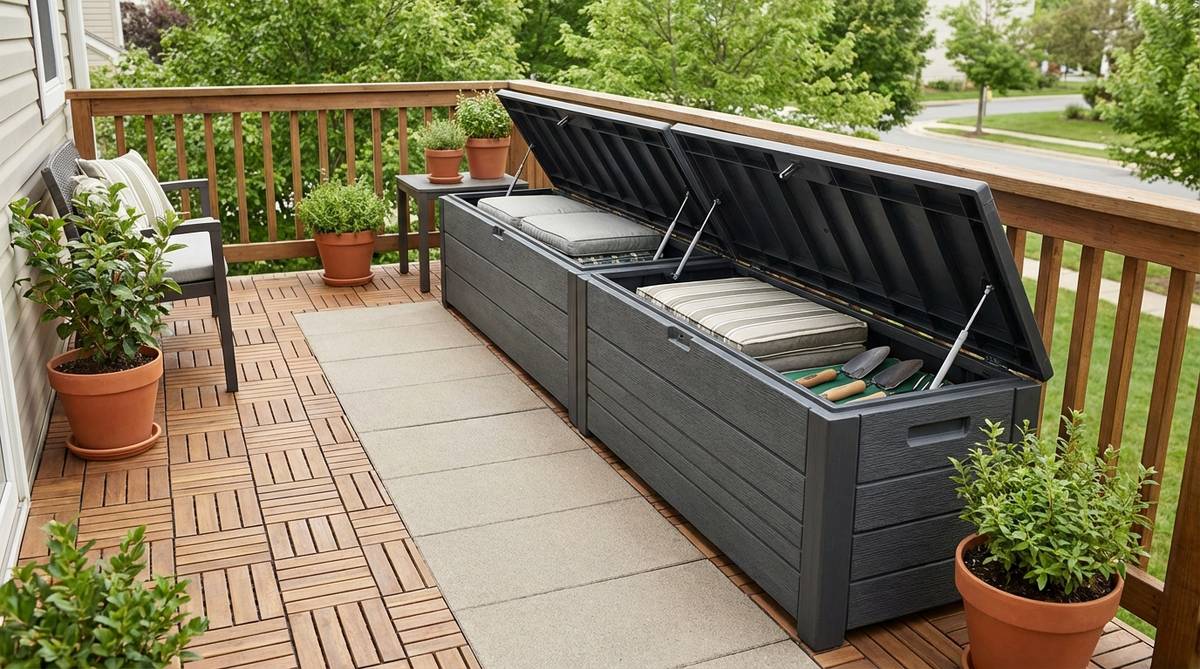
Dual-purpose benches provide seating atop waterproof storage compartments. These units house cushions, garden tools, or outdoor toys between seasons.
Opt for resin construction with gas-lift hinges for easy access. Position along the railing line to define the seating zone while keeping the center path clear.
Storage capacity ranges from 50-120 gallons depending on bench length, eliminating the need for additional storage solutions.
7. Hanging Egg Chairs
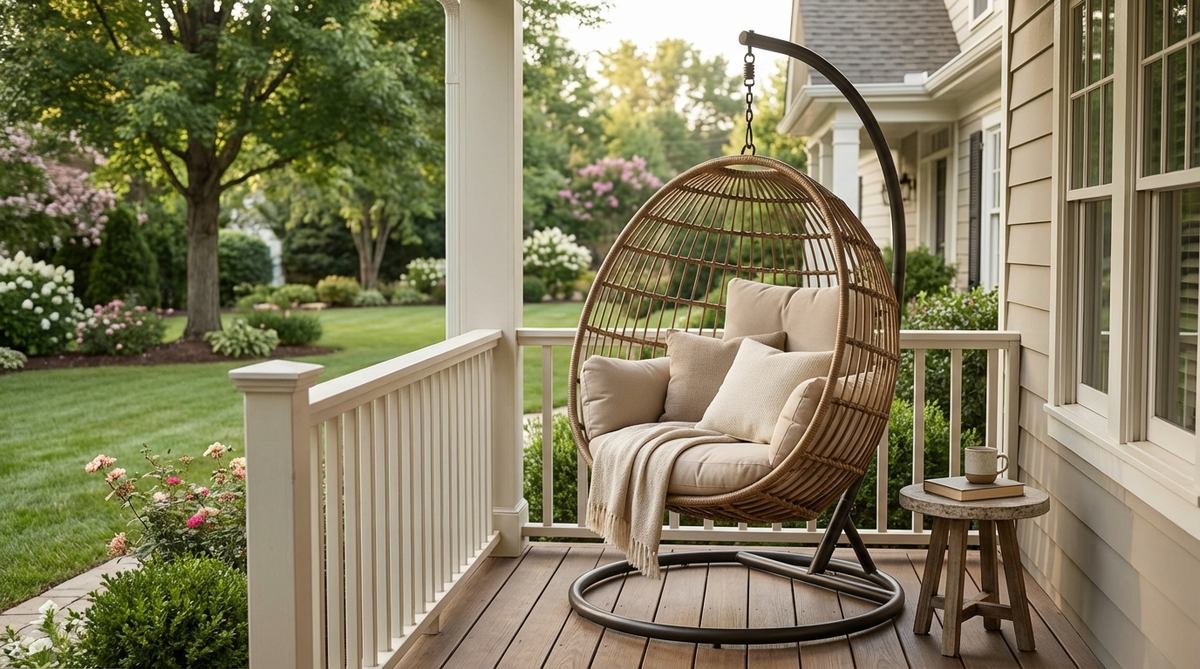
Suspended rattan egg chairs create focal points while consuming minimal floor space. The chair hangs from a freestanding C-frame stand rather than ceiling anchors.
Verify your balcony’s weight capacity before installation—most stands plus occupant total 350-400 pounds. Add weather-resistant cushions in coordinating patterns.
This statement piece transforms corners into cozy reading nooks without permanent modifications ideal for renters.
8. Bar-Height Rail Tables
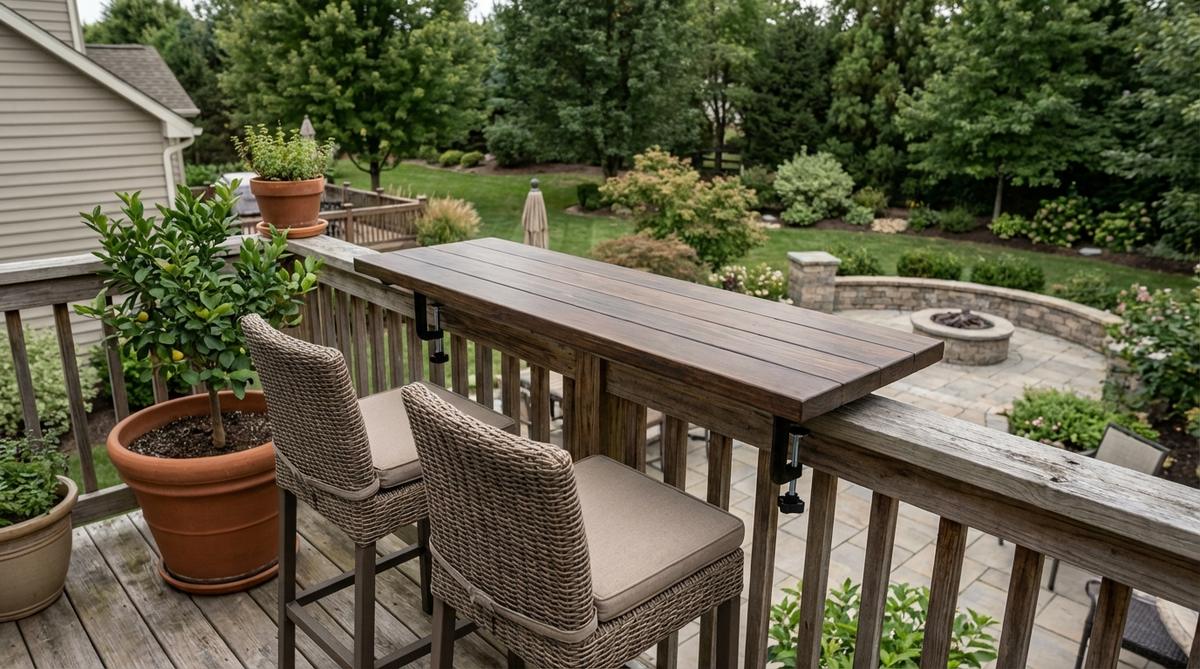
Railing-mounted tables clamp onto standard balcony rails, creating elevated surfaces for dining or drinks. Adjustable designs accommodate various rail widths and shapes.
Install tables with tool-free clamps that tighten with wing nuts. Choose weather-resistant bamboo or composite materials that won’t warp.
This configuration works particularly well for balconies with premium views, positioning diners to face outward rather than across a table.
9. Ottoman Poufs
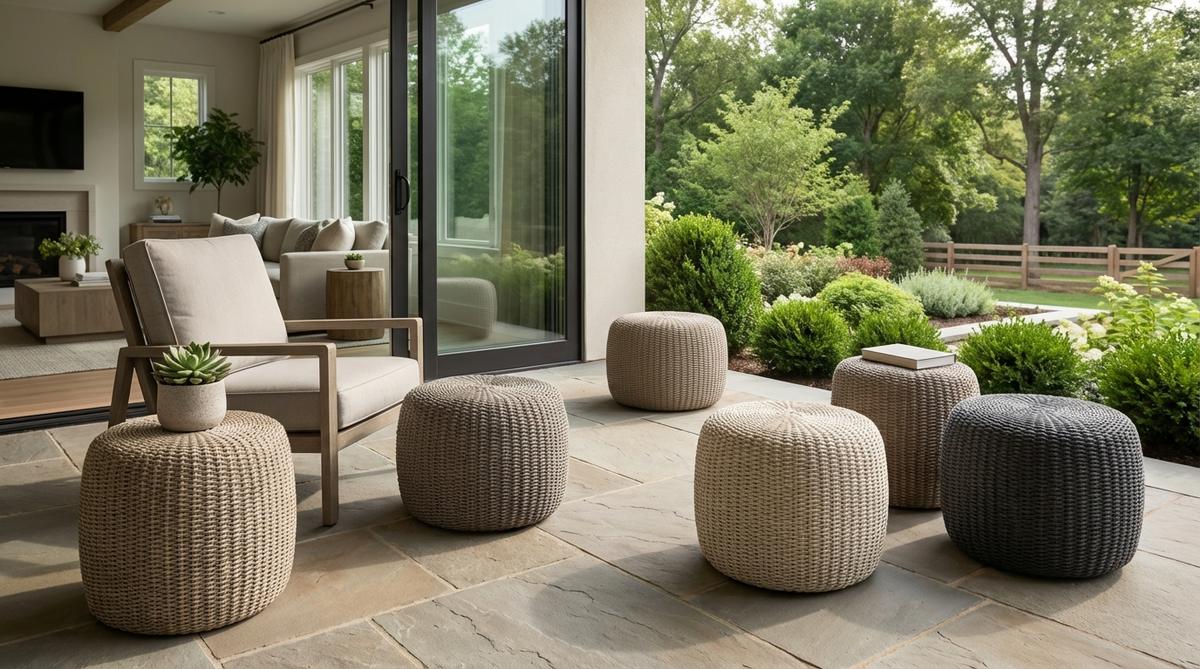
Indoor-outdoor poufs function as footrests, extra seating, or mobile side tables. Synthetic fiber weaves resist mildew while maintaining soft texture.
Select poufs filled with recycled polystyrene beads that conform to body shape. Their lightweight construction allows easy repositioning.
10. Director’s Chairs
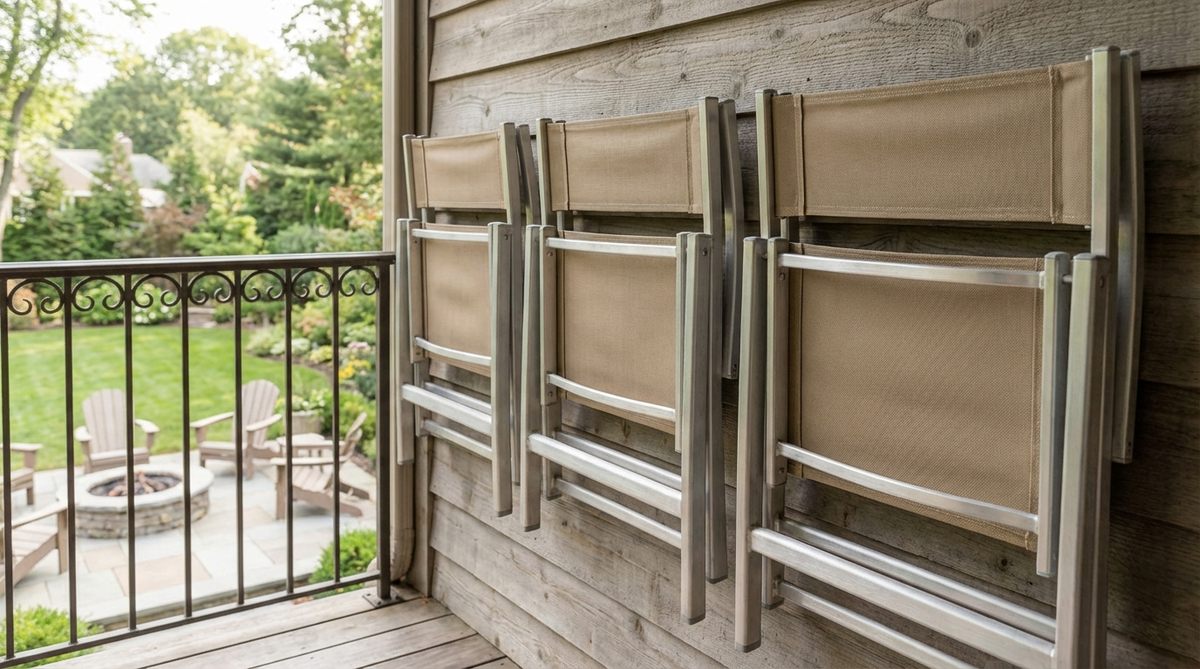
Classic director’s chairs fold flat for storage while offering upright seating with back support. Modern versions feature aluminum frames and replaceable canvas slings.
Choose fade-resistant Sunbrella canvas that removes for machine washing. The folded profile stores in closets just 4 inches deep.
This traditional design suits both contemporary and eclectic aesthetics depending on fabric selection.
Vertical Garden Systems For Tiny Balcony Decor
Vertical gardening solves the fundamental challenge of small balconieslimited horizontal space. These systems transform bare walls into productive growing zones or lush privacy screens.
11. Modular Wall Planters
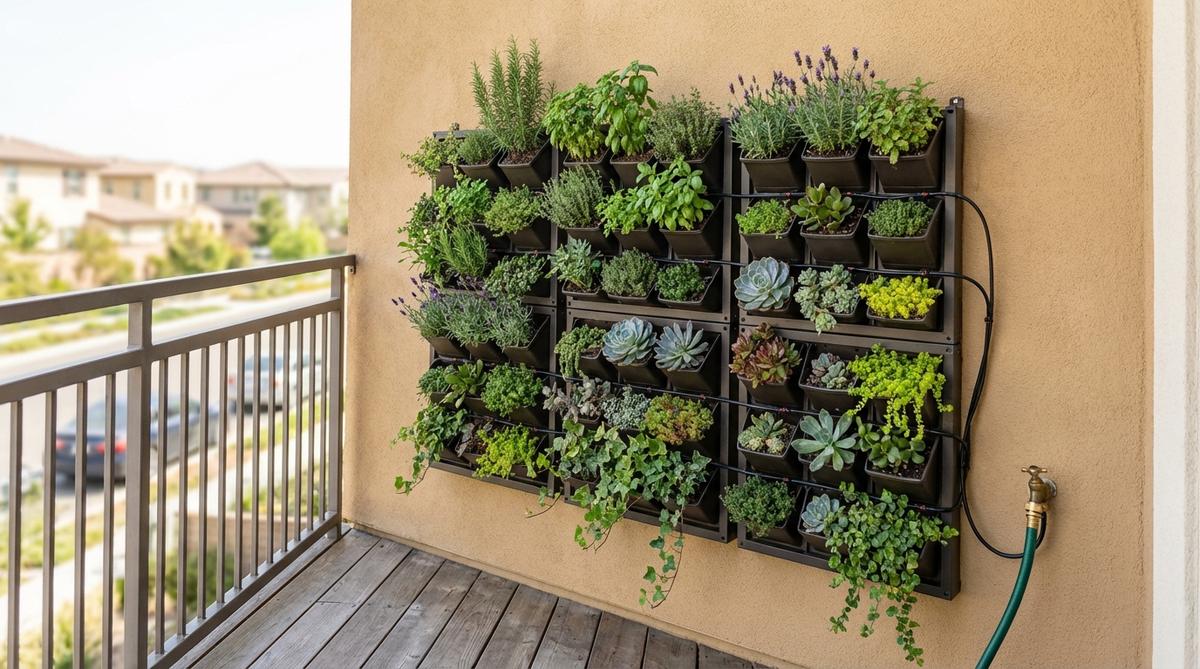
Interlocking wall planter grids mount to exterior walls using minimal hardware. Each module contains individual cells for herbs, succulents, or trailing plants.
Install at eye level for easy maintenance access. Drip irrigation kits integrate into the back panel, connecting to outdoor faucets or gravity-fed reservoirs.
This system supports 12-20 plants in the footprint of a single traditional pot, dramatically increasing growing capacity.
12. Pallet Gardens
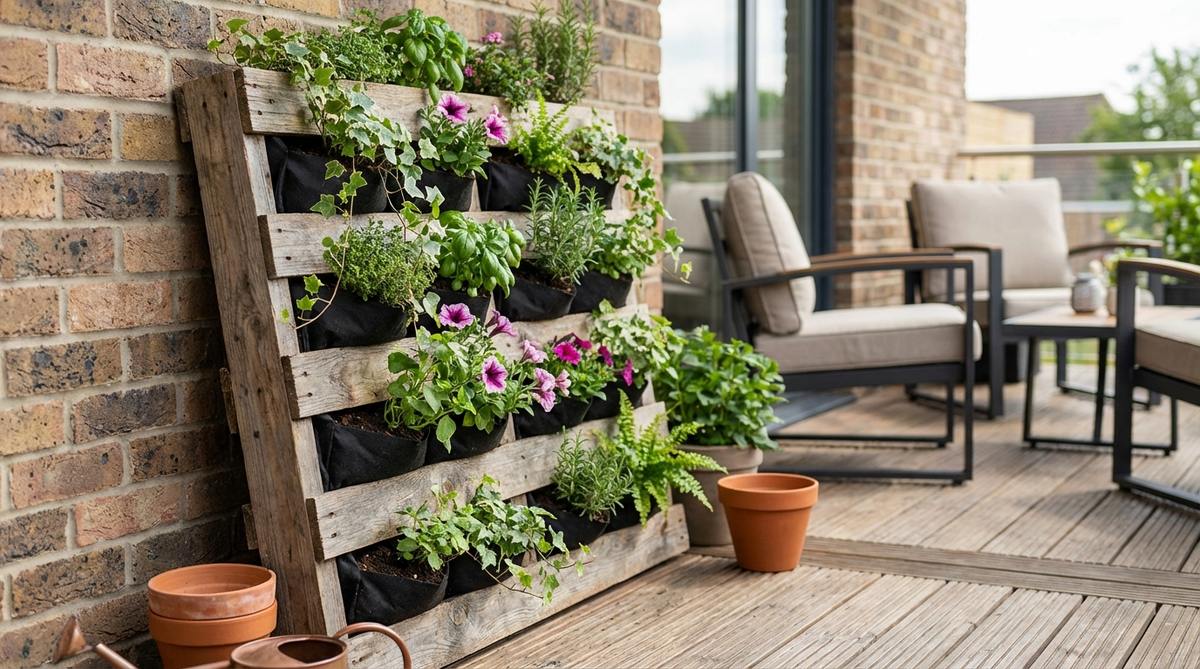
Reclaimed shipping pallets convert into rustic vertical planters with minimal modification. Sand and seal the wood, then attach landscape fabric to the back and sides to create planting pockets.
Lean the pallet at a 45-degree angle against the wall for stability, or mount it vertically with L-brackets. Fill pockets with potting mix and insert transplants.
This budget-friendly DIY project costs under $30 in materials while adding reclaimed character to modern spaces.
13. Trellis Systems
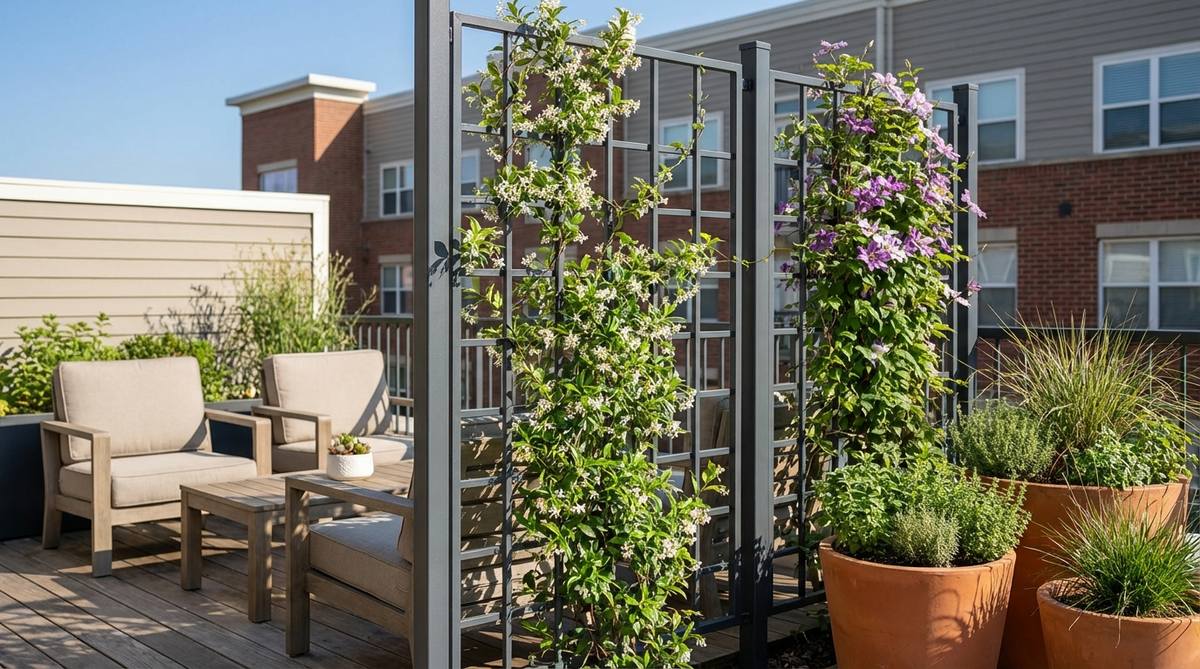
Freestanding or wall-mounted trellises provide structure for climbing plants like jasmine, clematis, or edible peas. Powder-coated steel grids offer durability with contemporary lines.
Position trellises to define zones—use them as dividers between seating and planting areas. Train vines horizontally to maximize coverage.
Within one growing season, flowering vines create living privacy screens that filter light while maintaining airflow.
14. Hanging Gutter Planters
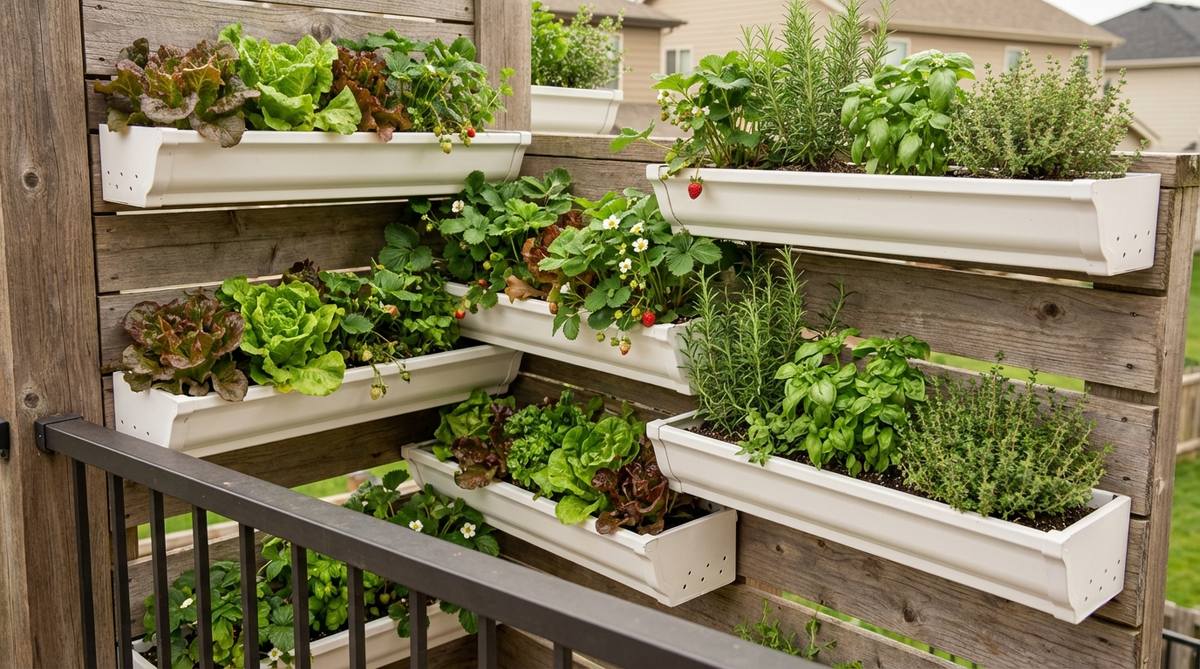
Repurposed vinyl gutters mount horizontally on walls as linear planters. End caps seal the channels, and drainage holes prevent waterlogging.
Install multiple rows at staggered heights to create cascading displays. These work exceptionally well for shallow-rooted plants like lettuce, strawberries, and herbs.
The linear format maximizes planting length in narrow balconies where traditional pots won’t fit.
15. Pocket Planter Walls
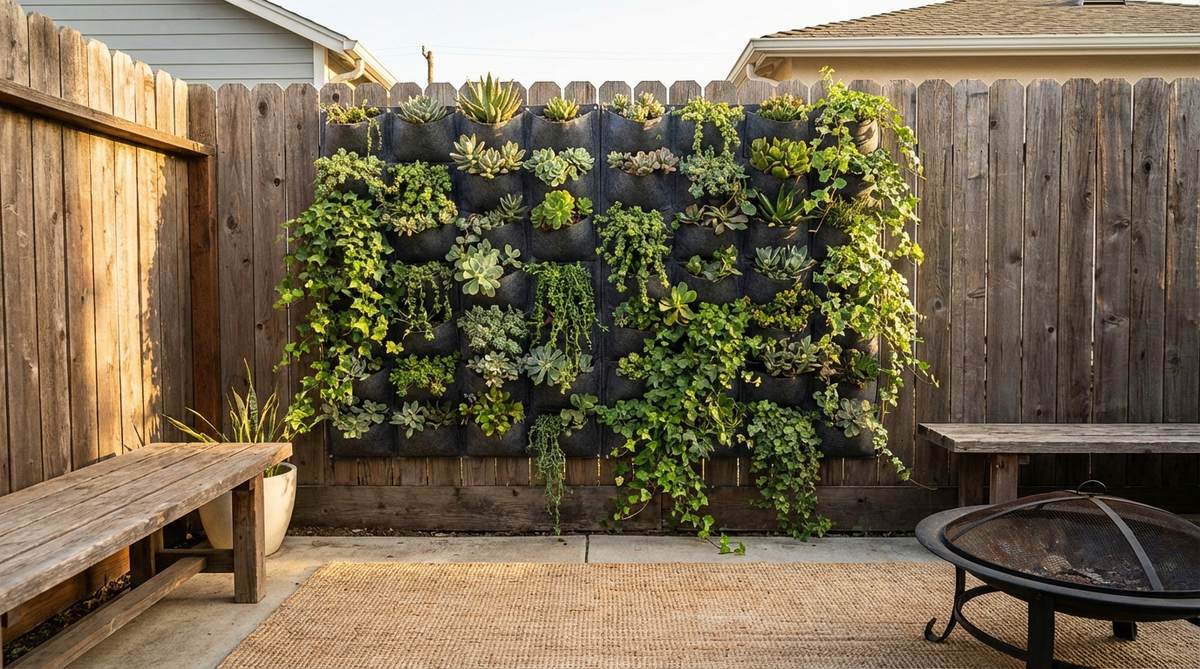
Felt pocket planters hang from grommets like fabric art. Each pocket contains a waterproof liner that holds soil and plants.
Choose pockets with 6-8 inch depths for adequate root development. Rotate the entire panel monthly to ensure even sun exposure for all plants.
This lightweight system suits rental balconies where permanent installations aren’t permitted—simply hang from existing hooks or tension rods.
16. Ladder Plant Stands
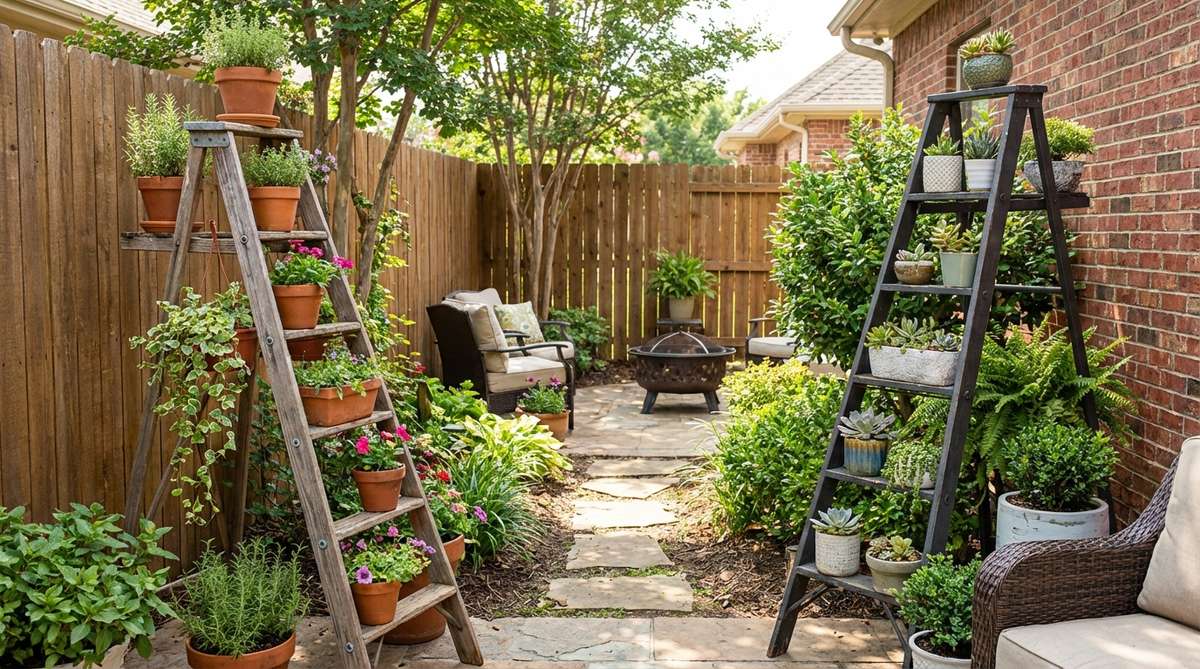
A-frame ladder shelves create tiered displays that showcase plants at multiple heights. Wooden ladders suit cottage aesthetics, while metal versions fit industrial themes.
Position the ladder in a corner to maximize stability. Distribute weight evenly across rungs, placing heavier pots on lower shelves.
This portable solution rearranges easily and requires no wall mounting, making it ideal for renters.
17. Magnetic Planters
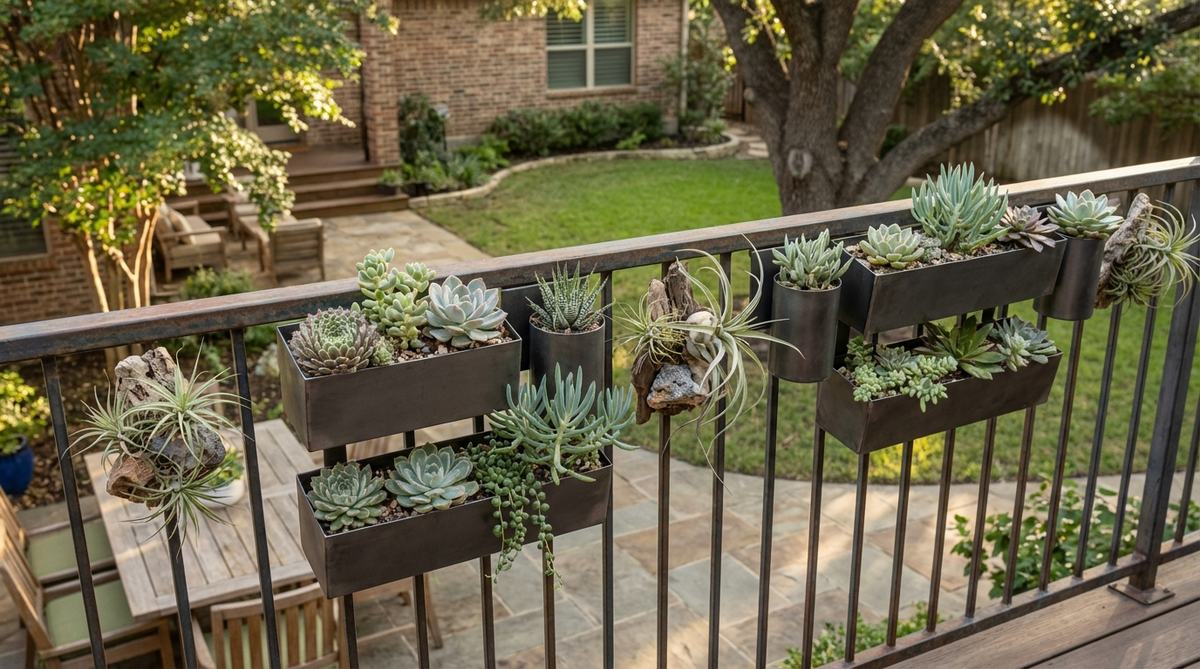
Small magnetic containers adhere to metal railings, creating miniature gardens on previously unused surfaces. These work best for succulents and air plants with minimal root systems.
Group magnets in clusters of 3-5 for visual impact. Remove containers before storms to prevent wind damage.
18. Railing Planters
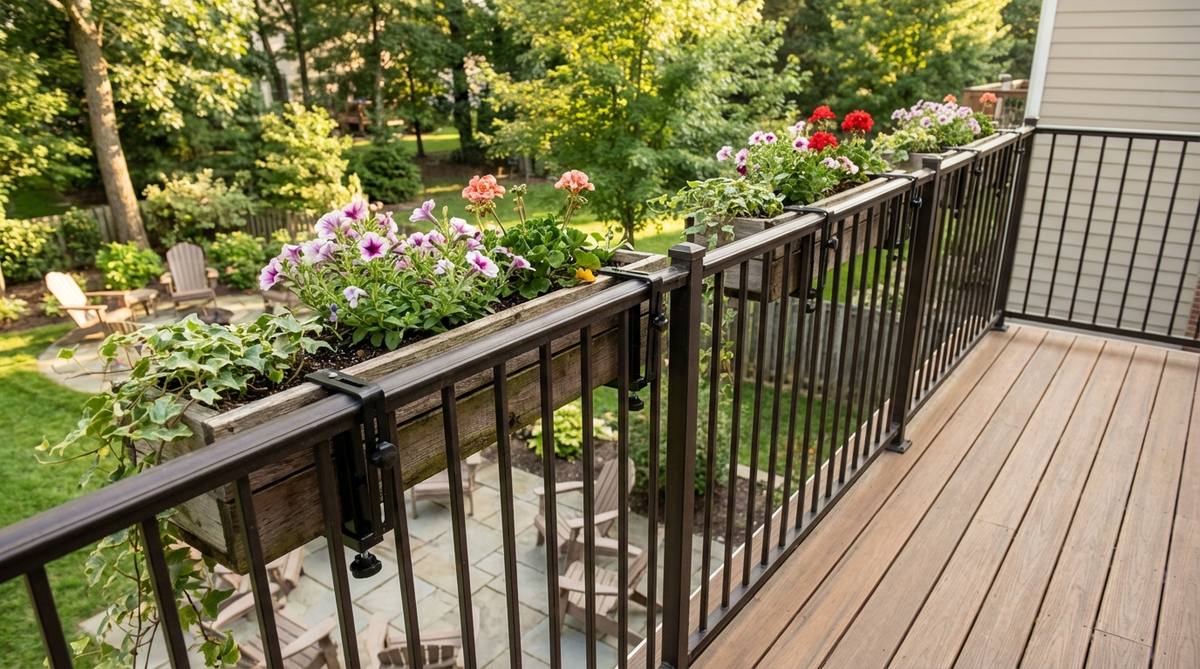
Adjustable brackets clamp planters directly onto balcony railings without tools. Troughs run parallel to rails, maximizing the linear planting area.
Select planters with built-in drainage and removable liners for seasonal replanting. Verify weight limits—most balcony rails support 10-15 pounds per linear foot.
This configuration leaves floor space completely open while adding greenery at the perimeter.
19. Hanging Baskets
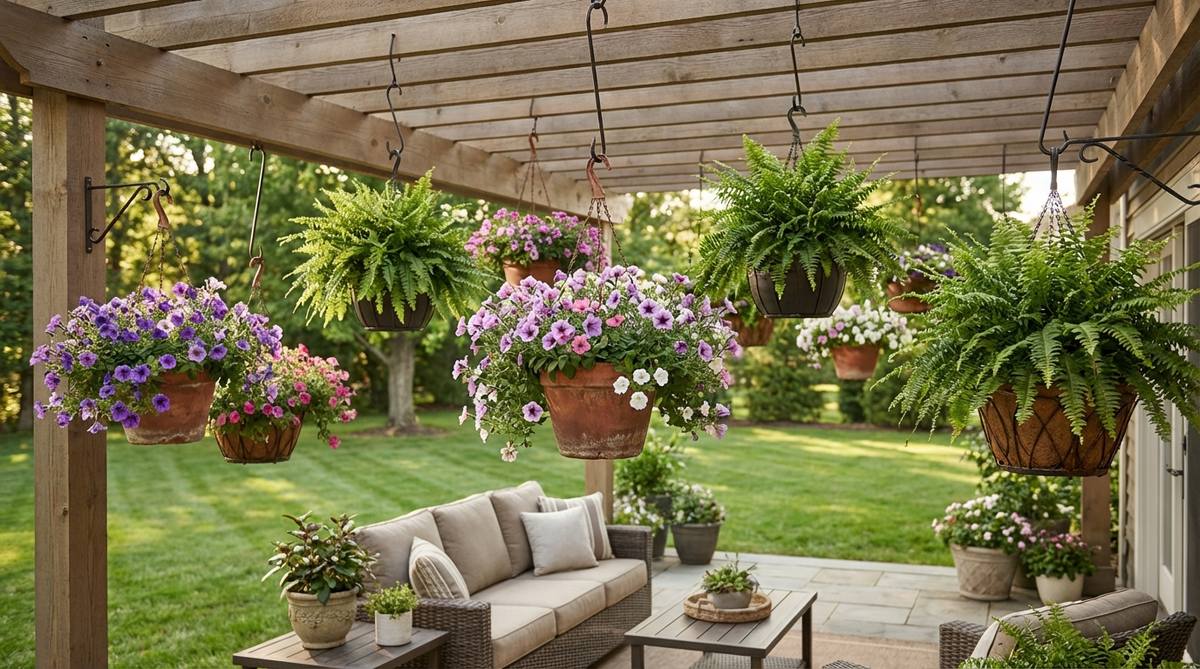
Ceiling-mounted hanging baskets utilize overhead space for trailing plants like petunias, ferns, or string-of-pearls. Use swivel hooks that rotate in the wind to prevent tangling.
Install hooks into ceiling joists rather than siding for proper load support. Self-watering inserts reduce maintenance frequency.
Hang baskets at varying heights to create three-dimensional interest without cluttering horizontal surfaces.
20. Tiered Corner Shelves
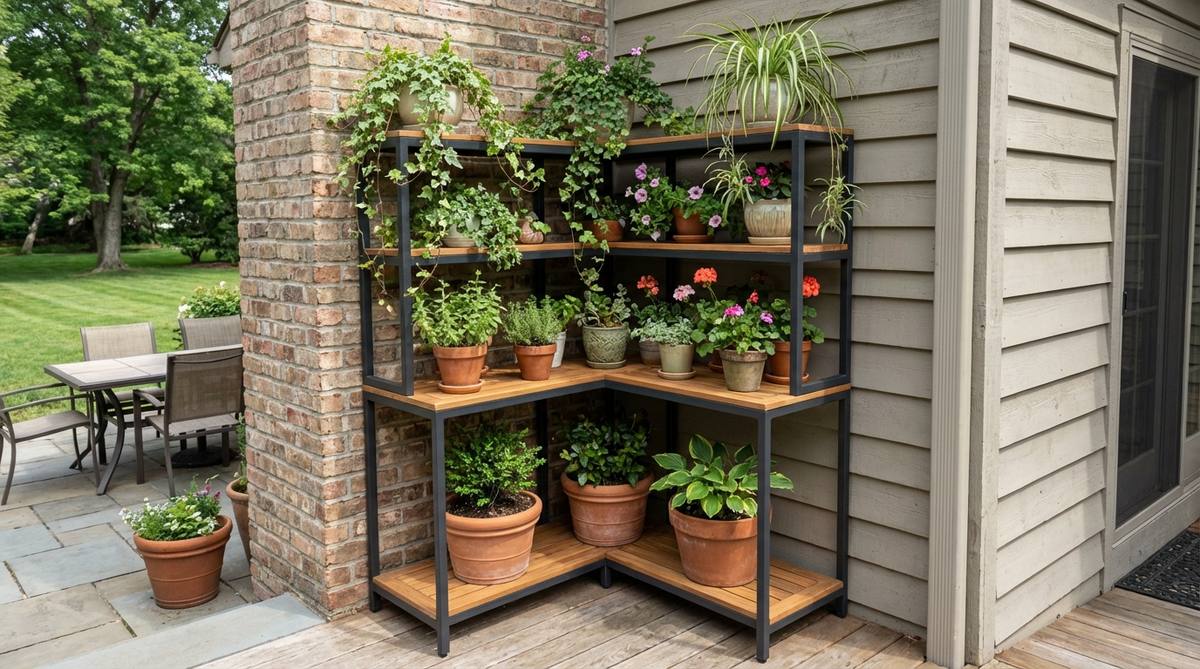
Corner-specific shelving units make use of typically dead space where two walls meet. These freestanding units require no installation.
Opt for weather-resistant materials like powder-coated steel or sealed teak. Arrange plants in ascending size order, with trailing varieties on top shelves.
Flooring & Foundation Updates For Balcony Decoration
Flooring establishes the foundation for all other design elements. These solutions cover unattractive concrete surfaces while adding texture, color, and comfort underfoot.
21. Interlocking Deck Tiles
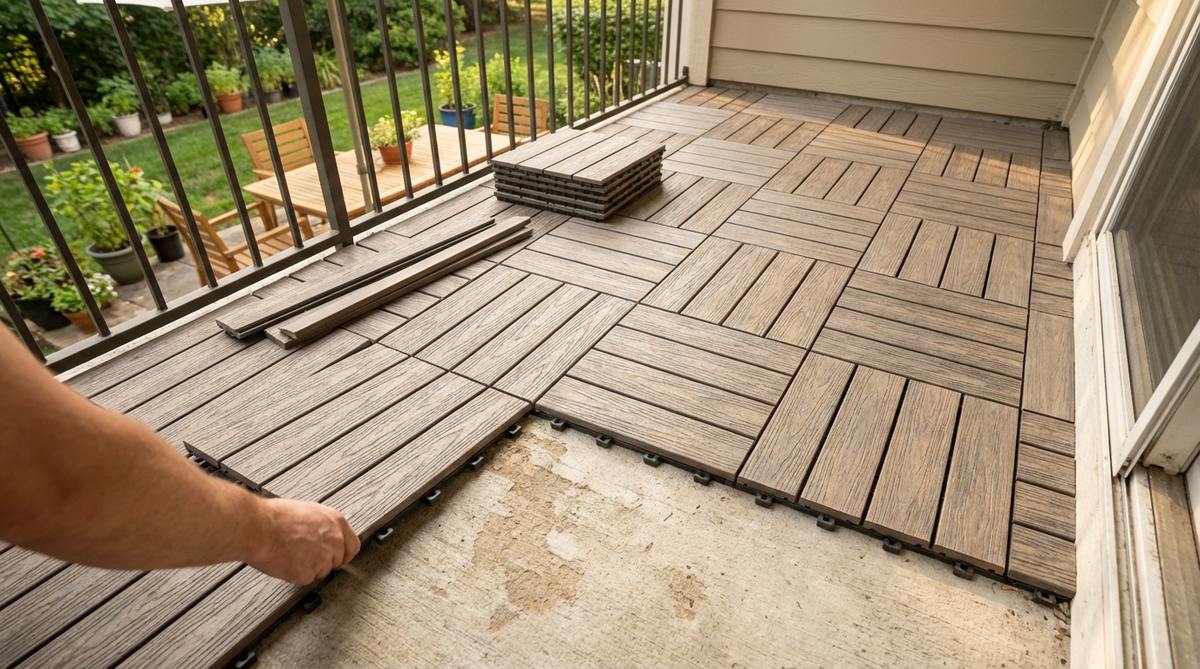
Snap-together composite deck tiles install directly over existing concrete without adhesives. Individual tiles measure 12×12 or 12×24 inches, creating custom layouts.
Choose tiles with drainage channels on the underside to prevent water pooling. Installation requires no tools—tiles simply click together via edge connectors.
This rental-friendly upgrade removes in minutes, leaving no damage to original surfaces.
22. Outdoor Area Rugs
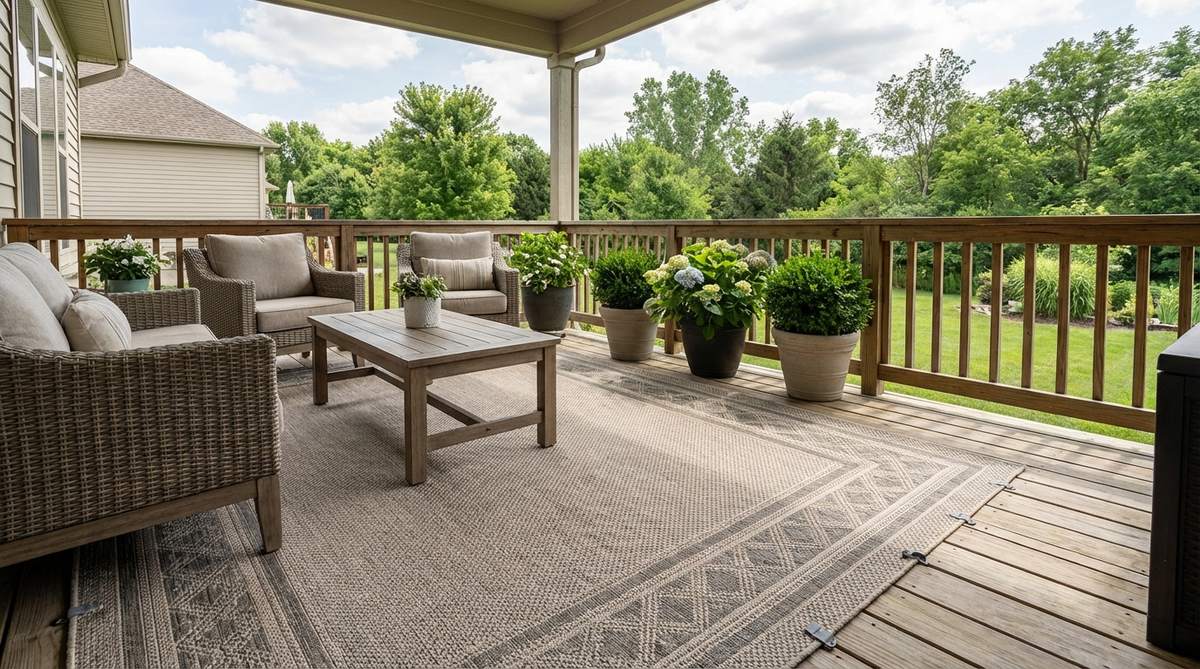
Polypropylene outdoor rugs define seating zones while adding pattern and softness. These rugs resist fading, mildew, and moisture damage.
Select rugs that extend 18-24 inches beyond furniture footprints on all sides. Secure edges with outdoor rug tape to prevent tripping hazards.
Neutral geometric patterns complement multiple design changes without requiring rug replacement.
23. Artificial Turf Panels
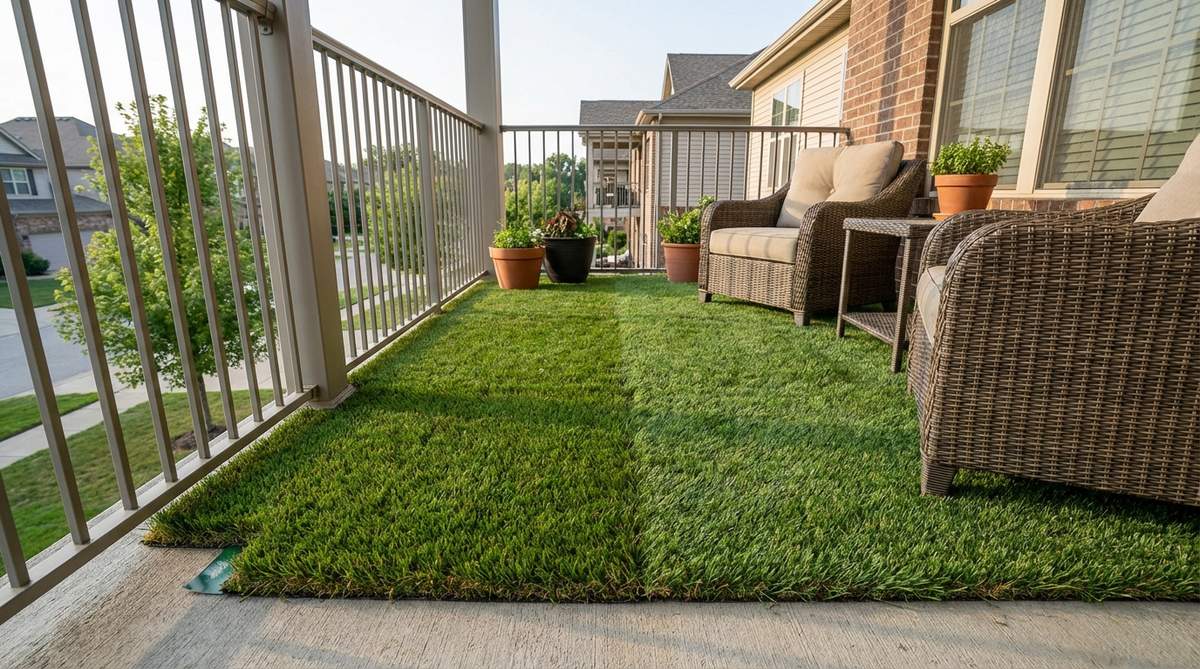
Synthetic grass panels create the illusion of lawn space on elevated balconies. Modern turf varieties feature varied blade heights and brown thatch for realistic appearance.
Cut panels with a utility knife to fit around railings and door frames. Secure edges with double-sided carpet tape rated for outdoor use.
This option particularly appeals to pet owners seeking easy-clean surfaces for small dogs.
24. Pebble Tile Mats
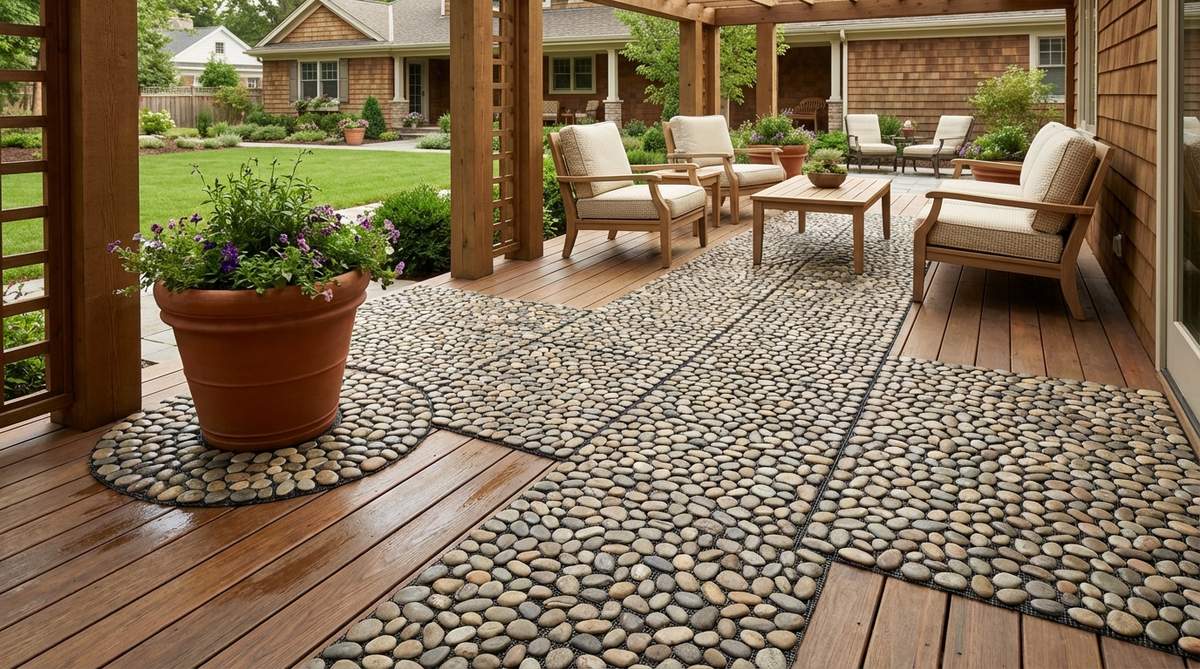
Natural stone pebbles embedded in flexible mesh create spa-like surfaces with superior drainage. These mats trim with scissors to fit irregular spaces.
Install in high-traffic areas like entryways where wet shoes track water. The textured surface provides slip resistance when wet.
25. Painted Concrete
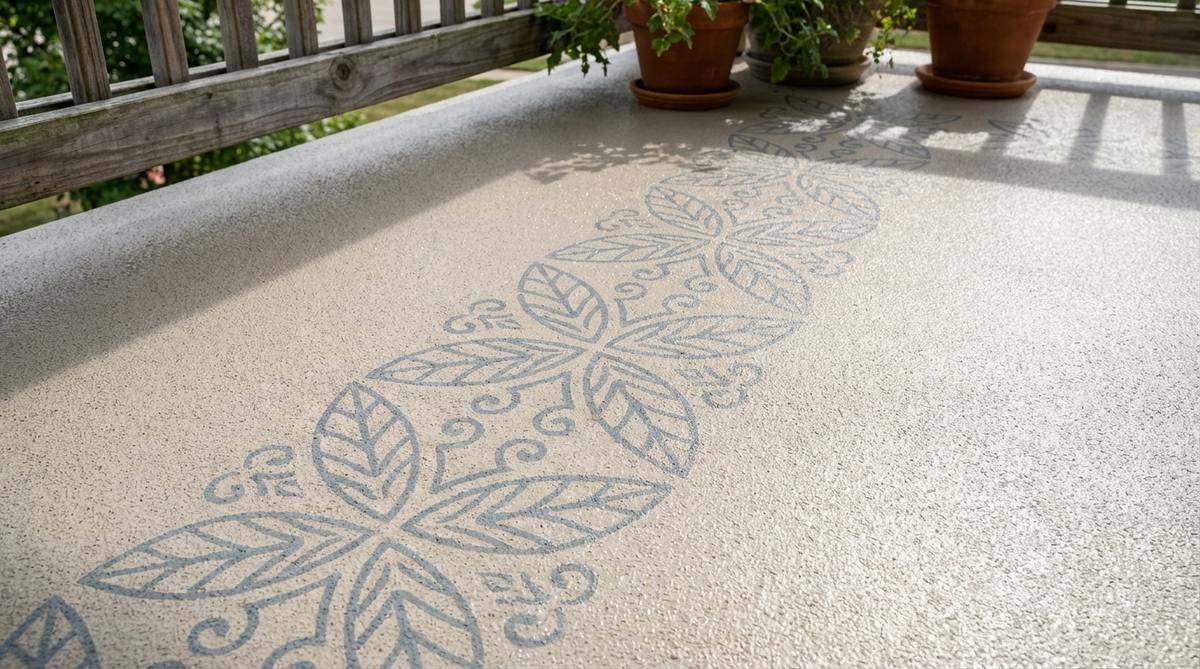
Concrete porch paint in solid colors or stenciled patterns transforms drab slabs into design features. Epoxy-based formulas offer maximum durability.
Clean and etch concrete before painting to ensure adhesion. Apply two coats with a textured roller, allowing 24 hours between coats.
This permanent solution works for owners but may violate rental agreements requiring reversible modifications.
26. Rubber Tile Flooring
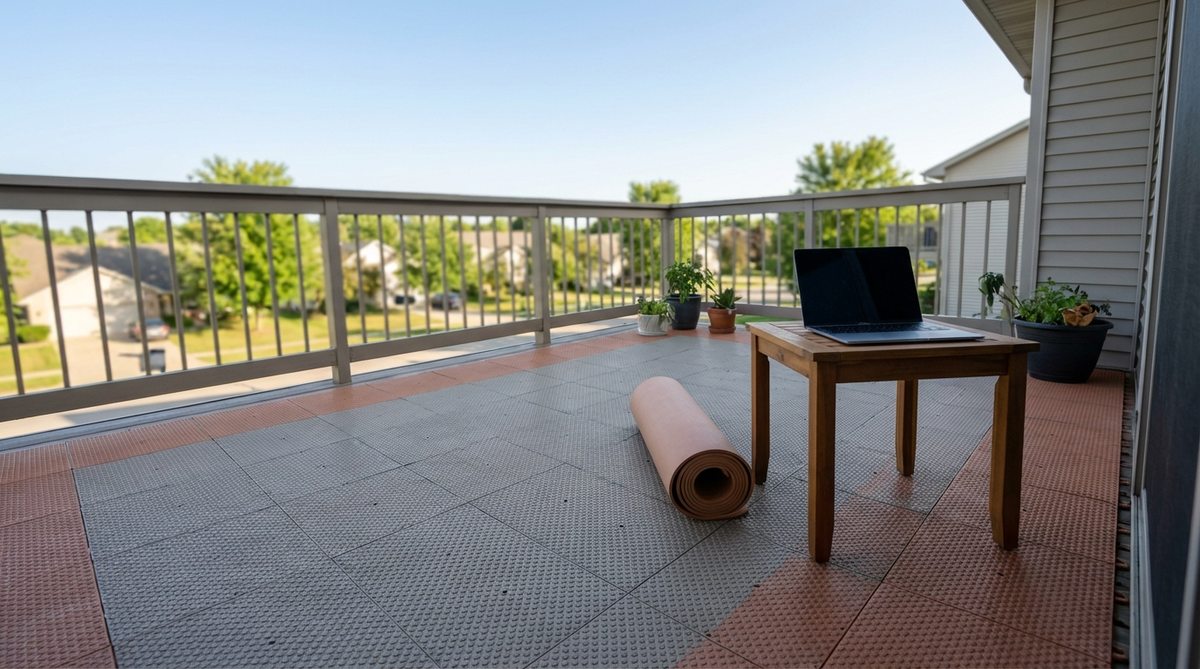
Interlocking rubber tiles provide cushioned surfaces ideal for yoga or play areas. Recycled rubber options support sustainability goals.
Choose tiles with drainage holes for wet climates. The non-slip surface remains safe even during rain.
Rubber’s shock absorption reduces fatigue during extended standing—beneficial for balconies used as outdoor workspaces.
Lighting Design Concepts For Apartment Balcony Decorating
Lighting extends balcony usability beyond daylight hours while establishing ambiance. Layered lighting combines ambient, task, and accent sources for flexibility.
27. String Light Canopies
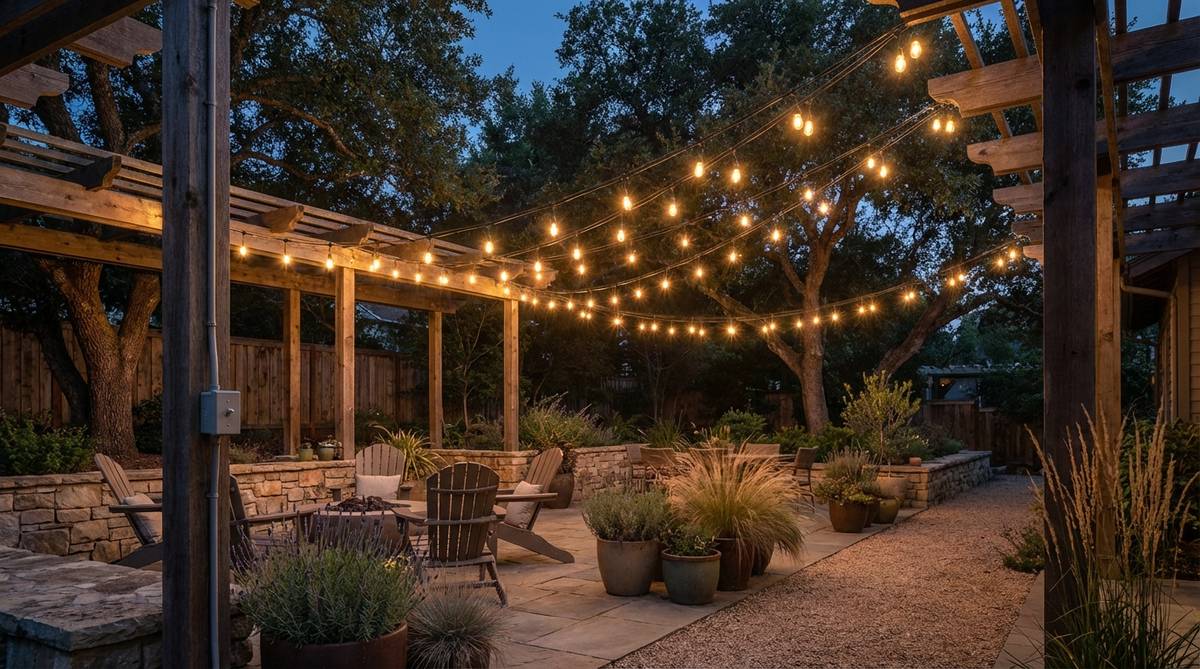
LED string lights suspended overhead create luminous canopies that define the balcony as an outdoor room. Edison bulb styles provide warm ambient light.
Attach lights to opposite walls using adhesive hooks rated for outdoor use. Drape lights in gentle swoops rather than taut lines for softer illumination.
Solar-powered versions eliminate electrical connections, though battery-powered LEDs offer more consistent brightness.
28. Solar Stake Lights
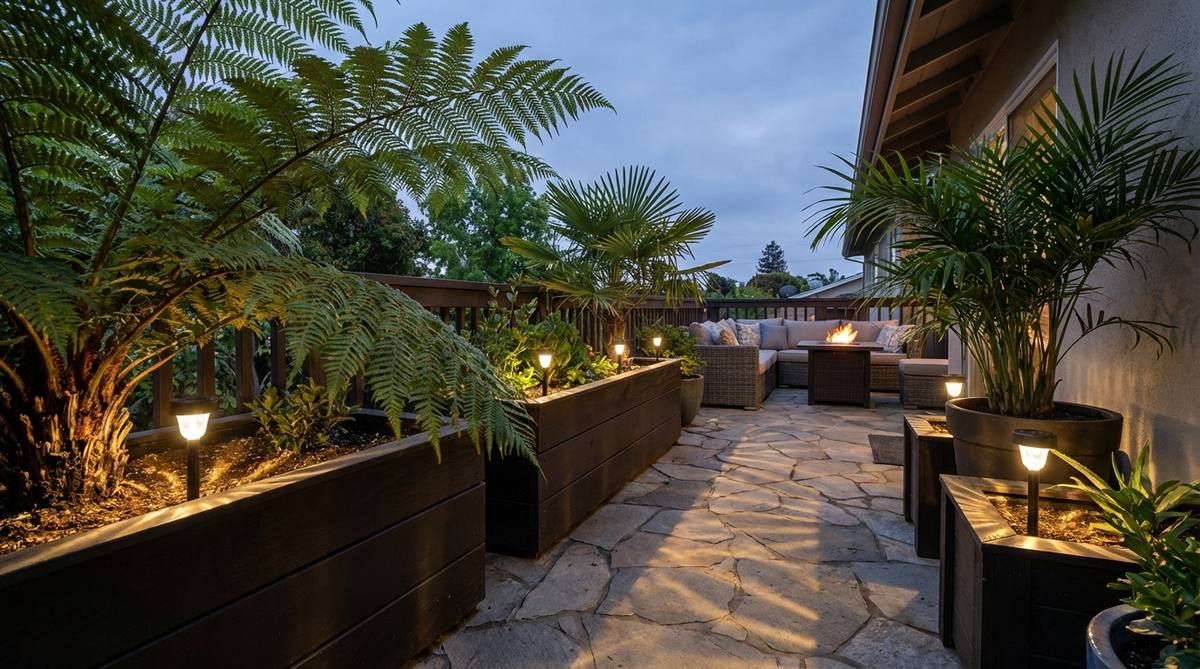
Solar-powered stake lights insert directly into planter soil, illuminating foliage from below. These highlight specimen plants while marking pathways.
Position lights to uplight textured leaves like ferns or palms for dramatic shadow play. LED technology provides 6-8 hours of illumination per charge.
29. Lantern Clusters
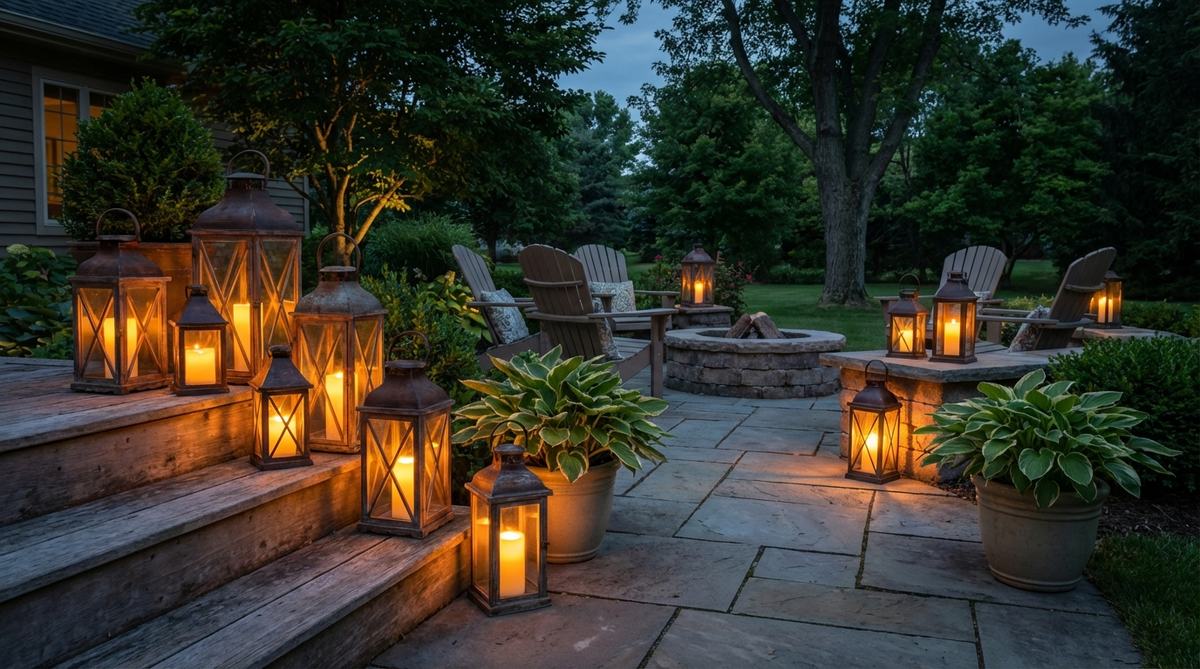
Grouped Moroccan or Asian-inspired lanterns create focal points on floors or tables. Metal lanterns house pillar candles or battery-powered votives.
Arrange three lanterns in graduated sizes (small, medium, large) for professional styling. Flameless LED candles eliminate fire hazards in windy conditions.
This portable lighting adapts easily for seasonal theme changes by swapping candle colors.
30. Wall-Mounted Sconces
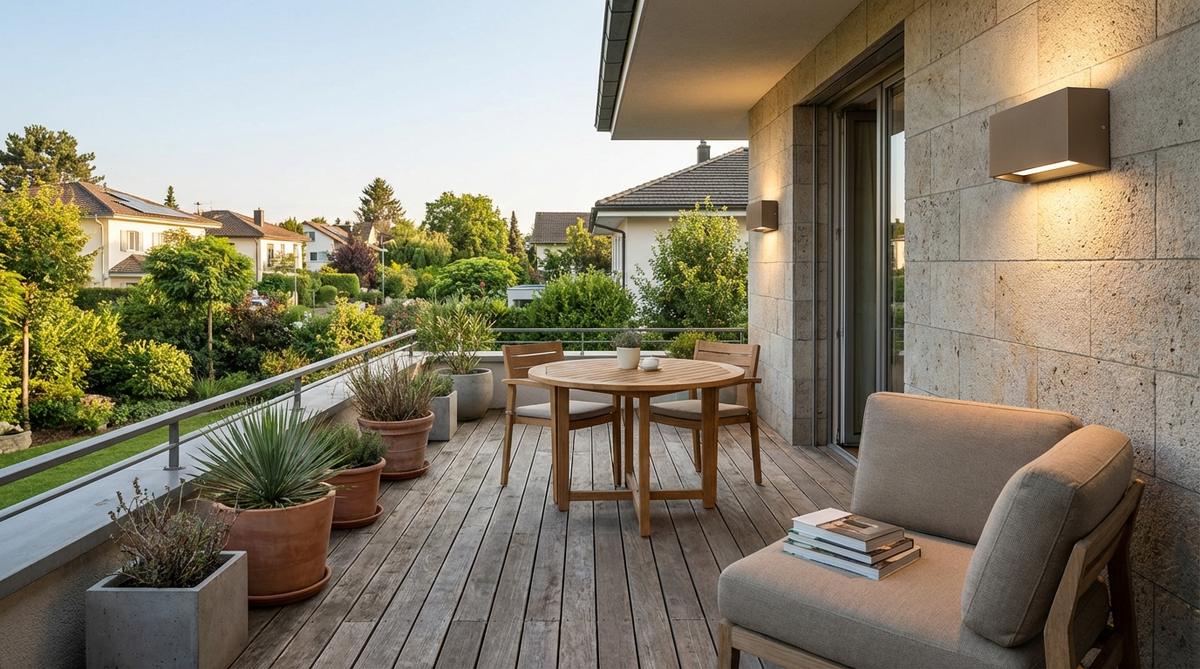
Hardwired or battery-powered wall sconces provide directed task lighting for dining or reading areas. Contemporary designs feature powder-coated finishes in matte black or bronze.
Install sconces at 50-66 inches above the floor for optimal light distribution. Battery-operated versions avoid electrical work ideal for rentals.
Sconces with integrated LED chips eliminate bulb replacement for 25,000+ hours of use.
31. Rope Light Railings
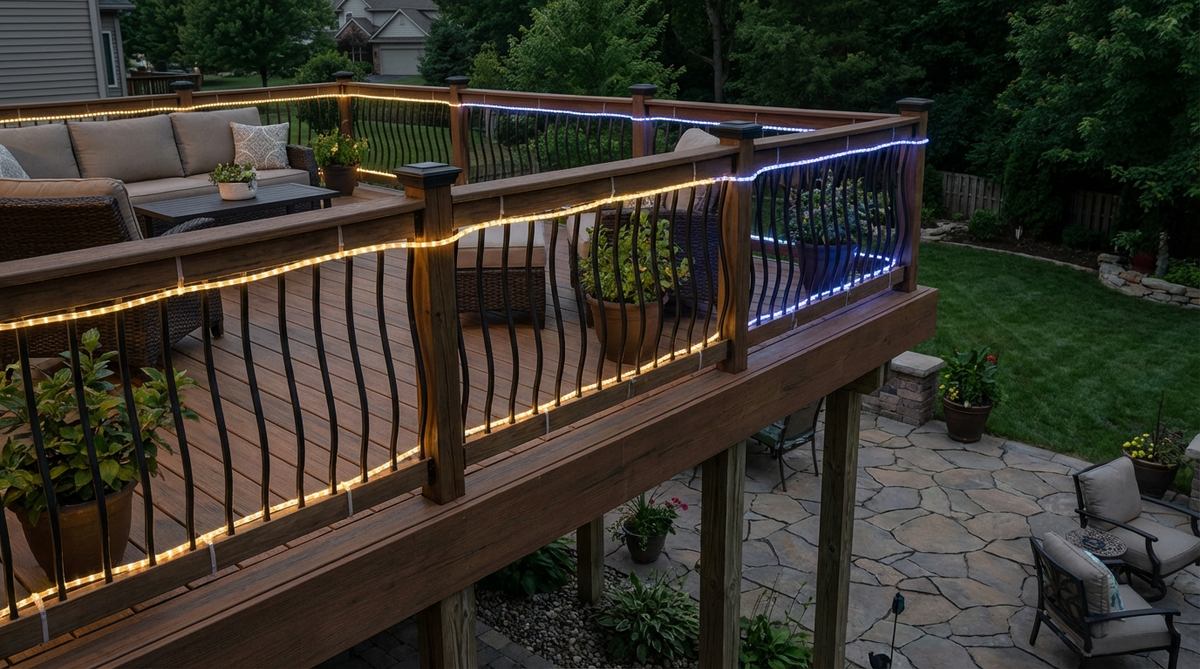
LED rope lights weave through railing balusters, outlining the balcony perimeter with subtle illumination. Waterproof tubes withstand rain and humidity.
Secure rope lights with transparent cable ties every 12 inches. Choose warm white (2700K) for inviting ambiance or color-changing RGB for festive occasions.
This approach provides safety lighting along edges while consuming minimal energy.
32. Pendant Lights
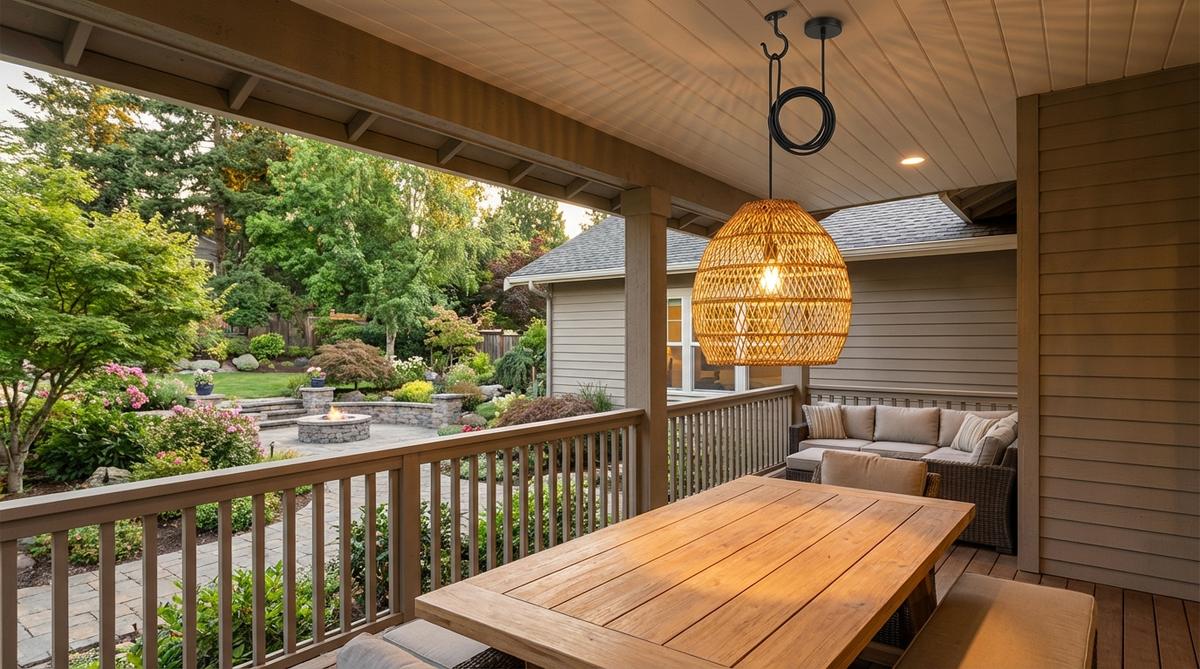
Single statement pendant lights hung from ceiling hooks create dramatic focal points. Woven rattan or metal cage designs suit various aesthetics.
Ensure ceiling hooks anchor into structural supports capable of supporting 15-20 pounds. Use cord shorteners to adjust hanging height.
Plug-in pendants with inline switches offer flexibility without hardwiring electrical connections.
33. Fairy Light Curtains
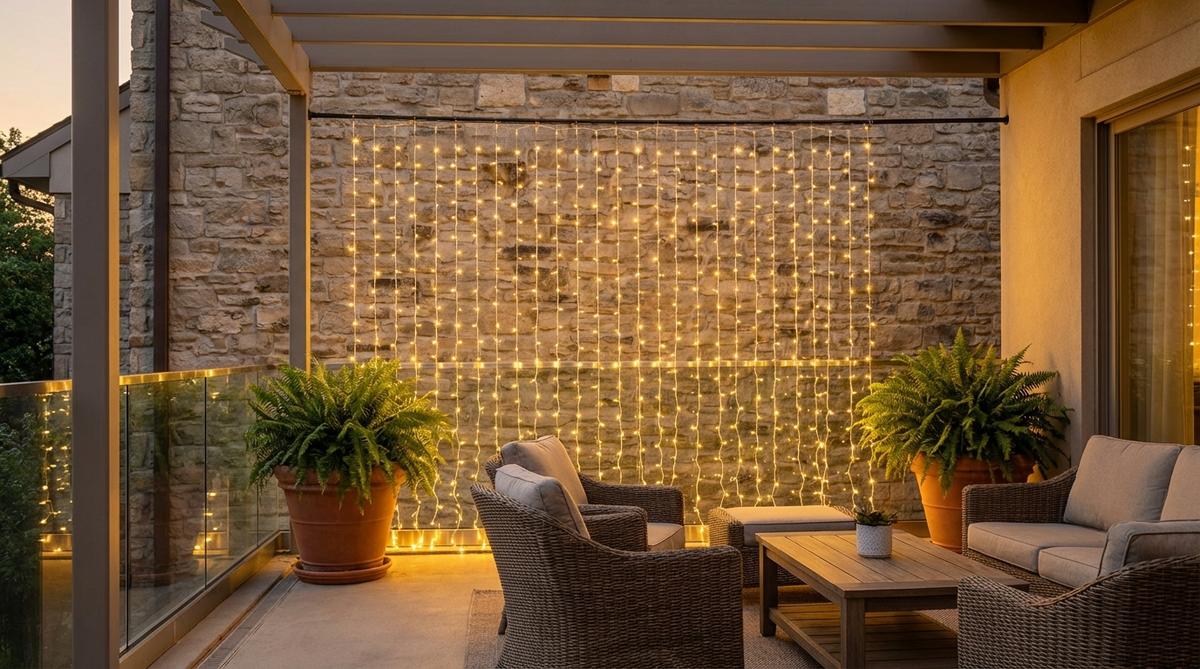
Vertical curtains of micro-LED lights create shimmering backdrops against walls. These curtains typically measure 6-10 feet wide by 6-10 feet tall.
Hang from tension rods or adhesive hooks across accent walls. The cascading effect adds movement and depth to flat surfaces.
This installation particularly suits balconies lacking overhead mounting options for traditional string lights.
34. Tabletop Torch Lamps
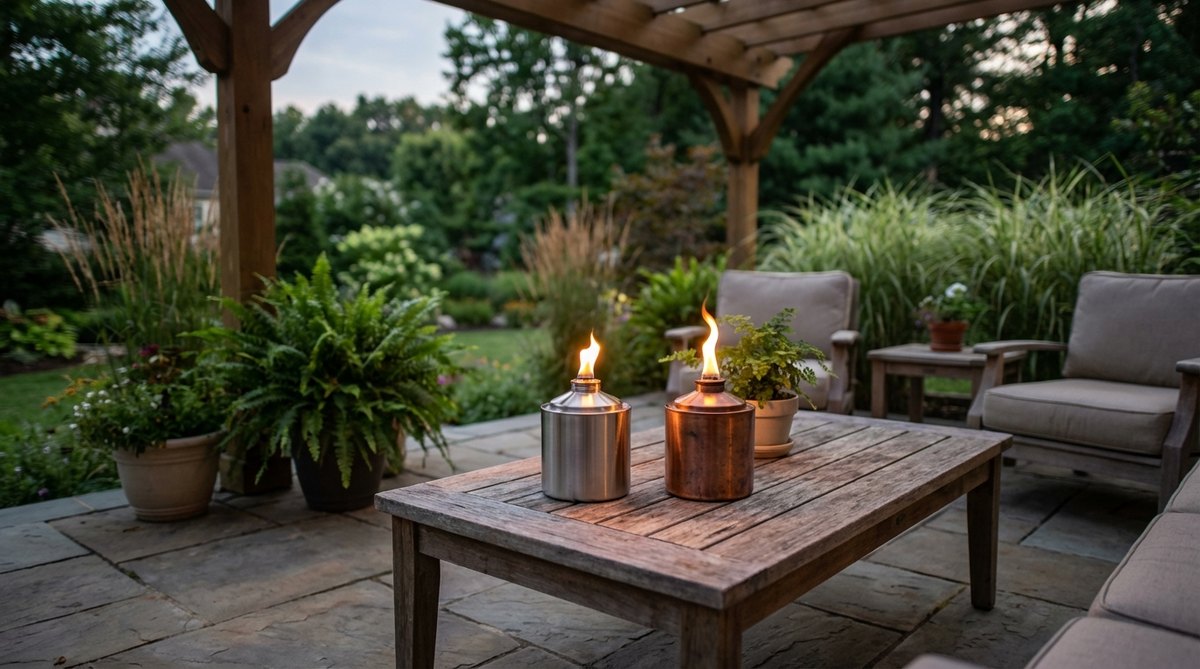
Compact tabletop torches fueled by citronella oil provide light plus insect-repelling benefits. Stainless steel or copper construction weathers outdoor conditions.
Place torches on stable surfaces away from fabric or paper materials. The open flame adds primal ambiance suitable for evening entertaining.
35. Step Lights
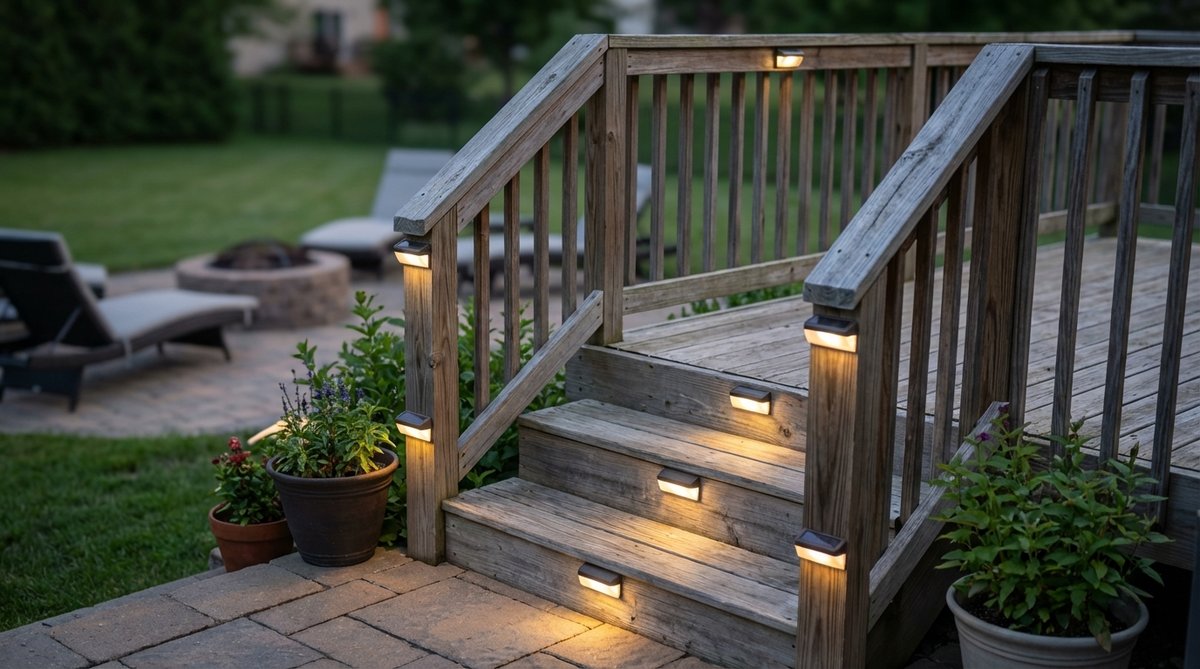
Low-voltage step lights install into vertical surfaces near floor level, providing safety illumination without glare. Solar versions require no wiring.
Position lights to mark transitions between flooring materials or elevation changes. Diffused lenses prevent harsh spotlighting.
36. LED Strip Under Furniture
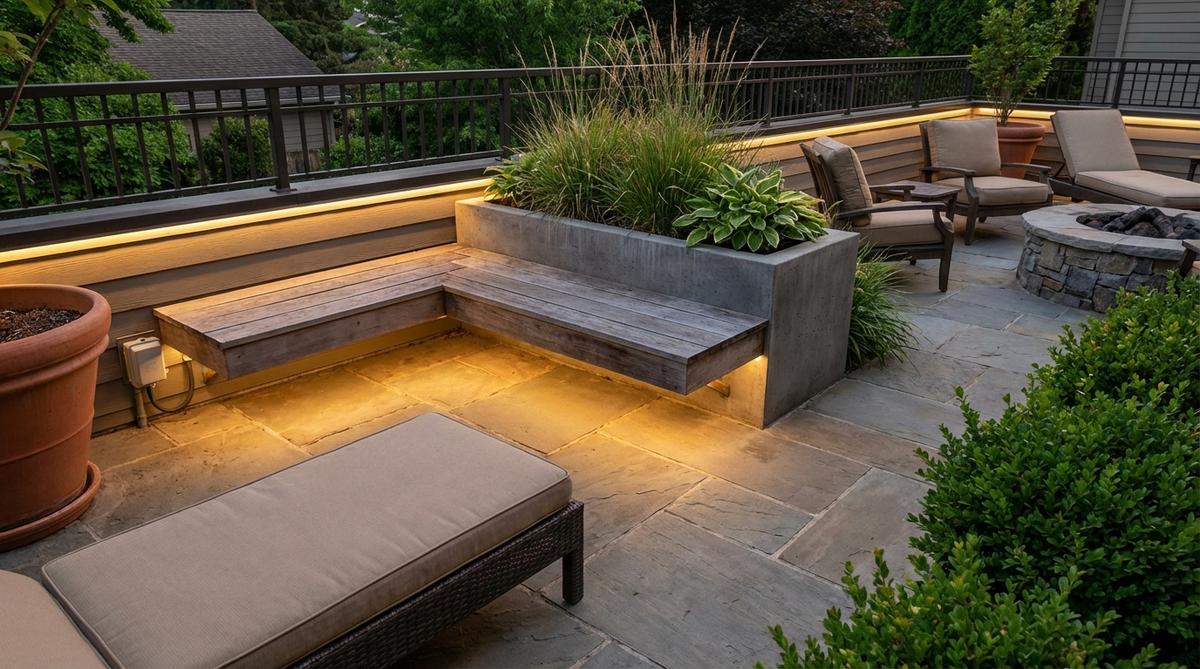
Adhesive-backed LED strips attach beneath benches or railings, creating floating effects through indirect lighting. Waterproof IP65-rated strips survive outdoor exposure.
Run strips along the underside of built-in seating or planters. The reflected light adds dimension without visible fixtures.
Smart LED strips with app control adjust colors and brightness to match activities or moods.
Privacy Screening Ideas For Small Balcony Decor
Privacy screens shield balconies from neighboring sightlines without sacrificing light or airflow. These solutions range from living walls to architectural panels.
37. Bamboo Roll Screens
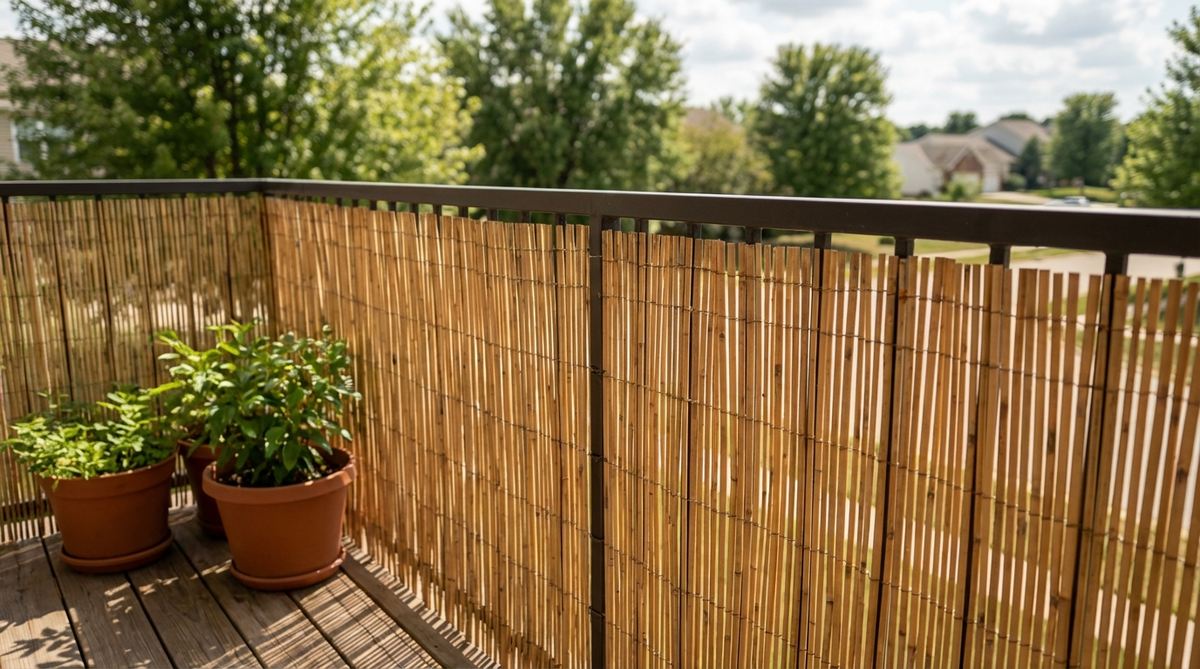
Natural bamboo fencing rolls unroll horizontally, attaching to railings with zip ties or wire. The vertical slats filter views while allowing air circulation.
Select screens treated with UV protectant to prevent splitting. Install with slats running vertically for maximum privacy or horizontally for a contemporary look.
This economical solution costs $20-40 for 6-foot sections and installs without tools in under 30 minutes.
38. Outdoor Curtain Panels
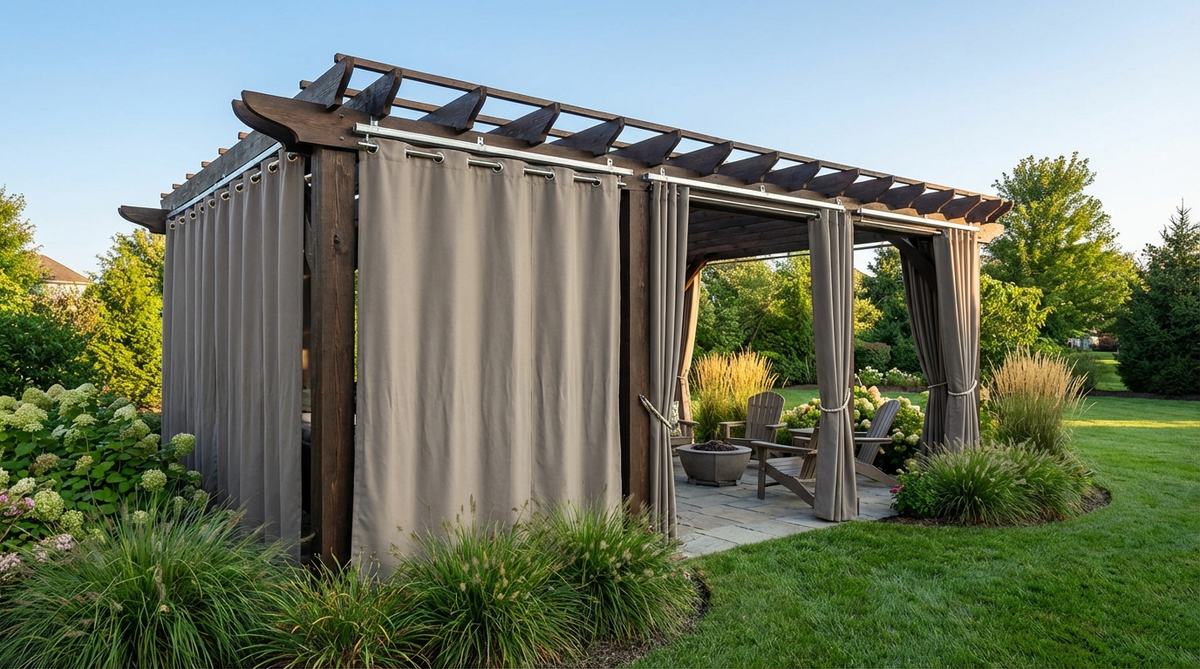
Weather-resistant fabric panels hang from ceiling-mounted tracks or tension rods. Grommeted tops slide smoothly for adjustable coverage.
Choose solution-dyed acrylic fabrics that resist fading and mildew. Opt for sheer panels that diffuse light while maintaining views, or opaque panels for complete privacy.
This soft treatment adds residential warmth while adapting to changing needs throughout the day.
39. Lattice Panels
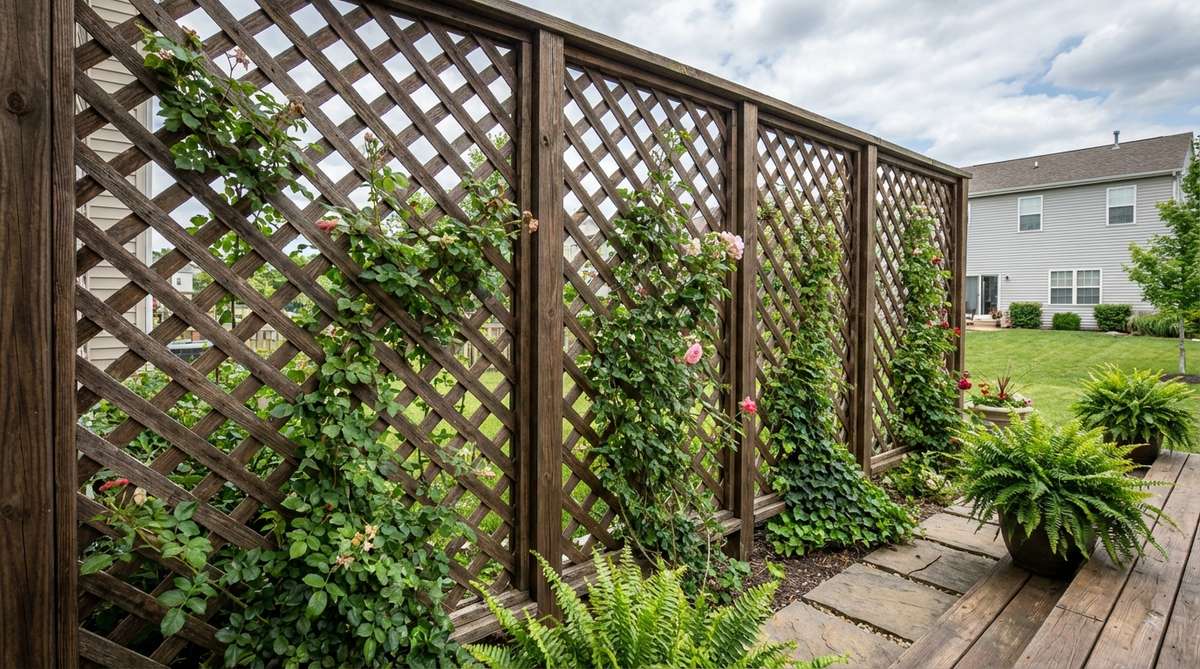
Wood or vinyl lattice panels mount vertically in freestanding frames or attach directly to railings. Diagonal or square grid patterns suit different architectural styles.
Paint or stain wooden lattice to coordinate with existing trim. Use the grid structure to support climbing plants for living privacy screens.
This semi-opaque solution balances privacy with preserved light transmission ideal for ground-floor balconies.
40. Reed Fencing
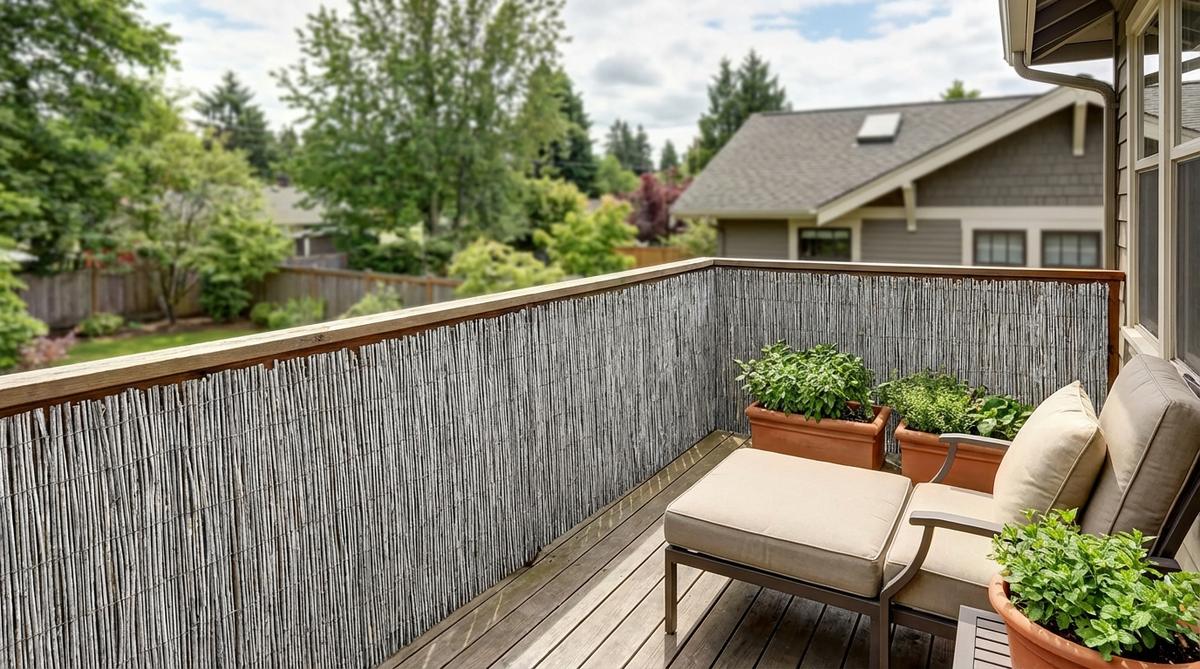
Natural reed or willow fencing provides organic texture with complete opacity. Bundles of reeds wire together into rollable panels.
Attach fencing to existing railings using outdoor-rated zip ties spaced every 8 inches. The irregular natural material creates visual interest.
Reed naturally weathers to silver-gray tones that complement neutral color schemes.
41. Metal Privacy Screens
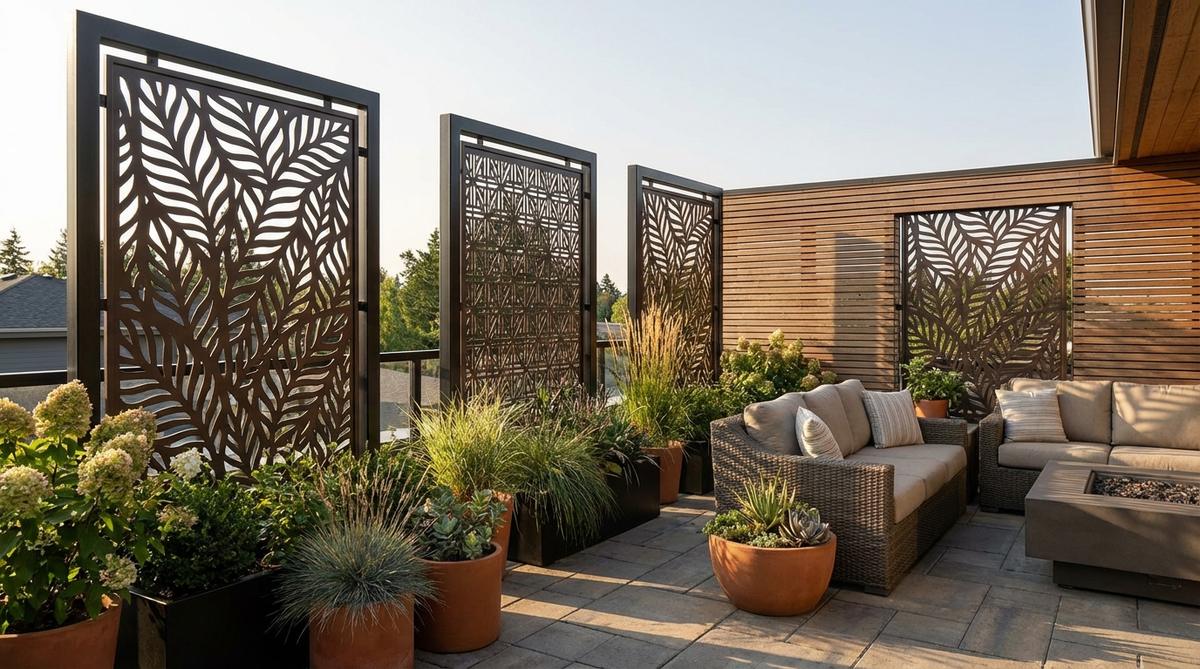
Laser-cut metal panels in geometric or botanical patterns create architectural focal points while obscuring sightlines. Powder-coated steel resists rust.
Mount panels in freestanding frames weighted with planter boxes for stability. Alternatively, attach directly to walls with masonry anchors.
This contemporary option suits modern buildings where organic materials might clash with architecture.
42. Tension Rod Fabric Screens
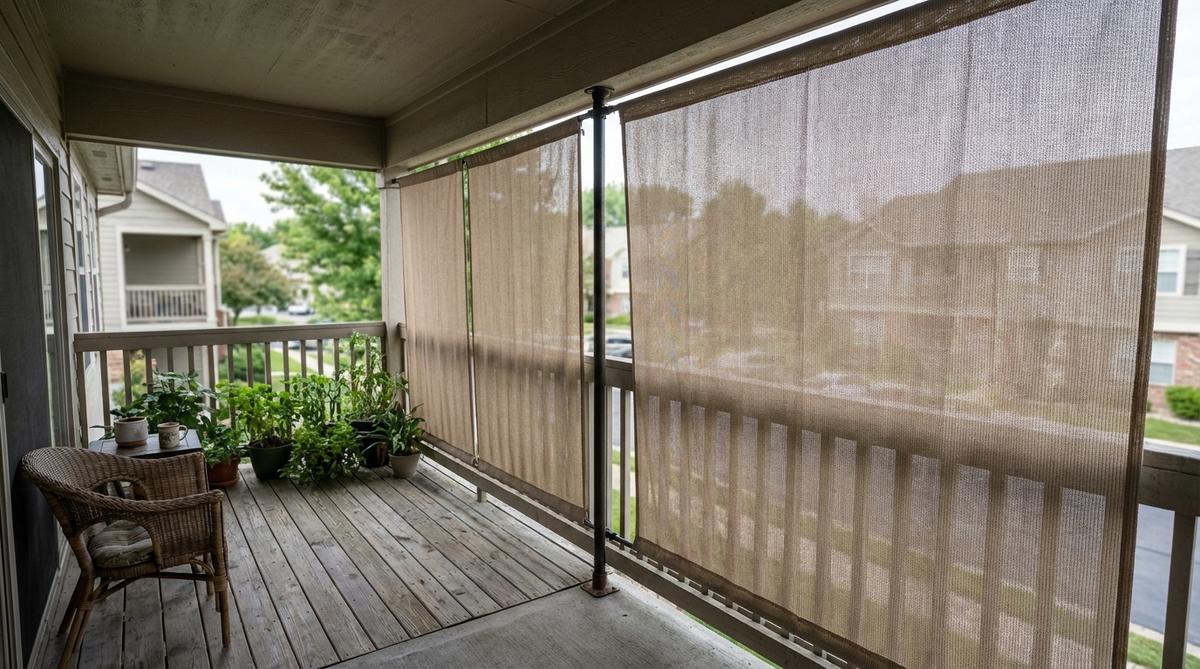
Tension rods wedged between floor and ceiling support lightweight fabric panels without damaging surfaces. This fully reversible system suits rental restrictions.
Hang outdoor-grade drop cloths or canvas painter’s fabric for budget-friendly screens. Hem raw edges to prevent fraying.
Adjust tension periodically as temperature fluctuations cause metal rods to expand or contract slightly.
43. Living Privacy Walls
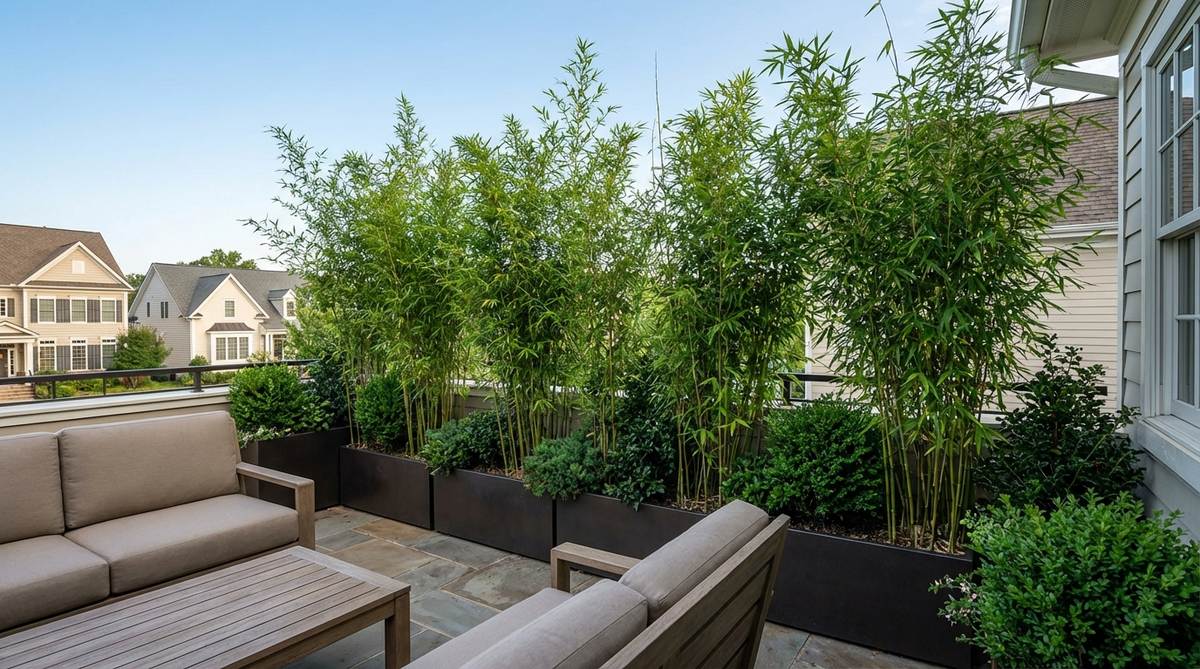
Dense plantings in tall narrow planters create living screens that evolve seasonally. Bamboo varieties like ‘Gracilis’ reach 6-8 feet in contained spaces.
Position planters in a continuous row along the privacy boundary. Supplement with evergreen shrubs for year-round coverage.
This organic approach improves air quality while providing habitat for beneficial insects and birds.
Textile & Accessory Layers For Balcony Decor Apartment
Textiles introduce pattern, color, and comfort to hard outdoor surfaces. Accessories personalize spaces with individual style markers.
44. Outdoor Throw Pillows
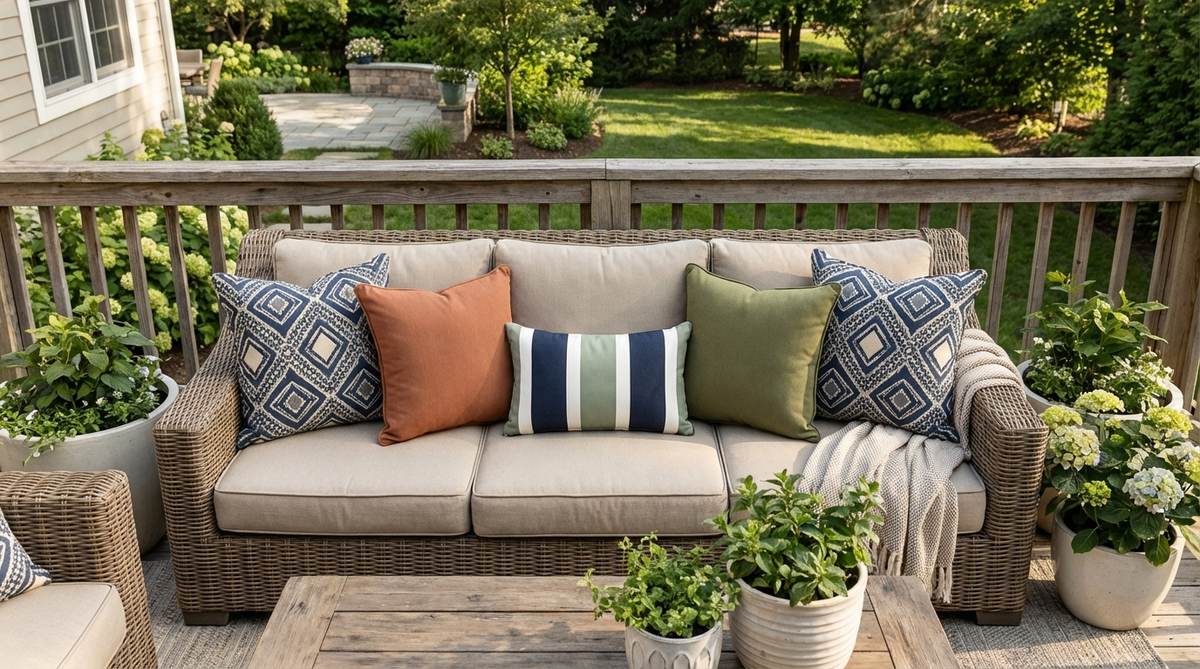
Solution-dyed acrylic pillows add softness to seating while withstanding sun and moisture. Mix solids, stripes, and geometric patterns in coordinating color families.
Use 3-5 pillows on a two-seat sofa in varied sizes (18-inch and 20-inch squares plus 12×20-inch lumbar). Store pillows indoors during prolonged rain to extend lifespan.
This cost-effective update refreshes existing furniture without replacement.
45. Weather-Resistant Poufs
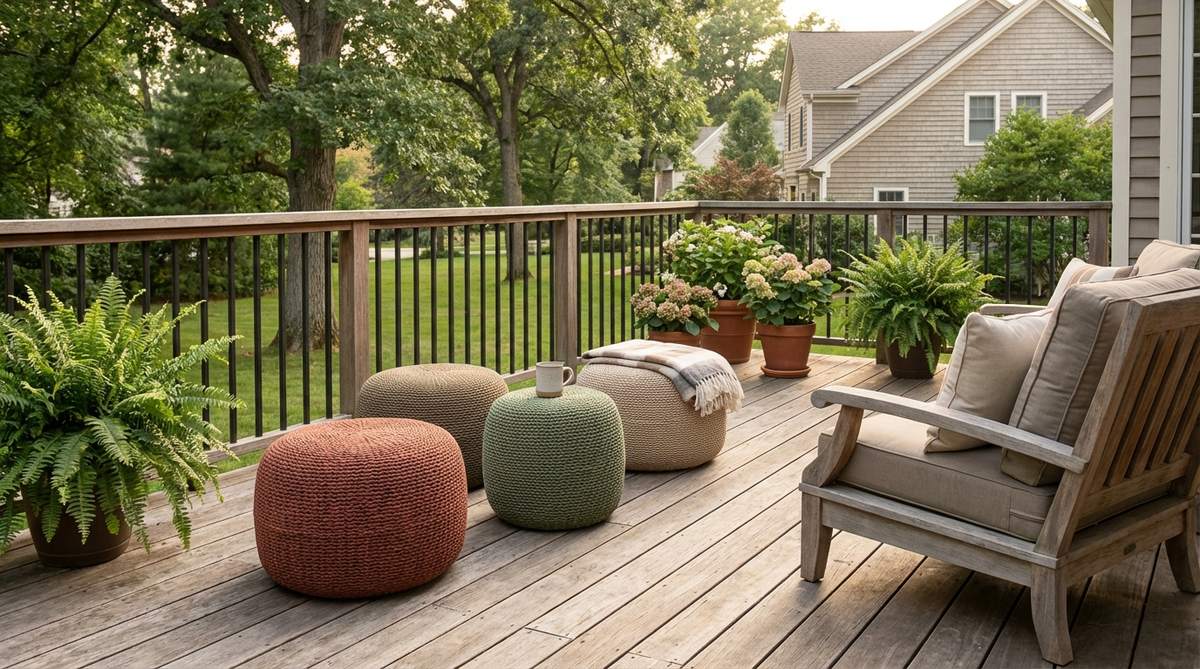
Synthetic woven poufs function as footrests, side tables, or casual seating. Polypropylene construction resists moisture and fading.
Select poufs in accent colors that complement but don’t match primary seating. Their lightweight portability allows easy rearrangement for different uses.
46. Outdoor Throw Blankets
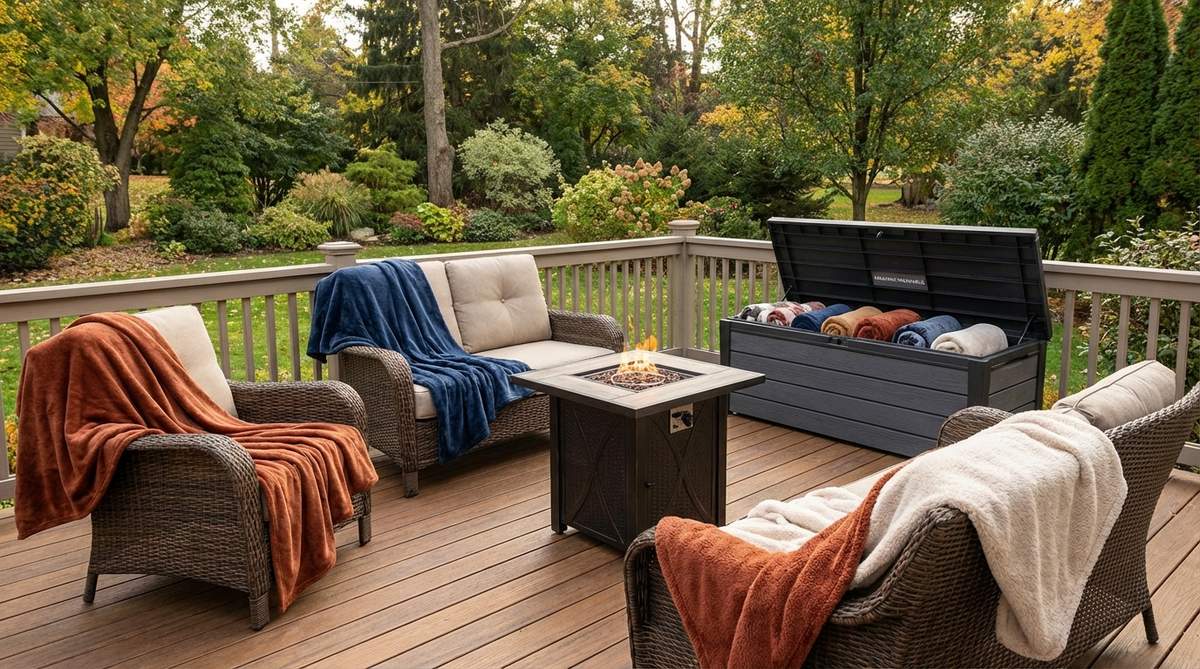
Acrylic or fleece throws extend balcony season into cooler months. Draped over furniture, they add textural layers and color.
Choose machine-washable options for easy maintenance. Store blankets in waterproof storage benches when not in use.
This simple addition signals the space is designed for comfort rather than display only.
47. Decorative Trays
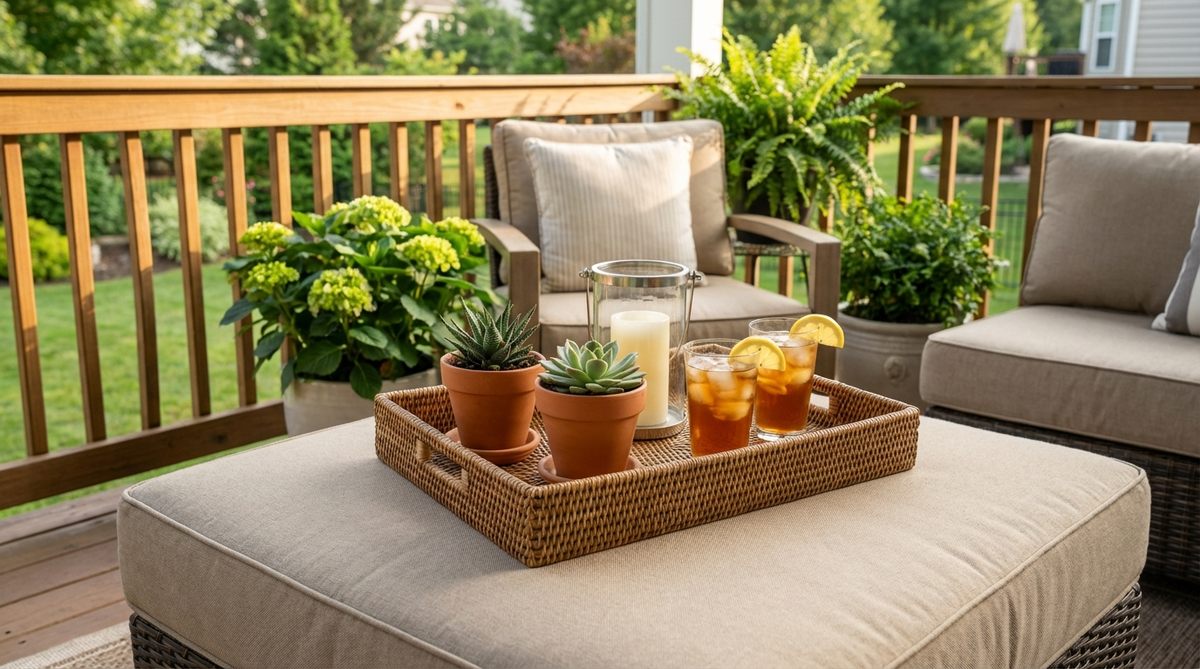
Serving trays in rattan, metal, or wood corral small items while adding surface interest. Use trays to group candles, planters, or drinks.
Place a large tray on an ottoman to convert it into a stable coffee table surface. The contained arrangement prevents items from scattering in wind.
48. Ceramic Garden Stools
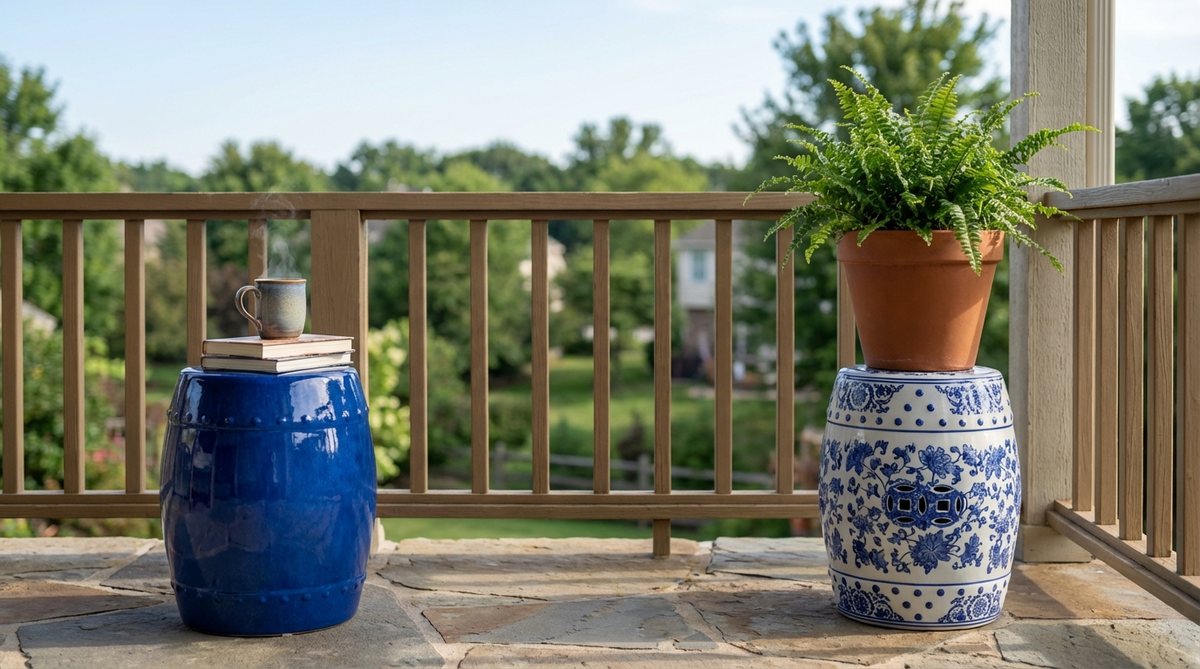
Glazed ceramic stools serve as side tables, extra seating, or plant stands. Traditional Chinese drum stools suit various design styles through color selection.
Choose solid glazed finishes for modern schemes or intricate patterns for eclectic spaces. The waterproof surface handles drink condensation without damage.
These multi-functional pieces move easily around the balcony as needs change.
49. Wind Chimes
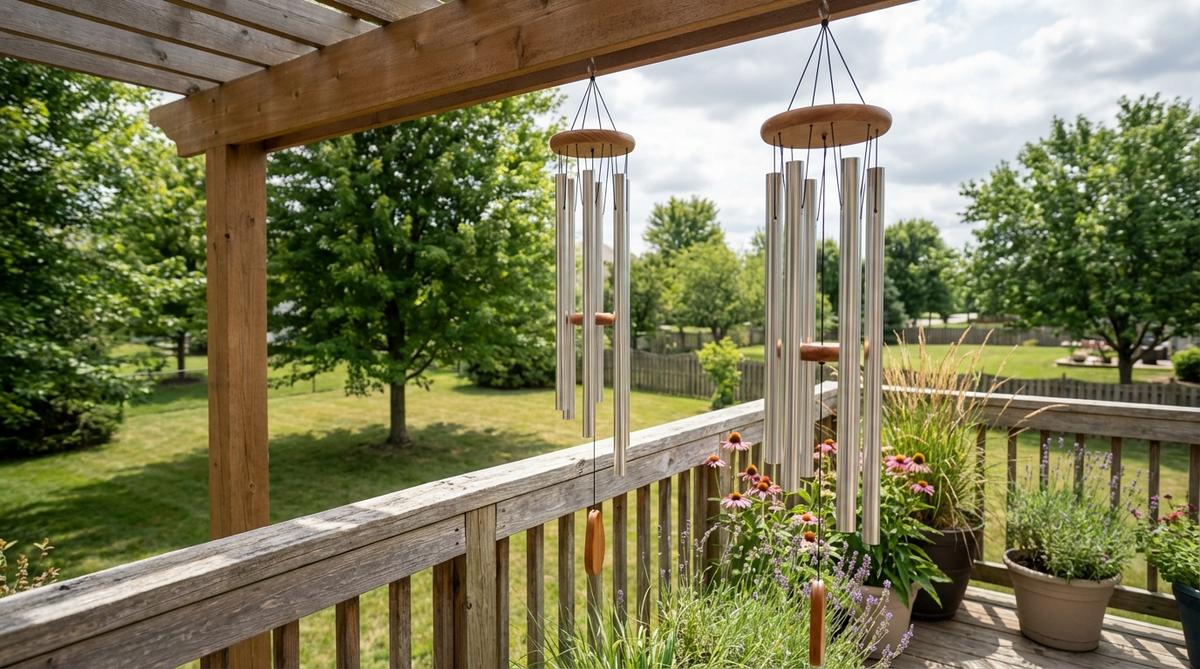
Metal or bamboo wind chimes add auditory interest through gentle tones. Tuned aluminum chimes produce melodic notes rather than random clanging.
Hang chimes where prevailing breezes provide movement but not constant overstimulation. Position away from shared walls to avoid disturbing neighbors.
50. Outdoor Artwork
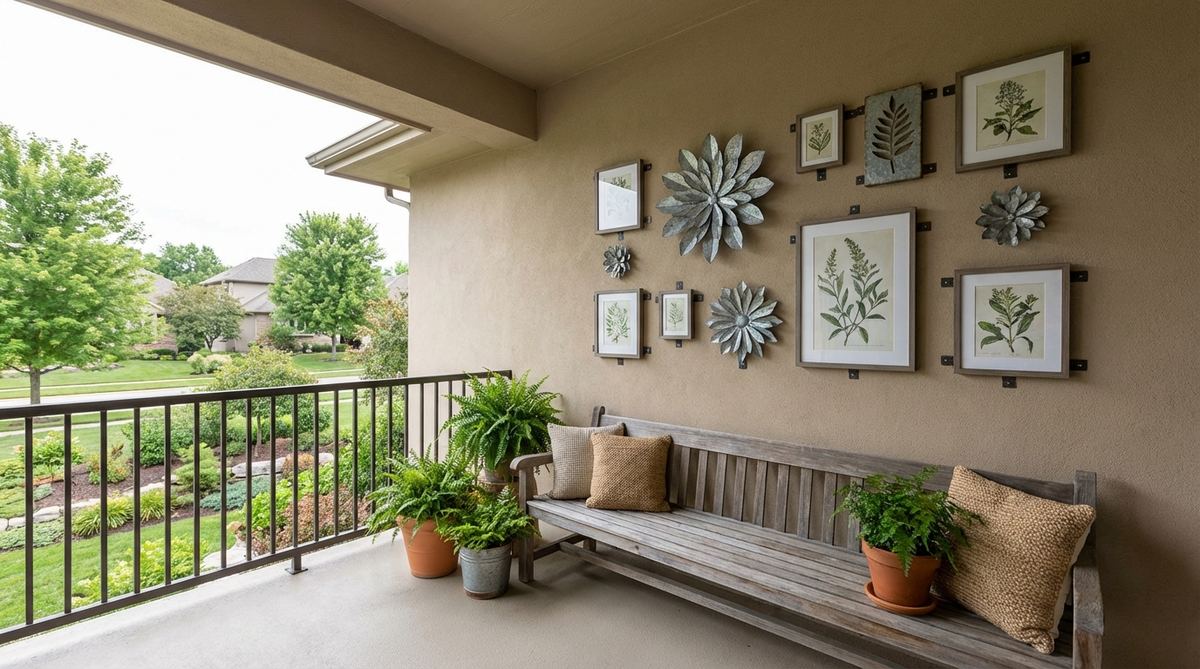
Metal wall sculptures or weather-resistant prints personalize vertical surfaces. Galvanized steel and aluminum withstand outdoor exposure indefinitely.
Mount artwork using outdoor-rated picture hangers appropriate for your wall material. Group smaller pieces in gallery wall arrangements.
This unexpected element elevates balconies beyond purely functional spaces into curated environments.
51. Decorative Cachepots
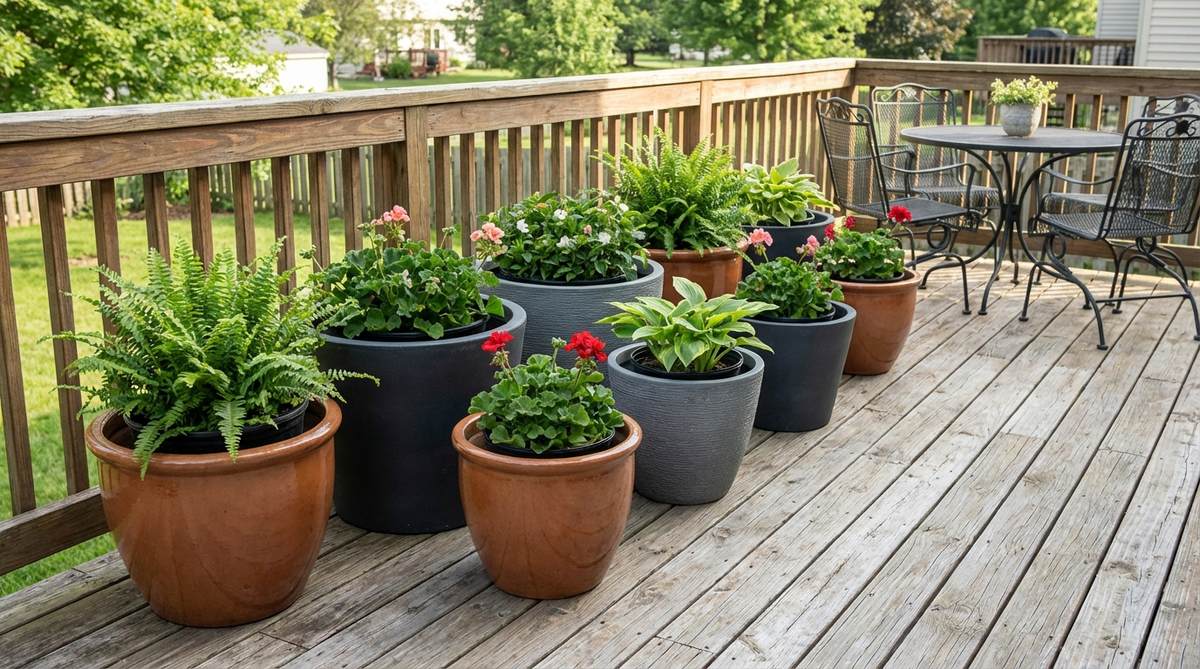
Ornamental outer pots conceal utilitarian plastic nursery containers while adding decorative value. Ceramic, fiber-cement, and resin options suit various budgets.
Select cachepots 2-3 inches larger than nursery pots to allow air circulation. Coordinate finishes across multiple planters for cohesion.
This approach allows seasonal plant changes without replacing decorative containers.
Container Gardening Strategies For Tiny Balcony Decor
Container gardens bring nature to urban balconies while remaining portable and manageable. Strategic plant selection and arrangement create lush environments in minimal space.
52. Self-Watering Planters
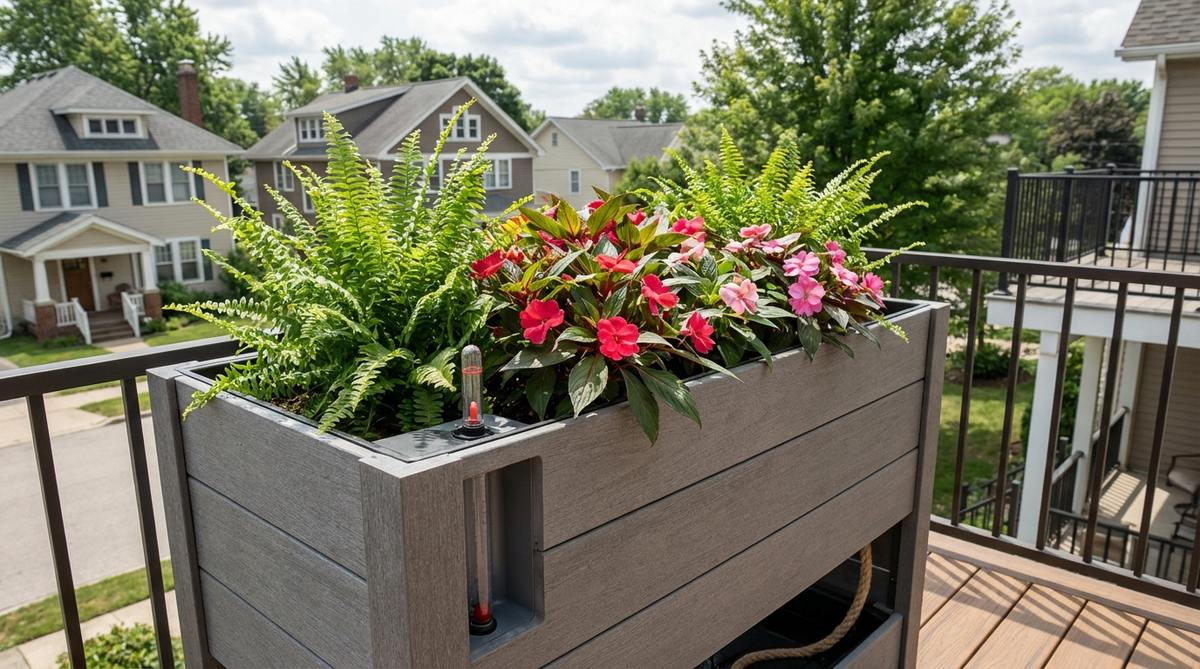
Reservoirs built into planter bases provide consistent moisture for 1-2 weeks between refills. Wicking systems draw water upward as soil dries.
Choose planters with water level indicators to prevent overfilling. These systems particularly benefit moisture-loving plants like ferns and impatiens.
This technology reduces maintenance demands for busy households or frequent travelers.
53. Mixed Container Gardens
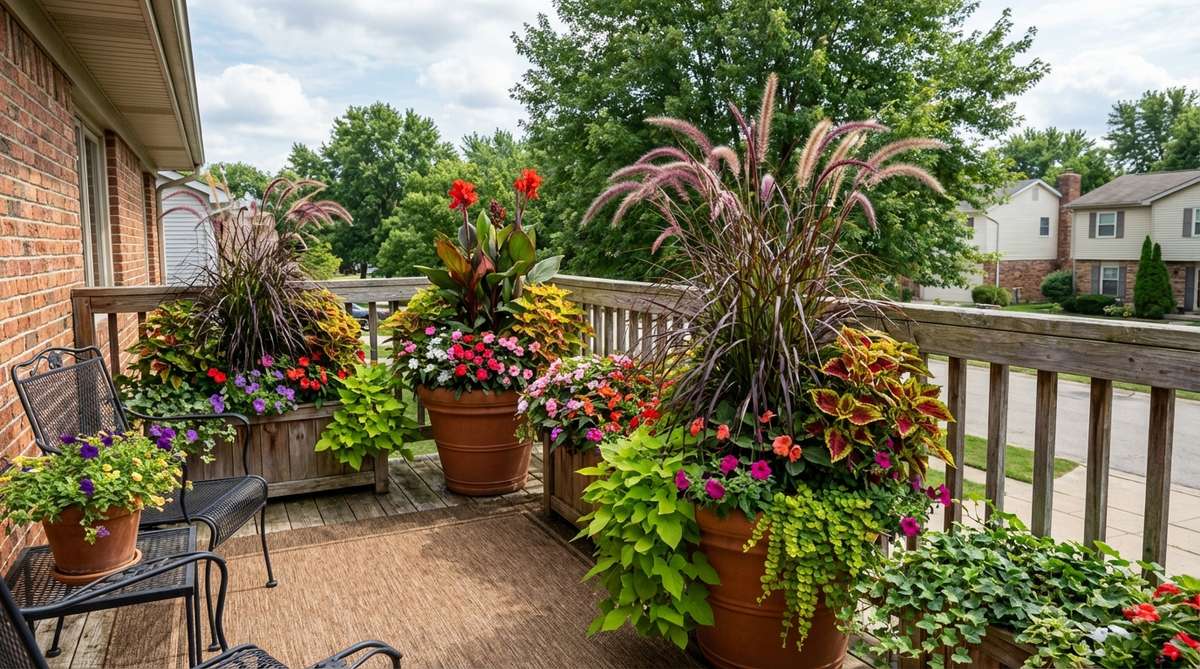
Single large planters housing multiple plant species create abundant displays. Combine thriller (tall focal plant), filler (mounding plants), and spiller (trailing plants) for professional results.
Select plants with similar water and light requirements. Position the thriller at the back or center, fillers around it, and spillers at edges.
This formula works for any style—tropical, cottage, or modern—through plant selection.
54. Herb Container Gardens
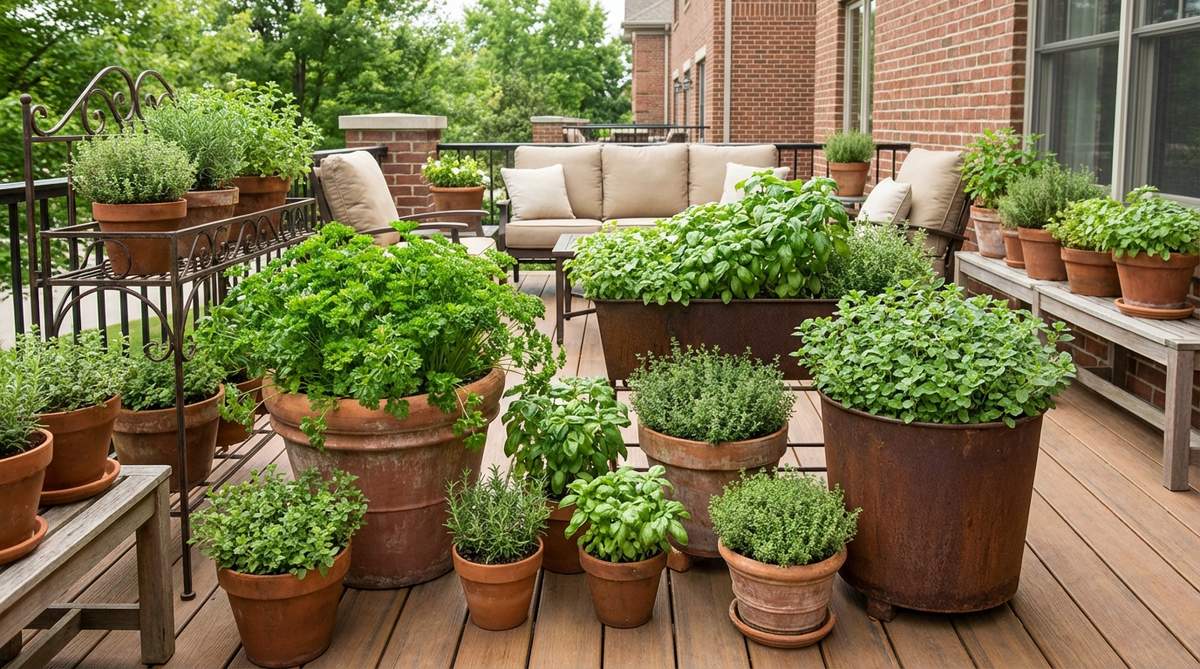
Dedicated herb planters position culinary plants within arm’s reach of the kitchen. Parsley, basil, thyme, and oregano thrive in containers.
Use individual 6-8 inch pots clustered on a tray for easy rotation. Alternatively, plant multiple herbs in a single large container with excellent drainage.
This functional garden reduces grocery costs while adding fragrance and visual appeal to balconies.
55. Succulent Arrangements
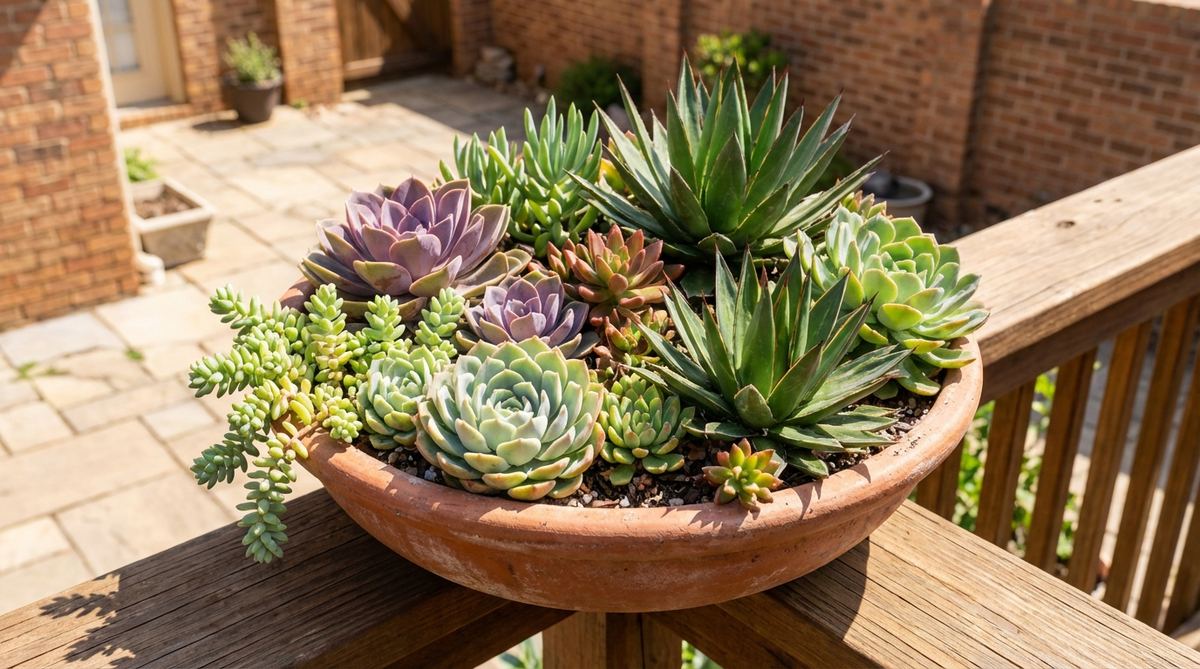
Drought-tolerant succulents require minimal maintenance while offering architectural forms and varied colors. Arrangements combine species with different textures and growth habits.
Plant in shallow containers with cactus-specific soil mix. Position in full sun locations—most balconies provide ideal conditions.
This low-maintenance approach suits travelers or beginning gardeners while delivering sophisticated aesthetics.
56. Dwarf Fruit Trees
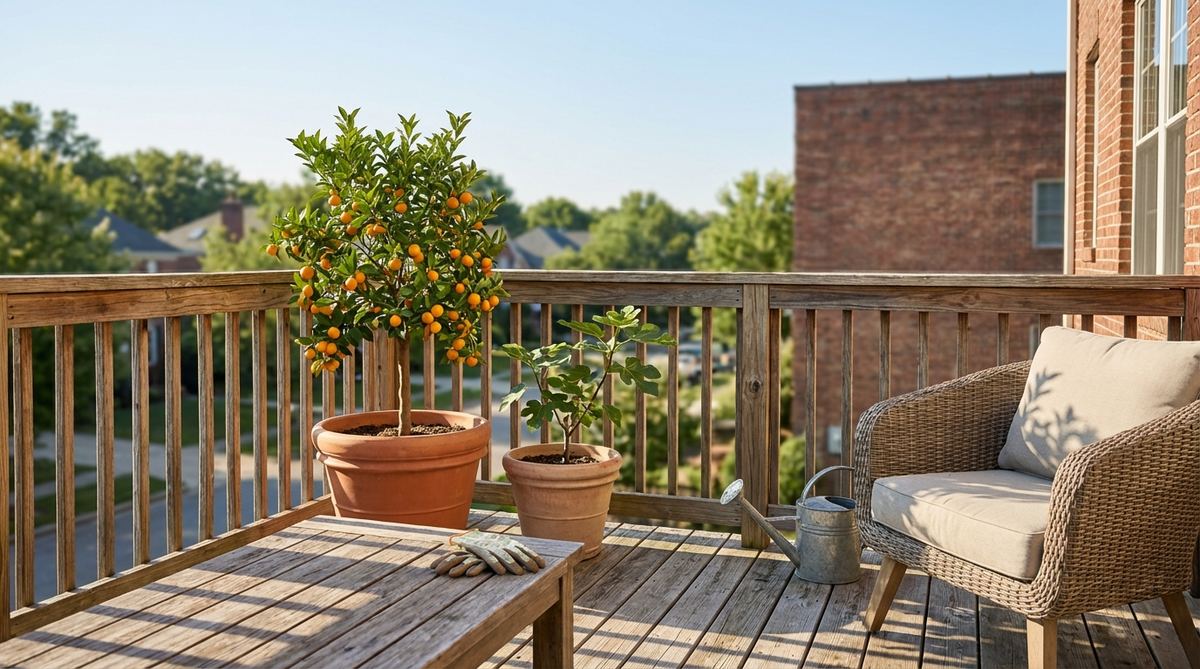
Compact citrus, fig, or apple varieties bred for containers produce edible fruit on small balconies. These trees grow 4-6 feet tall in 15-gallon pots.
Select self-pollinating varieties that don’t require cross-pollination. Provide full sun exposure and consistent moisture.
This productive addition combines ornamental value with functional harvests spanning multiple seasons.
57. Window Box Style Planters
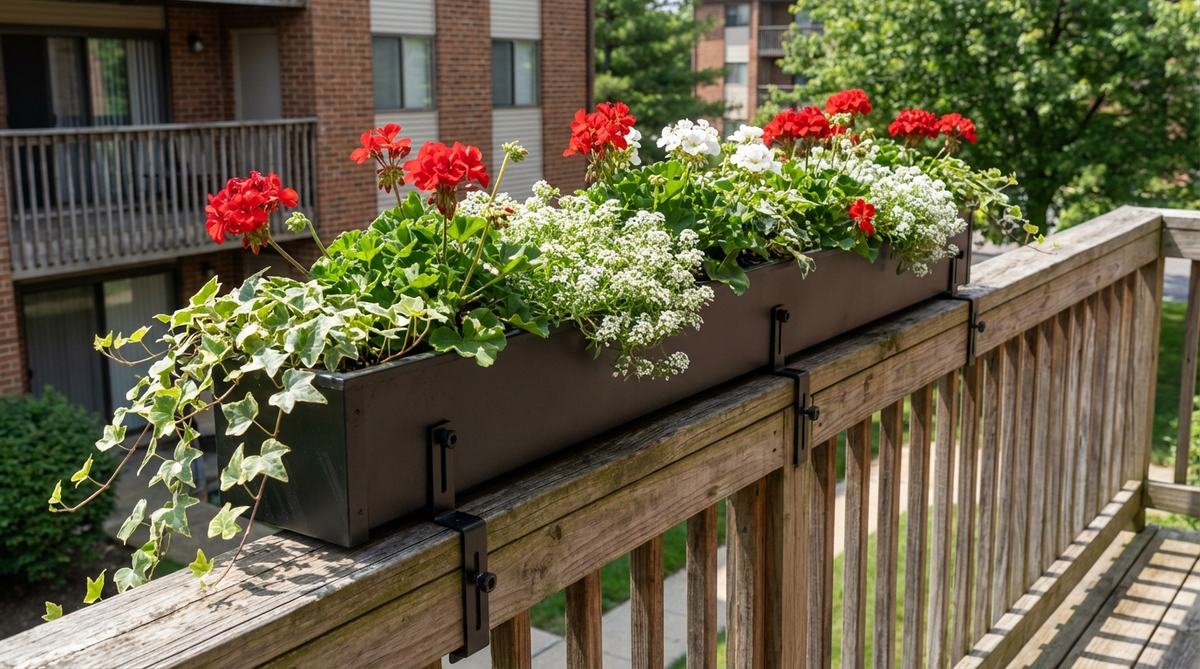
Long narrow planters maximize growing space along railings. Standard boxes measure 24-36 inches long and 6-8 inches wide.
Secure boxes with adjustable brackets that clamp onto railings. Fill with seasonal annuals for color rotation or evergreen perennials for consistency.
This format particularly suits balconies with limited floor space but extensive railing length.
58. Trailing Plant Displays
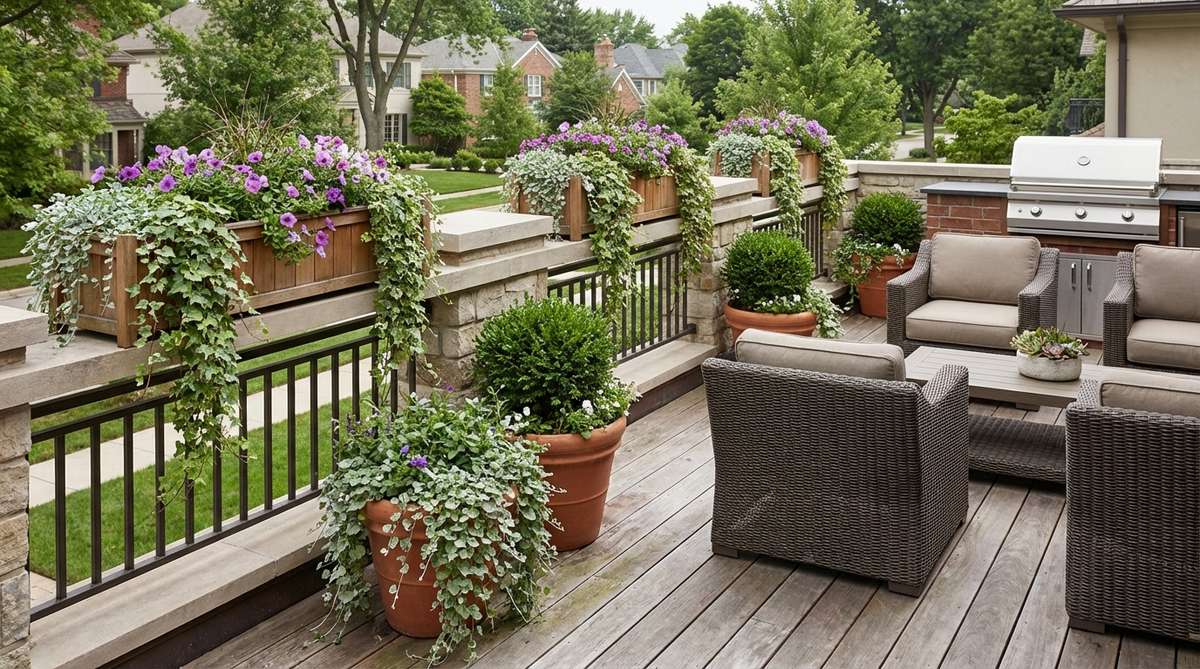
Cascading plants like ivy, petunias, or sweet potato vine soften hard edges. Positioned on elevated surfaces, they create vertical interest through downward growth.
Select fast-growing trailing varieties for quick impact. Pinch growing tips monthly to encourage branching rather than single long vines.
This technique adds movement and softness that upright plants alone can’t achieve.
Color Palette Approaches For Balcony Decor Ideas
Color schemes establish mood and visual coherence. These palette strategies work within small footprints where every element remains visible simultaneously.
59. Monochromatic Schemes
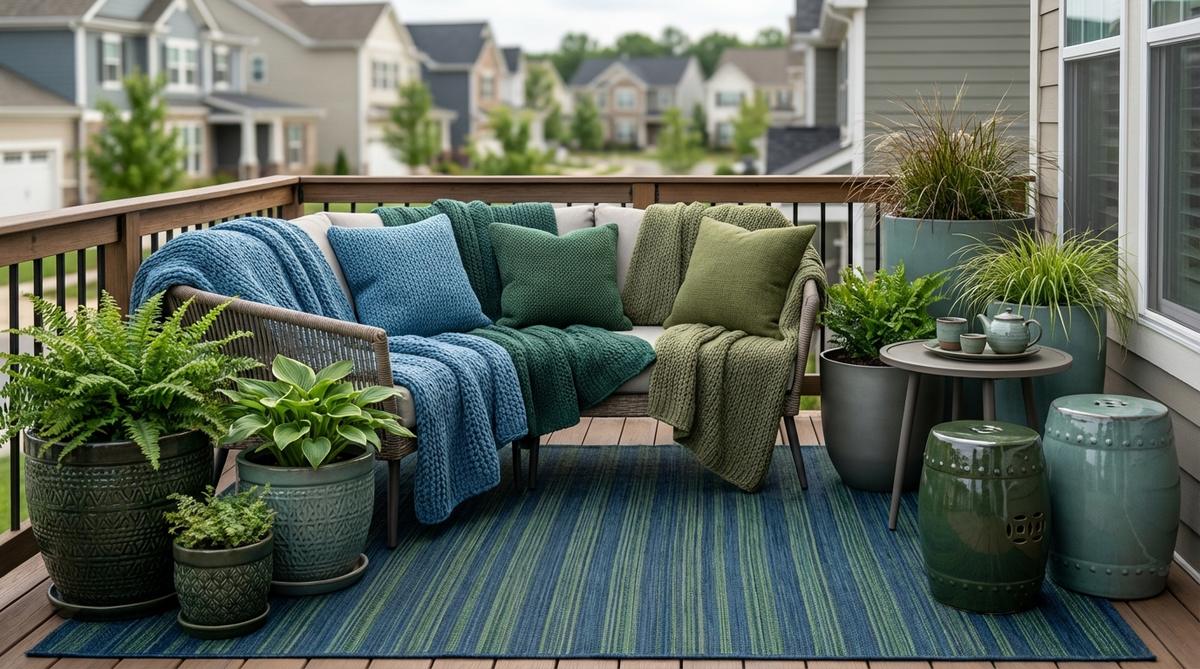
Single-color palettes using varied shades create sophisticated cohesion. Blues ranging from navy to sky or greens from forest to sage demonstrate this approach.
Vary textures within the color family to prevent flatness—pair smooth ceramics with woven textiles and matte finishes with glossy accents.
This strategy simplifies decision-making while producing professional results even for design novices.
50. Neutral Base with Bright Accents
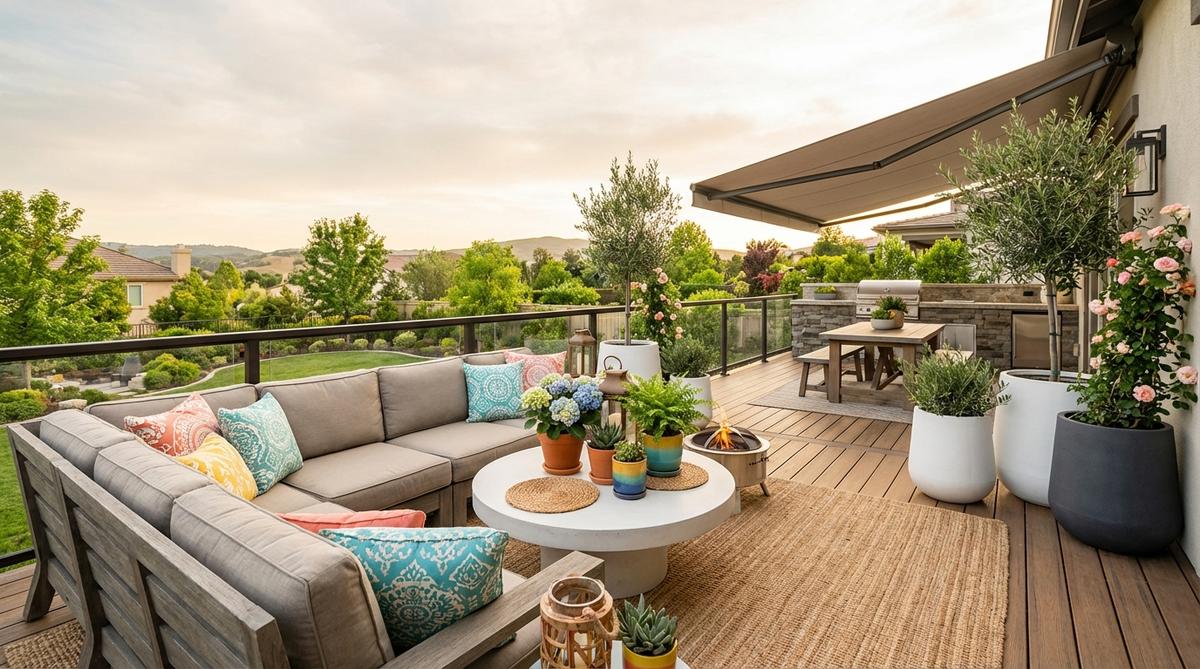
Beige, gray, and white foundations allow interchangeable accent colors through pillows, planters, and accessories. The neutral backdrop never competes with accents.
Select two accent colors that appear in 20-30% of elements. Change accents seasonally without replacing major furniture.
This flexible system accommodates evolving tastes and trend shifts without complete redesigns.
61. Mediterranean Terracotta
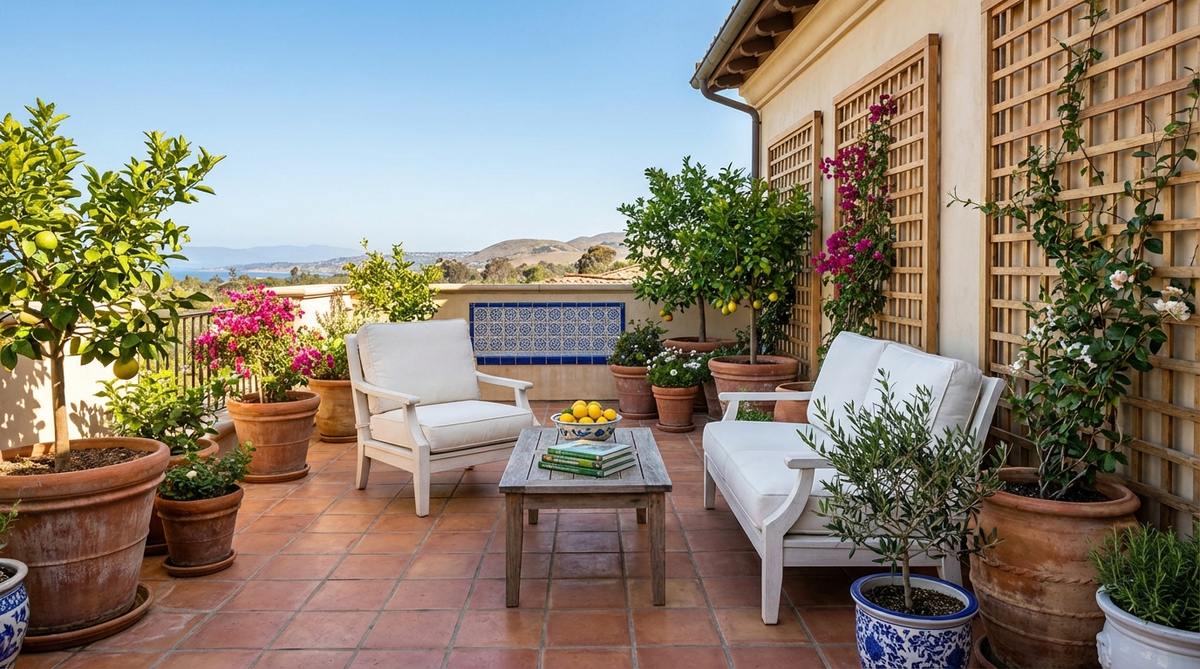
Warm terracotta pots and tiles paired with blue accents evoke Mediterranean coastal villages. White furniture and natural wood complete the palette.
Focus terracotta in planters and flooring, using blue in textiles and ceramics. This warm scheme suits sunny balconies with southern exposure.
The earthy palette connects urban balconies to natural landscapes despite city surroundings.
62. Modern Black and White
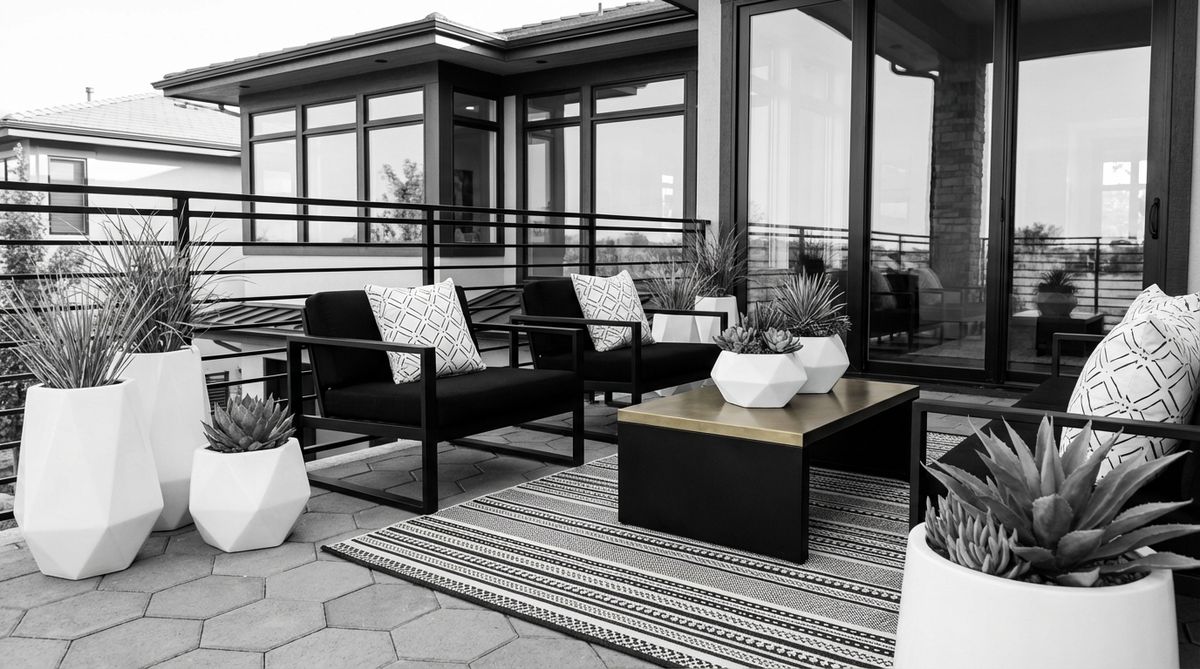
High-contrast black and white creates graphic impact in small spaces. Geometric patterns in this palette add visual interest without color.
Use black for structural elements like furniture frames and white for larger surfaces like cushions and pots. Add metallic accents in brass or chrome.
This contemporary approach suits modern architecture and minimalist aesthetics.
63. Jewel Tone Richness
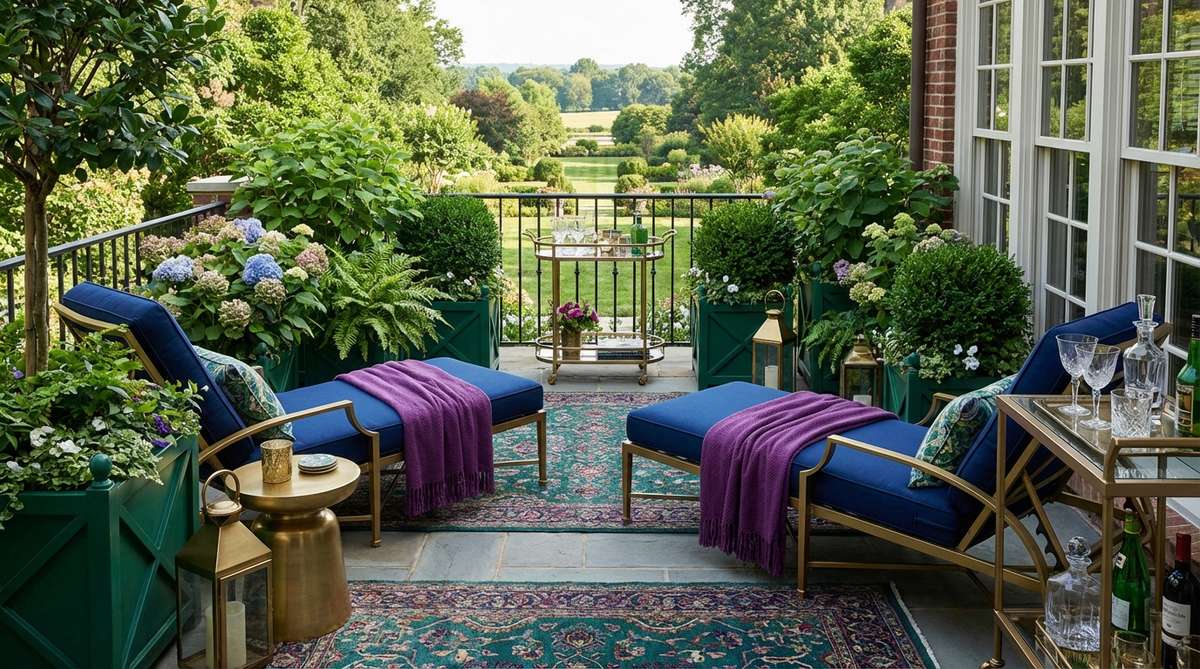
Deep sapphire, emerald, and amethyst create luxurious environments. These saturated colors appear more sophisticated than primary brights.
Balance jewel tones with metallic gold or brass accessories. Use darker tones in larger elements like furniture, reserving lighter jewel shades for accents.
This bold palette transforms small balconies into intimate retreats rather than expansive spaces.
Seasonal Adaptations For Small Balcony Decoration
Year-round balcony use requires seasonal modifications. These adaptations extend usability beyond summer months.
64. Spring Refresh
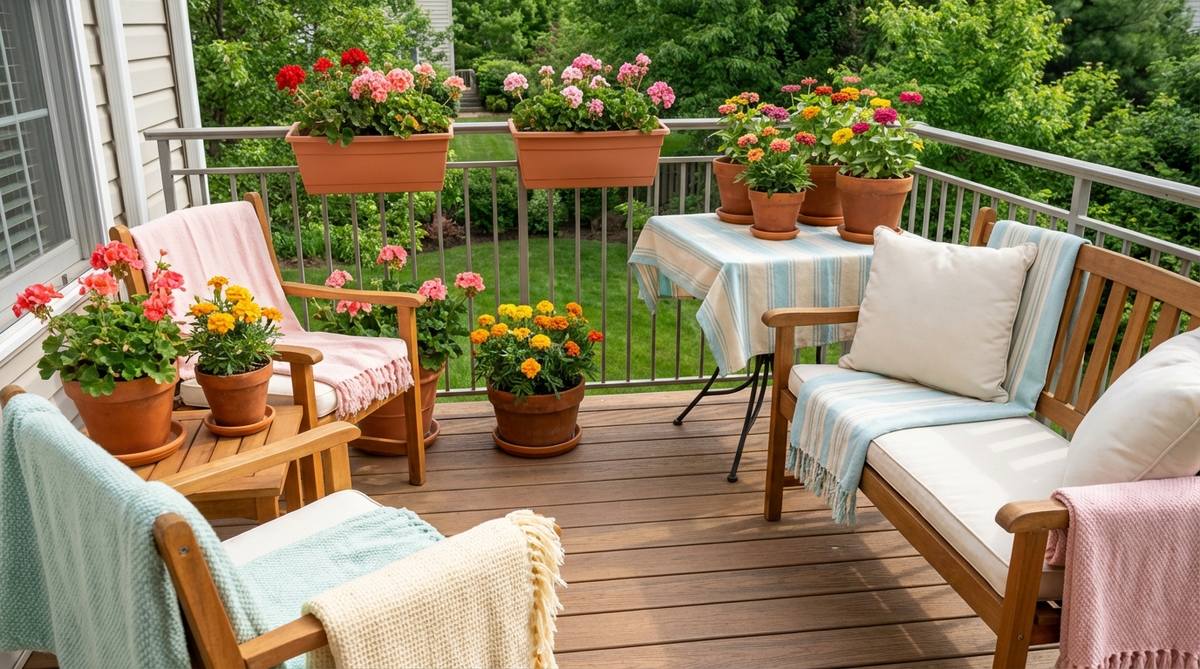
Swap heavy winter textiles for lightweight cottons in pastel shades. Introduce flowering annuals like geraniums, marigolds, and zinnias.
Deep-clean furniture and cushions to remove winter grime. Repair any weather damage from snow or ice before peak outdoor season.
This transitional update signals renewed outdoor living after dormant winter months.
65. Summer Cooling Strategies
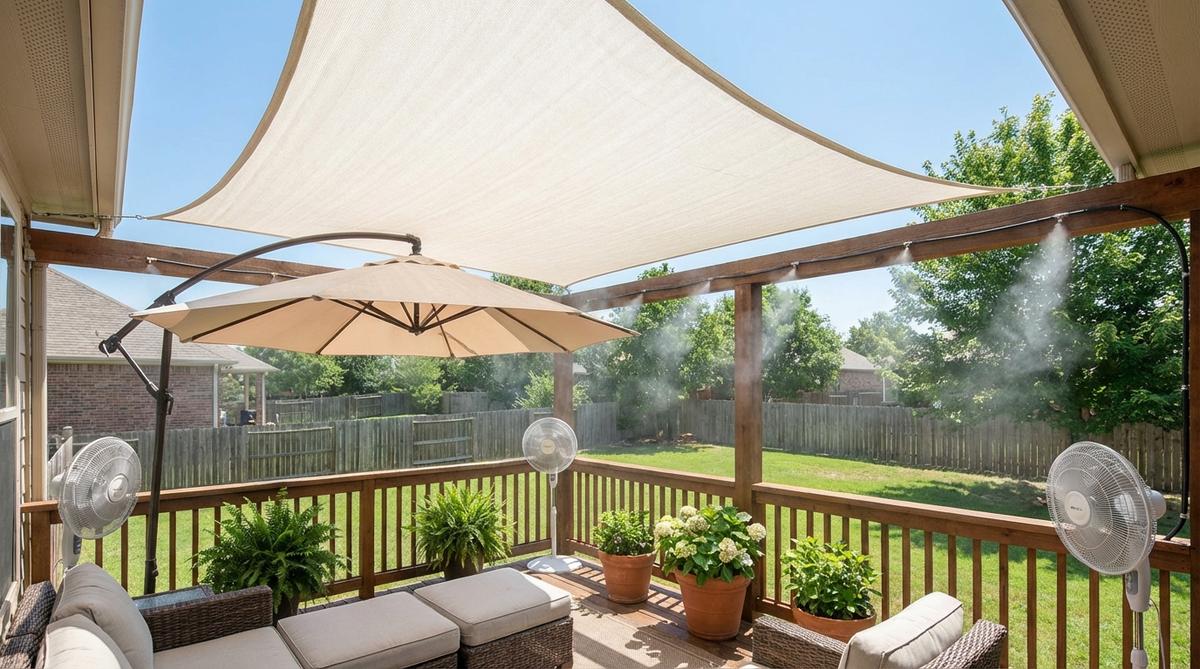
Install shade sails or market umbrellas to reduce direct sun exposure. Choose light-colored fabrics that reflect rather than absorb heat.
Add portable fans designed for outdoor use. Misting systems attached to umbrellas provide evaporative cooling in dry climates.
These modifications make balconies usable during midday hours that would otherwise be unbearable.
66. Autumn Coziness
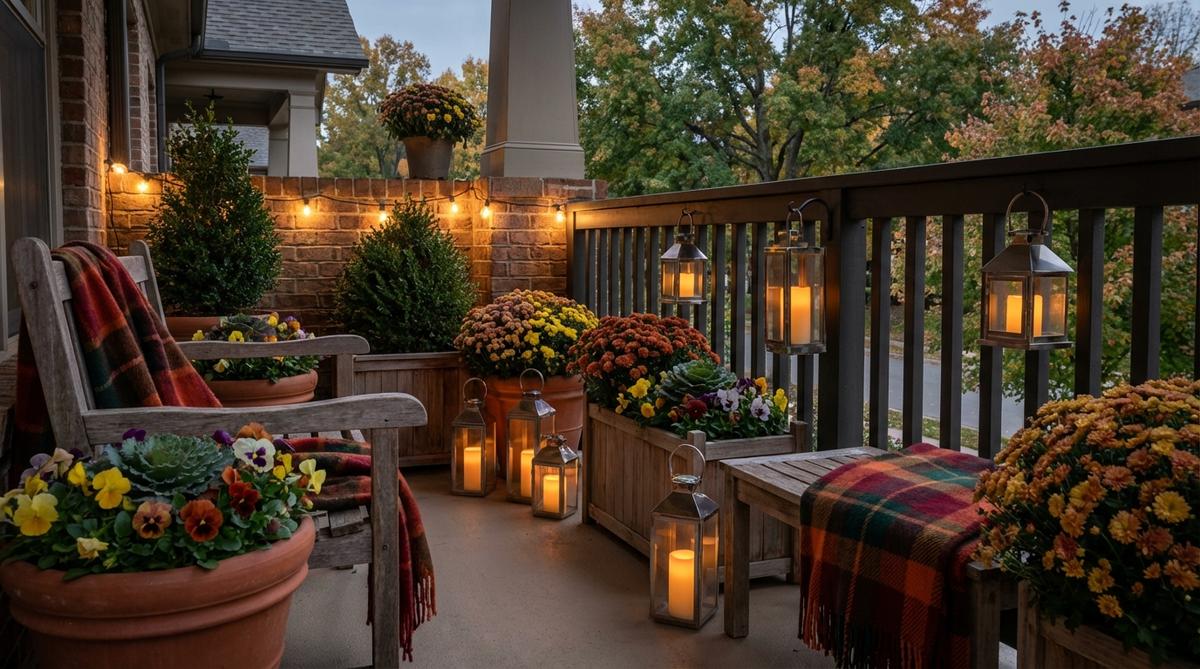
Layer plaid or buffalo check throws over seating. Replace summer annuals with cold-tolerant pansies, mums, and ornamental kale.
Add lanterns with flameless candles for earlier evening darkness. The warm glow extends usable hours as daylight diminishes.
This seasonal transition maintains outdoor engagement as temperatures moderate.
67. Winter Preparation
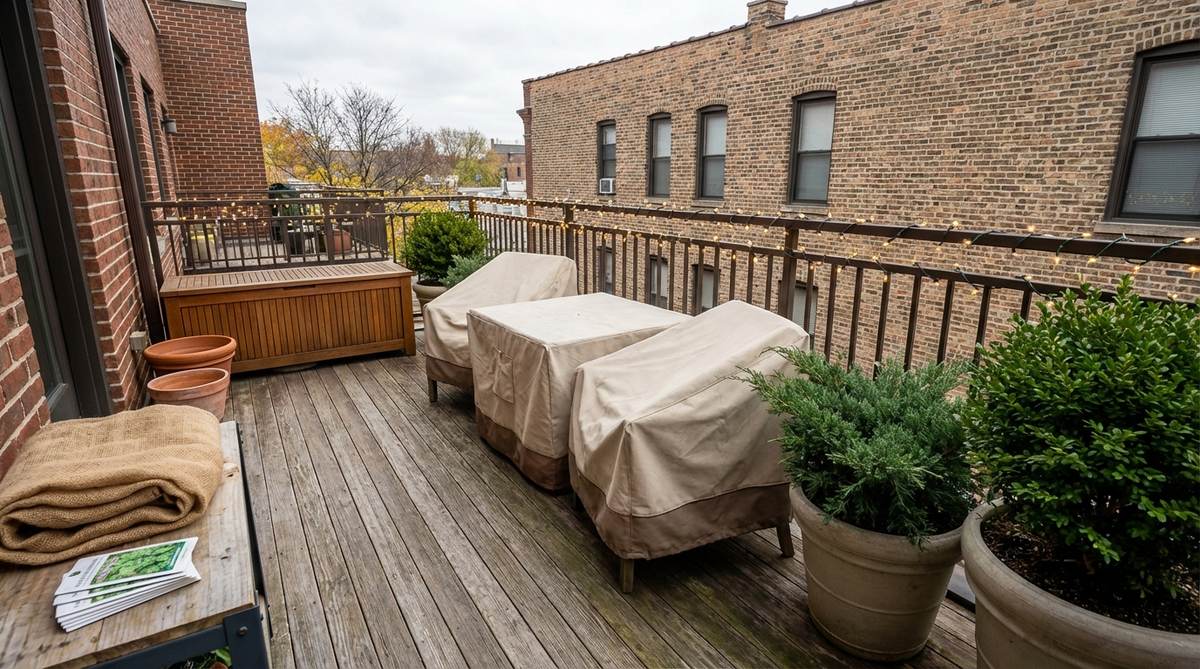
Store delicate items indoors before freezing temperatures arrive. Cover or relocate furniture to protected locations.
Maintain evergreen plants for winter structure. Add outdoor-rated holiday lights for festive appeal.
Minimal winter styling preserves the option for occasional outdoor access during mild days without full seasonal setups.
Conclusion
Successful balcony decor balances aesthetics with functionality, transforming overlooked square footage into valuable living space. The 67 concepts presented here address the specific constraints small apartment balconies impose—limited floor area, weight restrictions, and rental-friendly installations—while delivering designs worthy of professional portfolios. By prioritizing vertical growing systems, multi-functional furniture, and layered lighting, even the most compact balcony becomes an extension of interior living rather than an architectural afterthought. Begin with one category that addresses your most pressing need, then expand systematically as comfort with outdoor styling grows. Fresh Garden Ideas encourages starting with reversible modifications like textiles and container gardens before committing to permanent installations. The investment in thoughtful balcony design pays dividends in expanded living space, connection to nature, and increased property enjoyment regardless of square footage limitations.
Frequently Asked Questions
What is the best furniture for a small balcony?
Folding bistro sets, wall-mounted drop-leaf tables, and stackable chairs provide maximum functionality with minimal footprint. Select pieces that serve multiple purposes, such as storage benches that offer seating plus concealed storage. Measure your balcony precisely before purchasing furniture—allow 30-36 inches of clearance for walkways. Weather-resistant materials like powder-coated aluminum, all-weather wicker, and teak require less maintenance than painted steel or untreated wood.
How can I create privacy on my apartment balcony?
Bamboo roll screens, outdoor curtain panels, and lattice with climbing plants provide privacy without permanent modifications. Tension rod systems and railing-mounted options suit rental restrictions. Combine multiple screening methods for layered privacy—install sheer curtains for daytime light diffusion and add denser screens along specific sightlines. Living walls using tall planters with bamboo or evergreen shrubs create organic barriers that improve air quality while blocking views.
What plants work best for small balcony gardens?
Herbs like basil, thyme, and parsley thrive in containers while providing culinary value. Compact flowering plants including petunias, geraniums, and marigolds deliver color in small spaces. Succulents require minimal maintenance and tolerate neglect. For edibles, choose dwarf varieties of tomatoes, peppers, and lettuce bred specifically for container growing. Match plant selections to your balcony’s sun exposure—full sun (6+ hours), partial shade (3-6 hours), or full shade (less than 3 hours)—for optimal results.
How do I decorate a balcony without drilling holes?
Adhesive hooks rated for outdoor use, tension rods, and railing-mounted systems install without drilling. Freestanding furniture, weighted planters, and interlocking deck tiles require no permanent modifications. Over-the-rail planters and magnetic containers utilize existing structures. Command outdoor hooks support up to 7.5 pounds per hook when properly installed. Tension rod curtain systems wedge between floor and ceiling without fasteners. These rental-friendly solutions remove cleanly when you relocate.
What is the most budget-friendly way to upgrade a balcony?
Start with outdoor rugs to define zones and add color for $30-80. String lights create ambiance for $15-40. Railing planters filled with seasonal annuals cost $20-30 per planter. Paint existing furniture with outdoor spray paint for $6-10 per can. DIY pallet gardens require minimal investment in materials. Thrift stores and yard sales often stock outdoor furniture at 50-75% below retail. Prioritize high-impact changes like lighting and textiles before investing in furniture replacement.
How do I maximize space on a tiny balcony?
Utilize vertical surfaces with wall-mounted planters, hanging baskets, and ladder shelves. Choose furniture that folds or stacks when not in use. Install railing-mounted tables that clamp onto existing structures rather than consuming floor space. Corner-specific furniture and tiered plant stands make use of typically dead zones. Keep the center path clear by positioning elements along perimeter walls and railings. Multi-functional pieces like storage benches provide dual benefits without requiring additional square footage.