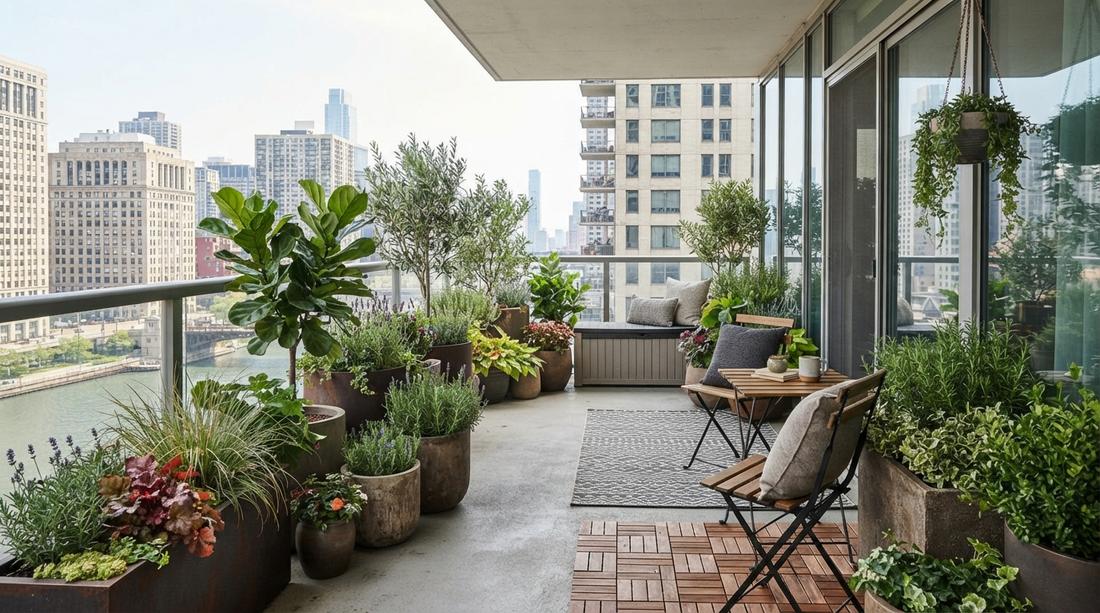
Wind-swept concrete becomes a lush sanctuary with the right urban balcony plants. This blueprint reveals heavy-duty containers and resilient greenery surviving brutal drafts. Get premium aesthetic results without the custom-design price tag.
Design Snapshot: Key Principles
- Wind Adaptation: Utilizing flexible stems and commercial-grade anchor bases to naturally resist heavy gusts.
- Shade Tolerance: Sourcing low-light specialists that thrive with minimal exposure while maintaining vibrant color.
- Container Durability: Investing in UV-coated resin pots and self-watering trough planters to combat rapid evaporation.
- Layered Defense: Deploying strategic screening kits to create microclimates for tender hybrid varieties.
Hardy Shade Perennials for Windy Corners
These workhorses anchor shaded balconies with minimal fuss. Their low centers of gravity and sturdy root systems resist gusts while thriving in indirect light.
1. Hosta Varieties
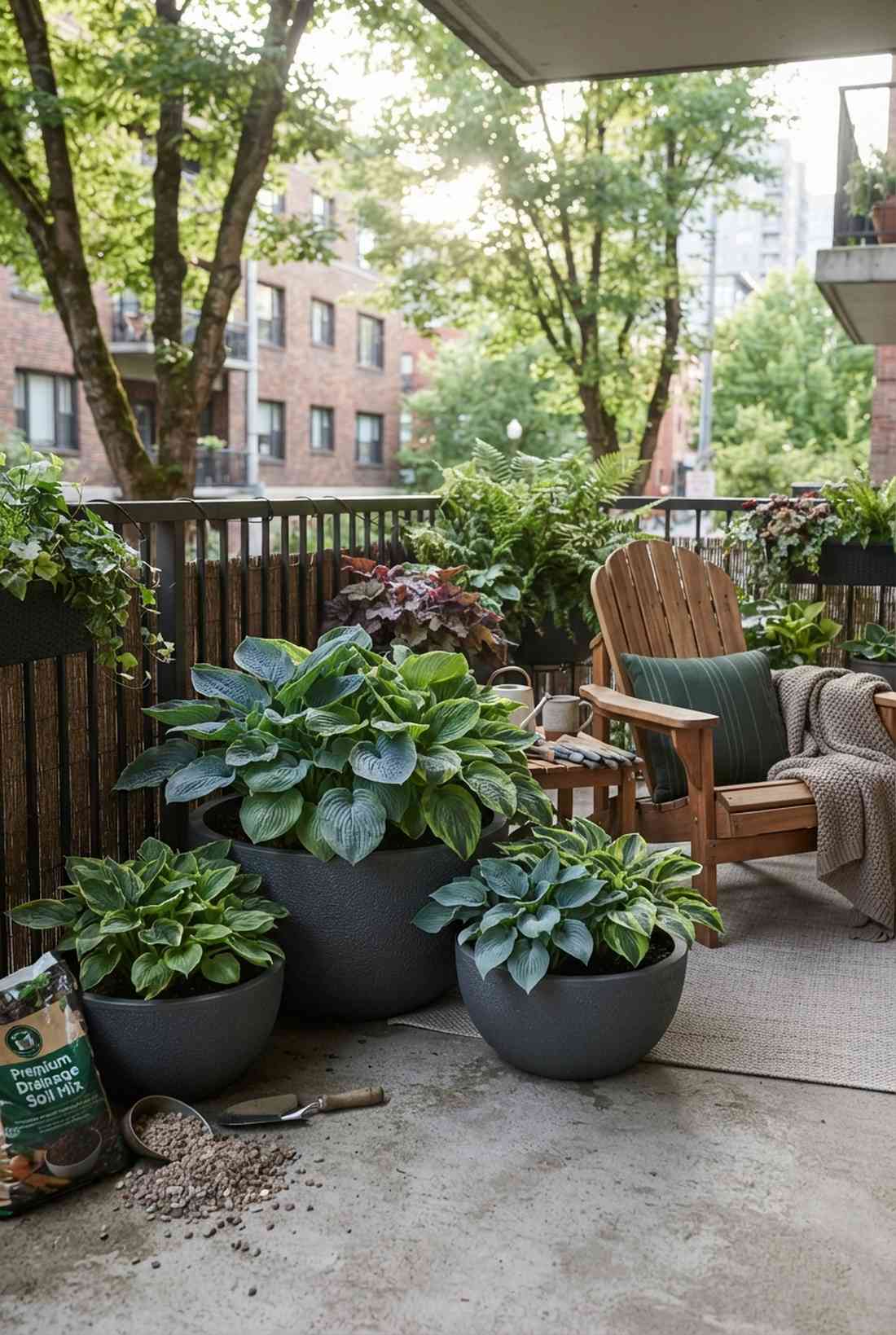
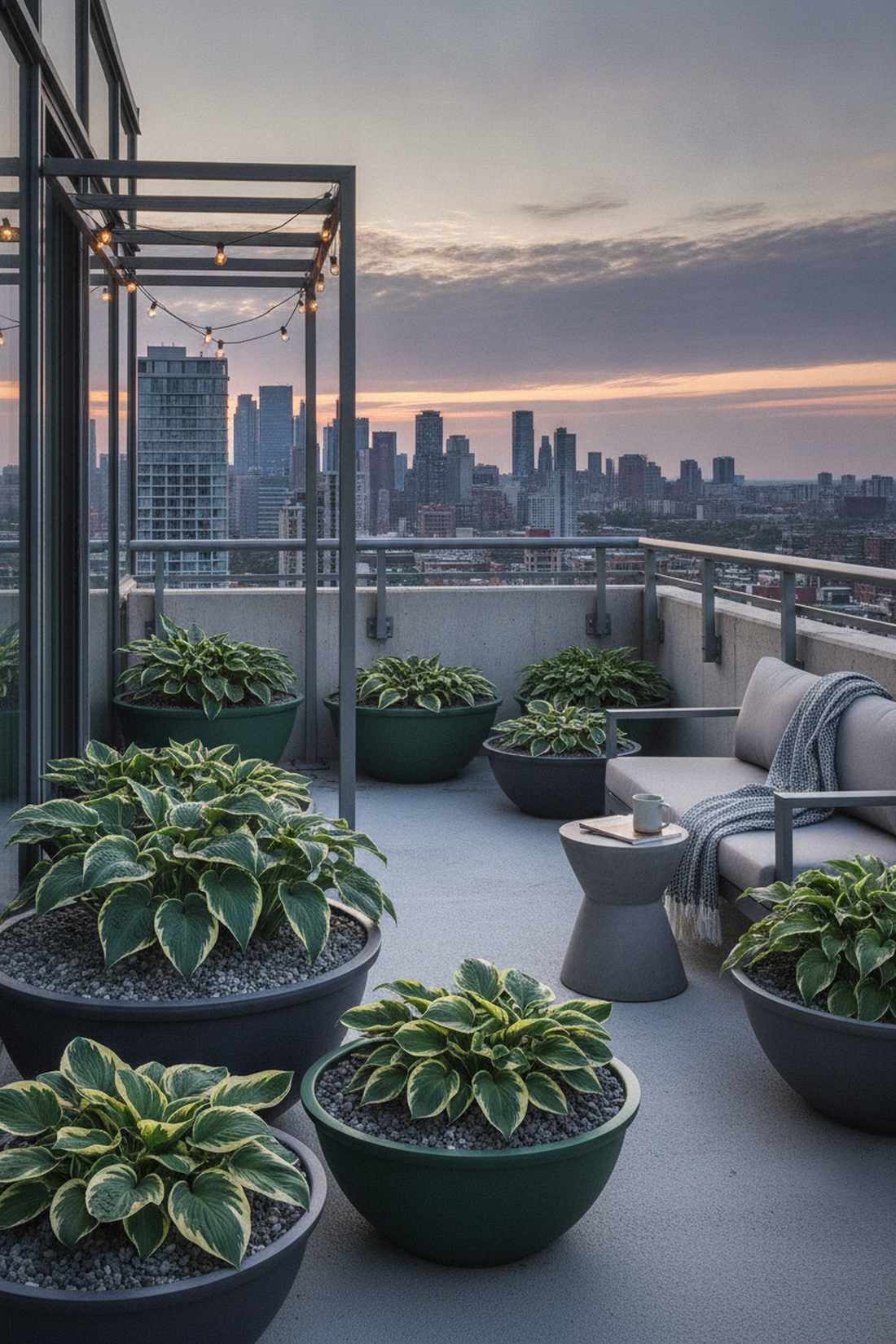
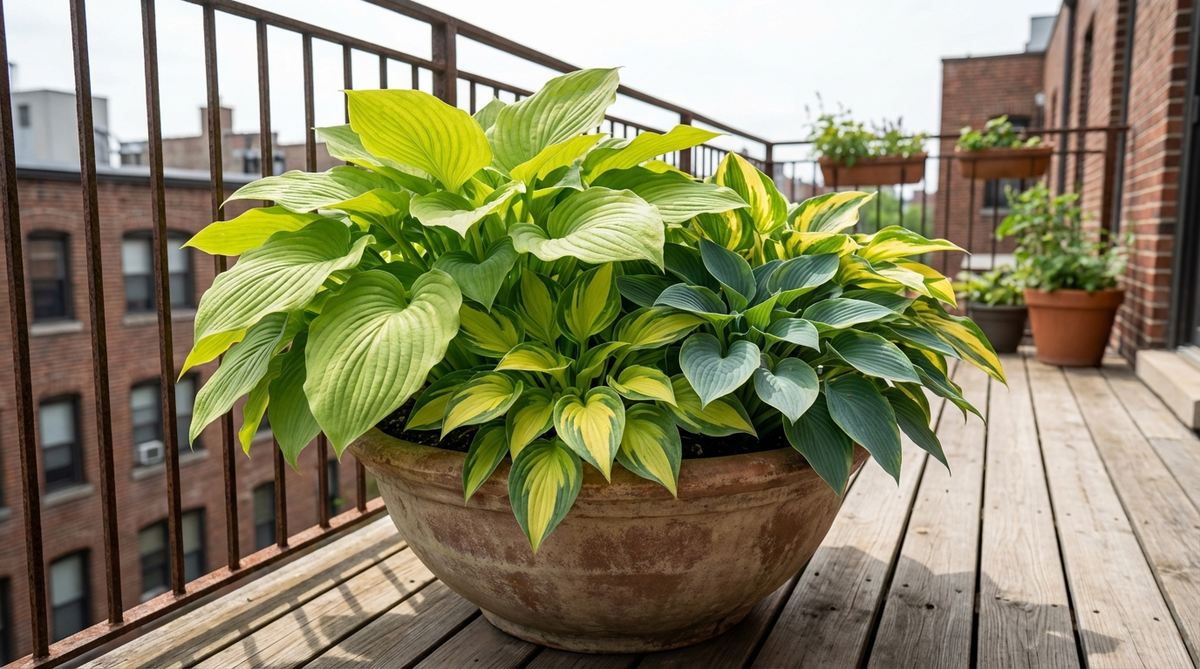
This lush arrangement feels like a tiny hidden forest sprouting right from the concrete. Shade-loving container setups work exceptionally well for dim, wind-swept apartment corners.
Bypassing generic garden center soil for a high-drainage mix gives a designer-level finish to these broad leaves. Seamlessly integrate heavy-duty balcony pots to anchor the thick roots against brutal city drafts.
You can easily pull this off for around $20–$35. Save this to your DIY weekend garden board!
- Key Materials: UV-coated resin bowls, premium drainage soil
- Vibe / Style: Modern woodland retreat
- Difficulty: Easy beginner setup
- Budget Breakdown: Soil mix: $10 | Base Pots: $25.
- Creator’s Tip: Layer crushed gravel at the base for extreme wind stability.
- Smart Sourcing: commercial-grade potting mix (bulk pack) and heavy-duty low-profile pots.
2. Coral Bells (Heuchera)
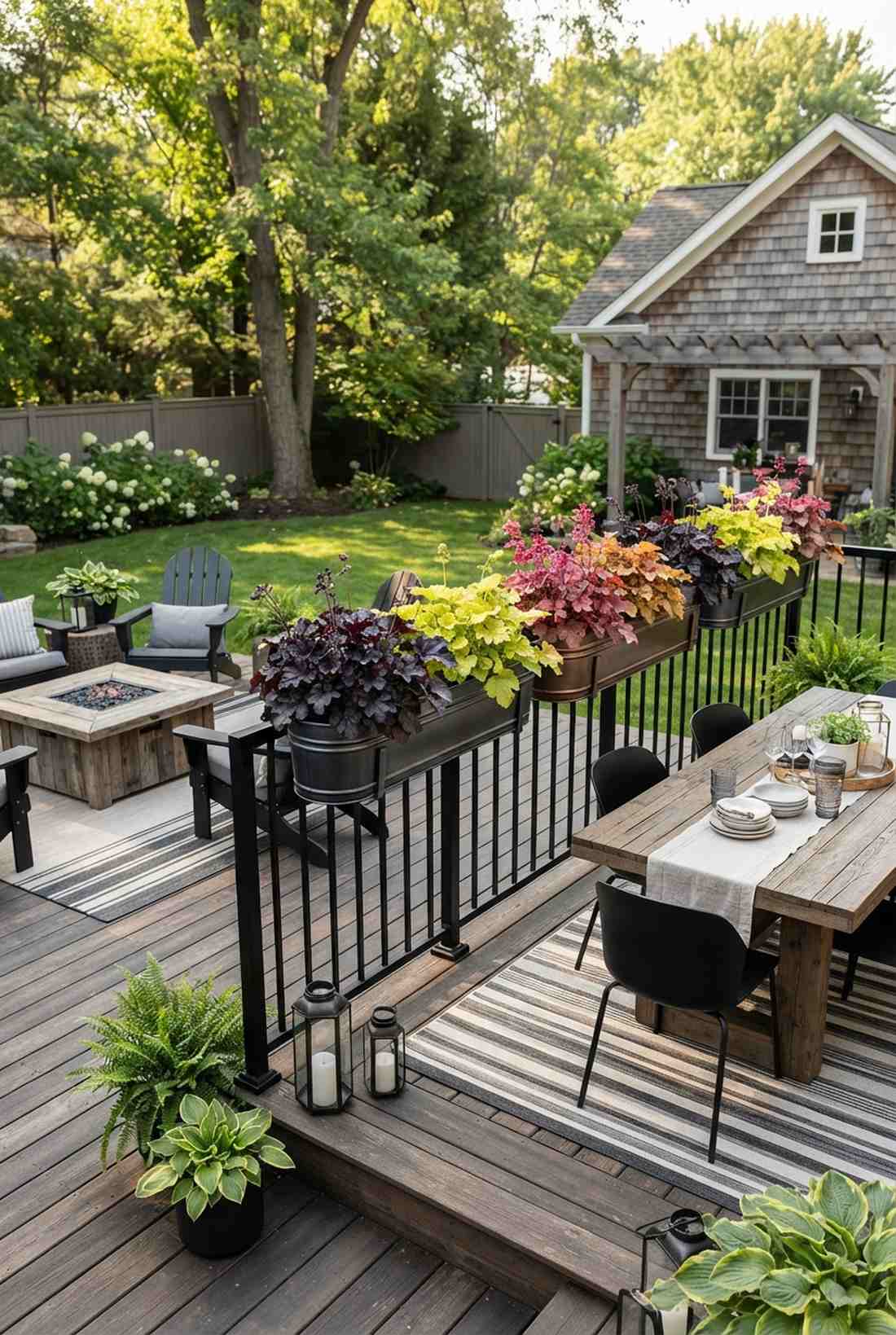
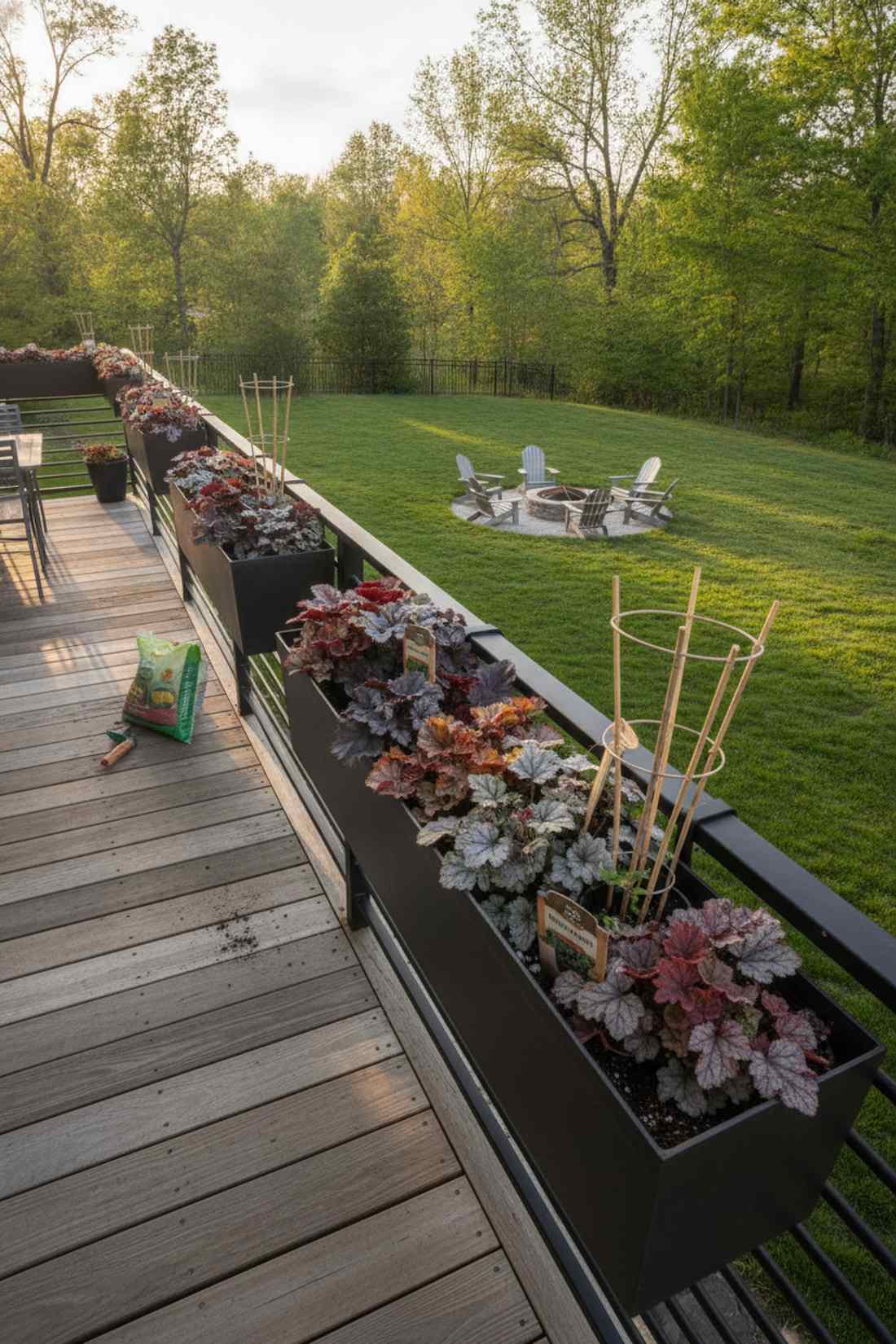
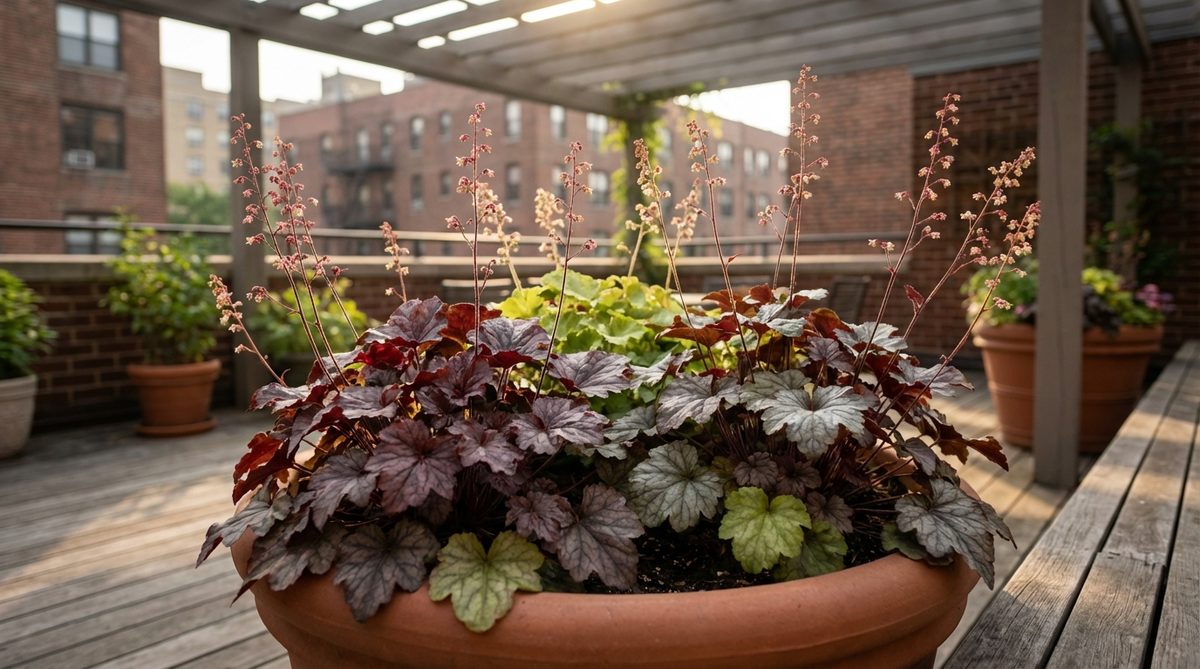
Brings a moody, dramatic pop of color that looks straight out of an architectural digest. Compact foliage planters are perfect for elevated metal railings needing a refined touch.
Using contrasting metallic leaf tones looks far more expensive than it is. Add some urban gardening starter kits to ensure the delicate late-spring stalks survive unpredicted gusts.
Expect to spend about $15–$25 for a clustered arrangement. It’s a fast upgrade that completely changes the vibe.
- Key Materials: Pre-mixed perennial soil, colorful Heuchera cultivars
- Vibe / Style: Moody contemporary flair
- Difficulty: Fast weekend project
- Budget Breakdown: Plants: $15 | Nutrient mix: $10.
- Creator’s Tip: Replace or divide every three years to maintain maximum foliage density.
- Smart Sourcing: pre-mixed perennial soil (bulk bag) and weather-resistant metal troughs.
3. Hellebores (Lenten Rose)
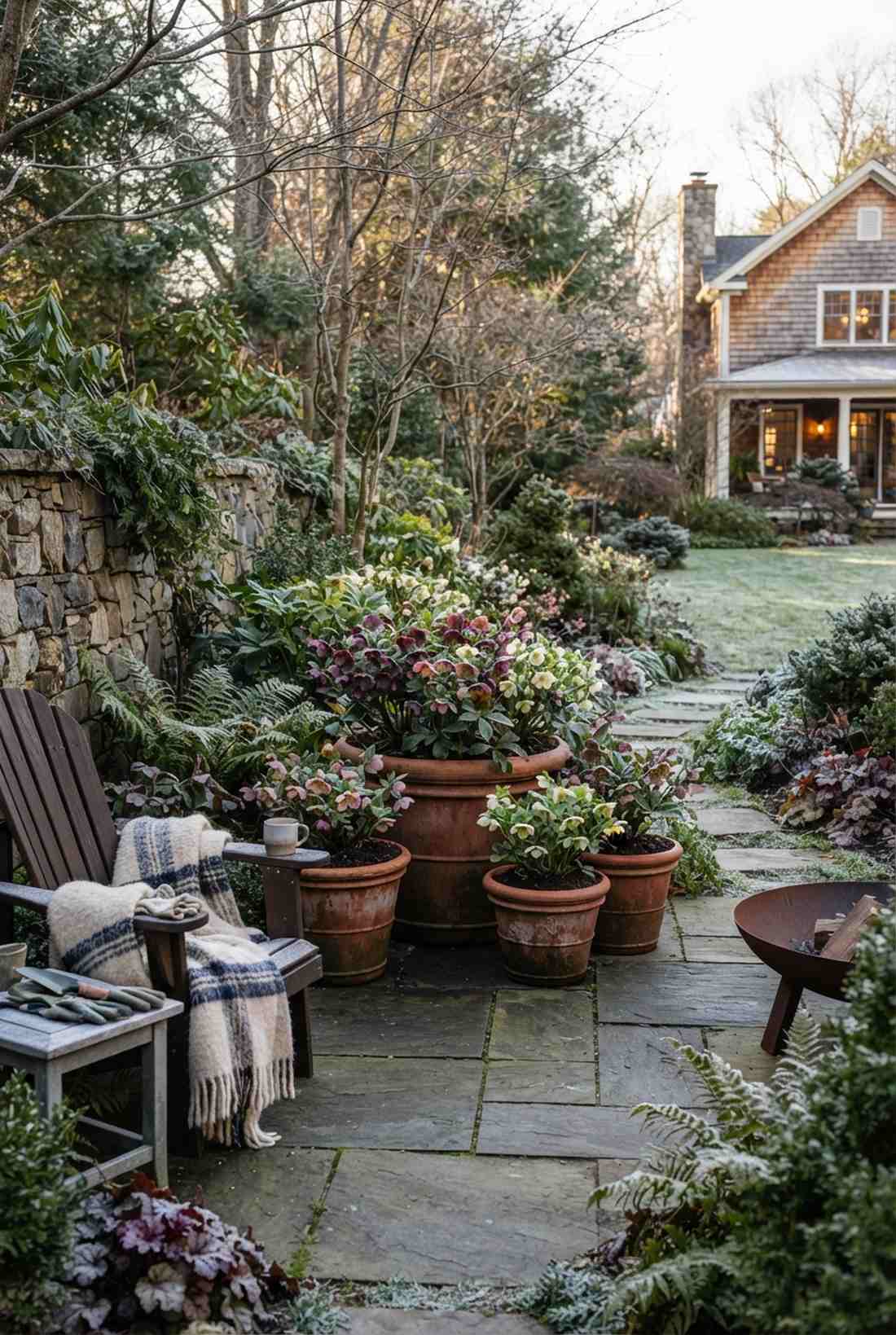
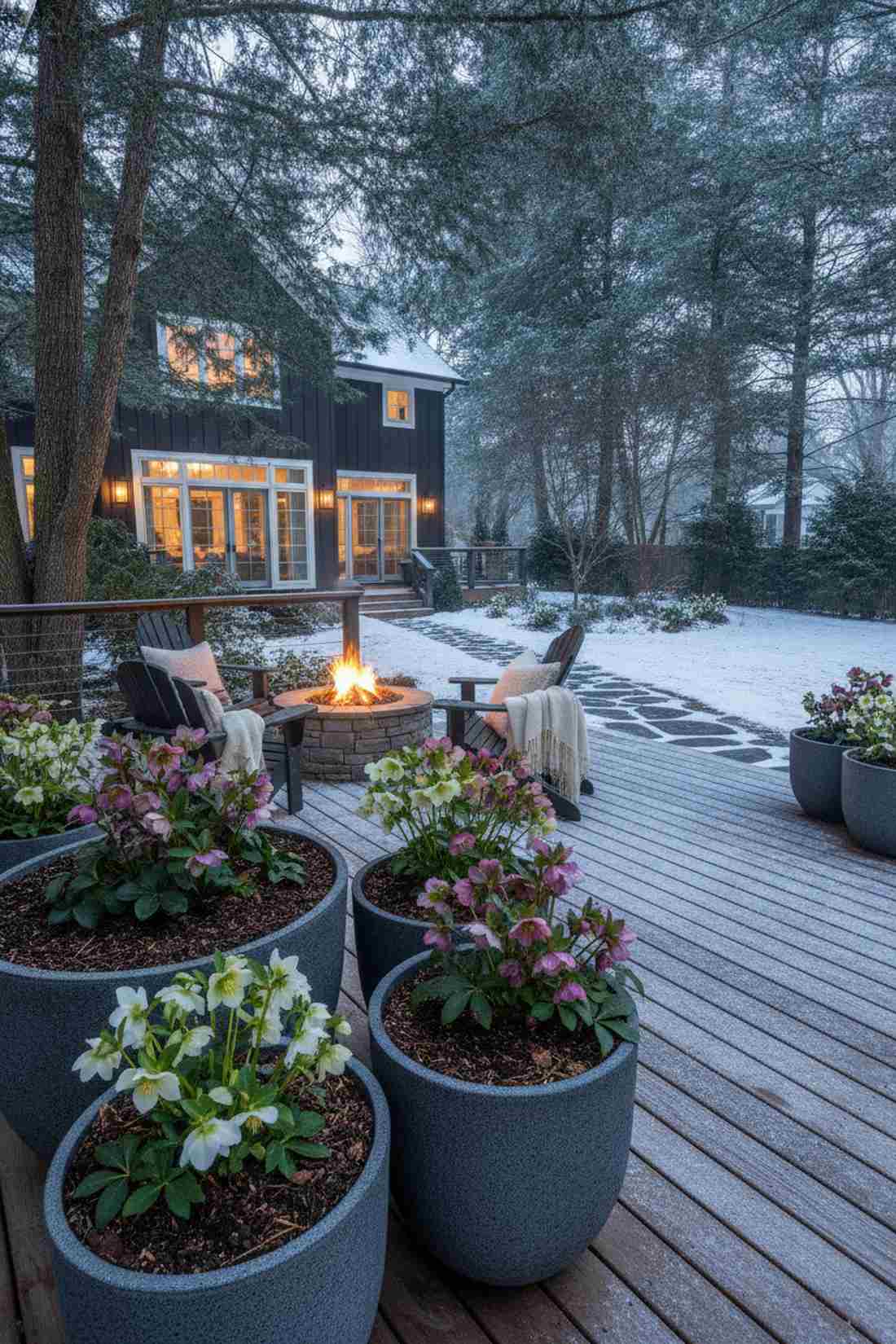
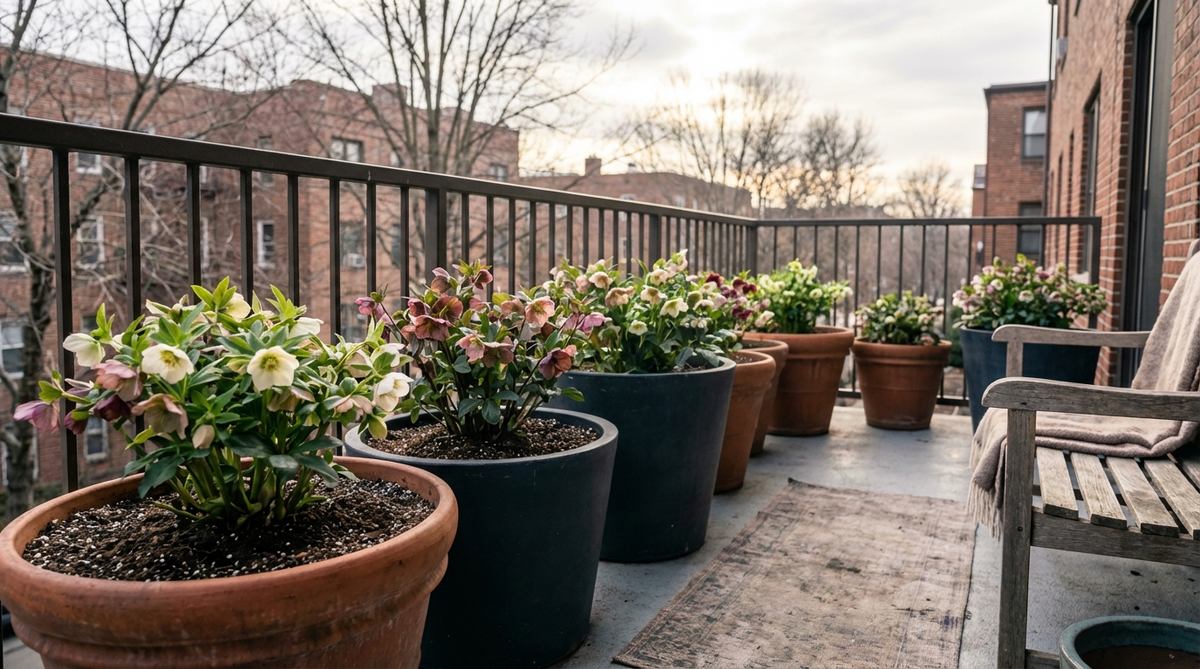
Offers a quiet, romantic winter energy that breathes life into frozen spaces. Evergreen shade blooms serve as the ultimate focal point for deeply shaded, frosty outdoor zones.
Setting these up in deep, rich soil blends delivers a surprisingly premium look all year. Secure them with frost-resistant terrace planters to protect the nodding cup-shaped flowers from harsh drafts.
A solid starter base will run you around $30. Pin this if you’re planning a small space upgrade for the cold months!
- Key Materials: Deep root planters, frost-hardy Hellebore plugs
- Vibe / Style: Elegant winter garden
- Difficulty: Moderate maintenance
- Budget Breakdown: Deep pots: $20 | Plugs: $10.
- Creator’s Tip: Use extra compost in the top layer to mimic forest floor conditions.
- Smart Sourcing: frost-resistant terrace planters (bulk pack) and slow-release winter fertilizer.
4. Japanese Painted Fern
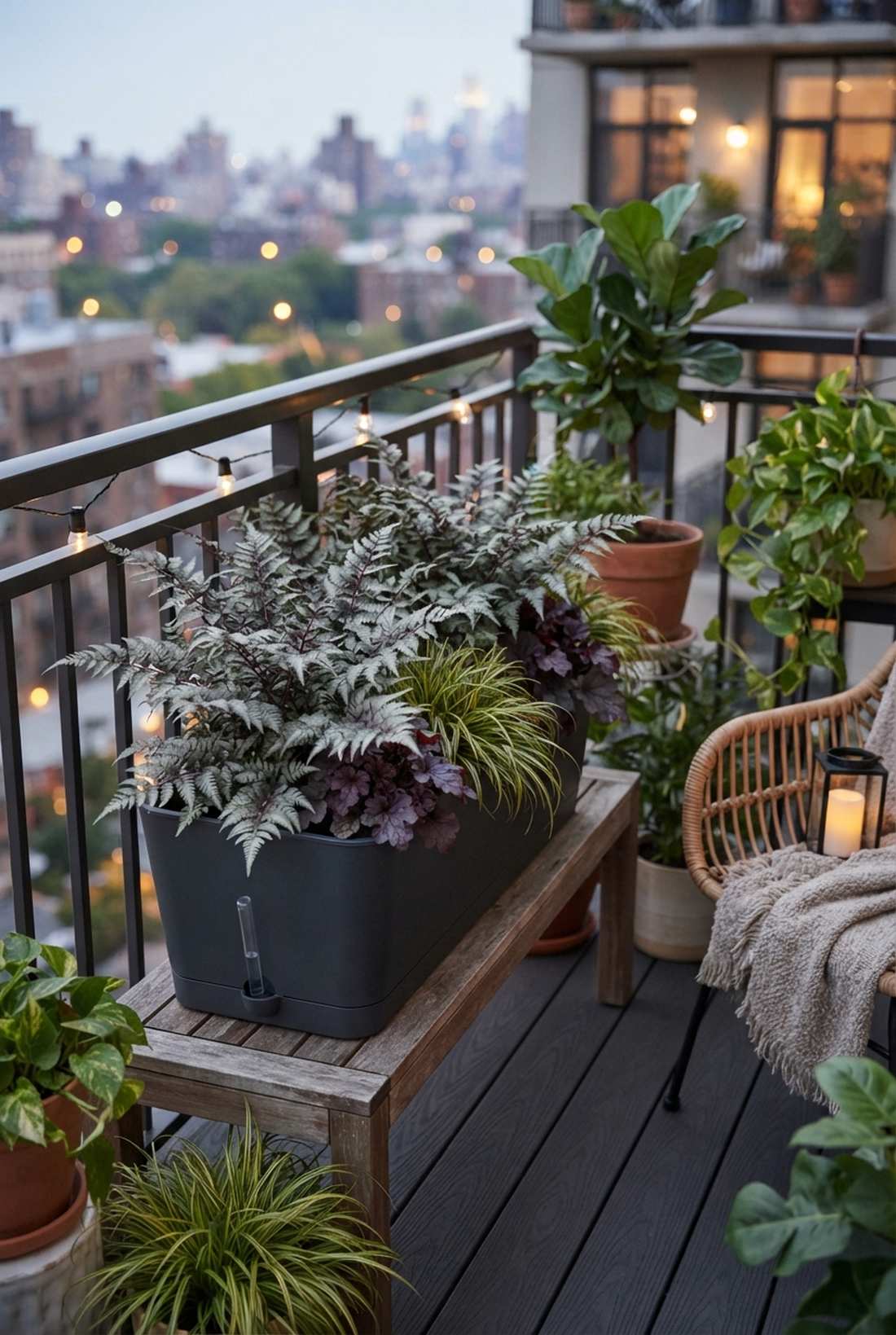
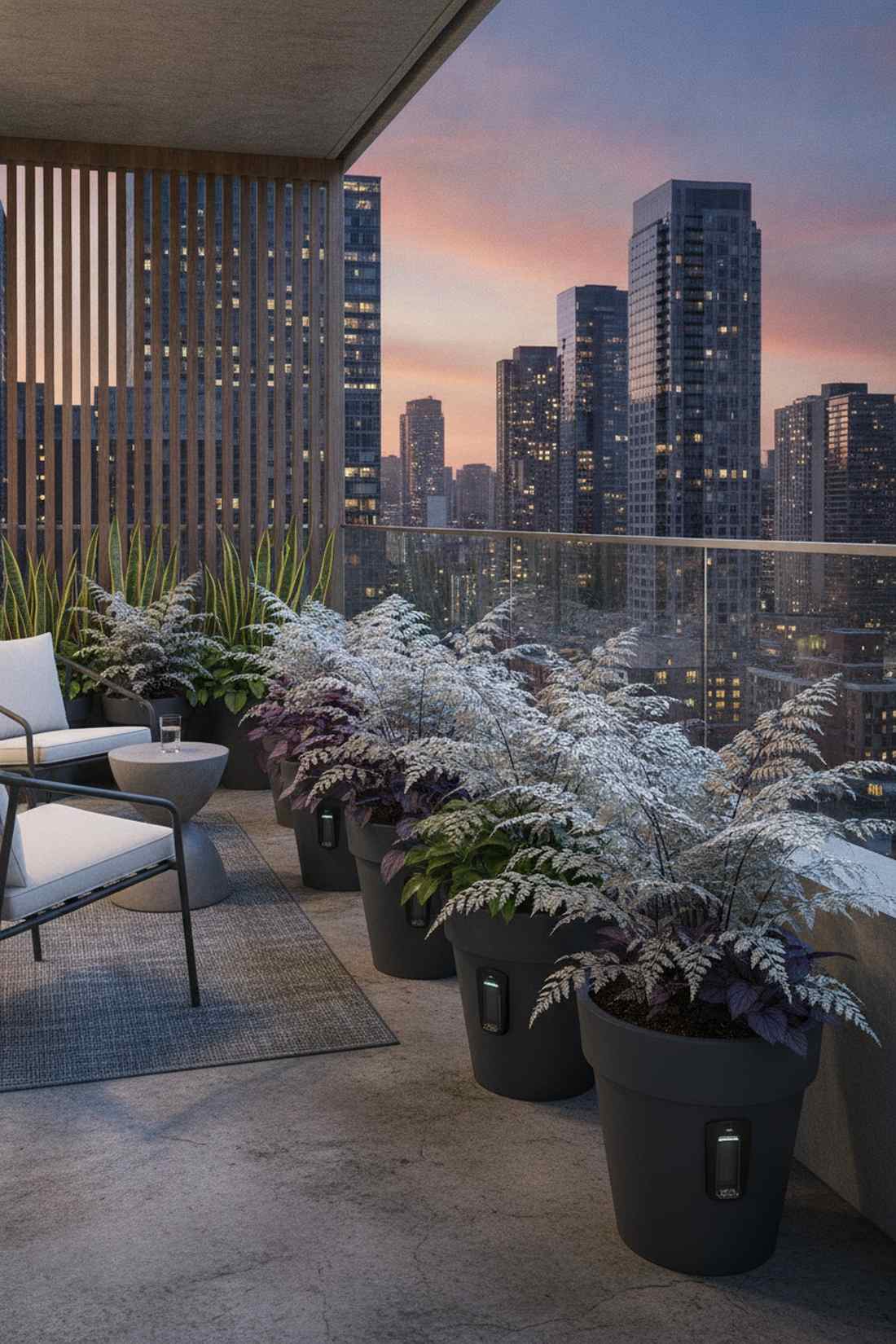
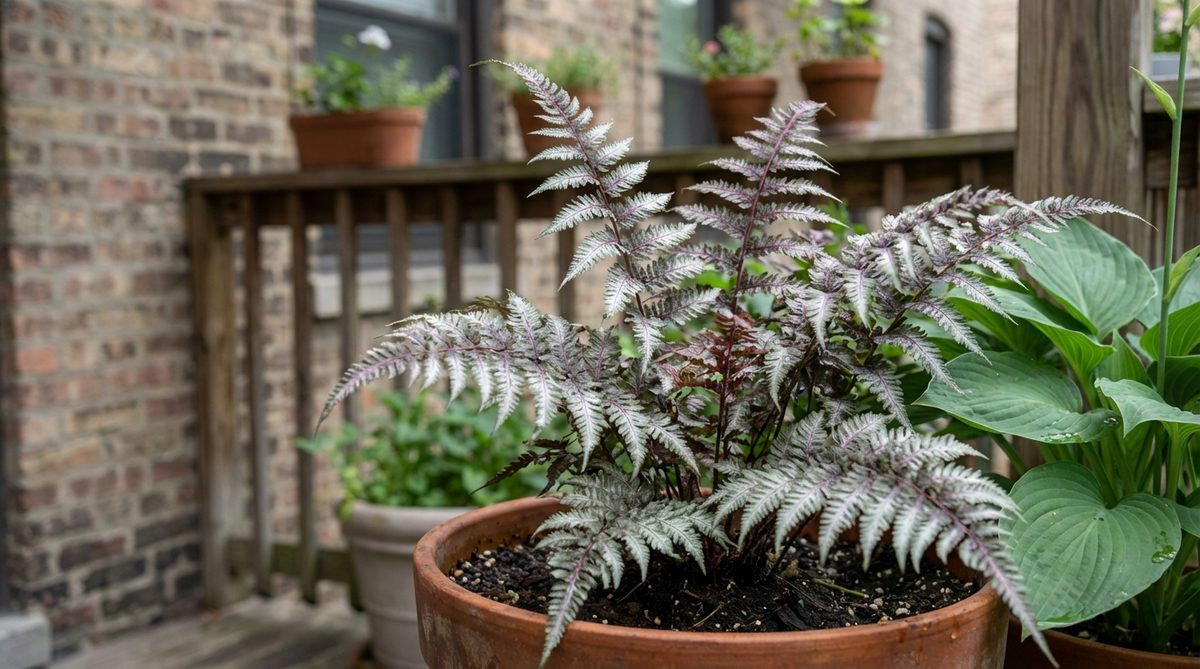
Creates a metallic, ethereal shimmer that feels almost magical under city lights. Fine-textured fern displays work wonders as underplanting for larger, minimalist balcony aesthetics.
Layering these silver fronds with solid-colored companions tricks the eye into seeing custom landscaping. Invest in self-watering planter inserts to prevent the delicate foliage from crisping up on windy afternoons.
You can set this up for roughly $18–$25. Highly recommended for a quick visual win.
- Key Materials: Fern starter kits, self-watering pots
- Vibe / Style: Ethereal urban jungle
- Difficulty: Low-stress assembly
- Budget Breakdown: Ferns: $12 | Watering inserts: $13.
- Creator’s Tip: Keep them out of direct afternoon sun to preserve the silver variegation.
- Smart Sourcing: self-watering planter inserts (multi-pack) and moisture-control potting soil.
This next setup is ridiculously cheap but looks like a $200 custom penthouse display…
5. Astilbe
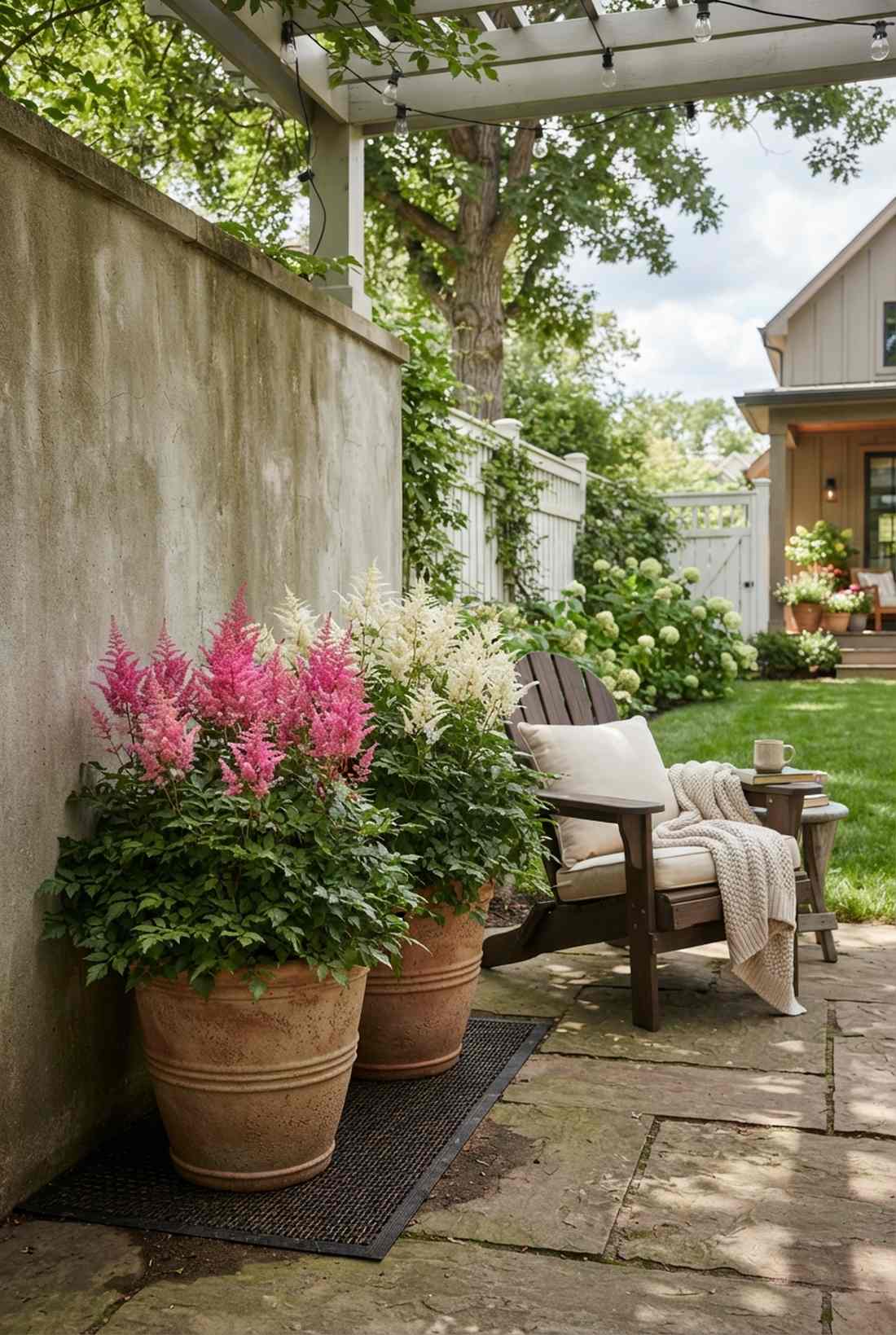
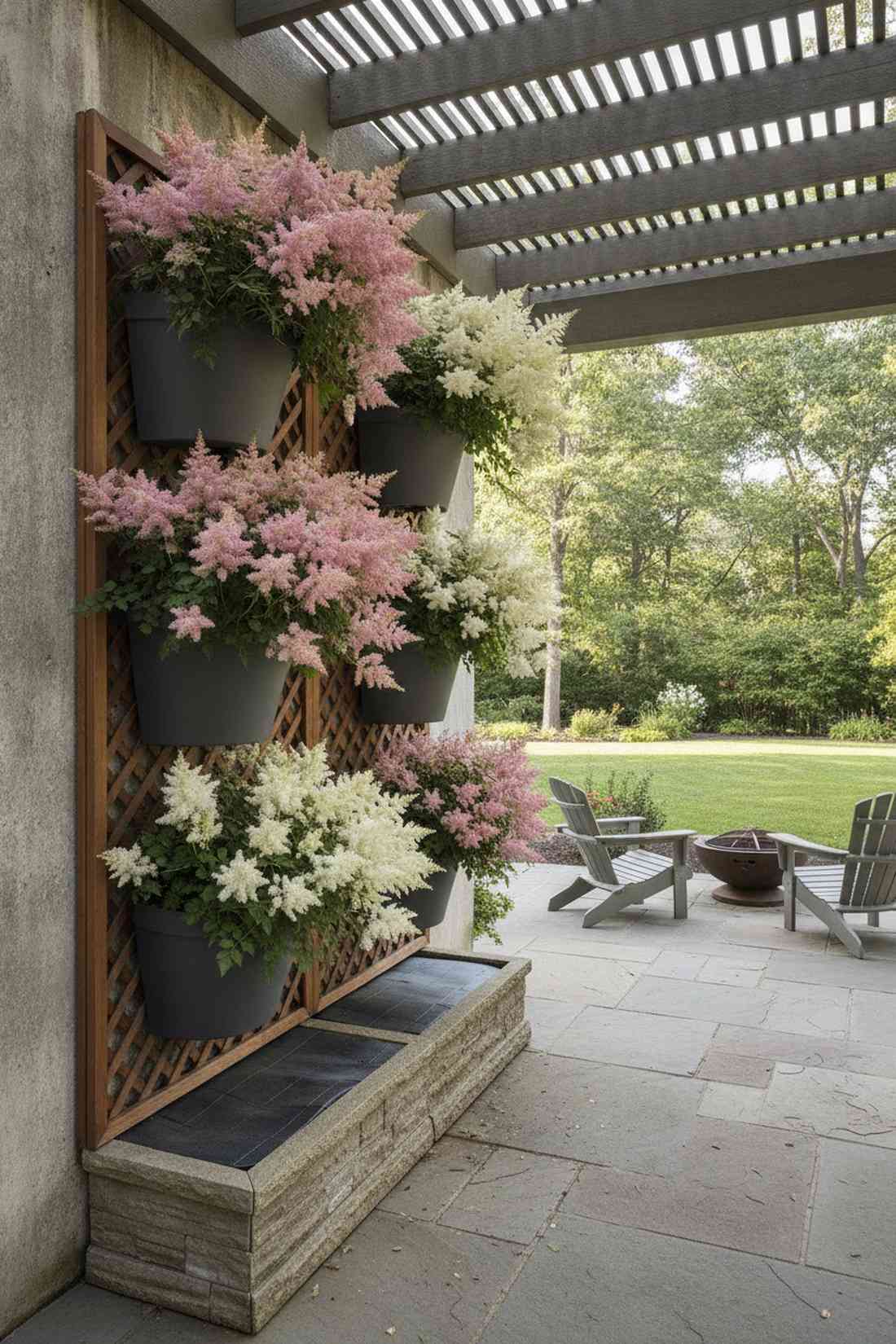
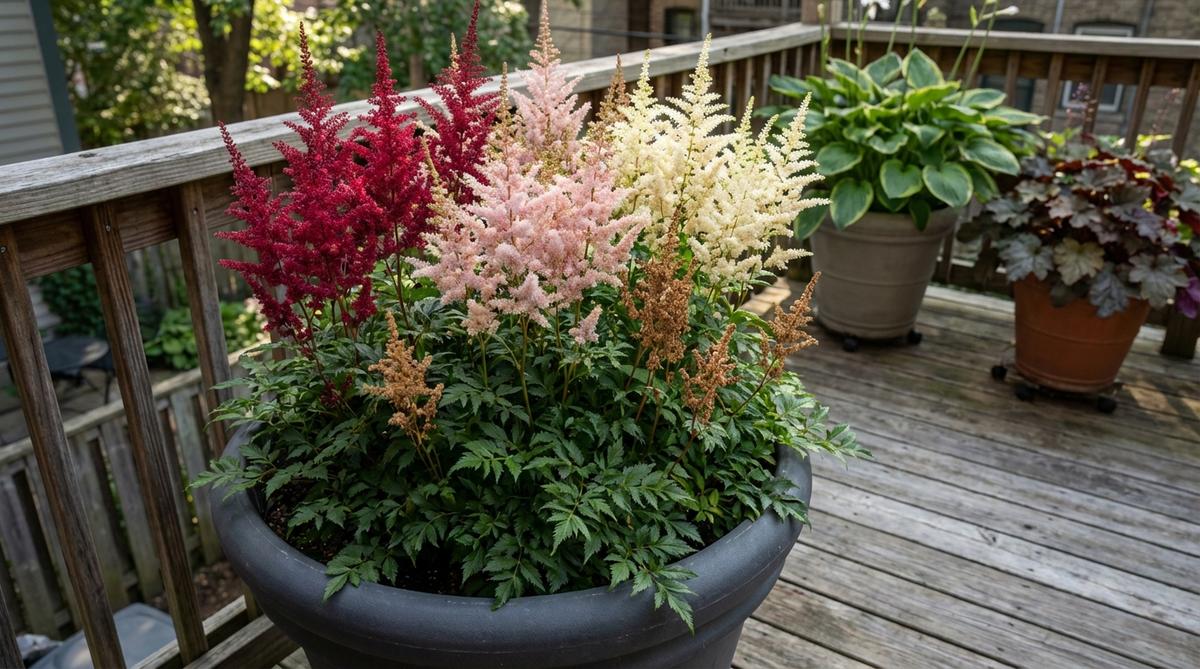
Delivers a feathery, cloud-like softness that softens harsh concrete walls. Plume-flowering container setups are highly effective for adding vertical interest to shaded, enclosed patios.
Pairing these bright pink and white plumes with deep green bases acts as a massive visual upgrade. Utilizing professional-grade moisture mats ensures these thirsty shade lovers never dry out during high-wind days.
Plan for a budget of around $25 for a full, lush pot. Save this to your vertical gardening board!
- Key Materials: Astilbe bare roots, moisture-retaining mats
- Vibe / Style: Soft romantic textures
- Difficulty: Water-conscious beginner
- Budget Breakdown: Roots: $15 | Mats: $10.
- Creator’s Tip: Leave the spent flowers uncut in winter for added structural interest.
- Smart Sourcing: professional-grade moisture mats (pre-cut) and high-capacity water reservoirs.
6. Bleeding Heart (Dicentra)
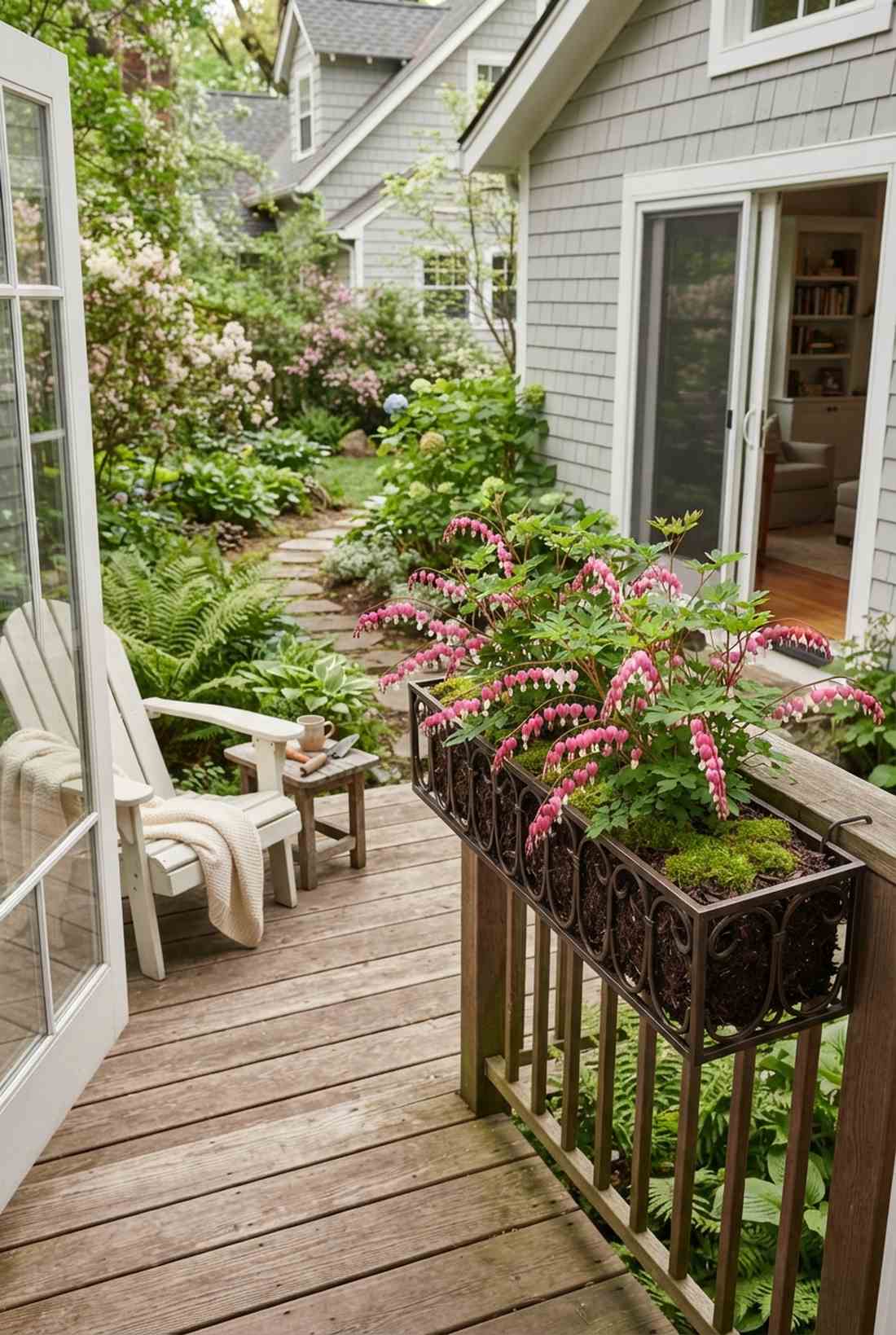
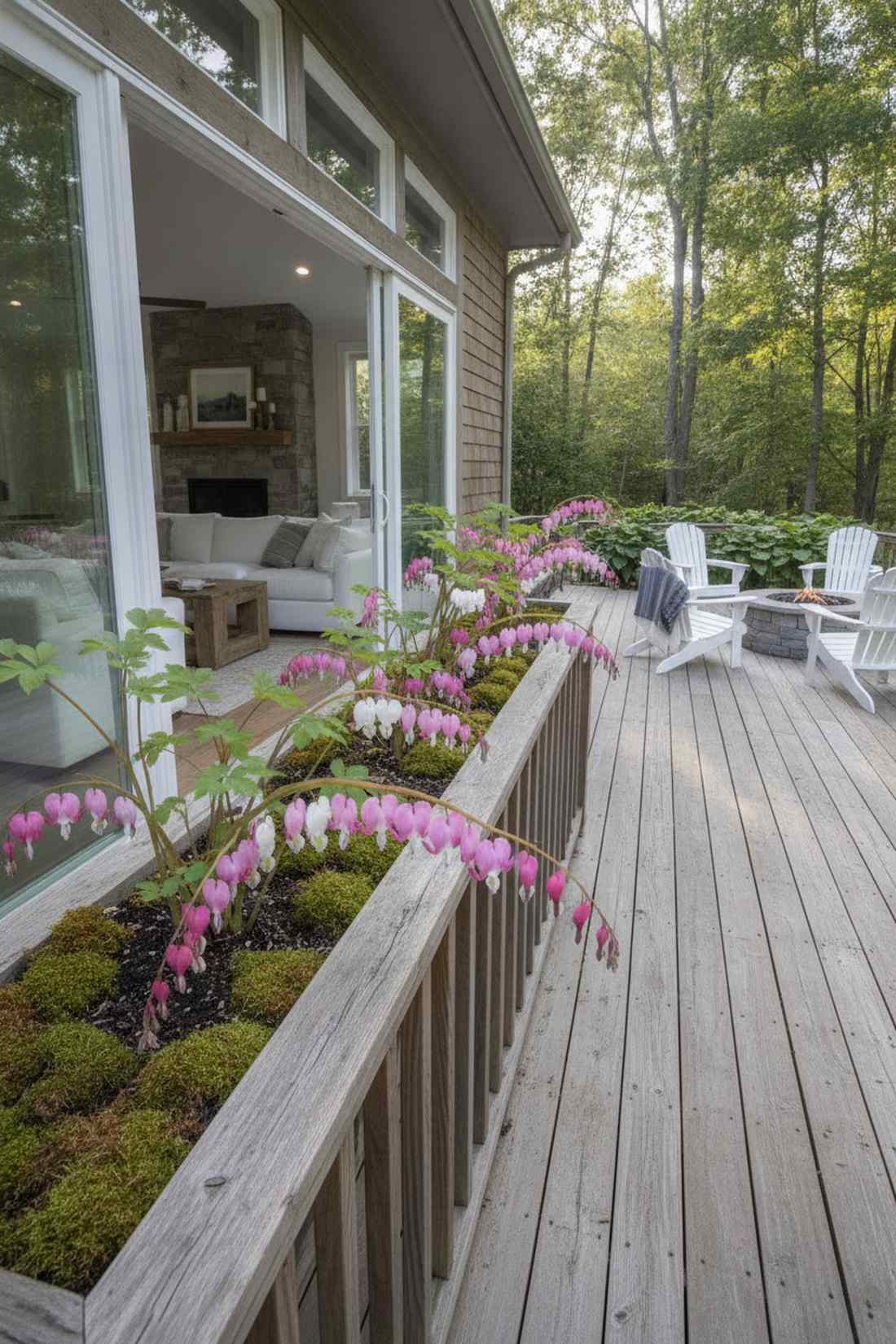
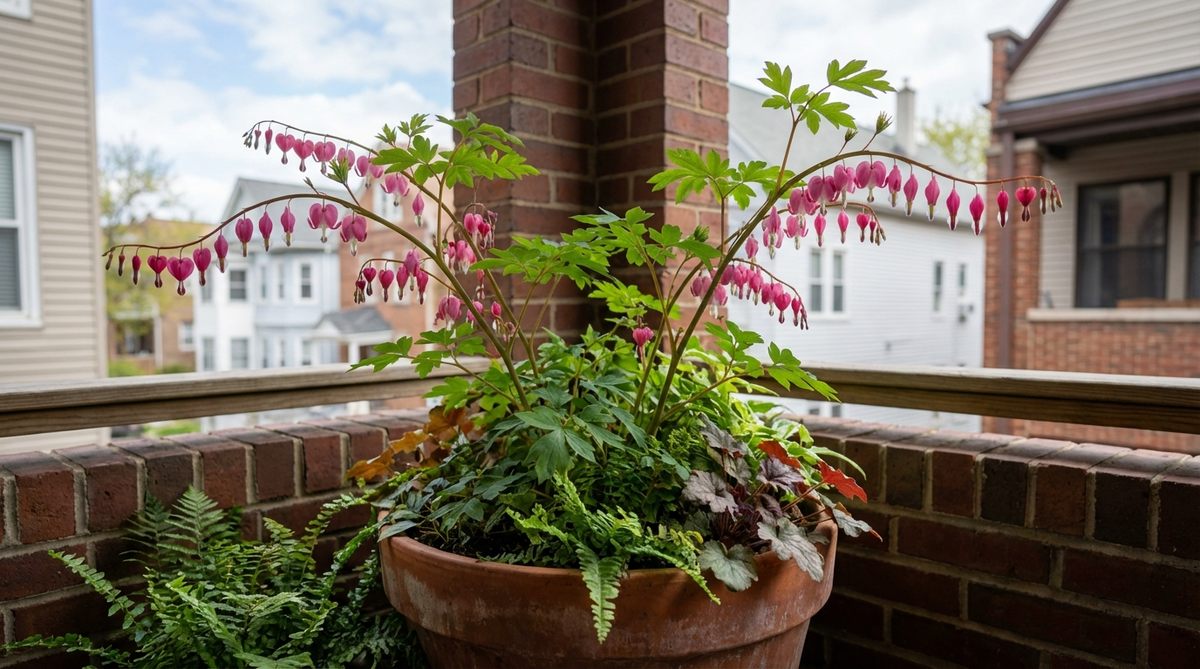
Evokes a nostalgic, fairytale charm right outside your glass doors. Arching floral displays perfectly complement north-facing exposures needing a delicate splash of color.
Positioning these dangling heart-shaped flowers over the edge of a railing planter creates an instant boutique hotel aesthetic. Be sure to source premium shade-garden starter kits to give the roots the perfect dark, damp environment they crave.
You can easily arrange this for $20–$30. It’s a gorgeous transformation for early spring.
- Key Materials: Arching Dicentras, organic compost mix
- Vibe / Style: Classic cottage core
- Difficulty: Gentle handling required
- Budget Breakdown: Plants: $18 | Compost: $10.
- Creator’s Tip: Underplant with low-growing moss to keep the pot looking full when the foliage goes dormant in summer heat.
- Smart Sourcing: premium shade-garden starter kits and pre-cut preserved moss sheets.
7. Lungwort (Pulmonaria)
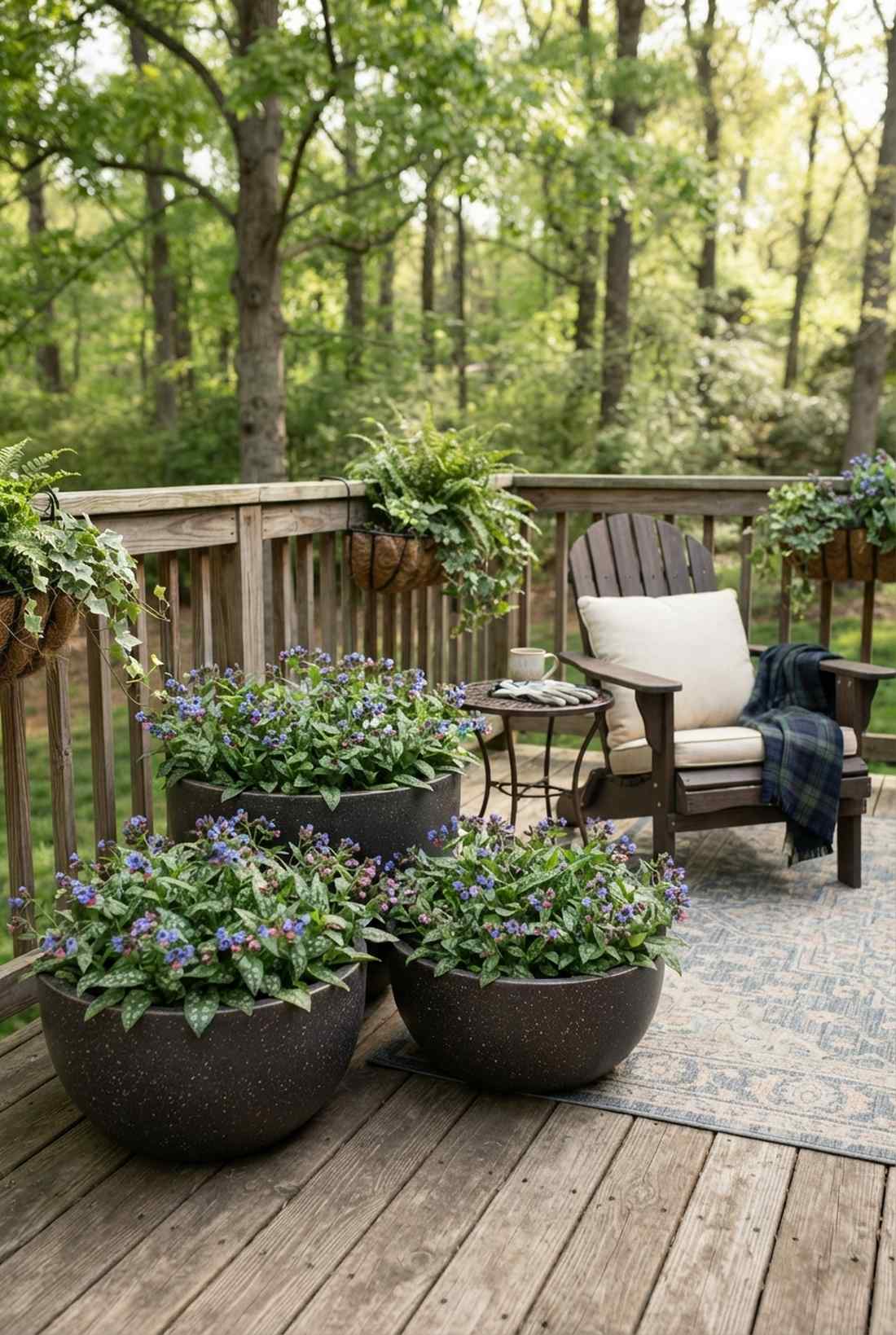
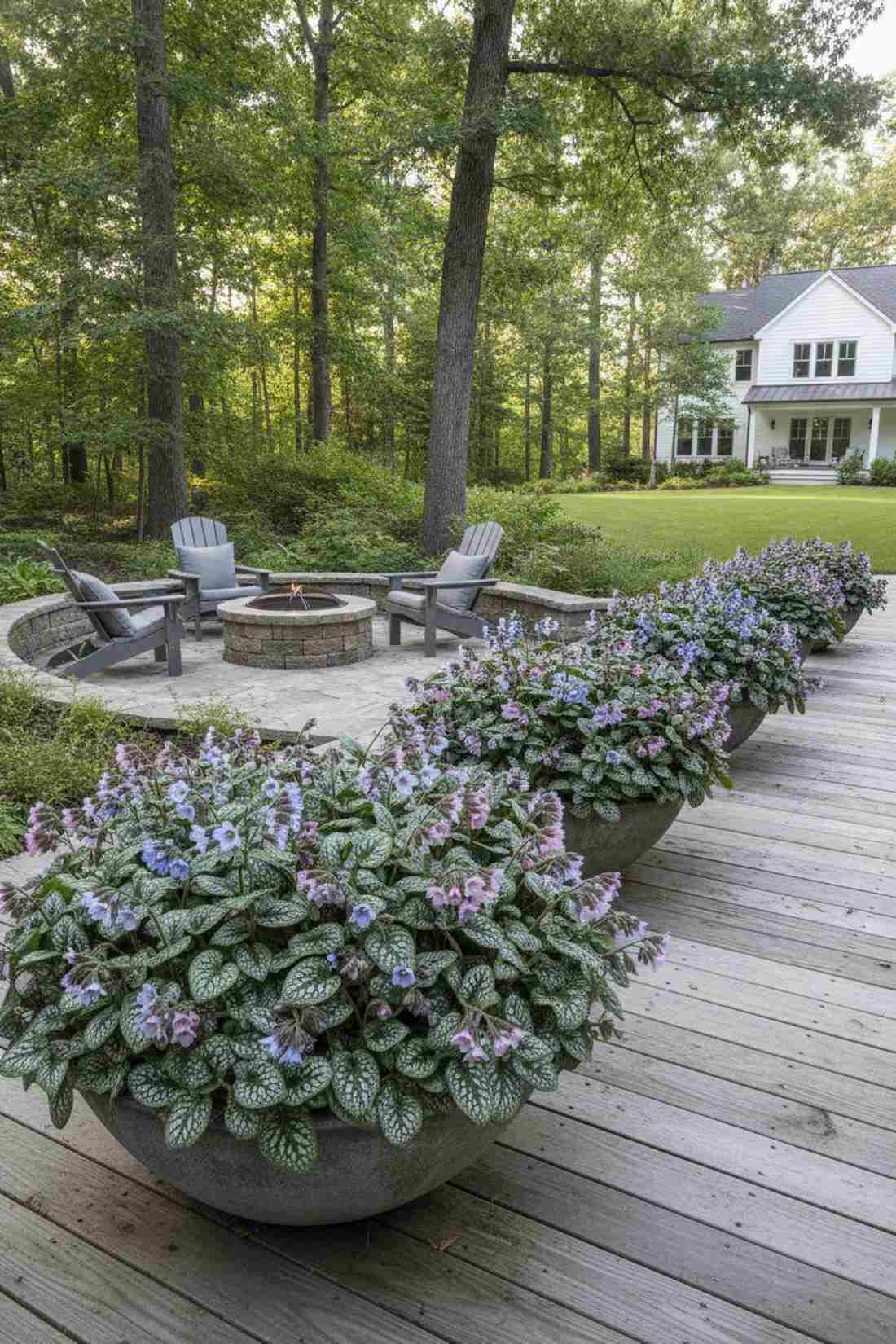
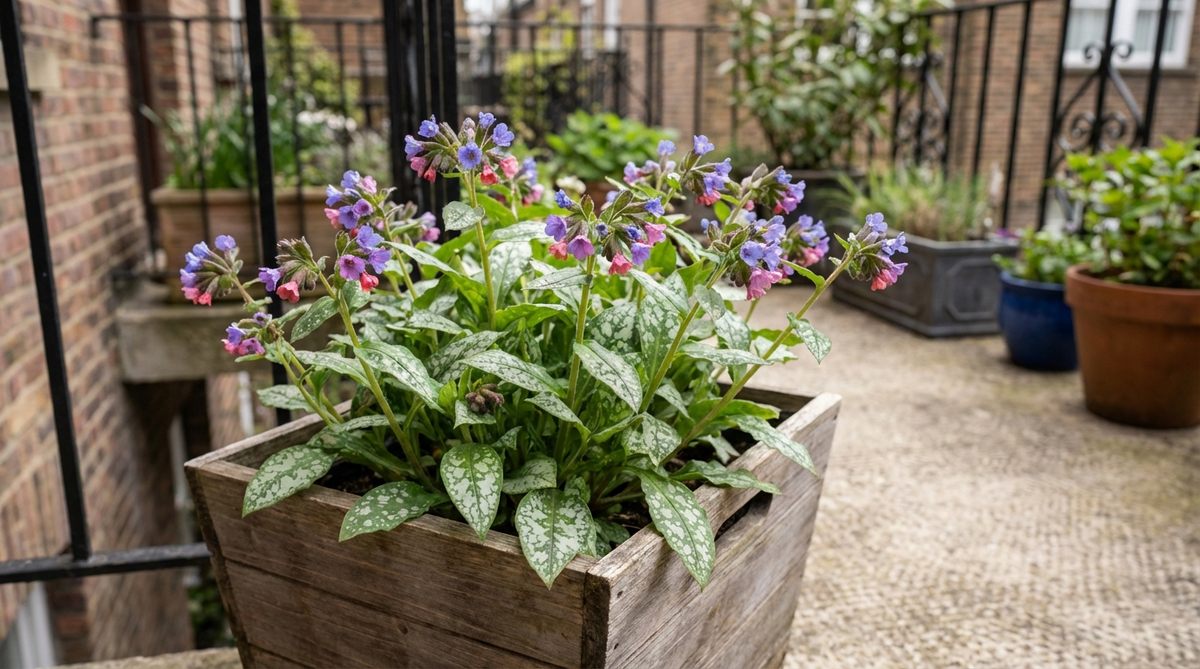
Feels like discovering a secret, speckled gem tucked away in the shadows. Ground-hugging foliage planters are exceptionally useful as weed-suppressing bases in oversized balcony tubs.
Combining the silver-spotted leaves with early two-tone blooms proves you don’t need a massive budget for luxury. Opt for heavy-duty wide basin pots to let their wide root systems spread out and grip firmly against strong winds.
This tough little setup costs around $15. Pin this layout for your bulletproof plant collection!
- Key Materials: Wide basin pots, Pulmonaria splits
- Vibe / Style: Textured woodland floor
- Difficulty: Set and forget
- Budget Breakdown: Wide basin: $10 | Plant splits: $5.
- Creator’s Tip: Divide crowded clumps every three years to multiply your collection for free.
- Smart Sourcing: heavy-duty wide basin pots (commercial-grade) and organic root stimulator.
Wind-Proof Ornamental Grasses
Grasses evolved in open prairies where wind is constant. Their flexible stems and deep roots make them ideal for exposed urban balconies, adding movement and texture.
8. Feather Reed Grass (Calamagrostis)
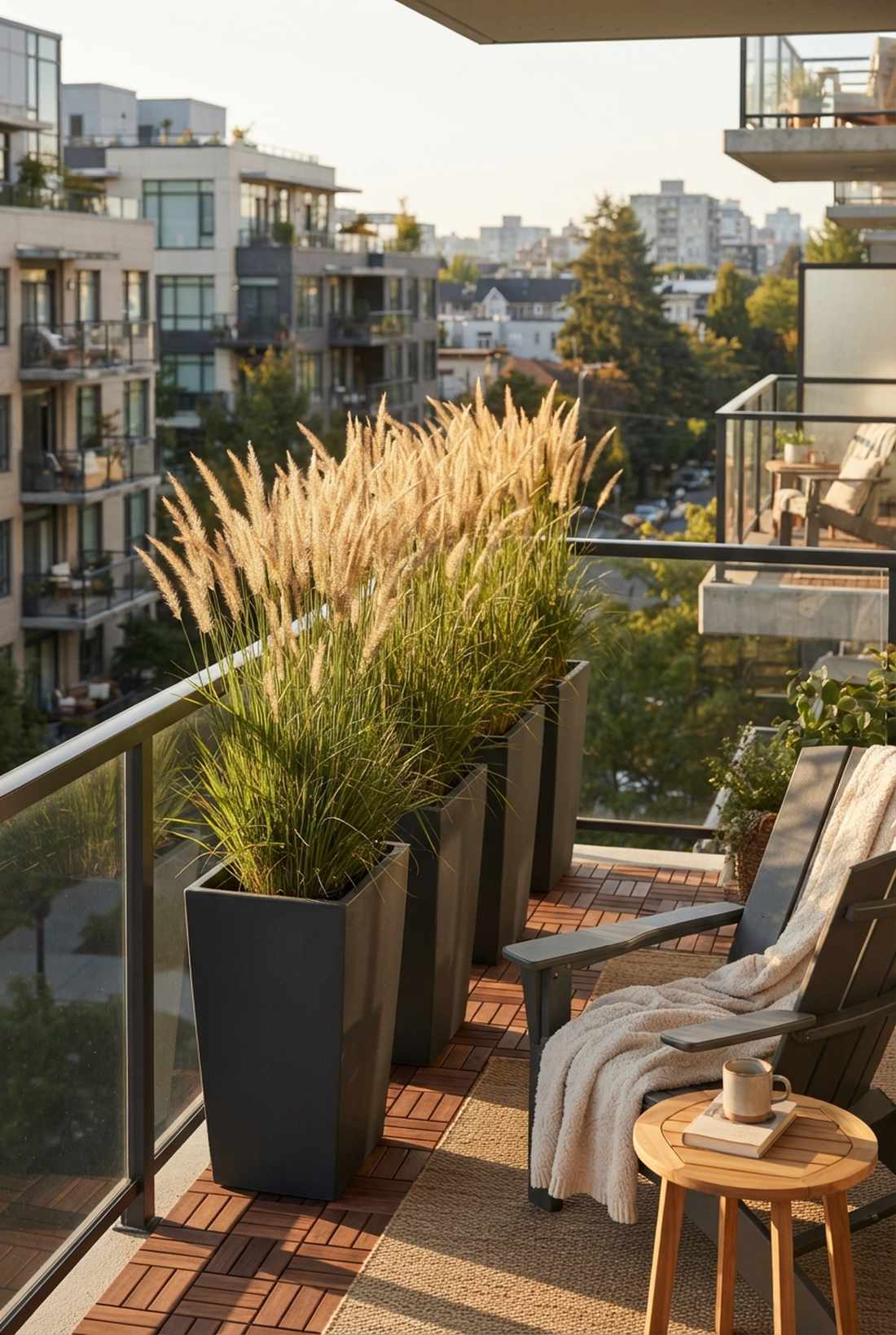
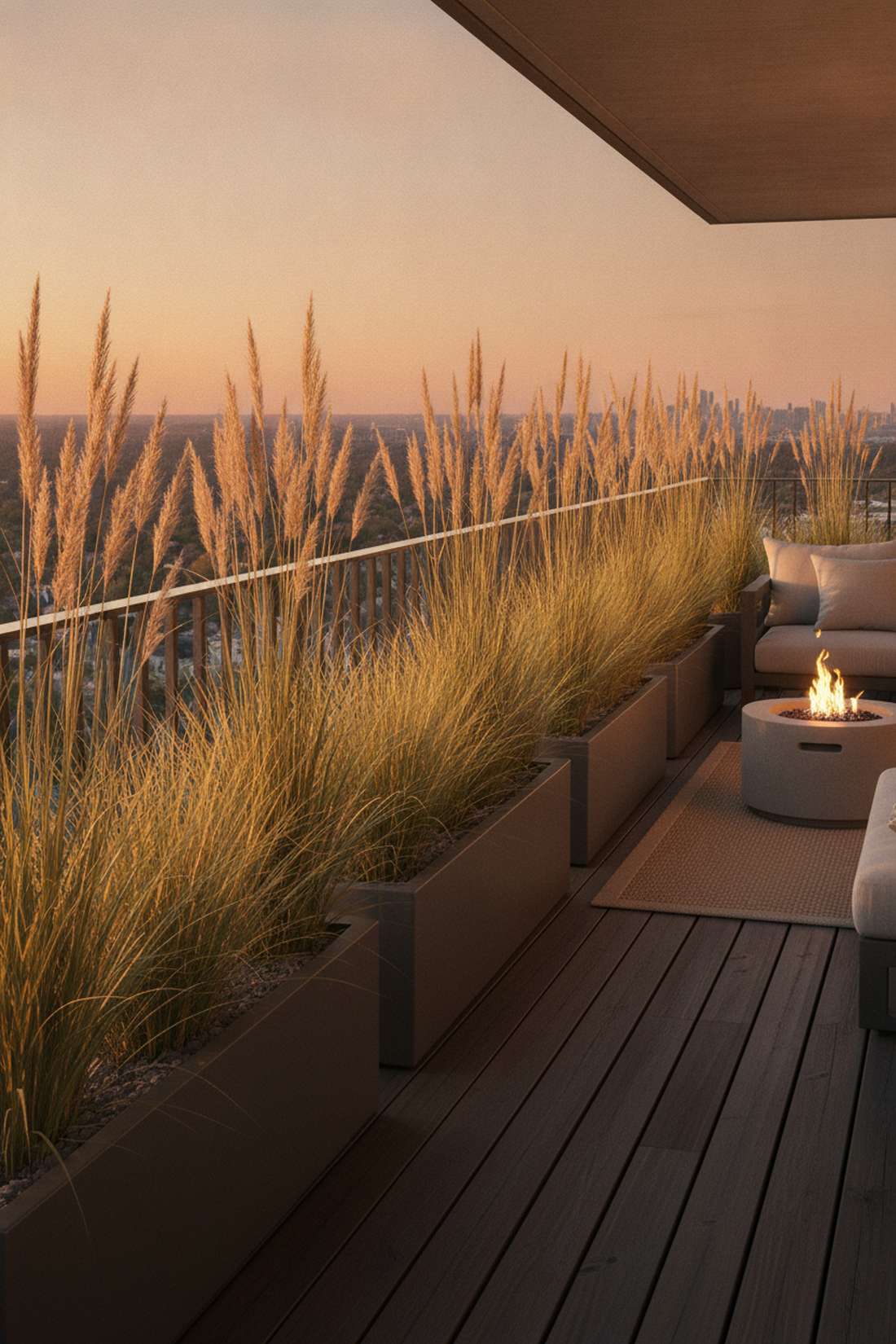
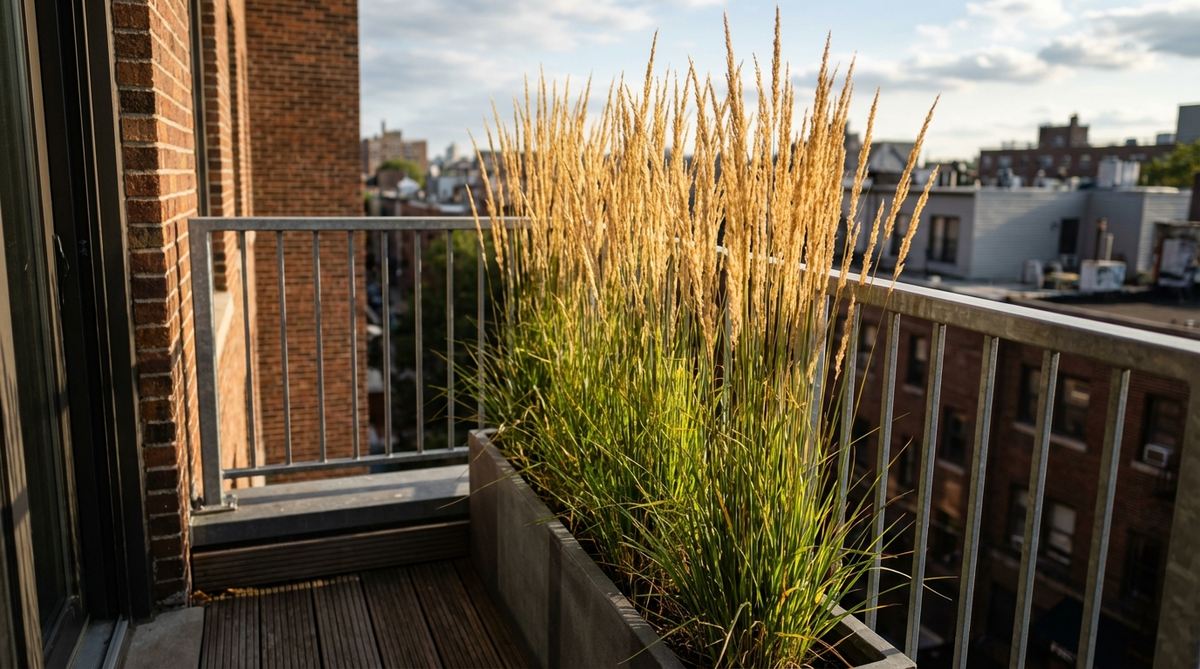
Brings a sleek, architectural height that catches the golden hour light perfectly. Tall narrow grass screens work beautifully as natural privacy dividers between close apartment units.
Standing these wheat-colored plumes against stark metal railings completely changes the space’s dynamic. Secure them in reinforced fiberglass planters so the 5-foot stalks can sway without tipping the entire arrangement over.
A full privacy screen setup runs about $40–$60. Highly recommended for adding instant height.
- Key Materials: Tall Calamagrostis plugs, heavy fiberglass bases
- Vibe / Style: Modern prairie minimalist
- Difficulty: Easy structural build
- Budget Breakdown: Grass plugs: $20 | Planter: $40.
- Creator’s Tip: Leave the plumes intact through winter to catch falling snow for a stunning visual effect.
- Smart Sourcing: reinforced fiberglass planters (UV-coated) and bulk ornamental grass fertilizer.
Most people get this completely wrong… until they try the exact layout coming up next.
9. Blue Fescue (Festuca glauca)
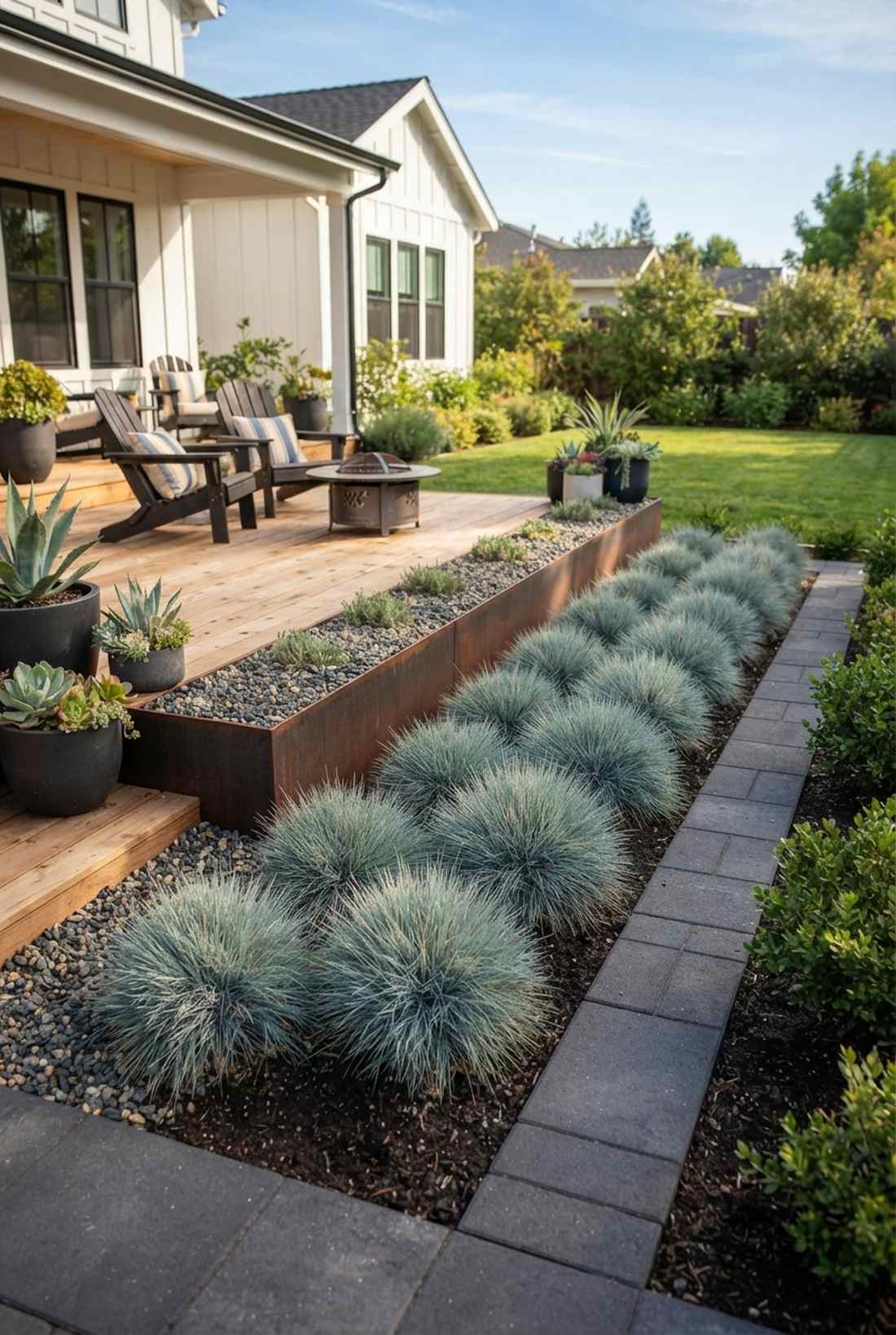
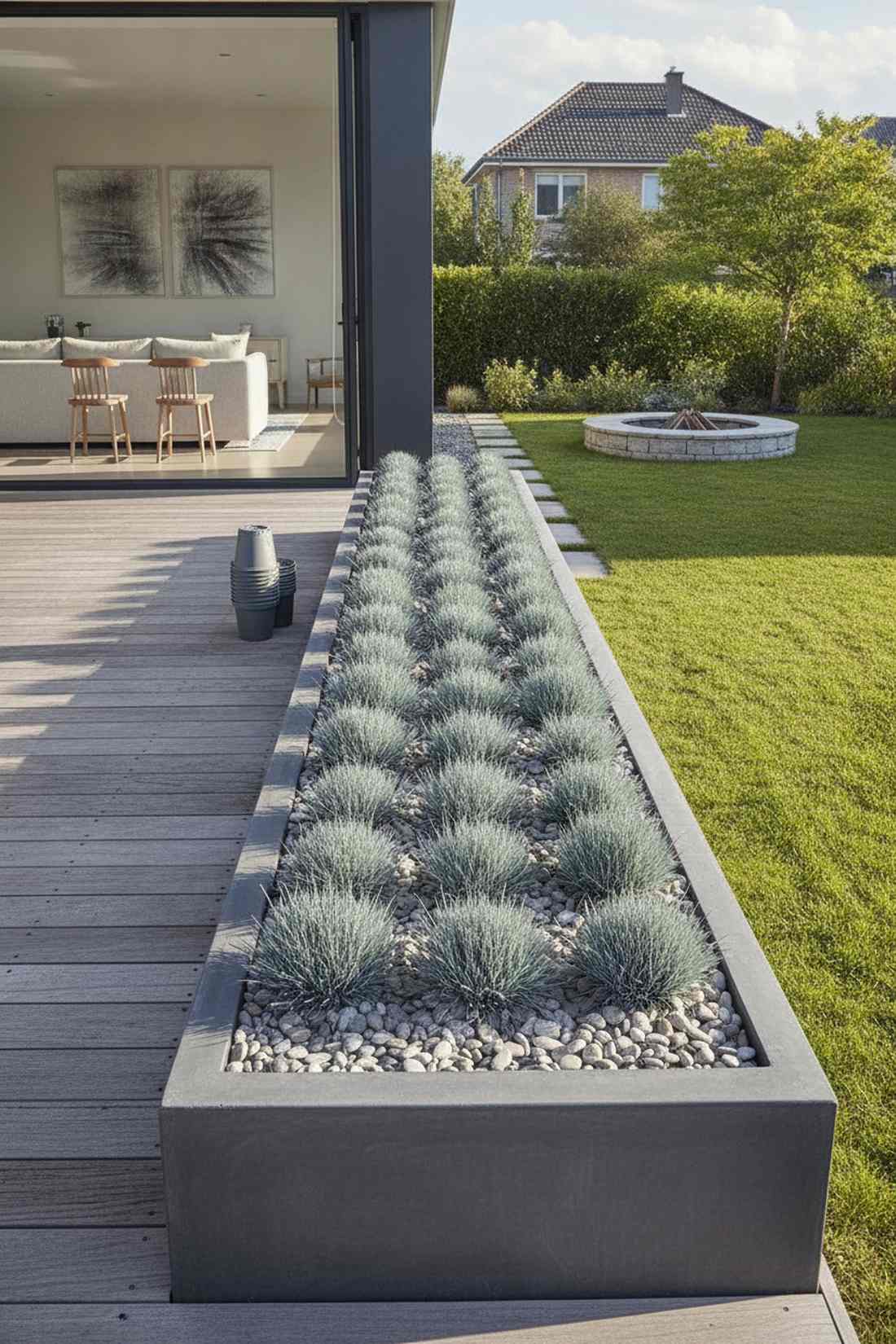
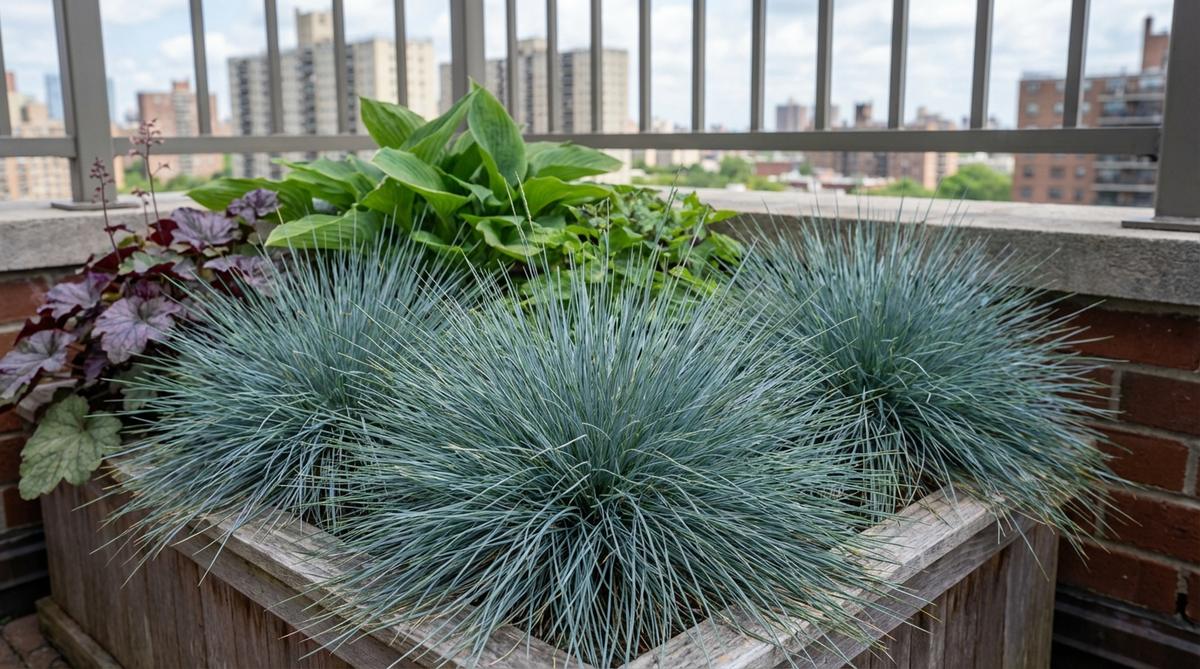
Creates a striking, steel-blue geometric pop that grabs immediate attention. Drought-tolerant grass tufts are brilliant for bordering mixed arrangements on sun-baked, windy edges.
Contrasting these neat 12-inch domes against dark soil gives a designer-level finish. Snag some bulk landscape gravel to top-dress the pots, locking in moisture and emphasizing the icy blue tones.
You can build a stunning border for just $15–$25. Save this for your modern terrace inspiration!
- Key Materials: Blue Fescue tufts, decorative top gravel
- Vibe / Style: Sharp contemporary edge
- Difficulty: Extremely low maintenance
- Budget Breakdown: Grasses: $15 | Gravel: $10.
- Creator’s Tip: Rake out dead grass blades by hand in early spring to keep the domes perfectly rounded.
- Smart Sourcing: bulk landscape gravel (pre-washed) and aerated nursery pots.
💡 Must-Have Supplies for High-End Setups
To build these setups faster and ensure they last, skip the generic craft aisles and invest in the right foundational kits.
- Base & Support: heavy-duty weighted base planters (commercial-grade)
- Setup Tools: urban balcony gardening starter kits
- Weather/Durability Protection: UV-coated clear plant sealants and wind-mesh wraps
10. Japanese Forest Grass (Hakonechloa)
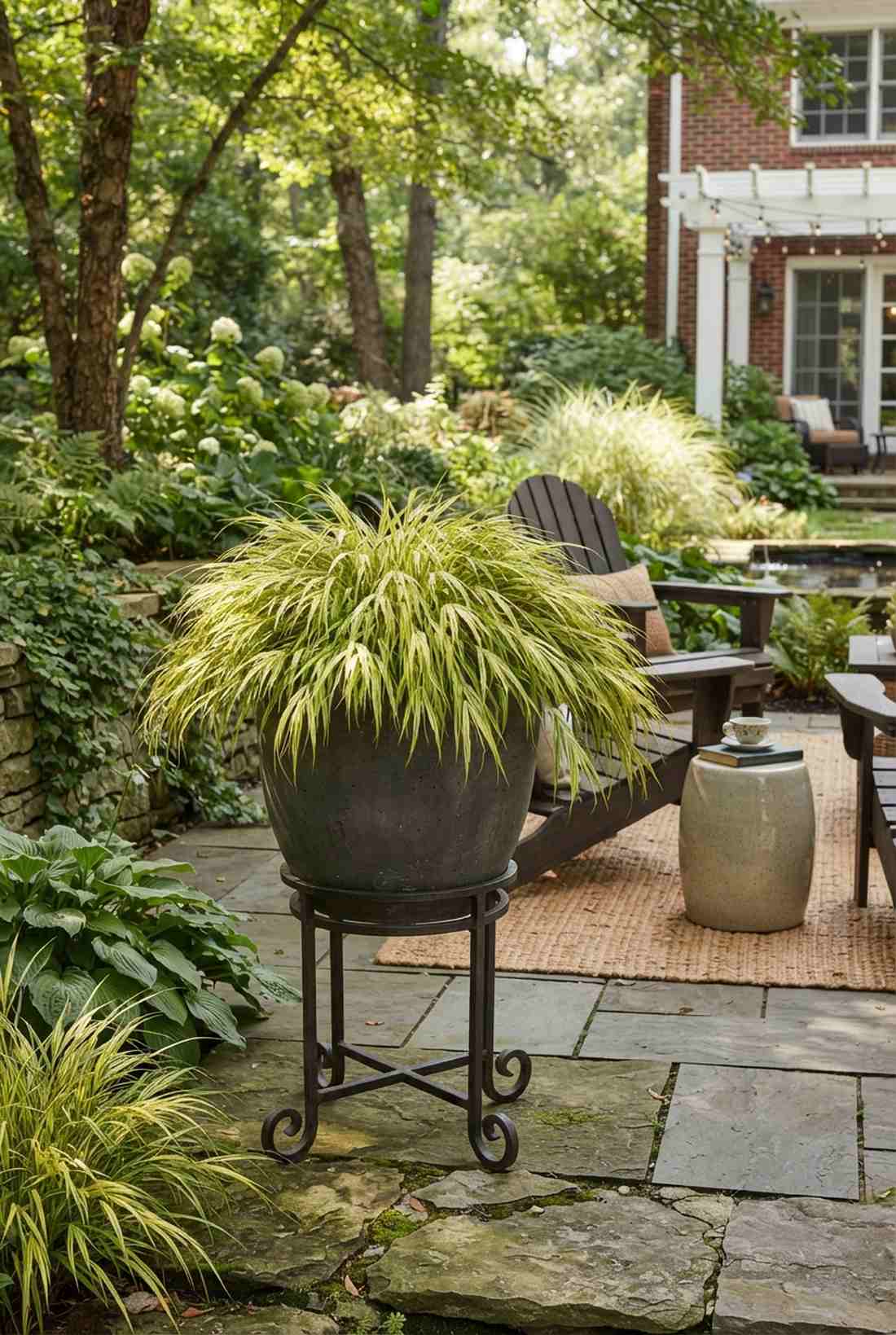
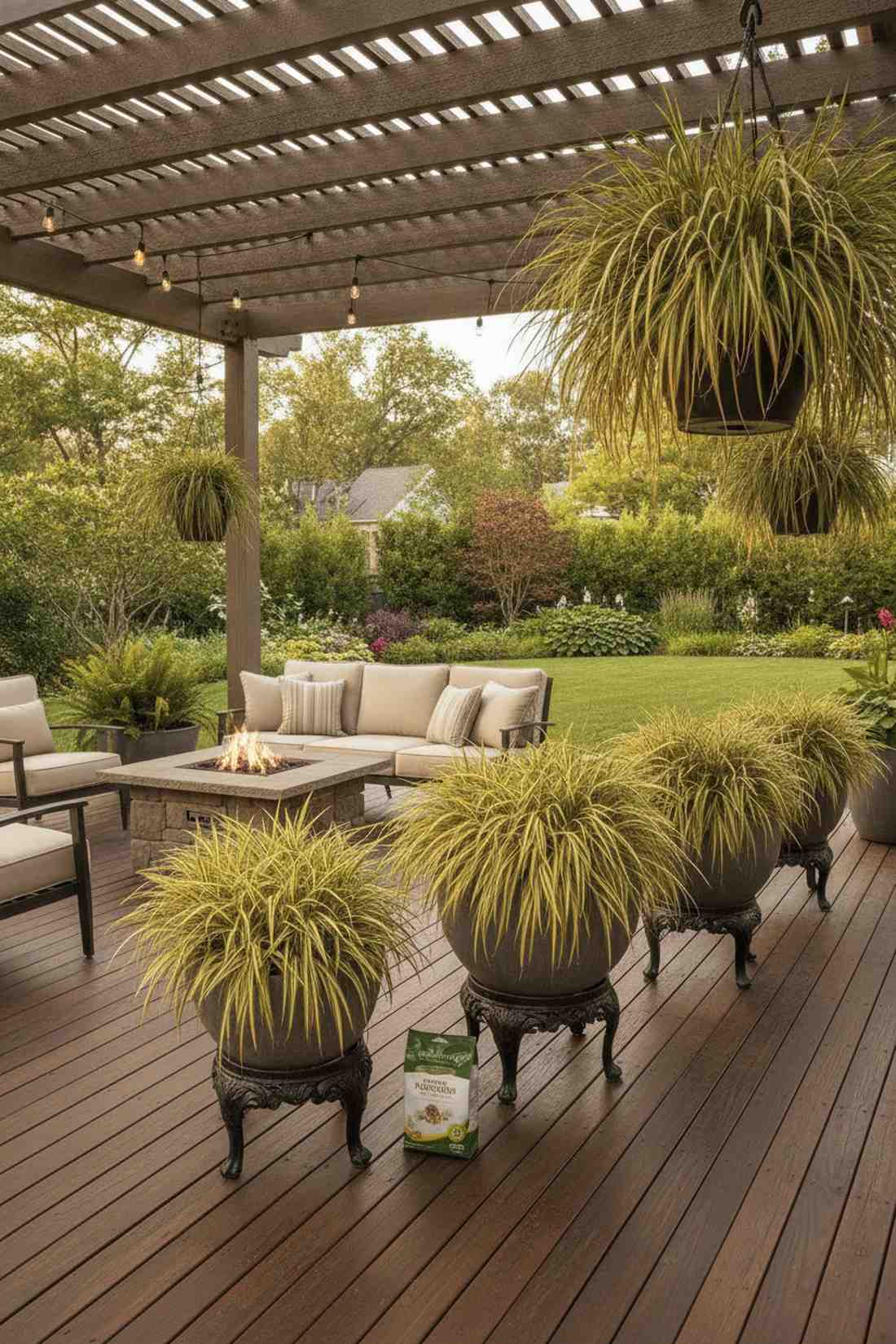
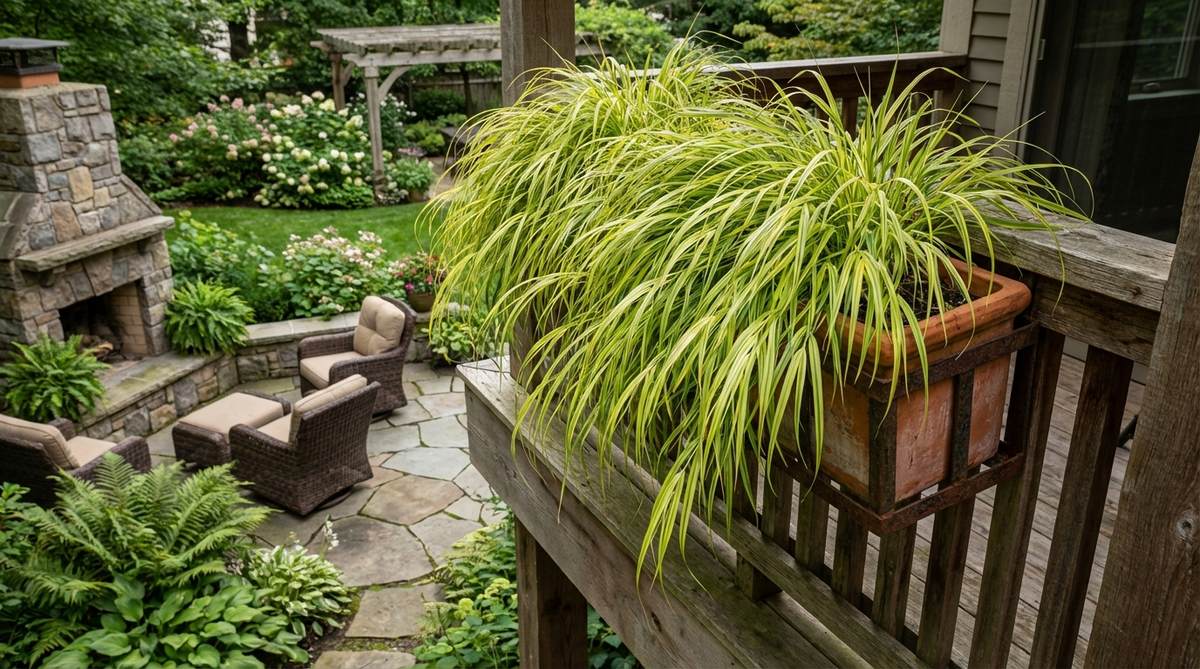
Pours over the edge like a golden waterfall, creating a lush, dynamic movement. Cascading foliage planters are the ultimate thrillers for elevated stands on shaded patios.
Letting these variegated blades spill over dark concrete pots looks far more expensive than it is. Rely on premium slow-release nutrient spikes to keep the intense golden colors vibrant without burning the delicate roots.
Expect to invest about $20–$35 for a mature look. It’s a gorgeous centerpiece that sways beautifully.
- Key Materials: Hakonechloa divisions, elevated pot stands
- Vibe / Style: Zen garden waterfall
- Difficulty: Patient grower
- Budget Breakdown: Grass: $15 | Stand: $20.
- Creator’s Tip: Keep it in a heavy, elevated pot so the wind catches the blades gracefully without shredding them against the floor.
- Smart Sourcing: premium slow-release nutrient spikes (bulk pack) and heavy iron plant stands.
11. Fountain Grass (Pennisetum)
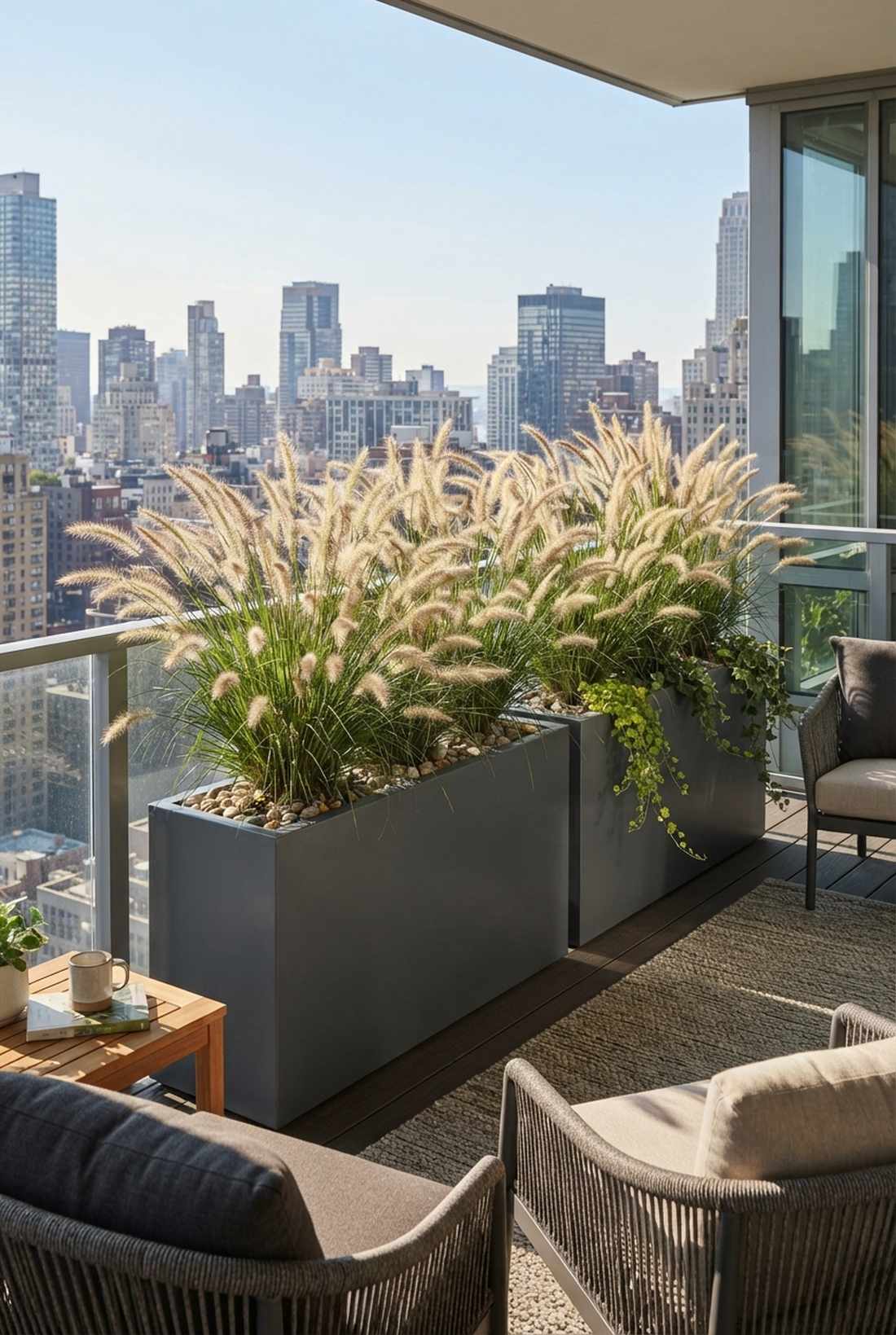
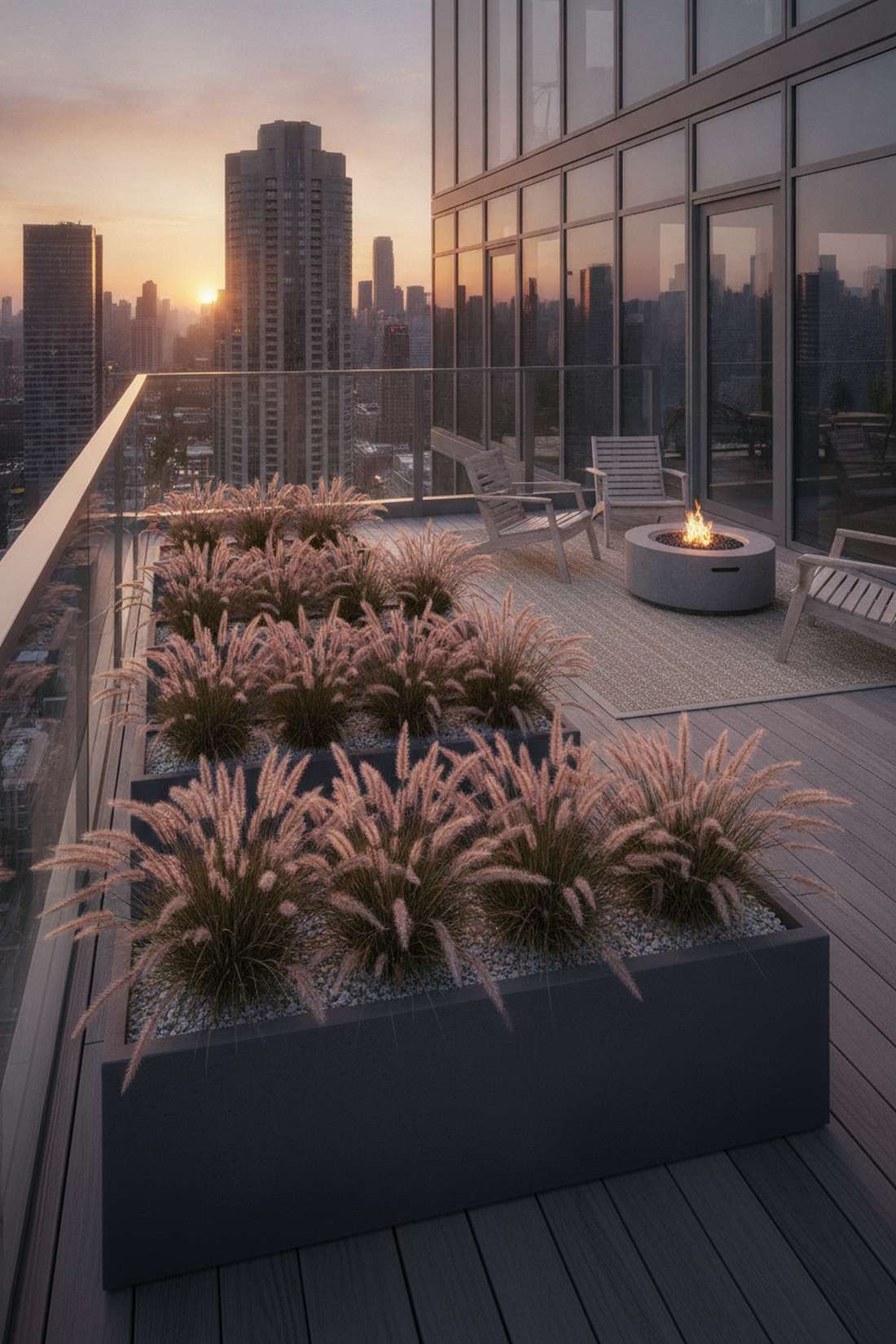
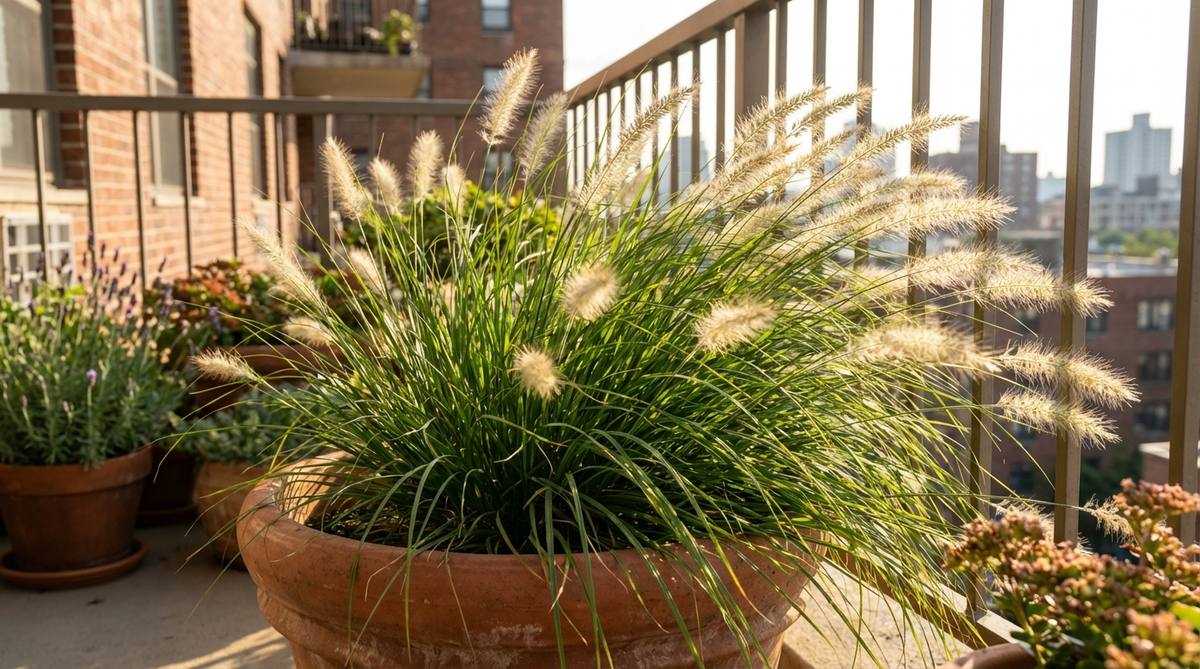
Brings a soft, bottlebrush texture that instantly warms up rigid city architecture. Arching ornamental grass displays are ideal for the brightest corners of a wind-exposed high-rise.
Pairing the dwarf varieties with sleek modern tubs delivers a surprisingly premium look. Utilizing weather-resistant trough planters ensures the root system has the lateral space to anchor firmly against unexpected gales.
You can create this statement piece for around $30. Pin this to your summer patio mood board!
- Key Materials: Dwarf Pennisetum, long trough bases
- Vibe / Style: Soft architectural warmth
- Difficulty: Moderate sunlight needed
- Budget Breakdown: Grass: $10 | Trough: $20.
- Creator’s Tip: Position slightly off-center in the trough to leave room for trailing vines later.
- Smart Sourcing: weather-resistant trough planters (UV-coated) and high-drainage base gravel.
12. Sedge (Carex)
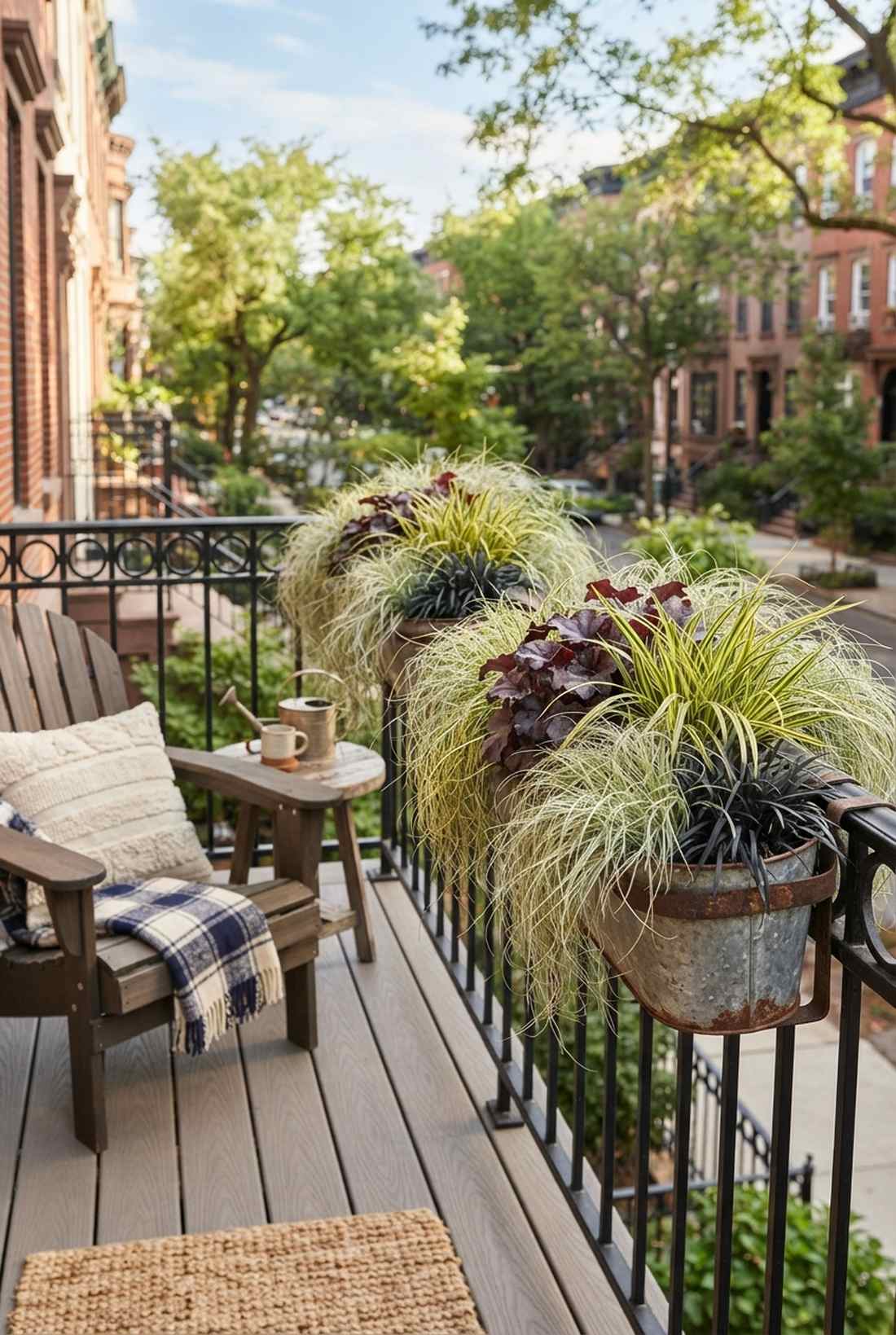
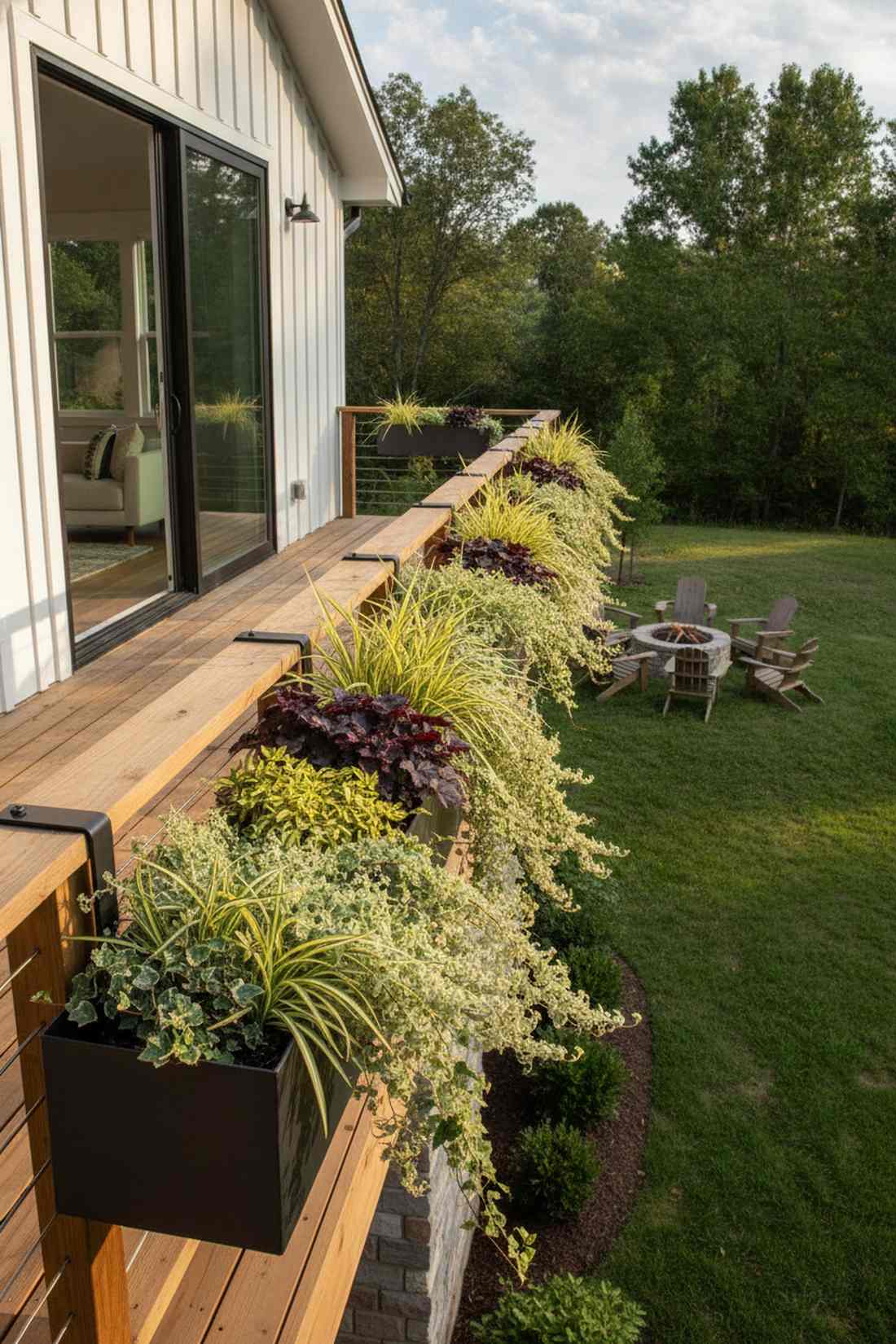
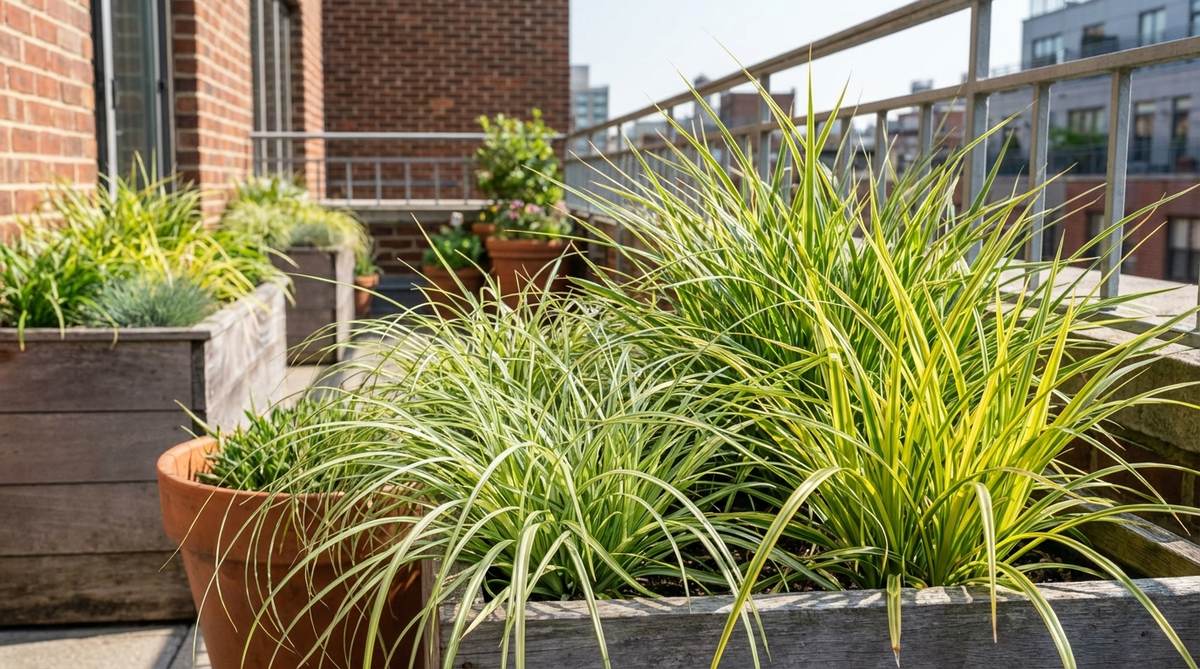
Delivers a messy-chic, pale green aesthetic that feels effortlessly stylish. Versatile grass-like fillers adapt flawlessly to both dry shade and harsh, sun-baked balcony rails.
Using varieties like ‘Frosted Curls’ as a chaotic spill element tricks the eye into seeing custom landscaping. Grab some multi-purpose balcony brackets to mount these securely without sacrificing precious floor space.
A pair of rail-mounted planters costs roughly $25–$40. It’s an easy win for tight spaces.
- Key Materials: Sedge varieties, rail-mount boxes
- Vibe / Style: Effortlessly wild texture
- Difficulty: Highly adaptable
- Budget Breakdown: Sedge: $15 | Brackets: $15.
- Creator’s Tip: Mix ‘Evergold’ with dark-leaved plants to make the yellow striping pop intensely.
- Smart Sourcing: multi-purpose balcony brackets (heavy-duty) and pre-mixed universal soil.
13. Jade Plant (Crassula ovata)
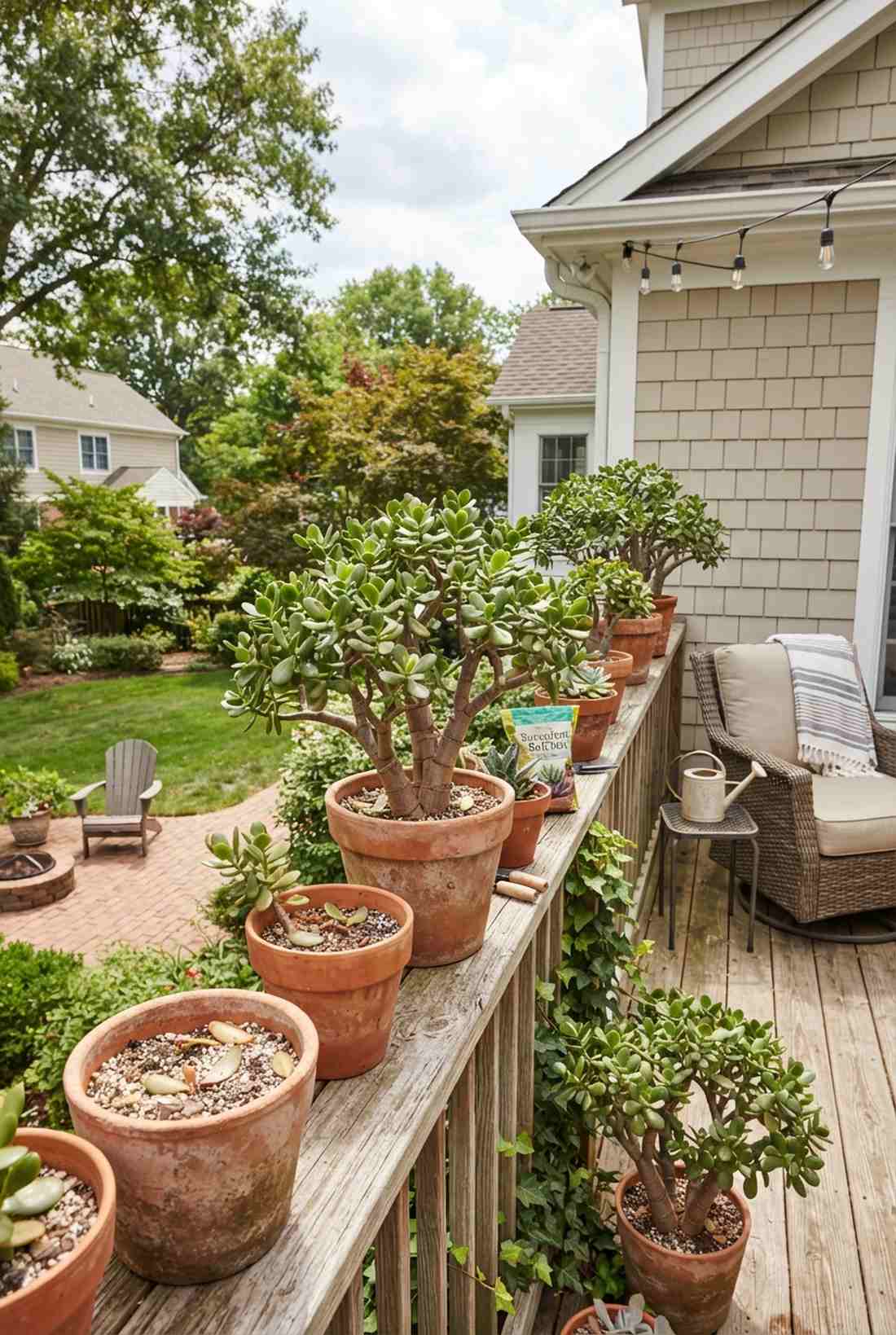
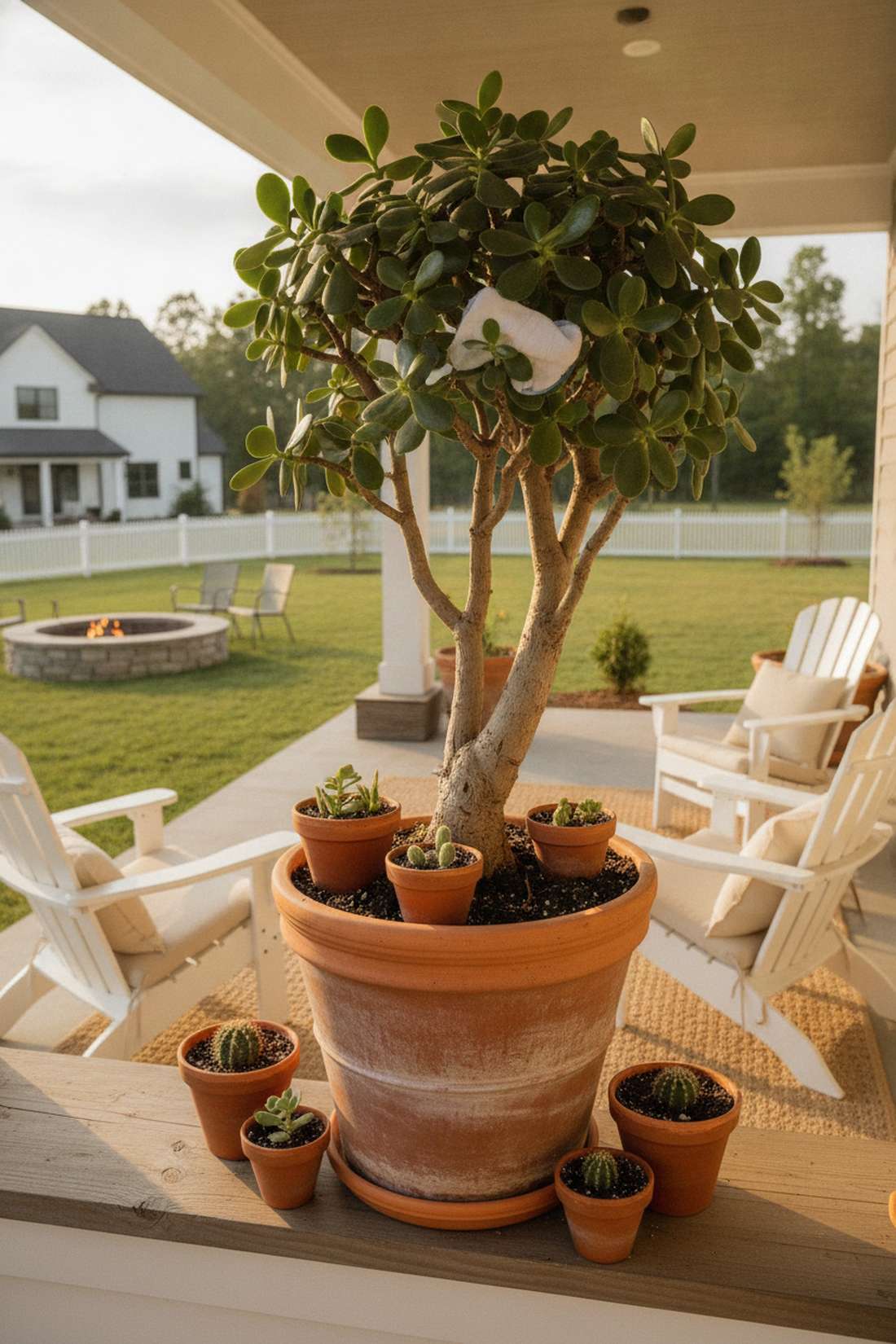
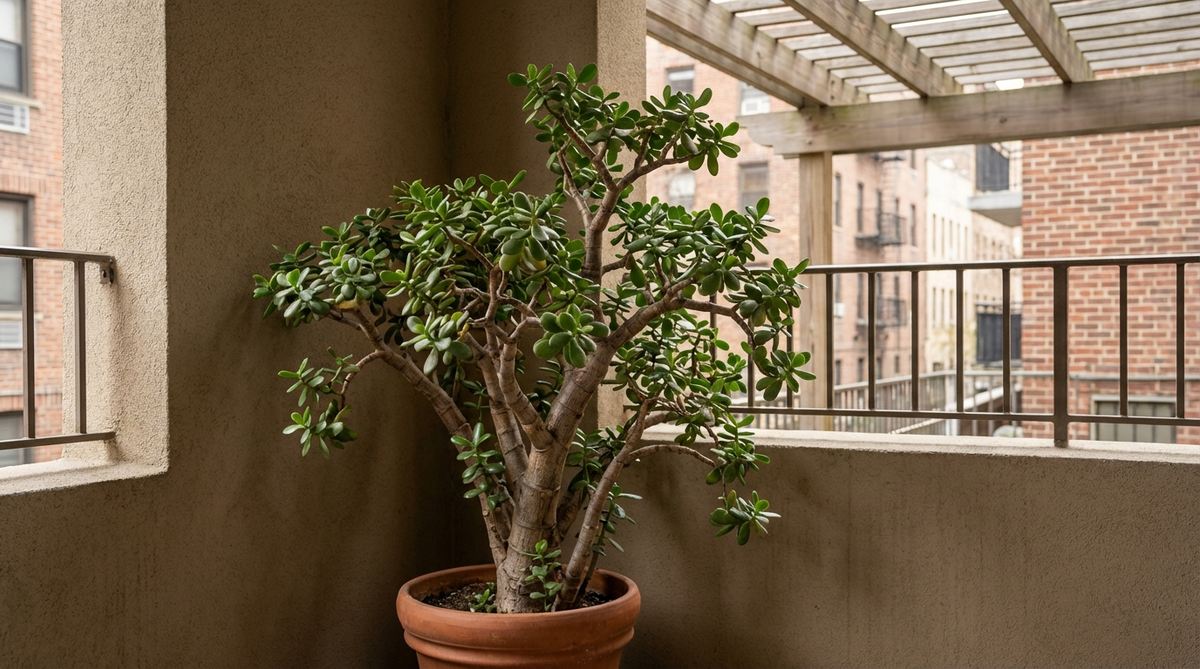
Commands attention with thick, glossy leaves that look like a miniature ancient tree. Heavy-stemmed succulent planters serve as indestructible centerpieces for windy, bright-shaded ledges.
Housing these woody stems in classic terracotta completely changes the space’s dynamic. Incorporate succulent and cactus starter kits to guarantee the gritty drainage required to prevent root rot in urban settings.
You can establish a stunning jade base for $20–$30. Save this if you want a plant that lasts decades!
- Key Materials: Terracotta pots, mature Jade cuttings
- Vibe / Style: Sculptural bonsai energy
- Difficulty: Nearly indestructible
- Budget Breakdown: Terracotta: $15 | Plant: $15.
- Creator’s Tip: Wipe the fleshy leaves with a damp cloth monthly to remove city soot and maximize photosynthesis.
- Smart Sourcing: succulent and cactus starter kits and thick-walled terracotta bases (commercial-grade).
If you think your patio is too windy for plants, this next rugged layout will prove you wrong immediately…
14. Sedum (Stonecrop)
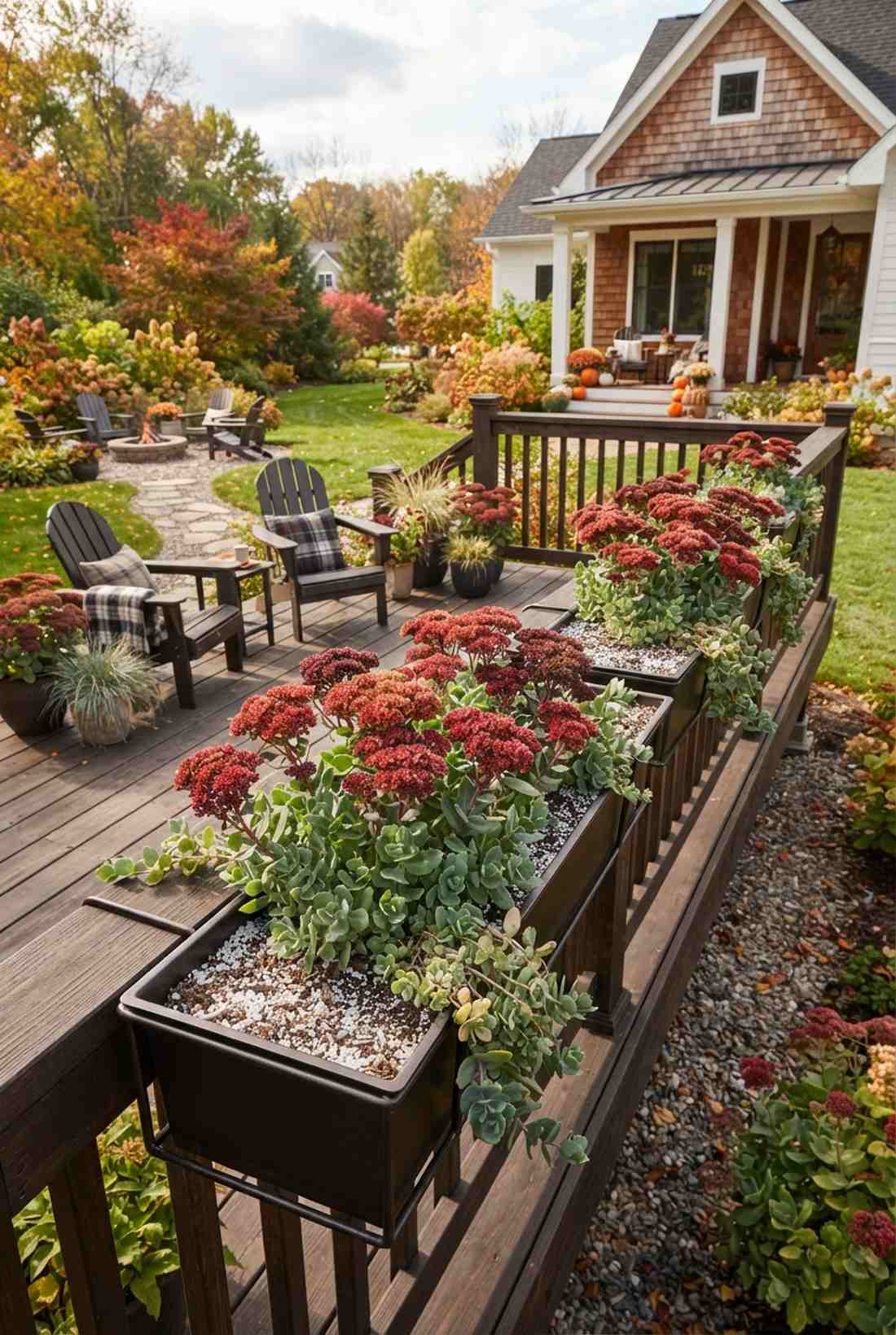
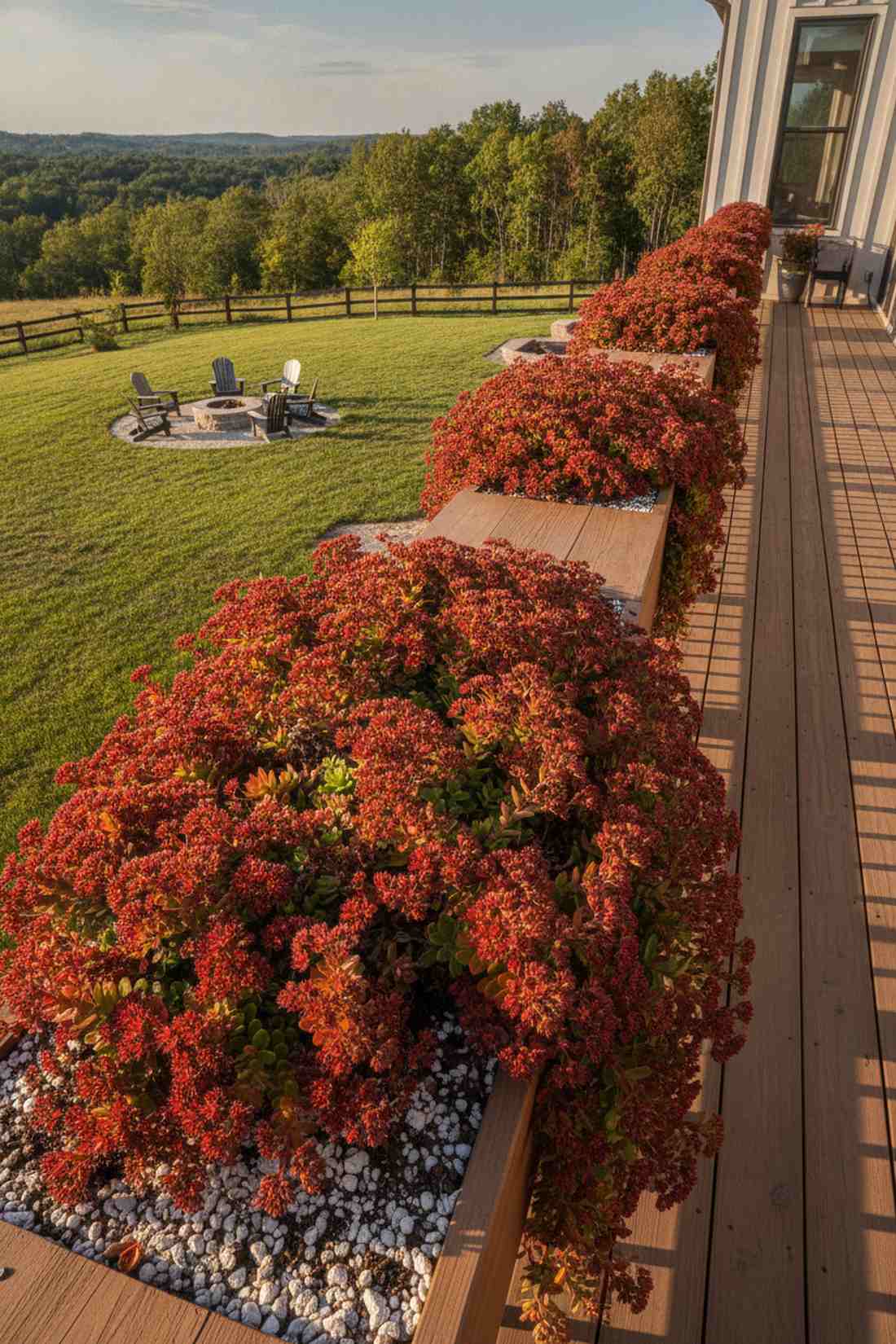
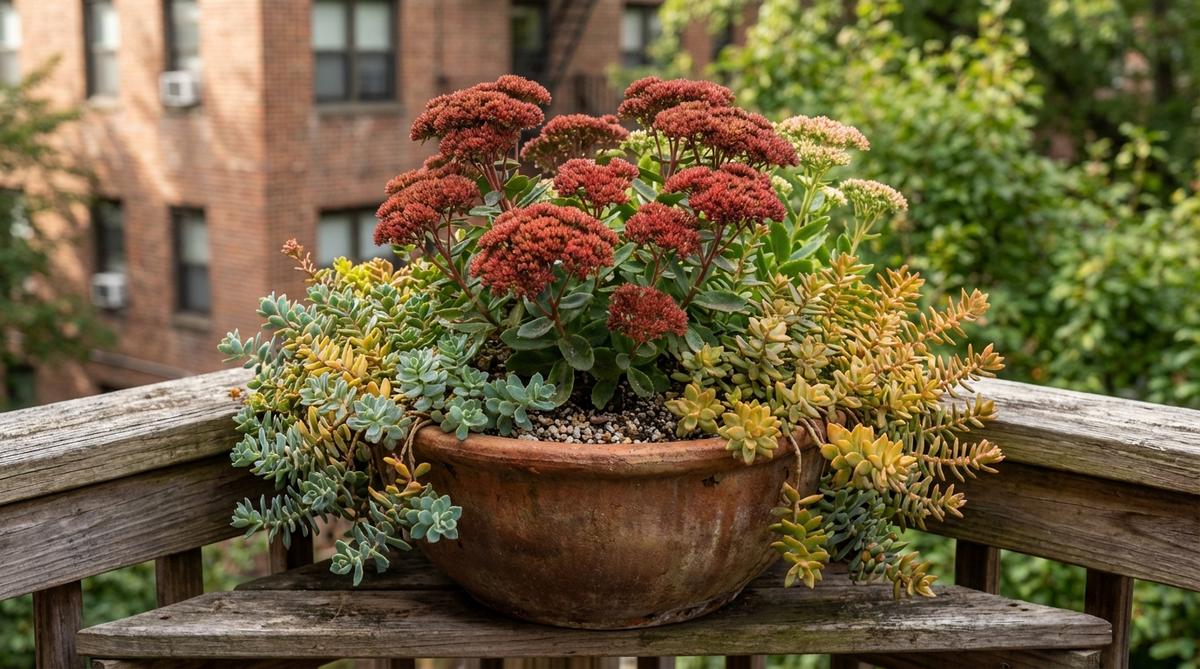
Provides a rugged, fleshy carpet that transforms into rust-red dinner plates by autumn. Trailing succulent boxes are the perfect low-profile solution for railings battered by continuous gusts.
Mixing upright and trailing varieties acts as a massive visual upgrade with zero extra effort. Use bulk coarse perlite mixed into the soil to ensure rapid drainage after heavy city rainstorms.
A full rail-box setup can be done for under $25. Highly recommended for lazy gardeners!
- Key Materials: Autumn Joy sedum, coarse drainage mix
- Vibe / Style: Rugged seasonal color
- Difficulty: Drought-proof
- Budget Breakdown: Sedum plugs: $15 | Drainage mix: $10.
- Creator’s Tip: Leave the dried flower heads on through winter; they look stunning dusted with snow.
- Smart Sourcing: bulk coarse perlite (pre-washed) and shallow rail planter boxes.
15. Echeveria
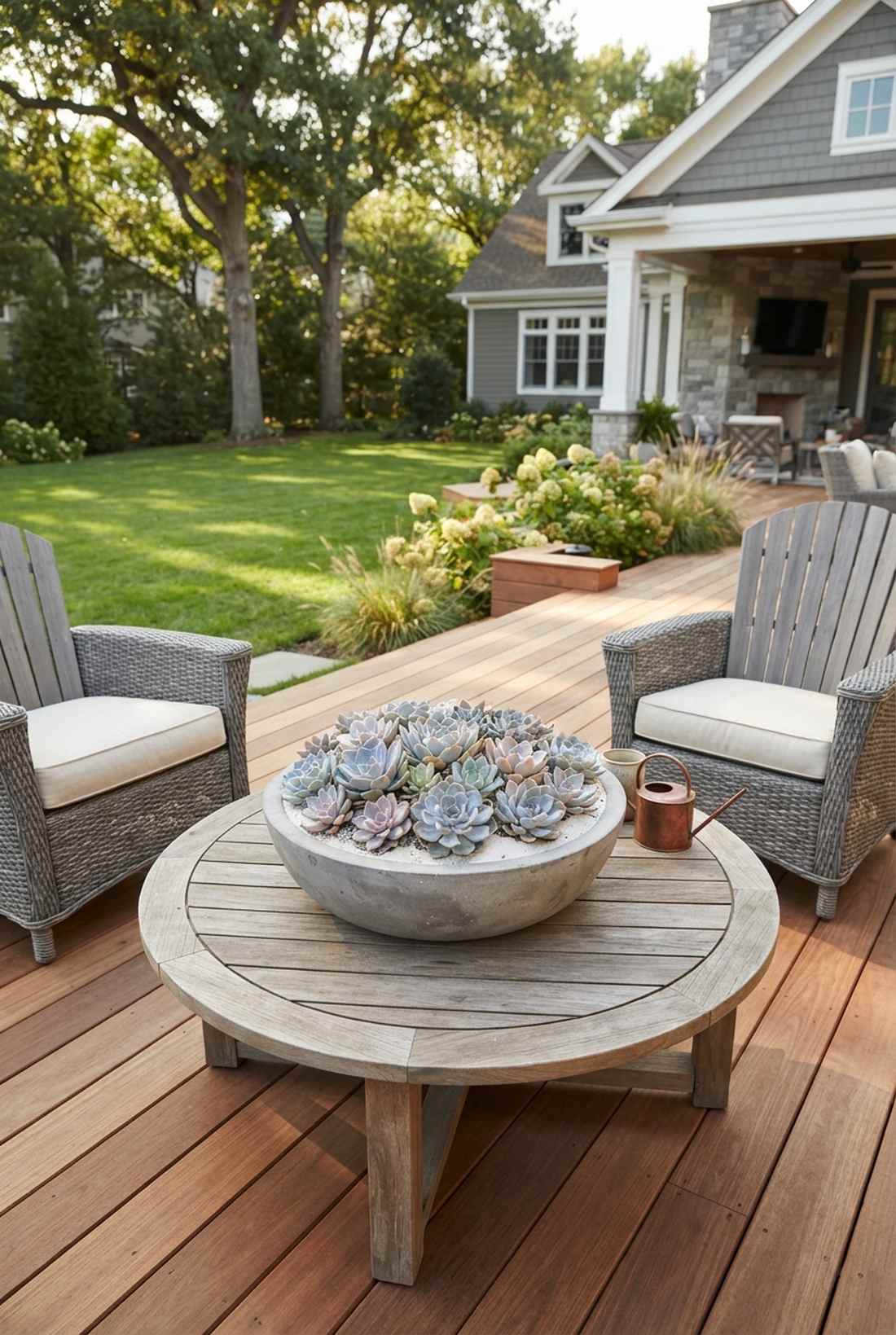
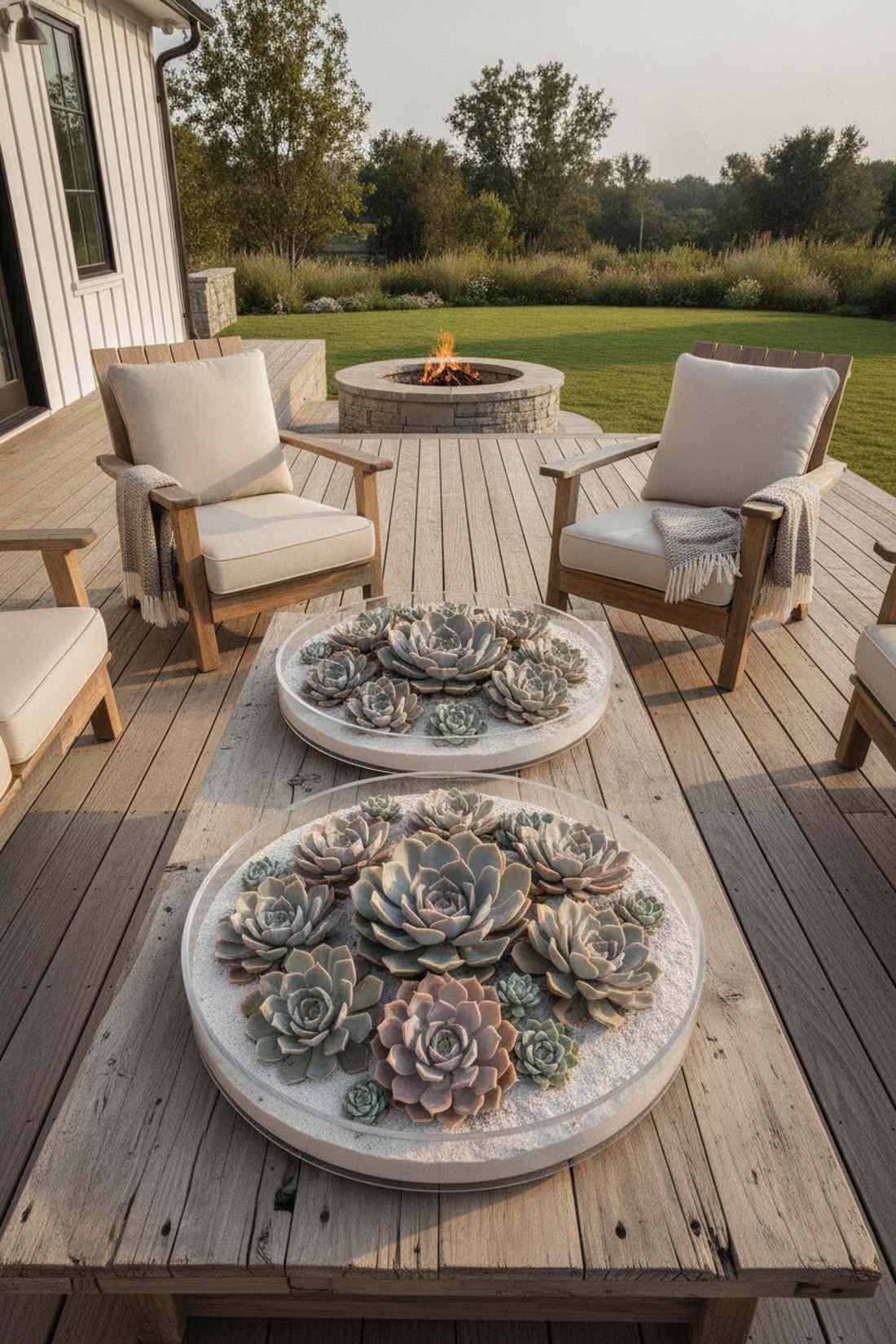
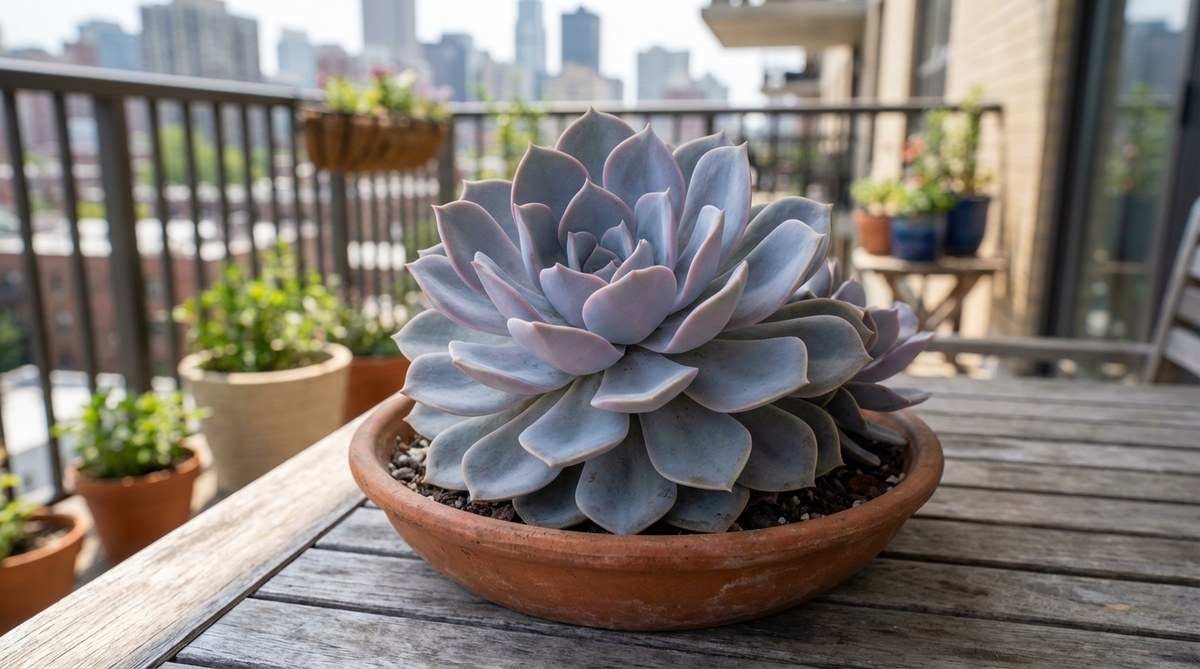
Looks exactly like a dusty-blue geometric mandala carved from stone. Low-profile rosette bowls create mesmerizing tabletop living art that wind simply glides over.
Clustering pastel blues, grays, and pinks tightly in a shallow dish proves you don’t need a massive budget for luxury. You must use pre-mixed gritty cactus soil to prevent these desert beauties from drowning in typical potting compost.
You can build a breathtaking bowl for $20–$35. Pin this for your minimal outdoor coffee table!
- Key Materials: Shallow display bowls, assorted Echeveria rosettes
- Vibe / Style: Living geometric art
- Difficulty: Minimal watering
- Budget Breakdown: Rosettes: $20 | Shallow bowl: $15.
- Creator’s Tip: Top with fine white sand to make the pastel colors of the succulents pop even harder.
- Smart Sourcing: pre-mixed gritty cactus soil (bulk pack) and UV-coated acrylic display bowls.
16. Aloe Vera
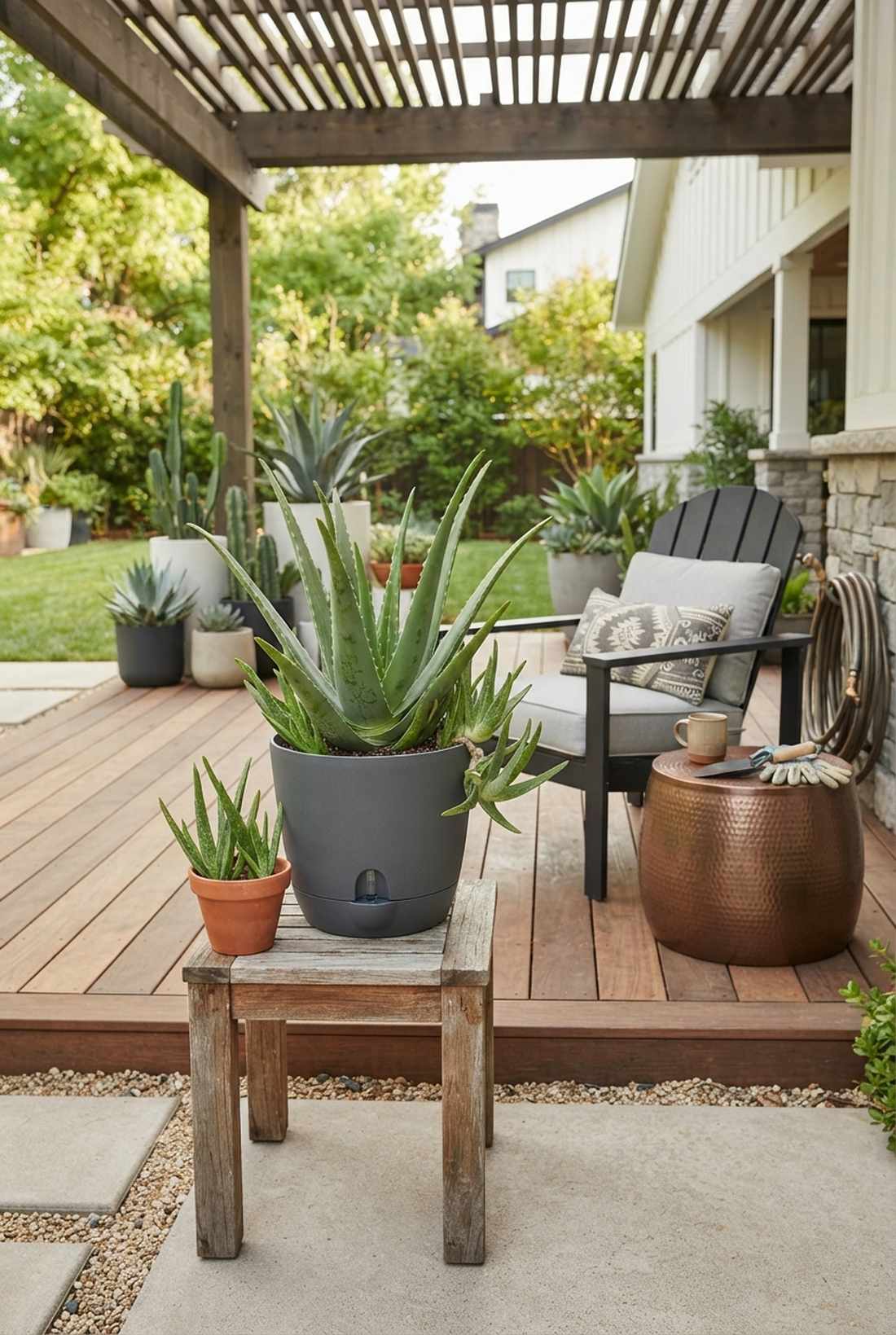
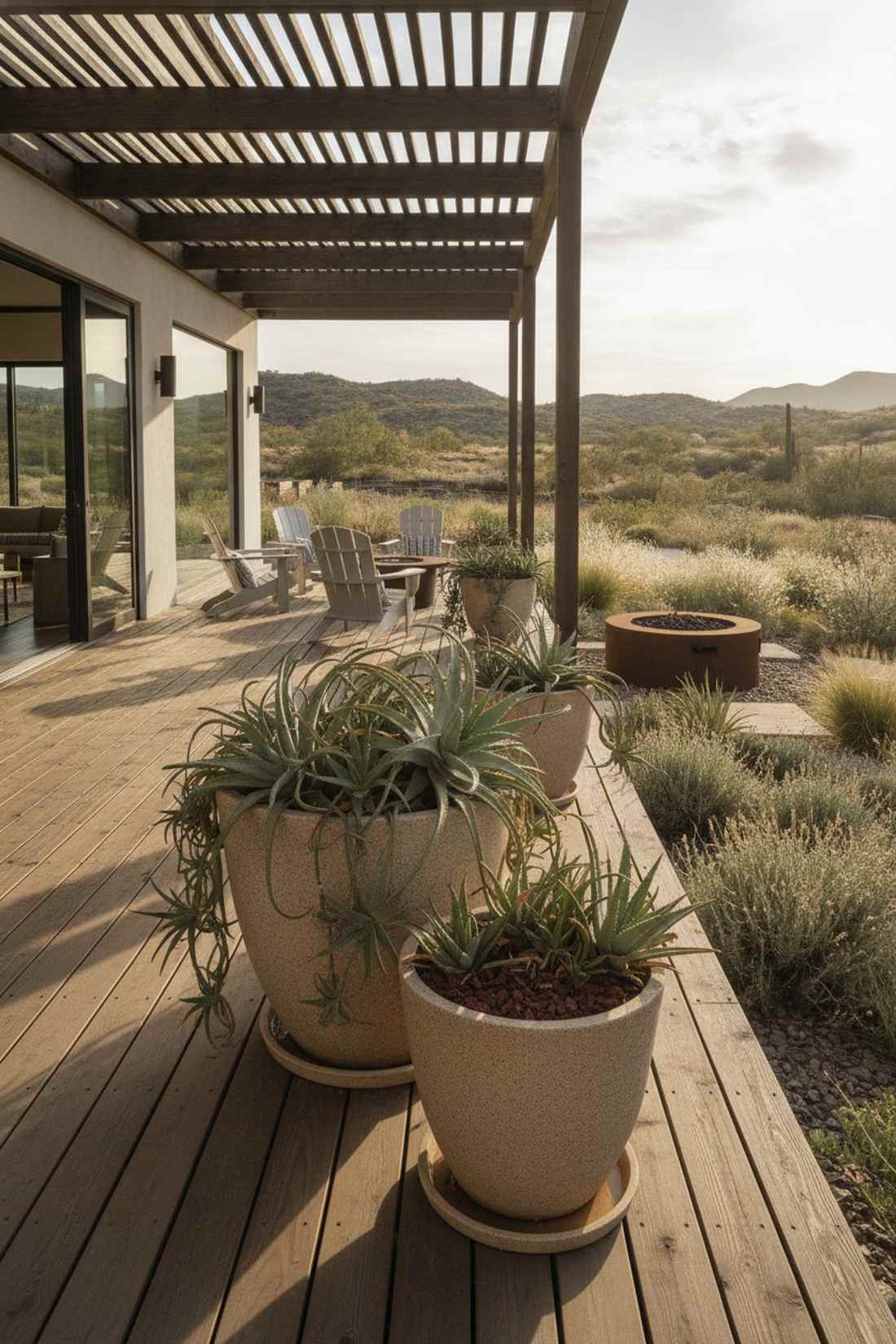
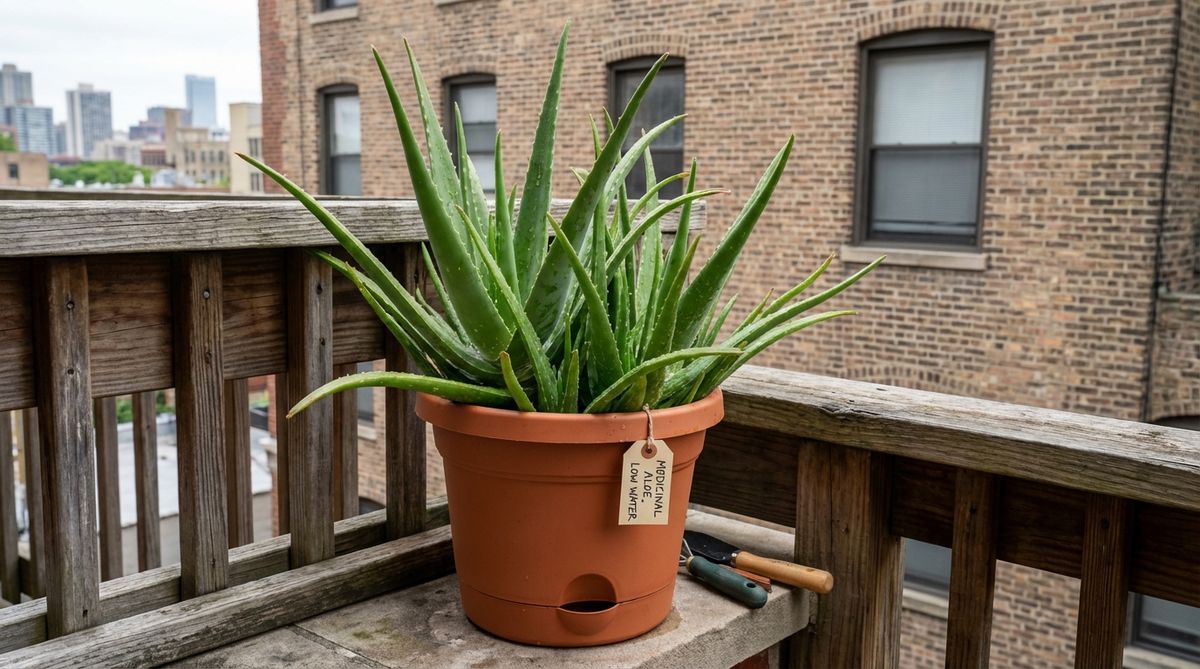
Brings a striking, spiky silhouette that doubles as an instant sunburn remedy. Structural medicinal planters thrive brilliantly in partial shade spots that still get whipped by the wind.
Letting these spiky rosettes multiply naturally gives a designer-level finish as they spill over the pot edges. Keep them happy with self-watering succulent pots that deliver moisture perfectly without rotting the deep root systems.
A robust aloe setup costs roughly $15–$25. It’s practical, tough, and visually striking.
- Key Materials: Aloe pups, self-watering bases
- Vibe / Style: Functional desert modern
- Difficulty: Highly forgiving
- Budget Breakdown: Aloe plant: $10 | Base: $15.
- Creator’s Tip: Remove the small pups (babies) annually to keep the main plant growing thick and strong.
- Smart Sourcing: self-watering succulent pots (UV-resistant) and chunky orchid bark mix.
17. Agave
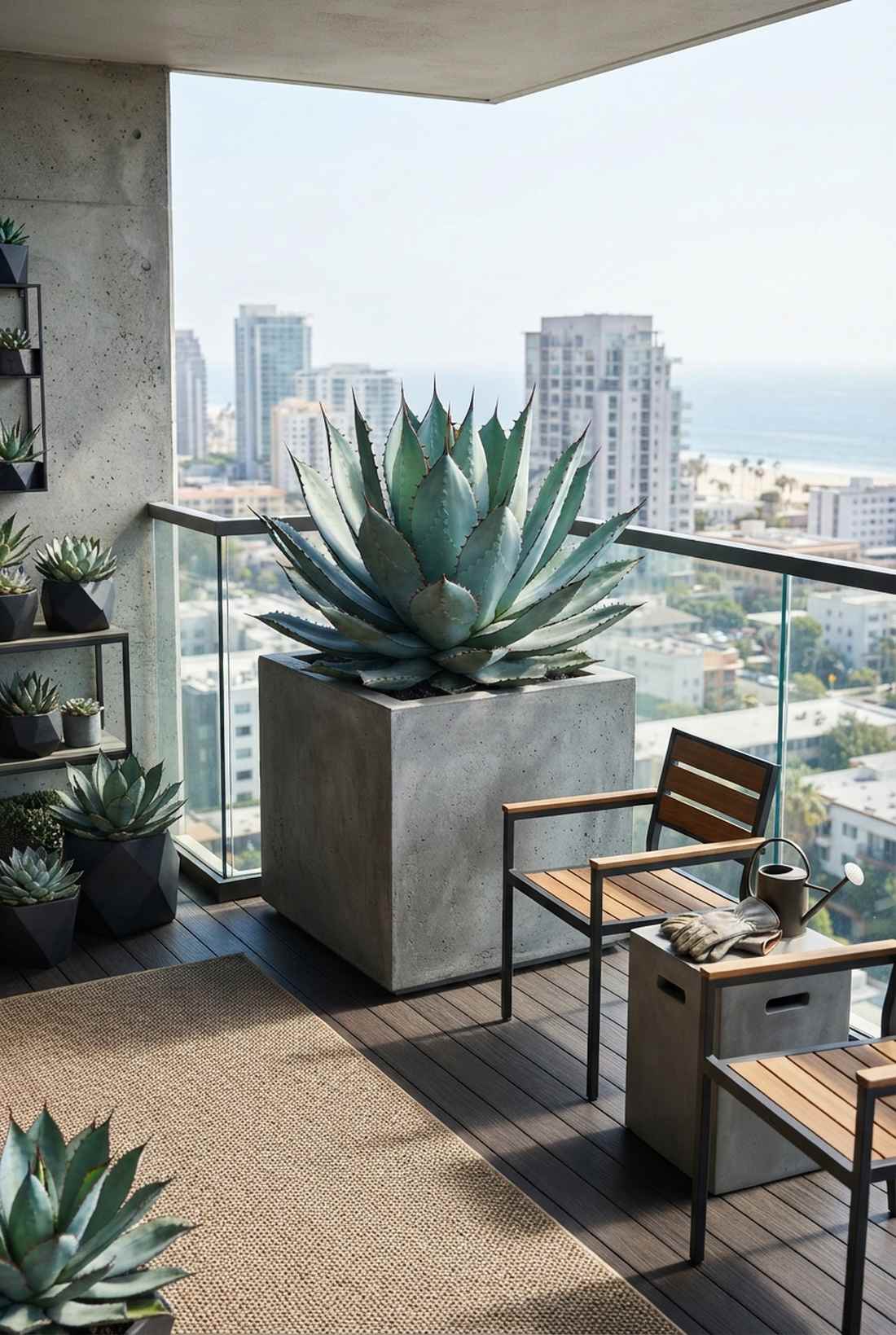
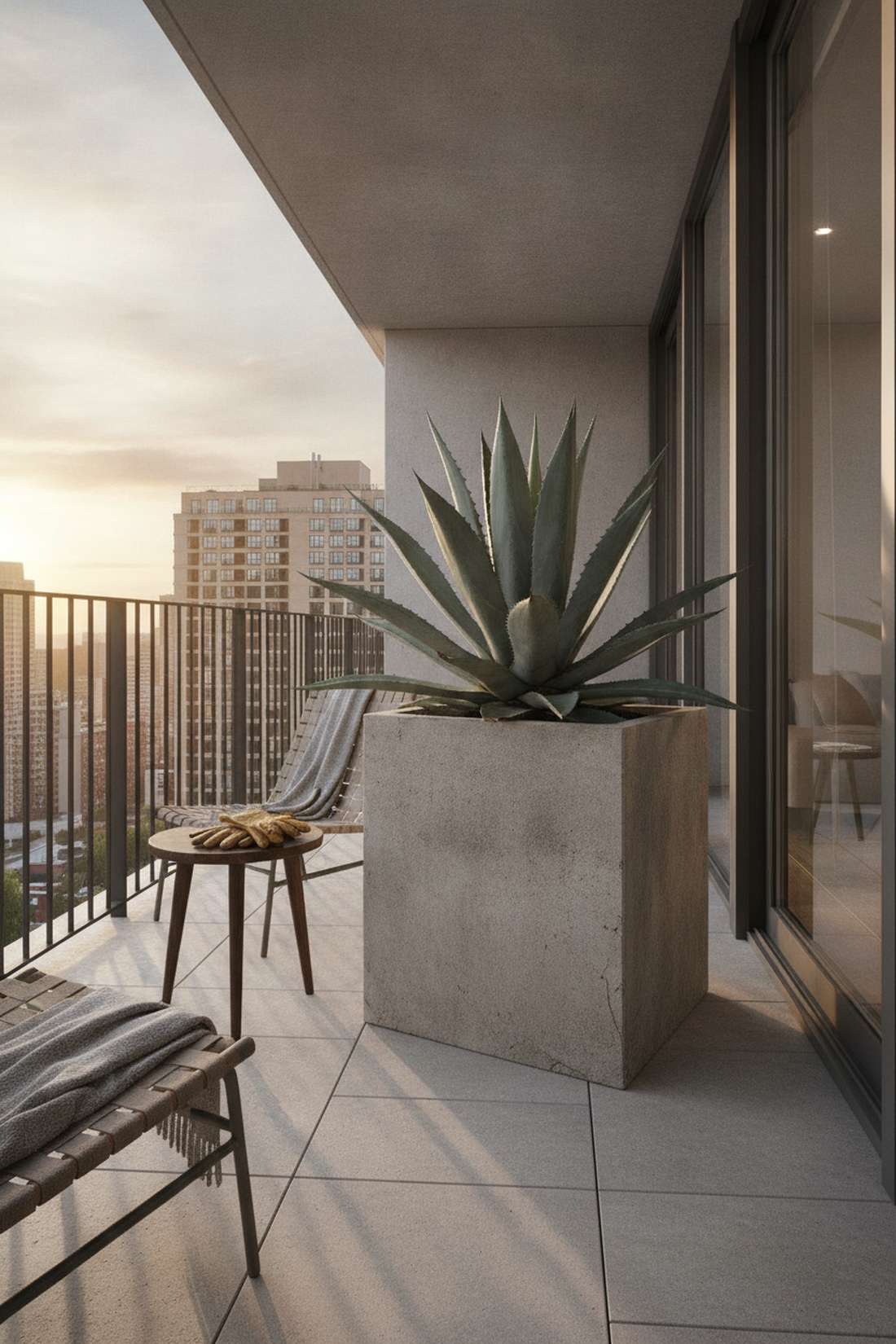
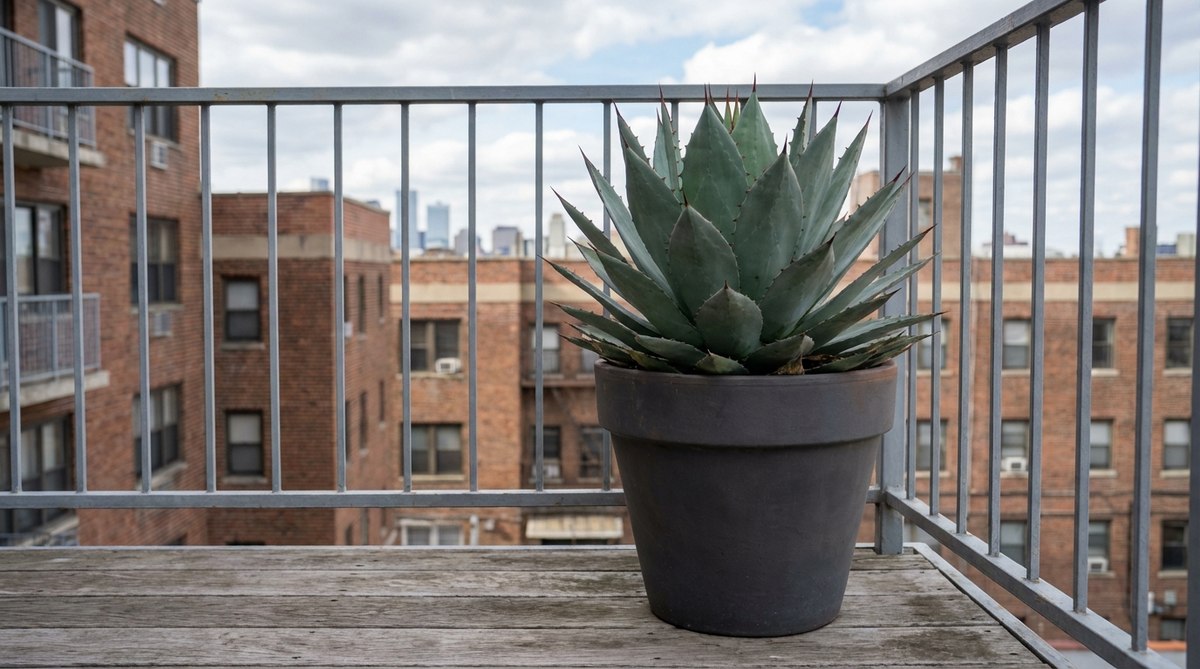
Stands like an architectural guard dog with bold, unyielding presence. Compact statement succulents are the ultimate high-impact anchors for modern balcony corners.
Using a variety like ‘Blue Glow’ in a stark, modern cube acts as a massive visual upgrade. Invest in heavy concrete planter molds to ensure the top-heavy leaves never flip over during a thunderstorm.
You can achieve this premium gallery look for about $40–$60. Save this to your luxury balcony inspiration board!
- Key Materials: Agave ‘Blue Glow’, concrete cubes
- Vibe / Style: Brutalist architectural edge
- Difficulty: Handle with thick gloves
- Budget Breakdown: Agave: $30 | Concrete cube: $30.
- Creator’s Tip: Position this away from seating areas or walkways to avoid snagging clothes on the sharp tips.
- Smart Sourcing: heavy concrete planter molds (commercial-grade) and puncture-proof gardening gloves.
Stop buying fragile greenhouse flowers… these next blooming powerhouses laugh in the face of urban winds.
Shade-Flowering Champions
Blooms brighten shaded balconies from spring through frost. These selections deliver color without demanding full sun.
18. Begonias
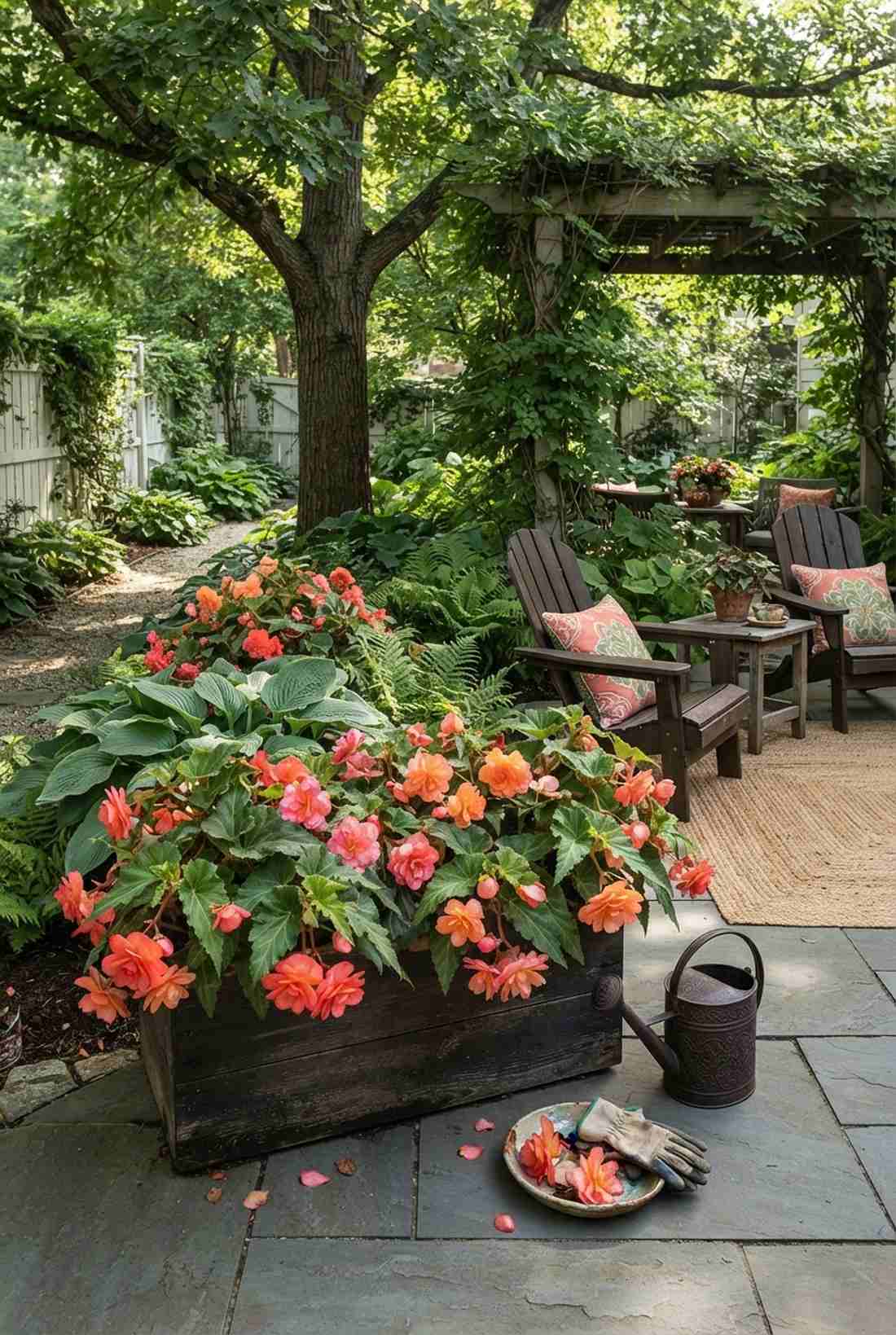
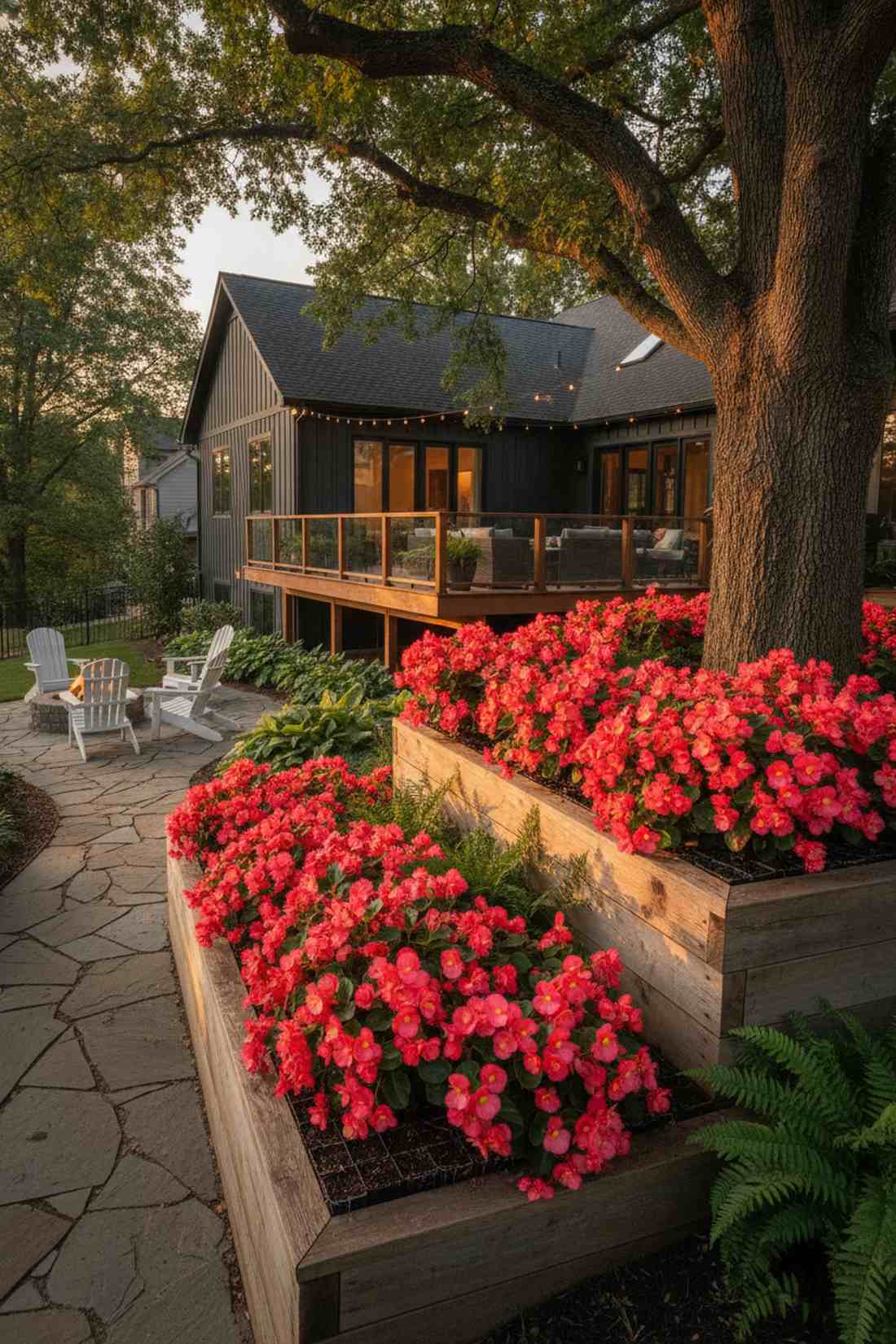
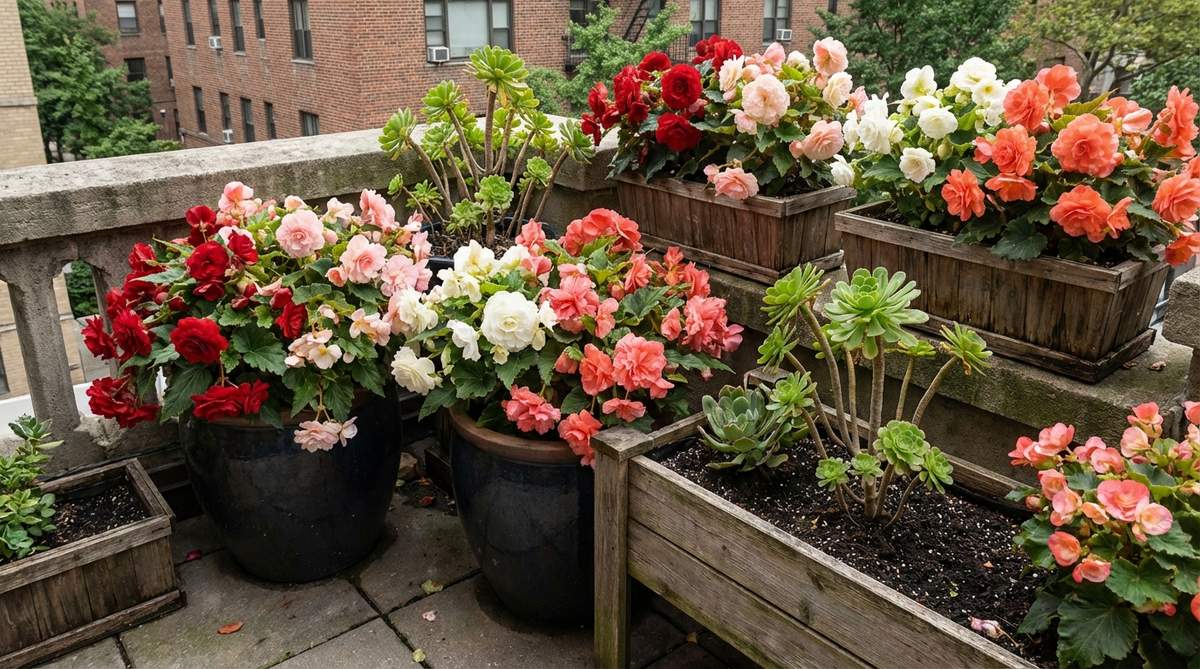
Explodes with vibrant corals and pinks that glow intensely in low-light corners. Succulent-stemmed floral boxes are virtually indestructible under moderate wind while delivering nonstop color.
Layering fibrous begonias over hostas and ferns tricks the eye into seeing custom landscaping. Utilize moisture-retentive soil blocks to keep their shallow roots constantly hydrated without becoming waterlogged.
A full blooming container runs about $20–$30. It’s a gorgeous transformation for shaded zones.
- Key Materials: Tuberous begonias, rich organic soil
- Vibe / Style: Lush tropical pop
- Difficulty: Continuous bloomer
- Budget Breakdown: Tubers/Plants: $15 | Soil: $10.
- Creator’s Tip: Pinch off the spent flowers weekly to force the plant to grow bushier and wider.
- Smart Sourcing: moisture-retentive soil blocks (pre-cut) and high-phosphorus bloom boosters.
19. Fuchsia
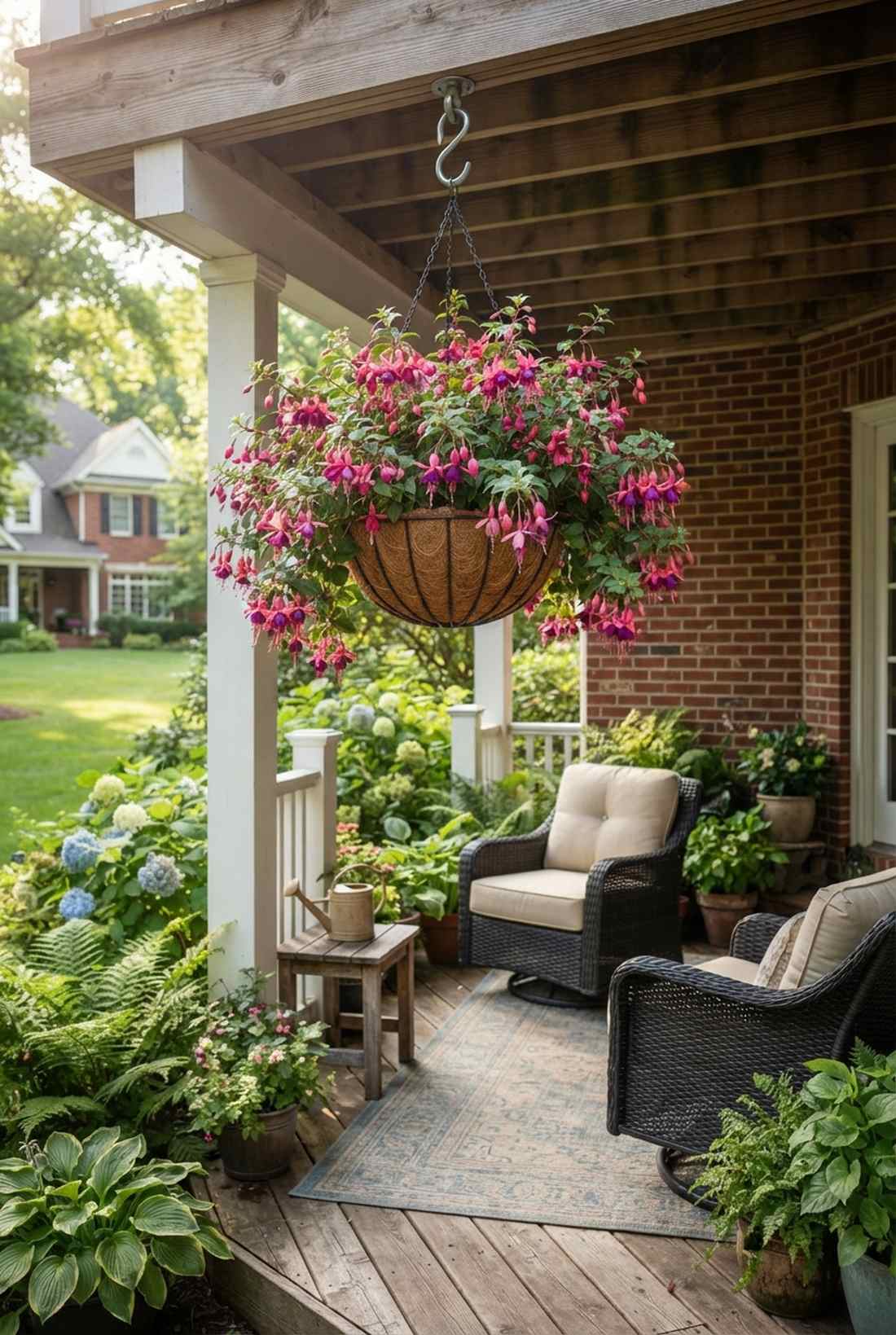
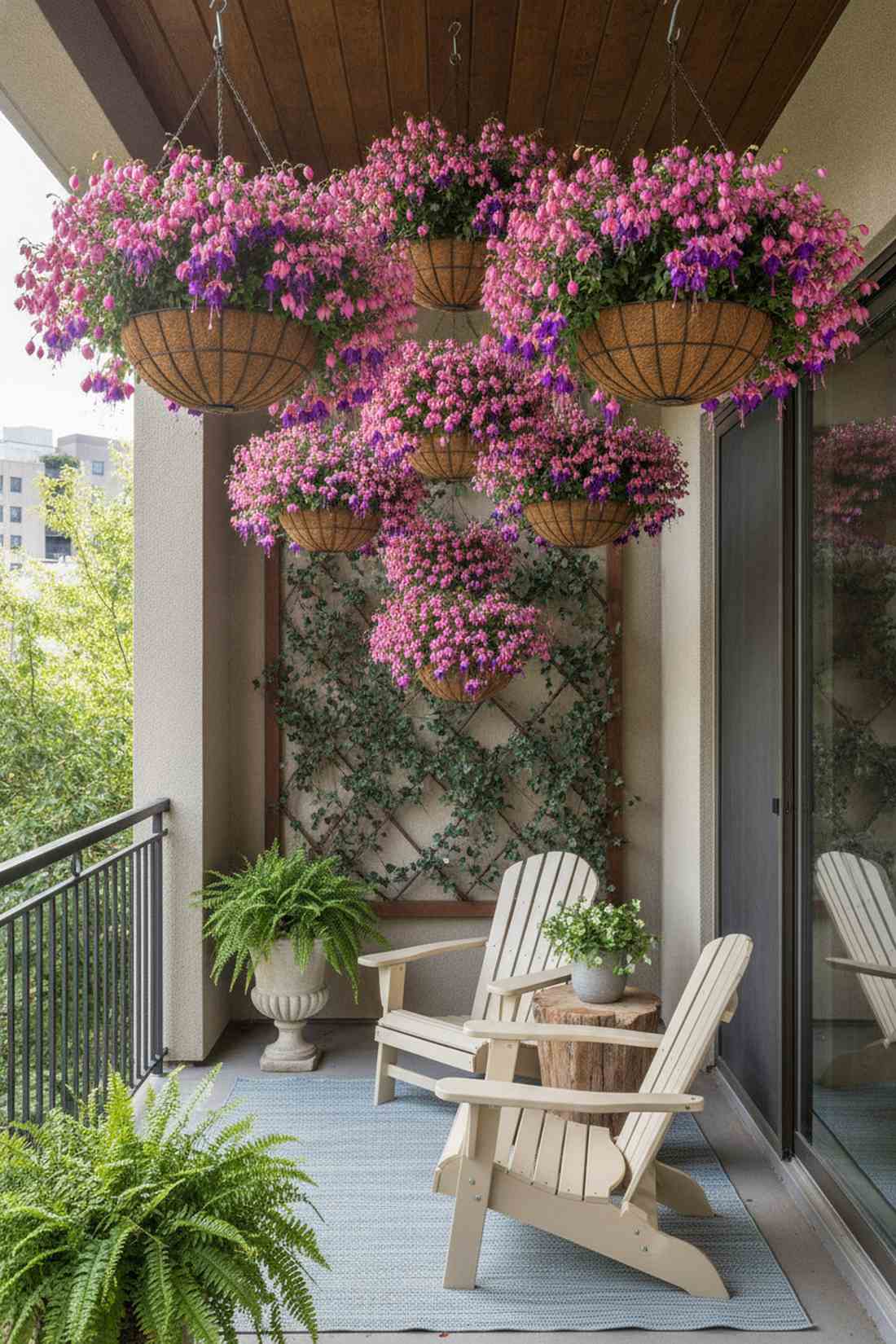
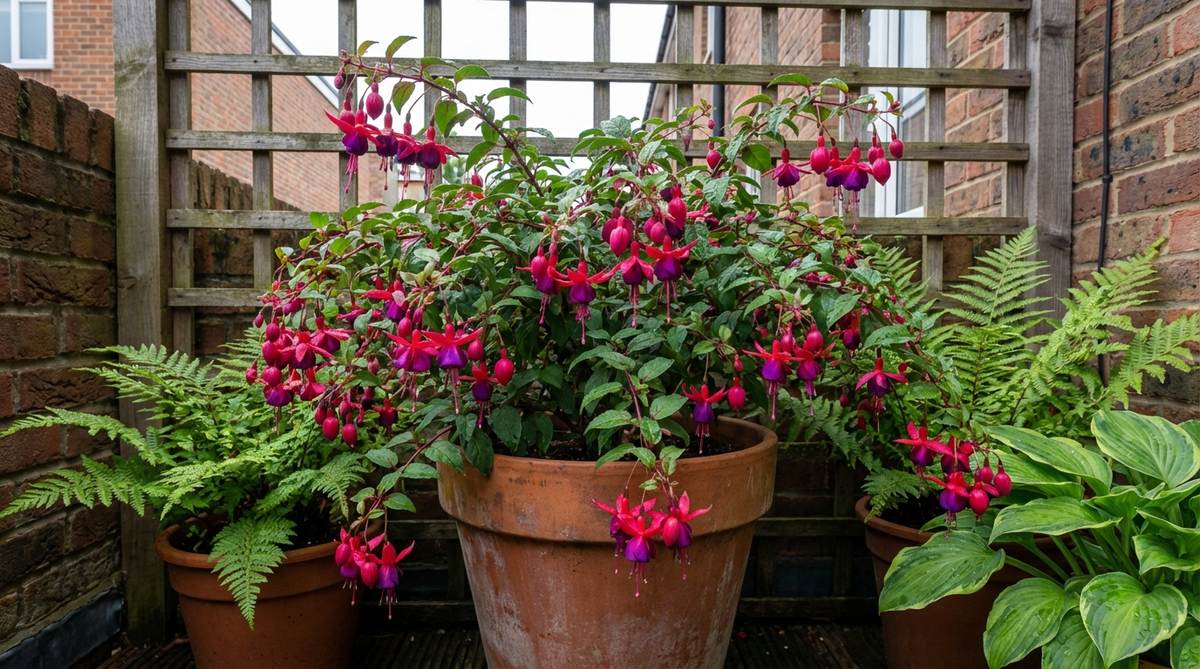
Dangles like ornate, two-toned jewelry suspended mid-air. Pendant-blooming hanging baskets create magical overhead visual layers in sheltered apartment alcoves.
Hanging these vibrant pink and purple bells over a seating area completely changes the space’s dynamic. Secure them with heavy-duty swivel hooks so the baskets can rotate safely in the wind without twisting the stems off.
You can set up a stunning hanging basket for $25–$35. Pin this for your overhead patio design!
- Key Materials: Fuchsia starts, hanging wire baskets
- Vibe / Style: Floating floral fantasy
- Difficulty: Daily watering required
- Budget Breakdown: Basket: $20 | Plant: $15.
- Creator’s Tip: Protect them from harsh afternoon sun; they prefer the cool, bright shade of early morning.
- Smart Sourcing: heavy-duty swivel hooks (rust-proof) and coco coir basket liners (bulk pack).
20. Impatiens (Busy Lizzie)
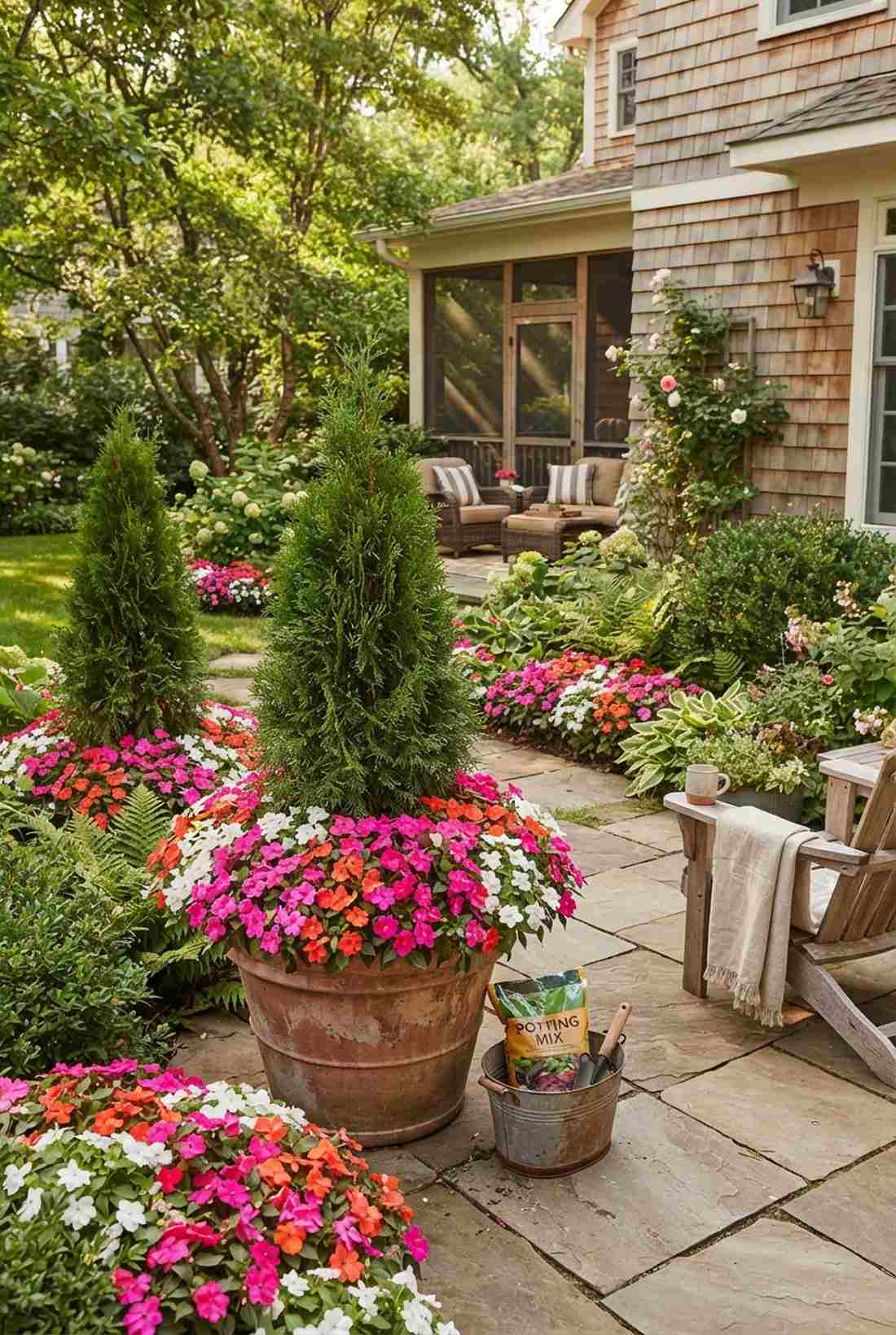
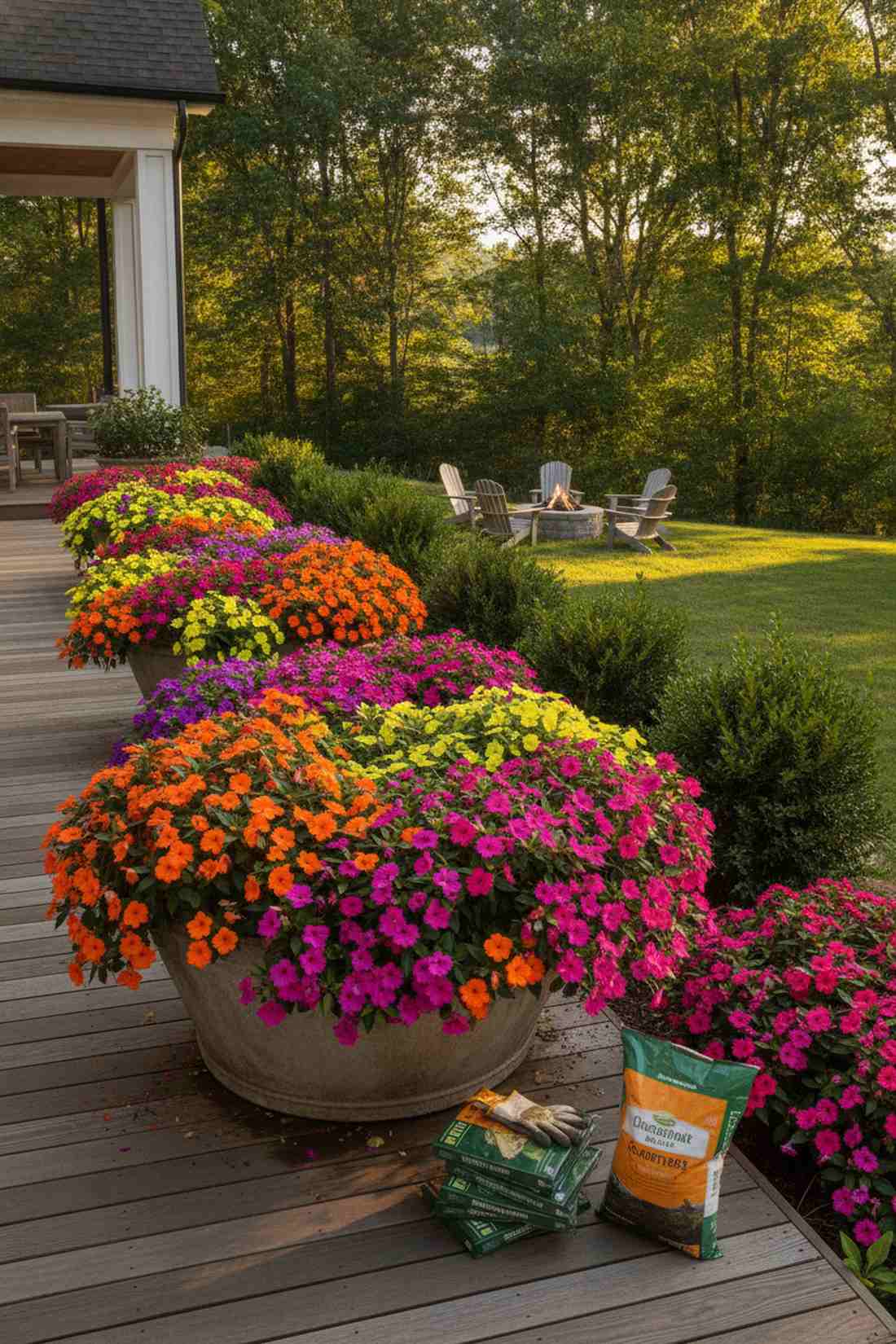
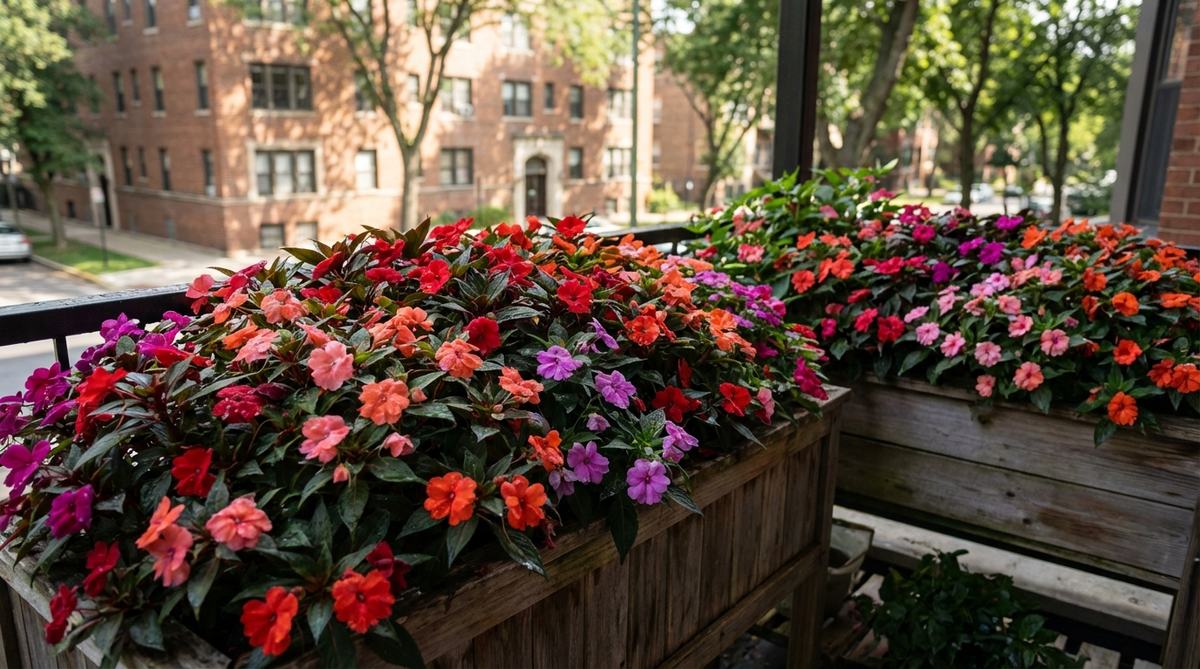
Carpets the shadows with a neon glow that completely eliminates dull, gray floor space. Self-cleaning floral groundcovers are the ultimate low-fuss solution for the base of large balcony tubs.
Planting these densely around taller evergreens delivers a surprisingly premium look with almost zero maintenance. Pick up some disease-resistant seed starter kits to bypass the mildew issues that plague older varieties.
Expect to spend about $15 to flood a container with color. Highly recommended for instant gratification.
- Key Materials: Disease-resistant impatiens flats, basic potting mix
- Vibe / Style: Neon shadow carpet
- Difficulty: Effortless color
- Budget Breakdown: Plant flats: $10 | Soil: $5.
- Creator’s Tip: They drop their own dead flowers, meaning you never have to spend time deadheading them.
- Smart Sourcing: disease-resistant seed starter kits and all-purpose plant food spikes.
21. Hydrangea
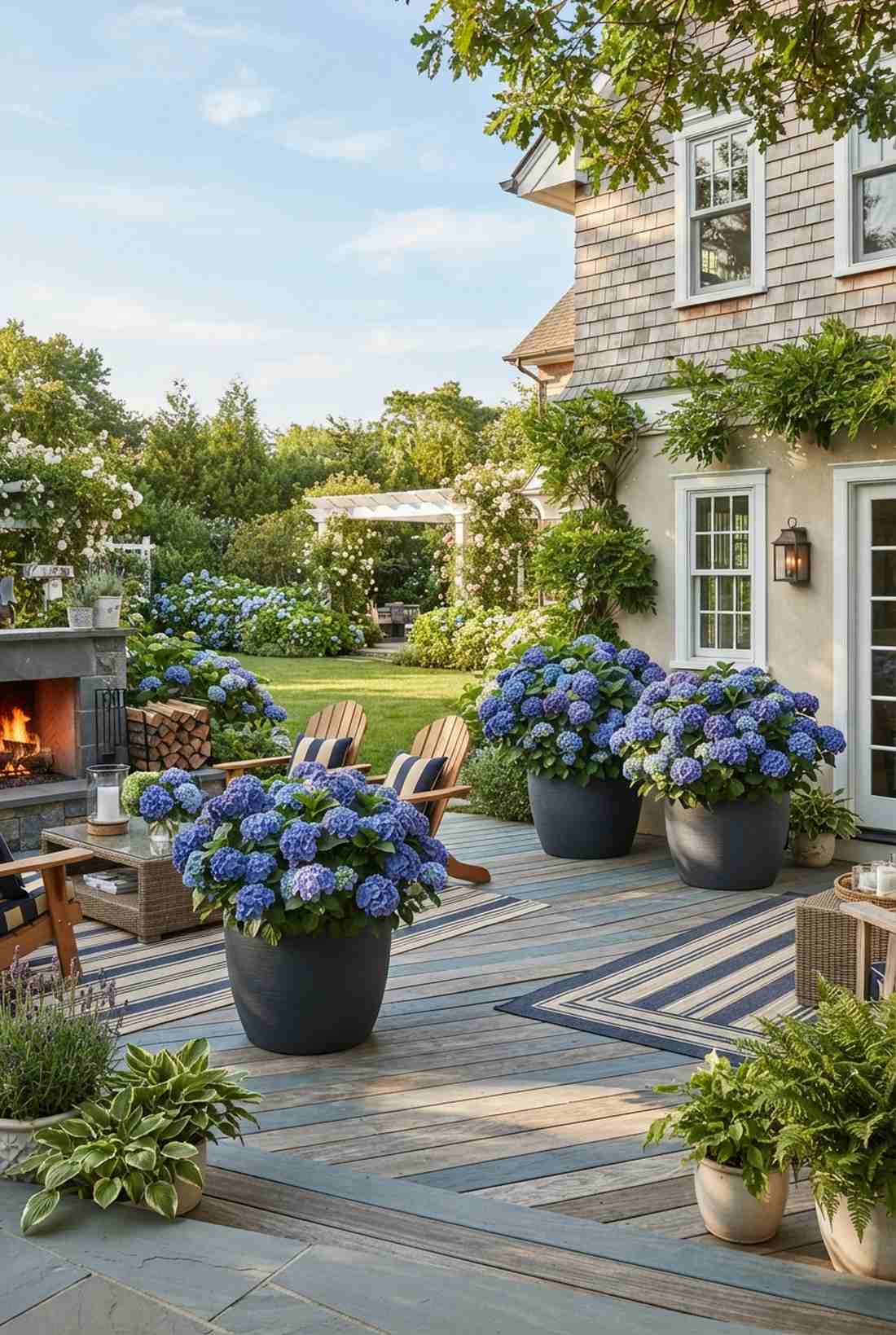
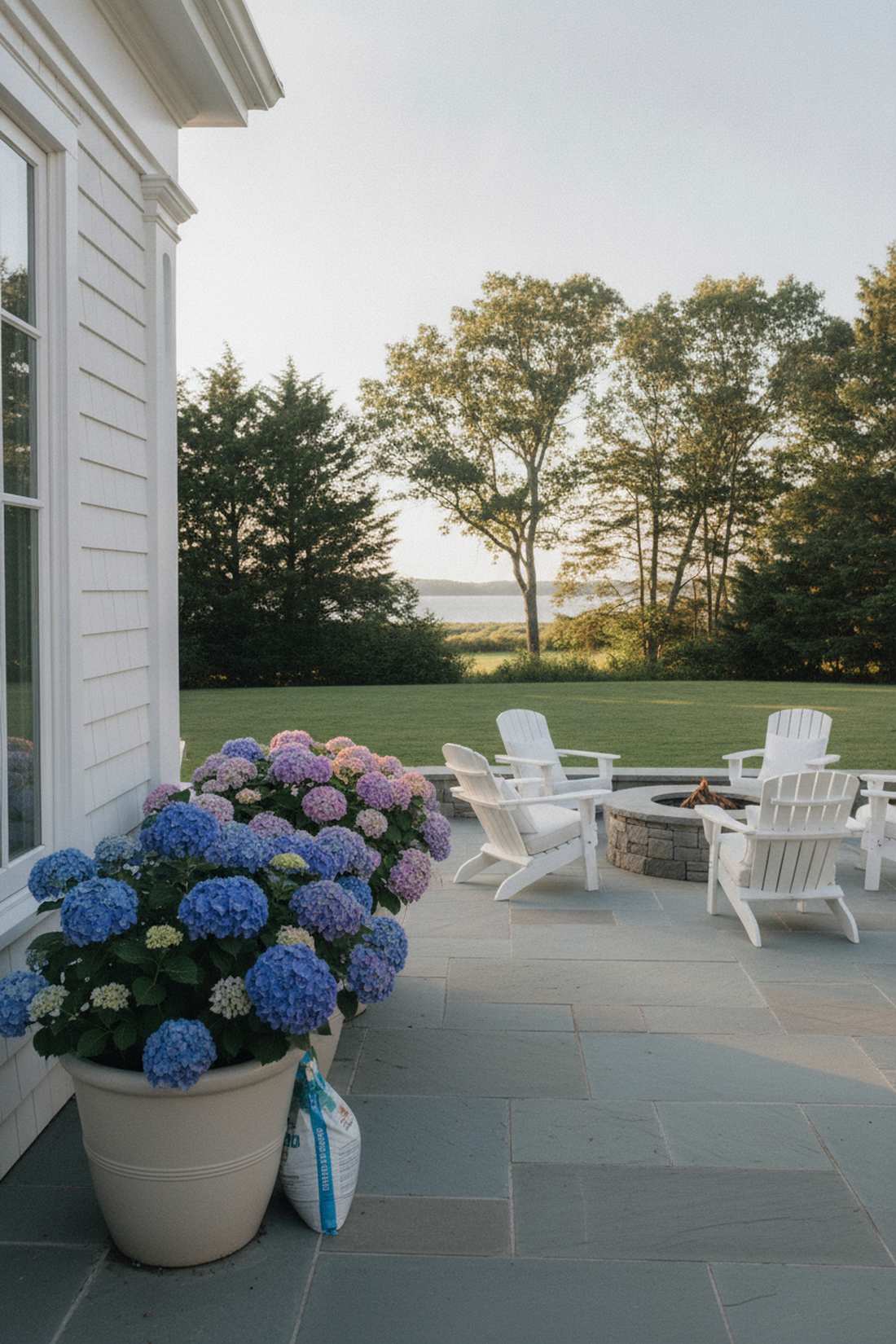
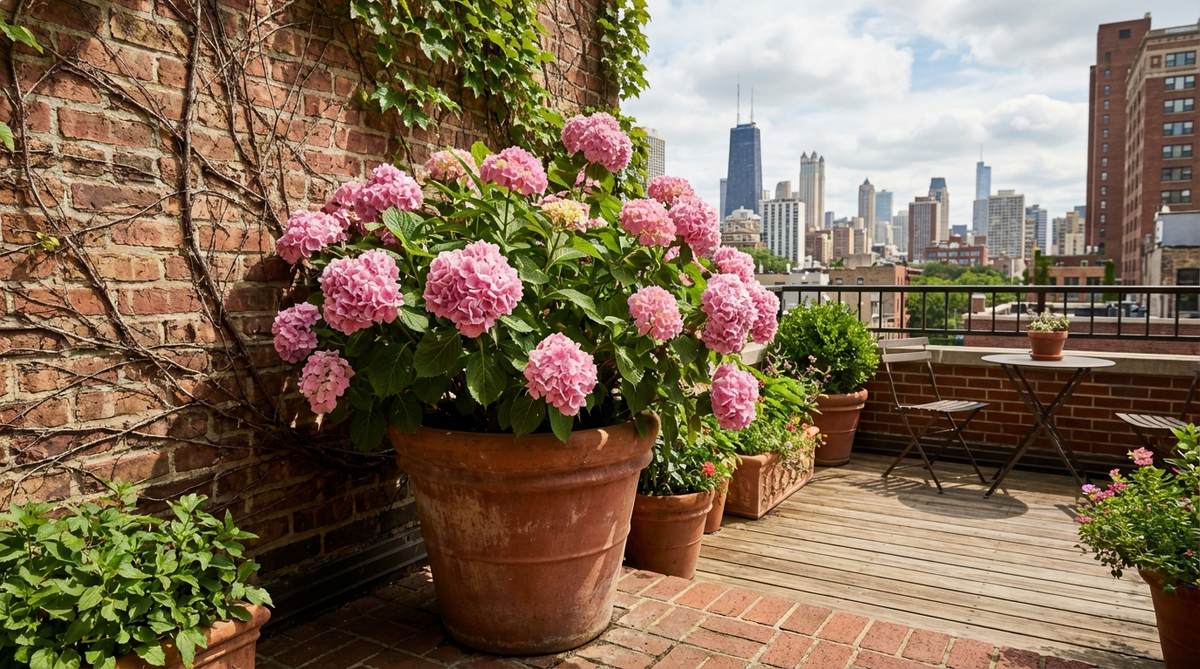
Commands the space with massive, shifting blooms that feel incredibly luxurious. Large-scale flowering shrubs are breathtaking anchor pieces for the protected corners of a sprawling terrace.
Using compact varieties like ‘Bobo’ in sleek modern pots proves you don’t need a massive budget for luxury. Grab soil acidifier granules if you want to force those huge flower heads to turn a brilliant, deep blue.
A premium shrub setup will cost around $40–$60. Save this for a massive visual upgrade!
- Key Materials: Compact Hydrangea, massive resin tubs
- Vibe / Style: Hamptons estate elegance
- Difficulty: Requires wind protection
- Budget Breakdown: Shrub: $30 | Resin tub: $30.
- Creator’s Tip: Push the container against a structural wall to prevent the heavy, water-logged blooms from snapping in high winds.
- Smart Sourcing: soil acidifier granules (bulk bag) and massive resin tubs (UV-coated).
22. Torenia (Wishbone Flower)
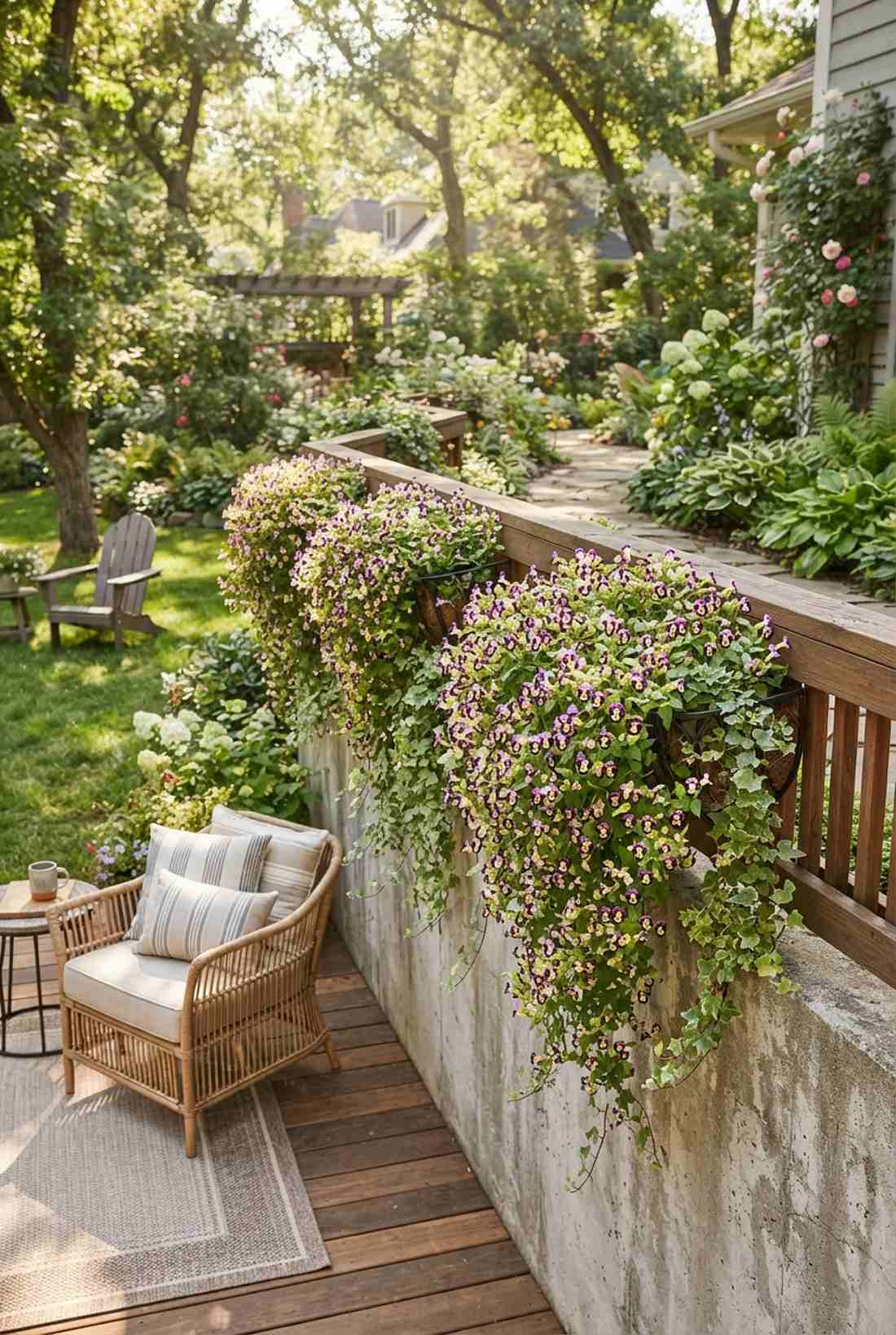
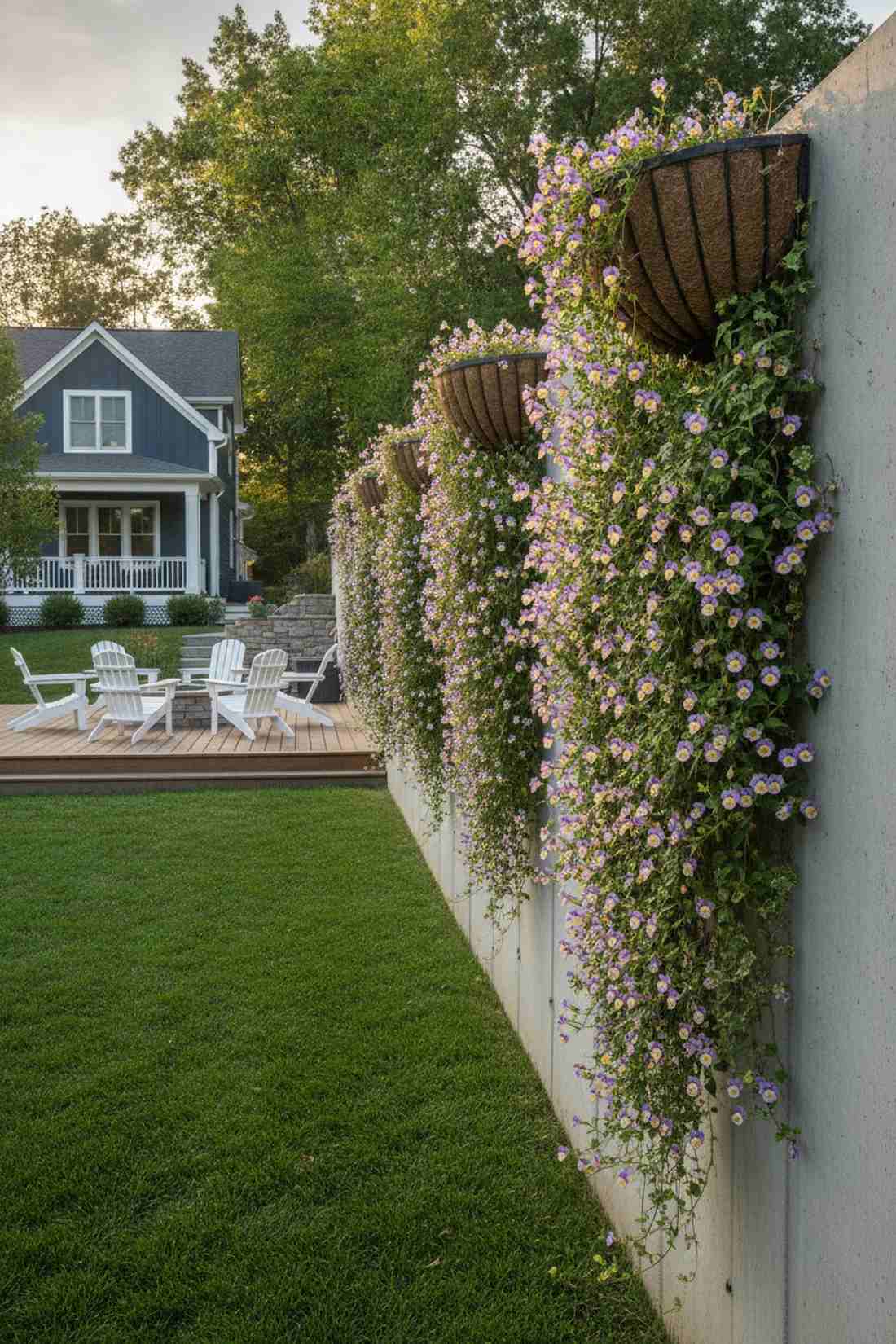
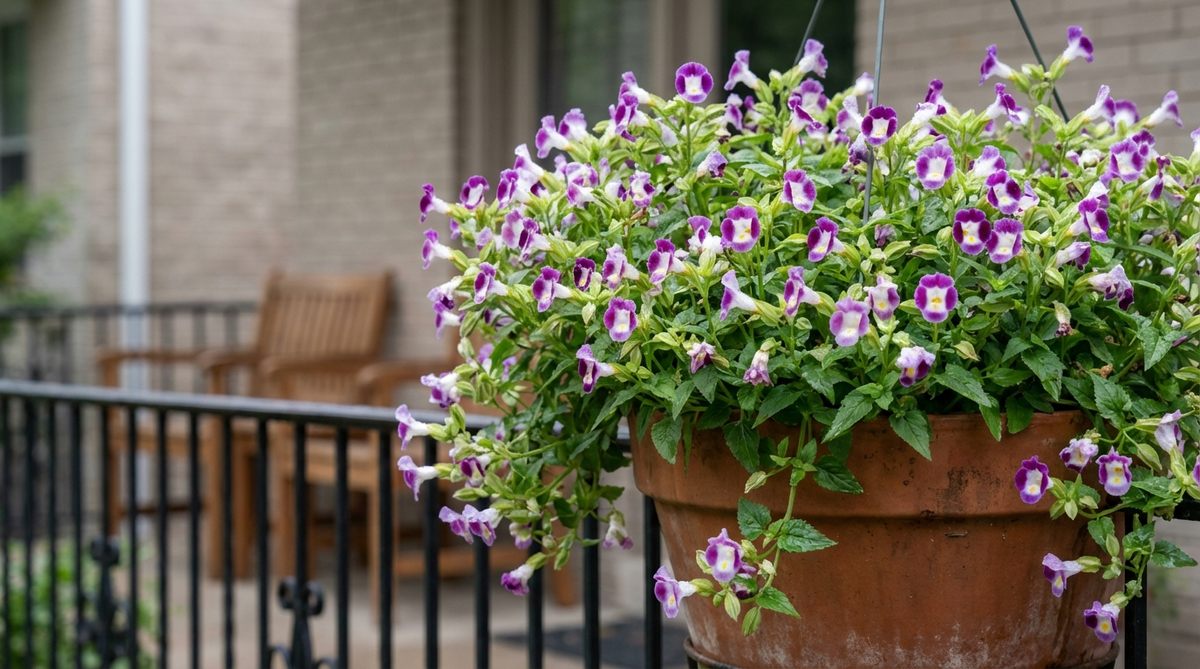
Pops with tiny, two-toned faces that look like exotic snapdragons thriving in the dark. Trailing shade annuals are brilliant for spilling over the edges of elevated rail planters where other flowers fail.
Cascading these purple and yellow blooms down a stark concrete wall acts as a massive visual upgrade. Incorporate water-storing polymer crystals into the soil to keep them continuously blooming without daily hose-downs.
You can achieve this whimsical drape for roughly $15–$25. It’s a fantastic, low-effort trailing option.
- Key Materials: Torenia packs, polymer soil additives
- Vibe / Style: Whimsical trailing color
- Difficulty: Very beginner-friendly
- Budget Breakdown: Flowers: $15 | Additives: $5.
- Creator’s Tip: Mix them with creeping ivy for a multi-textured spill effect that lasts till frost.
- Smart Sourcing: water-storing polymer crystals (bulk pack) and premium hanging basket frames.
Why buy sad grocery store herbs when this next layout gives you a wind-proof chef’s garden for half the price?
Culinary Herbs for Dual Conditions
Mediterranean herbs evolved on windswept coastal cliffs, making them naturally suited to exposed balconies. Many tolerate partial shade while delivering flavor and fragrance.
23. Rosemary
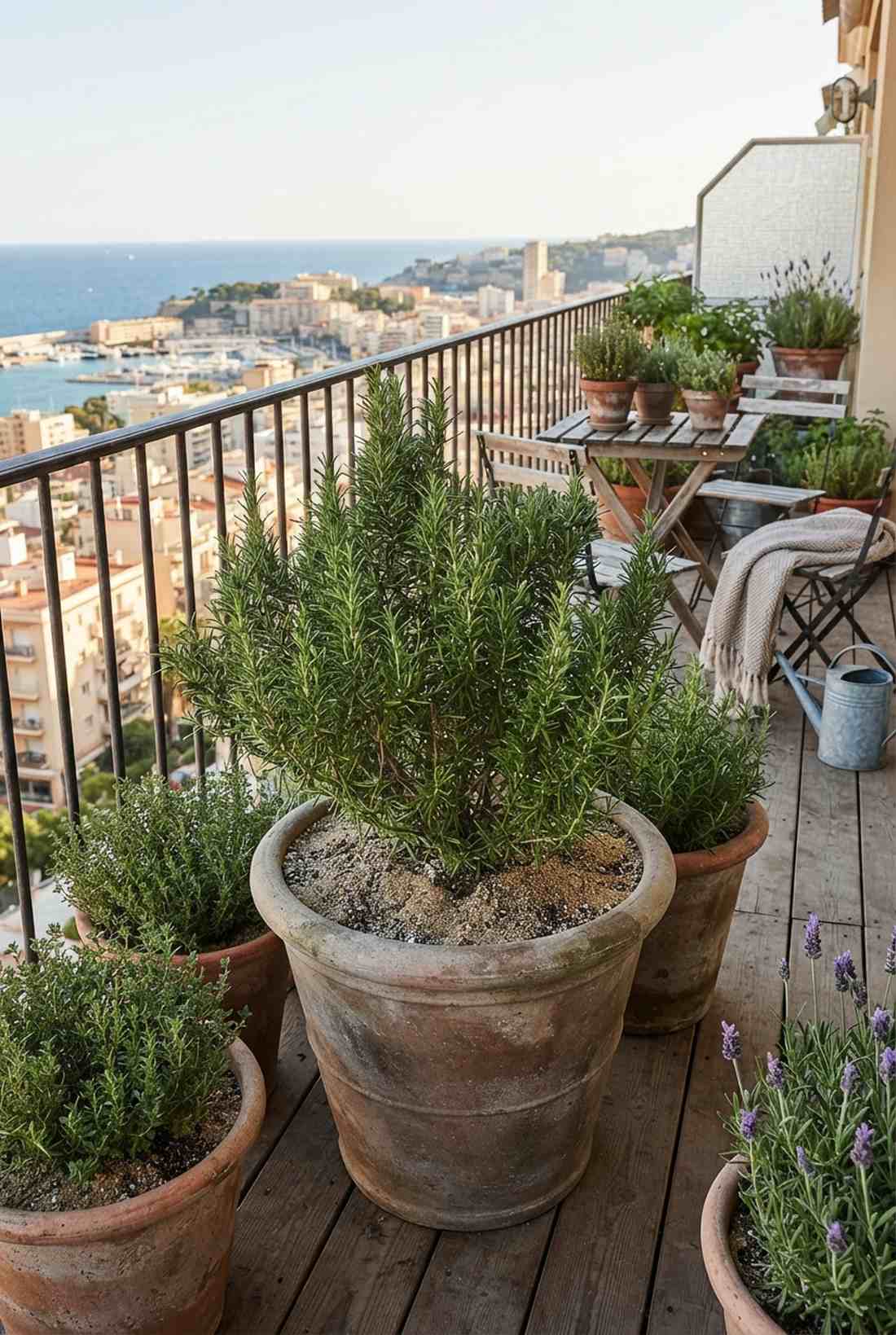
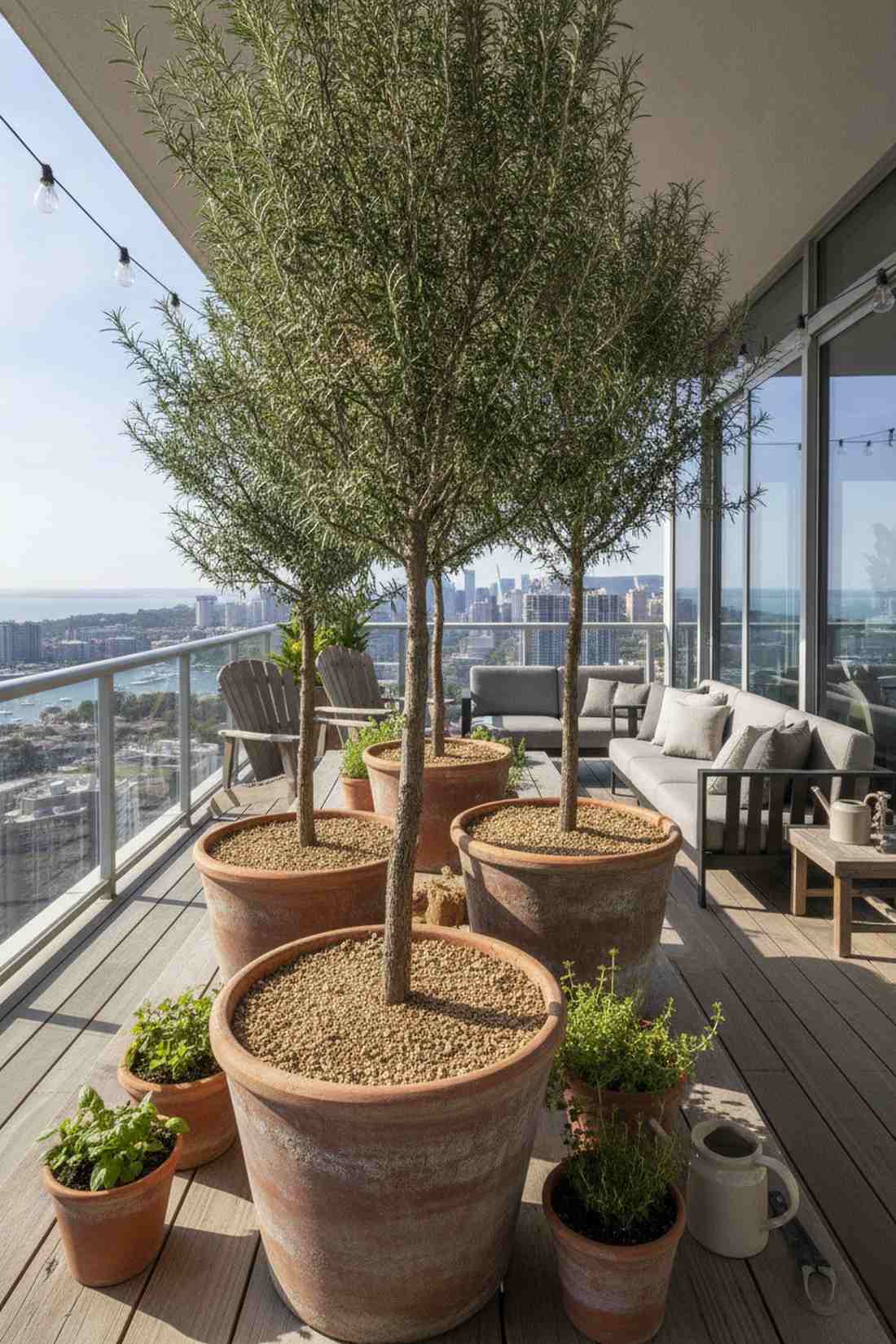
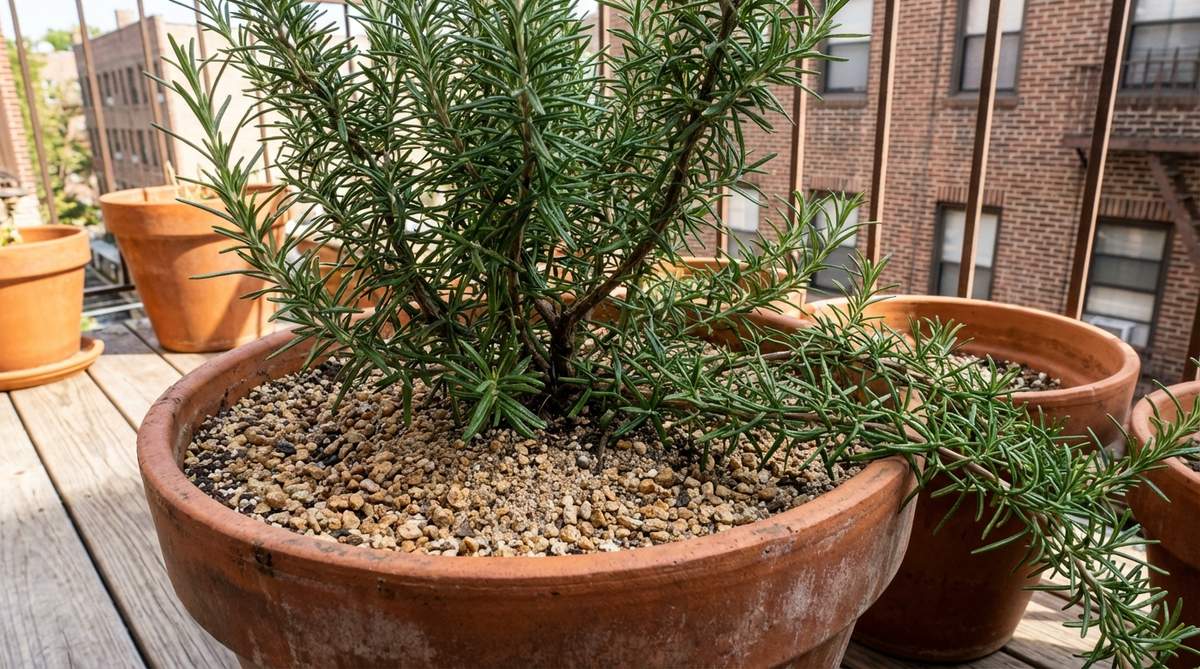
Releases an intoxicating, savory fragrance every time the wind brushes past it. Upright aromatic herb planters bring a rugged, coastal Italian vibe straight to your high-rise.
Planting these needle-like leaves in weathered terracotta looks far more expensive than it is. Mix in coarse horticultural sand to guarantee the rapid, gritty drainage these woody stems demand to survive.
A beautiful culinary centerpiece runs about $15–$25. Pin this to your edible balcony garden board!
- Key Materials: Upright rosemary, weathered terracotta pots
- Vibe / Style: Coastal Mediterranean cliff
- Difficulty: Sun and drainage lover
- Budget Breakdown: Herb: $10 | Terracotta: $15.
- Creator’s Tip: Harvest regularly from the top to force the plant to grow bushier and more wind-resistant.
- Smart Sourcing: coarse horticultural sand (bulk bag) and breathable clay pots (heavy-duty).
24. Thyme
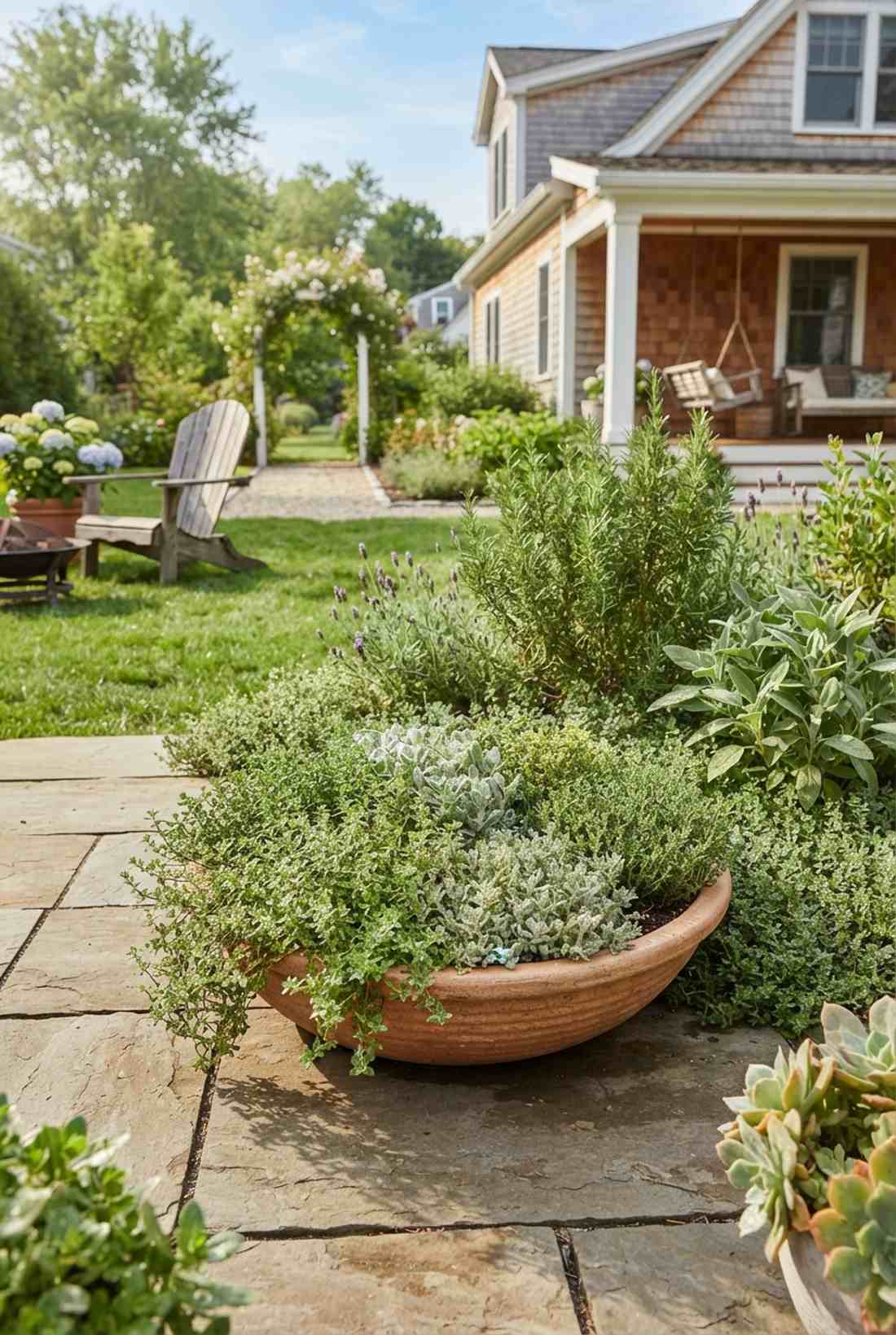
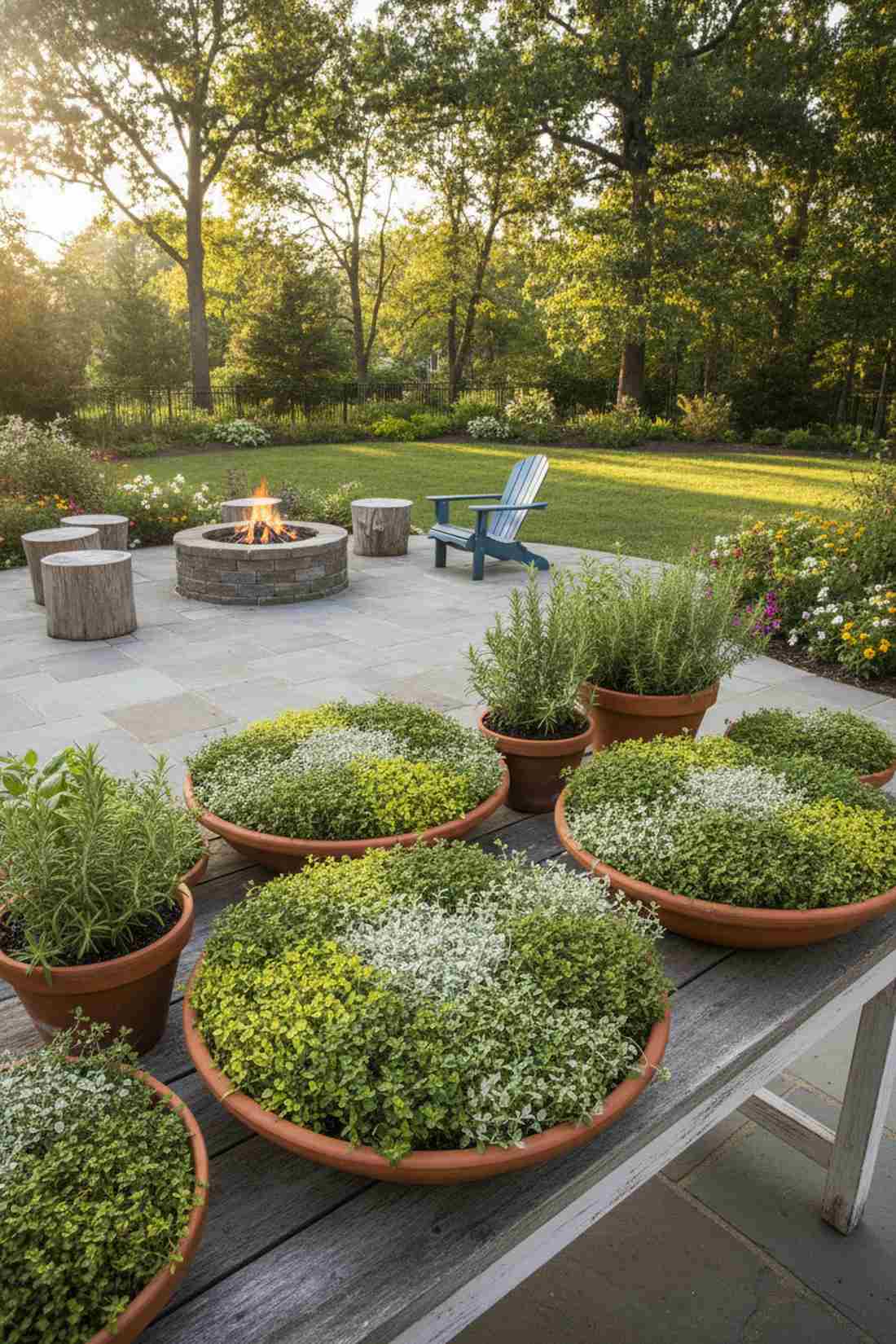
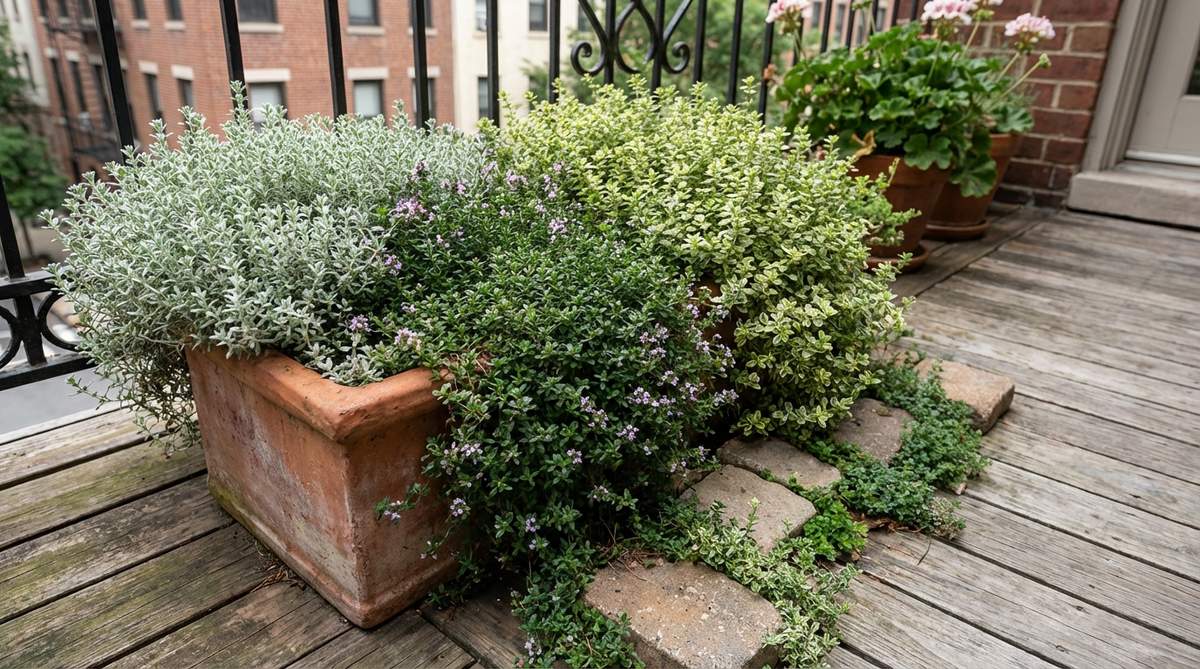
Crawls over the pot edges like a fragrant, textured green carpet. Creeping culinary groundcovers are amazing for filling the bare soil gaps under taller statement plants.
Mixing lemon, woolly, and standard varieties in one wide bowl gives a designer-level finish. Utilize shallow saucer planters to give their horizontal root systems the perfect amount of spreading room without waterlogging.
You can create a mixed herb carpet for under $20. Highly recommended for maximizing tight spaces.
- Key Materials: Mixed thyme flats, wide shallow bowls
- Vibe / Style: Fragrant textured patchwork
- Difficulty: Highly walkable/touchable
- Budget Breakdown: Herb flats: $10 | Shallow bowl: $10.
- Creator’s Tip: Lightly brush the foliage with your hand when walking by to release a burst of natural fragrance into the air.
- Smart Sourcing: shallow saucer planters (UV-coated) and organic herb fertilizer spikes.
25. Sage
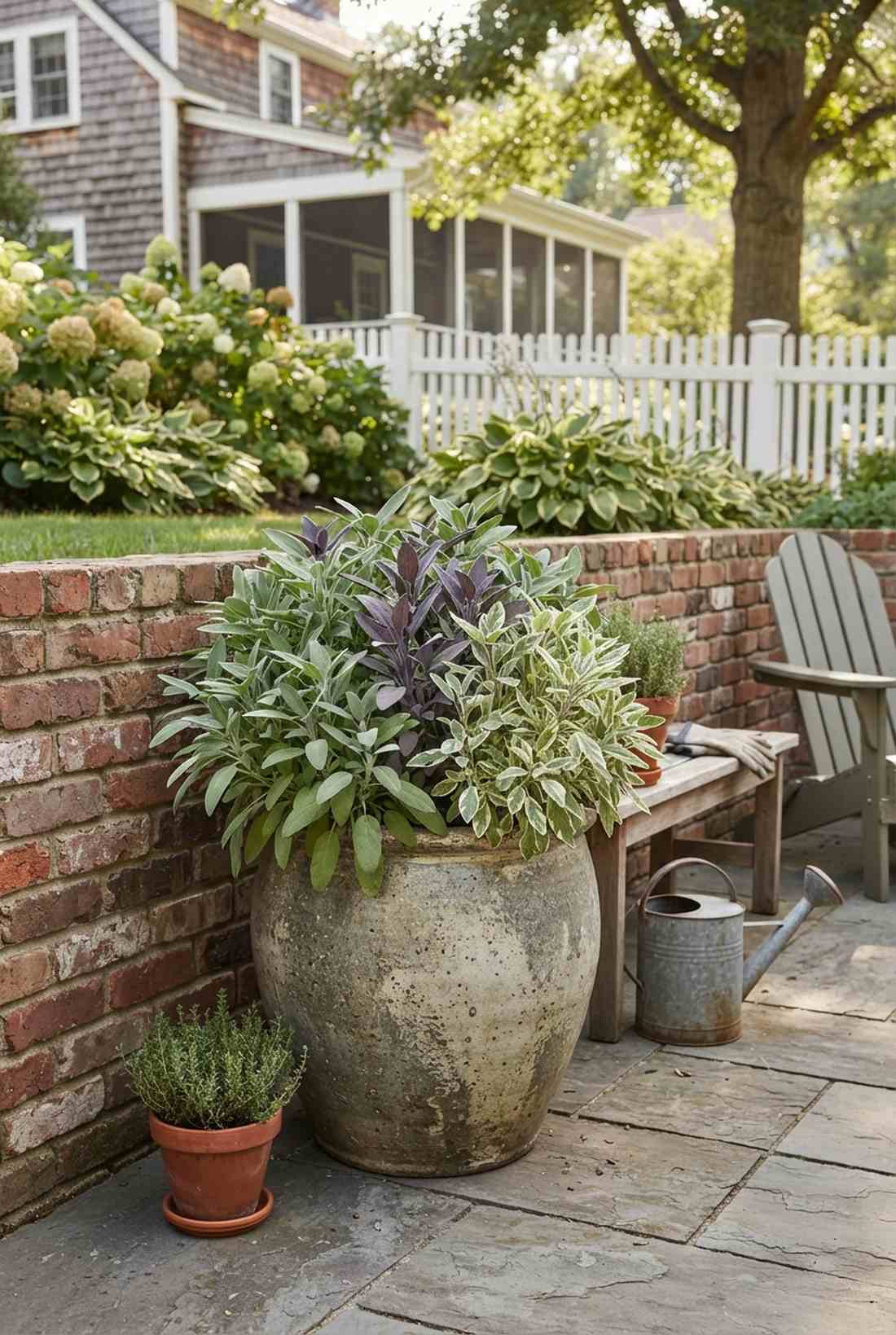
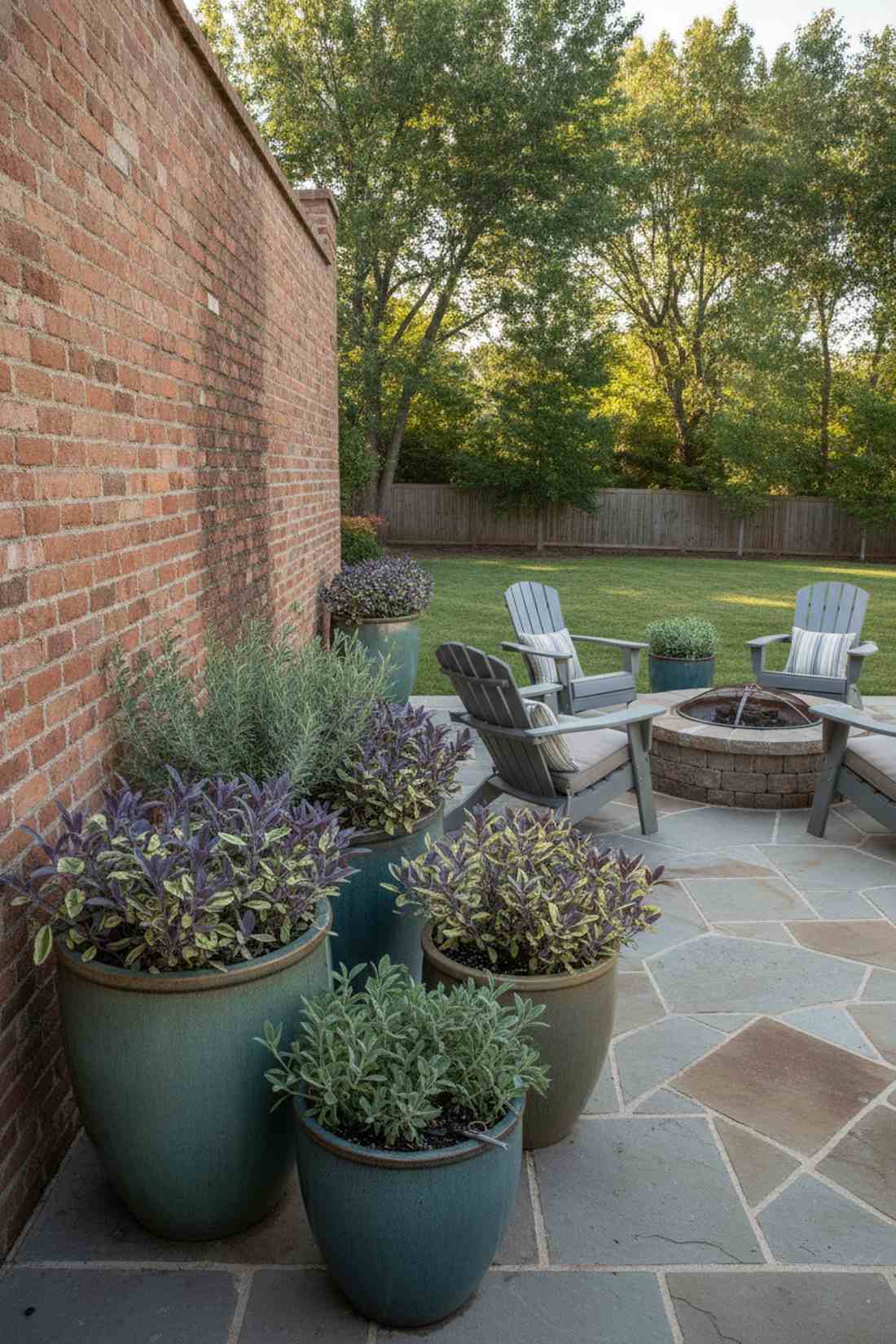
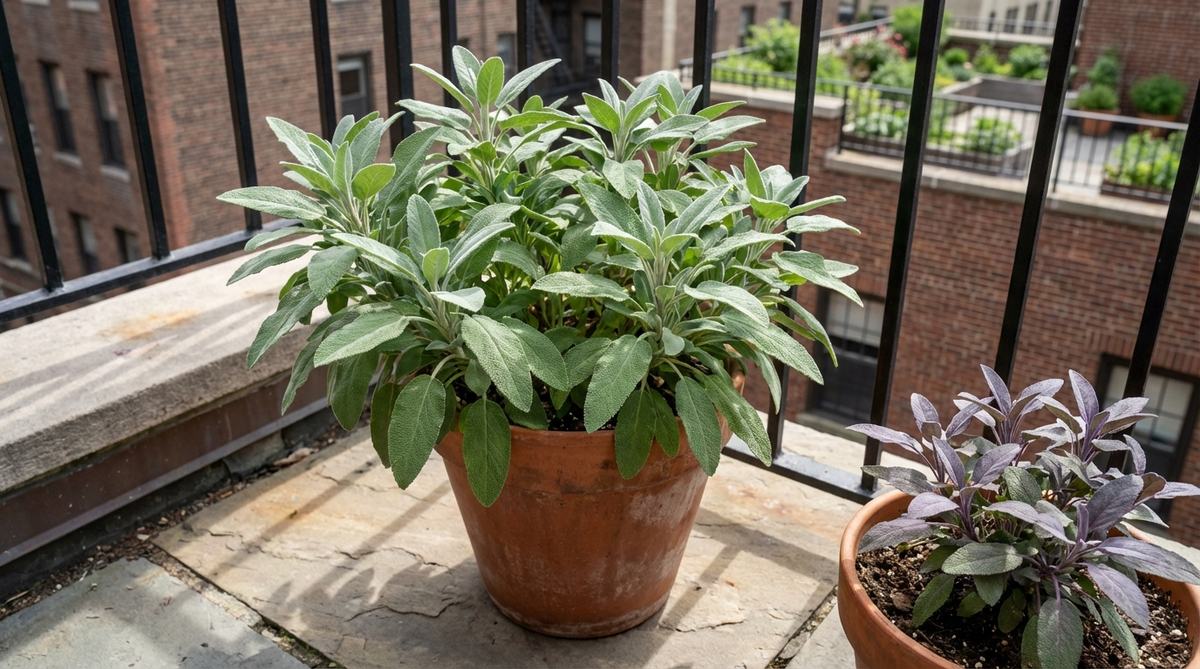
Brings a velvety, soft gray-green aesthetic that perfectly contrasts rough brick walls. Drought-resistant culinary bushes tolerate severe winds while looking incredibly ornamental.
Pairing purple and variegated sage leaves together tricks the eye into seeing custom landscaping. Rely on heavy ceramic herb pots to keep these top-heavy, bushy plants locked firmly to the ground during storms.
Expect to spend about $20–$30 for a mature, bushy setup. It’s a gorgeous and delicious upgrade.
- Key Materials: Tricolor sage, heavy ceramic bases
- Vibe / Style: Velvety rustic charm
- Difficulty: Needs occasional pruning
- Budget Breakdown: Sage plants: $15 | Ceramic pot: $15.
- Creator’s Tip: Trim the plant back severely after it flowers to prevent the stems from becoming weak and leggy.
- Smart Sourcing: heavy ceramic herb pots (commercial-grade) and premium culinary potting mix.
26. Oregano
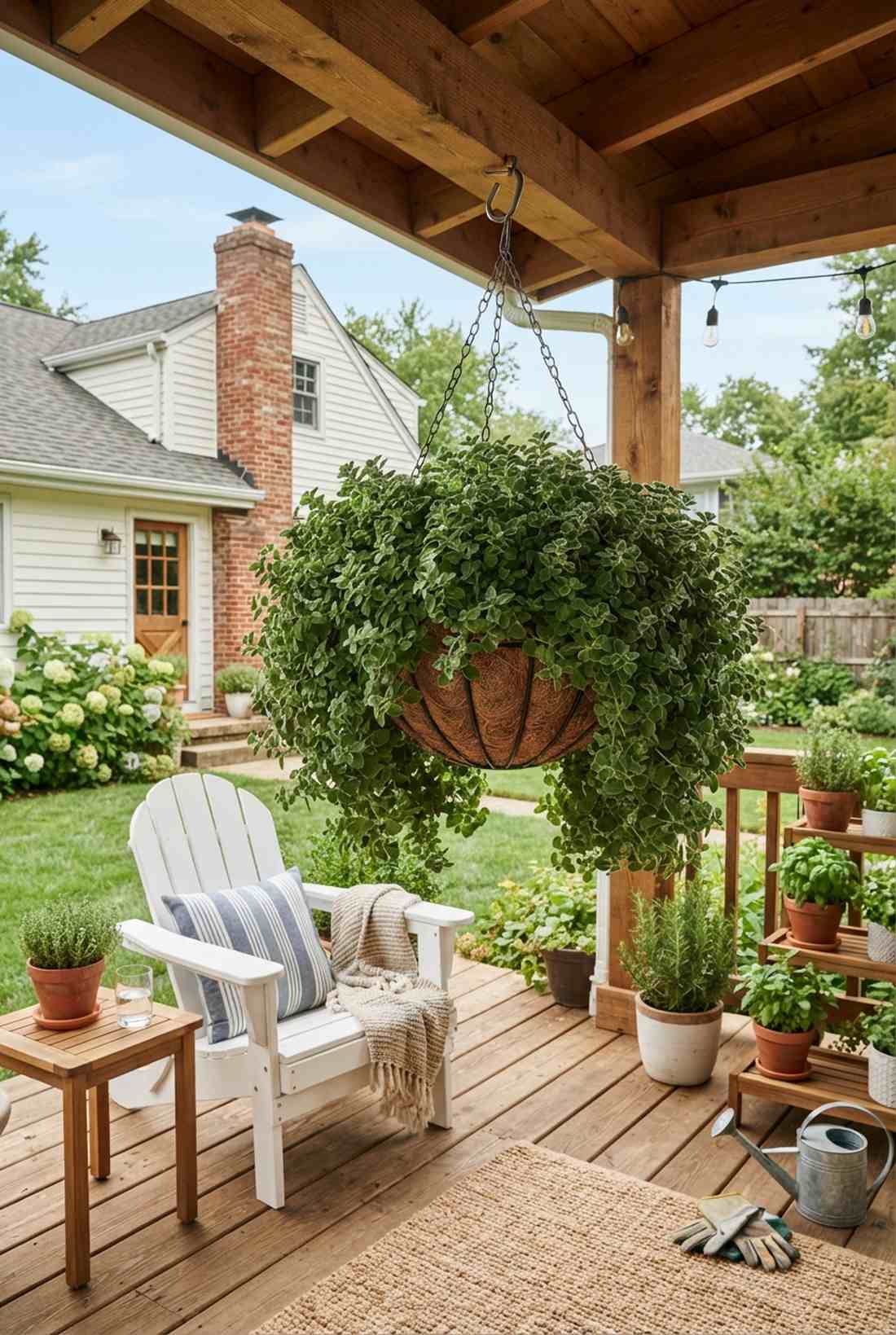
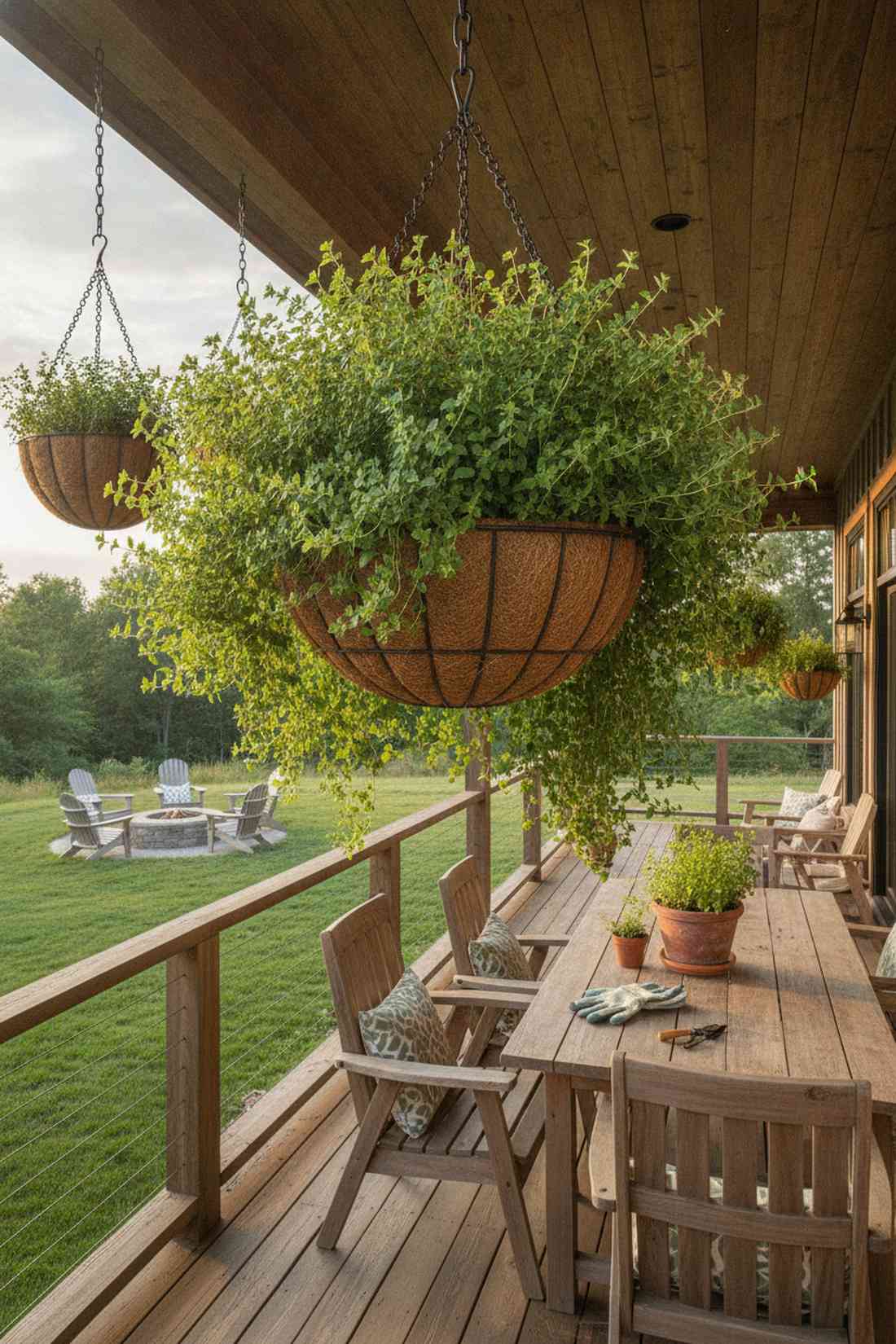
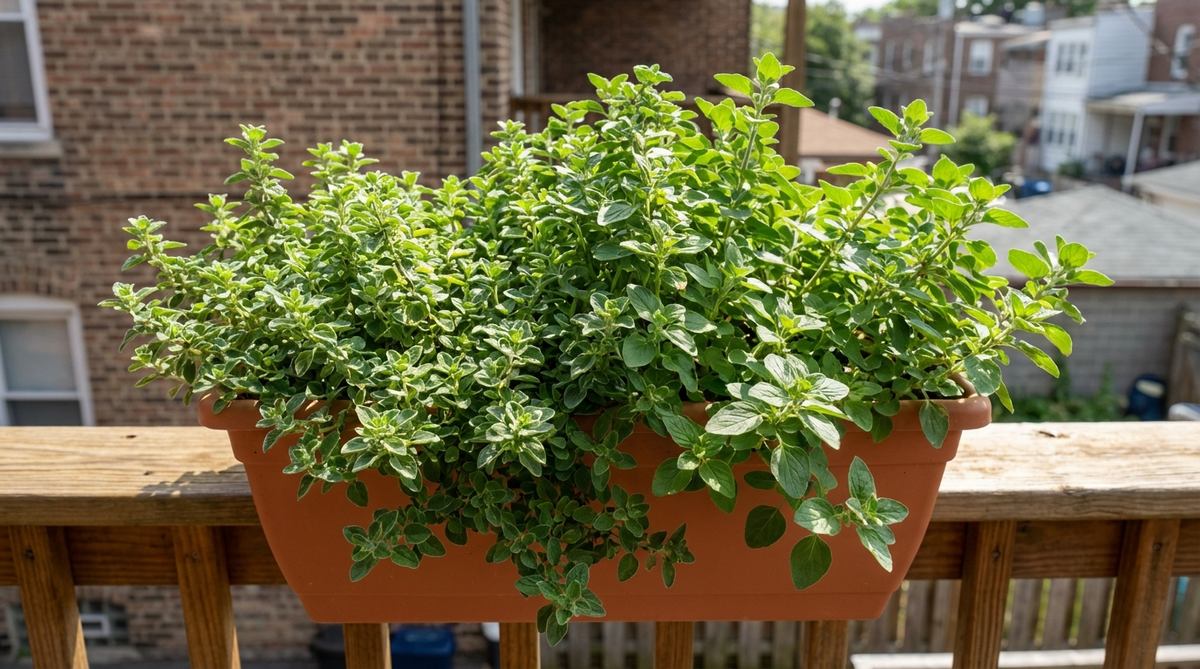
Spills aggressively over the sides, creating a lush, wild cascade of tiny fragrant leaves. Vigorous spreading herb setups are bulletproof options for neglected, wind-battered corners.
Hanging a massive ball of Greek oregano from the ceiling acts as a massive visual upgrade. Invest in reinforced hanging chains because this herb grows so dense and heavy it can snap cheap plastic hooks.
You can establish this massive hanging herb ball for roughly $25. Save this for your vertical herb garden ideas!
- Key Materials: Greek oregano, heavy-duty hanging baskets
- Vibe / Style: Wild Mediterranean cascade
- Difficulty: Unstoppable grower
- Budget Breakdown: Oregano: $10 | Basket setup: $15.
- Creator’s Tip: Divide the root clump in half every spring to prevent it from completely strangling itself in the pot.
- Smart Sourcing: reinforced hanging chains (rust-proof) and heavy-duty coconut coir liners.
Material Guide: Cheap vs. Premium Aesthetic
Knowing exactly where to save and where to spend makes all the difference in achieving that “looks expensive but isn’t” vibe.
- Standard vs. UV-Resistant/Premium: Standard plastic fades and cracks under winter wind; upgrading to UV-coated fiberglass ensures your planters look like polished concrete for years.
- Pre-made Kits vs. Sourcing Locally: Scavenging individual nursery pots often costs more; using urban gardening starter kits provides synchronized drainage and matching aesthetics immediately.
27. Mint
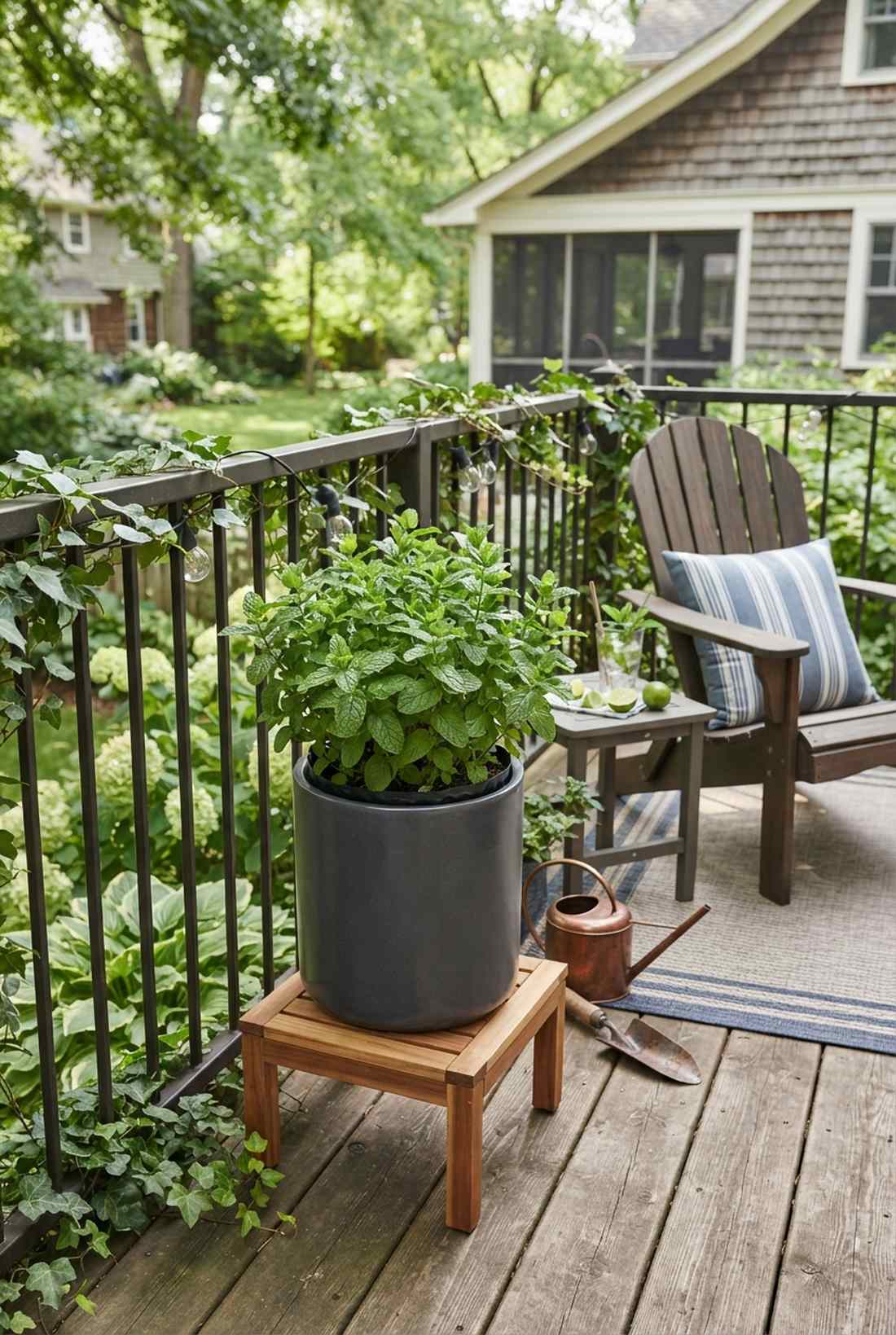
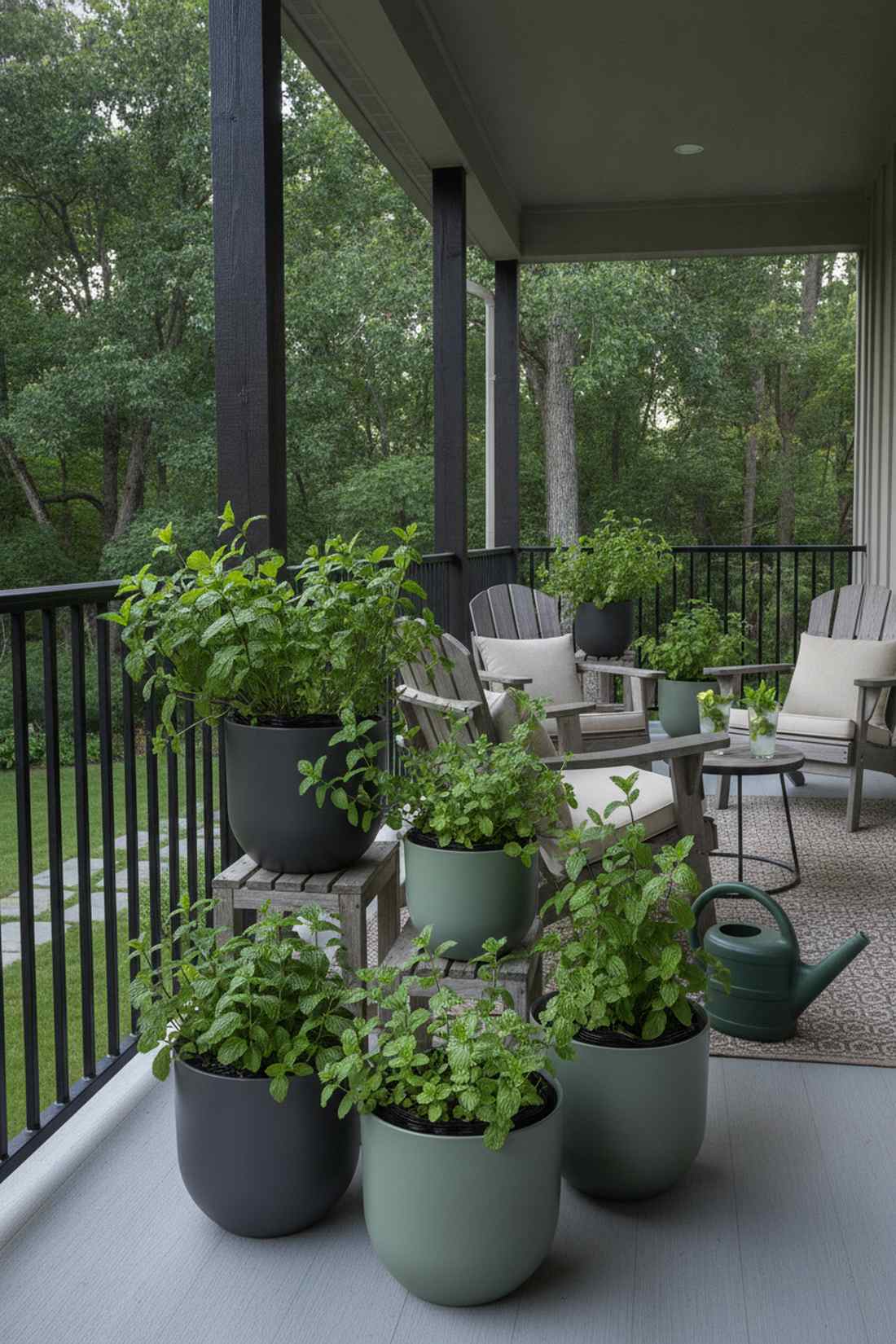
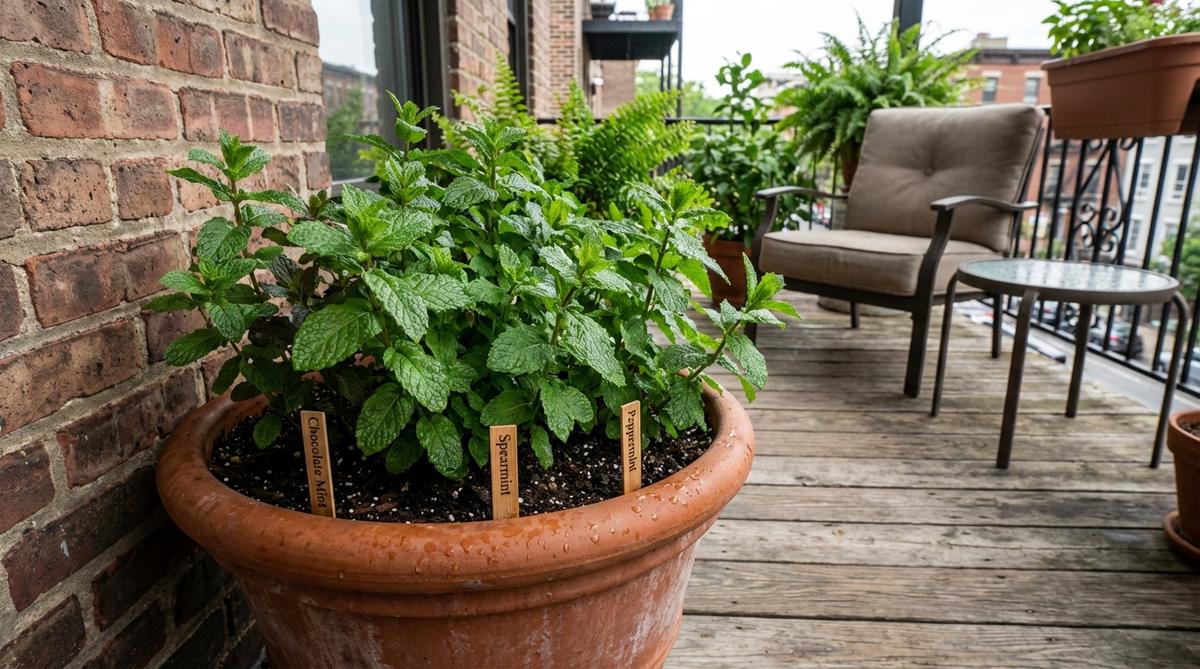
Delivers an incredibly fresh, cooling vibe that thrives even in the dampest, most shaded corners. Aggressive container herbs are perfect for balconies that struggle to get any direct sunlight.
Isolating chocolate or peppermint varieties in sleek standalone pots completely changes the space’s dynamic. You absolutely must use root-barrier planter liners because mint will ruthlessly choke out any other plant sharing its soil.
A dedicated mint pot costs around $15–$20. It’s a fast upgrade that supplies endless mojitos.
- Key Materials: Peppermint starts, isolated pots
- Vibe / Style: Fresh shaded abundance
- Difficulty: Needs strict containment
- Budget Breakdown: Mint: $5 | Isolated pot: $15.
- Creator’s Tip: Never plant mint in the same container as other herbs; it will completely take over the root zone in weeks.
- Smart Sourcing: root-barrier planter liners (pre-cut) and high-moisture compost blends.
28. Chives
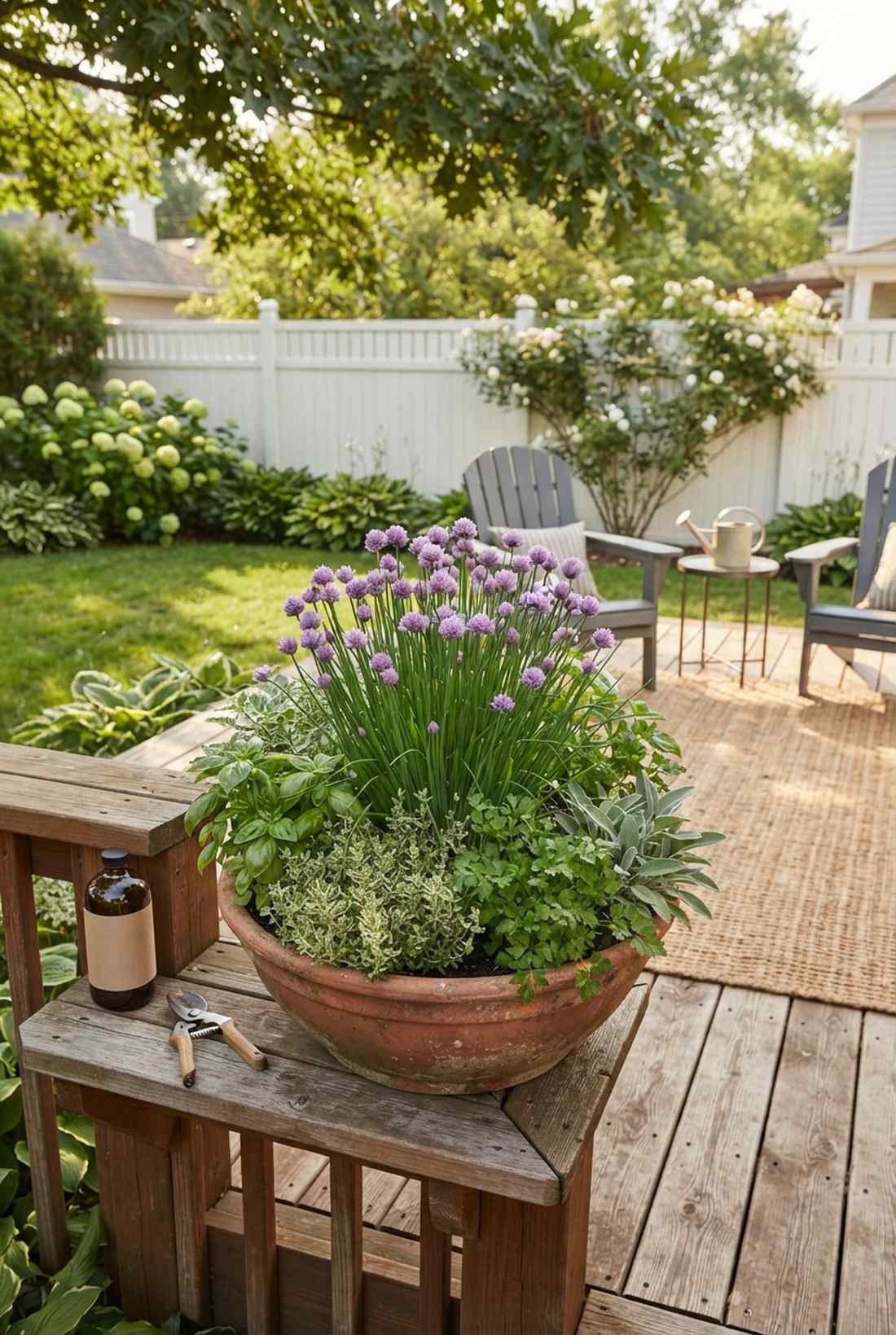
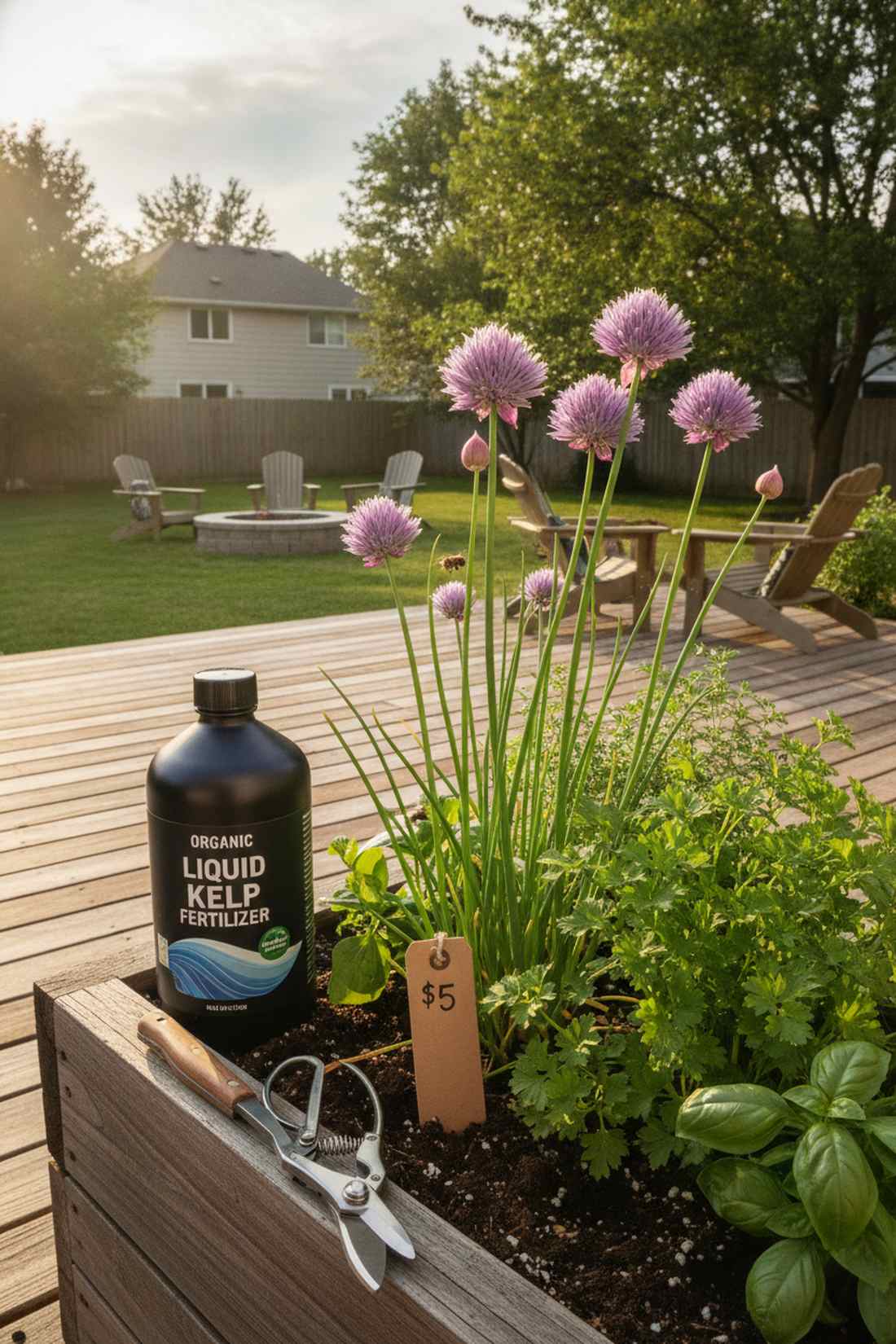
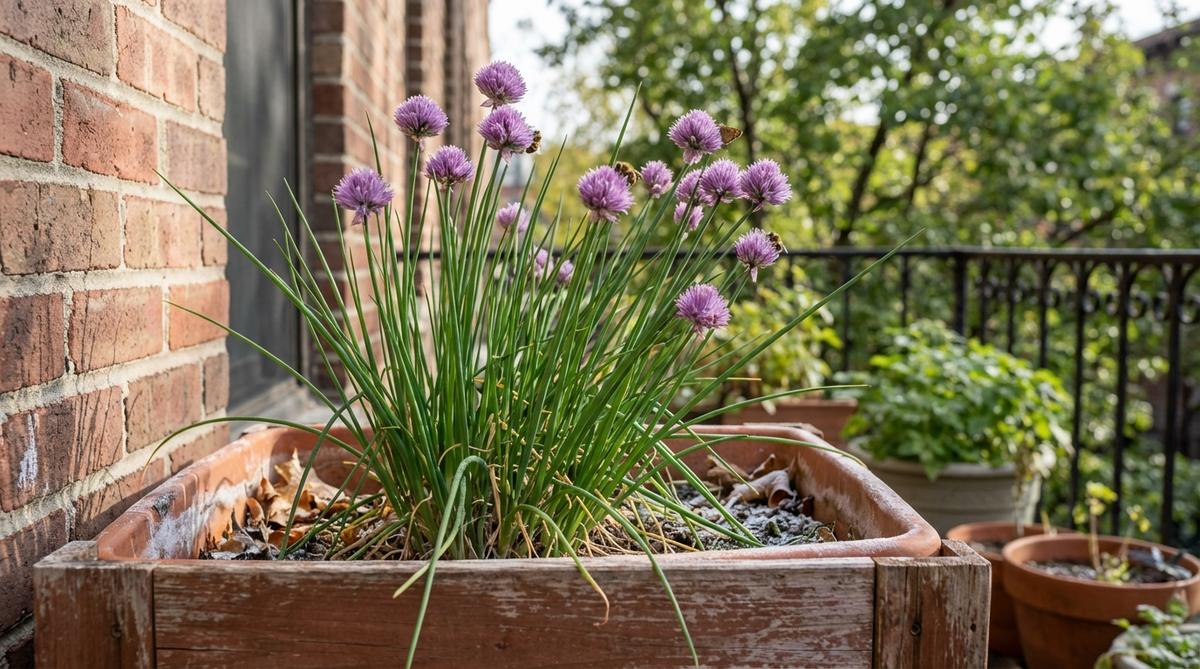
Shoots up like delicate, edible grass topped with whimsical purple pom-poms. Vertical grass-like edibles are fantastic for adding height to mixed herb bowls in partial shade.
Clustering these spiky green tubes delivers a surprisingly premium look alongside broader-leafed plants. Grab some organic liquid kelp fertilizer to keep the stalks thick and resilient against snapping in the wind.
You can tuck these into any arrangement for just $5–$10. Pin this to your small-space edible board!
- Key Materials: Chive clumps, liquid fertilizer
- Vibe / Style: Whimsical culinary spikes
- Difficulty: Regrows after cutting
- Budget Breakdown: Chives: $5 | Fertilizer: $5.
- Creator’s Tip: Let a few stalks bloom; the purple flowers attract urban pollinators and are completely edible as a garnish.
- Smart Sourcing: organic liquid kelp fertilizer (bulk size) and precision herb pruning shears.
29. Parsley
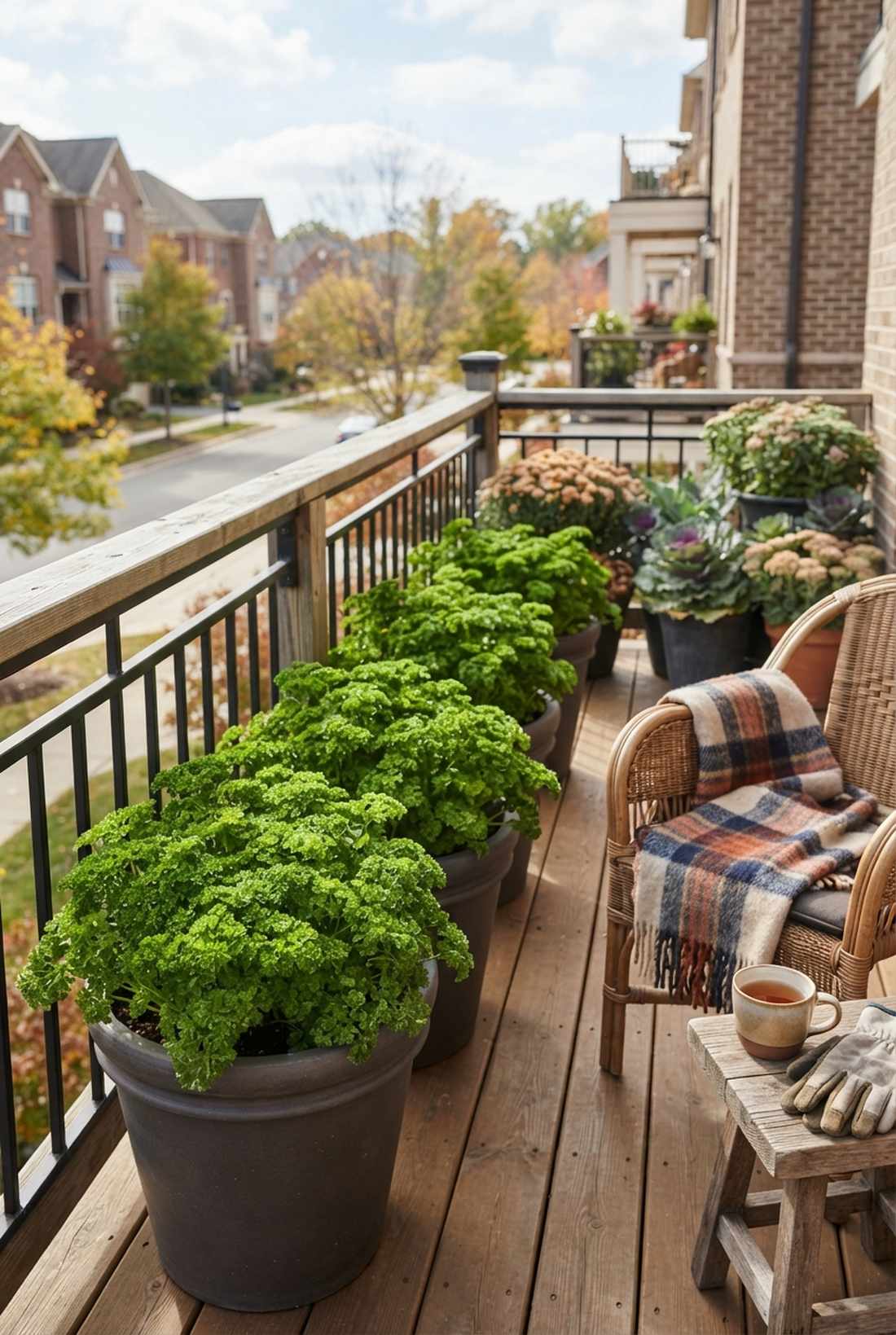
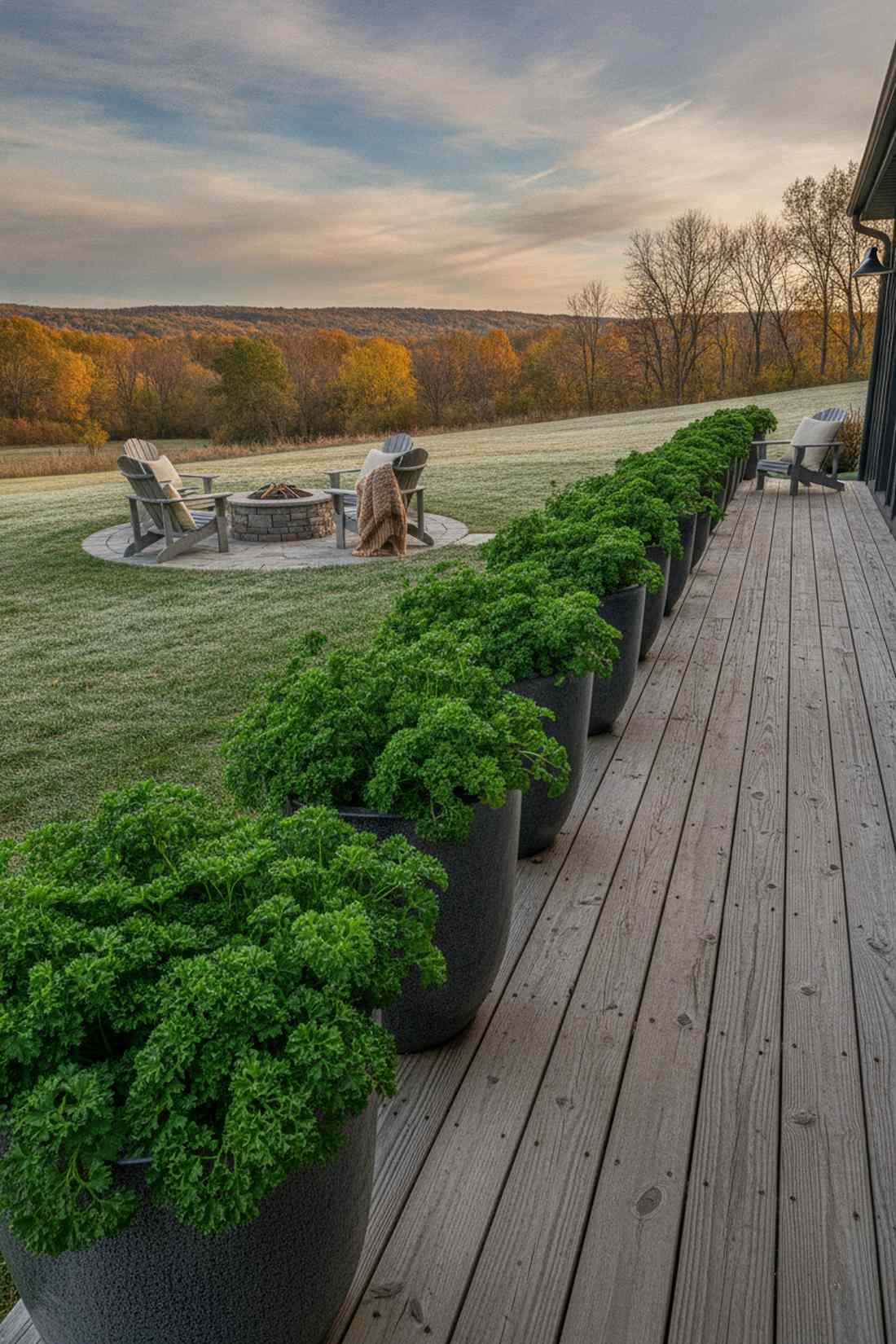
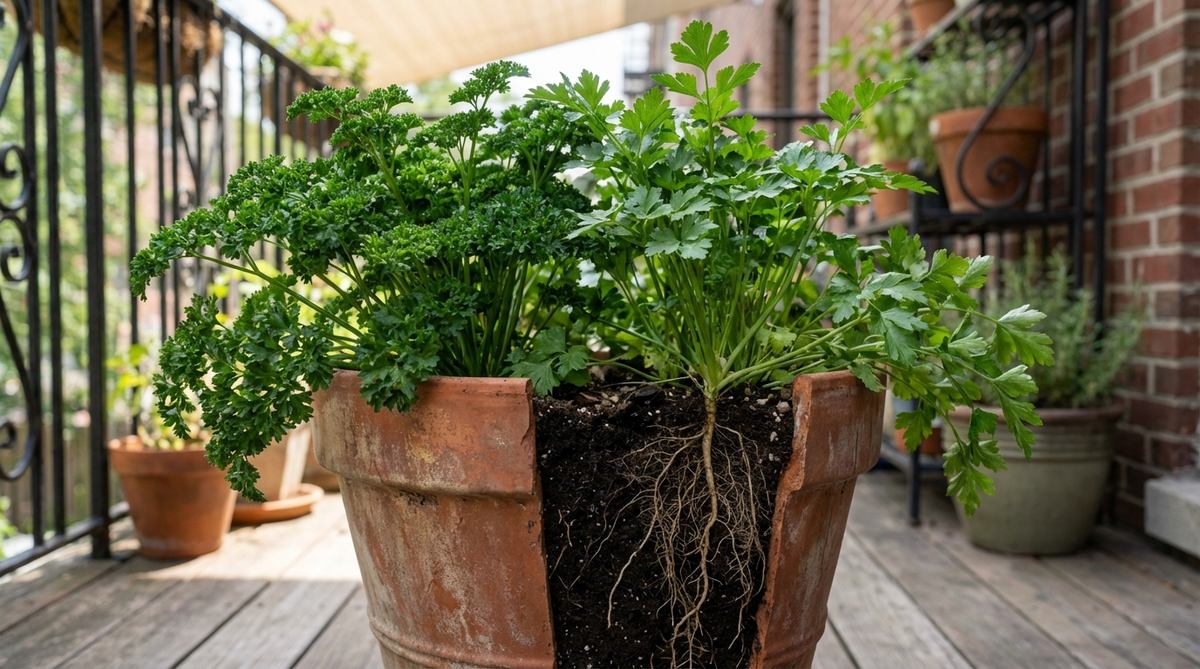
Creates a lush, ruffled green mound that stays vibrant long after the summer heat fades. Cold-tolerant biennial planters are true workhorses for balconies that get chilly and wind-swept early in the fall.
Using the curly varieties as a textured border plant proves you don’t need a massive budget for luxury. Ensure you provide extra-deep nursery pots to accommodate their surprisingly long taproots without stunting their growth.
A deep planter setup runs roughly $20. Highly recommended for a functional, textured border.
- Key Materials: Curly parsley, deep root pots
- Vibe / Style: Ruffled classic green
- Difficulty: Thrives in cool weather
- Budget Breakdown: Parsley: $5 | Deep pot: $15.
- Creator’s Tip: Soak the seeds in warm water overnight before planting to drastically speed up the germination process.
- Smart Sourcing: extra-deep nursery pots (heavy-duty) and premium seed starting mix.
30. Lavender
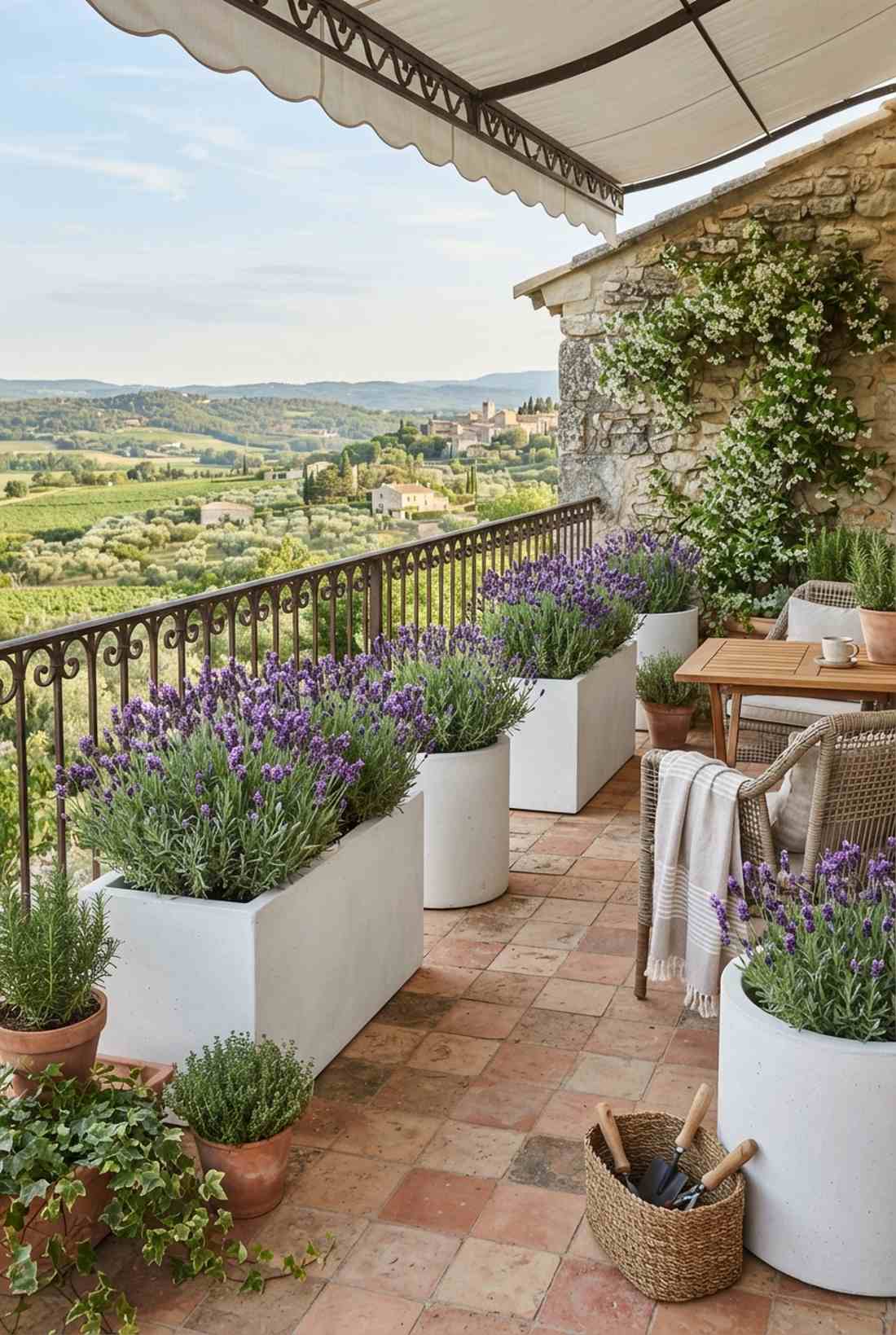
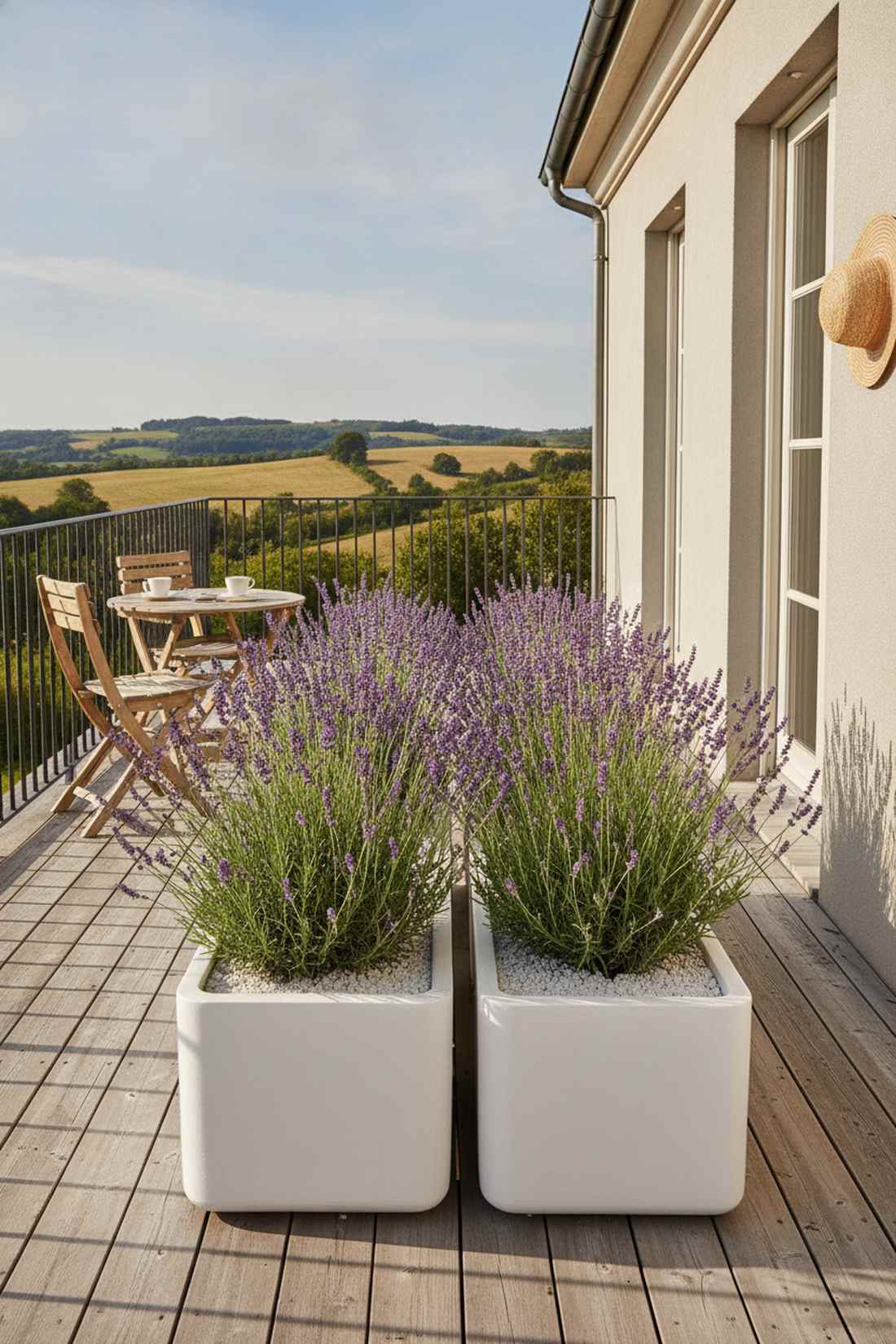
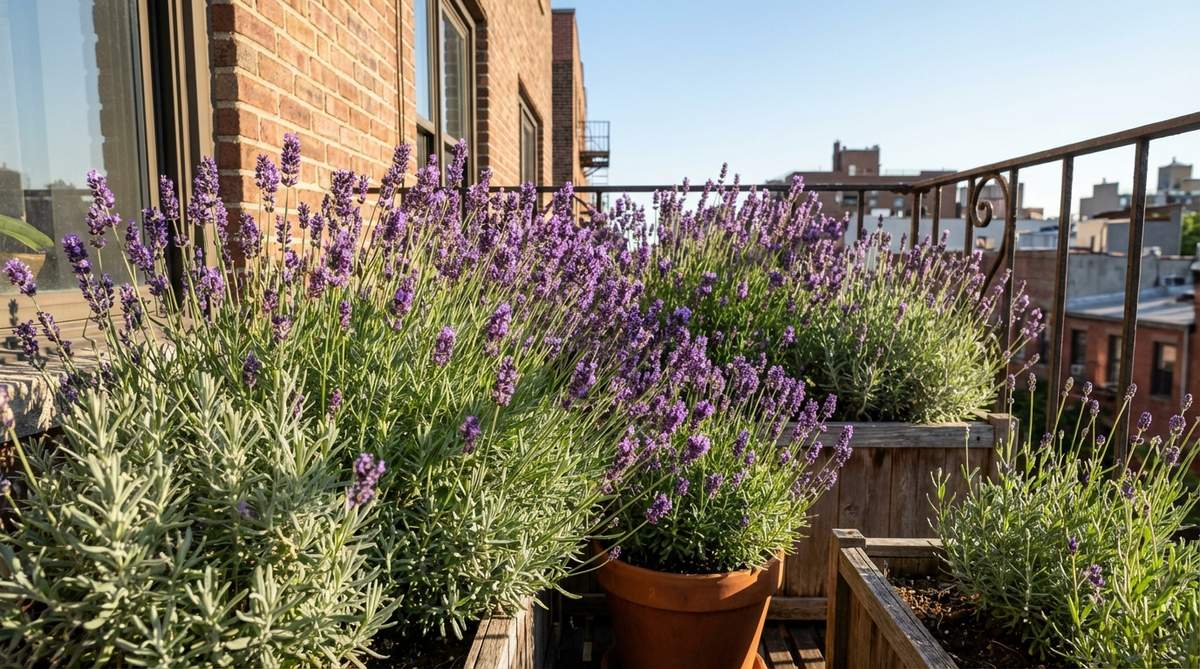
Transports you instantly to a sun-drenched, breezy French countryside. Fragrant silver-foliage statements are the ultimate premium aesthetic for balconies flooded with bright, harsh light.
Pairing these elegant purple spikes with stark white concrete basins acts as a massive visual upgrade. Secure alkaline soil amendments to recreate the chalky, fast-draining European soils they need to prevent root rot.
You can build this high-end look for $25–$40. Save this if you want your balcony to smell incredible!
- Key Materials: English lavender, white concrete basins
- Vibe / Style: High-end Provence retreat
- Difficulty: Needs absolute drainage
- Budget Breakdown: Lavender: $15 | Concrete basin: $25.
- Creator’s Tip: Trim the spent flower stalks back down to the foliage line to keep the base from turning into dead wood.
- Smart Sourcing: alkaline soil amendments (bulk pack) and white concrete basins (UV-coated).
If your balcony feels like an exposed fishbowl, this next structural trick will give you instant privacy…
Evergreen Structure Plants
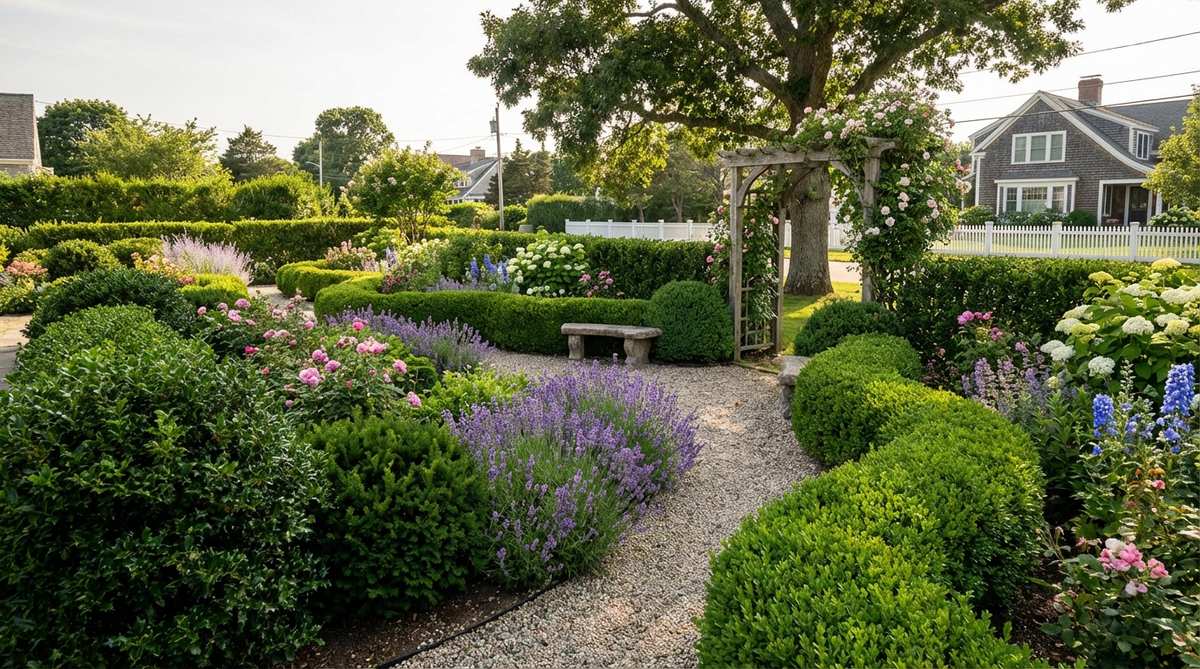
Year-round foliage anchors seasonal displays while providing privacy and windbreaks. These selections maintain interest through winter dormancy.
31. English Ivy (Hedera helix)
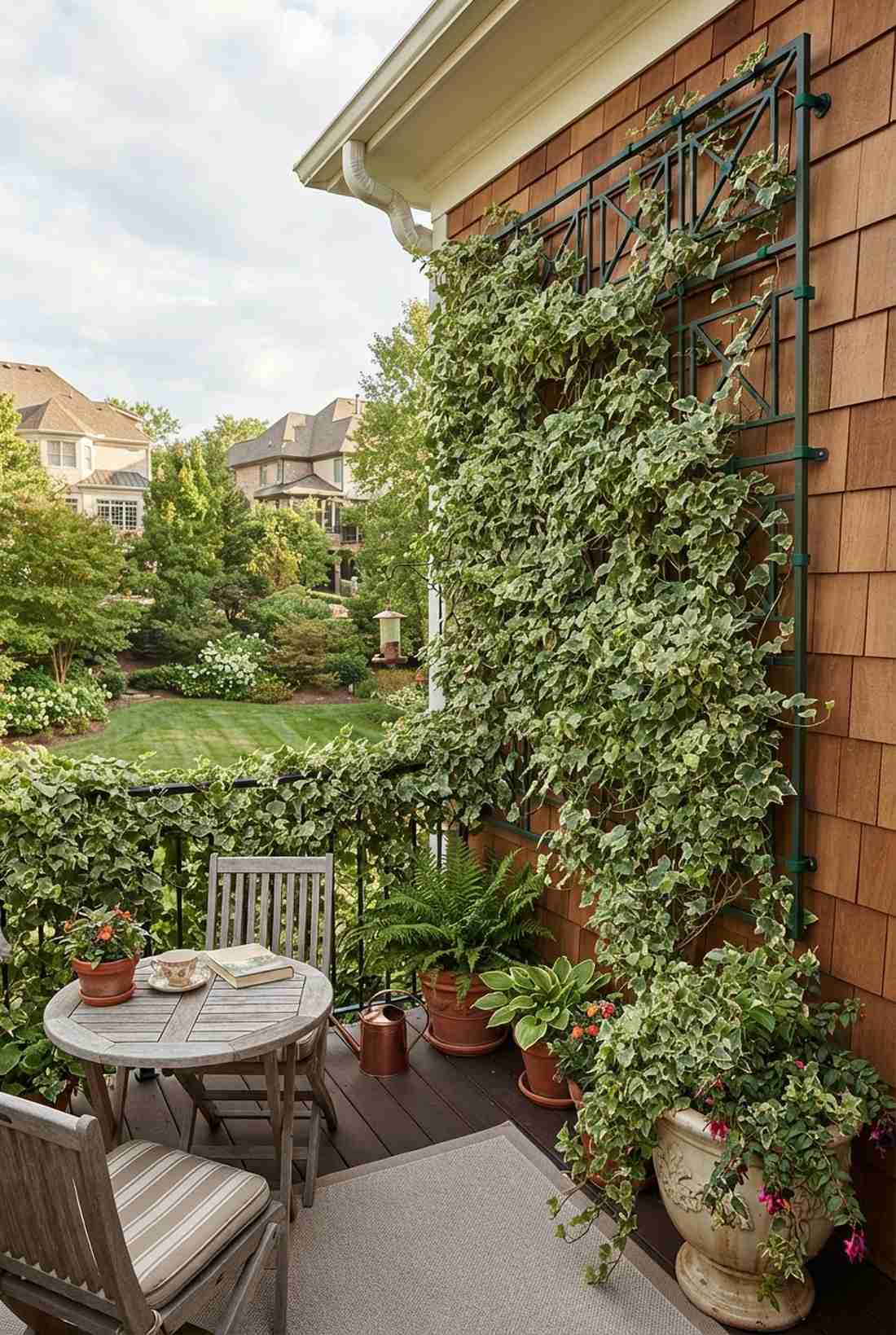
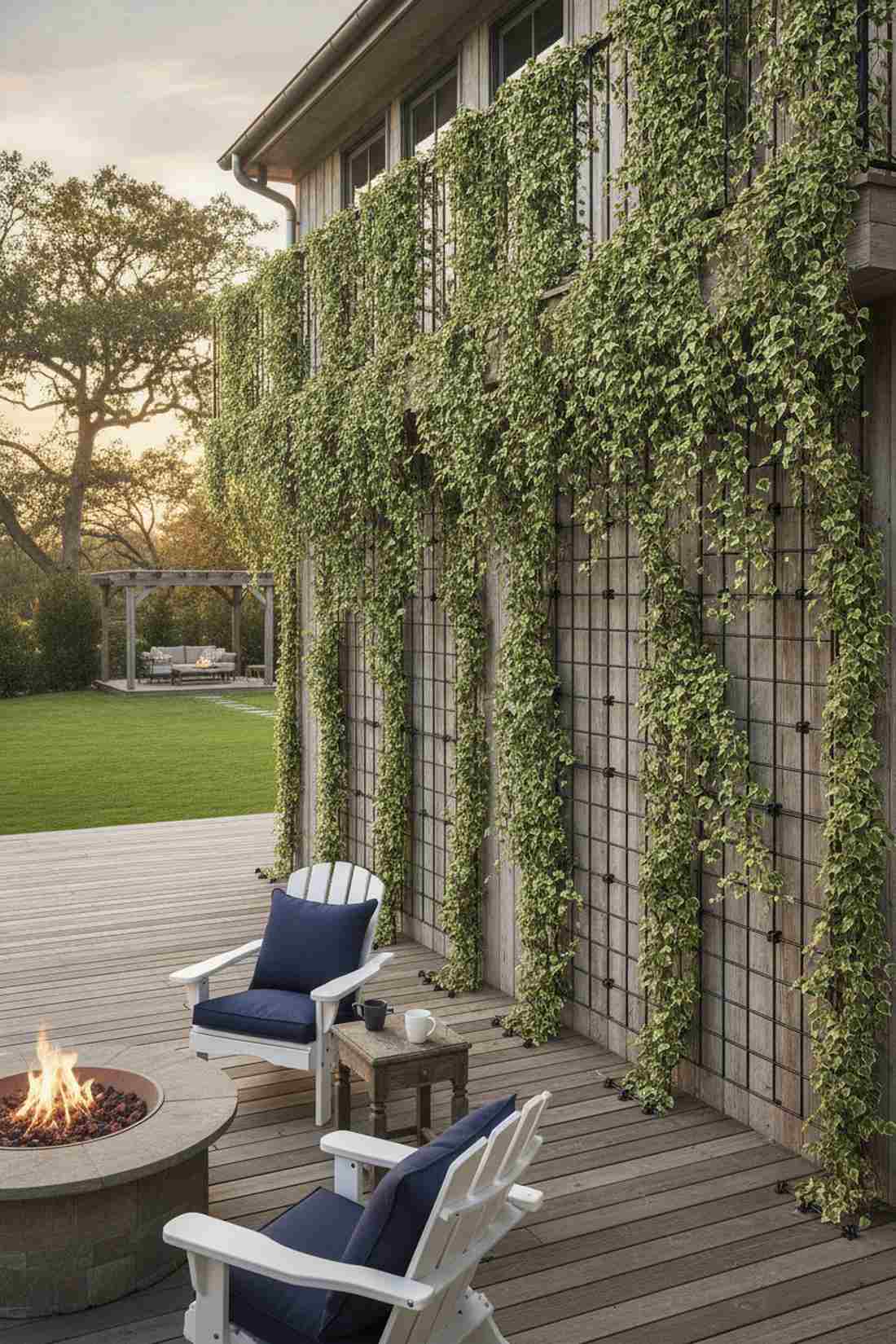
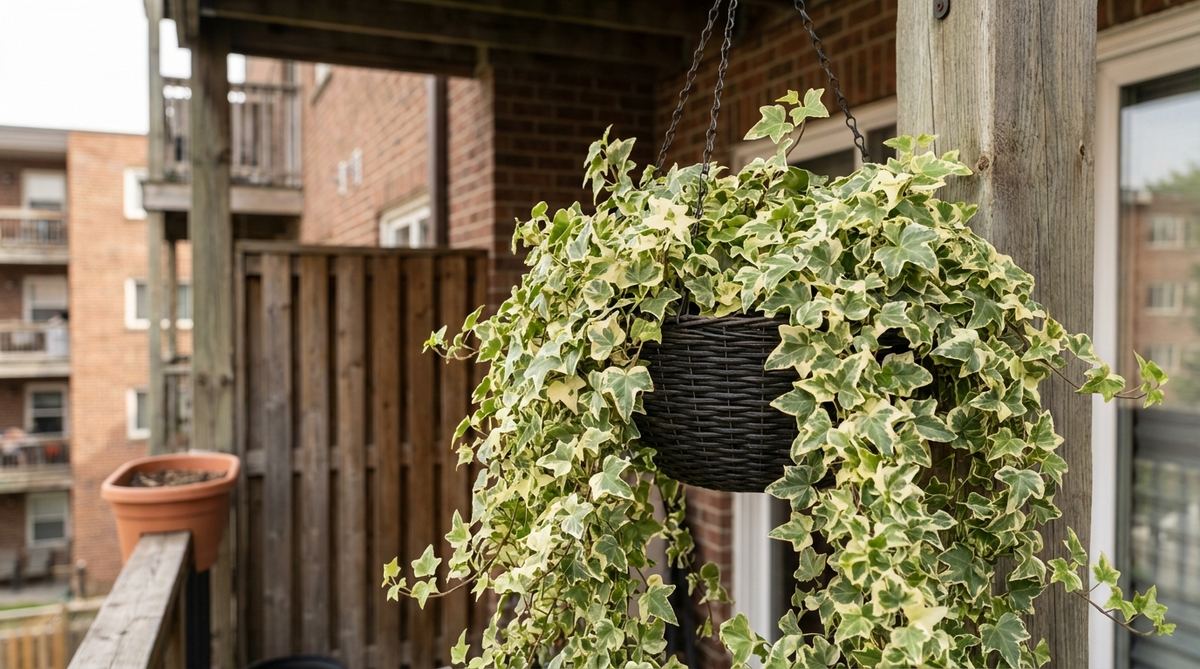
Weaves a dense, classic tapestry that instantly ages a space with old-world charm. Cascading evergreen vines are unbeatable for draping over ugly balcony railings to create a living privacy curtain.
Training this variegated ivy up a custom grid looks far more expensive than it is. Lock them onto your walls using heavy-duty climbing plant trellises to stop violent winds from ripping the vines completely down.
A full privacy screen setup costs around $35–$50. It’s a fast upgrade that completely changes the vibe.
- Key Materials: Variegated ivy, wall trellises
- Vibe / Style: Classic English manor
- Difficulty: Fast, aggressive grower
- Budget Breakdown: Ivy pots: $20 | Trellis: $30.
- Creator’s Tip: Use slow-growing cultivars if you want to avoid trimming it back every single weekend during the summer.
- Smart Sourcing: heavy-duty climbing plant trellises and weather-proof vine clips (bulk pack).
32. Boxwood (Buxus)
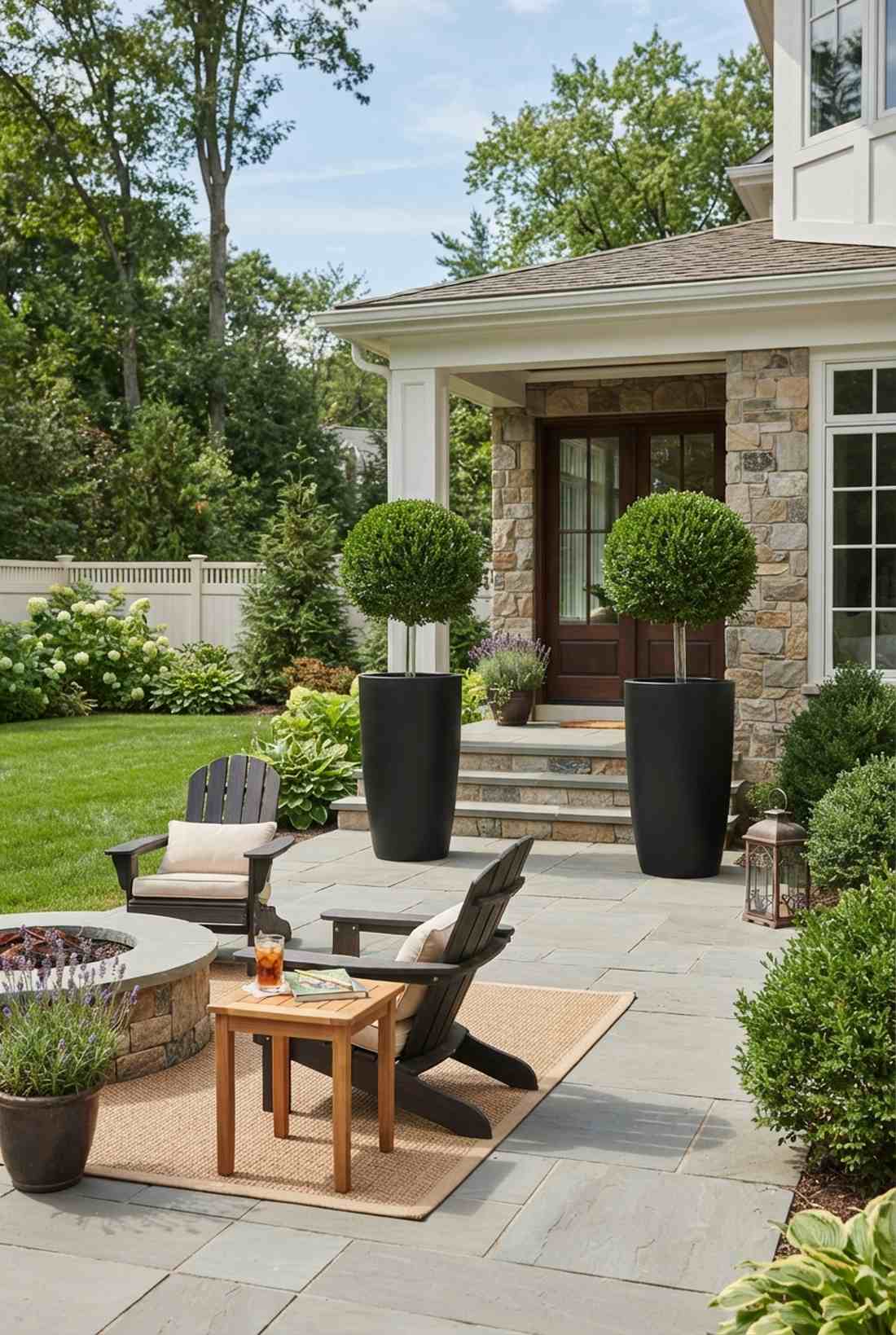
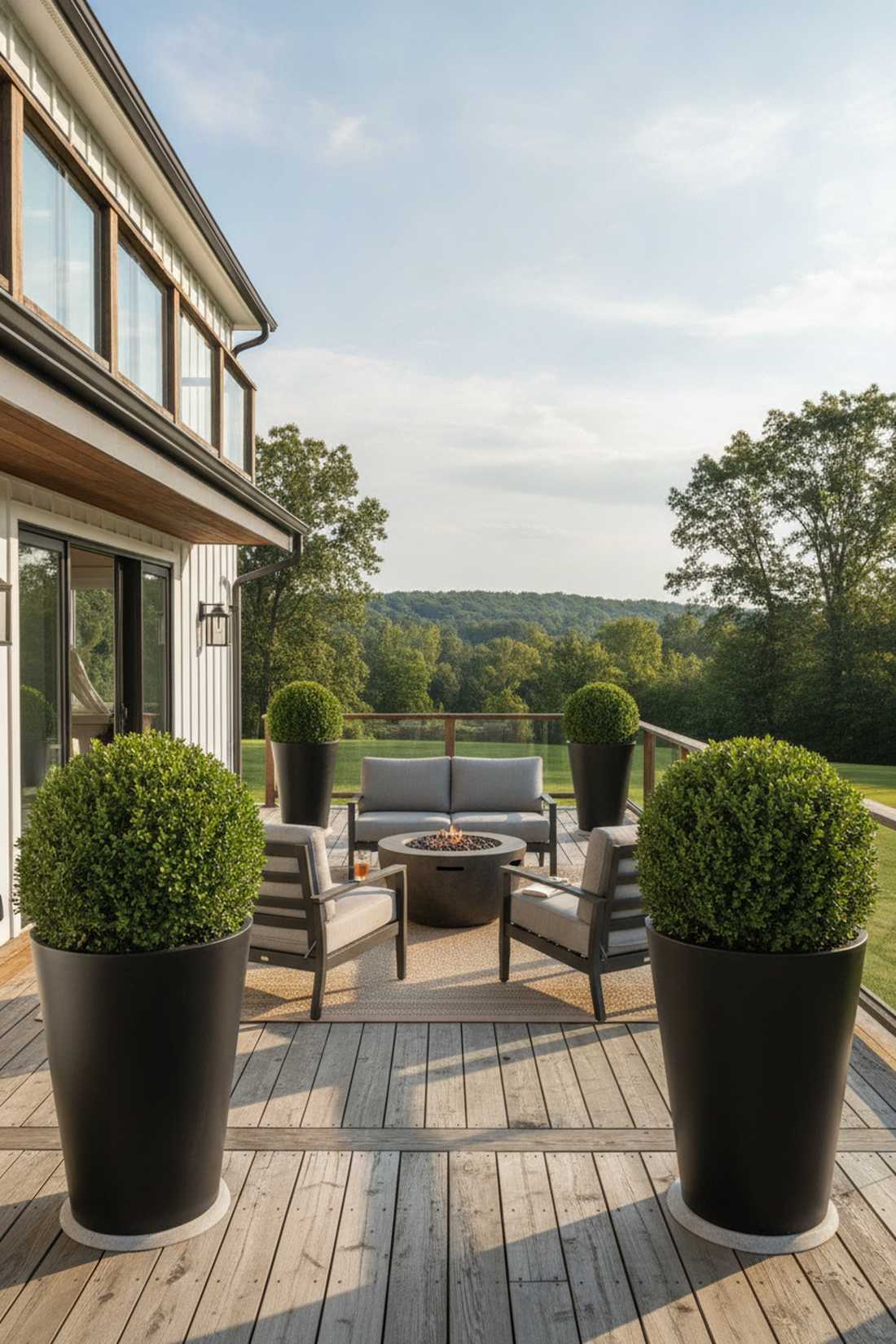
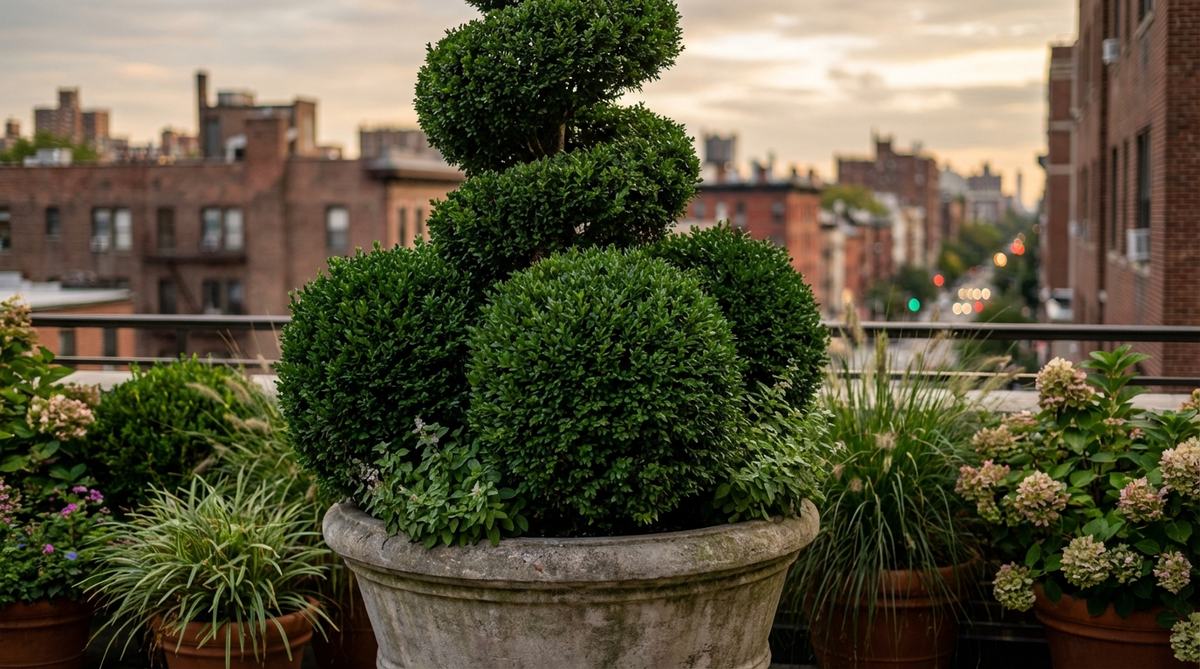
Brings a sharp, formal geometry that screams luxury hotel terrace. Dense architectural shrubs are the perfect year-round anchors to frame a seating area or balcony entryway.
Potting formal globes or spirals in tall, sleek black planters gives a designer-level finish. Invest in insulated winter planter liners to protect their sensitive roots from freezing solid in above-ground pots.
You can create this luxury framing for $50–$80. Pin this to your high-end architectural design board!
- Key Materials: Boxwood globes, tall black planters
- Vibe / Style: Formal estate geometry
- Difficulty: Requires precision shearing
- Budget Breakdown: Shrub: $35 | Tall planter: $45.
- Creator’s Tip: Spray the foliage with an anti-desiccant in late fall to stop winter winds from turning the leaves brown.
- Smart Sourcing: insulated winter planter liners (pre-cut) and professional topiary shears.
33. Bamboo
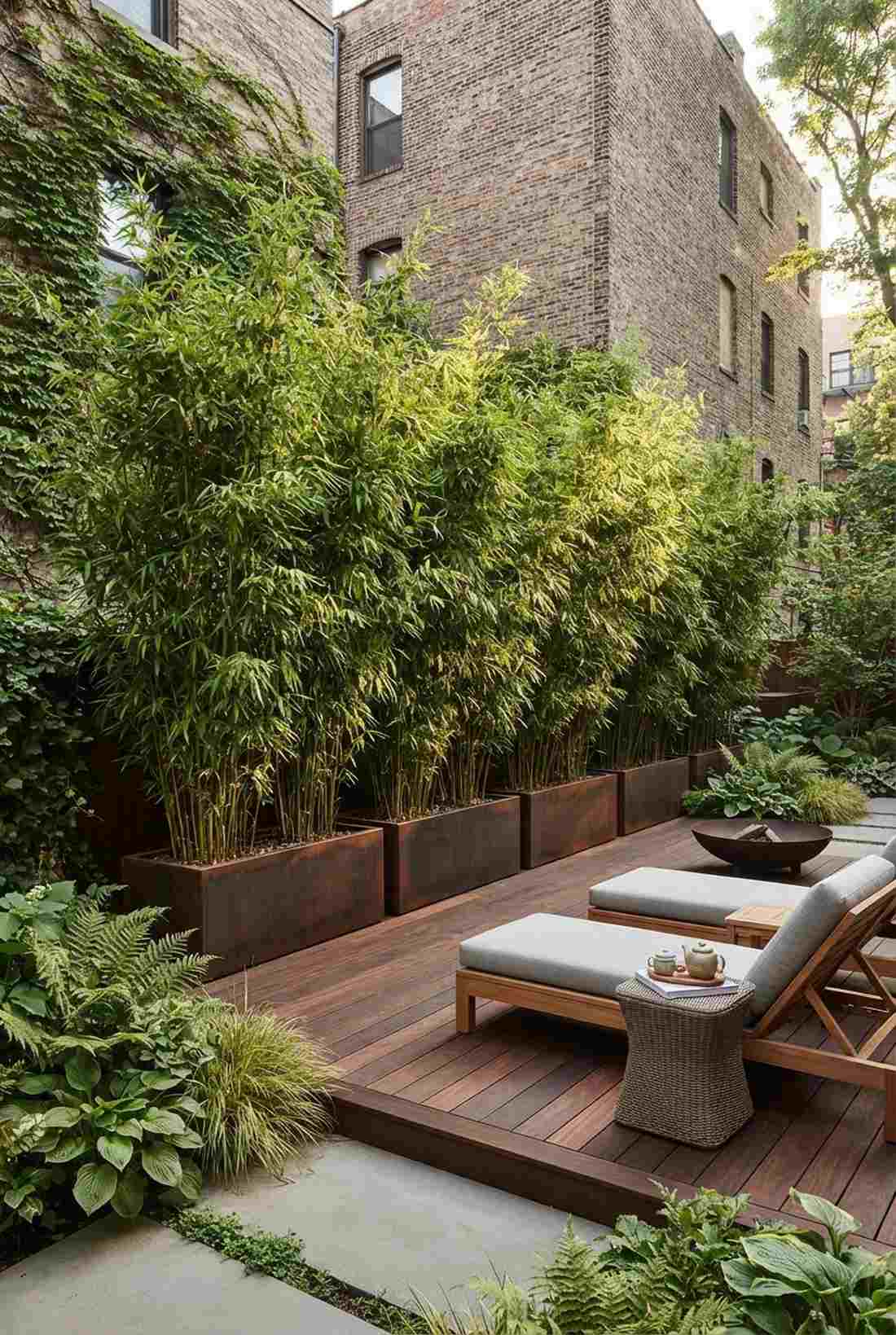
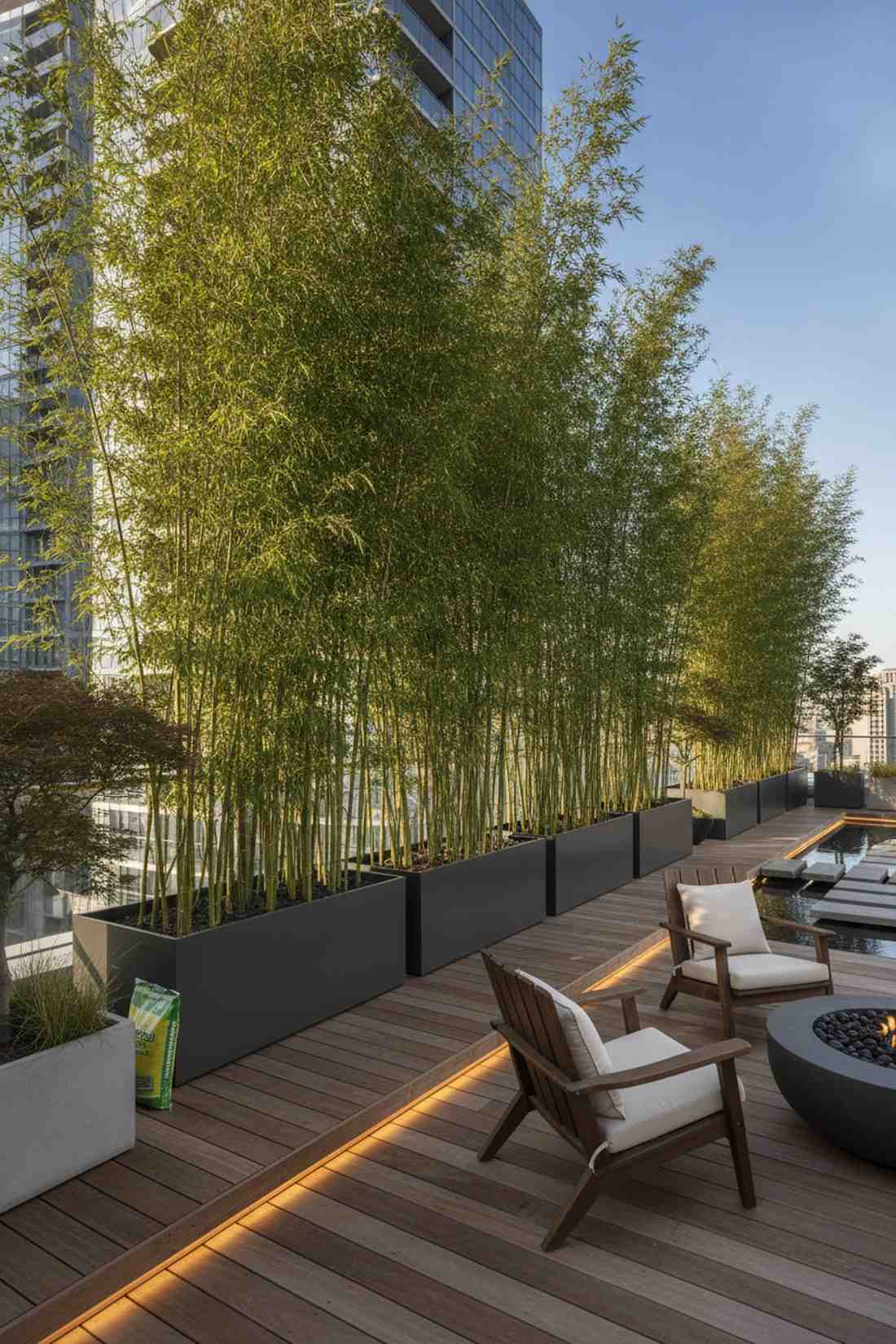
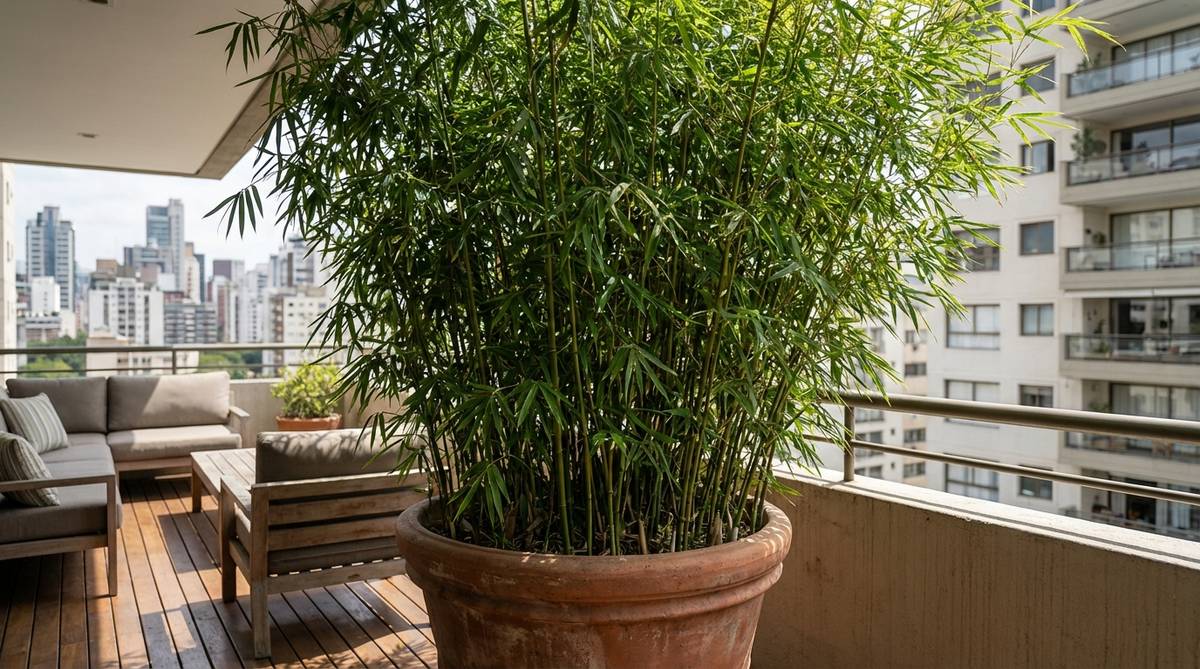
Rustles soothingly in the wind, providing both motion and a calming auditory backdrop. Living privacy screens are the ultimate modern hack for blocking out nosy high-rise neighbors.
Lining up clumping varieties in sleek rectangular troughs completely changes the space’s dynamic. You absolutely must use reinforced steel trough planters because bamboo roots can literally snap cheap plastic and wood apart.
A dense, tall privacy wall runs about $80–$120. Highly recommended for complete urban seclusion.
- Key Materials: Fargesia bamboo, steel trough bases
- Vibe / Style: Modern Zen sanctuary
- Difficulty: Thirsty establishment phase
- Budget Breakdown: Bamboo clumps: $50 | Steel trough: $70.
- Creator’s Tip: Only buy “clumping” bamboo (like Fargesia), never “running” bamboo, which is wildly invasive and uncontainable.
- Smart Sourcing: reinforced steel trough planters (commercial-grade) and high-nitrogen bamboo fertilizer.
34. Japanese Maple
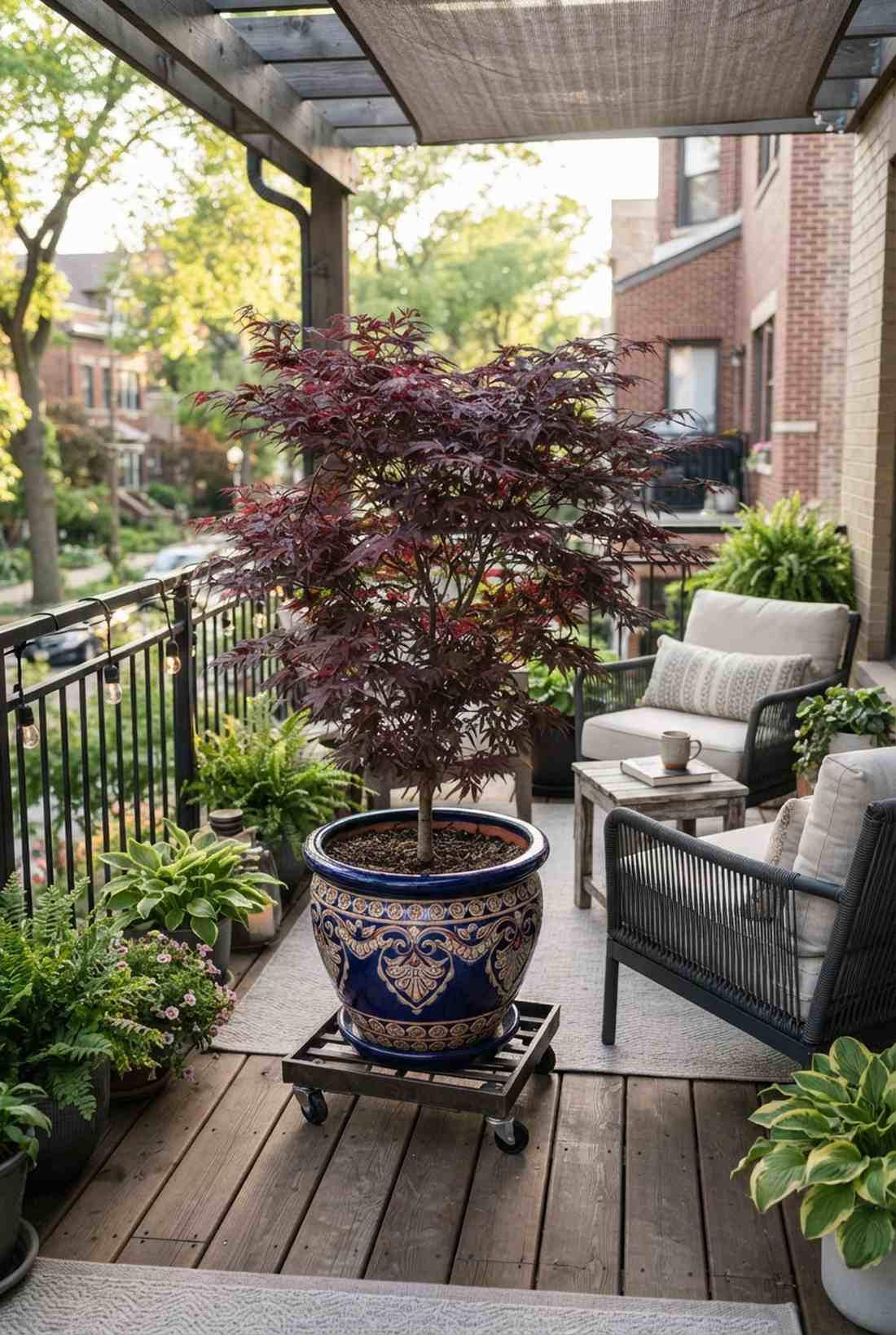
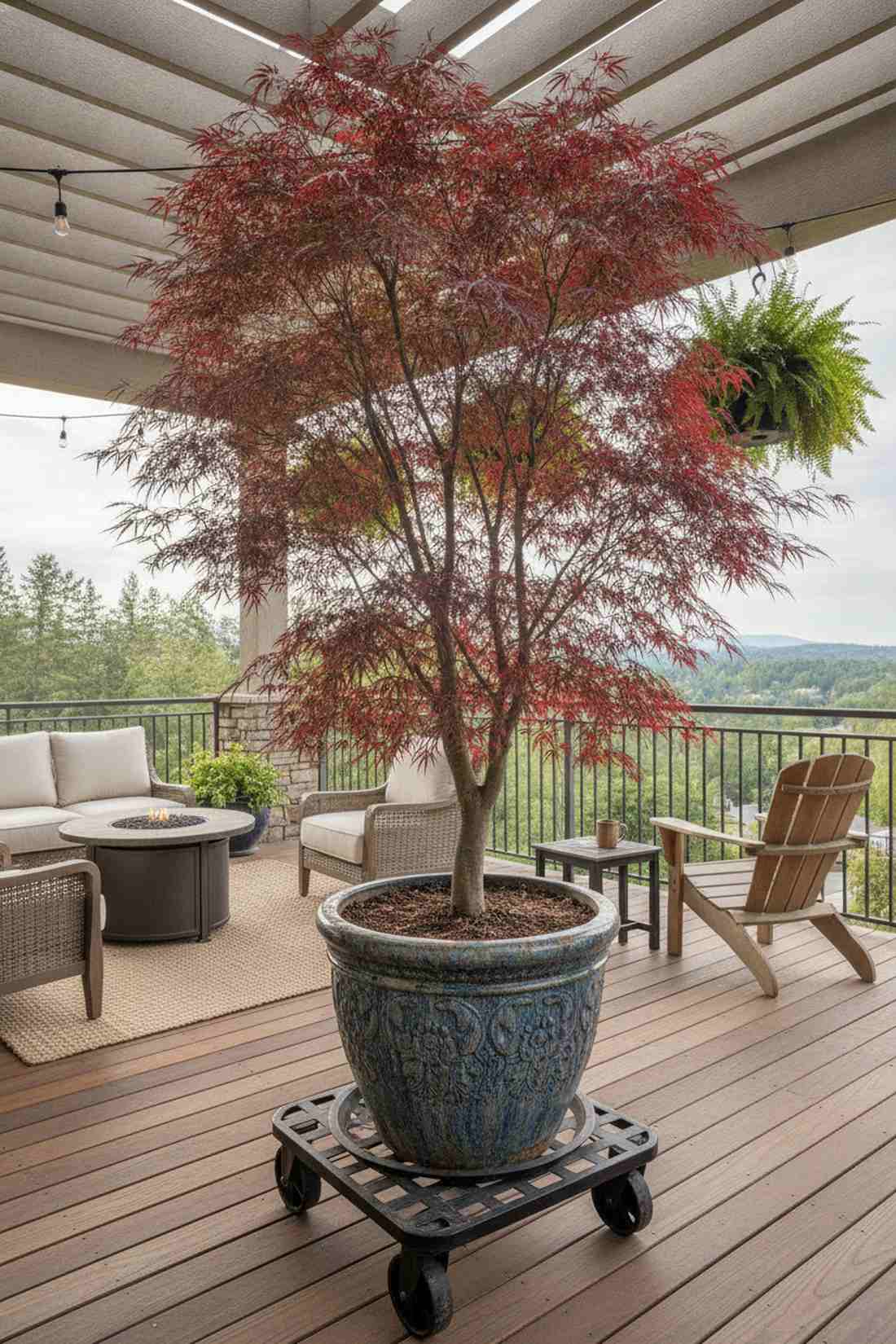
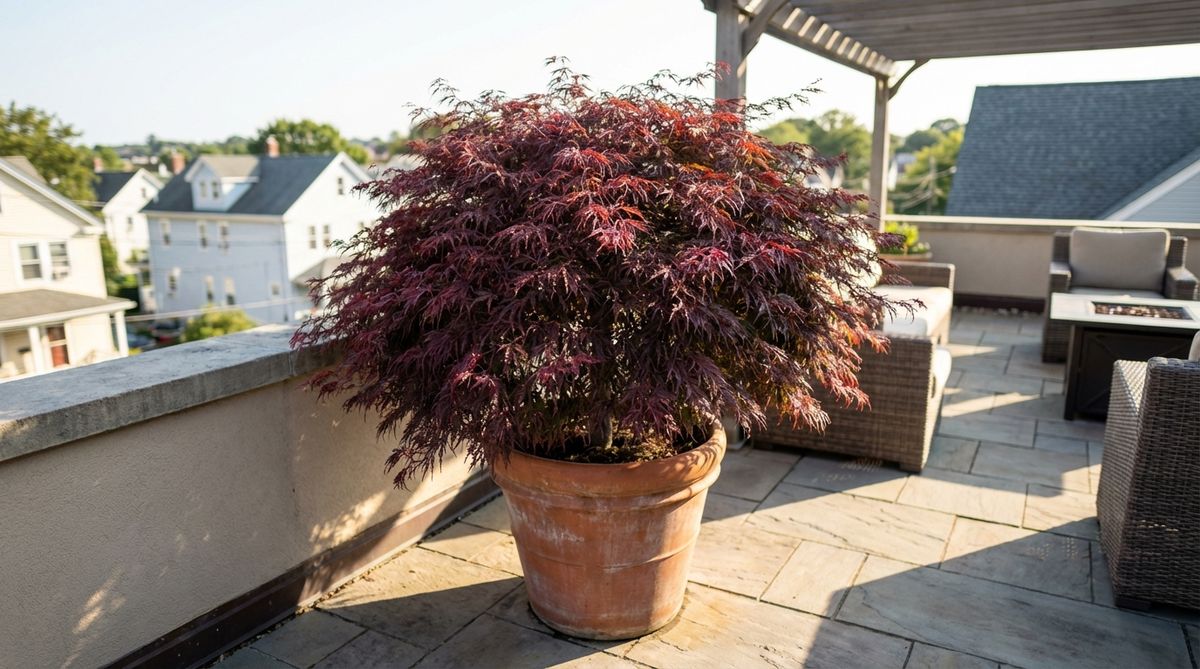
Unfurls with delicate, lacy leaves that paint the balcony in dramatic reds and purples. Dwarf ornamental trees serve as the ultimate, jaw-dropping centerpiece for a shaded outdoor living room.
Placing a ‘Crimson Queen’ in an ornate ceramic pot acts as a massive visual upgrade. Utilize heavy wheeled planter caddies so you can effortlessly roll the tree into a protected corner before major windstorms hit.
Expect to invest $80–$150 for a stunning focal tree. Save this for your absolute dream balcony!
- Key Materials: Dwarf Japanese Maple, heavy ornate pots
- Vibe / Style: Elegant focal drama
- Difficulty: Requires winter care
- Budget Breakdown: Tree: $80 | Ceramic pot: $50.
- Creator’s Tip: Keep it out of harsh afternoon sun, which will instantly scorch the delicate, lacy edges of the leaves.
- Smart Sourcing: heavy wheeled planter caddies (heavy-duty) and premium acidic tree soil.
Most beginners completely ignore the structure of their plants… until they realize this next thick-leaved beast is practically bulletproof.
35. Fatsia Japonica
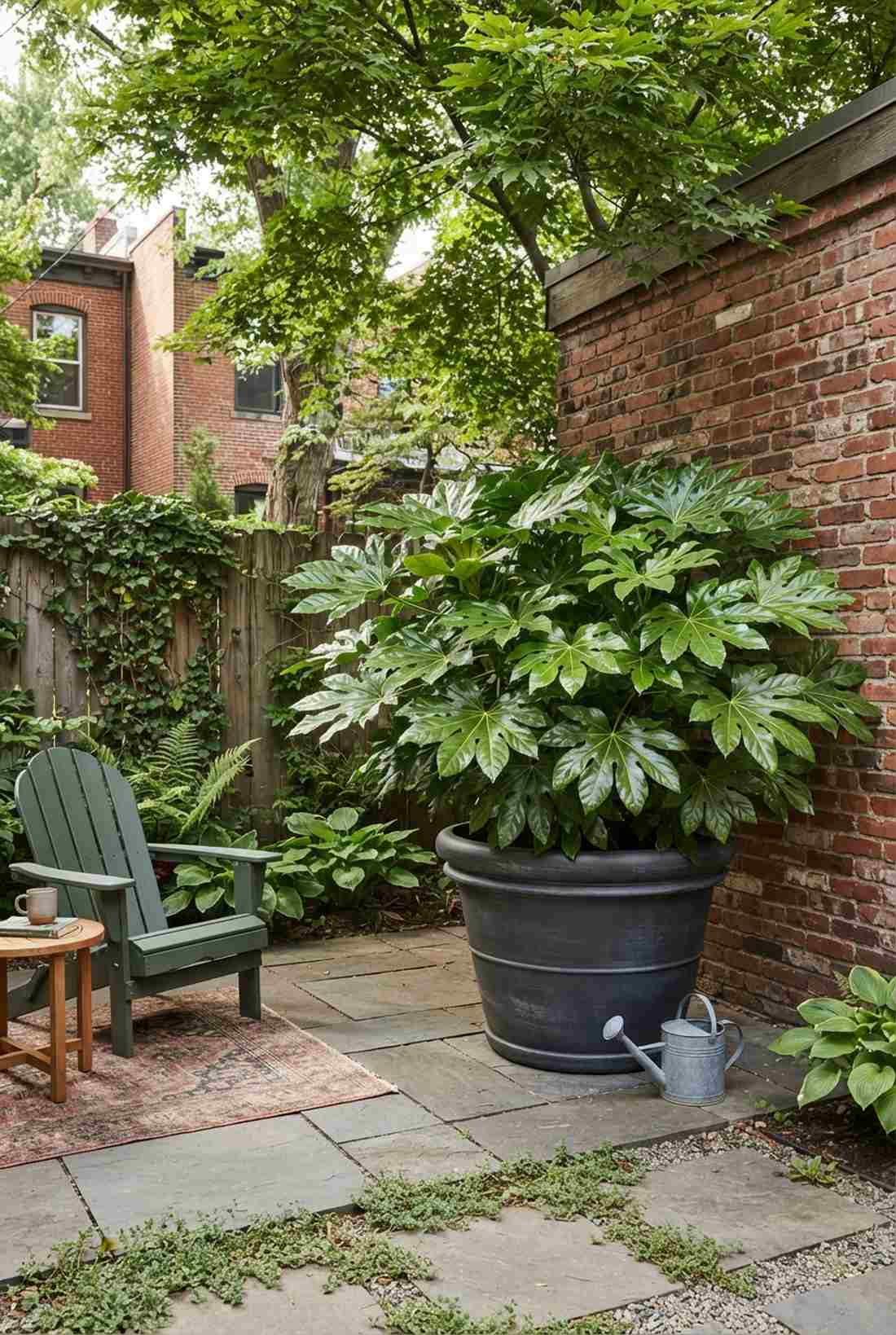
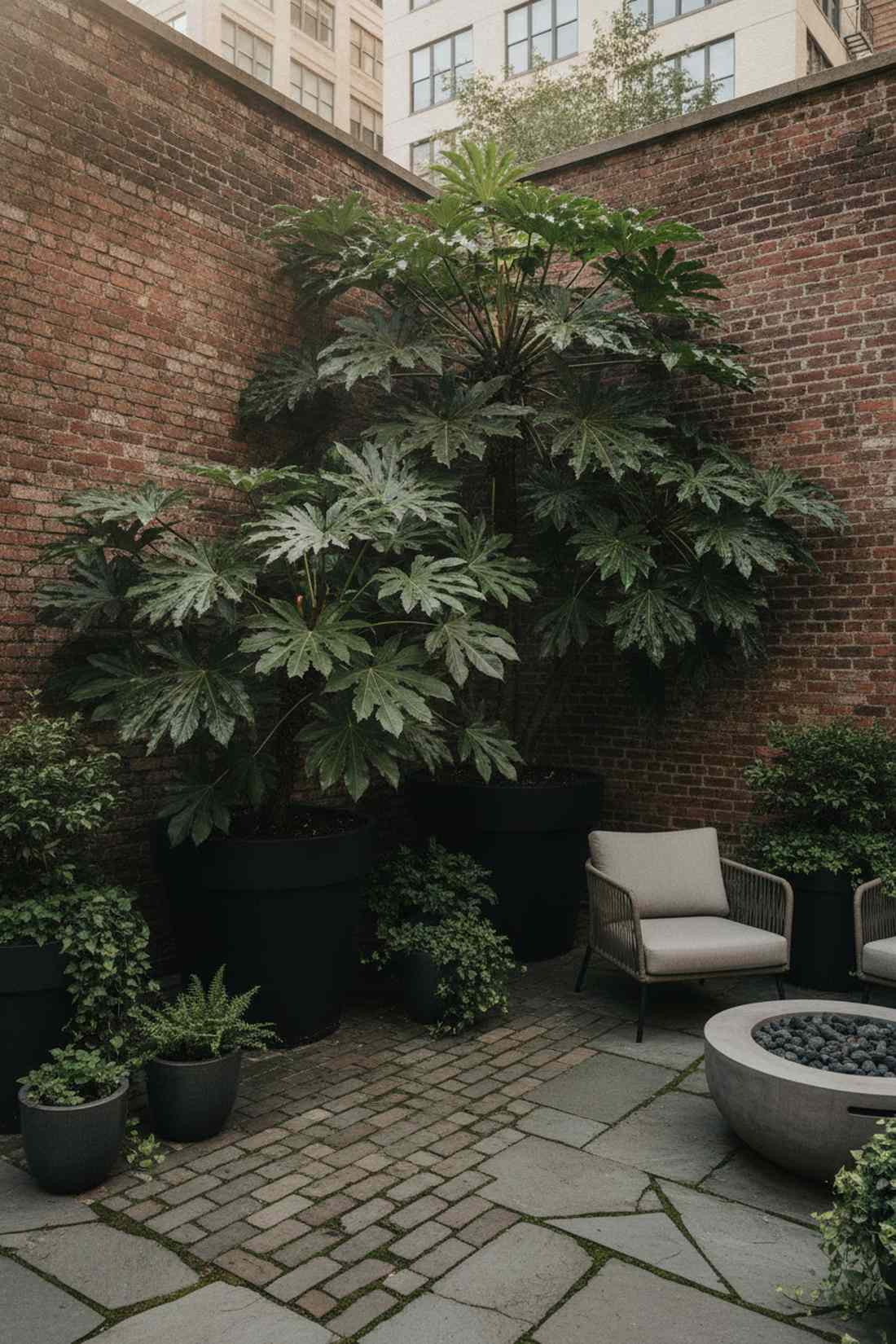
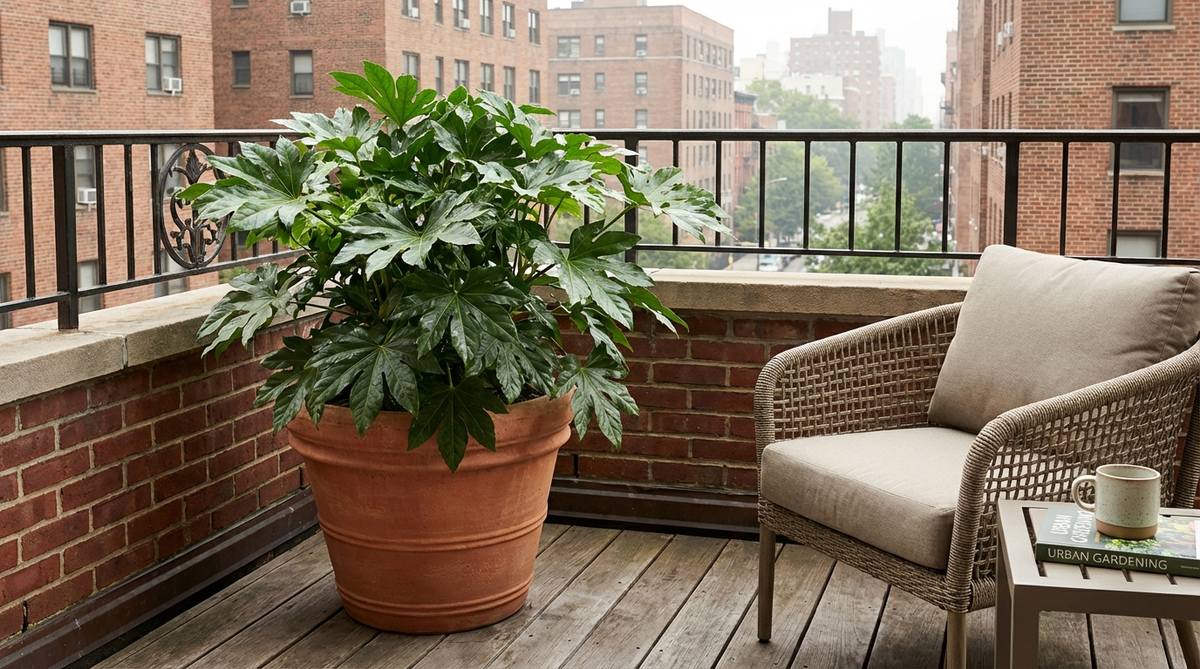
Delivers a massive, bold tropical punch that feels like a jungle oasis in the city. Broadleaf evergreen shrubs are spectacular for filling massive, empty shaded corners with dramatic, glossy architecture.
Contrasting these giant, star-shaped leaves against a brick backdrop proves you don’t need a massive budget for luxury. Secure extra-large resin tubs to give this slow-growing monster the deep root space it needs to survive neglect.
You can establish this tropical vibe for about $40–$60. It’s a gorgeous, low-effort statement piece.
- Key Materials: Fatsia shrub, massive resin tubs
- Vibe / Style: Deep urban jungle
- Difficulty: Tolerates heavy pollution
- Budget Breakdown: Plant: $25 | Tub: $35.
- Creator’s Tip: Wipe the massive leaves with a damp cloth occasionally to remove city grime and keep them shining.
- Smart Sourcing: extra-large resin tubs (UV-coated) and organic leaf shine spray.
Compact Shrubs with Flexible Branches
Shrubs with supple branches bend without breaking in wind. These selections provide substance while tolerating exposed conditions.
36. Heather (Calluna vulgaris)
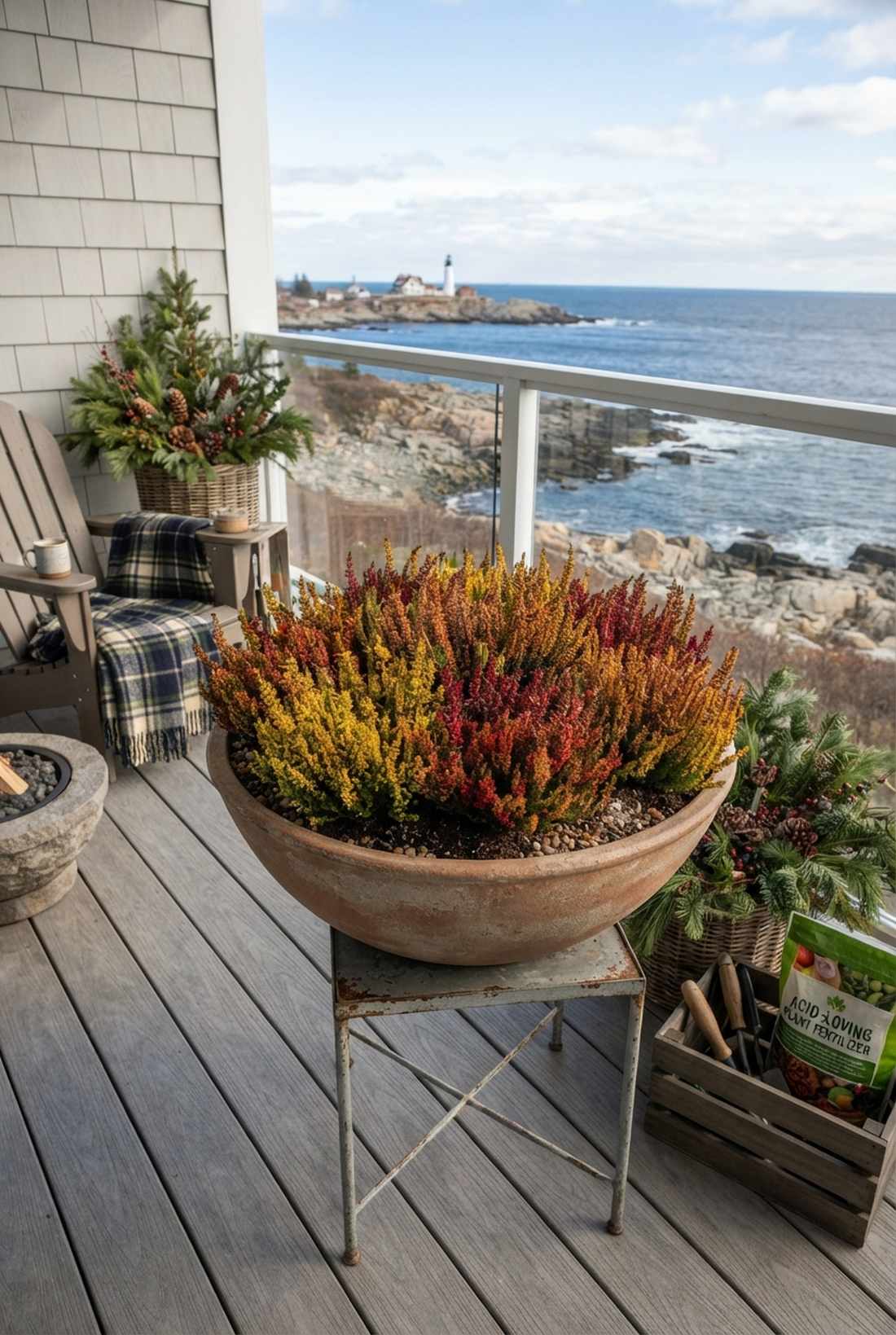
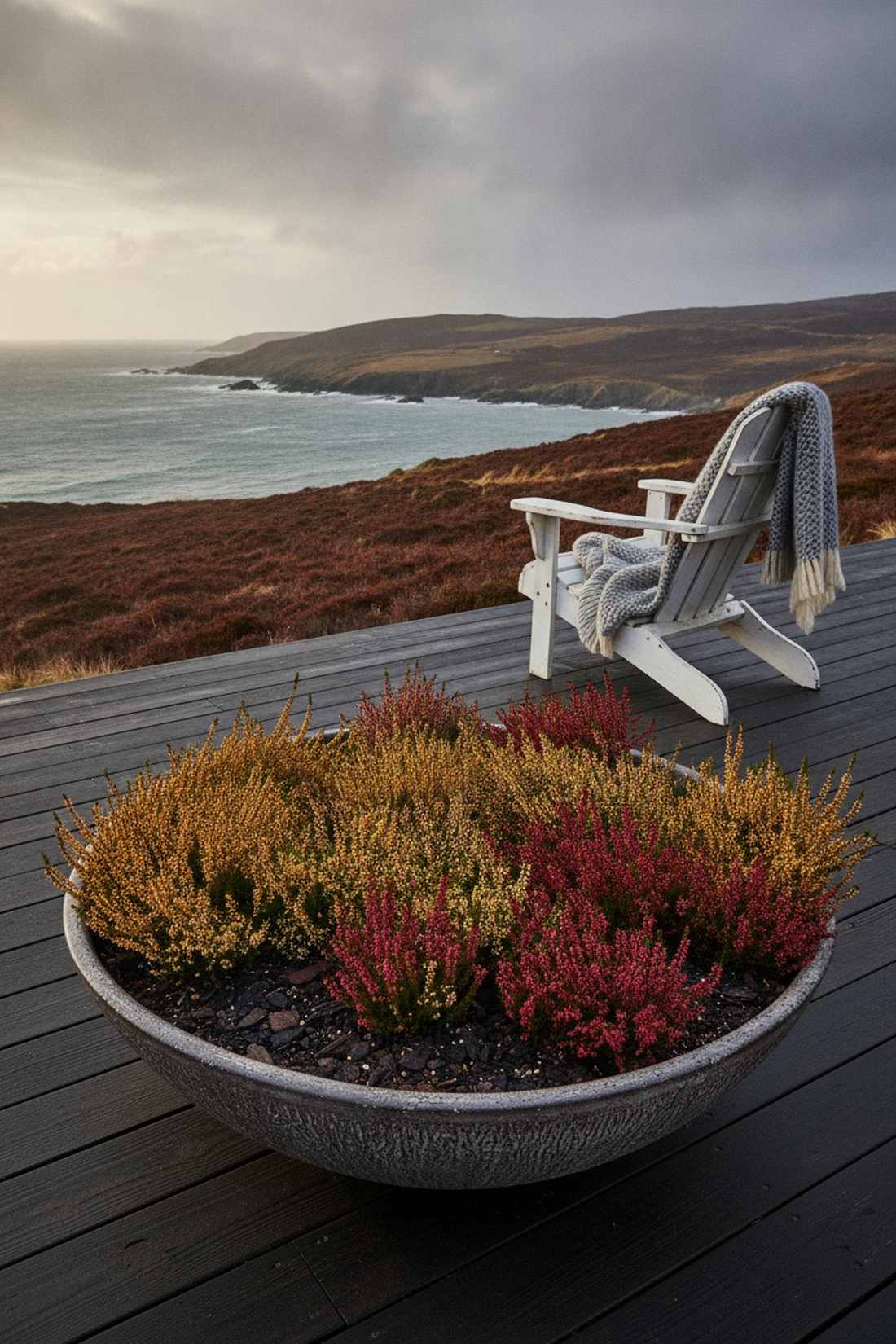
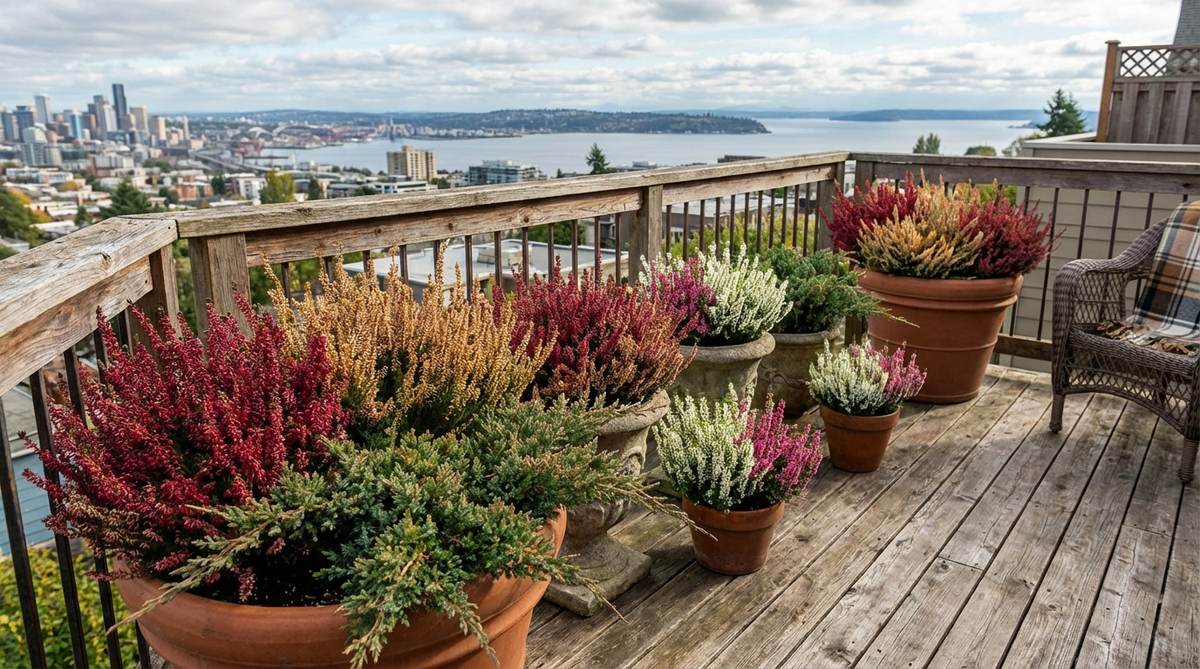
Carpets the container with needle-like gold and red textures that thrive in brutal cold. Flexible coastal shrubs are the absolute best choice for balconies that mimic harsh, windswept seaside conditions.
Packing these low-profile plants into a wide, shallow bowl gives a designer-level finish for winter interest. You must integrate bulk peat moss amendments to achieve the highly acidic, fast-draining soil they require to survive.
A beautiful winter-hardy bowl costs roughly $25–$40. Pin this to your cold-weather garden board!
- Key Materials: Heather varieties, acidic soil mix
- Vibe / Style: Rugged coastal moor
- Difficulty: Needs strict soil pH
- Budget Breakdown: Plants: $20 | Soil mix: $15.
- Creator’s Tip: Never let the root ball completely dry out; once heather dries and turns brown, it will not recover.
- Smart Sourcing: bulk peat moss amendments (pre-mixed) and acid-loving plant fertilizer.
37. Dwarf Bottlebrush
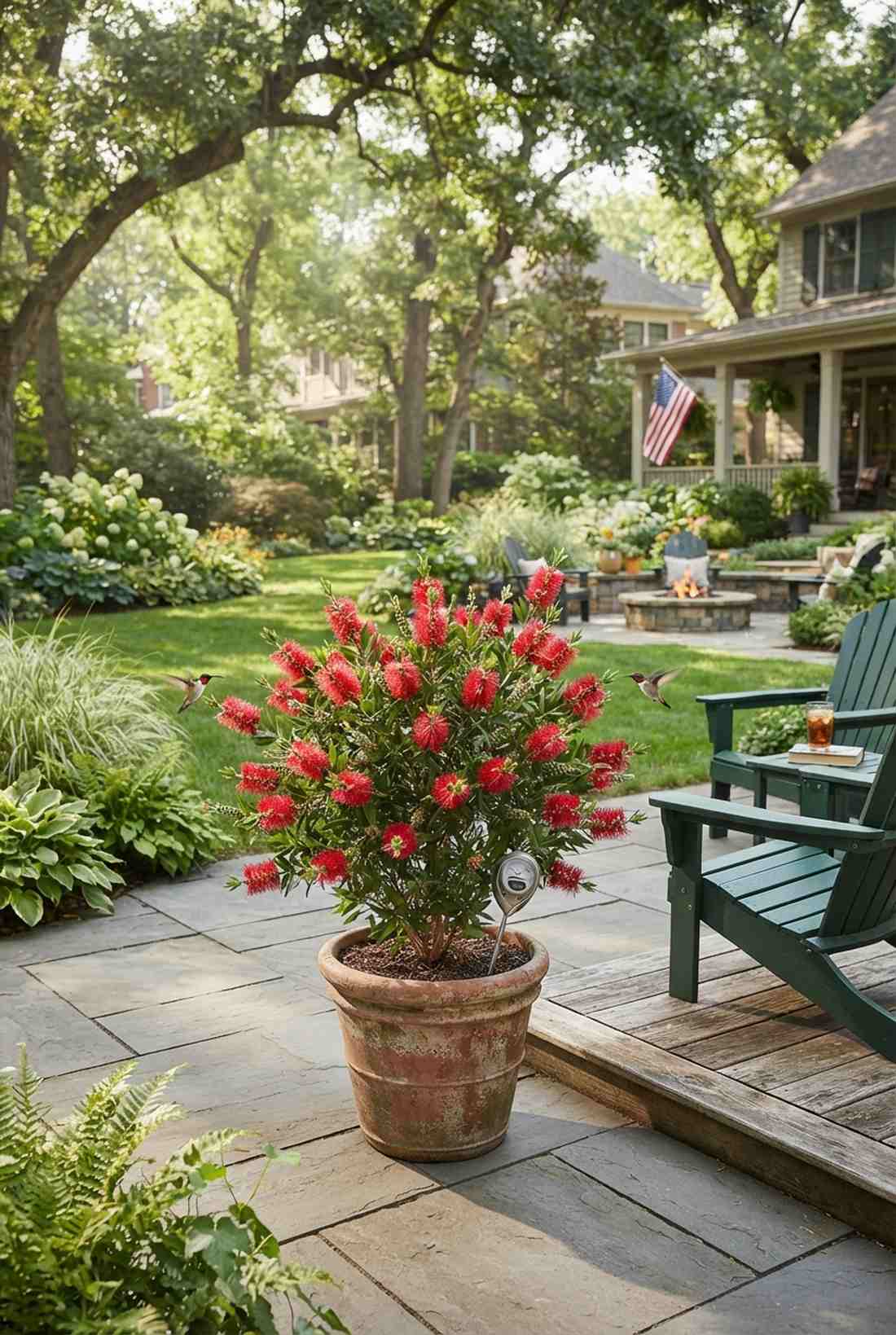
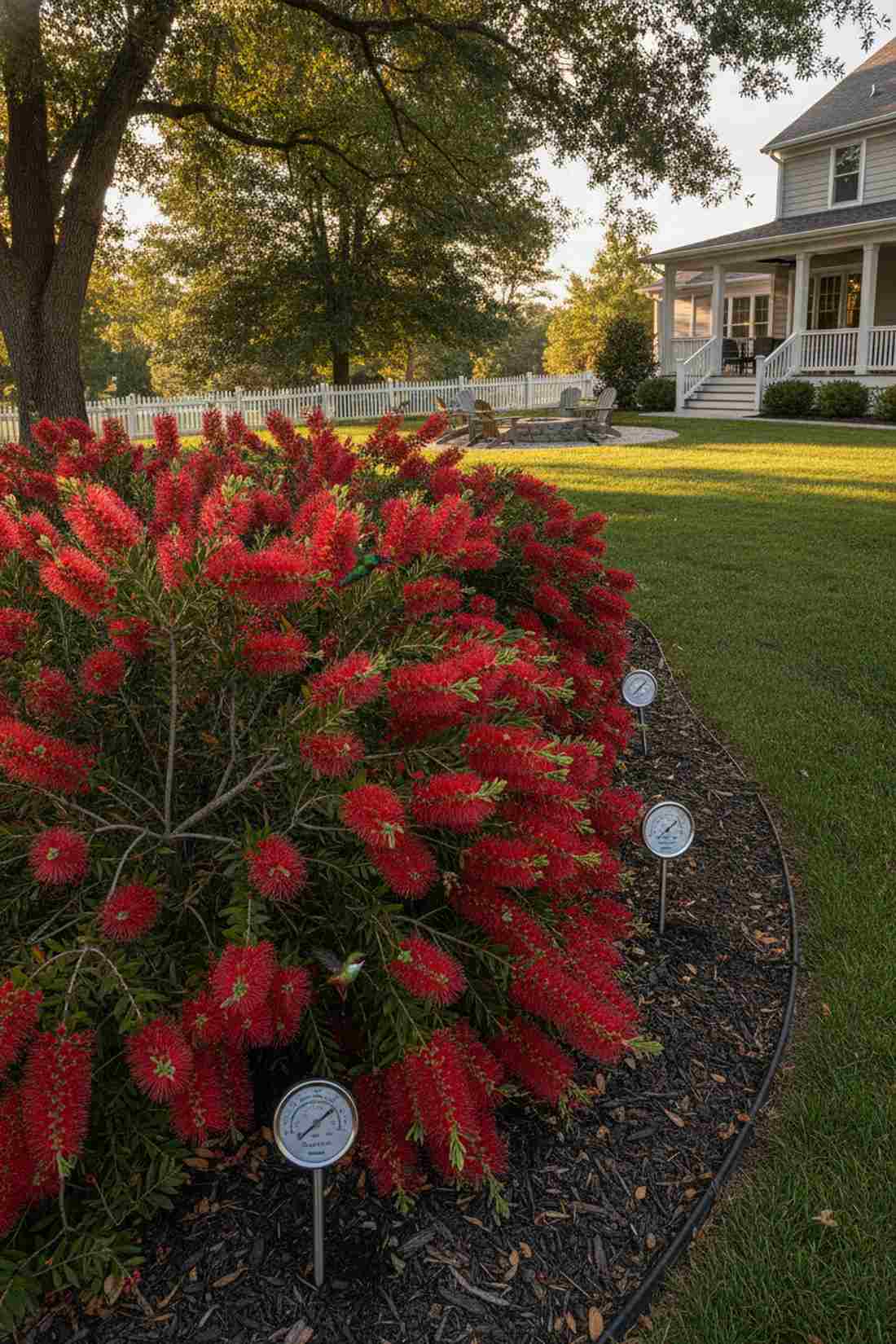
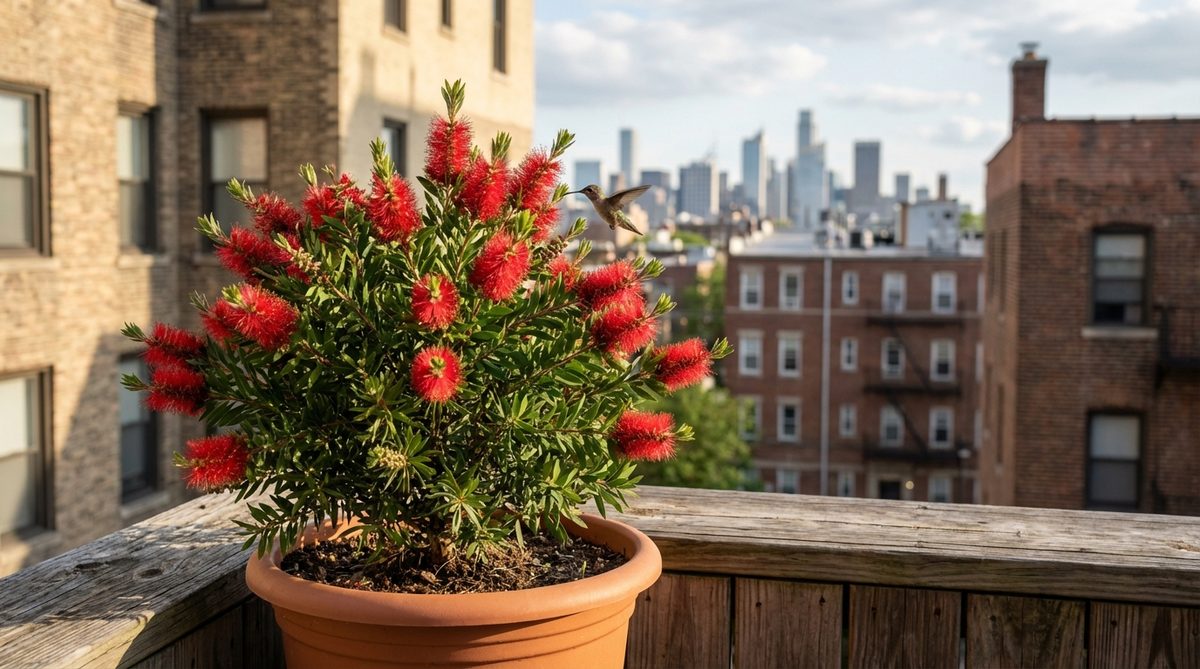
Explodes with vibrant red spikes that act like a magnet for urban hummingbirds. Supple-branched blooming shrubs flex perfectly with the wind rather than snapping under pressure.
Placing this exotic bloomer in a bright, partially shaded spot acts as a massive visual upgrade. Use commercial-grade moisture meters to ensure the evergreen foliage never completely dries out during intense summer wind tunnels.
Expect to spend $30–$50 for a brilliant floral anchor. Highly recommended for attracting local wildlife.
- Key Materials: Dwarf Bottlebrush, moisture monitors
- Vibe / Style: Exotic hummingbird haven
- Difficulty: Requires bright indirect light
- Budget Breakdown: Shrub: $35 | Meters: $15.
- Creator’s Tip: Prune it lightly just after the red blooms fade to encourage a secondary flush of flowers later in the season.
- Smart Sourcing: commercial-grade moisture meters and slow-release shrub fertilizer (bulk pack).
38. Japanese Pieris
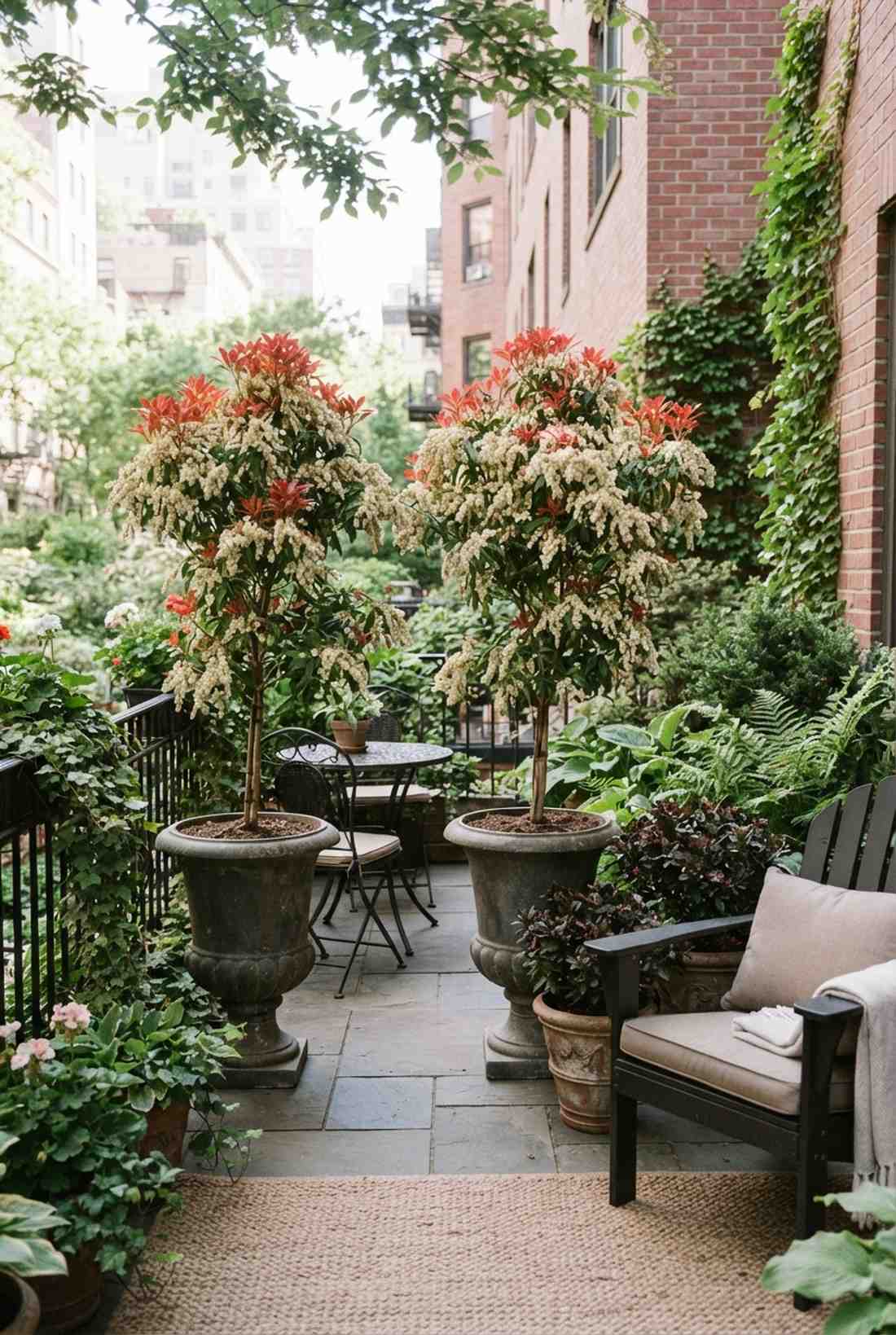
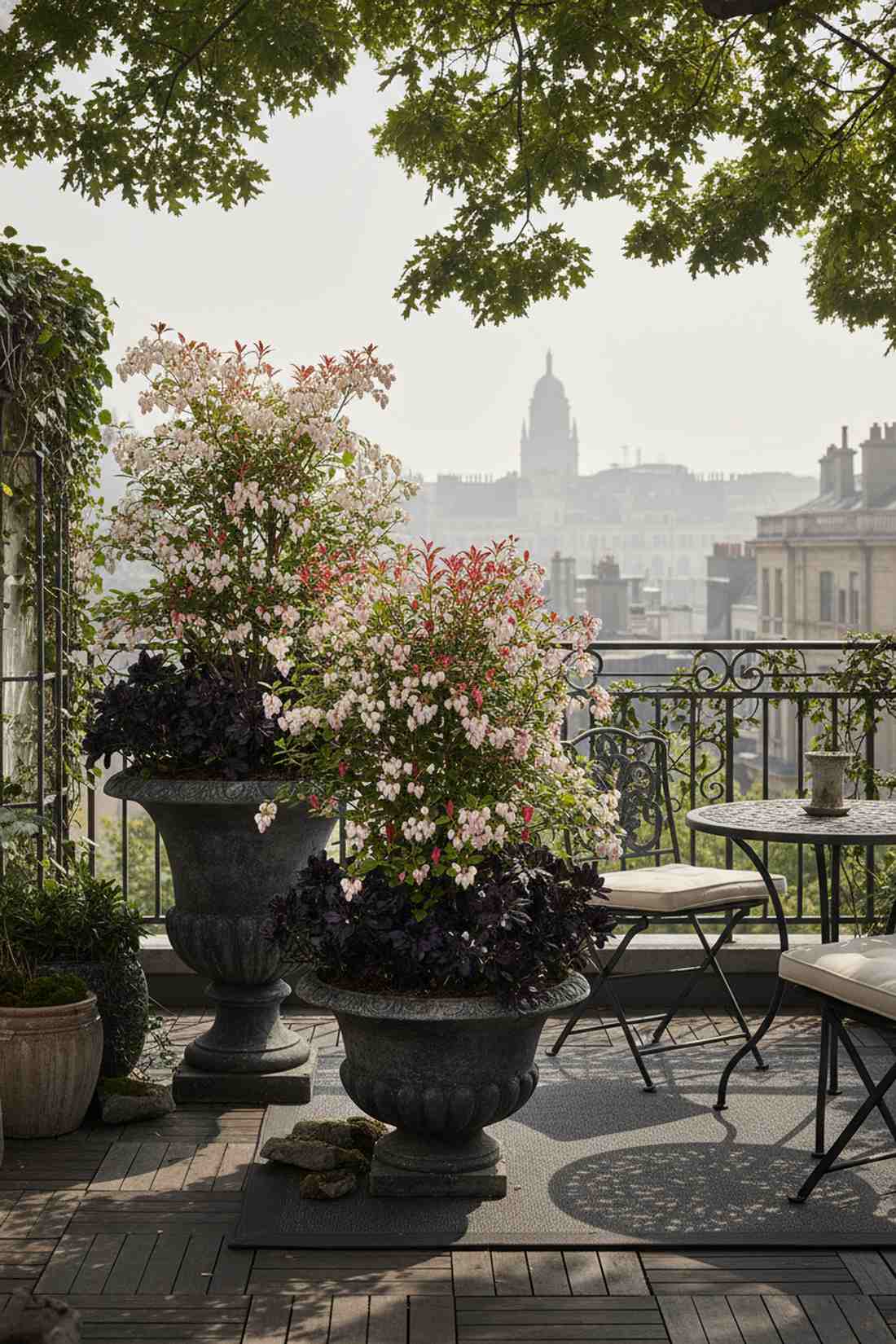
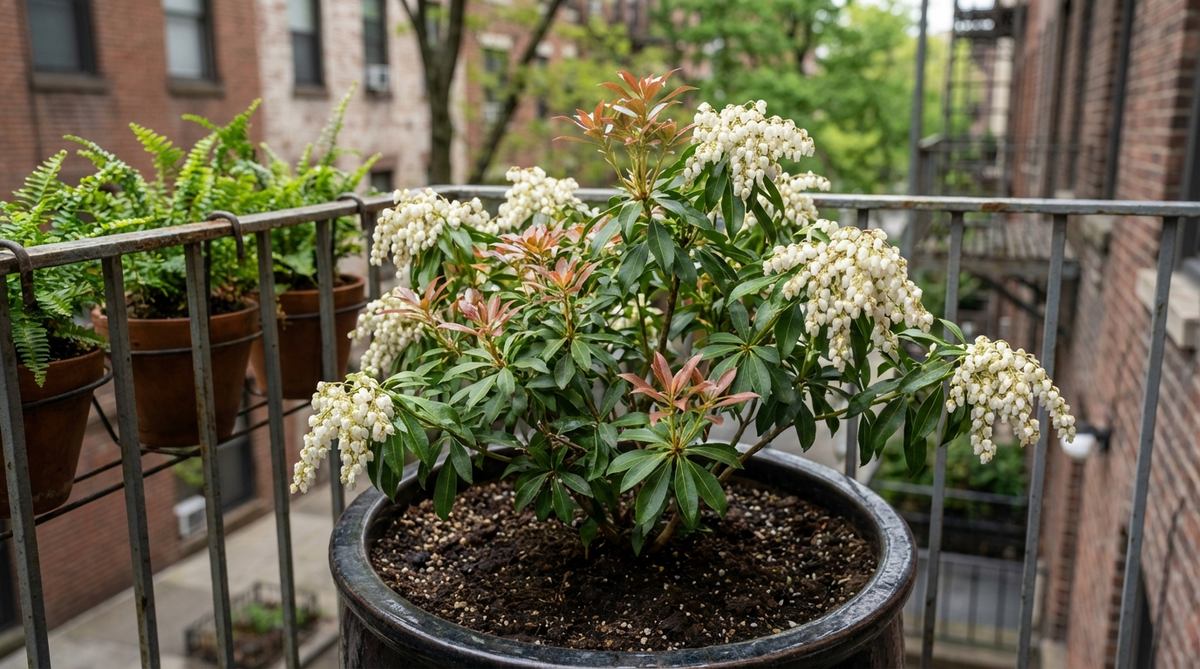
Drips with cascading, bell-shaped flowers and fiery red new leaf growth. Pollution-tolerant evergreens are the ultimate sophisticated choice for shaded urban balconies dealing with heavy city smog.
Pairing compact varieties like ‘Little Heath’ with dark azaleas delivers a surprisingly premium look. Make sure to source heavy-weight frost-proof urns to give this slow-growing investment piece a permanent, stable home.
You can create this sophisticated corner for about $45–$70. Save this for your elegant shade garden inspiration!
- Key Materials: Japanese Pieris, heavy frost-proof urns
- Vibe / Style: Sophisticated woodland elegance
- Difficulty: Slow, steady grower
- Budget Breakdown: Plant: $30 | Heavy urn: $40.
- Creator’s Tip: Plant it slightly high in the container to ensure water never pools around the base of the trunk.
- Smart Sourcing: heavy-weight frost-proof urns (UV-coated) and premium ericaceous compost.
Conclusion
Transforming a brutal, wind-whipped space into a high-end retreat is completely achievable when you deploy these 38 proven urban balcony plants. By upgrading to UV-coated resin pots, sourcing commercial-grade heavy-duty planters, and choosing flexible-stemmed varieties, you bypass the frustrating failures most beginners face. Stop wasting money on fragile greenhouse blooms and invest in smart, wind-adapted starter kits to build a luxurious outdoor sanctuary that thrives year-round.
Frequently Asked Questions
Can vegetables grow on windy, shaded balconies?
Leafy greens including arugula, kale, lettuce, and mesclun tolerate partial shade and moderate wind exceptionally well. Herbs like parsley, chives, and mint also produce rapidly with just 3-4 hours of indirect light. Skip the fruiting crops like tomatoes, and instead invest in urban gardening starter kits specifically designed for leafy, low-light yield.
How do I prevent pots from tipping over in wind?
Ditch the cheap, tall plastic and immediately upgrade to wide, heavy-duty base planters made from concrete, stone, or thick UV-coated ceramic. Lower the center of gravity drastically by layering bulk landscape gravel in the bottom before adding soil. Group pots firmly against structural walls to break the wind impact.
What defines shade for balcony plants?
Full shade means less than 2 hours of direct sun daily, while partial shade receives 2-4 hours of morning sun or dappled light. North-facing balconies typically provide full shade, requiring true low-light specialists. To maximize what little light you have, use light-colored reflective planter finishes to bounce ambient sunlight toward the foliage.
How often should I water plants in windy conditions?
Wind acts like a massive hair dryer, accelerating evaporation and increasing water needs by 30-50%. Check soil daily during hot weather, watering when the top inch feels dry. Upgrading to self-watering trough planters with deep reservoirs is the smartest investment to maintain consistent moisture without daily labor.
Do wind-tolerant plants need staking?
Plants naturally adapted to wind develop thick root systems and flexible stems that rarely require artificial staking. Grasses, succulents, and woody herbs evolved specifically to bend and bounce back. Instead of tying up weak plants, focus on planting sturdy varieties in premium commercial-grade potting mix so the roots lock in like concrete.