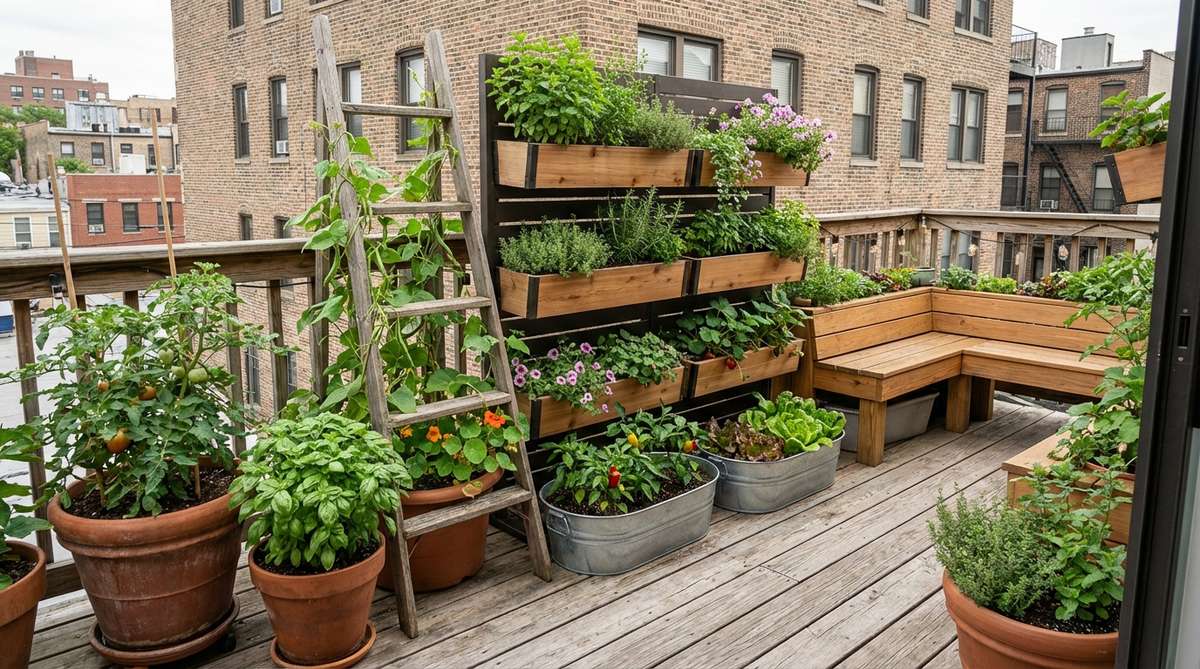
Creating a thriving urban balcony garden transforms compact city spaces into productive green retreats. Whether you have a narrow apartment balcony or a spacious wraparound terrace, strategic layout planning maximizes every square foot while delivering fresh herbs, vibrant flowers, and even vegetables. Fresh Garden Ideas brings you proven layout solutions that combine functionality with aesthetic appeal for urban gardeners across America.
Design SnapshotKey Principles
- Vertical Integration: Use wall-mounted planters, trellises, and tiered systems to multiply growing space without consuming floor area
- Weight Distribution: Position heavier containers near structural supports and use lightweight potting mixes designed for container gardening
- Microclimate Mapping: Assess sun exposure, wind patterns, and heat reflection from surrounding buildings to match plants with optimal zones
- Access Flow: Maintain clear pathways for watering, harvesting, and enjoying your space while keeping high-traffic areas unobstructed
Vertical Garden Layouts That Maximize Height
Urban balconies gain significant growing capacity when gardeners build upward rather than outward. Vertical systems address the primary constraint of city balcony gardening by utilizing walls, railings, and overhead structures that typically remain unused.
1. Modular Wall Grid System
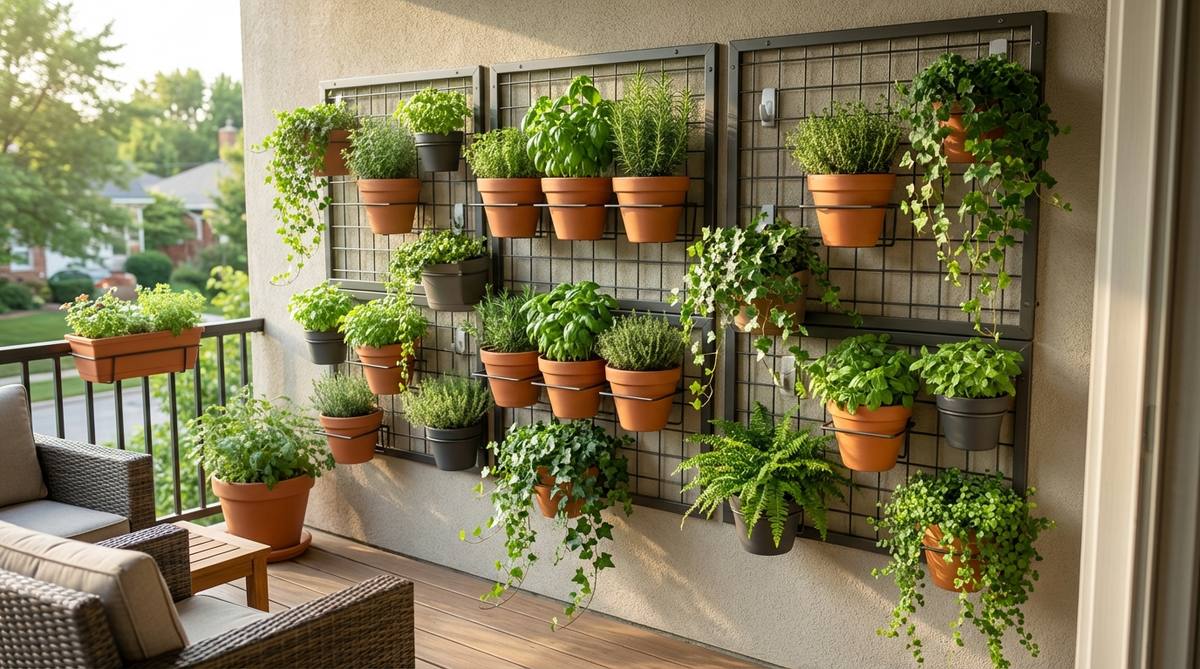
Mount rectangular grid panels directly to balcony walls, creating a framework for interchangeable pot holders. The geometric arrangement delivers visual rhythm while herbs and trailing plants cascade at varying heights.
Install panels using removable adhesive hooks for rental properties, positioning grids where morning sun reaches for six hours minimum. Space pots eight inches apart to allow mature plant growth without crowding.
This layout keeps floor space completely open while providing capacity for 15-20 small containers on a standard eight-foot wall section.
2. Freestanding Tower Planter
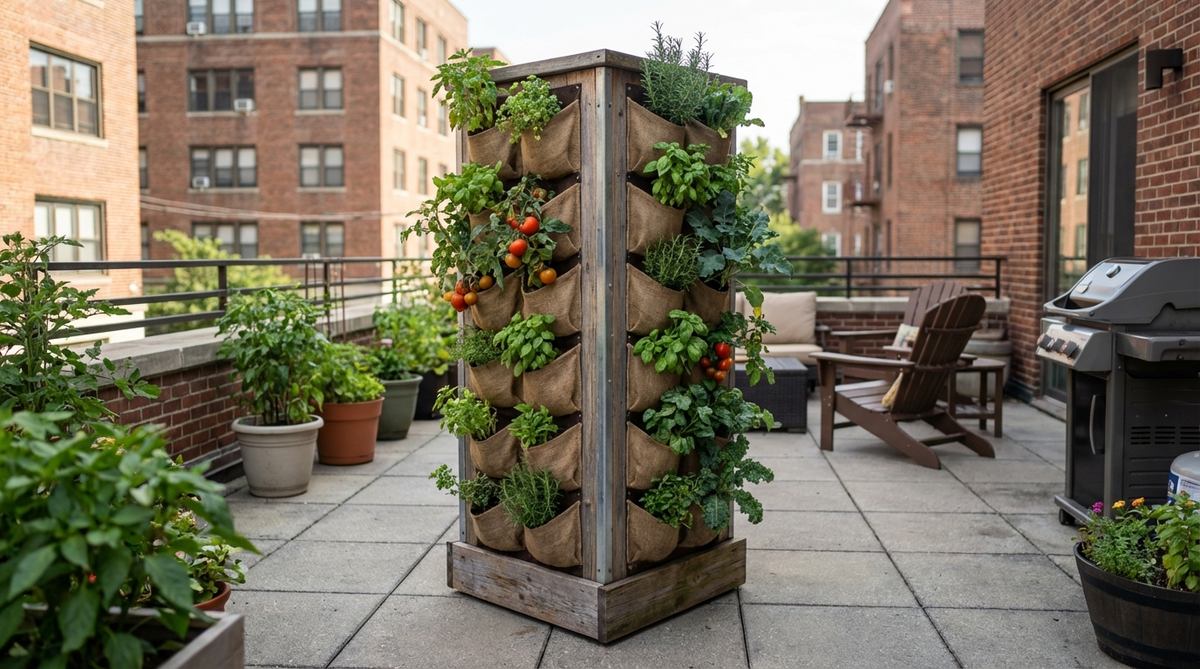
Vertical tower systems stand independently without wall attachment, offering mobility and deep soil pockets. These cylindrical or stacked structures typically feature 20-50 planting pockets arranged in spirals or vertical columns.
Position towers in corners where sunlight reaches from multiple angles throughout the day. Fill with lightweight potting mix enriched with compost, placing deep-rooted vegetables in lower pockets and shallow herbs near the top.
Towers require no installation and move easily for seasonal adjustments or cleaning behind them.
3. Ladder Shelf Arrangement
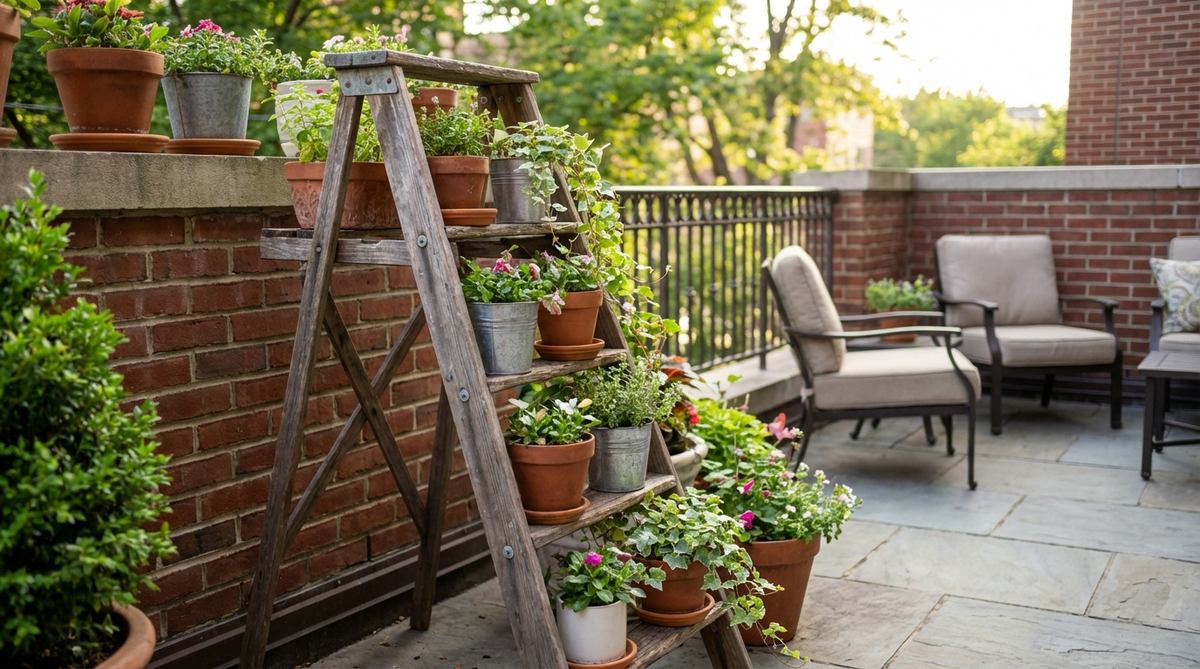
Lean a wooden or metal ladder against the balcony wall, transforming each rung into a plant shelf. The angled structure creates natural drainage while displaying plants at staggered heights.
Secure the ladder top to prevent tipping, then arrange containers from largest at the bottom to smallest at the top. Place sun-loving plants on upper rungs and shade-tolerant varieties below.
This vintage-inspired layout adds architectural interest while accommodating 8-12 containers on a five-foot ladder.
4. Hanging Pocket Wall
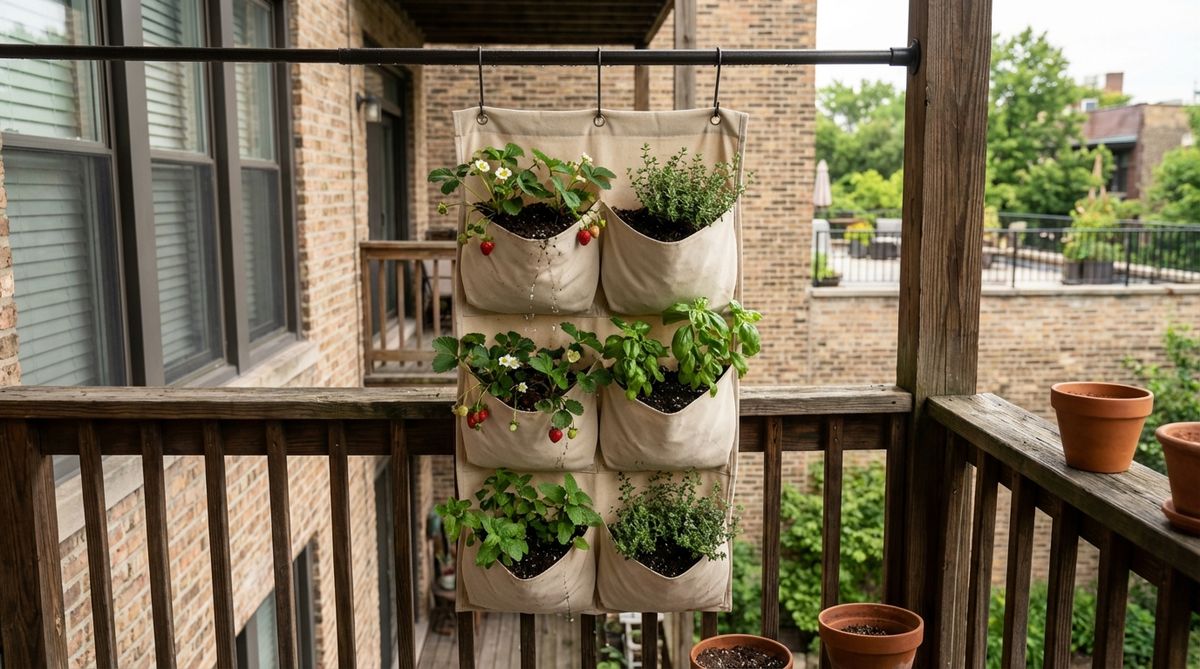
Fabric pocket organizers with multiple pouches hang from a single rod, creating instant vertical gardens. Each pocket holds soil and small plants, with water draining through fabric to lower pockets.
Install a tension rod between balcony walls or suspend the organizer from overhead hooks. Plant shallow-rooted herbs, lettuces, and strawberries in pockets, starting with drought-tolerant varieties at the top.
Fabric systems weigh less than traditional containers and fold flat for winter storage.
5. Trellis Tower Hybrid
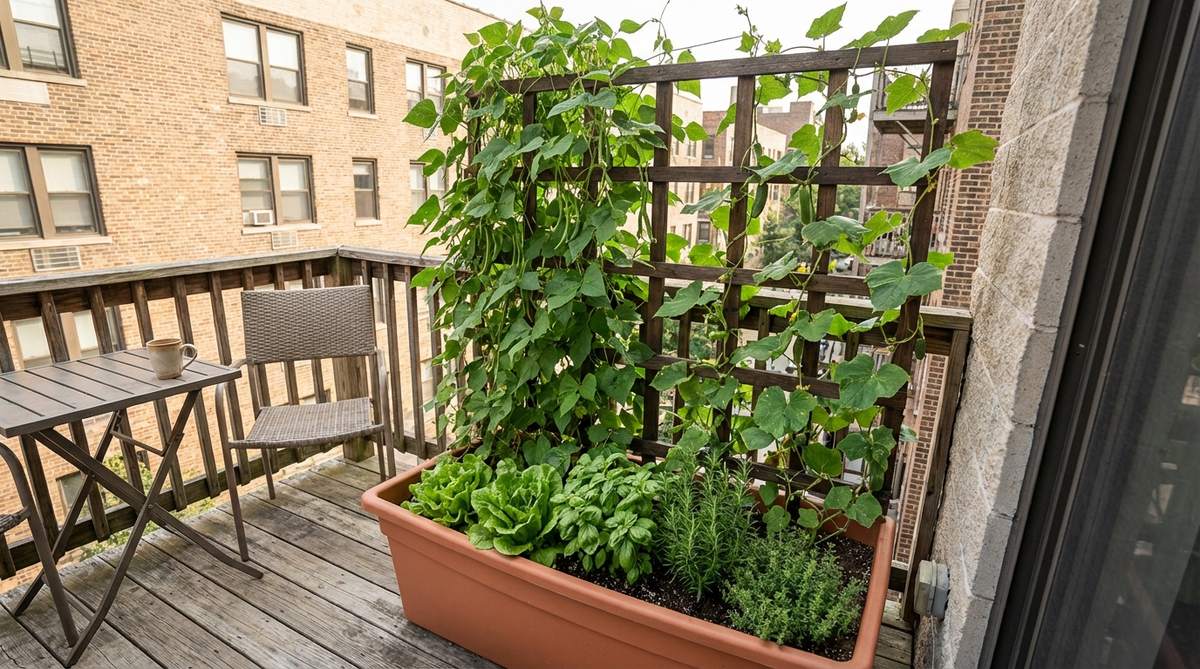
Combine ground-level planters with vertical trellises attached to create dual-layer growing zones. Climbing vegetables train upward while companion plants fill the base container.
Anchor a six-foot trellis into a large container filled with pole beans, cucumbers, or peas. Interplant the base with lettuce or herbs that benefit from the shade cast by climbing vines.
This configuration produces two harvests from one footprint, ideal for protein-rich beans paired with fresh salad greens.
6. Rail-Mounted Vertical Panels
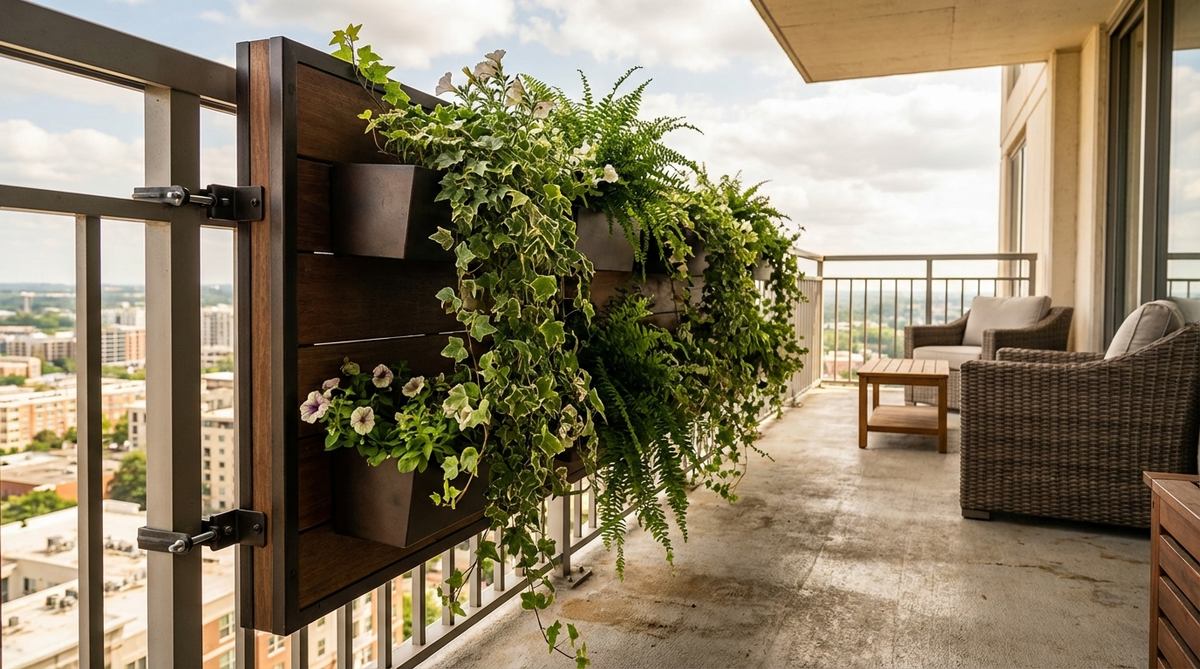
Attach vertical growing panels directly to balcony railings, extending the garden outward rather than consuming interior space. These panels feature integrated planters or hooks for hanging pots.
Secure panels using adjustable clamps that fit standard railing dimensions without permanent alterations. Plant trailing varieties that spill downward, creating a green curtain visible from both inside and outside.
Railing systems work particularly well on high-rise balconies where wind exposure favors low-profile, secured installations.
7. Corner Column Garden
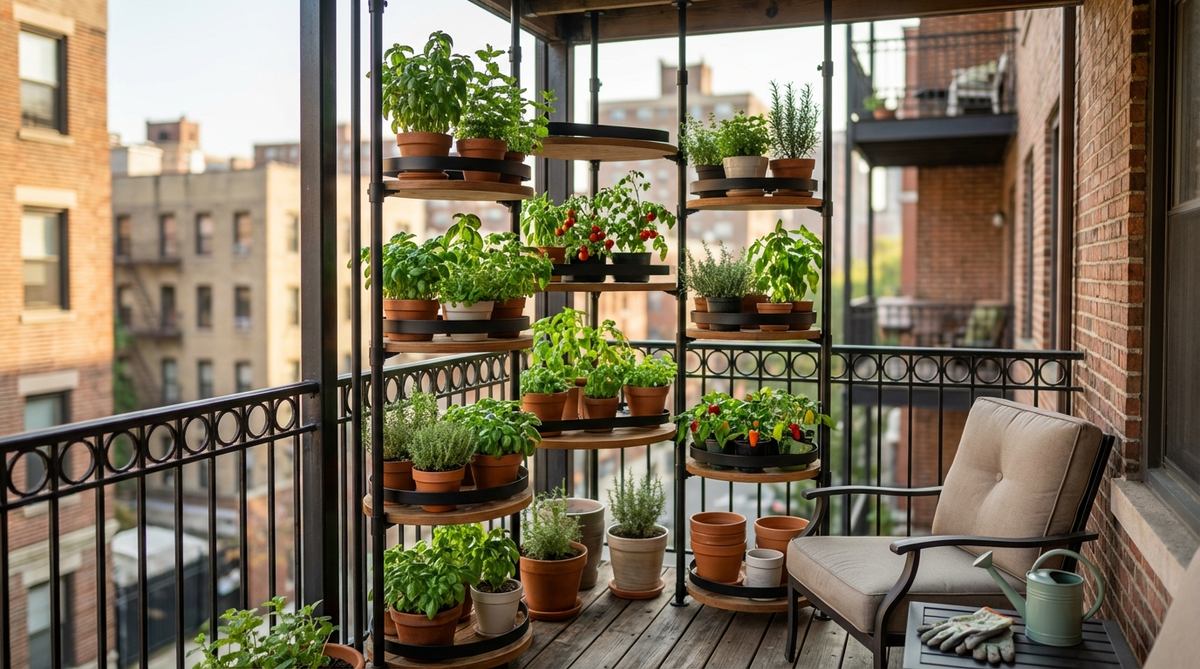
Install floor-to-ceiling tension poles in balcony corners, adding circular shelves at intervals to create columnar plant displays. The vertical structure maximizes dead corner space while maintaining stability.
Adjust shelf heights to accommodate plants of varying sizes, placing smaller herbs on upper shelves and larger vegetables below. Rotate pots weekly to ensure even sun exposure on all sides.
Corner columns fit spaces as narrow as two feet wide, making them perfect for compact urban balconies.
8. Gutter Garden Stack
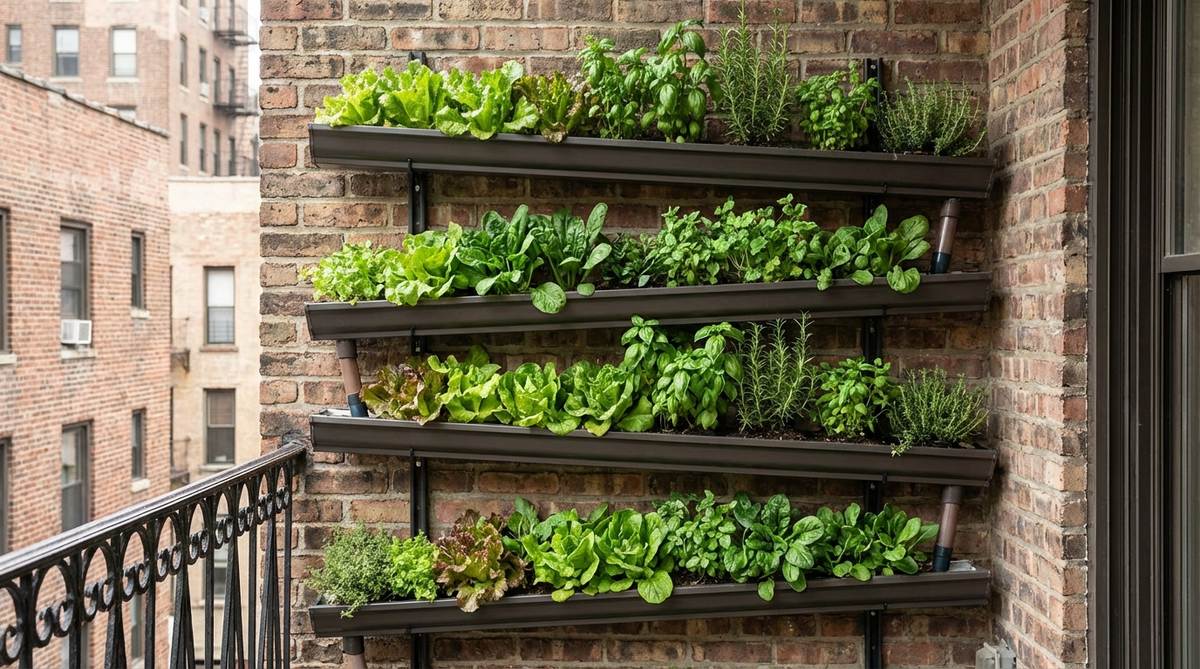
Mount horizontal rain gutters in vertical tiers along walls, converting them into shallow planters. Each gutter spans the wall length, providing continuous growing space for shallow-rooted crops.
Drill drainage holes every six inches and cap the ends. Mount gutters 12 inches apart vertically, angling slightly for drainage. Fill with potting mix and plant leafy greens, herbs, or strawberries.
This budget-friendly system uses inexpensive materials to create substantial growing capacity on narrow balconies.
Edible Garden Configurations For Fresh Harvests
Urban balcony garden ideas focused on food production require strategic planning to maximize yields in limited space. These layouts prioritize accessibility, succession planting zones, and companion planting principles.
9. Salad Bar Railing System
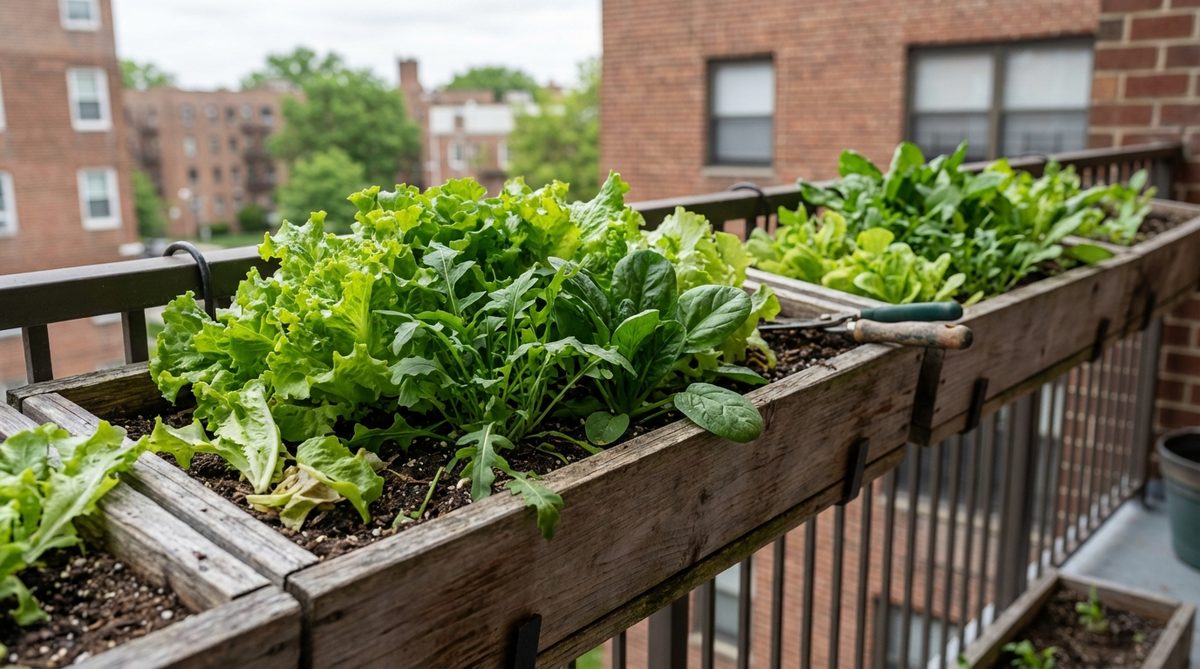
Line the entire balcony railing with shallow boxes dedicated to cut-and-come-again salad greens. This horizontal layout places the most frequently harvested crops at the most accessible height.
Install railing planters 30 centimeters deep to prevent rapid drying. Plant lettuce, arugula, spinach, and Asian greens in succession, sowing new seeds every two weeks in designated sections.
Harvest outer leaves continuously while inner growth continues, providing fresh salads for months from a single setup.
10. Herb Spiral Container
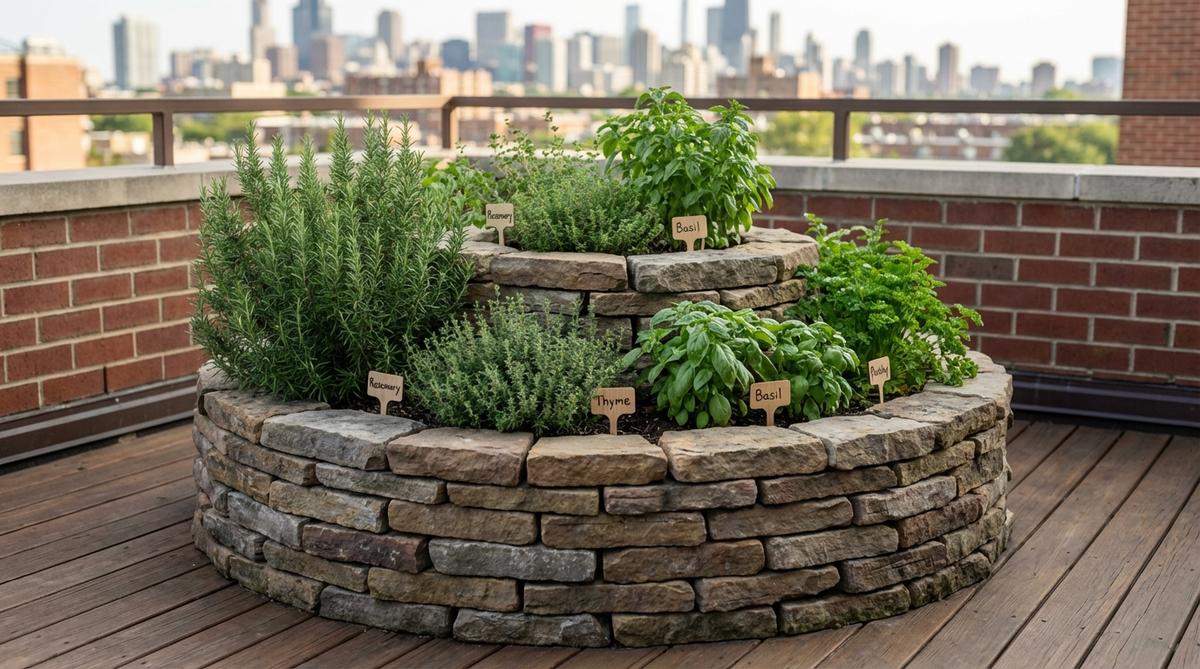
A large circular container spirals upward with terraced levels, creating microclimates for diverse herbs. The spiral design provides well-drained peaks for Mediterranean herbs and moisture-retentive valleys for leafy varieties.
Build the spiral using stacked stones or wood within a wide container, filling the structure with potting mix. Plant rosemary and thyme at the sunny peak, basil mid-level, and parsley in the moist base.
This single-container system delivers year-round culinary herbs in less than four square feet.
11. Three-Season Rotation Boxes
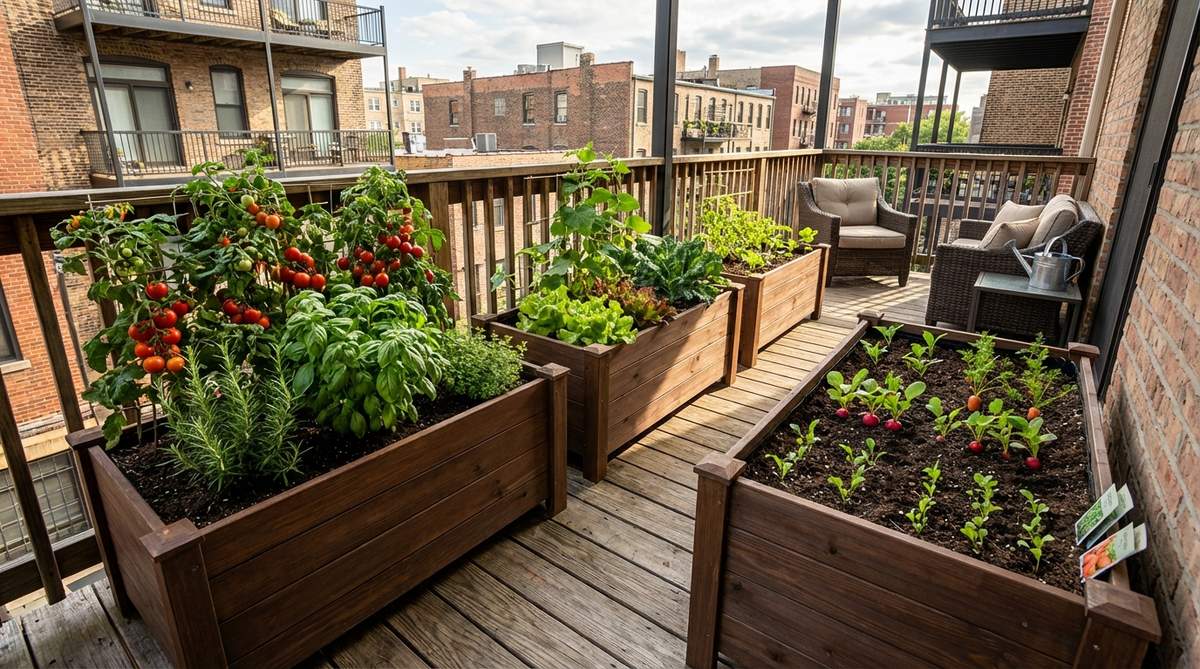
Divide the balcony into three zones with identical containers, each dedicated to a different growth stage. This layout enables continuous harvests through succession planting.
Designate one zone for mature plants ready to harvest, another for mid-growth crops, and the third for recent transplants or germinating seeds. Rotate functions every four to six weeks as harvests complete.
The rotation system eliminates harvest gaps and maximizes productivity from limited containers throughout the growing season.
12. Vertical Strawberry Tower
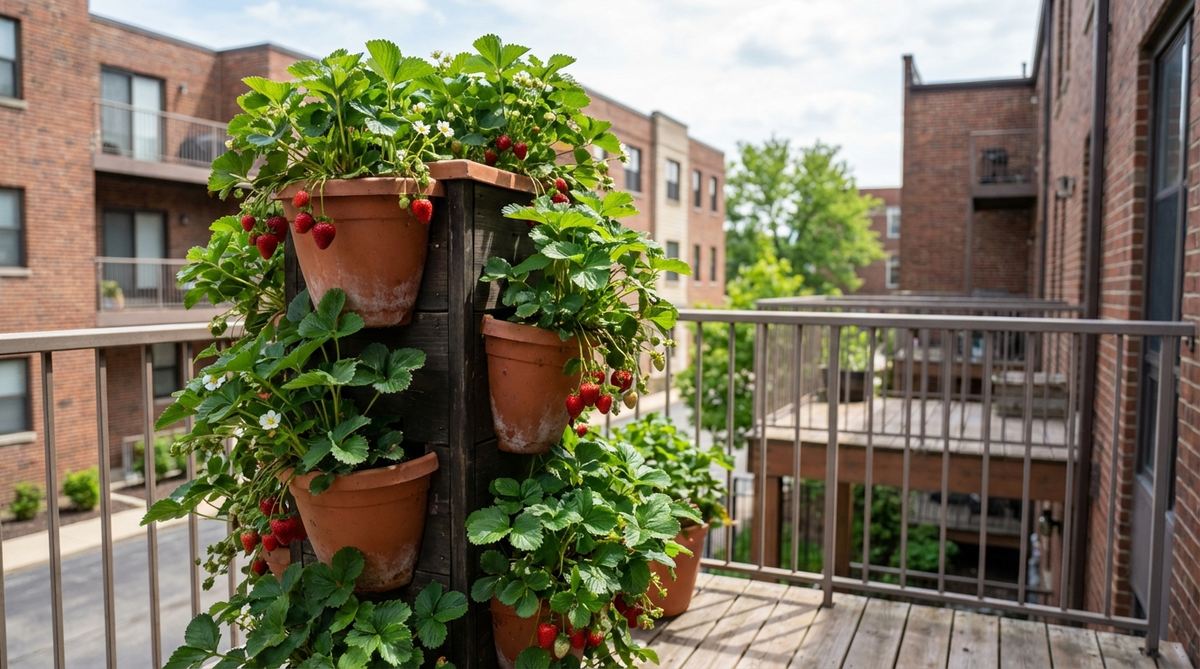
Stack specialized strawberry planters with offset pockets that accommodate the plants’ spreading habit and trailing runners. The tower concentrates fruit production in minimal floor space.
Fill each tier with soil mixed with perlite for drainage, planting one strawberry per pocket. Position the tower where it receives six hours of direct sun and rotate monthly for even ripening.
A four-foot tower produces 20-30 plants worth of berries, sufficient for daily snacking from late spring through fall.
13. Tomato and Companion Cluster
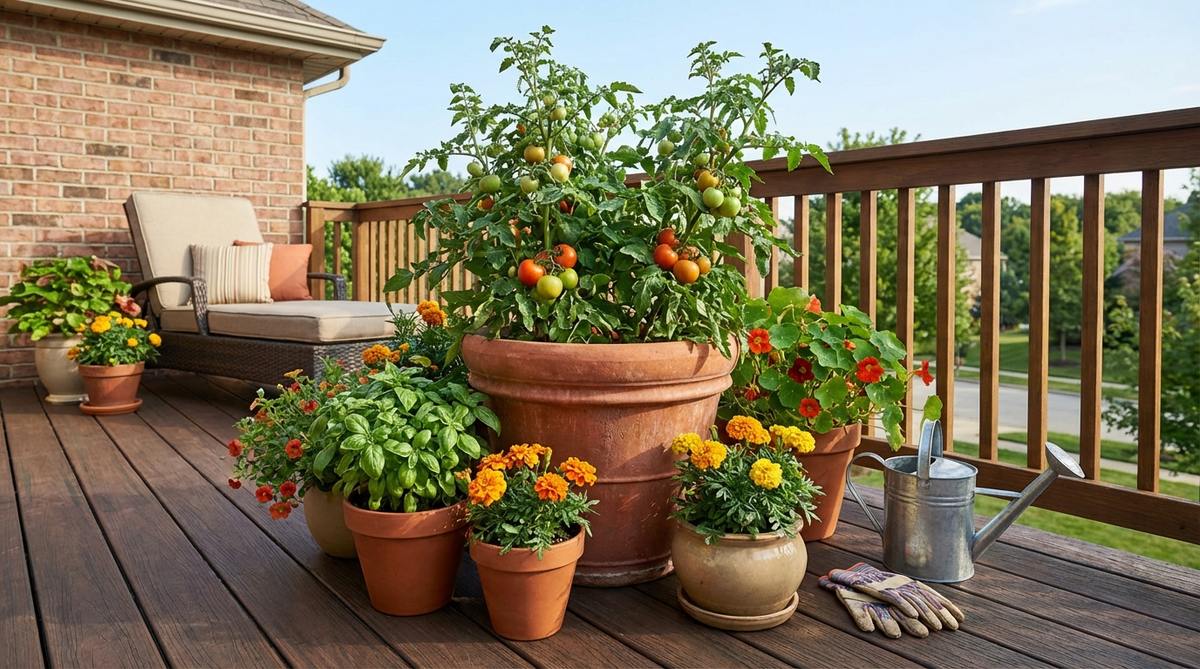
Group large containers for tomatoes with smaller pots of basil, marigolds, and nasturtiums arranged around the base. This layout applies companion planting principles to improve yields and pest management.
Place a seven-gallon container with a determinate tomato variety at the center, surrounding it with four one-gallon pots of companions. The flowers attract pollinators while herbs deter aphids.
Cluster arrangements concentrate watering efforts and create visually appealing combinations that serve multiple functions.
14. Microgreens Production Shelf
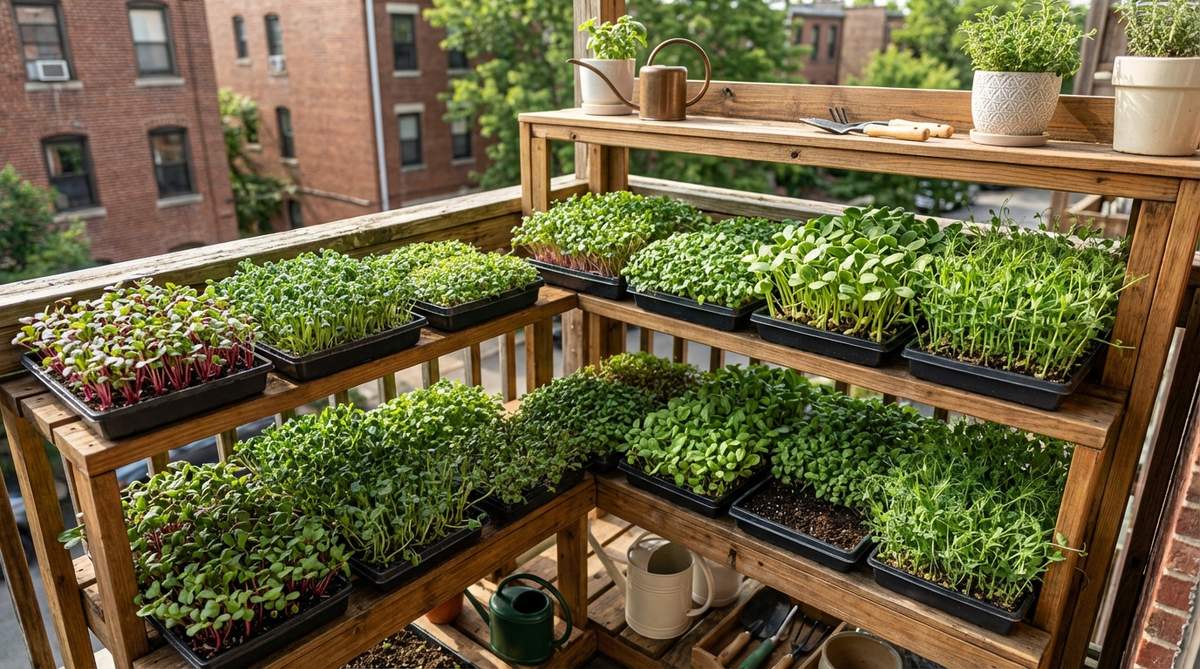
Install a narrow three-tier shelf system dedicated to rapid-turnover microgreens in shallow trays. This intensive production layout delivers harvests every 7-10 days.
Use trays just two inches deep, filling with fine-textured seed-starting mix. Sow dense plantings of radish, broccoli, sunflower, and pea shoots, harvesting when seedlings reach two inches.
The shelf system produces nutrient-dense greens continuously, perfect for smoothies and garnishes with minimal space commitment.
15. Pepper Corner Collection
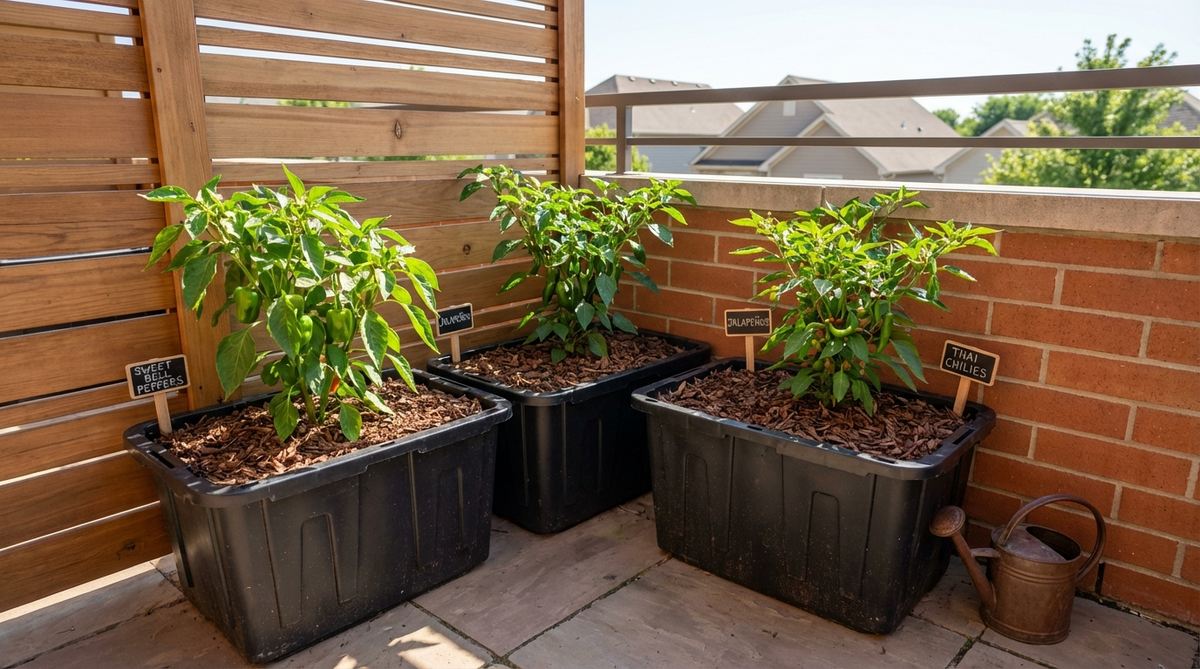
Dedicate a sunny corner to heat-loving pepper varieties in five-gallon containers, creating a productive hot spot. The corner location provides wind protection while maximizing sun exposure.
Plant sweet bell peppers, jalapeños, and Thai chilies in separate containers, spacing them 18 inches apart. Add a layer of mulch to retain moisture and regulate soil temperature.
Corner positioning traps heat from two walls, extending the growing season for warm-weather crops by several weeks.
16. Bean Trellis Arch
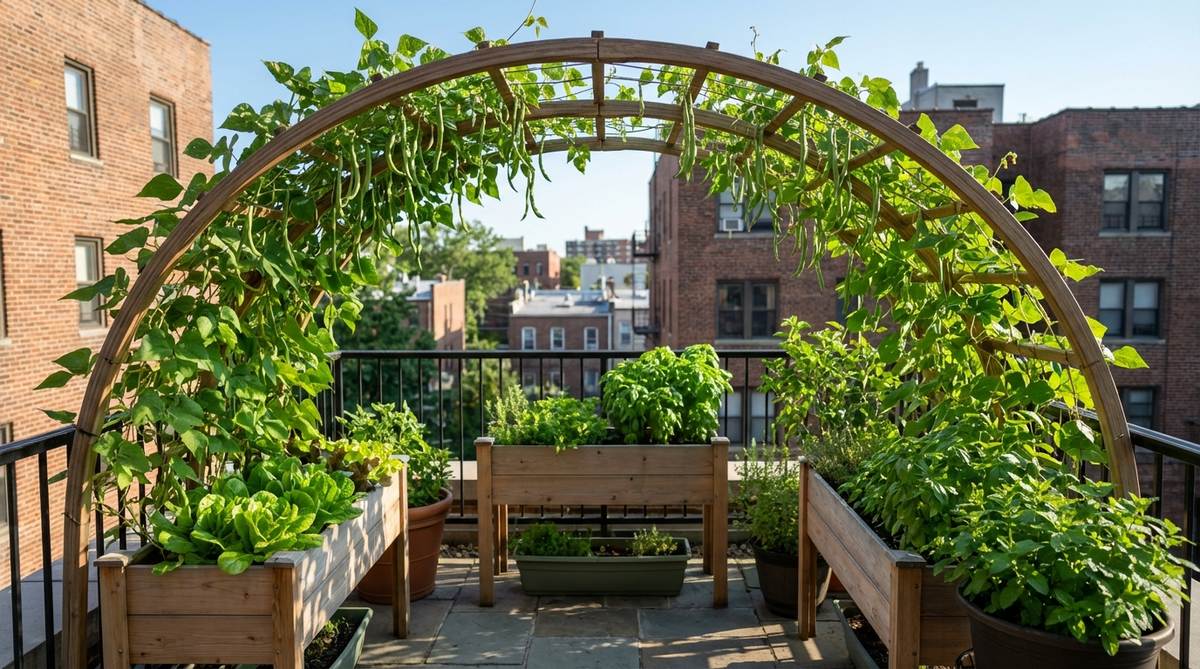
Train pole beans up and over an arched trellis that spans the balcony width, creating an edible canopy. This overhead layout provides shade for heat-sensitive crops below while maximizing vertical space.
Install arch supports in containers at each balcony edge, connecting them with wire mesh or string for bean vines. Plant bush lettuce or herbs in shaded containers beneath the bean canopy.
The arch produces pounds of beans while creating a cooler microclimate for greens during peak summer heat.
17. Kitchen Herb Window Box
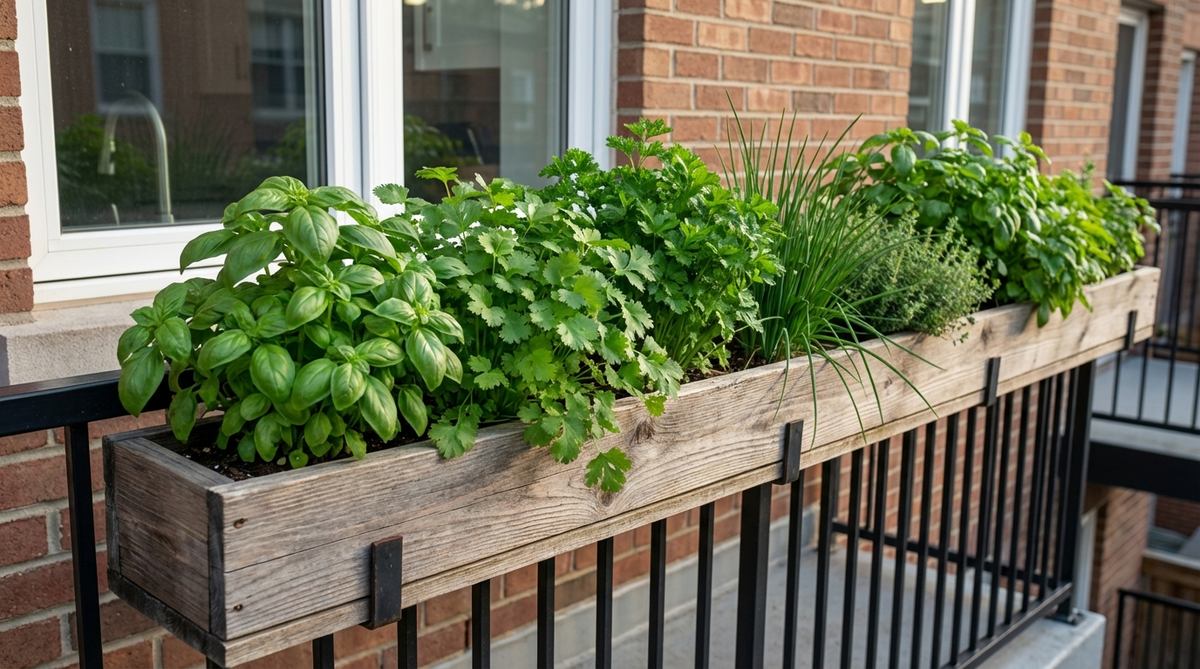
Mount a long window box directly outside the kitchen window or door, placing the most-used herbs within arm’s reach. This layout prioritizes convenience for daily cooking.
Install a 36-inch box with drainage holes, planting culinary staples like basil, cilantro, parsley, chives, and thyme. Group plants with similar water needs together.
Window-adjacent placement means fresh herbs reach recipes in seconds, and harvesting happens naturally during meal preparation.
Privacy & Screening Layouts For Urban Seclusion
Urban balcony design often requires visual barriers from neighboring units or street-level views. These layouts use plants strategically to create intimate outdoor rooms while maintaining airflow.
18. Bamboo Screen Wall
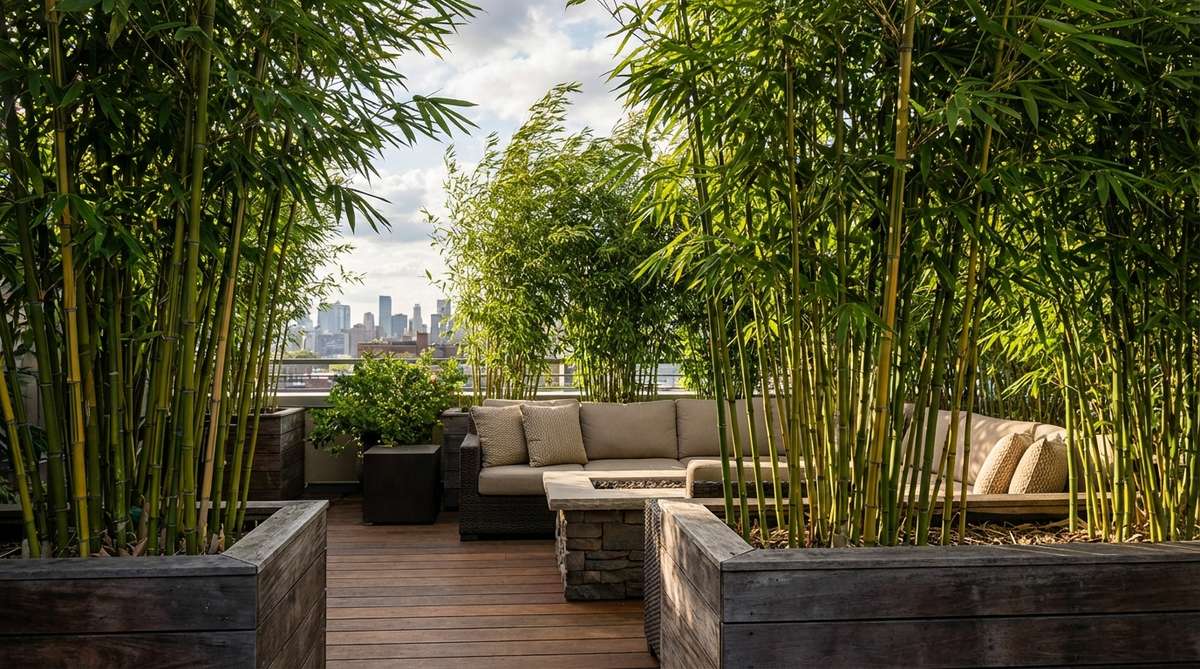
Line one balcony edge with large containers of clumping bamboo varieties that grow to six feet, forming a living privacy wall. The vertical canes and dense foliage block sightlines while rustling gently in breezes.
Choose non-invasive clumping species and plant in containers at least 18 inches deep. Position containers touching edge-to-edge to eliminate gaps, and trim annually to maintain desired height.
Bamboo establishes quickly, providing year-round evergreen privacy within a single growing season.
19. Flowering Vine Curtain
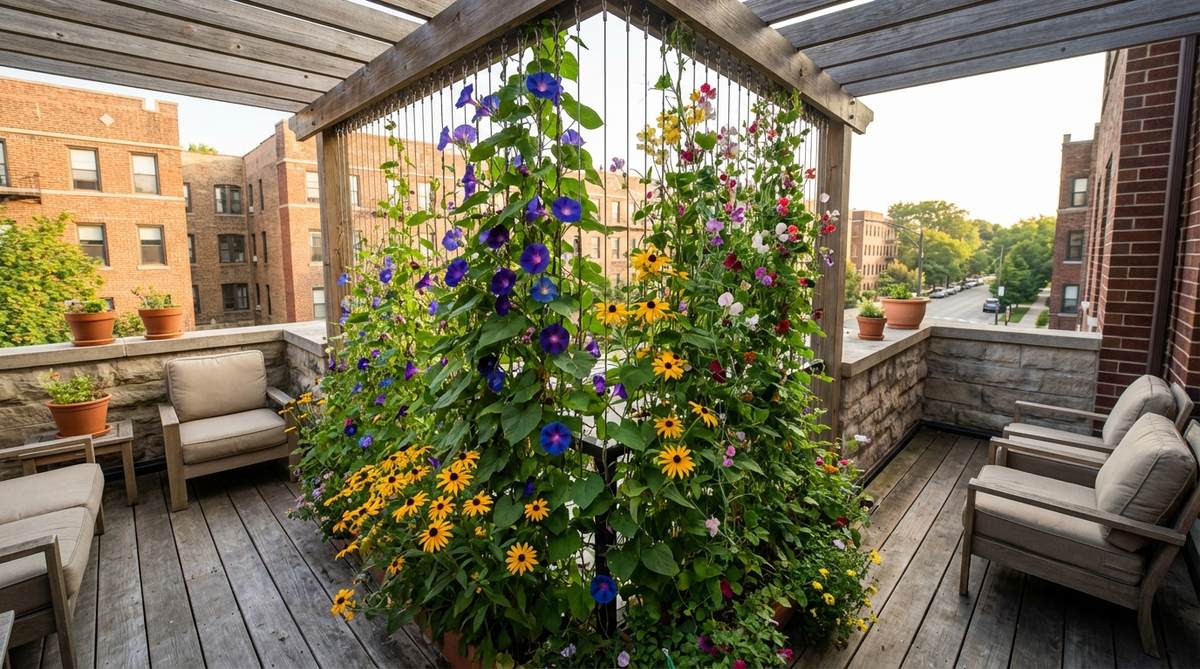
Install cable wires vertically from floor to ceiling, training annual flowering vines to create a seasonal privacy screen. Morning glories, black-eyed Susans, or sweet peas climb rapidly while blooming continuously.
String stainless steel cables every 12 inches across the exposed side of the balcony. Plant fast-growing annuals in spring, guiding initial growth onto wires with twist ties.
The flowering curtain provides complete privacy by midsummer, then easily removes in fall for winter sunlight access.
20. Evergreen Shrub Border
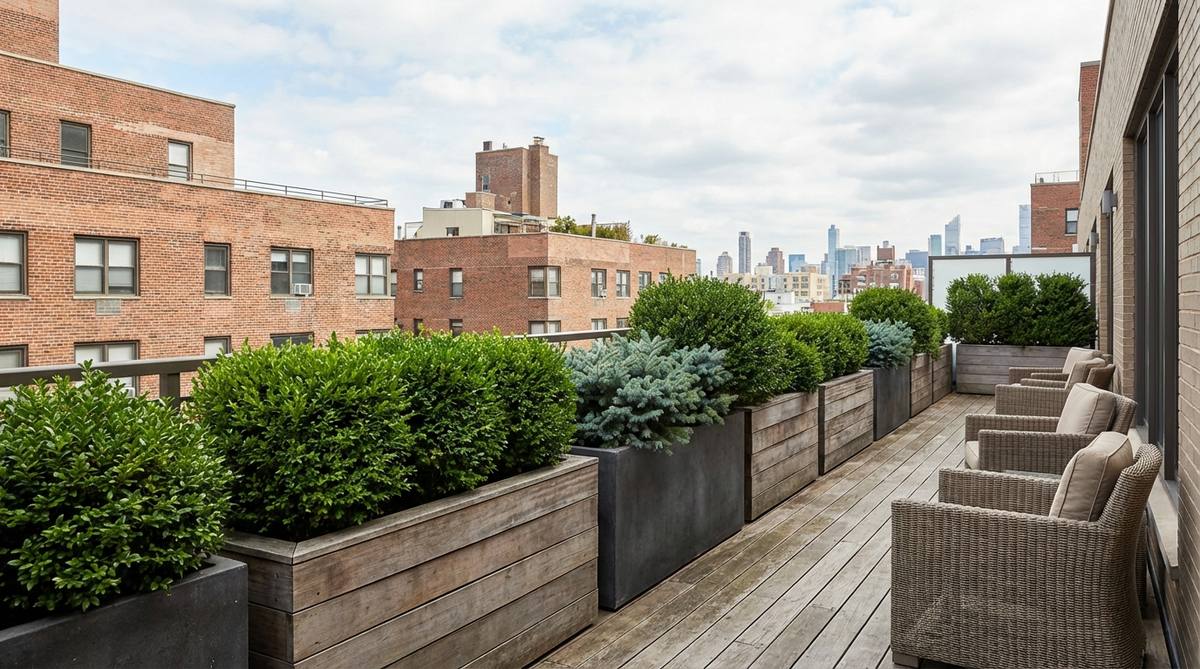
Position dwarf evergreen shrubs like boxwood, juniper, or compact holly in large planters along the balcony perimeter. These woody plants maintain privacy year-round without seasonal dieback.
Select container-suitable dwarf varieties that mature at 3-4 feet. Plant in 15-gallon containers with quality potting soil amended with compost for nutrient retention.
Evergreen borders require minimal maintenance once established, providing permanent structure and reliable screening.
21. Mixed Height Layered Screen
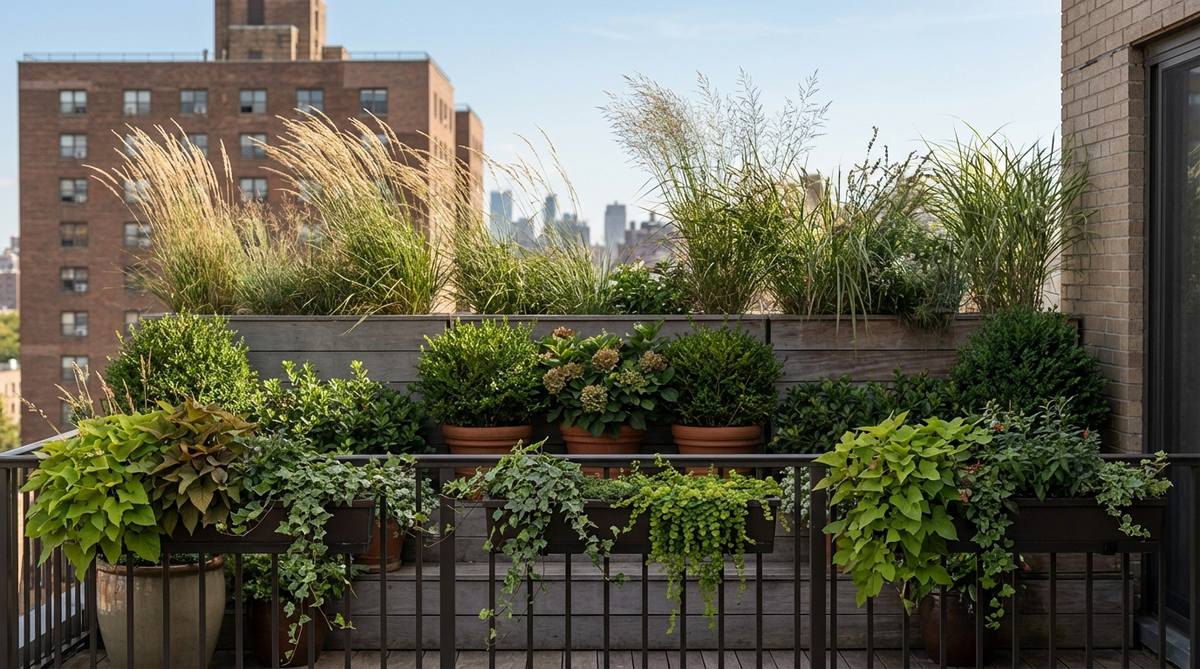
Arrange plants in three staggered tiers with tall grasses in back, medium shrubs mid-level, and trailing plants in front. The layered effect creates depth while blocking views from multiple angles.
Place large containers with ornamental grasses at the back edge, medium pots with bushy plants 18 inches forward, and low trailing varieties along the railing. Vary plant textures for visual interest.
Layering mimics natural landscape design principles, creating a cohesive privacy screen that appears professionally designed.
22. Trellis Panel with Climbers
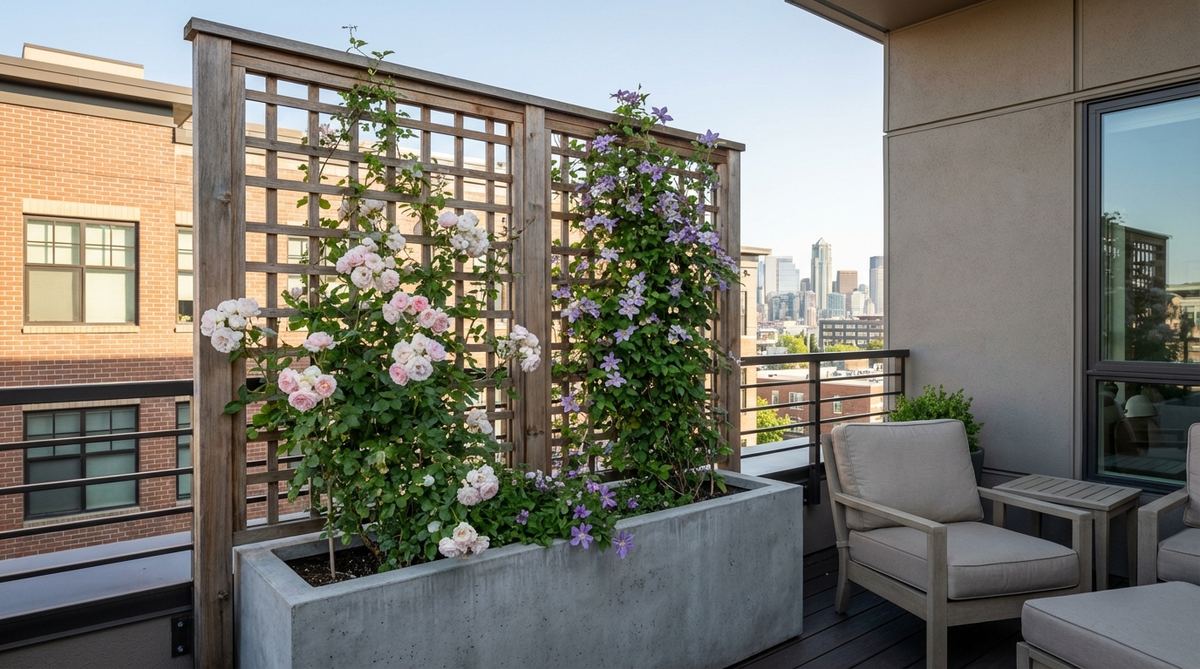
Install freestanding wooden trellis panels in large planters, training perennial climbing roses or clematis for semi-permanent screening. The combination provides immediate structure while plants mature.
Build or purchase decorative trellis panels 6-7 feet tall, securing them in containers with concrete or heavy stones. Plant vigorous climbers that reach full coverage in two seasons.
Trellis systems offer instant privacy from the frame itself while living plants soften the structure with seasonal blooms.
23. Tall Grass Partition
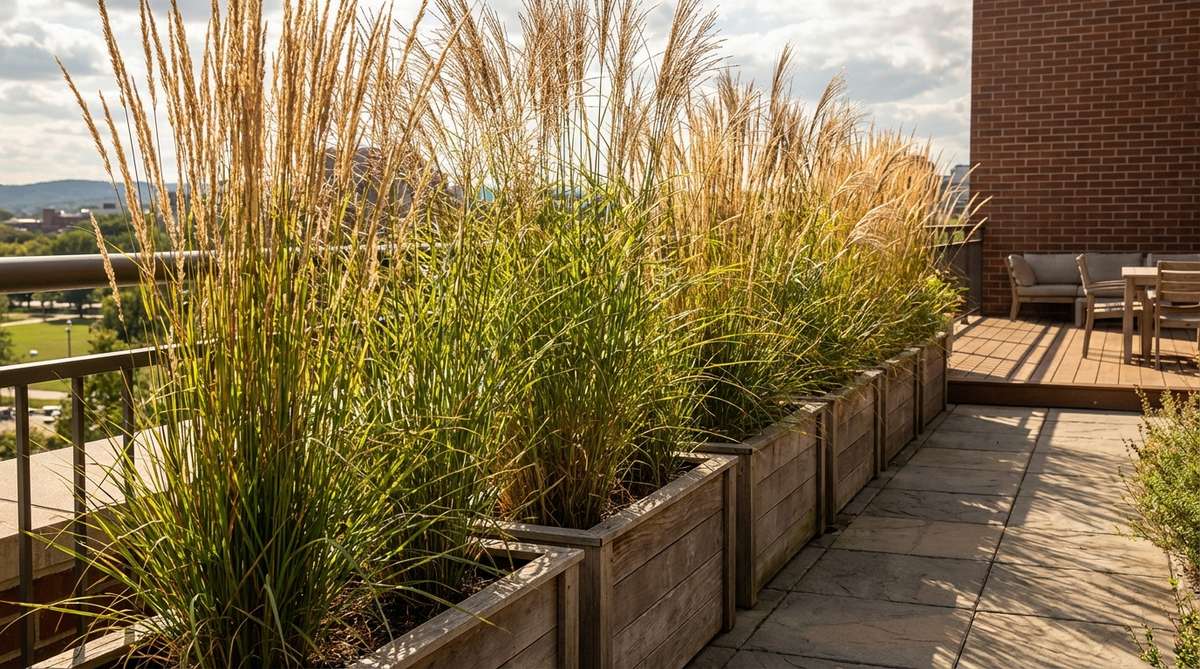
Use ornamental grasses like maiden grass or fountain grass in linear arrangements to divide the balcony into zones. The wispy texture filters views without creating solid barriers.
Plant grasses 24 inches apart in narrow rectangular planters, allowing them to reach four to six feet. The flowing texture provides privacy while permitting air circulation and dappled light.
Grasses require less water than most screening options and deliver year-round structure with seasonal movement and sound.
24. Staggered Columnar Evergreens
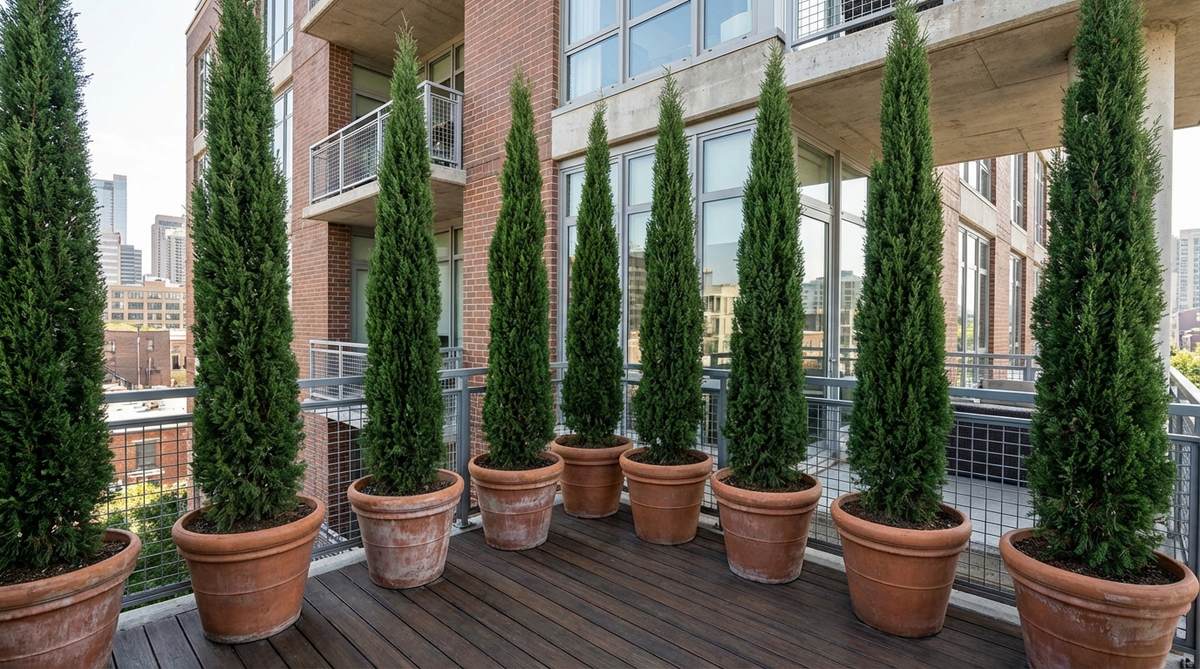
Position narrow columnar evergreens like Italian cypress or sky pencil holly in an alternating pattern that blocks sightlines without consuming excessive floor space.
Plant in containers 16 inches in diameter, spacing them 30 inches apart in a zigzag formation. The narrow growth habit provides height without width, ideal for compact balconies.
Columnar forms deliver maximum screening per square foot, and their formal appearance complements modern urban architecture.
25. Hanging Plant Cascade
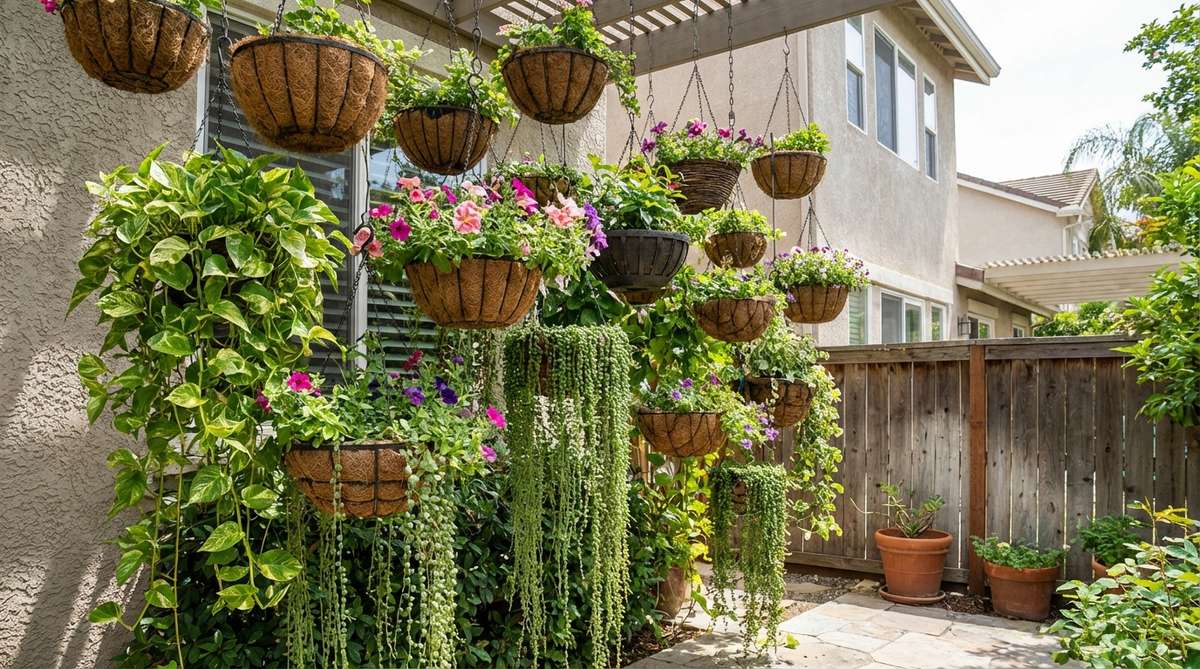
Suspend multiple hanging baskets at staggered heights from overhead structures, creating a cascading green curtain. Trailing plants spill downward, forming a living wall without floor footprint.
Install ceiling hooks at varying distances from the wall, hanging baskets with pothos, trailing petunias, or string of pearls. Space baskets to allow plant growth to interconnect.
Cascading layouts provide privacy from upper floors looking down while adding vertical drama to the space.
Container Arrangement Systems For Small Urban Balcony Ideas
Small urban balcony ideas require careful container selection and placement to balance aesthetics with functionality. These arrangements optimize limited square footage through strategic positioning.
26. Perimeter Planting Plan
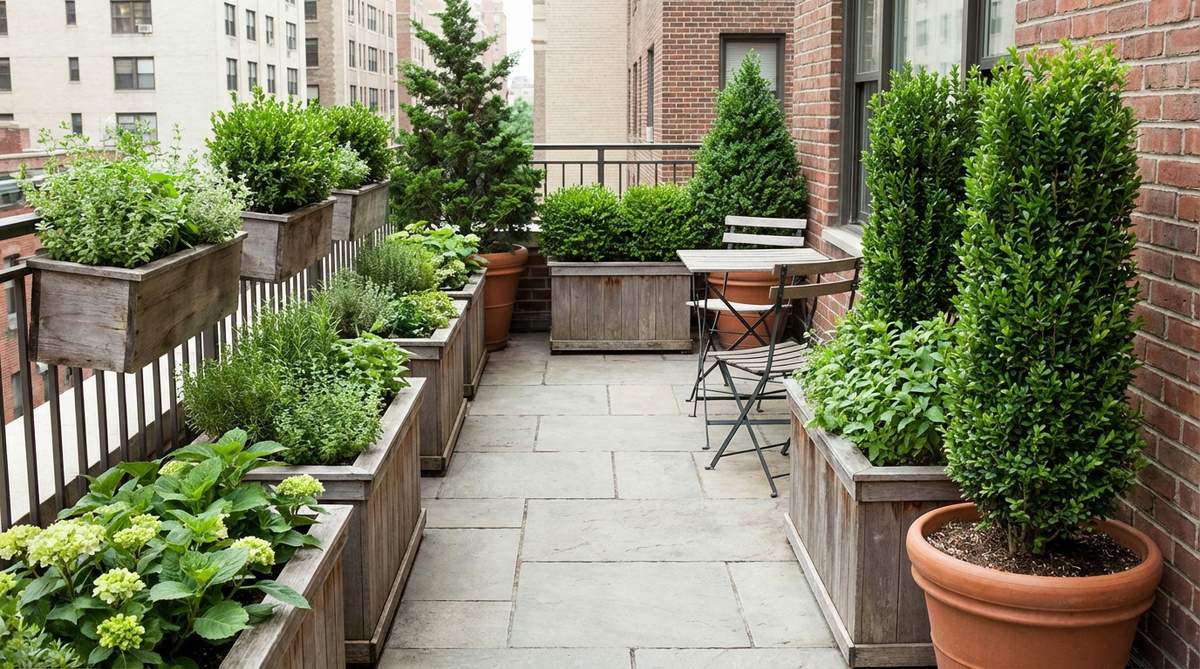
Line all balcony edges with uniform containers, leaving the center open for seating or movement. This arrangement maximizes planting capacity while maintaining usable floor space.
Use matching rectangular planters around the perimeter, varying plant heights to create visual interest. Position taller specimens at corners, graduating to shorter plants along straight sections.
Perimeter layouts work exceptionally well on narrow balconies where central furniture placement is impractical.
27. Corner Cluster Arrangement
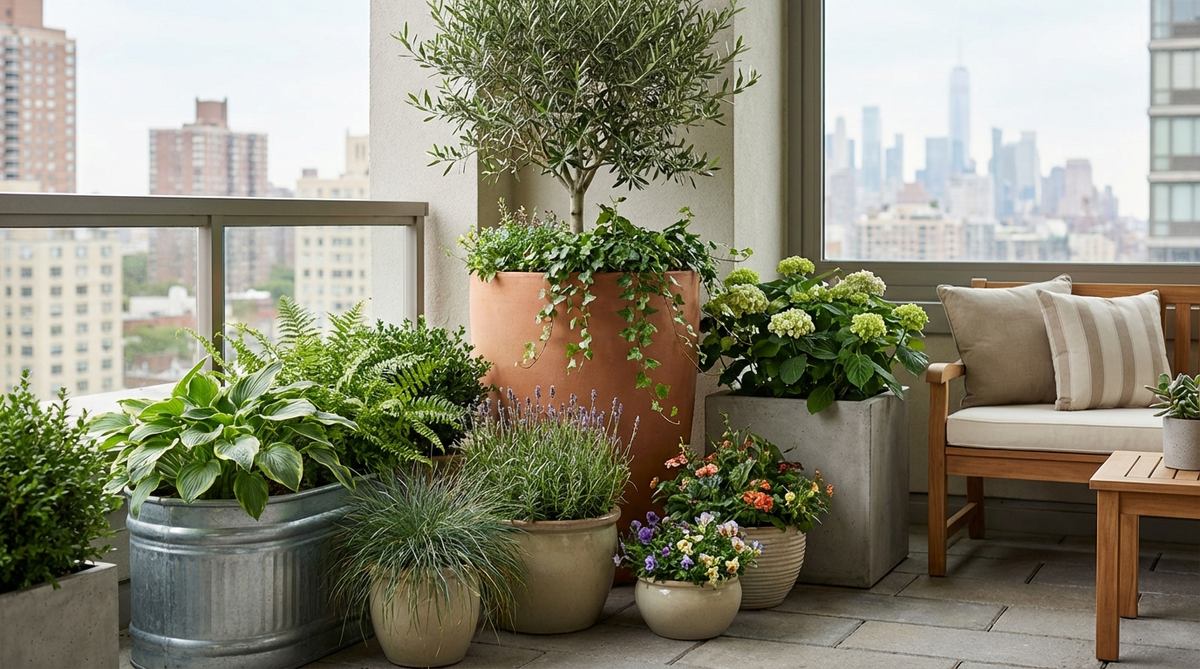
Concentrate multiple containers in one corner, creating a lush focal point while leaving the remaining balcony open. The asymmetric arrangement feels intentional rather than scattered.
Group 5-7 containers of varying heights in a triangular corner formation. Place the tallest container at the back corner point, arranging progressively shorter pots toward the open balcony.
Corner clusters allow flexible furniture placement in the cleared space while delivering concentrated visual impact.
28. Mobile Trolley Garden
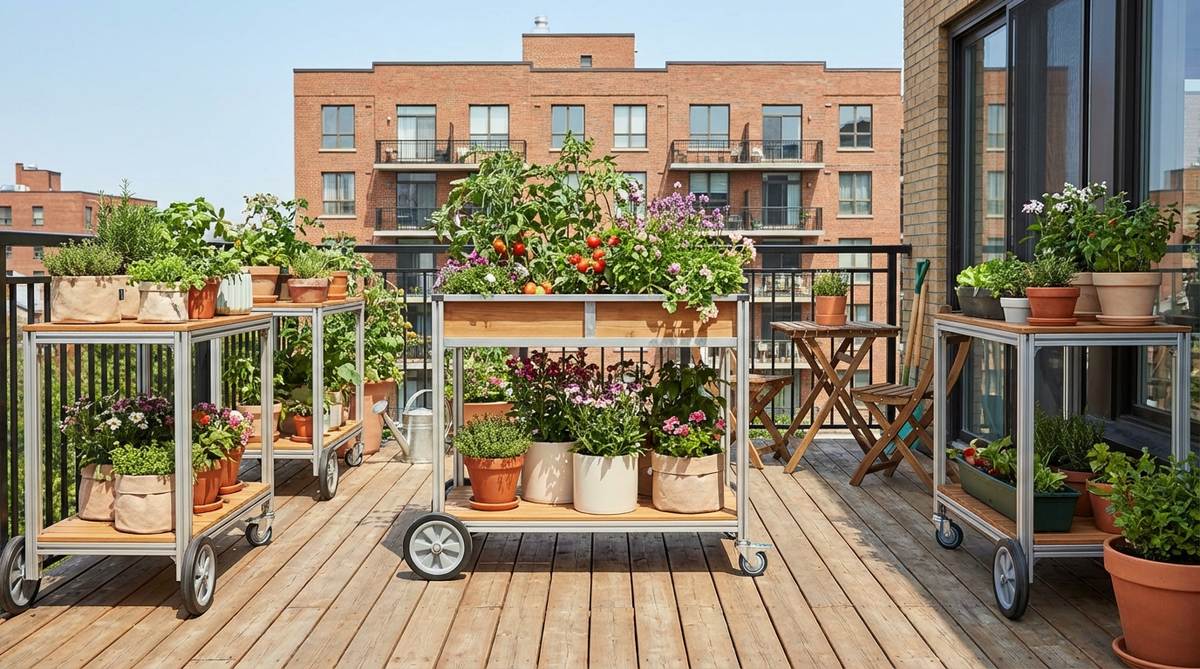
Mount containers on wheeled plant stands or utility carts that move easily for sun tracking, cleaning, or entertaining. The mobility accommodates changing needs throughout seasons and occasions.
Select rolling platforms rated for outdoor use with locking wheels. Load with 3-4 containers, balancing weight distribution to prevent tipping.
Mobile systems prove invaluable on balconies that host gatherings, allowing instant reconfiguration to clear space when needed.
29. Tiered Stadium Setup
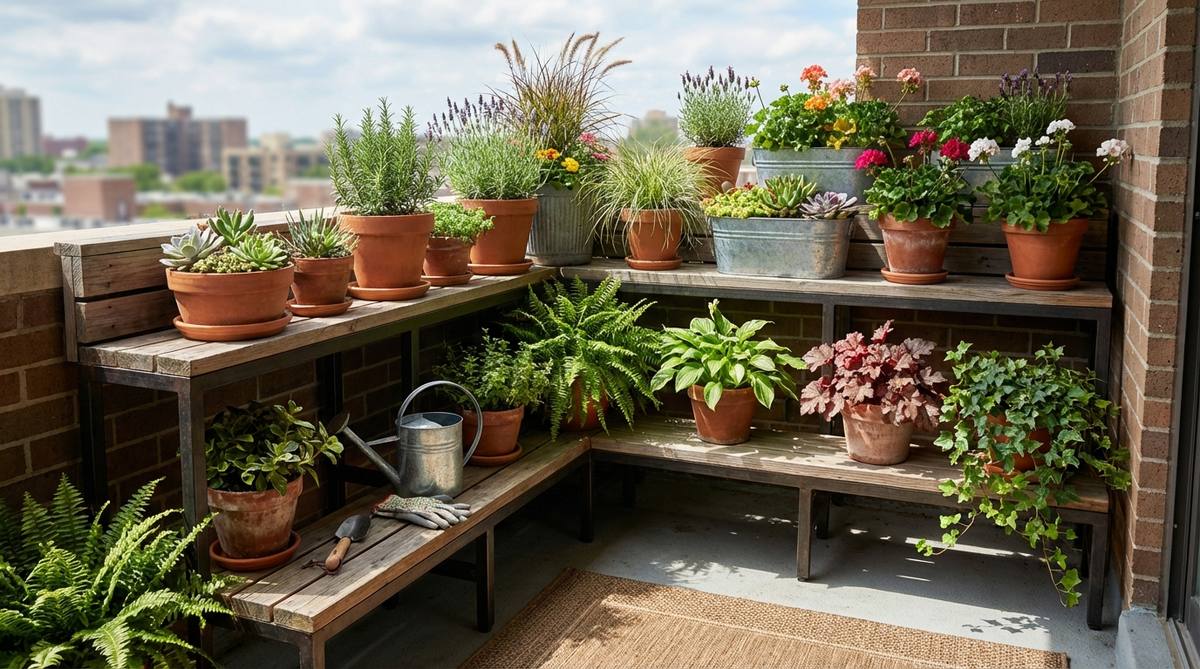
Arrange containers on multi-level plant stands that resemble stadium seating, showcasing each plant without hidden back rows. The elevation ensures all plants receive adequate light.
Purchase or build three-tier corner shelving units designed for outdoor use. Place sun-loving plants on top tiers, shade-tolerant varieties below, matching light requirements to available exposure.
Stadium arrangements turn collections into displays, making maintenance and harvesting simpler through improved access.
30. Symmetrical Flanking Design
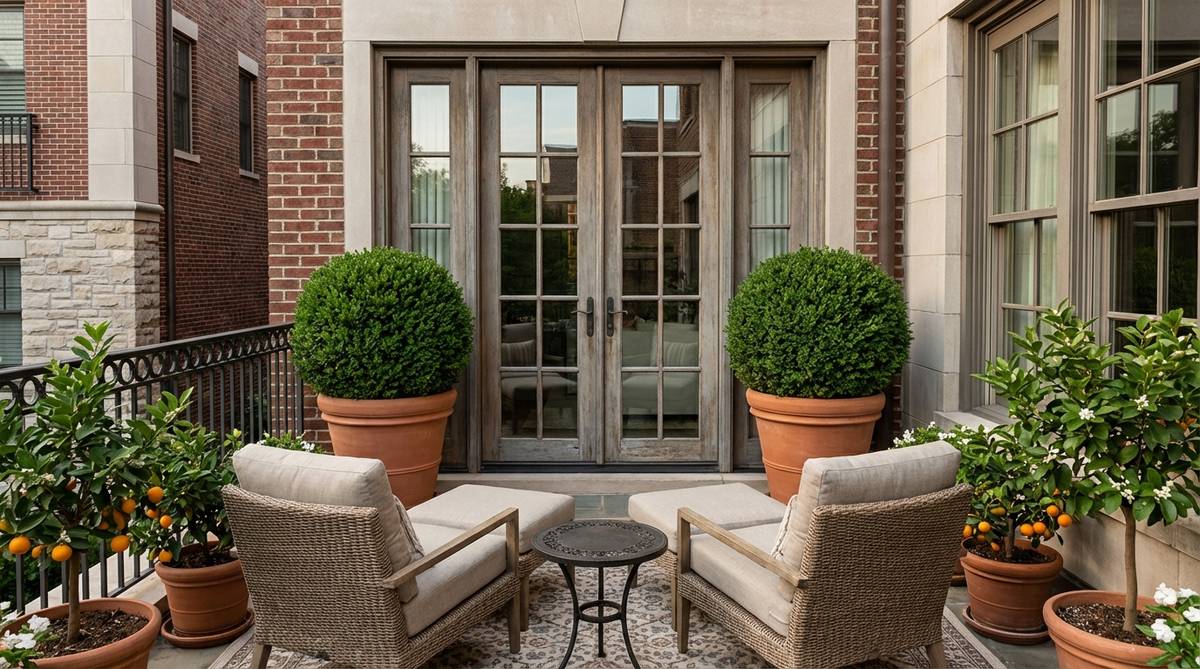
Place identical containers and plants on both sides of the balcony door or seating area, creating formal symmetry. This classical approach delivers polished, intentional aesthetics.
Select matching large containers for statement plants like citrus trees or boxwood topiaries. Position them equidistant from the central feature, maintaining identical plant varieties and sizes.
Symmetrical designs suit modern and traditional architecture equally, providing timeless elegance with minimal effort.
31. Single Specimen Showcase
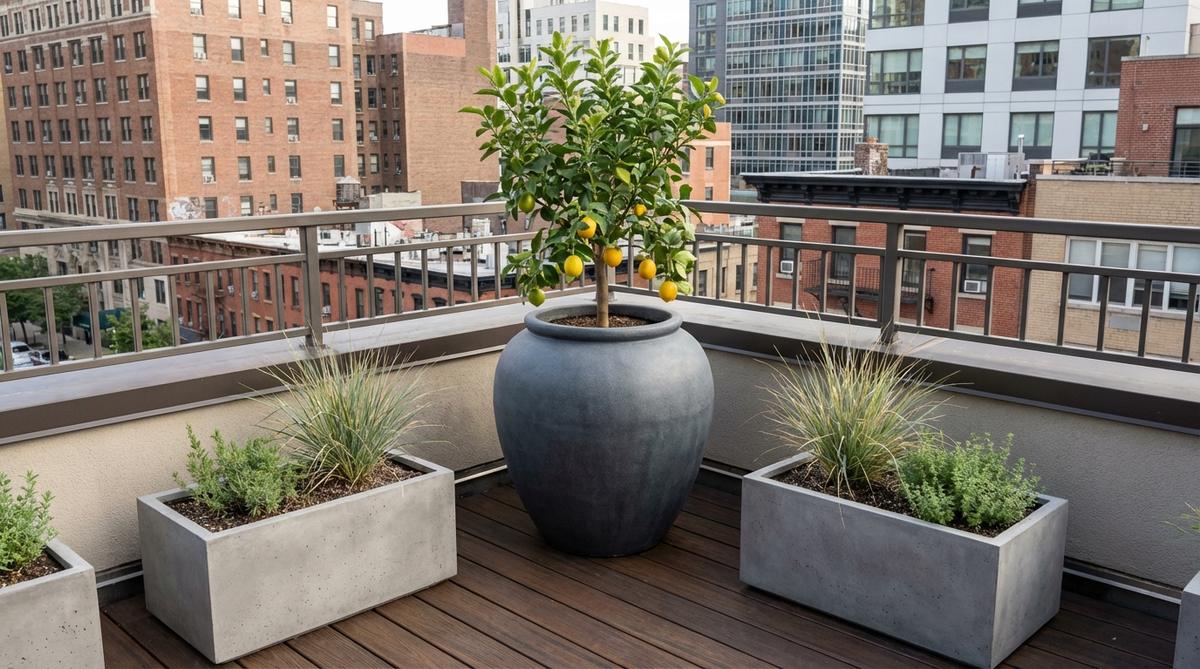
Feature one substantial container with a striking plant as the balcony focal point, surrounding it with minimal additional plantings. This minimalist approach suits small balconies or low-maintenance preferences.
Choose a large decorative container with a tree-form plant like Japanese maple, dwarf citrus, or ornamental olive. Position it where it draws the eye immediately upon entering the balcony.
Specimen showcases require less maintenance than multiple containers while delivering maximum visual impact from a single investment.
32. Breakfast Nook Integration
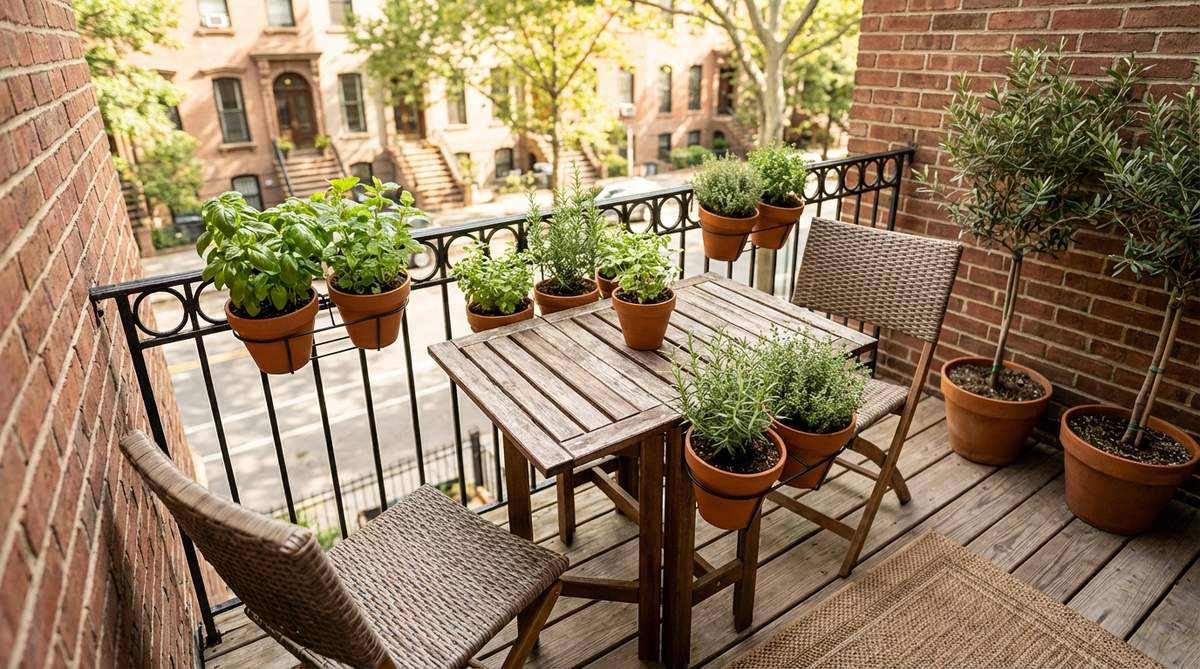
Integrate small containers directly into bistro table arrangements or mount them on table edges, combining dining and gardening. Fresh herbs remain within reach during meals.
Install railing-mount containers behind seating or place small pots with herbs directly on the table as living centerpieces. Choose non-invasive aromatic plants that enhance rather than interfere with dining.
Integrated designs blur the boundary between functional garden and outdoor living space, maximizing small balconies’ dual purposes.
33. Vertical and Horizontal Mix
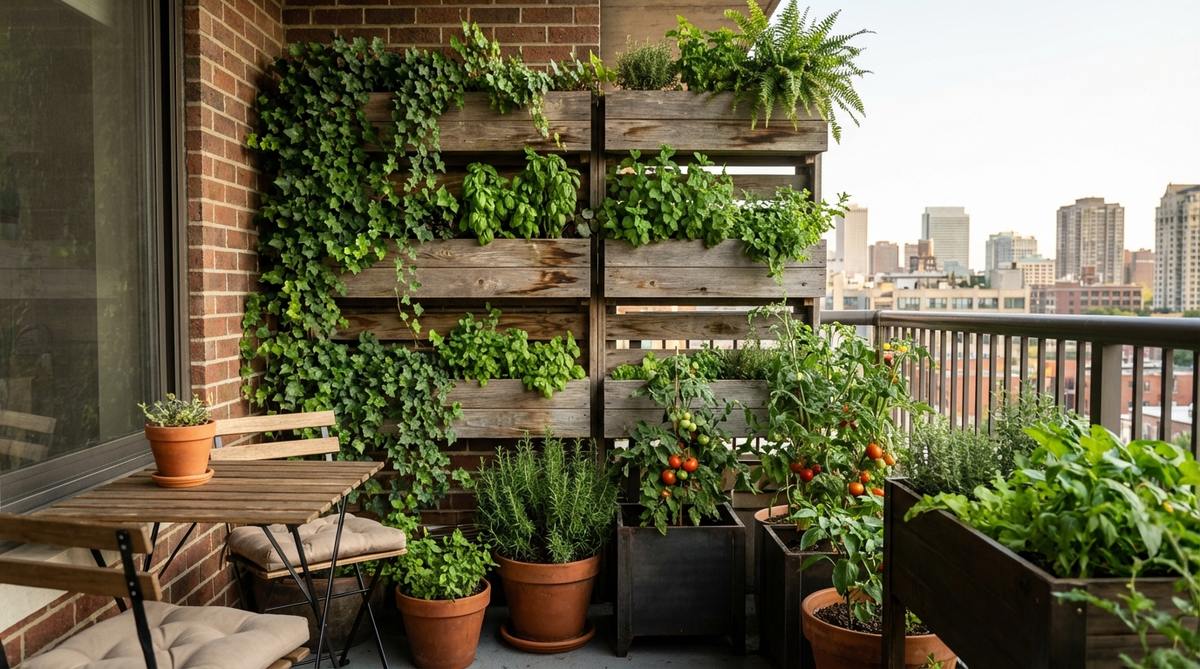
Combine vertical growing systems on walls with traditional floor containers, creating multi-dimensional gardens. This hybrid approach layers growing zones to maximize total capacity.
Install wall planters for herbs and trailing plants while placing larger floor containers for vegetables or shrubs. Balance the visual weight between vertical and horizontal elements.
Mixed systems provide the highest plant density possible, essential for serious urban gardeners with production goals.
Specialized Design Approaches For Urban Balcony Garden Ideas
These urban balcony garden ideas address specific challenges like extreme weather, weight restrictions, or aesthetic themes that define your outdoor space.
34. Zen Meditation Garden
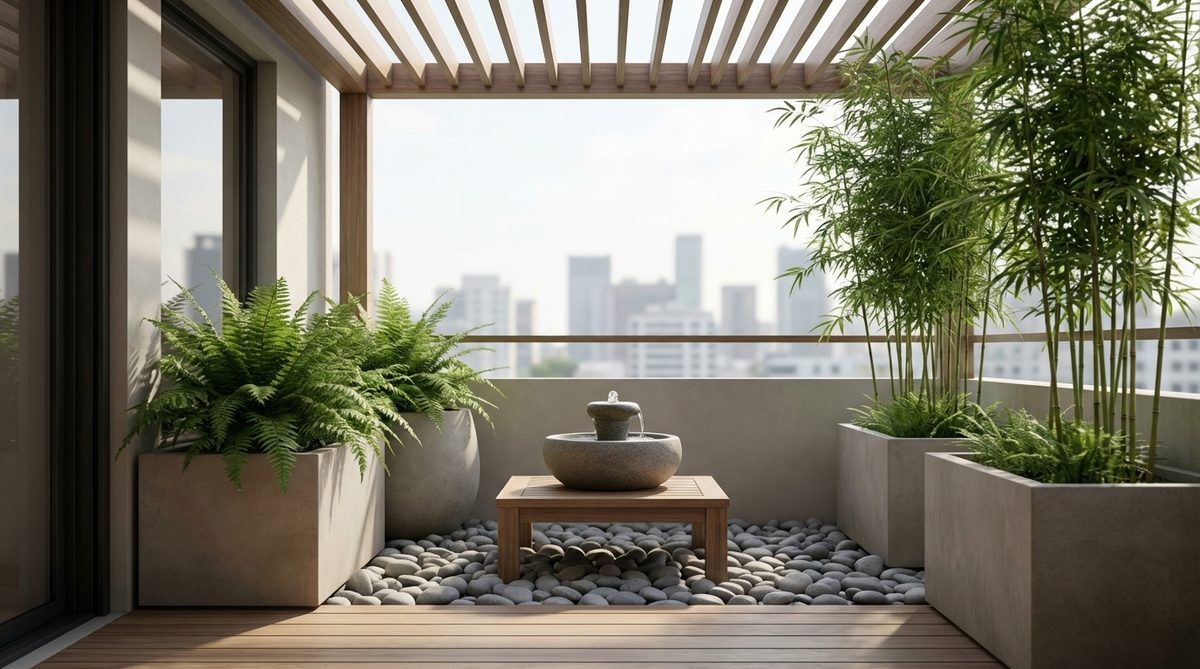
Design a minimalist layout with carefully selected plants, a water feature, and natural materials that promote tranquility. This theme prioritizes calming aesthetics over production.
Use a limited palette of green foliage plants like ferns and bamboo in neutral containers. Add a small tabletop fountain and smooth river stones as mulch. Maintain clean lines and negative space.
Zen gardens create urban sanctuaries for stress relief, transforming balconies into meditation spaces rather than traditional gardens.
35. Pollinator Haven Layout
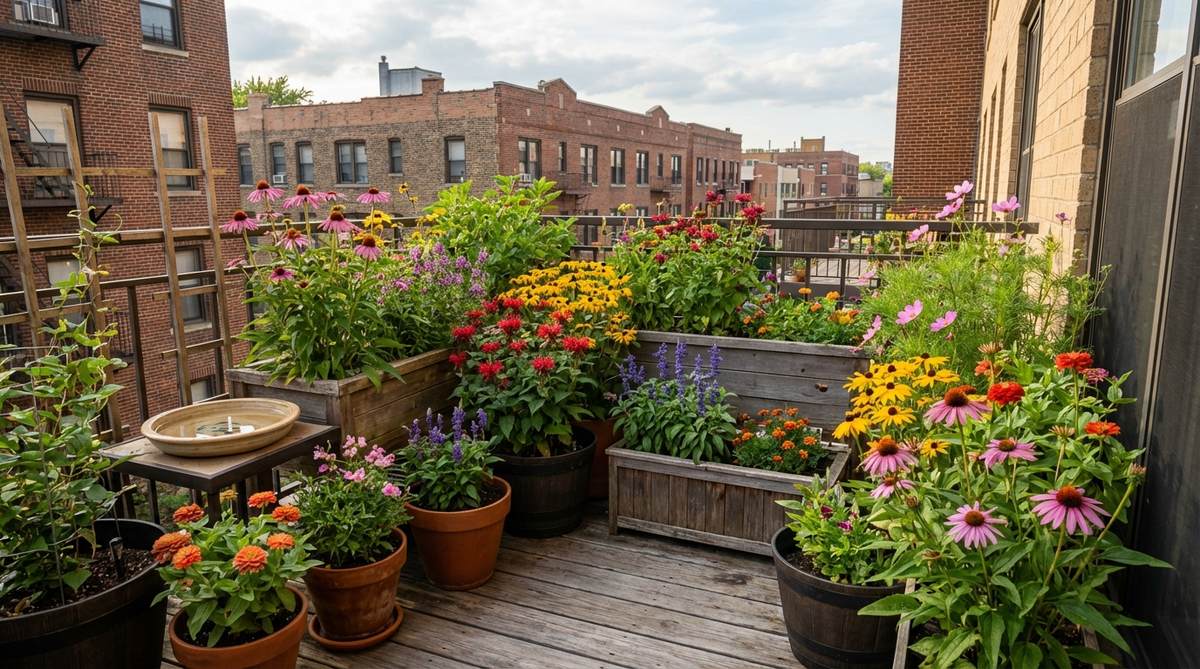
Select flowering plants that attract bees, butterflies, and hummingbirds, arranging them in clusters by bloom color. This ecological approach supports urban biodiversity while creating vibrant displays.
Plant native flowering perennials and annuals in grouped containers, including varieties that bloom in sequence from spring through fall. Add a shallow water dish for visiting insects.
Pollinator gardens benefit nearby vegetable crops through improved pollination while contributing to local ecosystem health.
36. Color-Blocked Arrangement
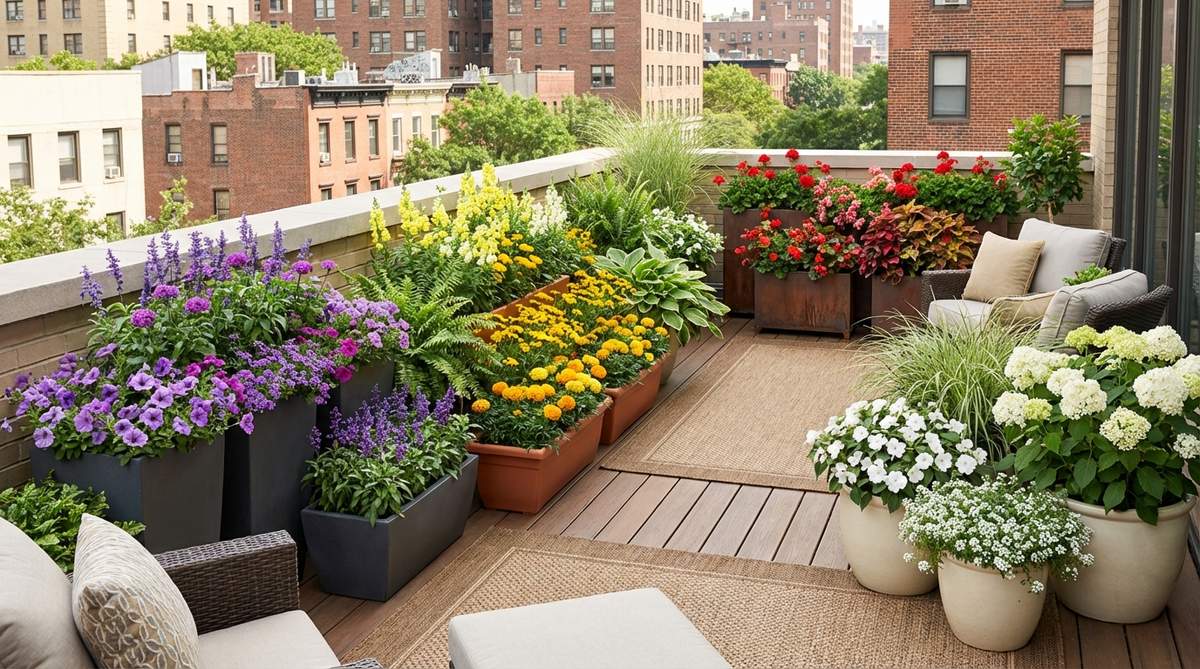
Organize plants into distinct color zones using coordinated containers and flowers. This artistic approach treats the balcony as a design canvas with bold color statements.
Group containers with similar flower colors together, creating blocks of purple, yellow, red, or white. Use neutral foliage plants as transitions between color zones.
Color blocking delivers dramatic visual impact visible from inside the home, turning the balcony into living artwork.
37. Succulent Drought Garden
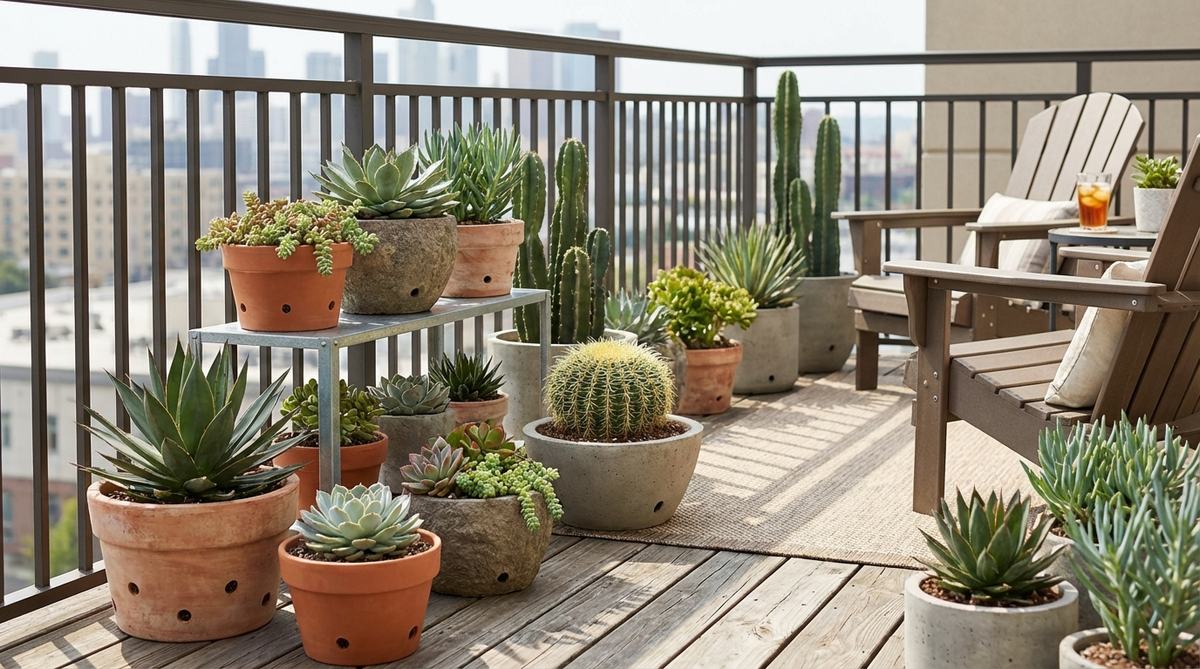
Fill the balcony exclusively with drought-tolerant succulents and cacti in well-draining containers. This low-water layout suits hot climates and busy schedules.
Plant diverse succulent varieties in shallow containers with cactus soil mix. Group containers for visual impact, mixing textures and forms from spiky to rosette-shaped.
Succulent gardens require watering only every 2-3 weeks, making them ideal for frequent travelers or water-conscious gardeners.
38. Seasonal Rotation System
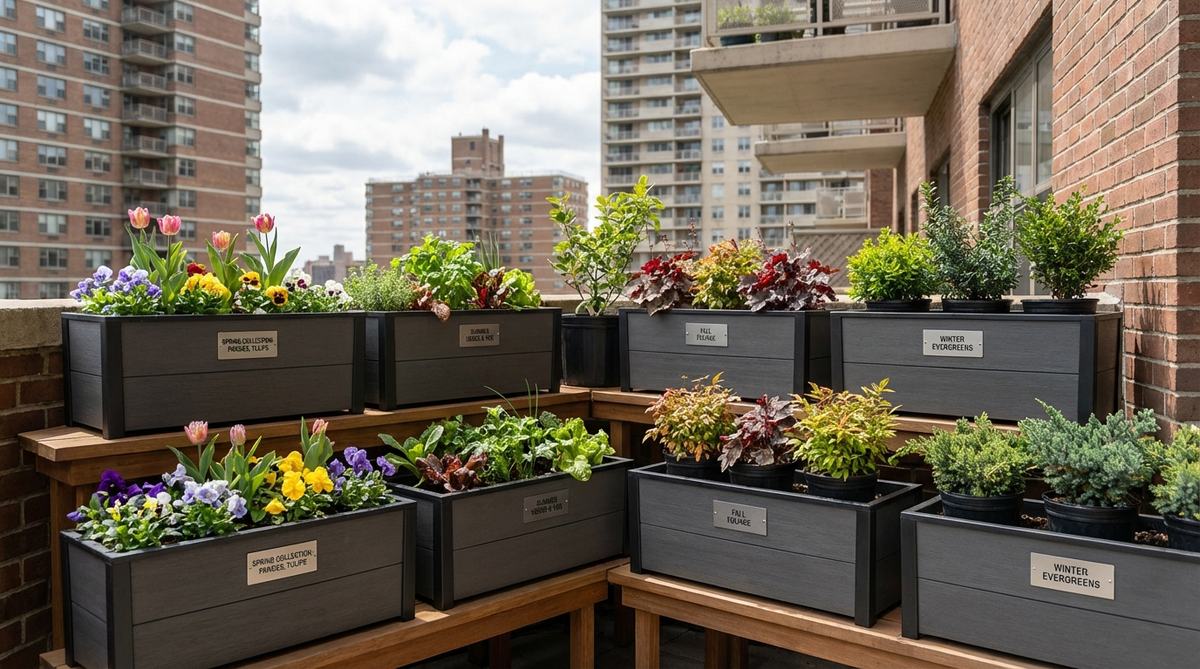
Maintain separate plant collections for each season, swapping containers as weather changes. This dynamic approach keeps the balcony looking fresh year-round.
Store off-season plants in a garage or indoor space, bringing out spring bulbs, summer annuals, fall mums, or evergreen winter arrangements as appropriate. Use standardized container sizes for easy swapping.
Rotation systems prevent plant loss from unseasonal weather while maintaining peak aesthetics through all four seasons.
39. Lightweight Elevated Garden
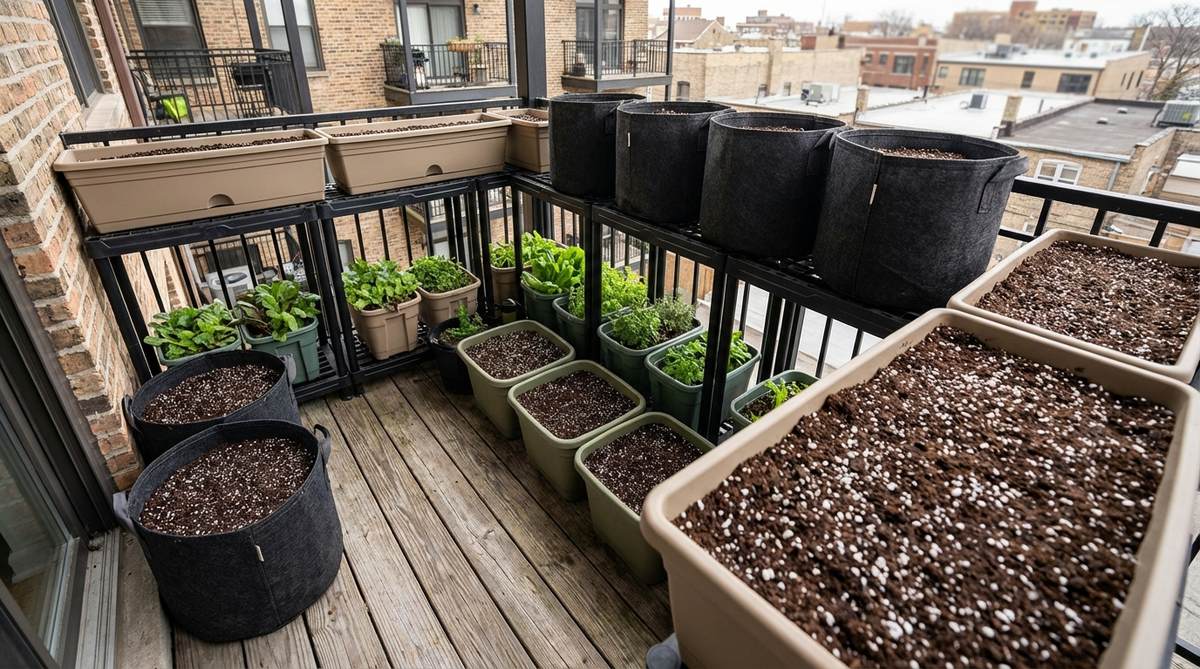
Use exclusively lightweight materials like plastic containers, fabric grow bags, and synthetic soil mixes to minimize structural load. This safety-focused layout addresses weight restrictions on older buildings.
Select resin or fiberglass containers instead of ceramic or concrete. Fill with soilless potting mix containing perlite and peat. Avoid large water-filled features.
Lightweight systems make balcony gardening possible in buildings with strict weight limits, expanding access to more urban gardeners.
40. Wind-Resistant Configuration
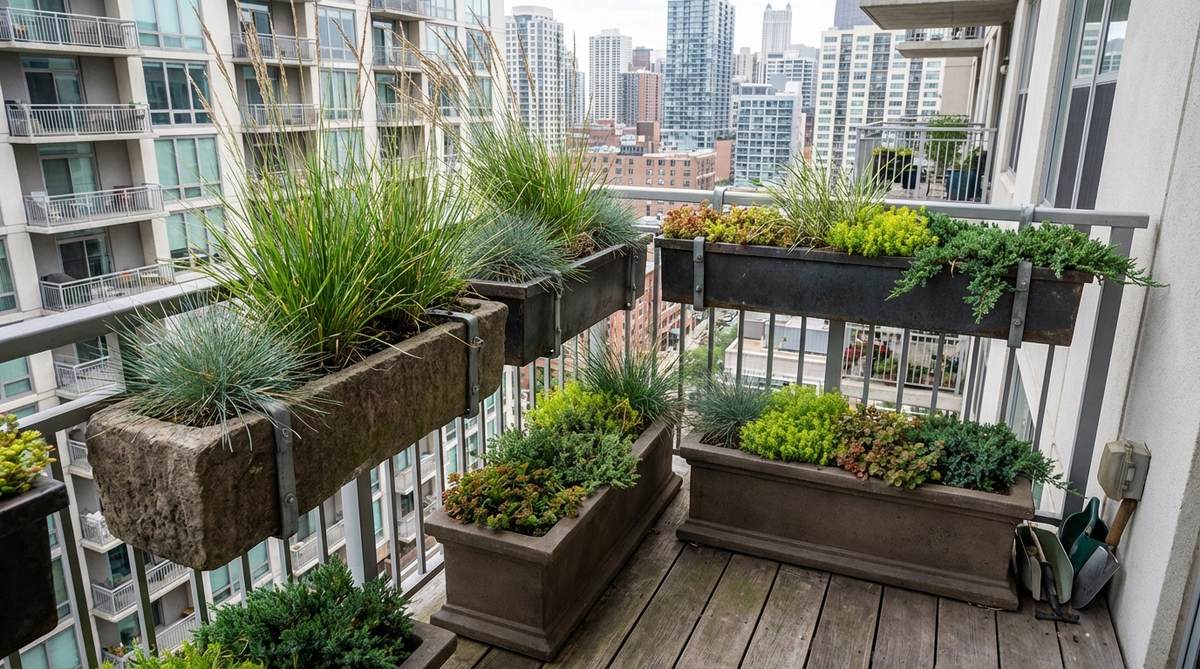
Position heavy, low-profile containers with wind-tolerant plants secured to railings or walls. This practical layout withstands high-rise exposure and frequent gusts.
Choose squat containers with wide bases and anchor them with additional weight or straps. Plant sturdy species like ornamental grasses, sedums, and woody herbs that flex rather than break.
Wind-resistant designs prevent toppled pots and damaged plants, essential for balconies above the fifth floor or in coastal locations.
41. Self-Watering System Layout
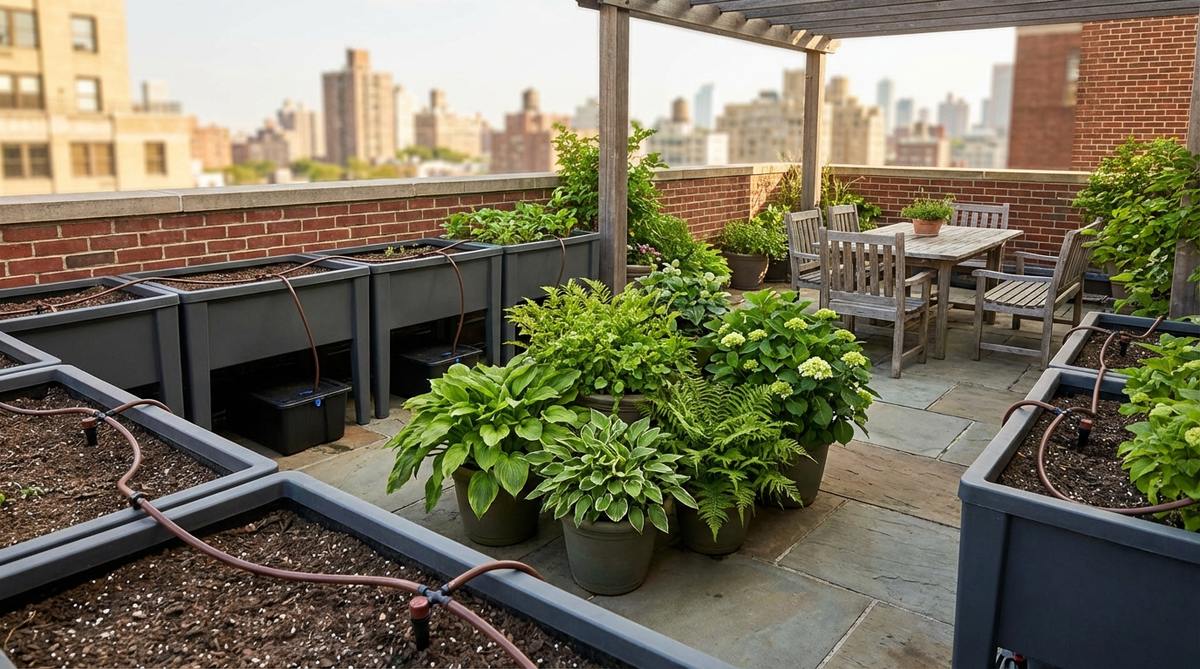
Install containers with built-in water reservoirs or drip irrigation systems that reduce daily maintenance. This technical approach suits professionals with limited time.
Purchase self-watering planters with sub-irrigation systems or retrofit standard containers with drip emitters on timers. Group plants with similar water needs on the same irrigation line.
Automated watering extends travel possibilities and prevents drought stress, particularly valuable during summer heat waves.
42. Night Garden with Illumination
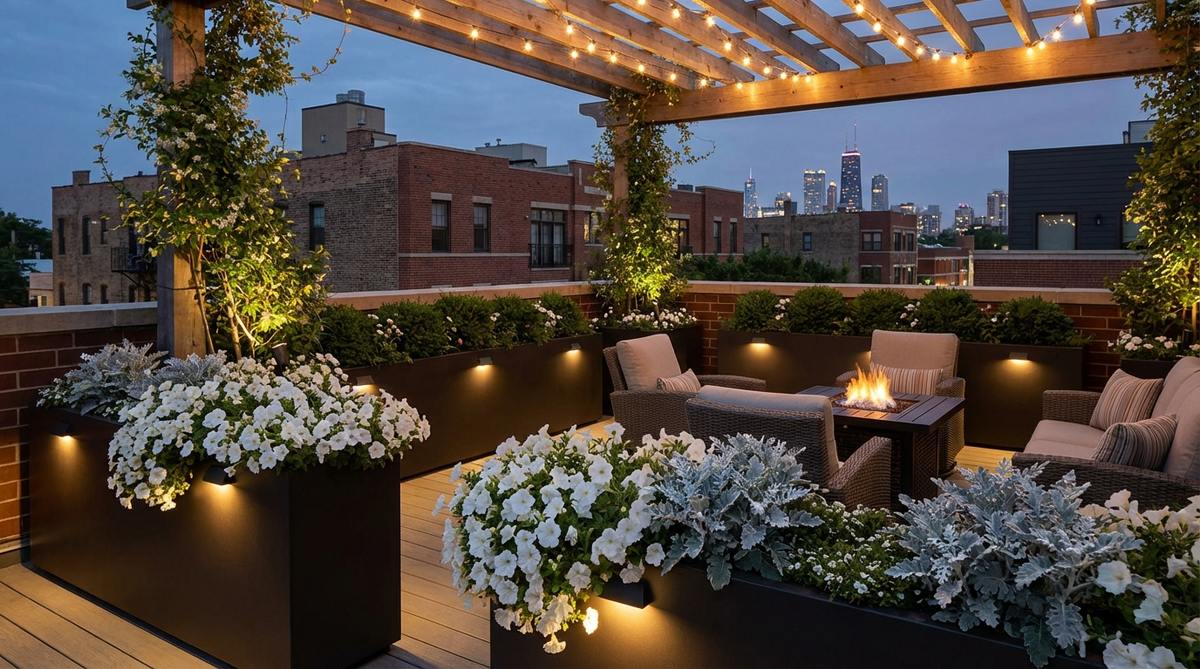
Design for evening enjoyment by selecting white flowers and silver foliage that glow under moonlight or strategic uplighting. This sensory layout extends balcony use after dark.
Plant white petunias, silver dusty miller, and pale blooming varieties. Install solar stake lights or low-voltage LED uplights to highlight key specimens.
Night gardens create enchanting evening retreats, particularly valuable for urban professionals who return home after sunset during working months.
43. Culinary Theme Garden
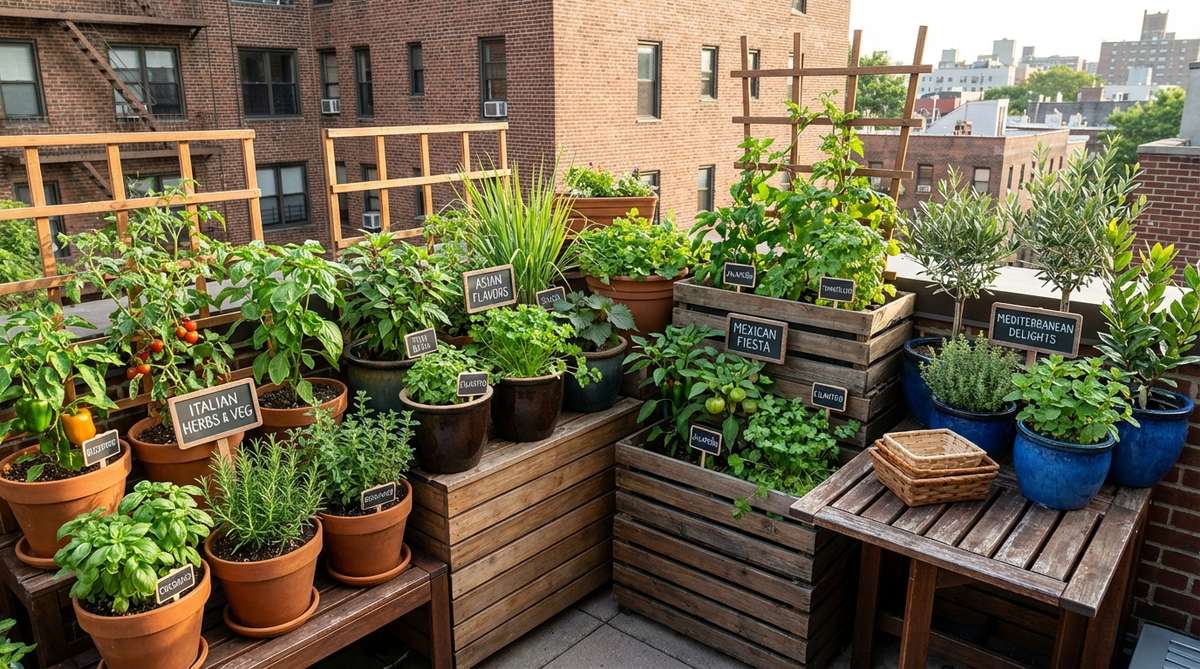
Organize herbs and edibles by cuisine type, creating Italian, Asian, Mexican, or Mediterranean themed sections. This organizational approach simplifies meal planning and harvesting.
Group basil, oregano, and tomatoes for Italian cooking, or cluster cilantro, peppers, and limes for Mexican dishes. Label sections clearly with decorative markers.
Theme gardens inspire creativity in the kitchen while ensuring you grow exactly what your favorite recipes require.
44. Aromatic Sensory Border
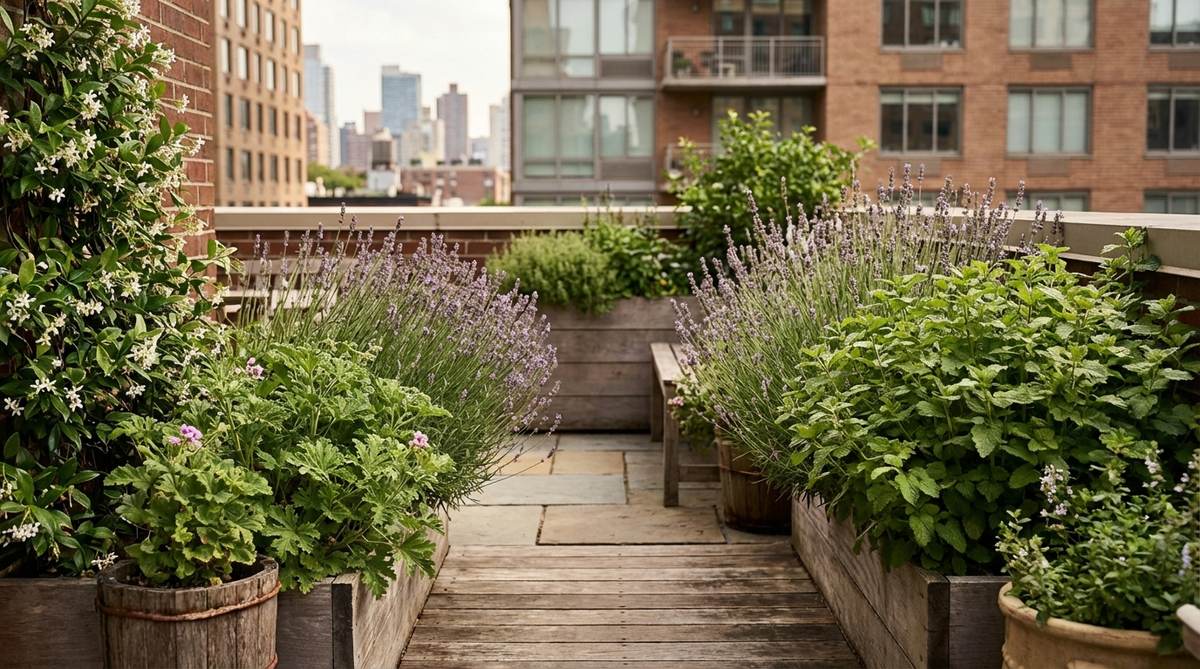
Line pathways with fragrant herbs and flowers positioned at nose height when seated or passing. This sensory design activates touch and smell, not just sight.
Plant lavender, scented geraniums, lemon balm, and jasmine where people naturally brush against them. Position aromatic varieties near seating areas.
Aromatic layouts transform ordinary balconies into multi-sensory experiences, with fragrances released through daily interaction with plants.
Creating Your Urban Balcony Garden
Successful urban balcony garden layouts balance production goals with aesthetic preferences while respecting structural limitations and maintenance capacity. Whether you implement vertical systems for maximum capacity, focus on edible yields, or design themed retreats, the key lies in matching layout strategies to your specific balcony conditions and lifestyle needs. Start with a single layout approach that addresses your primary constraint, whether that’s limited space, weight restrictions, or time availability. Fresh Garden Ideas encourages urban gardeners to experiment with combinations of these layouts, adapting them to seasonal changes and evolving preferences as your gardening skills develop.
Frequently Asked Questions
What is the best layout for a small urban balcony garden?
Vertical layouts deliver the best results for small balconies by maximizing wall space rather than consuming limited floor area. Combine wall-mounted planters with railing containers and one or two floor pots to create multiple growing zones. Focus on compact varieties and herbs that produce abundantly in small containers, and maintain clear pathways for access and movement.
How do I arrange containers on my balcony for maximum sun exposure?
Map your balcony’s sun patterns throughout the day by observing which areas receive direct light and for how long. Position sun-loving plants like tomatoes, peppers, and basil in the brightest zones that receive six or more hours of direct sun. Place shade-tolerant leafy greens and ferns in areas that get morning sun or filtered light. Use mobile plant stands to rotate containers weekly, ensuring even exposure for all plants.
Can I create an urban balcony garden in a rental apartment?
Rental-friendly balcony gardens avoid permanent installations by using freestanding structures, removable adhesive hooks, and railing-mounted containers that clamp rather than drill. Choose mobile systems like wheeled trolleys, tension poles, and hanging baskets suspended from existing hooks. Fabric grow bags and lightweight containers move easily when you relocate, making them ideal for temporary living situations.
What vegetables grow best in urban balcony garden layouts?
Compact vegetable varieties bred for containers perform best on balconies, including cherry tomatoes, bush beans, peppers, lettuce, spinach, and radishes. Vertical crops like pole beans and cucumbers maximize space when trained on trellises. Herbs such as basil, cilantro, parsley, and chives produce abundantly in small pots. Choose determinate tomato varieties that stay under four feet rather than sprawling indeterminate types.
How much weight can a typical apartment balcony hold for a garden?
Most modern apartment balconies support 50-100 pounds per square foot, but older buildings may have lower limits. Check your lease or building codes for specific restrictions. Reduce weight by using lightweight resin containers instead of ceramic, choosing soilless potting mixes rather than garden soil, and positioning heavy containers near structural supports like walls and corners. Distribute weight evenly across the balcony rather than concentrating it in one area.
What are the easiest urban balcony design ideas for beginners?
Start with perimeter container arrangements using 4-6 pots of easy-care plants like herbs, petunias, and succulents. This simple layout keeps the center open while providing gardening success without overwhelming maintenance. Choose self-watering containers to reduce daily tasks, and select proven varieties suited to your sun exposure. Expand gradually to vertical systems or themed collections as your confidence grows.