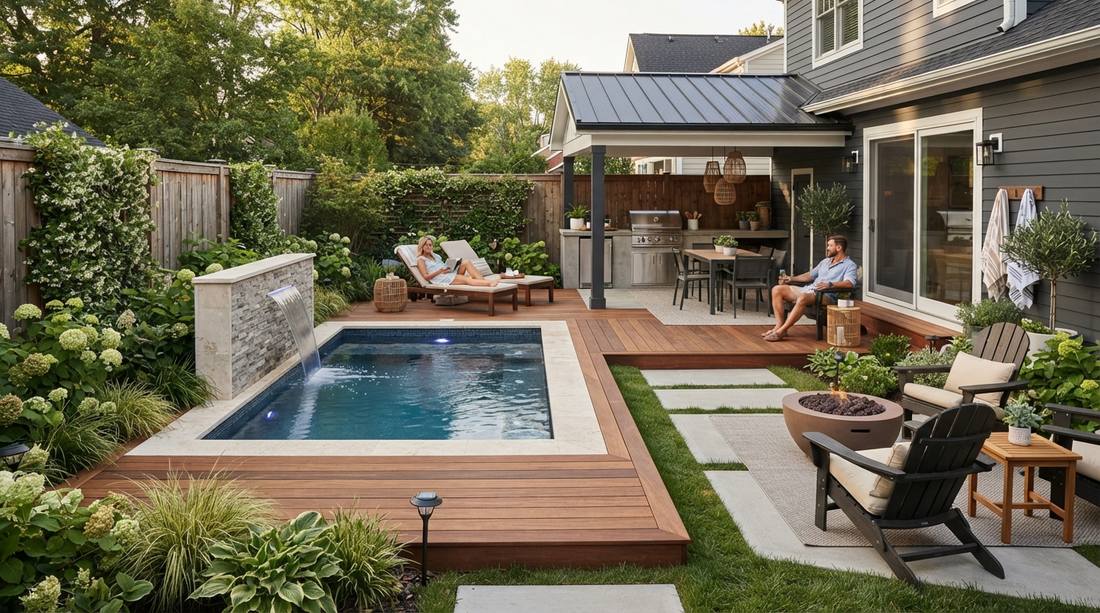
Planning a small garden with pool instantly redefines your home’s outdoor dynamic. Utilizing smart material sourcing creates a five-star aesthetic without contractors. The right premium foundational elements guarantee a luxurious backyard retreat.
Design Snapshot: Key Principles
- Footprint First: Prioritize compact dimensions (8-15 feet) that leave room for pathways, seating, and plantings without overwhelming the yard
- Vertical Thinking: Use partially recessed or vault installations to reduce visual height and integrate seamlessly with existing hardscapes
- Multi-Season Value: Select heated spas or insulated plunge pools that justify their footprint with year-round usability
- Quick Installation: Consider prefabricated options like galvanized steel tanks or fiberglass shells that install in days rather than months
Stock Tank Solutions for Budget-Conscious Homeowners
1. Painted White Stock Tank with Deck Surround
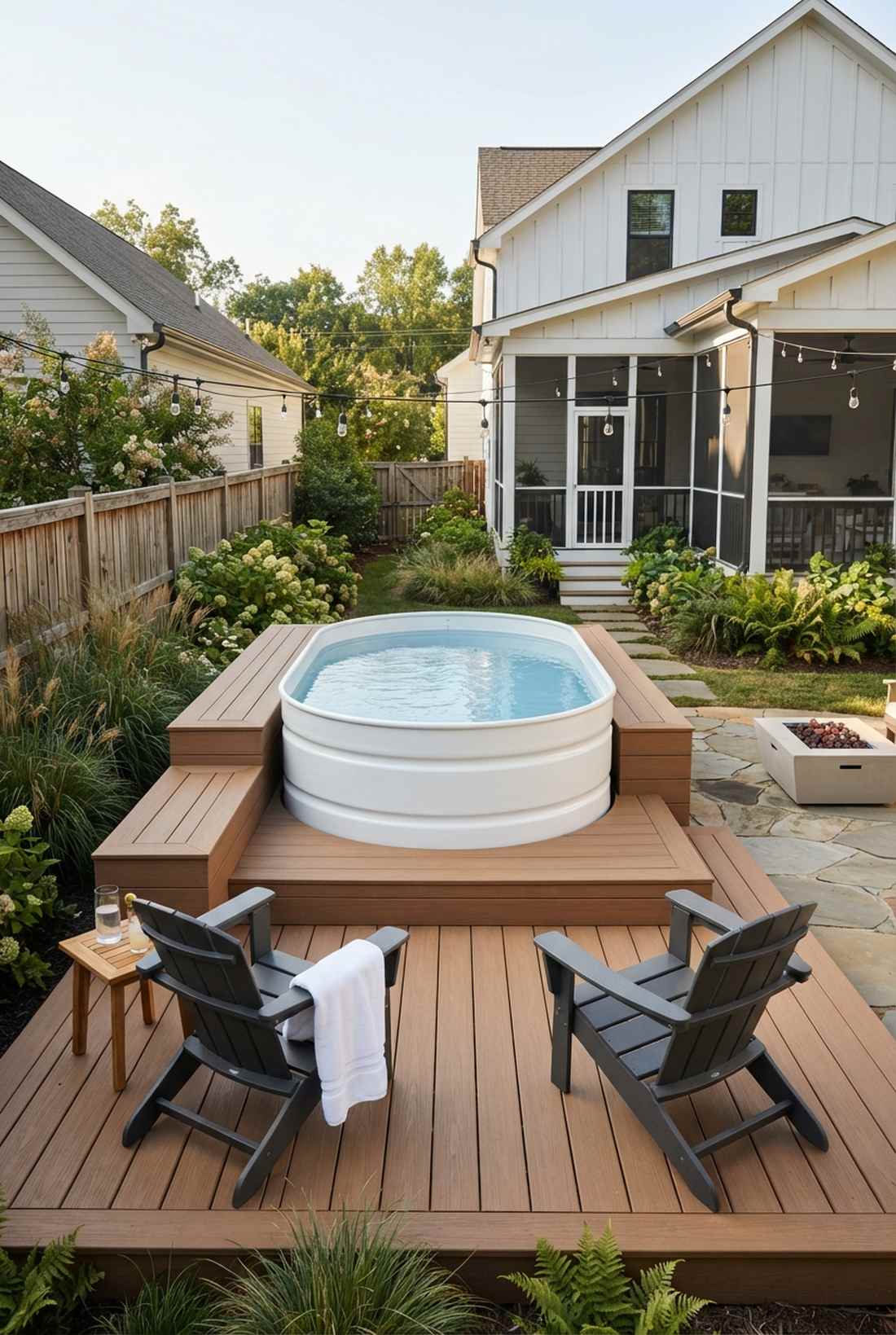
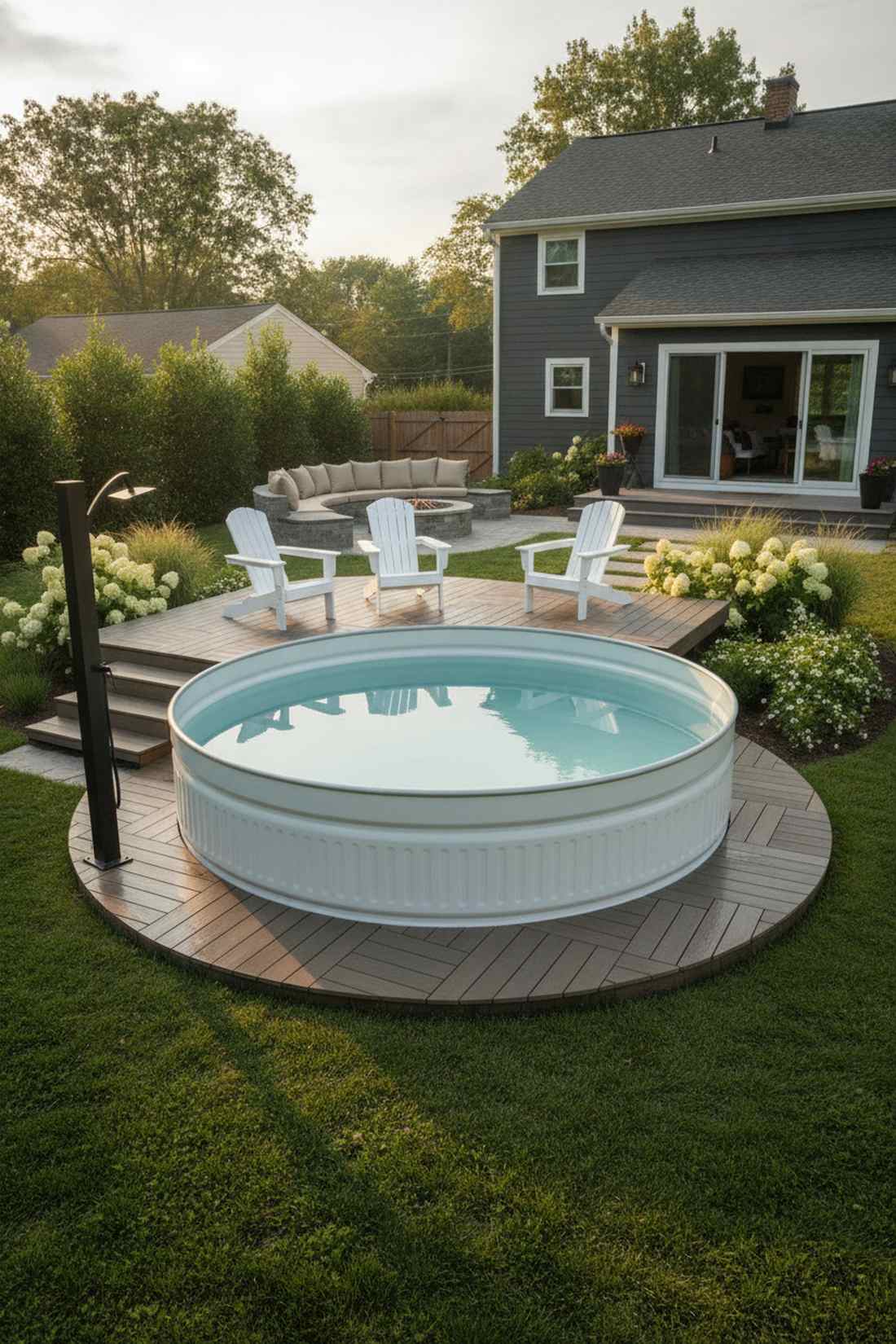
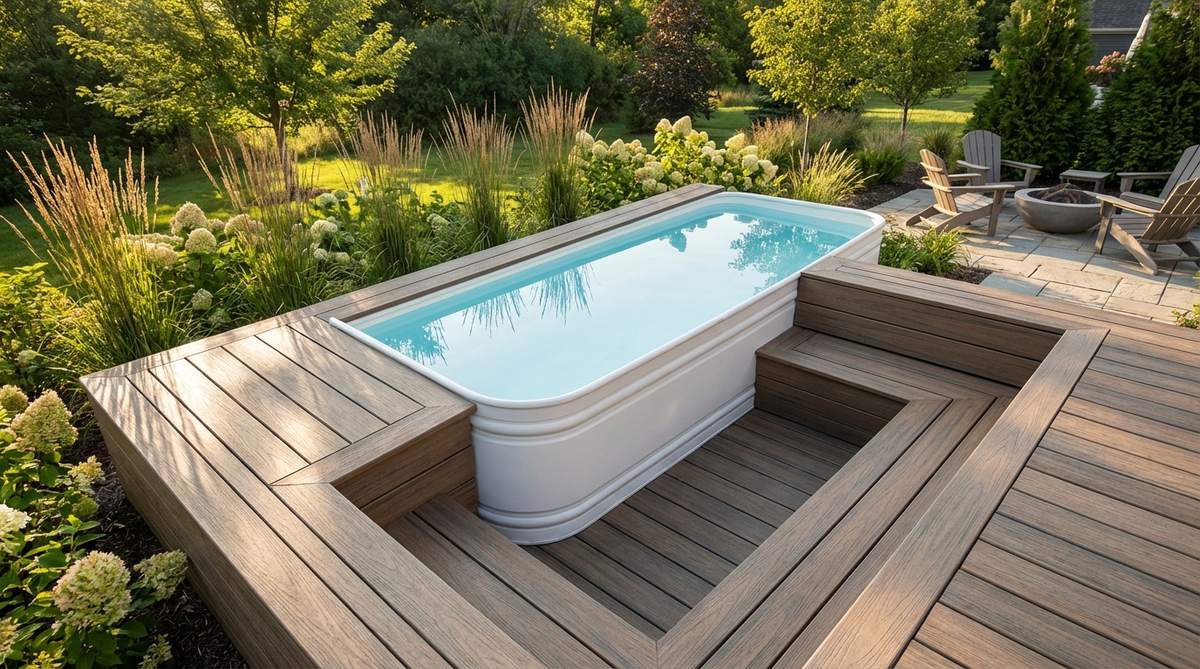
Feels like an exclusive resort cabana you stumbled upon. Modern pool deck surrounds work exceptionally well for narrow suburban yards lacking square footage.
This layout delivers a surprisingly premium look effortlessly. Applying a specialized UV-resistant pool paint creates a pristine, long-lasting surface that refuses to peel.
You can easily pull this off for around $1,200–$1,500. Save this to your DIY weekend garden board!
- Key Materials: Bright white rust-proof pool coating
- Vibe / Style: Contemporary sleek oasis
- Difficulty: Moderate weekend build
- Budget Breakdown: Tank & Paint: $450 | Deck Materials: $850.
- Creator’s Tip: Sand the galvanized steel thoroughly to ensure the primer bites properly.
- Smart Sourcing: Grab a marine-grade clear sealant and pre-cut composite deck tiles (bulk pack).
2. Gravel Oasis Stock Tank with Potted Perennials
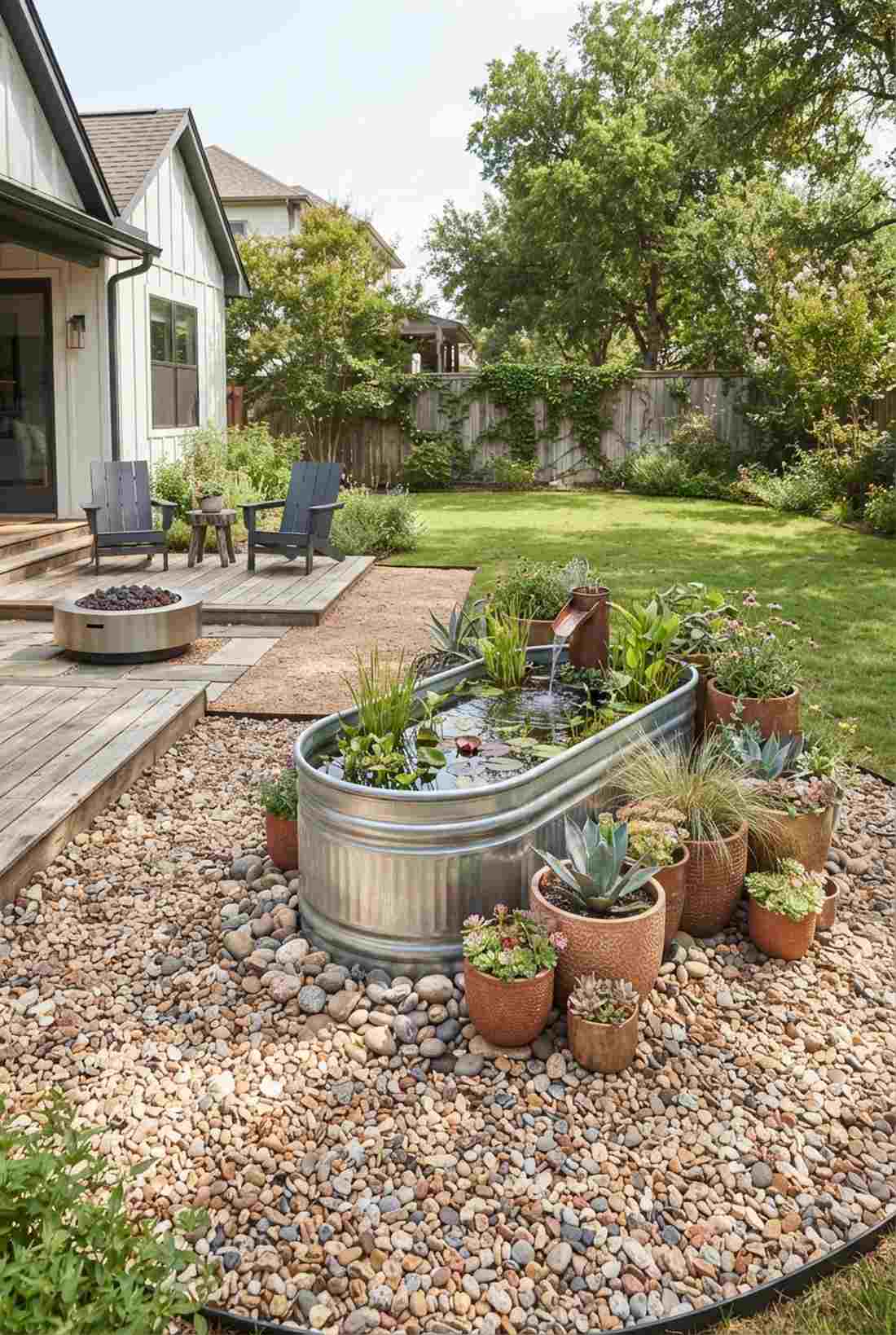
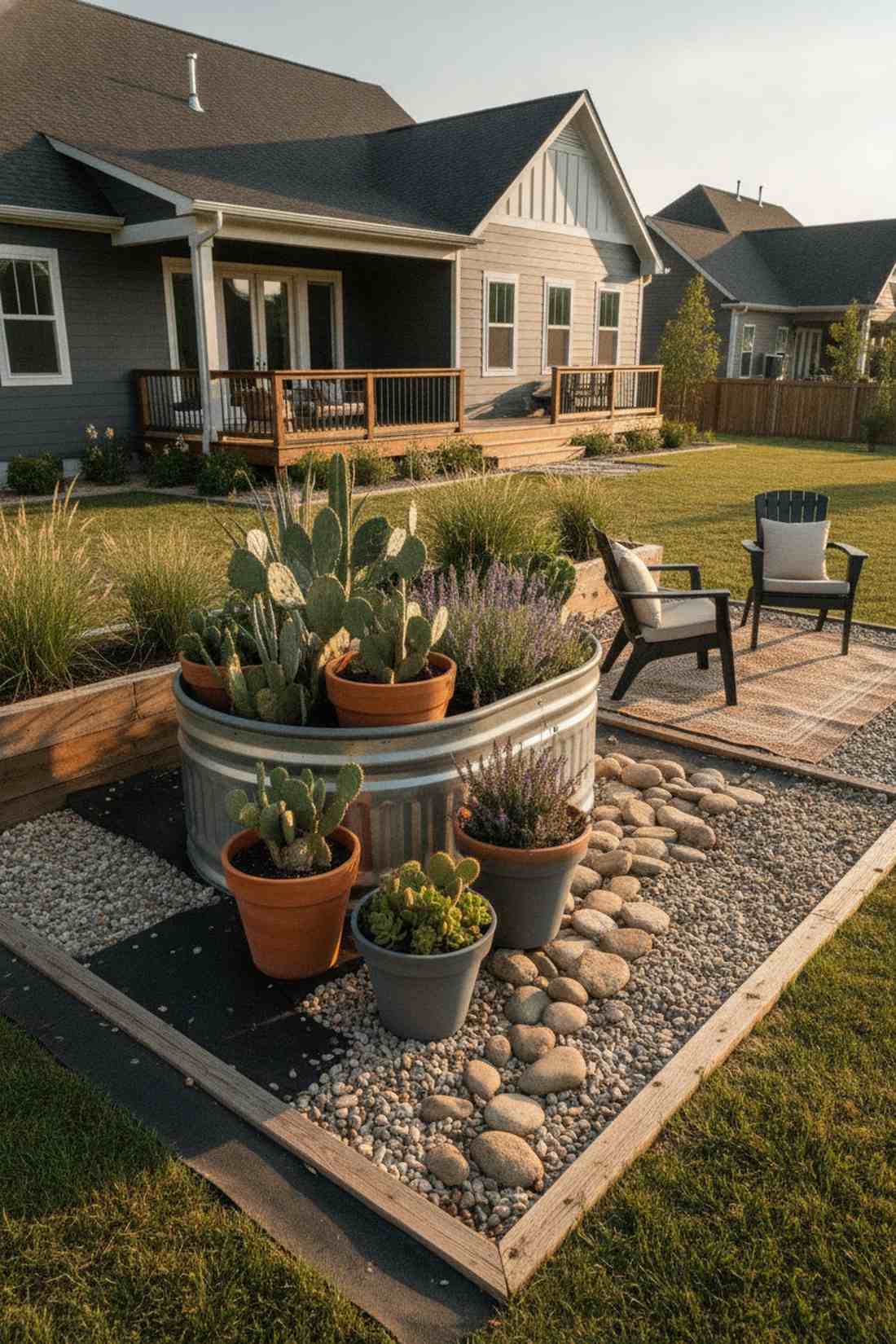
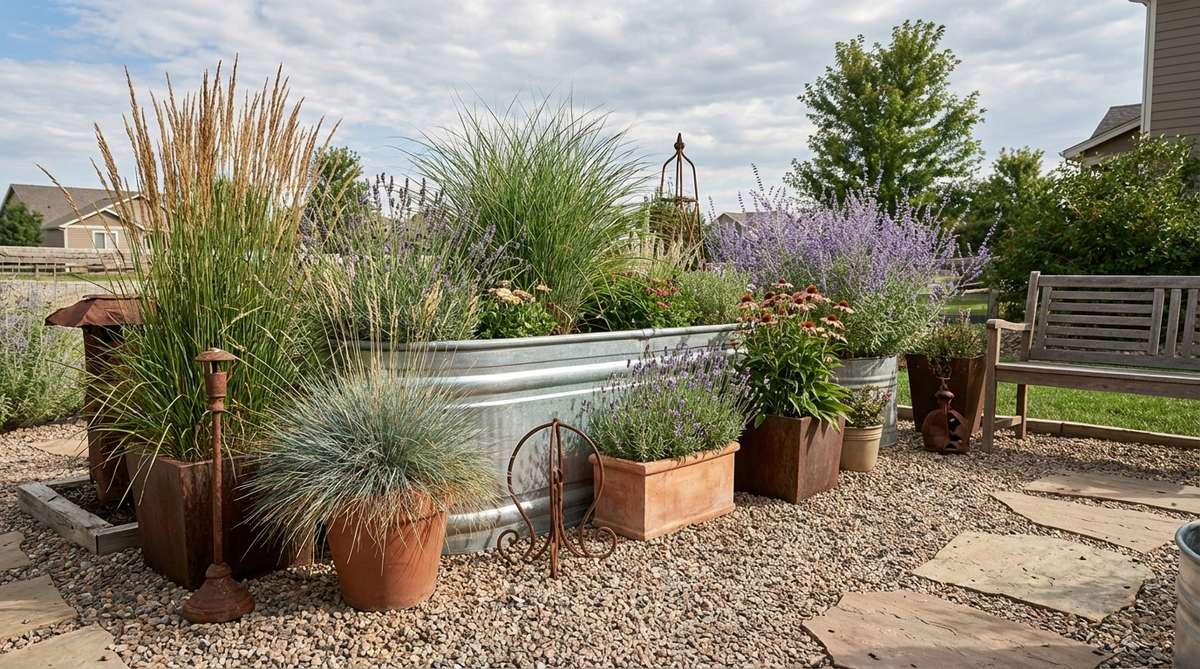
Straight out of a serene desert oasis. Introducing rustic landscape stones is perfect for low-maintenance sunny corners where grass refuses to grow.
This configuration completely bypasses traditional pricey installations. Utilizing high-end heavy-duty pool underlayment pads prevents annoying weed growth under your rocks.
Expect to spend around $150 on the crushed stone base. It’s a fast upgrade that completely changes the vibe.
- Key Materials: Washed gravel bed and drought-resistant foliage
- Vibe / Style: Industrial desert chic
- Difficulty: Very easy beginner setup
- Budget Breakdown: Gravel: $150 | Tank: $350.
- Creator’s Tip: Tamp the dirt flat before laying the fabric to prevent future sagging.
- Smart Sourcing: Use bulk decorative river rocks and UV-coated planter pots.
3. Two-Tier Stock Tank Waterfall System
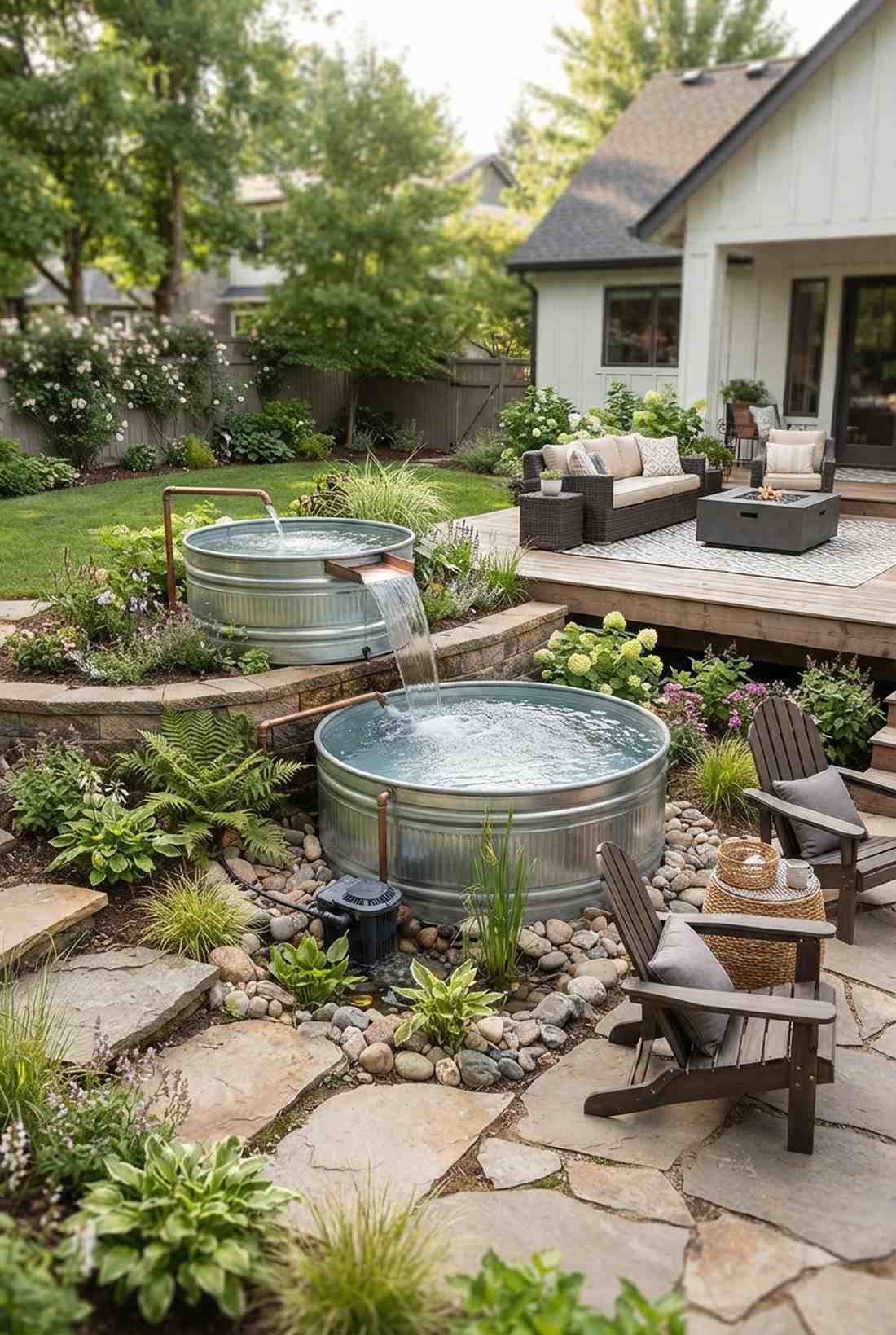
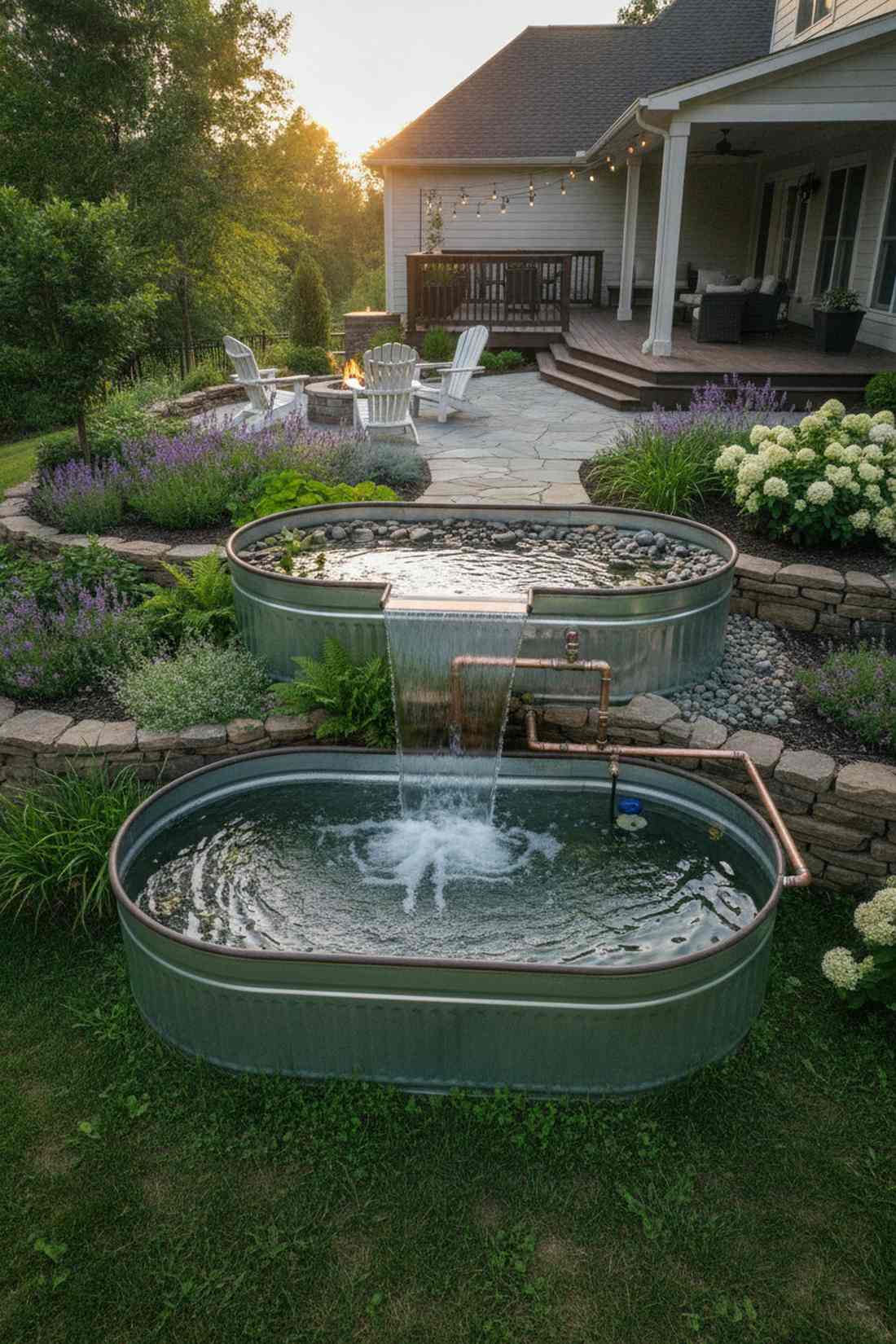
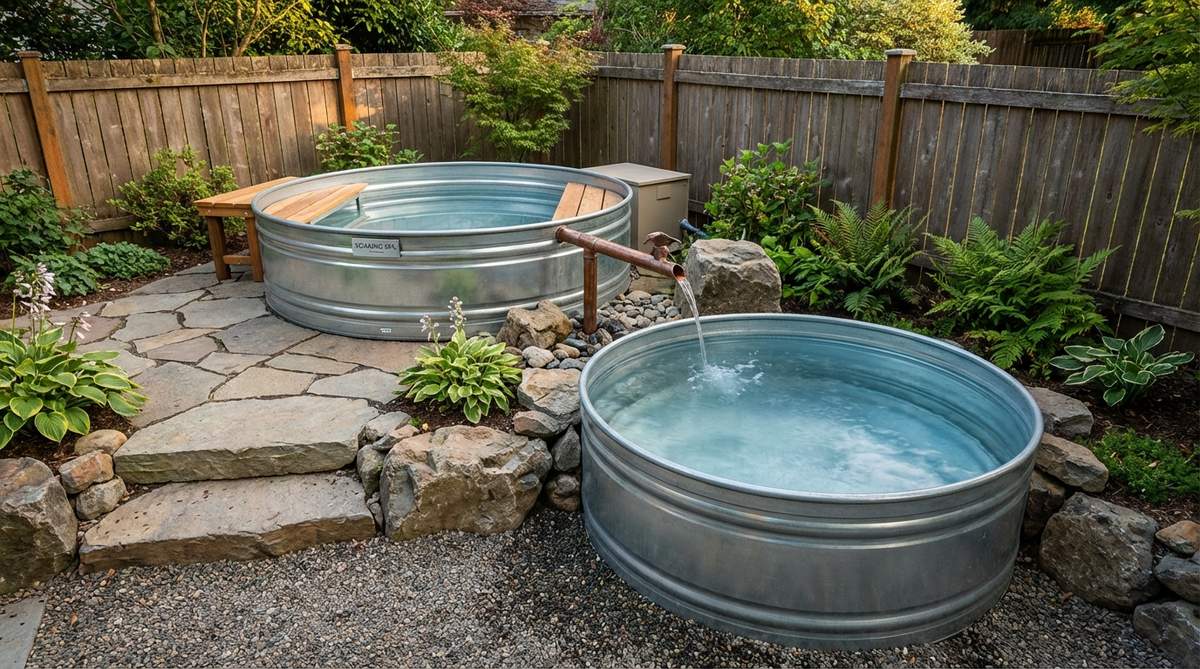
Feels like a zen spa retreat you accidentally discovered. A cascading plunge waterfall is brilliant for sloped or uneven yards.
Contractors hate this simple workaround because it yields an outrageously luxurious feel. A simple spillway generates massive acoustic value while filtering both vessels.
You can build this dynamic system for roughly $1,500–$3,000 depending on plumbing. Pin this if you’re planning a small space upgrade.
- Key Materials: Copper spillway pipes and dual steel basins
- Vibe / Style: Dynamic terraced water garden
- Difficulty: Advanced plumbing required
- Budget Breakdown: Tanks: $700 | Hardware: $800.
- Creator’s Tip: Install isolation valves so you can heat the top tank independently.
- Smart Sourcing: Invest in high-flow filtration starter kits and pre-cut copper piping packs.
4. Stock Tank with Built-In Bench Seating
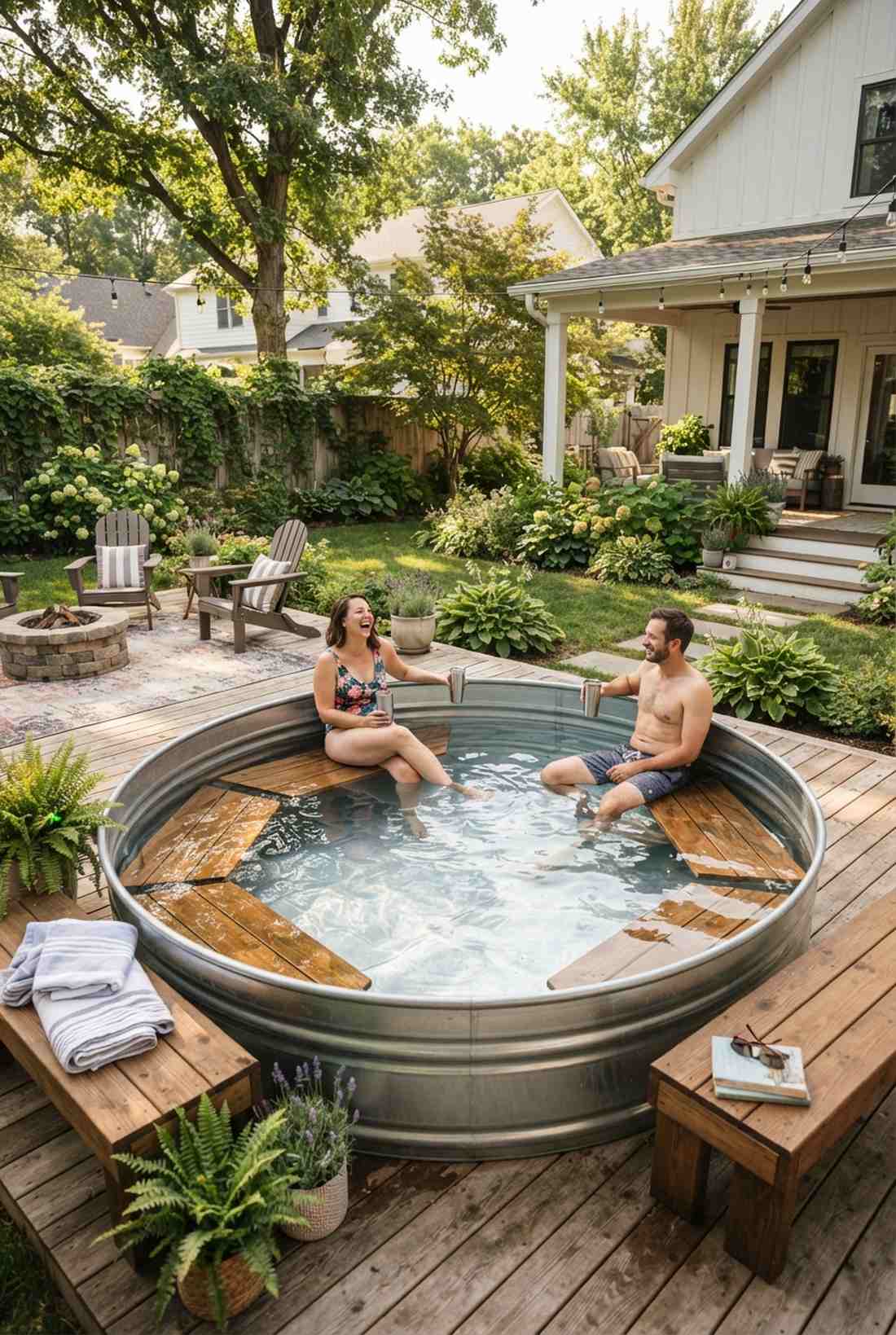
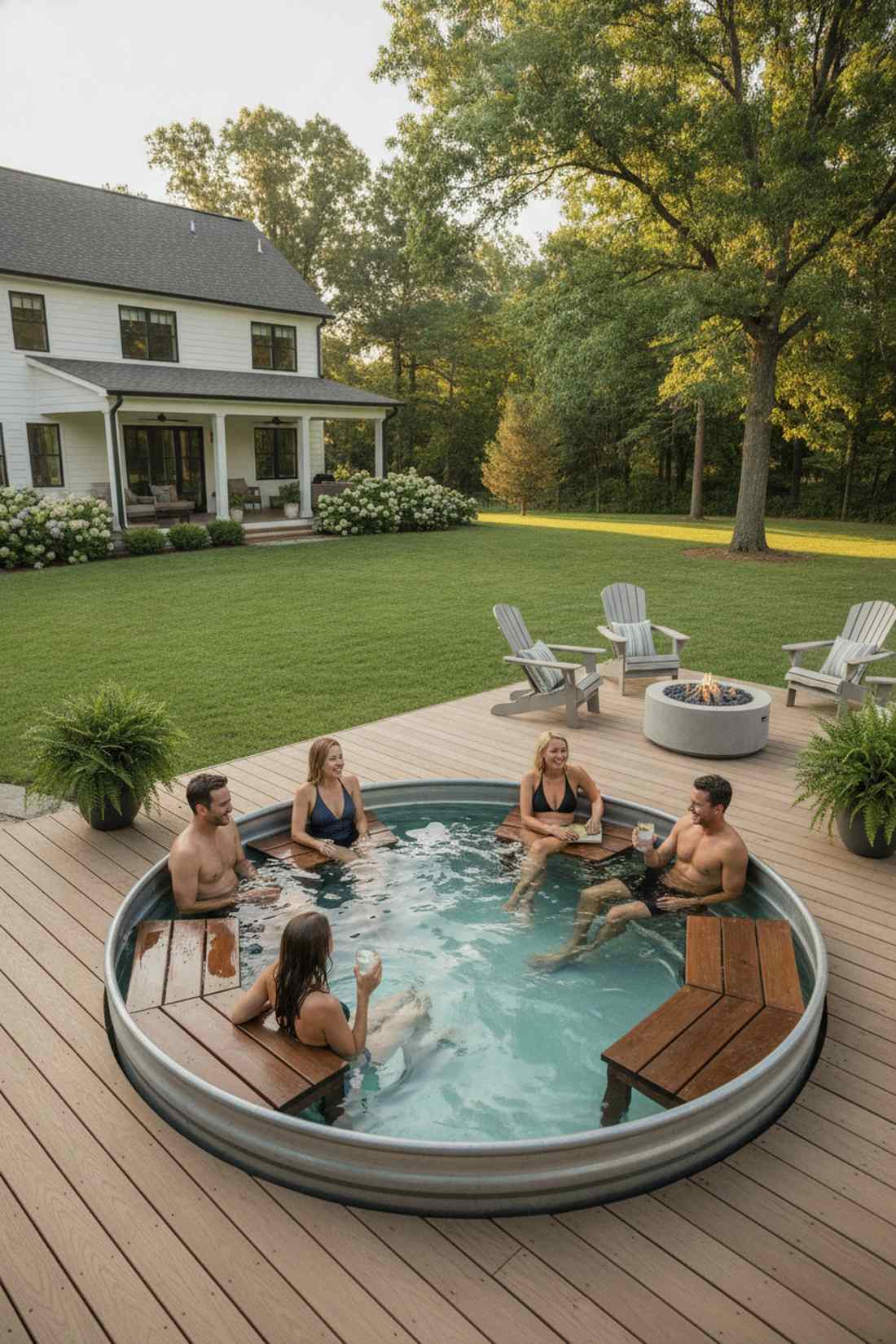
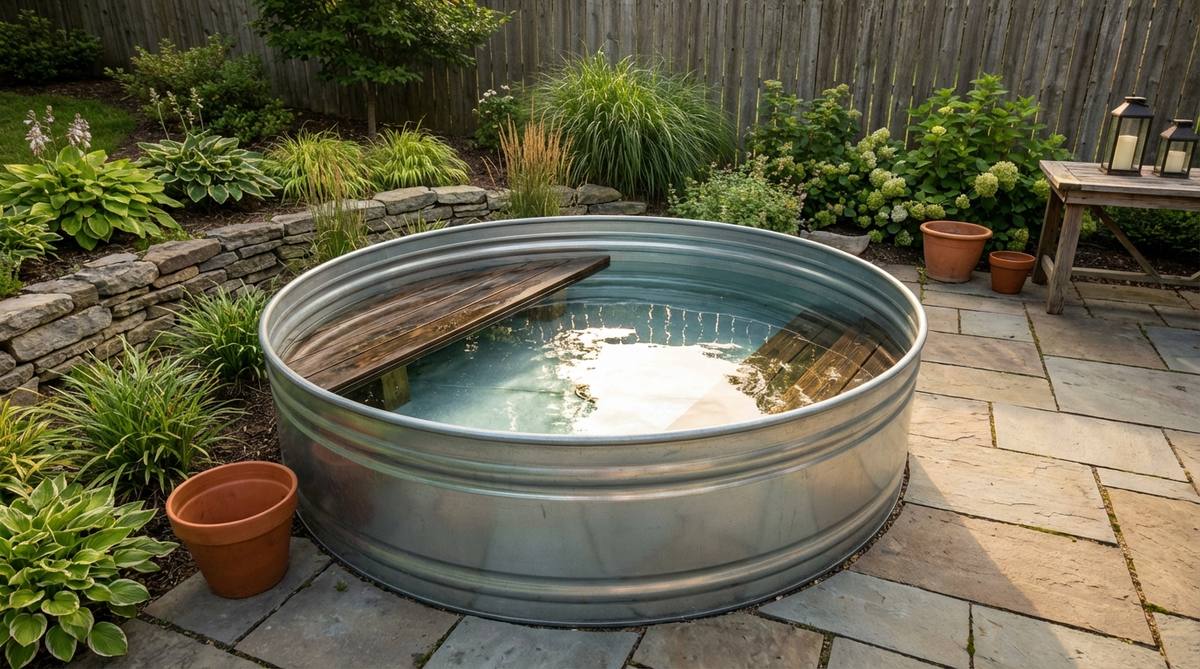
Exudes pure lazy Sunday afternoon vibes. Custom submerged perimeter seating is ideal for social household gathering spots.
This subtle modification gives a designer-level finish without breaking the bank. Dropping in custom wooden ledges transforms the tank into a fully functional lounge area.
The interior modifications add just $200–$400 to the build. Highly recommended for families who love to host.
- Key Materials: Submerged lumber benches
- Vibe / Style: Cozy conversational pit
- Difficulty: Moderate woodworking
- Budget Breakdown: Lumber: $150 | Stain/Hardware: $50.
- Creator’s Tip: Sand all edges completely round to prevent underwater splinters.
- Smart Sourcing: Buy waterproof pressure-treated lumber kits and marine-grade wood stain.
Most people get this completely wrong… until they try the exact layout coming up next.
5. Bohemian Stock Tank with Tropical Plantings
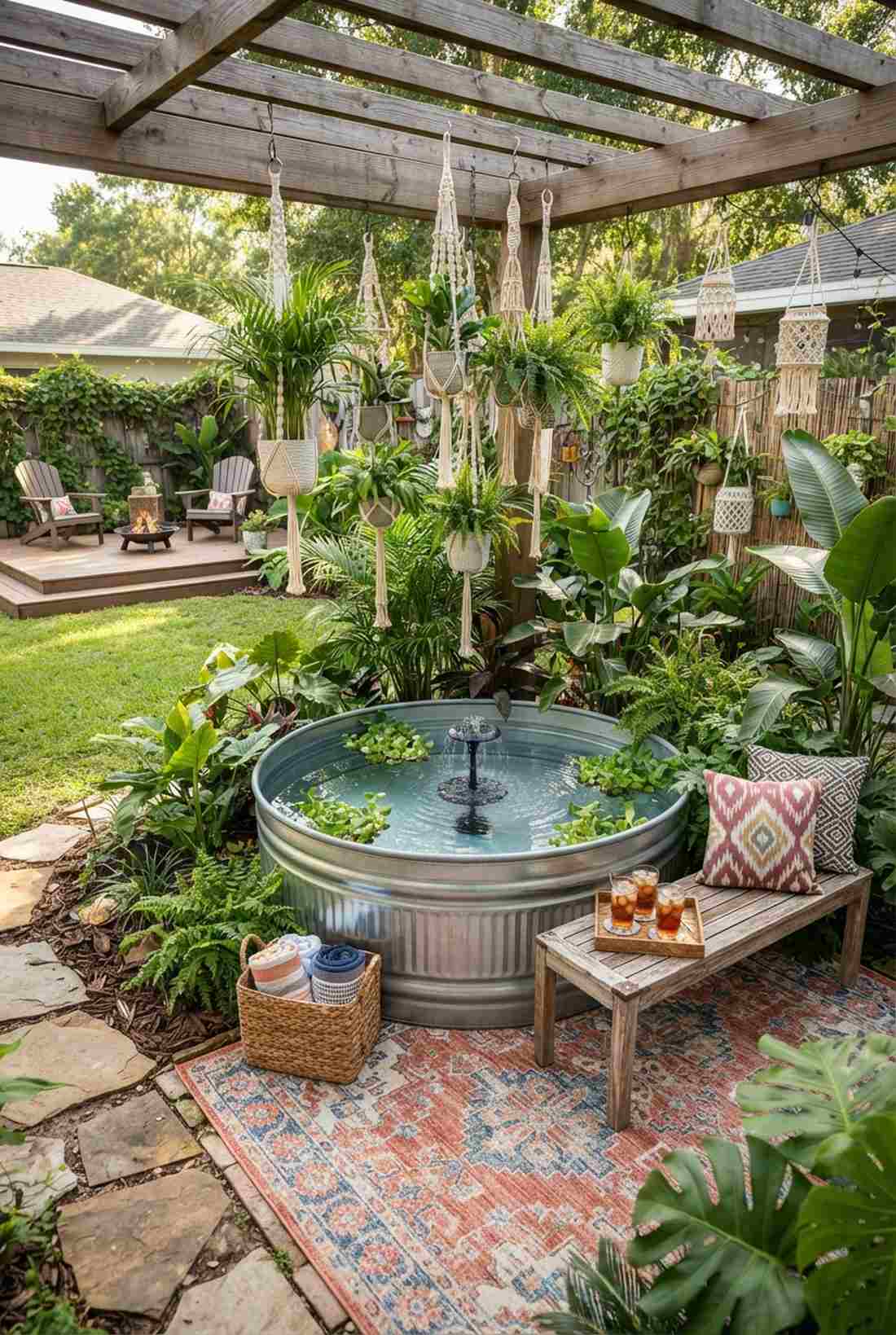
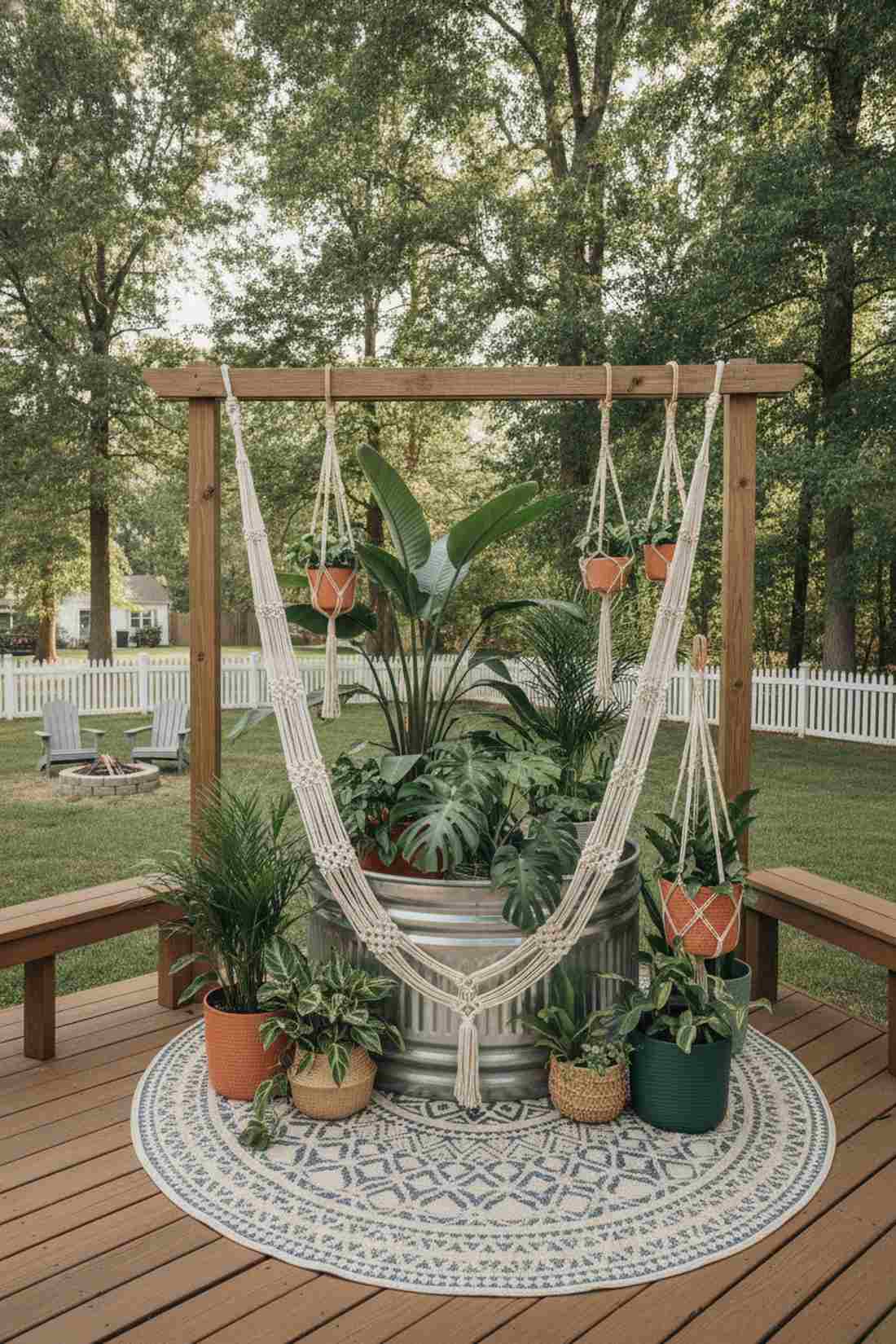
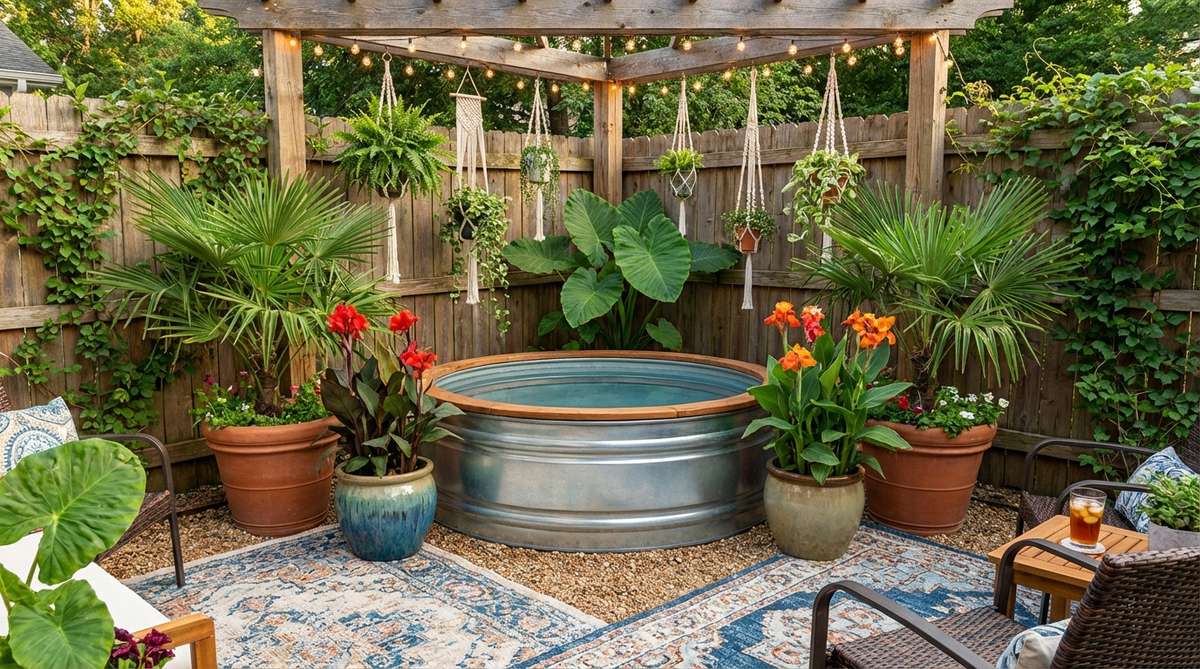
Like stepping into a lush Balinese jungle. A tropical bohemian water feature works exceptionally well for rented properties or temporary setups.
This layout totally flips the standard backyard script. Layering giant potted palms creates an immediate microclimate of shade and humidity.
You can achieve this heavily planted look for under $600. Save this to your DIY weekend garden board!
- Key Materials: Large leaf tropicals and woven textures
- Vibe / Style: Relaxed resort hideaway
- Difficulty: Quick afternoon styling
- Budget Breakdown: Plants/Pots: $400 | Accessories: $200.
- Creator’s Tip: Use lightweight resin pots so you can easily move them during winter.
- Smart Sourcing: Snag UV-resistant outdoor rug kits and bulk macramé hangers.
Prefabricated Plunge Pools & Mini Swim Systems
6. Fiberglass Cube Pool for Urban Patios
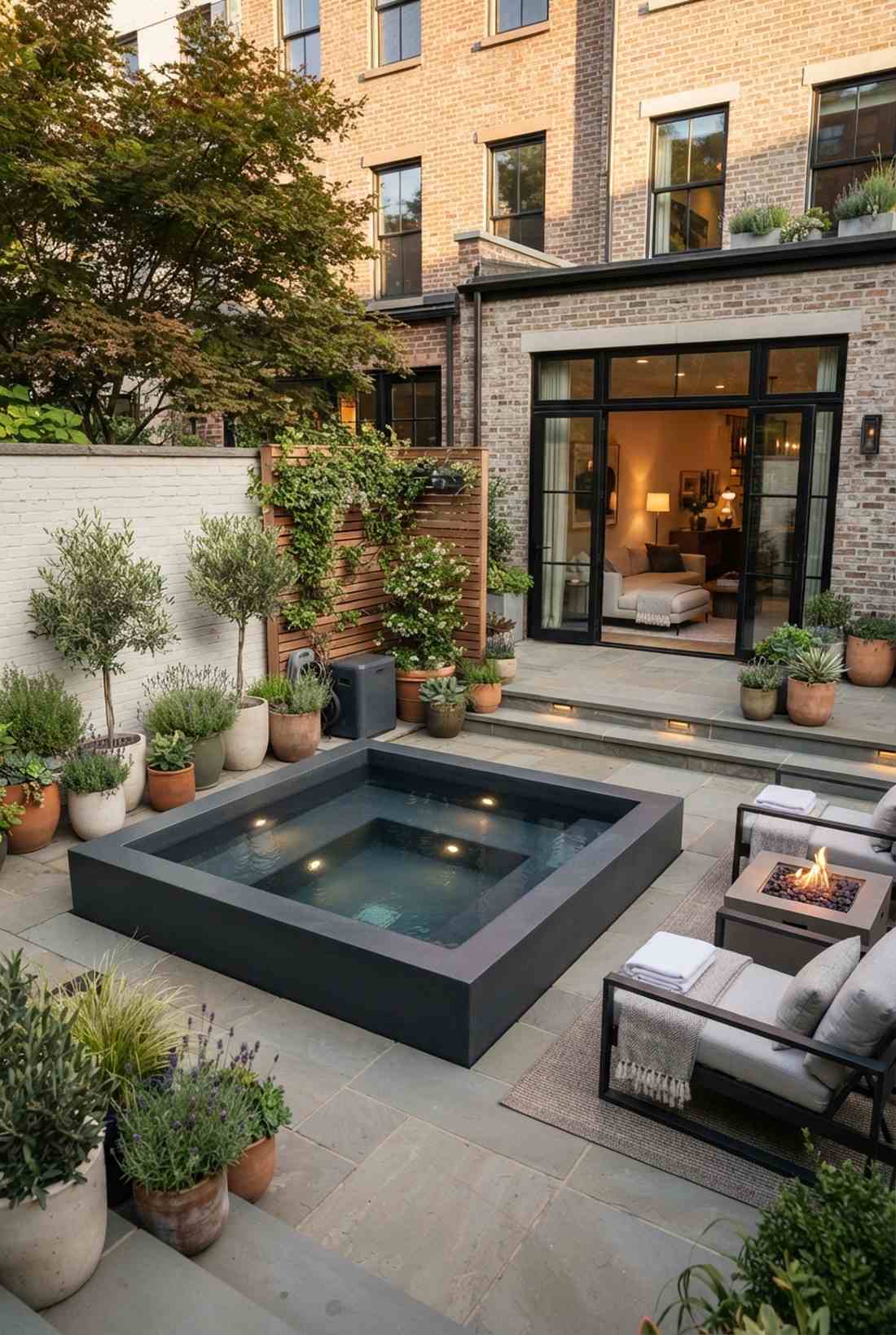
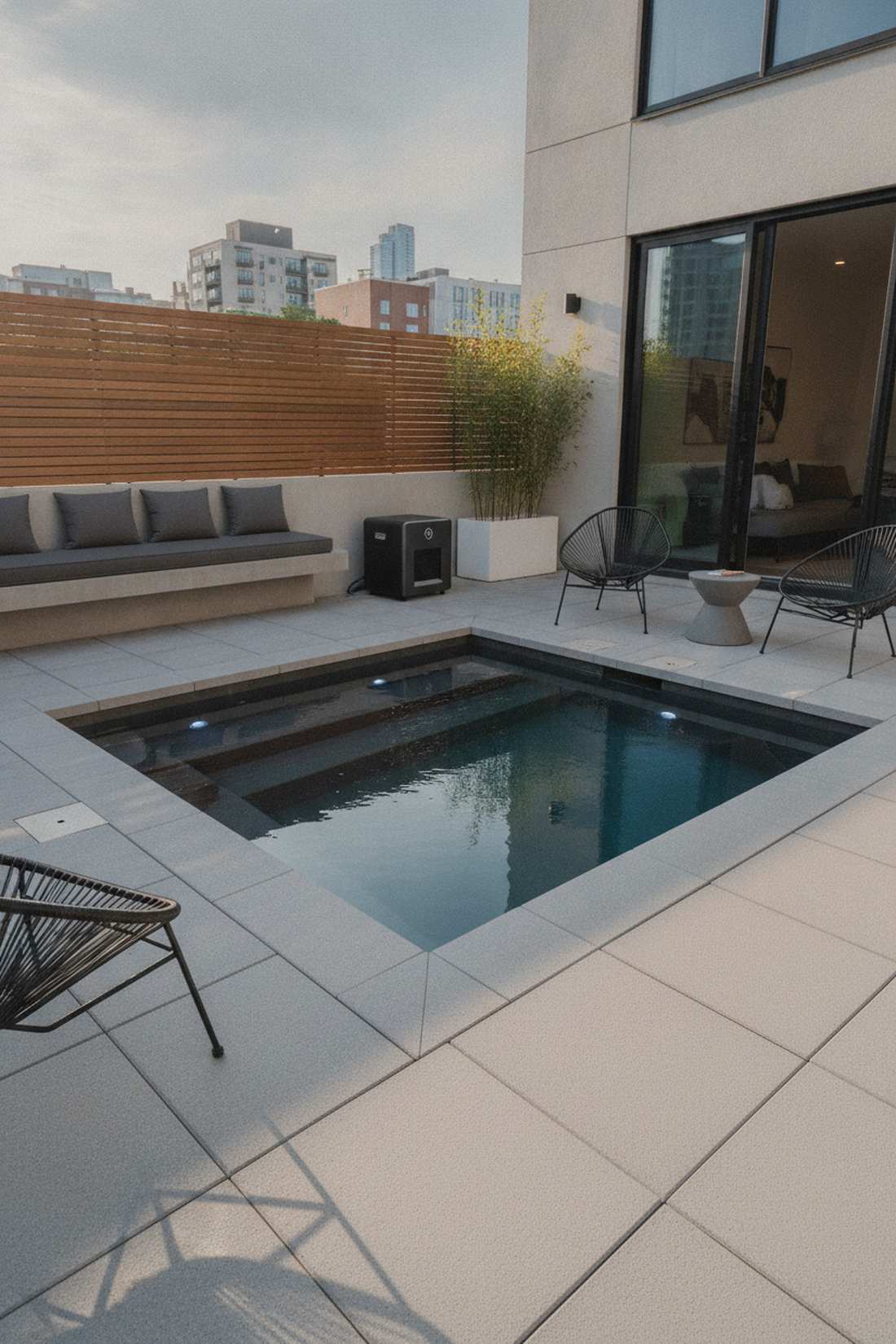
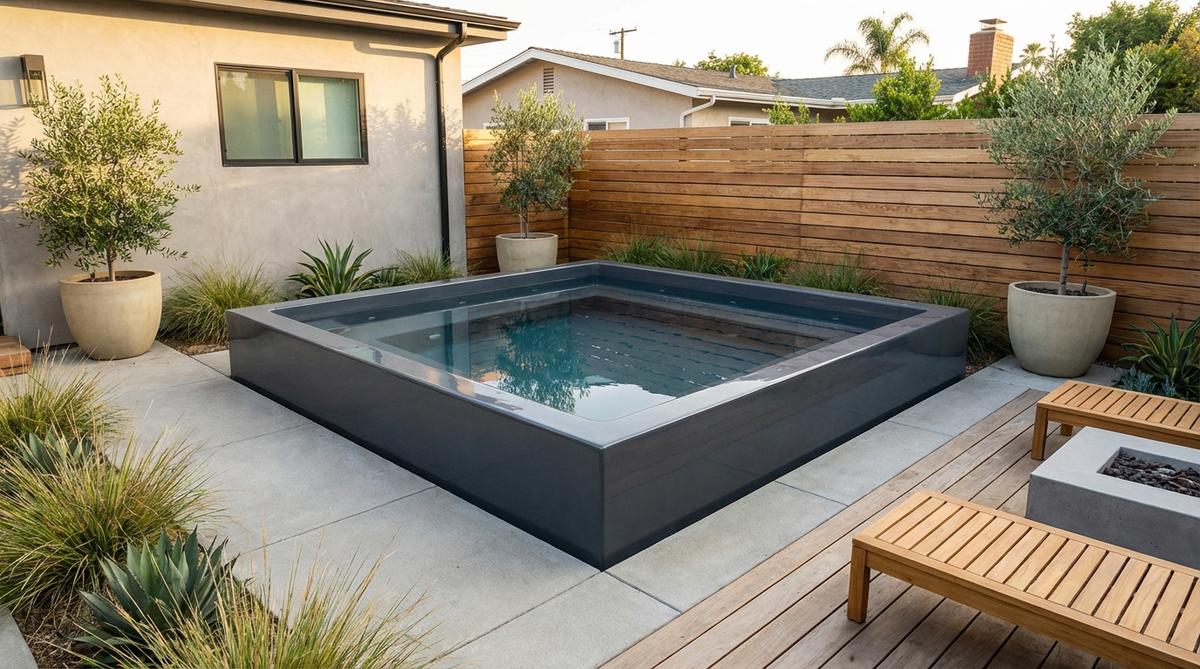
Exudes sharp, modern architectural elegance. A geometric courtyard basin is flawless for ultra-compact urban patios.
Choosing this route delivers a surprisingly premium look instantly. Incorporating compact spa heater kits turns the cube into a year-round heated asset.
Premium installations run anywhere from $15,000–$25,000 complete. Pin this if you want maximum luxury in minimum space.
- Key Materials: Pre-molded square fiberglass shell
- Vibe / Style: Sleek minimalist luxury
- Difficulty: Professional installation advised
- Budget Breakdown: Shell: $12,000 | Excavation/Setup: $8,000.
- Creator’s Tip: Opt for a dark interior finish to naturally absorb solar heat.
- Smart Sourcing: Order pre-molded fiberglass pool shells and submersible LED pool lights (starter kit).
7. Rectangular Plunge Pool with Bench Ledge
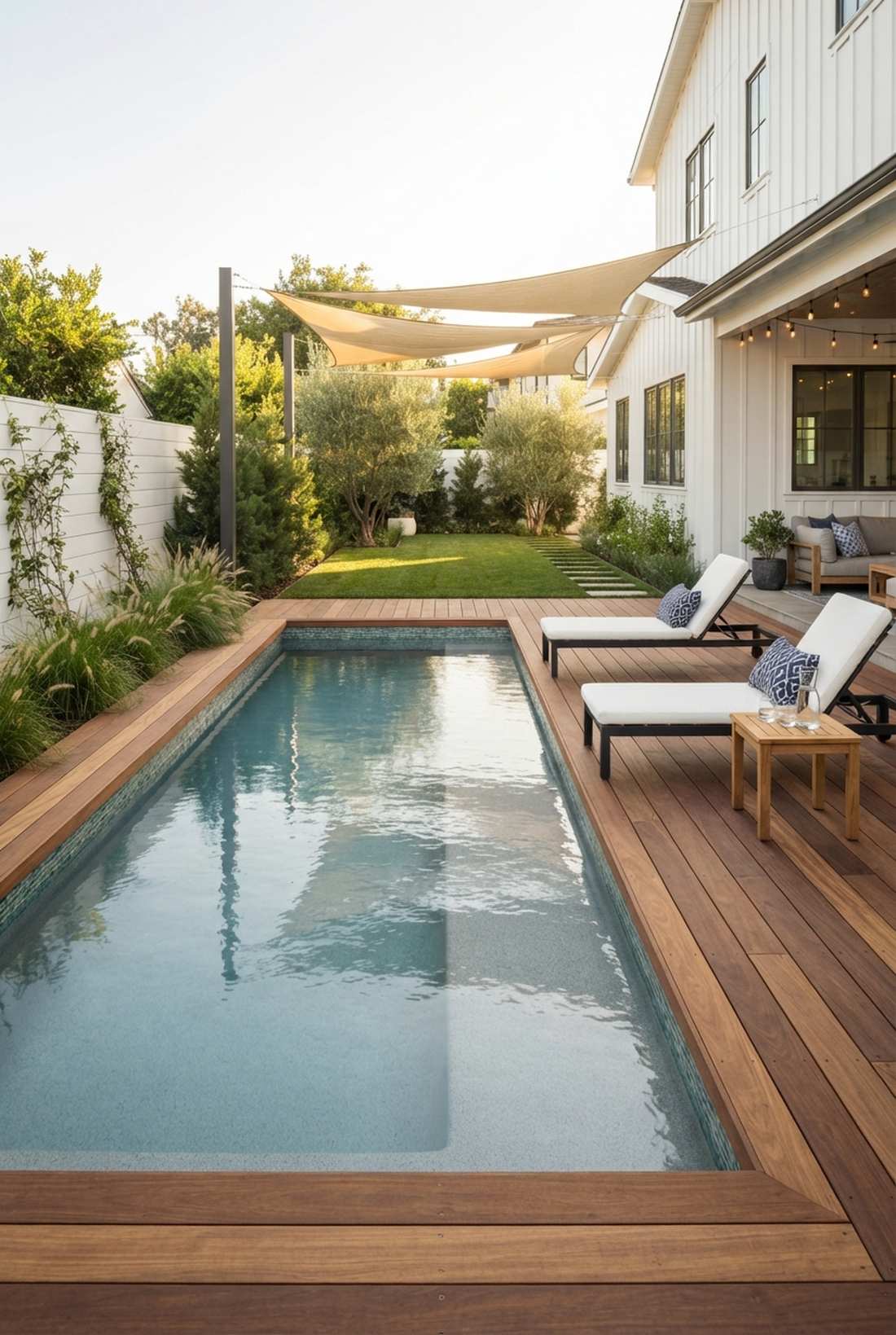
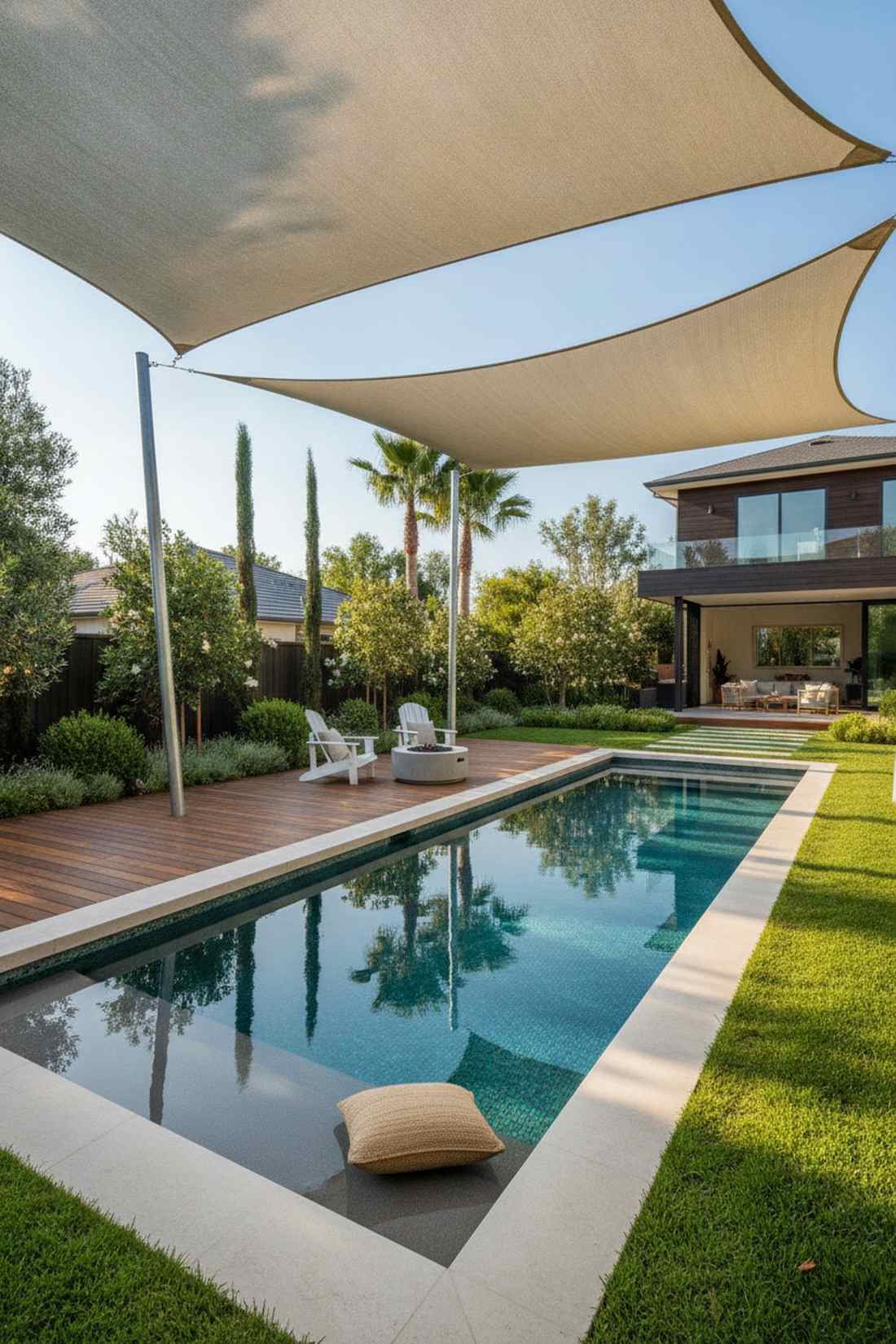
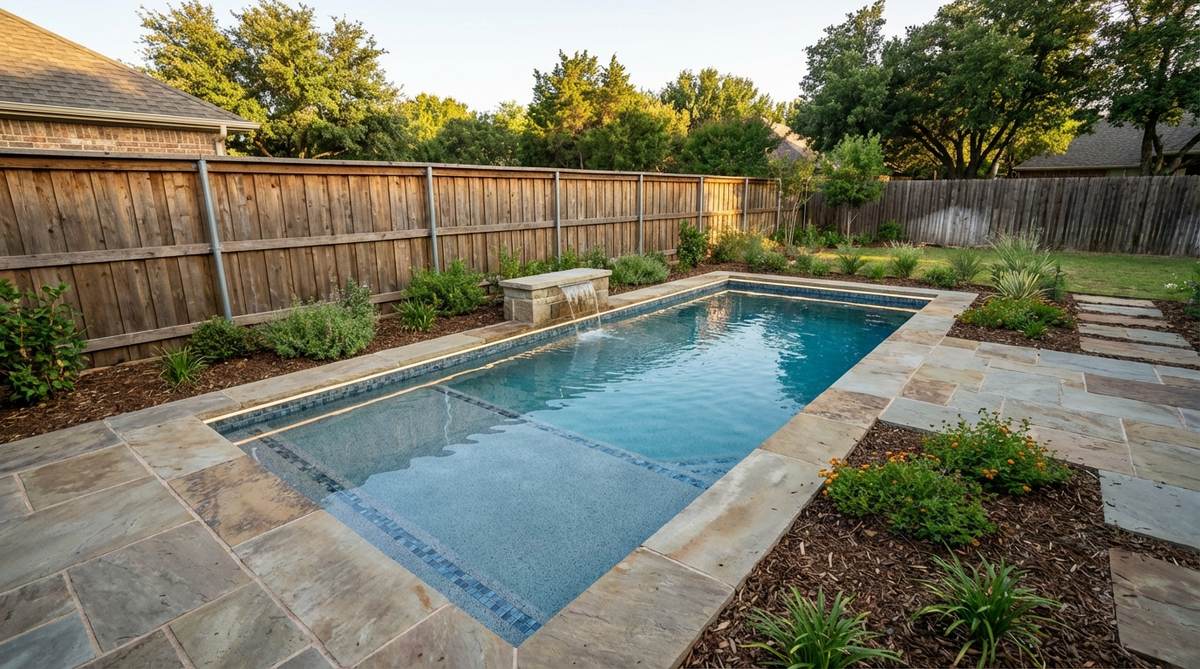
Feels like a boutique hotel private lounge. An elongated tanning bench is unbeatable for long, narrow property lines.
This narrow format bypasses traditional pricey installations while saving precious lawn space. The integrated seating maximizes comfort without demanding extra width.
Expect to invest roughly $18,000 for a seamless execution. It’s an architectural upgrade that skyrockets property appeal.
- Key Materials: Elongated basin with integrated bench
- Vibe / Style: Sophisticated linear design
- Difficulty: Professional installation required
- Budget Breakdown: Pool System: $14,000 | Decking: $4,000.
- Creator’s Tip: Position the bench side facing the afternoon sun for optimal lounging.
- Smart Sourcing: Pick up waterproof shade sails and commercial-grade pool tile adhesives.
8. Swim Spa with Resistance Jets
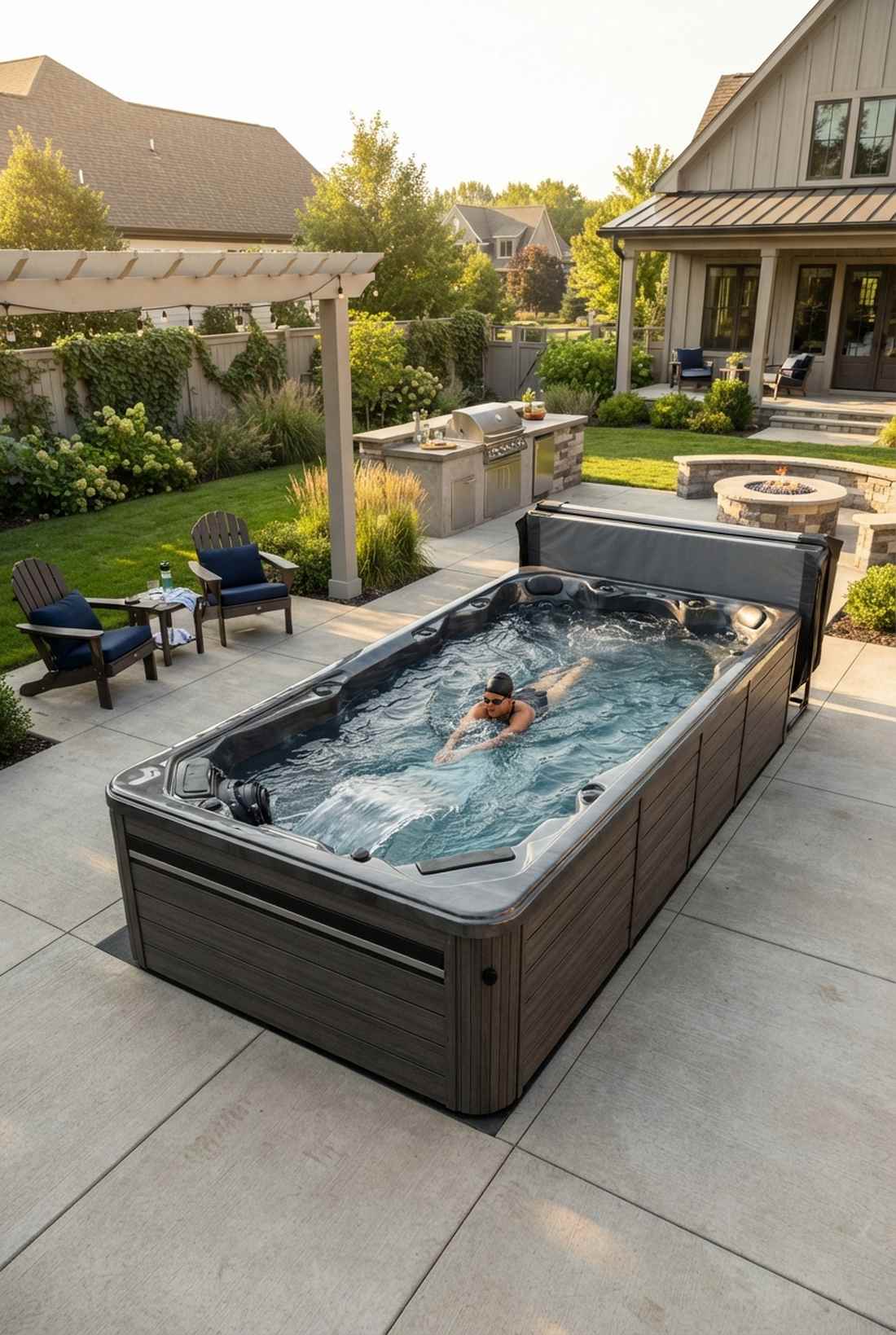
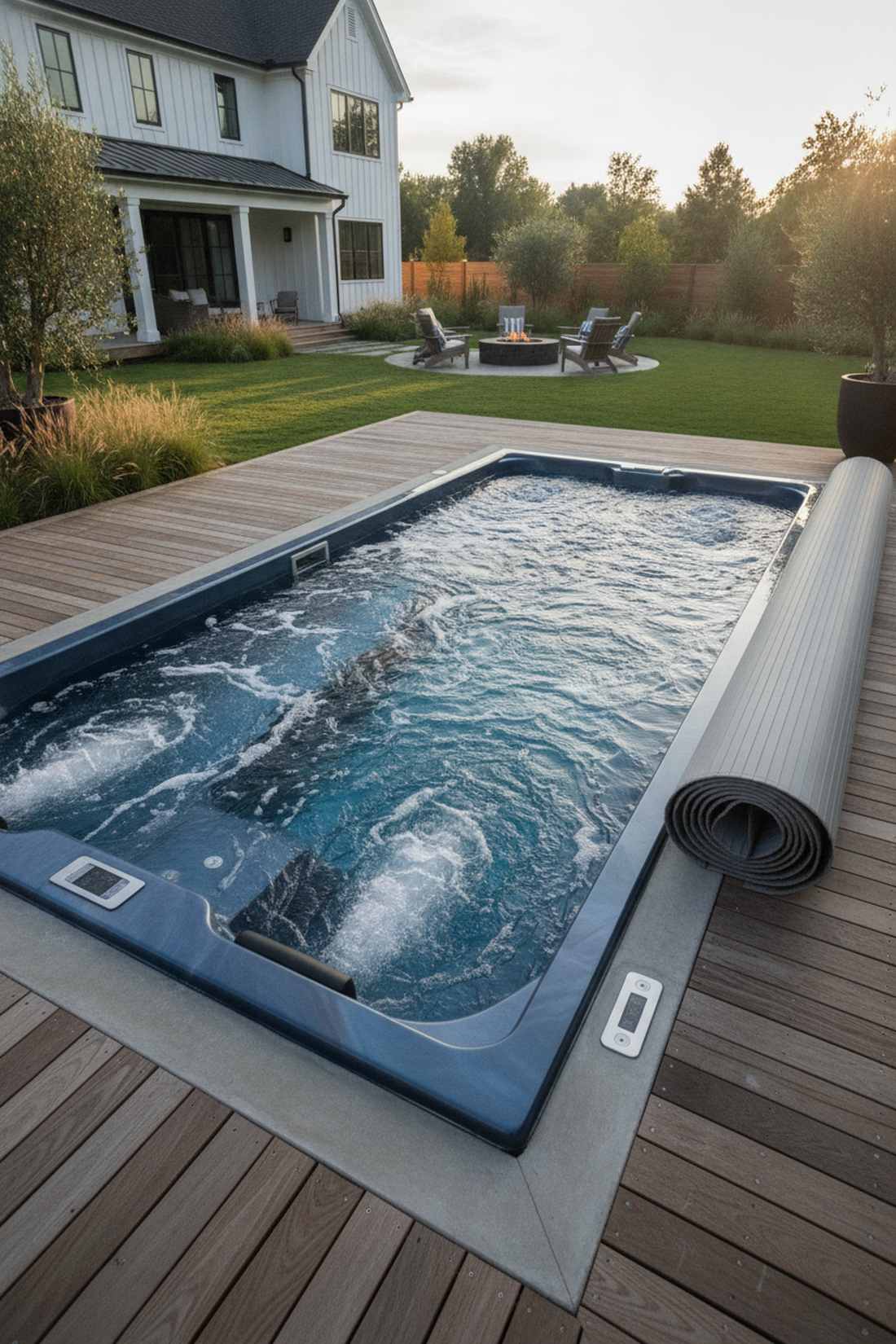
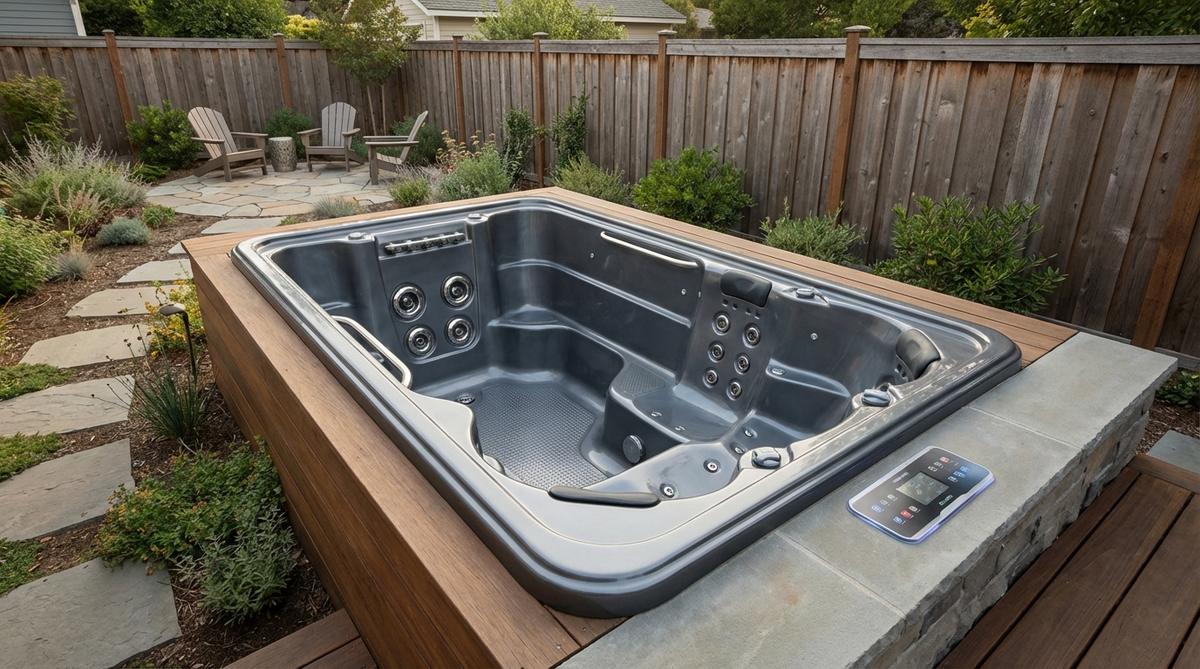
An athlete’s dream sanctuary right in the backyard. A high-resistance swim lane is built for dedicated fitness enthusiasts.
This high-tech setup completely redefines the standard workout space. The powerful current system lets you swim endlessly without hitting a wall.
Premium turn-key models range from $25,000-$50,000. Save this to your ultimate dream home board.
- Key Materials: High-output resistance current generators
- Vibe / Style: Elite performance zone
- Difficulty: Heavy equipment delivery needed
- Budget Breakdown: Swim Spa: $30,000 | Electrical Run: $2,000.
- Creator’s Tip: Pour a reinforced concrete pad at least 6 inches thick to support the immense water weight.
- Smart Sourcing: Look for commercial-grade swim jets and heavy-duty thermal spa covers.
This next setup is ridiculously cheap but looks like a $10,000 custom display…
💡 Must-Have Supplies for High-End Setups
To build these setups faster and ensure they last, skip the generic craft aisles and invest in the right foundational kits.
- Base & Support: heavy-duty pool underlayment pads
- Setup Tools: high-flow filtration starter kits
- Weather/Durability Protection: marine-grade clear sealant
9. Galvanized Steel Tank Pool with Vinyl Liner
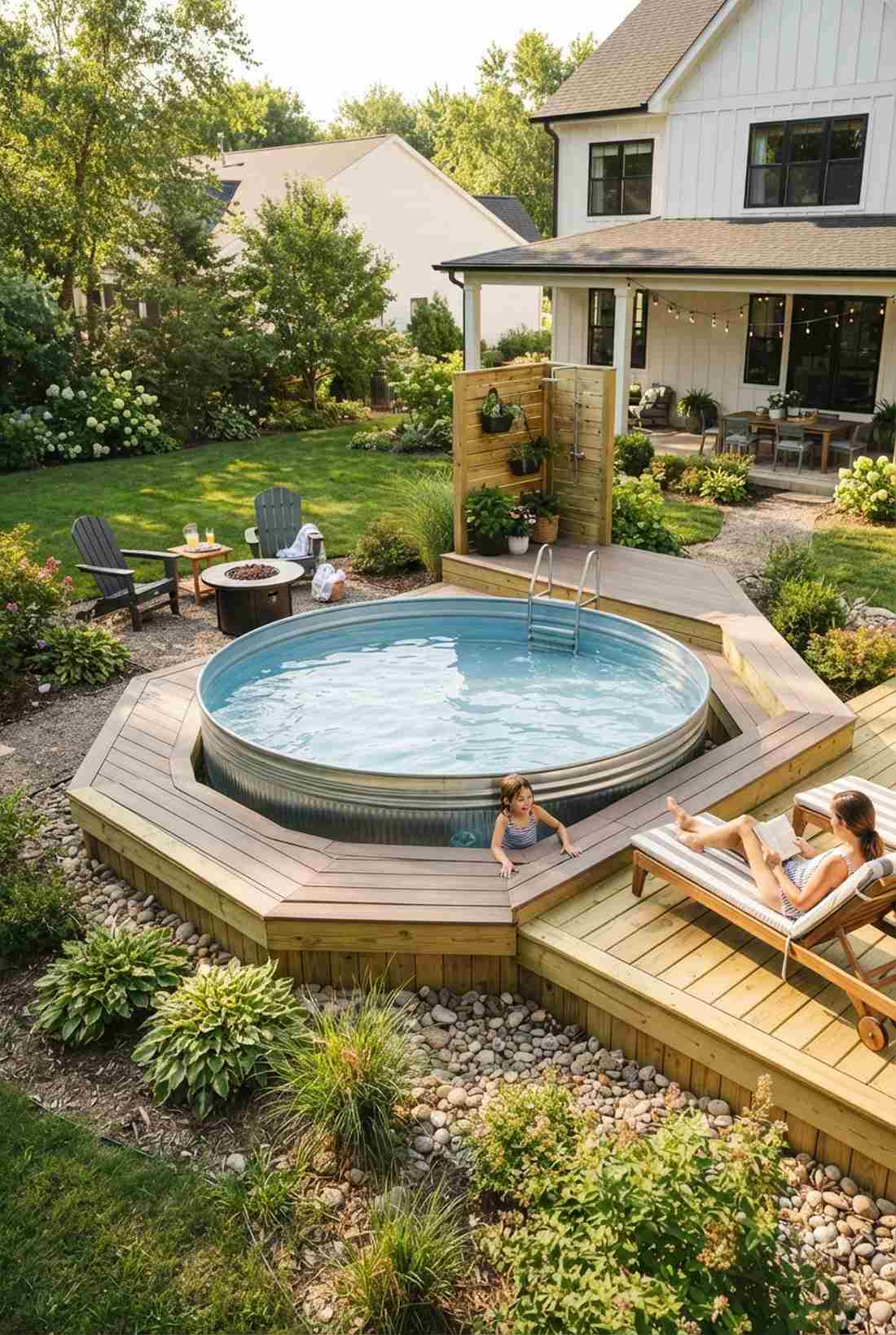
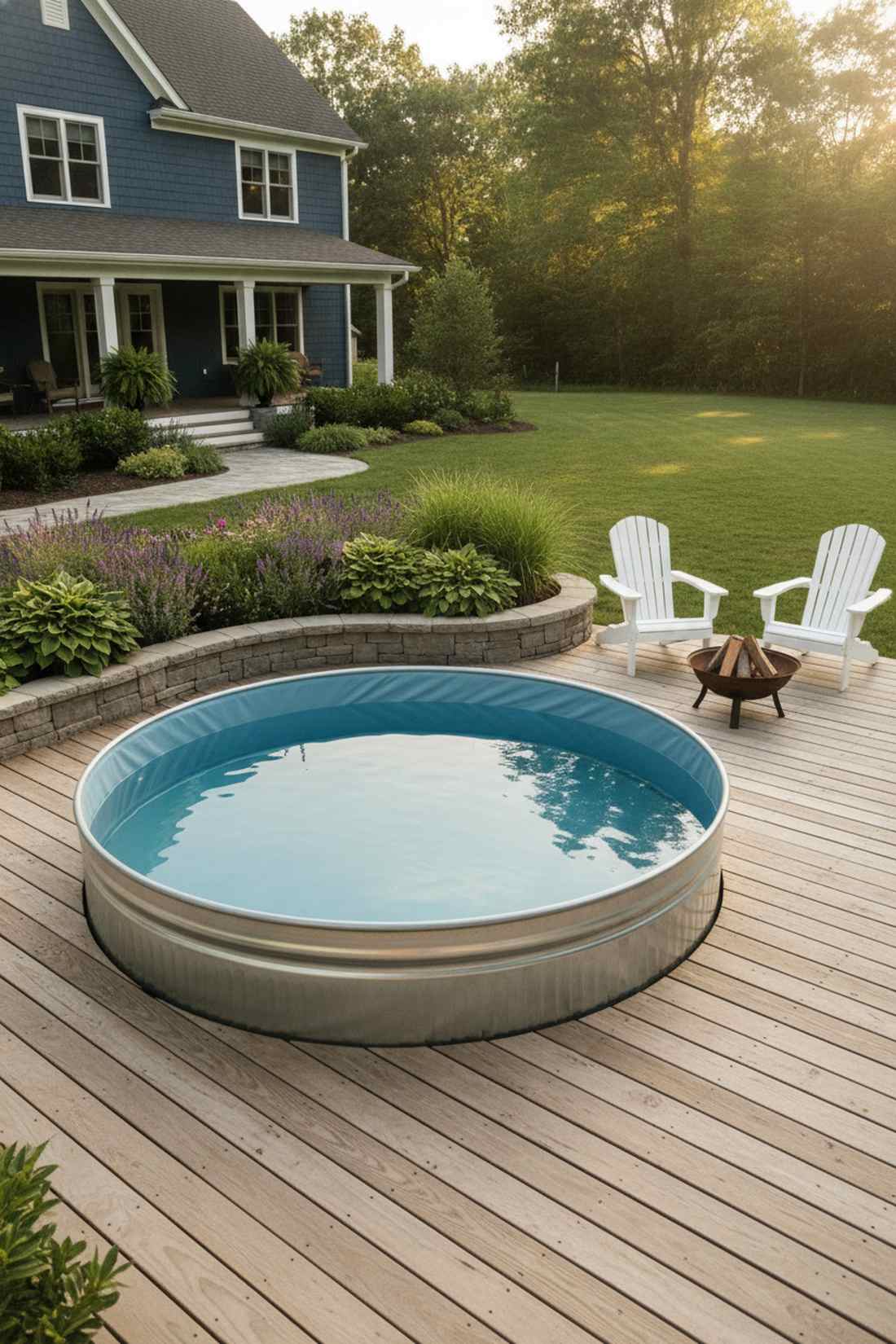
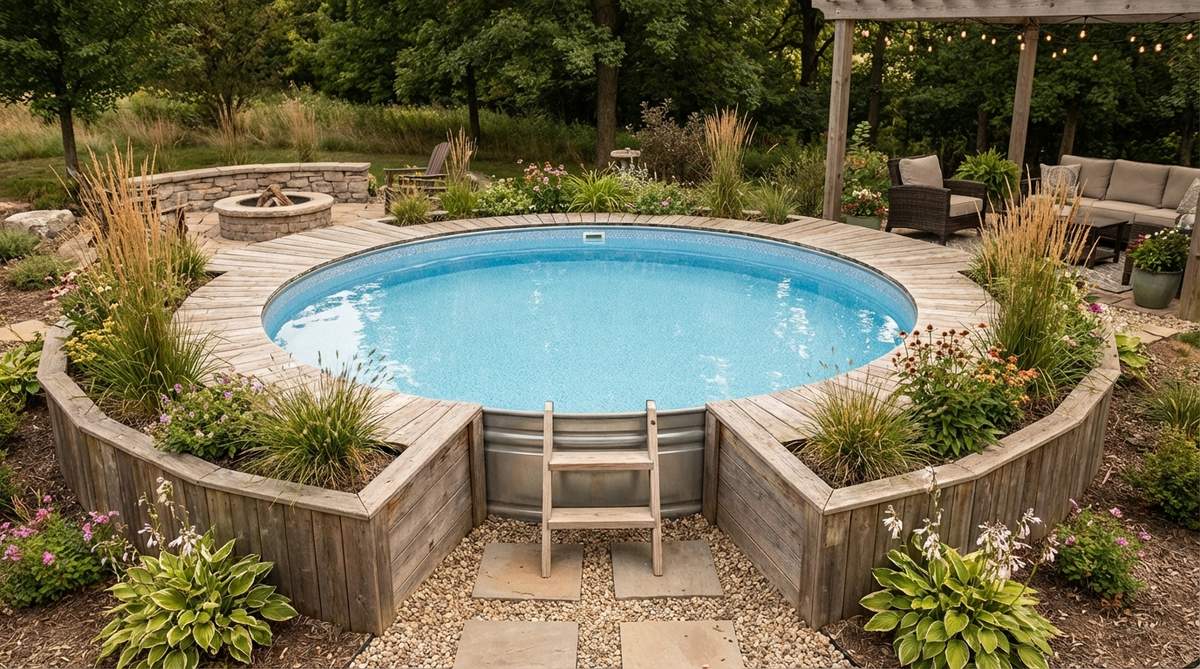
A clever blend of industrial edge and plush interior comfort. A smooth vinyl-lined basin is fantastic for households with young children.
This hybrid approach yields an outrageously luxurious feel over rough metal. Upgrading to premium stock tank liners guarantees a snag-free swimming experience.
Complete backyard transformations cost between $8,000–$15,000. Highly recommended for a high-end look on a mid-tier budget.
- Key Materials: Steel frame and custom-fit vinyl skin
- Vibe / Style: Polished hybrid backyard oasis
- Difficulty: Advanced DIY or professional
- Budget Breakdown: Kit System: $6,000 | Deck Integration: $4,000.
- Creator’s Tip: Add a layer of foam wall insulation behind the liner to retain heat.
- Smart Sourcing: Use custom-fit vinyl pool liners and pre-cut foam pool coving kits.
10. Cocktail Pool with Tanning Ledge
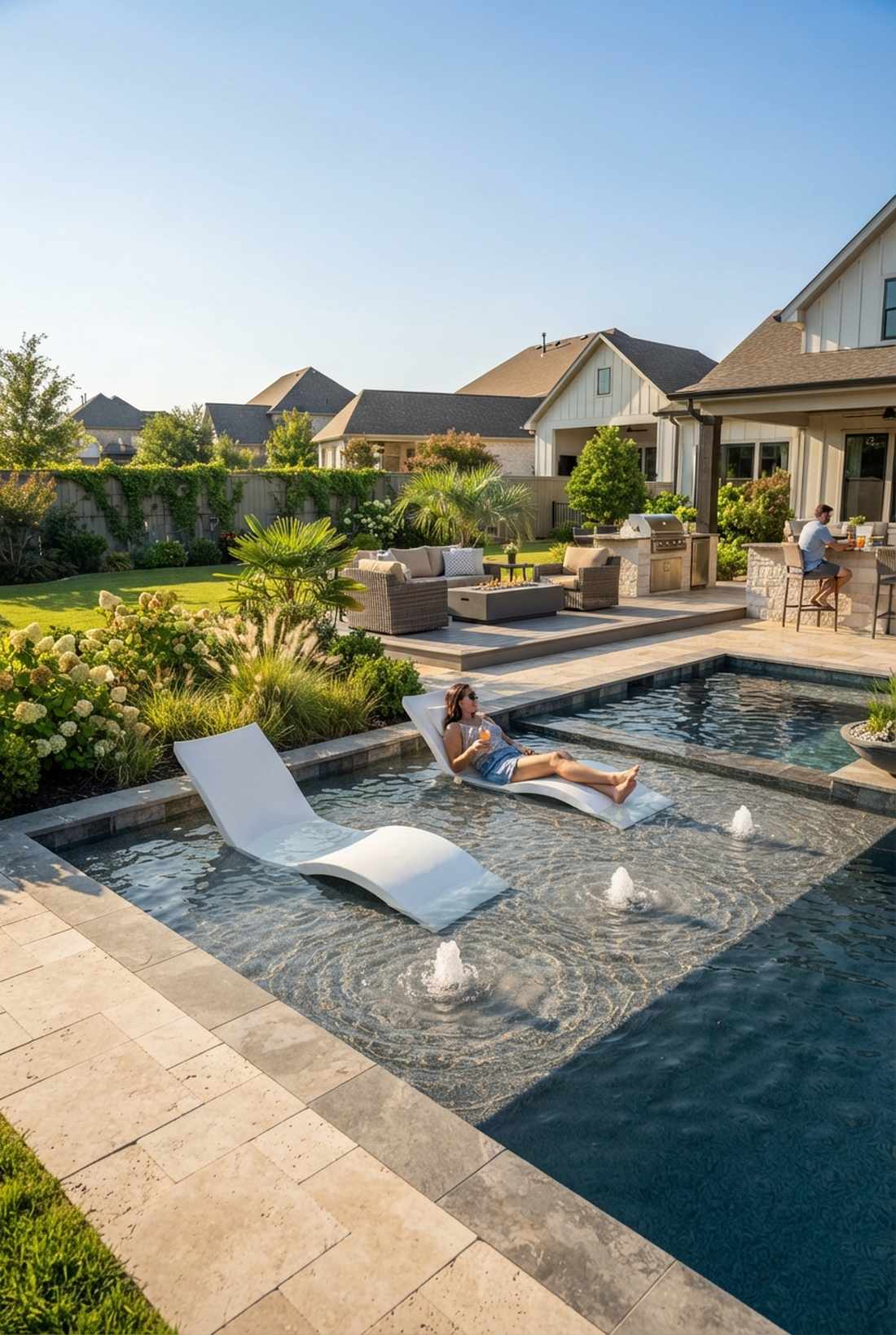
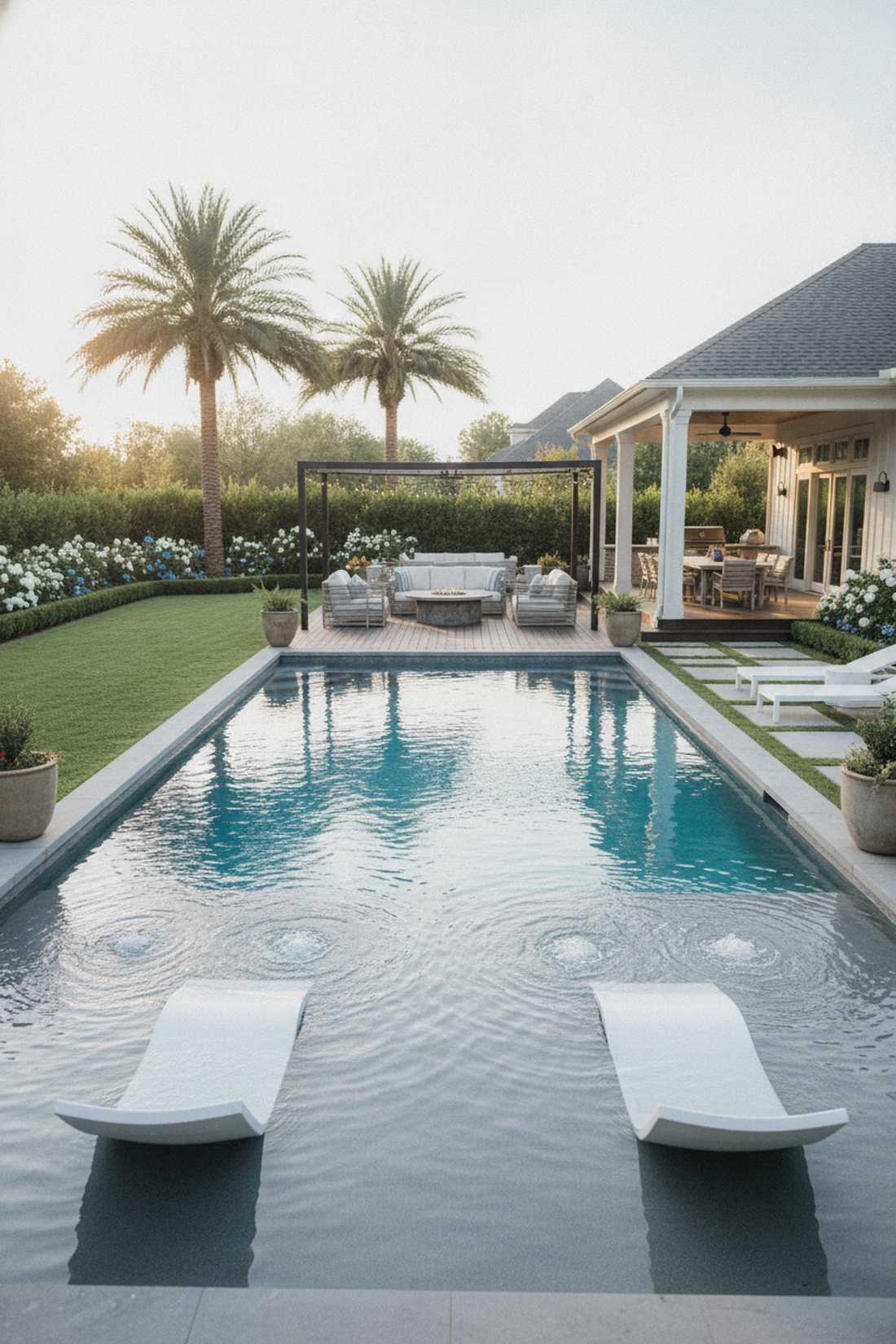
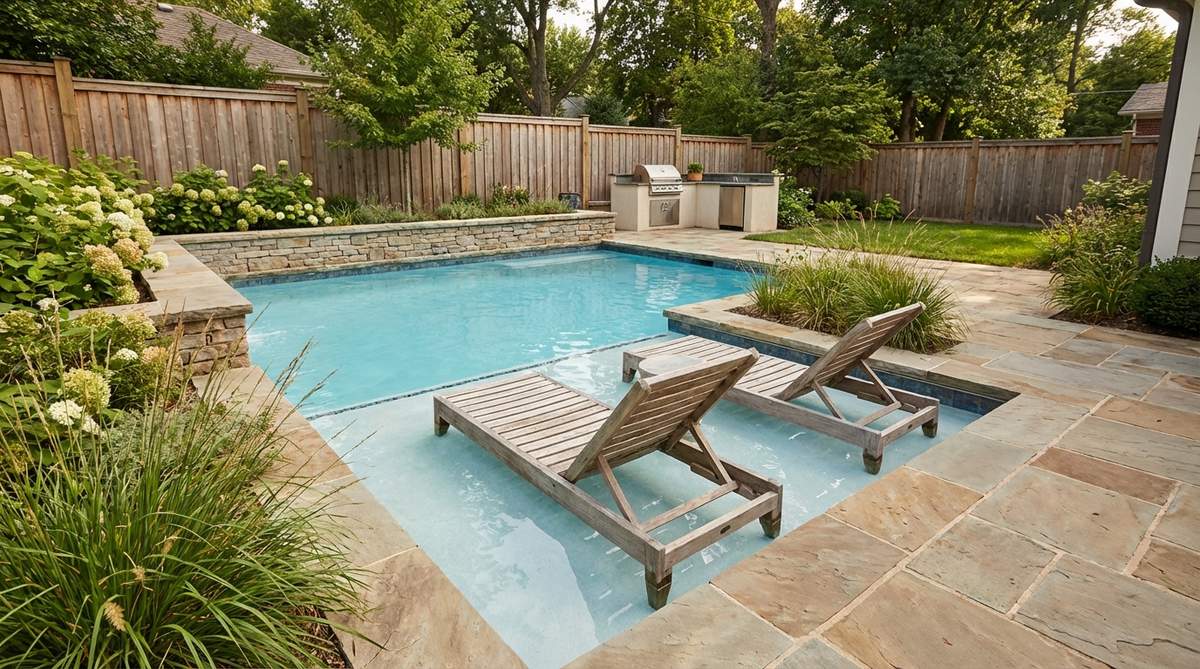
The ultimate sun-drenched dayclub vibe. A shallow lounging ledge is the best option for heavy summer entertaining.
Contractors love this layout because it gives a designer-level finish. Placing lounge chairs directly in the shallow water creates a luxurious destination point.
Investment typically spans $20,000-$35,000 for a completed yard. Pin this if you’re planning a massive summer aesthetic shift!
- Key Materials: Shallow water shelf and waterproof seating
- Vibe / Style: High-end social club
- Difficulty: Professional build required
- Budget Breakdown: Excavation: $5,000 | Shell & Plumbing: $20,000.
- Creator’s Tip: Plumb in bubbler jets on the tanning ledge for soothing background noise.
- Smart Sourcing: Get UV-coated resin pool loungers and submersible bubbler jet kits.
Integrated Spa Designs for Relaxation-Focused Gardens
11. Corner Spa with Privacy Screening
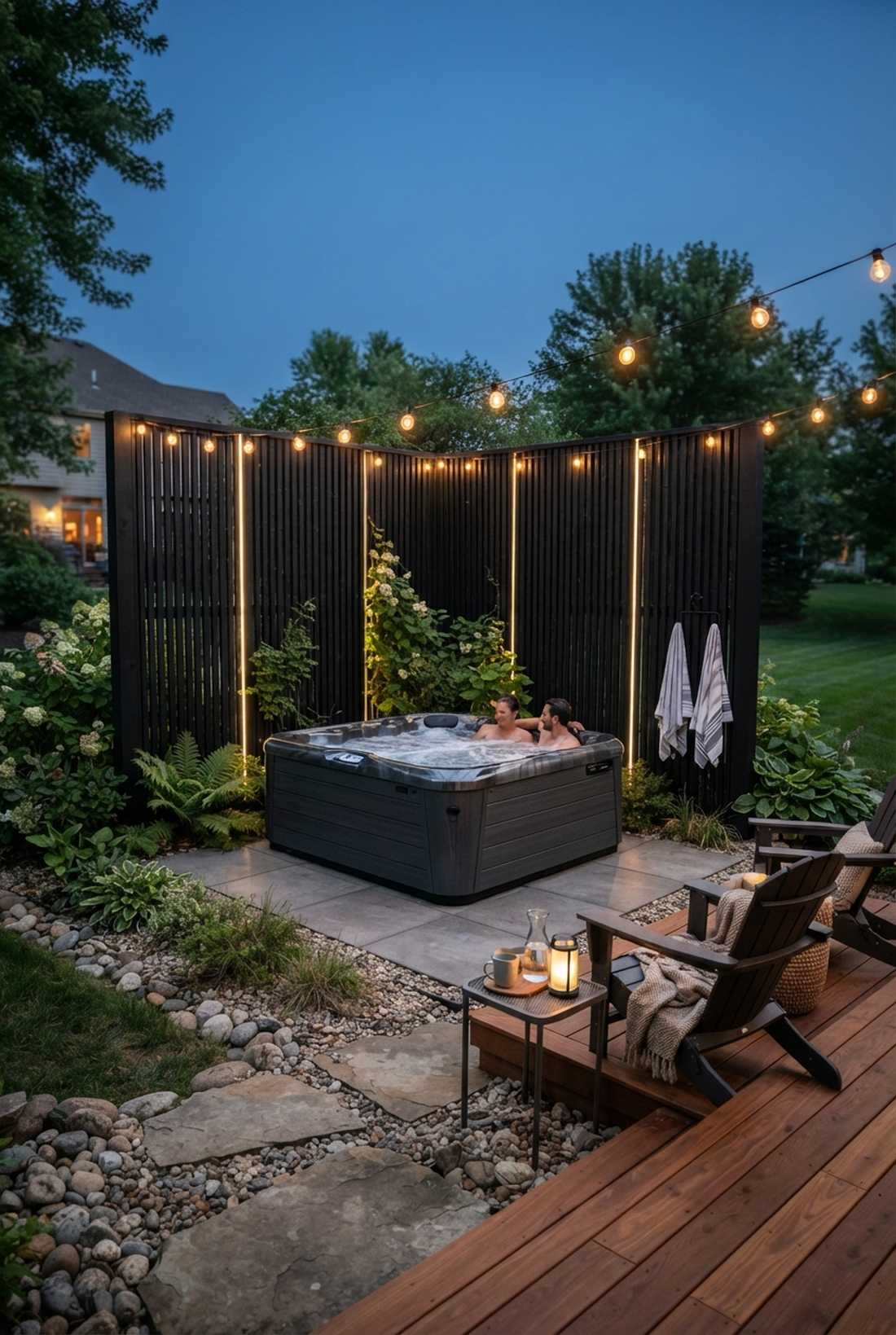
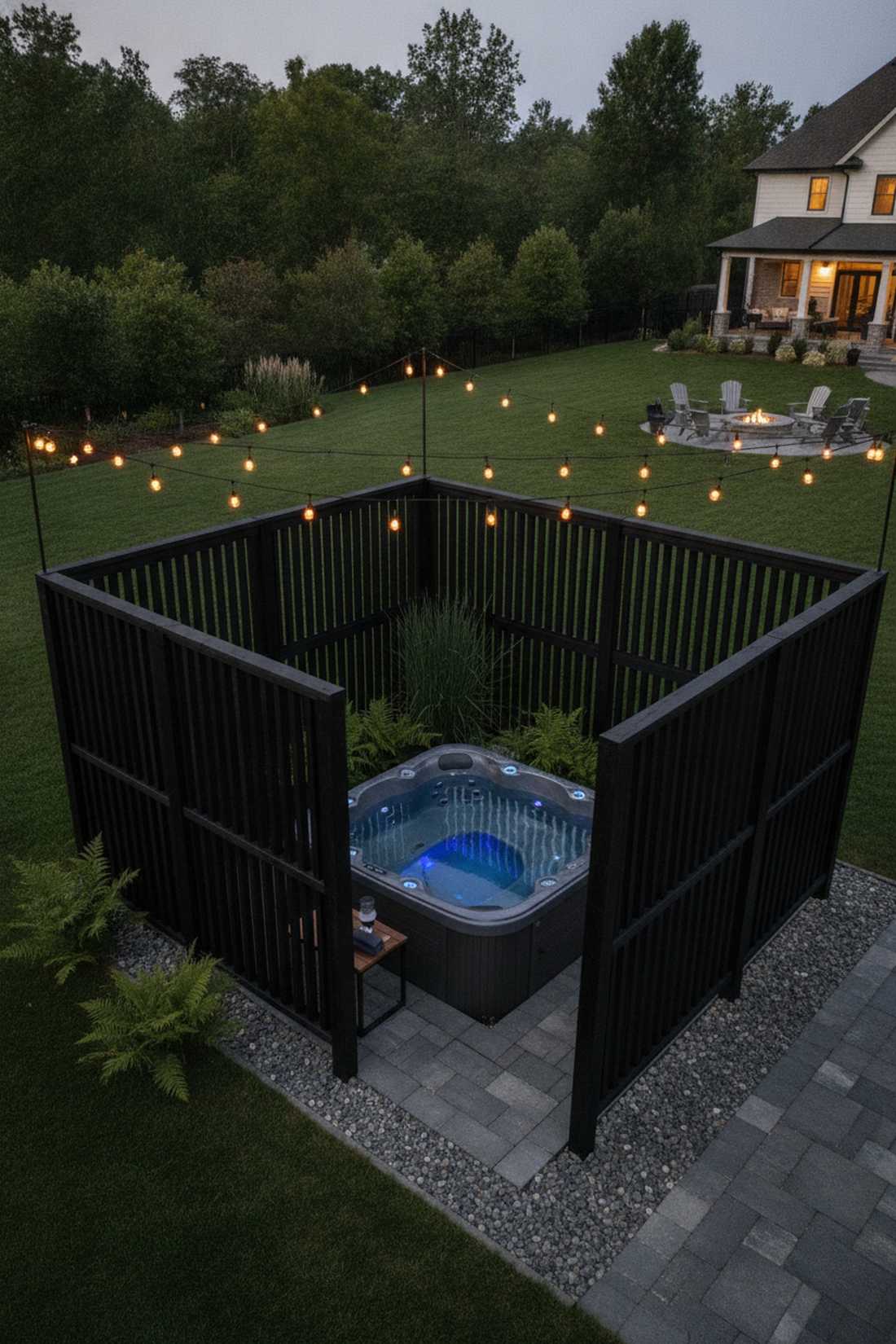
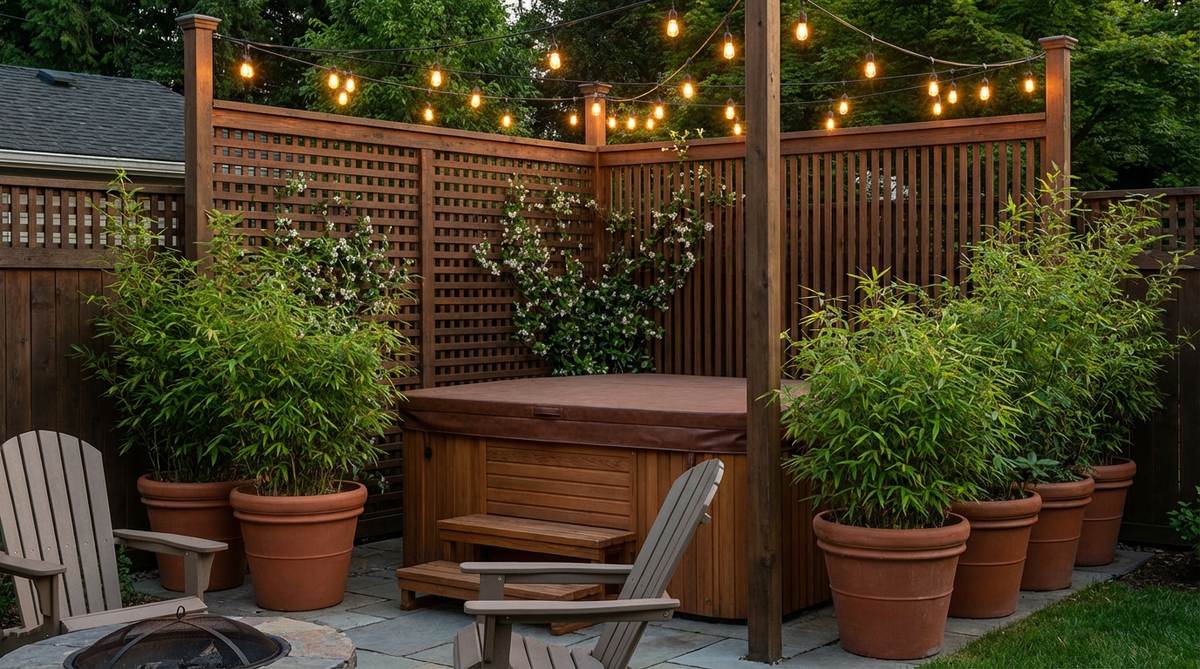
Feels like a hidden midnight sanctuary. A secluded corner hydrotherapy setup is perfect for overlooked, awkward property corners.
This layout secures maximum privacy without feeling completely boxed in. Vertical slat walls block neighbor sightlines while allowing refreshing cross breezes.
You can build out the screen and pad for around $1,500 over the spa cost. Save this to your DIY weekend garden board.
- Key Materials: Wood slat screens and compact hot tub
- Vibe / Style: Intimate modern retreat
- Difficulty: Easy weekend carpentry
- Budget Breakdown: Lumber: $600 | Foundation Pad: $400.
- Creator’s Tip: Paint the screens black to make the surrounding green foliage pop visually.
- Smart Sourcing: Pick up pre-cut cedar lattice panels and outdoor string light bulk packs.
12. Deck-Flush Spa Installation
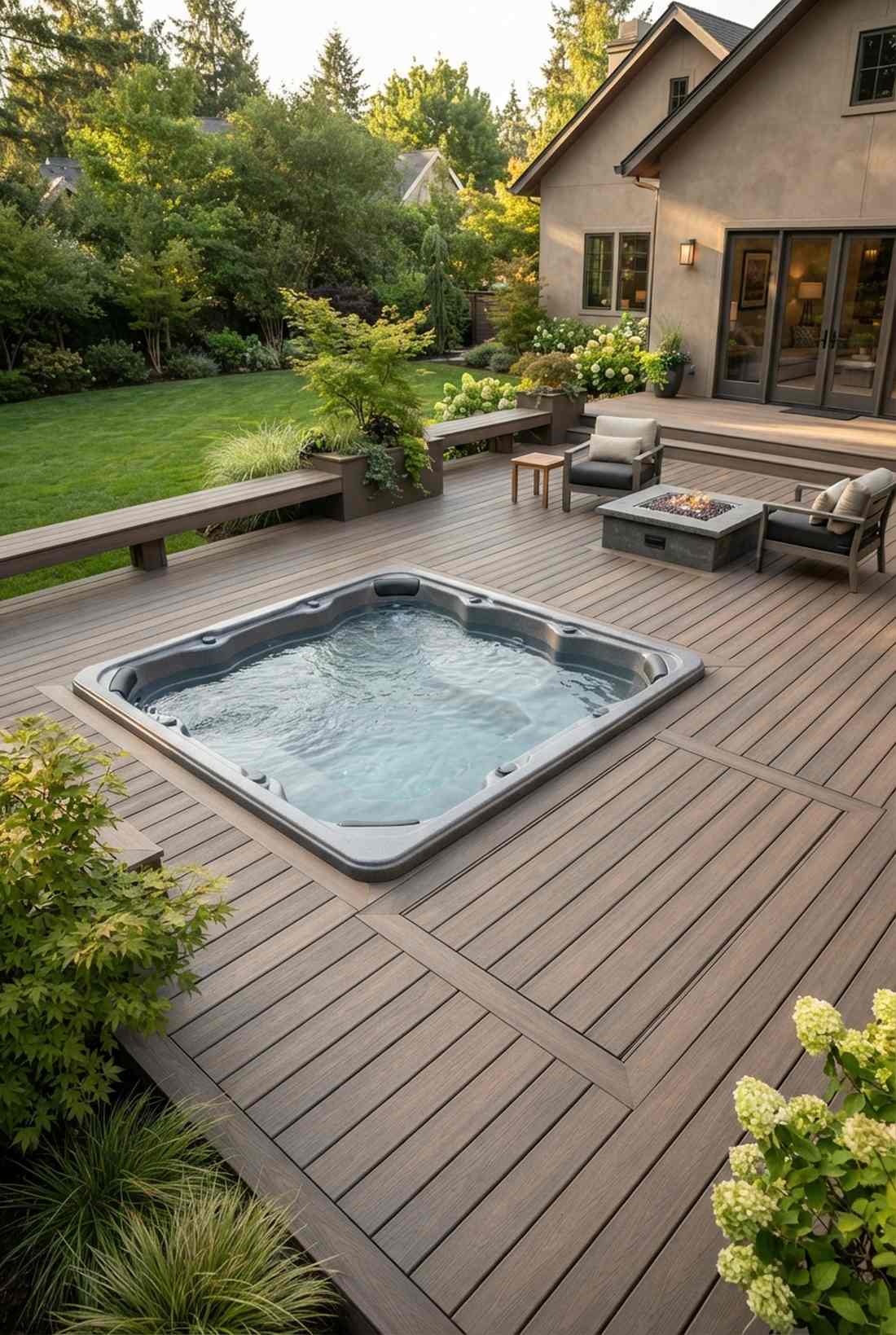
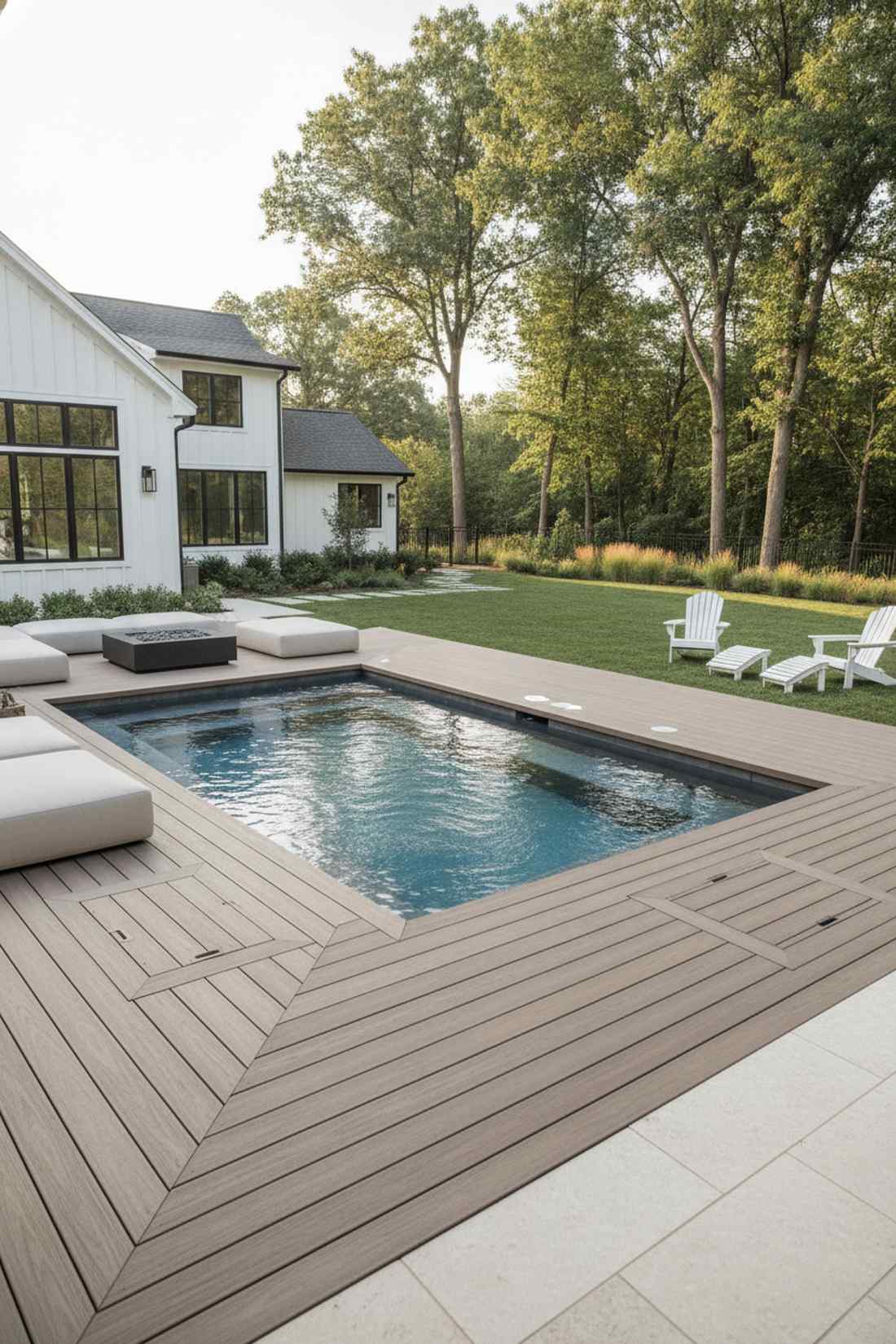
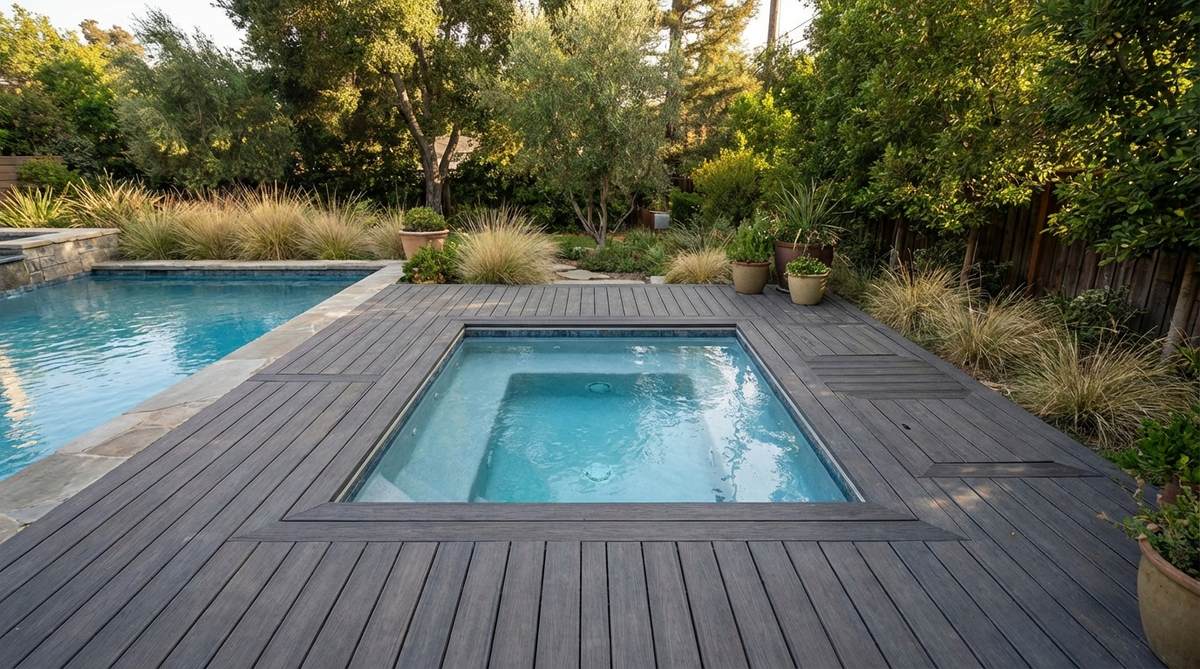
Seamless, sleek, and utterly sophisticated. A flush composite decking integration is ideal for modernizing existing expansive patios.
This brilliant strategy completely hides bulky and ugly equipment panels. Sinking the spa creates an unbroken visual plane that makes the yard feel massive.
Deck modifications will add roughly $3,000 to the total bill. Pin this if you demand a clean, minimalist outdoor space.
- Key Materials: Sunken vault and perimeter decking
- Vibe / Style: Unbroken architectural flow
- Difficulty: Advanced carpentry and framing
- Budget Breakdown: Framing: $1,200 | Composite Boards: $1,800.
- Creator’s Tip: Always build removable trapdoors over the motor and plumbing for future maintenance.
- Smart Sourcing: Grab pre-drilled composite deck boards and heavy-duty spa access hatches.
13. Partially Recessed Hillside Spa
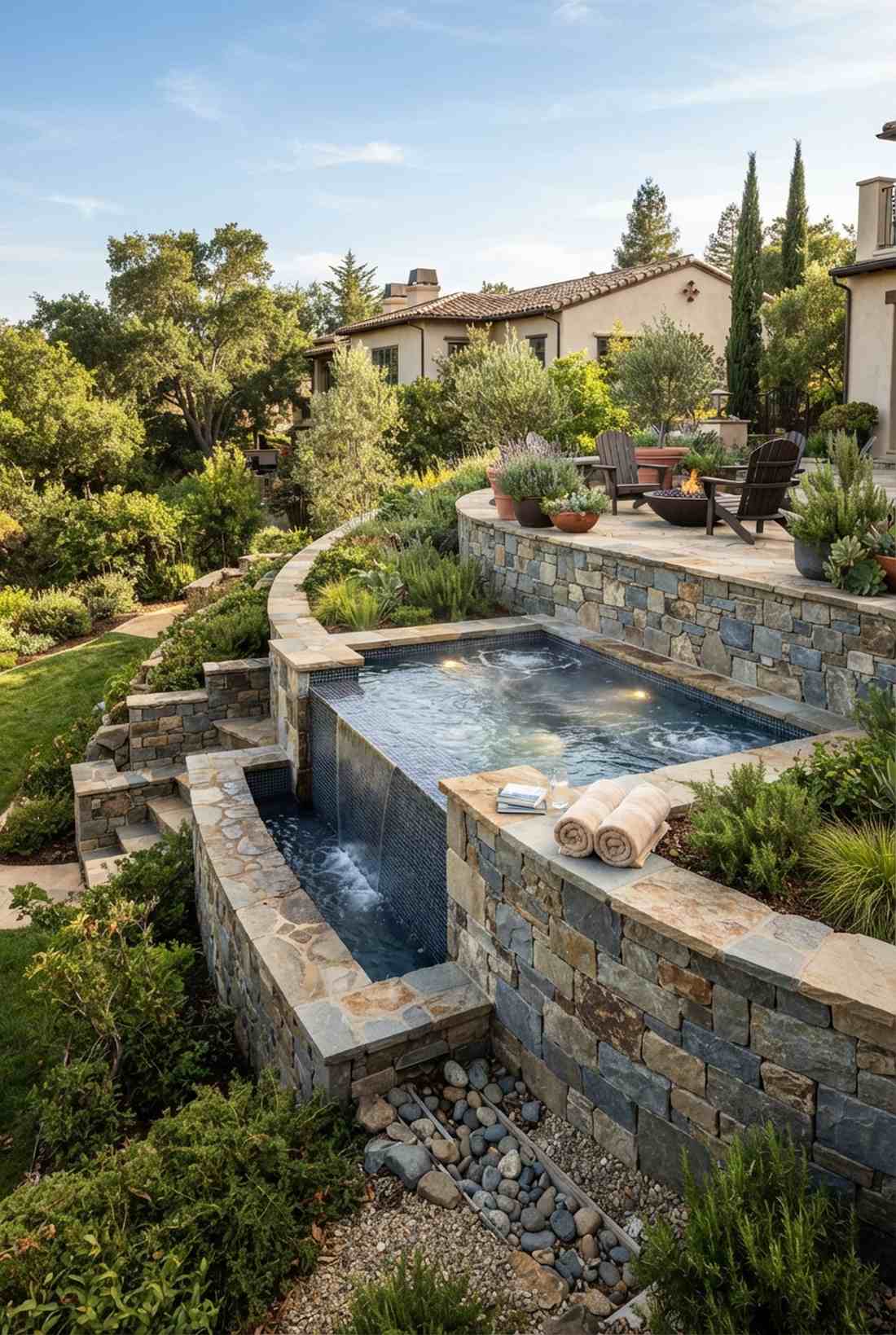
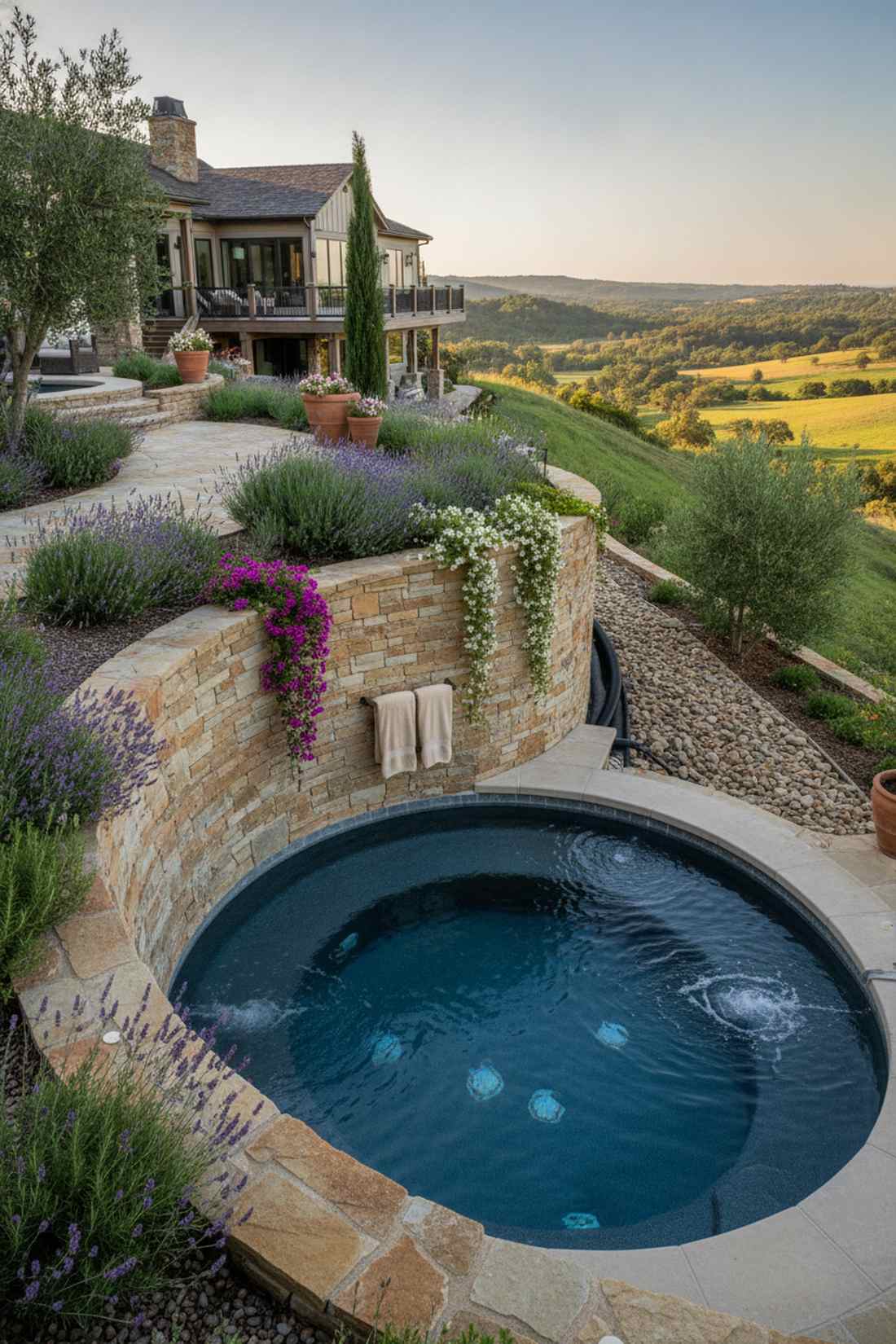
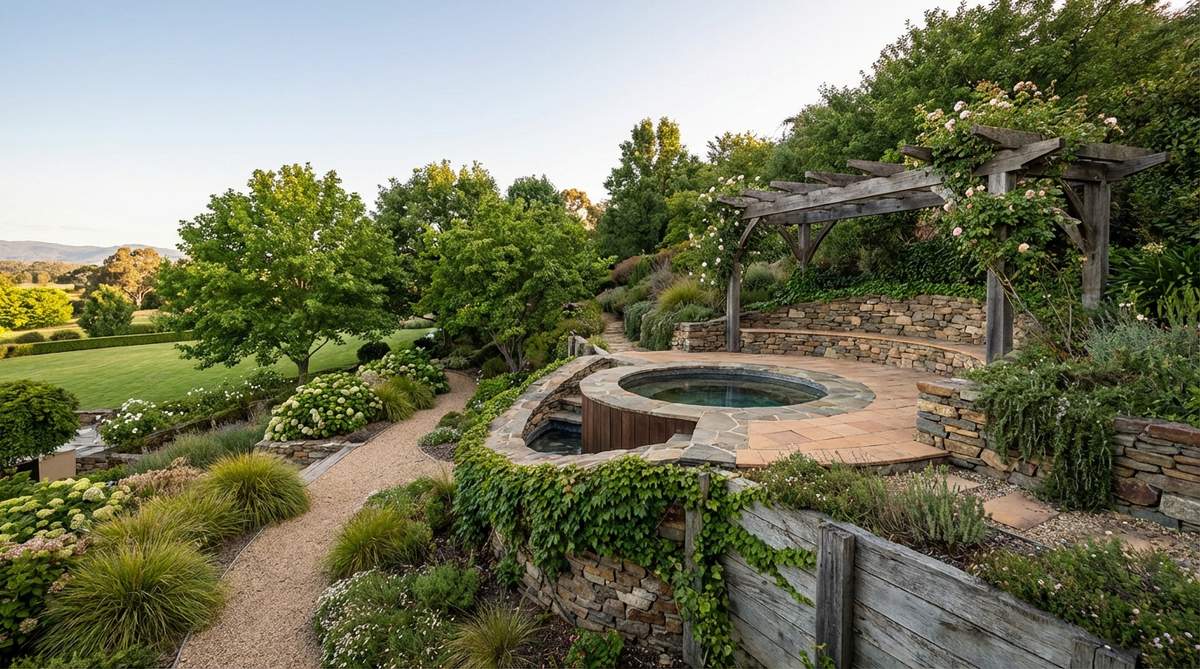
Looks straight out of a cliffside Mediterranean villa. A terraced stone retaining wall is the ultimate hack for sloping backyards.
This clever dig turns a frustrating yard flaw into an absolute asset. Letting the hillside wrap the tub provides natural insulation and a built-in privacy berm.
Earthwork and masonry usually push costs around $12,000. Highly recommended for properties with difficult terrain.
- Key Materials: Retaining blocks and drainage gravel
- Vibe / Style: Natural elevated overlook
- Difficulty: Professional grading required
- Budget Breakdown: Excavation: $3,000 | Retaining Wall: $5,000.
- Creator’s Tip: Install a french drain behind the retaining wall to prevent hydrostatic pressure buildup.
- Smart Sourcing: Use bulk stacked stone veneers and waterproof drainage pipe kits.
Stop scrolling if you have a tiny awkward corner—this upcoming trick changes everything.
14. Swim Spa Alongside Narrow Side Yard
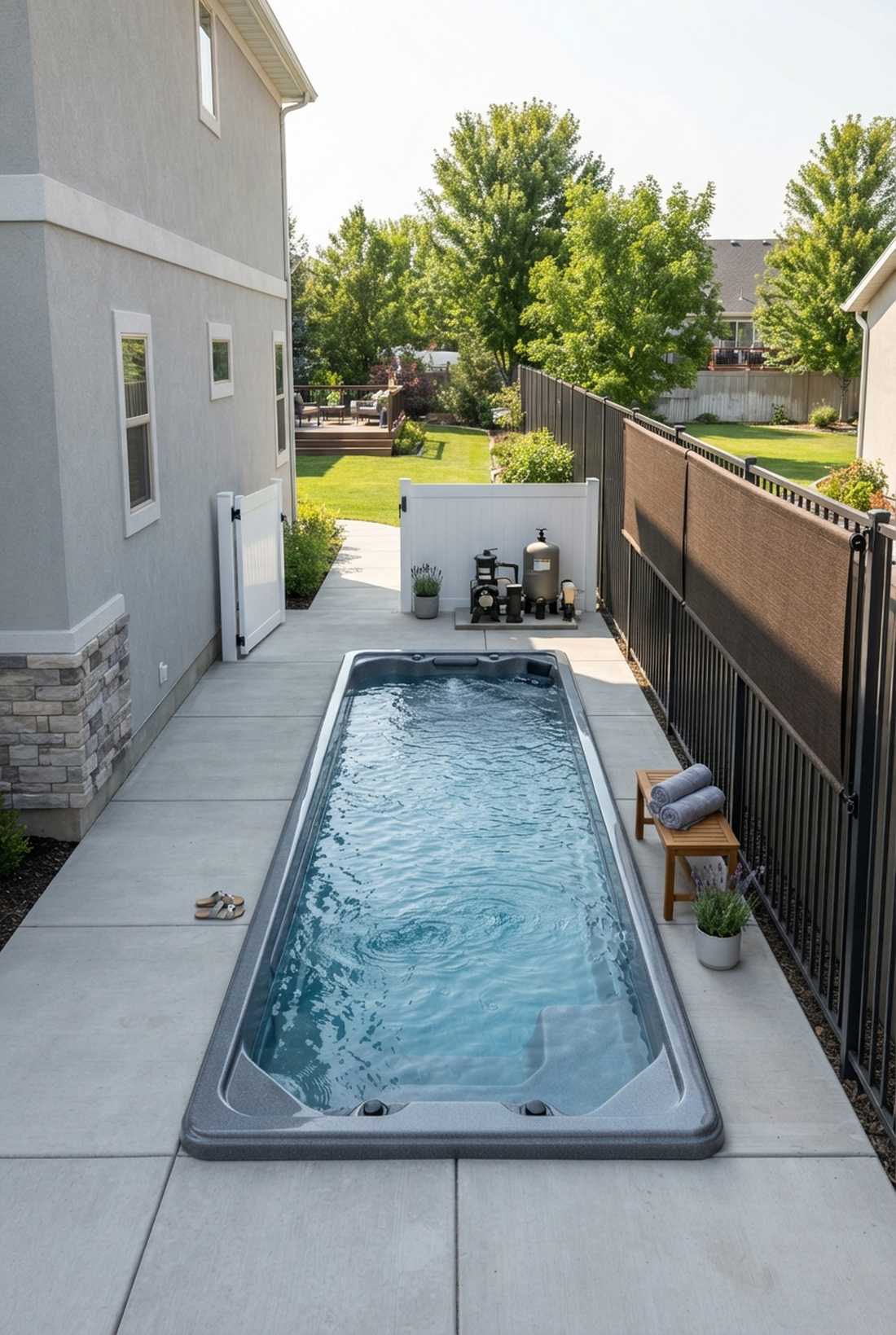
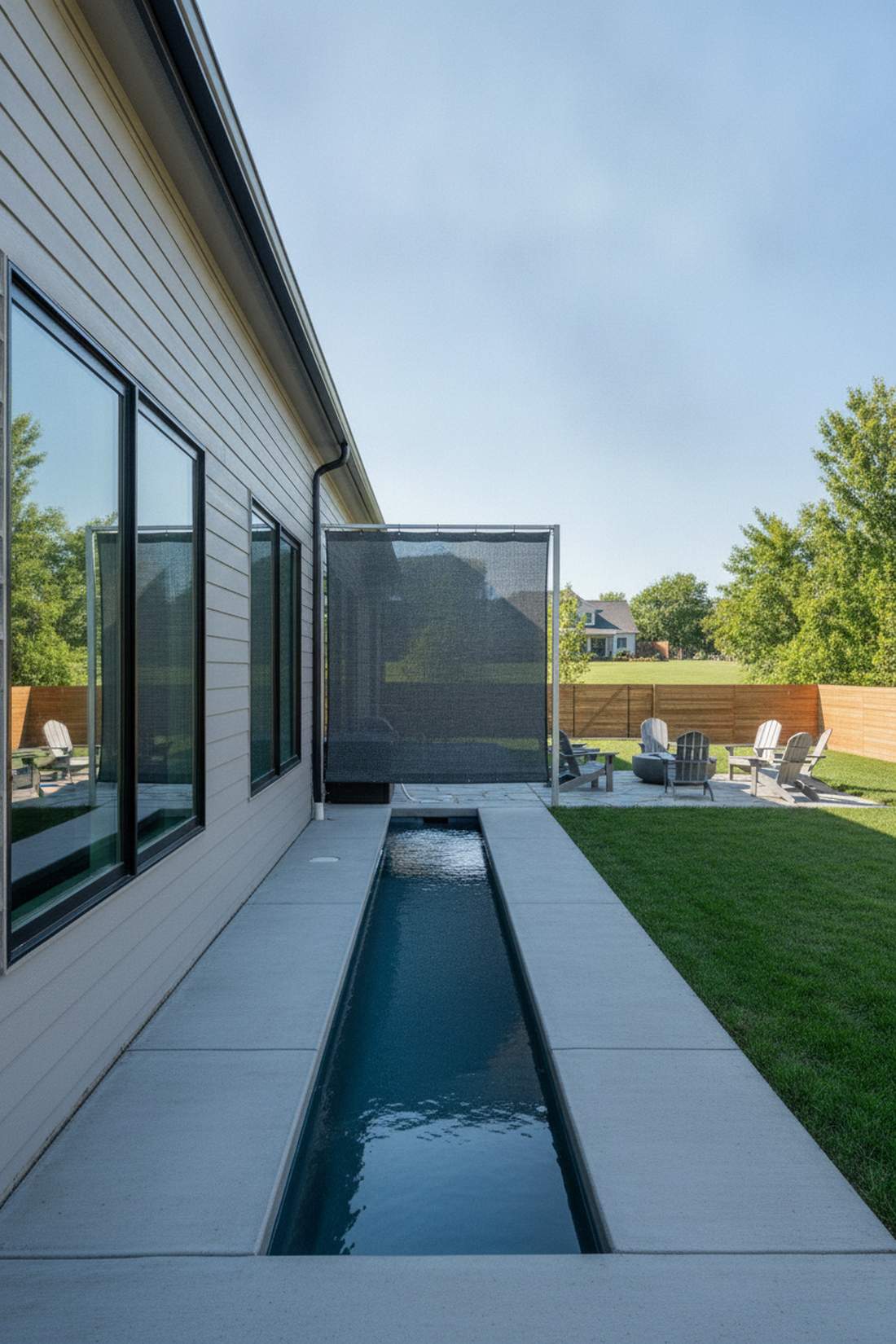
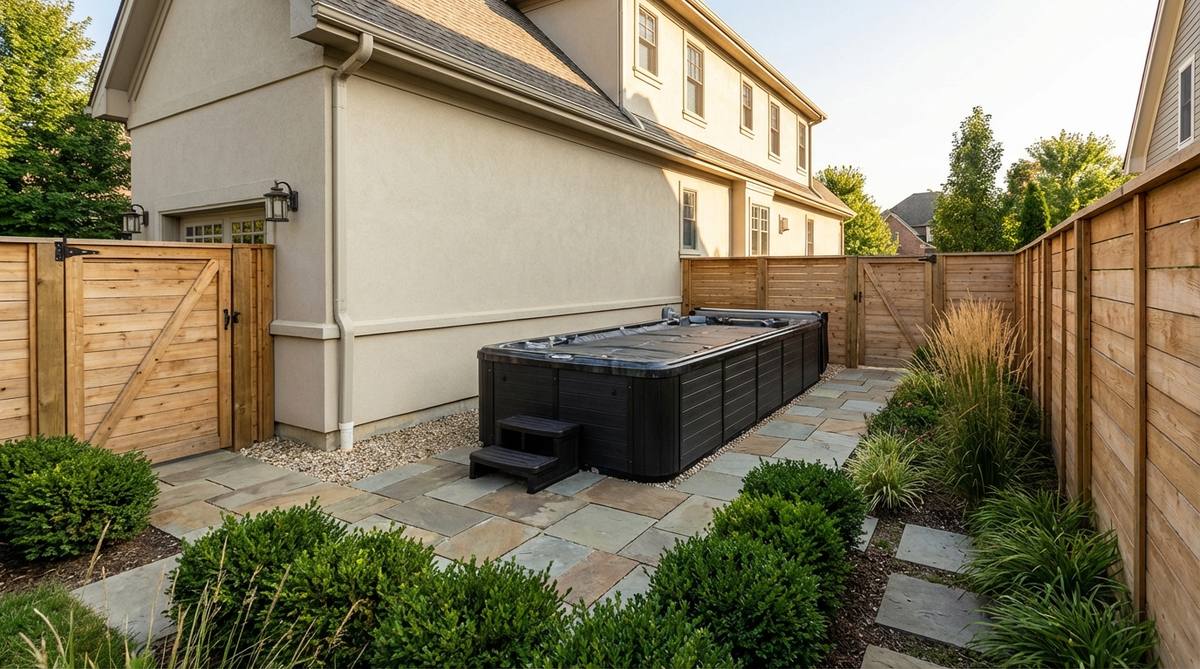
A sleek, hidden channel of calm. A streamlined side-yard aquatic zone revives dead space beside the house.
This unique placement maximizes square footage that usually goes completely to waste. Leaving the main lawn open ensures you don’t lose your entertaining area.
Total footprint preparation is roughly $5,000 before the spa unit. Save this layout trick to your dream backyard Pinterest board.
- Key Materials: Linear concrete pad and slim spa
- Vibe / Style: Highly efficient utility zone
- Difficulty: Professional pad pouring needed
- Budget Breakdown: Concrete: $2,500 | Electrical Trenching: $1,500.
- Creator’s Tip: Ensure gates at both ends of the side yard are wide enough for crane delivery.
- Smart Sourcing: Invest in UV-resistant privacy screen rolls and compact equipment pad bases.
15. Spa Under Pergola Canopy
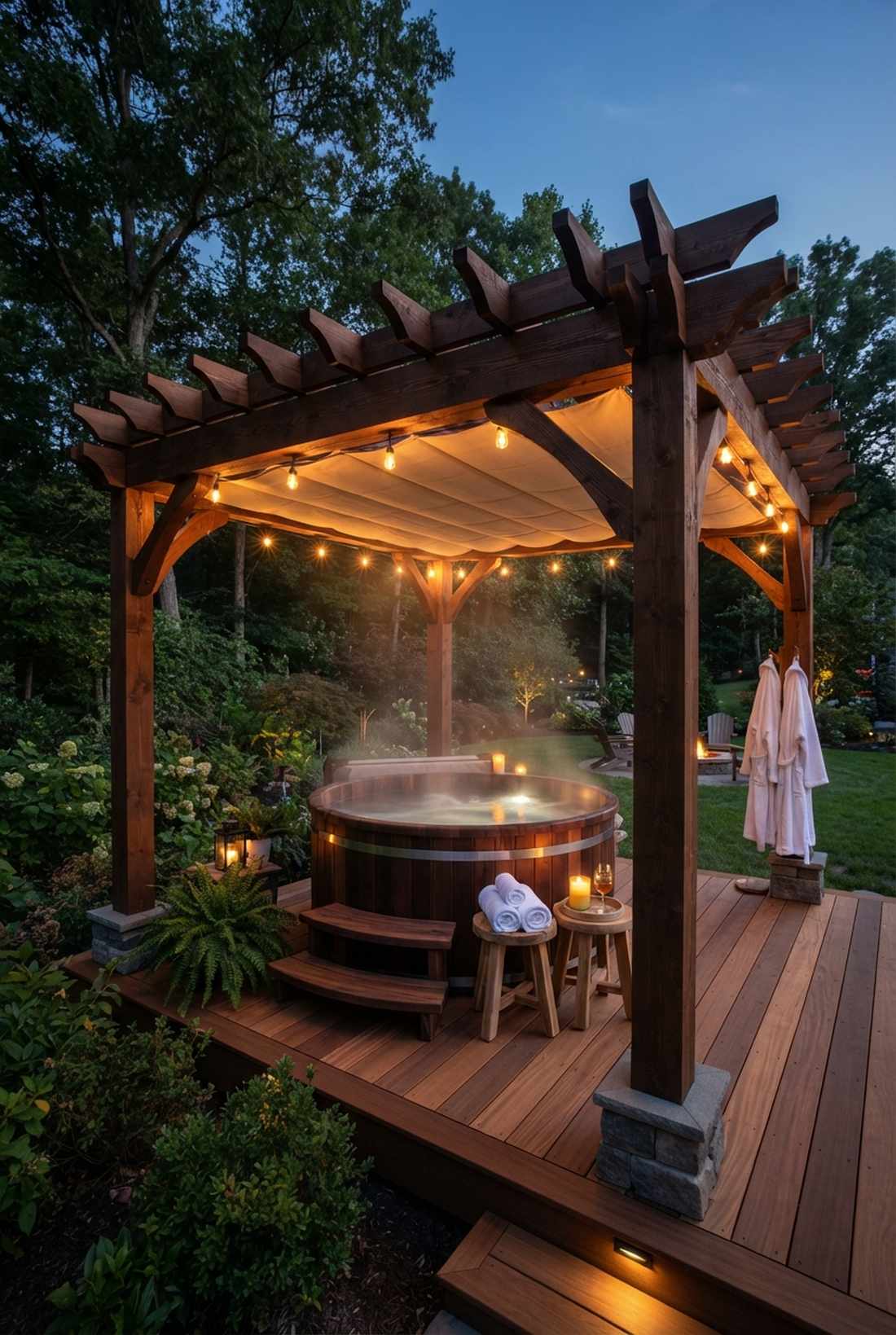
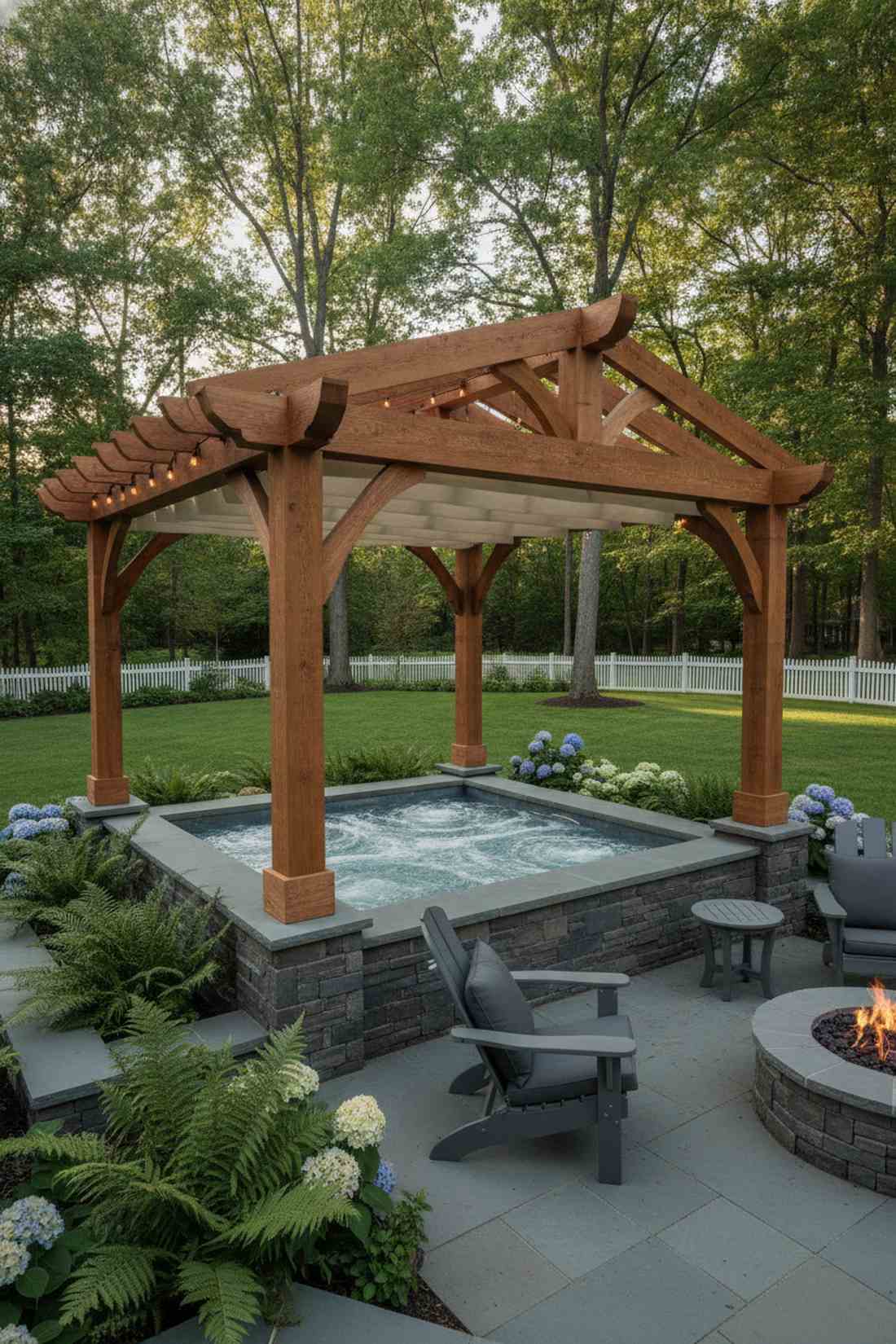
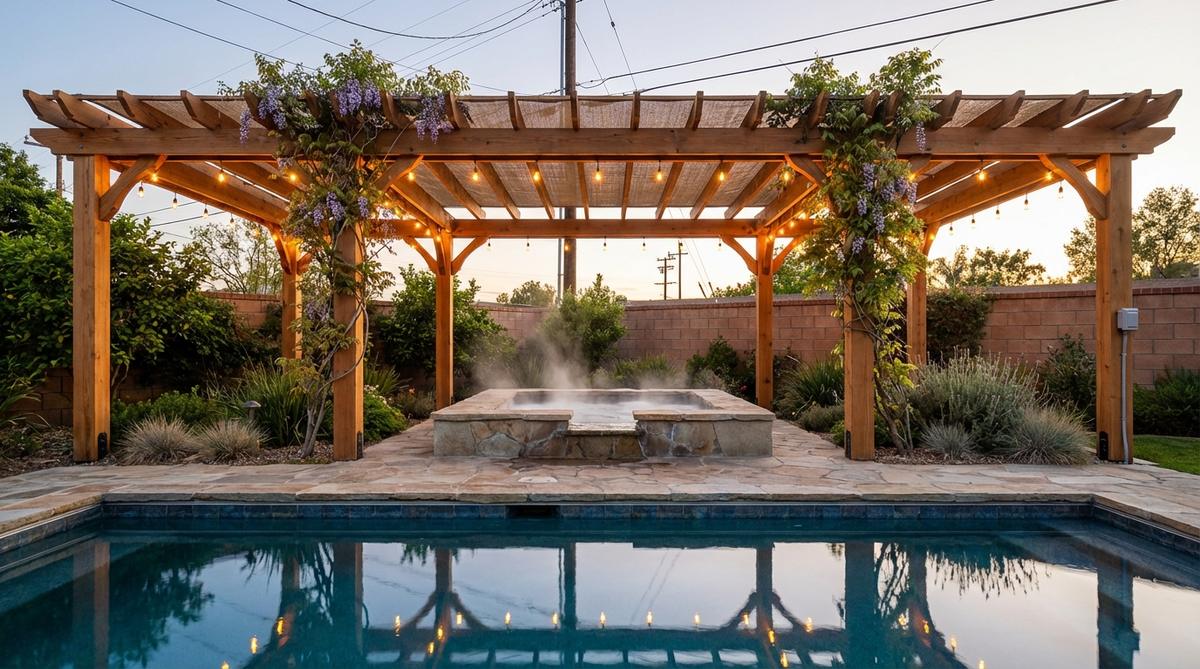
Exudes cozy, shadowed woodland charm. A timber canopy shade structure is a must-have for intense full-sun locations.
This vertical addition yields an outrageously luxurious feel instantly. By framing the sky, it makes an ordinary tub feel like a dedicated outdoor room.
Quality timber structures generally run $2,000-$5,000. It’s a fast upgrade that completely changes the vibe.
- Key Materials: Heavy timber beams and outdoor lighting
- Vibe / Style: Sheltered romantic enclave
- Difficulty: Moderate weekend build
- Budget Breakdown: Timber Kit: $1,800 | Footings: $200.
- Creator’s Tip: Route string light wiring along the tops of the beams so the cords remain invisible.
- Smart Sourcing: Buy pre-cut cedar pergola kits and waterproof retractable canopy covers.
16. Compact Hot Tub on Reinforced Balcony
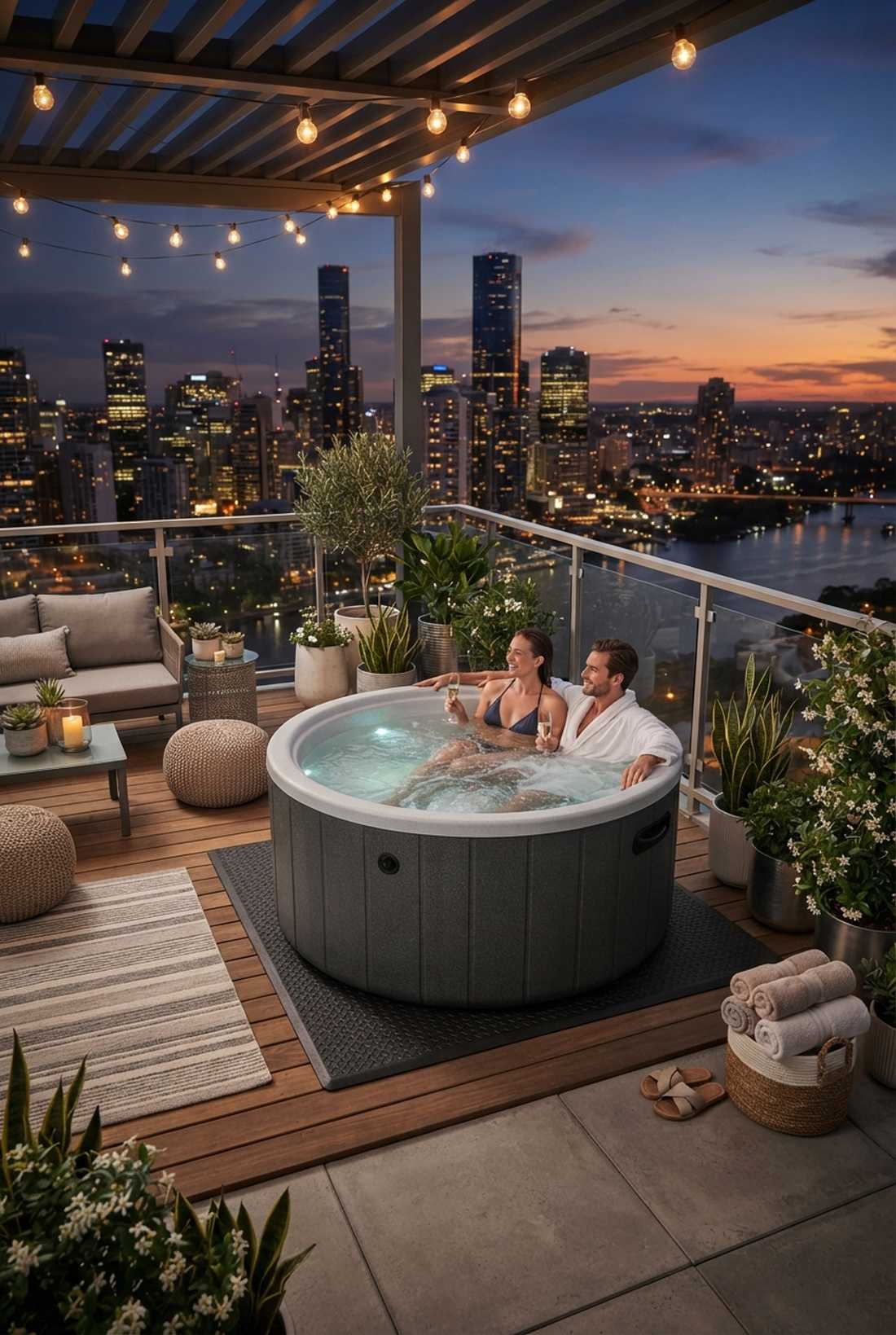
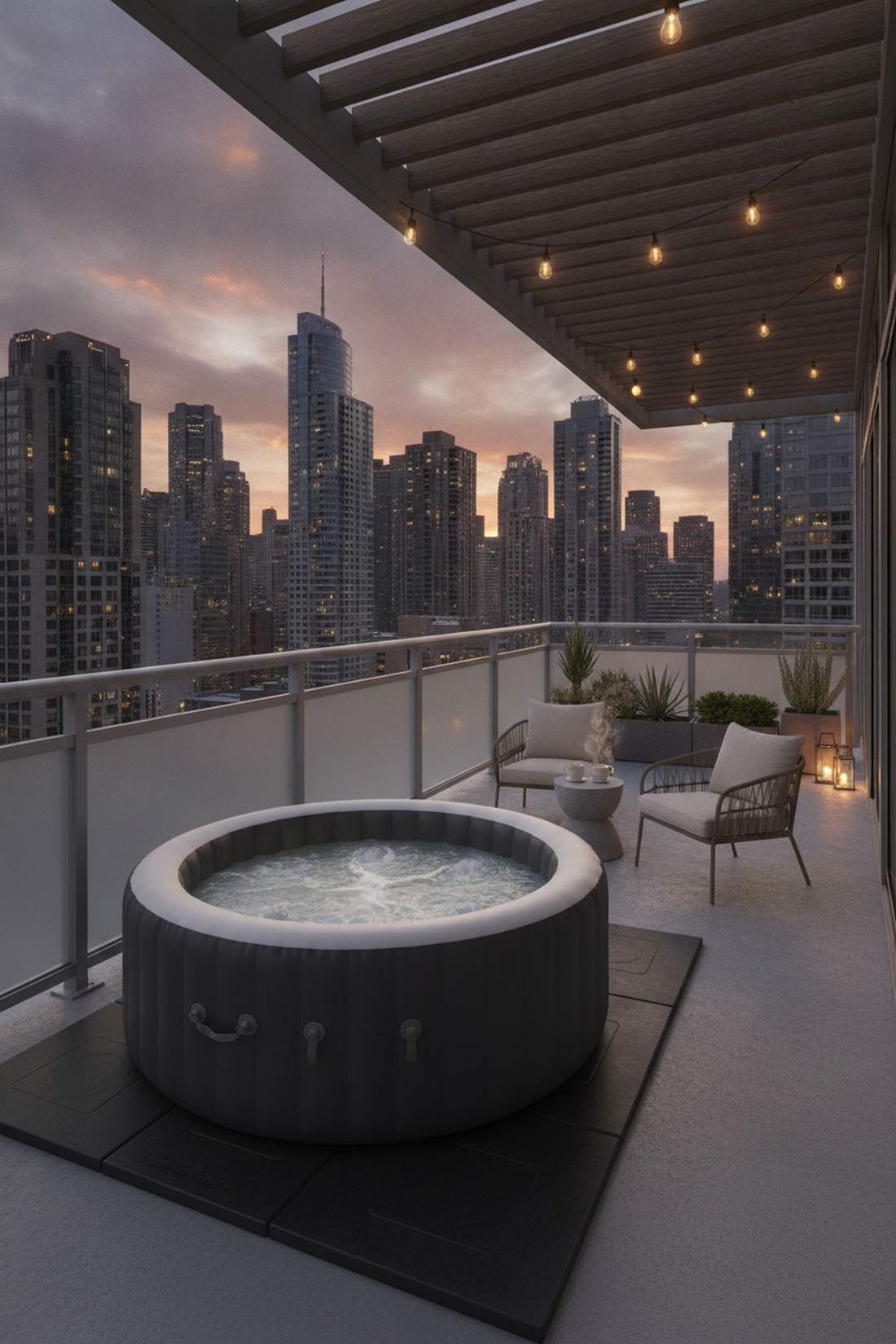
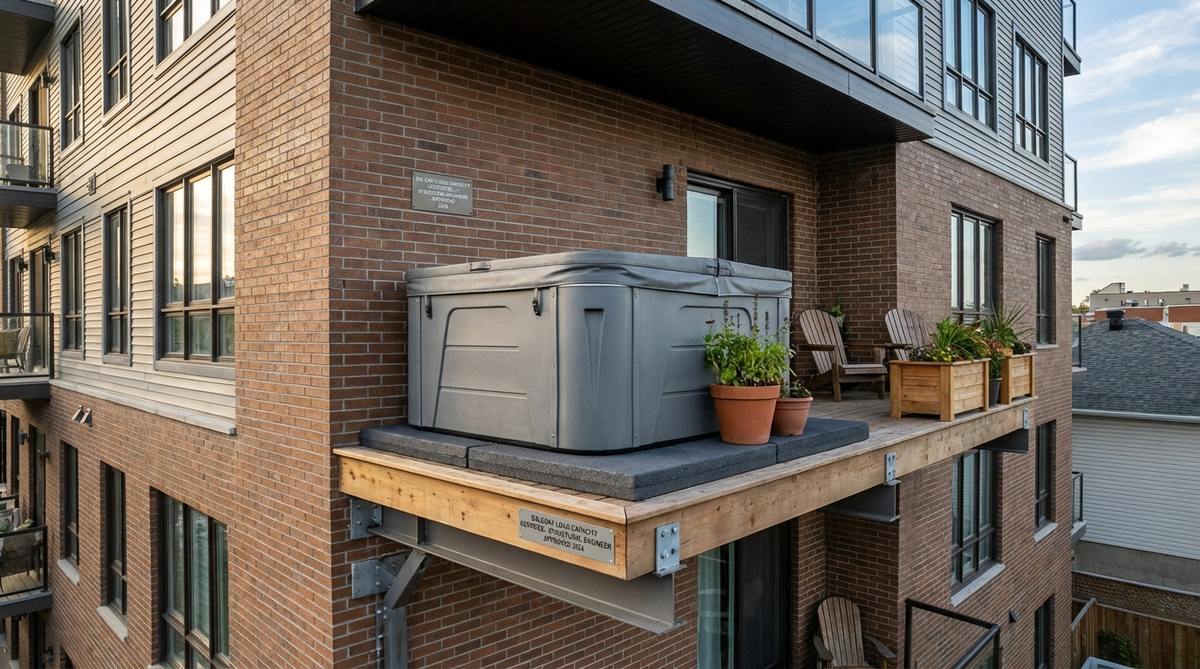
Feels like an exclusive rooftop penthouse lounge. A reinforced balcony soaking tub is strictly for engineered apartment terraces.
This bold installation brings resort luxury directly to high-density living. Utilizing lightweight rotomolded units bypasses heavy structural crane loads.
Tub and pad combos can be achieved for around $800-$1,500. Pin this if you’re planning a balcony space upgrade!
- Key Materials: Lightweight tub and protective matting
- Vibe / Style: Urban skyline retreat
- Difficulty: Easy plug-and-play setup
- Budget Breakdown: Portable Tub: $600 | Protection Pad: $150.
- Creator’s Tip: Always verify load-bearing capacity with building management before filling with water.
- Smart Sourcing: Get heavy-duty vibration dampening pads and portable inflatable spa kits.
Innovative Placement Strategies for Challenging Layouts
17. Flush-Mount Pool Beside Foundation Wall
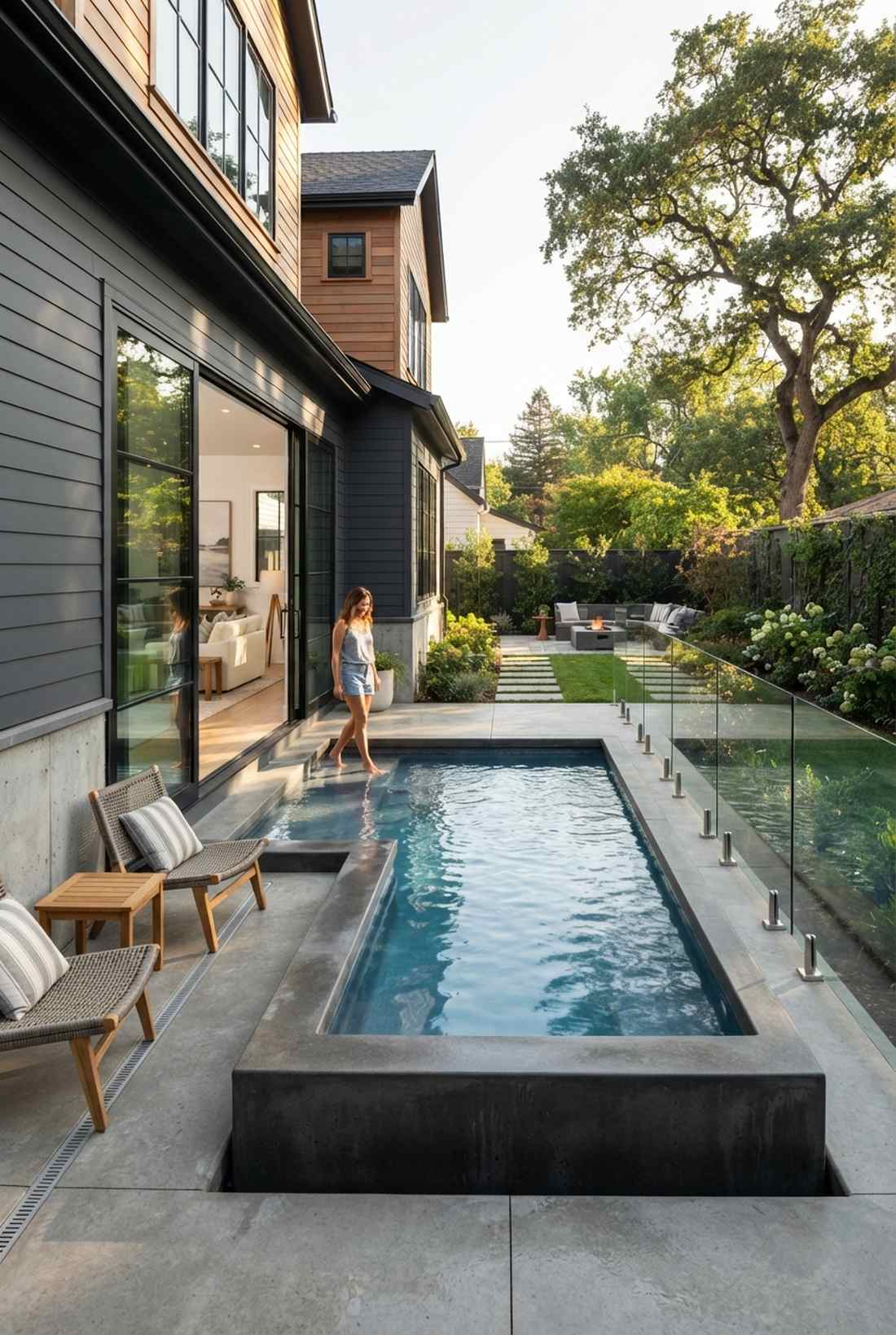
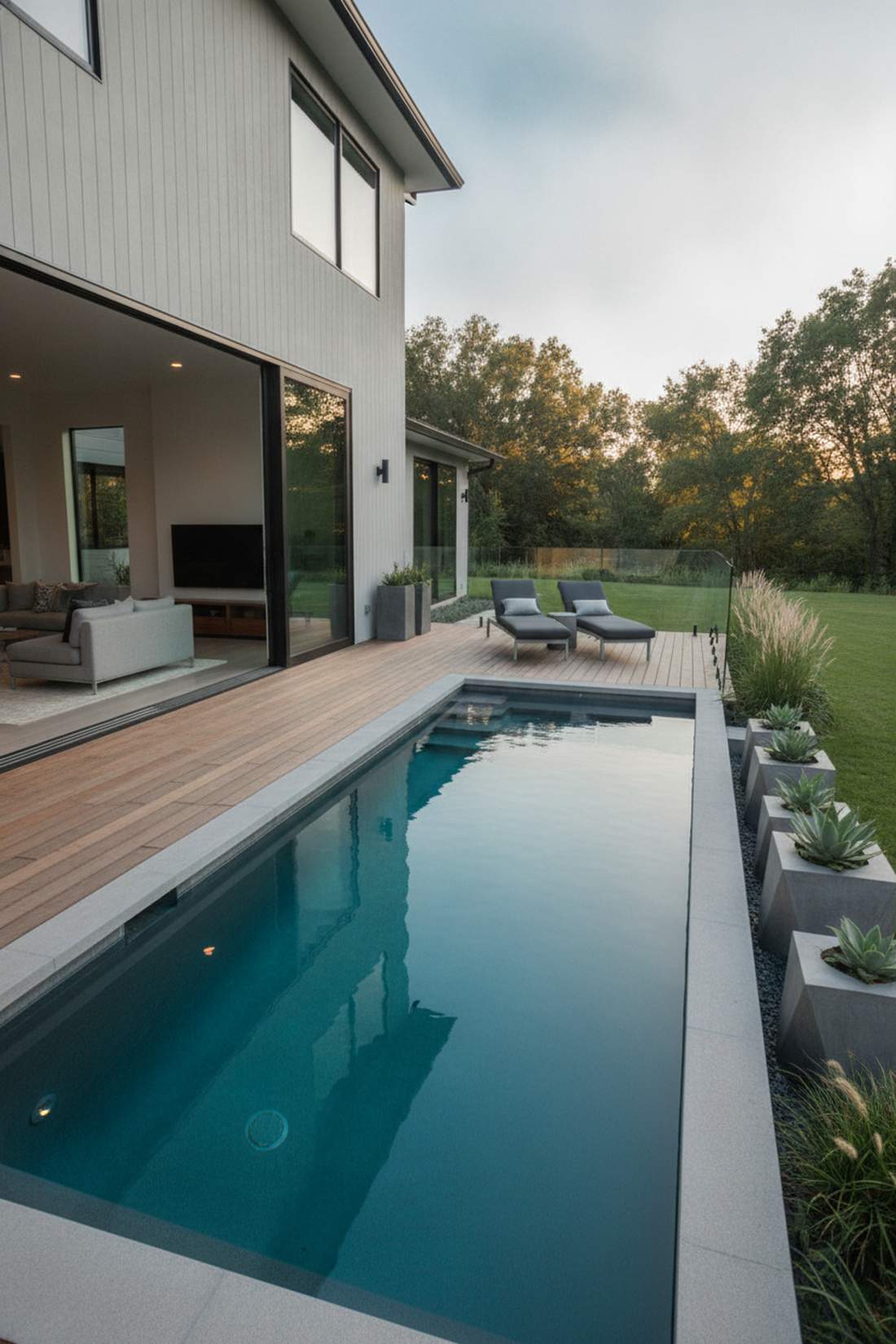
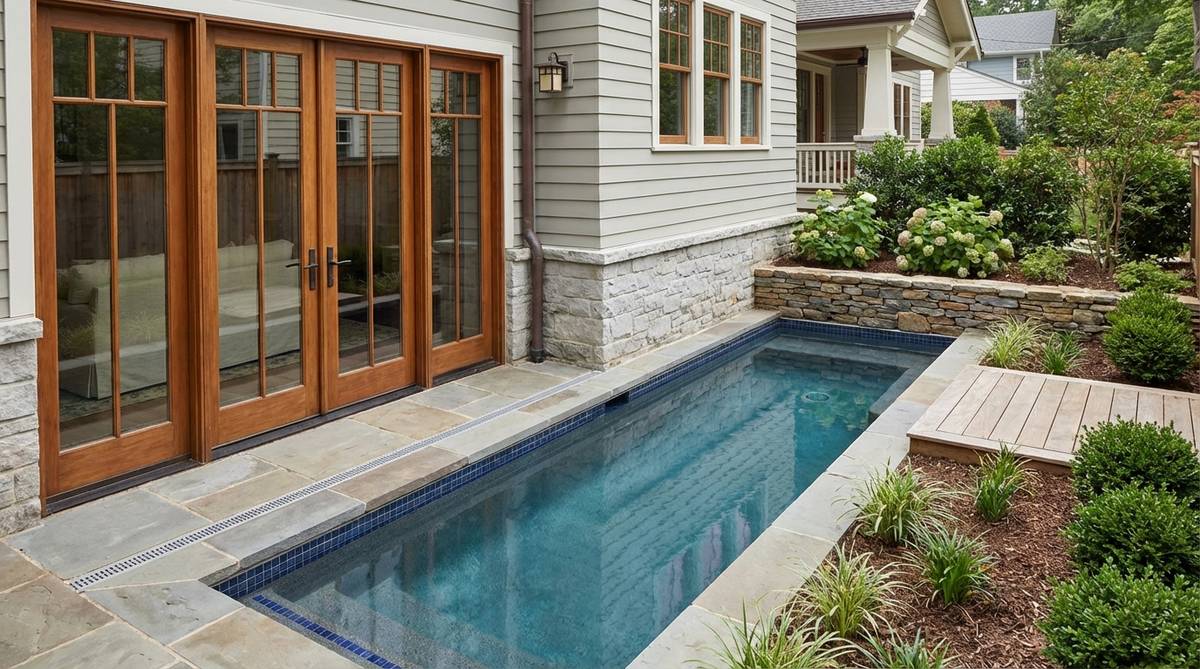
Blurs the line between indoors and out seamlessly. A foundation-hugging plunge pool is excellent for deep, narrow property footprints.
Contractors admit this makes the house itself feel vastly larger. Stepping right out of a sliding door directly into water creates absolute paradise.
Complex structural reinforcements push foundation builds to around $25,000. Save this to your DIY weekend garden board for inspiration.
- Key Materials: Concrete shell and waterproofing membranes
- Vibe / Style: Modern indoor-outdoor flow
- Difficulty: Heavy engineering required
- Budget Breakdown: Engineering: $3,000 | Build out: $22,000.
- Creator’s Tip: Install a splash-guard channel to prevent chemically treated water from hitting the siding.
- Smart Sourcing: Secure marine-grade foundation waterproofing kits and tempered glass pool fencing.
Contractors charge a fortune for this next aesthetic, but the DIY version is shockingly simple.
18. L-Shaped Pool Wrapping Around Patio
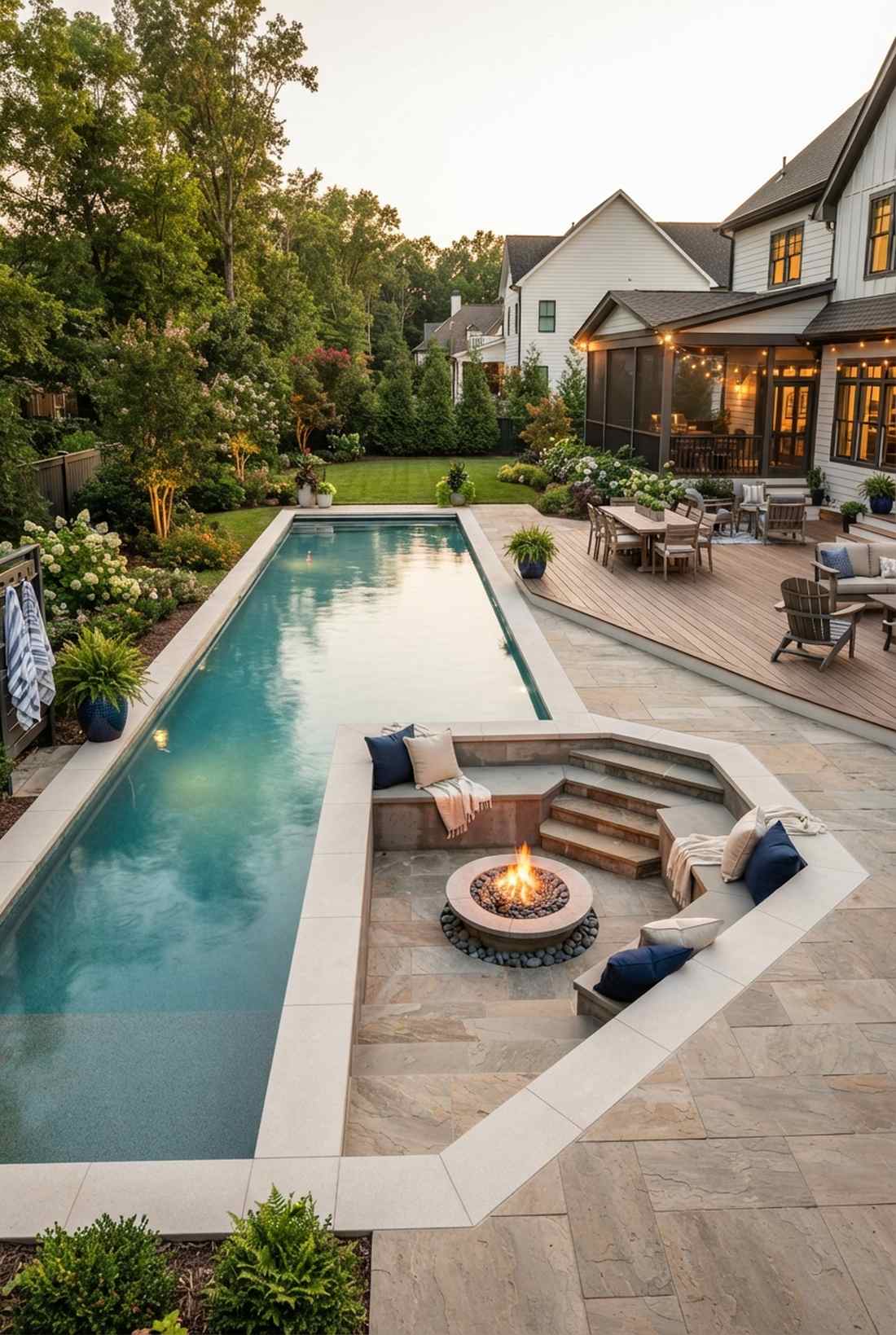
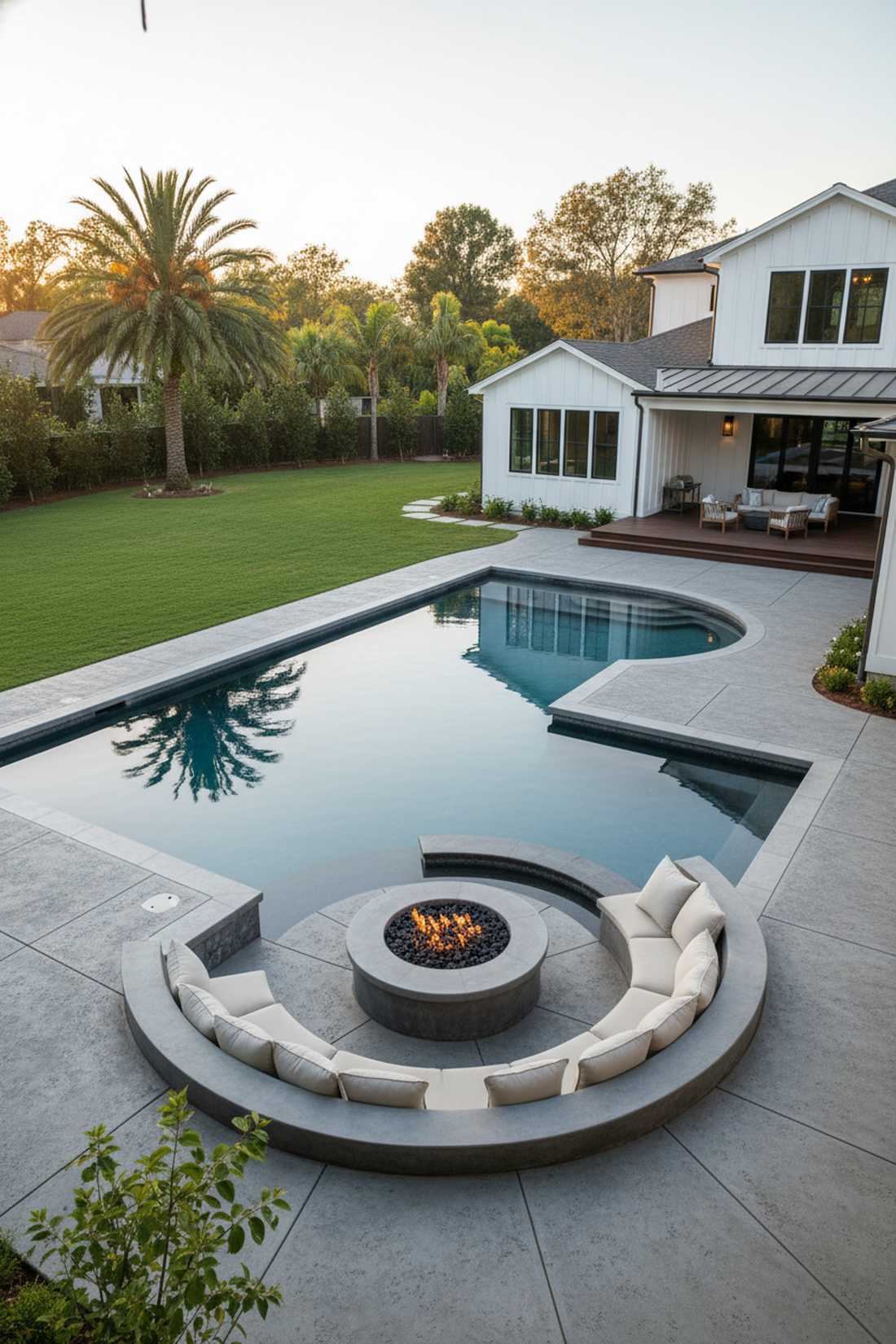
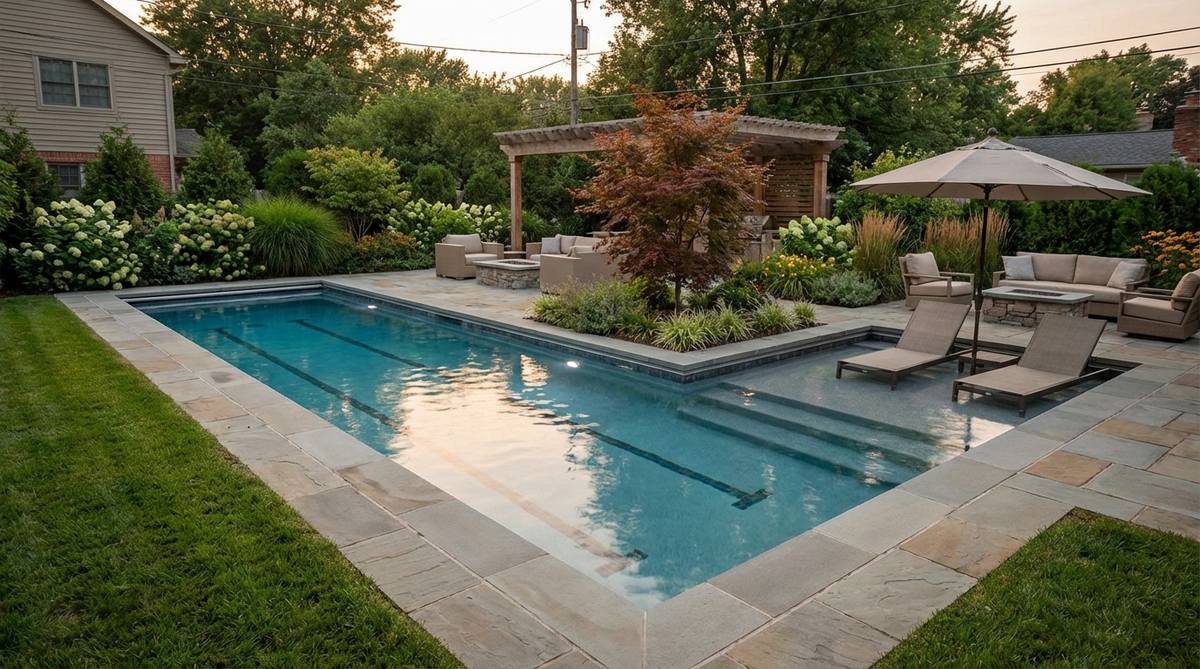
Gives off sprawling luxury estate energy. A custom wrap-around water feature brilliantly utilizes odd-shaped property borders.
This clever footprint breaks away from boring, standard rectangle designs. It divides the water naturally into an active lap zone and a quiet lounging nook.
Custom formwork adds roughly a 20% premium over standard shapes. Highly recommended if you want to eliminate useless yard corners.
- Key Materials: Custom poured concrete and coping
- Vibe / Style: Bespoke architectural layout
- Difficulty: Professional design necessary
- Budget Breakdown: Custom Forms: $8,000 | Finish Work: $15,000.
- Creator’s Tip: Use the inner corner of the “L” shape to house a sunken fire pit.
- Smart Sourcing: Try flexible pool formwork kits and bulk slip-resistant pool coping.
Material Guide: Cheap vs. Premium Aesthetic
Knowing exactly where to save and where to spend makes all the difference in achieving that “looks expensive but isn’t” vibe.
- Standard vs. UV-Resistant/Premium: Upgrading to specialized coatings stops the sun from destroying liners and prevents rapid cracking.
- Pre-made Kits vs. Sourcing Locally: Bulk starter kits cut down multiple store runs and ensure all plumbing connections match flawlessly from day one.
19. Narrow Lap Lane with Swim Jets
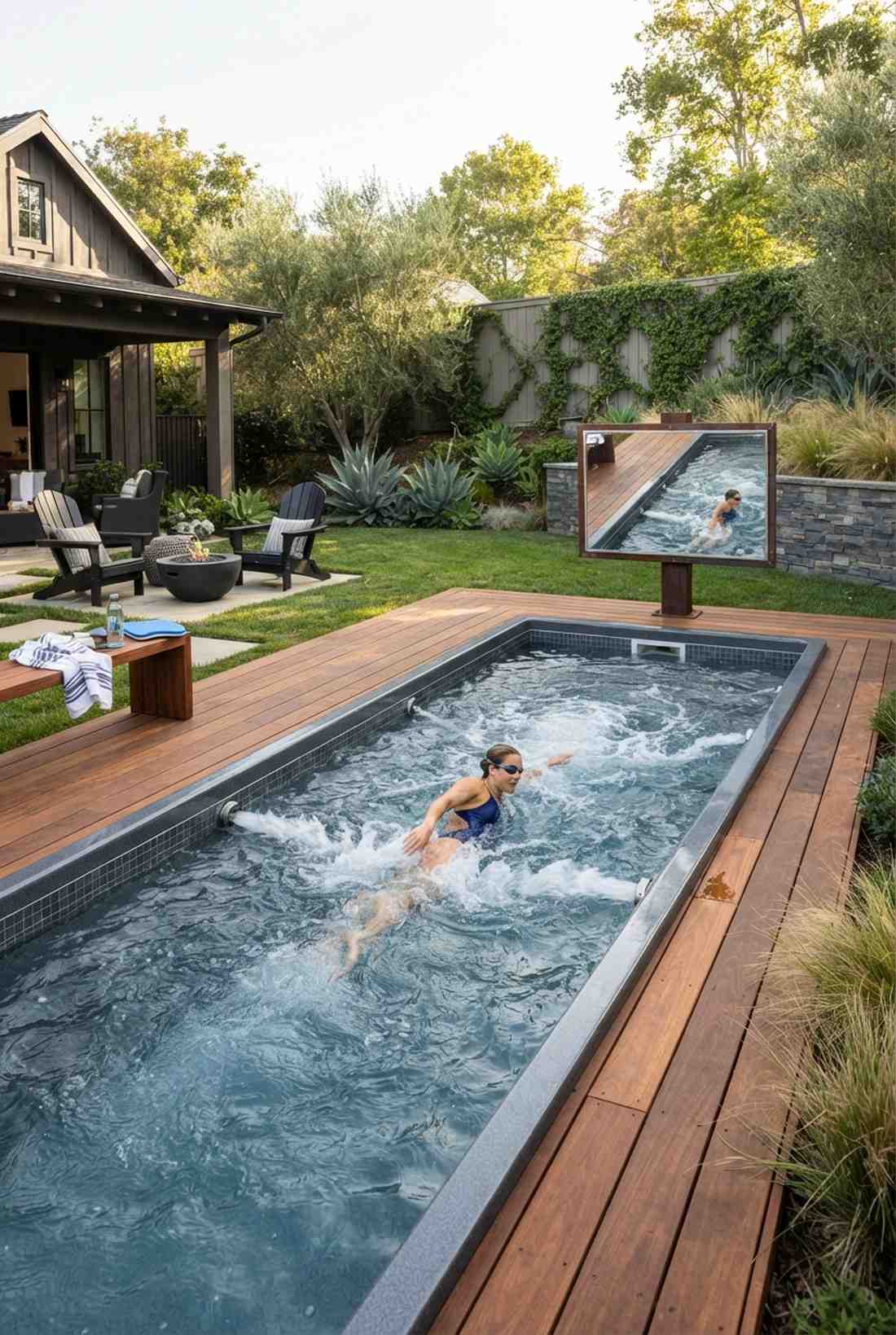
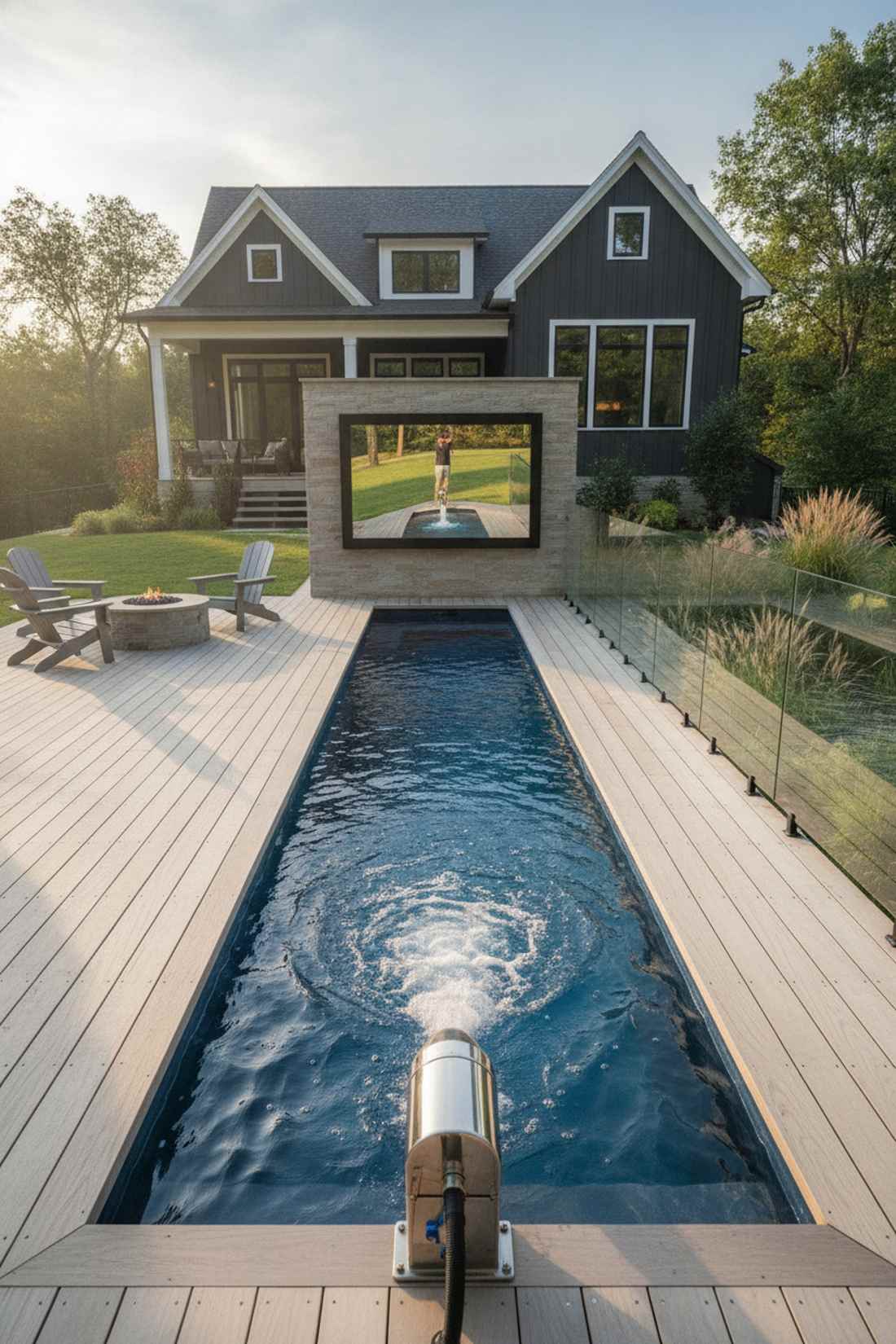
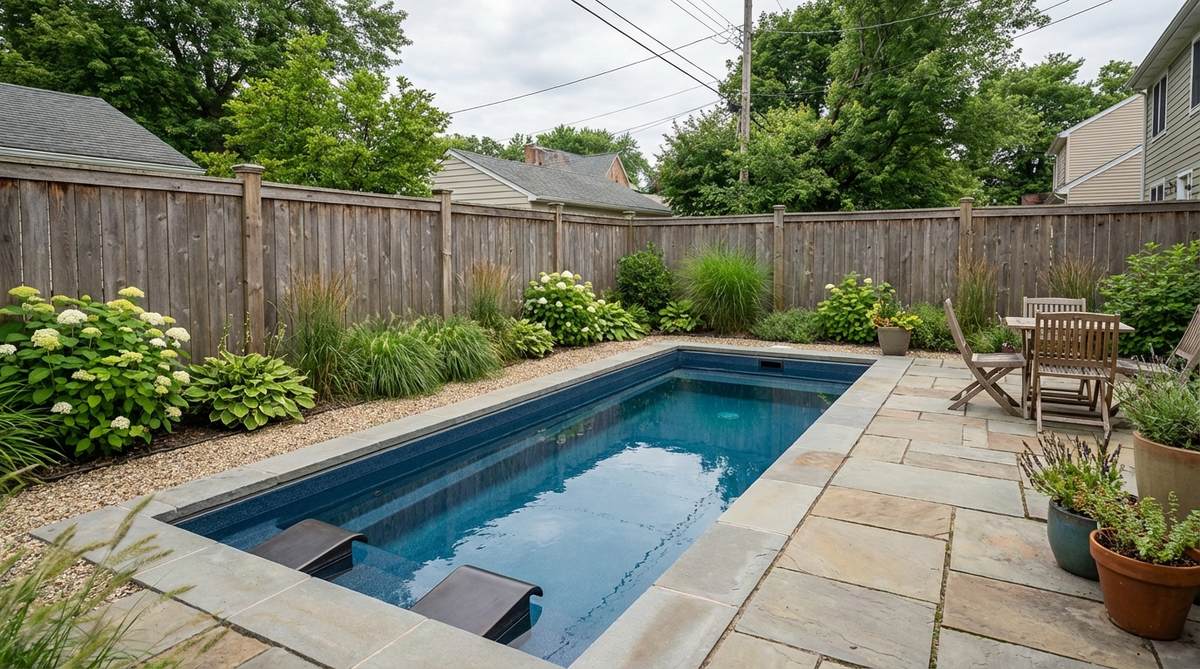
Sharp, focused, and hyper-efficient. An ultra-slim resistance lane is crafted specifically for tight boundary lines.
This layout proves you don’t need Olympic length to train effectively. Injecting a powerful mechanical jet turns a 12-foot strip into an endless ocean.
Base setups launch at $6,000 for the shell and hardware. Pin this if you’re planning a fitness-focused yard upgrade.
- Key Materials: Elongated fiberglass shell and jet motor
- Vibe / Style: High-performance training corridor
- Difficulty: Intermediate to advanced installation
- Budget Breakdown: Jet System: $3,500 | Tank: $2,500.
- Creator’s Tip: Mount a large outdoor mirror at the end of the lane to monitor your stroke technique.
- Smart Sourcing: Look for high-output variable swim jets and heavy-duty pool liner patches.
20. Multi-Level Terrace Pool Design
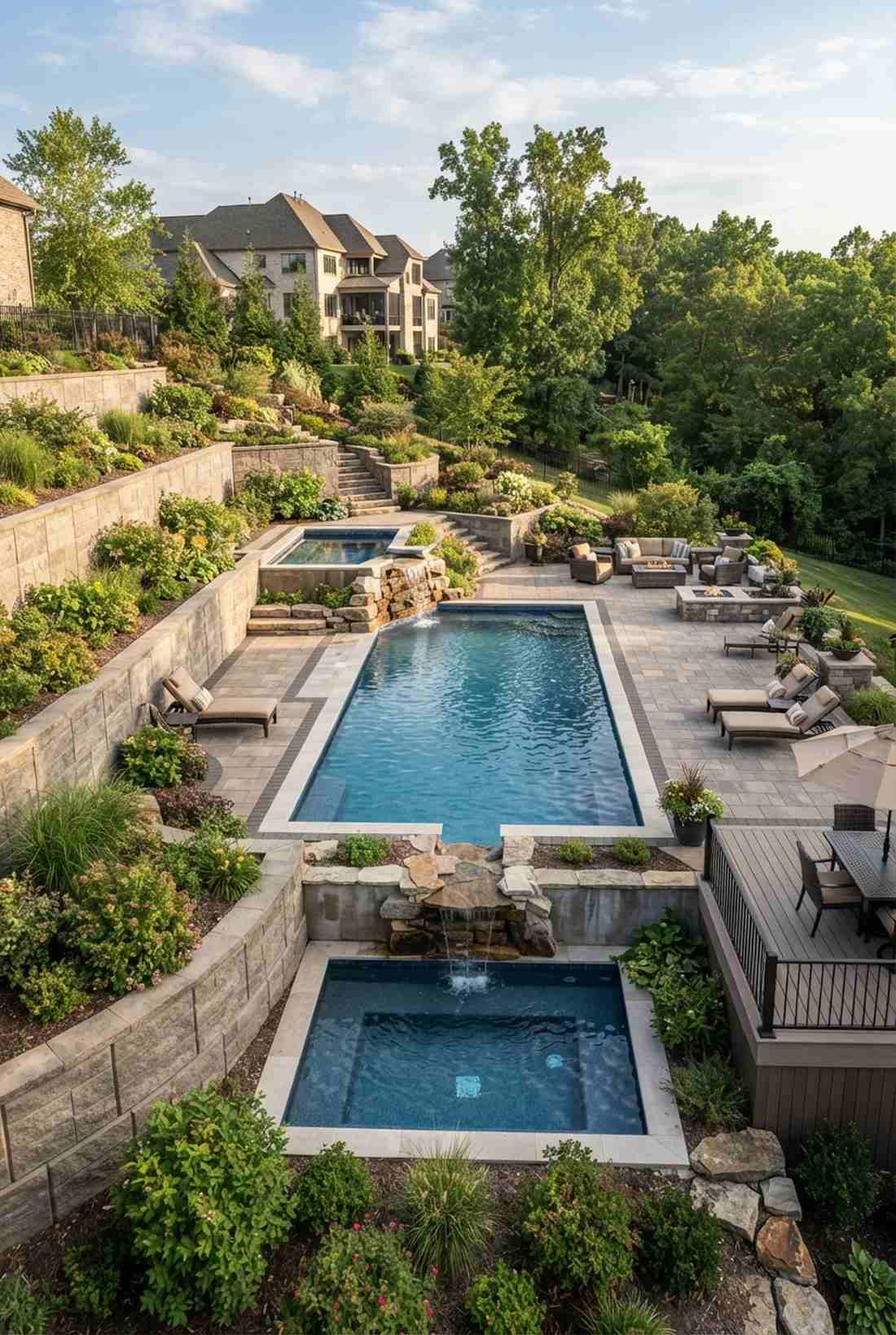
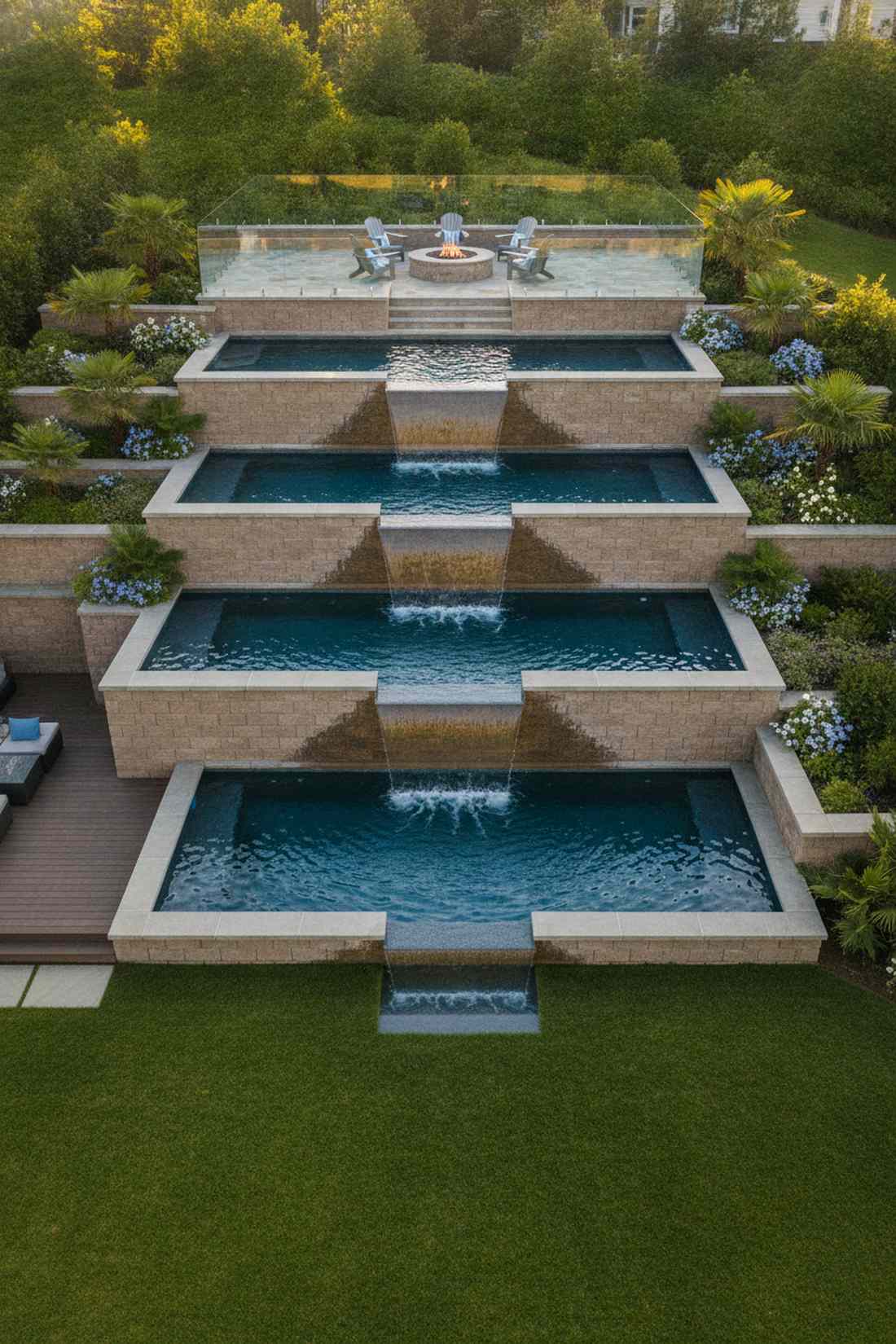
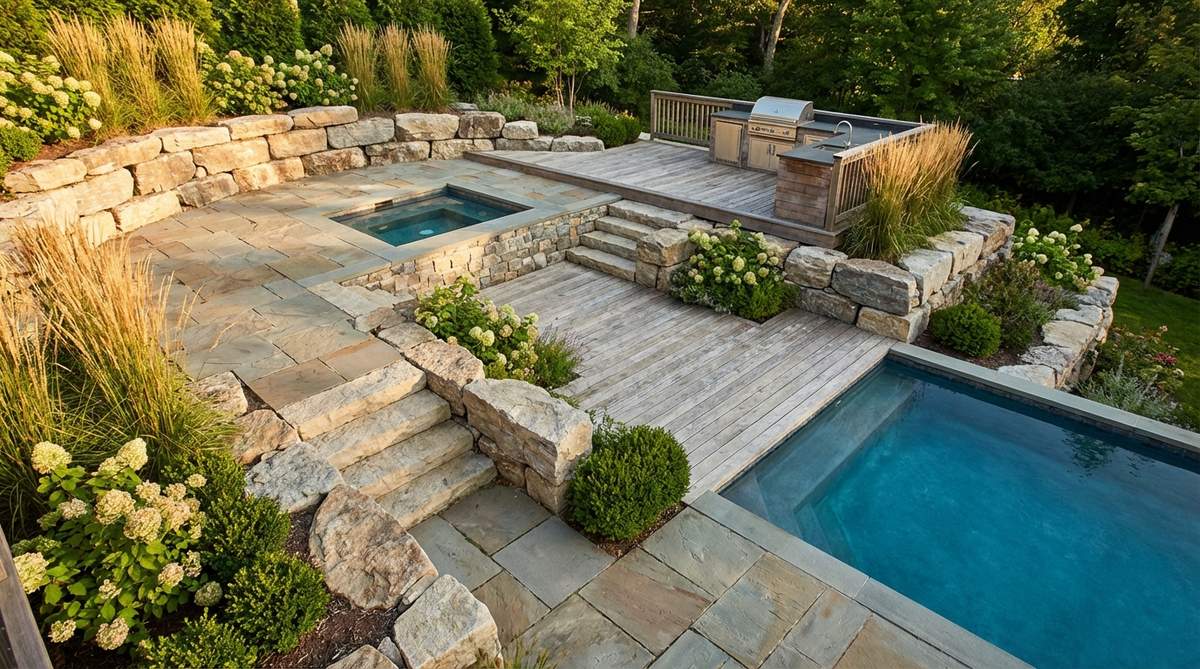
Multi-layered luxury descending like giant steps. Cascading multi-level pools are a dramatic transformation for severe yard inclines.
This design totally flips the standard backyard script by using gravity to its advantage. Premium landscaping retaining systems stabilize the earth while holding thousands of gallons.
Major earthmoving pushes this complex setup above $40,000. Save this to your ultimate outdoor living board.
- Key Materials: Structural retaining walls and spillways
- Vibe / Style: Cliffside luxury resort
- Difficulty: Requires structural engineering
- Budget Breakdown: Earthwork: $15,000 | Basins: $25,000.
- Creator’s Tip: Connect the filtration so water pumps to the top tier and cascades down naturally.
- Smart Sourcing: Invest in pre-cast concrete step kits and heavy-duty pond liner rolls.
21. Courtyard Pool with Fountain Wall
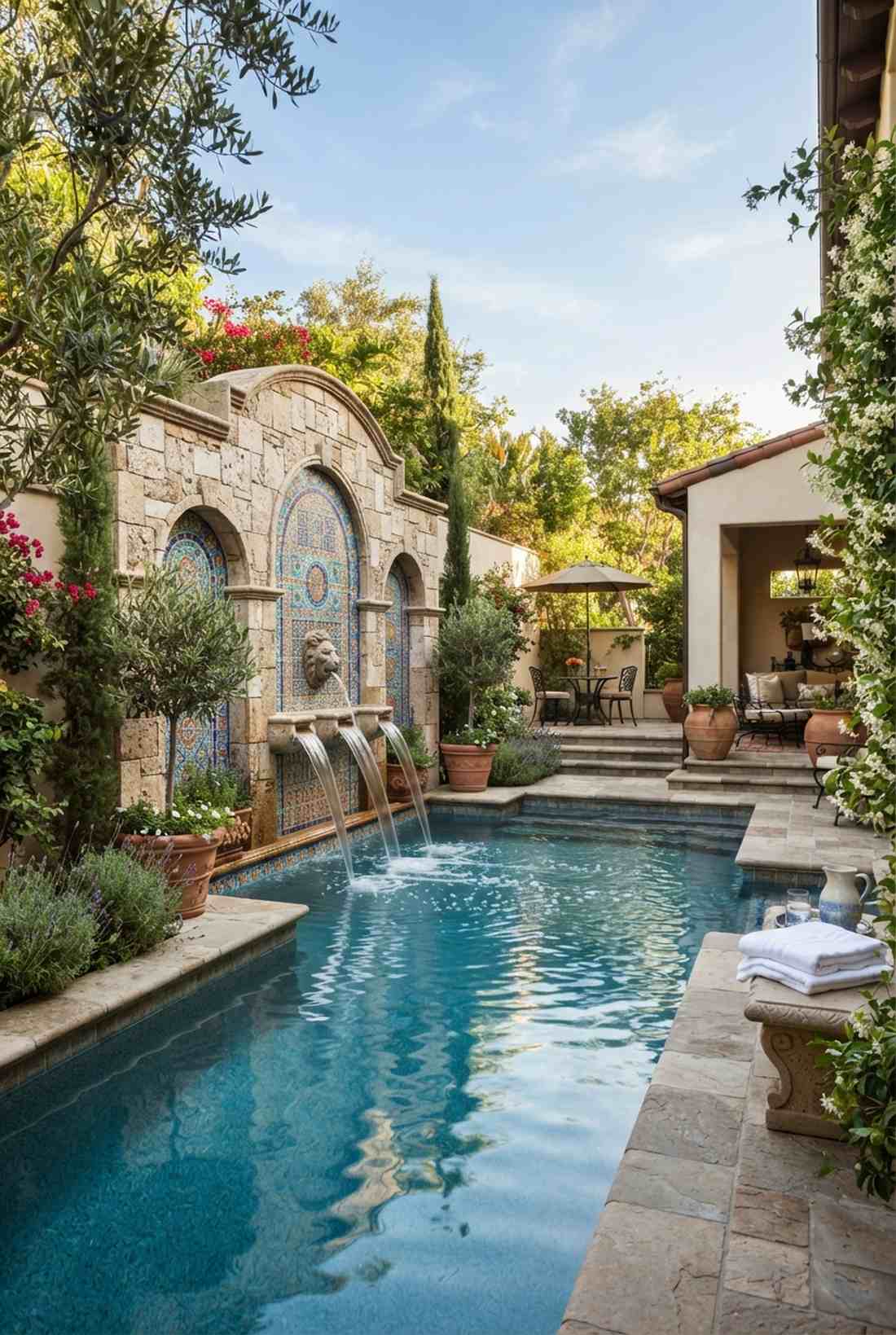
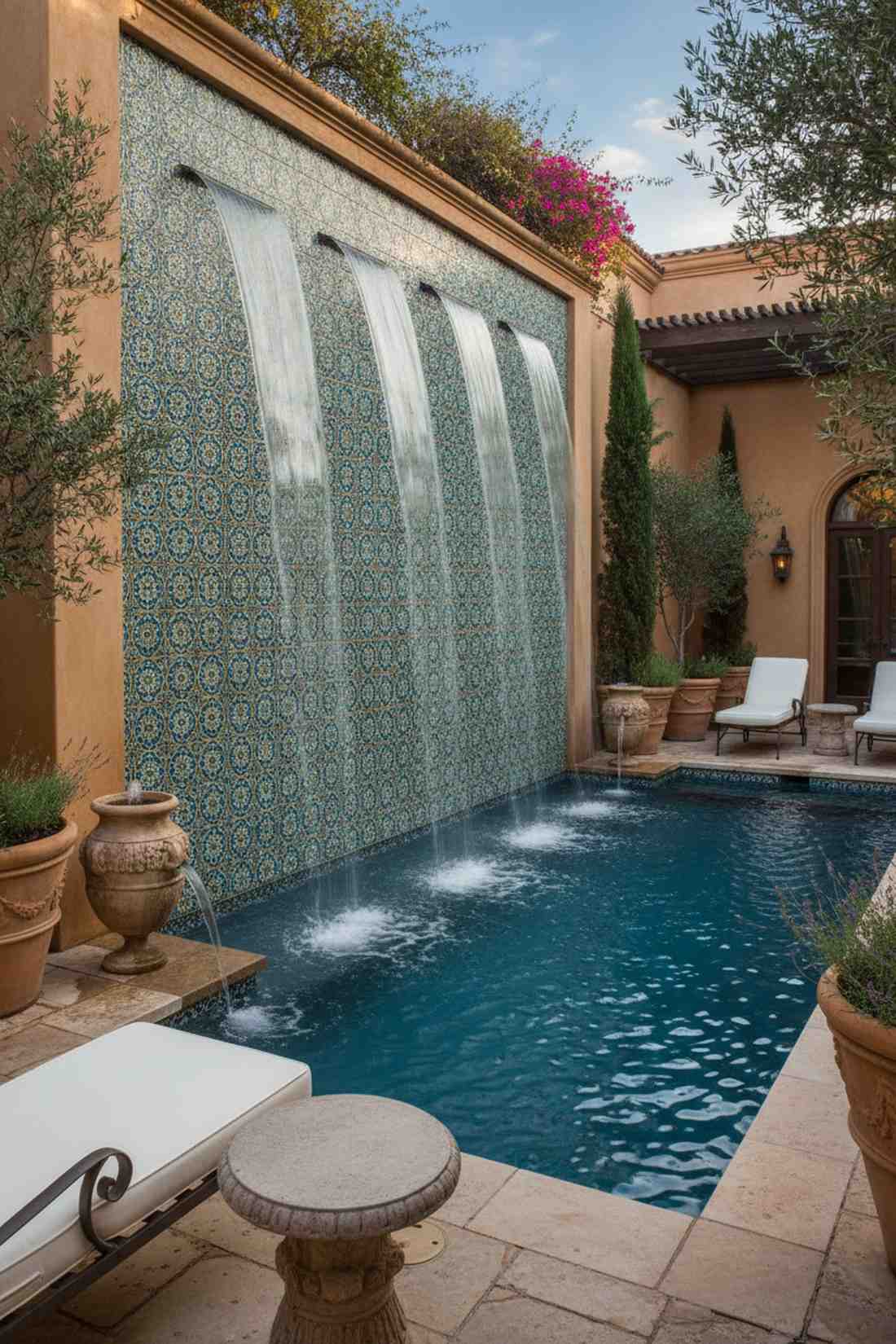
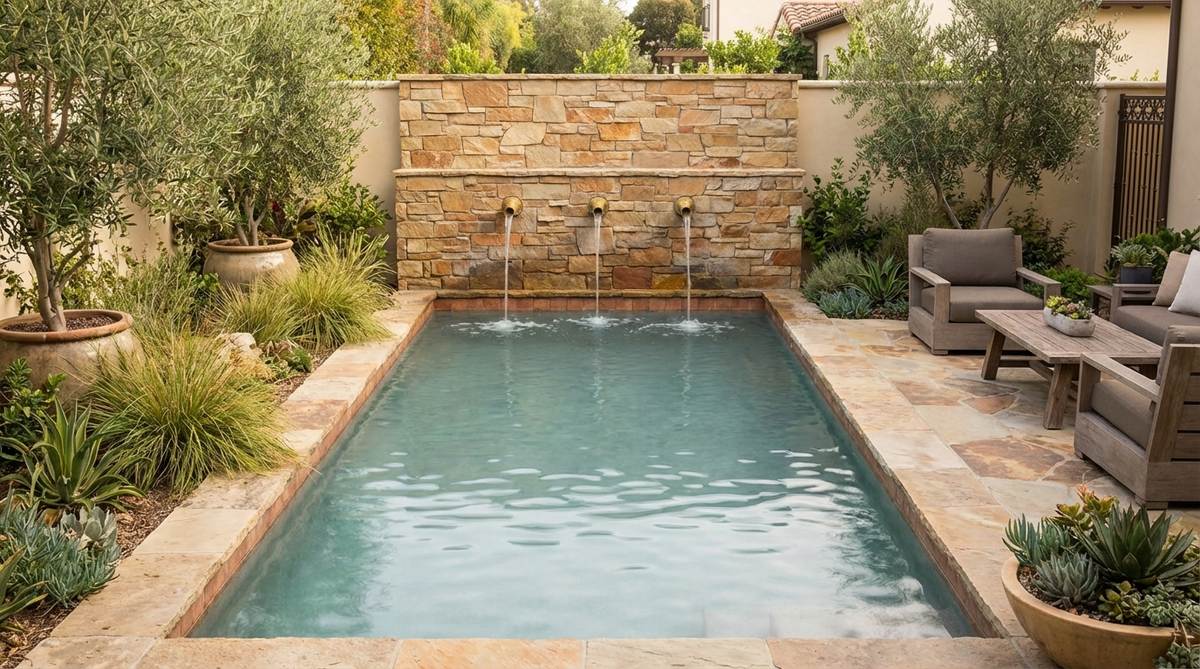
Captures the essence of an ancient Roman bath. An acoustic water wall feature is the absolute best choice for enclosed courtyards.
This aesthetic yields an outrageously luxurious feel by engaging the senses. The splashing water perfectly masks unpleasant neighborhood traffic noise with soothing white noise.
Fountain wall additions run about $3,000-$5,000 over base pool costs. Pin this if you crave total sensory relaxation.
- Key Materials: Decorative tiles and sheer descent fountains
- Vibe / Style: Mediterranean secluded spa
- Difficulty: Masonry skills required
- Budget Breakdown: Wall Build: $2,000 | Tile & Pump: $1,500.
- Creator’s Tip: Use a separate variable speed pump for the fountain so you can adjust the noise level.
- Smart Sourcing: Buy submersible fountain pump kits and bulk mosaic wall tiles.
Wait until you see how this final courtyard layout completely redefines outdoor privacy.
22. Raised Pool on Platform Deck
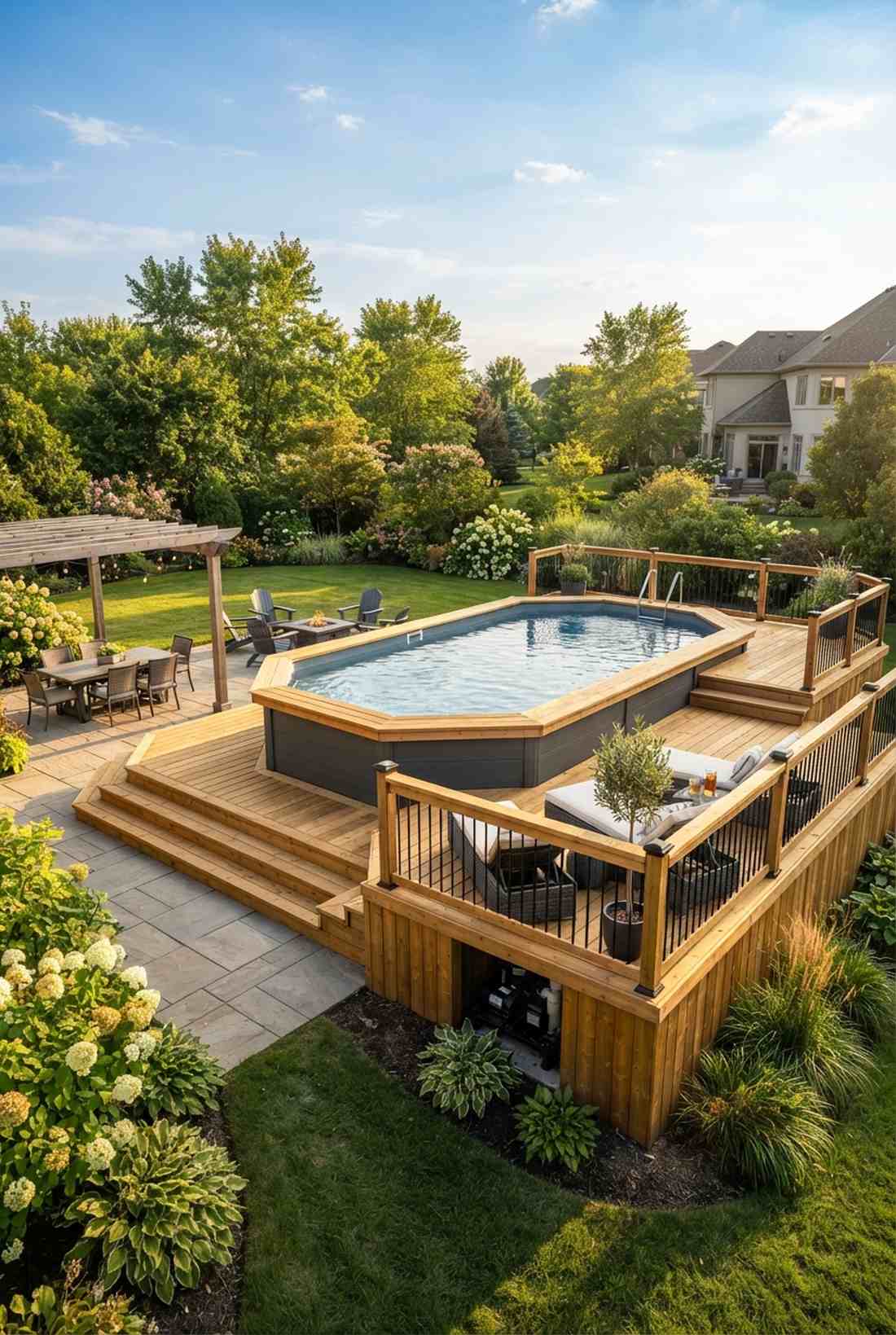
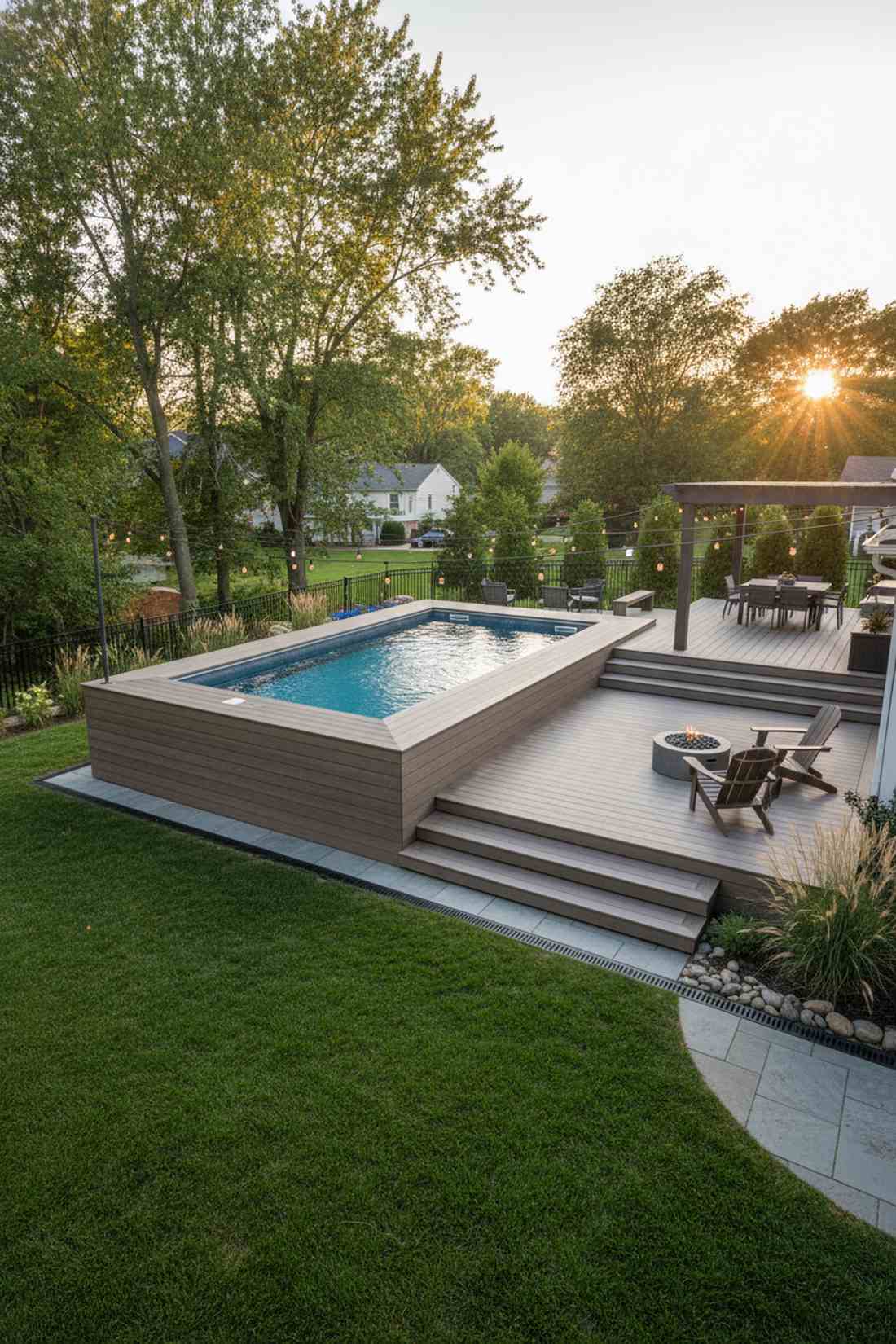
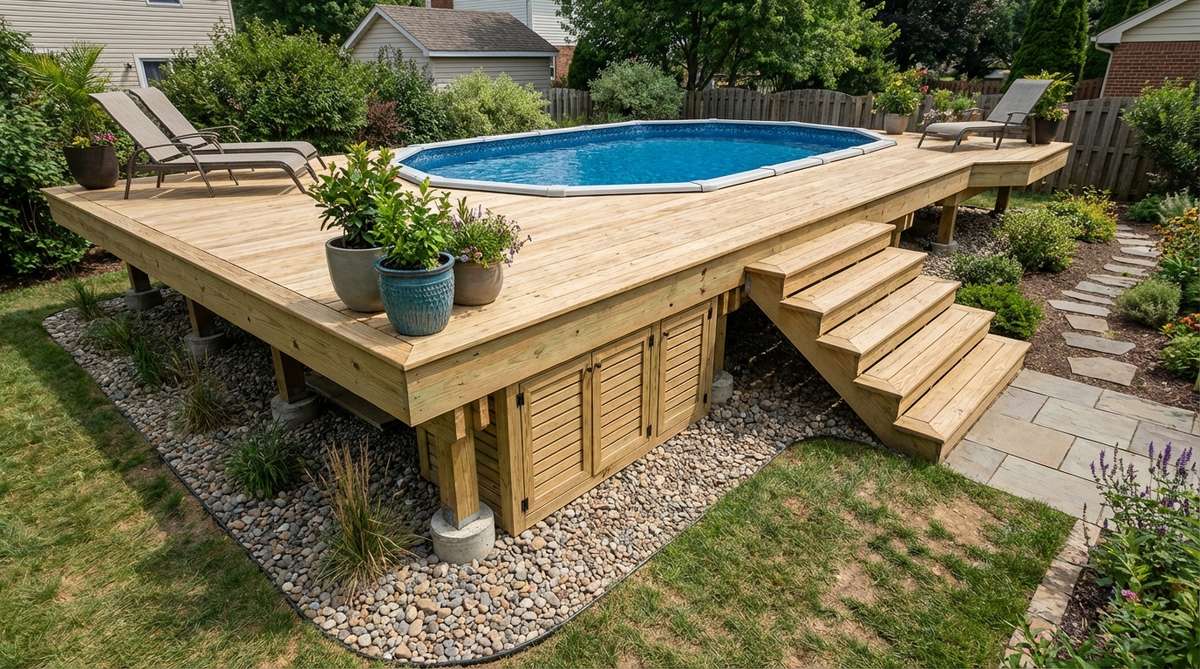
Feels like floating elegantly above the rest of the yard. An elevated platform deck oasis saves properties with terrible soil drainage.
This strategy completely skirts expensive excavation nightmare scenarios. Building upward gives a designer-level finish while hiding pool pumps underneath the wooden skirts.
You usually save 30% on labor versus digging into the earth. Highly recommended for a fast, clean weekend win.
- Key Materials: Structural joists and above-ground shell
- Vibe / Style: Tiered contemporary deck
- Difficulty: Moderate framing project
- Budget Breakdown: Lumber/Hardware: $2,500 | Tank: $1,500.
- Creator’s Tip: Overbuild the deck footings to handle the extreme weight of standing water.
- Smart Sourcing: Pick up pre-cut heavy-duty deck joists and waterproof under-deck drainage kits.
23. Therapy Pool in Greenhouse Extension
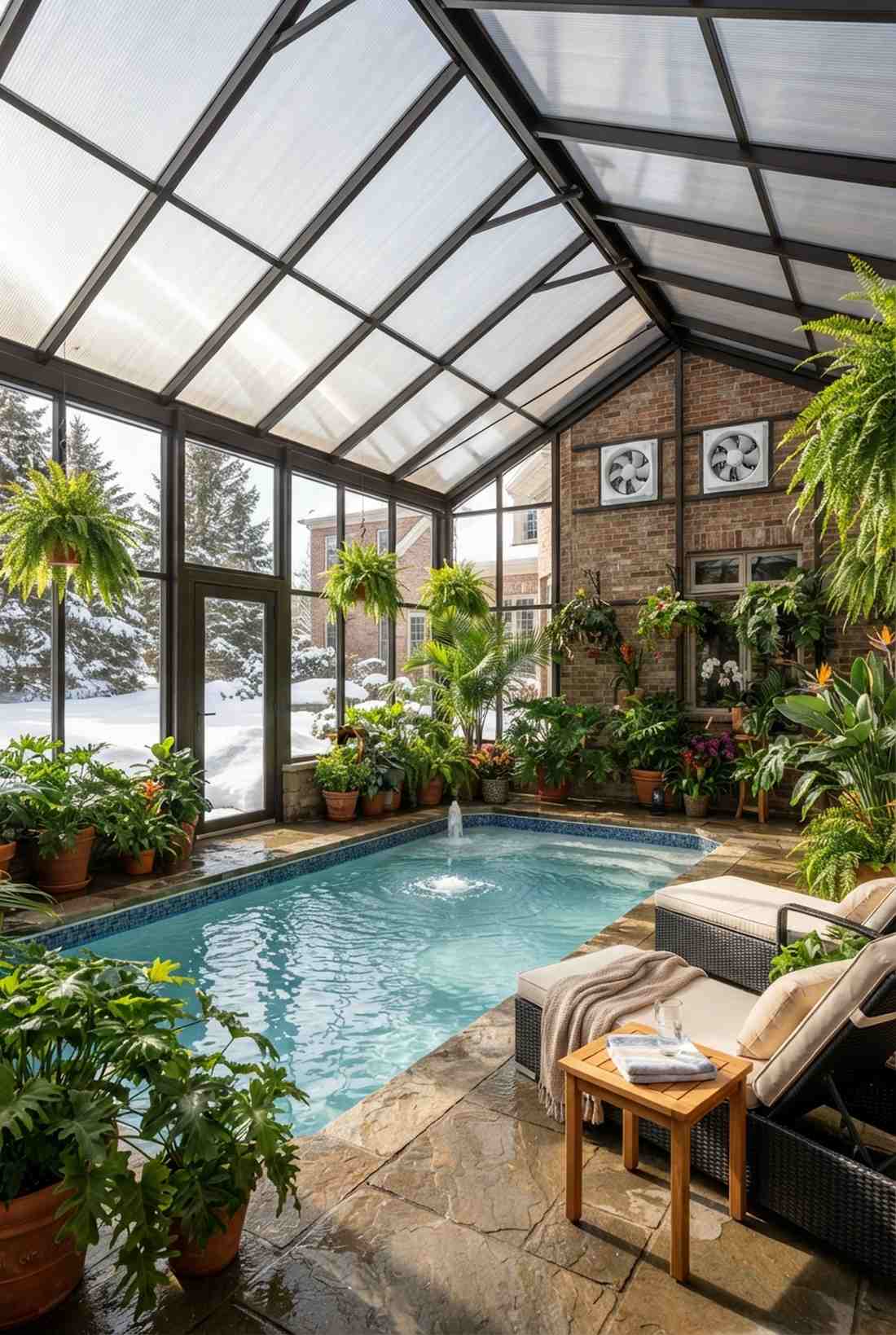
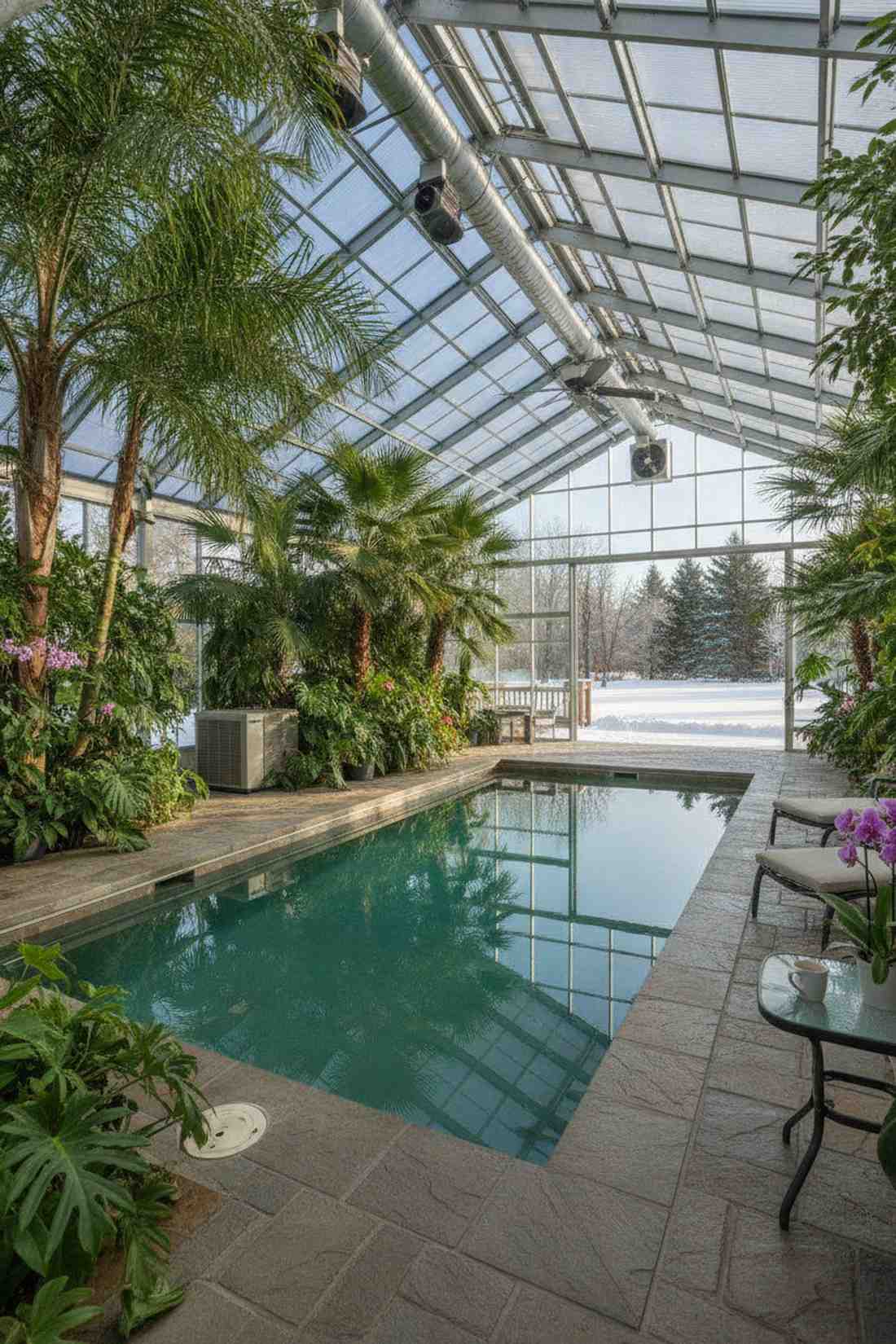
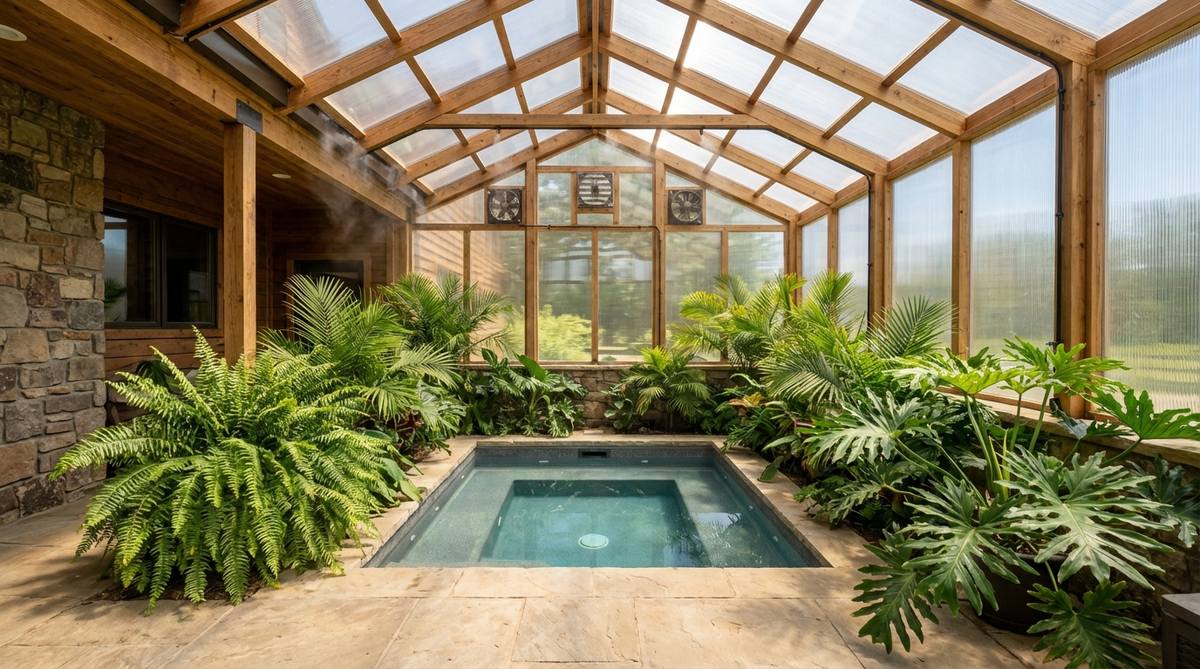
A perpetual summer paradise trapped in glass. A climate-controlled solarium pool is essential for harsh, unpredictable winter climates.
This setup bypasses traditional outdoor limitations entirely. Enclosing the water ensures leaves never fall in and guarantees swimming access 365 days a year.
The glass enclosure will add roughly $30,000 to the total pool build. Save this layout if you want to swim through the snow.
- Key Materials: Polycarbonate roofing and ventilation fans
- Vibe / Style: Botanical aquatic conservatory
- Difficulty: Full structural addition
- Budget Breakdown: Greenhouse Kit: $12,000 | Dehumidifier: $3,000.
- Creator’s Tip: Install commercial grade exhaust fans to pull corrosive humidity out of the structure.
- Smart Sourcing: Use UV-coated polycarbonate roofing panels and commercial-grade pool dehumidifiers.
Transform Your Small Garden Today
Executing a functional small garden with pool aesthetic no longer requires massive excavation budgets or sprawling acreage. By leveraging these 23 meticulously crafted layouts, from affordable $1,500 stock tank hacks to premium geometric fiberglass builds, you can dictate your property’s value. Prioritizing high-end materials like UV-resistant liners and commercial-grade jets ensures your compact oasis remains durable and luxurious year-round. Begin by marking out your exact footprint, choosing a pre-cut or bulk starter kit, and upgrading your backyard into a five-star retreat.
Frequently Asked Questions
What is the smallest practical pool size for a small garden?
Functional plunge zones require at least a 6-foot diameter if using budget-friendly galvanized stock tanks, or an 8×10 foot footprint for premium rectangular fiberglass shells. These ultra-compact dimensions easily fit within 200-square-foot urban patios. To prevent structural issues, always invest in heavy-duty pool underlayment pads and leave a 3-foot perimeter for maintenance.
How much does a small garden pool typically cost?
DIY setups utilizing basic craft materials and painted stock tanks run an affordable $1,000–$3,000, whereas high-end prefabricated plunge pools demand $15,000–$30,000. If you are chasing a true fitness solution, commercial-grade swim jets in a luxury spa will cost upwards of $40,000. Always leverage starter kits to drastically cut down unpredictable plumbing costs.
Do I need permits for a small plunge pool or spa?
Yes, most municipalities strictly require permits for any water vessel exceeding 24 inches in depth, even if it’s considered an above-ground build. Failing to secure clearance can result in heavy fines and forced teardowns. Before pouring concrete or laying down your marine-grade clear sealant, consult local setback codes regarding property lines and required safety fencing.
How do I maintain water quality in a small pool?
Compact water volumes actually heat faster but also react aggressively to chemical imbalances, requiring strict twice-weekly testing. Utilizing high-flow filtration starter kits ensures maximum turnover and prevents algae blooms. When not in use, slapping on a heavy-duty UV-rated cover stops rapid evaporation and blocks debris, saving you hours of skimming.
Can a small pool or spa increase property value?
Absolutely. A well-designed, flush-mounted compact pool can easily recoup 30-50% of its initial material cost in added home equity. Buyers specifically hunt for “looks expensive but isn’t” layouts featuring pre-cut composite deck tiles and clean landscaping. Avoid sloppy DIY jobs; rely on premium finishes to guarantee the space reads as a high-end luxury amenity.