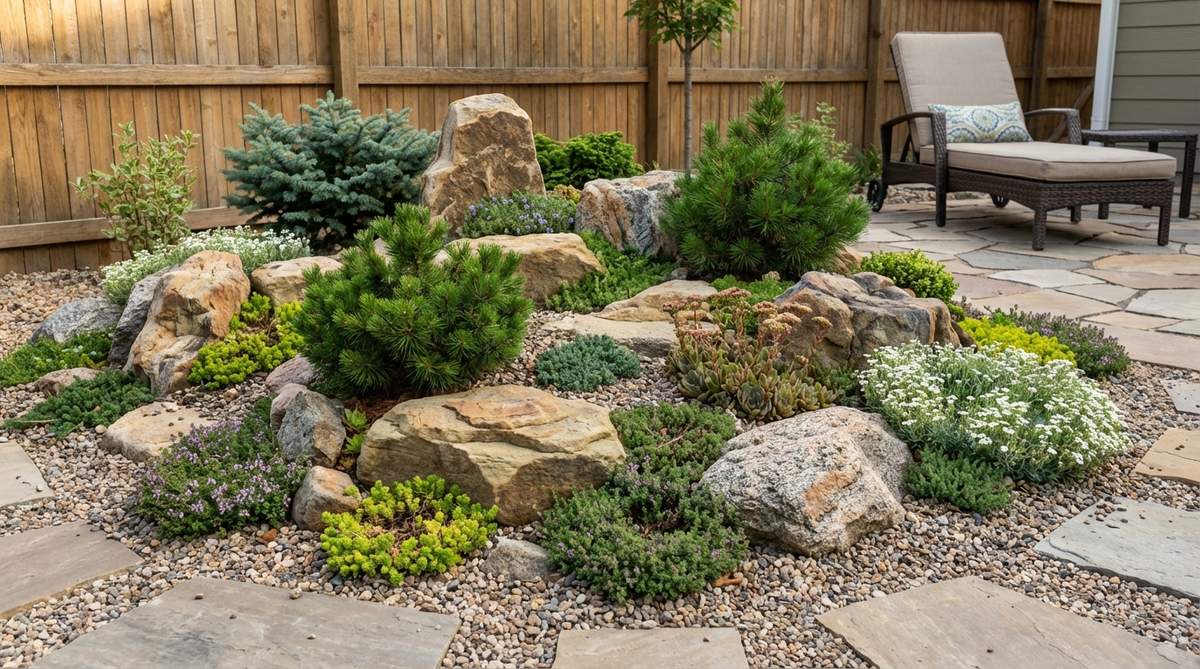
A small garden rockery transforms limited outdoor space into a dramatic alpine landscape where stone and plant work in harmony. Whether you’re working with a sloped corner, a flat courtyard, or even a container, these designs from Fresh Garden Ideas prove that scale has no bearing on impact.
Design SnapshotKey Principles
- Drainage First: Alpines originate from high-altitude environments and demand sharp drainage to prevent root rot
- Stone Placement: Bury rocks one-third underground to create stability and mimic natural outcropping
- Planting Mix: Use equal parts loam, horticultural grit, and coir or leafmold for optimal root health
- Year-Round Interest: Layer evergreen foliage with seasonal bloomers to maintain visual appeal across all months
Classic Slope Rockeries That Maximize Vertical Space
Sloped terrain offers natural drama for rockery design. The gradient provides excellent drainage while creating multiple microclimates across a single compact area.
1. Tiered Alpine Cascade
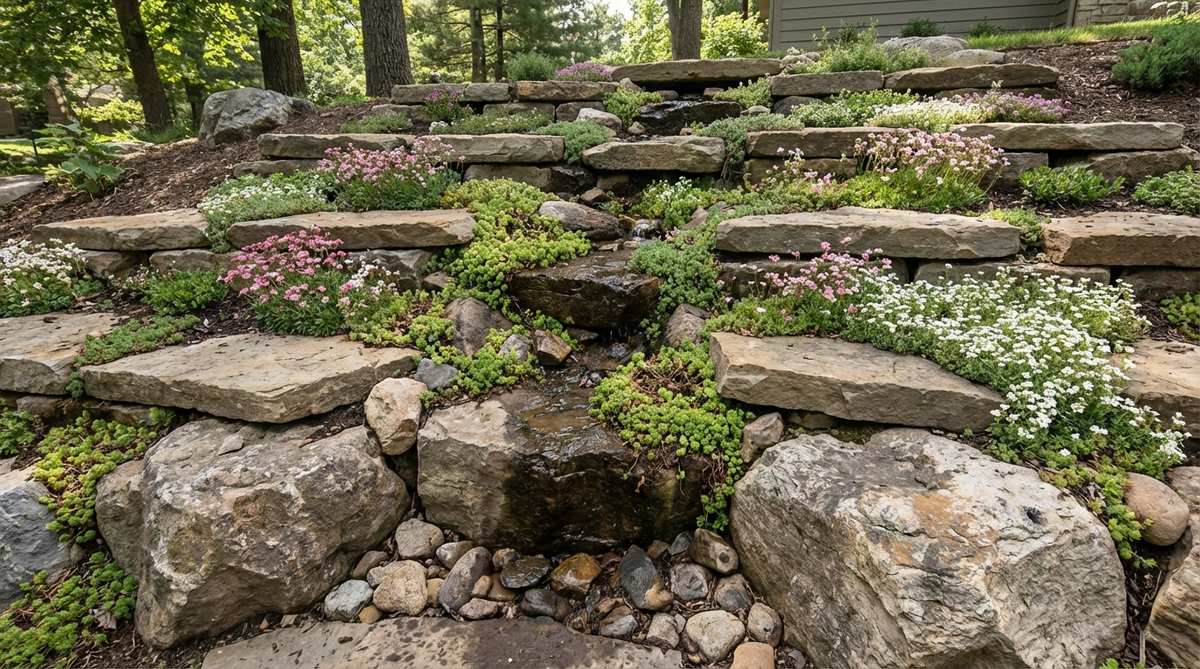
Designers build multiple planting terraces using flat-topped stones positioned horizontally across the slope. Each tier holds a pocket of planting mix where saxifrages and sedums cascade downward.
Start at the base with your largest boulders and work upward, angling each stone slightly backward to direct water into the planting zone. Leave irregular gaps between levels to avoid a formal staircase appearance.
This structure creates distinct zones for plants with different moisture needs while maintaining visual flow from top to bottom.
2. Corner Bank Transformation
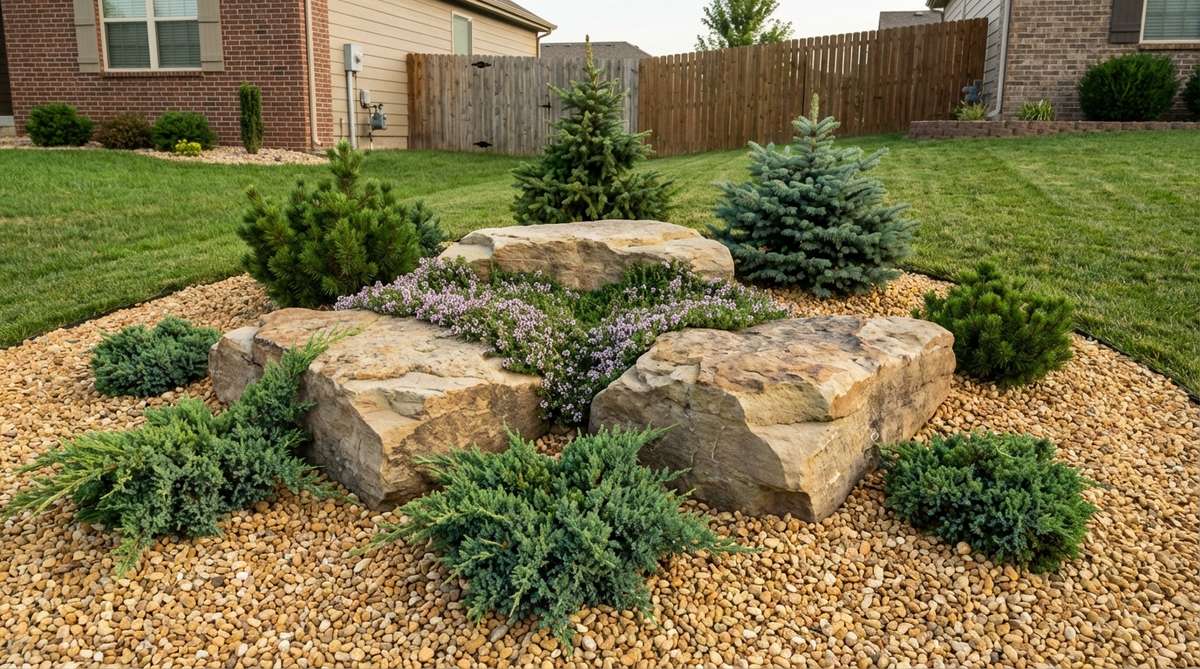
Unused garden corners with natural slopes become focal points when planted as compact rockeries. The confined space concentrates visual interest without requiring extensive materials.
Position three to five anchor stones in a triangular arrangement, then fill gaps with dwarf conifers and creeping thyme. Top-dress exposed soil with pea gravel to suppress weeds and improve drainage.
Corner rockeries work particularly well in small yards where every square foot counts toward overall garden composition.
3. Serpentine Pathway Edge
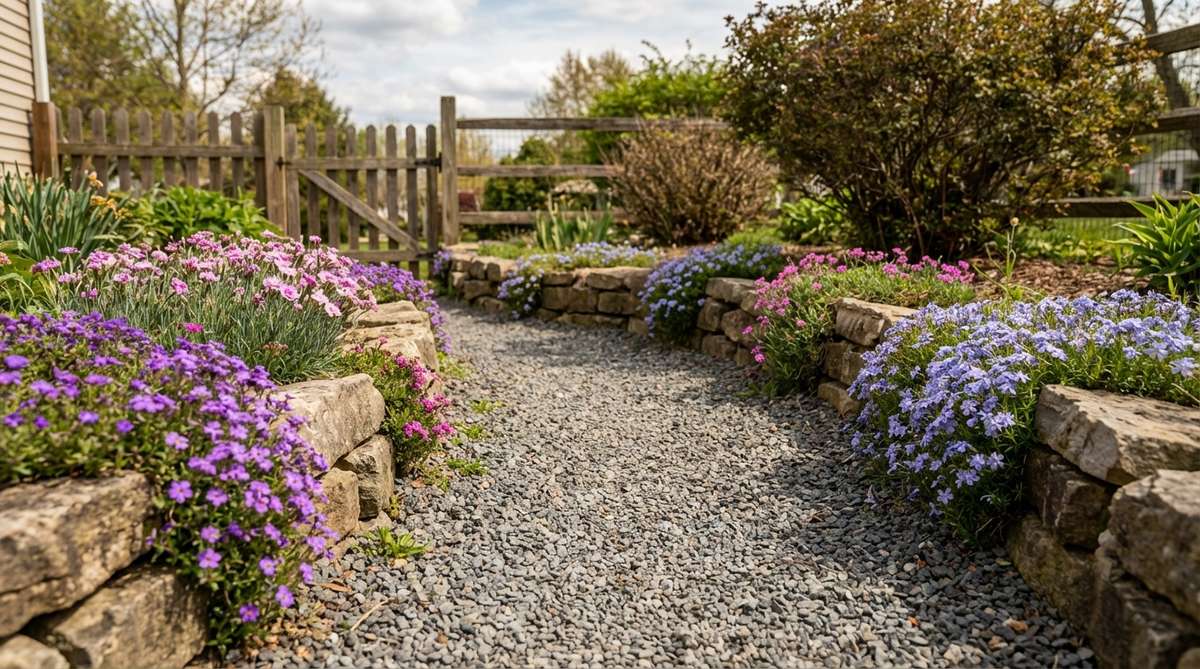
A curved gravel path gains definition when one side features a low rockery planted with trailing aubrieta and dianthus. The serpentine line guides foot traffic while softening hard edges.
Set stones along the outer curve of the path at varying depths, creating a rolling ridgeline. Plant crevices between rocks with creeping phlox that will bloom in sheets each spring.
4. Raised Bed Hybrid
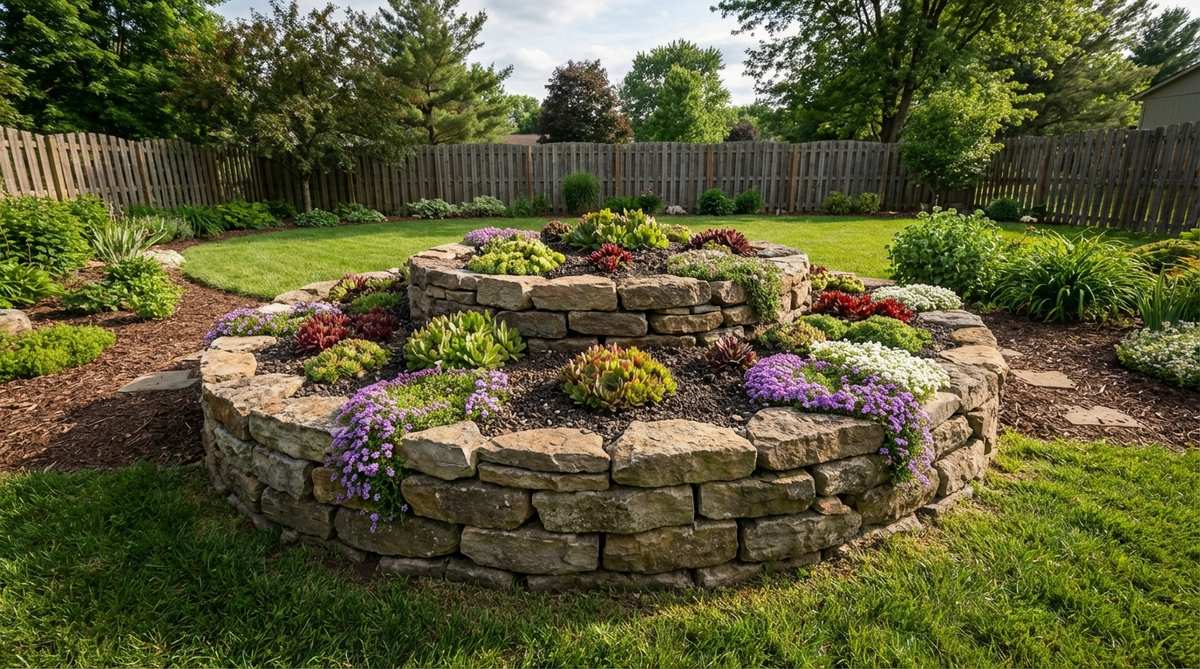
Combine a raised bed’s controlled soil depth with rockery aesthetics by building low stone walls and filling the interior with alpine planting mix. This approach brings plants closer to eye level in flat gardens.
Layer the wall stones without mortar, leaving planting pockets in vertical crevices for sempervivums and rock cress. The raised structure improves drainage even in clay-heavy soils.
5. Island Outcrop Design
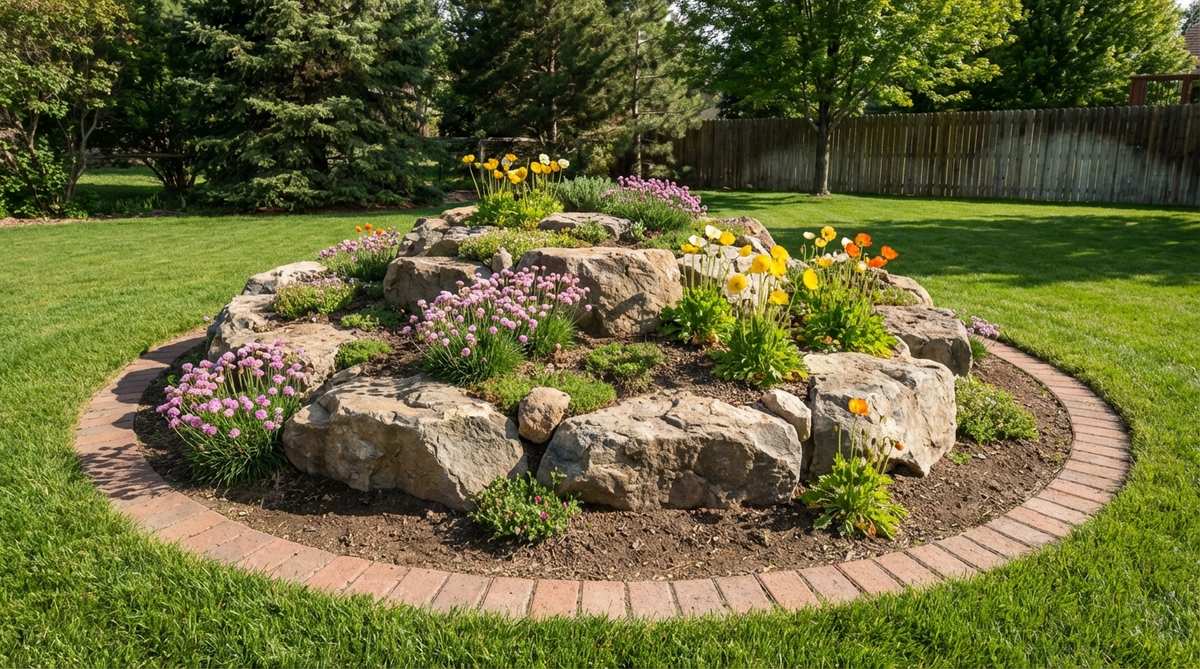
Create a freestanding mound in an open lawn area using excavated soil from other projects. The raised island provides drainage and visibility for low-growing alpines that would otherwise disappear in borders.
Arrange stones to suggest a natural outcropping breaking through turf, with plants like armeria and alpine poppy nestled between rocks. Surround the base with a mowing strip to simplify lawn maintenance.
Vertical and Wall Rockeries for Compact Footprints
Vertical structures multiply planting area without expanding the garden’s footprint. These designs suit narrow side yards, urban plots, and spaces where ground area is limited.
6. Dry Stone Wall Planting
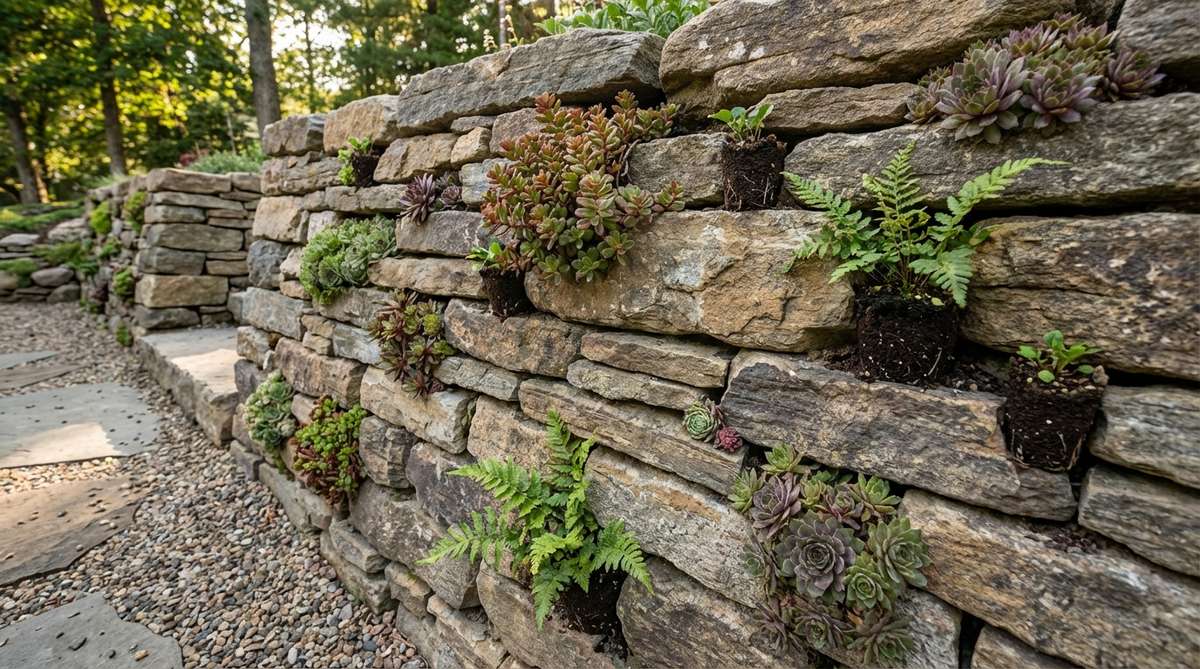
Existing dry-stacked walls become living features when crevices host drought-tolerant alpines. Sedums, sempervivums, and ferns establish quickly in horizontal gaps where soil accumulates naturally.
Work from the top down, pushing plug plants into joints with added soil. Water regularly for the first season until roots penetrate deeply enough to access moisture within the wall.
This technique transforms retaining walls into vertical gardens that require minimal maintenance once established.
7. Hypertufa Trough Stack
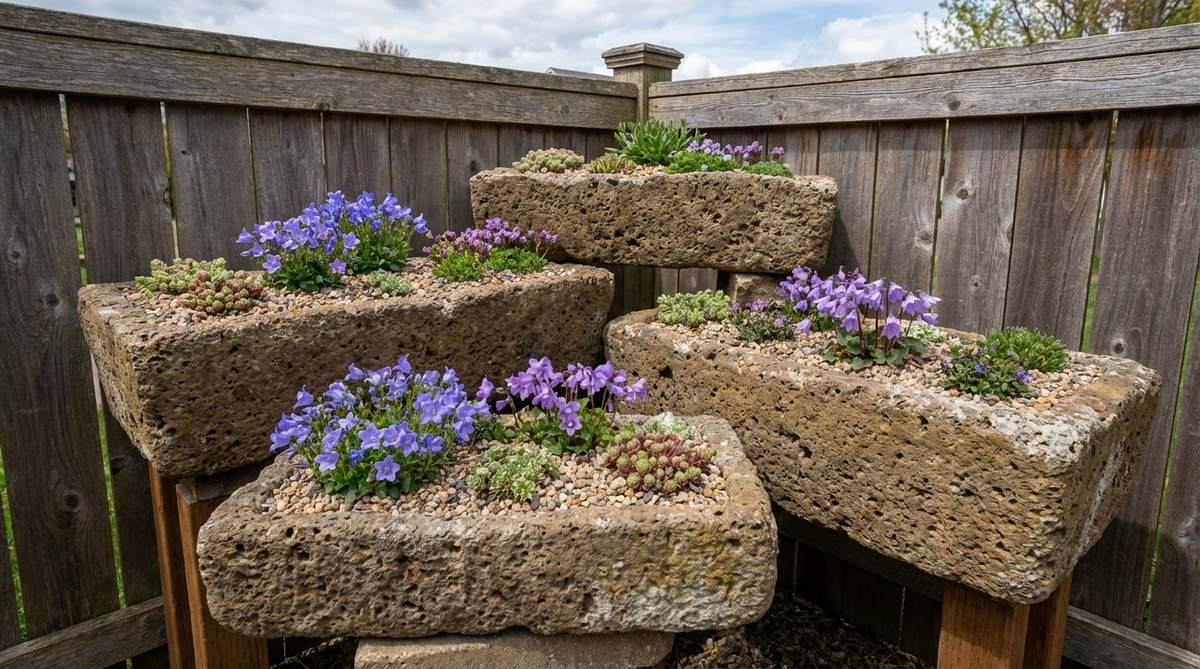
Stack two or three hypertufa troughs at different heights against a fence or wall. Each trough functions as an independent rockery planted with miniature alpines and gravel mulch.
The porous hypertufa material mimics natural stone while remaining light enough for tiered displays. Choose slow-growing varieties like alpine campanula and soldanella that won’t outgrow the containers.
8. Brick Crevice Garden
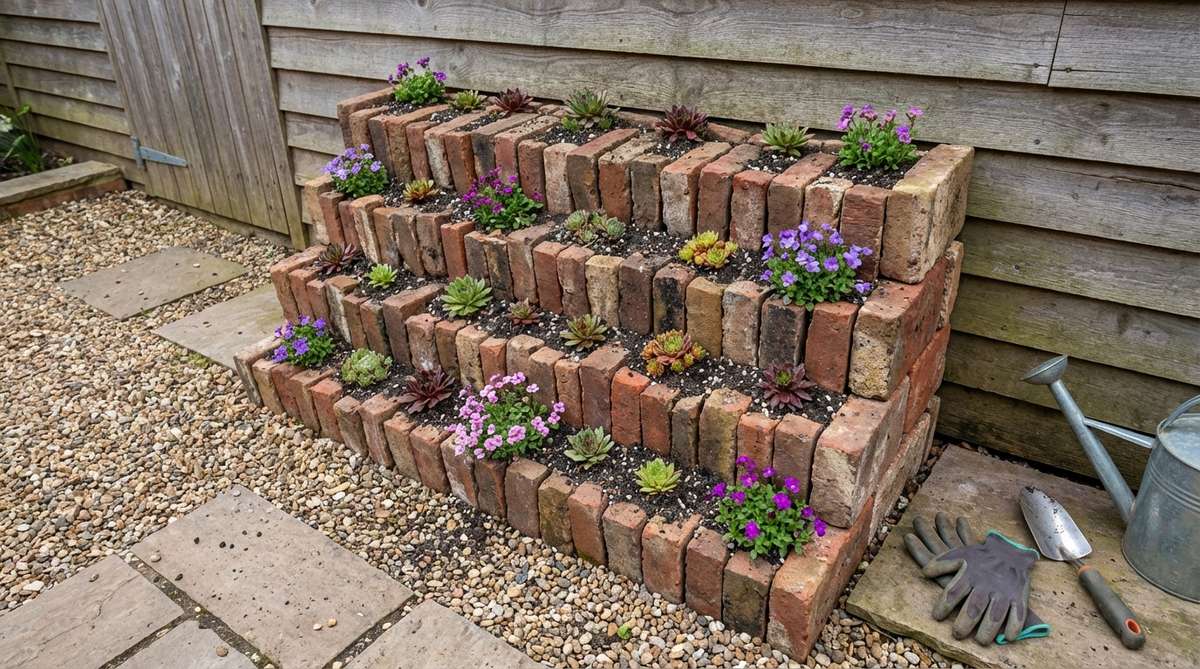
Salvaged bricks stacked on edge with wide gaps create vertical planting channels. Fill the spaces with gritty soil mix and plant with houseleeks or rock cress that thrive in restricted root zones.
Lean the brick structure against a wall or fence for stability, angling it slightly backward so soil remains in place. The repetitive brick pattern provides structure while plants add organic softness.
9. Living Wall Frame
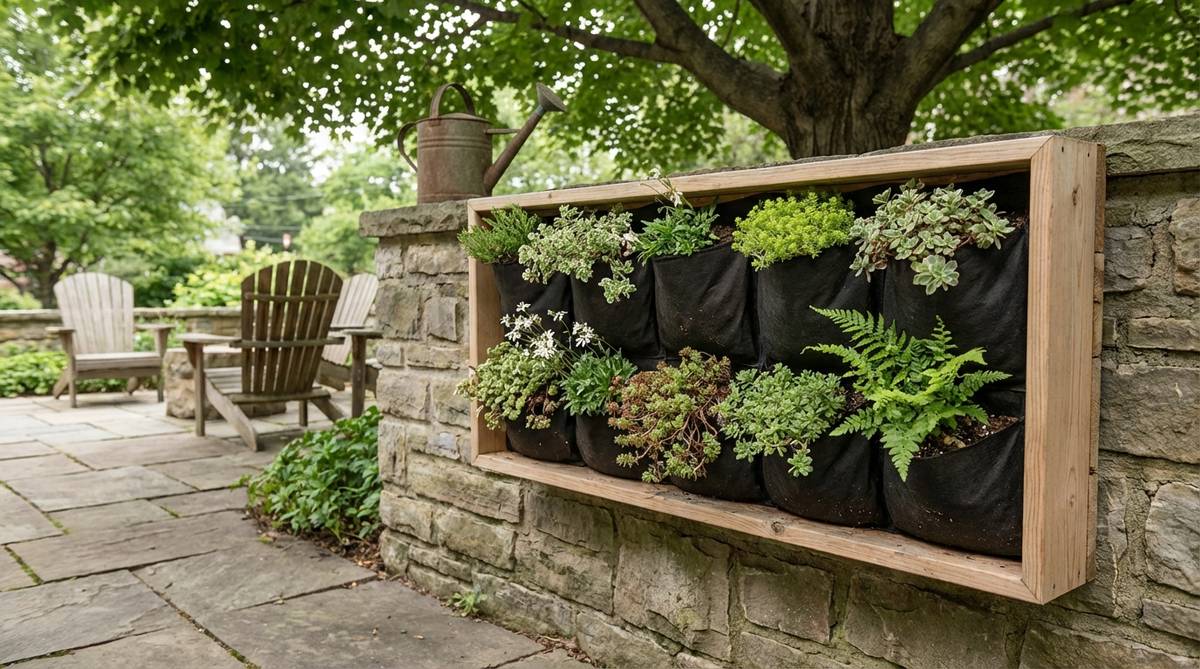
Mount a shallow wooden frame filled with landscape fabric pockets on a vertical surface. Each pocket holds alpine soil mix and a single plant like sedum or saxifraga.
Position the frame in partial shade to prevent rapid moisture loss, and water from the top so drainage flows through successive pockets. This system works well on shaded courtyard walls where traditional rockeries struggle.
10. Gabion Column Planting
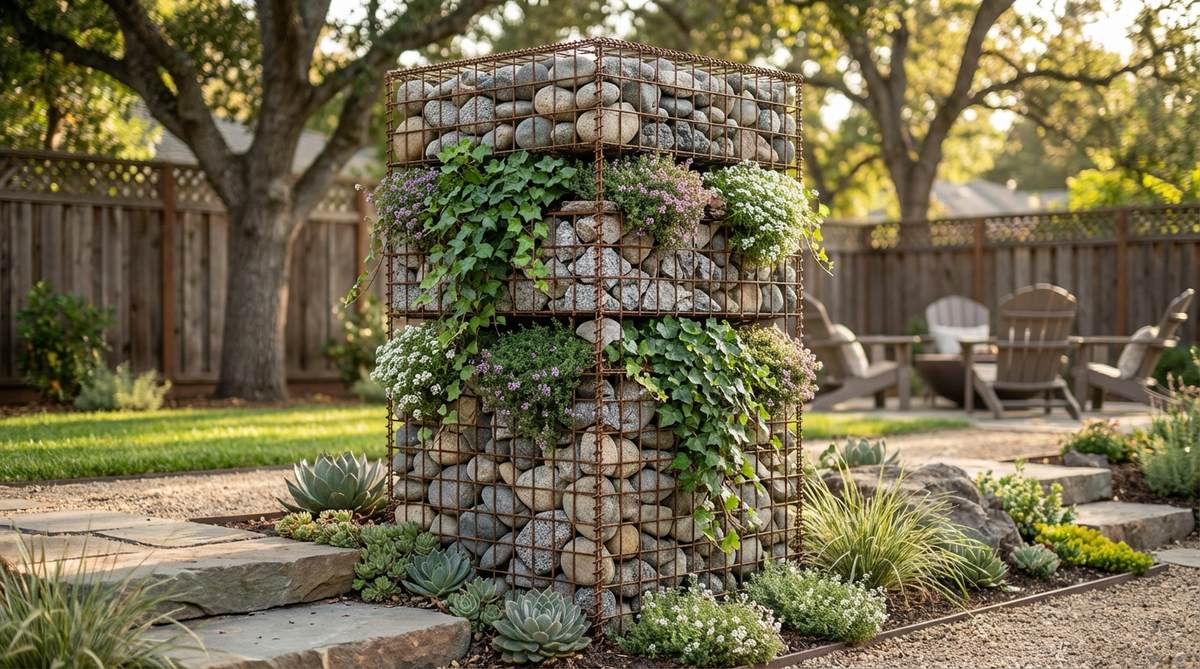
Wire gabion cages filled with decorative stones create structural columns that also serve as planting zones. Leave gaps in the stone fill to insert plants horizontally into the interior soil core.
The gabion’s vertical presence adds height to flat gardens while its wire mesh permits root growth through the structure. Plant with trailing varieties that will eventually cascade down the column faces.
Container and Miniature Rockeries for Balconies
Container rockeries bring alpine gardening to balconies, patios, and spaces where in-ground planting isn’t possible. These portable designs allow for seasonal rearrangement and close-up viewing.
11. Shallow Bowl Alpine Scene
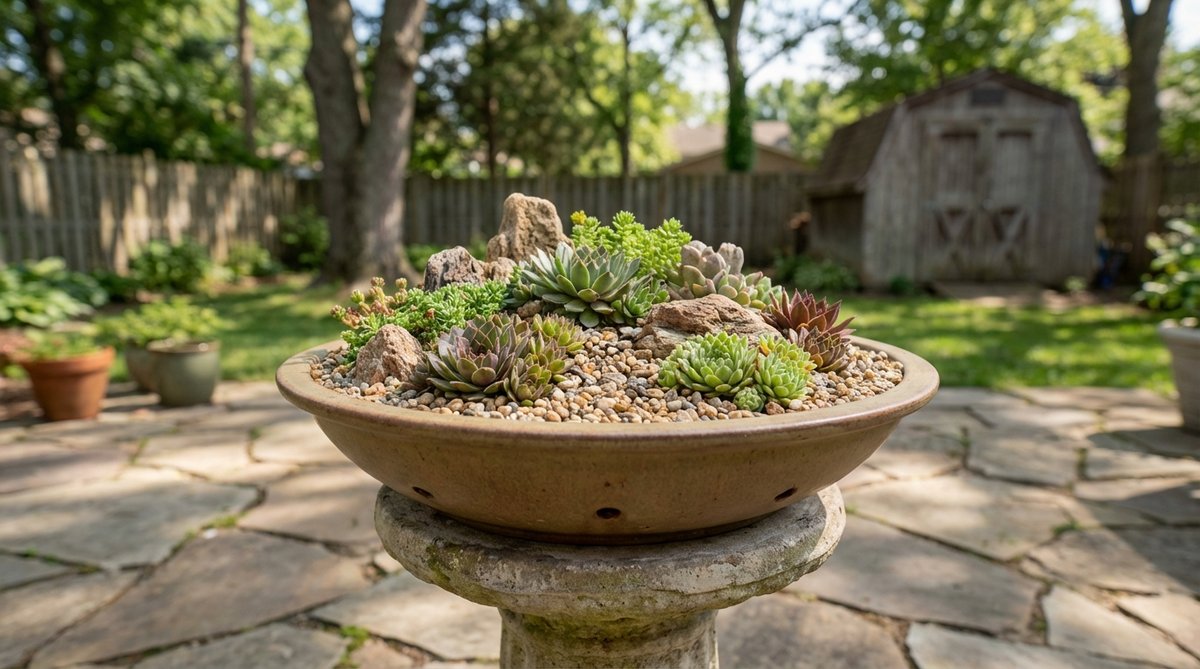
Wide ceramic or concrete bowls with drainage holes become miniature mountain landscapes when planted with succulents and small stones. The shallow depth suits alpine root systems while preventing waterlogged soil.
Layer pea gravel at the base for drainage, add alpine mix to within two inches of the rim, then position small rocks to create elevation changes. Plant sempervivums and miniature sedums in the valleys between stones.
These portable scenes perform well on tabletops or pedestal stands where their detail can be appreciated up close.
12. Stone Trough Collection
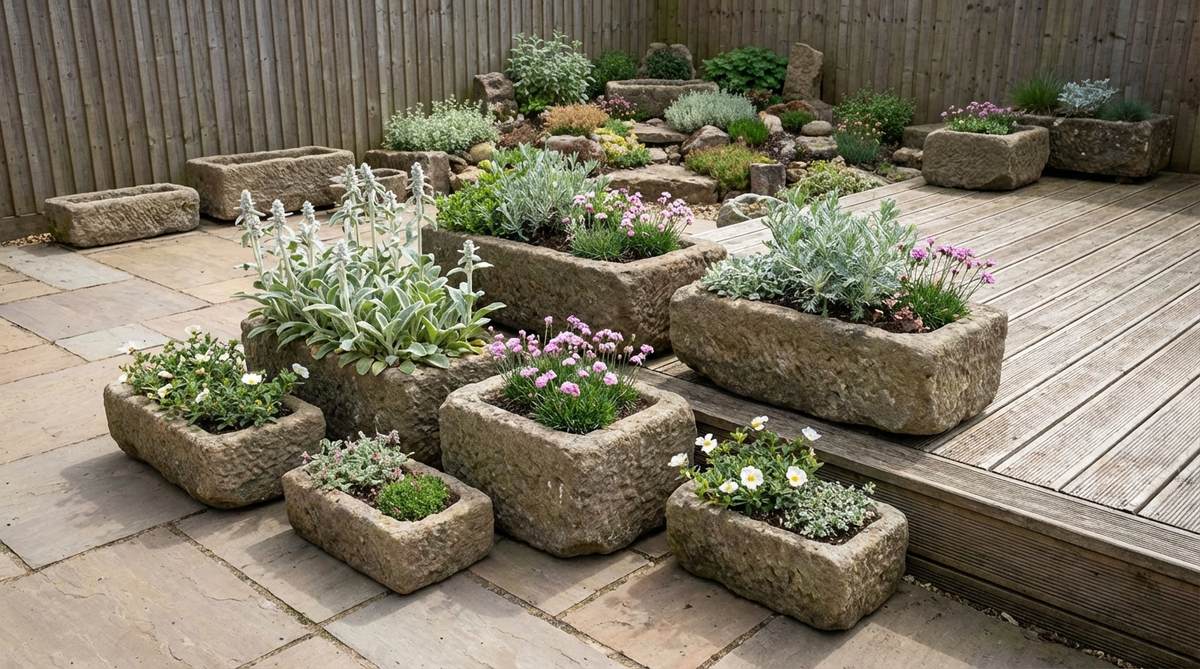
Group three to five natural stone troughs of varying sizes on a patio or deck. Plant each with a different alpine theme to create a curated rockery collection.
One trough might feature silver-leaved plants like lamb’s ears and artemisia, while another showcases flowering varieties such as alpine pinks and rock roses. The varied heights and textures build visual interest across the collection.
13. Salvaged Sink Rockery
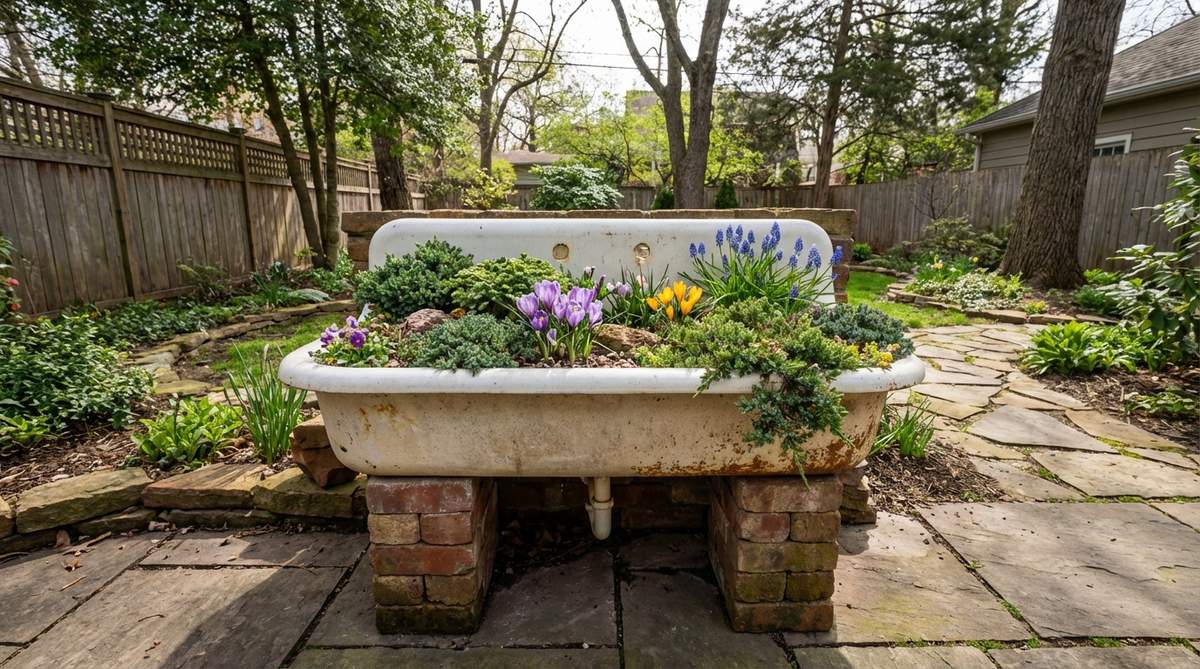
Old butler sinks and ceramic basins become characterful rockery containers with vintage appeal. Their depth accommodates tap-rooted plants while built-in drainage prevents standing water.
Position the sink on decorative feet or bricks to ensure water escapes freely. Plant with a mix of evergreen alpines and spring bulbs like species crocus and muscari for seasonal interest.
14. Wooden Crate Alpine Display
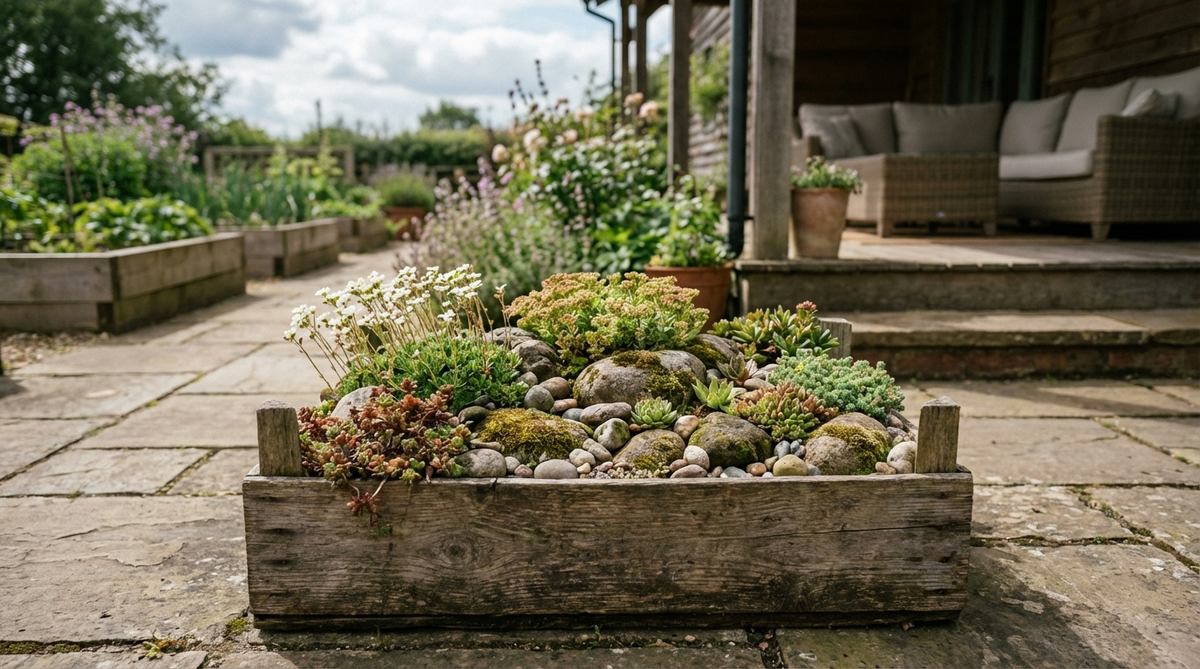
Line vintage wooden crates with landscape fabric and fill with alpine mix for rustic container rockeries. The slatted sides provide excellent air circulation around root zones.
Tuck small rocks between plants to suggest a natural outcropping emerging from the crate. This informal style suits cottage gardens and urban balconies seeking a relaxed aesthetic.
15. Terraced Pot Tower
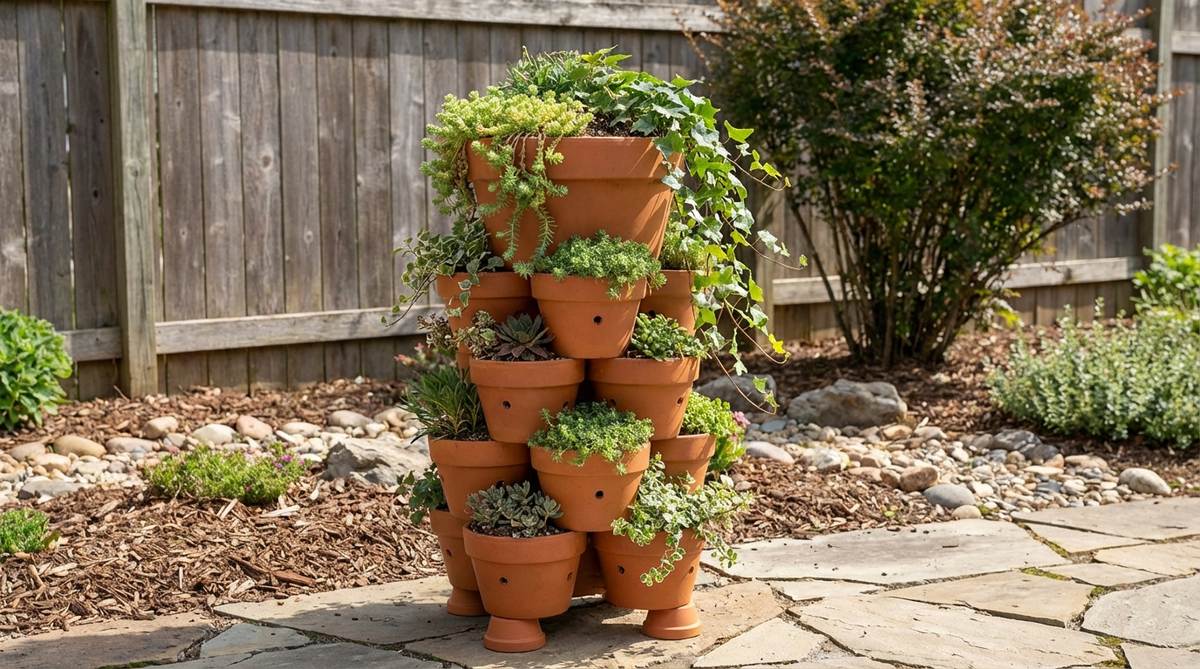
Stack graduated pot sizes to create a tiered alpine tower. Each level holds different plants, with trailing varieties on top cascading down to lower tiers.
Drill additional drainage holes if needed and use pot feet to raise each container slightly. The vertical arrangement maximizes planting space while creating a sculptural focal point.
Themed and Specialty Rockeries with Focused Palettes
Focused plant selections create cohesive rockery designs with distinct personalities. These themed approaches simplify plant choice while delivering strong visual identity.
16. Coastal Theme Rockery
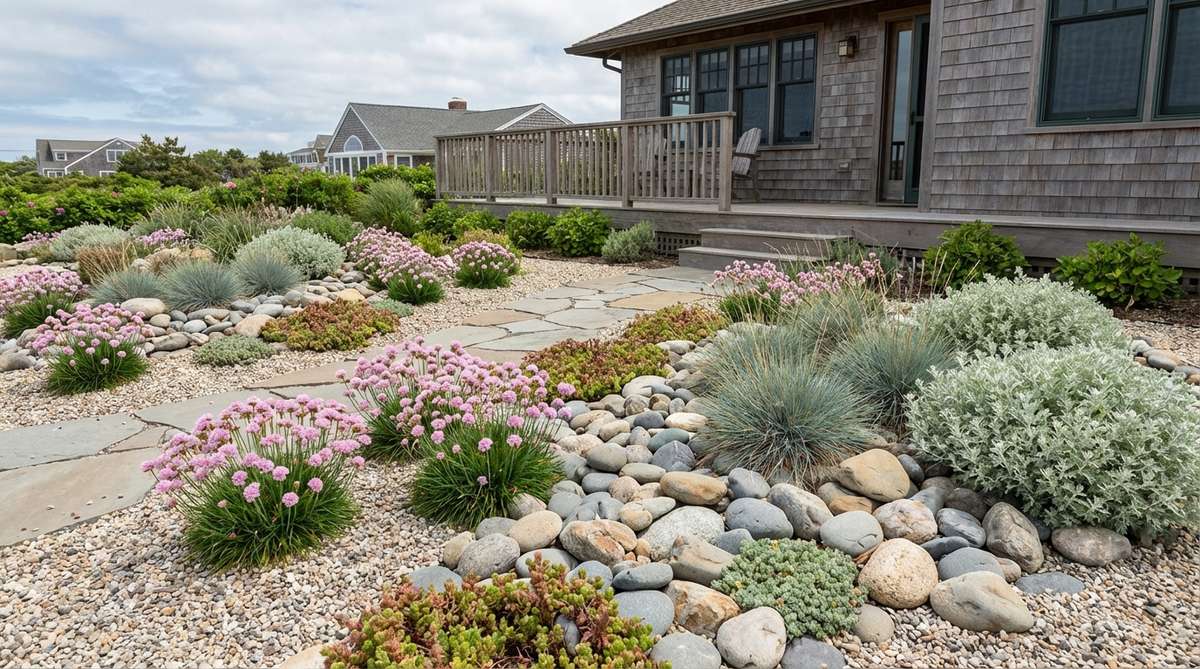
Sea pinks, grasses, and silver-foliaged plants evoke seaside landscapes when combined with smooth beach stones. These hardy coastal species tolerate wind and heat while thriving in well-drained rockery conditions.
Use pale gravel mulch to suggest sandy beaches and position larger rounded stones to mimic wave-worn boulders. Add sea holly and festuca grass for movement and texture.
This theme works particularly well in exposed gardens where salt-tolerant plants provide resilience.
17. Japanese Zen Rock Garden
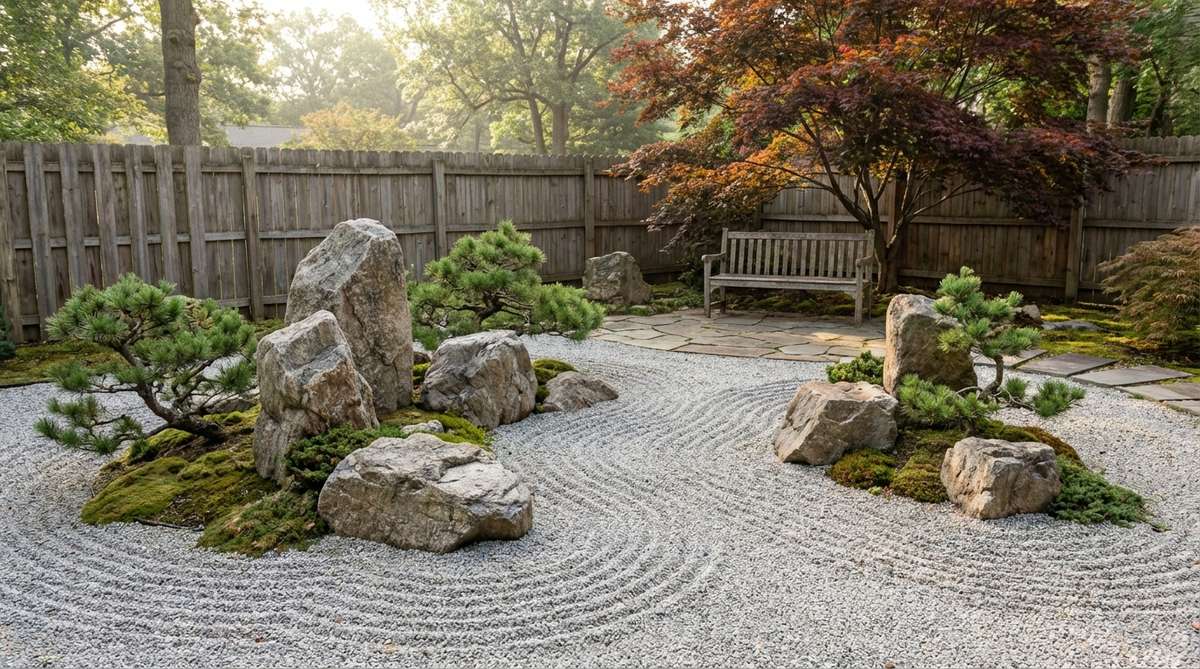
Large statement boulders surrounded by raked gravel create contemplative spaces in small yards. Add minimal alpine plantings like dwarf pines and mosses to soften the composition without overwhelming the stones’ presence.
Position three or five rocks in asymmetric groupings that suggest mountain islands. Rake the surrounding gravel in concentric patterns to represent water flowing around the stone masses.
18. Mediterranean Herb Rockery
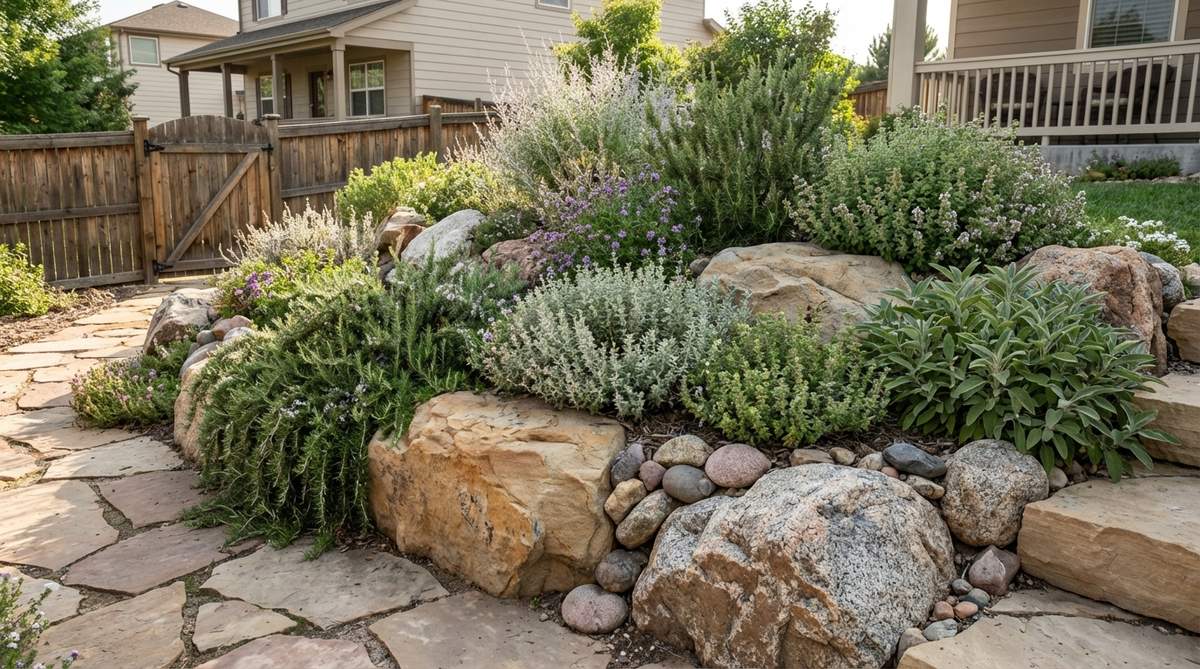
Rosemary, thyme, oregano, and sage thrive in sunny, well-drained rockeries while providing culinary harvests. The silvery foliage creates a cohesive color palette that complements natural stone.
Plant herbs in pockets between larger rocks where their roots can spread horizontally. The heat-retaining stones and sharp drainage mimic the Mediterranean hillsides where these plants originate.
19. Monochrome White Garden
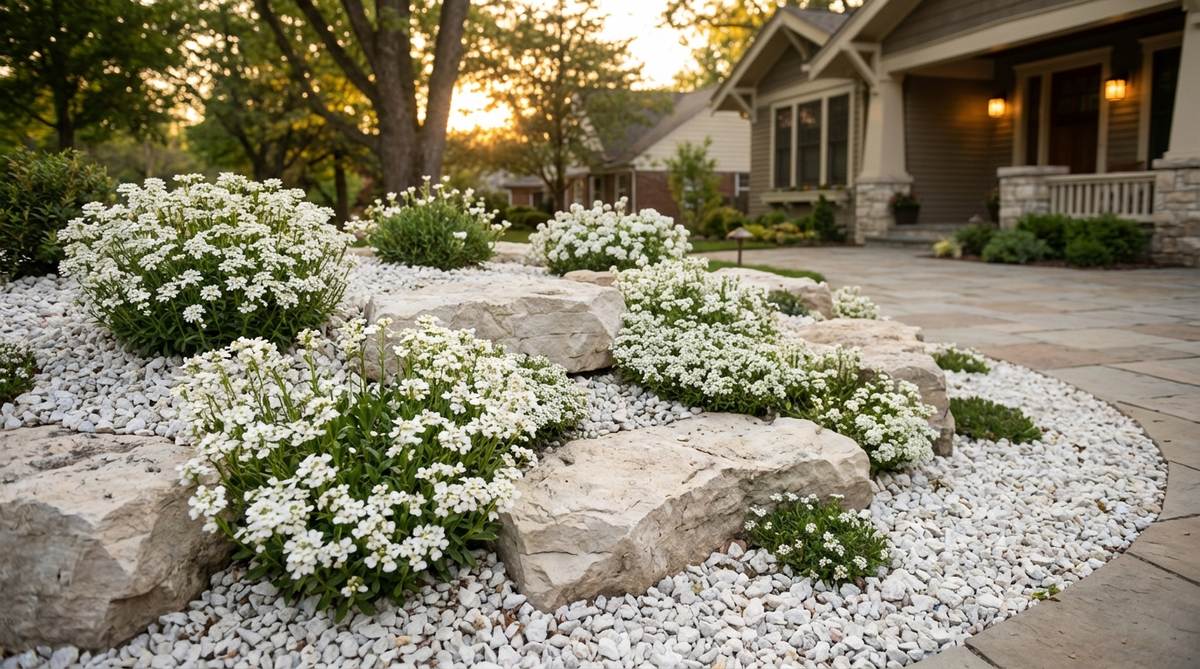
White-flowered alpines paired with pale limestone create luminous rockeries that glow in evening light. Use varieties like white arabis, candytuft, and alpine aster for continuous bloom.
The restricted color palette emphasizes form and texture while creating a sophisticated modern aesthetic. White gravel mulch extends the monochromatic theme throughout the planting.
20. Hot Color Explosion
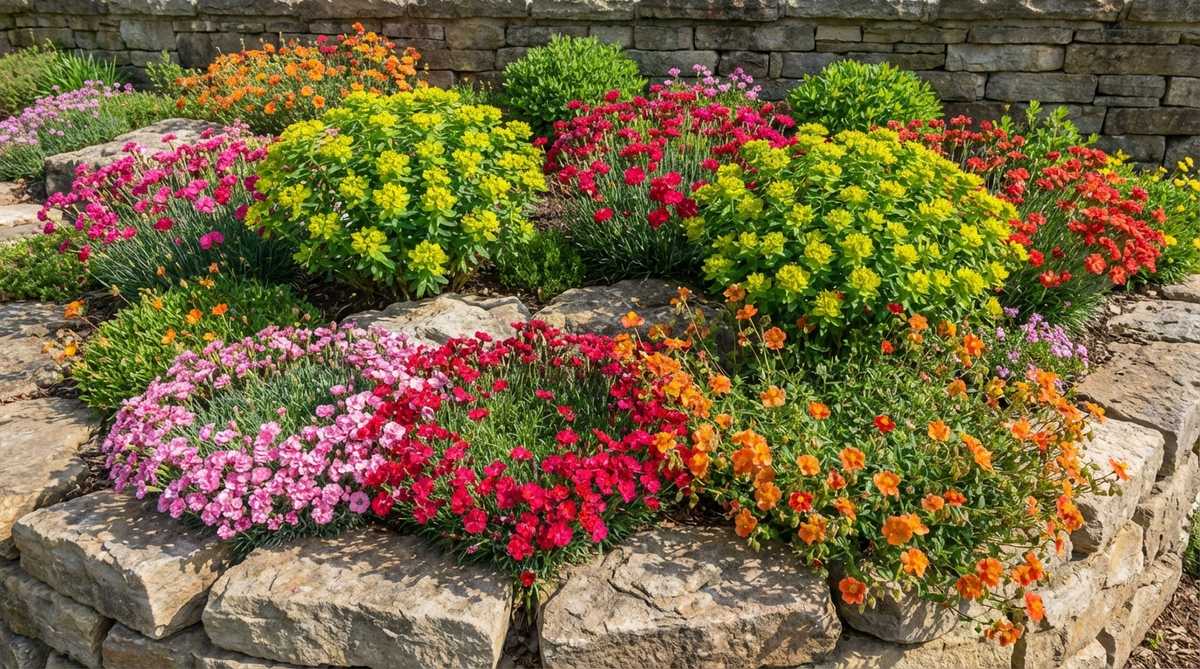
Vivid pinks, reds, and oranges from dianthus, rock roses, and euphorbia create energetic displays in small spaces. The saturated colors pack maximum visual punch into compact rockeries.
Layer plants by height with low creeping varieties at the front and taller cushion plants toward the back. The contrast between bright blooms and neutral stone intensifies the color impact.
21. Native Alpine Collection
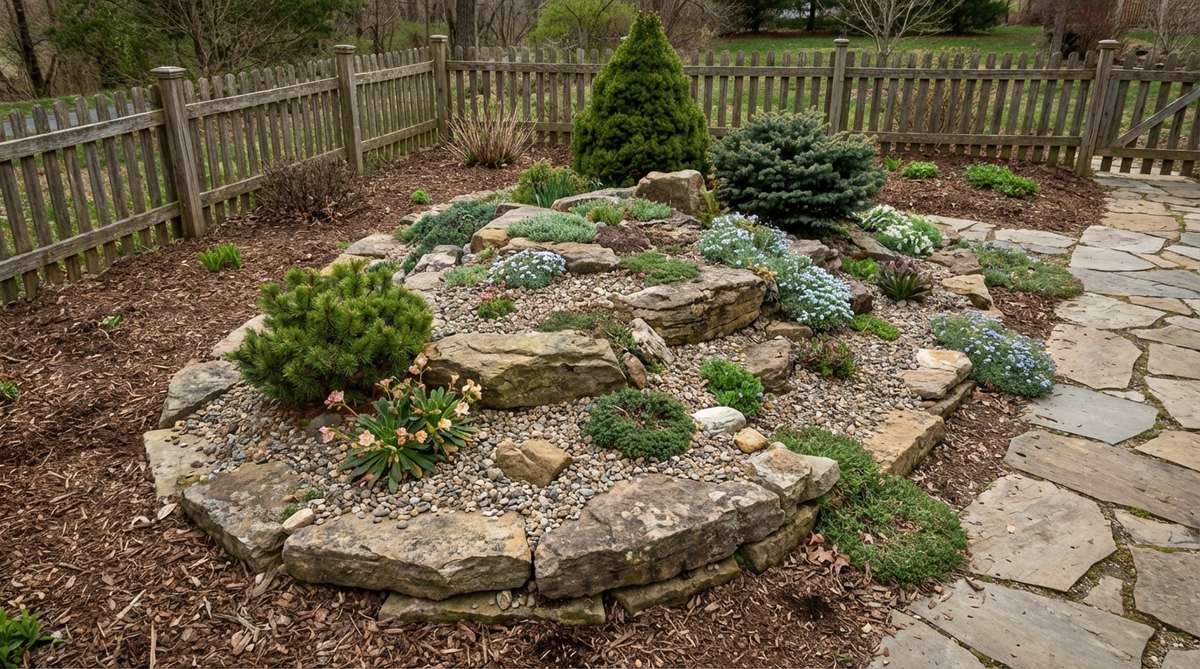
Regional alpine species adapted to local conditions require less maintenance than exotic varieties. Research native rock plants for your area and design a rockery that supports local ecosystems.
Native plantings often attract specialized pollinators and integrate seamlessly with surrounding landscapes. Group species by similar water and sun requirements for efficient care.
Advanced Rockery Techniques for Experienced Gardeners
Sophisticated construction methods and plant combinations elevate standard rockeries into garden showpieces. These approaches demand more skill but deliver exceptional results.
22. Scree Garden Slope
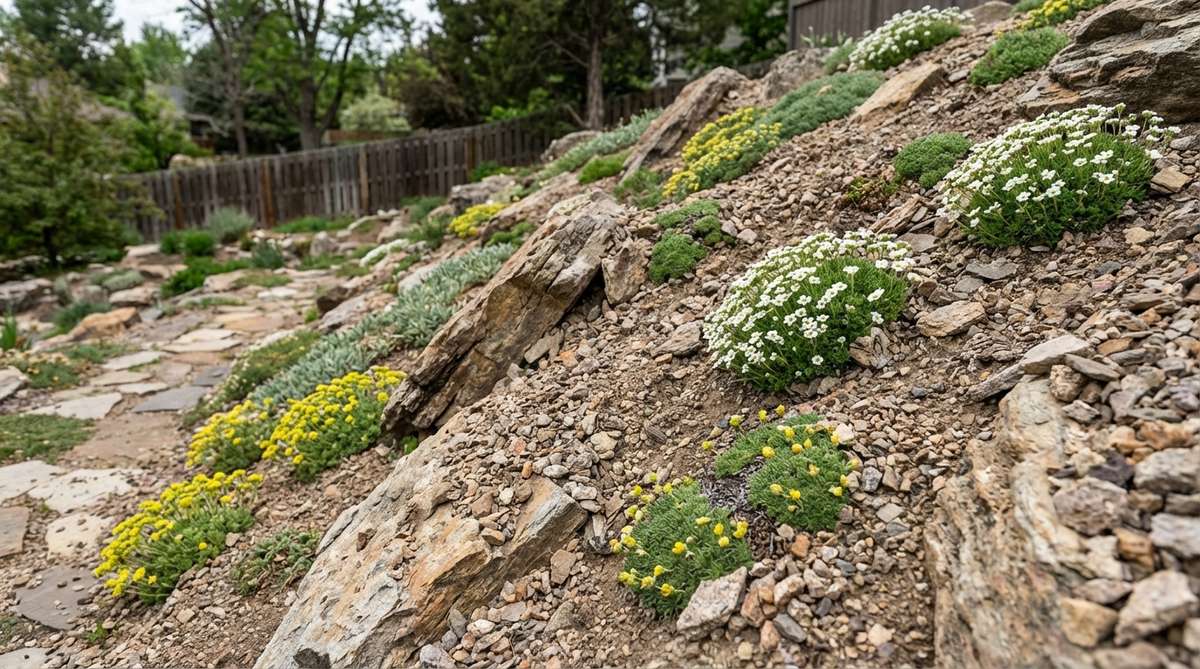
Mimic high-altitude scree fields by creating a slope with extremely sharp drainage using one part soil to three parts gravel. This harsh environment suits specialized alpines that fail in richer soils.
Build the scree bed at a 30-degree angle with underground drainage pipes to remove excess water rapidly. Plant rare alpines like androsace and draba that demand these extreme conditions.
Scree gardens showcase challenging plants that reward dedicated alpine enthusiasts with unique forms and flowers.
23. Tufa Stone Planting
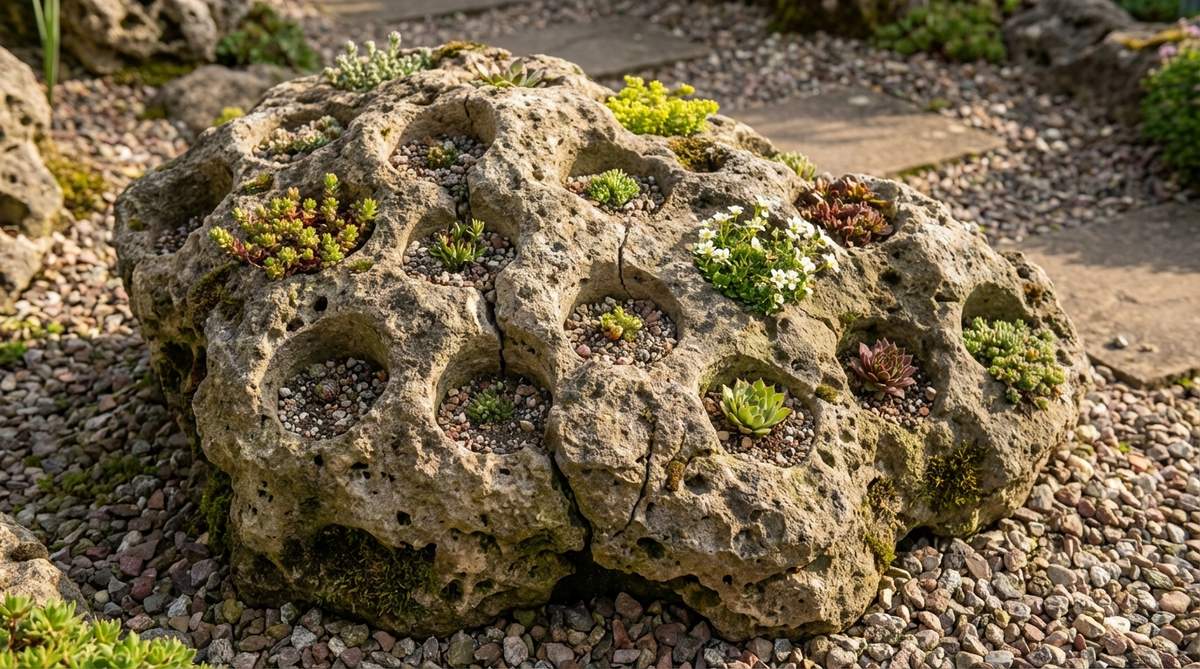
Drill holes directly into porous tufa rock and fill with alpine mix to create planting pockets. This technique allows difficult alpines to root directly into stone where conventional soil would be too rich.
Position tufa pieces throughout the rockery as both planting medium and sculptural element. The stone’s porosity maintains root moisture while its structure prevents waterlogging.
24. Crevice Garden Construction
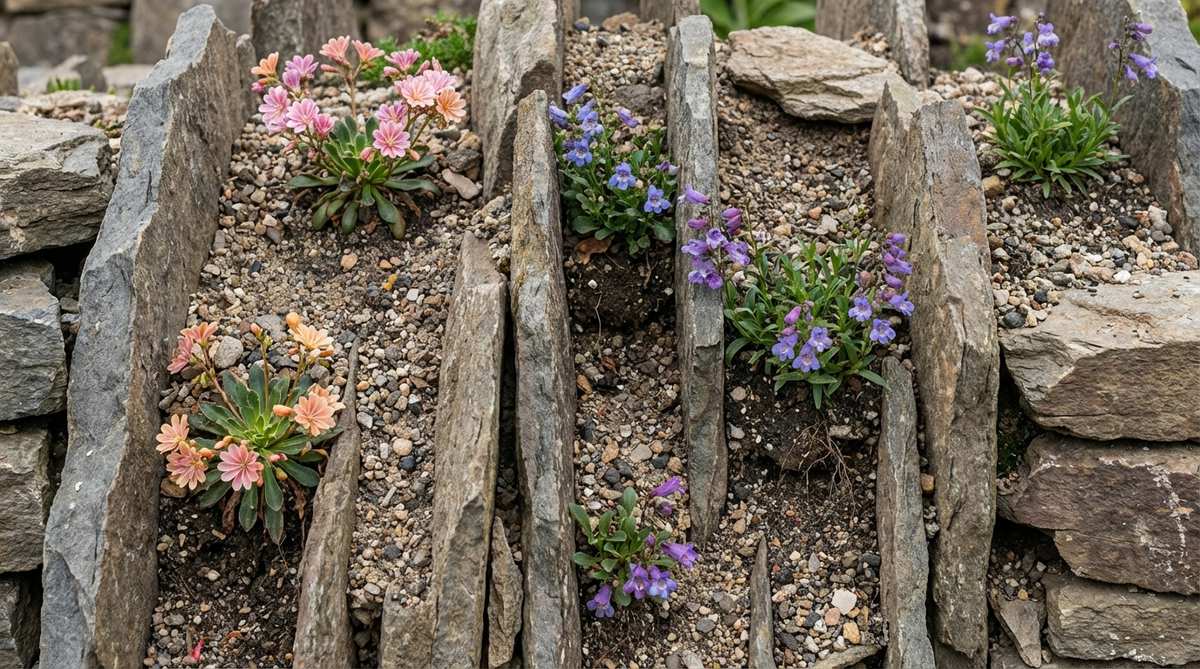
Stand flat stones on edge vertically to create narrow planting gaps that mimic natural rock fissures. This specialized structure suits alpines that form tap roots and demand perfect drainage.
Fill crevices with lean, gritty mix and plant with species like lewisia and penstemon that naturally grow in vertical rock faces. The vertical orientation prevents water accumulation around crowns.
25. Raised Alpine Bed
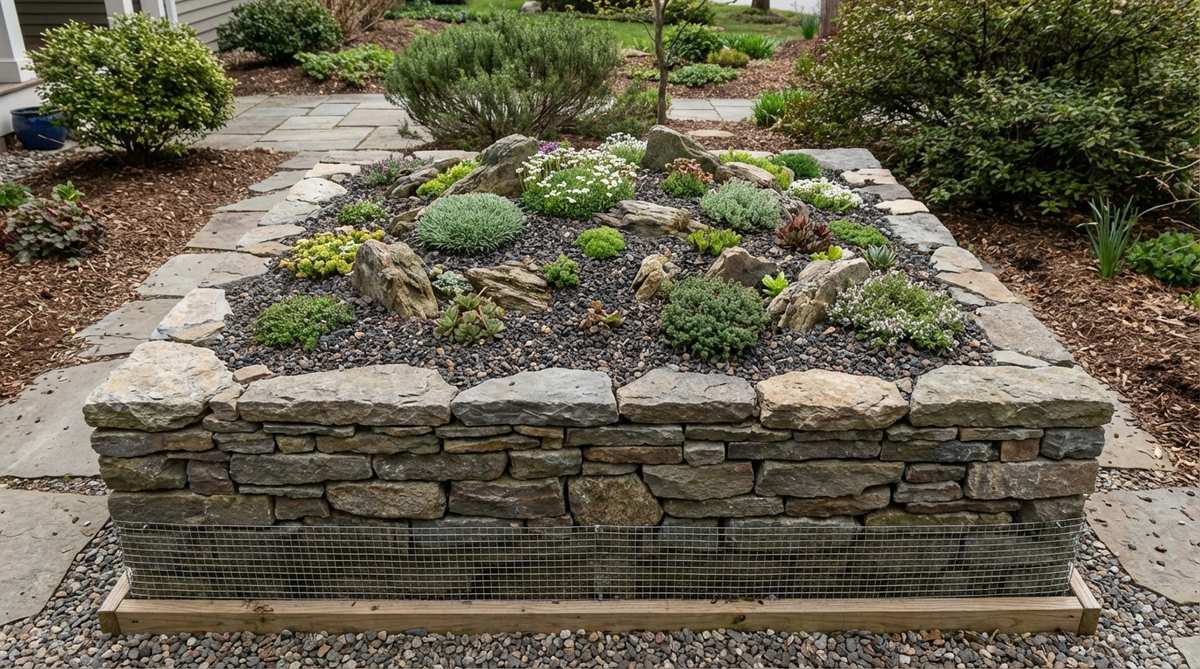
Construct a table-height raised bed with stone or timber walls filled entirely with alpine planting mix. The elevation improves drainage while bringing small plants to comfortable viewing height.
Install hardware cloth at the base to deter rodents and ensure drainage through the bottom. This design suits gardeners with mobility concerns who find ground-level planting difficult.
26. Bog-Rockery Transition
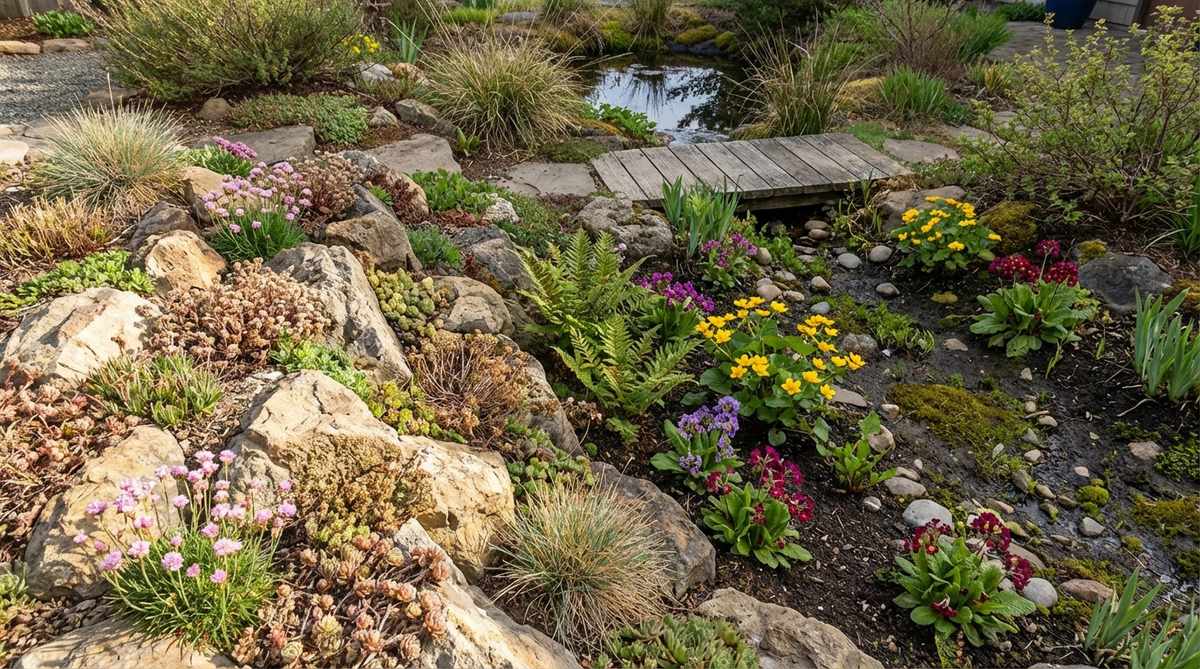
Create zones of varying moisture by building a rockery adjacent to a small bog garden. Transition plants from dry-loving alpines through moisture-tolerant species to true bog plants.
The rockery provides drainage for sedums and thrift, while the lower bog area hosts primulas and marsh marigolds. This gradient design maximizes plant diversity in small spaces.
27. Living Roof Rockery
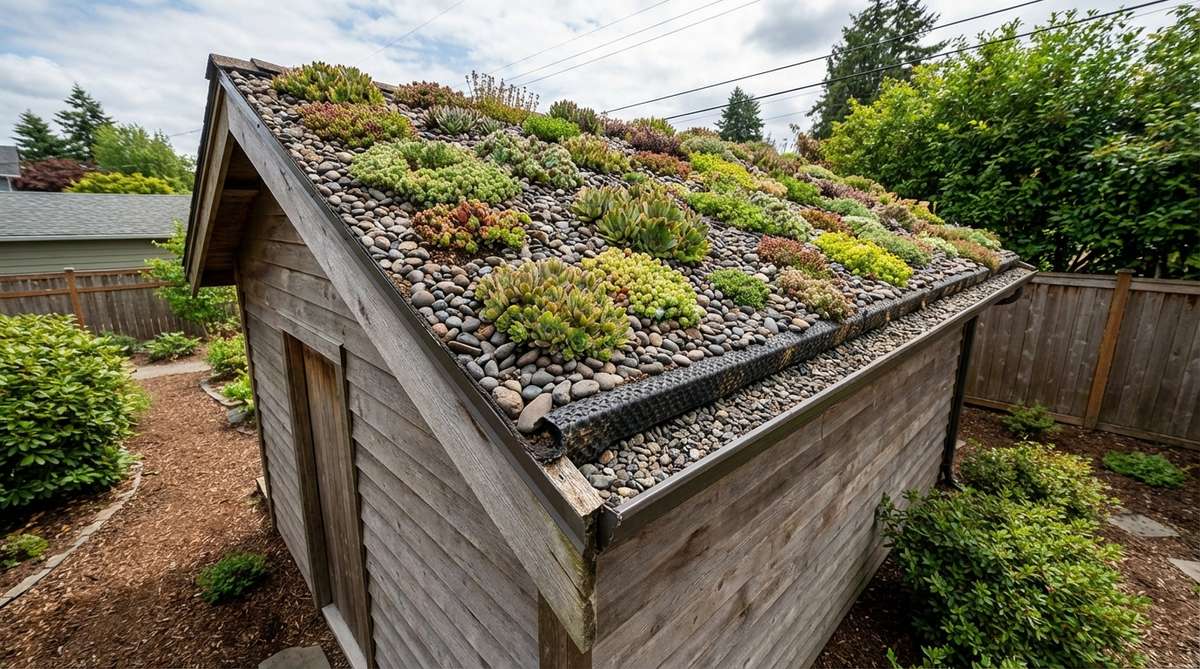
Transform shed or garage roofs into rockery habitats using lightweight growing medium and drought-tolerant alpines. The roof’s drainage naturally suits sedum and sempervivum that tolerate extreme exposure.
Install a root barrier and drainage layer before adding four to six inches of lightweight alpine mix. This vertical space utilization adds garden area without consuming ground footprint.
Conclusion
The small garden rockery proves that alpine drama requires neither acreage nor budget excess. From container displays on urban balconies to naturalistic slope plantings, these designs demonstrate how stone and alpine plants create year-round interest in compact spaces. Start with sound drainage principles, select stones that suit your scale, and choose alpines adapted to your climate. Fresh Garden Ideas encourages you to begin with a single contained rockery project and expand as your confidence grows. The most successful small rockeries balance bold stone placement with restrained plant selection, allowing both elements to showcase their natural character.
Frequently Asked Questions
What is the best soil mix for a small garden rockery?
Mix equal parts sterilized loam, horticultural grit, and leafmold or coir to create free-draining alpine soil. This formula prevents waterlogging while providing sufficient nutrients for alpine plant growth. Adjust grit proportion higher for plants demanding extra-sharp drainage like lewisia or androsace.
How deep should I bury rocks in a rockery design?
Bury rocks approximately one-third of their total depth to create stability and natural appearance. This proportion mimics geological outcroppings where visible stone represents only a portion of the underground mass. Deeper burial in loose soil may be necessary for vertical stability.
Which alpine plants bloom longest in American gardens?
Creeping phlox, dianthus, and sedum varieties deliver extended bloom periods from spring through fall in most US climates. Combine these workhorses with spring bulbs like species crocus and fall-blooming gentians to maintain color across three seasons. Evergreen varieties provide winter structure between bloom periods.
Can I build a rockery on flat ground without a natural slope?
Create artificial elevation by mounding soil or building raised structures with stone walls. Even a slight grade of 15 to 20 degrees improves drainage and visibility compared to flat planting. Alternatively, construct mounded island beds or use containers to achieve vertical dimension in flat yards.
How do I prevent weeds in a small rockery?
Apply two-inch layers of gravel or stone chip mulch around plants to suppress weed germination while maintaining the alpine aesthetic. Install landscape fabric beneath rockeries before adding soil and stones, though this complicates future replanting. Dense alpine groundcovers like thyme and moss phlox outcompete weeds once established.
What type of stone works best for small garden rockeries?
Choose stones native to your region for cost efficiency and natural integration with the landscape. Limestone suits alkaline-loving alpines while sandstone and granite accommodate acid-preferring species. Select similar stone types within a single rockery to maintain visual cohesion rather than mixing disparate materials.