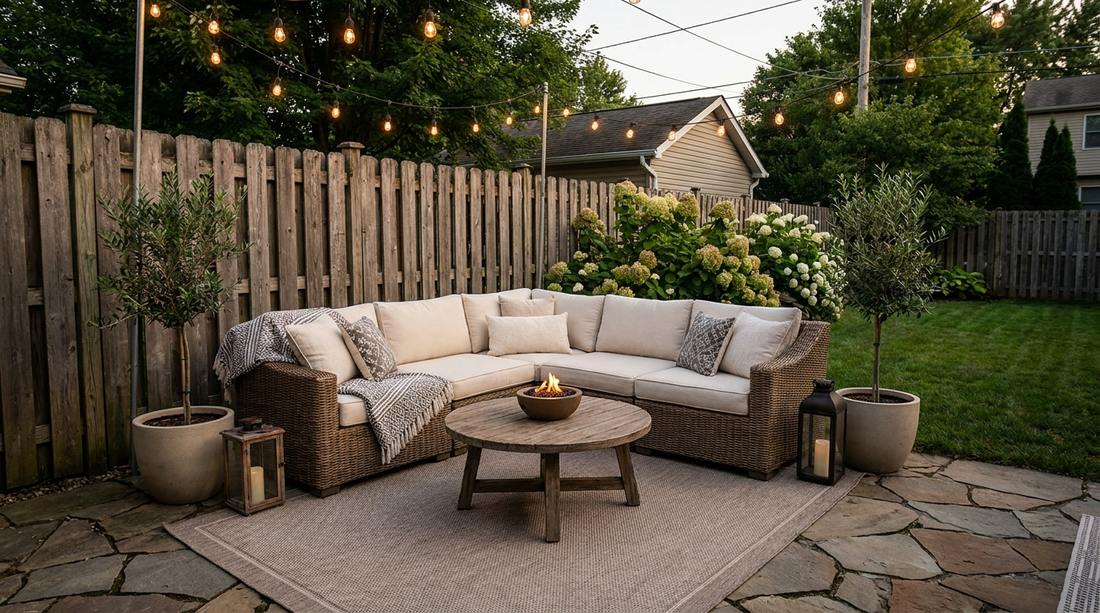
An overlooked patio edge holds the absolute greatest potential for stunning cozy garden furniture setups. Snag these precise layouts to bypass the generic catalog look and build a space that punches way above its budget class. Total outdoor elevation starts exactly here.
Design Snapshot Key Principles
- Scale Appropriately: Select furniture proportions that maintain circulation space while filling the corner effectively
- Multi-Functionality: Prioritize pieces with dual purposes like storage benches or nesting tables to maximize utility
- Vertical Integration: Draw eyes upward with trellises, hanging planters, or wall-mounted elements to expand perceived space
- Zone Definition: Use rugs, lighting, and furniture orientation to establish distinct activity areas within compact footprints
Corner Seating Solutions That Maximize Space
Corner-specific seating arrangements transform awkward angles into high-function zones. These layouts anchor your space while providing ample seating without encroaching on circulation paths.
1. L-Shaped Sectional with Coffee Table
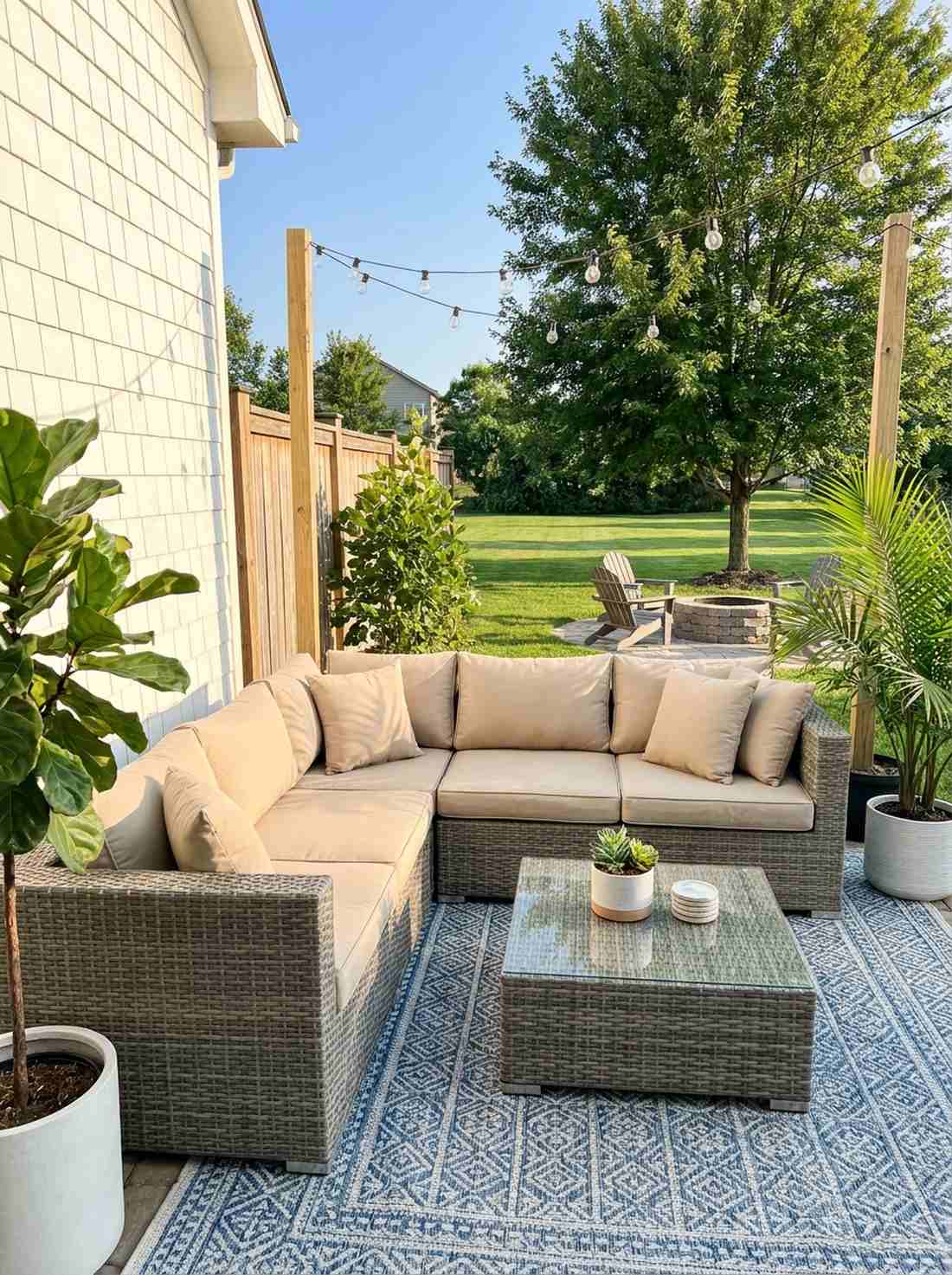
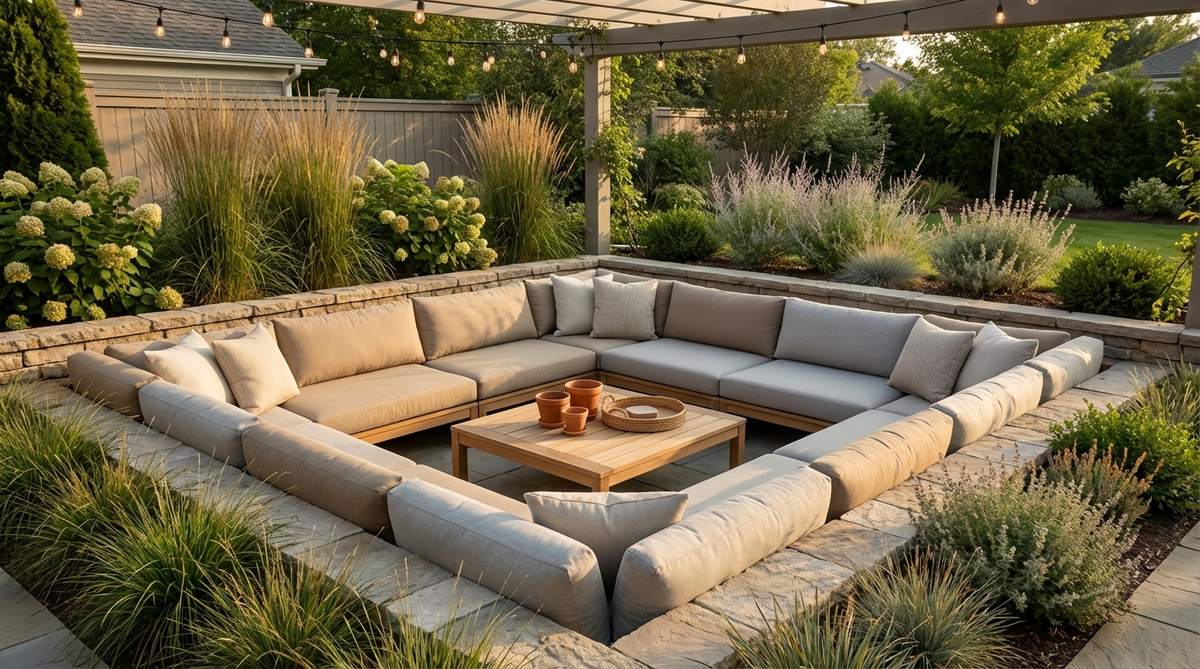
Feels like an exclusive rooftop lounge you just discovered. Small patio sectional styling works exceptionally well for an 8×8 corner needing a heavy anchor.
This layout delivers a surprisingly premium look by hugging the perimeter and leaving the center entirely open. Pairing an all-weather wicker frame with solution-dyed acrylic cushions guarantees serious longevity.
You can easily pull this off for around $300–$500. Save this to your patio inspiration board if you need max seating.
- Key Materials: UV-coated resin wicker sectional, waterproof cover
- Vibe / Style: Modern coastal retreat
- Difficulty: Beginner unboxing
- Budget Breakdown: Sectional: $250 | Table: $80 | Decor: $40
- Creator’s Tip: Use outdoor rug tape to lock the coffee table exactly in the center.
- Smart Sourcing: pre-configured modular outdoor seating kits and heavy-duty waterproof furniture covers.
2. Built-In Corner Bench
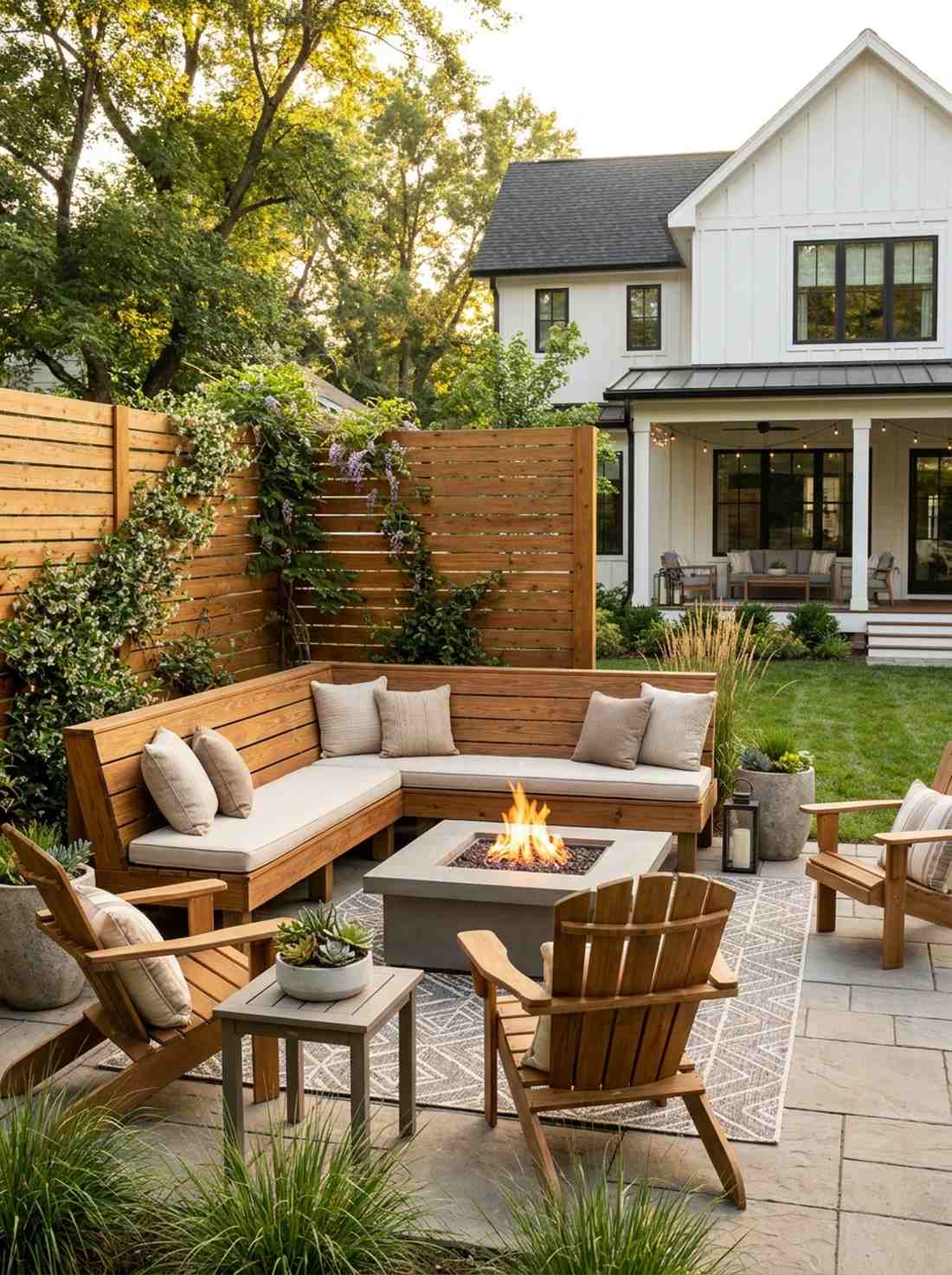
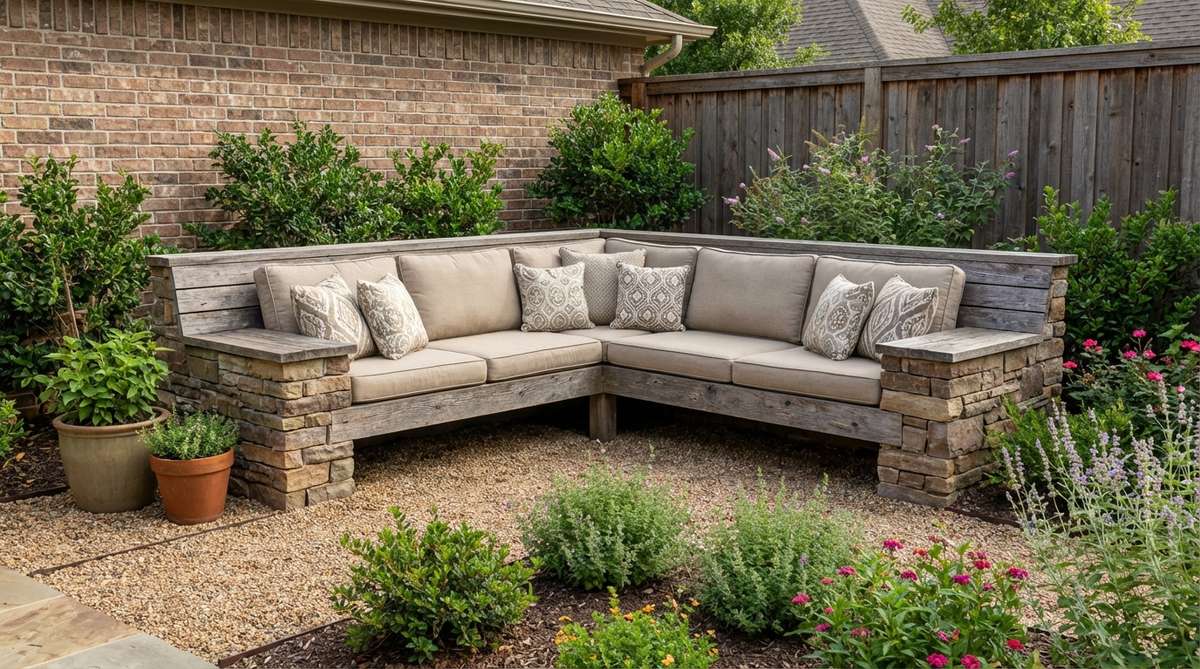
Straight out of a high-end architectural digest magazine. A custom wooden patio bench perfectly suits a dead corner by the fence.
Most beginners completely miss this structural trick, but a fixed banquette instantly elevates the perceived square footage. Wrapping the wood in marine-grade sealant protects your investment from rot.
This custom DIY approach costs roughly $150–$250 in raw materials.
- Key Materials: Pressure-treated lumber, exterior deck screws
- Vibe / Style: Minimalist Scandinavian yard
- Difficulty: Intermediate DIY
- Budget Breakdown: Lumber: $120 | Hardware: $30 | Stain: $40
- Creator’s Tip: Angle the backrest 15 degrees backward for maximum ergonomic comfort.
- Smart Sourcing: marine-grade wood sealant (gallon size) and high-density outdoor foam slabs.
3. Two Adirondack Chairs Angled
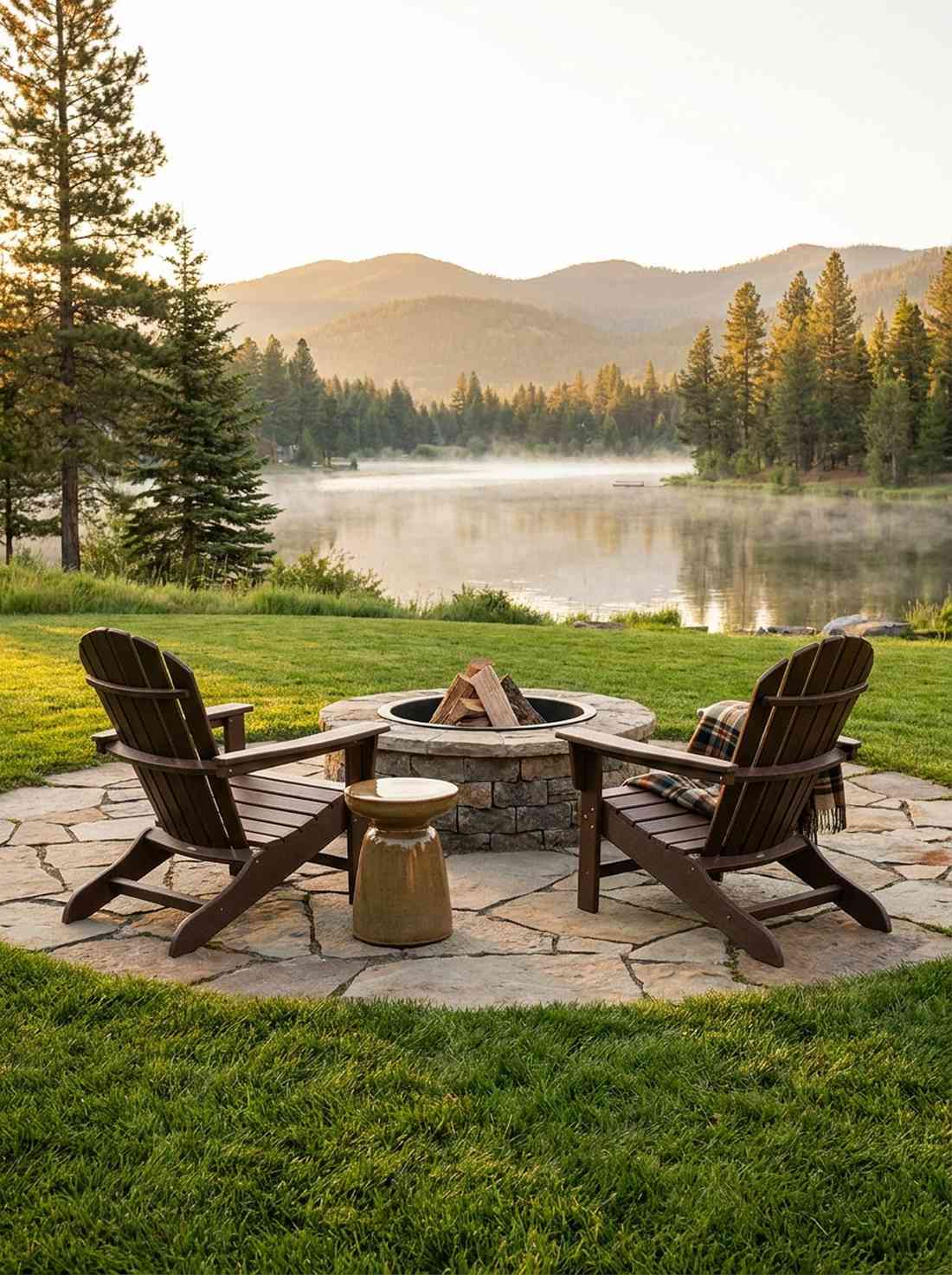
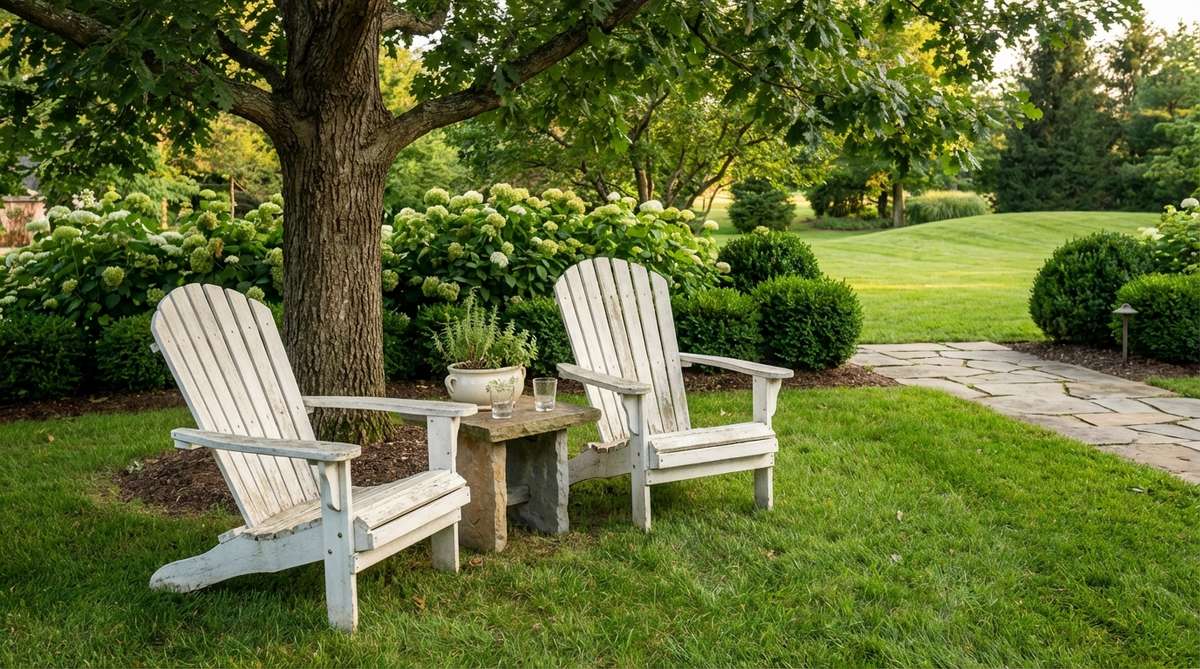
Evokes the feeling of a quiet mountain cabin morning. Classic fire pit seating layouts are absolutely perfect for transitioning a grass edge into a relaxation zone.
Placing these at an aggressive 45-degree angle bypasses the boxed-in feeling entirely. Upgrading to polywood instead of raw cedar means you never have to sand or stain them.
Expect to spend around $200 for a solid pair. Pin this if you love a timeless backyard aesthetic.
- Key Materials: HIPS plastic Adirondacks, ceramic side table
- Vibe / Style: Rustic lakeside
- Difficulty: Zero setup
- Budget Breakdown: Chairs: $180 | Side table: $40
- Creator’s Tip: Anchor the legs with discreet landscape pins if placing them on soft soil.
- Smart Sourcing: weatherproof poly-lumber Adirondack sets and rust-proof outdoor drink tables.
4. Curved Loveseat in Corner
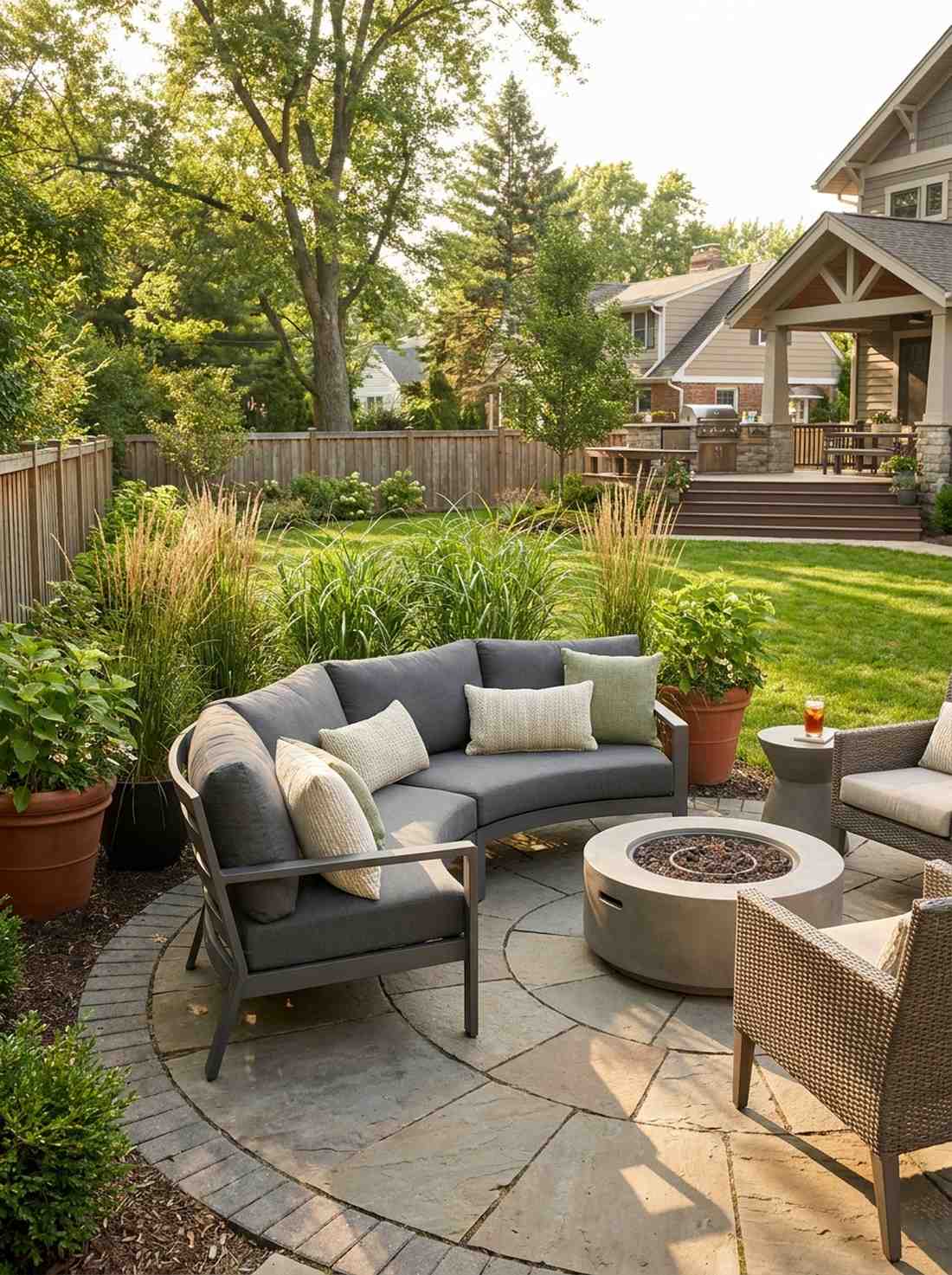
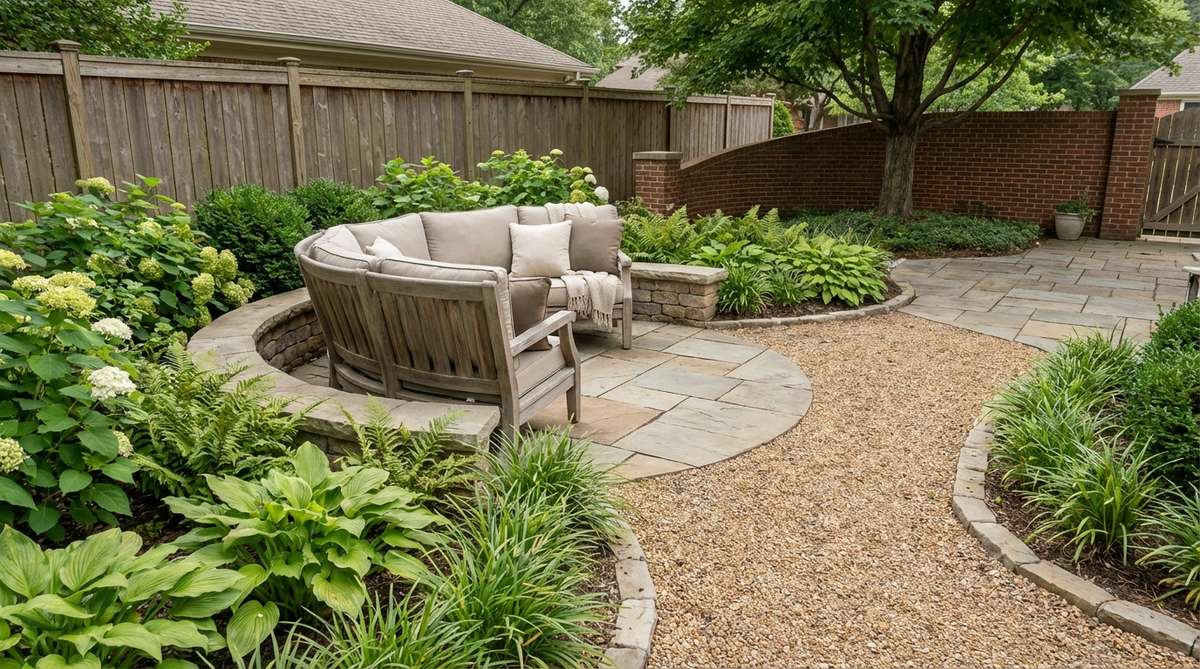
Feels like a plush VIP booth at an outdoor resort. Rounded garden couch designs soften hard architectural lines and fit flawlessly into curved pathways.
This configuration gives a designer-level finish that rectangular furniture simply cannot achieve. By incorporating premium terrace decor elements, the space flows naturally.
A statement piece like this usually runs $350+. It is a fast upgrade that completely changes the vibe.
- Key Materials: Curved aluminum frame loveseat, lumbar pillows
- Vibe / Style: Contemporary organic
- Difficulty: Easy placement
- Budget Breakdown: Loveseat: $300 | Pillows: $60
- Creator’s Tip: Place tall potted grasses behind the curve to hide the empty corner void.
- Smart Sourcing: fade-resistant outdoor lumbar pillows (pack of 2) and powder-coated aluminum loveseats.
This next setup is ridiculously cheap but looks like a $1,000 custom built-in display…
5. Corner Daybed Setup
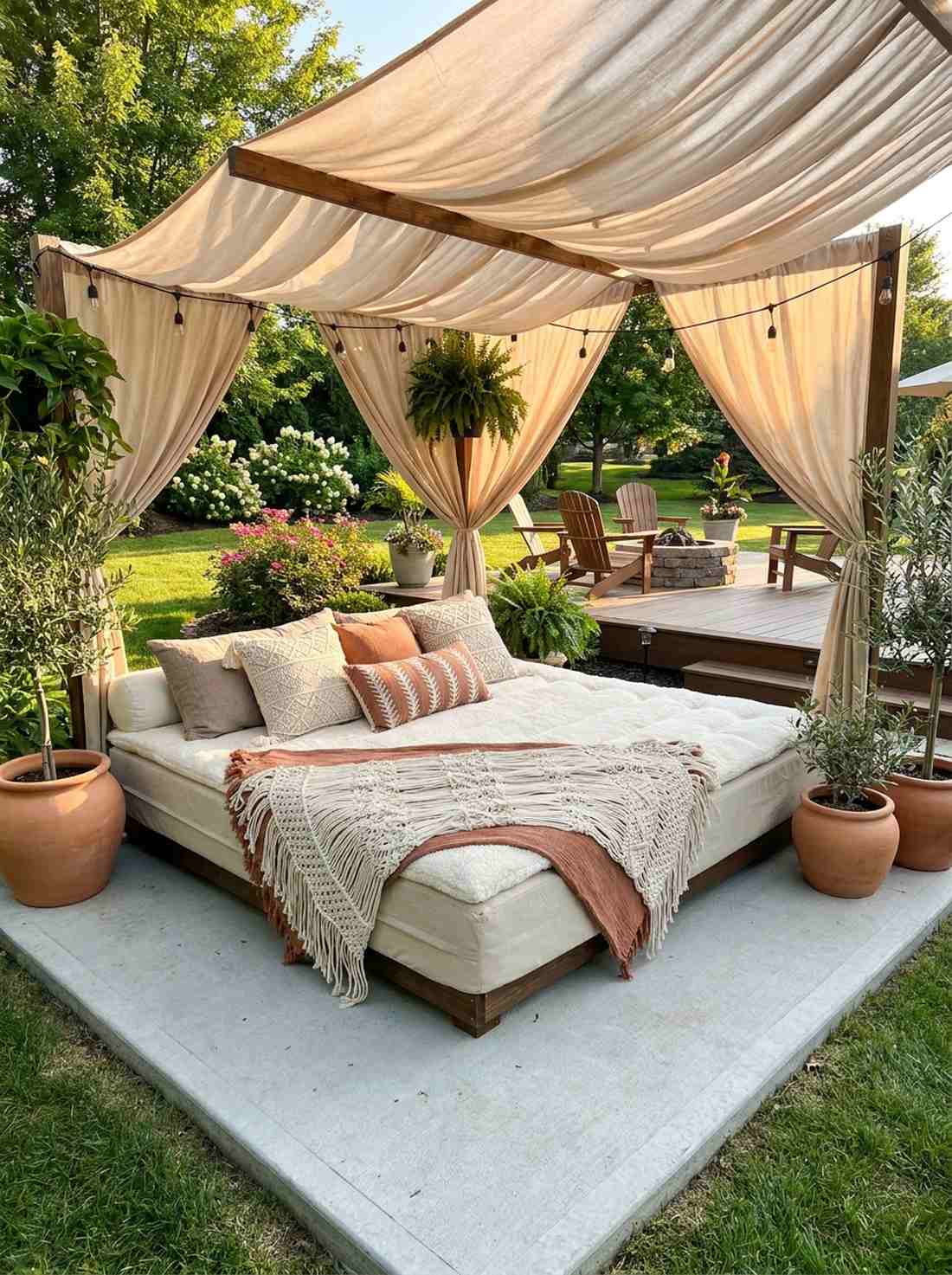
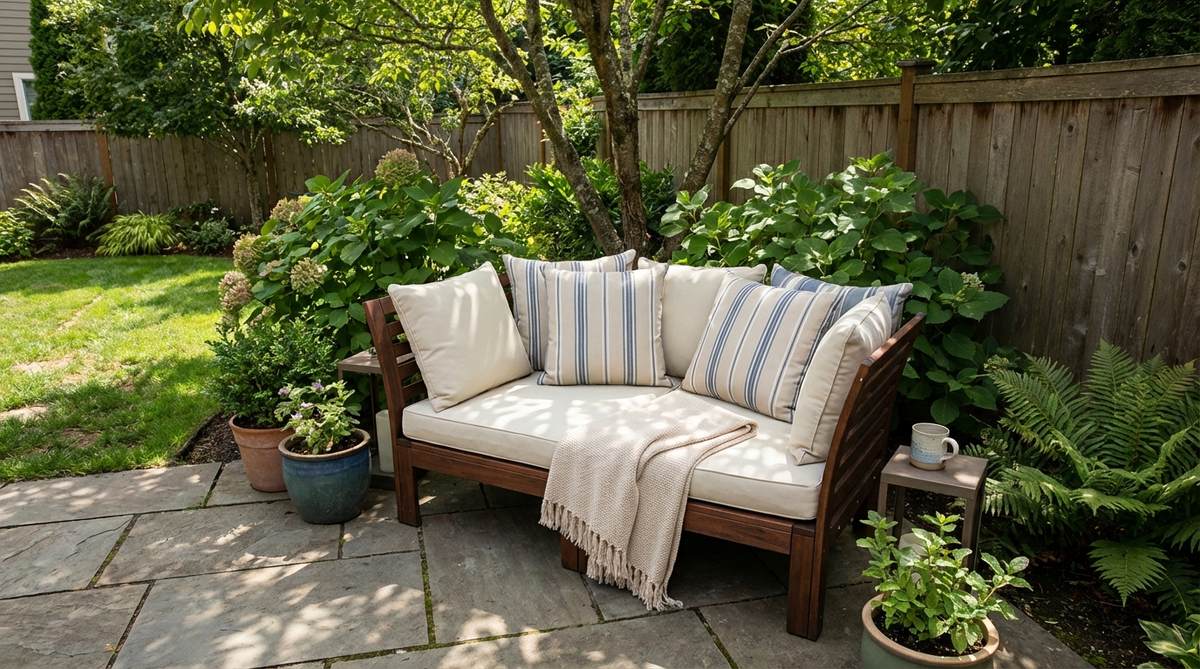
Embodies the pure luxury of a private cabana hideaway. Outdoor lounging daybeds transform a shady 6×6 concrete slab into an afternoon nap destination.
Positioning this diagonally looks far more expensive than it is and creates dramatic geometric interest. Tossing over a UV-resistant canopy adds a layer of absolute privacy.
You can hack this with pallets for $100 or buy pre-made for $400. Save this to your weekend DIY board.
- Key Materials: Thick daybed mattress, weather-shield cover
- Vibe / Style: Boho resort
- Difficulty: Moderate
- Budget Breakdown: Base: $100 | Mattress: $150 | Textiles: $80
- Creator’s Tip: Use an outdoor-rated mattress encasement before putting on the decorative sheets.
- Smart Sourcing: waterproof outdoor mattress encasements and bulk packs of UV-resistant throw covers.
Bistro Dining Setups for Intimate Meals
Compact dining arrangements bring al fresco meals to the smallest corners. These setups prioritize functionality while maintaining the romantic charm of outdoor dining.
6. Classic Bistro Set
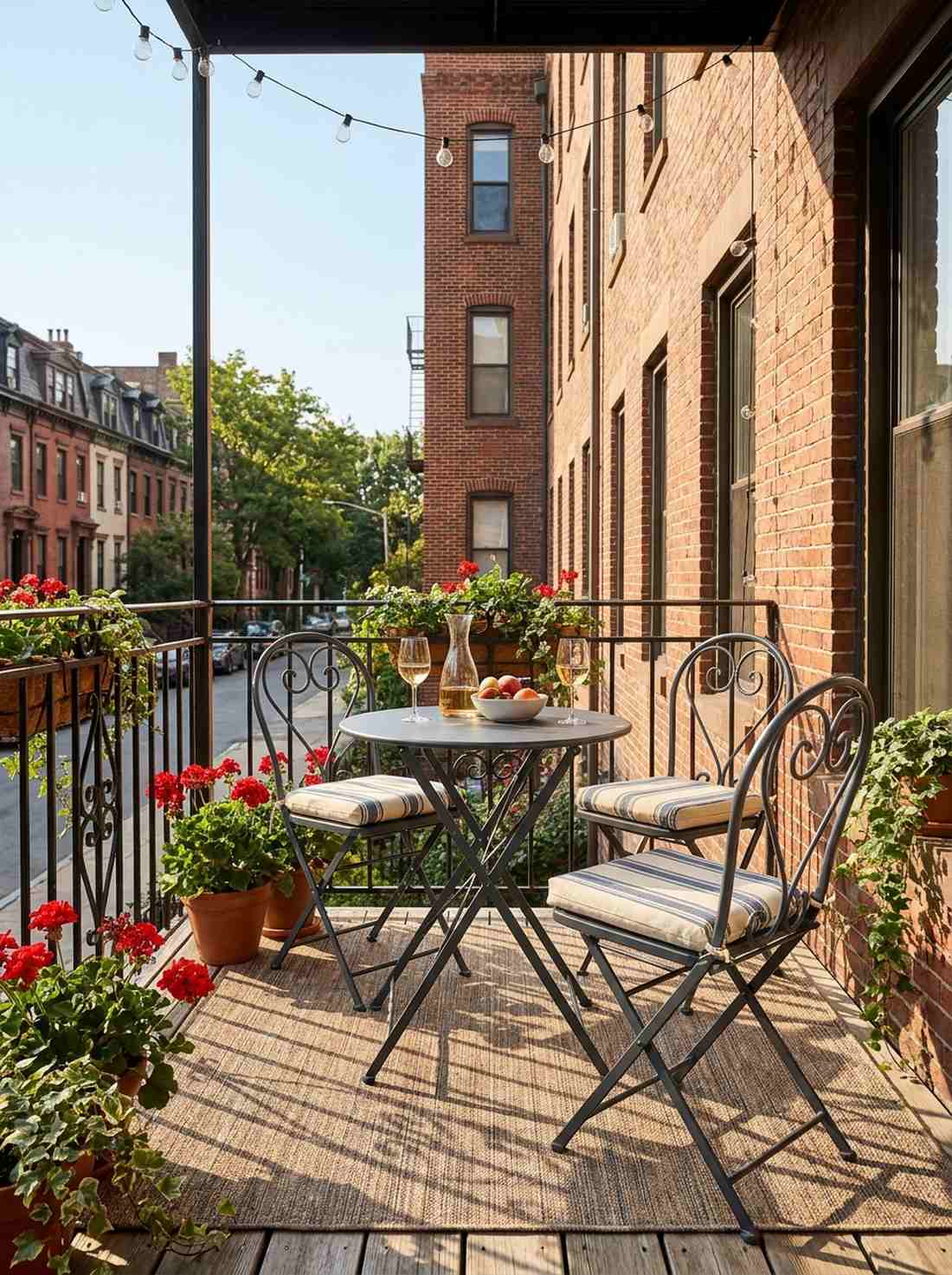
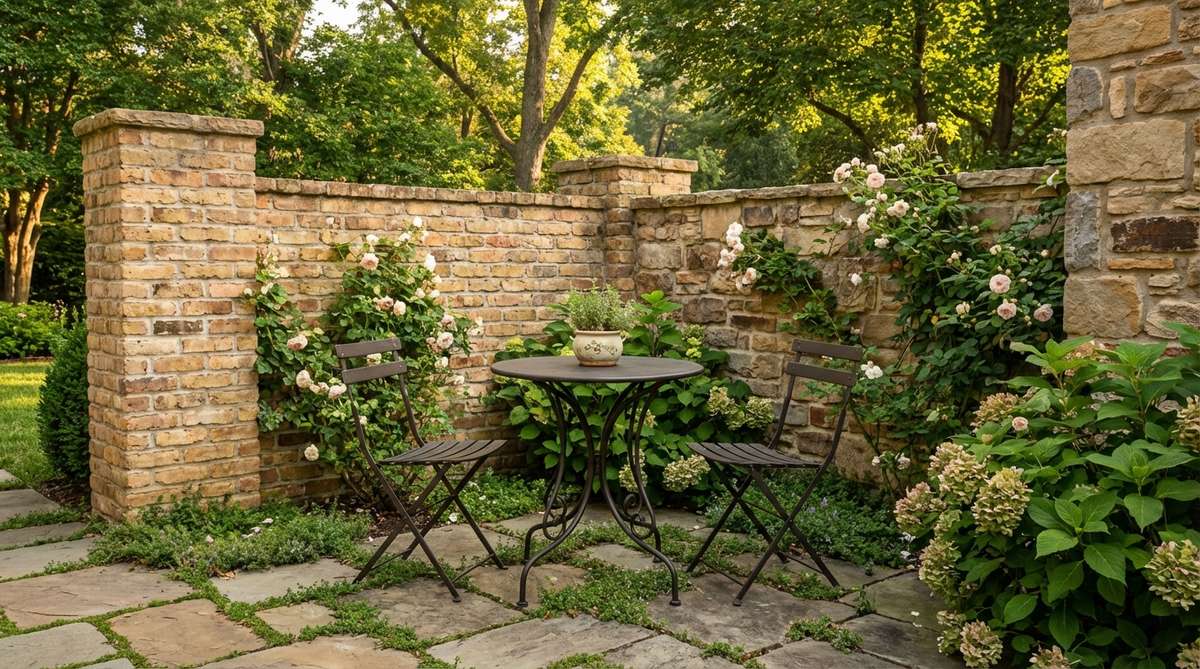
Feels exactly like a secret Parisian street cafe. Metal folding balcony furniture serves as the ultimate fast fix for a cramped apartment balcony.
This timeless blueprint delivers a surprisingly premium look with almost zero footprint. Choosing powder-coated steel prevents the rusty mess that ruins most budget setups.
This entire look can be achieved for under $100. Pin this if you are working with an ultra-tiny balcony.
- Key Materials: Foldable steel bistro set, seat cushions
- Vibe / Style: European romantic
- Difficulty: Effortless
- Budget Breakdown: Table/Chairs: $80 | Cushions: $25
- Creator’s Tip: Spray the hinges with silicone lubricant once a season to keep them folding smoothly.
- Smart Sourcing: rust-proof metal bistro sets and magnetic outdoor seat cushions.
7. Corner-Mounted Drop-Leaf Table
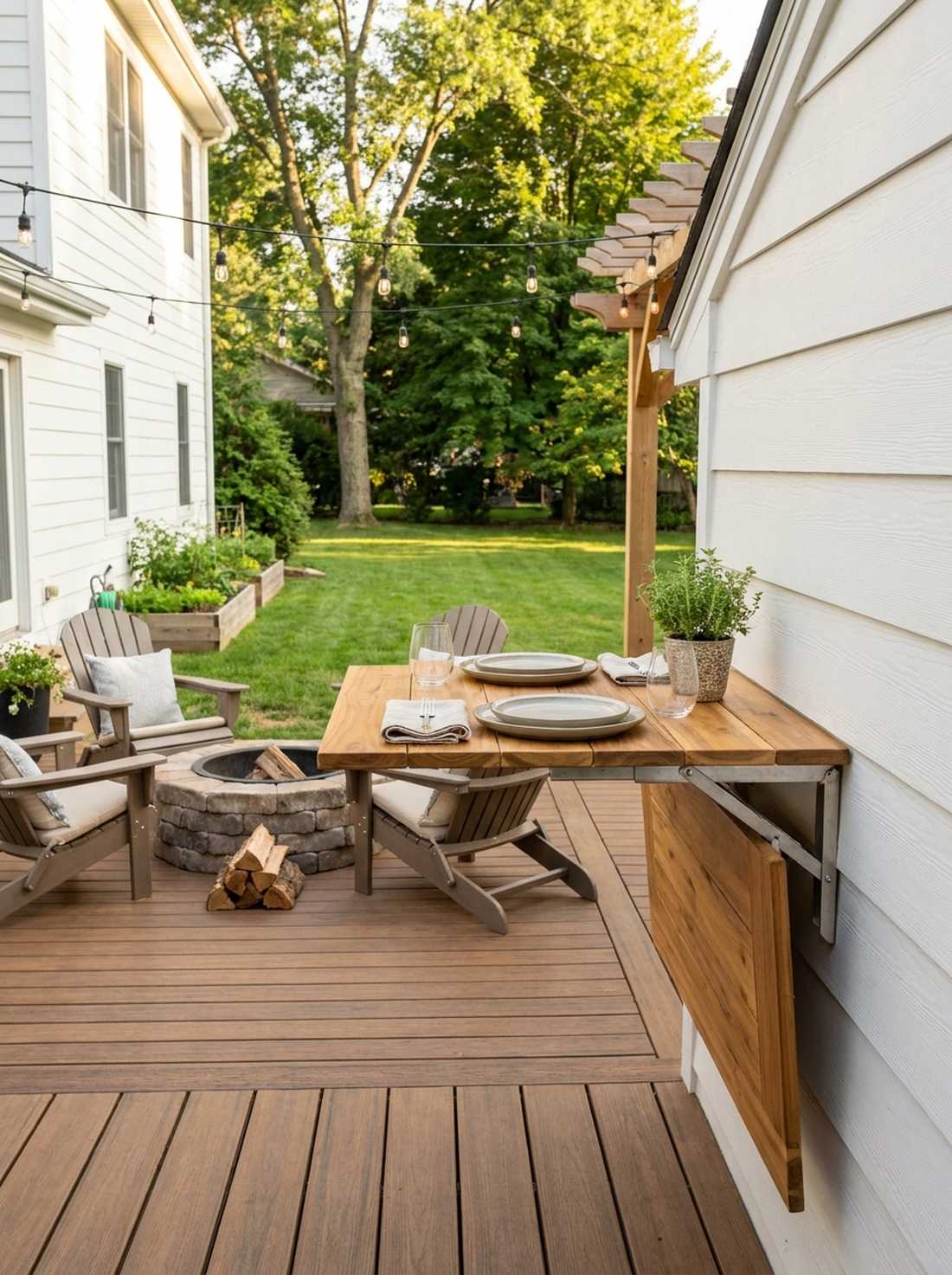
Gives off an incredibly satisfying tiny-home efficiency vibe. Wall-mounted folding outdoor tables are the ultimate hack for multi-use side yards.
A brilliant trick to avoid the cluttered yard syndrome by literally folding your dining room away. Using heavy-duty exterior folding brackets is non-negotiable for safety here.
Hardware and lumber will run you about $60 total.
- Key Materials: Drop-leaf mechanism, treated tabletop
- Vibe / Style: Ultra-modern functional
- Difficulty: Intermediate drilling
- Budget Breakdown: Brackets: $30 | Wood: $25 | Screws: $5
- Creator’s Tip: Mount this exactly 30 inches off the floor to match standard dining chair height.
- Smart Sourcing: heavy-duty stainless steel folding brackets and pre-cut treated wood panels.
8. Bar-Height Corner Table
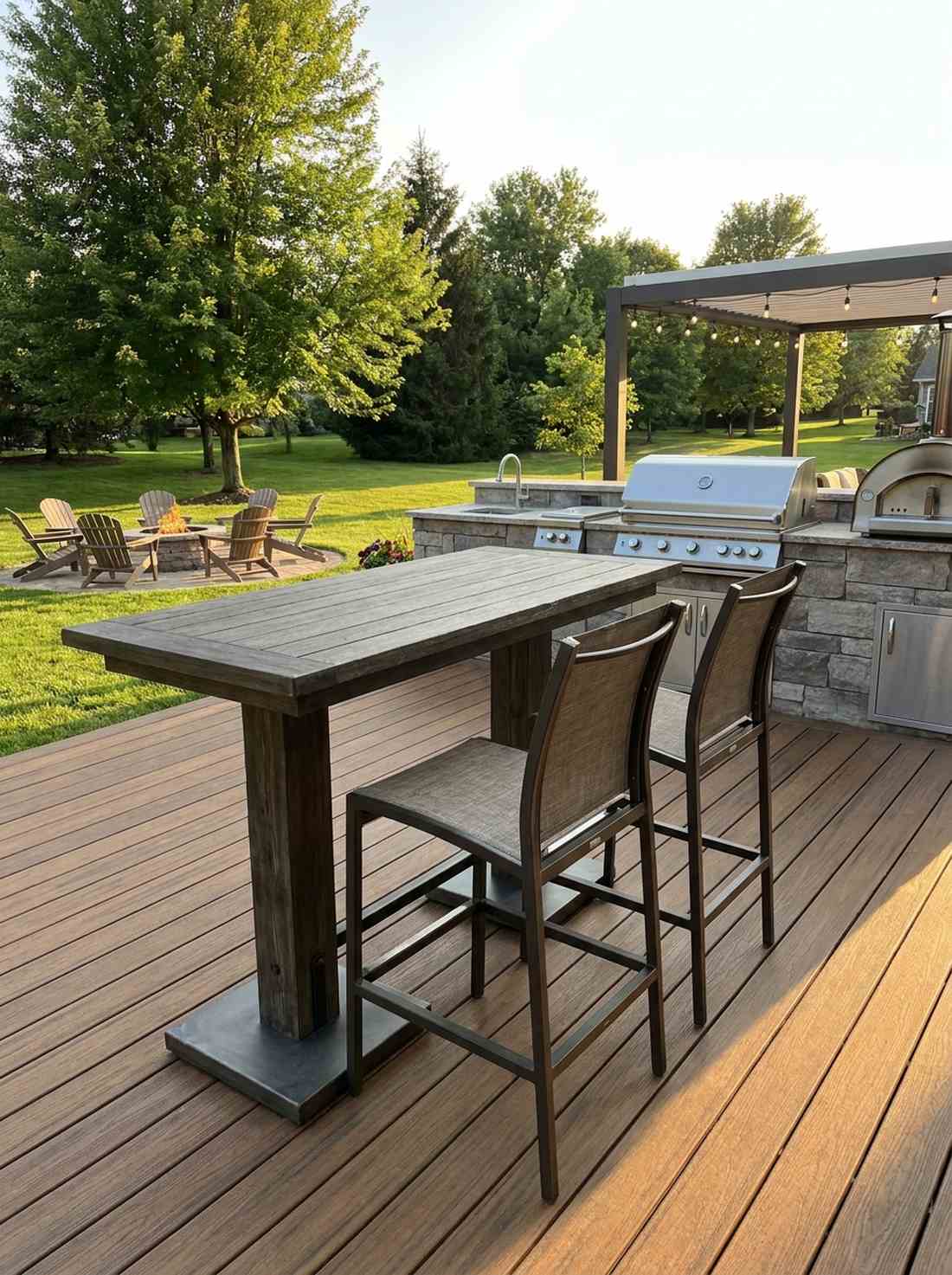
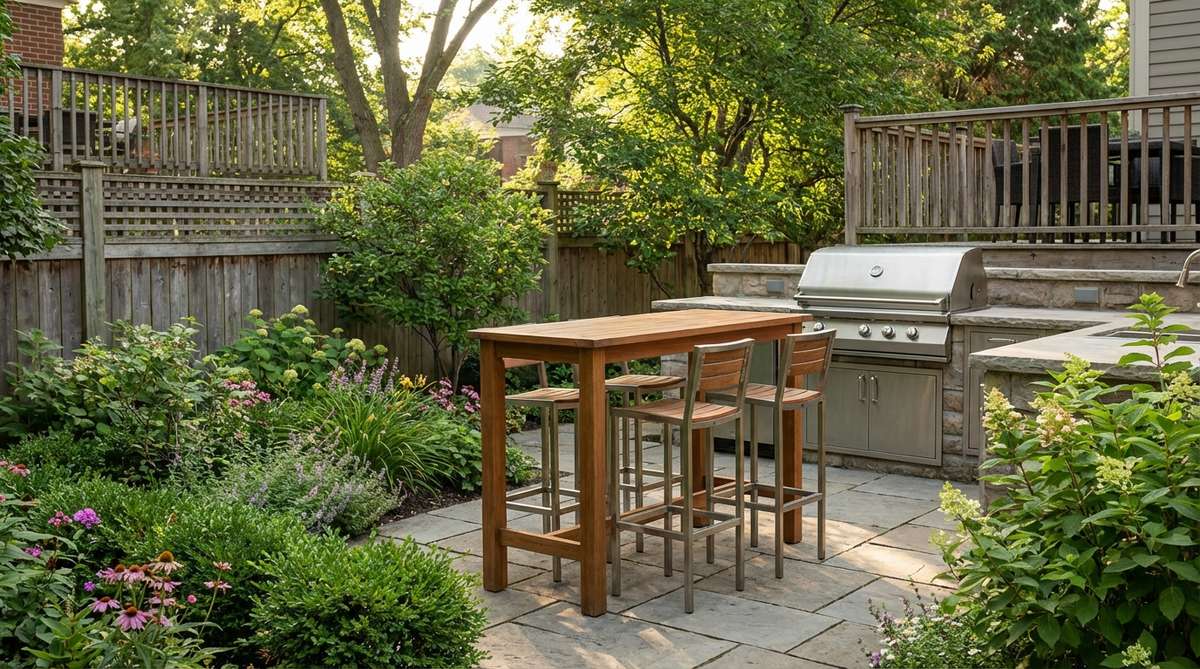
Creates the magnetic energy of a high-end rooftop bar. Tall outdoor pub tables work wonderfully near your grilling station to keep guests close but out of the way.
Elevating the sightline tricks the brain into perceiving more space and gives a designer-level finish. This is one of those smart patio design layouts that immediately pulls high-CPC party traffic.
Expect to invest about $250 for a stable bar set. Save this layout for your outdoor kitchen plans.
- Key Materials: Counter-height table, all-weather barstools
- Vibe / Style: Entertaining hub
- Difficulty: Easy
- Budget Breakdown: Table: $120 | Stools: $130
- Creator’s Tip: Make sure the stools have footrests; dangling legs ruin the comfort of bar seating.
- Smart Sourcing: commercial-grade outdoor barstools (set of 2) and weighted patio table bases.
9. Triangular Corner Table
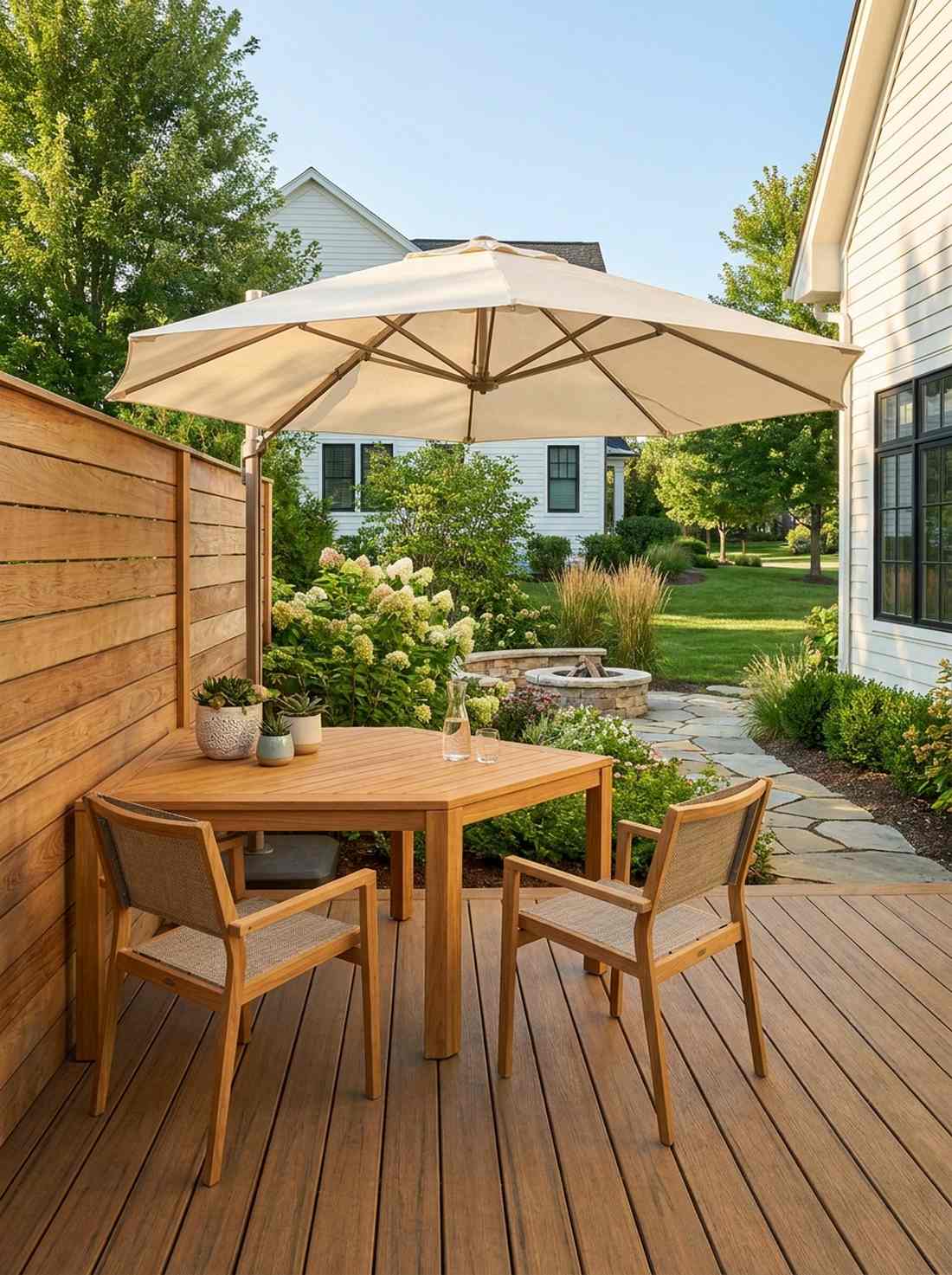
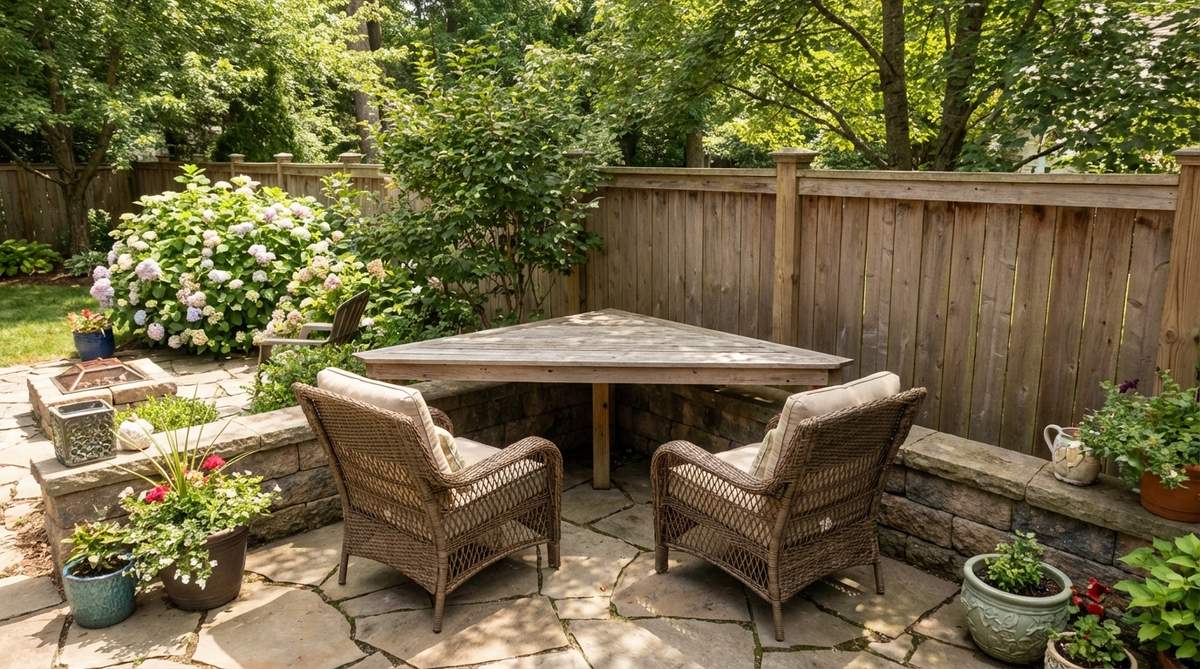
Looks like a slick, custom-engineered puzzle piece. Corner-fit patio dining sets are a genius way to reclaim exactly 100% of a dead 90-degree angle.
Most big-box stores ignore this shape, but finding one makes your space look far more expensive than it is. It forces the chairs to face outward, framing your garden beautifully.
Finding a specialty table costs around $150–$200. Highly recommended for a quick weekend win.
- Key Materials: Triangular teak table, slim chairs
- Vibe / Style: Geometric modern
- Difficulty: Easy unboxing
- Budget Breakdown: Table: $160 | Chairs: $100
- Creator’s Tip: Oil the teak twice a year to maintain that rich, warm honey color.
- Smart Sourcing: premium teak sealant kits and compact corner-fit outdoor tables.
Most people get this completely wrong… until they try the exact layout coming up next.
10. Bench and Chairs Combo
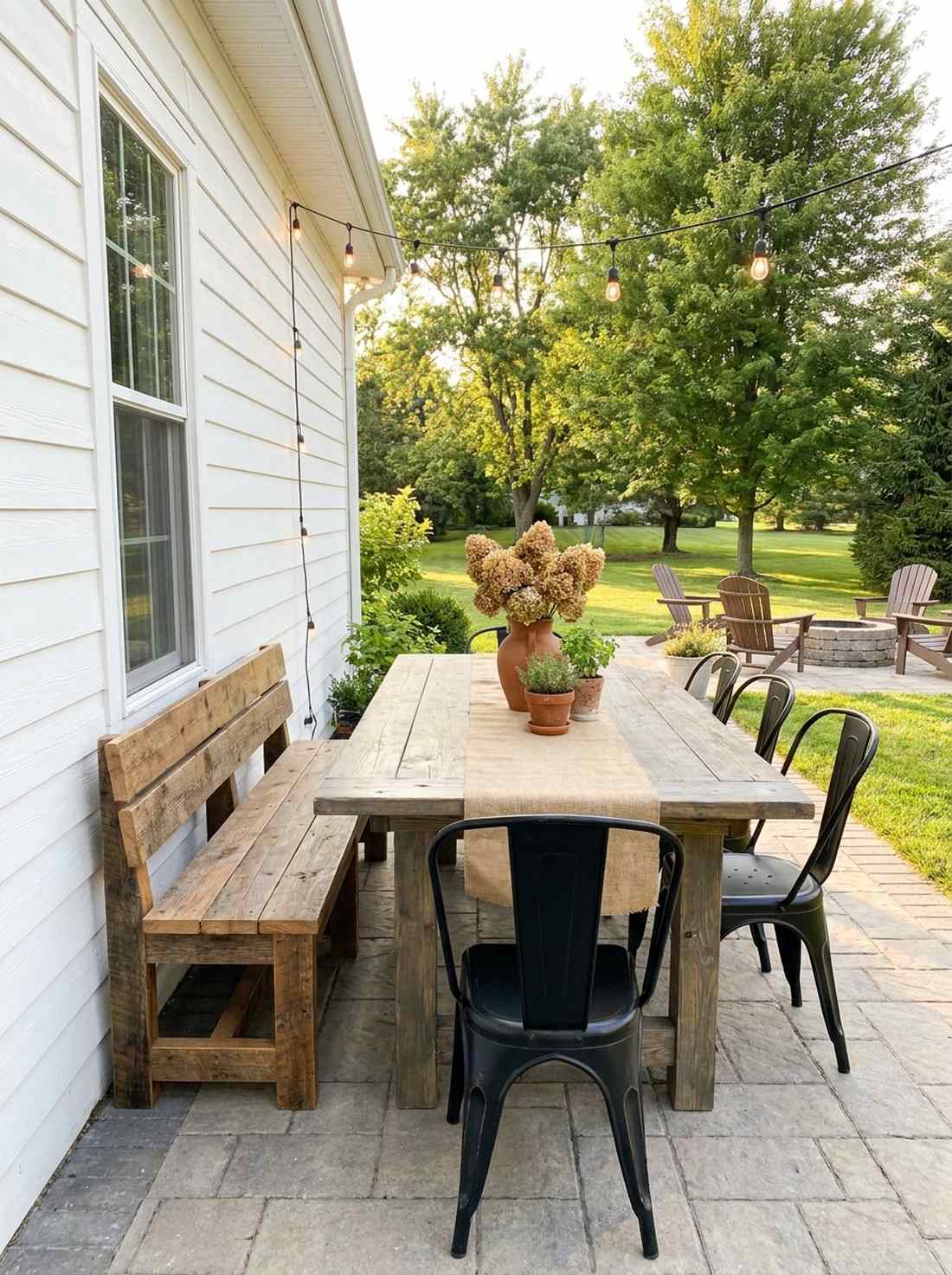
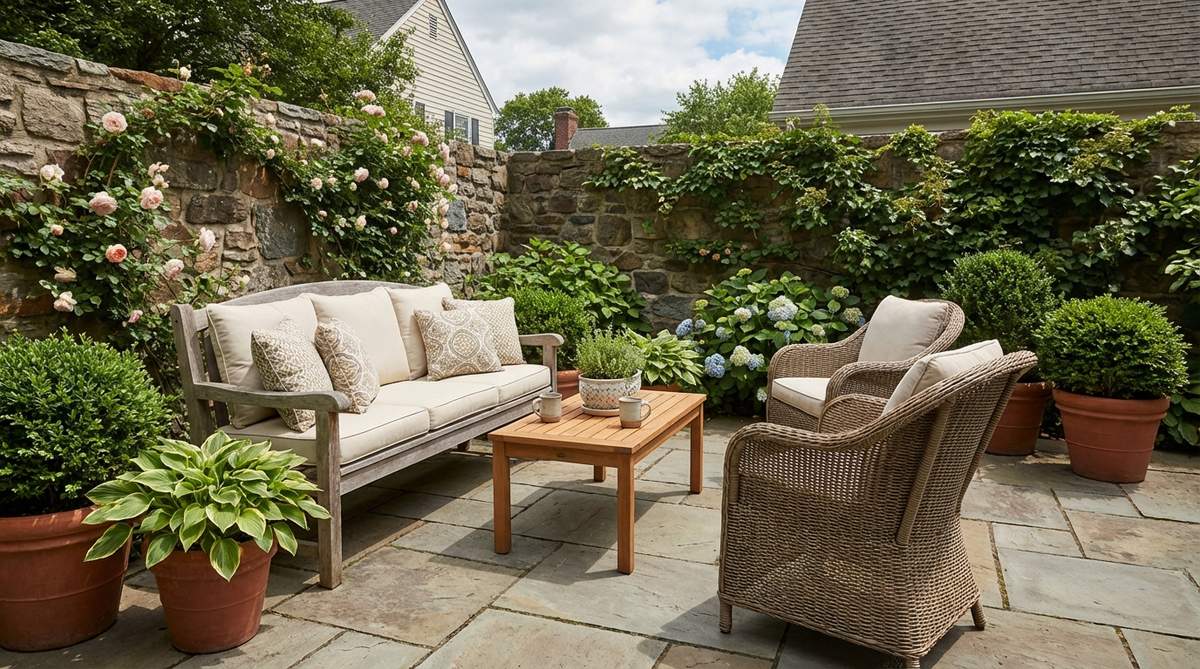
Brings the bustling, cozy feel of an upscale farmhouse dining room outside. Mixed outdoor dining seating fits perfectly on long, narrow patio strips.
Mixing a bench on the wall side with floating chairs opposite delivers a surprisingly premium look. It completely bypasses the rigid formality of matching sets.
You can mix and match pieces for around $250. Pin this to your farmhouse exterior board.
- Key Materials: Backless wooden bench, metal dining chairs
- Vibe / Style: Rustic eclectic
- Difficulty: Simple arrangement
- Budget Breakdown: Bench: $90 | Table: $100 | Chairs: $80
- Creator’s Tip: Tuck the bench completely under the table when it rains to protect the surface.
- Smart Sourcing: weatherproof backless dining benches and stackable metal outdoor cafe chairs.
💡 Must-Have Supplies for High-End Setups
To build these setups faster and ensure they last, skip the generic craft aisles and invest in the right foundational kits.
- Base & Support: pre-cut heavy-duty outdoor rug pads (bulk)
- Setup Tools: commercial-grade furniture leveling kits
- Weather/Durability Protection: UV-blocking clear acrylic spray sealants
Lounging Retreats for Relaxation
Relaxation-focused arrangements prioritize comfort and tranquility in your cozy garden nook. These layouts create dedicated spaces for reading, meditation, or afternoon rest.
11. Hanging Egg Chair
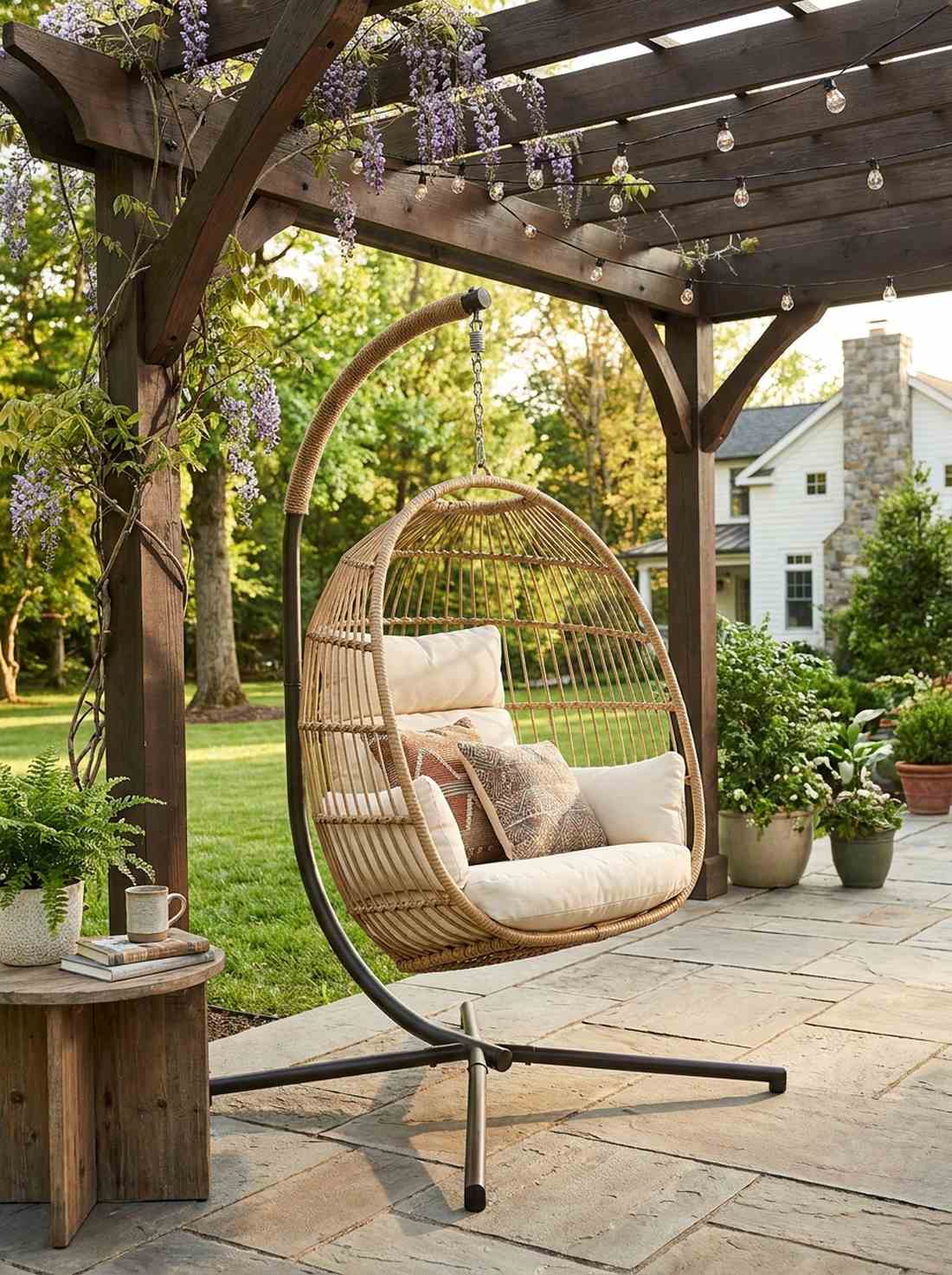
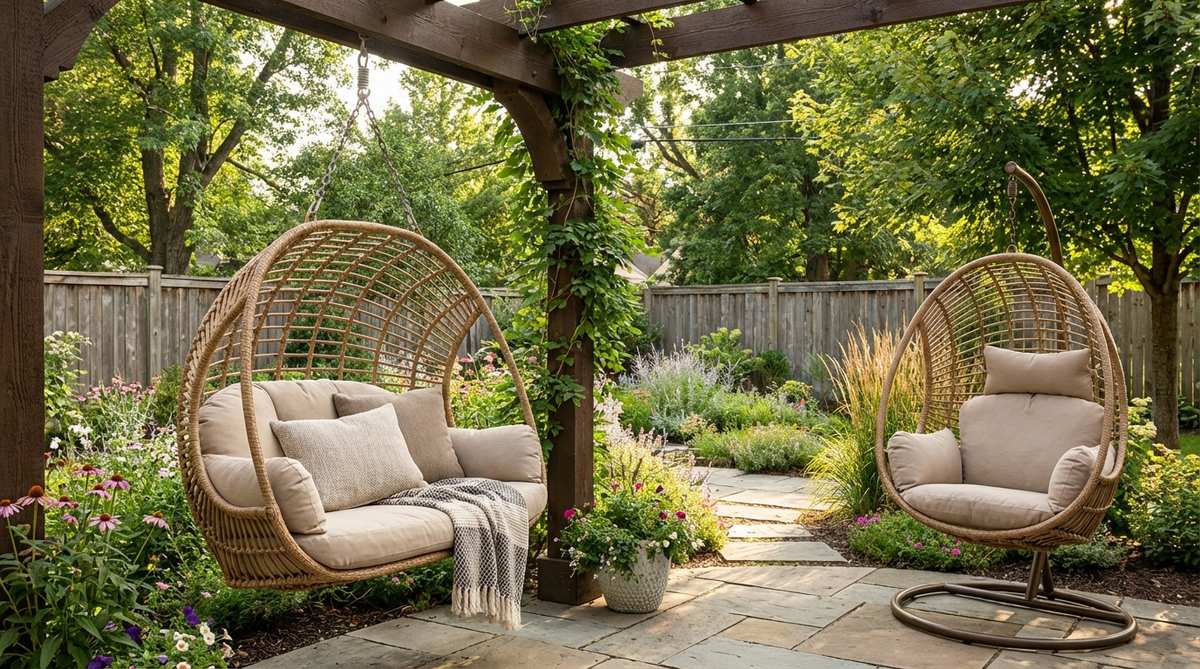
Feels like your own personal levitating cocoon. Freestanding patio swing chairs instantly upgrade an empty pergola corner into a luxury resort feature.
This setup bypasses the cheap plastic aesthetic entirely by adding major vertical drama. Using heavy-duty steel stands prevents the dreaded tipping hazard.
A high-quality egg chair will set you back about $200–$350. Save this if you crave a dedicated reading spot.
- Key Materials: Rattan egg chair, heavy base stand
- Vibe / Style: Bohemian luxury
- Difficulty: Moderate assembly
- Budget Breakdown: Chair & Stand: $250 | Pillows: $40
- Creator’s Tip: Wrap the hanging chain in a thick jute rope for a softer, custom look.
- Smart Sourcing: UV-coated resin egg chair kits and heavy-duty swing chair replacement cushions.
12. Hammock Between Corner Posts
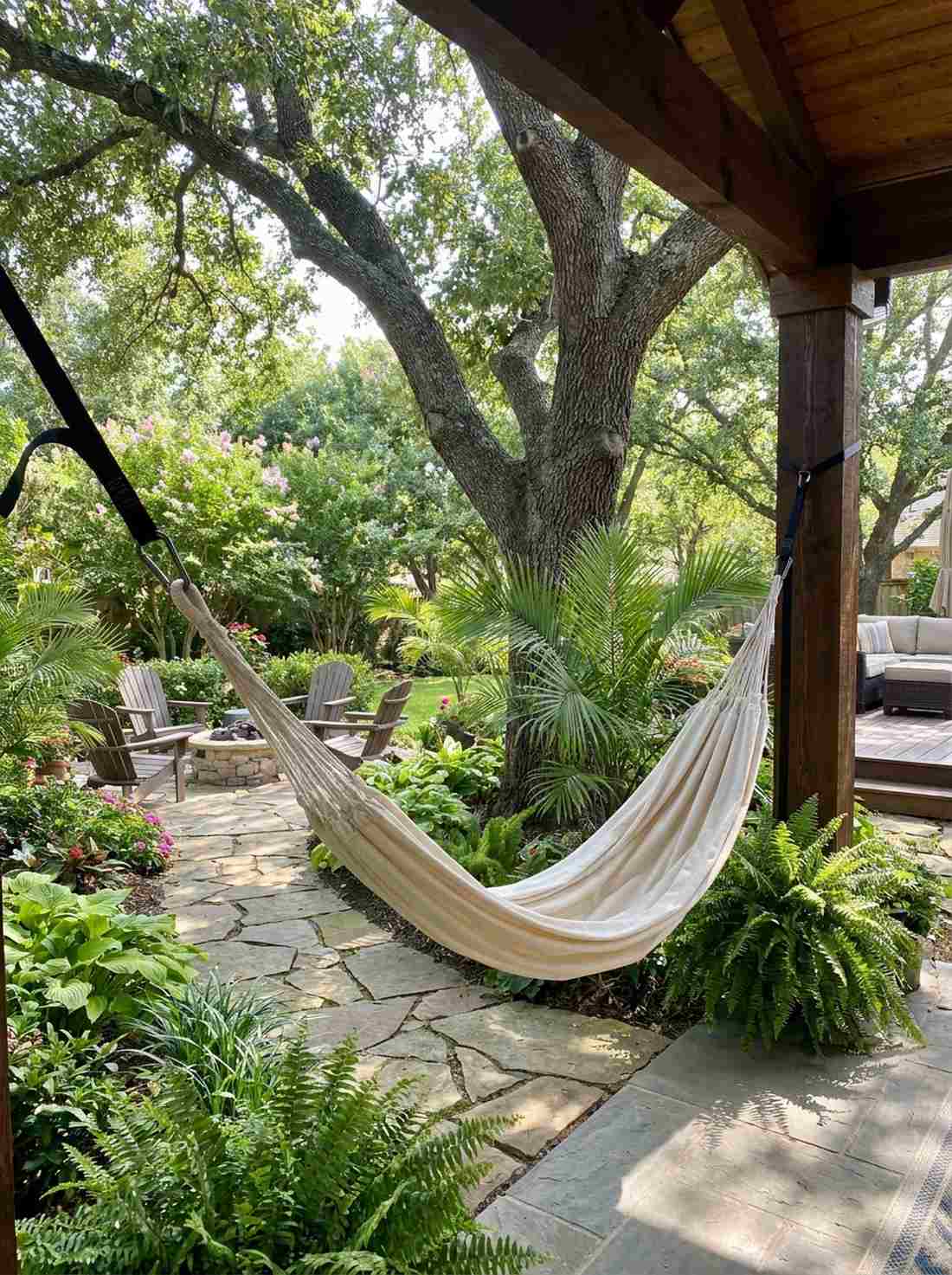
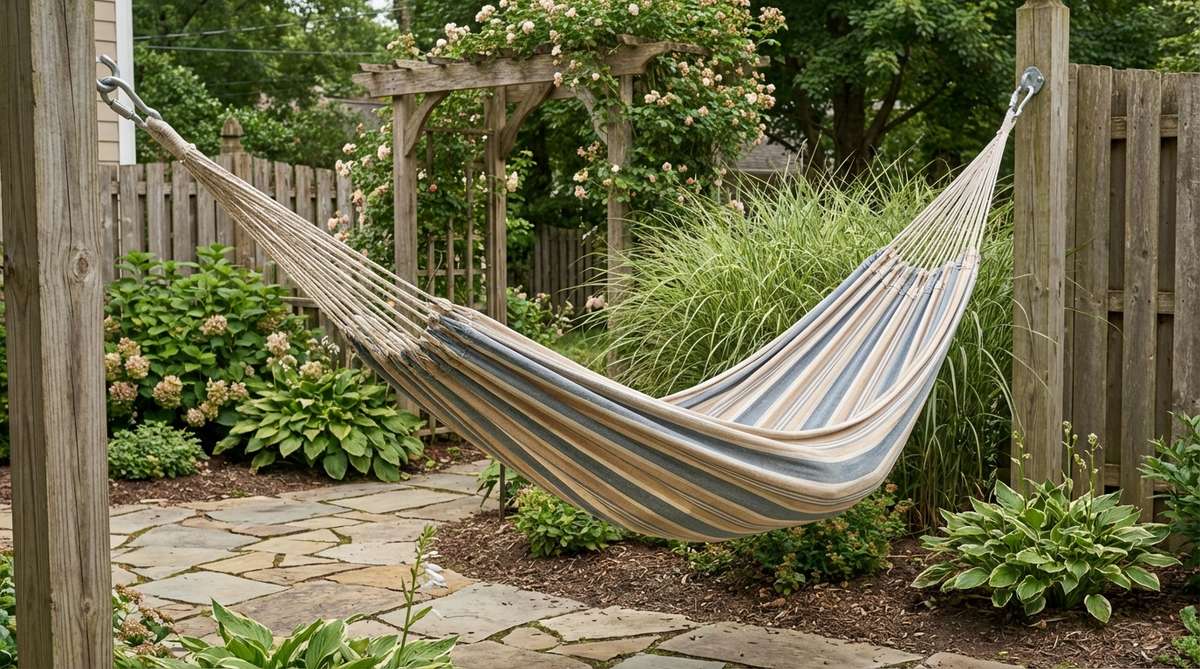
Delivers the ultimate slow-living tropical vibe right to your yard. Space-saving outdoor hammocks are magical for shaded corners flanked by sturdy trees or beams.
A brilliant hack to avoid the cluttered yard syndrome since it visually disappears when empty. Snagging quick-release carabiners makes pulling it down before a storm take five seconds.
A beautiful canvas hammock costs around $40–$80. Highly recommended for afternoon loungers.
- Key Materials: Canvas or woven hammock, tree straps
- Vibe / Style: Jungle retreat
- Difficulty: Easy hanging
- Budget Breakdown: Hammock: $50 | Mounting Hardware: $20
- Creator’s Tip: Hang it with a slight curve (not banjo-string tight) so you can lay diagonally.
- Smart Sourcing: heavy-duty hammock tree strap kits and weatherproof Brazilian style hammocks.
13. Papasan Chair with Side Table
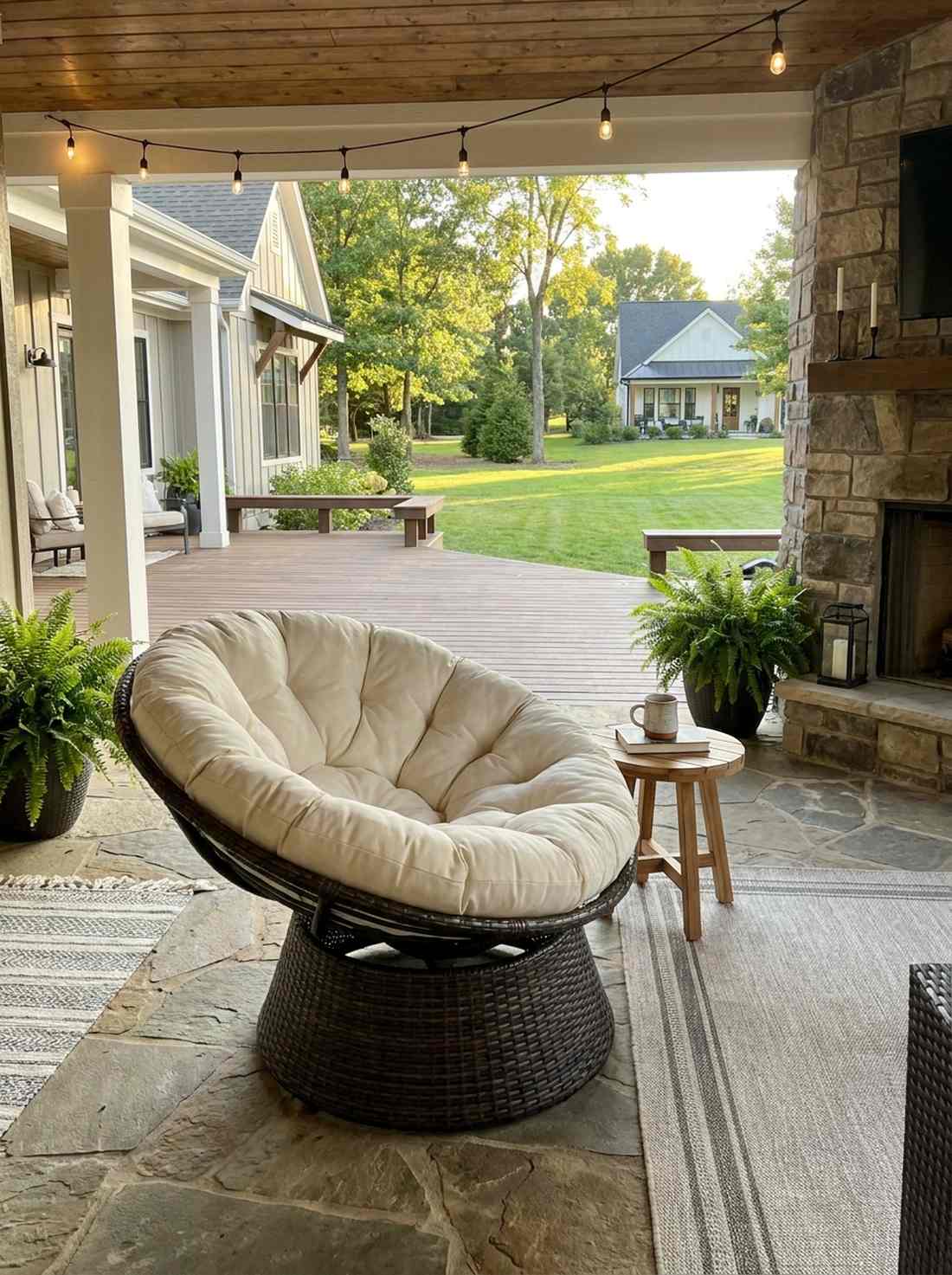
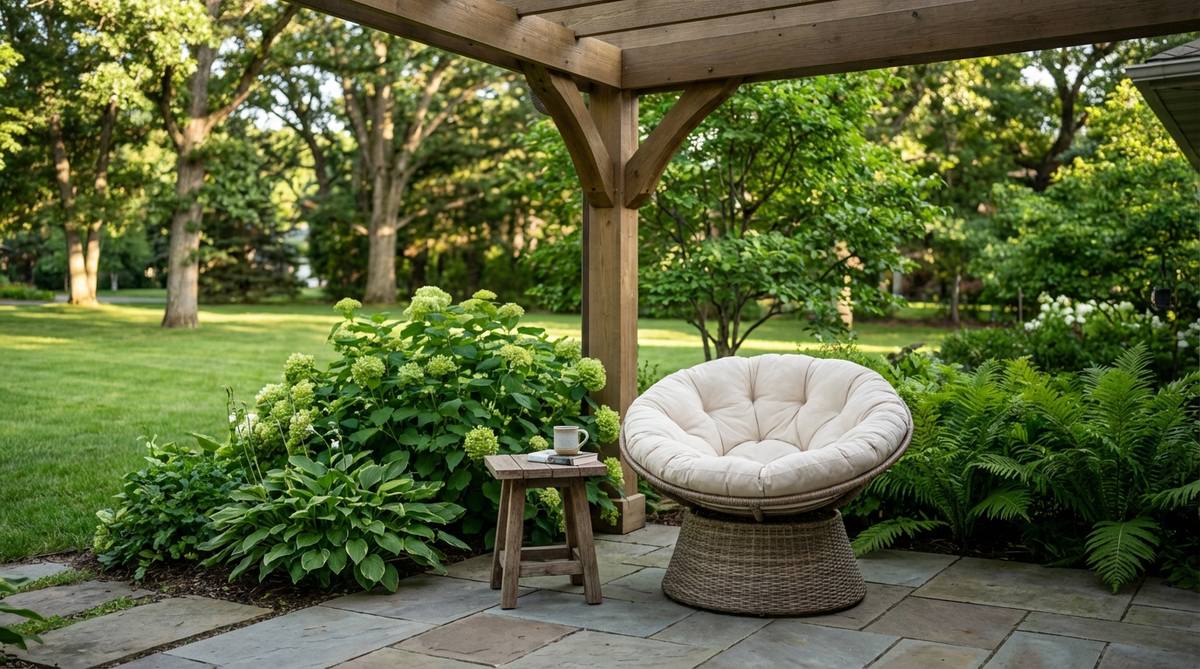
Brings a heavy dose of retro comfort into a modern setting. A plush cozy garden nook papasan setup is a dream for covered patios protected from heavy rain.
Most people completely miss this structural trick, but angling it 45 degrees makes it look far more expensive than it is. The nest-like cushion is basically a giant outdoor pillow.
Expect to spend $150 on a weather-resistant version. Pin this to your ultimate comfort zone board.
- Key Materials: Resin wicker bowl, water-resistant cushion
- Vibe / Style: Retro cozy
- Difficulty: Zero setup
- Budget Breakdown: Frame: $80 | Cushion: $70 | Table: $30
- Creator’s Tip: Spray the cushion with a waterproofing fabric guard twice a season.
- Smart Sourcing: water-repellent papasan replacement cushions and spray-on fabric waterproofing guards.
14. Chaise Lounge Placement
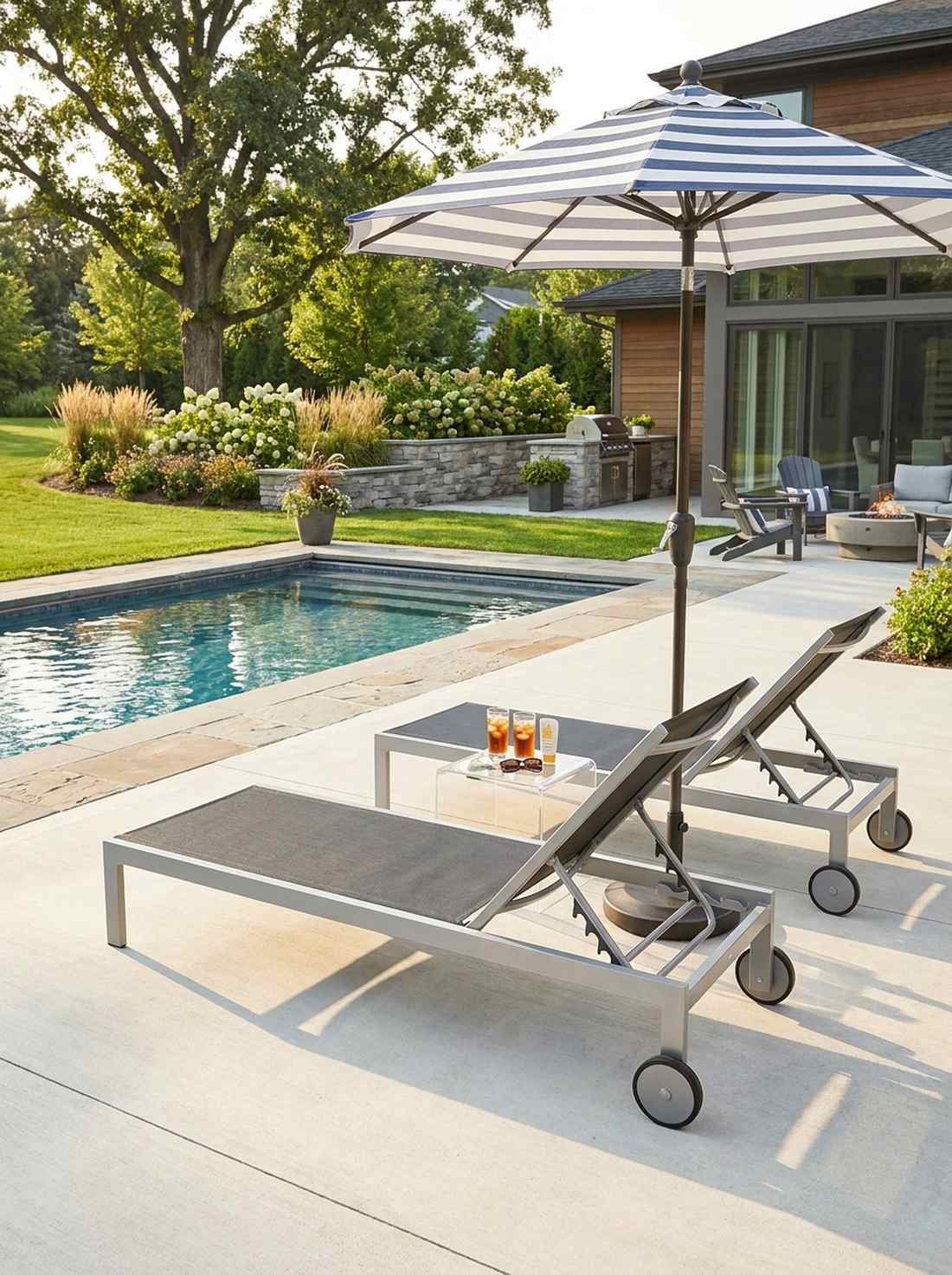
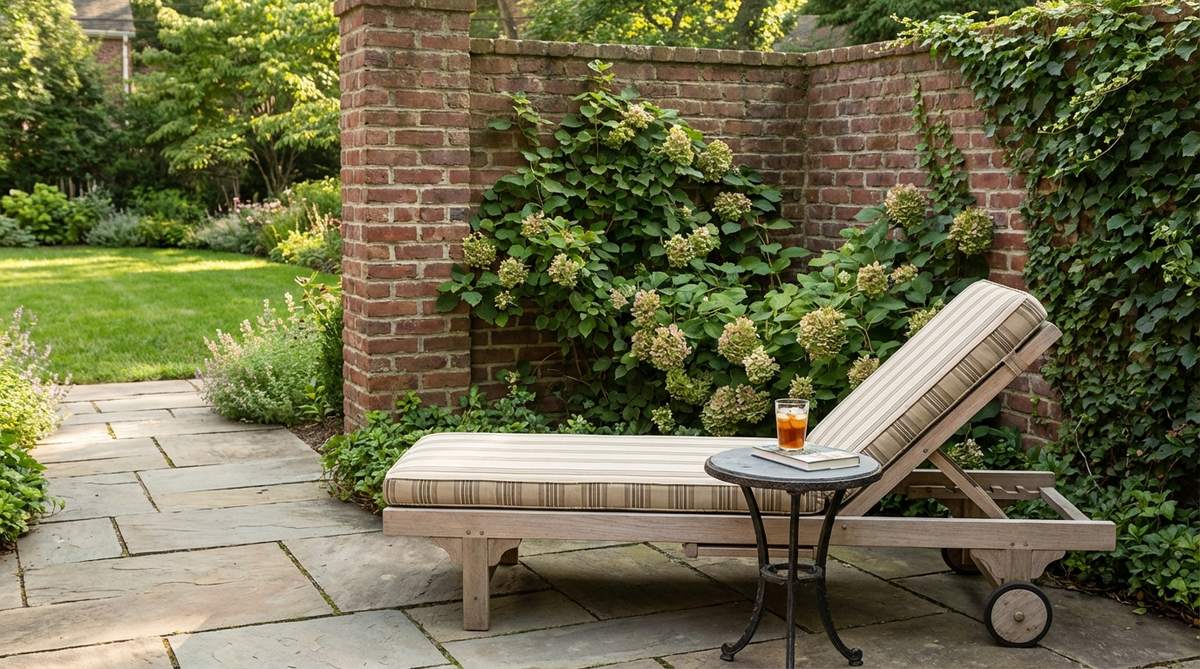
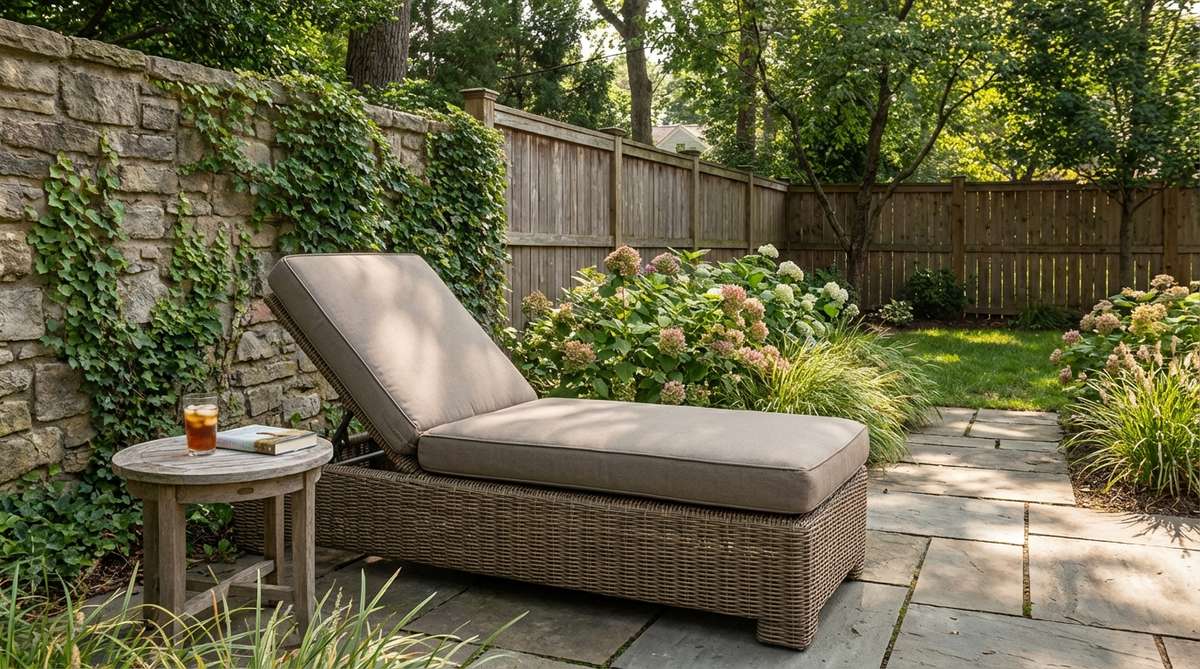
Screams five-star hotel pool deck elegance. Compact sunbathing deck layouts fit flawlessly on the bright, sunny edges of a concrete patio.
This straightforward layout gives a designer-level finish when paired with a sleek, low-profile table. Opting for textilene mesh fabric means you never have to deal with soggy cushions.
A solid modern chaise runs about $120. It’s a fast upgrade that completely changes the vibe.
- Key Materials: Adjustable aluminum chaise, low side table
- Vibe / Style: Modern minimalist
- Difficulty: Easy
- Budget Breakdown: Chaise: $120 | Drink Table: $40
- Creator’s Tip: Look for wheels on the back legs so you can easily chase the sun across the patio.
- Smart Sourcing: breathable textilene mesh lounge chairs (set of 2) and acrylic outdoor drink tables.
Wait until you see this next trick—it completely changes how you view dead space.
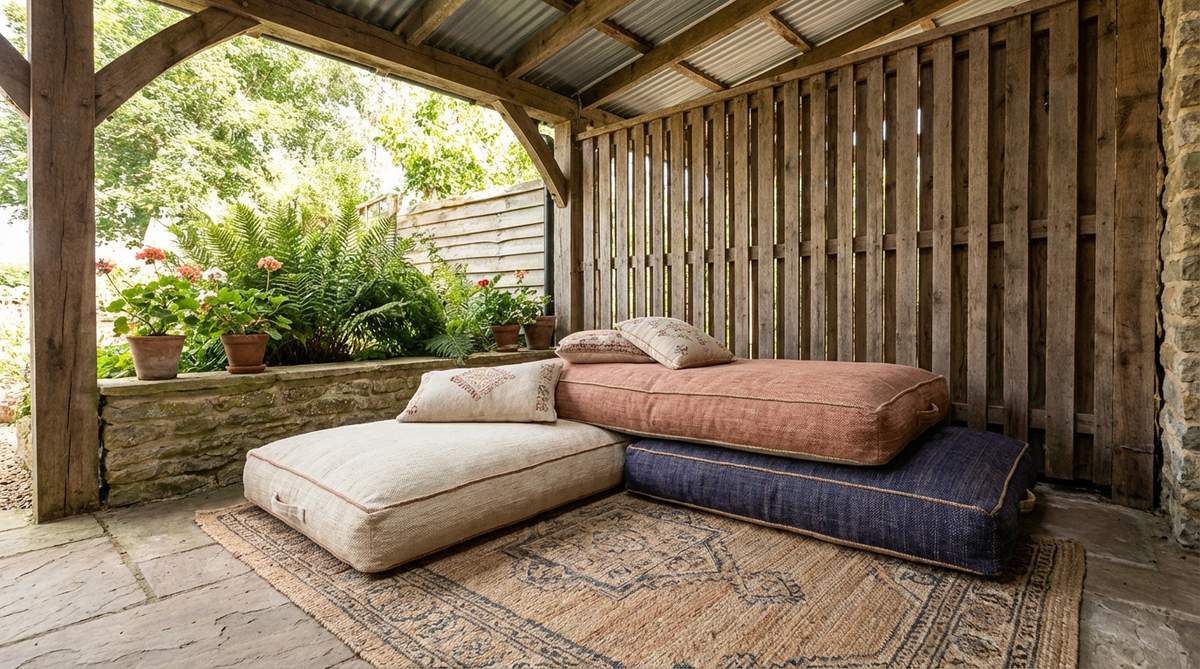
15. Floor Cushion Arrangement
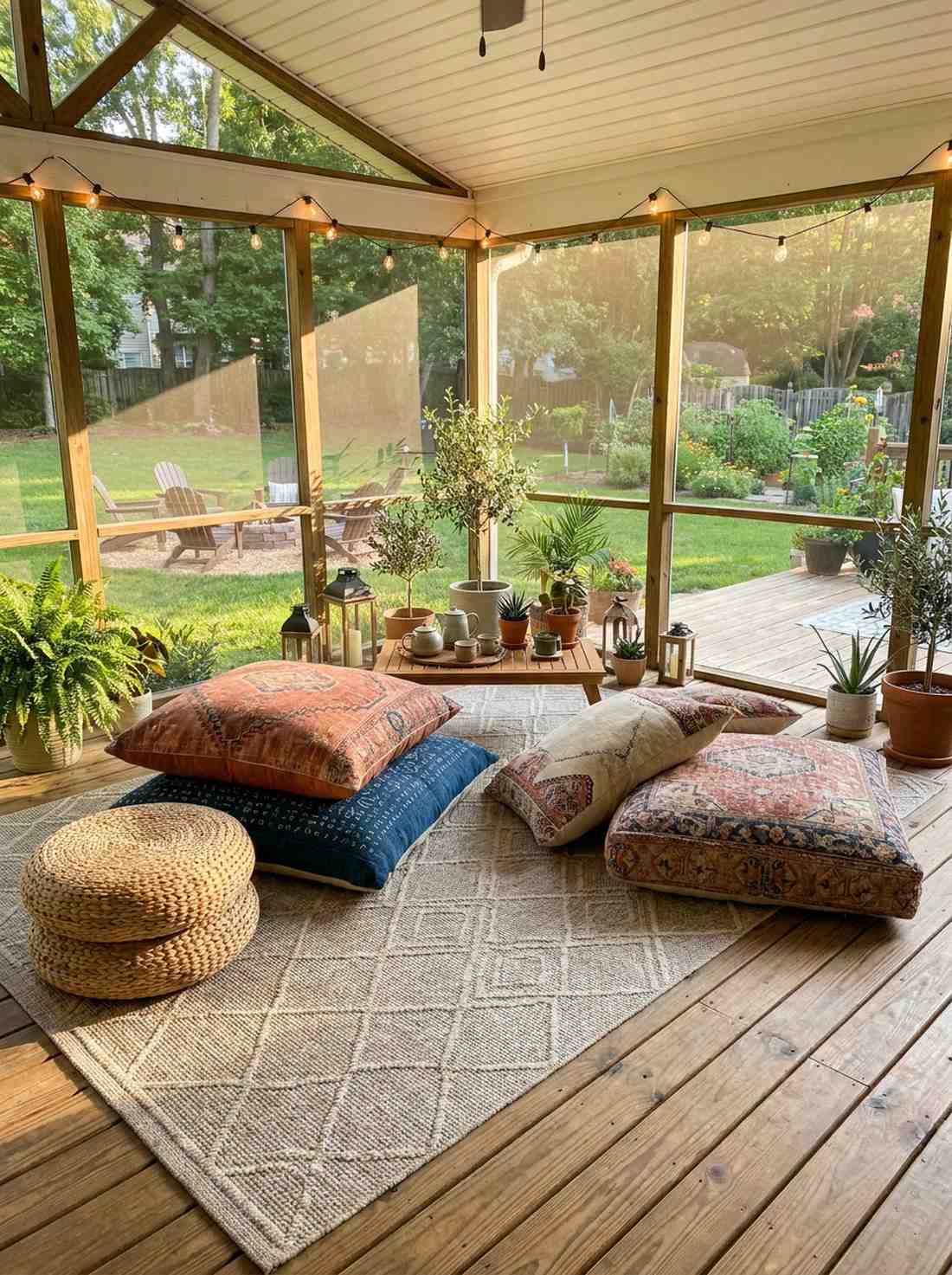
Feels like a hidden bohemian tea room you stumbled upon. Outdoor floor seating arrangements are brilliant for low-clearance screened porches or deck corners.
This layout delivers a surprisingly premium look while being incredibly inexpensive. Stacking waterproof poufs completely bypasses the rigid formality of heavy wooden furniture.
Grab 3-4 oversized cushions for about $80 total. Save this if you love hosting casual, laid-back hangouts.
- Key Materials: Oversized outdoor floor pillows, woven rug
- Vibe / Style: Moroccan lounge
- Difficulty: Effortless
- Budget Breakdown: Pillows: $80 | Rug: $40
- Creator’s Tip: Use a thick outdoor rug underneath to stop moisture from seeping up into the pillows.
- Smart Sourcing: heavy-duty outdoor floor poufs (bulk pack) and waterproof polypropylene patio rugs.
16. Rocking Chair Nook
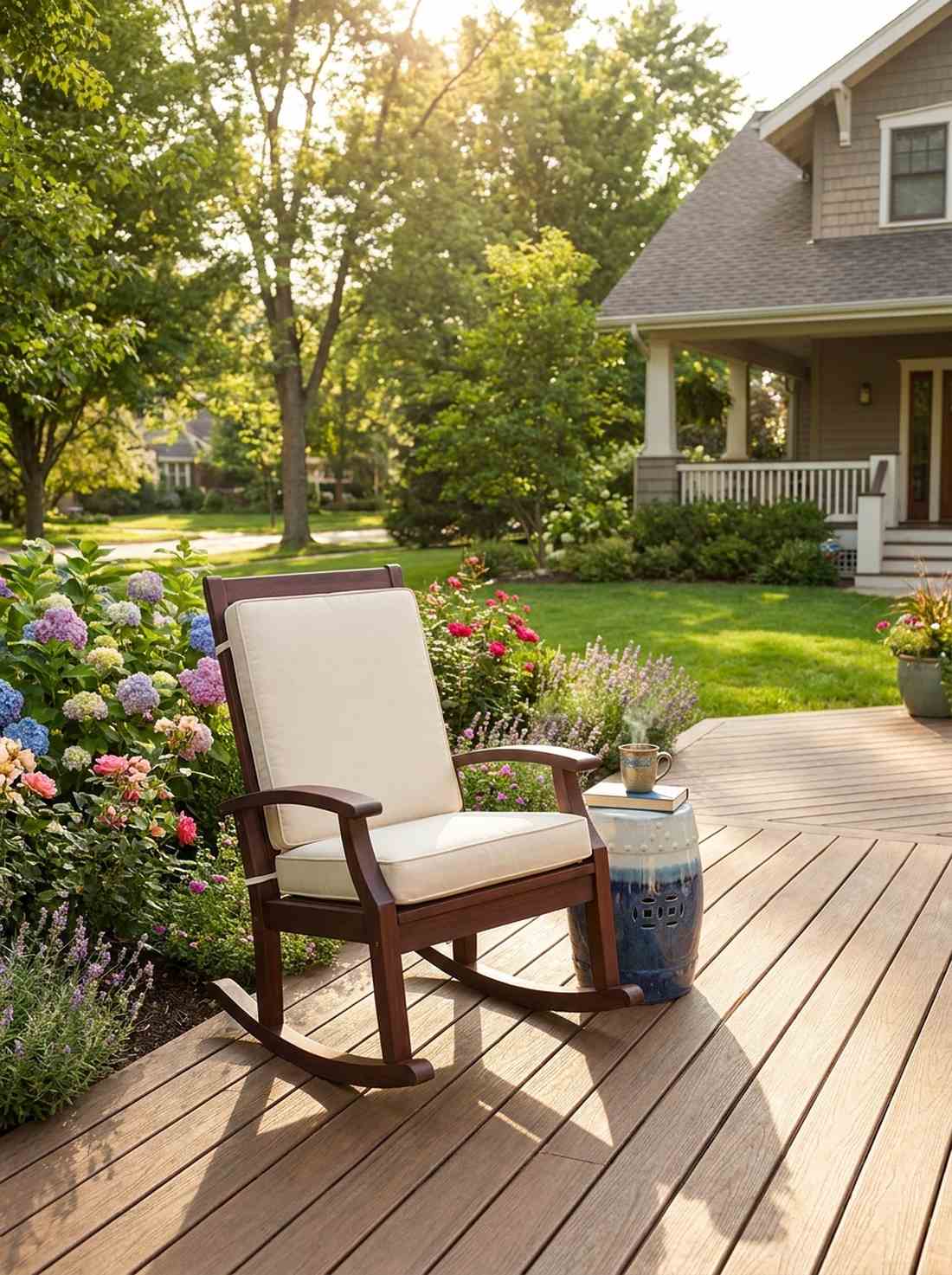
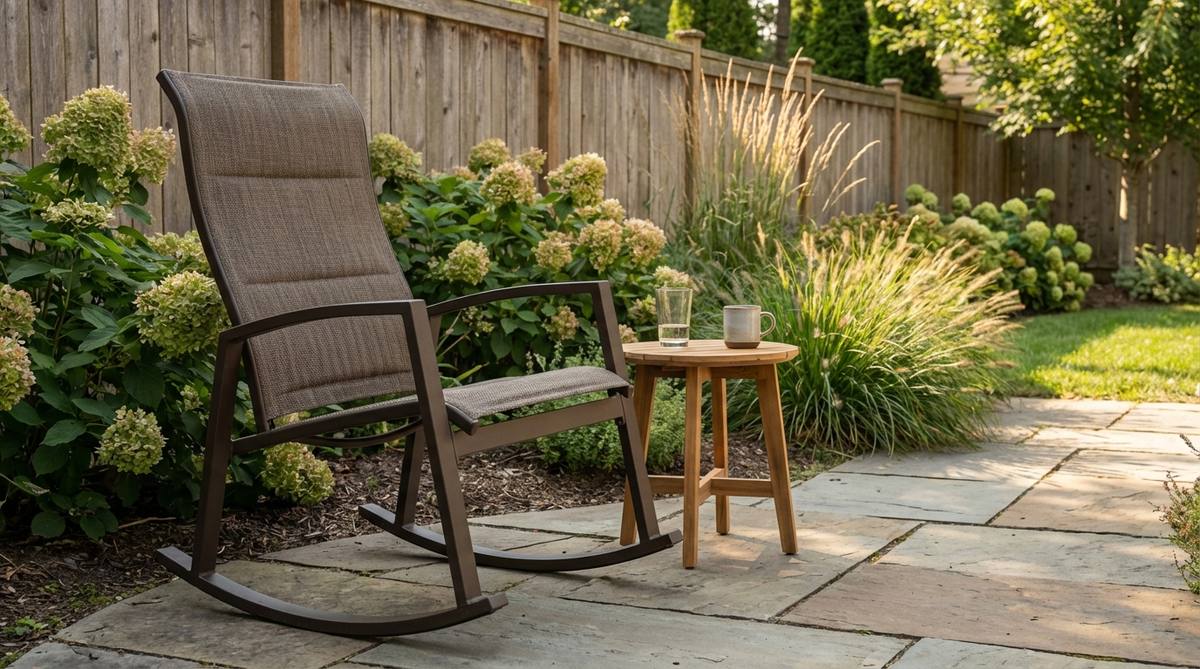
Packs the soothing charm of a classic Southern porch. Single outdoor rocking chairs create the perfect solo retreat next to blooming flower beds.
This arrangement looks far more expensive than it is when you choose deep-stained eucalyptus over cheap plastic. It establishes a dedicated mental health corner for morning coffee.
A sturdy wooden rocker costs roughly $130. Highly recommended for a quiet garden upgrade.
- Key Materials: Eucalyptus wood rocker, small ceramic stool
- Vibe / Style: Traditional charm
- Difficulty: Easy assembly
- Budget Breakdown: Rocker: $130 | Stool: $45
- Creator’s Tip: Attach clear silicone strips to the bottom of the rockers to protect your deck from scratches.
- Smart Sourcing: solid eucalyptus wood rocking chairs and glazed ceramic garden stools.
Vertical Furniture Integration
Vertical elements draw the eye upward and create dimension in compact corners. These arrangements combine furniture with architectural features to maximize spatial impact.
17. Trellis-Backed Bench
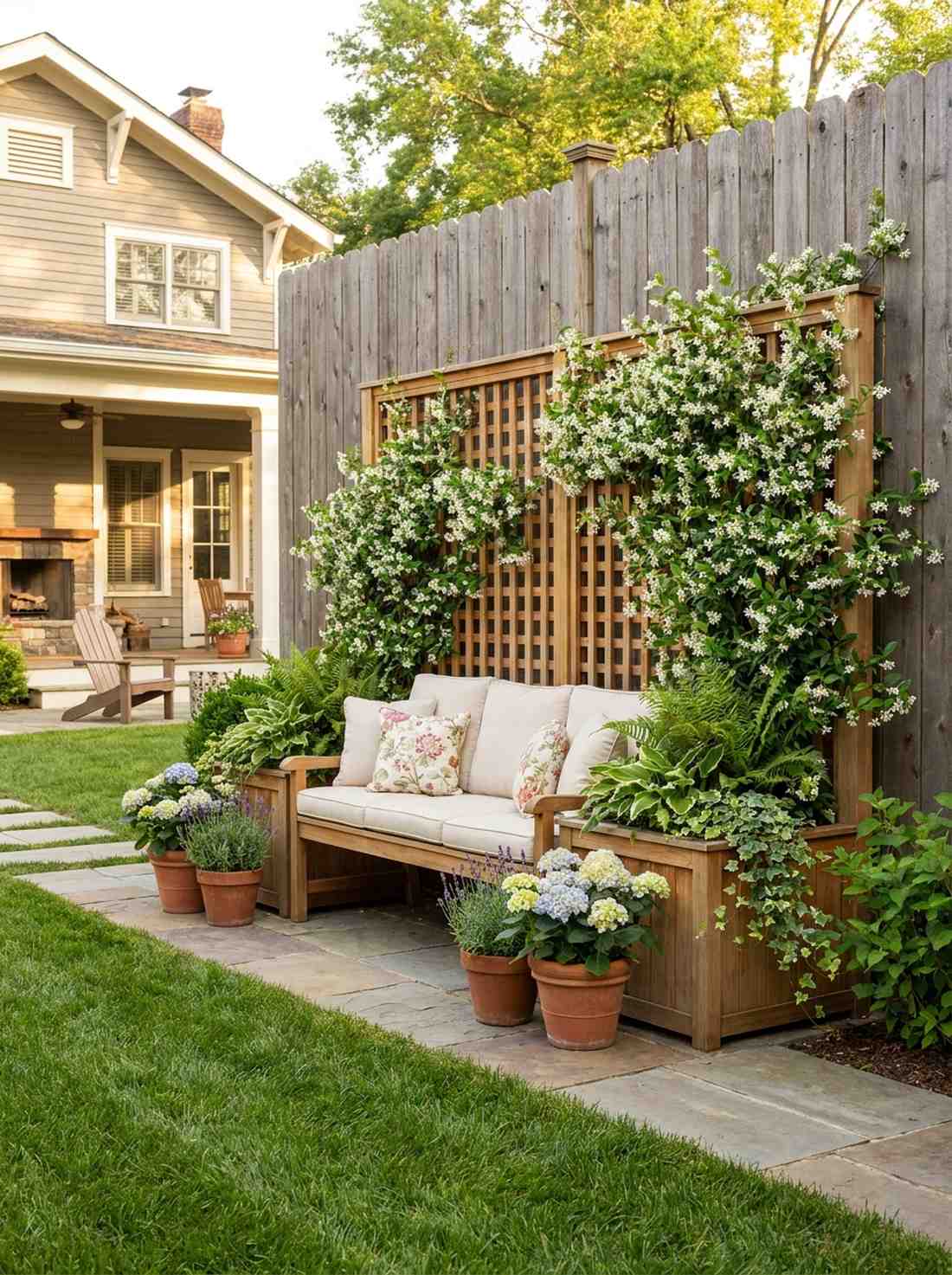
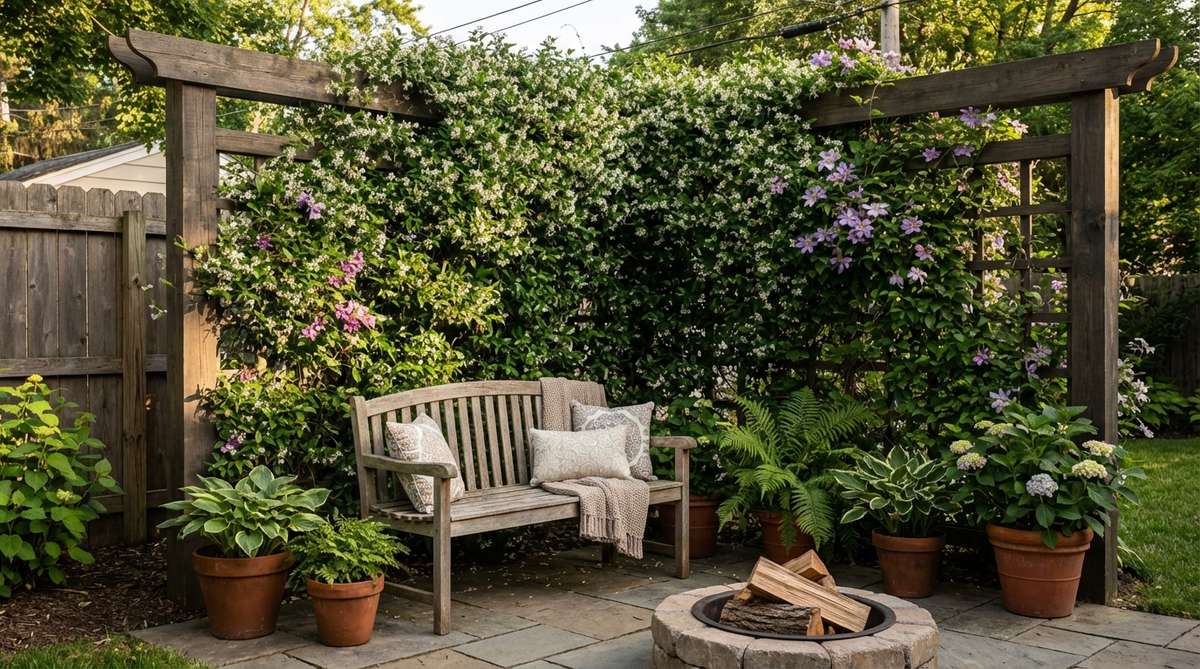
Feels like sitting inside a lush, living painting. Garden bench and planter combos are a stunning solution for corners exposed to nosey neighbors.
Instantly elevates the perceived square footage by drawing the eye straight up to climbing jasmine. This setup gives a designer-level finish that integrates architecture with nature perfectly.
You can build this focal point for around $150. Pin this to your ultimate privacy gardening board.
- Key Materials: Wooden bench, cedar lattice trellis
- Vibe / Style: English garden
- Difficulty: Intermediate
- Budget Breakdown: Bench: $90 | Trellis: $40 | Vines: $20
- Creator’s Tip: Secure the trellis directly to the bench back so the entire unit can be moved if needed.
- Smart Sourcing: pre-cut cedar lattice panels and heavy-duty zip tie anchor kits.
18. Vertical Garden with Seating
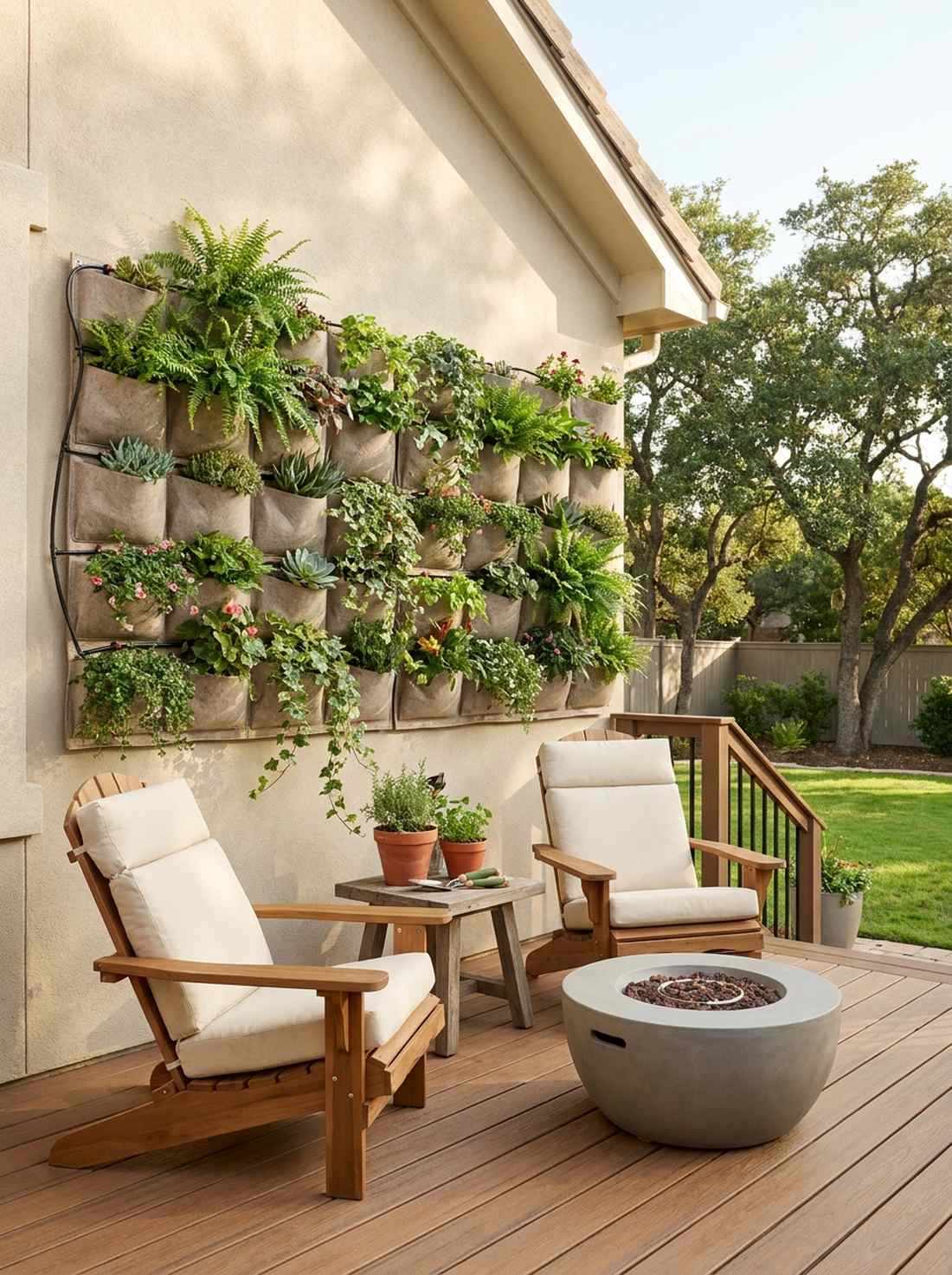
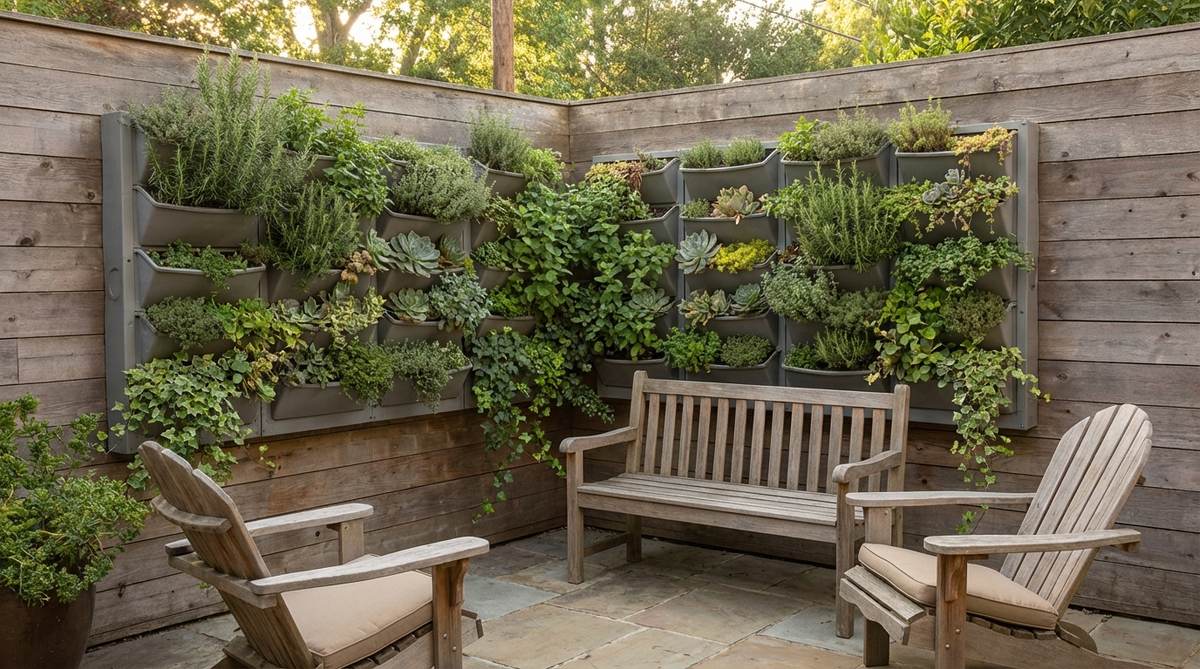
Looks like an eco-luxury installation at a modern art museum. Living wall patio displays turn bland stucco walls into a high-end botanical backdrop for two chairs.
This layout delivers a surprisingly premium look while cleaning the air around your seating zone. Integrating miniature garden supplies into the lower pockets creates extreme visual interest.
Planter systems and plants will run about $120–$200. Save this if you want maximum greenery in minimum space.
- Key Materials: Modular wall planters, potting soil
- Vibe / Style: Urban jungle
- Difficulty: Moderate installation
- Budget Breakdown: Planter Pockets: $60 | Plants: $80 | Hardware: $10
- Creator’s Tip: Install a drip irrigation micro-tube before adding soil so you never have to hand-water the top row.
- Smart Sourcing: felt vertical hanging planter bags (bulk pack) and micro drip irrigation starter kits.
19. Corner Pergola with Furniture Below
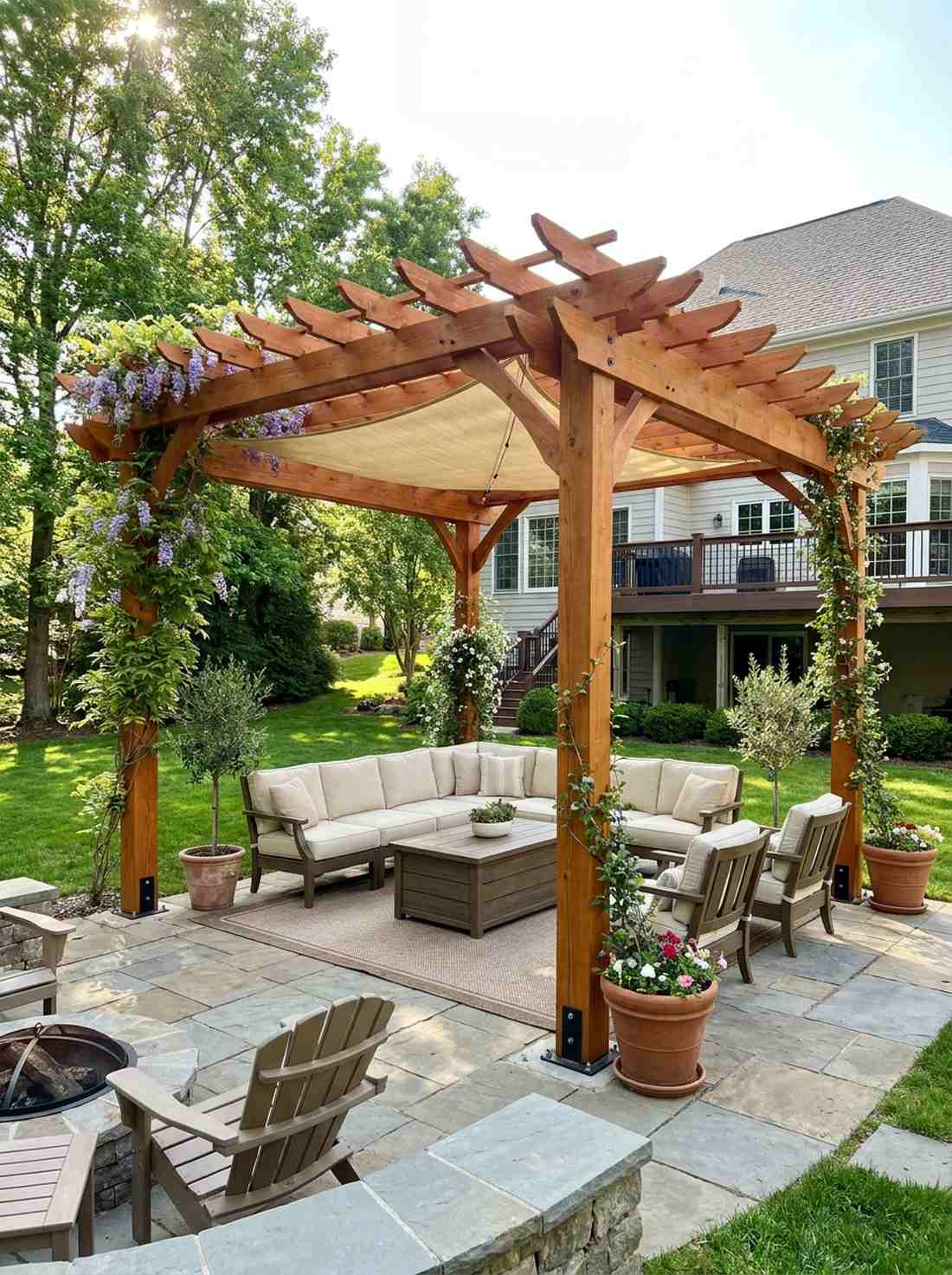
Instantly generates the commanding presence of a custom built pavilion. Small outdoor shade structures define the ultimate luxury zone over a simple patio set.
Most beginners completely miss this structural trick, leaving their corners floating and undefined. The overhead canopy bypasses the cheap plastic aesthetic entirely, grounding the furniture beautifully.
A basic corner pergola kit starts at $300. Pin this layout for major backyard renovations.
- Key Materials: Wooden pergola kit, climbing vines
- Vibe / Style: Mediterranean villa
- Difficulty: Advanced weekend project
- Budget Breakdown: Pergola Kit: $350 | Ground Anchors: $40
- Creator’s Tip: Use steel post bases bolted directly to concrete to ensure wind won’t shift the structure.
- Smart Sourcing: steel pergola bracket kits (4-pack) and heavy-duty sun shade sail triangles.
If you’re on a strict budget, pay close attention to this upcoming blueprint…
20. Shelf Ladder and Chair
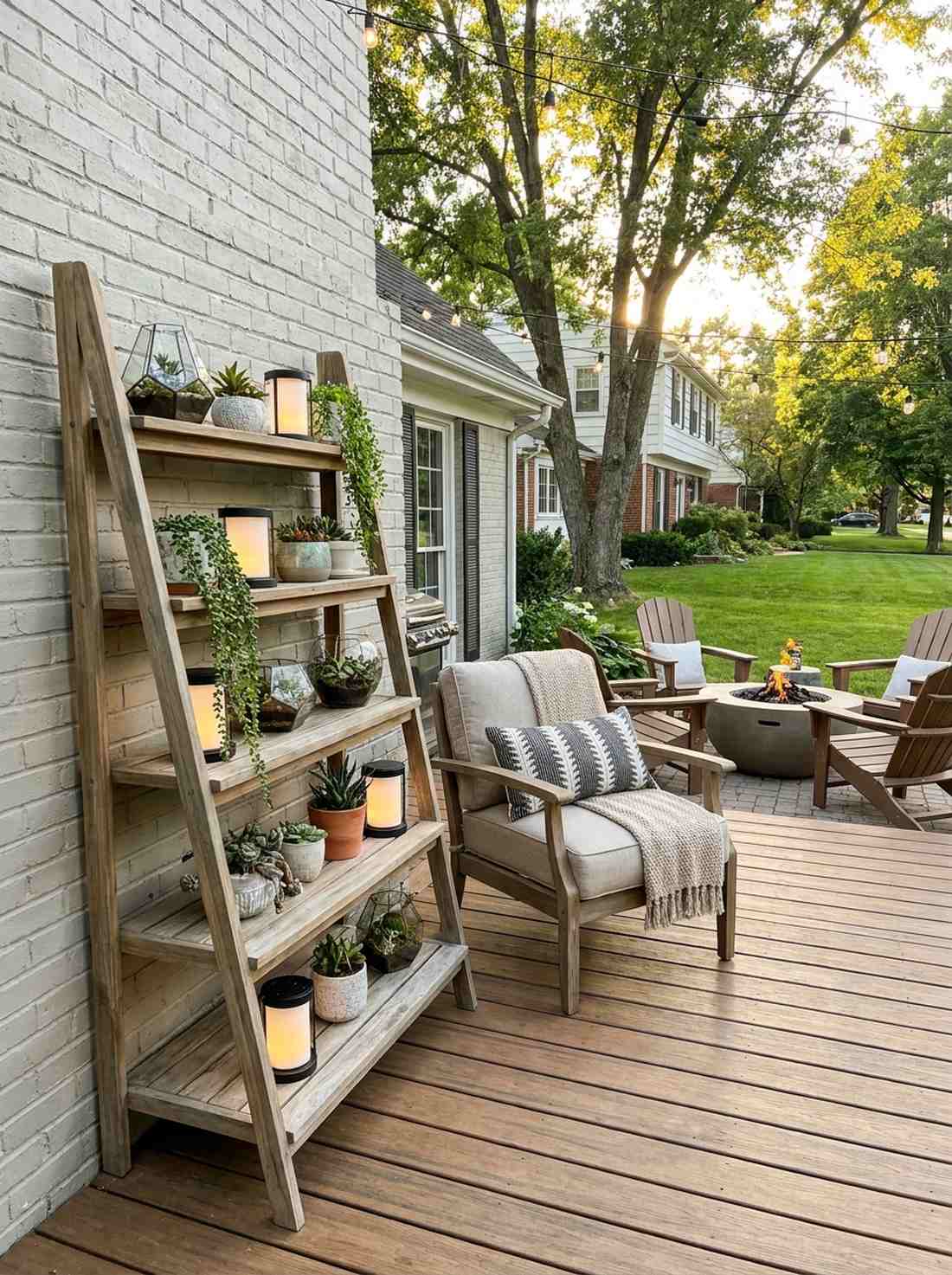
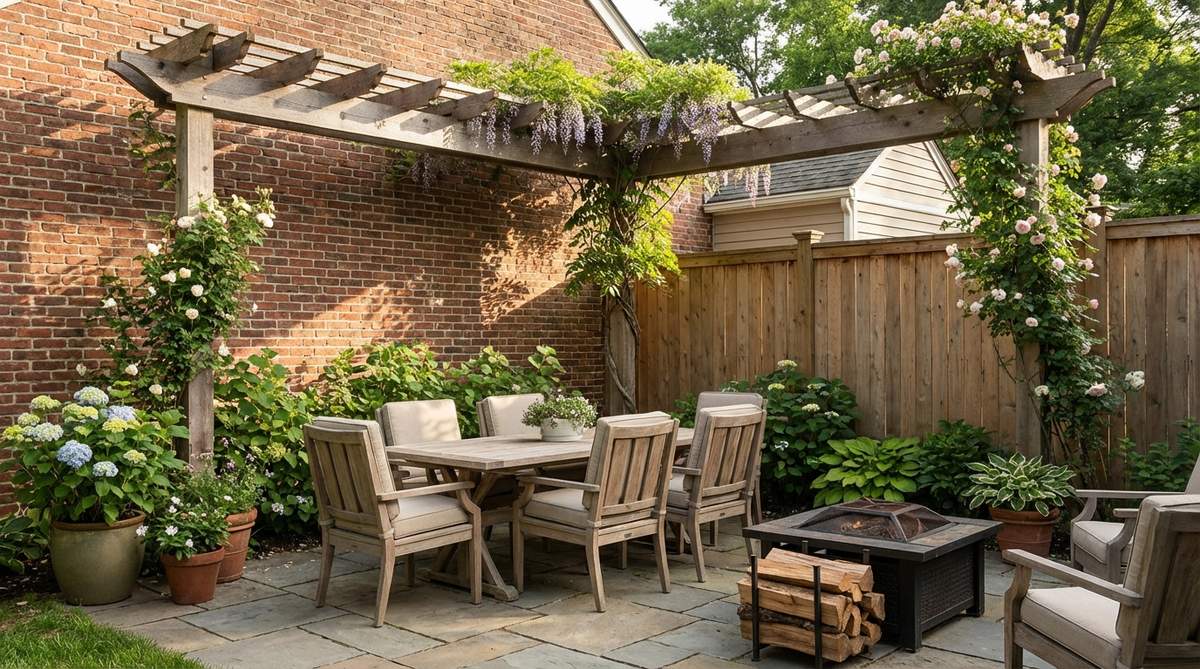
Screams curated boutique charm without the massive price tag. Leaning patio plant shelves turn empty vertical space into a styled vignette behind a reading chair.
This gives a designer-level finish and allows you to layer terrarium accessories and lanterns safely off the floor. It completely solves the issue of having a flat, boring wall.
A decorative ladder and chair combo costs about $100. Highly recommended for renters who can’t drill walls.
- Key Materials: Teak ladder shelf, accent chair
- Vibe / Style: Cozy curated
- Difficulty: Easy
- Budget Breakdown: Ladder: $50 | Chair: $60 | Decor: $30
- Creator’s Tip: Secure the top of the ladder to the wall with a hidden wire if you live in a windy area.
- Smart Sourcing: weather-resistant leaning ladder shelves and shatterproof outdoor LED lanterns.
21. Wall-Mounted Planter with Bistro Set
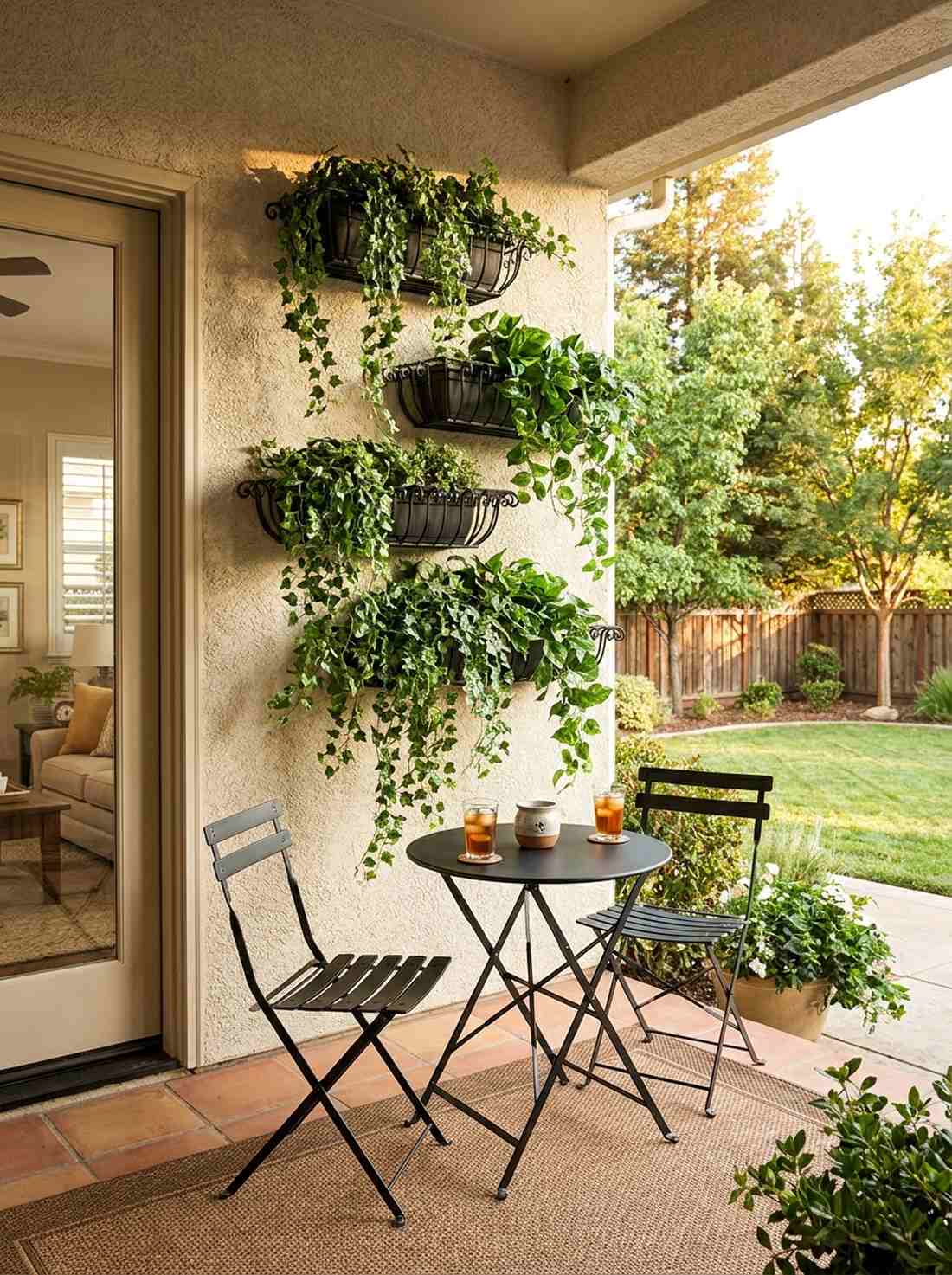
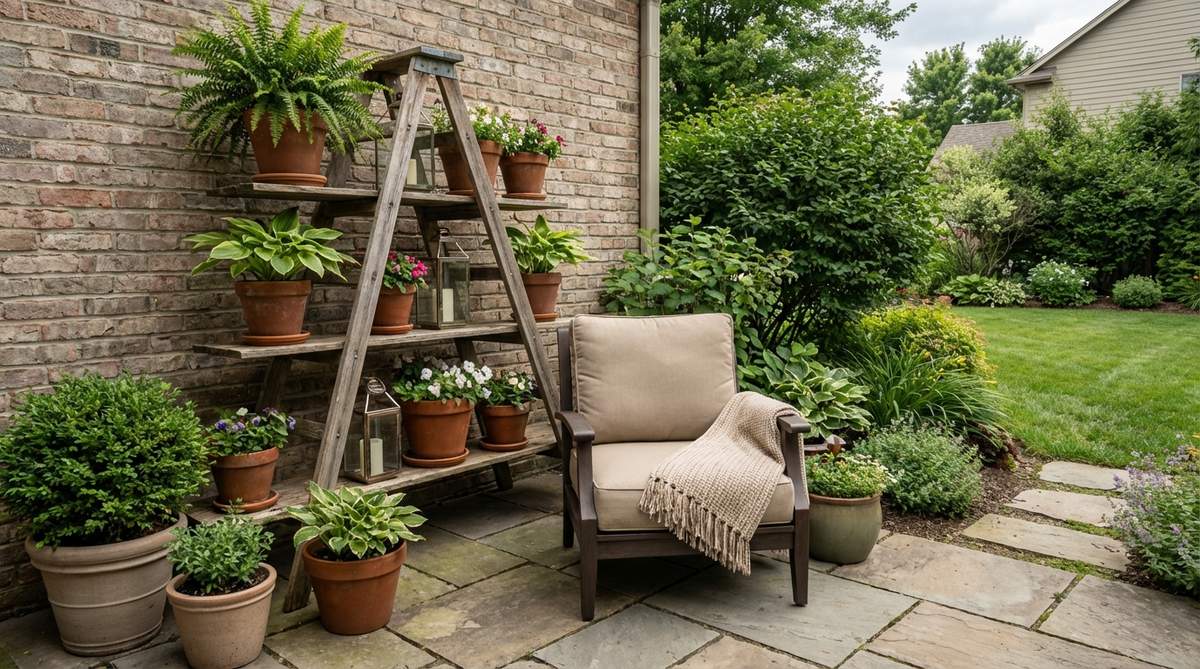
Brings a charming, elevated cafe atmosphere right to your back door. Tiered balcony wall decor frames a tiny table flawlessly to draw the eye upward.
This layout looks far more expensive than it is by framing the seating zone with cascading greenery. Sneaking in UV-resistant artificial vines is a pro trick for zero maintenance.
Wall planters and table hardware cost around $80. Save this for your spring balcony refresh.
- Key Materials: Metal wall planters, folding table
- Vibe / Style: Parisian courtyard
- Difficulty: Easy drilling
- Budget Breakdown: Planters: $45 | Bistro Set: $70
- Creator’s Tip: Plant trailing pothos or ivy in the top tiers to create a living green waterfall.
- Smart Sourcing: rust-resistant wall mounted planter baskets and UV-coated faux trailing ivy (bulk pack).
Modular & Flexible Arrangements
Adaptable furniture systems allow corner configurations to evolve with changing needs. These arrangements prioritize versatility for spaces that serve multiple functions.
22. Modular Sectional Pieces
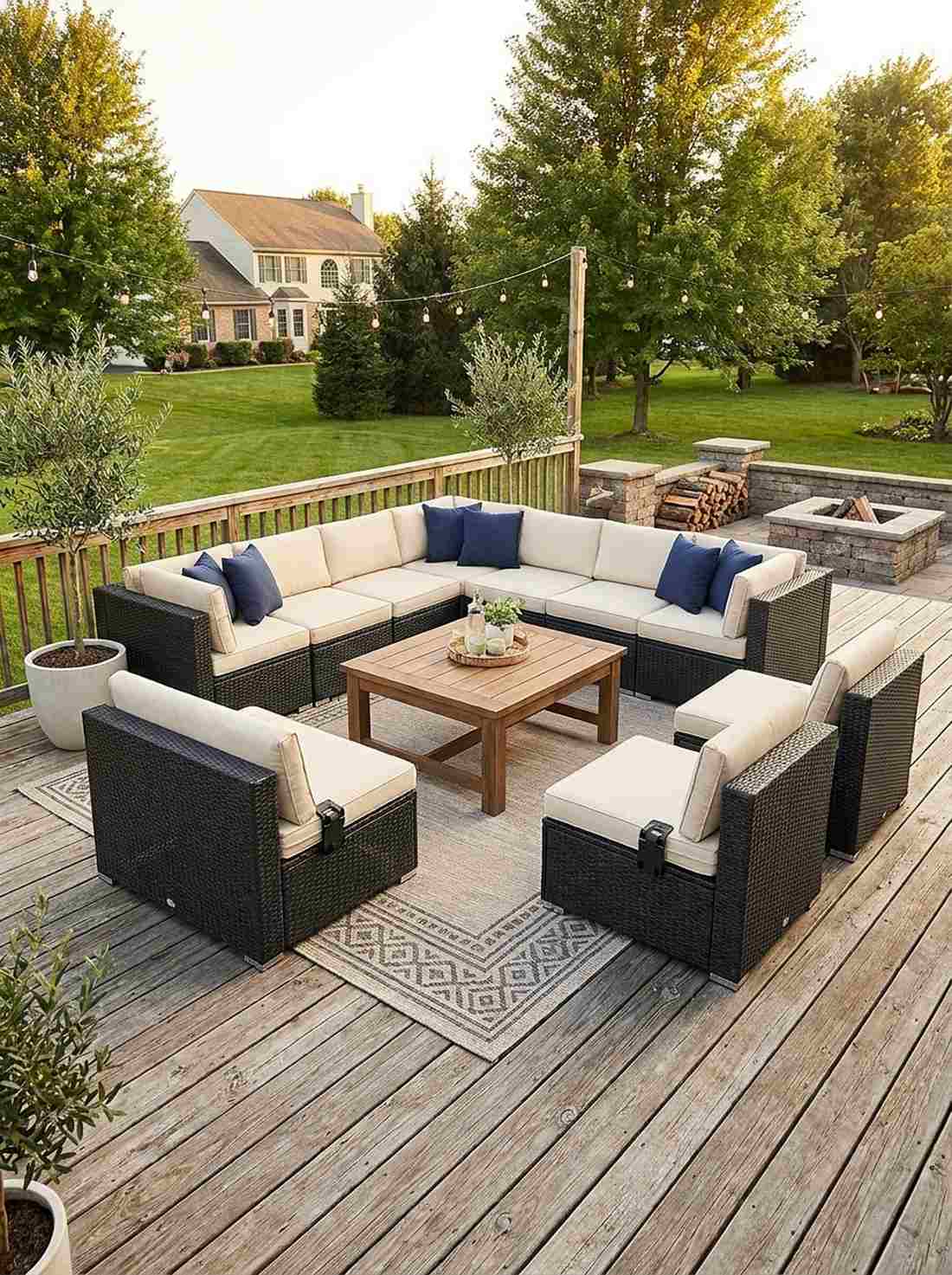
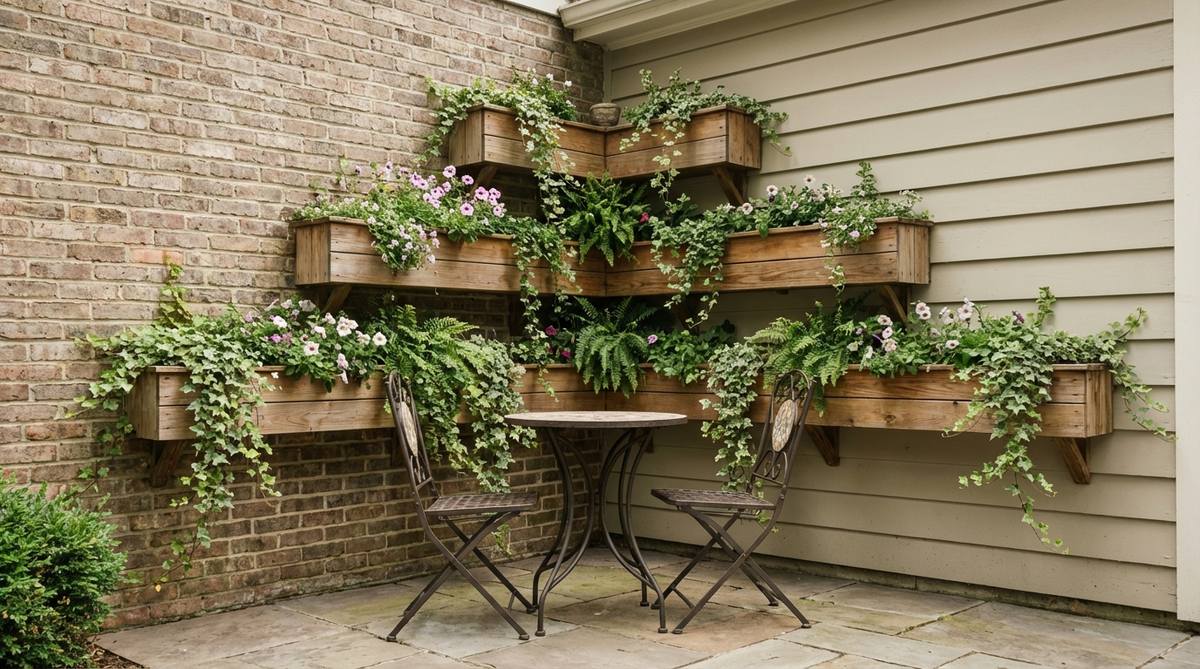
Feels like a high-tech transforming lounge space. Adaptable patio seating blocks are perfect for homeowners who constantly reconfigure their setup for parties.
A brilliant hack to avoid the cluttered yard syndrome; you simply break them apart into individual chairs when hosting. It bypasses the rigidness of a single massive sofa.
Modular kits usually start around $400. Pin this if you love hosting large, unpredictable gatherings.
- Key Materials: Individual wicker seating cubes, clips
- Vibe / Style: Modern versatile
- Difficulty: Easy unboxing
- Budget Breakdown: 4-Piece Modular Kit: $400 | Connector Clips: $15
- Creator’s Tip: Always buy extra heavy-duty plastic furniture clips to stop the modules from sliding apart.
- Smart Sourcing: heavy-duty patio furniture fastener clips (pack of 10) and modular resin wicker seating kits.
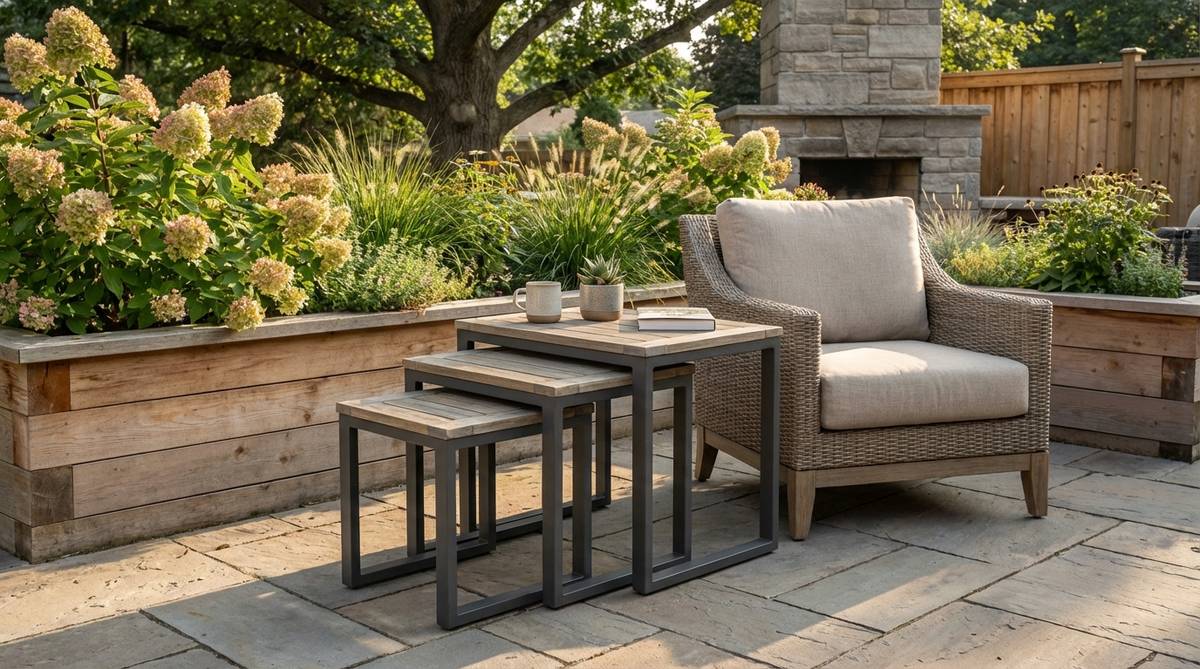
23. Nesting Table Set
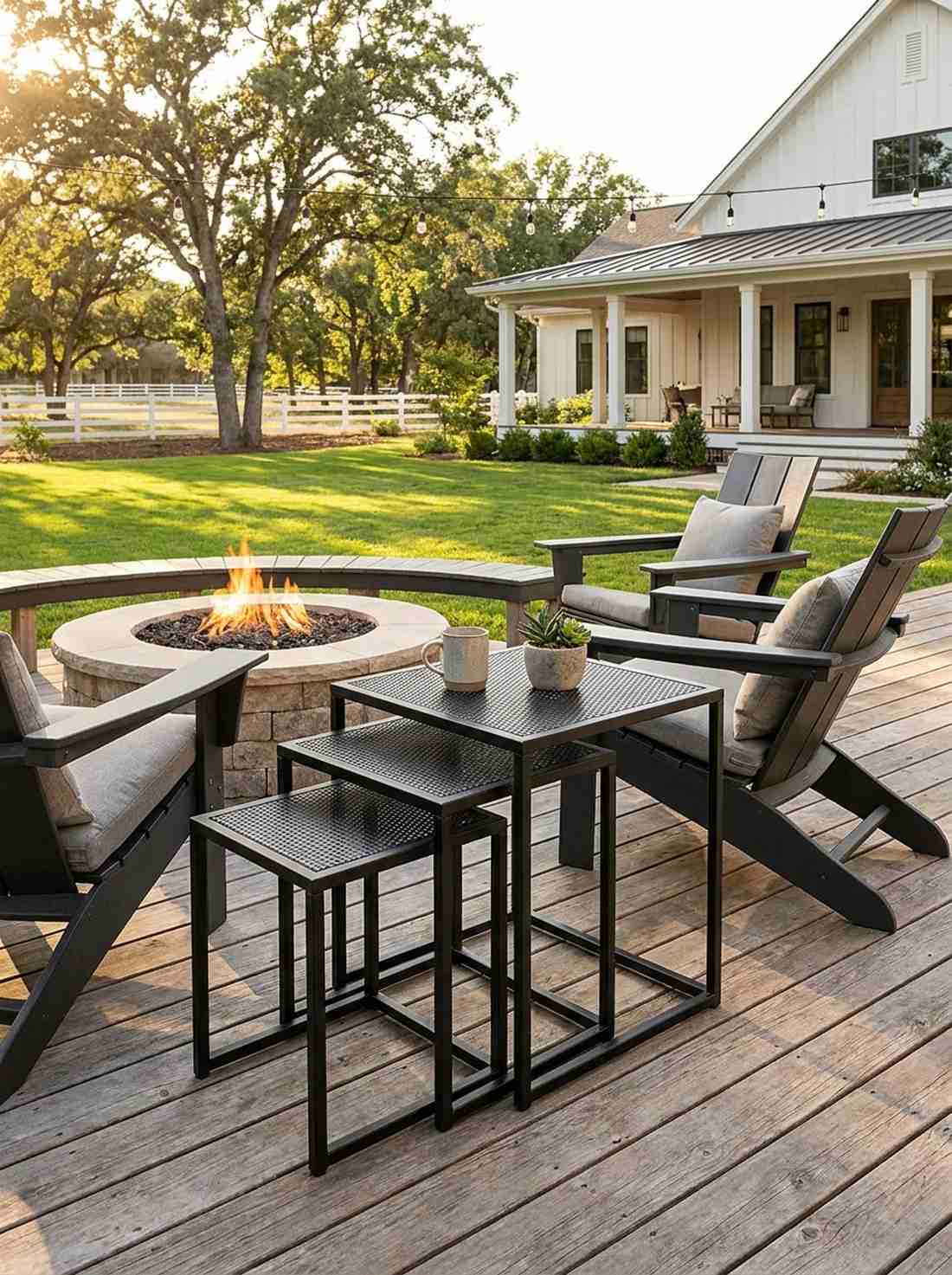
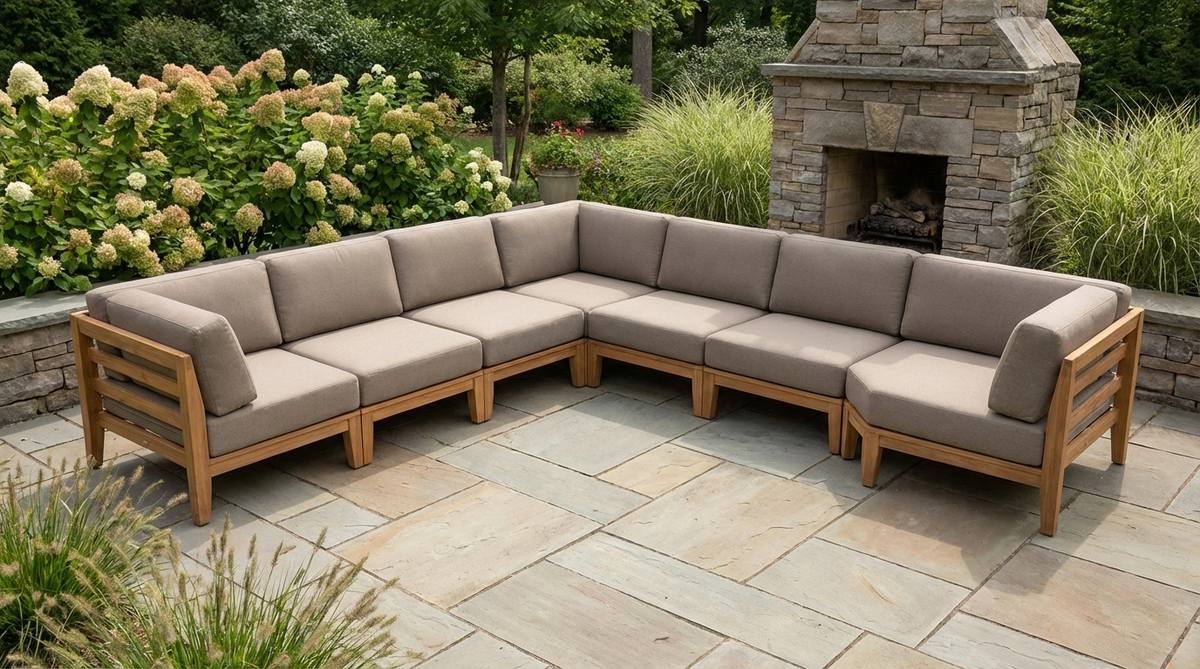
Packs a serious punch of geometric magic. Stacking outdoor side tables are the undisputed champions of providing on-demand surface area for drinks and snacks.
This layout delivers a surprisingly premium look and instantly tucks away to zero footprint. High-CPC layout planners always incorporate these to keep traffic lanes wide open.
A stylish set of three costs roughly $70–$100. Highly recommended for a quick space-saving win.
- Key Materials: Powder-coated steel nesting tables
- Vibe / Style: Industrial chic
- Difficulty: Zero setup
- Budget Breakdown: Nesting Set: $85
- Creator’s Tip: Buy sets with perforated metal tops so rainwater drains through instantly instead of puddling.
- Smart Sourcing: powder-coated metal nesting side tables and clear rust-preventative spray coatings.
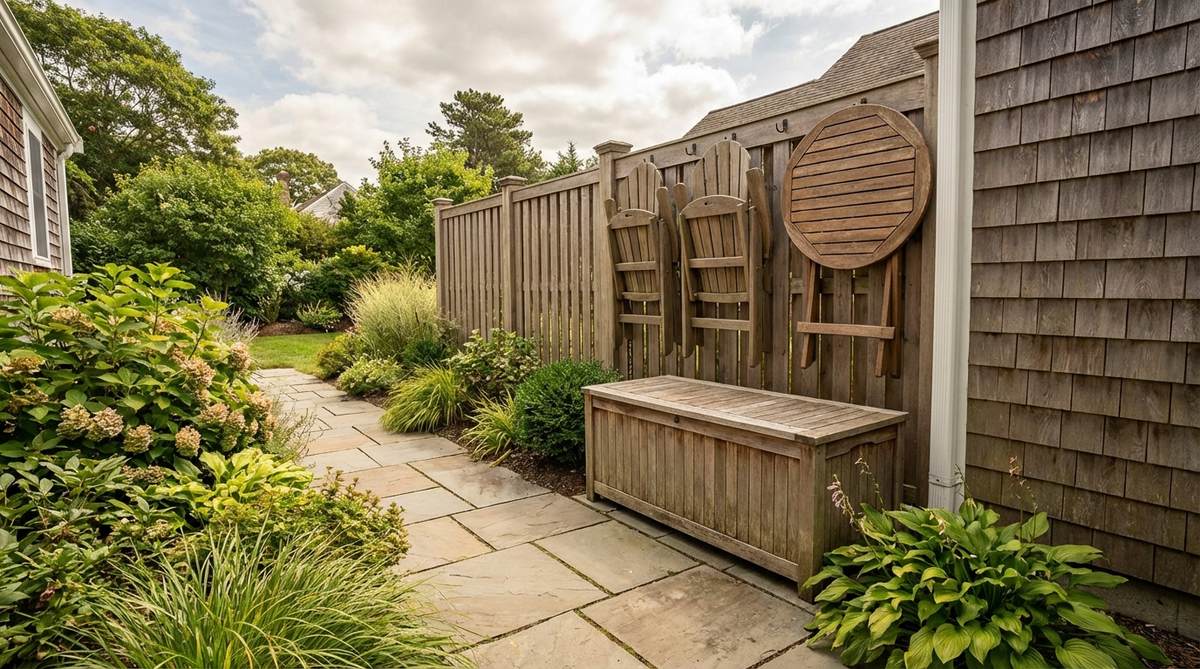
24. Folding Furniture Station
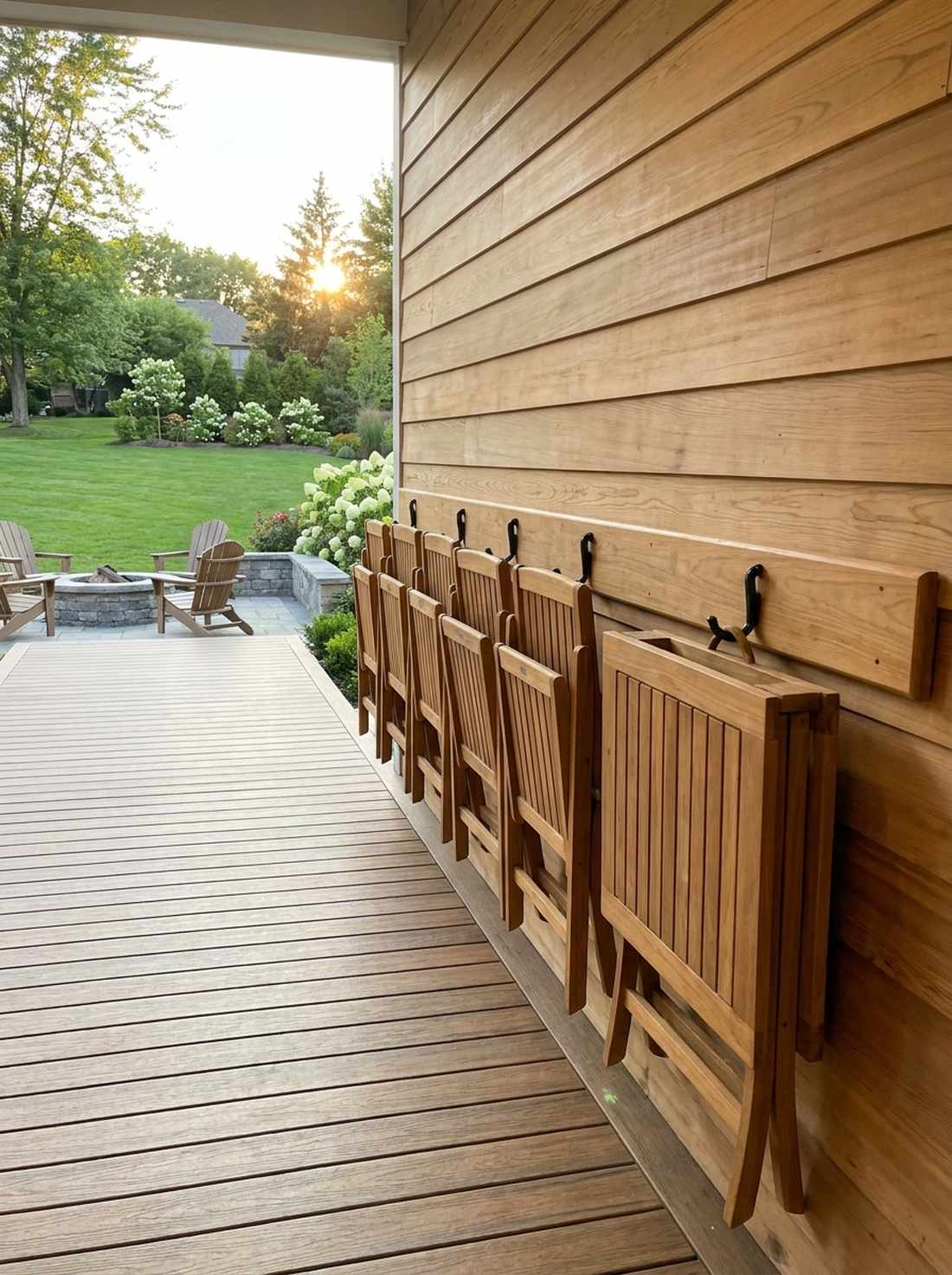
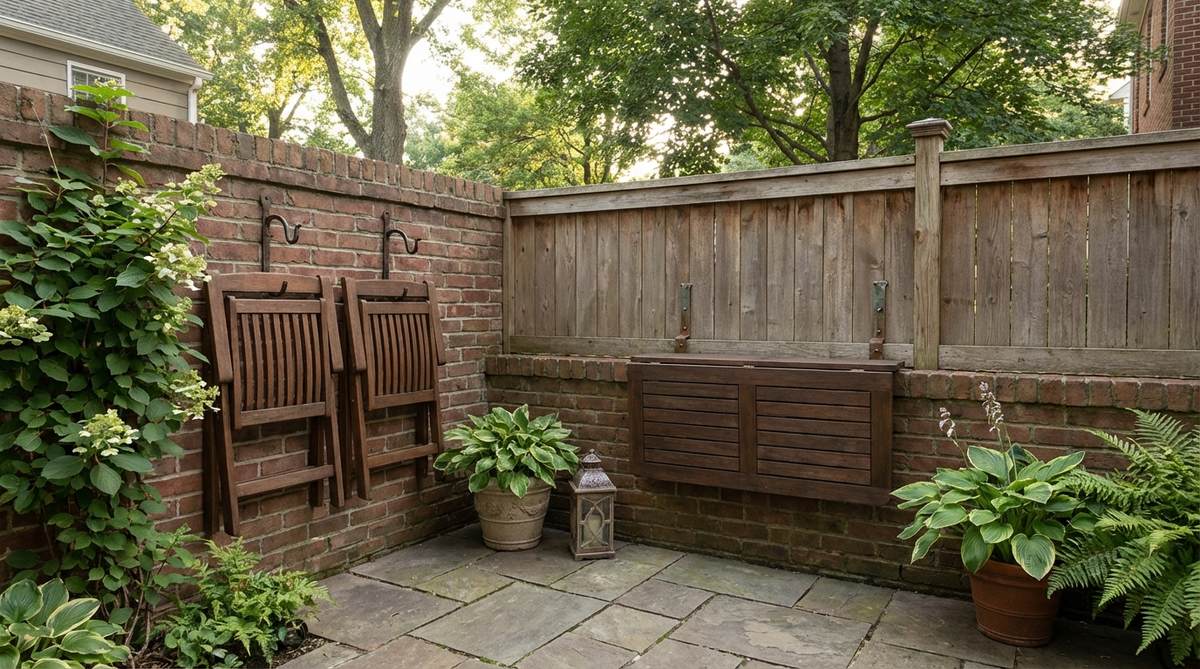
Gives off incredibly satisfying, hyper-organized shed vibes. Collapsible outdoor dining racks keep a narrow walkway completely clear until it is time to eat.
This gives a designer-level finish to what is basically a storage solution. Hanging the chairs on a heavy wall bracket looks far more expensive than leaning them in a pile.
Expect to spend $120 for the gear and hooks. Save this to your extreme patio organization board.
- Key Materials: Folding wood chairs, wall mounting hooks
- Vibe / Style: Minimalist utility
- Difficulty: Easy wall mount
- Budget Breakdown: Folding Set: $100 | Heavy Hooks: $25
- Creator’s Tip: Mount a small protective wooden bumper board behind the chairs to prevent wall scuffs.
- Smart Sourcing: heavy-duty garage wall storage hooks and premium folding teak patio chairs.
Skip the expensive contractors; the next layout is a weekend game-changer.
25. Stackable Stool Arrangement
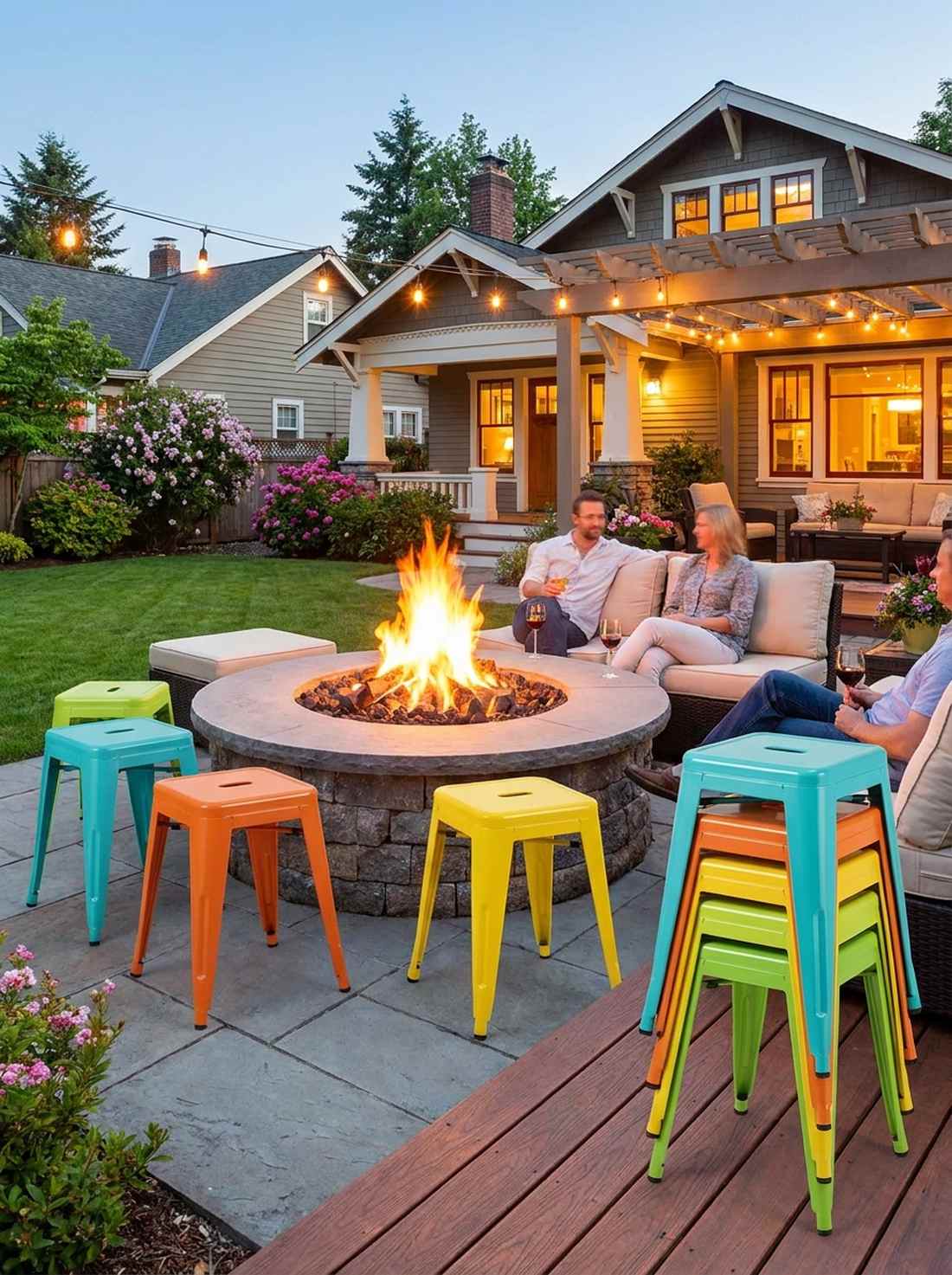
Looks like a vibrant pop-up gallery seating zone. Colorful metal patio stools are insanely practical for throwing around a fire pit when neighbors unexpectedly drop by.
Most beginners completely miss this structural trick, opting for bulky chairs that ruin corner flow. Stools deliver a surprisingly premium look while vanishing into a single stack.
A four-pack costs about $90. Pin this for ultimate fire pit flexibility.
- Key Materials: Stackable galvanized steel stools
- Vibe / Style: Modern industrial pop
- Difficulty: Zero setup
- Budget Breakdown: 4-Pack Stools: $90
- Creator’s Tip: Slide rubber bumper pads between the stools so they don’t scratch each other when stacked.
- Smart Sourcing: galvanized steel stackable outdoor stools (4-pack) and adhesive rubber bumper pads.
26. Convertible Bench to Table
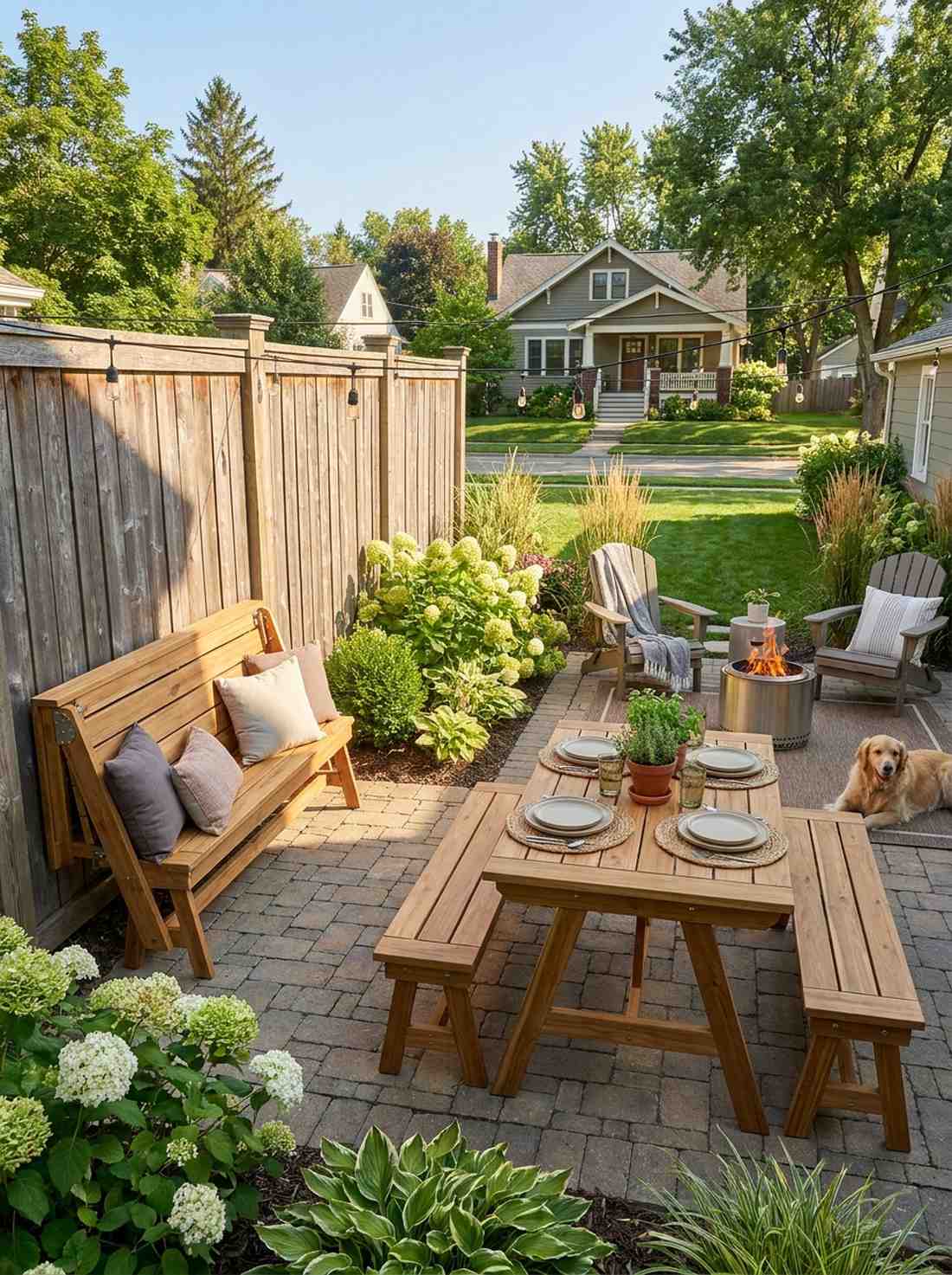
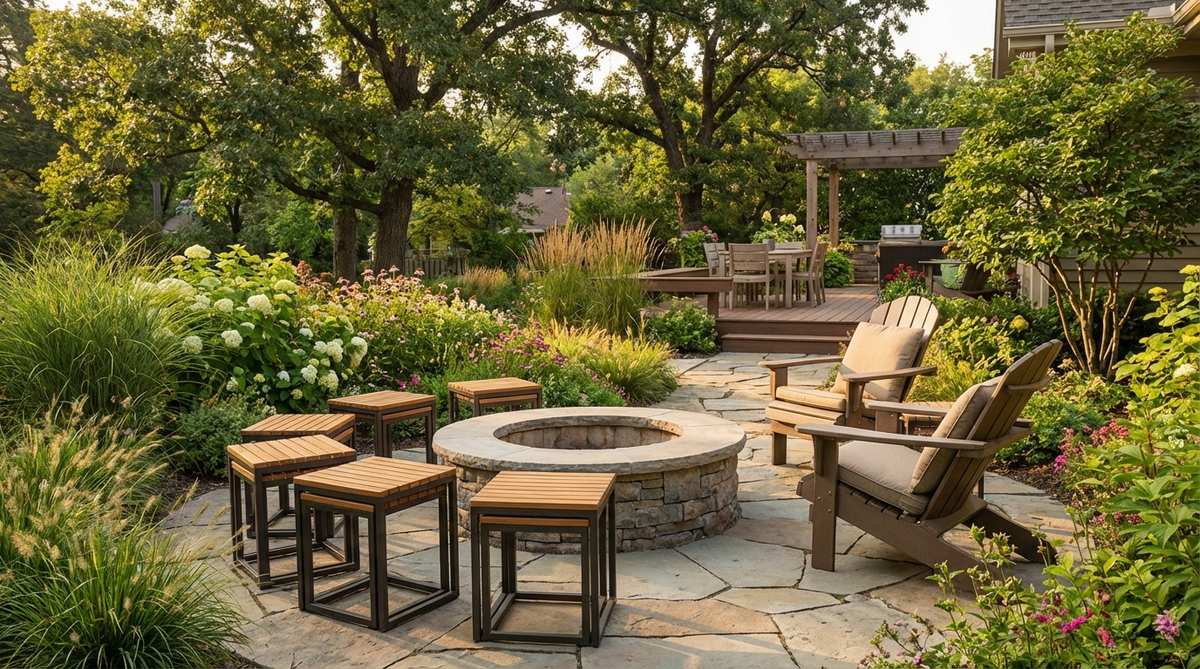
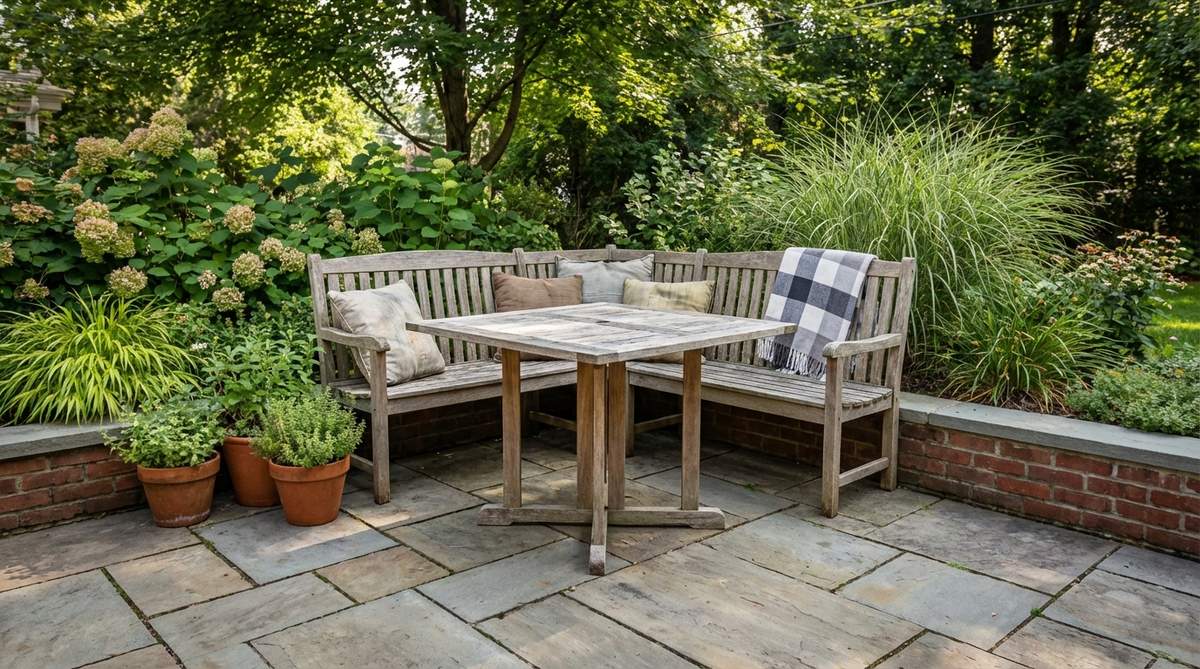
A brilliant feat of backyard engineering. Transforming picnic bench designs morph from a flat wall bench into a full dining table in three seconds.
This layout bypasses the cheap plastic aesthetic entirely with clever wooden mechanisms. It’s the absolute holy grail for micro-patios measuring 5×5 feet or less.
These specialty pieces run around $200–$300. Save this if you literally only have one small corner.
- Key Materials: Folding wooden bench/table combo
- Vibe / Style: Smart utility
- Difficulty: Easy unboxing
- Budget Breakdown: Convertible Bench: $250 | Stain: $20
- Creator’s Tip: Ensure the hinges are made of stainless steel; cheap iron hinges will rust shut after one rainy season.
- Smart Sourcing: solid wood convertible folding bench tables and marine-grade stainless steel hardware kits.
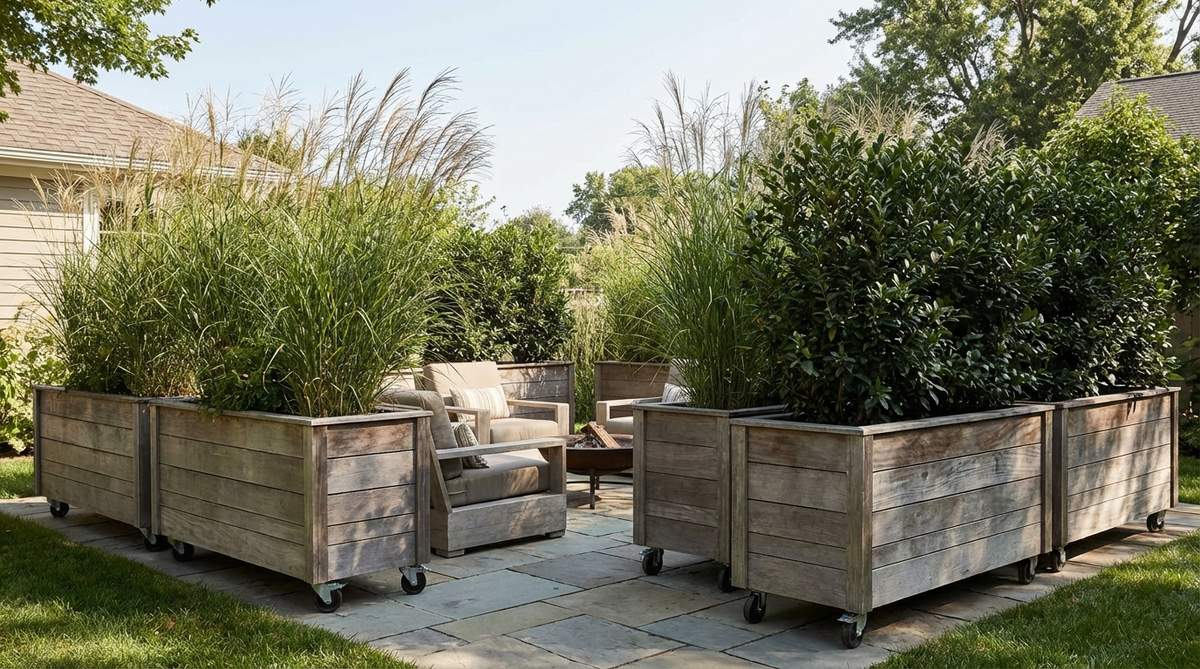
27. Movable Planter with Seating
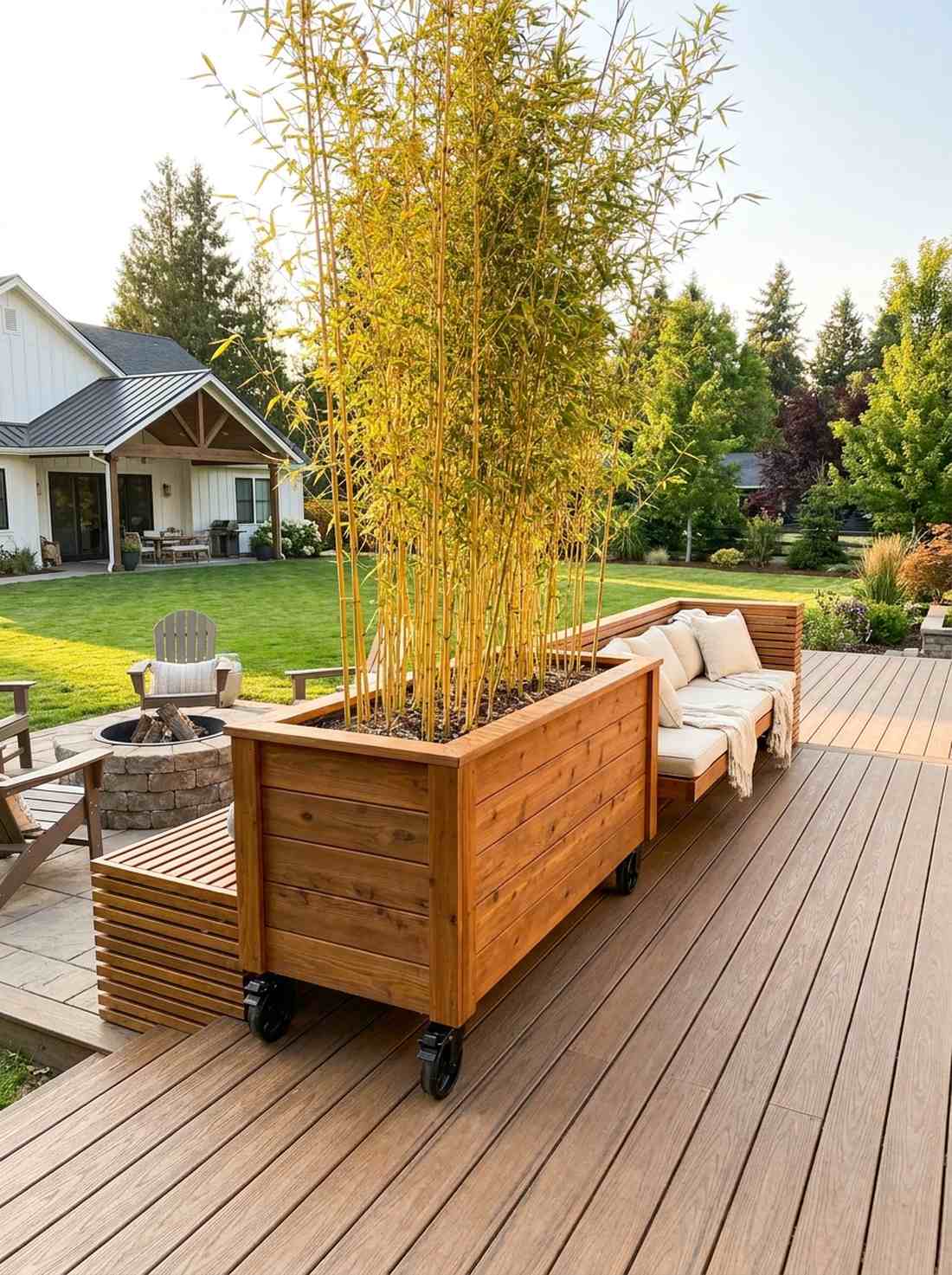
Feels like your own dynamic, movable hedge maze. Rolling privacy planter boxes allow you to literally redraw the boundaries of your seating area daily.
This gives a designer-level finish and lets you block the sun perfectly as it moves. Filling them with tall bamboo or ornamental grasses instantly elevates the perceived square footage.
Building one with casters costs about $100. Highly recommended for a quick weekend win.
- Key Materials: Wooden planter box, heavy-duty locking casters
- Vibe / Style: Dynamic modern
- Difficulty: Intermediate build
- Budget Breakdown: Planter: $60 | Casters: $30 | Soil/Plants: $40
- Creator’s Tip: Fill the bottom 30% of the planter with empty plastic bottles to reduce weight so it rolls easier.
- Smart Sourcing: heavy-duty locking caster wheels (4-pack) and pre-built tall wooden privacy planters.
Material Guide: Cheap vs. Premium Aesthetic
Knowing exactly where to save and where to spend makes all the difference in achieving that “looks expensive but isn’t” vibe.
- Standard vs. UV-Resistant/Premium: Standard fabrics bleach out in 6 months. Upgrading to solution-dyed acrylic stops fading completely and prevents embarrassing mildew stains.
- Pre-made Kits vs. Sourcing Locally: Scavenging hardware stores takes days. Pre-packaged starter kits often save both time and money by including exact-fit brackets and custom-cut weather shields.
Storage-Smart Solutions
Furniture with integrated storage maximizes functionality in space-constrained corners. These dual-purpose arrangements keep outdoor essentials organized and accessible.
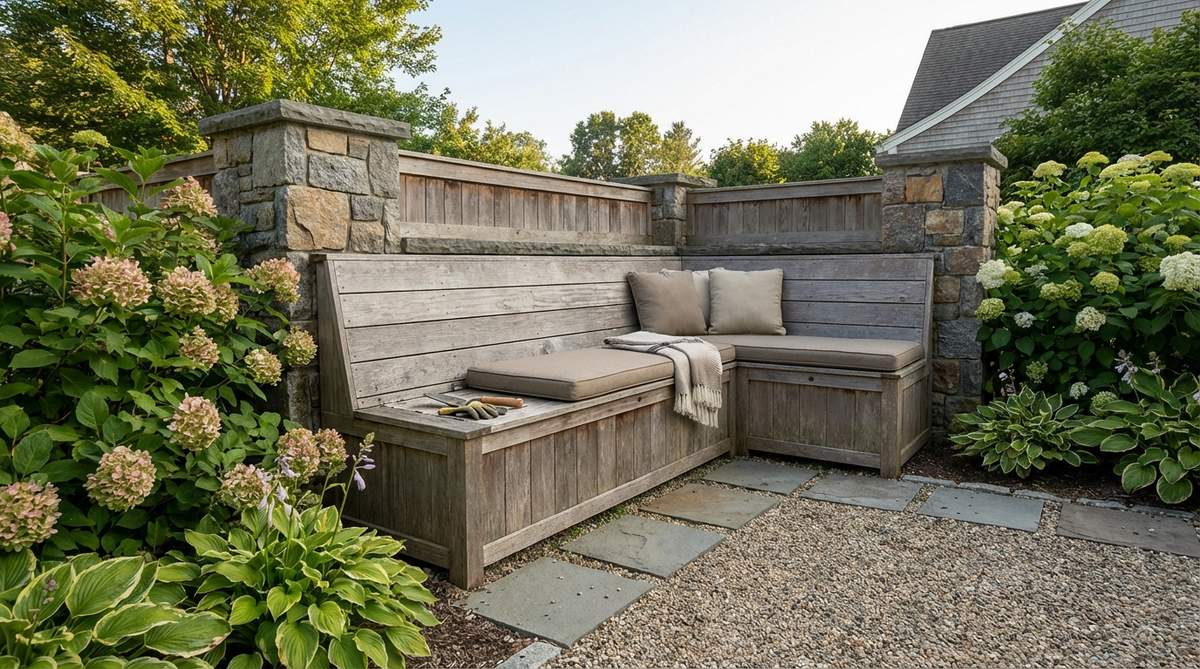
28. Storage Bench Seating
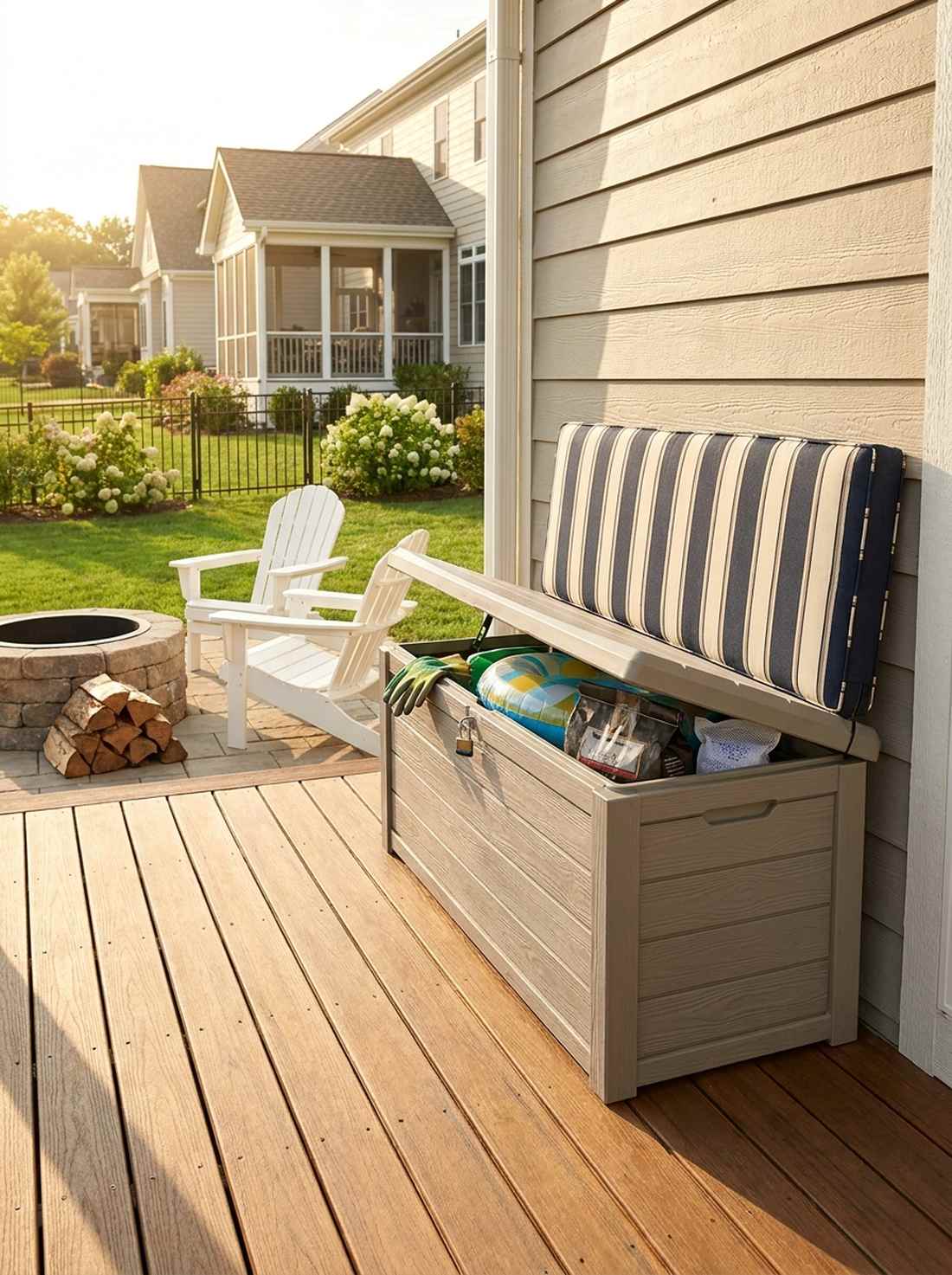
Acts like a magic vanishing box for all your ugly garden tools. Waterproof patio storage benches are the ultimate workhorse for a busy family yard.
This setup delivers a surprisingly premium look while hiding charcoal bags and pool toys. A brilliant hack to avoid the cluttered yard syndrome while providing rock-solid seating.
A good resin bench costs around $130. Pin this to your ultimate outdoor organization board.
- Key Materials: Resin deck bench, padlock
- Vibe / Style: Clean family yard
- Difficulty: Easy assembly
- Budget Breakdown: Storage Bench: $130 | Cushion: $40
- Creator’s Tip: Toss a moisture-absorbing desiccant bag inside to prevent mildew on stored cushions.
- Smart Sourcing: weatherproof resin outdoor storage benches and bulk silica gel moisture absorbers.
29. Ottoman with Hidden Storage
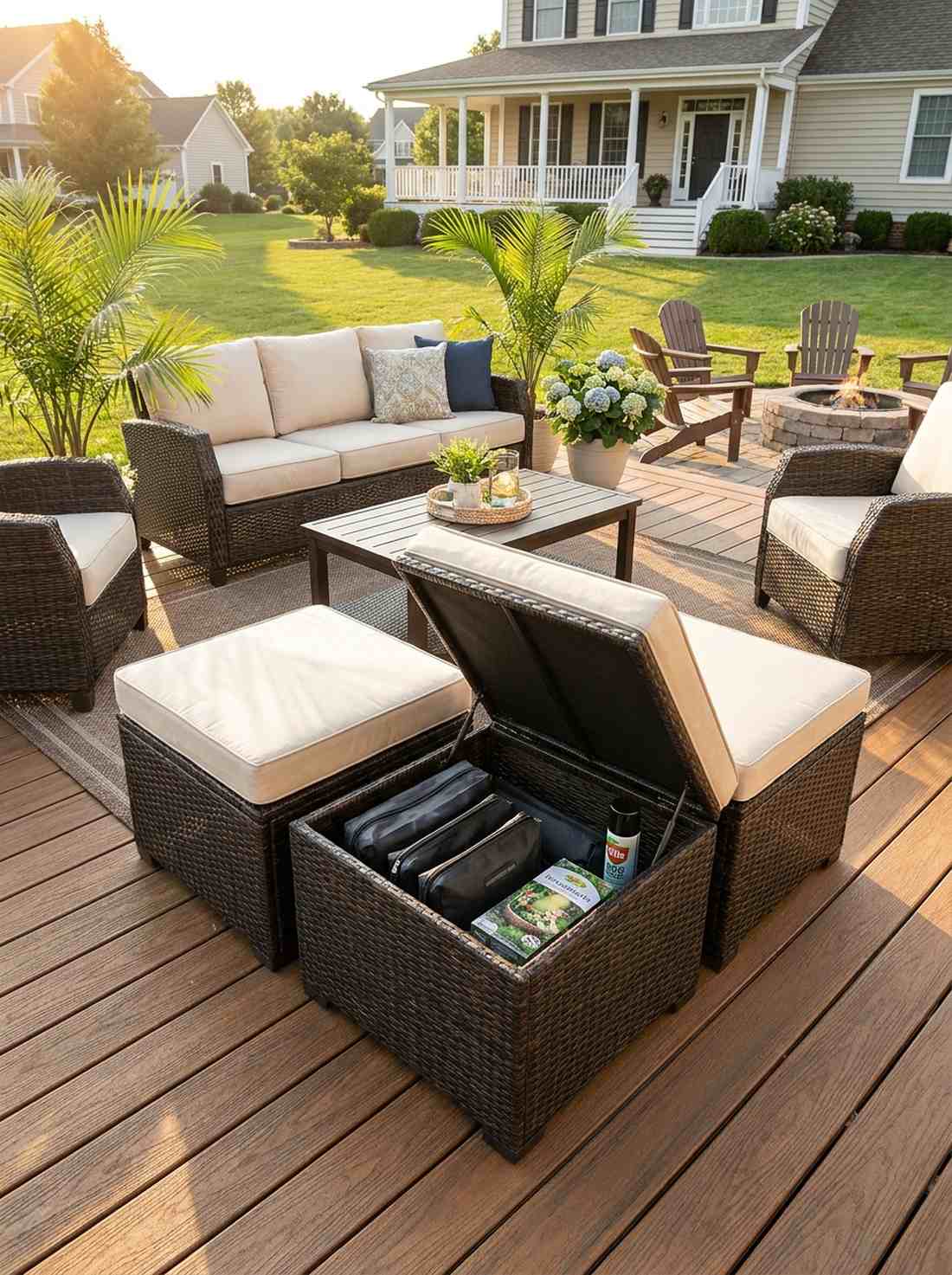
Gives the luxurious feel of a high-end yacht lounge. Wicker outdoor storage ottomans double as footrests and secret compartments for your fairy garden kits.
Most beginners completely miss this structural trick, buying hollow tables instead of functional storage. It looks far more expensive than it is and keeps bug spray hidden but accessible.
Expect to spend about $60–$90 per ottoman. Save this layout for a clutter-free patio.
- Key Materials: Wicker ottoman with lift top
- Vibe / Style: Resort chic
- Difficulty: Zero setup
- Budget Breakdown: Ottoman: $80
- Creator’s Tip: Use waterproof zippered pouches inside the ottoman for smaller items so they don’t fall through the wicker gaps.
- Smart Sourcing: waterproof resin wicker storage ottomans and heavy-duty waterproof zipper pouches.
We almost kept this next designer secret to ourselves…
30. Corner Shelving with Bench
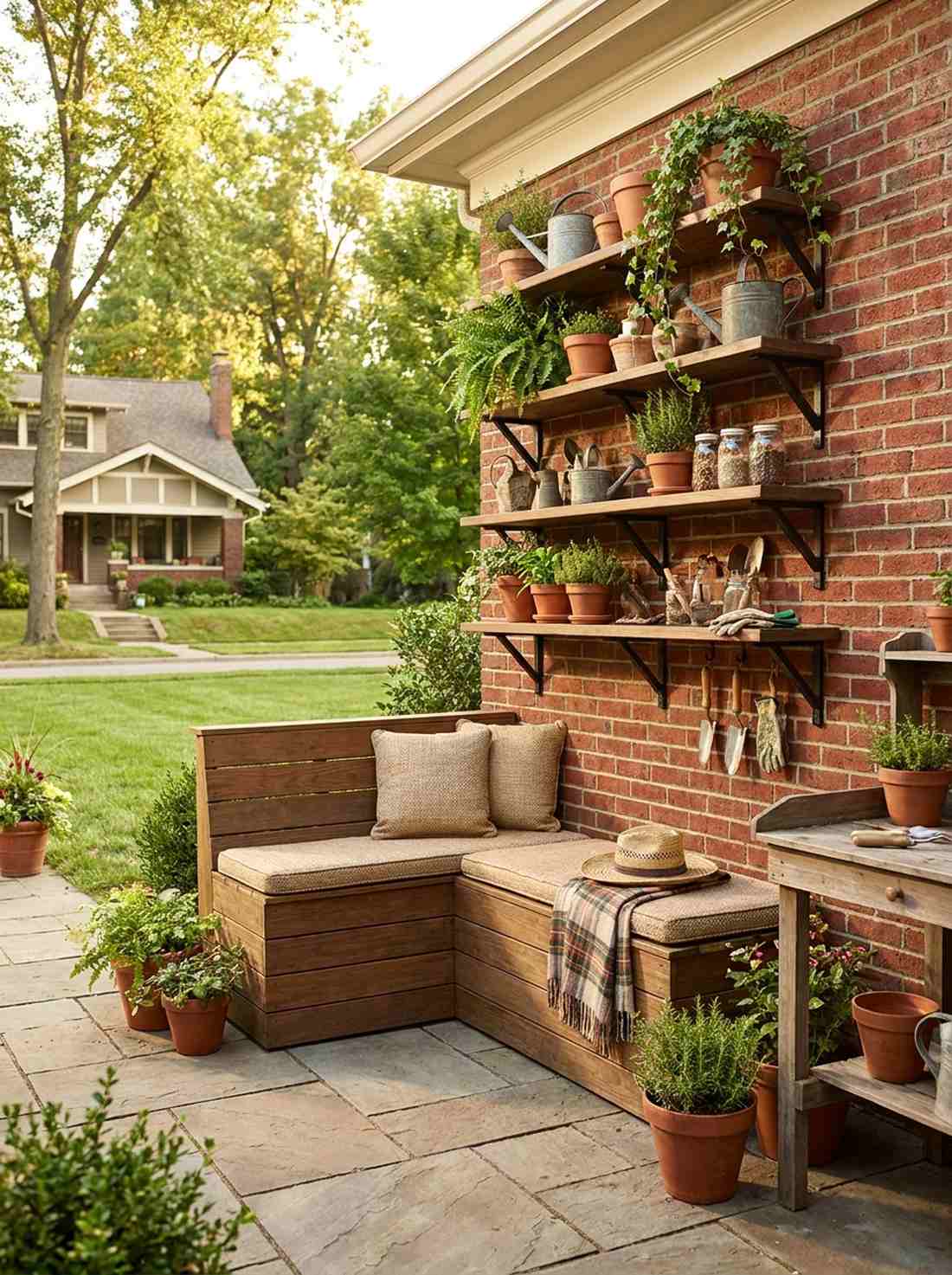
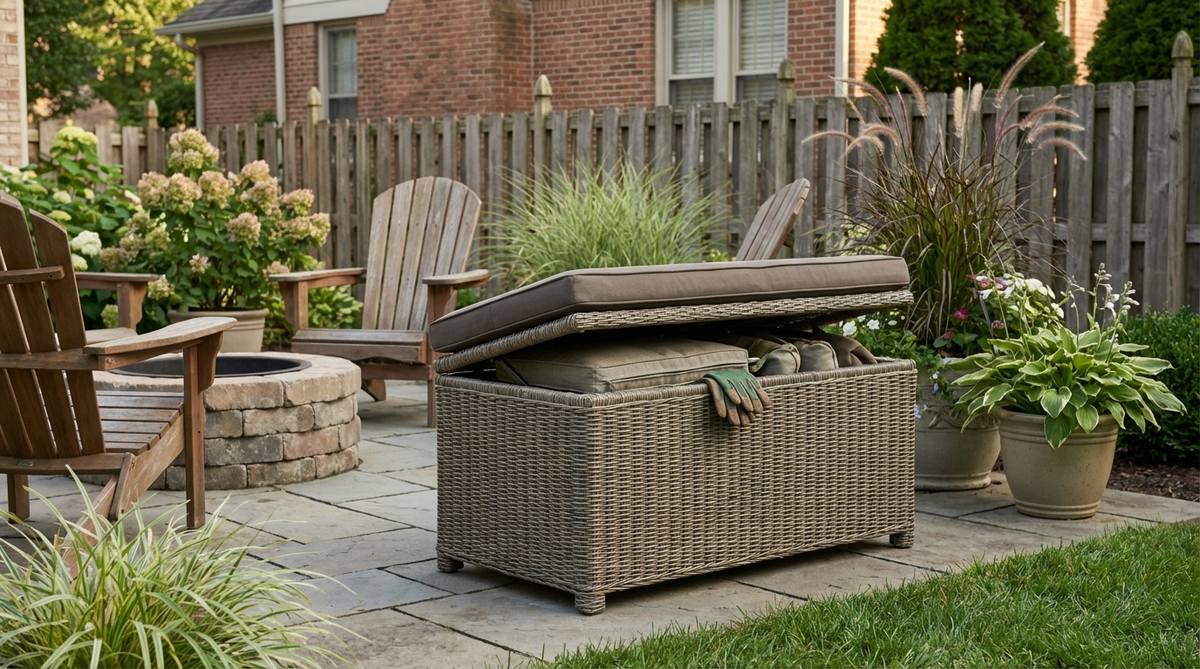
Feels exactly like a cozy potting shed corner out of a storybook. Vertical patio shelving units mounted directly above a low bench maximize every vertical inch.
This gives a designer-level finish and allows you to display trailing plants and miniature garden supplies beautifully. It completely anchors the seating area to the wall.
Materials for this dual-purpose zone cost roughly $150. Highly recommended for a quick weekend win.
- Key Materials: Wall shelf brackets, wooden bench
- Vibe / Style: Organized botanical
- Difficulty: Intermediate
- Budget Breakdown: Shelves: $60 | Bench: $90
- Creator’s Tip: Pre-drill your pilot holes into the mortar (not the brick) if mounting these shelves on a masonry wall.
- Smart Sourcing: heavy-duty masonry drill bit sets and pre-finished floating outdoor wall shelves.
31. Deck Box with Cushion Top
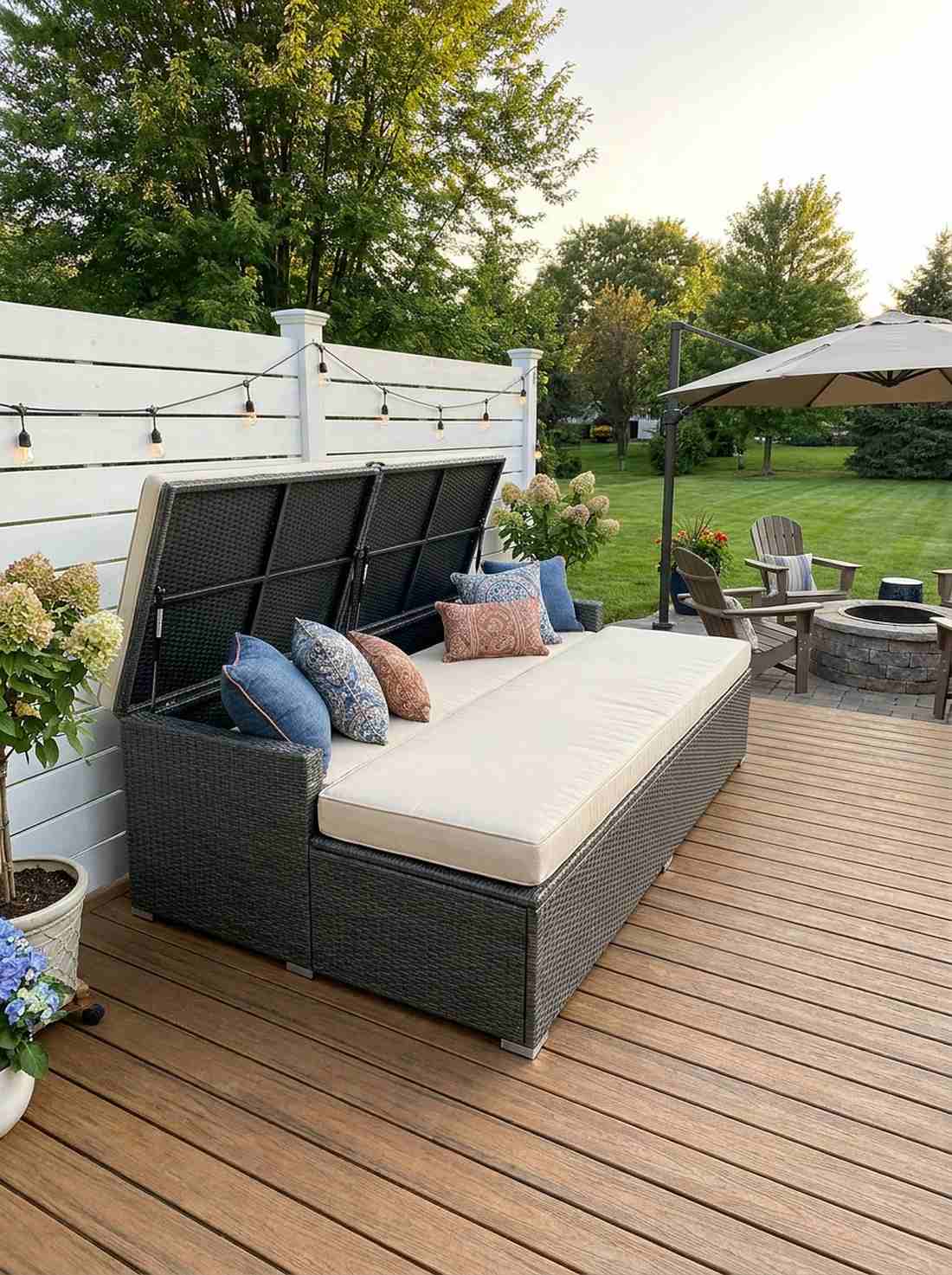
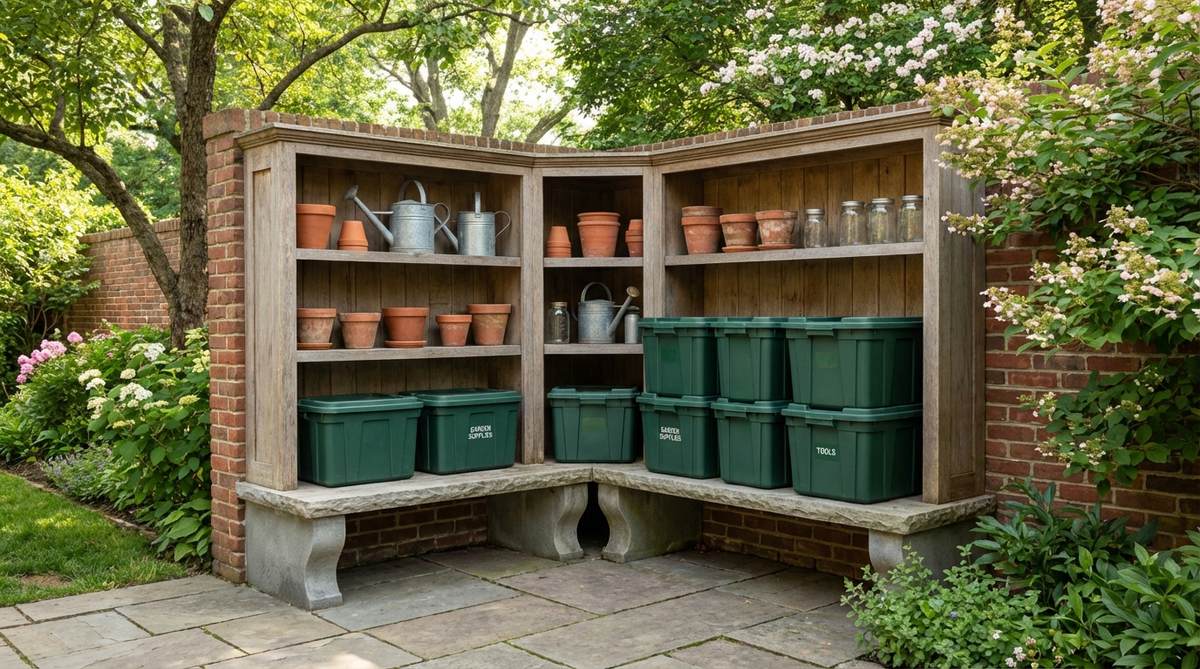
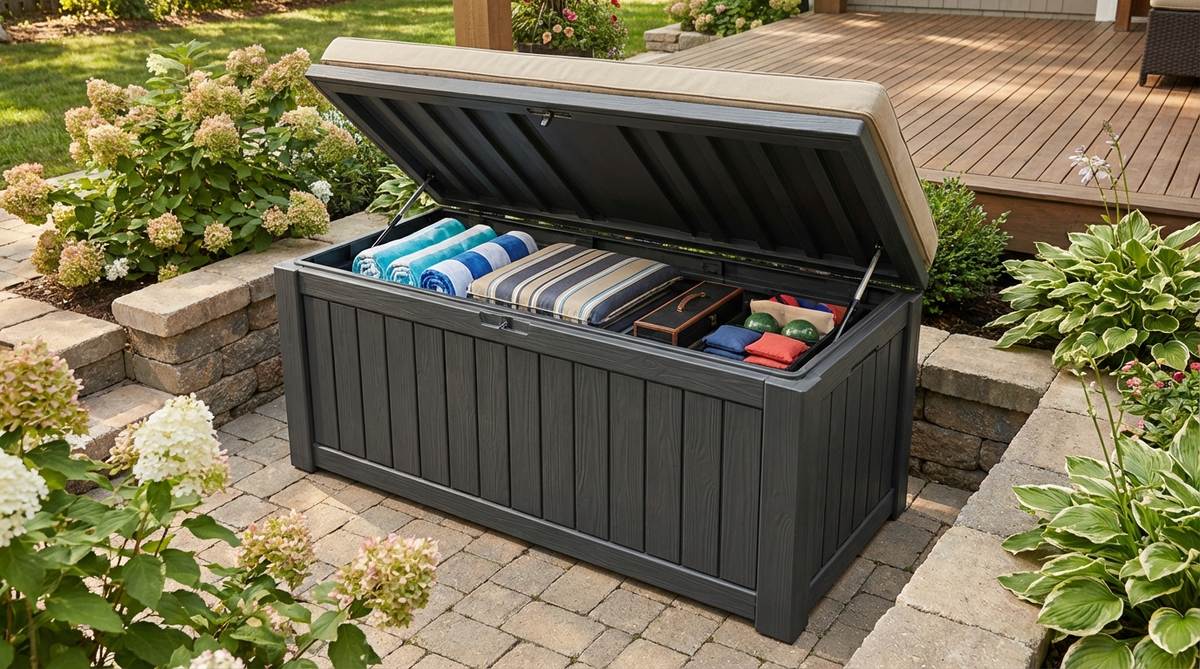
Transforms a bulky necessity into a highly coveted lounge spot. Extra-large patio deck boxes topped with custom cushions act as massive sofas against a fence.
This layout bypasses the cheap plastic aesthetic entirely by hiding the lid under a luxurious, thick pad. It delivers a surprisingly premium look while swallowing six large chair cushions inside.
A large 120-gallon box and cushion run about $250. Pin this for massive storage needs.
- Key Materials: 100+ gallon deck box, custom foam pad
- Vibe / Style: Hidden utility
- Difficulty: Easy
- Budget Breakdown: Deck Box: $180 | Foam Pad: $70
- Creator’s Tip: Choose a box with hydraulic gas shocks so the heavy lid doesn’t slam on your fingers.
- Smart Sourcing: gas-shock resin deck storage boxes and custom-cut high density outdoor foam.
32. Table with Lower Shelf
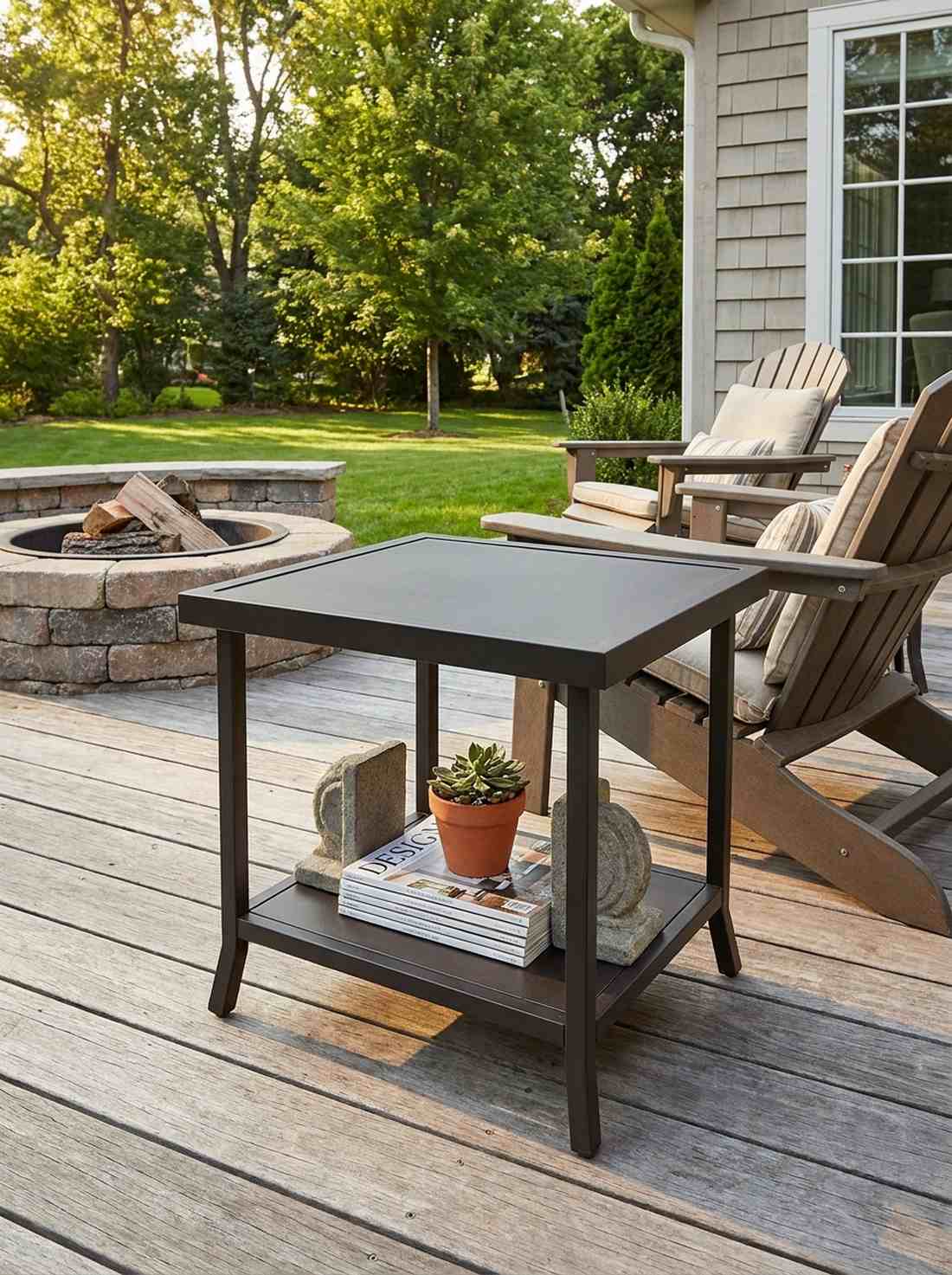
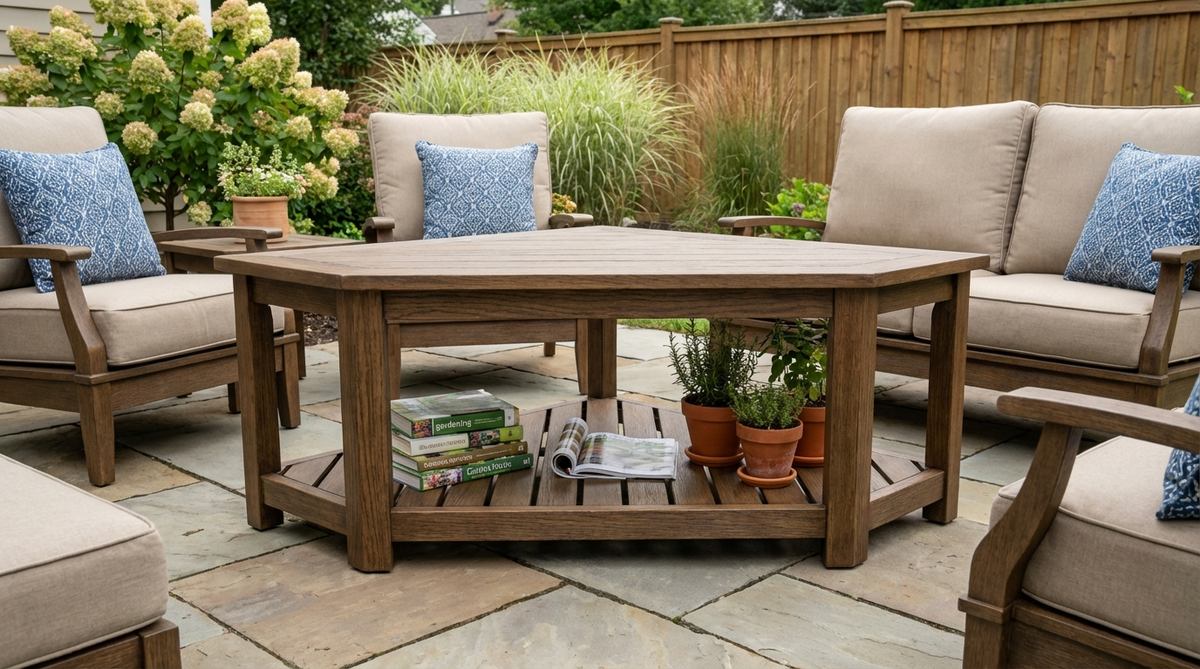
Brings sophisticated interior living room styling outdoors. Two-tier outdoor side tables are the subtle secret to keeping tabletop surfaces clear of clutter.
This setup looks far more expensive than it is by providing a dedicated lower deck for magazines or small planters. It instantly elevates the perceived square footage of the table.
A solid dual-tier table costs about $80. Save this if you hate messy patio tables.
- Key Materials: Double-shelf metal table
- Vibe / Style: Classic transitional
- Difficulty: Easy
- Budget Breakdown: Tiered Table: $80 | Decor: $20
- Creator’s Tip: Place a heavy, flat stone on the bottom shelf to anchor the table against strong winds.
- Smart Sourcing: powder-coated two-tier patio tables and heavy outdoor decorative bookends.
Cozy Nook Enhancements
Thoughtful additions transform basic furniture arrangements into true destination spaces. These enhancement strategies amplify the comfort and appeal of your corner retreat.
33. Swing Bench Installation
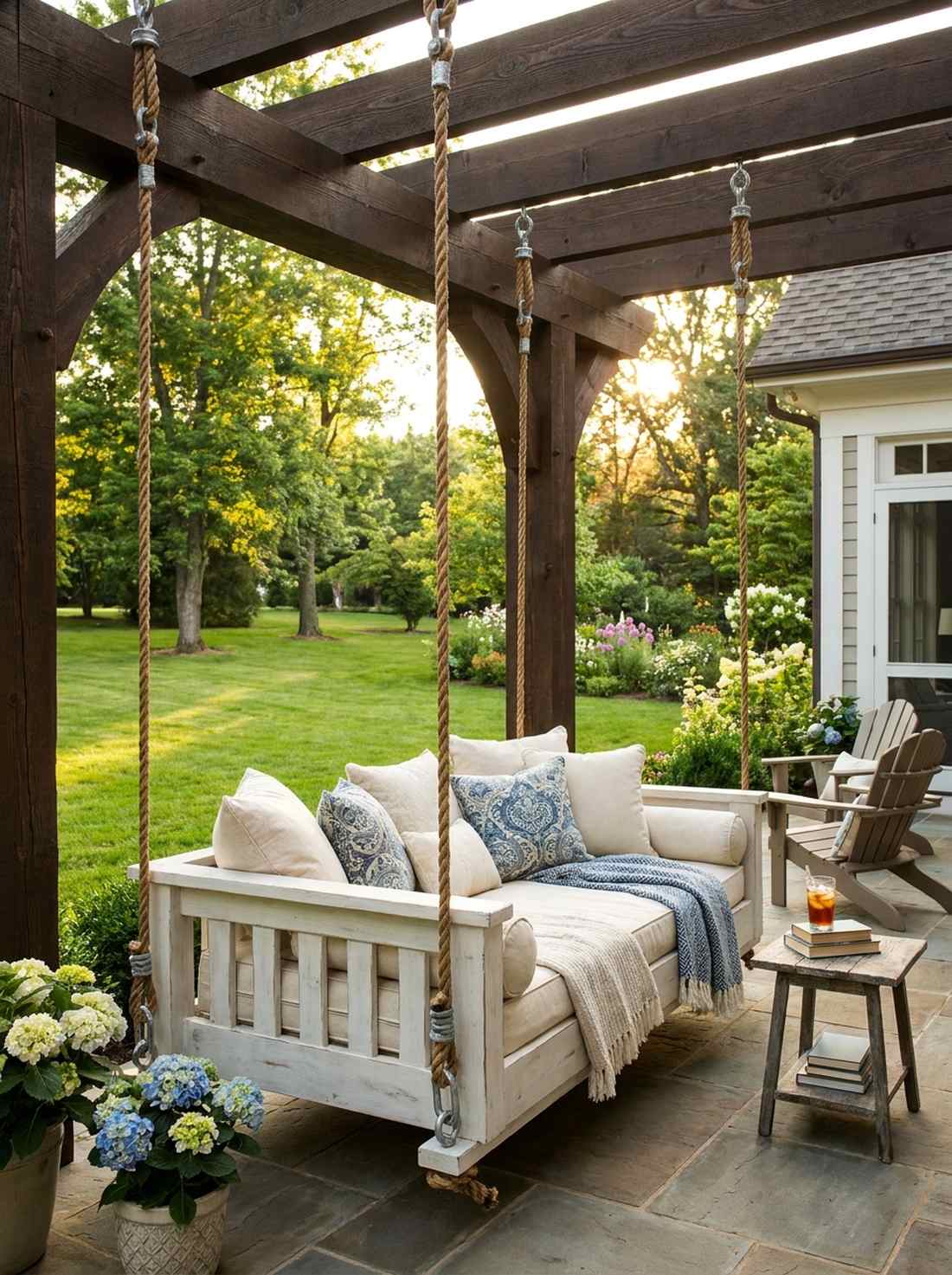
Evokes the nostalgic magic of a lazy summer evening. Suspended porch swing beds hung from heavy pergola beams turn a boring corner into the ultimate focal point.
Most beginners completely miss this structural trick, but a hanging bench gives a designer-level finish. Upgrading to heavy-duty marine rope instead of chains bypasses the cheap plastic aesthetic entirely.
Building or buying a swing costs $200–$400. Pin this to your dream patio mood board.
- Key Materials: Wooden swing bench, heavy-duty eye hooks
- Vibe / Style: Nostalgic farmhouse
- Difficulty: Advanced hanging
- Budget Breakdown: Swing: $250 | Hardware/Rope: $60
- Creator’s Tip: Always hit the dead center of the joist with a 6-inch lag screw to prevent catastrophic pull-outs.
- Smart Sourcing: heavy-duty swing hanger bracket kits (500lb capacity) and marine-grade braided nylon rope.
34. Fire Pit with Curved Seating
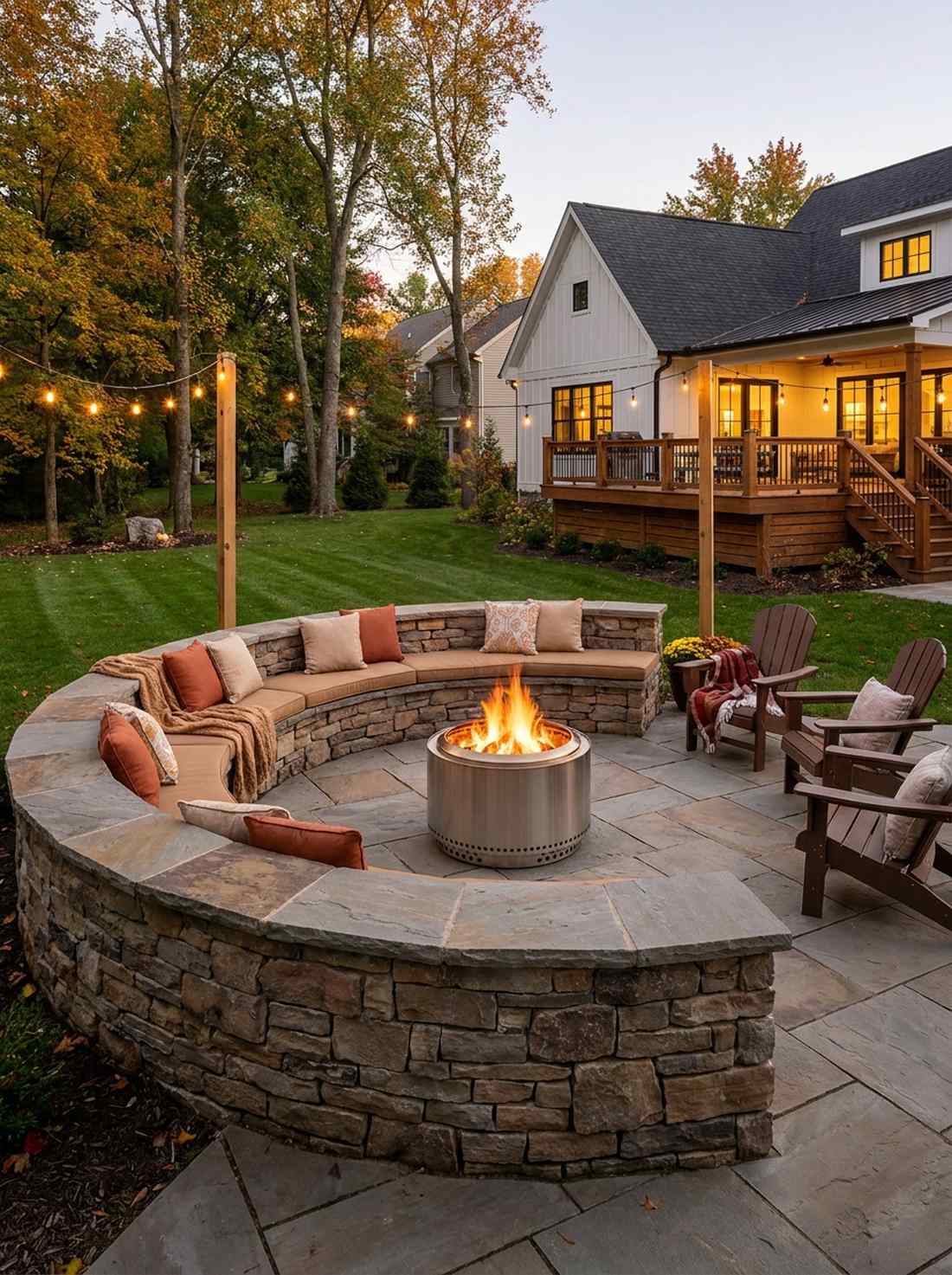
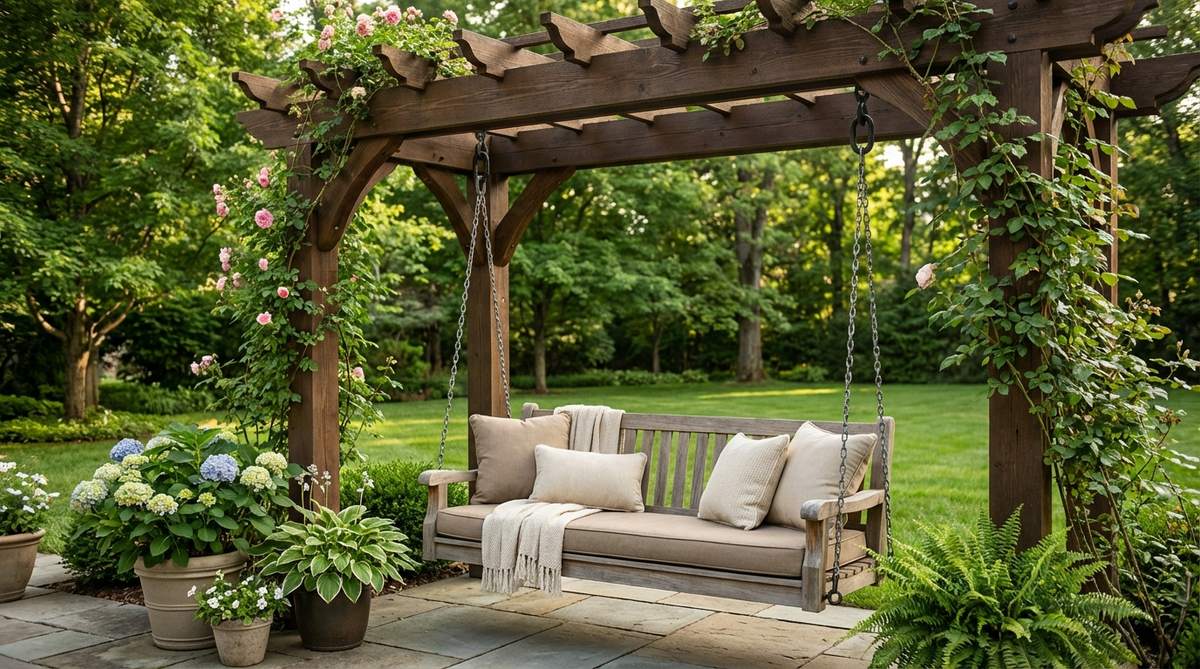
Generates the magnetic pull of an exclusive canyon campfire. Semicircle fire pit bench layouts absolutely dominate evening patio entertaining.
This layout delivers a surprisingly premium look that wraps your guests in warmth. A brilliant hack to avoid the cluttered yard syndrome by creating one massive, unified circular zone.
A smokeless pit and bench setup runs about $400+. Save this for peak fall entertaining.
- Key Materials: Smokeless fire pit, curved stone or wood bench
- Vibe / Style: Modern campfire
- Difficulty: Moderate placement
- Budget Breakdown: Fire Pit: $250 | Bench base: $150
- Creator’s Tip: Set the bench exactly 36 inches away from the fire ring for optimal heat without scorching your knees.
- Smart Sourcing: stainless steel smokeless outdoor fire pits and curved outdoor modular seating sections.
Before you buy another useless patio accessory, check out this next framework.
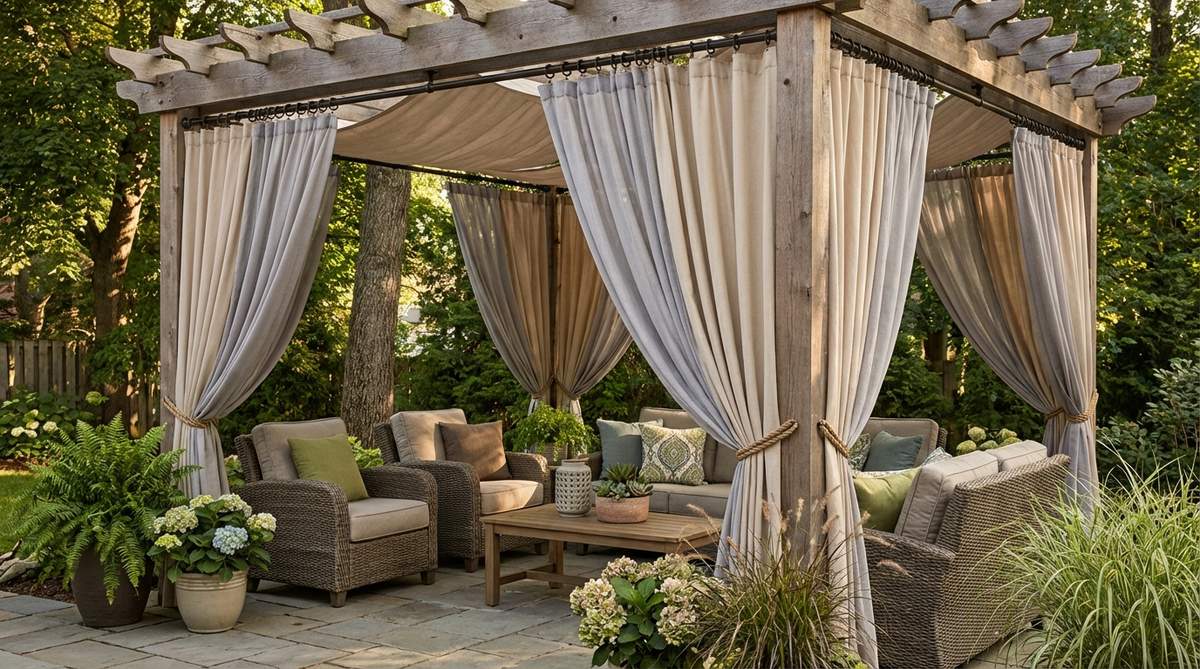
35. Canopy-Draped Seating
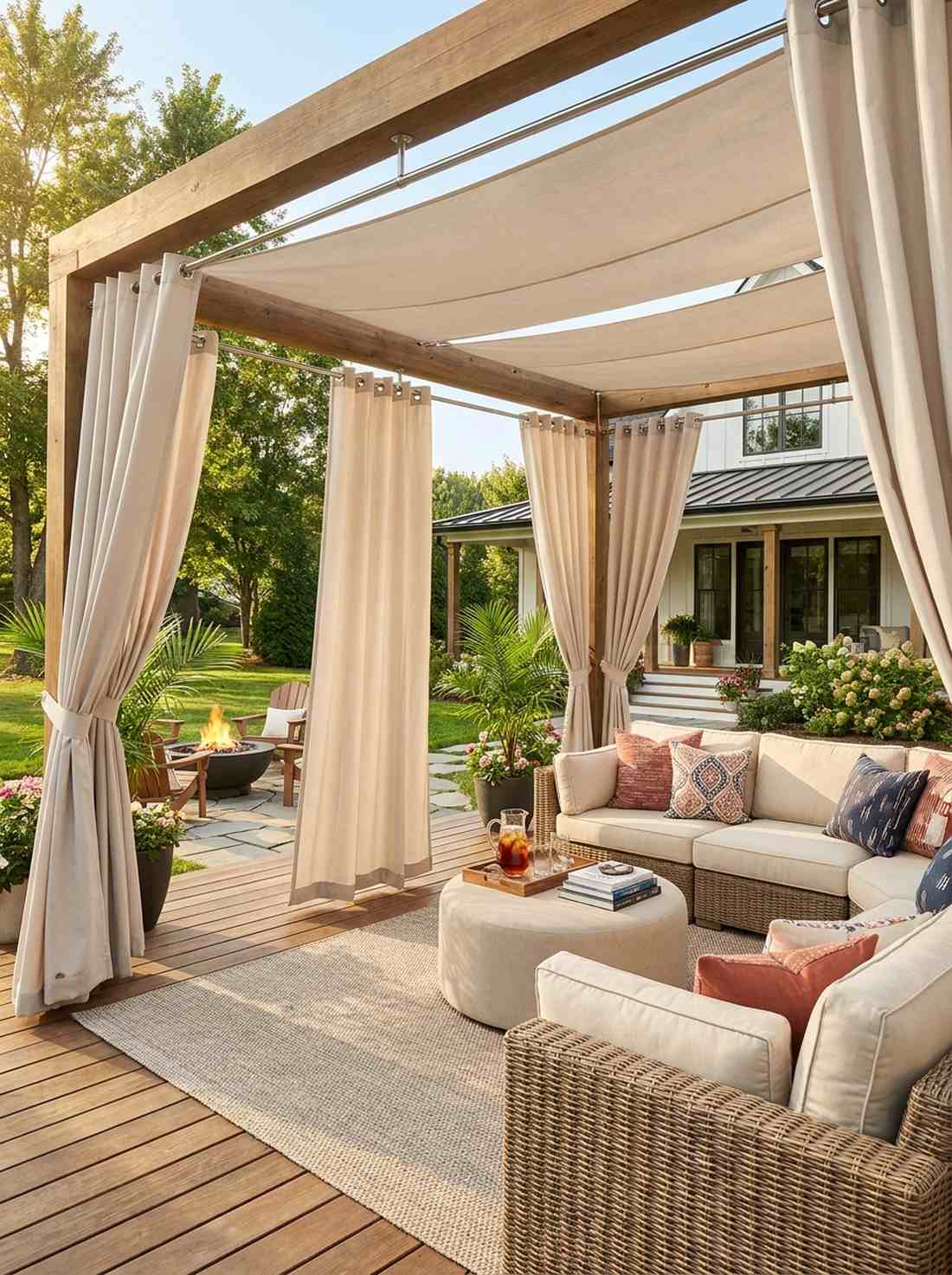
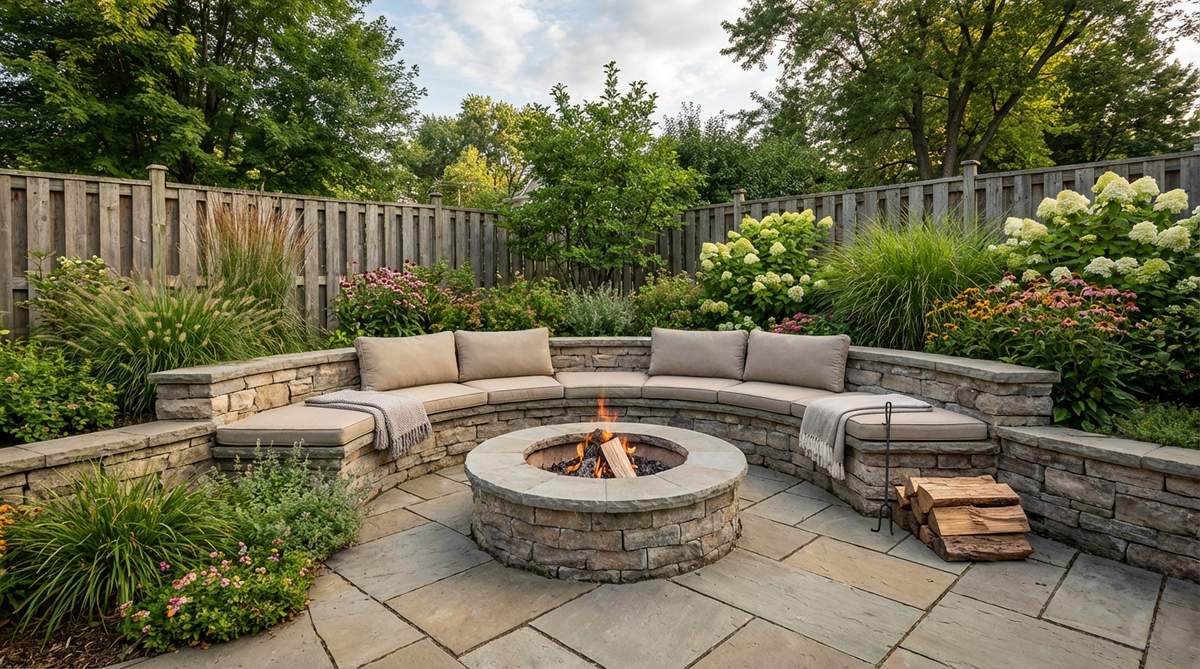
Feels like stepping into a VIP desert cabana. Outdoor curtain draped lounges use cheap fabric panels to create unbelievable privacy and shade.
This layout looks far more expensive than it is and instantly elevates the perceived square footage. Threading fade-resistant fabric onto simple tension rods gives a designer-level finish.
Rods and curtains cost around $80–$120. Highly recommended for a quick weekend win.
- Key Materials: Outdoor curtain panels, stainless tension rods
- Vibe / Style: Resort cabana
- Difficulty: Easy hanging
- Budget Breakdown: Curtains: $60 | Rods: $40
- Creator’s Tip: Sew heavy metal washers into the bottom hem of the curtains so they don’t whip around wildly in the wind.
- Smart Sourcing: UV-blocking outdoor curtain panels (bulk pack) and heavy-duty rust-proof tension rods.
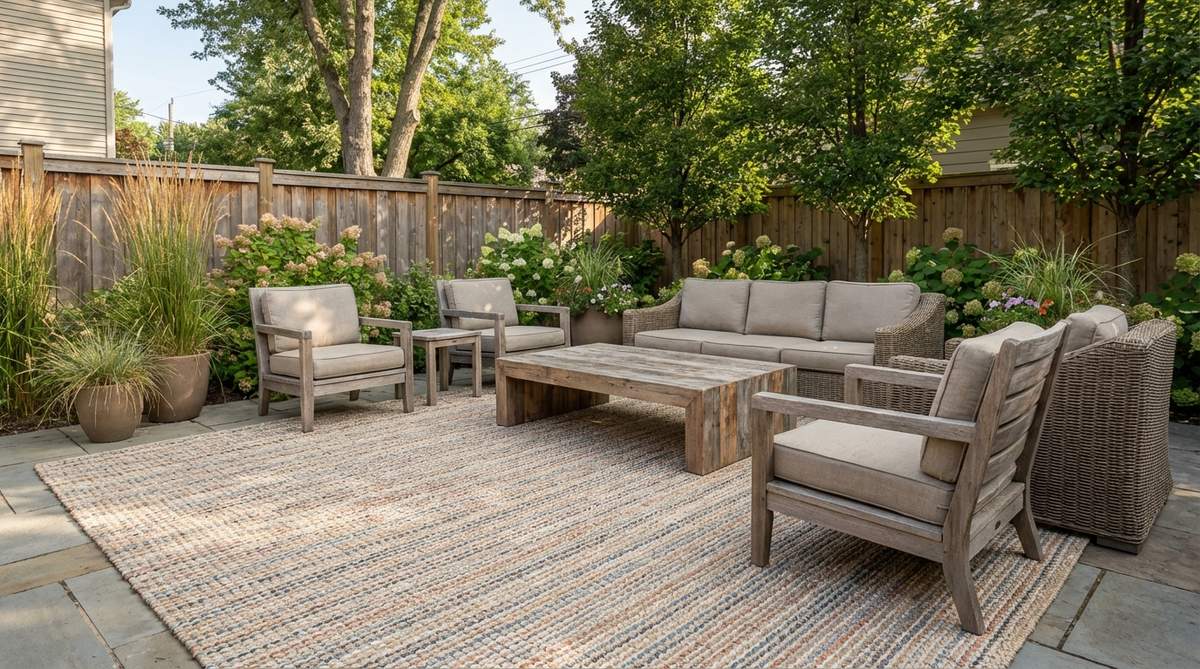
36. Rug-Defined Lounge Area
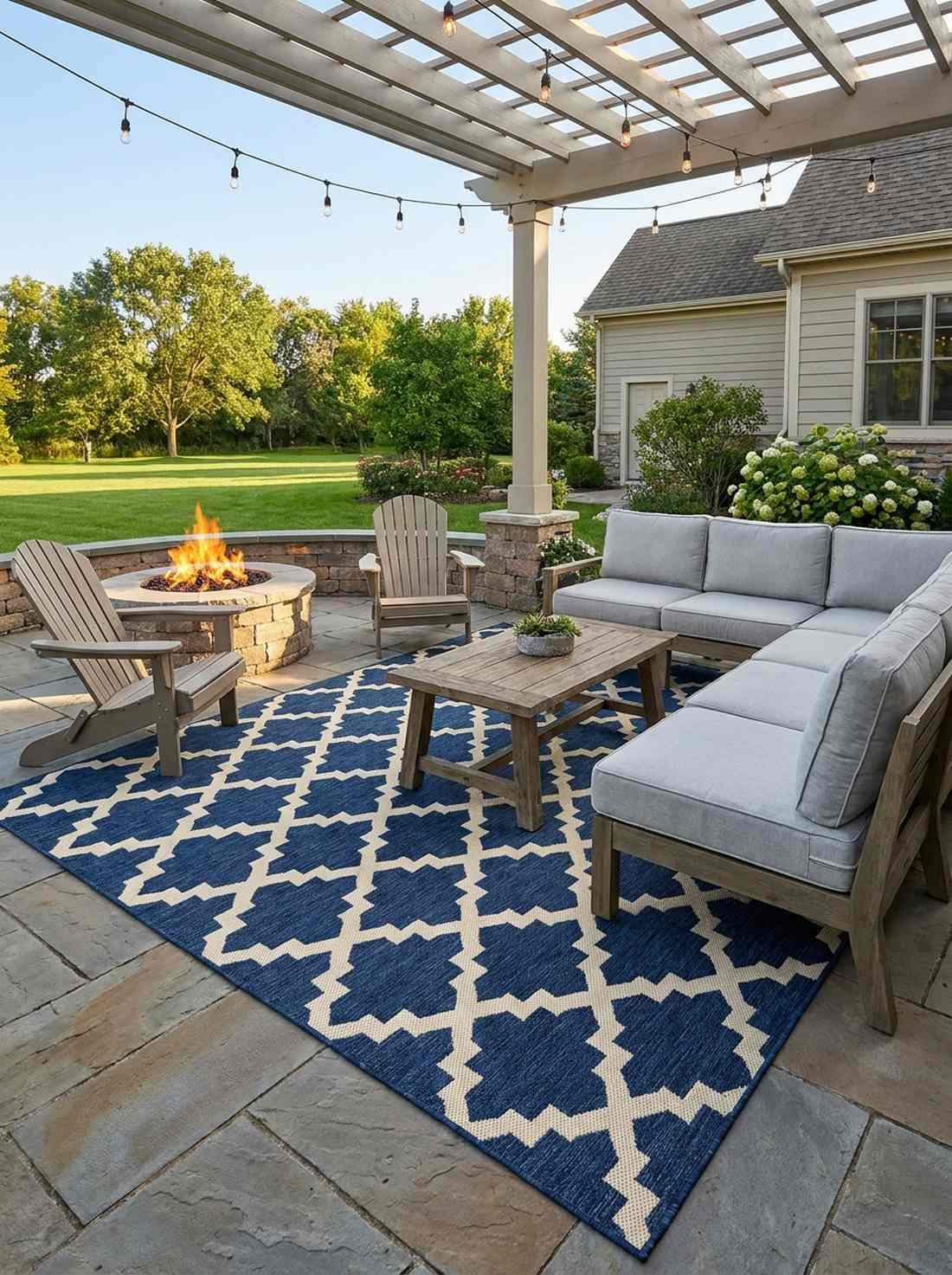
Acts as the visual superglue that holds an entire patio together. Waterproof geometric outdoor rugs define the borders of a sprawling corner layout effortlessly.
Most beginners completely miss this structural trick, letting their furniture float awkwardly on concrete. A bold rug bypasses the cheap plastic aesthetic entirely and grounds the space.
A massive 8×10 outdoor rug runs about $100. Pin this design principle to every outdoor board.
- Key Materials: Polypropylene outdoor rug, rug pad
- Vibe / Style: Cohesive modern
- Difficulty: Effortless
- Budget Breakdown: Rug: $90 | Tape: $15
- Creator’s Tip: Buy a rug large enough so the front legs of every piece of furniture sit securely on it.
- Smart Sourcing: woven polypropylene waterproof patio rugs and heavy-duty double-sided outdoor rug tape.
37. Privacy Screen Backdrop
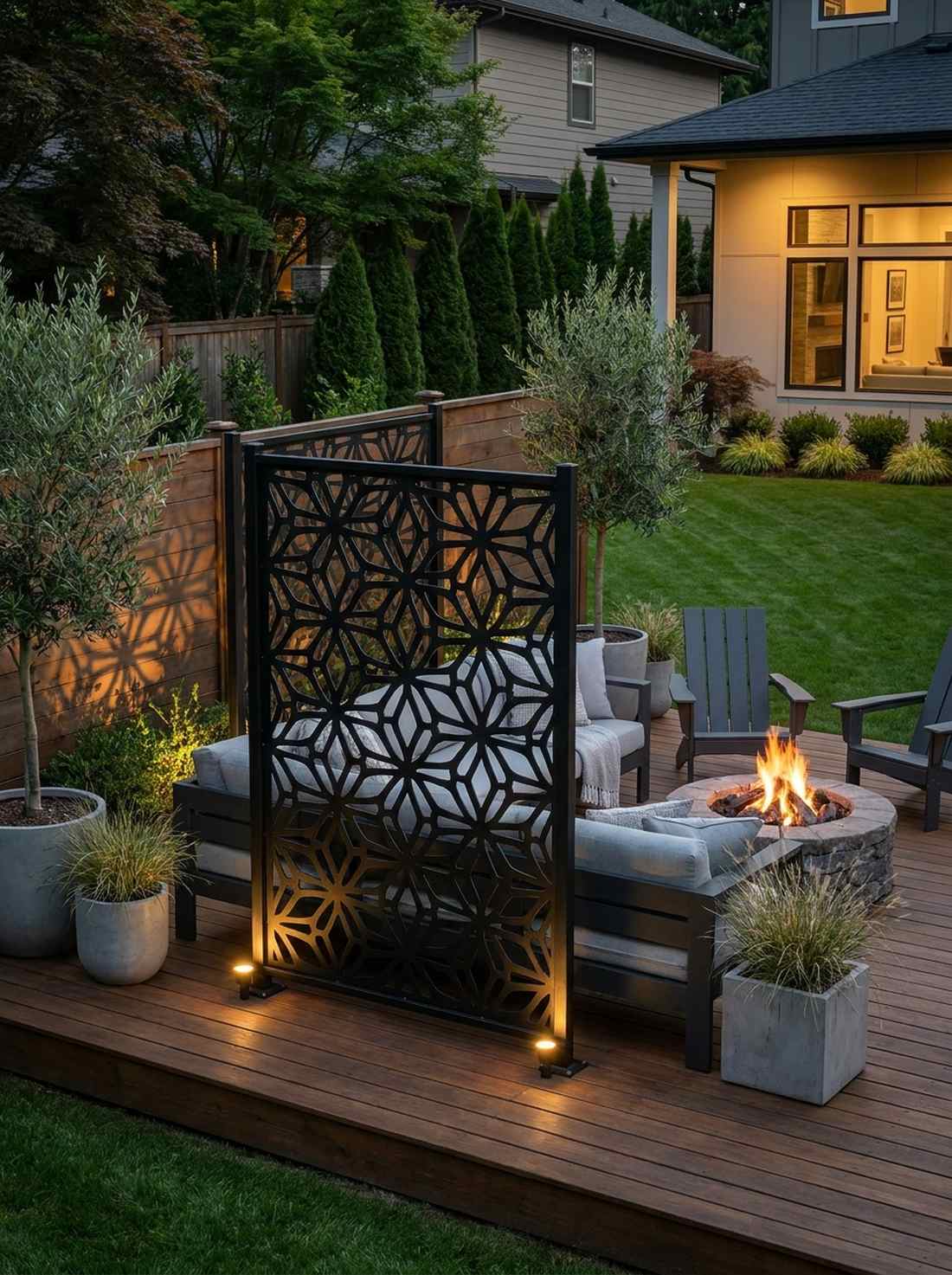
Gives the illusion of a secluded architectural courtyard. Laser-cut metal privacy panels block out ugly fences and instantly create an upscale backdrop.
This layout delivers a surprisingly premium look by adding deep shadows and texture behind a simple sofa. Integrating these panels gives a designer-level finish that outshines basic wood lattice.
High-end screens cost roughly $150 per panel. Save this layout to block out nosy neighbors.
- Key Materials: Freestanding metal screen, anchors
- Vibe / Style: Urban contemporary
- Difficulty: Easy placement
- Budget Breakdown: Screen: $150 | Anchors: $20
- Creator’s Tip: Place a solar uplight at the base of the screen to cast dramatic, moody shadows at night.
- Smart Sourcing: laser-cut galvanized steel privacy screens and solar-powered LED landscape uplights.
38. String Light Canopy
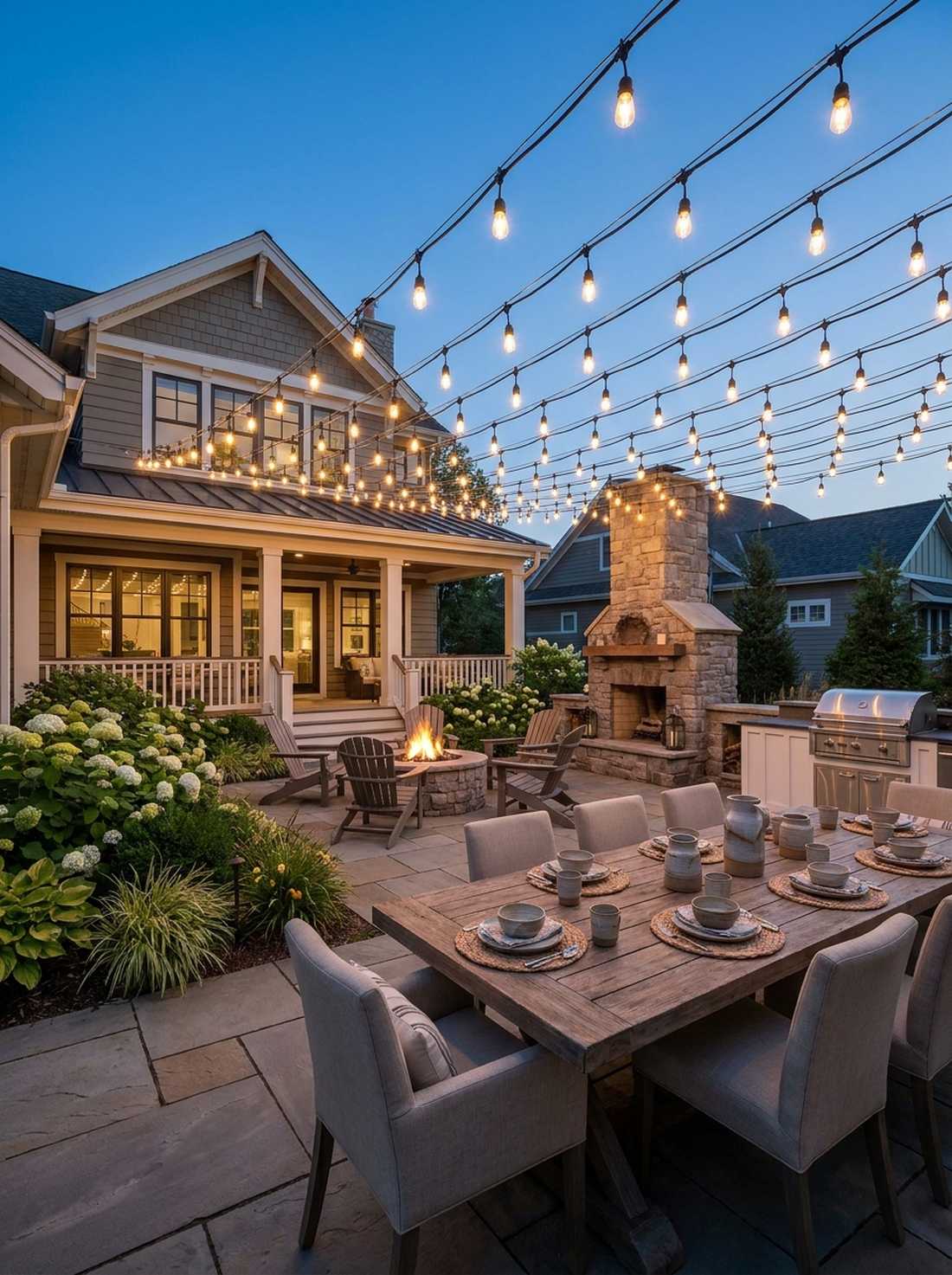
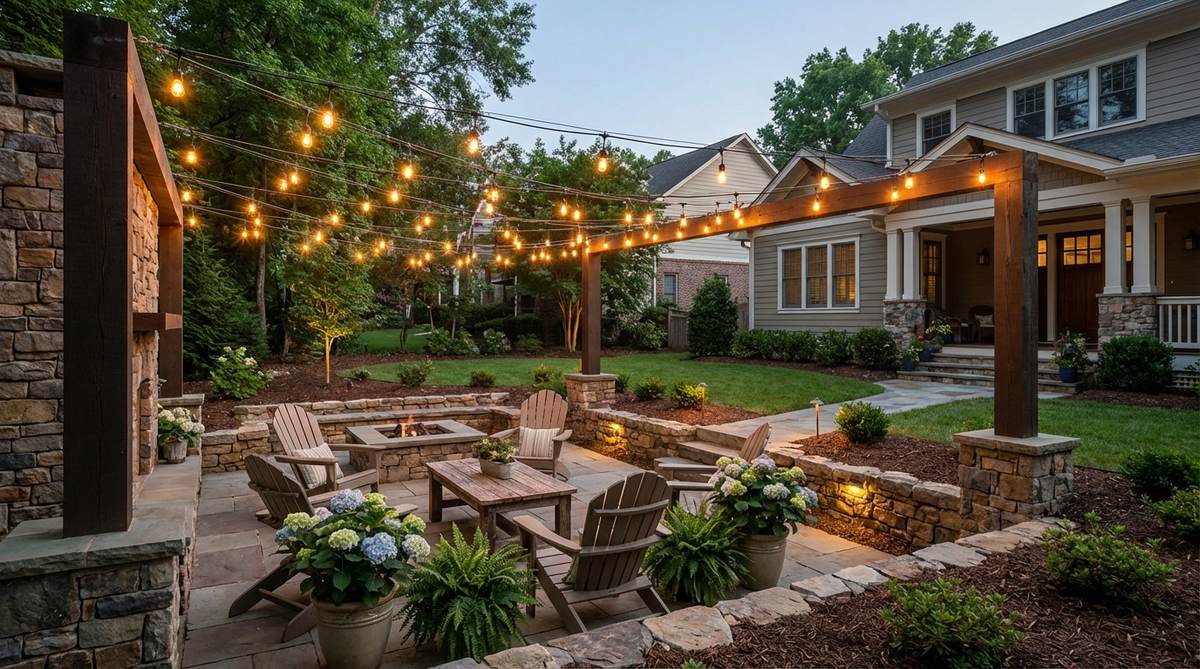
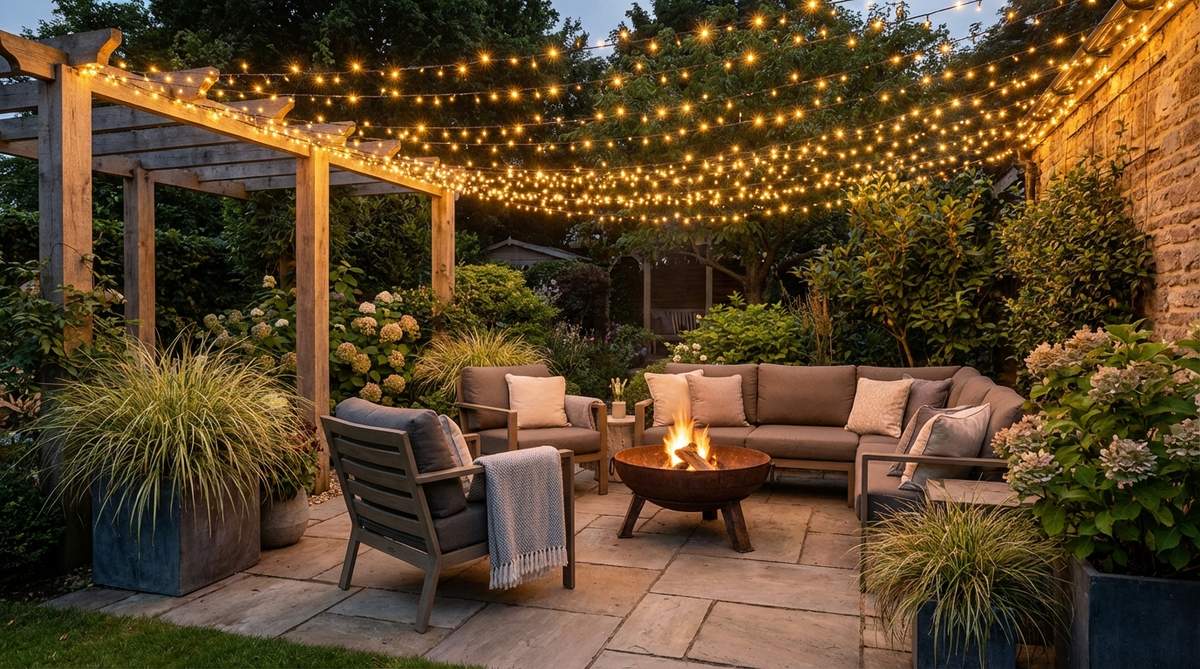
Creates an absolutely breathtaking ceiling of stars over your seating area. Commercial grade patio string lights hung in a zigzag pattern transform the night.
This setup bypasses the cheap plastic aesthetic entirely by using oversized Edison bulbs. It instantly elevates the perceived square footage by creating a glowing “roof” over the corner.
A massive strand of lights and poles costs about $100. Highly recommended for a quick weekend win.
- Key Materials: LED Edison string lights, mounting poles
- Vibe / Style: Magical twilight
- Difficulty: Intermediate hanging
- Budget Breakdown: Lights: $60 | Poles/Wire: $50
- Creator’s Tip: String a steel guide wire first, then clip the lights to it; this prevents the wire from sagging over time.
- Smart Sourcing: commercial-grade shatterproof LED string lights and stainless steel guide wire tension kits.
39. Side Table Vignette
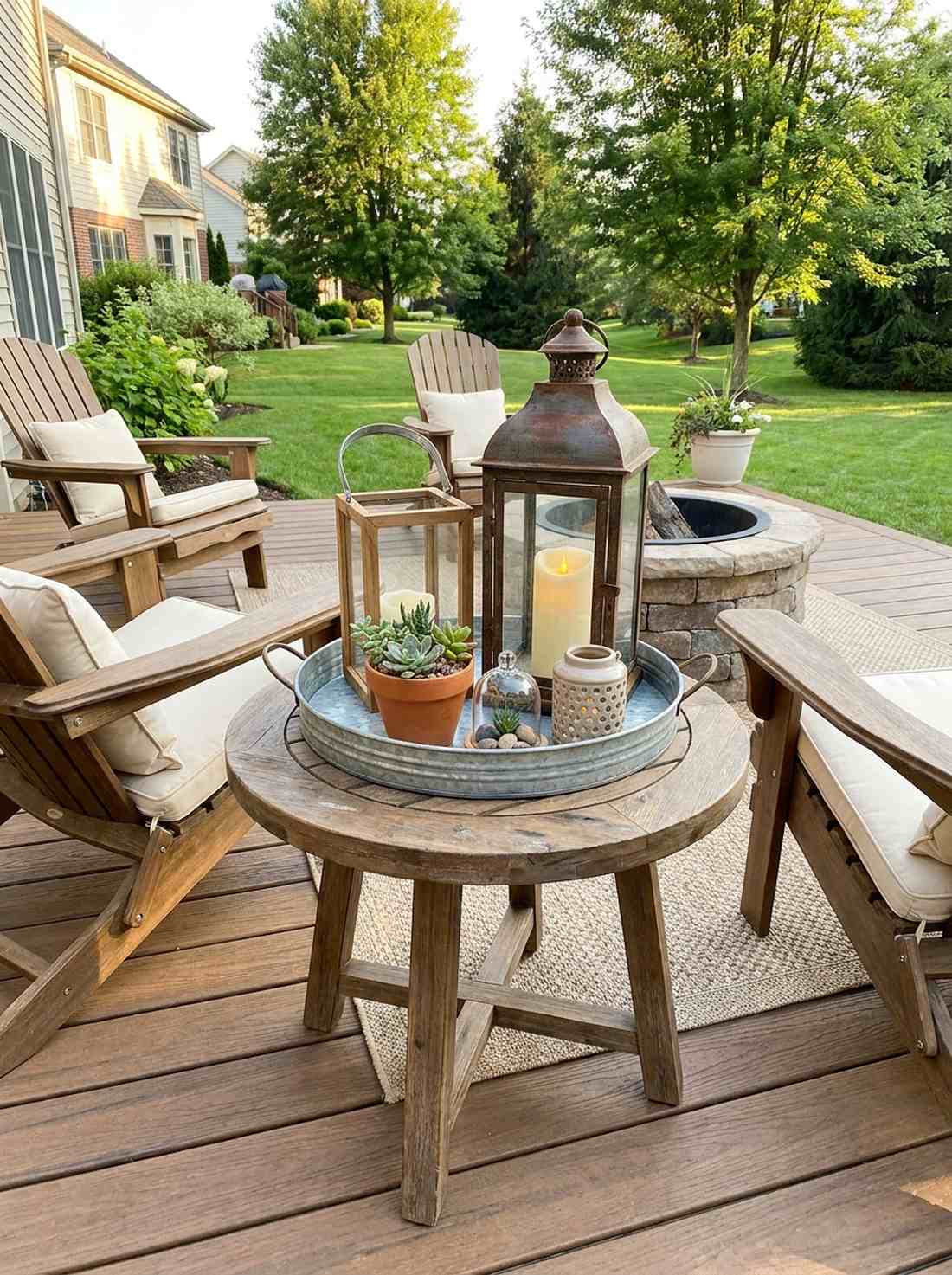
Packs the styled punch of a luxury magazine cover shoot. Curated patio table decor setups turn a boring drink stand into a conversation piece.
Most people get this completely wrong by leaving tables empty, but adding layered lanterns looks far more expensive than it is. Dropping in small terrarium accessories adds massive charm.
You can thrift or buy these accents for under $50. Pin this to your styling details board.
- Key Materials: Lanterns, succulents, small tray
- Vibe / Style: Curated boutique
- Difficulty: Zero setup
- Budget Breakdown: Lanterns: $30 | Plants: $15 | Tray: $15
- Creator’s Tip: Group items in odd numbers (like 3 or 5) varying the heights for the most visually pleasing arrangement.
- Smart Sourcing: weatherproof outdoor LED candle sets and galvanized metal serving trays.
This upcoming arrangement is quietly going viral on Pinterest for a very good reason.
40. Corner Fountain Feature
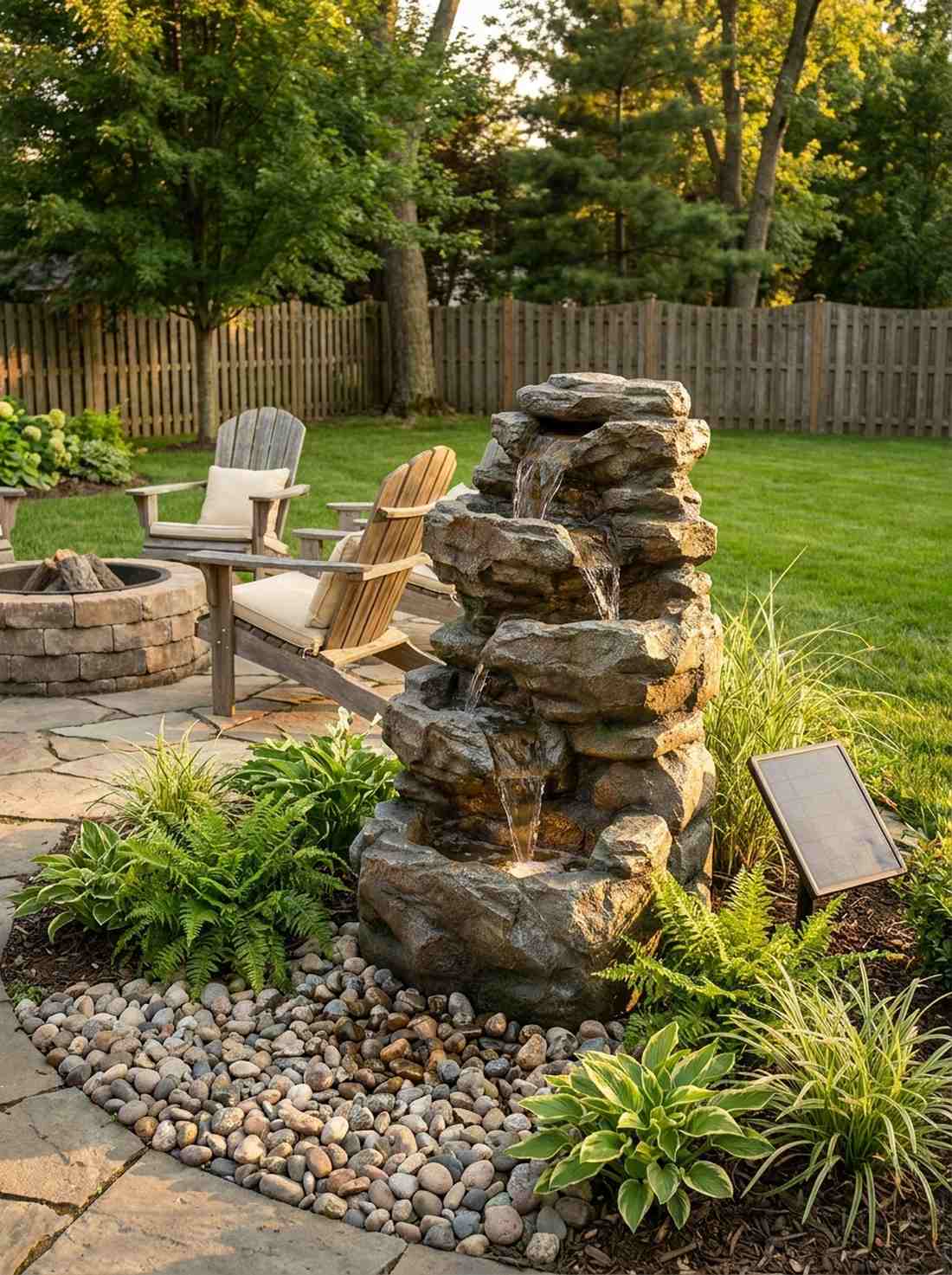
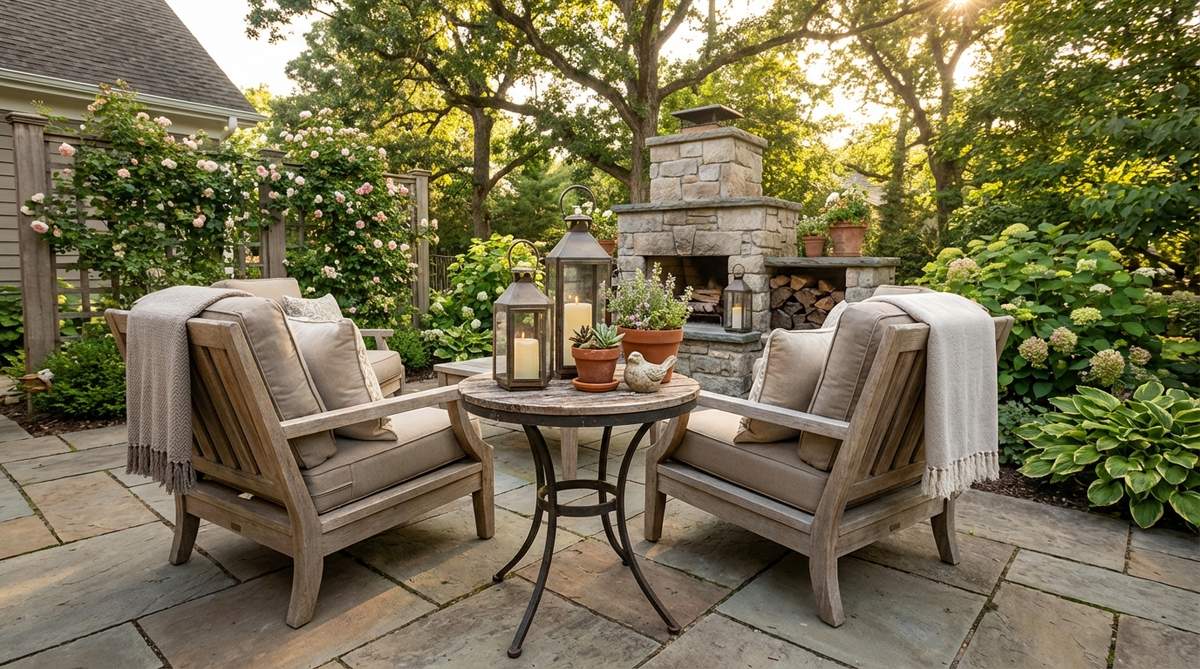
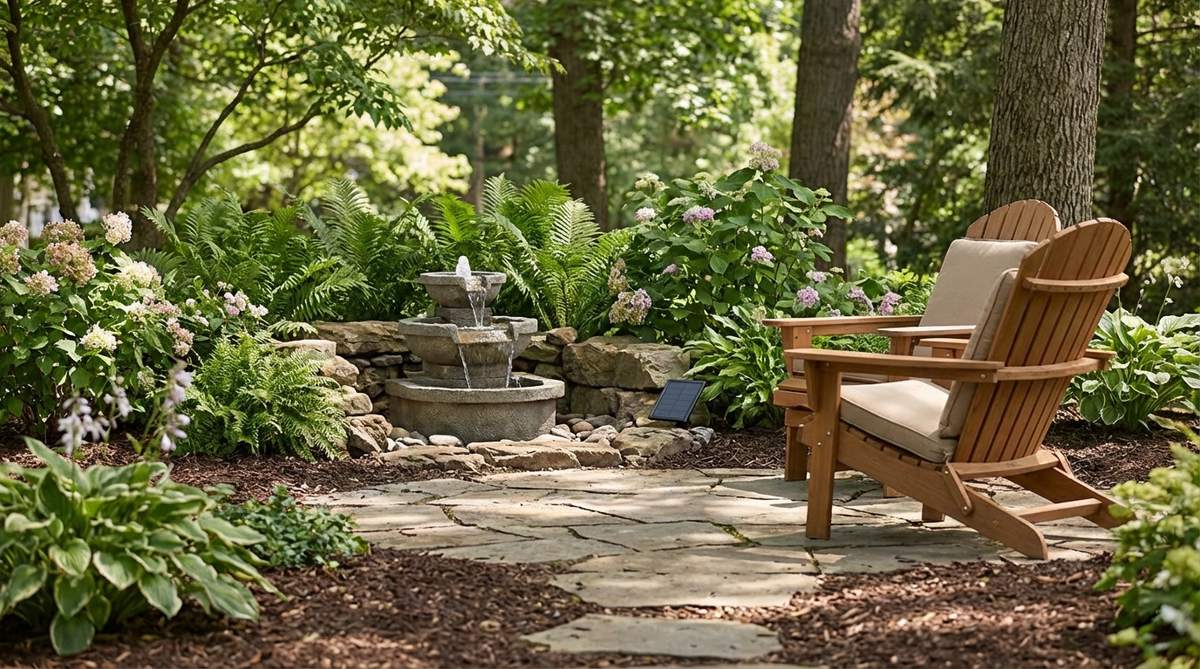
Injects a heavy dose of zen spa energy into a loud neighborhood. Solar-powered corner water fountains mask street noise beautifully behind a seating group.
This gives a designer-level finish by adding an auditory element to the visual space. It is a brilliant hack to avoid the cluttered yard syndrome by serving as a standalone vertical focal point.
A solid resin rock fountain runs about $150–$250. Save this for ultimate relaxation vibes.
- Key Materials: Resin fountain basin, solar pump
- Vibe / Style: Zen garden
- Difficulty: Easy setup
- Budget Breakdown: Fountain Kit: $180 | Extra rocks: $20
- Creator’s Tip: Add a splash of white vinegar to the water weekly to stop algae from forming without harsh chemicals.
- Smart Sourcing: solar-powered outdoor water fountain kits and bulk decorative river stones.
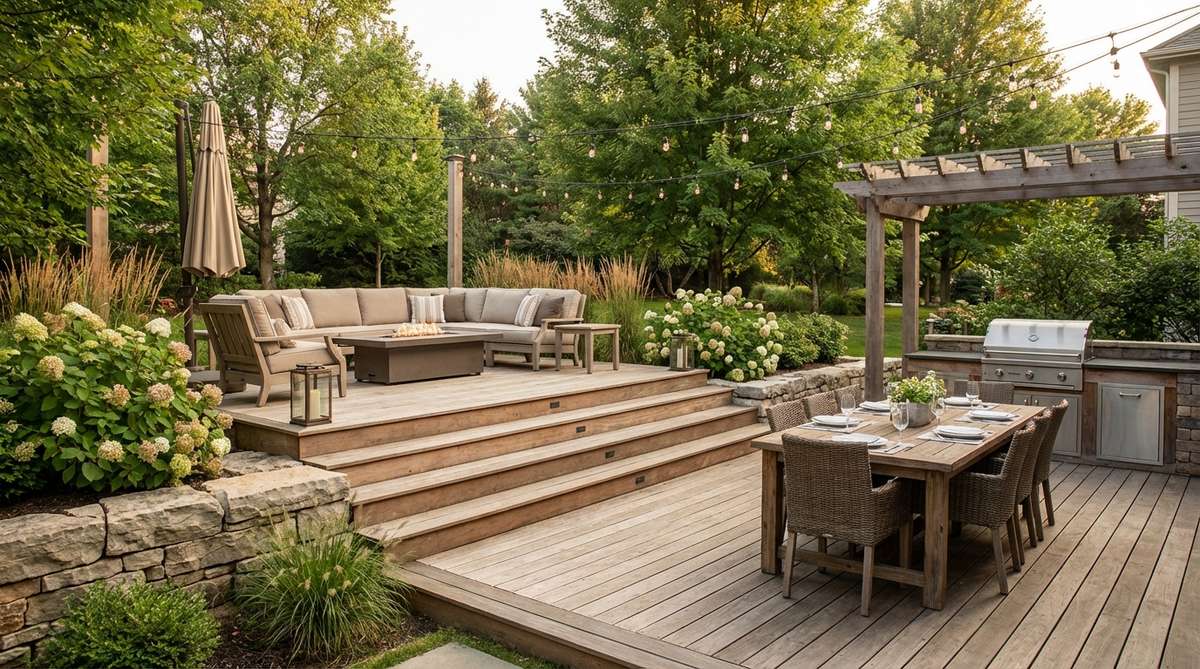
41. Multi-Level Seating Platforms
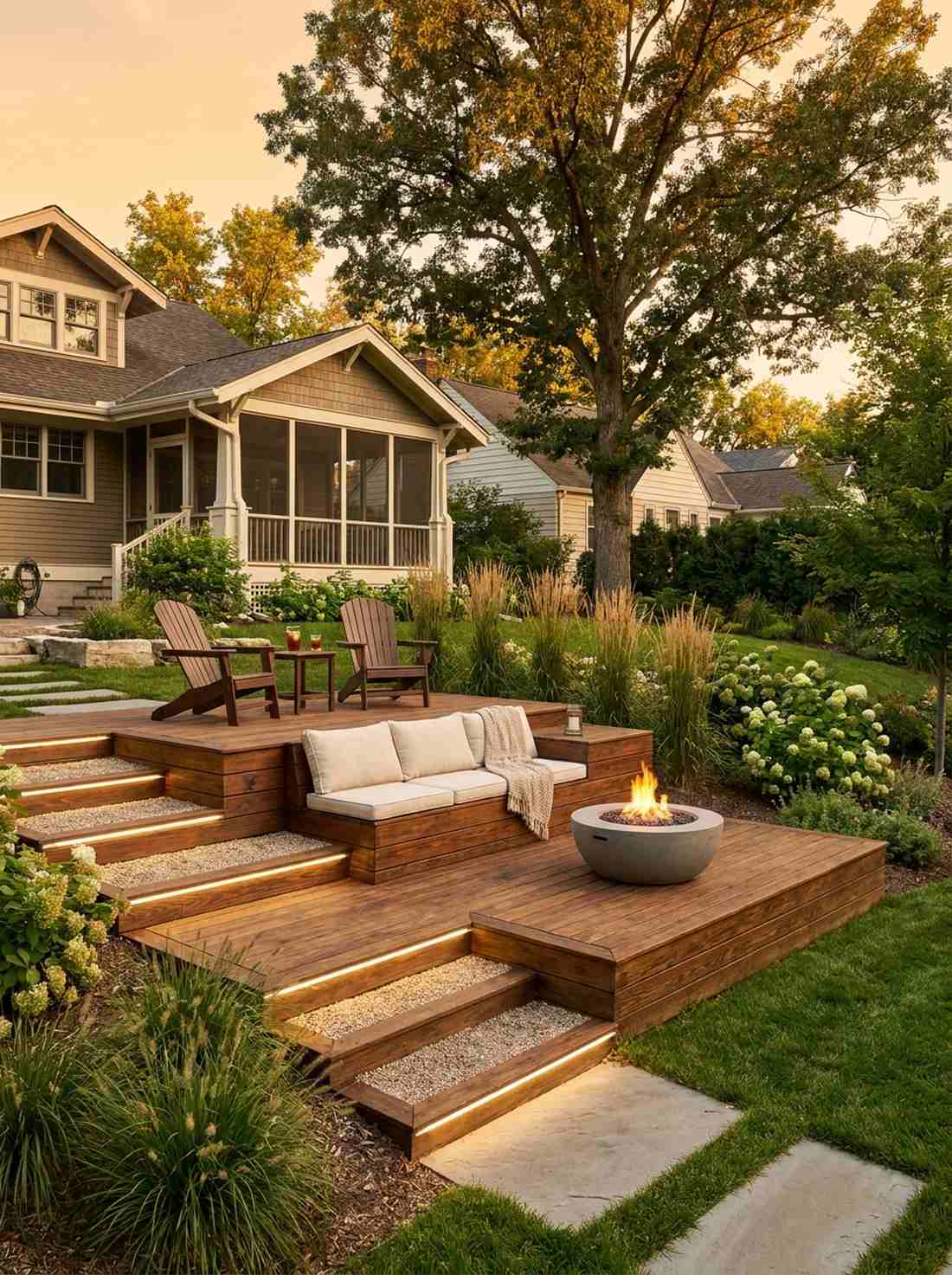
Feels like a custom-built amphitheater right in your backyard. Tiered wooden deck platforms handle sloped corners by breaking the space into mini-levels.
This layout delivers a surprisingly premium look, making standard chairs look like custom theater seating. Instantly elevates the perceived square footage by creating distinct vertical zones.
Building a platform costs roughly $300 in lumber. Highly recommended for sloped yards.
- Key Materials: Treated lumber, deck screws
- Vibe / Style: Architectural modern
- Difficulty: Advanced carpentry
- Budget Breakdown: Wood: $200 | Hardware: $50 | Stain: $40
- Creator’s Tip: Run LED strip lights under the lip of the platform step to prevent tripping at night.
- Smart Sourcing: waterproof outdoor LED light strips and premium exterior deck screws (bulk bucket).
42. Corner Bar Cart Station
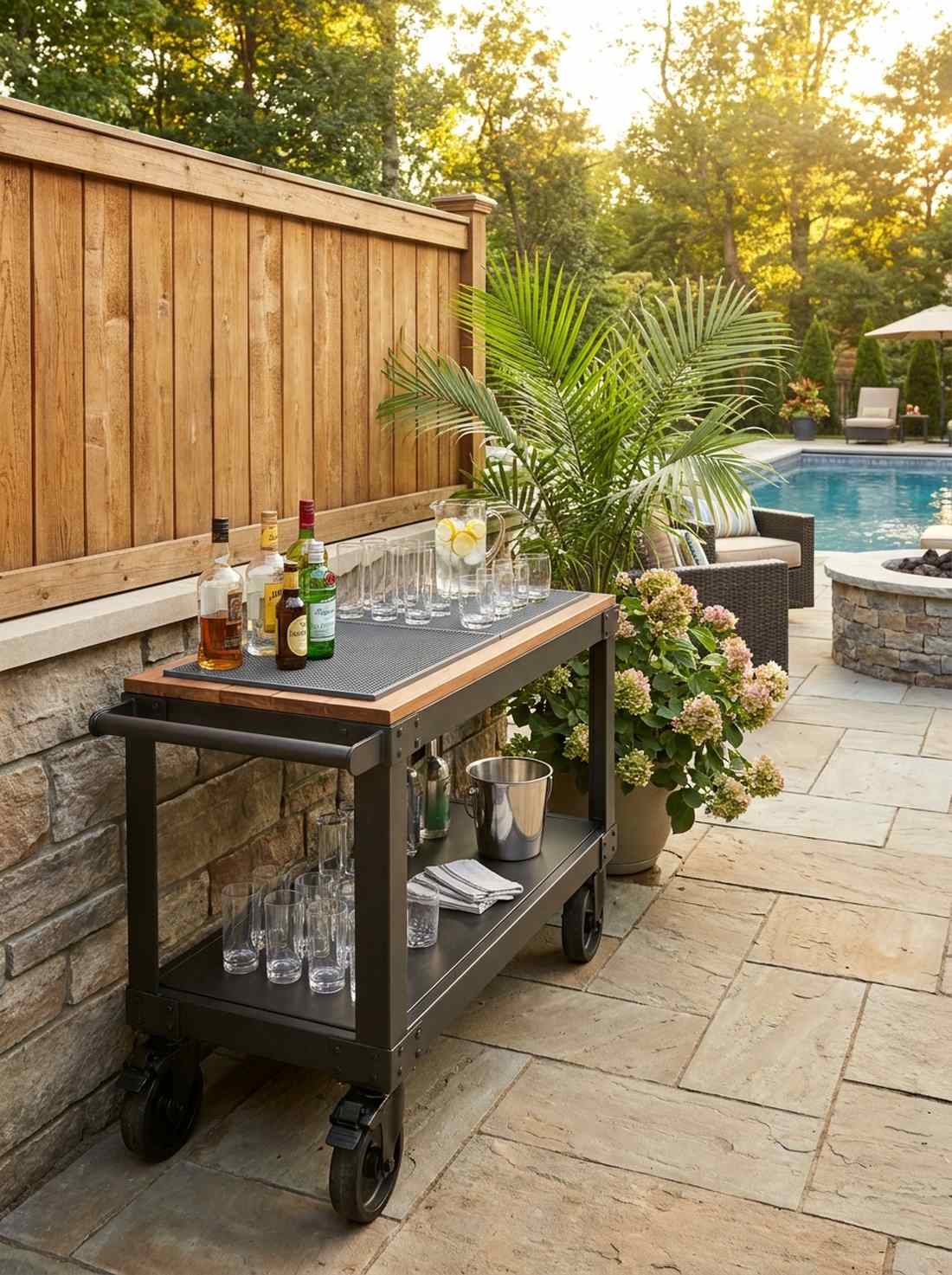
Screams high-end poolside hospitality. Rolling outdoor beverage carts tucked into a corner turn any patio into an instant cocktail hour destination.
This layout looks far more expensive than it is and clears bottles off your main dining table. Integrating heavy-duty commercial casters bypasses the cheap plastic aesthetic entirely.
A solid metal or teak cart costs around $150. Pin this to your outdoor entertaining board.
- Key Materials: Metal/teak bar cart, acrylic drinkware
- Vibe / Style: Entertainer’s dream
- Difficulty: Easy assembly
- Budget Breakdown: Cart: $140 | Acrylic Glasses: $30
- Creator’s Tip: Use an oversized silicone mat on the top shelf to stop bottles from rattling when rolling it across paving stones.
- Smart Sourcing: weather-resistant rolling metal bar carts and shatterproof acrylic outdoor drinkware sets.
Conclusion
Small outdoor edges become wildly valuable living spaces through these 42 strategic cozy garden furniture layouts that balance premium aesthetic with practical budget blueprints. The absolute secret to a luxurious space lies in selecting appropriately scaled pieces, leveraging pre-cut starter kits, and choosing multi-functional designs that adapt to your specific needs. Whether you prefer an intimate bistro setup, relaxed canopy lounging, or flexible high-CPC modular entertaining spaces, these exact blueprints prove that corner constraints actually breed high-end design. Grab these precise sourcing guides to transform overlooked corners into your favorite outdoor destinations, proving that great garden design isn’t about massive square footage, but smart, product-driven spatial planning.
Frequently Asked Questions
What is the minimum space needed for cozy garden furniture in a corner?
A functional, high-end corner arrangement requires a minimum of 4×4 feet to fit a single chair and side table, while more luxurious setups thrive in 6×6 feet. The absolute rule is maintaining 24-36 inches of clearance around the furniture. If you are extremely tight on space, rely on space-saving folding balcony sets or pre-built drop-leaf kits to bypass the cluttered yard syndrome entirely.
How do I choose weather-resistant furniture for outdoor corners?
Stop wasting money on cheap sets that fade in a month; upgrade immediately to materials proven for outdoor durability like powder-coated aluminum, UV-coated resin wicker kits, or sealed teak. Avoid untreated wood and standard indoor fabrics entirely. Your best investment is sourcing solution-dyed acrylic cushions and heavy-duty waterproof furniture covers to lock in that designer-level finish for years.
What furniture arrangement works best for L-shaped corners?
L-shaped corners naturally demand modular outdoor seating blocks or custom-built wooden banquettes. Pushing an all-weather wicker sectional perfectly flush against both walls delivers a surprisingly premium look while leaving your center traffic lane wide open. For dining, look for compact triangular patio dining sets that are specifically engineered to eat up dead corner space without feeling cramped.
How can I make a small corner feel larger?
Force the eye upward. Instantly elevate the perceived square footage by installing pre-cut cedar lattice panels, modular vertical planter systems, or commercial-grade string lights overhead. Avoid heavy, solid-base furniture; instead, buy pieces with slim metal legs so you can see the floor underneath. Layering a waterproof geometric outdoor rug will also ground the space, making it look far more expensive than it is.
What is the best furniture for creating a cozy garden nook?
A premium nook requires deep, engulfing seating like a UV-coated resin egg chair or a plush waterproof papasan frame paired with an oversized floor pouf. Add a rust-proof acrylic drink table within arm’s reach. To create that secluded VIP cabana feel, enclose the area using laser-cut galvanized steel privacy screens or fade-resistant outdoor curtain panels.